
Barns are some of my favourite places to deliver a cake, and some of the most demanding. Timber walls and string lights flatter soft buttercream and visible sponge, but the same buildings are often warm, dusty and lit from one end. A rustic cake for that setting has to look handmade and still hold together from setup to the last slice. These twenty ideas cover the range, from bare sponge to dark ganache, and in each one I’ve noted what I’d change or watch for when the venue is a barn, an orchard or a lakeside lawn.
Fillings That Hold Up in a Warm Barn
Couples choose the outside of a rustic cake first, but what’s inside decides whether it can sit on a table for hours. On a semi naked or naked cake the filling is also on show, so it has to look neat as well as taste good.
Fillings that stay stable at room temperature for a reception:
- Buttercream in its many forms, especially meringue-based styles
- Firm ganache, dark or milk
- Cooked jams, fruit compotes thickened well, and lemon curd set inside a buttercream dam
Fillings I’d only use if the cake stays cold until shortly before cutting: fresh whipped cream, cream cheese frosting, pastry cream and mascarpone mixtures. They taste wonderful, and they’re exactly the ones that slide or turn in a warm, enclosed barn. If you love them, ask for them in a kitchen cake kept in the fridge, or for a smaller tier served first.
At the tasting, ask to try the filling and sponge together at room temperature, not straight from the fridge. That’s how your guests will eat it.
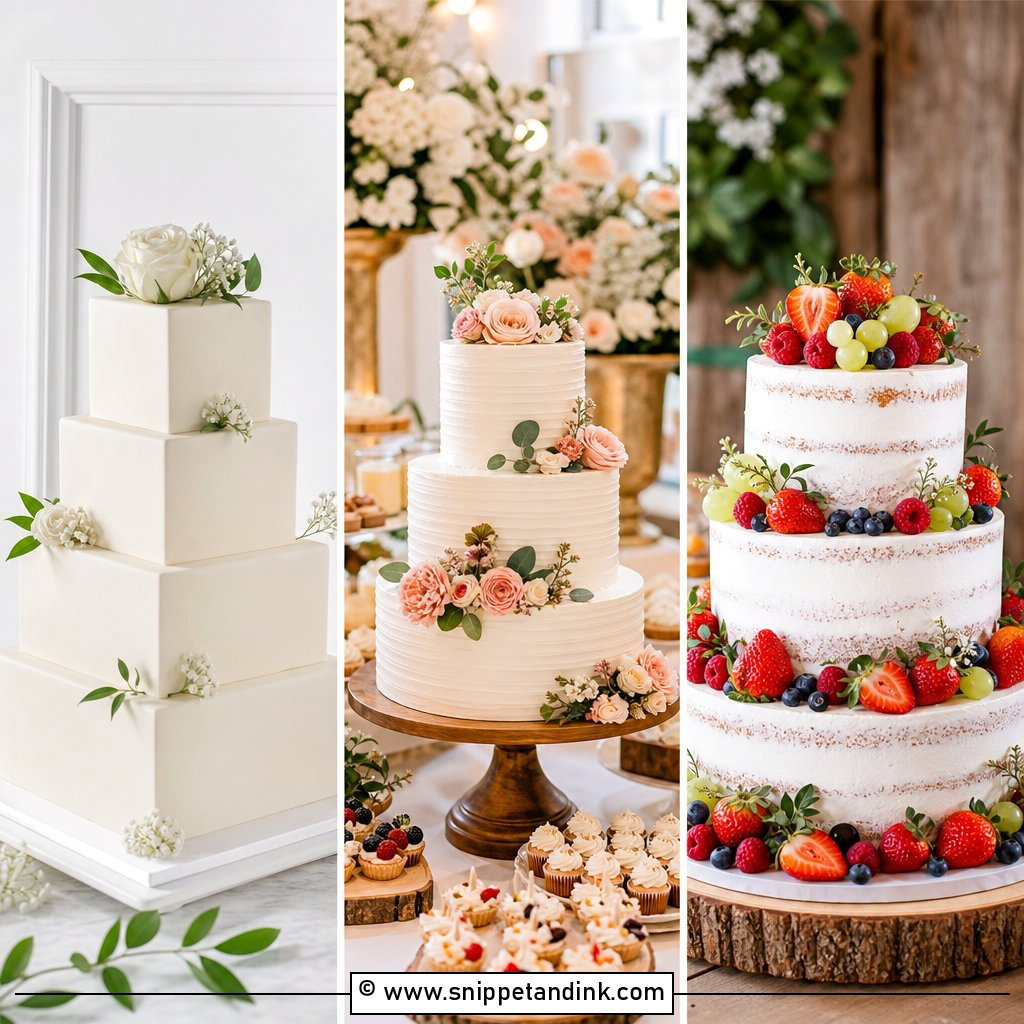
1. Semi Naked Rustic Wedding Cake
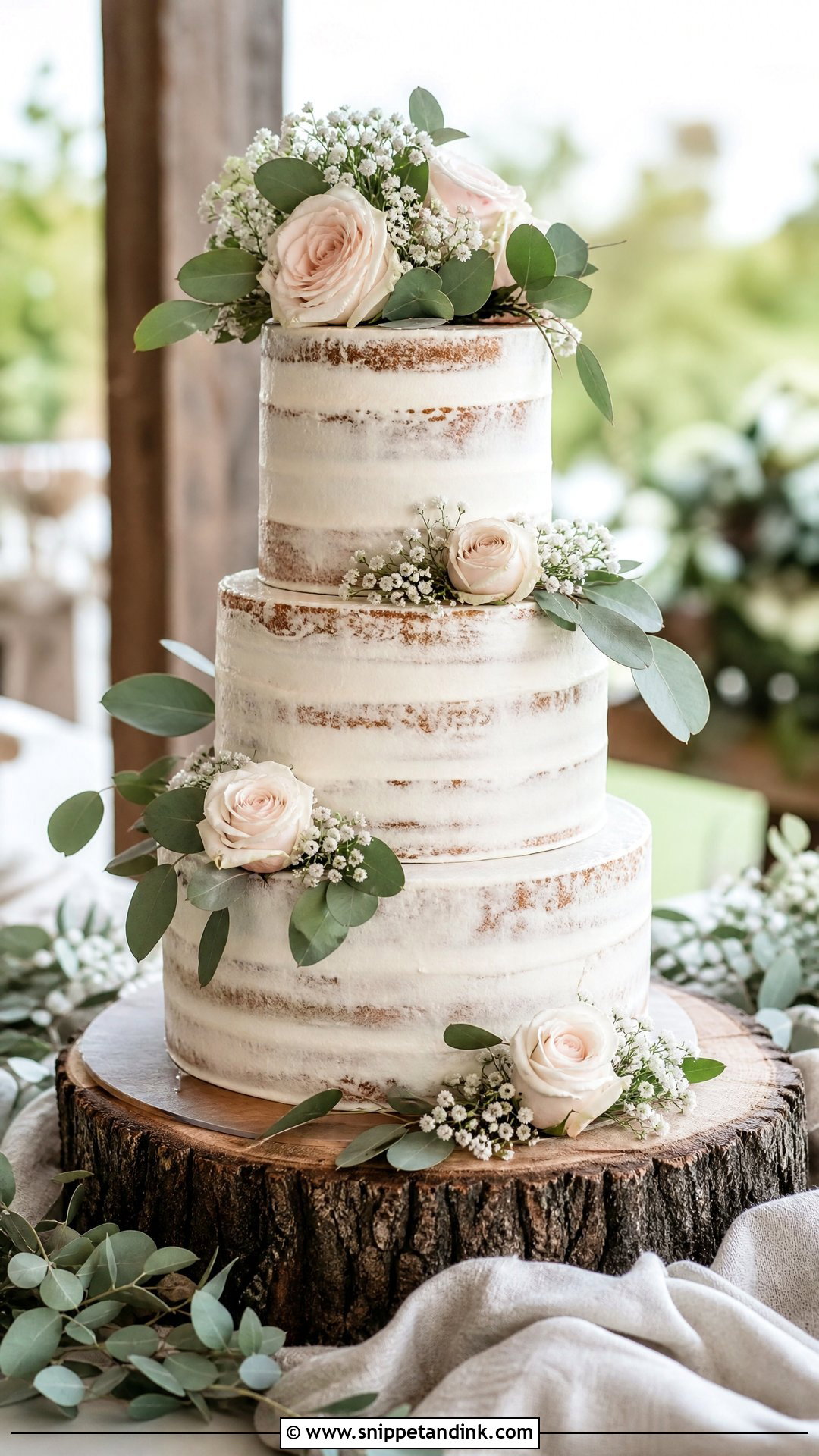
Semi naked is the cake people picture when they hear the word rustic. Its look depends on even layers and plenty of filling, because that thin scraped coat shows every gap. I bake vanilla, lemon, almond, spice or chocolate sponges for it and add roses, ranunculus or loose greenery on a wood slice. Baby’s breath is popular here, but it’s mildly toxic, so it only goes on wrapped. Outdoors, I keep the tiers chilled right up to setup so the thin frosting doesn’t sweat.
2. Naked Rustic Wedding Cake
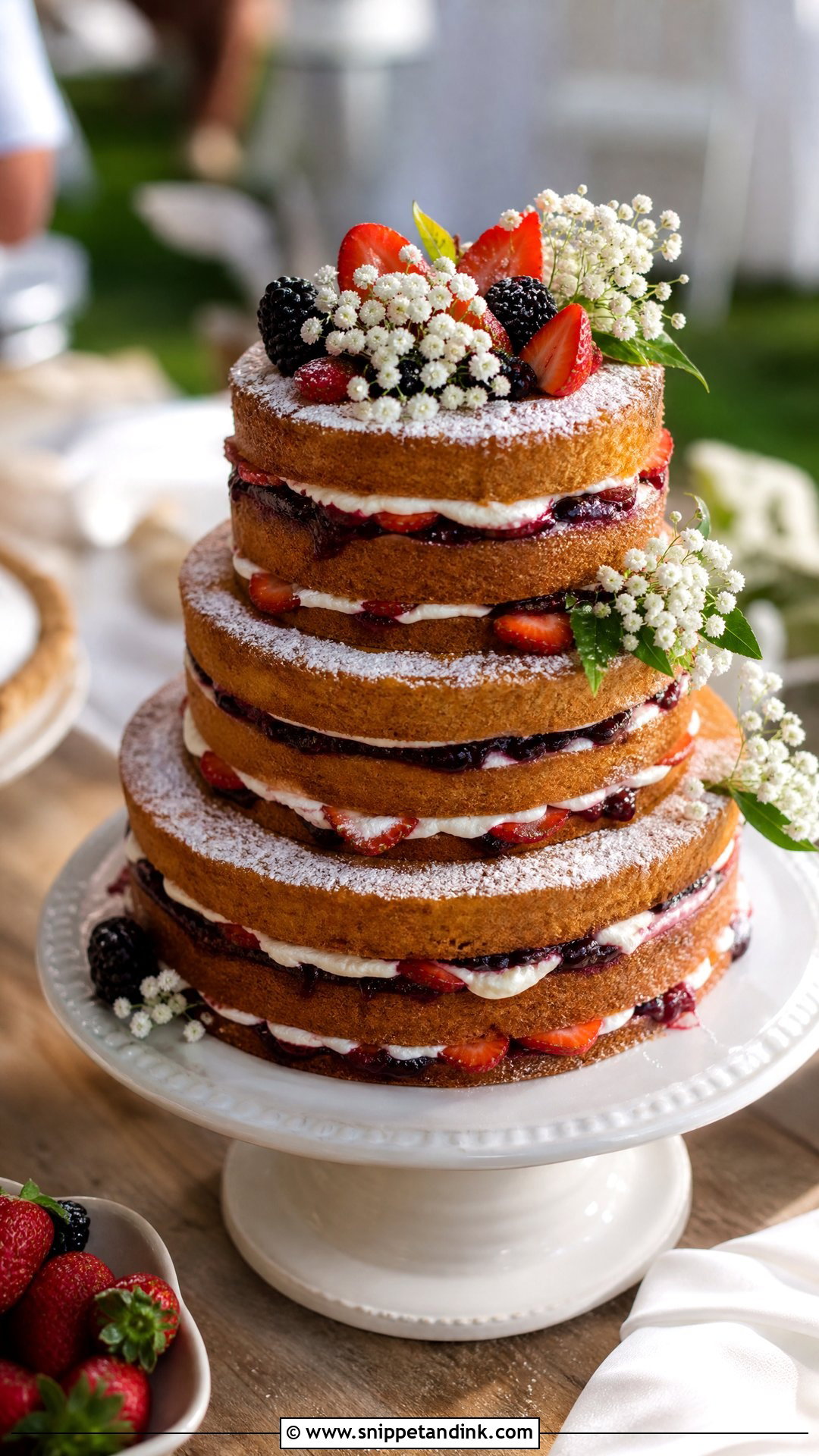
With almost nothing on the outside, the sponge is the decoration, so it has to be moist and even. I brush the layers with a light syrup and assemble as close to the day as possible. golden vanilla sponge with berry filling and a dusting of icing sugar is the classic, with figs, blackberries and a few small white flowers. Plan a short display: an hour or two in a warm barn already shows at the edges. It’s less sweet than a frosted cake, which many guests enjoy.
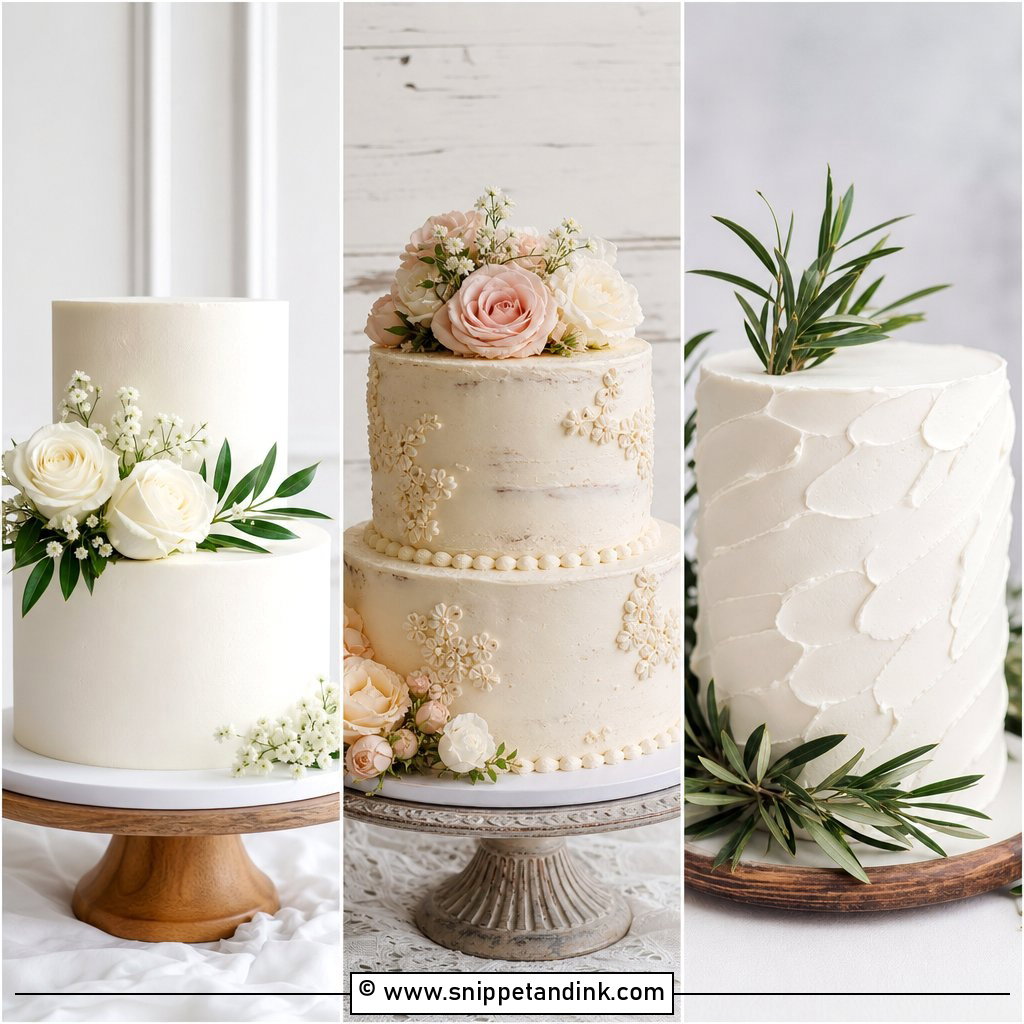
3. Rustic Buttercream Wedding Cake
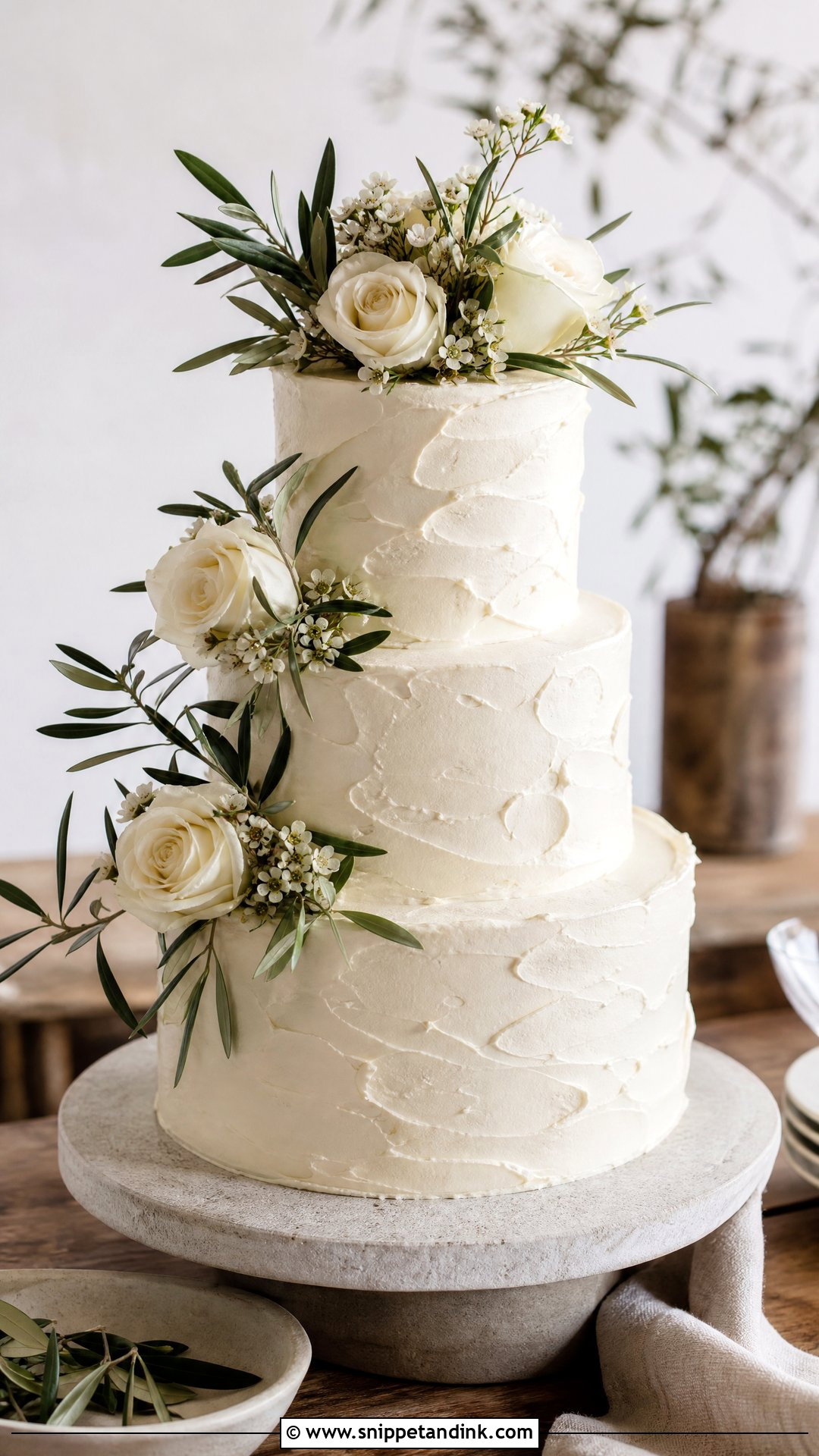
Full coverage, rustic finish. I’ll comb, ridge or swirl the buttercream so it has movement, and because the sponge is sealed it copes with a long reception far better than a naked cake. Ivory is the safe classic; beige, blush, sage and pale blue all take colour well, though I mix tints in natural light because barn bulbs make everything look yellower. Olive branches, herbs or berries finish it. It scales nicely from an intimate two tier to a big three tier.
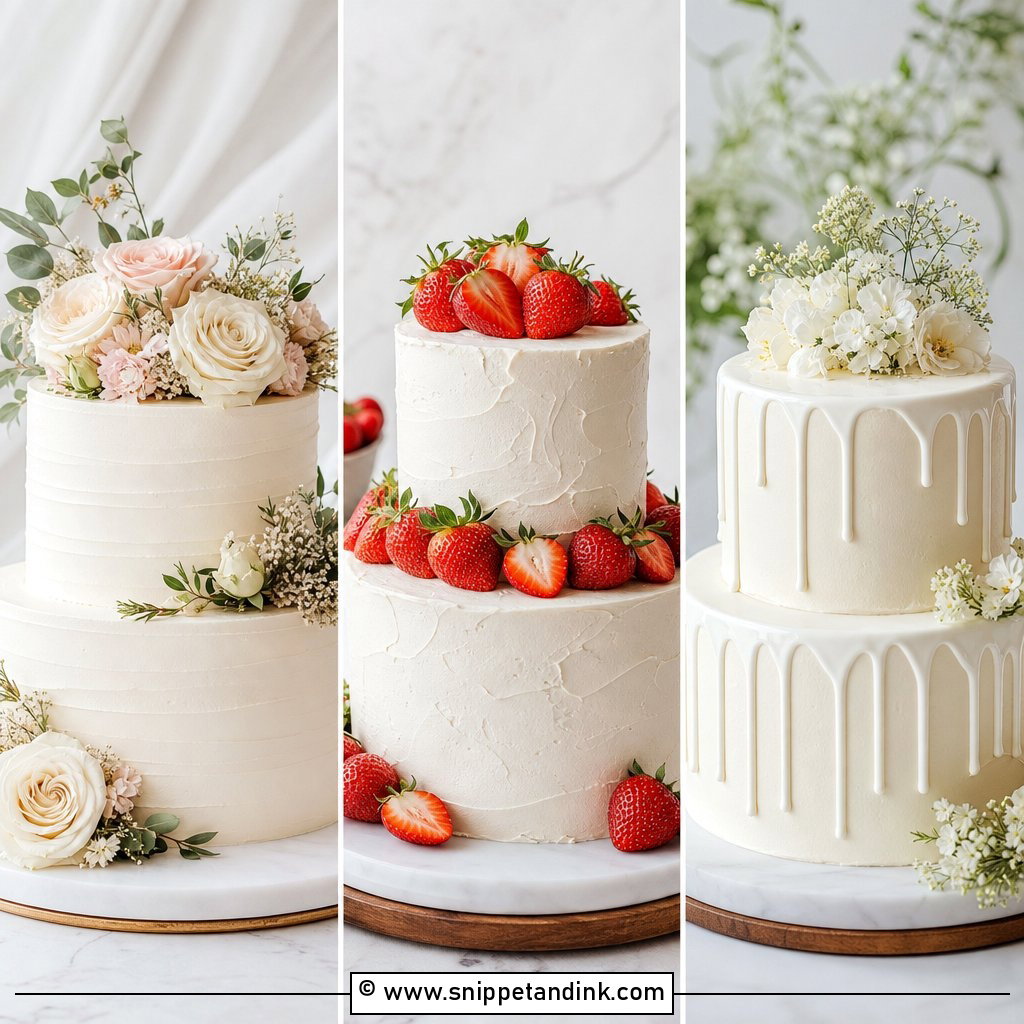
4. Rustic Wedding Cake With Fresh Flowers
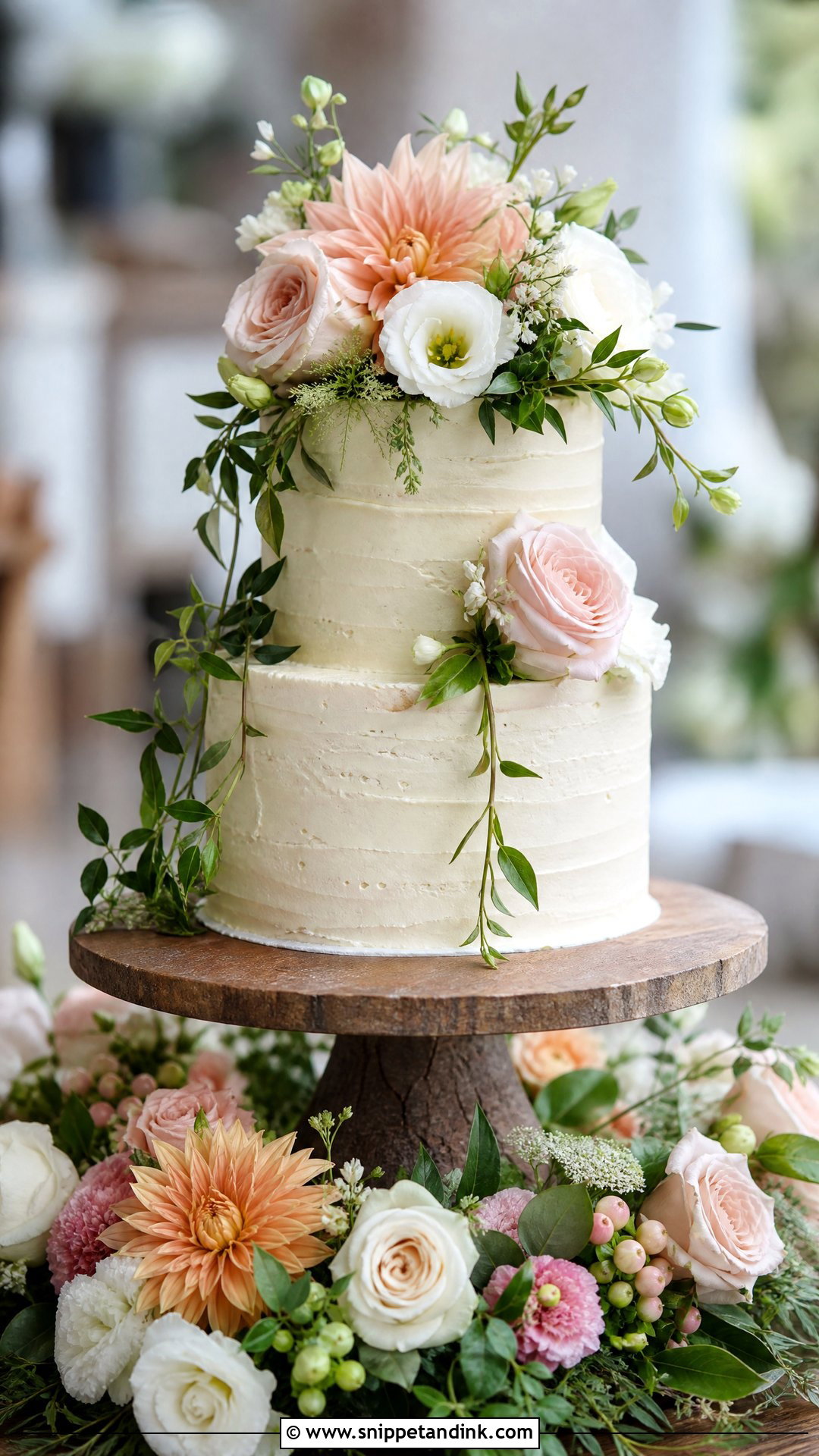
Garden-grown flowers look right on a rustic cake; stiff florist roses on long stems don’t. Roses, dahlias, chamomile, lisianthus, lavender and small wildflowers are all good choices, grouped in clusters or one cascade, or tucked into a corner. Food safety comes first. I wrap and pick every stem, and anything toxic stays on the table around the cake rather than on it. On a wood stand with linen and candles, even a modest arrangement looks full.
5. Rustic Wedding Cake With Greenery
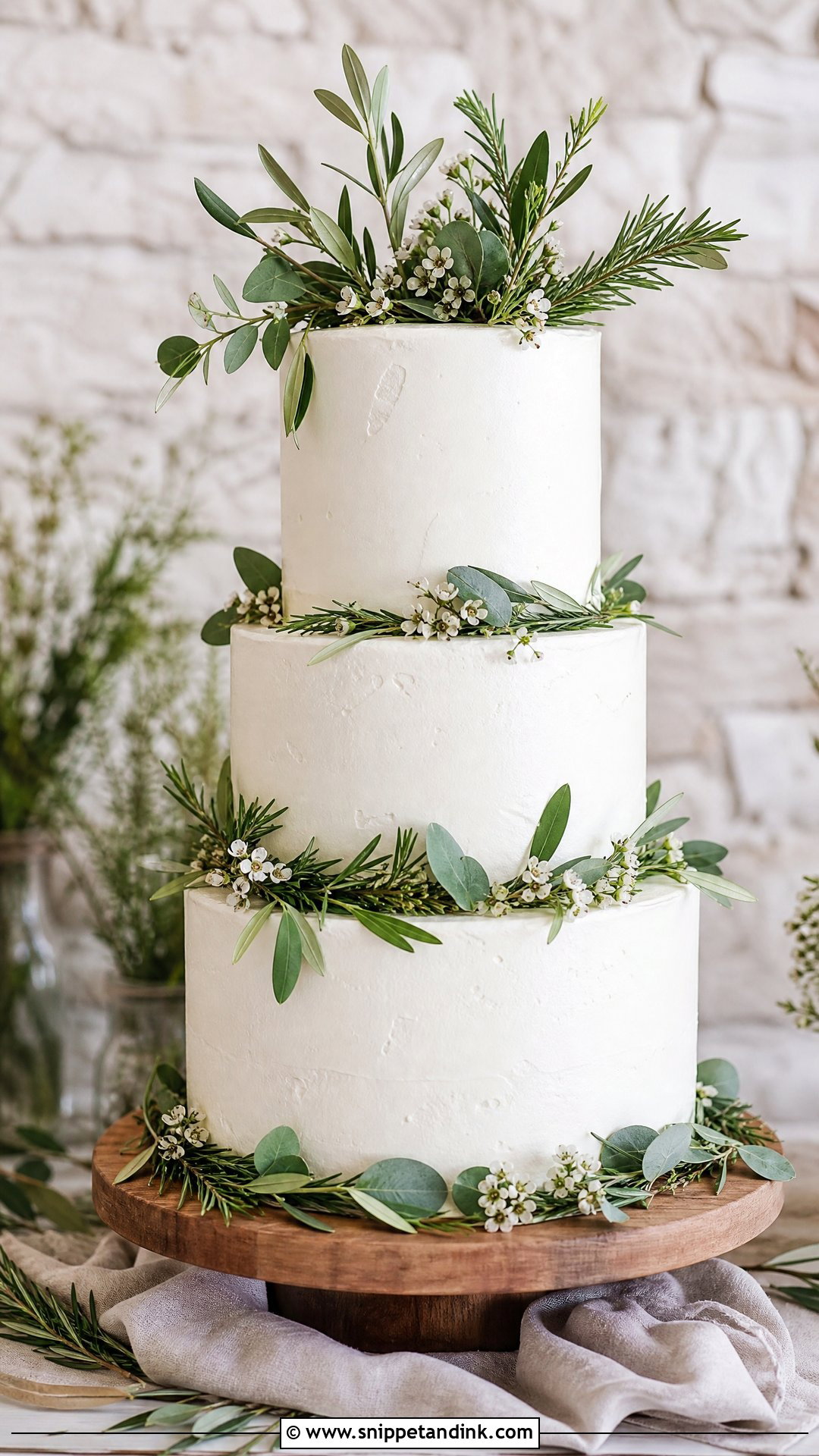
One clean line of foliage can make a plain white cake look styled. Olive, rosemary, bay, ruscus and fern all sit well against cream, blush, terracotta or dusty blue. For a modern look I run a single line across smooth frosting; for woodland I let it spill loosely round the base and between tiers. Eucalyptus is the most requested and it isn’t edible, so like every leaf on the cake it’s washed, dried and placed on a food-safe barrier.
6. Rustic Wedding Cake With Sunflowers
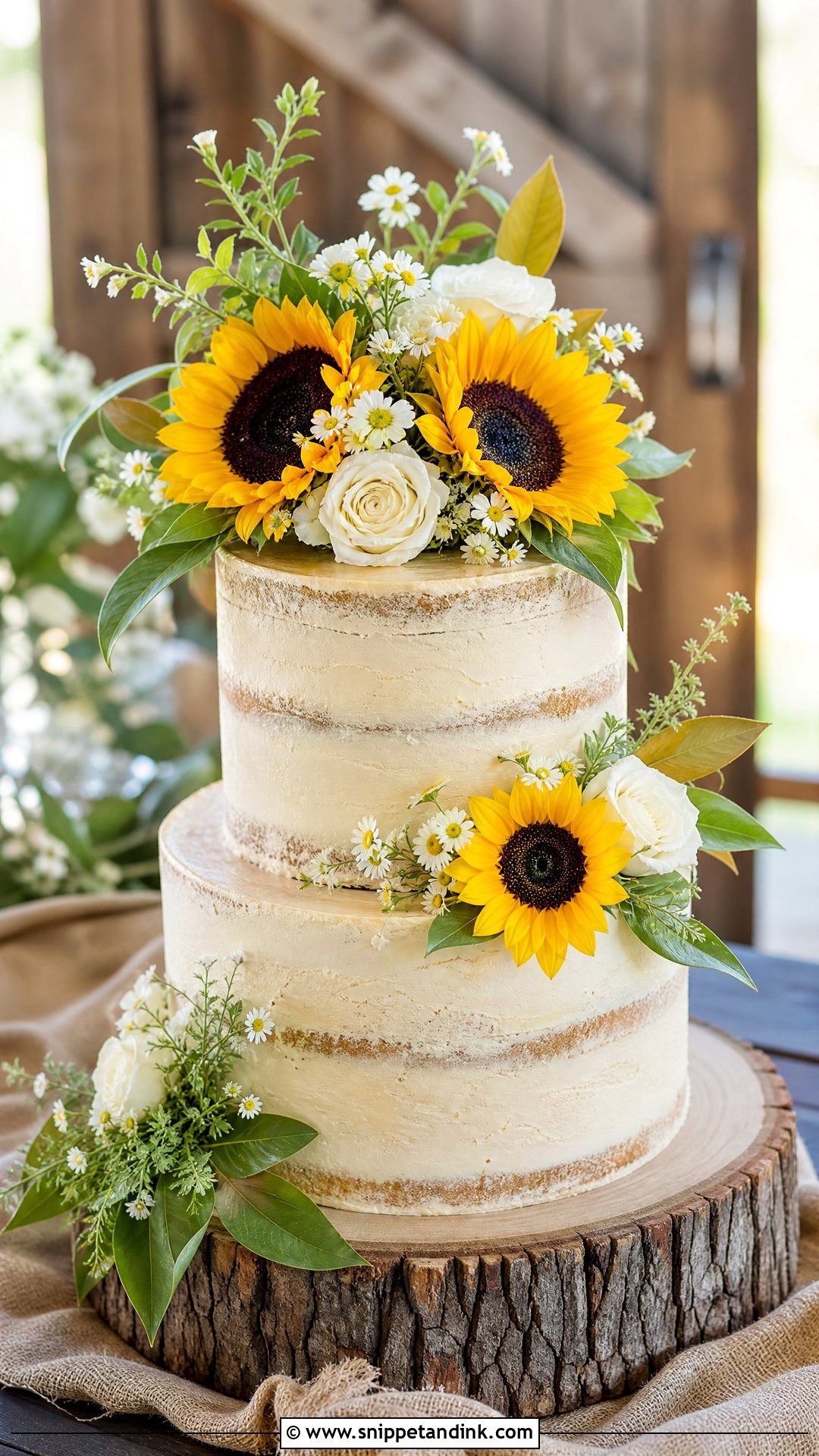
A rustic wedding cake with sunflowers says farmhouse straight away, so the rest of the design should stay quiet. Golden sponge with vanilla buttercream and a semi naked finish is my favourite base. Full-size heads give a bold, graphic look; smaller varieties are softer and easier to fit between tiers. White roses or chamomile around them stop the yellow from overpowering the table. Their sap-heavy stems need trimming and wrapping. Late summer and early autumn bring them into season, which fits barn weddings neatly.
7. Rustic Wedding Cake With Wildflowers
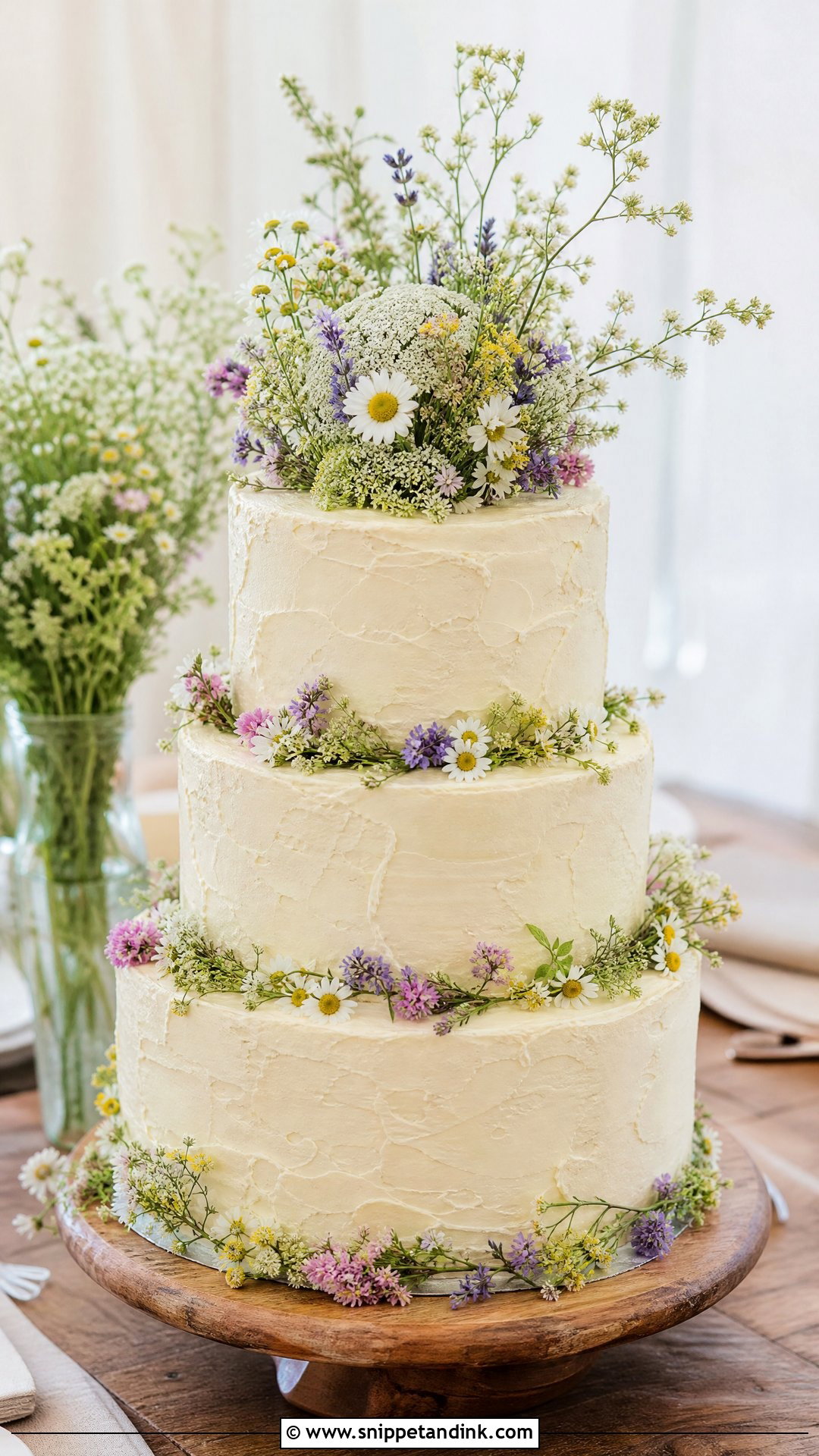
Meadow-style flowers look casual, but scattering them so they look natural takes patience. I build them in drifts, slightly off-centre, with varied heights so nothing marches in a line. Keep the frosting plain, buttercream or semi naked, and limit the palette to three or four colours so the cake doesn’t look busy. Delicate wild blooms flop quickly out of water, so I place them late and keep spares in a cool box at the venue.
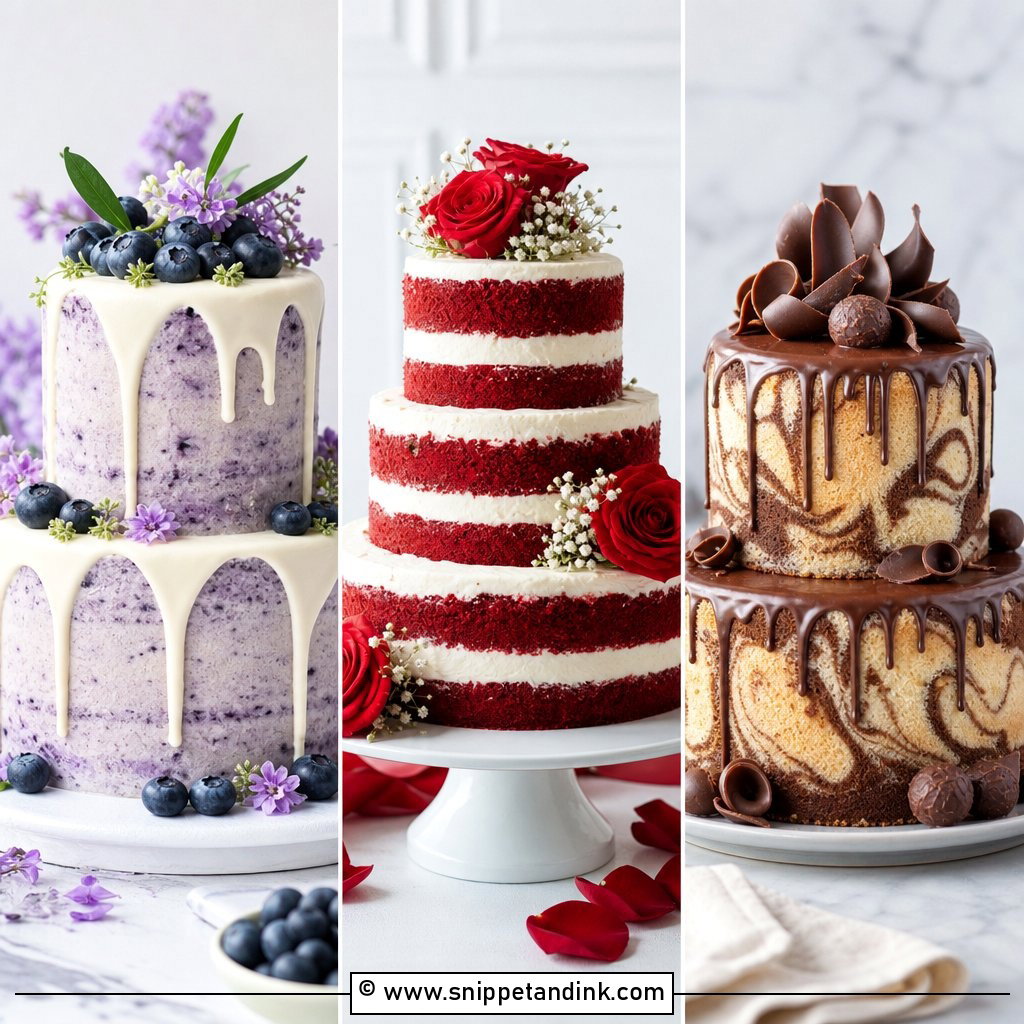
8. Rustic Wedding Cake With Berries
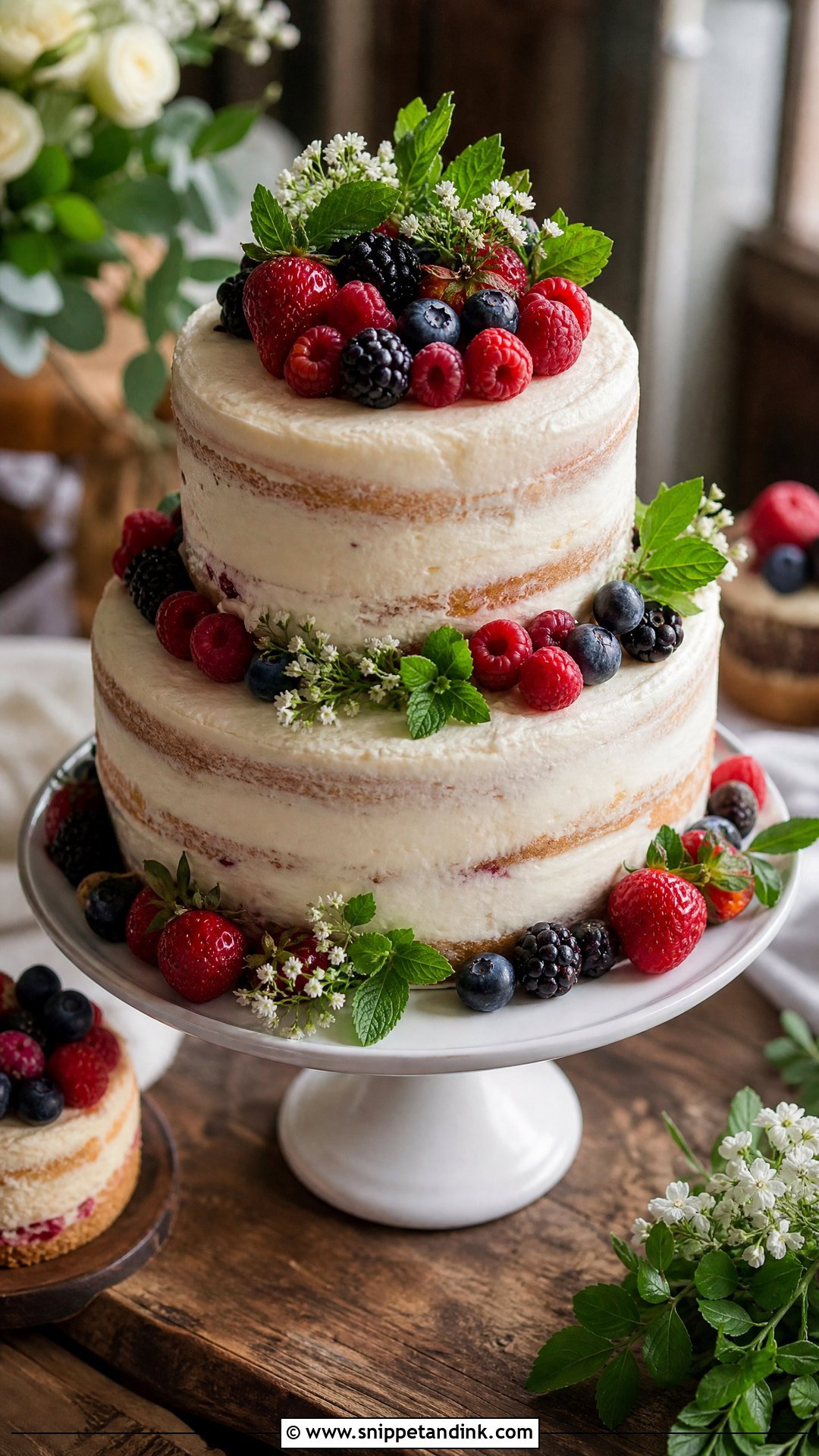
Berries add colour and texture with no sugar work at all. Raspberries, blueberries and blackberries hold their shape well; halved strawberries bleed into frosting, so I use them whole on top. Vanilla, lemon, almond or chocolate sponge suits them, with a semi naked or lightly frosted finish. Choose fruit of similar size and dry it thoroughly after washing, as wet berries leave pink streaks down the sides. Skip a heavy glaze for the same reason.
9. Rustic Wedding Cake With Wood Slice Stand
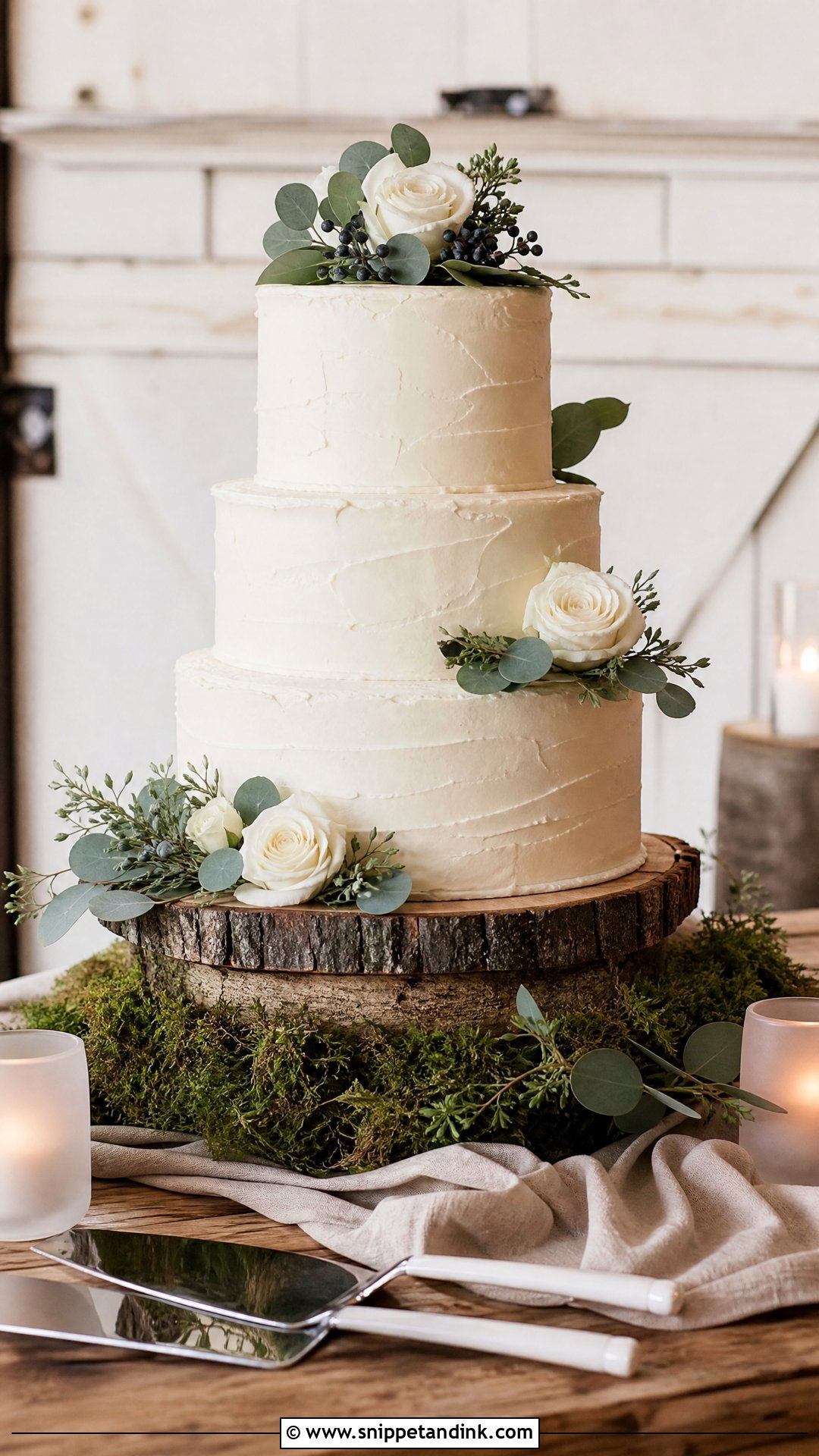
The stand can carry the whole rustic look, which means the cake on top can stay very simple. White buttercream with greenery or a semi naked cake both sit well on natural wood at barn venues, lakeside lawns and forest weddings. Two practical checks: the slice must be sealed and dead level, and there should always be a cake board between the sponge and the wood. Moss, linen and a few candles round the base finish the scene.
10. Rustic Wedding Cake With Burlap Ribbon
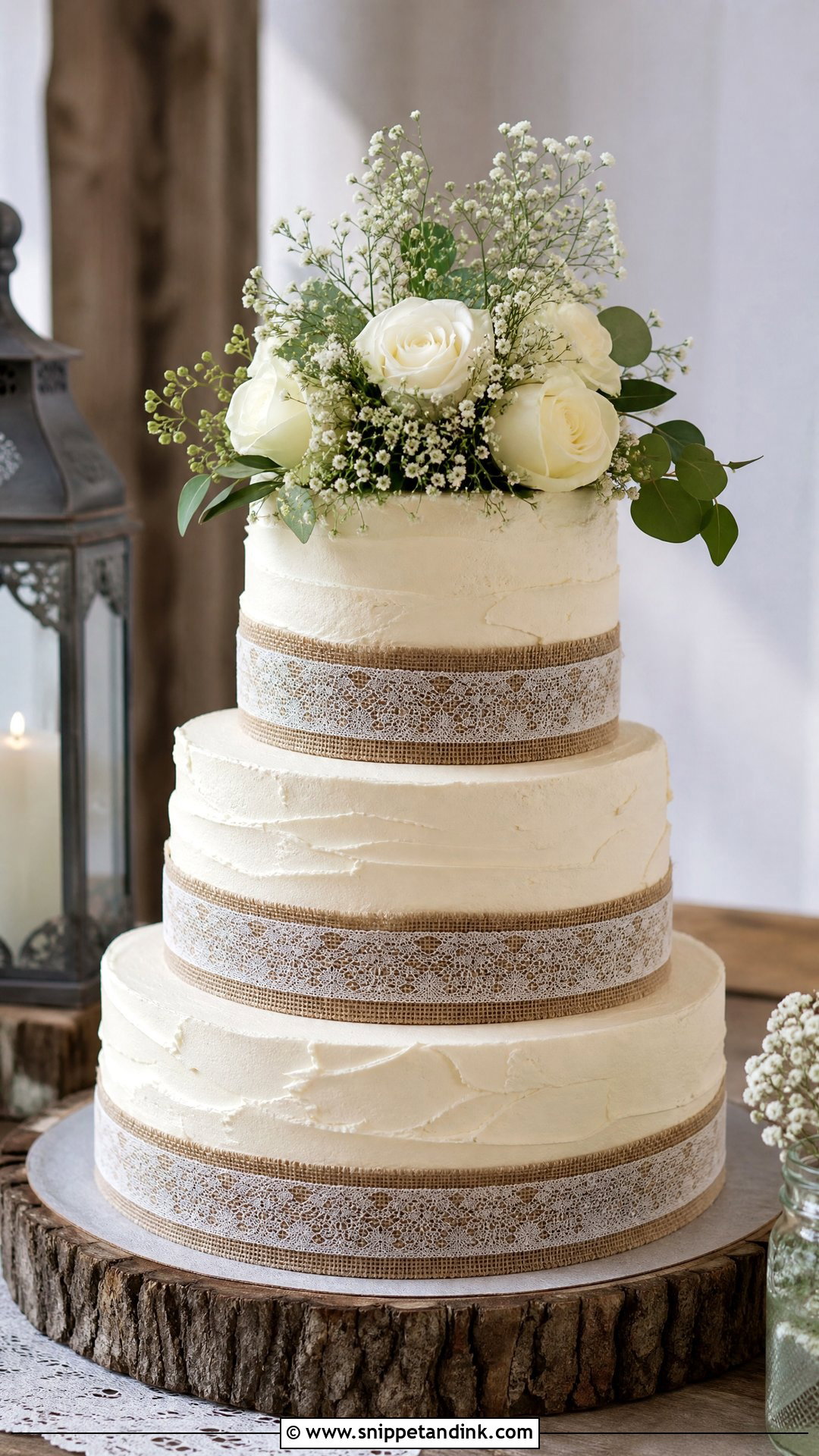
Burlap gives that farmhouse texture, but on its own it can look like a feed sack. Pairing it with lace, ivory buttercream and a few soft flowers keeps it romantic. I prefer a narrow band on one or two tiers rather than every tier. Smooth vanilla or almond buttercream makes the cleanest base. The fibres shed, so I always line the ribbon with food-safe tape or acetate before it goes on the cake.
11. Rustic Wedding Cake With Lace
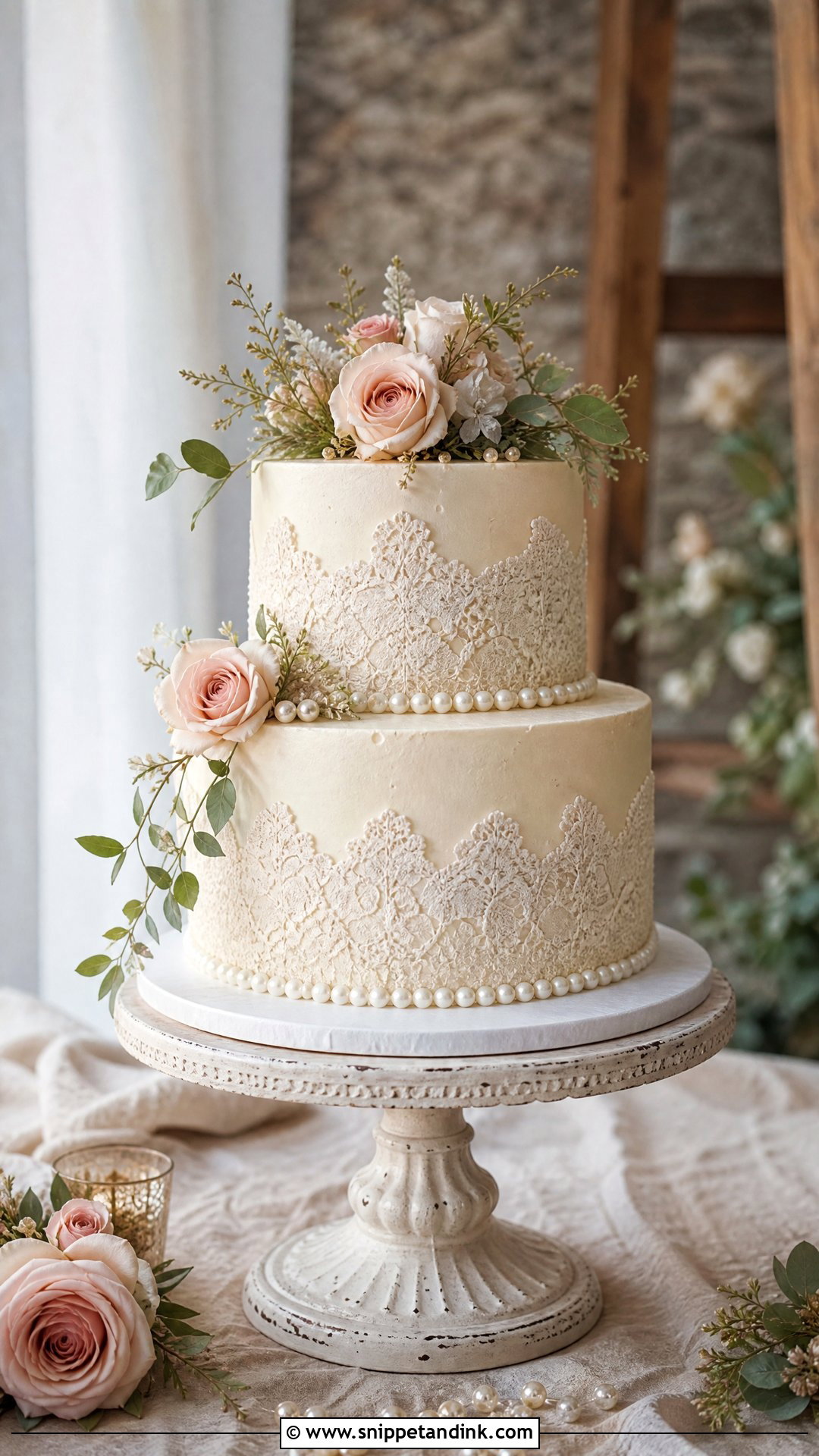
Lace softens a rustic cake and links it to the dress. I make it as sugar lace set in a silicone mat, as an impression pressed into fondant, or as real ribbon placed over a barrier. Sugar lace is sensitive to the weather: it goes brittle in dry air and limp in humidity, so I fix it close to delivery. Ivory buttercream, blush flowers and a few sugar pearls suit it. Gentle colours like cream, champagne and pale blush let the pattern show.
12. Rustic Wedding Cake With Drip
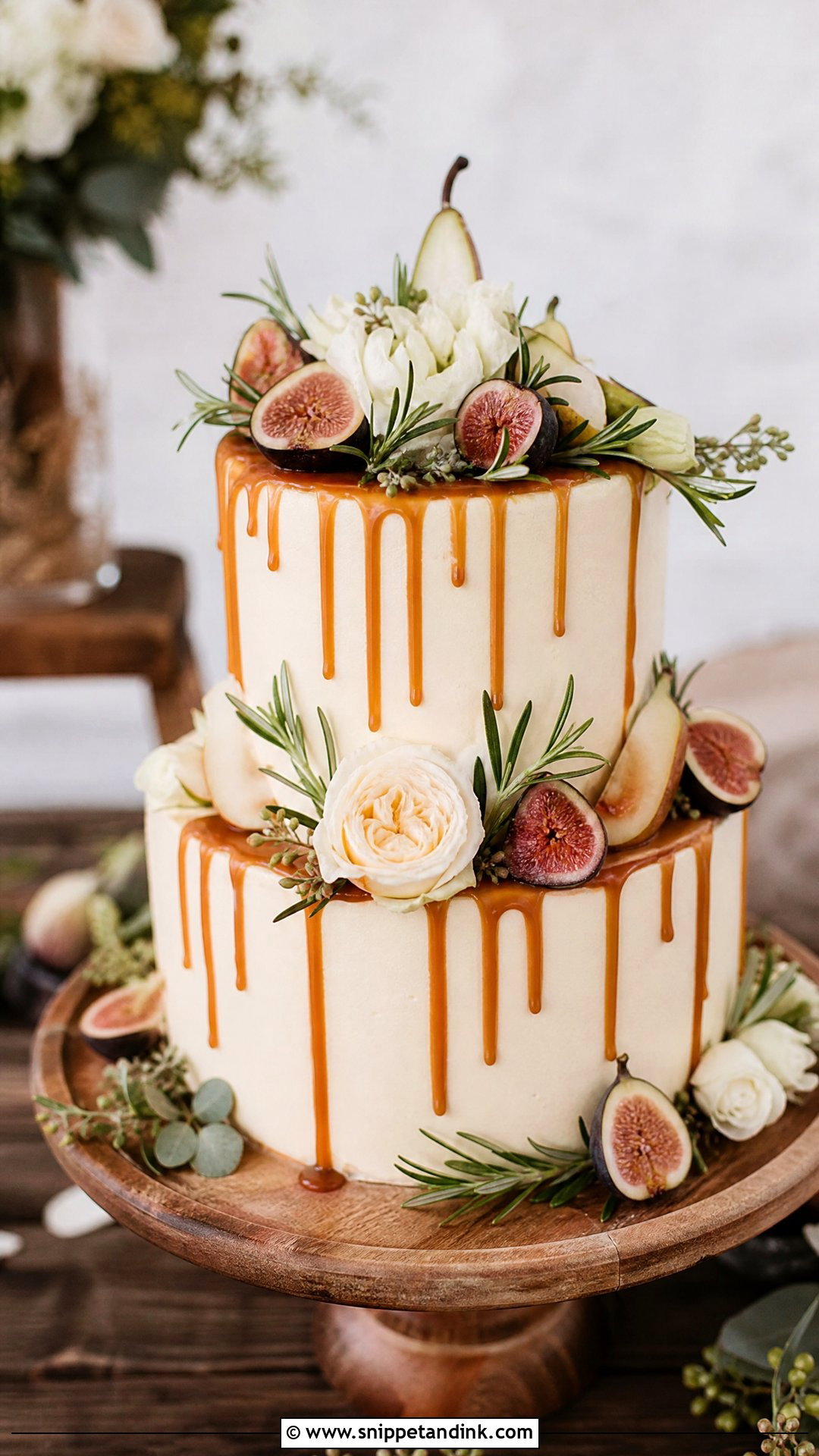
Drips add a modern touch, and for a rustic cake I keep the colours earthy: caramel, honey glaze, white chocolate or dark ganache. Temperature is the whole technique. The tiers must be cold and the drip just warm enough to flow, or it races to the board. Caramel over ivory looks warm with figs, pears or dried citrus; chocolate suits berries and greenery. I let the drips vary in length but stop them all well above the board.
13. Rustic Wedding Cake With Fruit
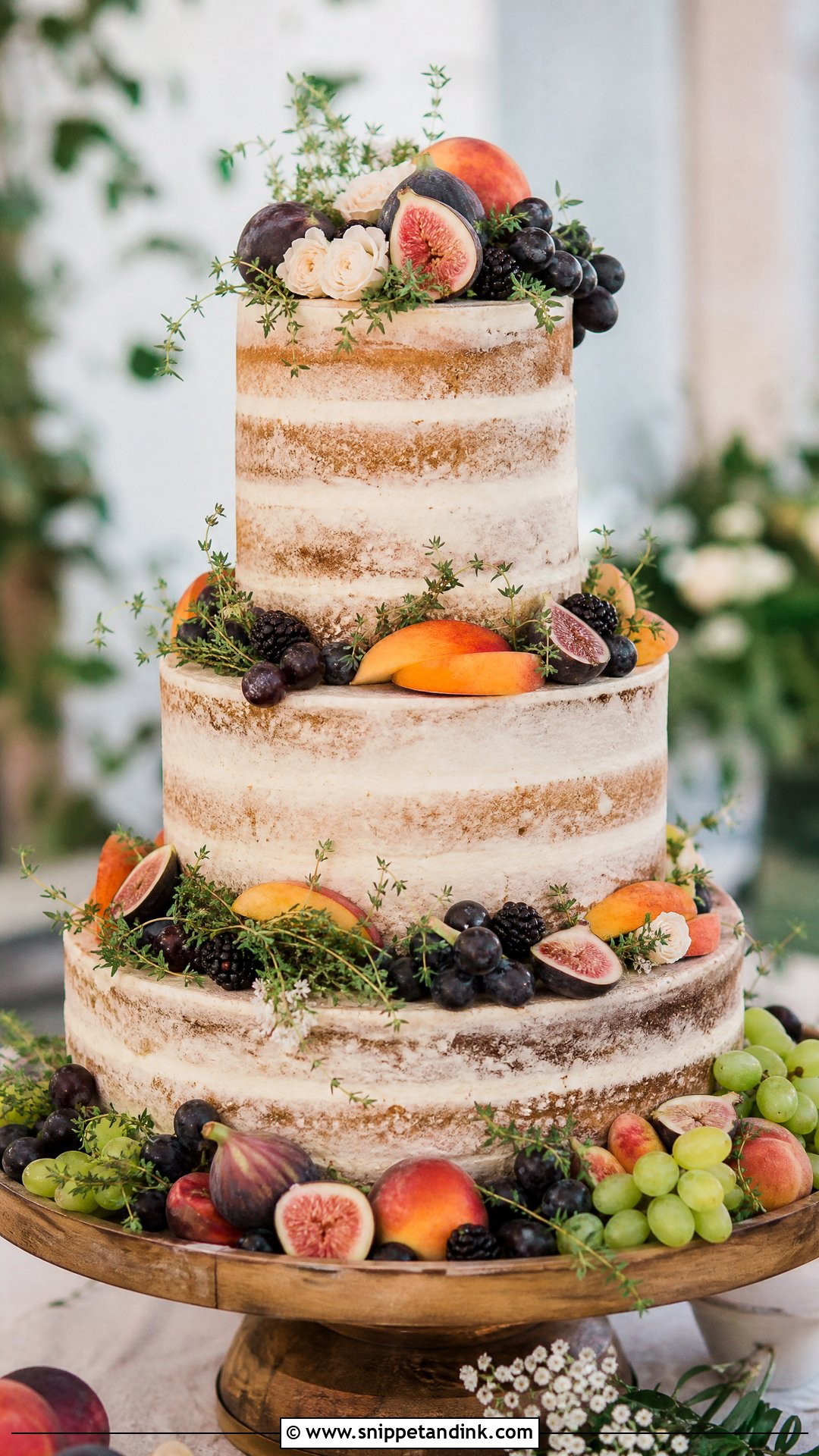
Fruit lets the cake mirror an orchard or a farm-to-table menu. Figs, pears, peaches, grapes, citrus and berries all work, arranged in balanced clusters with rosemary or thyme between them. I avoid fruit that browns or collapses during a long display, and anything cut gets a thin glaze. Vanilla bean, honey, almond, spice and olive oil cake flavors are natural partners. Buttercream or semi naked frosting gives the fruit a calm background.
14. Rustic Wedding Cake With Succulents
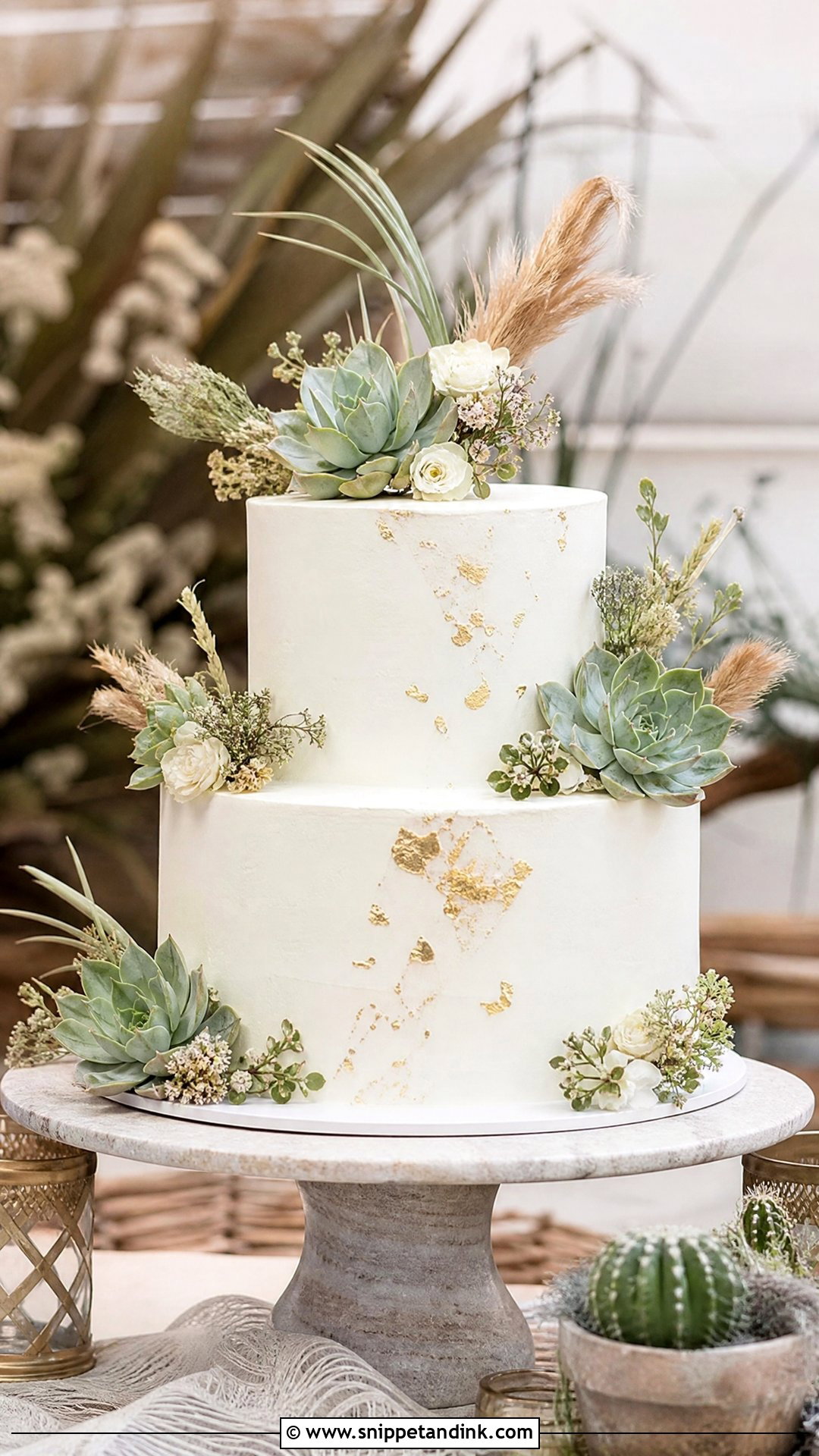
Succulents suit desert, boho and modern farmhouse weddings, and their sculpted shapes stand out on white or grey-blue buttercream. They aren’t food, and some plants sold as succulents can irritate skin or stomachs, so I clean the roots off and set each one on a food-safe pick or a small barrier disc. A few small blooms or dried grasses with them, plus a touch of gold leaf, give a more polished finish. They’re heavy for their size, so they go on the sturdier lower tiers.


15. Rustic Wedding Cake With Dried Flowers
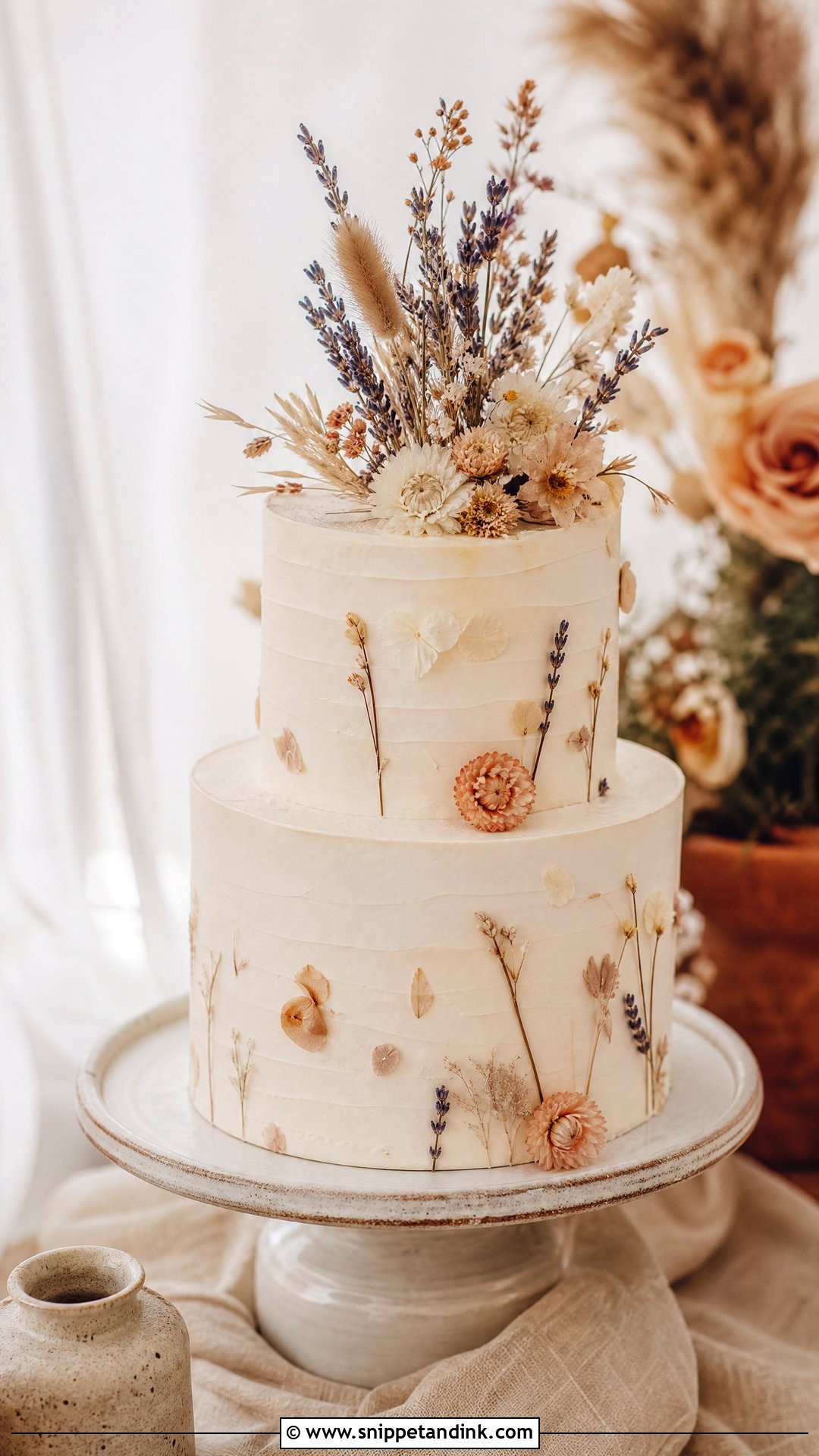
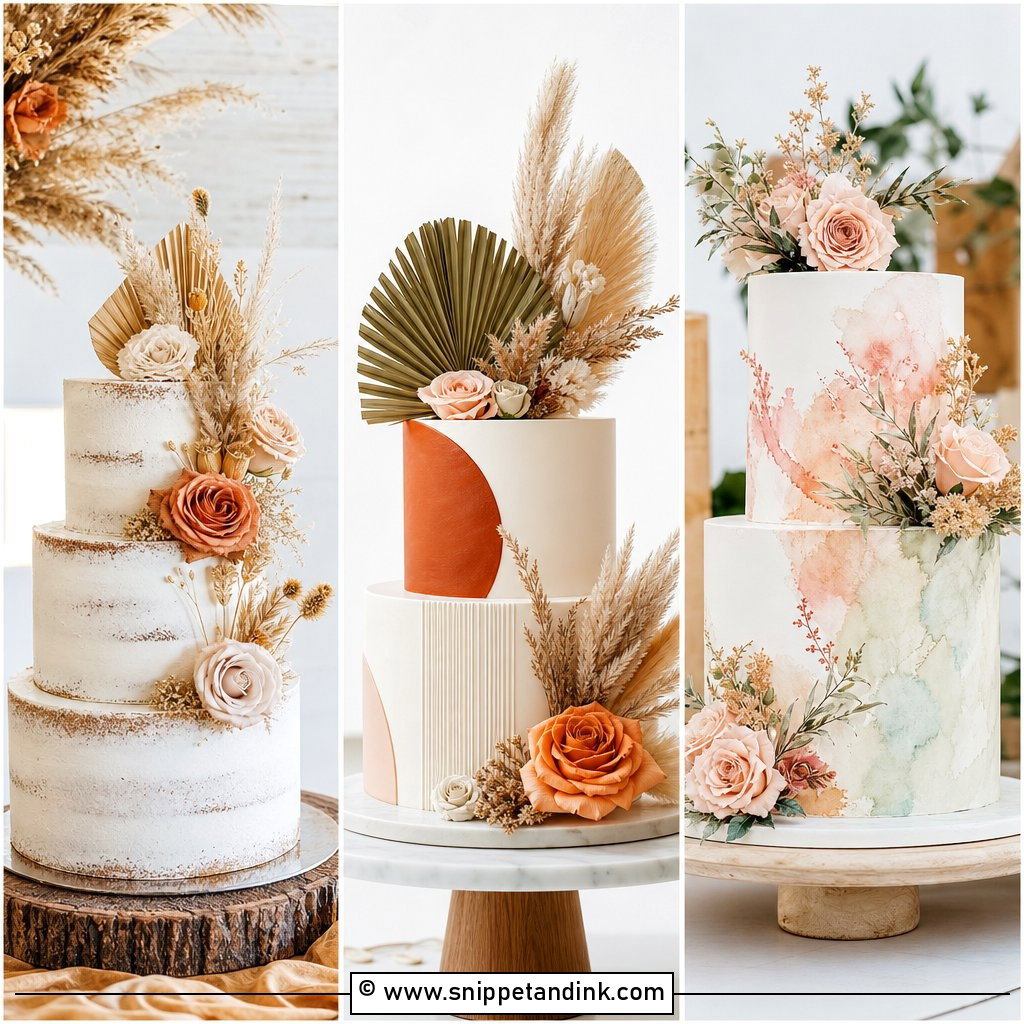
Dried flowers won’t wilt through a hot afternoon in a barn, which makes them a sensible choice there. Strawflower, bunny tails, dried lavender, small dried daisies and soft grasses suit boho and autumn palettes in beige, terracotta, dusty pink and sage. They’re brittle, so I place them gently into picks rather than pushing stems into the frosting. Small clusters look clean; a crescent across one tier adds drama. Smooth or lightly textured buttercream shows their shapes best.
16. Rustic Wedding Cake With Lavender
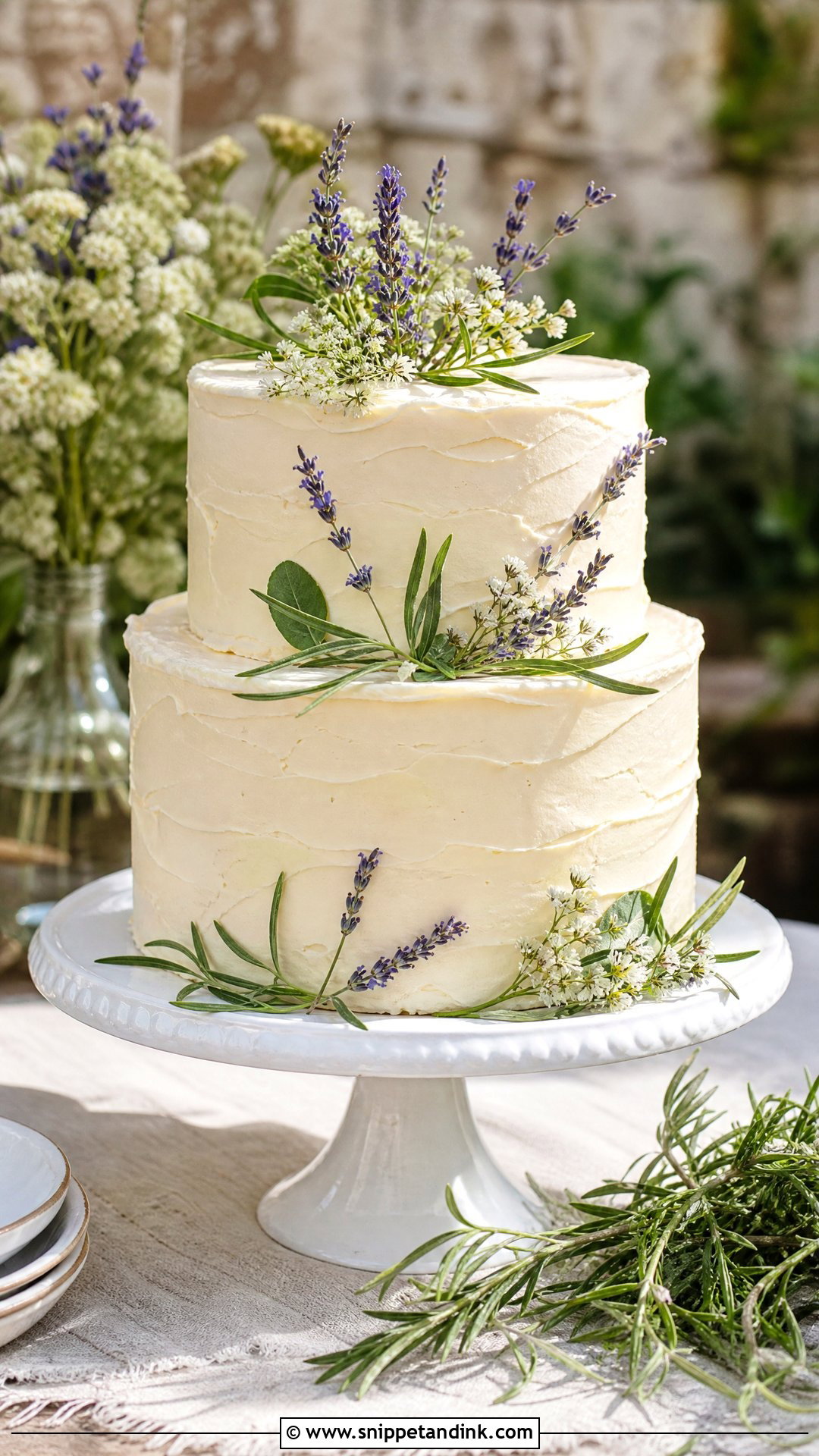
Lavender gives a soft purple accent without making the design loud. Lemon, honey, vanilla, almond and Earl Grey are the flavours I pair with it most. A few bundles on white buttercream look clean; on a semi naked cake they feel more relaxed. Add a little greenery or tiny white flowers to soften it. I use culinary lavender for anything that might be eaten and keep florist lavender on picks, since dried stems can carry dust and sprays.
17. Rustic Wedding Cake With Fall Flowers
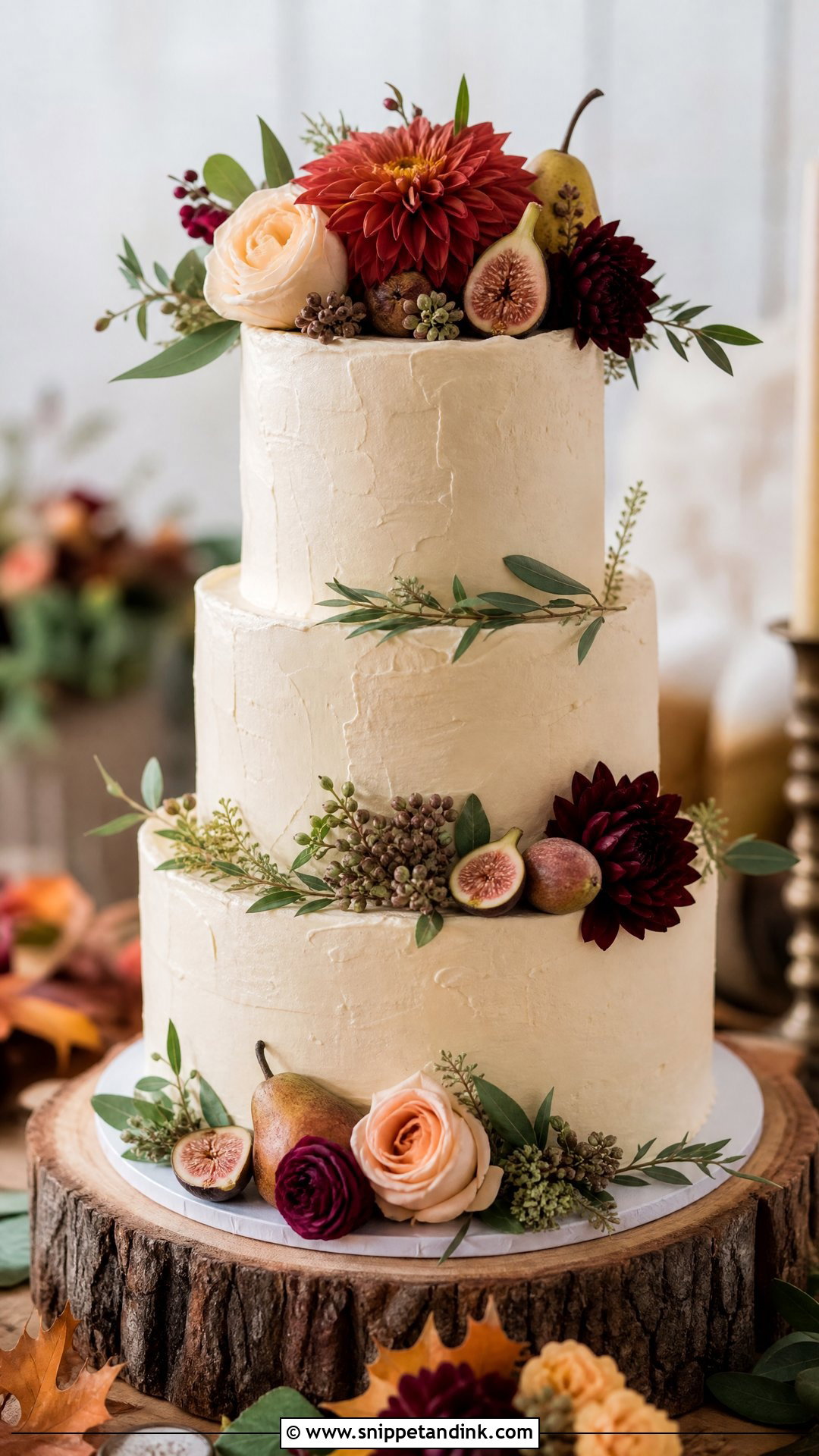
Fall flowers bring rust, burgundy, mustard and cream to an autumn celebration, and they suit textured buttercream, a caramel drip and a spice or brown sugar sponge. Dahlias and garden roses in those tones are heavy, so I keep the biggest heads on the lower tiers. Figs, pears or a few dried leaves add detail. With bold colours, I stop well short of covering the cake; some plain frosting has to show for the flowers to read.
18. Rustic Wedding Cake With Pressed Flowers
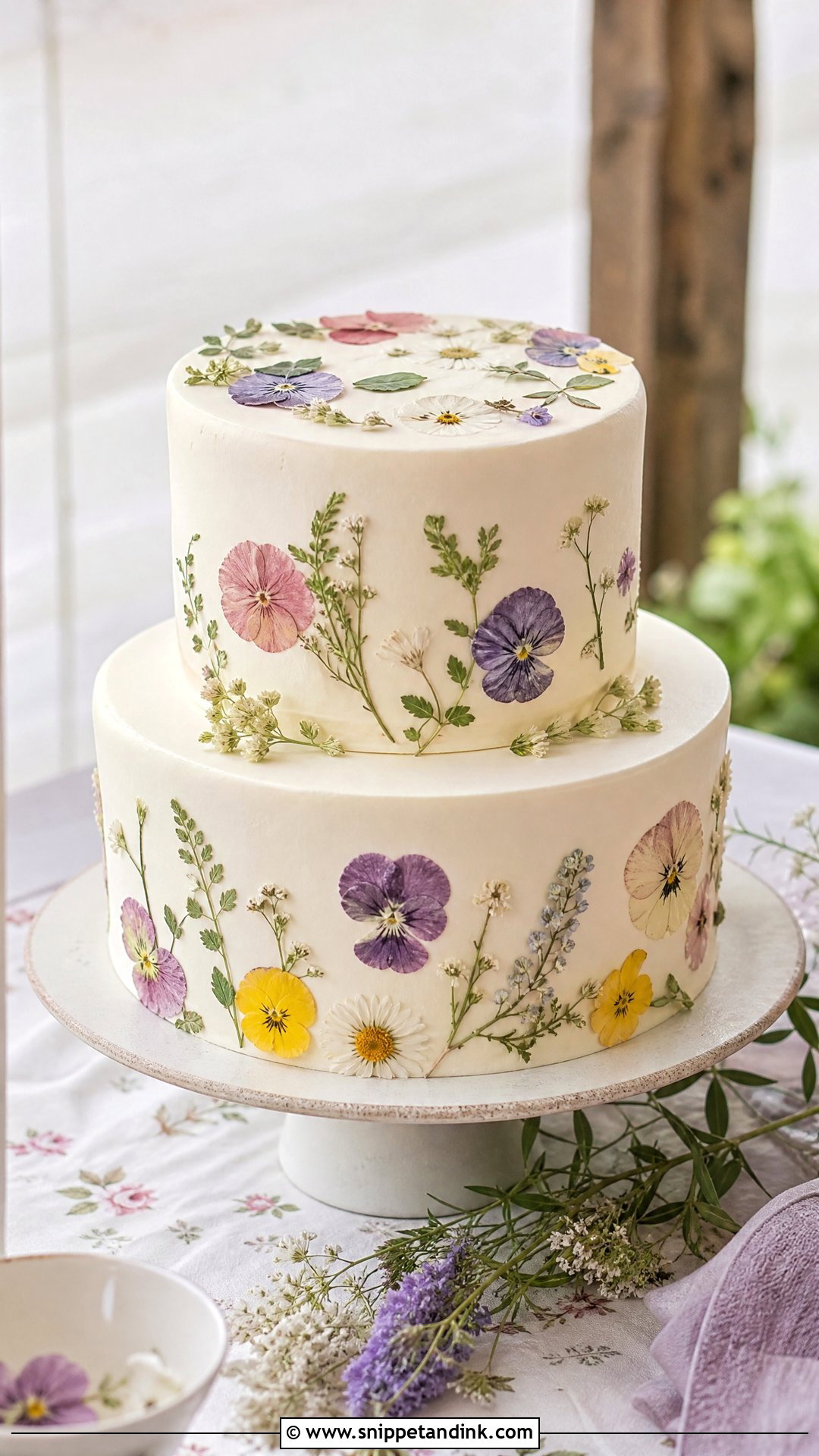
Pressed flowers are flat, vintage-looking and very calm. They need a smooth, chilled buttercream or a thin fondant surface, and I fix each one with a dab of piping gel. I buy edible pressed blooms grown for eating rather than pressing florist flowers, which are often sprayed. A light scatter over the whole cake or a band round one tier both work. Keep the palette to a few colours from your wedding so it looks considered.
19. Rustic Wedding Cake With Chocolate
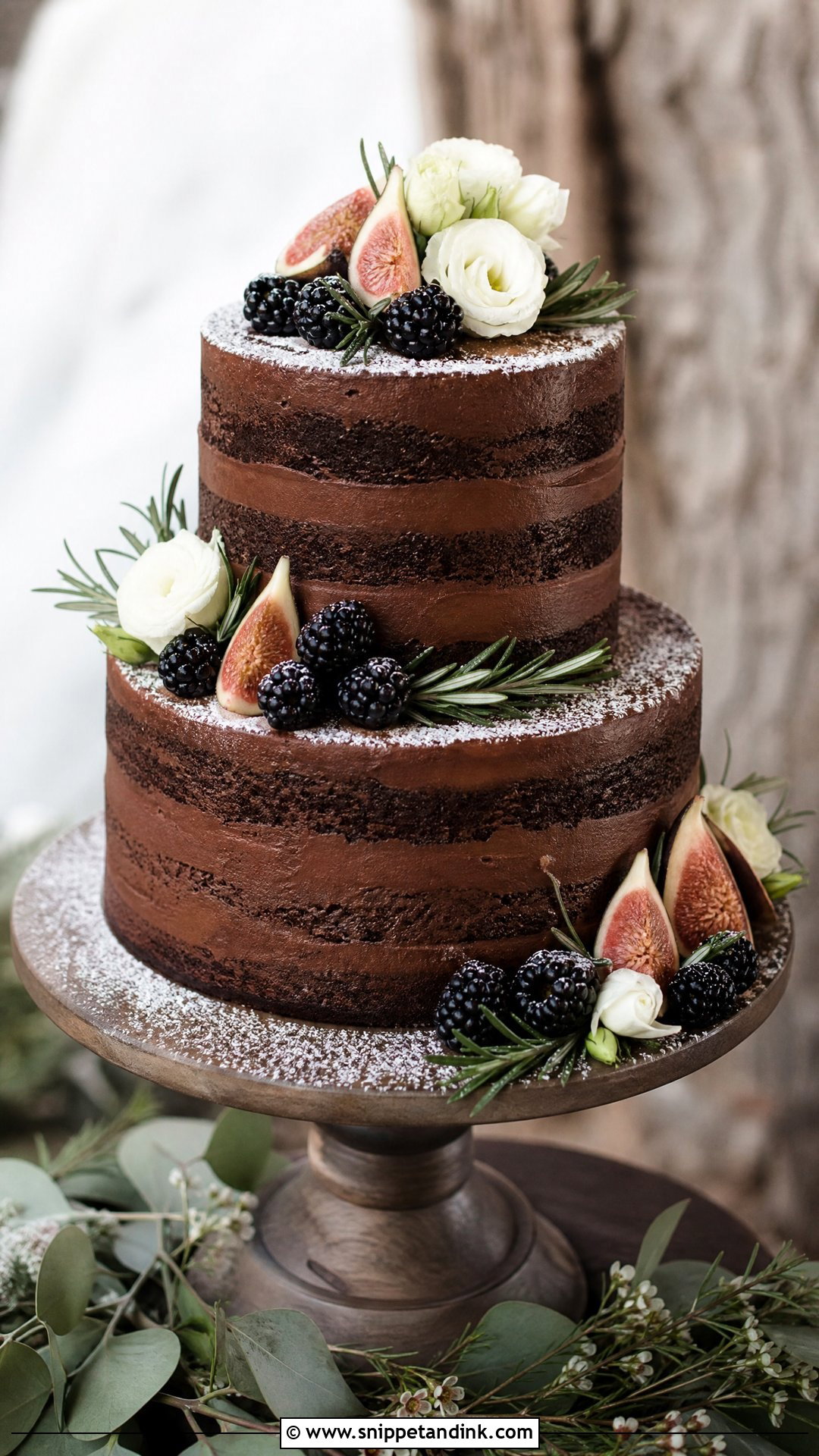
Chocolate is a good answer for couples who simply don’t want a white cake. Dark sponge, chocolate buttercream or glossy ganache can all look rustic with rough-textured frosting, berries and greenery. A chocolate semi naked cake with white flowers has strong contrast; ganache with blackberries and rosemary is moodier. Ganache also sets firmer than most buttercreams, which helps in a warm barn. It suits autumn, winter and candlelit evening receptions best.


20. Rustic Wedding Cake With Cupcakes
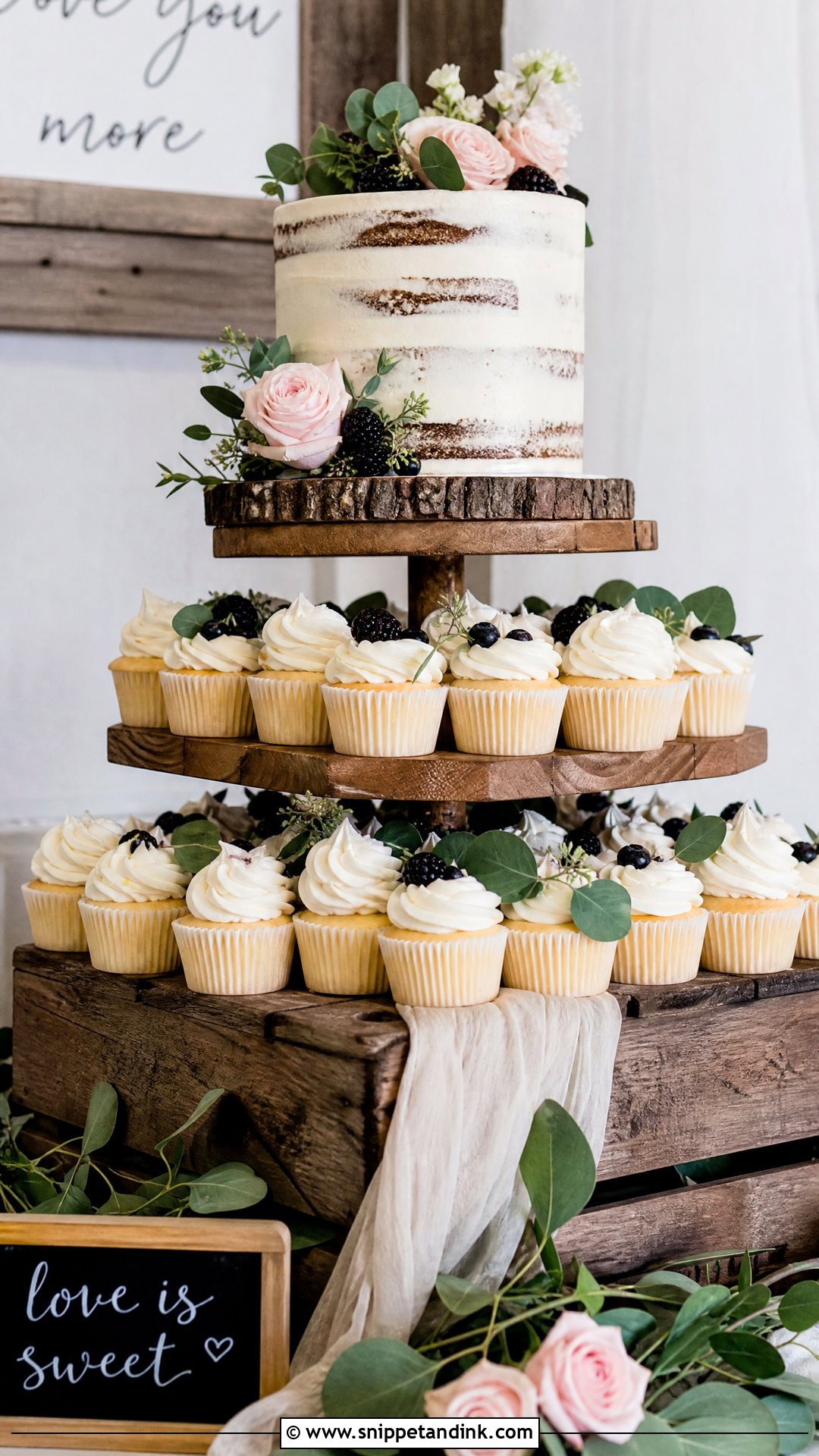
A small cutting cake above a spread of cupcakes is quick to serve and easy on the budget. The cake can be semi naked or textured, and I match the cupcakes in flavour, frosting and decoration for a pulled-together dessert display. Wood crates, tiered stands and linen give the setup some height. It also lets you offer three or four flavours without building a huge tiered cake. In heat, cupcakes sweat faster than a large cake, so keep the trays shaded until guests arrive at the table.
Cutting the Cake Before the Barn Loses Its Light
Barn light changes fast. Late afternoon sun through the doors gives a golden glow; an hour later the room is lit by string lights alone, and a pale cake can look grey in photos.
A few things I suggest to barn couples:
- Cut earlier than tradition says, often straight after the meal, while there’s still some daylight and before the room gets warm and crowded.
- Position the table so the main light falls across the cake from one side, which shows the texture of buttercream or exposed layers.
- Cut into the bottom tier, at the back, so the front of the cake still looks whole for later photos.
- Agree with the caterer who slices and plates, and whether the top tier is boxed for you.
When a Dummy Tier Makes Sense
If you want three or four tiers for a tall barn but only need cake for a smaller crowd, a decorated foam tier can replace one of the real ones. I frost and dress it exactly like the others, so no one can tell. It doesn’t always save as much as people expect, because the decorating time is the same, but it can cut down on cake that ends up wasted.
Match the Cake to the Barn You Actually Have
A rustic cake looks right when it fits the room, the season and the hours it has to stand. Semi naked layers, fresh flowers, berries, dried blooms or rich chocolate can all work in a barn, as long as the choice matches the conditions. A summer barn with the doors open needs more frosting and firmer fillings; a cool autumn evening can carry exposed sponge and delicate flowers. Keep everything that touches the cake food-safe, keep the design balanced, and it will look good in photos and taste good at the end of the night.
You'll Like These Ideas:



Leave a Reply