
Blush is the color I mix more than any other for wedding cakes, and it’s trickier than it looks. Done well, it reads as a warm flush on the icing rather than a pink party cake. It sits easily beside ivory, champagne, mauve, rose gold, sage, pearl and fresh greenery, which is why it turns up at garden weddings, ballrooms, barns and city venues alike. Color alone doesn’t make the cake, though. Texture, tier shape, flowers, piping and a little metallic detail do the real work. Here are twenty ways I’d approach it, with the practical notes I’d give you at a consultation.
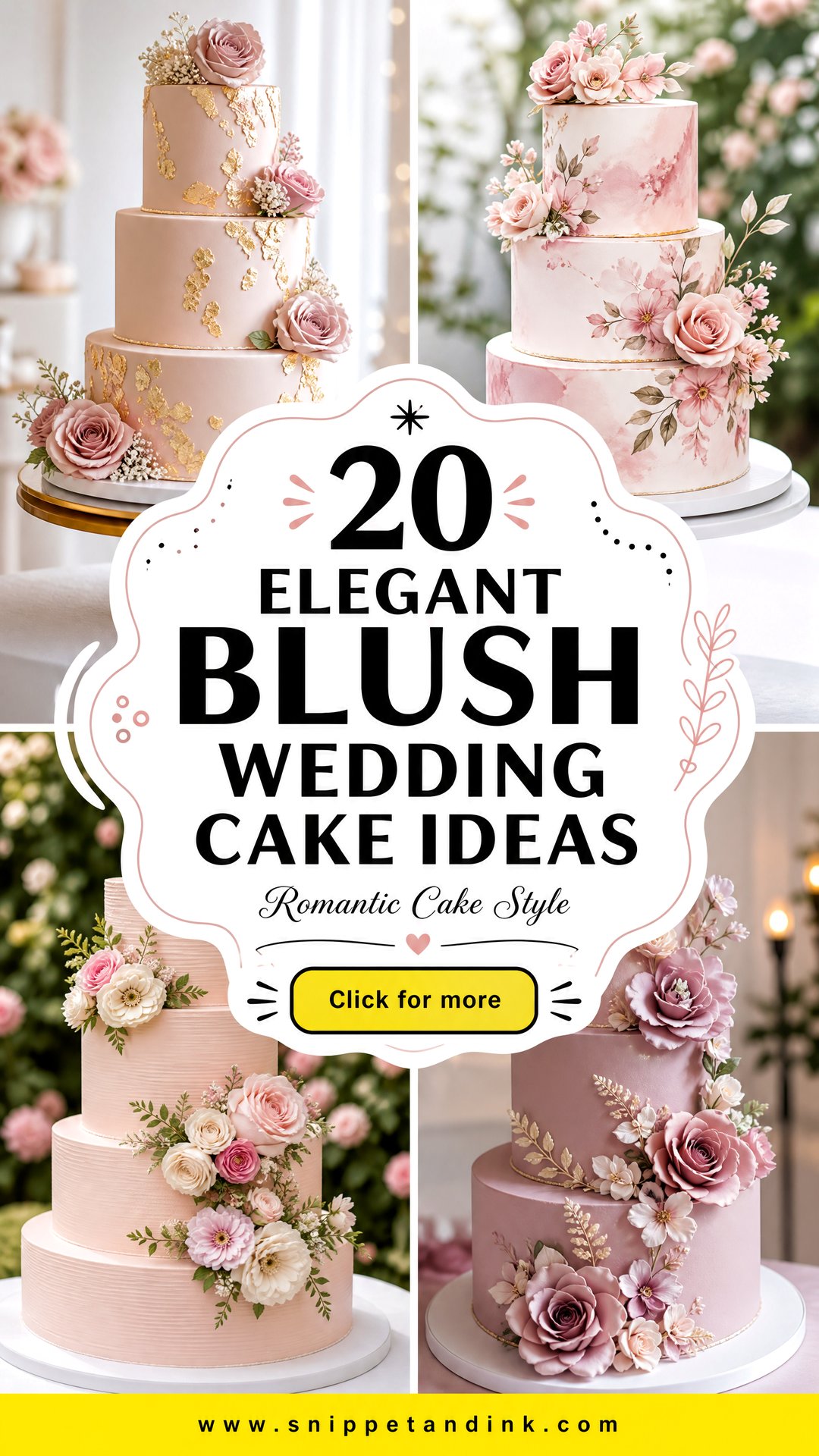
Bring a Fabric Swatch, Not a Screenshot
Blush means something different to everyone. To one couple it’s a barely-there pink, to another a peachy nude, to a third a dusty rose. Phone screens make this worse, because the same photo can look cooler or warmer depending on the device. The most useful thing you can hand me is something physical: a napkin from your linen order, a scrap of bridesmaid fabric, a ribbon or a flower from the florist.
I match against that swatch in daylight and again under warm light, since blush shifts a lot between the two. A real butter buttercream also has a yellow tint of its own, which pushes pink toward peach, so the base recipe matters as much as the color I add. If you want a cooler, true pink, tell your baker early.
Agreeing on the shade before the week of the wedding
Ask for a small tinted sample at your tasting or a photo of one beside your swatch. Pink deepens a little as it sits, so a sample made a day ahead shows the true result. Once it’s approved, write the shade down in your order so nobody is guessing later.
1. Blush Wedding Cake With Fresh Roses
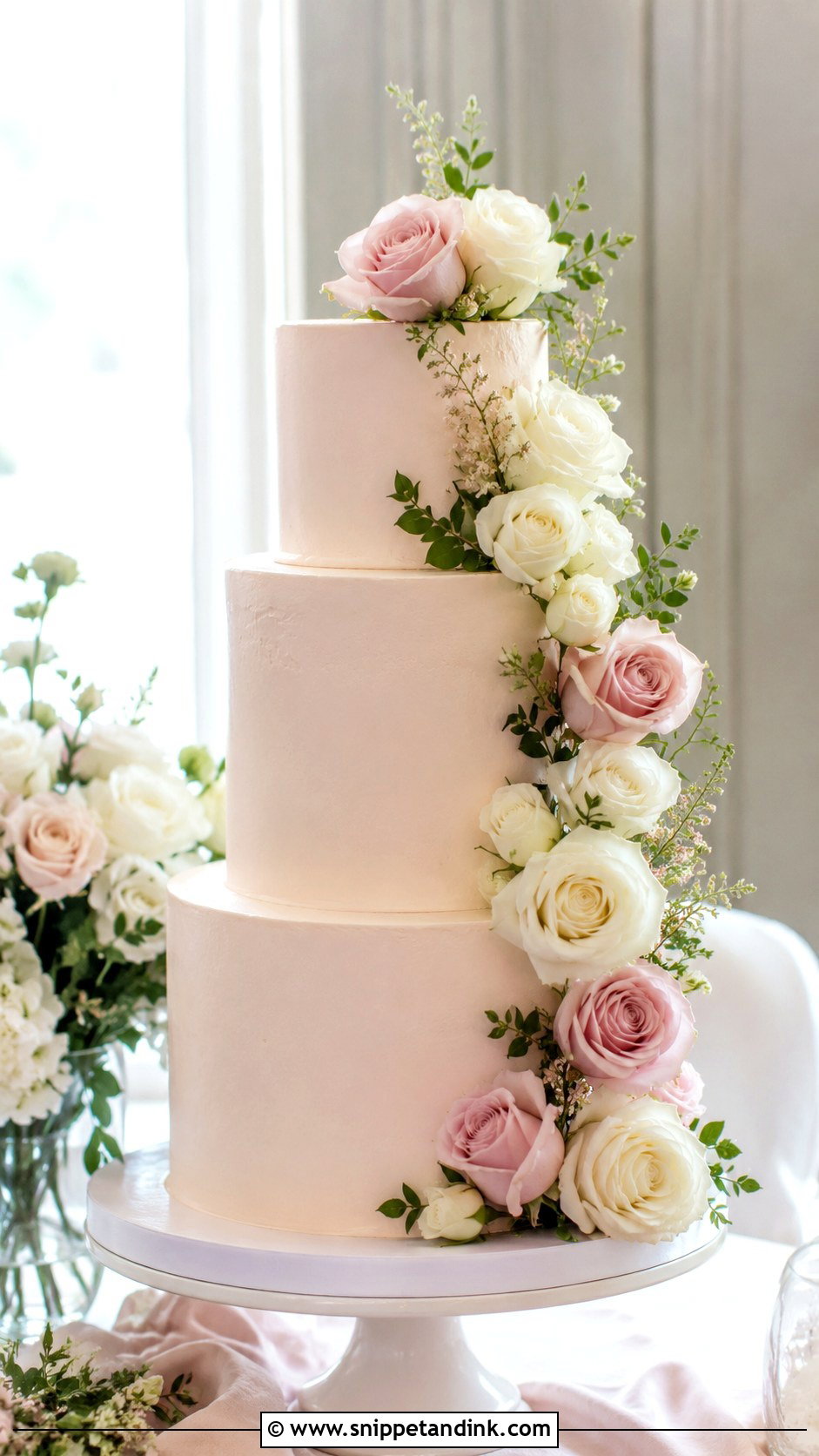
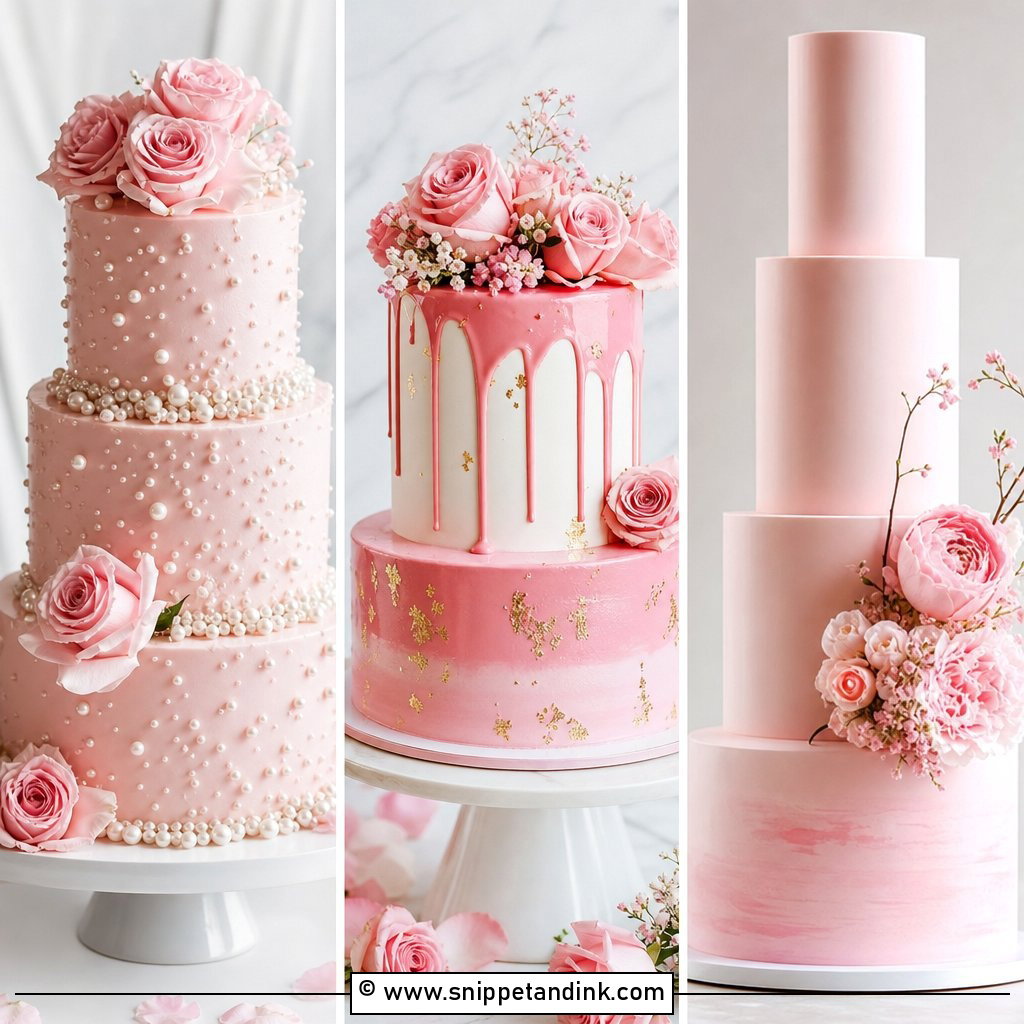
Fresh roses are the most direct route to a romantic cake. I start with soft pink buttercream or pale blush fondant and set a cluster of roses around the base, between the tiers or down one side. Mixing ivory, dusty pink, cream and pale peach roses gives a gentle color story and hides the fact that real blooms never quite match the icing. Smooth tiers let the flowers carry the design. Every stem is wrapped or sits in a pick before it goes near the cake, and the roses go on at the venue, not the day before.
2. Blush Wedding Cake With Gold Leaf
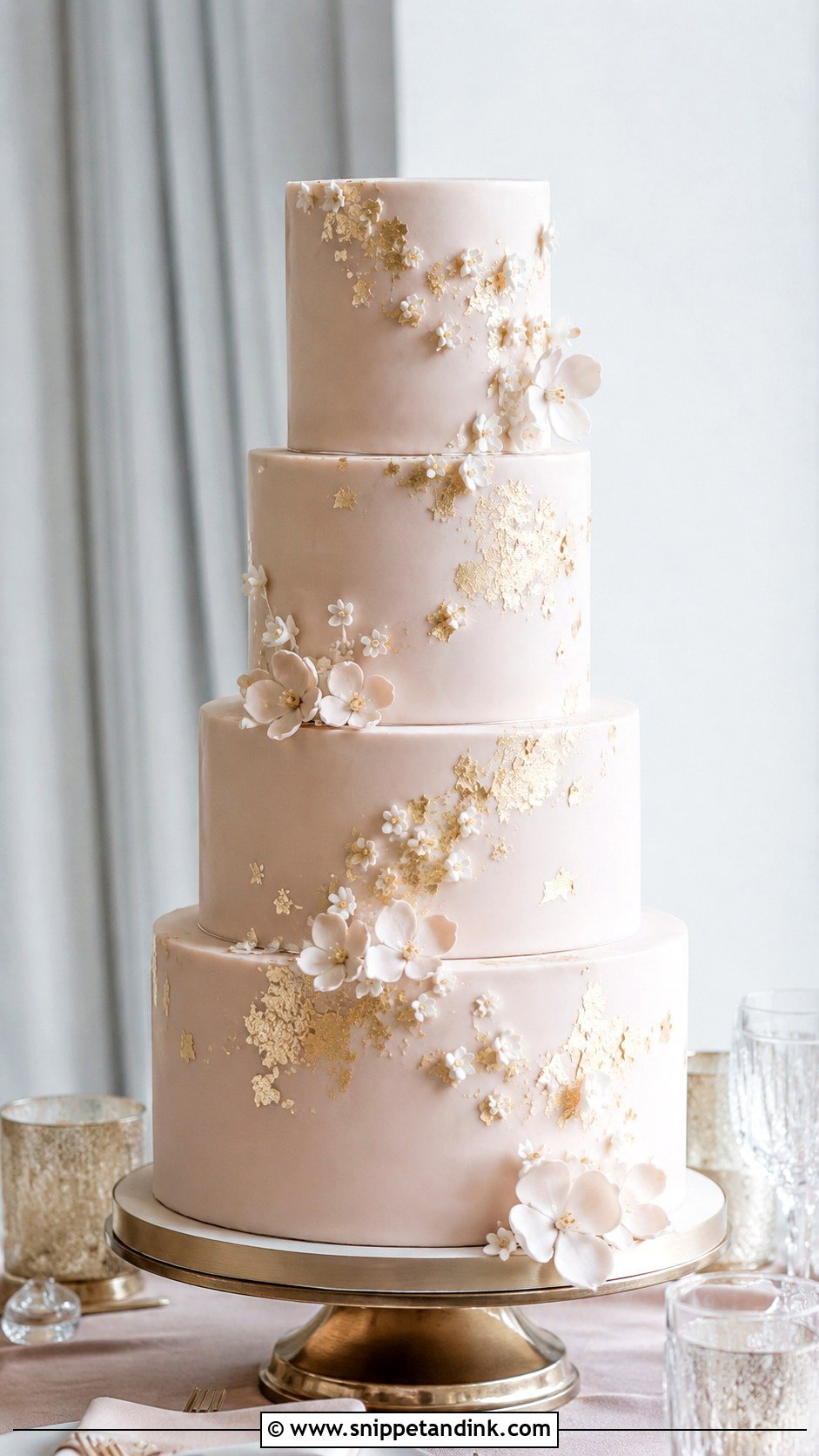
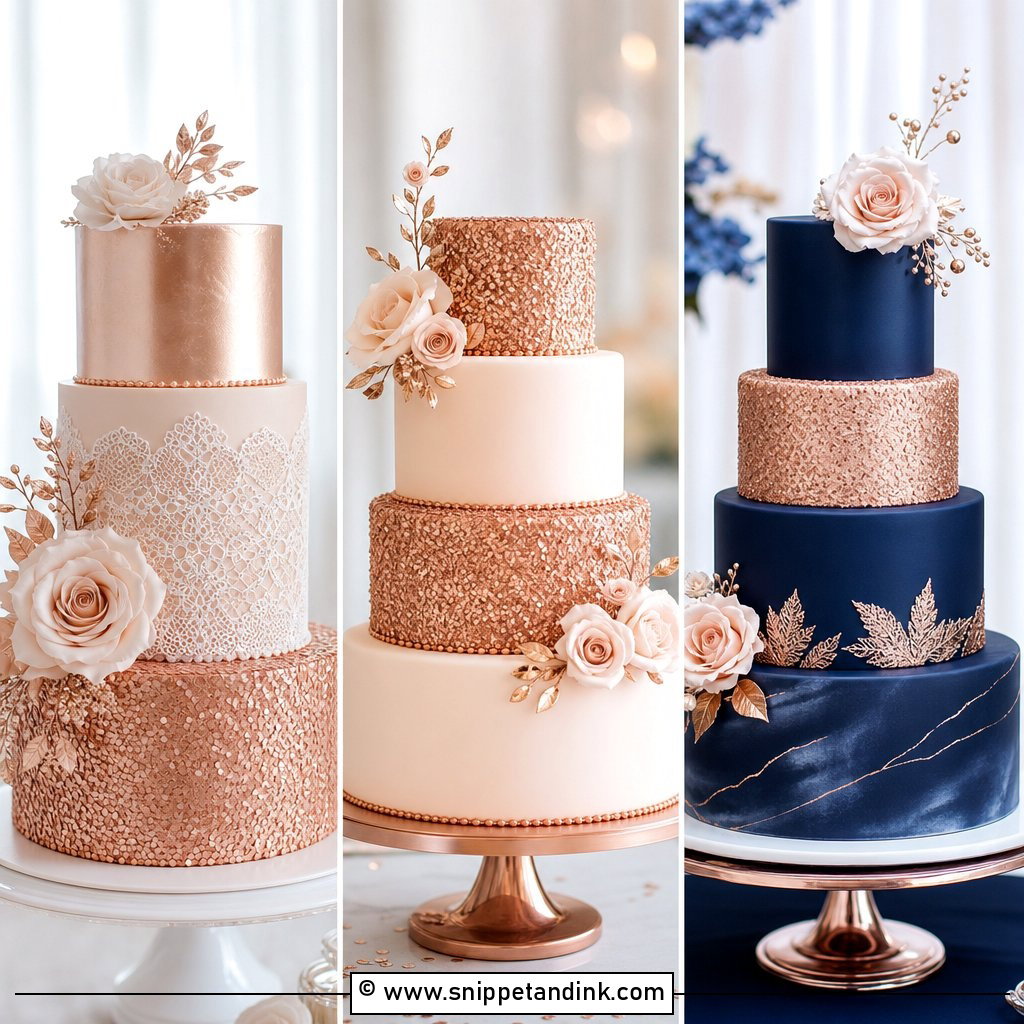
Gold on blush should be an accent. Small flakes along one edge, at the tier seams or near the floral clusters keep the cake soft while adding warmth, and a smooth blush buttercream or fondant gives the leaf a clean background. If your palette already includes rose gold, beige, ivory or mauve, this blends straight in. Gold leaf looks its warmest under candlelight, so it really comes into its own at an evening reception in a formal room. In daylight it’s subtler than people expect.
3. Blush Wedding Cake With Pearls
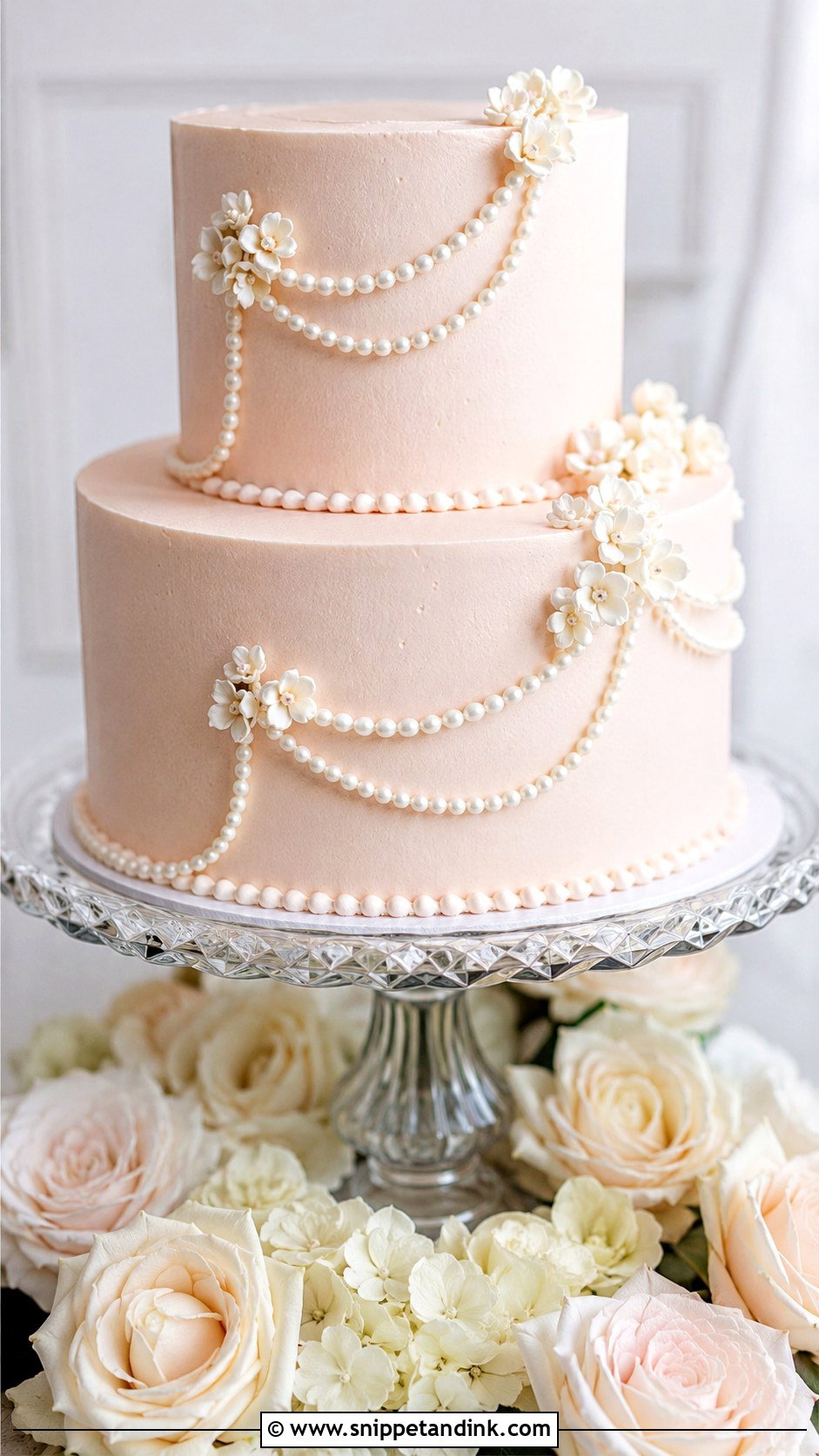
Pearls on pink read as delicate rather than sweet, provided the blush is muted. Edible pearls can sit in neat rows, scatter lightly over smooth frosting or pick out a piped border, and I pair them with ivory or white detail. They suit two and three tier cakes particularly well, adding texture without swamping the shape. A few sugar flowers are welcome, but I stop before the cake looks beaded all over. Hard sugar pearls are also a bit much to bite into, so I keep the densest rows on borders rather than across the tops.
4. Blush Wedding Cake With Ruffles
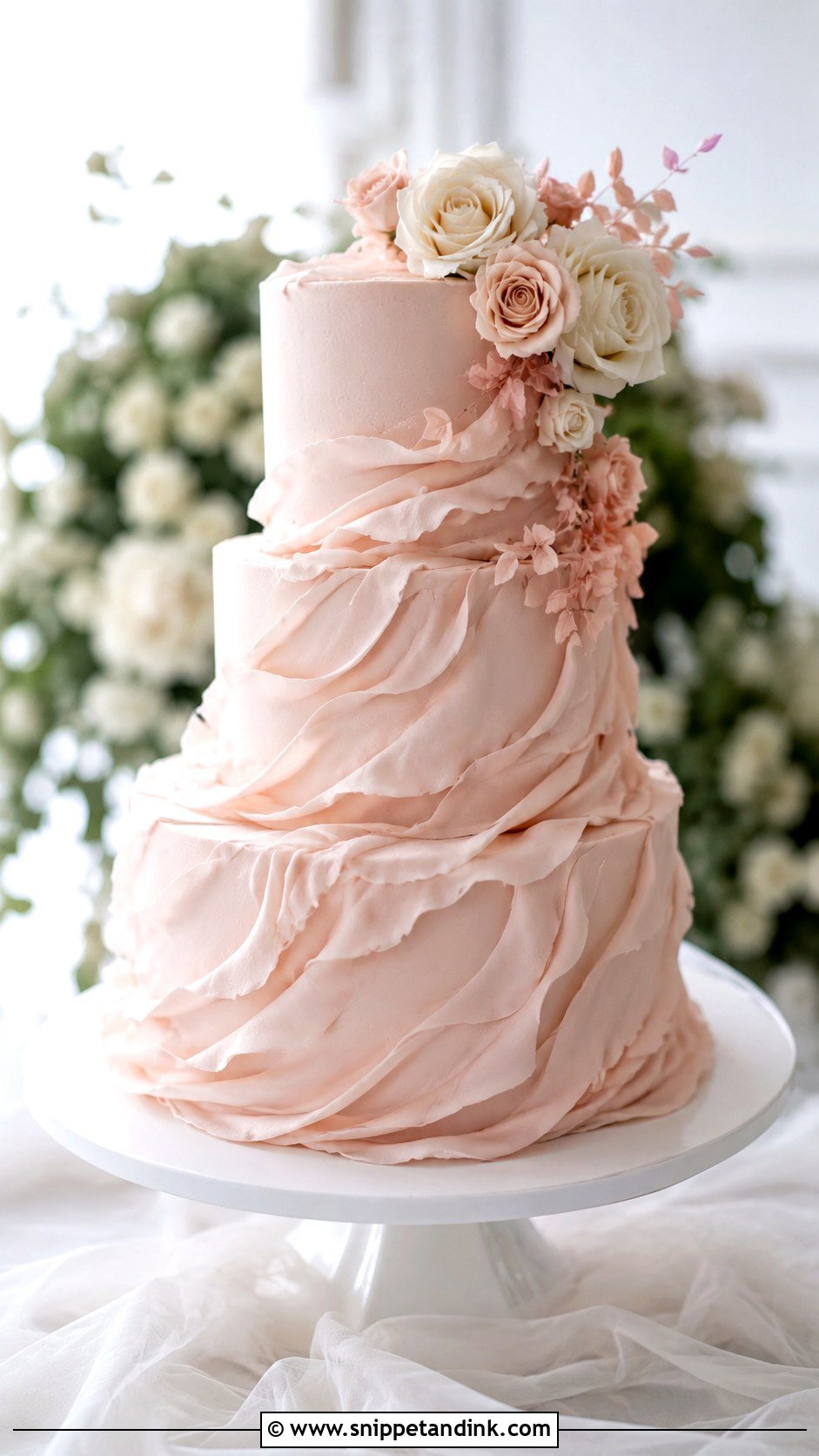
Ruffles make a cake look like fabric caught in motion. Buttercream ruffles feel relaxed and handmade; fondant ruffles are cleaner and more sculpted, and they keep their edges much longer in a warm room. You can ruffle every tier or just one statement tier between smooth ones. Pale blush, ivory and dusty rose let the shadows in the folds do the work, which is the part that gives ruffles their depth. Keep the top plain or add a few blooms so the texture stays the focus.
5. Blush Wedding Cake With Sugar Flowers
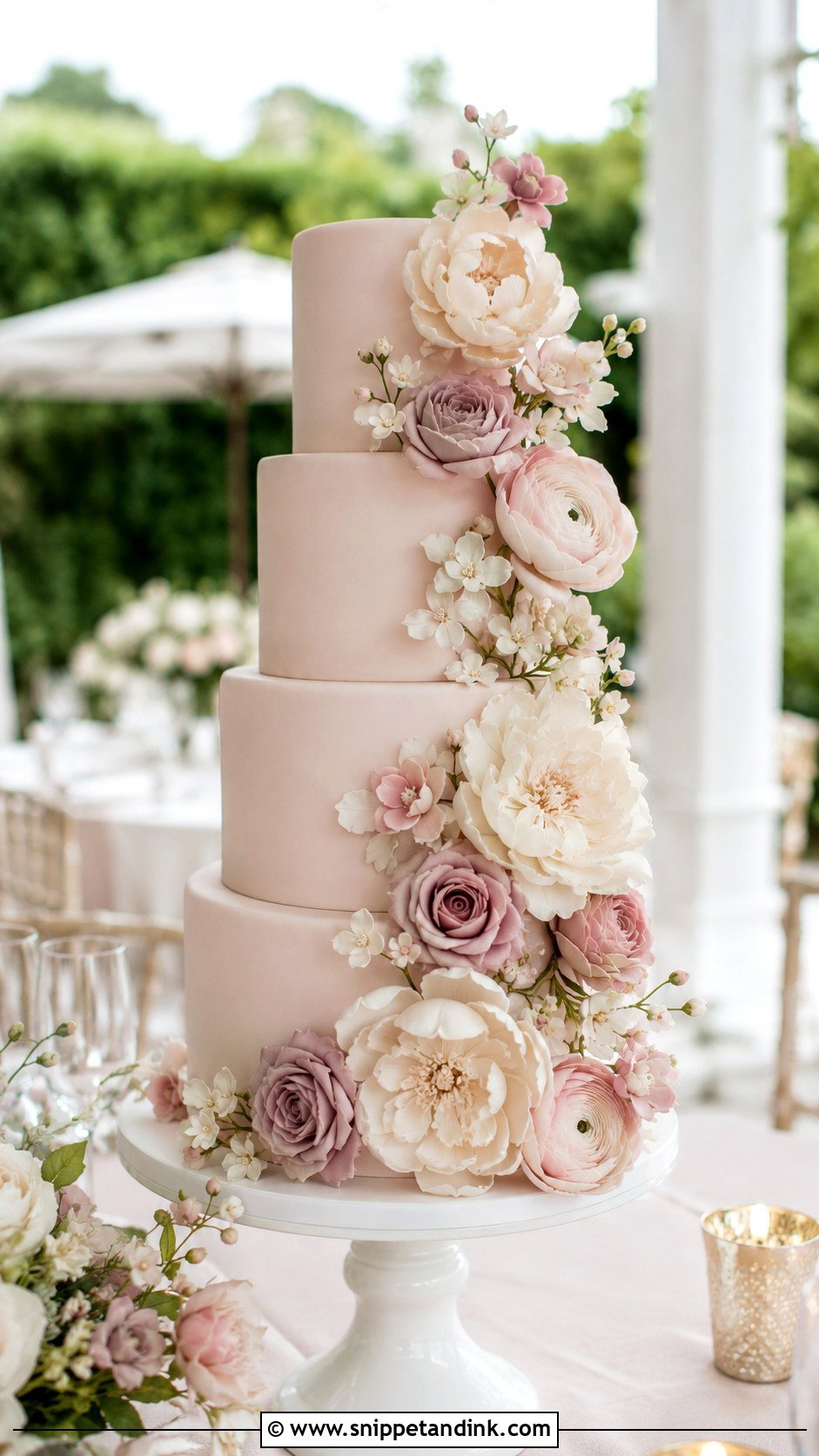
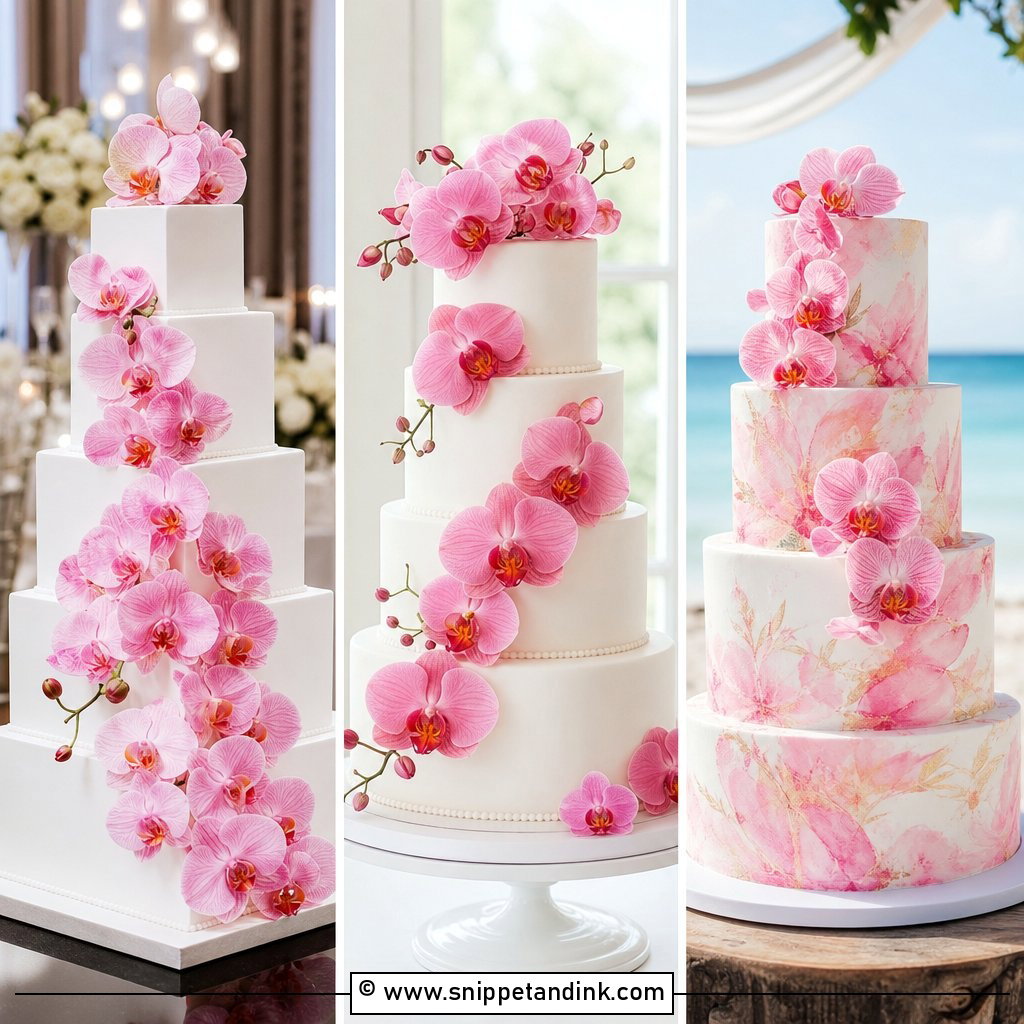
Sugar flowers give you blush exactly where you want it. Roses, peonies, ranunculus and small blossoms can be tinted blush, ivory, mauve or peach to match the bridesmaid dresses closely, which fresh flowers can’t promise. A cascade down one side brings drama; a few blooms per tier feels minimal. Smooth fondant gives them the crispest base, though buttercream works too. They’re my usual advice for a hot-weather wedding, because they don’t wilt, brown or leak sap onto the icing.
6. Blush Wedding Cake With White Buttercream
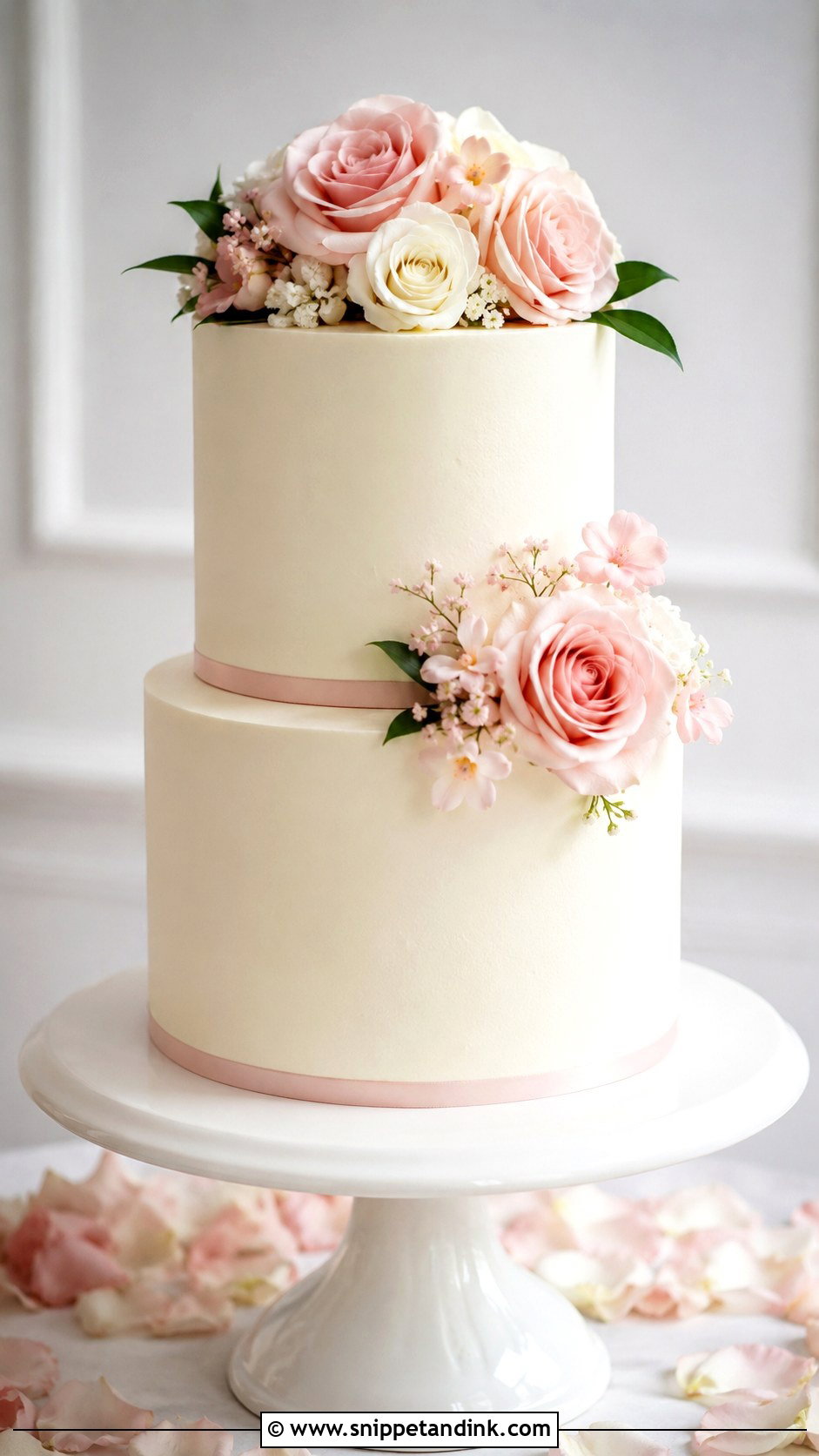
Not every blush cake has to be pink all over. With white buttercream as the base, the color can come through floral accents, a painted wash, ribbon trim or one tinted tier, and the cake stays bright and classic. A smooth finish looks modern; light texture feels handmade. White roses, blush carnations or tiny sugar blossoms finish it. This is the version I suggest to couples who are nervous about color, since it’s easy to add a little more blush and impossible to take it back out.
7. Blush Wedding Cake With Ombre Tiers
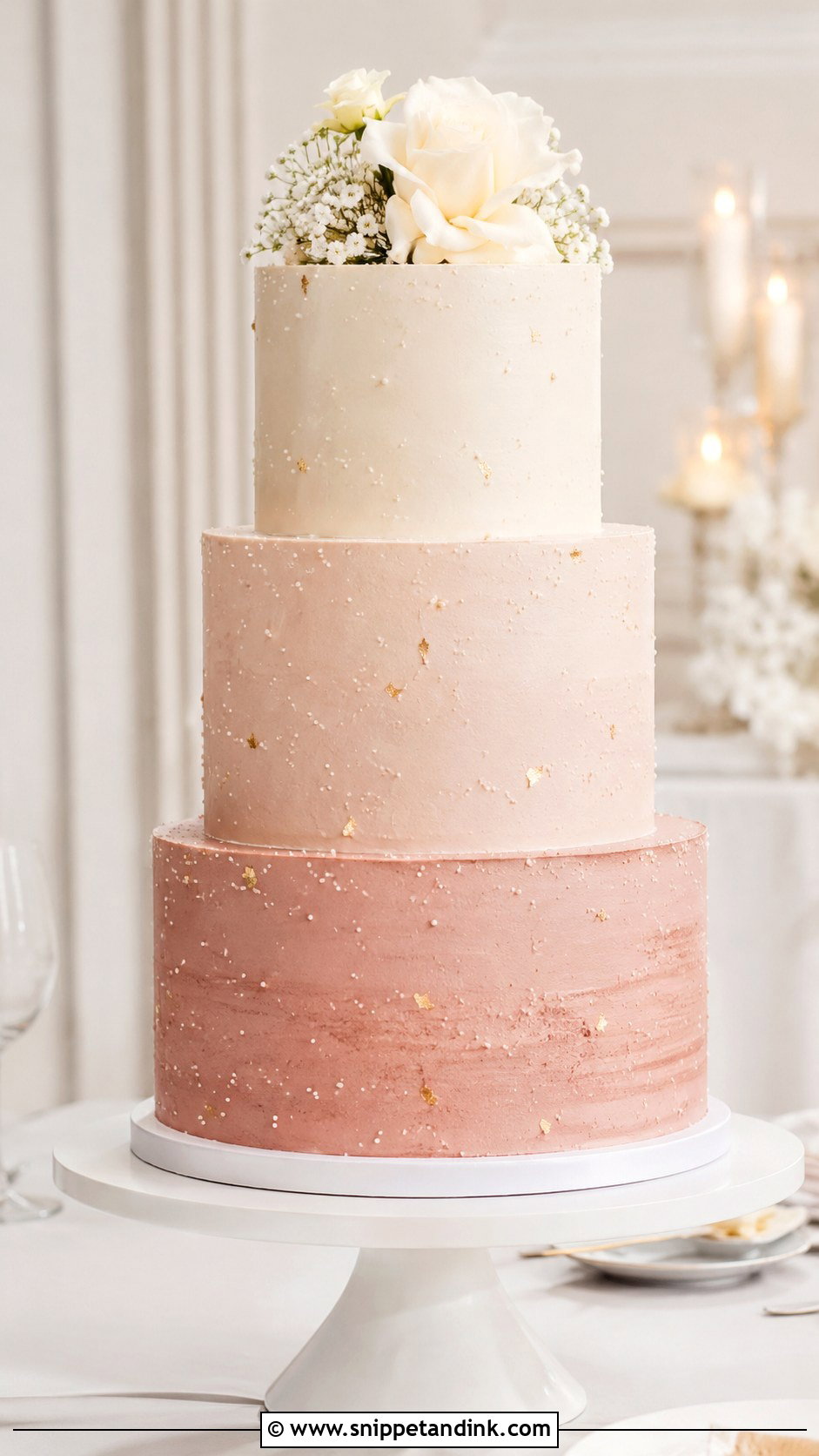
An ombré fade usually runs from a deeper dusty pink at the bottom to pale blush and ivory at the top, which keeps the visual weight low and makes the cake look taller. I tint every tier from one base batch, adding more color step by step, so the jumps between tiers stay even. Smooth buttercream, fondant or a soft airbrushed finish all suit it. Keep decoration light so the gradient stays readable; a few flowers, thin gold details or pearl accents are enough. Muted shades carry it into cooler seasons as easily as spring and summer.
8. Blush Wedding Cake With Vintage Piping
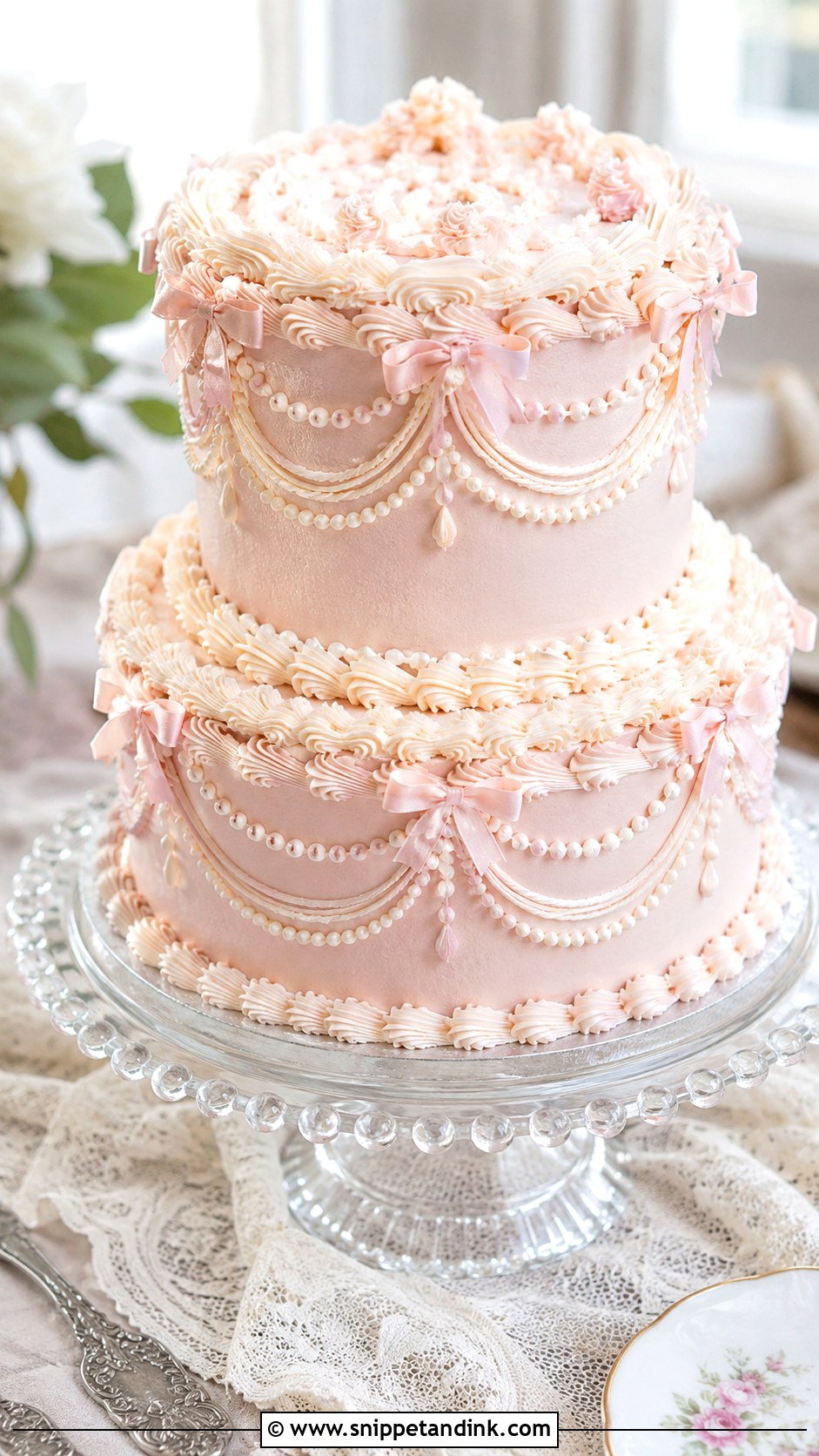
Old-fashioned piping feels fresh again in soft color. Shell borders, swags, small rosettes, pearl dots and neat buttercream detail look charming on pale blush tiers, whether the cake is round, heart-shaped or a tall two tier. I’d hold the palette to blush and ivory. Vintage piping takes a steady hand and firm buttercream, and in a warm room the fine details start to soften first, so ask your baker how they keep it crisp. Lace linens, glass stands and soft flowers around the display finish the table.
9. Blush Wedding Cake With Satin Bow
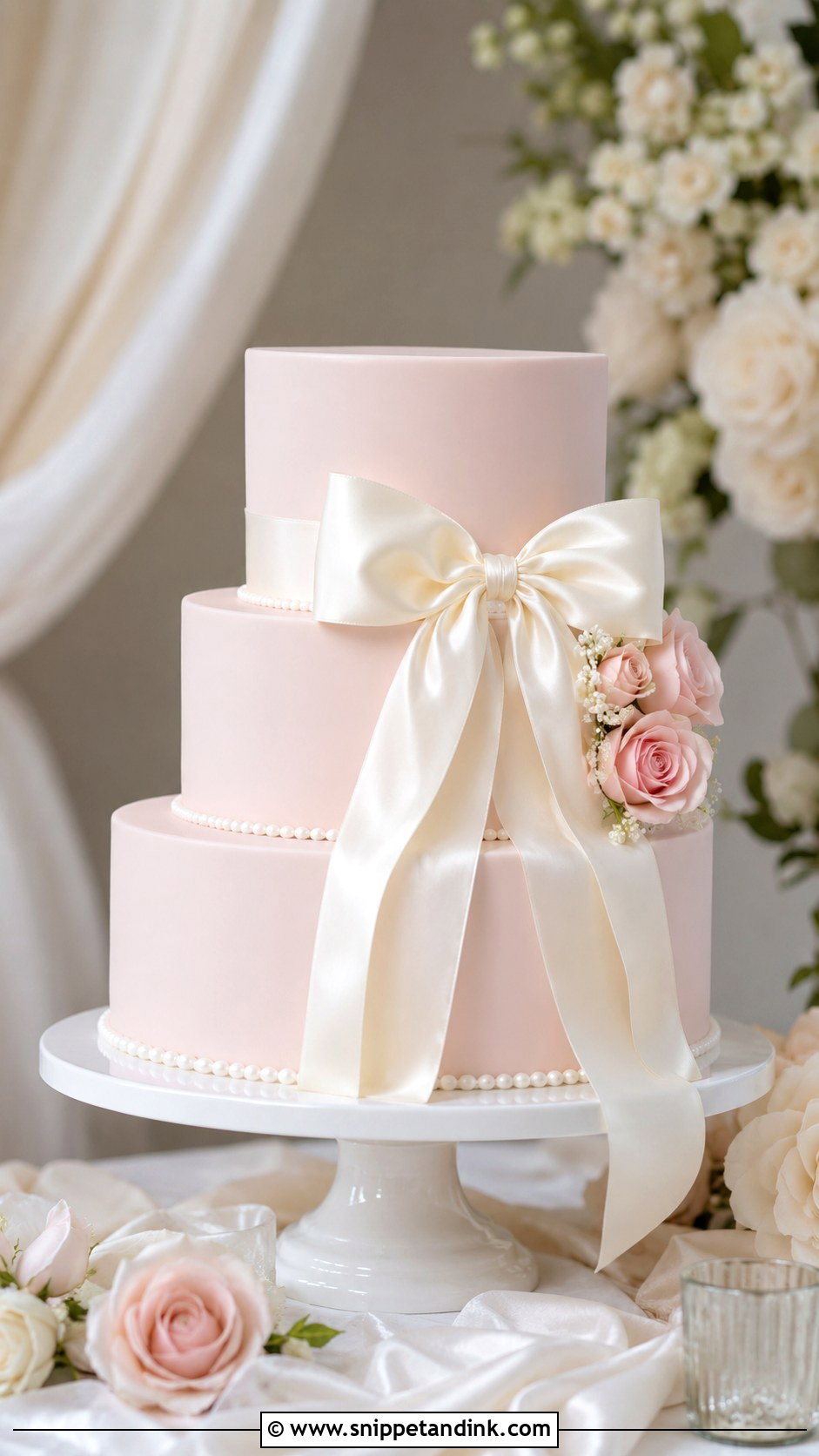
A satin bow is simple and very bridal. It can wrap one tier like a ribbon or sit as a single statement at the front, and pale blush icing looks lovely beside ivory satin, champagne ribbon or a deeper dusty rose. Keep everything else minimal: smooth tiers, one small floral accent. Real ribbon on buttercream soaks up butter and develops grease spots, so I either back it or make the bow from fondant. It suits courthouse receptions, bridal luncheons and intimate dinners where one detail is plenty.
10. Blush Wedding Cake With Lace Piping
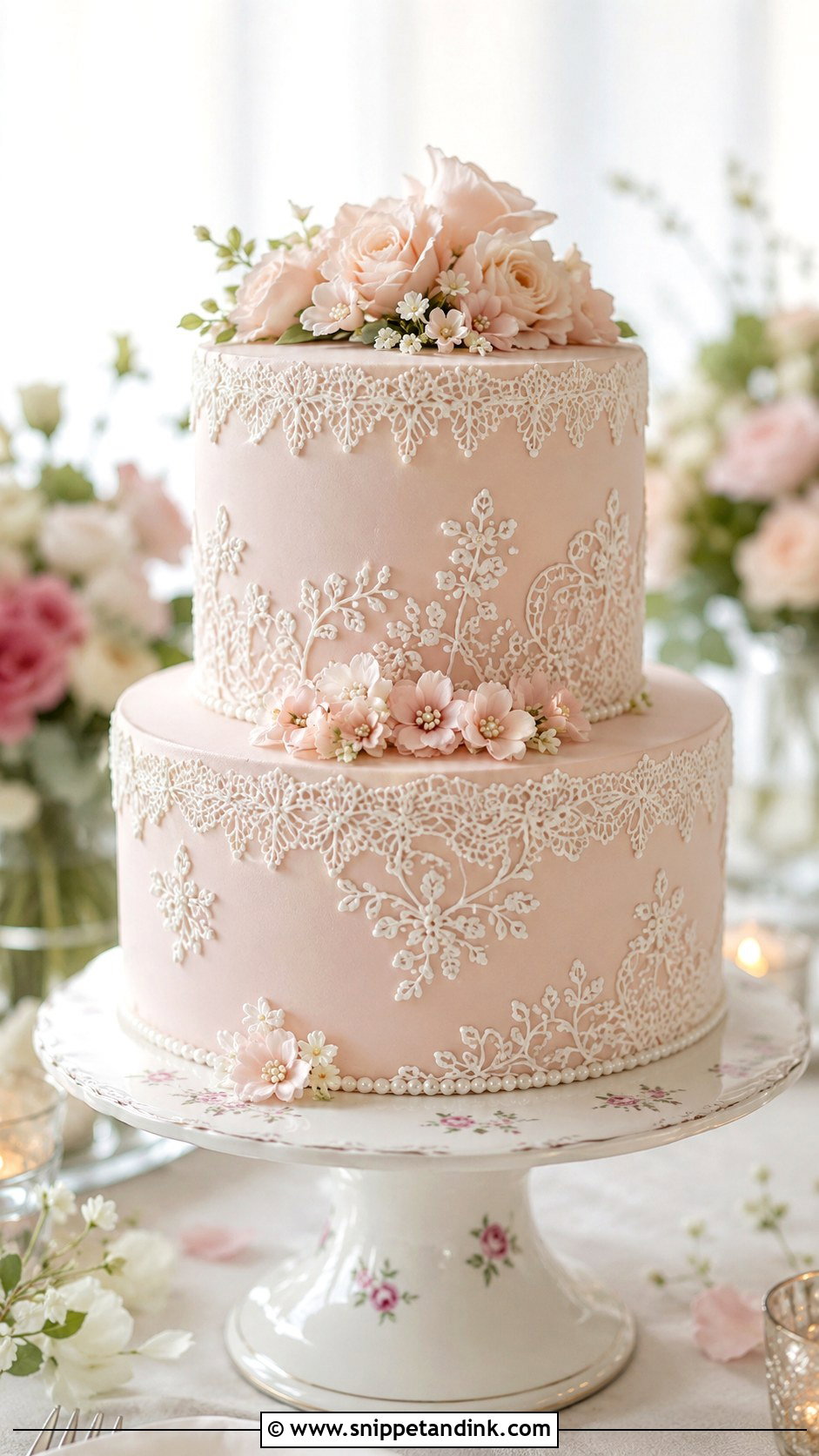
Ivory lace piped over blush fondant gives a soft, detailed finish; edible lace sheets do the same job more cleanly. I let the piping follow the shape of each tier and leave open space between motifs, because lace with nowhere to breathe just reads as texture from a few feet away. Pearl accents, small sugar flowers and simple white blooms suit it. If the gown has lace, bring a close photo and I’ll pick out one motif to repeat rather than trying to copy the whole fabric.
11. Blush Wedding Cake With Watercolor Flowers
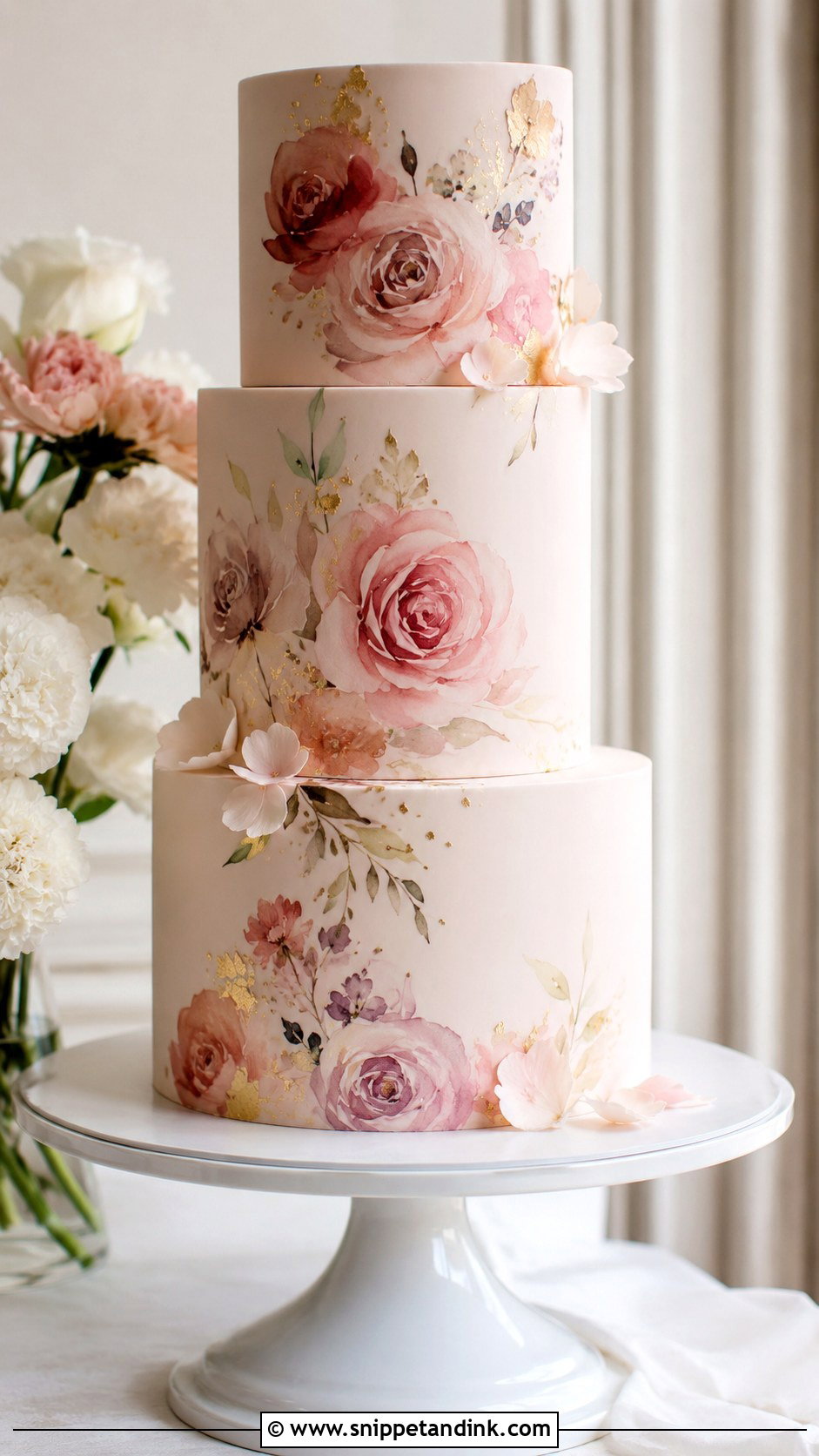
Painted watercolor flowers in blush, mauve, peach and ivory can wrap around smooth fondant tiers like a floral illustration. The brushwork should stay light and blended. I build the color in thin washes of diluted edible paint, letting each dry before the next, because one heavy stroke can’t be lifted off sugar the way it can off paper. Tiny touches of gold leaf or a few sugar flowers add dimension. It suits an outdoor spring wedding, and a plain stand lets the painting be seen.
12. Blush Wedding Cake With Pressed Flowers
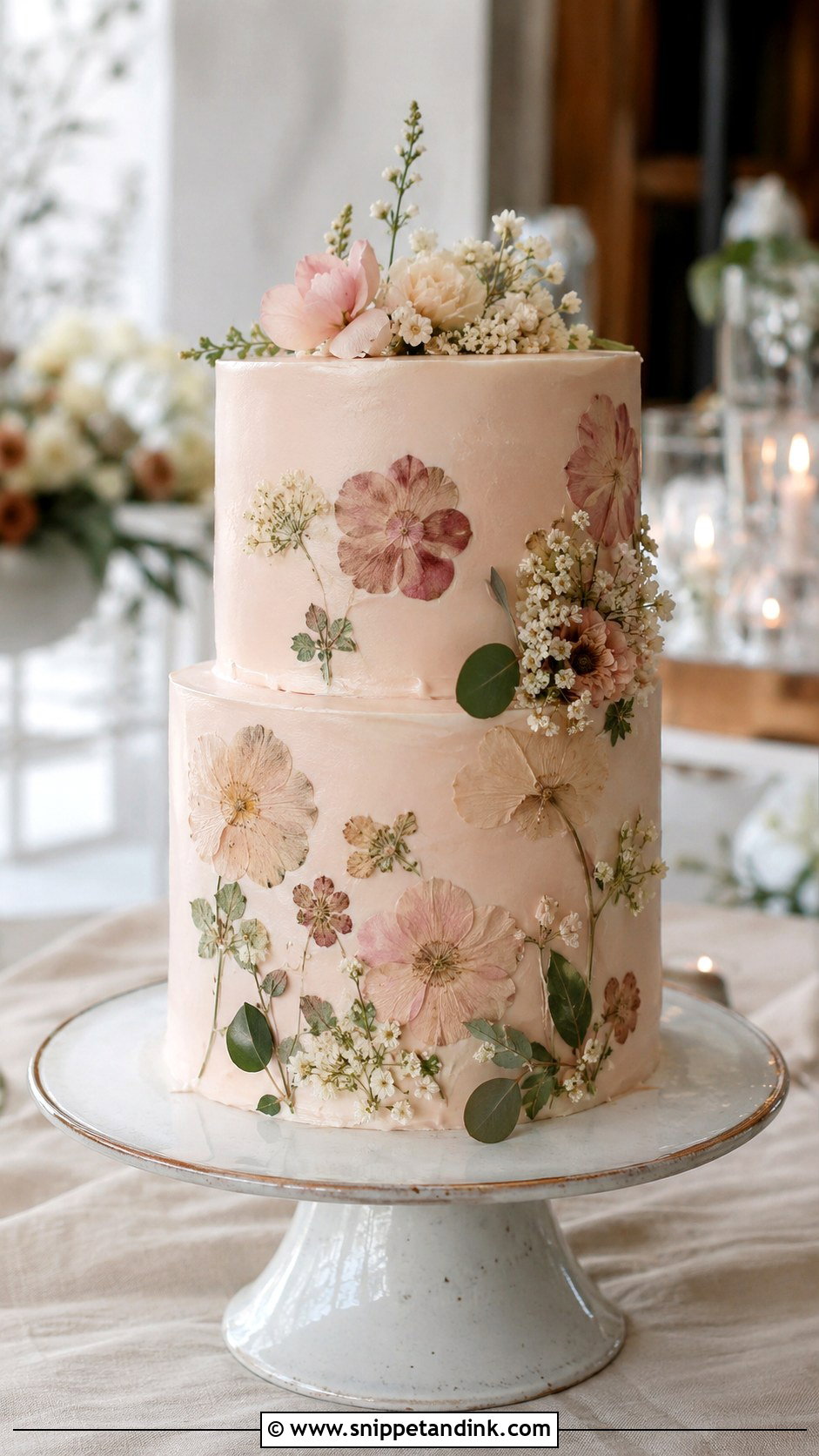
Pressed flowers lie flat on smooth buttercream or fondant and give a light garden look without adding height. They have to be food-safe and grown without sprays, which usually means buying pressed edible flowers from a specialist rather than drying something from the bouquet. Blush petals, tiny ivory blossoms and soft greenery are enough. I keep to two or three flower types and space them cleanly, as random scatter can look accidental. Micro weddings and relaxed outdoor receptions suit it best.
13. Blush Wedding Cake With Champagne Accents
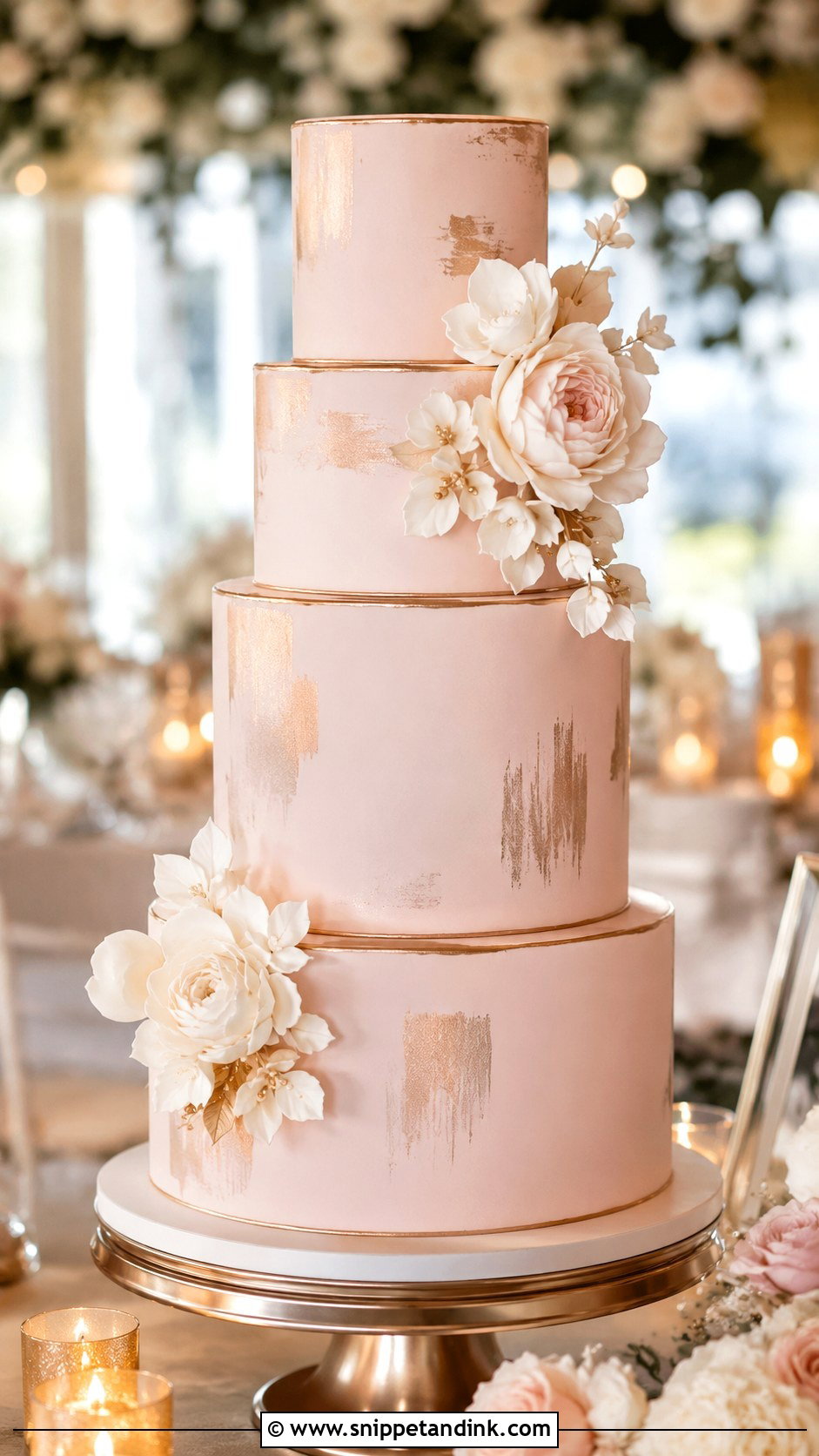
Champagne beside blush is warmer than silver and softer than bright gold. It can appear as metallic brushstrokes, painted tier edges, ribbon trim or a faint shimmer dusted onto sugar flowers. Ivory florals, beige linens and candlelit tables suit it, and clean round or tall modern tiers keep the effect polished for a hotel or formal evening reception. My one practical note is that shimmer dust shows every fingerprint, so I apply it last and handle the tiers by their boards from then on.
14. Blush Wedding Cake With Garden Flowers
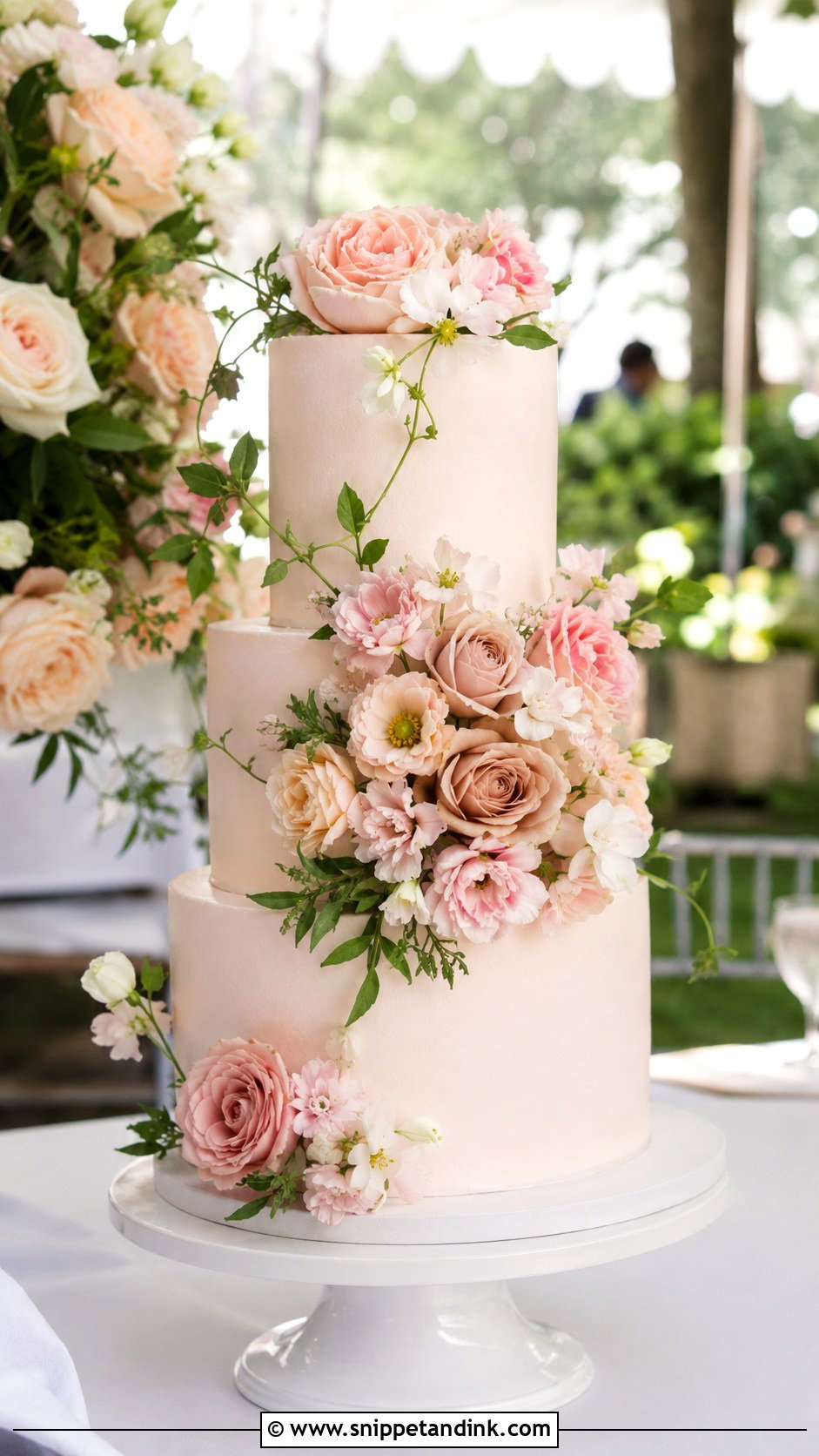
Garden flowers make the cake part of the floral design. Fresh roses, ranunculus, sweet peas, lisianthus and soft greenery go on in loose clusters, over pale blush buttercream, ivory with blush accents, or a mix. Leave enough frosting visible so it still looks like a cake. Sweet peas wilt fast once out of water, so in a warm tent I tuck them in last or swap them for sugar versions. A simple pedestal or ceramic stand suits spring garden weddings and tented receptions.


15. Blush Wedding Cake With Tall Tiers
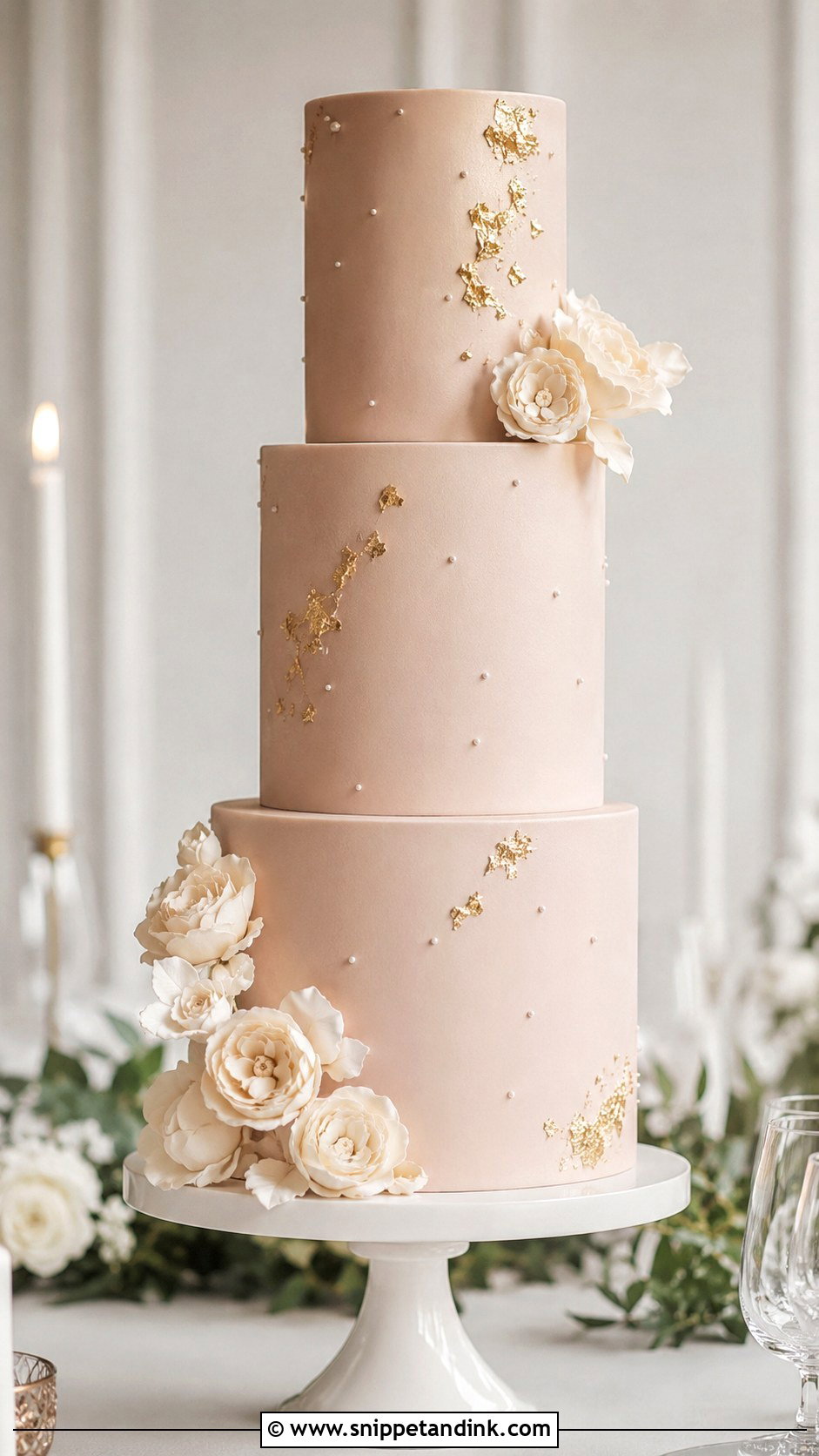
Extra-tall tiers, often five or six inches each instead of the usual four, give a slim, modern silhouette that needs very little decoration. A smooth blush finish keeps it clean, and a few sugar flowers, pearl dots or flecks of gold leaf add just enough interest. It suits couples with minimalist decor who still want the cake to make an impression, and it works across two, three or four tiers depending on guest count. Tall tiers need extra support inside, since each one is really two cakes stacked. Place it on a simple stand with soft florals nearby for a refined and stylish display.
16. Blush Wedding Cake With Textured Buttercream
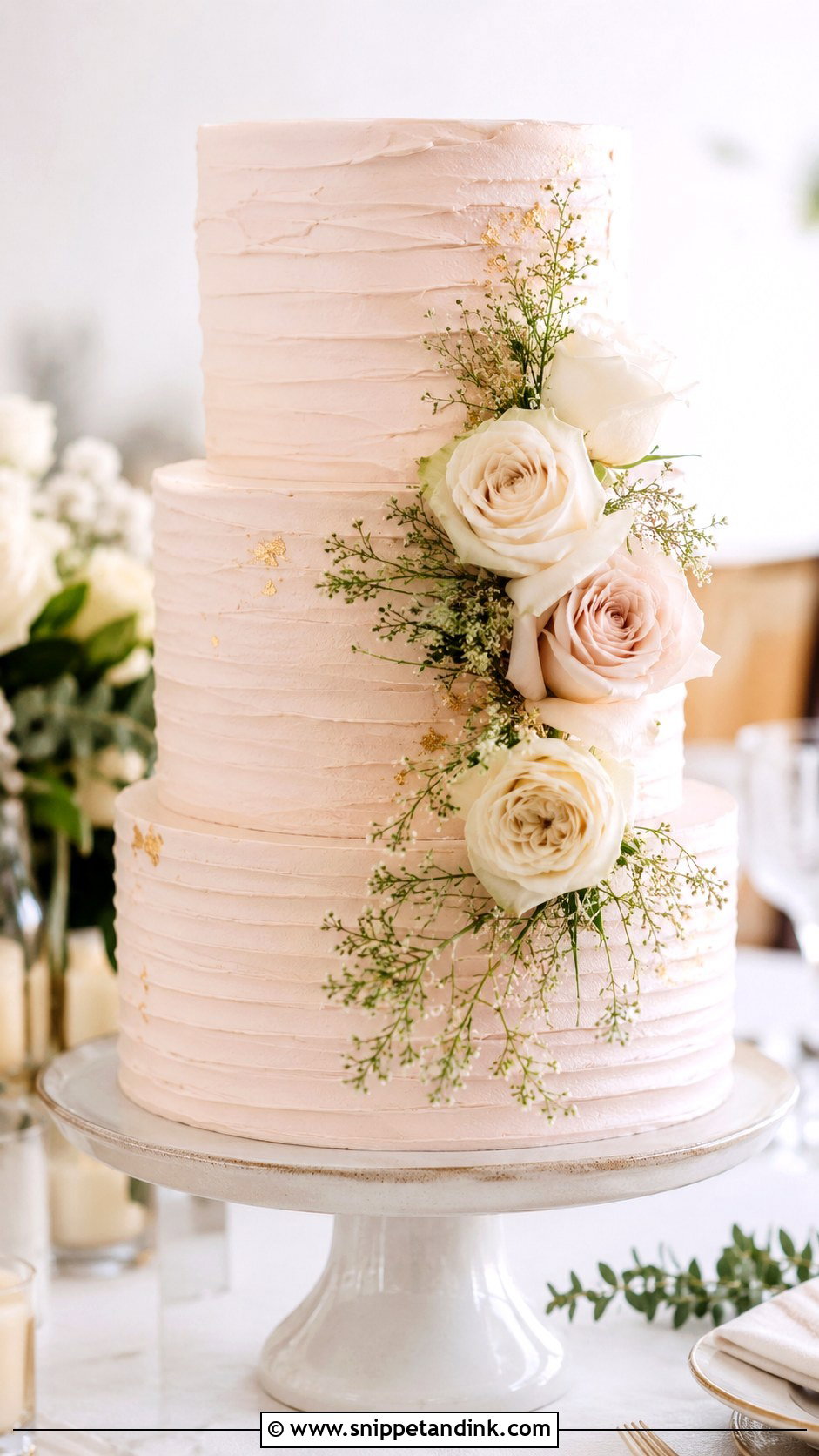
Texture is the forgiving choice. The buttercream can be lightly combed, brushed, stucco-style or gently ridged, and the pattern catches light and hides small marks that a perfectly smooth tier would show. Pale blush keeps it romantic, while ivory flowers or gold accents add detail. Fine ridges look neat and modern; rougher strokes feel organic. Match the texture to the venue. Rustic barns, beaches and garden weddings suit looser finishes, while a ballroom wants something tidier.
17. Blush Wedding Cake With Rose Gold Drip
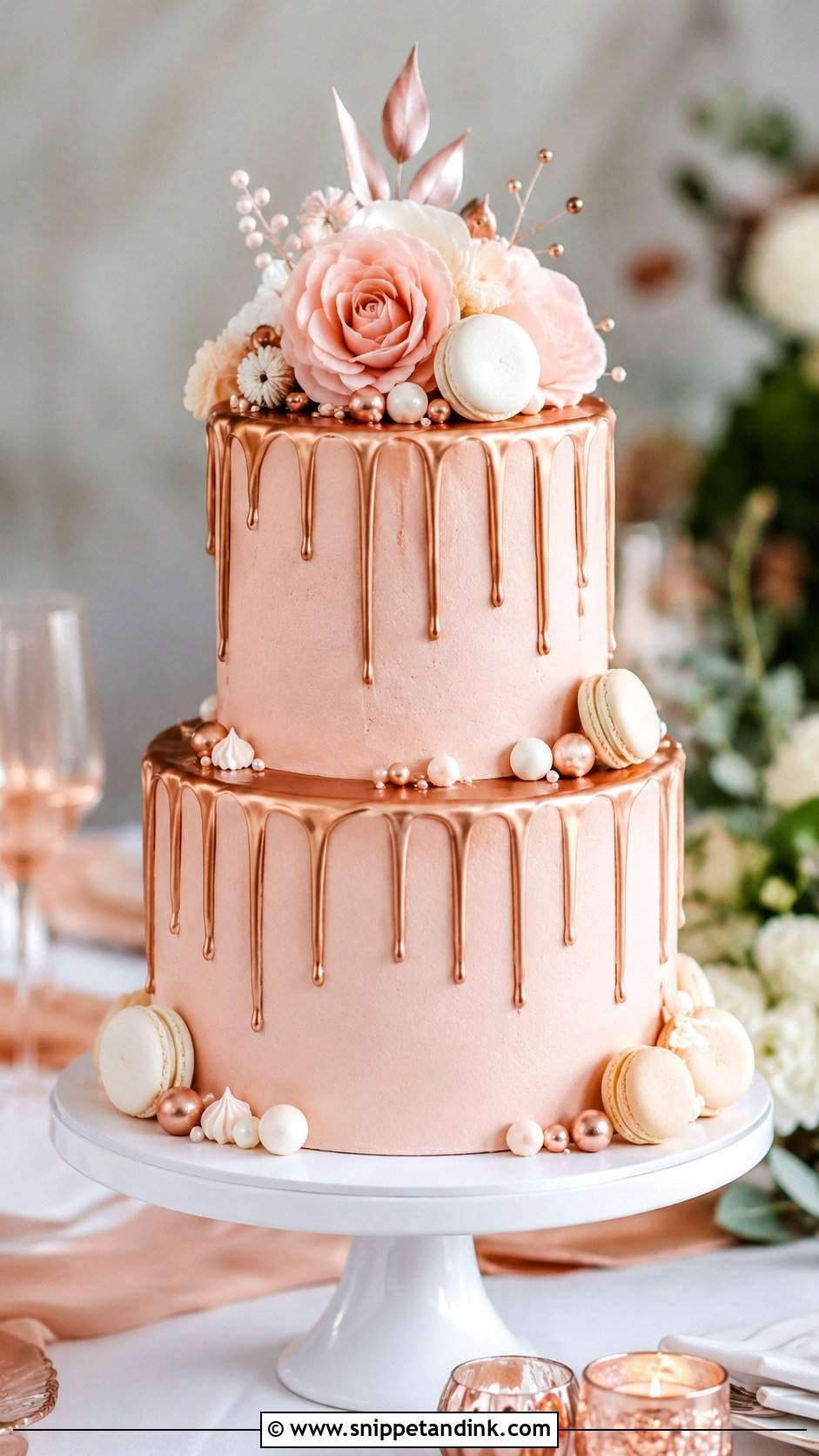
A drip has to be controlled to look like a wedding cake rather than a birthday cake. I let it flow lightly from the top edge, in short uneven lengths, never curtaining the whole tier. The drip is a ganache or candy melt, cooled to the right temperature and painted rose gold once set; too warm and it runs to the board. Pale blush buttercream gives it a soft base, and ivory flowers, macarons or sugar pearls finish the top. It suits a chic evening reception or a stylish dessert table.
18. Blush Wedding Cake With Mauve Flowers
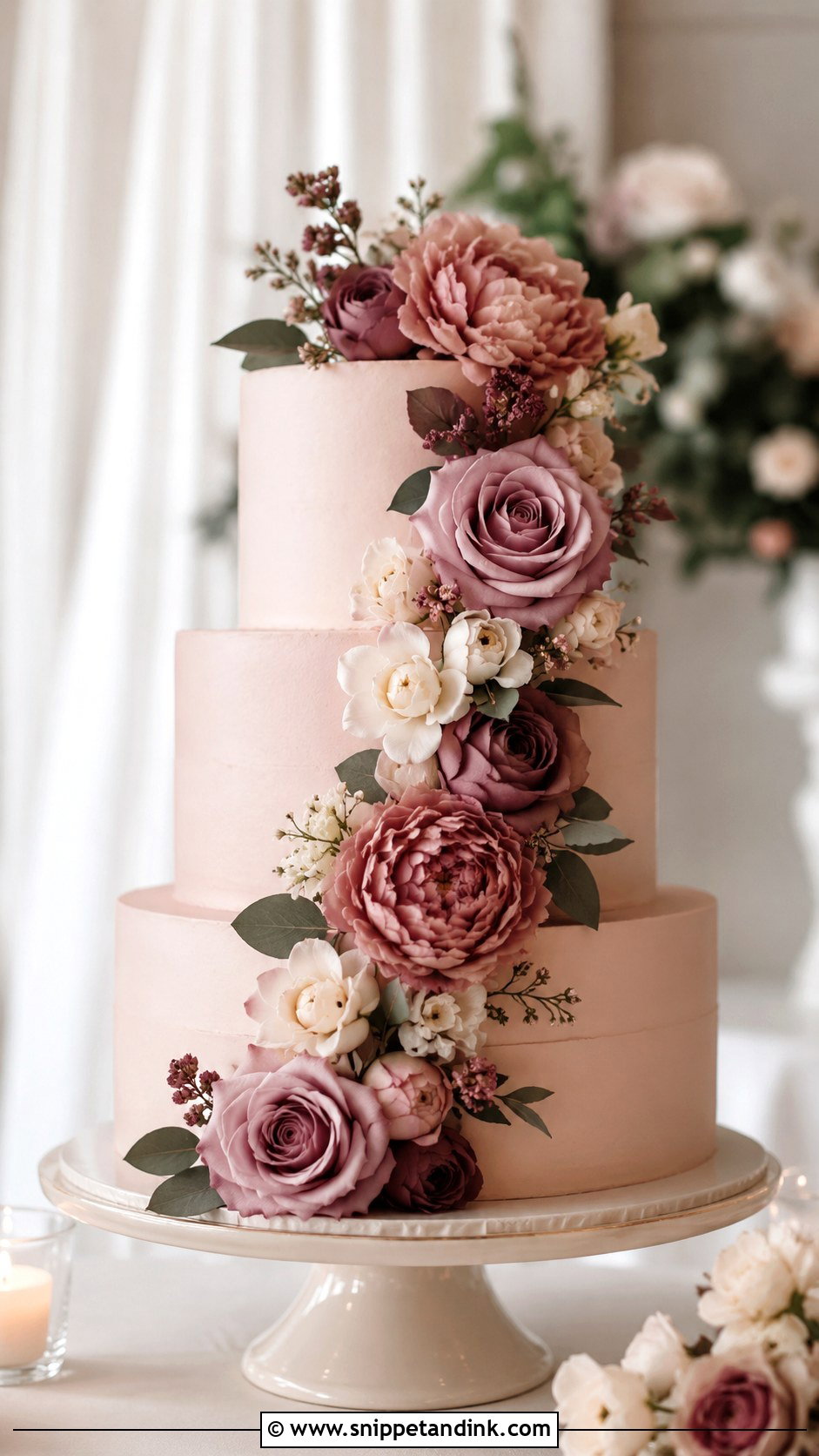
Mauve gives a soft pink palette the depth it sometimes lacks. Mauve roses, dusty pink peonies, ivory blossoms and muted greenery feel more grown-up than bright pink, on blush buttercream, ivory fondant or a mix. The pairing suits late summer and fall but works year-round. Arrange the flowers loosely for a garden look, or use sugar flowers for something cleaner. Mauve flowers can look gray in some photos, so I keep at least one clearly pink bloom near them to hold the color story together.
19. Blush Wedding Cake With Marble Fondant
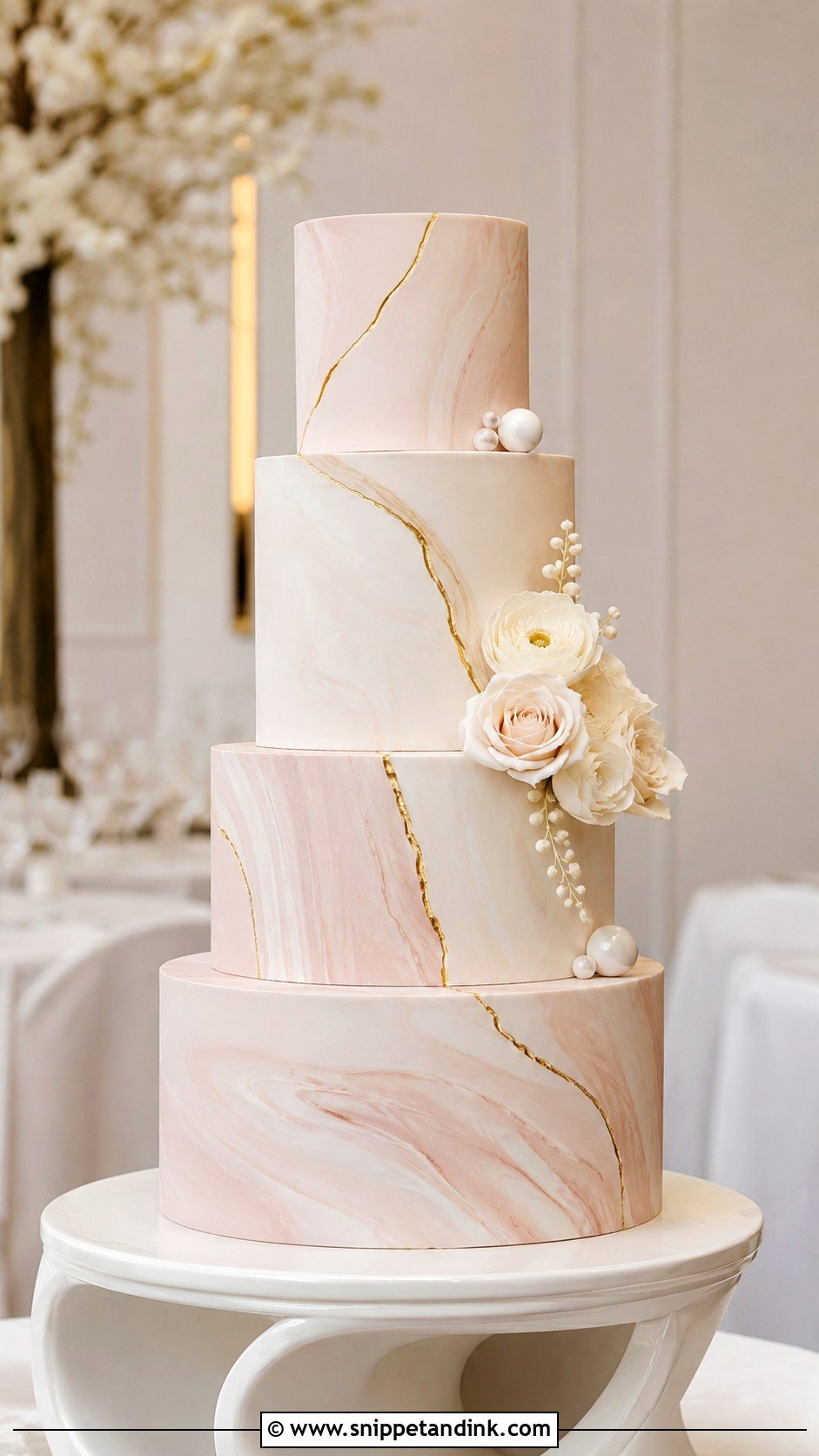
Marbled fondant in blush, ivory and pale beige makes a gentle pattern that looks artistic rather than busy. Because the pattern comes from folding colors together before rolling, every tier turns out different, and I’d warn anyone who wants matching veins that it can’t be guaranteed. Thin gold accents or a small floral cluster can trace the movement. Clean tier shapes and few extras suit it best, and it fits modern and city venues where a plain cake would feel too quiet.




20. Blush Wedding Cake With Minimal Flowers
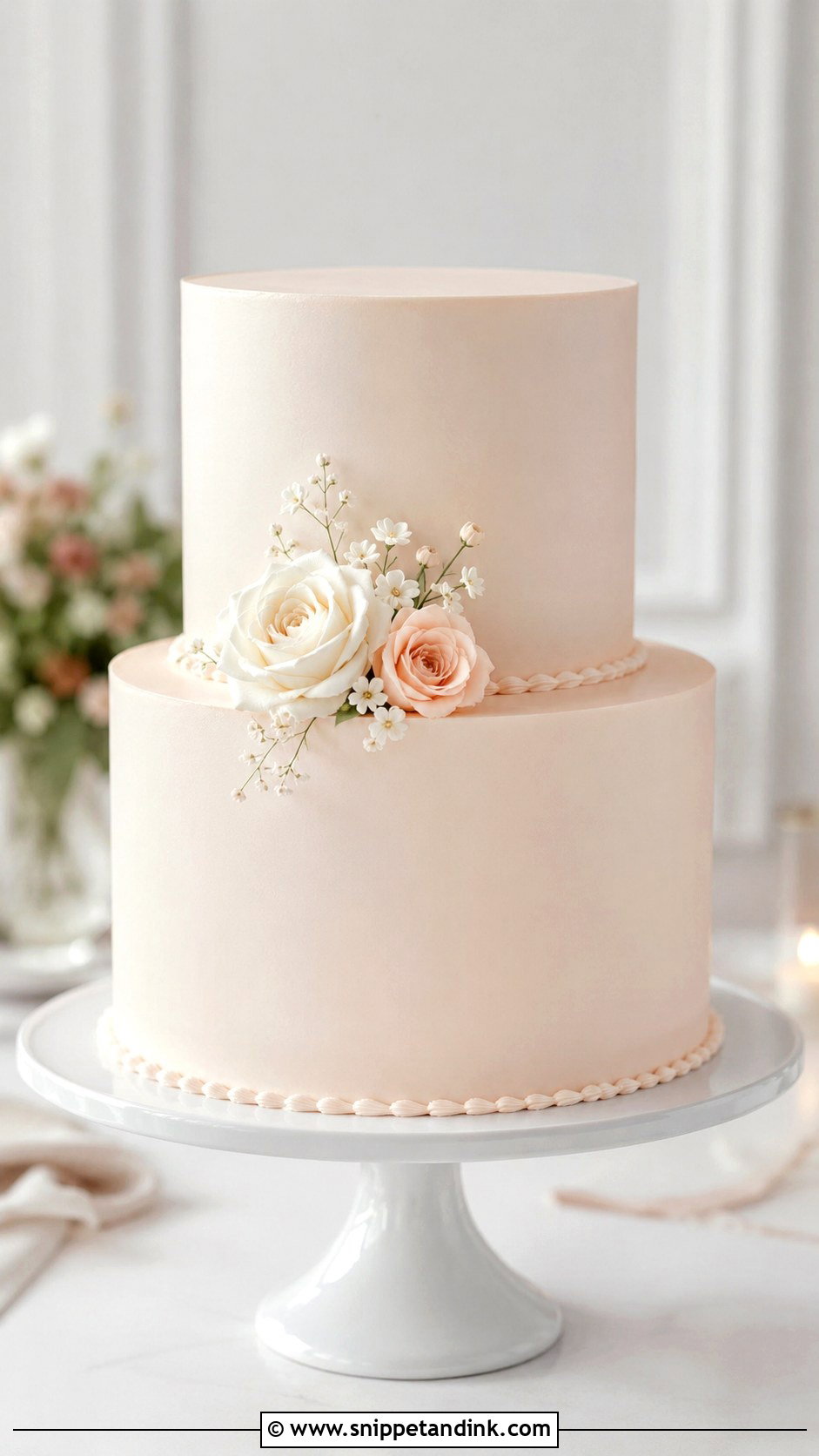
One small floral cluster, a single rose per tier or a few tiny blossoms at the base is all this design uses. Smooth blush buttercream or fondant has to be immaculate because nothing hides a flaw, so the real decoration here is precision: straight tiers, neat edges, carefully placed flowers. It suits intimate weddings and venues with strong decor where the cake should complement the room rather than compete. Ask to see a baker’s plain cakes before you book them for this one.
Why Pink Icing Fades, and How I Protect It
Pinks and purples are among the least light-stable food colors. Left in a bright window or strong sunlight, a blush cake can fade noticeably in a few hours, sometimes unevenly, so the side facing the light goes paler than the back. Bright display lighting can do the same over a long day.
- Keep the cake table out of direct sun, including late-afternoon light that moves across the room.
- Leave the cake boxed or covered until close to the reception if the room is bright.
- Ask whether your baker colors close to delivery rather than days ahead.
- For an outdoor wedding, put the cake under a tent or in a shaded corner and bring it out for the cutting.
Letting the inside match the outside
A blush cake is a natural excuse for a pink interior. Raspberry or strawberry fillings, a pink champagne sponge or a light rose syrup brushed through vanilla layers all carry the color inside without much artificial tint. Fresh fruit fillings need to be cooked or set, though. Raw berries release juice over a few hours and can soak through to the outside, which leaves spots on a pale finish.
Matching Blush to Your Flowers, Dress and Light
Blush adapts to almost any mood depending on the finish. A smooth blush cake with roses stays classic, while gold leaf, pearls, ruffles, marble fondant or a rose gold drip changes the feel completely. Think about the venue, the flowers, the dress, the table decor and the season before you settle on one. The cake should look connected to the whole celebration. Save the styles that suit your colors, then show your baker the textures and details you keep coming back to.
You'll Like These Ideas:






Leave a Reply