
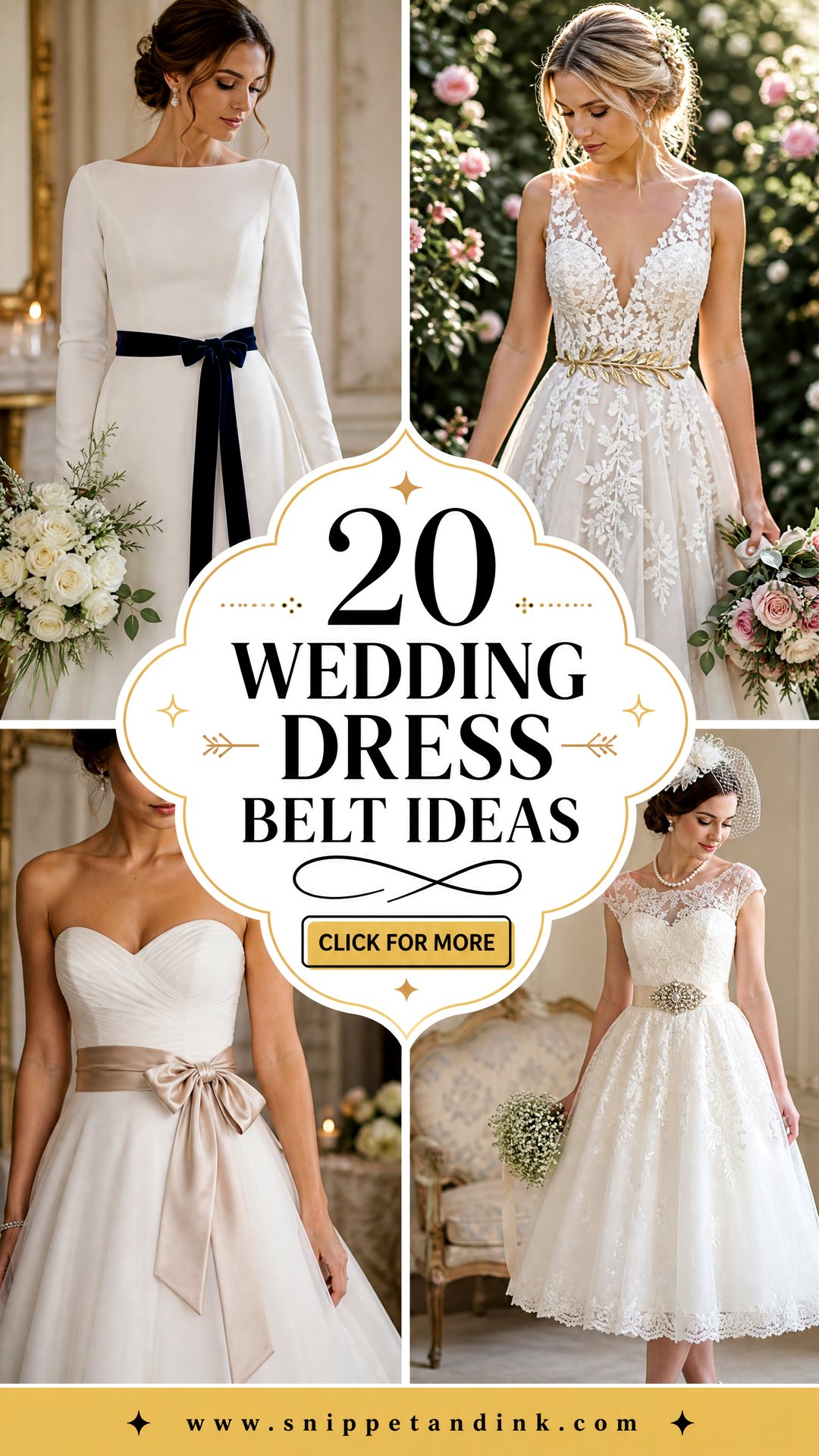
A belt is the cheapest way to change how a gown reads without touching the dress itself. It can mark the natural waist, link a busy bodice to a plain skirt, or give a minimal dress some character. The ideas below run from crystal and pearl to satin ribbon, lace, velvet, colour and dramatic bows, each paired with a full outfit. What decides the right one is the gown: its fabric, its undertone and how much decoration it already carries. I also check comfort, because a stiff beaded band over boning gets tiring by the speeches. Bring the gown, or at least a fabric swatch, every time you shop.
Where on Your Torso a Belt Should Actually Sit
Before colour or sparkle, I work out placement. A belt draws a horizontal line, and where that line falls changes your proportions more than its decoration.
- Find your natural waist by bending sideways. The crease that forms is where most belts should sit.
- Short torso: choose a narrow belt, about one to two centimetres. A wide one eats the space between bust and waist.
- Long torso: a wider sash breaks up the length and suits you well.
- Empire and drop-waist gowns: follow the dress’s own seam. A belt at your natural waist on a drop-waist dress fights the design.
Width should also follow the gown’s weight. Heavy Mikado and satin hold a wide or rigid belt; chiffon and light crepe need something narrow and flexible, or the fabric bunches above and below it.
1. Crystal Wedding Dress Belt With Satin Ball Gown
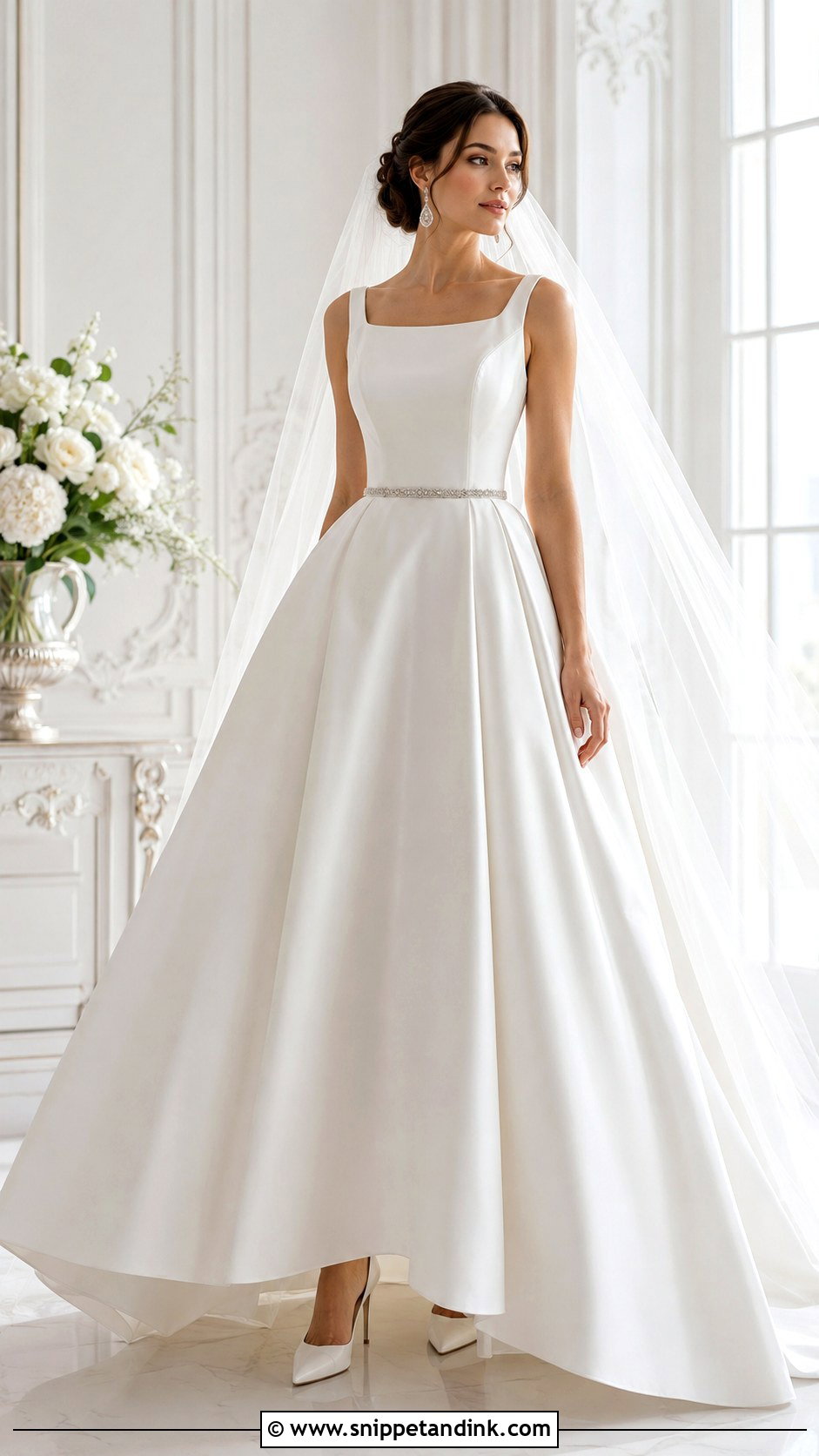
On plain satin, a crystal belt is the only sparkle the dress needs. I’d go slim or medium width with evenly spaced stones; clusters on a full skirt can look lumpy from a distance. Silver-toned crystals sit best against bright white or cool ivory, while yellow-gold settings can make cool satin look slightly grey. If the bodice is pleated, put the belt right over the waist seam so the pleats finish under it. Check the backing by sitting down: cheap belts twist at the sides when you bend. Crystal drops, pointed satin pumps, a clean-edged cathedral veil and a low bun keep the neckline and belt visible.
2. Pearl Wedding Dress Belt With Crepe A-Line Gown
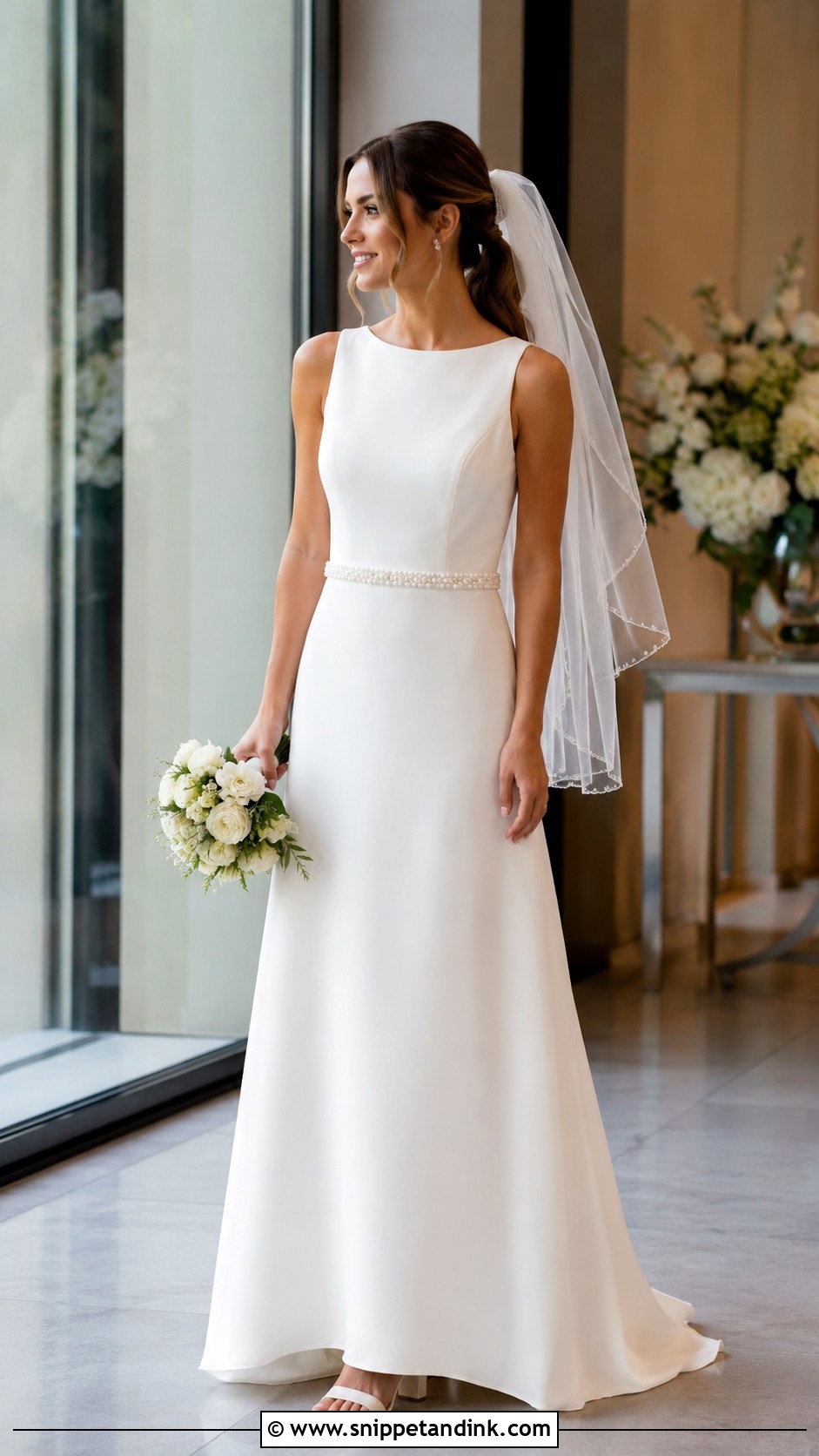
Pearl clusters give texture rather than sparkle, which suits matte crepe. They’re at their best on an A-line with a simple neckline and fitted bodice. Match the pearl colour to the fabric: ivory pearls on a warm gown, bright white on a cool one. Mixing them is the giveaway that the belt was bought separately. On lightweight crepe I keep the belt narrow, since a wide, heavy pearl band drags the fabric down and creases it at the waist. Pearl studs, ivory block heels, a fingertip veil, a low wavy ponytail and a small white and green bouquet finish the look.
3. Satin Wedding Dress Sash With Lace Gown
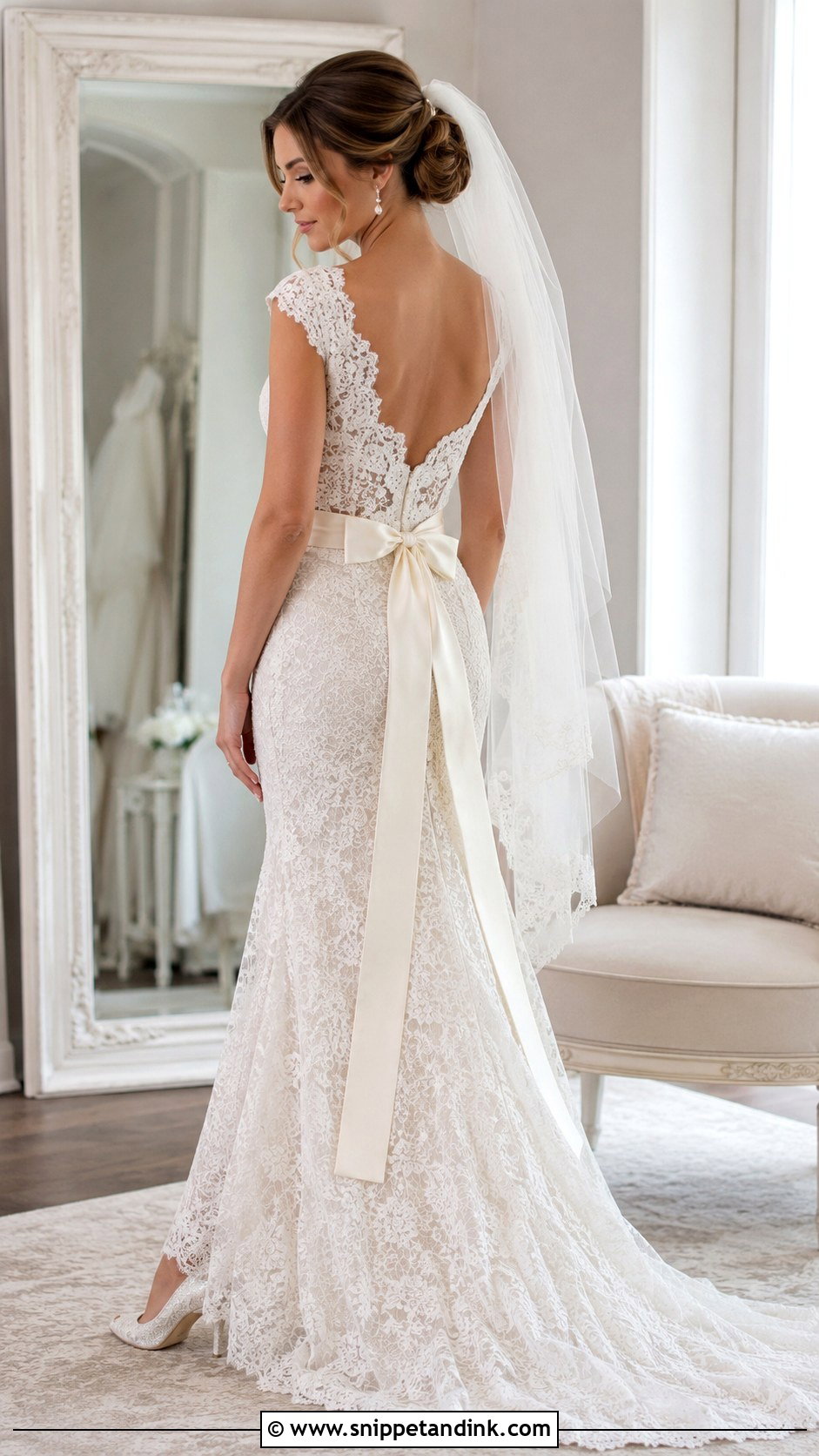
A lace gown already has pattern, so a plain satin sash gives shape without adding more. Undertone matters most here: I hold three ribbon shades against the lace in daylight, because ivory, white and champagne ribbons differ more than you’d think. Tie a neat bow at the back with tails falling a few inches over the skirt. Ribbon slides on lace, so I’d ask a seamstress to add two or three small thread loops at the side seams to hold it. Small pearl earrings, lace-covered pumps, a lightly trimmed tulle veil and loose waves or a soft chignon suit the delicate texture.
4. Bow Wedding Dress Belt With Mikado Ball Gown
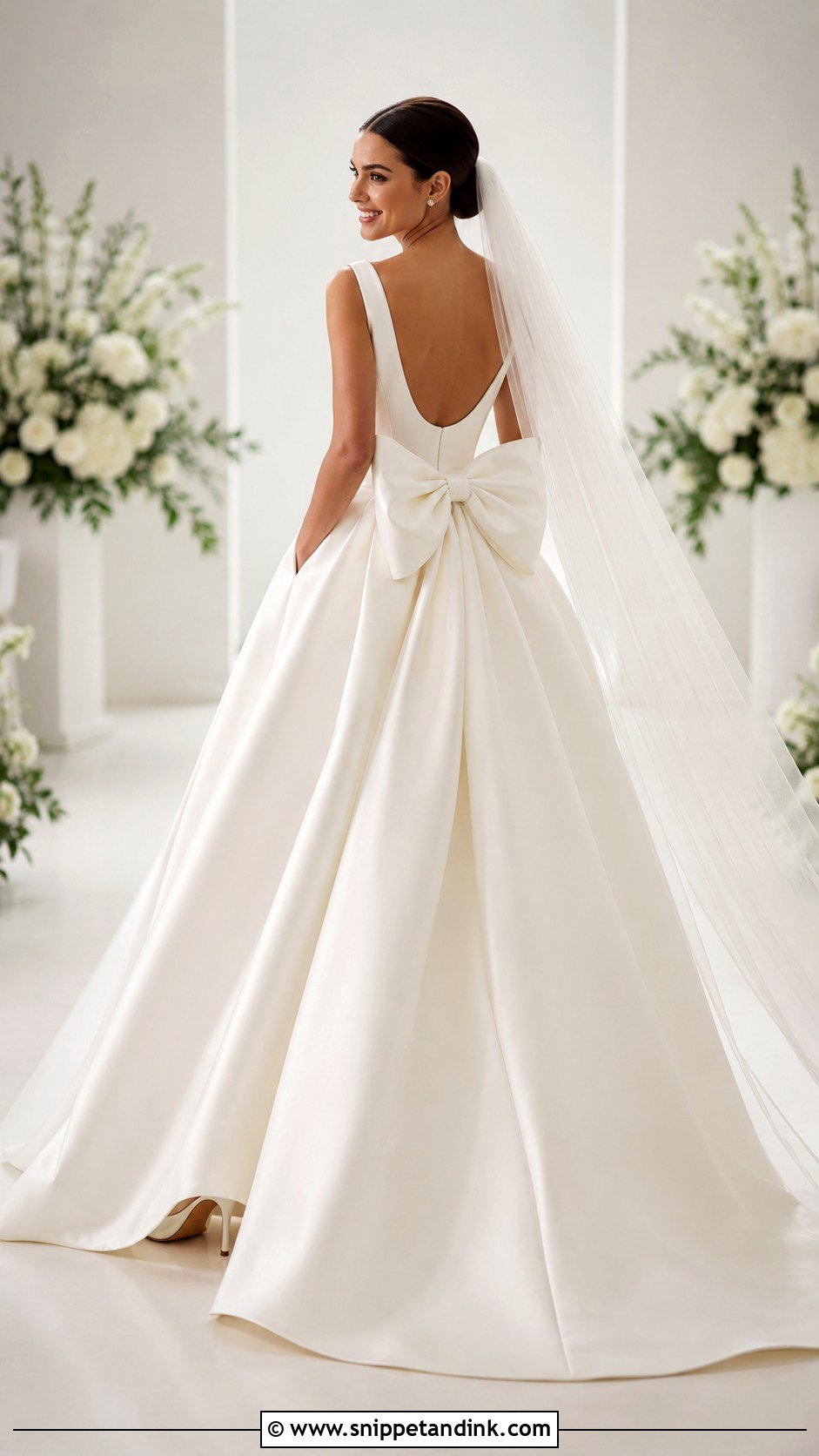
Mikado is stiff enough to hold a structured bow, and the two belong together. Place a medium or oversized bow at centre back rather than the front; on a ball gown, a front bow sits right where your bouquet goes. It can cover the waist seam and link the bodice to the skirt. Watch out for back buttons. If the gown closes with a row of covered buttons, the bow has to attach to its own detachable band, otherwise someone unpicks your bow every time you need the bathroom. Pointed pumps, small diamond studs, a sleek bun and a long plain veil leave the bow to do the talking.
5. Gold Wedding Dress Belt With Ivory Sheath Gown
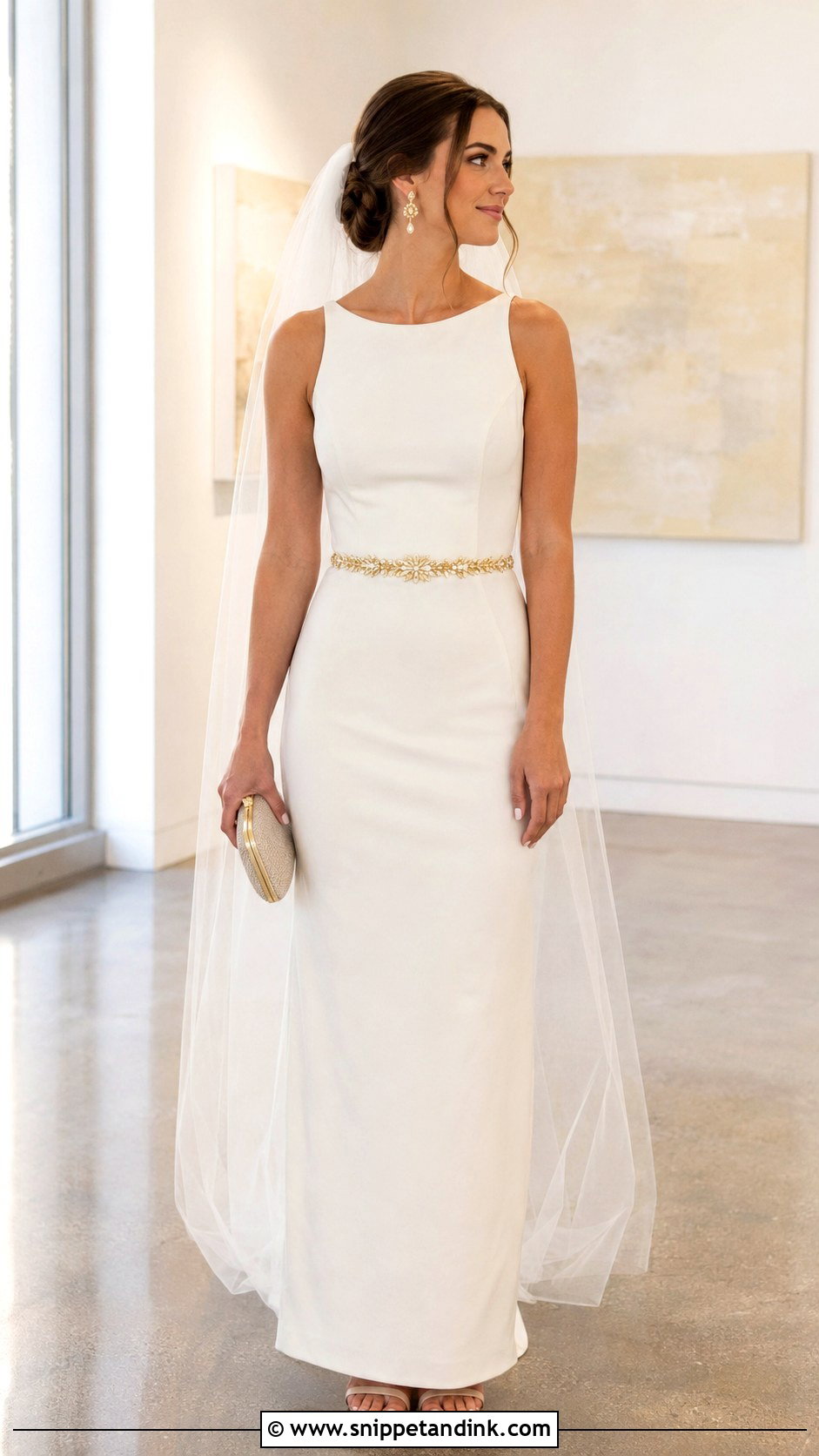
Gold adds warmth to an ivory sheath with clean lines. I’d choose a fine botanical, crystal or beaded motif on ivory ribbon rather than a solid metal band, which doesn’t bend as you sit and can dent soft fabric. Repeat the gold two or three times, such as earrings and sandals, but don’t chase an exact match on everything. Place the belt at the narrowest point of your waist, then run your hand along the back of each setting; sharp claws pull threads on smooth satin. A structured clutch, a low twisted bun and a light chapel veil finish it.
6. Silver Rhinestone Wedding Dress Belt With Tulle Gown
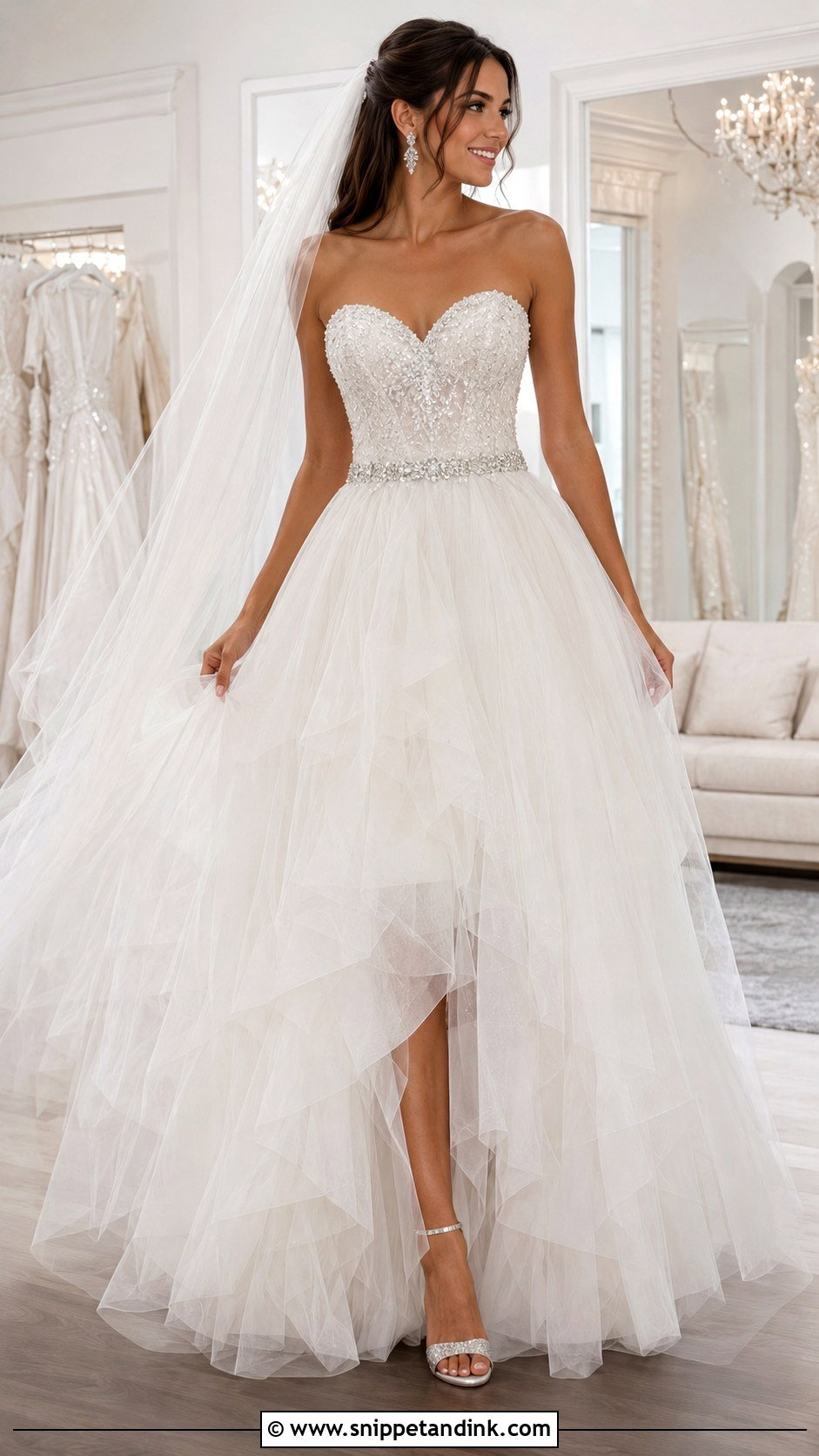
Over tulle, a silver rhinestone belt gives the cleanest link between a fitted bodice and a full skirt. Closely set stones on a soft ribbon backing stay flexible. It looks most deliberate when the bodice already has silver embroidery, clear beads or cool sequins. Fine netting is the risk: exposed rhinestone prongs snag tulle every time you sit or someone hugs you. I run the belt lightly over a scrap of tulle before the wedding, and if it catches, a seamstress adds a soft backing and tacks the belt at several points. Crystal earrings, silver-accented heels, a clean veil and a half-up style; skip the necklace if the neckline is busy.
7. Floral Wedding Dress Belt With Chiffon A-Line Gown
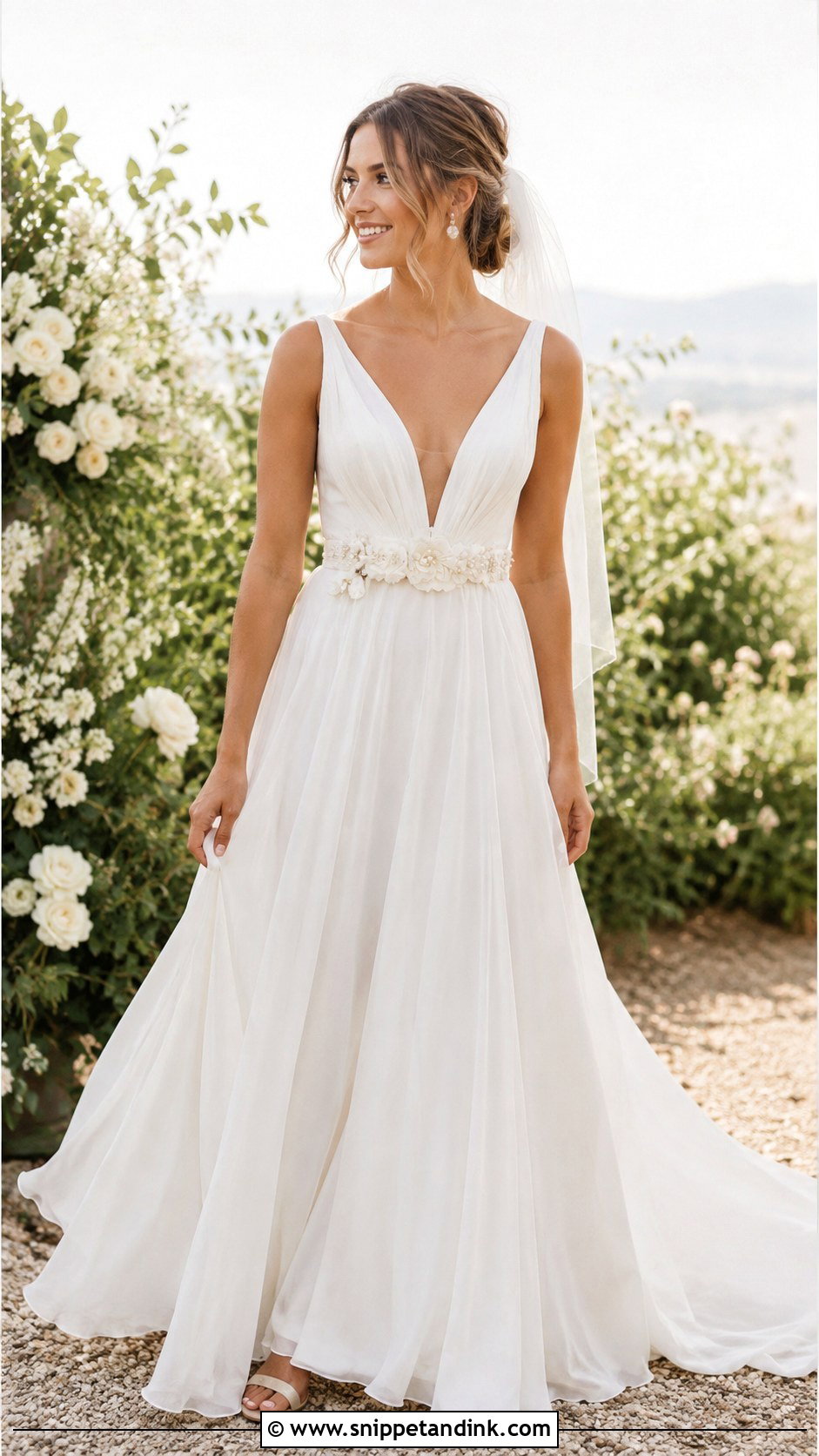
Three-dimensional flowers turn a plain chiffon A-line into a garden look. Organza petals with tiny pearls and a little beadwork, tinted close to the gown, keep it soft. Center the flowers at the front or let them wrap partly around the waist. Chiffon is light, so the belt needs to be light too; heavy floral work makes chiffon pucker at the waist. Don’t pair it with a floral necklace or an appliquéd veil. One area of flowers looks intended, three looks crowded. Pearl earrings, low block-heel sandals, a soft-moving veil and a loose updo with face-framing pieces complete it.
8. Lace Wedding Dress Belt With Minimalist Gown
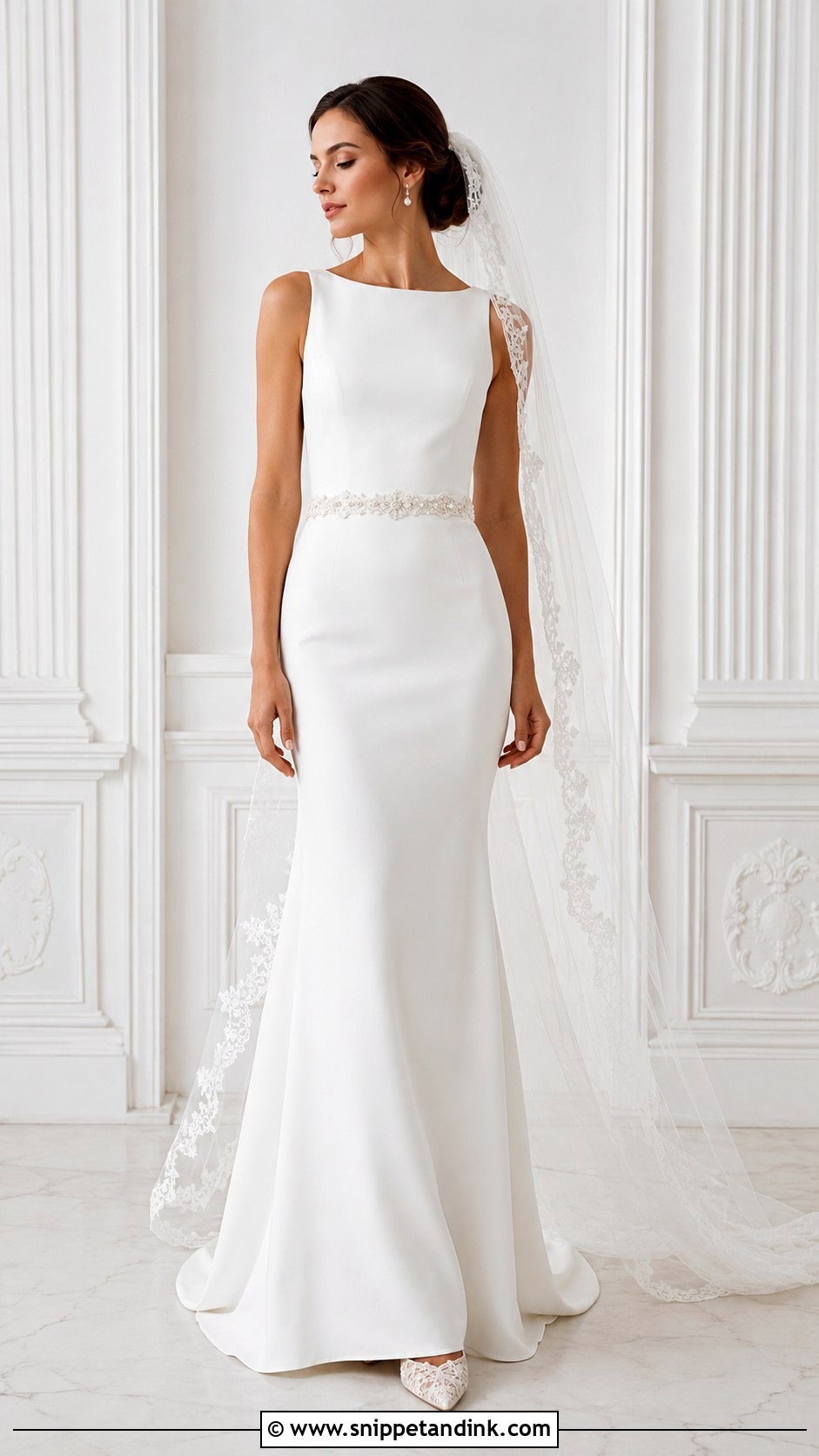
Lace on a plain gown adds texture in one controlled place. The lace has to match the dress’s undertone; a brighter white lace on ivory crepe looks like a mistake. Narrow appliqué is subtle, while a wide lace sash reads more traditional. Scalloped edges need careful placement. I pin them so the scallops fall evenly all the way round before the seamstress tacks the belt down with concealed fastenings, never visible safety pins. Lace-covered heels, pearl drops, a sheer veil with a narrow lace edge and a classic chignon keep everything quiet around the waist.
9. Beaded Wedding Dress Belt With Boho Gown
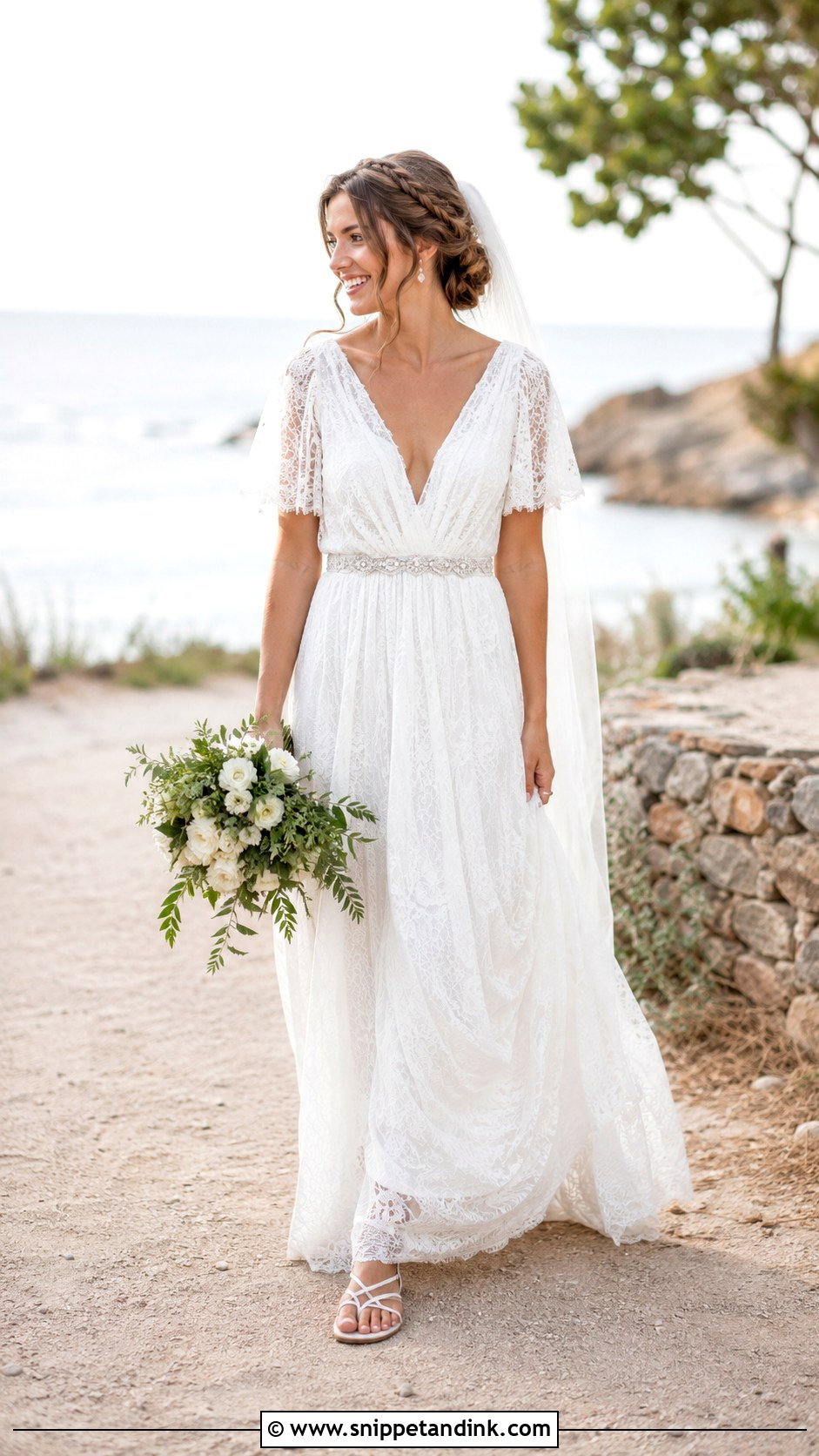
A boho gown needs only a little structure, and a soft beaded belt gives exactly that. Matte beads, small pearls, opals and leaf motifs suit the mood better than rows of bright rhinestones. Tie it at the natural waist of a chiffon or soft lace gown with flutter sleeves. It should move with the dress, not sit like a stiff band. Exposed bead settings catch fine lace threads during dancing, so I’d test it against the gown’s lace and choose a soft fabric backing. Low ivory sandals, fine drop earrings, a loose braided updo and a fingertip or cape veil keep it airy.
10. Velvet Wedding Dress Belt With Long-Sleeve Gown
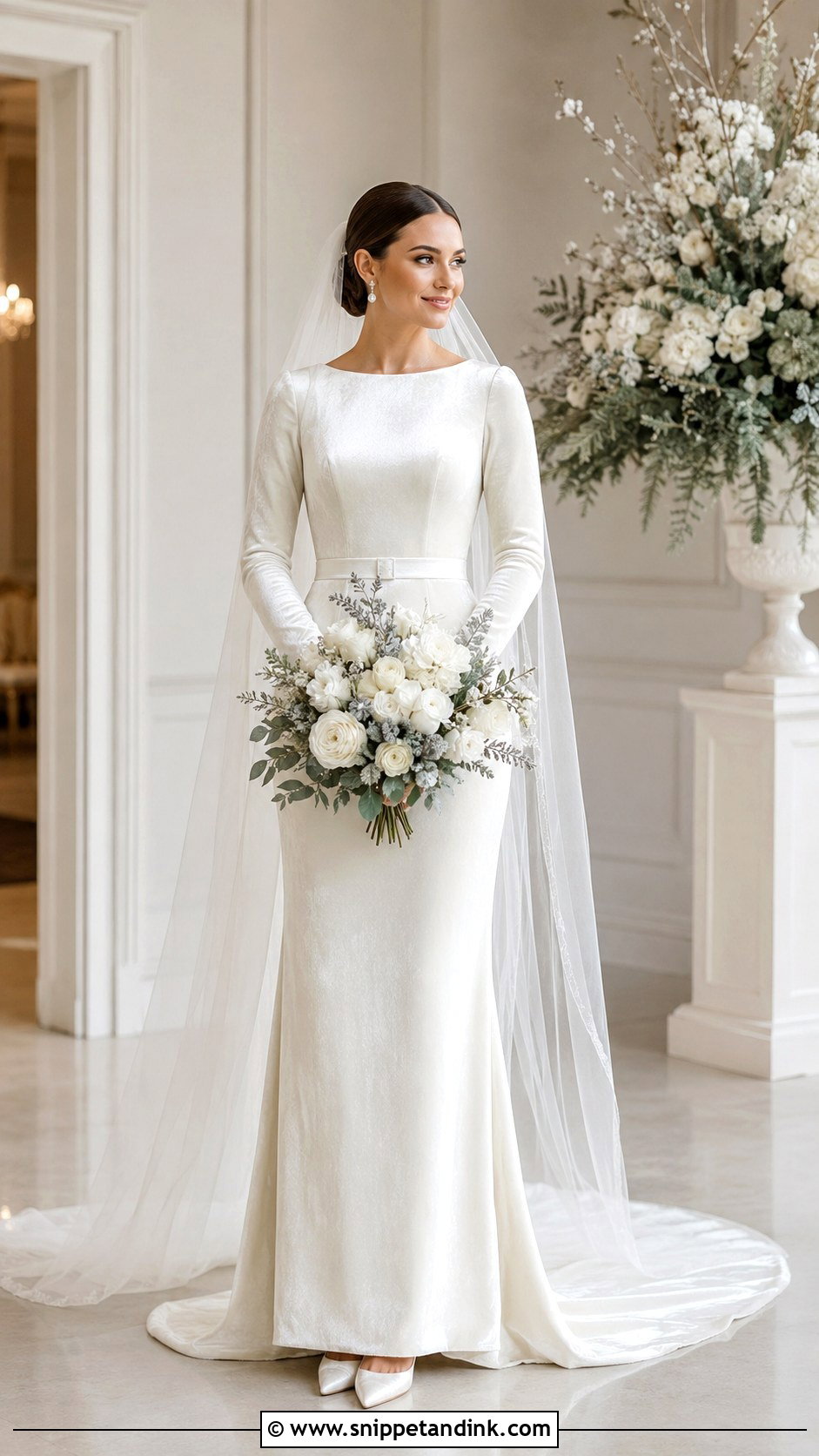
Velvet suits a long-sleeved dress at an autumn or winter wedding. Ivory velvet stays tonal; dusty blue, forest green or burgundy gives a clear contrast. A neat back bow or a small side knot are the two ways I tie it. Velvet ribbon with no backing can leave pressure lines on soft satin, so look for one with a smooth backing. Check it lies flat over lace sleeves, buttons and the waist seam. Closed-toe pumps, pearl earrings, a structured bouquet with small accents in the sash colour, a smooth low bun and a chapel veil balance the heavier texture.
11. Blue Wedding Dress Sash With Simple A-Line Gown
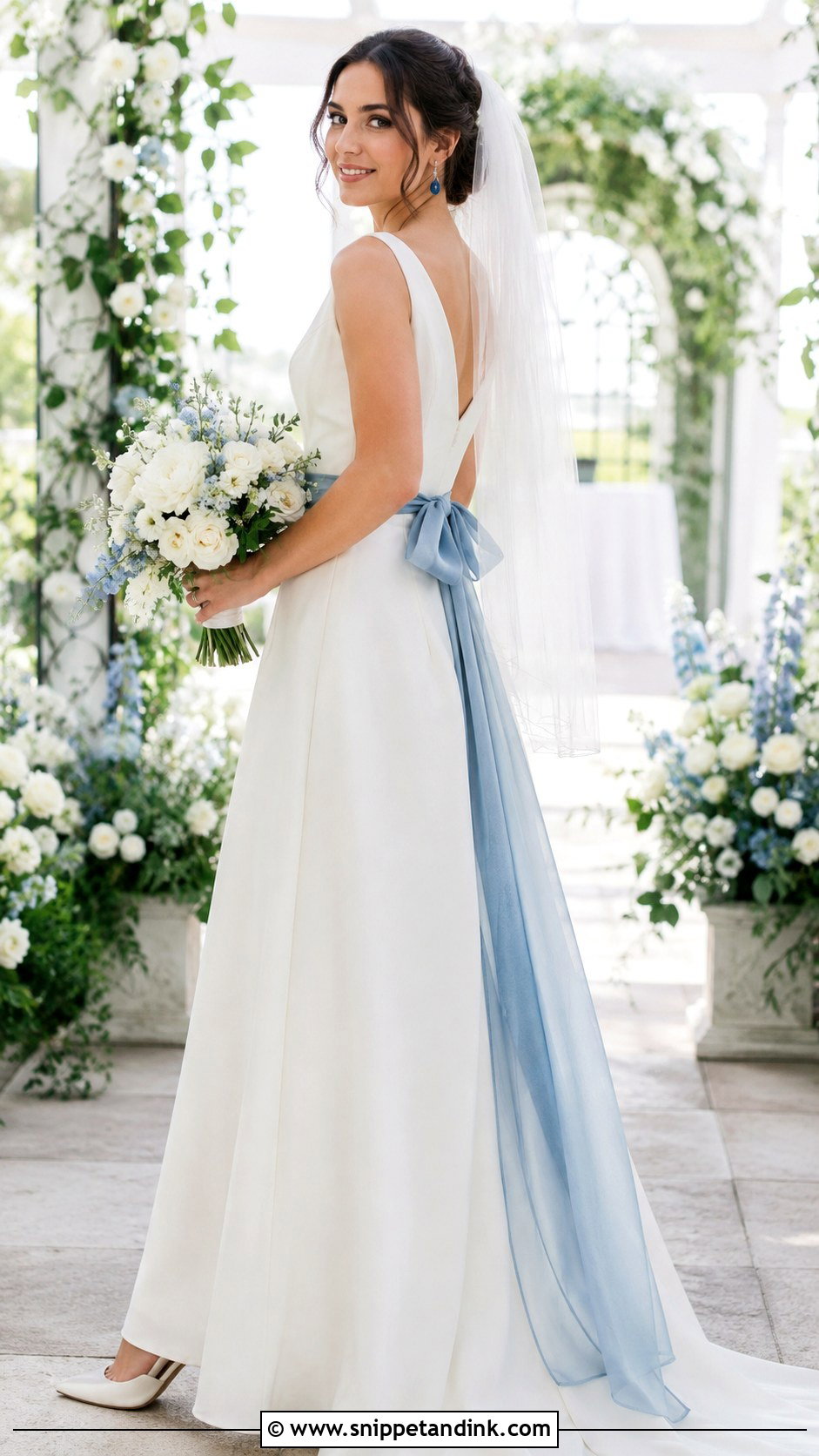
Dusty blue ties a simple ivory A-line to blue flowers or stationery without looking matched to the stationery. Choose matte satin or chiffon ribbon tied at center back with soft tails. Blue is tricky against ivory. Grey-blues, green-blues and true blues all shift beside a warm white, so test several shades against the gown before ordering. Keep the sash at the natural waist; tied lower, near the hip, it shortens the torso. Ivory heels, blue gemstone earrings, a sheer fingertip veil and a white bouquet with a few blue flowers keep it calm.
12. Black Wedding Dress Belt With Modern Gown
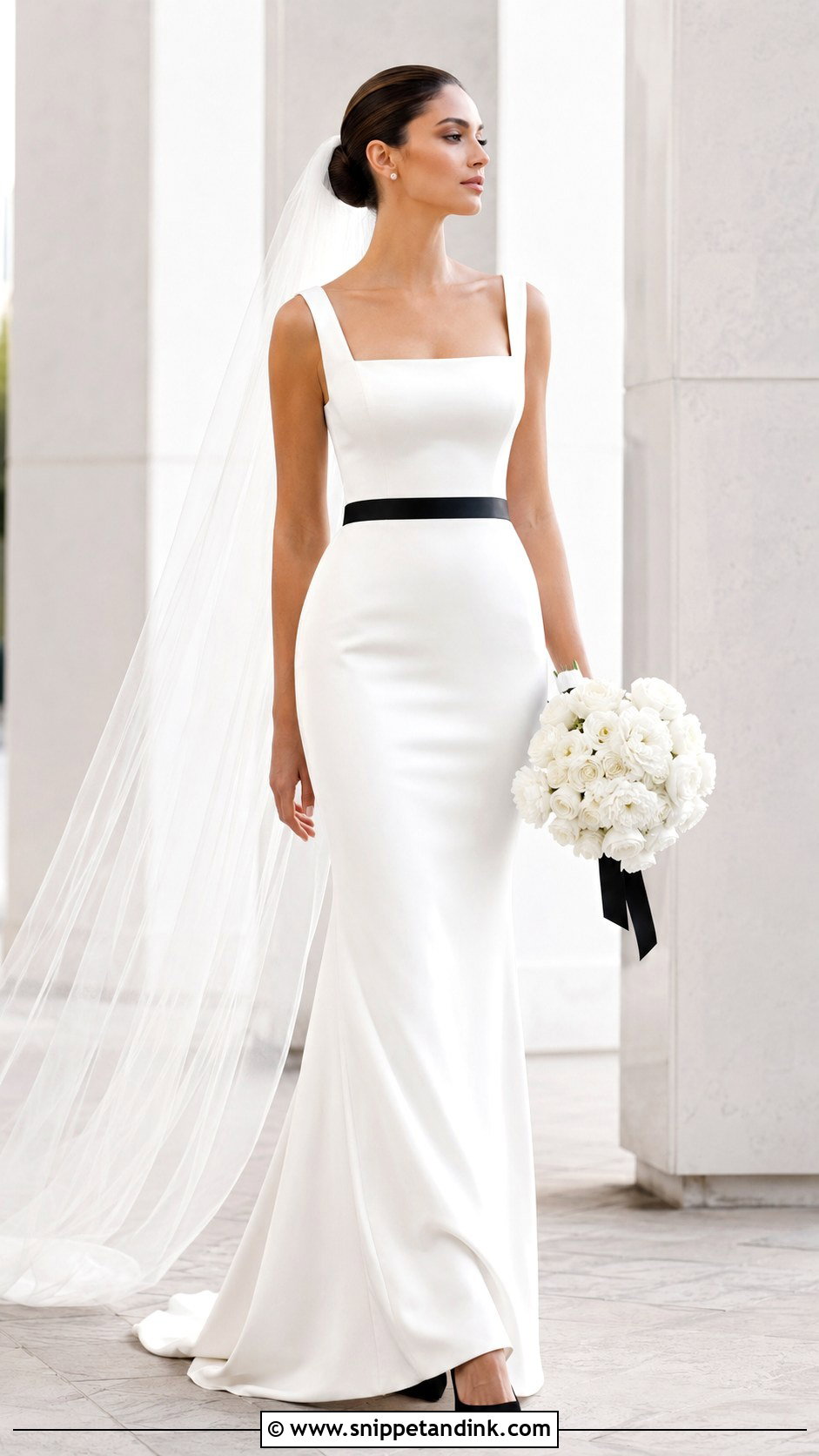
Black against white is the strongest contrast a belt can give, and it suits a strapless column, an architectural A-line or a square-neck minimal gown. A slim satin band is the quieter option; a big back bow is the fashion option. Match the finish to the dress: crisp satin with structured fabric, velvet with soft fabric. Placement has to be exact. A white belt sitting a few millimetres crooked goes unnoticed; a black one doesn’t, so I’d have it tacked level. Black pointed pumps, small diamond earrings, a white bouquet wrapped in black ribbon, a sleek bun and a plain cathedral veil.
13. Rose Gold Wedding Dress Belt With Blush Gown
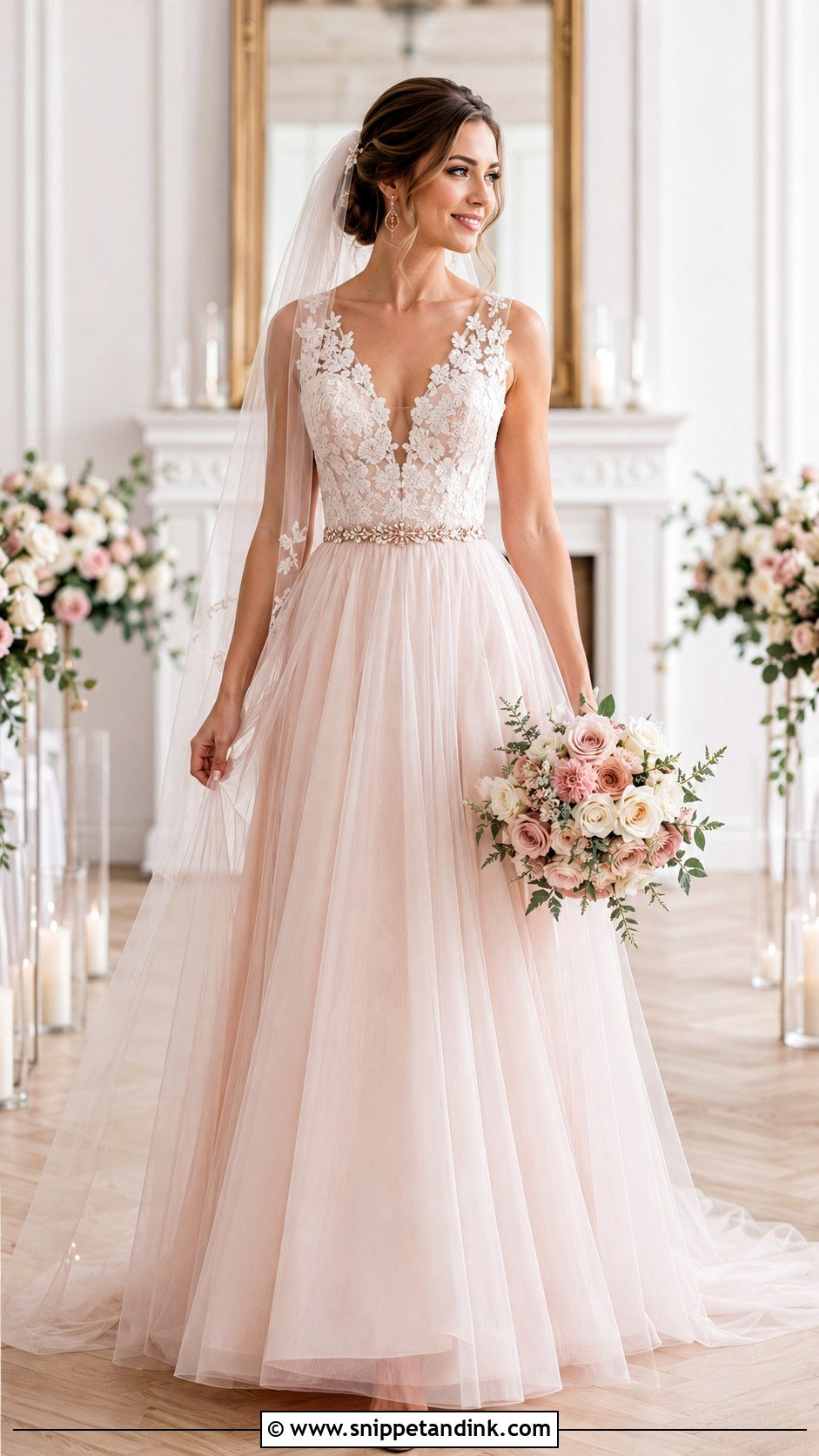
Rose gold sits softly on blush or warm ivory. A narrow belt with pale crystals, seed beads and small metallic leaves blends in rather than drawing a dark line across the waist. If your engagement ring is yellow or white gold, that’s fine. I don’t ask brides to match every metal, only to keep the other pieces delicate so the mix looks relaxed. Avoid adding a third strong metal. Rose gold earrings, champagne heels, a veil in the gown’s exact undertone, a twisted updo and a white, blush and muted green bouquet complete the palette.
14. Art Deco Wedding Dress Belt With Column Gown
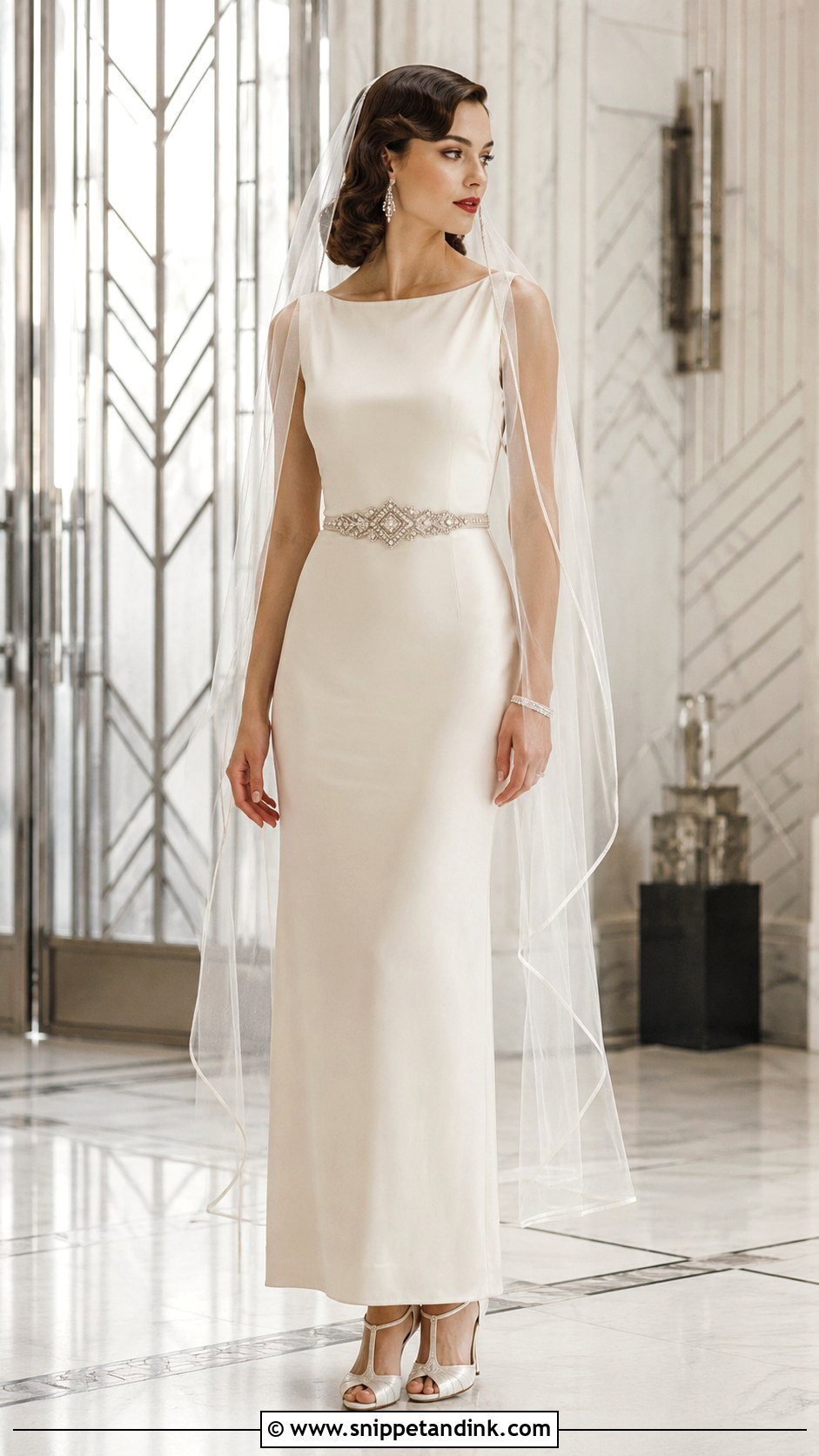
Geometric beadwork gives a sleek column gown a clear Art Deco influence. Look for symmetrical crystal fans, stepped lines or repeating diamond shapes on a narrow satin ribbon. Symmetry is the point of this style, so the belt must sit dead centre. I mark the centre front with a tailor’s chalk dot at the fitting. On silk or satin, check every setting for rough edges; a soft felt backing protects the fabric. Vintage-inspired drops, T-strap heels, a smooth fingertip veil and side-parted waves or a low bun stay period without turning into fancy dress. Keep the bouquet compact.
15. Leaf Wedding Dress Belt With Garden Gown
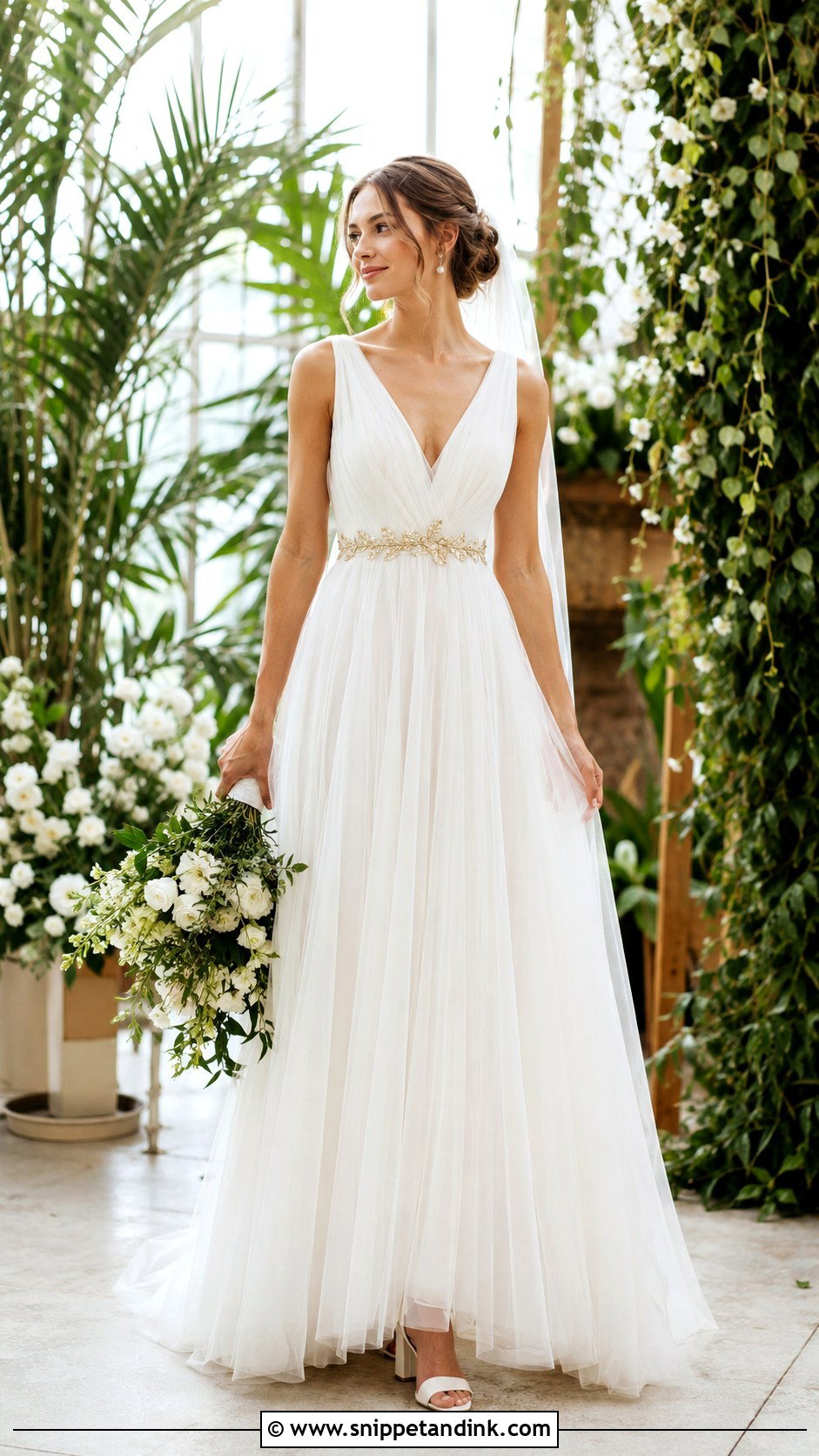
A leaf-patterned wedding dress belt suits a garden gown without leaning on flowers. Fine metallic branches with pearls, opals or small crystals look graceful on a V-neck A-line, a soft tulle skirt or a lightly embroidered bodice. Pick the metal by the gown’s undertone: pale gold for warm ivory, silver for bright white. If you add a leafy hairpiece, keep it small. A large matching crown plus a leaf belt turns a light idea into a theme. Pearl drops, low block heels, a clean-edged chapel veil, a loose chignon and white blooms with greenery finish it.
16. Thin Wedding Dress Belt With Mermaid Gown
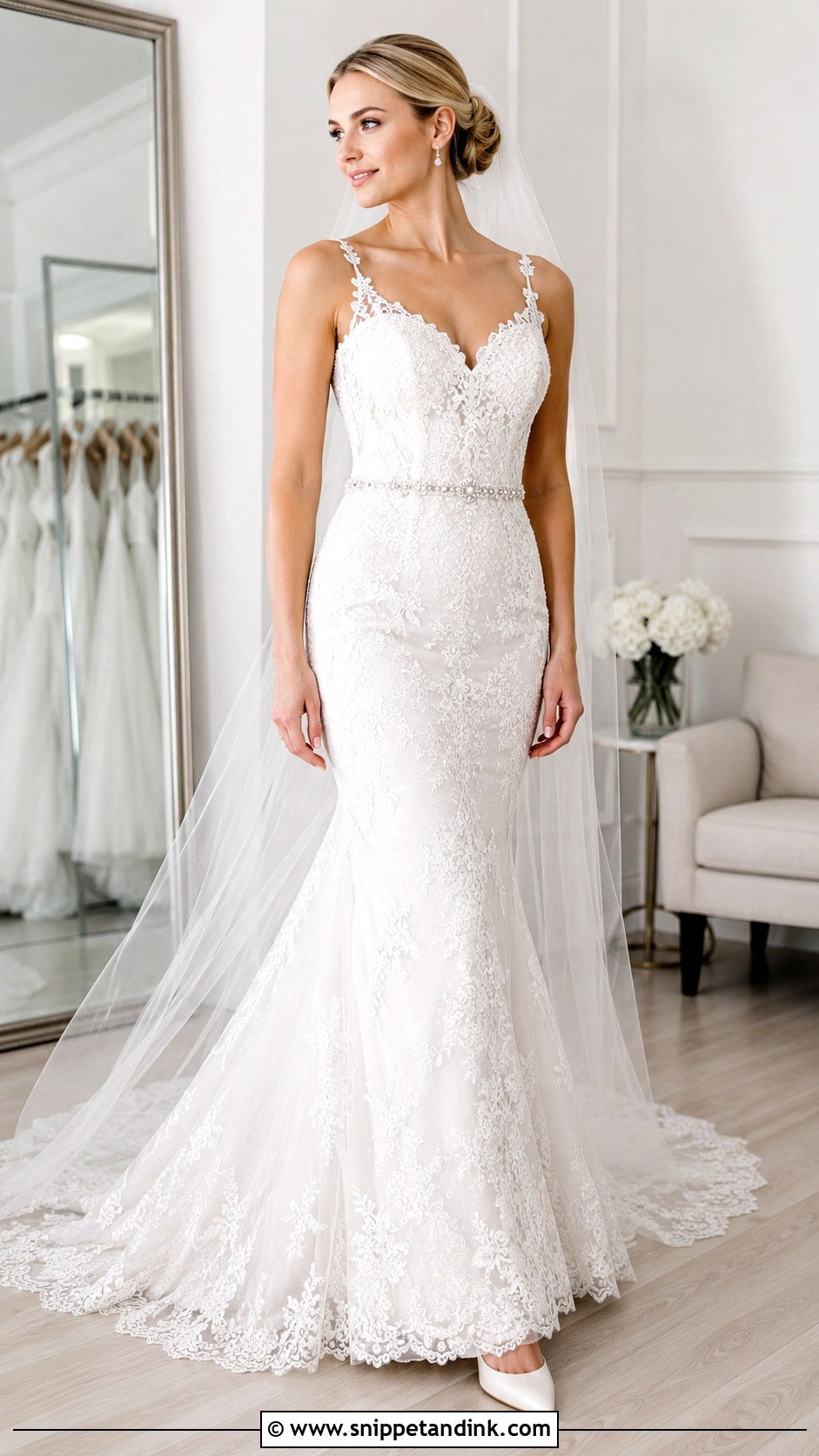
A mermaid gown relies on one long fitted line, and a wide belt breaks it in half. A thin row of pearls, crystals or tiny beads marks the waist without that problem. Place it exactly where the bodice narrows, usually along an existing seam. Fitted gowns push belts upward when you sit, so I always have a bride sit and stand a few times at her alteration fitting with the belt on; a couple of hidden thread loops usually fixes the creep. With heavy lace or embroidery, choose a tonal belt with little sparkle. Pointed pumps, small earrings, a long veil that follows the train and a smooth updo keep the line clean.
17. Wide Wedding Dress Sash With Strapless Gown
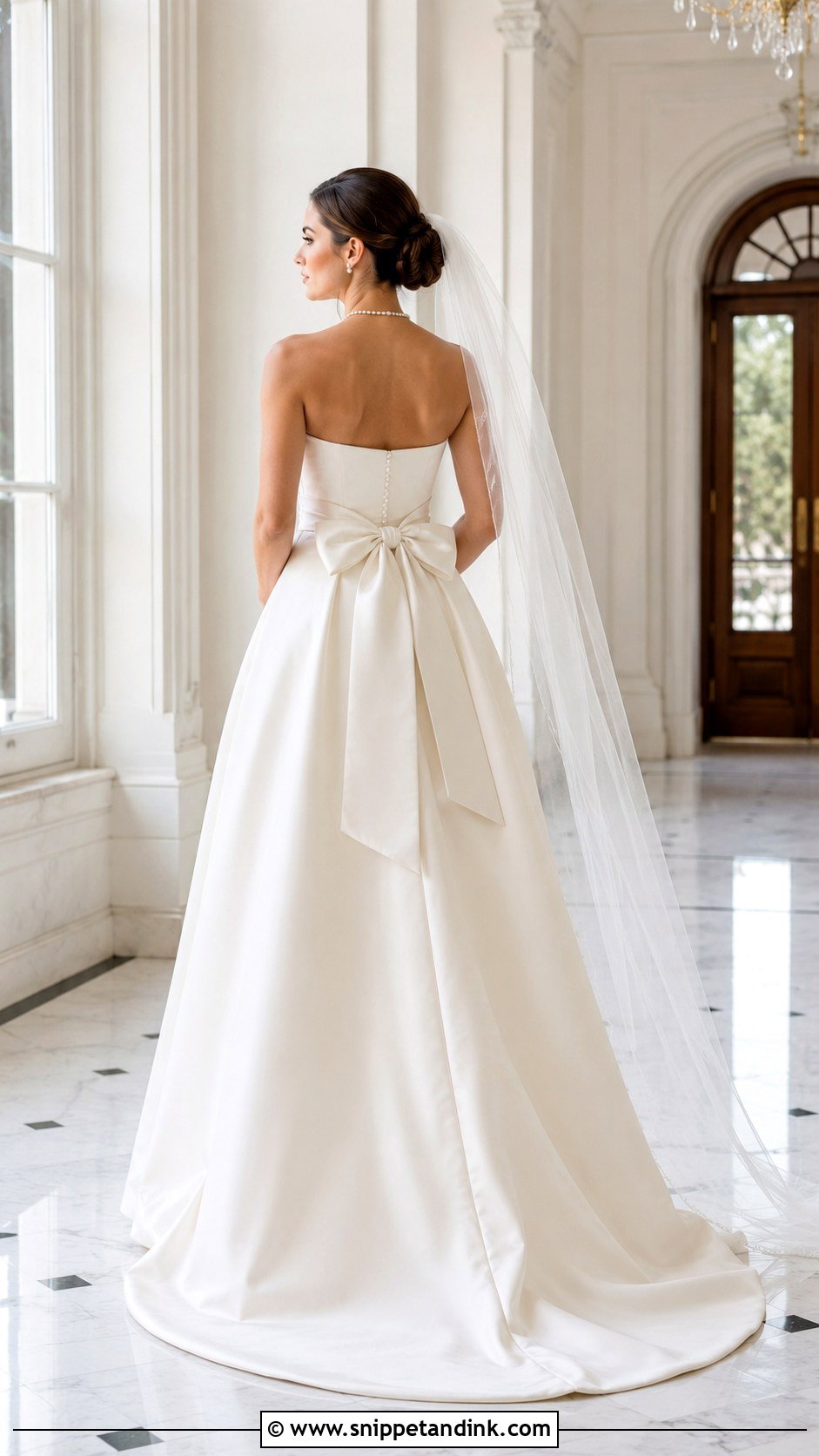
A wide sash softens a strapless gown where a plain seam joins bodice and skirt. Same-shade satin, silk or chiffon gives a classic monochrome look. Lay it flat across the front and finish with a low back bow or a simple knot. Width is a proportion question. On a short torso a wide sash can swallow the waist, so I have it cut to the bride’s measurements rather than accepting the standard width. Secure it so it doesn’t fold over when you sit. A short pearl necklace, satin pumps, a sheer chapel veil and a structured bun suit the open neckline.
18. Oversized Bow Wedding Dress Belt With Strapless Ball Gown
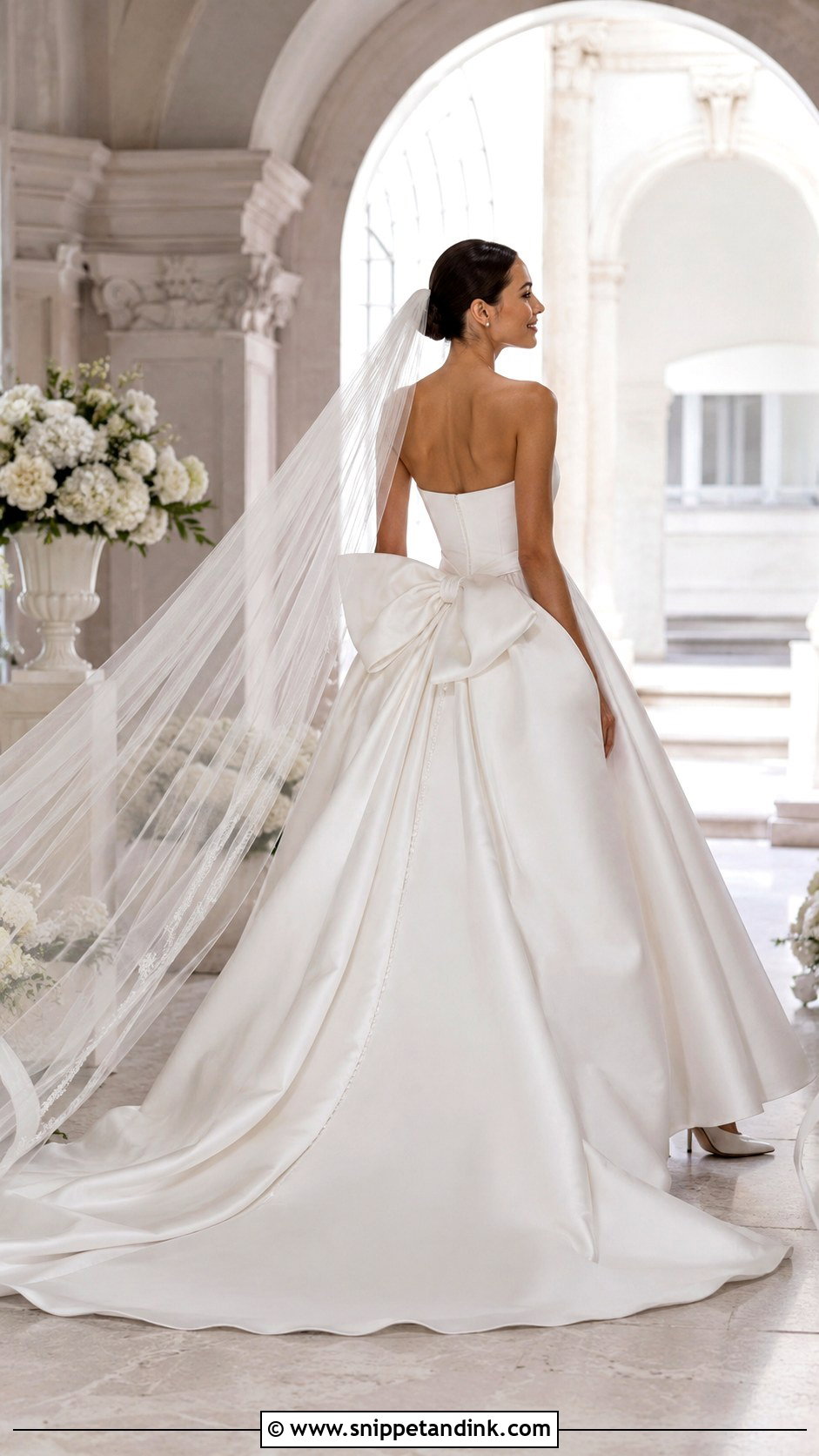
An oversized bow makes the back of a strapless ball gown the part people remember. Choose a detachable bow belt in Mikado, satin or taffeta that matches the dress closely, set at or just below the waist with structured loops and tails falling over the skirt. A big bow is heavy. Without proper attachment, it slowly slides to one side over the evening, so I’d have the seamstress fit hidden snaps at three points. Simple studs, pointed heels and a sheer cathedral veil you can remove after the ceremony keep it clean, with a sleek bun so nothing hides the back.
19. Vintage Brooch Wedding Dress Belt With Tea-Length Gown
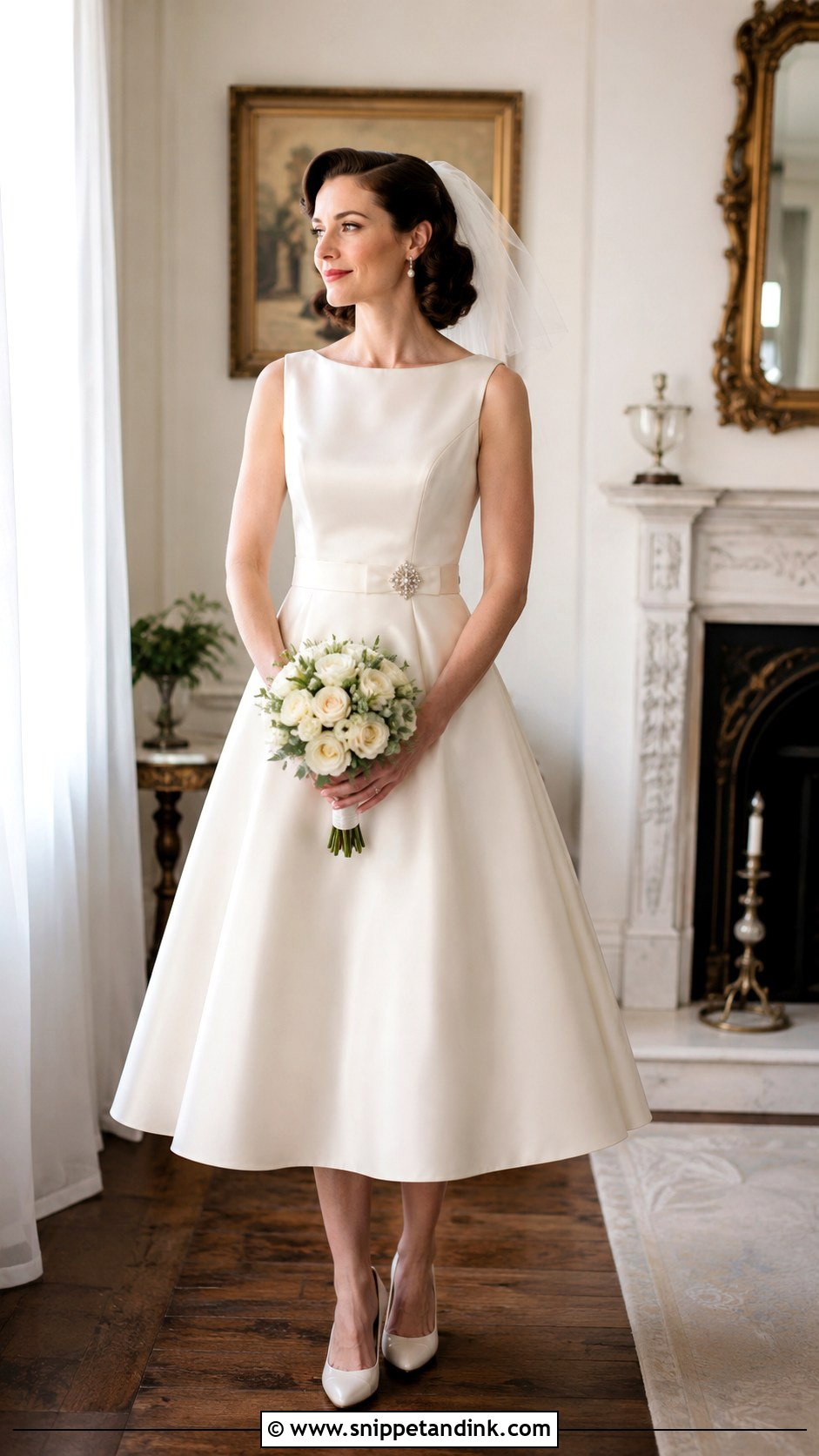
A brooch on a narrow satin ribbon gives a tea-length dress real vintage character, especially if the brooch belonged to someone in your family. Place it at centre or a little to one side. Weight is the issue: a heavy brooch drags the ribbon down at the front by evening, so keep it light. Brooch pins are sharp and can open, and I’d never trust one on a moving bride. Have it sewn on securely instead, after checking with a jeweller that the heirloom won’t be damaged. Closed-toe pumps, pearl earrings, a birdcage or fingertip veil and soft waves or a headband complete the retro look.
20. Pearl And Crystal Wedding Dress Belt With Princess Gown
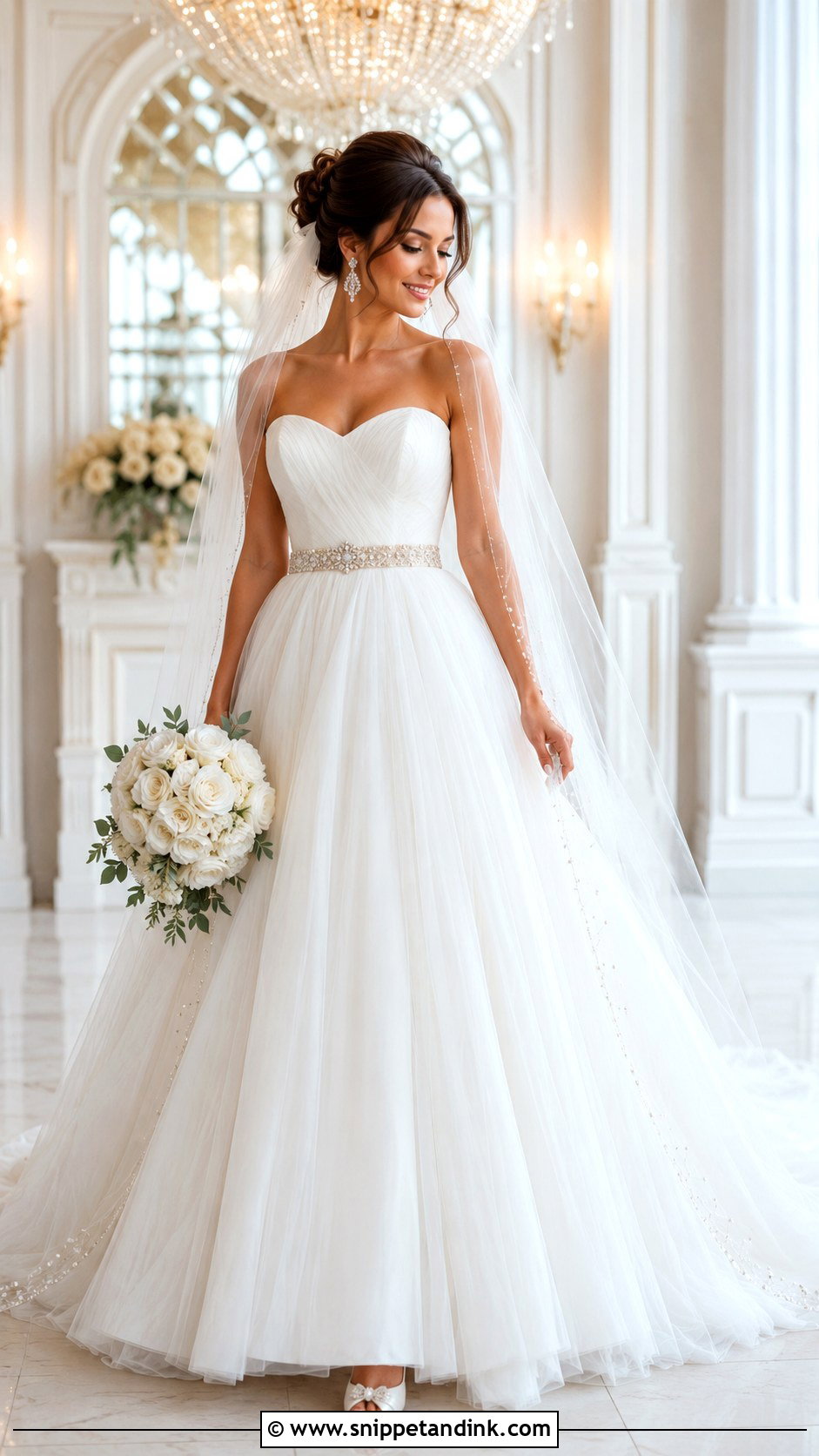
Pearls and crystals together give texture and sparkle, which suits a full princess gown. The design should repeat evenly; pearls on one side and crystals on the other look like two belts. Place it at the natural waist between a fitted bodice and a full skirt. If the bodice is already heavily beaded, choose a narrower belt with more open spacing. A belt should connect the details already on the gown, not add a new pattern. Pearl-and-crystal earrings, satin heels, a cathedral veil with light scattered sparkle and a soft updo finish it.
Keeping the Belt Level From Ceremony to Last Dance
Almost every belt moves. Ribbon slides on satin, beaded bands ride up when you sit, and bows drift to one side. Most of it is fixed at your final fitting, so bring the belt with you.
- Thread loops at the side seams hold ribbon sashes in place and are almost invisible.
- Small hooks and eyes or snaps under a rigid belt stop it rotating.
- Tacking stitches hold a heavy belt at the back and sides. Unpick them after the wedding.
- Avoid safety pins on silk or satin. They leave holes and can open.
If the belt has a clasp, ask for it at the back or side and check you can’t feel it against your spine when you sit.
Storing Beads and Ribbon Away From the Gown
Take the belt off before the gown goes to be cleaned; beaded belts often can’t be cleaned the same way as the dress. Store it separately, flat in a box lined with acid-free tissue. Pressed against the gown for months, beads and metal settings can leave marks in the fabric. Roll satin and velvet sashes loosely around a tube rather than folding, or they hold a crease.
Hold the Belt Against the Gown in Daylight Before You Buy
A belt should make the dress look finished, not compete with it. The ideas above cover sheaths, lace gowns, ball gowns, mermaid shapes and boho dresses. Compare colour, width, texture and decoration against the actual fabric, and check where the waist seam, buttons, lace motifs and boning sit. Take the belt to your alterations so it can be secured properly. Then wear the whole outfit together: shoes, jewelry, veil and hair. That’s the moment you’ll see whether the belt belongs.


Leave a Reply