
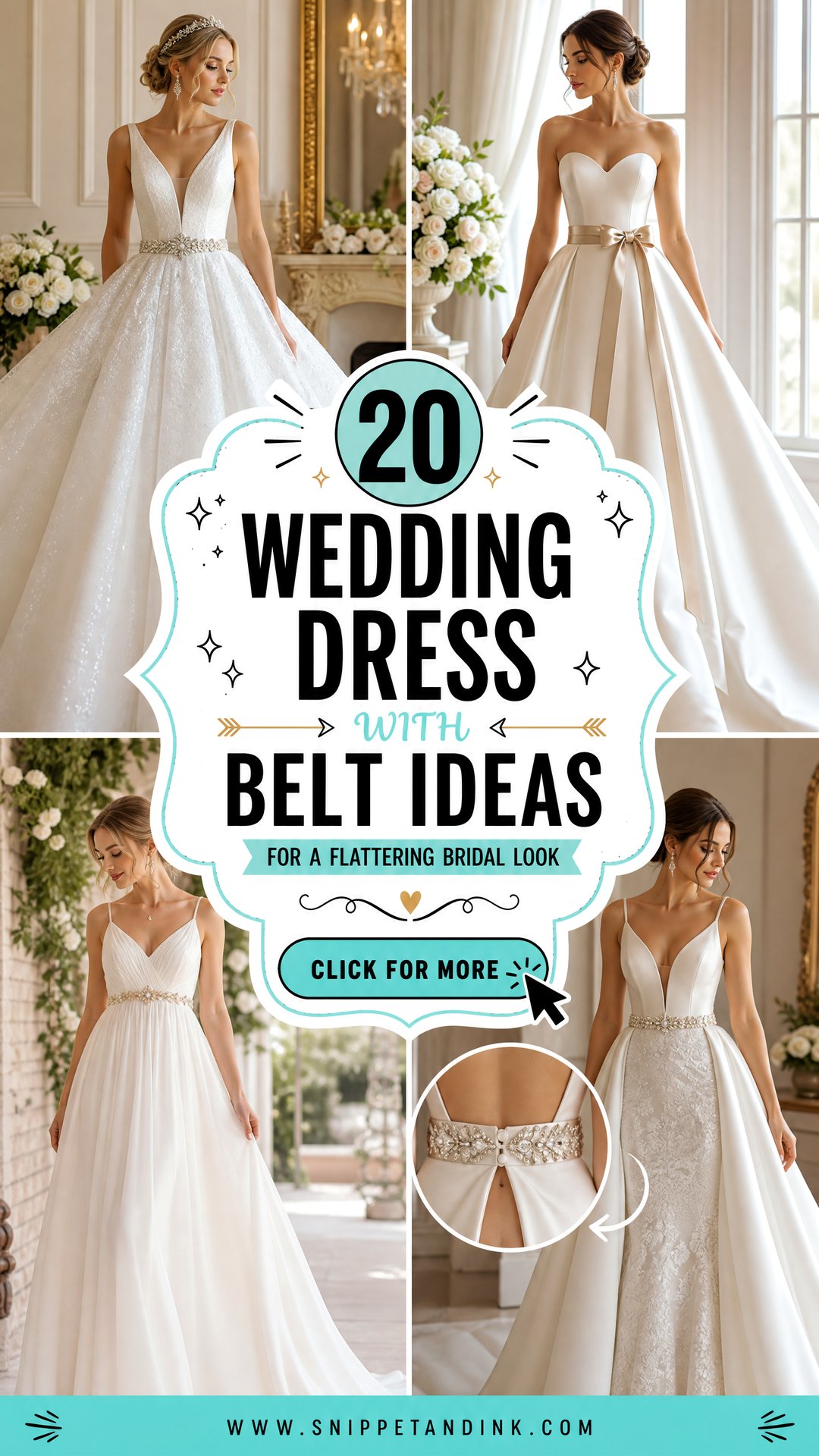
A belt is the cheapest way to change how a bridal gown looks, and the easiest to get wrong. Set at the right height, it pulls in the waist and gives a plain dress a point of focus. Set a little too low or too wide, and it chops your torso in half. The ideas below run from lace and satin gowns to ball gowns, boho dresses and minis, with crystal, pearl, floral, metallic, velvet and ribbon belts. In fittings I judge a belt on four things: width, placement, colour against the dress fabric and whether it hides seams that were meant to show. Each look also comes with shoe, jewelry and veil suggestions.
Belt or Sash, and How Wide to Go
Brides use the two words interchangeably, but they behave differently. A belt is a structured band, usually backed and fastened with hooks, that holds its shape. A sash is soft fabric that wraps and ties. Belts give a crisp line; sashes give movement and can be tied higher or lower on the day.
Width is where I make most adjustments. As a working rule, measure from the bottom of your bust to your natural waist. A belt about a quarter of that distance looks balanced. Much wider and it eats into a short torso; much narrower and it disappears on a long one.
- Short-waisted brides: stay narrow, around one to four centimetres, and match the belt to the dress so it doesn’t cut the body.
- Long-waisted brides: a wider band or sash breaks up the length and looks deliberate.
- Full busts: keep the belt at or just above the natural waist, never directly under the bust, which can make the chest look heavier.
- Straight figures: a contrasting belt creates a waist where the dress alone may not.
1. A-Line Wedding Dress with Crystal Belt
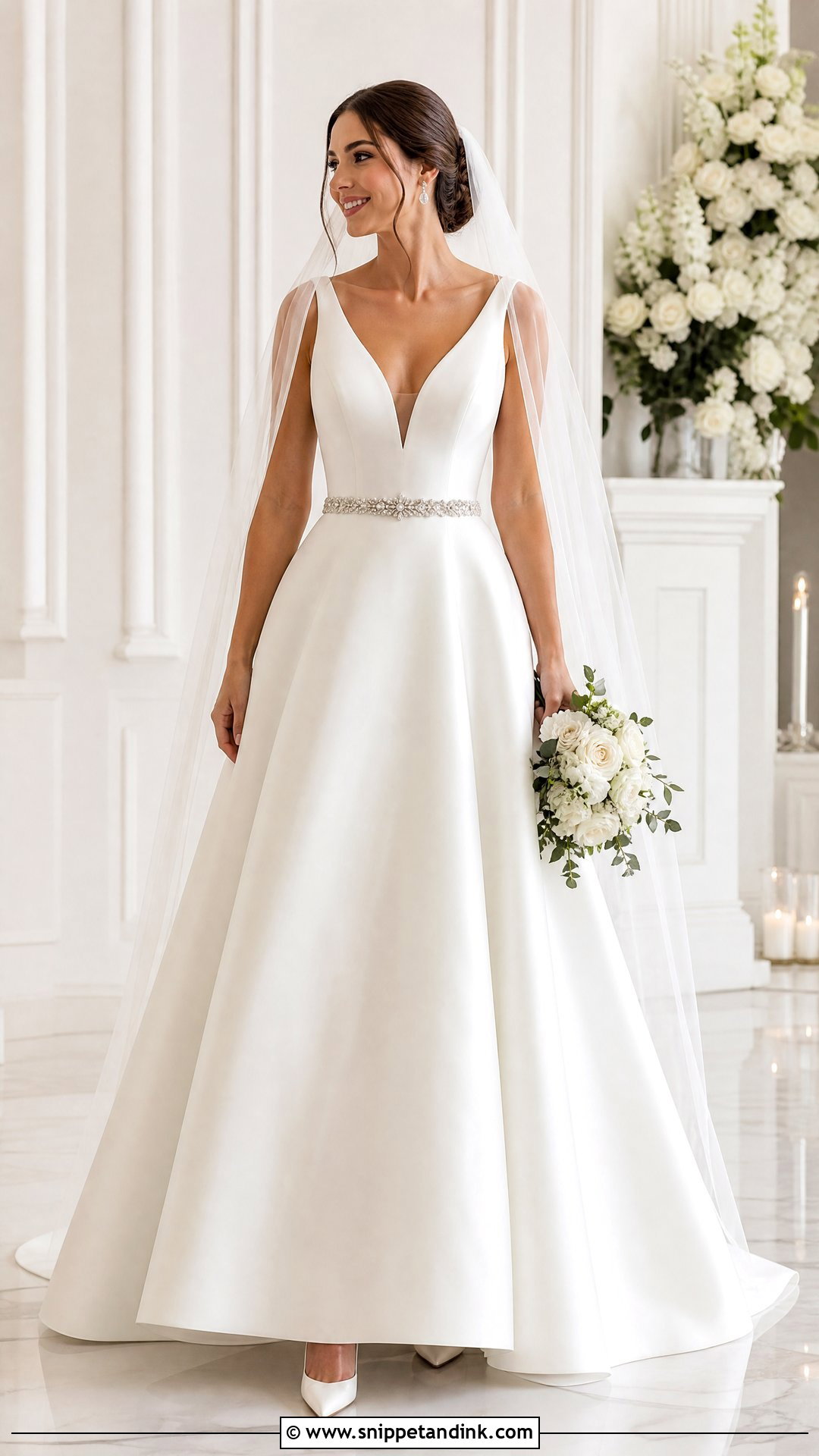
Crystal on an A-line gives you sparkle right at the narrowest point, with soft fabric everywhere else. Choose a fitted bodice, a natural waist and a chiffon, tulle or satin skirt. Keep the belt narrow so it defines the middle without breaking the line. Silver-toned stones sit well against cool white; champagne crystals suit ivory. The detail I check is whether the belt follows the waist seam. If it sits even a centimetre off, you see a ridge of seam above or below it in close-ups. Pointed satin pumps, delicate drops and a fingertip veil with a light beaded edge finish it, with a plain necklace if the neckline is busy.
2. Satin Wedding Dress with Pearl Belt
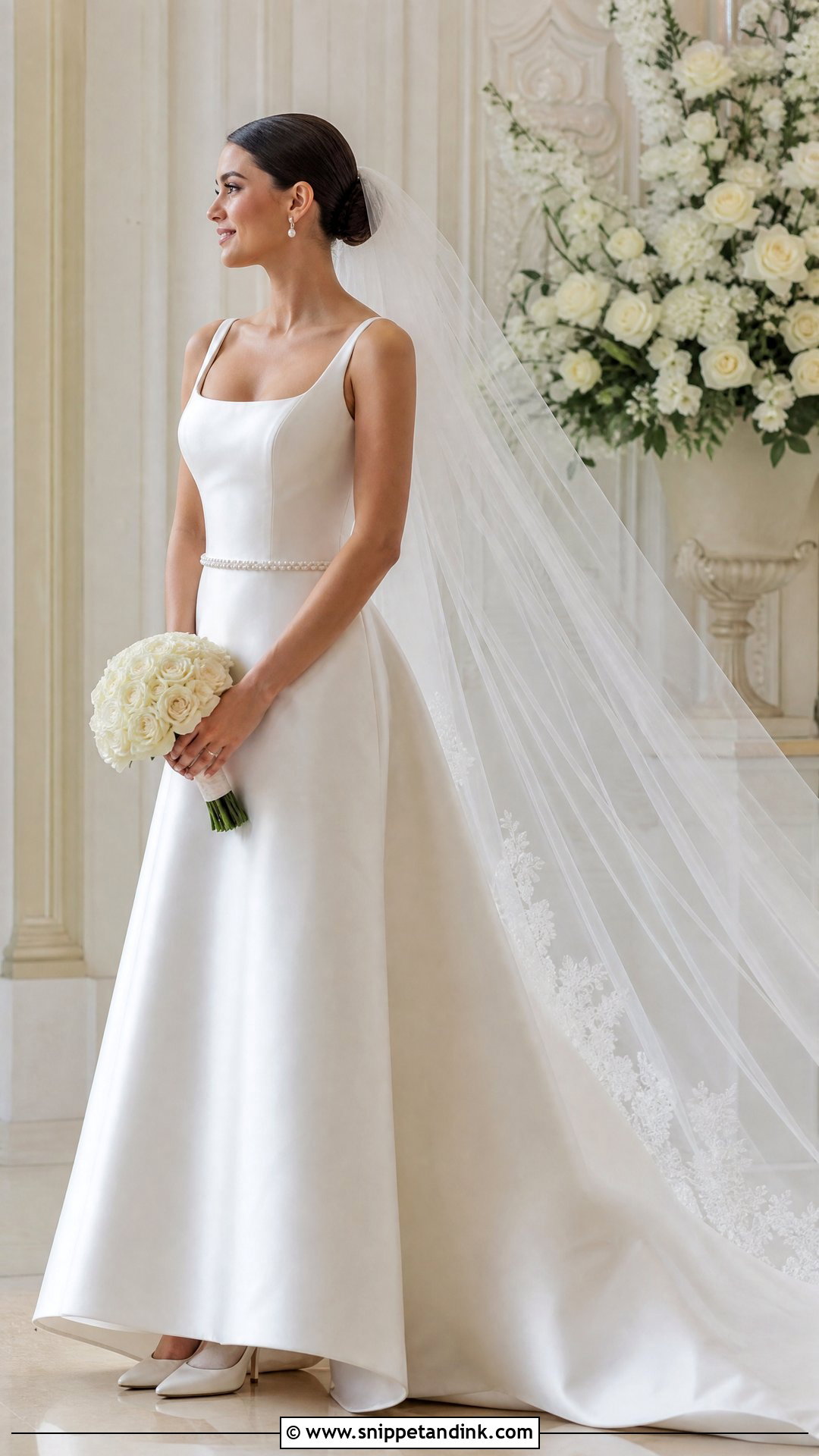
Pearls against smooth satin give gentle texture without glare. The pairing suits a structured A-line, column or fit-and-flare with little embellishment. Choose a slim belt with evenly spaced pearls; large ones look heavy on a clean surface. Ivory pearls go with warm fabrics and bright white pearls with crisp white satin, and mixing the two makes both look off. Satin marks easily, so the belt should be backed in matching fabric rather than bare metal or wire. Pearl studs, closed satin heels, a cathedral veil with a raw edge and a sleek low bun keep the waist in focus. Have the seamstress tack it at the side seams so it stays level all day.
3. Lace Wedding Dress with Satin Belt
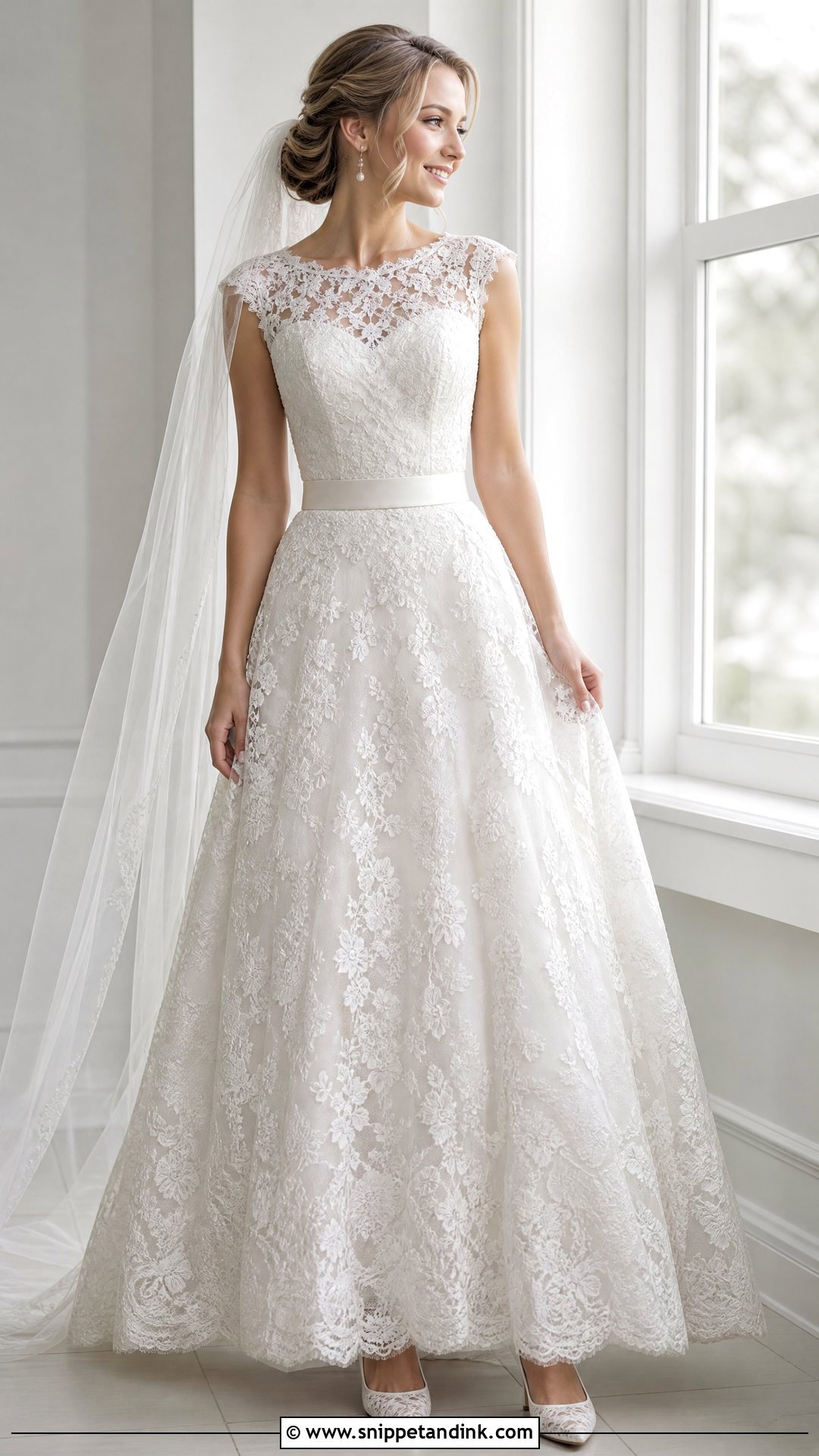
Lace dresses can look like one long pattern from neck to hem, and a plain satin belt gives the eye somewhere to stop. Choose a soft A-line or sheath gown with floral lace over the bodice and skirt, and a satin belt in the same ivory or white. Use a narrow band for fine lace and a slightly wider sash for bold patterns. Before alterations, try the belt at the natural waist and again a finger’s width above it; the higher placement often lengthens the legs, especially on petite brides. Lace-covered pumps, small pearl earrings, a light tulle veil and a loose chignon suit it.
4. Ball Gown Wedding Dress with Jeweled Belt
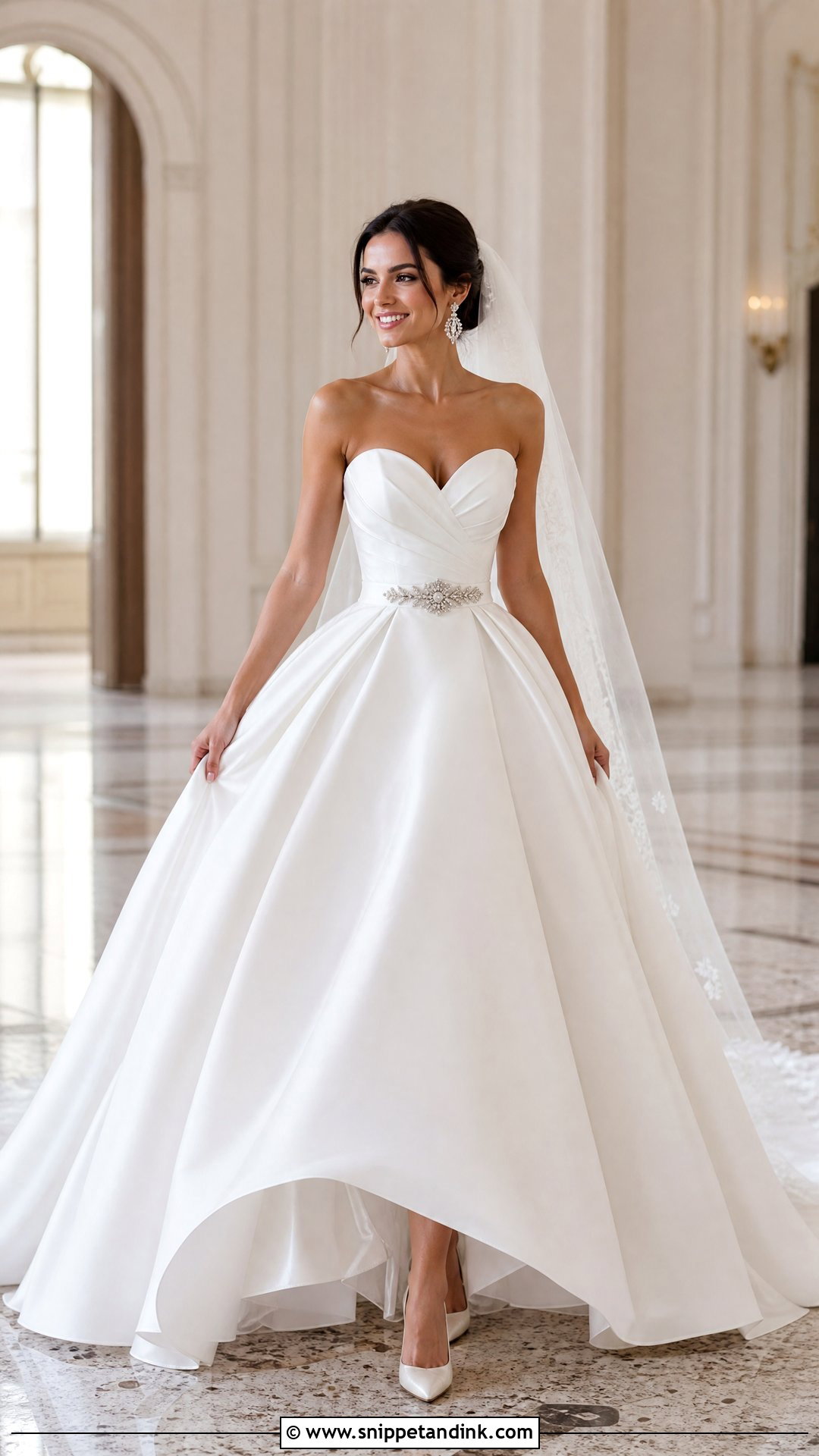
A full skirt balances a bigger belt, which is why ball gowns can carry a more noticeable jeweled belt. Pair a structured bodice with a tulle, satin or organza skirt and a medium-width belt of crystals, pearls or small rhinestones at the natural waist. One focal point is enough, so pair it with a simple necklace or none. The backing should match the dress exactly; a white backing on an ivory gown shows up as a stripe under flash. Sparkling earrings, a classic updo, satin pumps and a veil longer than the train finish this formal look.
5. Mermaid Wedding Dress with Rhinestone Belt
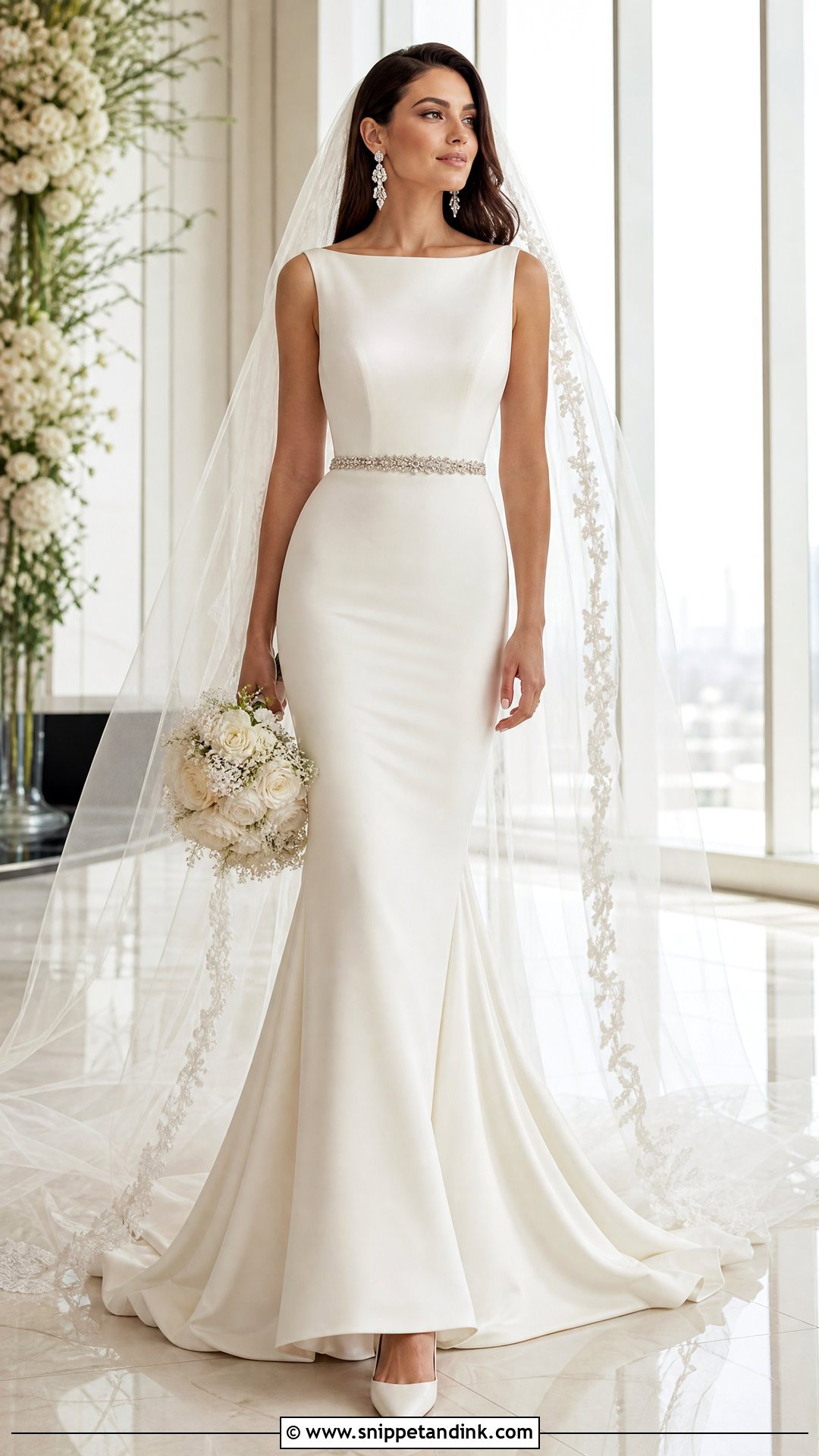
Mermaid gowns are all about the line from shoulder to knee, so the belt has to stay thin. A slim rhinestone band at the natural waist adds light without breaking that line. Choose fitted crepe, satin or lace. Rhinestones set in metal prongs are the biggest snag risk of any belt; on lace or illusion panels they pull threads every time your arm brushes past. Ask for a belt with closed or glued settings, and check the inside edge too. Sit, walk and turn in it at the fitting. Pointed heels, crystal drops, a narrow cathedral veil and a polished bun or side-parted waves complete the look.
6. Boho Wedding Dress with Floral Belt
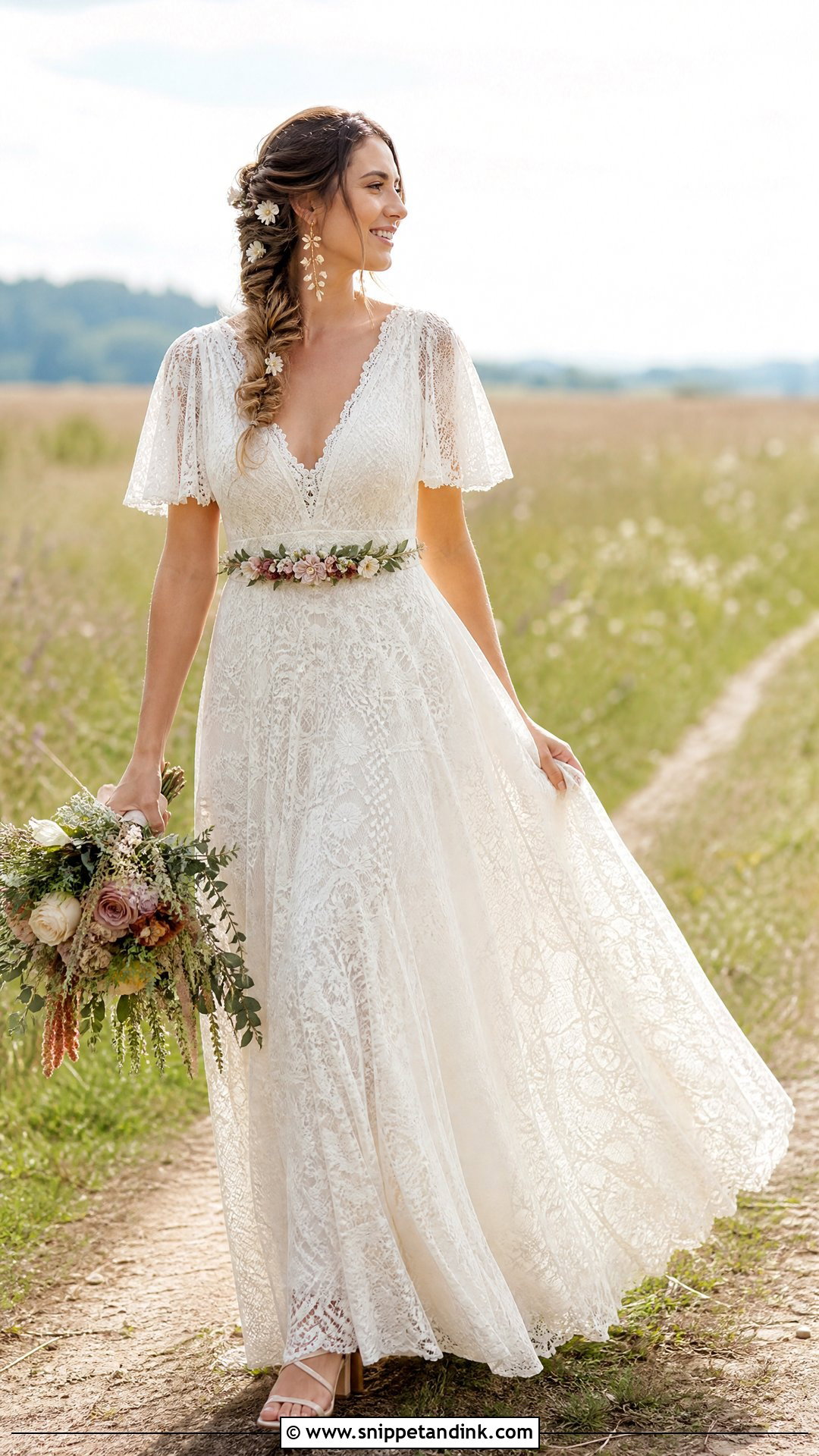
Fabric flowers and embroidered leaves suit a relaxed chiffon or lace gown with an easy skirt, flutter sleeves or a simple V-neck. Muted ivory, blush and sage details look natural outdoors. Keep the belt flexible. Stiff, oversized flowers stick out when you sit and create a lump at the waist in seated photos, while small dimensional blooms move with you. Low block-heel sandals stay steady on grass. Botanical earrings, a loose braid with small floral pins and a light chapel veil keep the mood easy.
7. Simple Wedding Dress with Beaded Belt
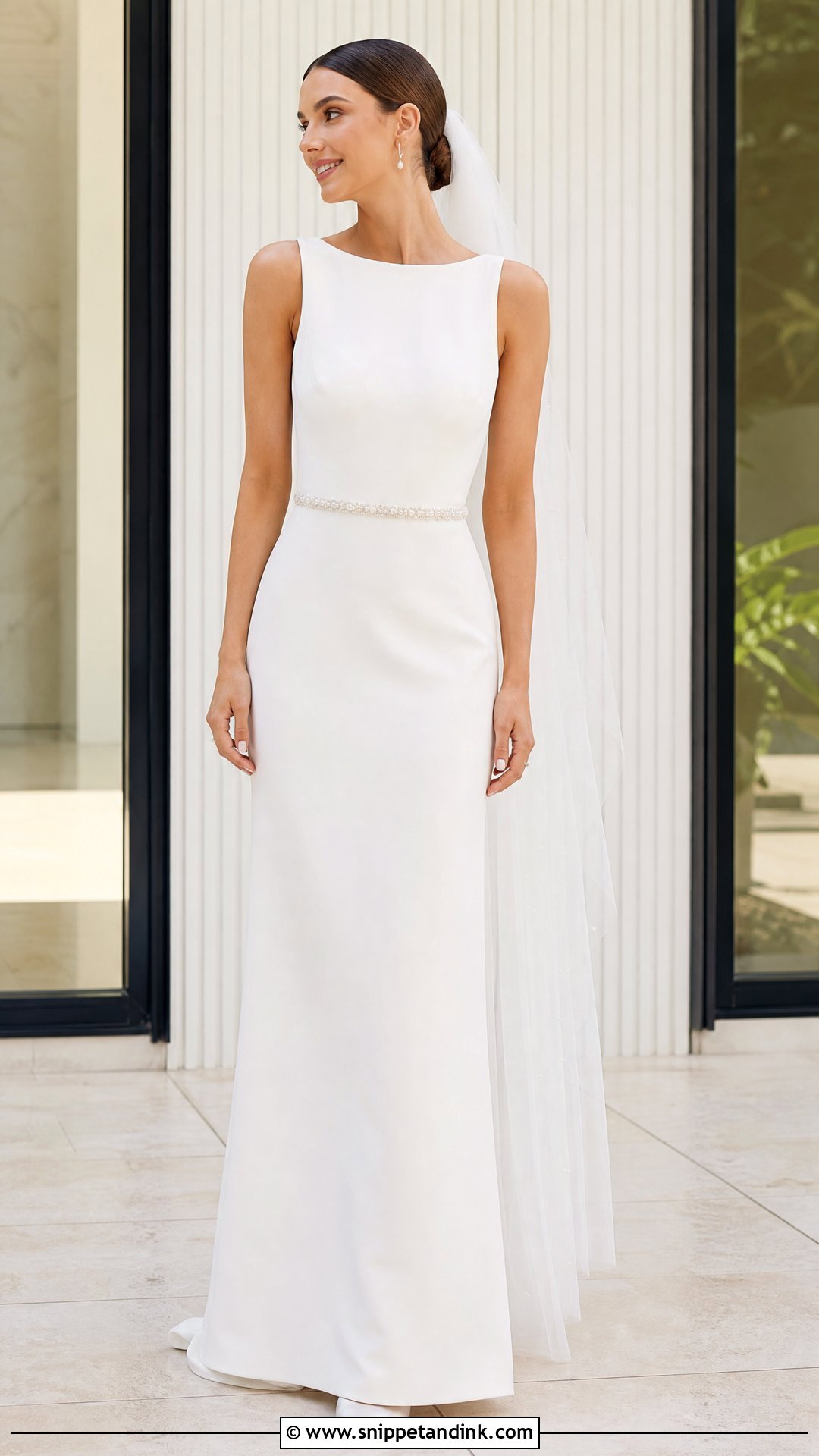
The quickest upgrade for a plain gown is a narrow beaded belt. Seed beads, crystals and small pearls on a minimalist crepe, mikado or matte satin dress add texture exactly where it helps. Match the beadwork to your earrings and hair piece, not your shoes. If the dress has a low back, the belt should either wrap fully around or finish at a deliberate point, never stop abruptly at the side seams, which looks unfinished from behind. Secure it with small hooks or a few hand stitches. Pointed pumps and a fingertip veil keep the look modern.
8. Strapless Wedding Dress with Ribbon Belt
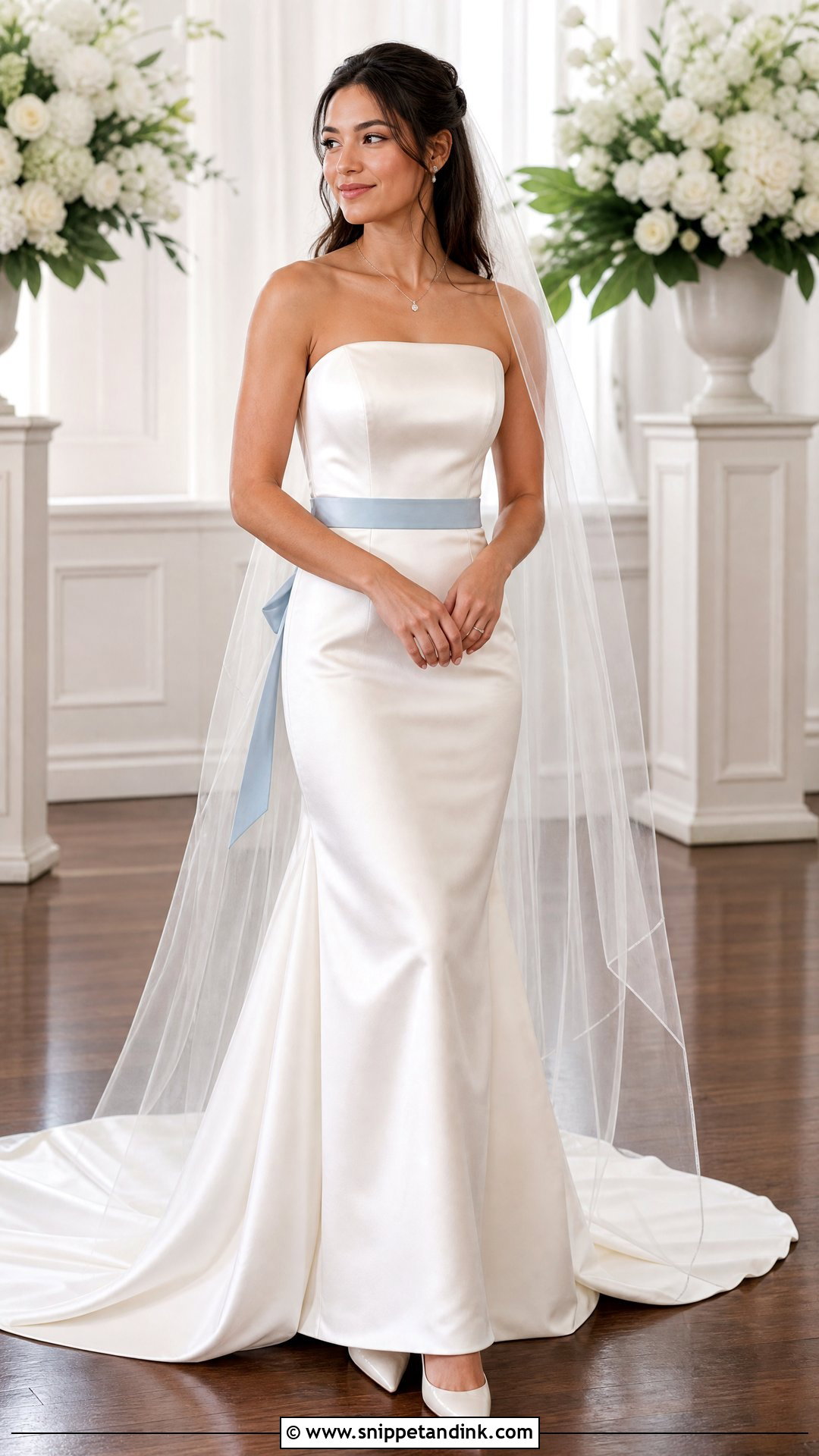
Ribbon softens a strapless bodice in a way crystals can’t. Wrap grosgrain or double-faced satin ribbon around the natural waist of a sweetheart or straight-neck gown and tie a flat bow at the back or side, never the front, where it adds bulk. Ivory matches, while blush, dusty blue or champagne add a hint of colour. Ribbon quality matters more than people expect: cheap single-faced satin twists and shows its dull side by the reception, so I buy a stiffer grosgrain or double-faced ribbon. A delicate pendant, small earrings, pointed heels, a sheer chapel veil and a half-up style suit it.
9. Long Sleeve Wedding Dress with Velvet Belt
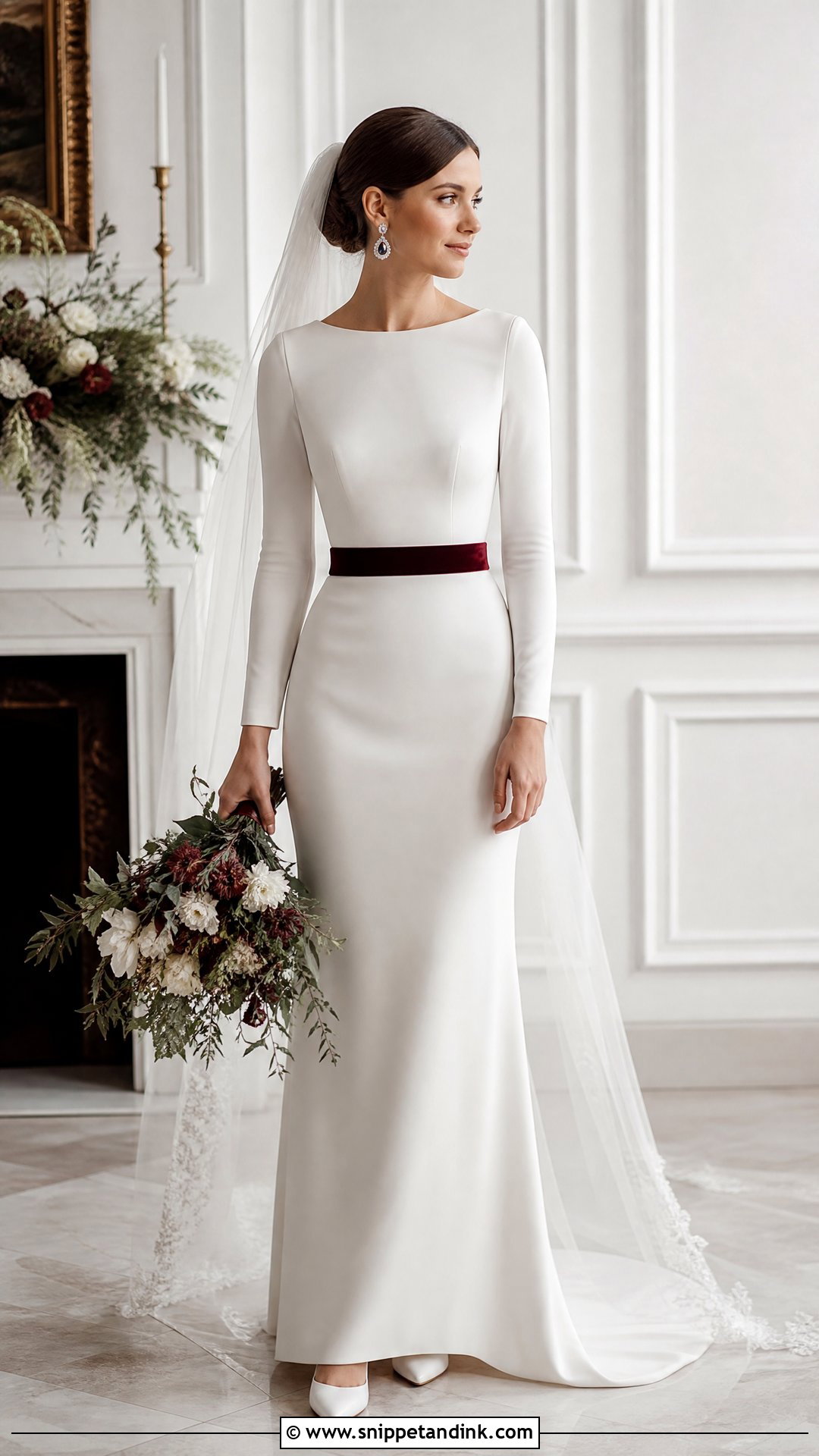
Velvet belongs to cold-weather weddings. A slim velvet belt on a long-sleeve lace, crepe or satin gown adds richness, in ivory for a tonal look or navy, forest green or burgundy for contrast. Keep it narrow, since velvet looks heavier than its width. Dark velvet can rub colour onto pale fabric if it gets damp, so I have coloured belts lined along the inner edge. Repeat the colour once, perhaps in the bouquet ribbon, but not everywhere. Closed pumps, small gemstone earrings, a chapel veil and a neat low bun keep the sleeves and neckline visible.
10. Tea Length Wedding Dress with Bow Belt
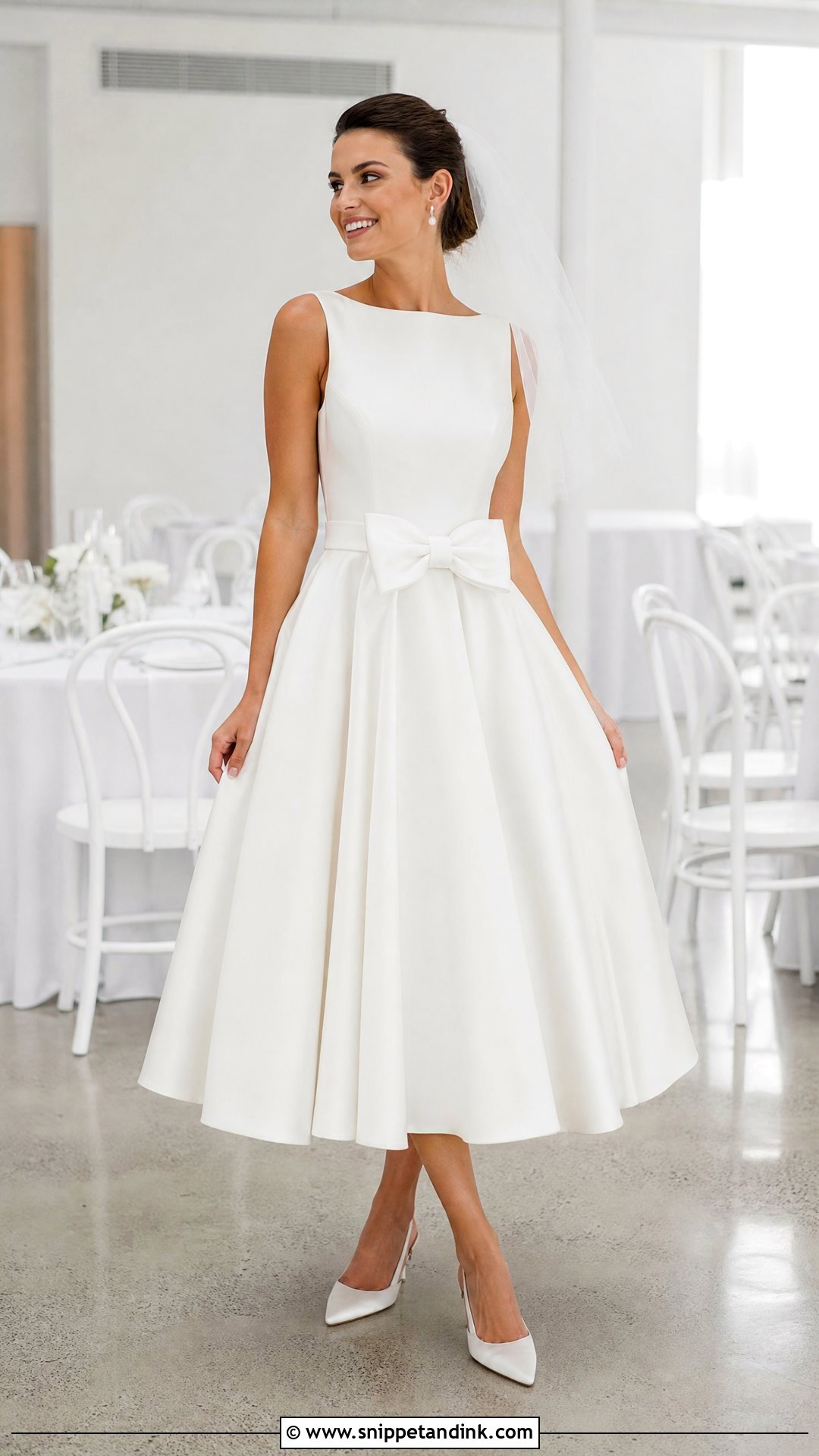
On a tea-length dress, a bow belt reads playful without looking like a costume, as long as the bow stays small. Choose a fitted bodice with a skirt ending between knee and ankle so the shoes join the outfit. A satin or grosgrain belt with a bow at the front, side or back defines the waist. Scale it to the skirt: a compact bow for a narrow skirt, a bigger one for a full skirt. Pointed slingbacks, pearl earrings and a short veil or hair bow suit the proportions, and coloured shoes are an easy way to add personality.
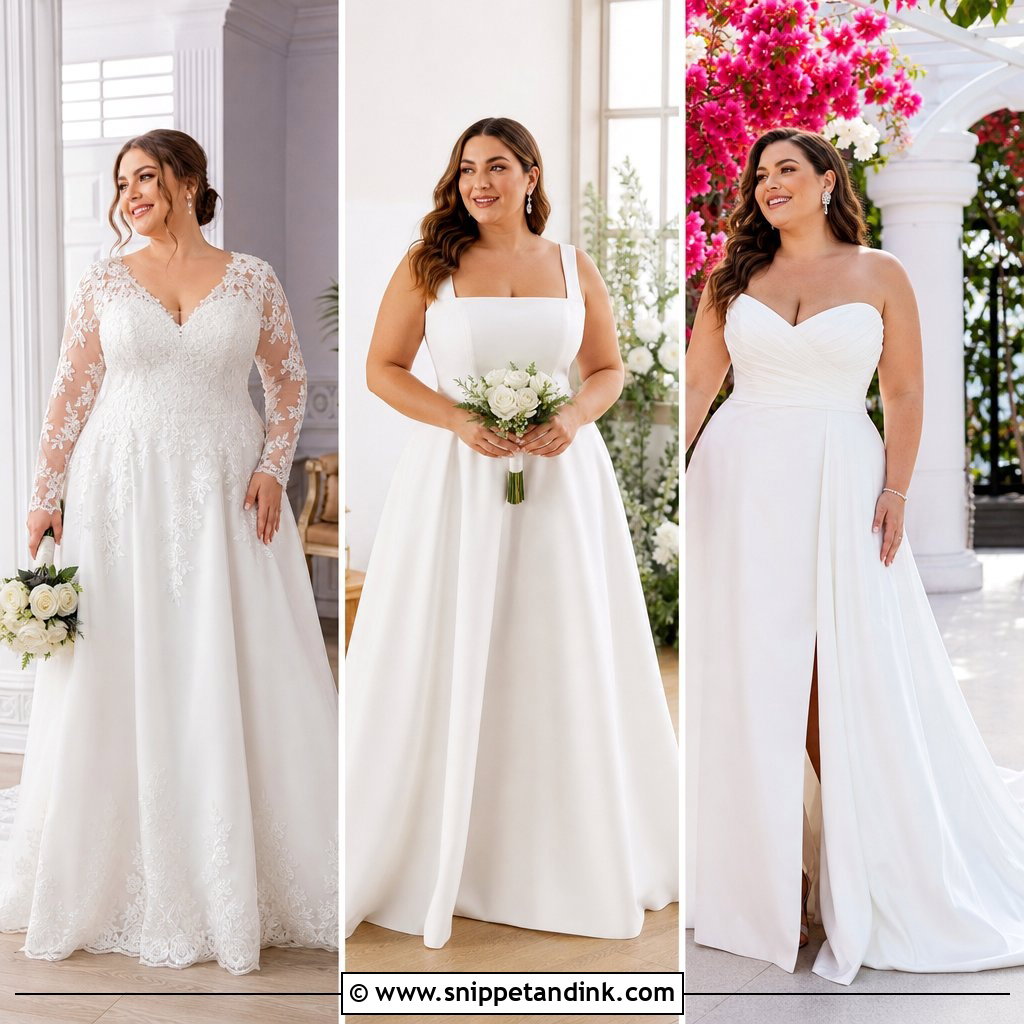
11. Plus Size Wedding Dress with Wide Sash
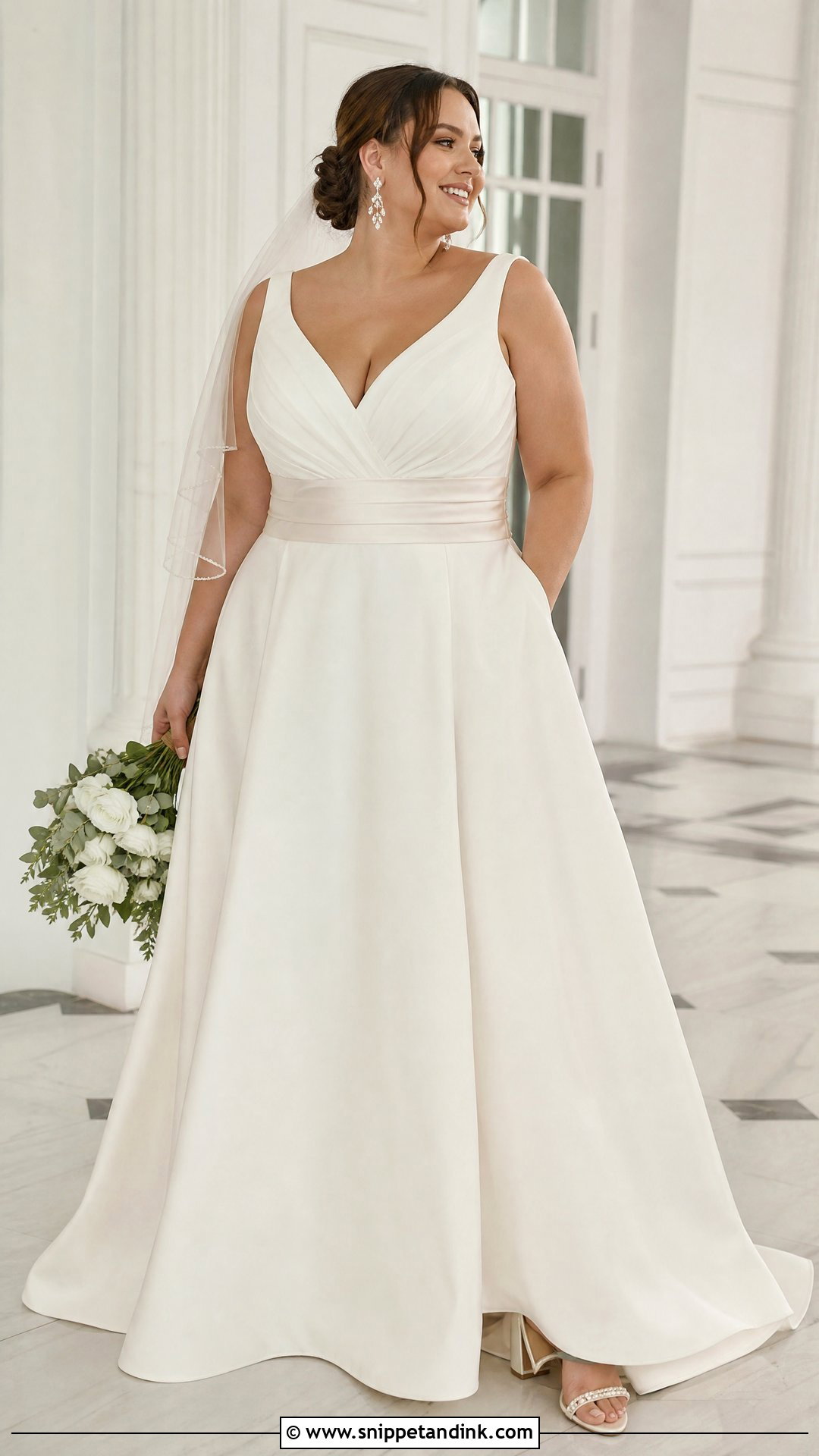
A wide sash gives clear waist definition and a smooth transition between bodice and skirt. Choose an A-line or a softly structured ball gown with supportive construction and a real waist seam. The sash should lie flat; heavily gathered fabric adds bulk at the middle. Tonal ivory keeps the line long, while a muted contrast draws attention to the waist. Fit it to the body rather than pulling it tight, because a tight sash creases and rolls once you sit. Have the seamstress anchor it at the side seams. Block heels, statement earrings and a chapel veil under a low updo complete it.
12. Empire Waist Wedding Dress with Delicate Belt
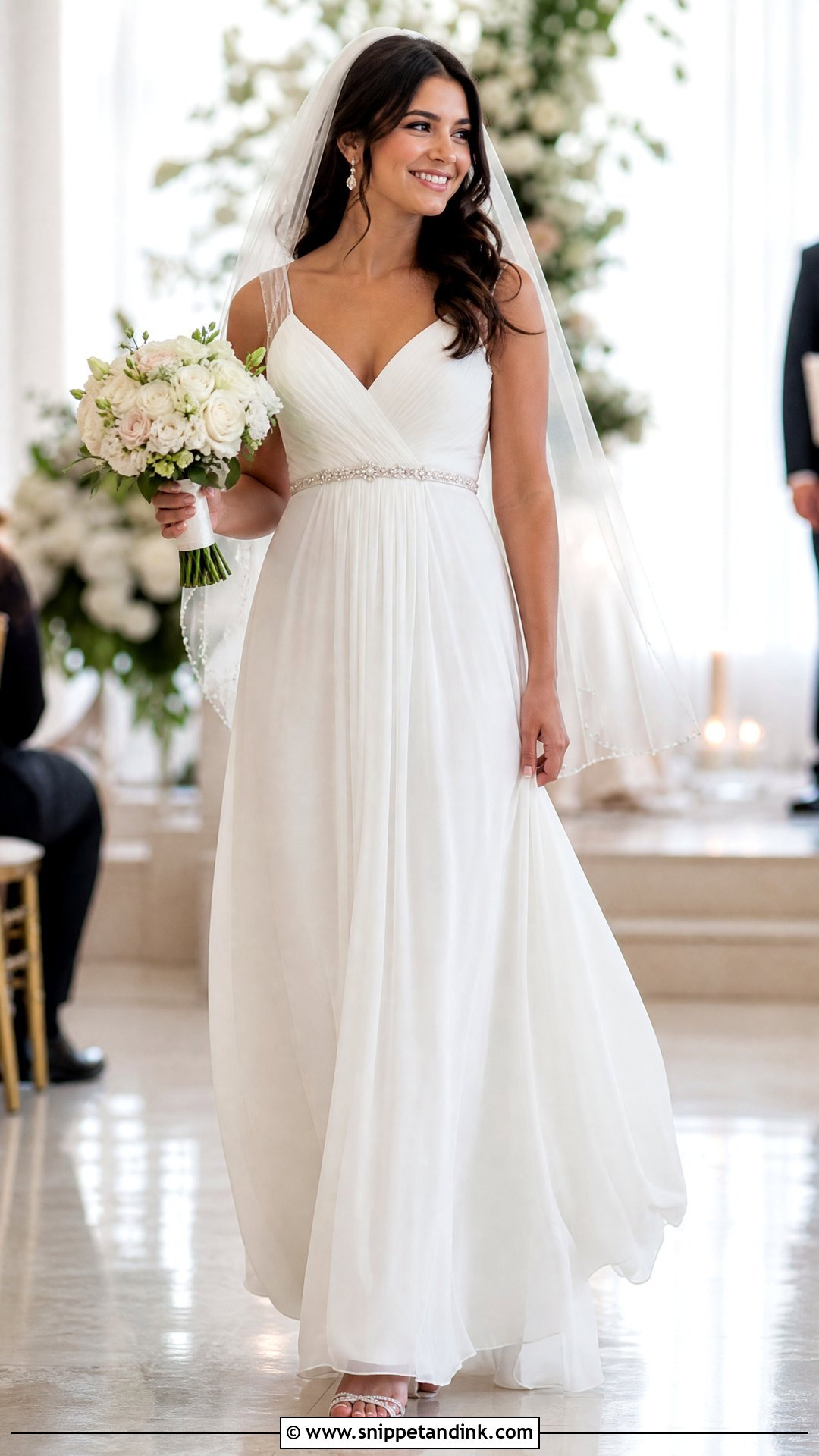
An empire seam already sits just under the bust, so the belt should follow it exactly. Moving it down to the natural waist fights the cut of the dress. Choose light chiffon, soft tulle or flowing crepe, and a narrow pearl, crystal or embroidered belt. Because it sits on the rib cage, which expands every time you breathe, laugh or eat, the belt must be soft and slightly flexible; a stiff band digs in by the speeches. Low-heeled sandals, fine drops, a light fingertip veil and soft waves suit the mood, and the long skirt stays the main feature.
13. Vintage Wedding Dress with Art Deco Belt
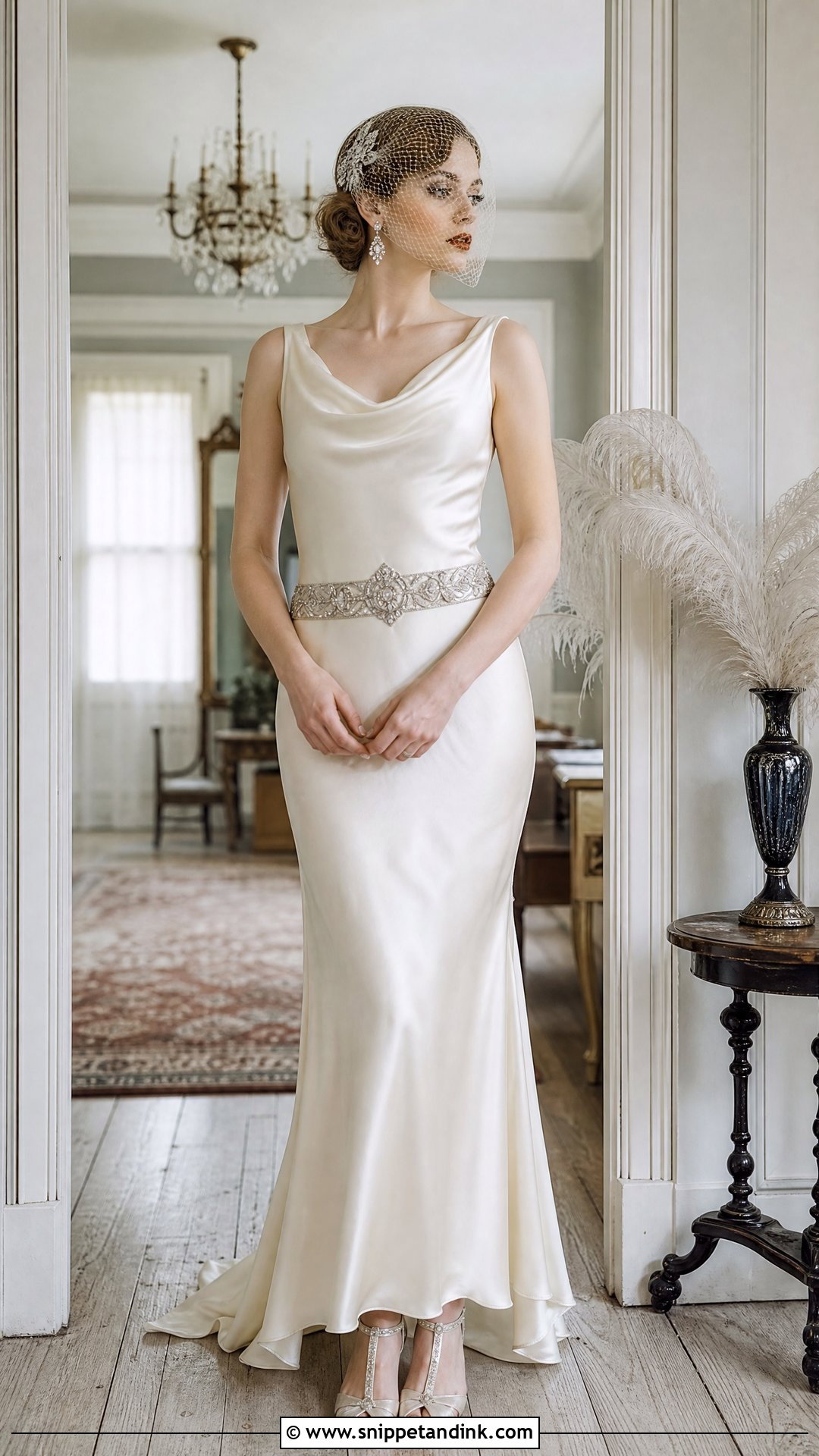
An Art Deco belt gives a vintage dress a clear focal point. Pair it with a bias-cut satin gown, a beaded column or a draped sheath with a simple waist, and choose geometric crystals, silver beading or fan shapes in a narrow band. Stay in one decade. Deco belt, Victorian lace and boho hair together look confused. Bias-cut satin also shows the outline of anything heavy, so the belt should be light enough not to drag the fabric. T-strap heels, drop earrings, a waved bob or low bun and a fingertip veil on a jeweled comb complete the period look.
14. Rustic Wedding Dress with Leather Belt
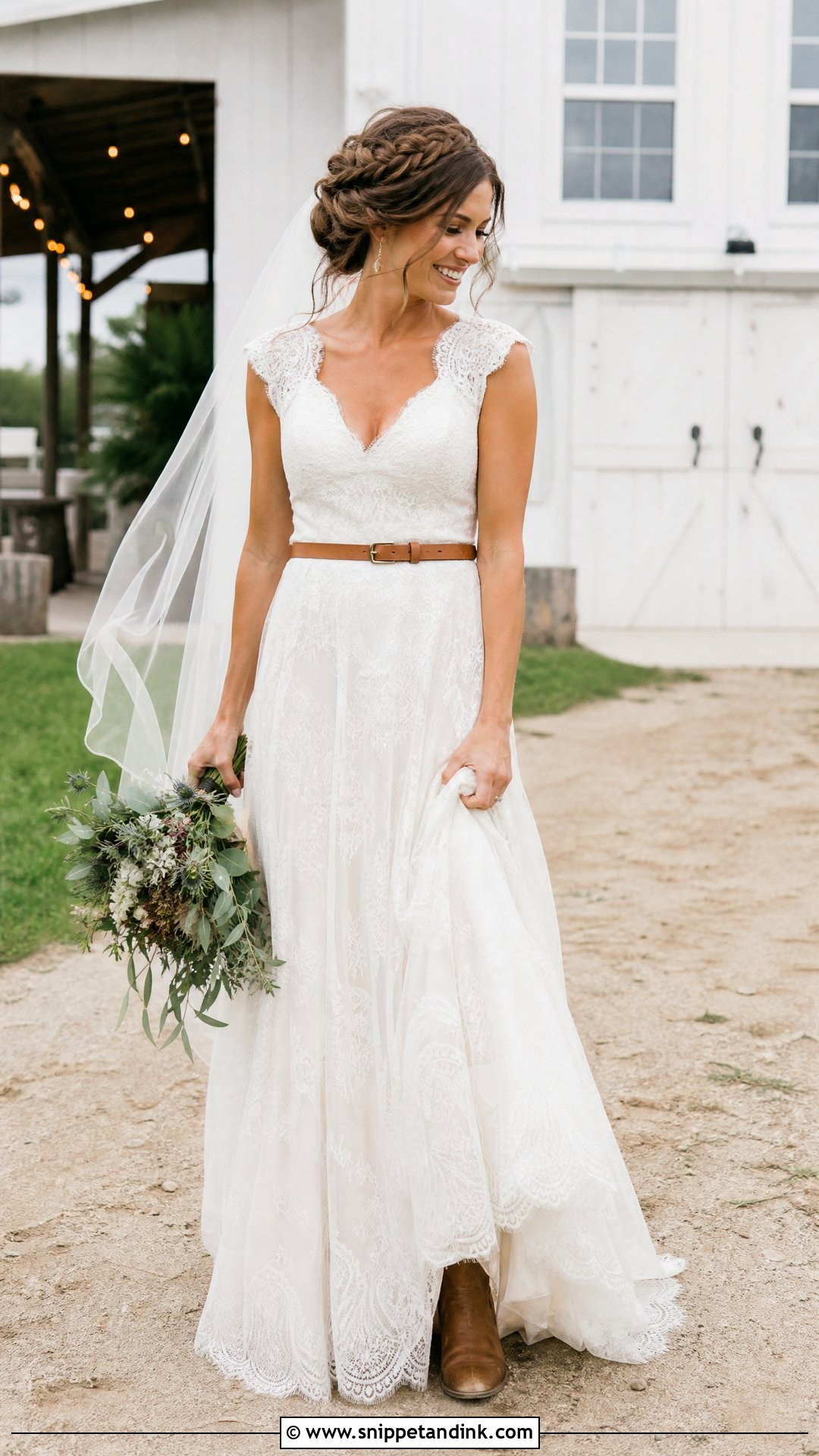
Leather gives a rustic dress an earthy, personal finish, provided it is the right leather. Choose soft, thin leather in tan, ivory or muted brown with a small brass or antique-silver buckle, on a relaxed lace or cotton-blend gown. A thick everyday belt looks casual and bulky. Rough leather edges catch lace, so ask for edges that are burnished or sealed. Pair it with ankle boots or low block heels, simple metal earrings, a loose braided updo and a light veil that doesn’t cover the belt.
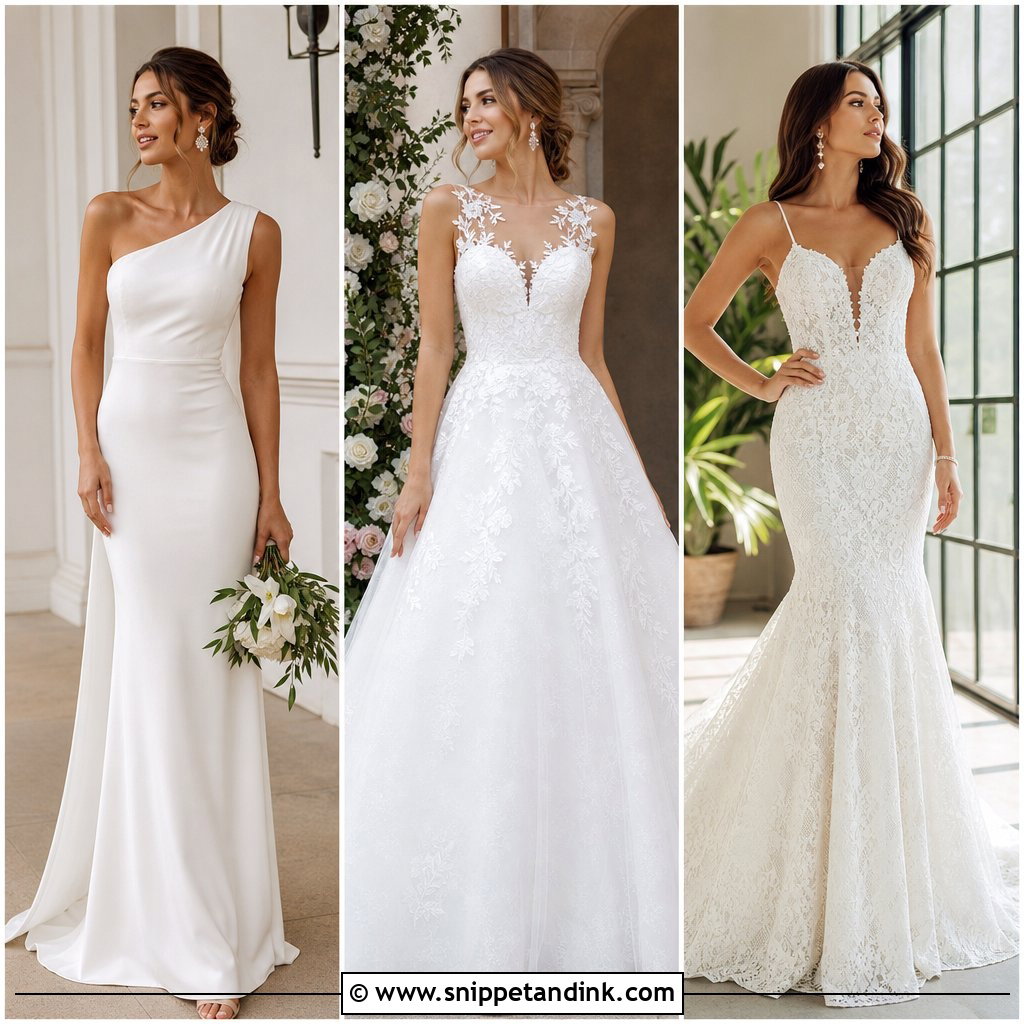
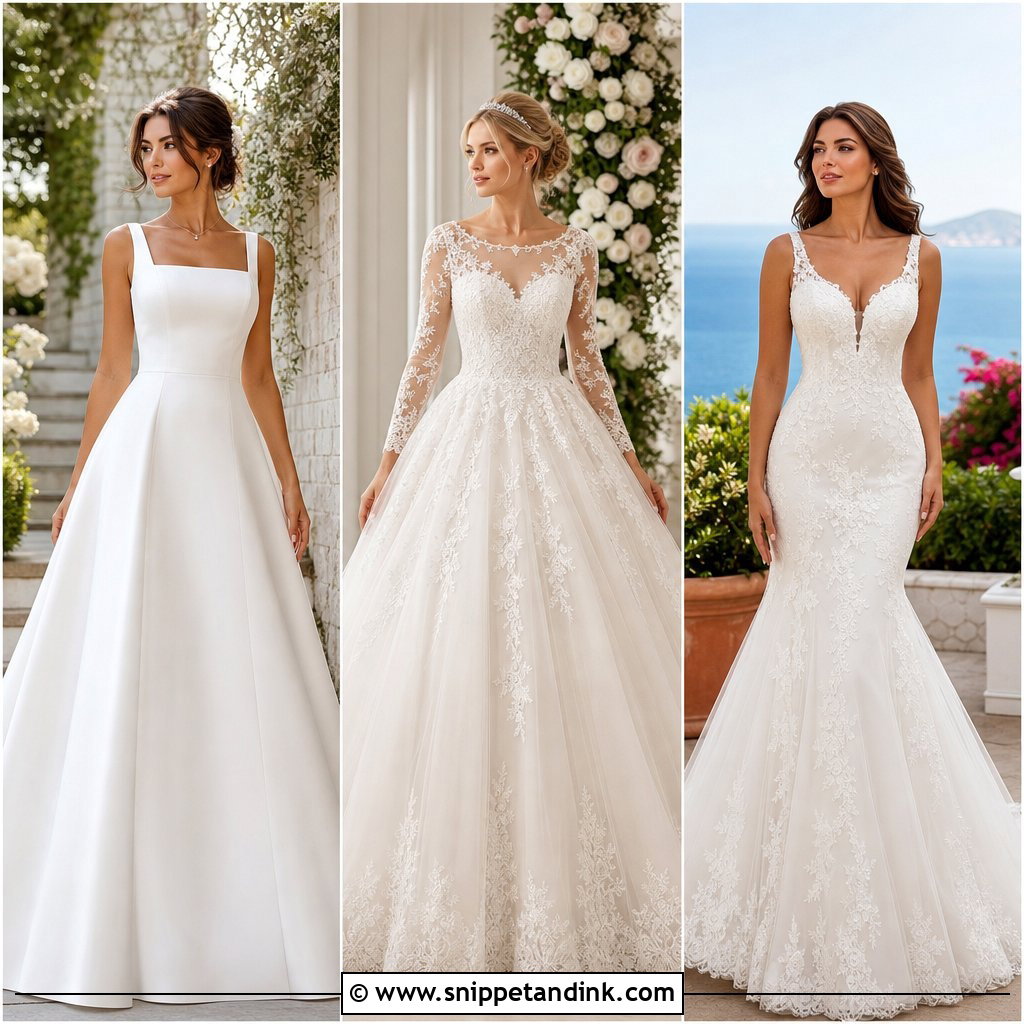
15. Beach Wedding Dress with Chiffon Sash
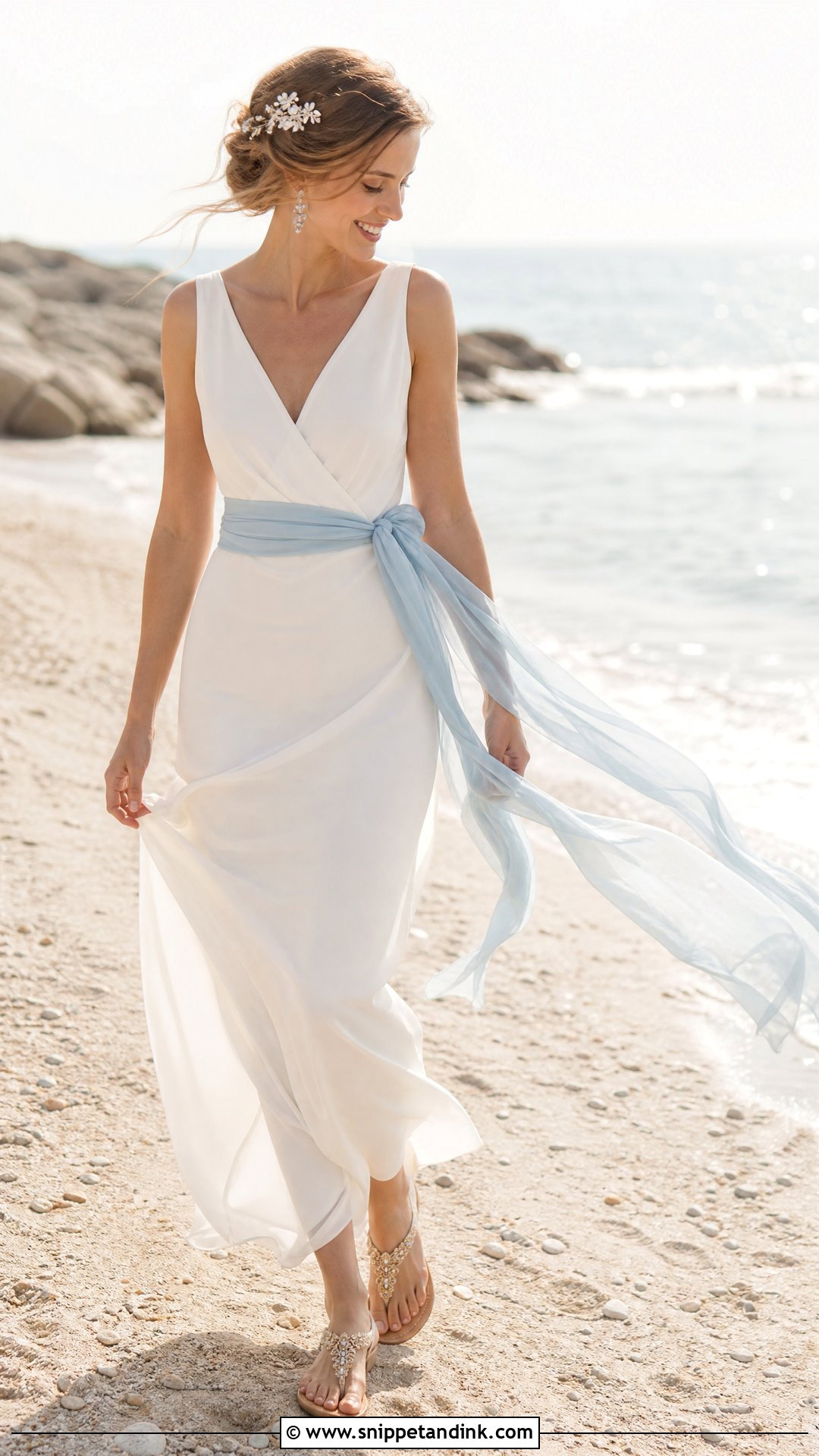
On the sand, a chiffon sash moves with the dress and weighs nothing. Choose a lightweight sheath or A-line with a breathable lining, wrap the sash at the natural waist and tie a small knot or loose bow at the back. Ivory blends in; pale blue, blush or sand adds a little colour. Keep the tails short, roughly to mid-thigh, because longer tails wrap around your legs in a sea breeze and tangle with the skirt. Flat embellished sandals, light earrings and a floral comb instead of a long veil keep it manageable on uneven ground.
16. Garden Wedding Dress with Embroidered Belt
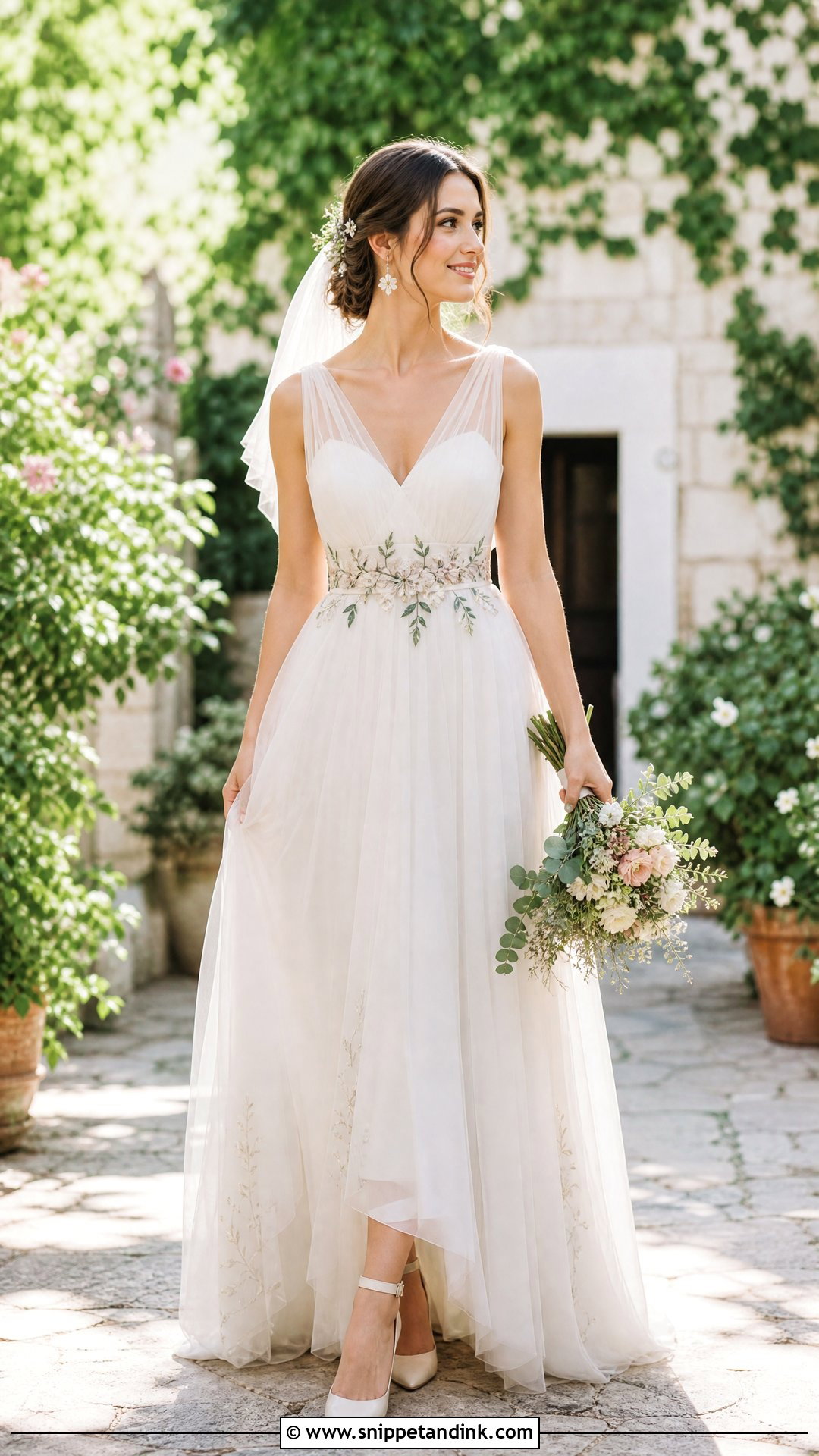
An embroidered belt links the dress to a garden setting. Choose a tulle or organza A-line with a plain bodice and a belt stitched with vines, leaves or small flowers. Ivory thread is subtle, while pale green, blue or blush adds restrained colour. Fine embroidery suits airy fabric; bigger motifs need a clean satin dress with room around the waist. Coloured thread can fade in strong sun if the belt is stored near a window, so keep it boxed until the day. Block heels that won’t sink into grass, floral earrings, a lightly trimmed veil and a loose low bun with a few pins finish it.
17. Modern Wedding Dress with Metallic Belt
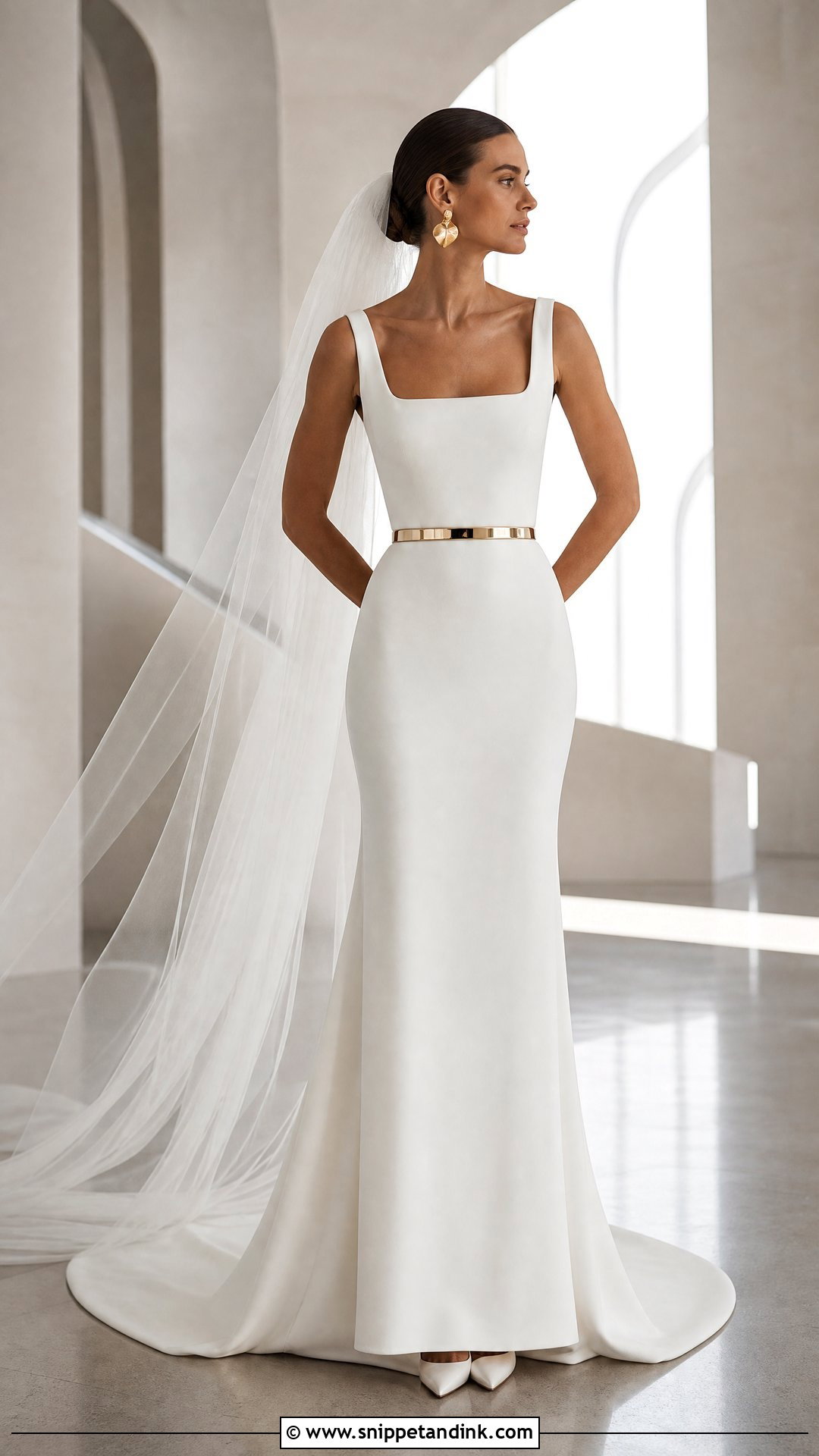
Metal at the waist gives a modern dress a clean, architectural edge. Choose a crepe column, a structured satin A-line or a minimalist square-neck gown, and a slim gold, silver or rose-gold belt that follows the waist. Gold warms ivory; silver suits crisp white. Rigid metal belts don’t bend when you sit, so I prefer a linked or hinged design over a solid plate, and the edges must be rounded to protect the fabric. Repeat the metal once in your jewelry. Sleek pointed pumps, sculptural earrings, a low bun and a plain cathedral veil keep it uncluttered.
18. Blush Wedding Dress with Rose Gold Belt
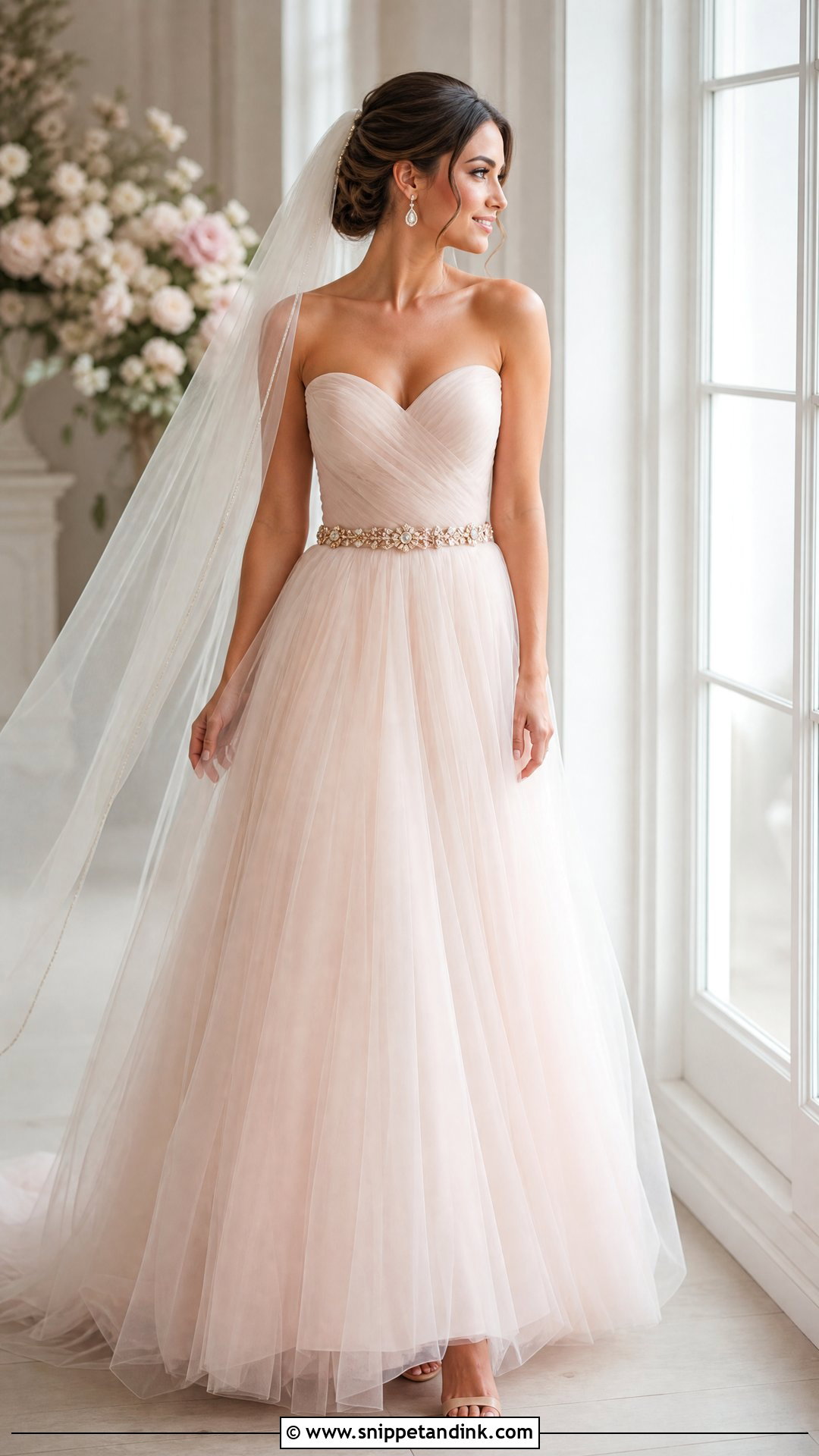
Rose gold brings out the warmth in a blush dress. Choose an A-line, tulle ball gown or fitted lace in pale pink, almond or blush ivory, with a narrow belt of rose-gold crystals or metallic thread. An ivory veil lets the dress colour show; a pink one muddies it. Too many pink accessories make the whole outfit look matched, so keep shoes nude and jewelry understated. Rose-gold plating can tarnish slightly where it touches skin, so store the belt in a sealed bag until the morning. Soft waves or a textured low bun suit the palette.
19. Short Wedding Dress with Statement Belt
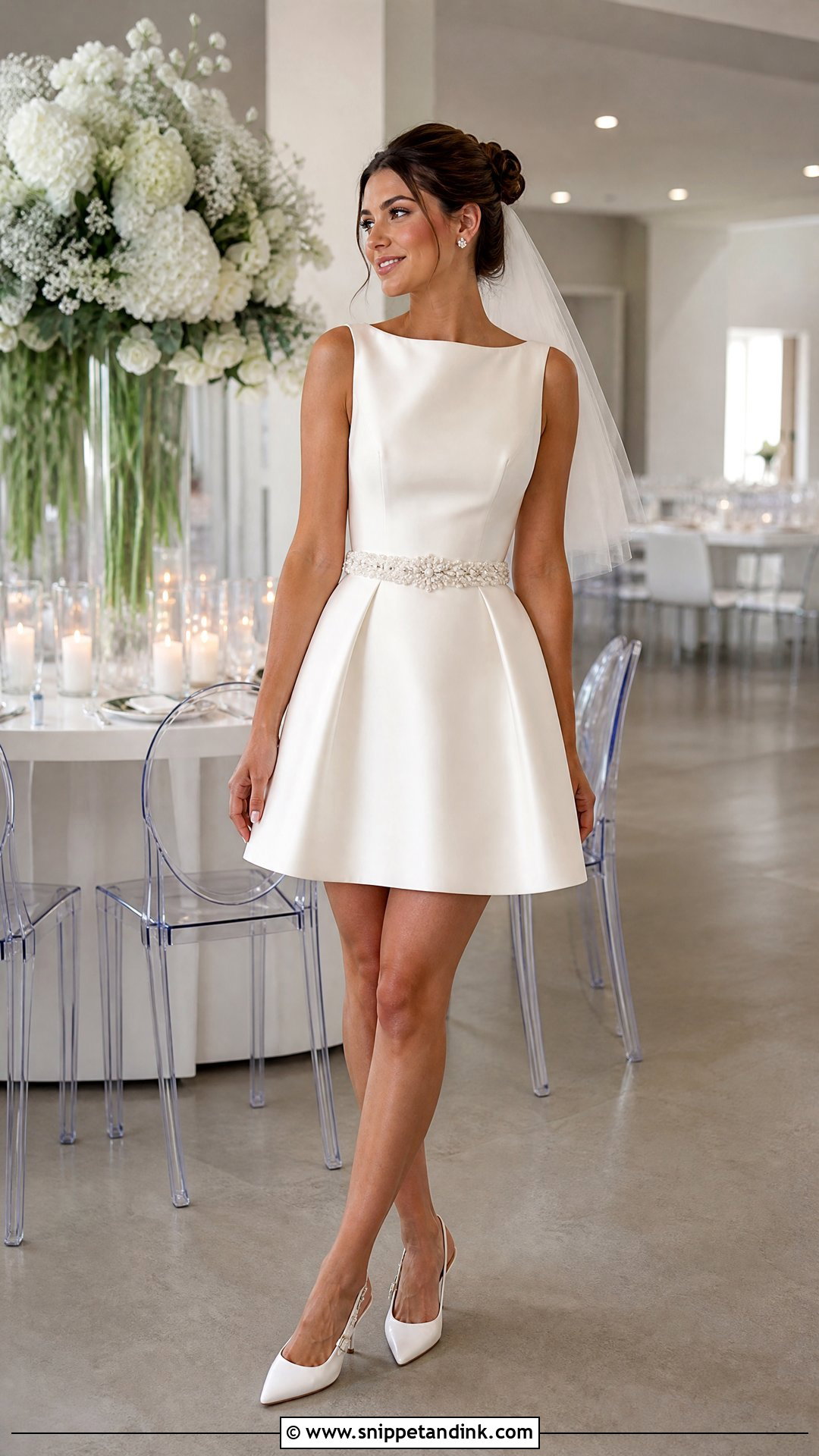
A short dress shows off a statement belt because there is less fabric competing with it. Choose a structured mini or knee-length dress with a clean bodice and a tailored waist, and a medium-width crystal, pearl, floral or bow belt in proportion to the hem. Your shoes will be on show all day, so pointed pumps, slingbacks or ankle straps need to be comfortable as well as pretty. With a heavily decorated belt, skip the elaborate necklace and big hair piece. Small earrings and a short veil are plenty. Stitch the belt to the waist seam so it doesn’t slide around as you walk.

20. Convertible Wedding Dress with Detachable Belt
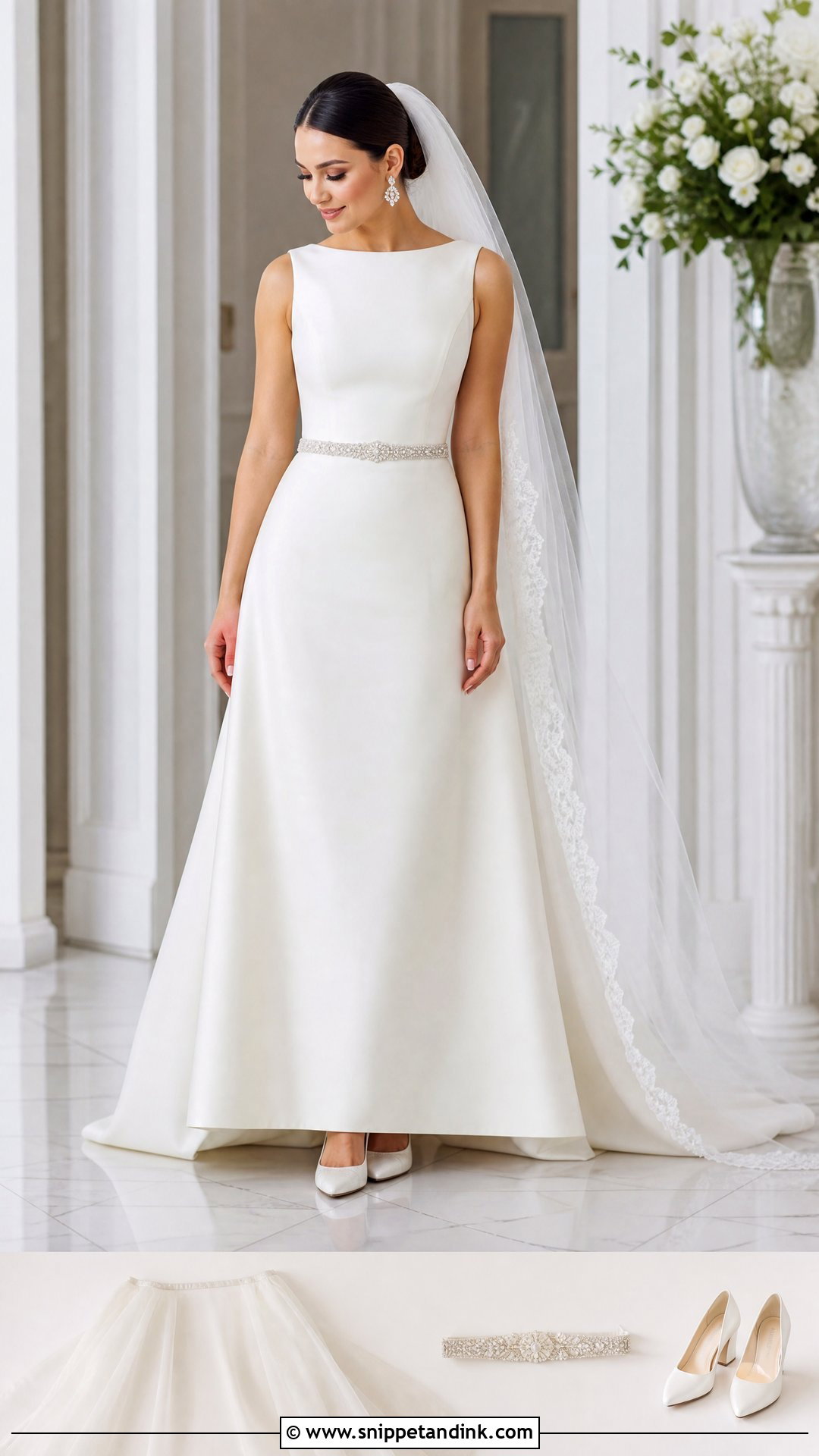
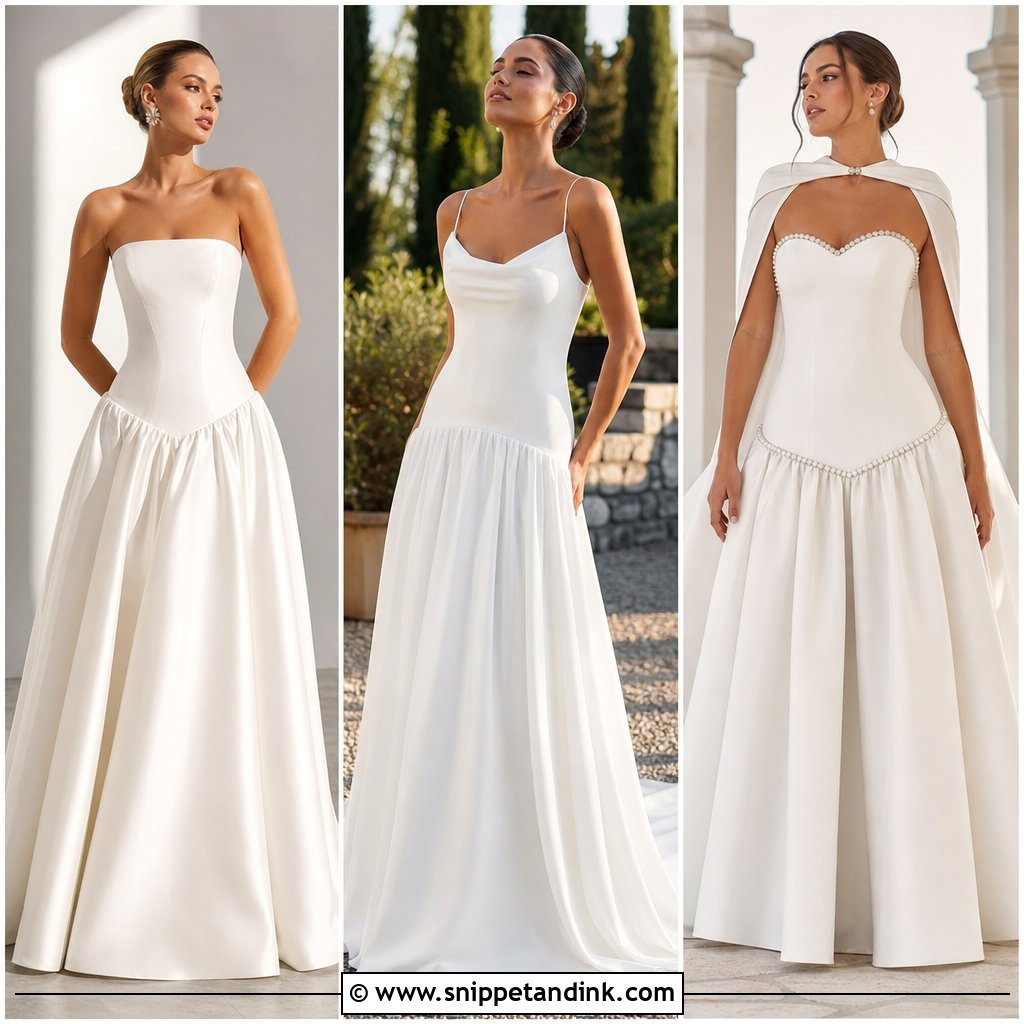
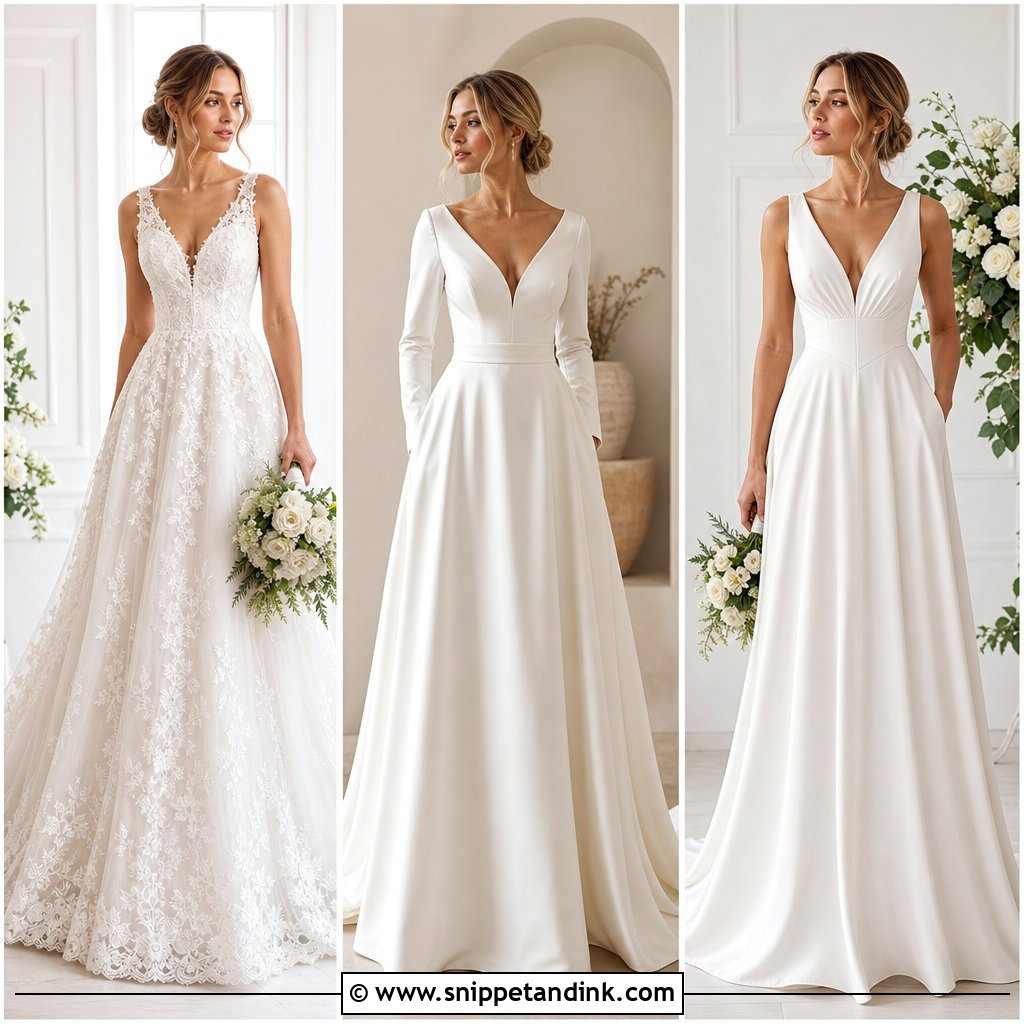
A detachable belt helps a convertible dress make sense. Start with a simple A-line, fit-and-flare or column gown that takes removable sleeves, a cape or an overskirt. Wear a crystal or pearl belt for the ceremony to tie the formal layers together, then remove it and the extras for a lighter reception look. The fastenings, whether hooks, snaps or thread loops, should disappear once the belt is off; loops left on the waist seam look like loose threads in photos. Test every version at alterations. A long veil, elegant earrings and closed heels suit the first look, comfortable shoes and a small hair piece the second.
Buying a Bridal Belt Separately From the Dress
Many belts are bought after the gown, from a different maker. That is fine, with a few precautions.
- Measure your waist over the dress, not over your skin, and do it after the bodice has been taken in.
- Order a fabric swatch or the belt itself before your final fitting, so the seamstress can attach it and adjust its length.
- Allow time. Handmade beaded and embroidered belts often take several weeks to make, and shipping adds more, so aim to have it in hand at least a month out.
- Hold the belt against the dress in daylight and under warm indoor light. Whites and ivories that match in one can clash in the other.
Stopping a Belt From Riding Up by the Reception
A belt that is only fastened at the back will creep upward every time you raise your arms, and slide round when you dance. The fix is simple: a few hand stitches or tiny thread loops at each side seam to hold it in place. Ask for these at the last fitting, once the length is final. On the day, keep two clear snaps and a needle threaded in ivory in the emergency kit, in case a hook gives way.
One Belt, Tried On With Everything Else You Will Wear
A belt can change the shape, mood and amount of detail in a gown without changing the gown. Crystal bands, pearls, ribbon, coloured sashes, metal and leather all work, provided they suit the dress’s waist seam, fabric, embellishment and neckline. Never judge it alone. Put it on at a fitting with your veil, shoes, jewelry and hair, then walk and sit in it. If it stays level and comfortable and feels like you, it is the right belt.
You'll Like These Ideas:





Leave a Reply