
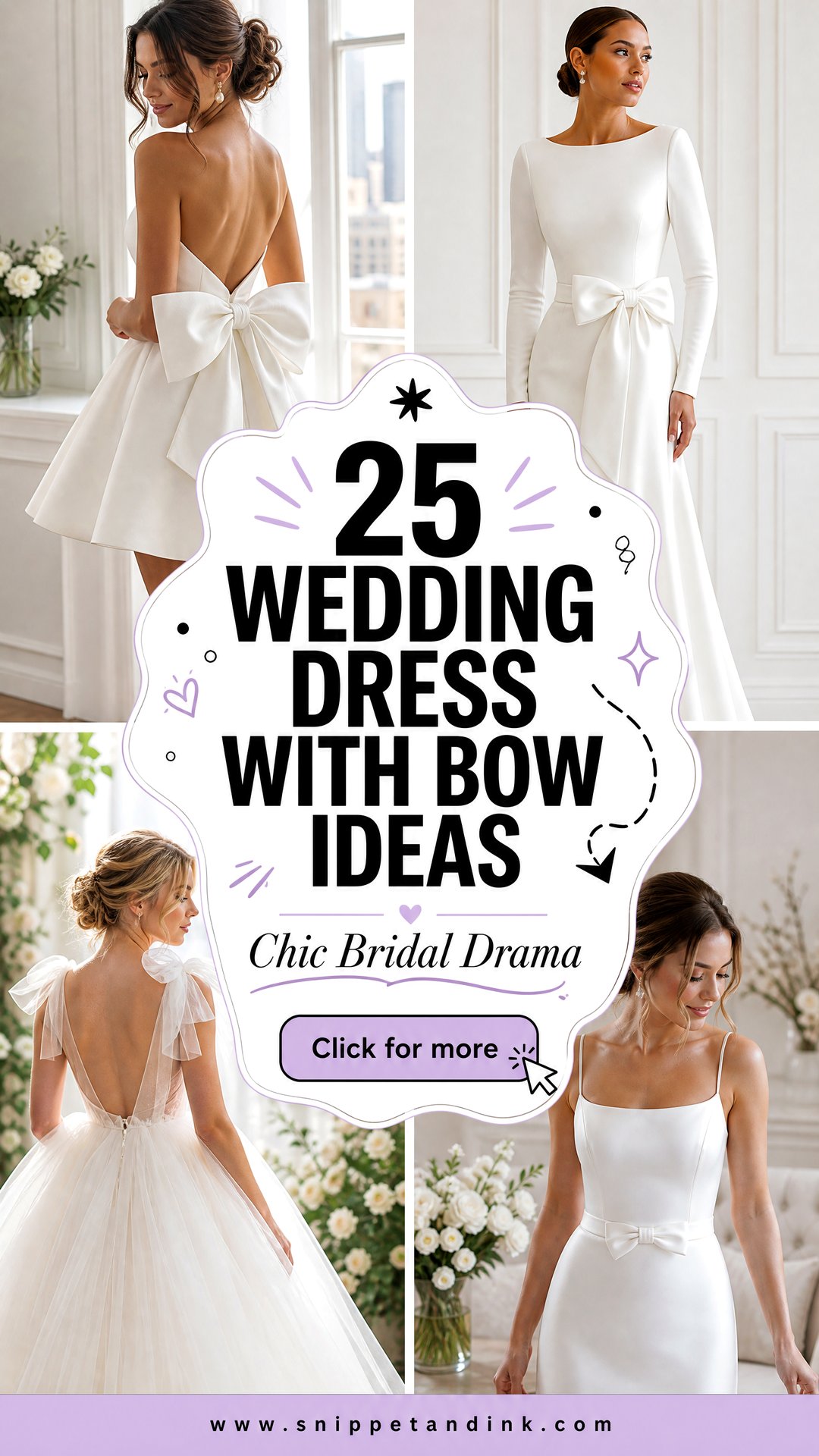
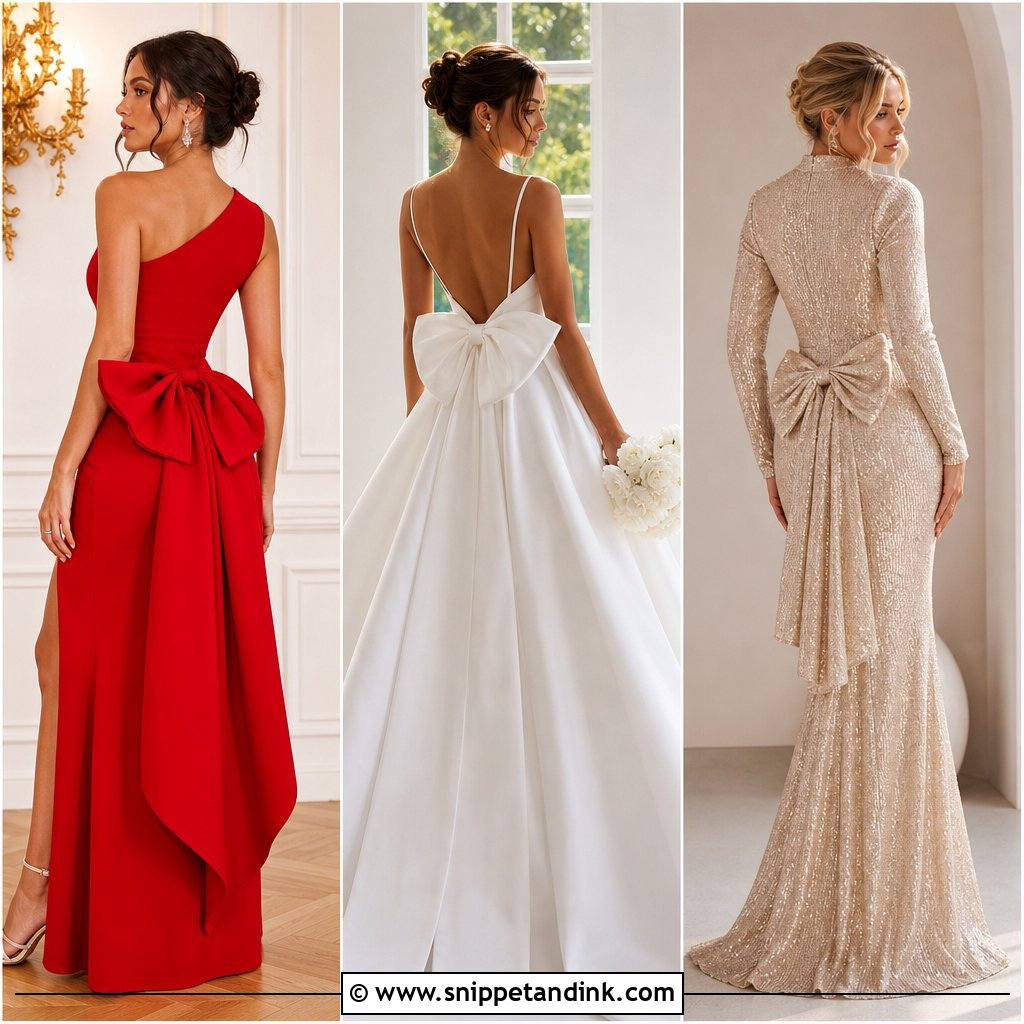
A bow is the one detail I can add to almost any gown and change its whole character. Put it on the shoulder and the dress turns playful. Put it low on the back of a satin skirt and it becomes couture. Brides keep asking for clean dresses with a single feature, and a bow does that job without sequins or beading. The catch is that bows are all about proportion and fabric, and a bow that looks right on a hanger can collapse or swamp you once you’re wearing it. Here are twenty-five ways to wear one, with what I’d check at a fitting for each.
Sizing a Bow to Your Height and Frame
The most common bow problem I fix is scale. A bow should relate to your body, not to the photo you saved. As a rough guide, I keep a back bow no wider than the distance between your shoulder blades, and a waist bow no wider than your hips.
- Petite brides: keep loops short and tails no longer than mid-calf so they don’t drag.
- Tall brides: a larger bow and longer tails look balanced and won’t swamp you.
- Curvy brides: place a bow at the narrowest point of the waist, slightly flattened rather than puffed.
- Broad shoulders: avoid shoulder bows set at the outer edge; a back bow suits you better.
Fabric changes how big a bow looks. Satin and mikado hold the loops open, so they read larger. Crepe and silk fall flatter. Ask your seamstress to pin a mock bow in muslin before cutting the real fabric. It costs almost nothing and saves a remake. Then look at the mock-up in a full-length mirror from across the room, the distance your guests will see it from, rather than up close where every bow looks too big.
1. Strapless Wedding Dress With Back Bow
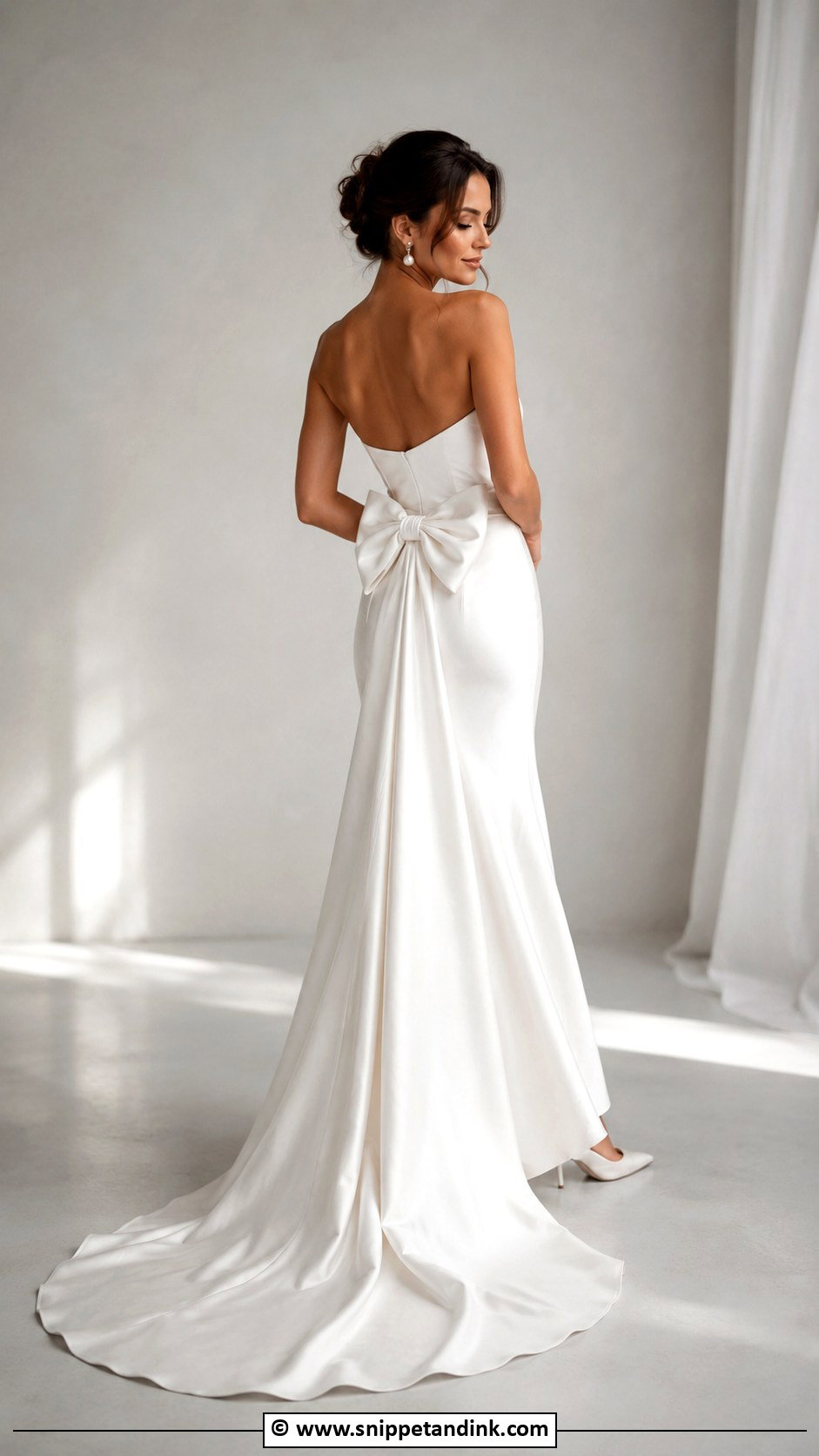
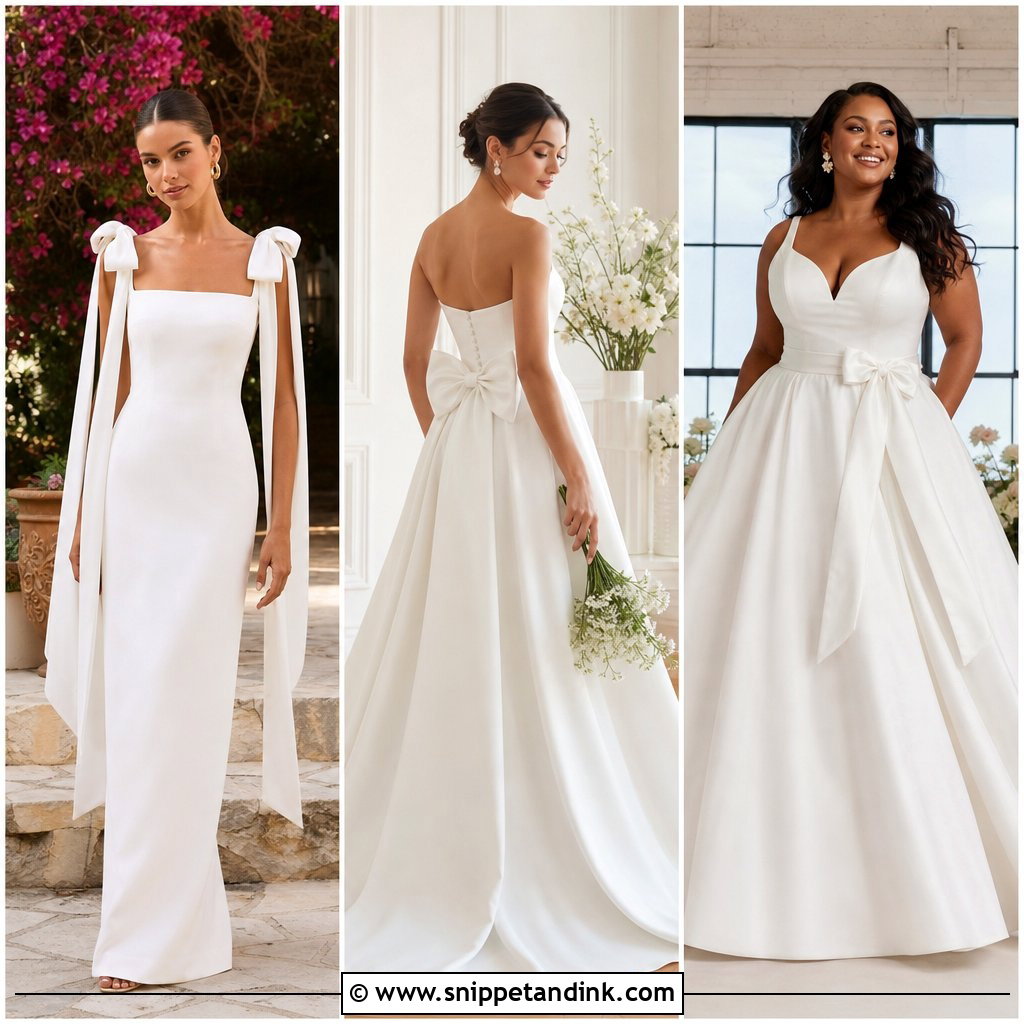
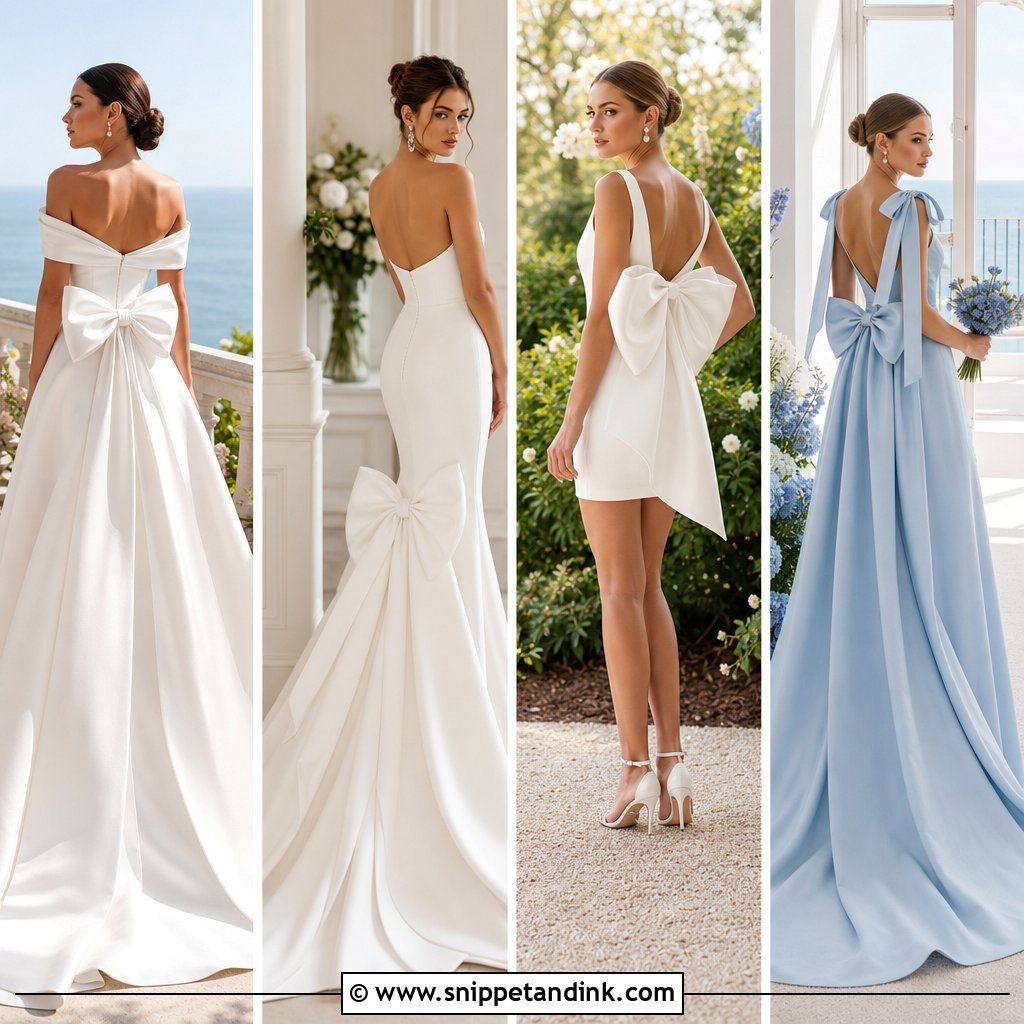
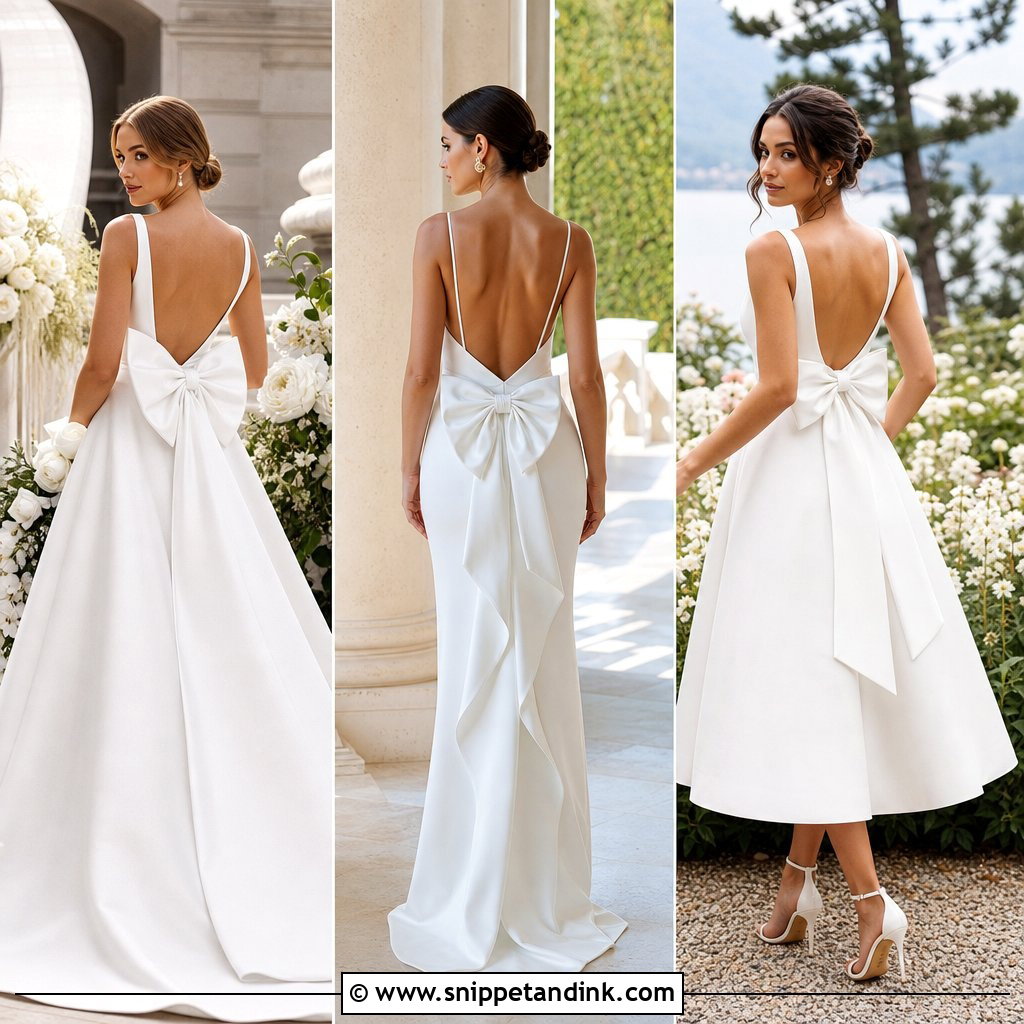
Turn around and the back bow is the surprise. On a strapless wedding dress, the front stays clean and all the interest sits behind you. Satin, mikado or structured crepe hold the loops best; soft fabrics droop by the reception. A fitted bodice with an A-line or ball gown skirt gives the bow a flat surface to sit on. Strapless gowns rely on the bodice grip, so I make sure the bow’s weight is stitched to the boning, not just the outer fabric, or it drags the top edge down.
2. Satin Wedding Dress With Oversized Bow
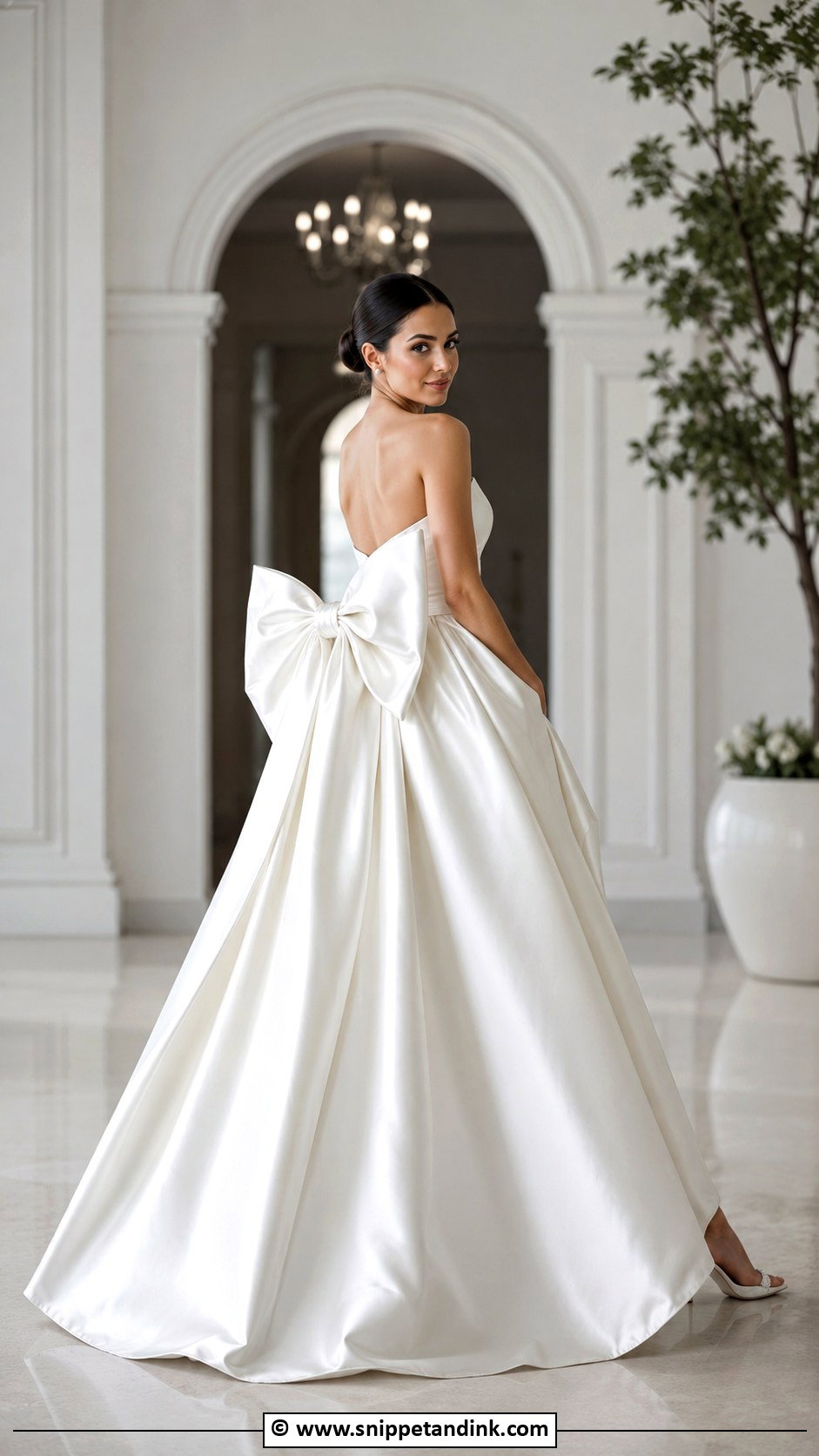
Oversized bows need satin. The sheen makes the folds look sculpted, and a heavy satin keeps its shape through the evening. I place them at the back waist or slightly lower on the hip, where they don’t fight with a veil. A strapless or square-neck gown with a full skirt gives enough room. Make it removable if you can, because a bow this size is hard to sit back against at dinner.
3. A Line Wedding Dress With Waist Bow
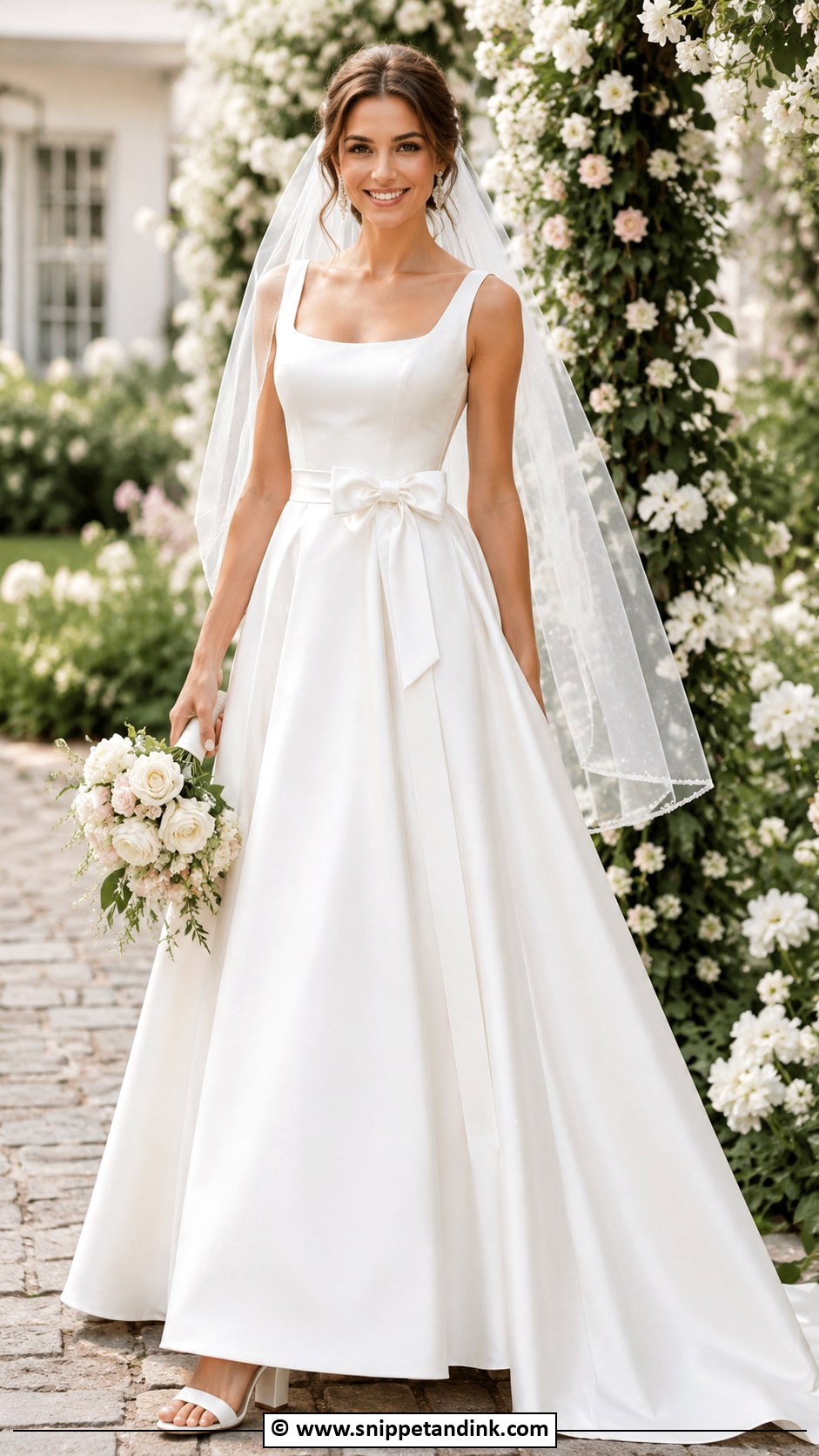
An A-line skirt falls away from the hips, and a waist bow marks the narrowest point without anything tight. That’s why this pairing suits so many shapes. Tulle reads sweet; satin or mikado reads polished. A medium bow is the safe size here. Outdoors on grass, swap stilettos for block heels, which also stops you pitching forward and creasing the bow when you bend.
4. Ball Gown Wedding Dress With Bow Back
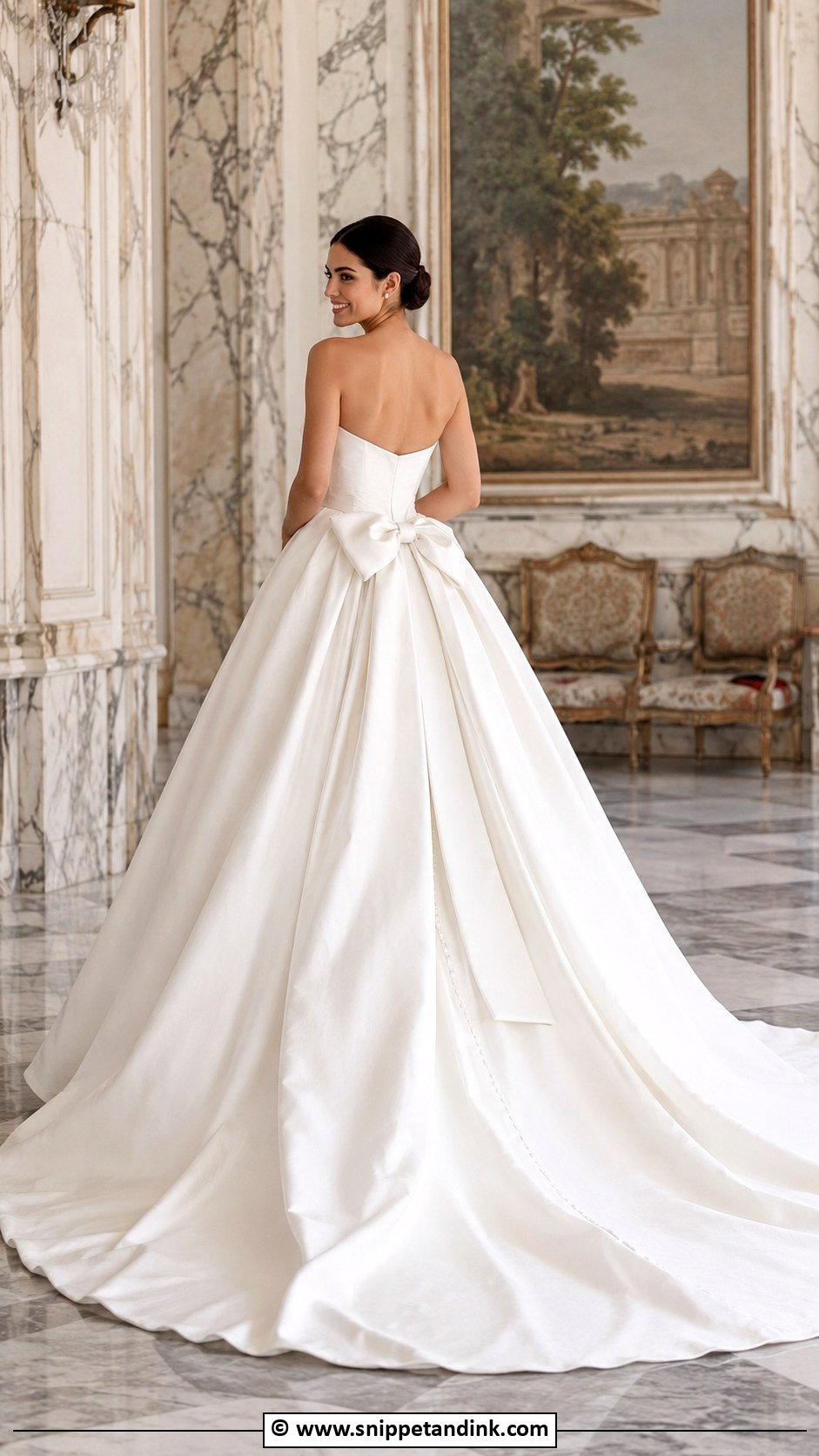
For a real entrance, nothing beats a ball gown wedding dress with a bow at the back. The skirt already says formal, and the bow gives the eye a place to land as you walk away. Plain fabric looks modern; tulle or organza with a matching bow looks softer. The one styling mistake I see often is a cathedral veil that covers the bow completely. Anchor the veil below the bow, or wear a shorter one and save the long veil for photos.
5. Mermaid Wedding Dress With Bow Train
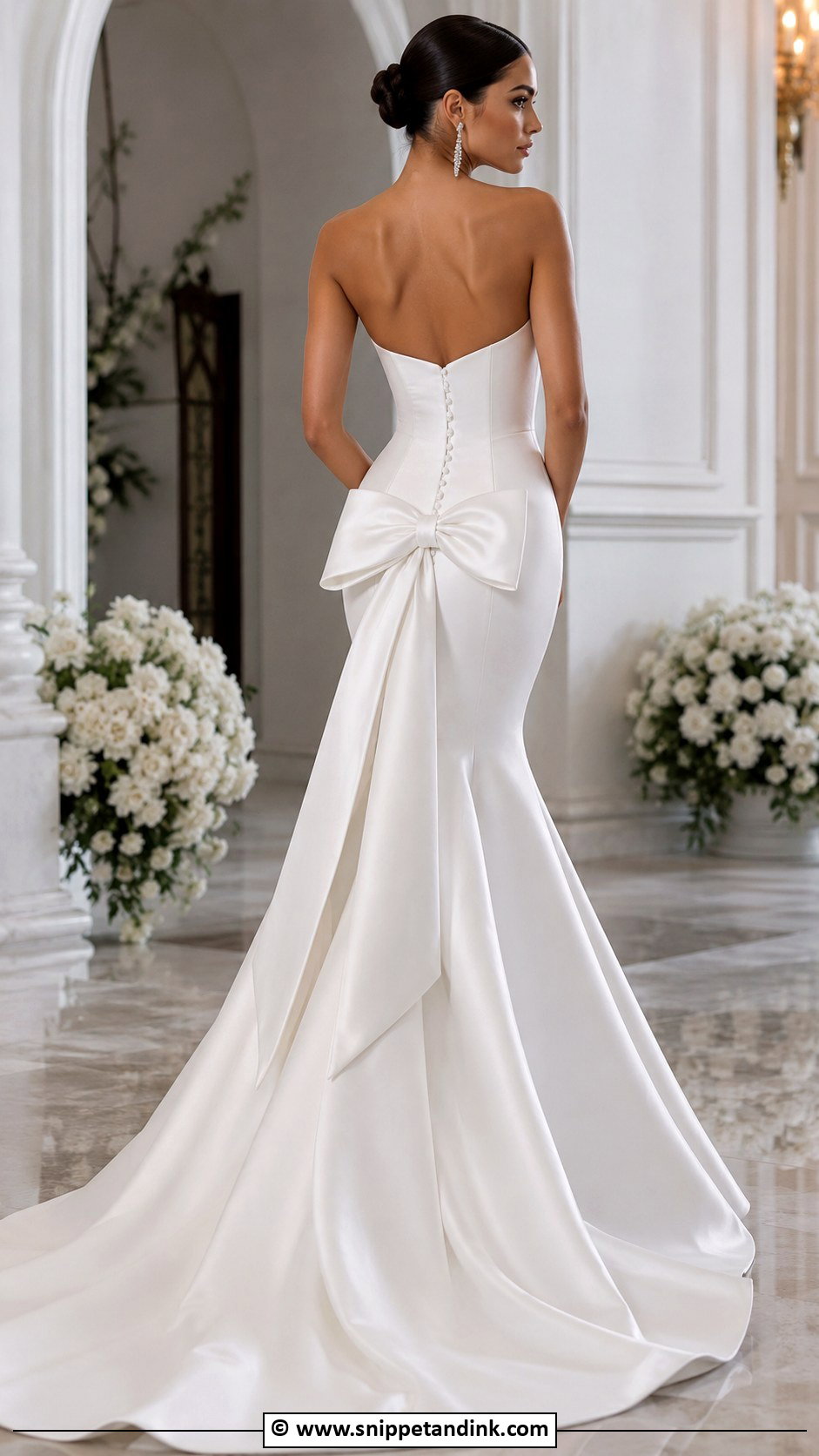
Mermaid gowns are fitted to the knee, so the bow has to work with the body, not stick out from it. A bow at the flare point gives the dress a couture feel and pulls attention down to the train. Structured but flat is the brief: a puffy bow on a fitted gown adds width exactly where you don’t want it. Sleek hair and drop earrings keep the line long. Practice walking; mermaid skirts shorten your stride, and a weighted bow makes the train swing.
6. Sheath Wedding Dress With Shoulder Bows
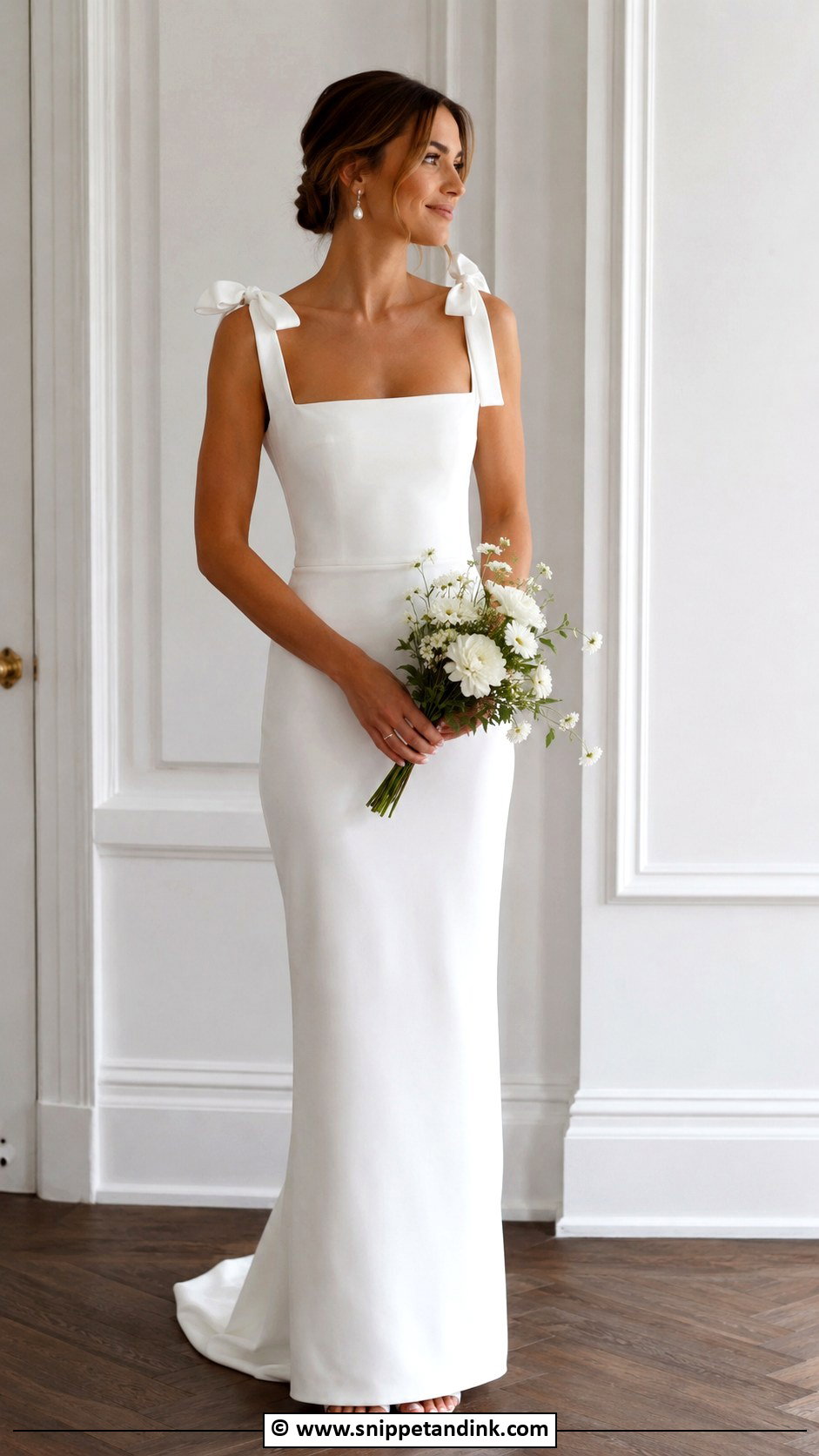
Shoulder bows frame the face, which makes them a good alternative to a big train. On a sheath dress in crepe or silk, a pair of thin ribbon bows looks delicate; wider bows look fashion-led. I check where the bow sits relative to the collarbone. Too far out and they widen the shoulders, too far in and they look like they’re sliding off. Swept-back hair and a small bouquet keep things calm, which suits intimate and city weddings.
7. Mini Wedding Dress With Bow Detail
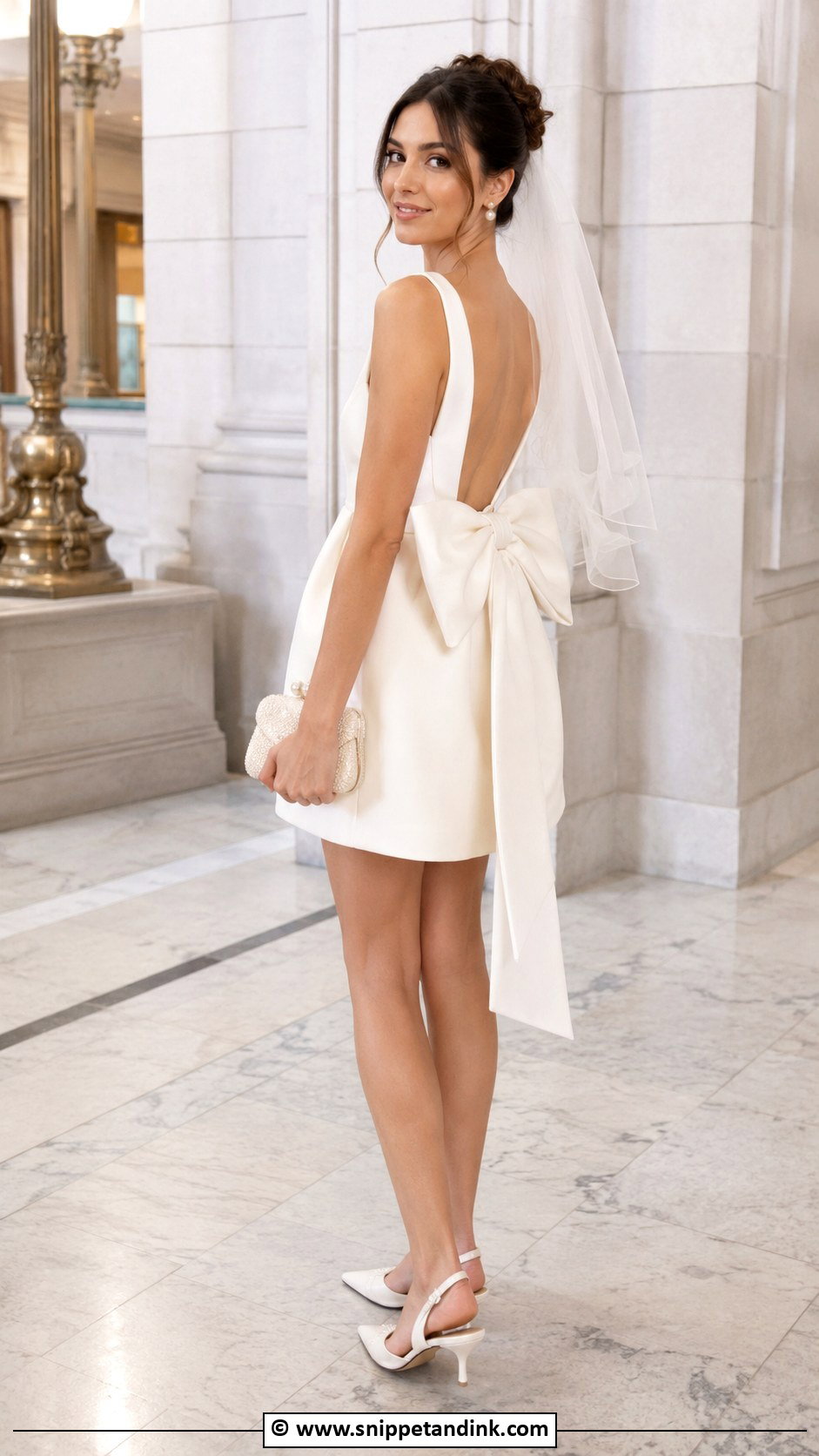
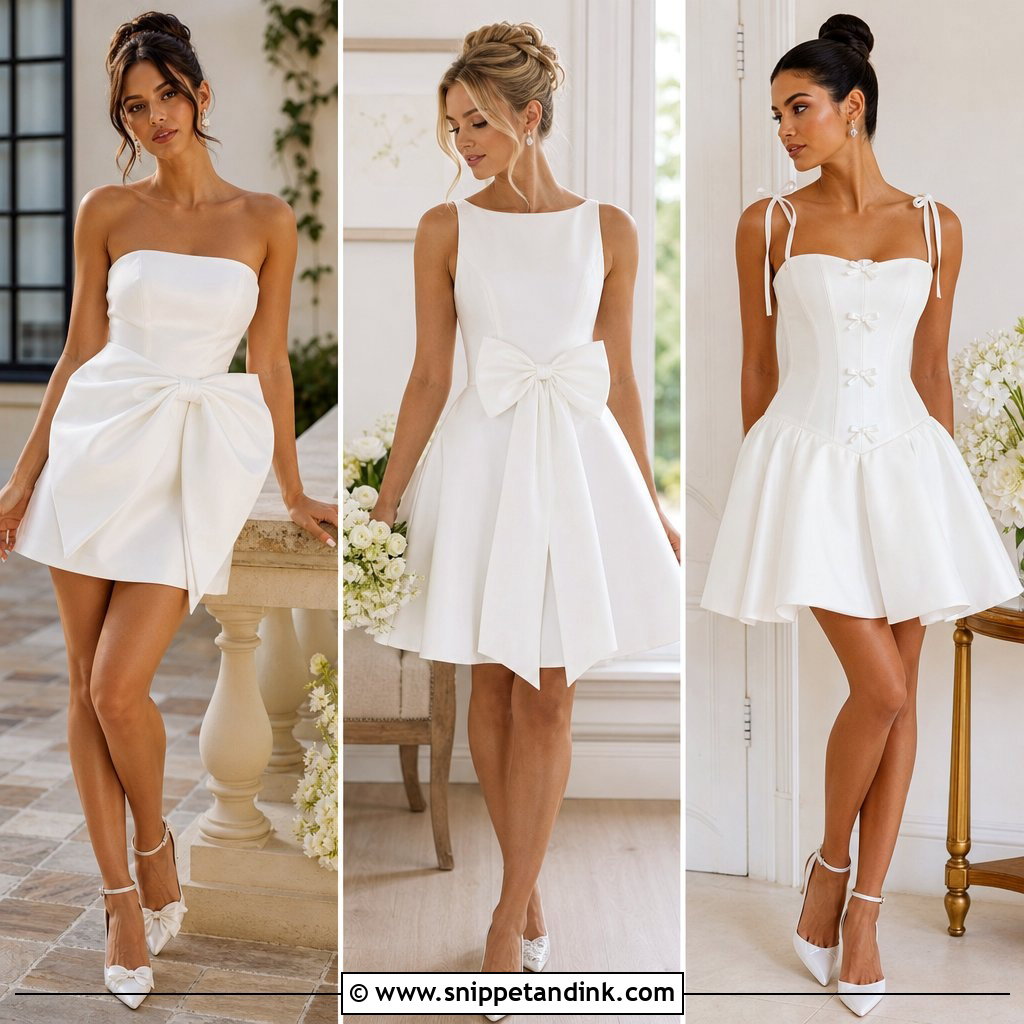
Short hemlines make bows read playful rather than formal, which is exactly the appeal for a courthouse ceremony, reception change or after-party. A big back bow creates an exit moment; shoulder or waist bows add charm from the front. Structured fabric matters most here. A mini in soft jersey with a bow looks like a party dress, while a mini in crepe or mikado looks bridal. Slingbacks, pearl earrings and a short veil finish it.
8. Tea Length Wedding Dress With Bow
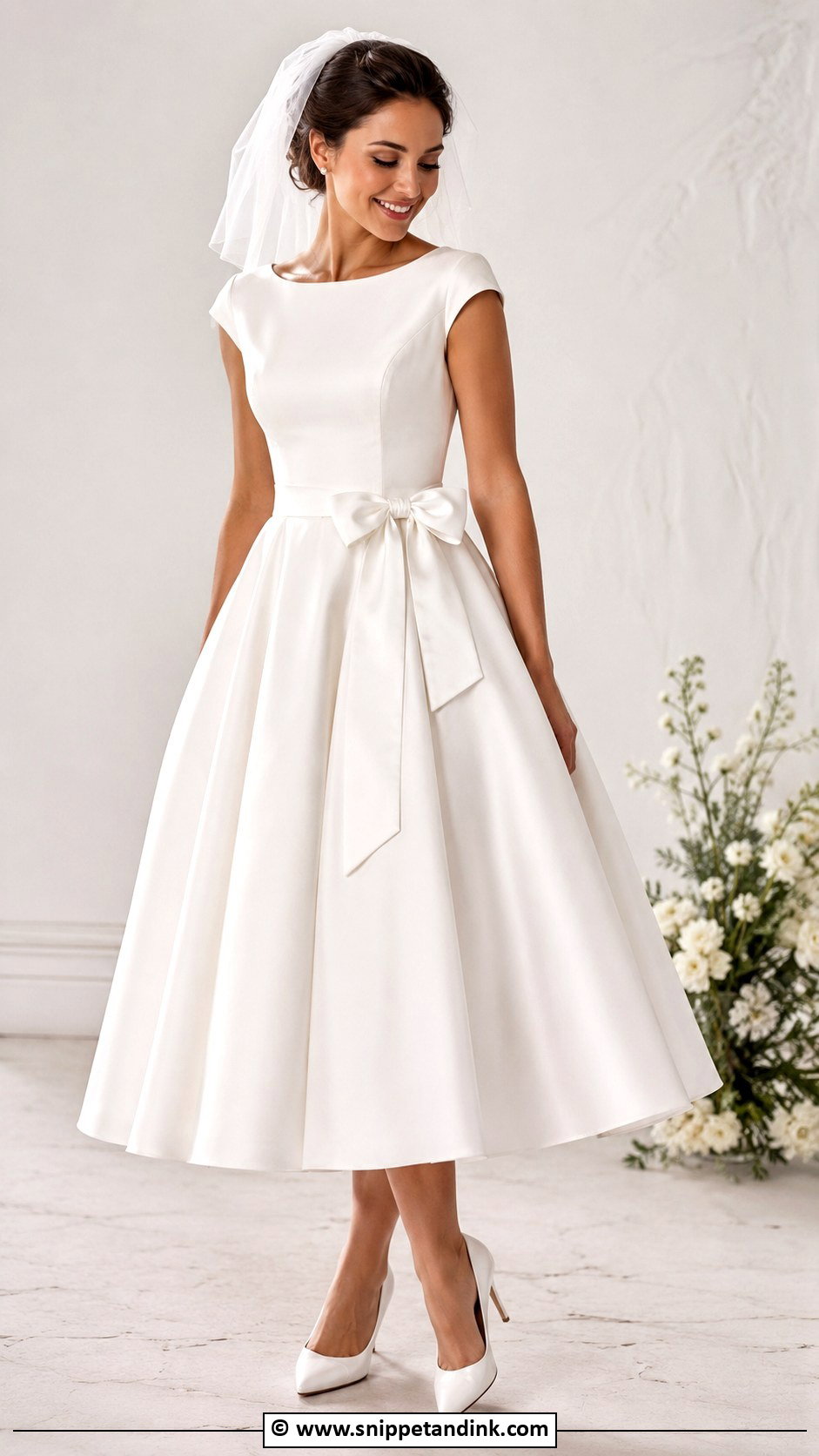
Tea length falls between knee and ankle, so your shoes are on show and you can actually dance. That length has a 1950s feel, and a bow at the waist suits it naturally. Go for a full skirt for a classic shape or a slimmer cut for something current. I always have tea-length brides bring their shoes to every fitting, because a quarter-inch change in heel height changes where that hem lands on the calf.
9. Off Shoulder Wedding Dress With Bow Sleeves
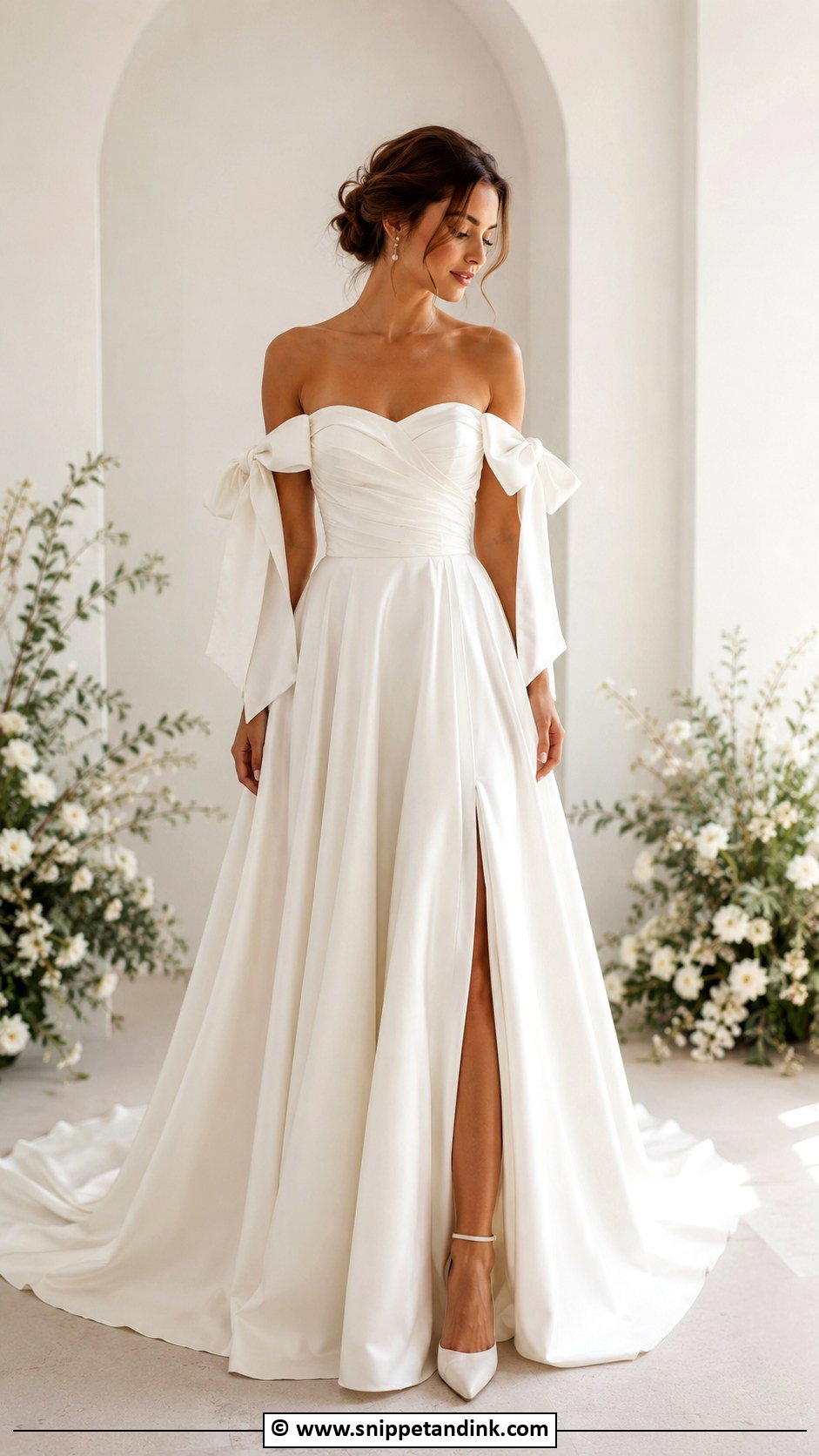
Bow sleeves on an off-the-shoulder gown balance a bare neckline with a bit of structure. They can be small ties at the arm or big bows that add volume. Here’s the fit issue: off-the-shoulder sleeves restrict how high you can lift your arms, and a heavy bow makes it worse. I have brides raise their arms for a hug at the fitting. Skip the necklace and wear a soft updo to show the shoulders.
10. Square Neck Wedding Dress With Bow Back
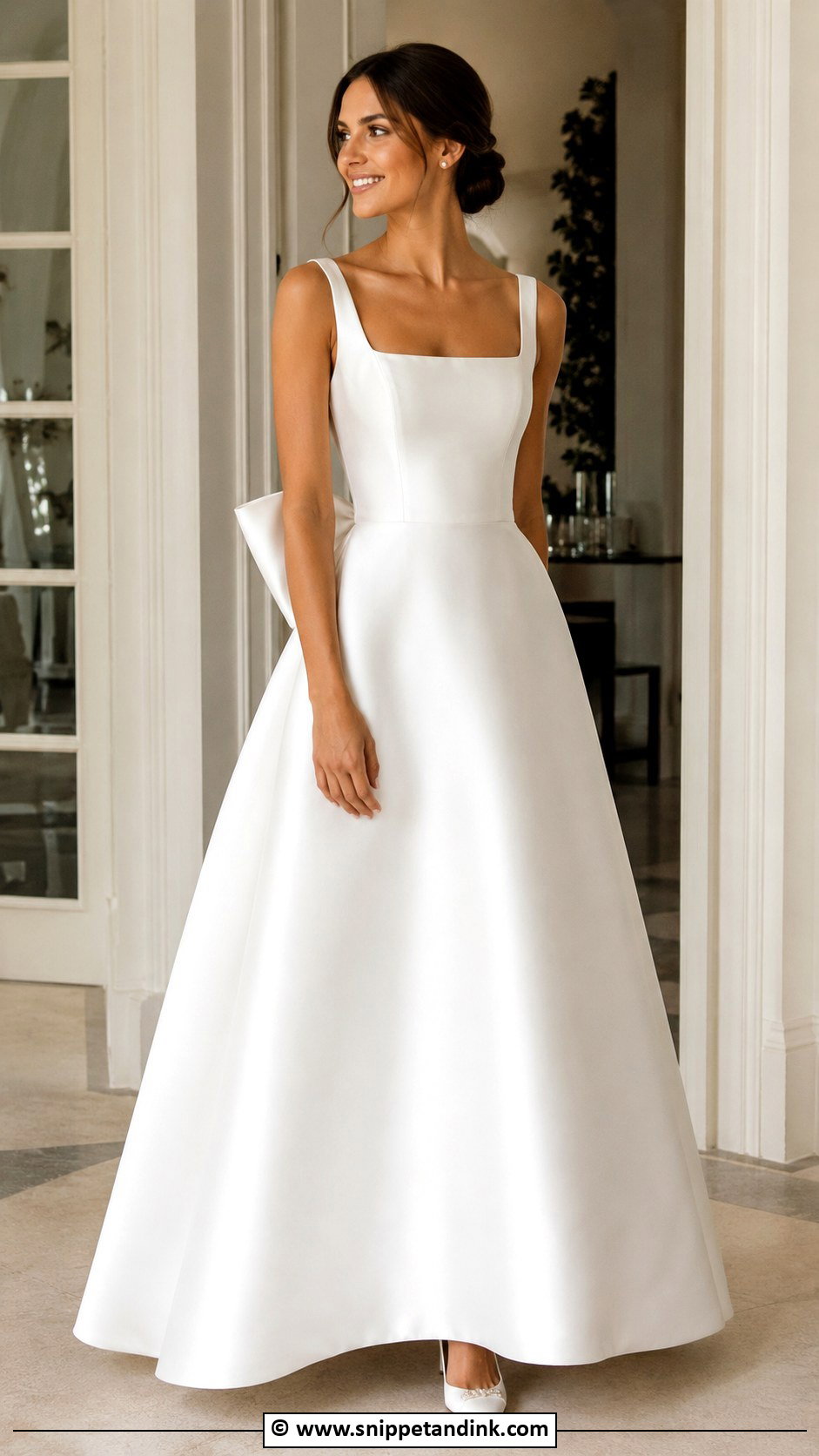
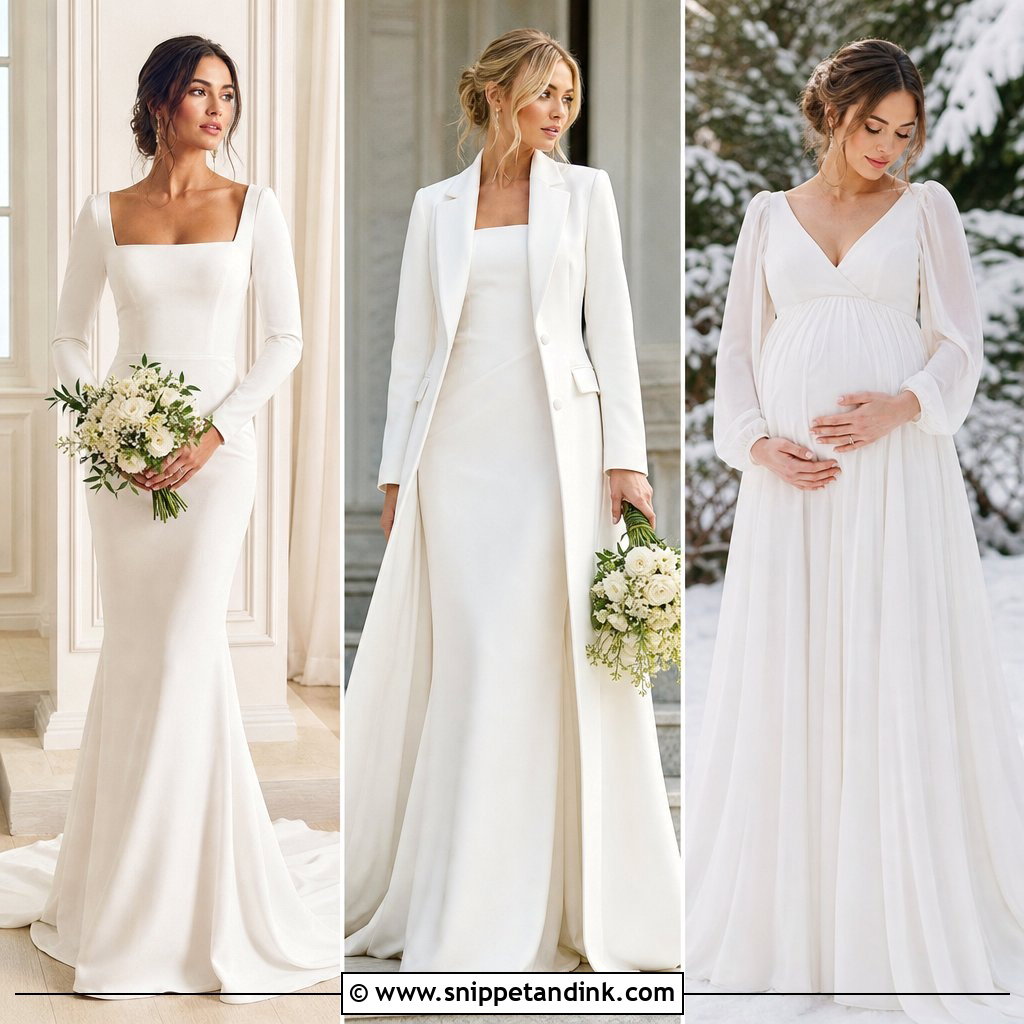
Square necks are all straight lines, and a bow at the back softens them. The contrast between the two is the whole point. A fitted bodice with a smooth skirt keeps it minimal; an A-line with a bow at the waist makes it more classic. Plan the veil comb position early. A veil set right on top of the bow flattens it, so I place the comb either well above or let the veil start below the knot.
11. High Neck Wedding Dress With Bow
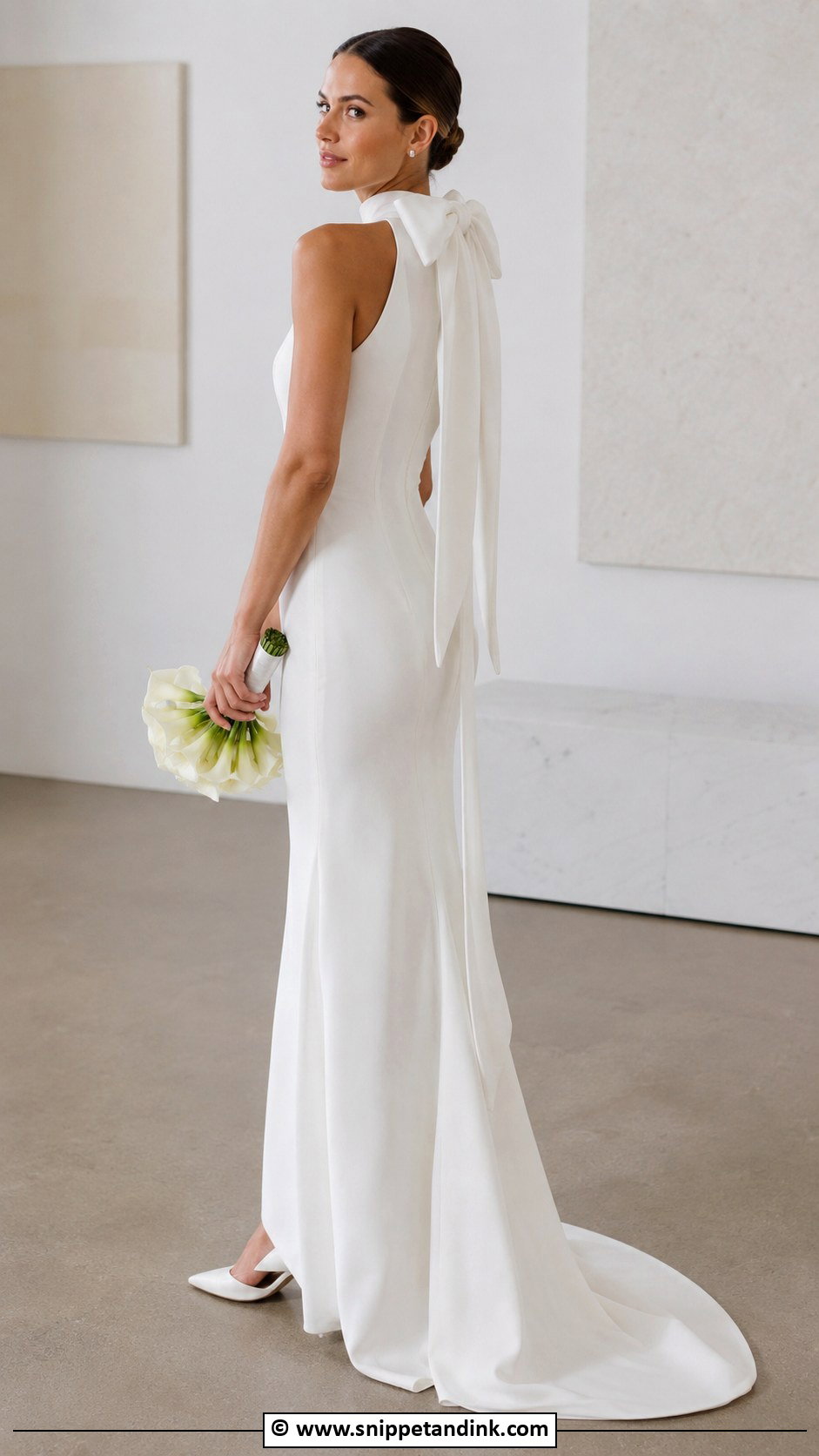
A covered neckline looks modest and refined, and a bow warms it up. Some gowns tie the bow at the back of the neck, which reads like a ribbon; others put it at the waist to soften a structured top. Crepe, satin and lace all work. High necks can feel warm, so for summer I lean toward a sleeveless high neck in crepe. Sleek hair, small earrings and no necklace.
12. Long Sleeve Wedding Dress With Bow Waist
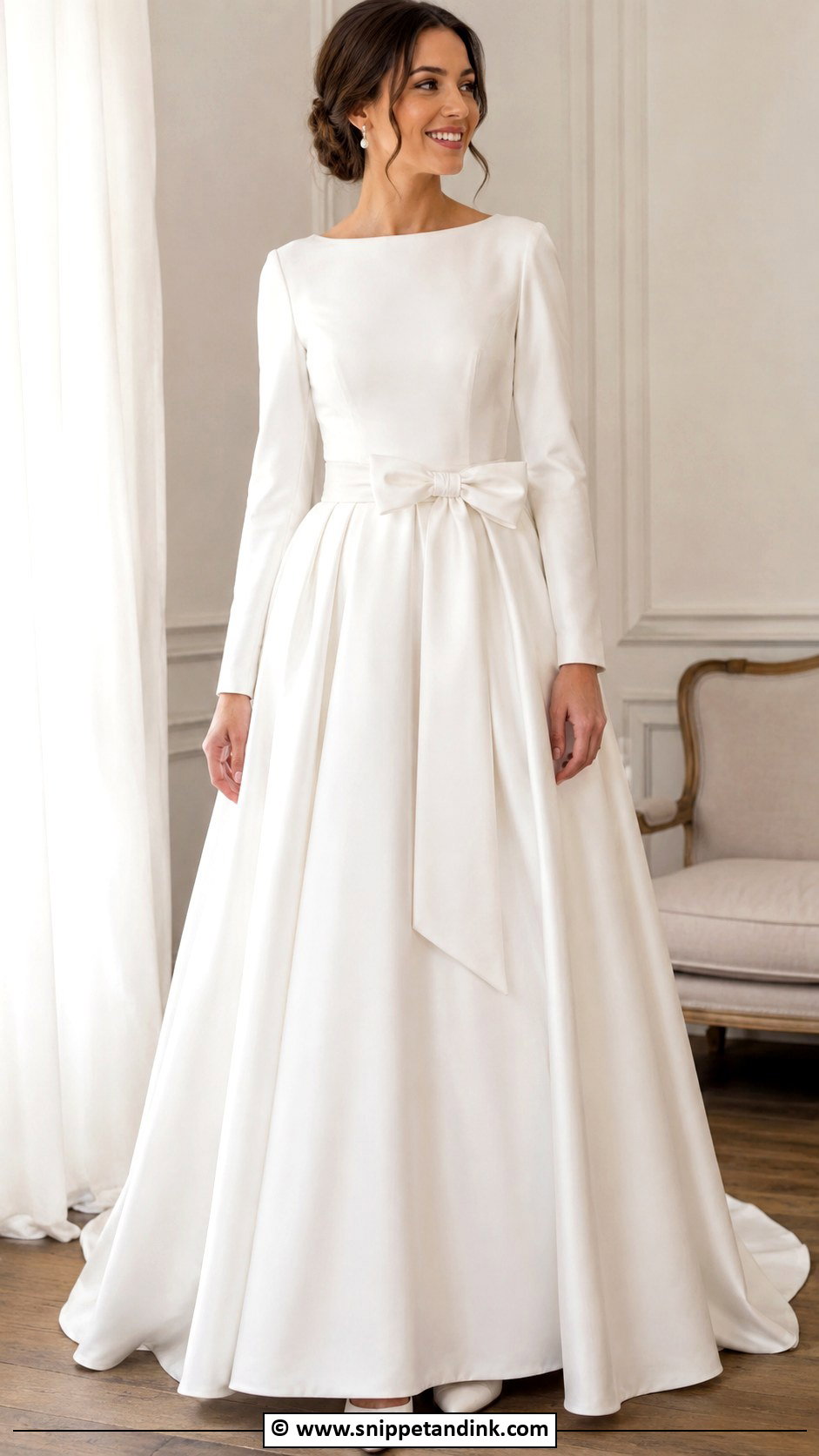
Long sleeves give coverage for cooler months and formal venues, and a slim bow at the waist stops the gown from looking plain. On crepe or satin a clean bow works; with lace sleeves, a softer bow in silk matches the texture better. Check sleeve length with your arms bent, since long sleeves ride up when you hold a bouquet. A low chignon and pearl earrings keep it classic.
13. Lace Wedding Dress With Bow Belt
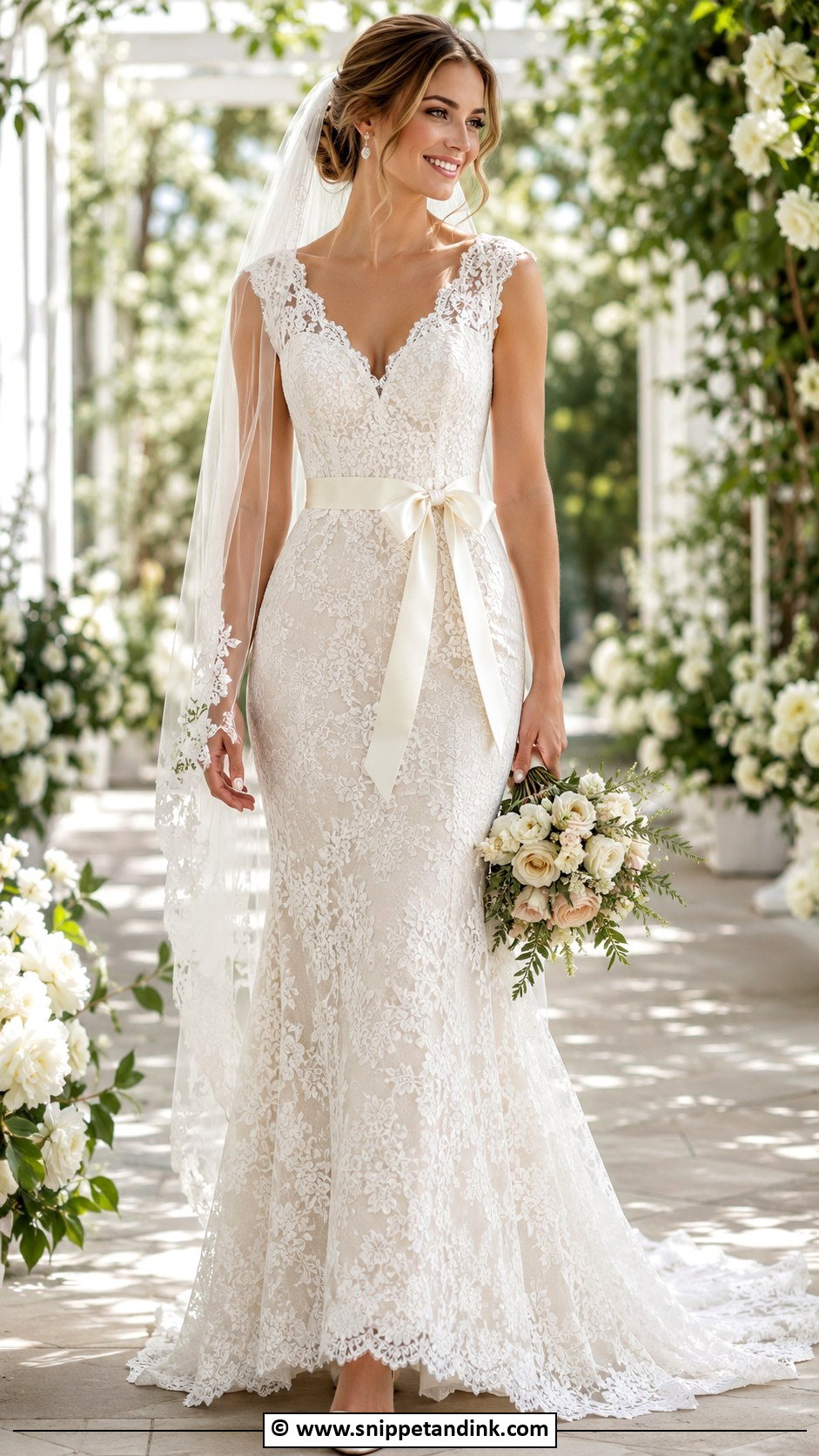
Lace is busy by nature, and a bow belt gives it structure. A satin or silk bow against floral lace provides a smooth contrast. Narrow bows look delicate; wider belts define the waist more. It suits fitted, A-line and tea-length gowns. I usually have the belt stitched at the side seams with a couple of tacks, because a free-floating belt on lace slides upward every time you move.
14. Tulle Wedding Dress With Bow Straps
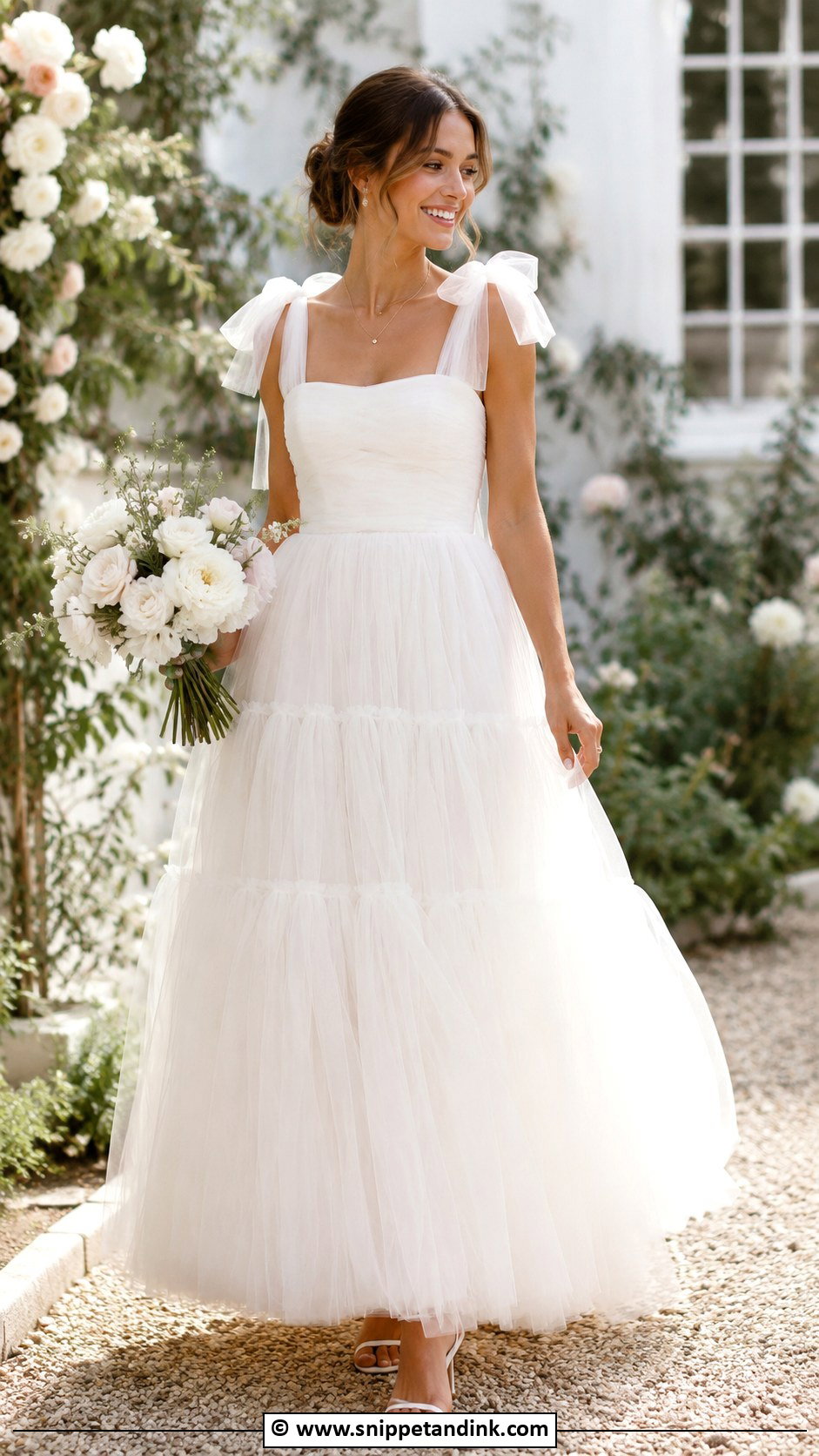
Tied straps on a tulle dress look handmade and light. Small shoulder bows balance a full skirt when the bodice is simple. Expect them to need retying. Tulle-adjacent ribbon is often silk or polyester satin that slips undone, so I ask the seamstress to secure the knot with a hidden stitch and leave just the tails loose. Loose waves and dainty jewelry suit it, especially at a spring or garden wedding.
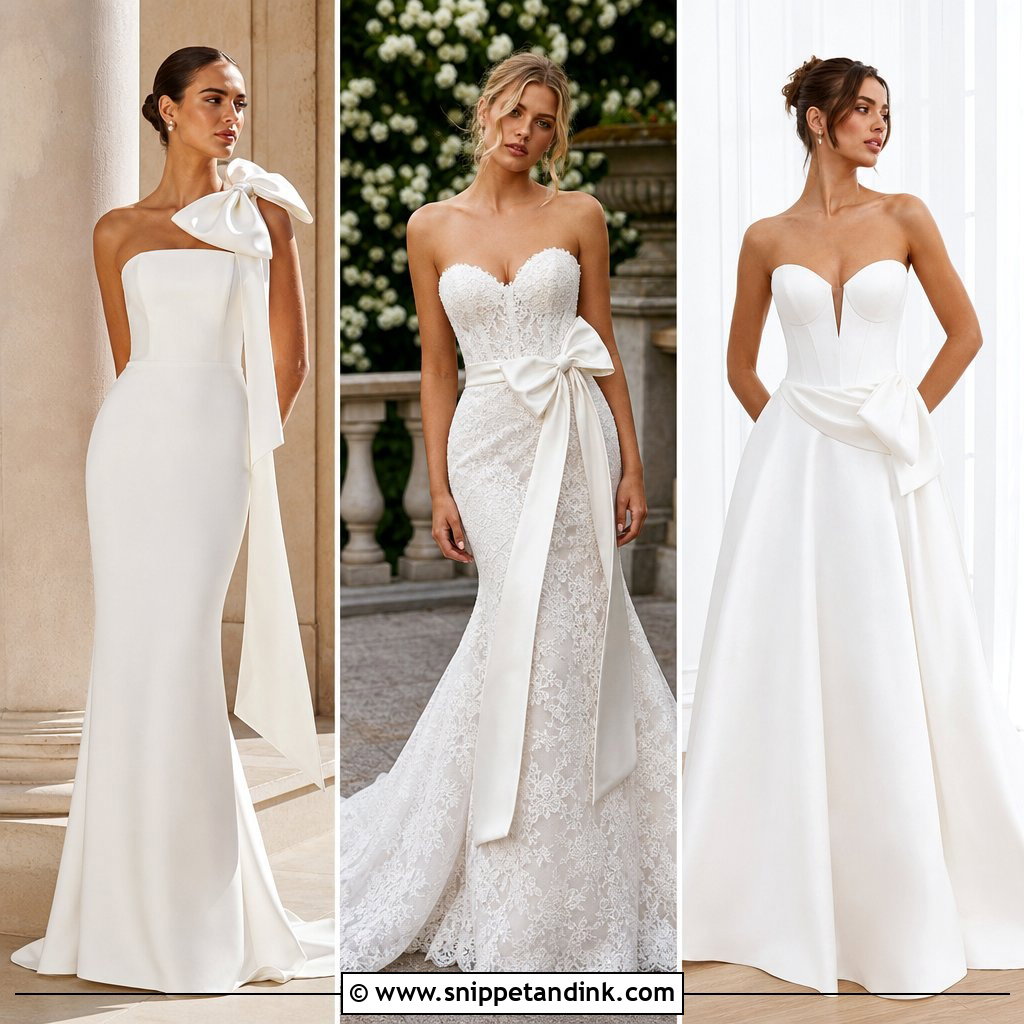
15. Crepe Wedding Dress With Side Bow
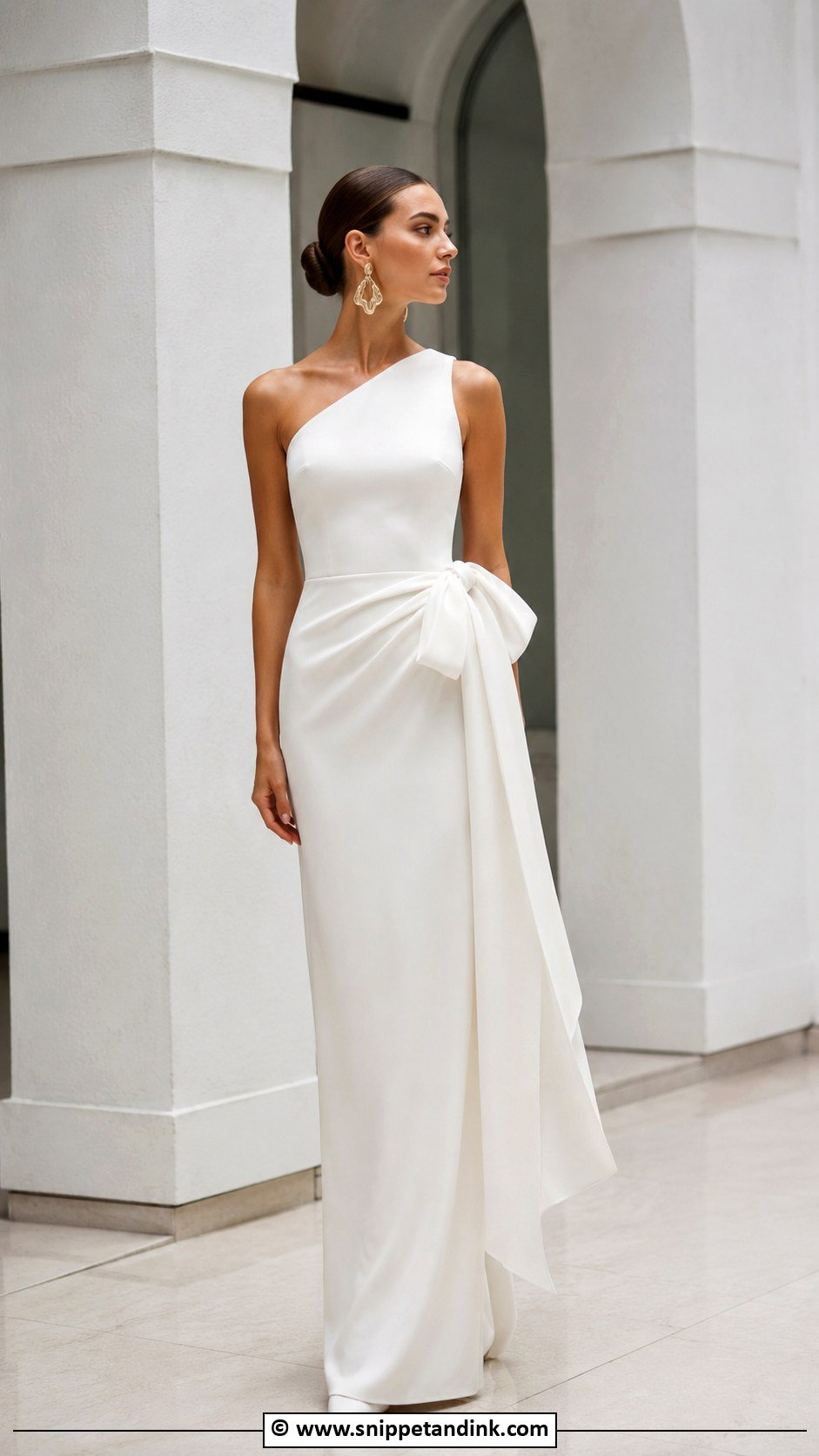
Matte fabric makes a bow look deliberate rather than sweet, which is why a crepe wedding dress with a side bow reads modern. Placed at the waist or hip, it adds shape to a sheath or column. Long tails give a little drama without a train. Crepe shows the outline of anything heavy, though, so the bow needs lining and interfacing or it pulls the fabric into a dent.
16. Mikado Wedding Dress With Bow Detail
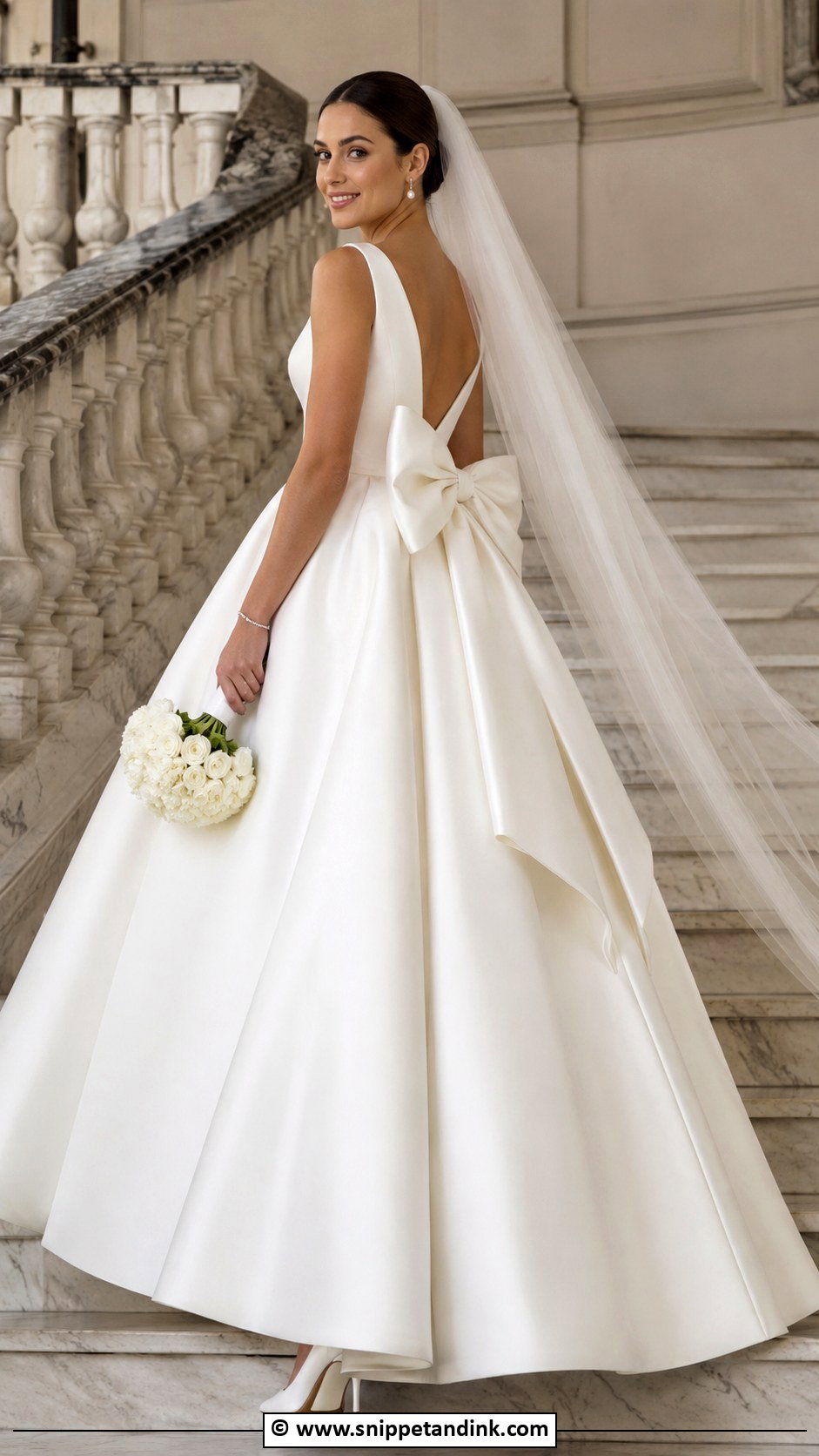
Mikado has a crisp body and a low sheen, and it holds pleats and bows like nothing else. That’s why bows on mikado look architectural, especially on a ball gown or A-line. You don’t need any embellishment with this fabric. The downside is weight: a full mikado gown is heavy, and the bow adds more. I’d only choose it for a cool or air-conditioned venue.
17. Bow Front Wedding Dress
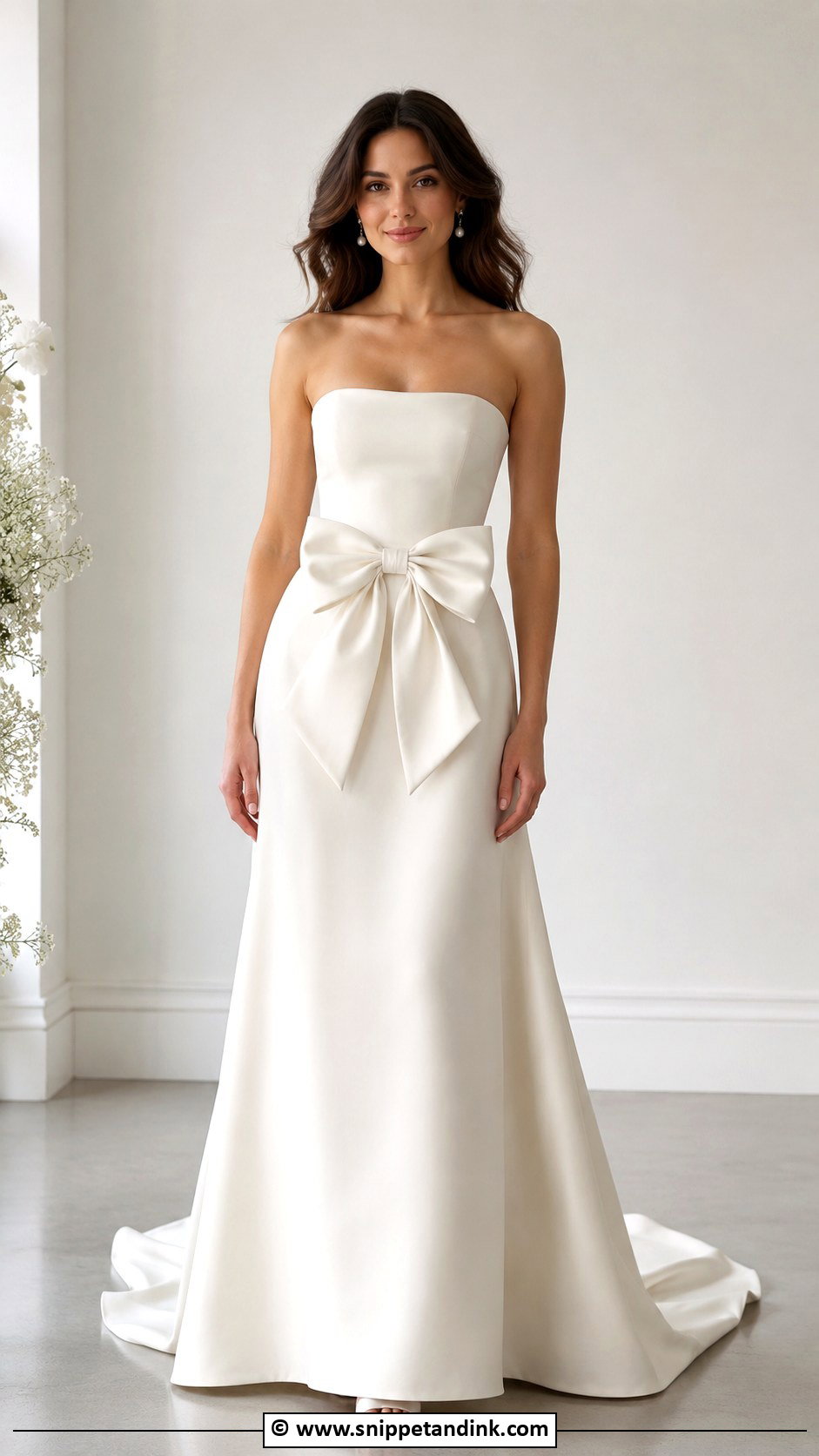
A front bow is in every photo, so be sure you love it. It can sit at the neckline, bust, waist or hip. Small bows look sweet; a big front bow is a fashion statement. Keep the rest of the dress clean so it doesn’t compete with lace or beading. A practical point: a bow at the bust adds visual volume there, which suits some brides and not others, so try it on before you order it.
18. Wedding Dress With Detachable Bow
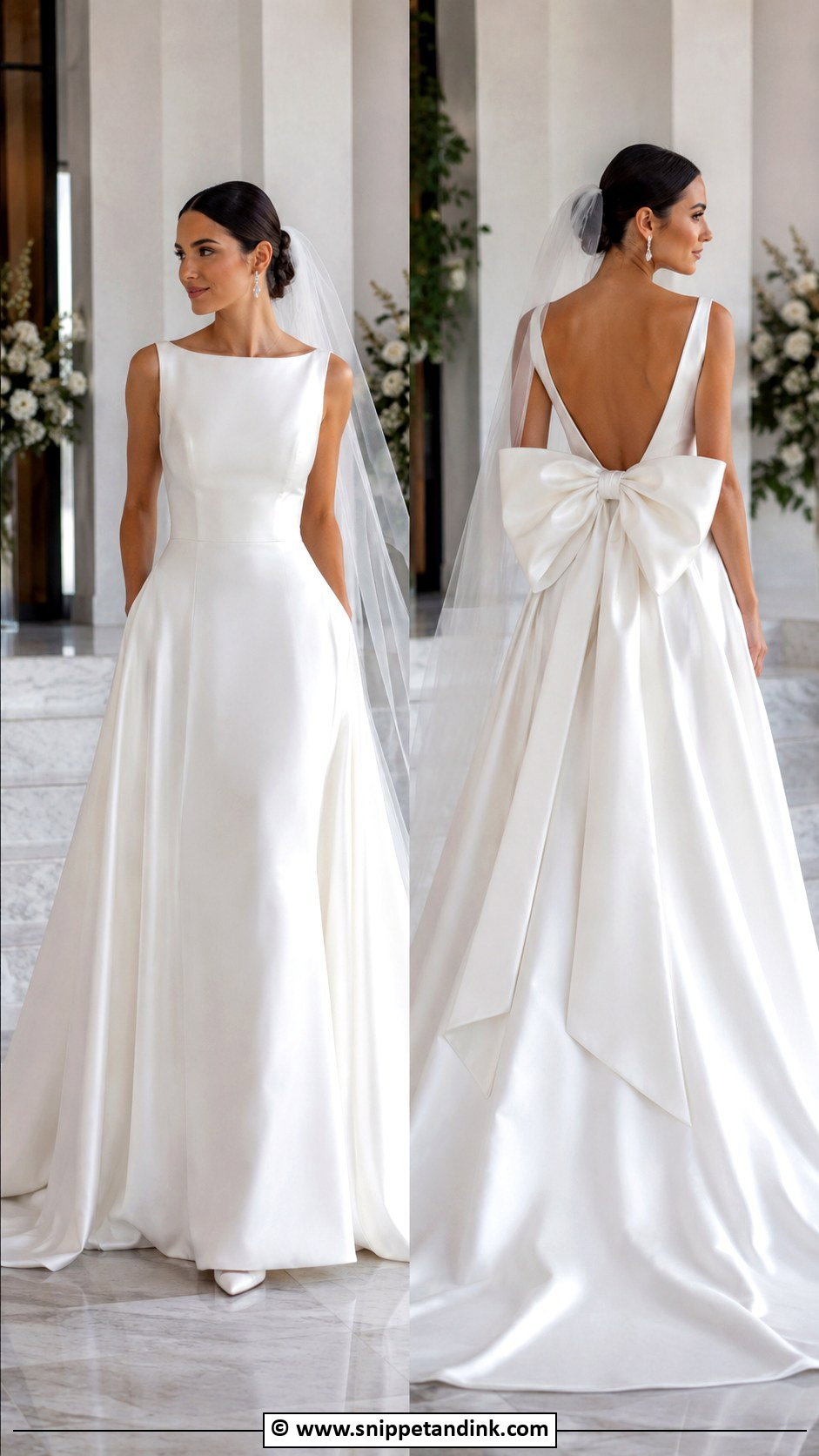
A detachable bow means two looks: dramatic at the ceremony, easy to move in later. It’s most useful with large back bows or bows near the train. Ask for a secure, hidden attachment, usually hooks and thread bars inside the bow. Don’t settle for safety pins or a brooch back. Switch to statement earrings or a hair bow for the reception if you want to keep the theme going.
19. Wedding Dress With Bow And Pearls
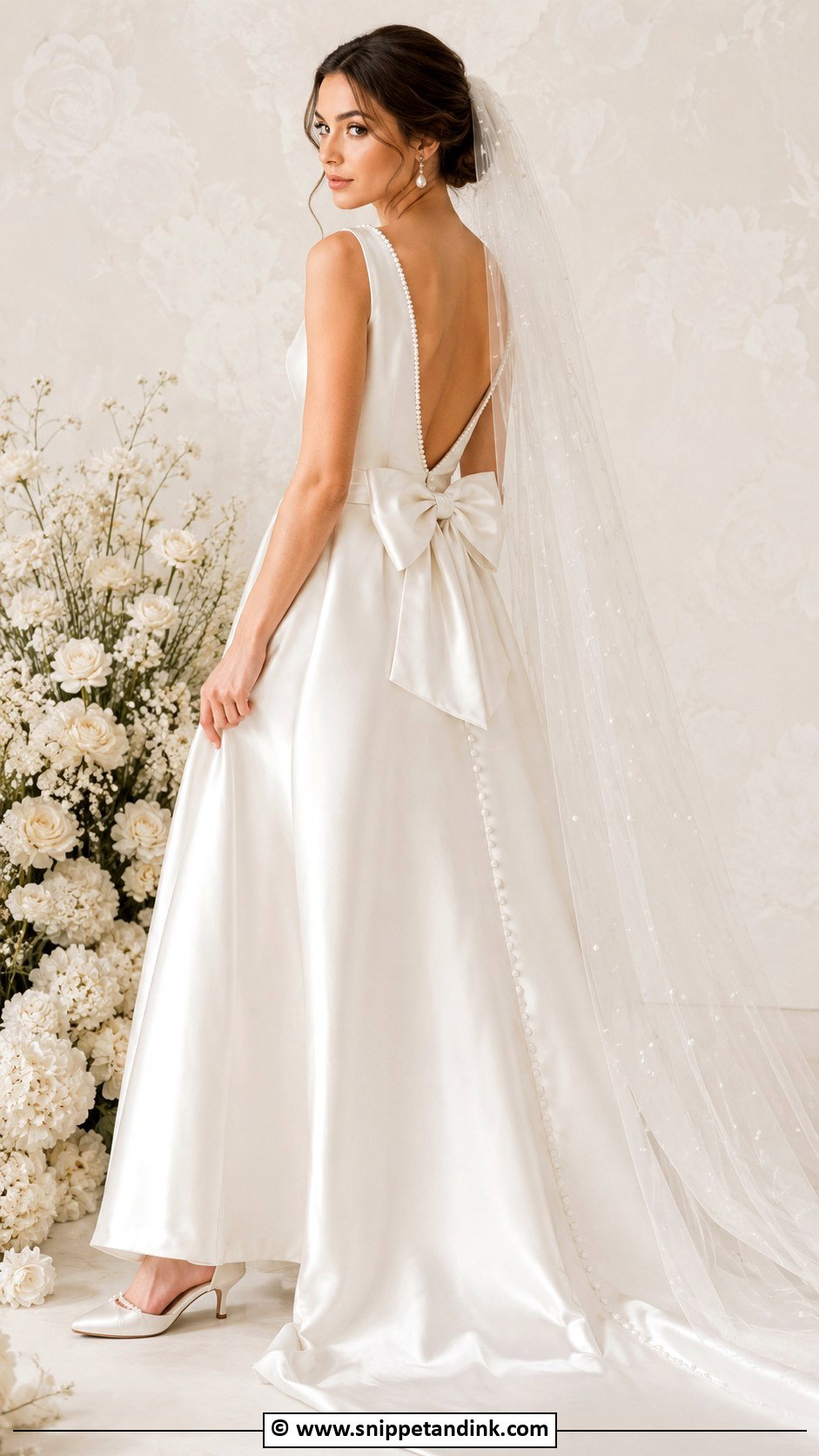
Pearls give a soft sheen that suits bows better than crystals, which can look too sharp next to ribbon. Pearl-trimmed straps with small bows, a pearl bodice with a back bow, or a plain gown with pearl accessories all work. Balance is the whole skill. If the dress already has pearls, keep earrings small and skip the pearl hair pins.


20. Wedding Dress With Bow And Slit
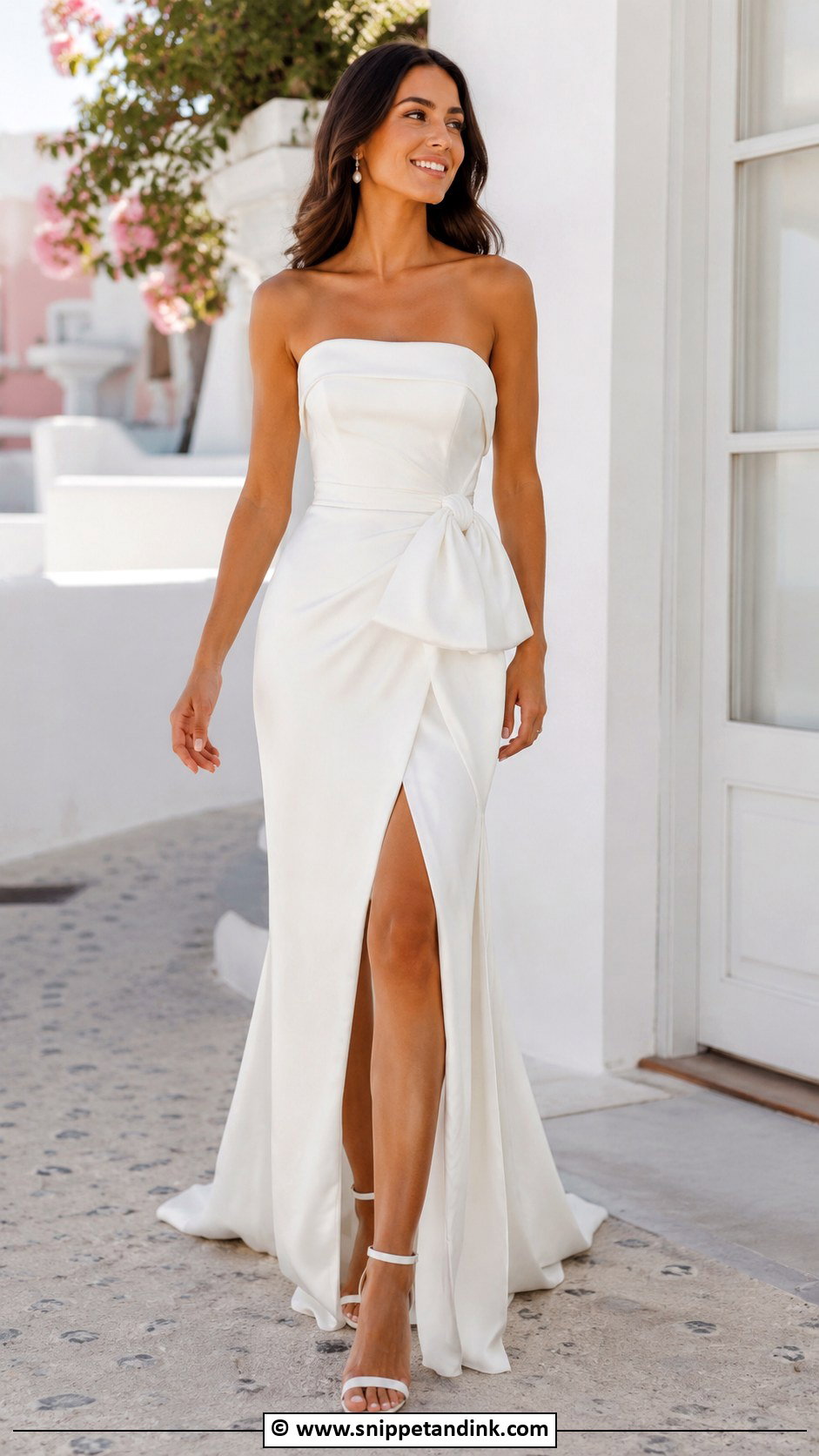
The slit gives movement and modern confidence; the bow keeps it romantic. That combination needs careful tailoring. A slit that sits too high on a fitted dress opens wider every time you sit, so I mark slit height with the bride seated, not standing. A waist bow draws the eye up, and a back bow keeps the front sleek. Your shoes will be on show, so choose them early.
21. Wedding Dress With Bow Cape
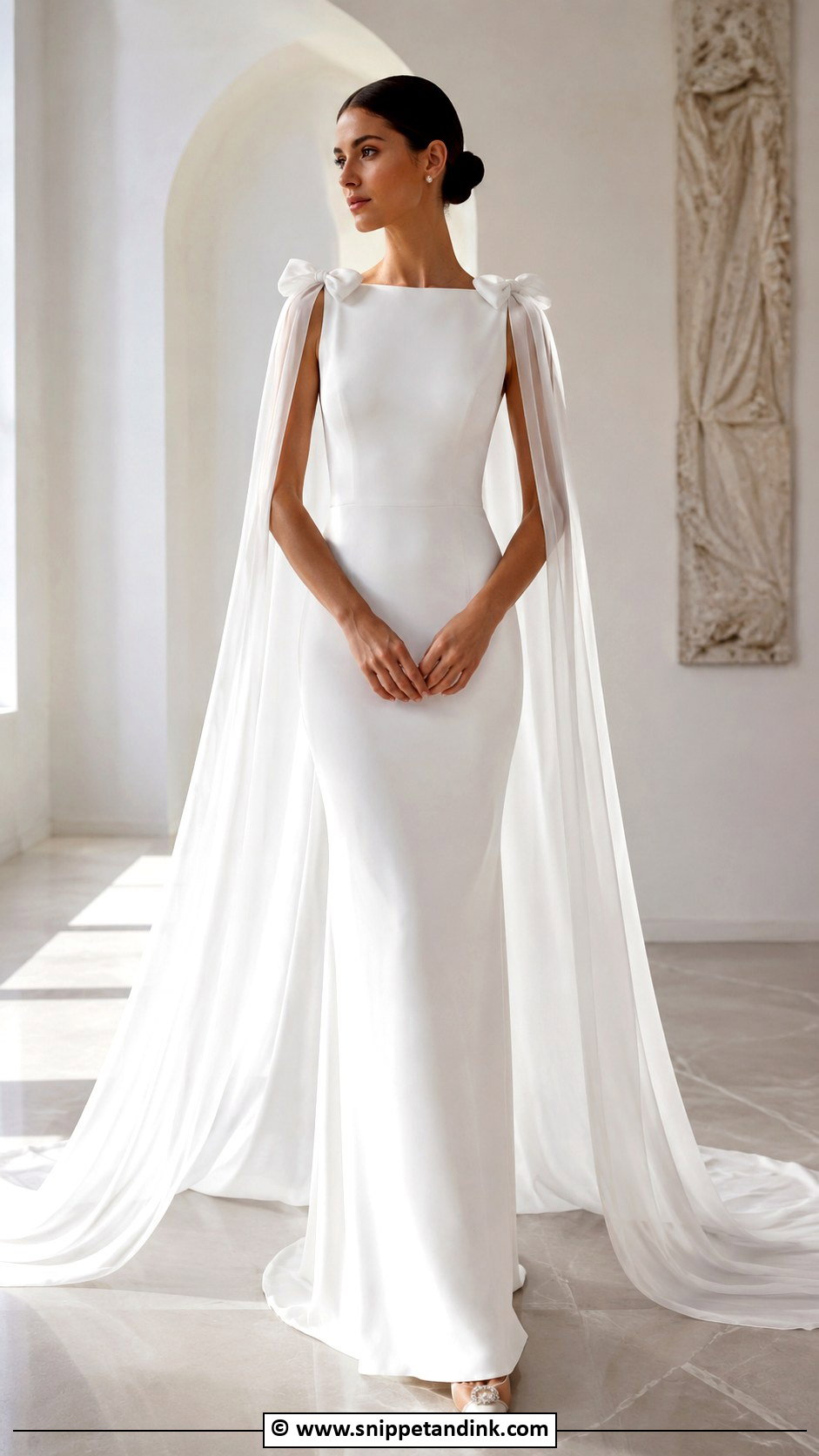
A bow cape replaces a traditional veil. It either attaches at the shoulders with bow ties or flows from a bow at the back neckline. Lightweight tulle, chiffon or organza moves best; heavier fabric pulls back on the neck. Choose a simple column, sheath or A-line underneath. Keep accessories minimal and let the cape do the work. It also gives you shoulder coverage for a religious ceremony.
22. Wedding Dress With Bow Sleeves
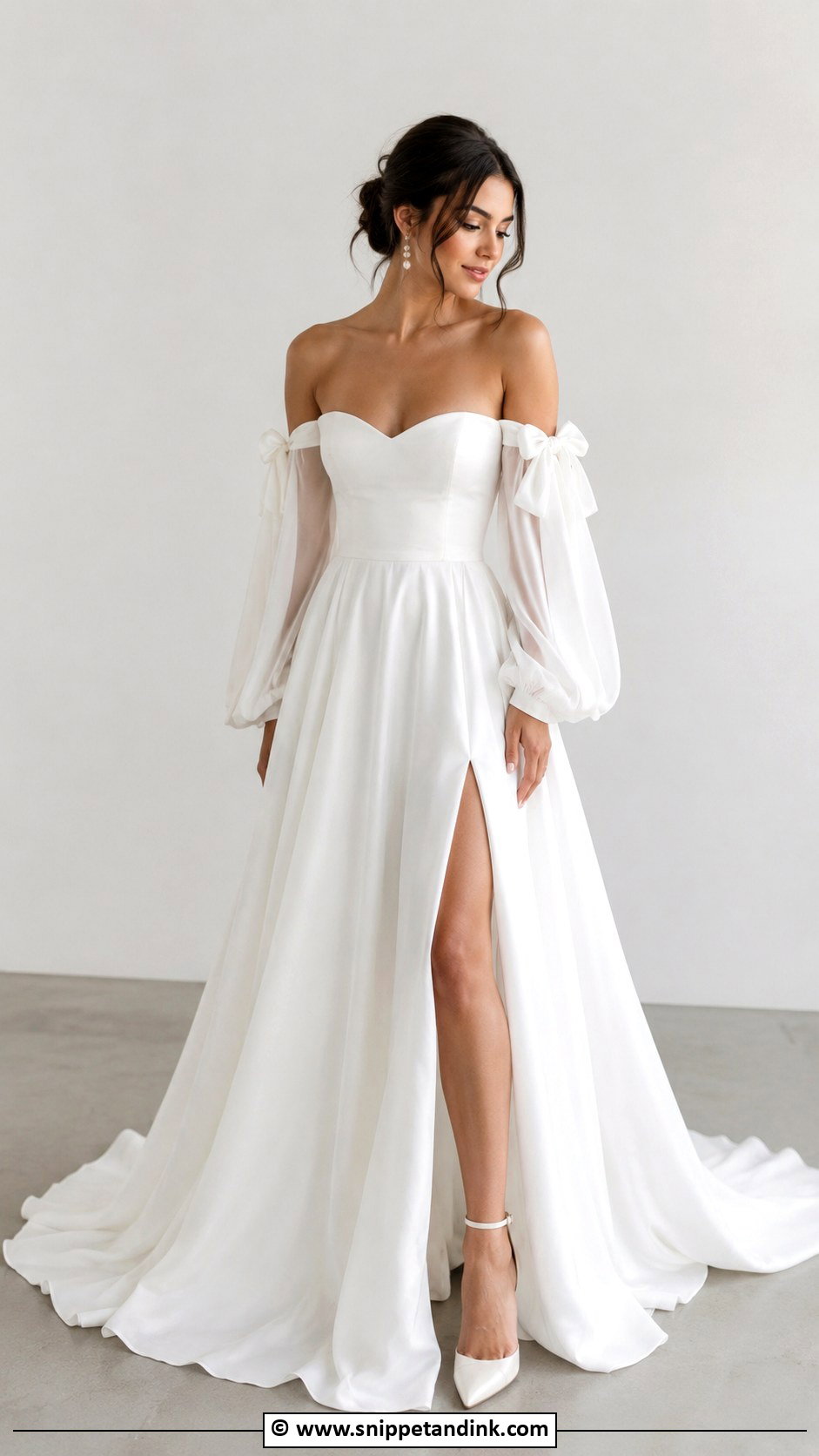
Gowns with bow sleeves can place them at the shoulder, upper arm, wrist or along detachable sleeves, so they’re easy to adjust for the season. Small ones look sweet; big ones look like a runway moment. A simple skirt keeps the focus up top. Large bows on the upper arm catch on doorframes and bouquets, so walk through a doorway in them before committing.
23. Wedding Dress With Bow Train
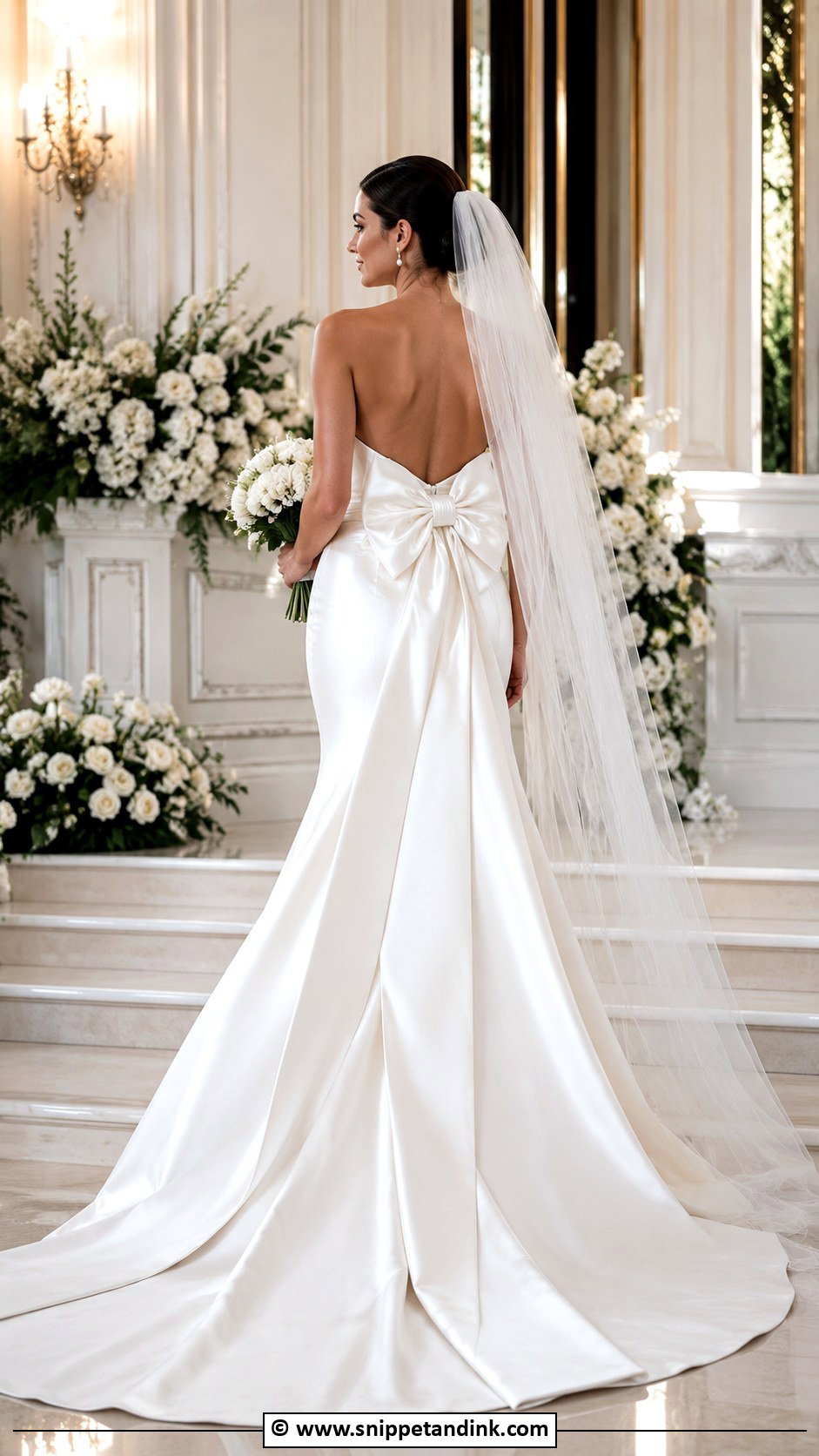
A bow at the back waist flowing into long ribbon tails or a full train gives you motion as you walk. A simple front makes the back read even stronger. Satin and mikado hold the shape; organza and tulle look softer. Talk to your seamstress about the bustle early. Bows and bustles share the same real estate, and if the bustle points are under the bow, the bow ends up hidden all evening.
24. Wedding Dress With Small Bow
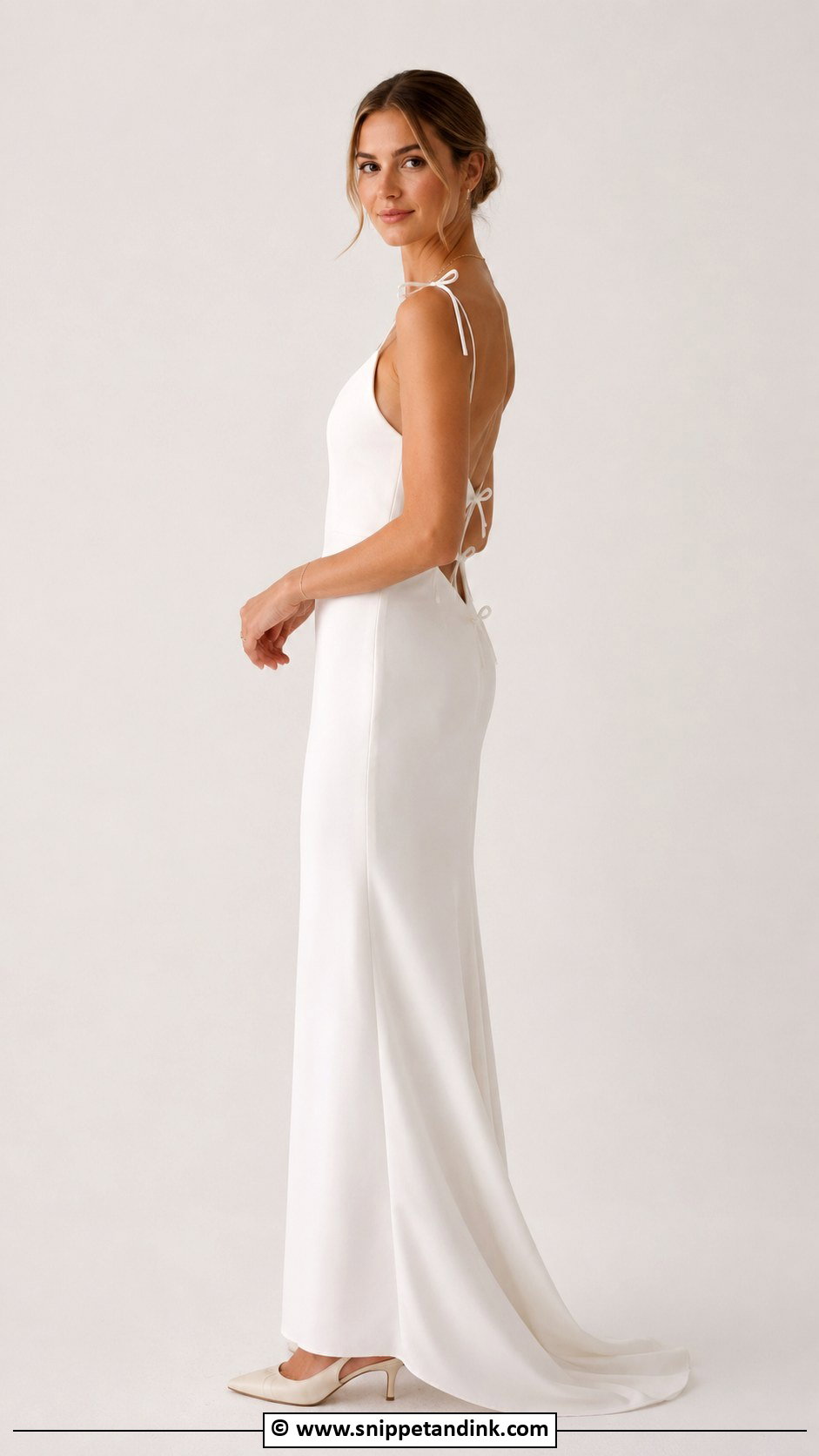
Small bows suit brides who like the idea but not the drama. They can sit at the straps, waist, neckline, cuffs or back closure. Petite brides in particular do well with them, since scale matches frame. A tiny bow on clean crepe reads modern; a satin bow on lace reads traditional. Delicate jewelry and simple heels keep everything in proportion.
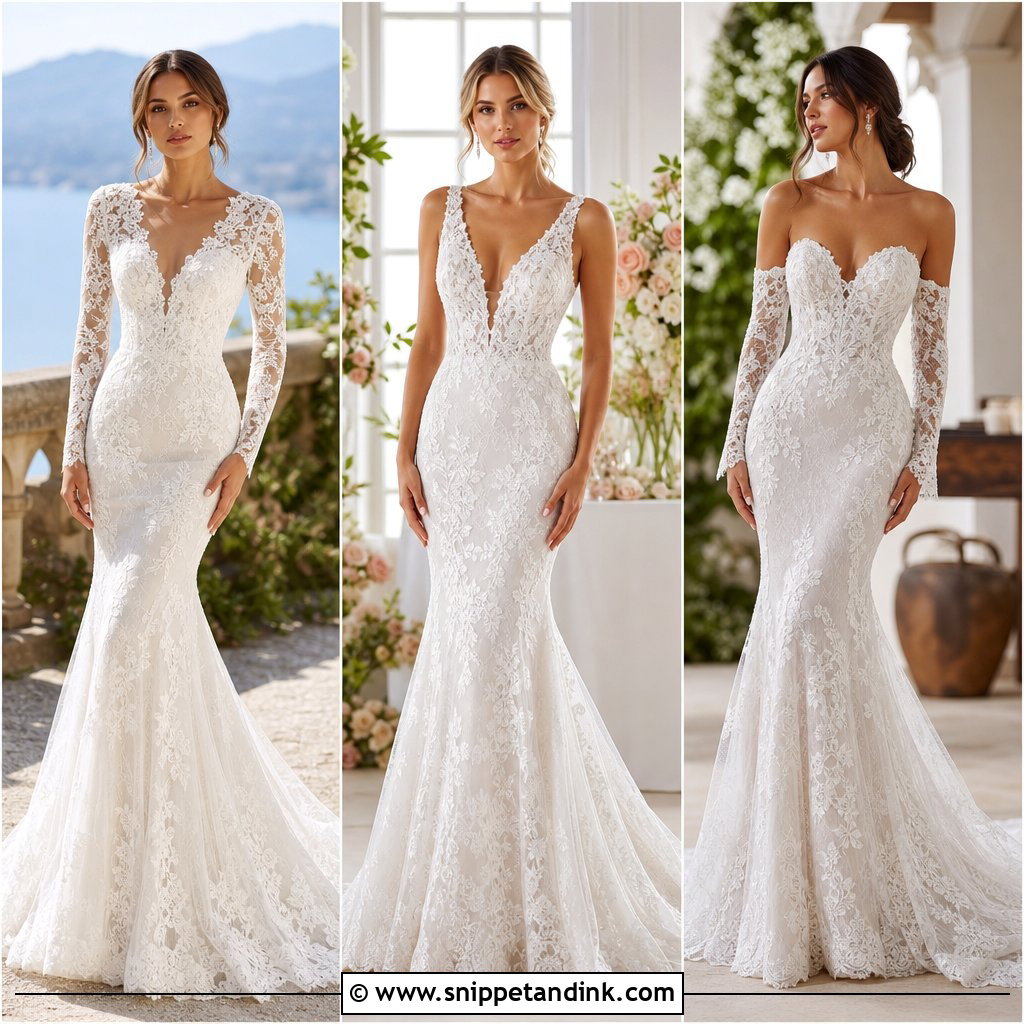
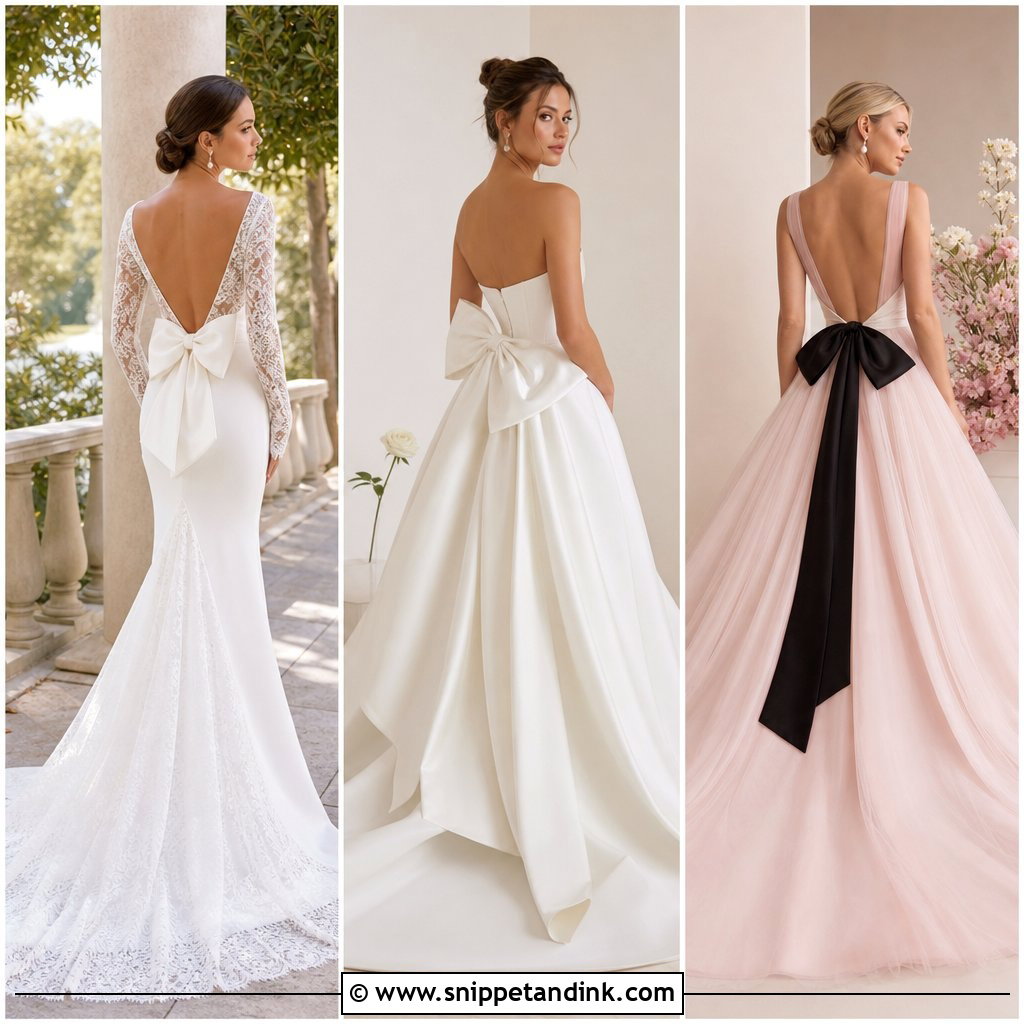
25. Wedding Dress With Black Bow
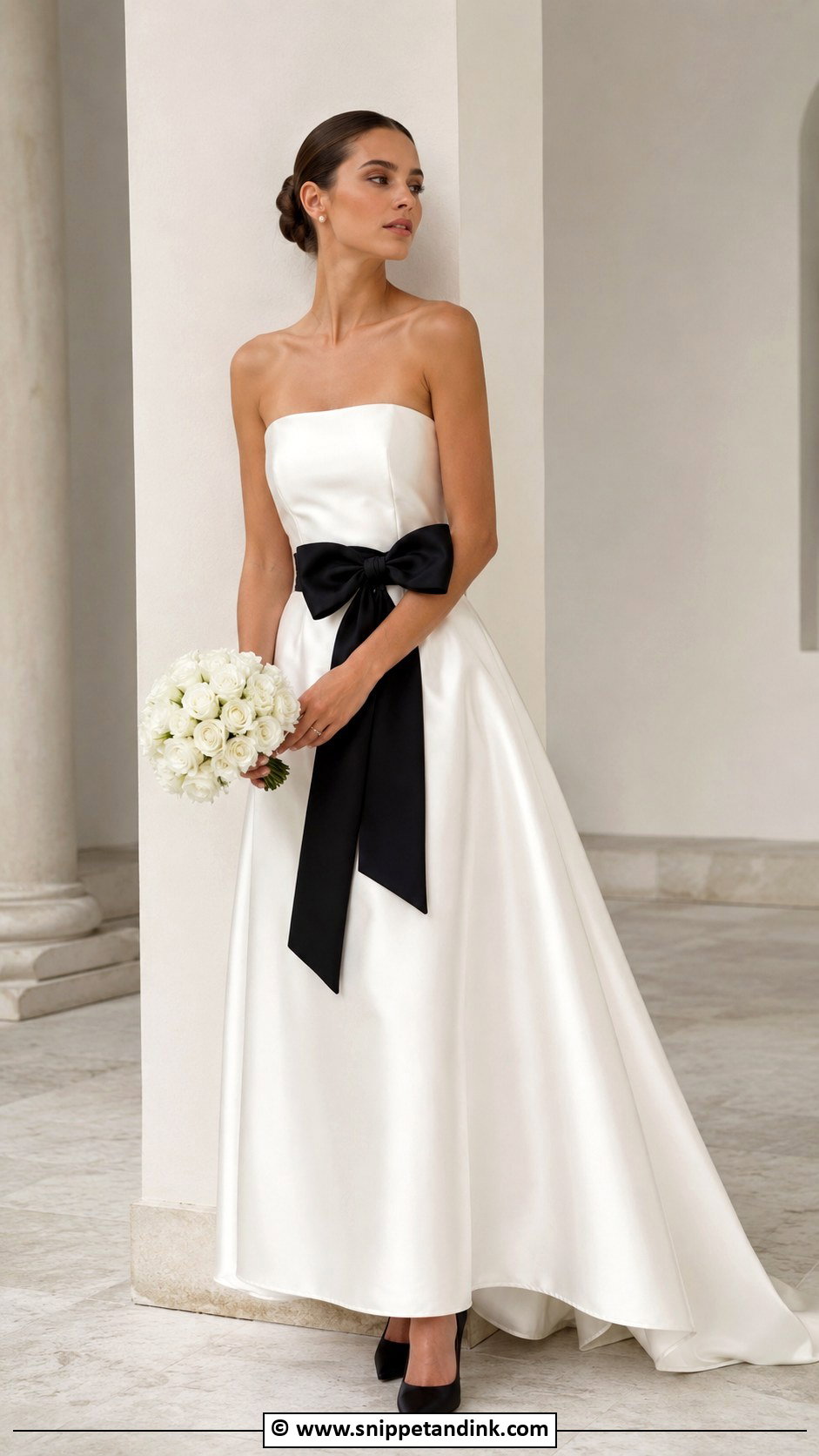
Contrast is the point of a black bow on a white gown. A black waist bow defines your shape, while a black back bow makes an exit. Keep the dress simple: strapless satin, column or tea length. Black heels tie the look together, or white shoes keep it softer. Before it’s sewn on, have the ribbon tested for colorfastness so it can’t stain the white if it gets wet.
What Happens to a Back Bow After You Sit Down
Bows are made to be looked at standing up. The trouble starts in the car, the ceremony chair and the dinner seat. A large back bow gets crushed every time you lean back, and soft satin creases quickly in body heat.
Ask for structure inside the bow
Good bridal bows are lined and interfaced, and some have a layer of horsehair braid or stiff tulle inside the loops. Squeeze the bow at a fitting. If it springs back, it will survive the day. If it stays squashed, ask for more structure.
A small fix kit for the day
- A handheld steamer for the bow only, used from a distance so satin doesn’t water-spot.
- Tissue paper to stuff the loops between the ceremony and photos.
- A needle pre-threaded in the dress color, for a loose tack.
- Someone named to fluff the bow before every walk.
Sit forward in the car and on the ceremony chair if you can. It feels odd, but it keeps the bow from flattening before the photos that matter most.
Size, Placement and Fabric Decide Everything
A bow can make a simple dress romantic, soften a structured one or give you a back view people remember. What makes it work is size, placement and fabric matched to your frame and venue. A satin back bow or waist bow is the classic route. Side bows, black bows and detachable bows lean modern. Wear the dress sitting, walking and hugging at your fittings before you sign off, because bows show every crease and every slip.
You'll Like These Ideas:



Leave a Reply