
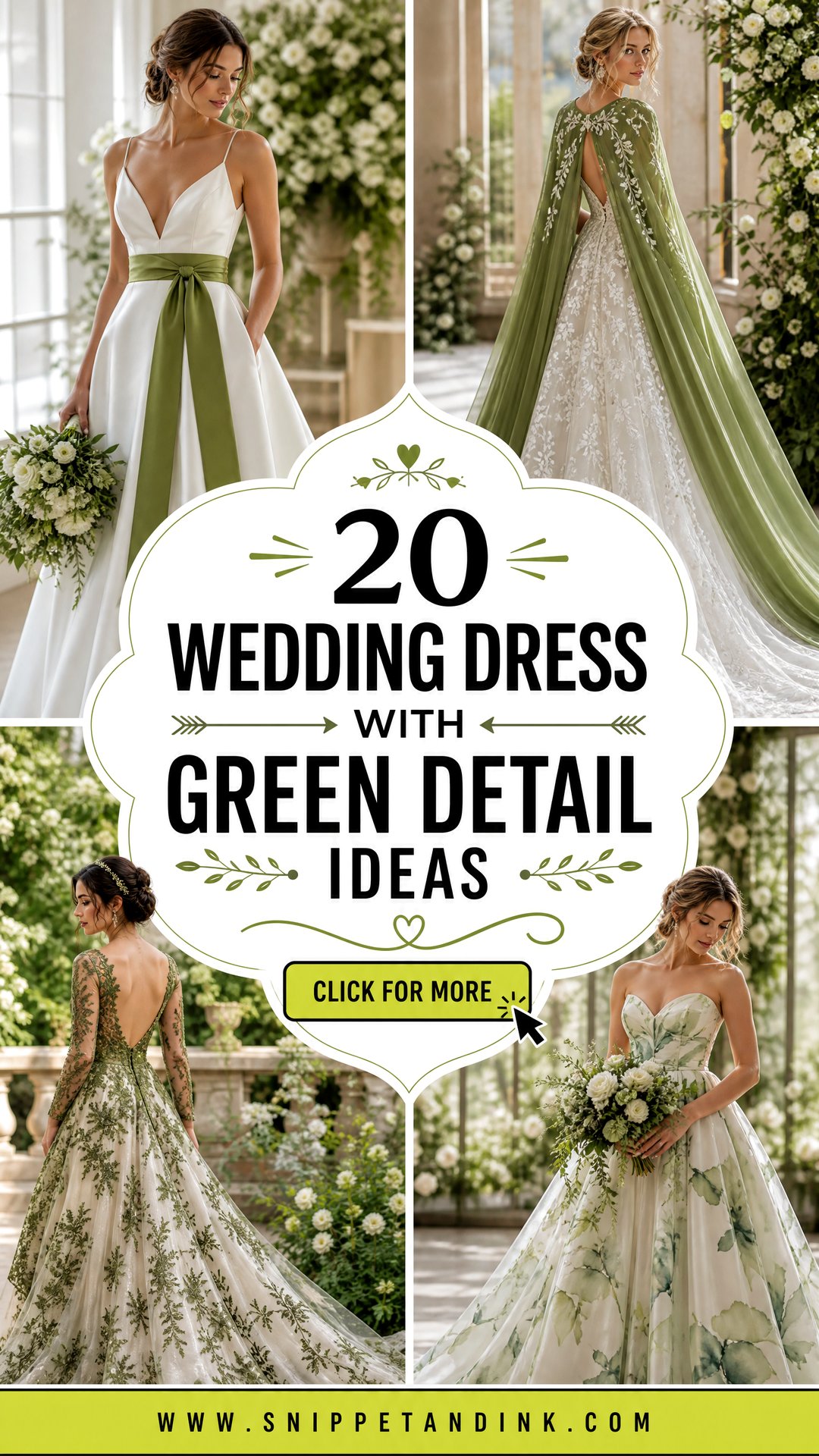
The small green details are the ones guests remember: leaves stitched along a neckline, a ribbon laced through a corset, a flash of emerald lining when you dance. Each of the twenty gowns below starts from white or ivory and adds sage embroidery, emerald ribbons, botanical lace or another plant-inspired touch, from a quiet trim to a full embroidered train. Placement decides almost everything. Green near your face behaves very differently from green at the hem, and I’ve noted where each one sits and what it asks of the rest of the outfit, including shoes, jewellery, veil and flowers.
Alterations Get Trickier Once Green Is Stitched In
Colour detail is decoration, but it’s also construction, and it changes what a seamstress can do later. I raise this with brides early, because the dress they fall for at a sample sale rarely fits without work.
Hemming
Green at the hem, a floral border, an ombré fade or a decorated train edge cannot simply be cut shorter. The seamstress has to lift the skirt from the waist instead, which takes longer and costs more. If a gown with hem detail is too long, ask about this before you buy.
Taking in or letting out
Embroidery and beading that cross a side seam have to be unpicked and re-sewn to take the bodice in. Appliqué can usually be lifted and moved. Letting a gown out is harder still, because the seam allowance underneath may not match the decorated surface. Tell your seamstress which details are stitched across seams at the first fitting.
Adding detail to match
If you want extra green sewn on, bring the exact thread colour or a cutting from the gown to every fitting. Green dye lots vary, and a slightly bluer or yellower leaf next to the original shows clearly up close.
1. Green Floral Embroidery Wedding Dress
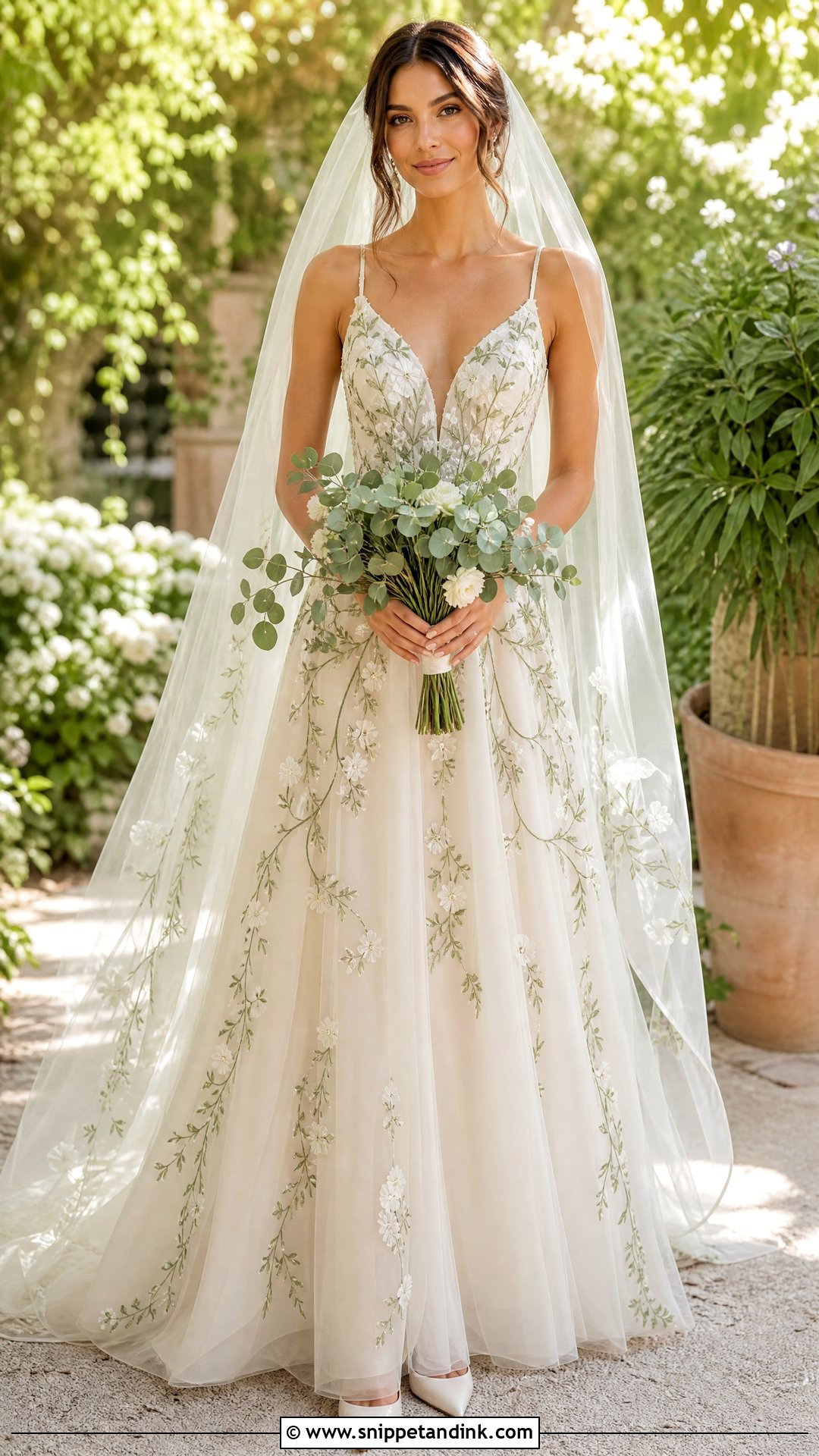
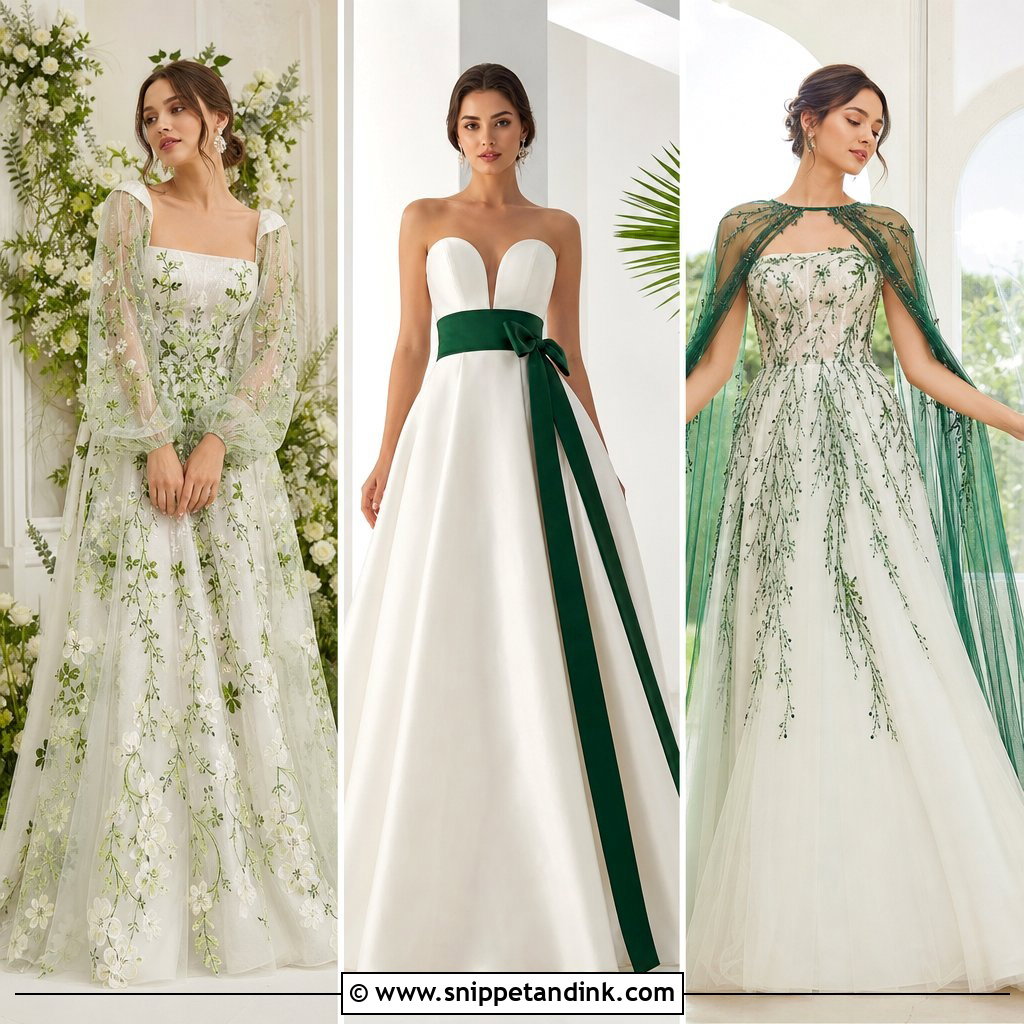
Vines climbing from the hem up toward the bodice give an A-line a sense of growth, and tulle is the right fabric for it because light passes through and every stitch stays crisp. Mixing small ivory flowers into the green keeps the embroidery from looking flat. Here’s the honest catch: hem-up embroidery makes shortening the dress hard, so try it with your actual shoes before alterations begin. Pointed ivory heels, pearl drops and a plain fingertip veil let the stitching lead, and a loose low bun keeps the neckline open. White flowers with eucalyptus and trailing greenery suit a garden.
2. Sage Green Vine Lace Wedding Dress
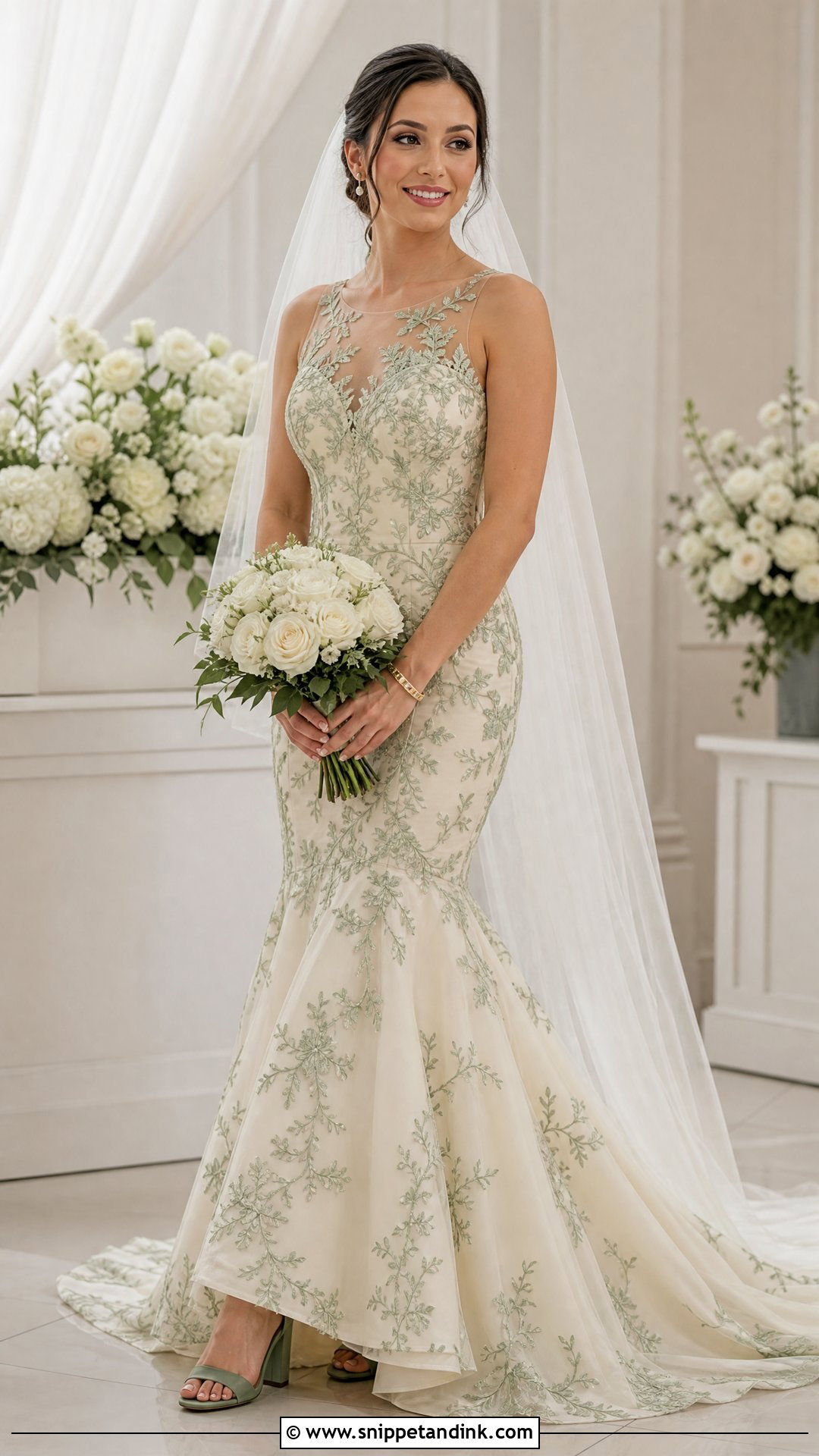
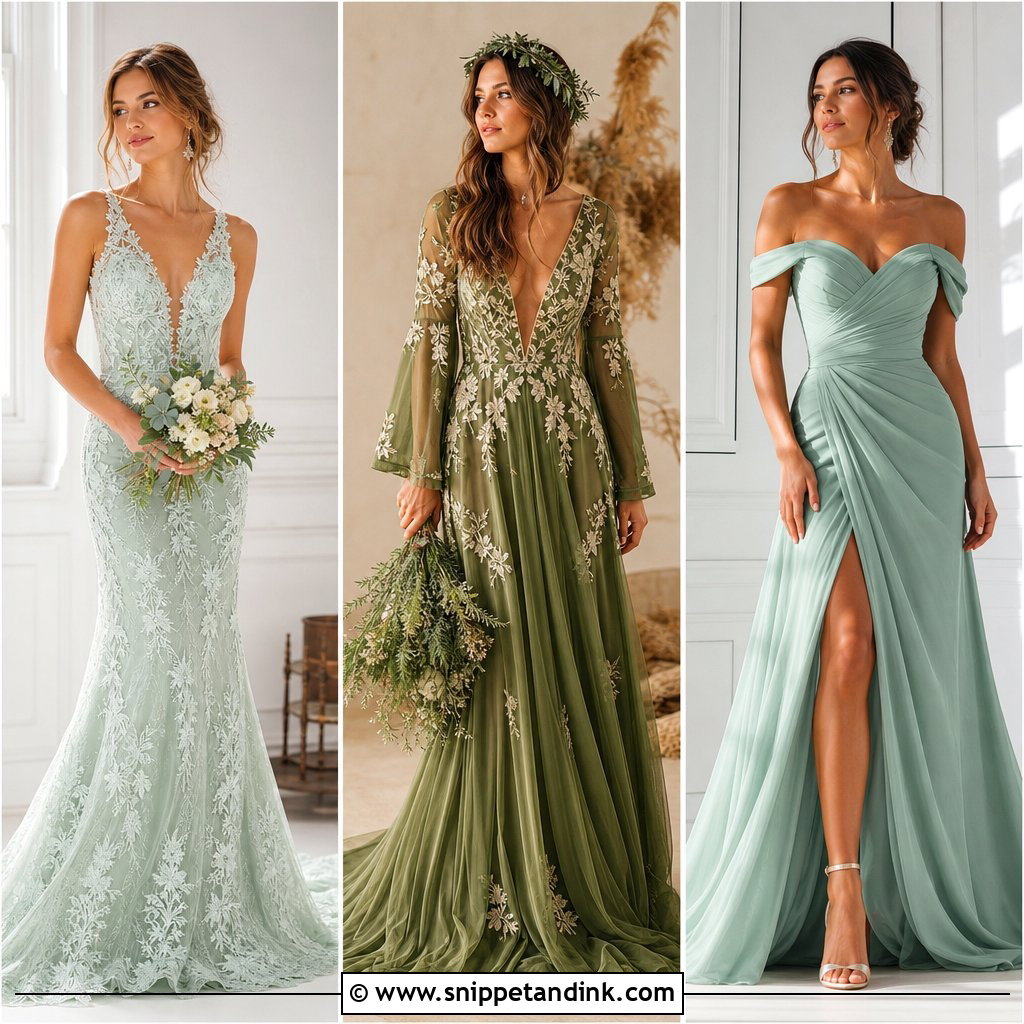
Sage green vine lace over the bodice and upper skirt of an ivory fit-and-flare reads quietly botanical. On an illusion neckline, the vines look as if they rest on bare skin, which is lovely, but the mesh needs to match your skin tone closely or it shows as a band. Keep the lower skirt ivory. Soft sage block heels, pearl studs and a slim gold bracelet are enough, with a plain veil that won’t argue with the lace. A low twist and white roses with olive branches finish it for spring, indoors or out.
3. Emerald Green Velvet Strap Wedding Dress
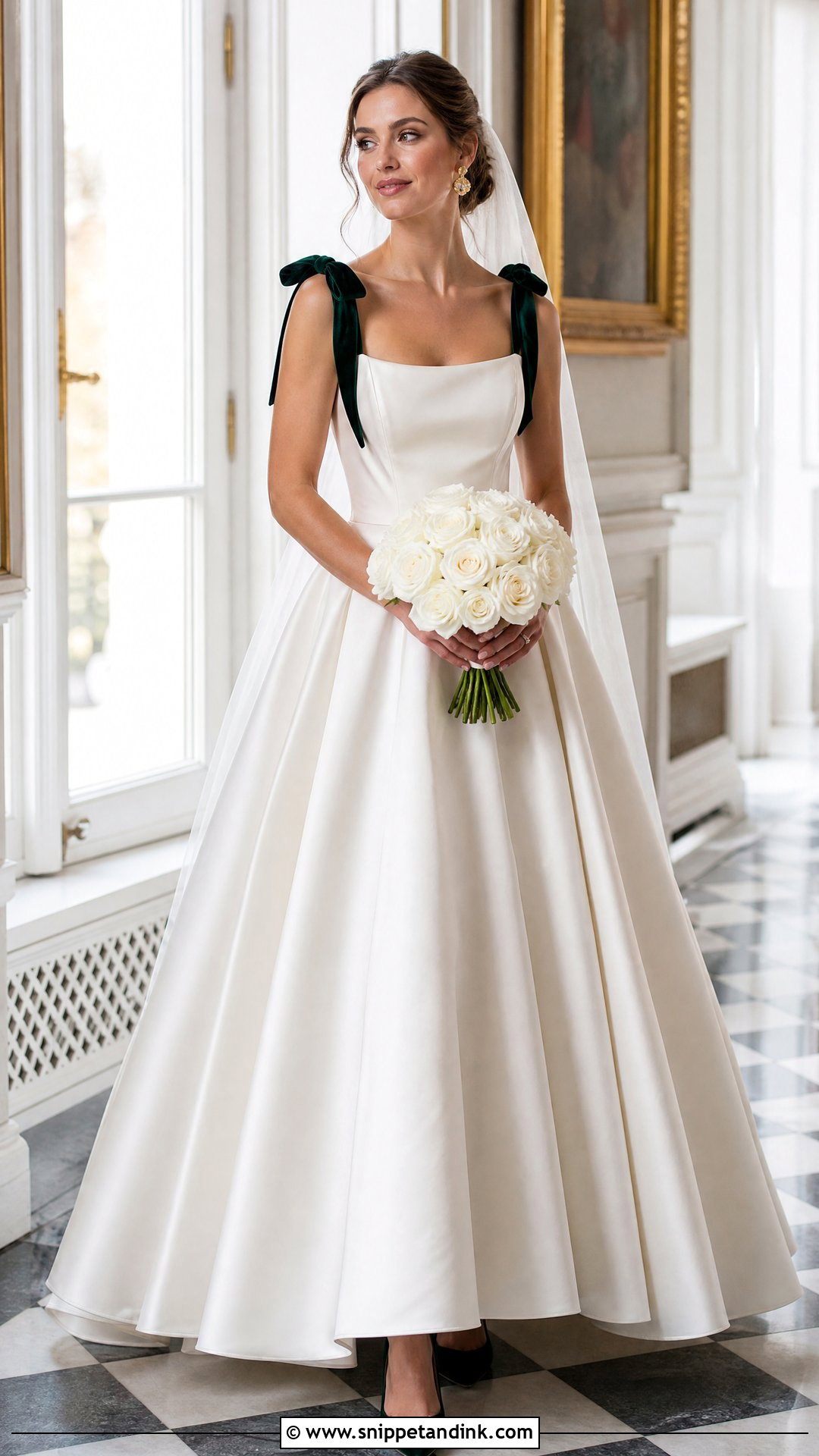
Two emerald velvet straps on an ivory satin square-neck ball gown do more work than a whole embroidered bodice. I like them detachable and tied in small bows at the shoulder, so you can change the feel for the evening. Velvet straps shouldn’t be too narrow; on a heavy satin skirt they carry real weight and thin ones dig into the shoulder by the speeches. Emerald velvet pumps or pointed flats, gold earrings and a gold comb warm up the deep green. Attach a plain veil beneath a smooth chignon so the straps stay clear. White roses with dark foliage suit autumn or winter.
4. Green Botanical Applique Wedding Dress
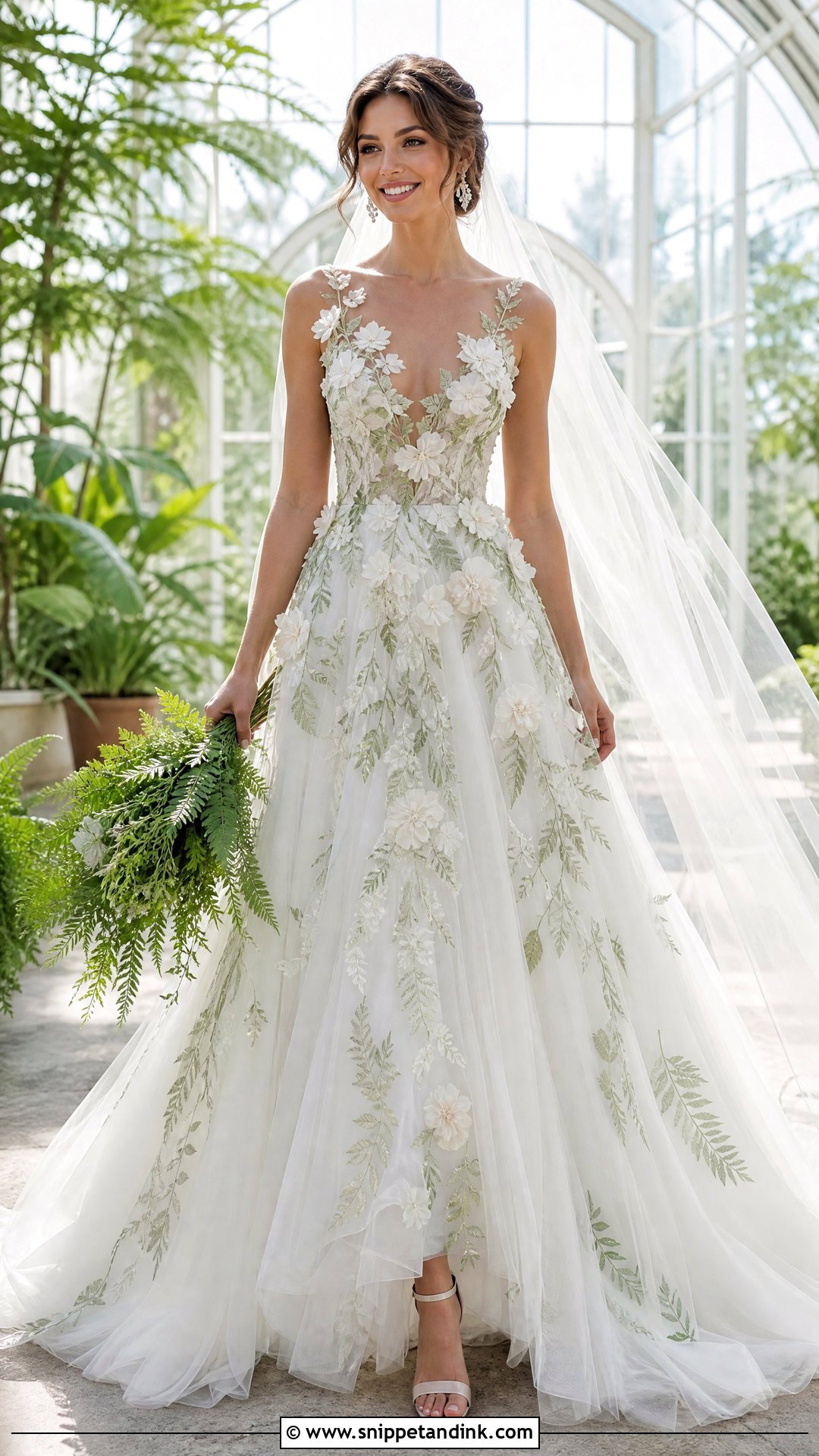
Three-dimensional leaves on tulle cast tiny shadows, and that’s what gives this gown its handcrafted depth in photos. Pale green leaves with small ivory flowers, thickest at the waist and scattering toward the hem, look best on a corset bodice with an A-line skirt. Raised appliqués catch on lace gloves, bouquet wire and bracelets, so I keep jewellery smooth: subtle crystal earrings, nothing with prongs. Ivory ankle straps and a cathedral veil with a few matching leaves at the edge only. Soft waves or a textured updo and a loose bouquet of white blooms, ferns and vines complete it.
5. Green Ombre Tulle Wedding Dress
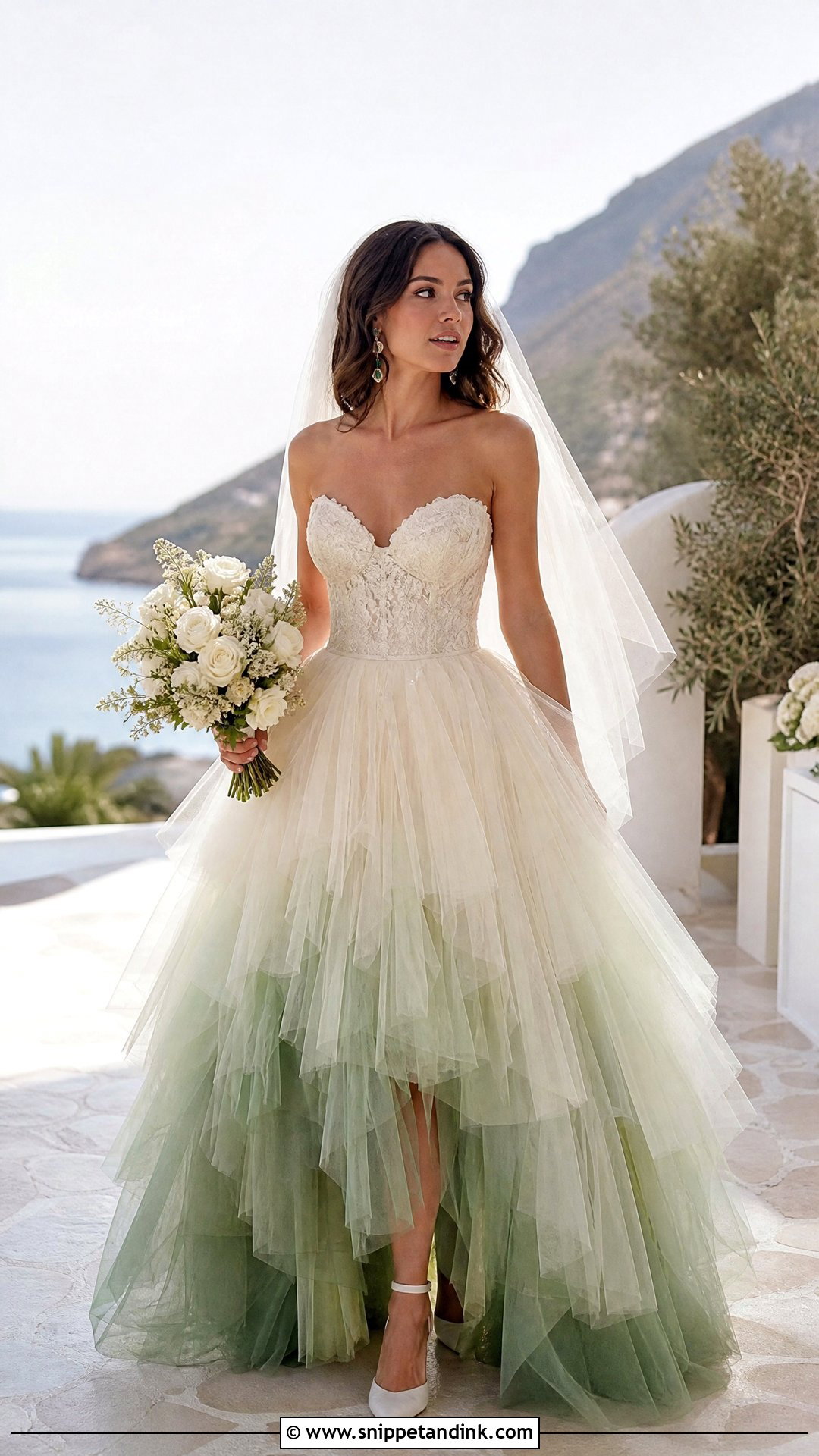
An ombré skirt is the boldest option here that still feels light. The ivory fitted bodice should melt into pale mint or sage near the bottom of layered tulle, with no visible line where the dye changes. If you can see a stripe at the try-on, it’ll be obvious in photos. Ivory heels and green gemstone earrings echo the hem without competing. A shoulder-length veil keeps the skirt visible, and a smooth bun or ponytail modernises it. A small bouquet of ivory flowers and light greenery suits spring, the coast or a modern venue.
6. Green Waist Sash Wedding Dress
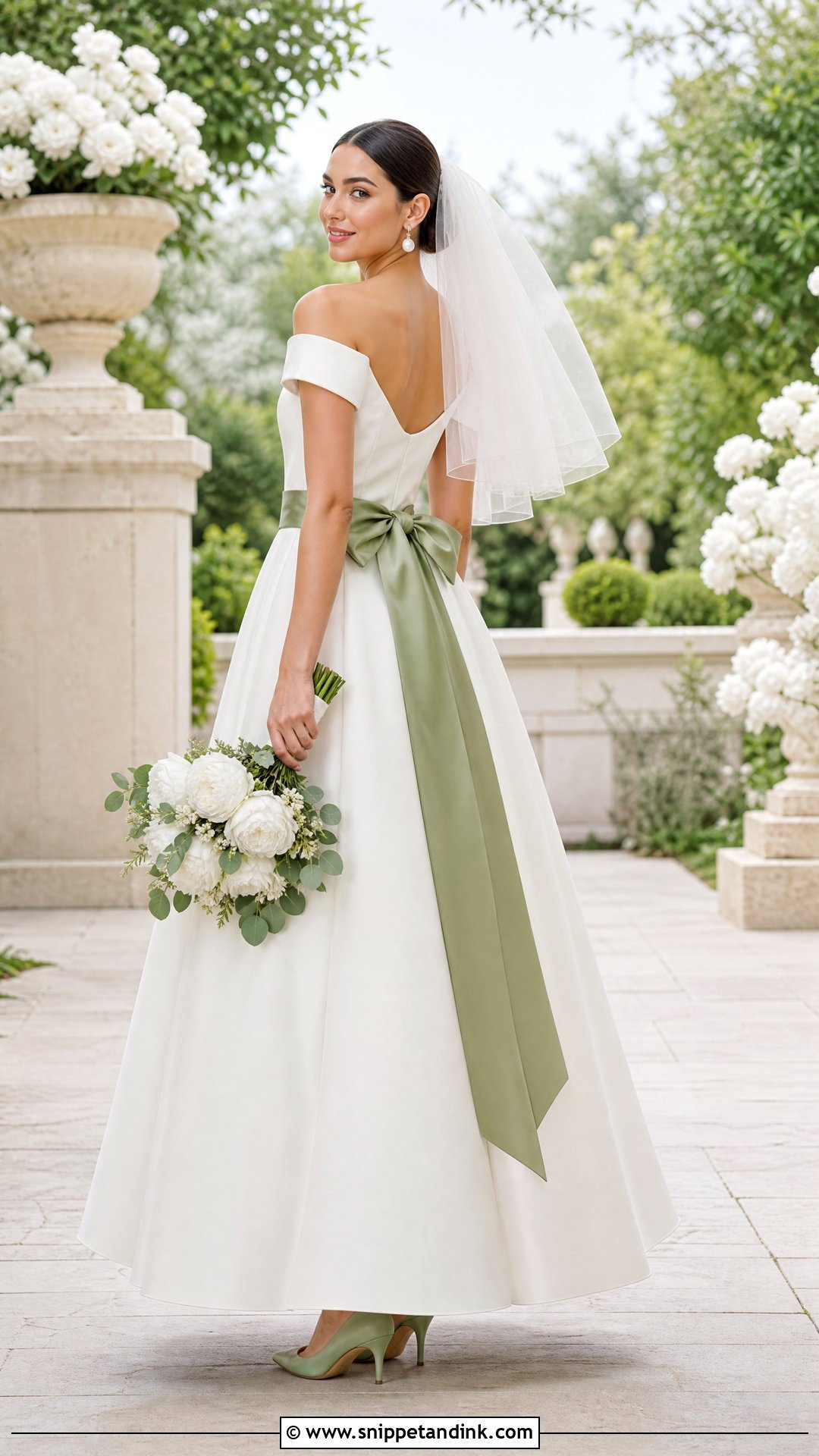
A green waist sash is the cheapest and most forgiving way to add colour, and it’s the one I suggest to brides who aren’t sure yet. A wide sage silk ribbon tied at the back of an ivory tea-length or full A-line defines the waist and comes off whenever you like. Silk ribbon frays at cut ends and slips when tied, so I have the ends heat-sealed or hemmed, and tack the knot with two stitches. Sage pointed shoes, a small green velvet bow or comb, pearl earrings and a short veil keep it light. Change the sash fabric and width to move it from casual to formal.
7. Green Bow Back Wedding Dress
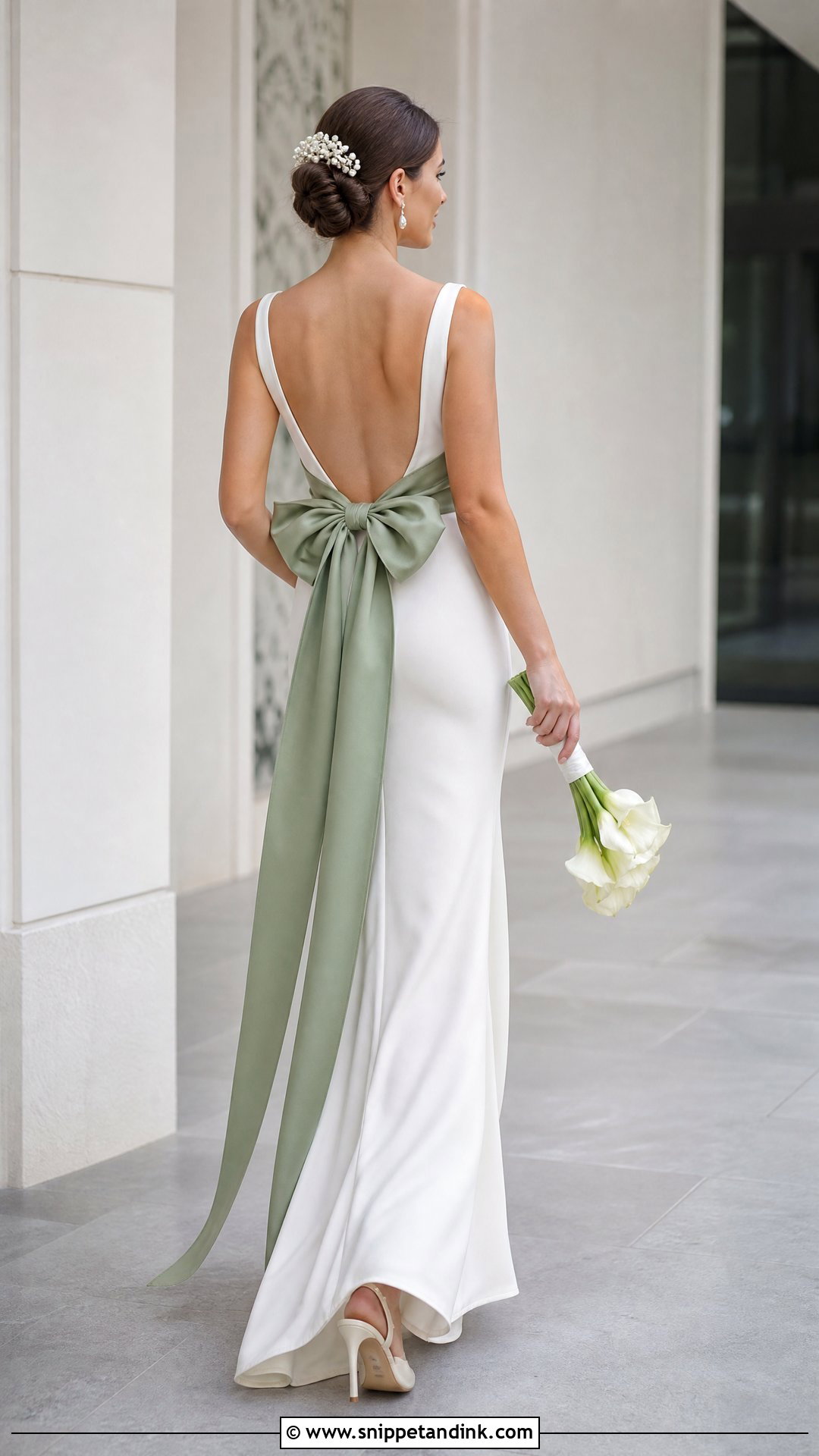
When the back is the feature, the front can stay almost bare. A fitted ivory crepe gown with a low back, finished with an oversized sage or emerald silk bow and long tails toward the train, looks spectacular from the guest seats. A big silk bow wilts under its own weight, so ask whether it has interfacing or a stiff inner layer. Choose a short veil, or skip it for a pearl comb. Slingback heels, simple drops, a slim bracelet and a neat bun keep it clean. White callas and greenery suit the long lines.
8. Green Beaded Bodice Wedding Dress
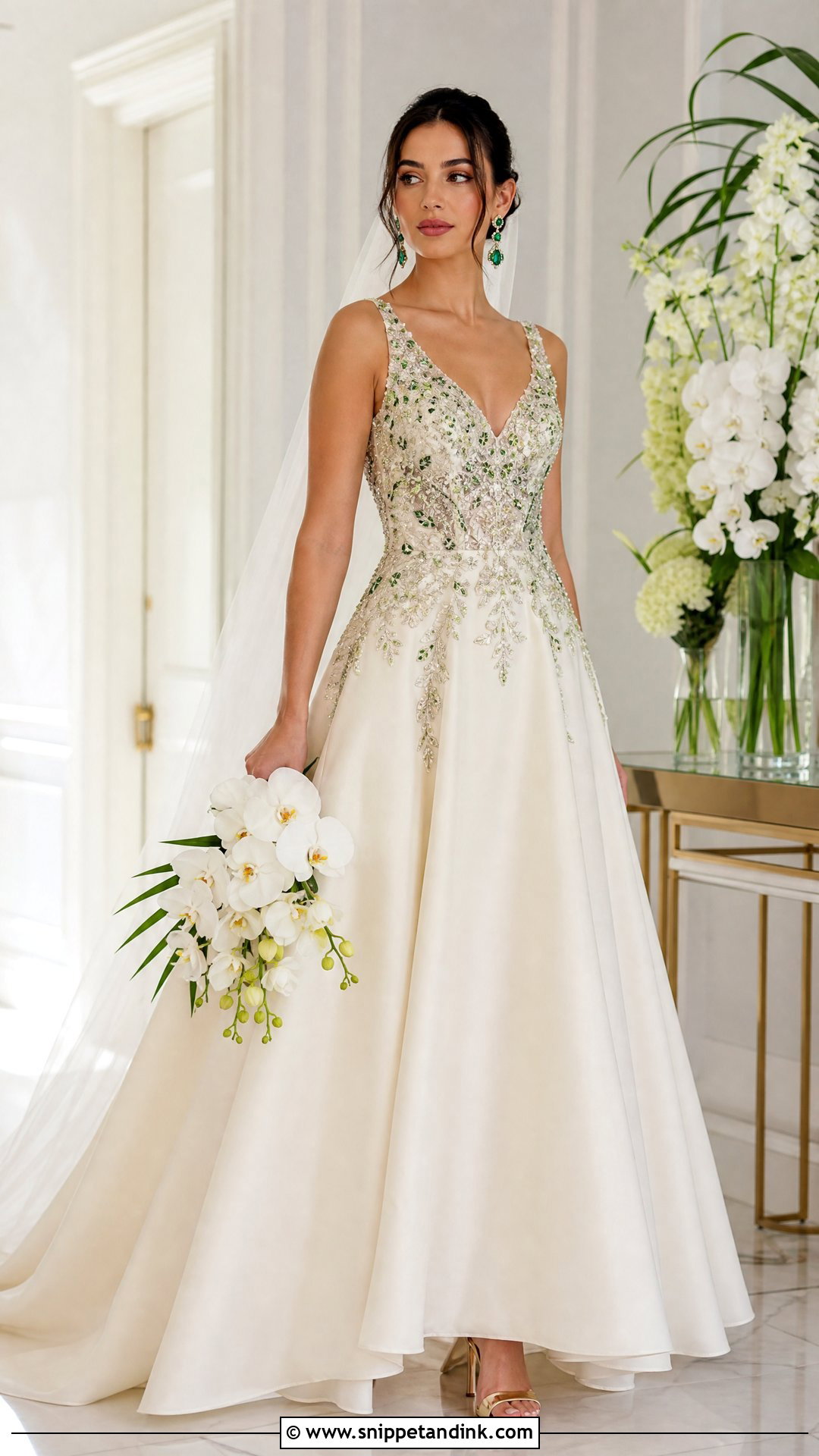
Leaf-shaped beadwork in sage, emerald and clear beads gives controlled sparkle. On an ivory column or A-line, keep the beading on the bodice and the skirt smooth. A slightly deeper neckline frames the face and gives the pattern room. Because beads are heavy, a beaded bodice needs boning and a good waist stay, otherwise it drags forward as you move through the day. Metallic gold heels, small emerald earrings and a delicate bracelet suit it, with a low side-parted bun and an unembellished veil. White orchids and glossy leaves suit a formal evening.
9. Green Leaf Train Wedding Dress
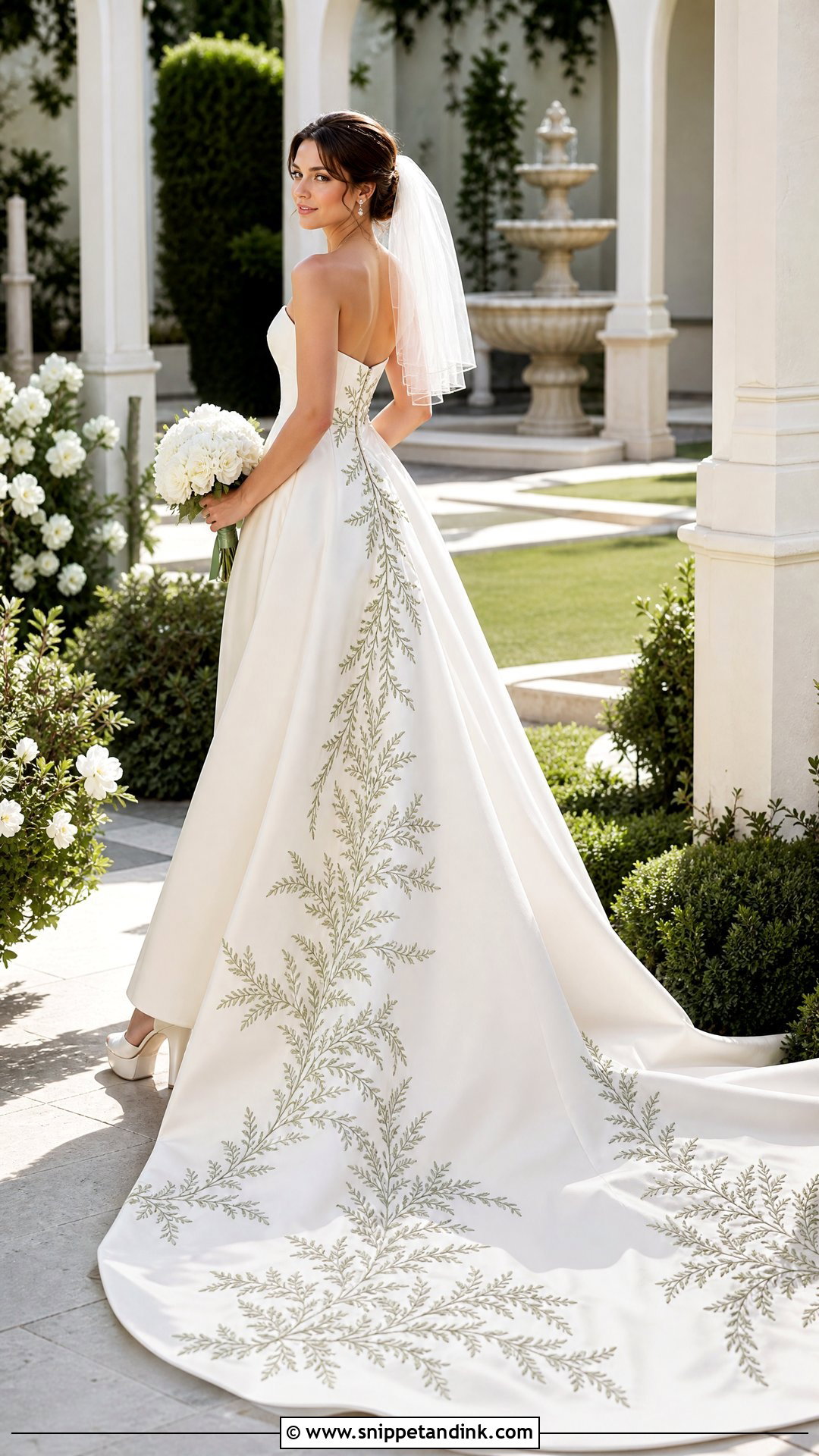
From the front this gown is traditional; from behind, a satin or mikado train is embroidered with sage vines, fern shapes and scattered leaves that start at the lower back and fill out toward the edge. I keep the front clean apart from a few matching leaves near the waist. A long embroidered train needs a bustle plan, and embroidery affects where the bustle points can go, so raise it at your fitting rather than on the morning. Platform heels, pearl earrings with a tiny green stone, a short veil, a polished updo and a white bouquet wrapped in sage ribbon finish it.
10. Green Corset Ribbon Wedding Dress
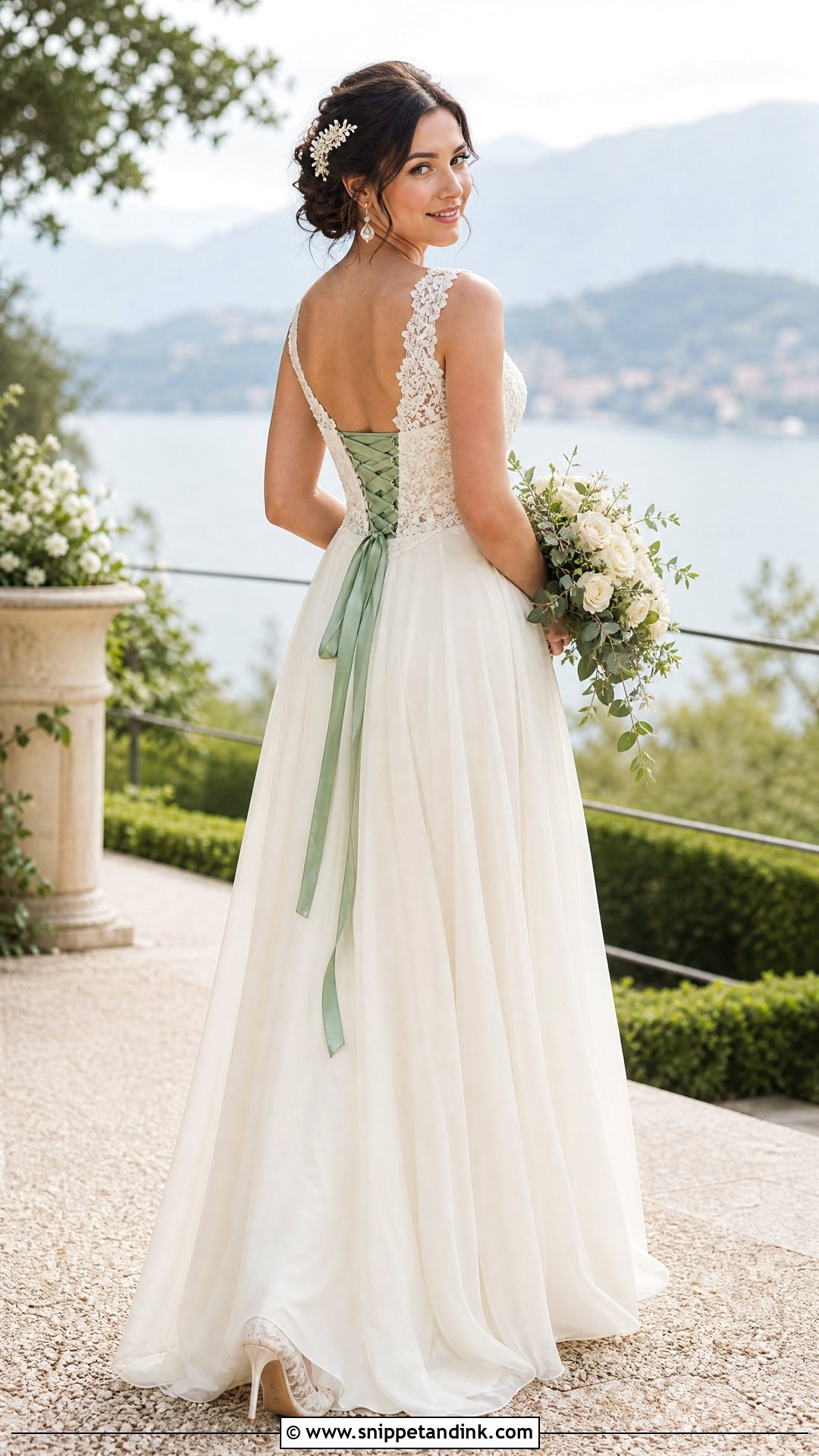
Sage satin ribbon laced through a corset back is a vintage detail that’s also practical: you can tighten or loosen it through the day. An ivory lace bodice with a flowing chiffon skirt is the right base, and the ribbon can be matched exactly to your palette. Lacing a corset takes two people and ten minutes, so I always teach a bridesmaid at the final fitting. Ivory lace pumps, pearl-and-gold earrings and a floral comb suit it. A light veil sits below a loose braided updo, clear of the lacing. Ivory roses, pale green hydrangea and eucalyptus tied with the same ribbon pull it together.
11. Green Cape Wedding Dress
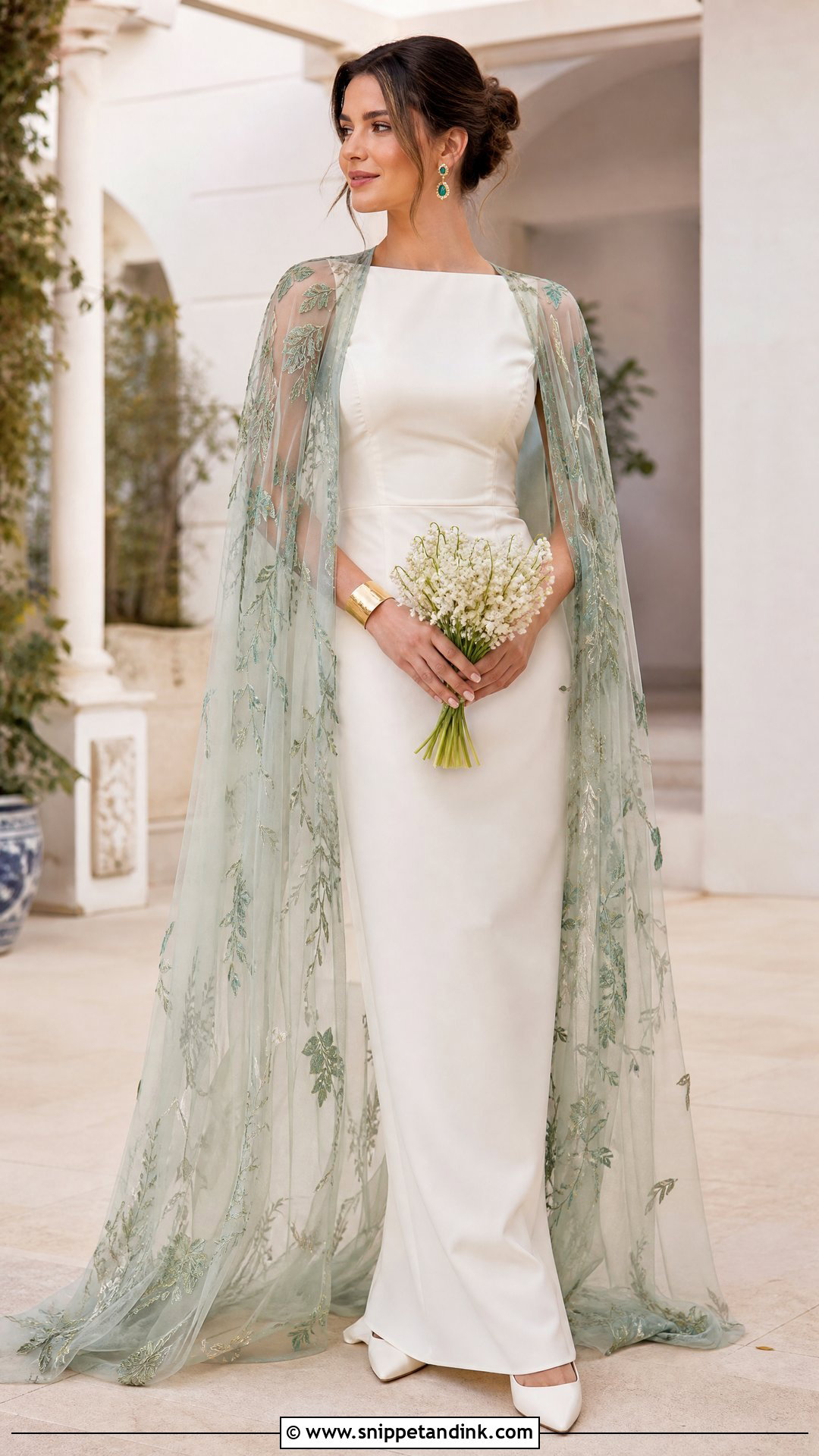
A pale sage tulle cape with leaves embroidered around the shoulders and hem gives coverage and drama over a plain ivory sheath, and it can stand in for a veil. It should fasten neatly at the neckline and fall to the floor. Outdoors, a floor-length cape catches the wind like a sail, so I add small weights or extra embroidery at the hem. Ivory closed heels, small green studs and a thin gold cuff are enough; a sleek low bun lets the cape sit flat. A narrow bouquet with trailing greenery suits the vertical lines, and the cape comes off for the reception.
12. Green Detachable Sleeve Wedding Dress
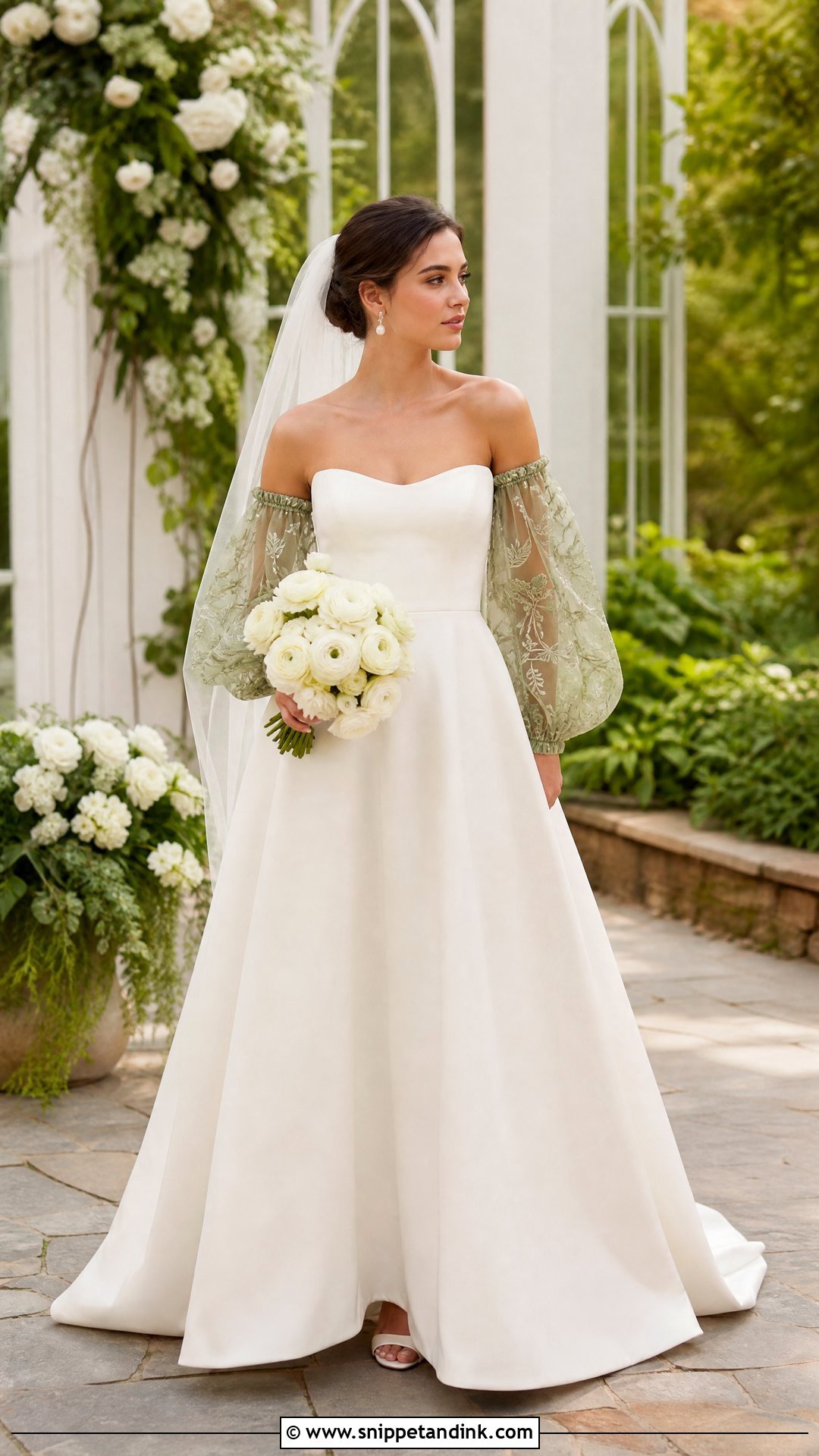
Detachable sleeves in sheer sage tulle, embroidered with vines, beads or scattered flowers, change a strapless ivory A-line into a covered ceremony gown and back again. Long, fitted sleeves need a real fitting of their own; ready-made ones are often loose at the wrist and twist when you move. Ivory heels, pearl earrings and a green gemstone ring keep it quiet, with a low chignon and plain veil. White ranunculus with a sage ribbon round the stems ties it together. The reception version, sleeveless and simple, is easier for dancing.
13. Green Floral Hem Wedding Dress
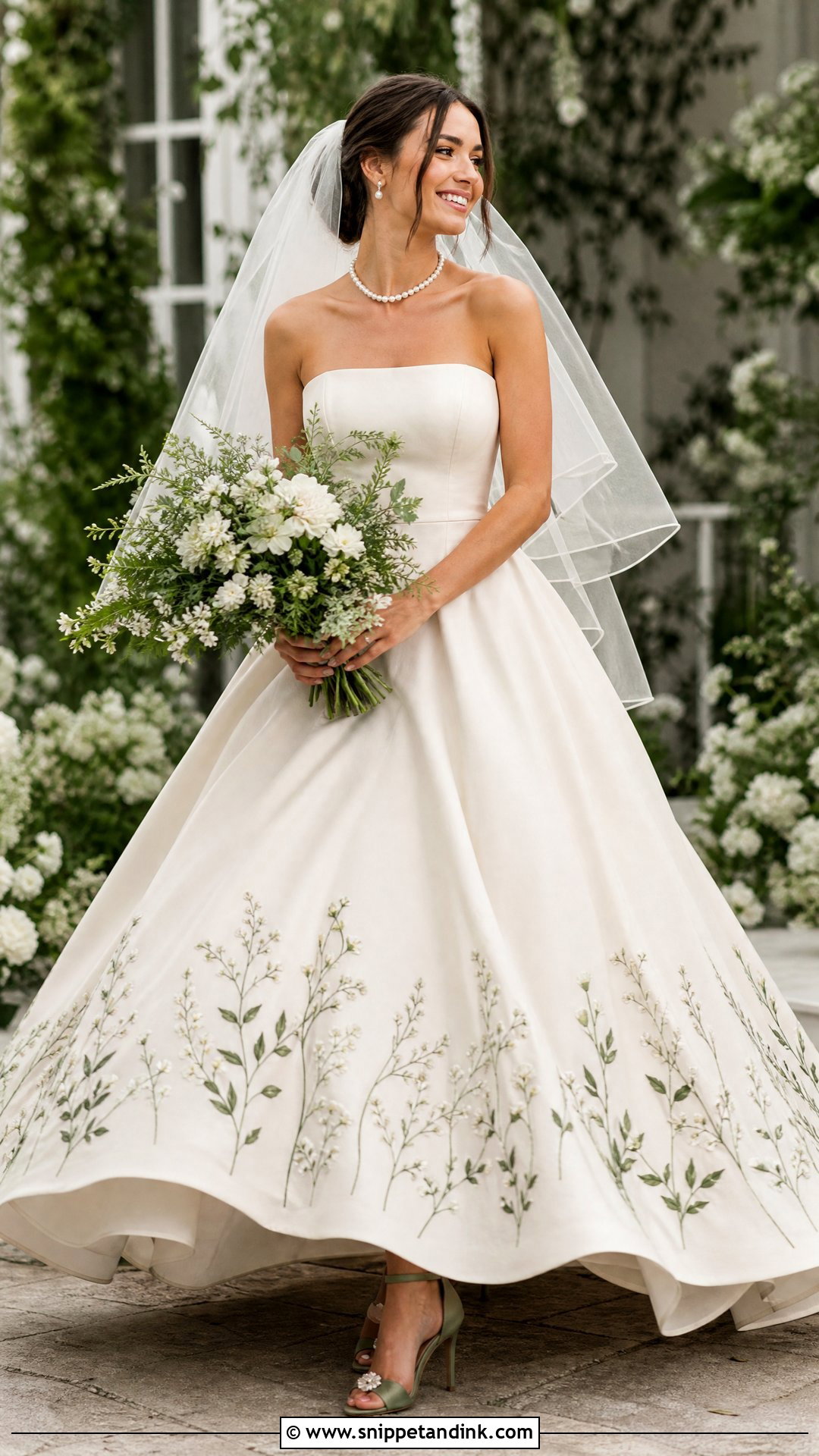
Colour at the hem suits brides who don’t want it near their face. Green stems, leaves and tiny white flowers around the bottom of an ivory ball gown with a clean strapless bodice draw the eye down to the skirt’s shape and catch the light as you walk. A decorated hem also picks up dirt first, so for outdoor ceremonies I’d plan a bustle or have someone lift it on grass. Emerald or sage heels peek out now and then. Pearl drops, a slim necklace, an elbow-length veil and a half-up style balance the volume. Mix several greens in the bouquet foliage.
14. Green Pearl Detail Wedding Dress
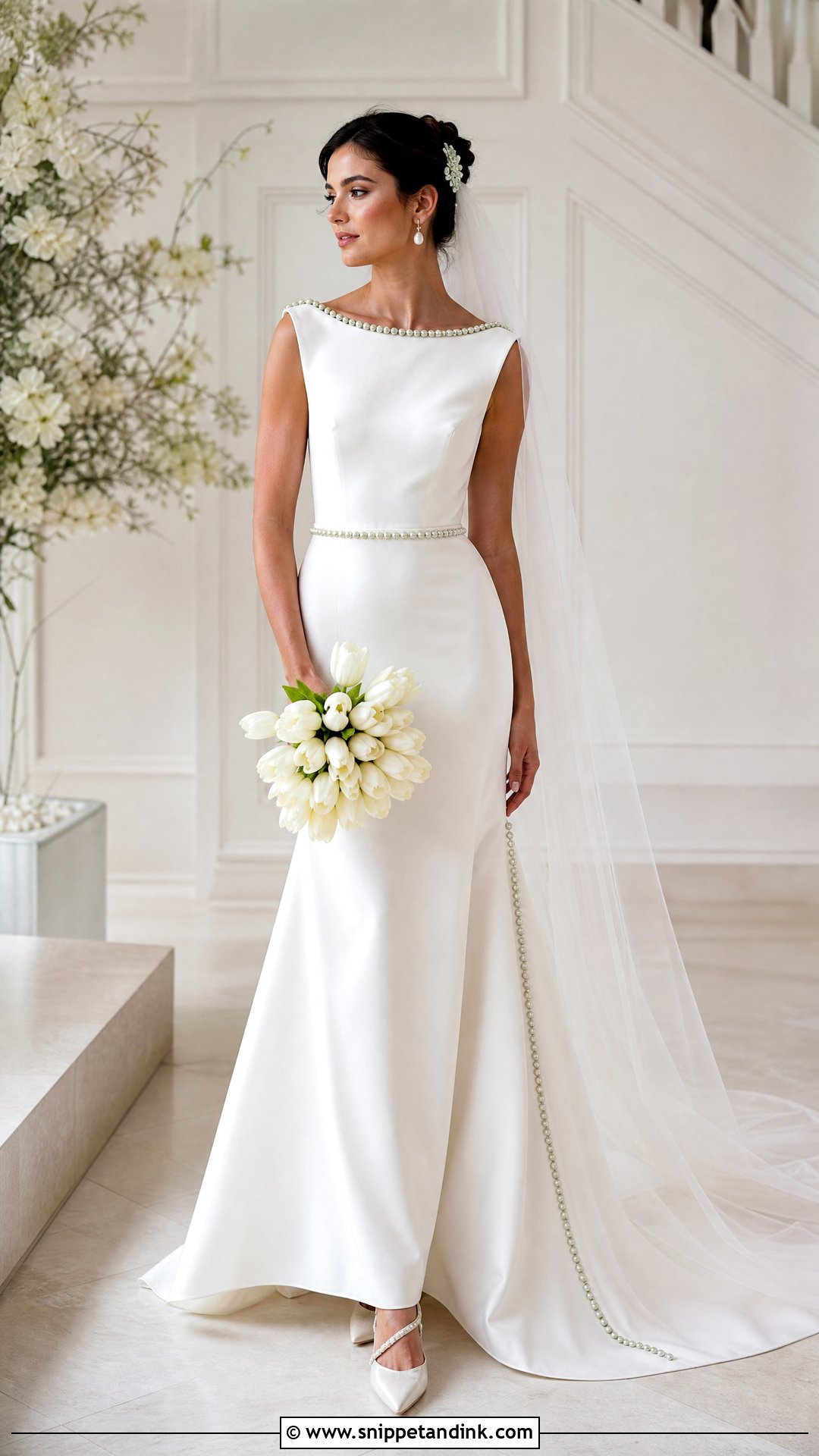
Pale green pearls are a quiet alternative to embroidery or coloured fabric. Hand-sewn sparingly along a bateau or square neckline, the waist and covered buttons of an ivory satin gown, they look intentional rather than busy. Coloured pearls are often dyed or coated, so I test one against a damp white cloth before the seamstress starts. Ivory pointed heels with tiny pearl accents, pearl studs and a sage stone hairpin are enough. A sheer cathedral veil and a smooth low bun keep the pearls the focus. White tulips or roses with pearl-headed pins in the ribbon finish it.
15. Moss Green Lace Overlay Wedding Dress
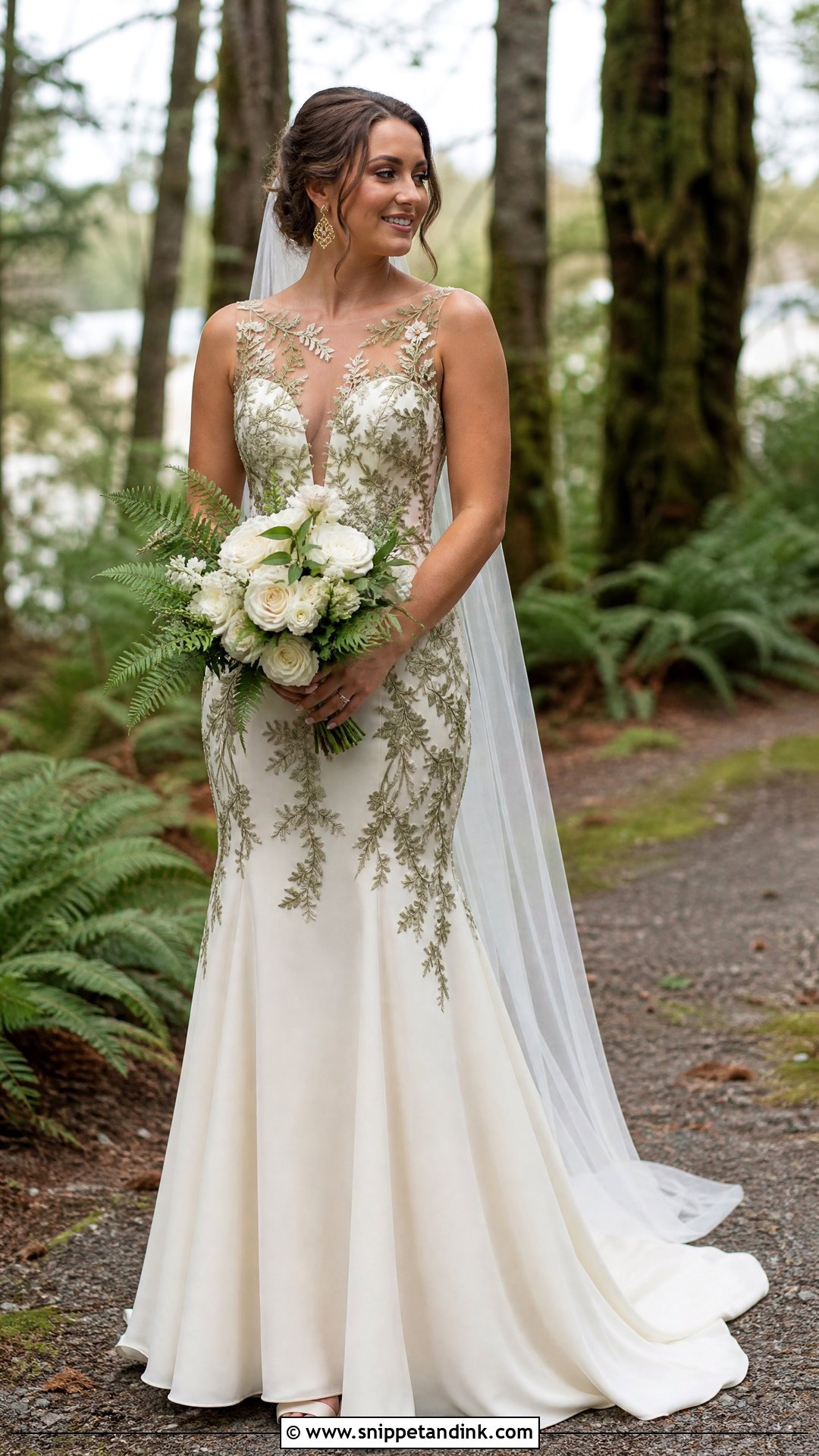
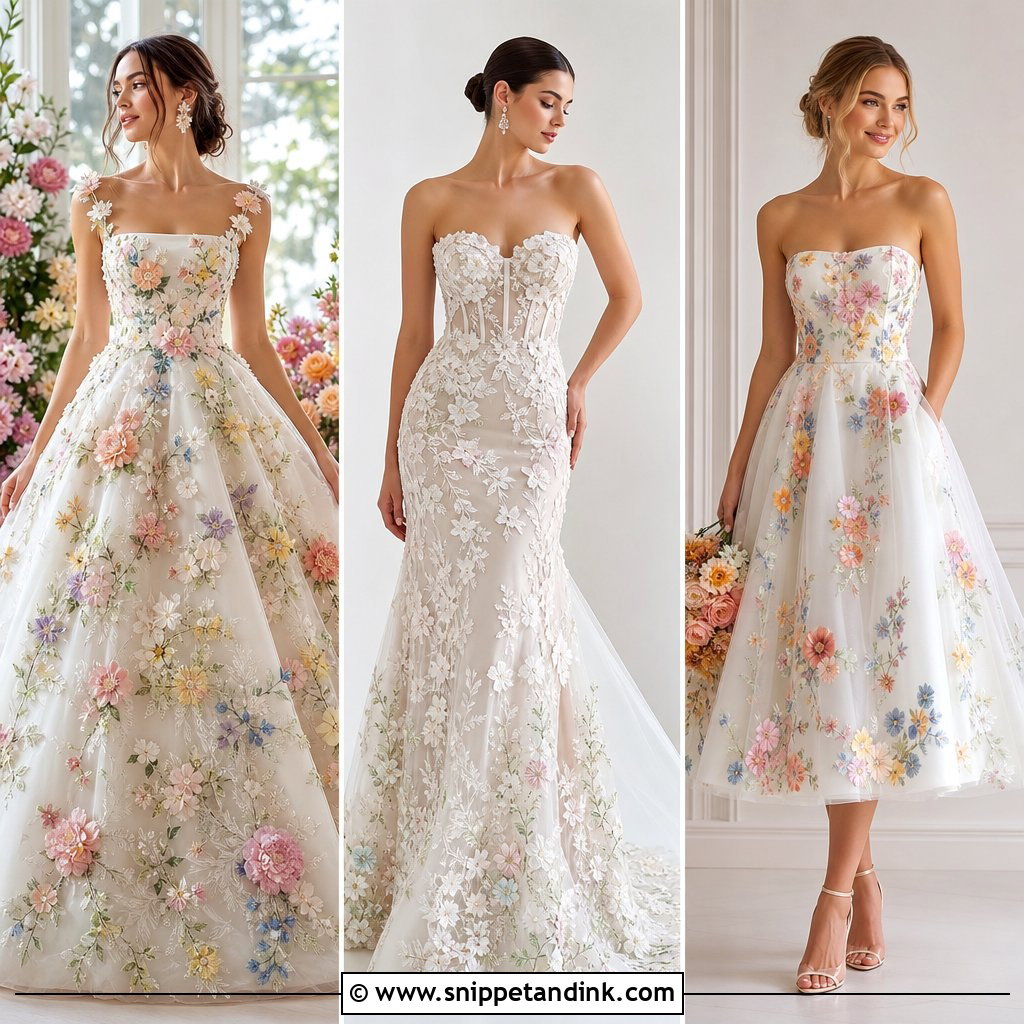
Moss is the warmest green on this list, and it gives ivory a slightly vintage depth. A sheer moss lace overlay on a fitted ivory lining, with leaves across the bodice and upper skirt, stays wearable with a soft V-neck, defined waist and gently flared skirt. Warm gold suits it better than silver; antique-style earrings and a delicate comb work well. Depending on the ground, wear ivory block heels or ankle boots. I’d cut a plain veil to end before the lace is most detailed. White garden roses, ferns and olive branches suit woodland and early autumn.
16. Green Watercolor Print Wedding Dress
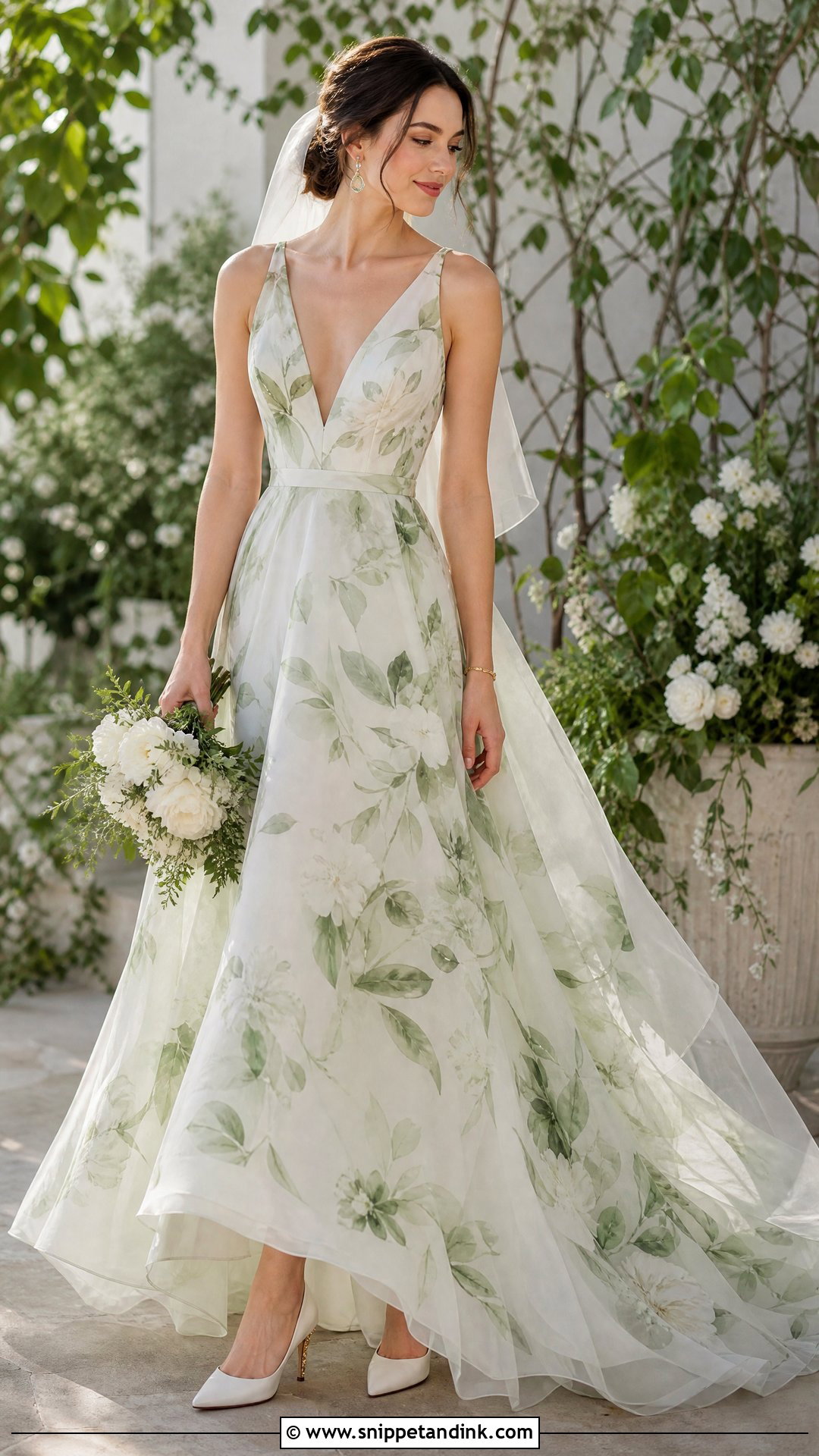
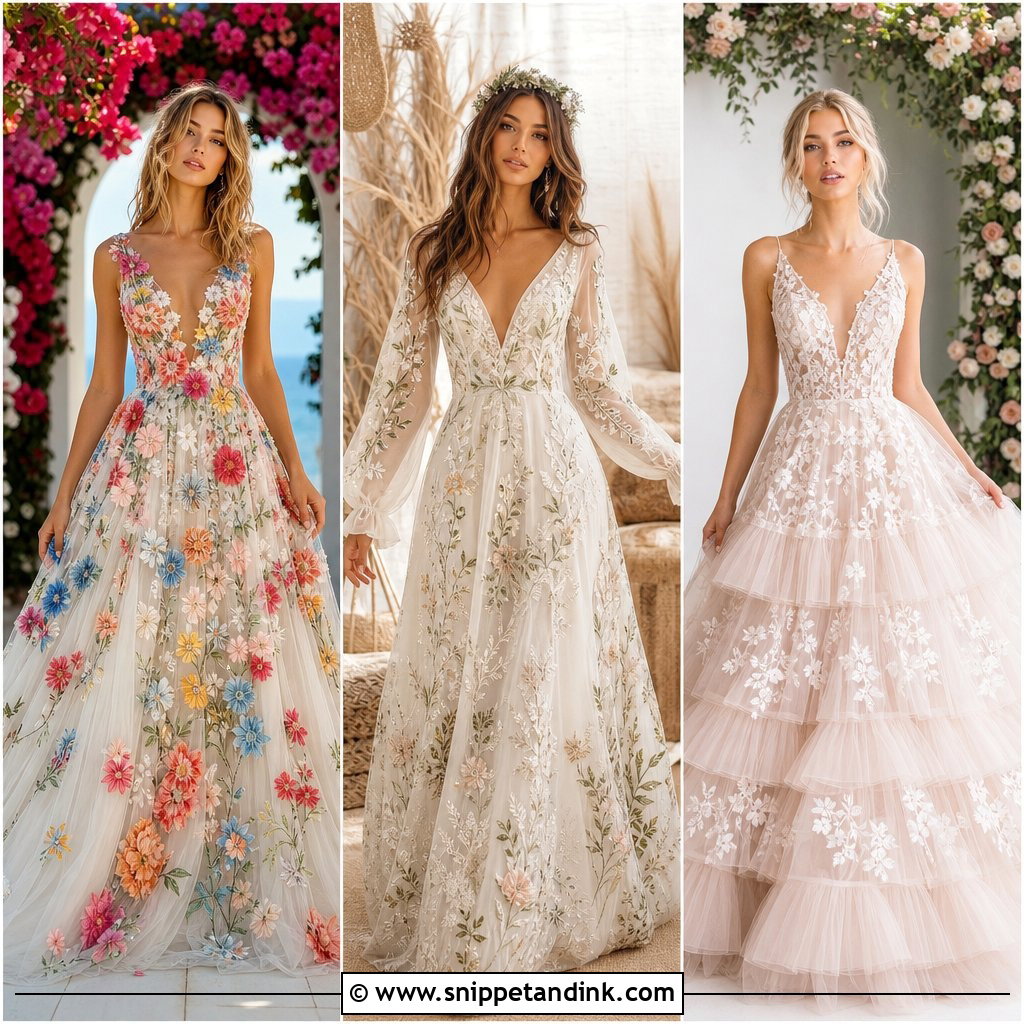
A watercolor botanical print on ivory organza, with translucent sage leaves, pale stems and small ivory or blush flowers, is the most painterly idea here. A fitted sleeveless bodice and full skirt show the print clearly. Prints get cut through at every seam, so a well-made gown matches the pattern where panels meet; check the side seams at your appointment. Ivory heels, light green gemstone earrings and a narrow gold bracelet suit it. A short plain veil or a slim headband won’t fight the print. Brushed waves or a textured bun and a simple white bouquet finish it.
17. Green Shoulder Flower Wedding Dress
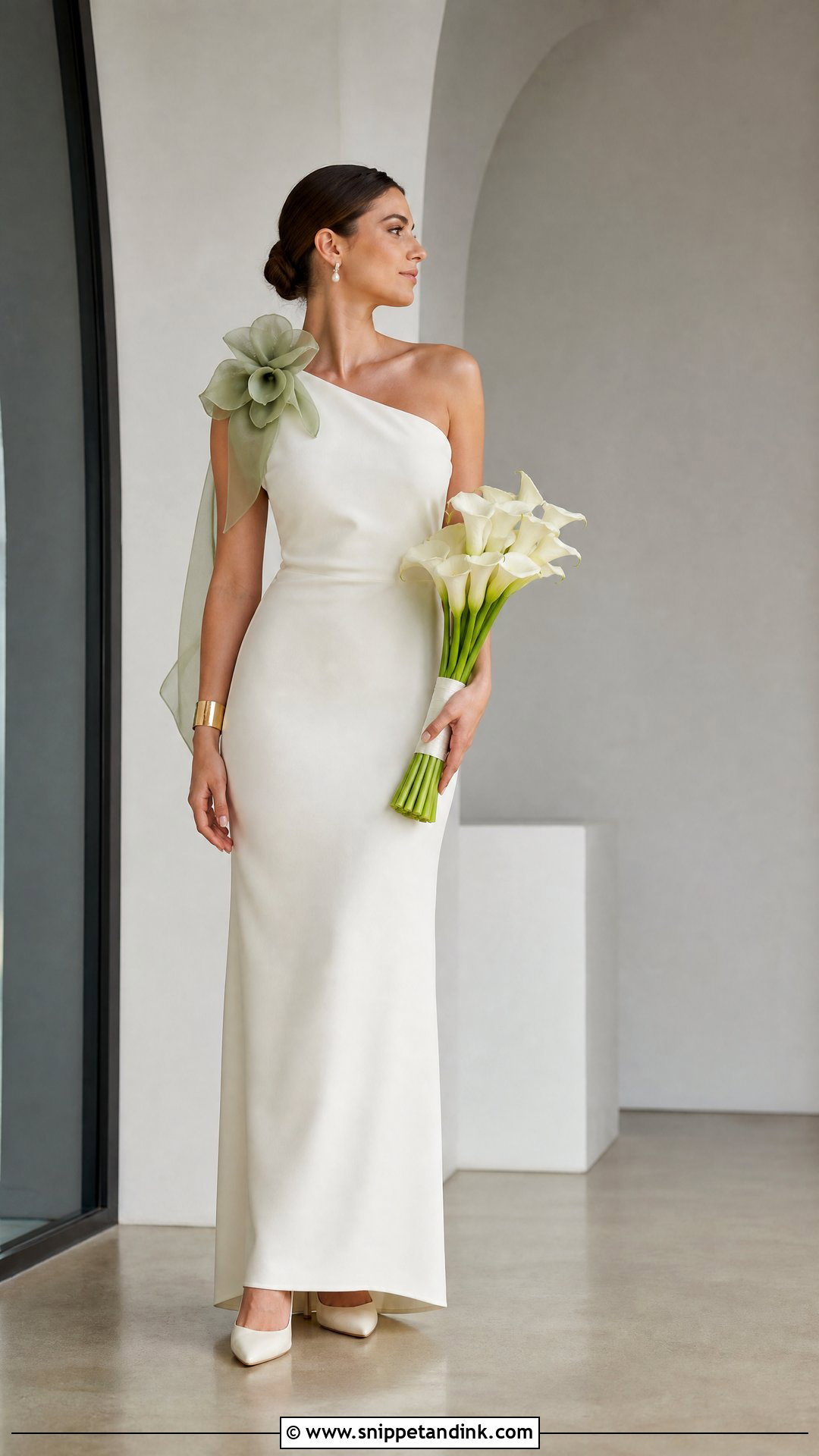
One sculpted sage organza flower where the neckline meets the shoulder of an ivory one-shoulder gown is all the decoration this dress needs. A few small leaves can trail onto the bodice. Organza flowers crush in garment bags, so I transport the gown with tissue packed inside the petals and reshape them gently by hand before dressing. Ivory heels, a gold cuff and tiny pearl earrings stay out of its way. Skip any veil that covers the flower; a sleek bun and one hairpin are better. Compact callas keep shapes from competing.
18. Green Belt Wedding Dress
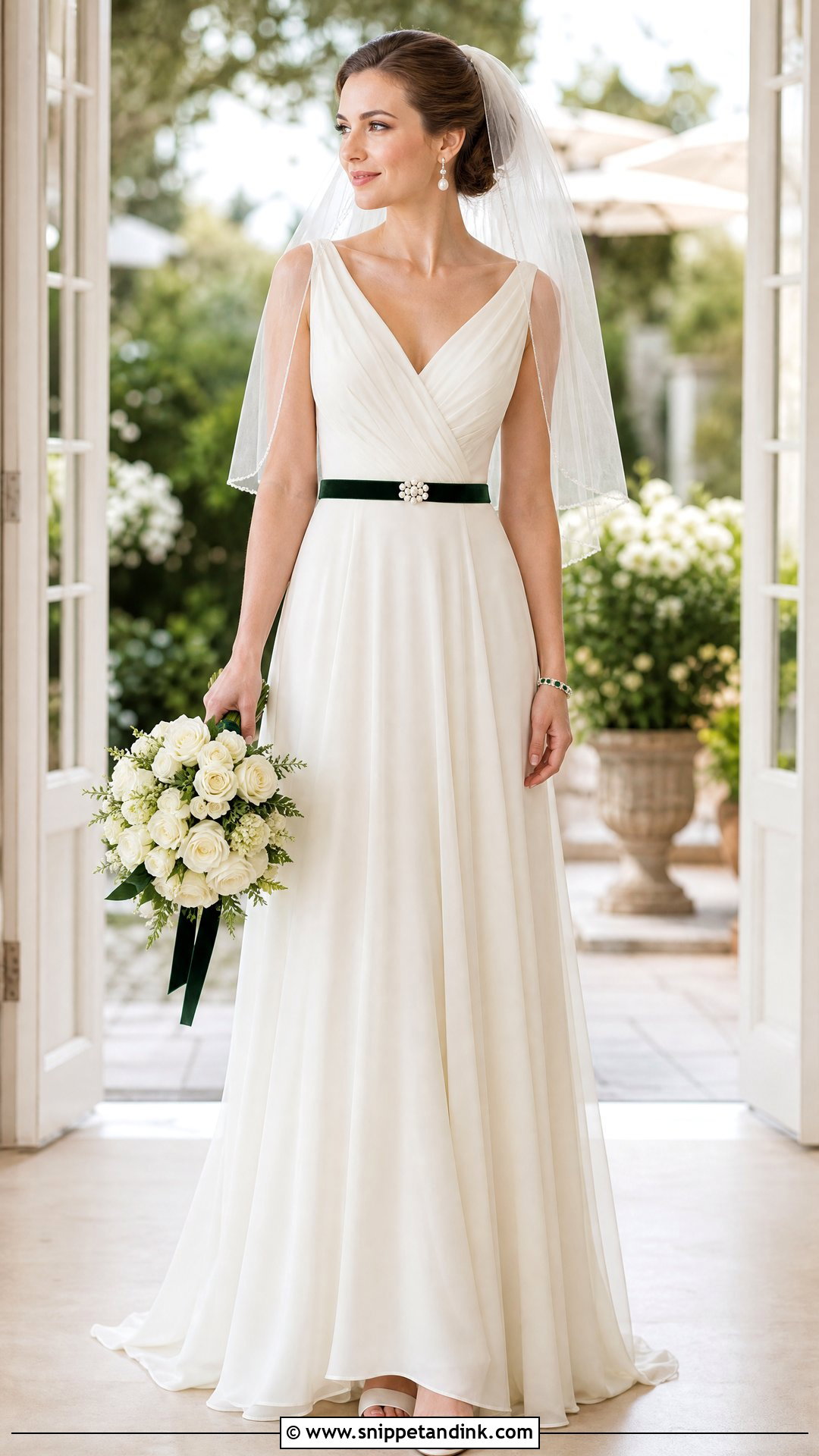
A slim green belt gives a flowing ivory chiffon or lace A-line some structure and ties the dress to your colour palette. Narrow emerald velvet or sage satin with a small pearl clasp or botanical buckle looks bridal rather than everyday. This is my go-to when a bride wants green on a gown she already owns, because a belt needs no alterations. Ivory heels, pearl drops, a subtle green bracelet, a fingertip veil and a half-up style frame the face. White roses tied with a ribbon in the belt’s shade repeat it once.
19. Green Veil Wedding Dress
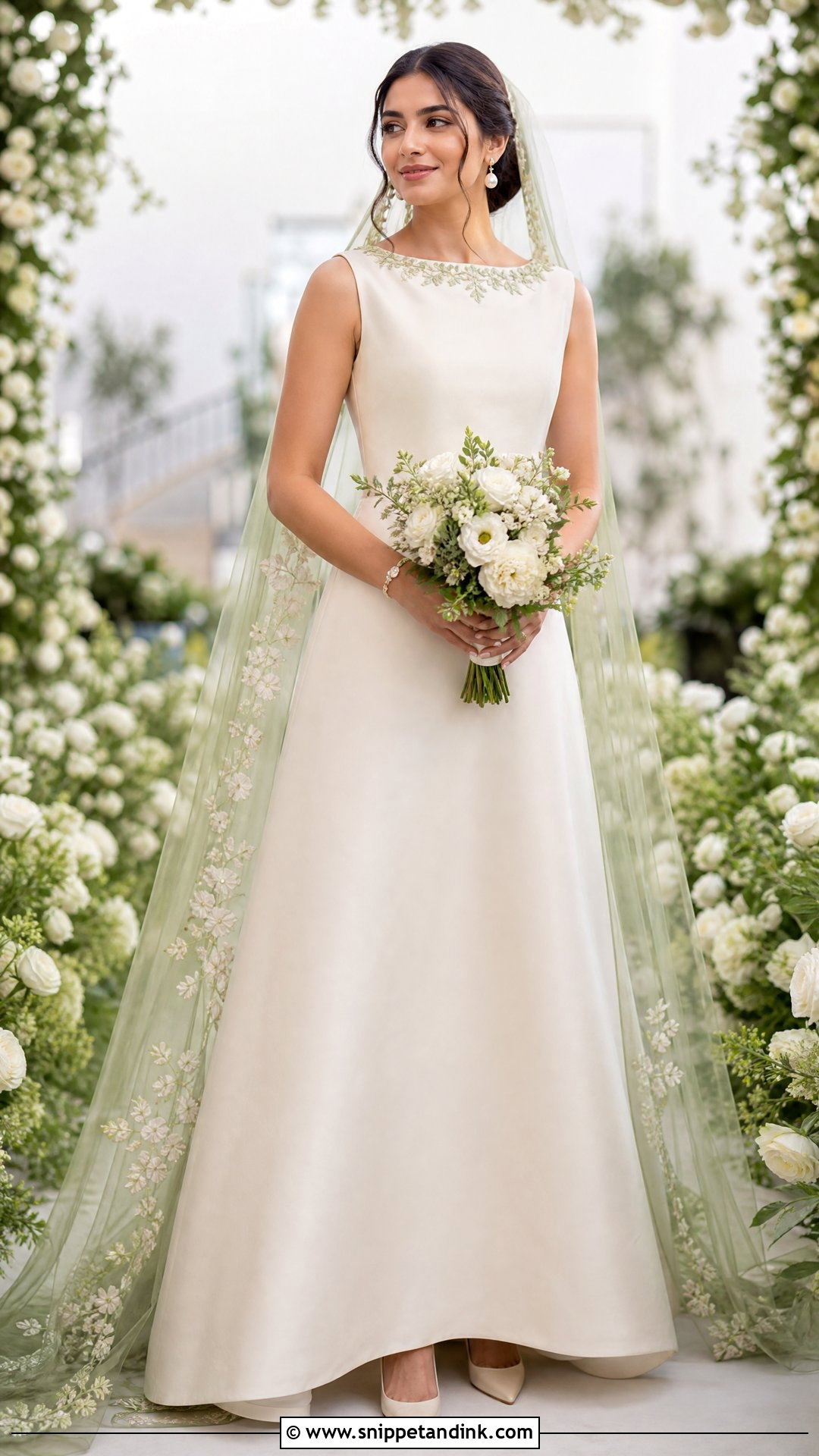
A sage cathedral veil bordered with ivory appliqués can carry almost all the colour, so the gown only needs a hint. Pair it with a simple ivory slip or A-line with pale sage embroidery at the neckline or waist. Because the veil is the strongest element, I keep shoes ivory and jewellery to pearl studs and a gold bracelet. Coloured tulle is heavier on the head than it looks in photos at cathedral length, so a low bun with the comb anchored into a firm base is essential. An airy bouquet of white flowers and eucalyptus suits it, and removing the veil gives you a clean reception look.

20. Green Lining Wedding Dress
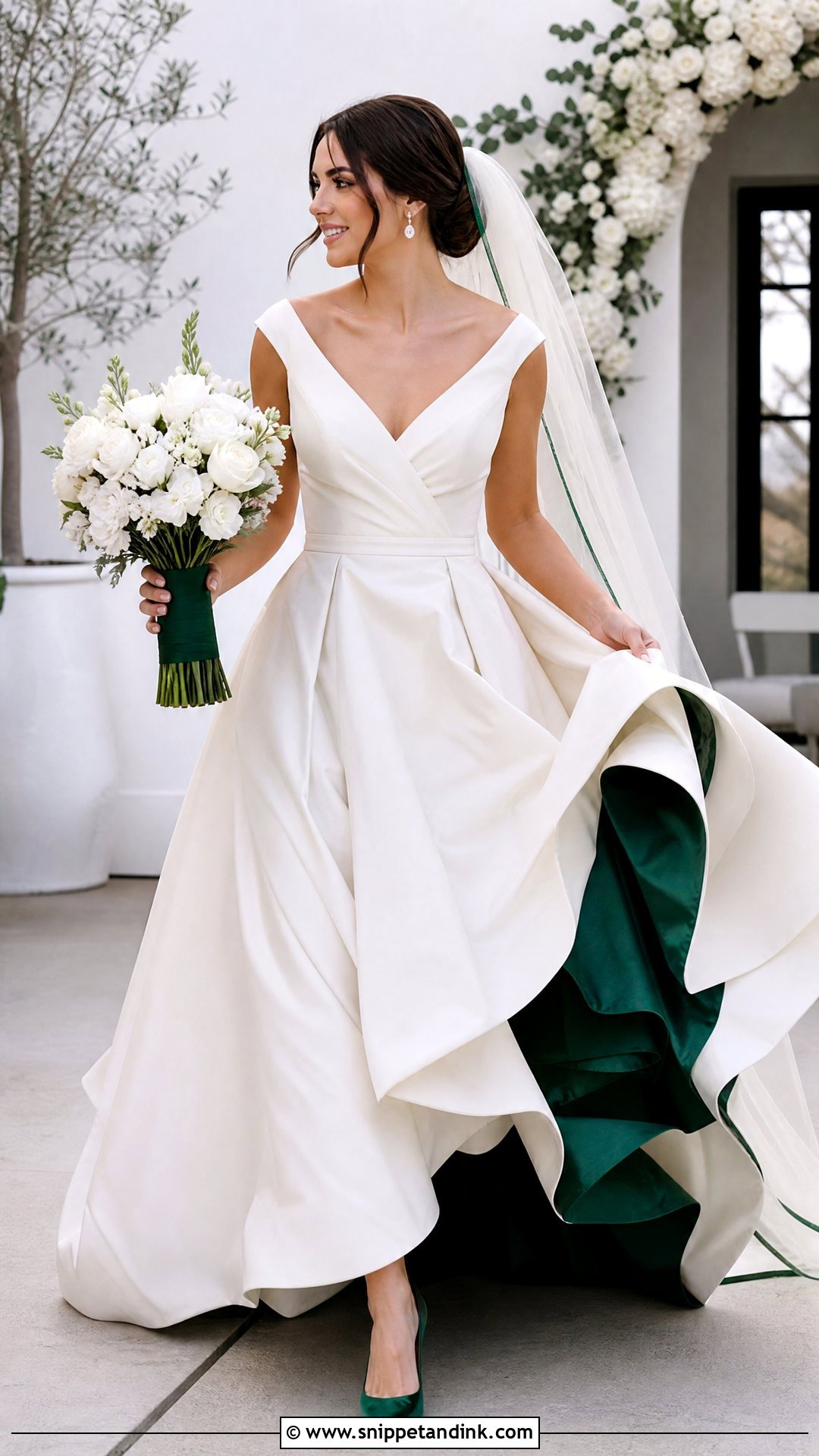
Hidden colour is my favourite surprise for a bride who wants something personal. A sage or emerald lining beneath an ivory high-low, wrap or layered skirt shows when you walk, dance or lift the train. Light ivory fabrics can let a dark lining show through as a shadow, so check the skirt in daylight before choosing emerald. Green pointed heels connect top to toe. Pearl earrings, a simple bracelet and an ivory veil with a narrow green edge suit it, with a polished ponytail or low bun. White flowers tied in matching green ribbon finish a gown that looks traditional until it moves.
After the Wedding: Cleaning a Gown That Isn’t All White
Coloured detail changes how a gown should be cleaned and stored, and it’s the part brides tend to forget once the party is over.
- Tell the cleaner exactly what the green is made of: thread embroidery, dyed tulle, velvet, ribbon, coloured pearls or a lining. Some dyes run in solvent or water, and a responsible cleaner will test a hidden spot first.
- Don’t treat stains yourself. Rubbing near green embroidery can lift colour onto the ivory around it, and that halo is very hard to remove.
- Grass and soil on a hem are best cleaned soon after the day. The longer they sit, especially near coloured stitching, the more likely a faint mark stays.
- Remove belts, sashes, capes and detachable sleeves before storage and store them separately in acid-free tissue. Dyed fabric pressed against ivory for years can transfer colour.
- Keep the gown out of light. Sage and mint fade faster than ivory yellows, and a wardrobe by a window will show it within a season or two.
Let the Green Sit Where You Want Eyes to Go
Green detail works when it has a clear job. Embroidered vines and sage ribbons add softness, while emerald bows and appliqués add punch; both can be as quiet or as loud as you like. Think about how your chosen green behaves on the gown’s fabric, in your season and in the venue’s light, and decide where you want people to look first. Then repeat the colour once or twice in shoes, flowers, jewellery or hair, and leave the rest ivory. A traditional gown or an expressive botanical one can both carry it, as long as it still fits comfortably and feels like you.
You'll Like These Ideas:




Leave a Reply