
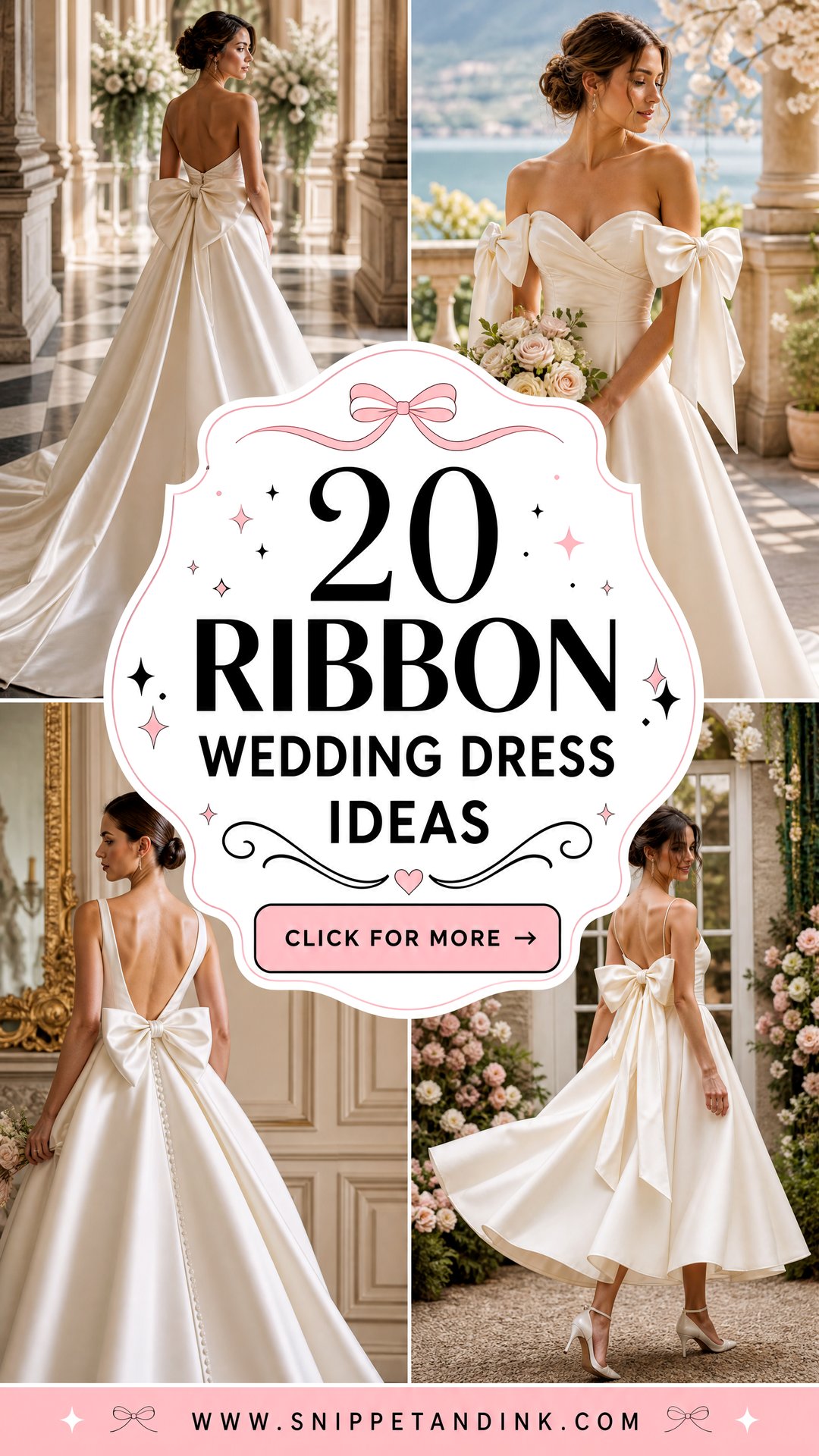
A ribbon is one of the cheapest details on a wedding dress and one of the most noticeable. A bow, a sash, a tie or a pair of ribbon straps can make the same gown read romantic, playful or sharply modern. The looks below cover ballrooms, gardens, small venues and courthouse ceremonies, each with shoes, jewellery, a veil and other accessories so you can see the full outfit. There are ideas for minimalists and for vintage, colorful, and statement-loving brides. In fittings I spend more time on where a ribbon sits and how it’s fixed than on its colour, because placement decides whether it flatters the gown or fights it. From a thin waist tie to a huge bow with sweeping tails, that’s what I’ll keep coming back to.
Double-Faced Satin, Grosgrain or Silk? Each Ties a Different Bow
The same bow shape looks completely different depending on the ribbon, and most disappointment with ribbon details comes from picking the wrong one. When I source a sash or bow, I look at four things.
- Double-faced or single-faced satin. Single-faced satin is shiny on one side and dull on the other. Every time a tail twists, the dull side shows. For bows and long tails I only use double-faced.
- Grosgrain. The ribbed weave grips fabric and holds a crisp, upright loop. It suits structured dresses and stays put on slippery chiffon.
- Silk satin or charmeuse ribbon. Drapes softly and looks luxurious, but it slides and droops, so it needs stitching rather than relying on the knot.
- Velvet ribbon. Rich in winter and on contrast sashes, but it crushes and marks easily, so keep it narrow.
Width changes proportion too. A narrow ribbon of a couple of centimetres defines a waist; a wide one acts like a belt and shortens the torso. And check the ends: synthetic ribbon can be heat-sealed so it won’t fray, while silk ends should be cut at a sharp angle or into a V and finished with a touch of fray-stop.
1. Satin Ball Gown Ribbon Wedding Dress
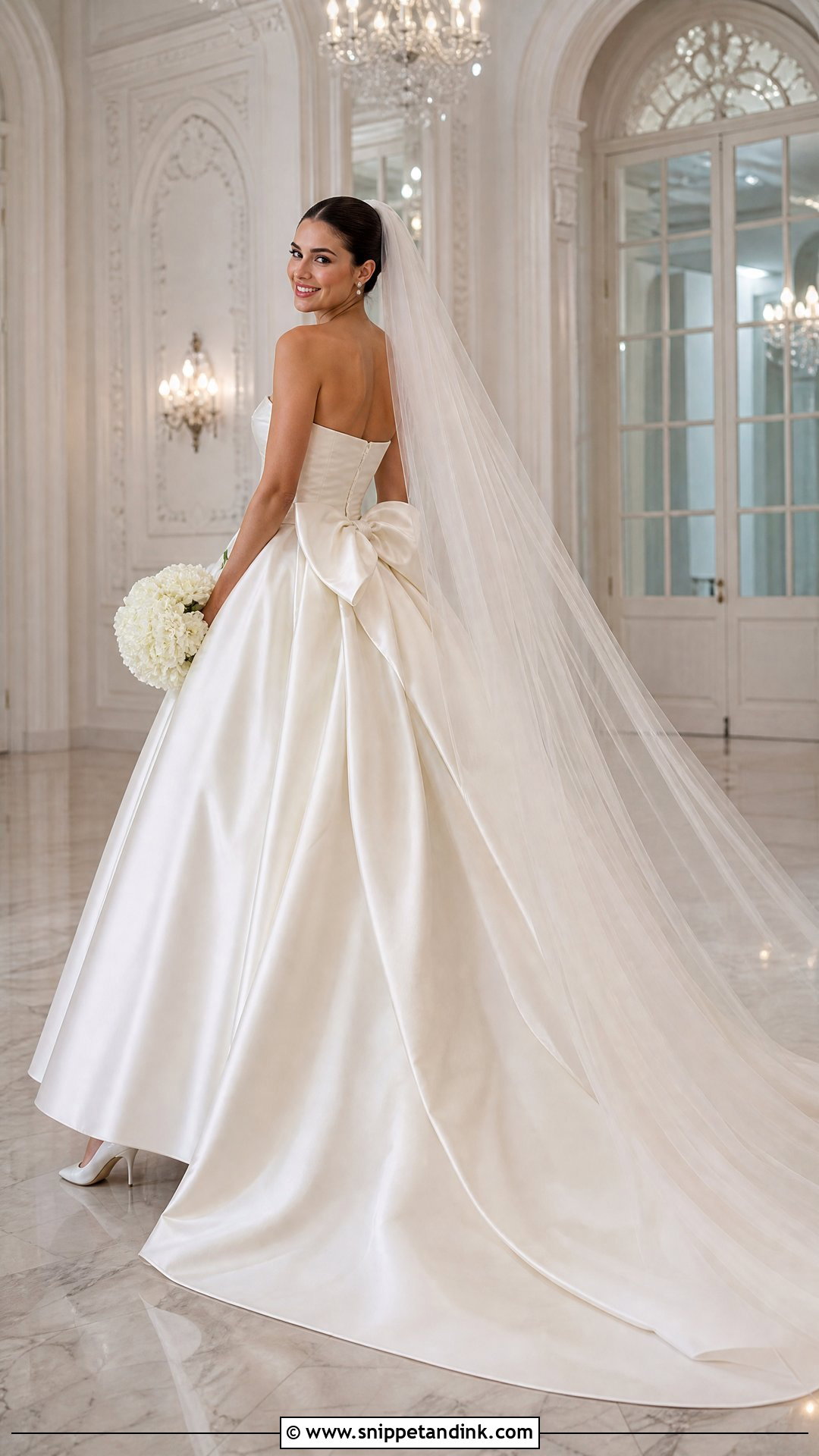
An oversized bow on a satin ball gown is pure formality, and it needs a skirt with enough body to carry it. A structured strapless bodice over a full skirt that holds its shape is the base. I set the bow at the back waist so the tails fall over the skirt without covering the train. Pearl drops, a smooth cathedral veil and pointed satin pumps keep it polished, with a compact bouquet so the front doesn’t get busy. Grand indoor venues and hotel ballrooms suit it. Ask your seamstress to stitch the bow on at several points and lightly stiffen the loops, or they’ll flatten after the first hour.
2. Detachable Bow Train Wedding Dress
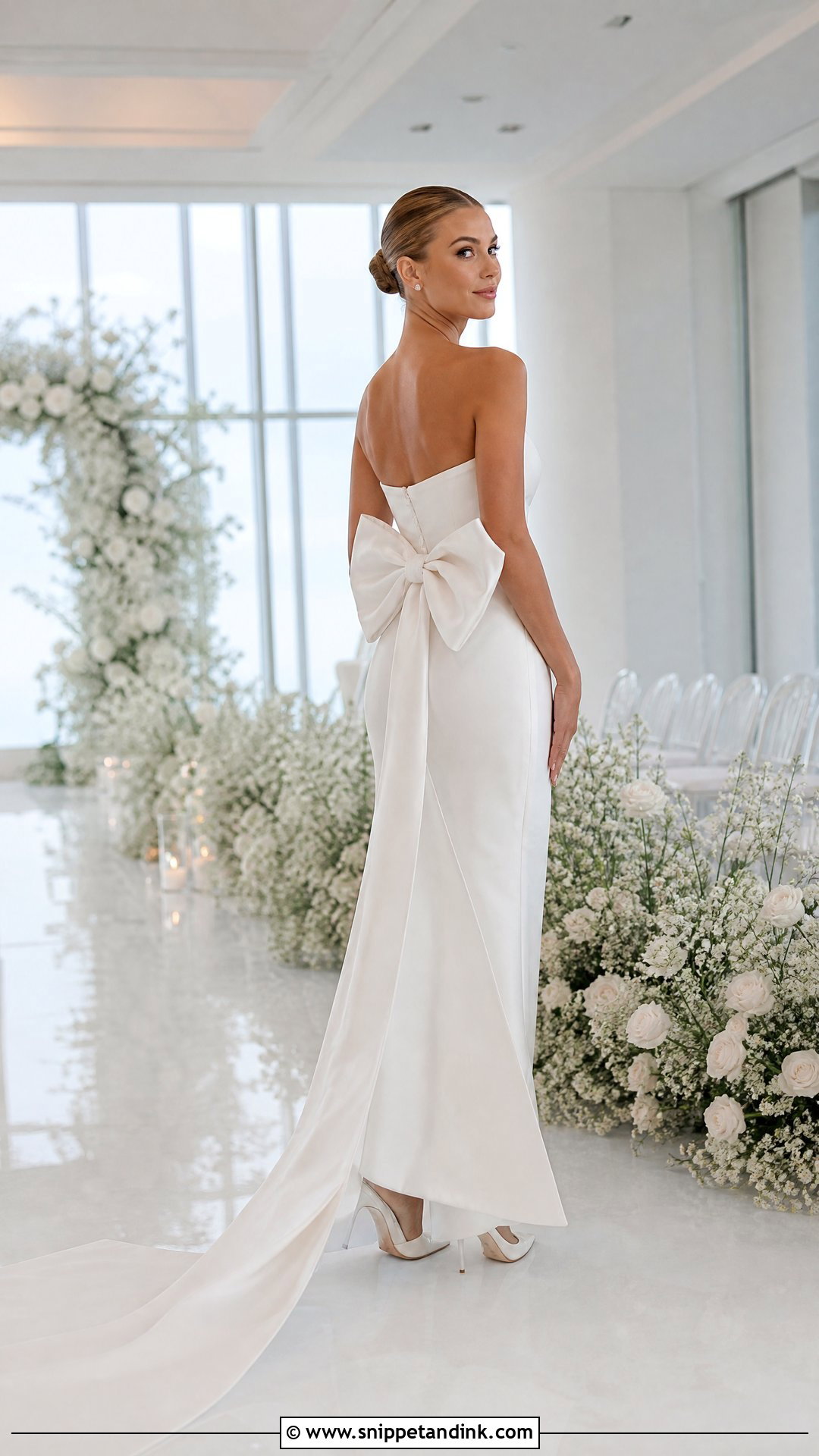
A detachable ribbon bow with long tails gives a plain dress two personalities. Start with a fitted strapless column in silk, satin or mikado, and fix the bow at the lower back so the panels act like a dramatic train for the ceremony. Take it off before the reception and you can walk and dance freely. Sleek pointed heels, crystal studs and a fingertip veil keep the back clear, and a low bun shows the bow. The attachment is the part I test hardest: hooks or snaps sewn into the waist seam hold far better than anything clipped to the fabric surface, which drags and creases the dress.
3. A-Line Ribbon Waist Wedding Dress
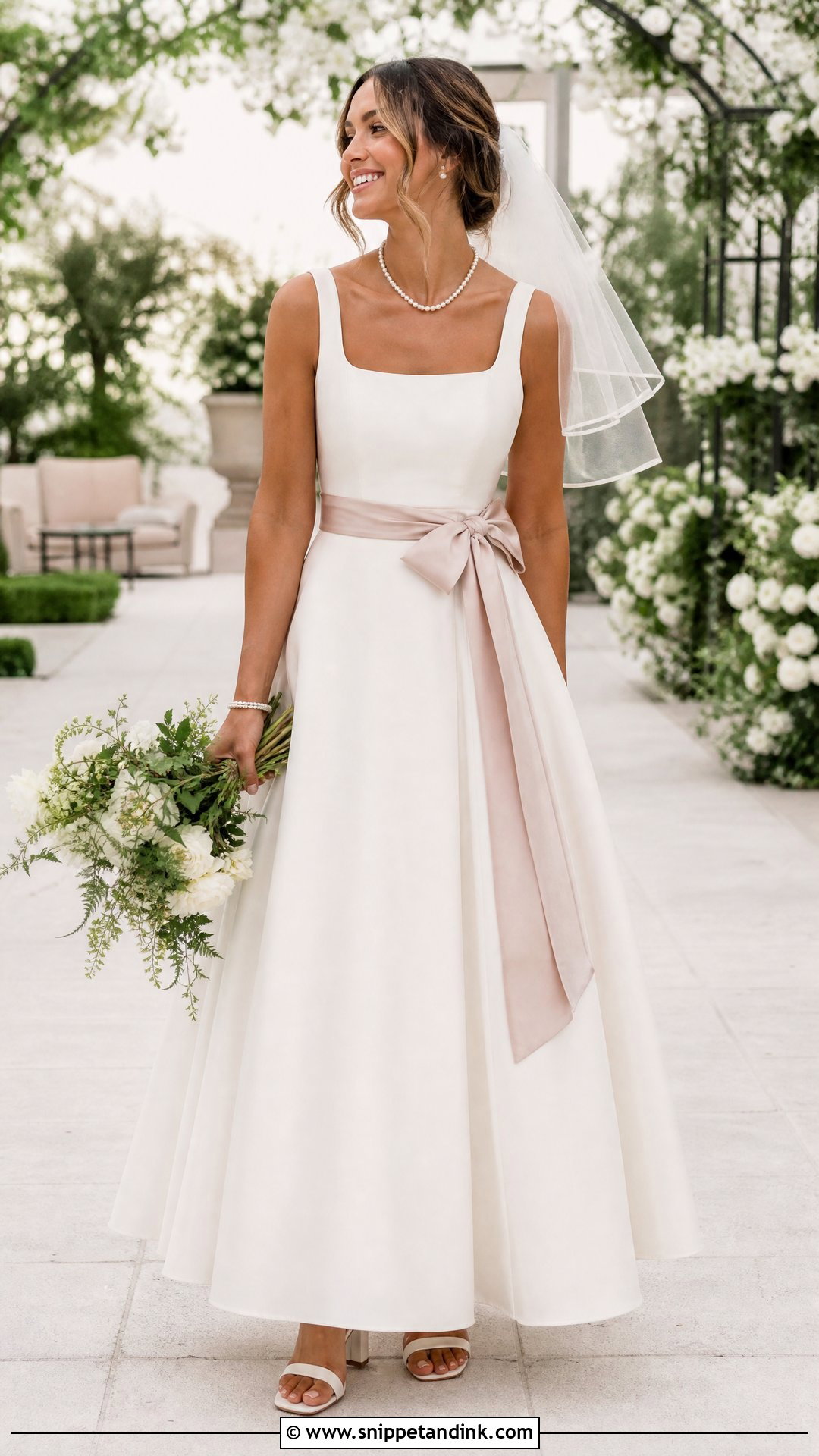
A sash at the waist is the gentlest way to add ribbon, and on an A-line it gives the waist a clear line without any tailoring. Choose an ivory gown with a fitted bodice and flowing skirt, and a wide silk ribbon tied in a neat back bow. A ribbon in the same shade almost disappears into the dress; pale blush or champagne gives soft contrast. Block-heel sandals, small pearl pieces and a light tulle veil, with a loose updo or soft waves. Gardens, estates and traditional churches all suit it, as does a loose bouquet of seasonal white flowers. On a short torso I’d keep the sash narrow, since a wide band can cut the body in half.
4. Ribbon Strap Wedding Dress
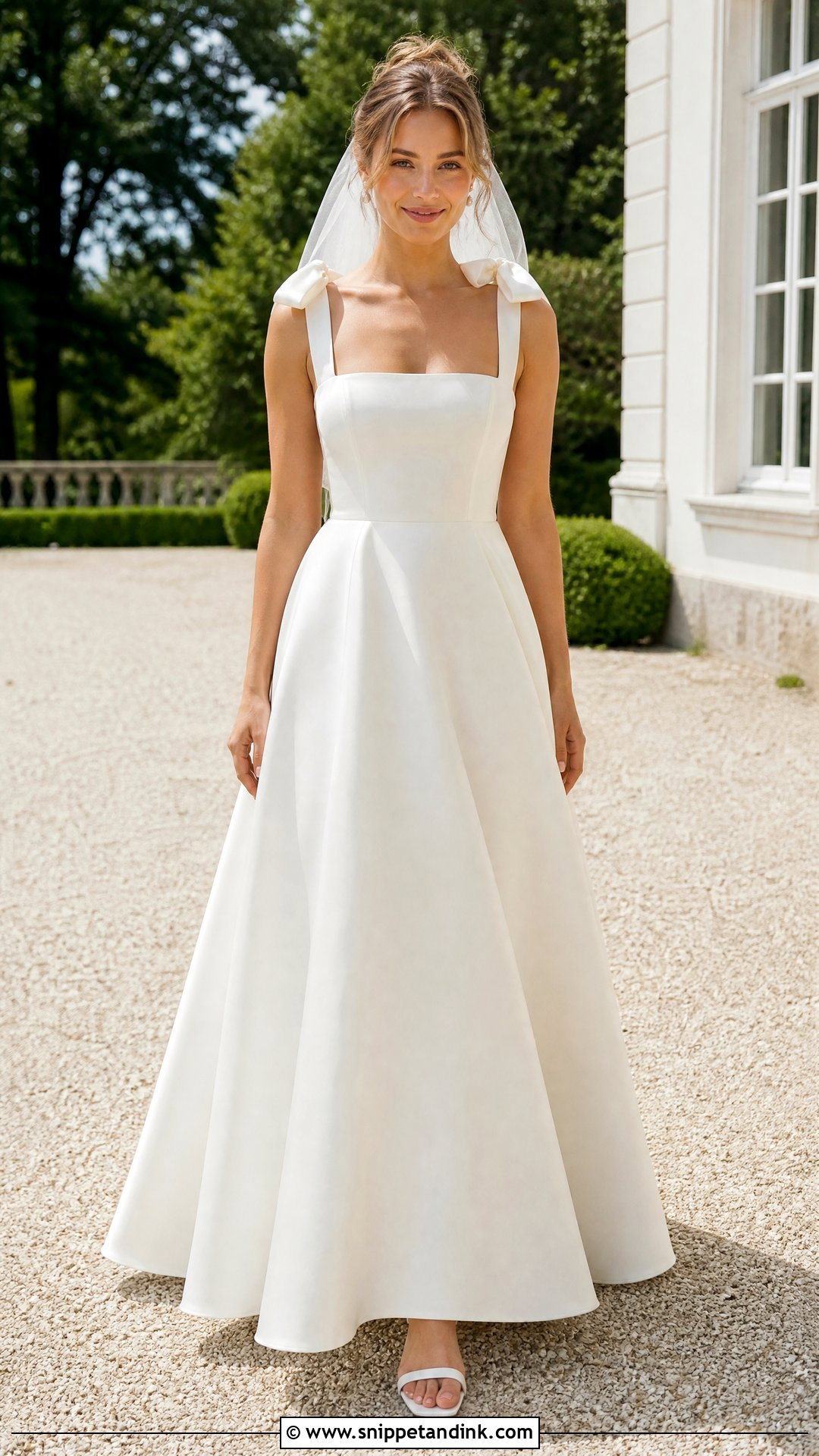
Tied ribbon straps are adjustable, which makes them kinder to wear than fixed straps on a sweet, simple gown. Look for a square-neck or sweetheart dress with wide satin straps tied in bows at the shoulders, over a flowing A-line skirt. Pearl earrings, a fine bracelet and low slingbacks finish it; skip the necklace so the bows have room. Pin a short veil under a relaxed bun so the shoulders stay visible. Spring and summer weddings suit it. Ribbon bows loosen as you move, so once the length is right I have the knot hand-tacked from the inside, invisible but secure.
5. Off-Shoulder Ribbon Sleeve Wedding Dress
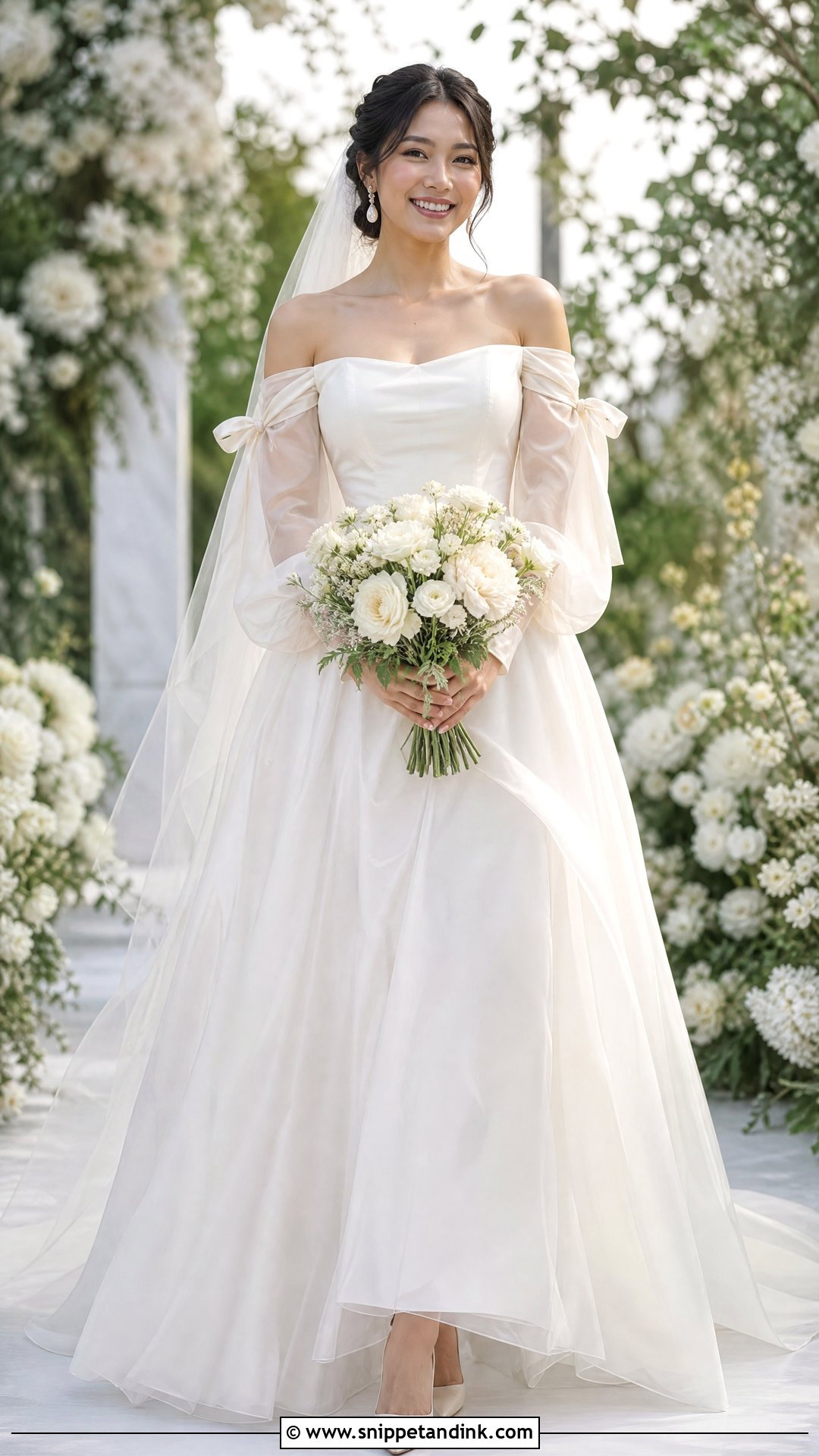
Off-shoulder sleeves tied with ribbon look soft and romantic, but they’re the most restrictive style in this list. A fitted bodice with tulle or organza sleeves gathered just above the elbow, held with small bows, can echo a matching tie at the back waist. Teardrop earrings, a simple veil and closed ivory satin heels, with a curled low bun that leaves the shoulders bare. Gardens, historic buildings and formal rooms all suit it. Raise your arms, hug someone and sit down at every fitting. If the sleeves pin your arms to your sides, a tailor can add elastic inside the band or lift the sleeve slightly.
6. Corset Back Ribbon Wedding Dress
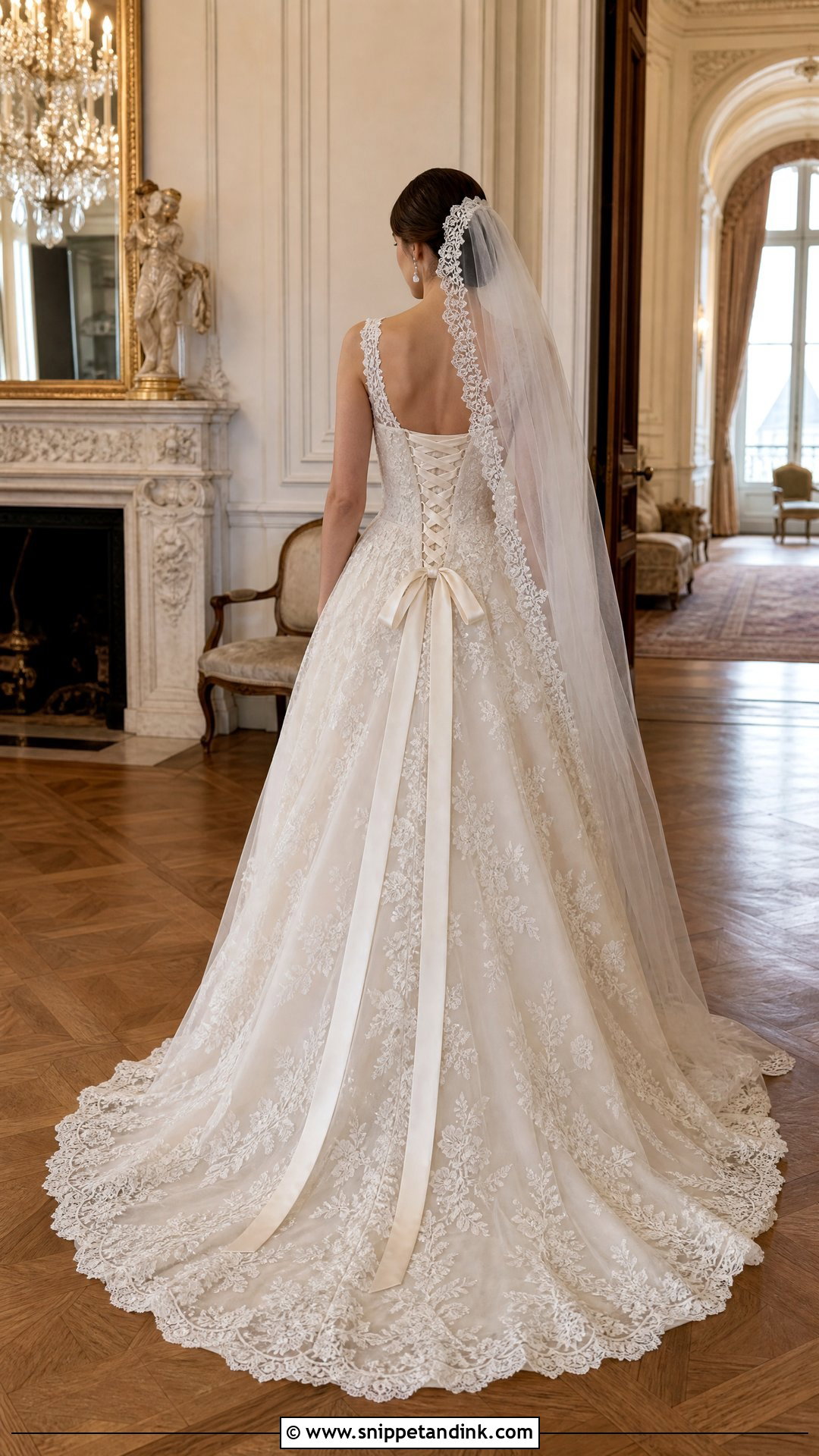
A ribbon-laced corset back has a practical advantage over a zip: it gives a little flexibility if your size shifts in the last weeks. A lace or brocade dress with a structured bodice and an A-line or fit-and-flare skirt is the base, and wide ivory ribbon looks softer than thin cord lacing, with long ends tied at the lower back. Lace-covered pumps, pearl studs and a lace-edged veil, with a side-parted updo so the back shows. It doesn’t replace alterations, though. Teach one bridesmaid to lace it from the top down, pulling each crossing evenly; uneven tension twists the ribbon and makes the back panels sit crooked.
7. Black Ribbon Wedding Dress
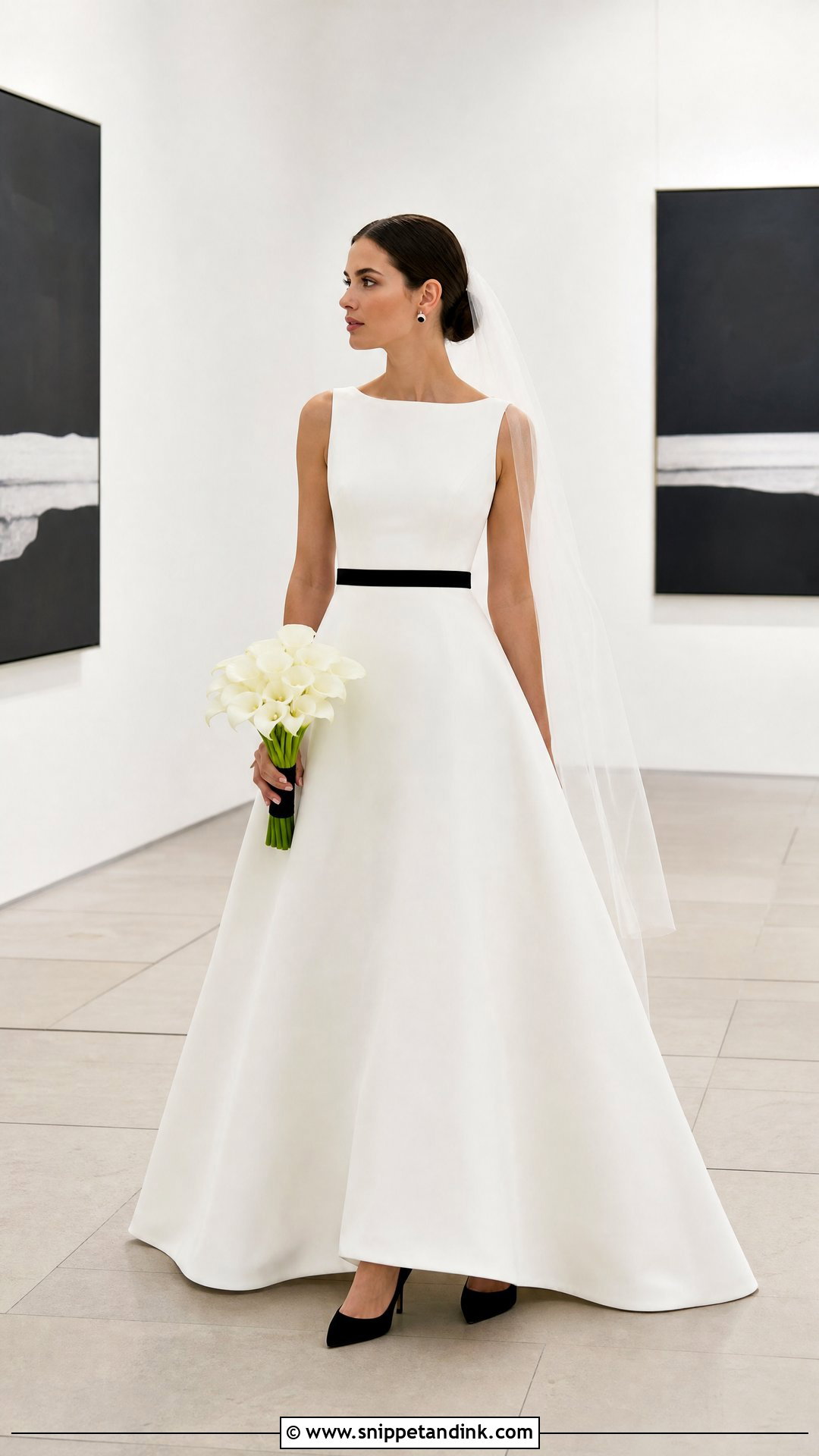
A black ribbon on a white dress is the most graphic detail here, and it suits modern galleries, city venues and black-and-white receptions. A clean strapless or square-neck A-line with a narrow black velvet or satin ribbon at the natural waist, tied in a compact bow at the back rather than a big one. Black pointed pumps, small onyx earrings, a structured white bouquet and a plain ivory veil keep it clearly bridal. I always test black ribbon for dye transfer by rubbing it on a damp white cloth, because a little sweat or rain can leave a grey mark on white satin. A sewn-in sash sits straighter than a loosely wrapped one.
8. Blue Ribbon Wedding Dress
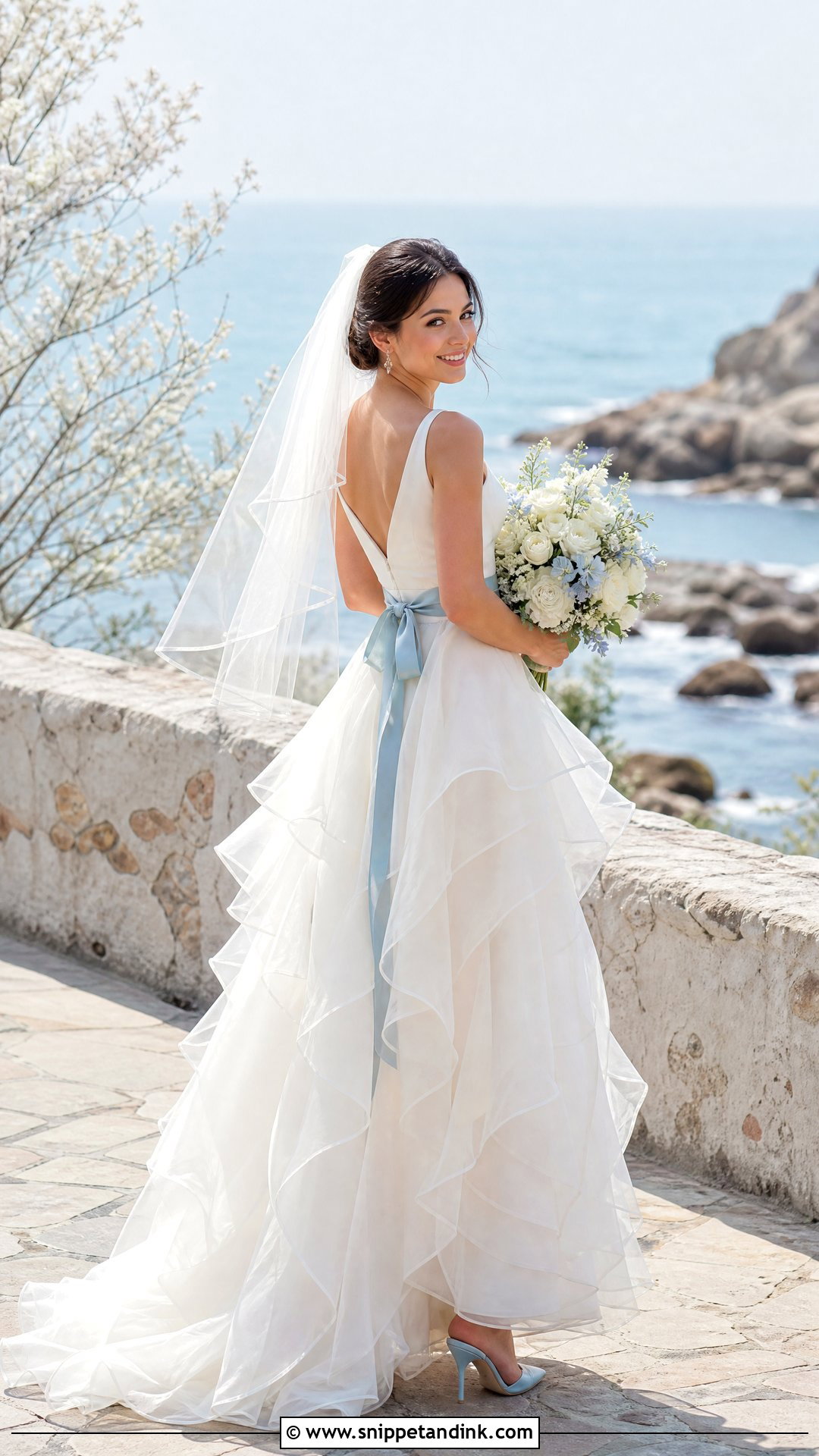
Pale blue ribbon is a quiet way to wear colour, and it doubles as something blue. An ivory tulle or organza gown with a fitted bodice and soft layered skirt, with powder-blue silk around the waist, a small back bow and medium tails. Silver earrings, light blue heels and a sheer fingertip veil, plus a white bouquet with small blue accents. Coastal, garden and spring weddings suit it. Blues vary wildly, from grey-blue to almost lilac, so I carry a ribbon offcut when shopping for shoes. Keep the ribbon muted; a bright blue pulls all the attention to your waist.
9. Pearl Ribbon Wedding Dress
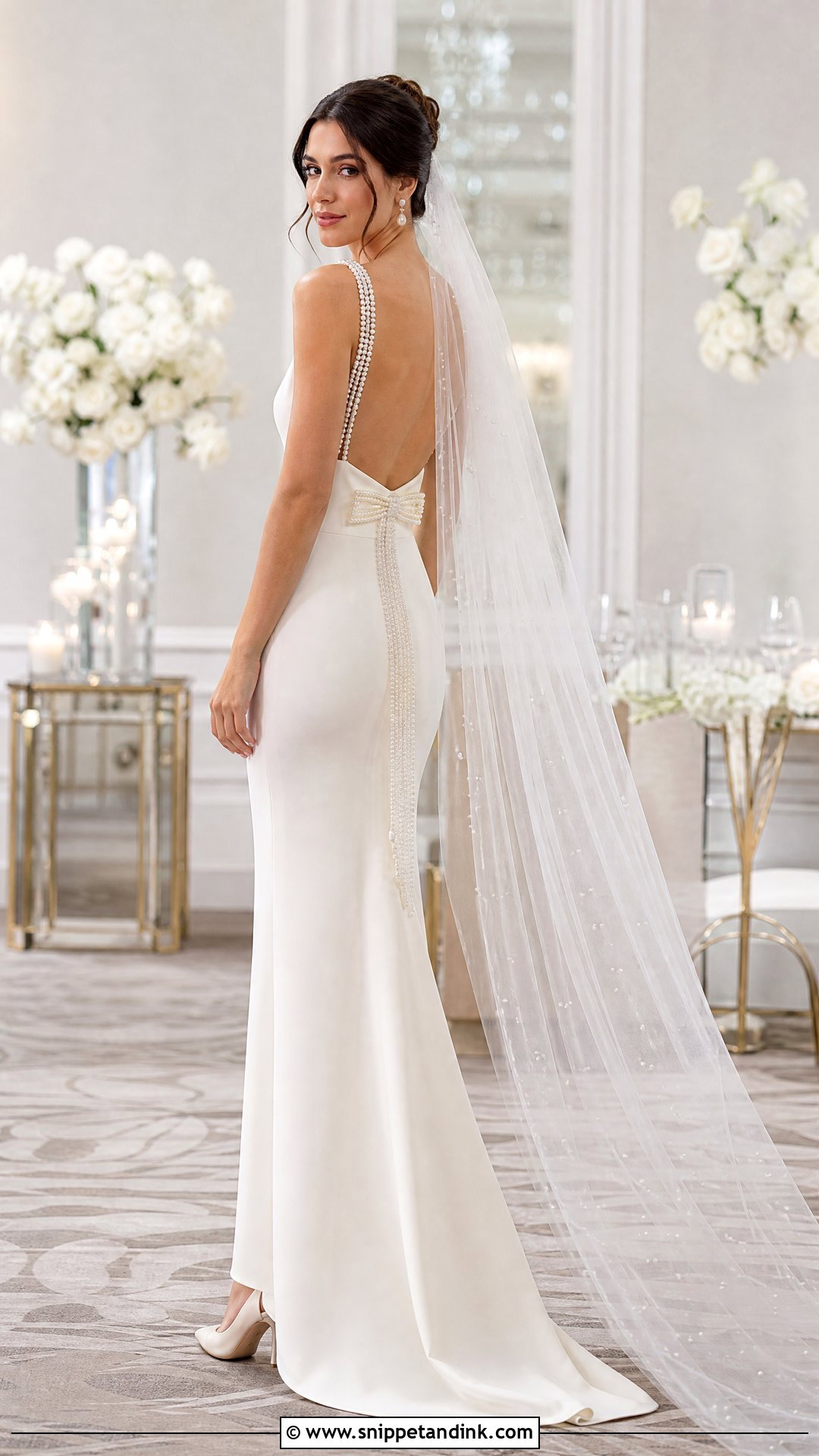
Pearls on ribbon give texture without glitter. Look for a smooth crepe or satin gown with ribbon straps, a ribbon-trimmed neckline or a detachable back bow scattered with seed pearls, and keep the silhouette plain so the detail shows. Pearl earrings, ivory pumps and a sheer veil with a few matching beads, with no heavy necklace competing. A sleek bun or polished waves suit the materials, as do elegant indoor ceremonies and evening receptions. Run a finger along every bow tail before the day. Pearls that are only glued, or stitched with a single thread, come loose and catch on veils, chair backs and lace.
10. Lace Ribbon Wedding Dress
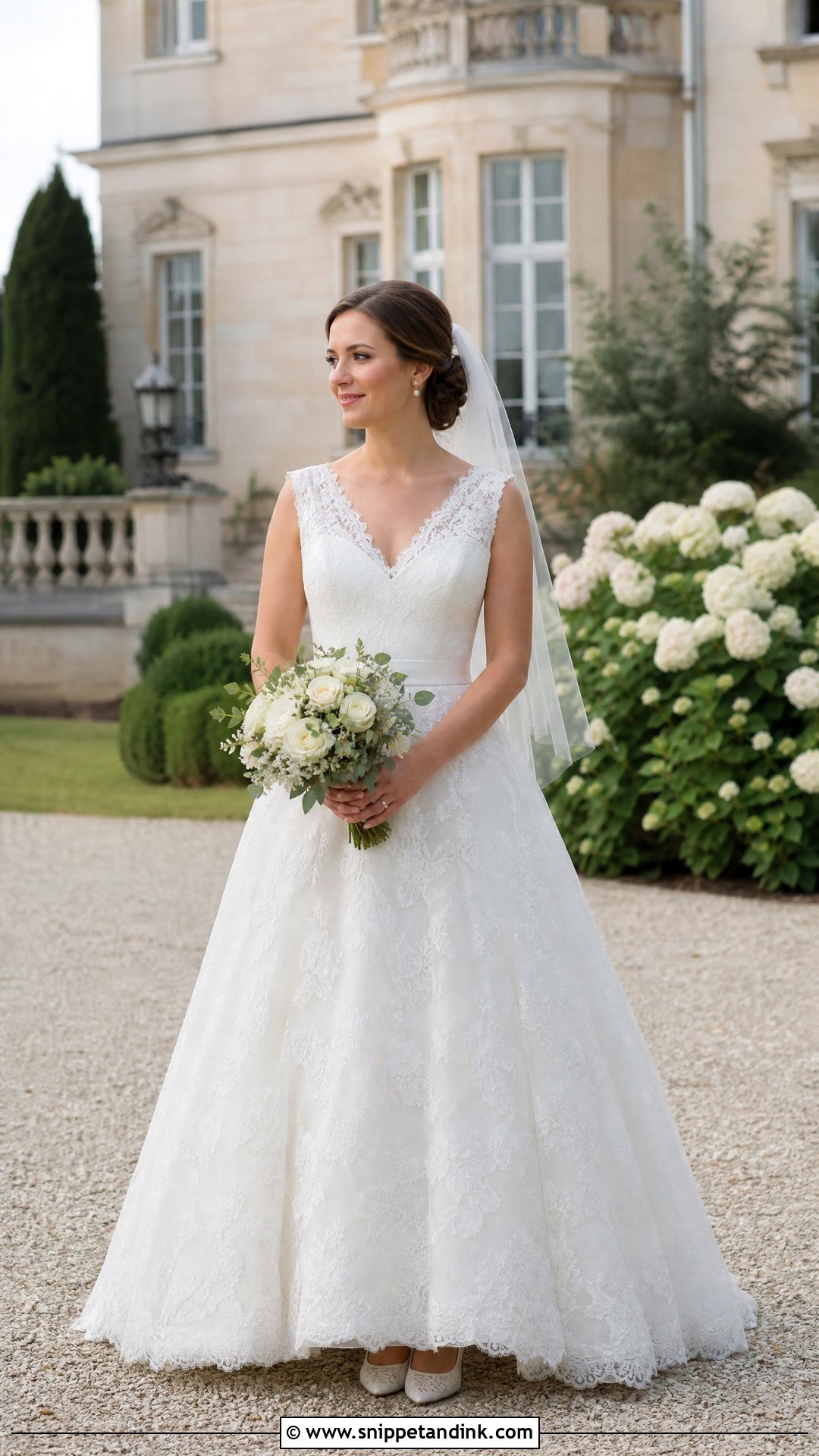
Lace can look busy from a distance, and a thin satin ribbon at the waist gives the eye a clean break. An A-line gown with floral lace, a modest V-neck and a slim satin ribbon tied in a small back bow does it well. Pearl studs, lace pumps and a plain tulle veil keep the patterns from multiplying. Soft waves or a low chignon. Estates, outdoor ceremonies and traditional venues suit it. Ivory isn’t one colour, so I match the ribbon to the lace’s undertone by holding them together in daylight. A ribbon that’s slightly too white or too yellow stands out on lace far more than you’d expect.
11. Mikado Bow Back Wedding Dress
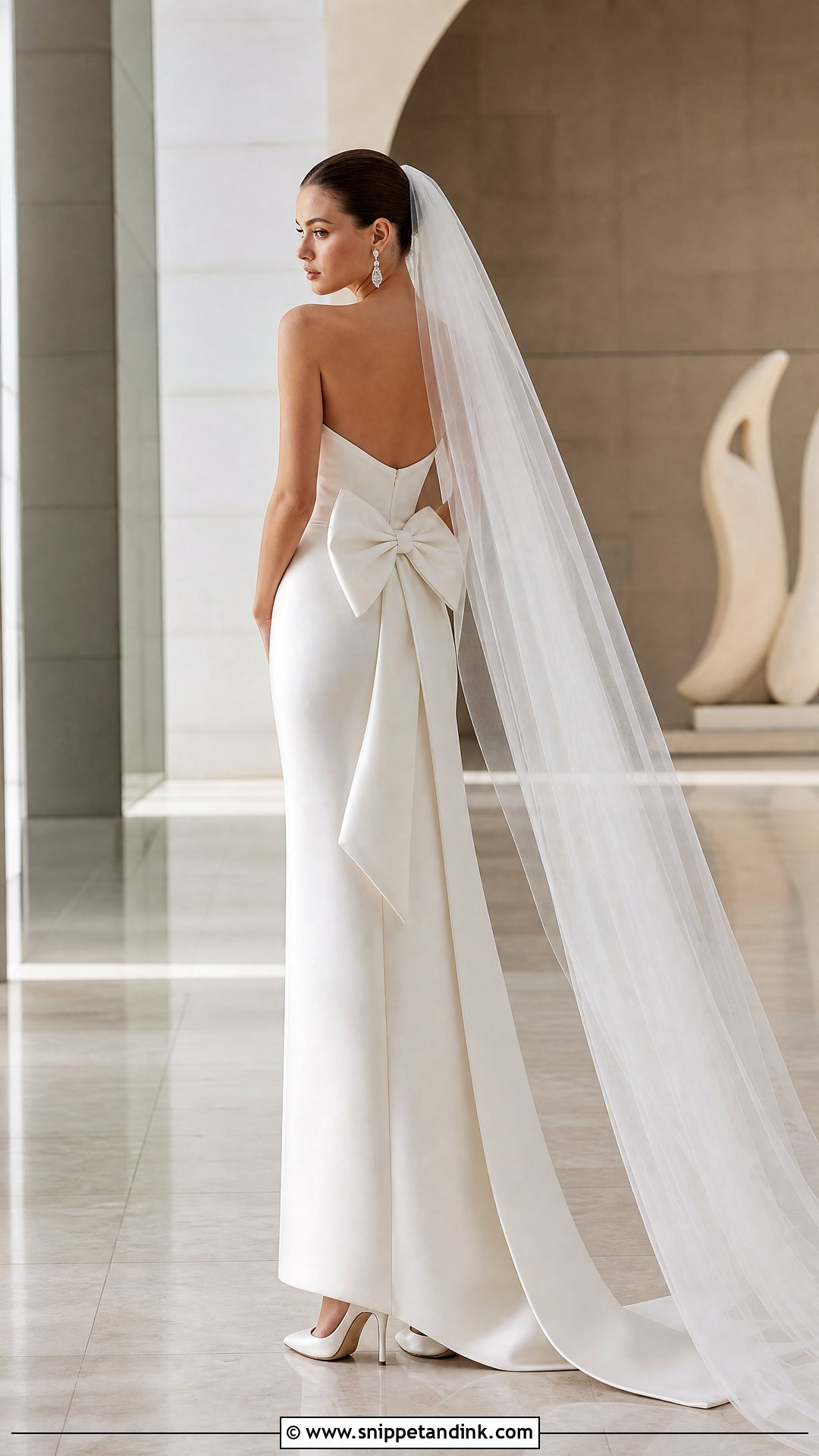
Mikado is the fabric for a sculptural bow, because it has the body to hold a loop without wiring. A strapless column or fit-and-flare with a clean neckline and a structured bow at the natural waist gives the tails a smooth, architectural fall. Pointed pumps, diamond or crystal studs and a long plain veil, with a high bun or side-swept style showing the back. Modern ballrooms, museums and upscale venues suit it. Keep everything else plain. Mikado creases sharply when you sit on it, so before the ceremony I reshape the loops by hand and check the tails hang at equal lengths.
12. Chiffon Ribbon Empire Waist Wedding Dress
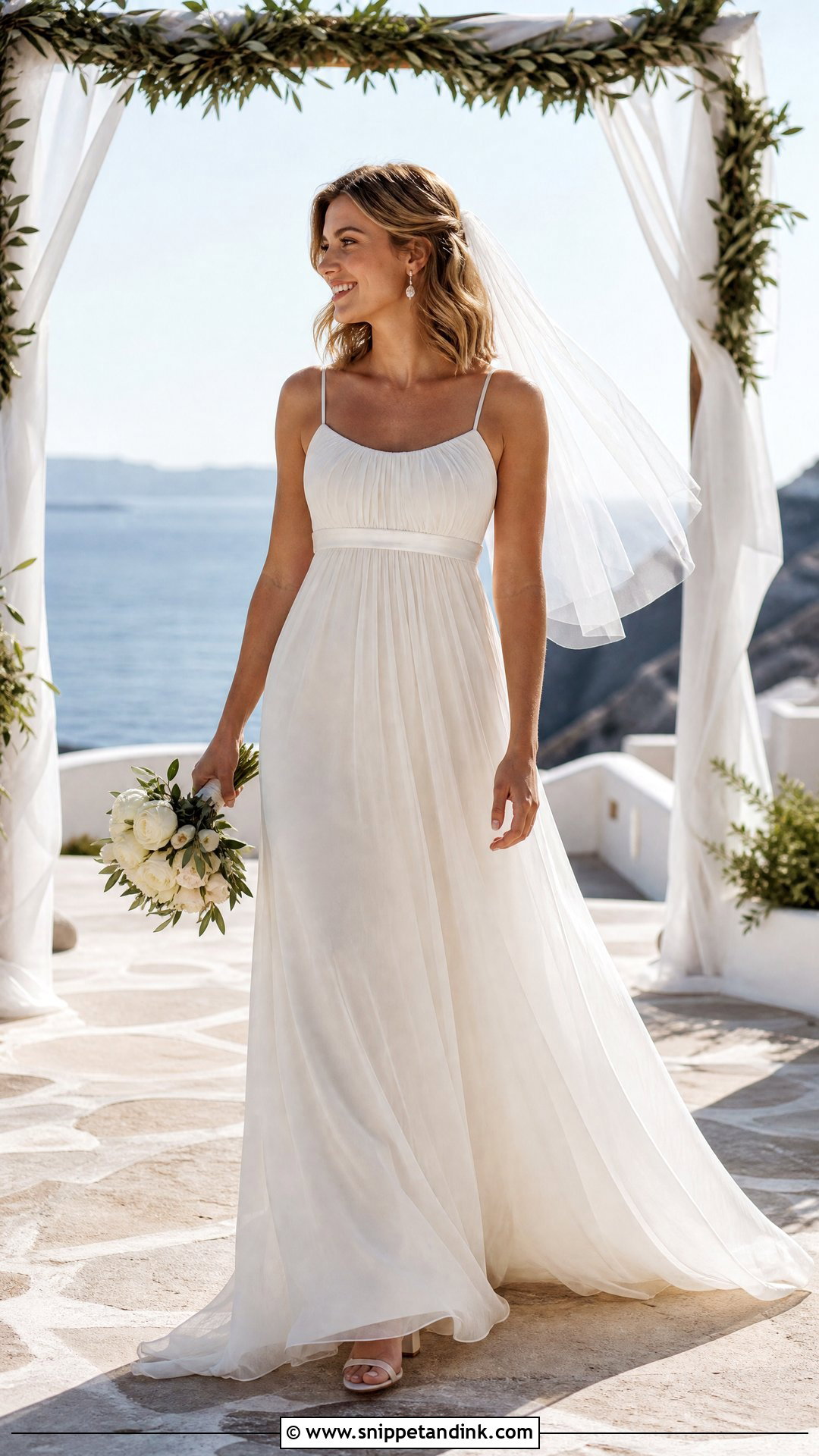
An empire waist in chiffon is about as comfortable as a wedding dress gets. A gathered bodice, a high waistline and a skirt falling softly away from the body, with a narrow satin ribbon under the bust tied in a small side or back bow. Low block heels, fine drops and a shoulder-length veil, with loose waves or a softly pinned style. Outdoor, destination and warm-weather weddings suit it. Satin ribbon slides on chiffon, which is the problem I fix most with this dress: a ribbon with a little texture, such as grosgrain, grips better, and a few tiny hidden stitches keep the sash level.
13. Tulle Ball Gown Ribbon Sash Wedding Dress
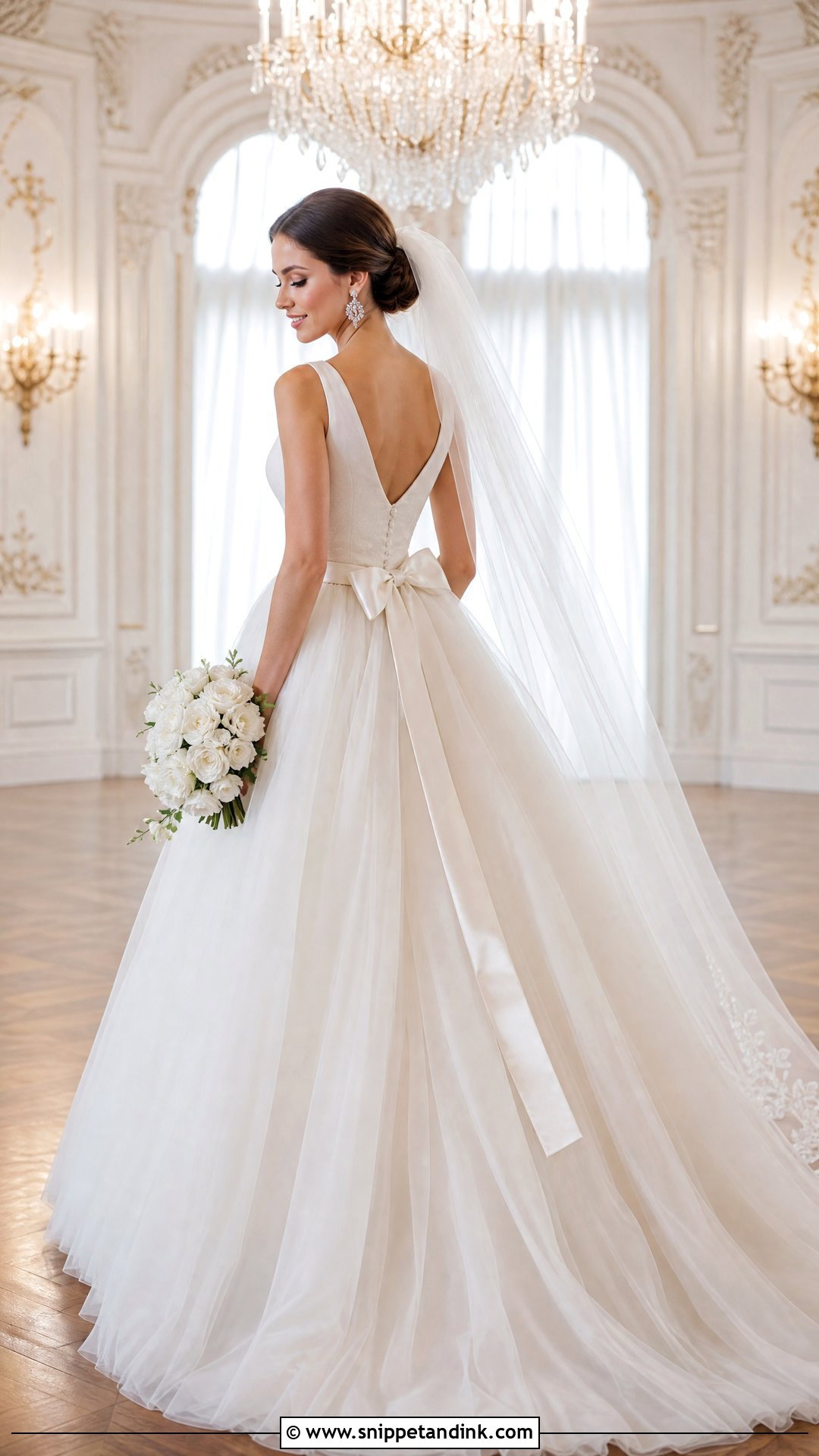
A wide sash gives a tulle ball gown a defined waist inside all that air. Choose a fitted strapless bodice with several soft skirt layers rather than a rigid hoop shape, and wrap satin or grosgrain around the waist with a medium bow at the back. Crystal earrings, satin heels and a cathedral veil reaching past the skirt, with a polished low bun to keep the sash visible. It gives a princess-inspired silhouette one simple modern accent. Make sure the ribbon lies flat over the bodice seams; if it ripples or folds when you breathe in, it’s either too wide or not stitched down.
14. Minimalist Crepe Ribbon Wedding Dress
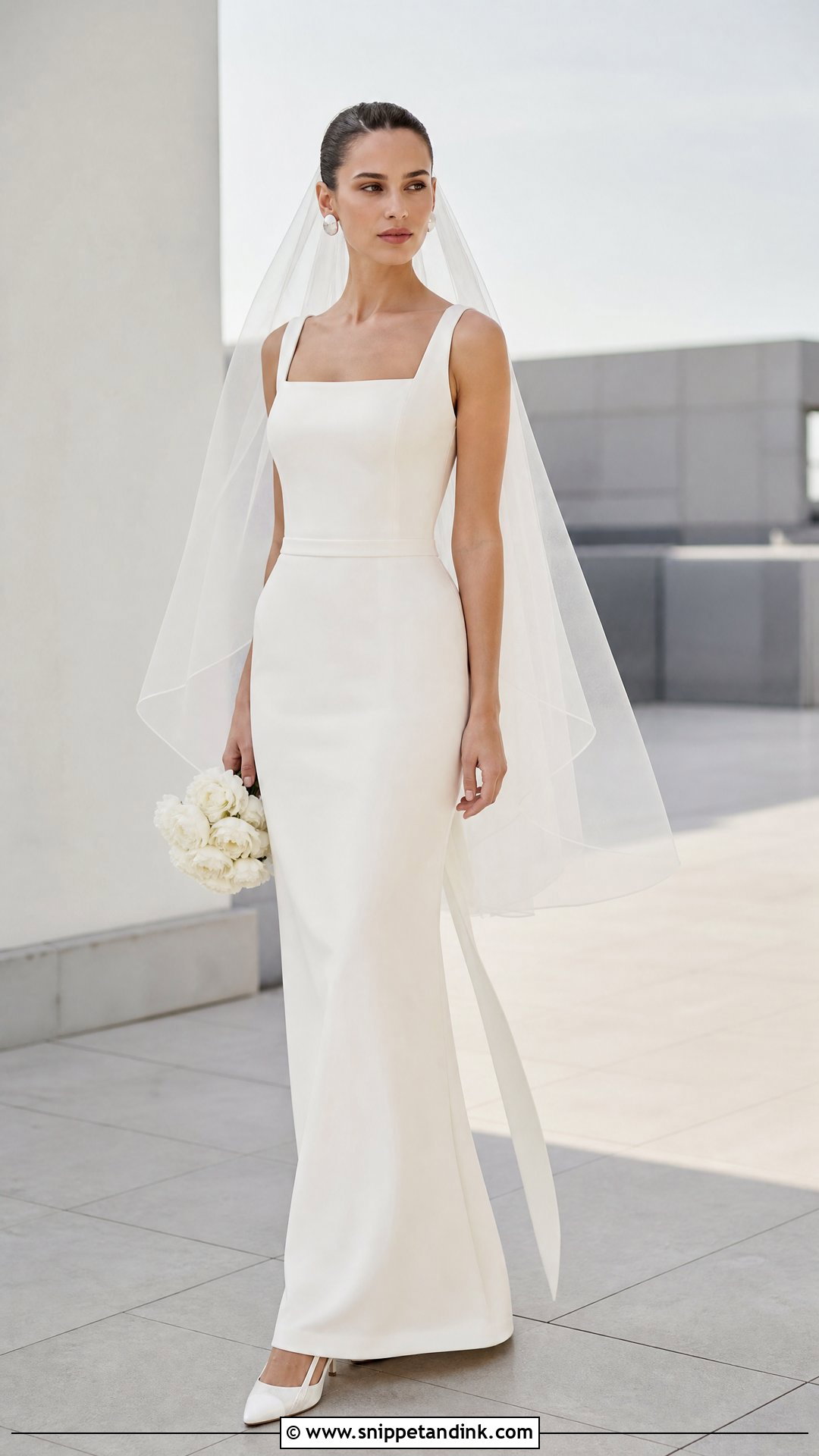
Plain crepe makes a thin ribbon look deliberate. A sheath or column with a bateau, square or softly draped neckline, a slim ribbon belt at the waist and a flat bow or long narrow tails at the back is all it needs. Slingbacks, sculptural earrings and a simple fingertip veil, with a compact bouquet of a single flower. A centre-parted bun or smooth ponytail matches the clean line. Courthouses, rooftops and galleries suit it. I’d choose a matte or softly lustrous ribbon here, since high-gloss satin looks disconnected from crepe’s dull surface, almost like it came from another dress.
15. Square Neck Bow Back Wedding Dress
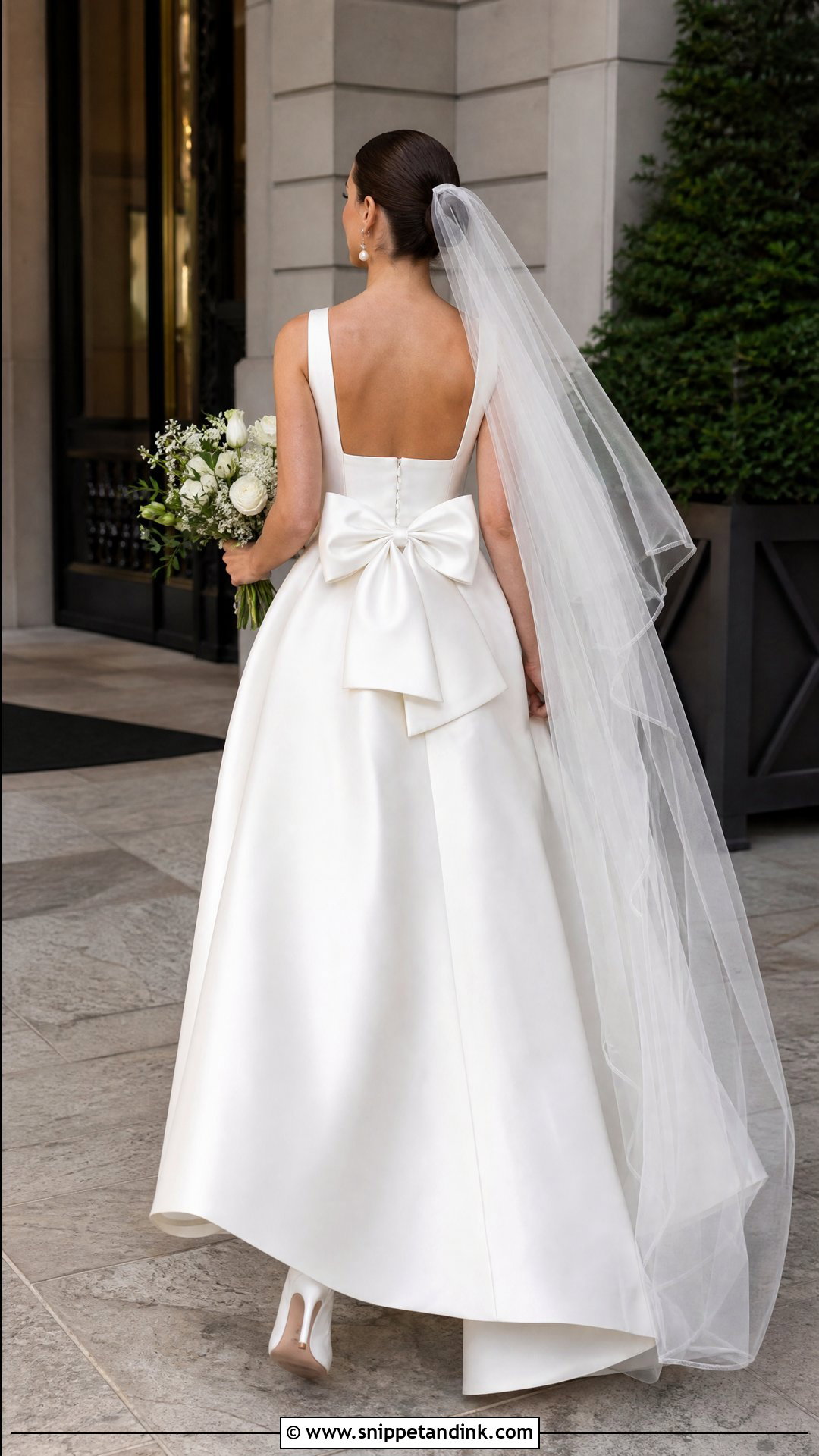
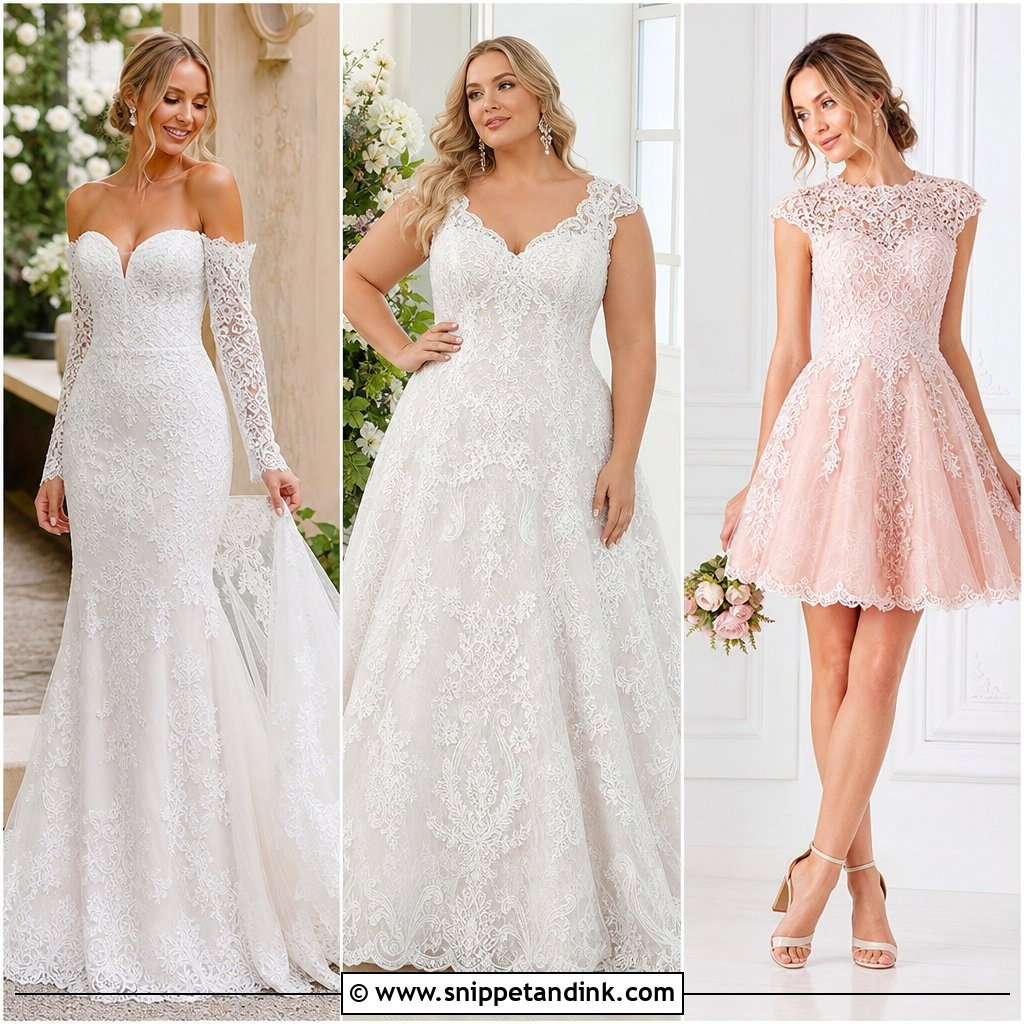
A square neckline in front and a bow at the back give a dress something to look at from both directions. A satin A-line with wide straps, a fitted waist and a low square back, with a medium or oversized bow just above the skirt, tails following the dress rather than spreading beyond the train. Pearl drops, pointed heels and a plain chapel-length veil, with a low twist keeping both neckline and back clear. It suits formal, outdoor and city weddings alike. Ask for photos from the front, side and back at the fitting; a big bow seen side-on can add width at the hips you never notice in the mirror.
16. Long Sleeve Ribbon Wedding Dress
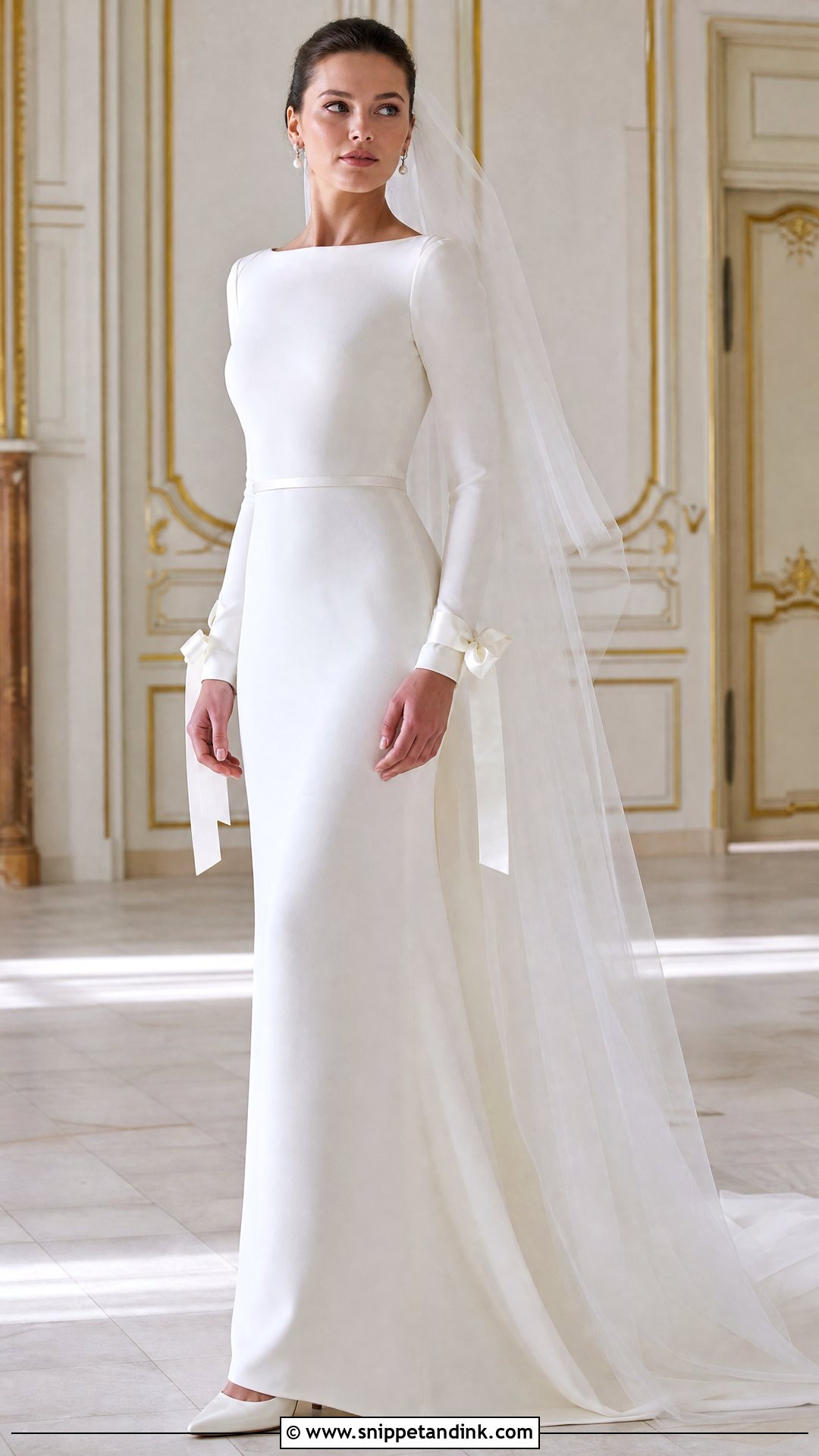
Long sleeves and ribbon can easily tip into fussy, so keep the ribbon small. A crepe or lace gown with fitted sleeves, a high or bateau neckline and narrow ribbon ties at the cuffs, plus a matching belt or small back bow, holds it together. Closed pumps, pearl earrings and a long plain tulle veil, with a neat low bun. Autumn, winter and air-conditioned venues suit it best. Keep the cuff ties short. Long ends dip into soup and wrap round bouquet stems, and I’d rather trim them at the fitting than tuck them all night. On lace sleeves, a smooth satin ribbon in the gown’s exact ivory reads best.
17. Tea Length Ribbon Wedding Dress
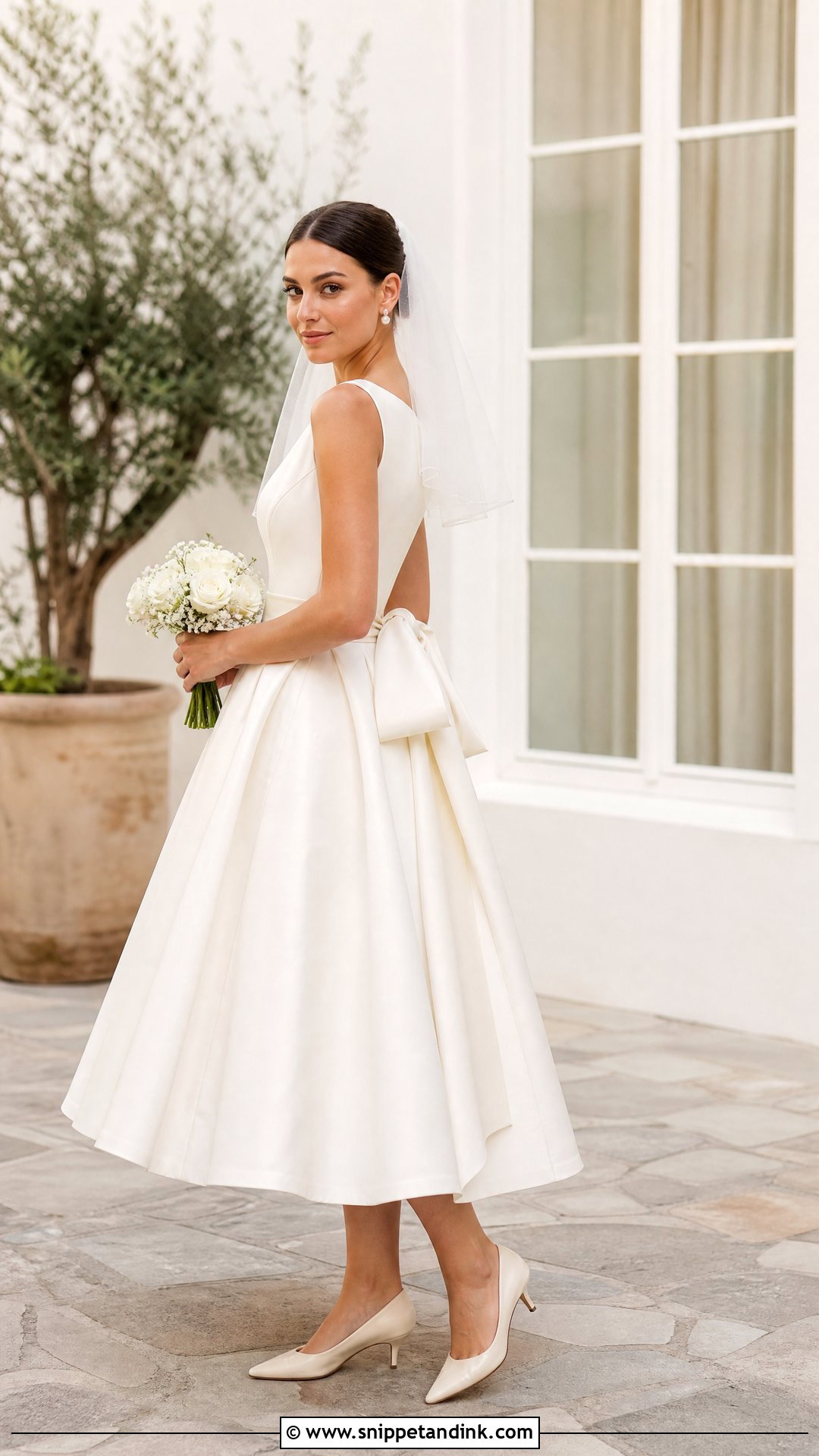
Tea length has a retro charm, and a ribbon sash leans into it. A fitted bodice, defined waist and full skirt ending between knee and ankle, with a wide satin sash tied in a back bow. Pointed kitten heels or ankle-strap pumps, pearl earrings and a short veil, with a structured mini bouquet to match the neat proportions. Soft waves, a low bun or a half-up style. Courthouses, daytime parties and small venues suit it. The hem shows off your shoes, so pick a pair that’s special but walkable. Cut the ribbon tails to finish above the hem; tails hanging below it look like a mistake.
18. Bridal Mini Ribbon Wedding Dress
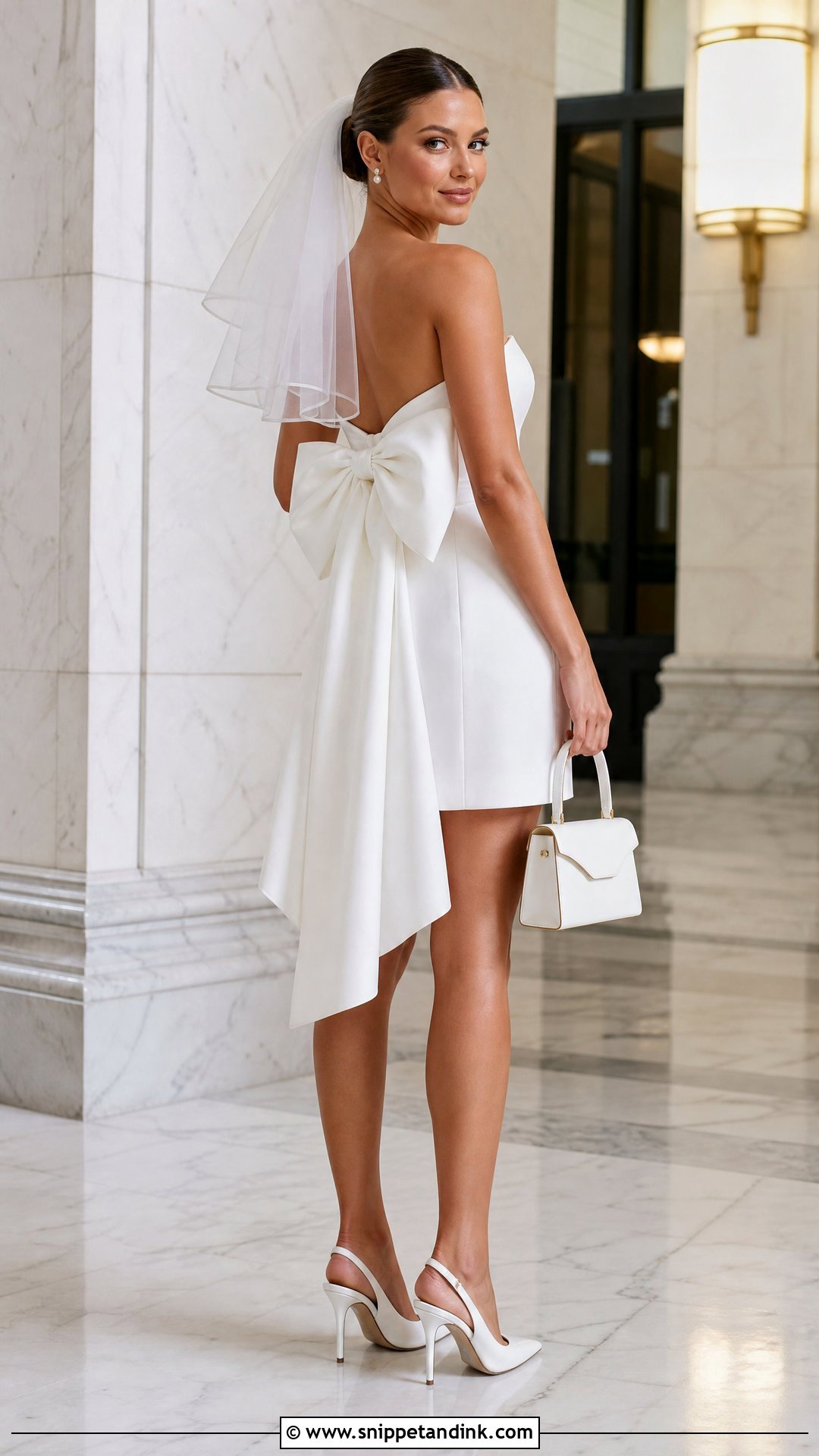
A mini with one bold bow is a confident courthouse dress or reception change. A structured shift, fit-and-flare or strapless mini, with the bow at the back, shoulder or waist. Pointed pumps, slingbacks or refined block heels balance the short hem, with pearl studs, a small top-handle bag and a short veil. A sleek ponytail or a waved bob keeps it fresh. Put the bow in one place only; two or three bows on a short dress start to look like gift wrap. Sit and walk in it at the fitting, and keep long back tails above the knee so they don’t swamp the short shape.
19. Floral Ribbon Wedding Dress
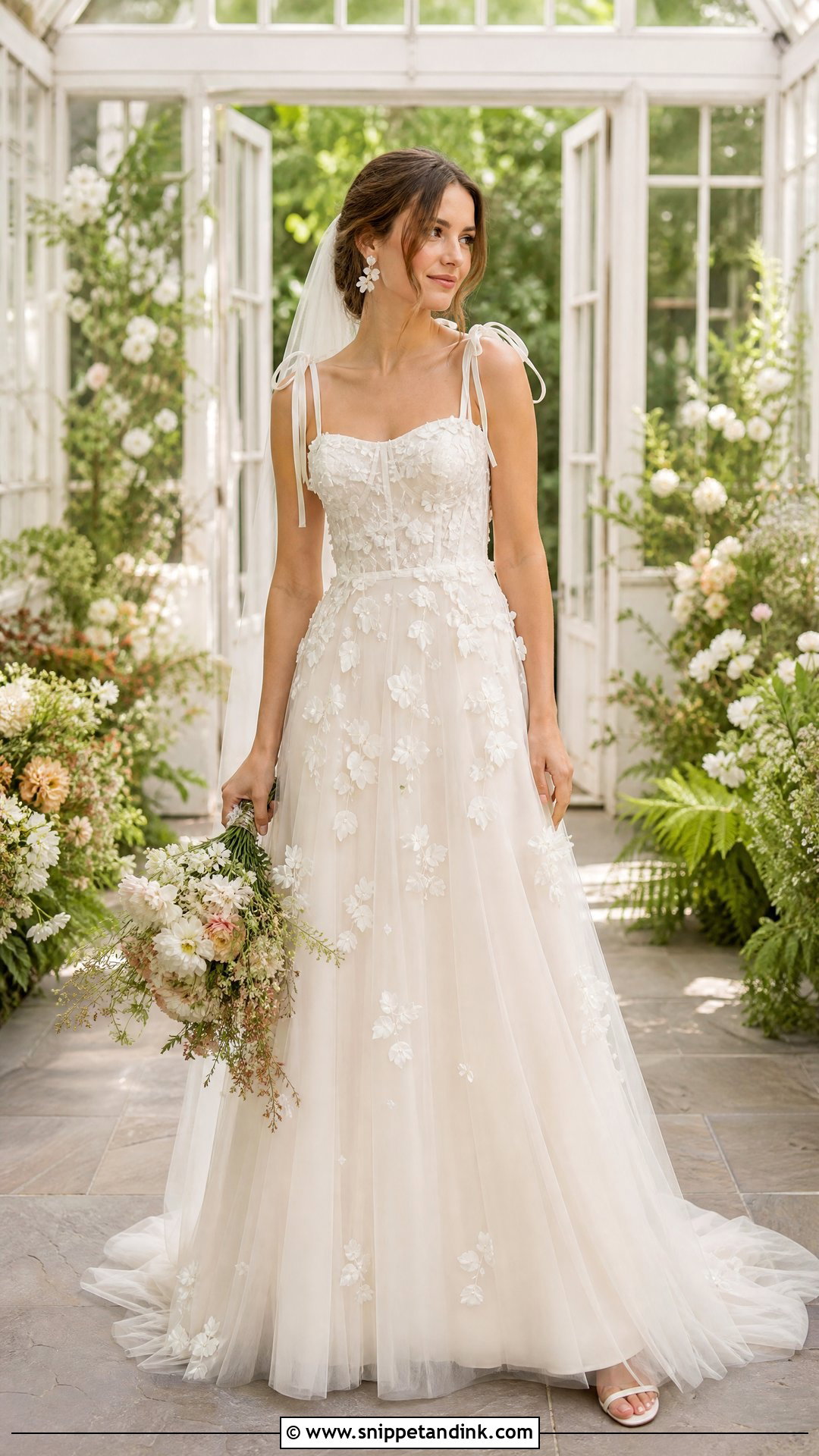
Flowers and ribbon on one dress can clash unless the scale is kept in check. An A-line tulle gown with scattered 3D flowers and slim ribbon straps tied at the shoulders is one way; a smooth bodice with a floral skirt and a narrow sash is another. Fine sandals, small floral earrings and a plain veil, with a loose bouquet using a few blooms that echo the appliqués. Gardens, conservatories and outdoor estates suit it. Keep shoes and jewellery plain, as the dress already has two decorative ideas. Shoulder bows need to be tied identically; I check them in a photo, because a lopsided pair shows up instantly on camera.
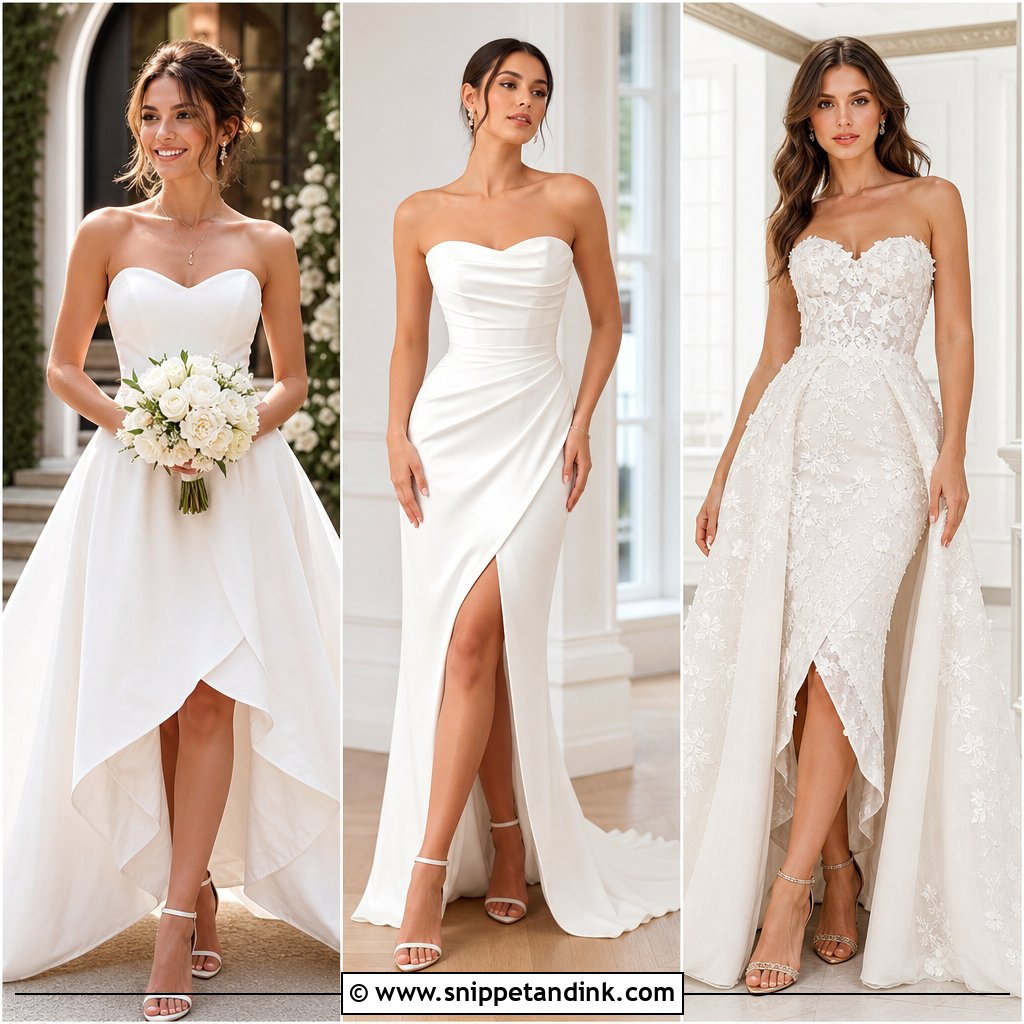
20. Ribbon Cape Wedding Dress
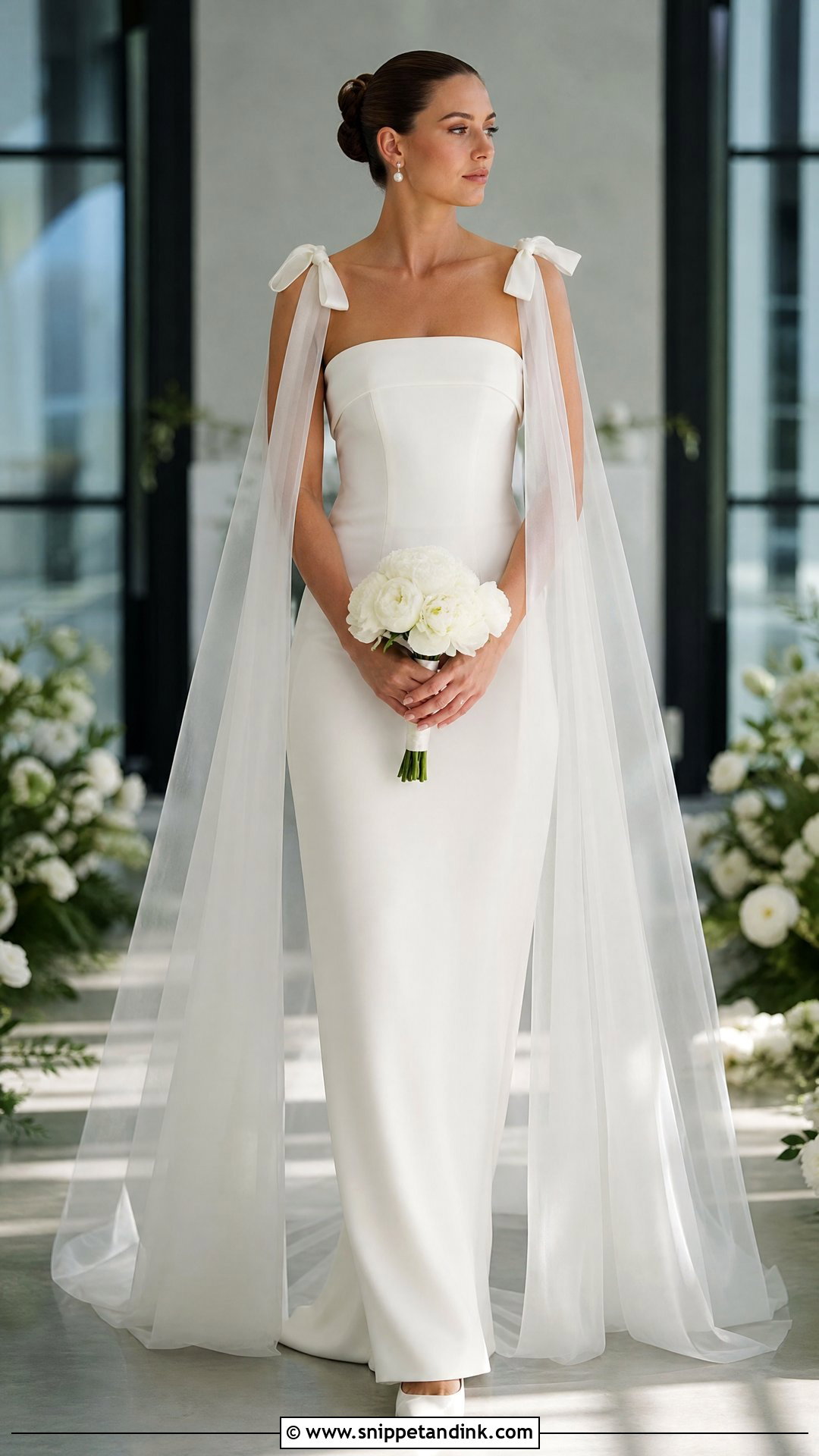
A ribbon-tied cape gives a ceremony entrance and comes off for the party. Start with a simple strapless or square-neck column in crepe, satin or mikado, and add a sheer cape that ties at the shoulders with bows or gathers into a wide back bow with long panels. Understated earrings, pointed heels and no veil, so the cape is the bridal accessory. Afterwards, untie it and the clean dress is underneath. Formal rooms and modern architecture suit it. I’d test the ties at alterations and walk in the full outfit: the ribbons should hold the cape evenly without dragging the neckline back or pinning your arms.
Tying a Bow That Still Looks Right After the Last Dance
Bows tied on the morning of a wedding usually look perfect for an hour. Then the loops flatten, one side droops and the tails twist. Most of that can be prevented.
- Tie it the way you’d tie a square knot, right over left and then left over right. A granny knot makes the bow sit sideways, which is the lopsided bow everyone has had.
- For a big back bow, have the seamstress make it as a pre-shaped bow sewn on at the knot and lightly tacked inside each loop, rather than tying a long sash on the day.
- Fold a piece of tissue inside each loop while dressing and during the car ride, then pull it out before you walk in.
- A hand steamer held a few centimetres away revives crushed satin loops. Never press a bow flat with an iron.
- Cut the tails after the final fitting, standing in your shoes, so they land where you want them in motion.
Large back bows also have to survive sitting down. If you’ll be seated for a long dinner, I’d make the bow detachable or keep it high enough at the waist that you aren’t leaning back on it all evening.
A Ribbon Should Finish the Dress, Not Wrap It
A good ribbon detail works with the dress, not against it. A narrow sash gives quiet definition, while an oversized back bow or detachable ribbon train makes a stronger statement. Fabric decides the shape: satin and mikado hold sculpted loops, chiffon and tulle give softer, droopier bows. Look at the ribbon from the front, side and back, then walk and sit in it. Shoes, veil, jewellery and hair should follow the same direction rather than adding more ideas. Above all, the gown should feel comfortable and like you, with the ribbon as the finishing touch rather than the main event.
You'll Like These Ideas:






Leave a Reply