
Most brides who come to me for an updo are worried about one of two things: that it will feel stiff, or that it will fall down. Neither has to happen. The updos I’m asked for now are softer than a decade ago, with airy chignons, smooth buns, braided crowns, pinned curls and loose pieces at the face, and they’re built to hold underneath while looking relaxed on top. Which one suits you comes down to your neckline, your veil, your hair texture, the forecast and how formal the room is. Save the ones you like below and take them to a trial, which feels clear and stress-free when you arrive knowing what you want to test.
Reading Your Neckline Before You Decide How High the Bun Goes
I look at the dress before I look at the inspiration photos. The neckline tells me where the updo should sit, more than the face shape does.
- High neck or collar: lift the hair. A high bun or French twist keeps the line of the dress clean.
- Strapless or off the shoulder: a low bun or chignon fills the space at the nape so the shoulders don’t look bare and empty.
- Open or low back: any updo works, but keep it tidy at the nape, since the back of your head is in every aisle photo.
- V-neck: a softer, mid-height shape with face-framing pieces balances the vertical line.
Then factor in the veil. A heavy cathedral veil wants a low, solid base. A short or birdcage veil gives you more freedom.
1. Low Chignon Wedding Updo
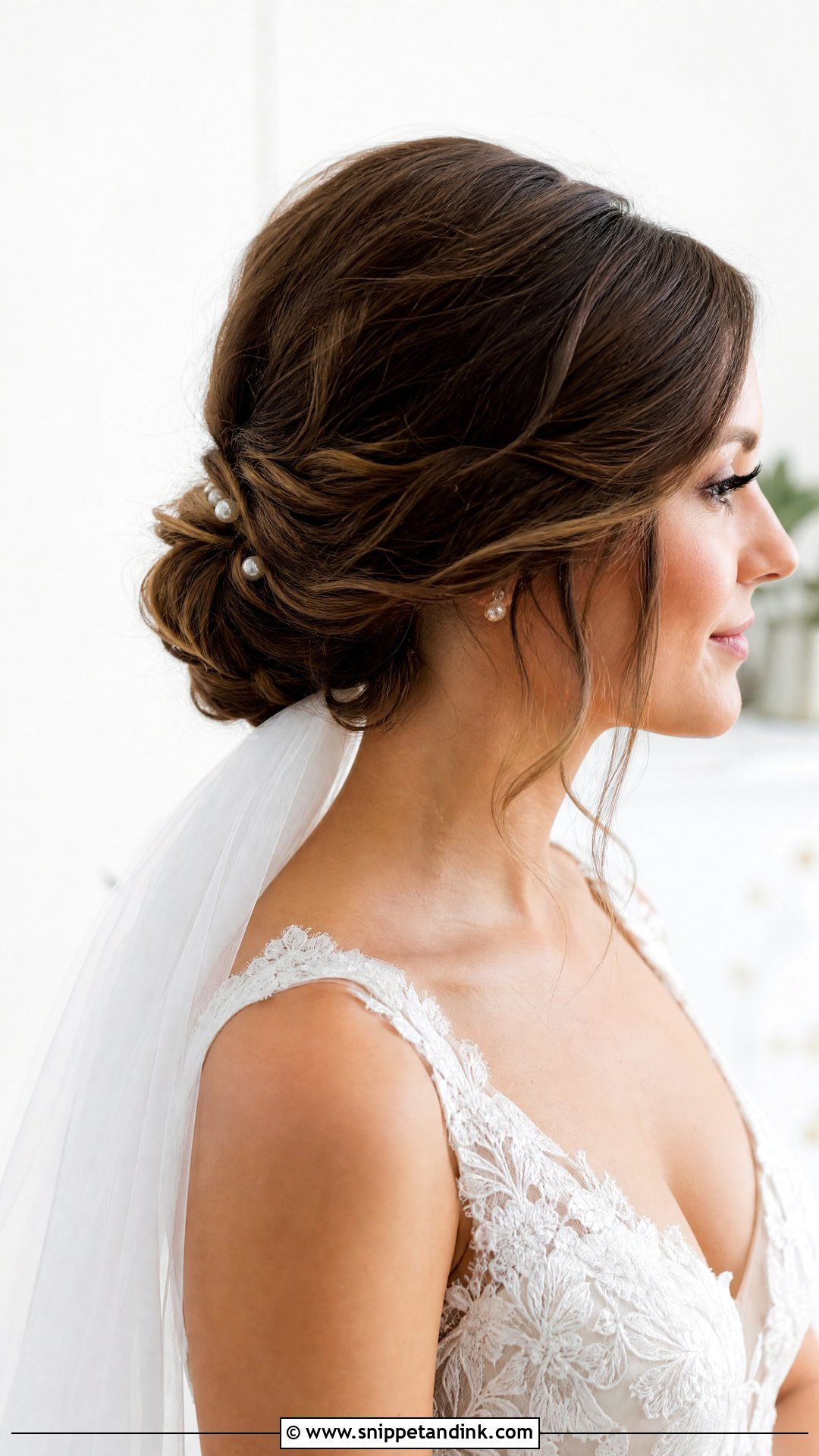
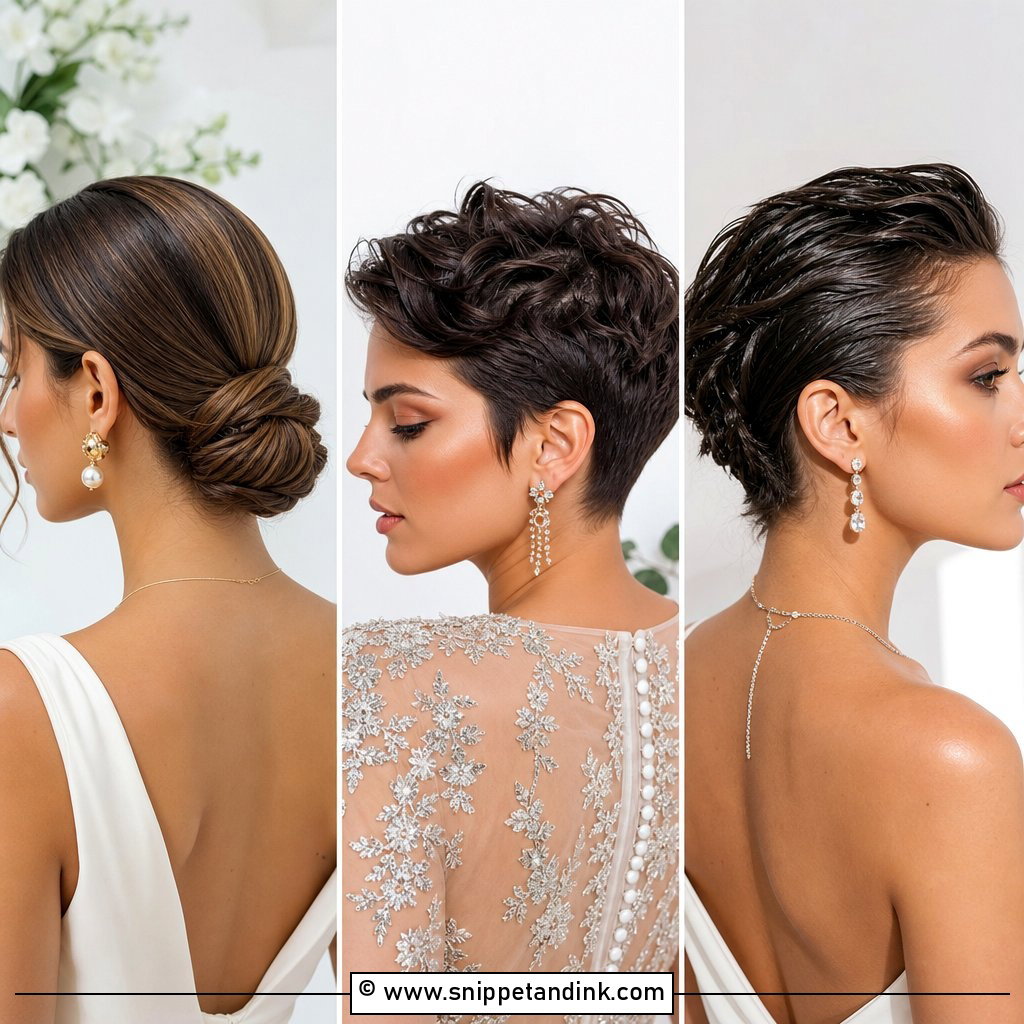
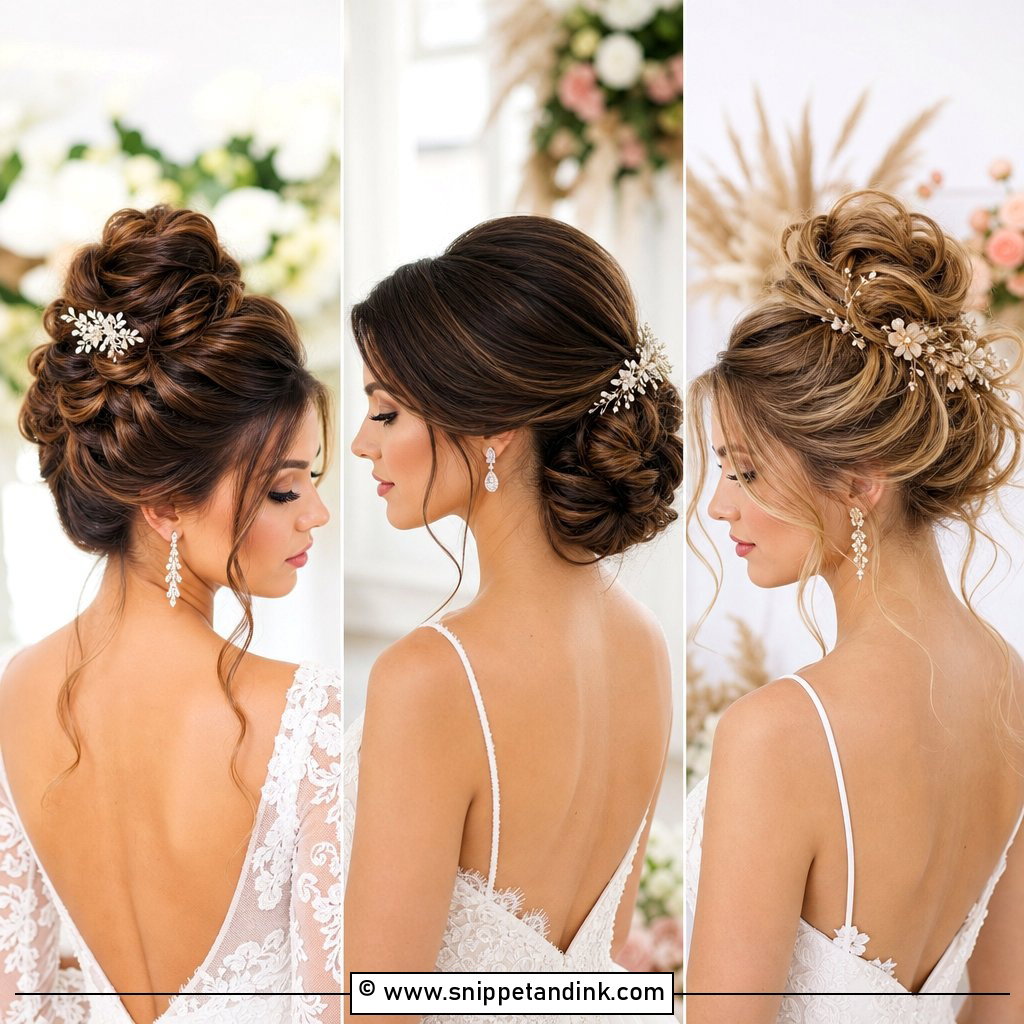
If you want elegance without height, start here. The low chignon sits at the nape and lets a veil comb, pearl pins or a lace or off-the-shoulder neckline do the talking. I ask brides to tell me whether they want it snug or loose against the neck, because the difference is felt all day. Some lift at the crown keeps the profile from looking flat. Medium to long hair works, and side and back views are where this one earns its place in the album.
2. Sleek Bun Wedding Updo
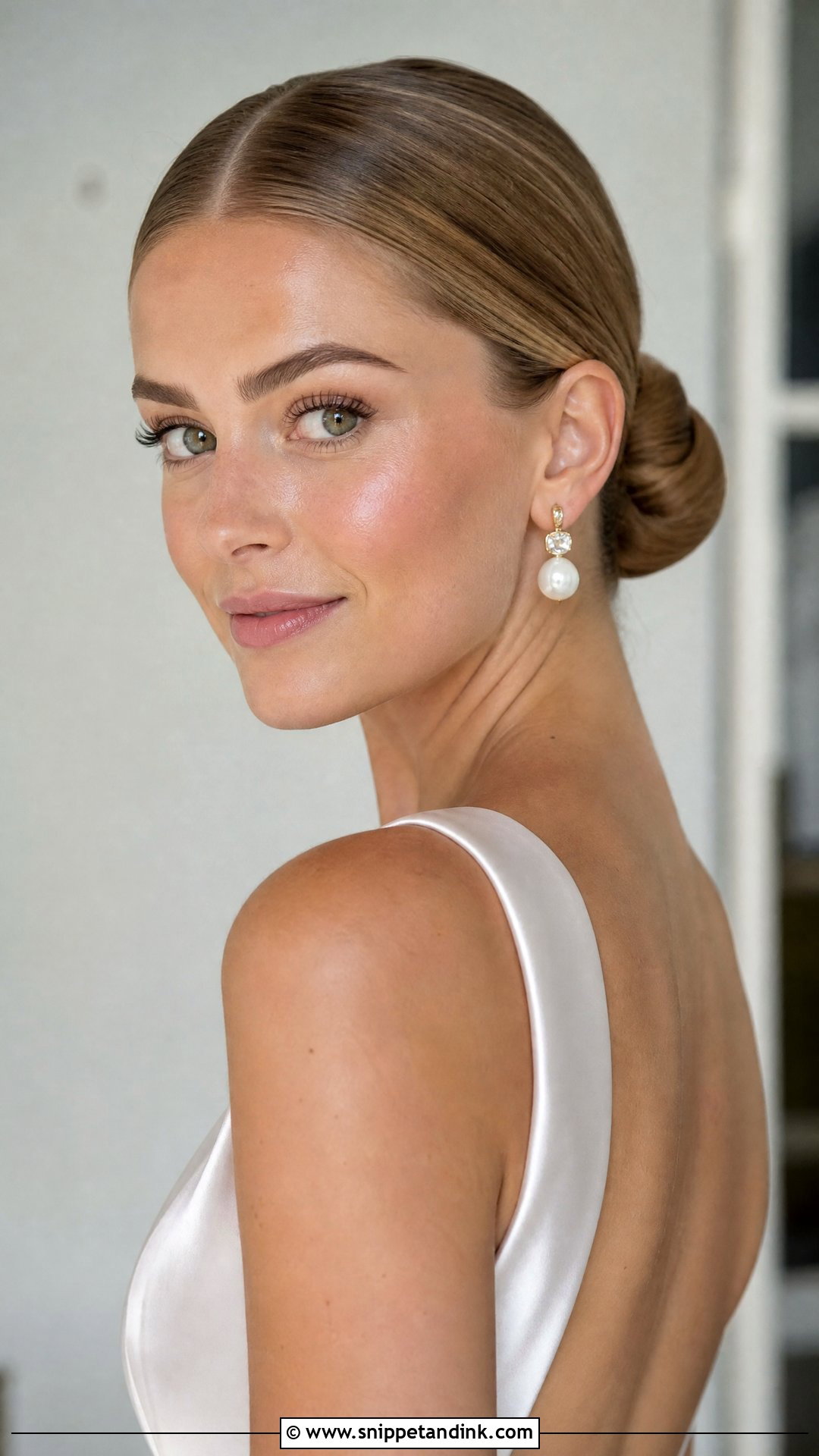
Sleek buns live or die on the blow-dry. Every bump shows, so I smooth the hair with a paddle brush before any gathering, then use a small amount of serum for shine. Too much and it looks greasy under the photographer’s flash. It suits modern gowns, high necklines, minimal veils and statement earrings. On a hot day, it’s one of the most comfortable options, since nothing touches the neck or face.
3. Messy Bun Wedding Updo
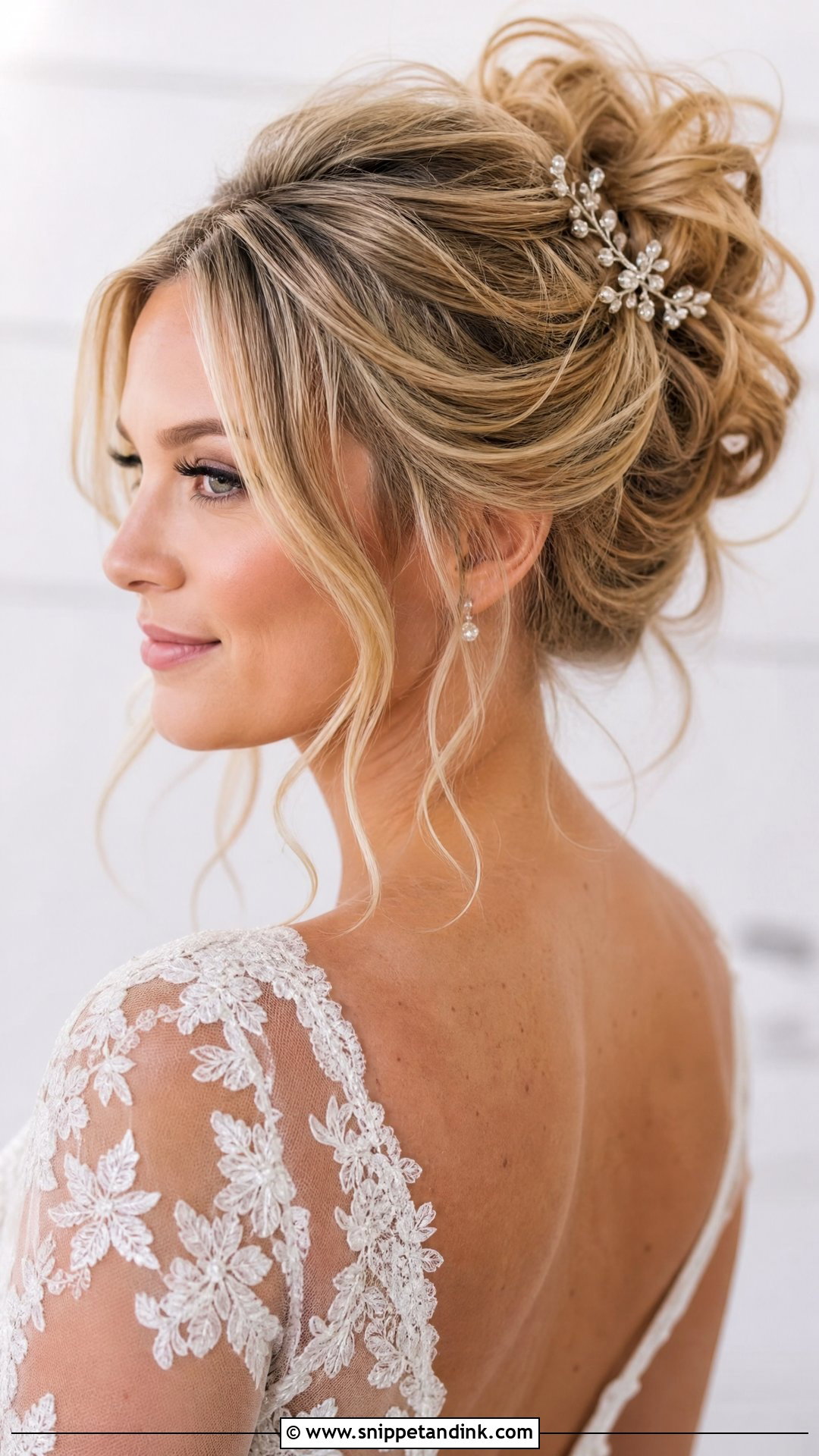
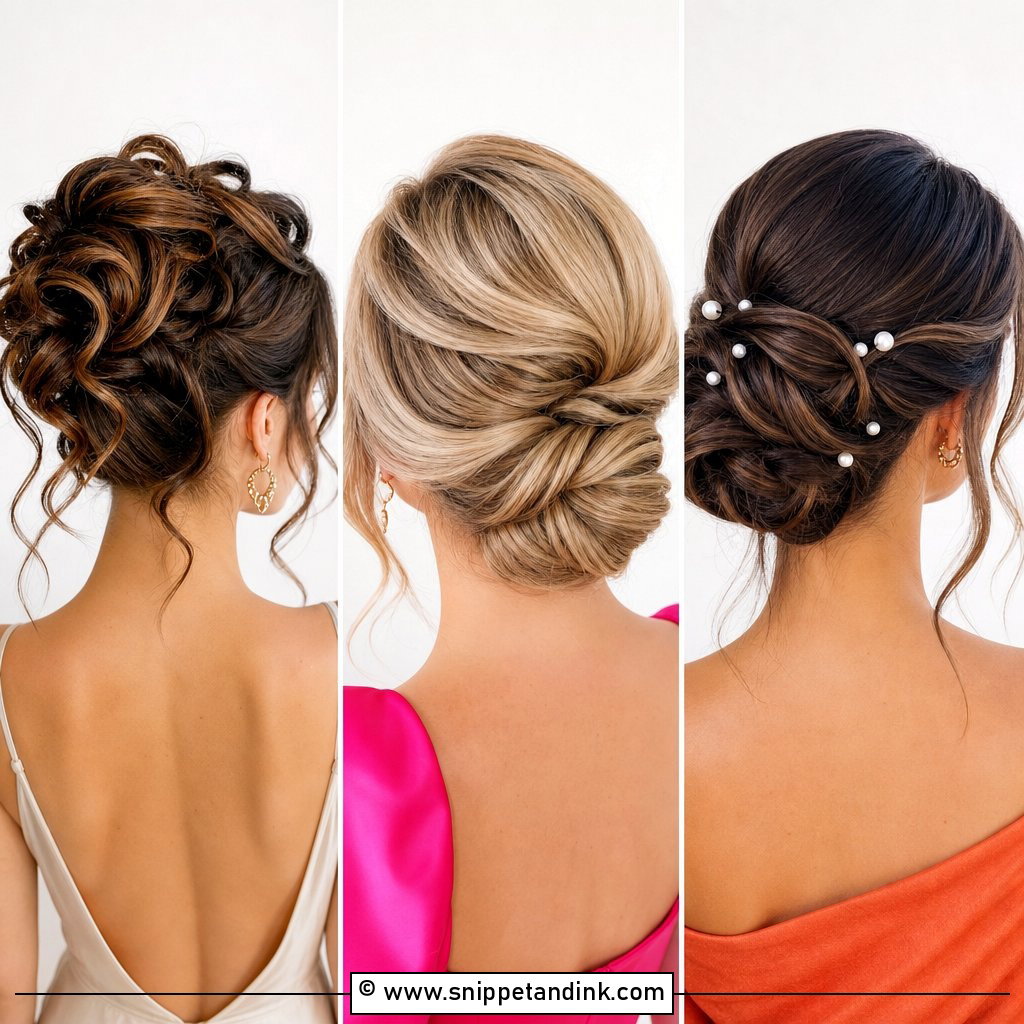
Relaxed but not accidental is the brief for a messy bun. The volume, loose twists and a few wispy pieces are all placed on purpose. Garden, beach and barn weddings suit it, as do lace dresses with movement. It’s easiest on hair with natural wave or curl. On very straight, silky hair I curl everything first and add texture spray, or the bun has nothing to hold its shape. Underneath it’s pinned firmly, so hugs and dancing don’t undo it.
4. Braided Chignon Wedding Updo
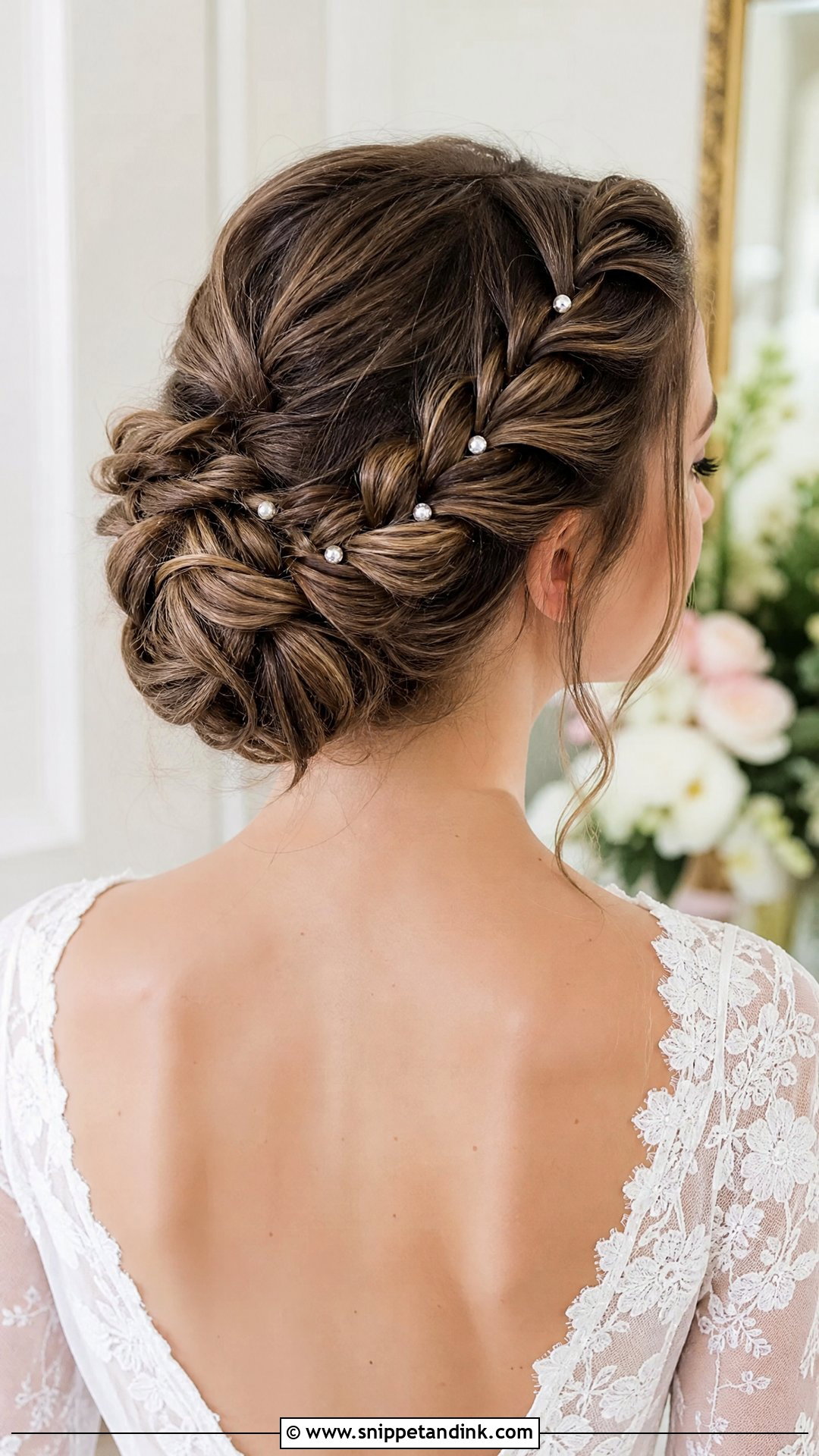
A braid running into the chignon gives detail without clutter. It can wrap the bun, cross the crown or sit along one side. Highlights look especially good in it, because each crossing of the braid catches a different tone. I usually start the braid on the side the photographer will mostly shoot from during the ceremony. Pearl pins, a few small flowers or a comb can sit along it. Lace gowns and outdoor ceremonies are a natural fit.
5. French Twist Wedding Updo
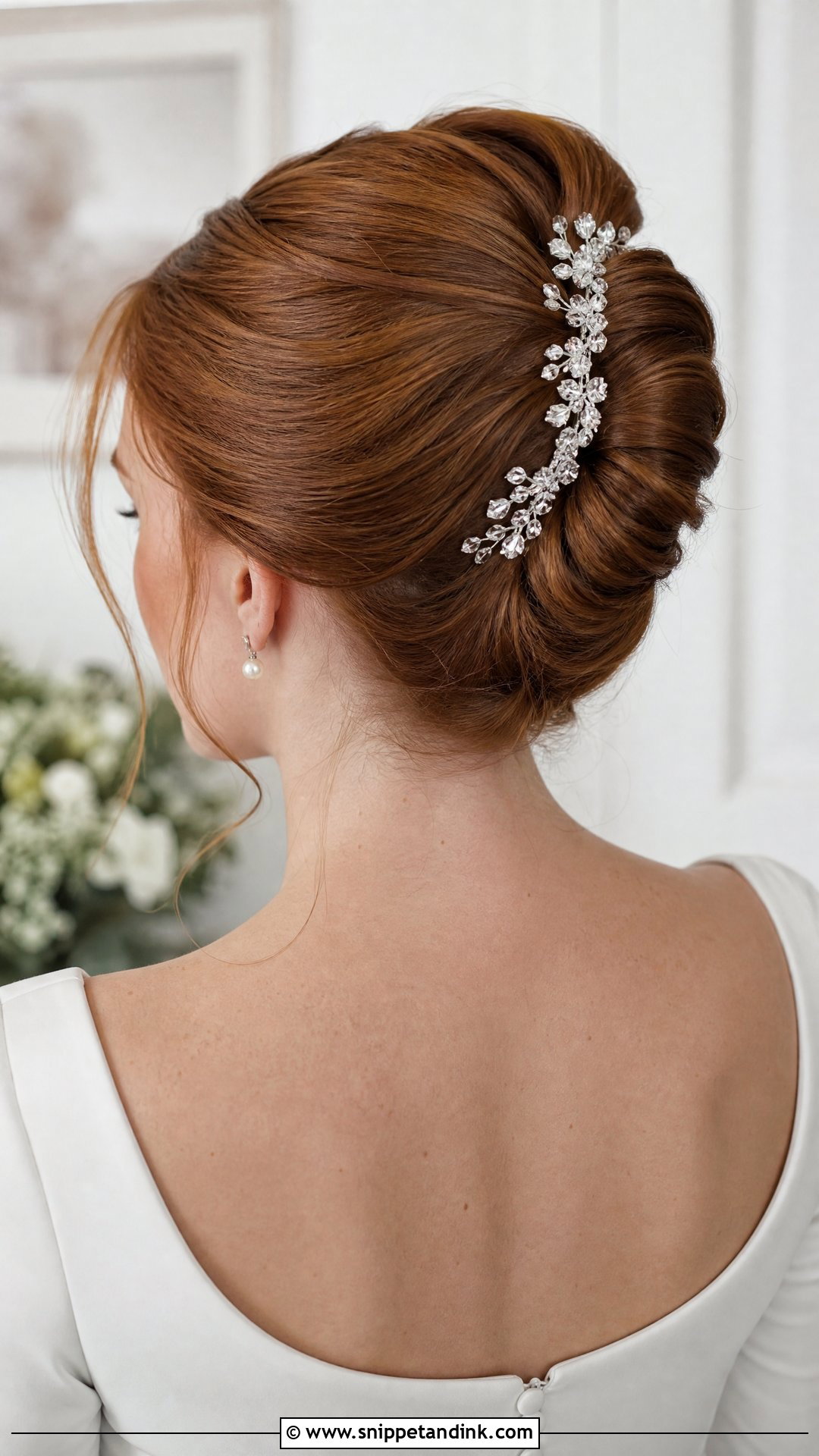
A French twist can look dated if it’s lacquered stiff. The version I do keeps smooth sides, gentle lift at the crown and a few loose pieces near the face. It flatters strapless gowns, bateau necklines and city weddings, because the vertical seam lengthens the neck. A veil can tuck in underneath, or a comb can run along the twist. Hair with a little grip holds it best, so day-old hair is better than freshly washed.
6. High Bun Wedding Updo
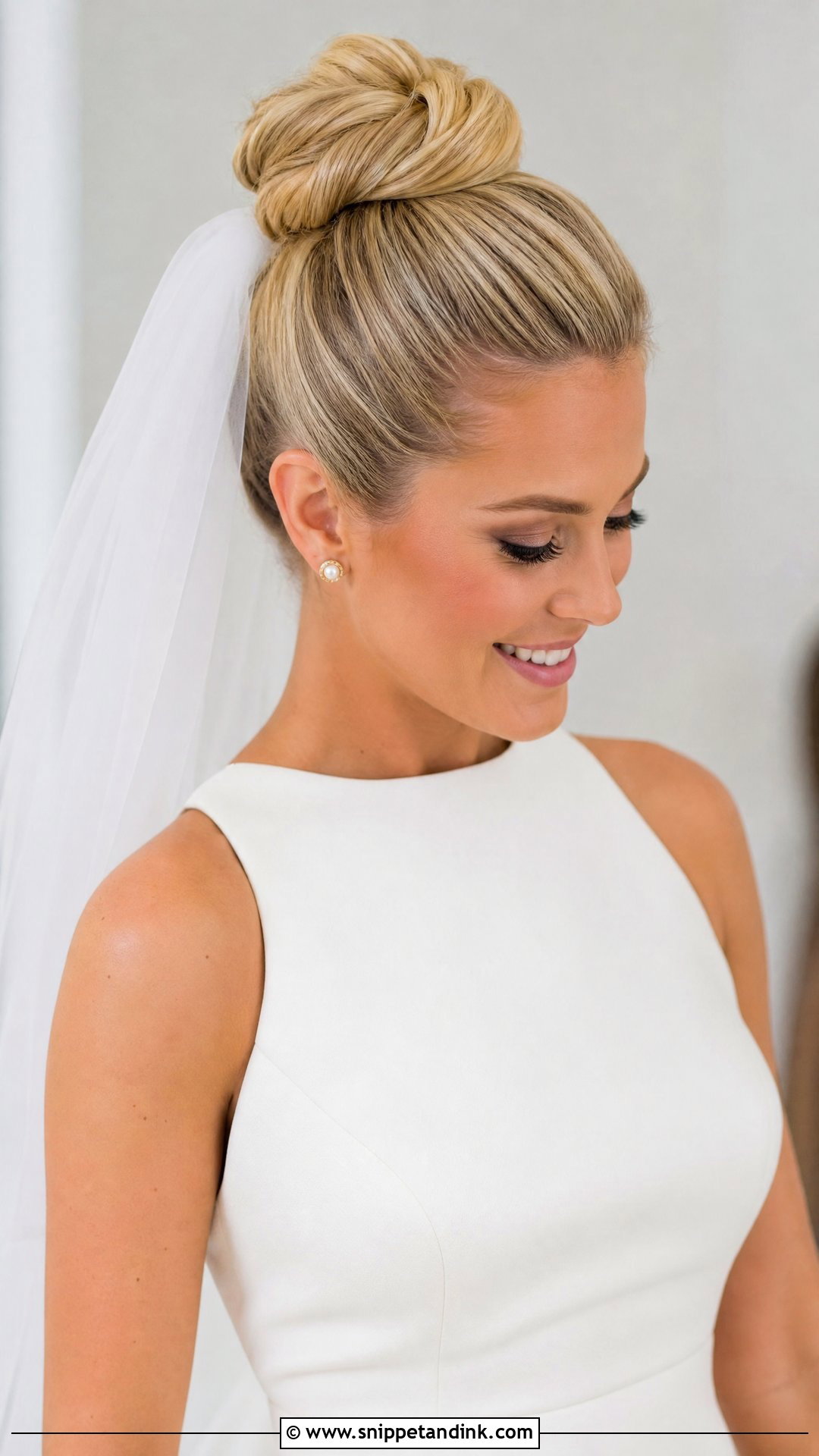
High collars, dramatic sleeves and heavily detailed bodices all look cleaner with the hair lifted out of the way, and a high bun does that. It can be sleek, softly textured or slightly oversized for a ballet-inspired effect. It supports veils, tiaras and sparkling pins well. Fine hair usually needs a padding or a few clip-ins to reach the size in your photos. My caution: a big high bun puts weight on a small area of scalp, so I’d only pin it tight where it needs to be.
7. Curly Wedding Updo
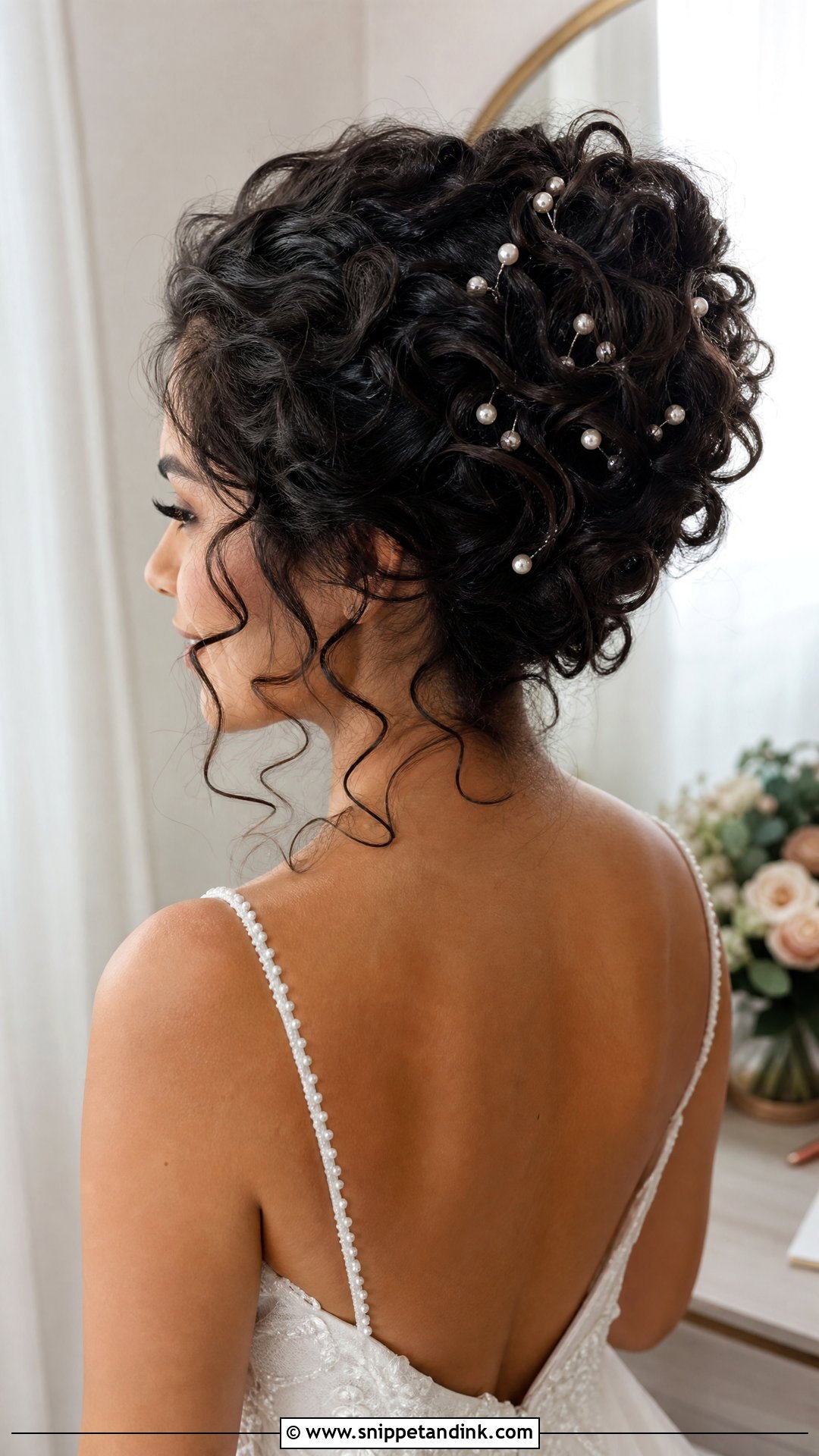
Curly updos keep the pattern visible rather than brushing it into a smooth shape. Pinned sections, soft volume and defined pieces at the face make the shape. Natural spirals and wand-made curls both work. Prep is where it’s won or lost: I’d deep condition a few days before rather than the night before, so the hair isn’t too soft to grip. Curl cream and an anti-frizz product go in on the morning. Floral pins and pearl accents suit it, as do romantic gowns.
8. Twisted Wedding Updo
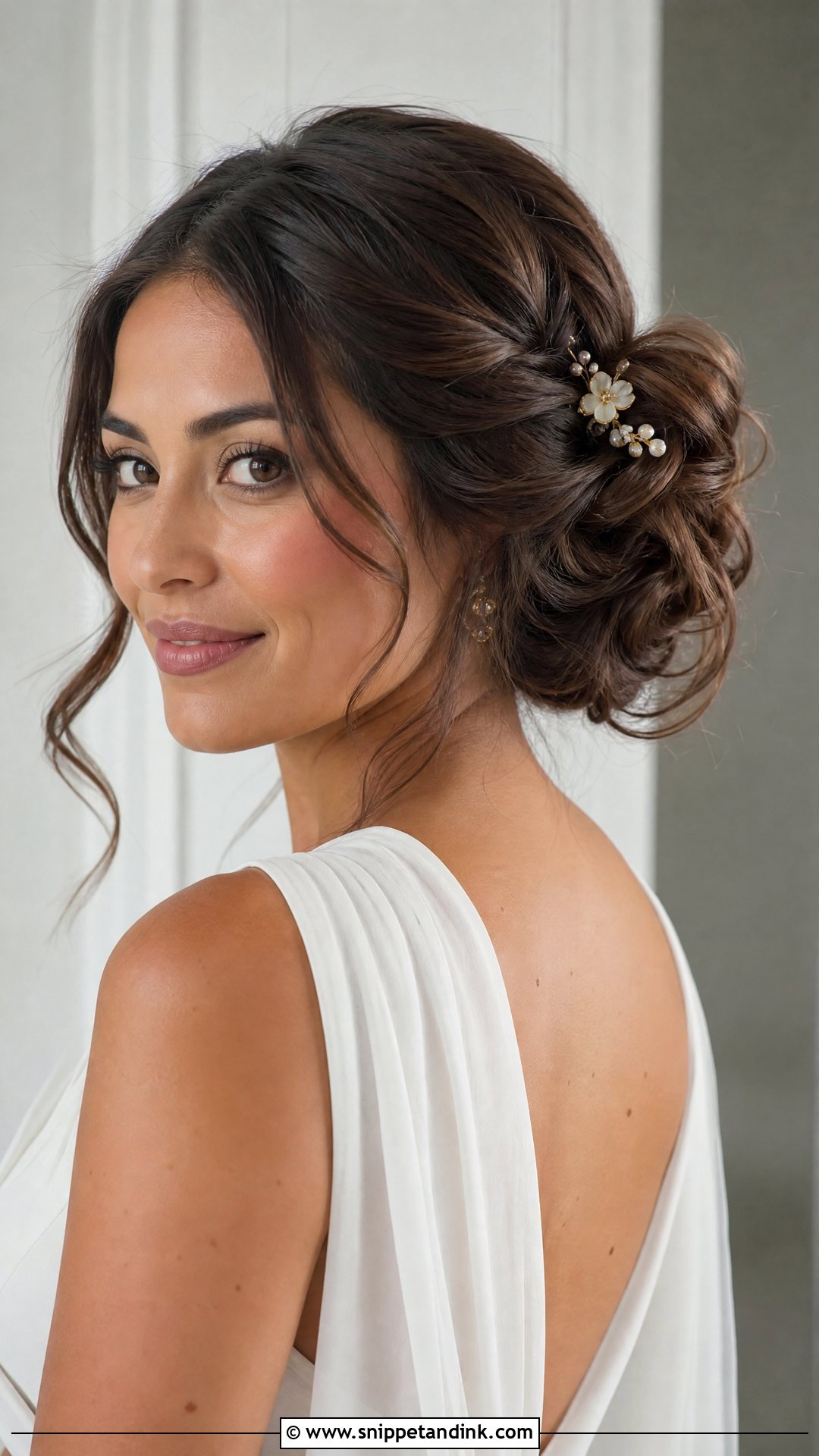
Twists give you detail with less tension than a braid. They can run along the sides, gather at the back or layer into a low bun. Medium and long hair with balayage, highlights or soft waves show them off best. The back gets plenty of movement, which matters for ceremony photos, since guests and the photographer see the back of your head for most of the vows. A few face-framing strands soften it.
9. Side Bun Wedding Updo
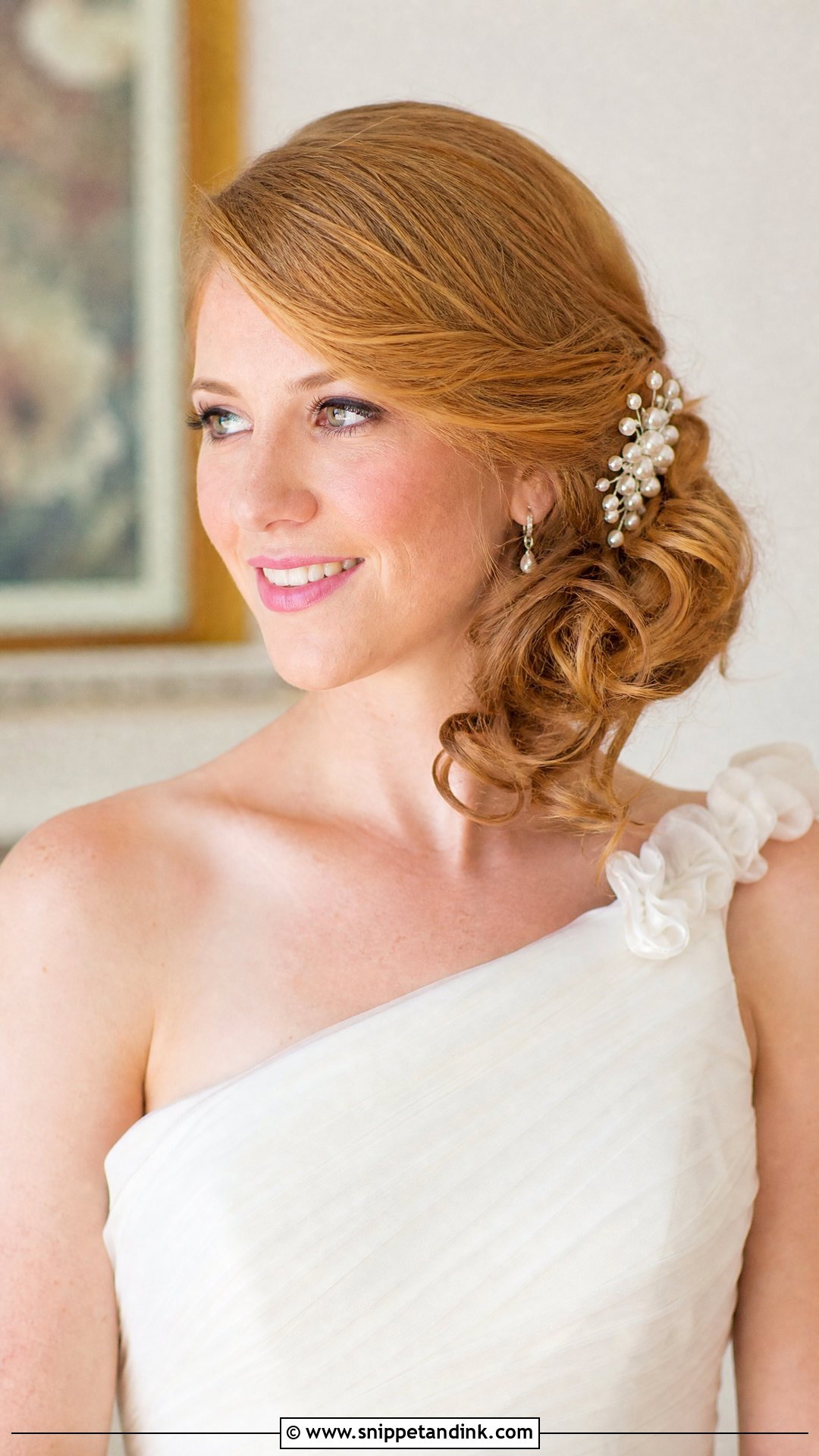
Placing the bun off centre gives a softer, asymmetrical shape that photographs well over one shoulder and matches dresses with asymmetric details. It can be smooth, curled, braided or loosely twisted. It suits side parts with sweeping front pieces. I set the bun on the side opposite your partner during the ceremony, so the shape faces the guests rather than being hidden. A floral comb or pearl pin can sit above it.
10. Boho Wedding Updo
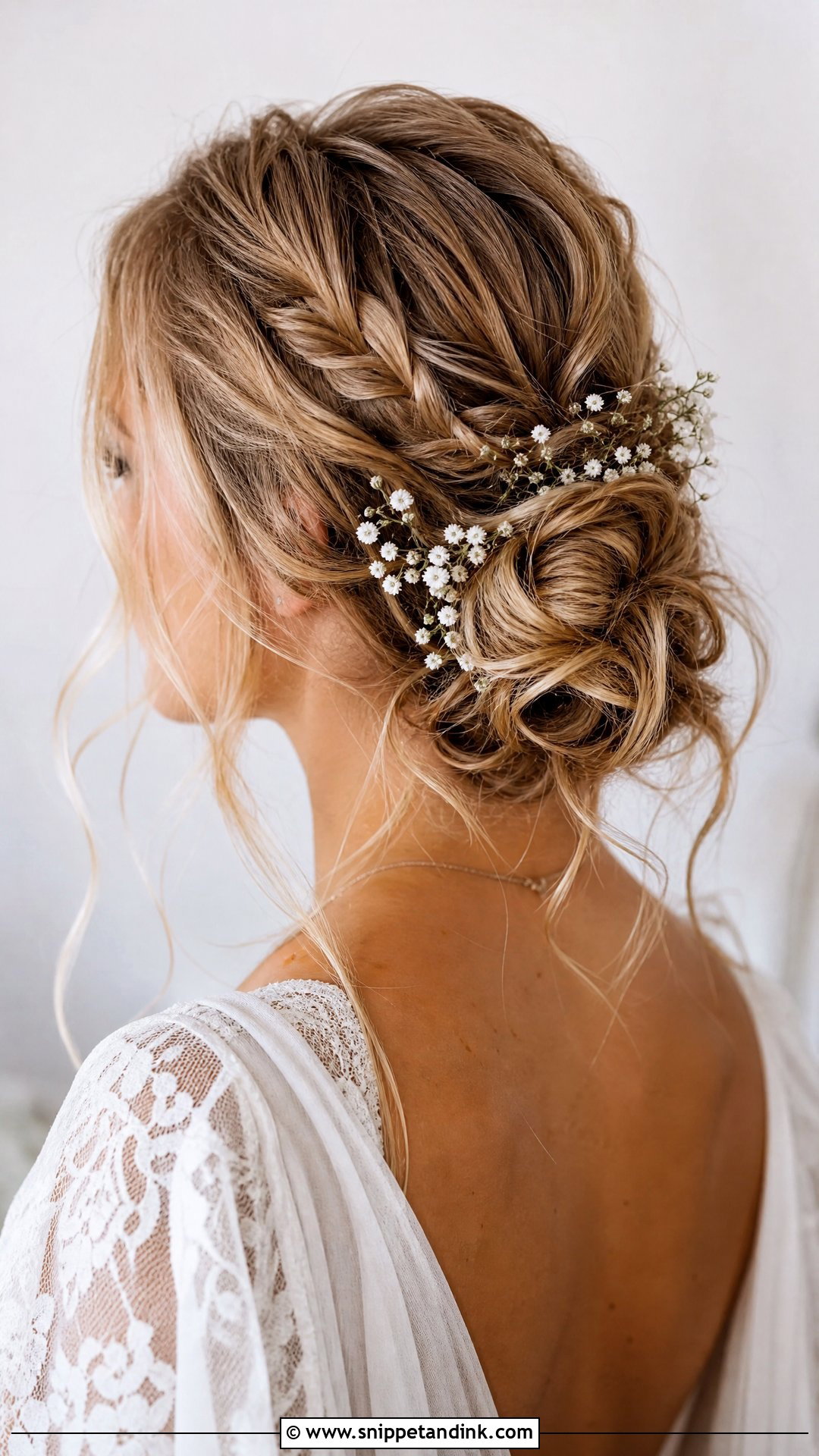
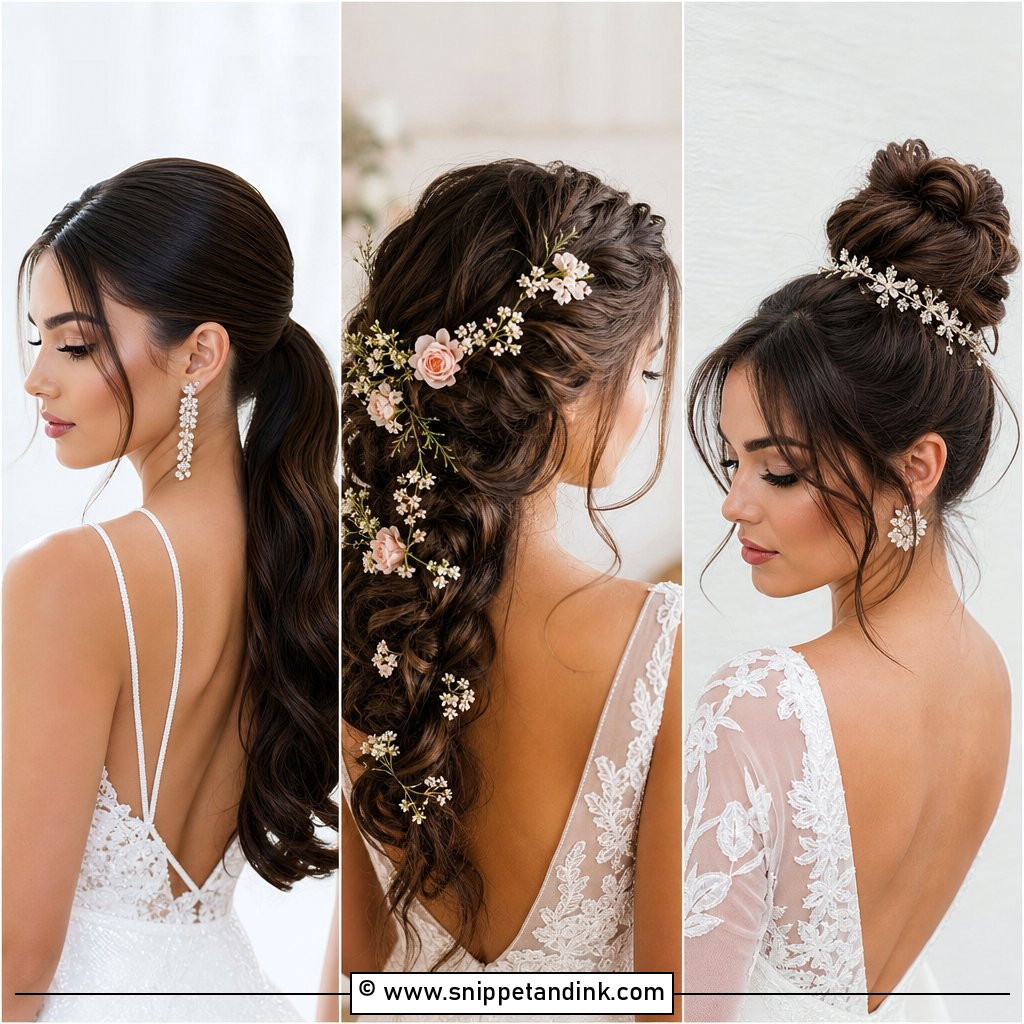
A boho updo needs texture to look right, so I usually wave the hair first. Loose braids, undone twists, airy volume and small face-framing pieces make it up. It suits outdoor ceremonies, desert and beach weddings, and dresses with lace, chiffon or flowing sleeves. Fresh flowers, tiny pins or a delicate vine finish it. It should look natural, though not careless: the difference is in balanced shape and secure pins hidden underneath.
11. Pearl Pin Wedding Updo
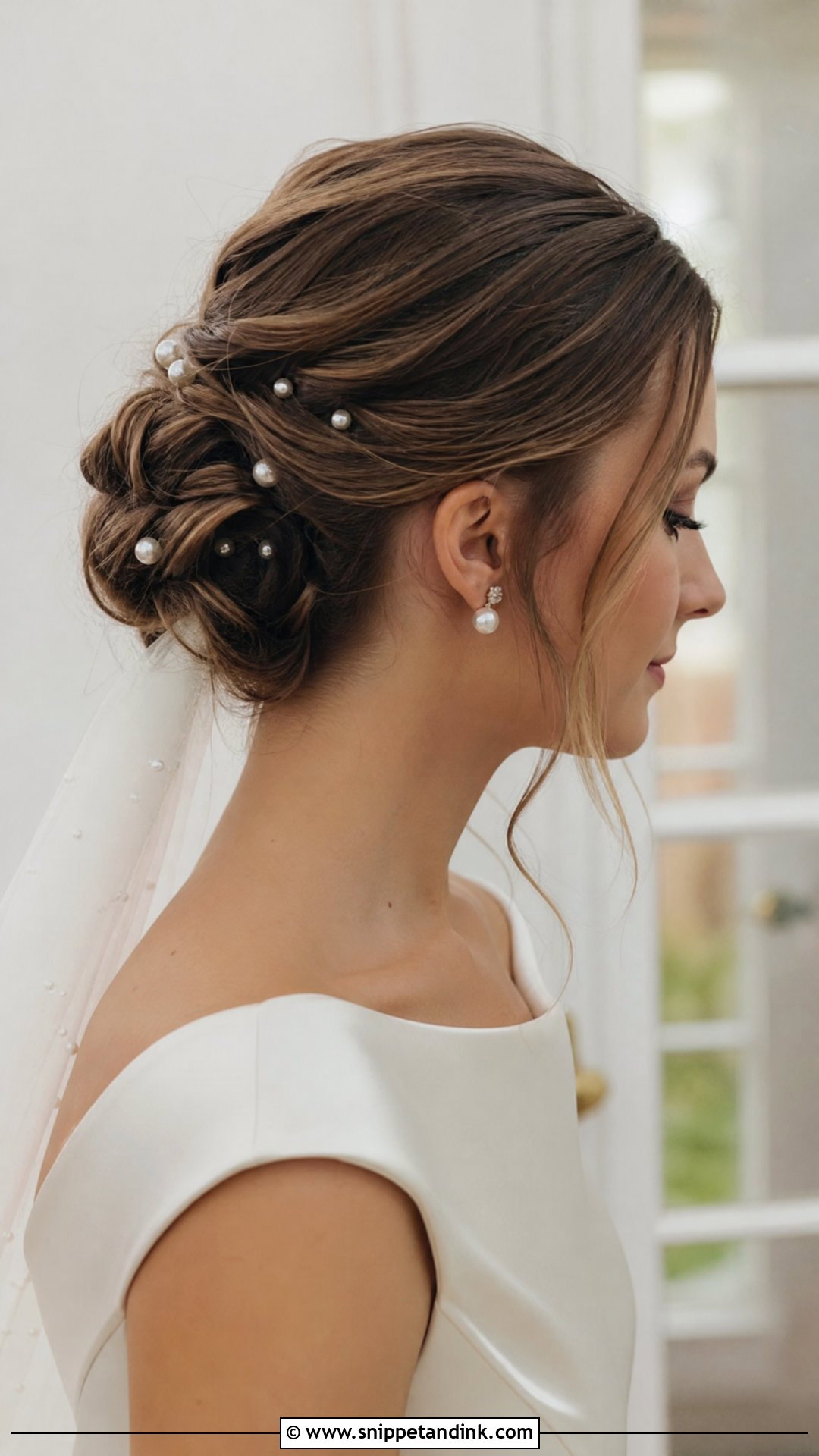
Pearl pins add bridal detail without a tiara. The base can be a low bun, chignon, twist or soft gathered updo, and the pins are scattered lightly or grouped. I keep the hair surface smooth enough that the pearls read clearly; on very textured hair they disappear. Satin gowns, classic veils and soft makeup suit it. Try the pins in your actual hair colour first, since white pearls pop on dark hair and can vanish on platinum blonde.
12. Veil Wedding Updo
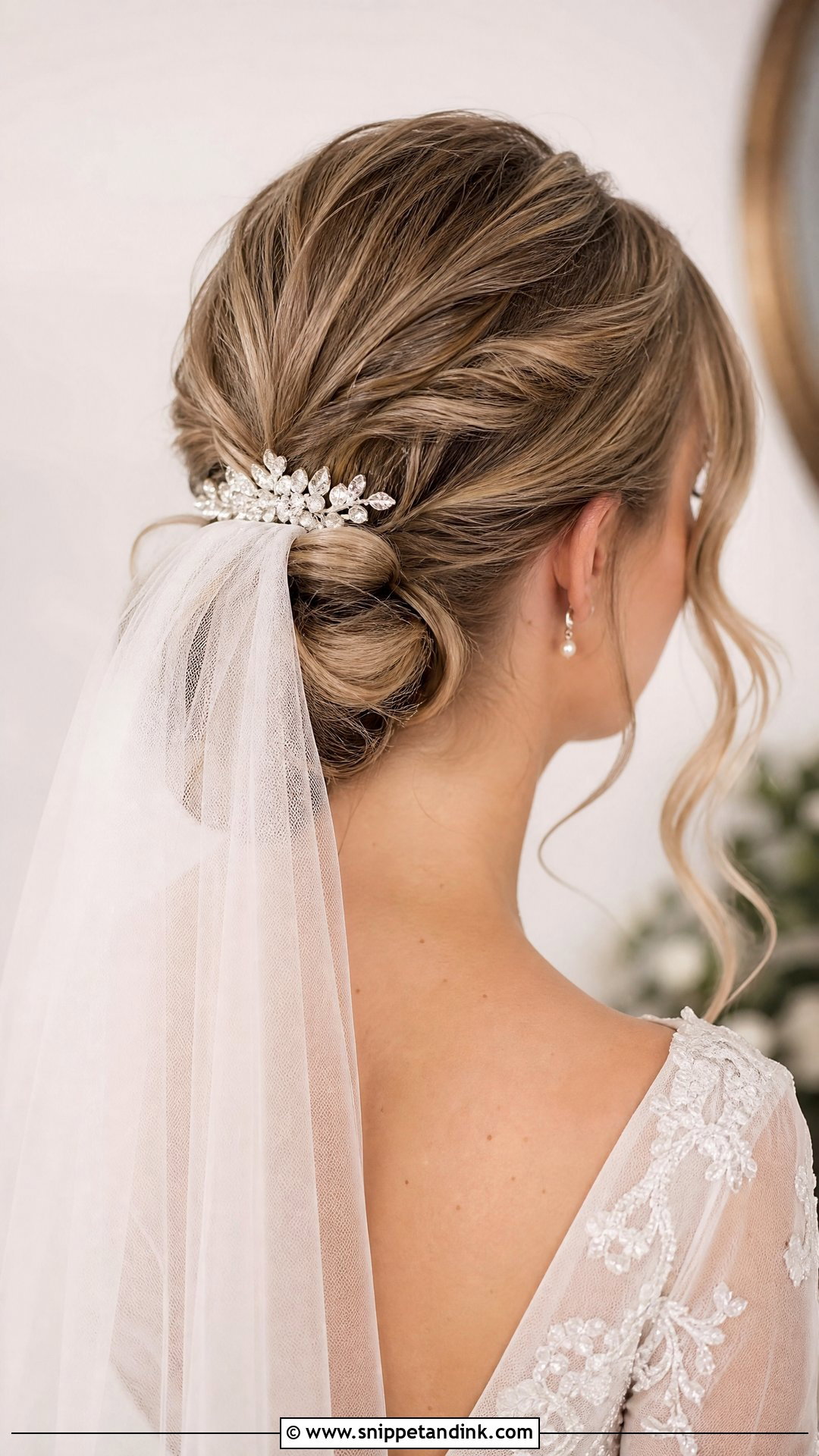
A veil updo has to be planned from the veil backwards: where it sits, how it attaches and how it comes out later. Low chignons, buns and French twists are easiest, because they give the comb a solid base. Above the bun reads traditional and dramatic; below it leaves the updo visible. Bring the actual veil to your trial so your stylist can test placement and weight. The goal is a style that looks right both with the veil on and after it comes off.
13. Flower Wedding Updo
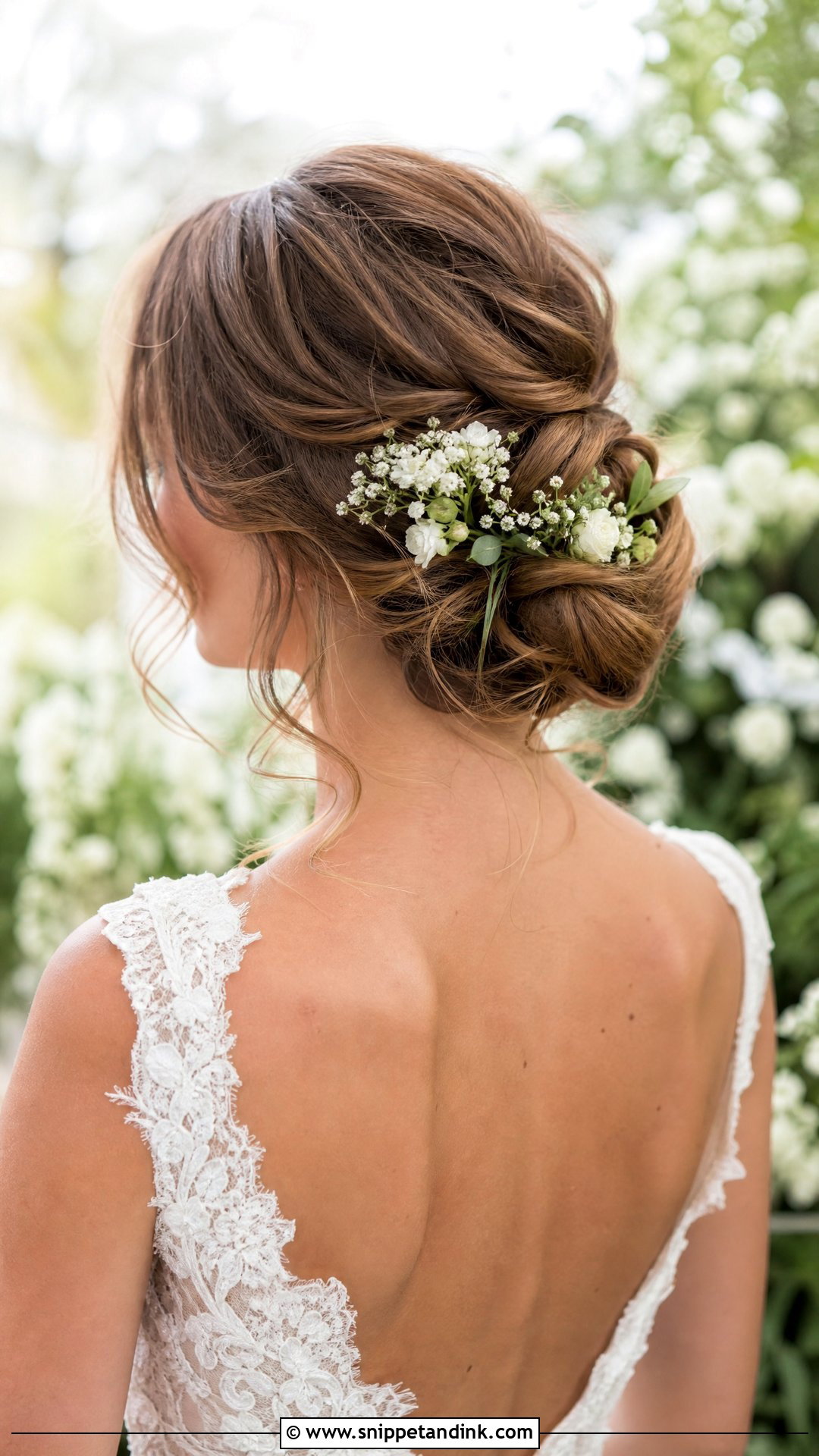
Flowers suit spring, summer, garden and destination weddings, tucked into a low bun, woven through a braid or ringed around a twist. Smaller blooms look more refined and are much easier to secure than large heavy heads. Get your florist and stylist talking early, so the flowers match the bouquet and are chosen to hold up in heat. Loose texture and soft curls suit them, and they’re a natural alternative to sparkle.
14. Vintage Wedding Updo
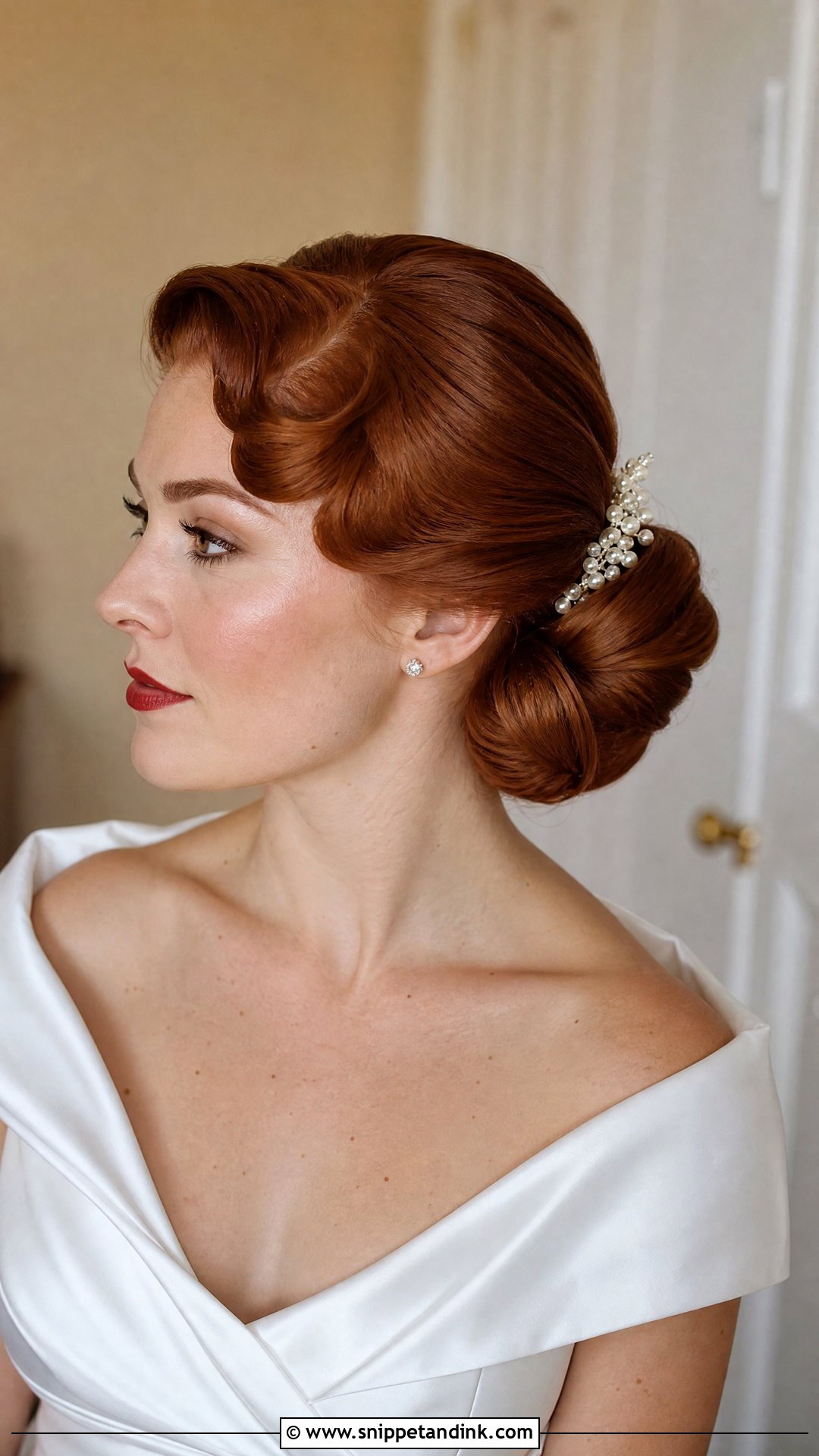
Old Hollywood glamour shows up in sculpted waves, a rolled bun, a soft French twist or smooth pinned curls. The finish is polished but should still be comfortable to wear. Red lipstick, satin, birdcage veils and pearls all suit it. To keep it from looking like a costume, I soften the volume and avoid lacquering the shape. It’s especially strong in black-and-white photos, where the shine and structure come through clearly.
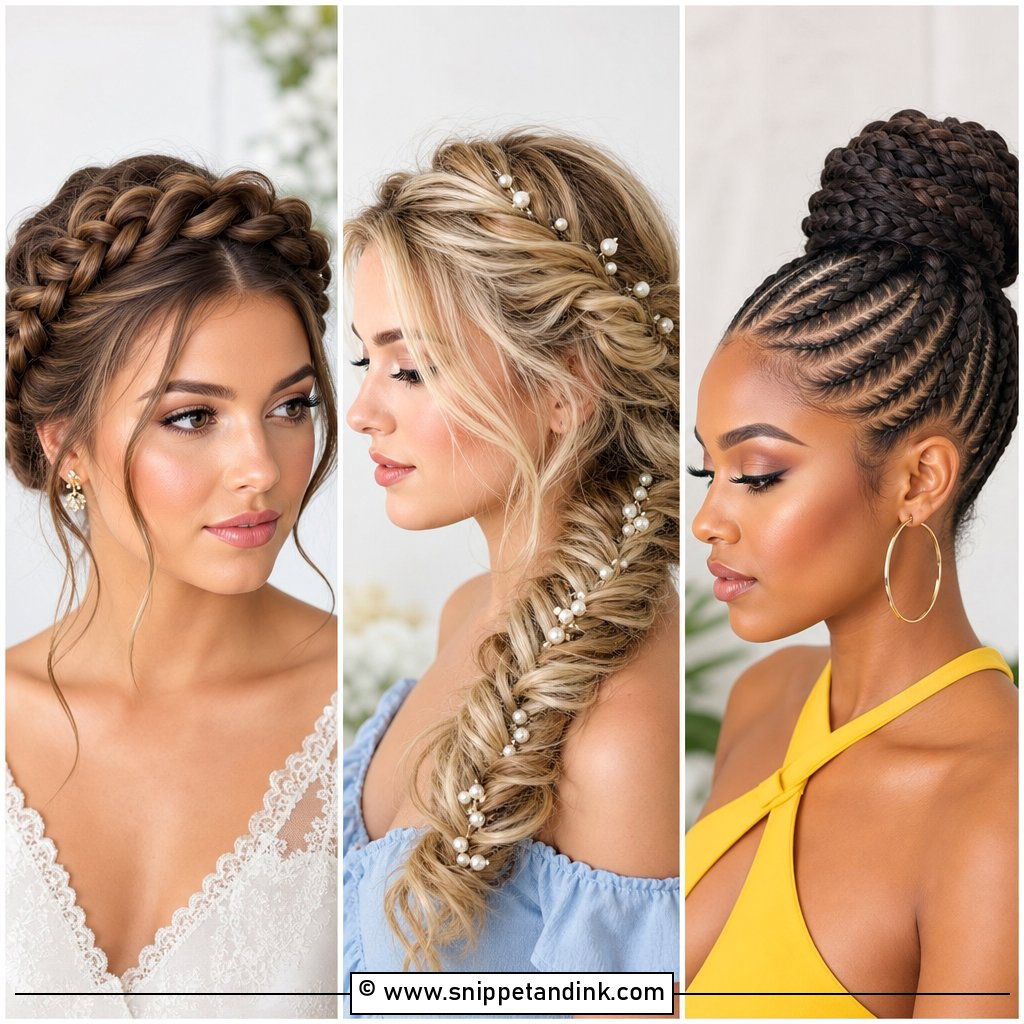
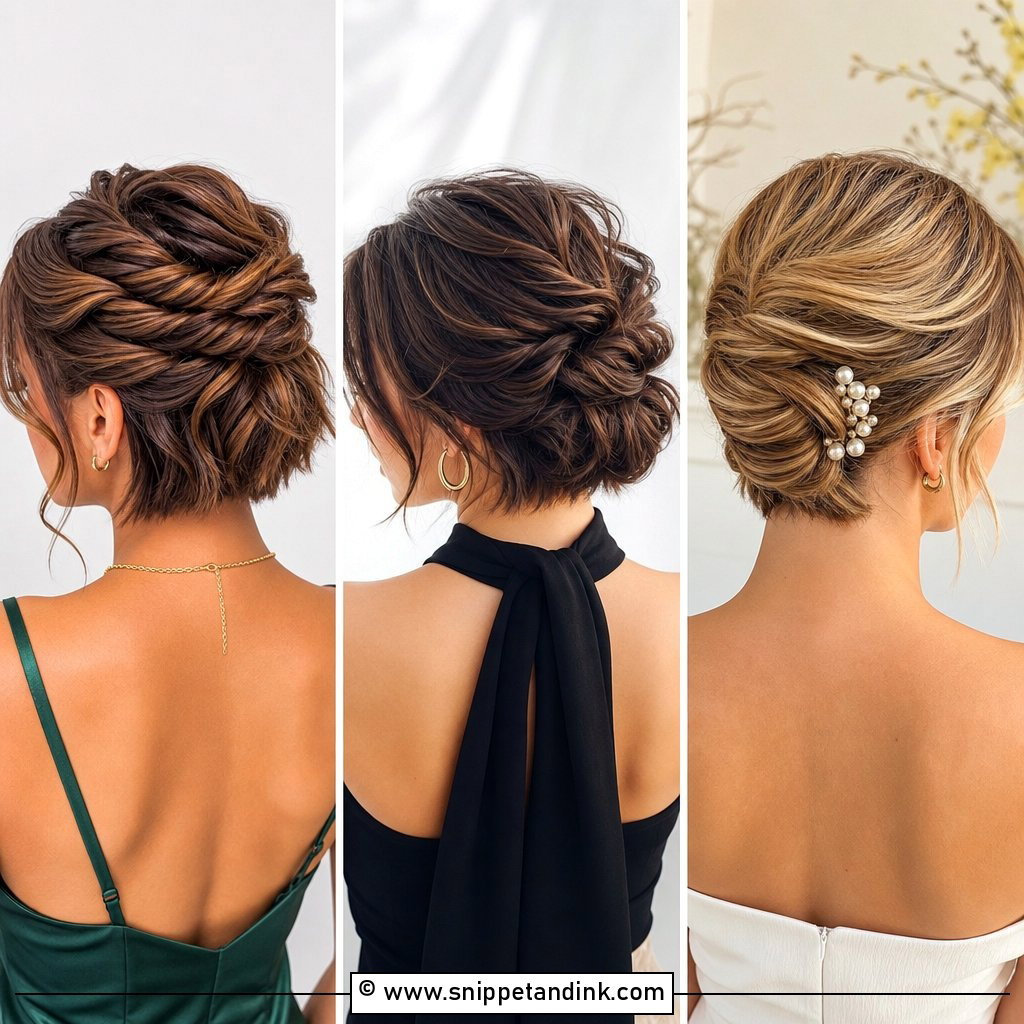
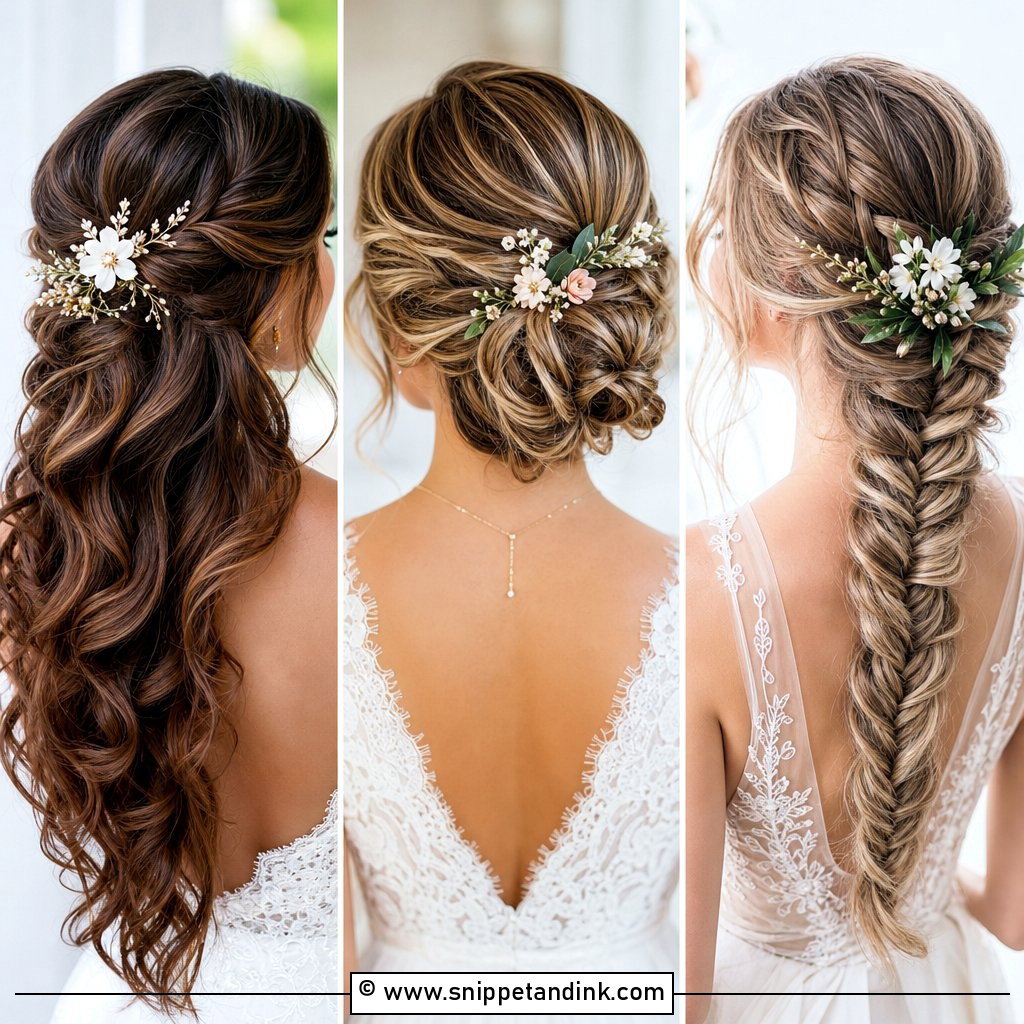
15. Textured Low Bun Wedding Updo
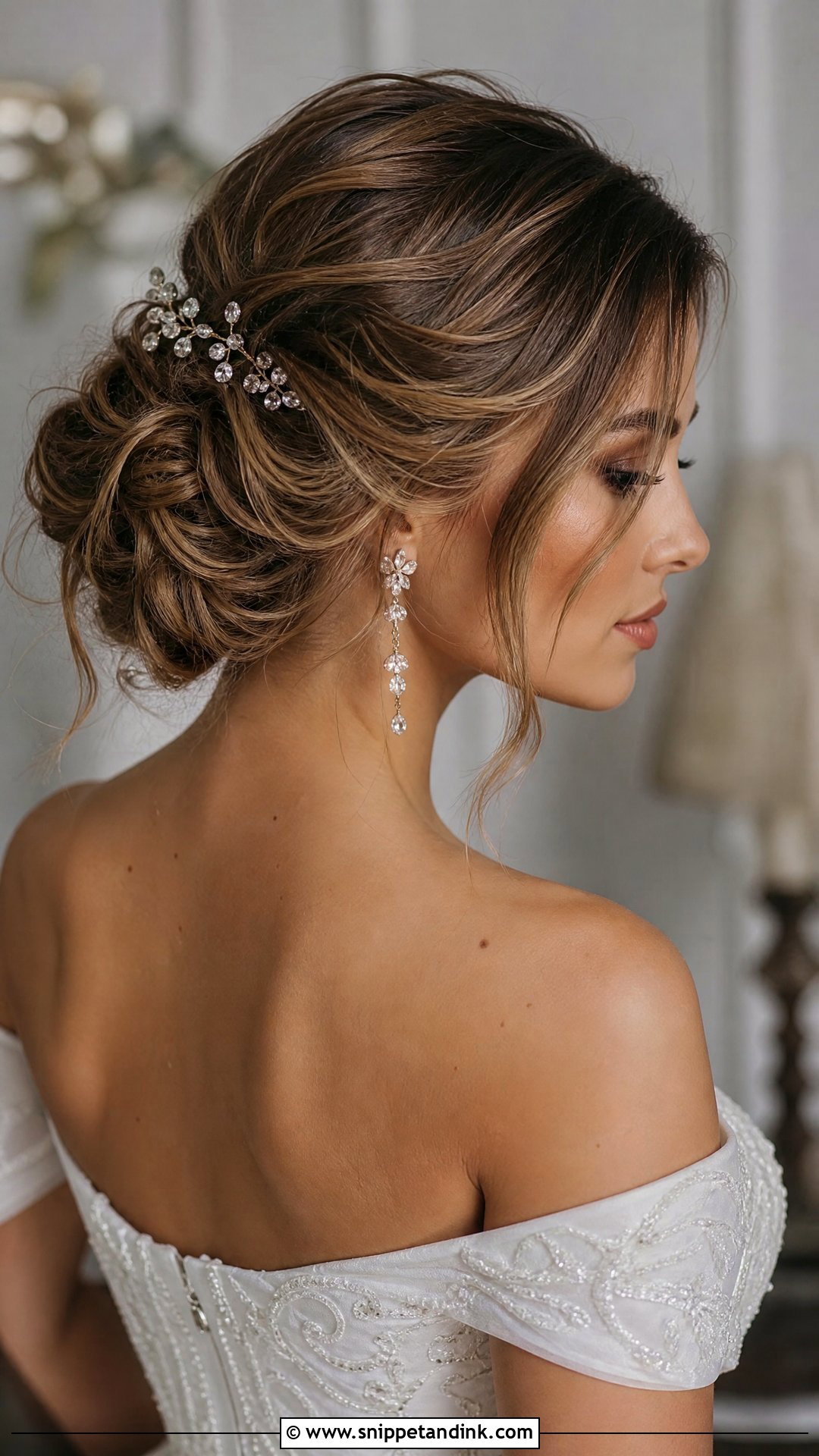
The textured low bun is the style I’d call most adaptable: it suits a lot of dresses and venues. The hair gathers low, and twists, waves and soft pinned sections give it movement. It’s less formal than a sleek bun and more polished than a messy one. Highlights show up nicely in the texture. I pin it securely underneath and keep the top soft. Veils, pins, combs and flowers all sit well with it.
16. Crown Braid Wedding Updo
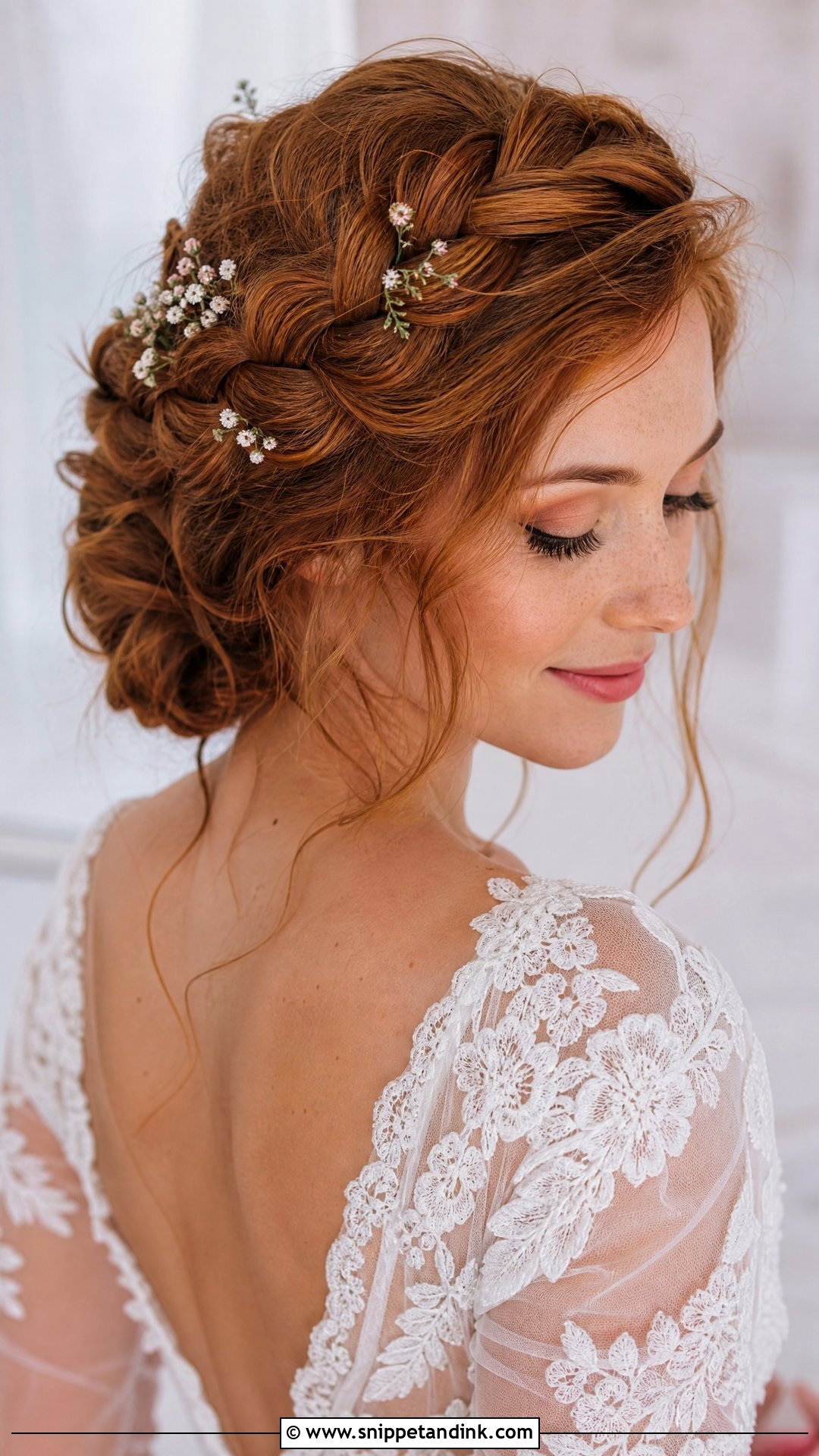
A crown braid keeps the hair fully up while adding a fairy-tale feel. It can wrap like a halo or cross the front before blending into a low bun. Outdoor weddings and boho dresses suit it, and the detail is visible from every angle. Medium to long hair works best; extensions can fill out a thinner braid. I keep it slightly loosened so it looks current. Tiny flowers or pins add charm without weight.
17. Natural Hair Wedding Updo
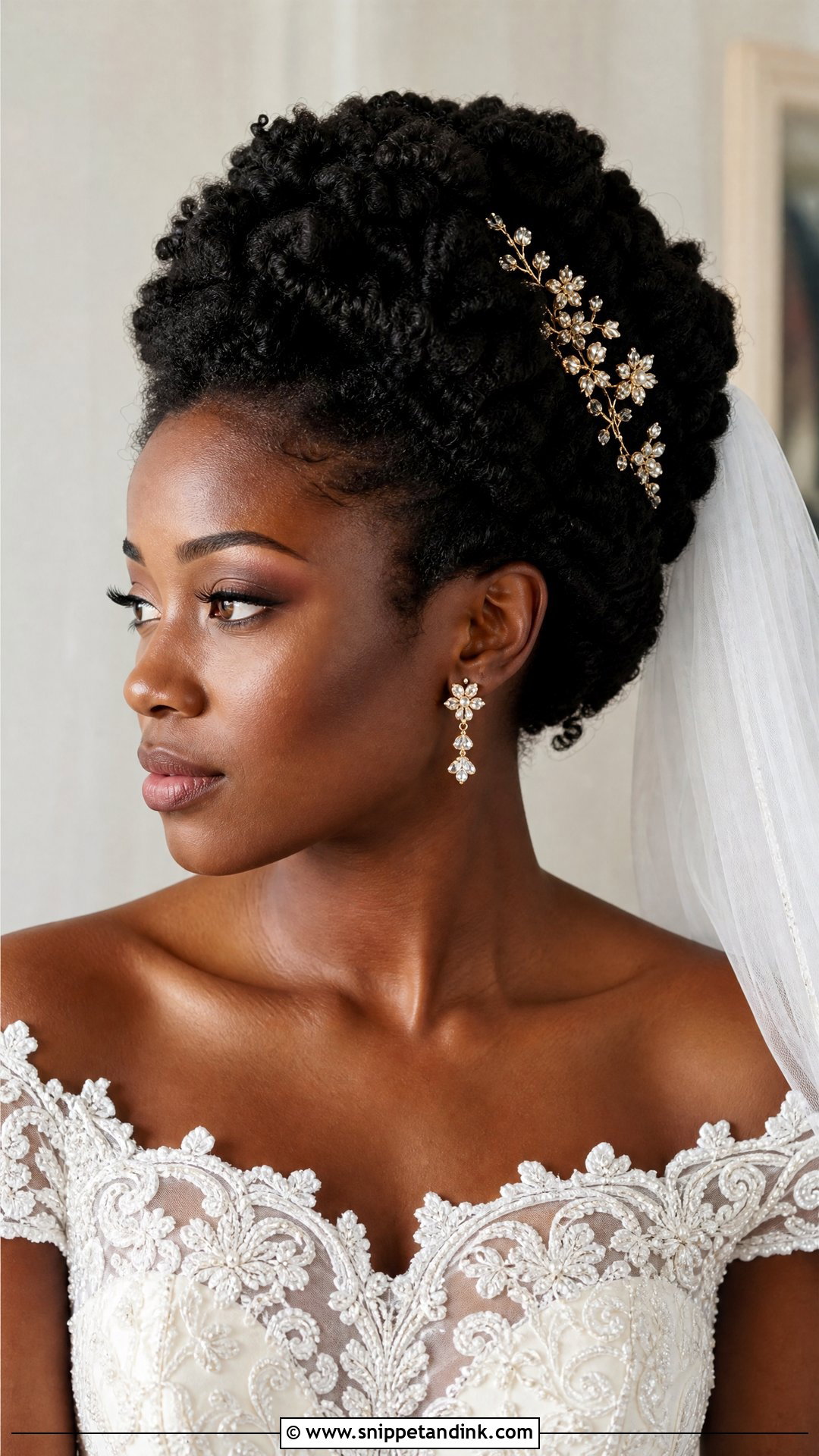
A natural hair updo can be sculptural, soft or romantic, depending on your curl pattern and taste. Coils, curls, twists, or locs can be pinned into a crown, a low bun, a puff or a braided updo. The aim is to keep the texture and make the shape secure for a long day. Moisture matters most, so plan conditioning and any protective styling ahead of the wedding week, not the night before. Gold pins, pearls, flowers or a veil all suit it.
18. Short Hair Wedding Updo
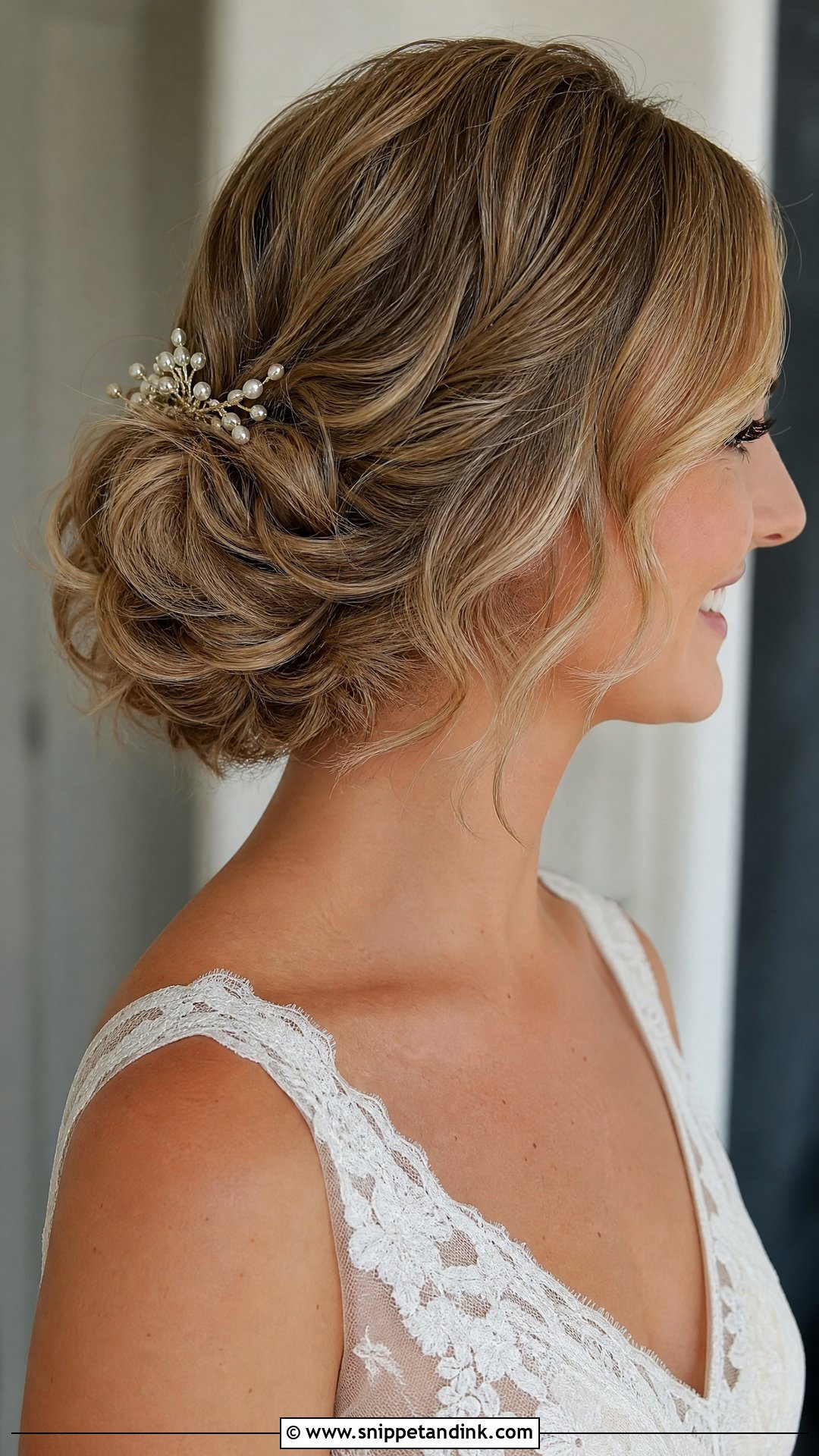
Bob-length hair can be curled, tucked, twisted and pinned into the impression of a low updo. Face-framing pieces soften it, and pins or a small comb add detail. On very short hair, I build volume at the crown and let accessories create the bridal shape. Short hair shows pins more easily, so I match pin colour to your hair as closely as I can. If you’d rather avoid extensions, this gives you the feel of an updo without them.
19. Long Hair Wedding Updo
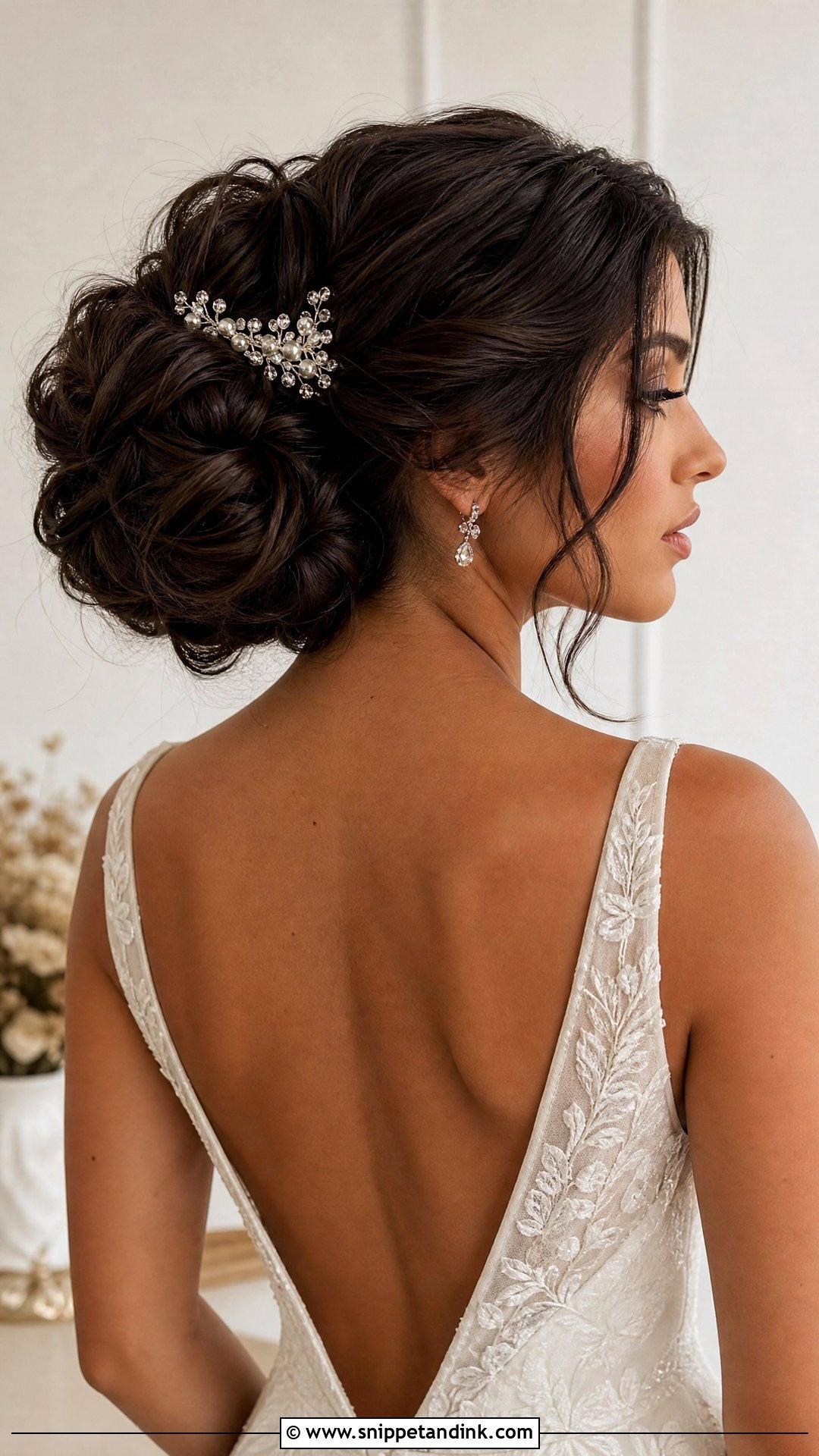
Long hair gives a stylist plenty of material for volume and detail: a large low bun, a braided chignon or a soft sculpted shape. The challenge is weight. Very long hair pulls on its anchor points, so I spread the load across several small sections instead of one big bun, which keeps the updo comfortable for hours. Open-back gowns, cathedral veils and detailed hair combs suit it, and the fullness carries the look without needing much decoration.
20. Half Up Wedding Updo
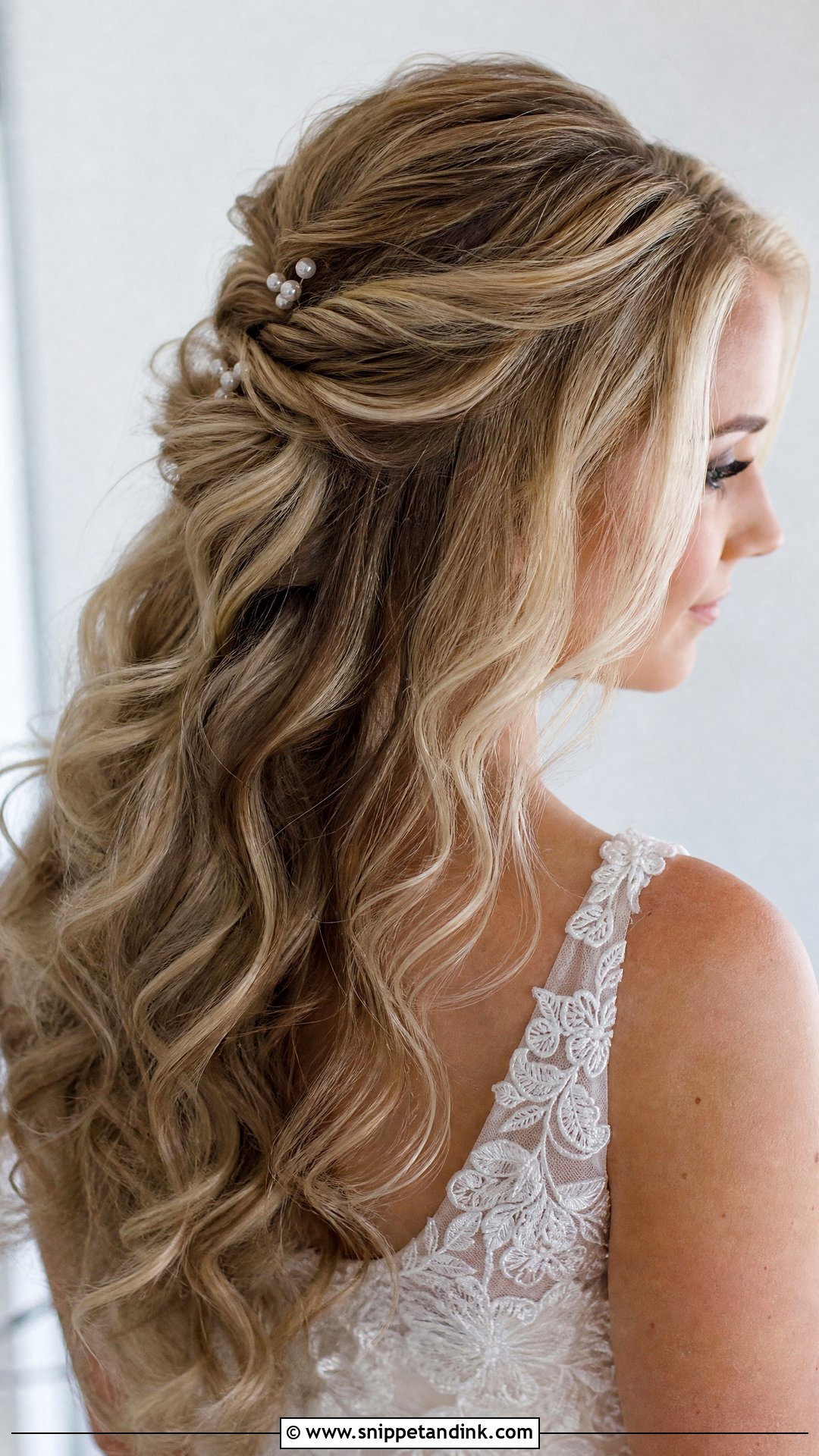
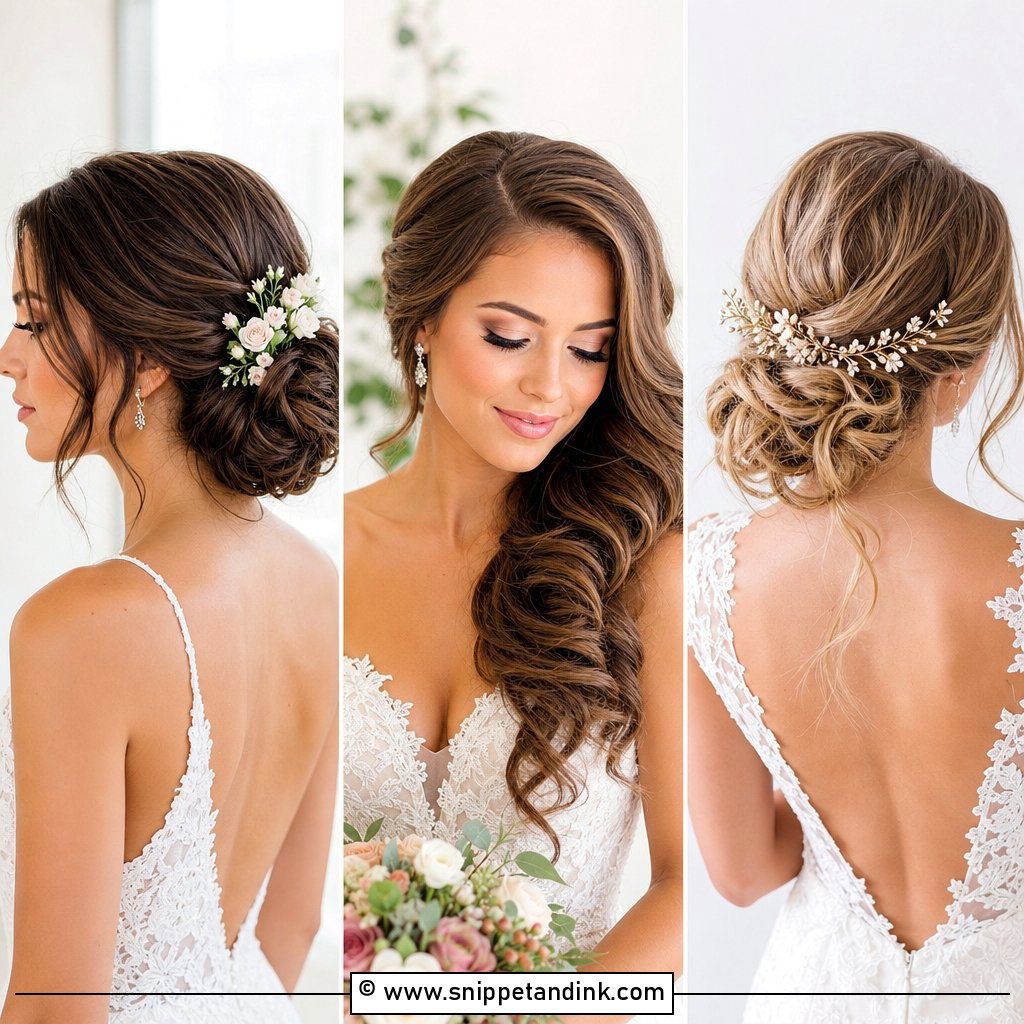
Half up gives you loose hair with the security of pinned styling on top. The top section is twisted, braided or softly lifted, and the rest falls in curls or waves. It’s a good choice if you usually wear your hair down and want to recognise yourself in the photos. Veils, floral pins and delicate combs suit it. Outdoors, it keeps the front controlled, though the loose lengths will still move in the wind.
Rain, Heat and a Humid Marquee Change Which Updo Survives
Humidity is the biggest threat to bridal hair. Moisture in the air makes curls relax, swells smooth hair into frizz and loosens pins as the hair expands. Sleek styles show frizz first, at the hairline and the part. Textured updos hide it far better, which is why I lean toward them for a summer marquee or a beach.
If the forecast turns, I swap a little cream for a stronger hold product and finish with an anti-humidity spray. Pin placement matters more too, because hair moves more once it has absorbed moisture. A small kit of matching pins, a travel spray and a comb is worth the space in someone’s bag.
Five Days Out, Leave Your Hair Alone
The week of the wedding is not the time to try a new shampoo, an oil treatment or a home gloss. New products change how hair grips, and I build the updo around how your hair behaved at the trial. Keep your routine the same, wash when your stylist tells you to, and skip heavy conditioner on the morning itself.
The one change I do welcome is a trim, as long as it happens before the trial rather than after it. And if you colour your hair, have it done a week or two ahead. Freshly coloured hair can feel slippery for a few days, and the tone settles to its truest shade after a couple of washes.
An Updo Should Still Feel Like You at Midnight
Bridal updos range from classic to modern and sleek to textured. Go for one that supports your dress, your face shape and your hair texture, and that matches how you want to feel. Bring saved photos to your trial, but stay open to small changes that suit your real hair. Ask about veil placement, humidity, accessories and how the style will hold through dancing. A good updo looks right at the ceremony and still feels comfortable when you take it down.
You'll Like These Ideas:


Leave a Reply