
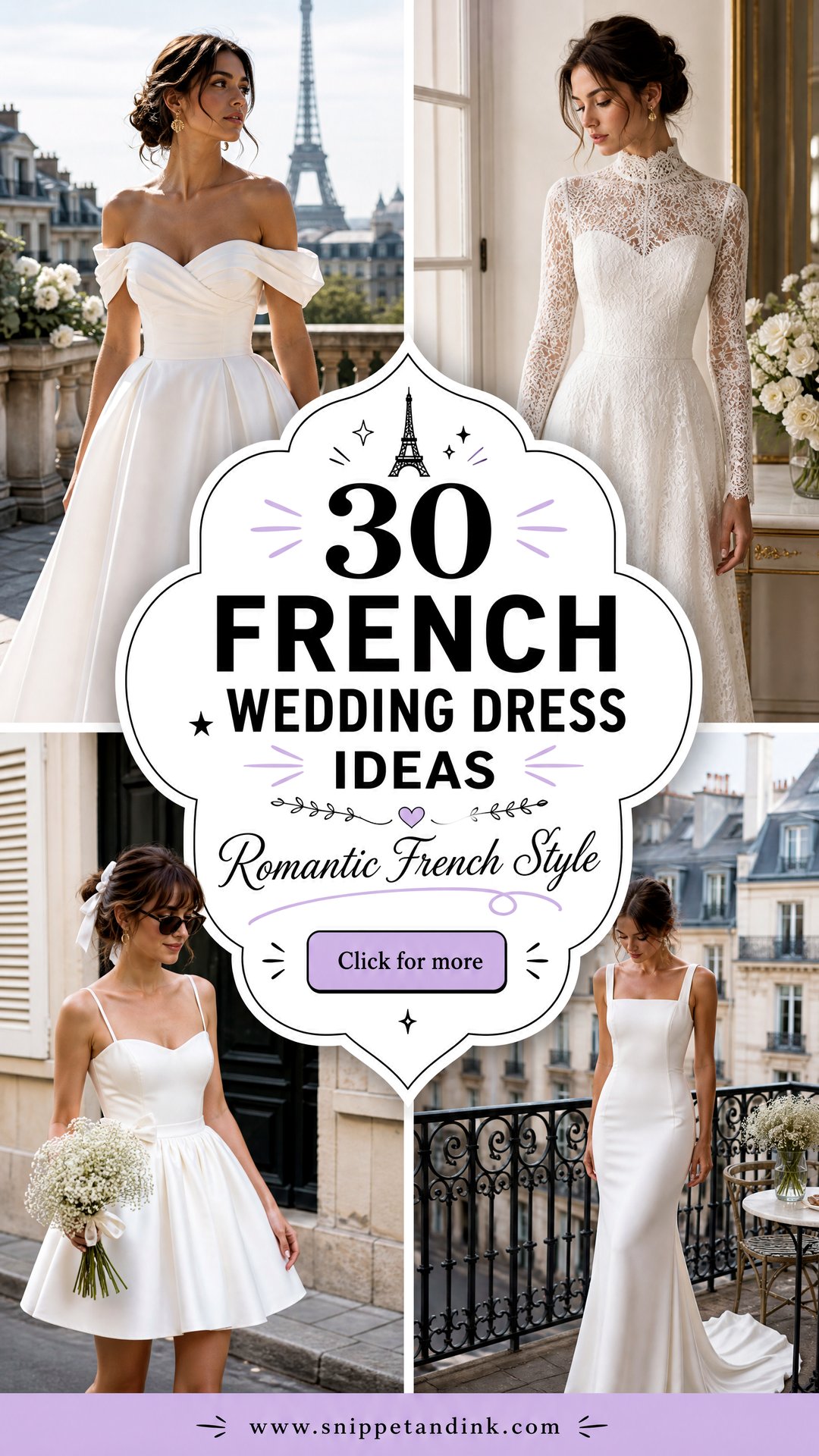
When a bride asks me for a French look, she rarely means a particular country’s dress. She means a feeling: a gown that looks unfussy, moves when she walks and has one detail she’ll remember, like lace sleeves, a silk scarf, a pearl veil or a single bow. That approach suits a lot of what brides are choosing now, from minimal crepe gowns and lace to minis, separates, halters and a lighter second dress for the party. Here are thirty ways to wear it at a city hall, a garden, the coast or a country house, with my notes on fit and fabric.
What Makes a Gown Read as French
When I put together a French-feeling look, I’m working with a few principles rather than a list of dresses. They help you explain what you want to a boutique consultant, who otherwise tends to pull the most popular gowns in the shop.
- One focal point. Lace sleeves or a bow or a cape, not all three.
- Matte or soft-sheen fabric. Crepe, silk, fine lace and soft tulle, rather than high-shine satin or heavy beading.
- Movement. The skirt should move when you walk instead of standing stiffly away from the body.
- Undone hair and light makeup. A low chignon, a few loose strands, skin that looks like skin.
Bring two or three photos to the appointment and point to the exact detail you love in each. Telling a consultant “this sleeve, this neckline” gets you far closer than “something French”.
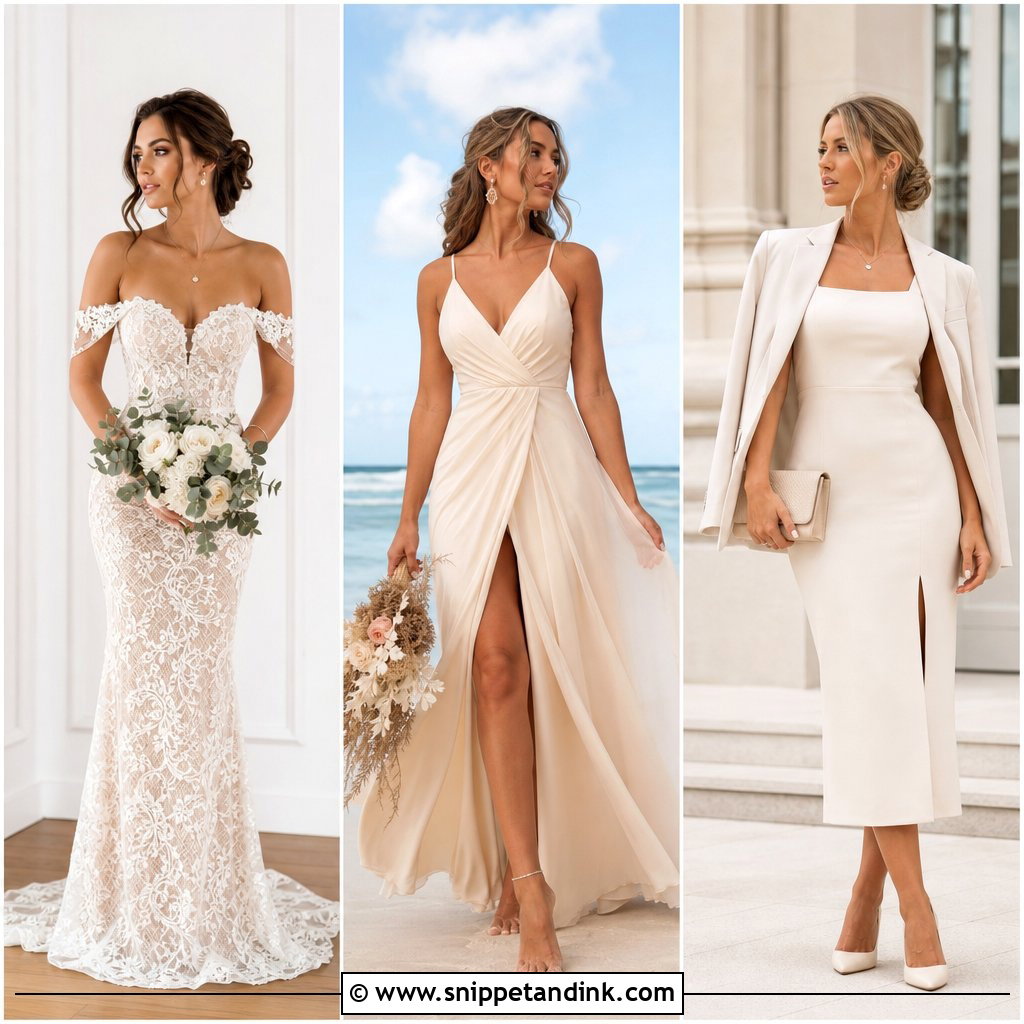
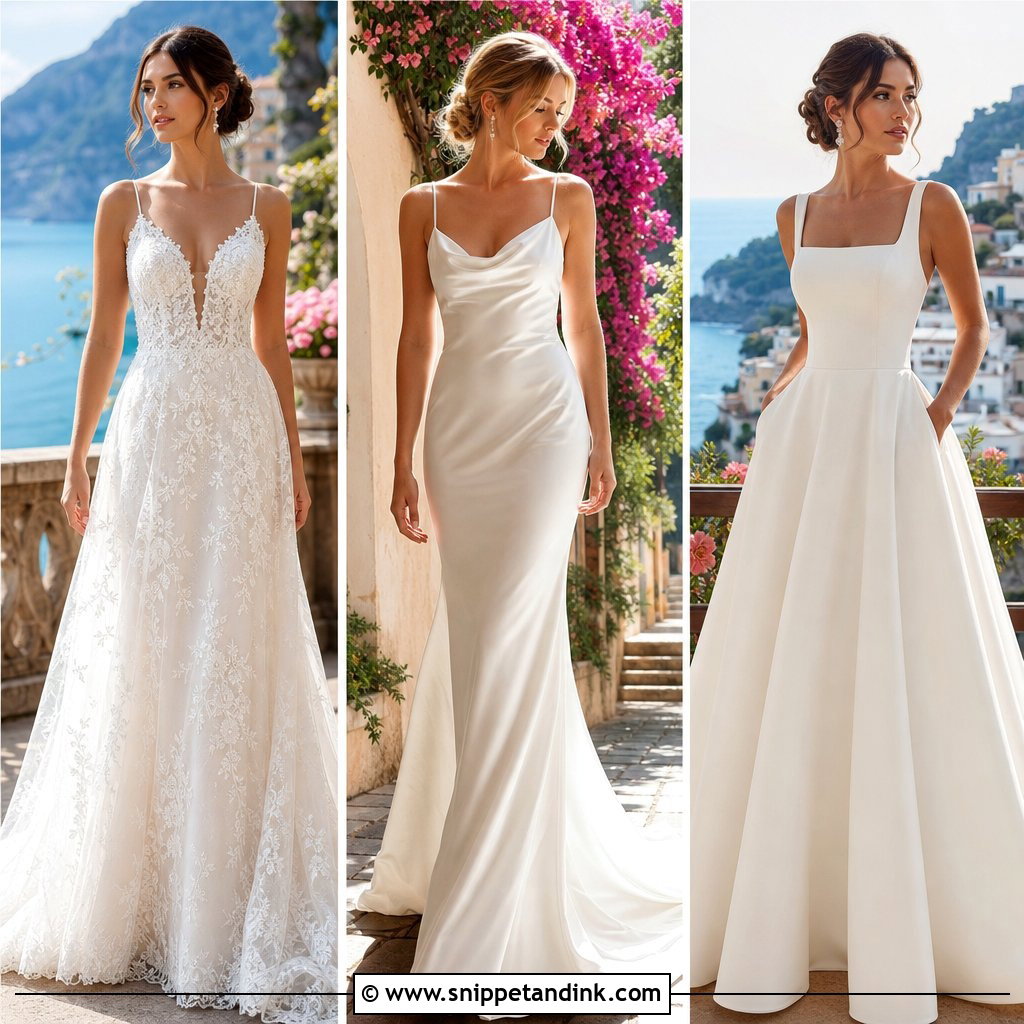
1. French Lace Wedding Dress
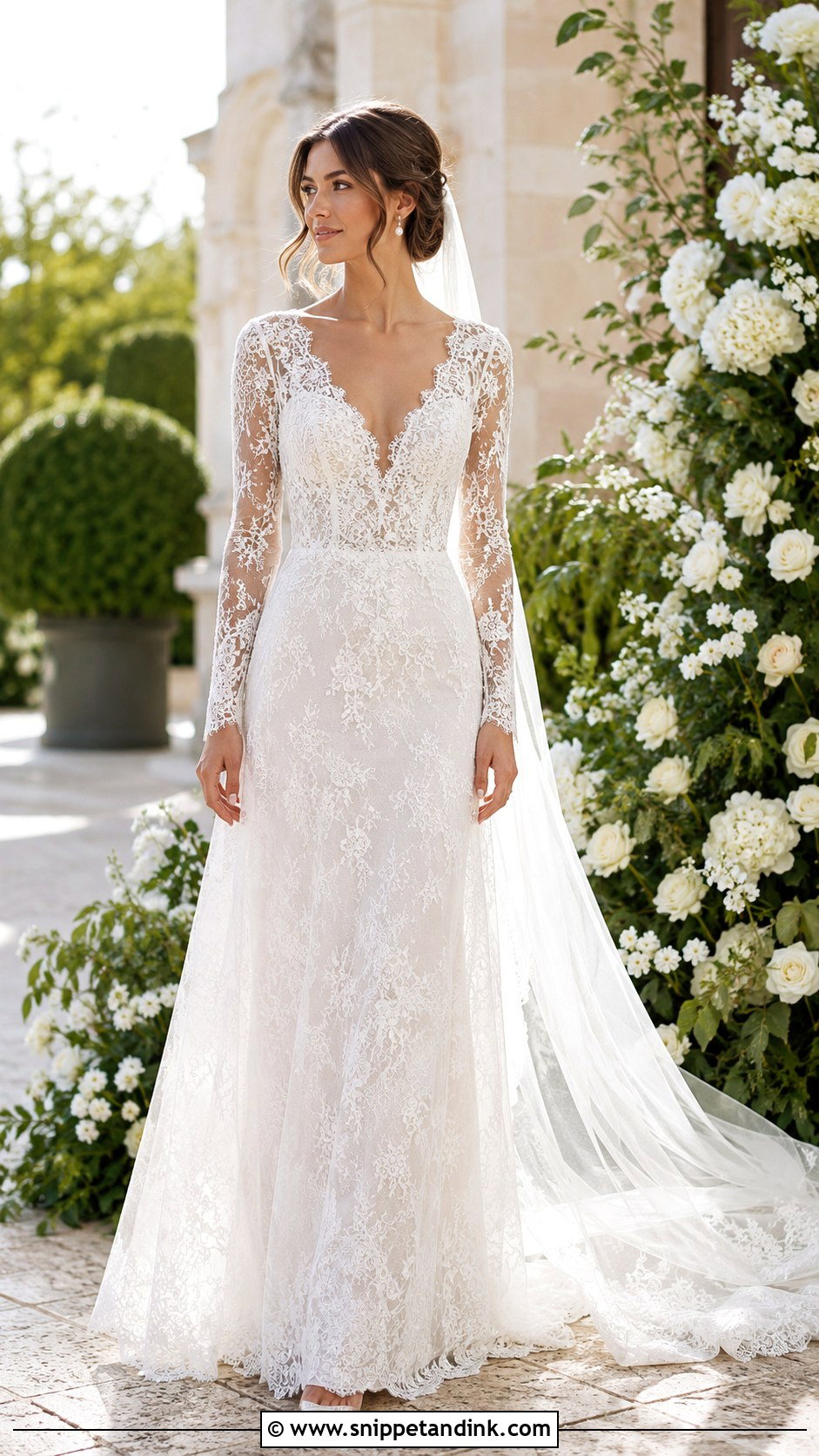
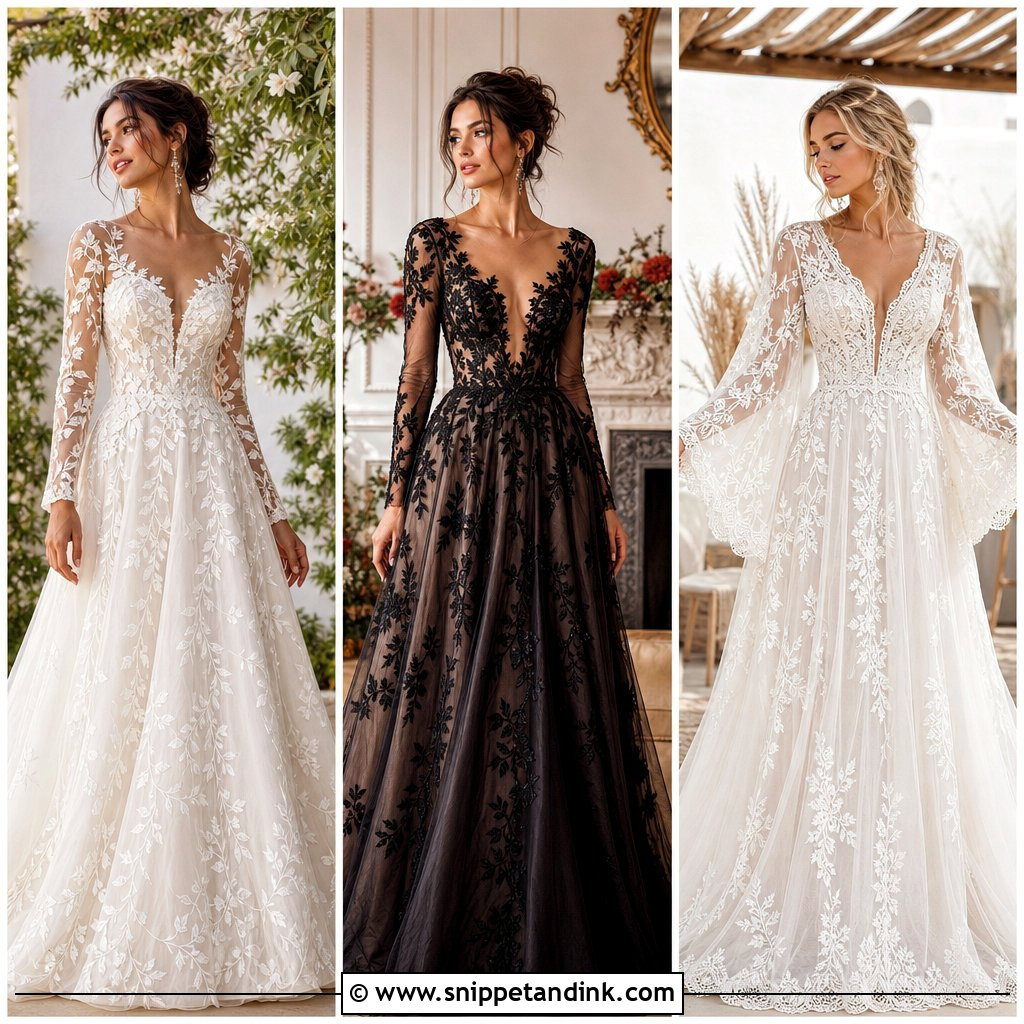
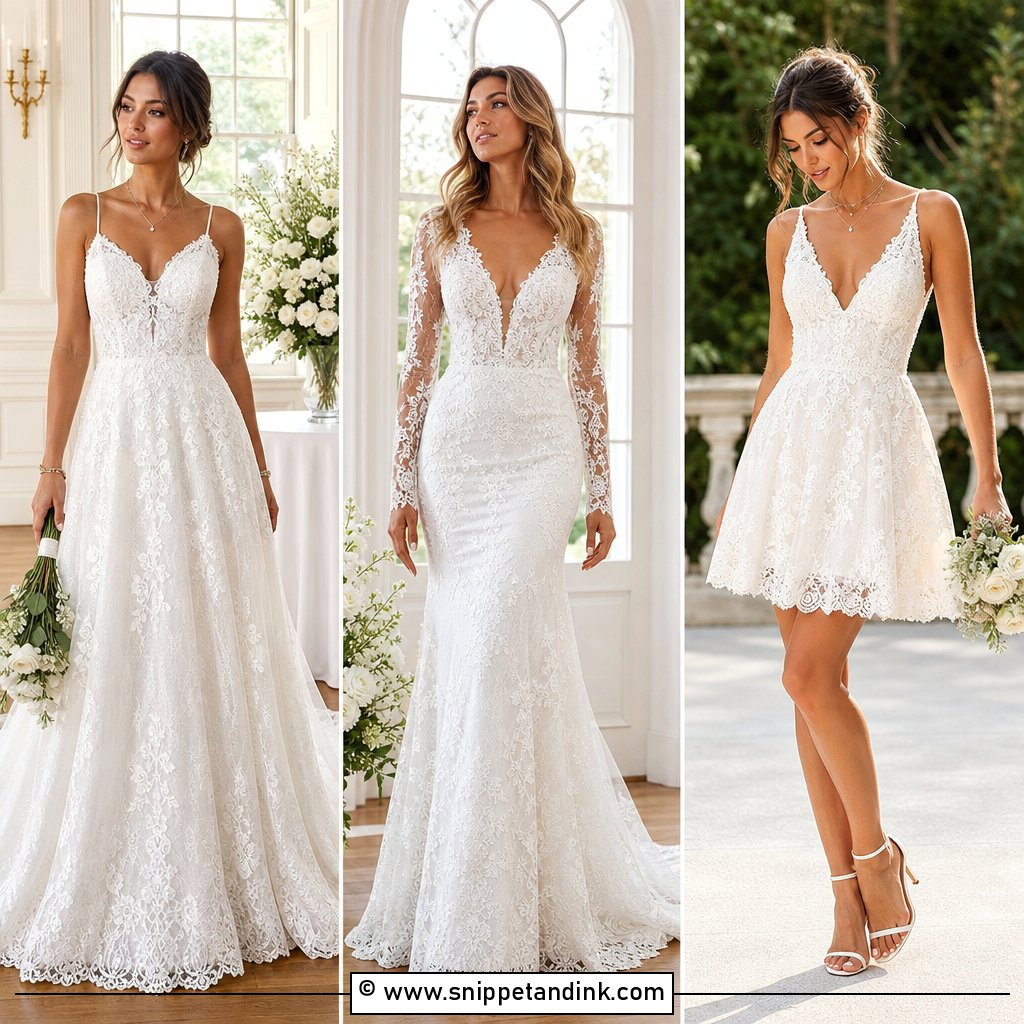
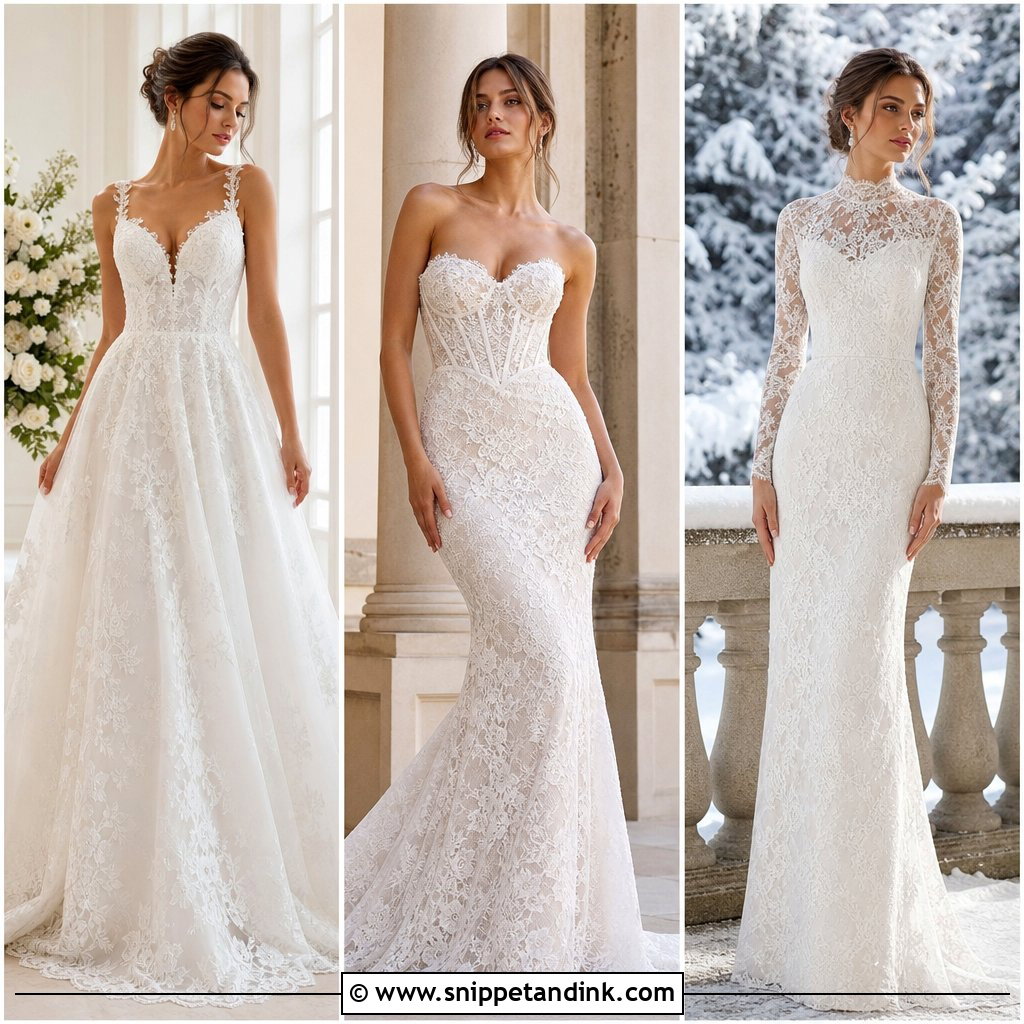
Fine lace is where the French look started, and a lace gown with long sheer sleeves is still the version I’m asked for most. Chantilly-style lace is flat and light, so it suits a fitted bodice and a gentle A-line or column skirt better than a big skirt. The sleeves need to be cut with enough ease at the elbow; tight lace sleeves tear at the seam when you hug. Keep everything else quiet: pointed satin heels, pearl drops, a thin veil, natural makeup and a small white and cream bouquet.
2. French Satin Slip Wedding Dress
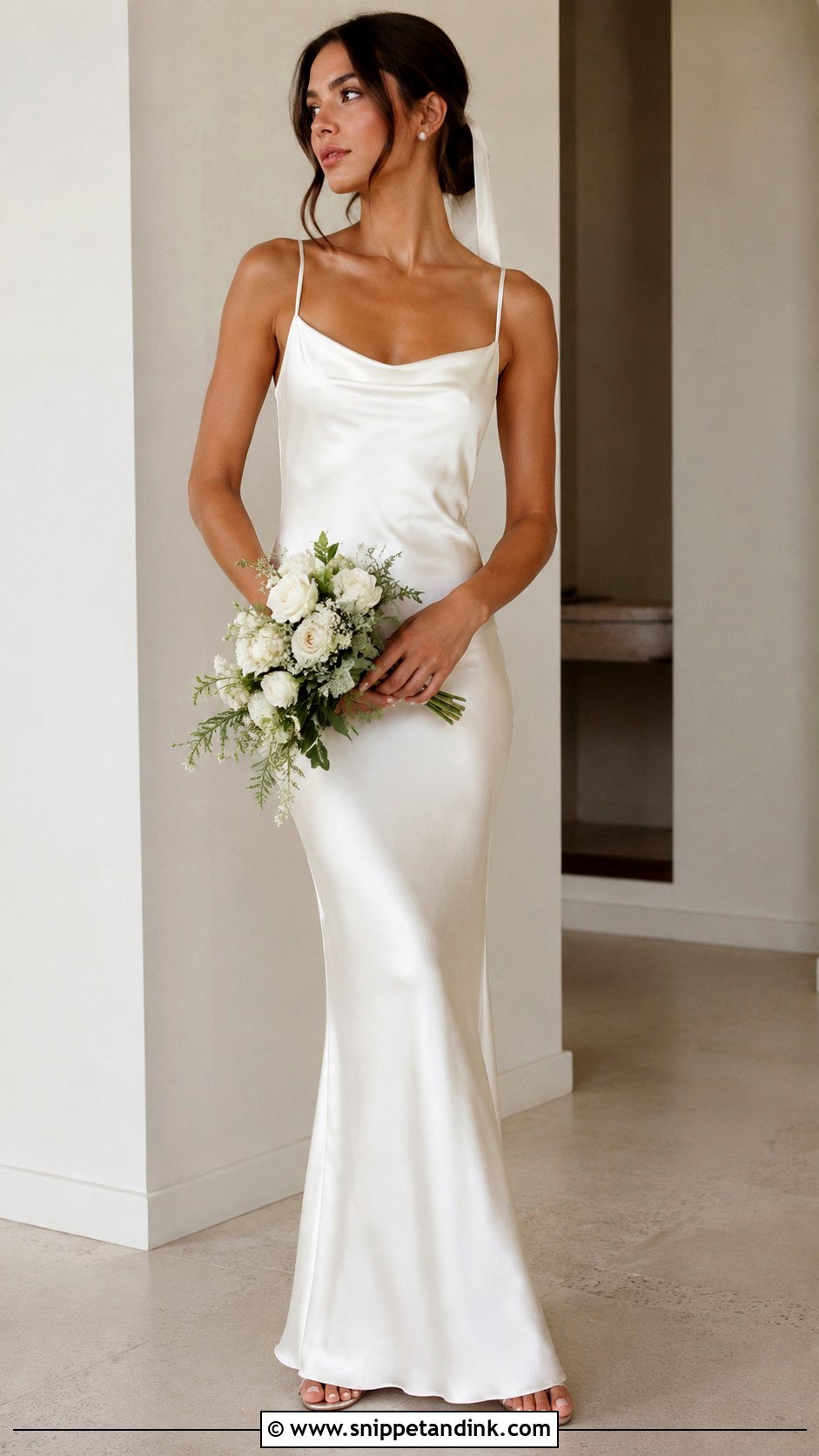
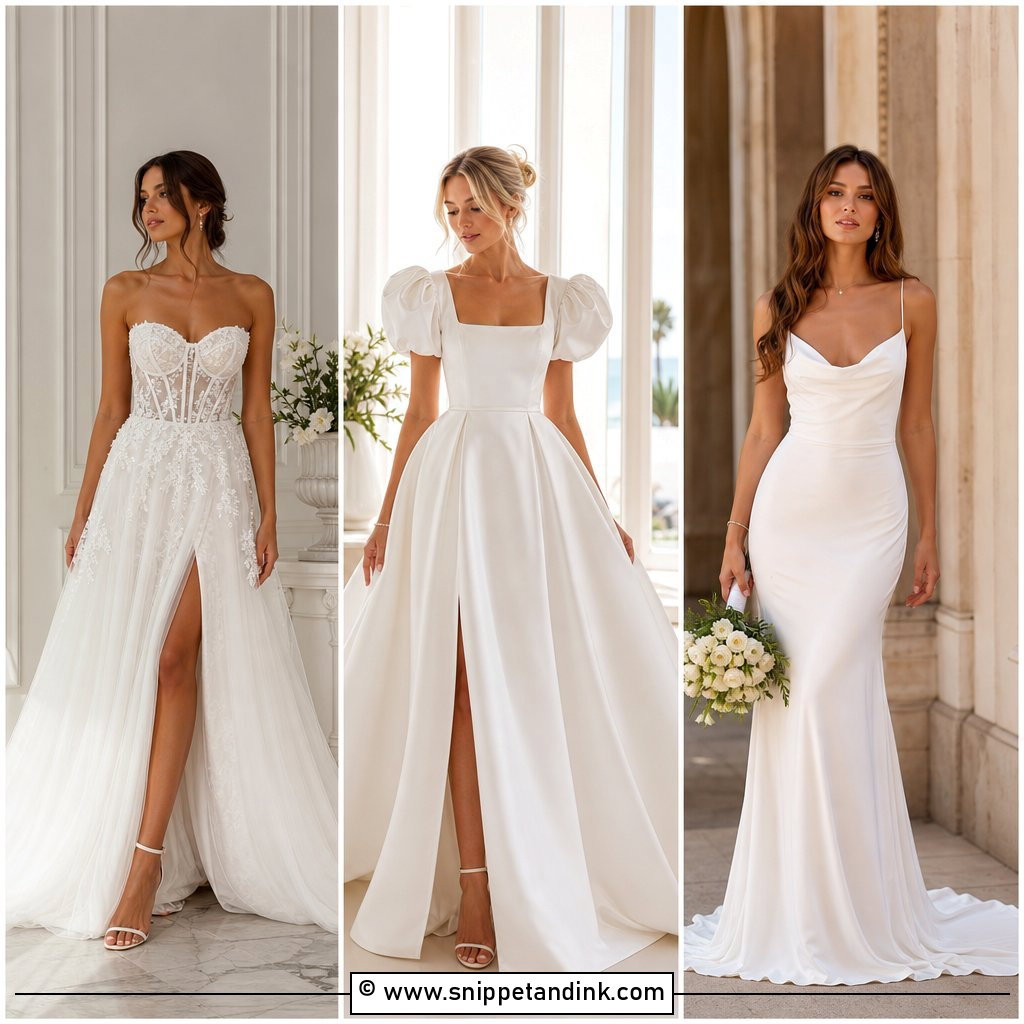
A satin slip is simple on the hanger and difficult in the fitting room. The bias cut that makes it skim the body also shows every seam beneath it, so I always have the bride bring smooth, no-line underwear to the first fitting. Thin straps, a soft cowl or a square neck all look right. A silk hair ribbon and small pearl studs are all the decoration it needs. For a cooler evening, a cropped knit cardigan or a sheer tulle wrap gives coverage without spoiling the line.
3. French Long Sleeve Wedding Dress
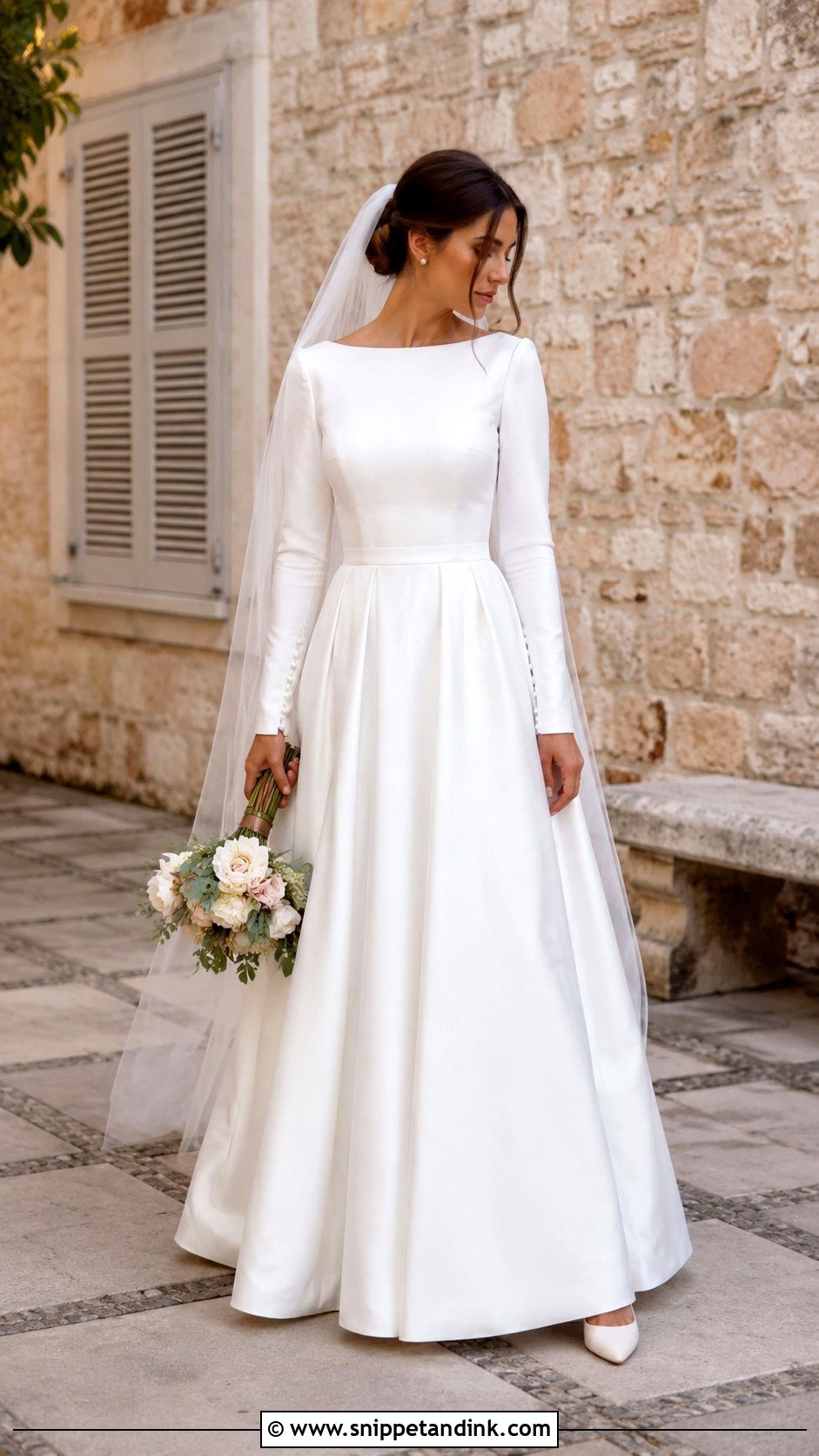
Long sleeves give a gown a composed, graceful line that suits many body types when the bodice is fitted and the skirt flows. Lace, crepe, satin or sheer tulle all work; I choose by season, since a lined crepe sleeve is warm in July. Small details make the difference: a slight puff at the shoulder, or a row of covered buttons at the wrist. Check you can lift your arms to hold a bouquet at chest height. A center-part low bun, pearl earrings and closed-toe heels.
4. French Minimalist Wedding Dress
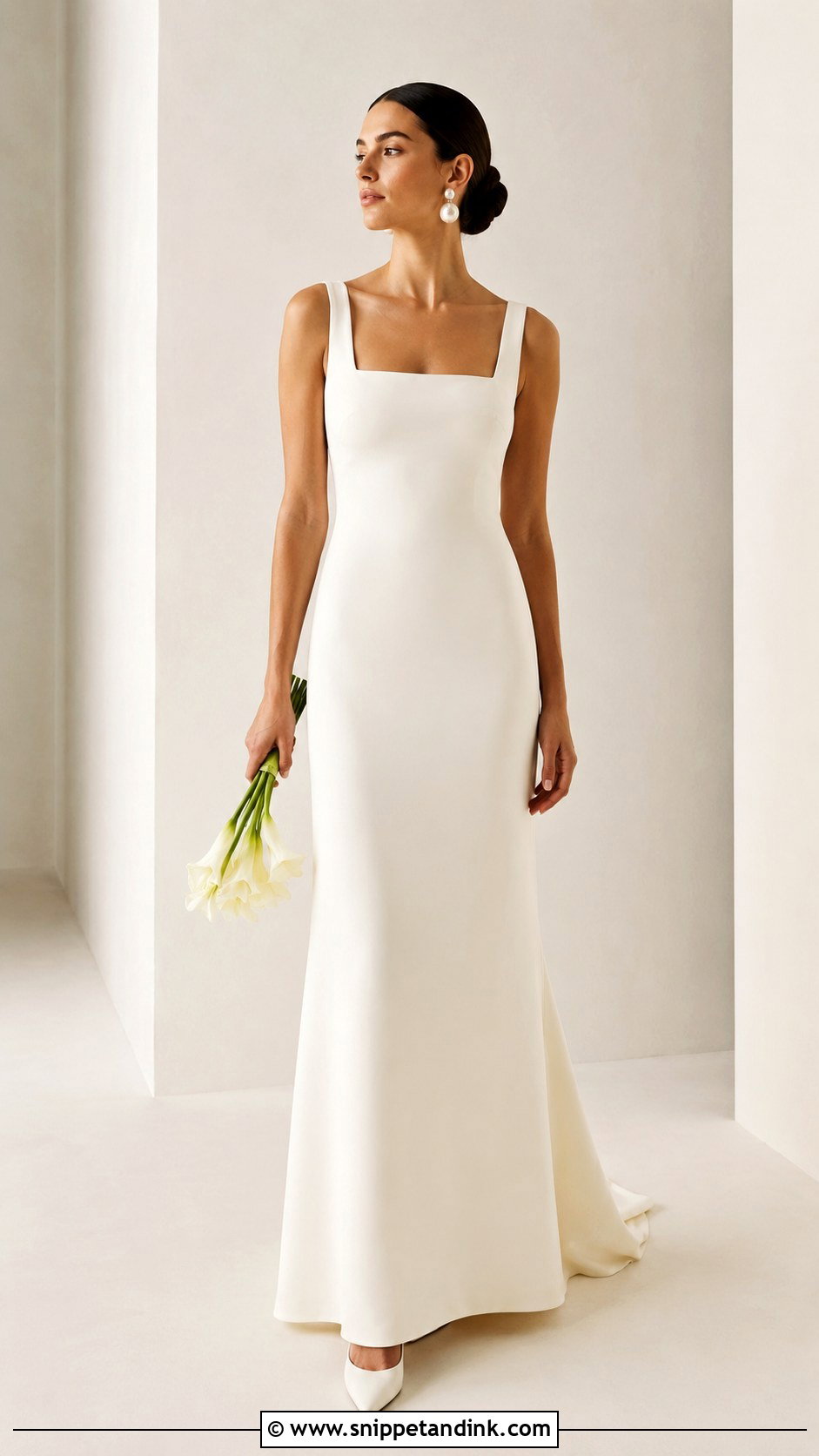
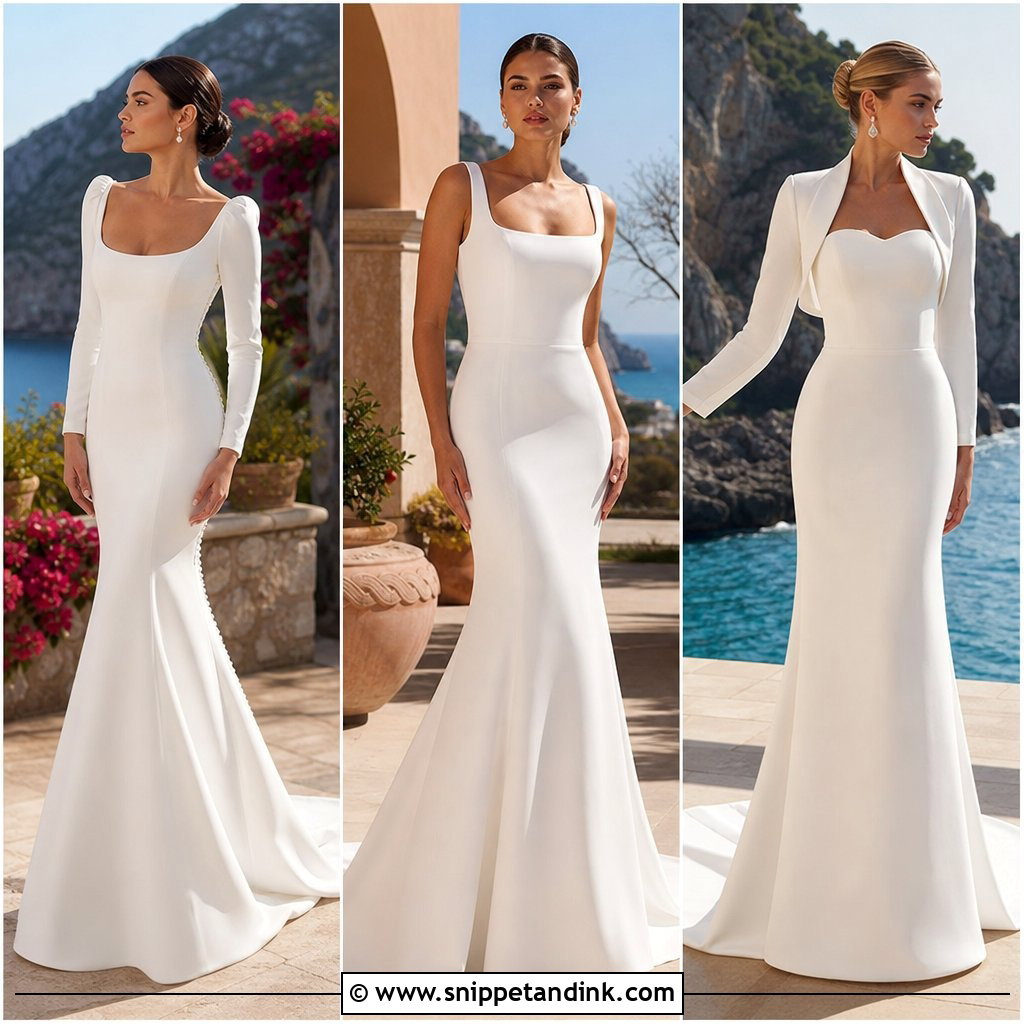
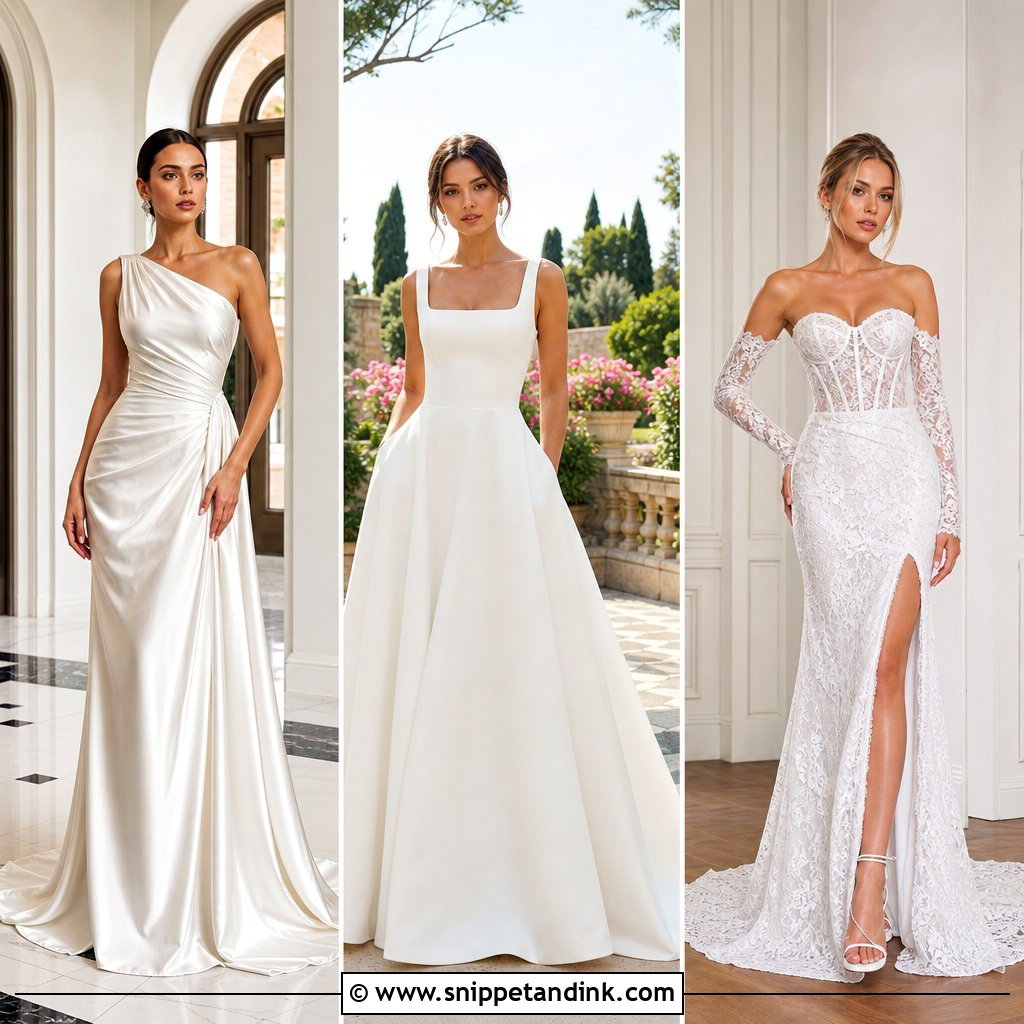
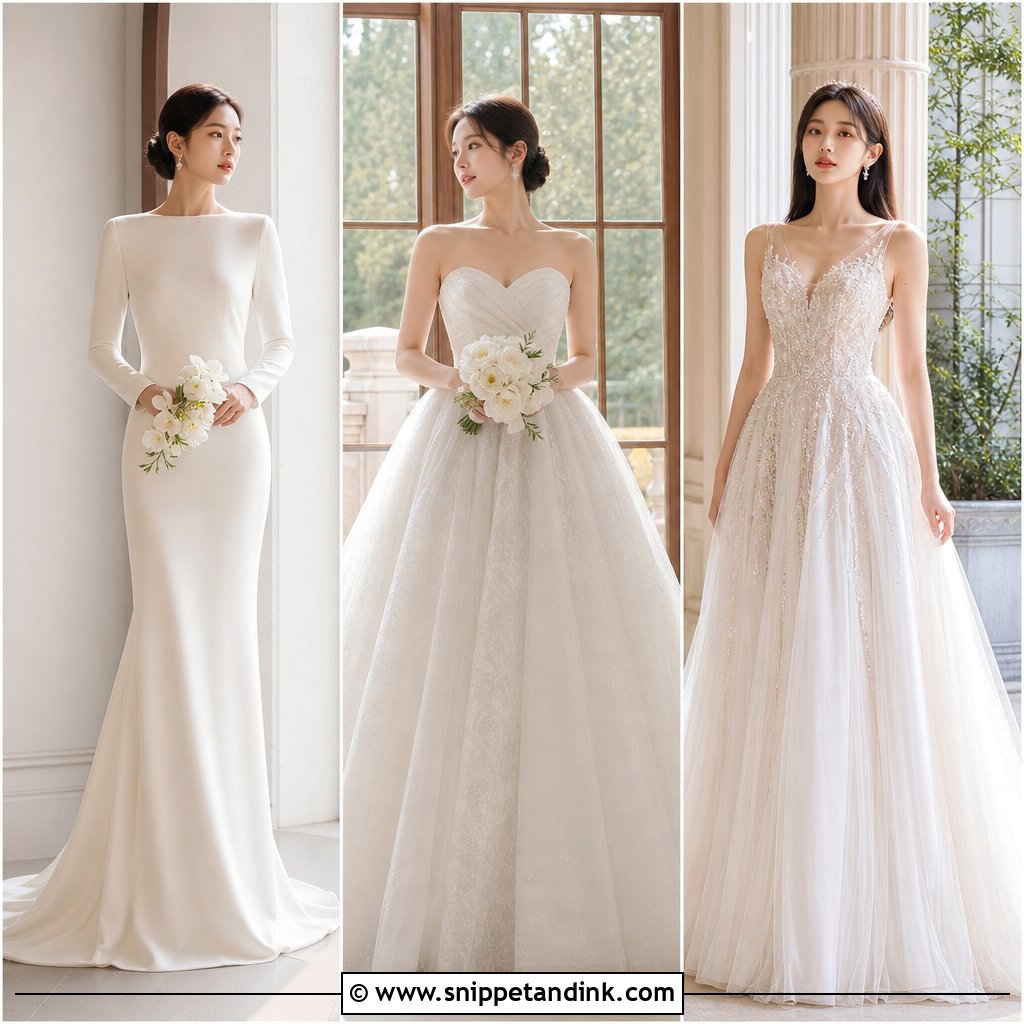
A minimalist gown has nowhere to hide a poor fit. Think clean crepe, smooth silk or a structured satin with a sharp neckline and no embellishment. A square-neck column, a boat neck or a fitted A-line. I spend more fitting time on these dresses than on beaded ones, because a hem that’s a few millimetres uneven or a waist seam that dips is visible straight away. White pumps, sculptural pearl earrings and a smooth low chignon. A short veil, or none.
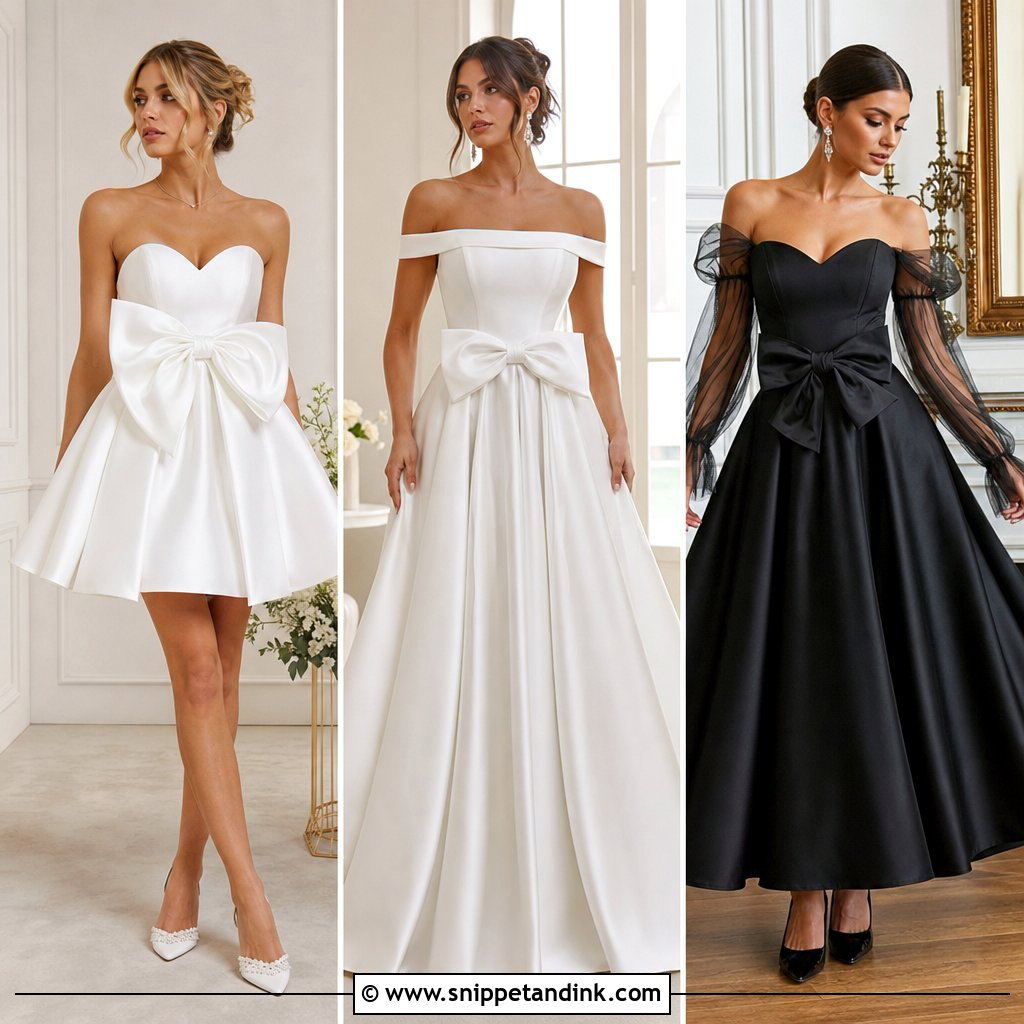
5. French Off Shoulder Wedding Dress
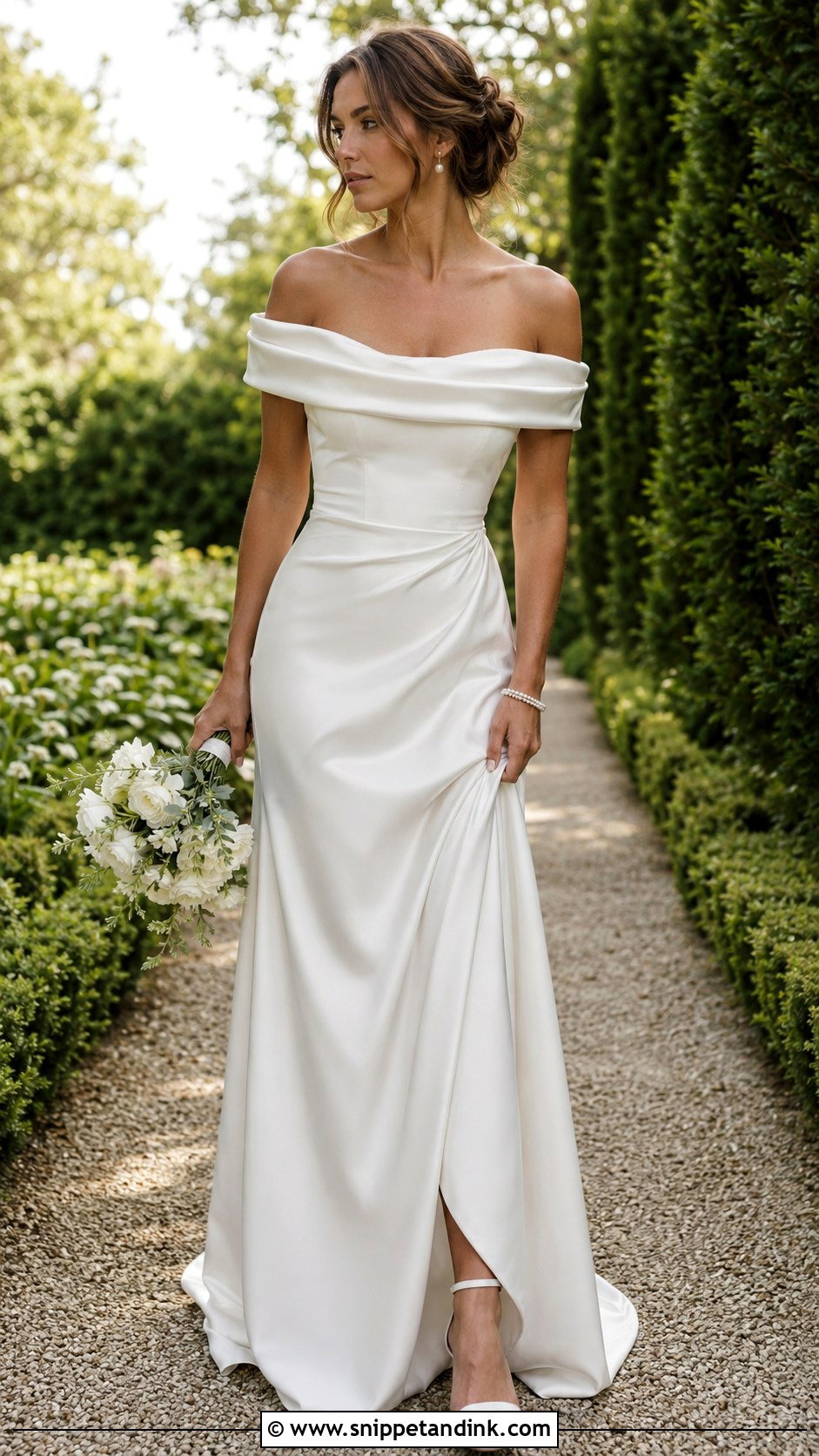
An off-shoulder neckline frames the collarbone softly, which is why it reads so romantic. The question I ask first is support. A structured bodice with boning holds it in place; a draped neckline looks more relaxed but tends to slip if you dance. Satin gives polish, while lace or tulle feels dreamier. Keep the jewelry minimal so the neckline stays the focus: pearl studs, a fine bracelet, heeled sandals. A soft updo with a few face-framing pieces suits it.
6. French Strapless Wedding Dress
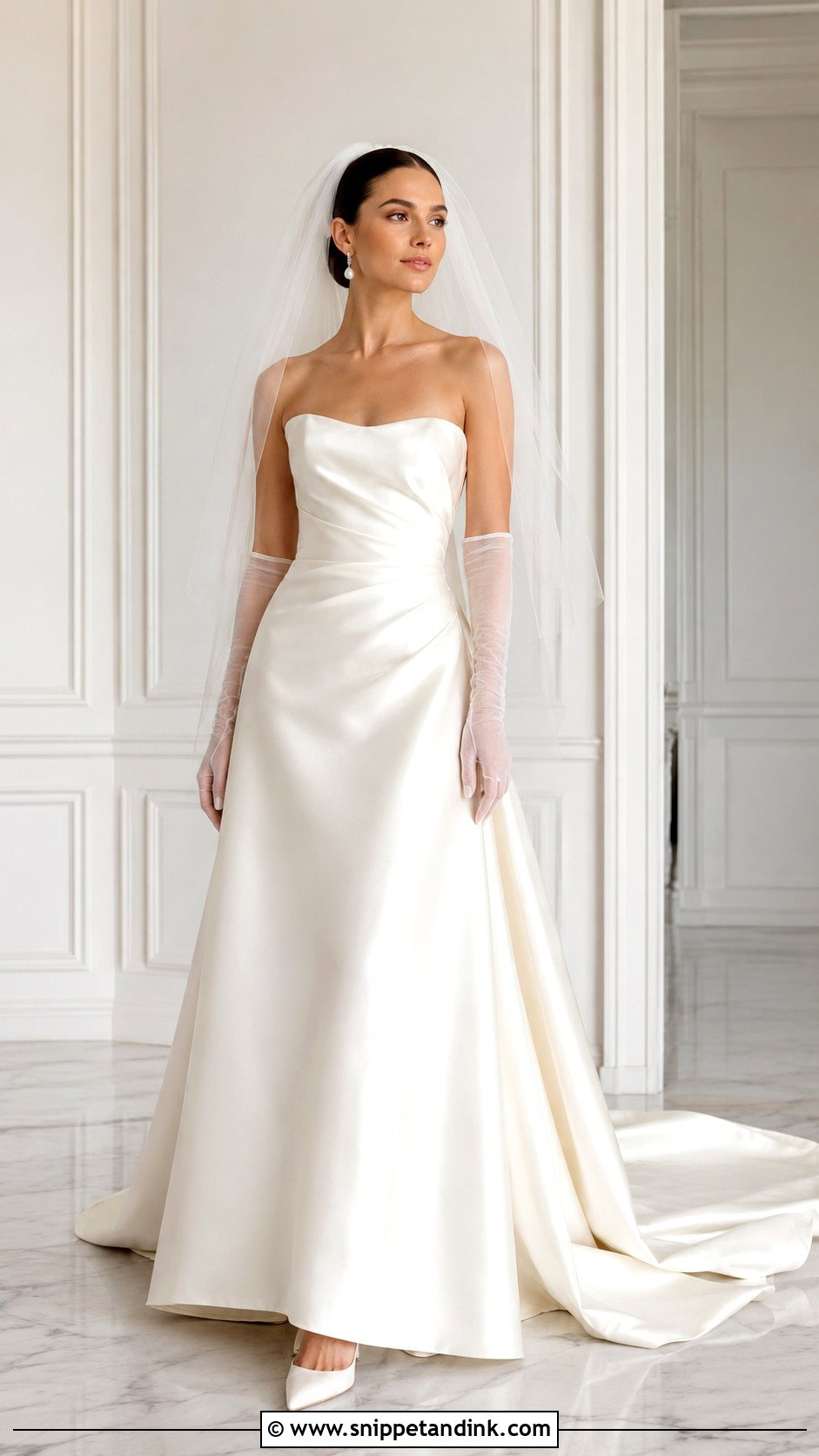
A French strapless wedding dress looks modern when it’s styled with restraint. A straight, sweetheart or softly curved neckline over a fitted bodice, then a column, A-line or full skirt. Satin and crepe give a tailored finish, lace a softer one. A strapless gown relies entirely on its inner corsetry, so I ask the bride to bend, sit and raise her arms at every fitting; if she tugs it up once, it needs adjusting. Long gloves or a fingertip veil, pointed heels and a neat updo.
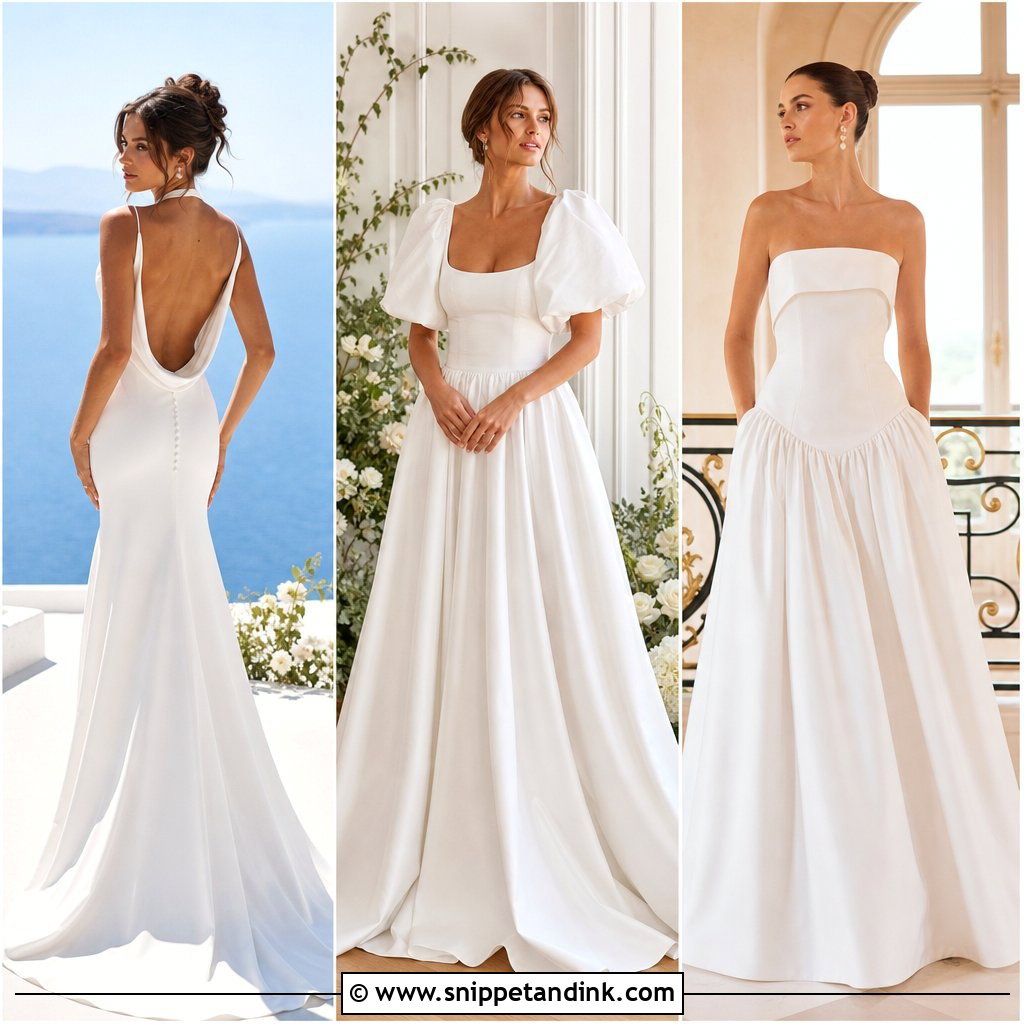
7. French Square Neck Wedding Dress
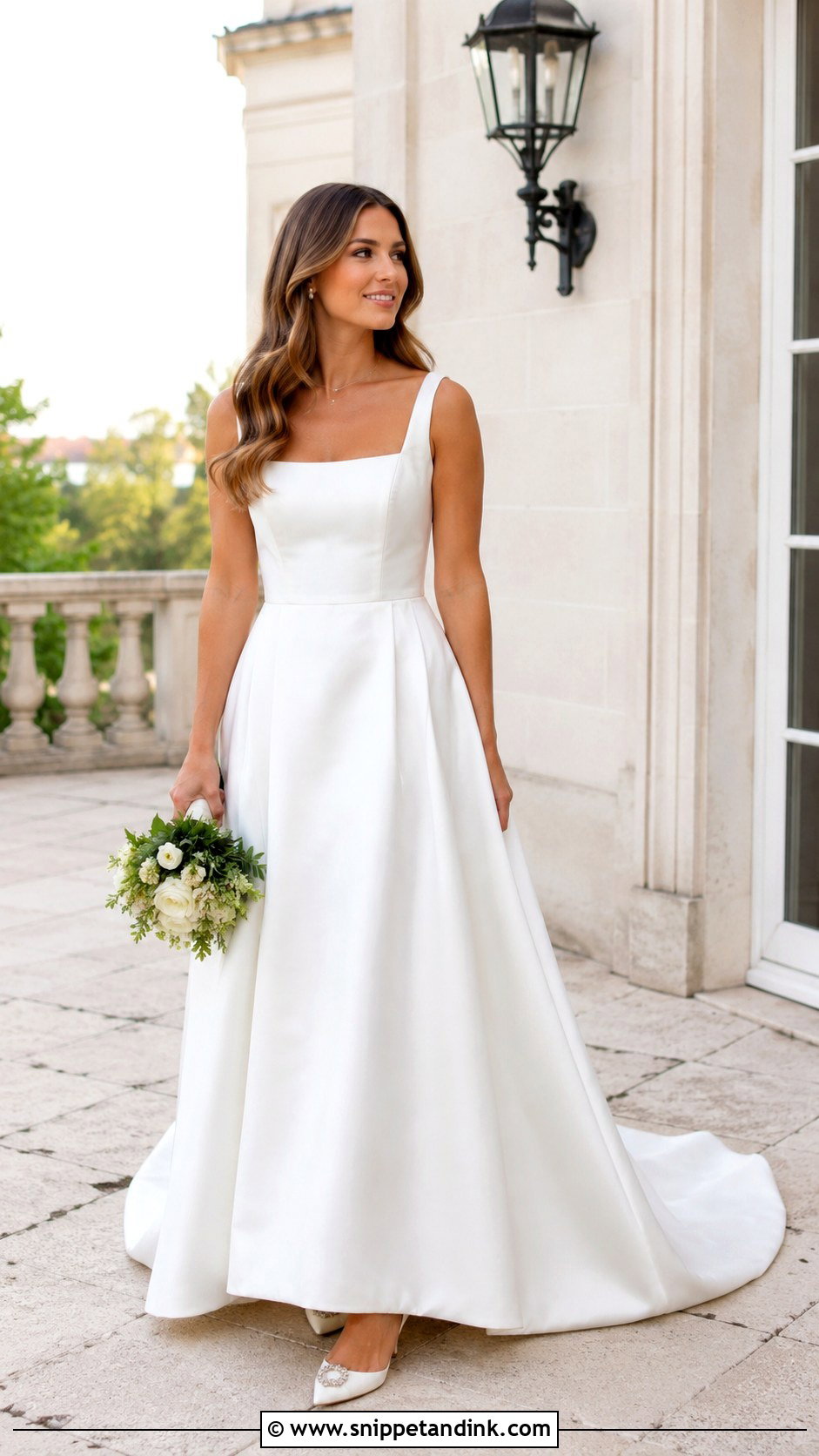
Square necklines have a modest, modern balance that I find suits almost every bust size. The straight line shows the collarbone while giving structure and support. Smooth satin is sleek; lace feels softer. It works with a full skirt, a slim one or a tea-length hem. A fine chain necklace that sits inside the neckline, pearl studs and simple pumps. Wear your hair down in soft waves or in a low bun; either keeps the neckline clear.
8. French High Neck Wedding Dress
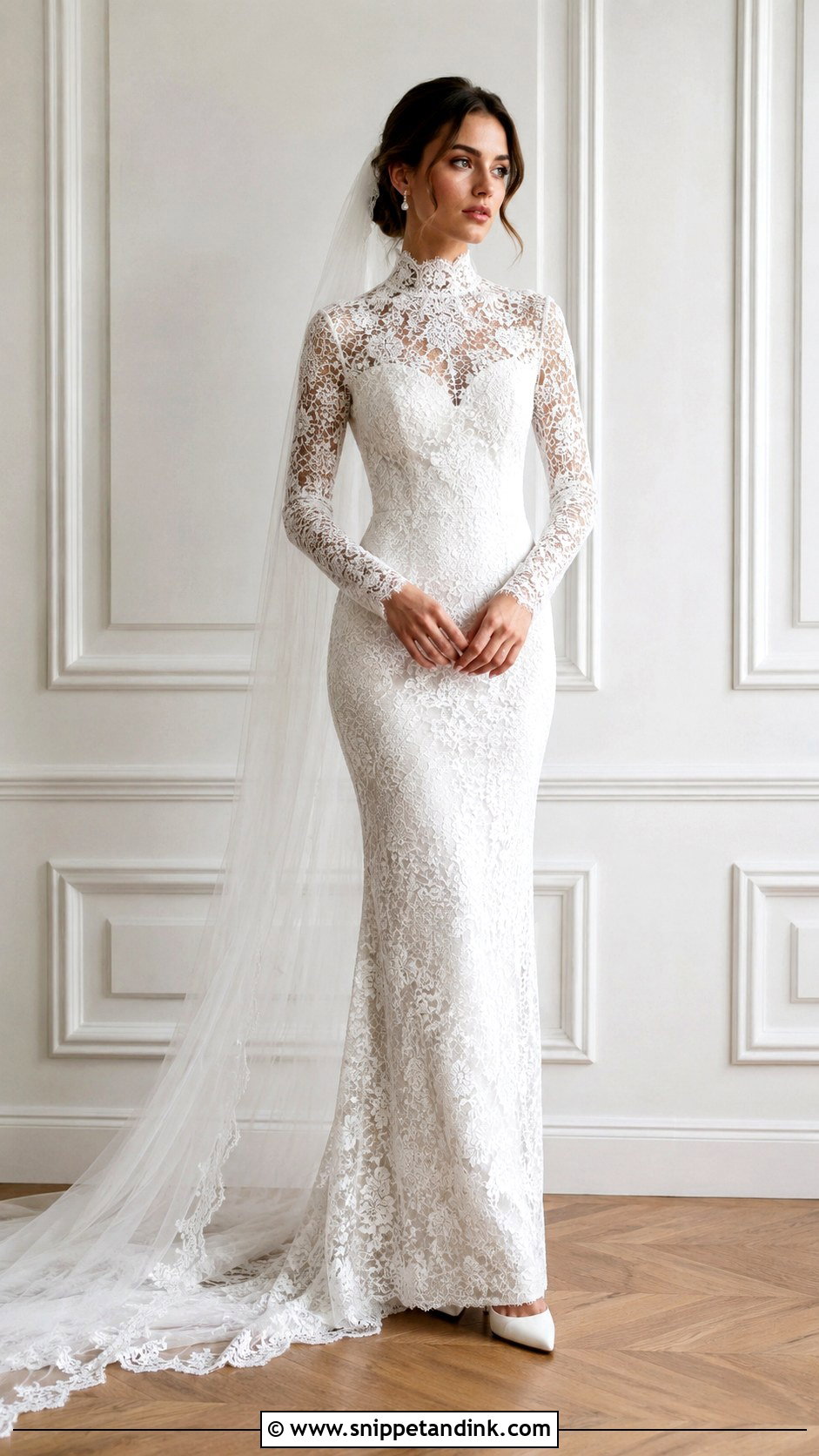
A high neck feels refined and slightly vintage, and I almost always build it from sheer lace, soft tulle or crepe so it doesn’t feel heavy at the throat. Long sleeves and a slim skirt make it elegant; a full skirt makes it formal. The neckline is already the feature, so I’d skip the necklace and keep earrings small. A neat bun lifts hair off the collar. A long veil adds drama. It suits cool-weather weddings and formal venues.
9. French Halter Wedding Dress
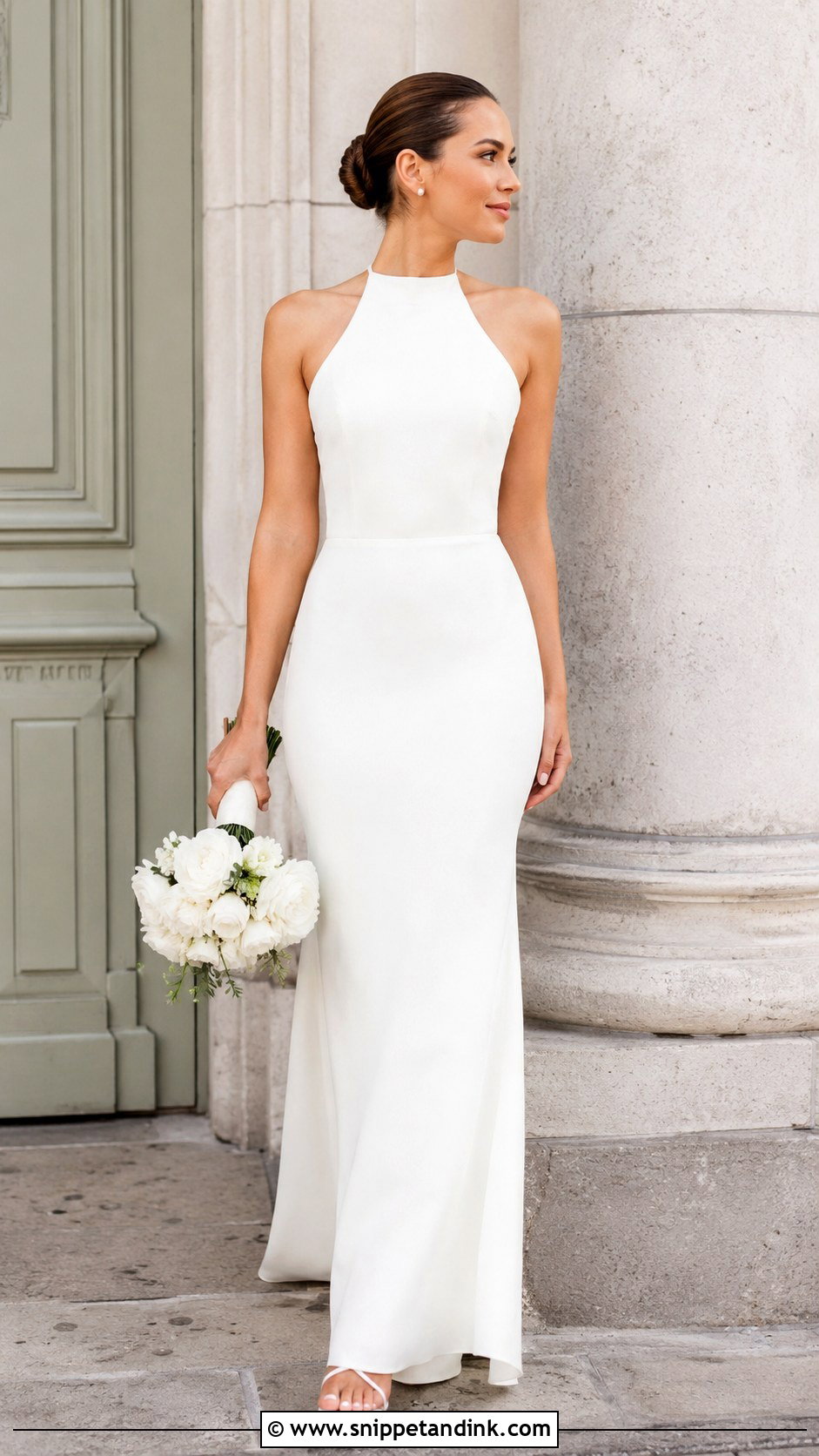
Halters show the shoulders and upper back, so the bride’s posture and back skin matter more than with most necklines. Silk, crepe or satin give the cleanest line. A halter column gown looks especially sharp at a city wedding. I check the strap tension at the neck carefully, since a halter that’s too tight gives a headache by the evening. A smooth bun, small earrings and strappy heels. Skip necklaces.
10. French Tea Length Wedding Dress
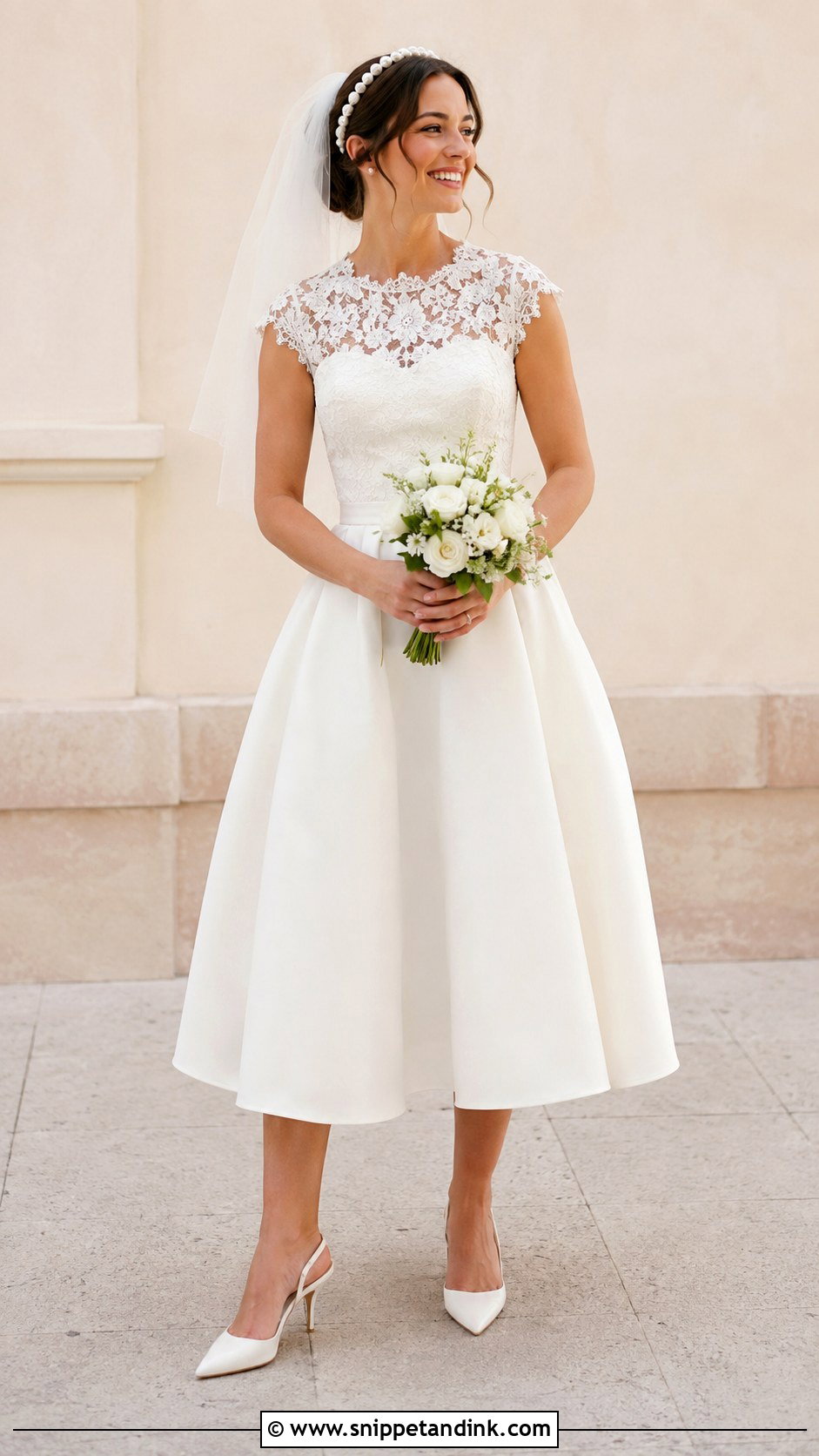
Tea length falls between the knee and the ankle, so your shoes become part of the outfit. A lace bodice over a full skirt is romantic; a tea-length satin is cleaner. Pointed pumps, slingbacks or ankle-strap heels all suit it. A short veil, a pearl headband or a bow barrette adds charm. I’d get the hem length right in your wedding shoes, because an inch changes the whole proportion. It’s also a good second dress after a long ceremony gown.
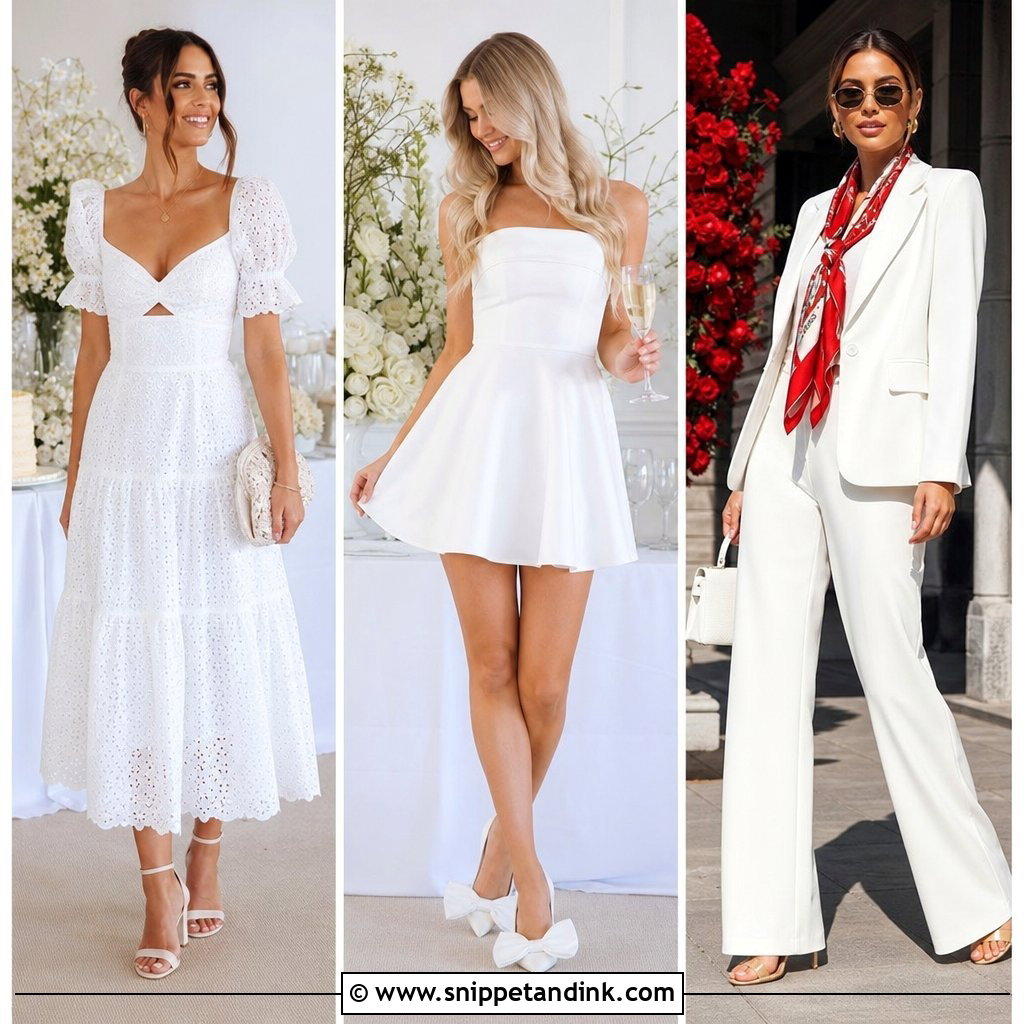
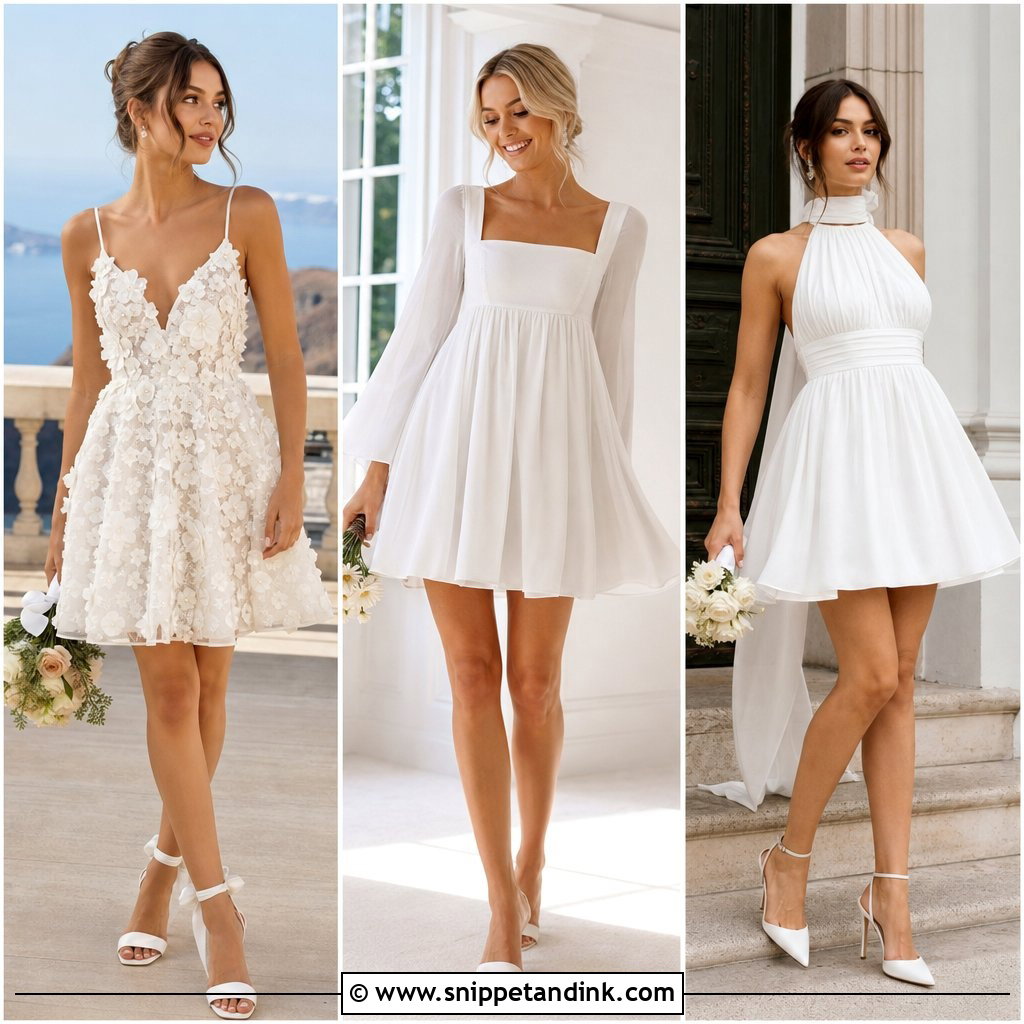
11. French Mini Wedding Dress
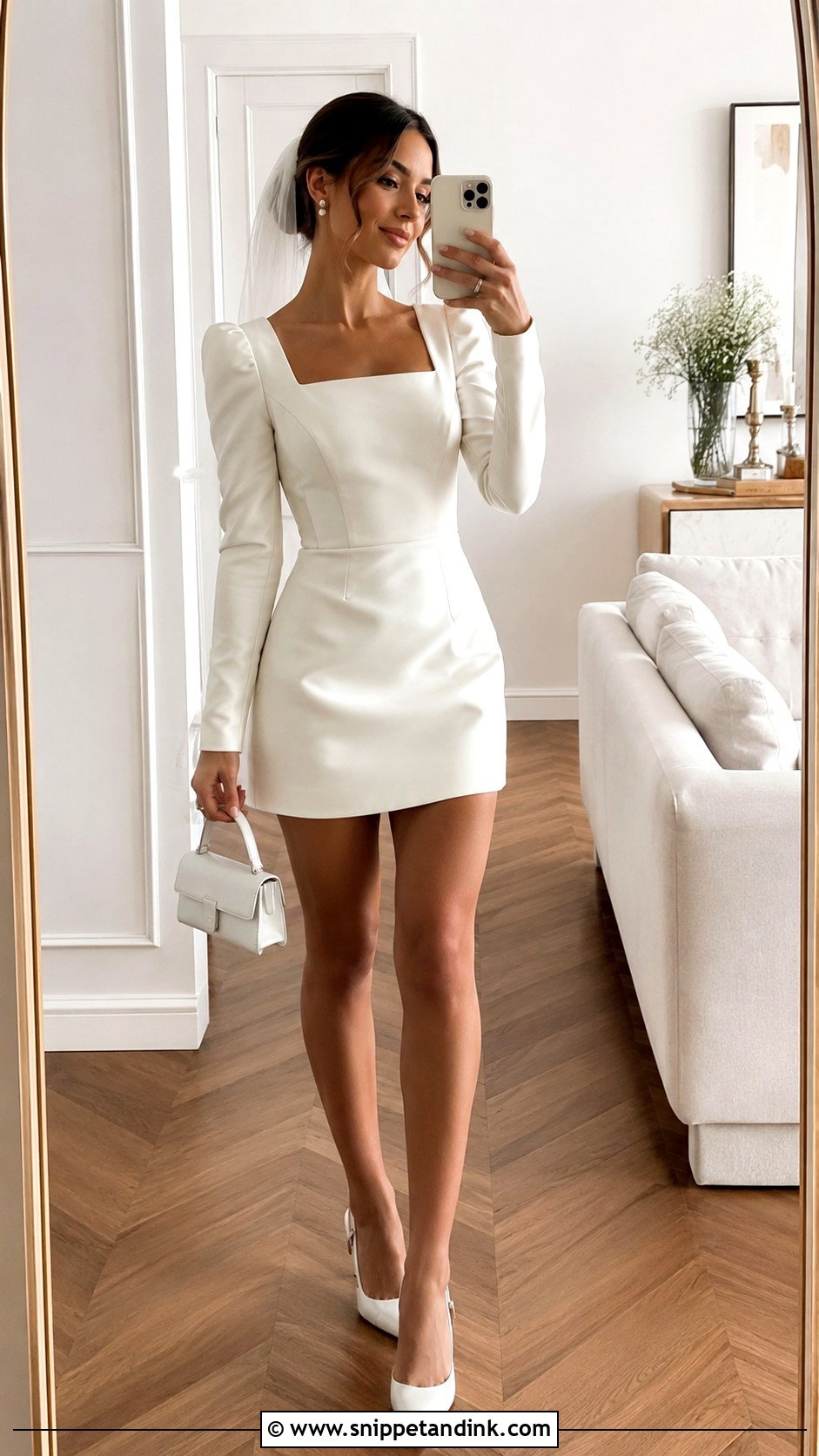
A mini works for a civil ceremony, an elopement or a reception change, as long as it’s structured enough to look bridal rather than casual. A structured mini with long sleeves, a clean shift, a bow detail or a delicate lace. Slingbacks, sheer tights in cooler months and a small top-handle bag. A short veil or a wide headband marks it as wedding attire. Sit down in it before buying; some minis ride up further than you’d like for seated photos.
12. French Tulle Wedding Dress
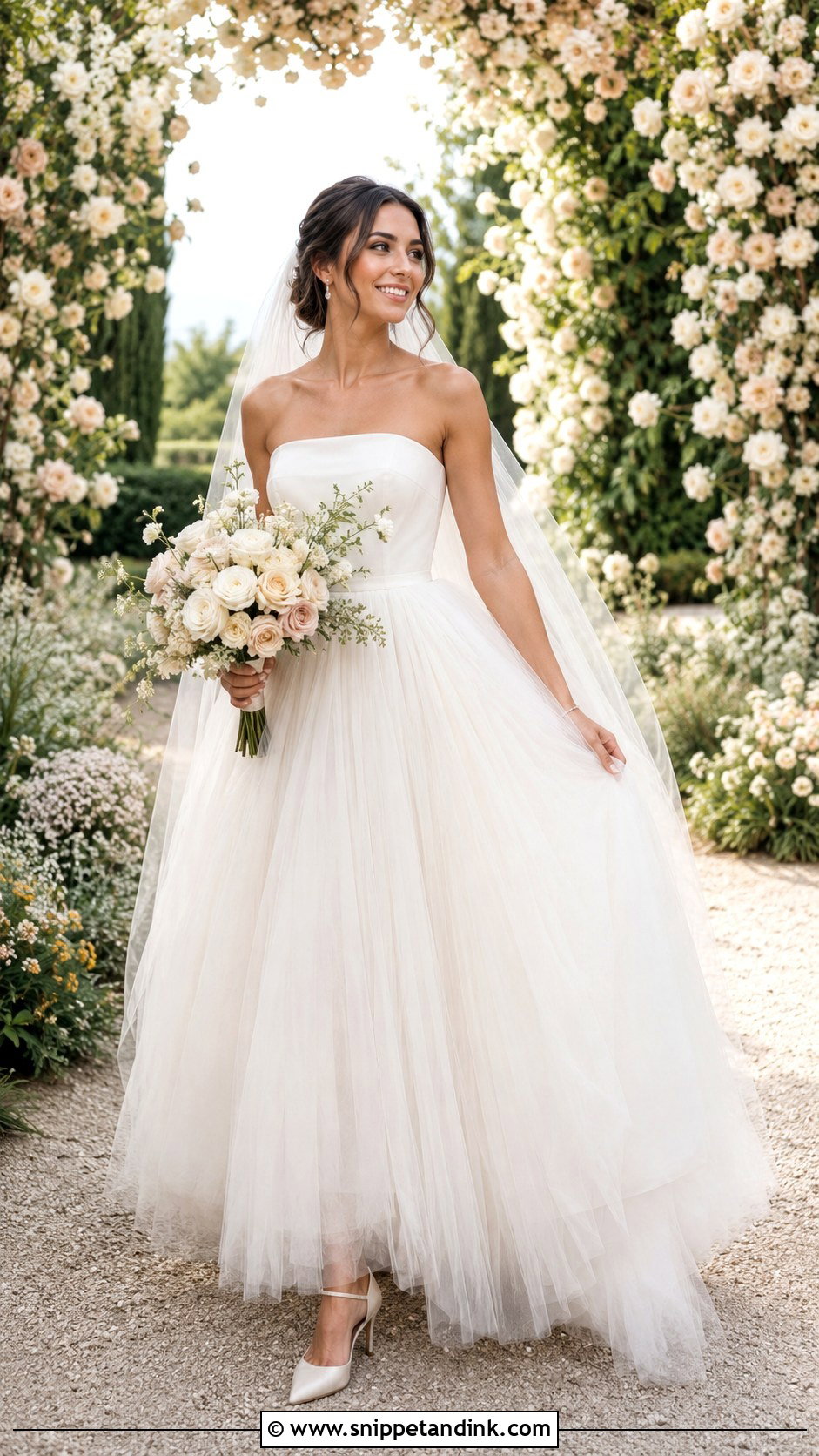
Tulle gives lightness and movement without sparkle. For a French feel, I choose soft tulle with gentle volume over the stiff, bouncy kind. A simple bodice, an off-shoulder neckline or a sheer sleeve keeps it elegant. A soft veil that blends into the skirt, satin heels and pearl earrings. Tulle snags on rough surfaces, stone steps and jewelry clasps, so I’d plan the walking route at a garden venue. Hair can be loose or swept into a relaxed bun.
13. French Crepe Wedding Dress
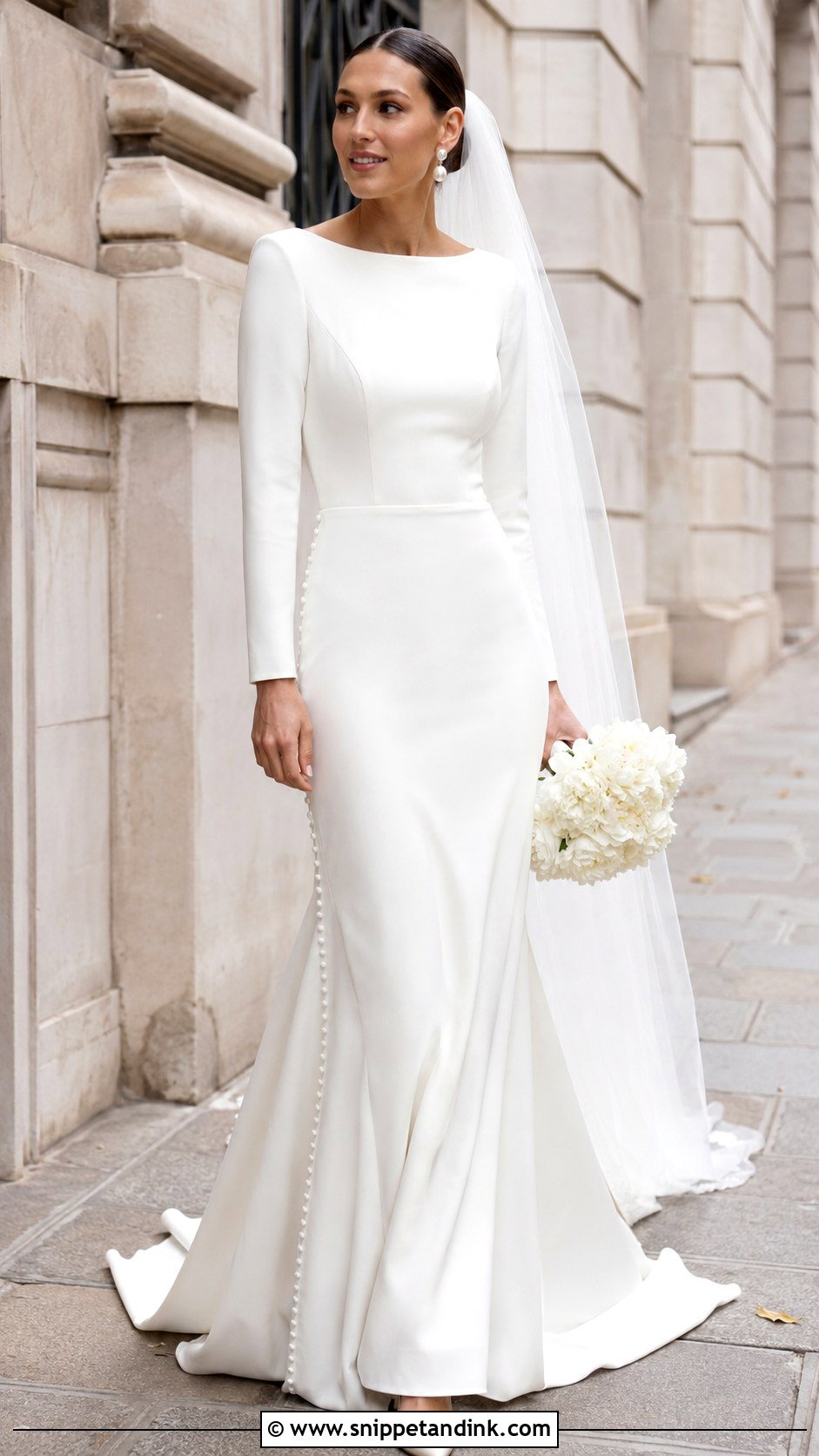
Crepe has a soft matte finish that never glares under flash, and it moves well all day. A fitted crepe gown with a slight train is classic; a crepe A-line gives more ease. Covered buttons, a bateau neckline or a low back add quiet interest. The fabric is plain, so fit is everything; I’d budget for an extra fitting. Pointed pumps, pearl earrings and a sleek veil. Crepe also creases less than satin, which helps on a long day.
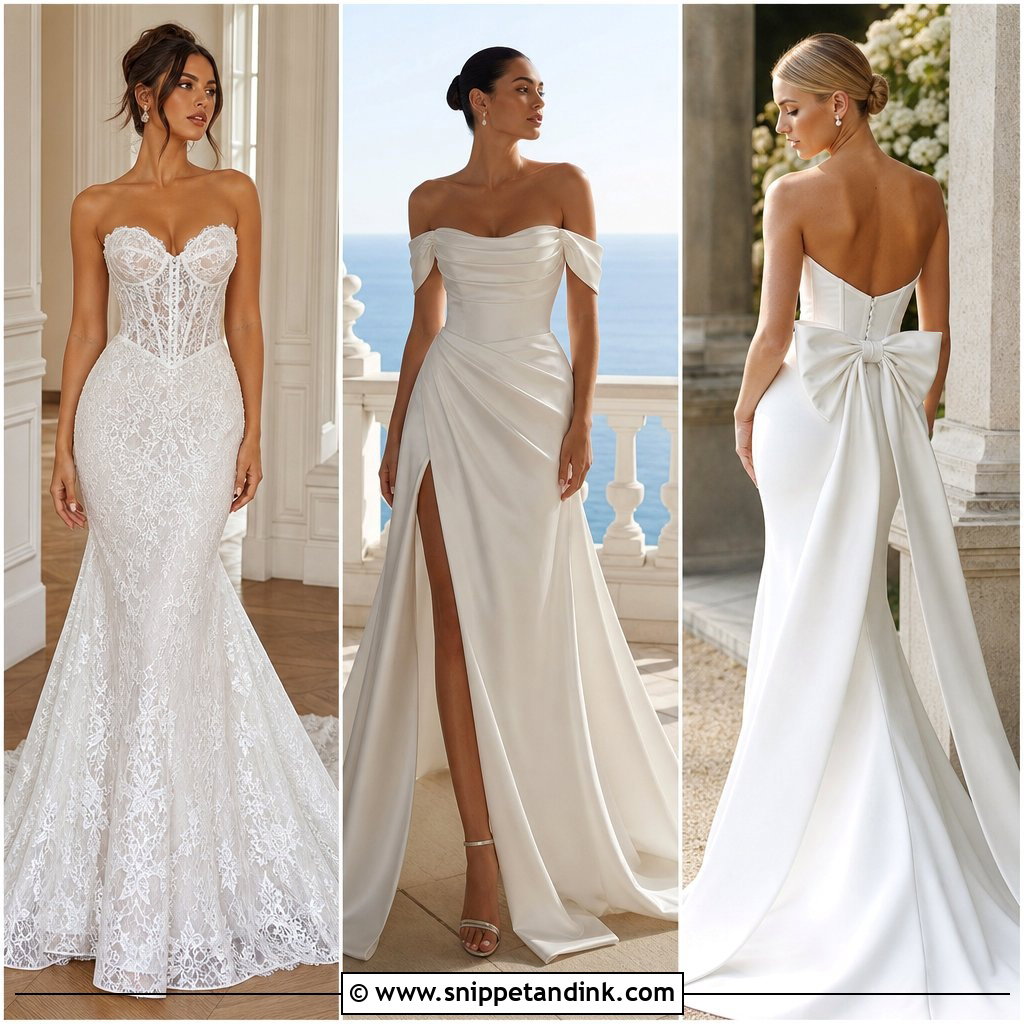
14. French Corset Wedding Dress
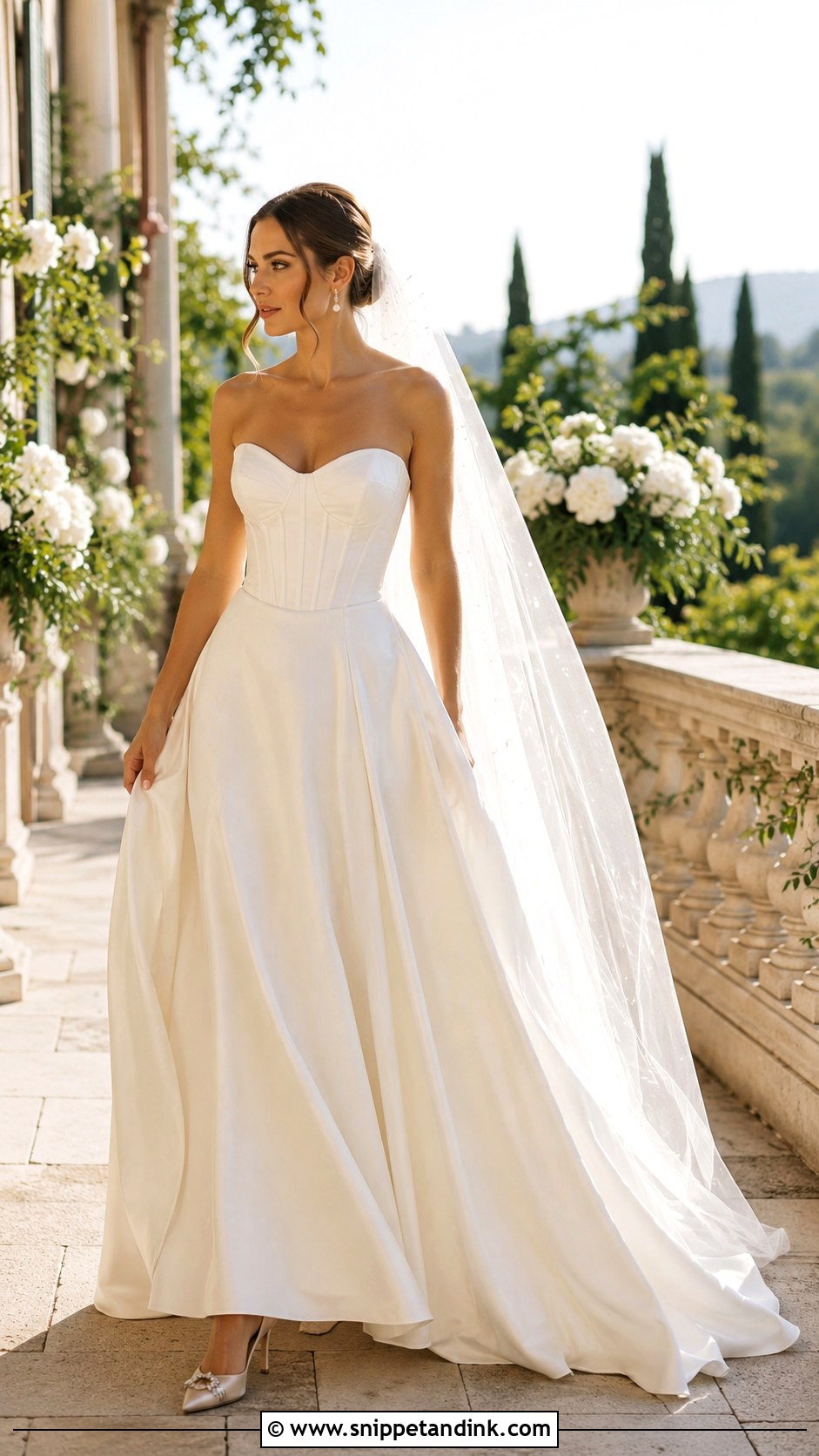
A corset bodice gives structure and support, and the skirt can be soft, slim or full. I prefer subtle internal boning to heavy contrast panels for a French look. Lace, satin and silk faille all hold it. The fit must be precise: too loose and it slides, too tight and you can’t eat dinner. I fit corsets with the bride sitting as well as standing. Delicate heels, pearl earrings, a soft tulle veil and a relaxed updo to balance the fitted top.
15. French Basque Waist Wedding Dress
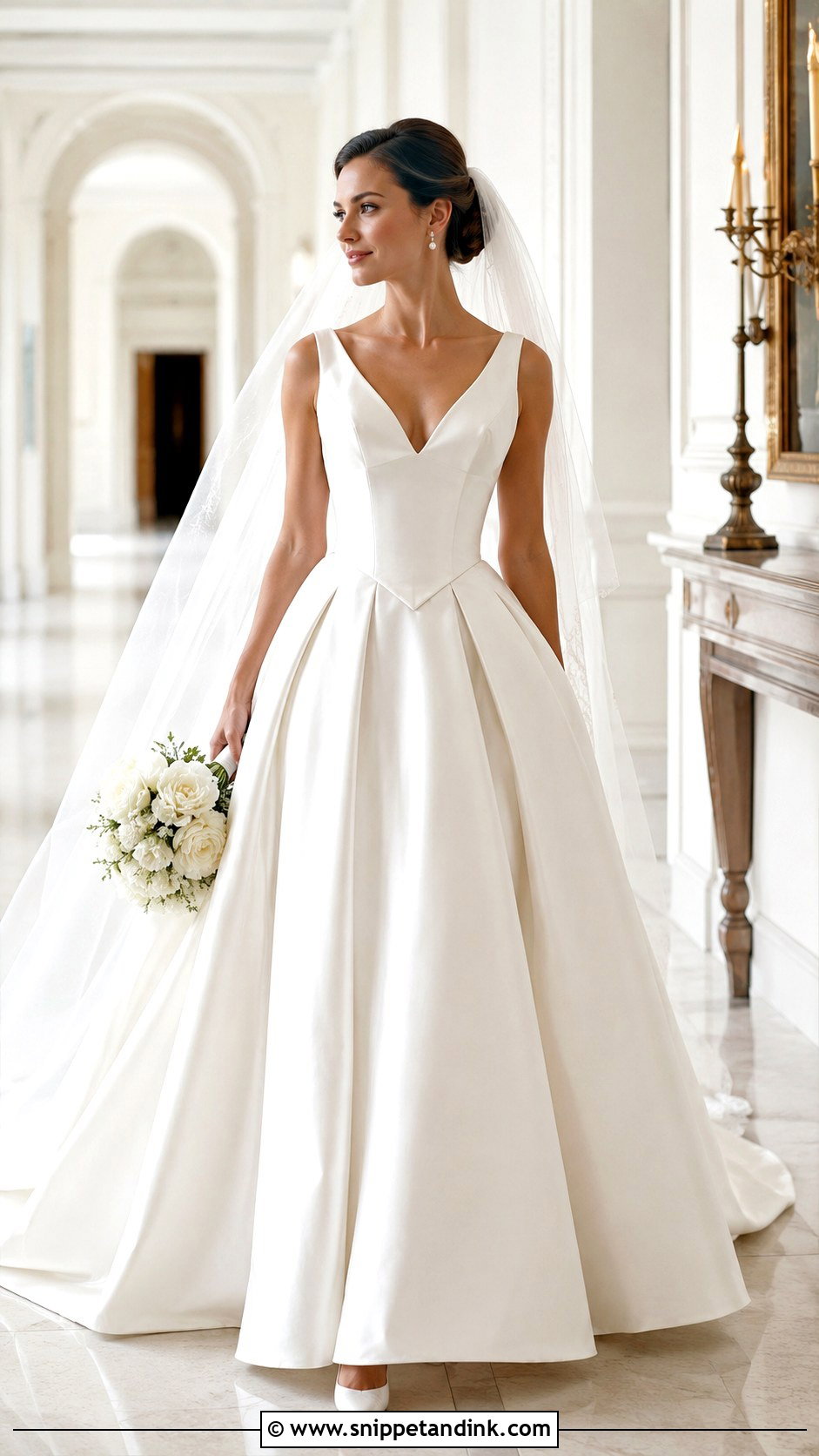
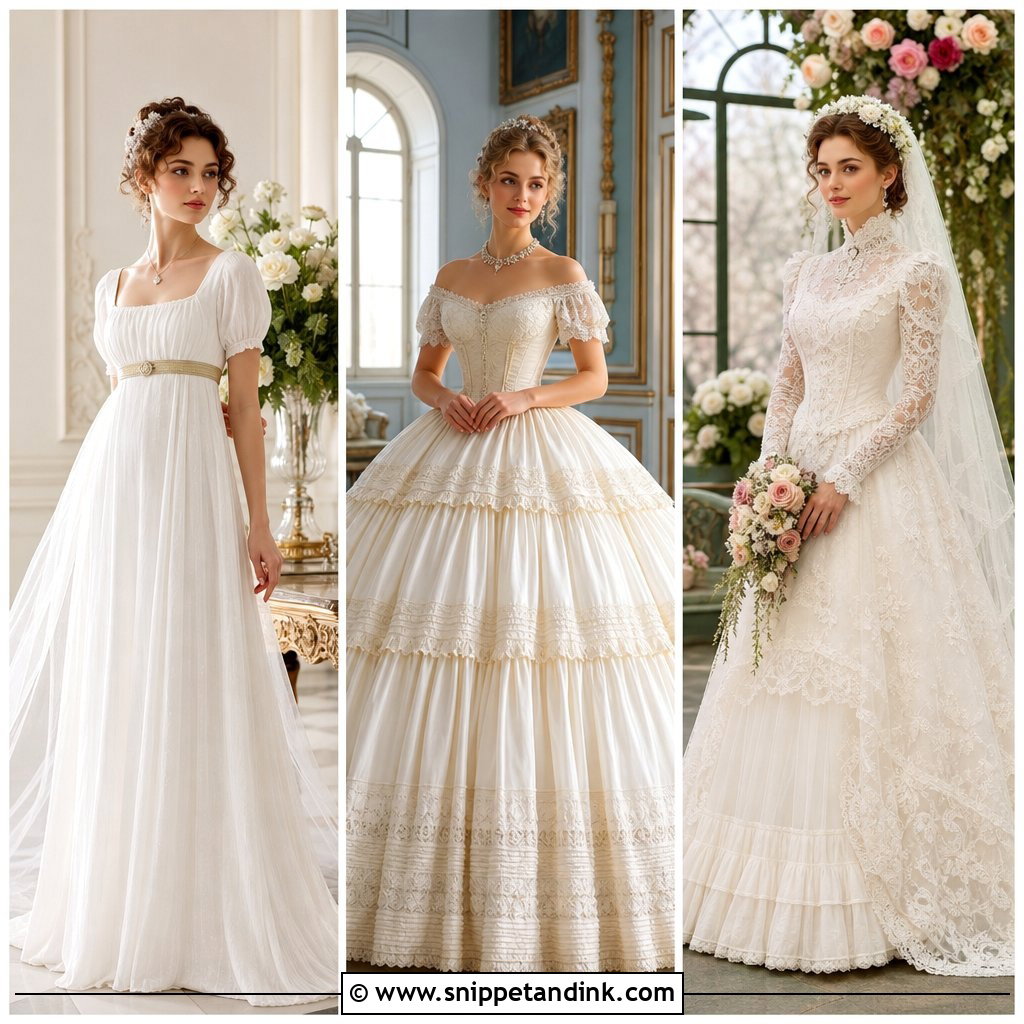
The basque waist dips into a V below the natural waistline, which lengthens the torso and sculpts the bodice. Satin, mikado or lace all suit it. A full skirt makes it formal; a softer A-line keeps it easy. I like it most on brides with a shorter torso, as that V adds length. Keep the neckline simple, a scoop, square or strapless, then add classic pumps, pearl earrings and a long veil for balance.
16. French Bateau Neck Wedding Dress
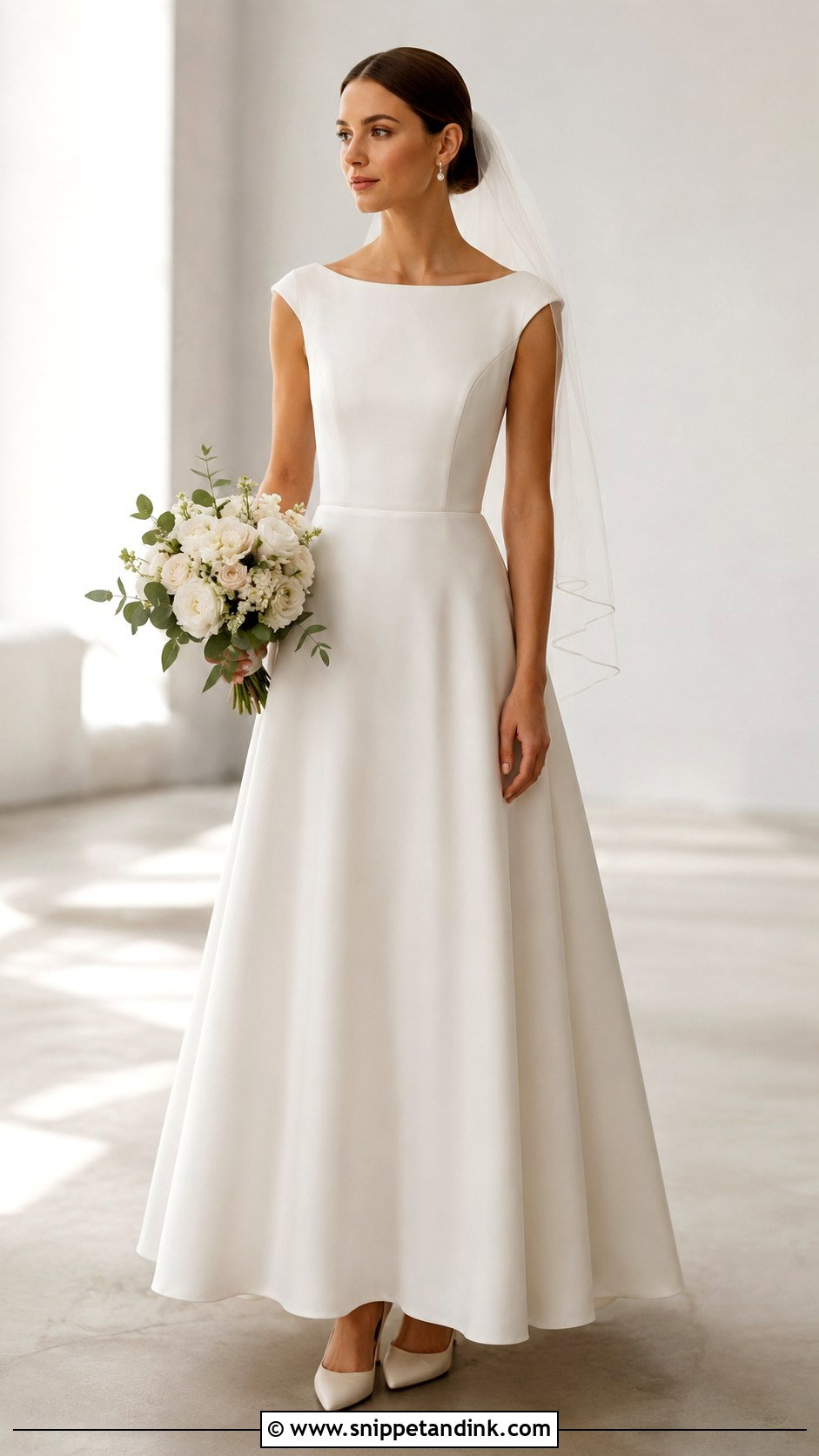
A bateau neckline runs straight across from shoulder to shoulder just under the collarbone, giving a polished line without showing much skin. Crepe looks modern, satin adds shine and lace softens it. Fitted, A-line or tea length all work. Low pearl earrings, a smooth bun and satin pumps complete it. I’d pick a fingertip veil, which sits below the neckline instead of competing with it.
17. French Bow Wedding Dress
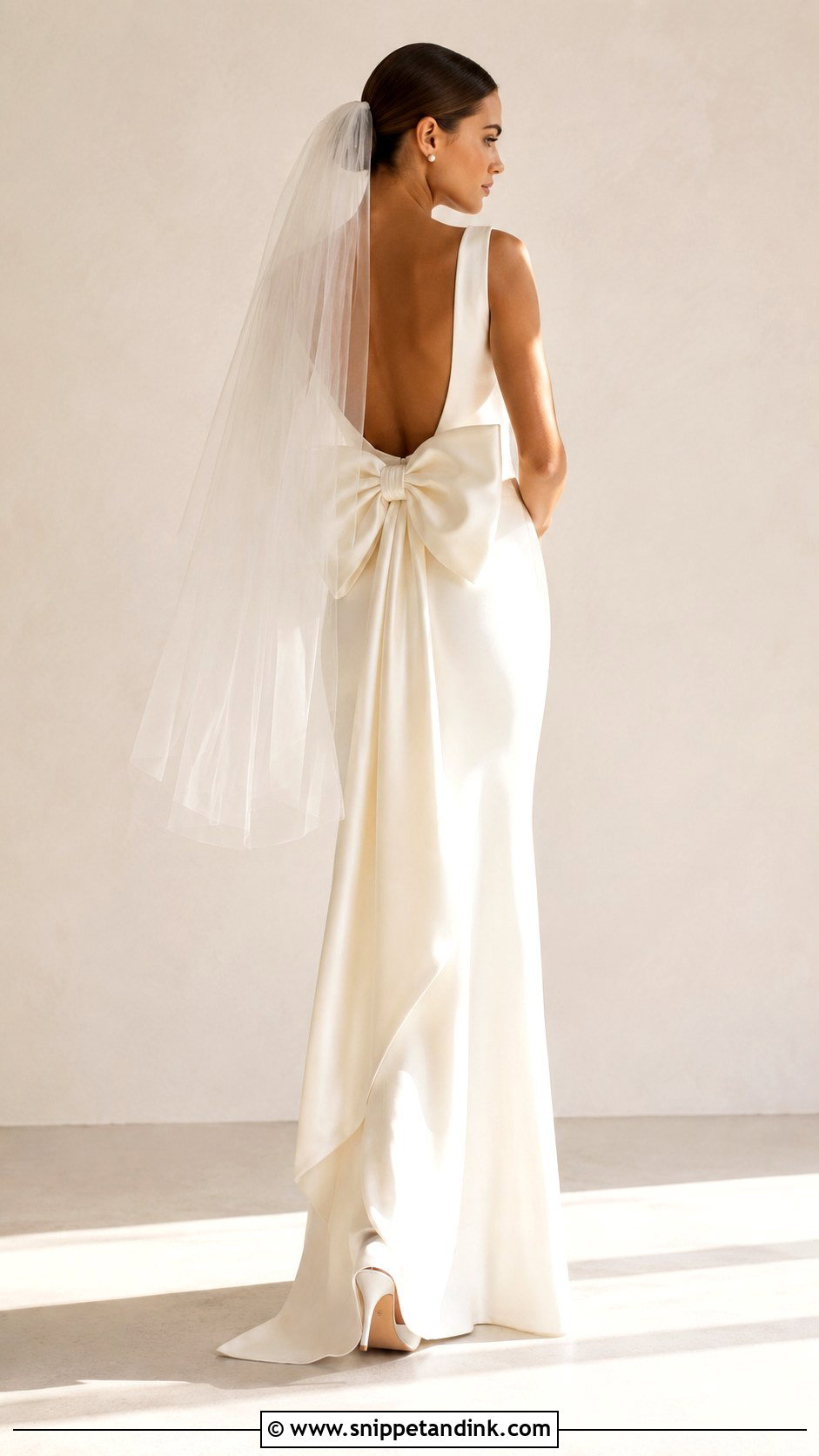
A bow adds charm without heavy decoration, and the placement decides the mood. A back-waist bow on a satin column looks modern; a waist bow on a full skirt is more romantic. I’d keep it to one bow. If it sits at the back, wear a low bun so it shows, and choose a veil that falls to the side or stops above it. Pointed heels and pearl studs keep the rest calm.
18. French Pearl Wedding Dress
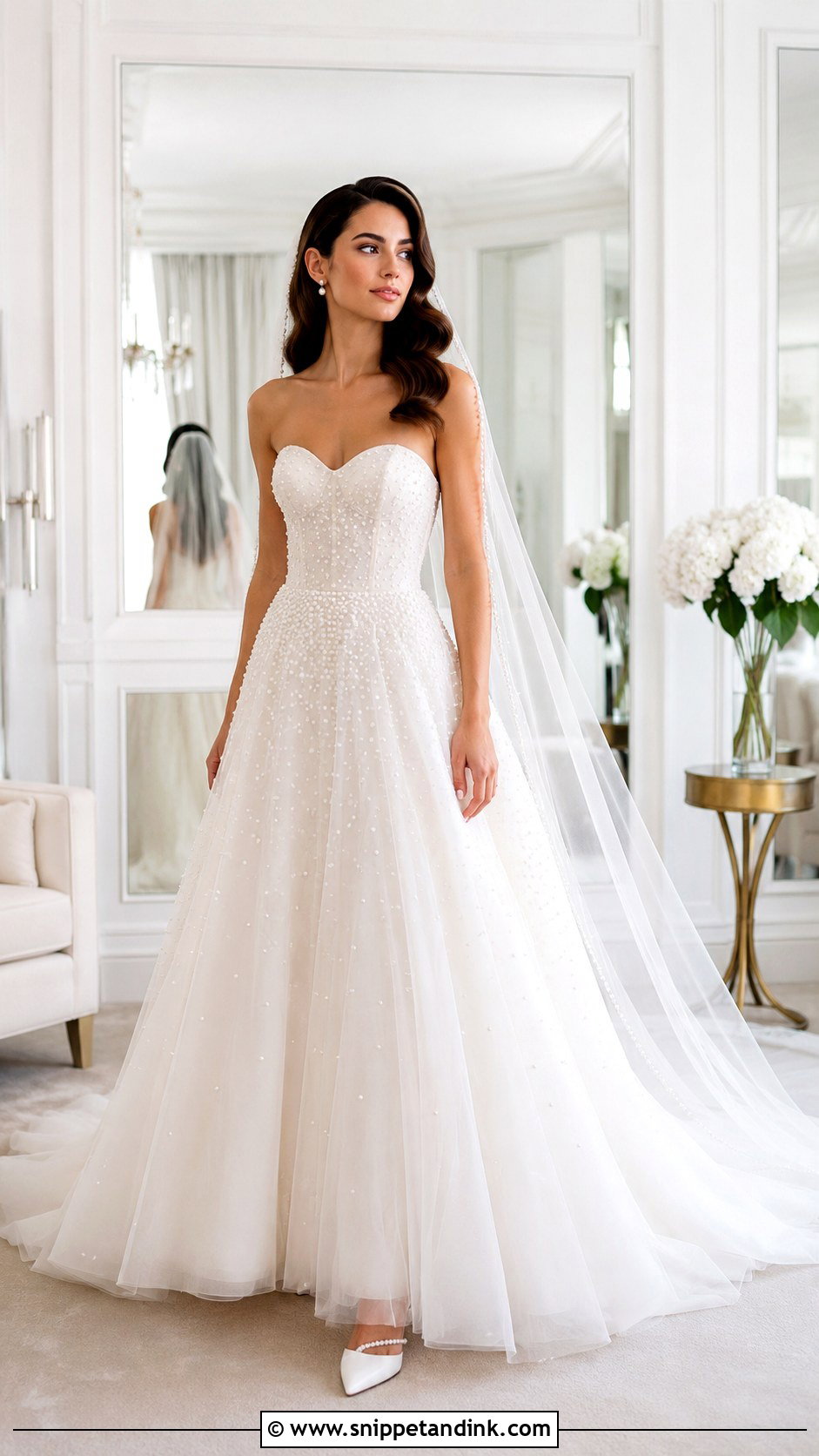
Pearls bring shine without the glitter of crystals. Scattered pearl beading, pearl straps or a pearl-trimmed veil on a satin, tulle or crepe base all look refined. Pearls add weight, so I check that a pearl-heavy veil is secured with a comb plus pins rather than a comb alone. If the neckline already has pearls, skip the necklace. Simple heels, pearl earrings and a smooth clutch. A soft bun or polished waves.
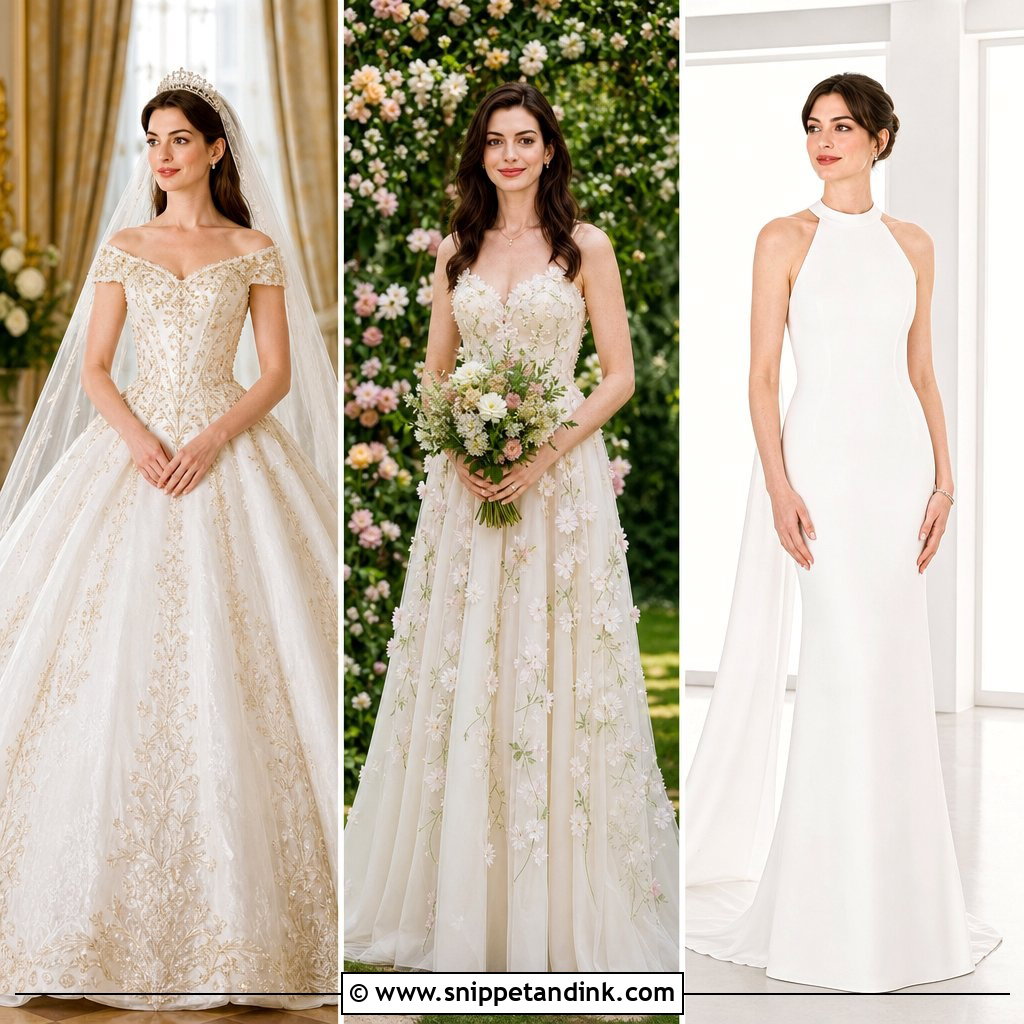
19. French Floral Applique Wedding Dress
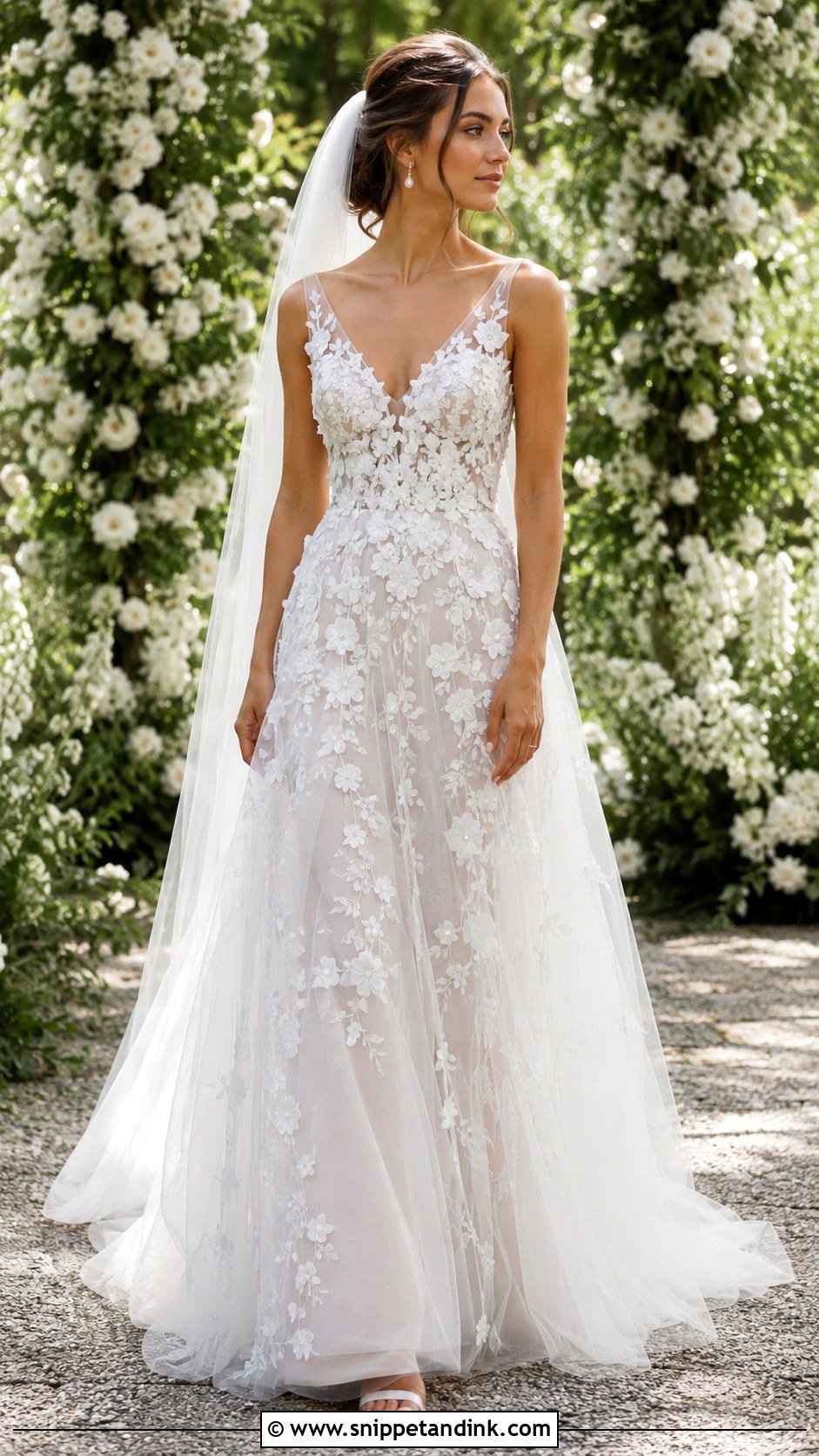
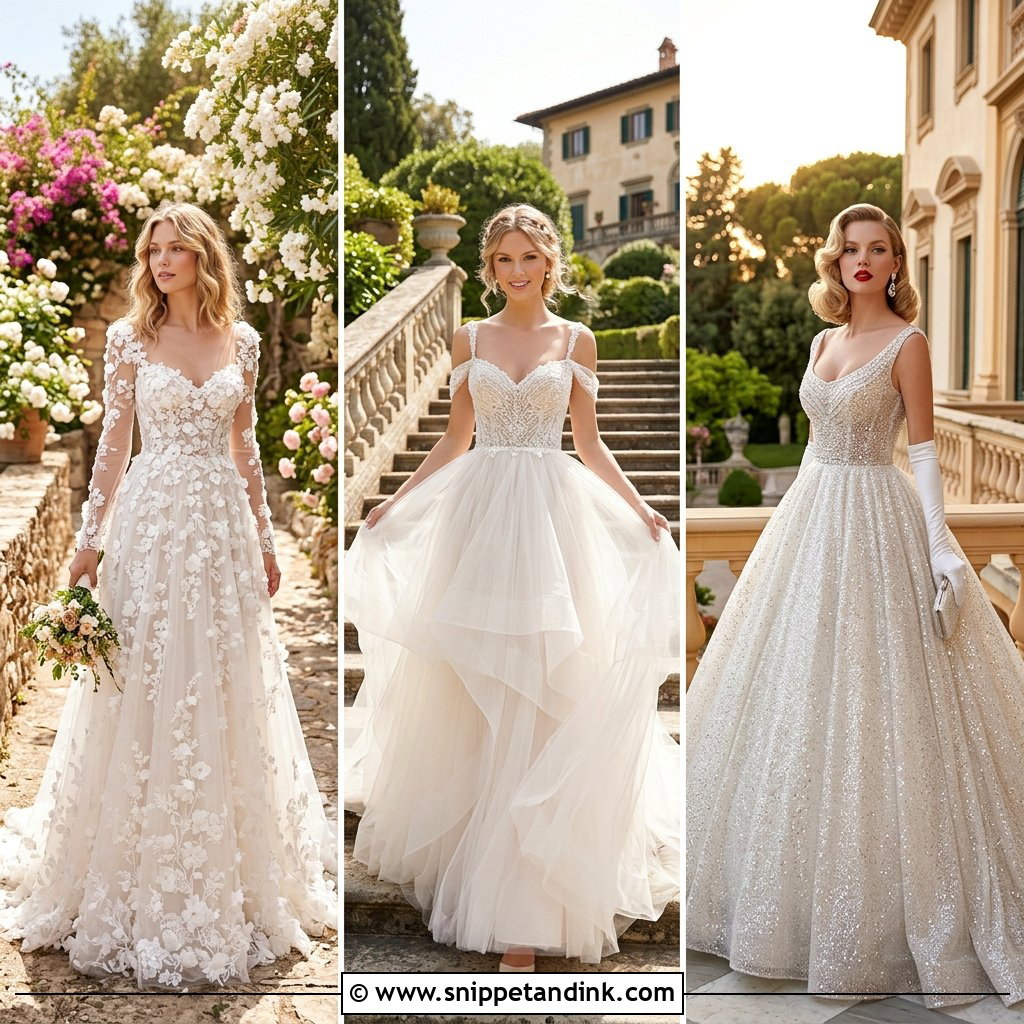
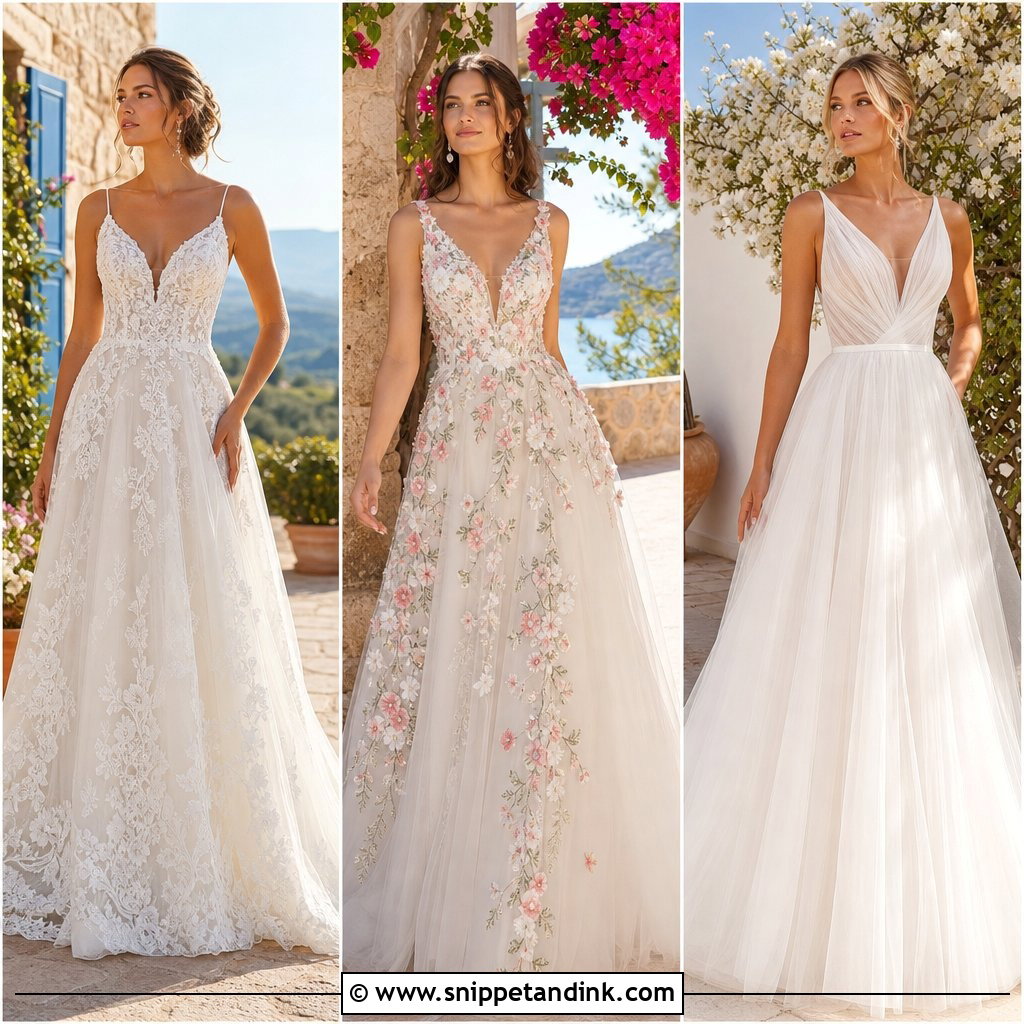
Three-dimensional appliqué flowers give a garden feel, and the best versions are scattered lightly so the tulle base still shows. Over-crowded appliqué starts to look heavy. A sheer tulle base for softness and a fitted bodice to keep the shape. A plain veil, simple heels and small pearl or crystal earrings. I’d keep floral accessories minimal, since the dress carries the theme. Hair loosely pinned back or in soft waves suits spring and summer, especially in the countryside.

20. French Drop Waist Wedding Dress
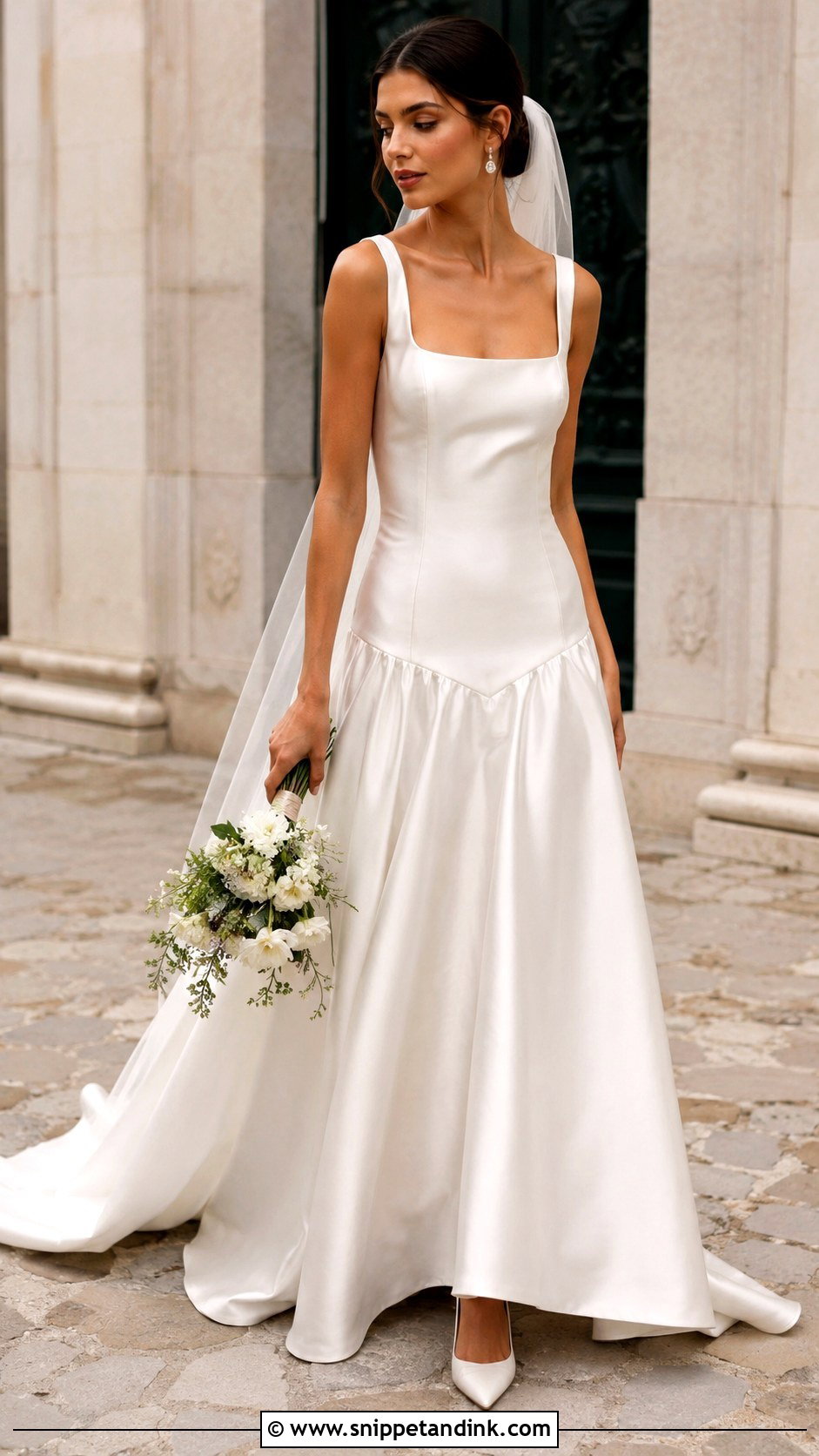
A drop waist sits on the hips instead of at the natural waist, giving a long line through the torso before the skirt opens. Satin, tulle or lace all work. It’s a more fashion-led shape and I’d point it toward taller brides or those with a long torso; on a short torso it can make the legs look shorter. Pointed heels, a simple veil and delicate earrings. A small bouquet so the line stays visible.
21. French Column Wedding Dress
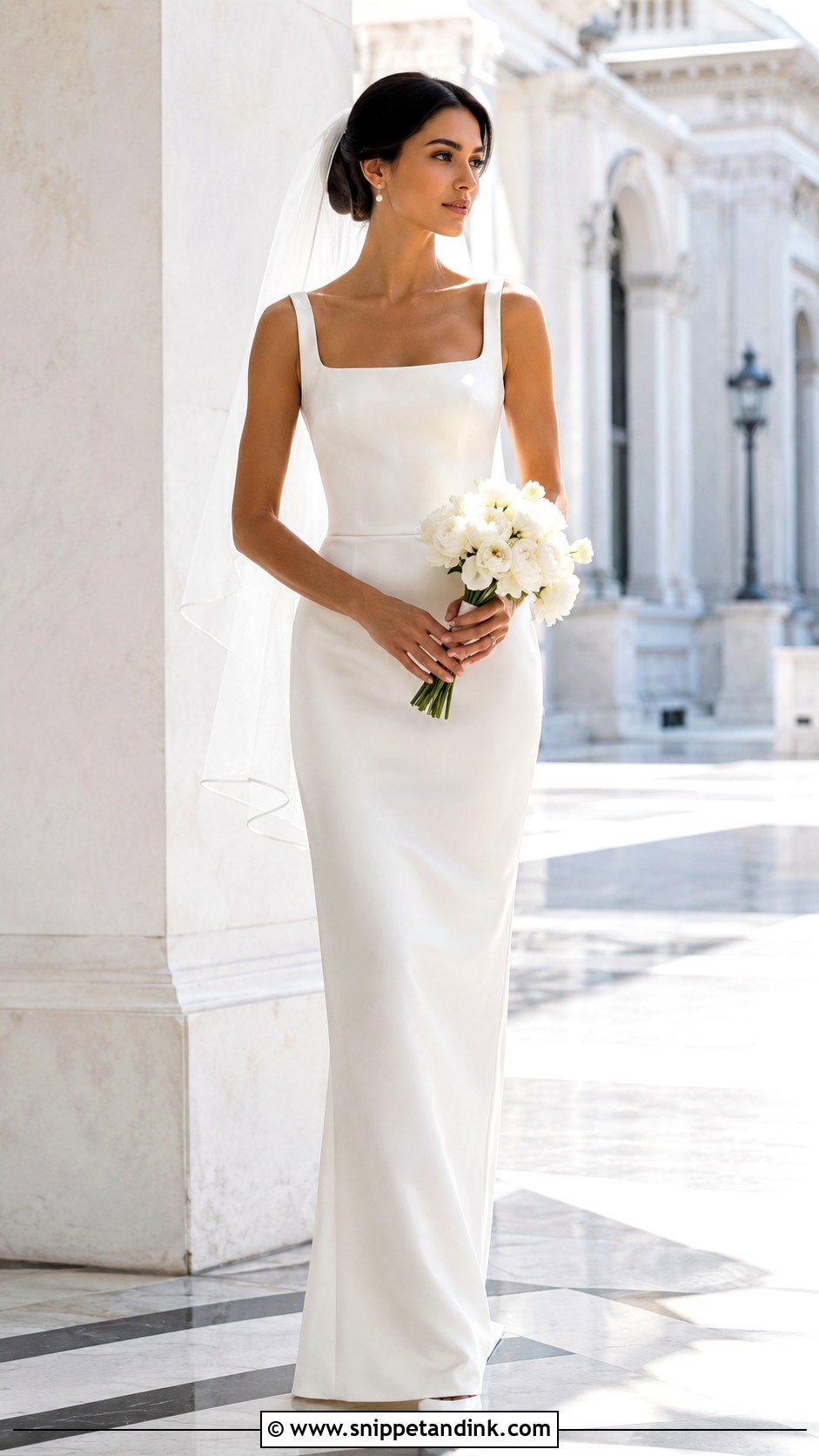
A column gown follows the body in one straight line without a full skirt, which makes it quietly powerful. Crepe, satin or silk give the cleanest finish. A square, halter or strapless neckline all suit it. Pointed heels add height. Because the shape is so streamlined, tailoring must be exact, and I’d check that you can walk normally; a narrow hem with no slit or kick pleat makes stairs difficult. Small pearl earrings and a simple veil.
22. French A Line Wedding Dress
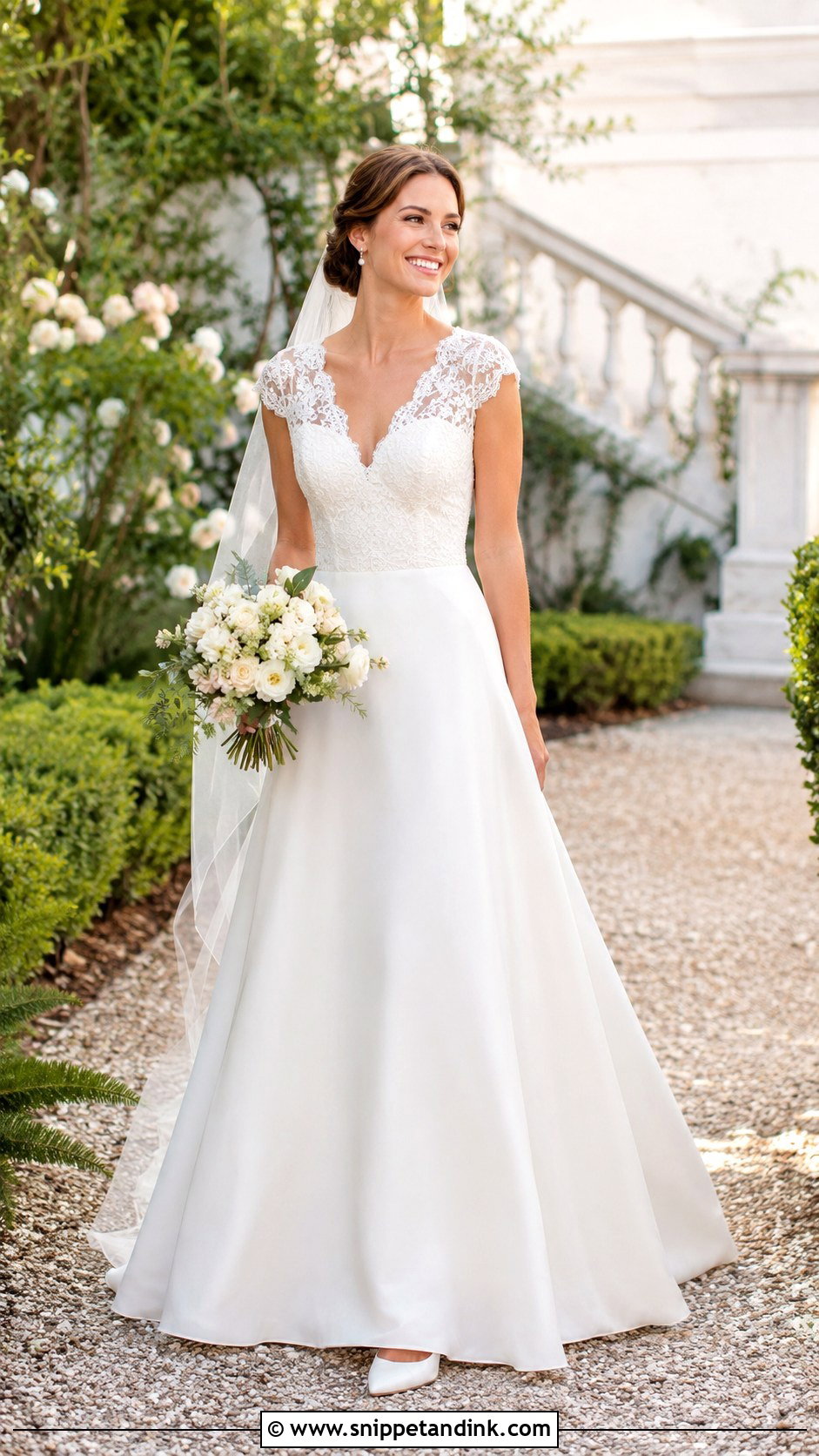
The A-line defines the waist and flows over the hips, which is why it flatters so many body types and seasons. For a French take, choose soft lace, matte satin or clean crepe over heavy beading. A square neck, an off-shoulder or a long-sleeved bodice all pair well. I’d recommend it to a bride who’s unsure where to start, as it’s the easiest silhouette to try first and compare others against. Classic pumps, a light veil and pearl earrings.
23. French Ball Gown Wedding Dress
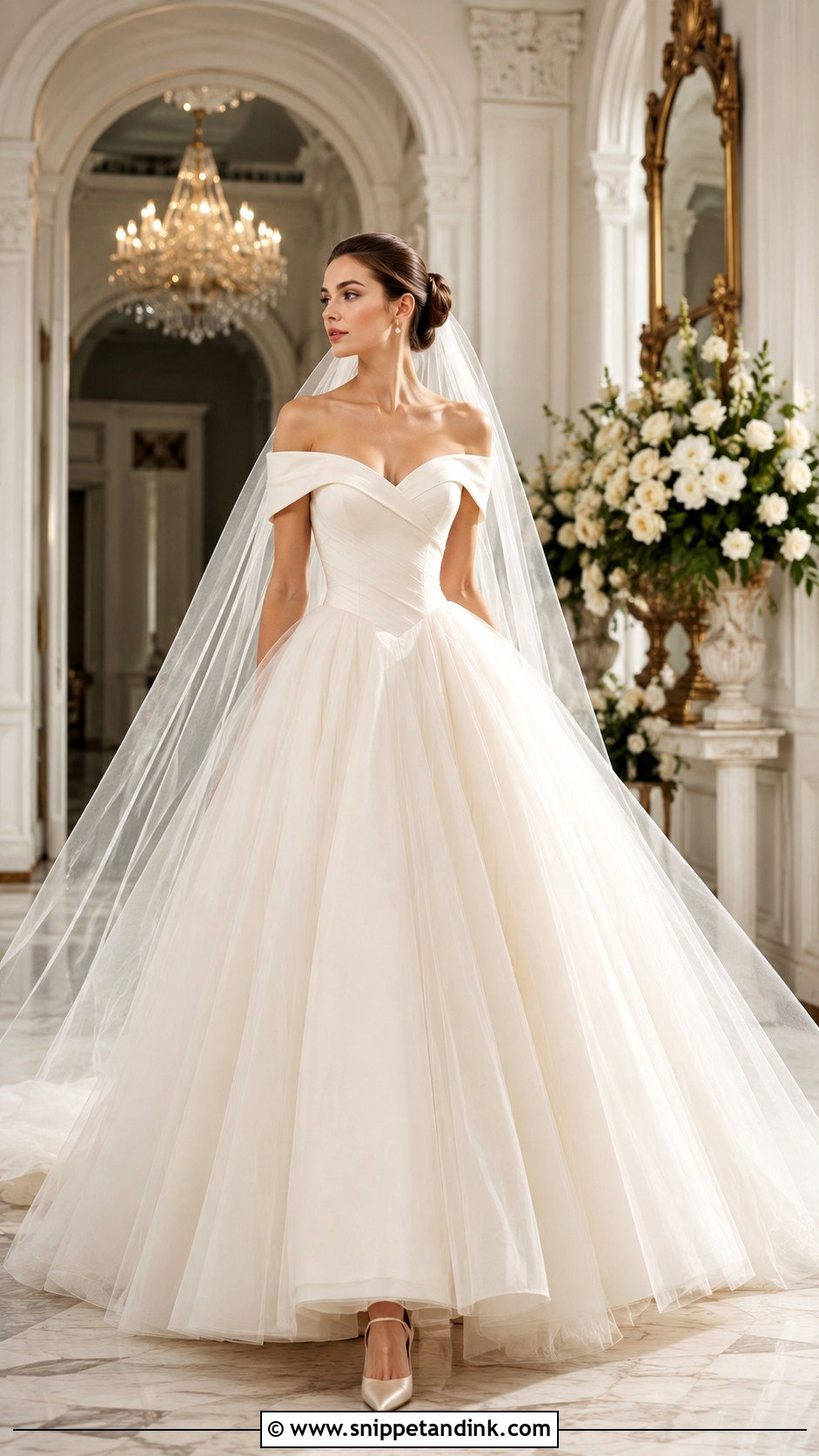
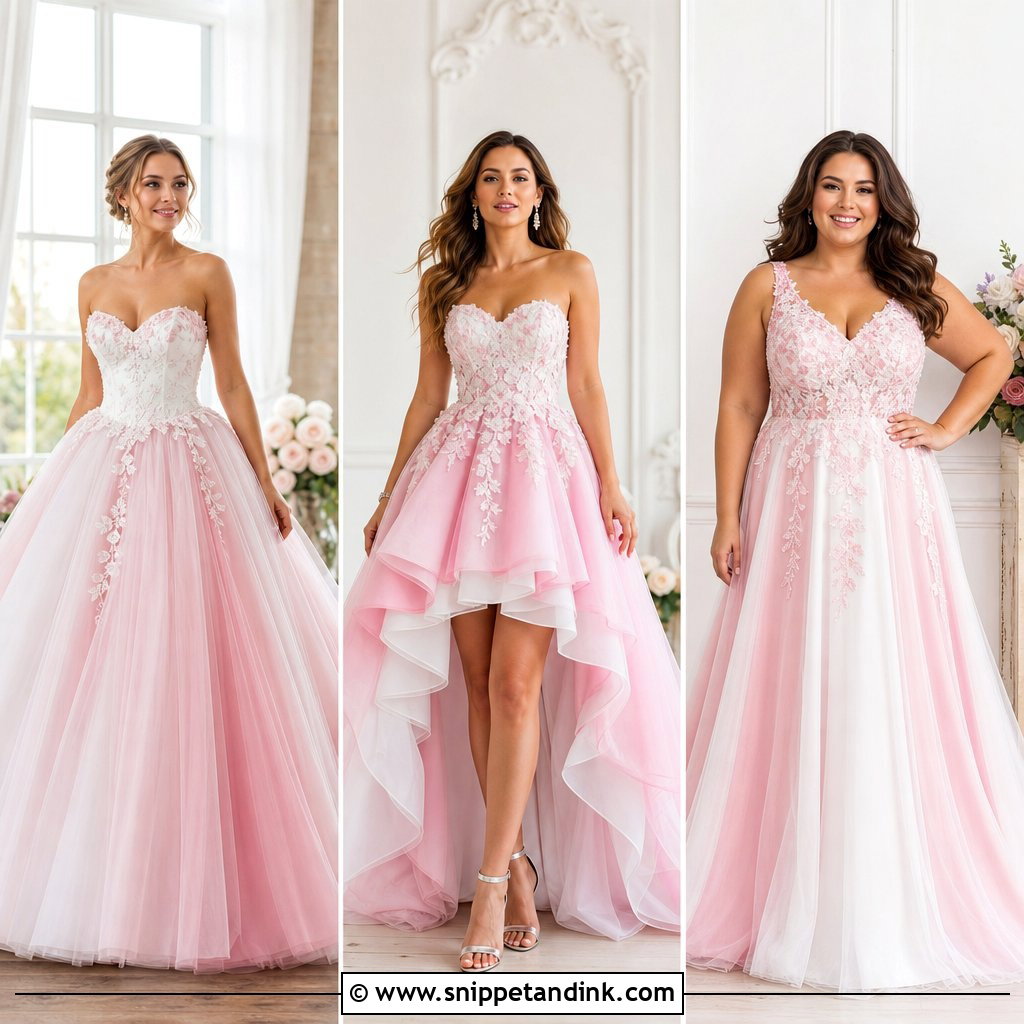
A ball gown can still feel French if the volume is soft and controlled. A fitted bodice over a full skirt in tulle, organza or satin. Pair a plain bodice with a textured skirt, or a lace bodice with a simple skirt; doing both makes it busy. Check the venue doorways and the car before committing to a very full skirt. Satin heels, a long veil and small earrings. A neat bun or half-up style.
24. French Wedding Dress With Cape
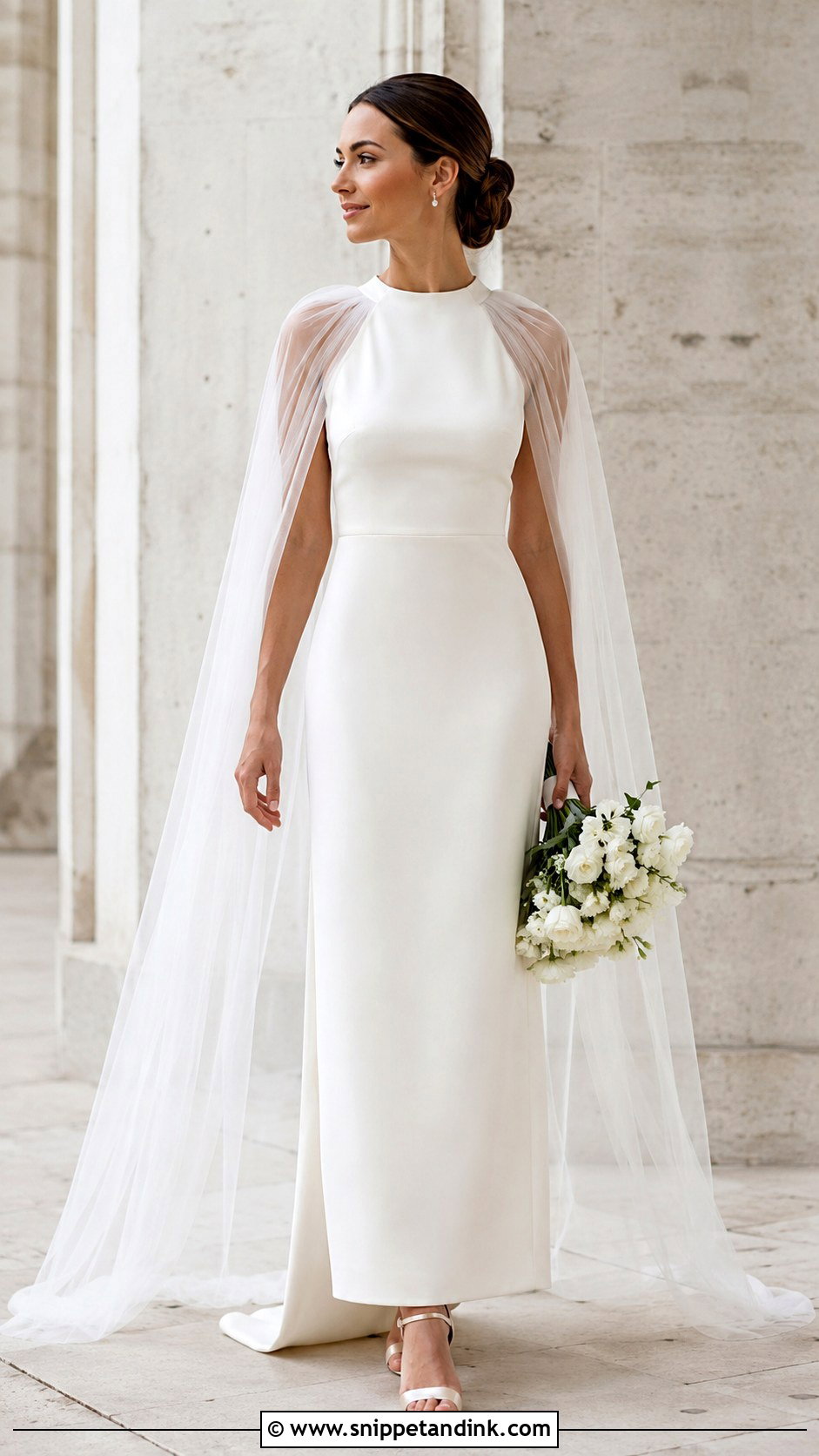
A cape can replace a veil, add coverage and create movement in photos. Choose a sheer tulle cape for softness, a crepe cape for a minimalist look or lace for romance. Pair it with a simple column, slip or A-line so the outfit isn’t busy. Outdoors, a cape catches wind, so I add a small weight at the hem or a wrist loop. Keep jewelry small and shoes classic, and wear a low bun so the cape falls cleanly.
25. French Wedding Dress With Gloves
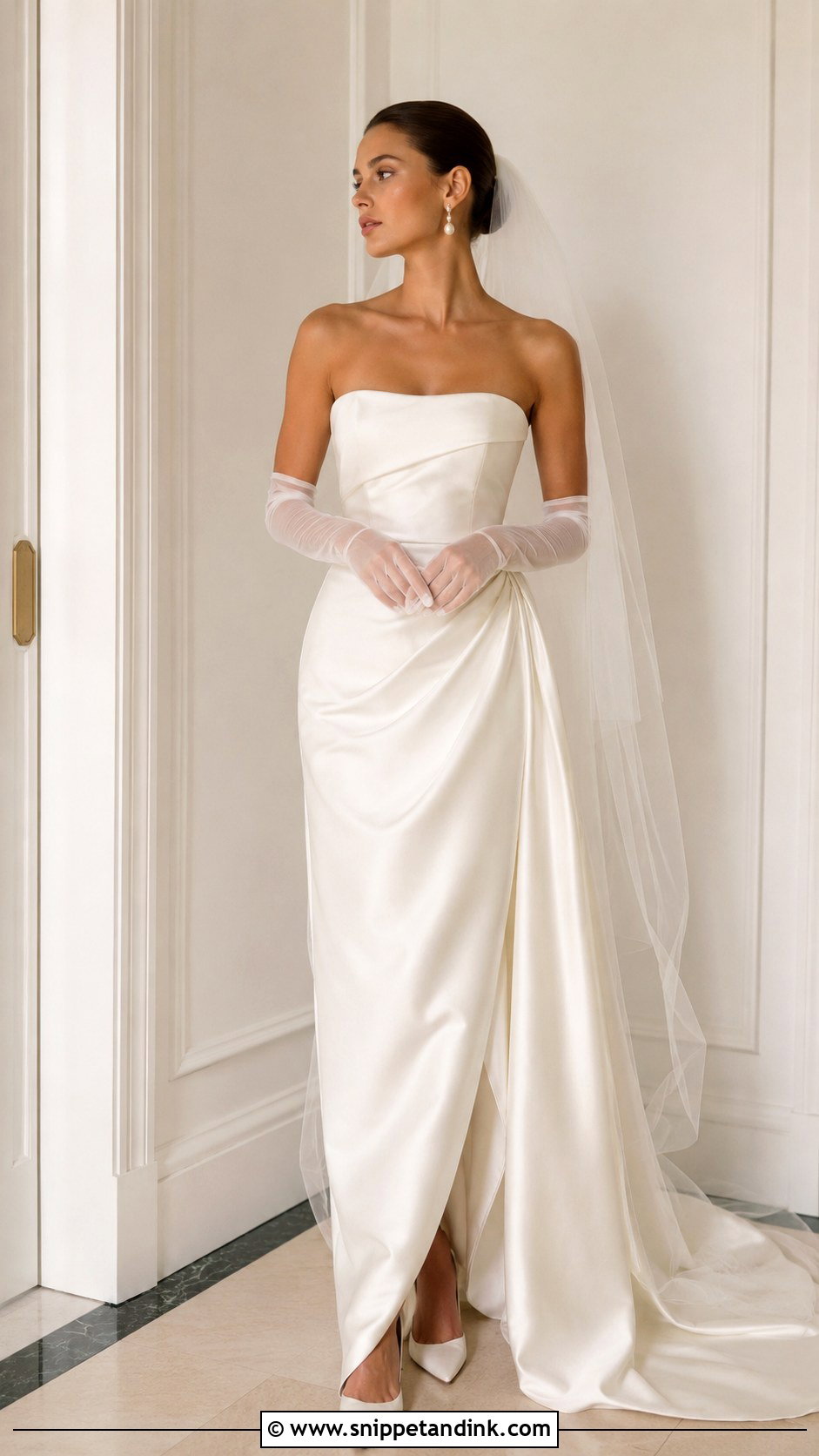
Gloves give an instant vintage reference. They suit strapless, off-shoulder, short-sleeve or clean long-line gowns. Sheer gloves are soft, satin gloves are classic and short gloves feel playful for a civil ceremony. Practically, you’ll need to slip off the left glove or pull the ring finger free for the ring exchange, so plan who holds it. Pointed heels, pearl earrings and a neat veil or bow. Skip extra accessories.
26. French Wedding Suit
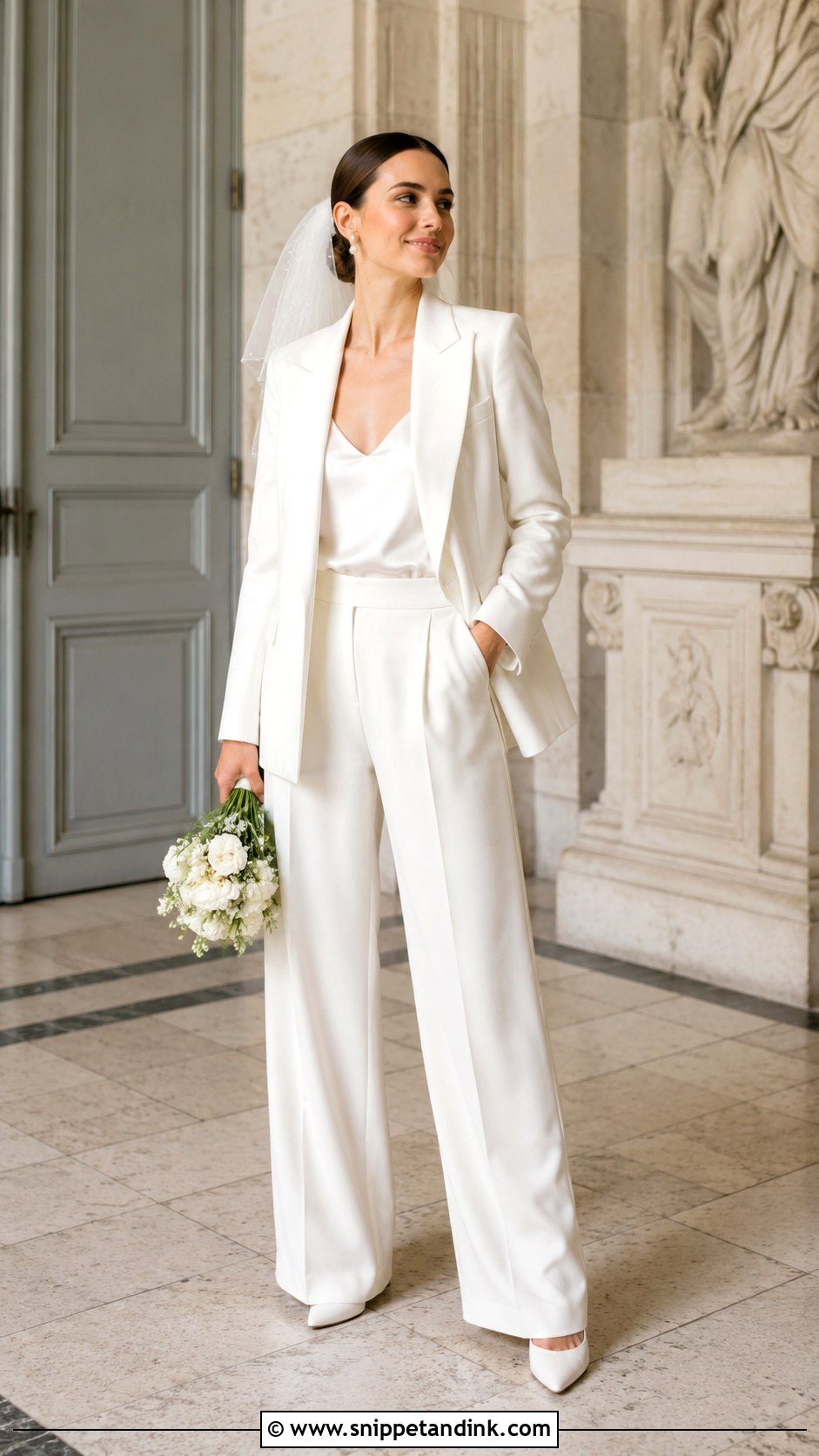
A suit gives you tailoring instead of a gown. A cream or ivory blazer with matching trousers over a silk camisole or a structured waistcoat. Wide-leg trousers feel elegant; slim trousers look sharp. A short veil, a net veil or a bridal hair bow softens it and marks it as ceremonial. The fit at the shoulders and waist must be precise, and I’d have the trousers hemmed in your exact wedding shoes. It suits civil ceremonies, elopements and second looks.
27. French Bridal Separates
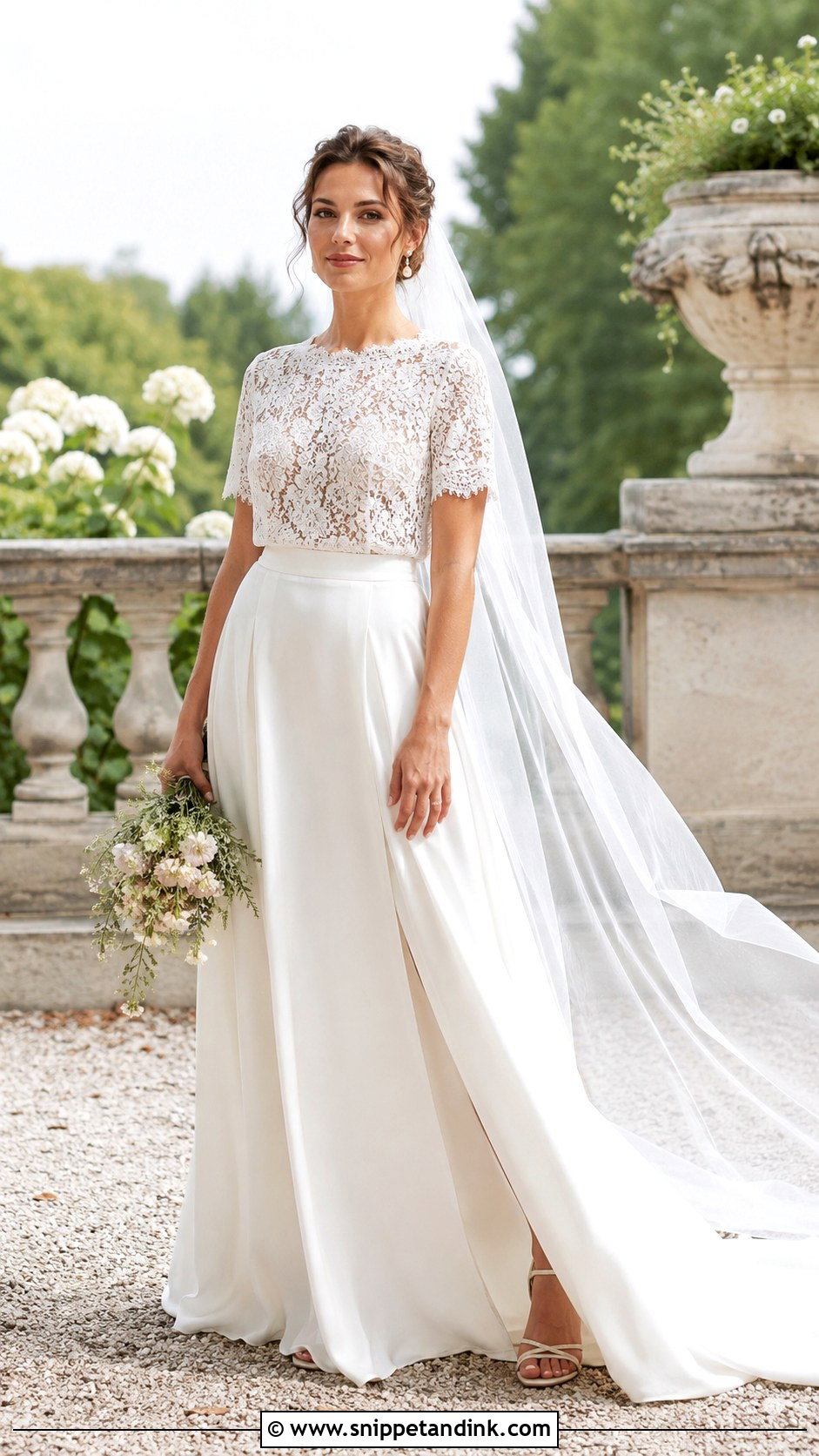
Separates let you build a custom look: a lace top with a silk skirt, a corset bodice with tulle, or a satin camisole with wide-leg trousers. The pieces have to look planned together, so I match the whites carefully; ivory silk next to bright white lace looks like a mistake in daylight. Simple heels, pearl earrings and a soft veil or hair ribbon. Separates also let you change one piece for the reception.
28. French Reception Wedding Dress
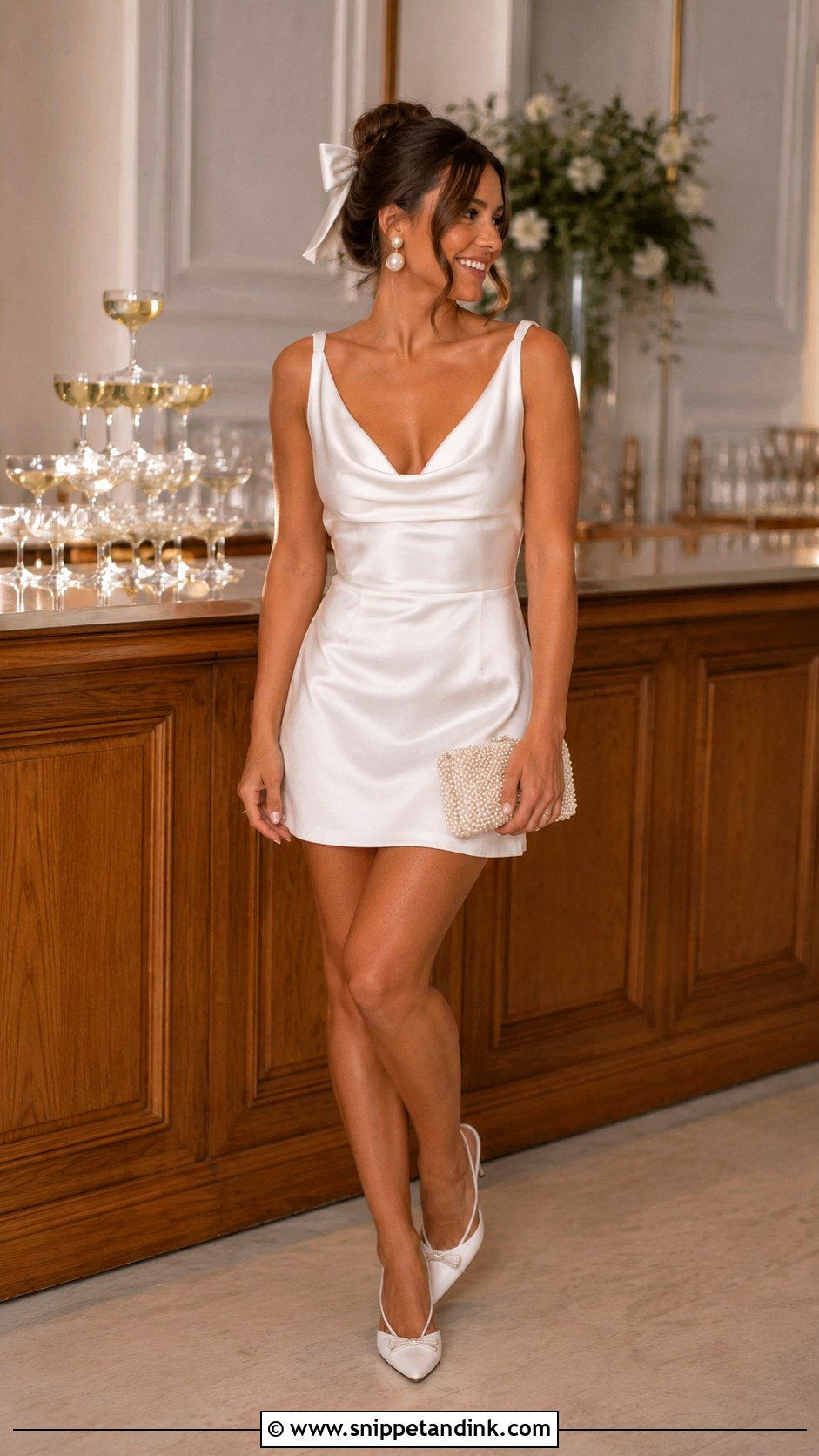
A reception dress should be lighter and easier to move in while still clearly bridal. A satin mini, a feather-trimmed shift, a tea-length lace dress or a sleek slip all work. Switch the long veil for a bow, headband or short veil. Slingbacks, pearl earrings and a small clutch. Plan the change: about fifteen minutes, a private room and someone to help with buttons. It gives you one formal outfit for photos and one relaxed one for the party.
29. French Courthouse Wedding Dress
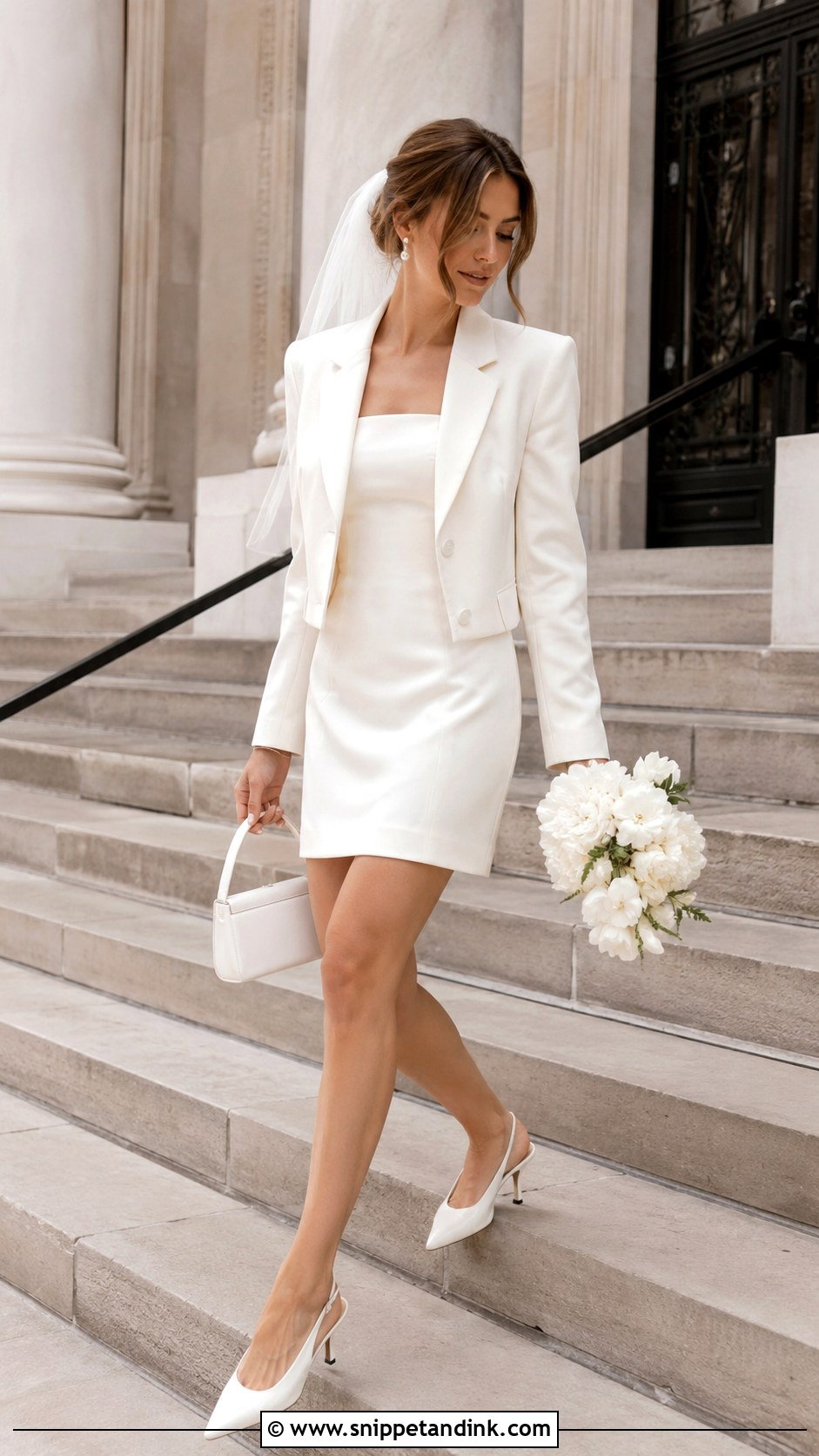
A French courthouse wedding dress should look simple and camera-ready without feeling too formal. A tailored mini, a tea-length satin dress, a lace shift or a clean crepe midi. Slingback heels, pearl earrings, a structured bag and a short veil or hair bow. A blazer over the dress gives polish and warmth in a cool city hall. I’d keep the bouquet small, since registry office photos are often taken close up.
30. French Beach Wedding Dress
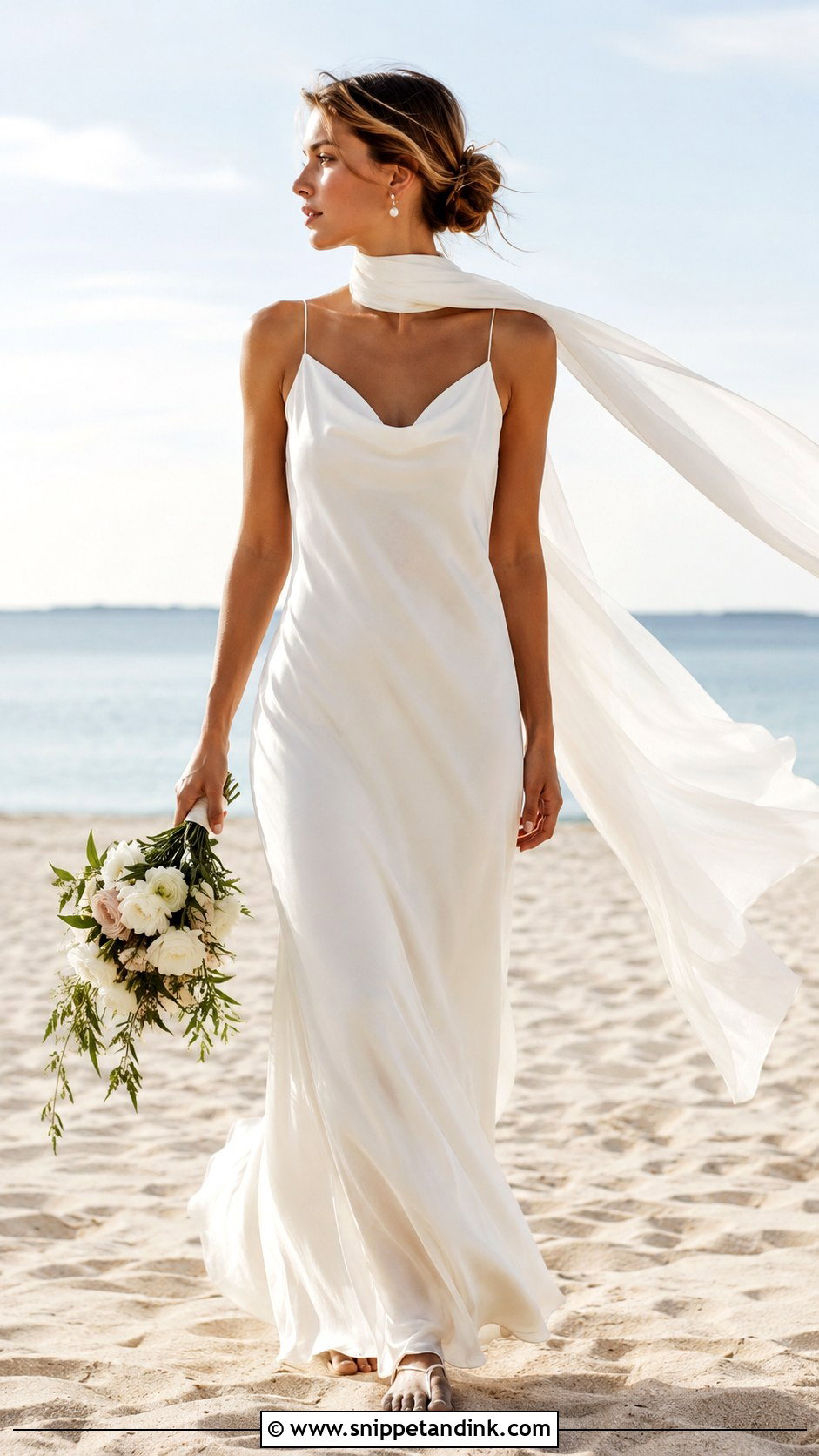
A French beach wedding dress has to be easy to walk in on sand. Silk chiffon, soft tulle, crepe or a simple slip that moves with the breeze. I’d avoid heavy trains and stiff fabrics; sand drags them down. A low back, a halter or delicate straps suit the coast. Flat sandals, pearl earrings and loose waves or a relaxed bun. Sea wind lifts veils, so a short veil or a sheer scarf is easier to manage than a long one.
Chantilly, Alençon and Other Laces You’ll Hear About
Lace names come up constantly in bridal shops, and the differences affect how a dress looks and wears.
- Chantilly is fine and flat, with delicate floral patterns on a light net. It drapes well, which makes it a good choice for sleeves and soft overlays, but it’s fragile.
- Alençon has a corded outline that gives the motifs a raised edge. It’s sturdier and has more texture, and suits bodices and borders.
- Guipure has no net background; the motifs connect directly to each other. It’s heavier and more graphic, better on structured gowns.
Ask whether the lace is cut along the motif at the hem and neckline or simply cut straight. Motif-cut edges look far more finished and are part of what makes a lace gown cost more.
Why a Bias-Cut Slip Needs Extra Fittings
Fabric cut on the bias stretches as it hangs. A good seamstress lets a bias gown hang for a while before marking the hem, because the length can drop and become uneven. That’s one reason I’d allow three fittings for a slip dress rather than two.
Bias cuts also show everything underneath. Wear the exact underwear and shoes you’ll wear on the day to every fitting. If your weight changes in the final weeks, a slip shows it more than a structured gown, so I’d schedule the last fitting no more than two weeks before the wedding.
One Detail, Cut Exactly Right
A French-inspired bridal look doesn’t need heavy sparkle or complicated styling. It relies on careful tailoring, soft lace or a fabric that moves, and one detail that feels personal, whether that’s a bow, a cape, gloves, a pearl veil or a neckline cut exactly right. Let the venue, the season and your body shape decide the silhouette, then keep accessories restrained. A satin slip, lace gown, suit or reception mini can all carry it.
You'll Like These Ideas:




Leave a Reply