
More of the brides I style want to get married in their own texture, and I’m glad. Coils, curls, twists, locs, afros and protective styles can be every bit as formal as a sleek chignon; what makes any of them bridal is shape, finish and how the accessories are anchored. The real work with natural hair is planning for how it behaves: shrinkage, humidity, drying time and how much tension your edges can take. The twenty styles below cover short and long hair, loose textures and installs, and for each I’ve noted what I check first and where the style can let you down by the reception.
Your Hair’s Wedding Week, Day by Day
With natural hair, most of the wedding look is decided before the morning itself. Drying times, installs and how long a set holds all shape the schedule, so I plan it backwards from the date with every bride.
- Two to three weeks out: a trim if you need one, and a protein or deep conditioning treatment if your hair needs it. Nothing new after this point.
- Seven to ten days out: install braids, faux locs or mini twists. A week lets the tension at the roots ease, so the style looks soft and feels comfortable on the day.
- Two to three days out: wash and deep condition for loose styles. Freshly washed hair can be too soft to hold a set; a day or two of rest gives it some grip.
- The night before: set twist outs, Bantu knots or rod sets so they dry completely overnight. Sleep in a satin bonnet or on a satin pillowcase.
- The morning: unravel, shape and accessorize. With a well-dried set, this is the shortest part of the day.
Humidity and Product Choice
Check the forecast for your venue. In humid weather, products heavy in glycerin can make curls swell and lose definition; a gel with stronger hold and fewer humectants keeps the shape. In very dry air, the same glycerin can pull moisture out of the hair, so a richer cream works better. If your style is round and full, like a puff or an afro, expansion is less of a problem. Defined curls left loose are the most sensitive.
1. Natural Bridal Low Bun
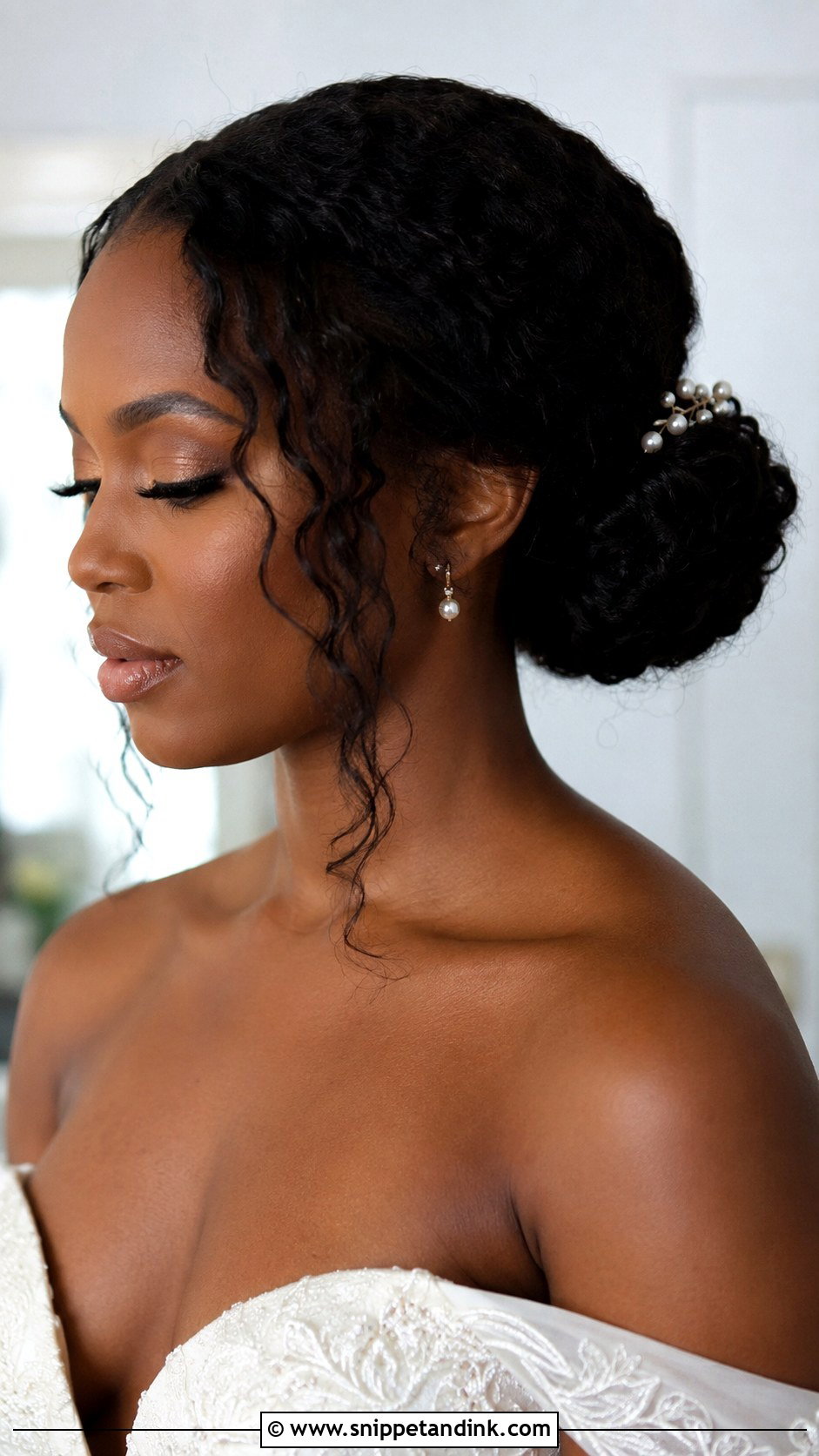
The low bun is the style I trust most for a long day. I gather the hair at the nape and shape it into a rounded, twisted or tucked curly bun, depending on density; very thick hair usually needs to be split into two sections first, or the bun gets heavy and drags. It leaves the face and neckline open and gives a veil or comb a solid base. Smooth the crown with a soft brush and a light cream, not a hard gel, so it looks clean without a helmet shine. A couple of loose tendrils at the temples stop it looking severe.
2. Natural Bridal High Puff
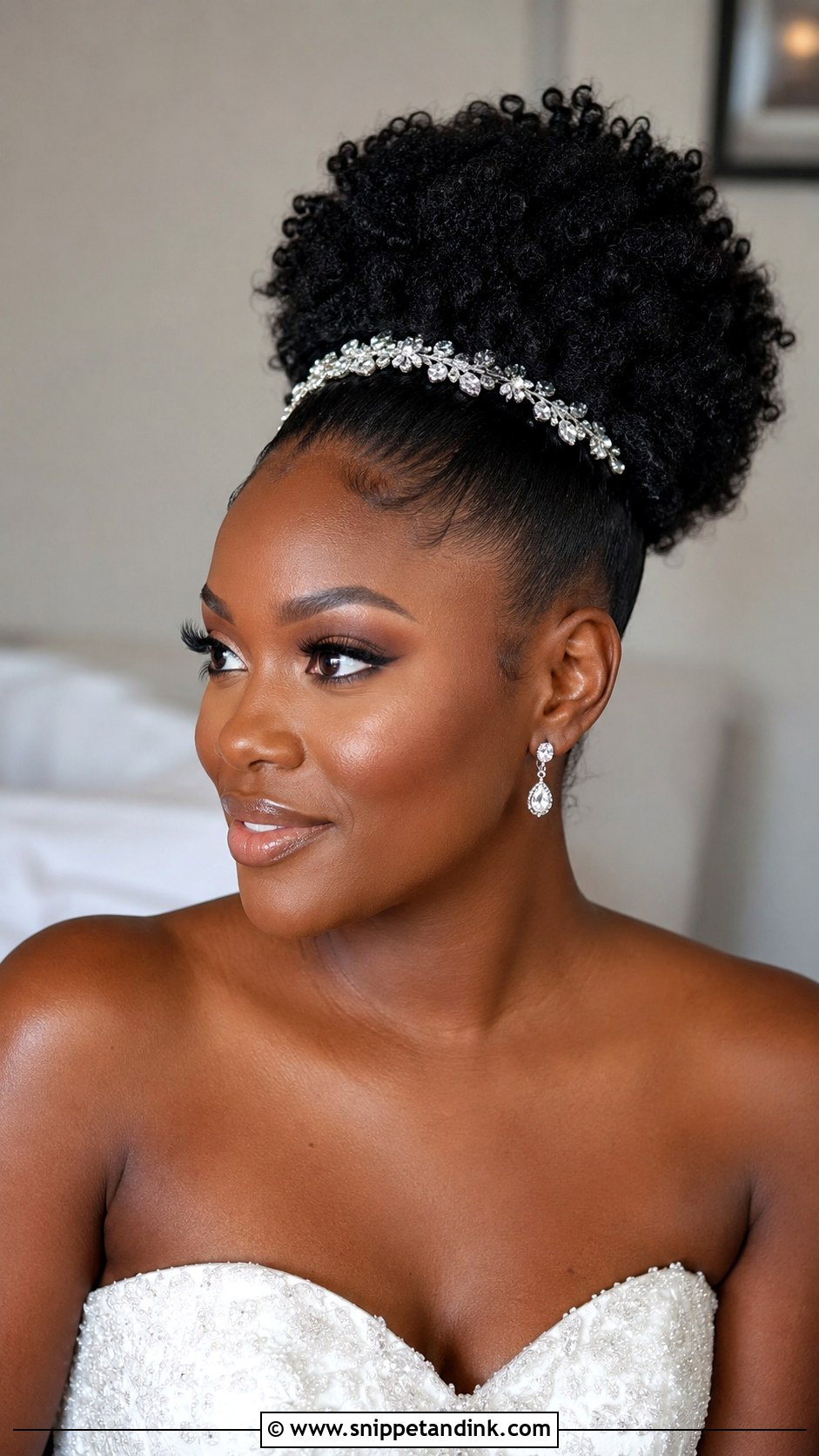
A natural bridal high puff puts the curls at the center of the look and gives real height. I gather it with a soft stretchy band or a drawstring of fabric rather than an elastic, which can snap fragile strands at the gathering point. The base can be sleek, lightly brushed or finished with laid edges. Because the puff is meant to be round and full, it handles outdoor humidity better than most styles; expansion just makes it bigger. A jeweled headband in front or a veil tucked underneath both sit securely.
3. Natural Bridal Twist Out
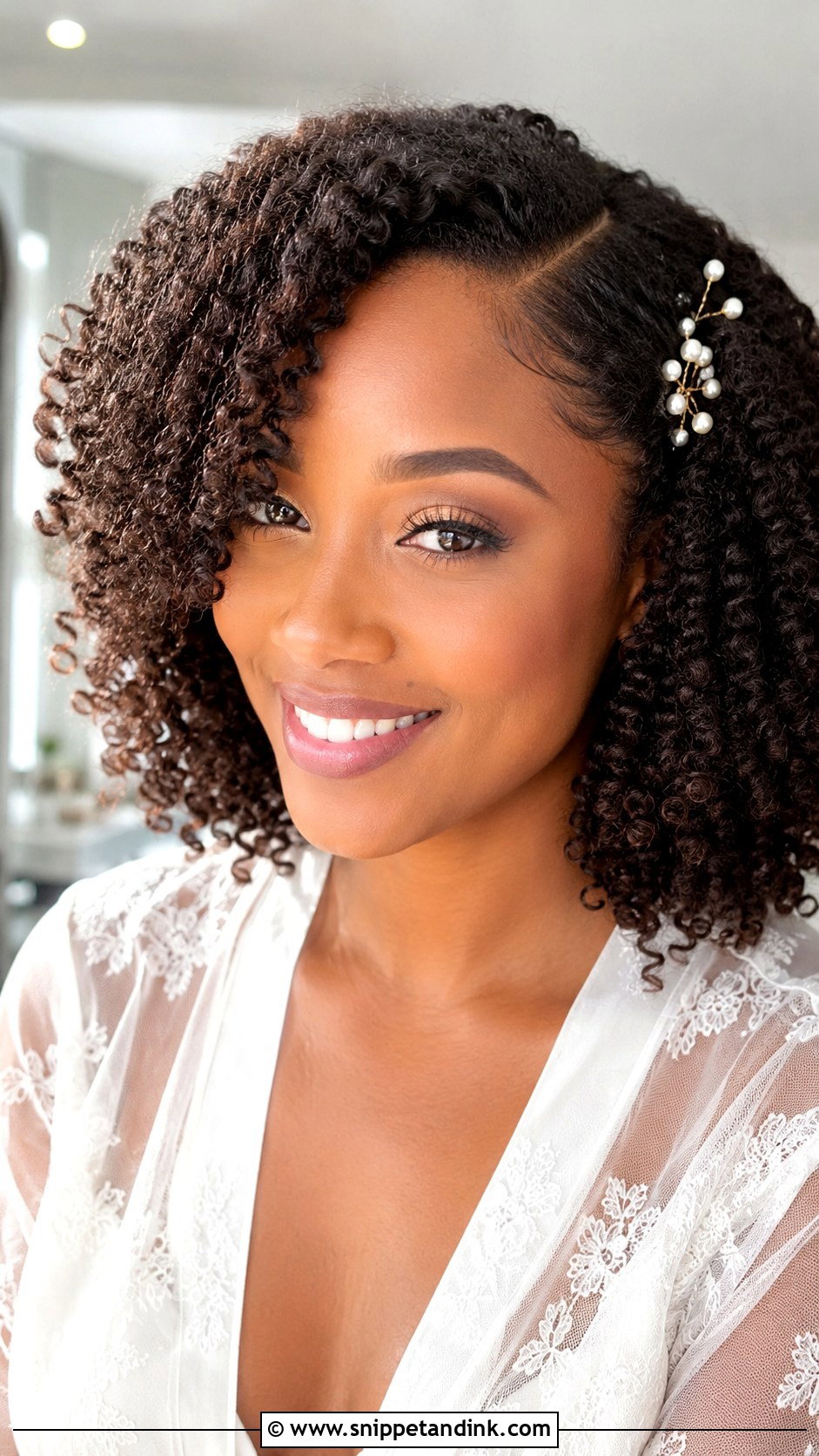
A twist out gives soft, defined movement for a bride who wants her hair down. It lives or dies on drying. I twist on moisturized hair with a holding cream or mousse, and the twists must be completely dry before I unravel them, otherwise the curls go fuzzy within an hour. That usually means setting the night before or sitting under a hooded dryer. Separate with oiled fingertips, shape it into a rounded or side-swept outline, then add a small comb or a veil behind the crown.
4. Natural Bridal Braid Crown
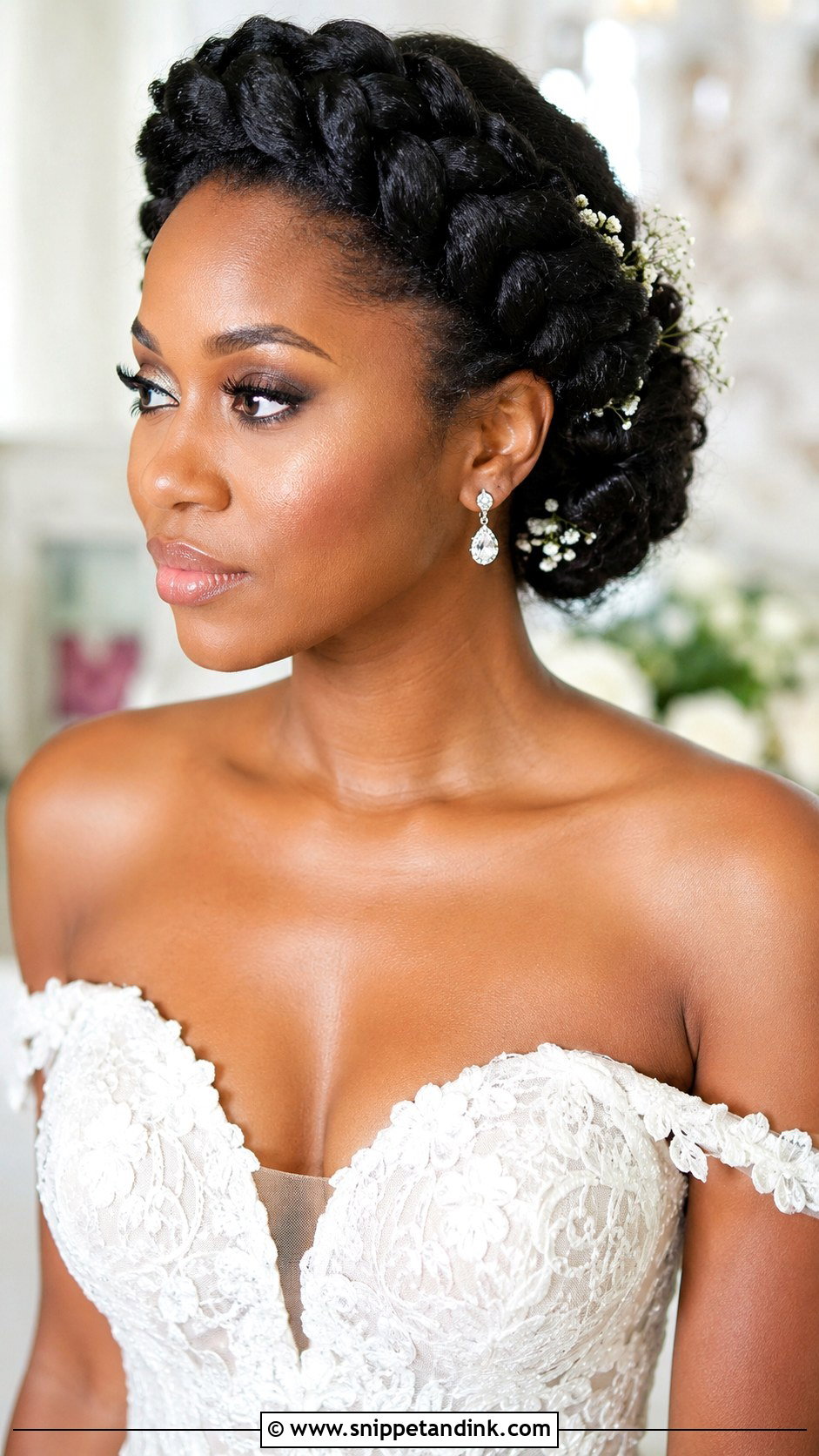
The braid crown wraps a braid around the hairline like a halo, and it keeps hair off the face through a long ceremony. Natural hair works if it’s long enough to reach around; otherwise I braid in added hair for fullness. The back can be tucked away, curled into a low bun or left as a textured puff. The thing I watch is tension at the front: a crown braid pulled tight over the edges is uncomfortable by lunch and can damage the hairline. Small flowers, gold cuffs or pearls finish it.
5. Natural Bridal Flat Twist Updo
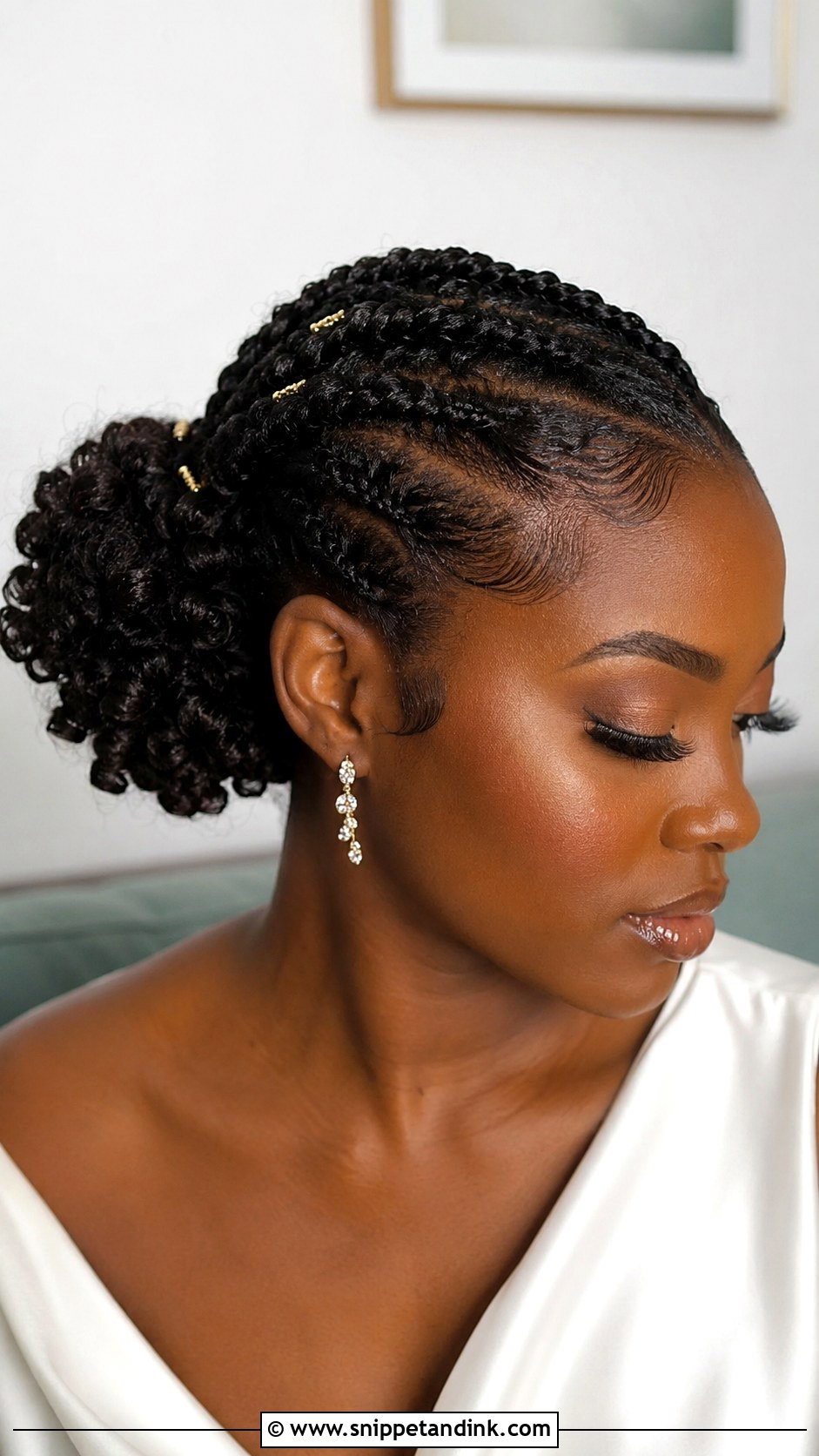
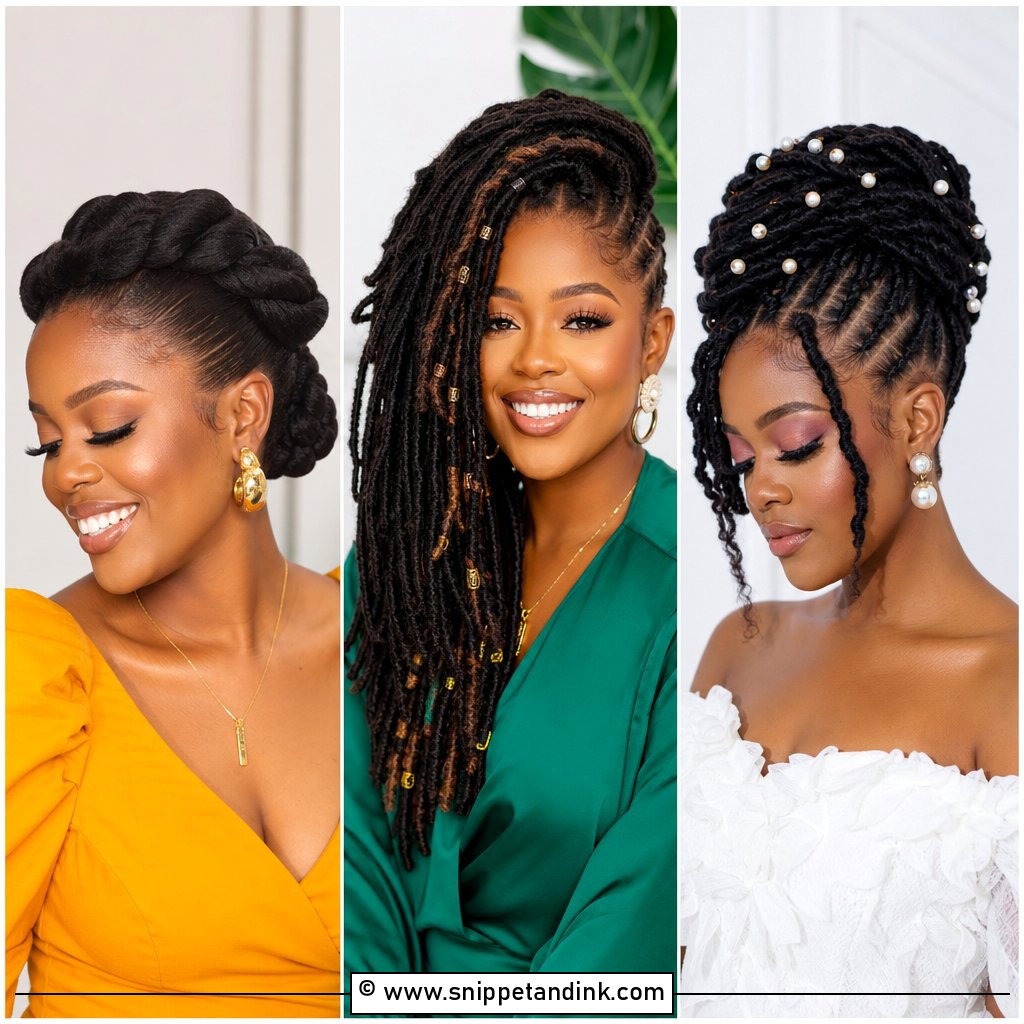
Flat twists hold their shape through heat, humidity and dancing better than almost any loose style, because the pattern is set into the scalp. They can run toward the crown, curve along the sides or meet in a sculpted bun at the back, so the design can be specific to you. I usually do the twists the day before and finish the bun on the morning, which keeps the wedding-day chair time short. Keep the twists sleek with curls pinned on top for volume, then slide small pins along the rows.
6. Natural Bridal Afro
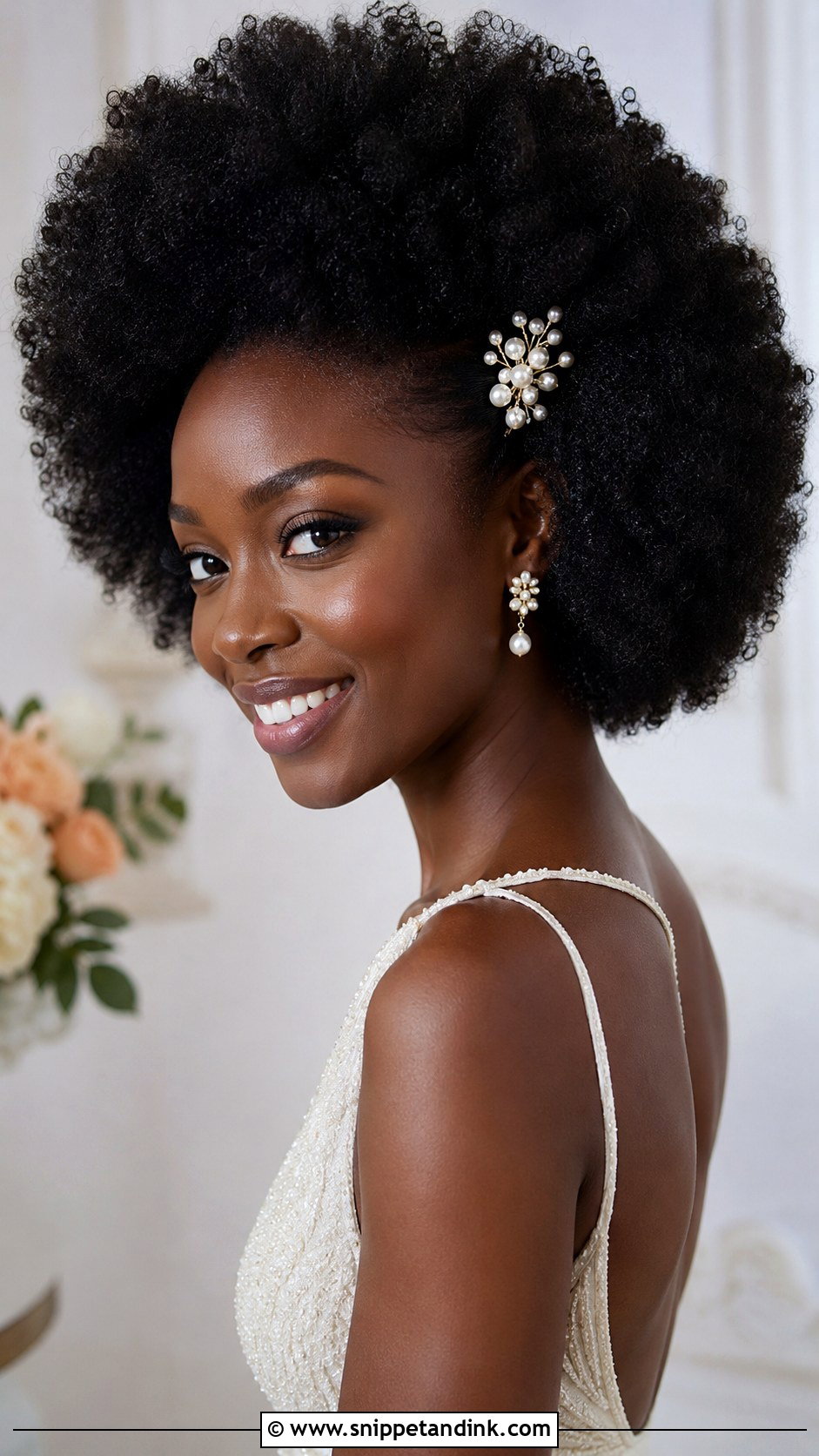
An afro celebrates full texture without forcing it into a shape that doesn’t feel like you. On the day, the outline is what matters: I pick it out from the roots, then shape it with scissors only if the bride has asked for a trim, so the silhouette looks balanced from every camera angle. Round is classic; a softly tapered shape feels modern. Hydration gives the softness and sheen that read well in photos, so moisturize the night before rather than oiling heavily that morning. A side comb, scattered pearl pins or a veil at the back finish it.
7. Natural Bridal Loc Updo
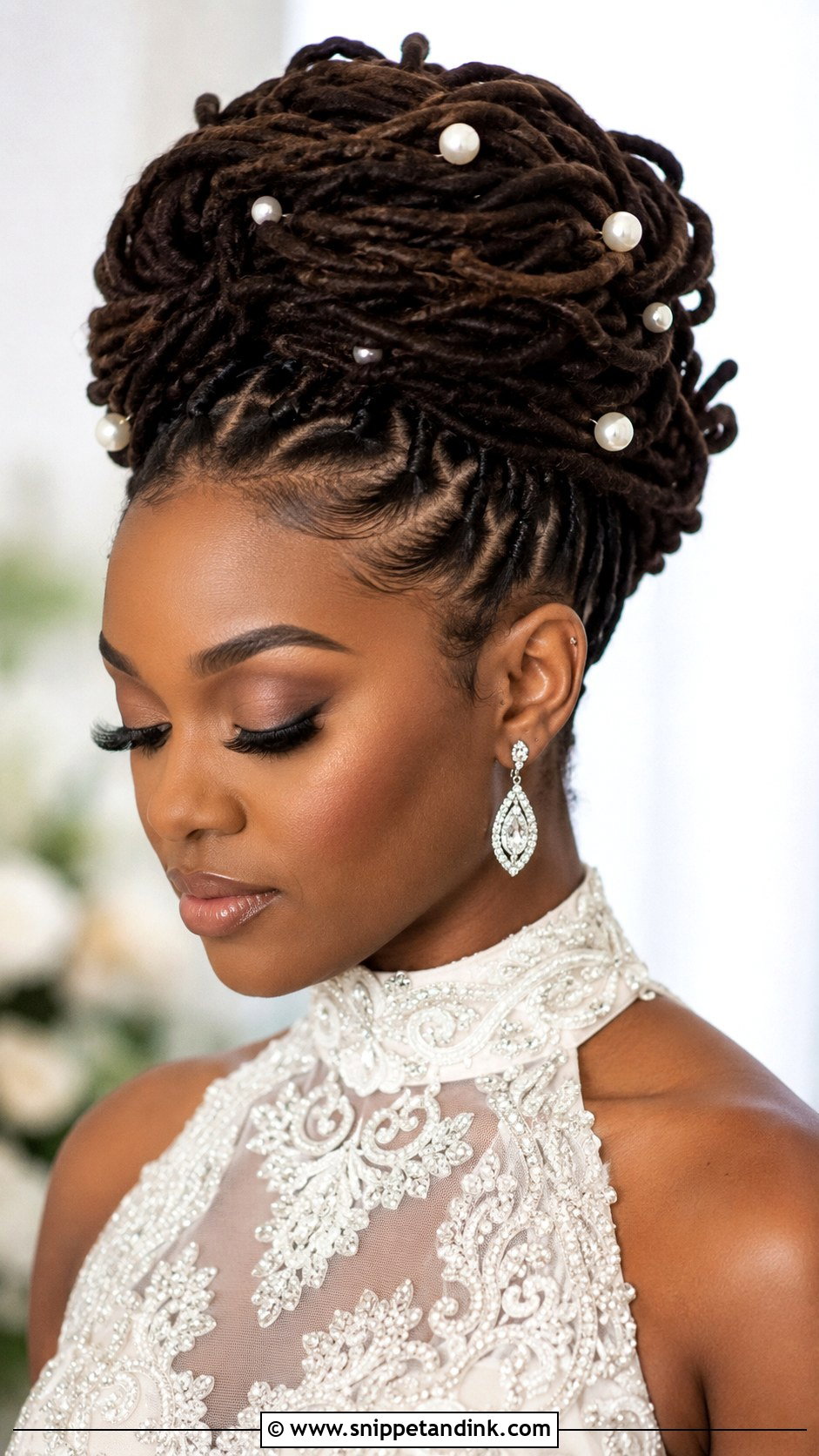
A natural bridal loc updo can be wrapped, rolled, pinned or stacked into a crown, and locs hold pins better than any loose texture because the pins have something firm to grip. A high loc bun gives height and drama; a low chignon is quieter. With long or heavy locs I build loops and folds and spread the weight across several anchor points so the scalp doesn’t ache by evening. Keep the edges neat and mist the scalp lightly so it looks fresh, not greasy.
8. Natural Bridal Faux Locs
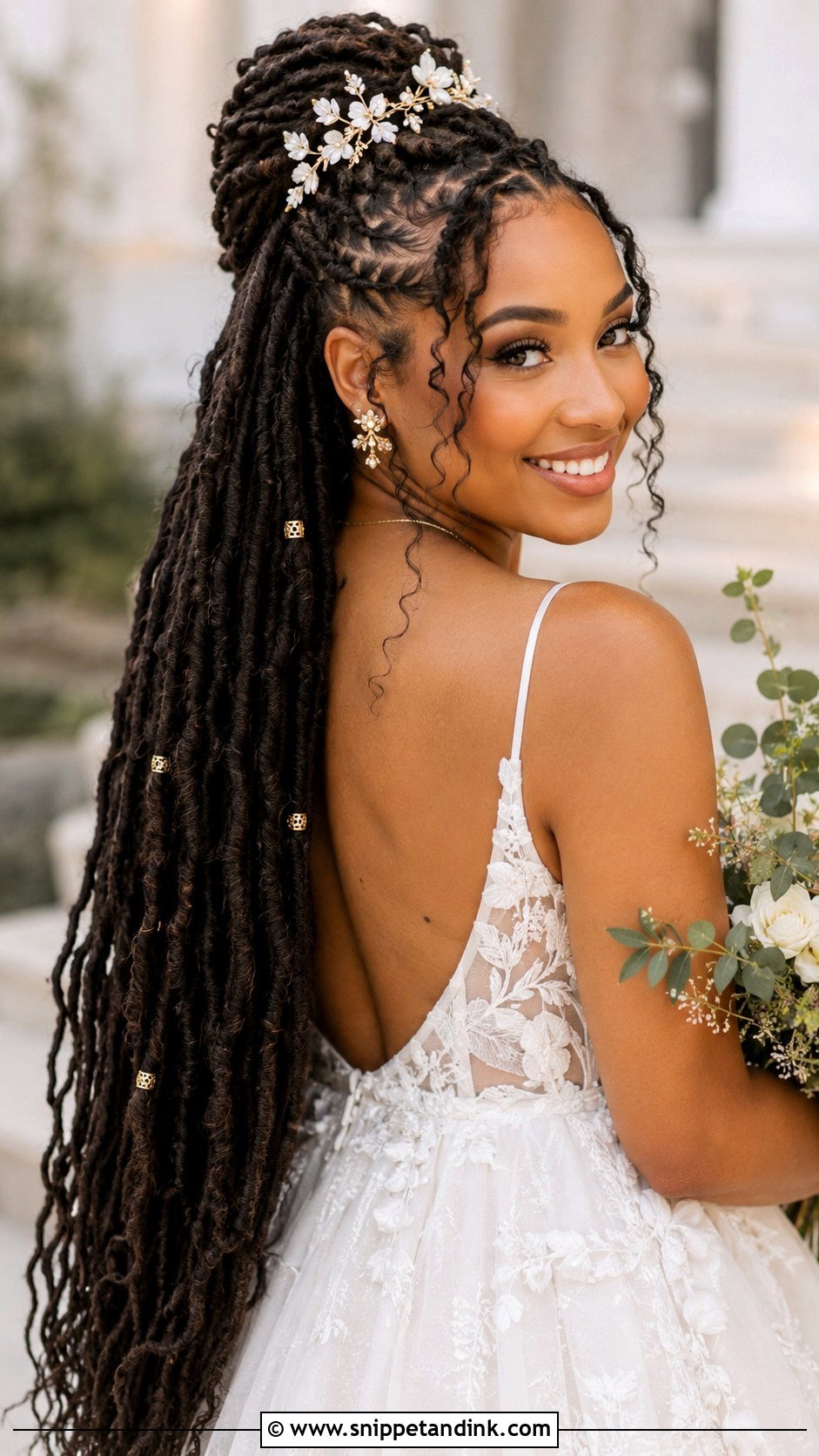
Faux locs give length, texture and protection, and they come with a big advantage: they’re installed days before the wedding, not that morning. I’d install them about a week ahead so the roots relax and any tightness eases. For the day, wear them in a half updo, a side-swept shape or a low wrapped bun. Gold cuffs and pearl pins sit well against the texture. They’re a good bet for destination weddings, since they hold up to humidity and sea air better than loose curls.
9. Natural Bridal Box Braids Bun
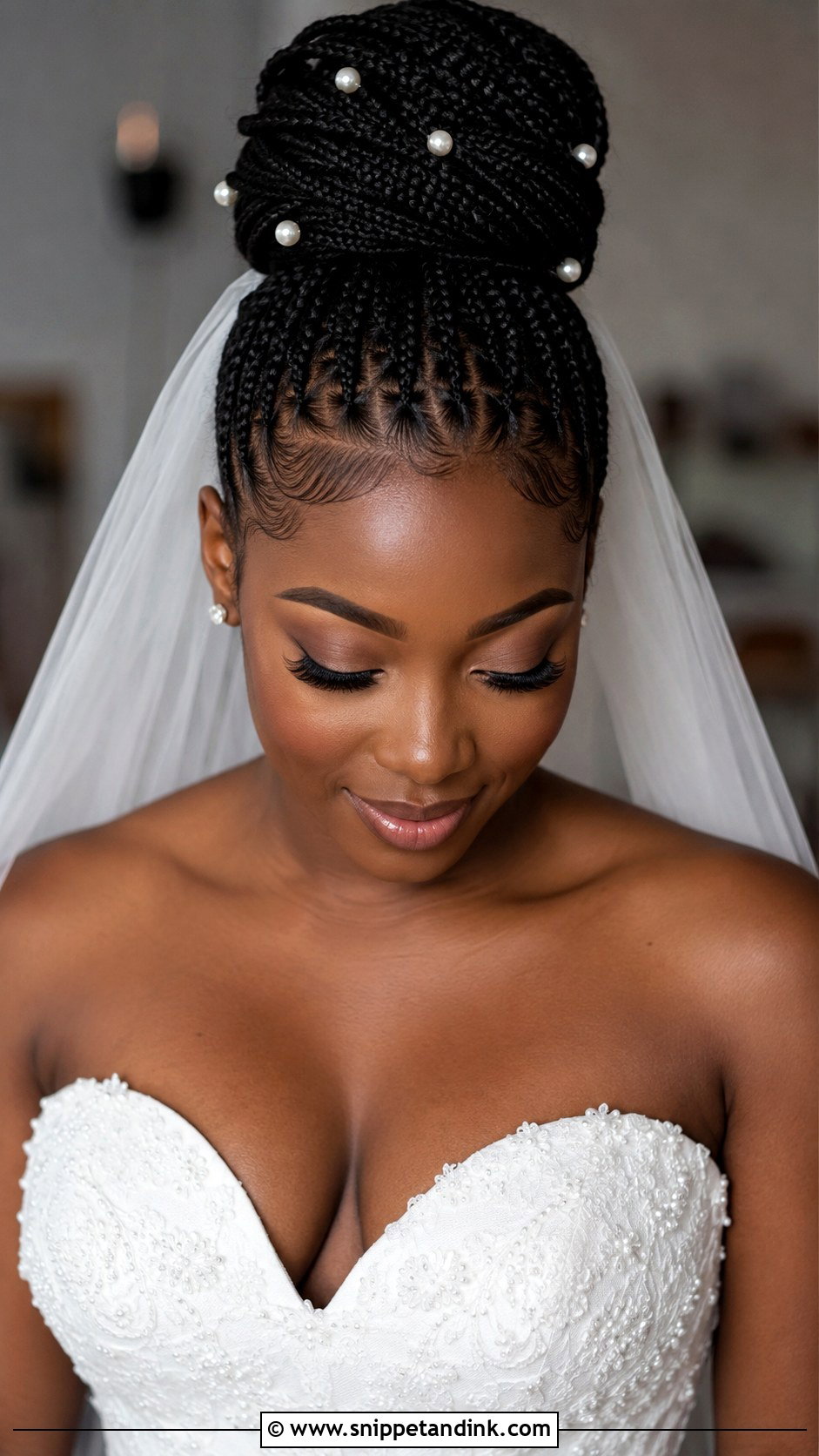
A box braid bun is one of the most predictable styles on a wedding day: the shape you leave the chair with is the shape you dance in. Small to medium braids make a smoother, neater bun; larger braids give a bold sculptural one. Long braids add a lot of weight, so I often anchor a bun in two parts or use a donut form to keep it balanced and comfortable. A veil underneath, pearl pins or a fine hair vine around the base make it bridal.
10. Natural Bridal Cornrow Ponytail
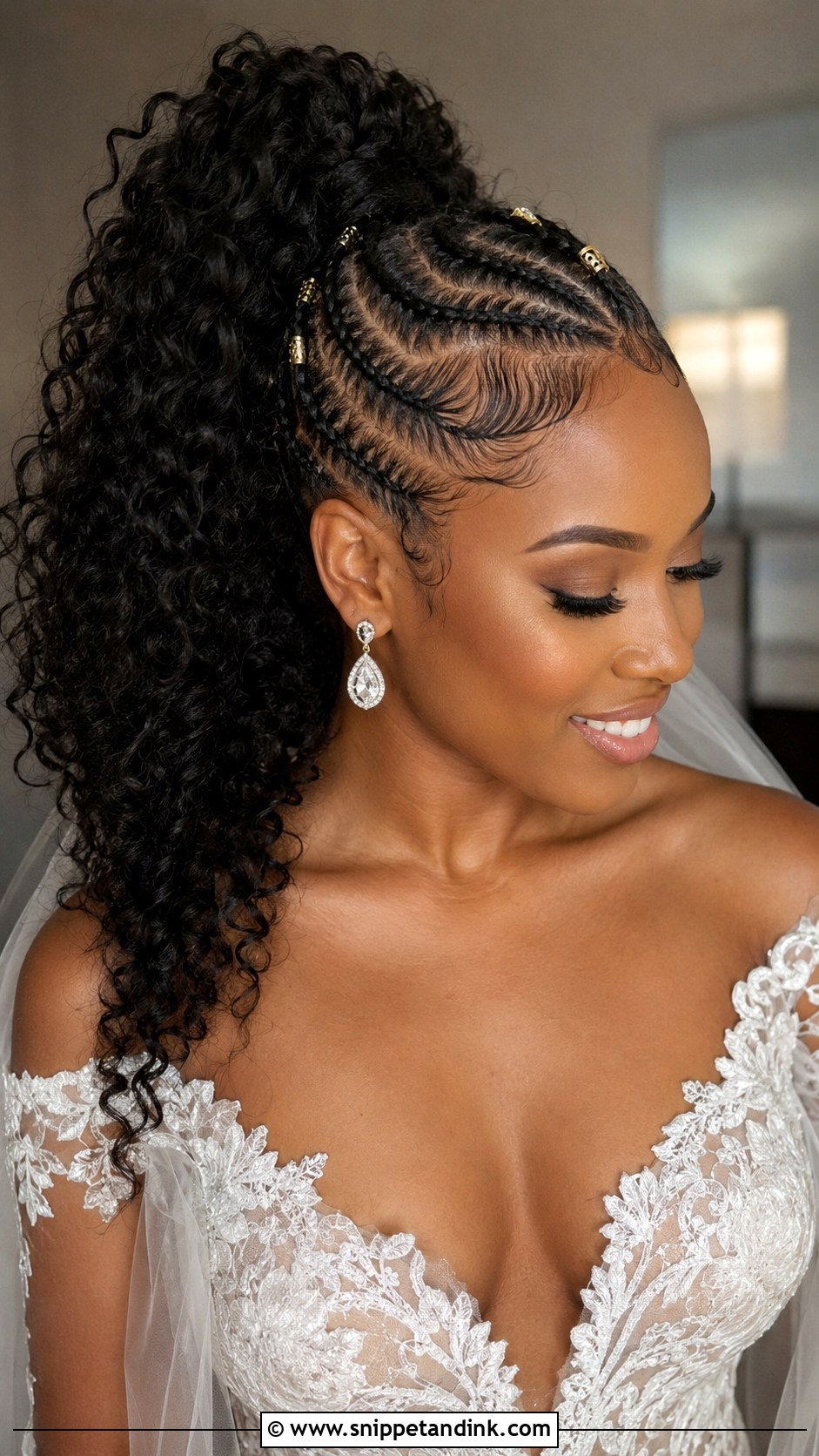
A natural bridal cornrow ponytail combines a structured front with length and movement at the back. The cornrow pattern can run straight back, curve along the head or start from a center part, and I’d choose it based on your face shape and where your veil will sit. The ponytail itself can be curly, coily, braided or textured to match your own hair. A pearl wrap, gold cuffs or a veil set at the base finish it. Ask for braids that aren’t tight at the hairline; you’ll wear this for hours.
11. Natural Bridal Half Up Half Down
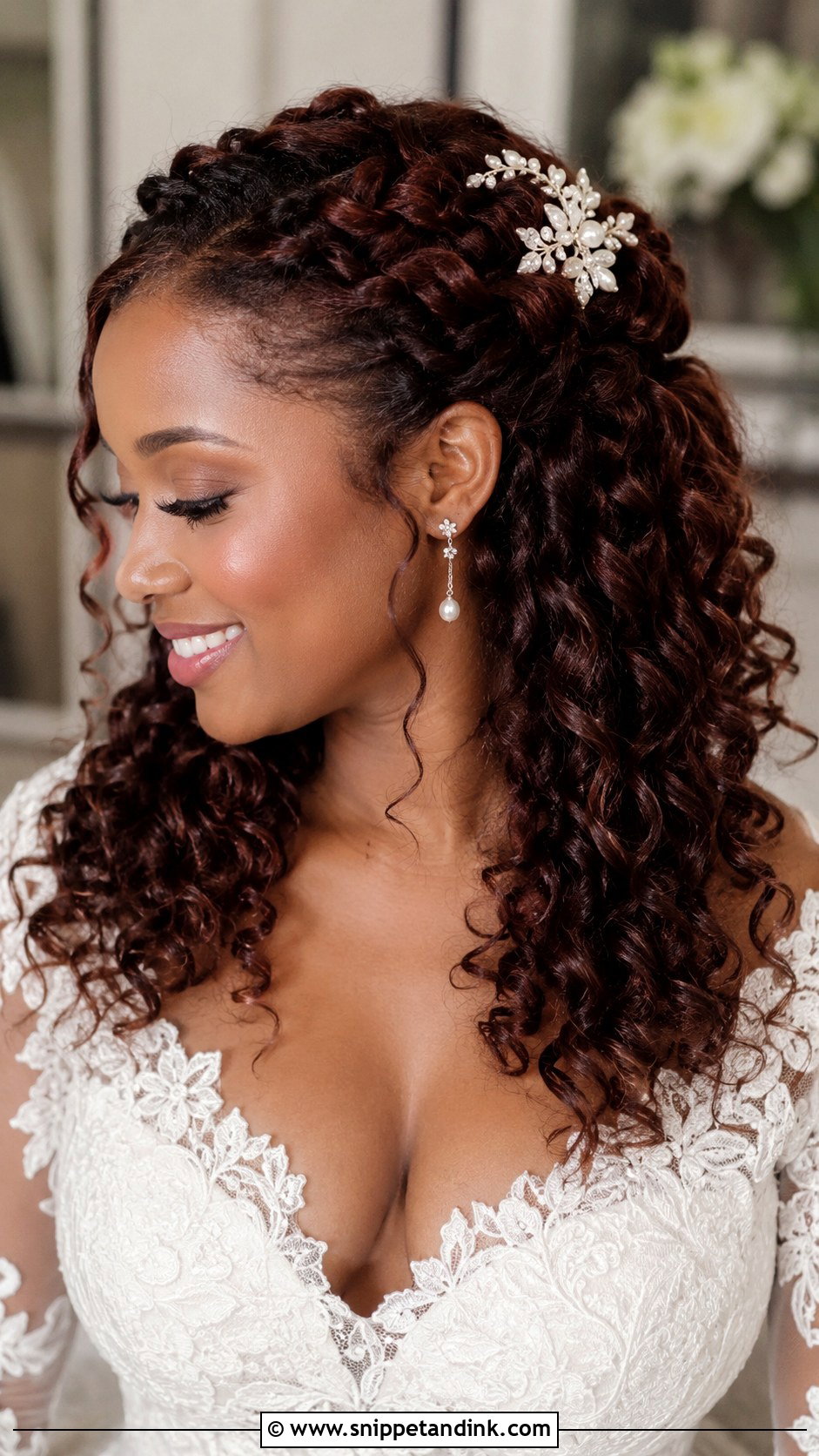
Half up keeps the front off your face while leaving full curls at the back, and it leaves a natural spot for a veil comb or tiara. The top section can be twisted, braided, pinned or gathered into a small puff. I shape the loose curls section by section so they fall evenly on both shoulders instead of collapsing on one side. Watch your neckline: an open back or off-shoulder dress shows the curls well, while a high, detailed neckline can get lost under them.
12. Natural Bridal Curly Ponytail
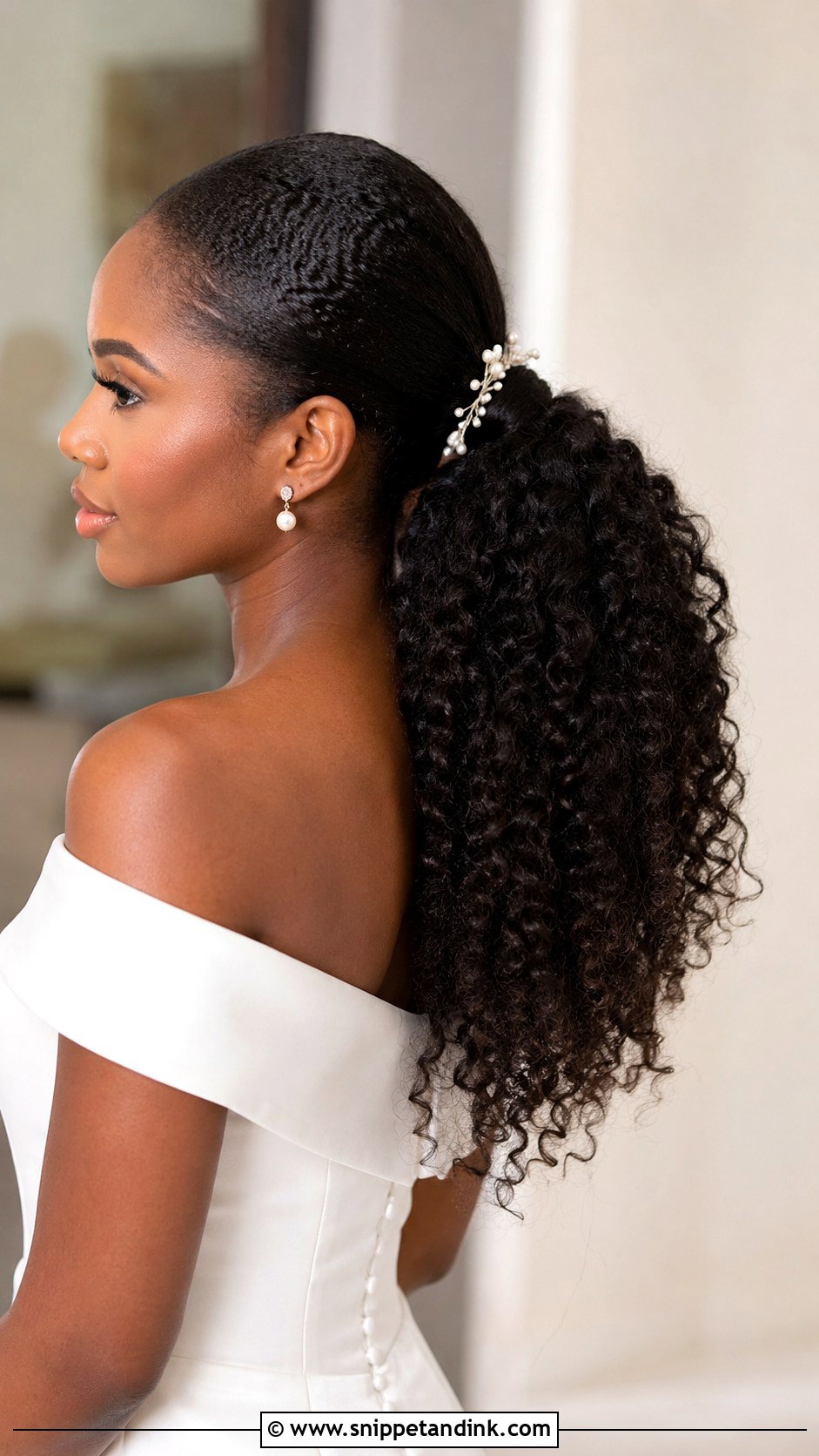
The curly ponytail contrasts a sleek base with a big, textured ponytail. High is playful and glamorous; low is softer and sits better under a long veil. For shorter hair, textured clip-ins that match your curl pattern add fullness, and I’d match them at a trial in daylight, not under salon lights. Wrap a small section of your own hair around the base to hide the band. One pearl comb on the side is plenty of detail.
13. Natural Bridal Bantu Knot Out
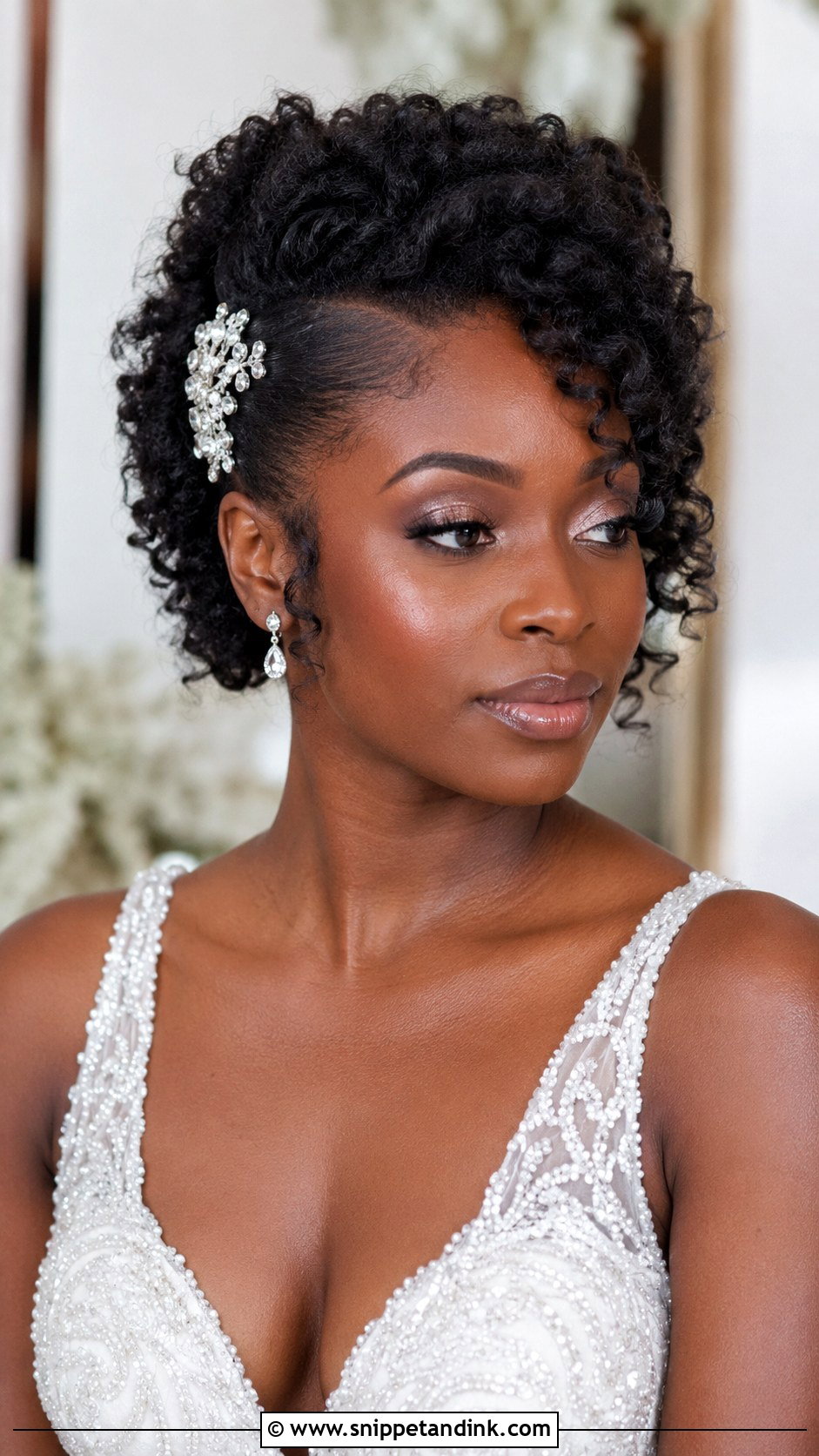
A Bantu knot out gives a fuller, more defined curl than a twist out. It also takes longer to dry, which is the single biggest risk. Knots set on damp hair need overnight drying or time under a hooded dryer; if they’re even slightly damp in the center when you unravel, the curls won’t hold. That’s why I insist on testing this one before the wedding with the exact products you’ll use. Fluff the roots gently, keep the pattern intact, and pin one side with a jeweled clip or tiny flowers.
14. Natural Bridal Tapered Cut
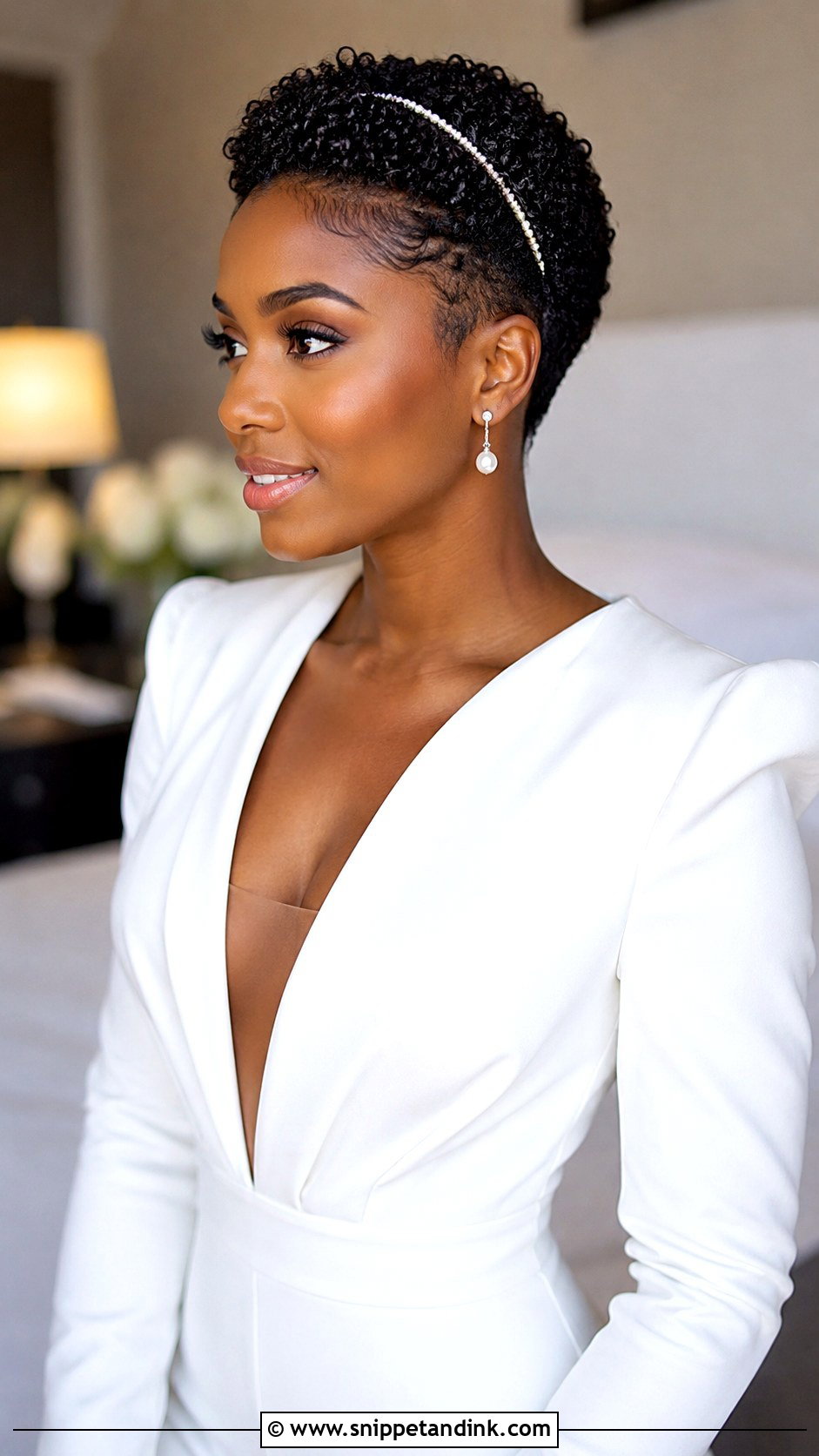
A tapered cut is the most low-maintenance bridal style here, and it looks formal when the shape is fresh. Book the trim about a week before, so any hard line at the nape has softened by the day. The sides stay close while the top is full and lifted, finished as finger coils, a defined wash and go or a small twist out. With so little hair, accessories do a lot of work: a pearl headband, crystal pins or a birdcage veil frames it without hiding the cut.
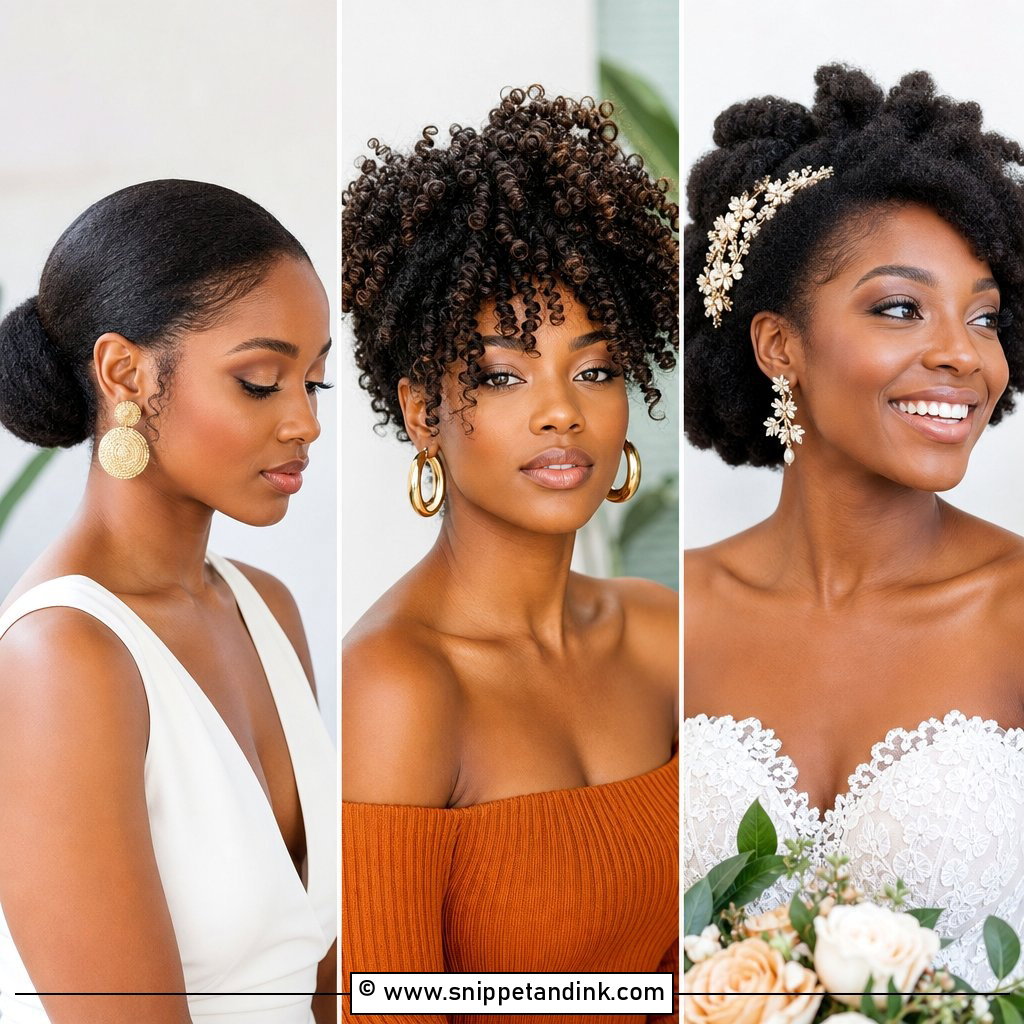

15. Natural Bridal Finger Coils
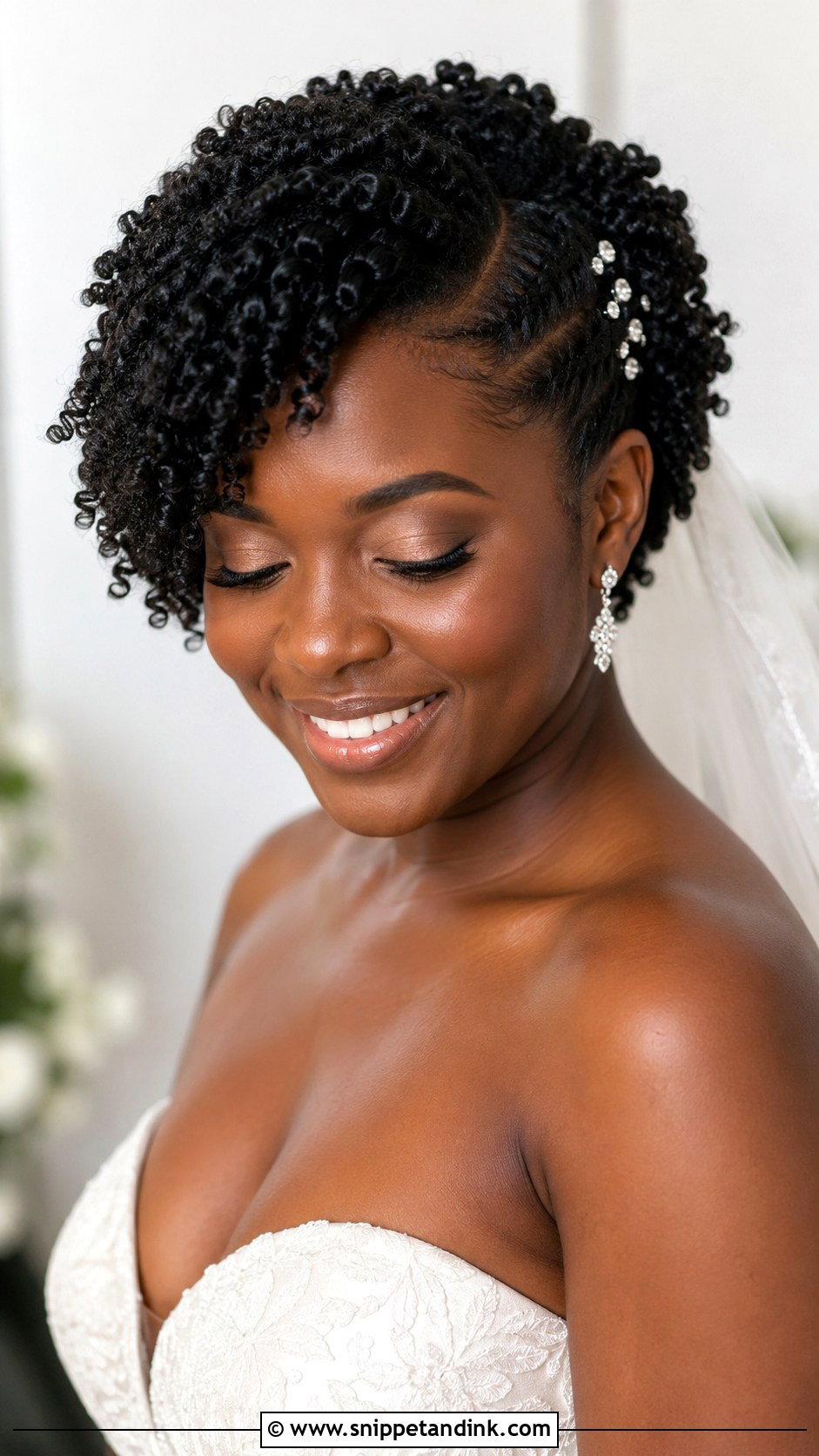
Natural bridal finger coils shape each curl individually around a finger, with a gel or curl cream, so the pattern looks defined and glossy without feeling stiff. They suit short to medium hair, worn rounded, side-parted or tapered. They take time, so for a full head I’d plan an extra hour in the chair or coil the night before. Go light on shine products; too much oil makes coils clump and look wet in photos. Add a pearl pin, headband or simple veil.
16. Natural Bridal Mini Twists
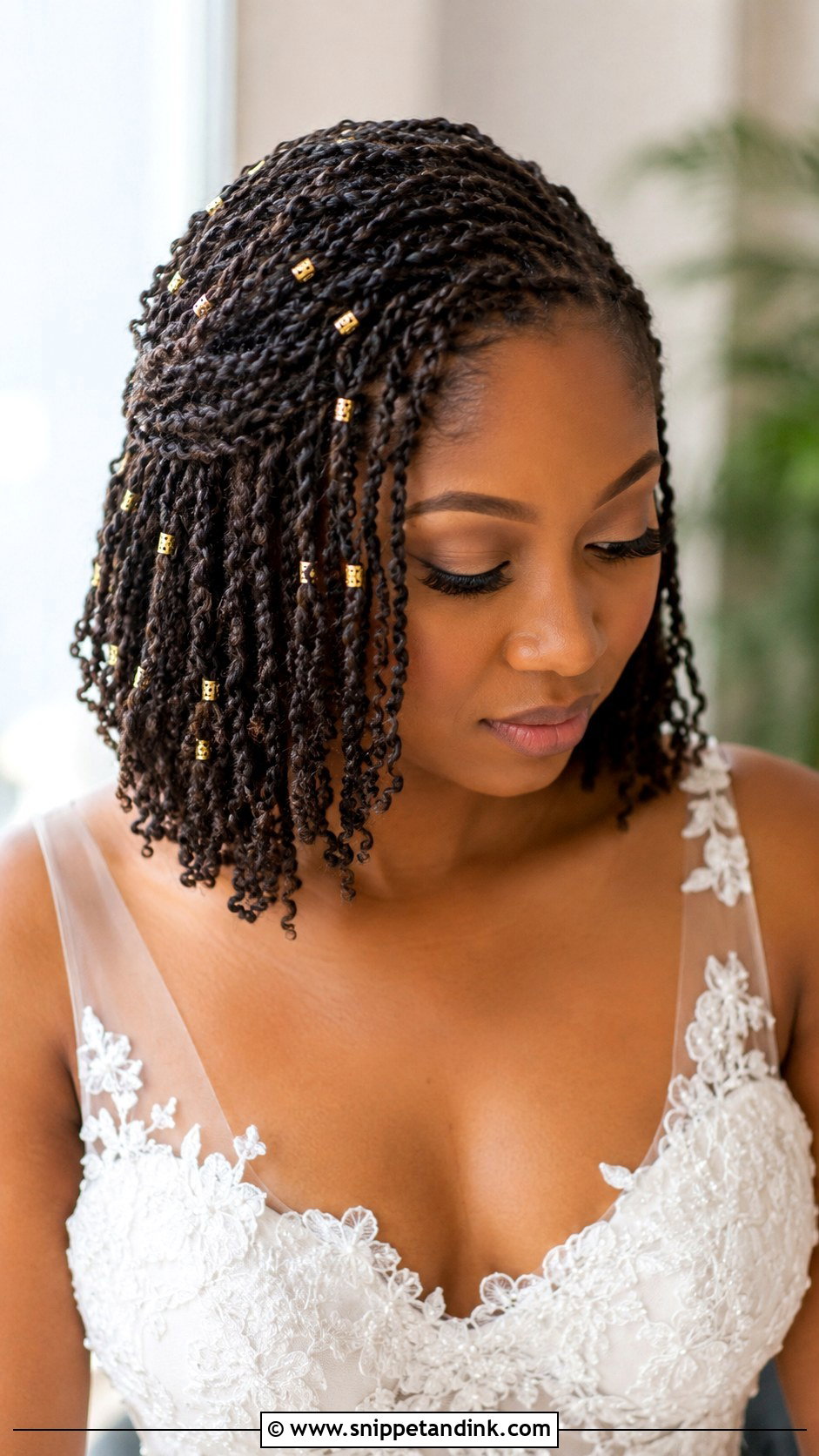
Mini twists remove most of the wedding-morning uncertainty, because they’re done days ahead and only need styling on the day. They can be worn down, pinned to one side, gathered into a bun or half up. I install them about a week before so they’ve loosened slightly and look moisturized and softly stretched rather than fresh and tight. Mist with a light leave-in on the morning if they look dry. A floral comb, pearl pins or gold cuffs add detail.
17. Natural Bridal Halo Twist
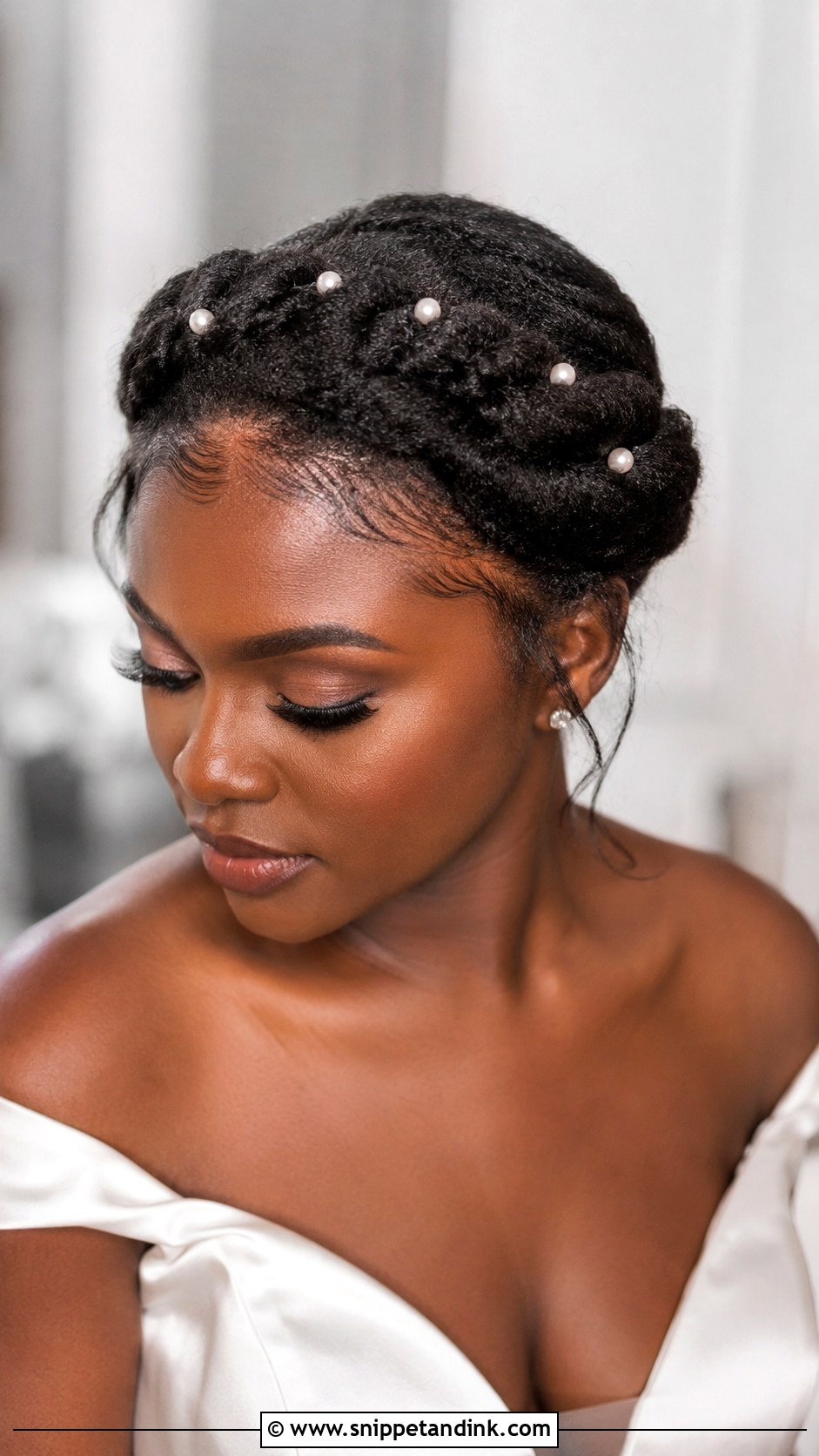
The halo twist wraps a twisted section around the head in a circle, framing the face, and it’s one of the most secure updos for coily hair. Depending on density, it can be chunky and textured or smooth and neat. I like it with veils, because the twist at the back gives a firm place to slide a comb in. Thin hair may need a little added hair for an even halo all the way round. Small flowers, pearl pins or a gold vine along the twist finish it.
18. Natural Bridal Wash And Go
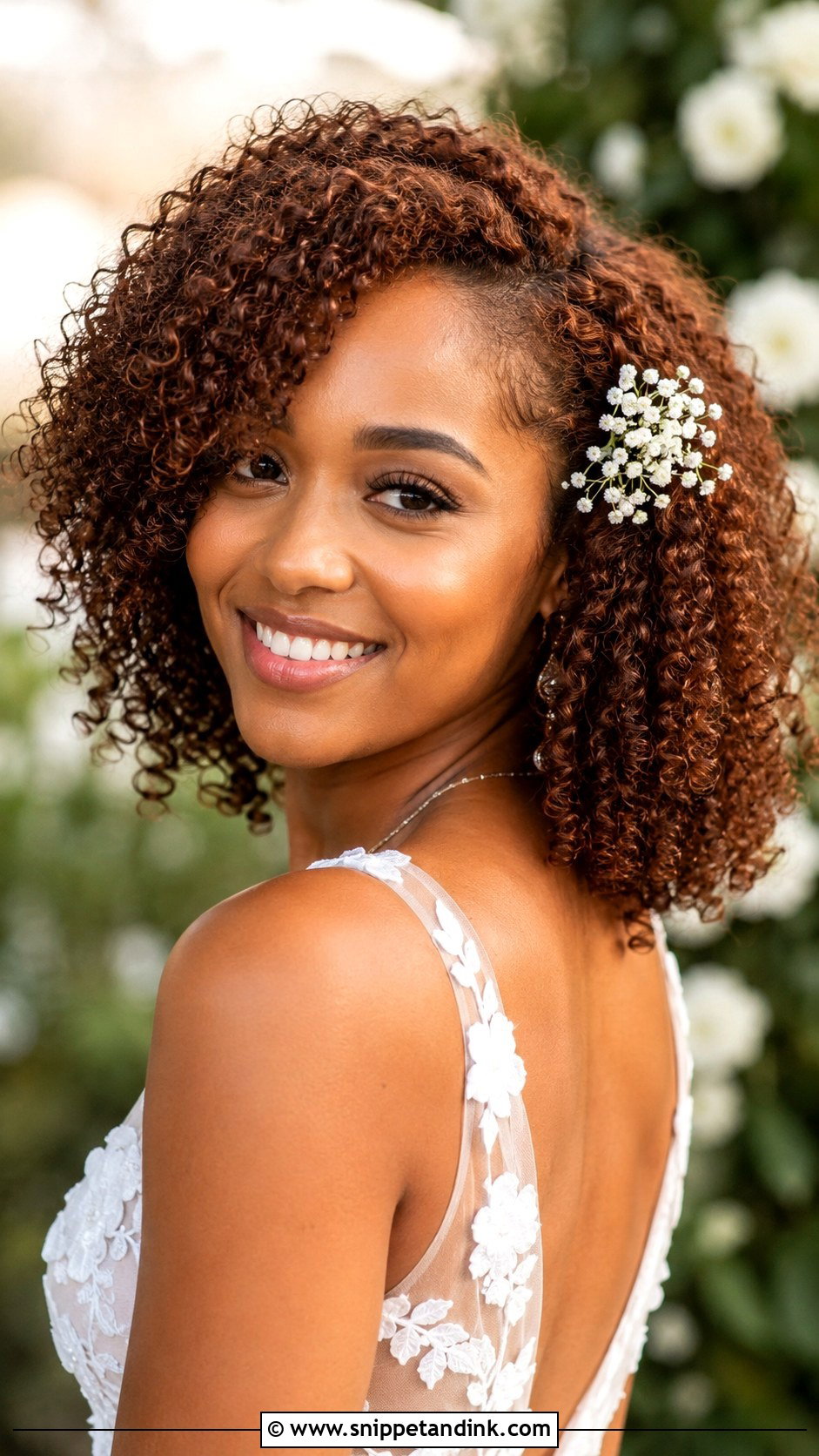
A wash and go is the most honest version of your hair, and the riskiest if your routine isn’t already reliable. Don’t try a new product or method for the wedding; use what already works, and do a full trial on a similar day of the week so the timing is real. The curls need to be fully dry before they’re touched, or they frizz. A side part, a deep part or a rounded shape all change the feel. Add a veil, pearl clips or fresh flowers once it’s set.
19. Natural Bridal Side Swept Curls
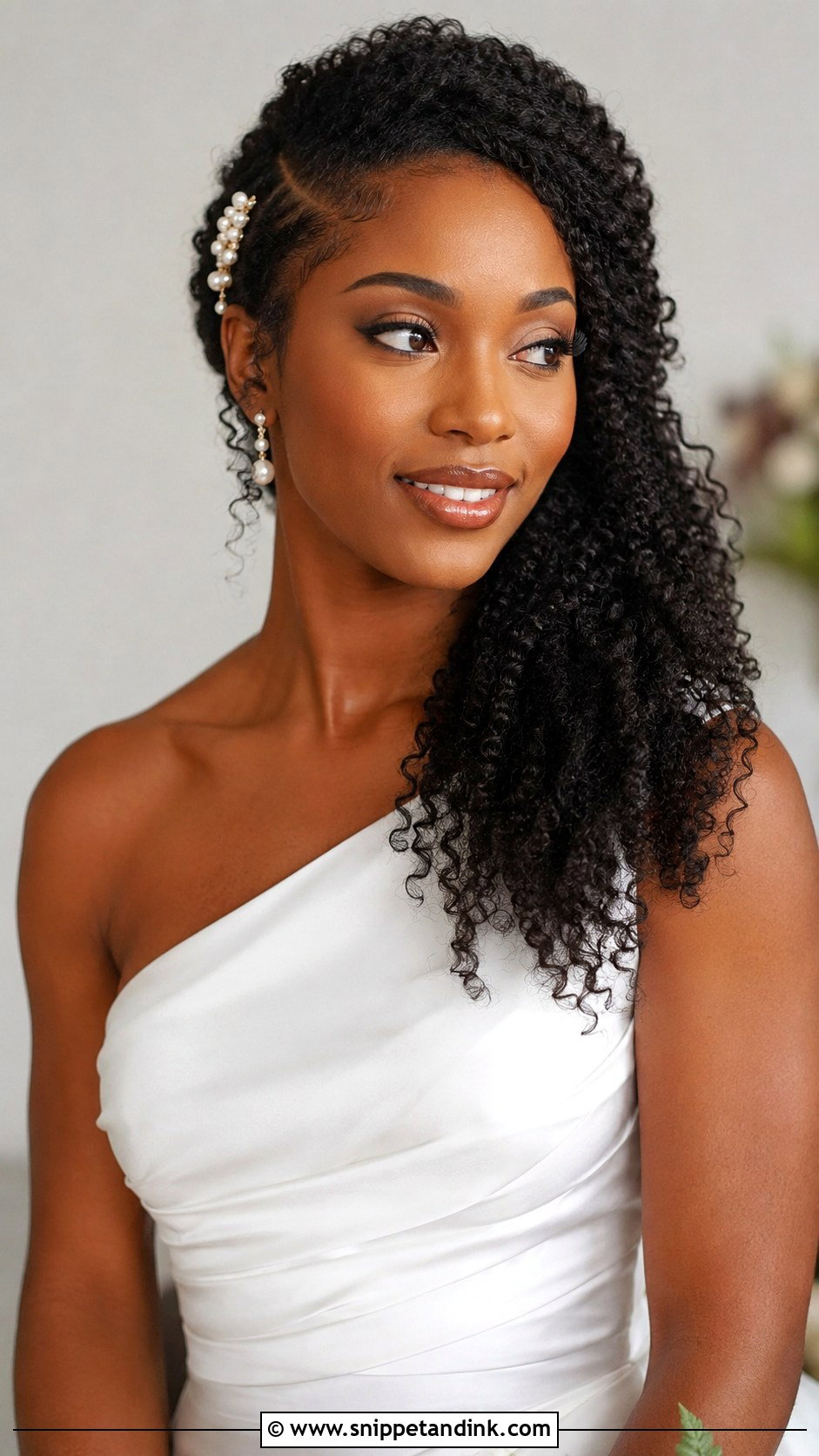
Side-swept curls bring volume over one shoulder and leave the other side open for earrings. They work with twist outs, braid outs, rod sets or natural definition. One side is pinned or braided flat, which is where the security is: I use pins that match your hair color and criss-cross them so they don’t slide out of springy hair. It suits one-shoulder and strapless gowns. A pearl clip, flowers or a crystal comb on the pinned side finish it.
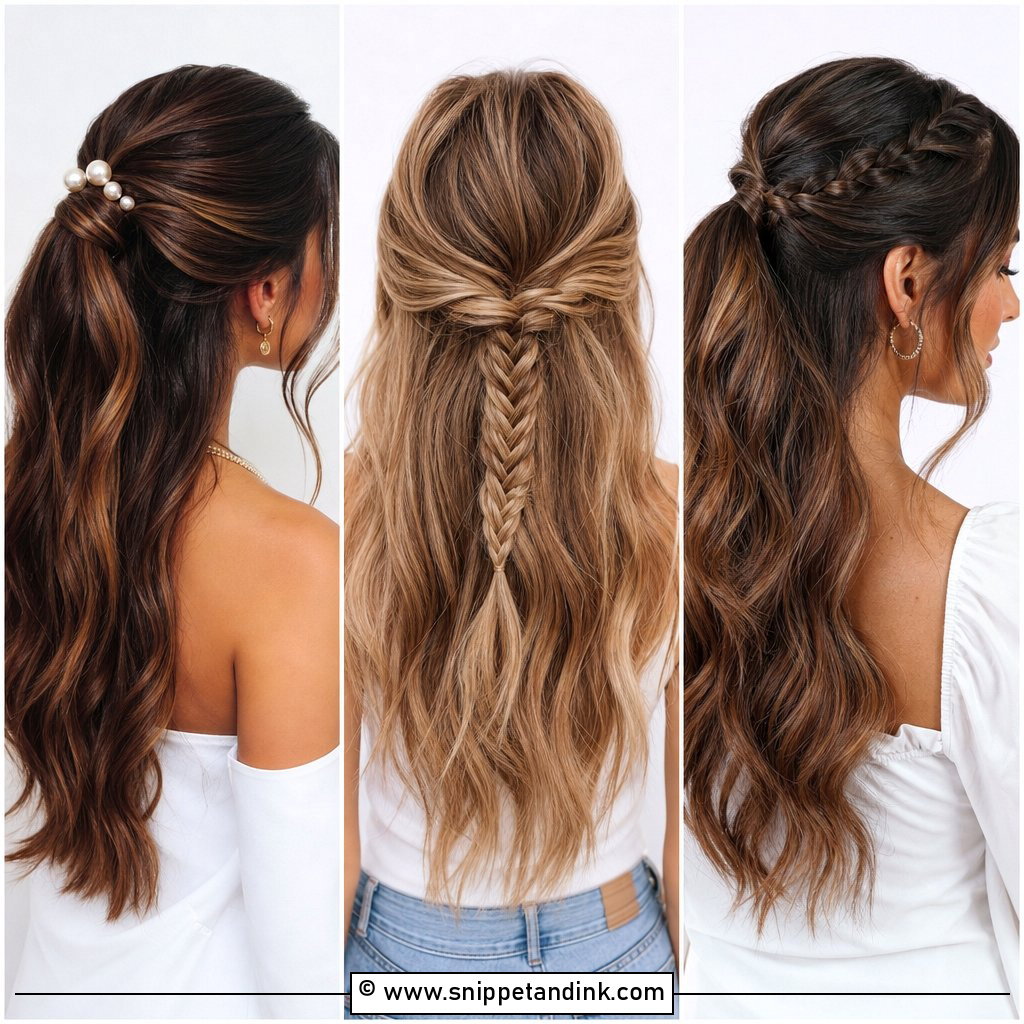
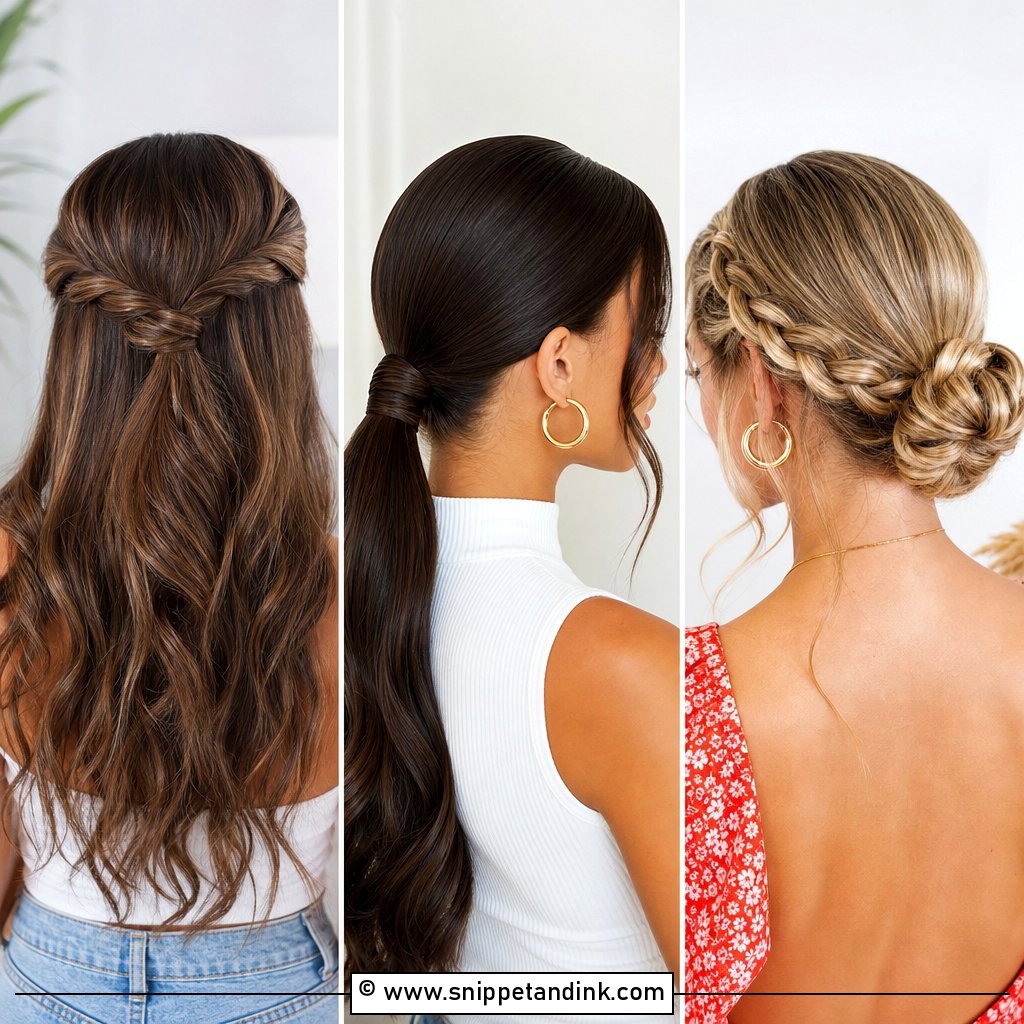
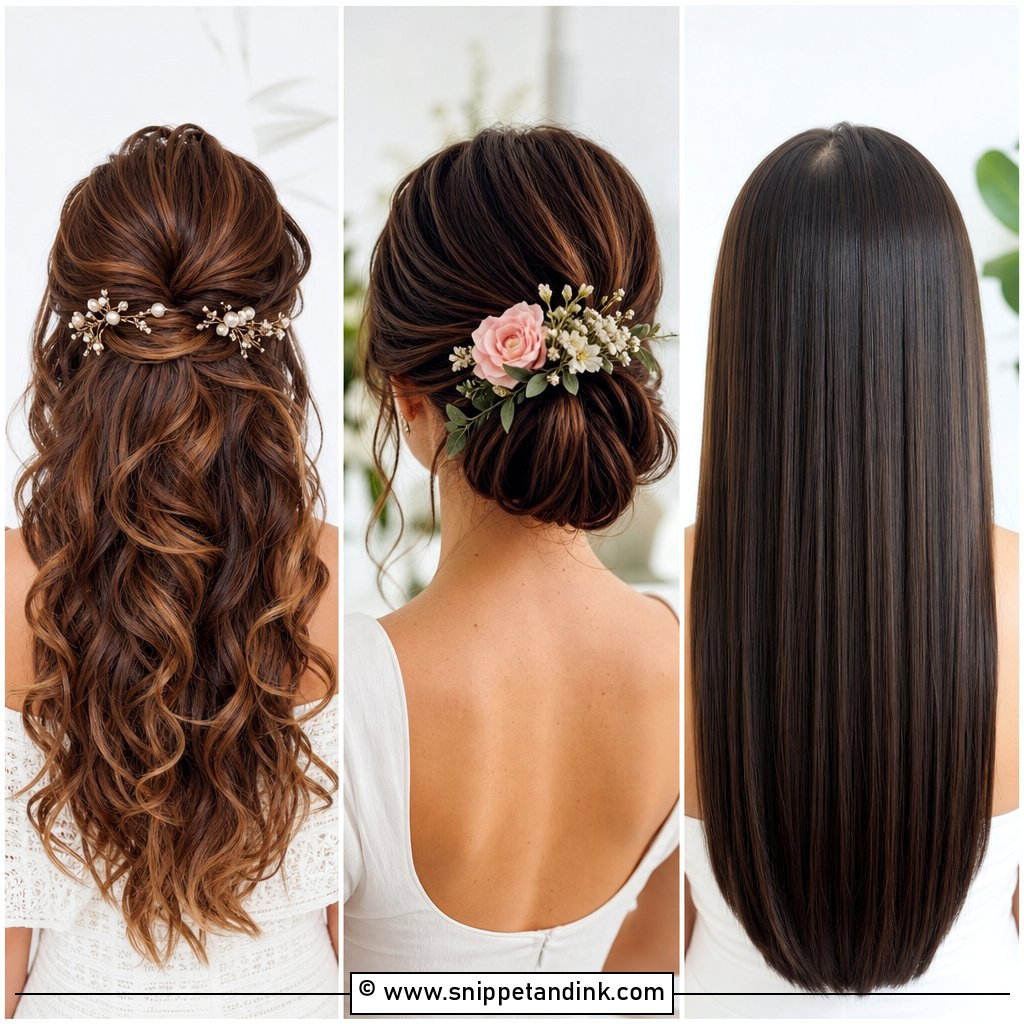
20. Natural Bridal Flower Crown
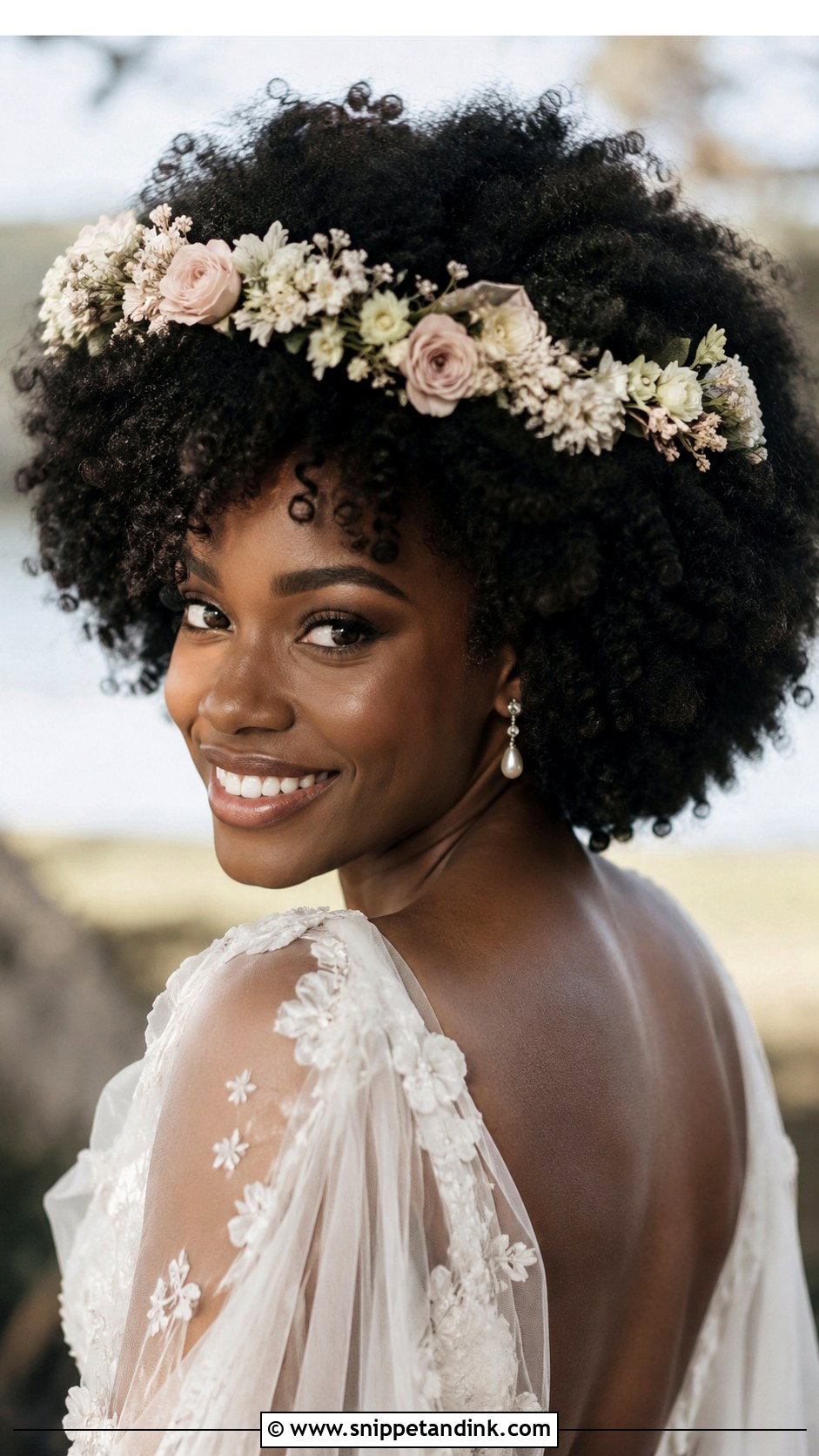
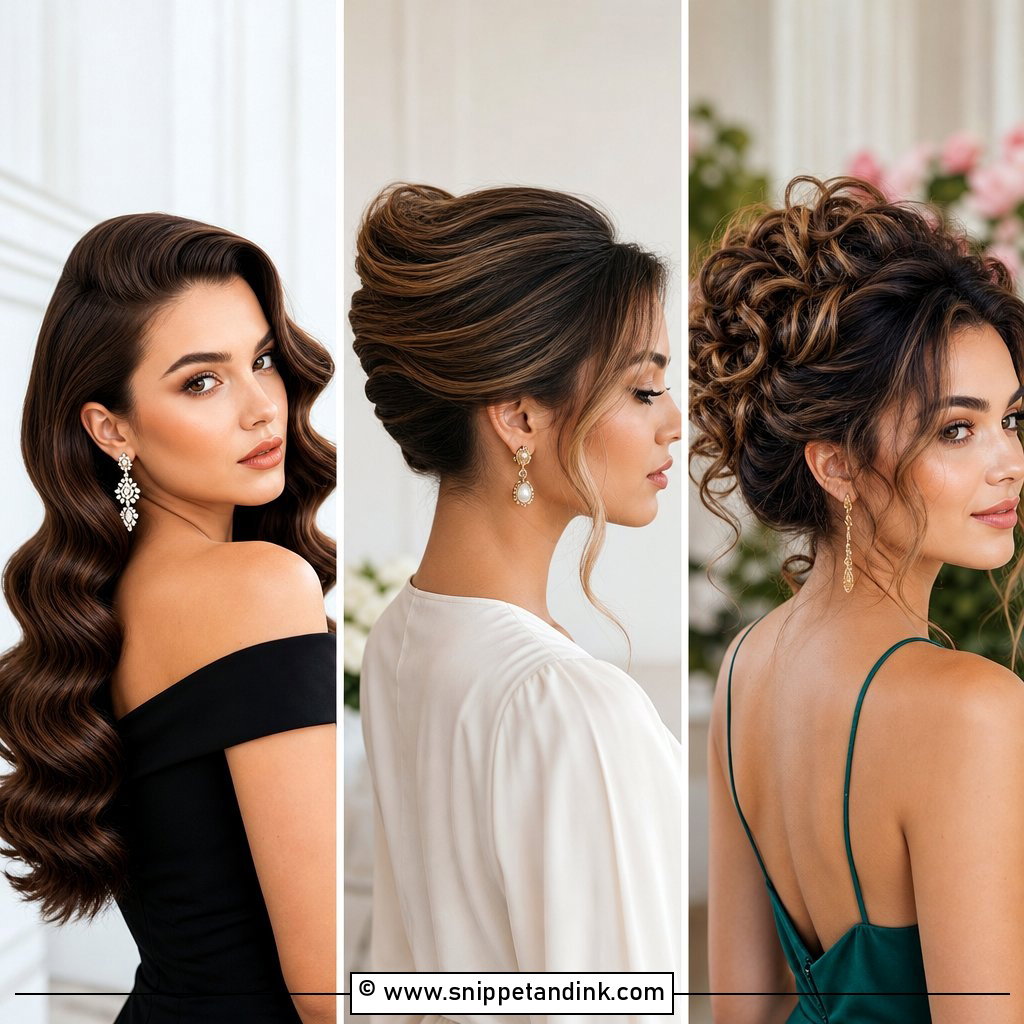
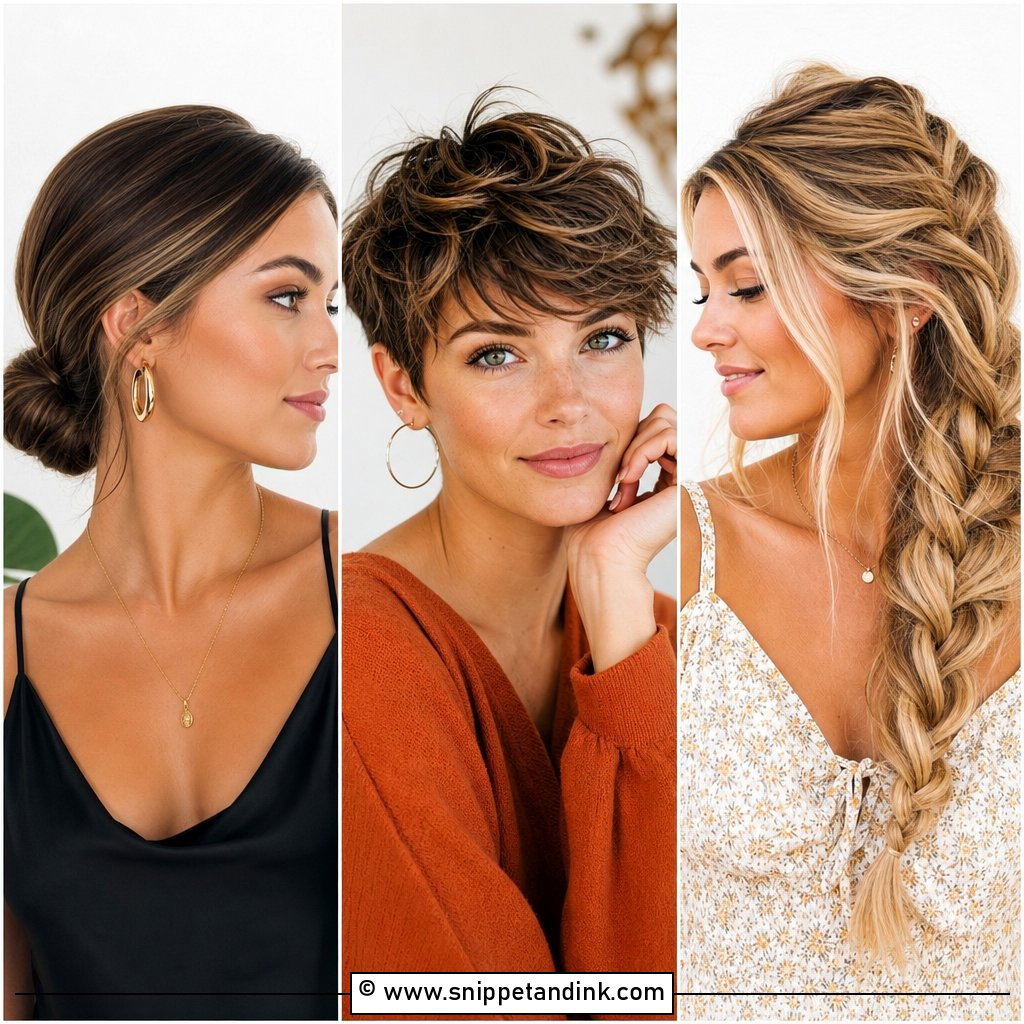
A flower crown works over curls, coils, locs or twists, and it’s suited to outdoor and spring weddings. Scale it to your hair: small blooms on short curls, fuller crowns for large afros or long locs, so the crown doesn’t sink in or perch on top. Underneath, a wash and go, twist out, low bun or half up all work. Fresh flowers wilt in heat by late afternoon unless your florist chooses hardy stems; good faux flowers last the whole night. Secure the crown with pins through the base wire into the hair, not just resting.
Attaching a Veil to Coils, Locs and Braids Without Pulling
A veil comb slides out of soft loose curls easily, and a cathedral veil adds a surprising amount of drag once you start walking. So I never rely on the comb alone. The method depends on the texture.
- Loose curls and afros: I make a small hidden braid or flat twist where the comb will sit and slide the comb teeth into it, then cross two pins through the comb’s ends.
- Locs: slide the comb between locs at the base of the bun so it rests on several of them at once; it rarely needs extra anchoring.
- Braids and cornrows: thread the comb under a braid or two near the bun, which spreads the weight across more hair.
- Puffs: the veil usually sits best under the puff, anchored at the base, rather than on top where it flattens the shape.
Whatever the style, ask your stylist to show your maid of honor how to remove the veil after the ceremony. Pulling a comb straight out of coily hair can snag it; it should be lifted up and back in the direction the teeth went in.
And look after your edges. Tight braiding, heavy gel and repeated slicking all add strain to the hairline over a wedding week. A softer edge or a little texture left at the front photographs fine and keeps your hairline healthy long after the honeymoon.
Wear the Version of Your Hair You Already Trust
There isn’t one natural bridal look. A sculpted updo, a full afro, soft curls, locs, braids, twists or a protective style can all be completely bridal. The style to pick is the one that suits your dress, your venue’s weather and your comfort for twelve-plus hours, and the one your hair already does well. Book a trial with your accessories, test your products in similar weather if you can, and plan the installs and sets backwards from the date. Then you get to stop worrying about your hair and enjoy the day.
You'll Like These Ideas:


Leave a Reply