
Winter is the one season where a bride can wear heavy fabric, full sleeves and a long train and feel better for it, not worse. The gowns I pull for winter clients range from structured Mikado ball gowns to fitted crepe, lined lace and modern dresses with detachable capes. Before we look at a single dress, though, I ask four questions: how cold will it be, where is the venue, how formal is it and how many minutes will you actually spend outdoors? Those answers decide whether you need sleeves, a satin lining, a coat, gloves or boots. Accessories should support the gown without piling weight onto an already substantial look. From a grand ballroom or mountain lodge to a modern hotel or a small city venue, the complete looks below show how each gown can be worn from head to toe in the cold.
Count Back From the Wedding Date Before You Fall for a Gown
Most gowns from a bridal shop are made to order once you buy them, and production alone commonly takes several months, often somewhere around four to eight depending on the designer. Alterations then need another couple of months for two or three fittings. That’s why I tell brides planning a December or January wedding to be shopping the spring before. Timelines vary by shop and designer, so ask for the delivery date in writing.
Winter adds one more step to the schedule: your final fitting should be done in the layers you’ll actually wear. Bring the coat or cape, the thermal tights, the boots for outdoor photos and the bra you’ll wear under long sleeves. A sleeve that fits perfectly over bare arms can feel tight once there’s a second layer under or over it.
- Ask whether sleeves or a cape can be added to a strapless design; many shops can have matching fabric made, but it takes time.
- Request a swatch of the gown fabric to color-match coats, stoles and shoes while the dress is being made.
- If you’re buying off the rack or from a sample sale, the timeline shortens, but book alterations immediately.
1. Long Sleeve Lace Winter Wedding Gown
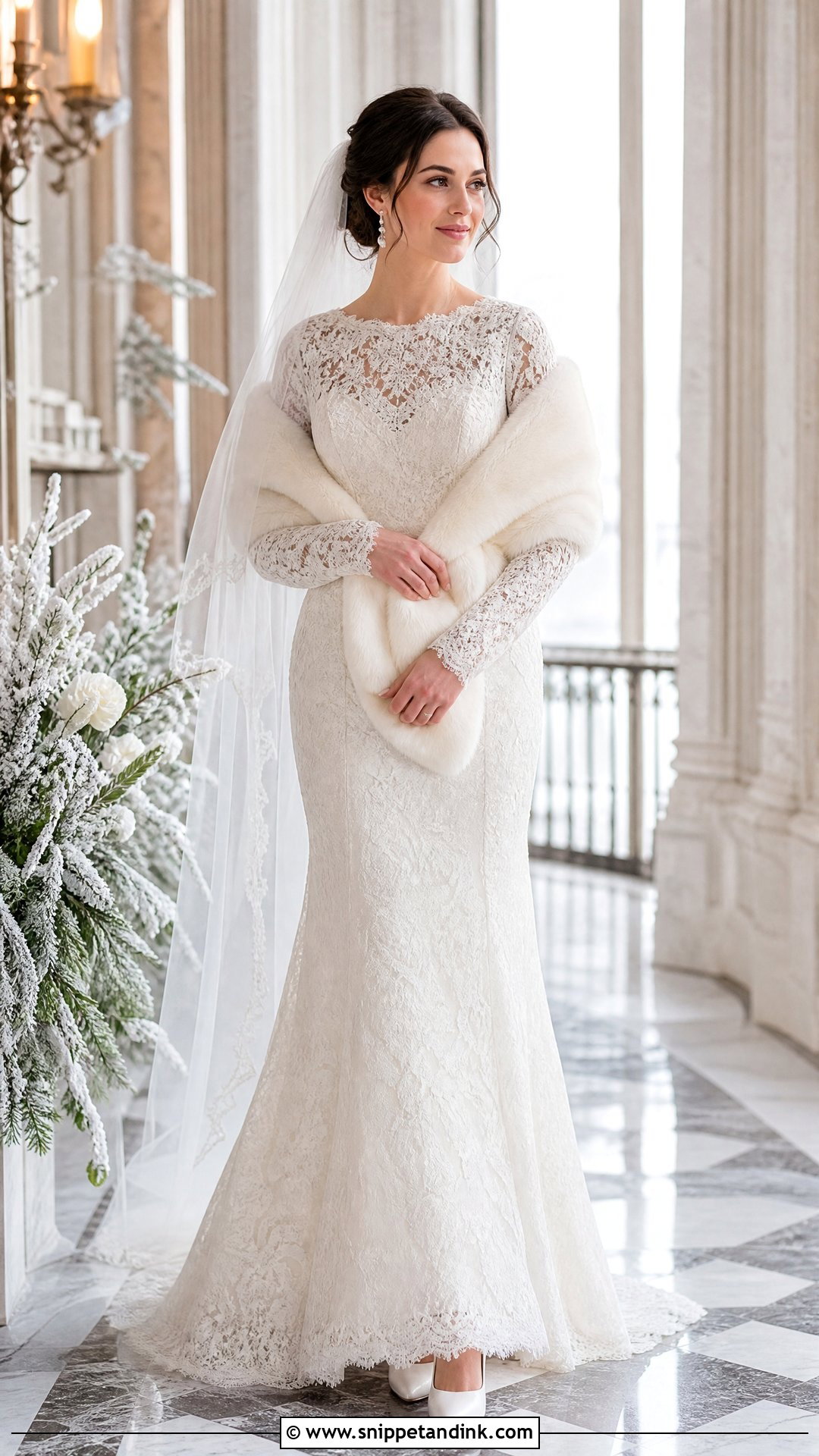
Long lace sleeves give you romance and real coverage at once, which is why this is the first gown many winter brides try. A fitted lace bodice with a softly flared skirt, over an opaque lining, looks warmer and more finished than lace over sheer tulle. Delicate illusion panels keep the neckline light without much bare skin. In fittings, I check the sleeve at the wrist with your arm bent: lace sleeves cut too slim ride up and pull the shoulder seam every time you lift your bouquet. Pearl earrings, a fingertip veil, ivory closed pumps and a smooth chignon keep the lace visible. Outdoors, a plain ivory faux fur stole, and a bouquet of white flowers with muted greenery.
2. Mikado Ball Gown For A Winter Wedding
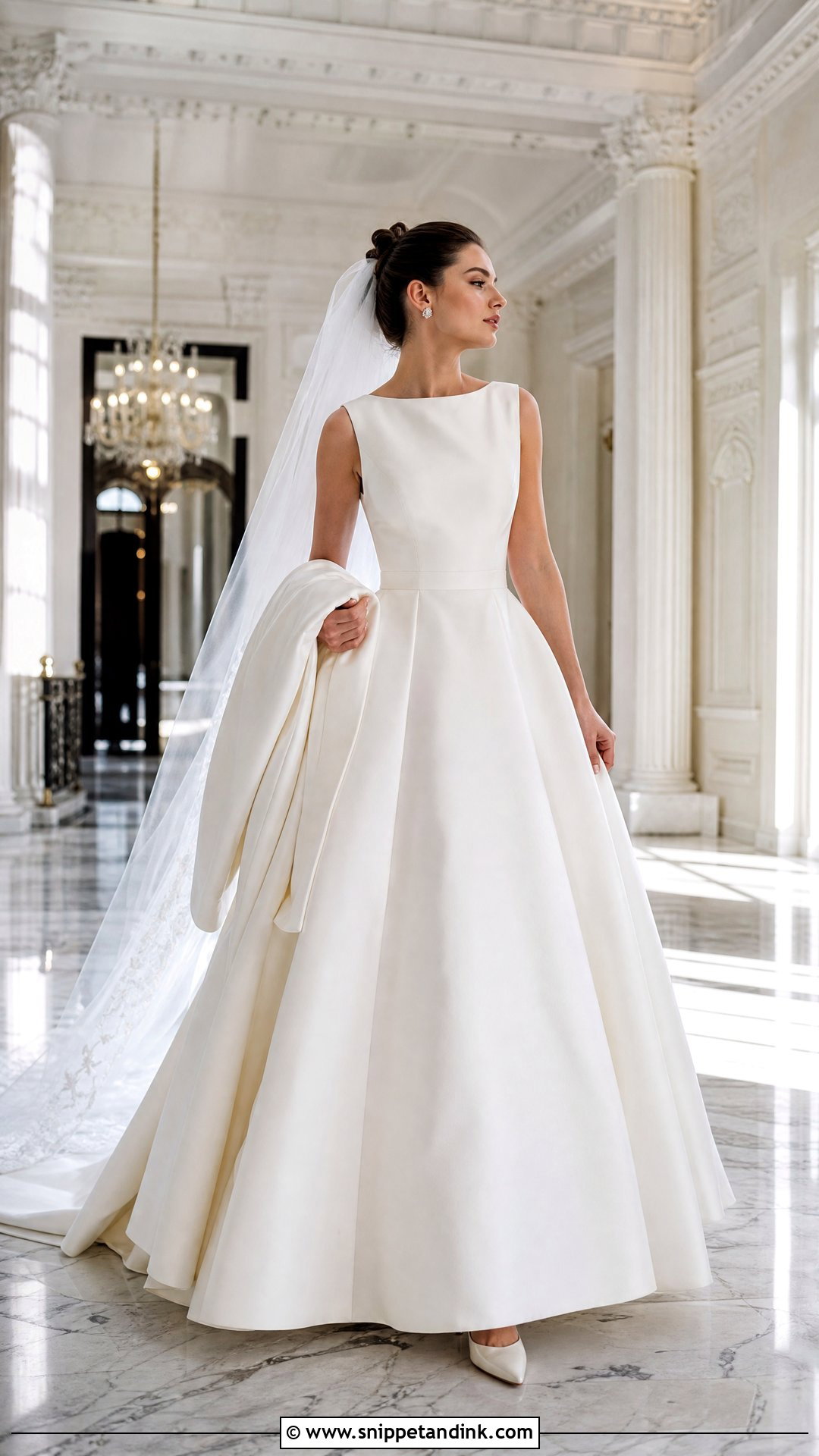
Mikado is a heavy, slightly crisp silk or silk-blend weave, and it holds a ball gown shape better than almost anything else. A fitted bodice, a defined waist and a full skirt look regal in a large indoor venue. Practical extras matter on a gown this substantial: hidden pockets, an internal corset that actually supports the weight of the skirt, and covered buttons down the back. Know that Mikado shows creases where you sit for a long time, so a quick steam before the reception is worth planning. Sparkling studs, a sleek low bun, a long veil that follows the train and pointed satin pumps finish it. A tailored ivory coat ending below the waist handles the walk between buildings. Skip heavily embellished accessories; the fabric and shape already speak.
3. Satin A-Line Winter Wedding Gown With Cape
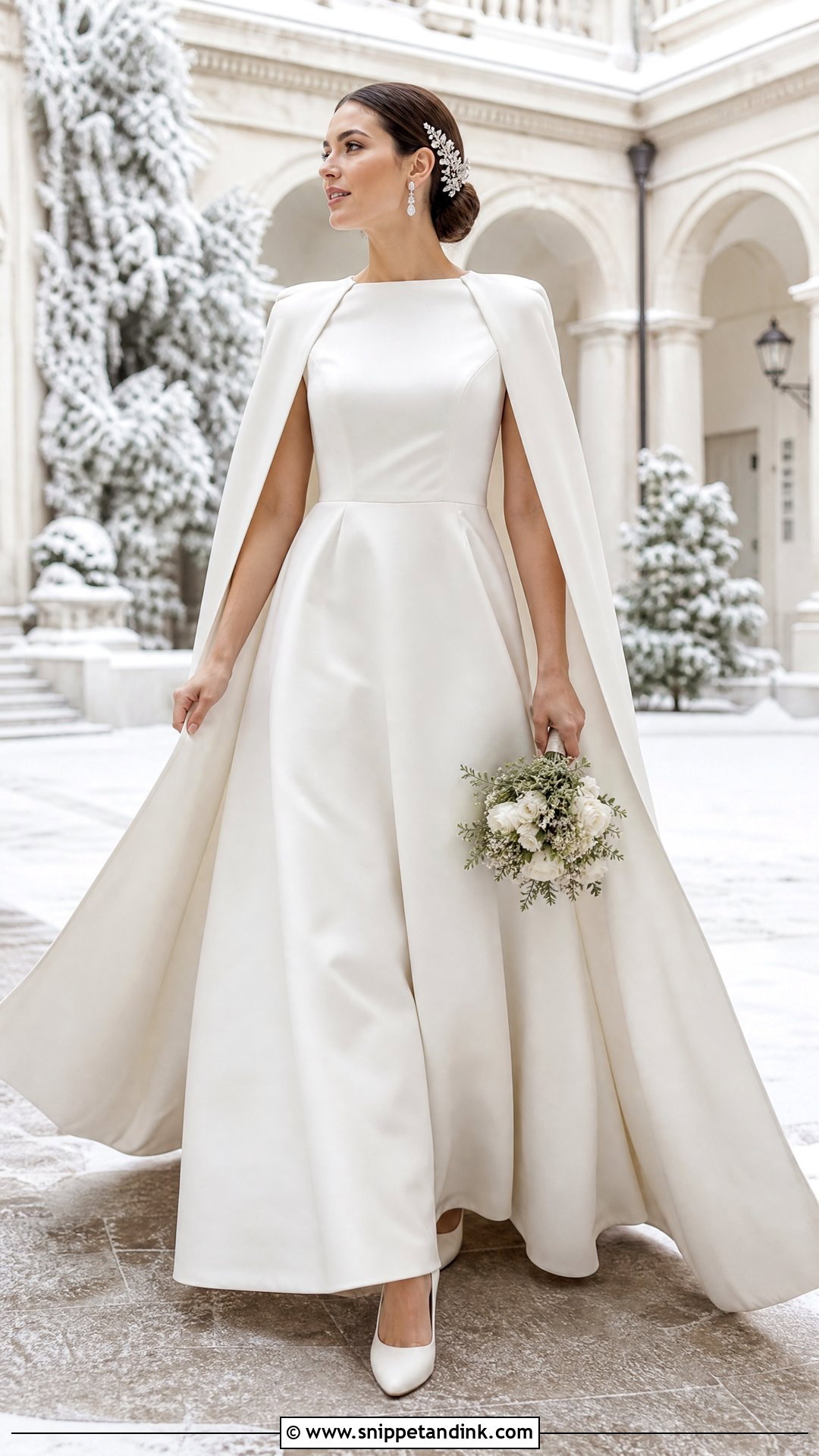
A satin A-line is formal without being theatrical, and a detachable cape turns it into a winter gown. Look for a supportive bodice, a lightly gathered skirt and a modest train, with a floor-length cape for movement and shoulder coverage outside. The cape’s fabric depends on the temperature: matching satin or lined crepe for real cold, sheer with embroidered edges for looks only. Detachable capes usually clip or button at the shoulder seams, so test that they come off cleanly without leaving marks on satin. A crystal comb, drop earrings and closed block heels for stable footing suit it, and a low bun keeps hair out of the cape’s neckline. Take the cape off indoors and you have a second, lighter look.
4. Velvet Winter Wedding Gown
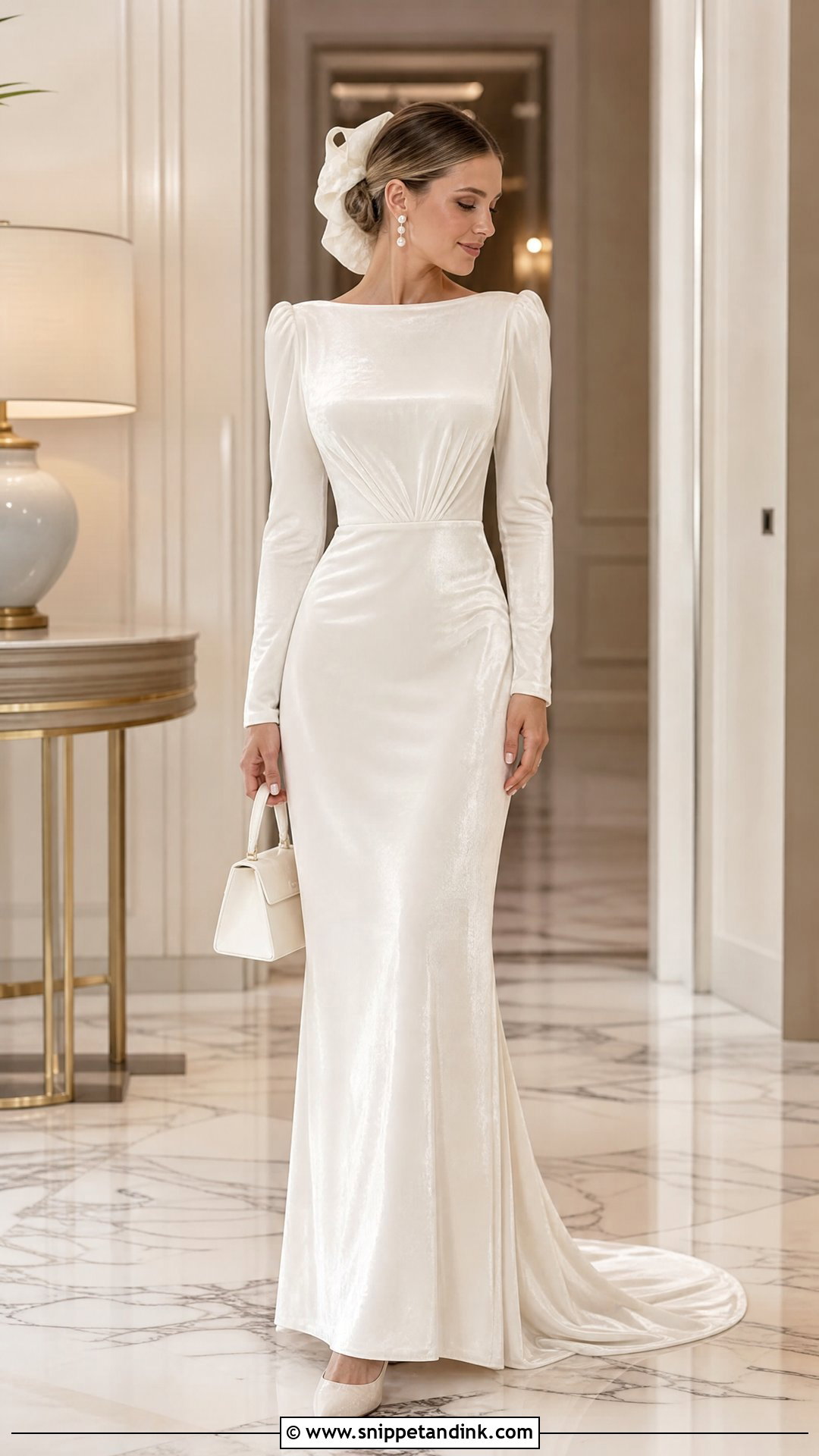
Velvet is the most wintry fabric a gown can be made from. Ivory or soft champagne velvet looks most refined in a column, A-line or gently fitted shape, with clean seams, a simple neckline and almost no embellishment, since the texture already does the work. Long fitted sleeves mean you can skip a bulky layer indoors. Velvet is heavier than most bridal fabrics, so a long train needs a strong, well-anchored bustle; ask your seamstress for extra attachment points. Pearl drops, a structured mini bag and ivory suede pumps finish it, with a short veil or sculptural hair piece to keep it modern. It ends up luxurious and comfortable at the same time.
5. High Neck Crepe Winter Wedding Gown
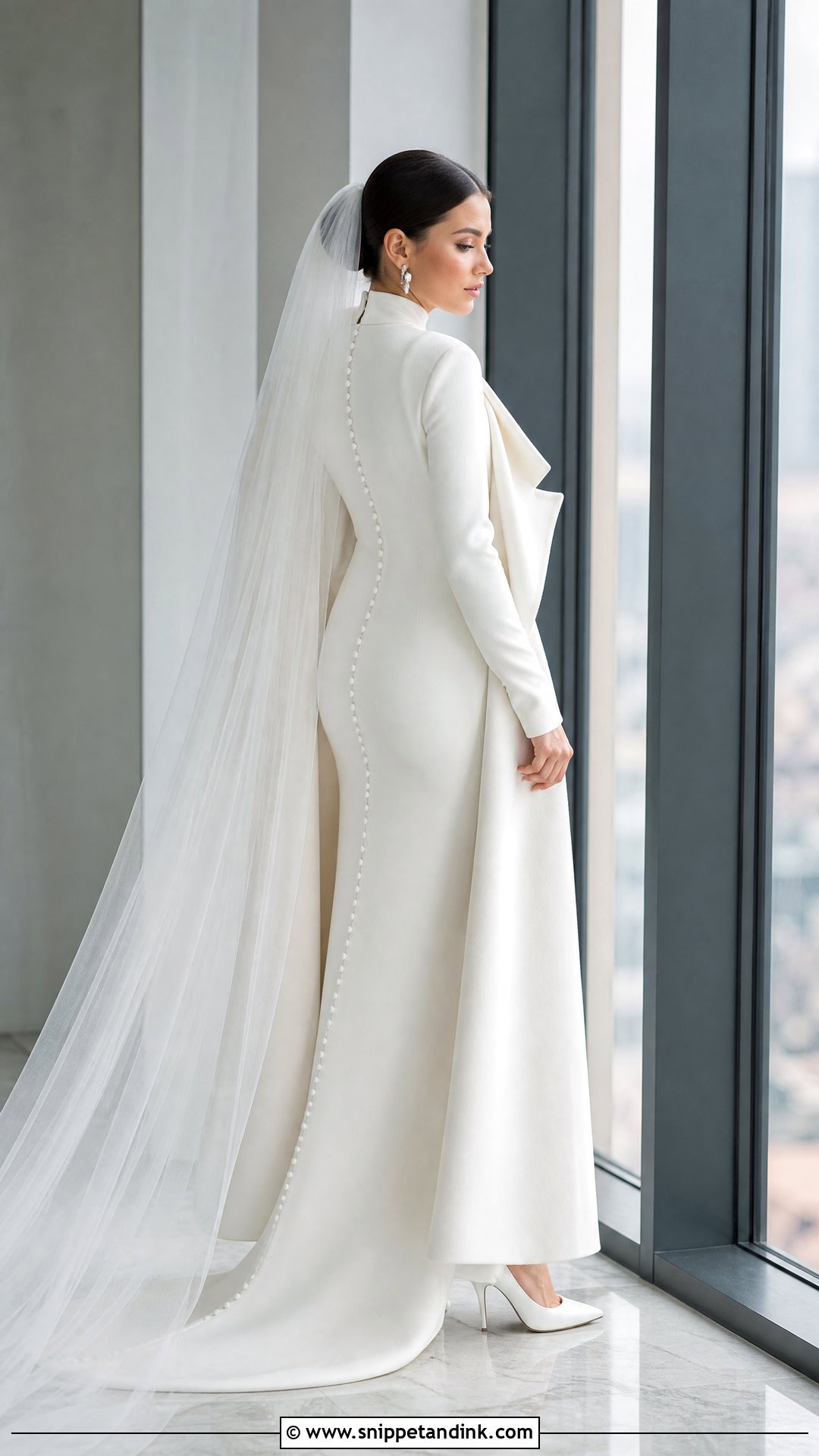
A high-neck crepe gown is clean, modest and very comfortable in the cold. Heavy stretch crepe follows the body smoothly while still feeling substantial. Long fitted sleeves, princess seams and a softly flared skirt shape it without extra volume; a keyhole back or a row of covered buttons adds interest. Stretch crepe is forgiving, but it shows what’s under it, so smooth, edge-free underwear and a slip are part of this gown’s fitting. Metallic earrings, a center-parted bun with an extra-long veil set below it, pointed ivory pumps and a small satin clutch. Outdoors, a long streamlined white wool coat that fits over the sleeves without pulling at the shoulders.
6. Off Shoulder Winter Wedding Gown With Long Sleeves
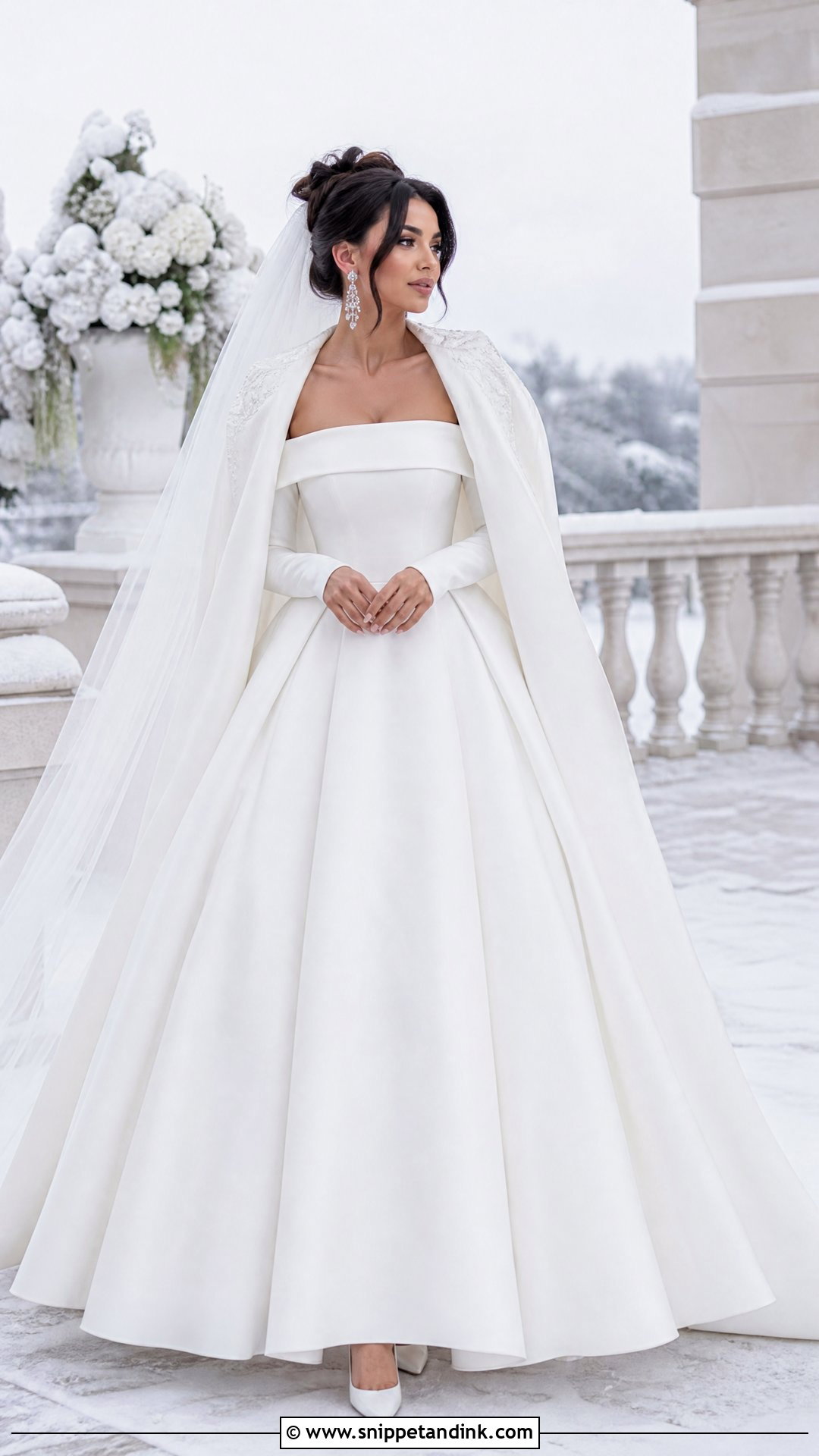
Off-shoulder necklines can work in winter when long sleeves and a substantial skirt balance them. I want structured satin or Mikado here, with a fold-over neckline that stays put on its own. A lightweight off-shoulder gown slides down all night and needs constant hitching. Fitted sleeves add warmth; an A-line or ball gown skirt adds formality. Wear a collar necklace only with a very plain neckline, otherwise statement earrings and a bare neck. A soft updo, closed heels and a chapel veil complete it. For travel and outdoor portraits, add a lined cape that fastens below the neckline, then take it off indoors.
7. Square Neck Satin Winter Wedding Gown
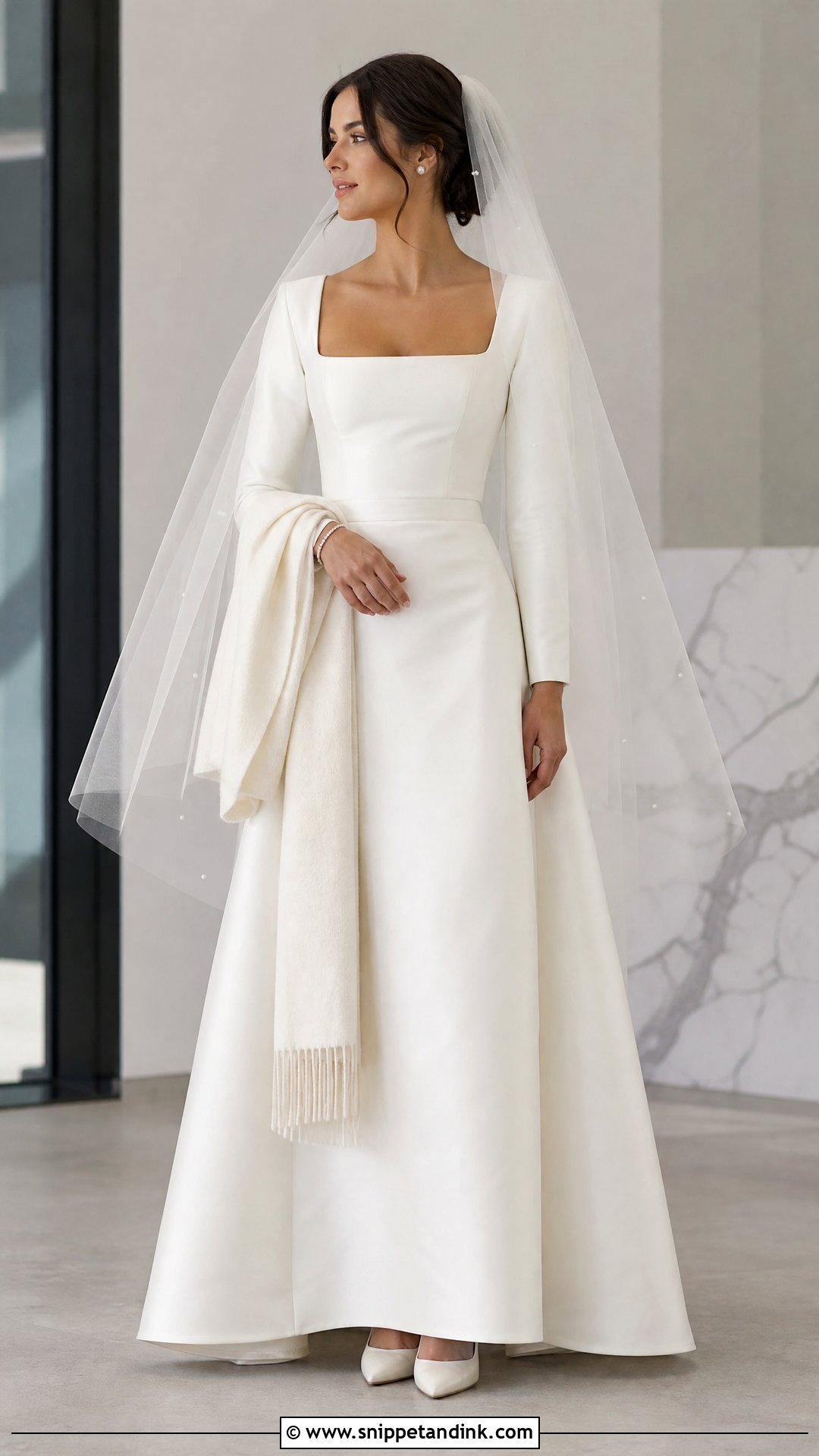
Square necklines in structured satin look clean and a little vintage. Long sleeves, a defined waist and a gently flared skirt keep the shape balanced, and the satin gives a smooth surface for simple accessories. Square necks are unforgiving on fit: if the bodice is a touch loose, the corners gape forward when you bend, so I check it while the bride leans to sign the register. Pearl studs, a thin tennis bracelet and ivory pointed pumps. A center-parted low bun shows off the neckline and holds a medium veil. Between outdoor photos, an ivory cashmere wrap or a fitted coat.
8. Corset Ball Gown For A Winter Wedding
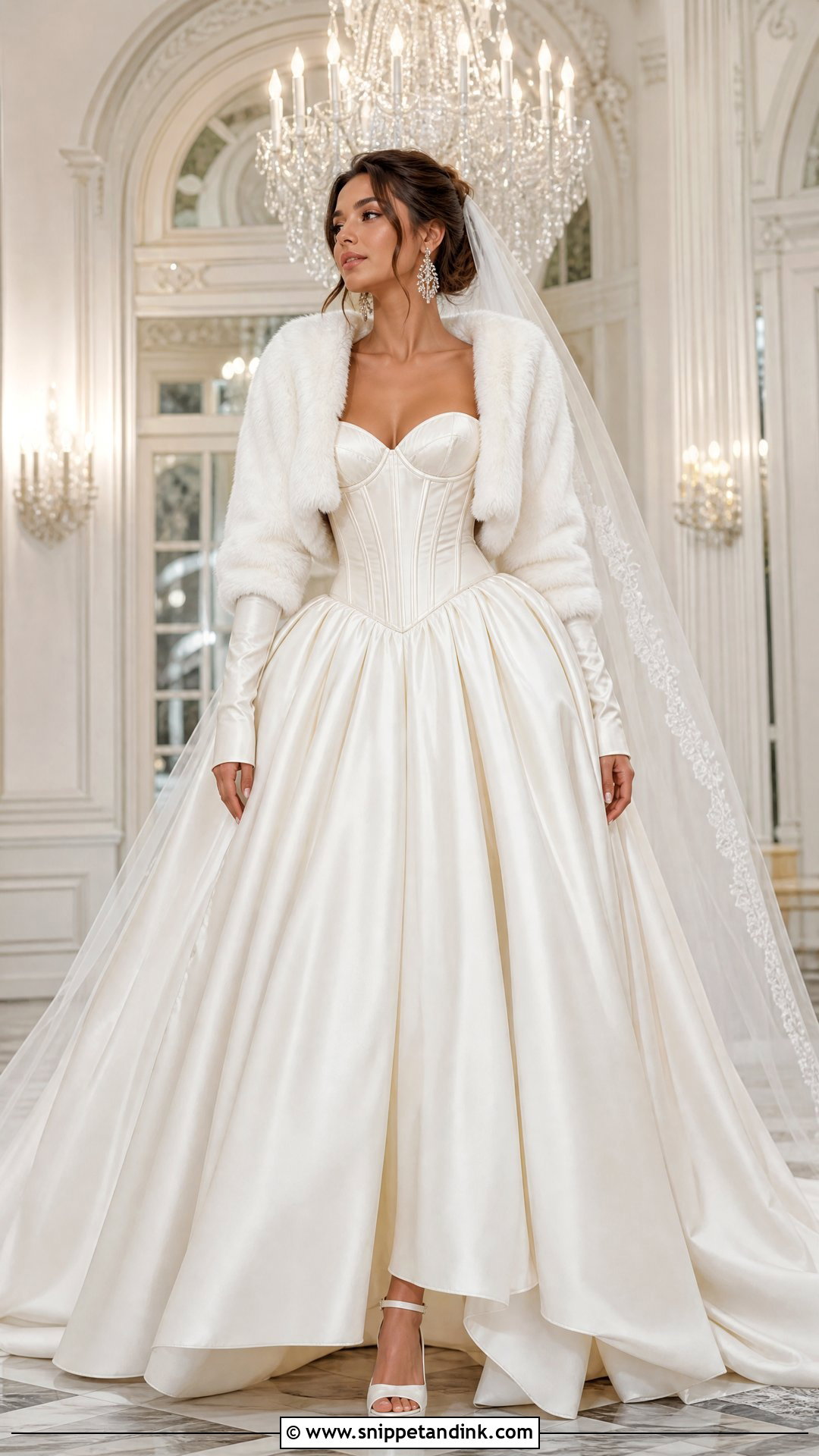
A corset ball gown gives strong support and a sharply defined waist. Structured satin bodice, full skirt, long or removable fitted sleeves. Visible boning reads modern; covered boning is more traditional. Be realistic about weight: a full corseted skirt is heavy and the corset is firm, so ask to sit, stand and climb two stairs in it before ordering, and choose block heels rather than slim ones. A neat updo, crystal earrings and one statement bracelet balance the volume, and a long veil suits the skirt’s scale. For outdoor travel, a short faux fur jacket ending at the natural waist so it doesn’t compete with the bodice.
9. Pearl Embellished Winter Wedding Gown
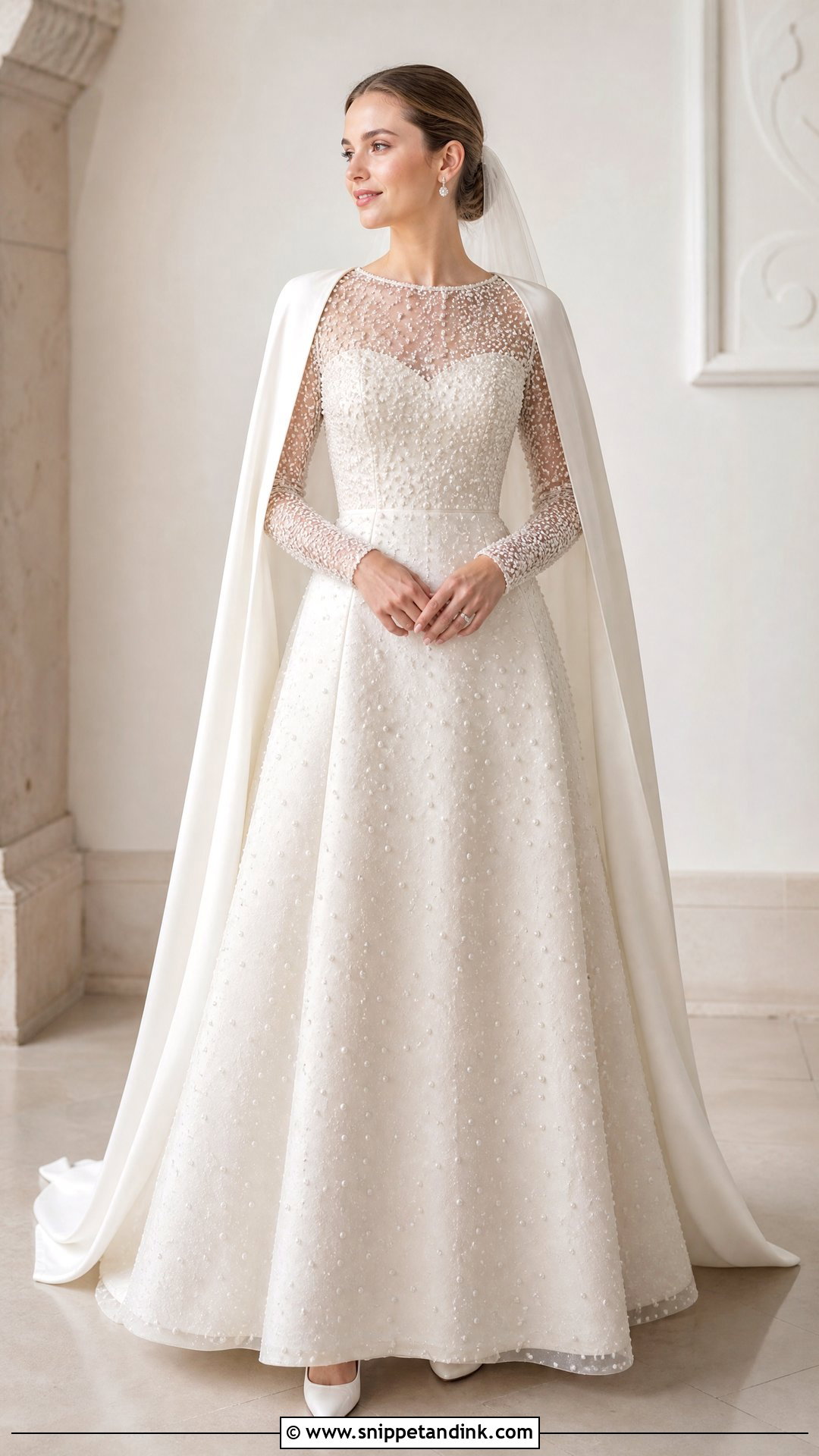
Pearls catch light softly instead of flashing like crystals, which suits winter’s low light. An A-line with pearls scattered across the bodice, illusion sleeves and upper skirt shows it well. Make sure the lining is opaque enough that the pearls stand out in daylight and indoor light both. Pearl beading is sewn individually and can pull loose where your arms rub the bodice, so ask the seamstress to secure any loose ones at the final fitting and carry a few spares. Pearl earrings and one hairpin repeat the detail without overloading it. Satin pumps, a plain fingertip veil and a small ivory clutch, with a smooth cape with a simple closure outdoors.
10. Beaded Sheath Winter Wedding Gown
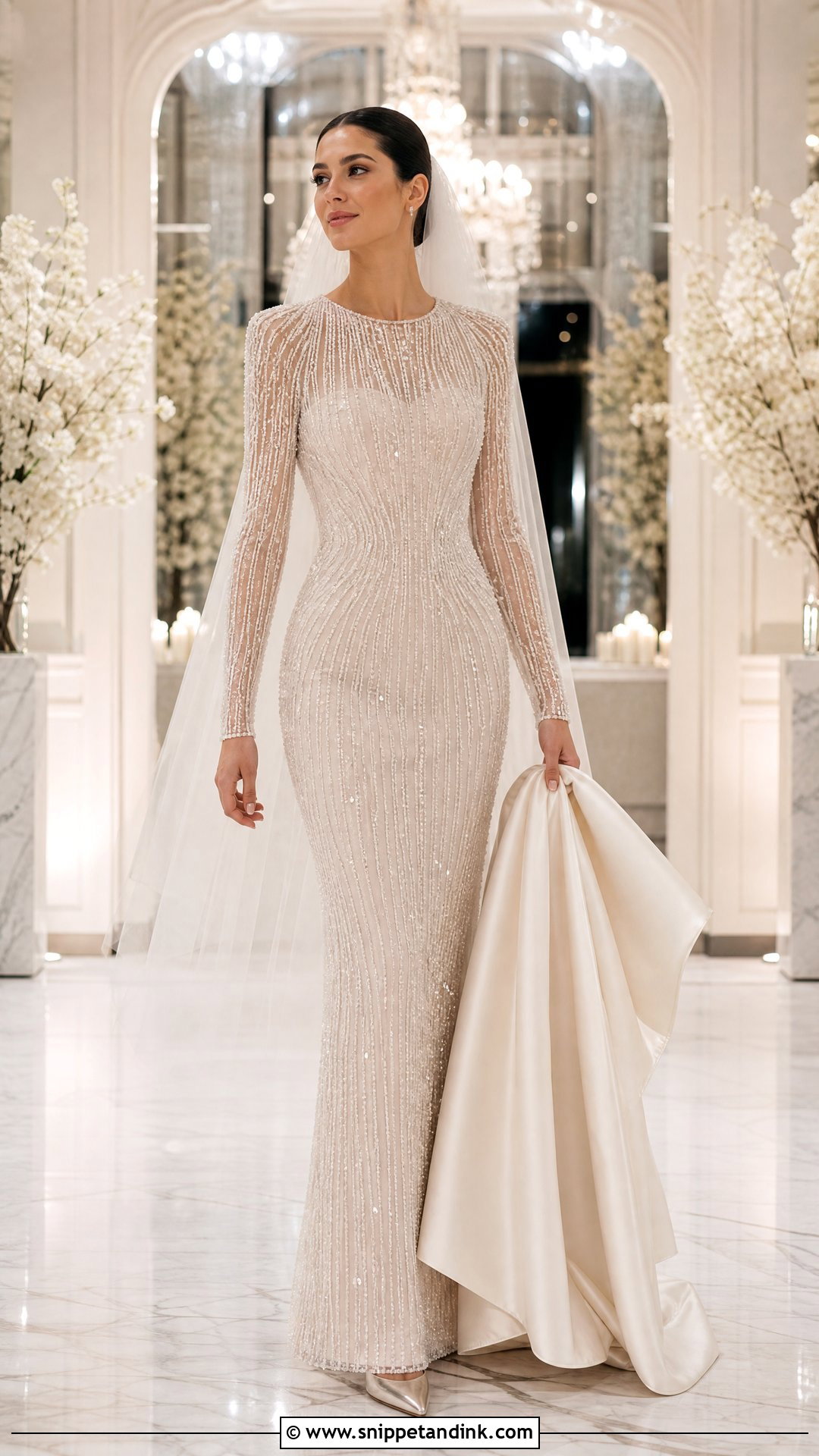
A beaded sheath is glamour in a narrow line, made for formal evening weddings. Ivory with long illusion sleeves, a high or softly scooped neck and beading running vertically, which lengthens the body and keeps it from looking busy. Beadwork adds real weight, and on a sheath all of it hangs from the shoulders. Test the shoulder fit and walk around before alterations, since a heavy beaded dress can drop slightly over the day. Metallic closed heels, small crystal earrings and a sleek low ponytail or bun, with an unbeaded veil. For warmth, a smooth satin cape or tailored coat, nothing textured, so the beading stays clear.
11. Mermaid Winter Wedding Gown With Detachable Sleeves
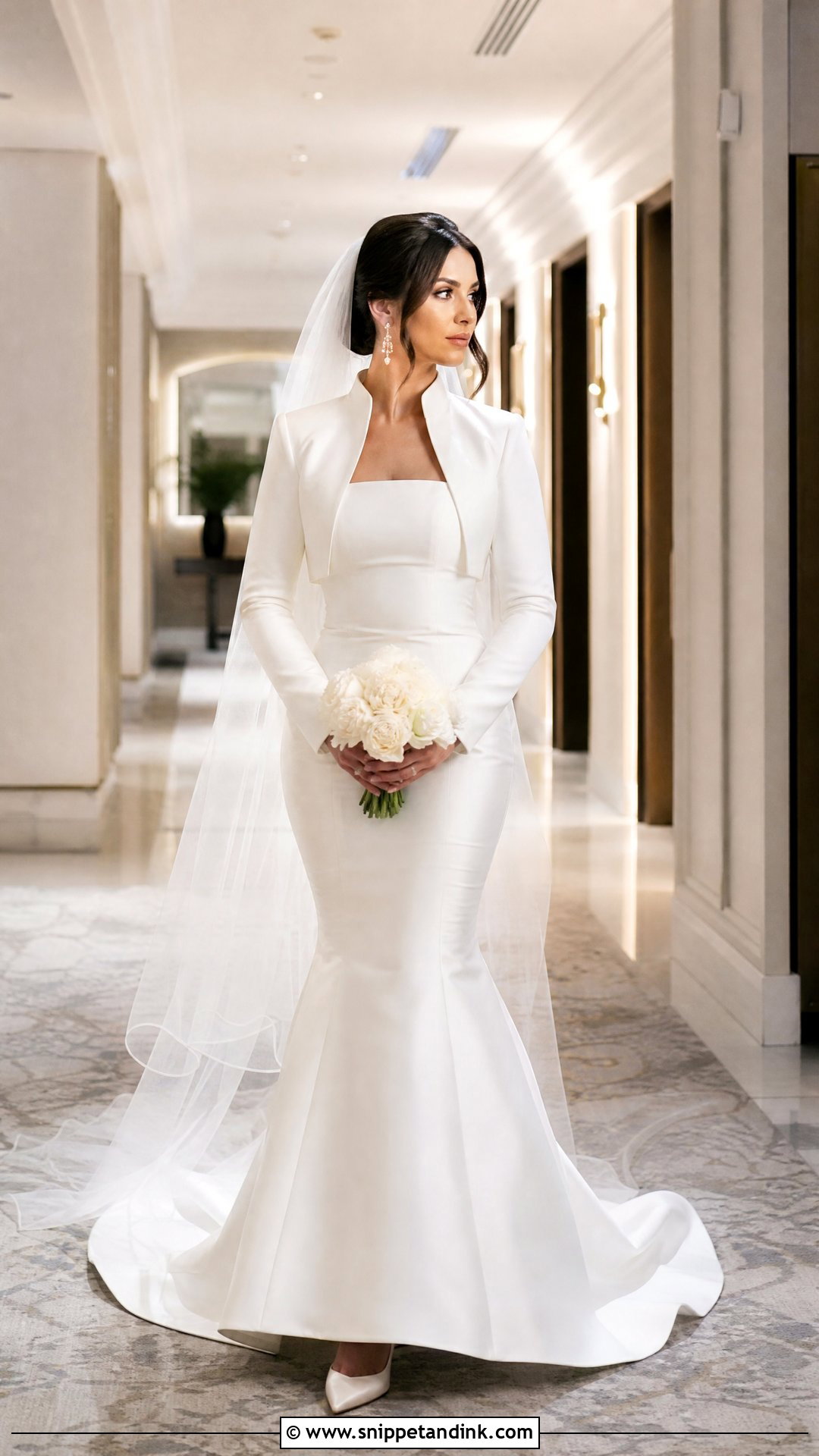
Detachable sleeves make a mermaid gown practical for winter: on for the ceremony and outdoor photos, off for dancing. Stretch satin, lined lace or heavy crepe keep it supportive and comfortable when seated. Mermaid hems are fitted at the knee, so stairs and car doors are the real tests. Practice both, plus bustling the train, before the wedding. A long veil, drop earrings and pointed pumps tall enough that the hem doesn’t drag, with a side-parted updo. For outerwear, a fitted jacket or cape ending around the waist; longer, bulkier layers break the shape.
12. Minimalist Column Winter Wedding Gown
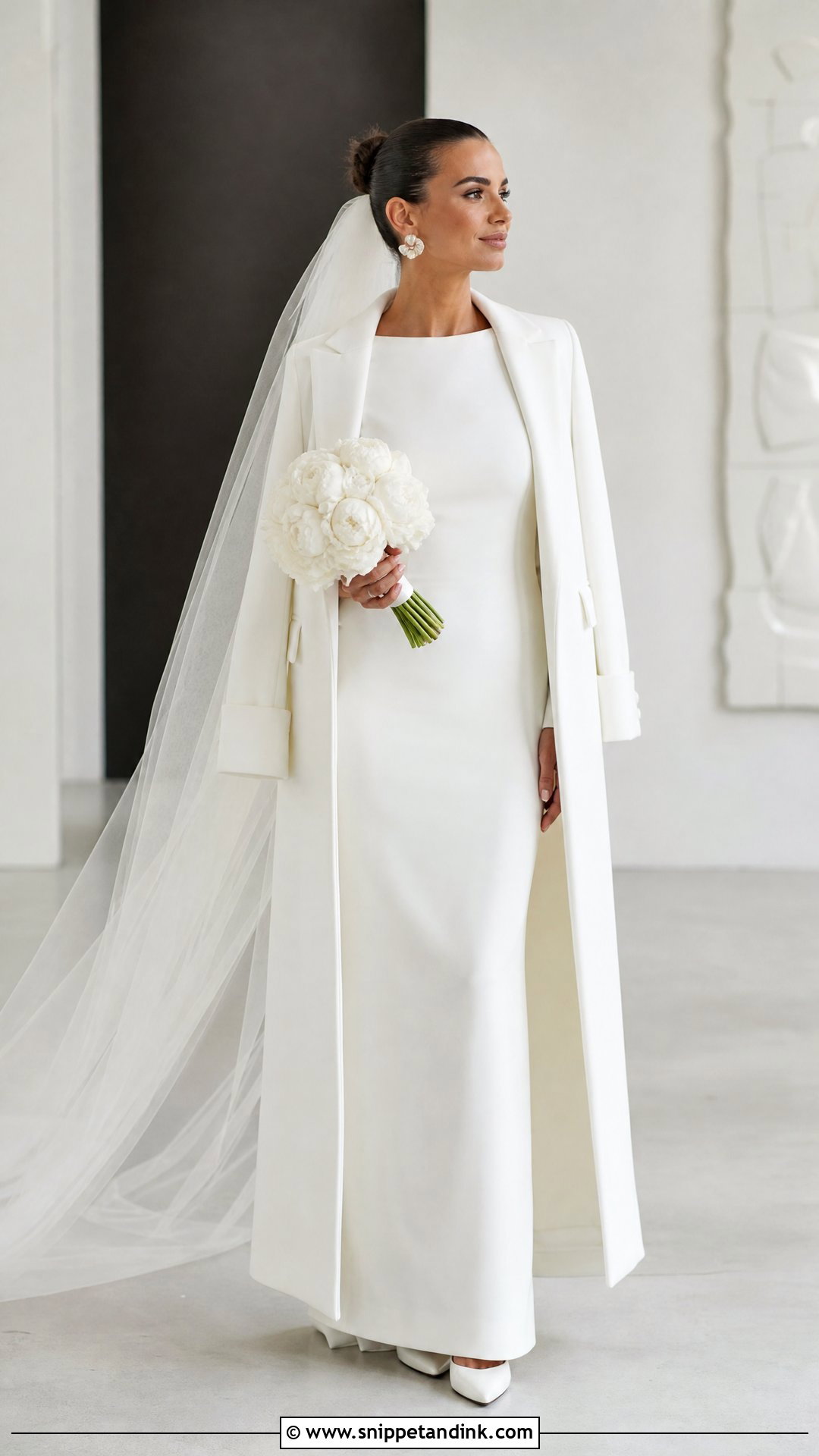
Clean lines hold their own against any amount of lace. A minimalist column in heavy crepe or satin makes one long, unbroken silhouette. Fitted sleeves, a bateau neckline and a small back slit so you can actually walk. The slit is not optional on a narrow column; without it, you’ll take tiny steps all day. Sculptural earrings, a smooth bun and pointed satin heels. Instead of an ornate veil, a plain extra-long one, or a structured pillbox hat with a short face veil. A tailored white wool coat and a compact, architectural bouquet. Every piece should point in the same direction.
13. Floral Jacquard Winter Wedding Gown
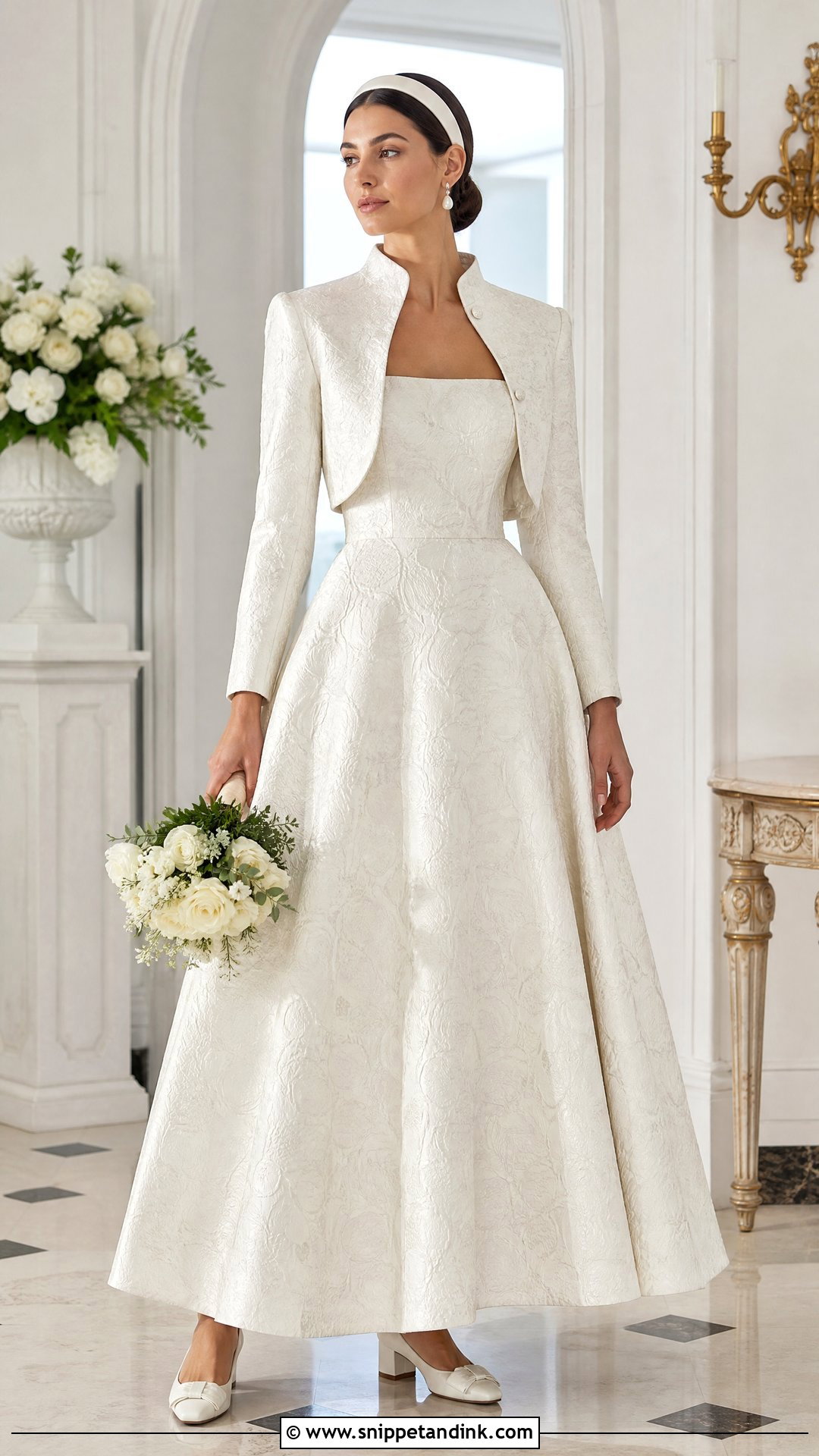
Floral jacquard gives a winter gown pattern and depth while keeping the structure cold weather calls for. The woven flowers show best on a full A-line or ball gown skirt, where light rakes across the raised motifs. Jacquard’s pattern is woven in, not printed, so it looks completely different in flat daylight and side lighting; view it in both before you commit. A simple bodice with long sleeves, a square neck or a strapless shape with a bolero. Pearl earrings, a satin headband, ivory block heels, a plain veil with a narrow edge and a cropped jacket for warmth. Keep the bouquet small and soft white.
14. Tea Length Winter Wedding Gown With Bolero
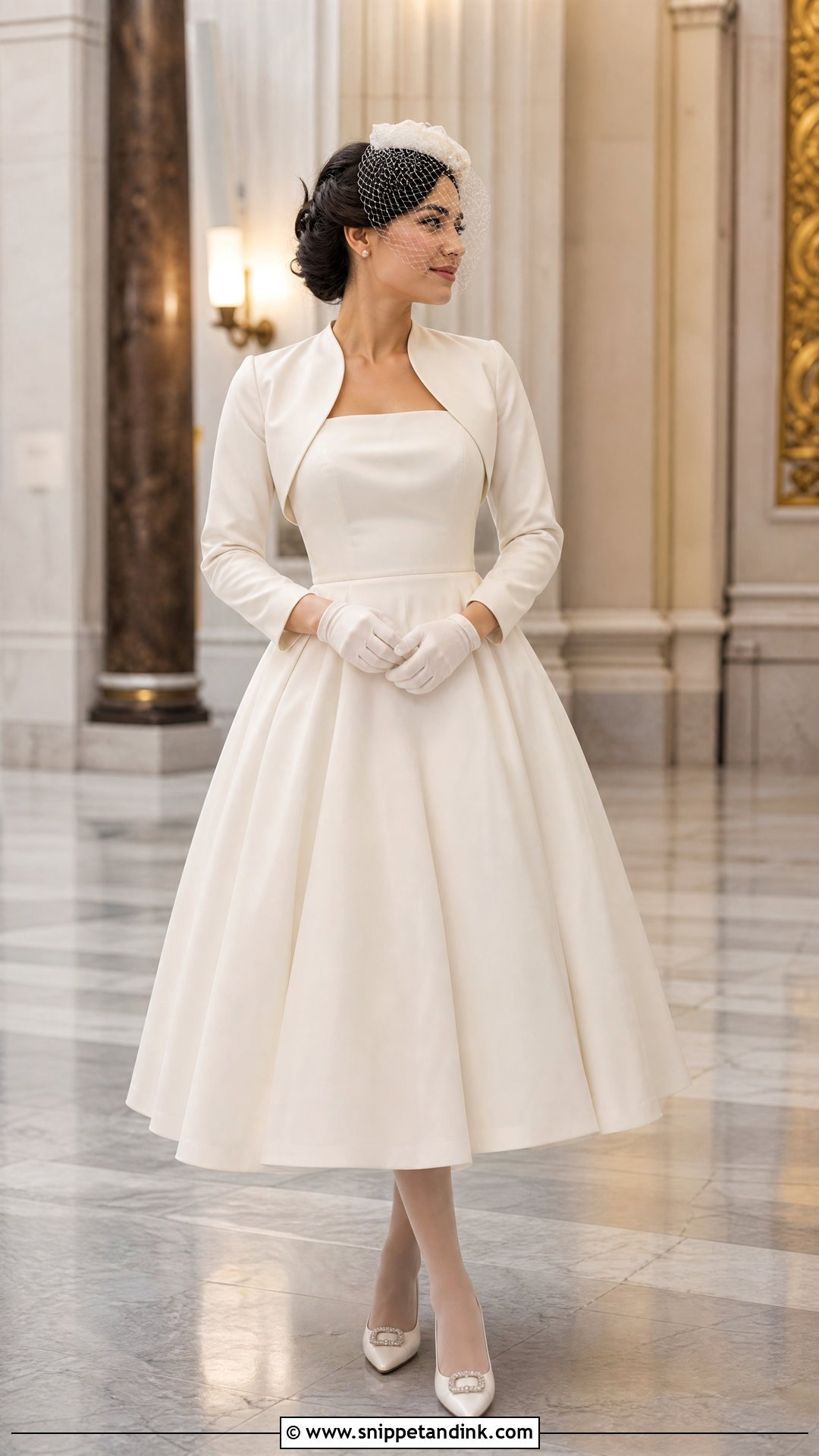
Tea length suits smaller winter weddings and brides who want to move freely. A structured satin dress with a fitted waist and a skirt ending between knee and ankle, plus a matching long-sleeve bolero. Shoes are on show, so choose them as carefully as the dress: polished ivory pumps, crystal-buckled heels or closed slingbacks. Sheer tights matched to your skin tone give discreet warmth. Pearl studs, short gloves and a birdcage veil or compact hair piece. For travel, a long wool coat; a cropped casual jacket over a tea-length dress looks like an afterthought.
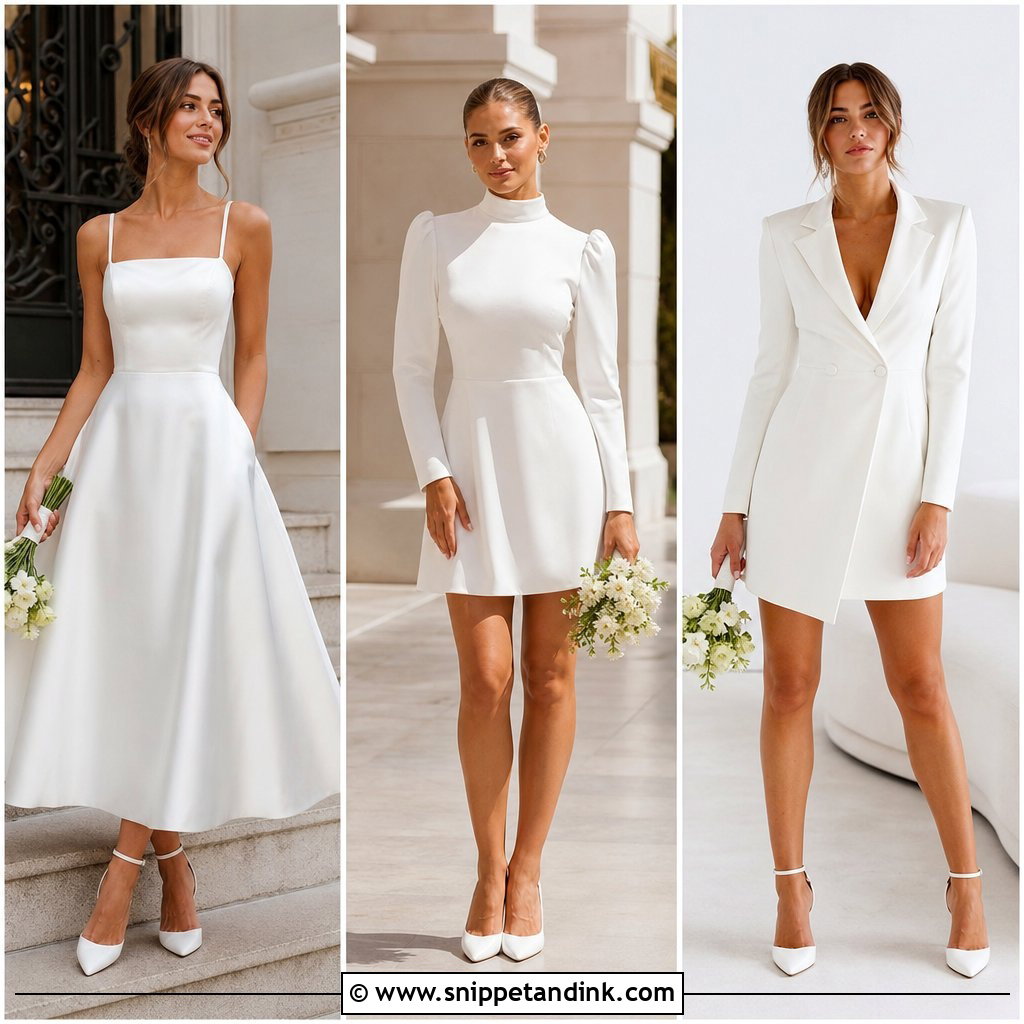
15. Plus Size A-Line Winter Wedding Gown
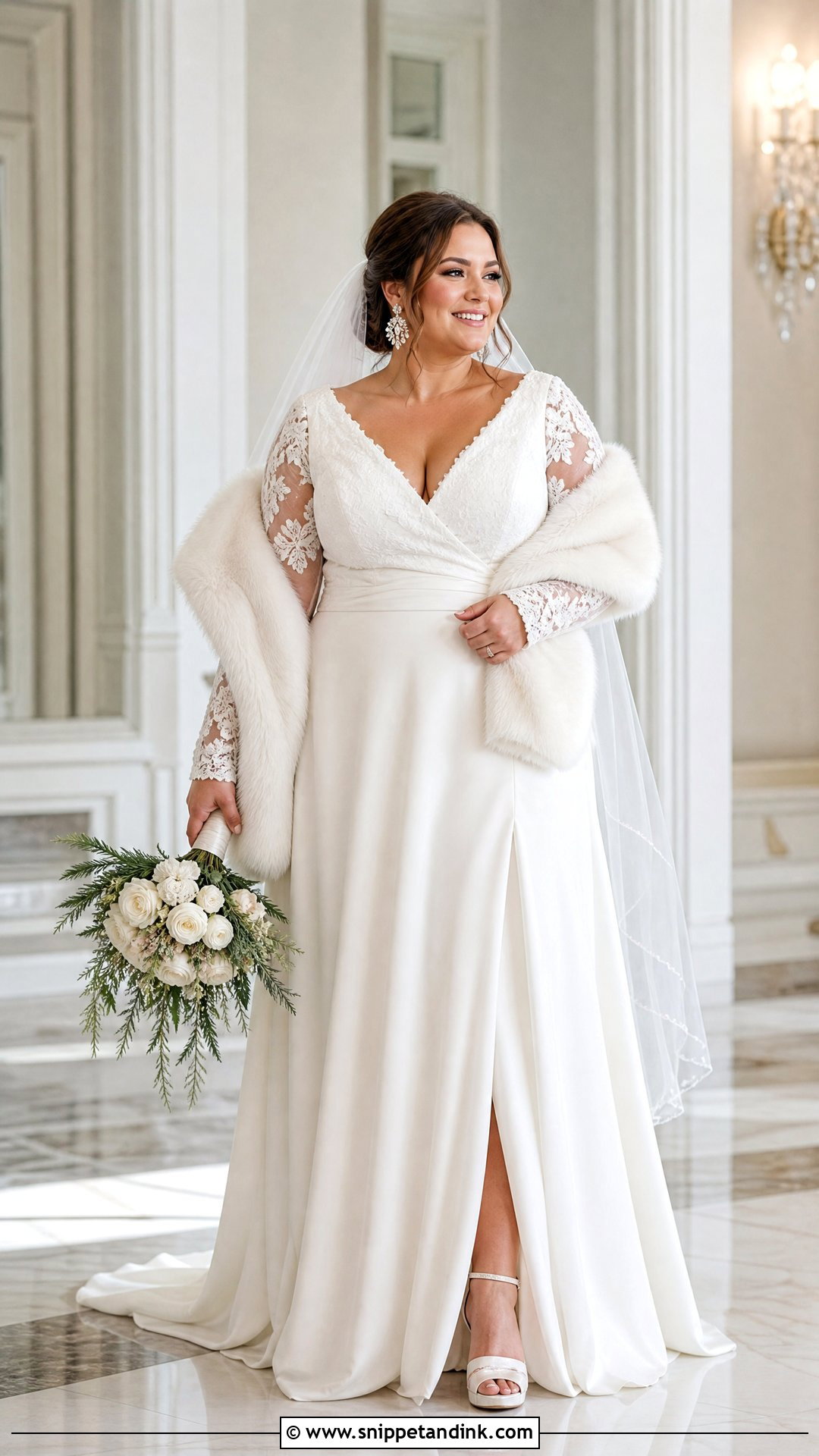
A well-built A-line gives support and graceful movement at any size. What I look for first is the inside: a bodice with real internal structure, boning and a waistband stay, a defined natural waist and a skirt that falls without heavy gathers at the hip. Long lace or fitted crepe sleeves balance the upper body with the skirt, a V-neck opens the face and a higher back keeps the fit secure. Statement earrings, a fingertip veil and cushioned block heels. Outdoors, a faux fur stole fixed with a hidden hook so you’re not clutching it all day. It should feel stable from the ceremony to the last song.
16. Petite Empire Waist Winter Wedding Gown
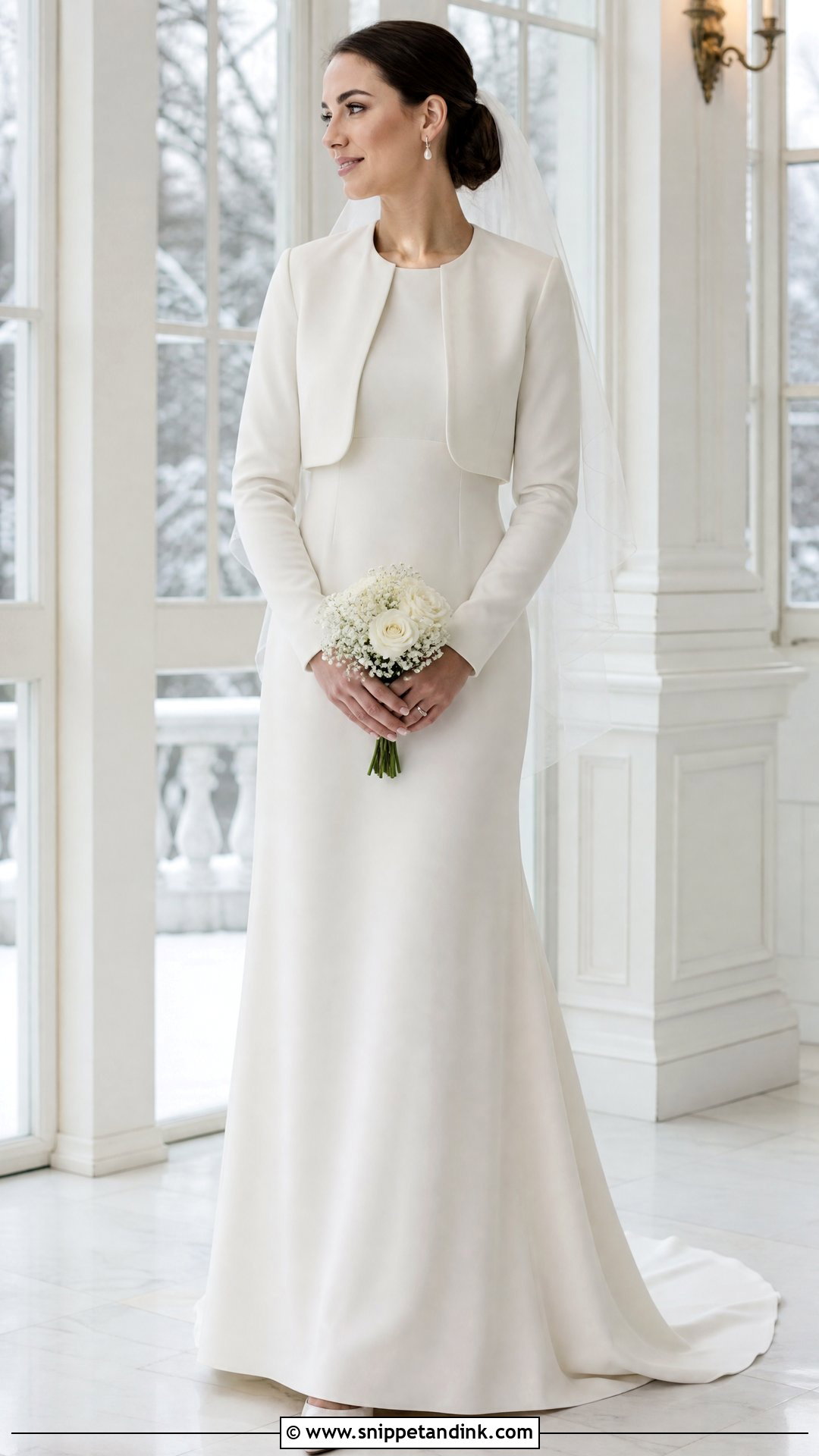
An empire waist starts the skirt just under the bust, which makes a petite frame look longer. Layered crepe, lined chiffon or lightweight satin keep the gown from swamping you. Long fitted sleeves and a modest V-neck add definition. Wide skirts and extra fabric at the waist do the opposite of what you want, so a narrow A-line with a short sweep train is better. Pointed heels, small drop earrings and a fingertip veil. Hemming is where petite gowns go wrong most often; bring your wedding shoes to every fitting, since even half an inch changes how the skirt breaks at the floor. A cropped jacket for warmth and a moderate bouquet.
17. Modest High Neck Winter Wedding Gown
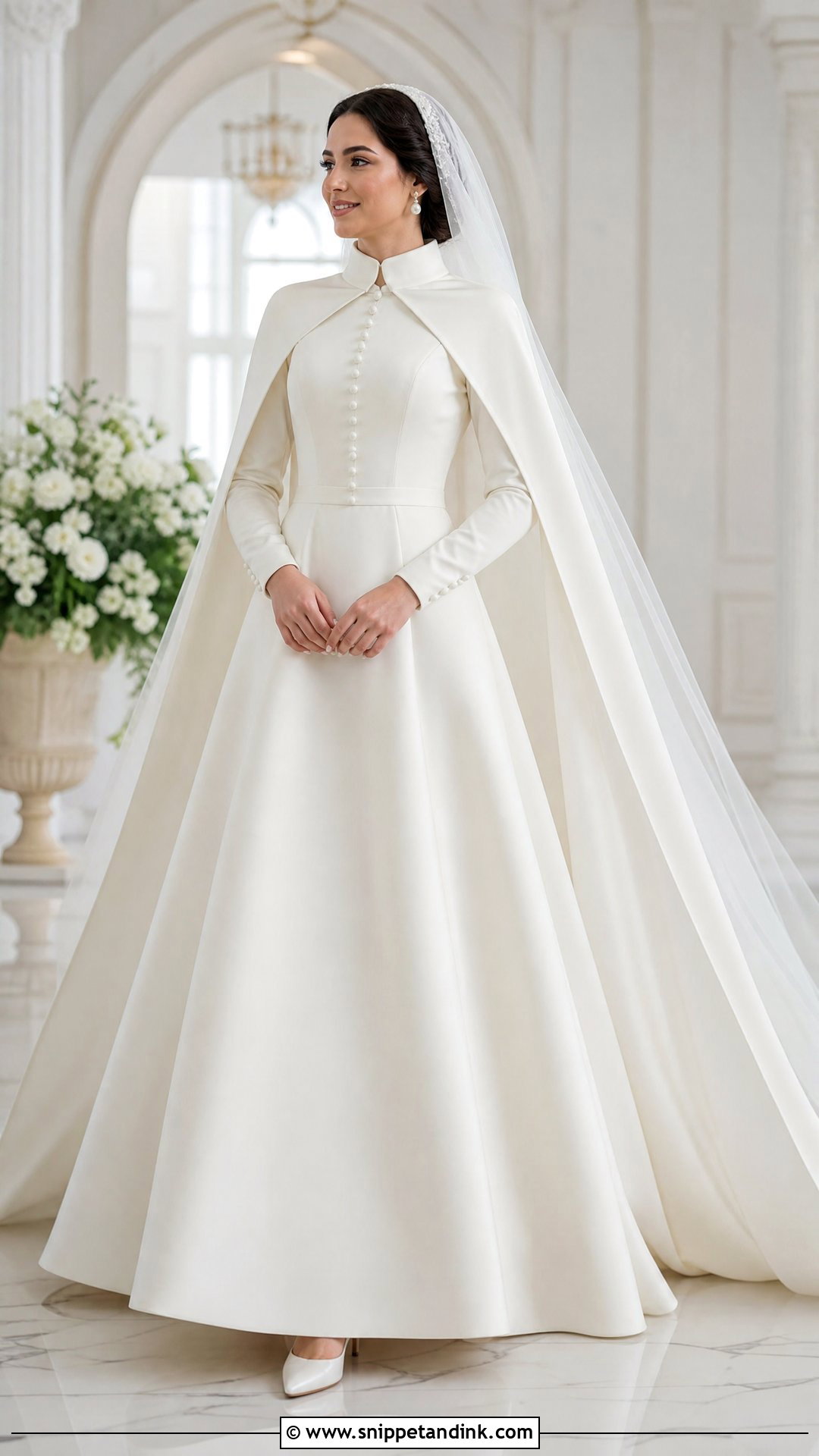
Full coverage can still feel fresh and personal. An opaque satin or crepe gown with a high neck, long sleeves and a full-length A-line skirt. Covered buttons, narrow cuffs and soft waist pleats add detail without showing skin. If you love lace, use it as an overlay on a full lining. Check modesty in the way you’ll actually move: raise your arms and sit down, because some necklines and sleeve seams open slightly in motion. Pearl earrings, a simple bracelet and comfortable closed heels, with a neat bun and securely placed veil. For warmth, a long cape or wool coat with a high collar and little decoration.
18. Boho Lace Winter Wedding Gown With Faux Fur
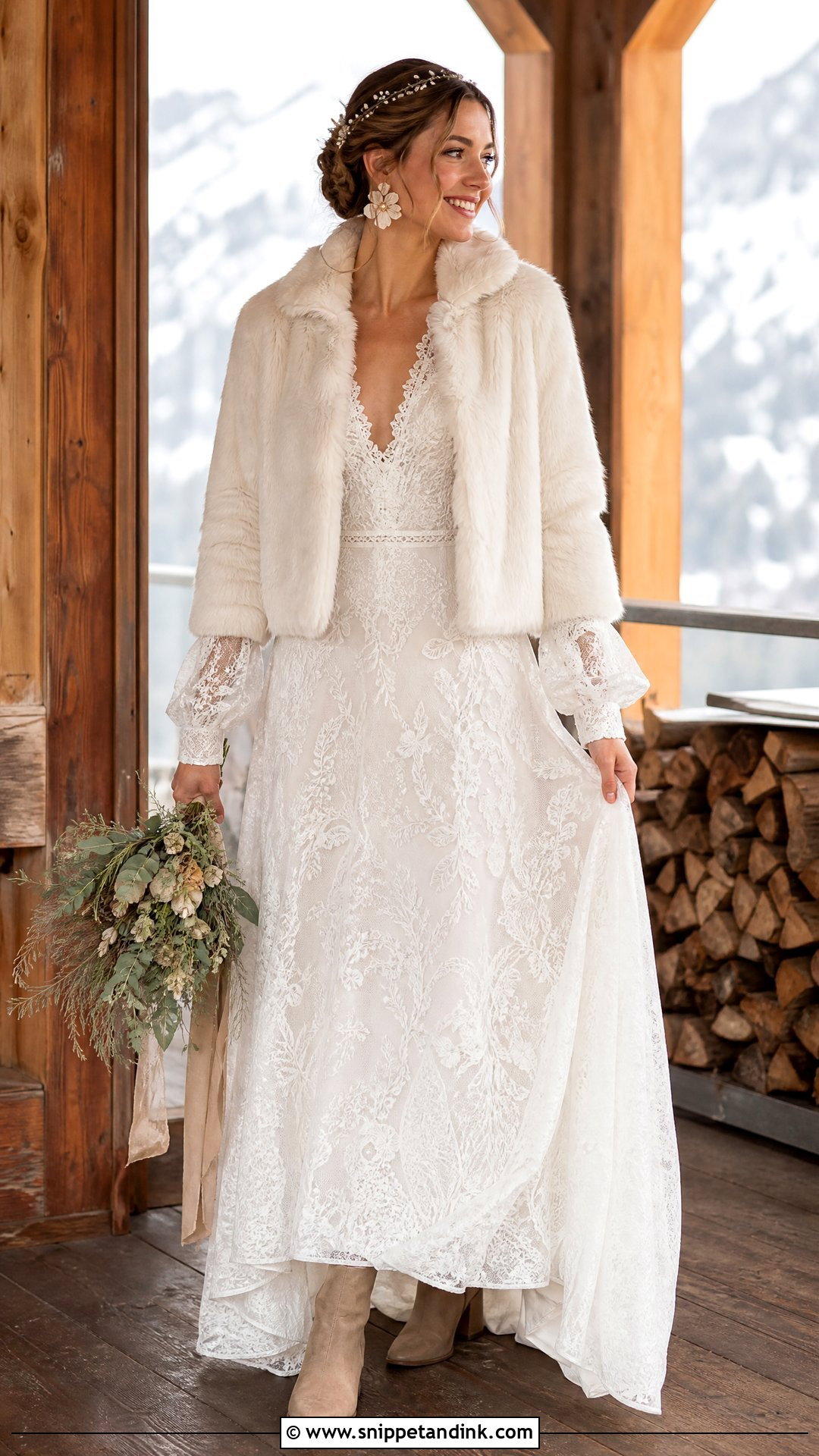
Bohemian bridal style moves into winter through lined lace, relaxed sleeves and the right outerwear. An ivory A-line in botanical lace with a softly defined waist and bell or bishop sleeves. Bell sleeves look romantic but dip into everything at dinner, so a bishop sleeve gathered at the wrist is the more practical choice for a long day. An opaque lining makes the lace pattern stand out and suits the season. Suede ankle boots or closed block heels depending on the ground, small floral earrings and a loosely pinned braided updo. A cropped faux fur jacket keeps the relaxed shape; a simple veil or a hair vine finishes it.
19. Vintage Inspired Winter Wedding Gown
A vintage-inspired gown looks distinctive rather than costume when it sticks to one reference: a 1930s bias cut, a 1950s full skirt or a 1960s bateau neckline. For warmth, long sleeves, a satin lining and fabric with enough weight to drape. A bias-cut gown suits closed pumps, pearl drops and soft side-parted waves; a full-skirted one suits gloves, a short veil and a structured mini bag. A tailored coat can echo the era through its collar or length. The fastest way to look like a costume is mixing decades, a 1930s gown with 1950s gloves and a 1970s veil. Pick one.
20. Black Tie Winter Wedding Ball Gown
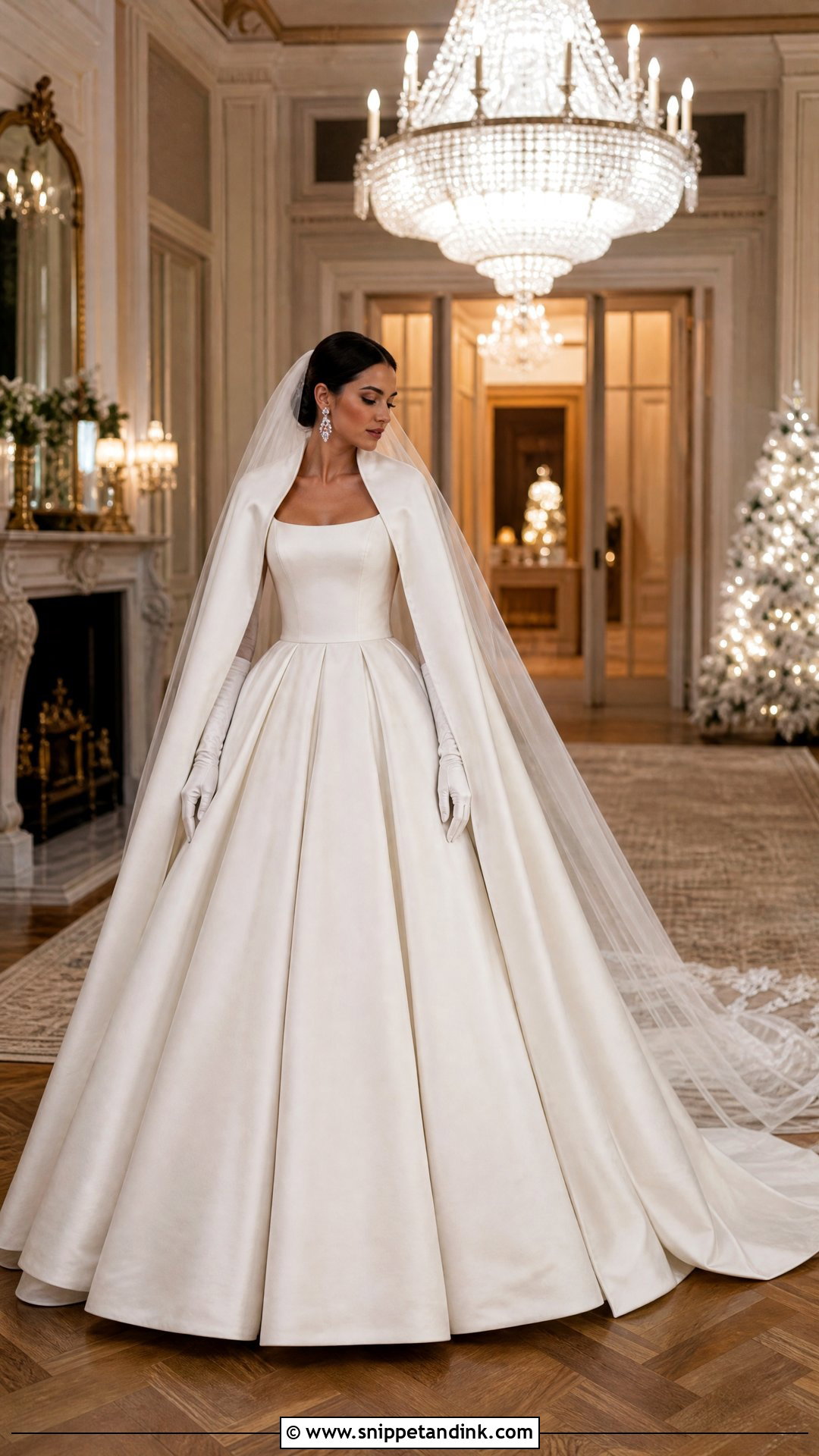
Black tie gives you license for a grand gown with real volume. Duchess satin or Mikado, a fitted bodice, a long train and either full sleeves or opera gloves. A bateau, square or gently curved neckline makes a polished base. Opera gloves look wonderful but make the ring exchange fiddly: either slip off the left glove before the vows or ask your seamstress about a discreet finger opening. Crystal earrings, a refined updo, a long veil matched to the skirt’s scale and closed satin heels. For arrival, a floor-length cape with a clean front closure, and a structured bouquet in proportion.
21. Winter Wedding Gown With Hooded Cape
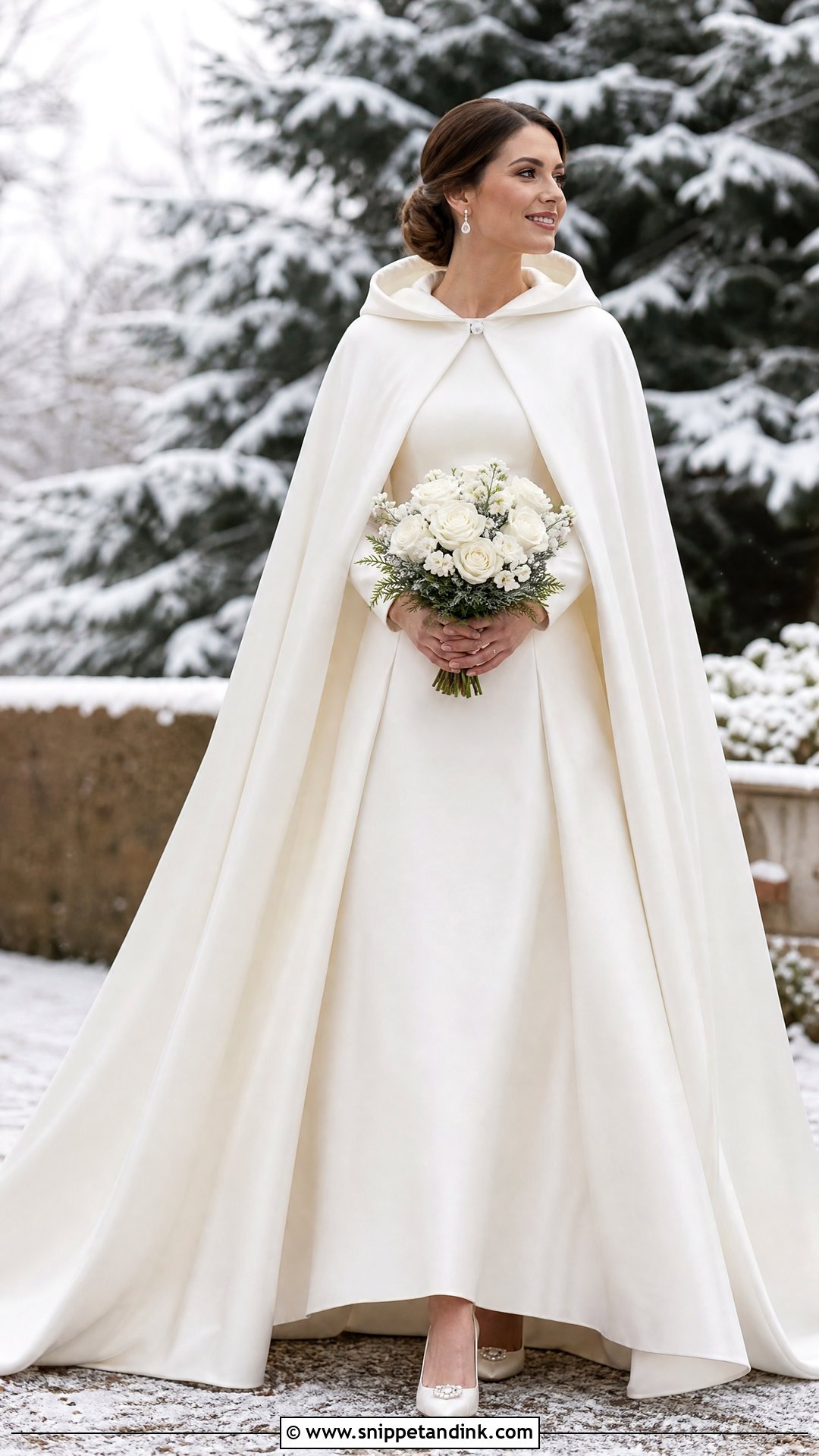
Few layers have the cold-weather impact of a long hooded cape. Wear it over a simple satin, crepe or Mikado gown, perhaps with long sleeves, a fitted waist and an A-line skirt with a modest train. A satin lining lets it glide over the dress. The hood has to clear your hairstyle: a neat bun set low at the nape fits under it, while a high updo gets flattened. Fasten it near the collarbone with a covered hook or decorative clasp. Crystal studs and low block heels. Take it off indoors for a streamlined reception look. It earns its keep in snowy portraits and cold arrivals.
22. City Winter Wedding Gown With Bridal Coat
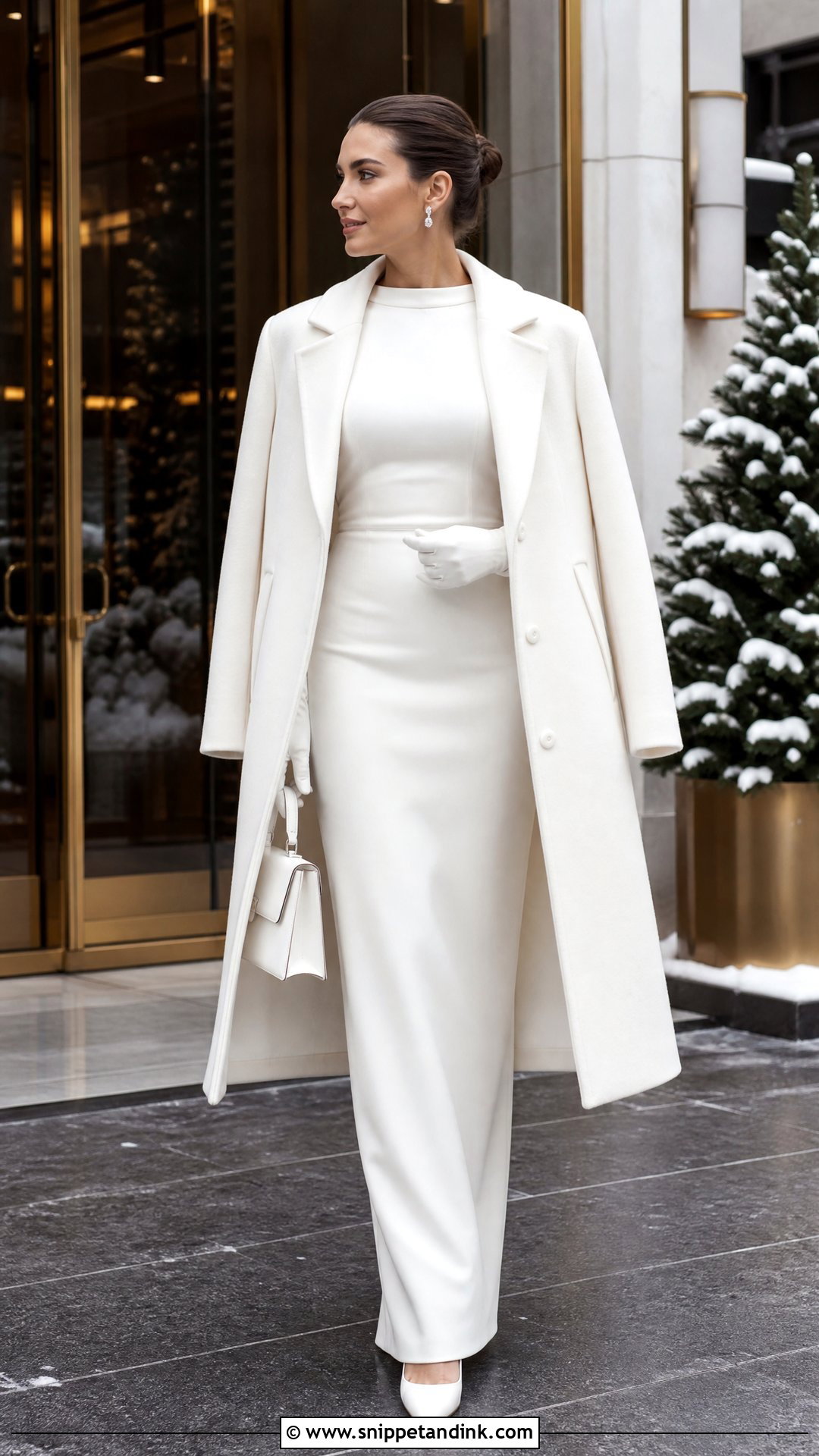
City weddings mean sidewalks, revolving doors and hotel lobbies, so the gown has to move. A fitted crepe column or narrow A-line with long sleeves and a clean neckline, under a tailored white coat falling below the knee. The coat should close without straining and have room for the dress underneath; buy it one size up if needed and have the sleeves taken in. Pointed pumps, leather gloves, a structured mini bag and metallic earrings. A sleek bun or smooth bob keeps it urban. A simple veil, or swap it for a slim headband. It looks sharp in street photos and travels well between ceremony, portraits and reception.
23. Mountain Winter Wedding Gown With Warm Layers
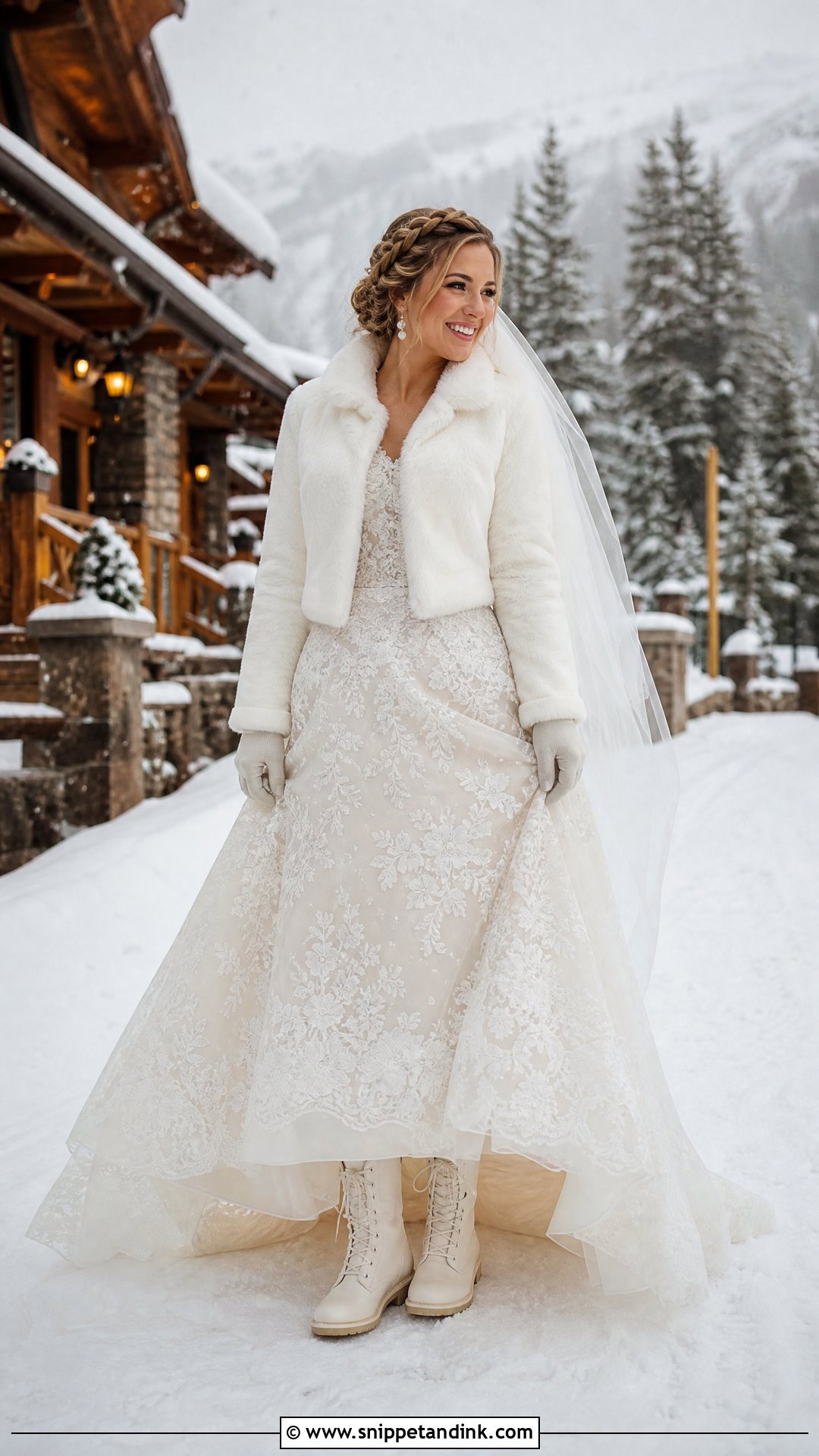
Mountain weddings mix elegance with cold ground, snow and uneven paths. A lined long-sleeve A-line in satin, crepe or lace over a substantial underlayer. The train should be short enough to bustle in under a minute, because you will be stepping outside in it more than once. A fitted faux fur jacket, thermal tights if the skirt is opaque, and waterproof boots for the snowy shots, then satin block heels inside. Pearl earrings, a braided updo that won’t come loose in wind, and a veil pinned firmly. Gloves you can move your fingers in. Keep every practical piece in ivory or soft neutrals so it all reads as one outfit.
24. Winter Wedding Midi Gown With Long Coat
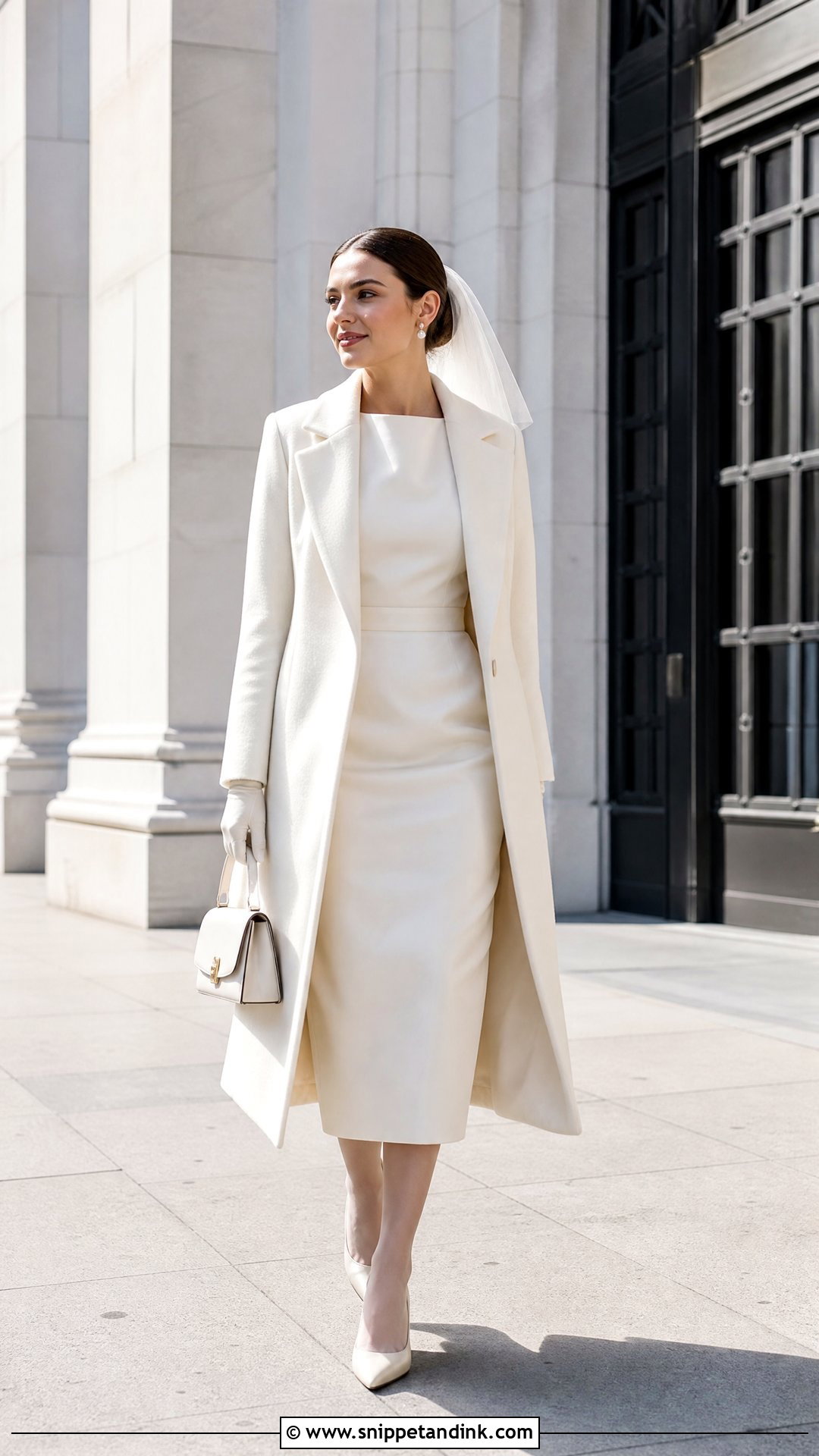
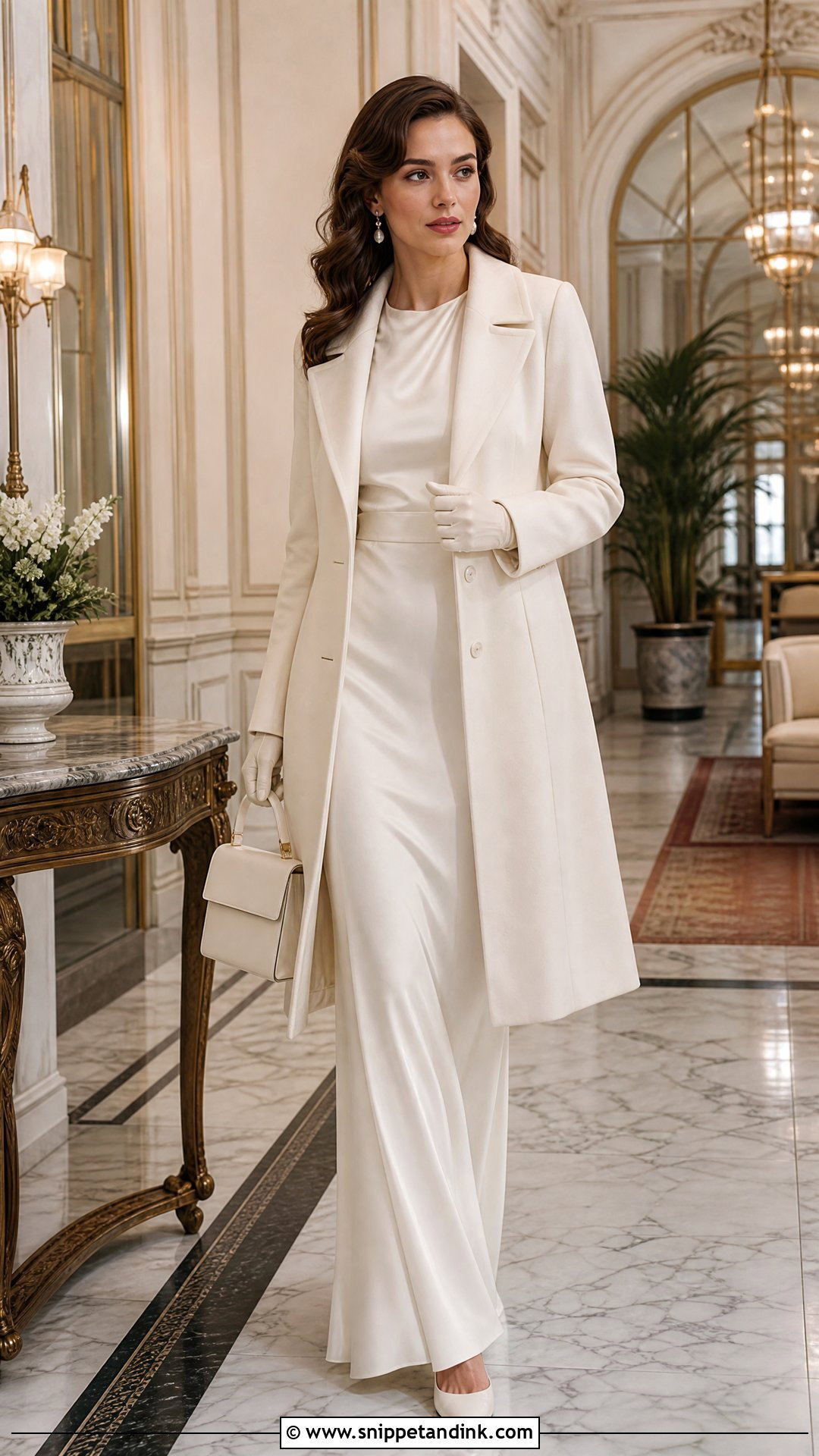
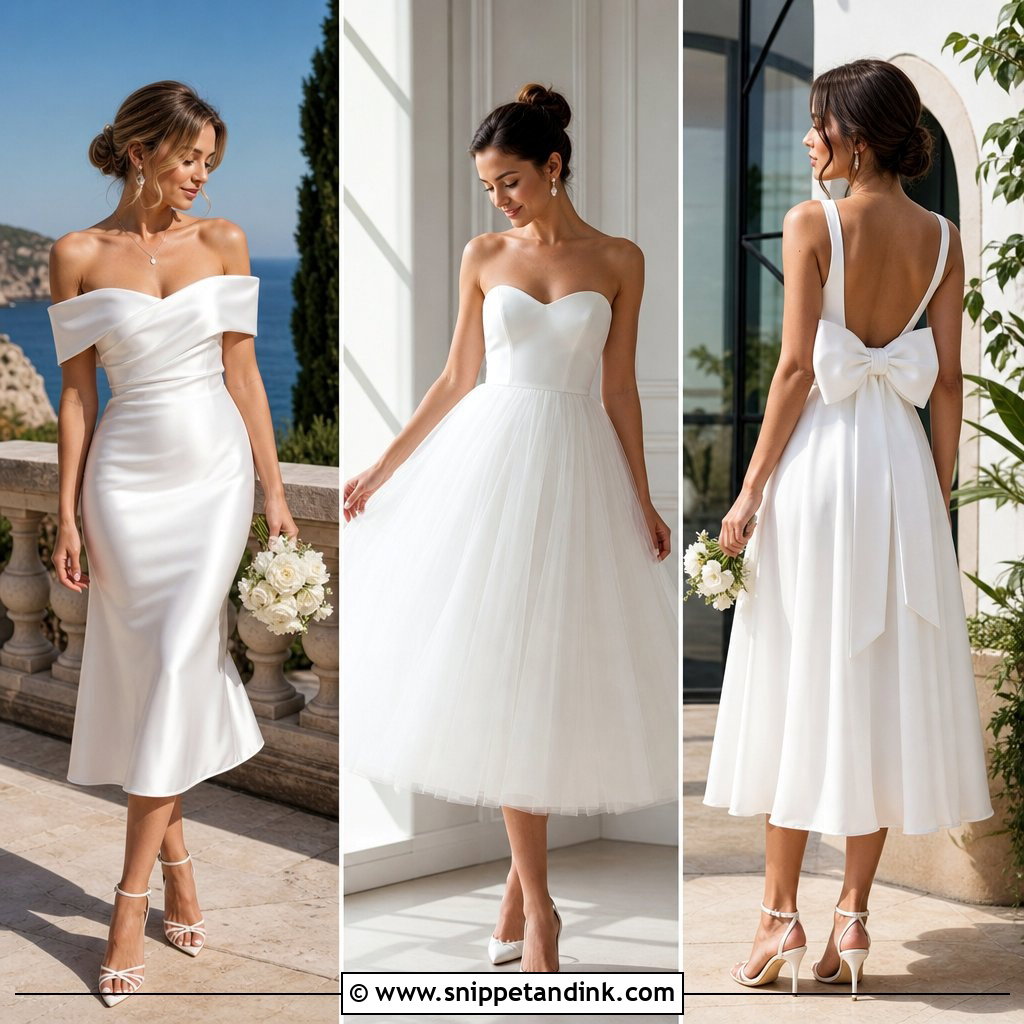
A bridal midi gown suits a courthouse ceremony, a small gathering or a relaxed winter reception. A long-sleeve satin or crepe design with a defined waist and a below-knee hem, under a full-length tailored coat for a dramatic arrival. Shoes are visible, so closed pumps or heeled ankle boots in ivory, silver or soft champagne. Sheer tights, pearl earrings and a structured handbag. A short veil, satin headband or simple hair bow is enough for a shorter dress. A full-length coat over a midi looks deliberate, while a knee-length coat hiding most of the dress looks like you forgot to take it off. Easy to move in, and far easier to wear again afterward.
25. Convertible Winter Wedding Gown With Overskirt
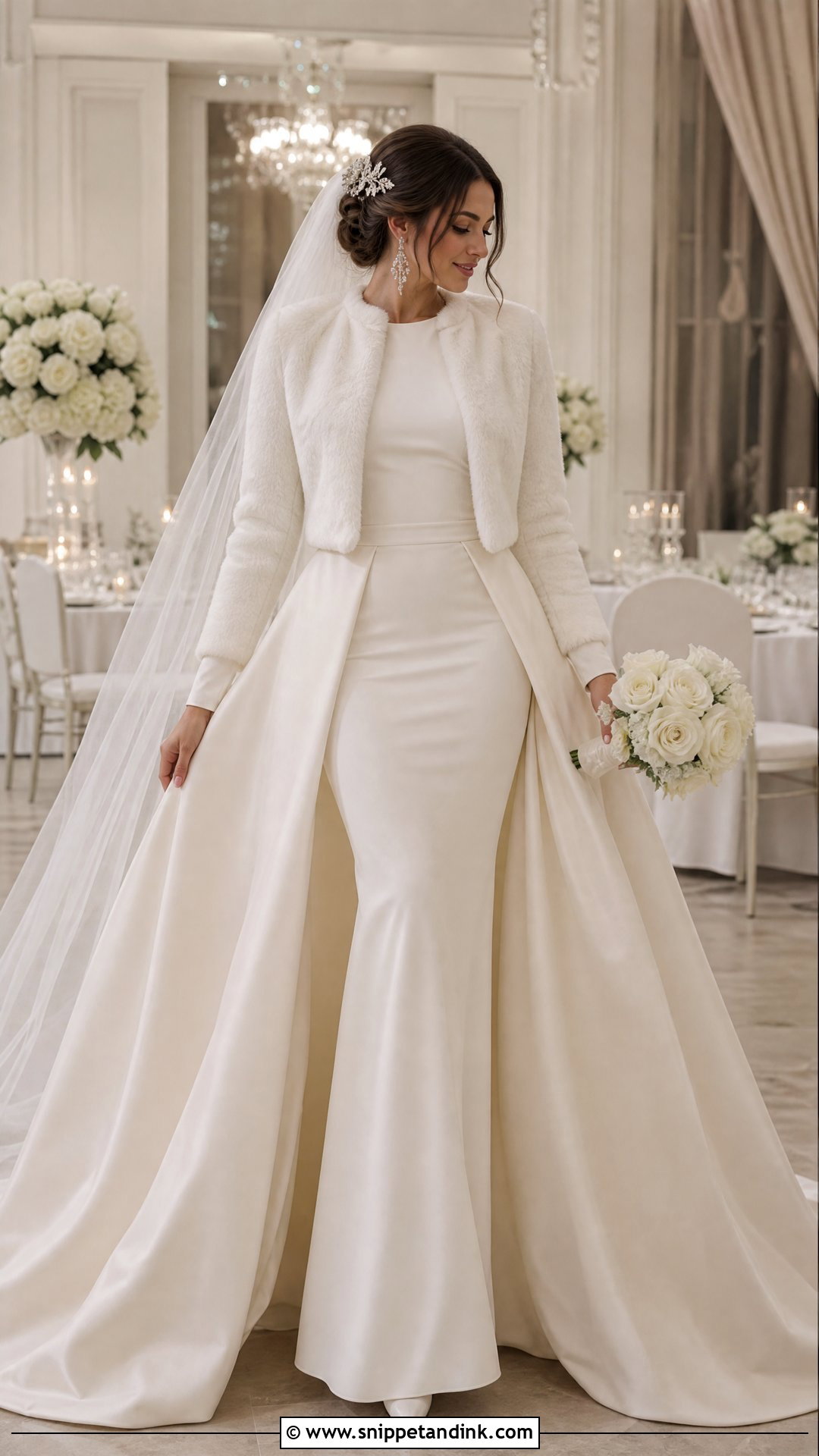
A convertible gown gives you a ceremony silhouette and a lighter reception look in one. A fitted crepe, satin or lace gown with long sleeves in a column or mermaid shape, plus a detachable Mikado or satin overskirt that creates a ball gown for the ceremony. Overskirts usually attach with hooks, snaps or a hidden waistband, and the first time you take it off shouldn’t be at the reception. Ask the seamstress to demonstrate every fastening, then have your helper practice. A long veil, crystal earrings and closed heels; after photos, swap the veil for a sparkling comb. A cropped faux fur jacket or tailored coat for outdoor moments that won’t disturb the overskirt’s fastenings.
Snow, Salt and a Long Train
Hems take the most damage in winter. Wet snow soaks into satin and tulle, and the salt and grit from paths leave a gray tide line that is very hard to clean the same day. A few decisions made at your fittings save the photos.
Choose the bustle with the ground in mind
An over-bustle, where the train hooks up onto the back of the skirt, lifts fabric highest off the ground. An under-bustle tucks the train beneath and keeps the back cleaner looking. Either way, ask your seamstress to color-code the ties or loops and teach two people, not one.
Carry it, don’t drag it
For every outdoor walk, someone should gather the train over their arm. A clean white sheet or a large towel laid down for snow portraits lets you spread the train for the shot without it touching the ground.
Warmth nobody sees
A ball gown’s petticoats already hold some warmth, and thin thermal leggings or fleece-lined tights fit under most full skirts invisibly. Under a slim column, choose a smooth thermal slip instead, so nothing shows through the fabric.
Your Gown Has to Survive a Car Door, Not Just an Aisle
Winter gowns work when they’re as comfortable as they are lovely to look at. Structured satin, Mikado, velvet, crepe and lined lace all give you a fabric suited to the season, and sleeves, capes, coats and faux fur layers let you adjust as the day moves between cold and warm rooms. Closed shoes, stable heels, secure hair and a train you can manage matter just as much once there’s ice or snow outside. Above all, the gown should feel like you and suit the formality of your venue. Treat these looks as a starting point. Try different silhouettes, test every removable layer and practice moving in the whole outfit, so on the day you’re warm, confident and completely yourself.
You'll Like These Ideas:



Leave a Reply