
A relaxed wedding still deserves a dress chosen with care, it just asks for different things than a ball gown does. For courthouse ceremonies, backyard vows, beach elopements and small restaurant receptions, I care less about volume and more about how the fabric behaves: whether it creases when you sit in a car, shows sweat in the sun, or reads as plain white in photographs. Short lace, satin slips, midis, boho maxis and jumpsuits all have a place. Here are 25 informal styles, with the fitting and fabric notes I’d give a bride trying each one on.
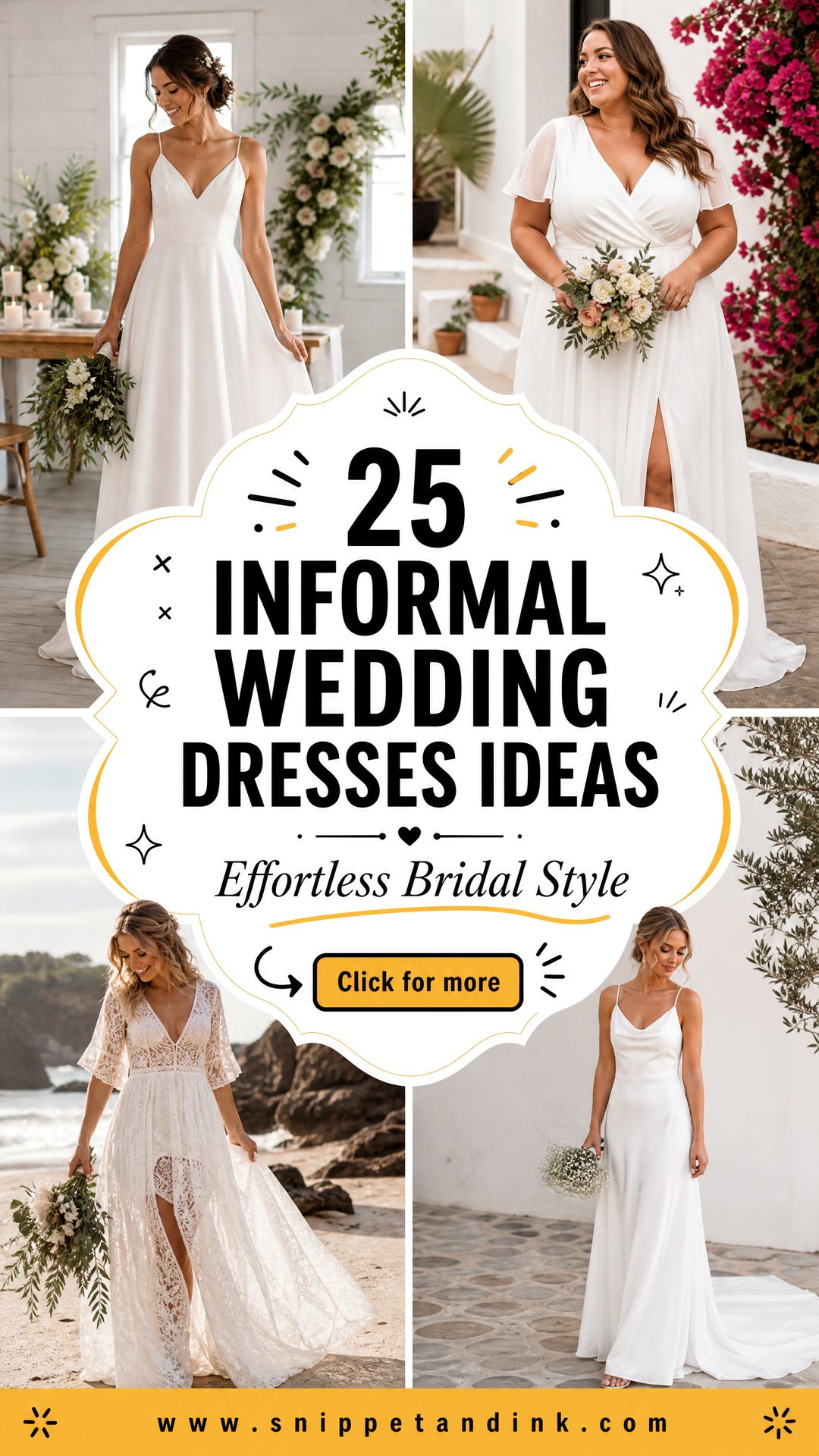
Where Informal Dresses Come From, and How Far Ahead to Shop
Informal dresses come from more places than gowns do: bridal salons’ ready-to-wear racks, contemporary fashion brands, vintage shops and online sellers. That gives you range, but it also changes the timeline and the fitting plan.
- Made-to-order bridal pieces, even simple ones, can still take several months to arrive. Ask the salon for its current lead time before you fall in love.
- Ready-to-wear and online dresses ship quickly, but order early enough to return or exchange if the white or the fit is wrong in person.
- Leave a few weeks for alterations either way. Hemming and taking in a slip or midi is usually quick; reworking lace or sleeves takes longer.
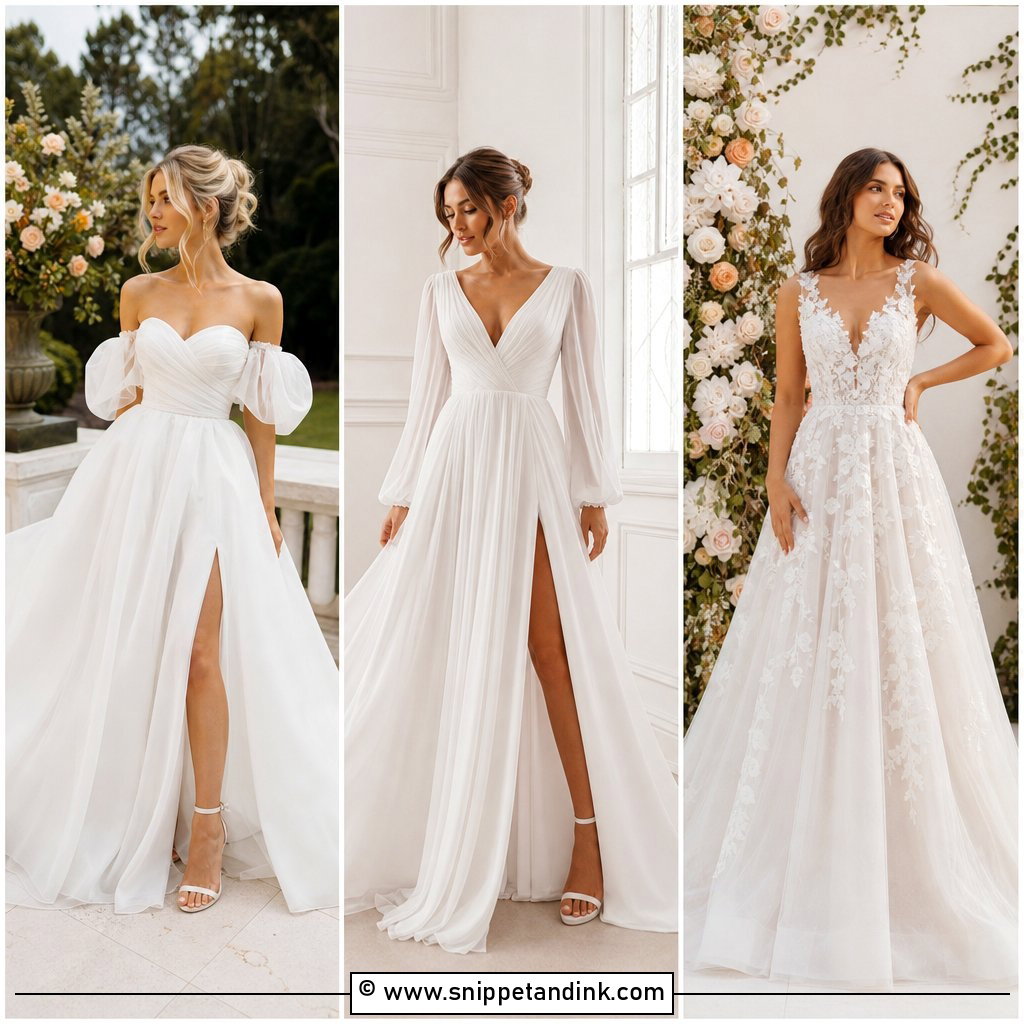
- Vintage dresses need an honest look at the underarms, hem and seams for yellowing and weakness before you pay.
My rule: buy the dress, then the shoes, then book the hem with the shoes on. Most informal dresses rely on hem length more than structure, and a hem cut for the wrong heel shows in every full-length photo.
1. Short Lace Wedding Dress
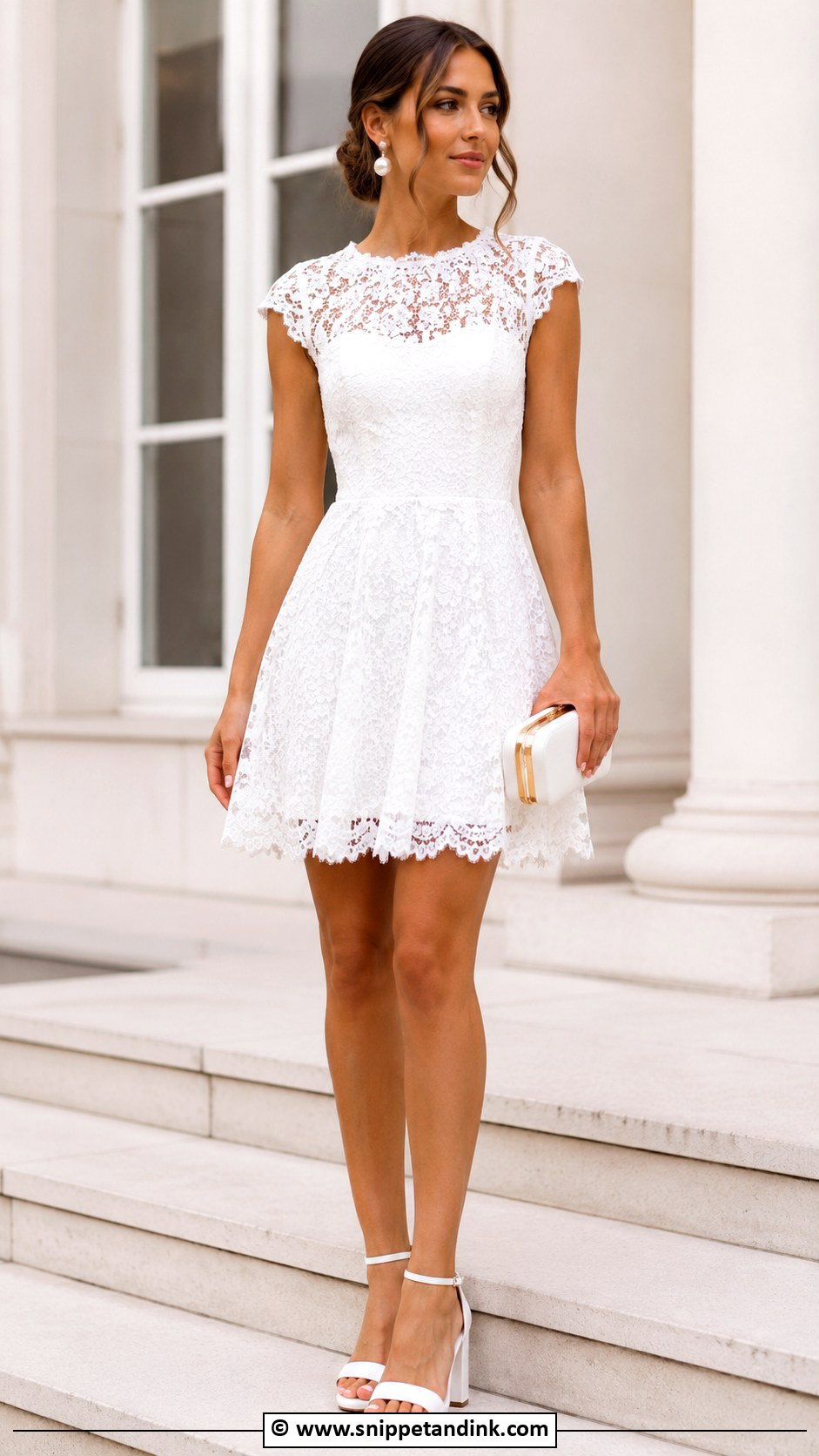
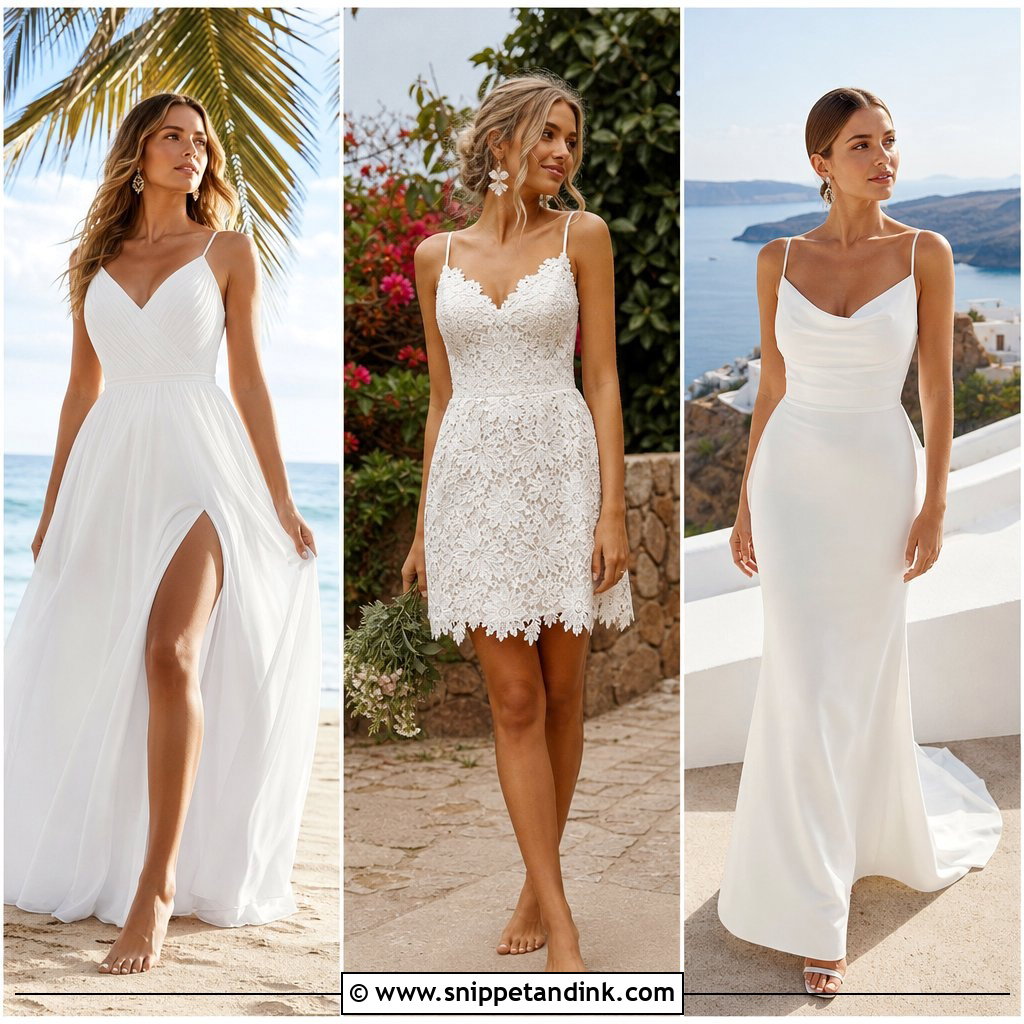
Short lace sits right between playful and bridal, which is why it suits a courthouse or a small outdoor party so well. A knee-length fit-and-flare defines the waist without looking formal. What I check first is the lining: cheap lace dresses often use a stiff polyester underlayer that rustles and traps heat, so a soft, breathable lining is worth paying for. Long sleeves need almost no jewelry; thin straps can take a short veil or a hair bow.
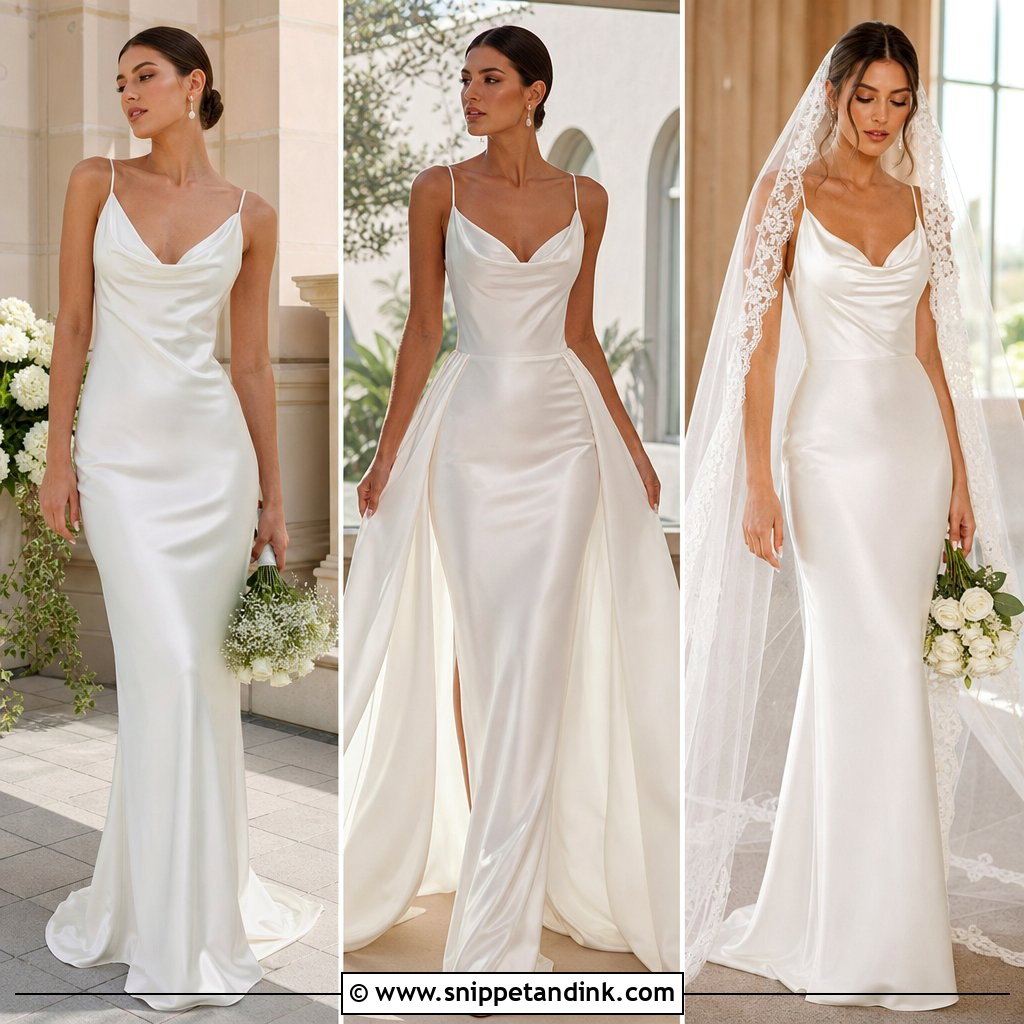
2. Satin Slip Wedding Dress
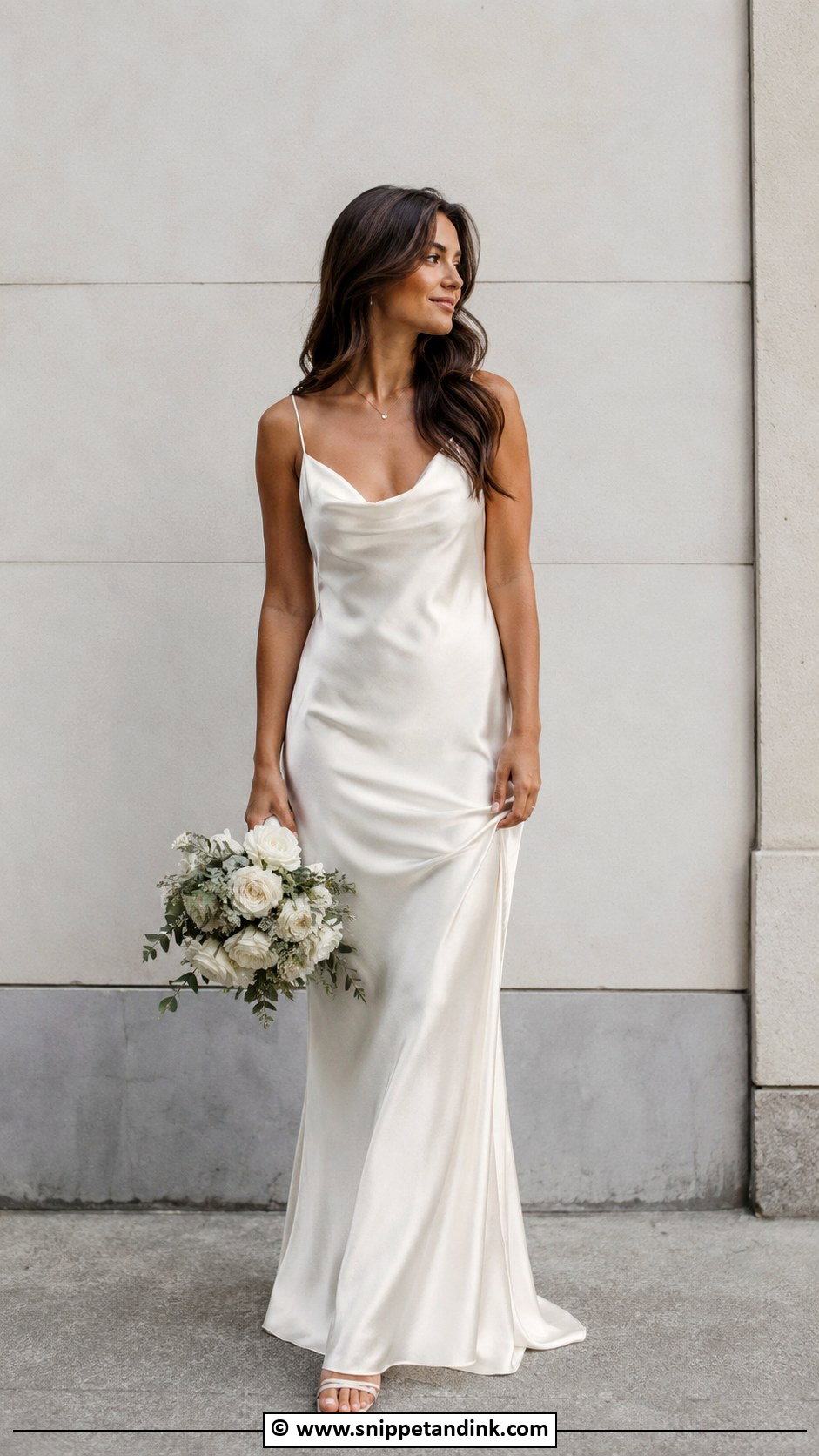
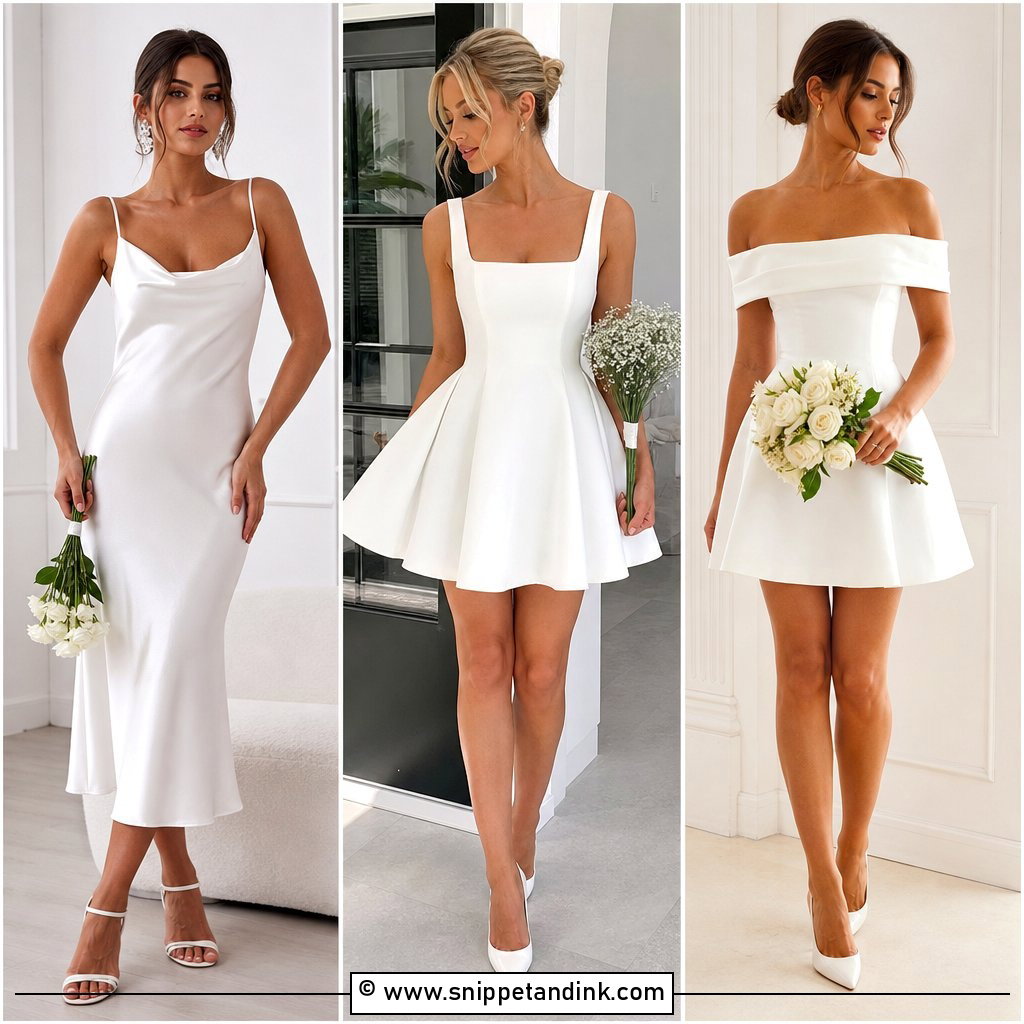
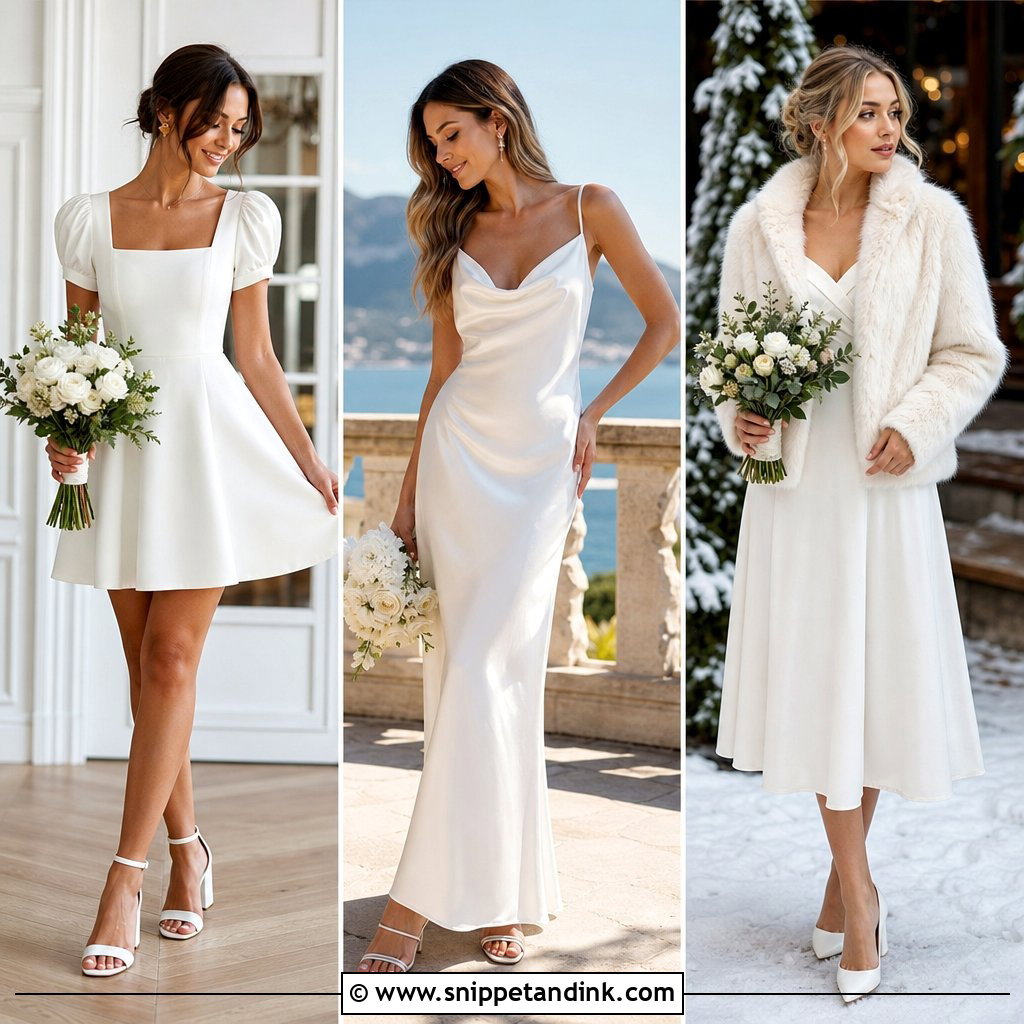
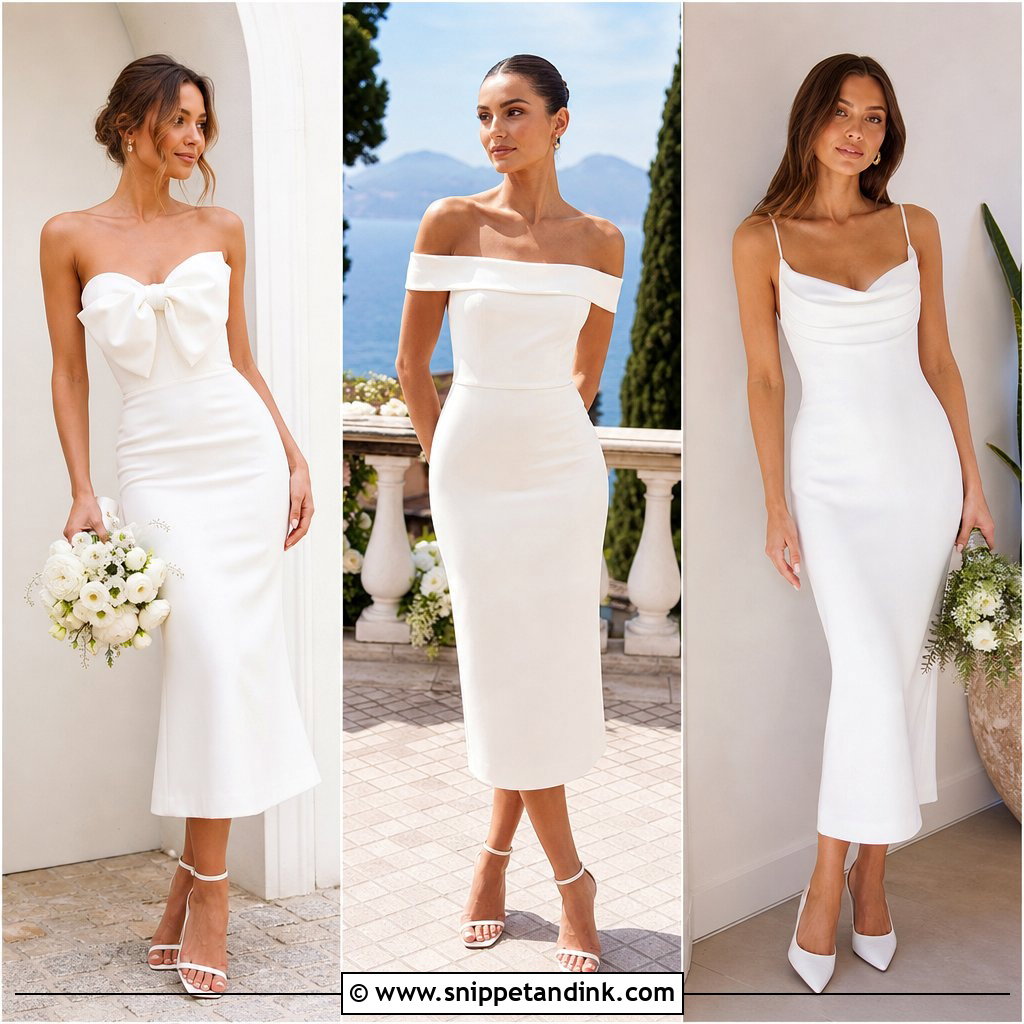
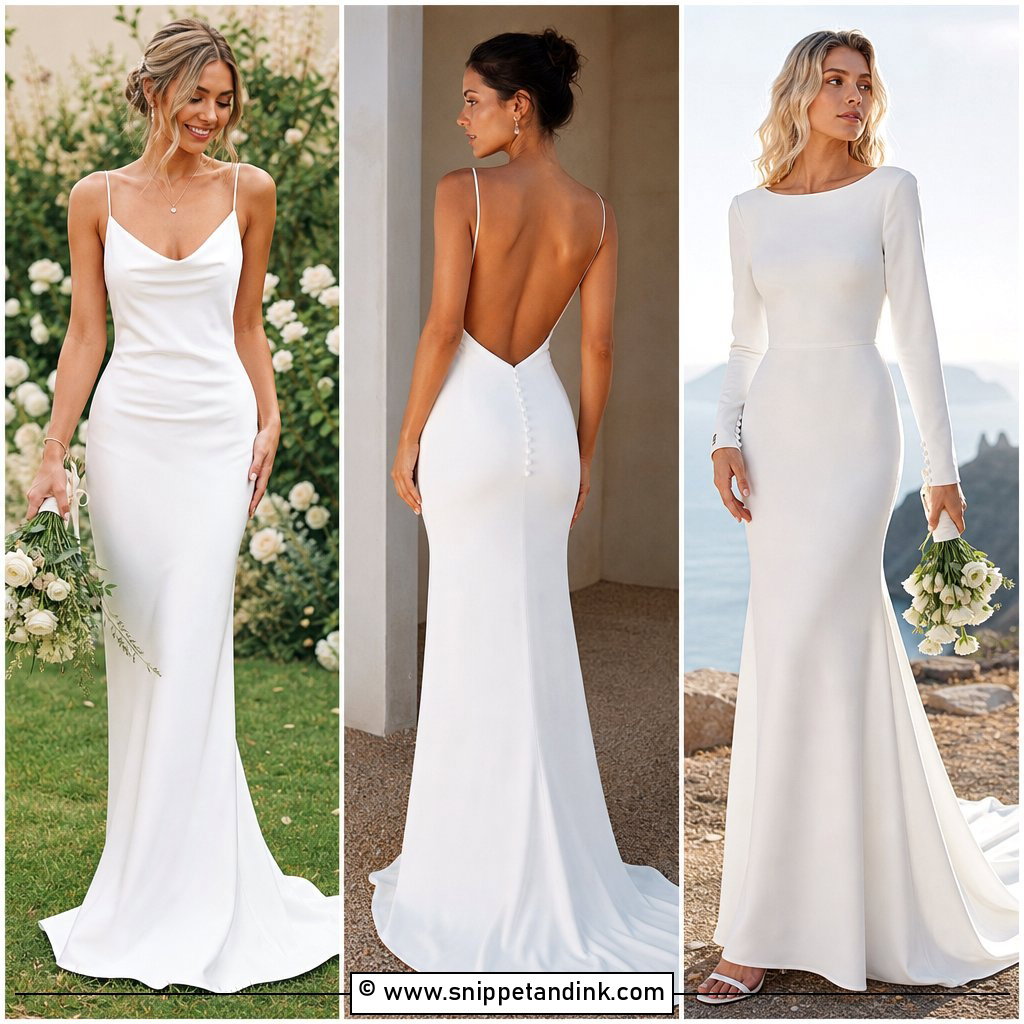
Nothing on this list is simpler, and nothing is less forgiving. Bias-cut satin skims the body in ivory or champagne, but it shows every seam and line underneath, so I fit slips over the exact underwear the bride will wear, usually smooth, no-line pieces in a shade close to her skin rather than white. A cowl or square neckline keeps it modern. Low strappy sandals and soft waves suit it, and a cropped cardigan or tailored blazer handles a cool evening at city hall.
3. Tea Length Wedding Dress
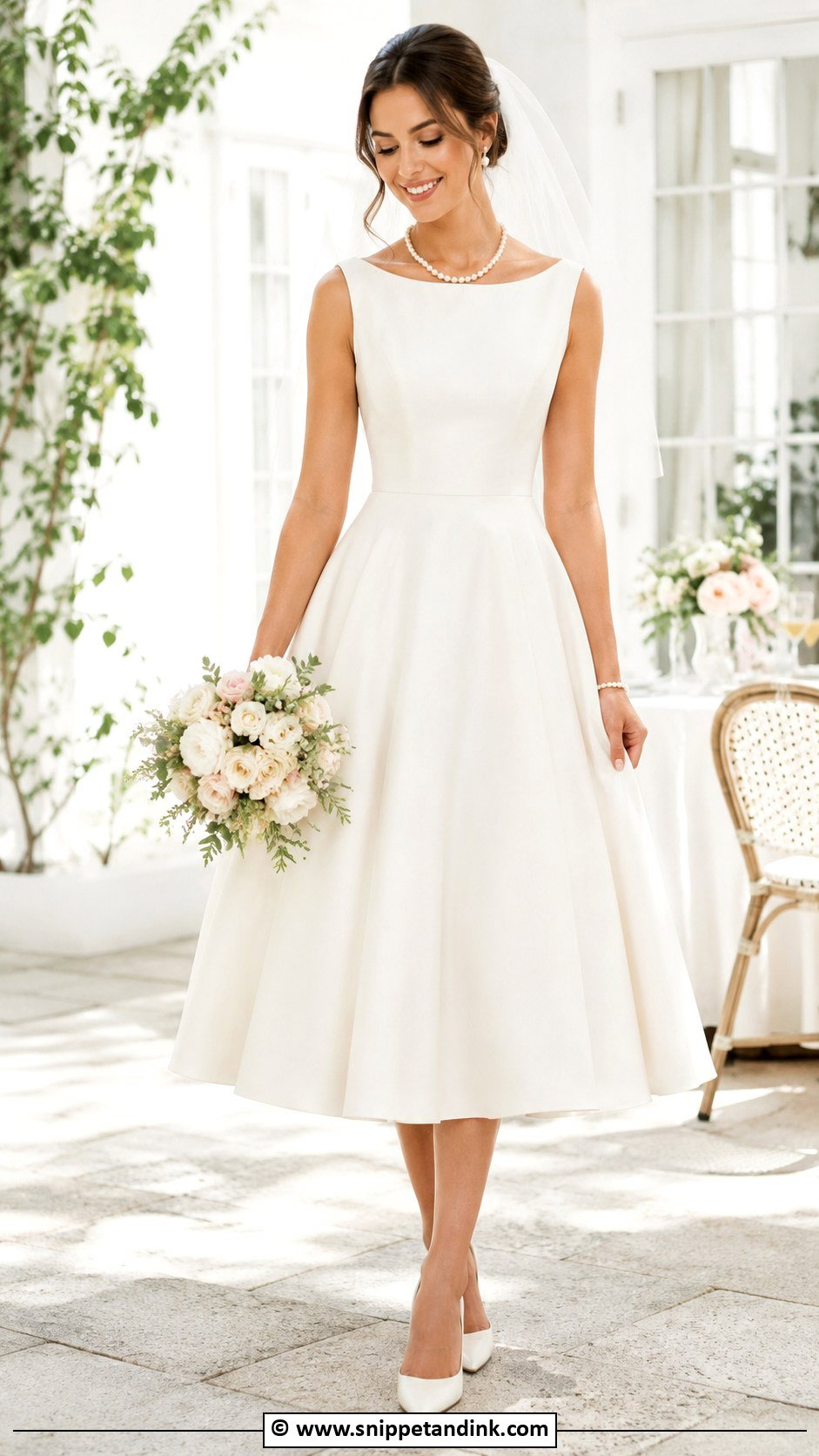
Tea length gives you a classic fitted bodice and A-line skirt without the weight or train of a full gown. The hem falls between knee and ankle, so you can walk, dance and show off your shoes. A bateau or square neckline adds polish, and pointed heels with a short veil give it a vintage note without tipping into costume. At a fitting I watch where the hem lands on the calf: just below the widest point flatters most legs, while a hem that cuts the fullest part of the calf makes legs look heavier.
4. Boho Maxi Wedding Dress
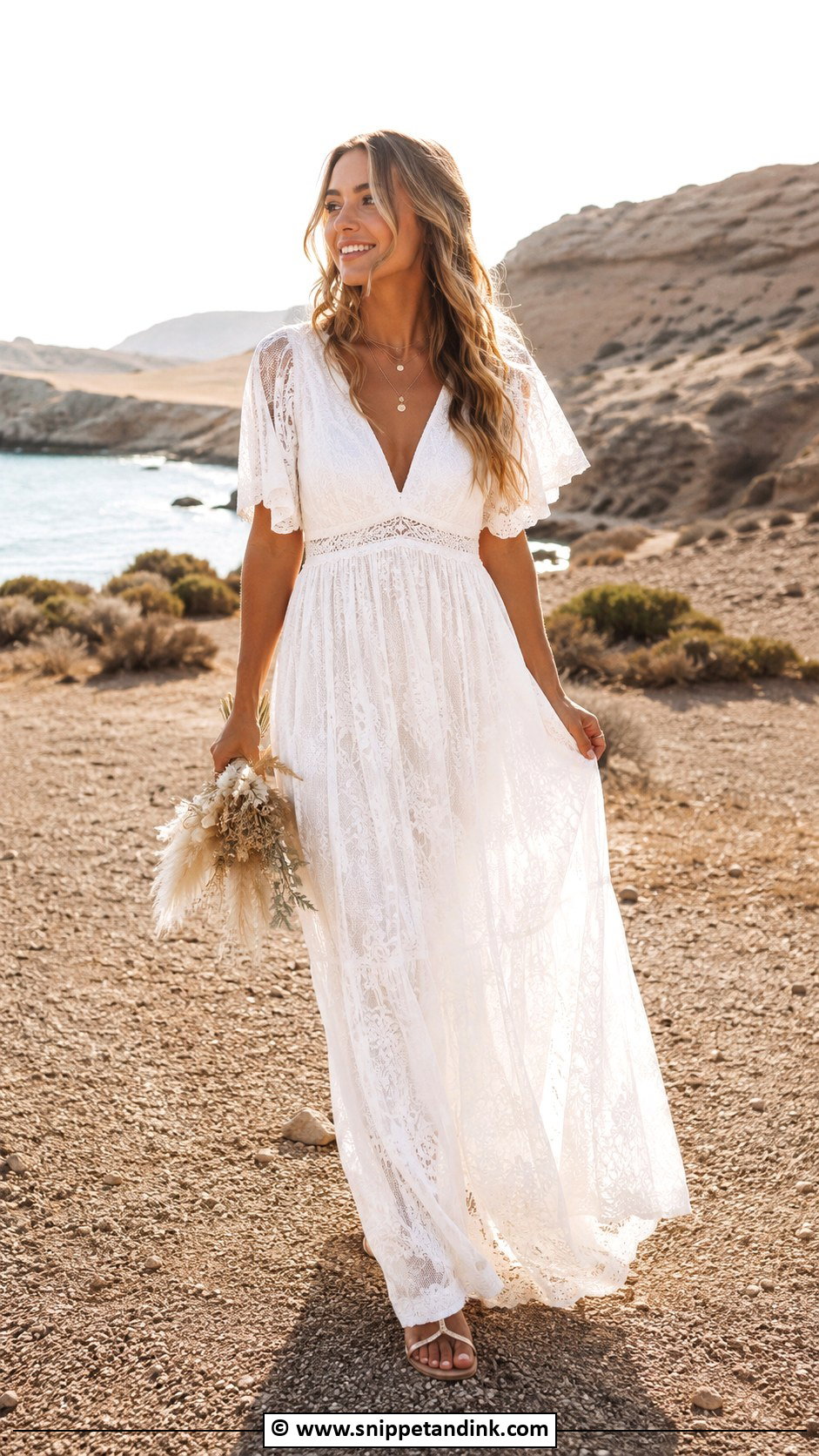
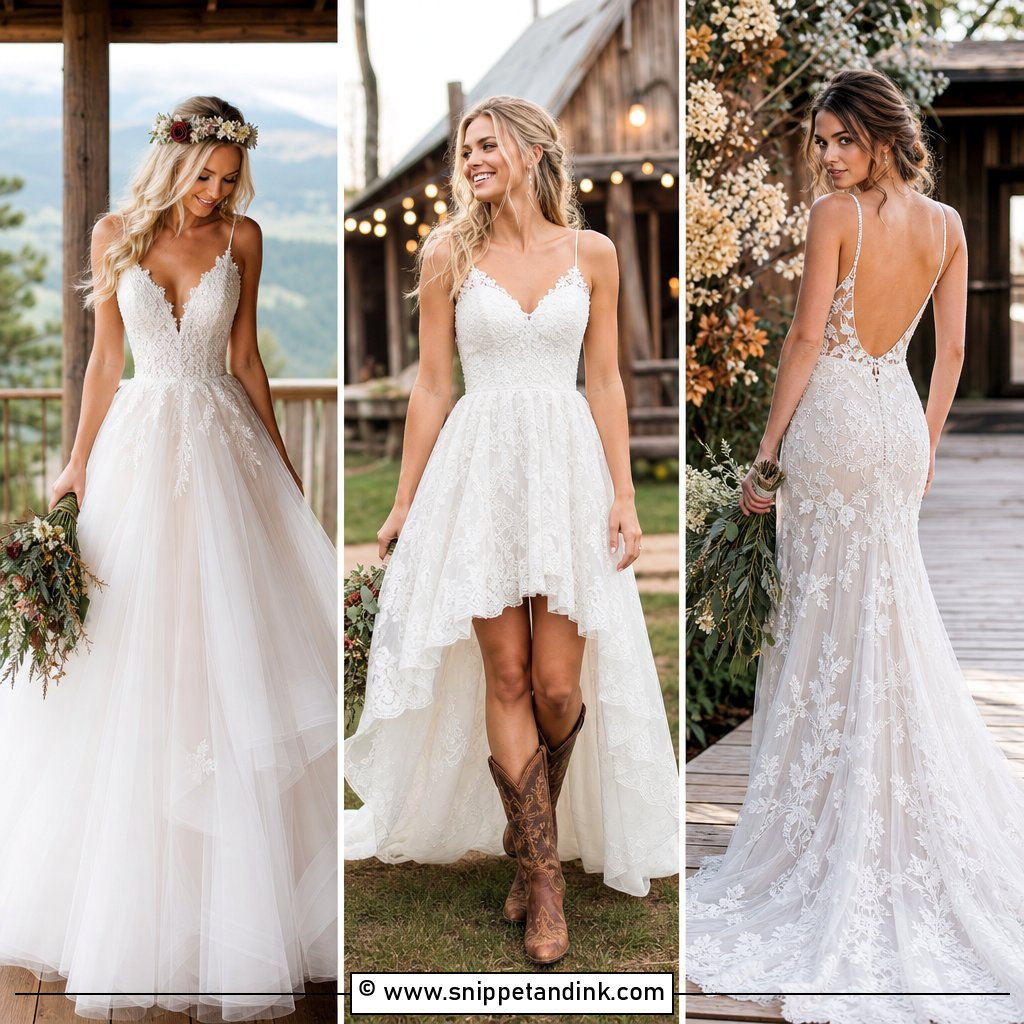
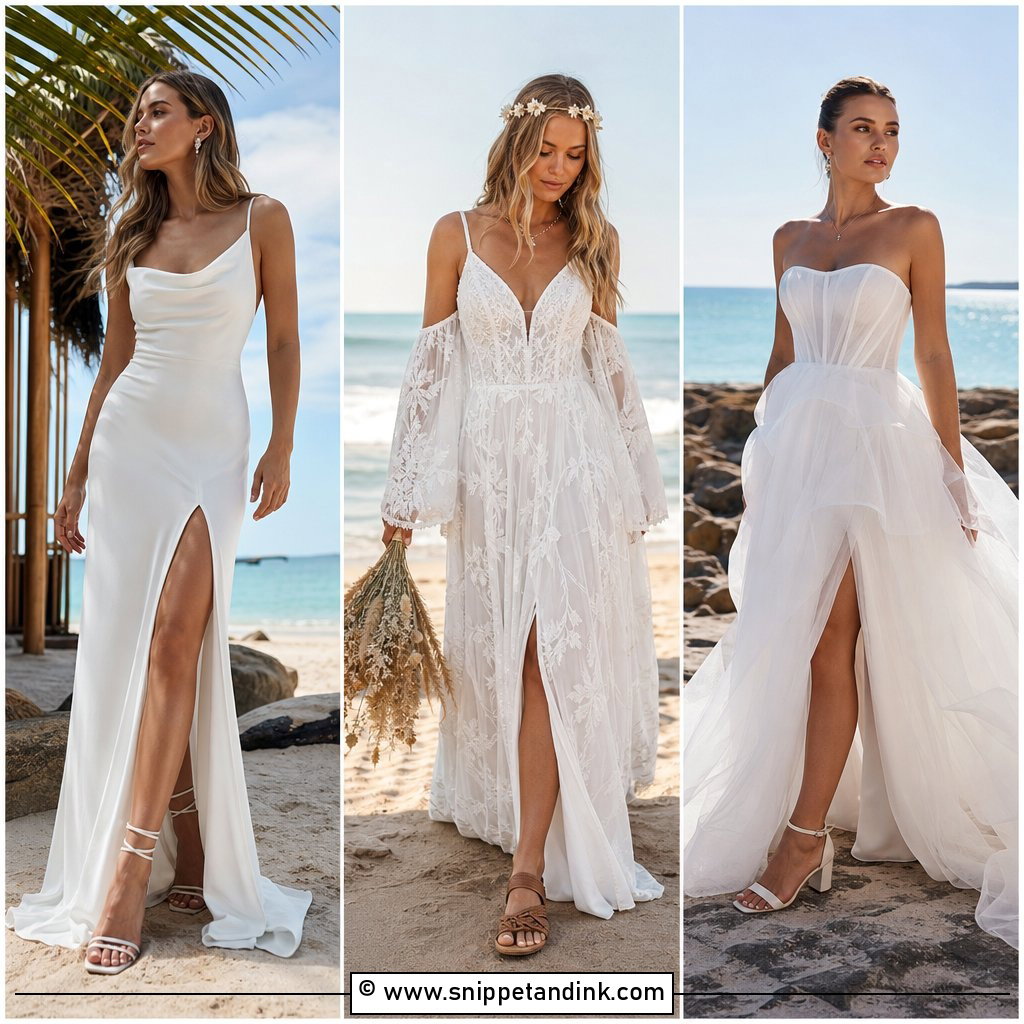
Crochet panels, flutter sleeves and lightweight lace give a boho maxi its texture, and the skirt should catch a breeze rather than hang stiffly. It suits beach weddings, desert elopements and backyard ceremonies. My caution with boho dresses is the waistline: many are cut with a loose, dropped waist that looks shapeless in photos unless the fabric is soft enough to drape. Flat sandals, loose curls and one flower comb are plenty; more than that starts to look like a festival costume.
5. Courthouse Midi Wedding Dress
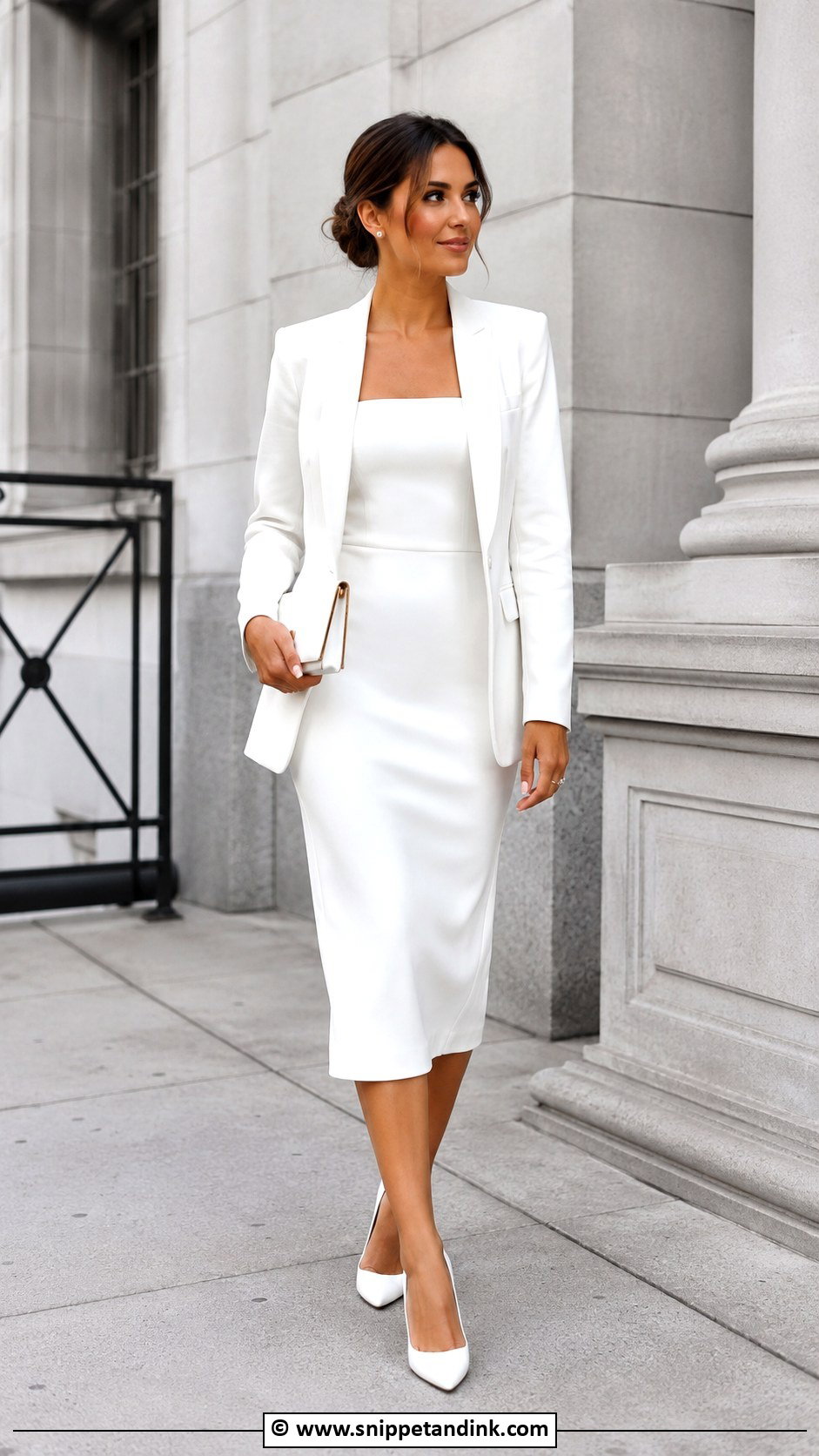
A civil ceremony moves fast, and a midi dress is ready for it: polished enough for the steps, practical for the city streets afterward. Tailored crepe, satin or a wrap shape all work. I usually suggest pointed pumps and a white blazer you can take off for photos. The one thing to avoid is a fabric that reads as an everyday white sundress. A slightly heavier crepe or a satin with a soft sheen looks deliberate in pictures where cotton jersey looks casual.
6. Off Shoulder Wedding Dress
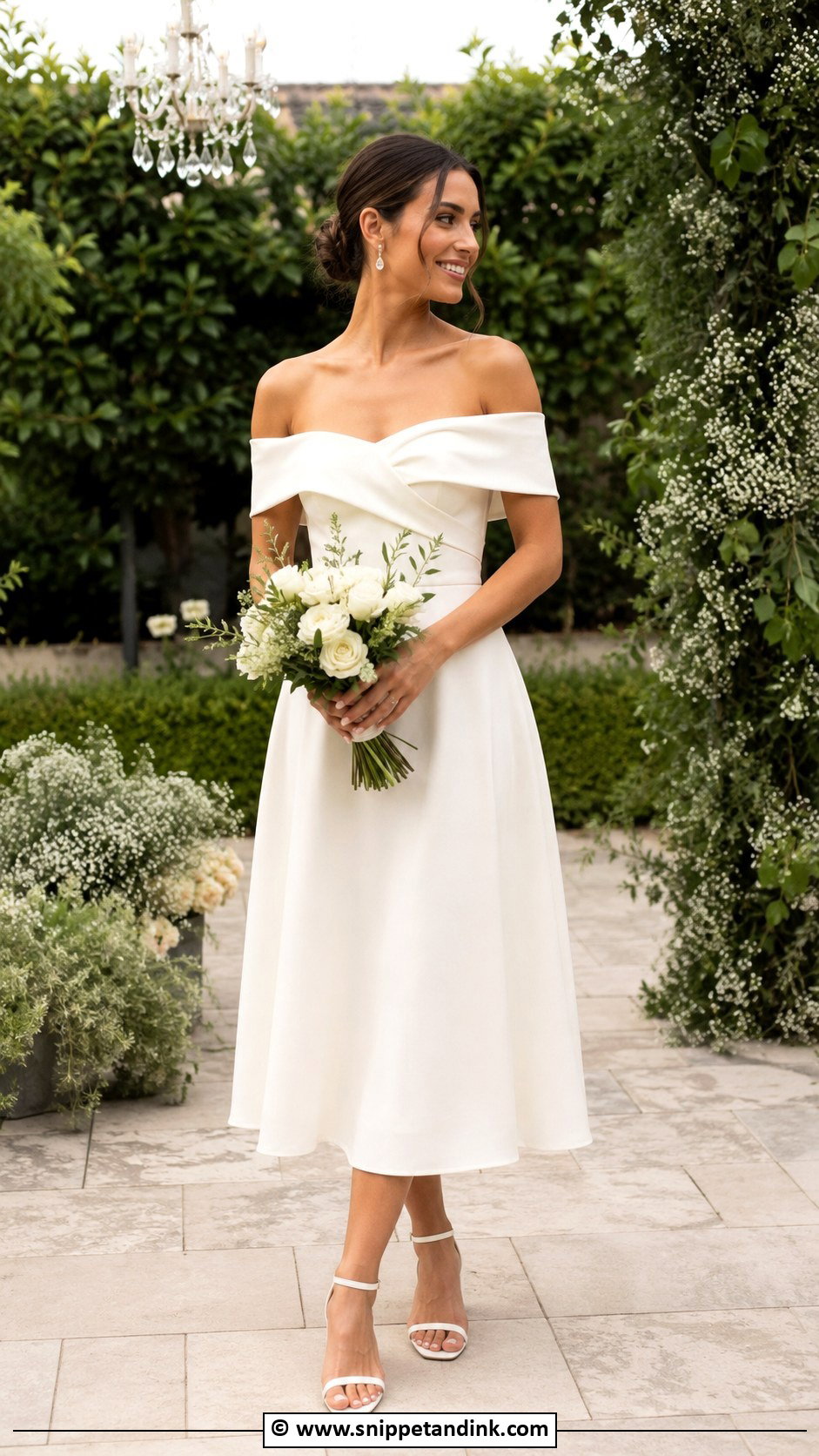
An off-shoulder neckline frames the collarbones and carries the look, so the dress needs very little embellishment. Light lace, crepe or chiffon keep it relaxed at any length. Elastic off-shoulder bands are comfortable but creep upward when you hug people and raise your arms; I prefer a boned or tailored band that’s been fitted to your shoulders. Drop earrings and a low bun keep the shoulders clear, and a small bouquet keeps attention near the neckline.
7. Simple A Line Wedding Dress
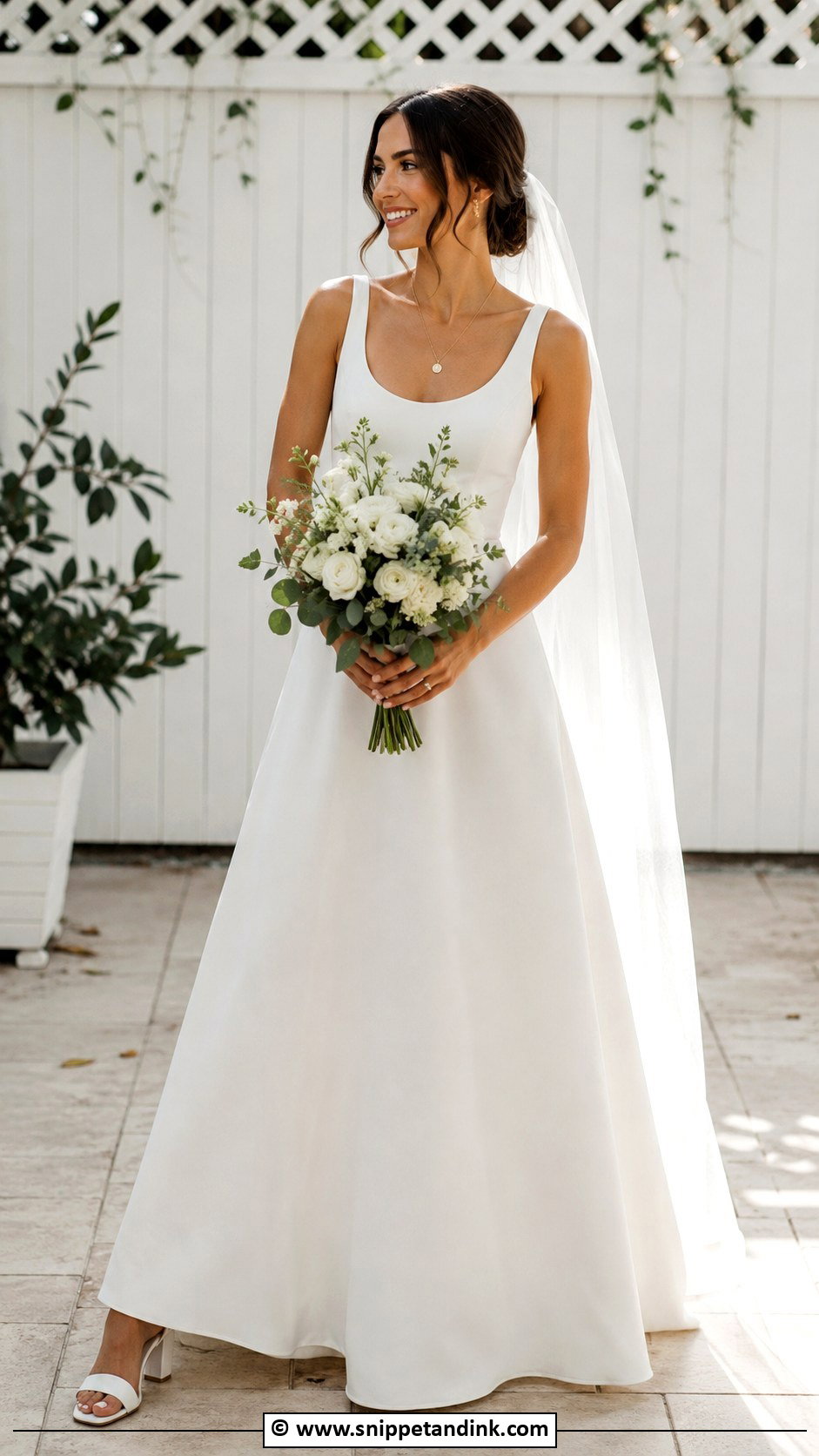
If a bride can’t decide, I often bring her an A-line, because the fitted top and gently flared skirt suit more body shapes than any other cut. For an informal wedding, choose cotton, chiffon, crepe or lightweight satin rather than beading or layers. A scoop, V or square neckline keeps it clean. It works almost anywhere, from a backyard ceremony to a small venue, and a soft veil is enough to make it read bridal.
8. Long Sleeve Mini Wedding Dress
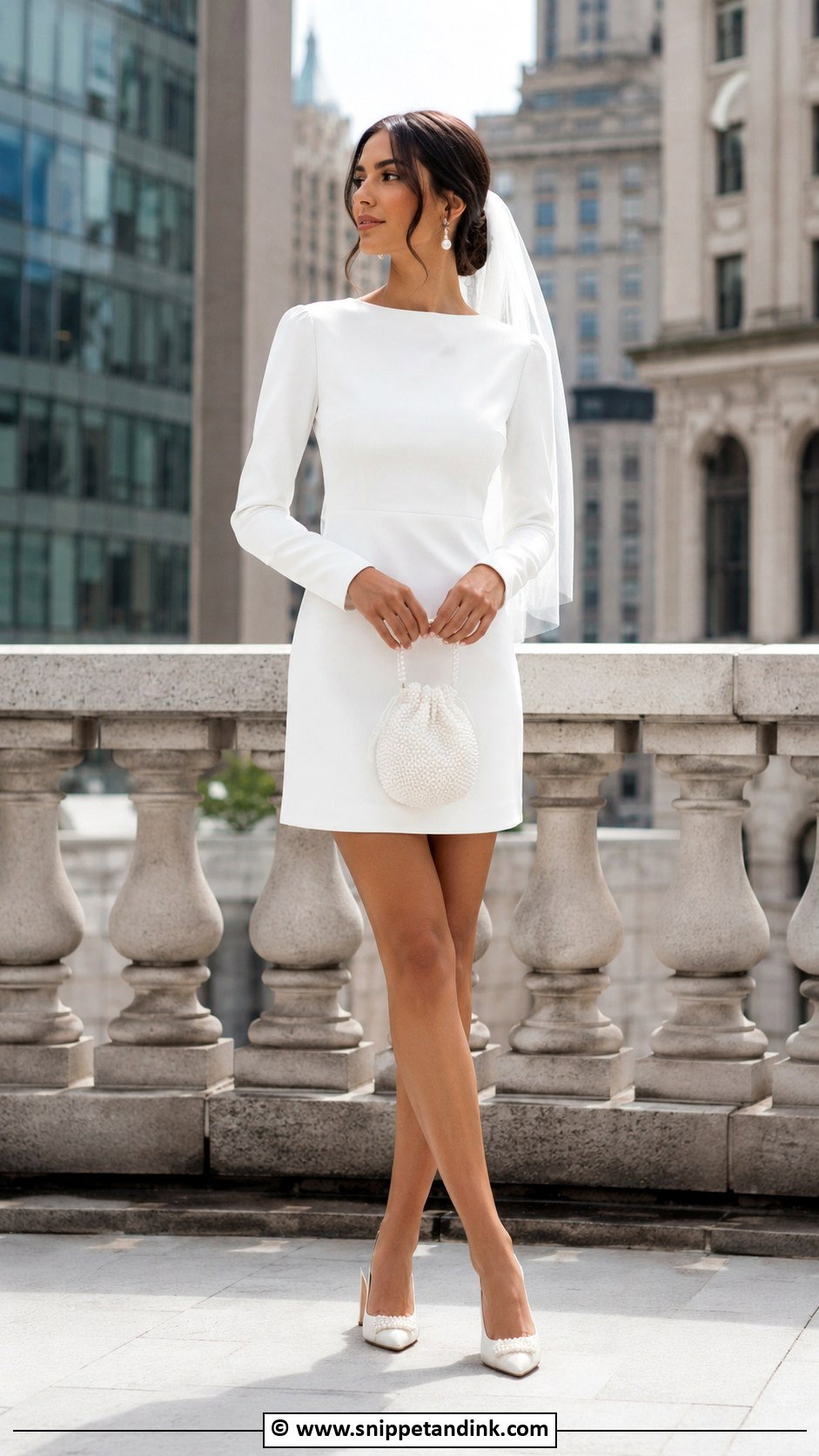
Long sleeves balance a short hem, so the mini stays bridal rather than nightclub. Lace sleeves soften it; crepe or satin sleeves look sleek. Sleeves need movement room, though: I have brides hug me at the fitting, and if the armhole pulls the whole dress up, the sleeve needs a gusset or a lower armhole. Sheer tights and closed pumps take it into fall and winter. It’s a strong choice for courthouses, rooftops and after-parties.
9. White Wrap Wedding Dress
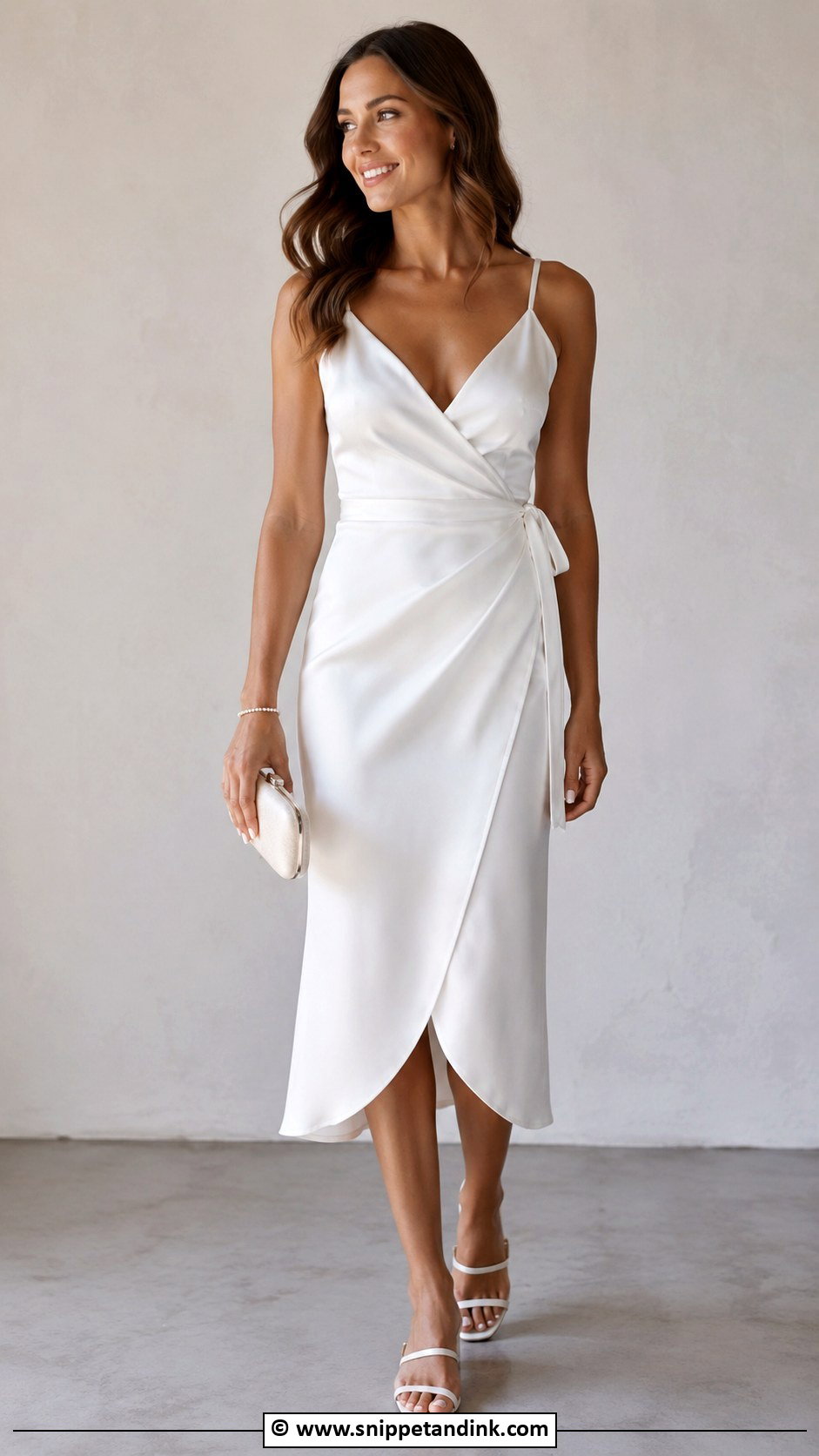
Of everything here, a wrap dress is the most adjustable, since you can loosen or tighten the tie through the day. It defines the waist and creates a soft V that suits petite, curvy and tall frames alike. Midi or maxi in satin, crepe or chiffon works for an informal ceremony. Wrap necklines open when you sit or bend, so I always add a small hidden snap at the cross-over point, or fashion tape if the fabric is too fine to stitch.
10. Beach Wedding Dress
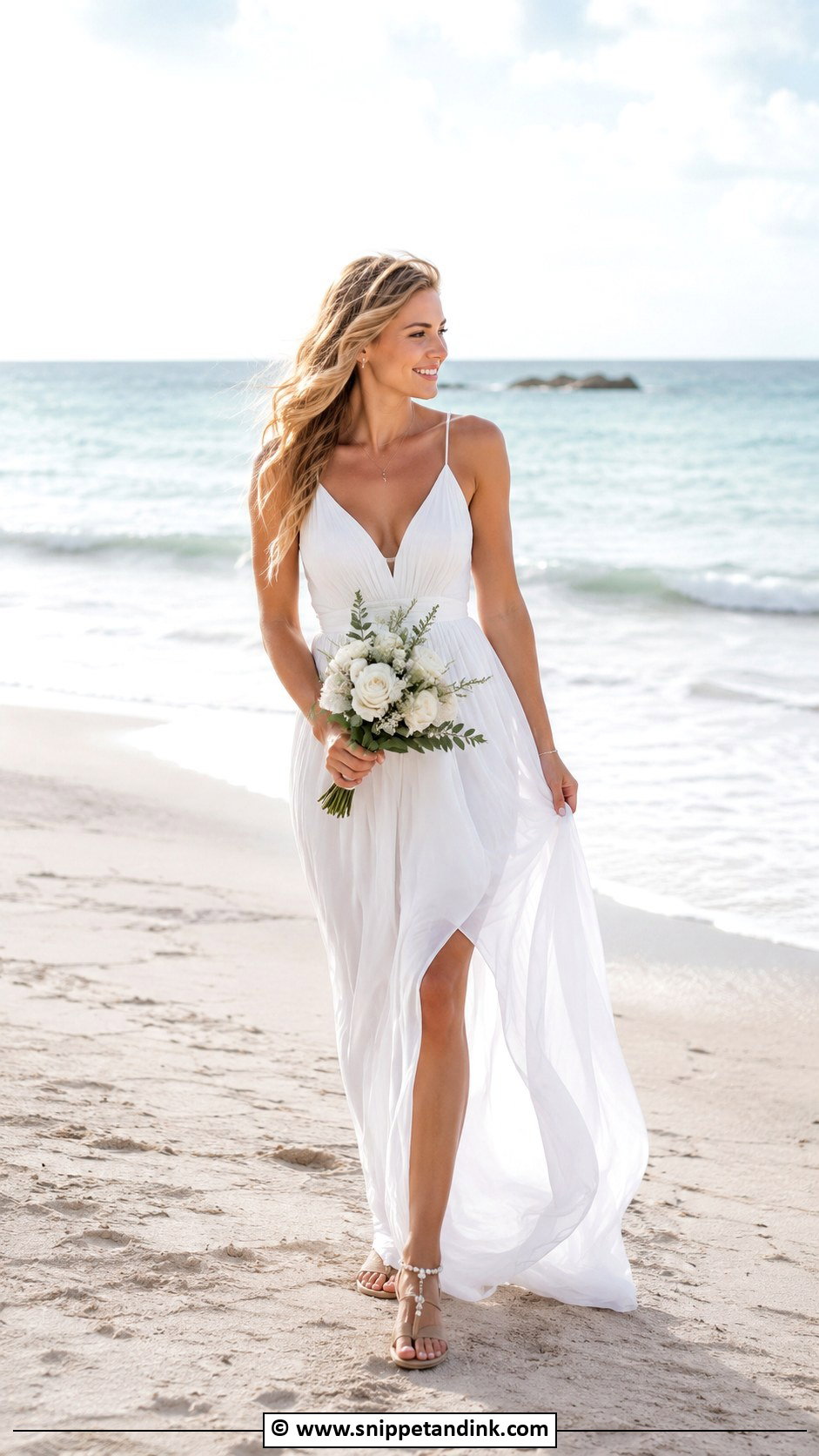
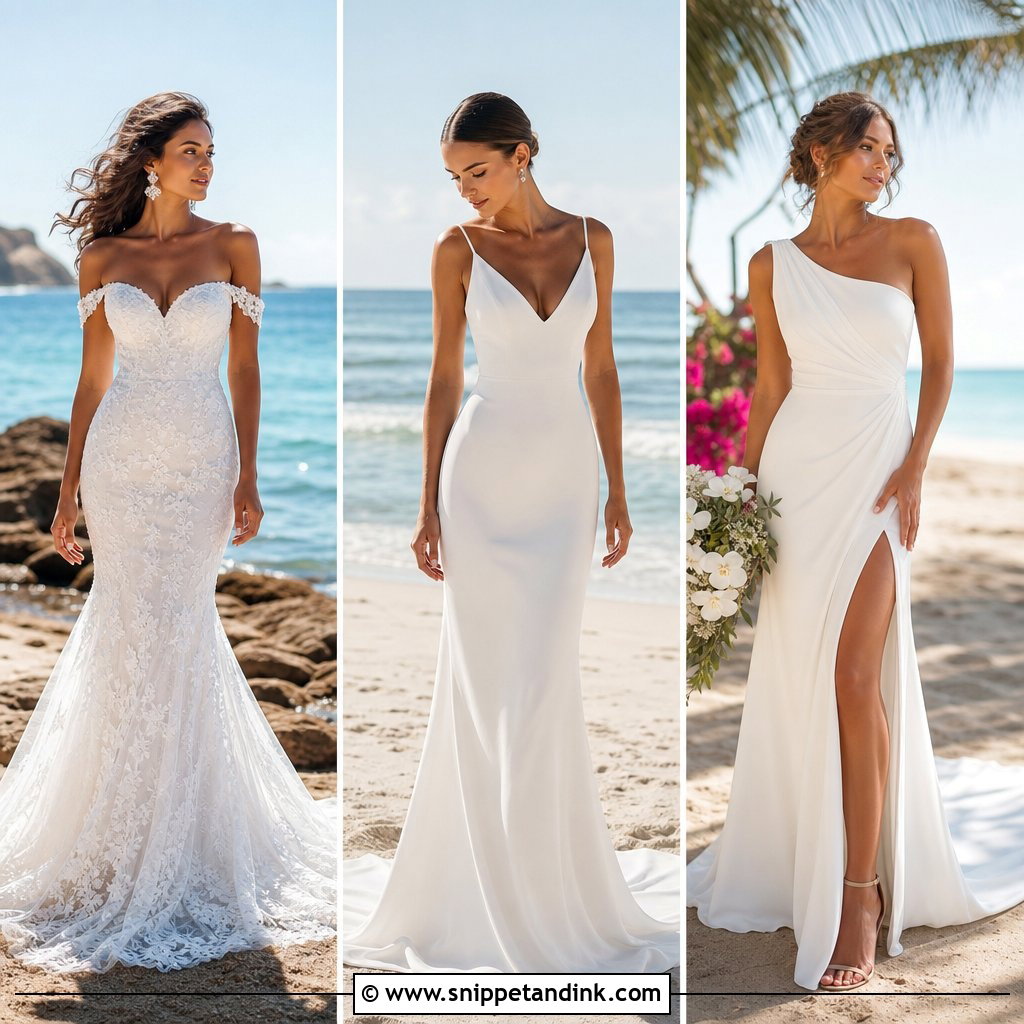
Sand and wind change everything about a dress. Chiffon, cotton lace, gauze and airy crepe move with a sea breeze, while heavy satin and structured tulle fight it. Skip trains entirely, since a train drags wet sand behind you and the hem ends up grey. I’d also check the dress in direct sunlight before buying: thin white chiffon can turn sheer against a bright sky, so a nude lining matters more here than anywhere. Flat sandals and loose waves finish it.
11. Backyard Wedding Dress
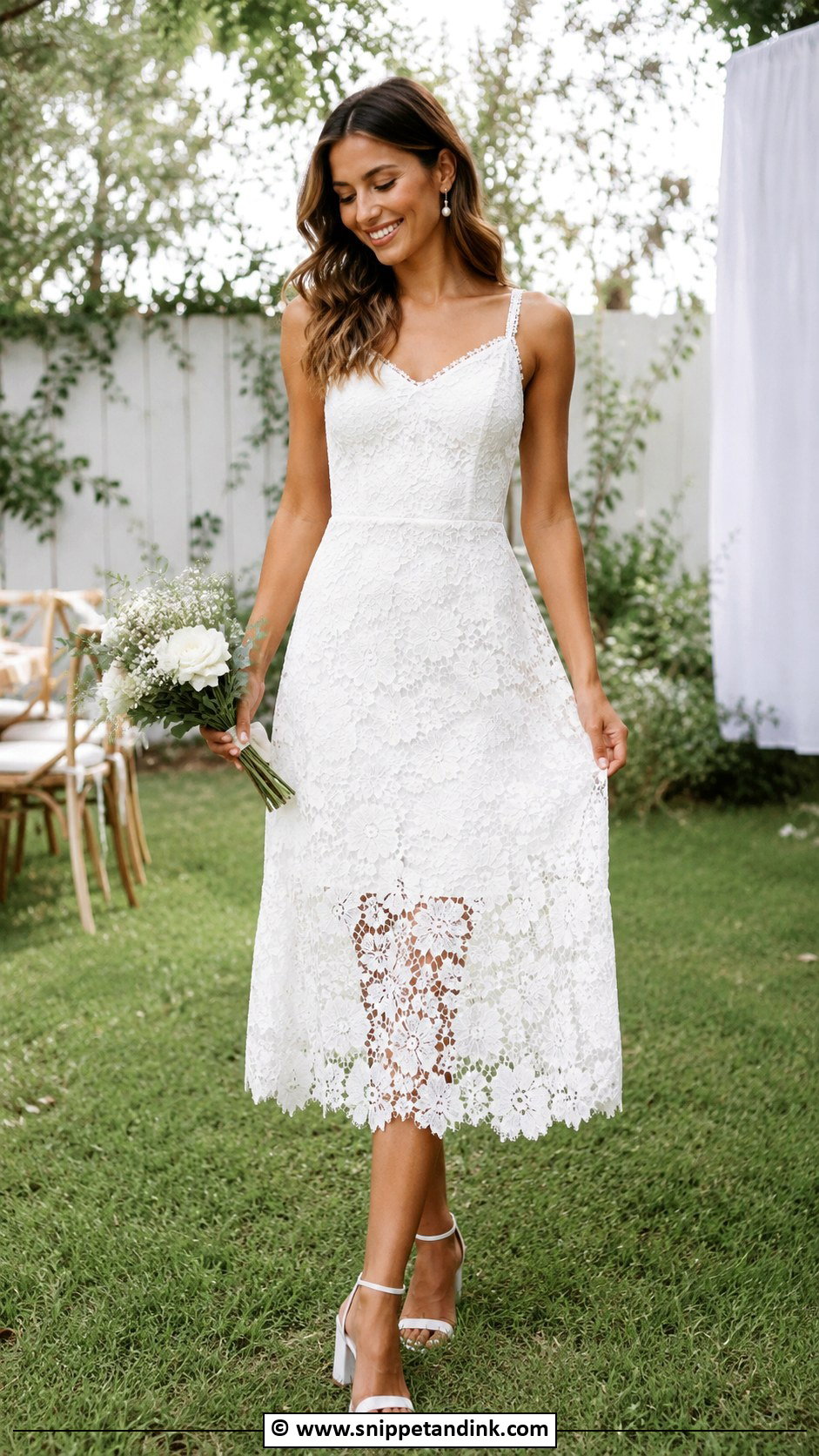
At a backyard wedding you’ll be hugging, carrying plates and sitting on garden chairs, so the dress has to allow all of it. A lace midi, cotton eyelet or flutter-sleeve maxi fit the setting. Shoes matter most here: stilettos sink into lawns, so block heels, wedges or dressy flats are the practical choice. Avoid stiff fabrics that crease badly when you sit, because guests will photograph you all evening, not just at the ceremony.
12. Garden Wedding Dress
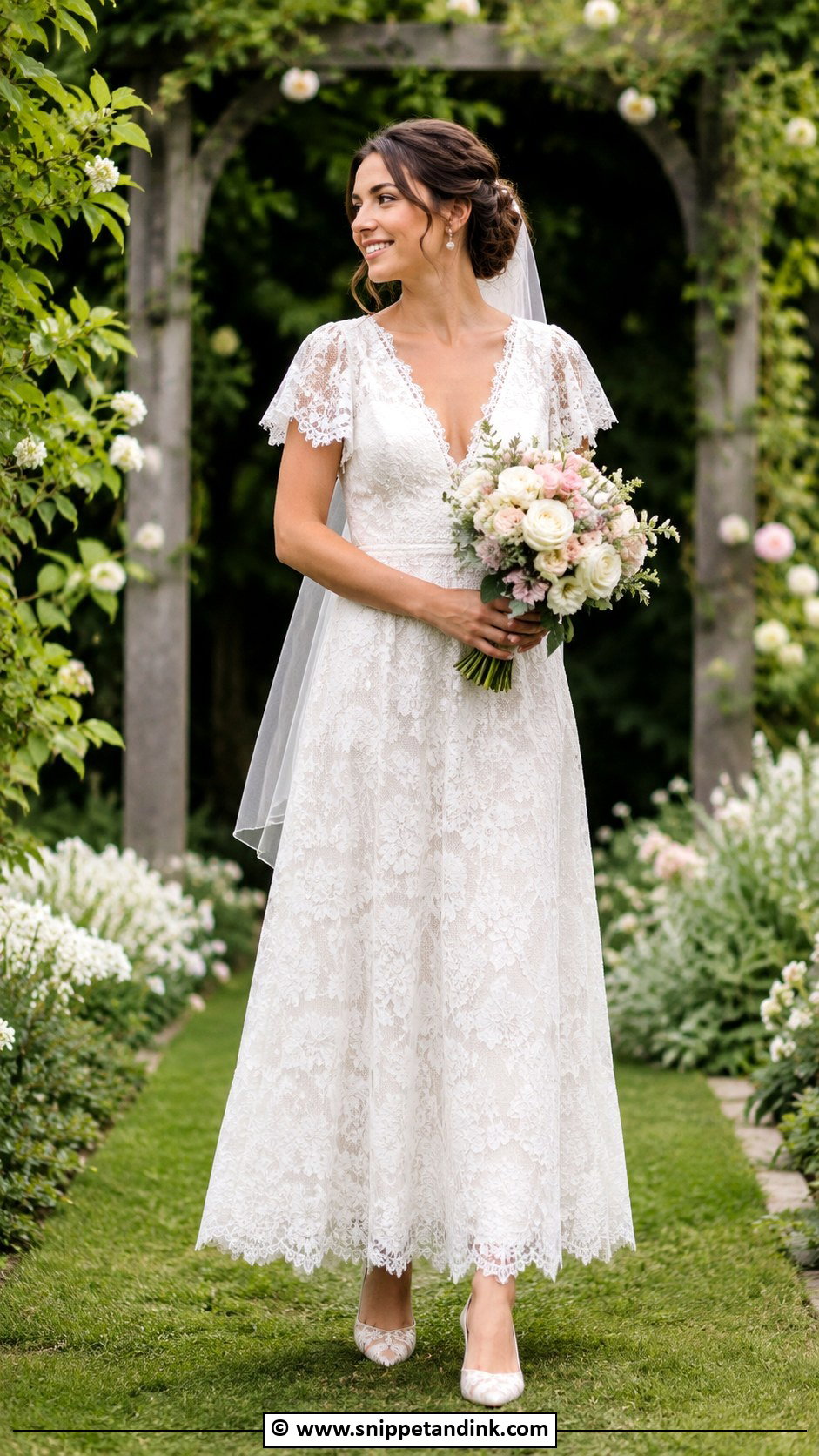
Floral lace, delicate embroidery and flutter sleeves sit naturally in a garden setting. I’d keep the hem at midi or ankle length, since a floor-sweeping skirt picks up grass stains and damp from the lawn within an hour. Block heels or elegant flats, pearl earrings and a soft updo are all it needs. In warm weather, ask about the lining fabric before you buy; a smooth cotton or silk lining stays far cooler than polyester.
13. Plus Size Informal Wedding Dress
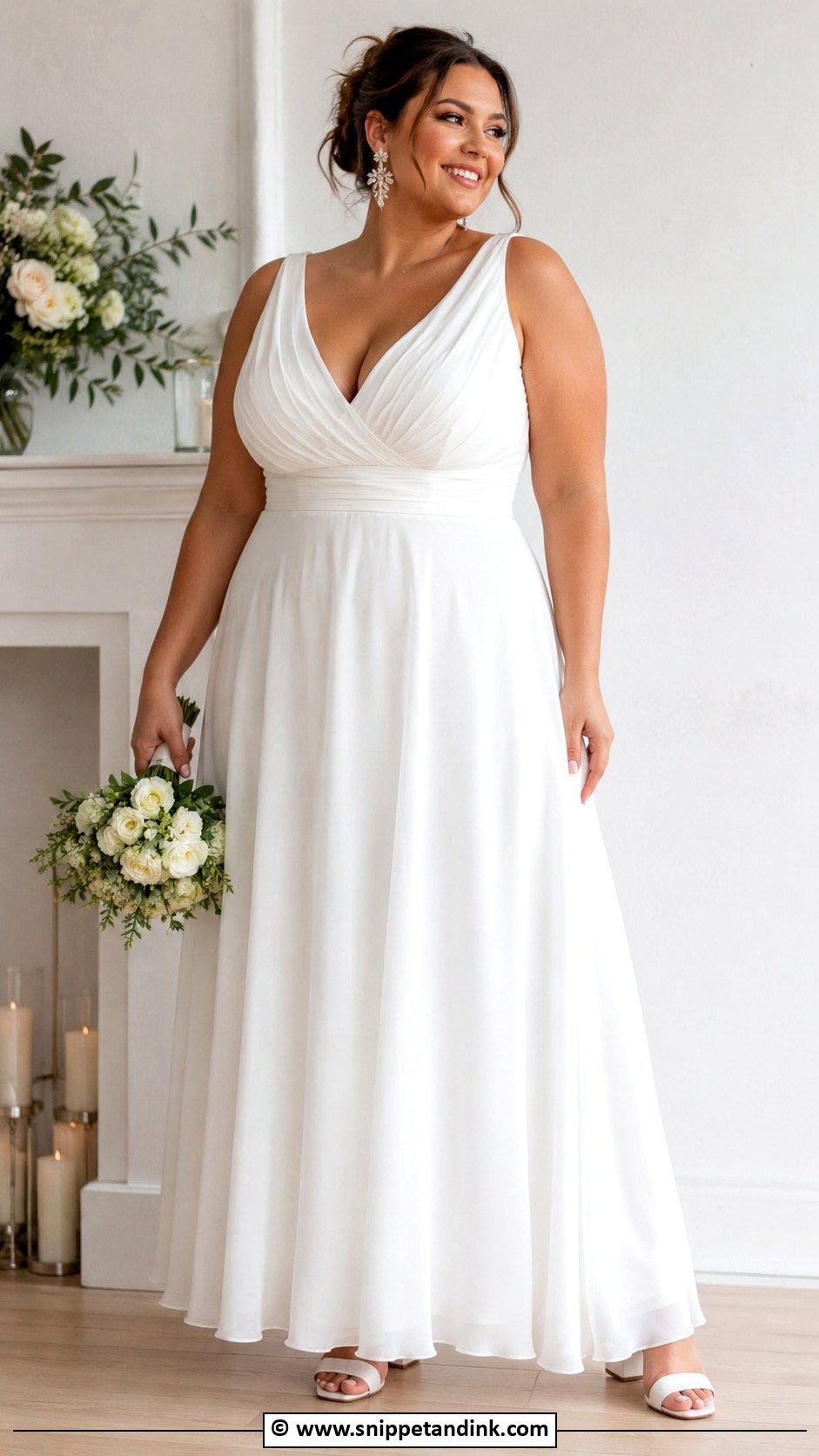
For a plus size bride, support and fabric weight do more work than any particular silhouette. Wrap dresses, A-lines, empire waists and structured midis all work, but only in a fabric with enough weight to drape rather than cling. I’d look for built-in support, such as a lined bodice with light boning, so you’re not relying on a strapless bra all day. V, square and off-shoulder necklines balance the frame well. Lace, satin, chiffon and subtle sparkle are all yours to wear; plain is not a requirement.
14. Petite Informal Wedding Dress
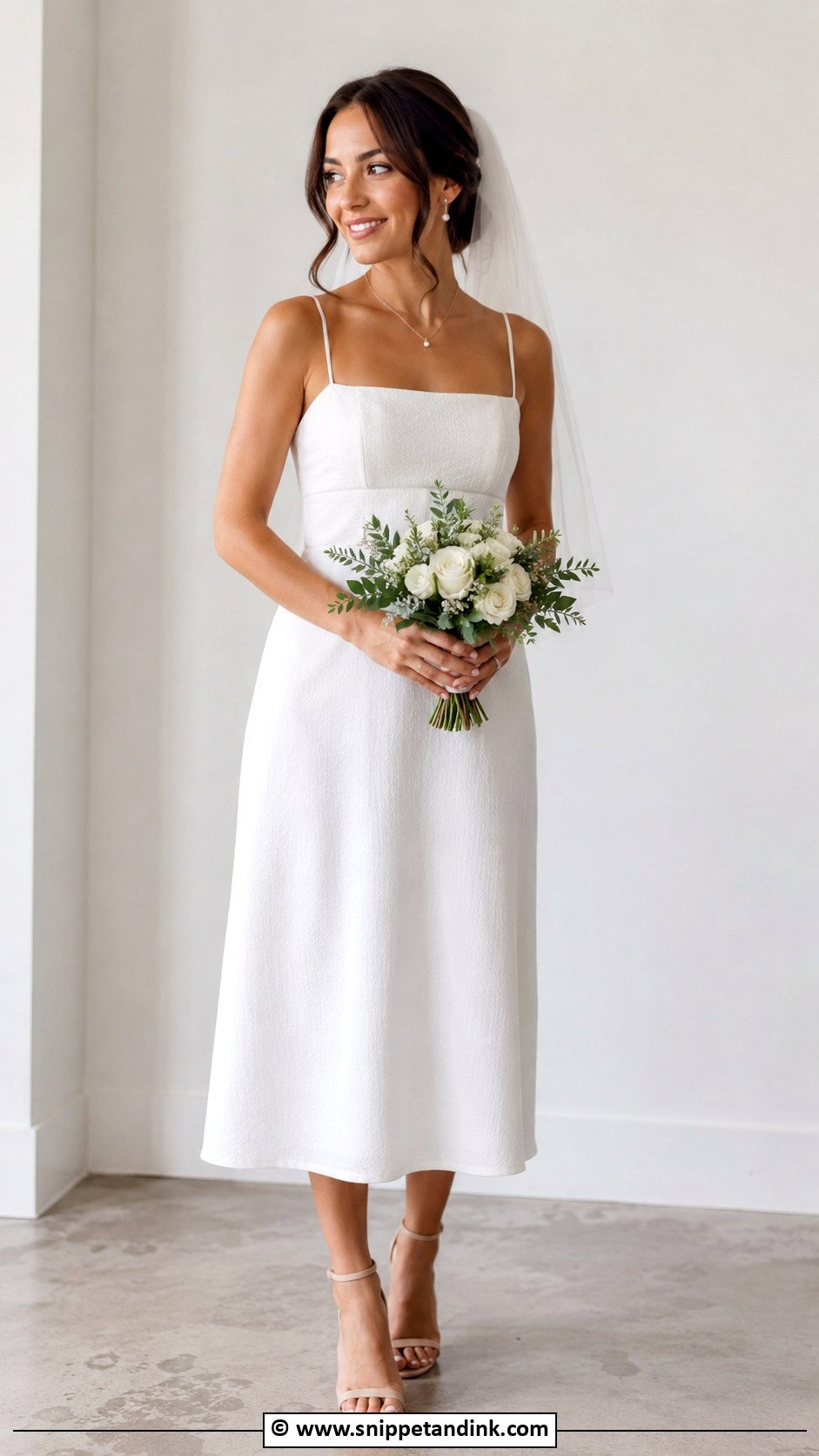
On a petite frame, proportion is everything, and too much fabric overwhelms it quickly. Short, tea length, slim midi and sheath shapes keep lines clean. A slightly raised waistline lengthens the leg, especially with nude or metallic heels. The usual mistake I see is a midi that hits mid-calf on a tall model and at the ankle on a petite bride, which reads as a dress that doesn’t fit; have it hemmed so it lands where the design intended. A short veil adds bridal detail without swallowing you.
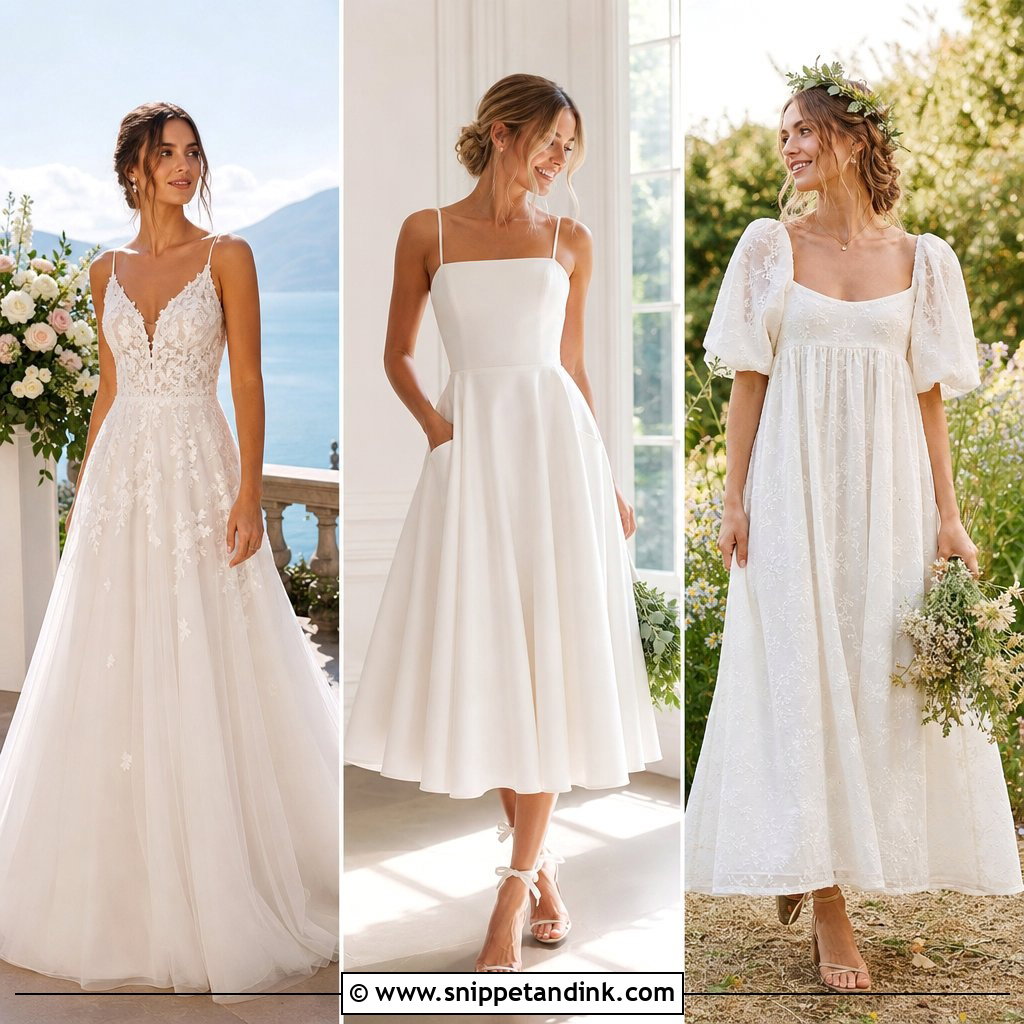
15. Maternity Informal Wedding Dress
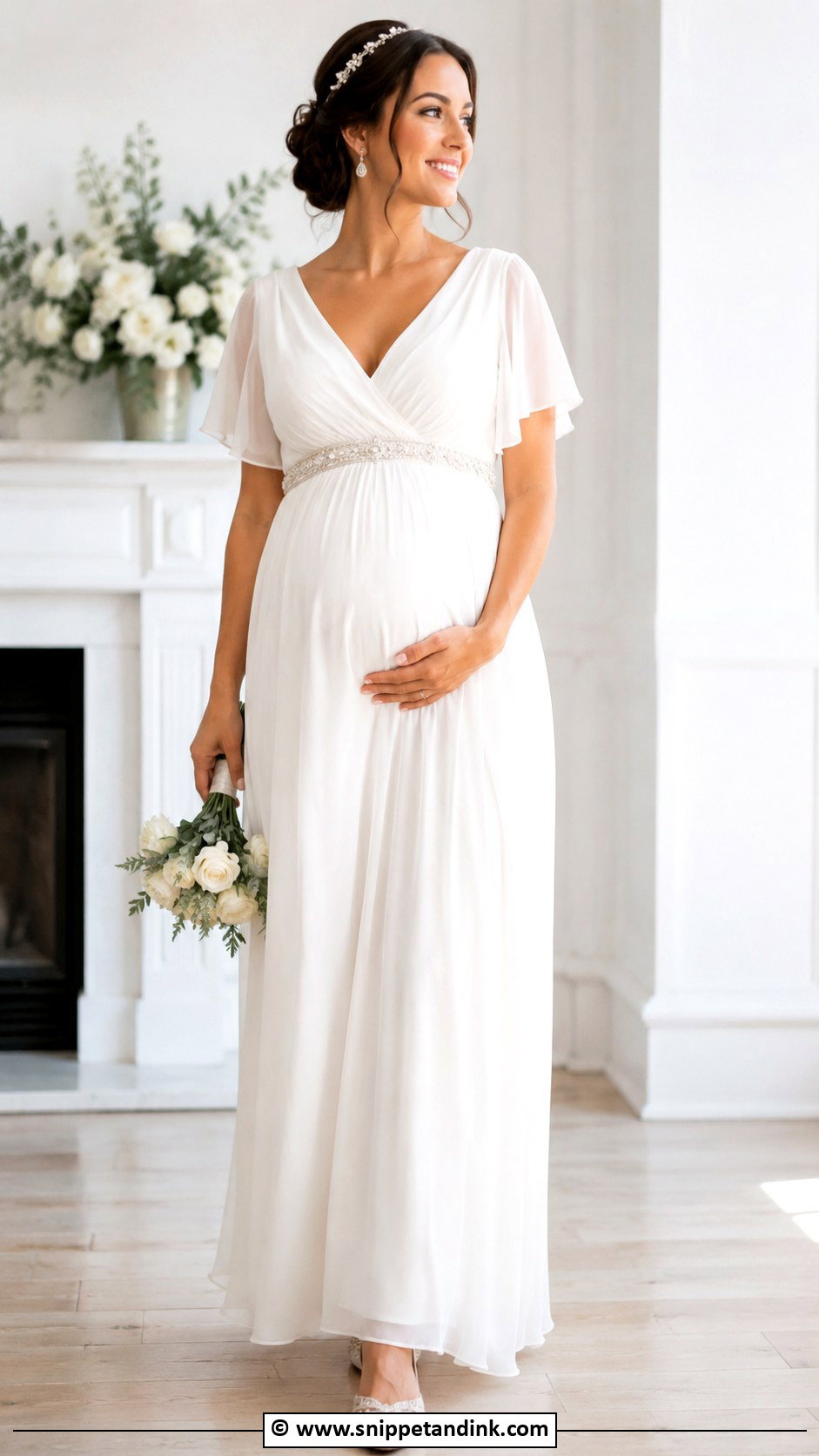
Bumps keep changing, so a maternity informal wedding dress needs to stretch and flow while still looking bridal. An empire waist sits above the bump and lets the skirt fall freely. Stretch lace, chiffon, soft jersey and lightweight crepe work well. Because bodies change week to week in pregnancy, I schedule the final fitting as close to the wedding as the seamstress allows, often within the last ten days. Low block heels or embellished flats will save your feet.
16. Second Wedding Dress
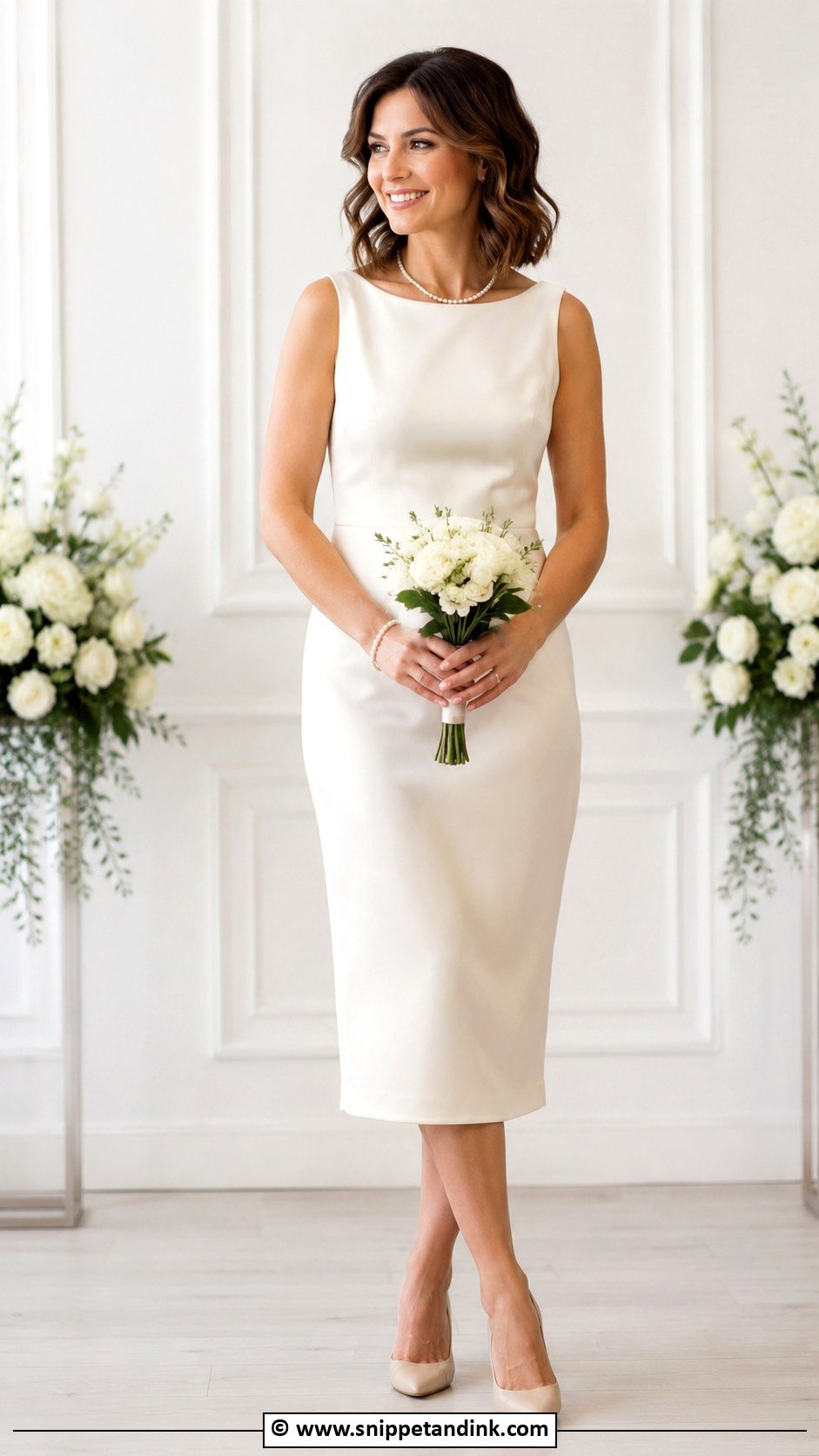
For a second wedding, many brides want something personal and refined instead of a big traditional gown. A soft midi, elegant sheath, satin slip or tailored lace dress all suit. Sleeves, a modest neckline or a sleek silhouette are details I’d pick to match your style rather than to follow any rule about second weddings, since there isn’t one. Many choose a dress they’ll wear again for anniversaries. It works for intimate ceremonies, vow renewals, blended family celebrations and courthouse weddings.
17. Elopement Wedding Dress
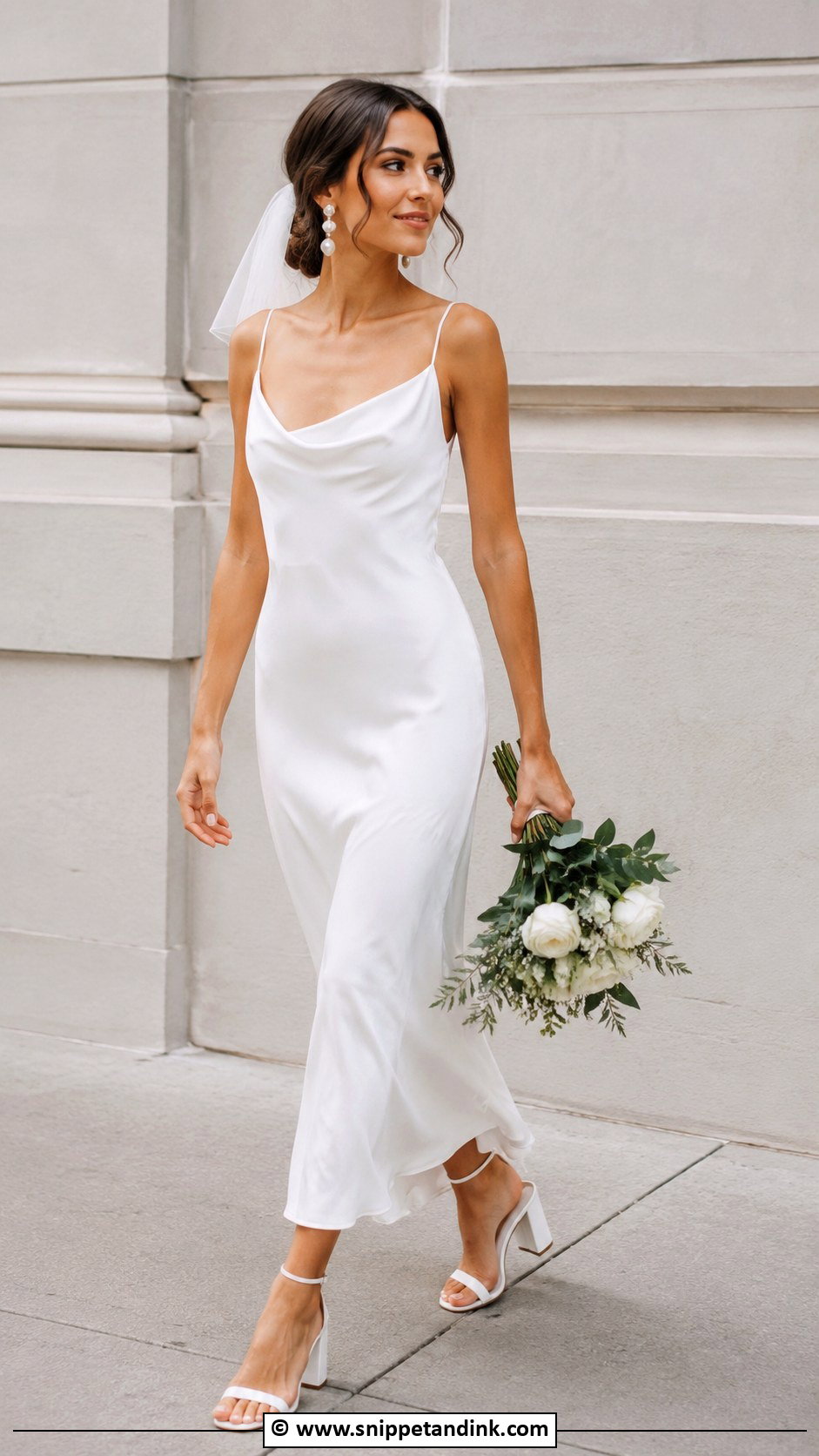
An elopement dress often travels in a backpack or carry-on, then gets worn on a cliff, a trail or a city street. Lightweight fabric that recovers from folding matters more than anything else: crepe and lace forgive packing far better than satin, which holds every crease. A slip dress, lace maxi, simple midi or relaxed A-line can work. Match shoes to the terrain, and pack a small travel steamer if the dress is silk.
18. Reception Mini Wedding Dress
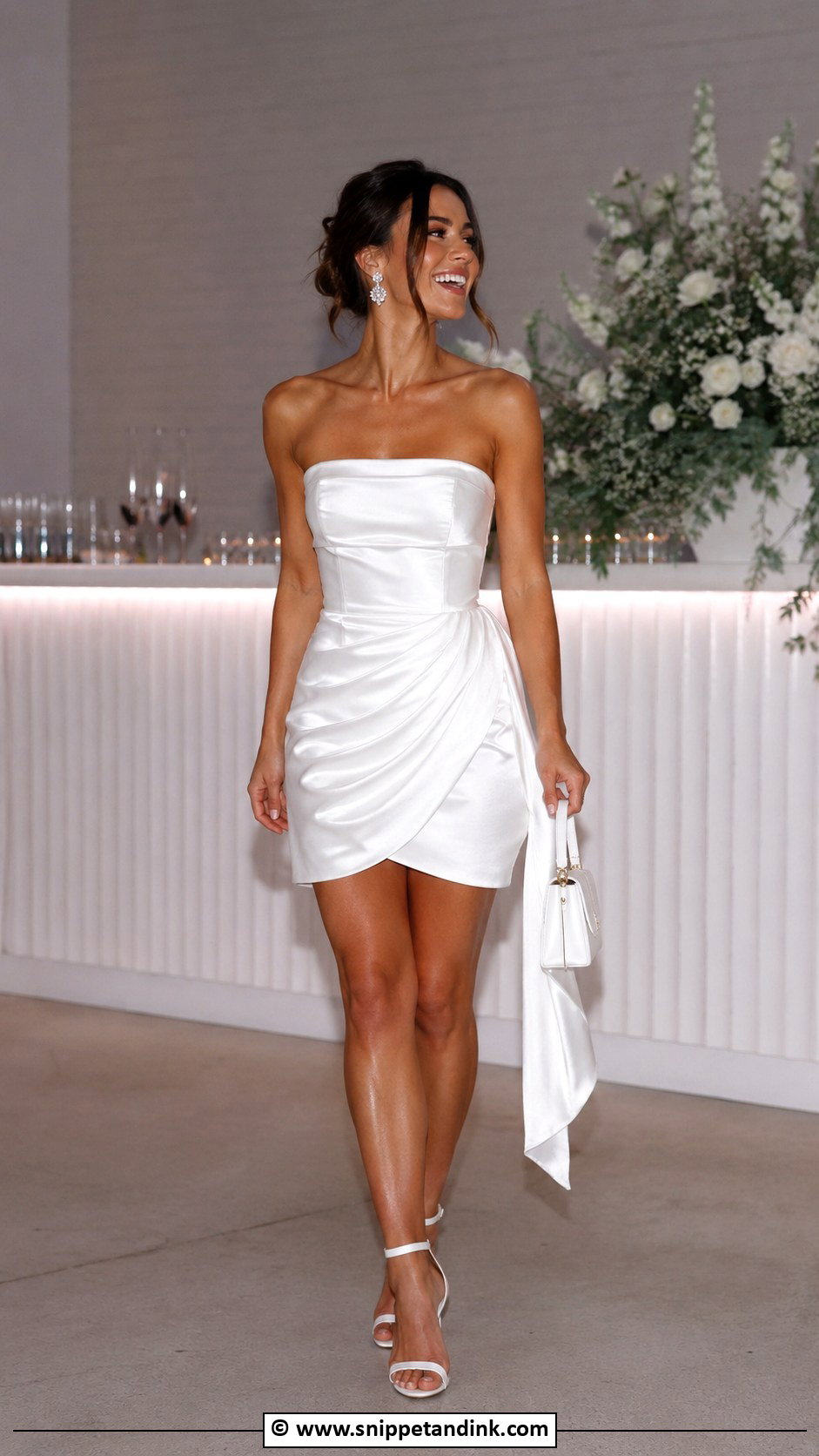
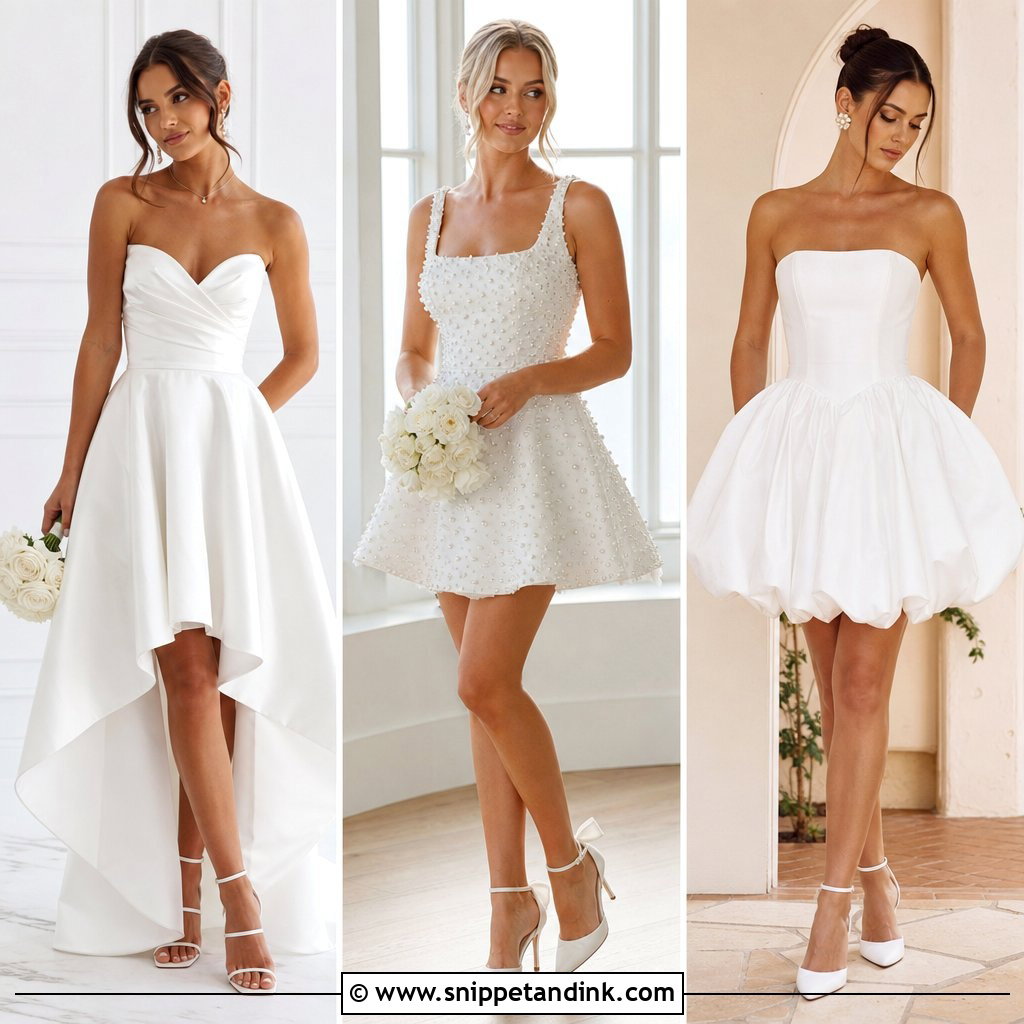
A reception mini lets you change into something you can dance in. Simple satin, feather trim, lace, crepe or subtle embellishment all suit. Keep the fit secure, because a strapless mini that slips during the first dance becomes all you think about. I’d choose one detail that clearly reads bridal, like feathers at the hem or a pearl-trimmed neckline, so it doesn’t look like a regular party dress. It can also be your only dress at a very casual wedding.
19. Two Piece Wedding Dress
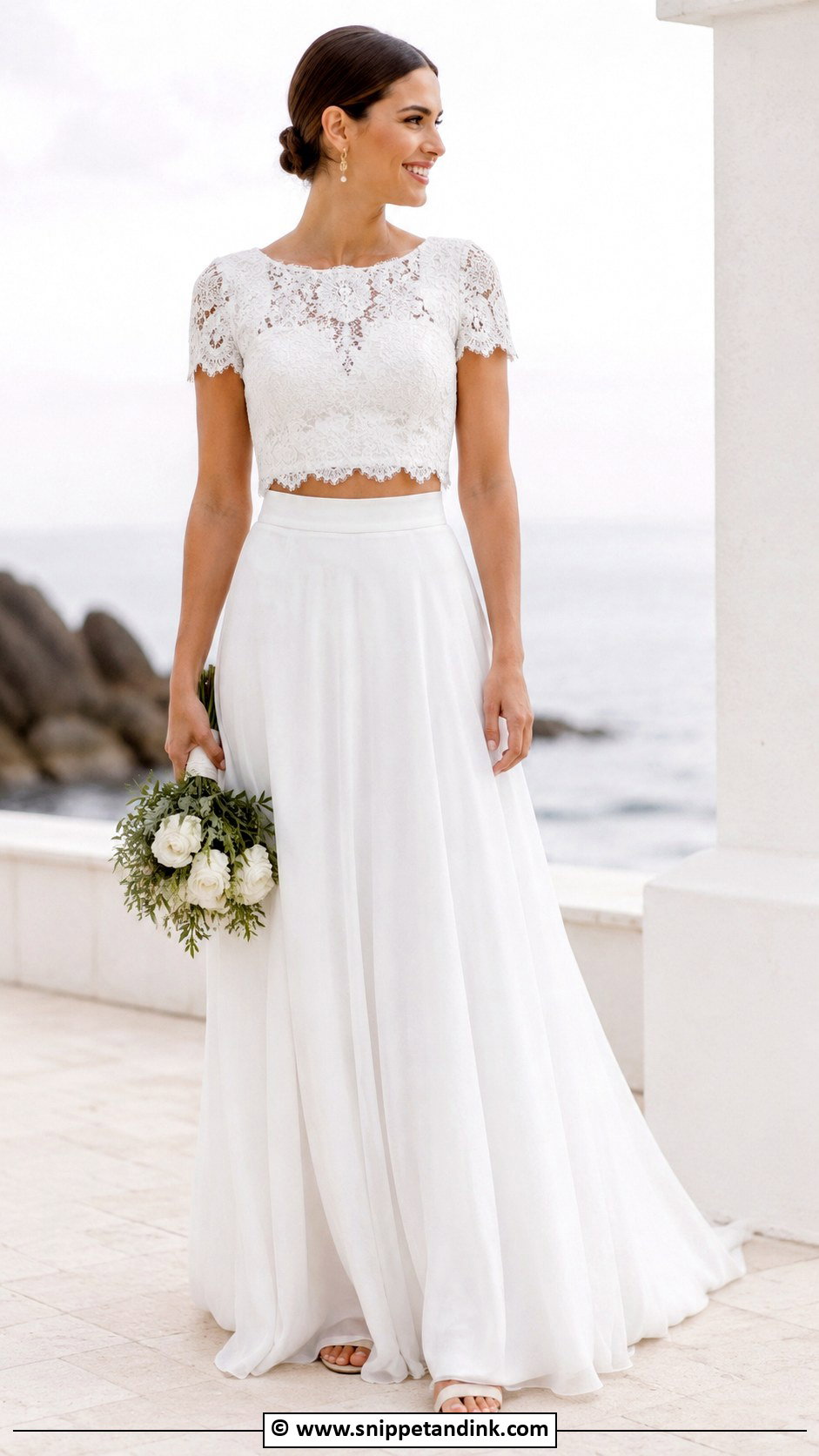
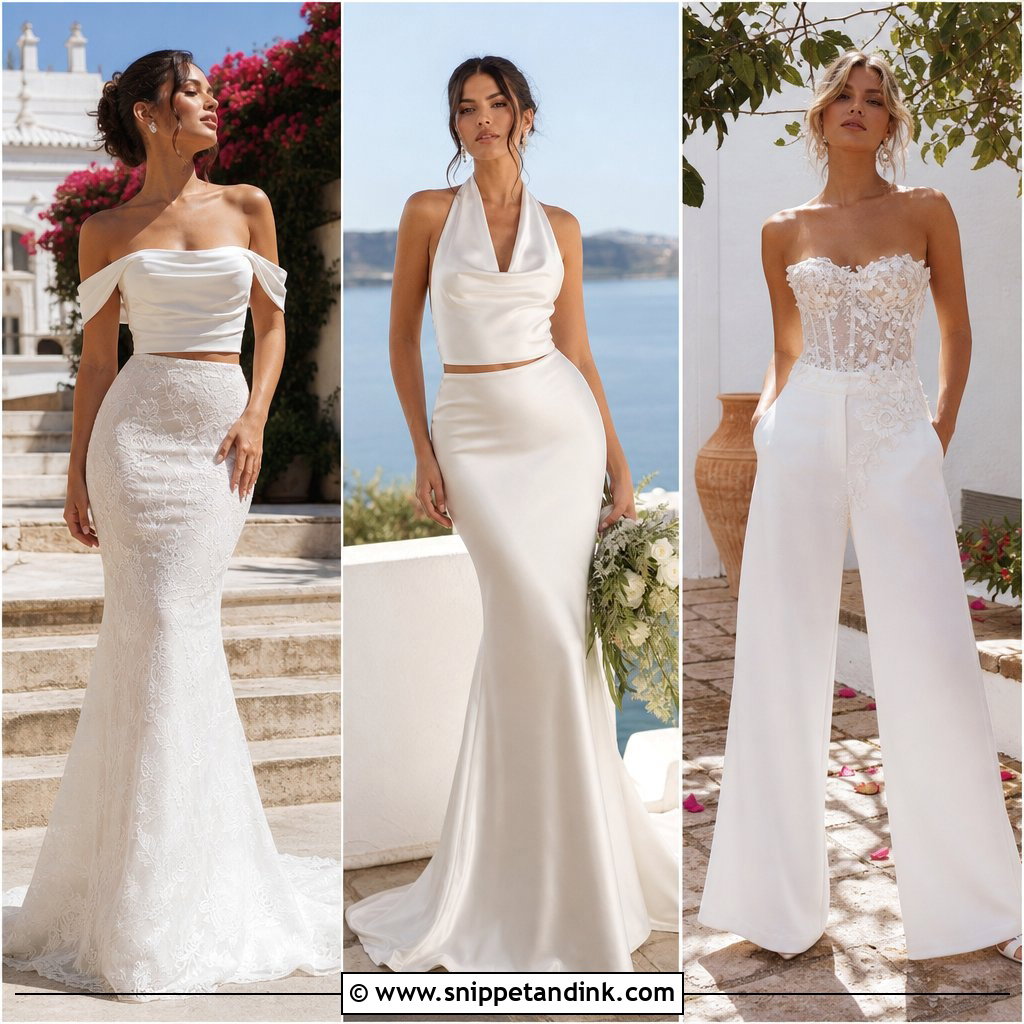
Separates let you size top and bottom independently, which is a real fitting advantage if your top and lower halves are different sizes. A lace top with a flowing skirt or a satin crop with a high-waist midi both look polished. Keep the pieces in exactly the same white, because ivory beside bright white looks like a mismatch in photos; I compare them under daylight before the bride commits. Simple heels and a sleek hairstyle keep it modern.



20. Bridal Jumpsuit Wedding Outfit
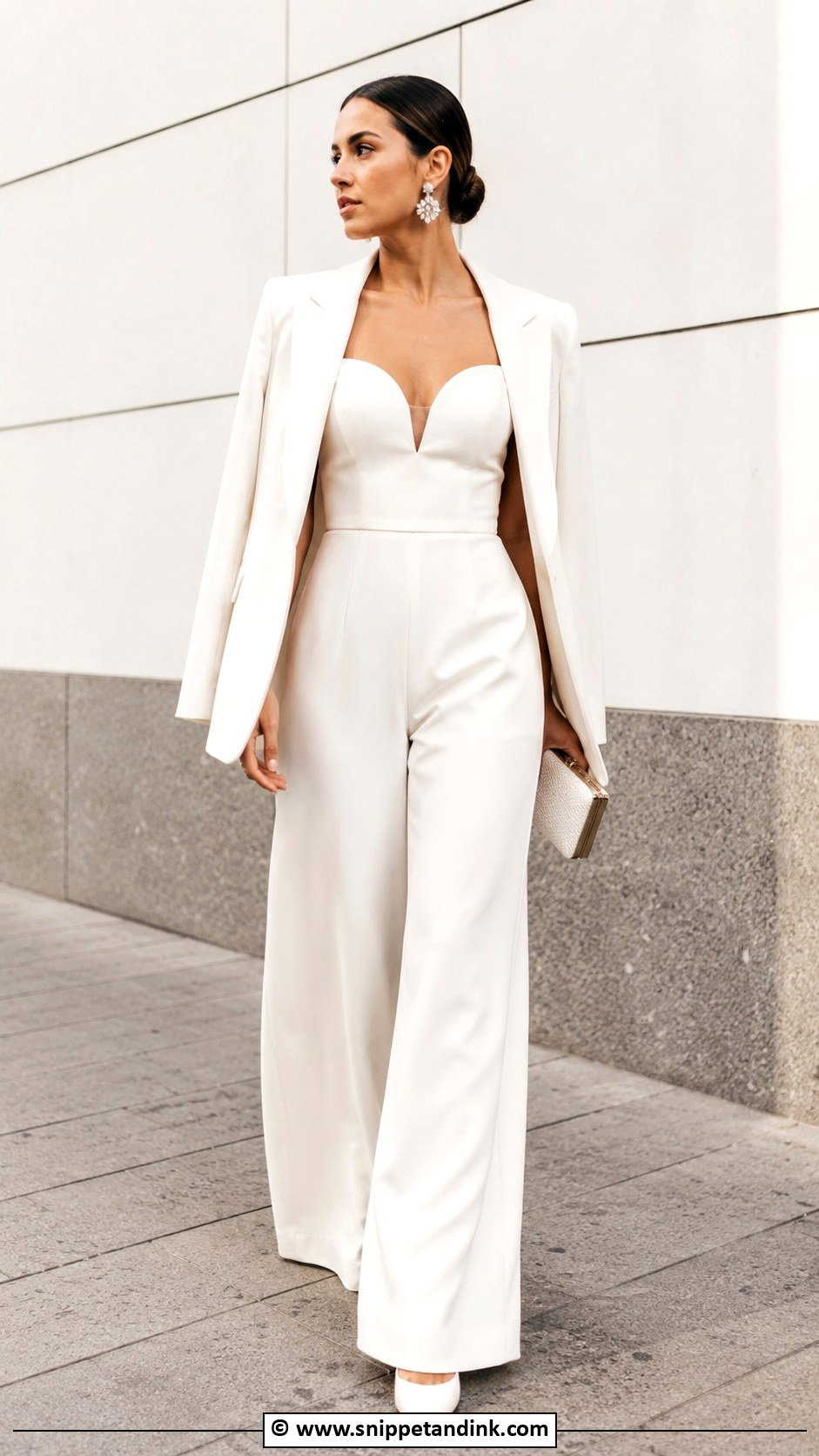
A bridal jumpsuit wedding outfit gives you the cleanest line of anything here, plus pockets if you’re lucky. Look for a white or ivory jumpsuit with a defined waist, wide legs and a clean neckline in crepe, satin or another structured fabric. The fit check I insist on is the rise: sit, squat and climb a step, because a jumpsuit that’s short in the torso pulls at the shoulders all day. A detachable overskirt or cape adds ceremony drama and comes off for the reception.
21. Casual Lace Maxi Wedding Dress
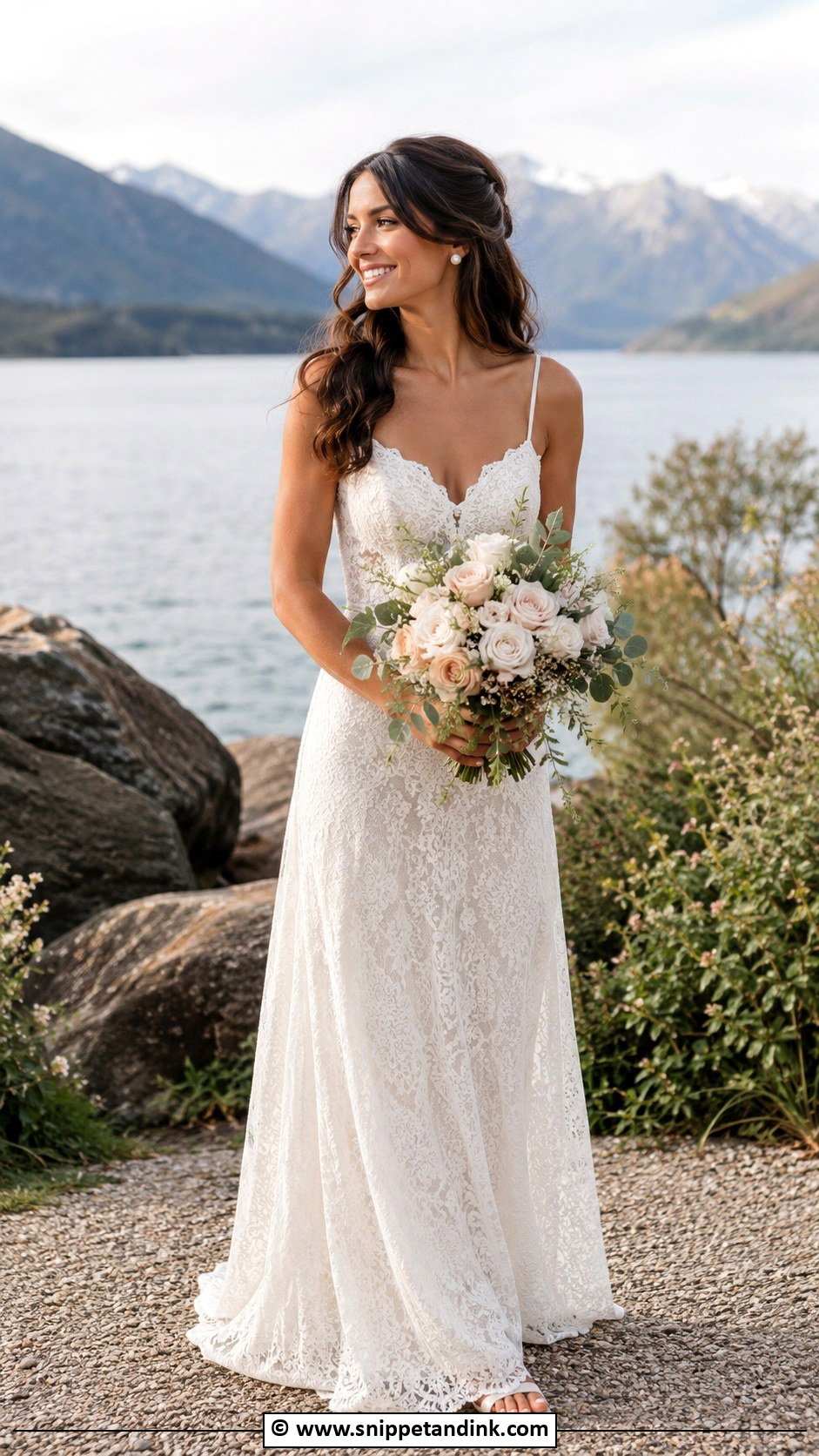
Unlike a heavily structured lace gown, a casual lace maxi should feel soft and wearable. Look for a simple lining, gentle sleeves and a skirt that moves. Lace types behave differently: corded lace holds its shape and hides creases, while fine Chantilly is softer but can snag on sandal buckles and bouquet wire. Flat sandals or low wedges keep it comfortable outdoors. Pearl studs and loose hair finish it naturally.
22. Minimalist Crepe Wedding Dress
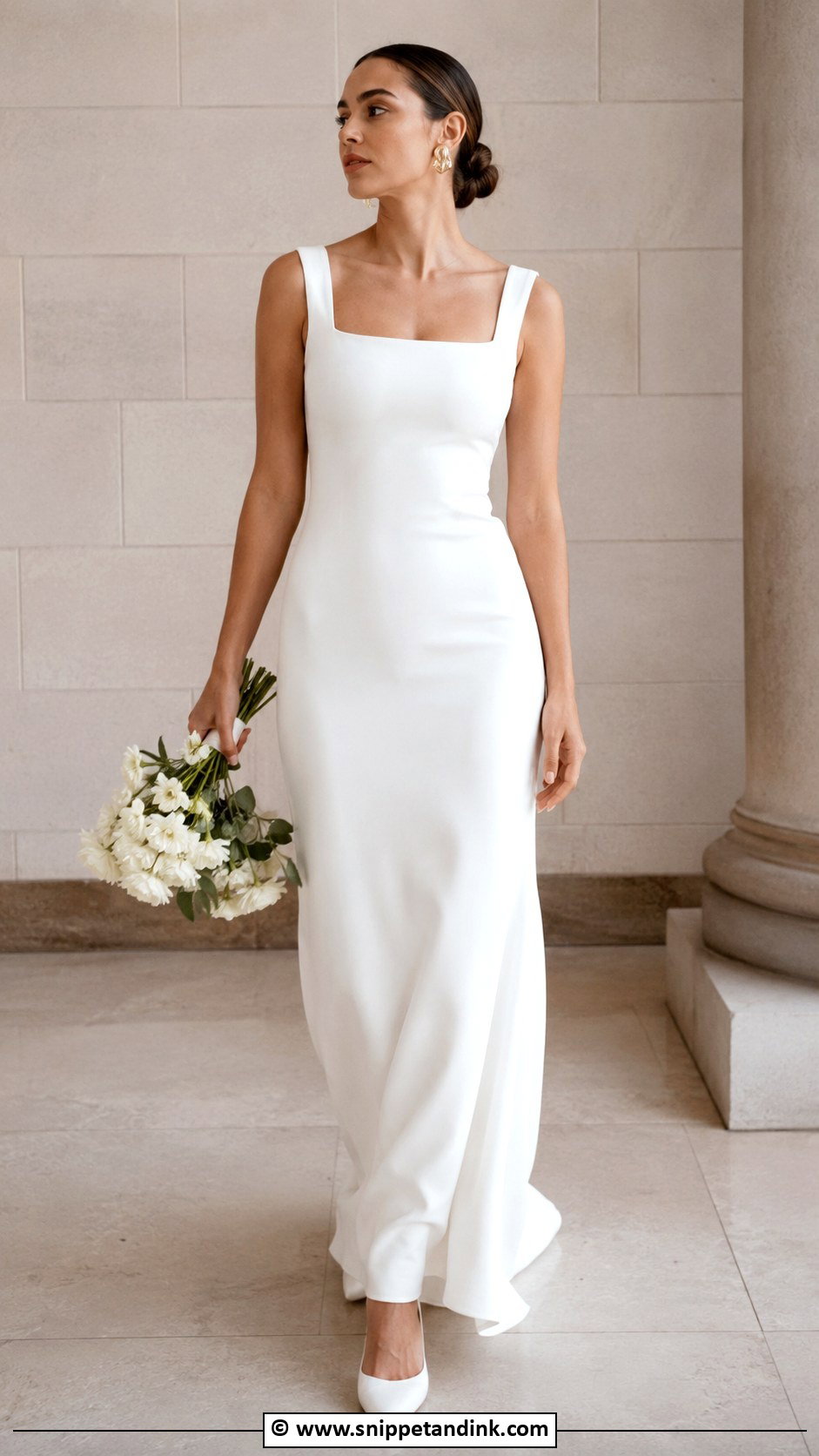
Crepe is my favorite fabric for minimal brides because it has enough body to hold a clean line yet stays comfortable for hours. Sheath, column and simple A-line shapes all work in it. A square, bateau or sleek V-neck keeps it modern. The catch is that crepe shows the body underneath, so the fit through the hips needs to be right and the underwear free of visible lines. Sculptural earrings, smooth heels and a low bun are enough, and a light wrap handles an outdoor ceremony.
23. Cotton Eyelet Wedding Dress
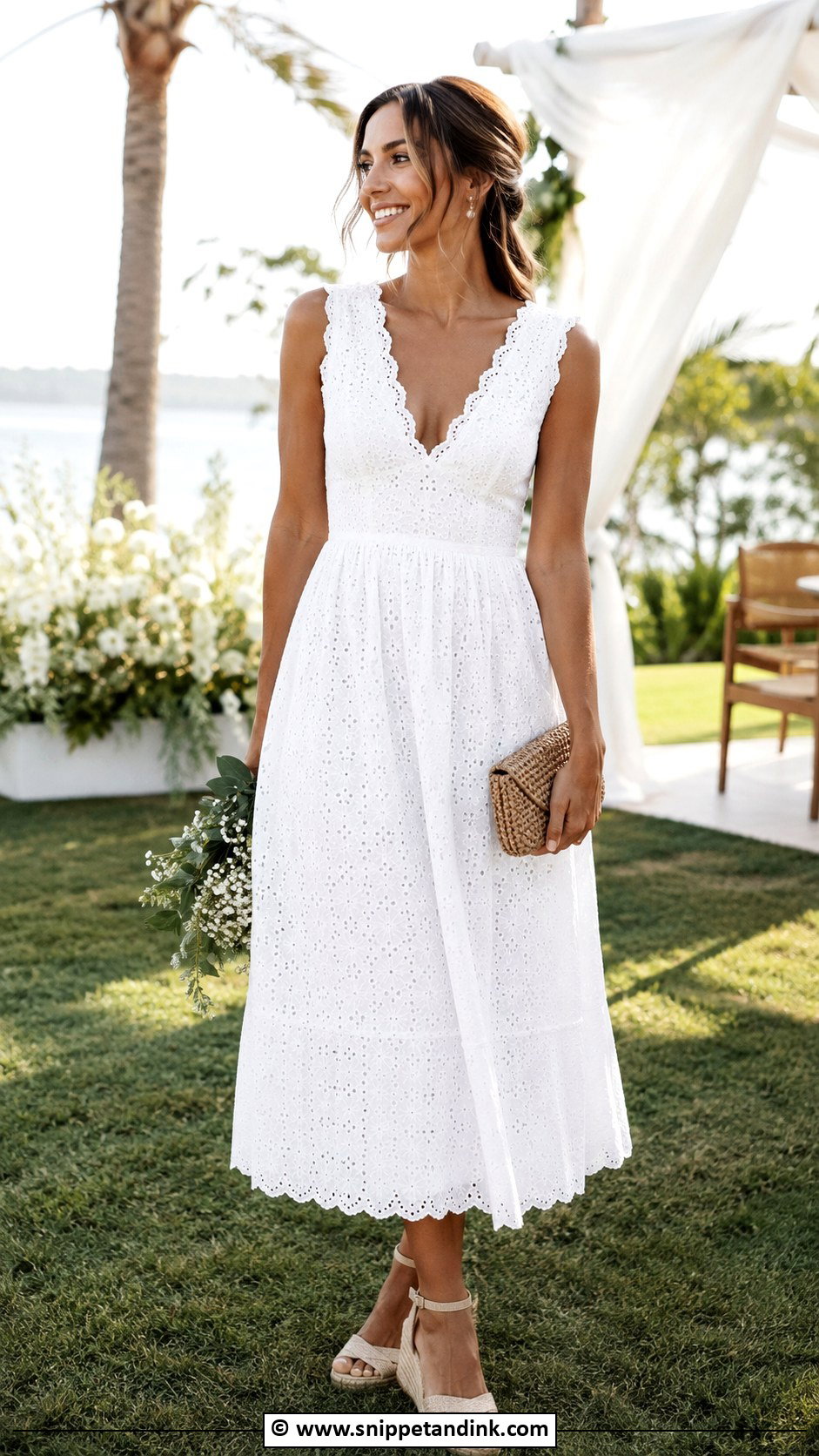
Eyelet cotton is breathable, textured and naturally relaxed, which makes it one of the best choices for a hot backyard or coastal wedding. A midi or fit-and-flare shape keeps it feminine. Cotton does crease when you sit, and that’s part of its character, but steam it the morning of the wedding rather than the night before. Espadrille wedges and a woven bag match its mood. The texture and white color are what make it read bridal, so keep the hair soft and natural.
24. High Low Wedding Dress
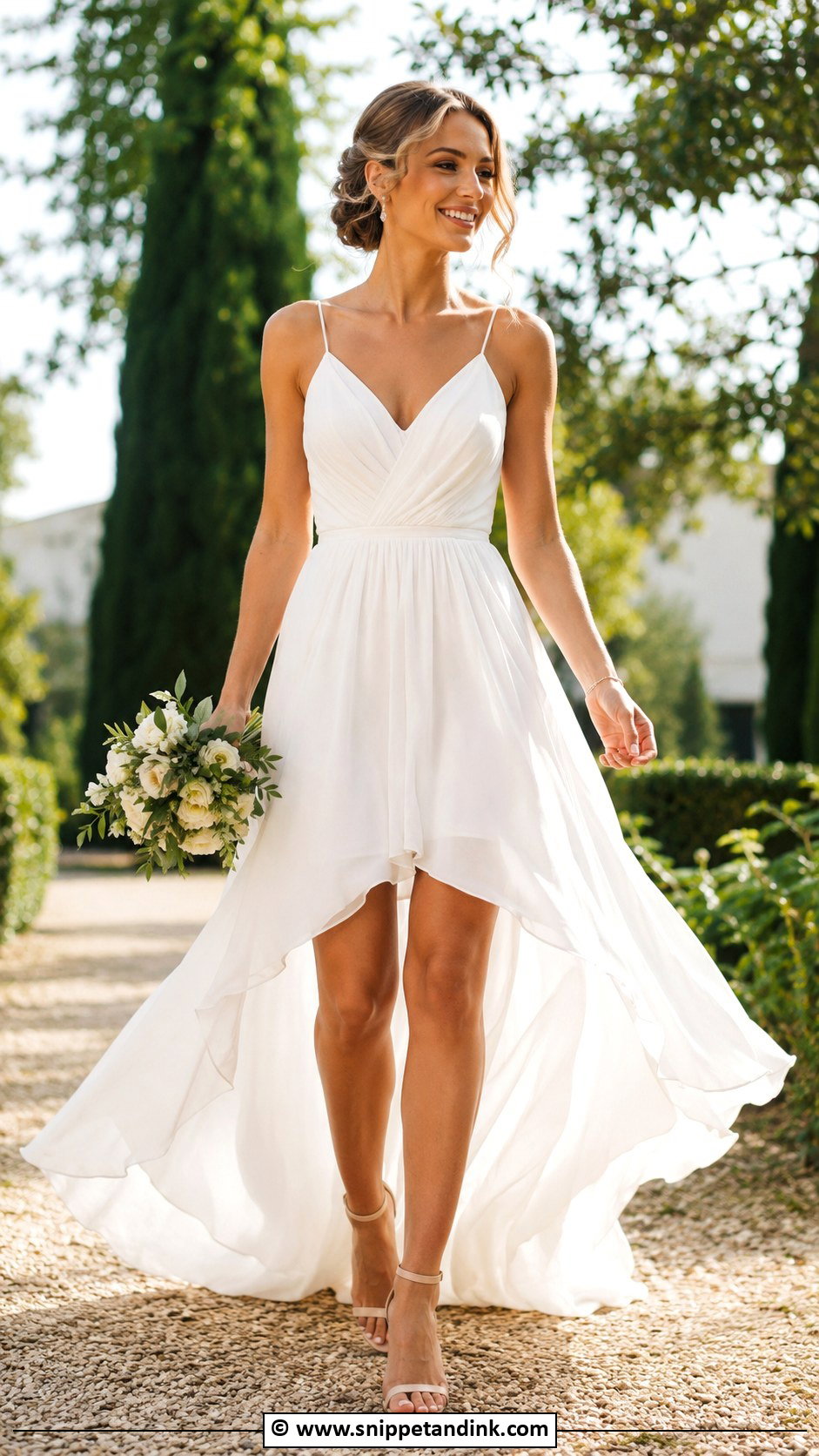
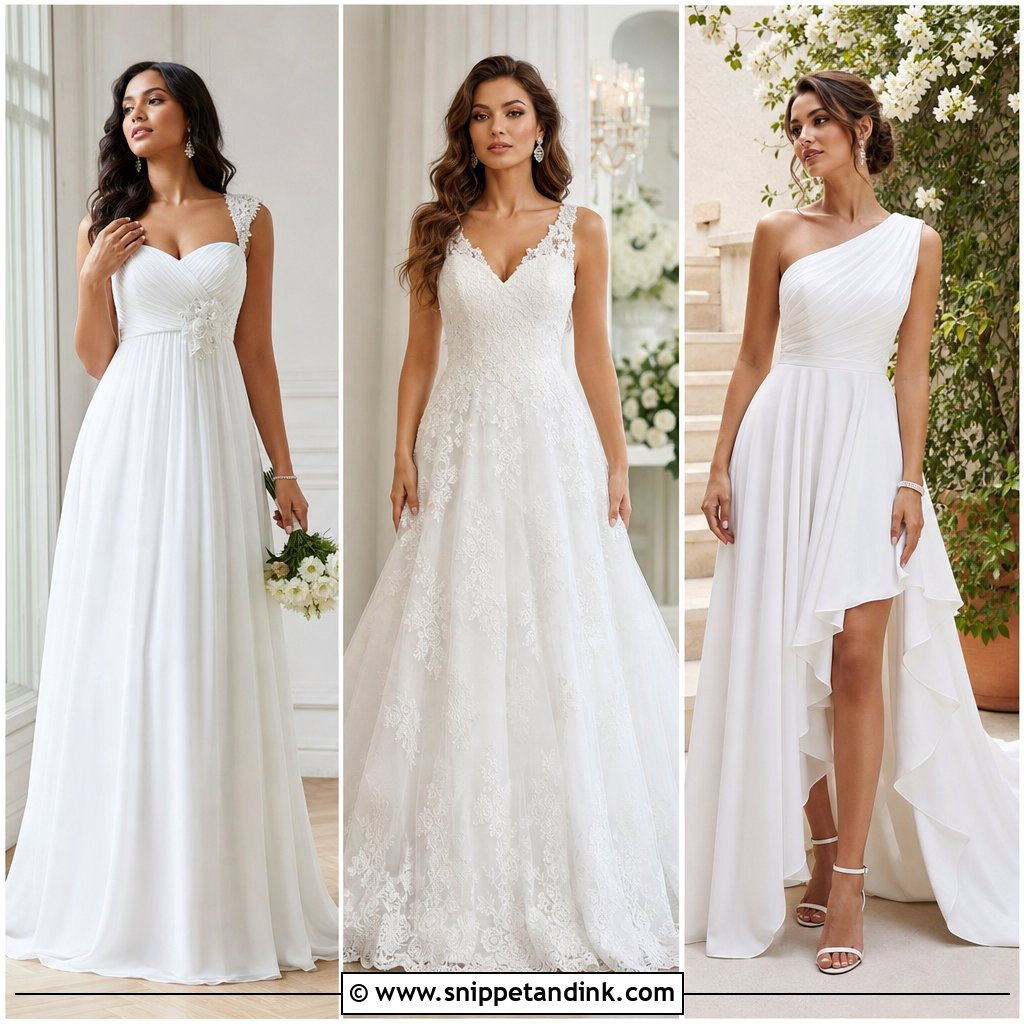
A high-low hem gives you a shorter front for walking and a longer back for movement in photos. Chiffon, organza or soft satin let the back flow. Shoes are on full display, so ankle-strap heels are a good fit. Measure the back length against your venue: a long tail that looks great on a terrace collects leaves on a lawn. I’d also check the side profile at the fitting, since some high-low cuts dip sharply and look unfinished from the side.
25. Simple White Maxi Wedding Dress
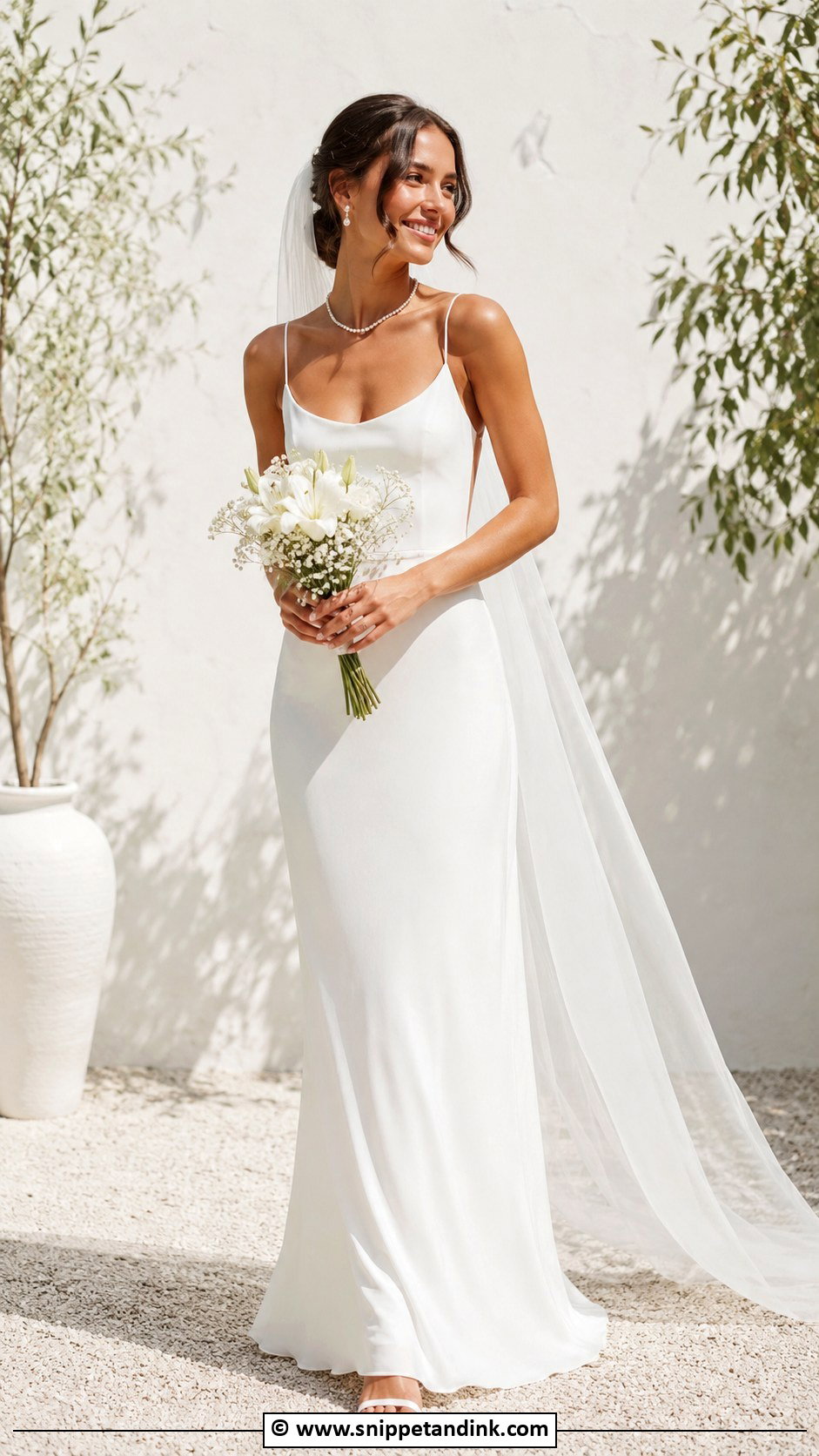
A plain white maxi is the easiest dress here to make your own. Chiffon, satin, cotton or soft crepe set the mood. A clean neckline, thin straps, flutter sleeves or a wrap bodice can all work. If the dress is very plain, I’d add one bridal marker, a short veil or a statement earring, rather than several small accessories that compete. It suits beaches, backyards, elopements and relaxed receptions, and it’s the dress most likely to be worn again.
White Fabric Under a Camera Flash and Full Sun
The fabric that looks right in a fitting room can behave very differently outdoors or under a photographer’s flash. I check a few things before any bride commits.
- Sheerness: stand by a window or step into daylight. Thin chiffon, cotton voile and unlined lace can show your legs and underwear in backlit shots.
- Shade of white: bright white, ivory and champagne look different side by side. Hold your veil, shoes and any separates against the dress in daylight.
- Sweat and water: light satin and silk show damp patches under the arms and where your bouquet hand rests. Crepe, lace and textured cotton hide them better.
- Creasing: sit in the dress for ten minutes, then stand. If the lap is a map of lines, plan to steam right before the ceremony or choose a different fabric.
A Small Kit for Simple Dresses
Informal dresses have fewer structural parts, so small failures show more. I’d tuck a little kit into your bag or give it to a friend: fashion tape for necklines and wrap fronts, a few safety pins, a white chalk stick or stain pen for marks on light fabric, blister plasters, and a hand-held steamer if you’re getting ready somewhere without one.
After the wedding, get the dress cleaned within a few weeks, before invisible sugar or drink stains oxidize and turn brown. Store it folded in acid-free tissue in a breathable box or cotton bag, not plastic, and keep it somewhere cool and dark.
Does Your Dress Match the Kind of Day You’re Planning?
An informal wedding dress works when it fits the setting and lets you forget about it for the day. A satin slip, lace mini, tea length dress, boho maxi, courthouse midi or bridal jumpsuit can each be right, depending on where you’ll stand, sit and dance. Get the fabric and fit right first, then shoes, then accessories. A simple dress worn with care looks deliberate, and that is what makes it bridal.
You'll Like These Ideas:




Leave a Reply