
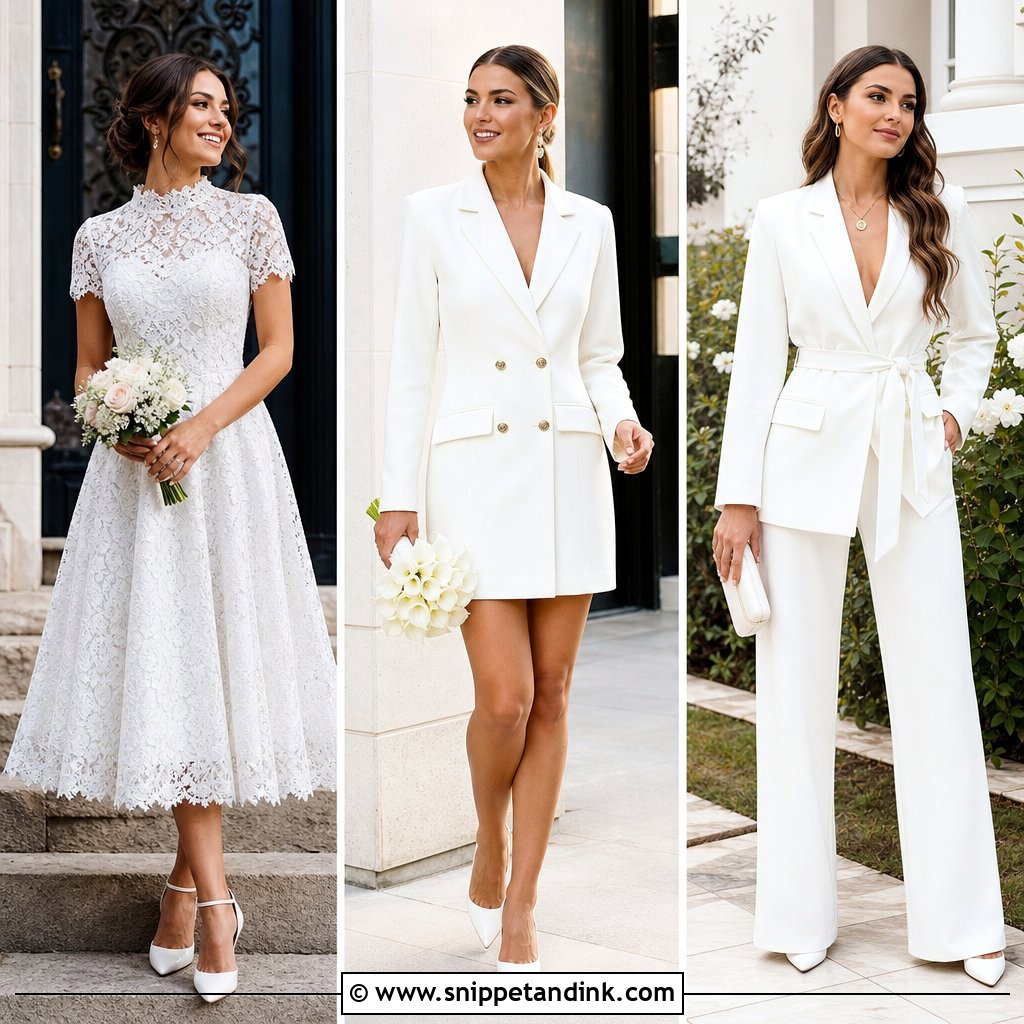
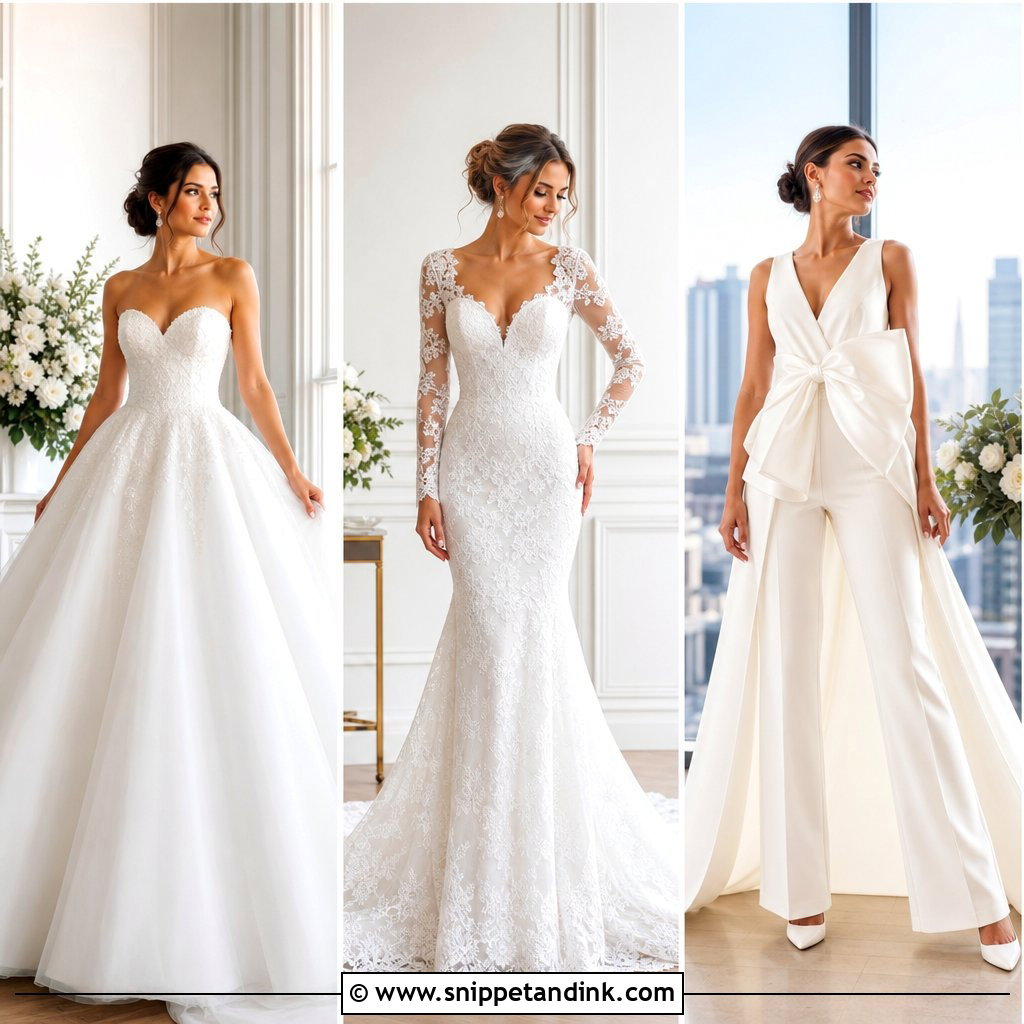
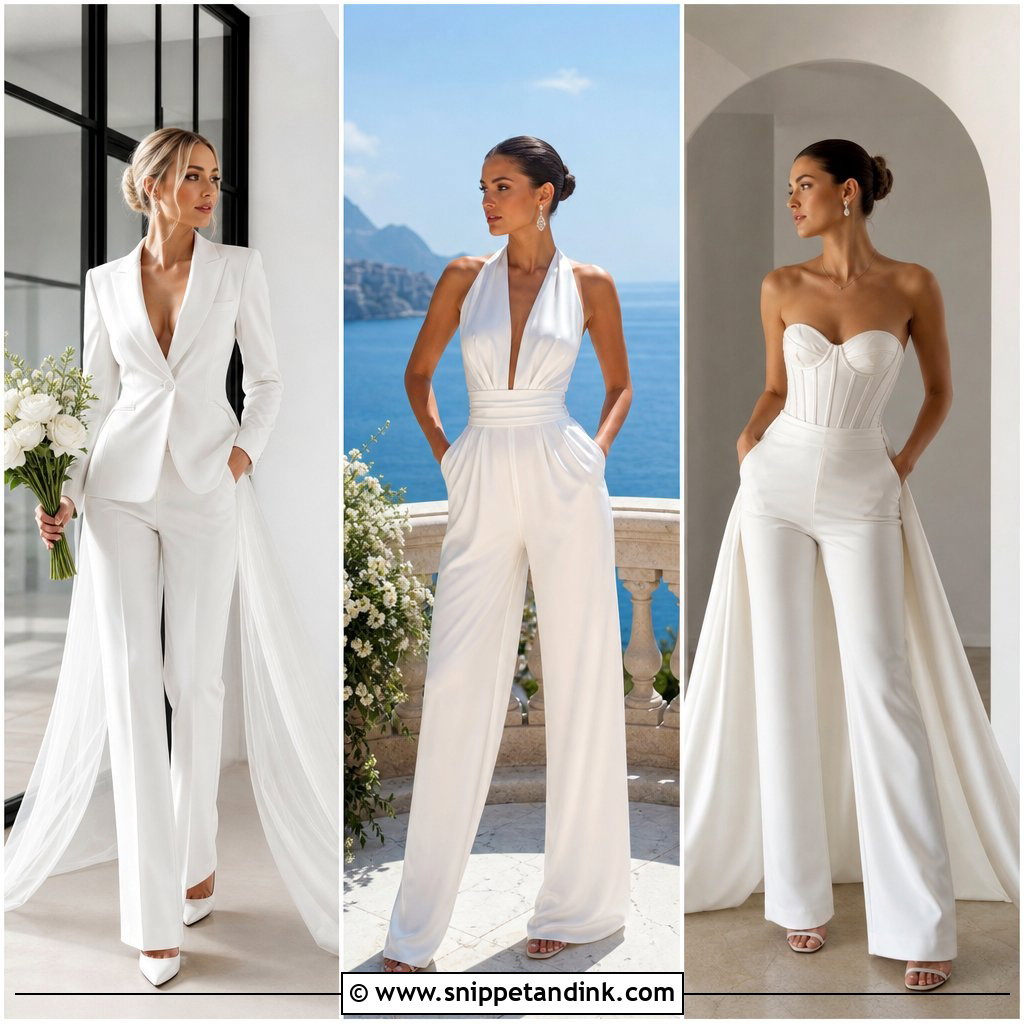
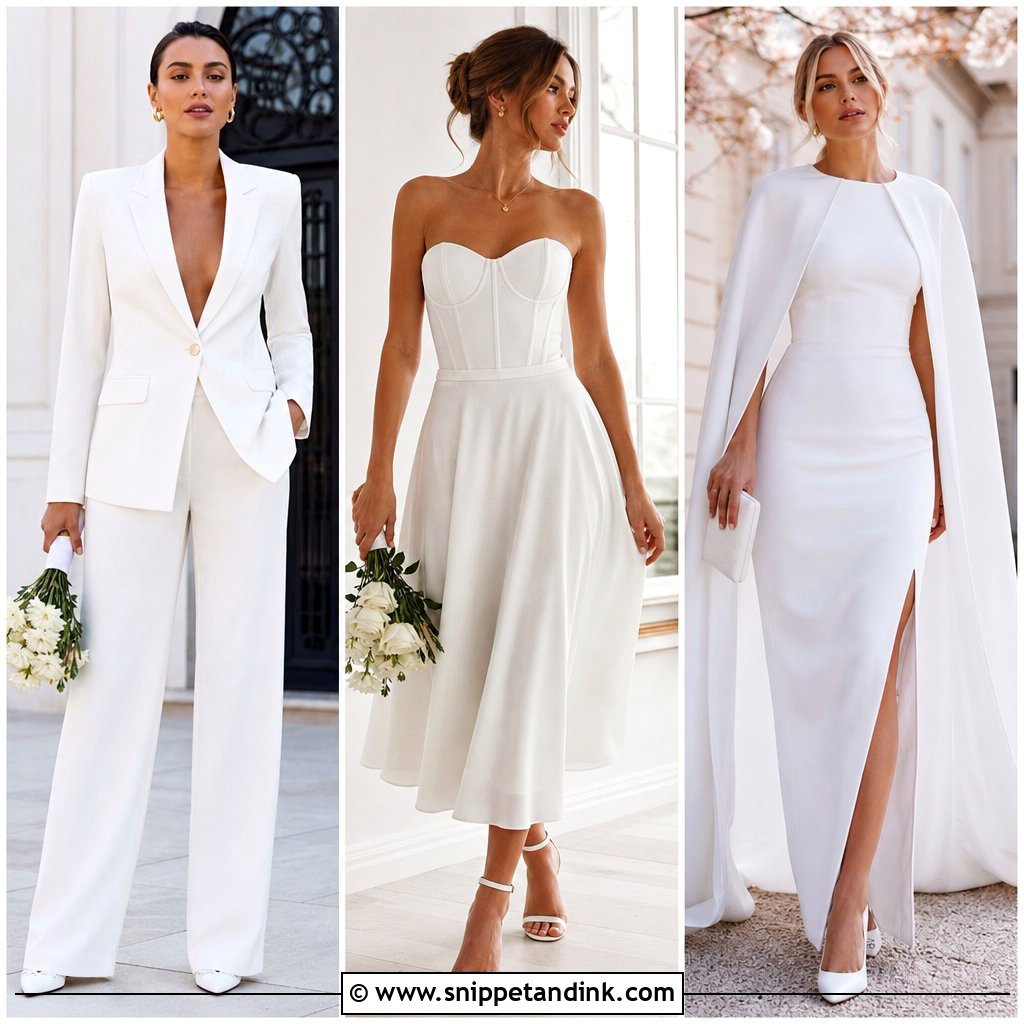
Separates let you build a wedding outfit the way you build any outfit you love: one good piece at a time. Instead of one gown, you might combine corsets, lace tops, tailored trousers, full skirts and blazers, and change half of it for the party. Below are 25 head-to-toe looks, from romantic tulle to sharp suiting and a couple of party outfits. For each one I’ve noted the fitting detail that decides whether the two halves look like they belong together, because that’s where separates succeed or fail.
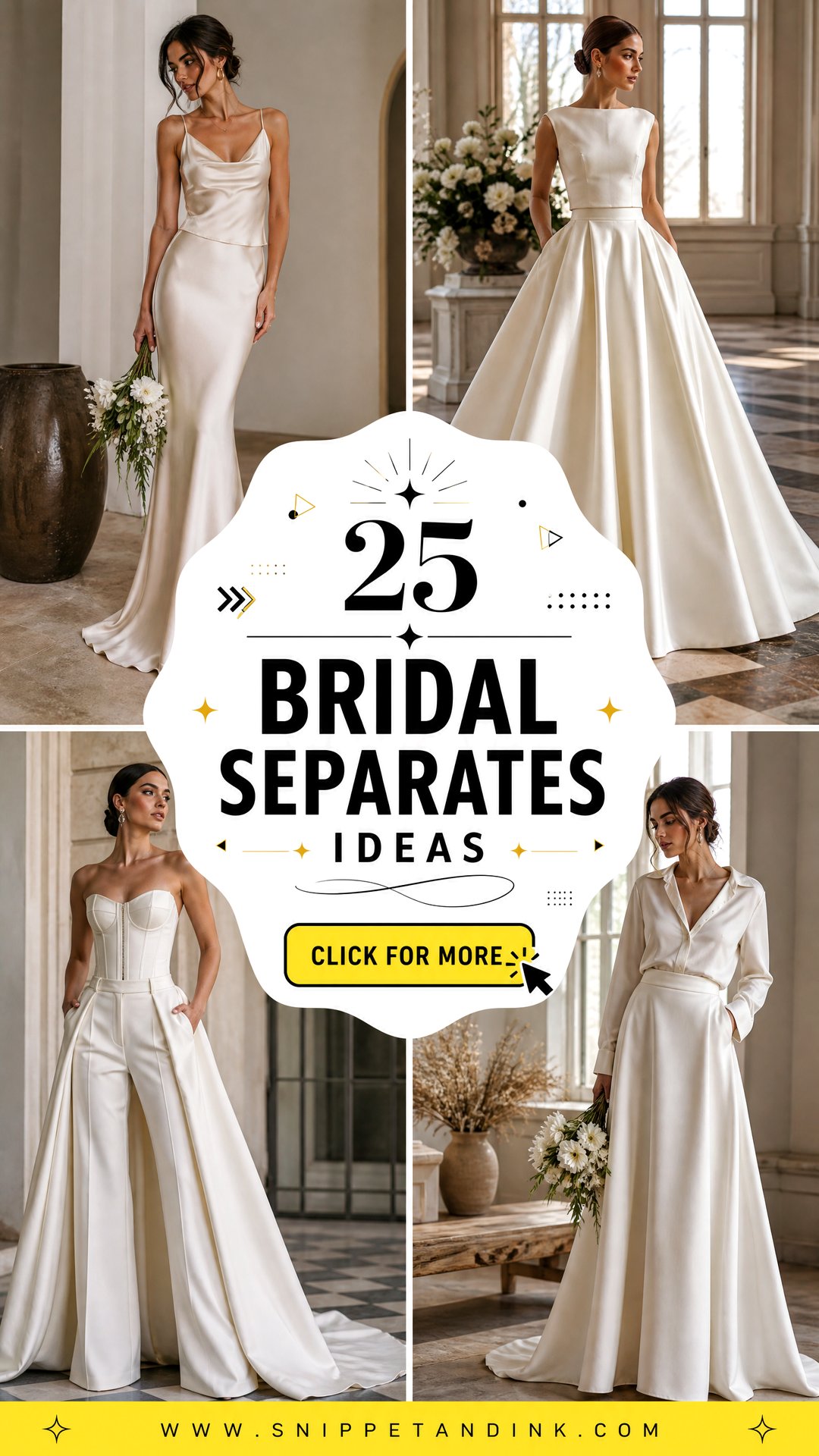
Between Two Sizes? Separates Were Made for You
The bride who gains most from separates is the one who’s never fitted one size top and bottom. In a one-piece gown, the dress is ordered for your largest measurement and everything else is taken in, which can mean heavy alterations across the bodice. With separates, I order the top for the bust and the skirt or trousers for the hips, and each needs far less work.
- Buy the top first. It’s the harder piece to fit and the one that sets the shade of ivory you’ll match.
- Ask for a fabric swatch of every piece and carry them when you shop for the next one.
- If you’re mixing makers, choose a top and skirt of similar weight; a heavy top on a flimsy skirt drags at the back.
- Leave room in your alteration budget for both pieces. Each usually needs at least hemming or waist work.
1. Lace Crop Top And Tulle Skirt Bridal Separates
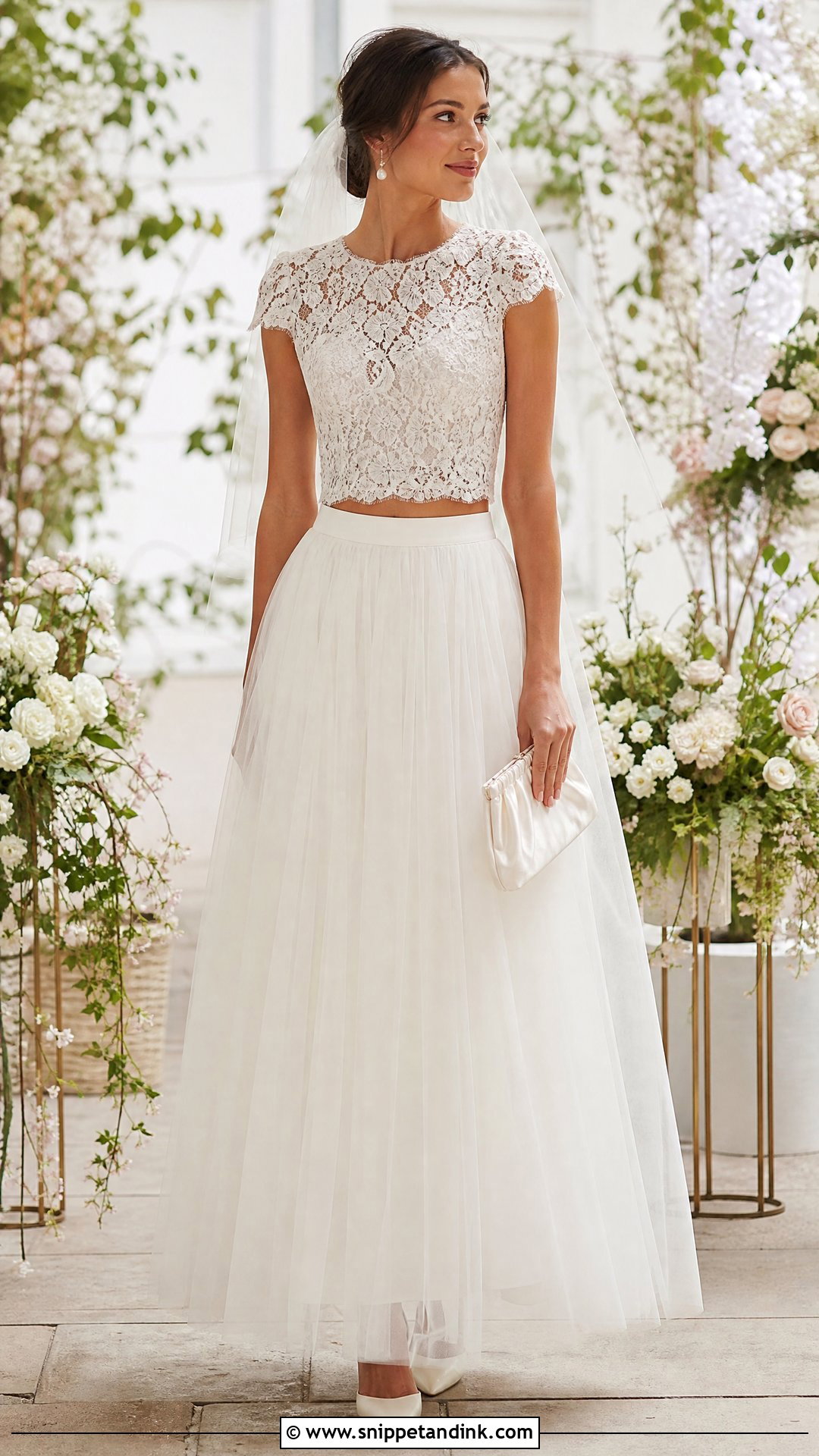
Lace and tulle is the softest way into separates. Get the skirt’s waist high enough to meet the top’s hem if you’d rather not show midriff, and keep the lace delicate with sheer sleeves or a scalloped neck. My main fitting note: have both waistlines altered at the same appointment. If the skirt is taken in a week after the top is shortened, the two rarely line up again when you sit. Pointed ivory pumps, pearl drops and a fingertip veil are enough for a garden or spring wedding.
2. Satin Corset And Ball Gown Skirt Bridal Separates
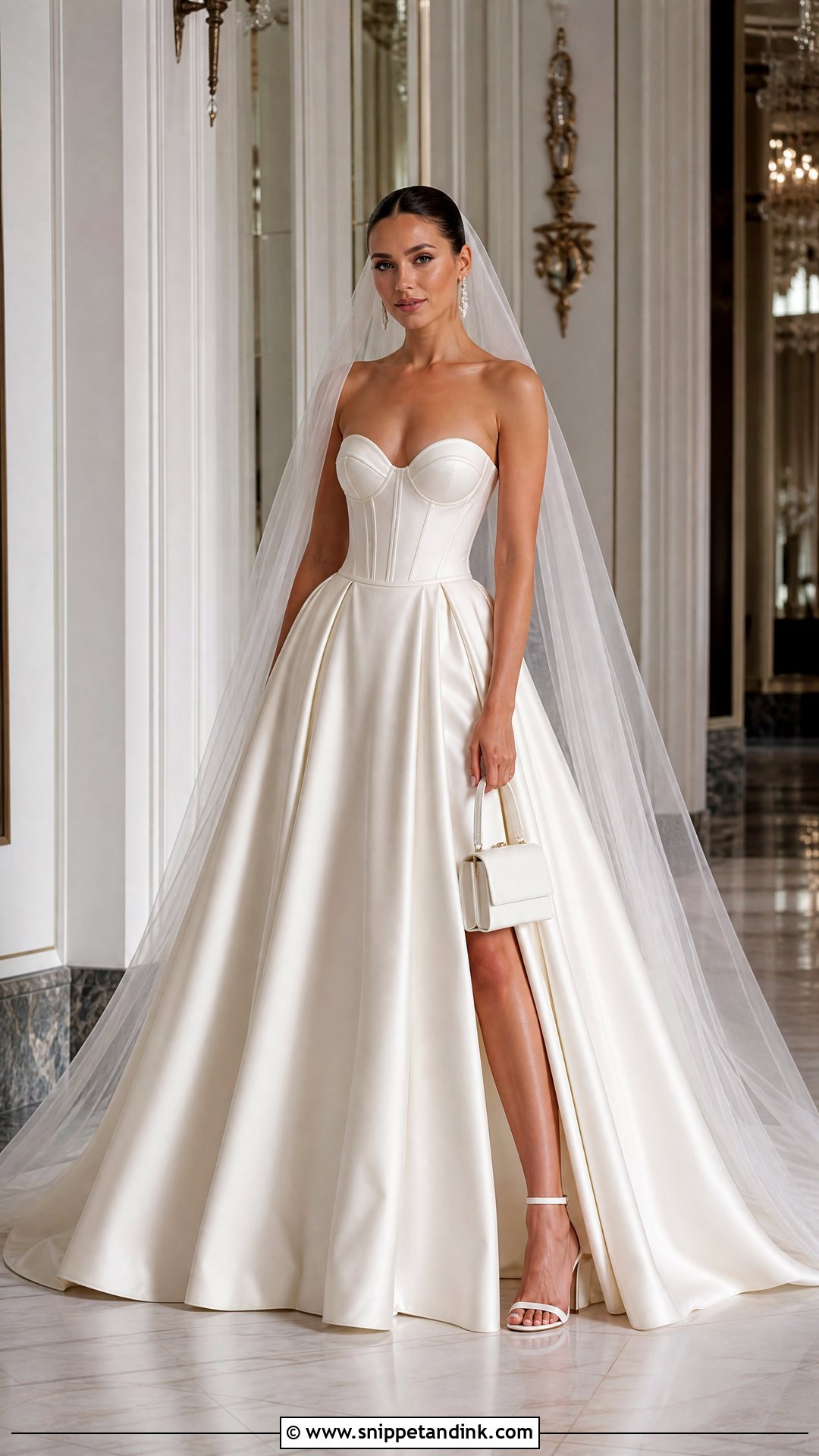
A boned satin corset over a ball gown skirt gives full drama with the option of losing the skirt later. Match the satin finish; a duchess satin skirt beside a lighter charmeuse top looks assembled, not planned. Heavy skirts tend to drag down at the back, pulling the corset with them, so I ask for an internal waist stay (a petersham ribbon sewn inside the skirt that hooks snugly around you) to carry the weight. Petite brides do better with less volume and a slightly raised waist; tall brides can take a wider skirt and longer train.
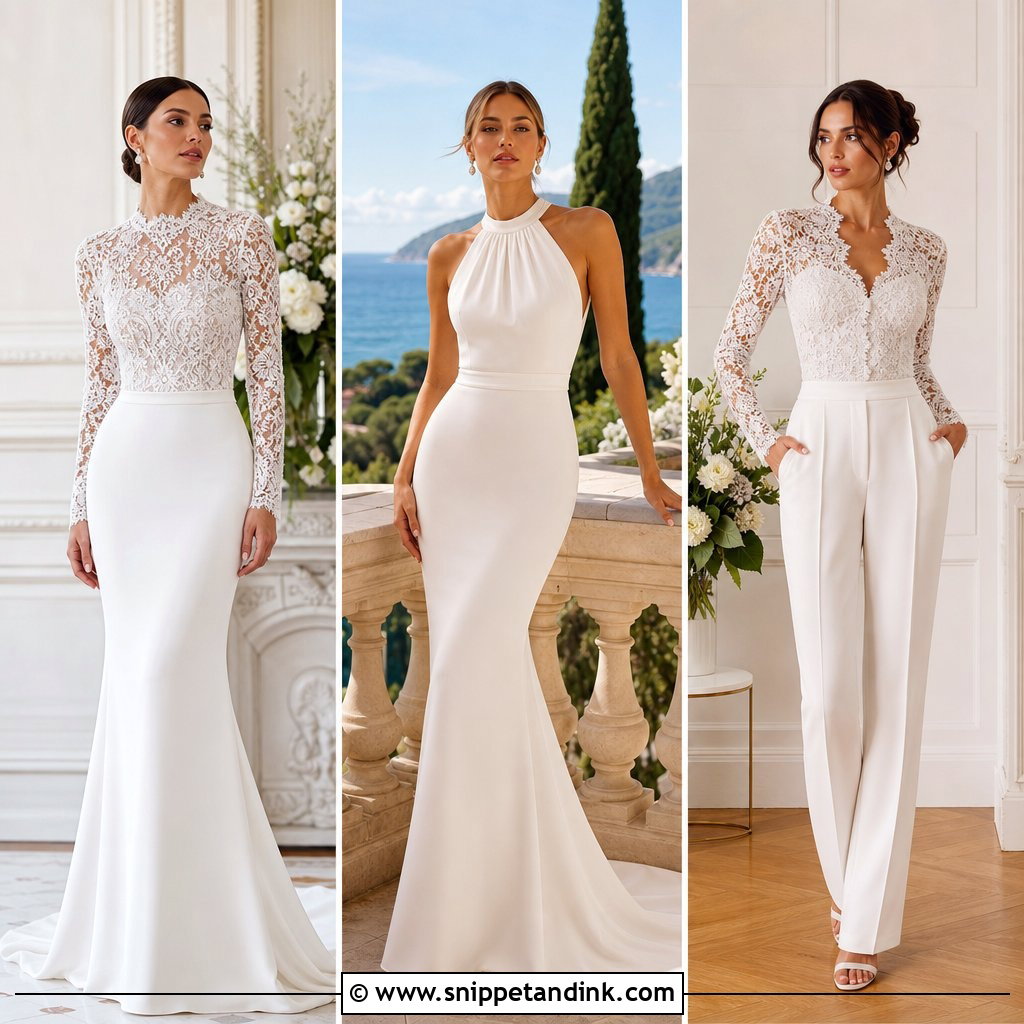
3. Long Sleeve Lace Top And Crepe Skirt Bridal Separates
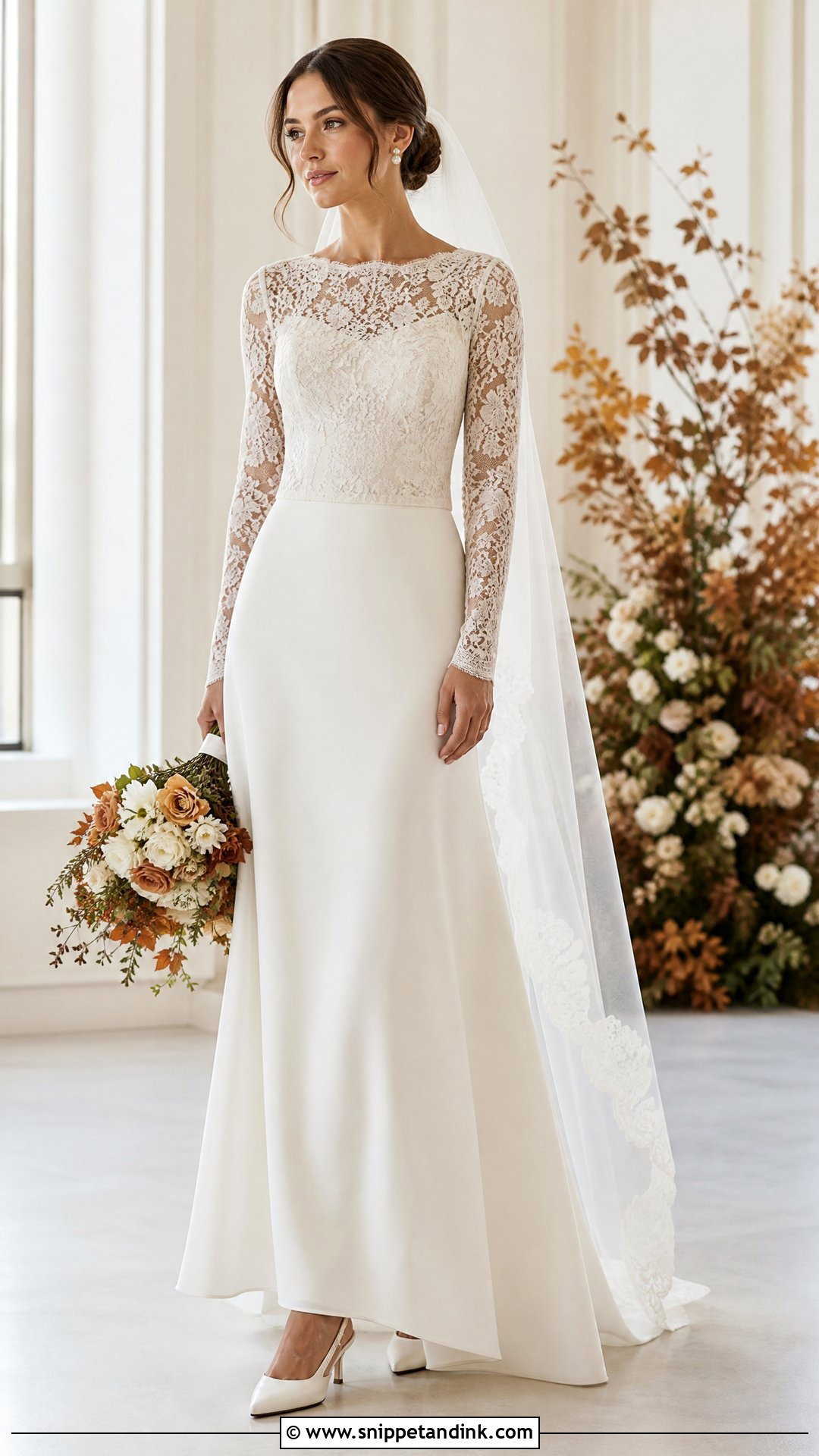
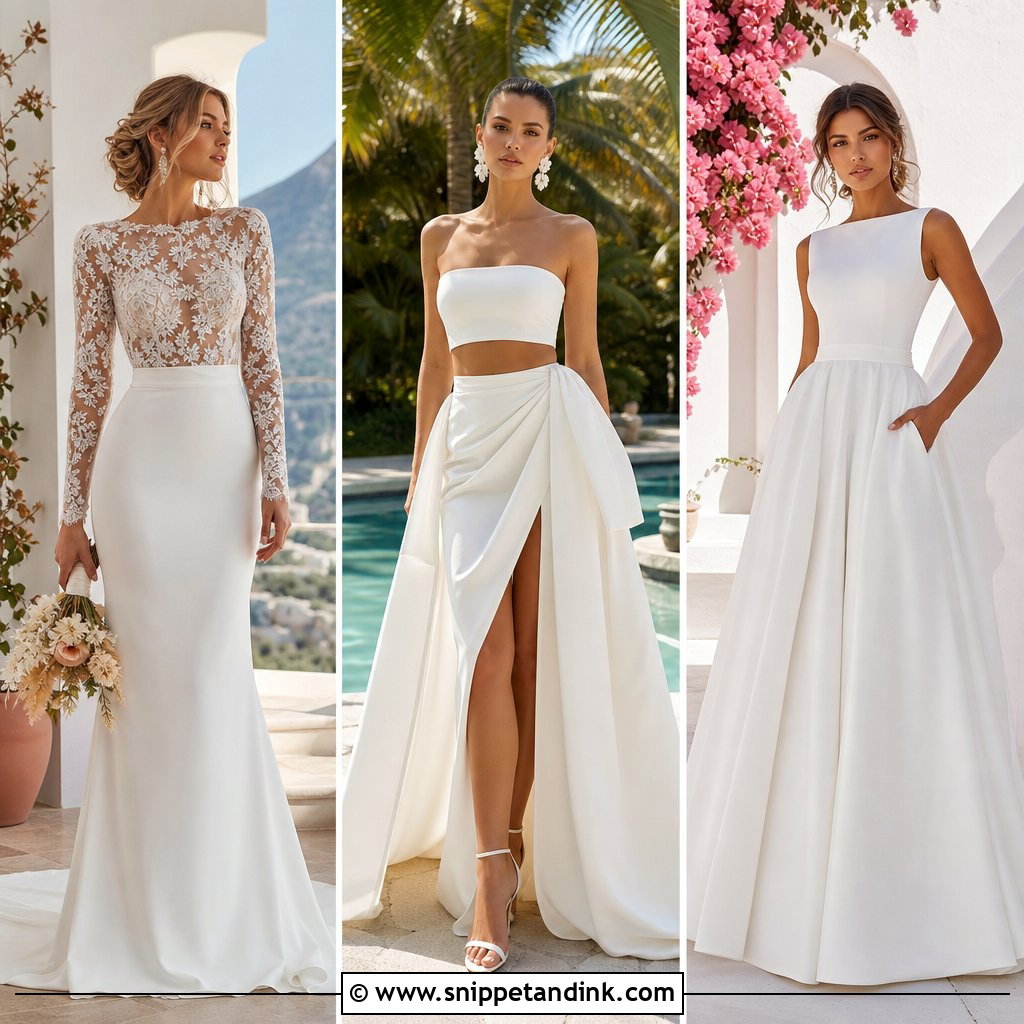
Long lace sleeves over a smooth crepe skirt suit a winter or autumn ceremony. A lined lace bodice with sheer sleeves gives coverage without heaviness. Keep the skirt to a column or gentle A-line so the lace stays the focus. Ivory varies a lot between makers, so compare the pieces in daylight. The detail people overlook is the cuff: lace sleeves should end right at the wrist bone, because longer ones creep over your hands in every ring photo. A low chignon and chapel veil complete it.
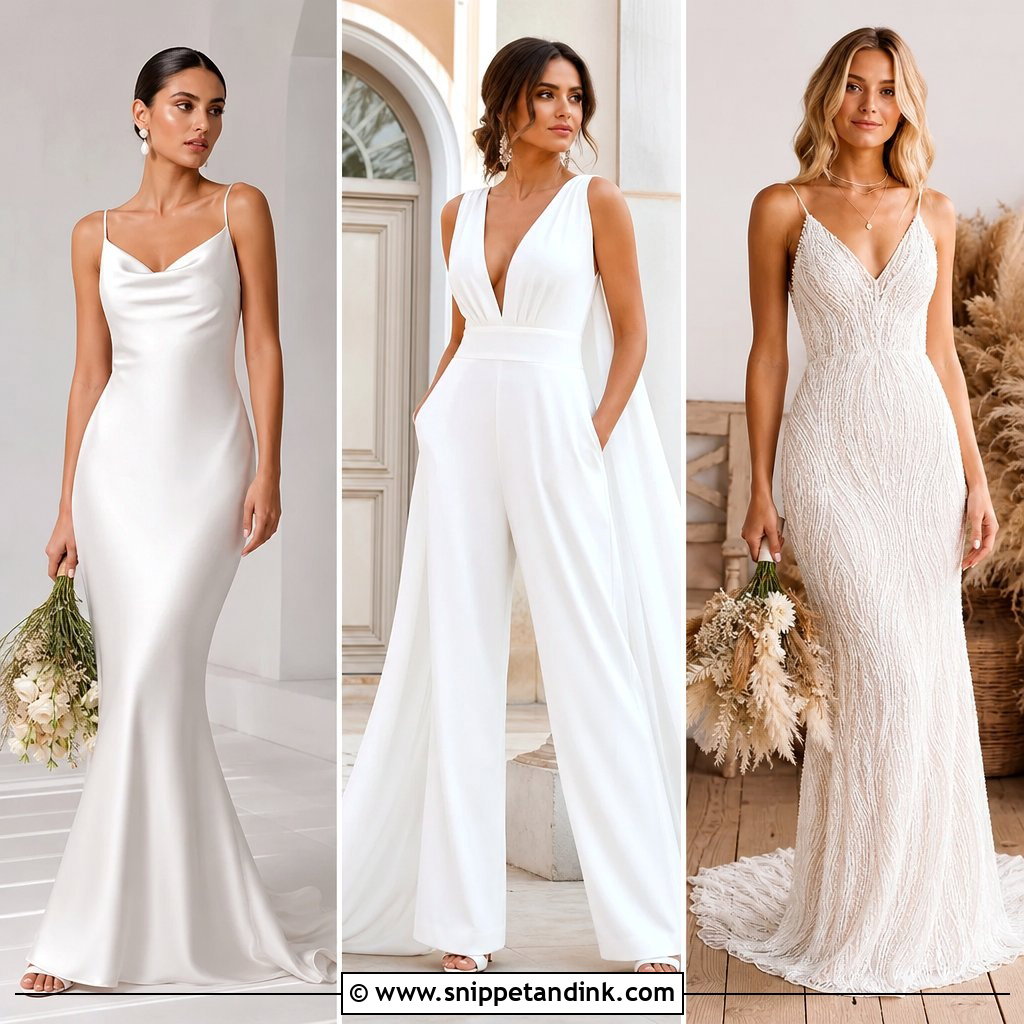
4. Silk Camisole And Bias Cut Skirt Bridal Separates
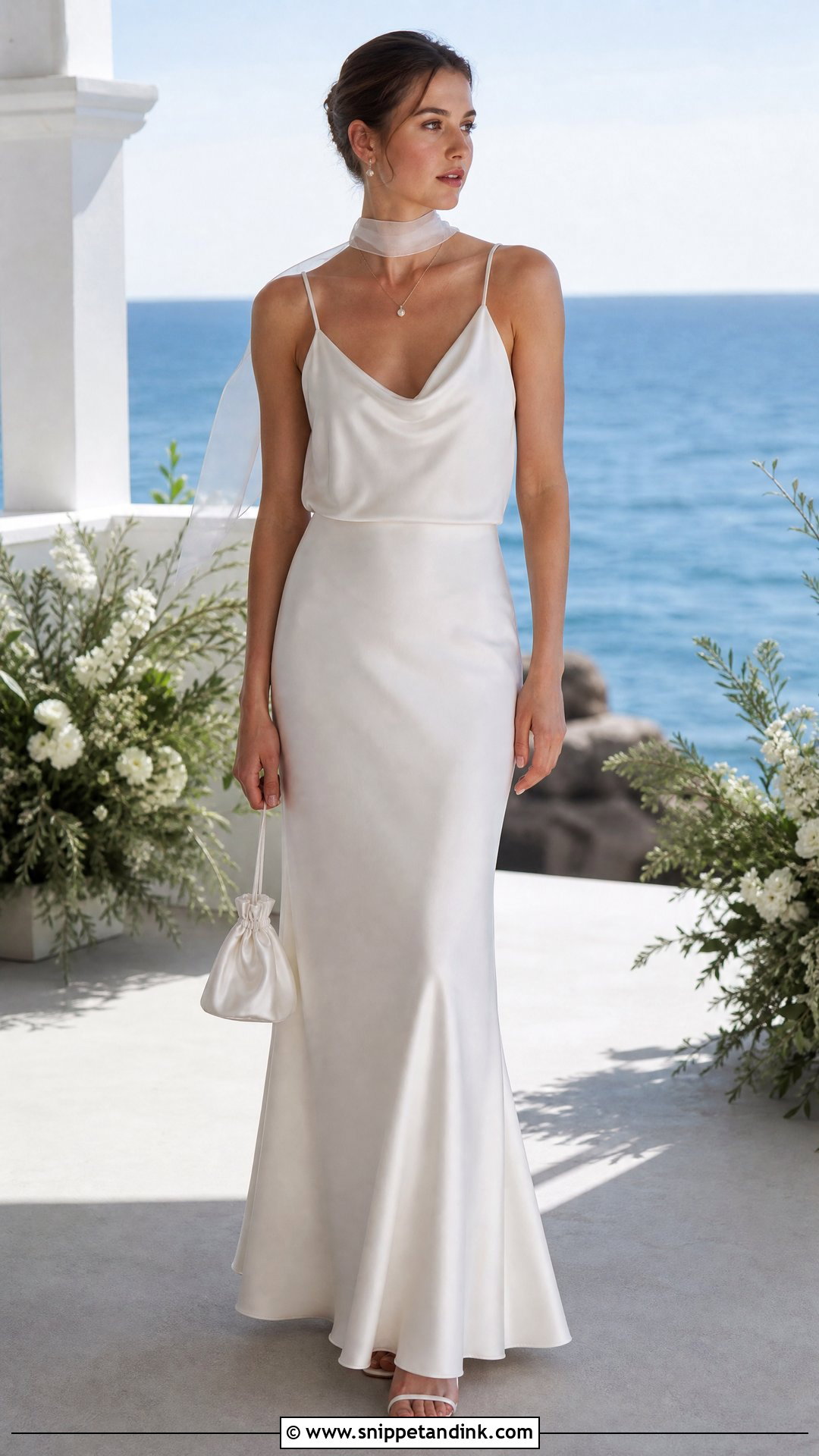
Silk on the bias moves with the body like nothing else, which is why a camisole and a matching bias-cut maxi skirt look so relaxed at a coastal or destination wedding. It also shows everything underneath. I fit this pairing over the exact underwear the bride will wear, with smooth edges and no bulky seams. Adjustable straps help the camisole sit right on the bust. Outdoors, a tailor can tuck small weights into the hem so the wind doesn’t wrap the skirt around your legs. Keep accessories small: a fine pendant, low sandals, a satin pouch.
5. High Neck Top And Column Skirt Bridal Separates
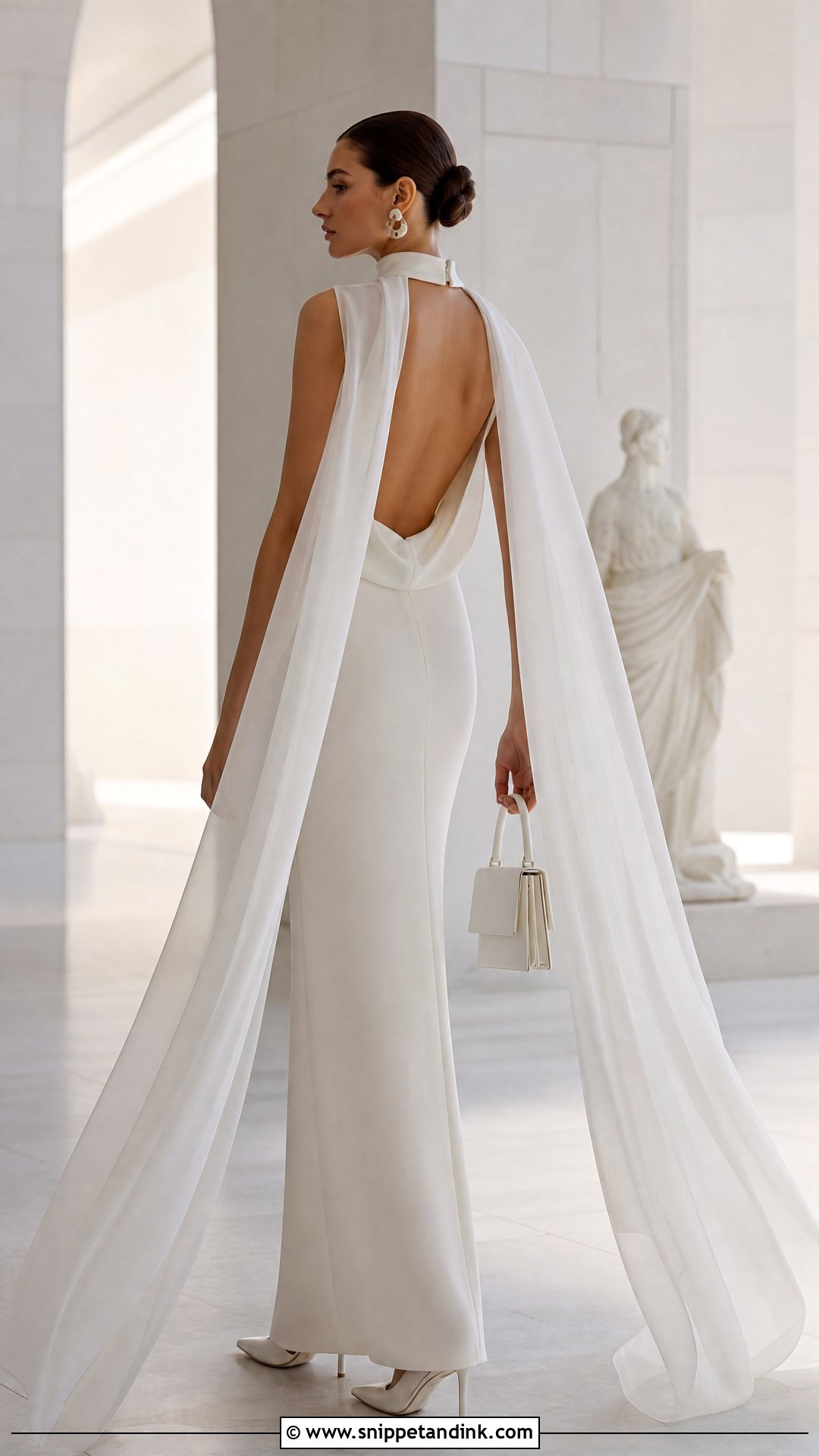
A sleeveless high-neck crepe top with a straight column skirt is the cleanest look here. The interest goes at the back: an open back, covered buttons or a small keyhole. Column skirts restrict your stride, so test stairs and sitting at the fitting; if you can’t step up comfortably, ask for a back slit or a little more ease at the knee. Match fabric weight closely, since a heavy crepe skirt under a light top makes the join obvious. A removable veil or sheer cape adds ceremony drama.
6. Off Shoulder Top And A-Line Skirt Bridal Separates
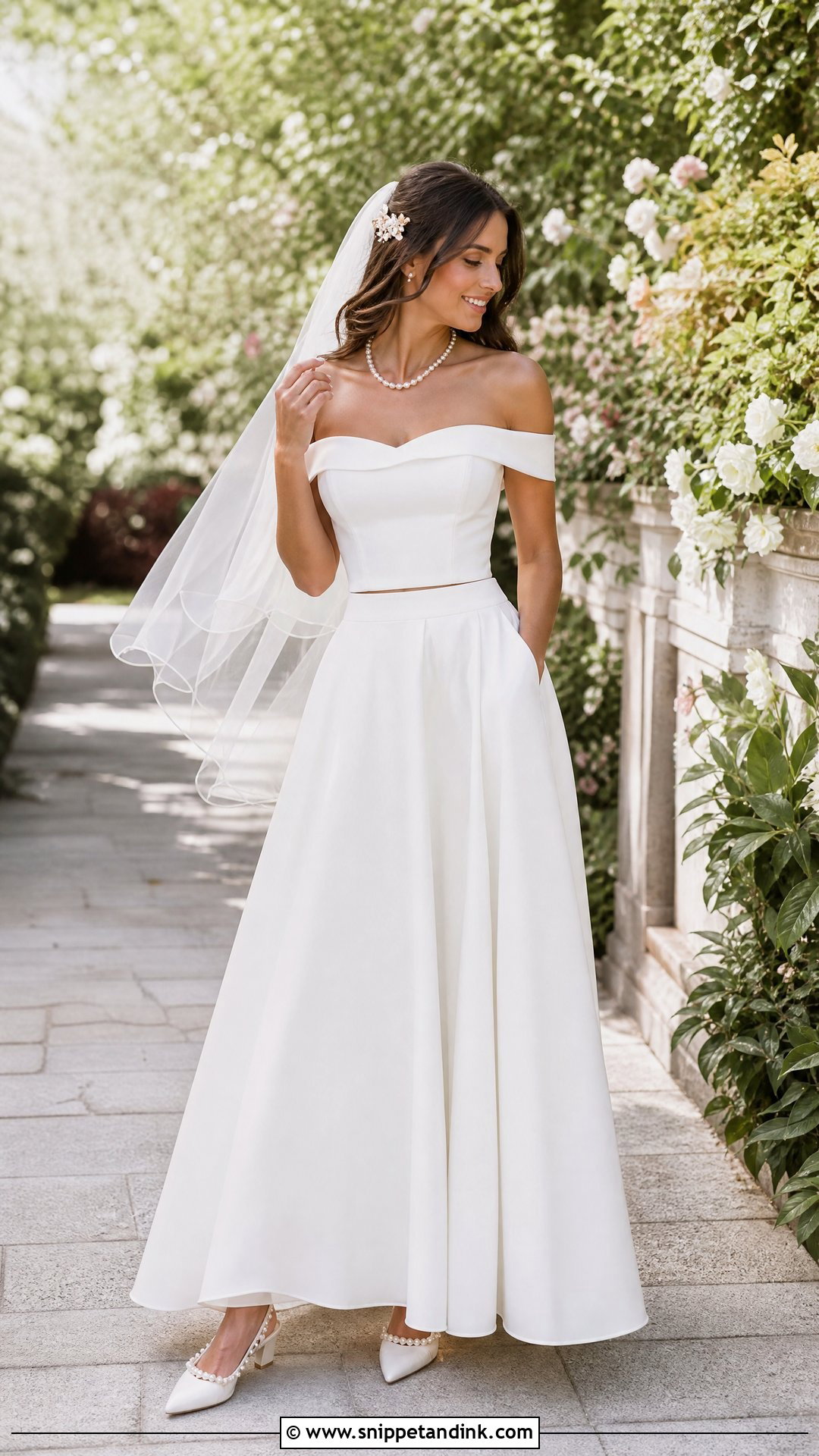
An off-shoulder top needs hidden structure to stay put: boning, a silicone grip band or both. Pair it with an A-line skirt for waist definition without a ball gown’s volume. A short pearl necklace and a comb in a low bun keep the collarbones visible, with a light veil tucked under the bun. At your fitting, lift your arms as if you’re hugging someone. If the neckline rides up onto your shoulders, it needs tightening before the day, not tape on the morning.
7. Pearl Beaded Top And Satin Skirt Bridal Separates
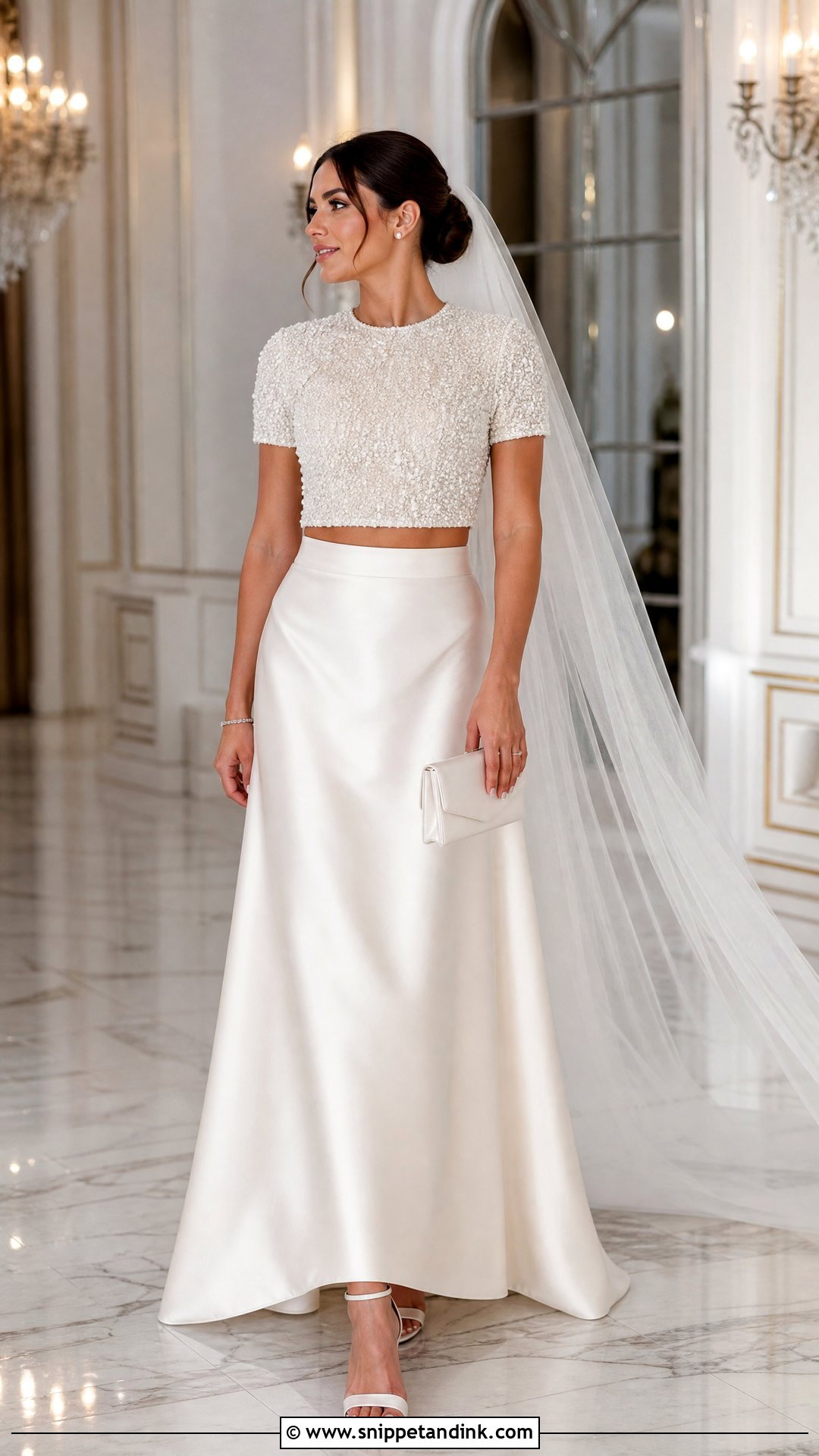
Small pearls on a fitted top give a quiet glow under ceremony lighting rather than hard sparkle. A fully lined bodice stops the beadwork scratching your skin. Pair it with a smooth satin skirt, A-line or softly gathered, and keep everything else plain: pearl studs, a satin clutch, a simple veil. Beads at the lower edge of the top can snag satin, so I often ask the tailor to add a narrow satin waistband on the skirt as a buffer, which also gives a tidy line between the two textures.
8. Bridal Bodysuit And Organza Skirt Separates
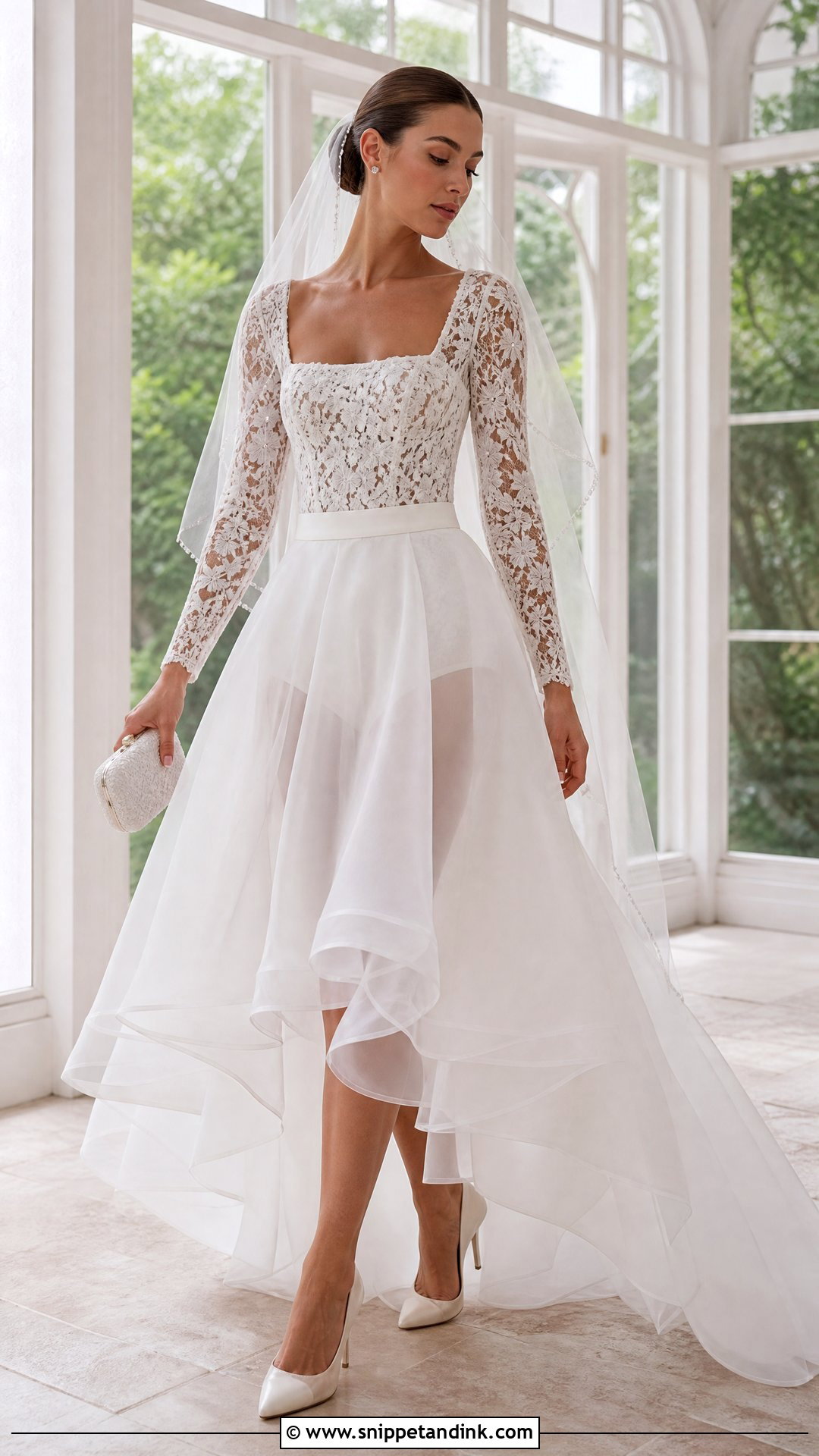
A bodysuit solves the commonest complaint about separates: tops that untuck and ride up. It stays smooth under a light organza skirt, and the skirt’s sheer layers add movement. Pick lace appliques, a square neck or fine long sleeves. The organza needs a lining for coverage. Check the snaps at the crotch when seated; on some bodysuits they press or show as a ridge through the skirt, and that’s worth sorting before the final alteration. It also makes a skirt swap for the reception very simple.
9. Puff Sleeve Top And Midi Skirt Bridal Separates
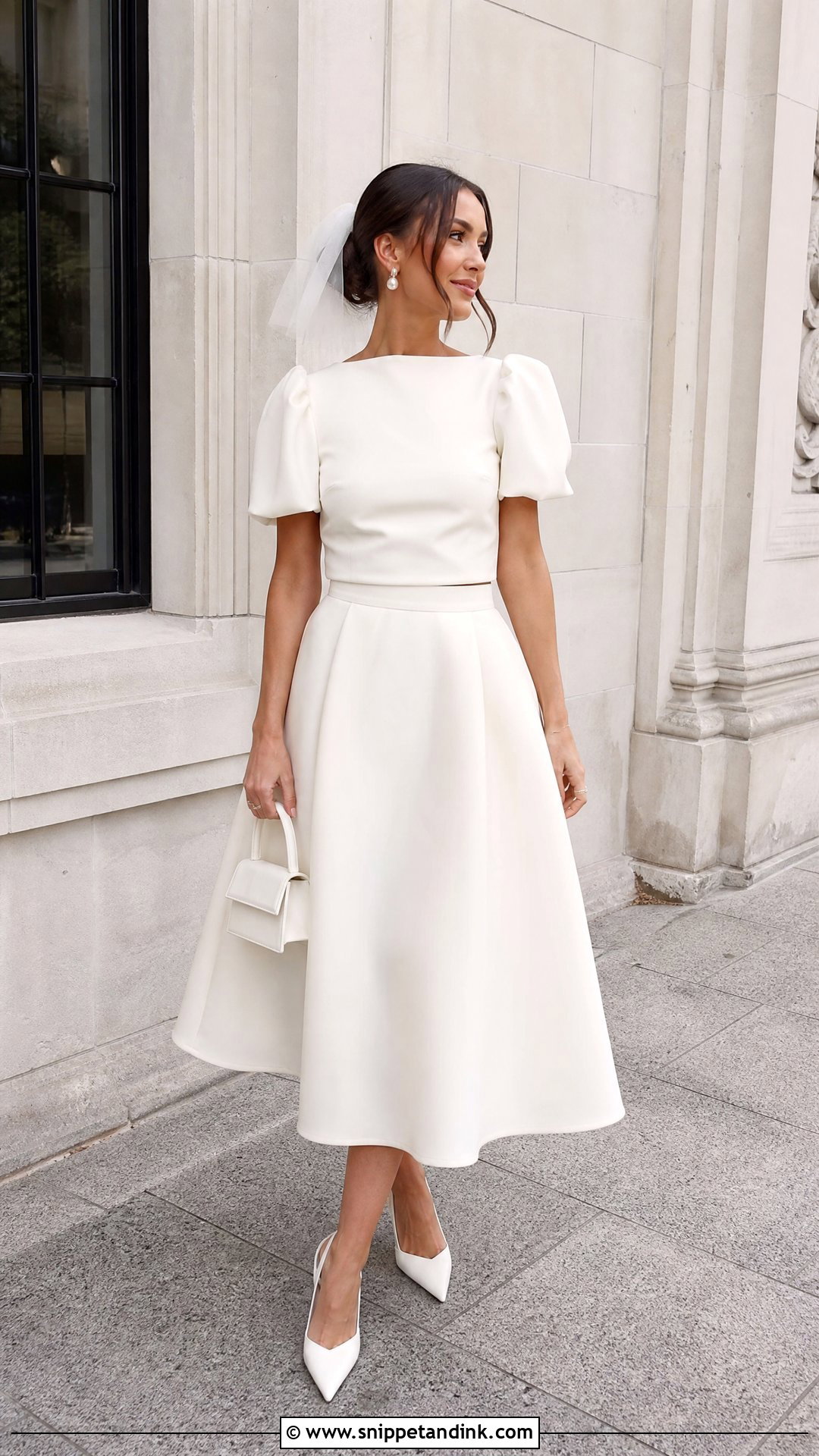
A puff-sleeve top with a structured midi is my pick for a daytime civil ceremony. A fitted waist and controlled sleeves keep it from looking like a costume. Tea-length A-line moves well; a straighter midi looks sharper. Shoes are fully on show, so choose a pair that looks deliberate and that you can walk in, such as pointed slingbacks. Broader shoulders suit a softer, lower puff, while narrow shoulders can take fuller sleeves balanced by a moderate skirt.
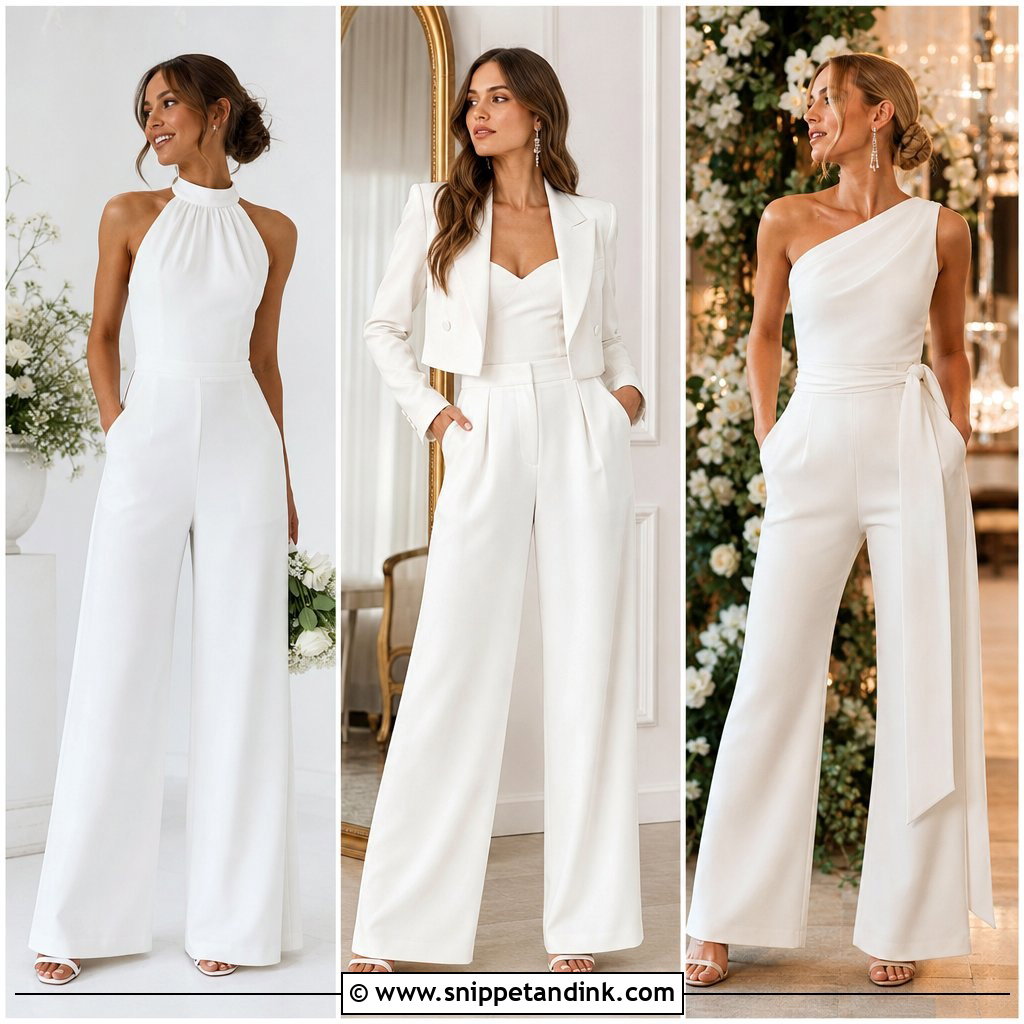
10. Halter Top And Wide Leg Pants Bridal Separates
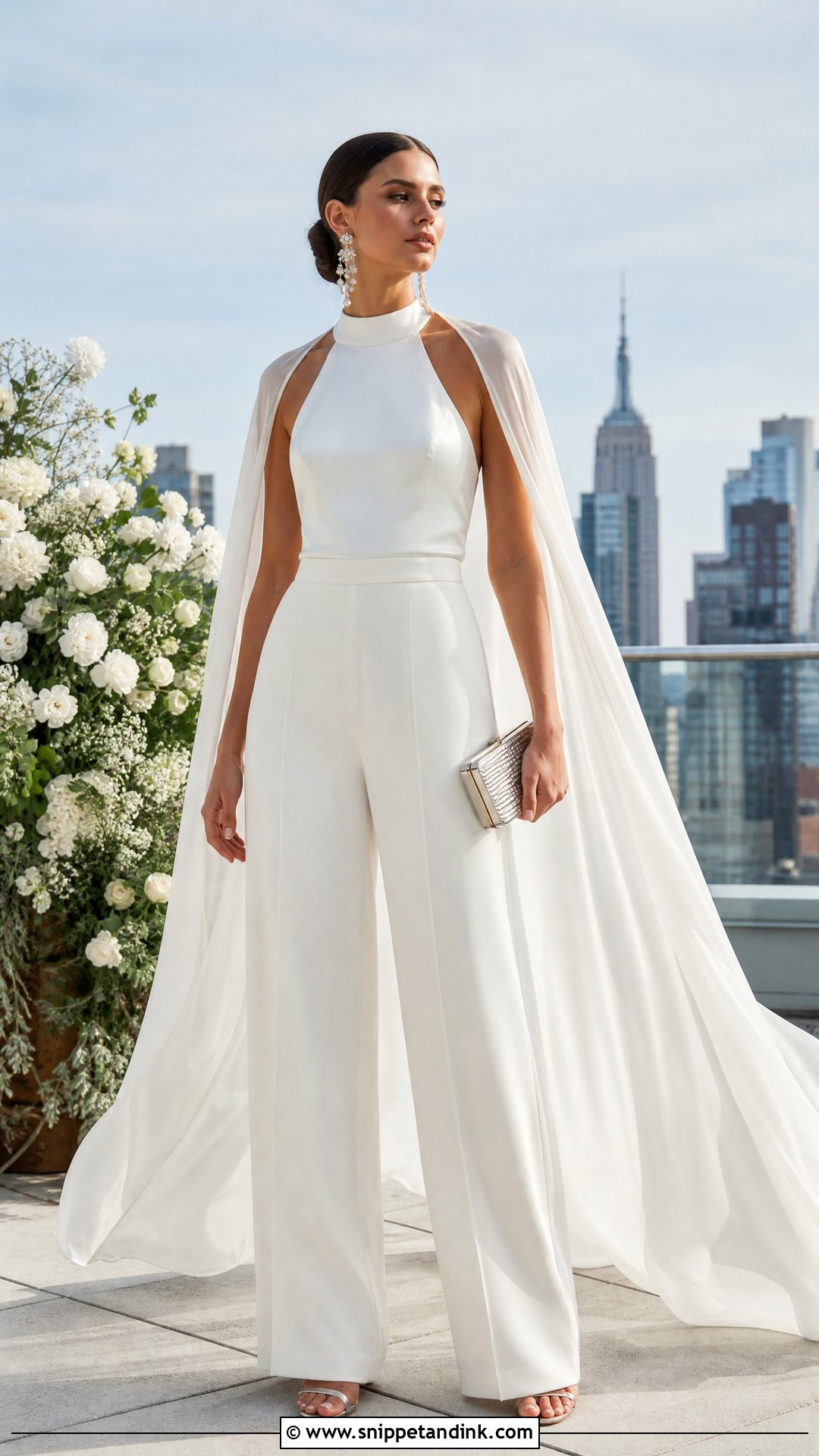
A fitted halter with high-waisted wide-leg trousers gives height and freedom. Choose satin or crepe for the top and a fluid trouser with a flat front. The hem is everything: it should almost skim the floor without catching under your shoes, so do the final hem fitting wearing your exact wedding shoes. A detachable chiffon cape adds ceremony drama and comes off for dancing on a rooftop or at a modern venue. A sleek ponytail keeps the halter’s neckline clear.
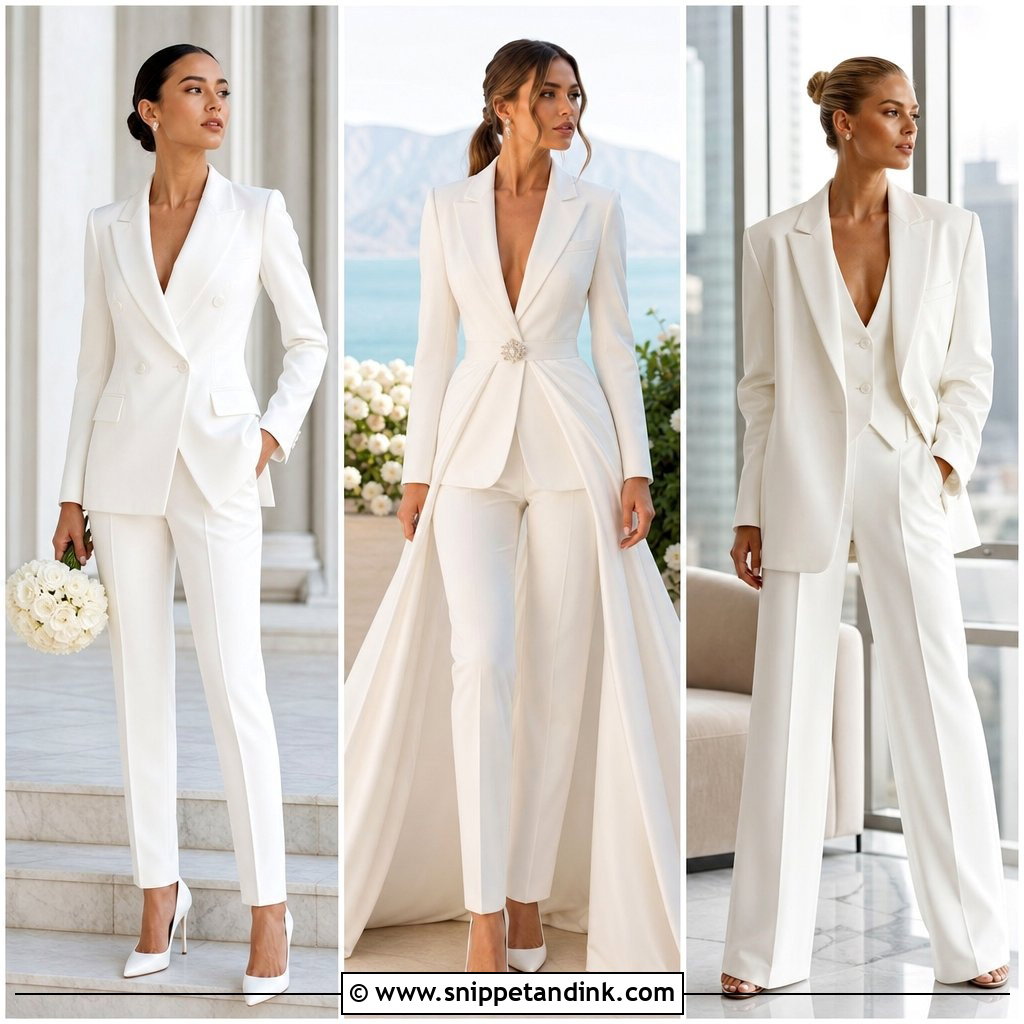
11. Bridal Blazer And Tailored Trousers Separates
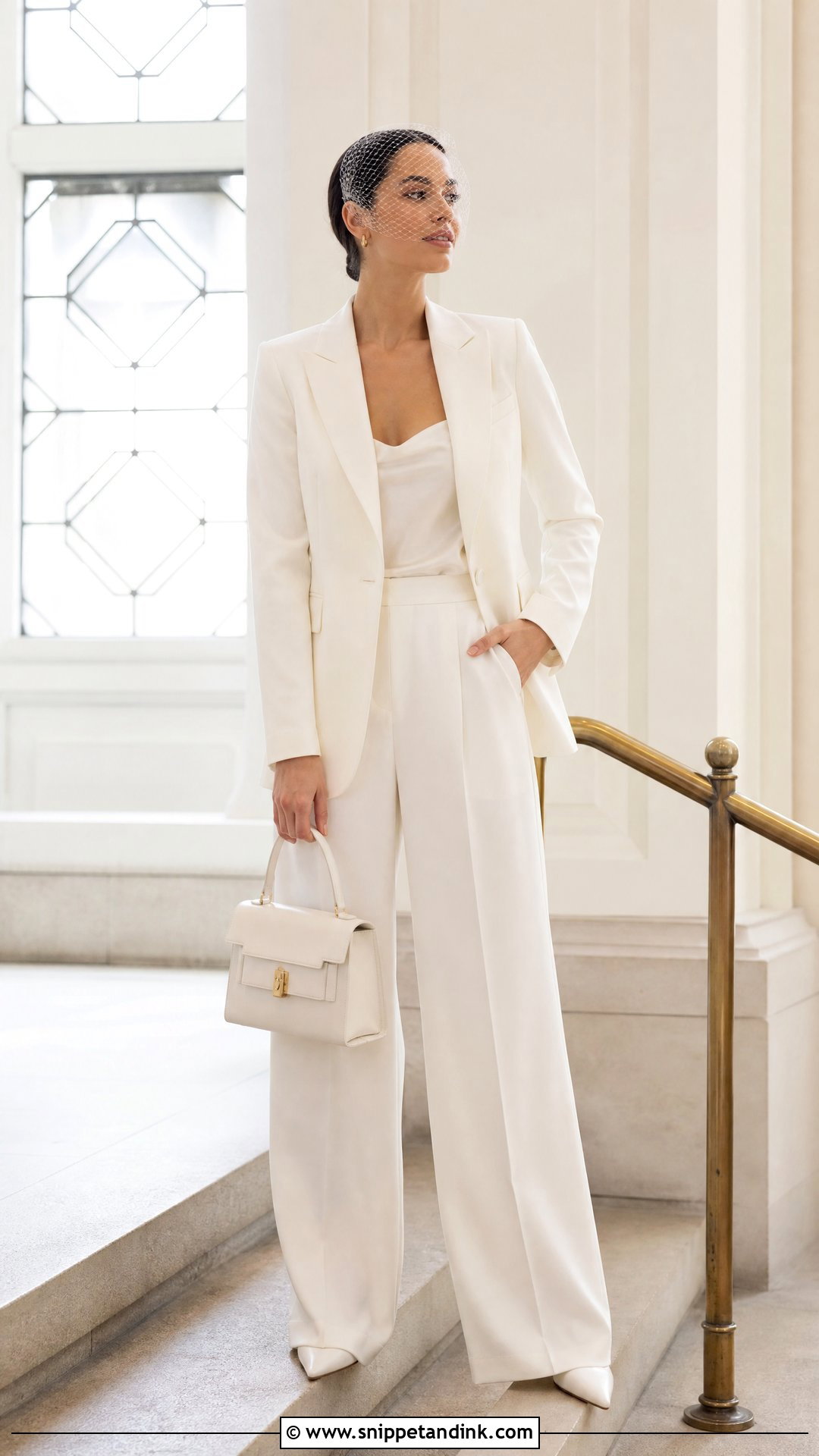
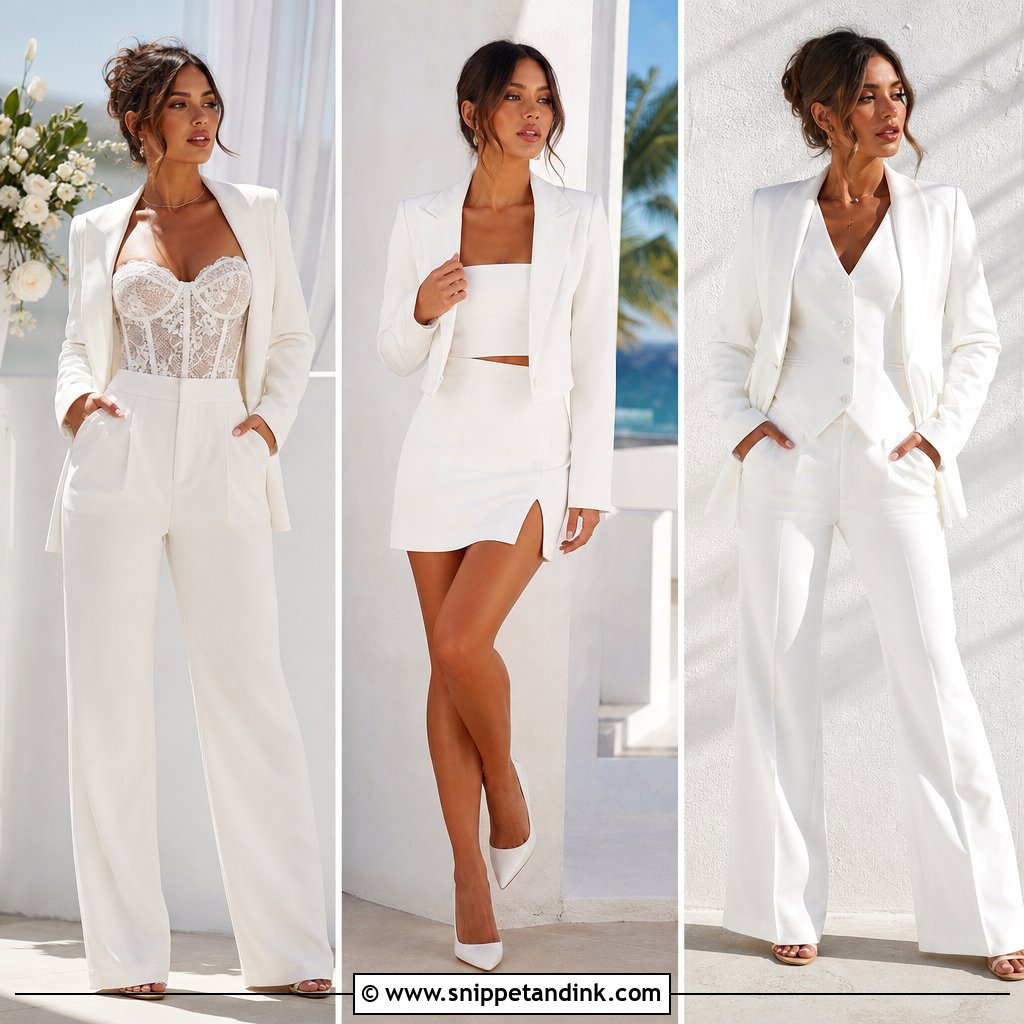
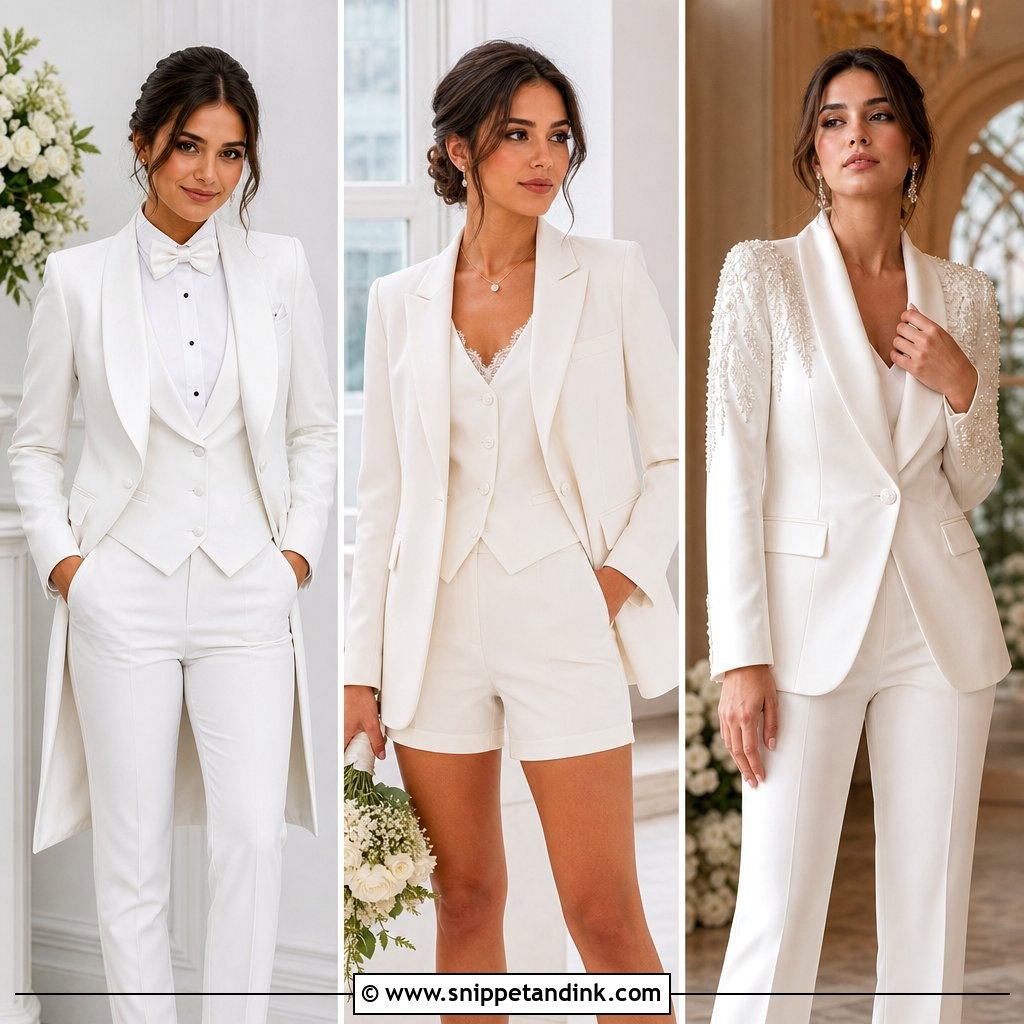
A single-breasted ivory blazer with matching trousers suits a bride who feels most herself in tailoring. Underneath, a silk camisole or bandeau. Pick the trouser cut for your shape: straight, tapered or wide. The blazer must close without pulling across the bust and still look sharp open, which usually means buying for the bust and taking in the waist. Petite brides look better in a slightly shorter jacket. Keep all three pieces in one ivory; three slightly different whites look like a mistake in photos. A birdcage veil makes it unmistakably bridal.
12. Lace Blazer And Cigarette Pants Bridal Separates
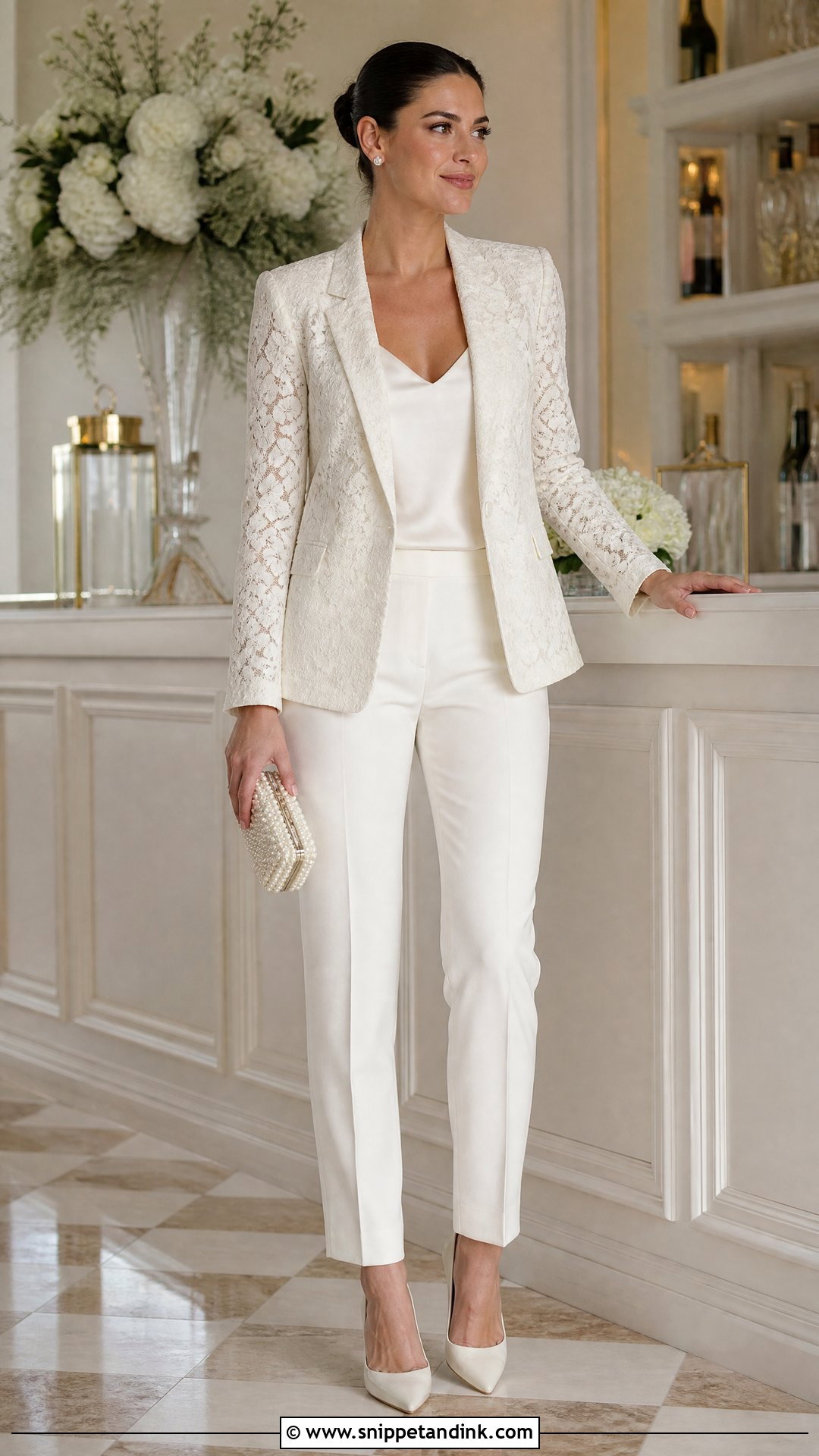
A lined lace blazer over ankle-length crepe cigarette pants mixes softness and precision. A plain silk shell underneath keeps the lace from looking busy. Because the pants stop at the ankle, your shoe becomes part of the outfit; a narrow pointed or almond toe continues the line. I check that the lining and lace share the same undertone, since a cool-white lining behind warm ivory lace shows through as a grey cast. Have the sleeves shortened to end cleanly at the wrist. Lovely for an intimate ceremony or rehearsal dinner.
13. Cape Top And Column Skirt Bridal Separates
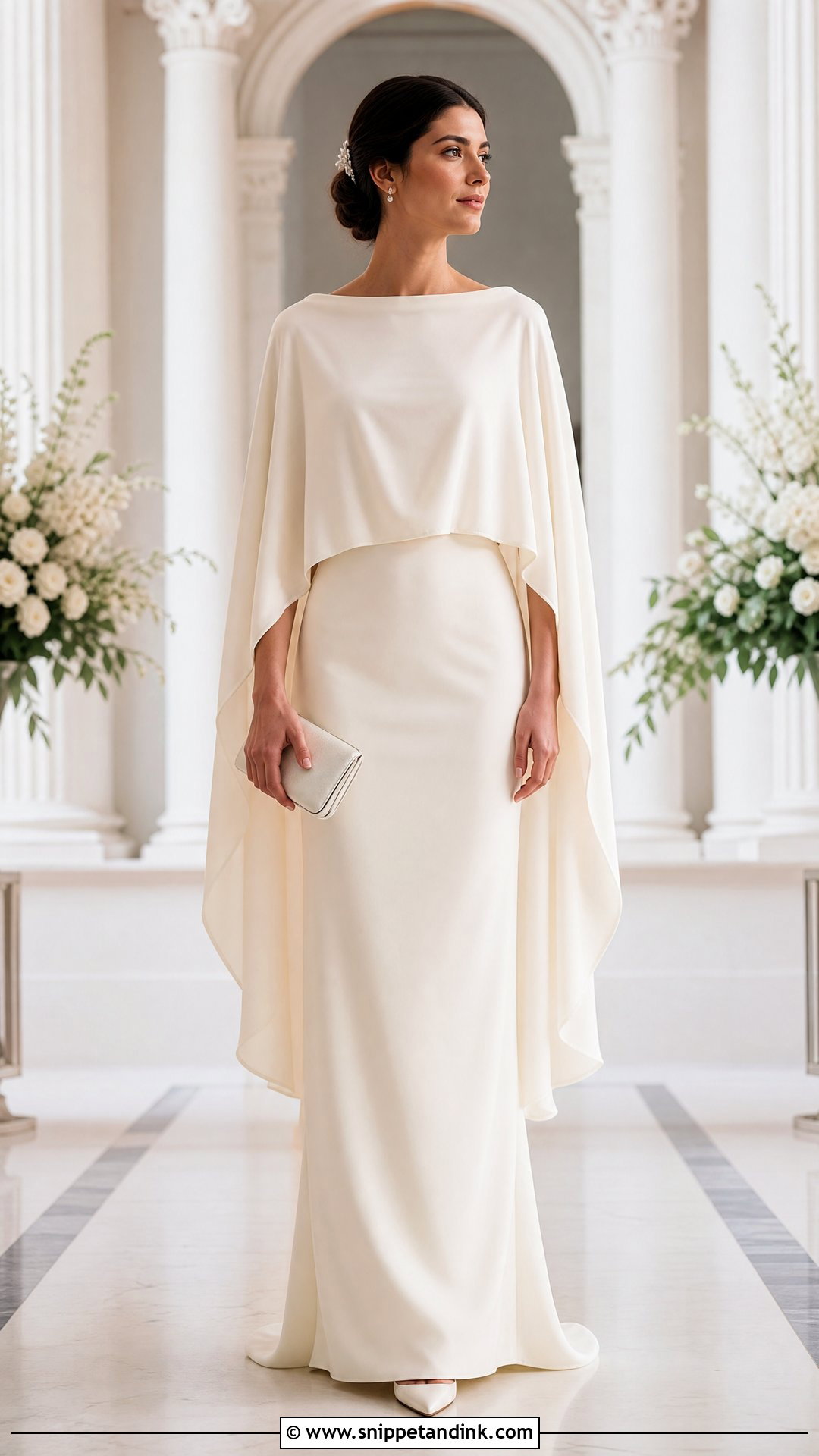
A cape top over a fitted column skirt gives drama above and calm below. The cape can fall from the shoulders, attach at the neck or extend into a short train. Match crepe with crepe or satin with satin. Skip a full veil if it fights with the cape; a comb or small headpiece is usually plenty. Make sure the skirt lets you walk freely, because restricted steps under a flowing cape look awkward in motion. It gives arm coverage without close-fitted sleeves, which many brides prefer in a warm indoor venue.
14. One Shoulder Top And Draped Skirt Bridal Separates
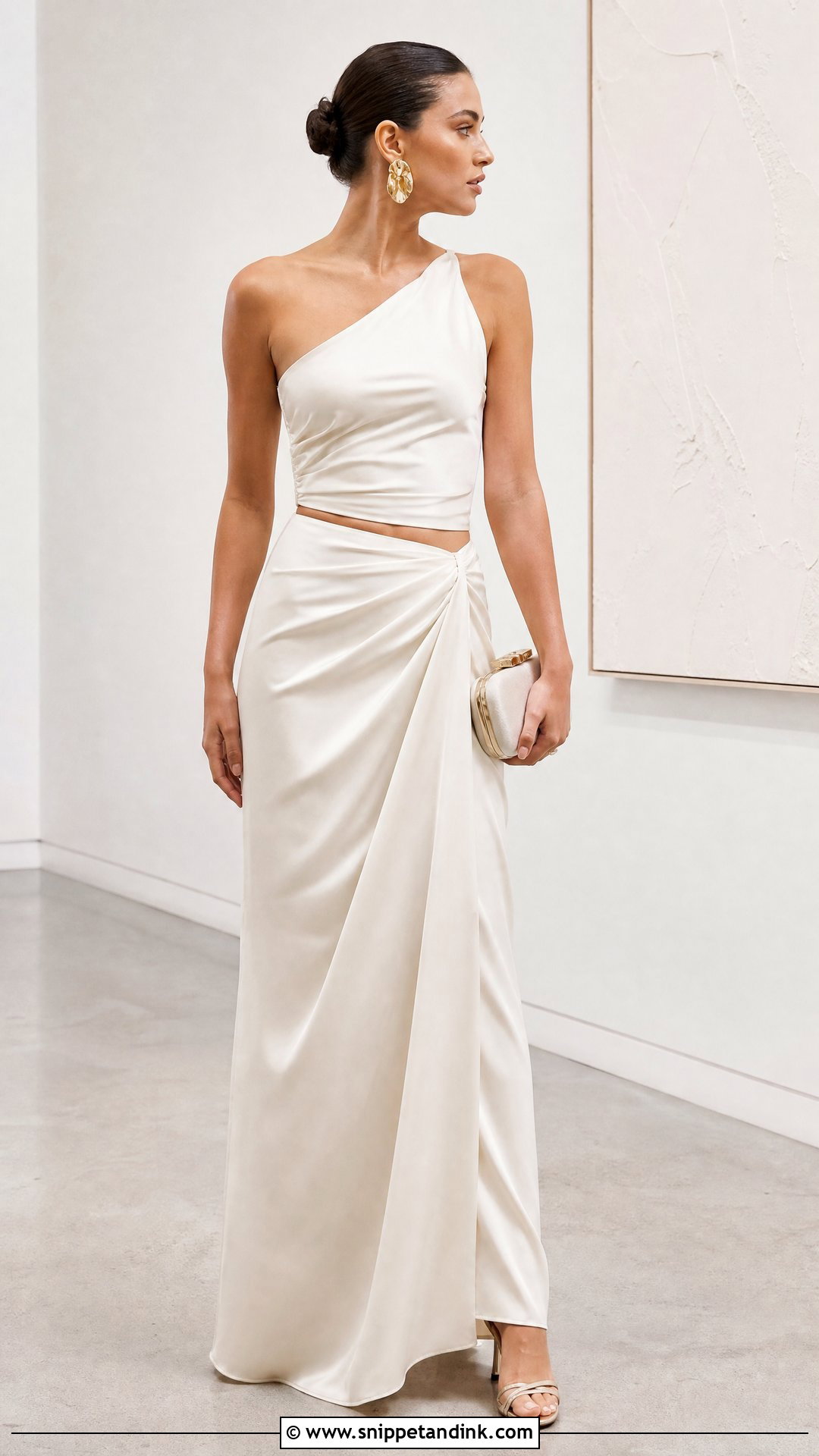
A one-shoulder top with a draped maxi skirt sets up a strong diagonal. Keep both pieces in one fabric family, satin with satin or crepe with crepe. Wear a single statement earring on the bare side and no necklace. The underarm on the covered side is where one-shoulder tops most often gape or cut in, so I check it with your arm raised and lowered. The skirt’s drape should gather at the hip, not the waist, or you’ll get bulk exactly where the two pieces meet.

15. Square Neck Top And Pleated Skirt Bridal Separates
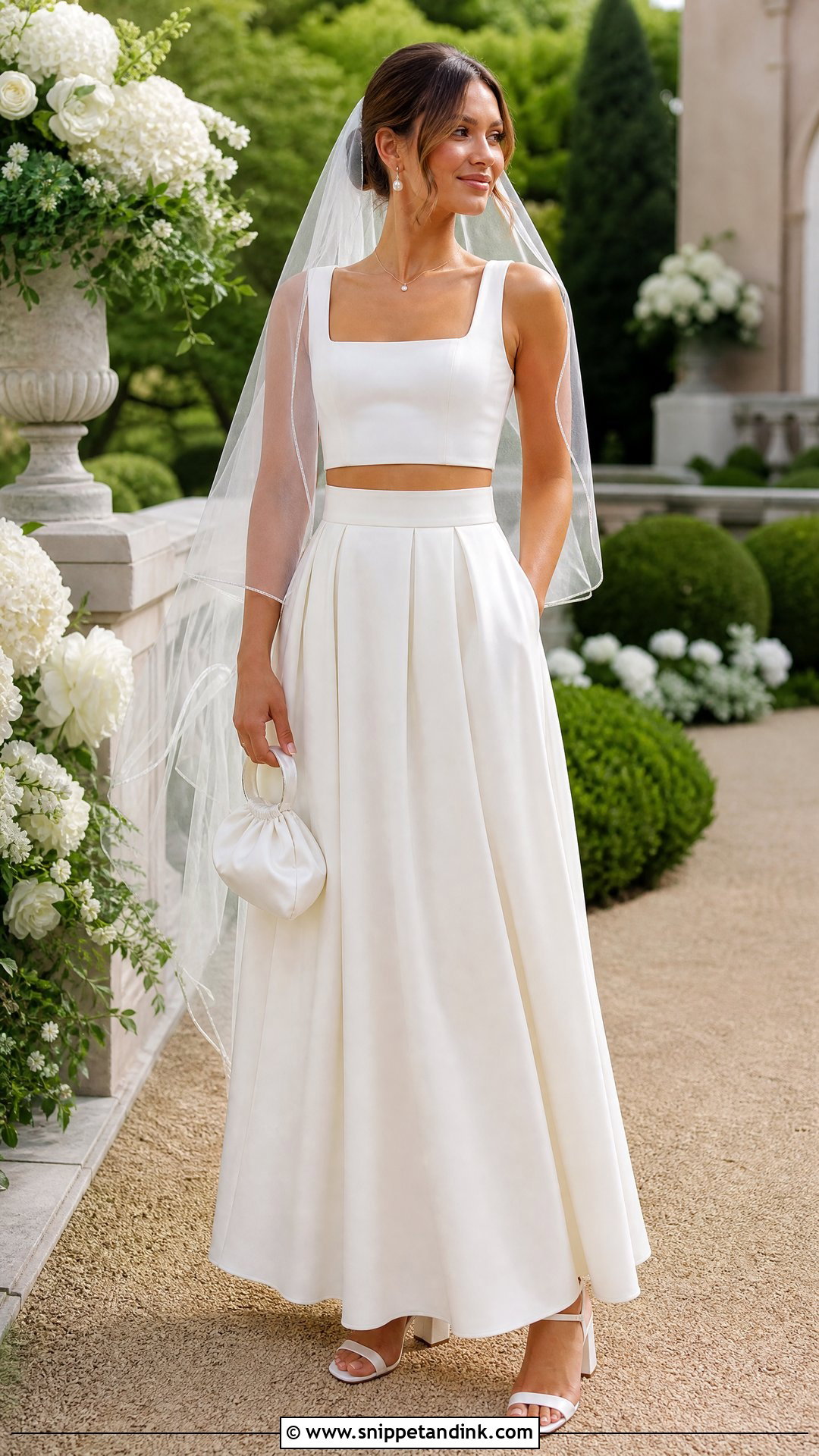
Narrow, controlled pleats move gracefully without the stiffness of a constructed skirt, and a square neck frames the face above them. Choose a fitted top with wide straps or short sleeves. Pleats should be stitched flat for a few inches below the waistband before they open, otherwise they puff at the stomach. A short pendant sits well in a square neckline. If you need more support, a tailor can add cups or light boning to the top.
16. Boat Neck Top And Full Skirt Bridal Separates
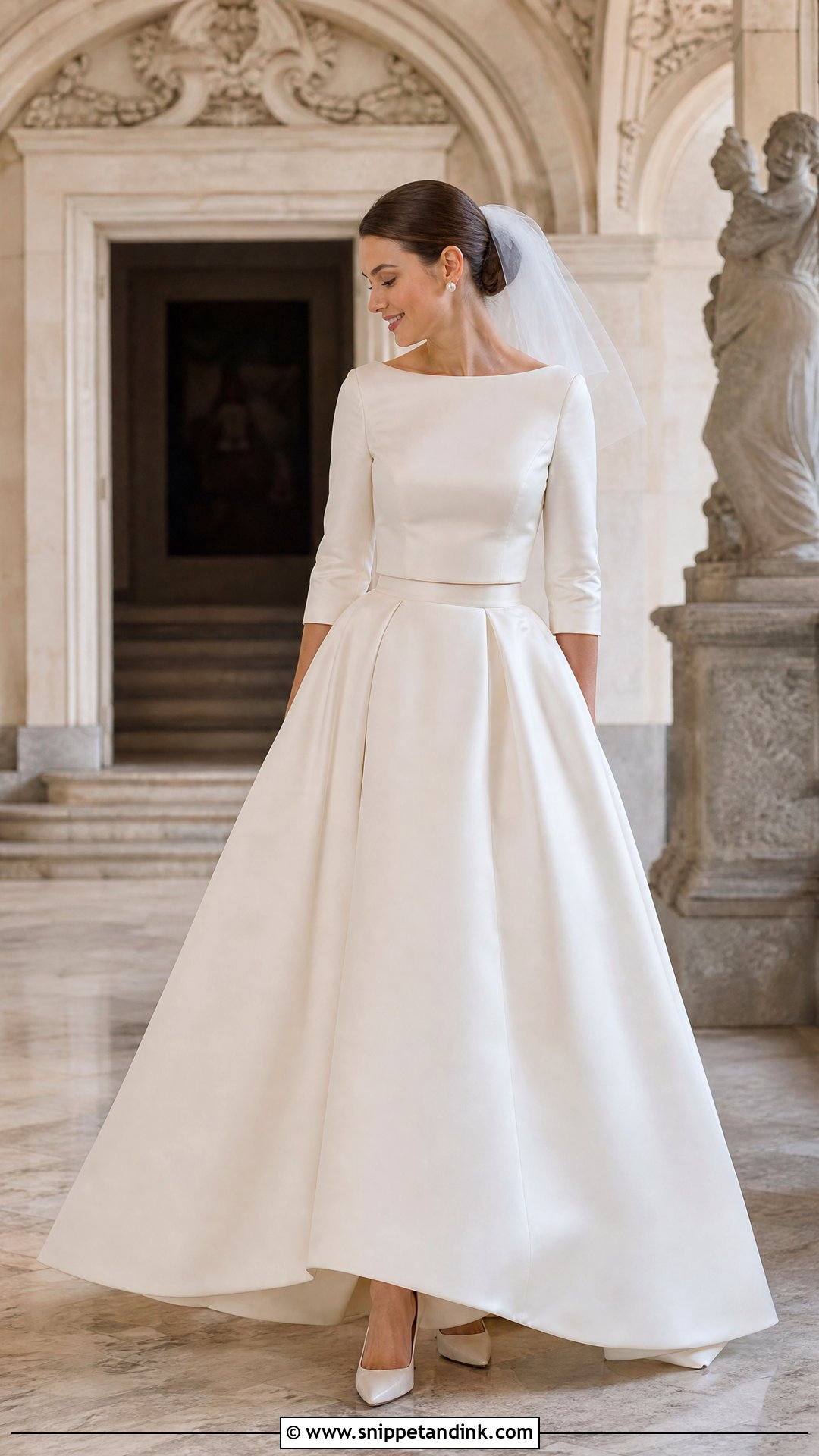
A boat neck widens the shoulder line, which makes a full skirt look balanced below it. Three-quarter sleeves give coverage; sleeveless is lighter in summer. A satin waistband between the two pieces stops them looking disconnected. Narrow shoulders suit a straight boat neck. Broader shoulders look softer in a gently curved one. Pearl earrings, a smooth bun and a short structured veil suit a ballroom or a historic venue.
17. Bridal Vest And Wide Leg Trousers Separates
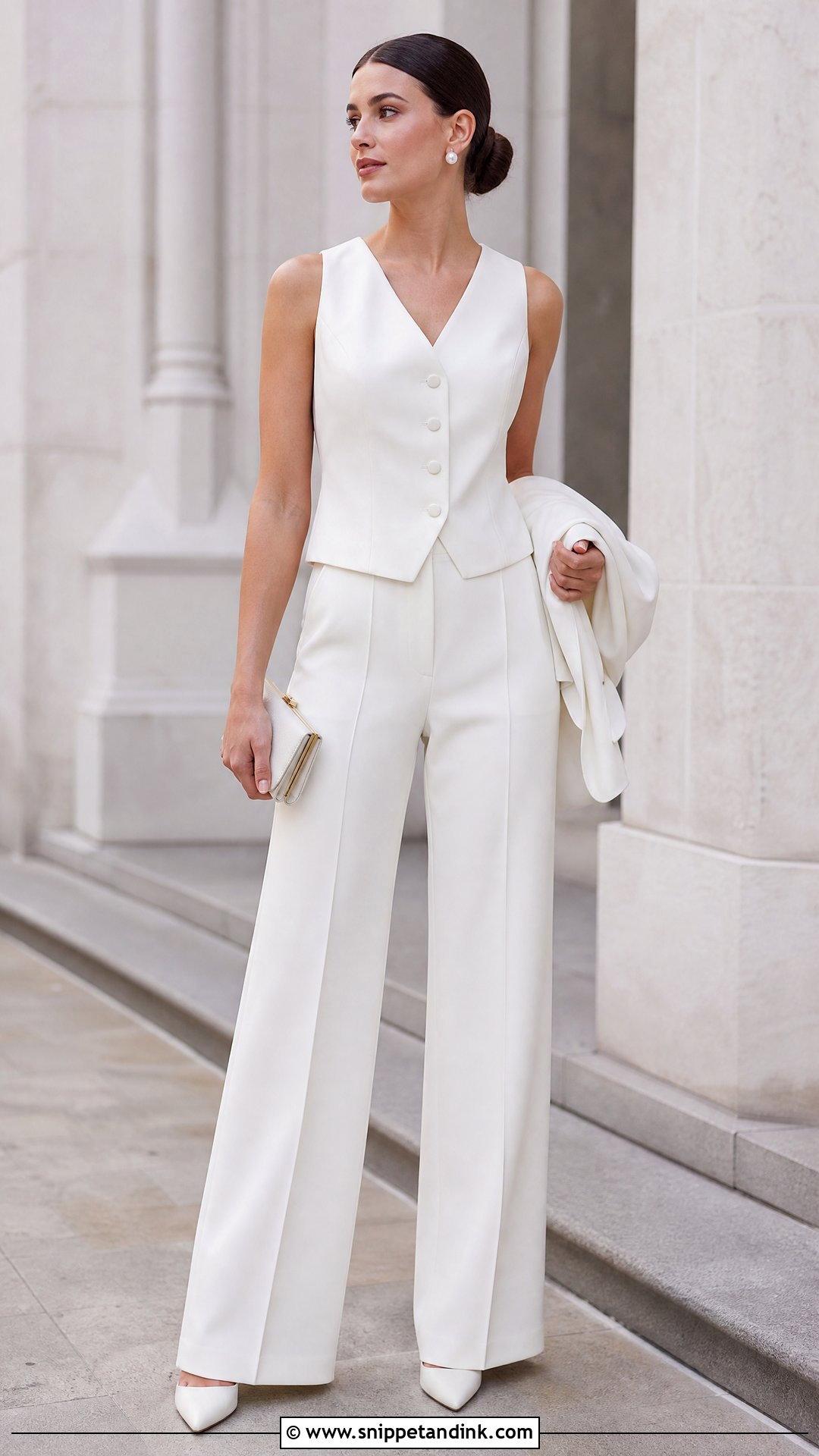
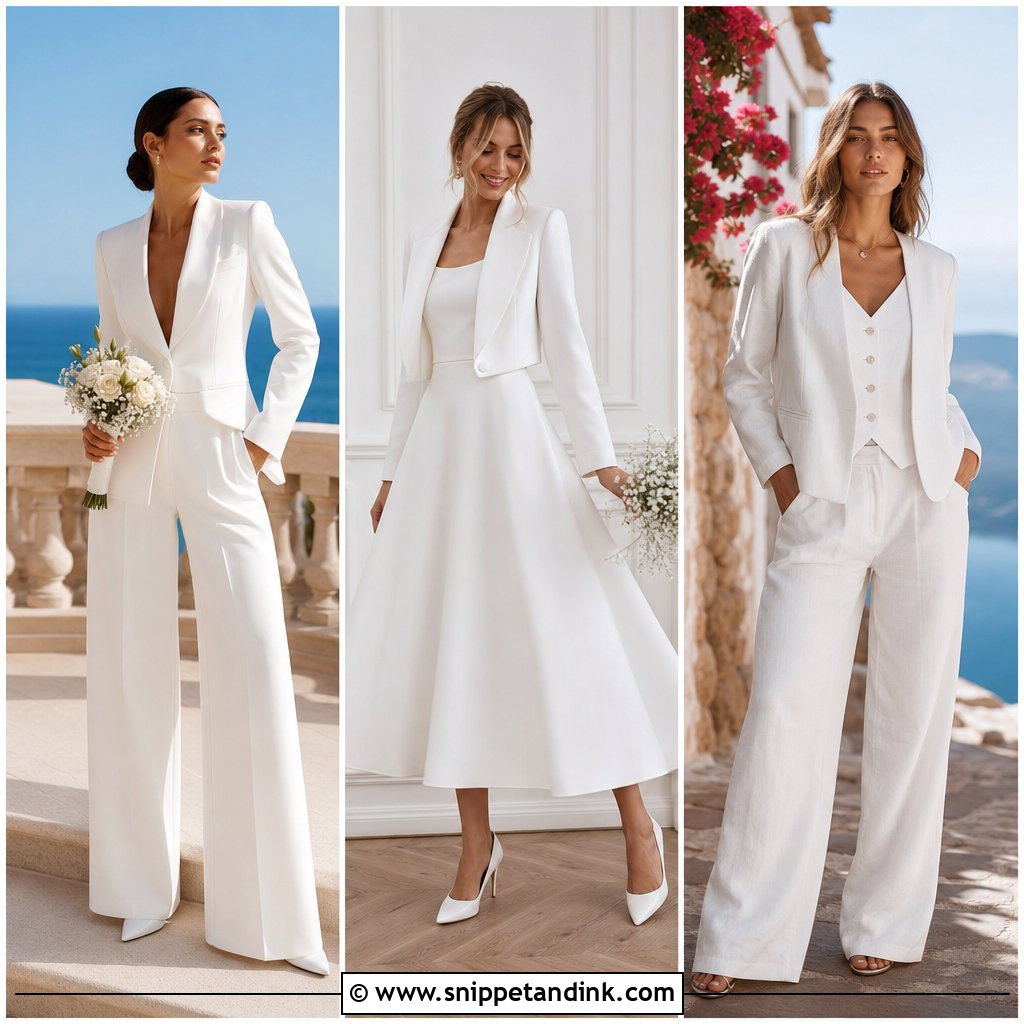
A longline button vest with high-waisted wide-leg trousers in the same fabric reads as a relaxed bridal suit. The vest should end near the top of the hips and fit smoothly at the bust. Worn alone it gives a clean V; with a silk blouse underneath it’s more covered. Sit down at the fitting and watch the buttons. If they strain or gap, the vest is too small at the waist, and that pull will show in every seated photo. A cropped blazer adds coverage for a courthouse ceremony.
18. Silk Blouse And Wrap Skirt Bridal Separates
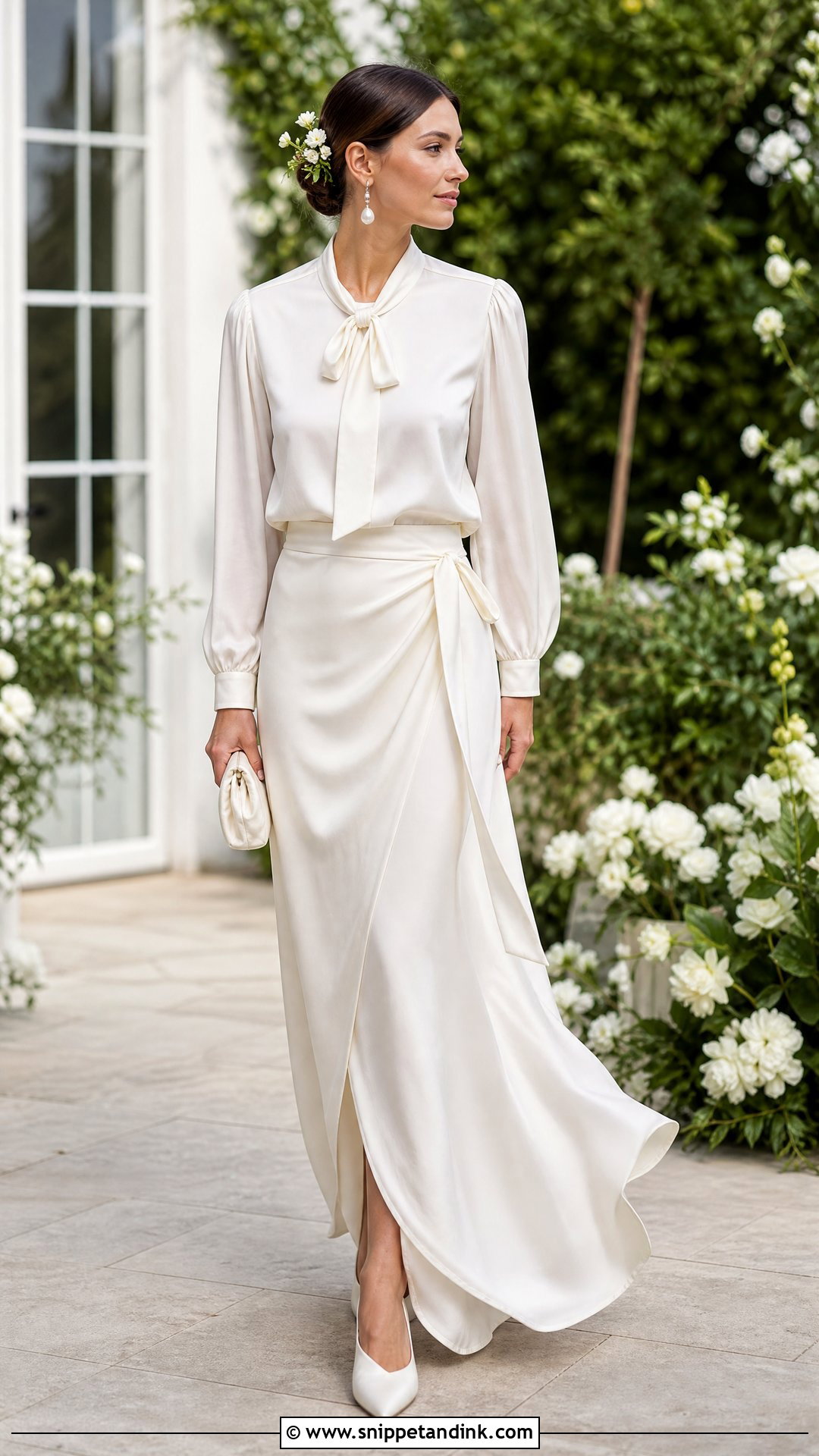
A silk blouse and a satin wrap skirt are the least structured outfit in this list. Choose a tie neck, soft drape or gathered sleeves. Wrap skirts open when you walk or sit, so ask for a hidden snap where the overlap ends. Untucked silk is the other problem; a bodysuit-style blouse or small fasteners inside the waistband keep it smooth. You can match the colours exactly or deliberately mix ivory with champagne for a slightly vintage feel at an outdoor or intimate wedding.
19. Statement Sleeve Top And Pencil Skirt Bridal Separates
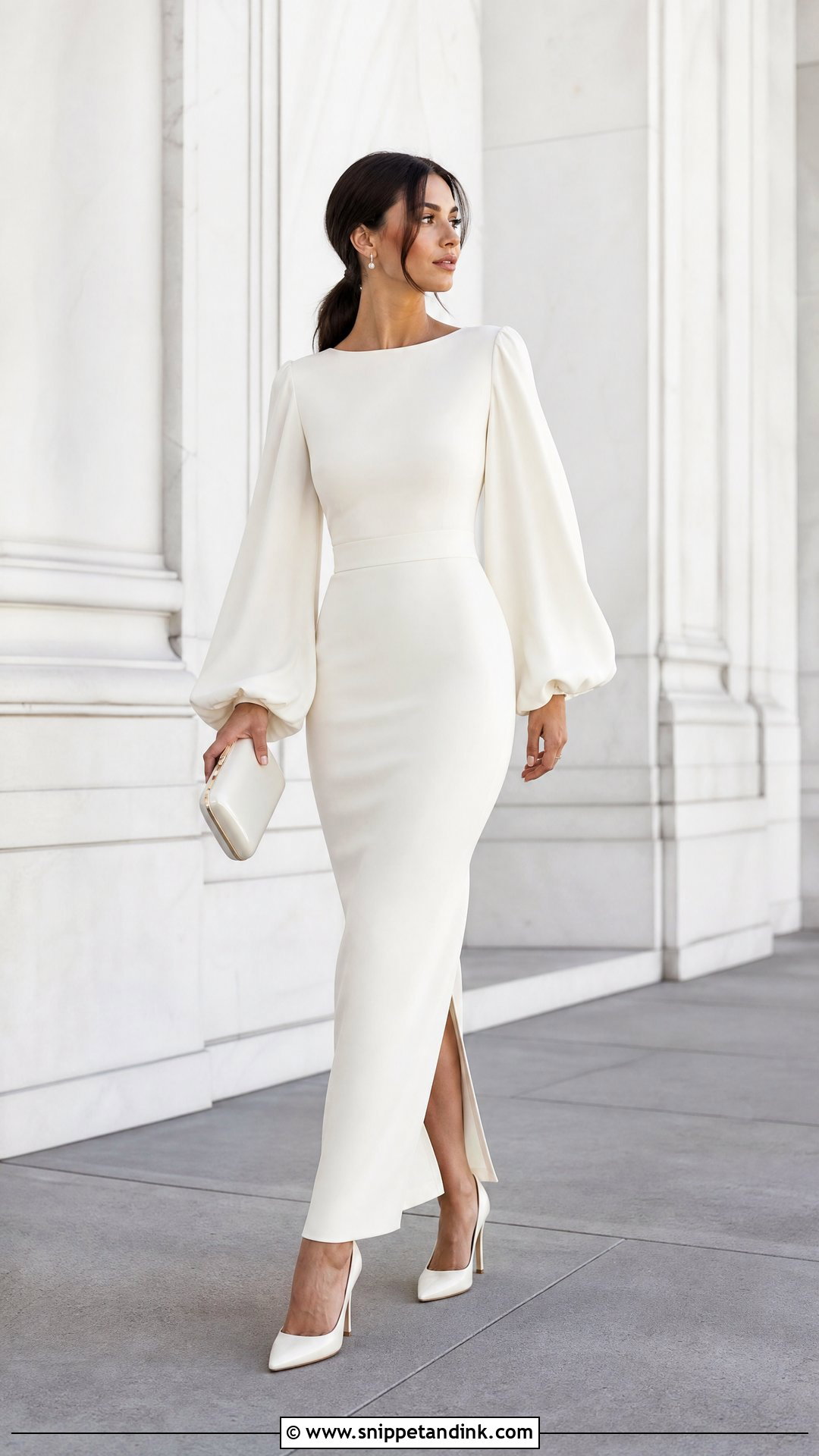
Big sleeves bring personality to a plain pencil skirt. Consider bishop, bell, or gathered sleeves, with a fitted bodice so the top doesn’t look oversized. A high-waisted crepe or satin pencil skirt gives a long line beneath. You need a back slit or some stretch to walk, but sit down in it before the slit is finalised, since a slit that’s fine standing can rise uncomfortably high when seated. A short veil or a clean headband leaves the sleeves as the feature at a city dinner reception.
20. Sequined Top And Satin Trousers Bridal Separates
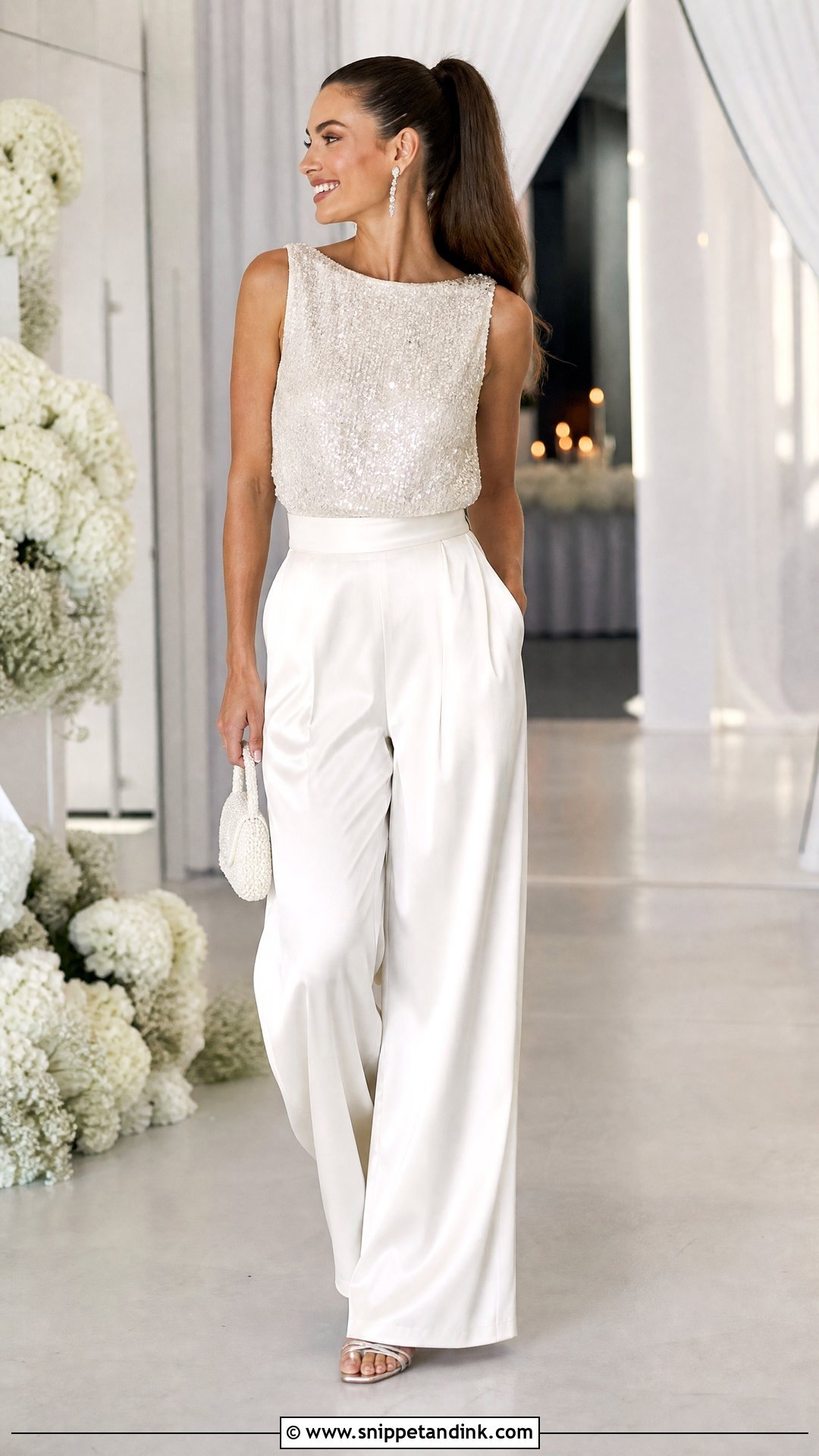
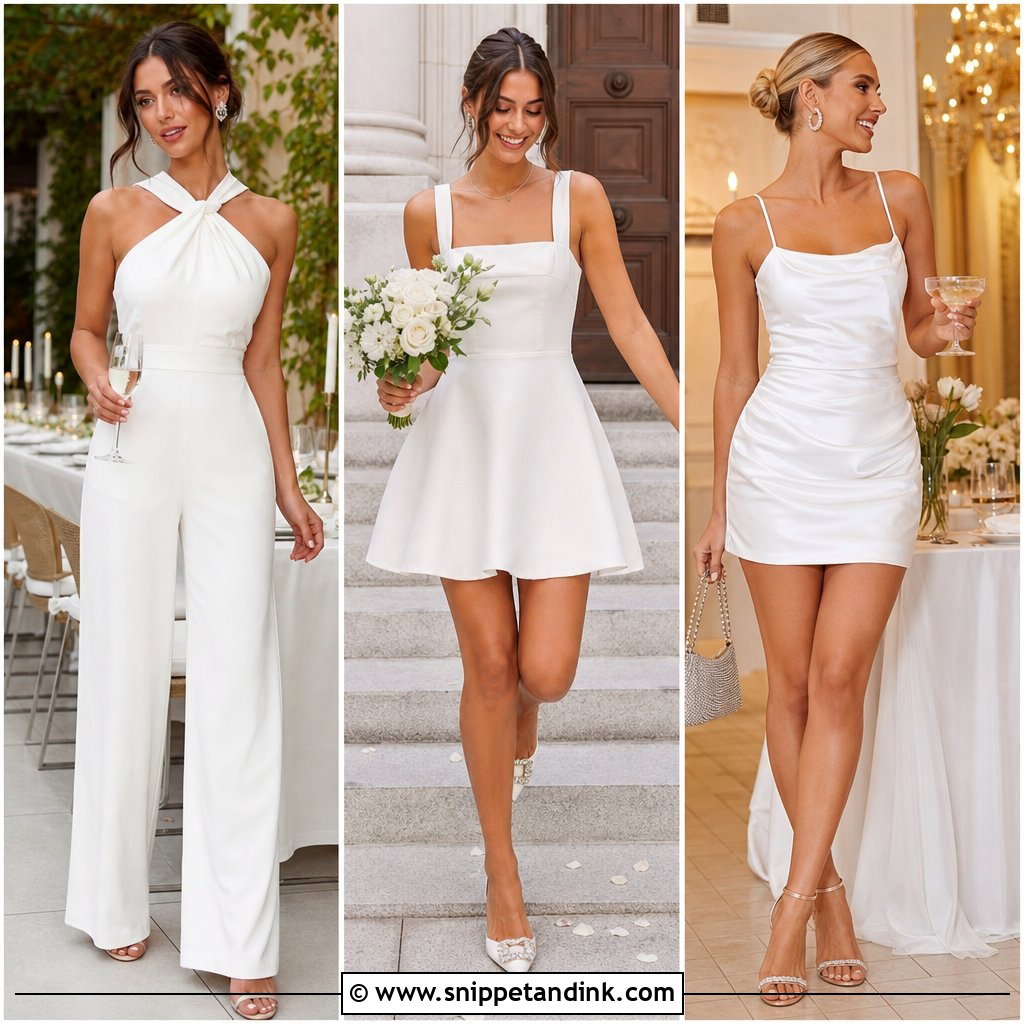
Sequins and satin trousers make a reception outfit that still says bride. Smaller sequins or fine beading look more refined than big paillettes. Straight or wide satin trousers balance the shine. Watch the underarm; sequins scratch over hours of dancing, so a lined top is worth it. A simple blazer works for the entrance and comes off later. Keep everything tonal so the textures look planned under both daylight and indoor lights.
21. Feather Trim Top And Mini Skirt Bridal Separates
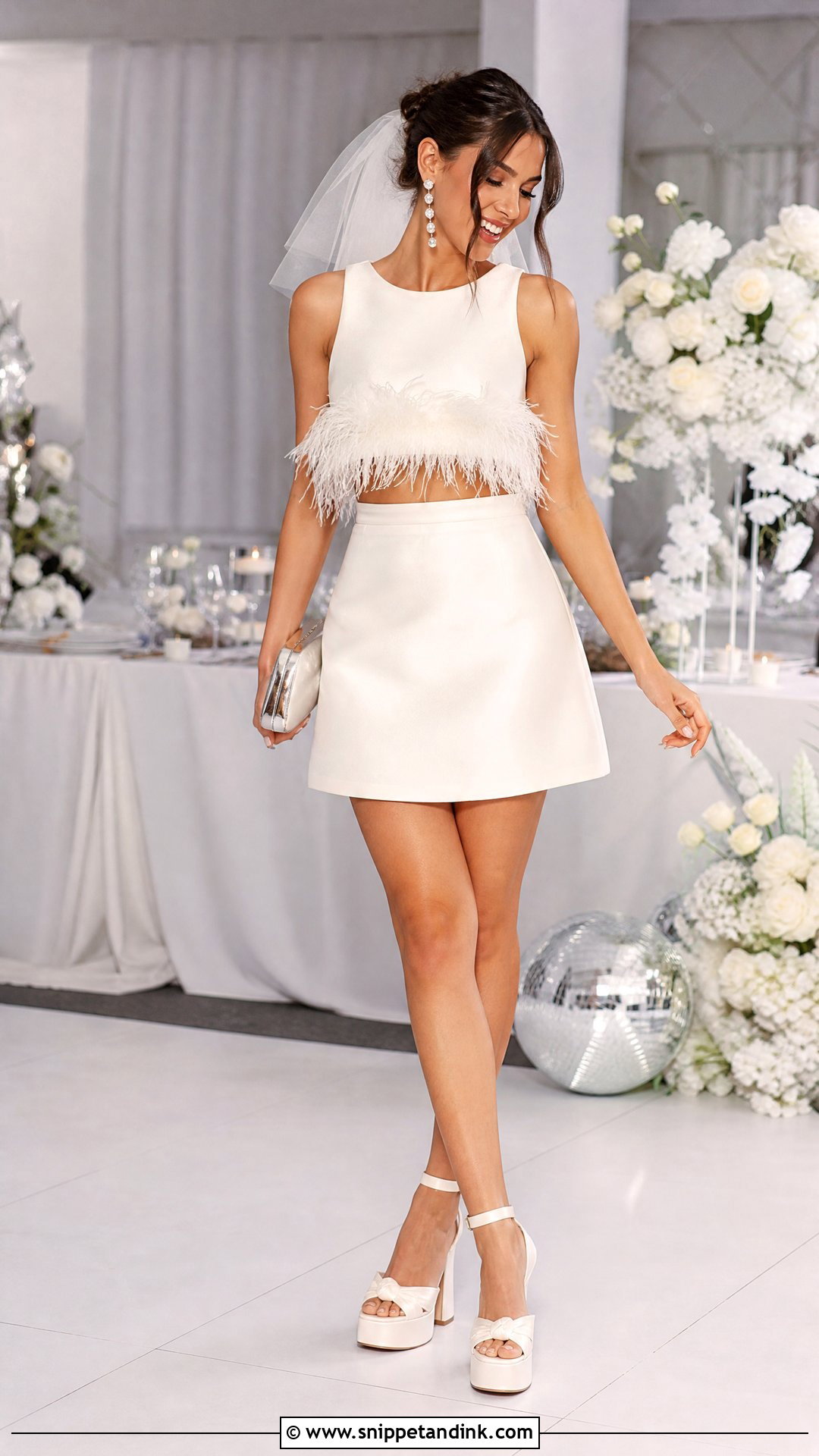
Feathers and a structured mini are pure after-party. Keep the feathers to the neckline, sleeves or hem, and keep everything else plain. A tailored A-line mini is easier to sit in than a tight one. I’d test the length by sitting on a bar stool at the fitting, since that’s where a short skirt usually catches you out. Sheer tights add coverage if you want it. Platform sandals and a short veil keep it bridal in a bright, modern reception space.
22. Corset Top And Trouser Overskirt Bridal Separates
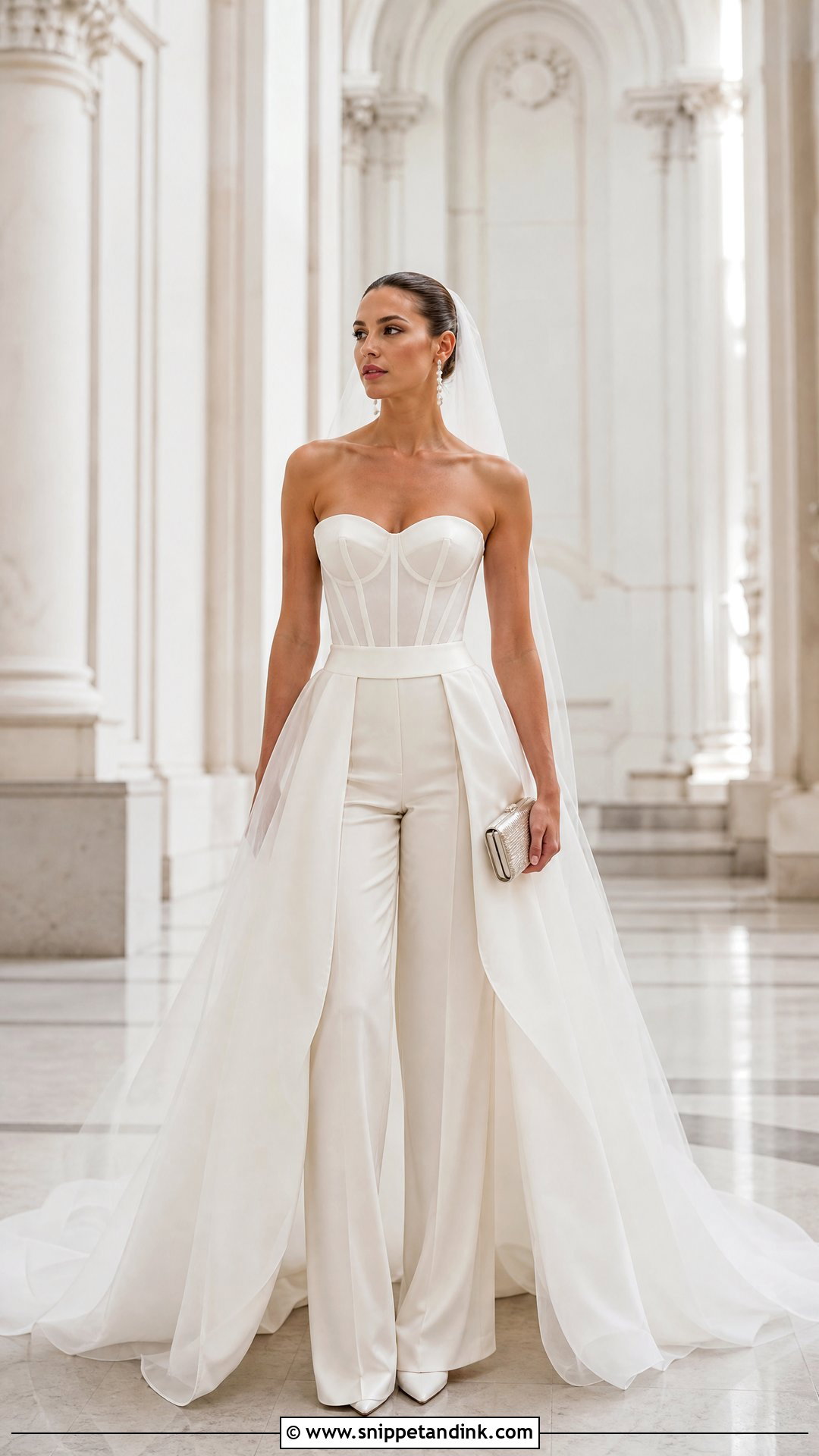
Why choose between trousers and a skirt? A corset with wide-leg trousers plus a detachable front-opening overskirt gives you both. The overskirt opens at the front so the trousers show, then comes off after the ceremony. Its waistband has to sit securely without squeezing or shifting the trousers underneath, and I usually have it close with hooks at the side. Keep all three garments in the same ivory undertone. Practise taking it off with the person who’ll help you.
23. Bridal Sweater And Tulle Skirt Separates
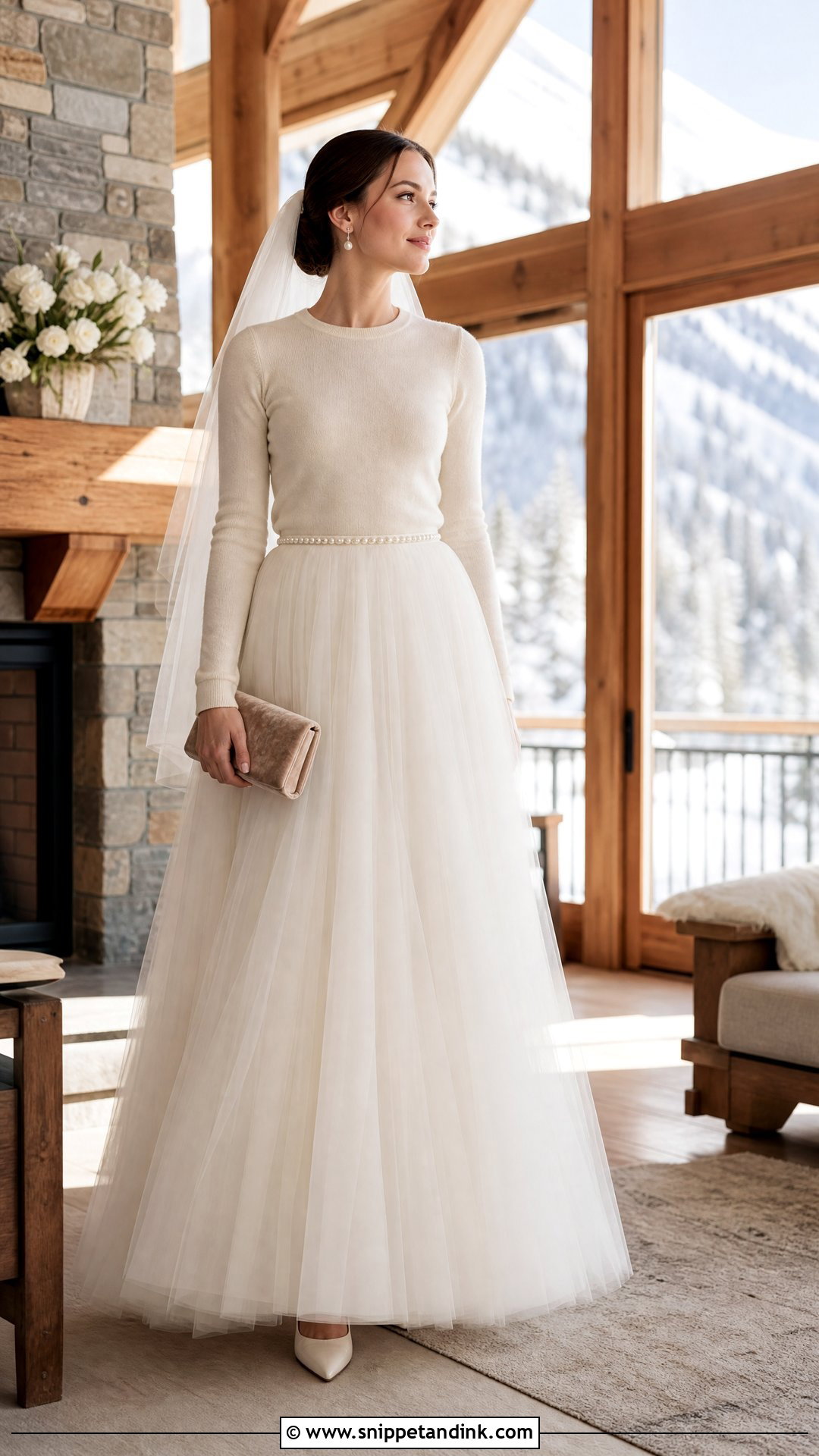
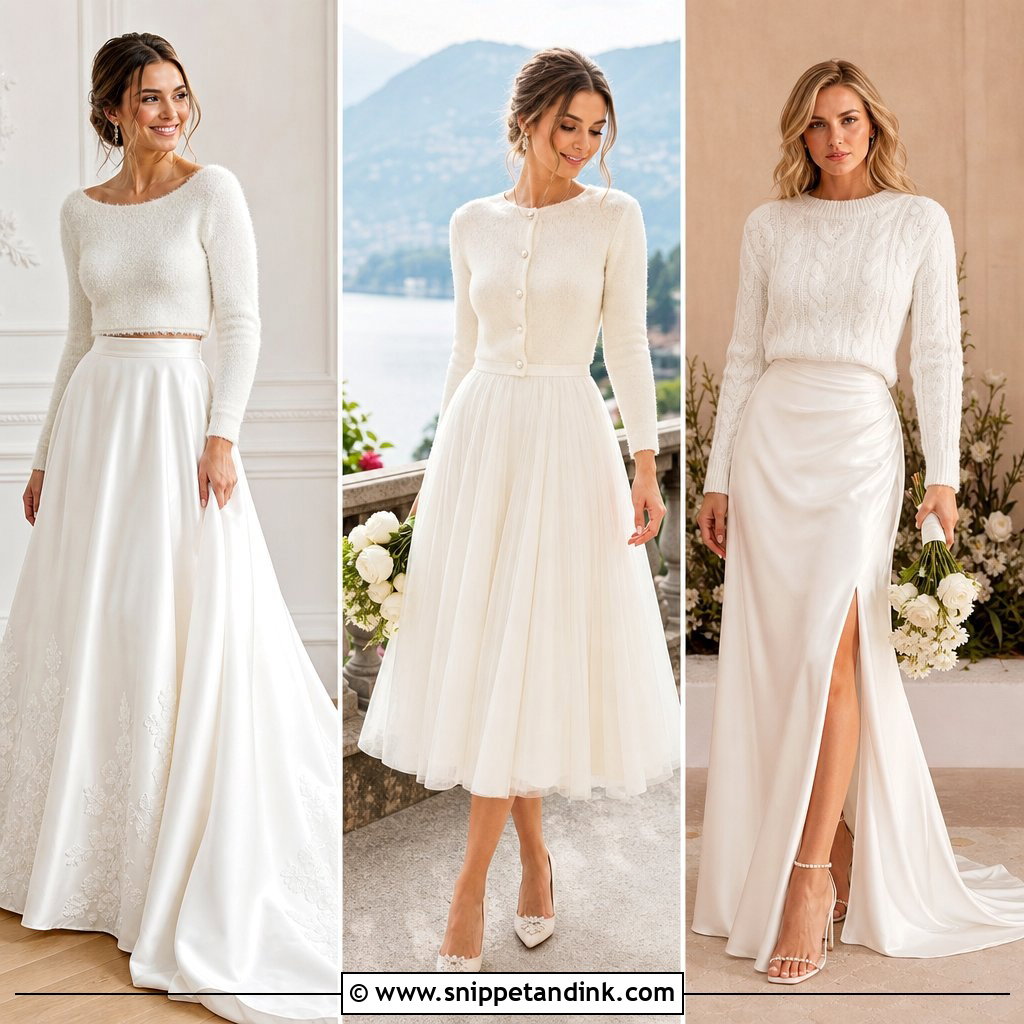
A fine-knit bridal sweater over a lined tulle skirt is cosy and unexpected for a winter or mountain wedding. Choose cashmere or a fine knit with a crew, mock or soft V-neck. Bulky knits bunch under the waistband, so either tuck a fine knit smoothly or have the sweater shortened to meet the skirt. A narrow belt makes the switch from knit to tulle look deliberate. Knits stretch through a long day, so if it fits snugly at the trial, that’s right. An ivory wool coat covers the outdoor photos.
24. Embroidered Top And Colored Skirt Bridal Separates
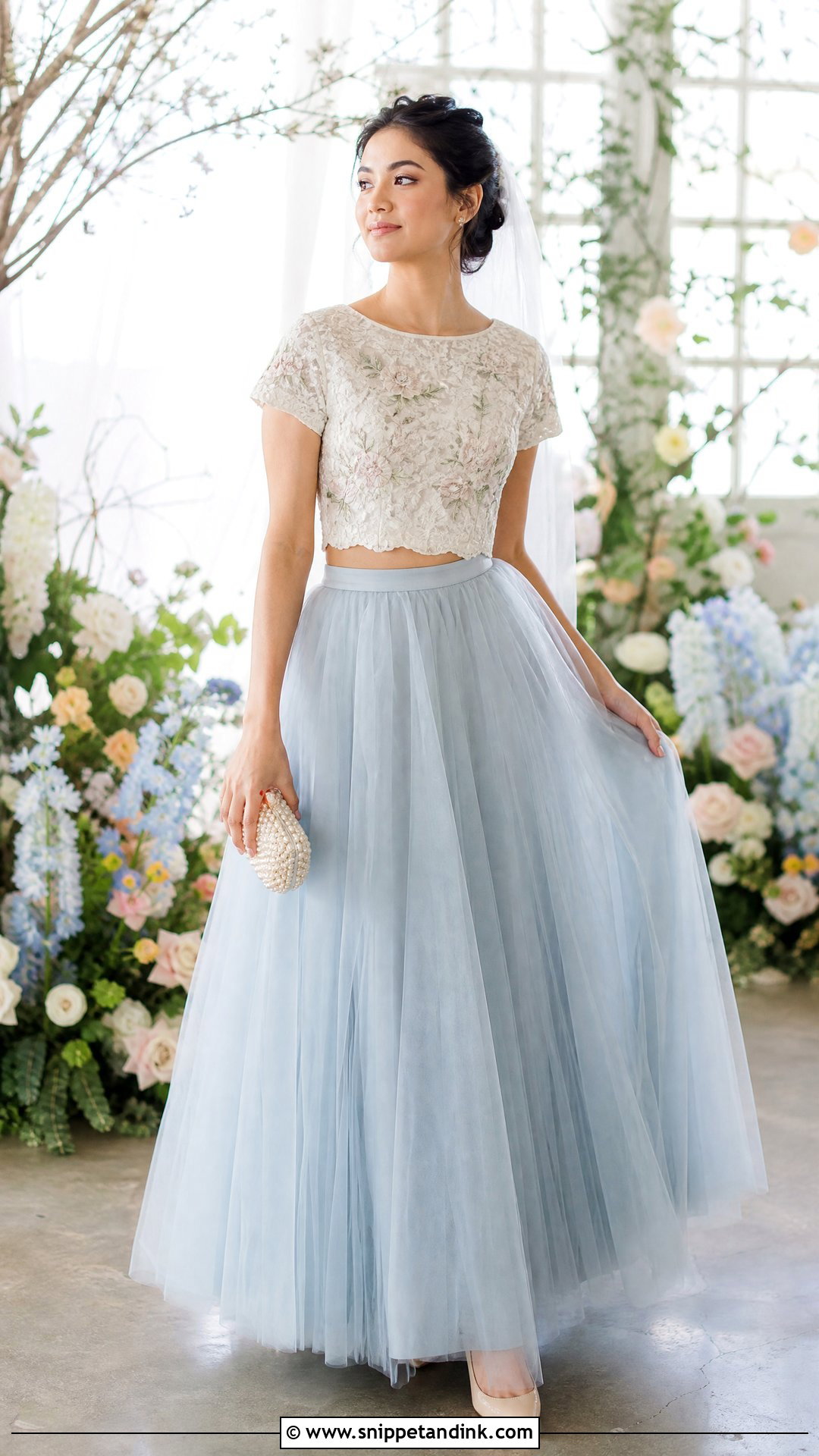
Separates don’t have to be all white. An embroidered ivory top with a blush, pale blue, soft grey or champagne skirt brings in your palette. Embroidery with a little coloured thread links the two shades. Full tulle reads romantic; satin A-line looks cleaner. Pale colours shift in photos, especially beside bright white decor, so look at the skirt under venue lighting before you commit. Keep accessories neutral so the colour feels intentional.

25. Bridal Shirt And Maxi Skirt Separates
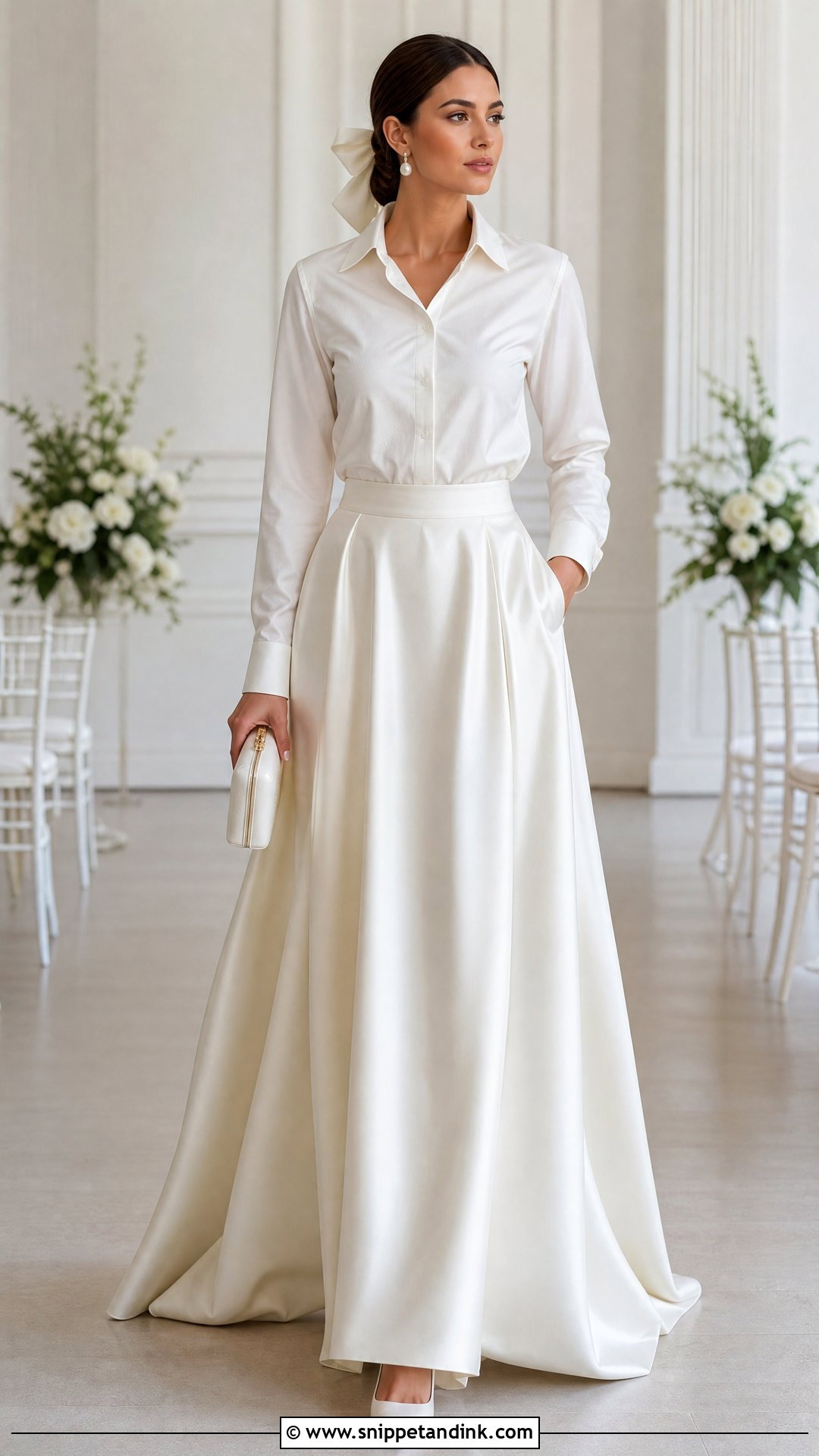
A crisp bridal shirt with a sweeping maxi skirt feels relaxed but still formal. Pick silk, satin or fine cotton with clean cuffs and minimal hardware. Tuck it into a ball gown, pleated or bias-cut skirt depending on formality. Buttoned cuffs for the ceremony, rolled for the party. A shirt carries a lot of fabric at the hem, so I ask the tailor to shorten its tails or cut a fitted version, otherwise it makes a lumpy line under the skirt. A front knot works at a beach wedding.
A Reception Change in Ten Minutes, Not Forty
Many brides choose separates so they can swap half the outfit for dancing. It’s a great idea, but the change usually takes longer than people expect, and it often happens while the room is waiting. A little planning keeps it short.
Set it up before the ceremony
Ask the venue for a private room near the reception, and have the second skirt or trousers pressed and hanging there, with shoes and a mirror. If your hair has a long veil, decide now whether it comes out at the same time; removing pins takes as long as the outfit change.
Pick a quiet slot
The easiest moment is after dinner while tables are cleared, or during the photographer’s break. Agree it with your planner so the first dance isn’t announced while you’re halfway into a waistband.
Bring a helper who has practised
Corset laces, hook-and-bar closures and overskirt fastenings are hard to do alone. Whoever helps should have done it once at your final fitting, so they’re not learning on the night.
Wear Both Halves Together Before Anything Gets Cut
Lace tops, corsets, blazers, trousers, bodysuits and skirts can all become complete wedding outfits with very different moods. Start with the shape you feel best in, then match fabric colour, texture and formality. My non-negotiable is trying the pieces together before any alterations, in your shoes and underwear. Walk, sit, lift your arms and dance a little; problems show up quickly that way. Good tailoring is what makes two garments look like one outfit, whichever pieces you end up wearing.
You'll Like These Ideas:


Leave a Reply