
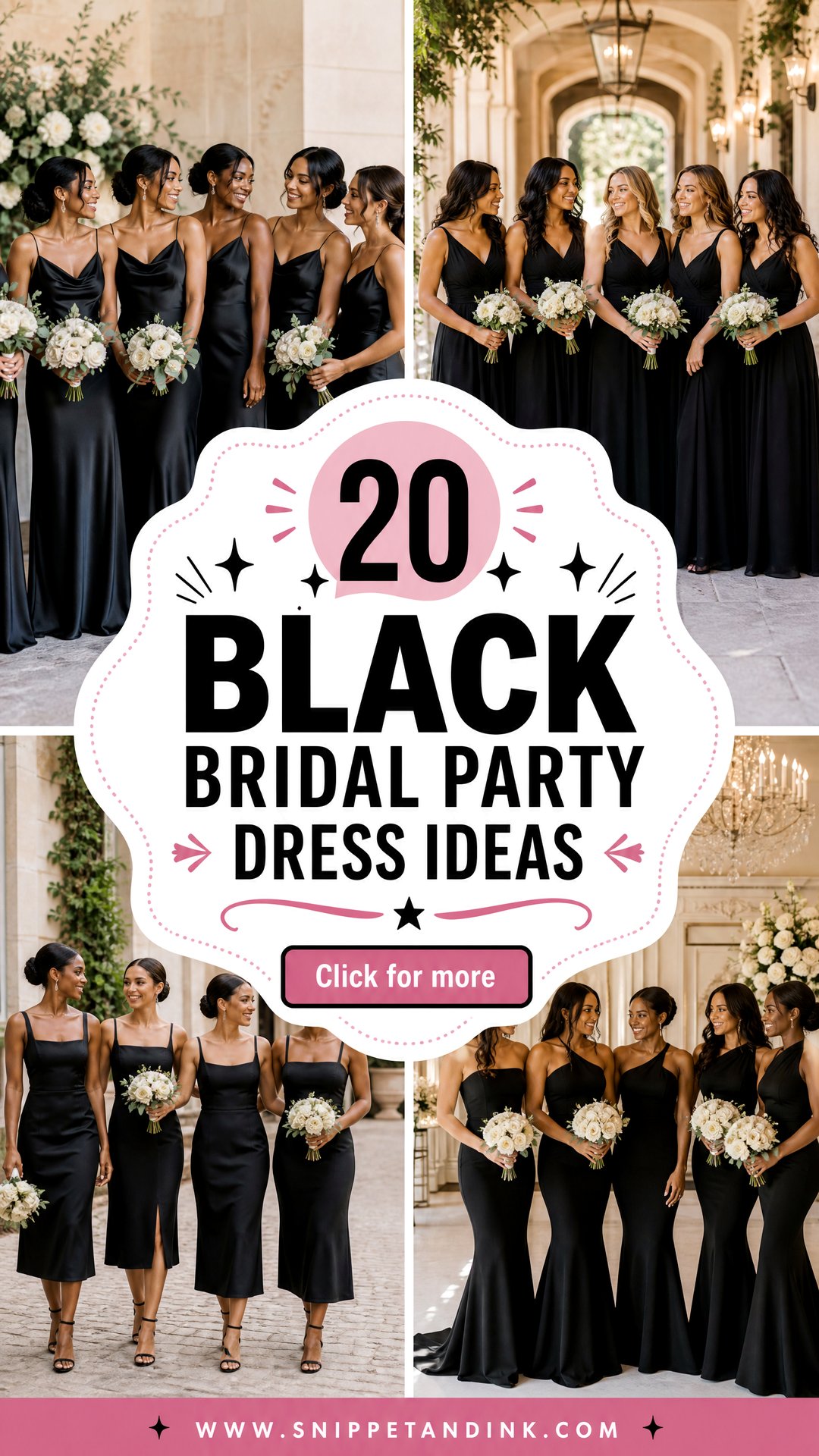
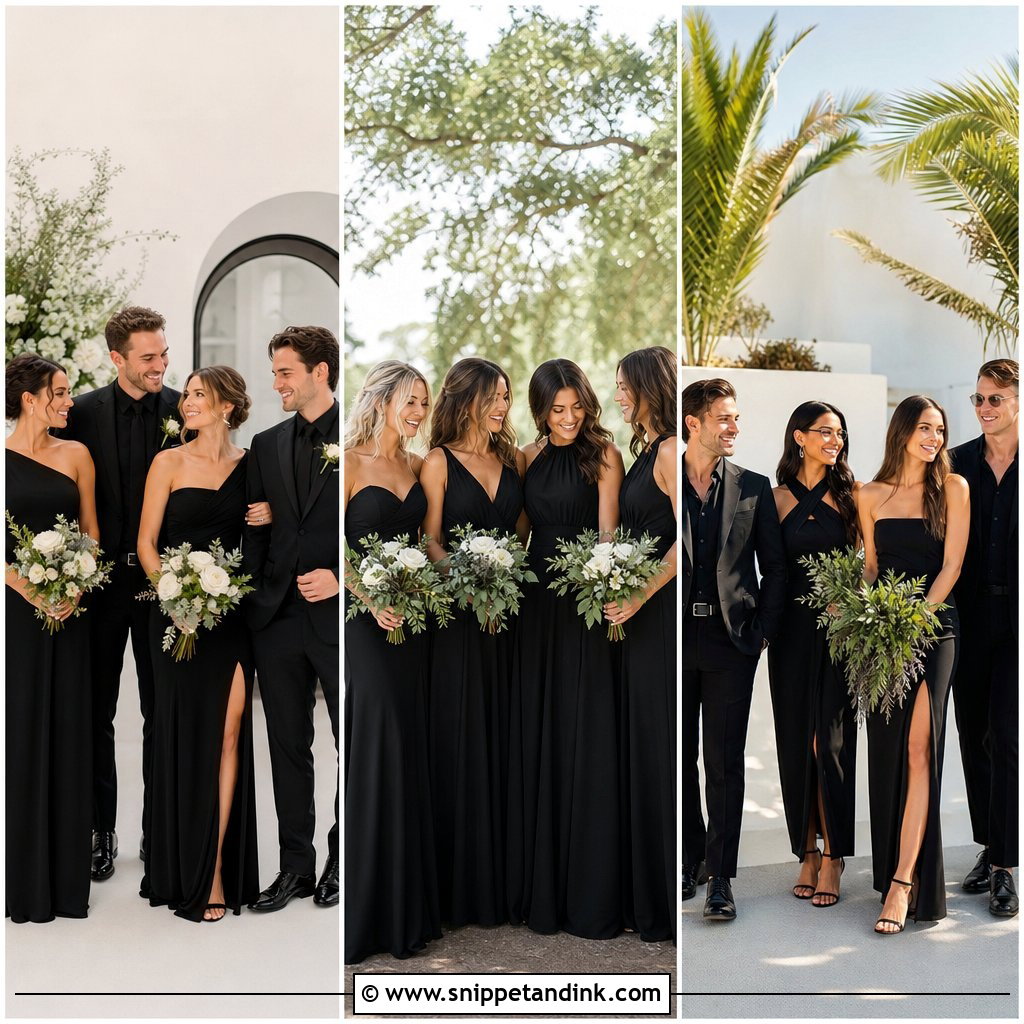
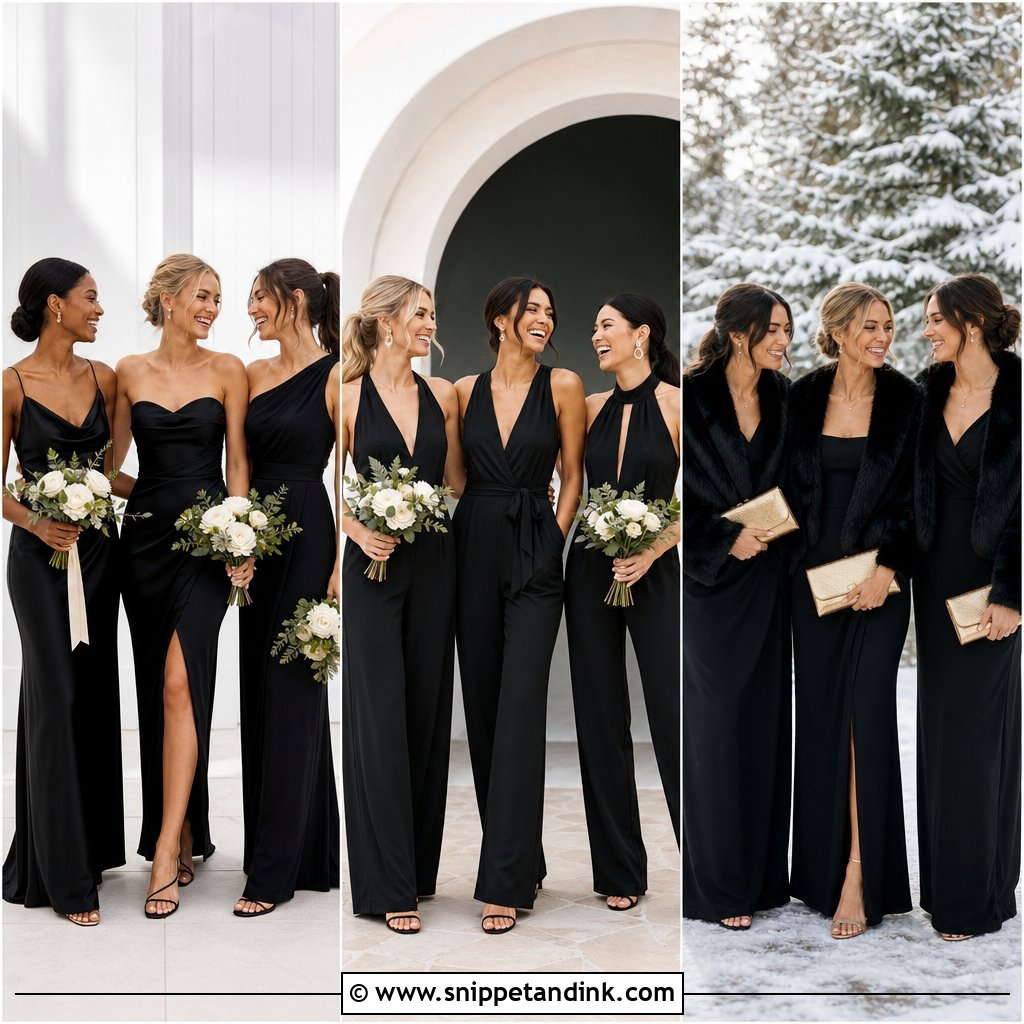
Black is the easiest colour I know for dressing a group of very different women. It suits almost every skin tone, it hides the odd spill at dinner, and it gives a polished bridal party look without anyone needing the same body or the same neckline. The twenty dresses here run from satin slips and chiffon A-lines to velvet, sequins and fully mismatched rows, with the shoes and accessories I’d pair with each. One-shoulder gowns, strapless columns, slips and velvet are all popular right now, and a mix-and-match approach is more common than a row of identical dresses. Under each style I’ve noted the fitting point I’d check before you order for the whole group.
Not Every Black Is the Same Black
Put six black dresses from three shops side by side outdoors and you’ll see it straight away. Some blacks lean brown, some blue, some slightly green, and shiny fabrics look lighter than matte ones. Indoors under warm light the differences hide. In daylight photos they jump out.
If you want a perfectly matched row, order every dress from the same brand, in the same fabric, at the same time. Dresses cut from one production run are far more likely to match than ones ordered weeks apart. If you’re going mismatched on purpose, the fix is to keep everyone in one fabric family and check shades together in daylight before anything is final.
- Ask for fabric swatches and look at them by a window, not under shop lighting.
- Satin and sequins read lighter than crepe or velvet in photos.
- Wash nothing black before the wedding; even one wash can fade it.
- Pack a lint roller for the morning, because black shows every fleck of dust, confetti and pet hair.
1. Black Satin Slip Bridesmaid Dress
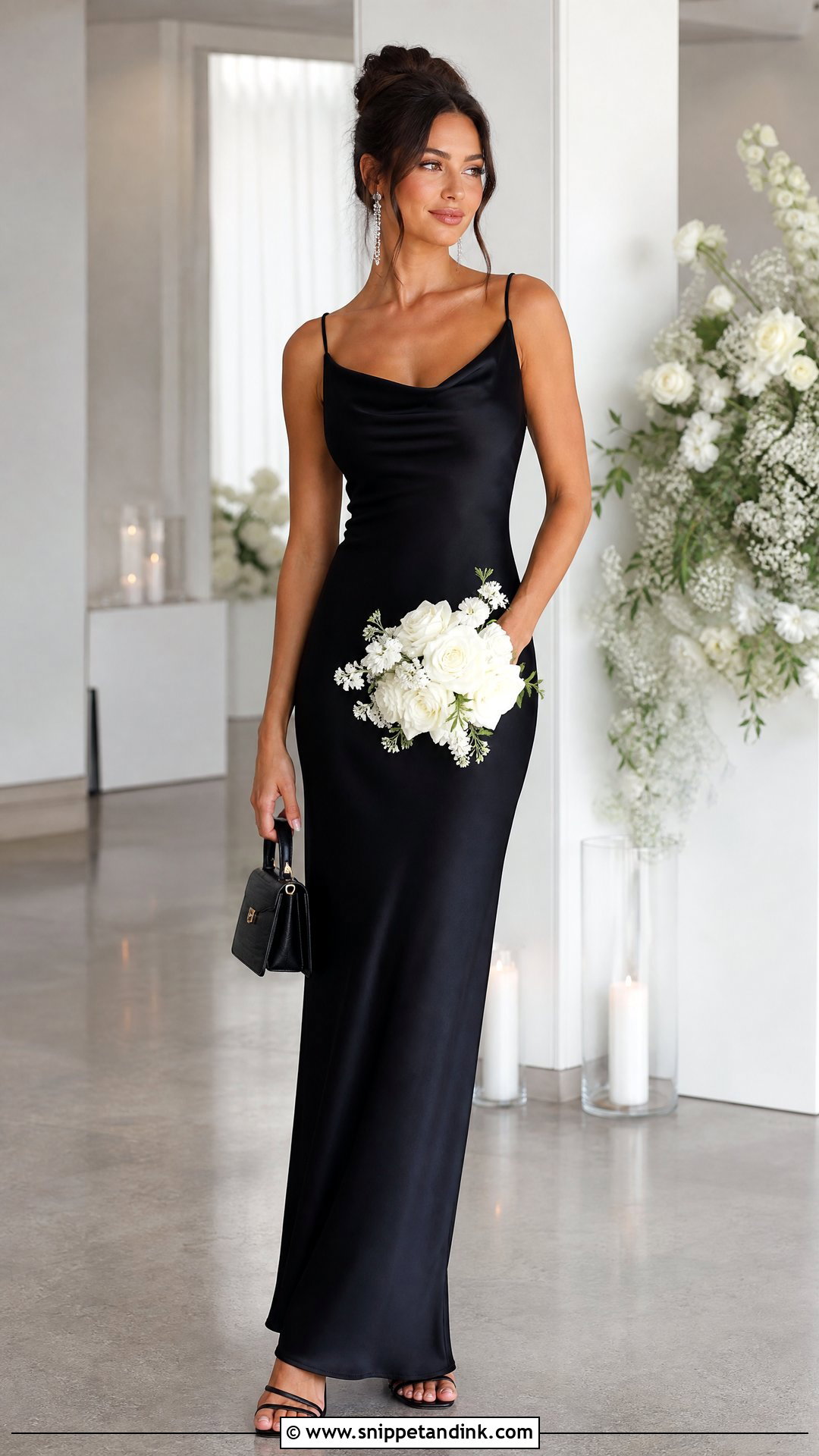
The black satin slip is simple to wear and brutal to fit. Satin shows every pull, ripple and uneven hem, so I budget for tailoring on every slip in a group, not just the one that looks off. Choose a floor-length cut with slim straps and a skirt that skims rather than clings, and pick matte or softly glowing satin over high shine, which flashes white in photos. Strappy black heels, small crystal earrings and a mini bag are enough. A light wrap gives anyone who wants coverage an option during the ceremony, and ivory, blush or green bouquets read clearly against the dark fabric.
2. Black One Shoulder Satin Bridesmaid Dress
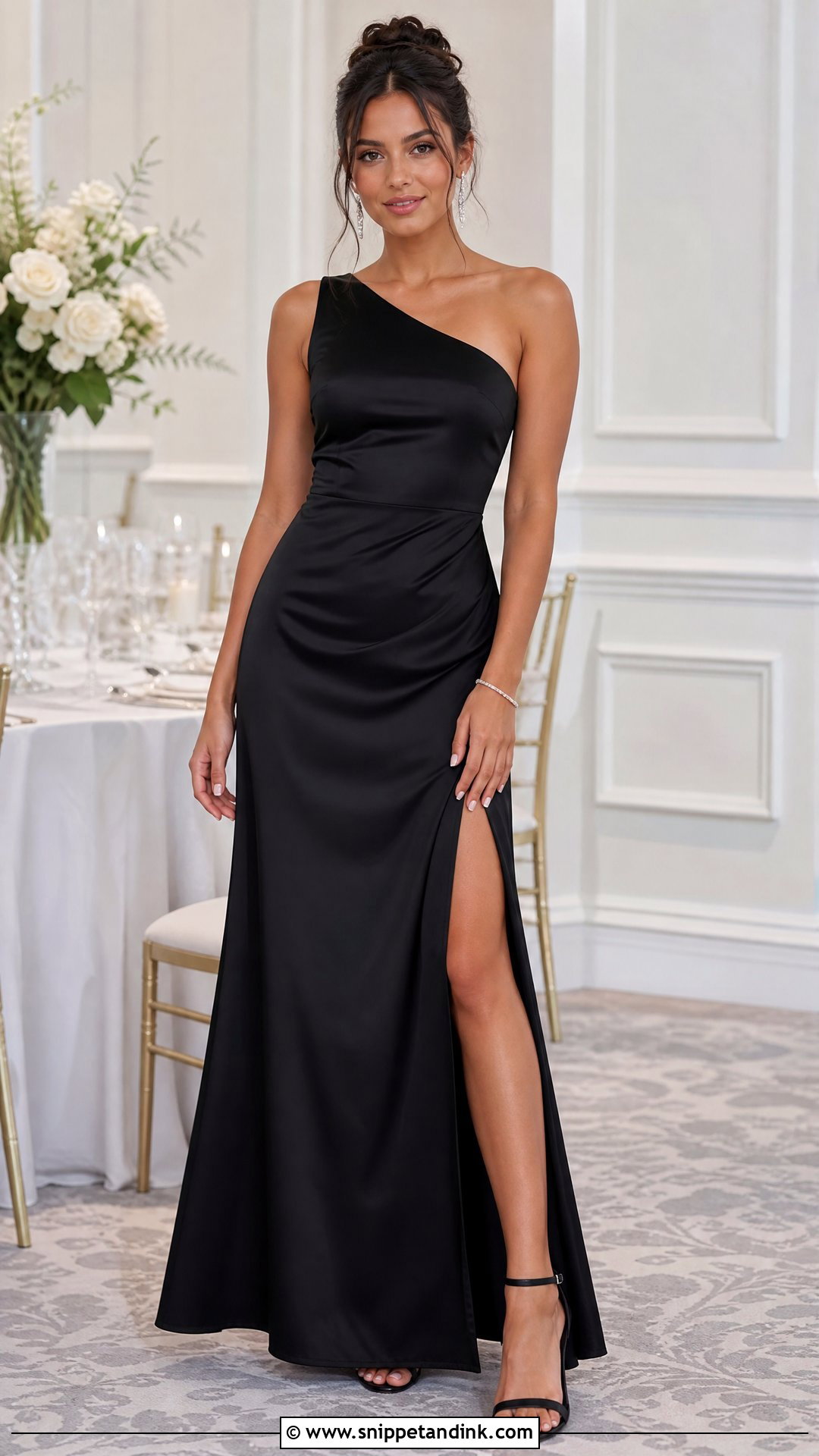
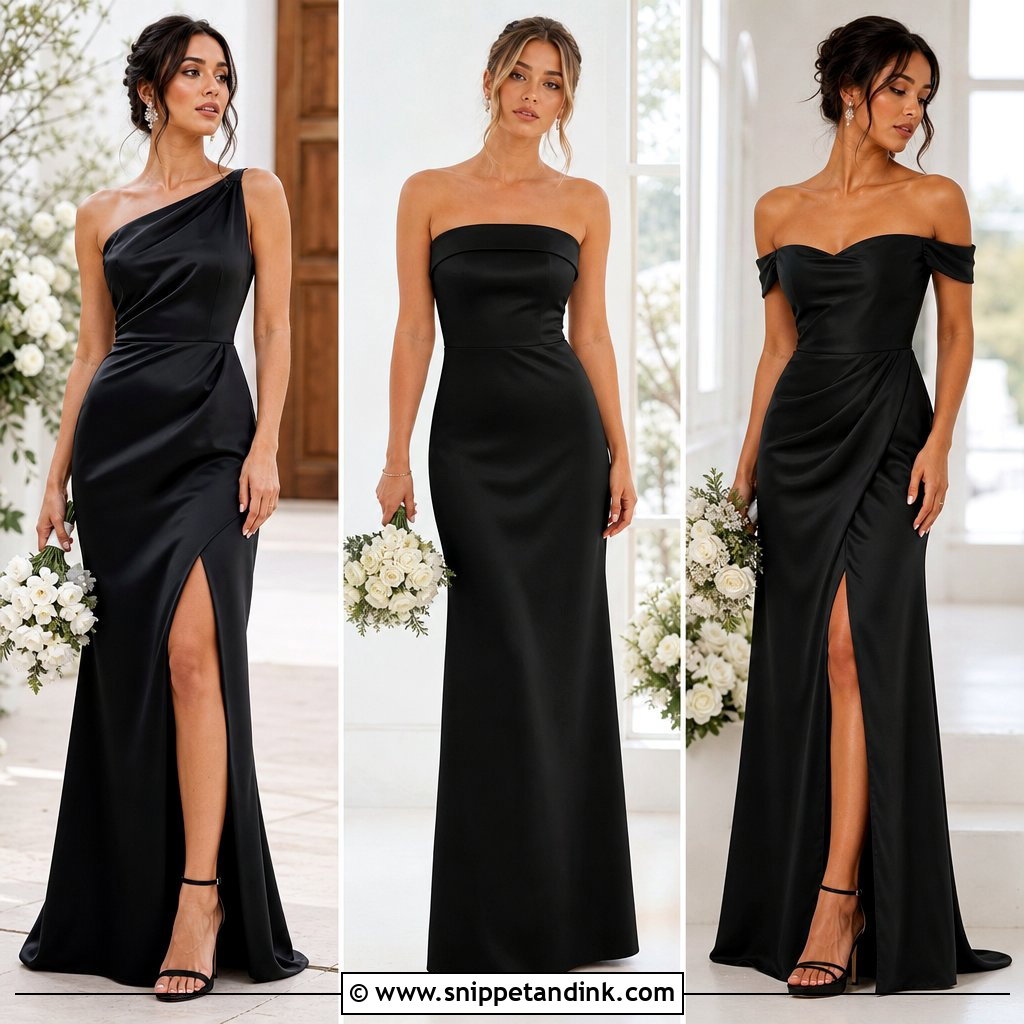
One bare shoulder gives a row of black dresses some angle without breaking the uniform. A fitted bodice, softly flared skirt and a side slit for walking keep it formal. Skip the necklace; a slim bracelet and small drops are plenty. The first thing I ask a fuller-busted bridesmaid to check is support, because a single strap carries more load than two. Internal boning, a wider shoulder panel or hidden clear straps fix that. Keep everyone in the same satin even if waistlines differ slightly, and the group still reads as one.
3. Black Chiffon A-Line Bridesmaid Dress
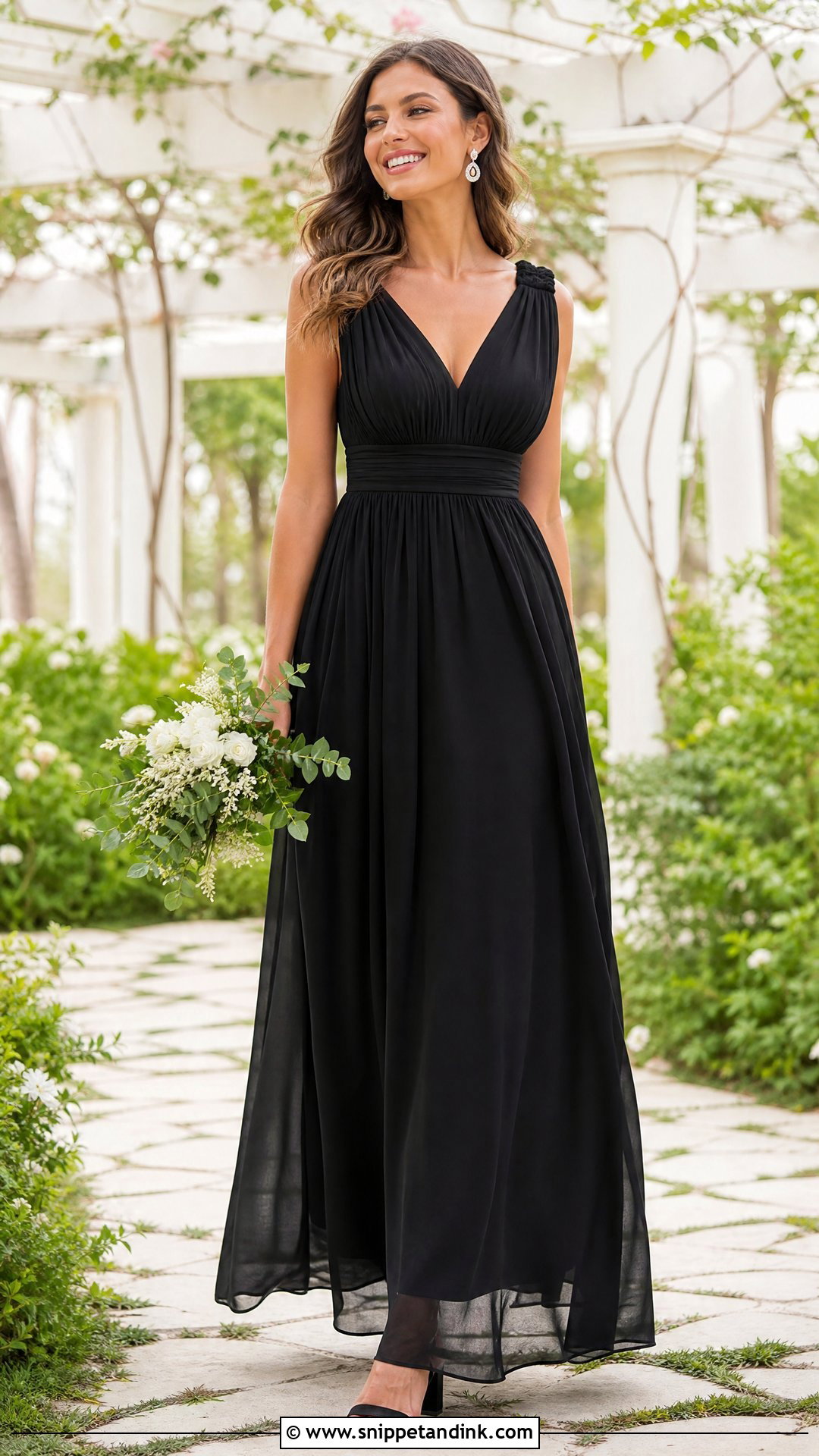
Chiffon is the black I choose for heat. It moves, it breathes, and an A-line with a V-neck and fitted waist is comfortable through hours of standing. The catch is opacity: thin chiffon goes see-through in strong sun, so make sure the skirt is properly lined. Hem each dress for the shoes that bridesmaid will actually wear, since a single hem length across different heel heights means someone trips. Block-heel sandals sink less on lawns. Delicate silver jewellery, a small clutch and bouquets with white flowers or soft seasonal colour keep a garden wedding from looking sombre.
4. Black Off Shoulder Bridesmaid Dress
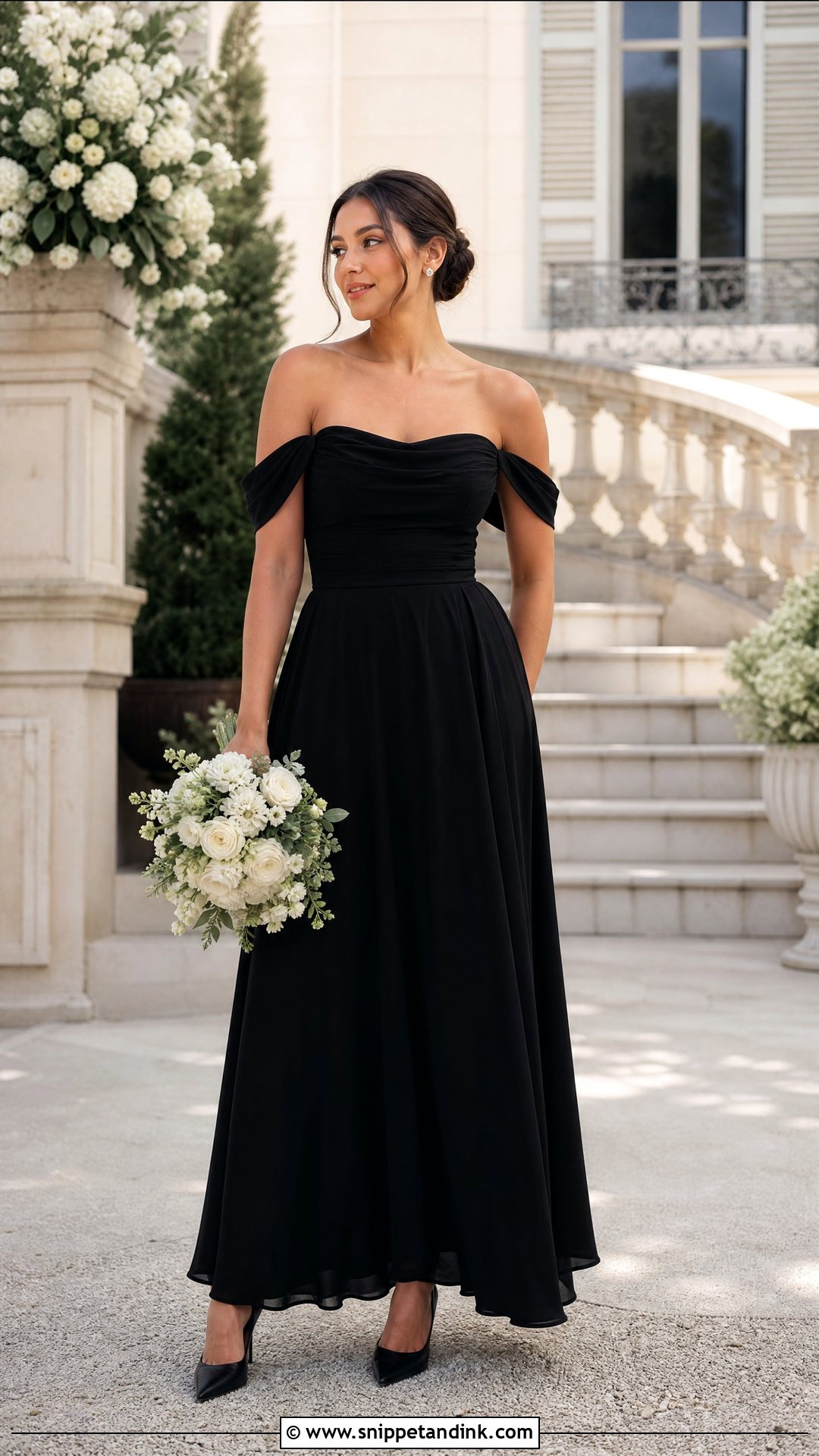
Off-the-shoulder is lovely in portraits and the most common neckline to fail in a bridal party, because it depends on the sleeve band staying put. Before choosing it for everyone, have each attendant sit, lift her arms and hold a bouquet at waist height for a minute. If the band slips down or digs in, alterations can usually add grip or ease. An A-line or flowing skirt keeps it wearable. Pointed heels, crystal studs and a low bun or waves pushed behind the shoulders work; most necklines here look better without a pendant.
5. Black Velvet Long Sleeve Bridesmaid Dress
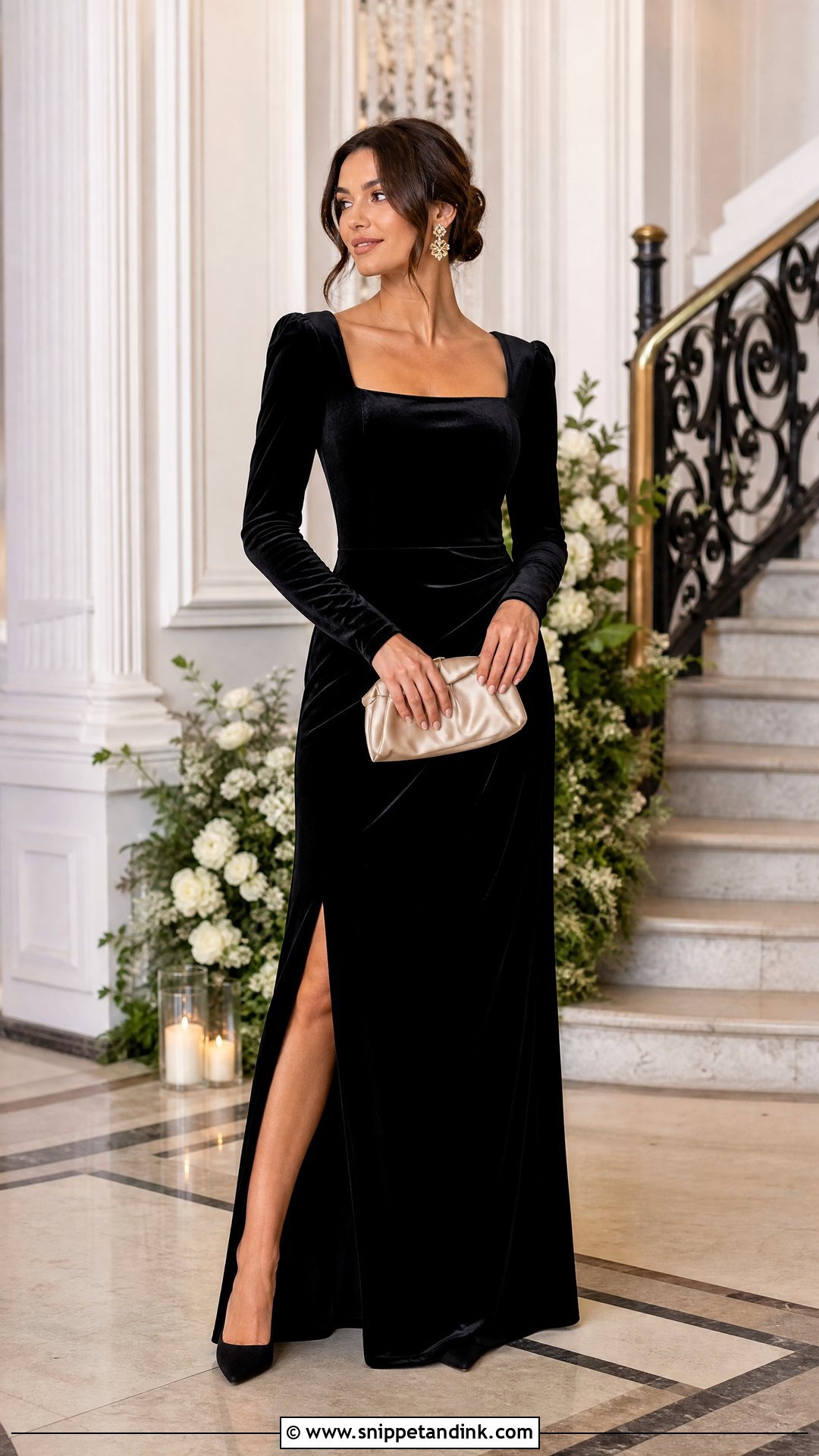
Velvet is my answer for a winter or evening wedding when bridesmaids will be cold between venues. Long sleeves, a square or V neck and a defined waist give coverage without losing shape. The fabric has a nap, which means it shades lighter or darker depending on how the light hits it, so try it under bright and dim light. A slit helps it move and stops it looking heavy. Closed-toe heels, metallic earrings and a satin clutch are enough texture alongside velvet. White flowers, winter greenery or muted jewel tones stand out well against it.
6. Black Strapless Column Bridesmaid Dress
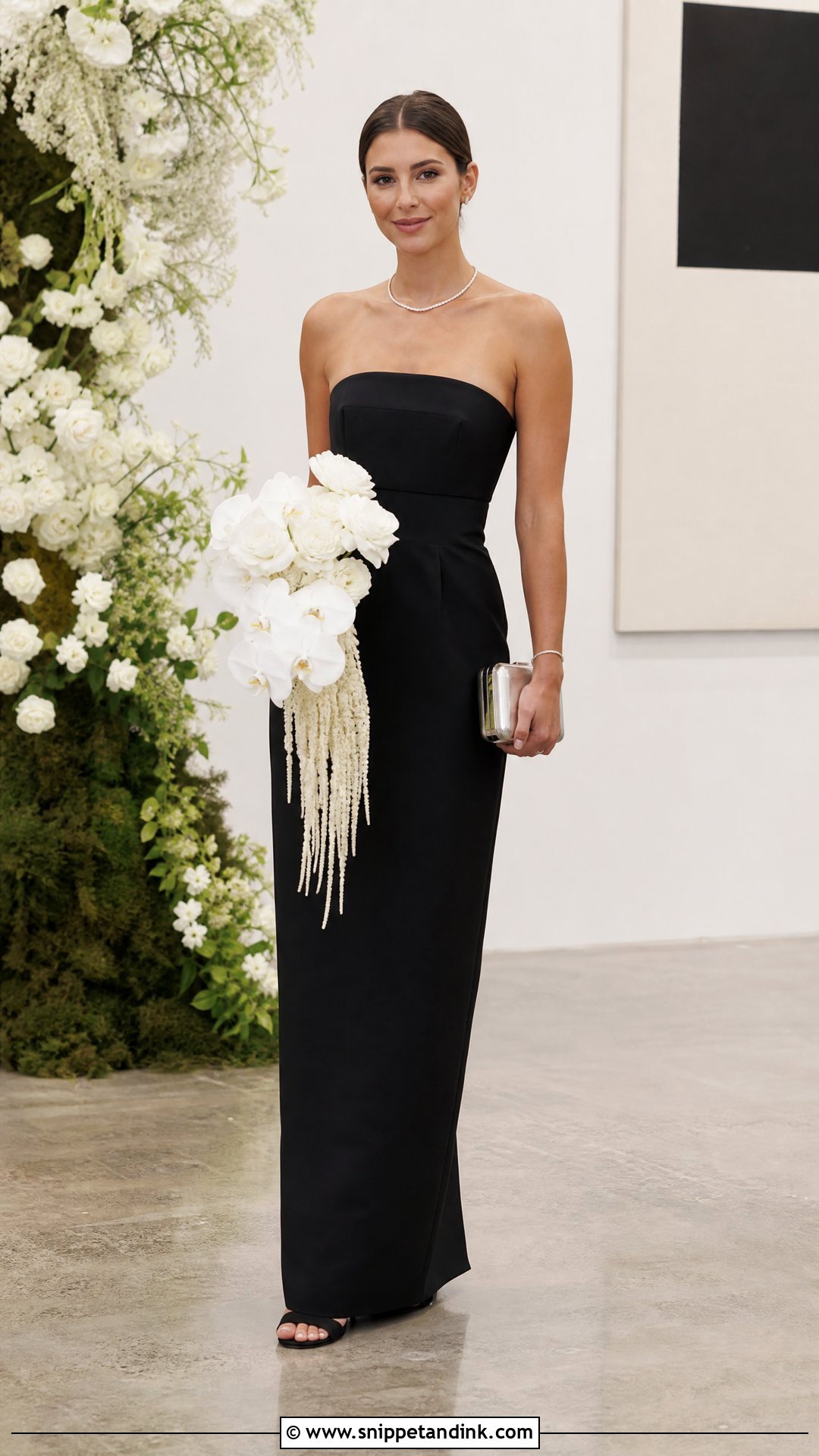
A strapless black column is the cleanest choice for black tie, and the most dependent on construction. Look for a boned bodice with silicone grip along the top edge, and room to breathe. If you can’t, the bodice is too tight, and loosening it makes it slip. Build tailoring into the timeline and budget for every bridesmaid in this style. A back slit helps with steps. Slim heels, a fine tennis necklace and a small metallic clutch keep it sleek, and a fitted black wrap gives optional cover. Keep hem lengths matched across the row.
7. Black Cowl Neck Bridesmaid Dress
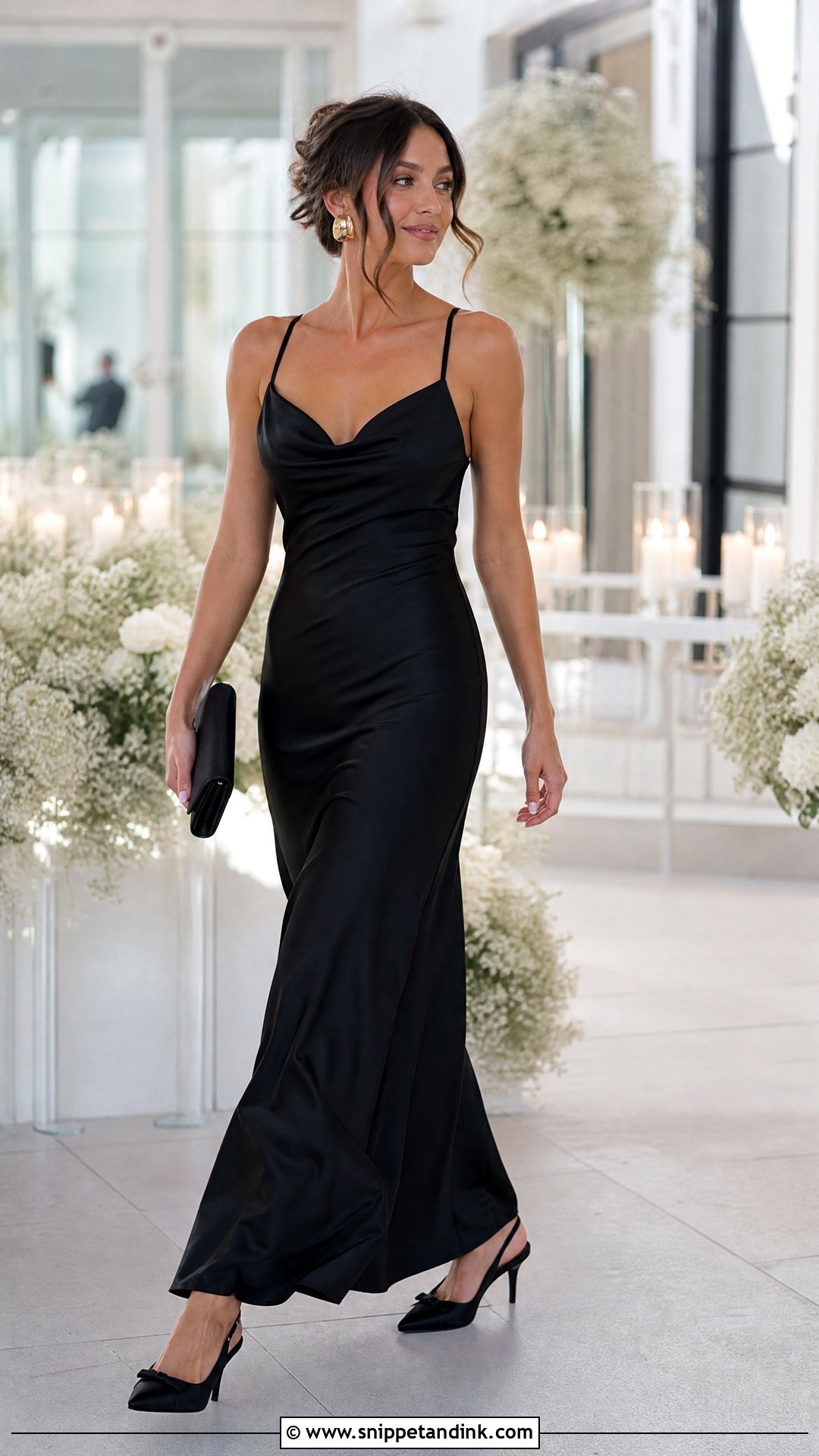
A cowl neck falls in soft folds because the fabric is cut on the bias, diagonally across the weave. That is what makes it drape, and it’s also why bias-cut dresses cling and stretch differently from one body to the next. Standard sizing is only a starting point; I’d plan on alterations and smooth, invisible underwear for everyone wearing it. Adjustable straps help set the depth of the cowl. Black slingbacks, understated gold earrings and a slim clutch suit a rooftop or hotel. Hair up shows off the drape; smooth waves soften it.
8. Black Halter Neck Bridesmaid Dress
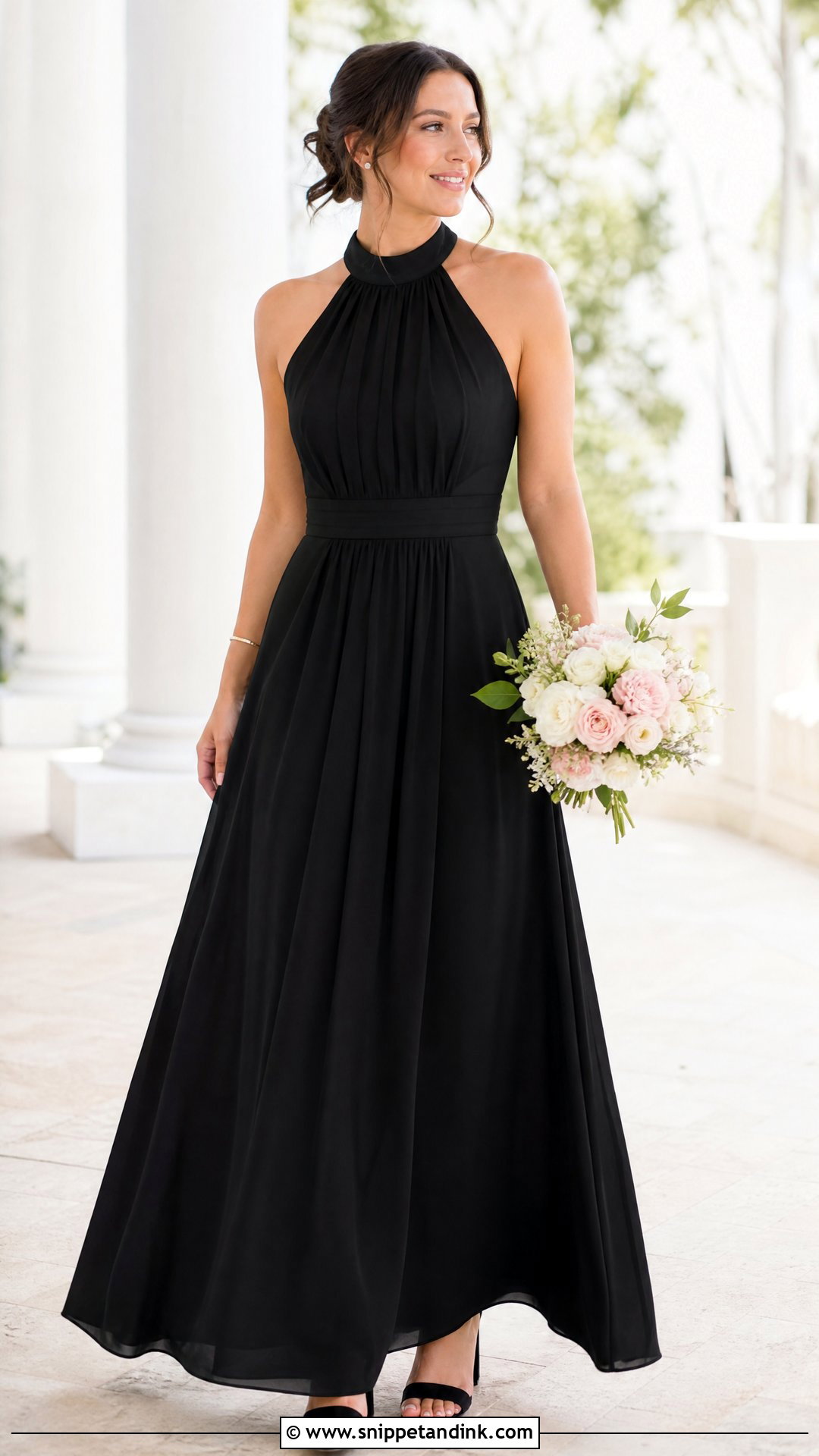
A black halter-neck gown pulls the eye up to the face and shoulders, which is why it suits warm weather so well: bare arms, formal line. The weak point is underwear. Open or keyhole backs leave no room for a standard bra, so each bridesmaid should sort out her solution before the dress is ordered, not after. Also check the neck strap for comfort over several hours; some dig in. Block heels, a slim cuff and studs are enough, and no necklace. Match hem lengths and shoes, and choose flowers from the wider palette.
9. Black Wrap Bridesmaid Dress
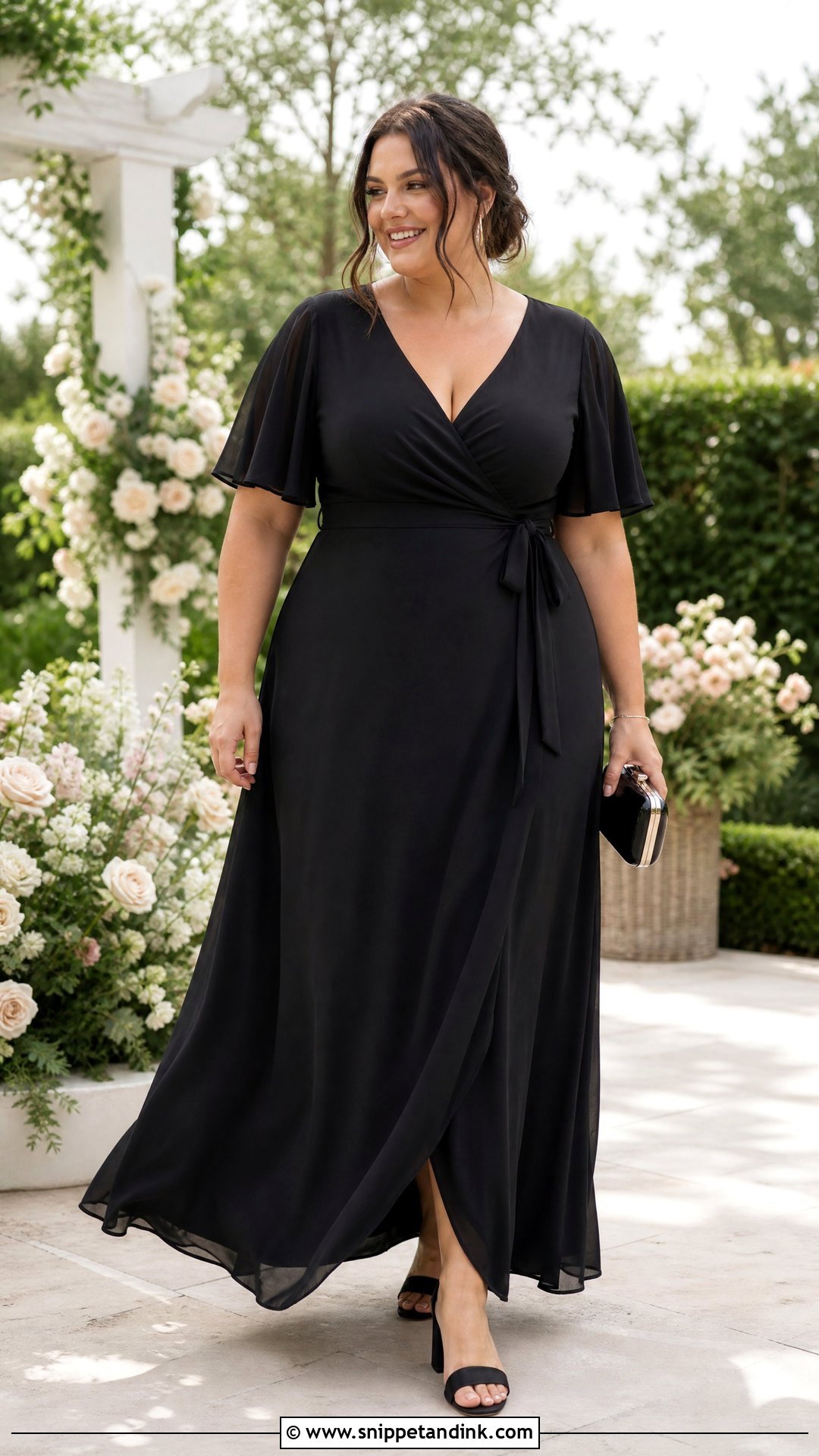
Wrap dresses adjust to the body, which makes them one of the most forgiving shapes for a group with different figures. A true wrap or secure faux-wrap with a V-neck, defined waist and long skirt is the base; flutter sleeves add a little cover. The overlap is where things go wrong. Ask everyone to sit, bend and walk in it at the fitting, and fix any gap with hidden snaps or fashion tape. Chiffon wraps feel lighter outdoors; crepe holds more shape. Low block heels, small hoops and matching bouquets keep individually fitted dresses looking unified.
10. Black Square Neck Bridesmaid Dress
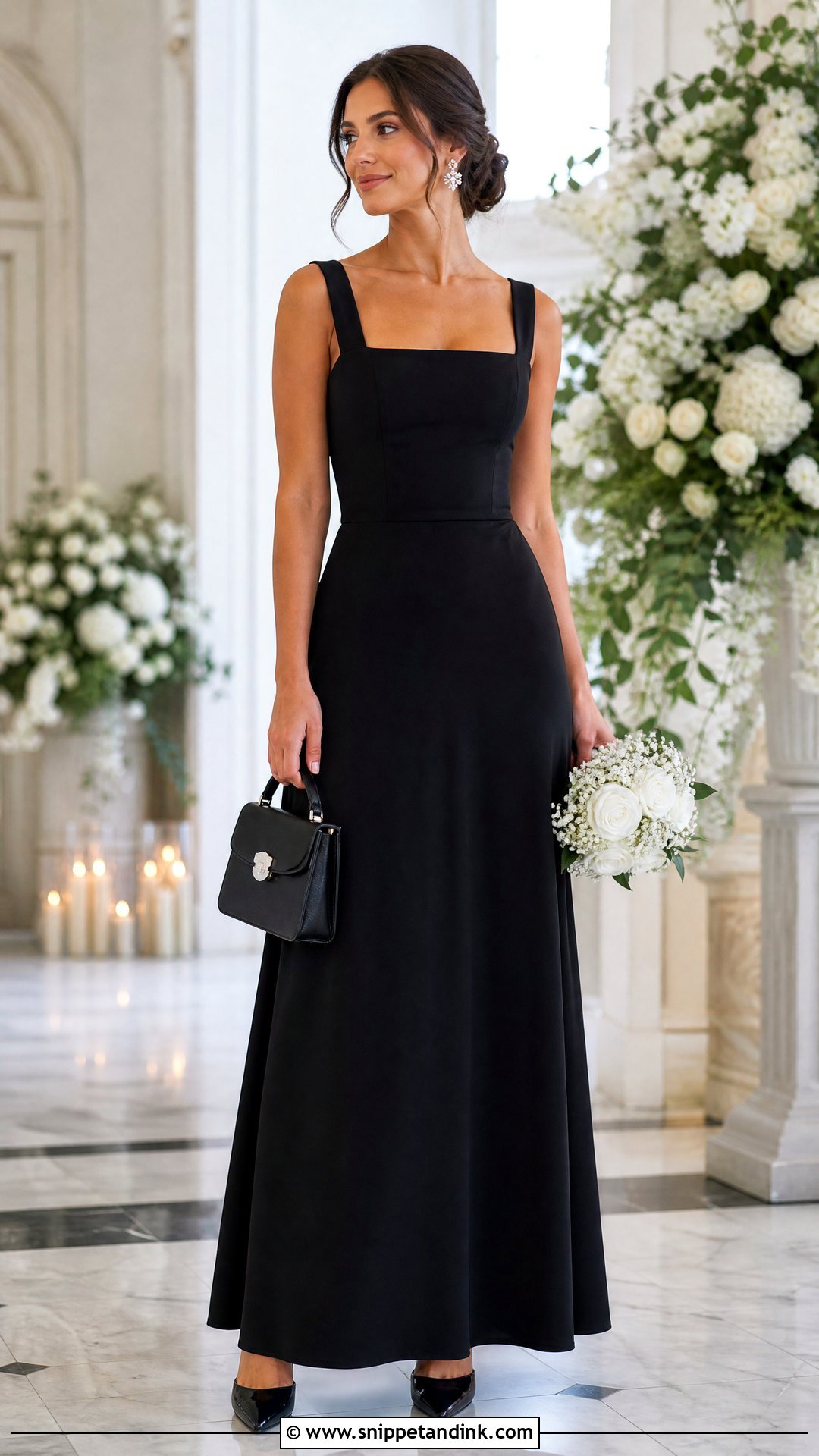
Square necks frame the collarbone and give the shoulders a clean edge, and with wide straps or short sleeves they’re more secure than a spaghetti strap. Bridesmaids who want shoulder coverage without a high neck often end up here. The fitting check is the front edge: square bodices gape at the corners when the wearer sits, which shows up in every seated photo. A fitted bodice with an A-line, column or soft flare all work. Pointed pumps, pearl or crystal earrings and a structured mini bag suit daytime or evening, with a low bun or polished waves.
11. Black Ruffle Sleeve Bridesmaid Dress
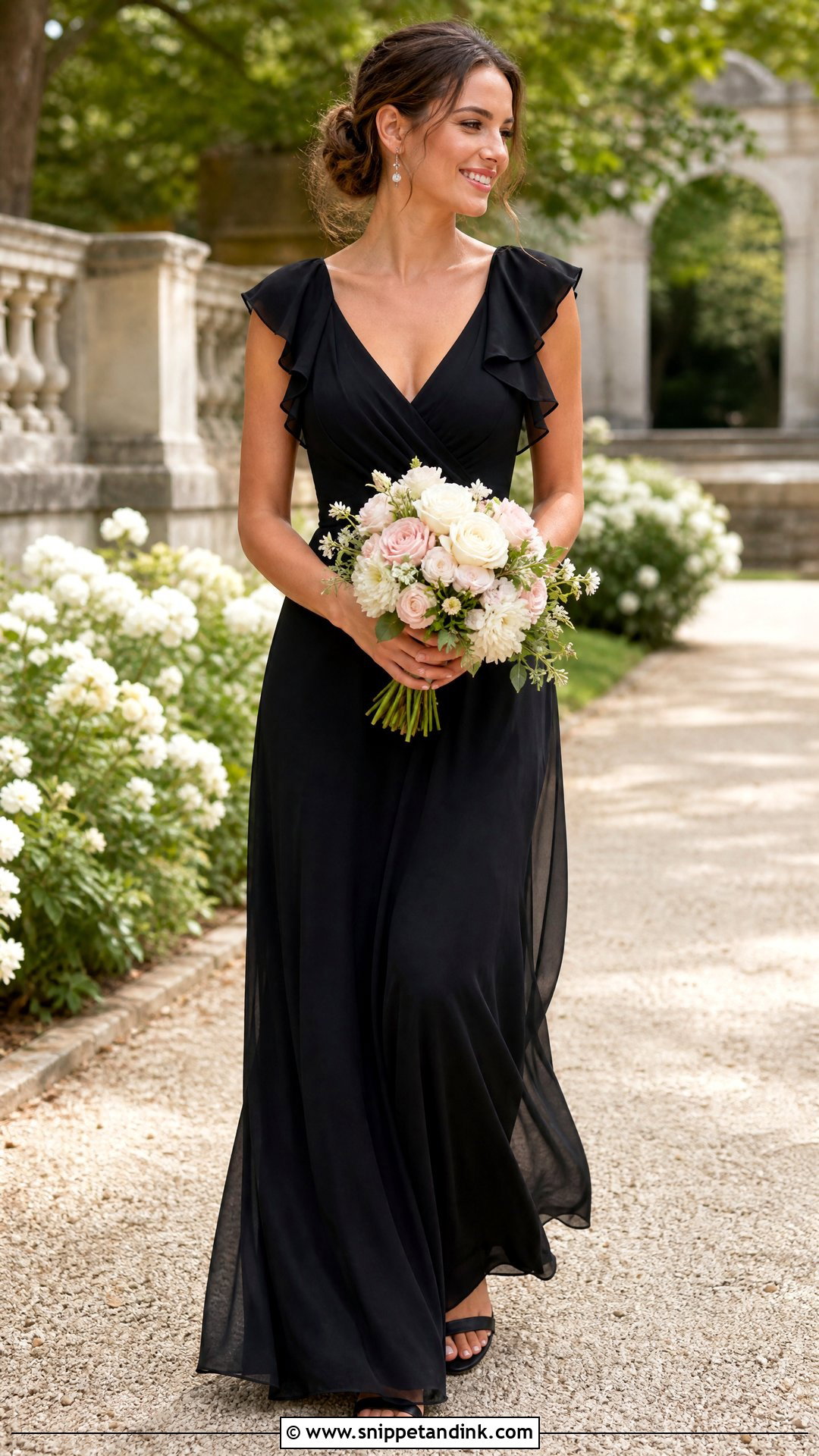
Light ruffles at the shoulder soften black for a garden or country house wedding. Keep them small and controlled; deep layered ruffles look heavy in group photos and make arms look wider. A floor-length crepe or chiffon dress with a V-neck and defined waist balances the sleeves. I’d pair comfortable block-heel sandals, small drops and a simple clutch, and let hair go loose, half-up or into a low textured bun. White, blush, lavender or green bouquets stop a row of black from looking severe in daylight.
12. Black High Neck Pleated Bridesmaid Dress
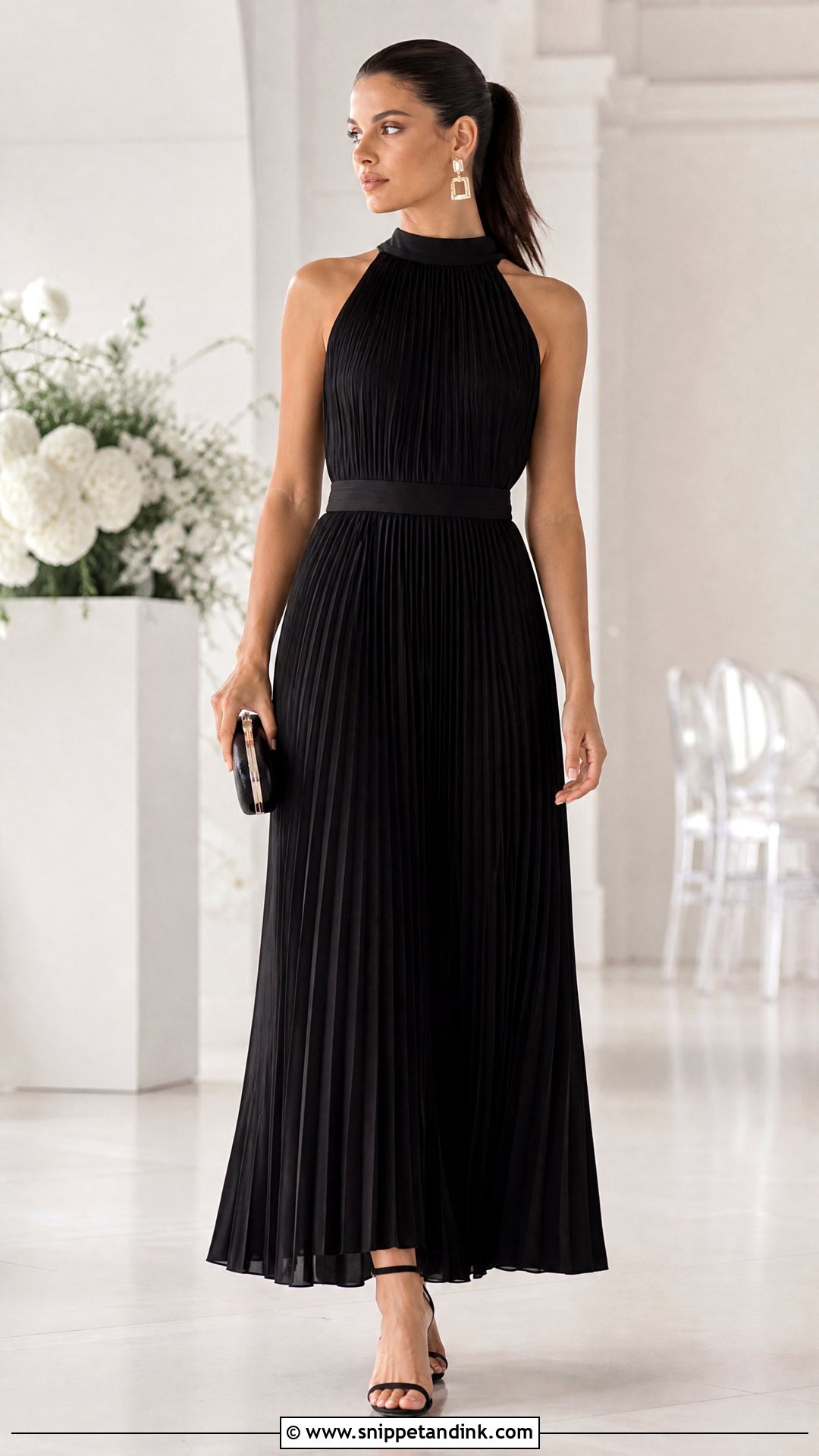
A high neck with fine pleats gives coverage and movement without needing any jewellery, so skip the necklace and wear statement earrings or nothing at all. Pleats are high maintenance, though. They crush in a suitcase and look obviously uneven in photos, so someone needs to steam each dress carefully on the morning. Check that the lining is smooth and opaque, since fine pleated fabric can cling and turn sheer against the light. A sleeveless or cap-sleeve bodice with a defined waistband suits most attendants. An updo or sleek ponytail keeps the neckline clear.
13. Black Midi Bridesmaid Dress
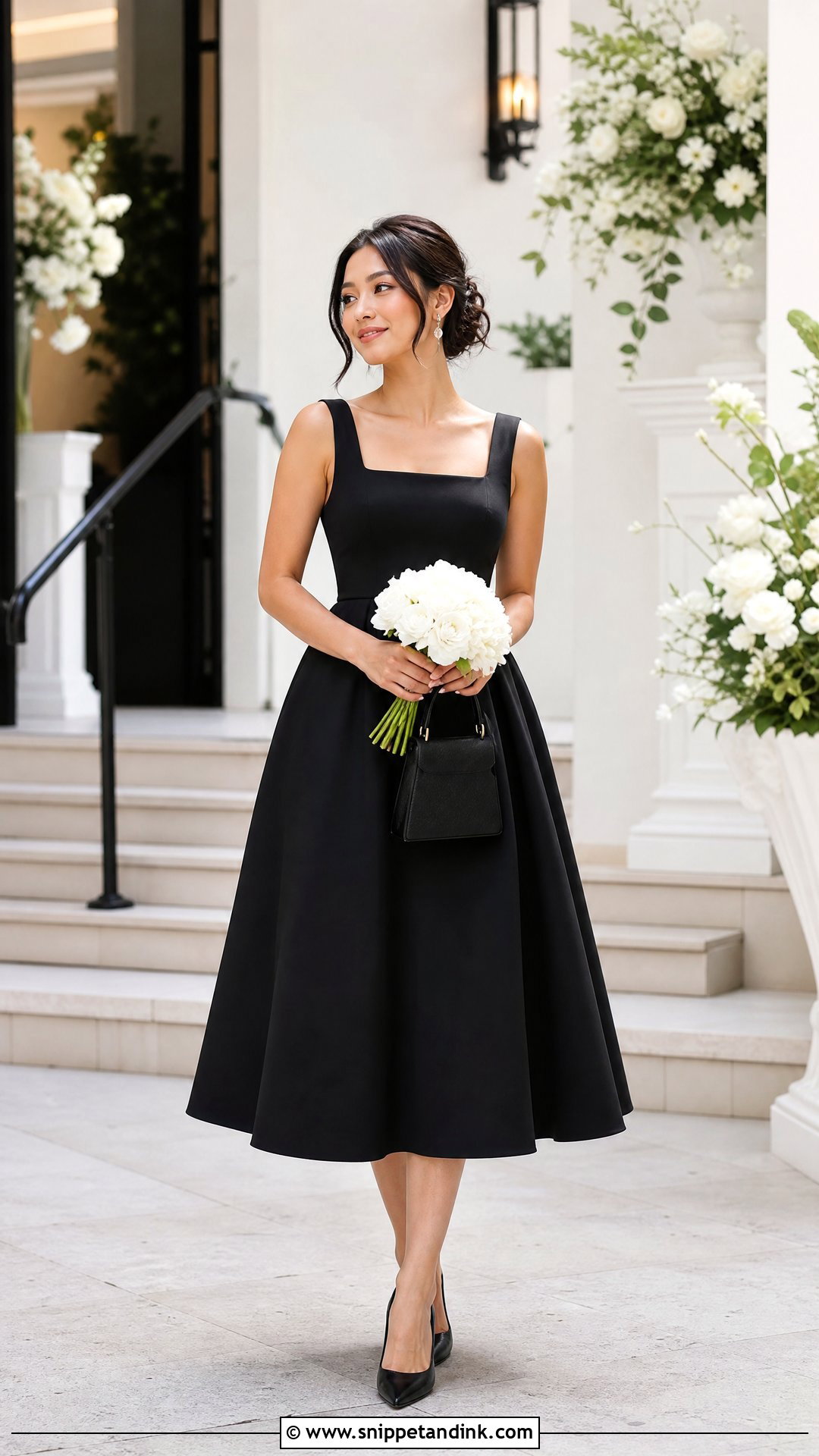
A black midi dress suits a courthouse, daytime or cocktail-style wedding where floor length would feel too much. A fitted bodice, flared skirt and a square, scoop or sweetheart neckline keep it from looking like office wear. Shoes are fully on show at this length, so set one shoe colour and heel height range for the group. Black, silver or nude all work if everyone sticks to it. On petite bridesmaids, take the hem up to end at the slimmest part of the calf. A structured bouquet and tidy hair make the shorter length look like a deliberate wedding choice.
14. Black Sequin Bridesmaid Dress
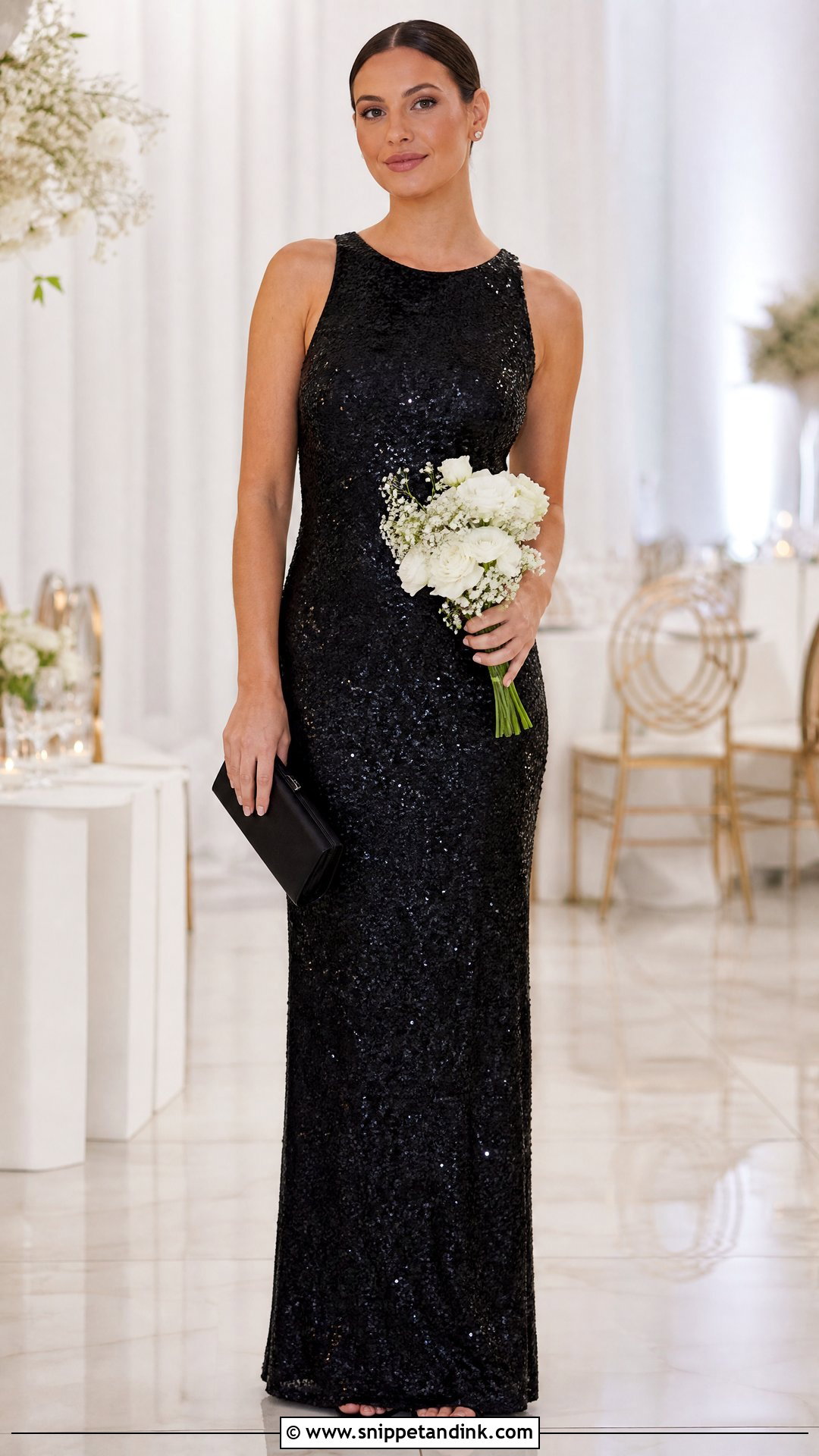
Sequins work in a bridal party when they’re the only loud thing on the dress. Pair them with a plain neckline, a streamlined column or long-sleeve sheath, and a soft lining. Plain black heels, small studs and a satin clutch are enough; shiny necklaces or embellished shoes compete in photos. Two checks before ordering for a group: rub the sequins against the inside of your arm for scratchiness, and look at the edges, because sequins on one dress catch the neighbouring bridesmaid’s fabric when you stand close together. Keep this one for evening.
15. Black Lace Sleeve Bridesmaid Dress
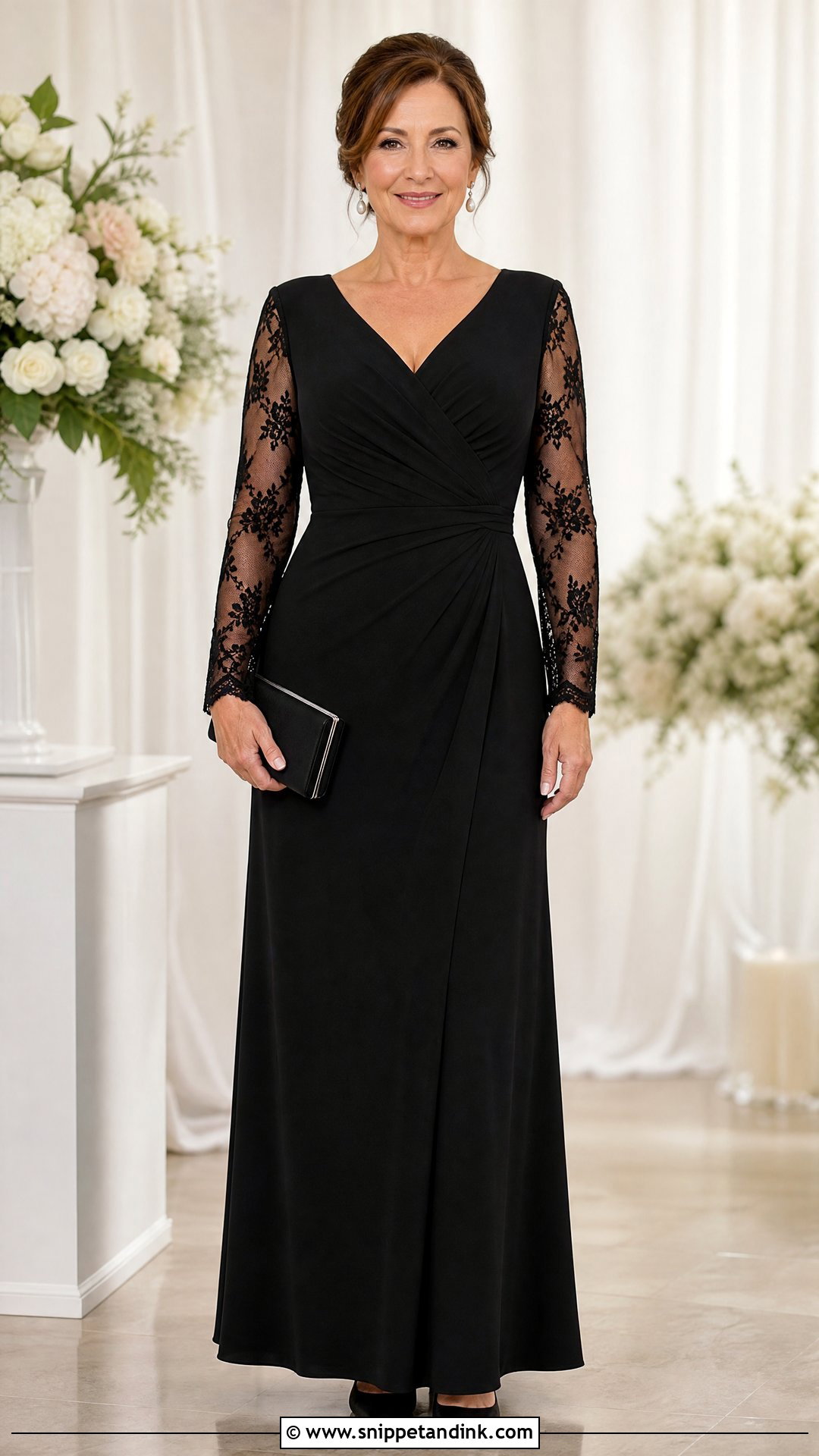
Sheer black lace sleeves on a lined crepe or chiffon dress give coverage for autumn or winter without bulk. The lace should be finer and quieter than the bride’s gown; heavy patterns start to compete. Lace sleeves vary a lot in stretch, so I’d order one sample and have someone raise her arms, hug and reach before ordering the full set. A clean V or bateau neckline, closed-toe heels, pearl earrings and a low chignon or side-swept hair keep strands from catching on the lace. Pale bouquets give contrast.
16. Black Crepe Mermaid Bridesmaid Dress
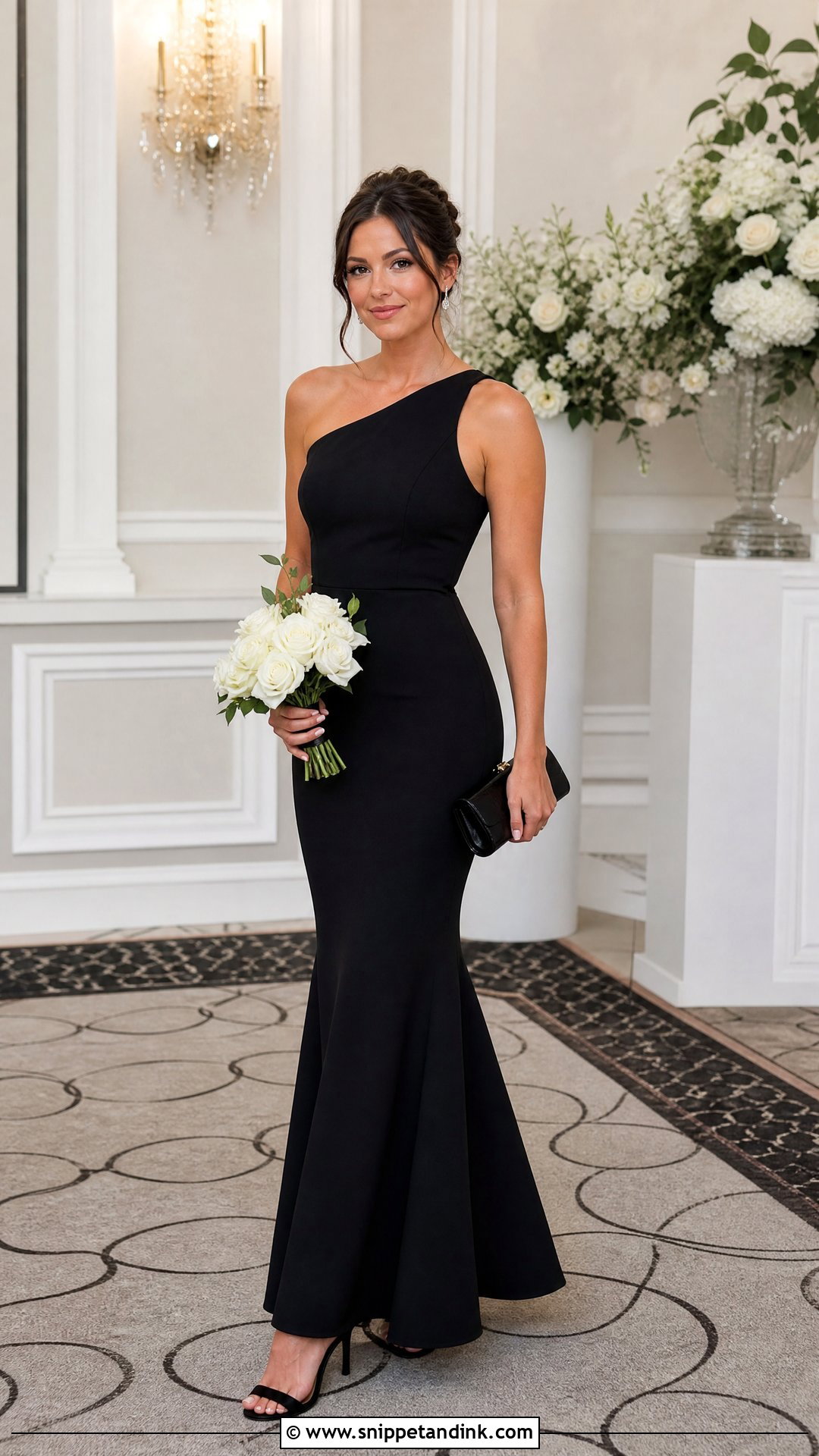
Matte black crepe gives a mermaid line a smooth, sculpted look. It is also the shape most likely to make a bridesmaid miserable by evening, so comfort decides this one. Stretch crepe and a flare point a little higher, around the knee, give far better movement than rigid fabric cut tight to mid-calf. Have everyone practise walking, sitting and stairs at the fitting, and get hems exact, since the fuller lower skirt is easy to step on. A V-neck, off-the-shoulder or one-shoulder bodice balances the flare. Supportive heels, slim drops and simple white bouquets finish it.
17. Black Convertible Bridesmaid Dress
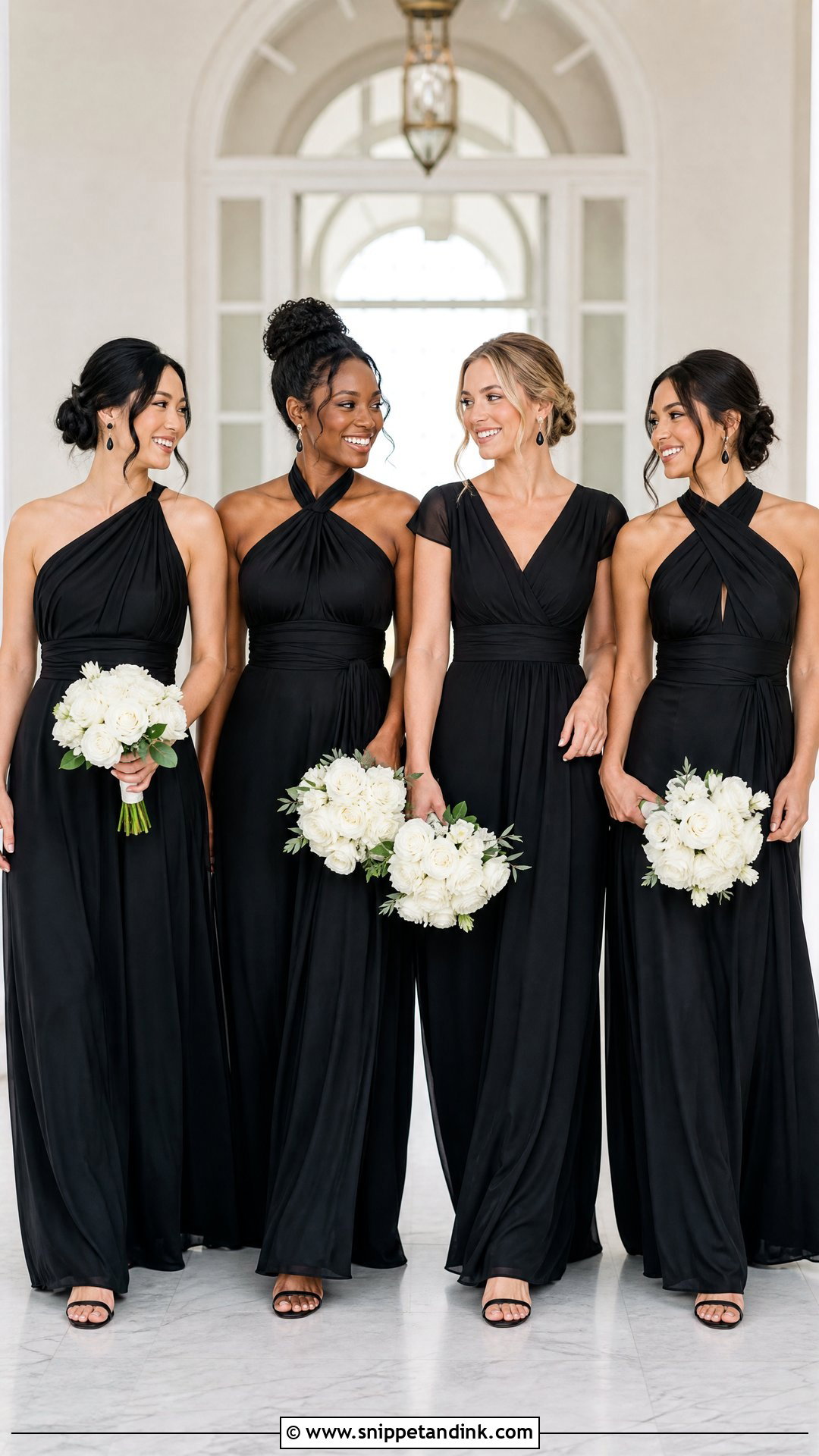
A black convertible dress has long fabric panels at the top that each bridesmaid wraps herself: one-shoulder, halter, cap sleeve, crossover or strapless. Same fabric, same skirt, different neckline. The risk is the morning of the wedding, when nobody remembers how they tied it. At the final fitting, photograph each woman’s finished wrap from front and back and send her the pictures. Keep discreet pins and fashion tape in the kit, and limit the group to two or three styles so it still looks cohesive. Coordinated heels, matching earrings and similar bouquets do the rest.
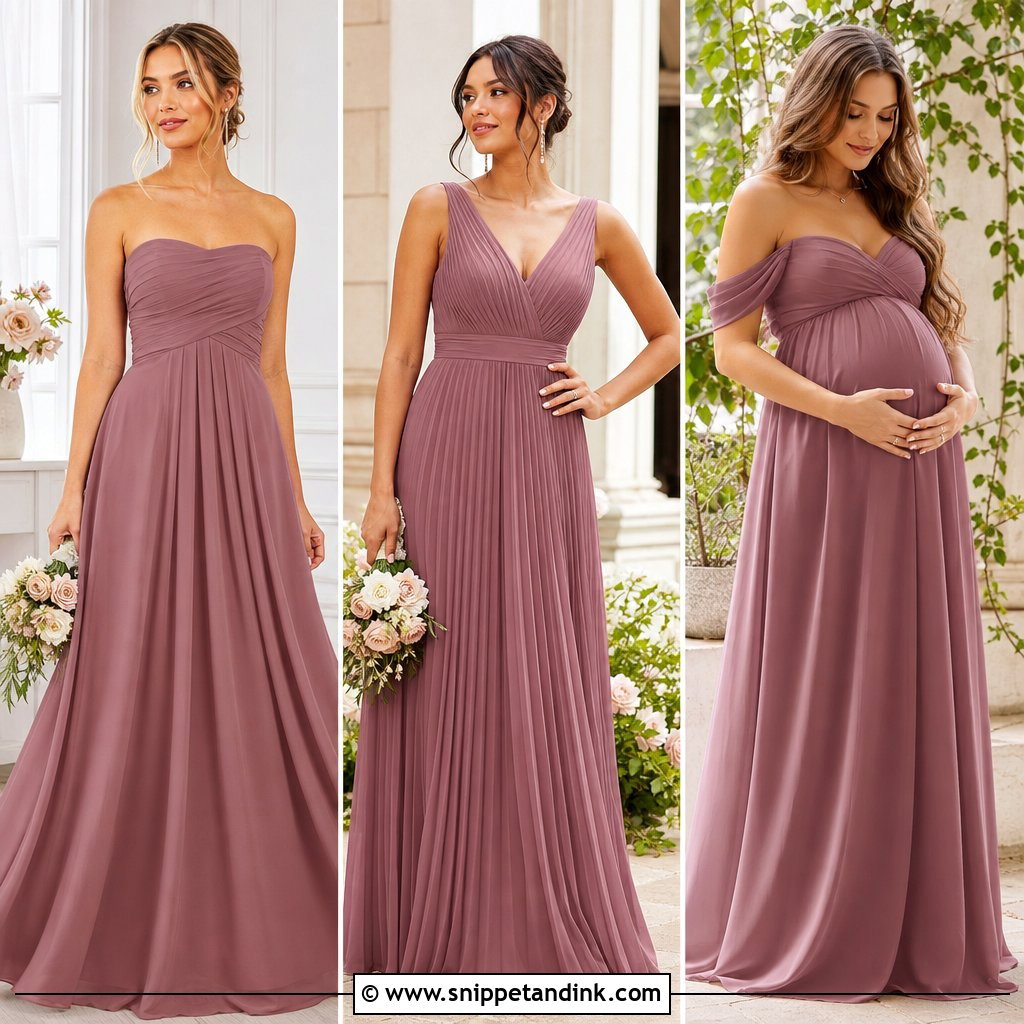
18. Black Empire Waist Bridesmaid Dress
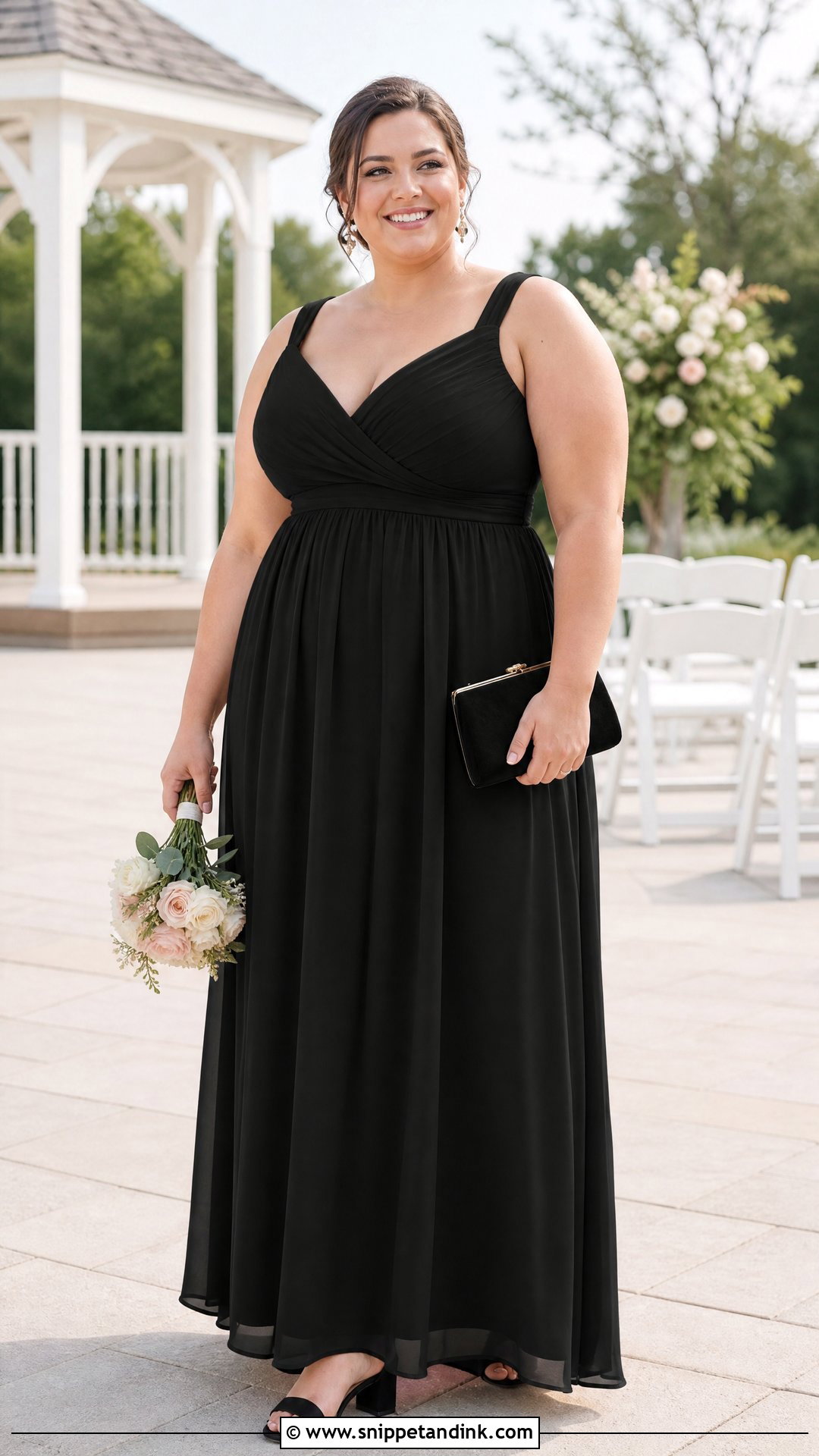
With the seam sitting just under the bust, a black empire-waist gown flows loosely over the waist and hips, which makes it comfortable across a wide range of sizes and the obvious choice for a pregnant bridesmaid. Soft chiffon or crepe with supportive straps and a secure V or crossover bodice works best. The raised seam must sit flat: too tight and it cuts in, too loose and the dress looks borrowed. Order the pregnant bridesmaid’s dress last or choose a maternity cut, as her measurements will change. Low block heels, delicate earrings, flutter sleeves where wanted, and matched hem lengths keep the row neat.
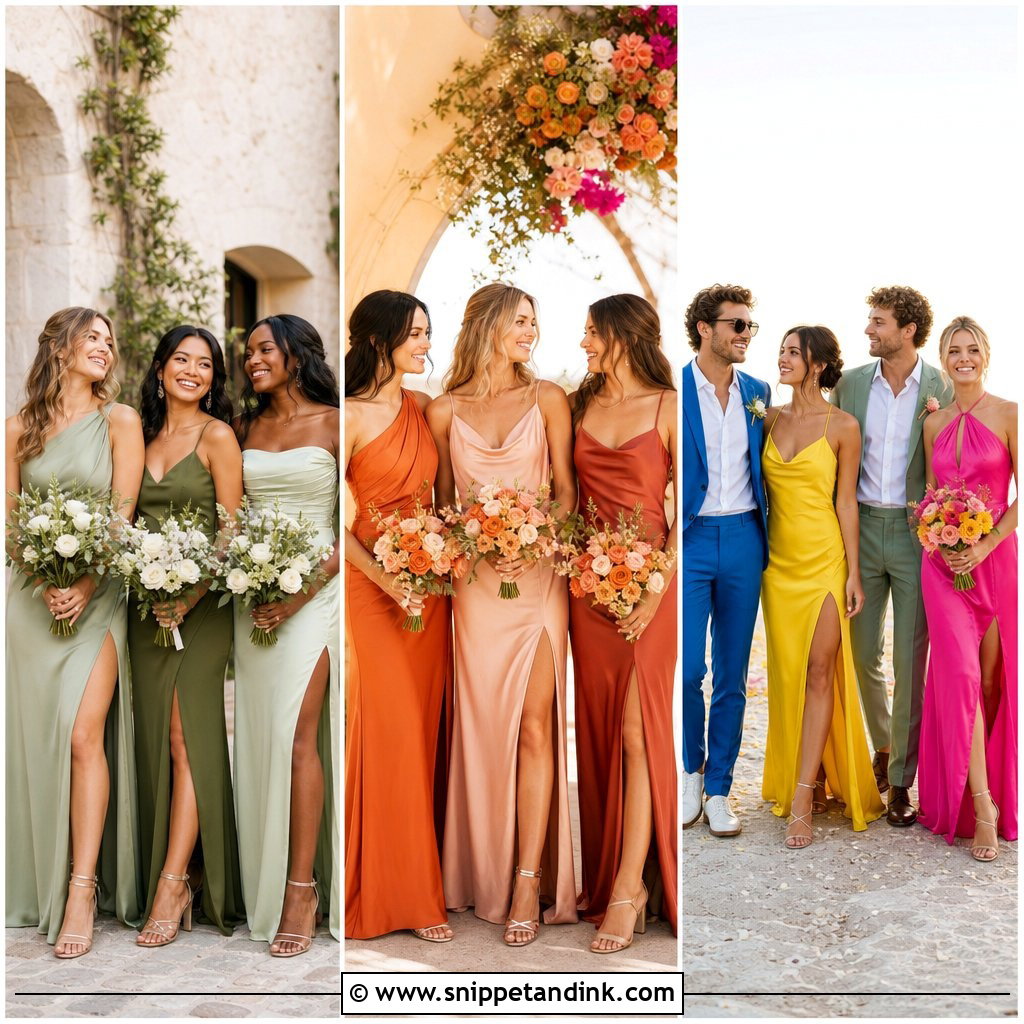
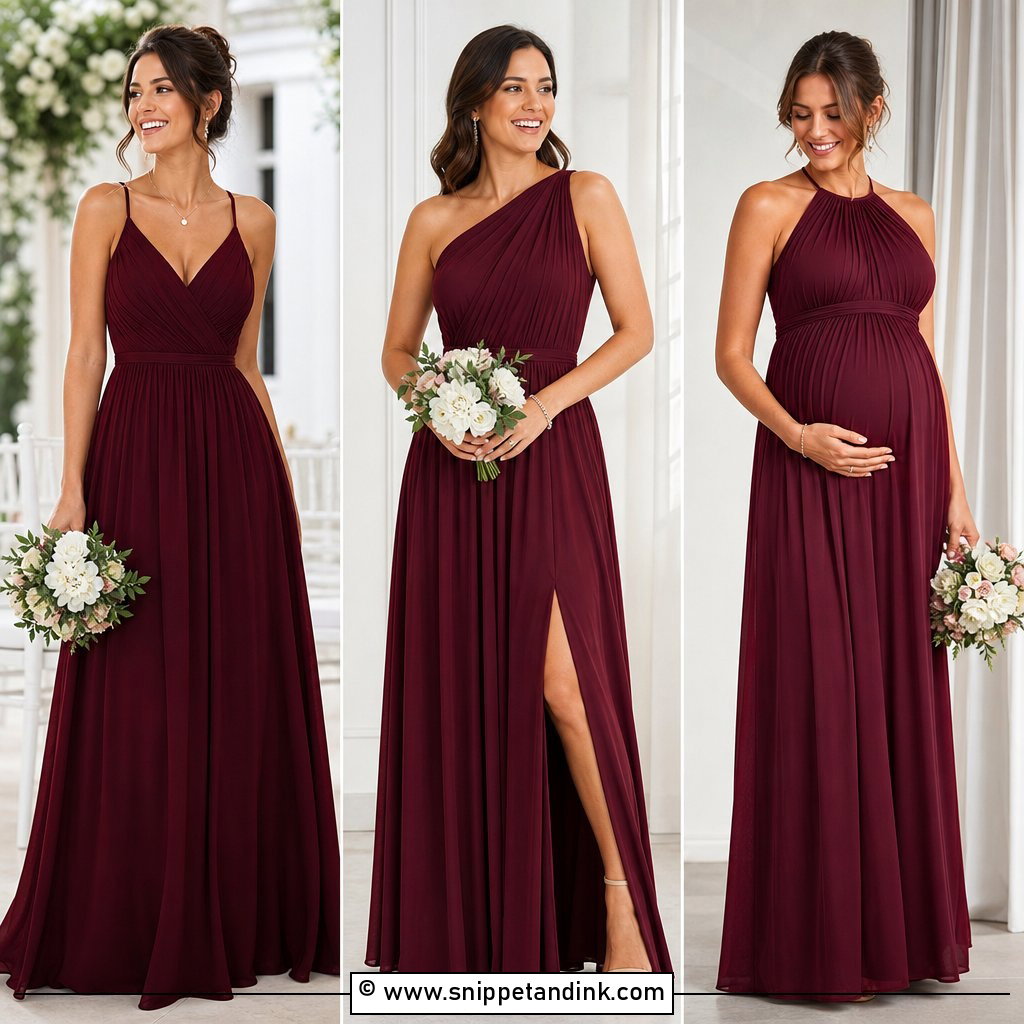
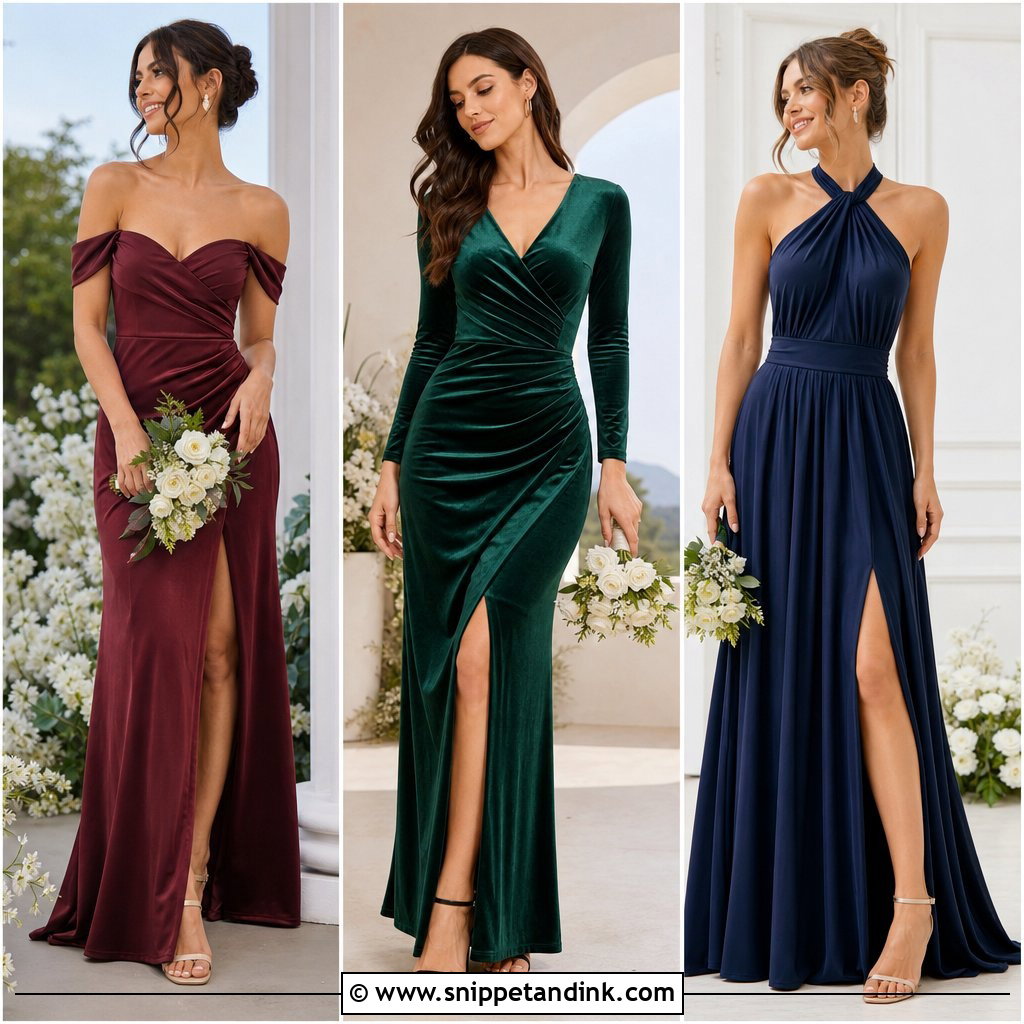
19. Mismatched Black Bridesmaid Dresses
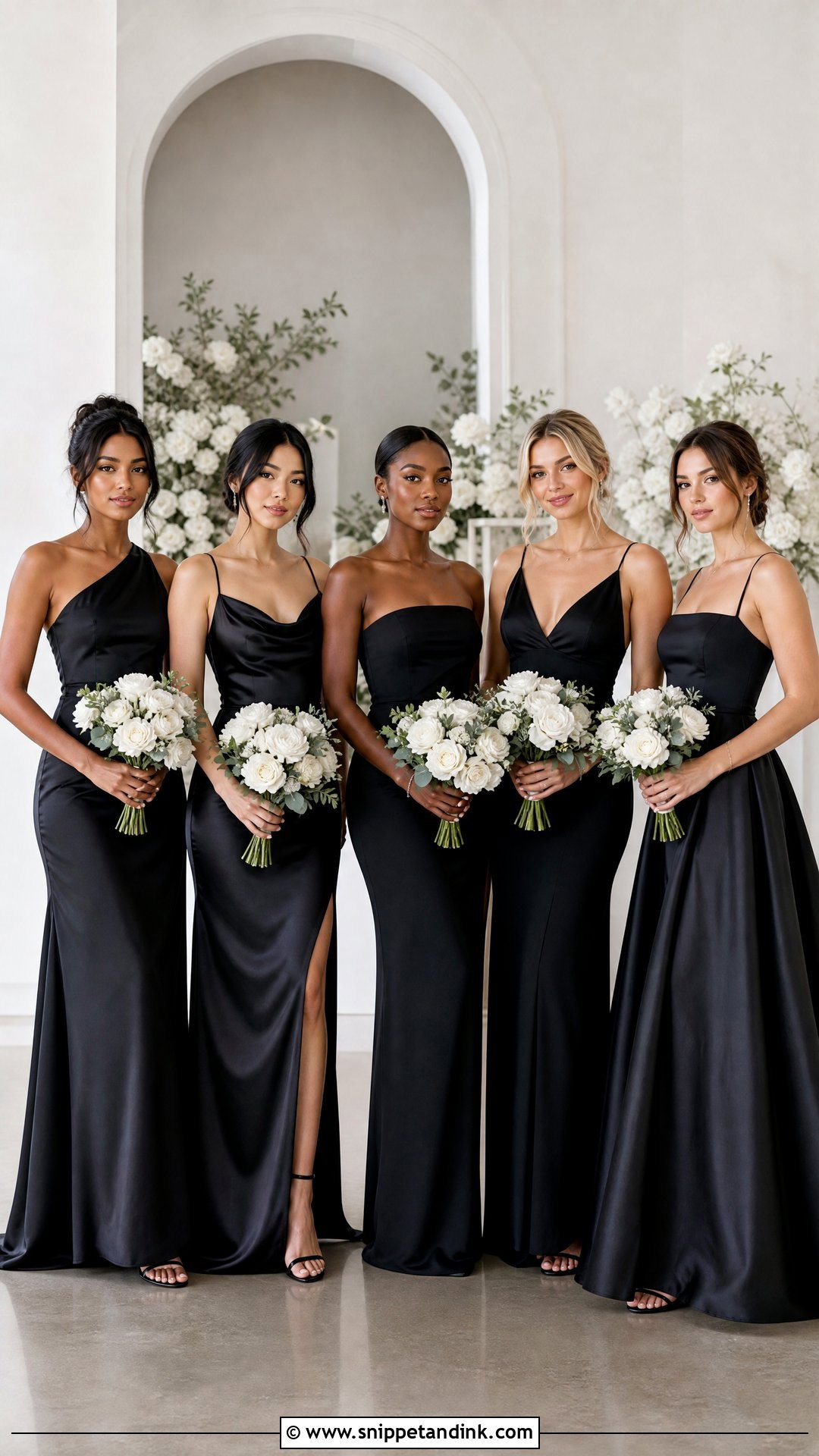
Freedom needs a few rules. Mismatched black bridesmaid dresses let each attendant pick a shape that suits her body and comfort, and they look intentional when you set limits before anyone shops. My usual brief is floor length in one fabric family, any neckline or sleeve. One bridesmaid in a satin one-shoulder, another in a cowl-neck slip, another in an A-line looks deliberate. Keep shoes, jewellery, bouquets or hair consistent. Insist that everyone shares a photo of the fabric in daylight before buying, because different brands’ blacks vary more than you’d expect, and stick to two or three textures at most.
20. Black Tulle Bridesmaid Dress
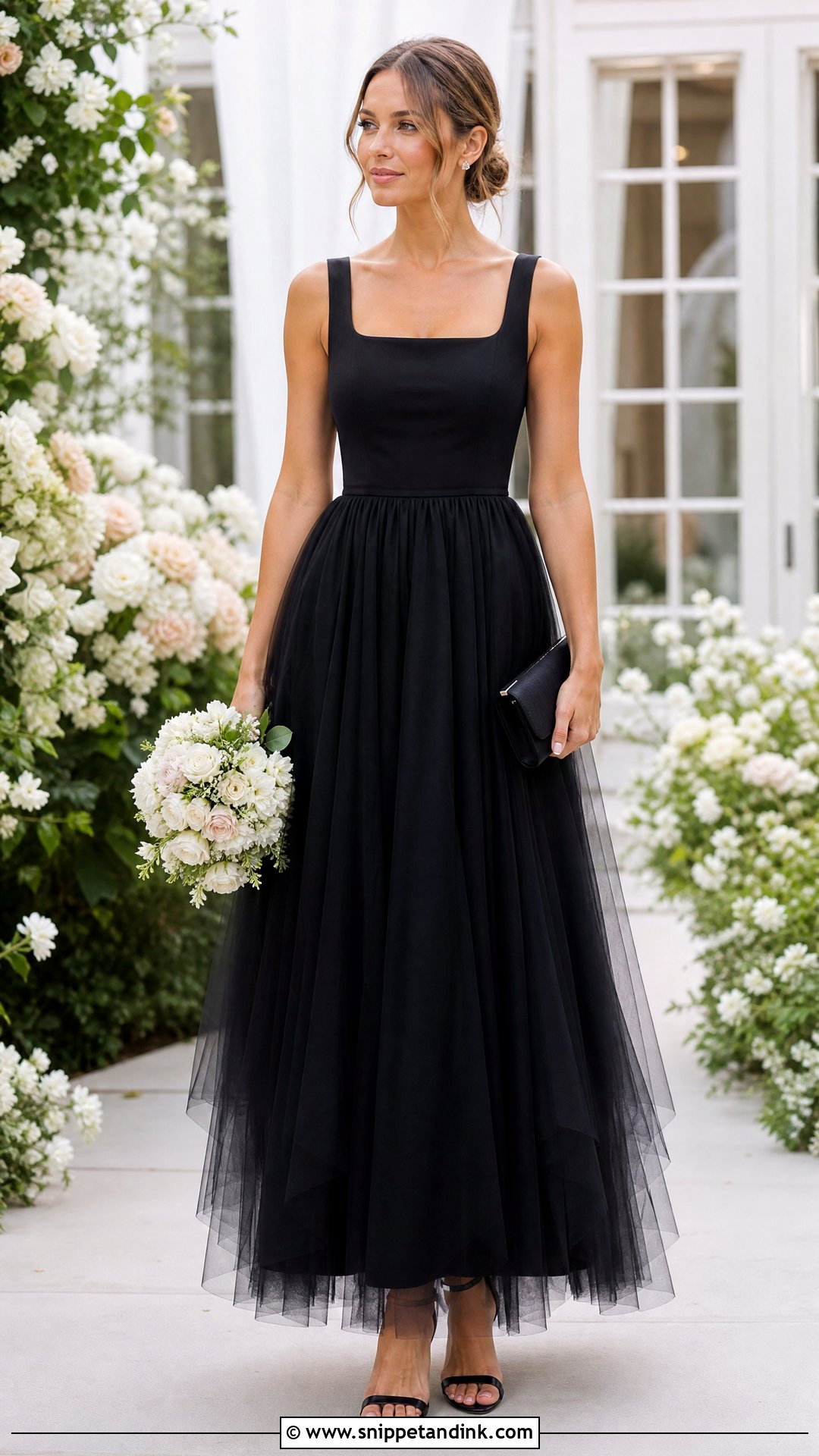
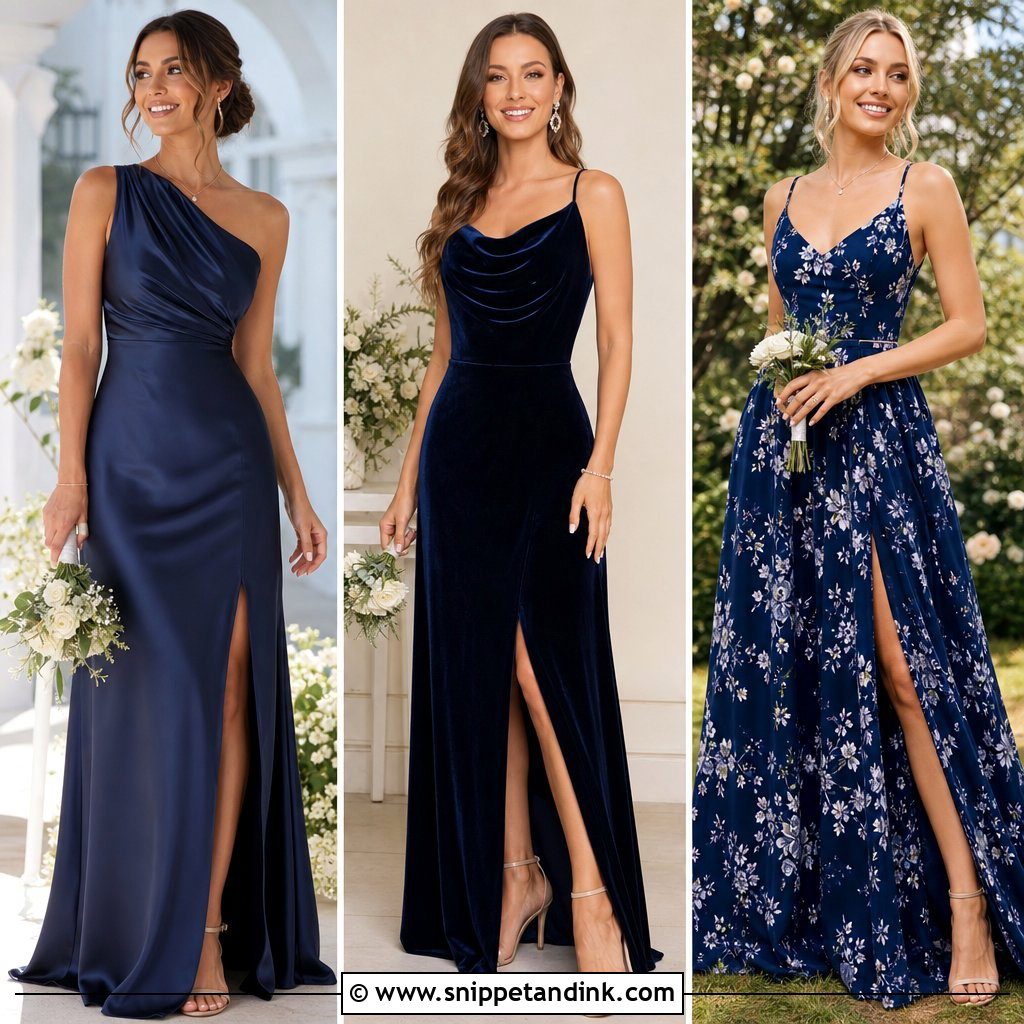
Black tulle gives more volume and softness than chiffon or crepe, and from a distance it looks almost smoky. Choose an A-line with a fitted, lined bodice and a light skirt. Tulle overwhelms petite frames easily, so I take a layer out for shorter bridesmaids rather than just shortening the hem. It also snags. Avoid rough clutches, bracelets with sharp prongs, and any shoe buckle that could catch the skirt when walking. Simple heels, crystal studs and neat hair suit a romantic indoor or garden venue, with white or pastel flowers against the black.
Ordering for a Group Who Live in Different Places
Bridesmaids rarely live in the same town, and that is where black dress plans fall apart. A little structure saves weeks of messages.
Measurements first, opinions second
Have every bridesmaid measured properly, bust, waist, hips and hollow to hem, by someone other than herself, then order from the brand’s own size chart. Bridesmaid sizing rarely matches high-street sizing, and arguments about the number on the label are common. Where measurements fall between sizes, order the larger one; taking in is easy, letting out often isn’t.
A realistic timeline
Made-to-order bridesmaid dresses commonly take a couple of months or more to arrive, and lead times vary widely by brand and season. Aim to order roughly four to six months ahead, so there’s time for delivery, a fitting and hemming close to home. Ask each bridesmaid to try her dress on the day it arrives and report any problem within the week.
Hems and shoes
Settle the shoes before anyone hems. A floor-length dress hemmed for flats and then worn with heels looks too short; the reverse is a trip hazard on stairs.
Agree the Rules Once, Then Let Everyone Dress Like Herself
A row of black looks right when it shares a few clear decisions: length, fabric direction, accessories and level of formality. Satin slips and crepe give a sleek line; chiffon, lace, velvet and tulle add movement and texture. Necklines and sleeves can differ as long as those shared choices hold. Make those calls before anyone starts shopping, insist on alterations, and test every dress for walking, sitting and holding flowers. Bridesmaids who are comfortable stand straighter, smile more easily and last longer on the dance floor, and black flatters almost every palette around them.
You'll Like These Ideas:


Leave a Reply