
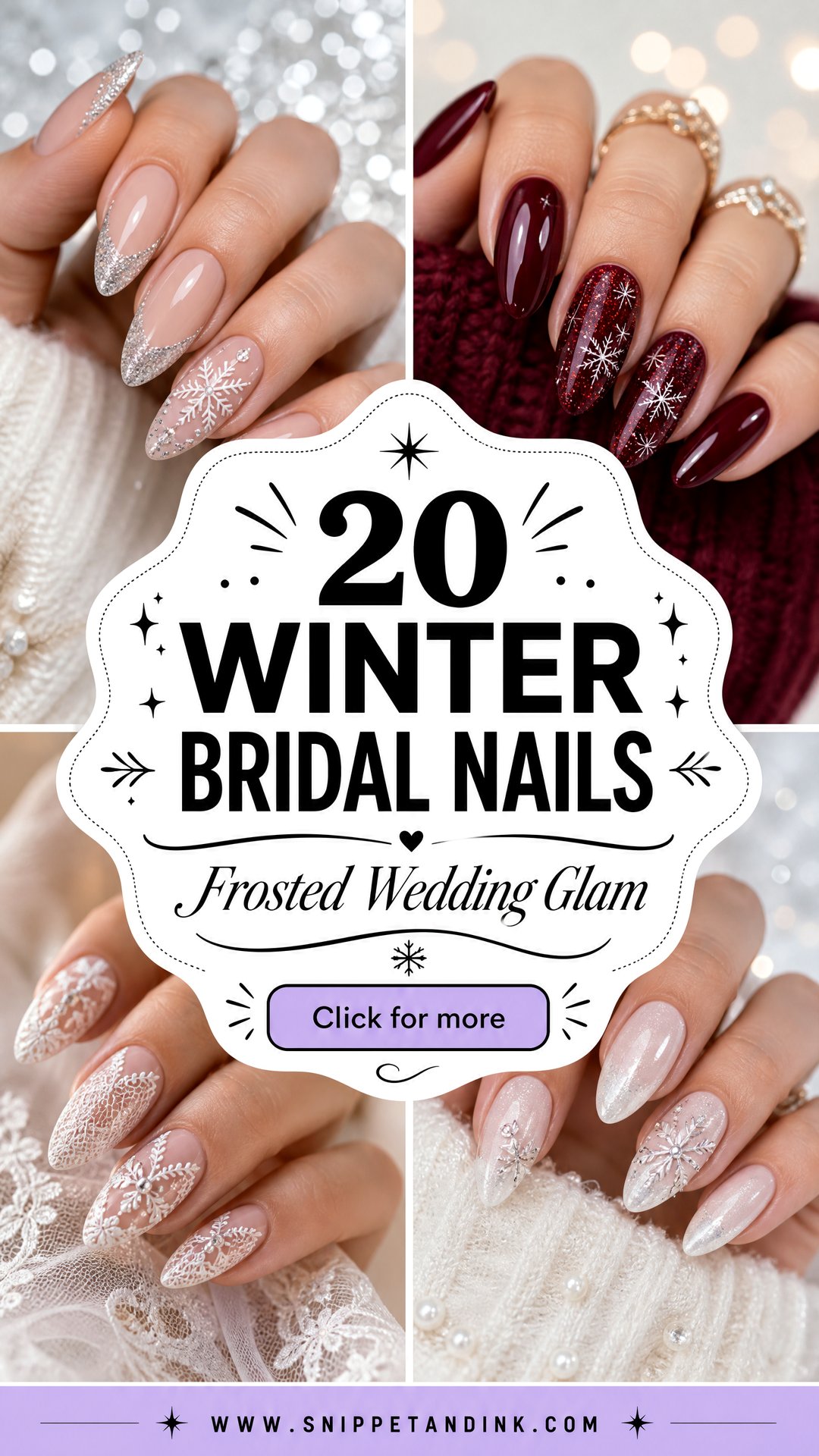
A wedding manicure gets photographed closer than almost anything else you wear, because every ring shot is a close-up of your hand. In winter there’s an extra problem: cold air and constant hand washing leave cuticles dry and ragged, and that shows long before the polish does. The sets I do most for winter brides lean polished rather than busy, with soft almond nails, short squovals, glossy finishes and fine metallic detail rather than chunky glitter. Below are twenty winter designs, from milky whites to burgundy, with my honest notes on how each one wears, who it suits and what to ask for at the salon.
Dry Winter Cuticles and How I Get Them Ring-Photo Ready
The polish is the easy part. What ruins a winter ring photo is a frayed cuticle or a white flaky edge around the nail, and cold weather makes both worse. Hot water, hand sanitiser and wind all strip oil from the skin around the nail.
- Start using cuticle oil every night about a month before the wedding. Once a day is fine, but nightly makes the biggest difference.
- Wear gloves outside and rubber gloves for washing up. It sounds fussy, but it’s the cheapest prep there is.
- Don’t cut your own cuticles in the weeks before. Cutting makes them grow back ragged, so leave that to your nail tech.
- Book the wedding set one to three days before the ceremony, so it’s fresh but has time to settle if anything needs fixing.
Gel can lift at the edges in very dry, cold conditions, especially on nails that bend. If yours are thin or peel, I’d suggest a builder base under the colour for a little more strength and a smoother finish.
1. Milky White Winter Bridal Nails
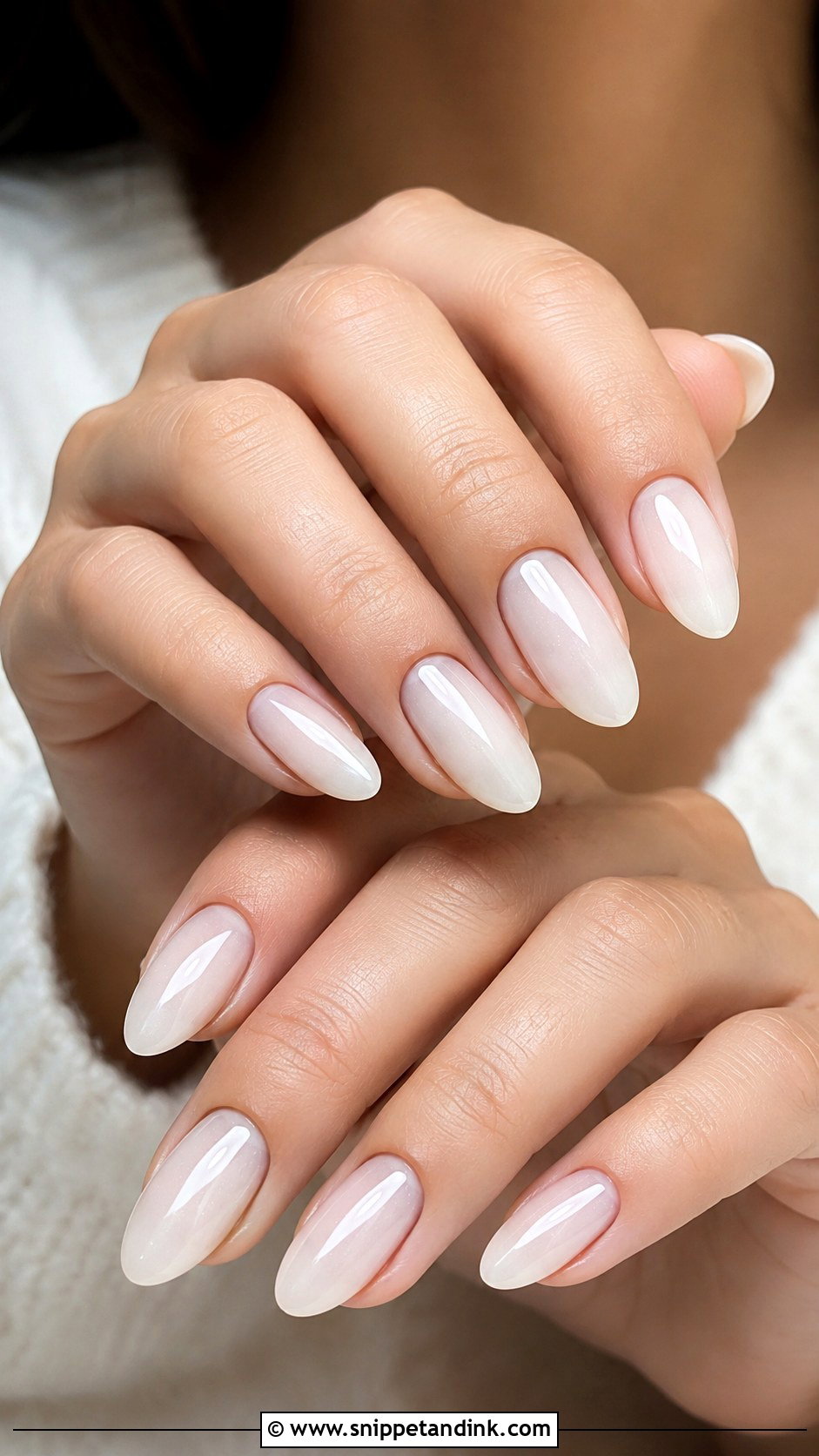
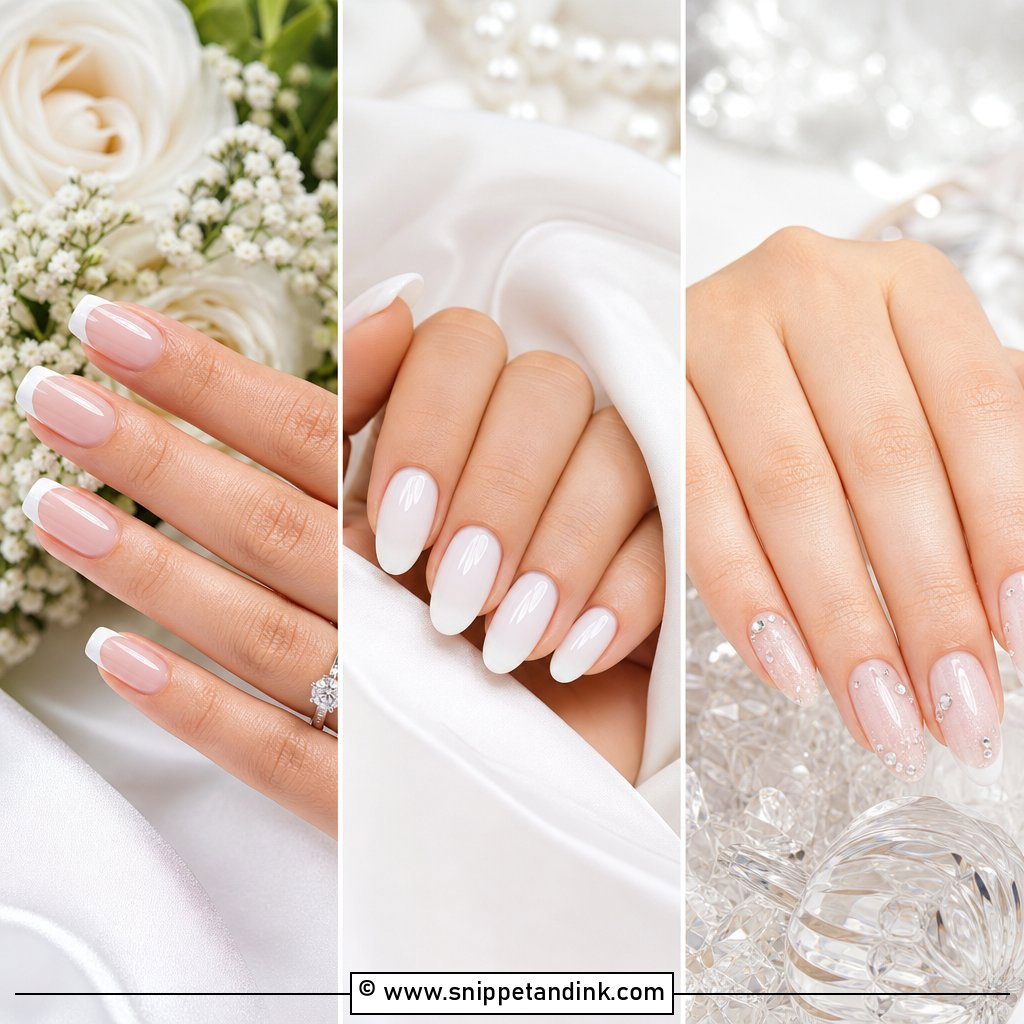
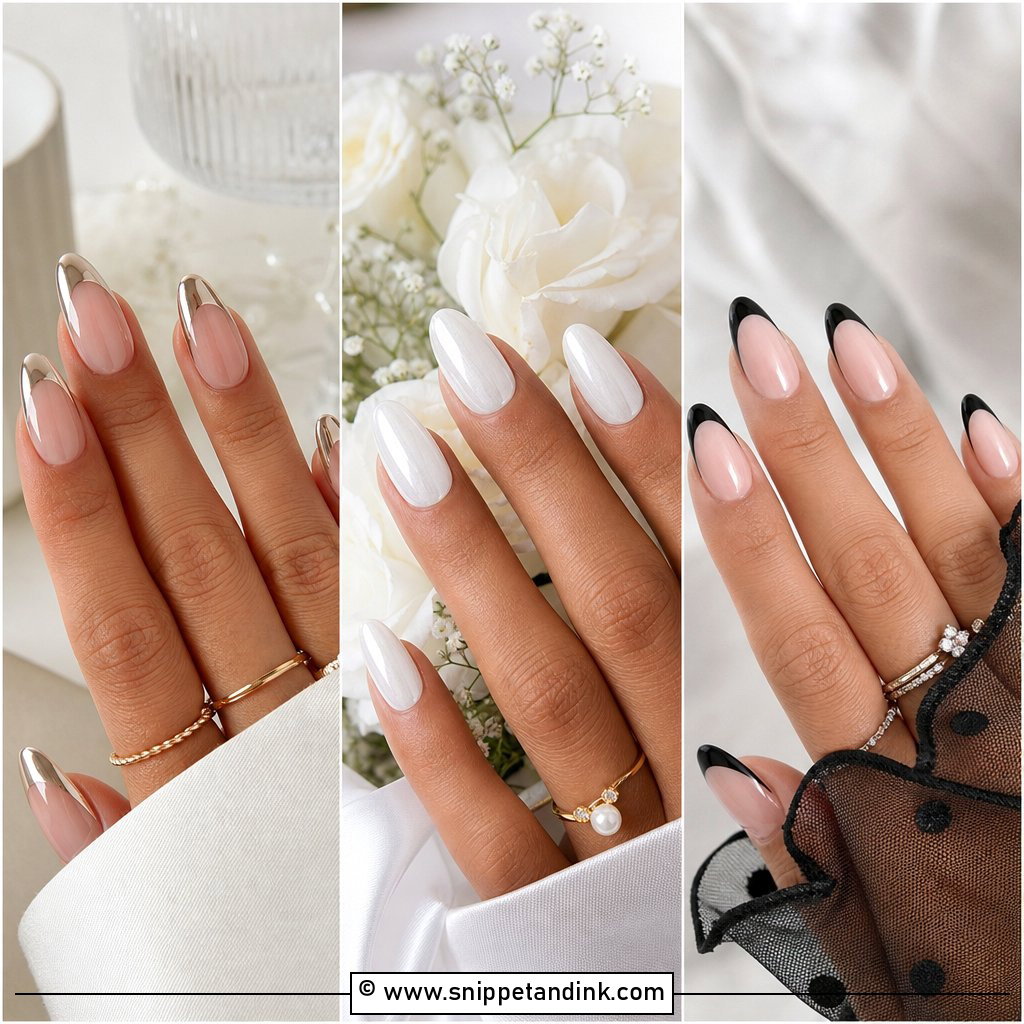
A milky white set is the one I’d pick for a bride who can’t decide, because the sheer finish lets a little of the natural nail show through and never looks like correction fluid. I build it in two thin coats rather than one thick one, so it stays translucent and doesn’t look chalky in flash photos. Ask for a glossy milky base on an almond or oval shape, plain or with a whisper of fine shimmer. Silver and platinum rings sit especially well against it. Short nails benefit most, since the soft white evens out a patchy nail bed.
2. Pearl Chrome Winter Bridal Nails
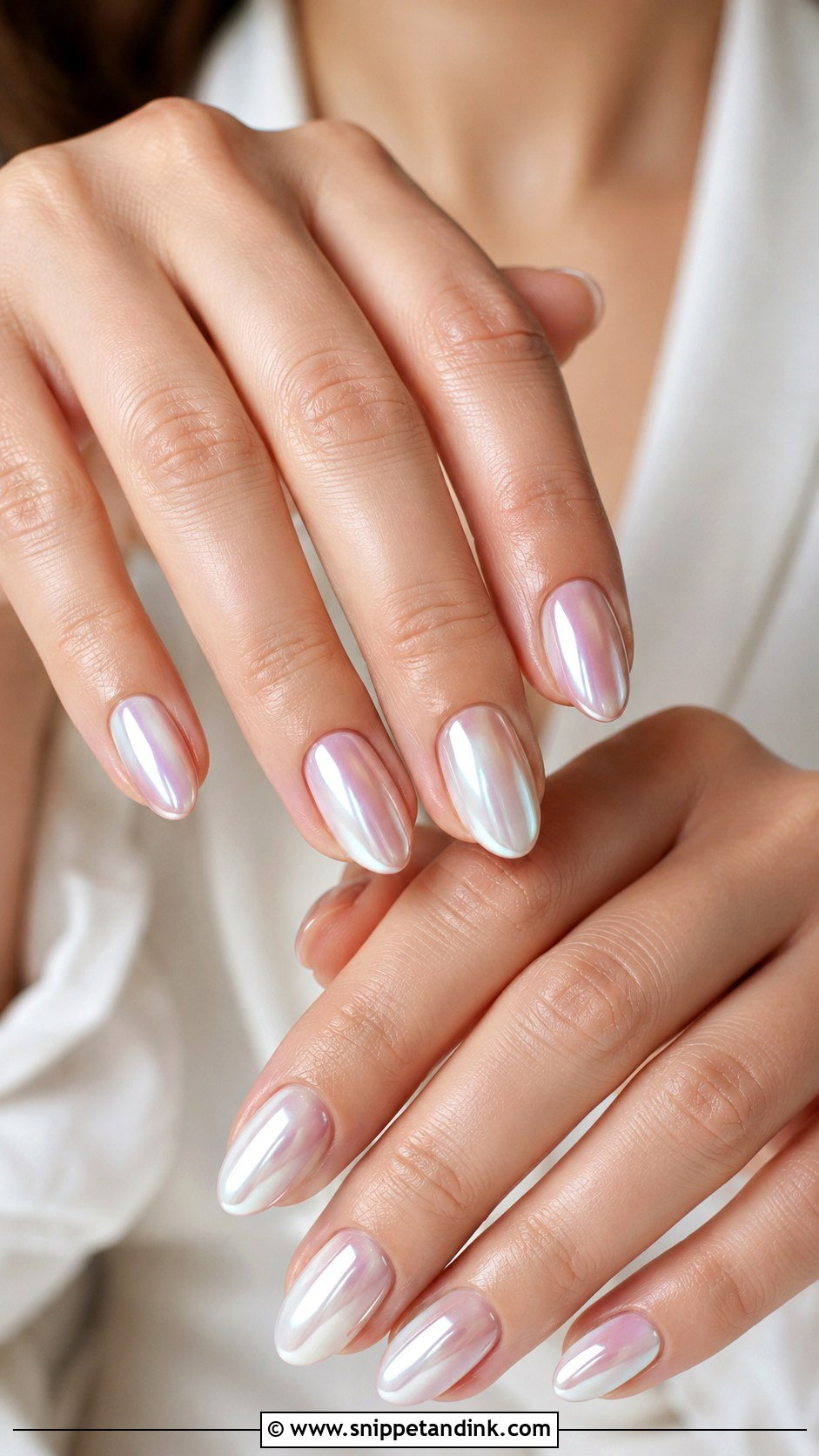
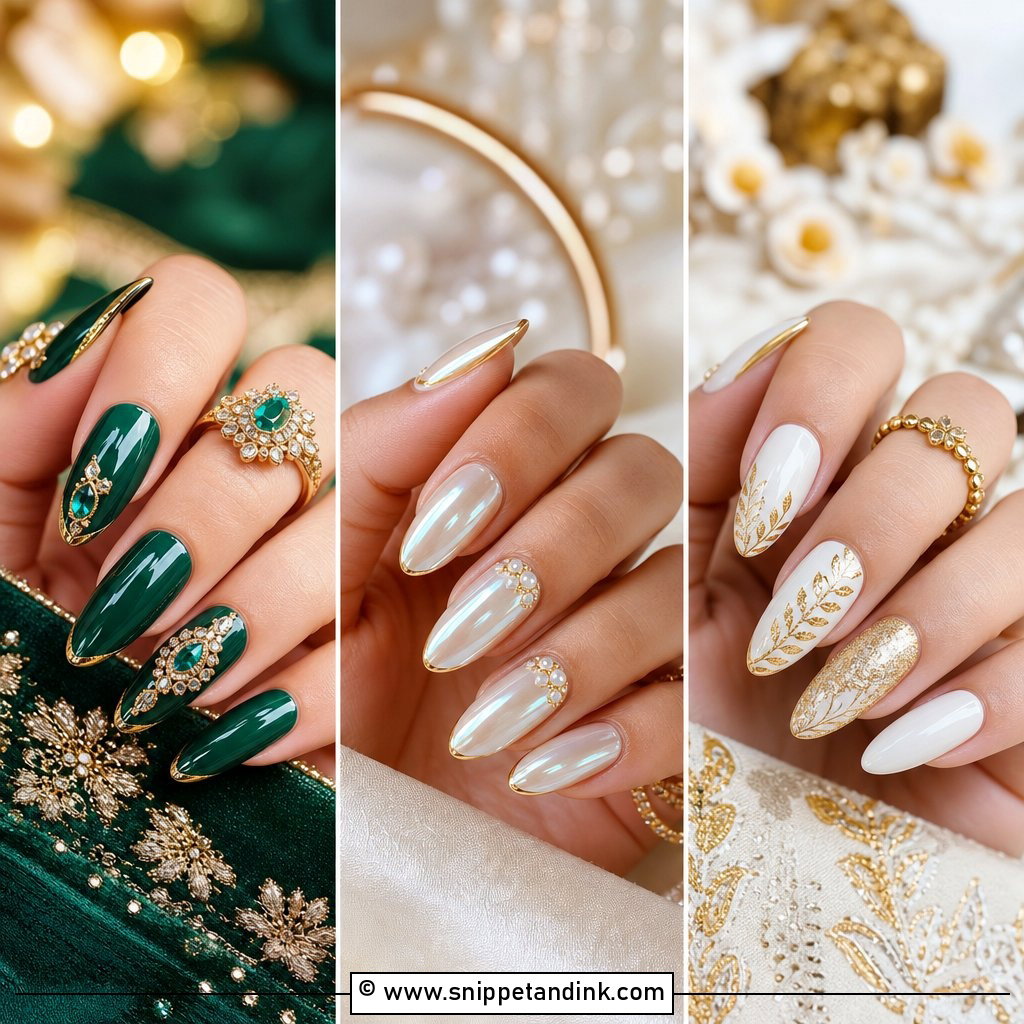
Pearl chrome is a powder, rubbed over a cured top coat until the surface turns to a soft sheen, and that’s why it looks so smooth compared with glitter. It shifts slightly between daylight, flash and warm reception light. I lay it over sheer pink, milky white or pale nude, and it suits almond, oval and soft square equally. My one caution: chrome shows ridges, so if your nails are uneven I add a builder layer first. It sits naturally next to pearl earrings, beaded gowns and silk.
3. French Tip Winter Bridal Nails
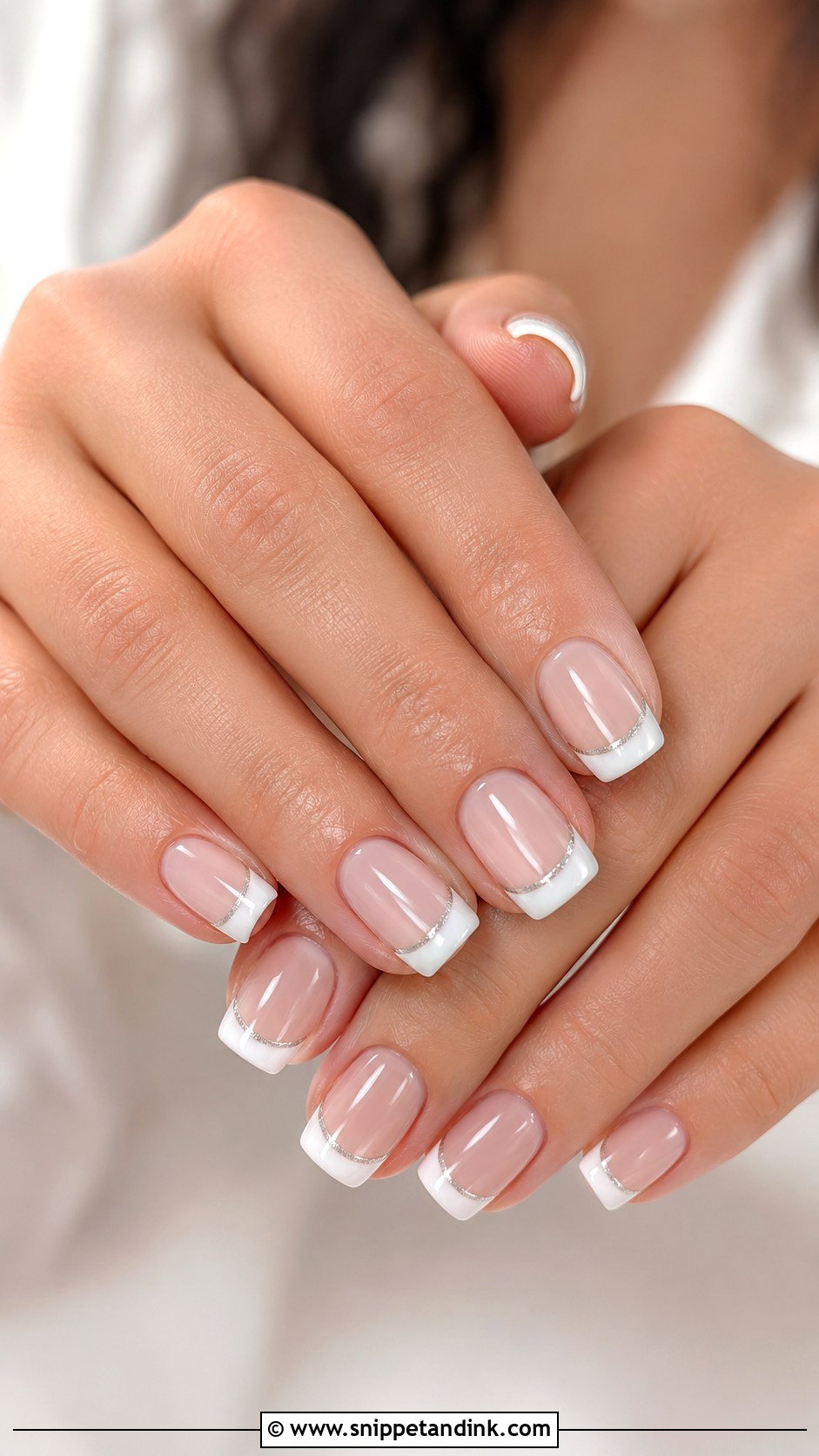
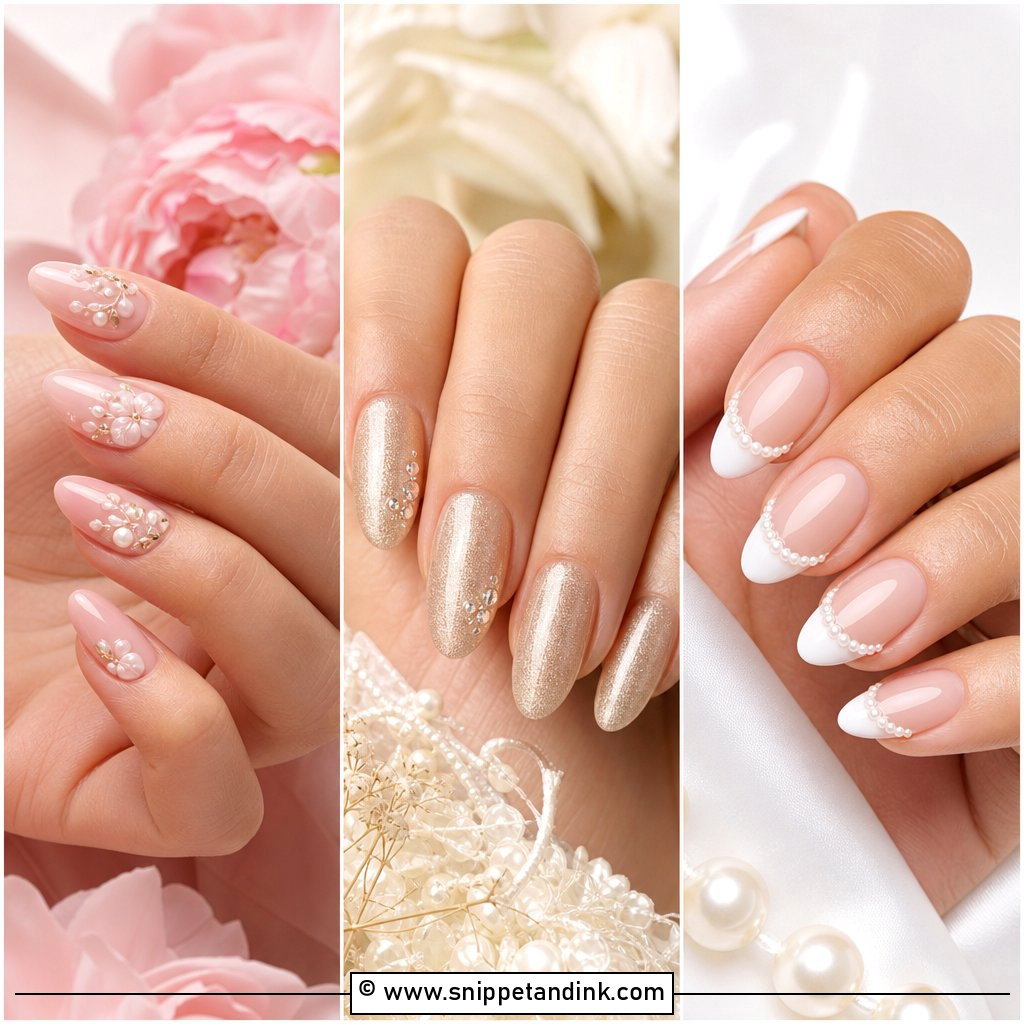
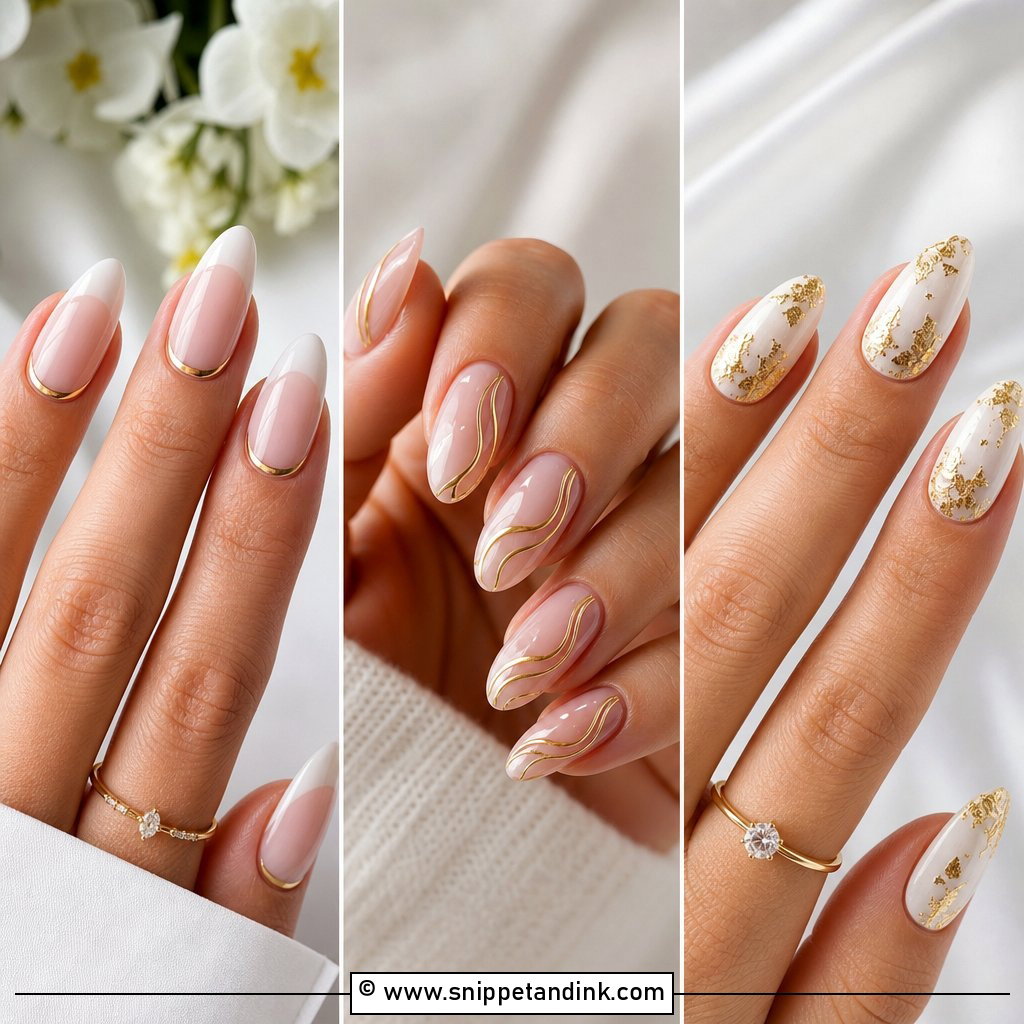
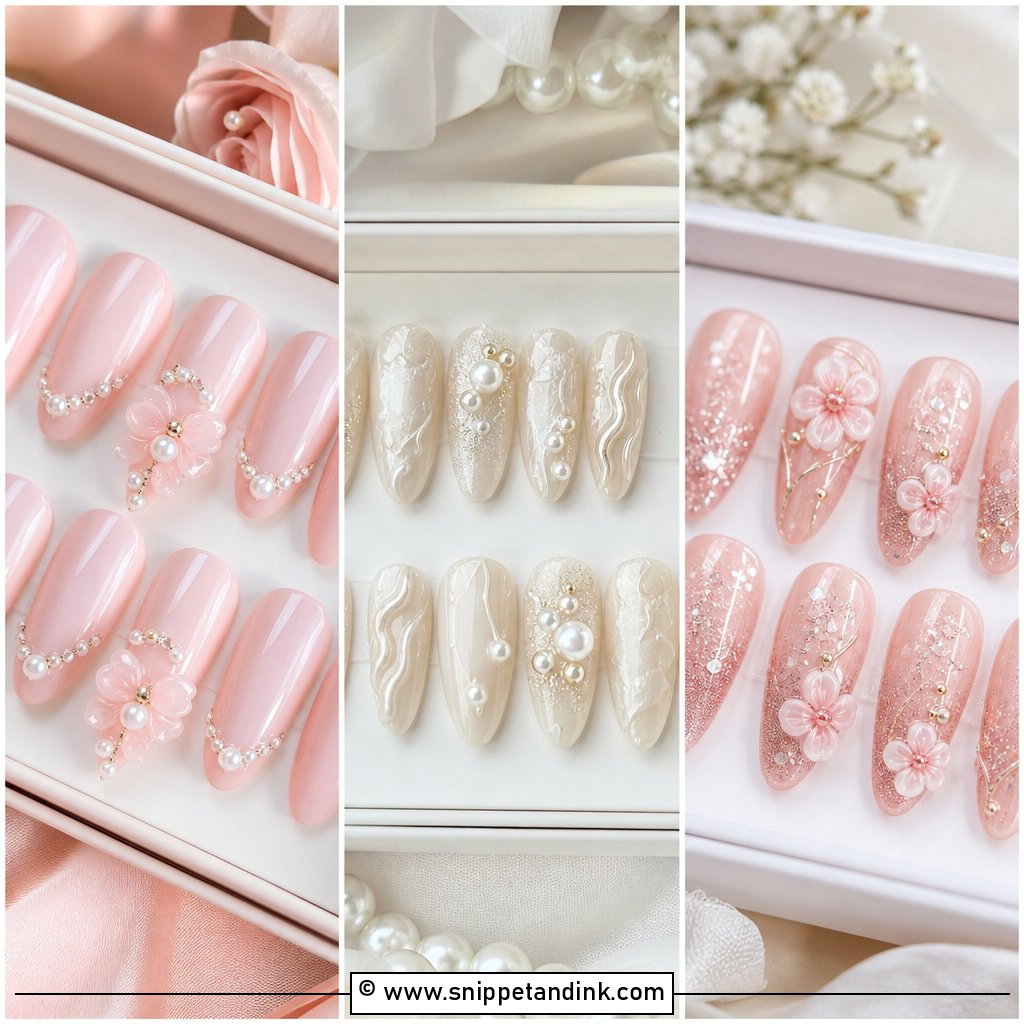
The French tip I do now for brides is gentler than the bright white version many people picture. I use a creamy white, soft ivory or a slightly glazed tip over a sheer pink or nude base, which looks fresher and hides regrowth better. For a winter touch, a thin silver line under the tip or a dusting of shimmer on the free edge is enough. Medium almond lengthens the fingers, while short squoval nails keep it practical if you work with your hands. The smile line is the part to check at your trial, since a lopsided curve is very visible in a ring close-up.
4. Snowflake Winter Bridal Nails
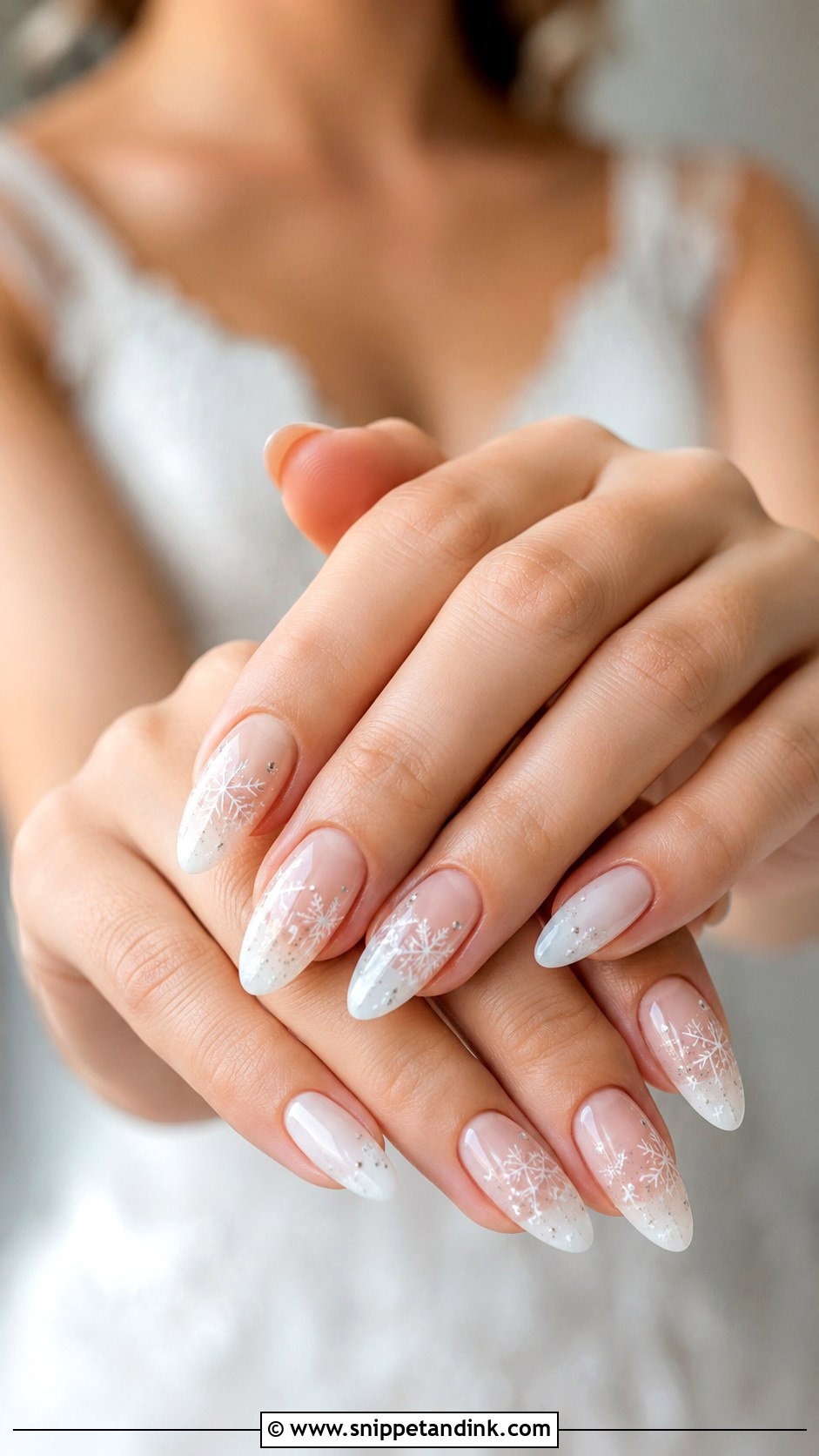
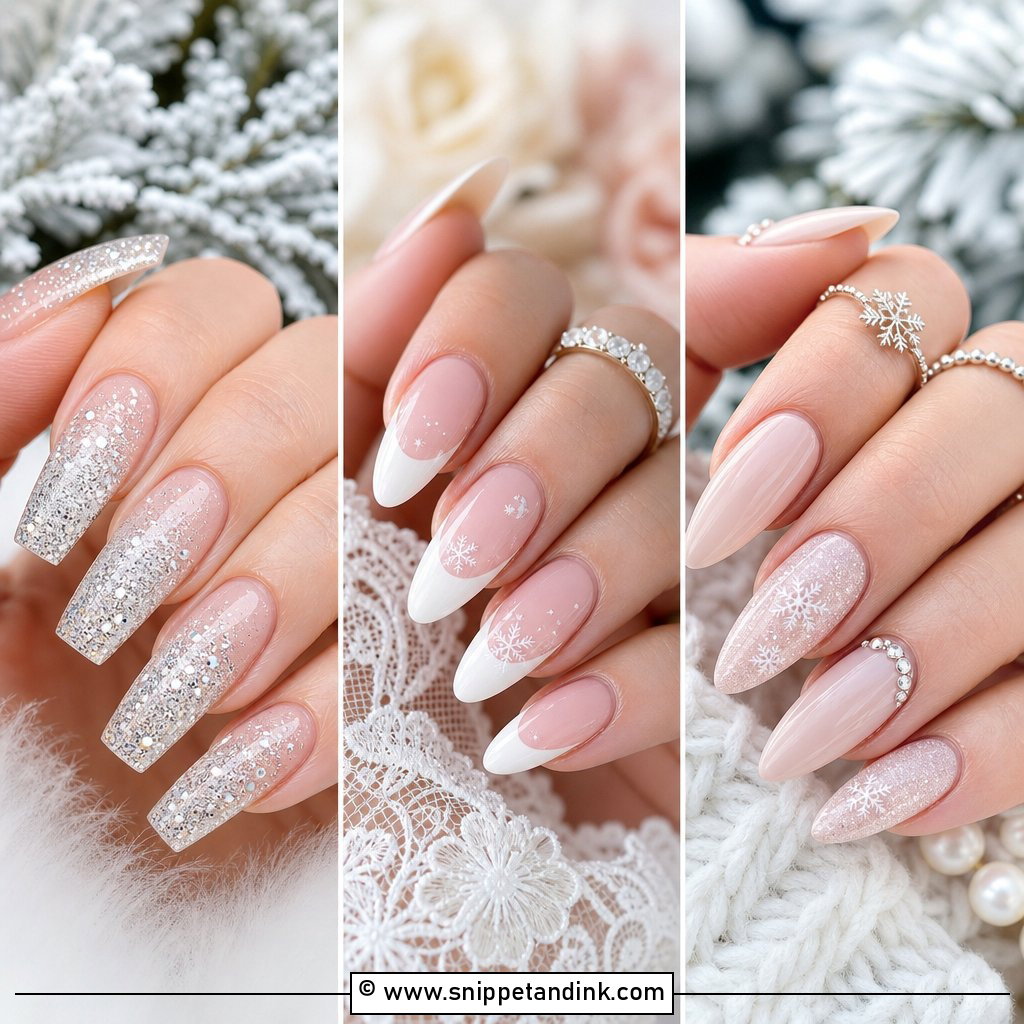
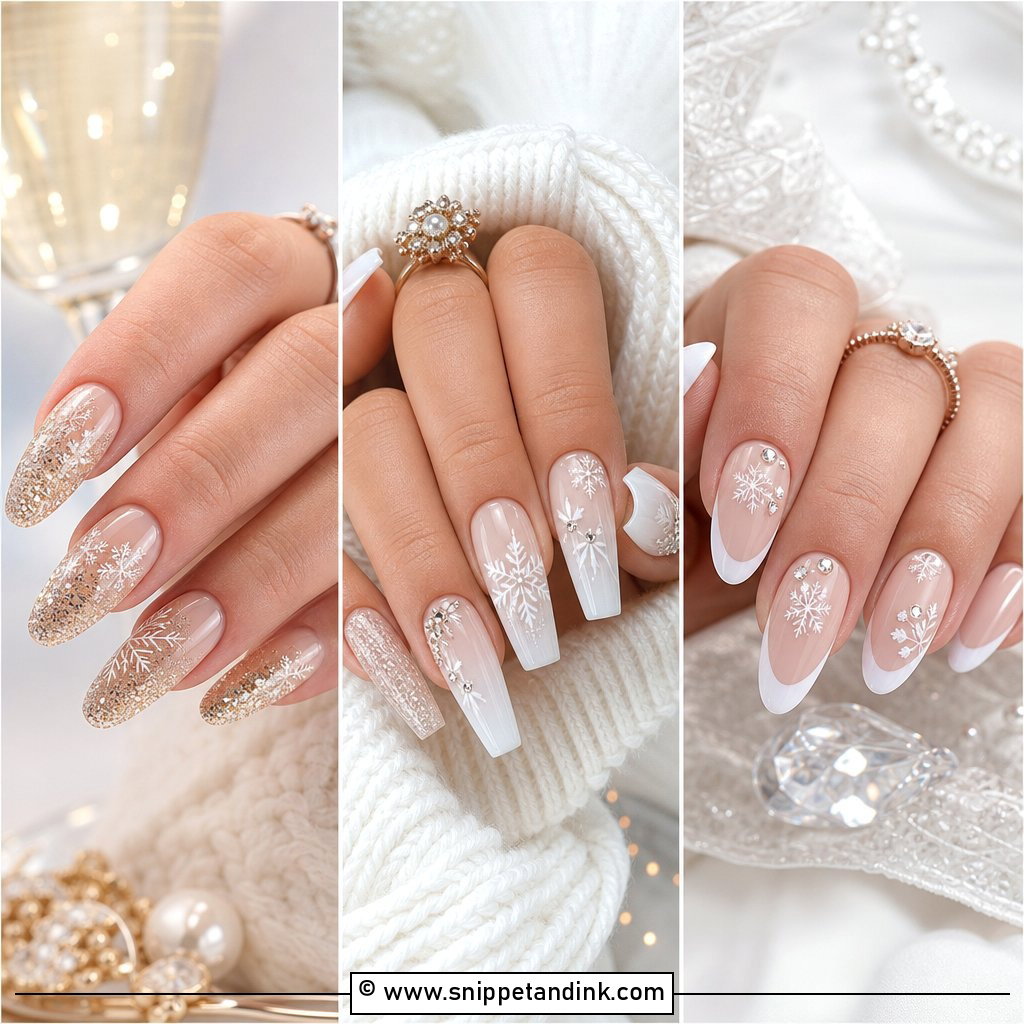
Snowflakes go wrong when every nail is covered, which turns a bridal set into a Christmas jumper. I keep the base sheer nude or milky white and paint tiny white snowflake details on two or three nails, then leave the rest glossy or lightly frosted with fine silver dots. Freehand snowflakes with a thin liner brush look much more delicate than stickers. Oval or almond shapes keep the artwork from feeling cartoonish. December and January ceremonies, mountain venues and snowy portraits are where this design earns its place.
5. Nude Glitter Winter Bridal Nails
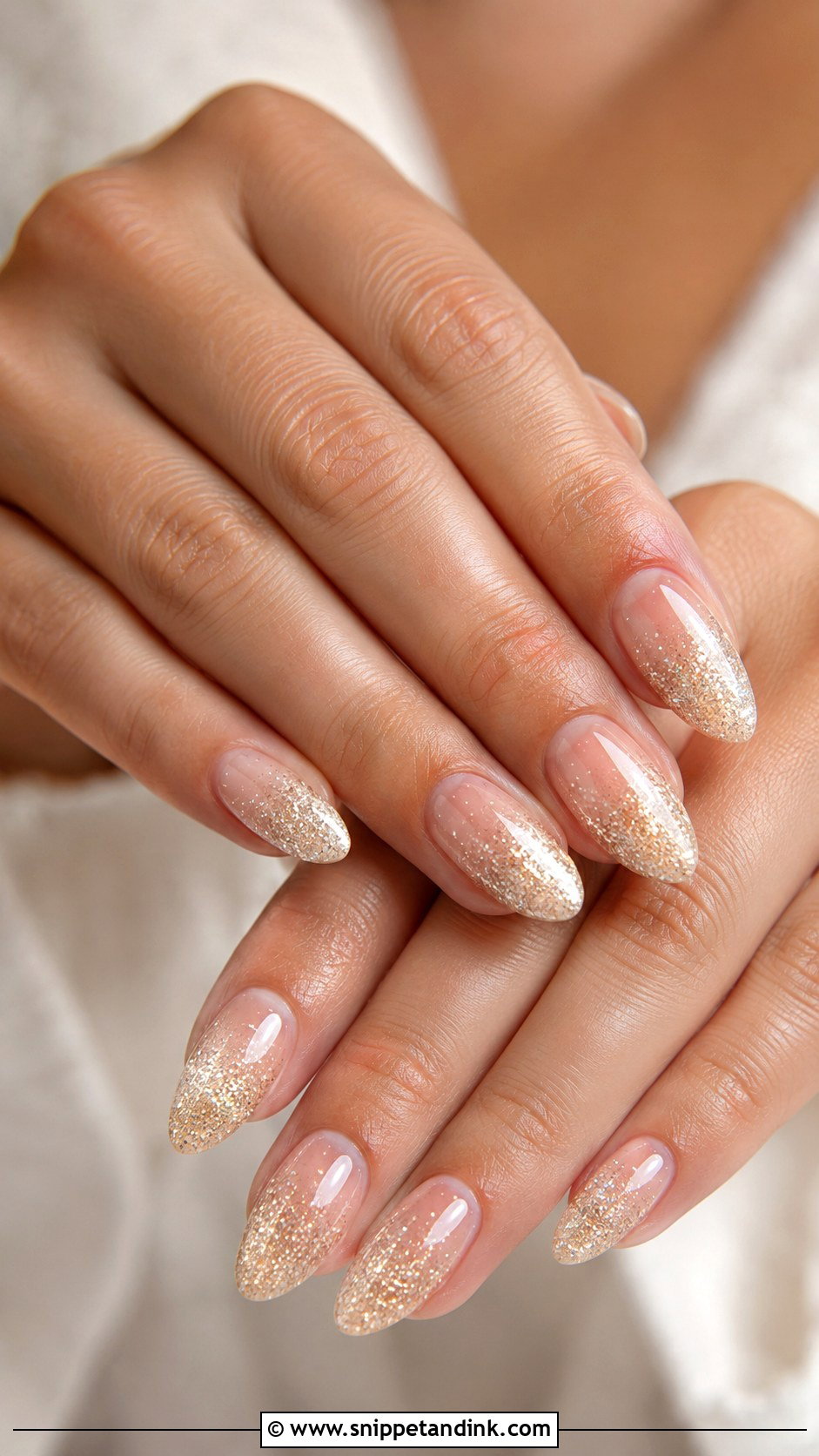
Nude with fine glitter is my practical pick for a long wedding weekend, because small chips at the tip hide in the sparkle. The nude has to match your skin, not the bottle in the salon. I swatch pale beige, rosy nude, caramel or soft almond against your knuckle before choosing. Then a fine champagne or silver glitter fades up from the tip or down from the cuticle. It sits quietly beside both the dress and the engagement ring.
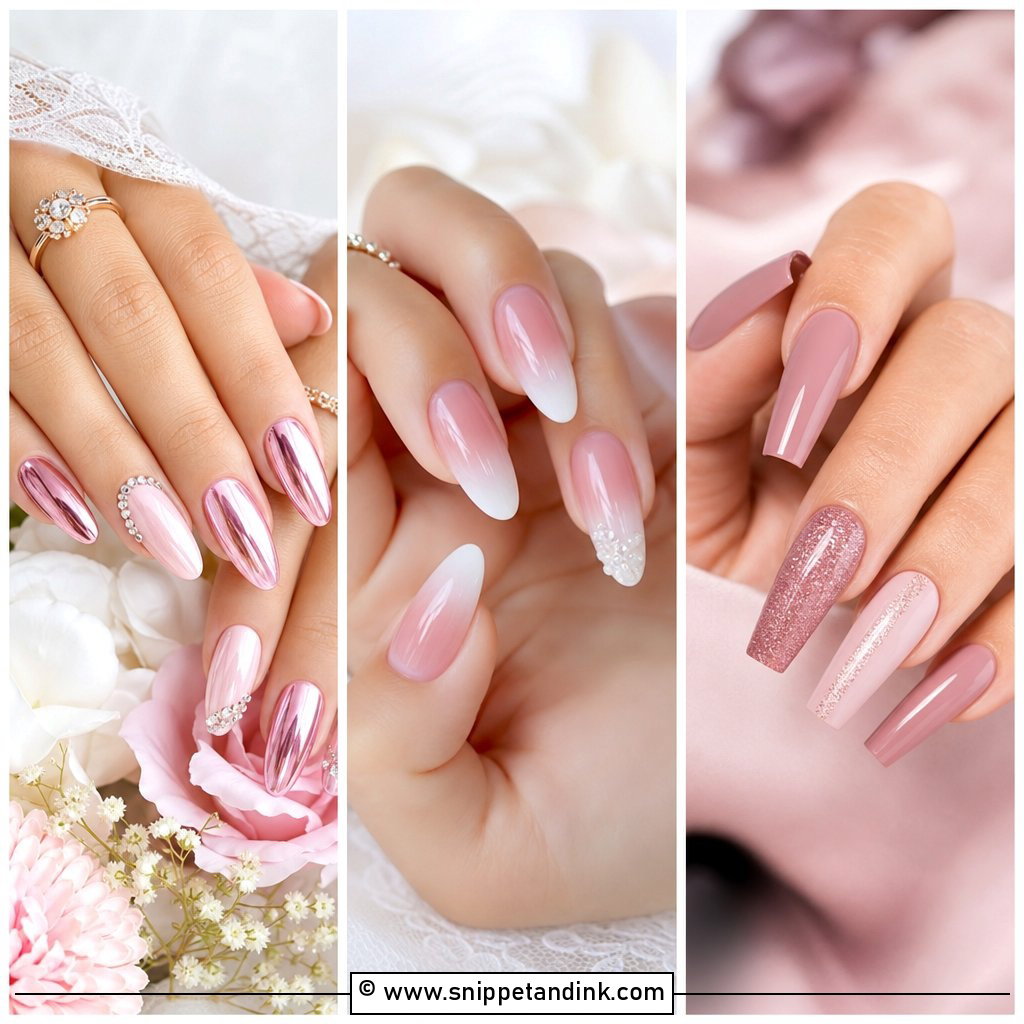
6. Blush Pink Winter Bridal Nails
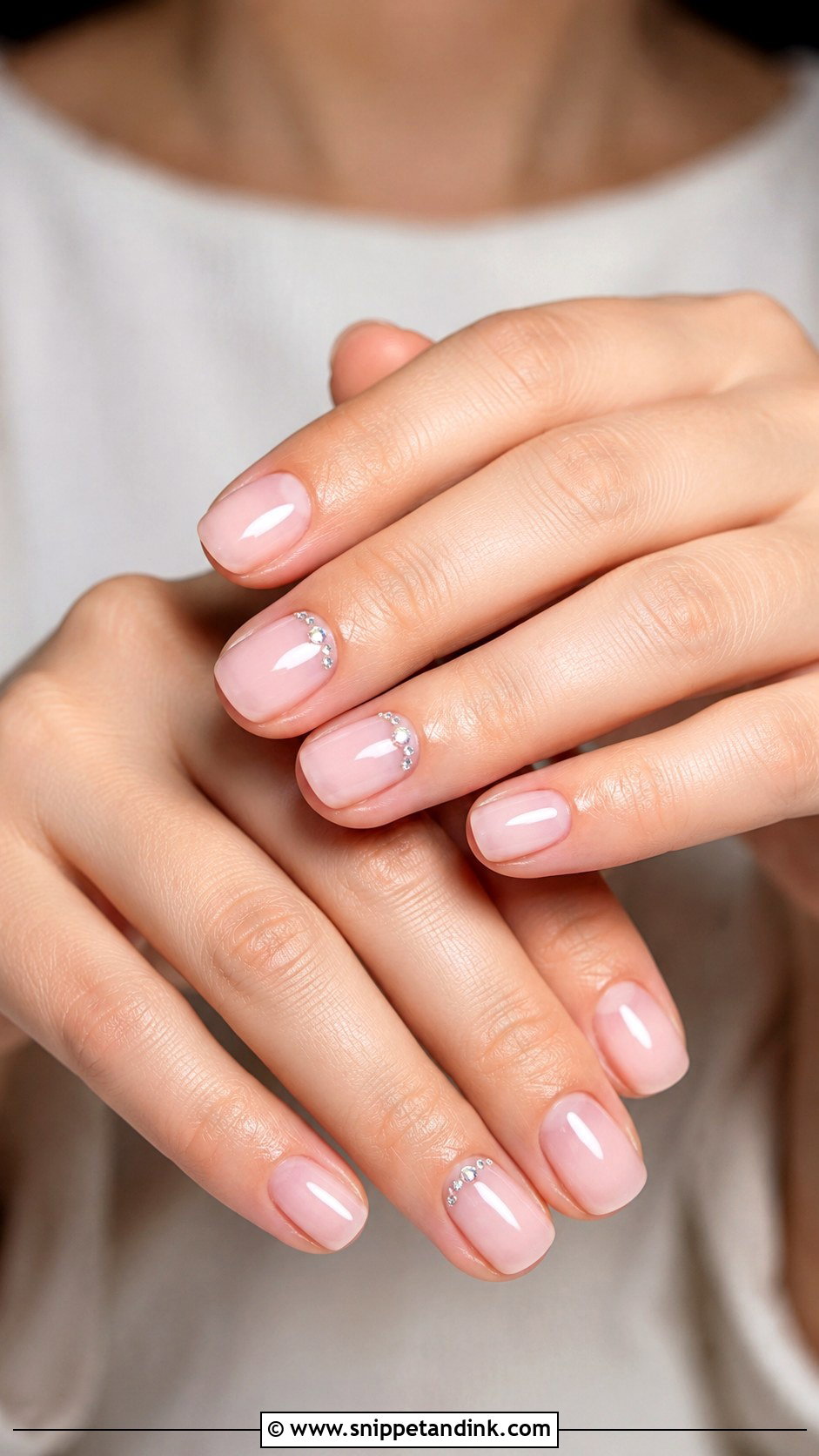
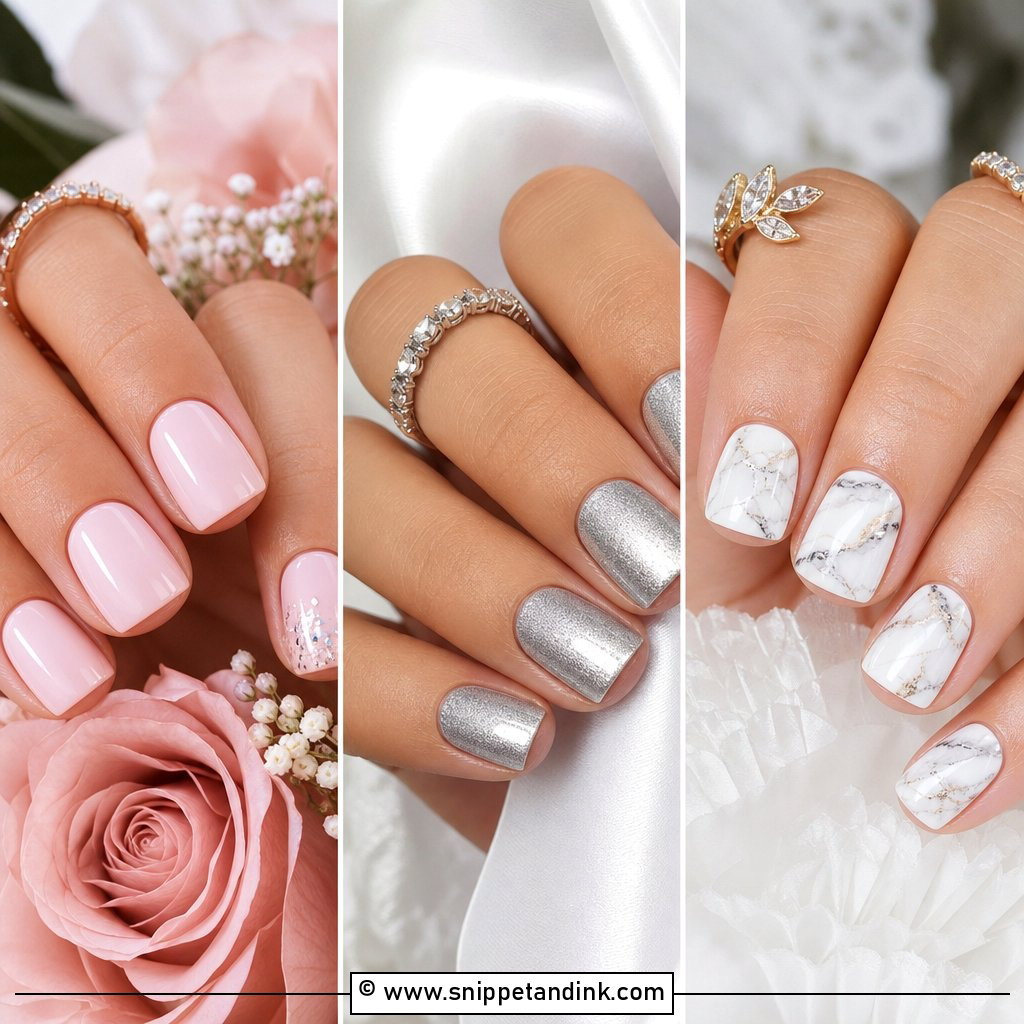
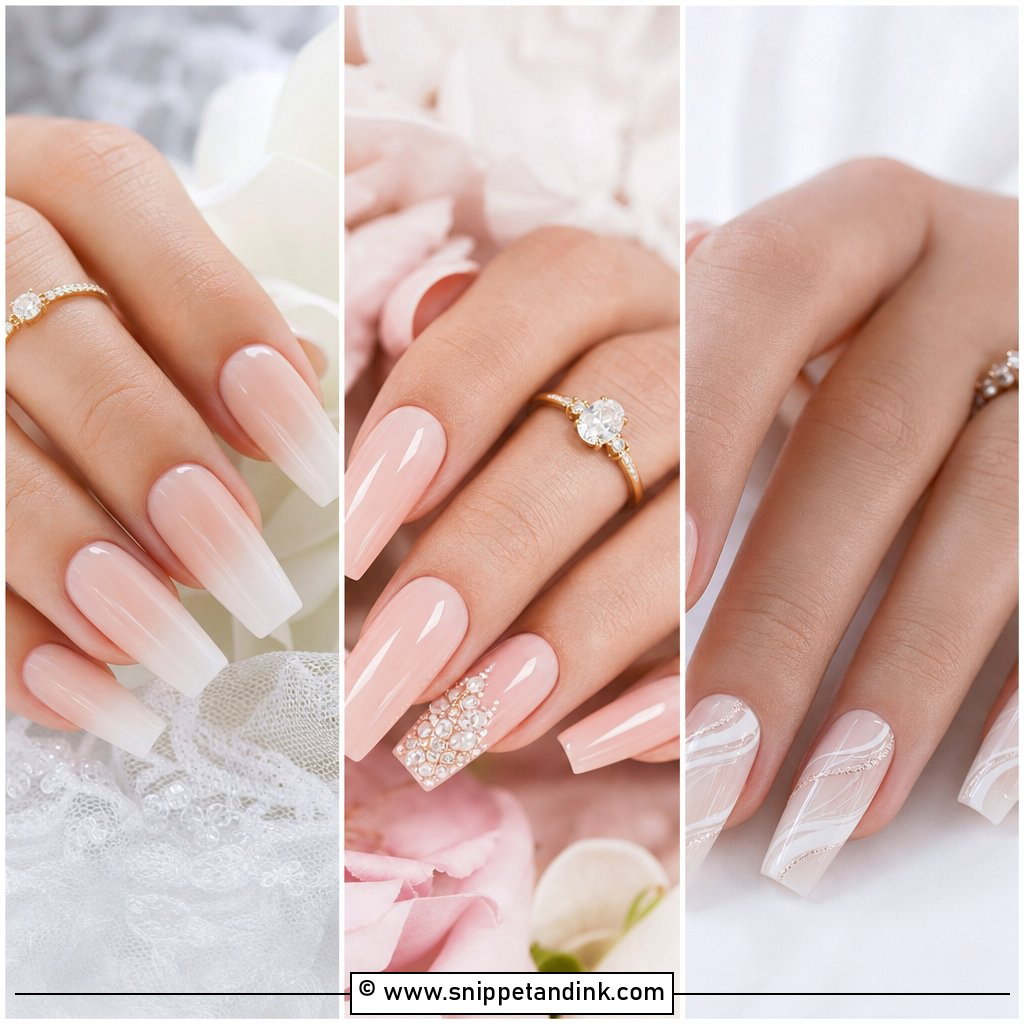
Blush pink is the colour I’d describe as safe in the best sense: it suits most skin tones and nearly every makeup palette. I’d go sheer for a natural nail look, or one shade creamier if you want to hide staining or ridges. For winter, a glossy top coat, subtle pearl shimmer or tiny crystals at the cuticle add a seasonal touch. It works at any length. Rosy makeup, white or ivory gowns and pale grey wedding palettes all sit comfortably with it.
7. Silver Glitter French Winter Bridal Nails
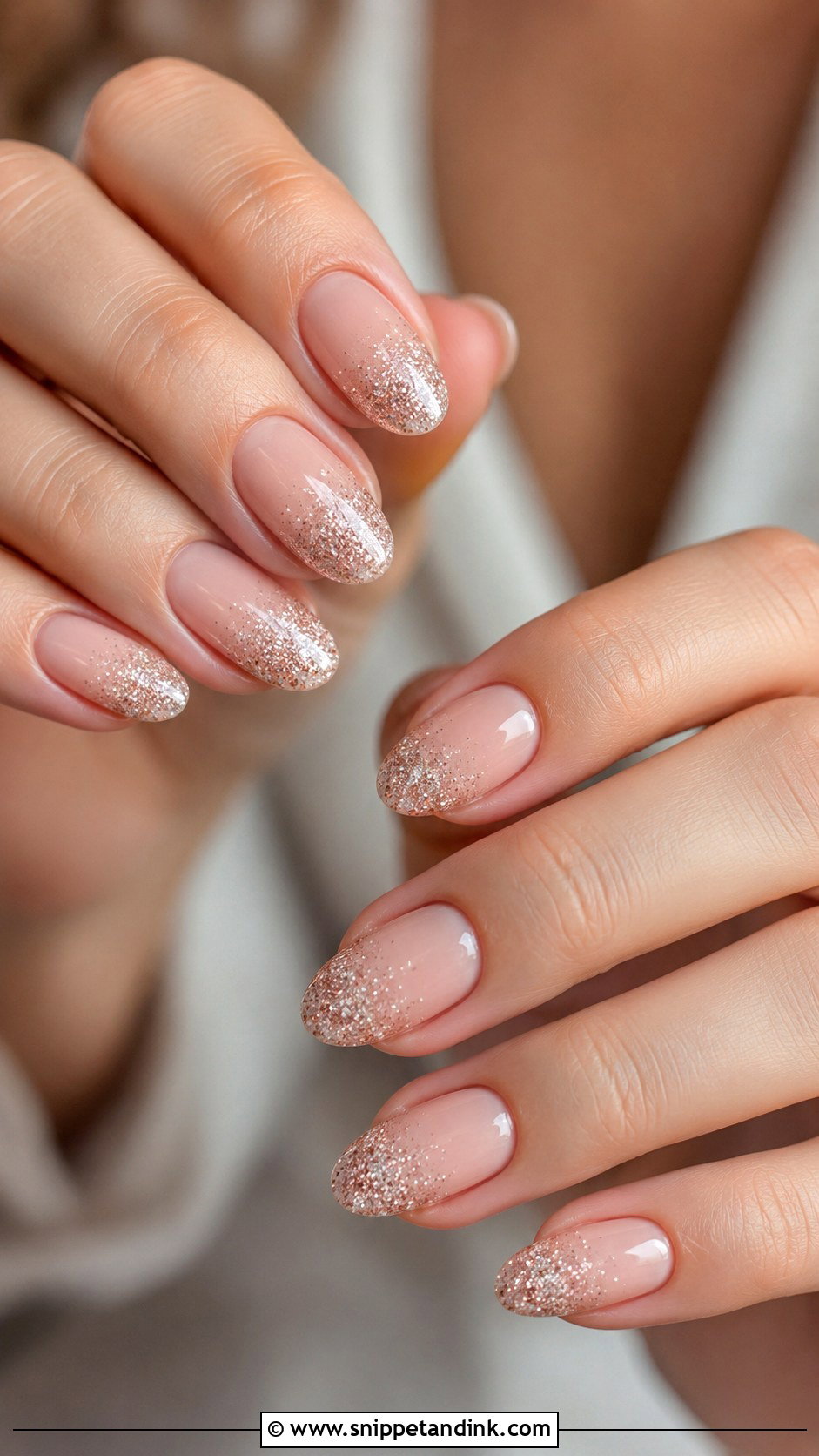
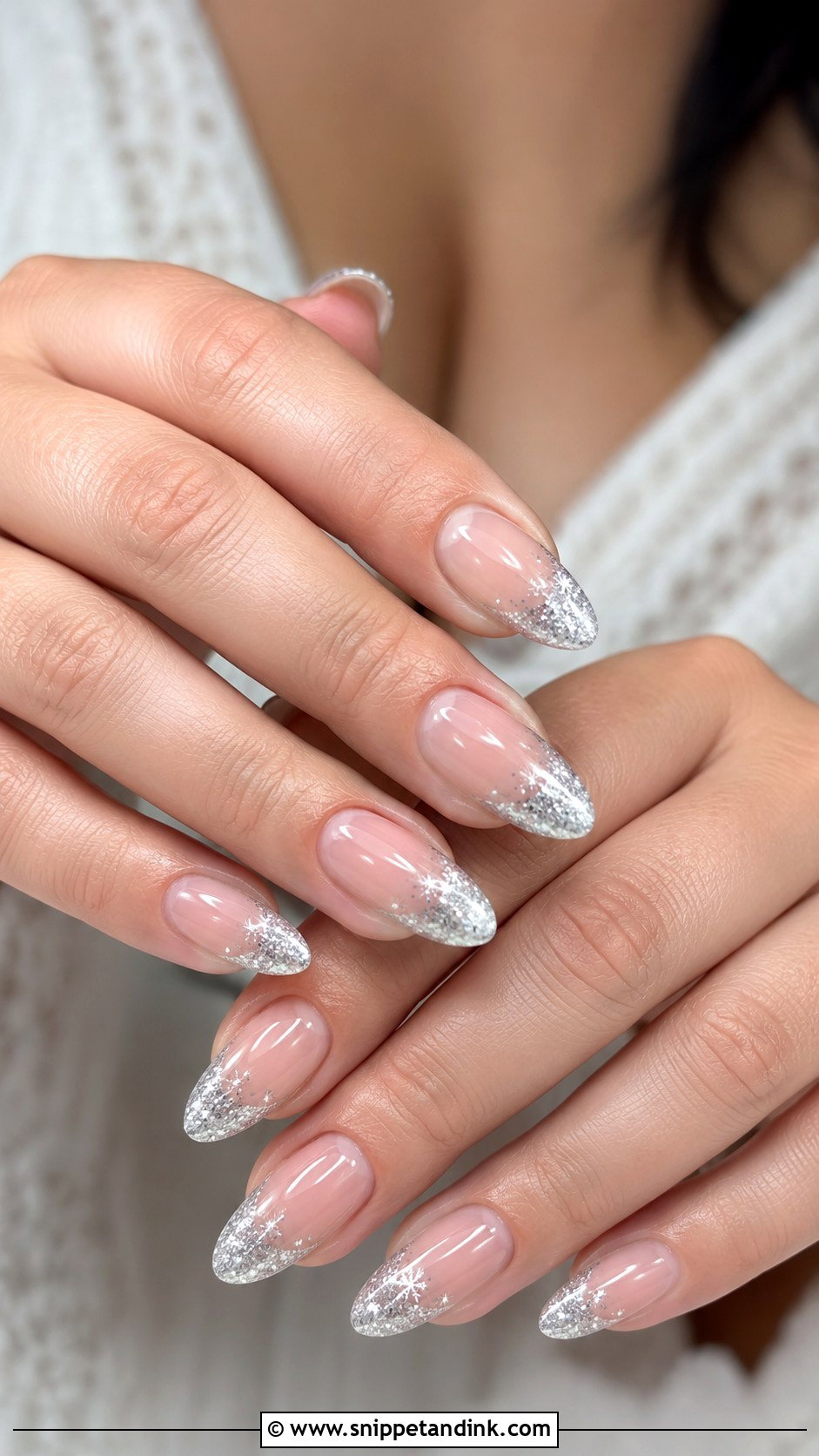
Swapping white tips for fine silver glitter gives a French manicure a cooler, icier edge. Keep the base sheer, nude or pale pink. I paint the tip with a glitter gel that’s mostly fine particles, because large flakes leave a lumpy edge that catches on lace. A thin tip stays minimal, while a deeper curve gives more sparkle in photos. It’s a natural partner for evening ceremonies and gowns with crystals or metallic beading. Almond feels refined, and short square looks crisp and modern.
8. Icy Blue Winter Bridal Nails
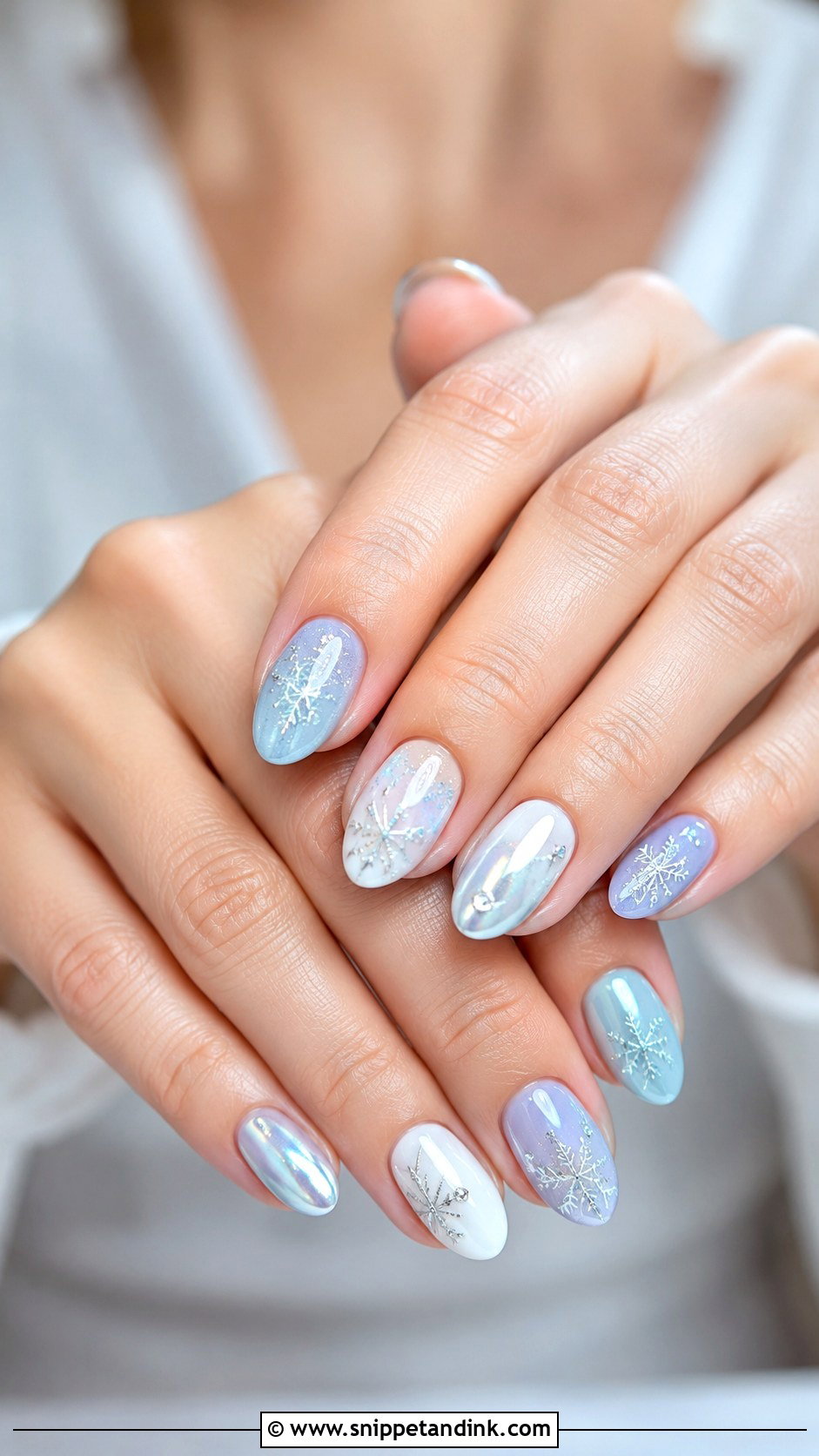
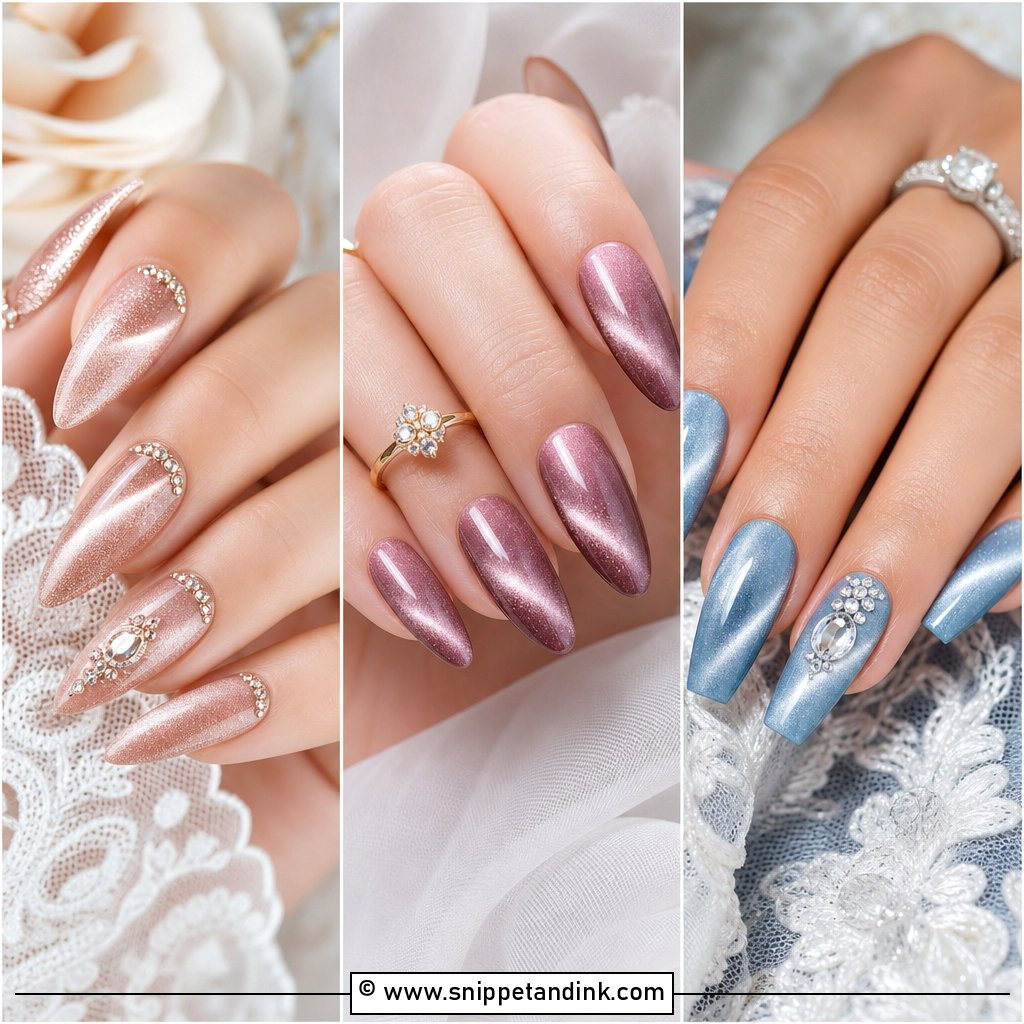
Icy blue winter bridal nails work best when the blue is nearly grey. Bright or neon blue reads as a fashion statement, not a bridal one, and it can make hands look cold in photos. I mix a misty grey-blue and keep it glossy, or add a pearl chrome top for frost. One or two milky white accent nails with tiny silver details soften it further. Silver jewellery, blue-grey bridesmaid dresses and snowy outdoor shots all suit it, and it adds colour without shouting.
9. White Chrome Winter Bridal Nails
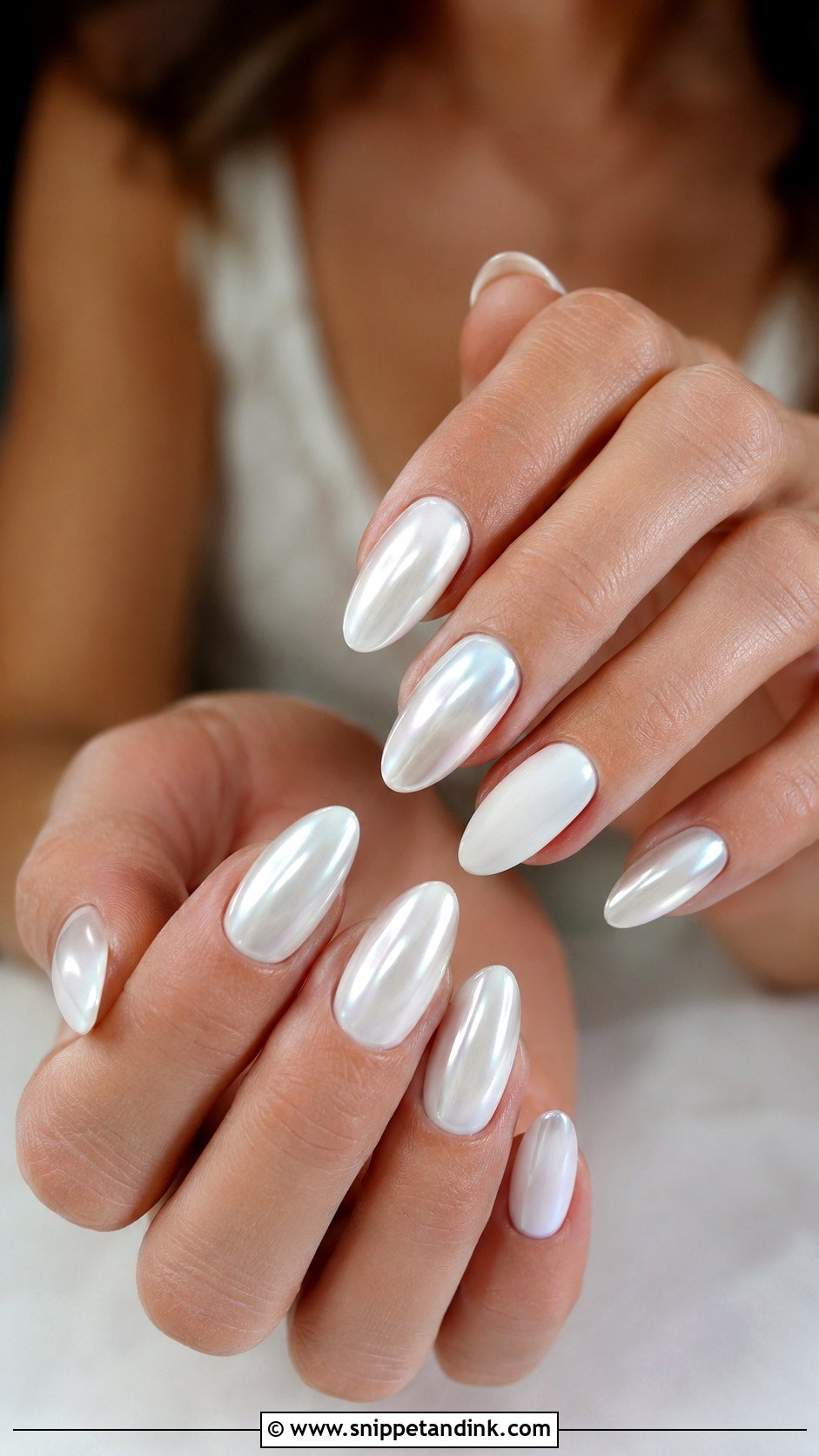
White chrome looks like glazed porcelain: a white or milky base with chrome powder buffed over the top for a glassy shine. It reads crisp in photos but softer than flat white polish, and the dimension catches winter lighting nicely. I check the base carefully before applying it, because chrome magnifies every bump. A medium almond makes it elegant, while a short oval keeps it easy to live with. Both classic and modern brides wear it well.
10. Champagne Glitter Winter Bridal Nails
Gold-leaning brides usually find champagne glitter friendlier than yellow gold, since it sits between nude, soft gold and pale beige and flatters more skin tones. I either fade it from the tips over a sheer nude base or put one full glitter accent on each hand. The glitter must be fine and smoothly encapsulated, otherwise it feels gritty and snags hair. Ivory dresses, gold jewellery and candlelight pick up the warmth.
11. Soft Ombre Winter Bridal Nails
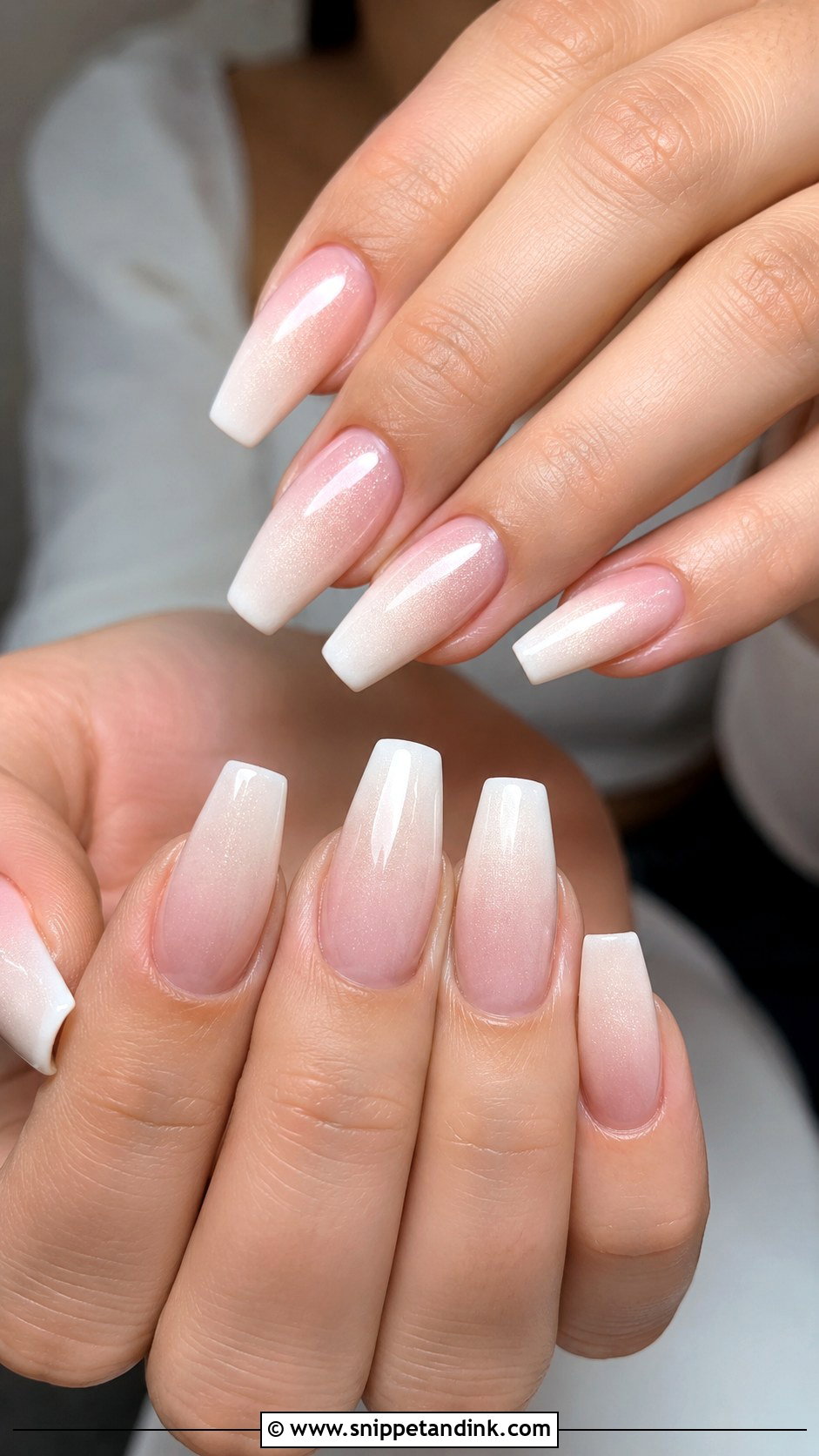
An ombre is basically a French manicure with the line blurred away. I blend a sheer pink or nude base into a creamy white tip, usually with a sponge or a soft brush, so the fade is smooth at arm’s length and close up. In winter, a pearl or barely-there shimmer top coat makes the gradient look frosted. Almond, oval and coffin shapes all suit it, because the fade lengthens the finger. Brides who want something special but not distracting tend to settle here.
12. Matte White Winter Bridal Nails
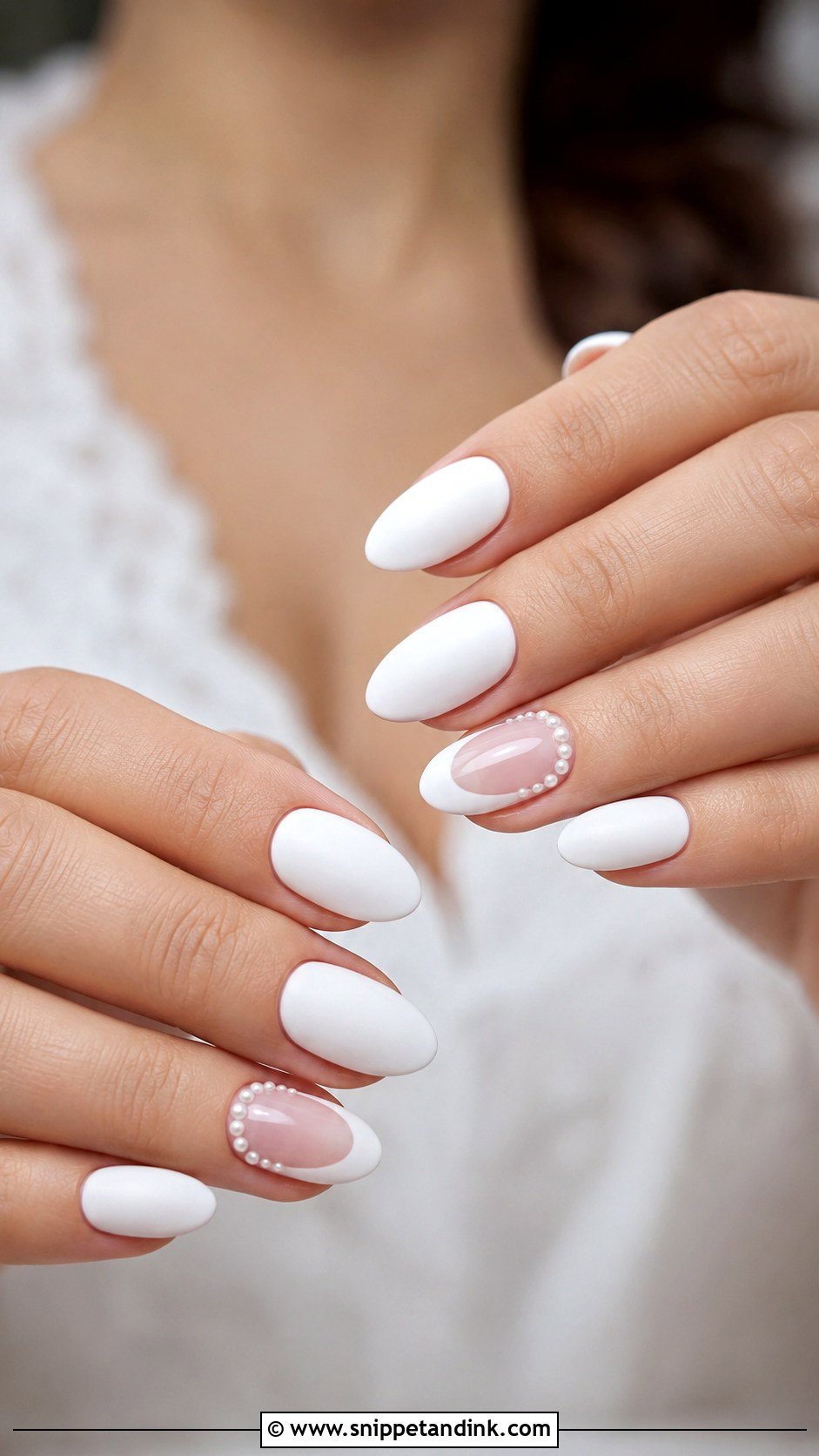
Matte white looks soft and modern, but I always warn brides about one thing: matte top coats pick up oils and stains. Hand cream, self-tan and even new denim can leave marks on the surface. Choose a warm ivory for cream or champagne gowns, or a cooler white for bright white. To stop it looking flat, I’d add tiny pearls, a glossy French tip or one shimmer accent. It suits structured gowns and sleek hair. Ask for a durable matte top coat and keep tanning products away in the final days.
13. Pearl Accent Winter Bridal Nails
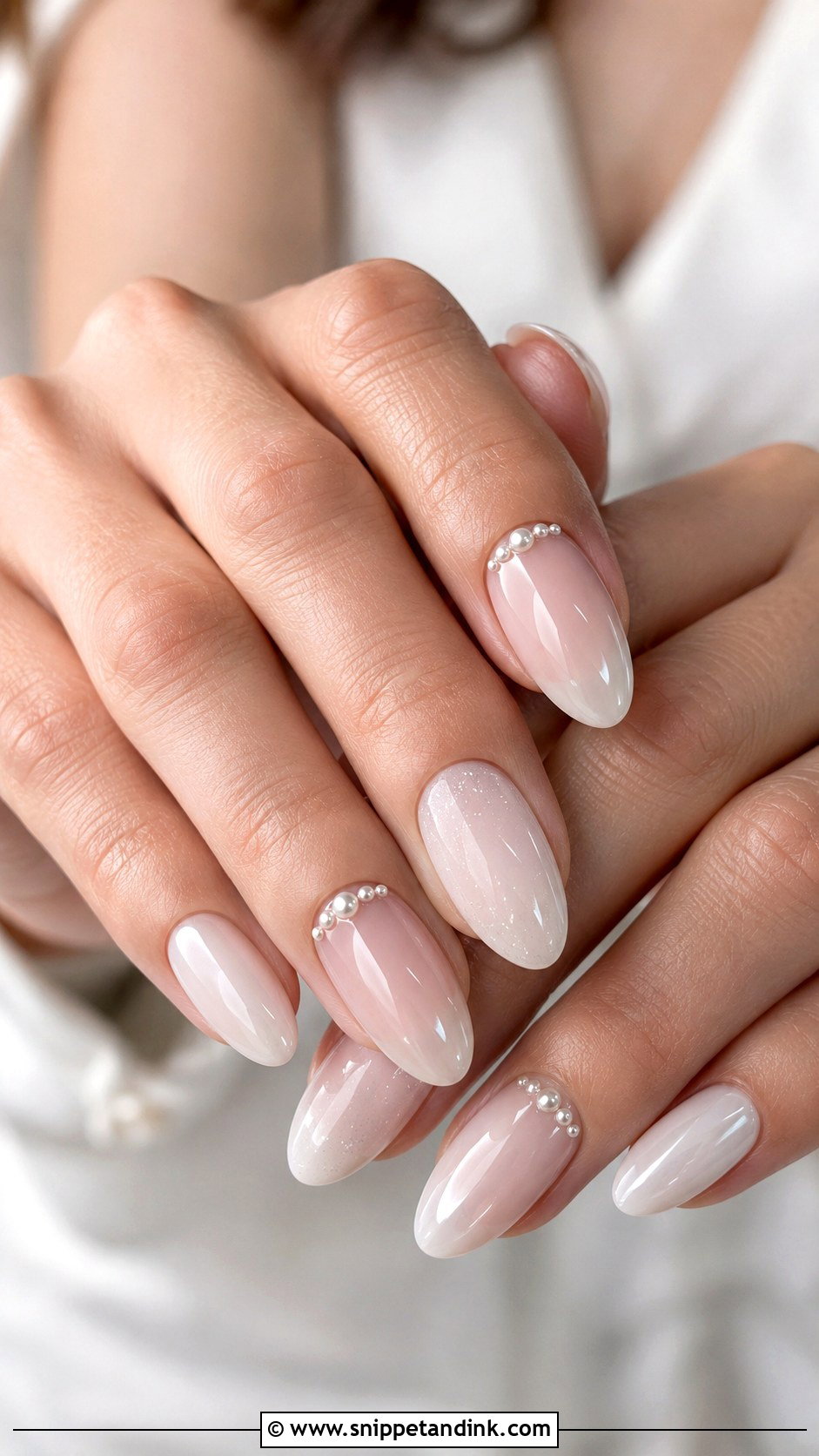
Pearls are raised, so placement matters more than quantity. I keep them small and set them near the cuticle, where they’re least likely to snag a tulle veil or knit wrap. The base can be milky white, sheer pink, nude or a French tip. A few pearls placed with intent look elegant, while a full row on every nail feels heavy and catches on everything. They echo pearl veils, earrings and lace well, and add texture to close-up photos.
14. Crystal Winter Bridal Nails
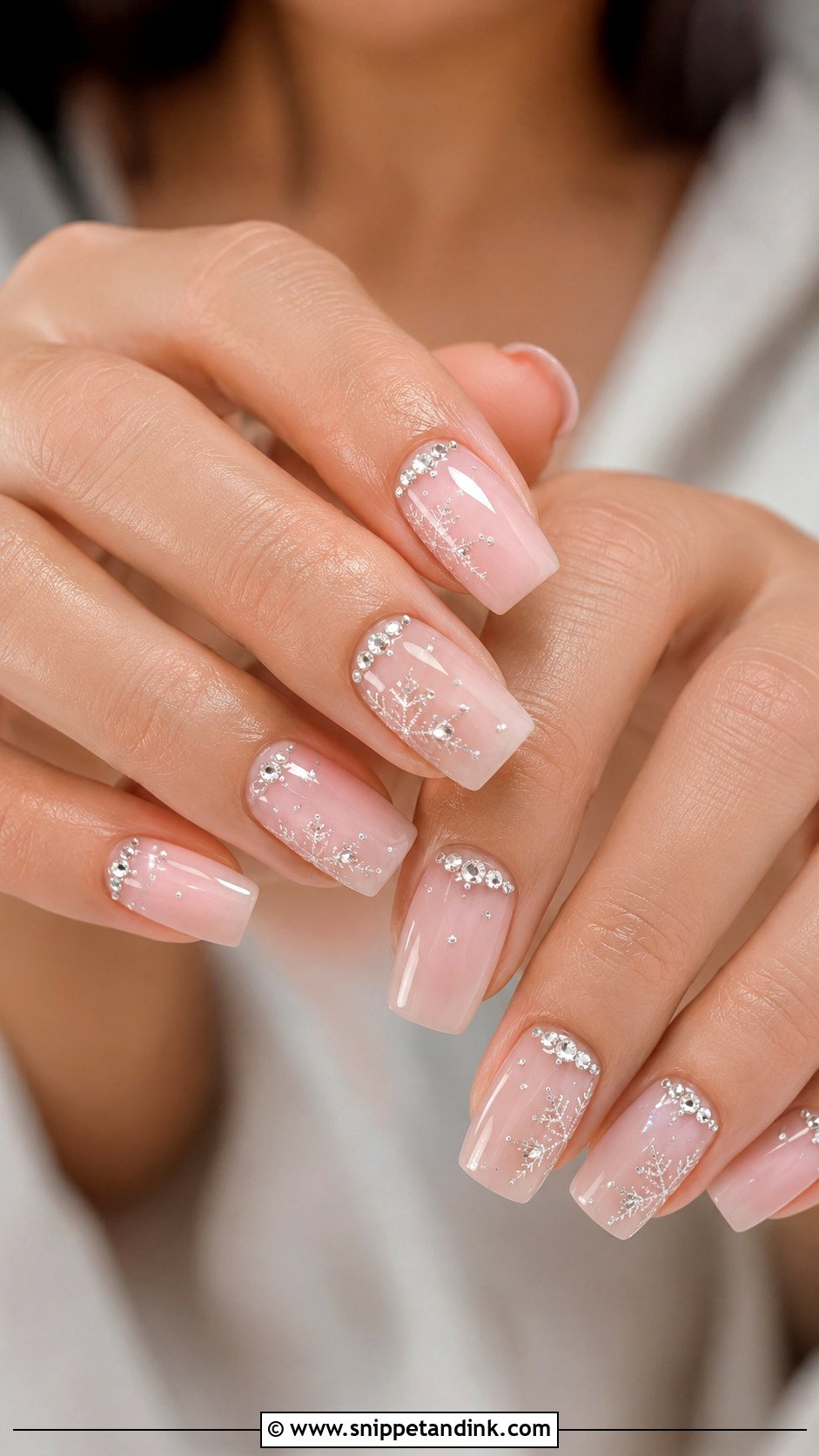
Crystals add sparkle more selectively than glitter does. Over a sheer nude, blush, milky white or ombre base, I place tiny flat-backed stones near the cuticle, along the tip line or as a small accent on one or two nails. Flat stones matter, because pointed ones catch on fabric and hair all night. A thick gel layer around each stone helps it stay put through hugs and handshakes. They suit crystal hairpieces, beaded gowns and silver jewellery, and give a cold, snow-like shine in ring photos.
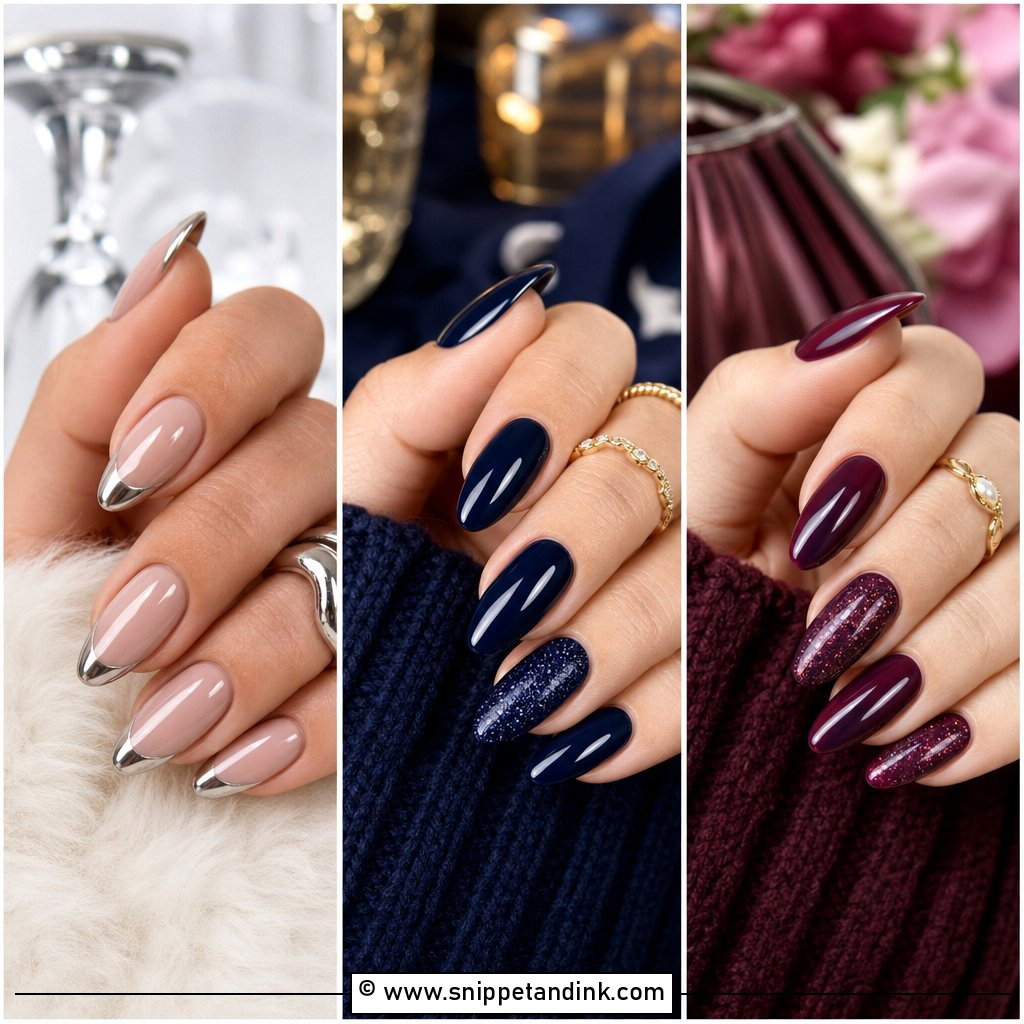
15. Burgundy Winter Bridal Nails
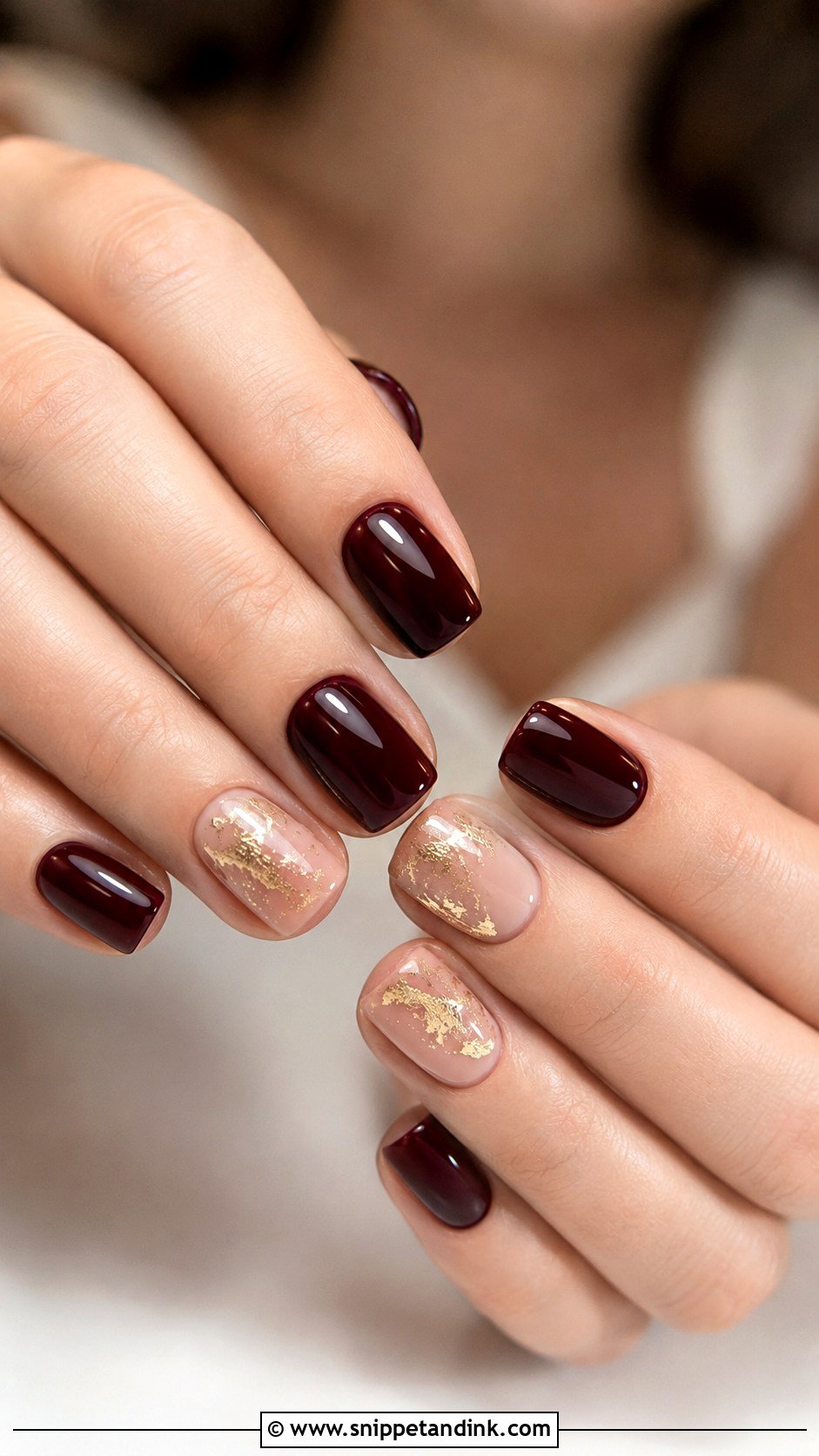
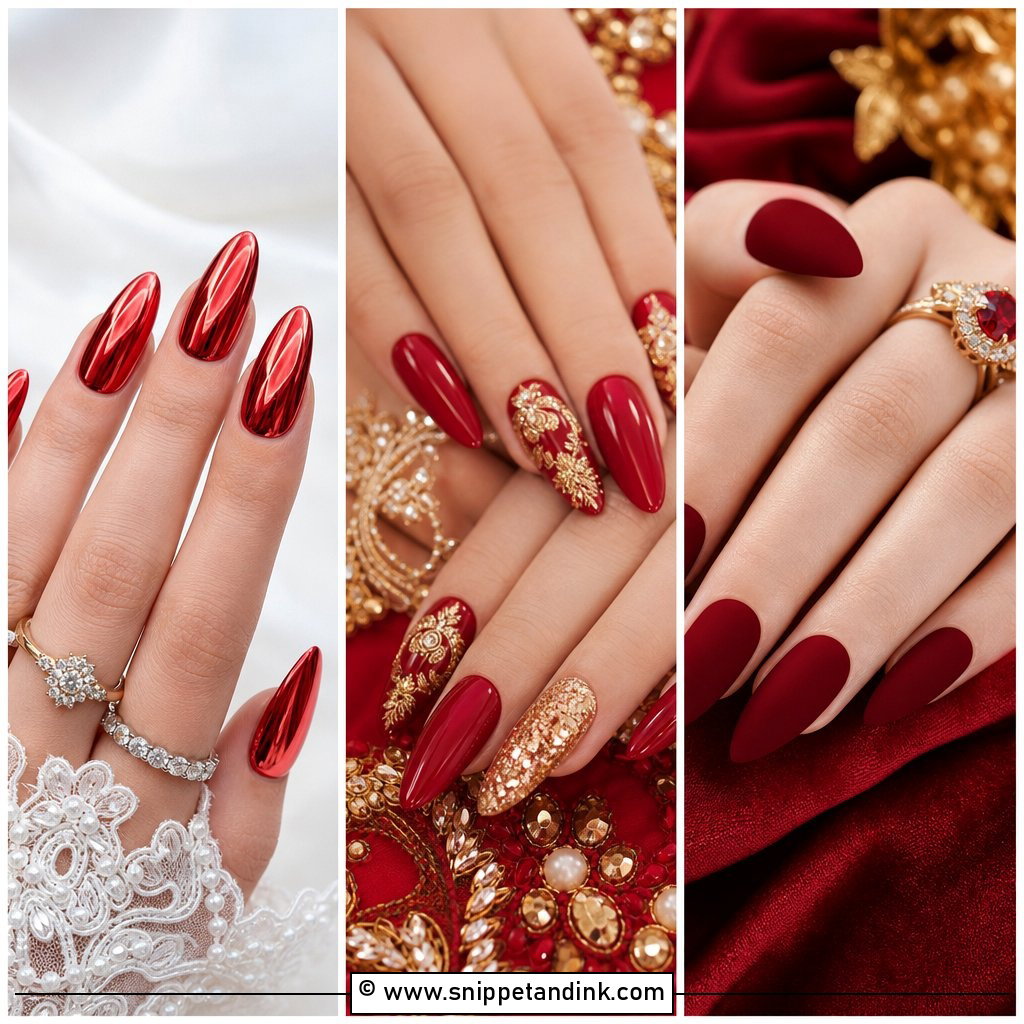
Burgundy is the bold option on this list, and a glossy finish keeps it rich rather than heavy. Choose deep wine, cranberry or a muted berry tone depending on your bouquet. To keep it bridal, I’d add one nude accent with fine gold foil, a thin French outline or a single crystal. Dark shades show chips and regrowth faster than any other colour, so I’d book it as close to the wedding as possible. It sits strikingly beside ivory gowns, velvet, greenery and gold. Short square looks neat, and almond more glamorous.
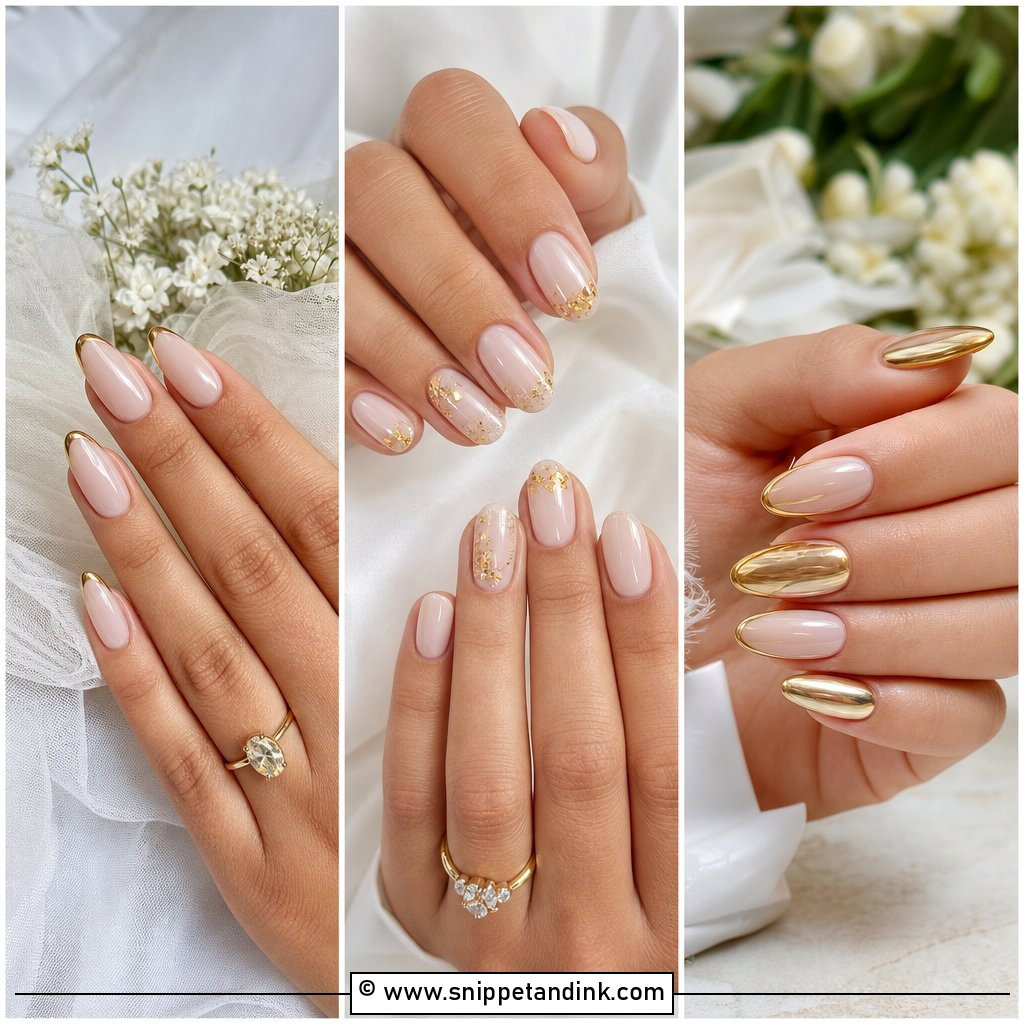
16. Gold Foil Winter Bridal Nails
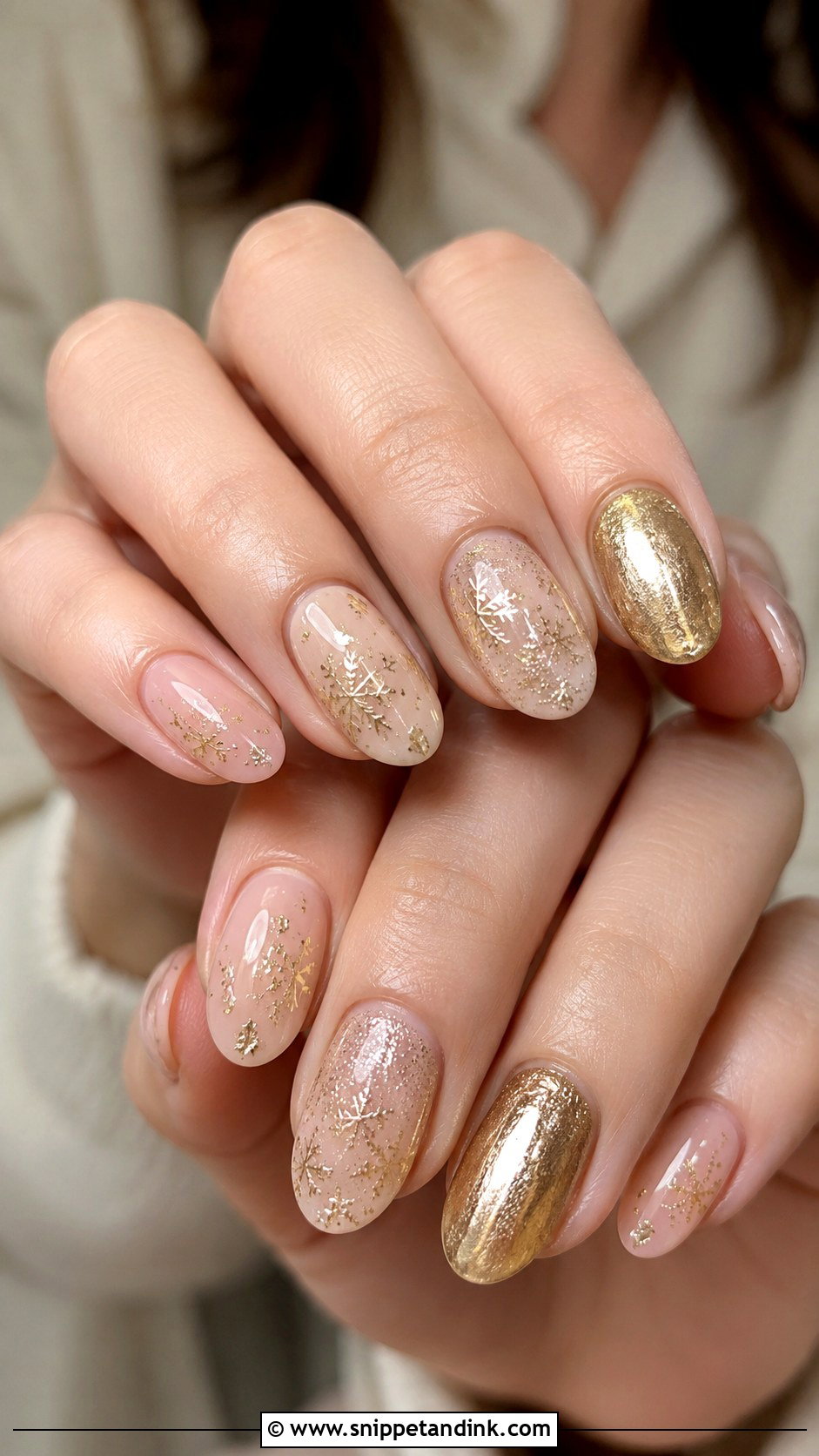
Gold foil is applied in tiny torn pieces, which is why no two nails look the same. I start with a sheer nude, pale pink or milky base and scatter small irregular flakes across a few nails, then seal everything under a glossy top coat so the edges don’t lift. The foil should look light and scattered, never crowded. It glints softly in candlelight and sits well with gold jewellery, champagne gowns and cream florals. Oval or almond shapes keep it delicate.
17. Velvet Winter Bridal Nails
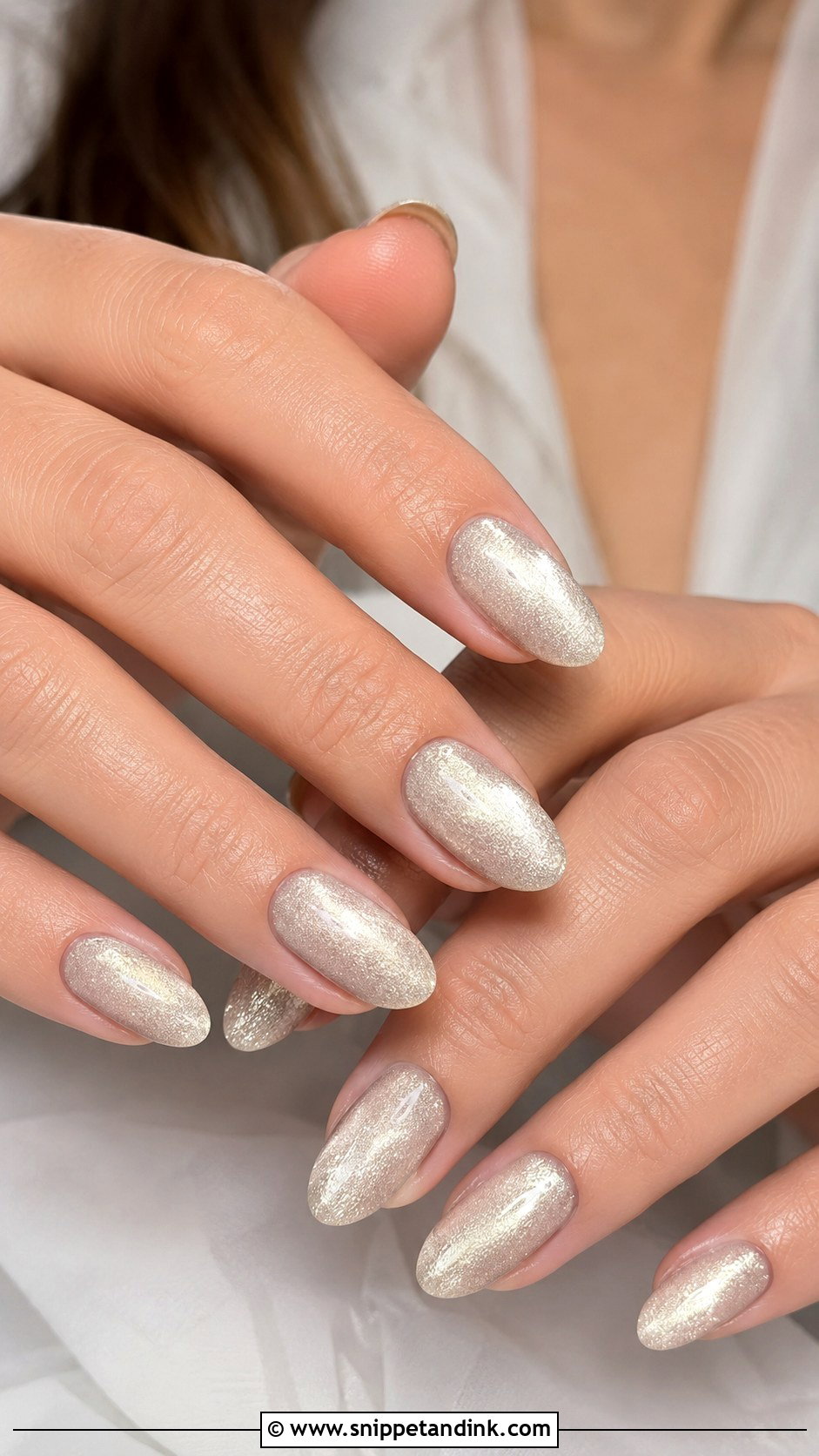
Velvet nails are a magnetic gel: tiny metallic particles get pulled into a soft band of light with a magnet before curing, which is where the plush look comes from. For a bride, I’d choose pale champagne, icy nude, soft rose, pearl white or silver beige over the darker shades this finish is known for. The shimmer moves as your hands do, so it reads well on video. Keep the length medium and the shape soft. Satin gowns, winter wraps and evening ceremonies suit it.
18. Lace Winter Bridal Nails
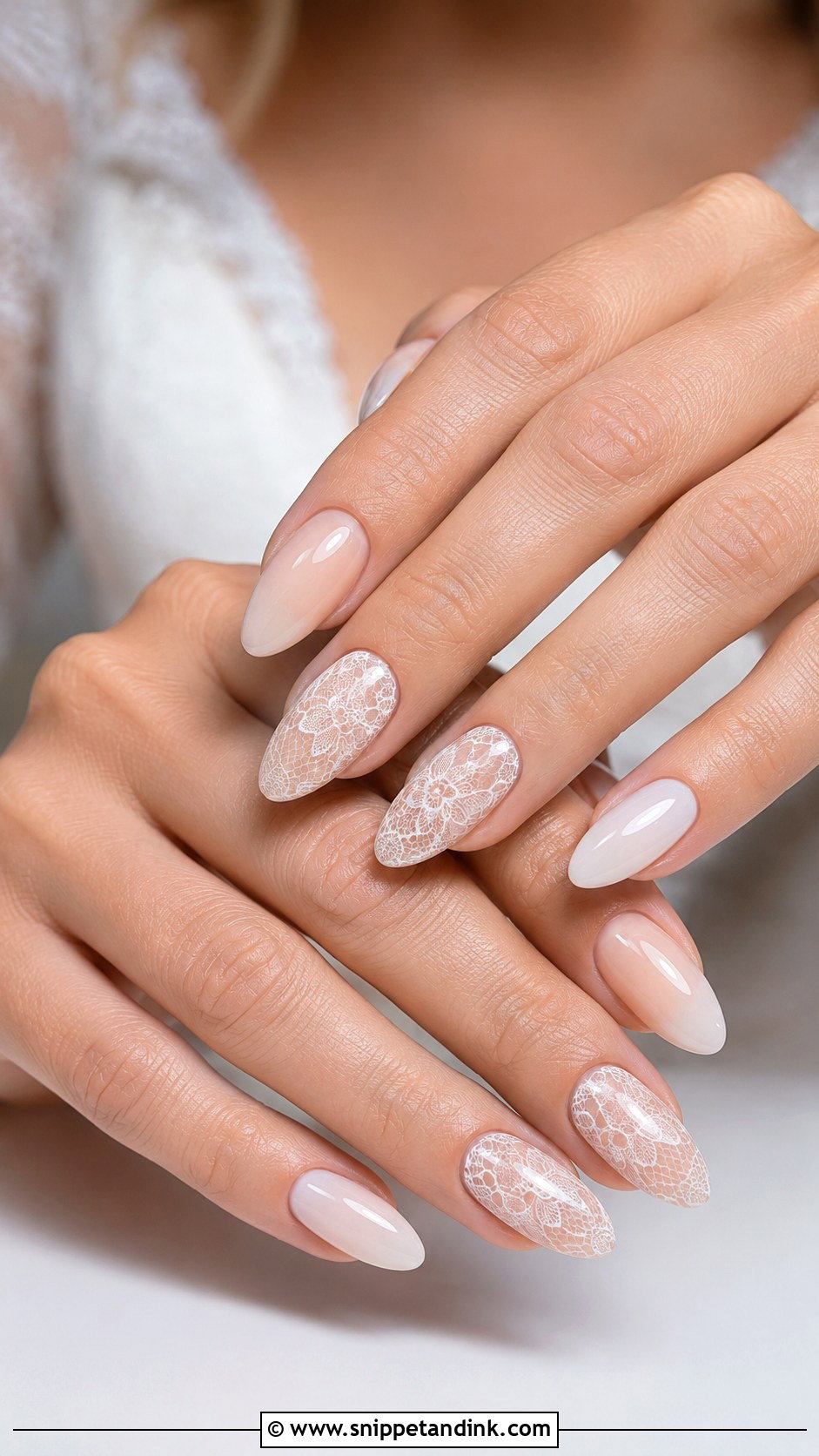
Lace nails connect your manicure directly to the dress, which is why I love doing them for lace gowns and embroidered veils. A sheer nude, blush or milky base lets the white pattern sit softly. I hand-paint lace with a fine brush when there’s time, and stamping or fine decals also work if the pattern stays delicate. Two accent nails are enough, with the rest left glossy. A soft almond keeps it graceful. Bring a photo of your actual lace so the pattern can echo it.
19. Short Winter Bridal Nails
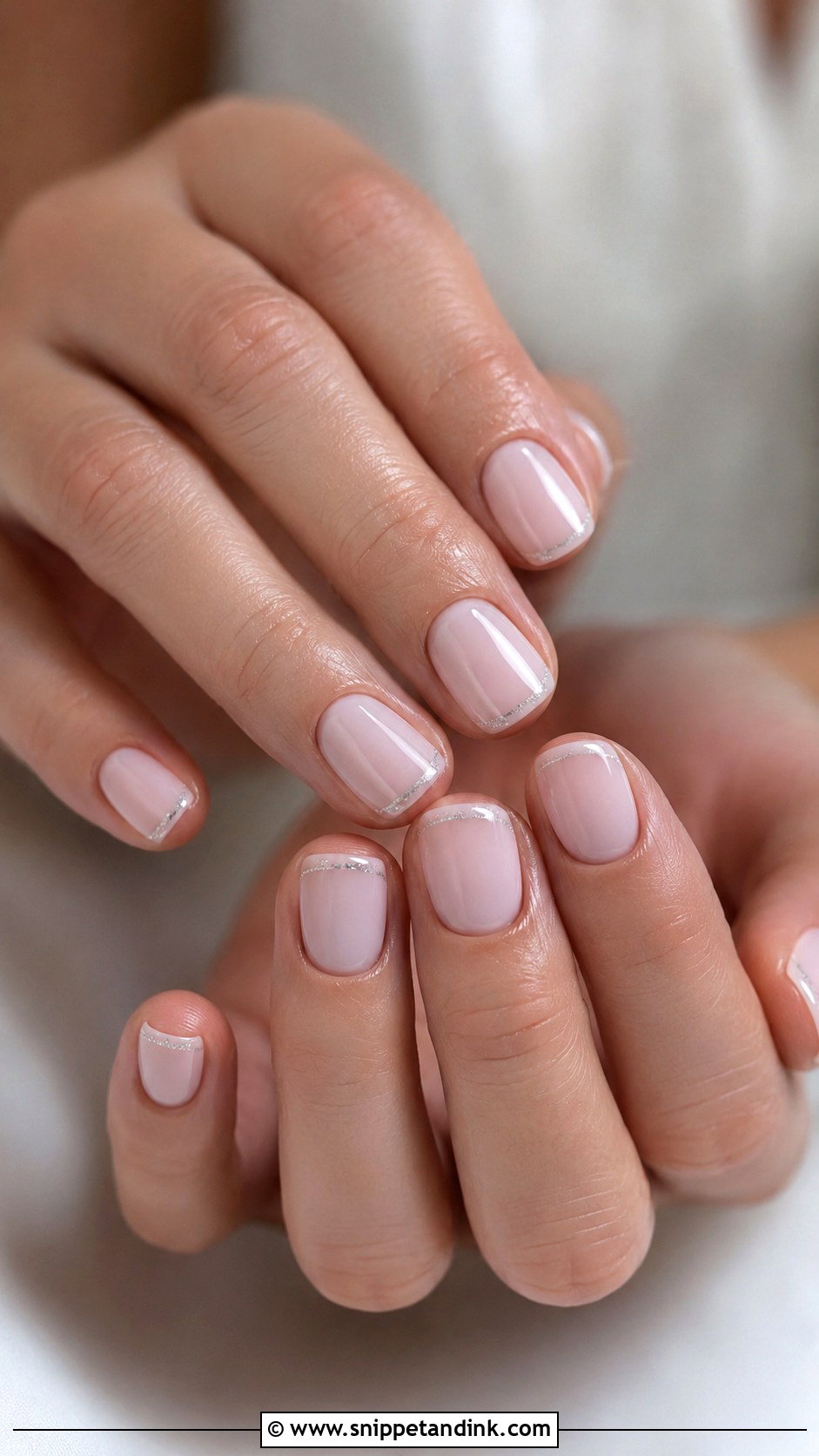
Short nails photograph just as well as long ones when the shape and cuticles are clean. A short squoval or soft round is comfortable through the wedding and the honeymoon, and it suits brides who don’t usually wear extensions. Sheer pink, milky white, pearl chrome, micro French tips or nude shimmer all make short nails look intentional. For a seasonal hint, I’d add one tiny snowflake, a fine silver line or a soft glitter fade. The bigger mistake is a sudden long set the week of the wedding, which makes buttons, zips and earring backs a struggle.
20. Almond Winter Bridal Nails
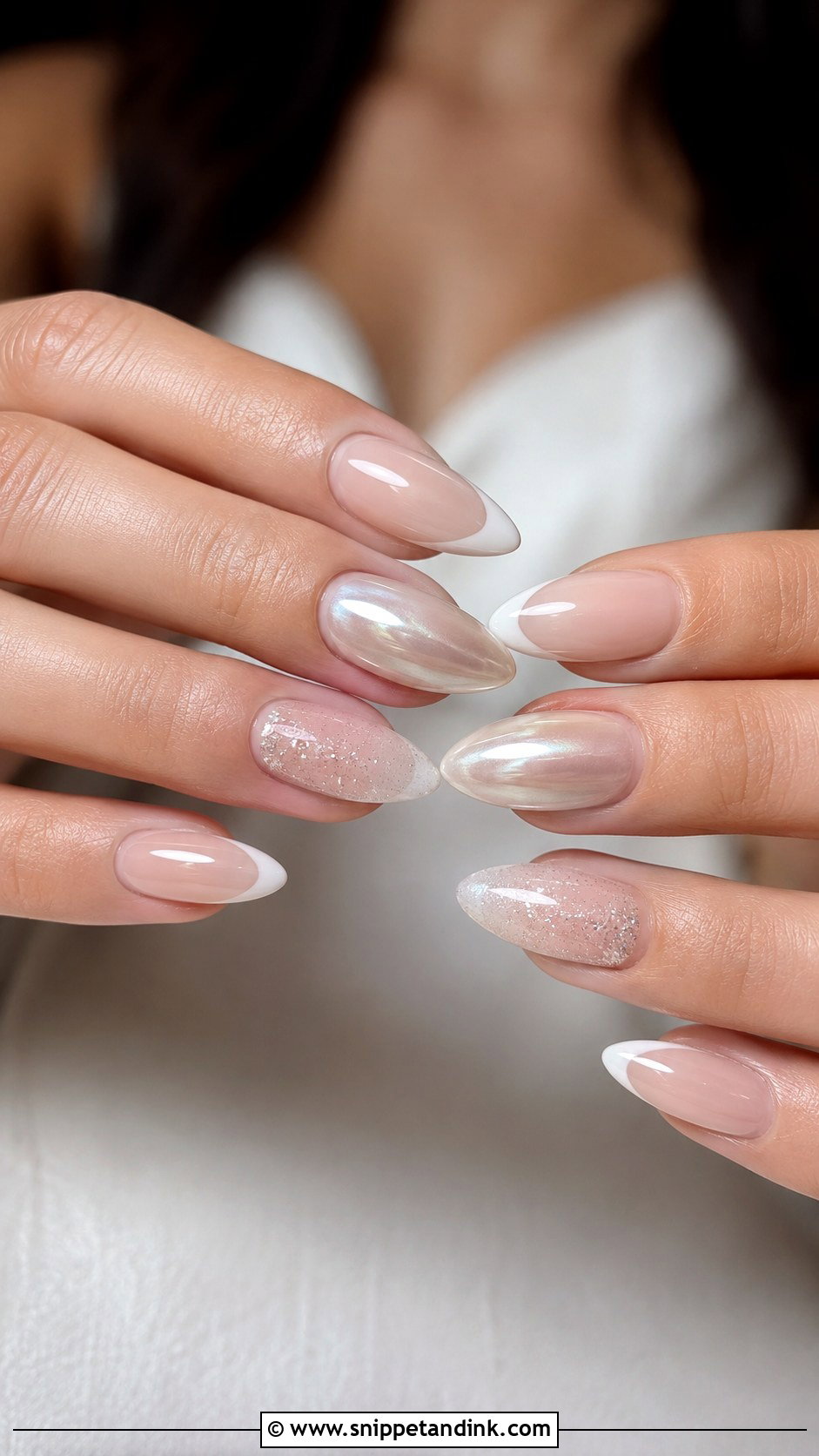
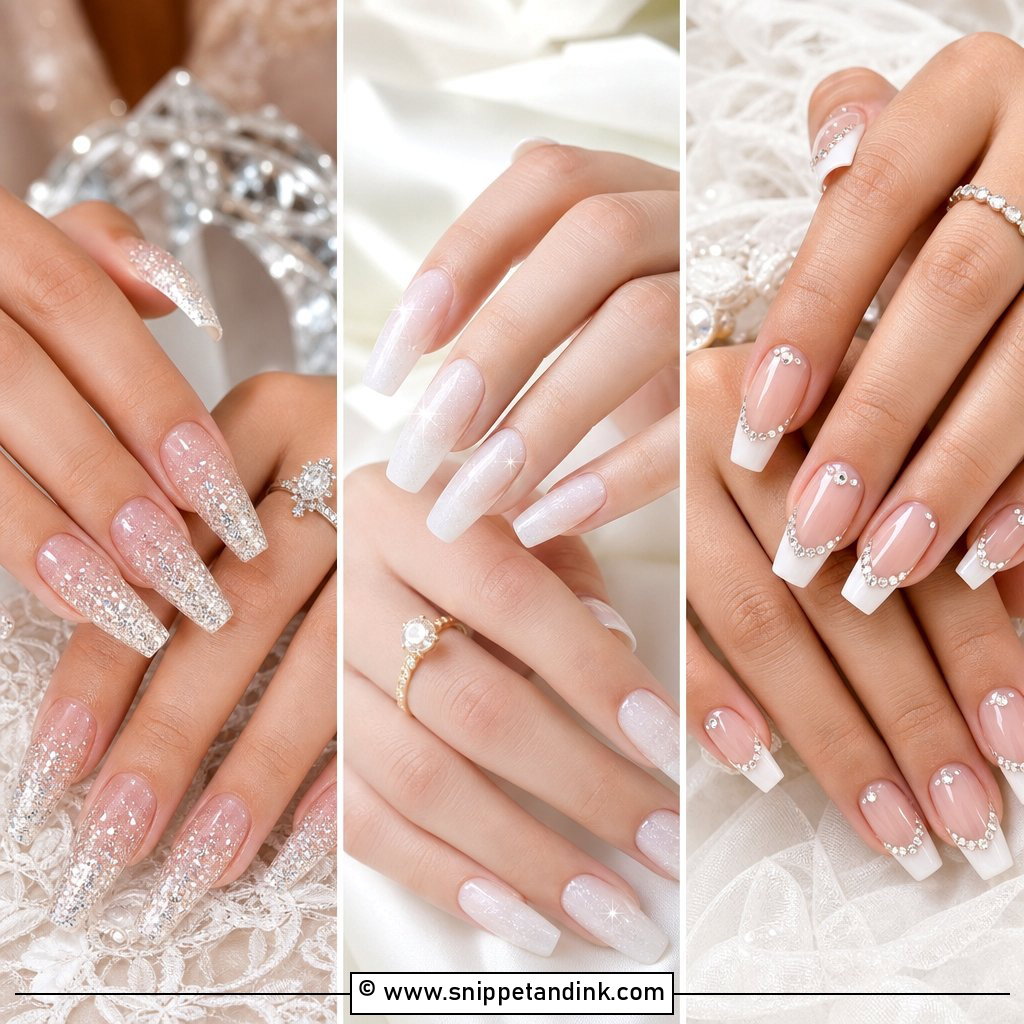
Almond is the shape I recommend most often, because the tapered sides and rounded tip lengthen the fingers in bouquet and ring photos. It carries nearly every design here: French tips, milky white, pearl chrome, ombre, snowflakes and nude glitter. Keep the length medium rather than extreme. Almond also balances small details like pearls, crystals or silver lines without looking crowded. If your nail beds are very short or wide, I’d file a softer oval first and grow toward almond over a few appointments.
Let Your Ring Metal Decide Between Silver and Gold Accents
Your engagement ring and wedding band will sit in every close-up, so I always ask what metal they are before choosing accents. Platinum and white gold look sharpest beside silver glitter, white chrome and icy tones. Yellow gold looks warmer beside champagne, gold foil and burgundy. Rose gold sits nicely next to blush, nude and pearl.
If your ring has a large stone, keep the nail on that finger calmer. A busy accent nail right beside a diamond makes the two fight for attention, and it’s the ring that guests want to see.
A Chip on the Morning Is Fixable in Five Minutes
A chipped or cracked nail on the day is more common than brides expect, usually from zips, earring backs or hair pins. It’s a quick fix if the right things are close by. I tell brides to pack a small pouch for a bridesmaid:
- Nail glue and a fine file for a crack or split edge.
- A bottle of regular polish in the closest shade to your set, plus a clear top coat.
- Cuticle oil for the photos, since a drop makes the skin around the nail look fresh.
- A spare press-on nail cut and filed to your shape, if you wear extensions.
After the honeymoon, have gel or extensions soaked off properly. Peeling them off takes layers of the nail with it, and that’s when brides end up with weak, sore nails for months.
The Shape Matters More Than the Shimmer
Get the shape and length right, and nearly any finish here will look bridal. Milky white, French tips, soft ombre and blush pink are the classic route. Snowflakes, silver glitter, icy blue, velvet and pearl chrome bring the season in. For a warmer wedding, champagne glitter, gold foil, and burgundy pick up candlelight and gold jewellery. Book a trial if you can, wear it for a few days to see how it lasts, and treat your cuticles well in the weeks before.
You'll Like These Ideas:


Leave a Reply