
A winter bride’s hands get photographed more than she expects: the ring exchange, the bouquet, a hand resting on a coat collar, fingers wrapped around a hot drink outside the venue. The manicure has to hold its own in those close-ups without competing with the dress or the ring. For cold-season weddings I lean toward sheer milky bases, soft pinks, glazed chrome, small pearls and fine shimmer, because they read well under both grey daylight and warm reception bulbs. Below are twenty sets I’d happily do for a December or January bride, with notes on which shapes they need, what tends to go wrong, and who should skip them.
Why Gel Lifts Faster in December, and How I Prepare Winter Hands
Cold weather is hard on a manicure before it even starts. Heating dries the air indoors, cuticles crack, and the nail plate gets flaky and dehydrated. Gel and builder grip a dry, peeling nail poorly, so lifting at the cuticle line shows up sooner in winter than in summer, often right when you need the set to look perfect.
Most of the fix happens at home in the weeks before. I ask winter brides to start cuticle oil twice a day about a month ahead, wear gloves outdoors and for washing up, and stop picking at hangnails, which leave raw edges I then have to work around. Hand cream at night helps the skin around the nail look smooth in close-ups.
- Book the final set two to three days before the wedding, not the morning of, so any lifting or a loose stone shows up while there’s still time to fix it.
- Skip hot baths, saunas and long dishwashing sessions for the first day after the appointment.
- Keep cuticle oil in your bag on the day; a quick rub before the ring shots brings back shine on dry skin.
- If your nails are thin or bendy, ask for a builder gel base rather than plain gel polish. It flexes less and lifts less.
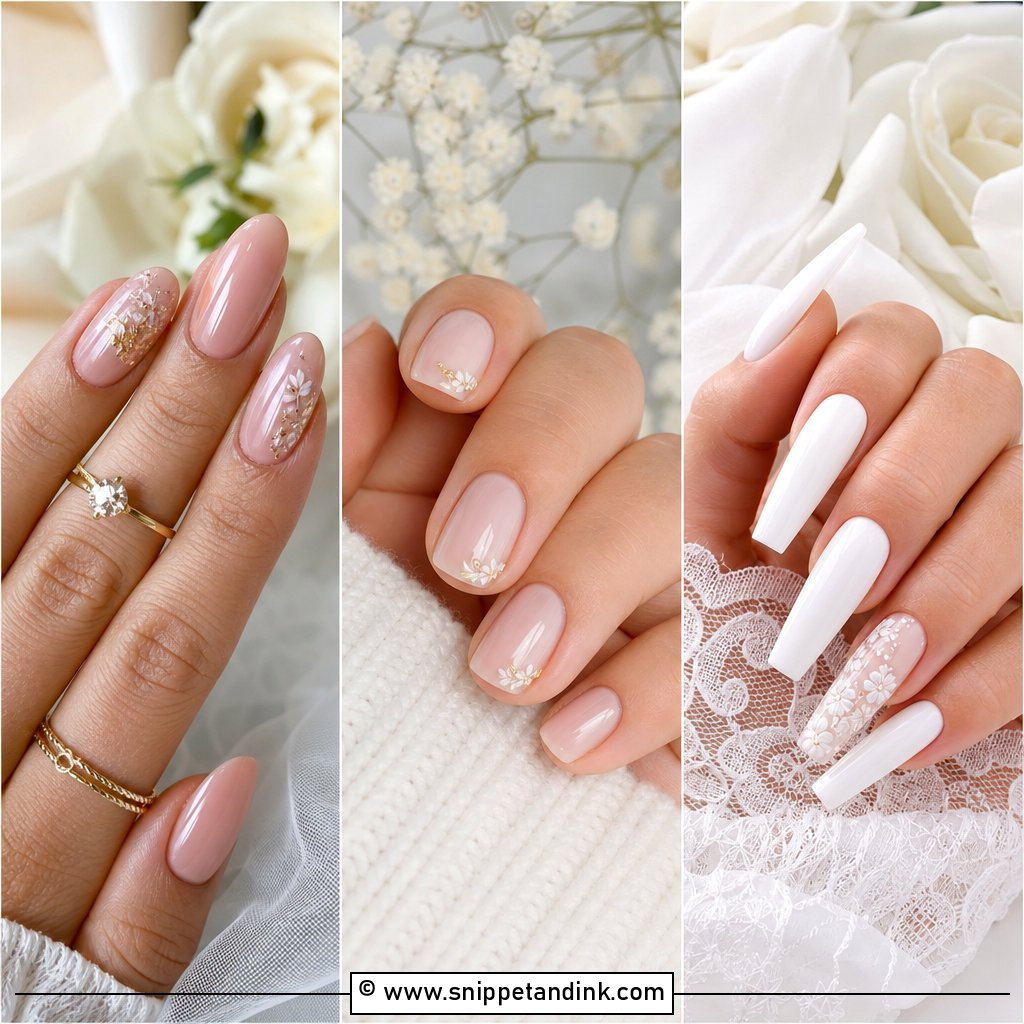
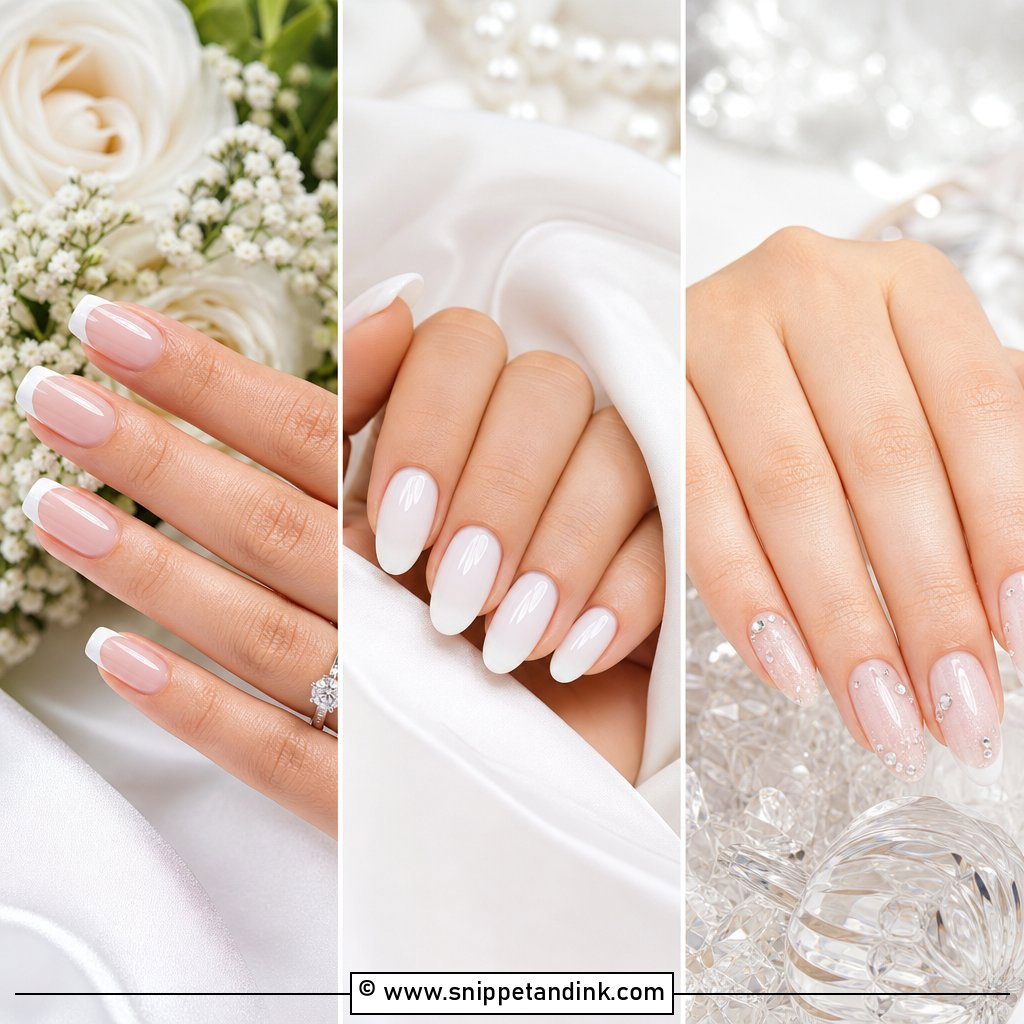
1. Milky White Winter Wedding Nails
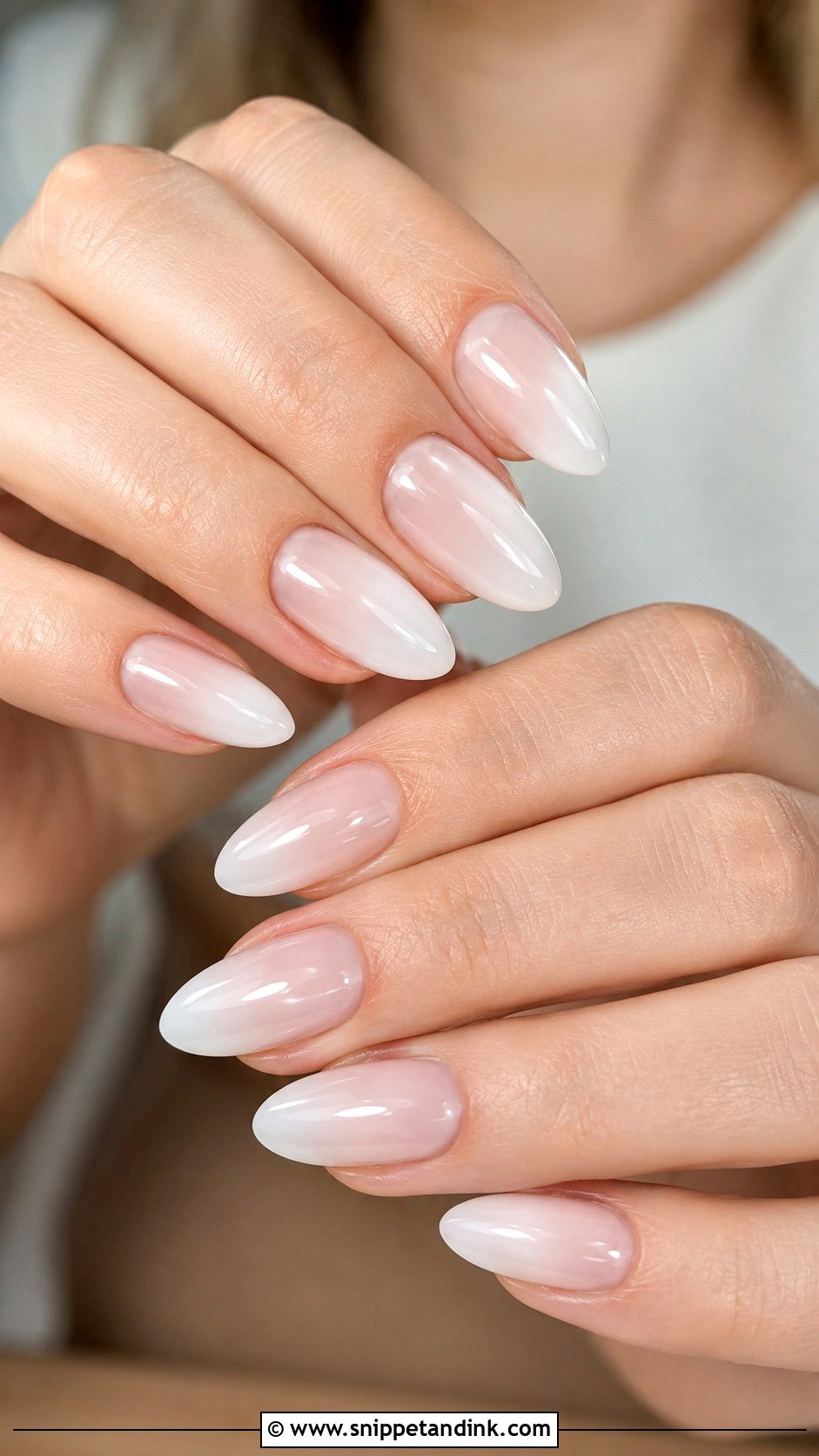
Milky white is the set I recommend most often to brides who can’t decide. It’s a sheer, creamy base that lets a hint of the natural nail show through, so regrowth and tiny chips hide far better than with an opaque white. The trick is building it in two or three thin coats rather than one thick one; a single heavy layer goes chalky and flat in photos. It suits almond, oval, squoval and short round shapes equally. If you want a little glow for candlelight, I add a barely visible shimmer under the high-shine top coat rather than mixing glitter into the colour.
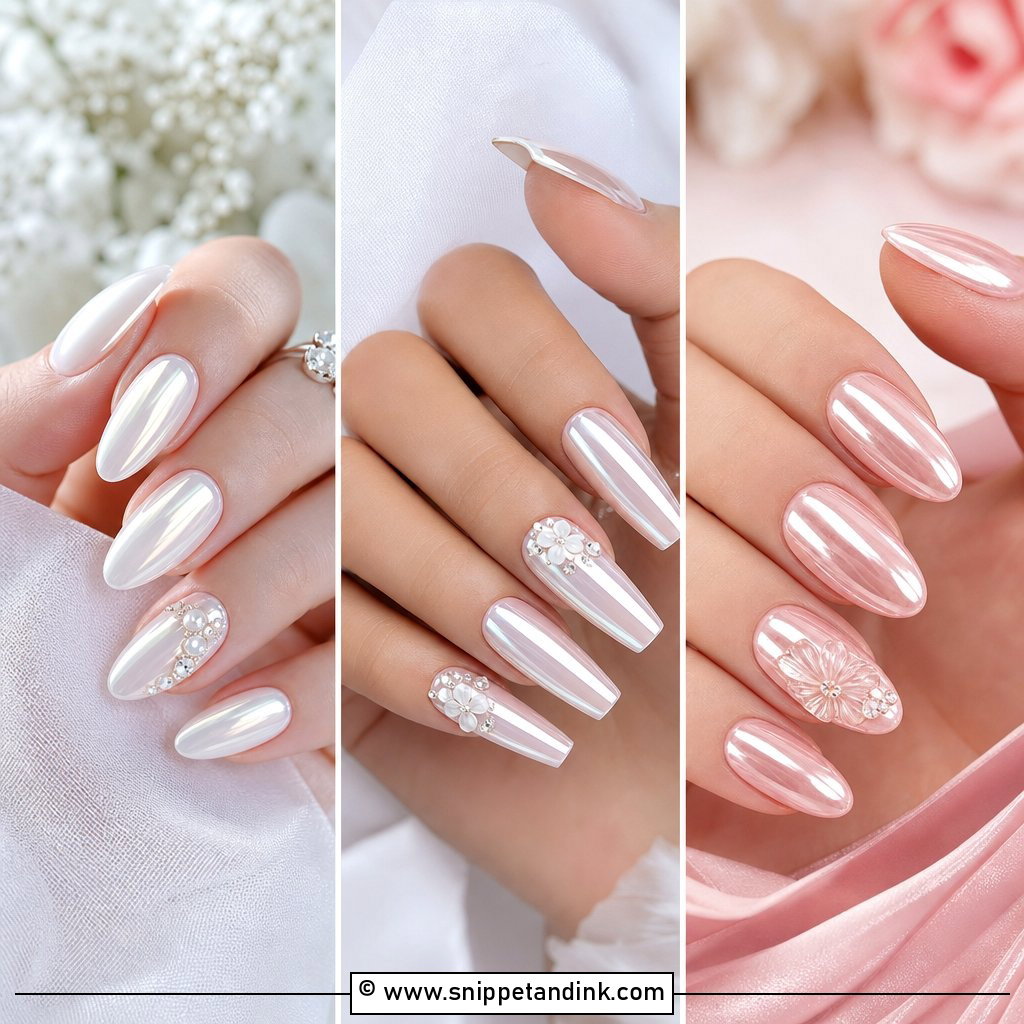
2. Glazed White Winter Wedding Nails
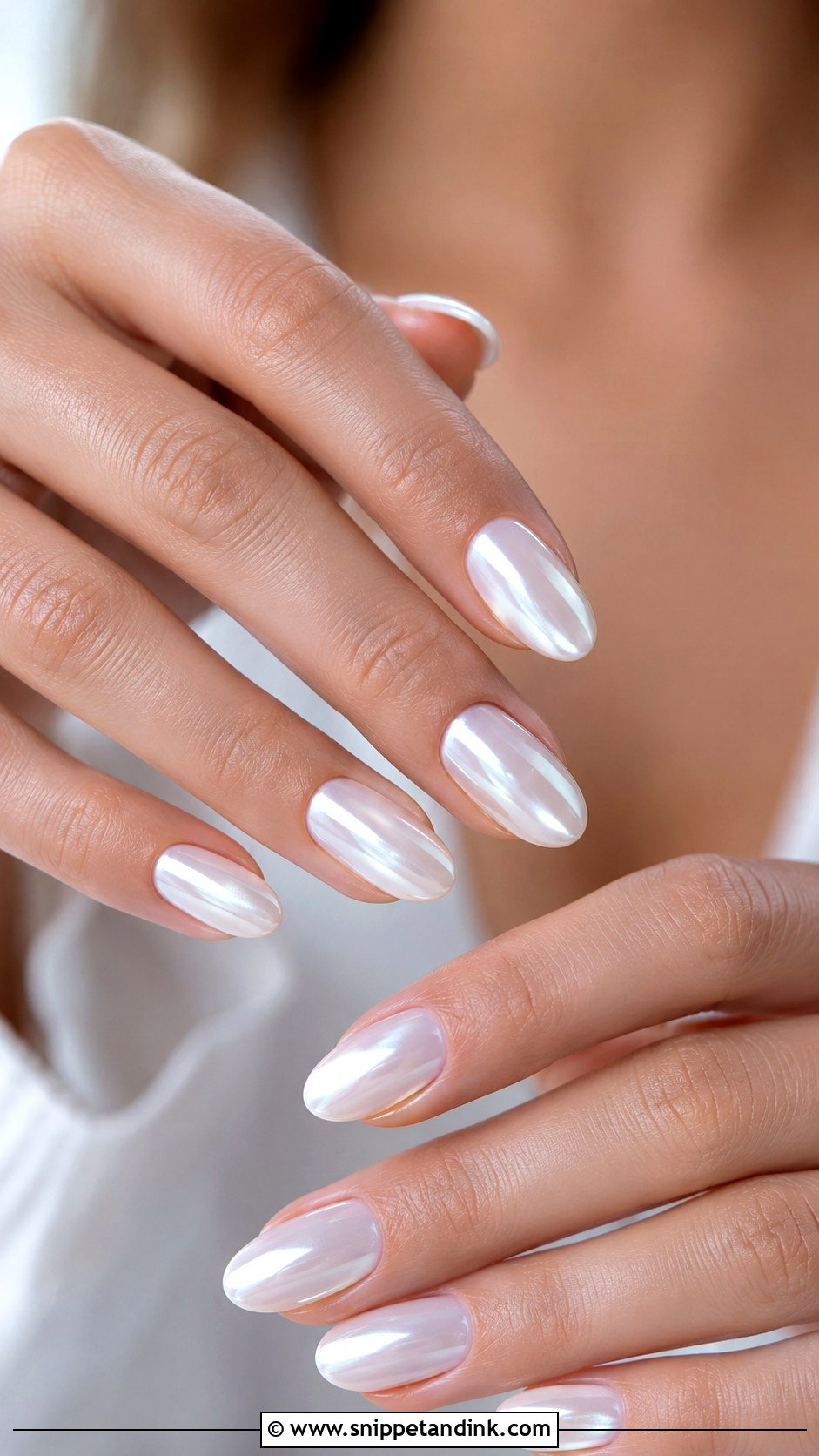
A glazed white set is milky white with chrome powder rubbed over a no-wipe top coat, which gives that pearly, wet-looking surface. In winter it earns its place because the finish picks up candles and flash without looking metallic. I keep the base pale (soft white, ivory or a sheer pink) and buff the powder in lightly; overworking it leaves visible streaks across the nail. Almond, oval and medium coffin give the chrome enough surface to show. Skip heavy glitter on top, as it fights with the glaze and looks messy up close.
3. Pearl French Winter Wedding Nails
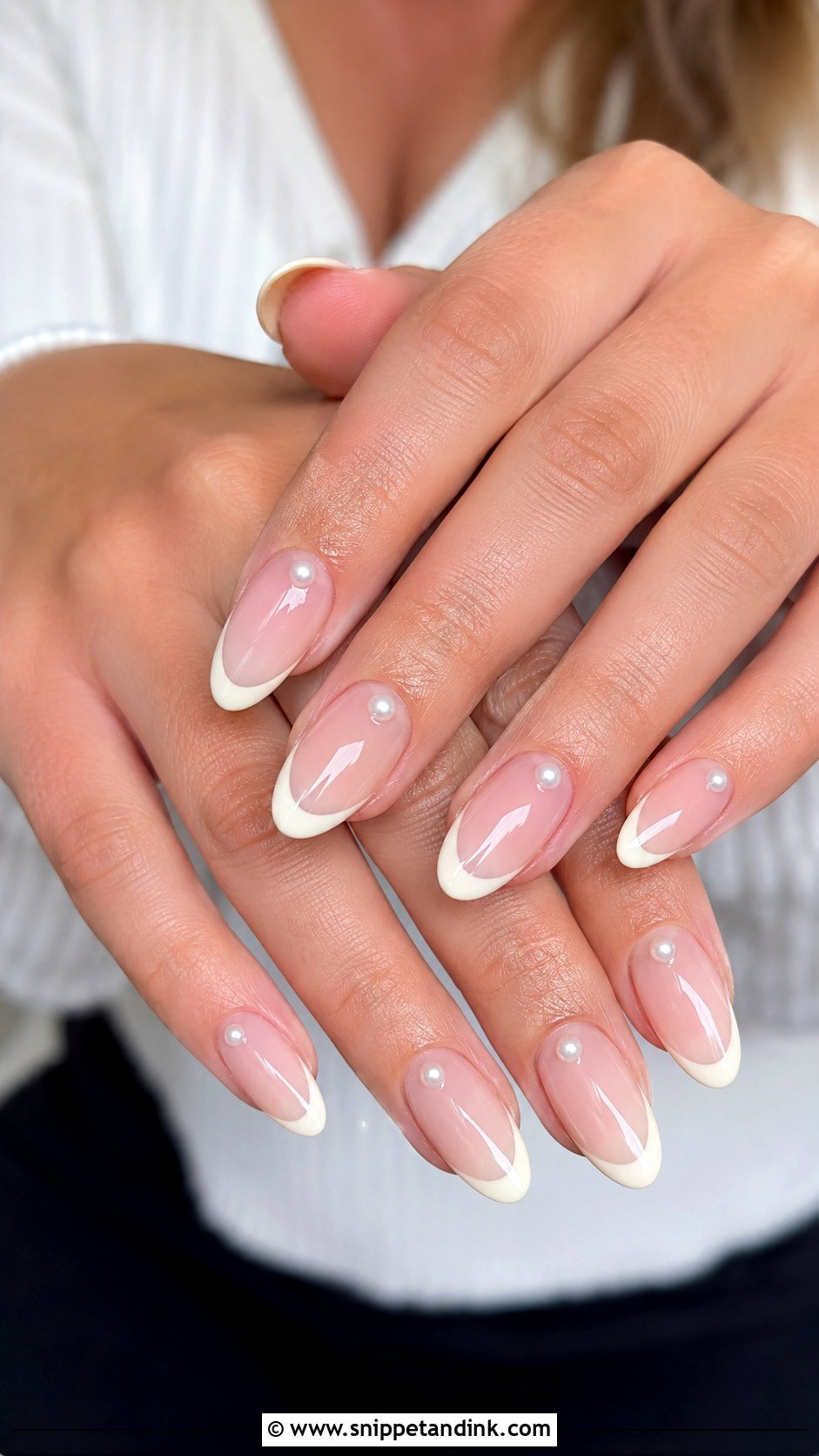
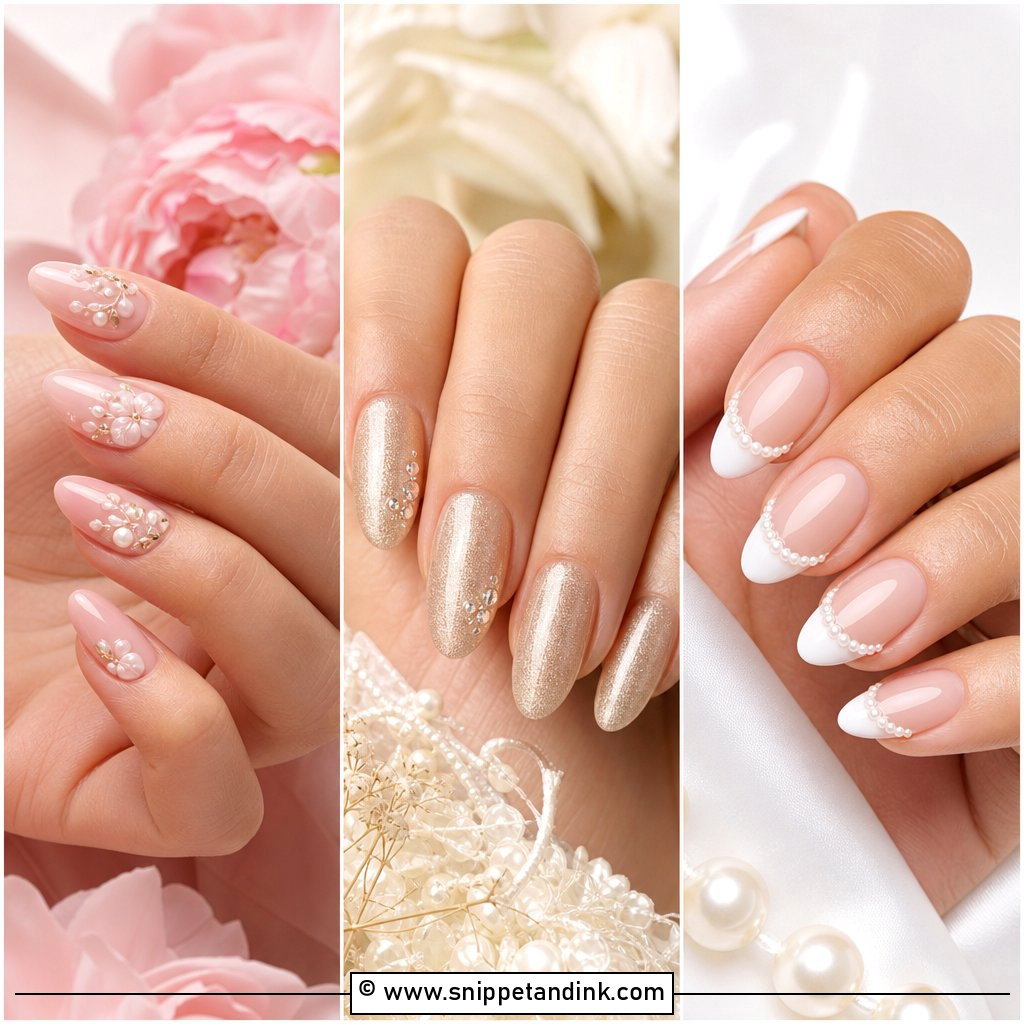
Pearl French takes the classic tip and softens it: creamy ivory tips over a sheer pink or nude base instead of stark white. I add tiny flat-back pearls near the cuticle or along one side wall, usually only on the ring fingers. Size matters more than people think. Anything taller than a couple of millimetres will snag on lace, tulle and knit gloves, so I choose the smallest pearls I have and set them into builder gel rather than just top coat. A medium almond or oval keeps the proportions graceful next to a pearl veil or a beaded gown.
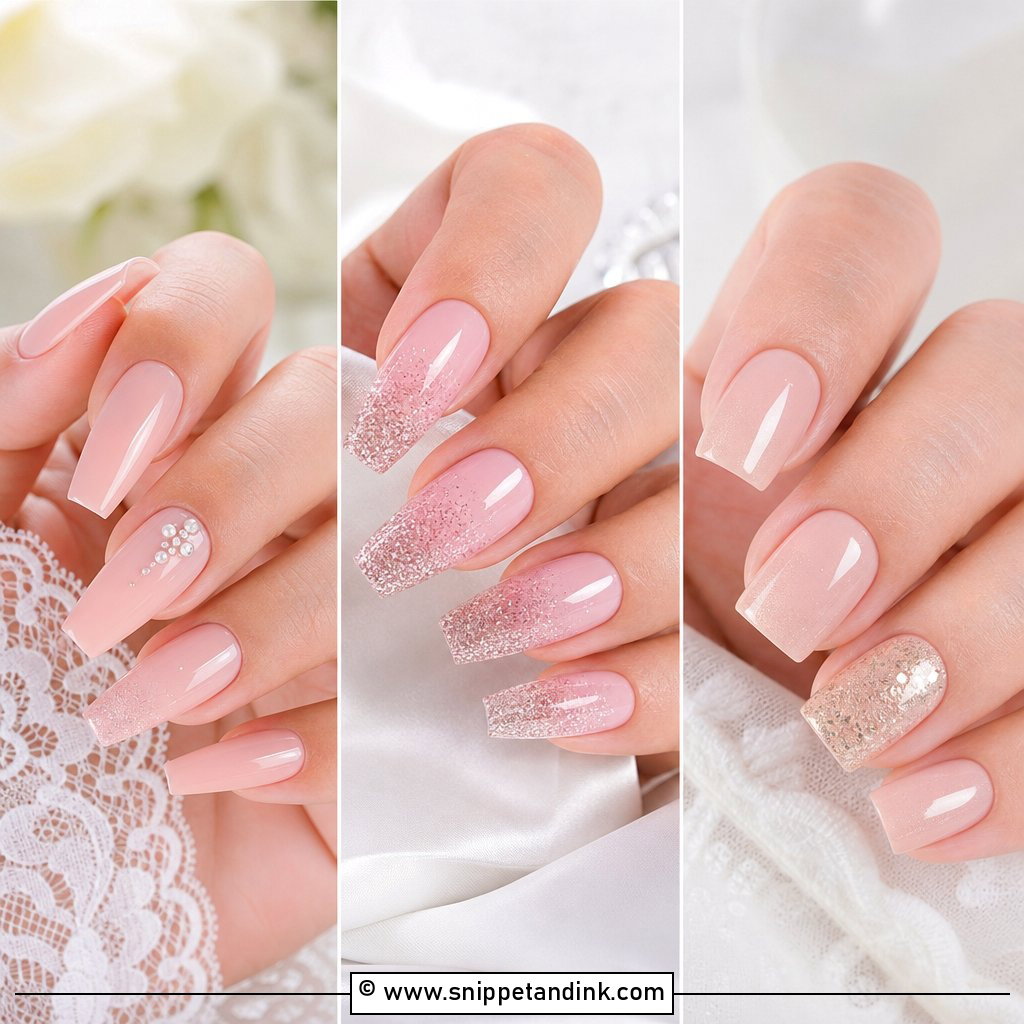
4. Soft Pink Winter Wedding Nails
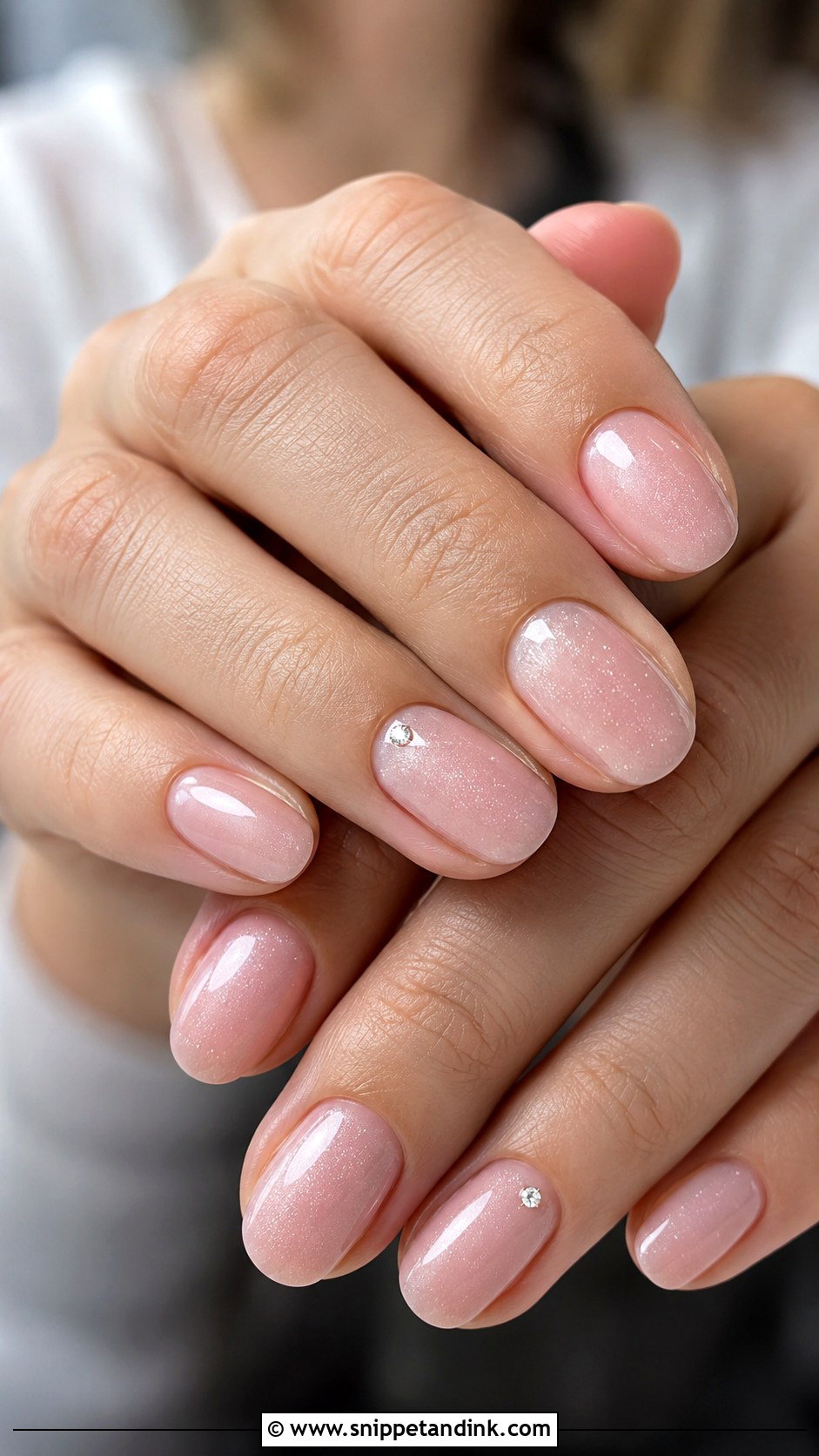
Soft pink is easy to wear, but the exact shade decides whether it flatters or washes you out. Cooler baby pinks tend to suit fair skin, rose pinks sit well on medium skin, and sheer mauve-pinks or warmer blush shades glow on deeper skin tones. I always swatch two or three pinks against the bride’s hand in daylight before committing. Winter calls for a glossy, slightly plush finish rather than anything bright. You can leave it plain, add a fine shimmer top coat, or set a single small crystal on each ring finger.
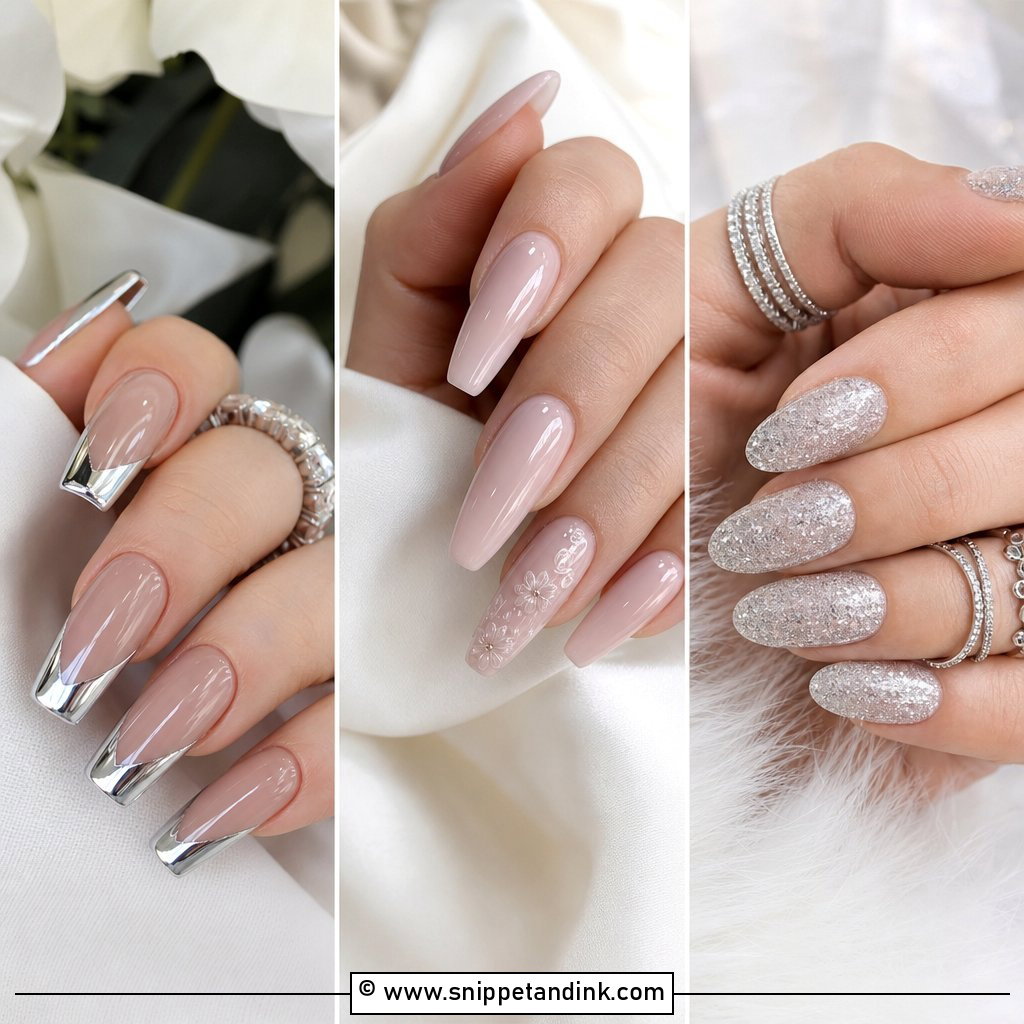
5. Nude Chrome Winter Wedding Nails
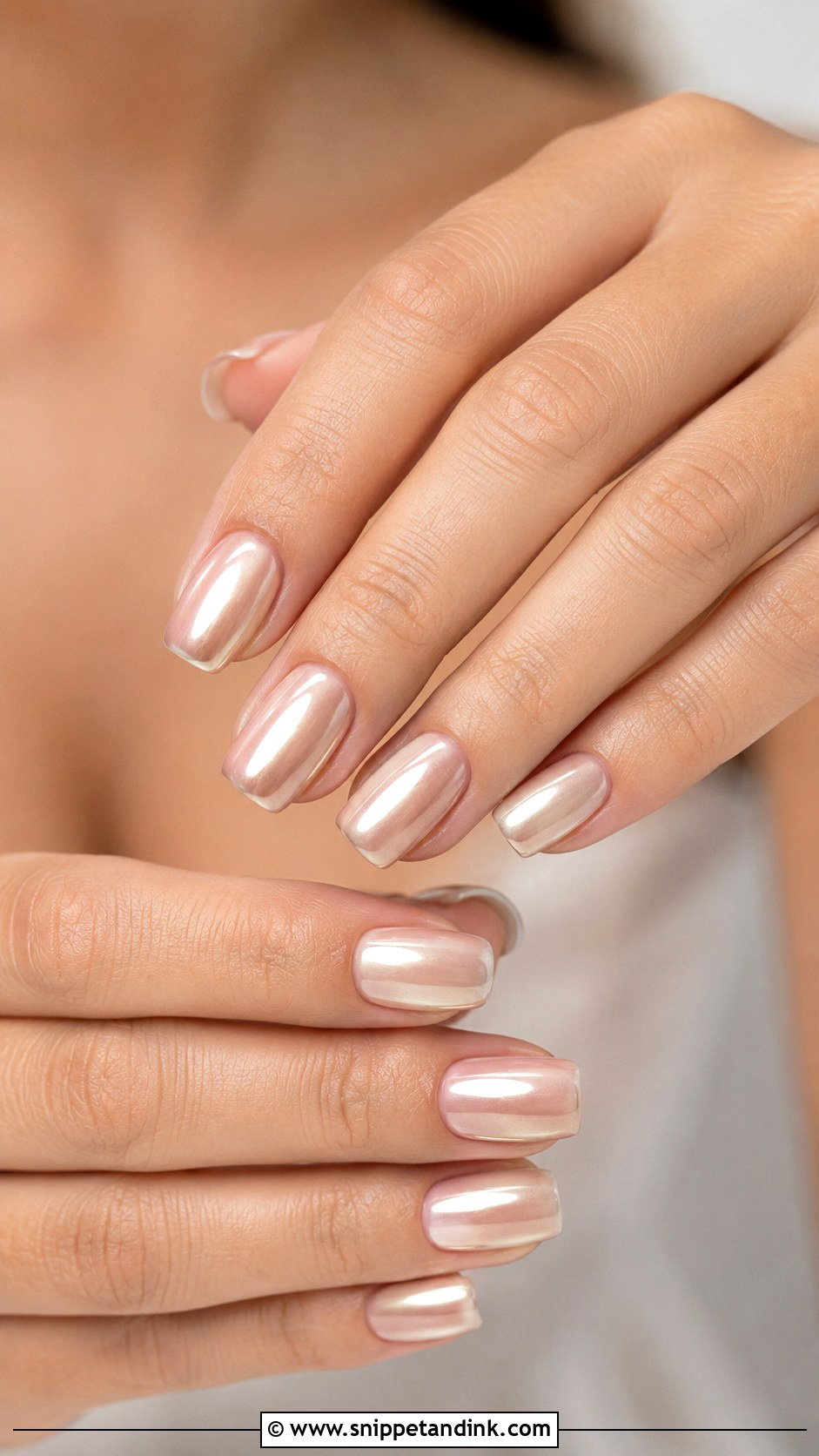
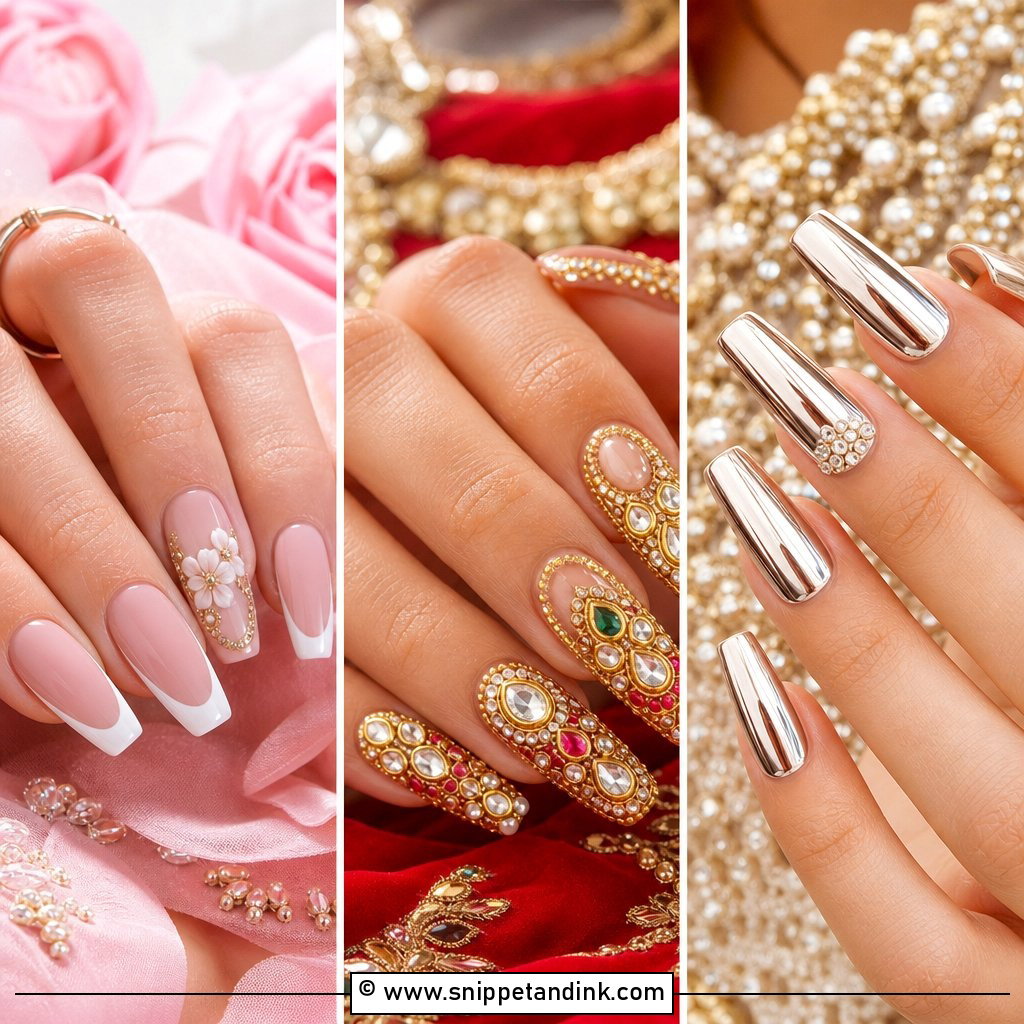
Nude chrome reads modern but quiet. I match the base to the skin first (sheer nude, beige or soft taupe) and then rub a light chrome over it, so the glow sits on top of a colour that already disappears into the hand. On short and long nails alike it looks expensive. For a warmer winter feel, champagne chrome is kinder than silver, which can look grey on warmer skin under indoor lighting. It pairs naturally with minimal gowns, sleek buns and clean makeup.
6. Icy Blue Winter Wedding Nails
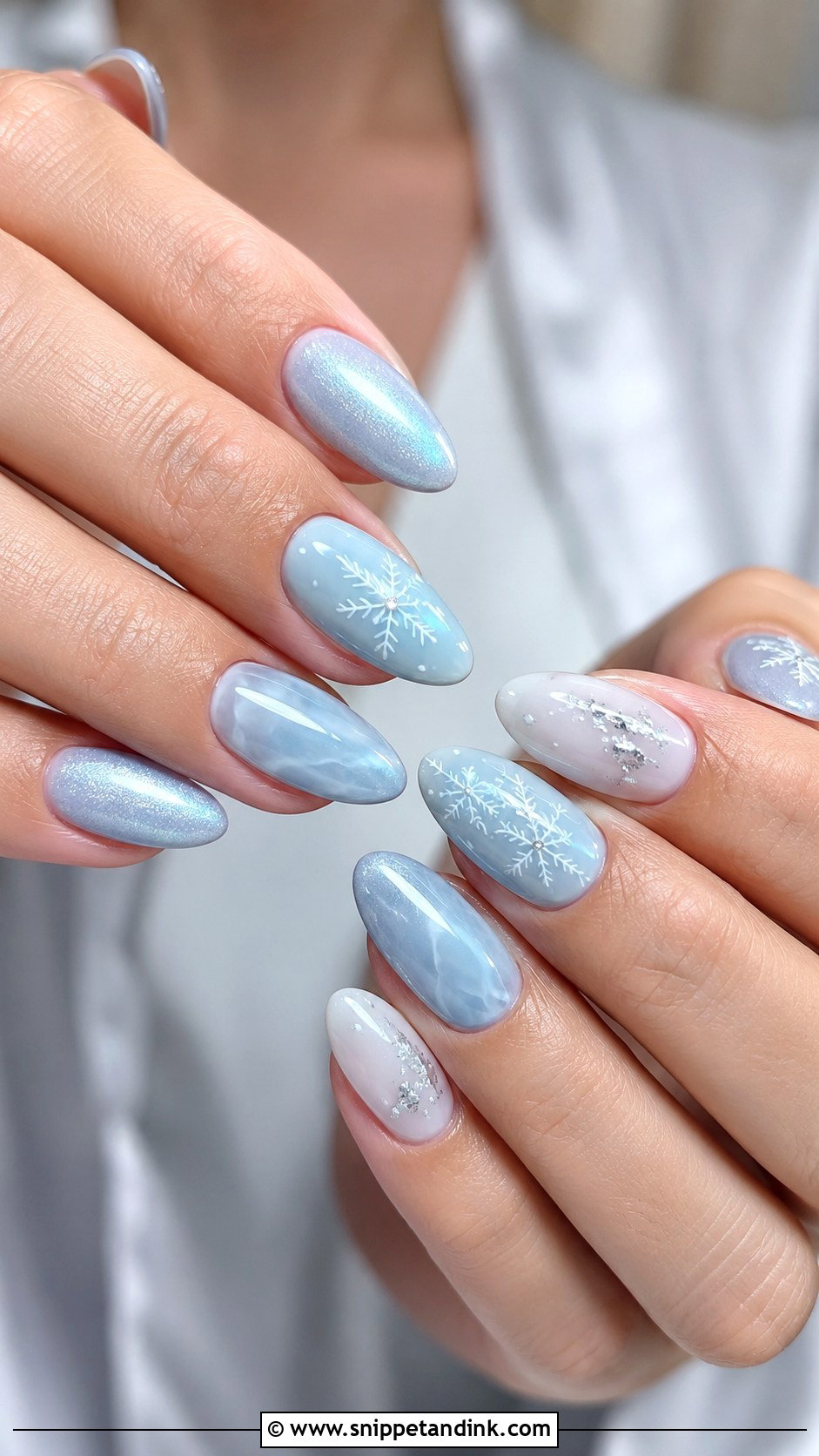
Icy blue winter wedding nails make a gentle “something blue” without anyone thinking you’ve gone off-script. The shade needs to be pale: powder blue, misty blue-grey or a sheer blue shimmer. Saturated blues look cold and a bit costume in ceremony photos. I often blend it with milky white tips or a dusting of silver chrome. Almond and oval shapes balance the cool colour, and it sits beautifully next to silver beading or crystal accessories. I’d keep the art minimal here, because blue already carries the theme.
7. Snowflake Winter Wedding Nails
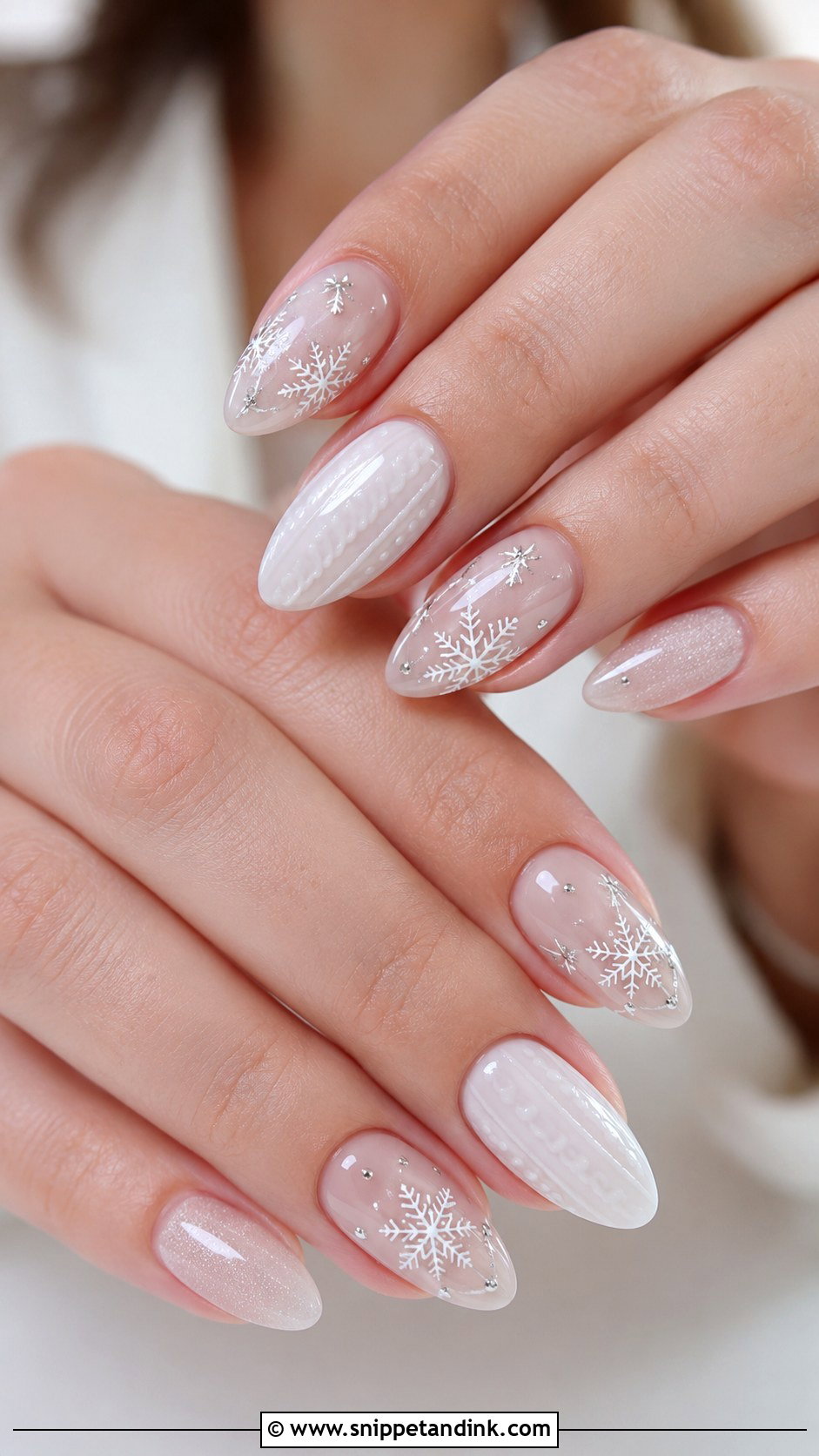
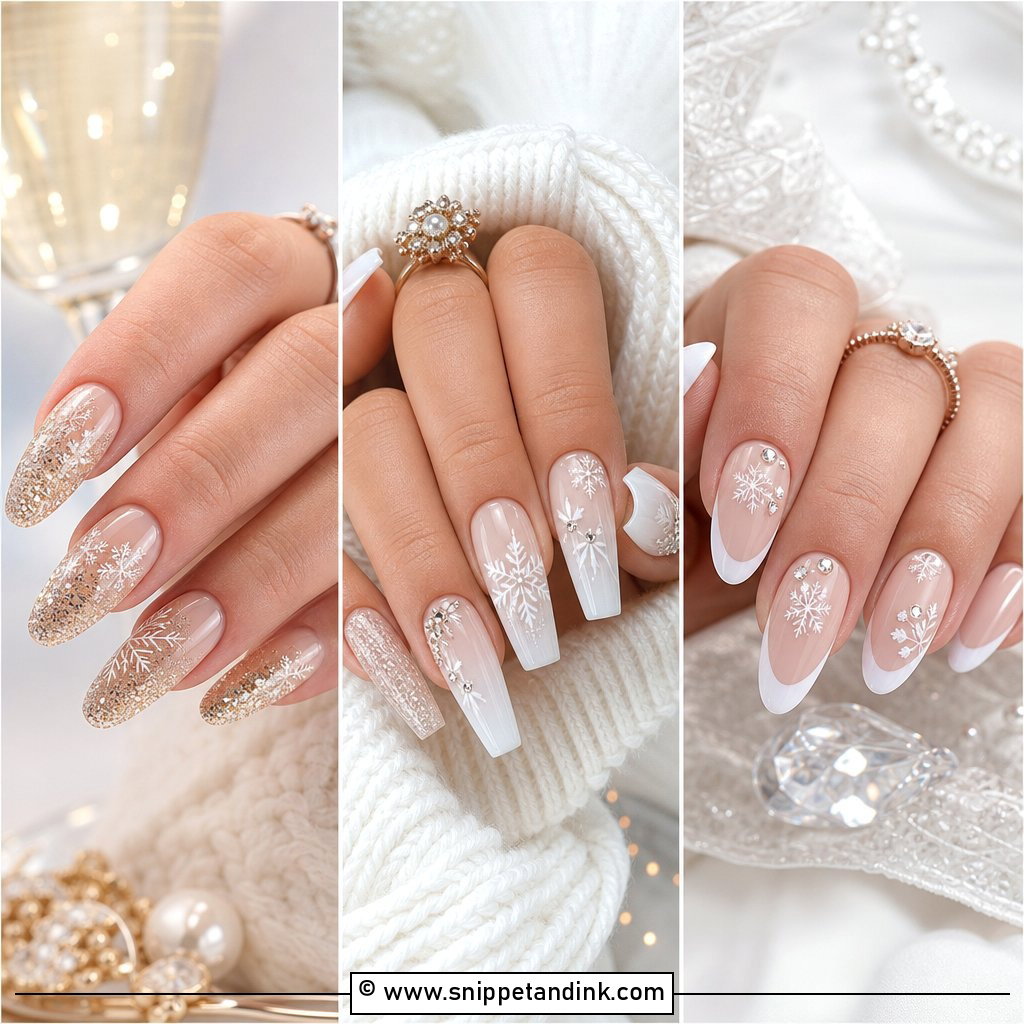
Snowflakes only look bridal when the linework is fine. I paint them with a long, thin liner brush in white gel over a sheer nude, pale pink, milky or soft blue base, and limit them to one or two accent nails. A full hand of snowflakes moves the set from wedding to holiday party very quickly. Tiny silver dots or a soft chrome top coat make the pattern look frosty without adding clutter. Medium almond gives the flakes enough room, and the design suits mountain venues and snowy portraits especially well.
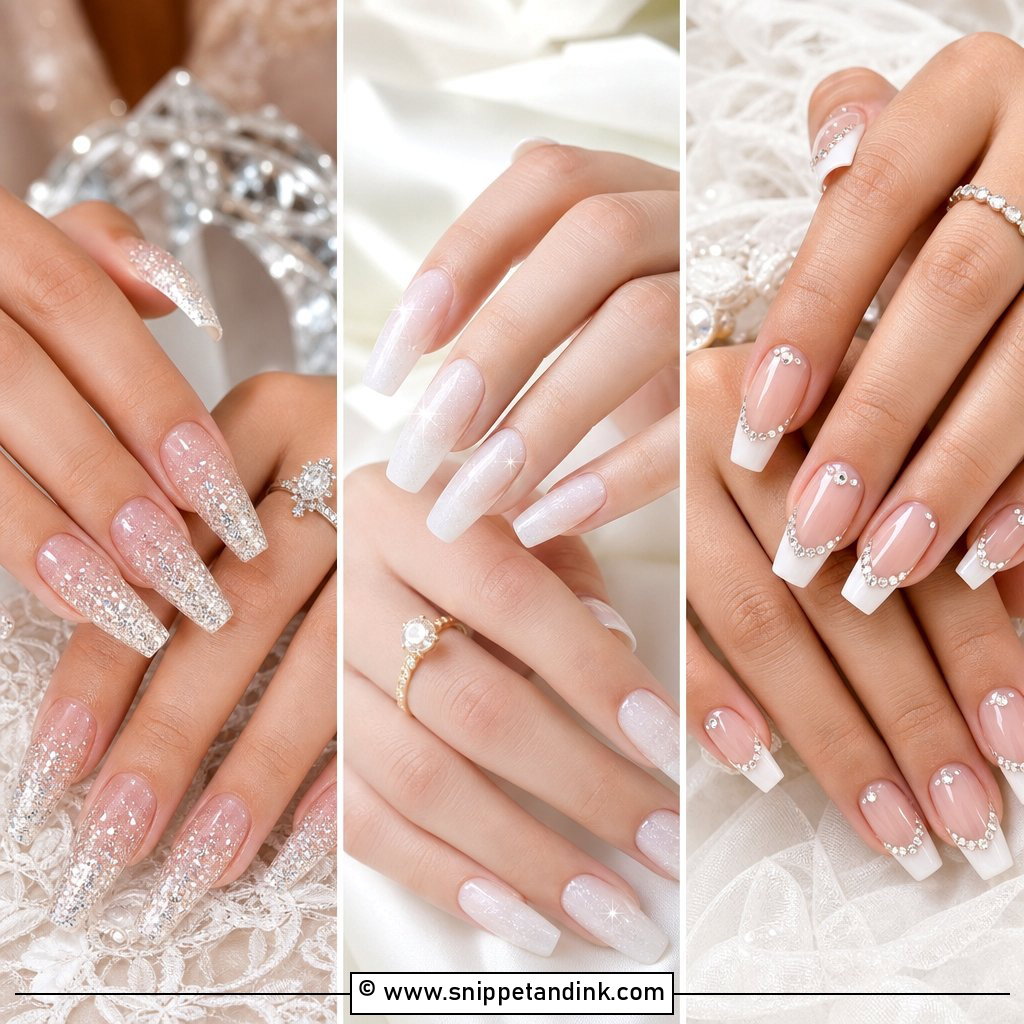
8. Silver Glitter Ombre Winter Wedding Nails
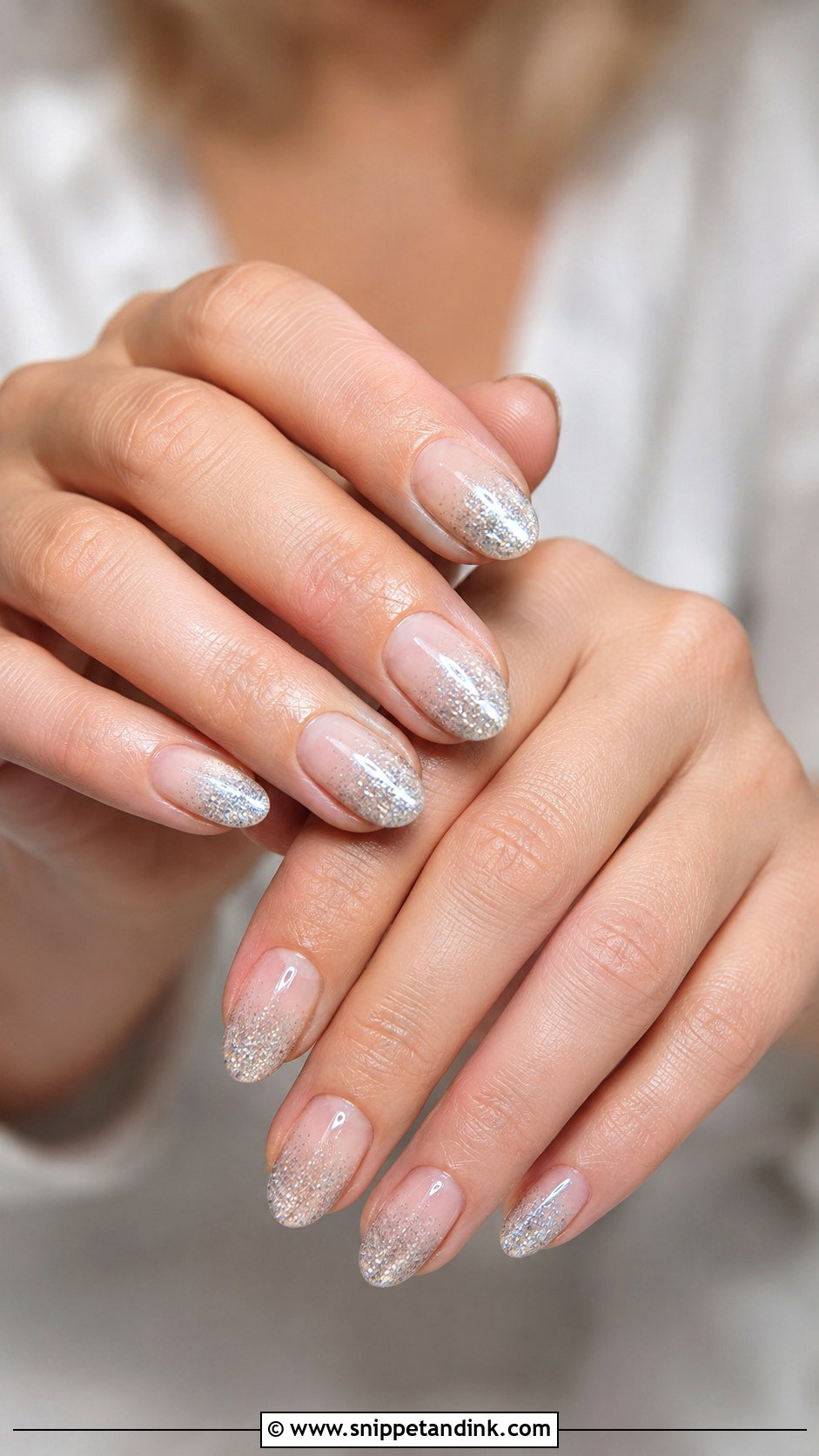
Silver glitter ombre adds sparkle without shouting, provided the glitter is fine. Chunky hex glitter catches light in random flashes and looks gritty in macro ring shots; fine glitter blends into a smooth haze. I sponge or brush it from the tip toward the middle of the nail, or from the cuticle outward if you’d rather the sparkle sit near the ring. A sheer pink, nude or milky base keeps the fade soft. It works well with crystal jewellery and suits evening receptions where warm lighting picks up the shimmer.
9. White French Tip Winter Wedding Nails
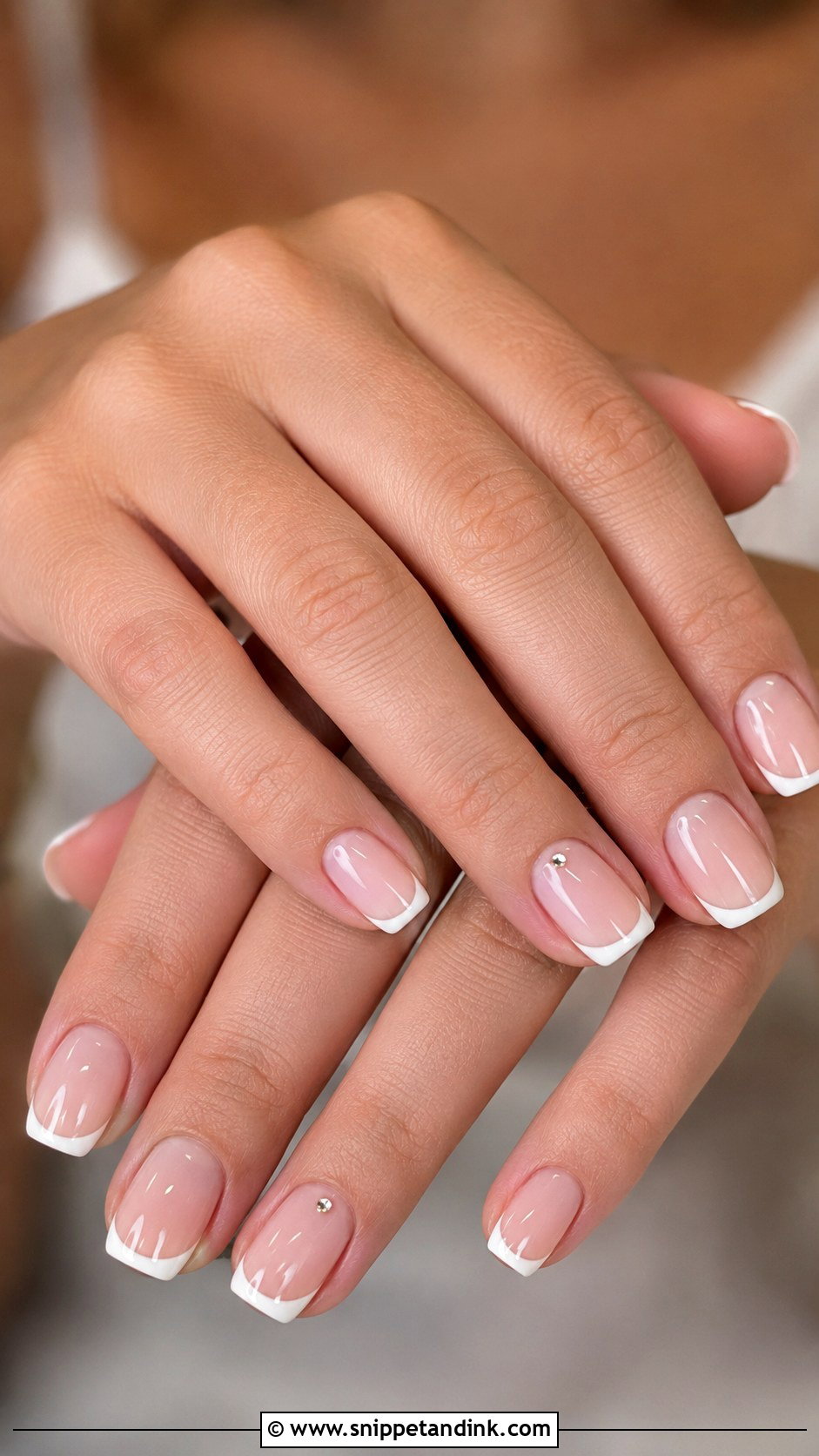
A white French tip is still the safest bridal set, and it’s safe for good reason: it frames the ring without stealing focus. For winter I mix the white slightly softer so the tip doesn’t look stark against pale winter skin. A sheer pink or neutral base keeps it natural. Go micro French for a minimal look, or a slightly deeper smile line for more definition. Almond, oval and squoval all carry it well. A very fine shimmer top coat or one tiny crystal near the cuticle of each ring finger is all the seasonal detail it needs.
10. Velvet White Winter Wedding Nails
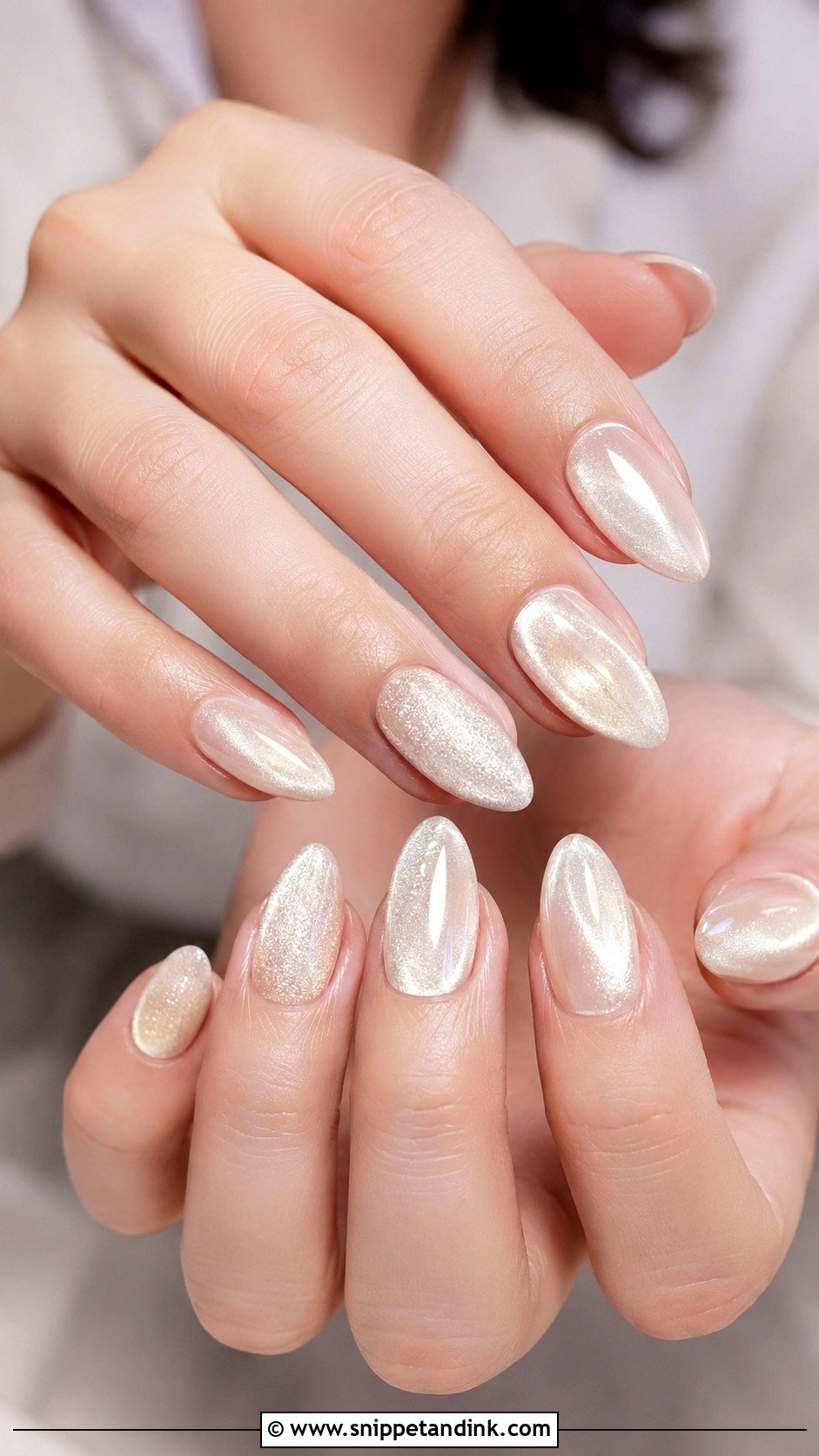
Velvet white uses a magnetic “cat eye” gel in white, pearl or pale champagne. Before curing, I hold a magnet over the wet gel to pull the particles into a soft band of light, which is what gives that plush, fabric-like depth. It’s less reflective than chrome and less sparkly than glitter, so it stays wearable. The magnet has to be applied quickly and the nail cured straight after, or the effect relaxes and goes flat. Medium almond, oval or coffin shapes suit it, and it echoes satin, crepe, faux-fur trim or fine beading nicely.
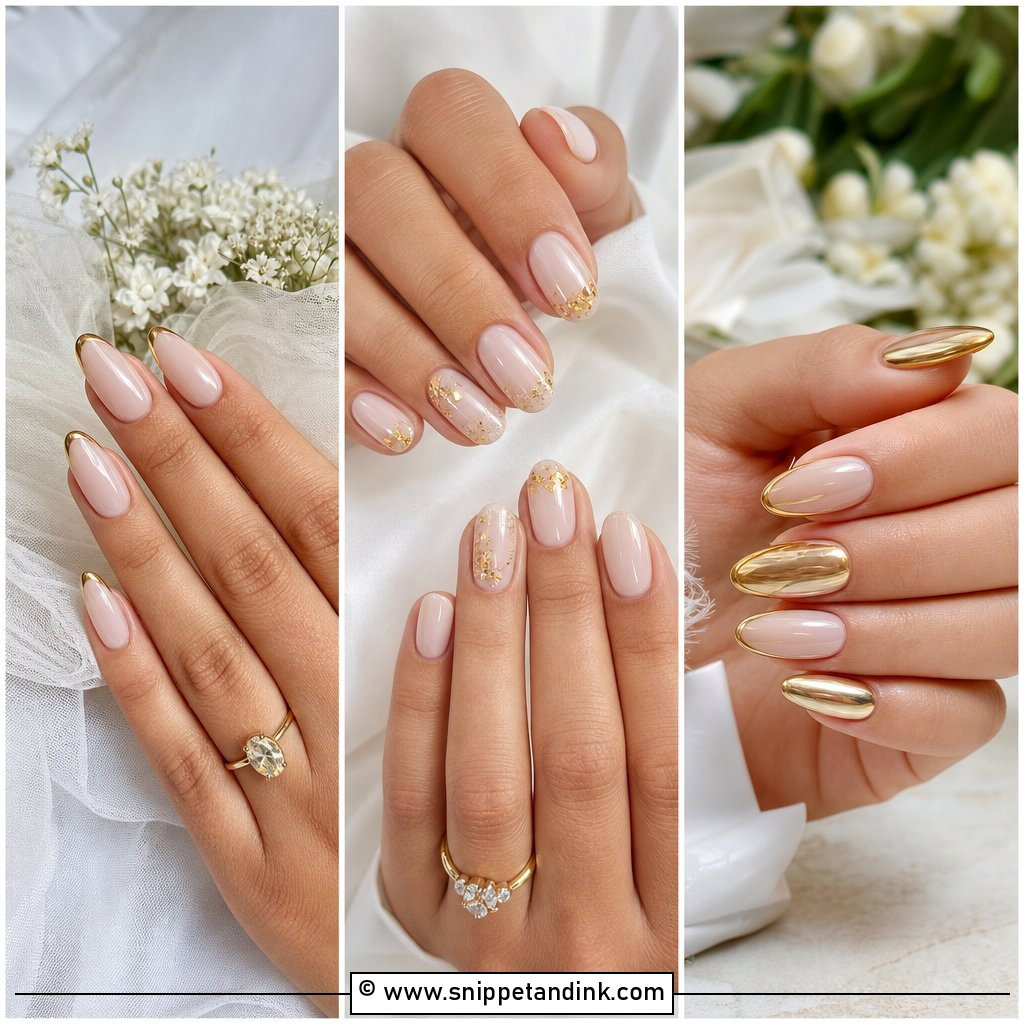
11. Champagne Winter Wedding Nails
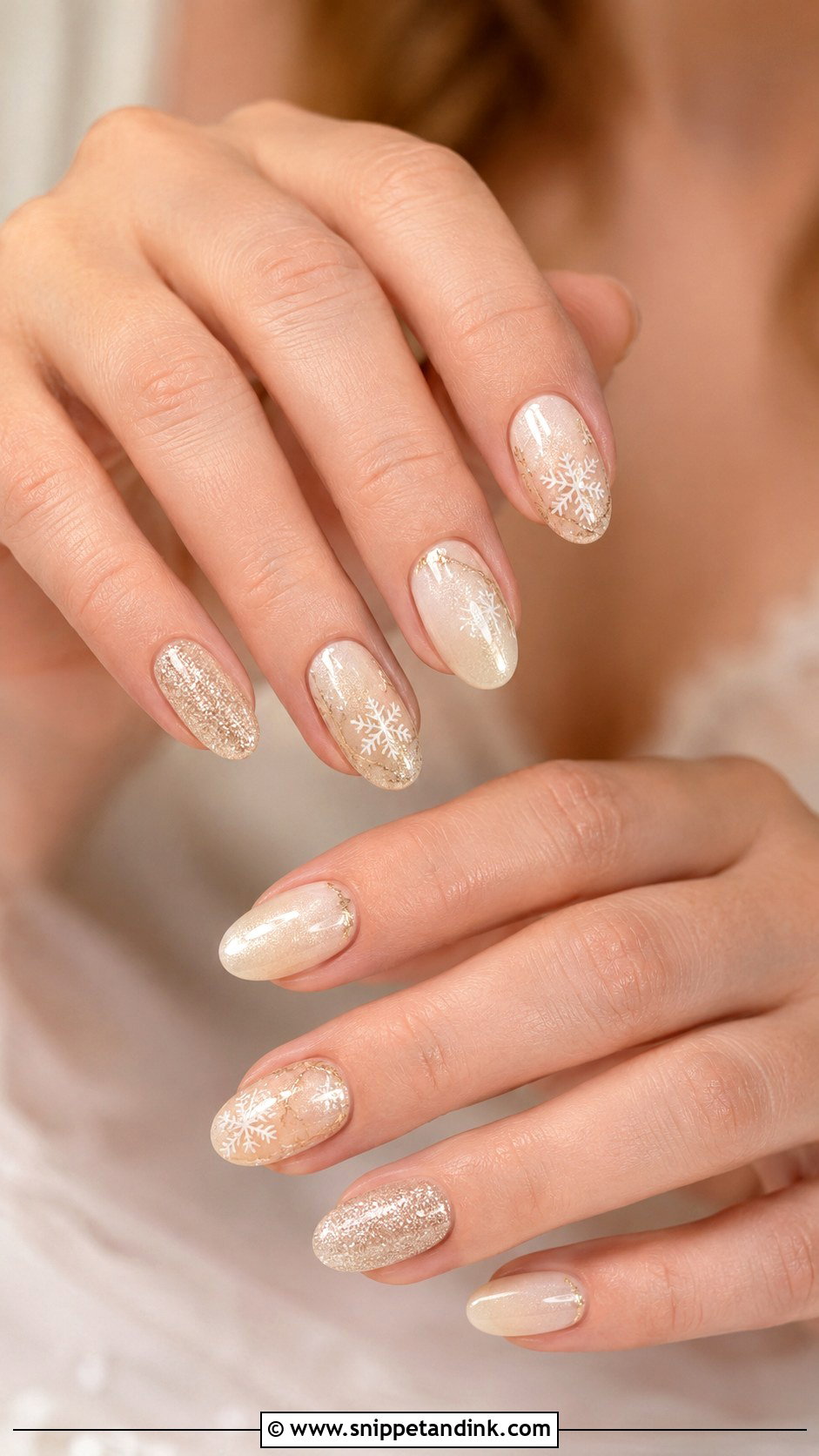
Champagne is the set I suggest to brides wearing gold jewellery, because silver-leaning shimmer can clash with a yellow-gold band. The shade can sit anywhere from pale beige shimmer to soft golden nude, but it needs to stay light. On short nails, a sheer champagne under a glossy top coat is plenty. Longer shapes can take a champagne chrome or a denser shimmer. A soft glitter fade or one small pearl adds a winter note without tipping into heavy metallic.
12. Blush Pink French Winter Wedding Nails
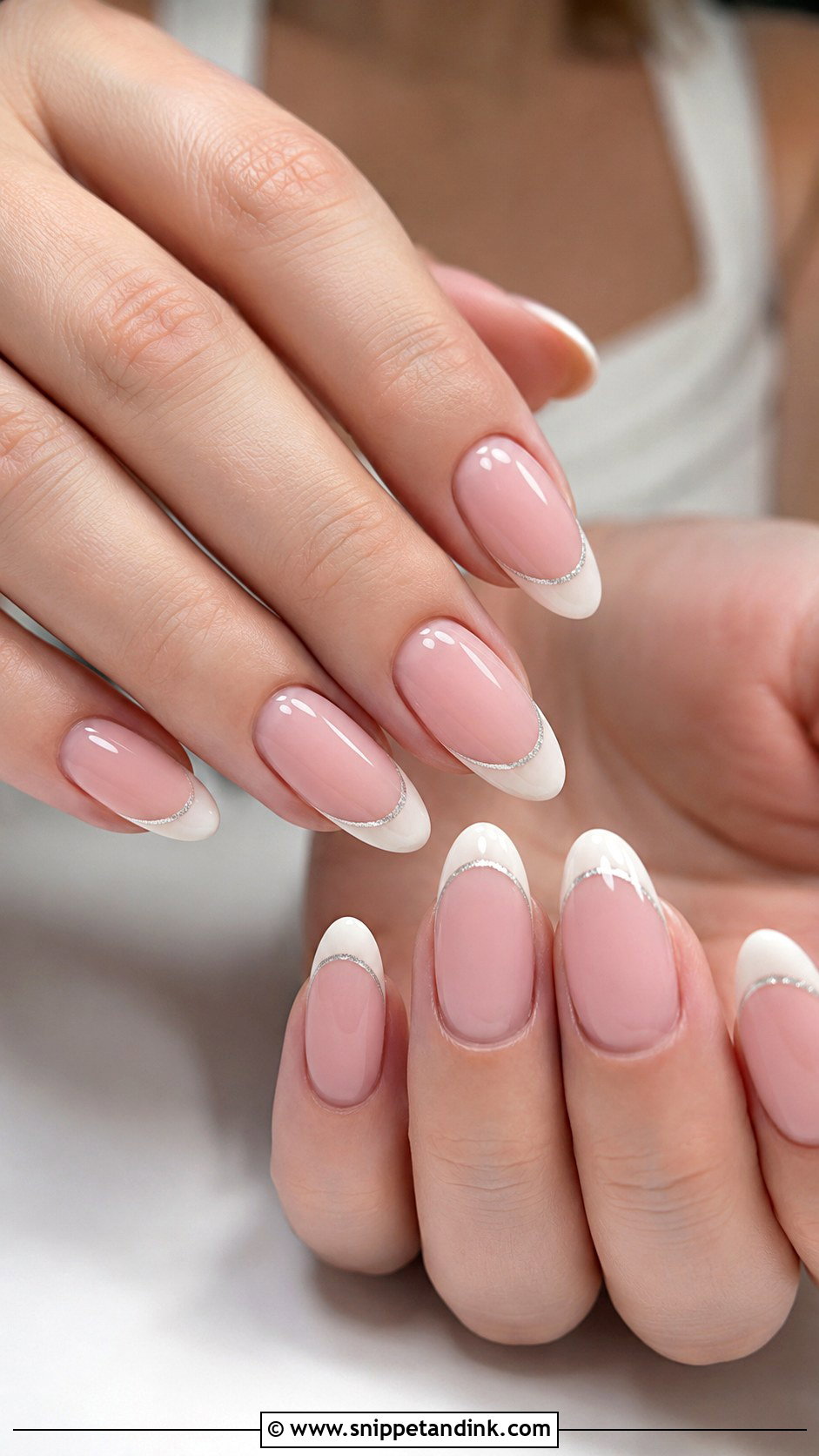
Blush pink French swaps the high-contrast white tip for something gentler. The base is a sheer blush, and the tip can be soft white, milky ivory or pale rose, which reads more modern than the classic version. It flatters a wide range of skin tones because there’s no hard line pulling the eye. For winter, a pearly top coat or a hairline of silver under the tip adds a little frost. Keep the shape soft, almond or oval, so the set sits easily beside the dress, bouquet and ring.
13. Crystal Accent Winter Wedding Nails
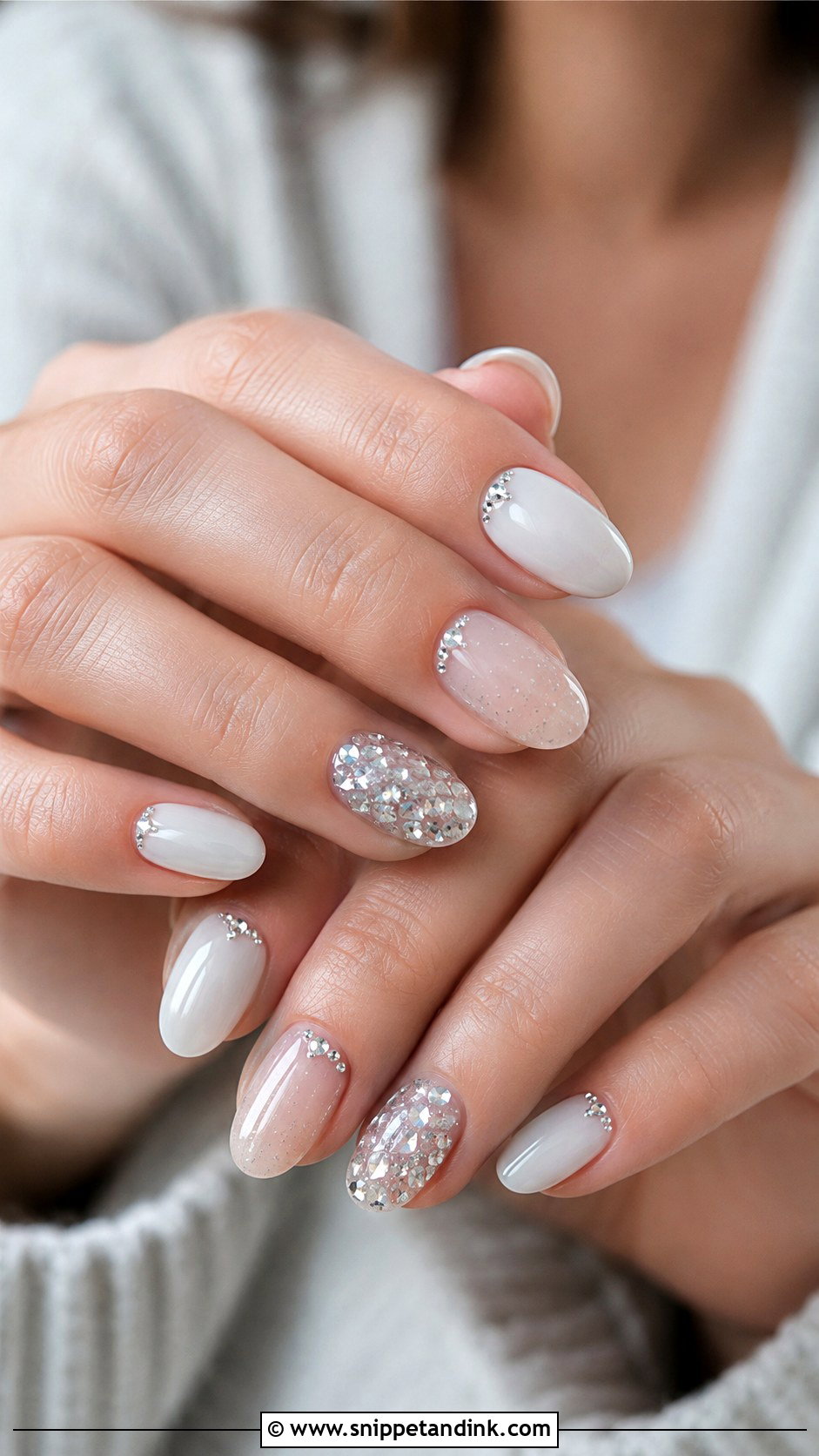
Crystal accents act like tiny jewellery. I place small stones near the cuticle or along one accent nail over a sheer nude, milky or pale pink base, and I keep them low and tightly clustered rather than scattered. The usual failure is stones popping off on day one because they were set in top coat alone; I bed them in a thicker gel and run a thin seal around each edge. Ask your nail artist how the stones will be secured. They need to last through the ceremony, the photos, the reception and every time you pull on a coat or gloves.
14. Lace Winter Wedding Nails
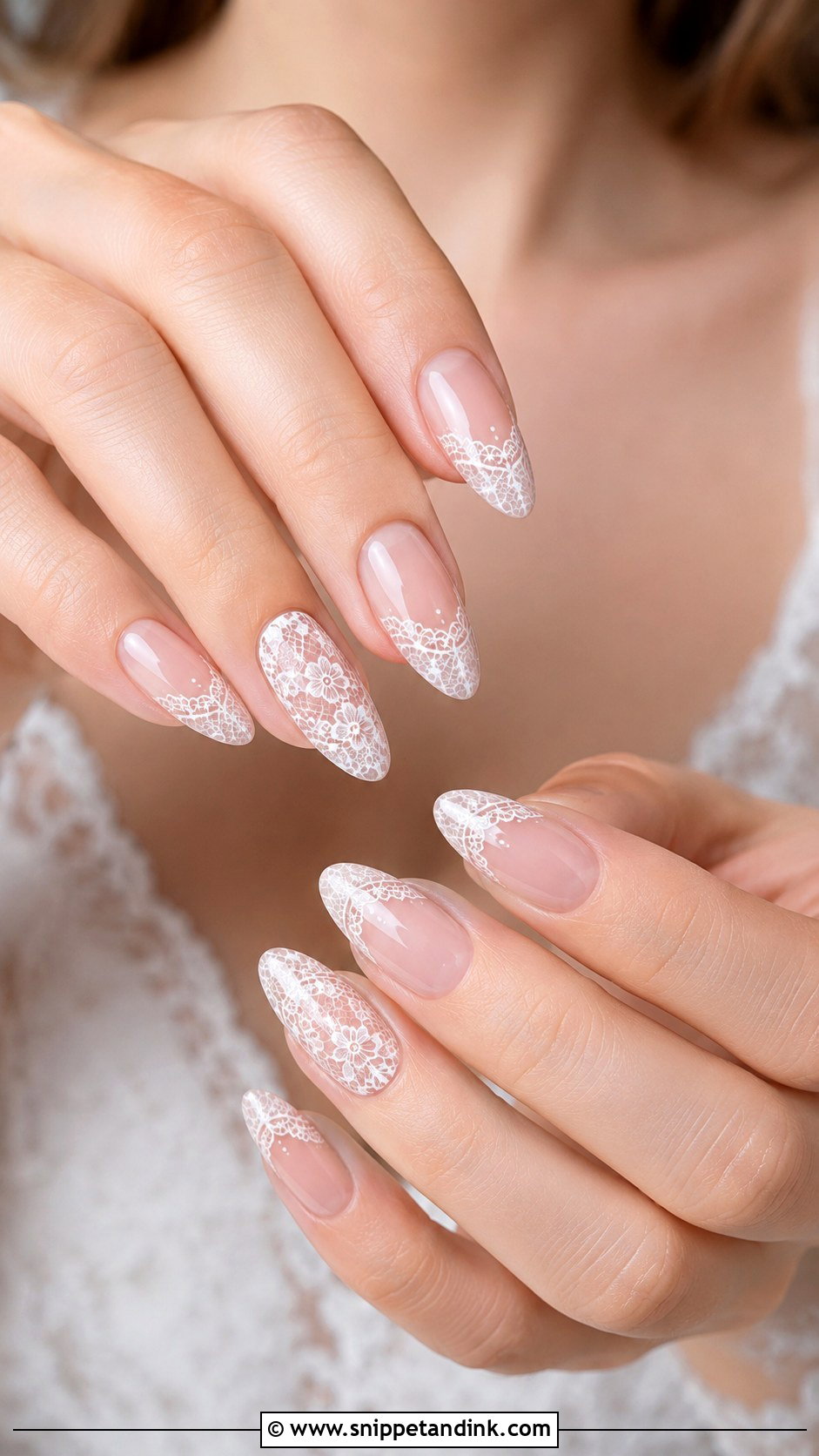
Lace nails make sense if your dress has lace sleeves, floral lace or delicate embroidery, because the art can echo the gown without copying it. I paint thin white lace-style detail on one or two nails, usually the ring or middle fingers, over a sheer nude, soft pink or milky base. Bring a photo of your lace, or better a fabric swatch, so the motif reads as related. Thick lines make it look like a sticker, so the work has to be airy. Almond, oval or medium coffin gives enough room for the pattern, and a glossy top coat keeps it soft.
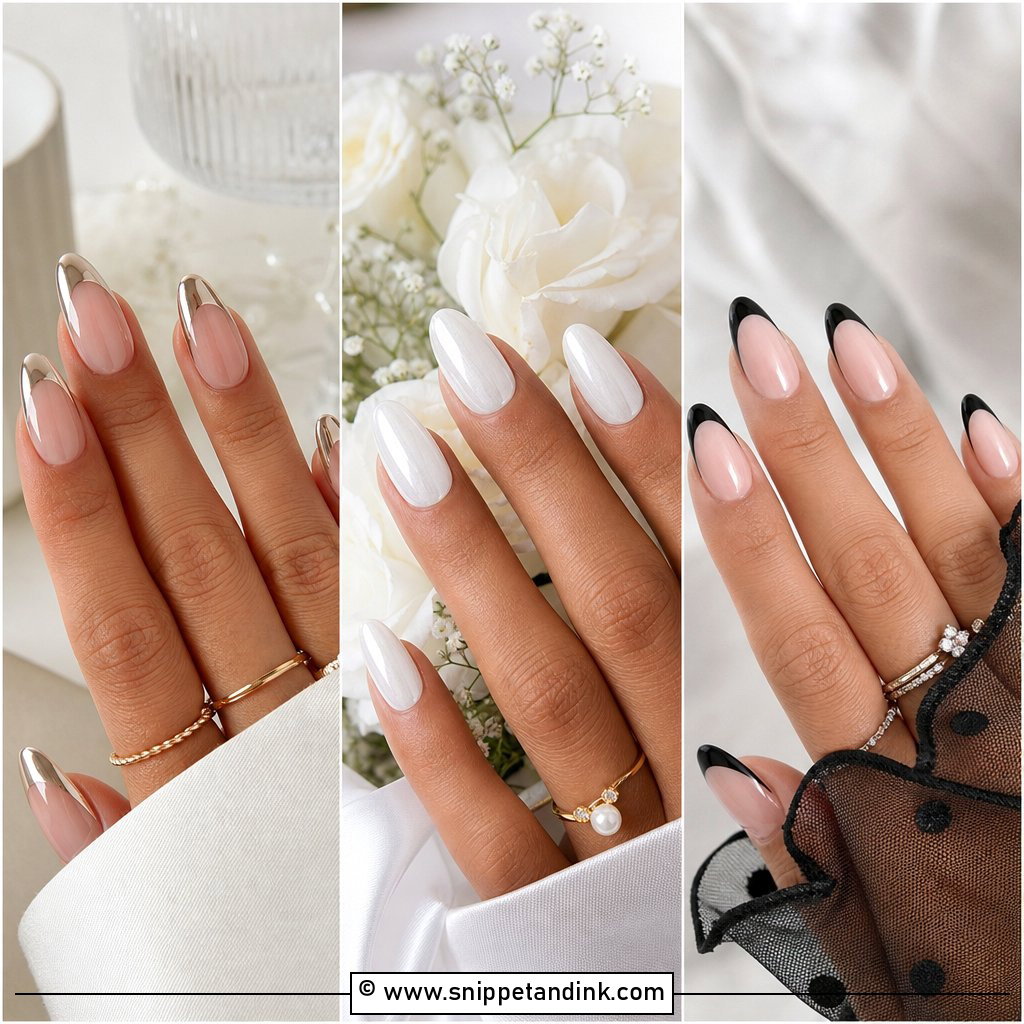
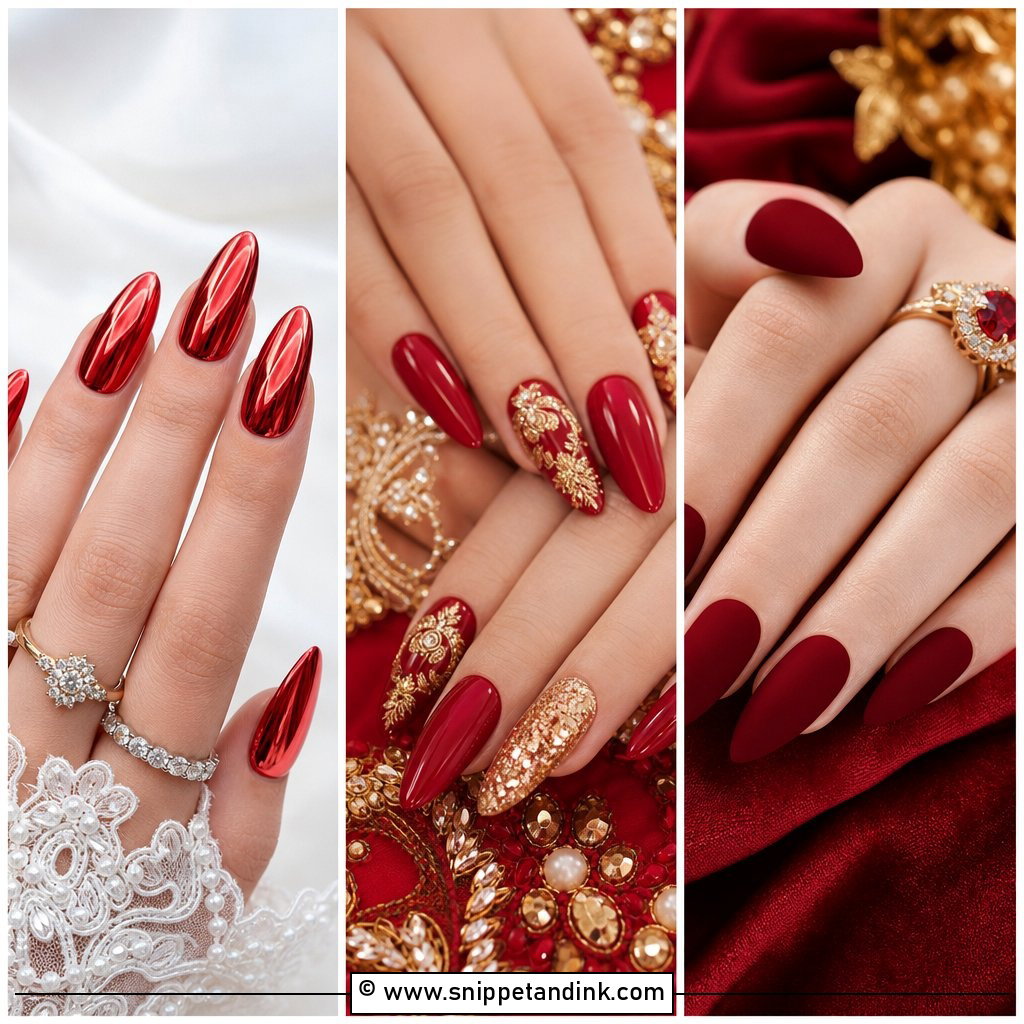
15. White Marble Winter Wedding Nails
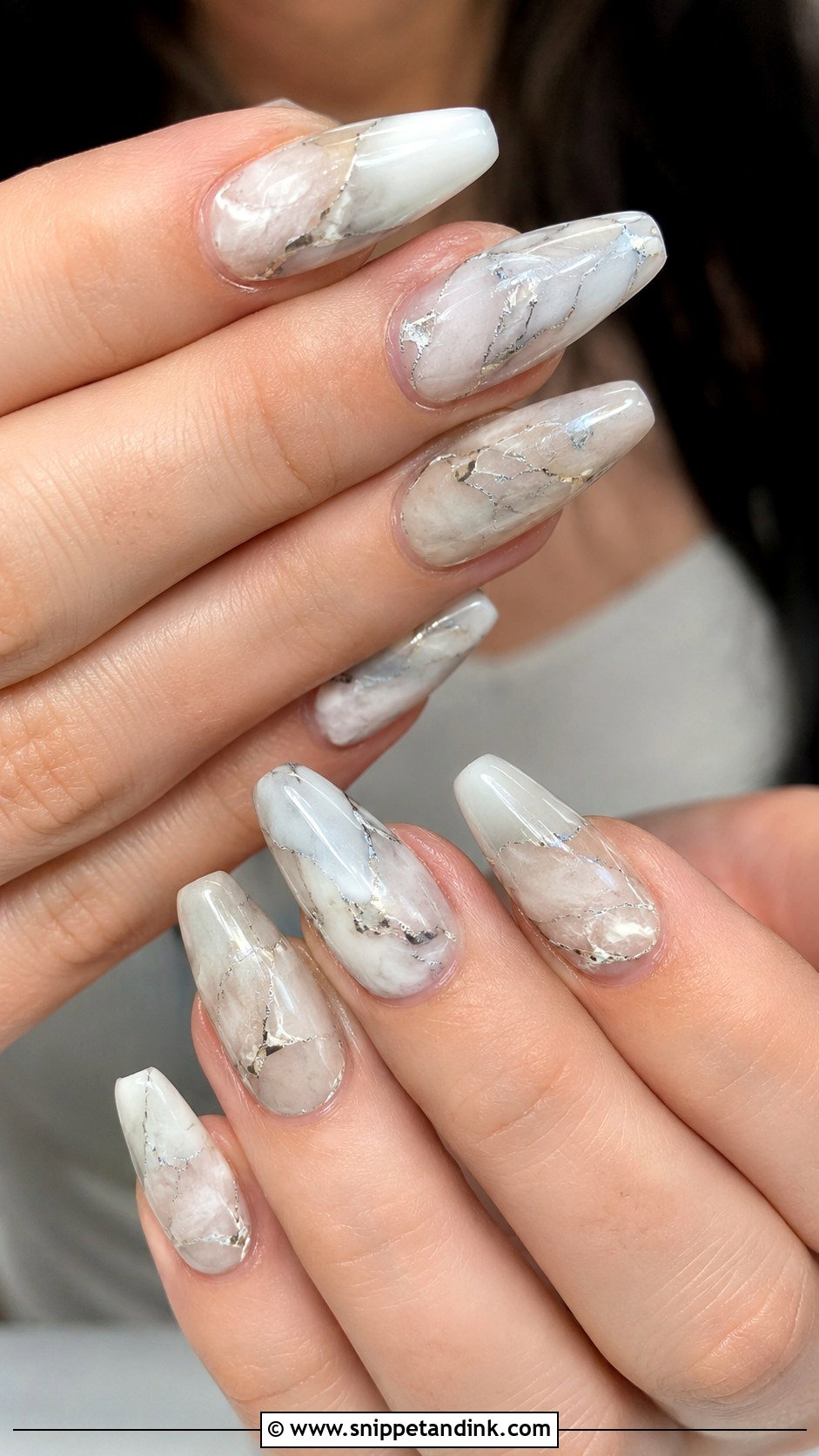
White marble winter wedding nails look cool and a little artistic while staying bridal. I build milky white, then drag soft grey veining through it while the gel is still wet so the lines blur like real stone. Dark or heavily outlined veins look harsh at close range. A few fine silver foil lines or a pearl top coat can make it richer. Almond and coffin shapes show the marbling best, and I keep most nails plain with marble on two or three, which suits modern city venues and clean-lined gowns.
16. Frosted Pink Winter Wedding Nails
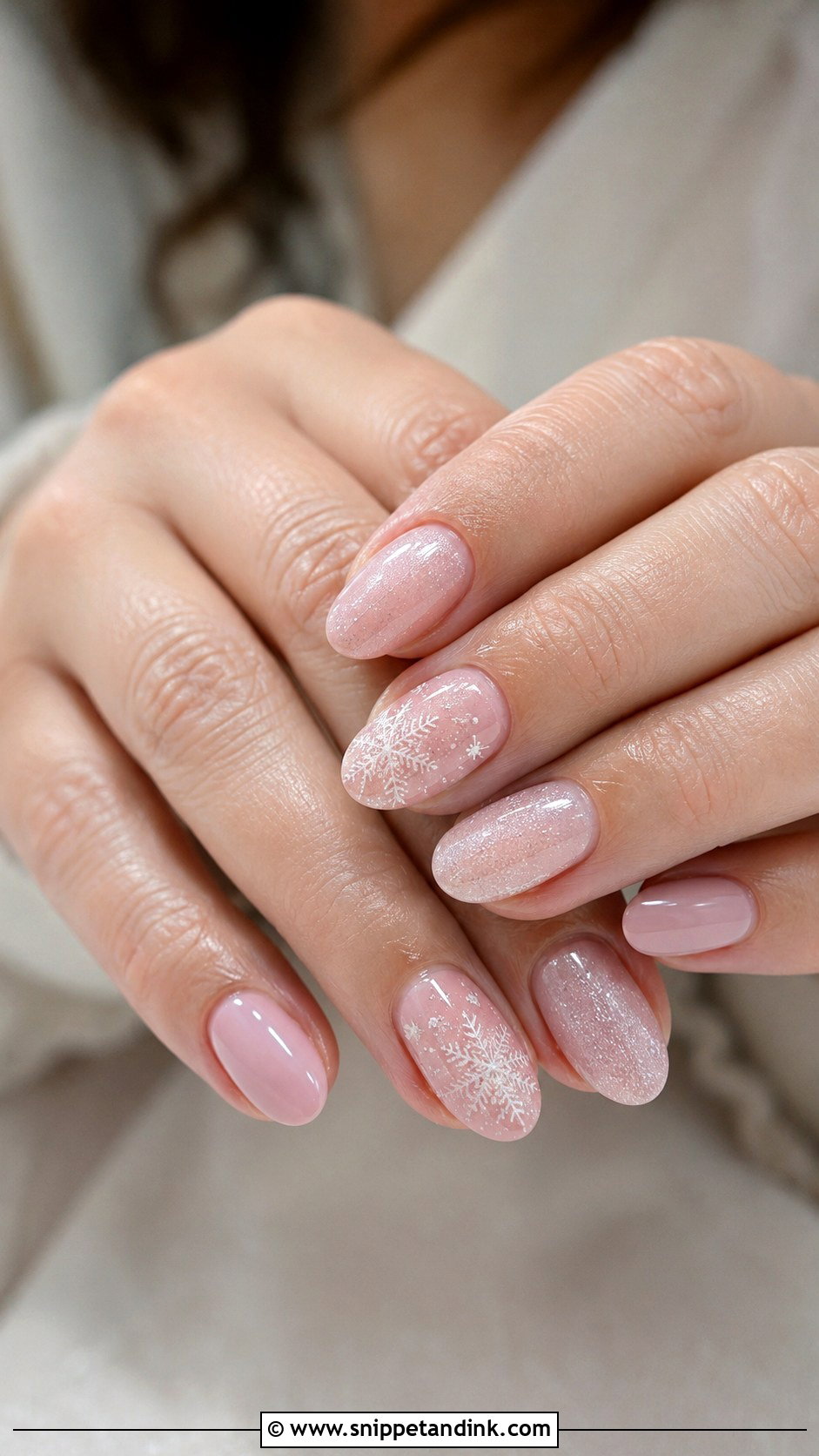
Frosted pink gives a blush manicure an icy glow. The base can be sheer pink, rose milk or pale mauve, with a fine shimmer layered over it that looks cold rather than glittery. On short oval nails it looks natural, while almond gives it a more polished bridal shape. The frost catches light gently, which helps in close ring photos where heavier sparkle can blow out. Silver jewellery, pearl accessories and soft pink makeup all sit comfortably beside it.
17. Ivory Glitter Winter Wedding Nails
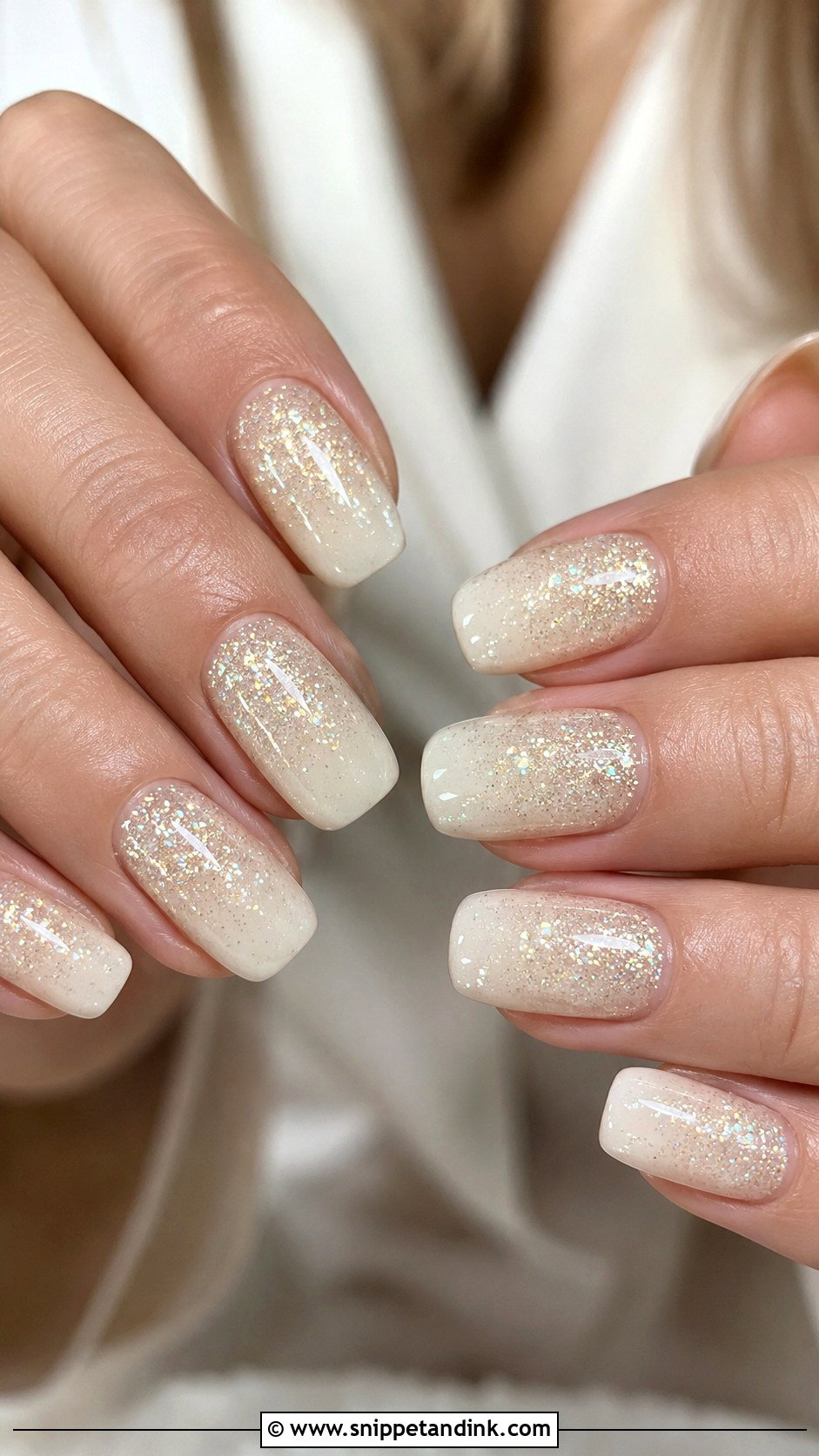
Ivory glitter suits brides in cream or off-white gowns, since bright white glitter can make an ivory dress look dingy by comparison. I start with a warm ivory base and add fine iridescent or pale gold glitter as a soft layer, an ombre fade or an accent pattern. The glitter should be fine enough that the surface looks smooth when the top coat goes on; coarse glitter leaves bumps you can feel and see. Any length works, from short squoval to long almond. Candlelit receptions and warmly lit winter venues show it at its best.
18. Almond Winter Wedding Nails
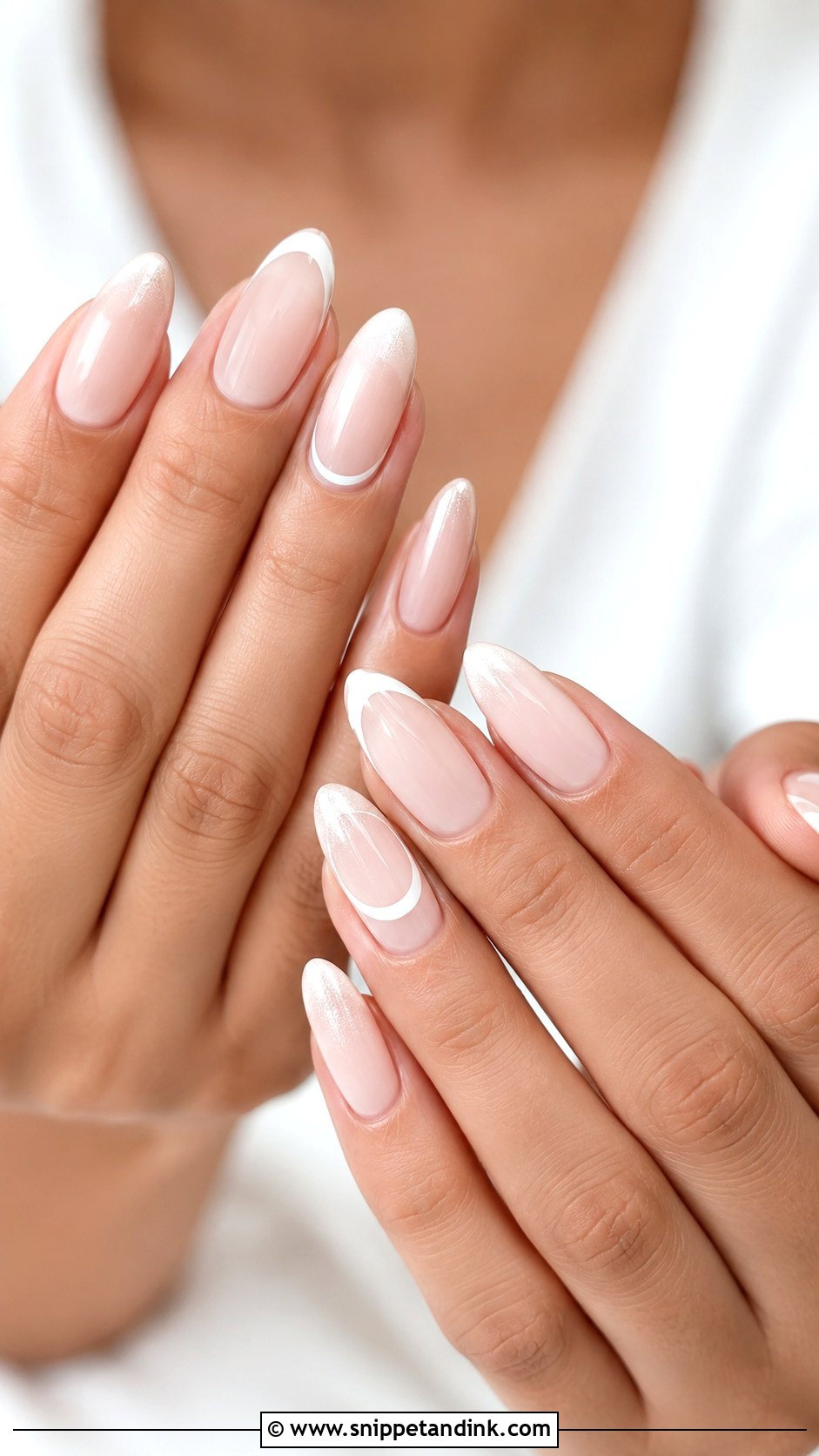
Almond winter wedding nails are the shape I reach for most, because the taper lengthens the fingers and flatters almost every hand. It takes milky white, blush pink, nude chrome and pearl shimmer equally well, and it suits French tips, snowflakes, crystals and glitter fades. Length is where brides go wrong. A long almond point catches on buttons, veil combs and bouquet ribbon, so for the day itself I usually suggest short to medium. It adapts to nearly any winter wedding style.
19. Short Winter Wedding Nails
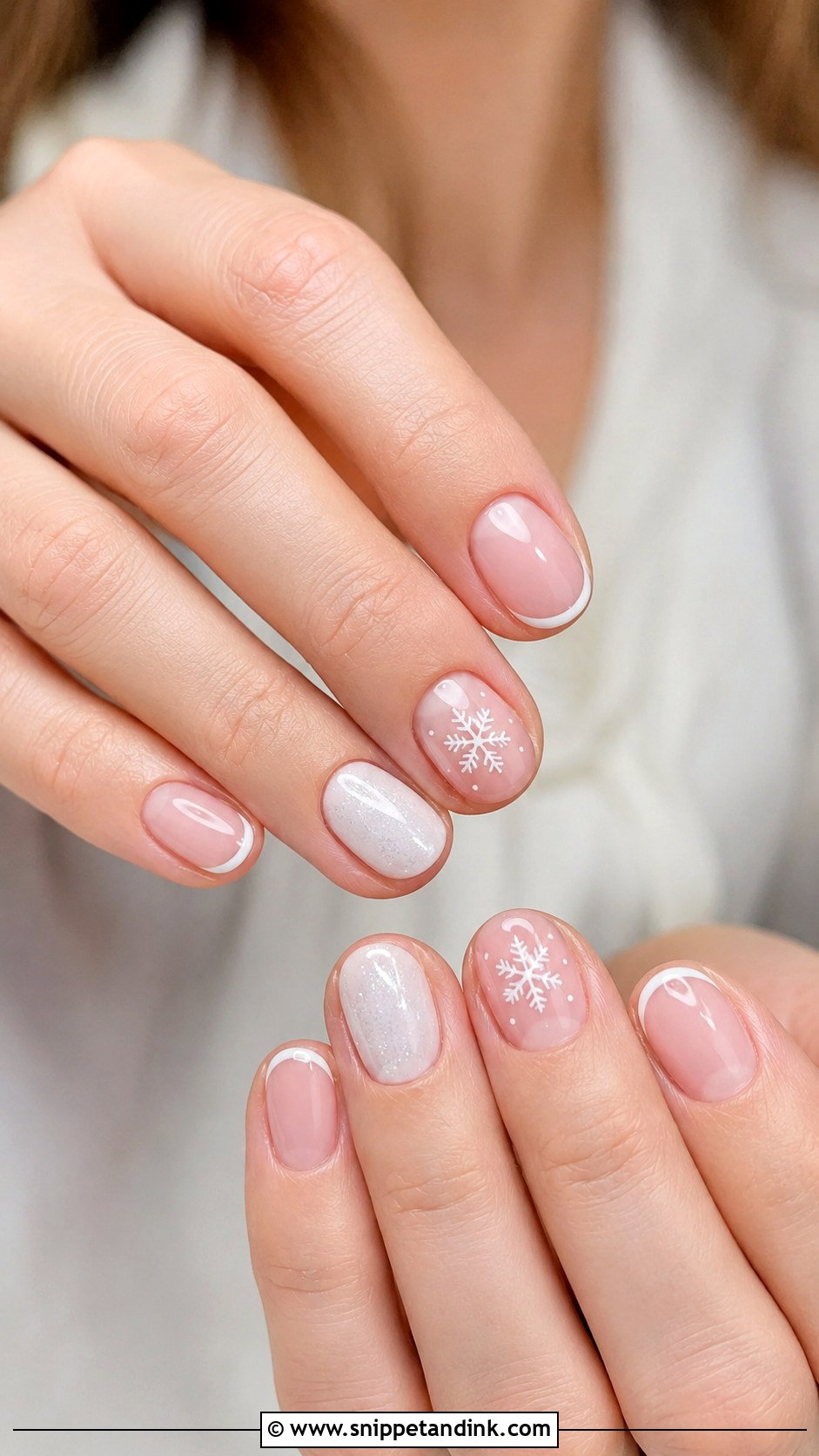
Short nails can look every bit as polished as extensions, and they’re kinder to brides who type, garden or simply hate length. A short oval, squoval or soft round shape keeps things clean. Milky white, sheer pink, pearl chrome and nude shimmer make the nail bed look smooth and even. If you want art, keep the scale small: a micro French, one tiny snowflake, a fine glitter fade or a single crystal. Short sets also snag less and look tidy in ring close-ups.
20. Coffin Winter Wedding Nails
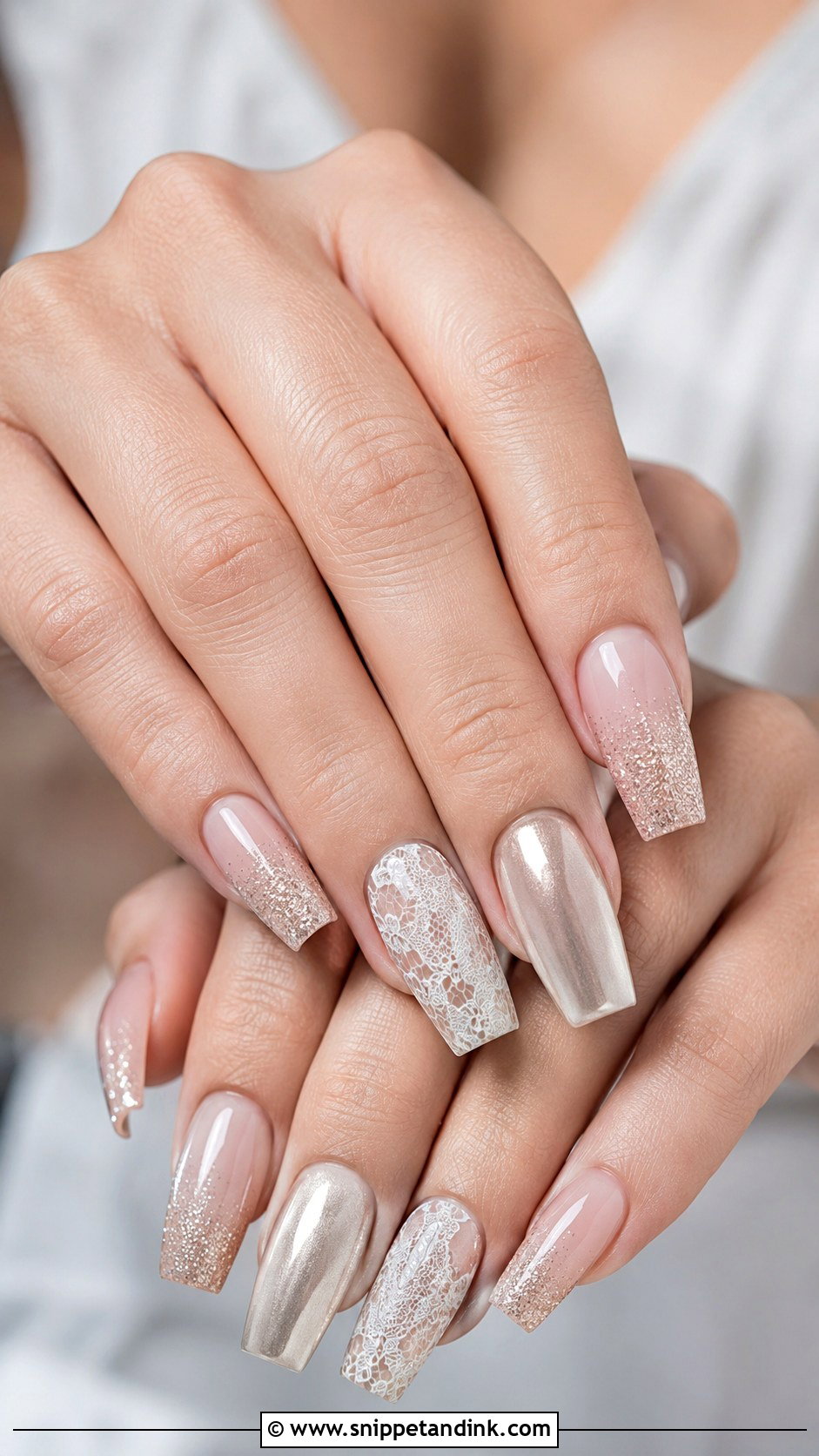
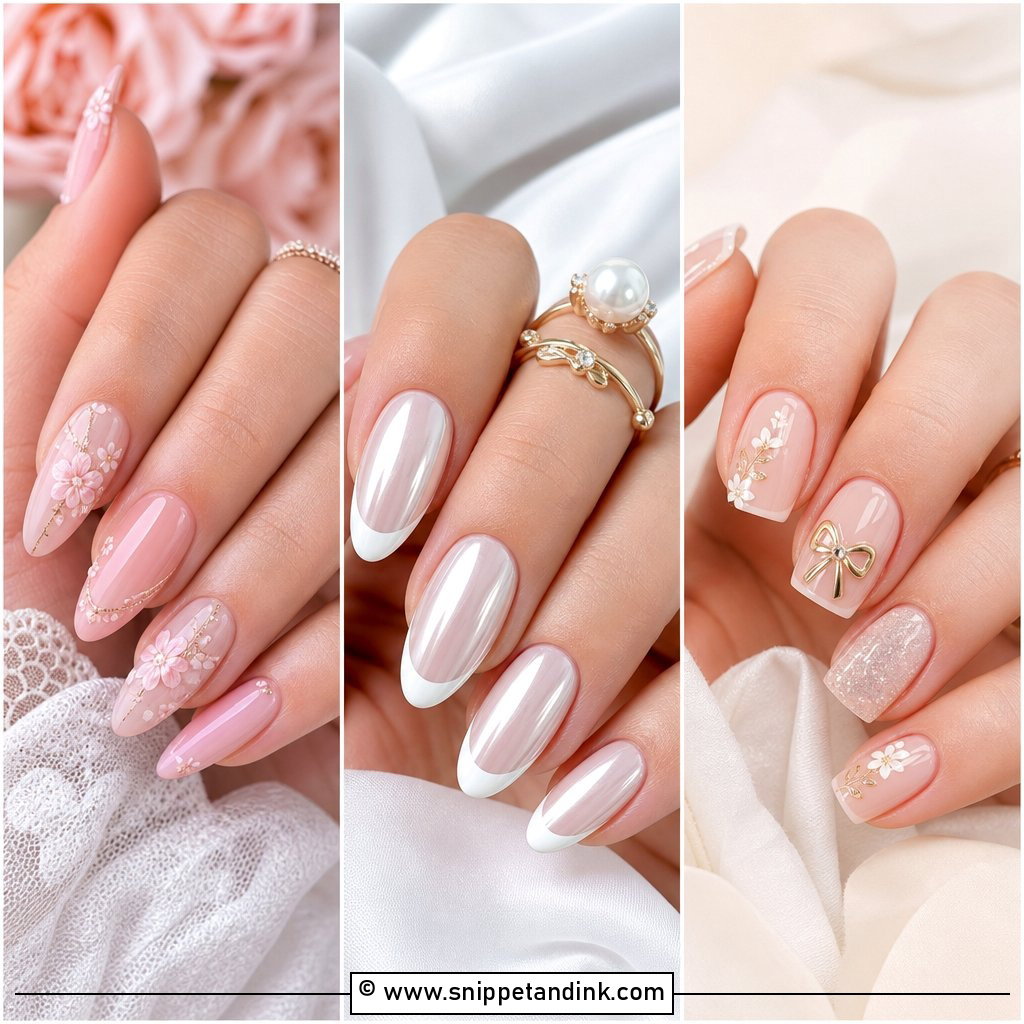
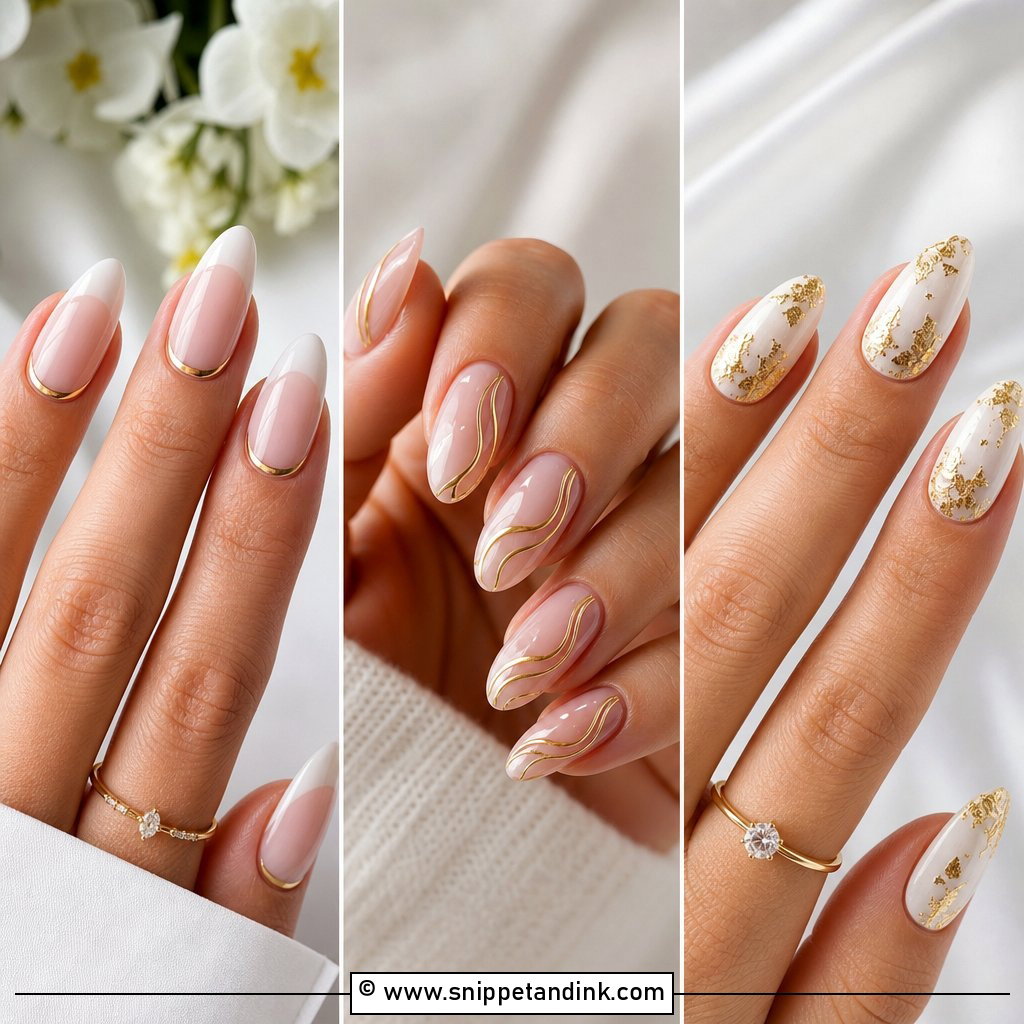
Coffin winter wedding nails give you a longer, more structured set with a squared tip. To keep them bridal, I’d stay with soft winter shades rather than dark ones: milky white, blush nude, champagne chrome, pearl shimmer or a silver glitter fade. The tapered sides keep the hand elegant while the flat tip feels modern, and the surface leaves room for lace, marble, snowflakes or crystals. Coffin is the shape most likely to snag fine fabric, so if your gown has a row of buttons or delicate lace, ask for medium length rather than extra-long.
Gloves, Coat Sleeves and Faux Fur Are the Real Test
A winter bride puts her hands through more friction than a summer one. Gloves go on and off, coat sleeves drag across the nail tips, wraps and stoles are full of fibres that catch. Before I settle a design, I ask what the bride will actually be wearing over her dress.
Where 3D detail causes trouble
Raised pearls and crystals are the first casualties. Satin gloves and knit mittens drag across them, and faux fur loves to tangle around anything with an edge. If you’re wearing gloves for the walk or outdoor portraits, keep stones flush and low, or limit them to the ring finger, which spends most of the day ungloved anyway.
Checking the set in the light you’ll have
Winter light is blue and low in the afternoon, then turns warm and dim indoors. Chrome and shimmer look different in each. At your trial, step outside or stand by a window, then look at your hands again under a warm lamp. A white that looked creamy indoors can turn stark next to snow, and that is far easier to adjust a fortnight before than on the morning.
Soft Colour, Sensible Length and One Small Winter Detail
You don’t need an elaborate set to have hands that look finished in winter photos. A sheer milky base, a gentle shimmer, a refined French, one pearl or one icy detail is usually enough. Pick a shape that fits how you use your hands, then match the finish to your dress, metal and venue lighting. If you’re torn between two designs, wear one as a trial a few weeks out and see how it looks after a week of real life.
You'll Like These Ideas:


Leave a Reply