
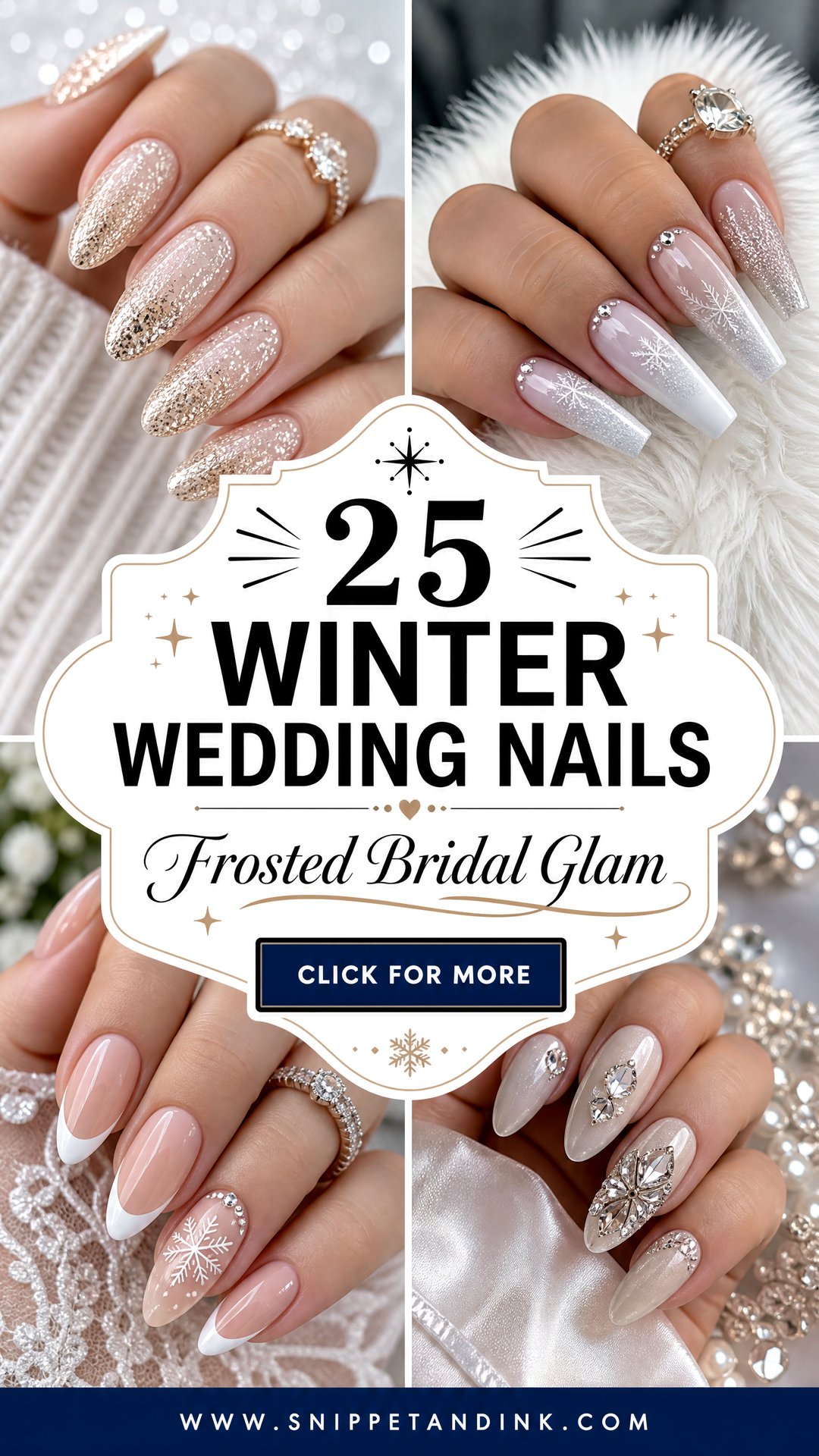
Cold-weather weddings change what I put on a bride’s hands. Skin is drier, cuticles crack, heating dehydrates the nail plate, and the gown is often satin, velvet or long-sleeved, so the hands get more attention in photos than usual. The sets here use finishes that suit the season, such as pearl chrome, icy shimmer, velvet magnetic gel, frosted French tips, silver foil and fine snowflakes, alongside quieter sheer pinks and milky whites. Some are bridal, some suit bridesmaids, mothers or a winter wedding guest, and I’ve covered short, medium, almond, oval, square and coffin shapes.
Why Winter Cuticles Spoil More Manicures Than Chips
Most winter brides I see don’t have a polish problem; they have a skin problem. Cold air and central heating dry the cuticles until they crack and lift, and a ragged cuticle shows in every ring shot no matter how good the colour is. Dry, dehydrated nails also bend and flex more, which is one reason gel lifts at the edges in winter.
Start this about two weeks before your appointment:
- Cuticle oil morning and night, massaged into the skin around each nail rather than painted on the plate.
- A thick hand cream at bedtime, with cotton gloves over the top if your hands are very dry.
- Gloves outdoors and for washing up. Hot water followed by cold air is what cracks the skin at the sides of the nails.
- No cutting or biting the cuticles yourself. Leave tidying to your nail artist, who can push them back gently without leaving raw edges.
On the day of the appointment, come with clean, oil-free nails. Oil is great for the skin but stops gel from bonding, so I skip it that morning and you go back to it afterwards.
1. Milky White Winter Wedding Nails
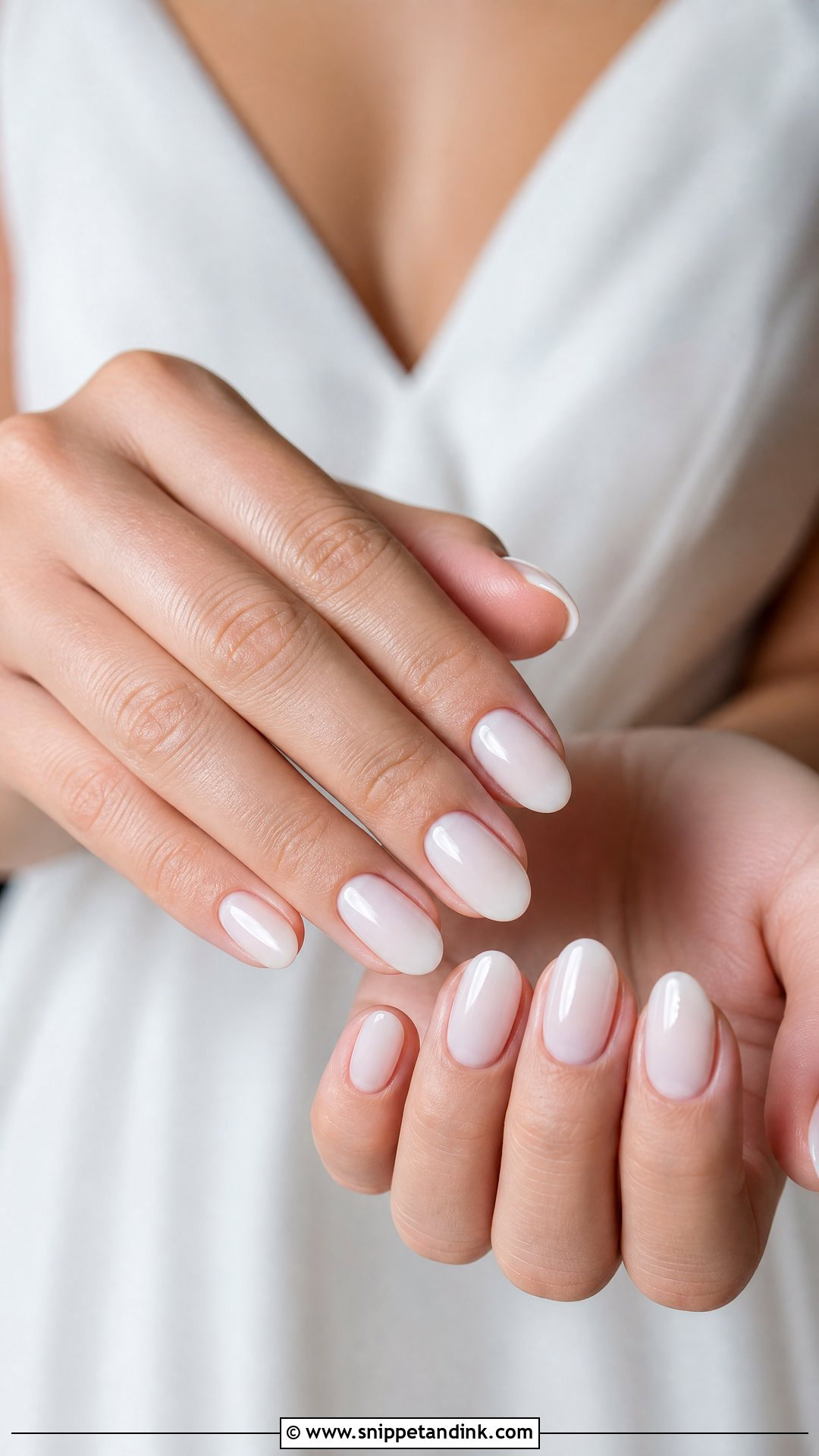
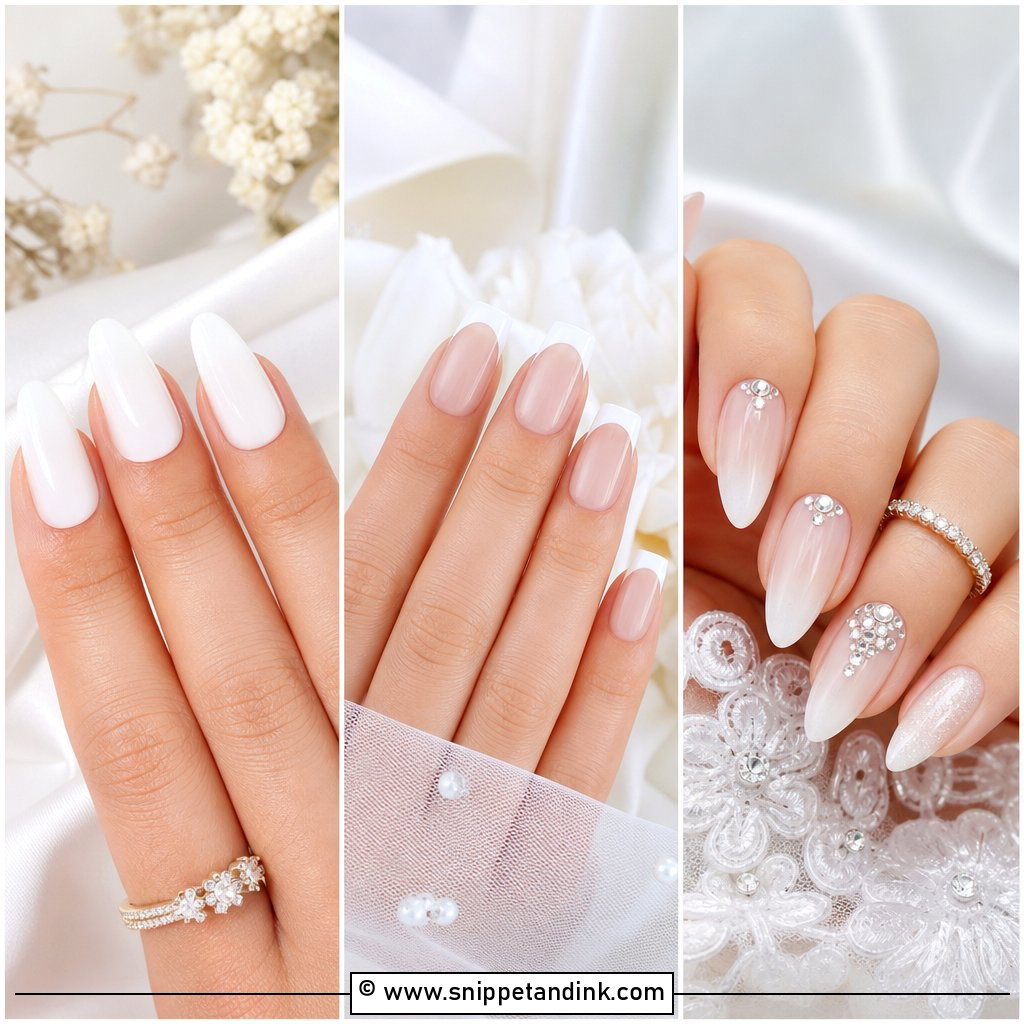
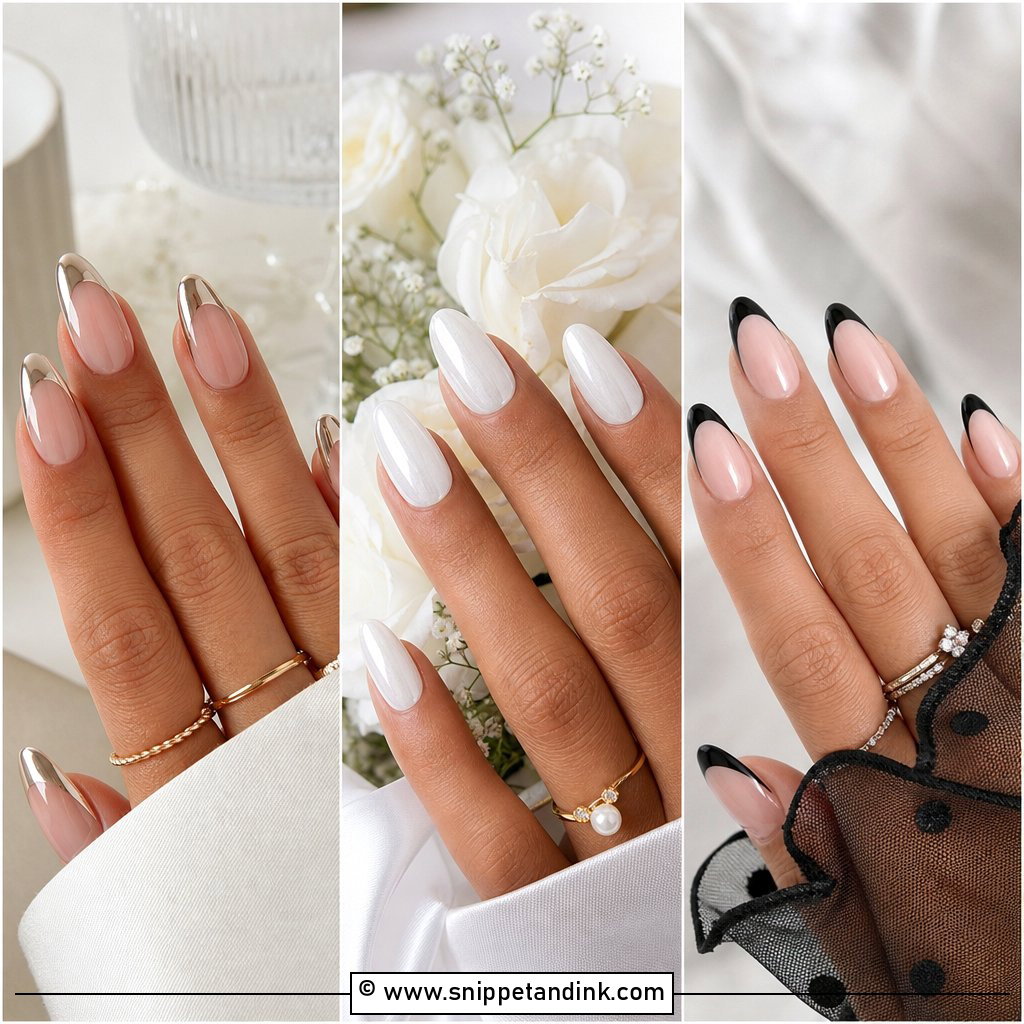
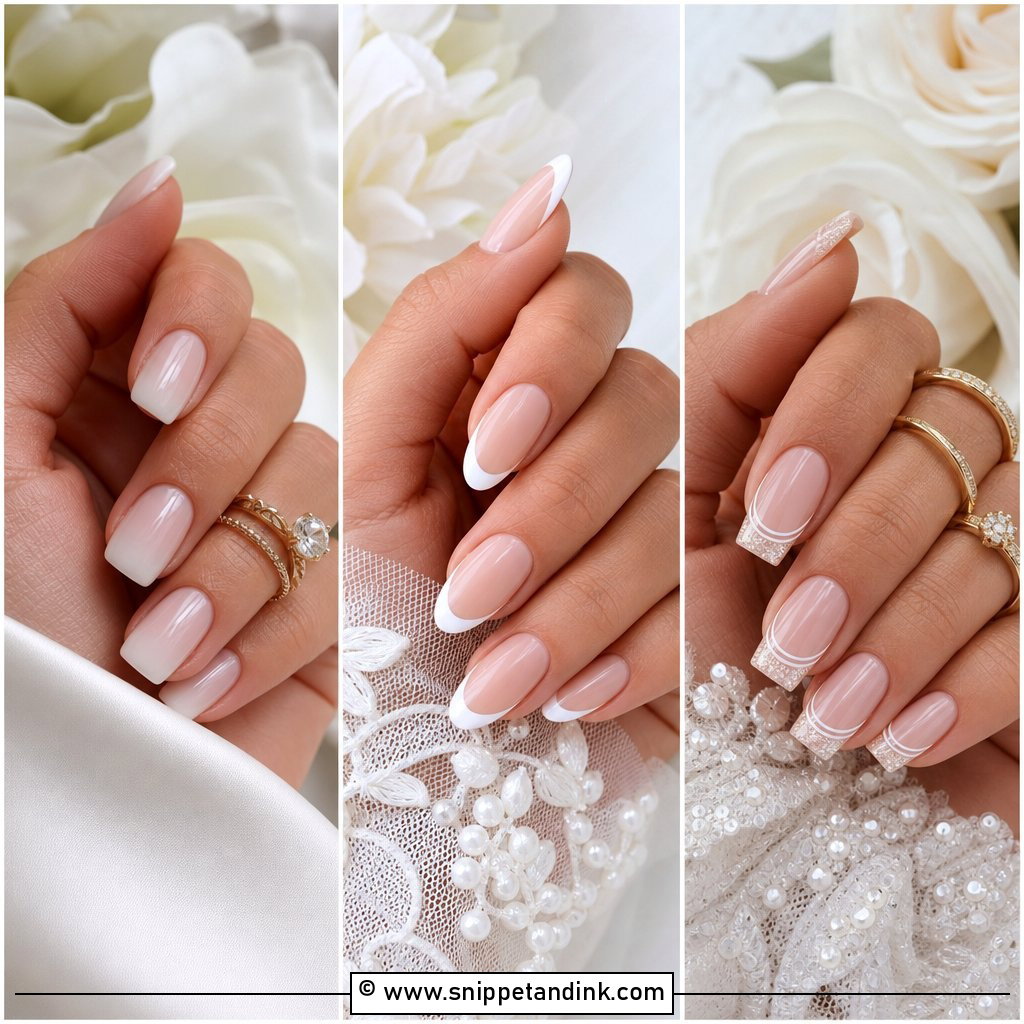
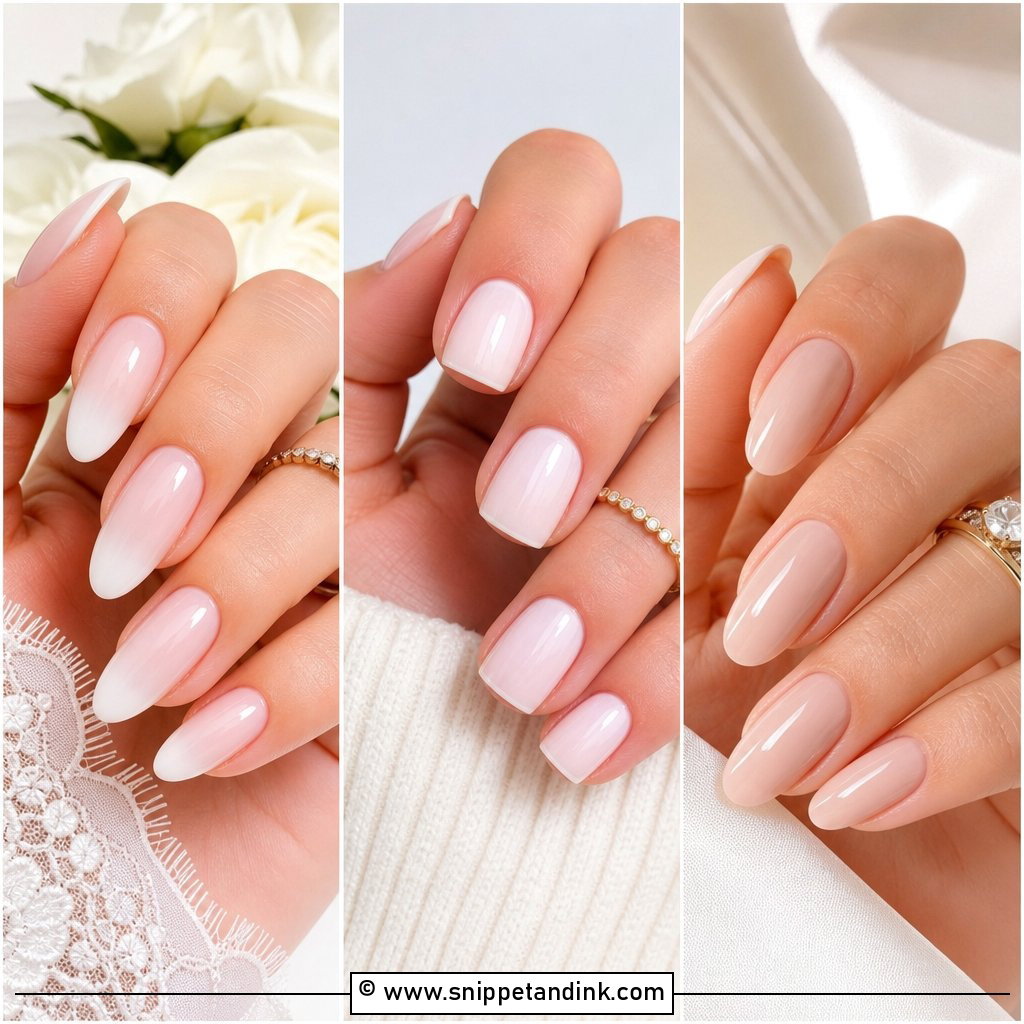
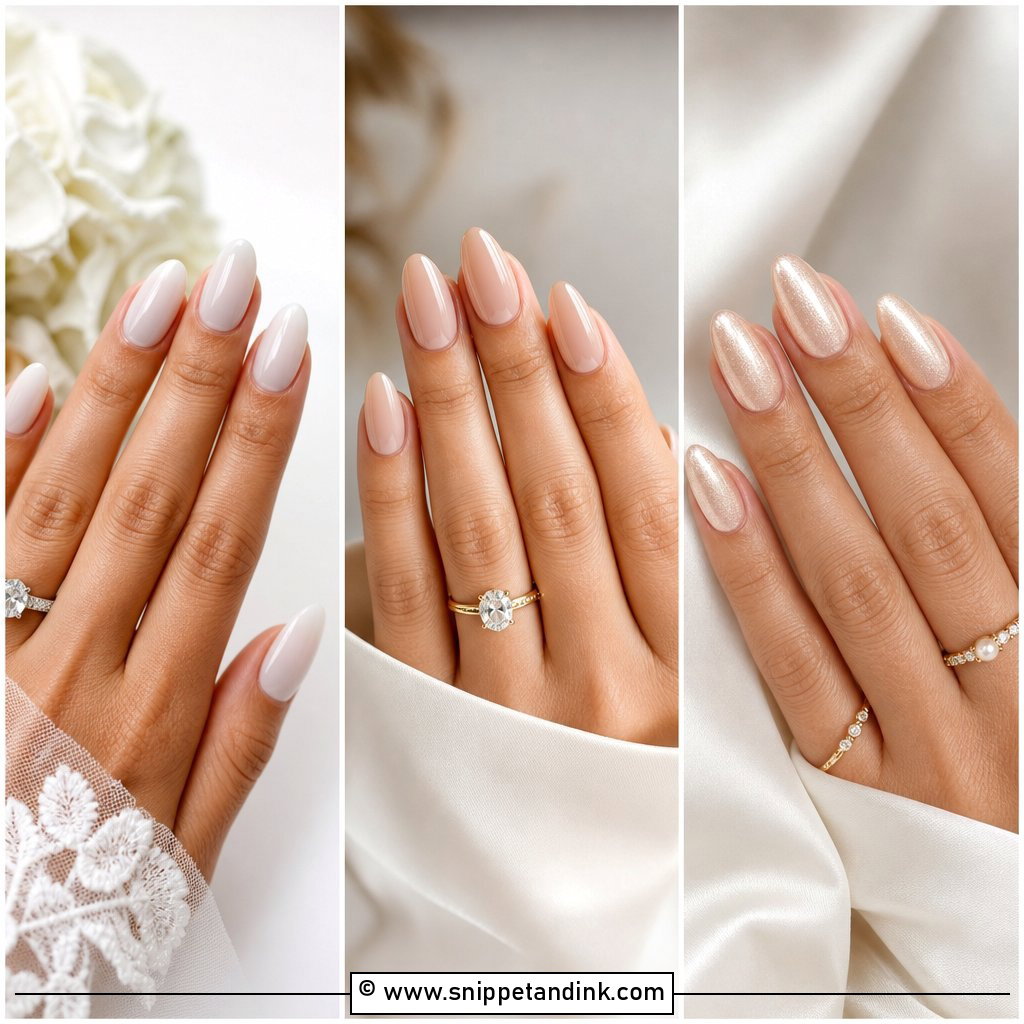
If I had one winter set to recommend to every bride, it would be this. A sheer milky base reads clean without the hard, opaque white that can look chalky against ivory satin or velvet. I build it in thin layers so the translucency stays even. It suits short oval, medium almond and natural square nails. Add a high-gloss top coat, a faint pearl shimmer or one tiny crystal near the cuticle if you want a detail. It sits easily with silver rings, pearls and pale winter bouquets.
2. Pearl Chrome Winter Wedding Nails
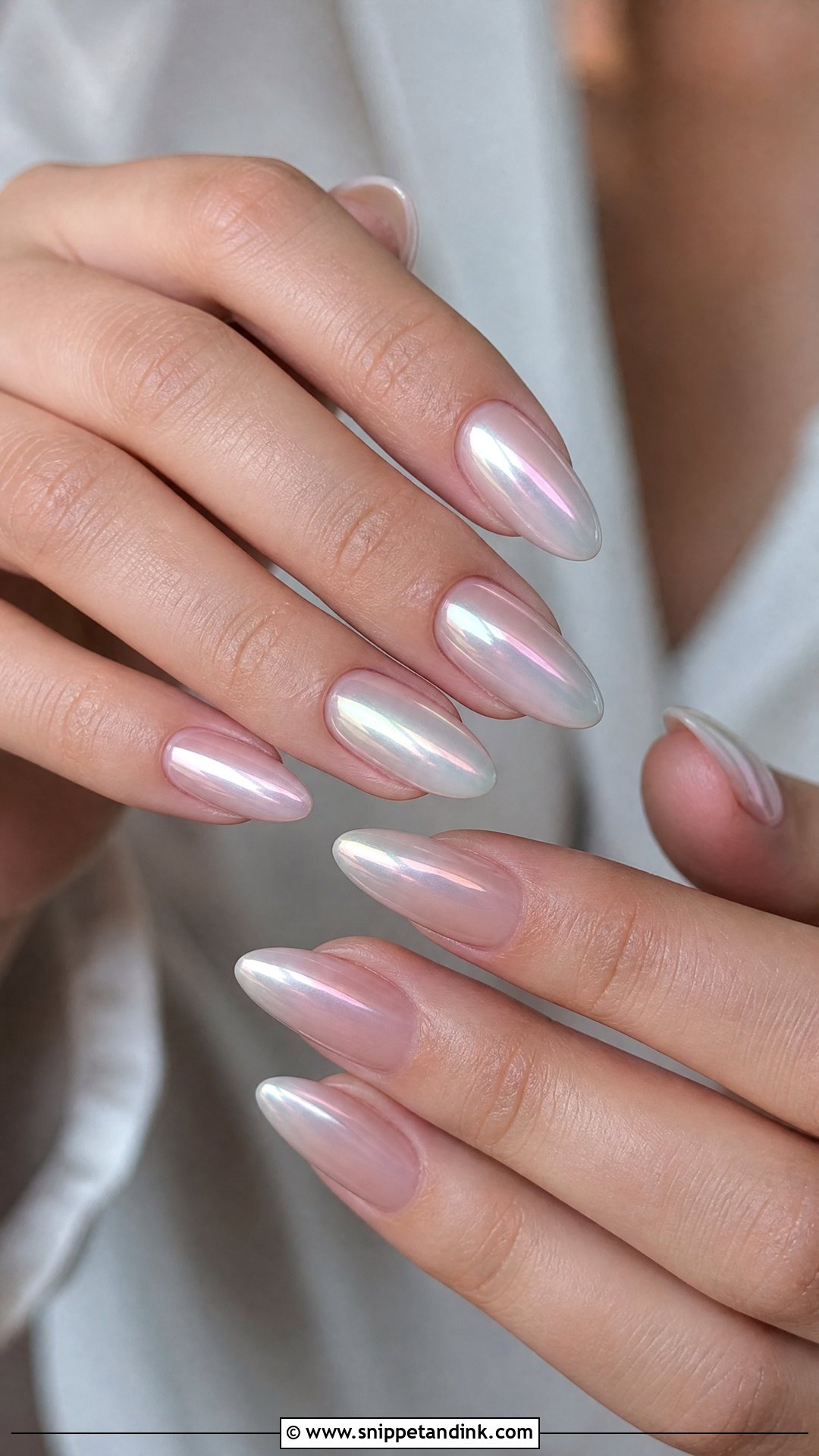
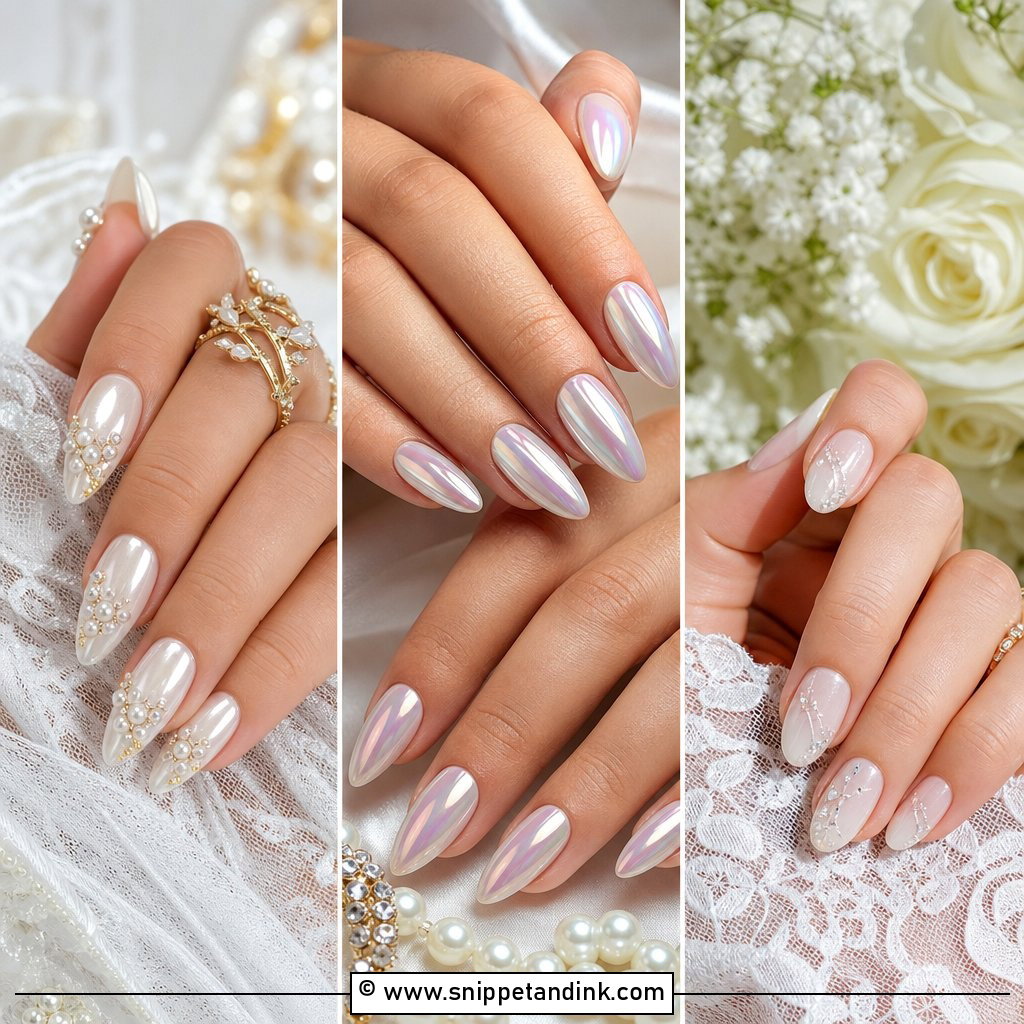
Pearl chrome is a fine powder I buff over a cured top coat, and the colour underneath decides the final effect: sheer white for icy, soft pink for warm, nude for subtle. The result has the glassy look of the glazed trend but softer, which works better in close-up ring photos. Almond, oval and squoval shapes show the shine along the curve. Chrome exaggerates any bump in the gel below, so a well-levelled base matters more than usual. Keep the rest plain, or add one small pearl.
3. Icy French Tip Winter Wedding Nails
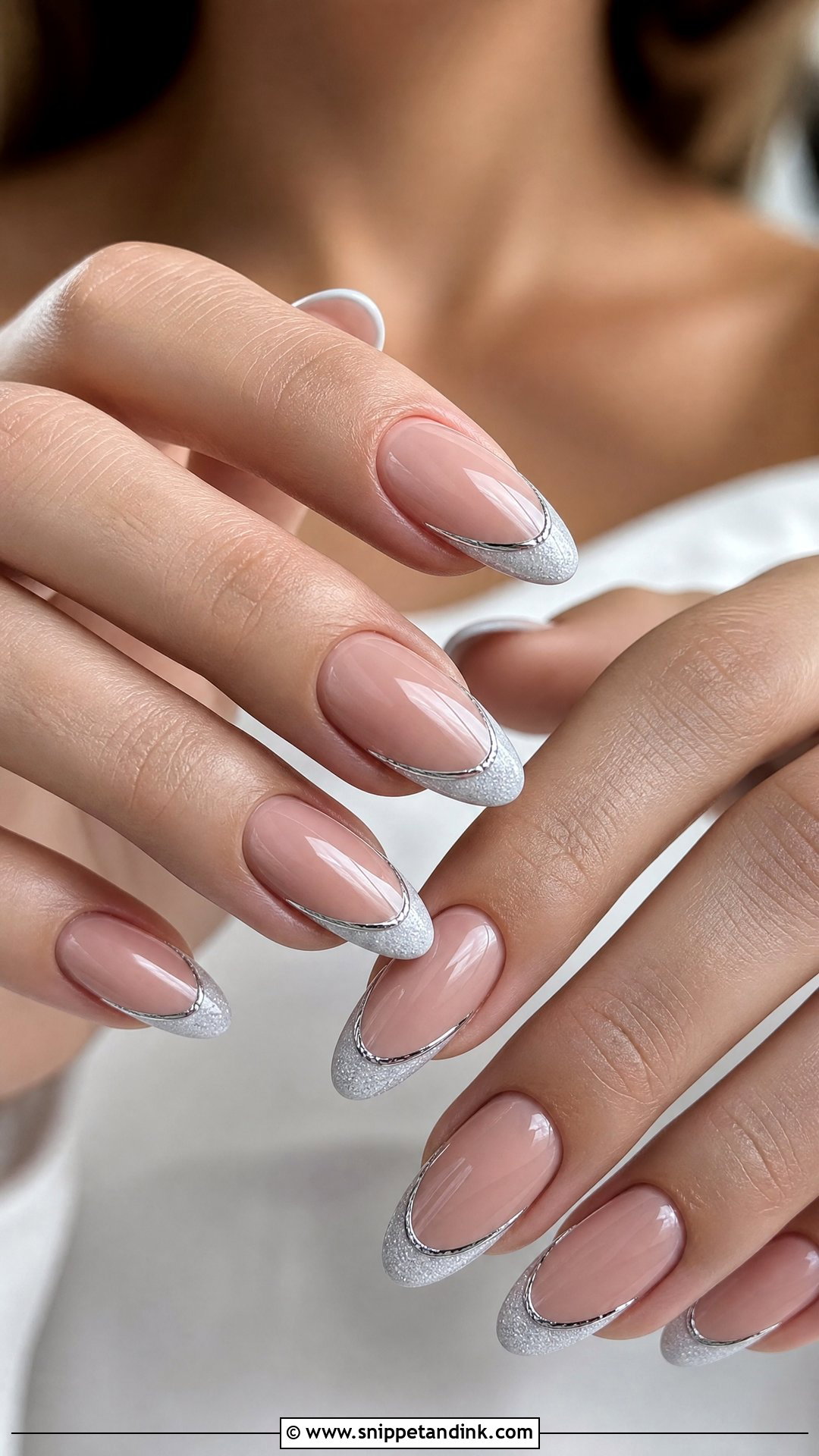
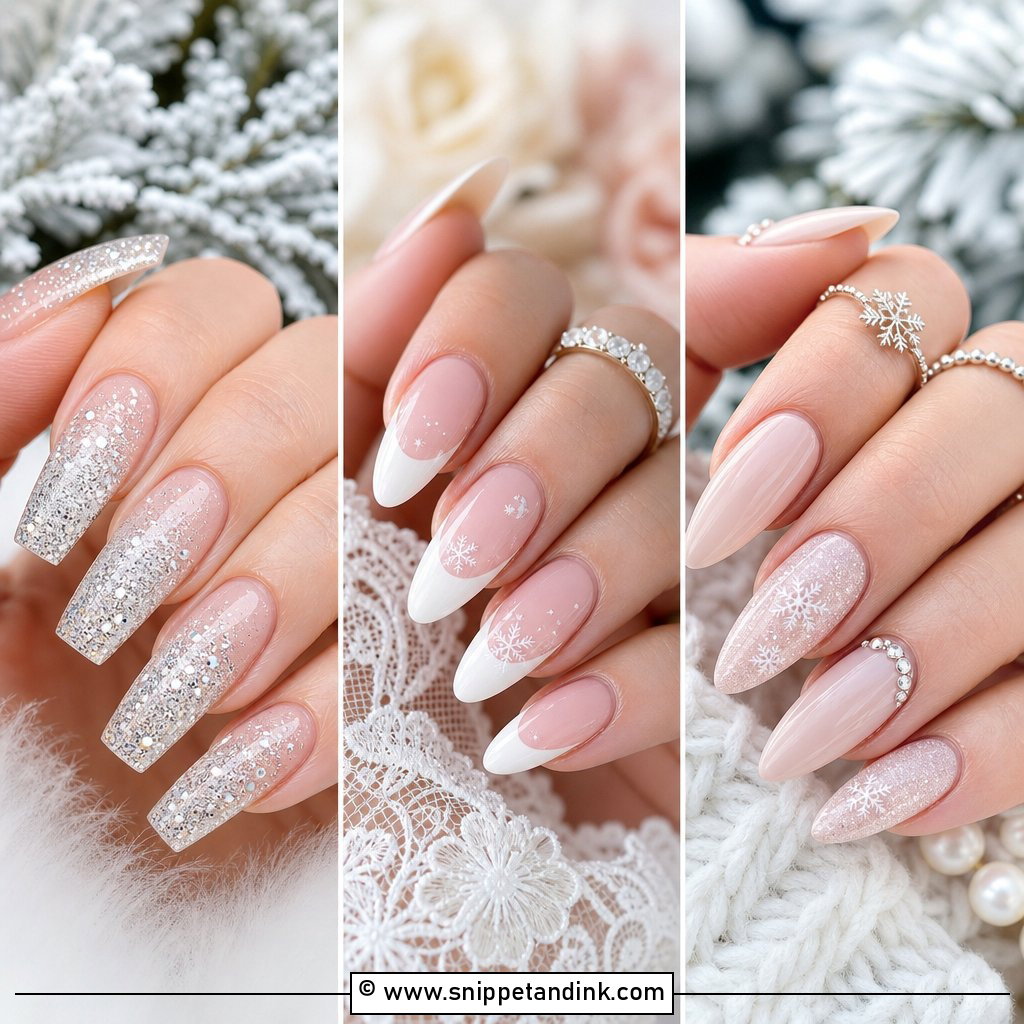
An icy French swaps bright white for silver-white, frosted blue-white or pearly ivory tips over sheer nude. The contrast is softer, so it still reads bridal while hinting at the season. A thin chrome outline along the smile line makes the tips look colder. I suggest it when a bride asks for something classic that doesn’t feel default. It also matches almost any bridesmaid colour, from champagne to navy to soft grey.
4. Nude Snowflake Winter Wedding Nails
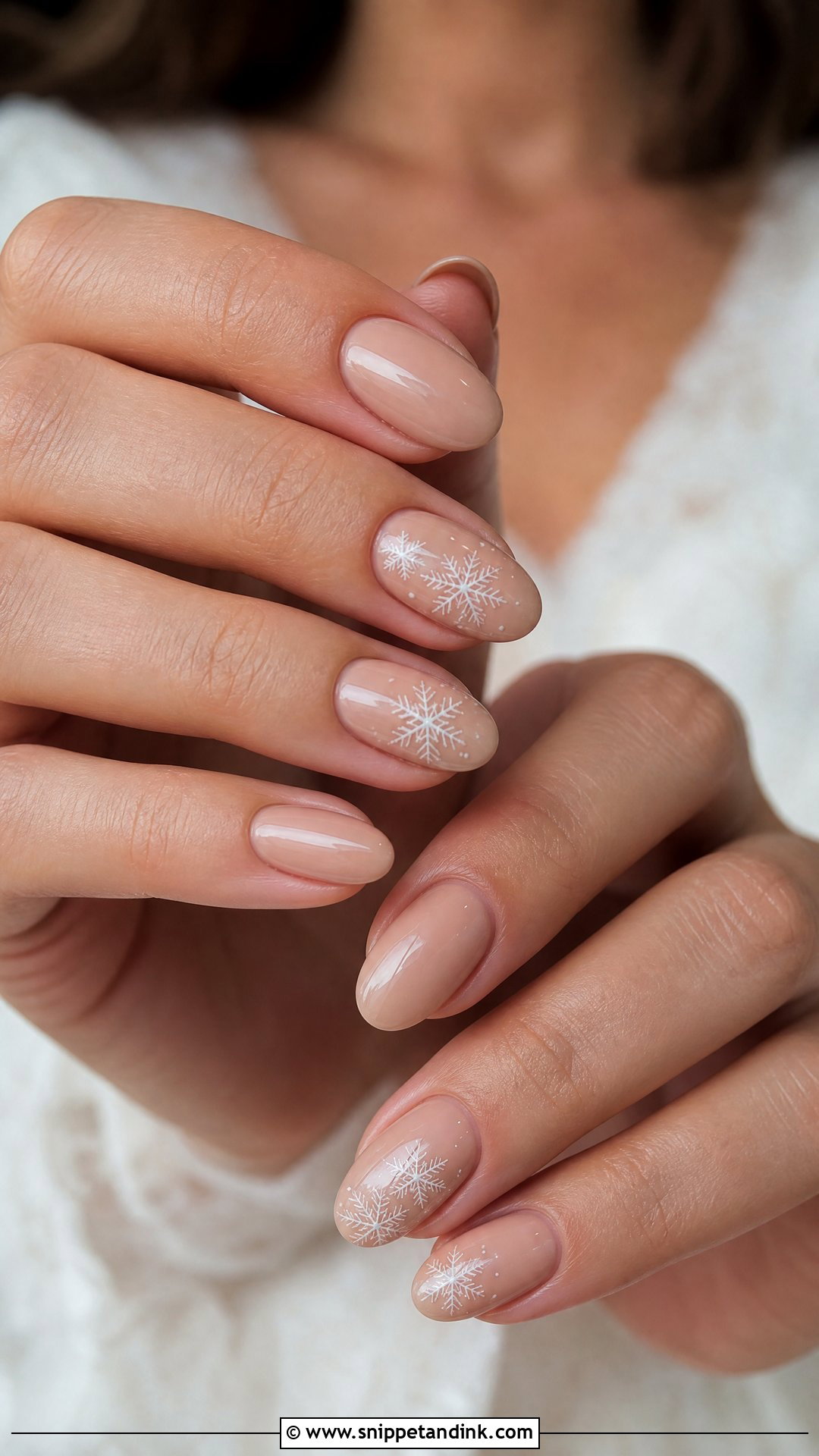
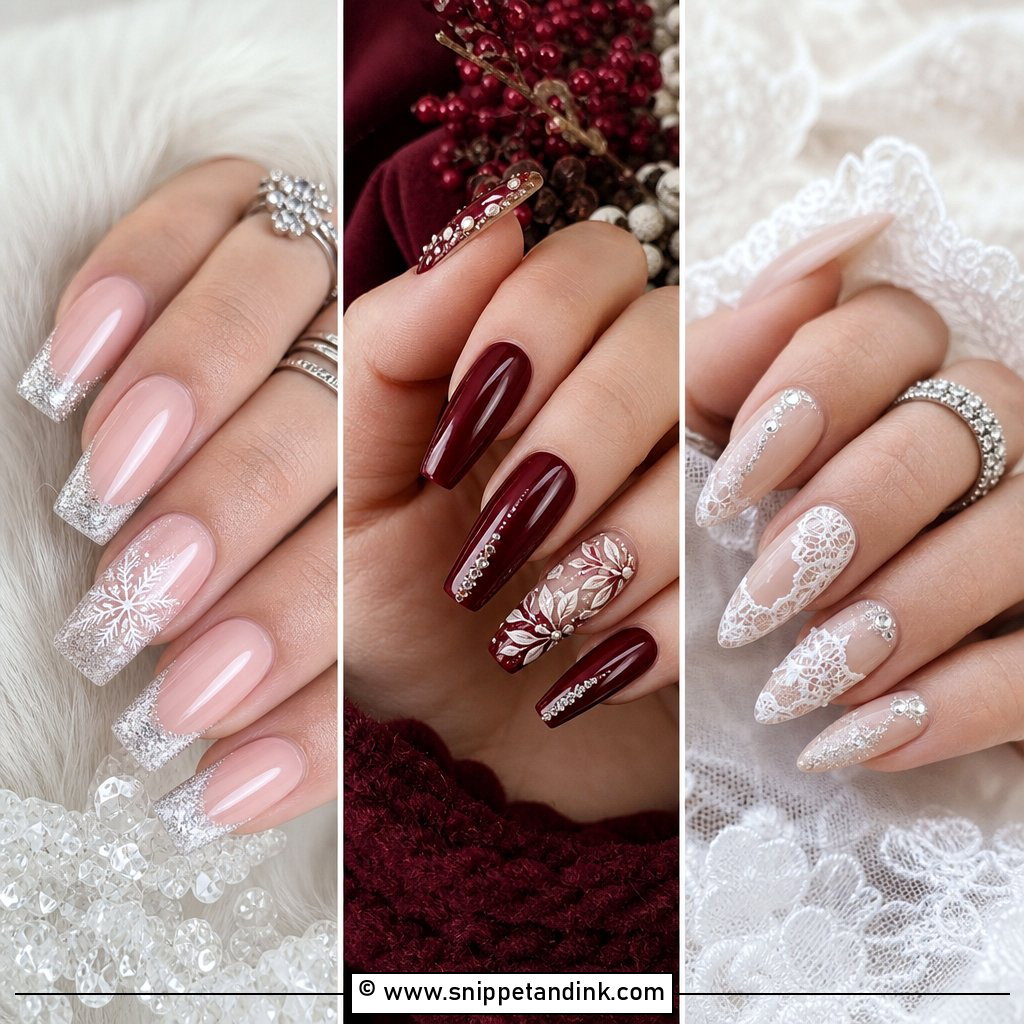
Snowflakes work on a wedding hand only when they’re small. Over a beige, blush or sheer pink base, I paint fine-line flakes with a long liner brush on one or two accent nails, keeping the arms of each flake thin so they don’t look like stickers. Oversized flakes on every nail start to look like a holiday party. Almond and oval shapes give the art a soft frame. Finish glossy, or with a sheer shimmer top coat so the flakes look lightly frosted.
5. Silver Glitter Ombre Winter Wedding Nails
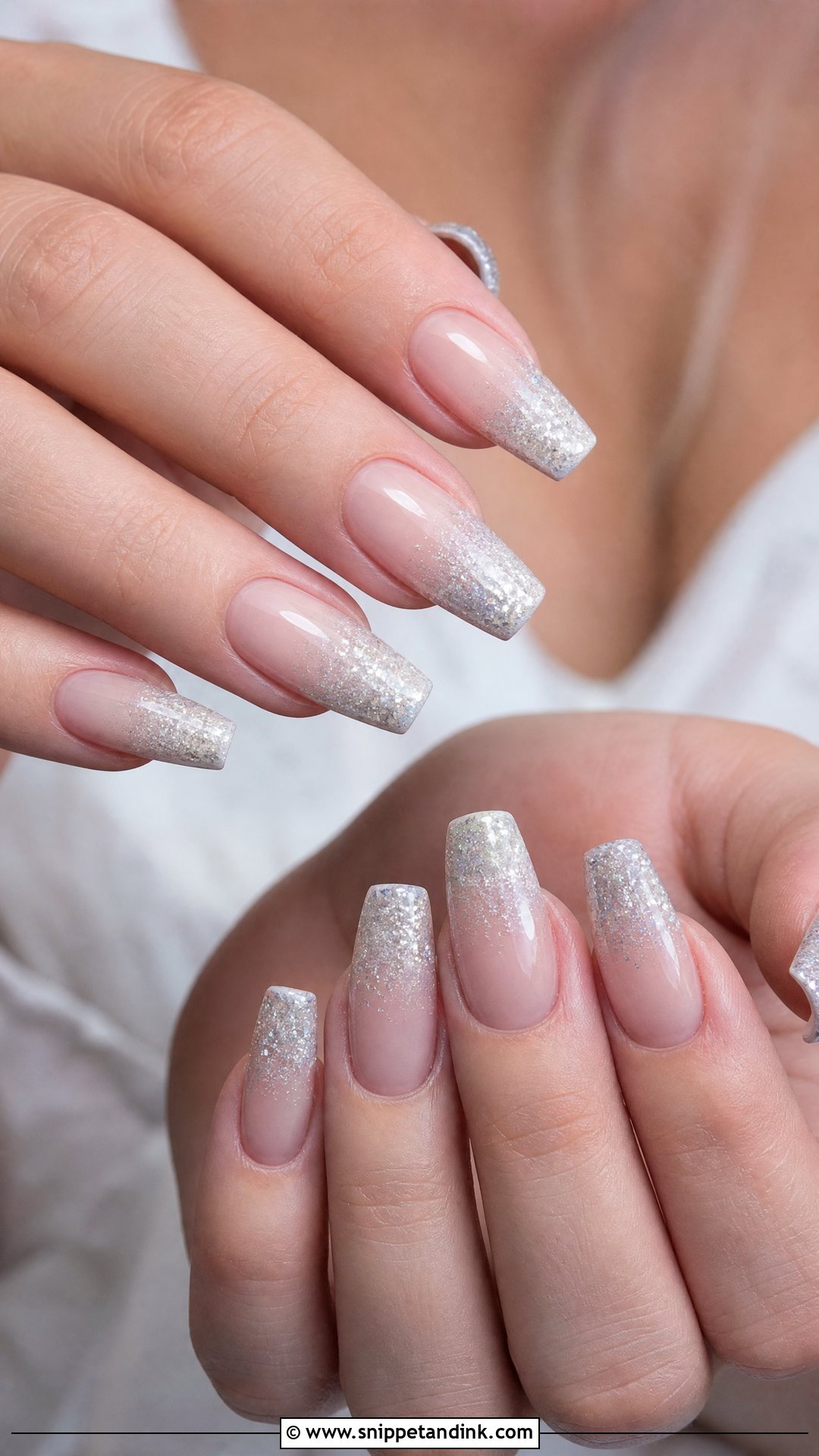
A glitter fade gives you sparkle without the full weight of a glitter nail. I sponge fine silver glitter from the tips down into a sheer nude, milky or pale pink base, building it slowly so the fade is gradual. Fine glitter looks refined; chunky pieces catch on knitwear and look craft-like in close-ups. Evening receptions and black tie suit it. Almond, coffin and oval nails show the fade best, though short square nails work if the glitter stays delicate. Plan extra time for removal later, since glitter gel soaks off slowly.
6. Blush Pink Winter Wedding Nails
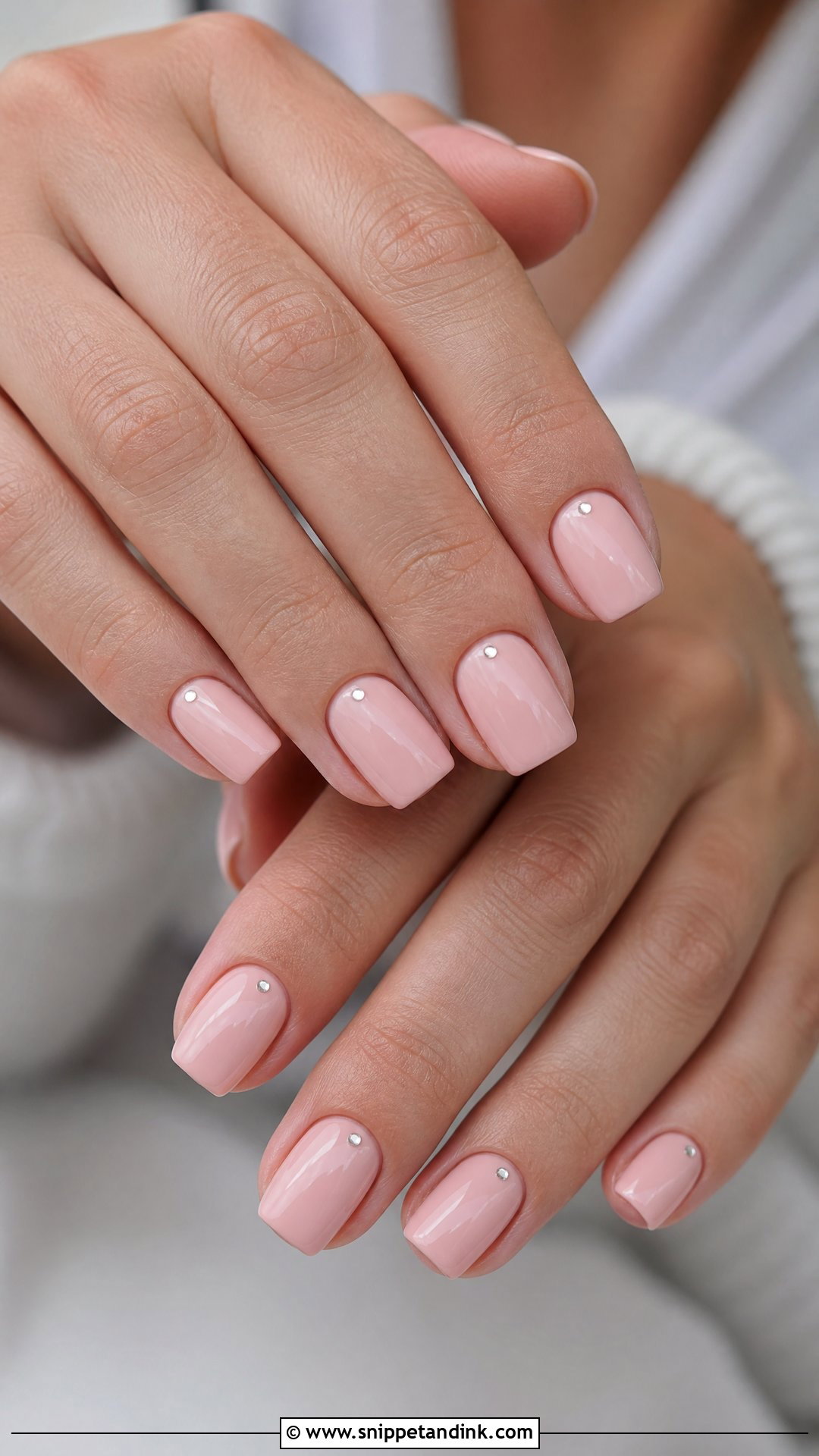
In winter, hands can look slightly grey or dry, and a soft pink adds back the warmth that cold weather takes away. A sheer jelly pink looks natural; a creamy blush gives more coverage. I’d add a faint pearly sheen, tiny silver dots or a single crystal for a winter detail. Glossy top coat is essential, because a dull pink looks tired. Bridesmaids can wear it too; it coordinates with most dresses without competing with jewellery or flowers.
7. White Chrome Winter Wedding Nails
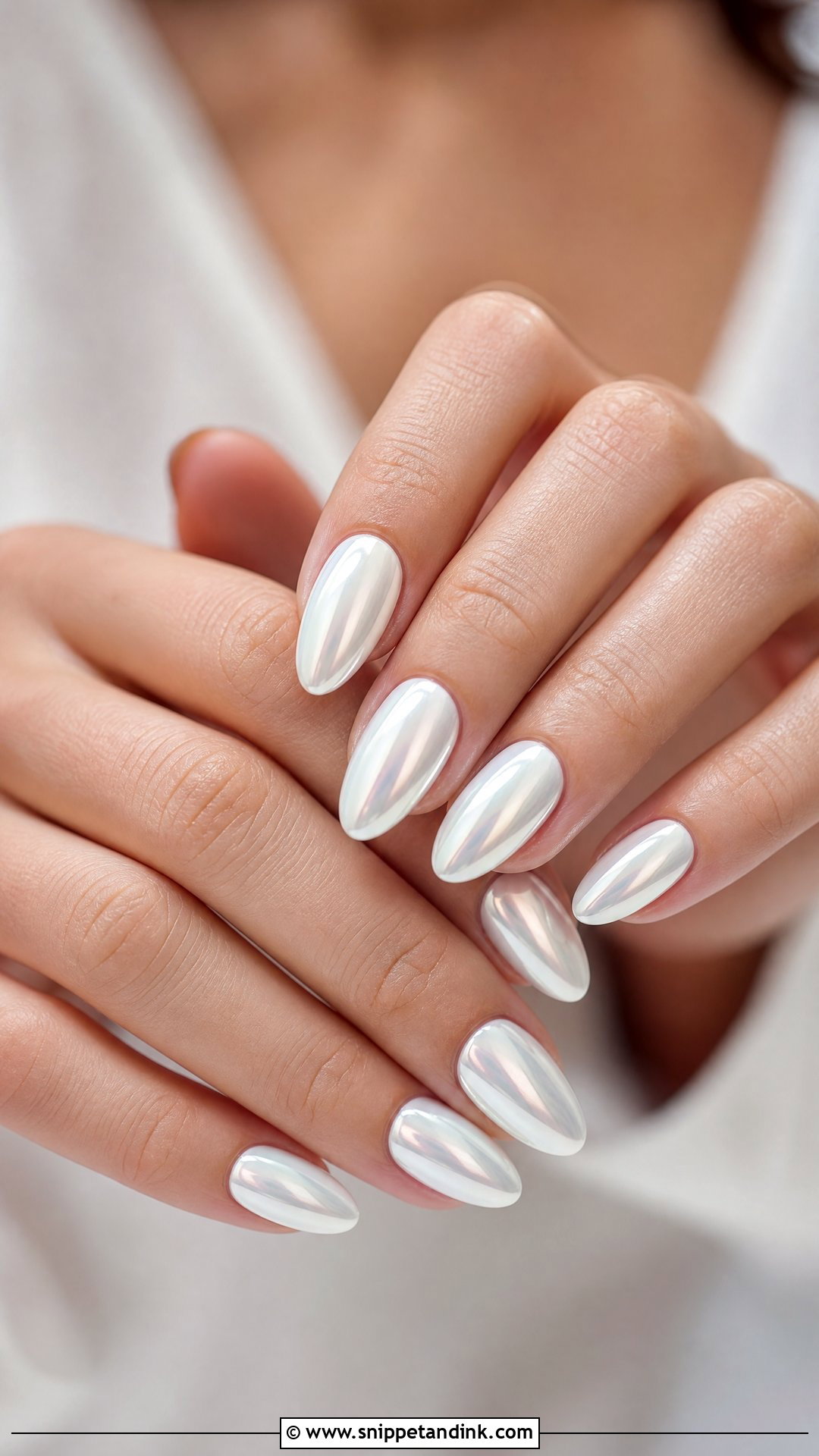
White chrome is crisper than pearl chrome: a cleaner, brighter reflection that stands out against satin, velvet, faux fur or a structured gown. Because it’s so reflective, it shows every unevenness in shape, so I’d only do it on a smooth, balanced almond, oval or coffin nail. For a wedding I prefer a soft white base under a sheer chrome layer rather than a full mirror finish, which can look more futuristic than bridal. Done that way, it reads icy and polished.
8. Soft Gray Winter Wedding Nails
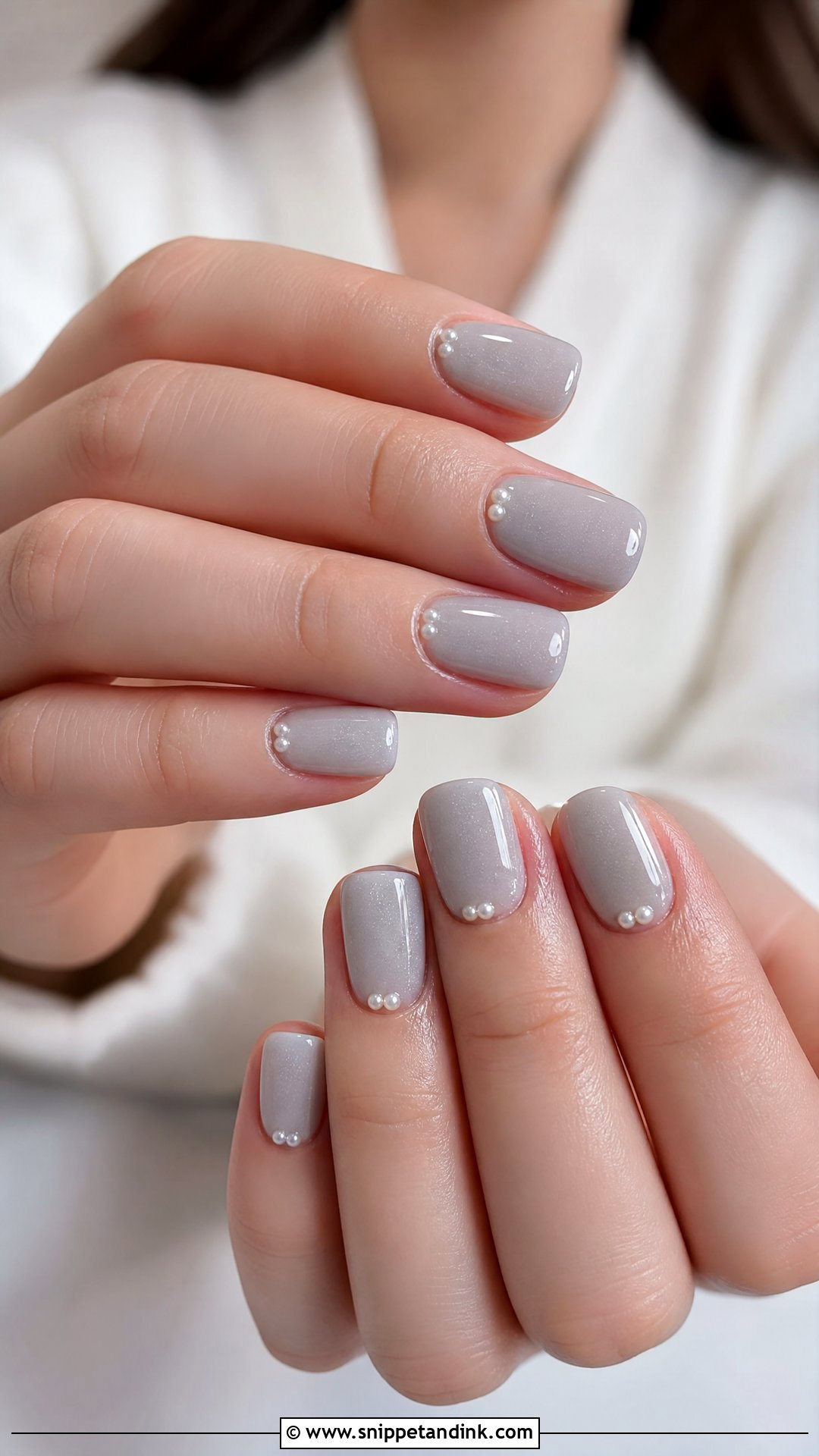
Grey is the quiet option for anyone who wants winter without the obvious frost and snowflakes. A pale dove grey sits well with silver jewellery, icy blue details, white flowers and charcoal bridesmaid dresses. I keep it glossy, sometimes with a sheer shimmer top coat or a few tiny pearls. It’s forgiving on short nails, and it grows out without an obvious gap because it’s close to the colour of the natural nail. Slate, dusty blue or silver in the palette? This ties it together.
9. Velvet White Winter Wedding Nails
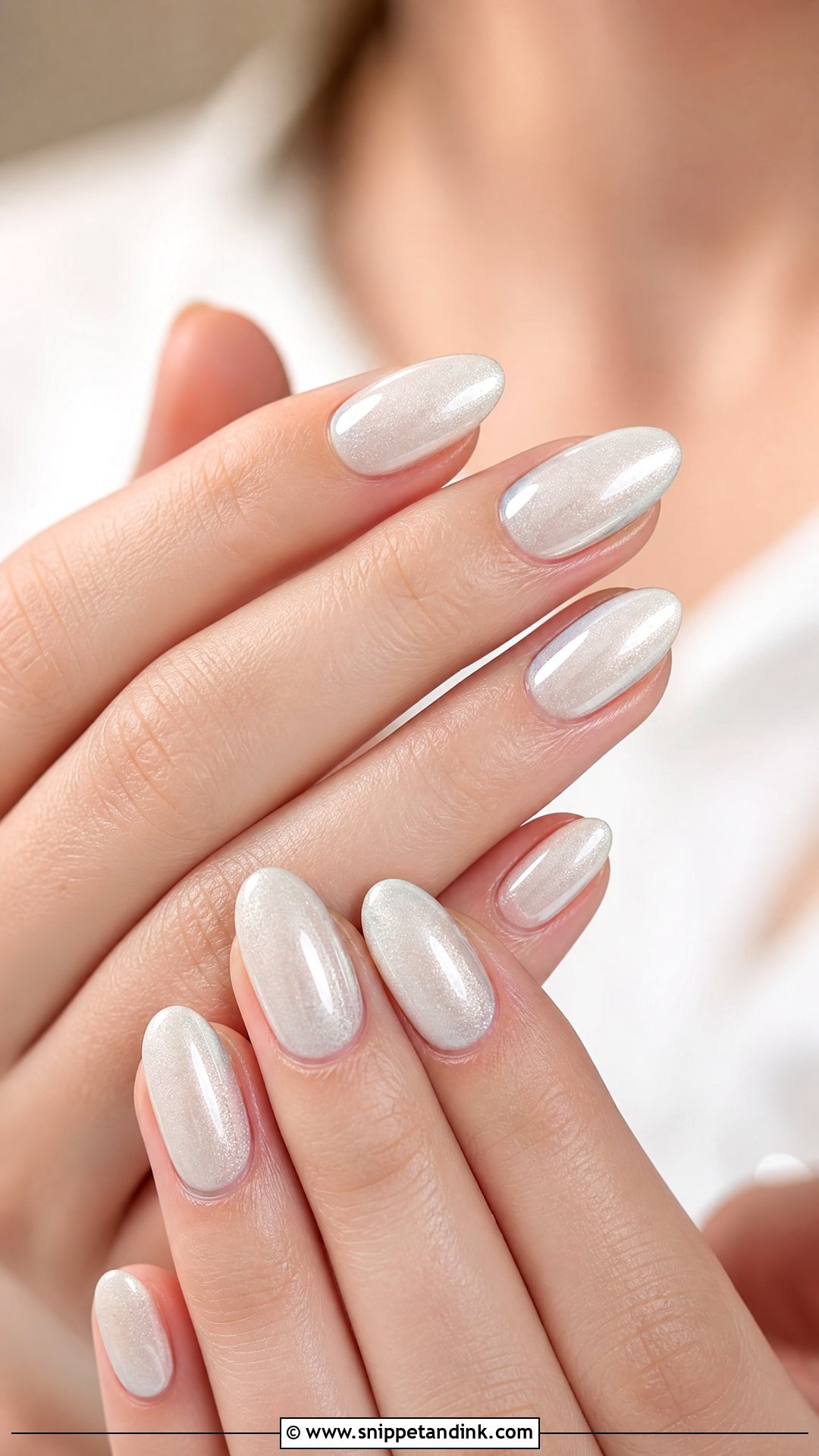
Velvet nails are magnetic gel: the polish holds metallic particles, and I move a magnet over the nail before curing to spread them into a soft, fabric-like shimmer. The finish shifts as your hands move, which is why it looks cosy under candlelight. Medium almond nails let the shimmer travel along the length. Ask for a sheer ivory, pearl white or champagne-white rather than a bold metallic. Timing matters: I cure each nail straight after the magnet so the particles don’t drift back.
10. Champagne Glitter Winter Wedding Nails
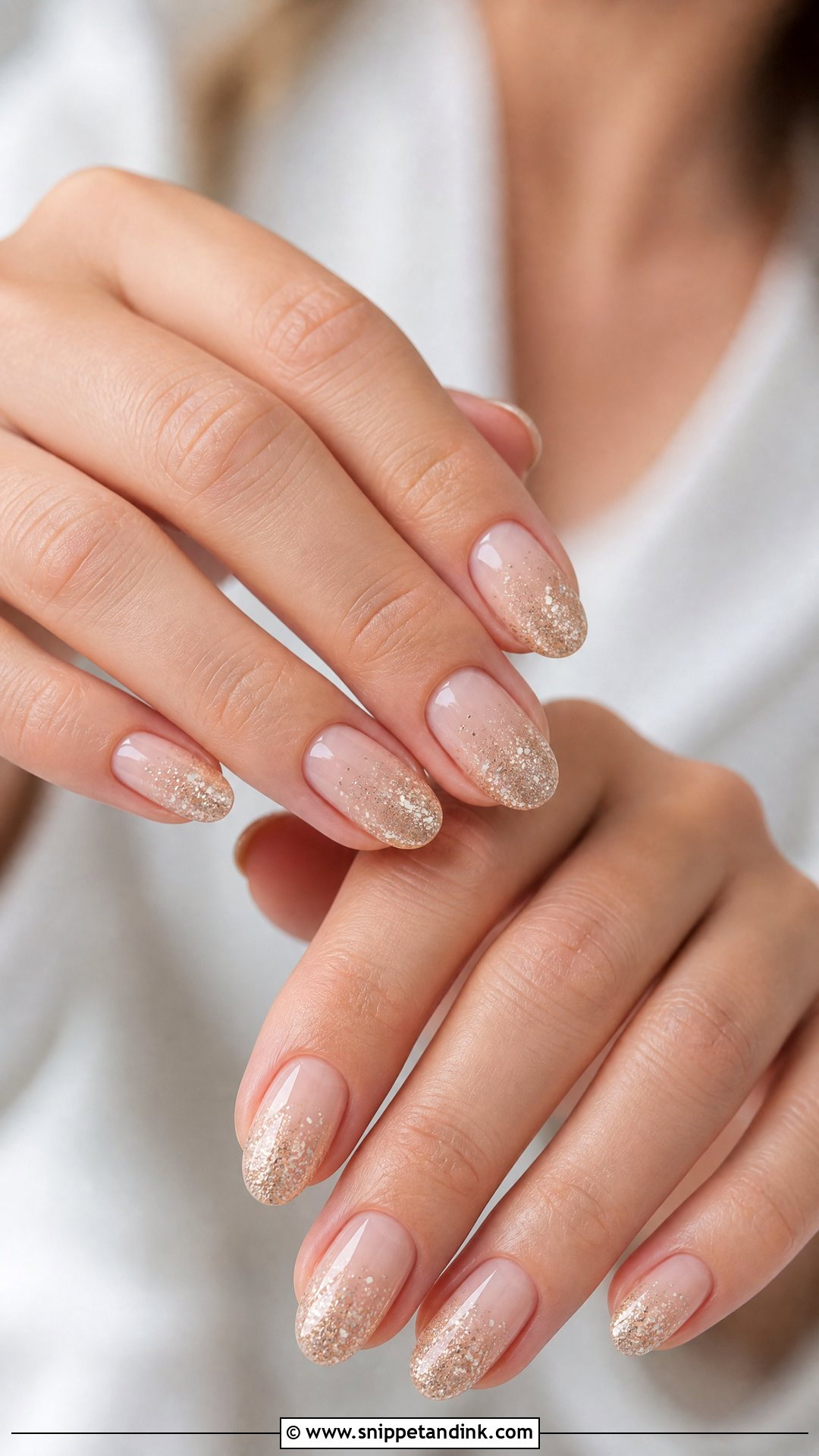
Champagne glitter is warmer and softer than bright gold, and it suits ivory gowns, beige wraps, champagne bridesmaid dresses and warm jewellery. A full champagne glitter nail is festive; a glitter fade is subtler. For a bride I’d use fine particles over a sheer nude, blush or creamy beige base. Champagne has both gold and neutral undertones, so it flatters most skin tones. Guests can wear it without looking bridal. A thick glossy top coat smooths the gritty texture glitter leaves.
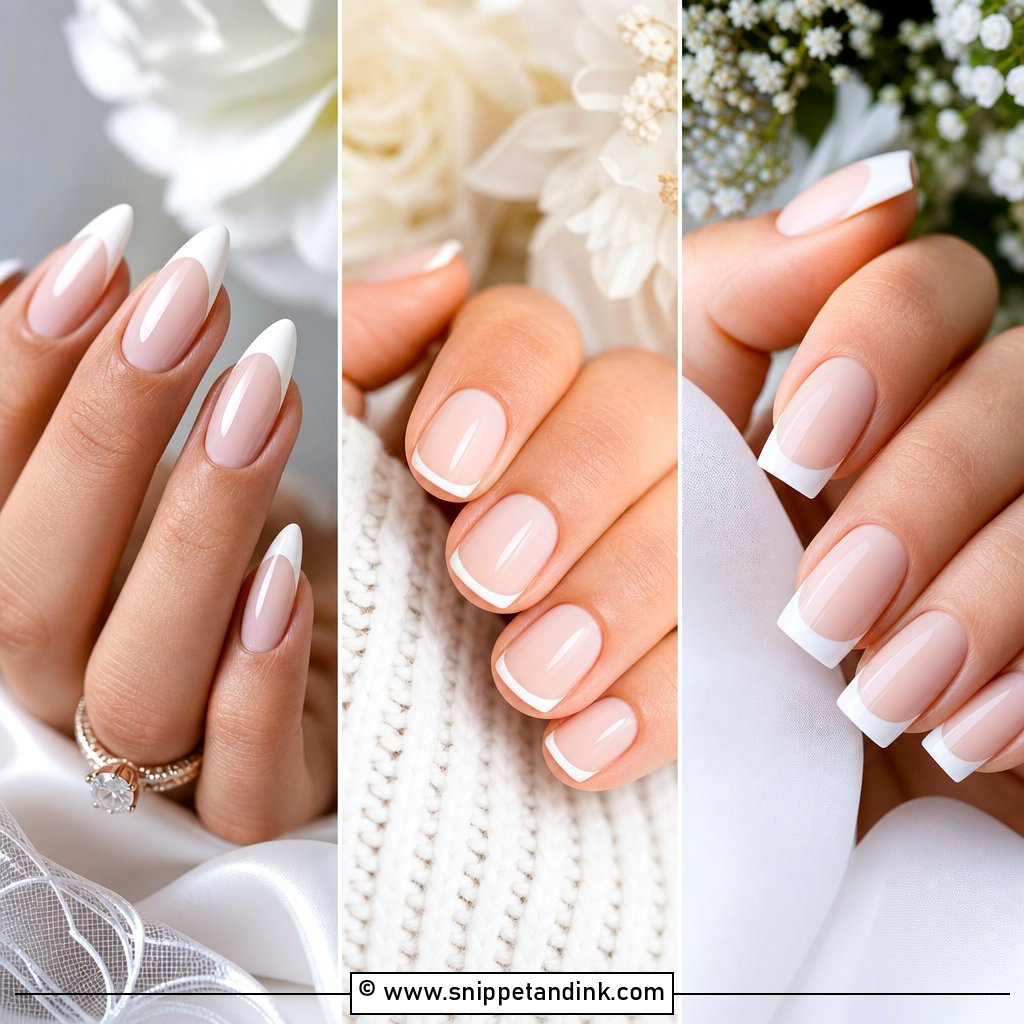
11. Classic French Winter Wedding Nails
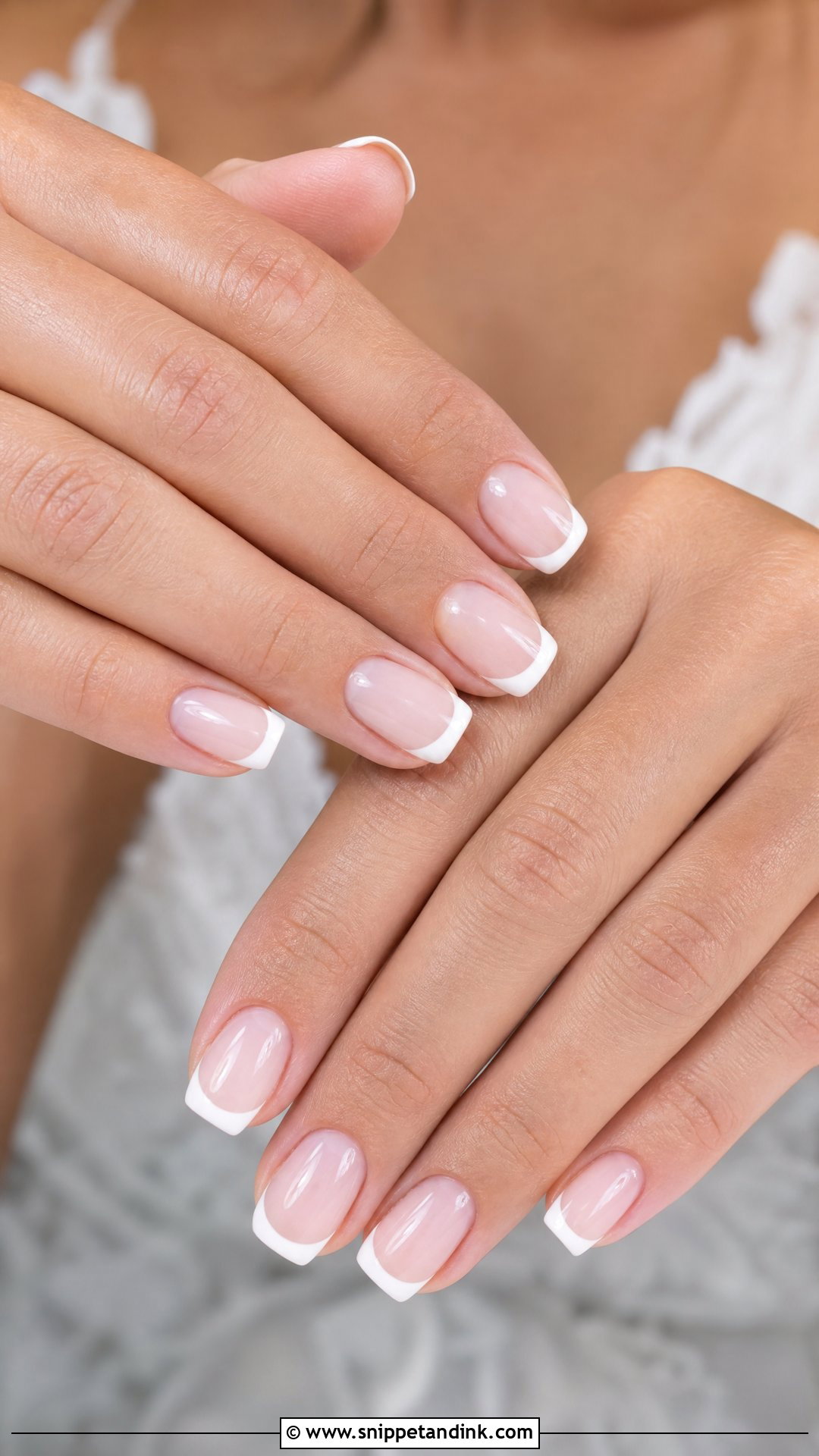
The French manicure stays because it flatters almost every hand and every dress, from plain satin to lace sleeves. For winter I paint the tip slightly thinner and softer than the old square French, and I curve it to follow each nail’s own free edge. A nude or pink base keeps the plate looking healthy. It suits short square, medium oval and almond nails. If you want a seasonal touch, a tiny silver dot, a pearl or a sheer shimmer top coat won’t change the classic look.
12. Micro French Winter Wedding Nails
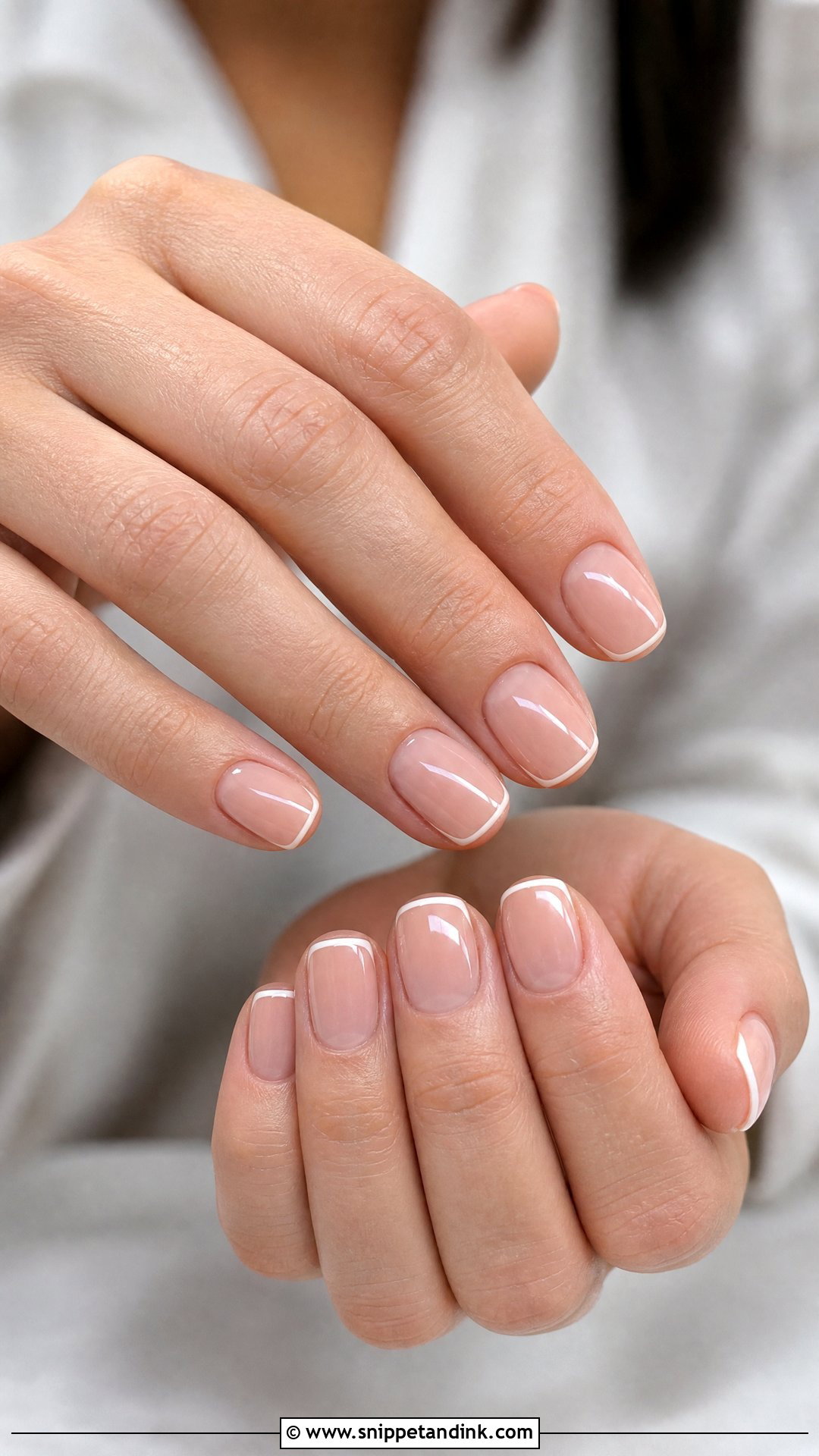
Micro French is the set I suggest for brides who never wear nail art. A very thin white, silver or pearl line sits at the very edge of a sheer nude base, so it reads neat and natural from a distance and only shows up close. It also makes short nails look longer, since the eye takes in more pink than white. Painting a line that fine takes a steady hand and a striping brush, so ask your artist to show you a sample first. For winter, an icy white or a pale silver line is enough.
13. Almond Pearl Winter Wedding Nails
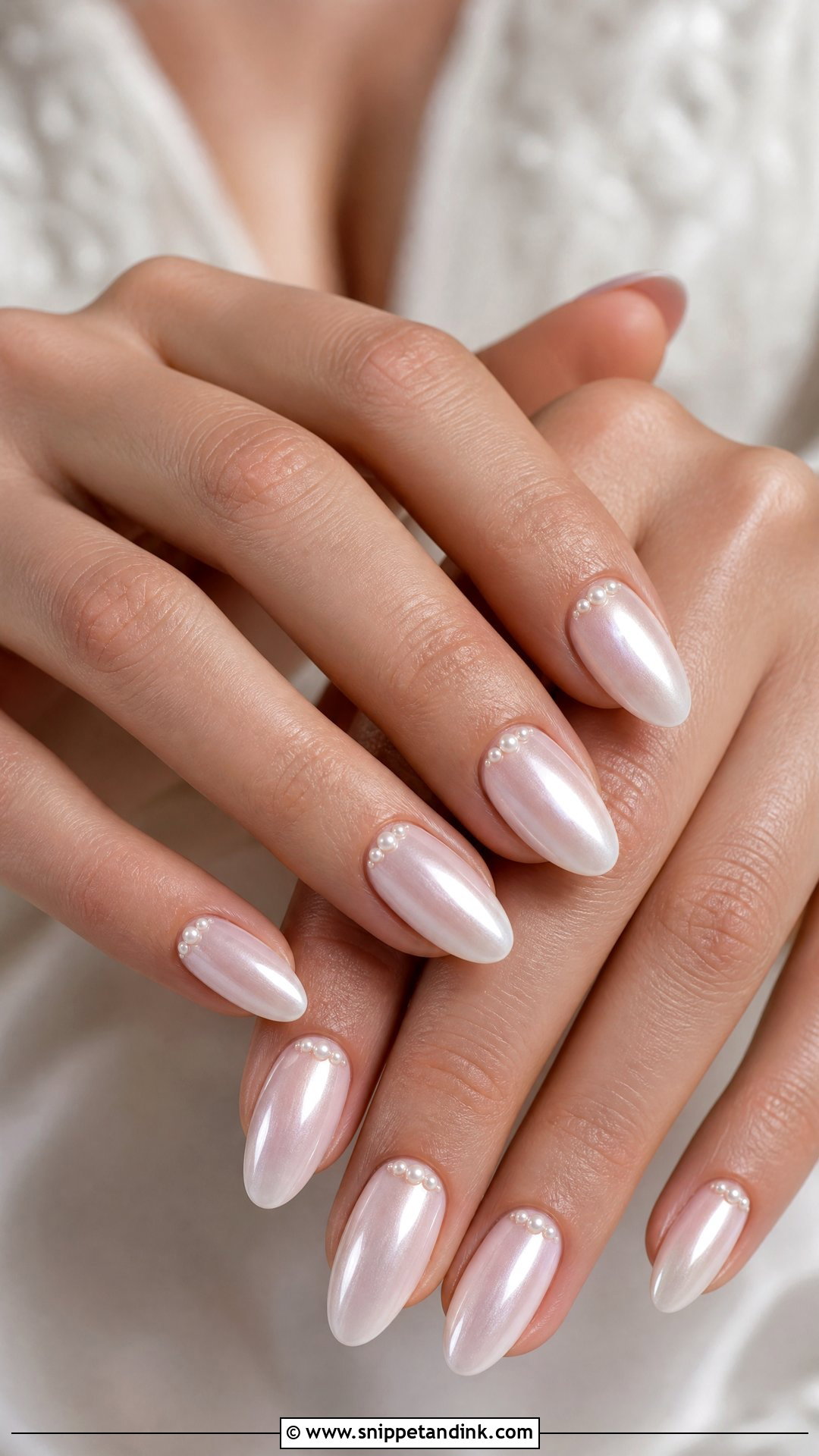
Almond is the most flattering shape for ring photos because the taper lengthens the finger. Add a pearl finish, whether chrome, pearly gel or a few small pearls near the cuticle, and you get gentle shine rather than glitter. Keep the palette to ivory, blush, beige or sheer white. Formal guests can wear it as easily as the bride. If you have very thin natural nails, I reinforce the apex with builder gel so the almond point doesn’t snap during the week.
14. Short Winter Wedding Nails
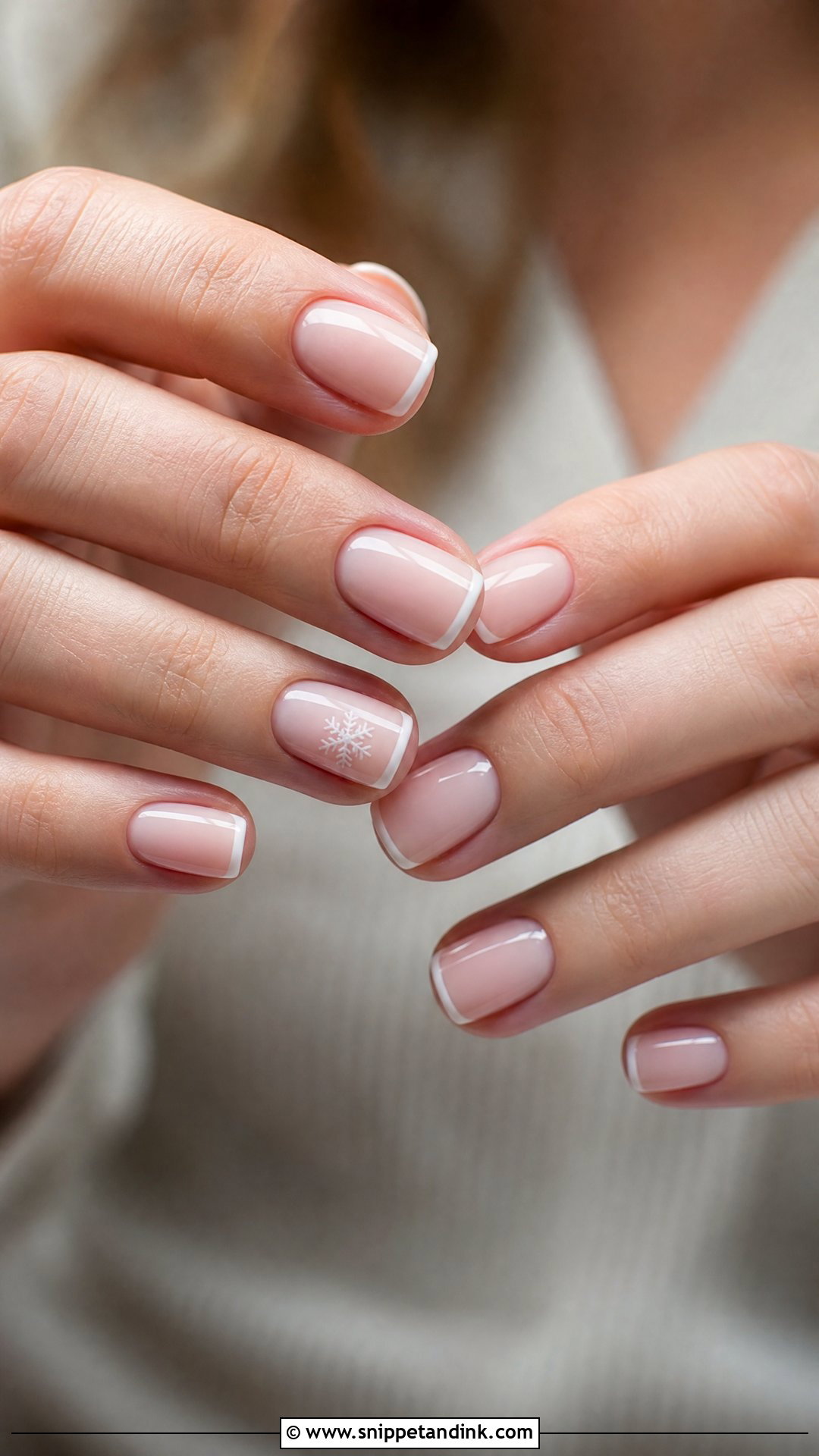
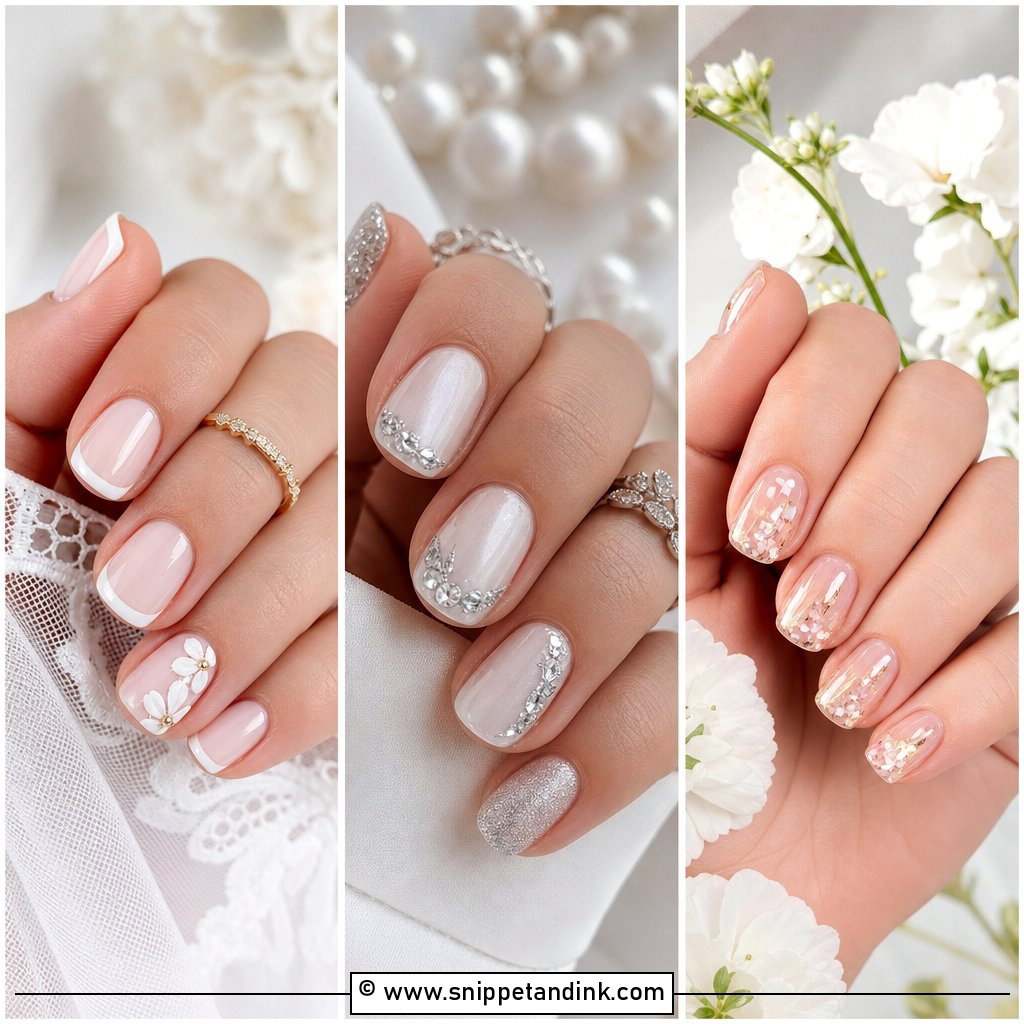
Short nails can be just as bridal as extensions. I shape them short oval, squoval or soft square, which feels comfortable and won’t snag on knitwear or gloves. Milky white, sheer pink, nude beige, soft grey or pearl shimmer all look neat. Keep details small: a micro French, one snowflake or a fine silver fade. Short nails are also much less likely to break in cold, dry weather, when nails turn brittle. You’ll still feel like yourself, with a manicure that looks fresh in photos.
15. Coffin Winter Wedding Nails
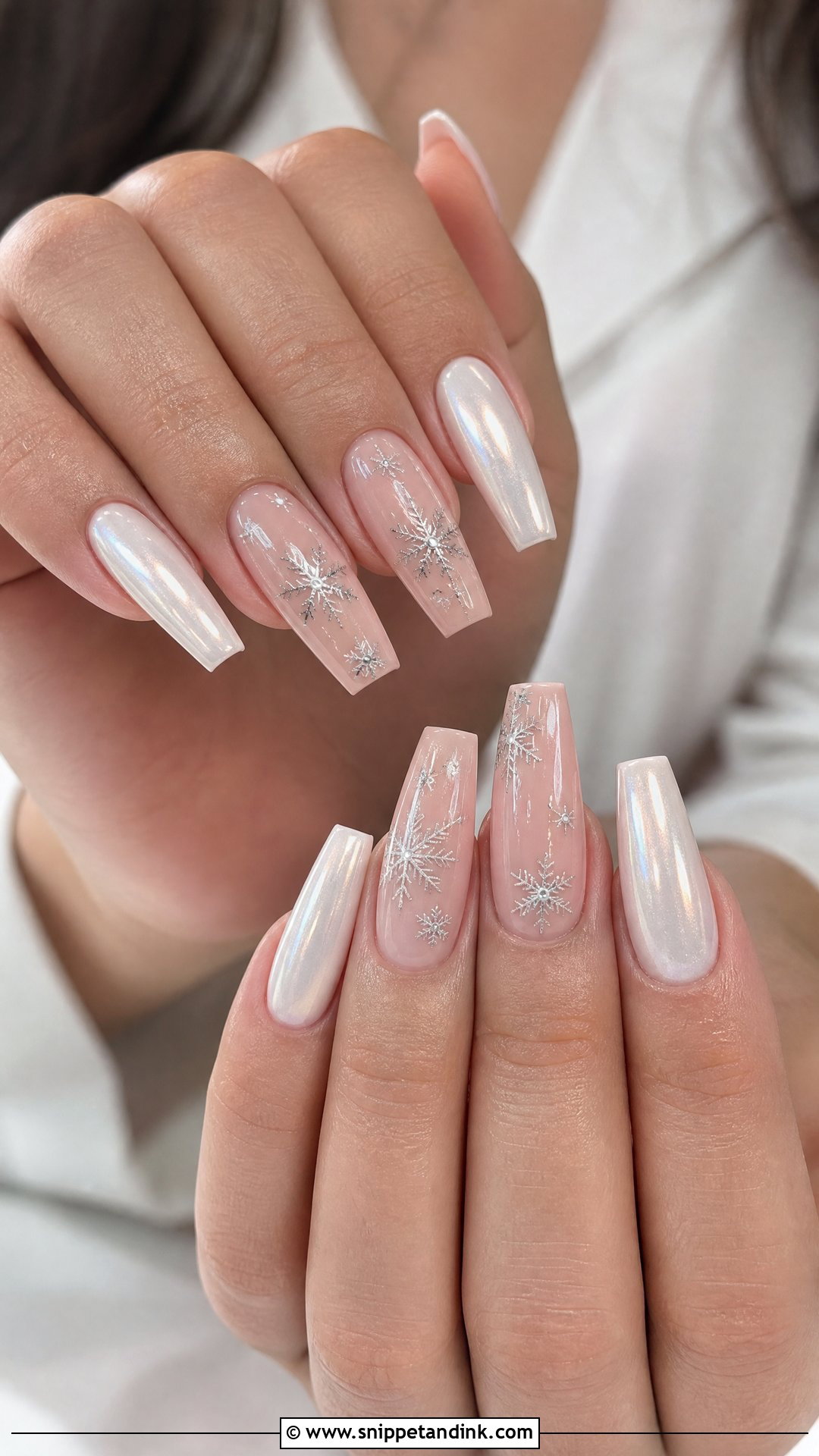
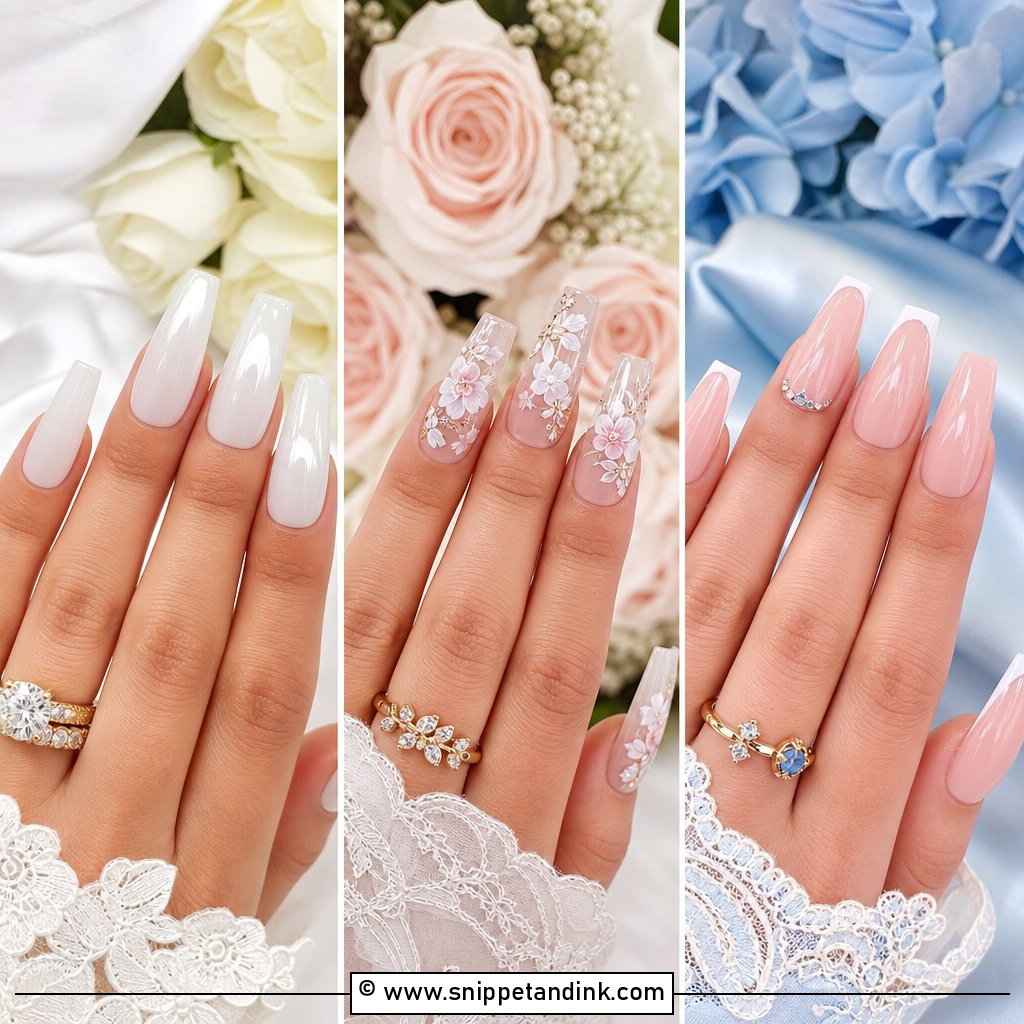
Coffin winter wedding nails give a sleek, dramatic shape with straight tapered sides and a flat tip. They carry chrome, ombre, glitter and French designs well. For winter I’d stay with milky white, nude pink, pearl chrome, icy silver or champagne shimmer so the shape stays refined. A long coffin can take more detail, like a snowflake accent or a line of crystals at the cuticle, but I’d stop at two or three design elements. The flat corners catch on lace and wool, so I soften them slightly.
16. Oval Winter Wedding Nails
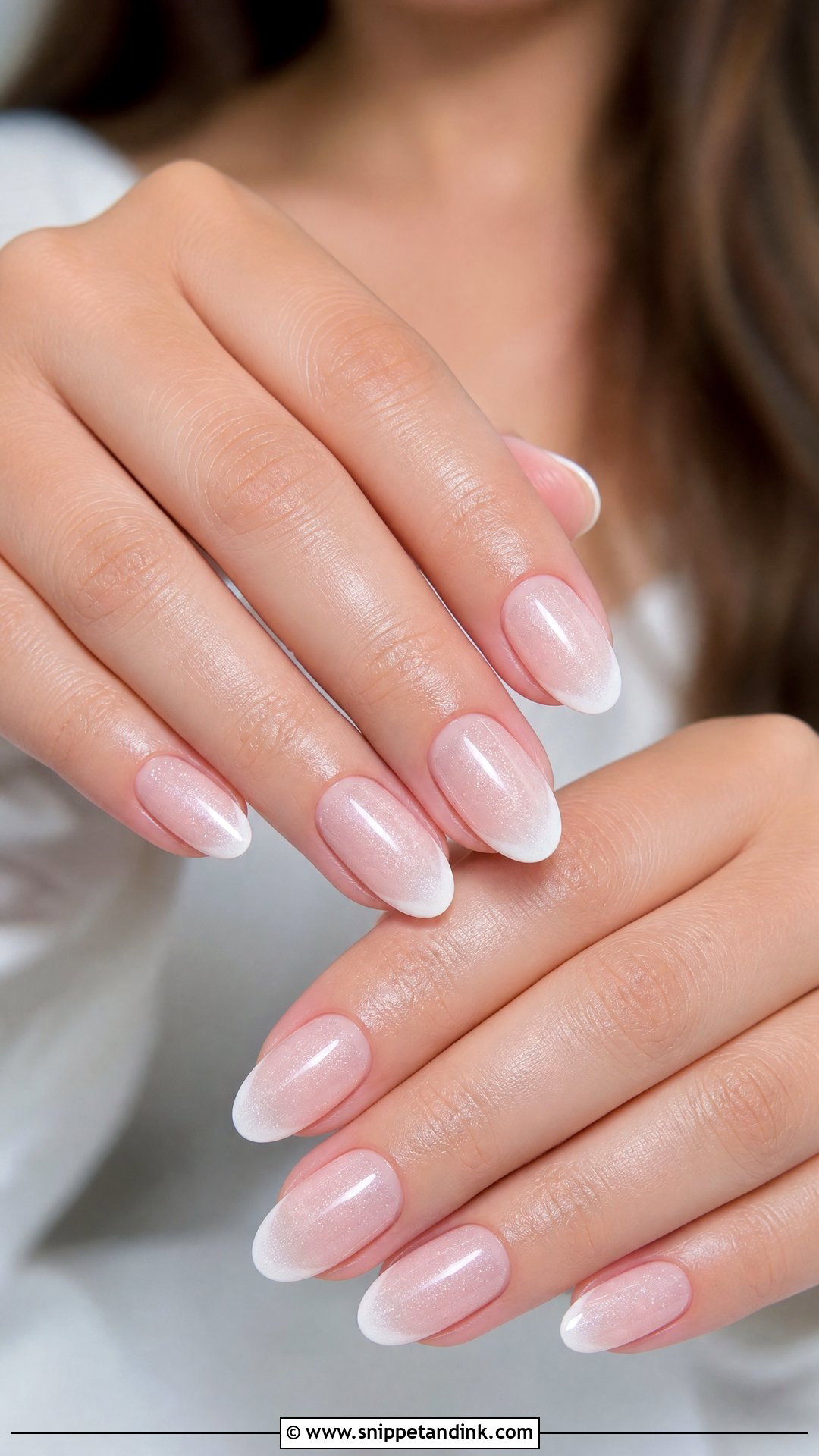
Oval suits almost every hand and every length, including natural nails, which makes it the easiest shape to recommend. The rounded tip softens anything you put on it, so snowflakes, glitter and chrome all look more delicate. It pairs well with sheer pink, milky white, soft nude and pearl. Classic, romantic and minimal styles all suit it. For a winter touch, try a pale pink base with frosted white tips, or a pearl shimmer top coat. Ovals are also the least likely shape to break, a real plus in cold weather.
17. Almond French Winter Wedding Nails
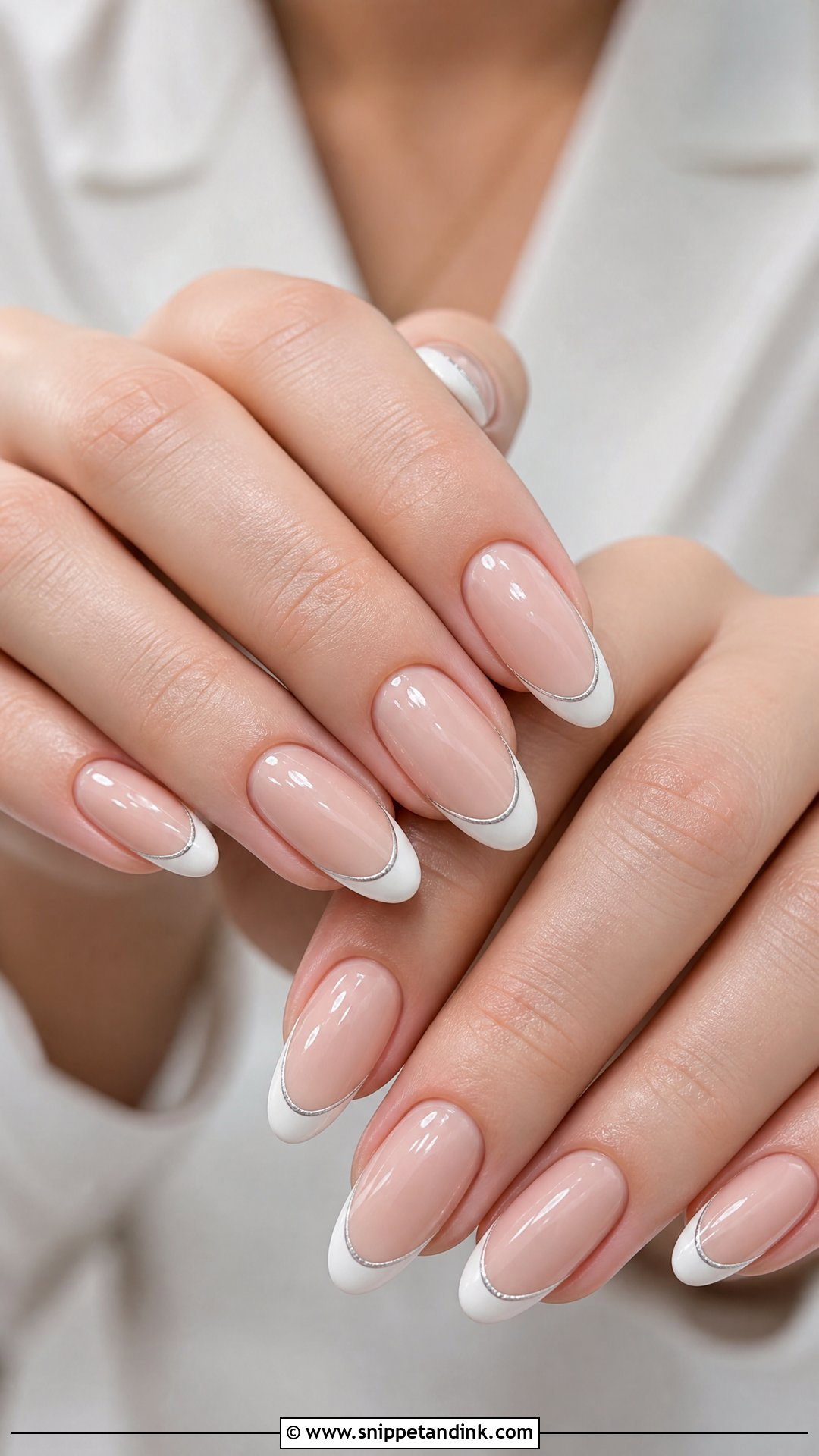
Almond and French together make a long, graceful hand. I use a milky base with soft white tips, pearl tips or a fine silver outline along the smile line. The depth of the tip changes the mood: narrow feels minimal, deeper looks more glamorous. This set goes well with long sleeves, lace cuffs and delicate rings, since the hands peek out from fabric. It’s one of the few designs I’d happily put on both bride and bridesmaids.
18. Silver Foil Winter Wedding Nails
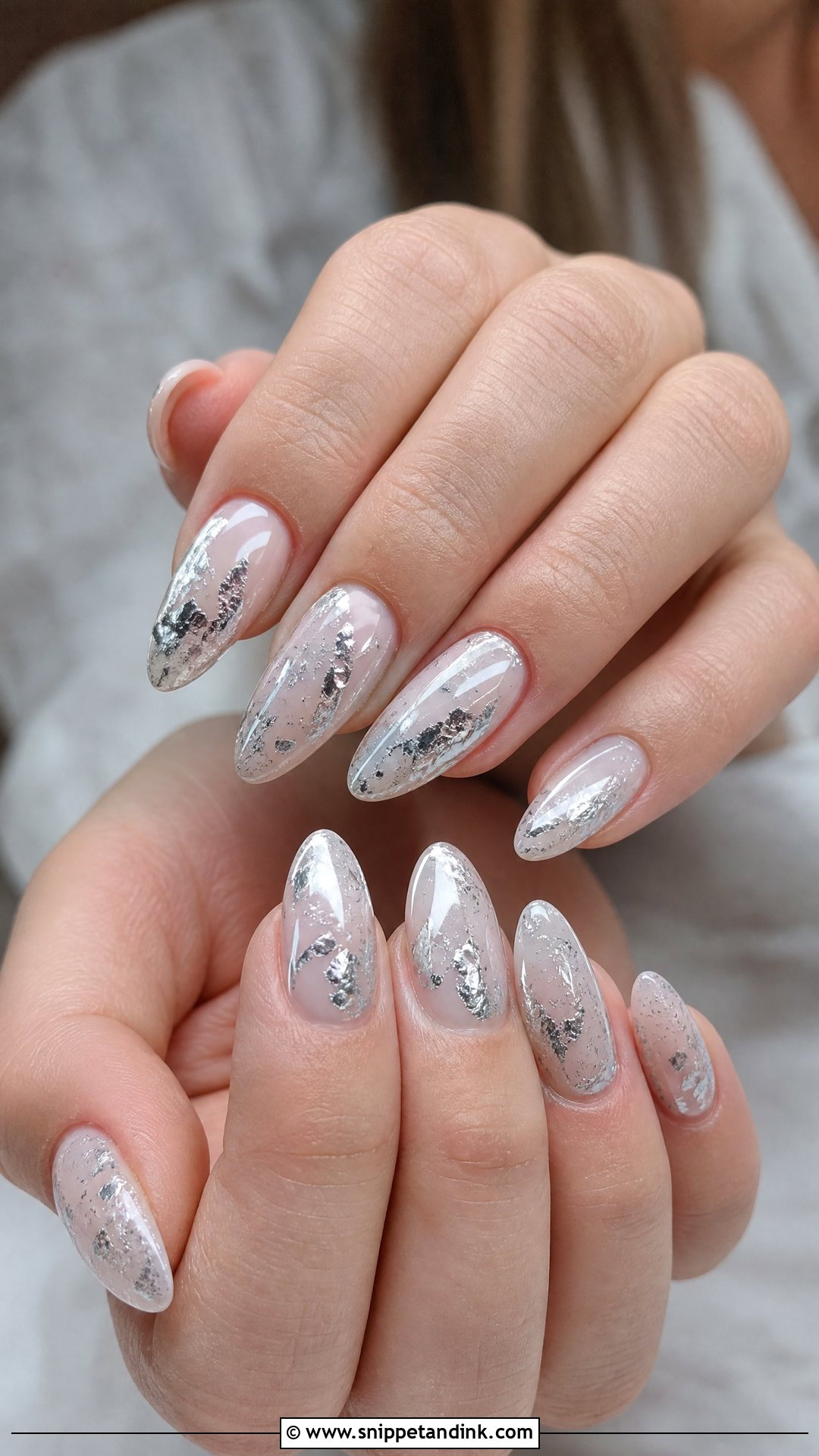
Foil looks like frost when it’s broken up. I press small torn flakes of silver foil onto a tacky layer over sheer nude, milky white or pale grey, scattering them unevenly rather than covering each nail. Then a thick top coat seals the edges, because foil that’s left proud lifts and catches on hair. Almond, oval and coffin shapes all work. It feels more individual than glitter while still being calm enough for portraits.
19. Dusty Blue Winter Wedding Nails
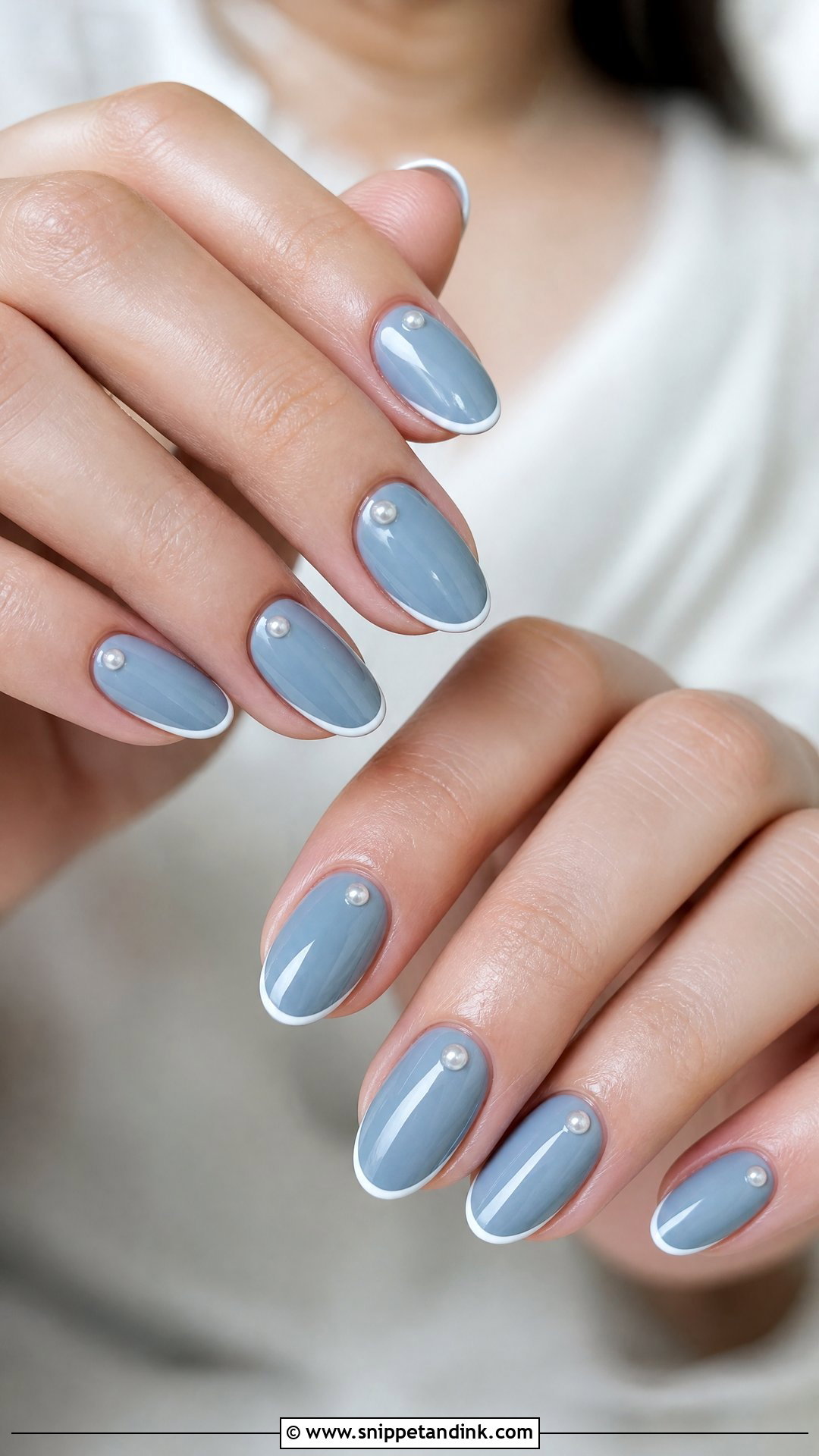
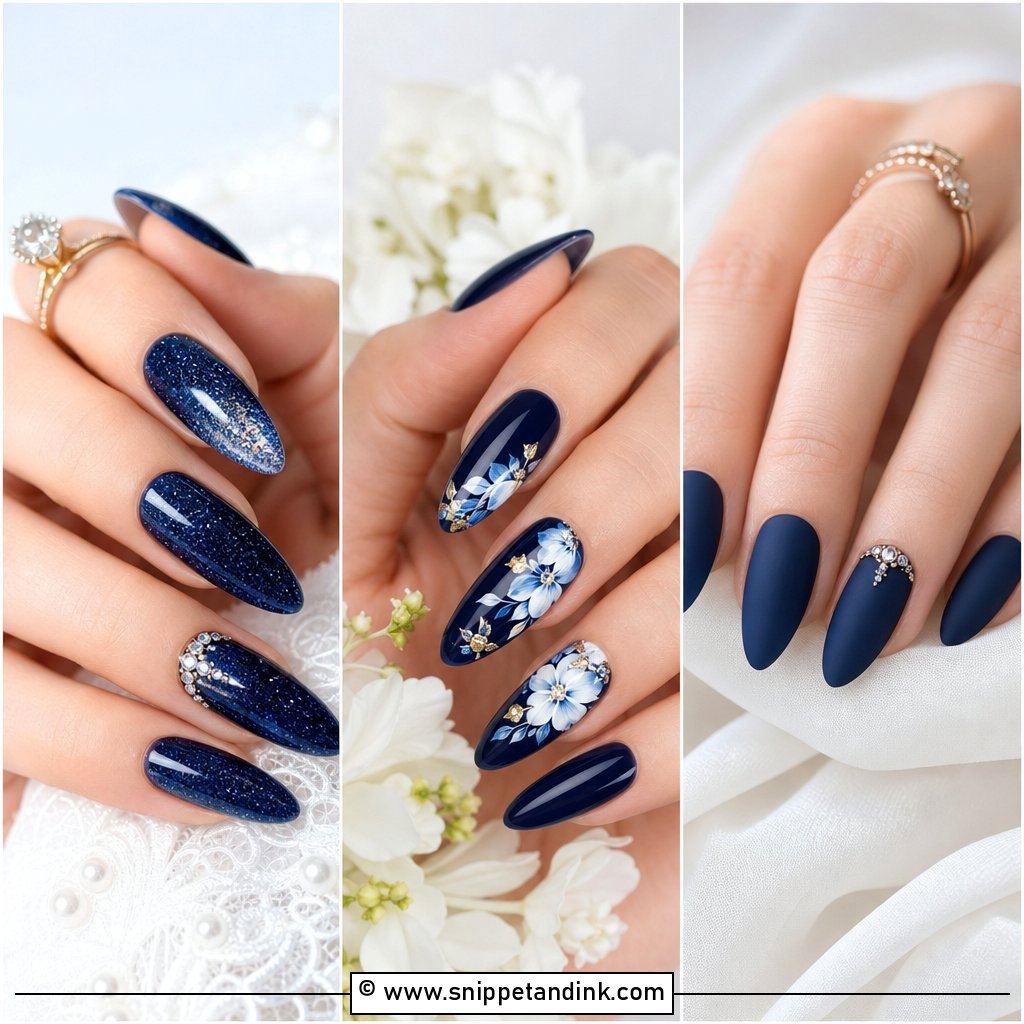
Dusty blue brings colour into winter without being loud. It works for snowy weddings, mountain venues and blue-grey palettes. A creamy dusty blue looks clean on short nails, and a shimmer version feels dressier on almond or oval shapes. To make it bridal, I pair it with white French tips, silver foil, pearls or a milky fade. Bridesmaids, mothers and guests often choose it, and it photographs well with navy, grey and silver. Blue polish can stain the nail slightly, so I always use a base coat.
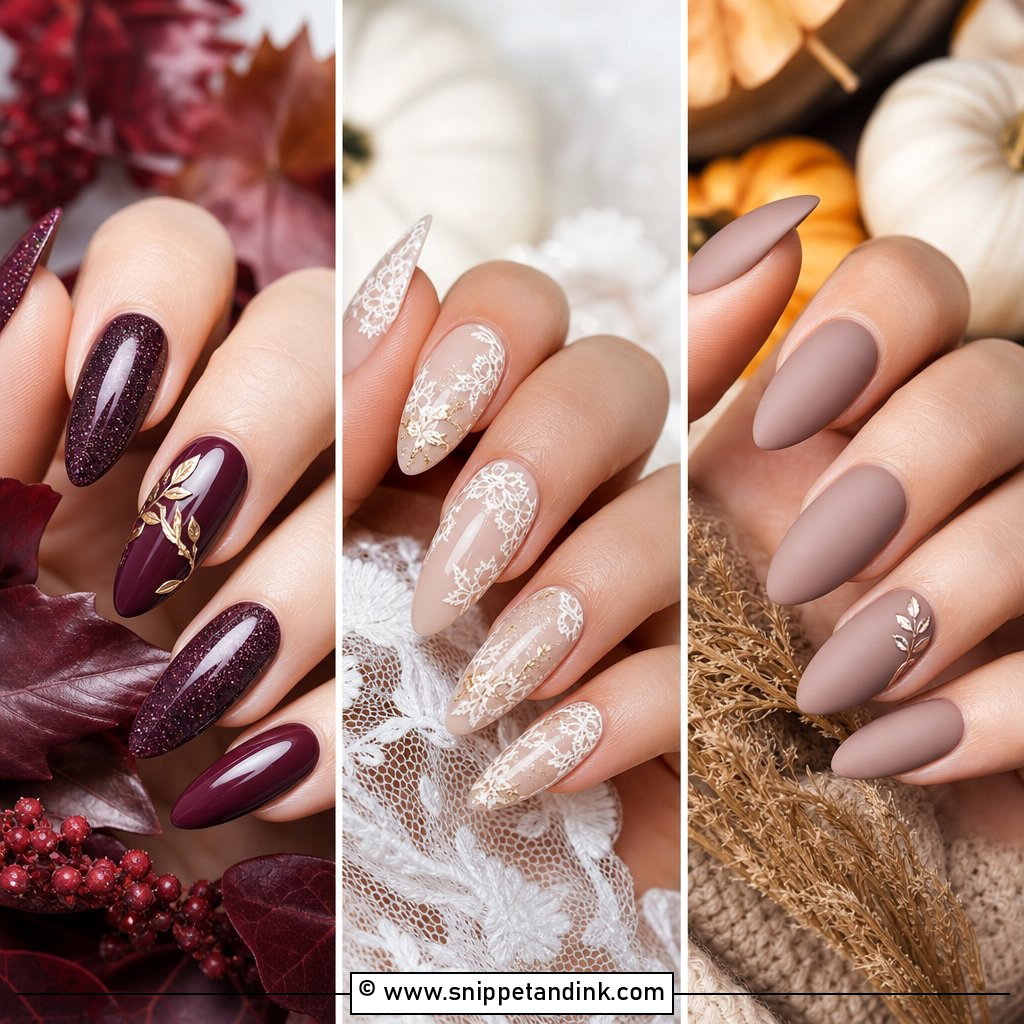
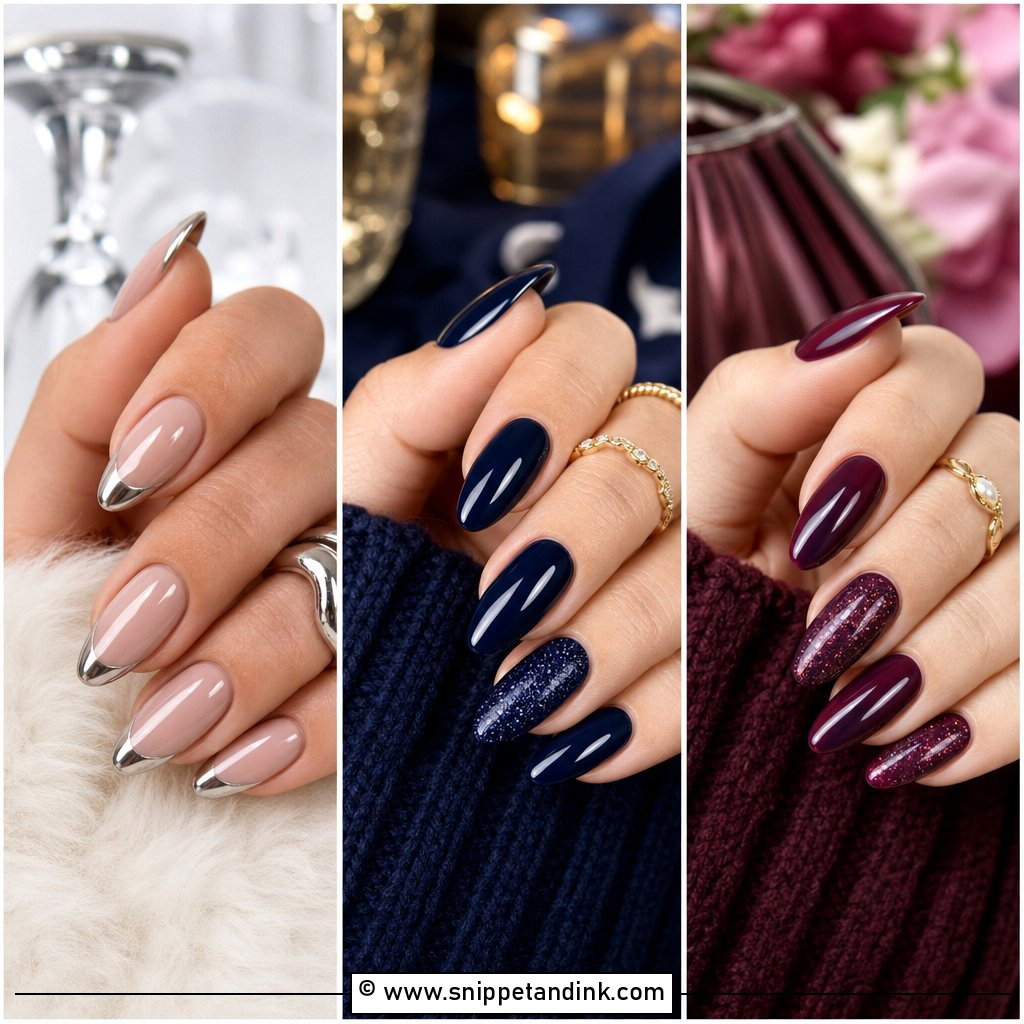
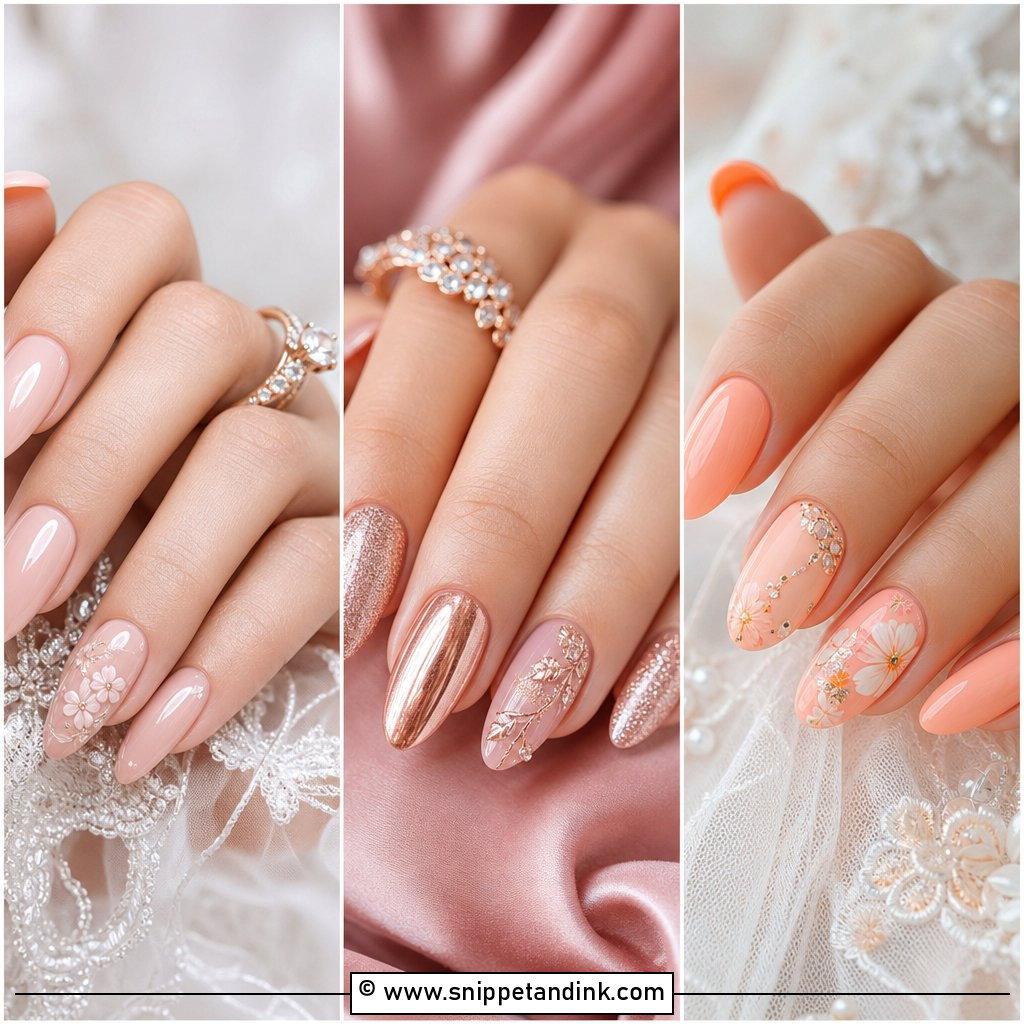
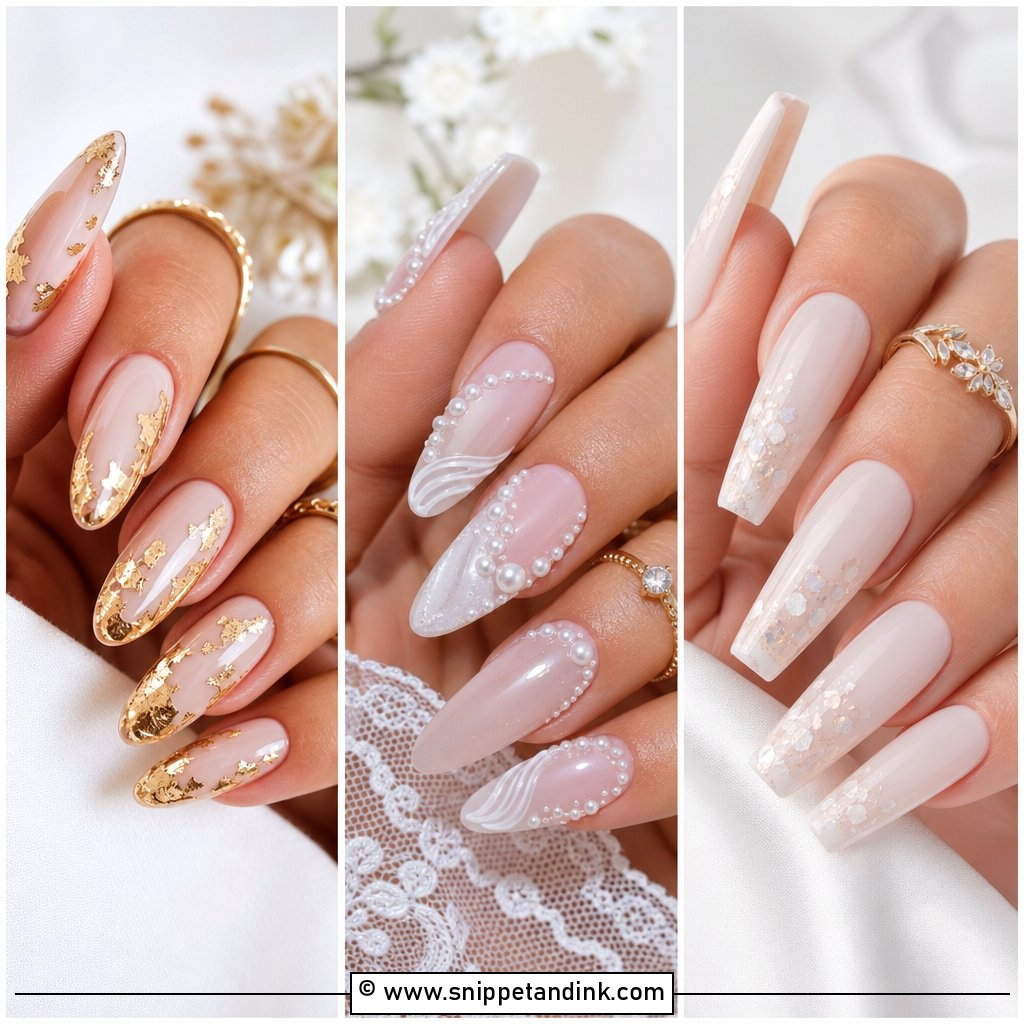
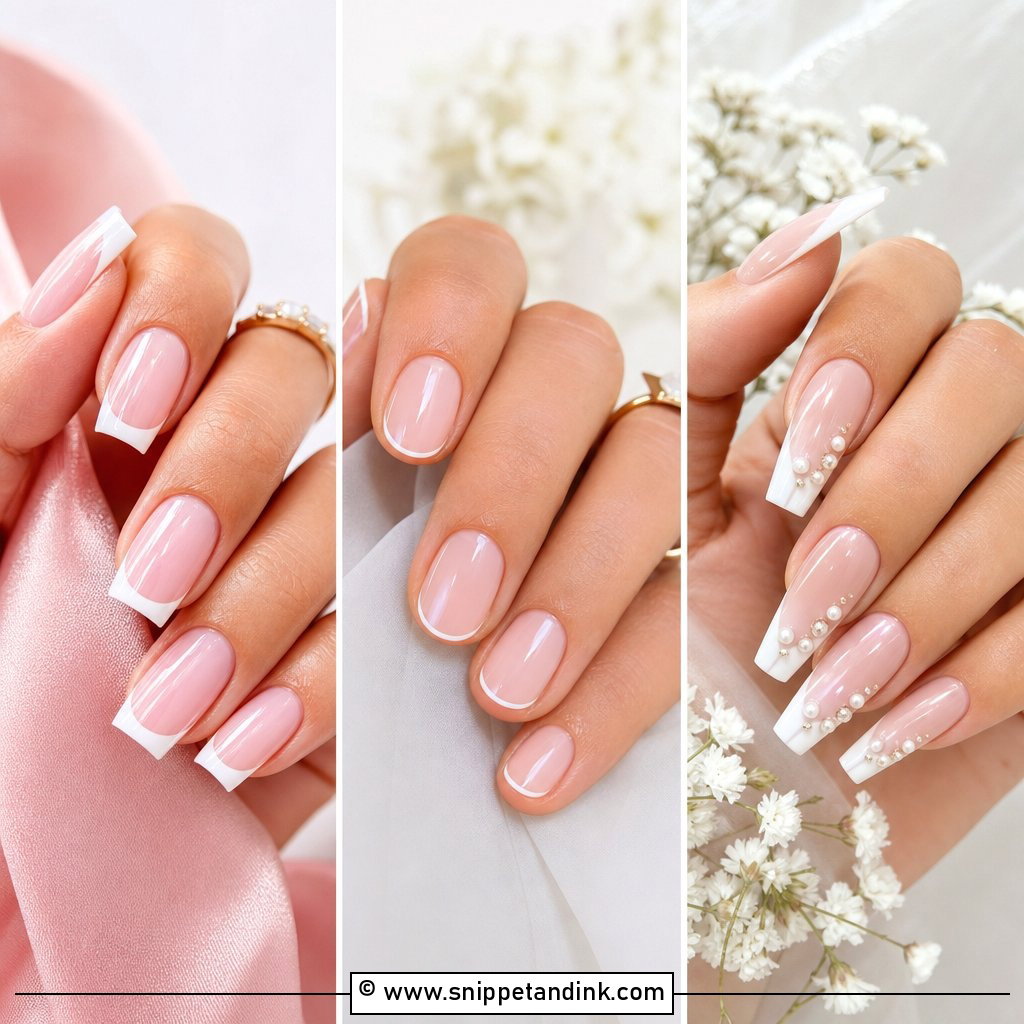
20. Deep Plum Winter Wedding Nails
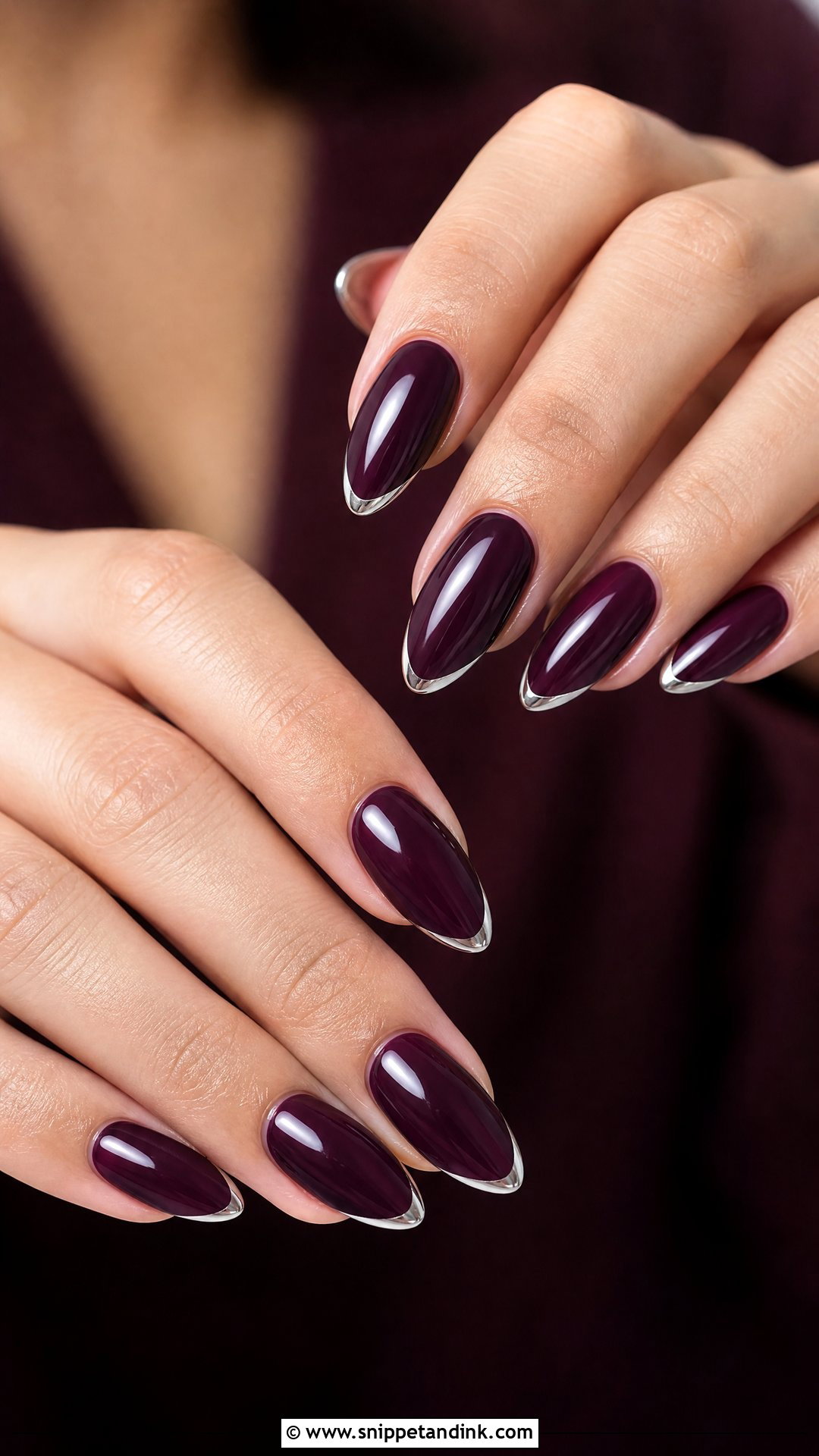
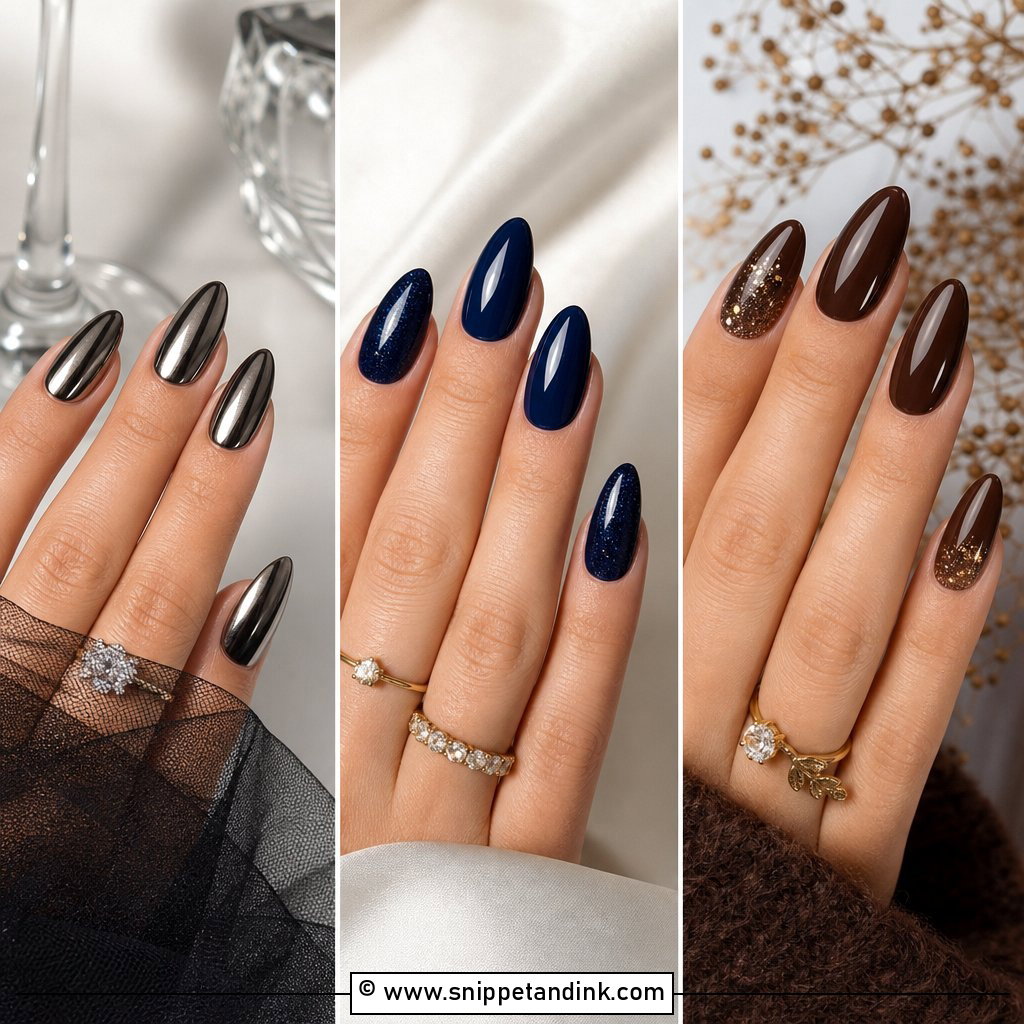
Deep plum winter wedding nails are rich and formal, and they sit well beside black, navy, emerald, silver, ivory and berry outfits. On a bride, plum is a bold contrast to a white or ivory gown; on a guest, it’s a polished seasonal shade. Gloss makes it sleek, and a velvet magnetic finish gives it depth. Dark polish shows every chip and every gap at the cuticle, so book it as close to the wedding as you can. A thin silver French tip or one crystal softens it.
21. Burgundy Winter Wedding Nails
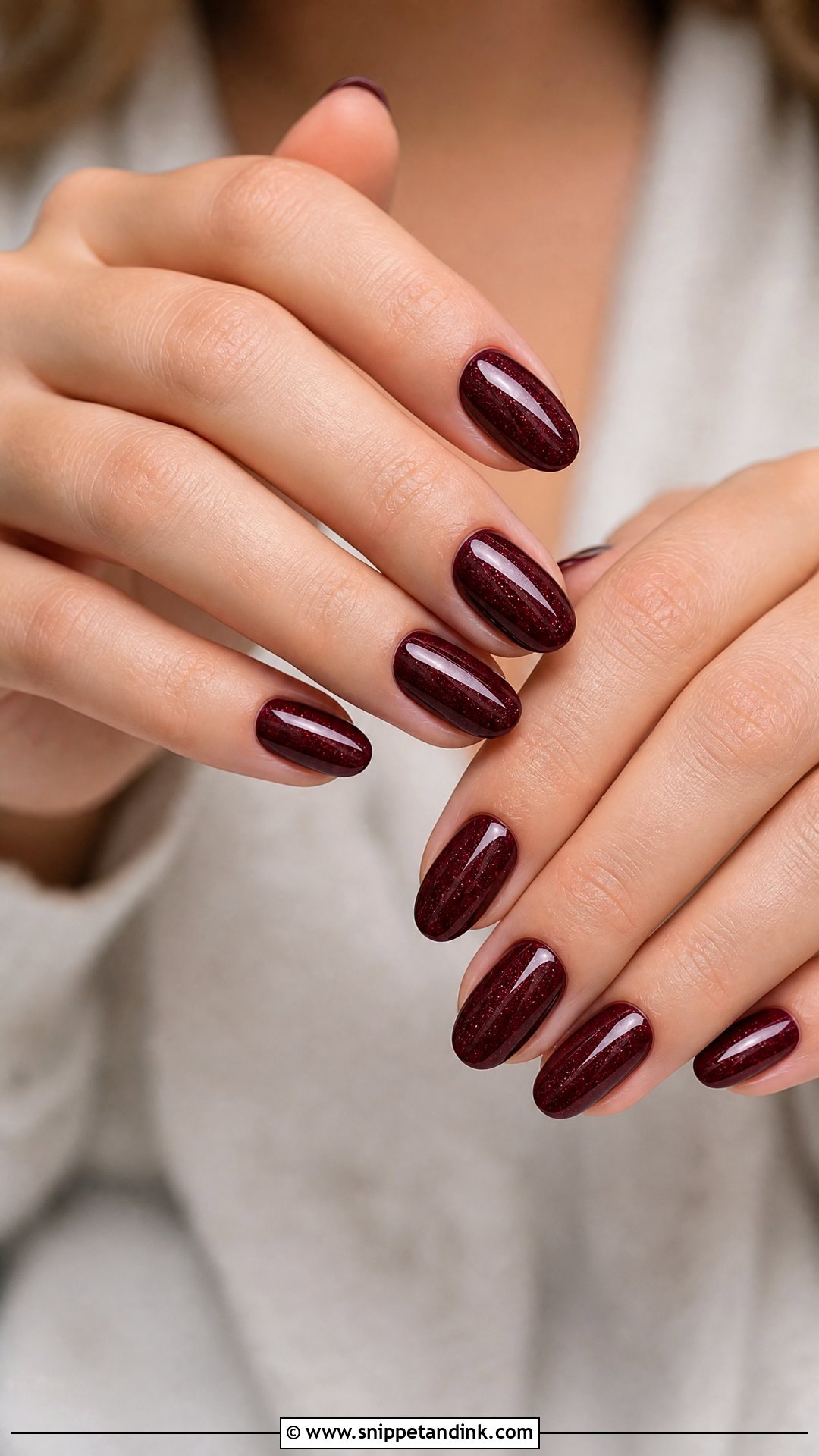
Burgundy reads warm in winter light and works especially well at evening weddings. A deep wine shade feels formal; a softer berry burgundy looks lighter. I’d keep the shape clean, such as almond, oval or short square, so the colour does the work. Glossy for polish, a subtle shimmer for the season. It’s also a strong guest colour because it suits most winter dresses. Dark reds can show a pink line at the cuticle within days, so if you’re a bride, plan the appointment one or two days out.
22. Rose Gold Winter Wedding Nails
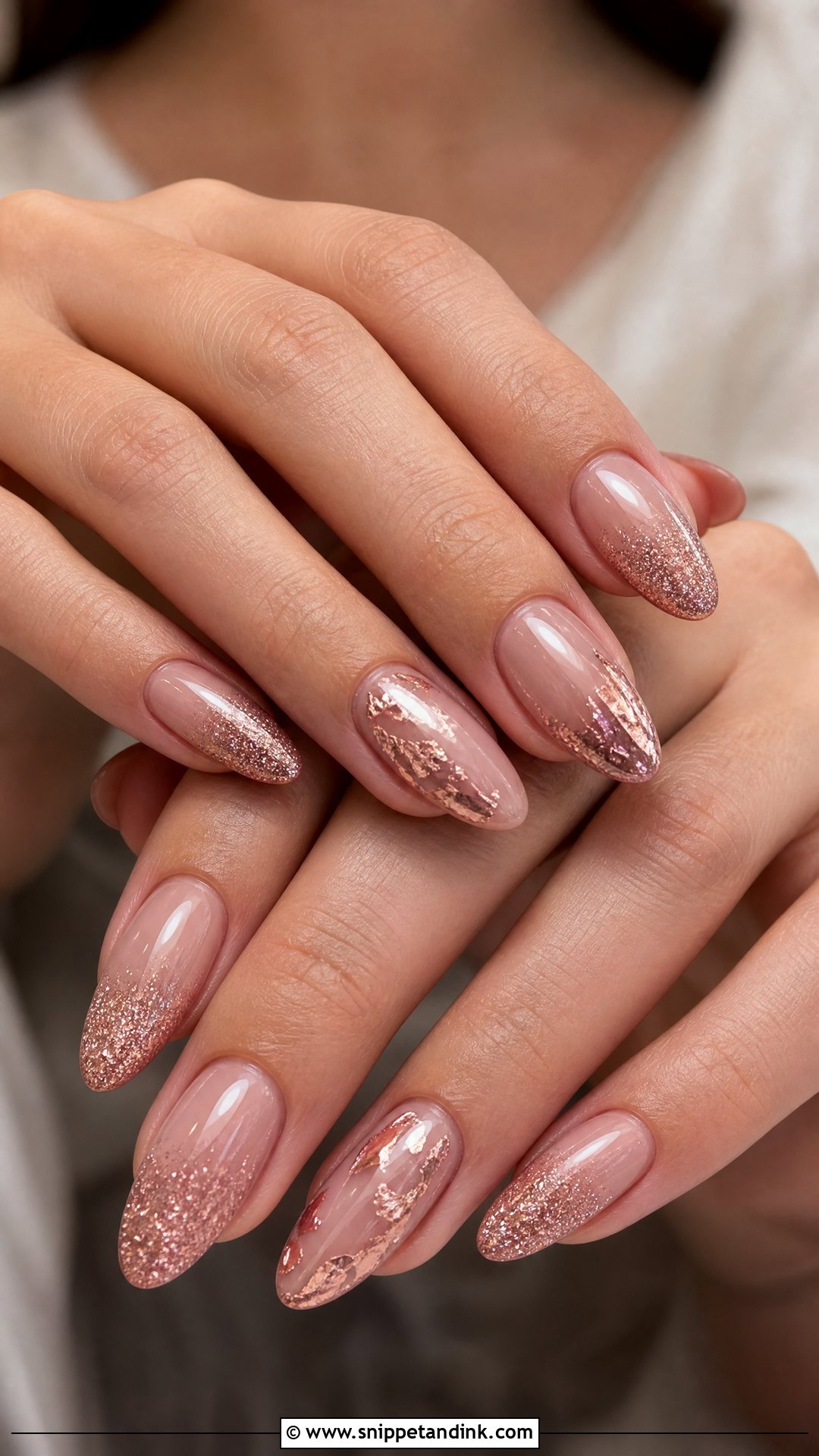
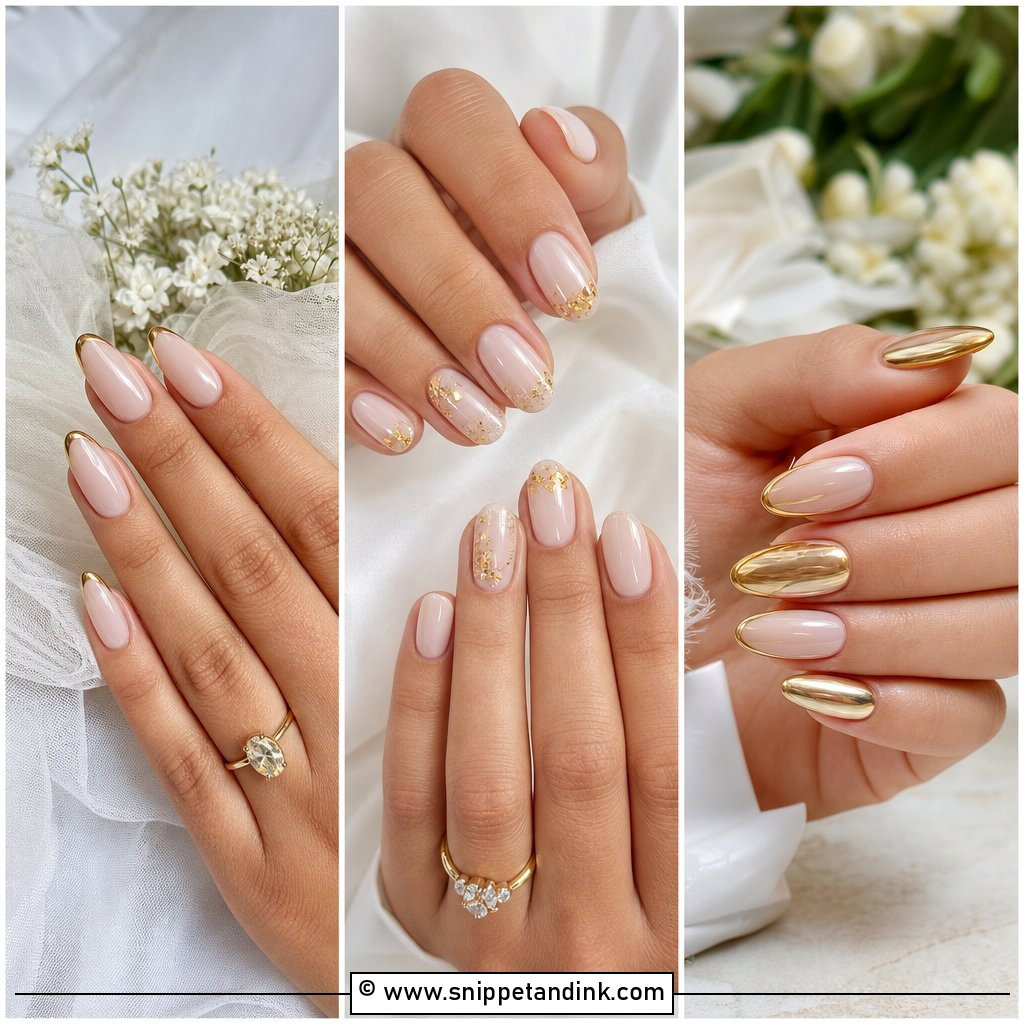
Rose gold blends pink and gold, so it’s softer than yellow gold and warmer than silver. On a bride I’d use it as a fine glitter ombre, a chrome accent, foil detail or a French tip rather than covering every nail. A blush, nude or milky base keeps it balanced. It sits well with pink bouquets, champagne dresses, warm ivory gowns and mixed-metal jewellery. If your rings are white gold or platinum, try it next to them first; some brides find the mix too warm.
23. Matte Nude Winter Wedding Nails
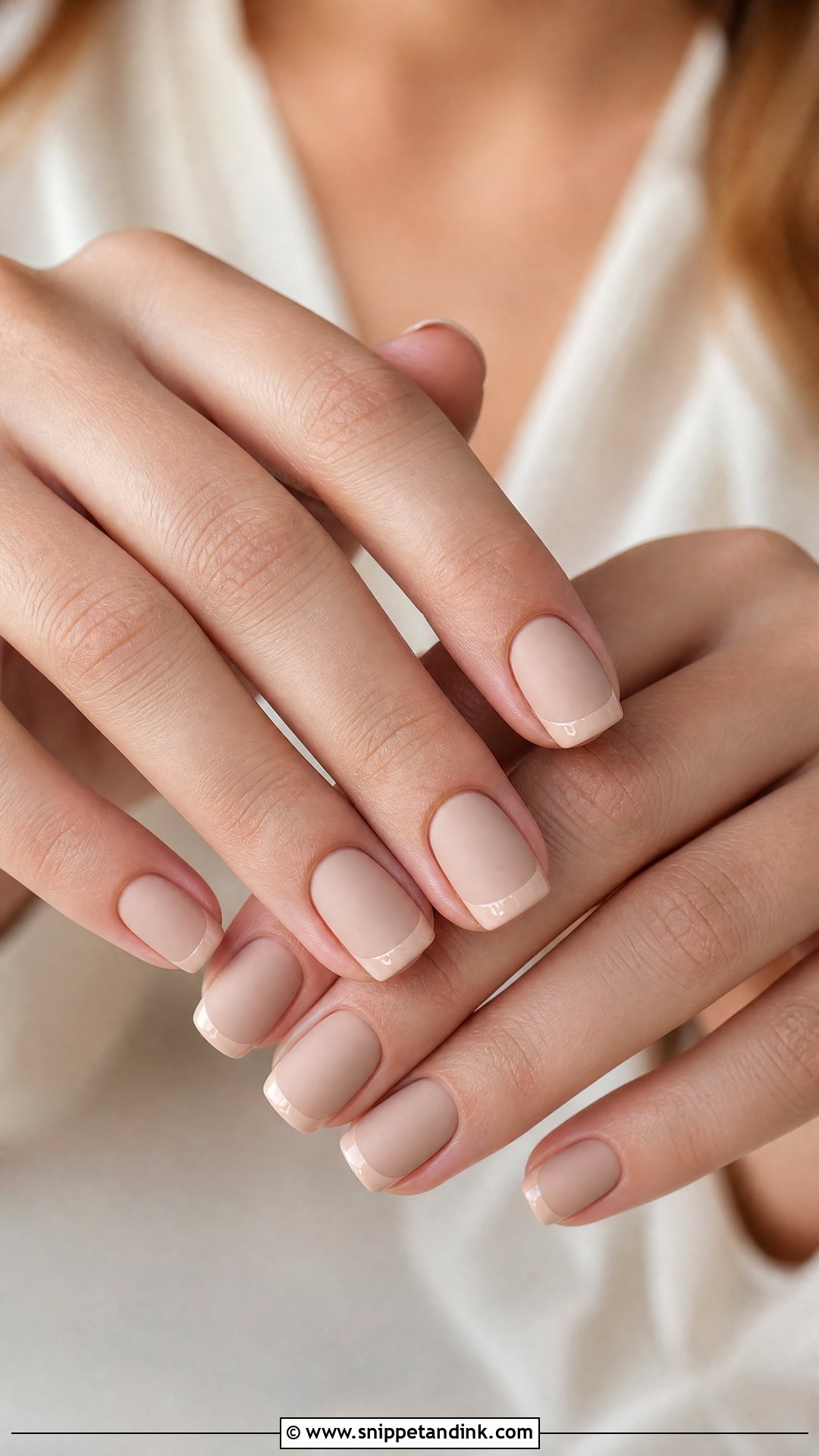
Matte nude has a velvety finish that suits colder months. Match the nude to your undertone, such as beige, pink, caramel or soft taupe; the wrong nude makes fingers look grey or sallow. It’s clean on short nails and refined on almond or coffin shapes. I often add a glossy French tip, tiny pearls or a single fine-line snowflake, since the contrast between matte and gloss gives it interest. Matte top coats can pick up marks from dark gloves and denim, so carry a lint-free wipe.
24. Frosted Pink Winter Wedding Nails
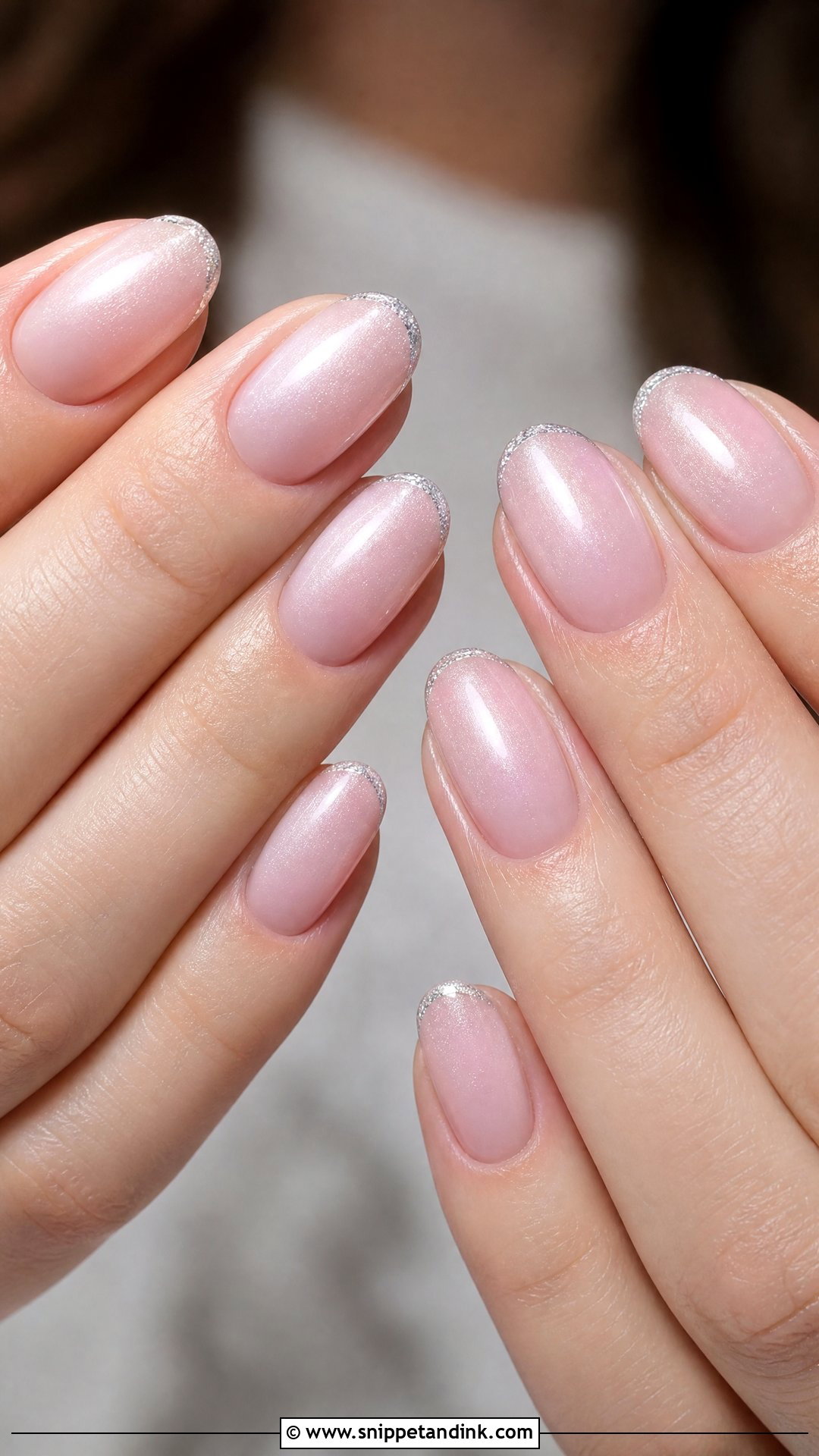
Frosted pink starts with a sheer or baby pink base, then a frosty shimmer or pearl top coat on top. It’s a good way to wear pink at a winter wedding without it looking springlike. The finish looks glassy in natural light and in close-up shots. Oval, almond or squoval shapes keep it simple. For a little more, add a fine silver micro tip or a small crystal near the cuticle, but it doesn’t need much.
25. Crystal Accent Winter Wedding Nails
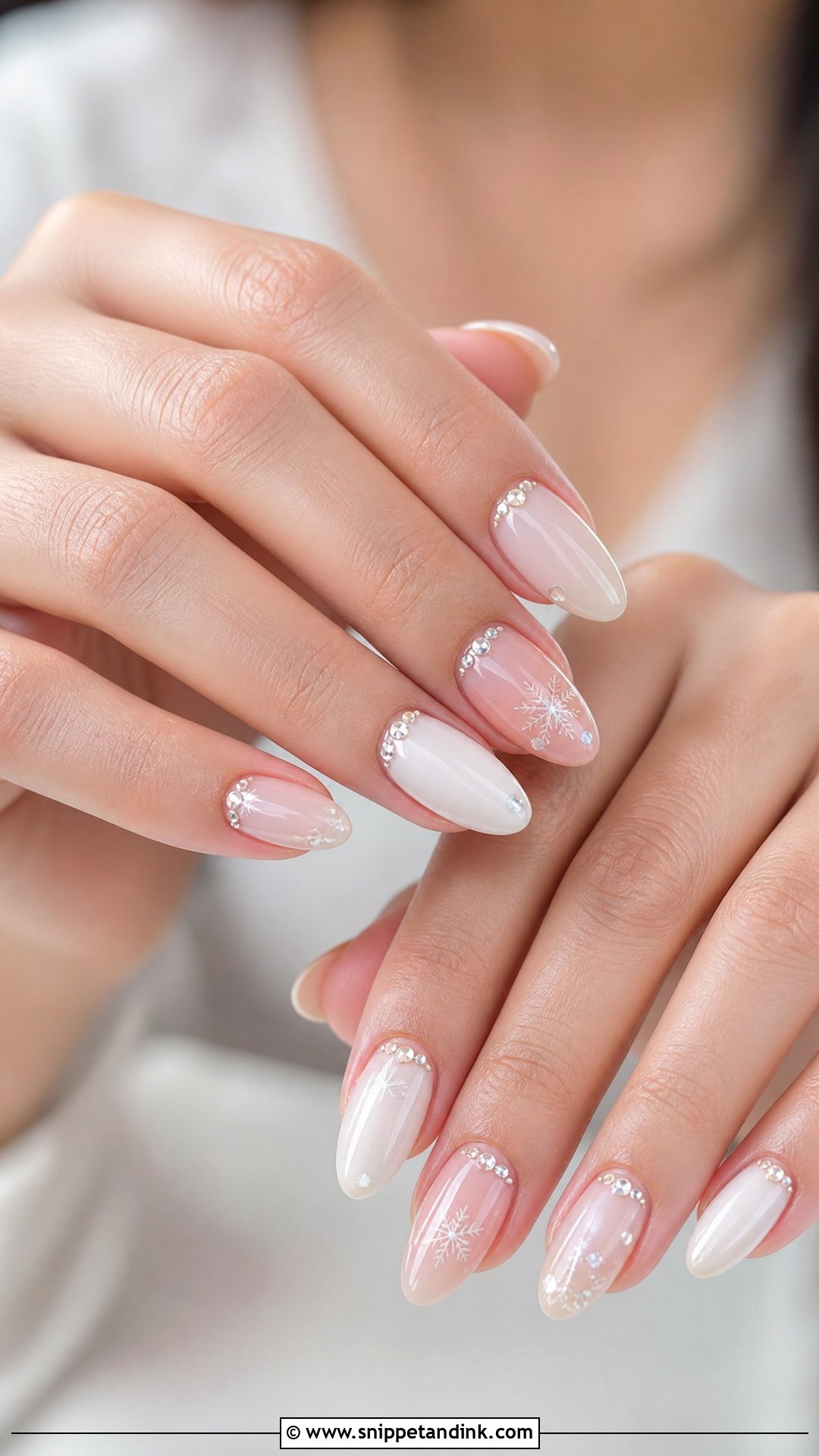
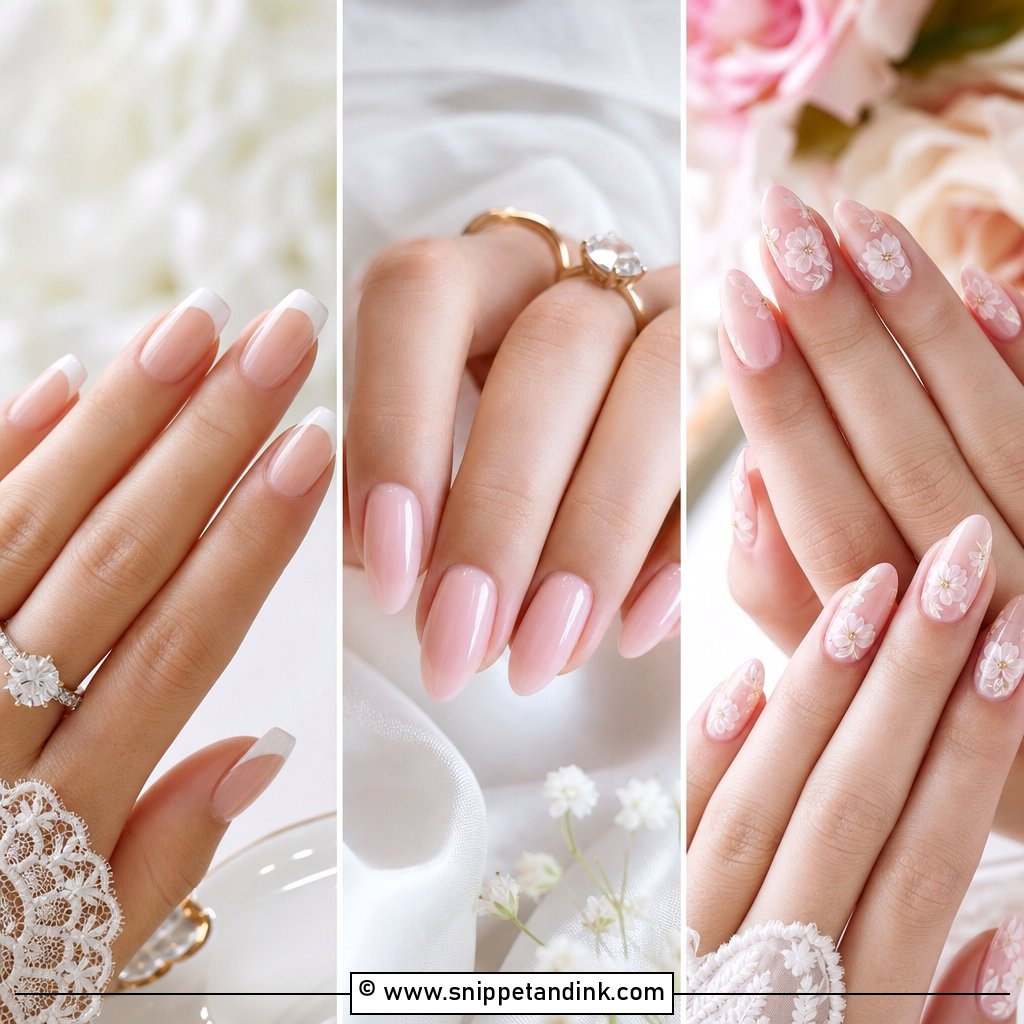
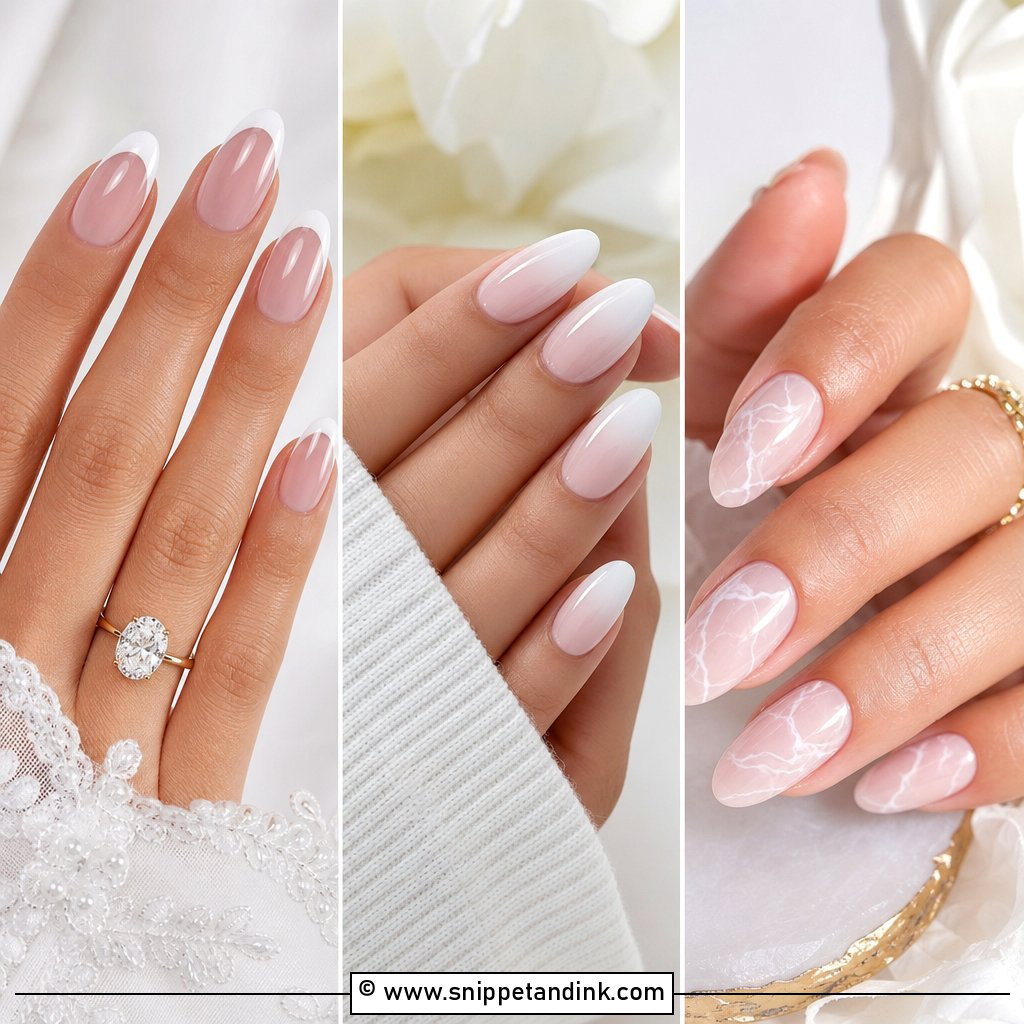
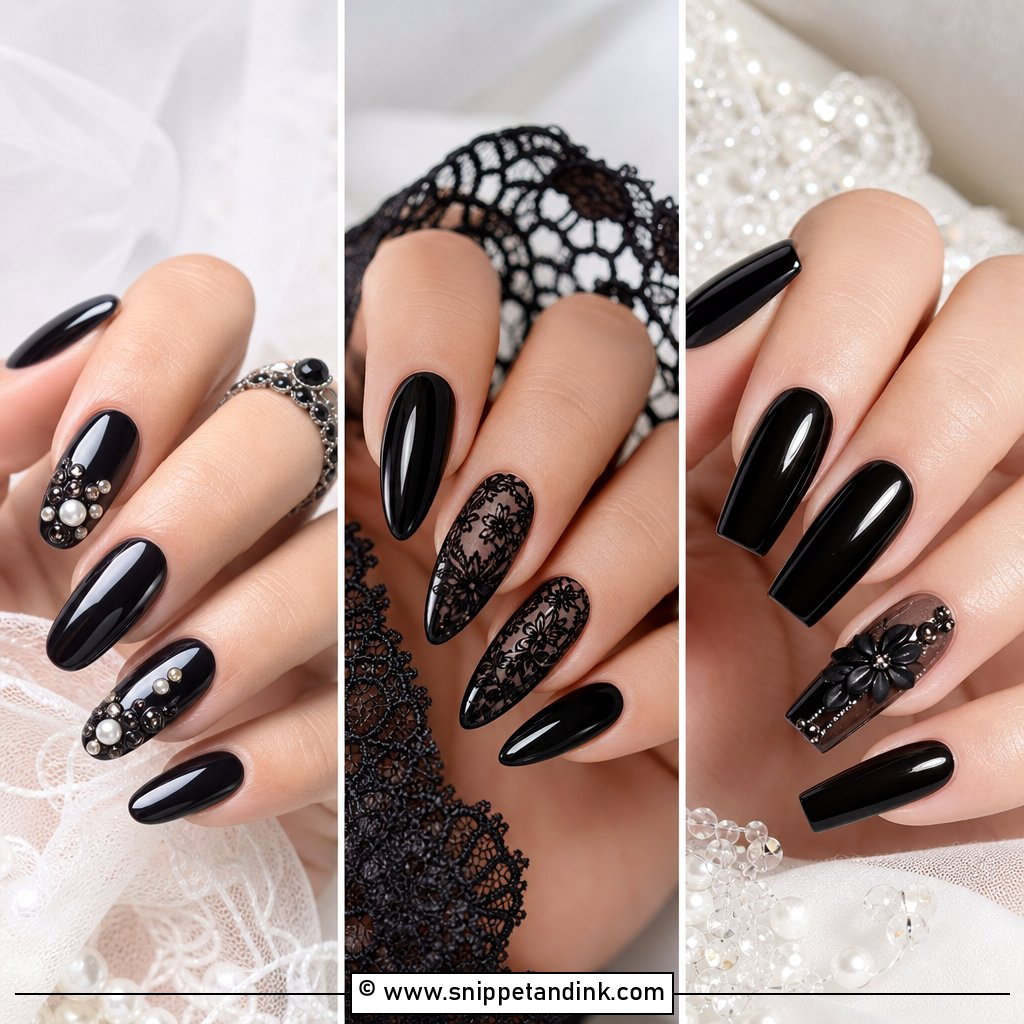
Crystals look intentional when there are only a few. I set small stones near the cuticle, along a French tip or on one or two accent nails, over milky white, sheer pink, nude, pearl chrome or soft grey. Each stone sits in a bead of gel with the edges sealed, otherwise they catch on knitwear, lace and veil netting. Balance them across both hands. They pick up light during the ring exchange and in reception photos without the set looking overdone.
Dark Polish on a Bride, Pale Polish on a Guest
Winter is the season when people start asking whether a bride can wear plum or burgundy, and whether a guest can wear white. Both questions have practical answers.
For the bride
Dark nails can look striking against an ivory gown, especially at an evening ceremony. Hold your hands next to the bouquet before you decide. Deep colours draw attention to the hands, so the cuticles need to be immaculate and the shape very even. They also show regrowth faster, so book your appointment the day before or two days before.
For guests and the bridal party
Pale or milky nails are fine for a guest; it’s the dress code, not your manicure, that signals white. If you’re a bridesmaid, ask the bride before you book. Some brides want everyone in a matching soft pink; others are happy to see each person in her own shade within a palette.
- Keep crystal and 3D details off bridesmaids’ hands if they’ll be holding the bride’s train or bouquet. They catch on fabric.
- Glossy finishes survive a cold evening of gloves and coats better than matte.
Which Winter Set Suits the Time of Your Ceremony?
Soft bridal shades like milky white, blush pink, nude and pearl chrome are the safest base for a winter wedding, and silver glitter, velvet shimmer, frosted tips and fine snowflakes are the easiest ways to bring in the season. For a classic look, pick French, micro French, oval or almond. For something bolder, try deep plum, burgundy, dusty blue or crystals. Balance the design against your outfit and jewellery, and choose a shape you can live with for the whole day, from vows to the last dance.
You'll Like These Ideas:


Leave a Reply