
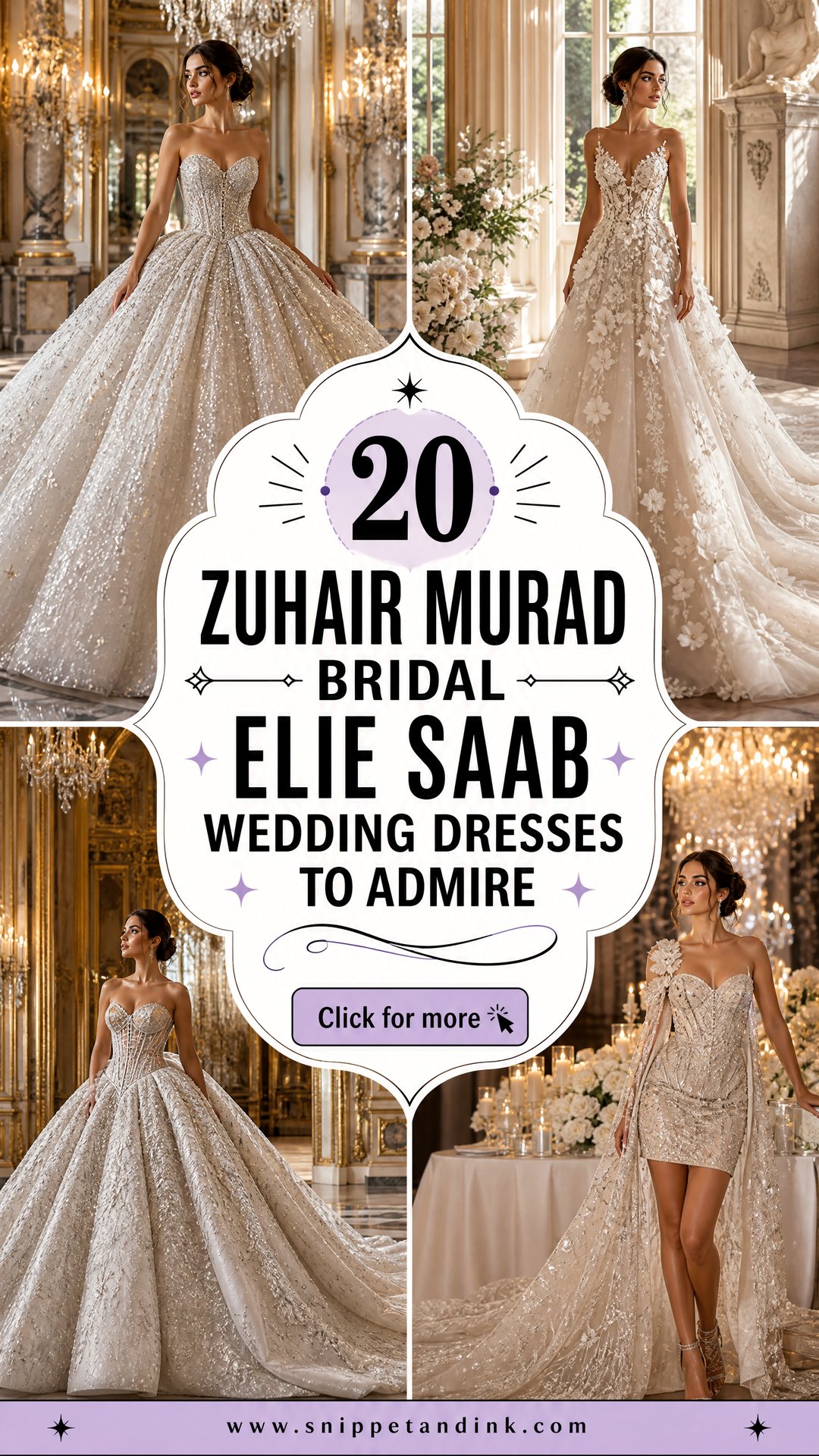
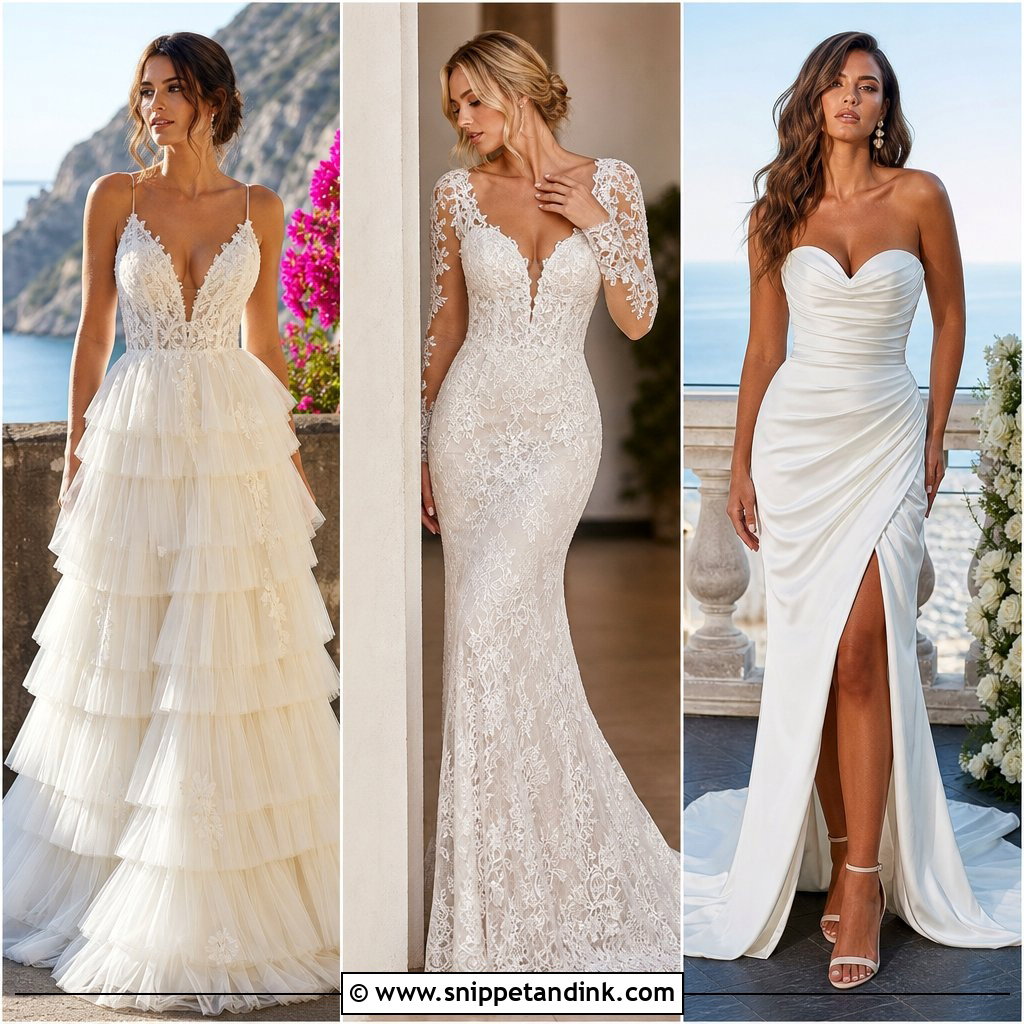
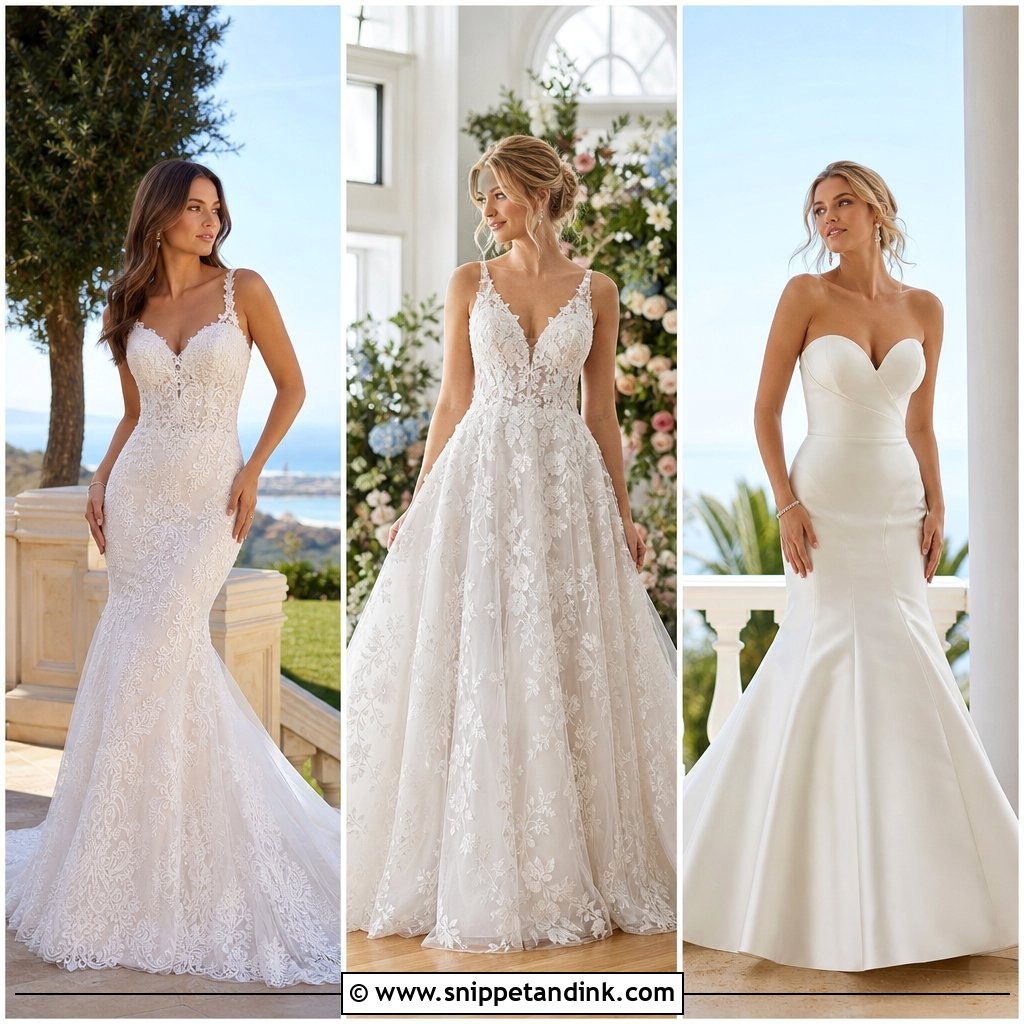
Zuhair Murad and Elie Saab are the two houses brides screenshot late at night and then quietly assume they can’t have. Both build their bridal work around hand embroidery, sculpted bodices and trains that need someone to manage them, and both show their gowns as complete looks rather than dresses on a hanger. The twenty directions below follow that thinking. For each one I’ve added the veil, shoes and jewelry I would actually put with it, because a couture-level dress looks strangely unfinished next to the wrong earrings. Use them to compare designer gowns at a salon appointment, or as a reference sheet when a dressmaker is building a custom version for you.
Recreating a Zuhair Murad or Elie Saab Look With a Dressmaker
Plenty of the brides I dress love these houses but buy the look rather than the label, either through a custom dressmaker or a salon gown with a similar cut. That can work very well, provided you brief the maker properly. Vague requests like romantic lace come back as something else entirely.
Hand embroidery and beading are slow work, so give yourself time. A custom gown with heavy beadwork commonly needs six months or more, and couture made-to-order pieces can take longer still. Lead times vary a lot by maker, so ask before you set your heart on a date.
What I bring to the first meeting
- Front, back and side photos of the gown you love, since the back is often where these houses put their best work.
- A note on which details matter most to you, such as the neckline, the train length or the type of embroidery, so the budget goes there first.
- The fabric names you’ve seen, like tulle, mikado or crepe, with photos of how they move, because the same cut looks very different in each.
- Your venue and season, which decide whether long sleeves or a cathedral train actually make sense.
Ask to see the reverse side of a beaded sample. Neat, knotted stitching on the inside means the beads will survive dancing. Loose threads or glue mean they probably won’t.
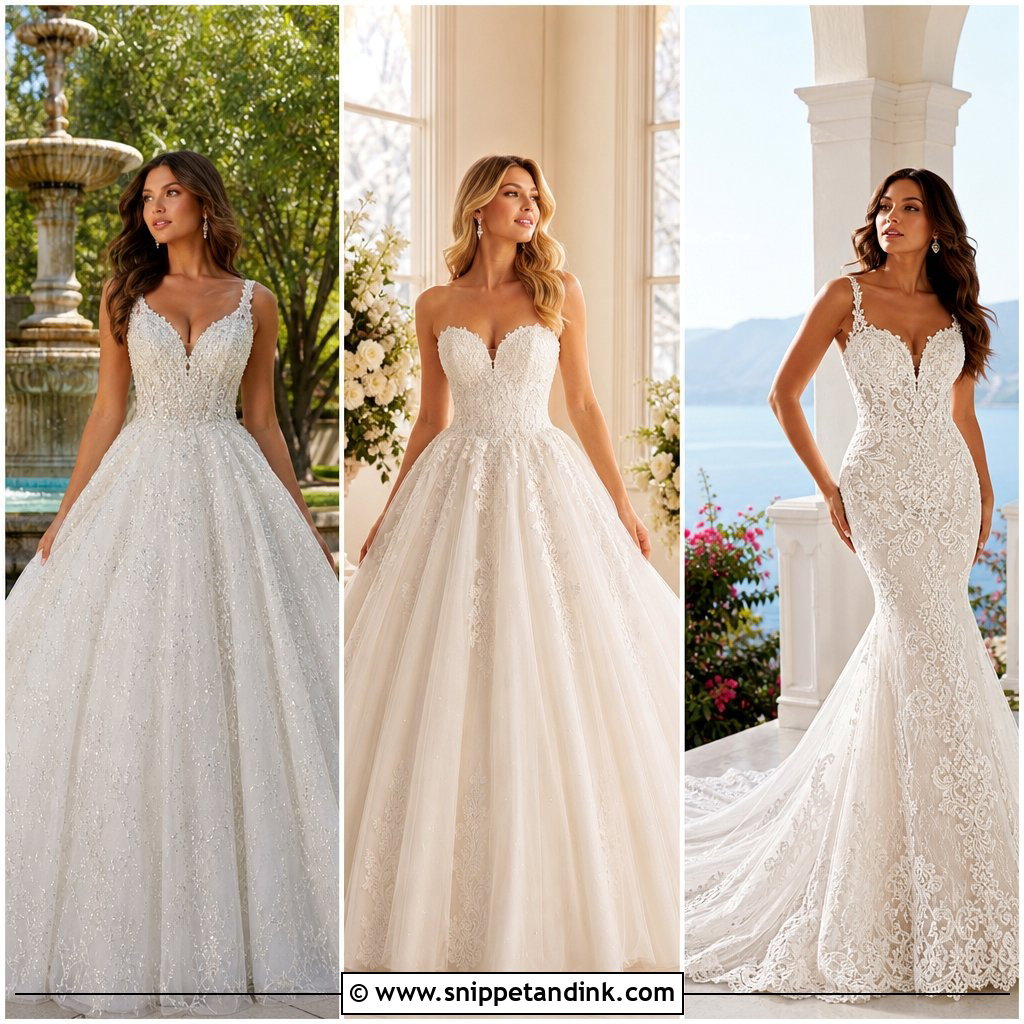
1. Long Sleeve Lace Ball Gown Wedding Dress
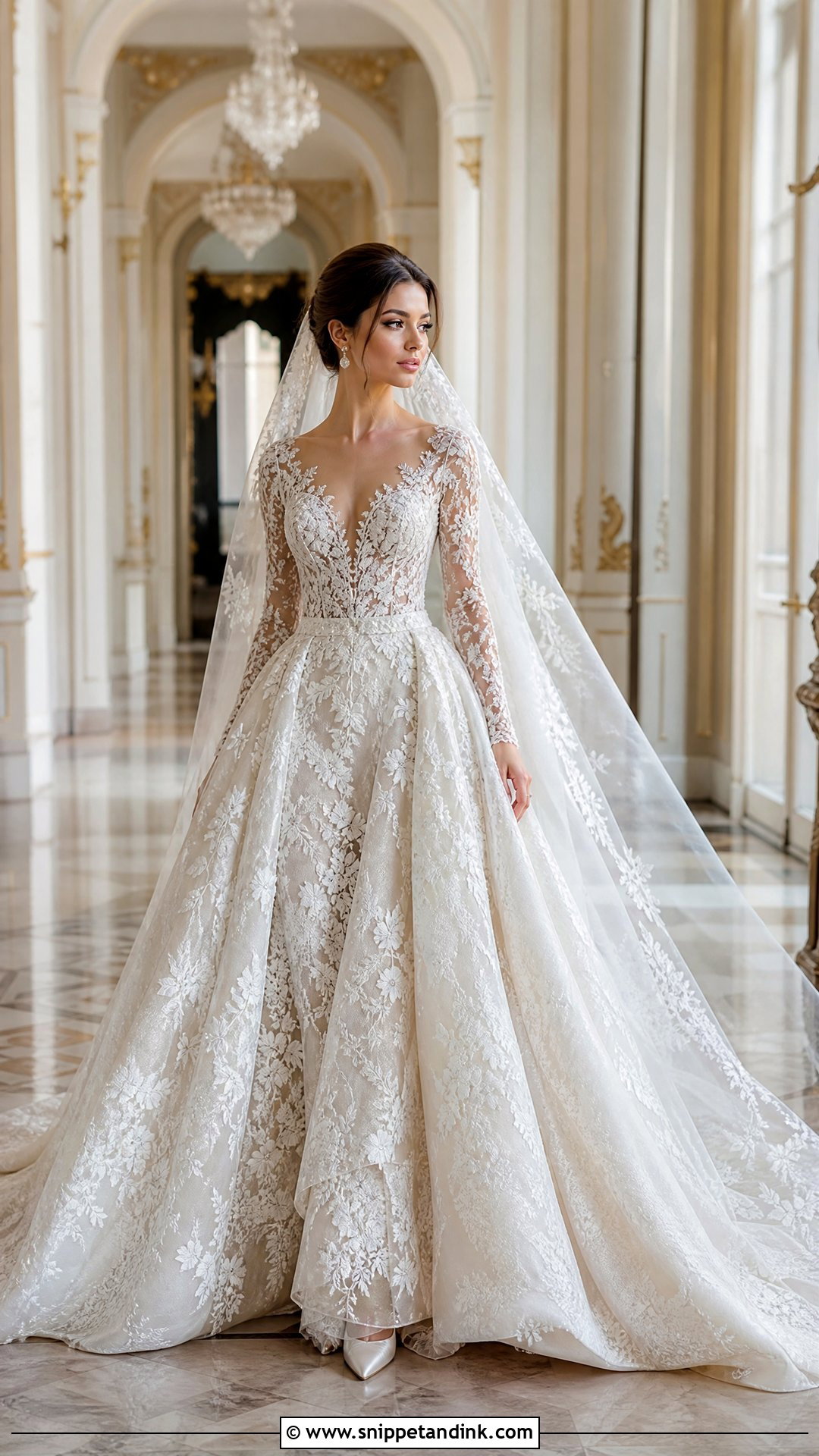
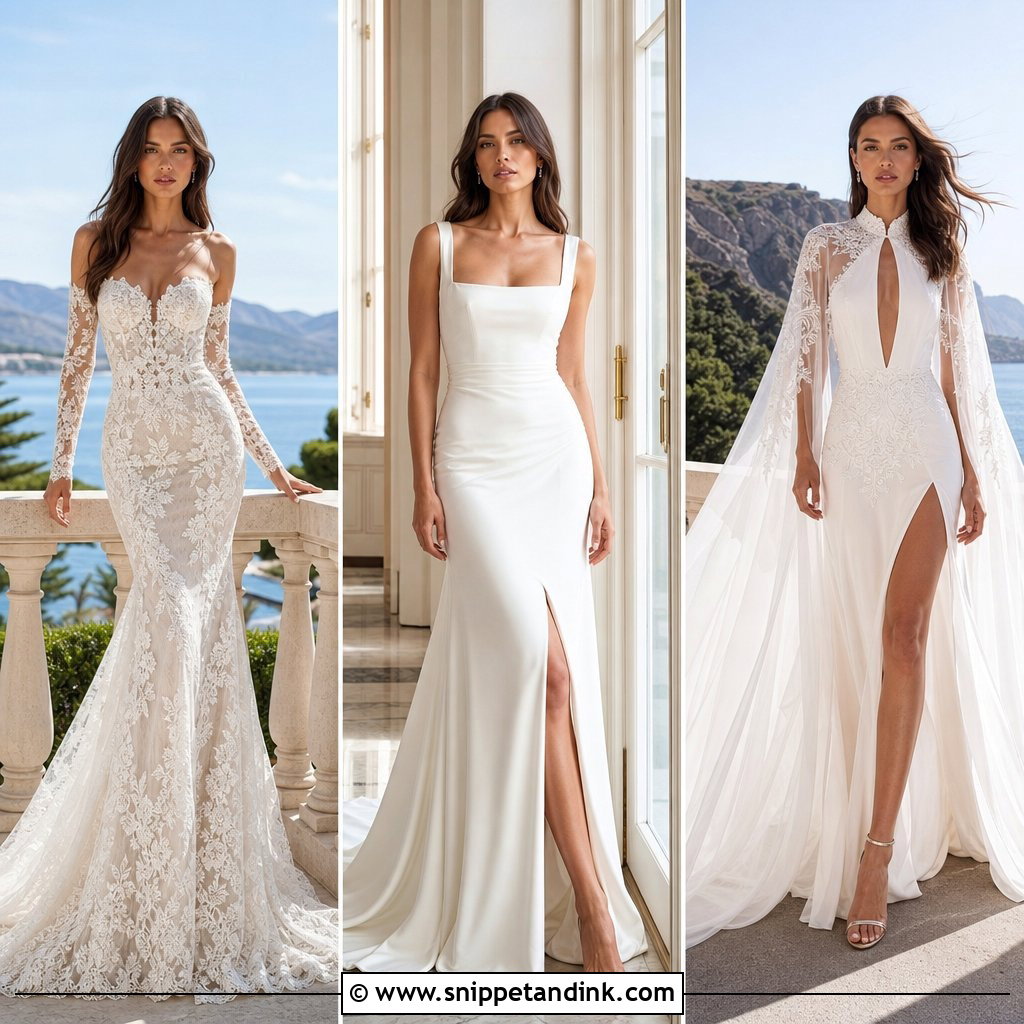
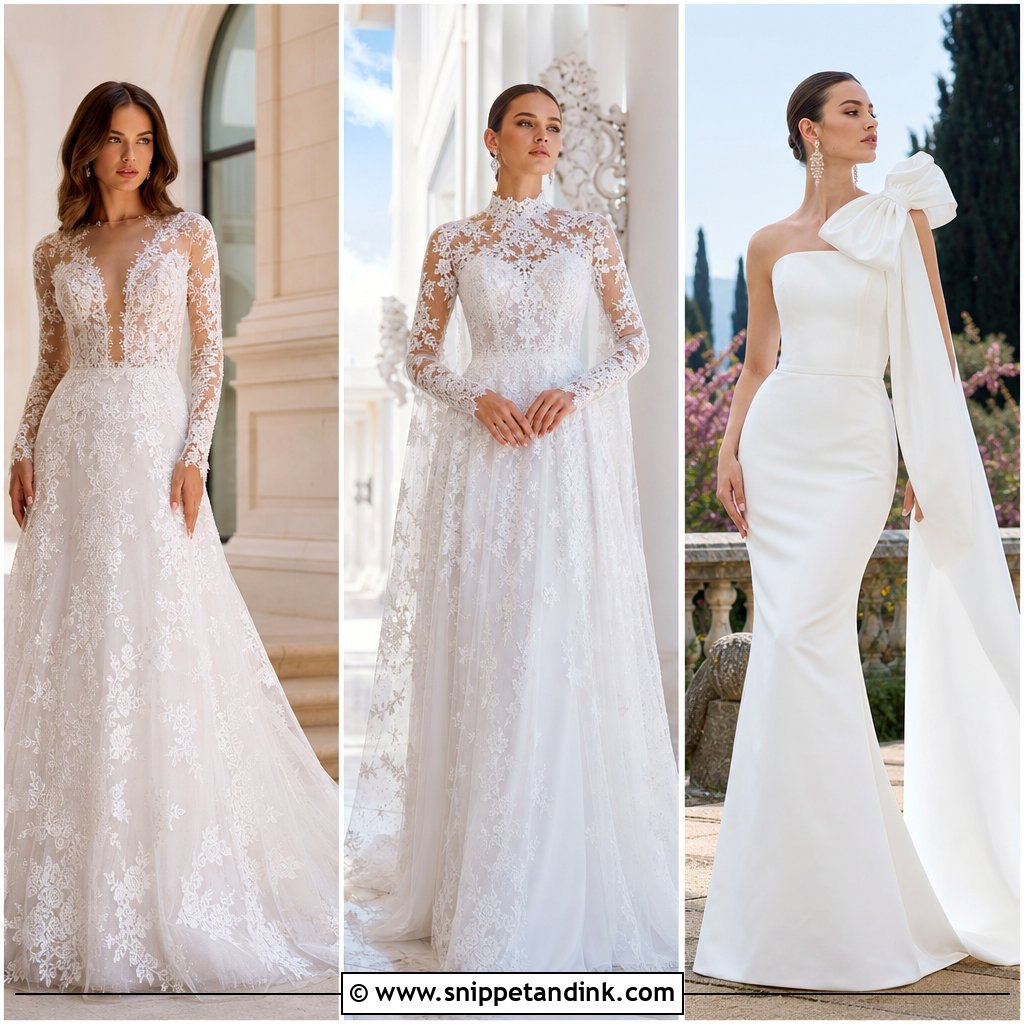
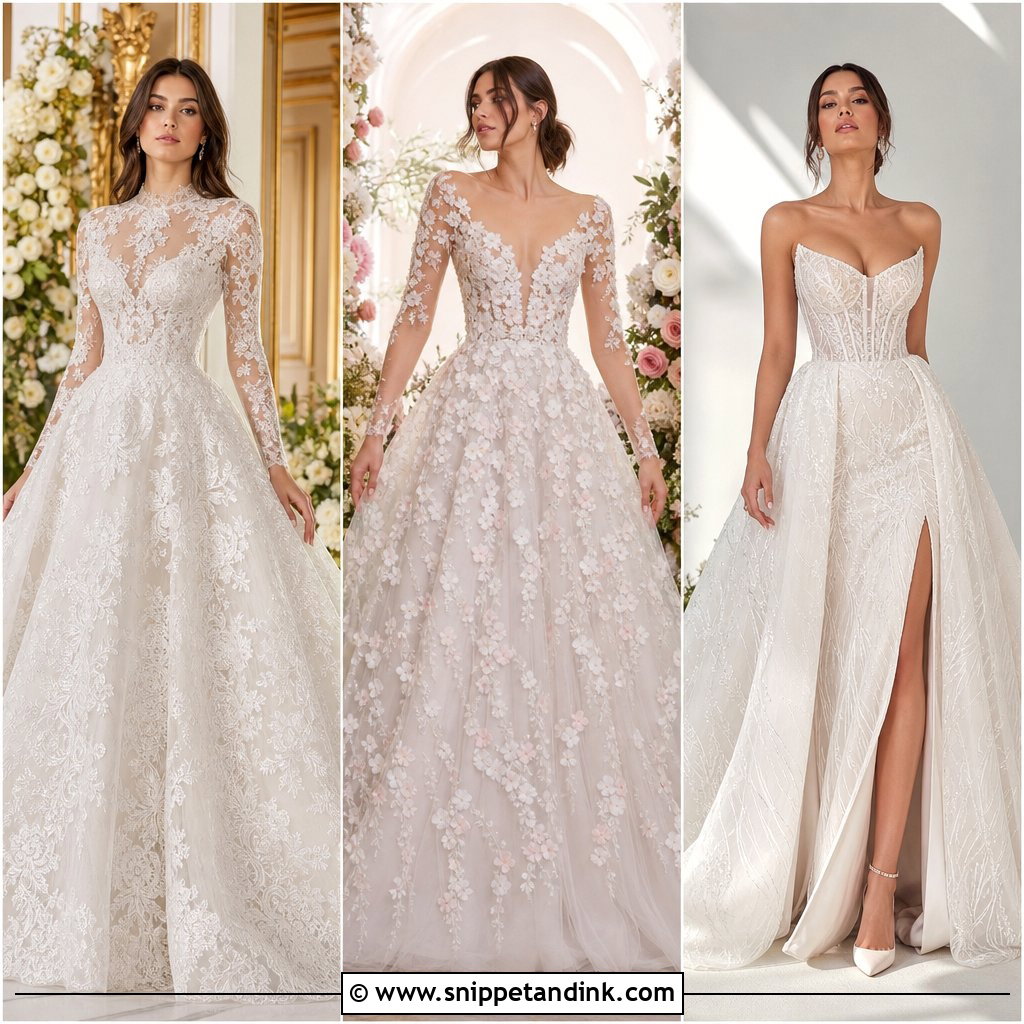
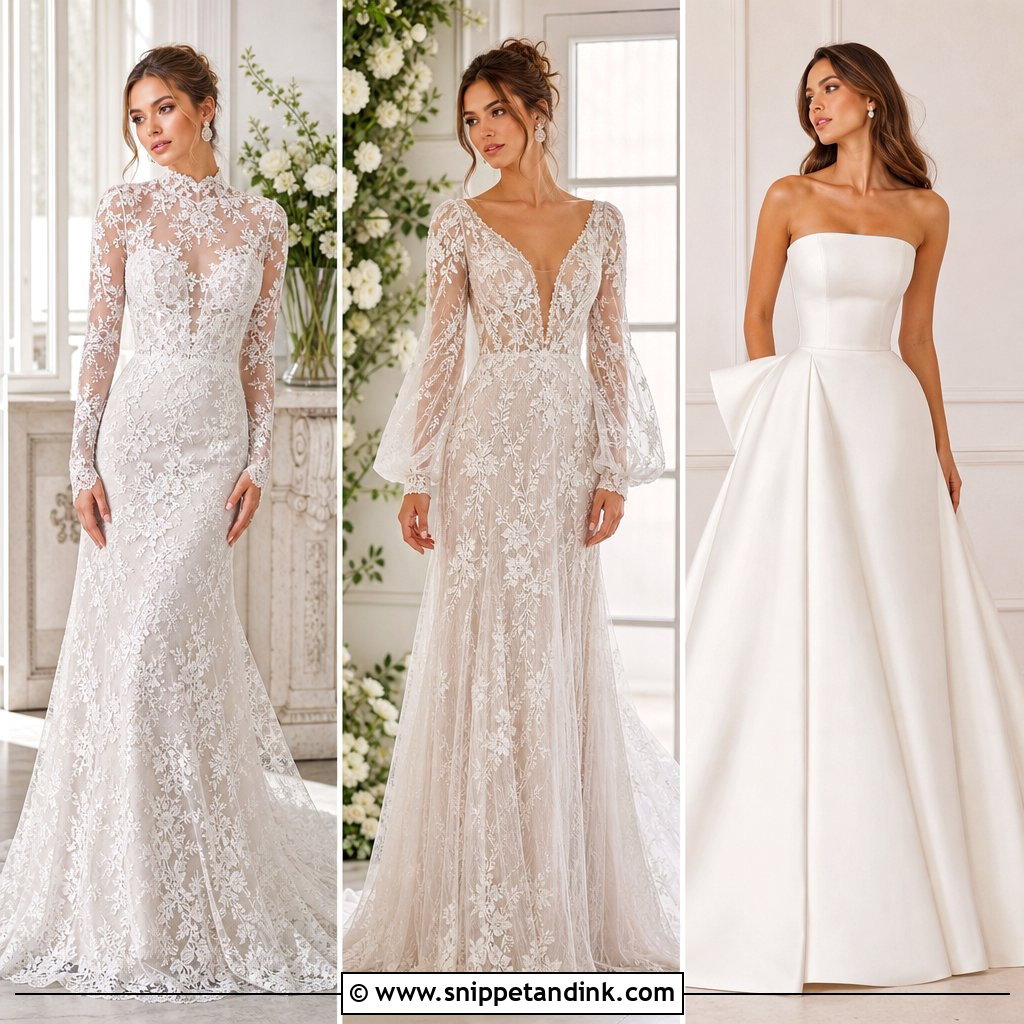
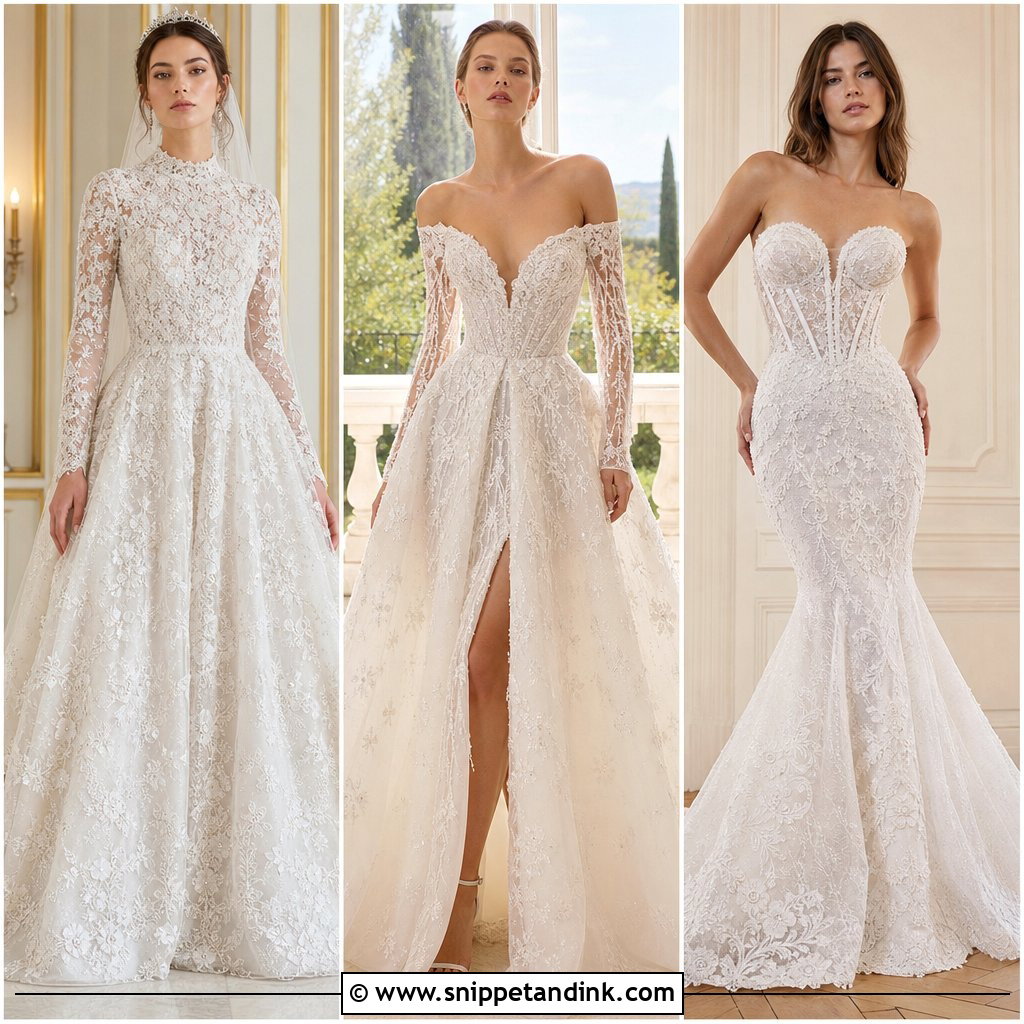
Sheer sleeves are what stop this gown from feeling like armor. When I fit a lace ball gown, I ask the seamstress to cut the sleeve edge around the lace motifs instead of finishing it with a hem, so the cuff fades into skin rather than ending in a hard line. The structured bodice and layered skirt carry real weight, which is why a low chignon suits it: the neckline stays visible and the hair doesn’t fight a cathedral veil with a narrow lace border. Pearl drops and pointed ivory satin pumps are enough. Save it for a ballroom or historic estate with a long aisle, since in a small room the train just piles up behind you. Most people drawn to couture bridal fashion end up trying this silhouette first, and for good reason.
2. Strapless Crystal Ball Gown Wedding Dress
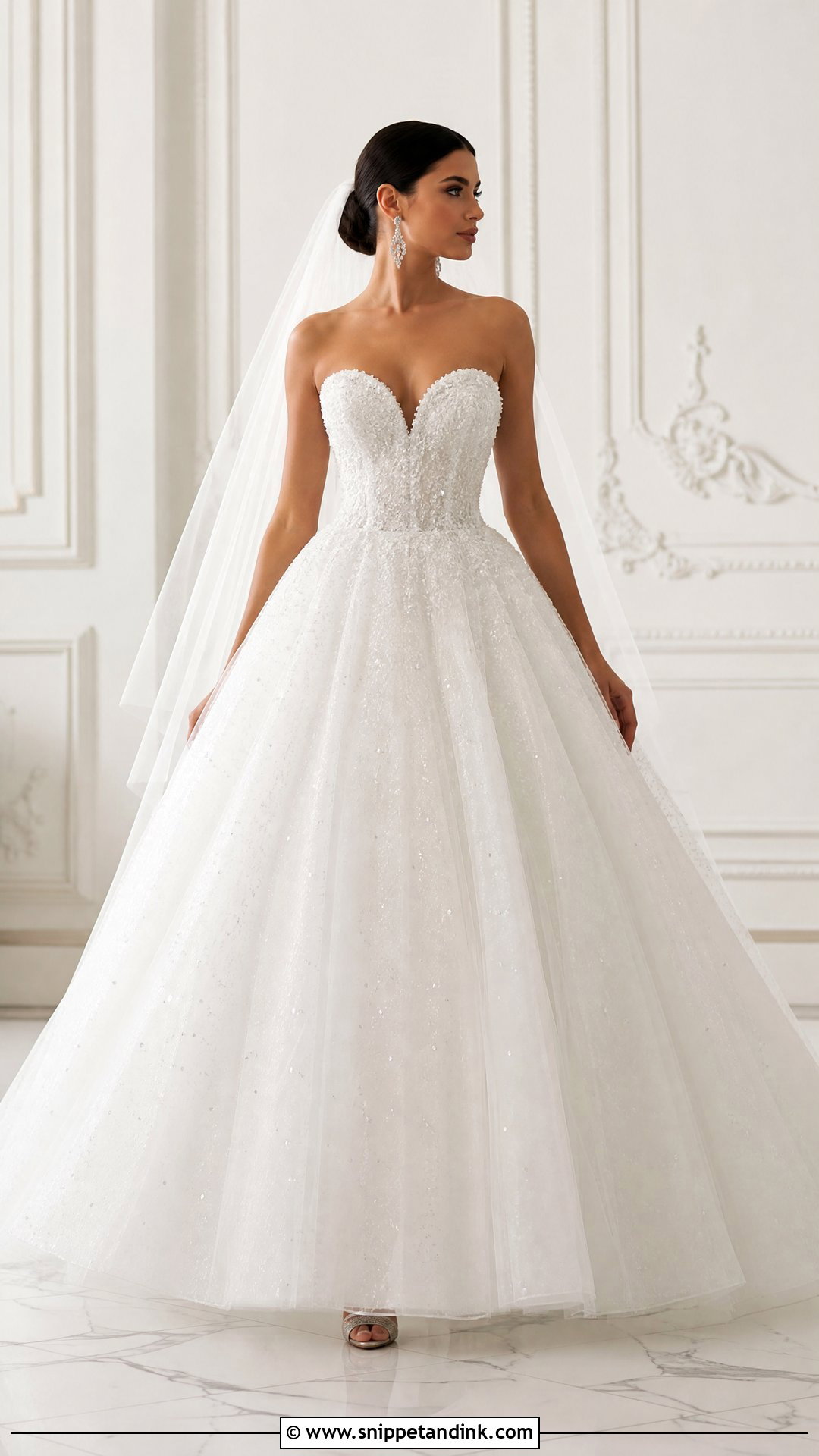
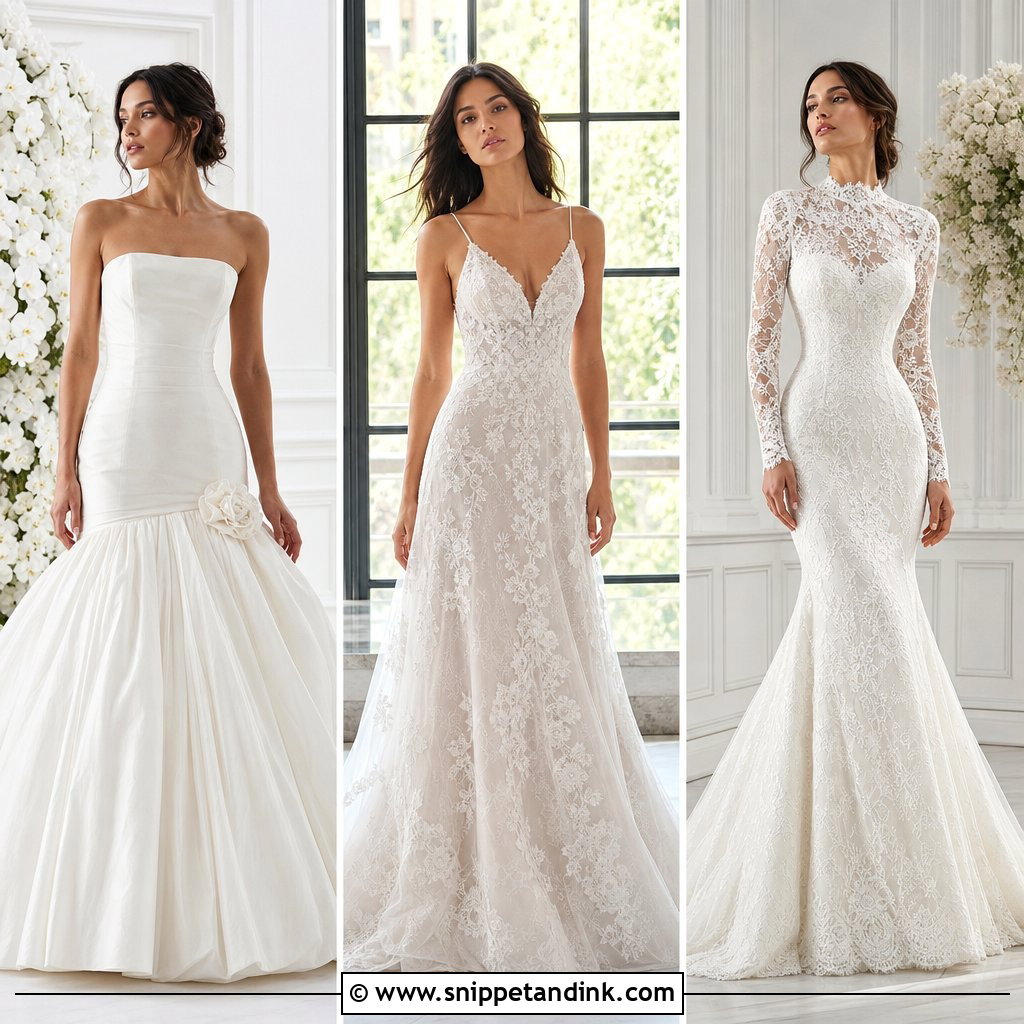
The beadwork here should do one job: pull the eye to the waist. A corseted sweetheart bodice gives the crystals something firm to sit on, and I’d rather see them clustered toward the waistline than sprinkled evenly to the hem, where they only add weight. Under a tulle skirt, the sparkle reads as a soft glint in moving light instead of a mirror ball. Keep the veil plain at fingertip length, wear crystal studs and silver-toned heels, and leave the neck bare. One honest warning from fittings: a strapless crystal bodice is heavy, so if you have a larger bust, ask for a boned inner corset rather than relying on the outer seams to hold you up.
3. Illusion Neckline Floral Wedding Dress
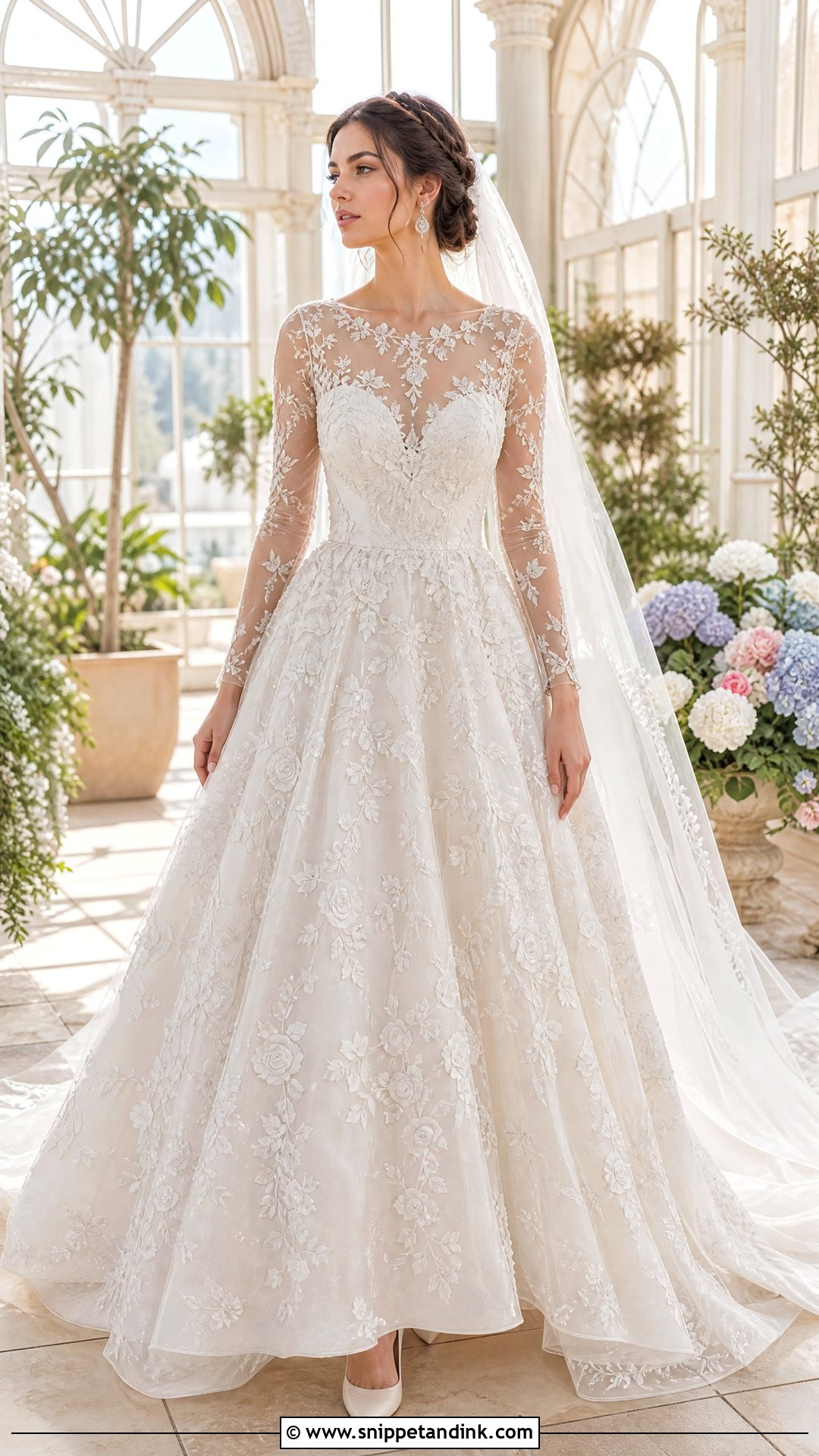
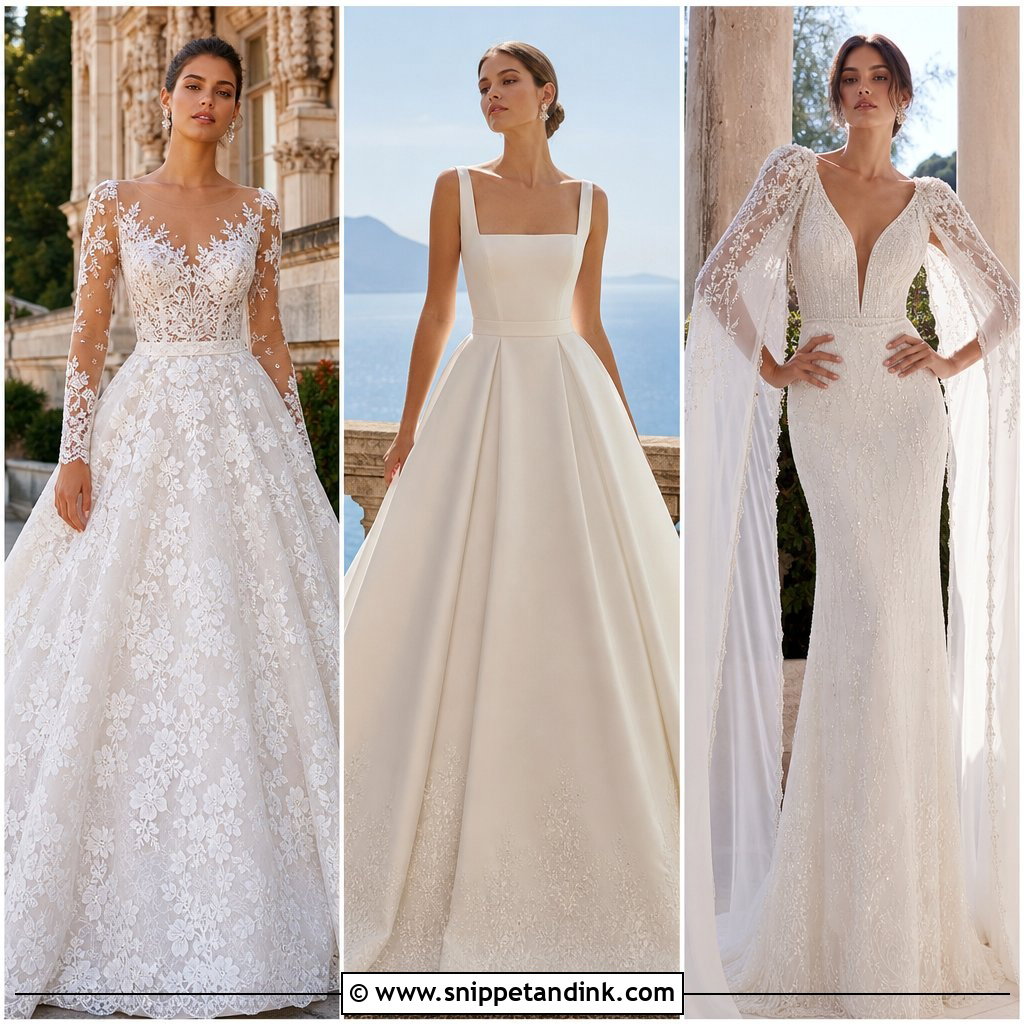
Illusion tulle gives you the line of a strapless gown with something actually holding it up. Floral appliqués that travel across the sheer shoulders and collarbone, then carry on into the A-line skirt, keep the dress reading as one piece. Before the final fitting I check where the tulle meets the skin under bright light, because a mismatched shade shows up as a grey band in flash photos; many salons can dye or swap the tulle to suit your skin tone. Style it with ivory pumps, small diamond studs and a sheer chapel veil. A soft braided updo echoes the texture of the flowers without competing with them.
4. Off Shoulder Cathedral Train Wedding Dress
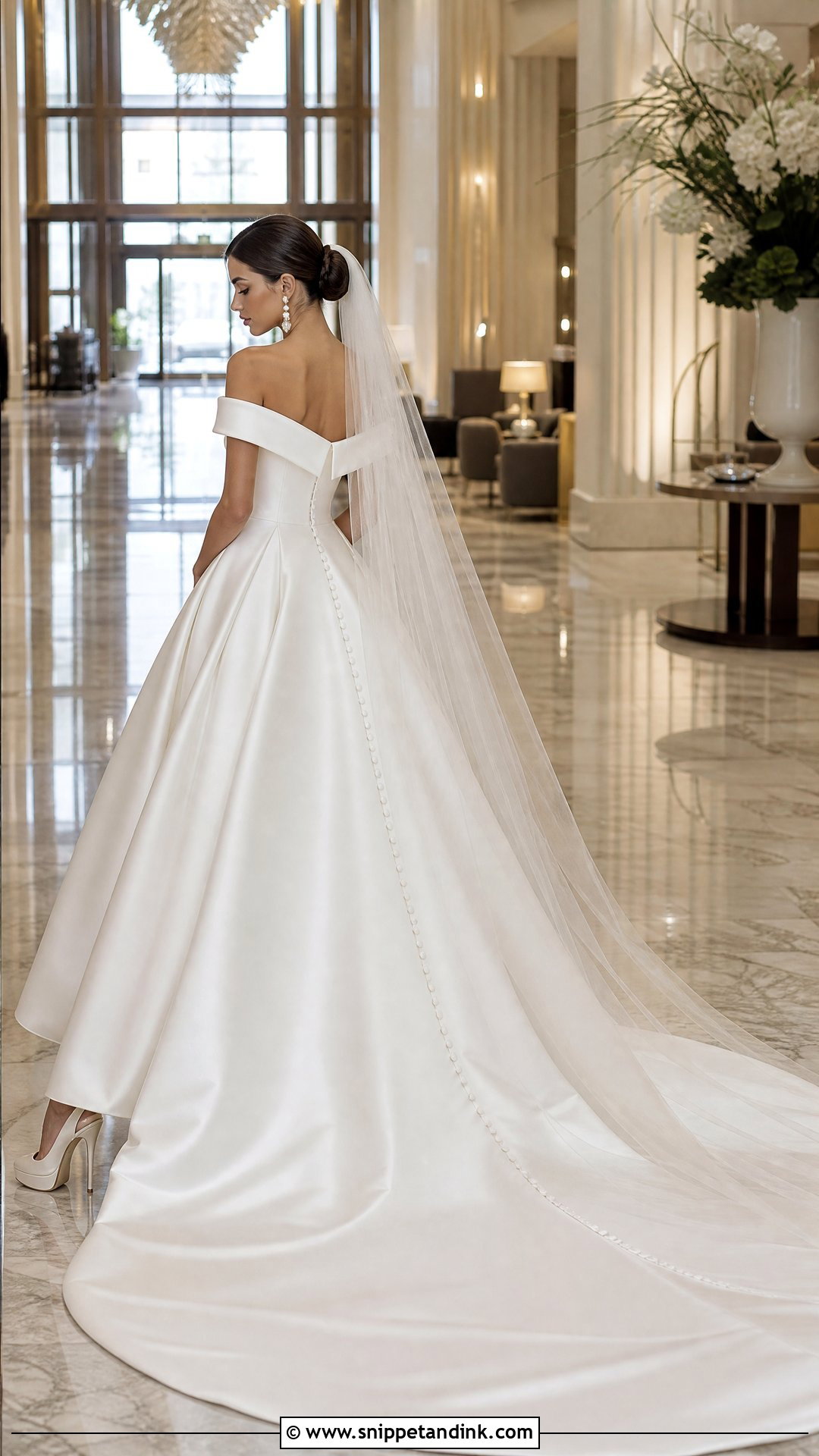
Here the train is the whole point, so everything else steps back. A folded off-shoulder neckline frames the collarbones, and internal corsetry has to do the holding, since nothing sits on the shoulders. I always have brides lift their arms and hug someone at the fitting: if the neckline creeps up, it needs silicone grip tape or a firmer bodice. A skirt cut from structured mikado or satin holds that smooth shape all day, whereas softer fabrics collapse by the reception. Choose a plain cathedral veil, pearl-and-diamond earrings, ivory platform pumps and a sleek low bun. A rounded bouquet keeps the silhouette clean. This needs a large ceremony space where someone can lay the train out properly before you walk.
5. High Neck Beaded Wedding Dress
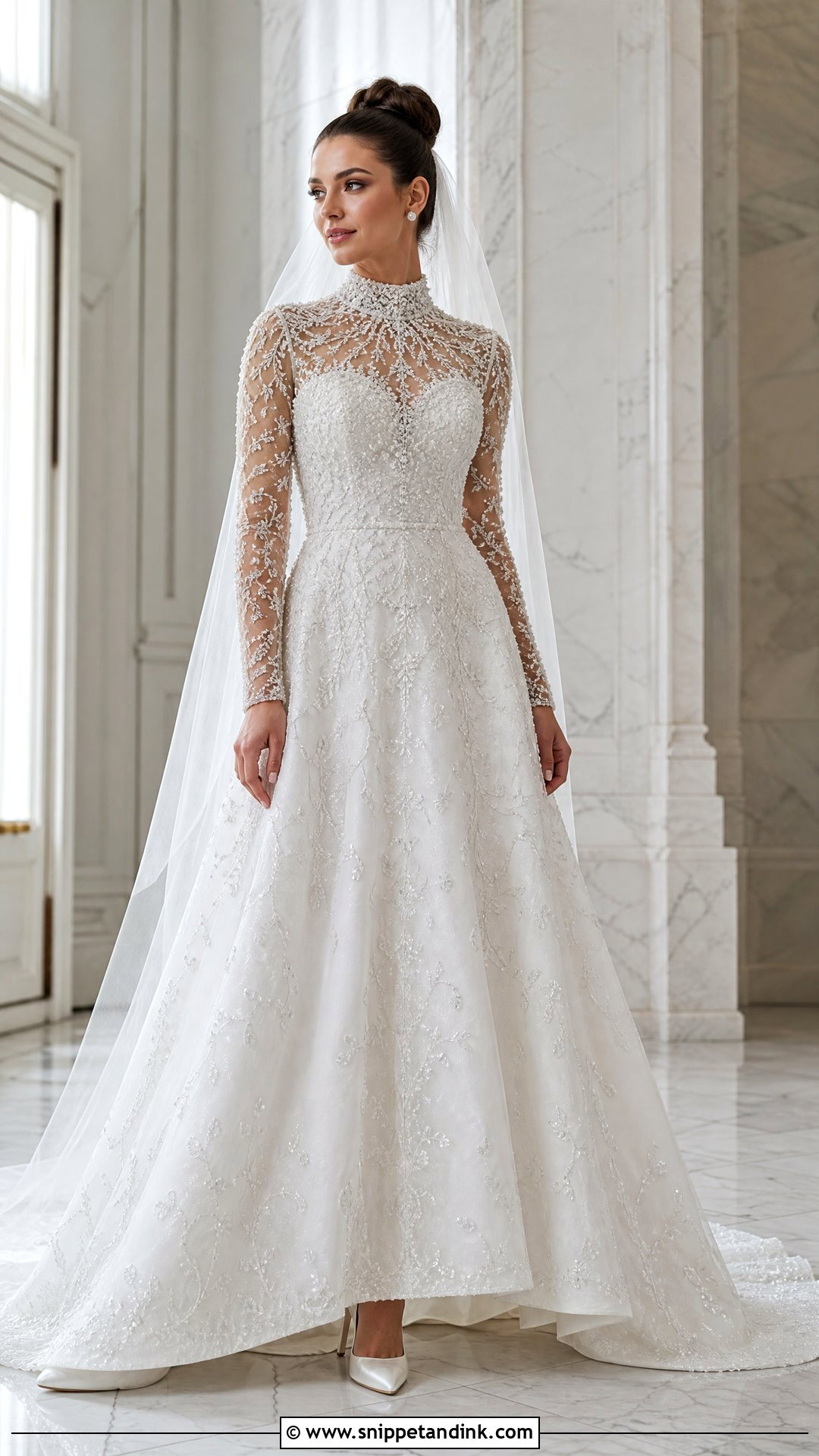
Covered doesn’t have to mean old-fashioned. On a high neck beaded gown, the sheer tulle at the throat and sleeves carries pearls, crystals and fine botanical embroidery, while a fitted waist and an A-line skirt calm the busy top half. Skip any necklace; it will catch on the beading and interrupt the neckline. I’d put the sparkle at the back instead, with a slim crystal comb above a neat bun and the veil anchored underneath it. Pearl studs and closed-toe satin heels finish it. One thing to test early: a high collar on a short neck can feel tight once you’re warm, so ask whether the neckband can be cut a touch lower or fastened with a hidden hook rather than buttons.
6. Corset Mermaid Lace Wedding Dress
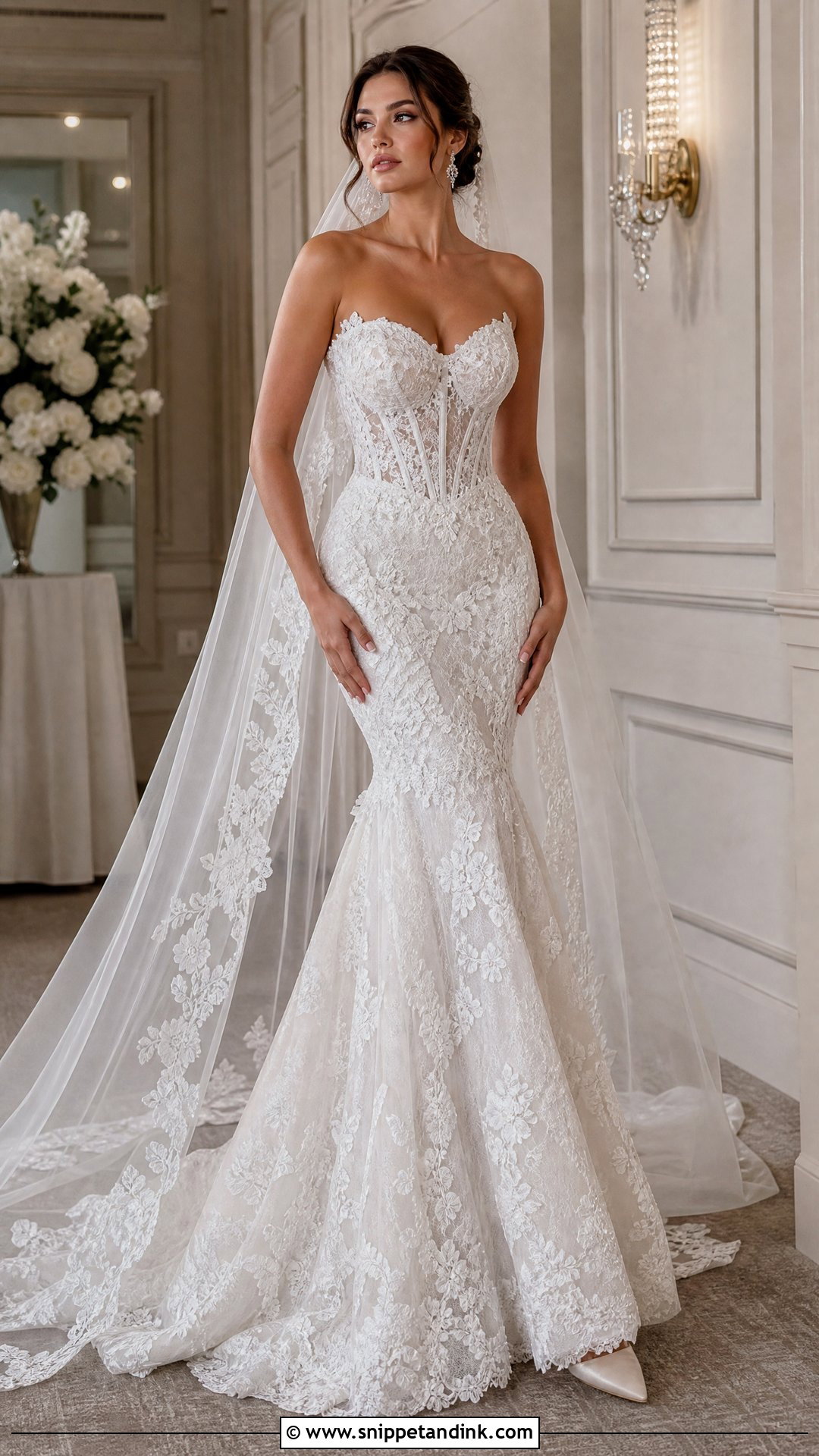
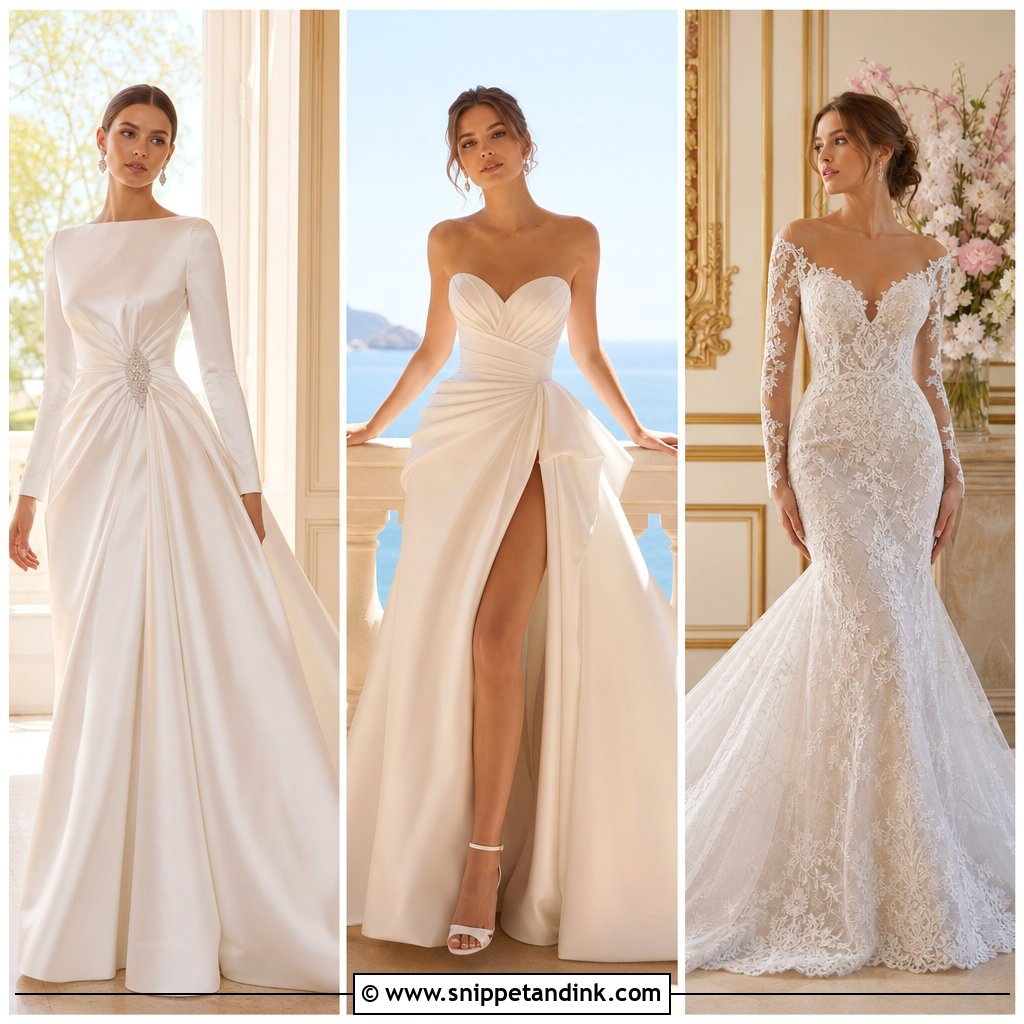
A visible boned corset under fine lace defines the waist more sharply than almost anything else on this list. The curved neckline softens the structure, and the skirt follows the hips before opening into a flared lace hem. Mermaid cuts are where I see the most fitting regrets, usually because the flare was set too low and the bride can’t climb a step. Sit, walk stairs and turn during every fitting until it feels natural. Then add a plain chapel veil, pointed pumps and drop earrings that lengthen the neck. Soft waves or a half-up style keep the lace from feeling severe.
7. Bridal Cape Sleeve Wedding Dress
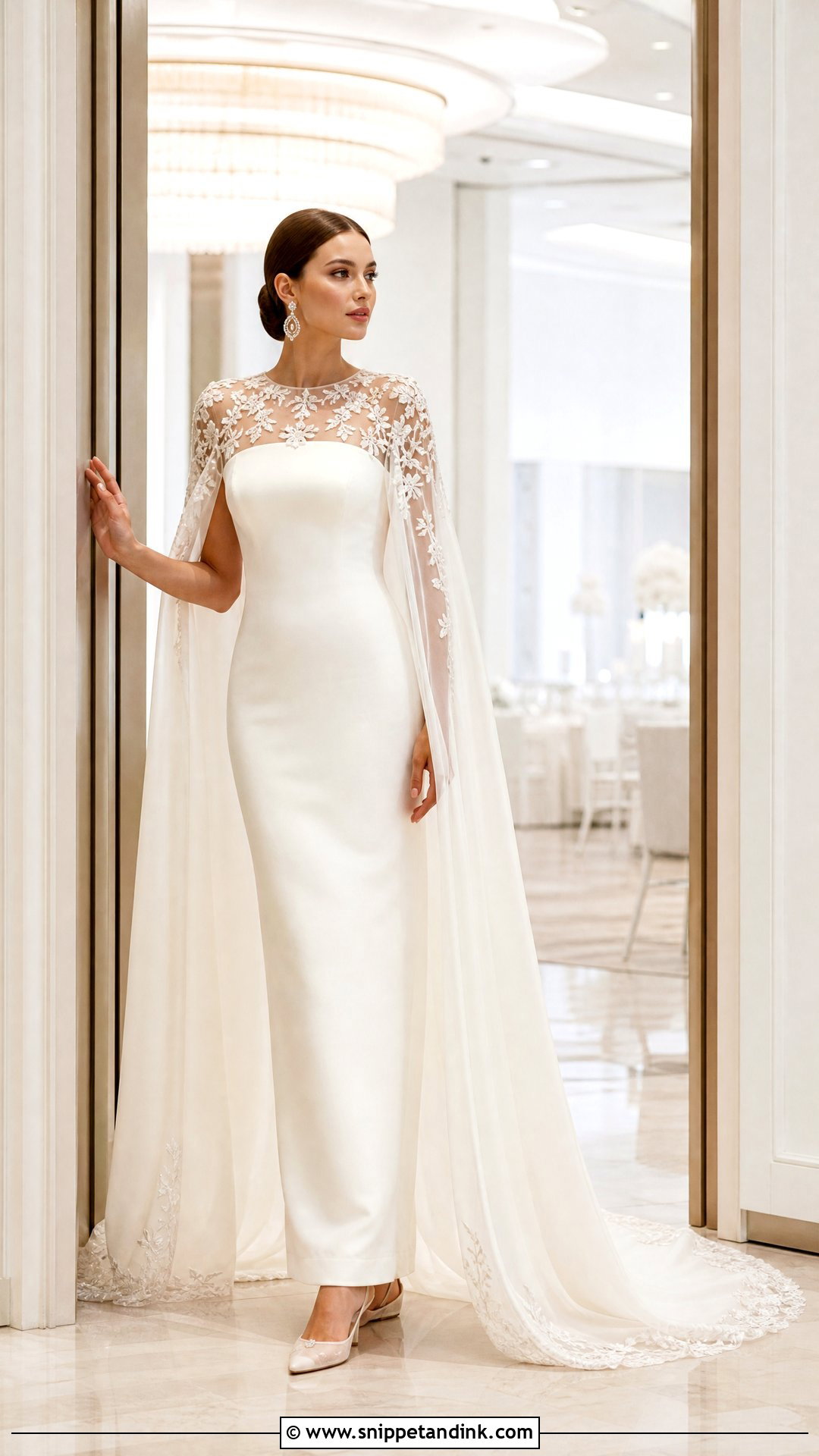
A cape does the work of a veil and a sleeve at once, which is why I love it on brides who feel exposed in a strapless gown but don’t want sleeves sewn in. Start with a clean fitted dress and a straight or gently curved neckline, then let the sheer embroidered cape fall from the shoulders into a floor-sweeping train. The fastening matters more than people expect. A cape clipped at the shoulder blades pulls backward when you raise your arms, so I look for one with a hook sewn into the bodice straps. Position the bun low enough to sit under that fastening and skip the traditional veil. Crystal earrings, ivory slingbacks and a small bouquet are plenty, and the cape comes off before the reception for an instant change.
8. Detachable Overskirt Wedding Dress
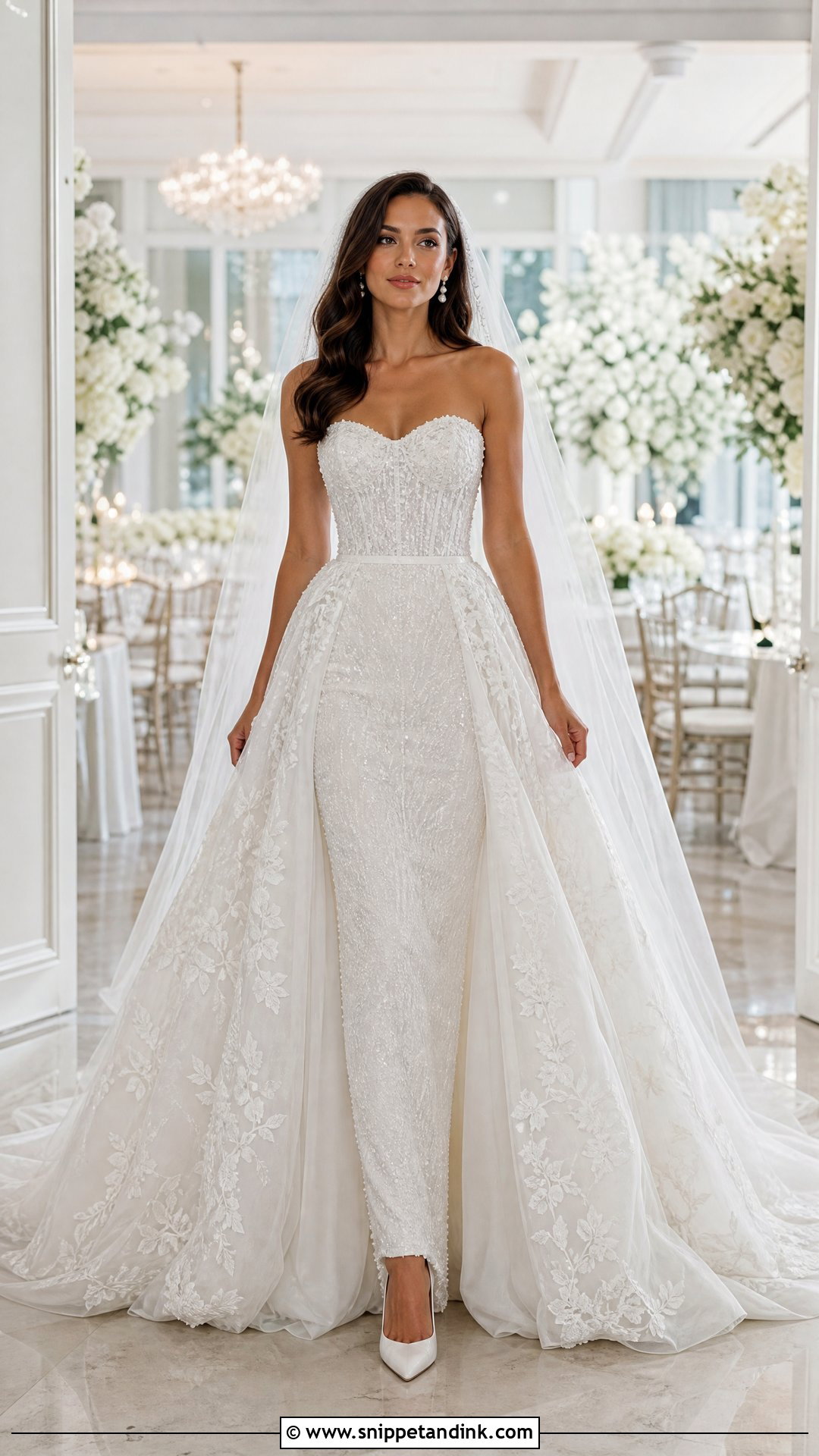
A detachable overskirt gets you two silhouettes from one dress. The base is a fitted lace or beaded column; over it goes a full tulle overskirt with a long train and appliqués matched to the gown underneath. The weak spot is the waistband. Snaps and hooks can leave a visible ridge, so at the fitting I ask to see the base dress alone and look for any bump at the waist before signing off. Wear a chapel veil, pearl earrings and pointed pumps you can stand in for hours. After the photos, the veil and overskirt come off, and a low ponytail or polished waves carry straight through both halves of the day.
9. Square Neck Satin Wedding Dress
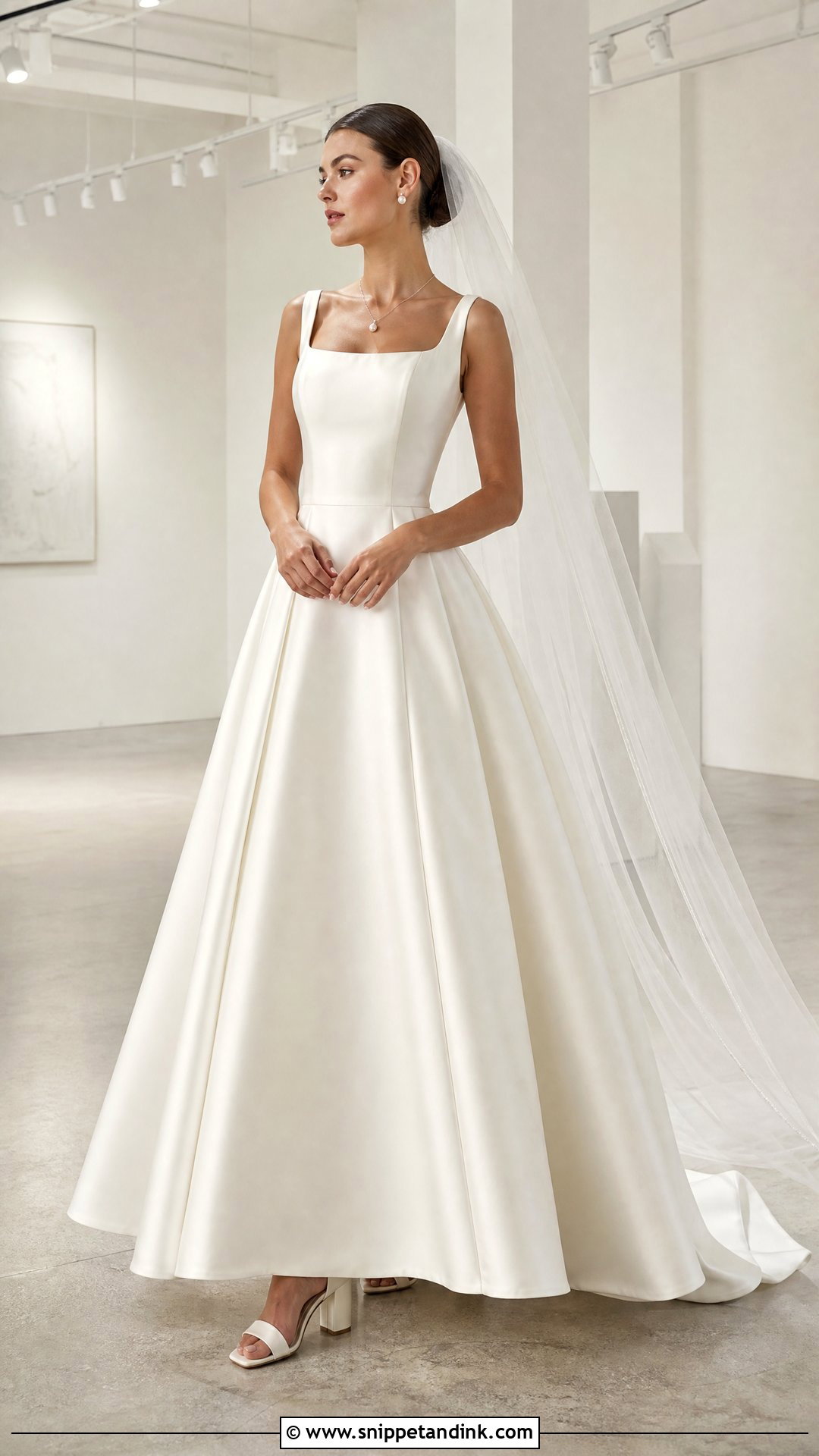
Plain satin hides nothing. With no beading to distract the eye, every pucker at a seam and every uneven hem shows, so this square-necked gown lives or dies on its tailoring. Wide straps and a clearly defined waist sit above a full skirt that should keep its shape when you stand still. The open square neckline is one of the few on this list that genuinely wants a necklace: a short pendant or a fine diamond strand sits right in that frame. Add pearl earrings, satin block heels and a long veil with a narrow rolled edge. It’s the gown I point to for brides planning to wear heirloom jewelry, because nothing on the dress competes with it.
10. 3D Floral A Line Wedding Dress
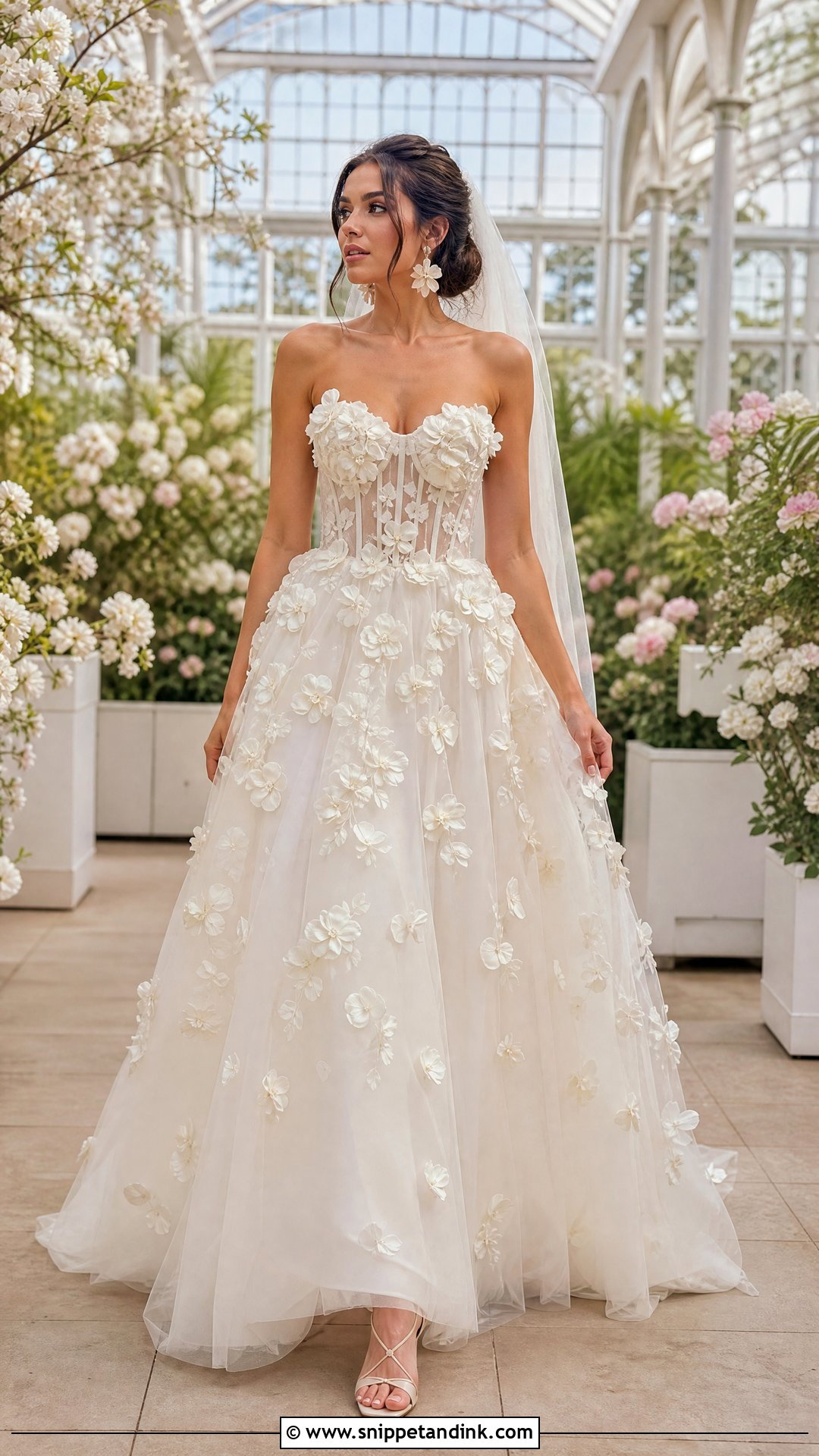
Three-dimensional flowers look best when they thin out as they travel down the skirt. A supportive corset bodice can carry the densest clusters, then the petals scatter lightly across a soft tulle base so the hem still moves. If the appliqués include pearls or tiny crystals, ask how they’re attached; hand-stitched petals survive a dance floor, glued ones often don’t. Simple ivory sandals, floral studs and a plain fingertip veil keep things from looking themed. Tuck two or three small floral pins into a loose updo at most. A garden or glasshouse in spring is the natural setting, and the A-line gives you room to walk across grass.
11. Pearl Embellished Column Wedding Dress
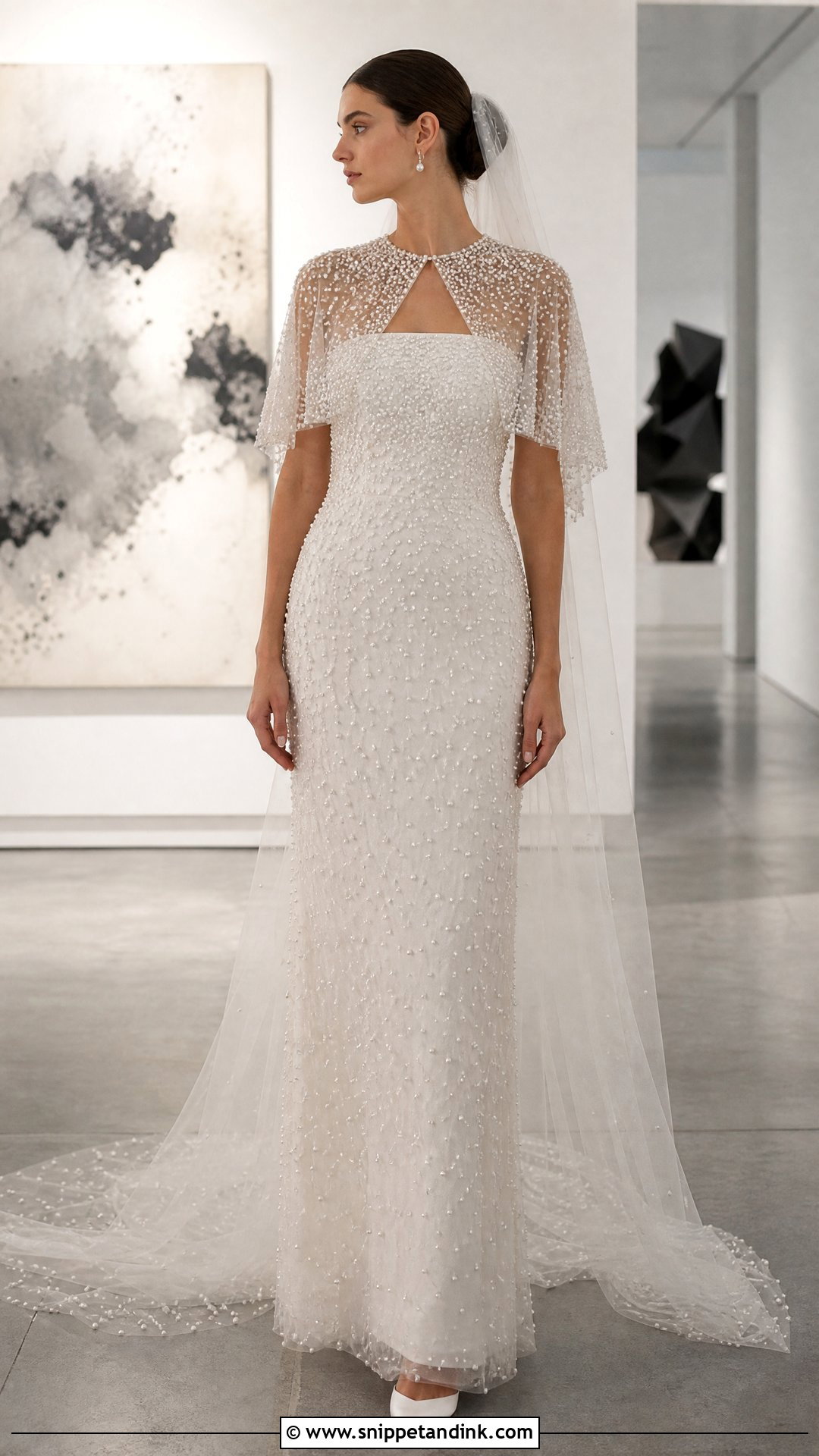
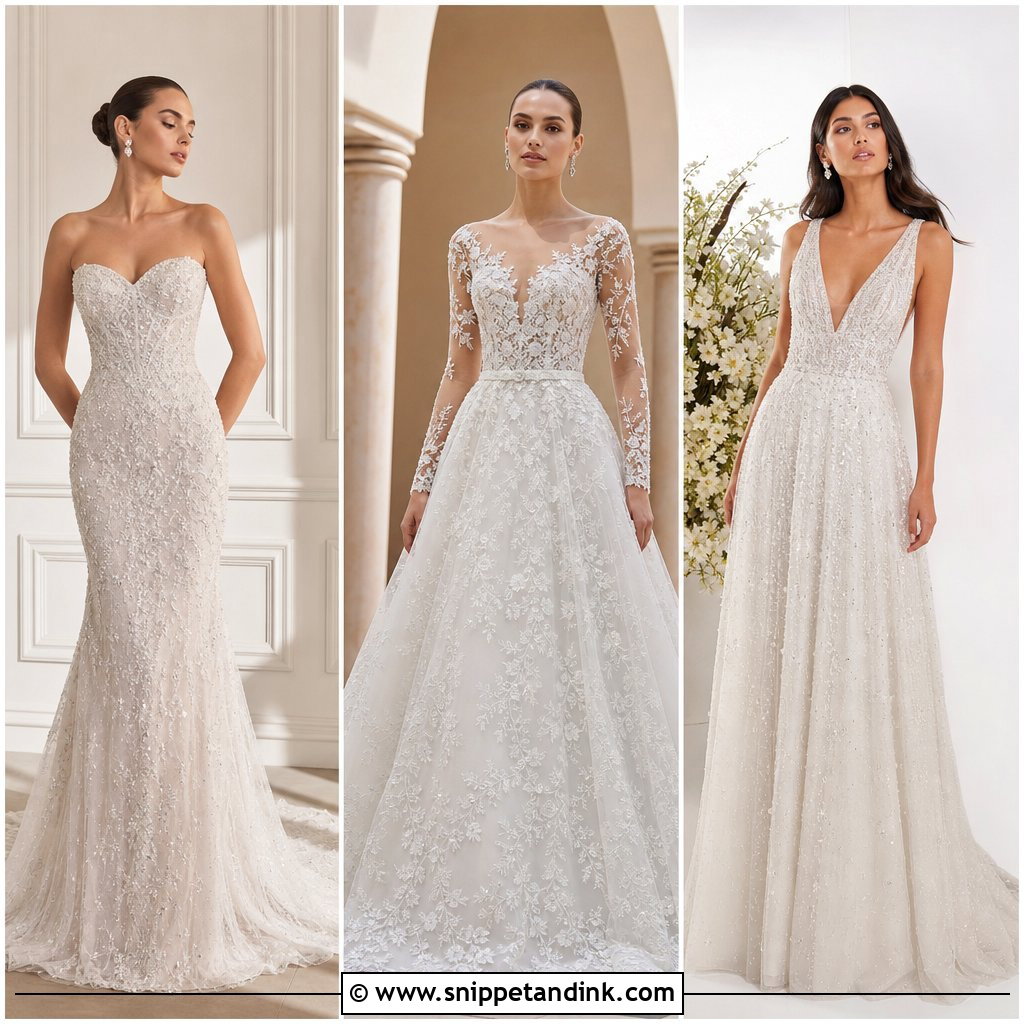
Pearls catch light more softly than crystals, so this column reads calmer and more modern in photos. Look for a slim gown with the pearls concentrated around the bodice and thinning toward the hem; that grading keeps the skirt light enough to fall straight. Because a column has little volume, I often suggest a removable tulle shoulder bow or a short cape for the ceremony. Pearl drops, pointed satin pumps and a simple chapel veil match the mood. A sleek bun keeps the look sharp, though controlled waves tucked behind the ears work if you’d rather not wear your hair up. Smaller formal venues suit it, as a narrow skirt is far easier to manage between tables.
12. One Shoulder Draped Wedding Dress
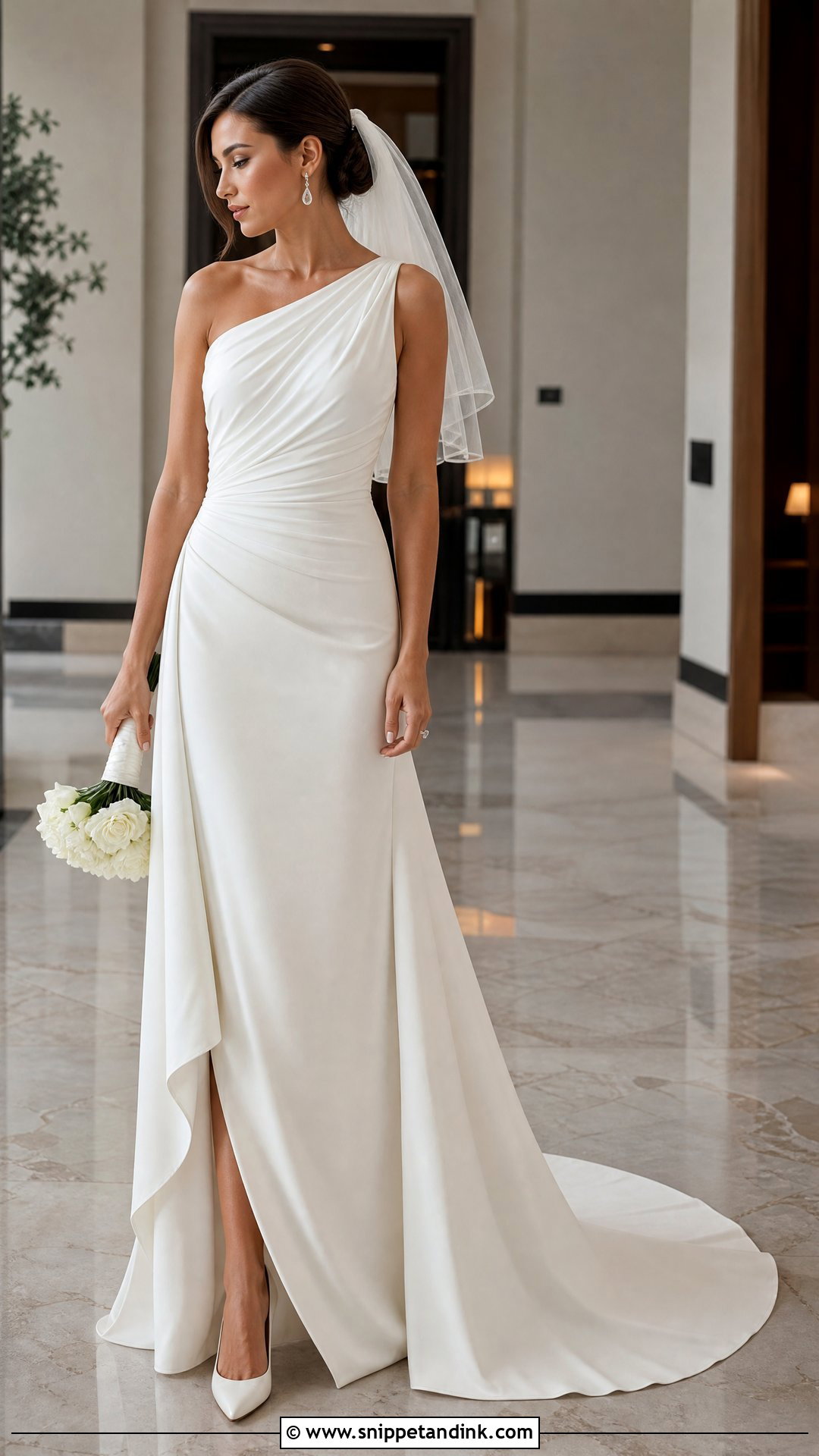
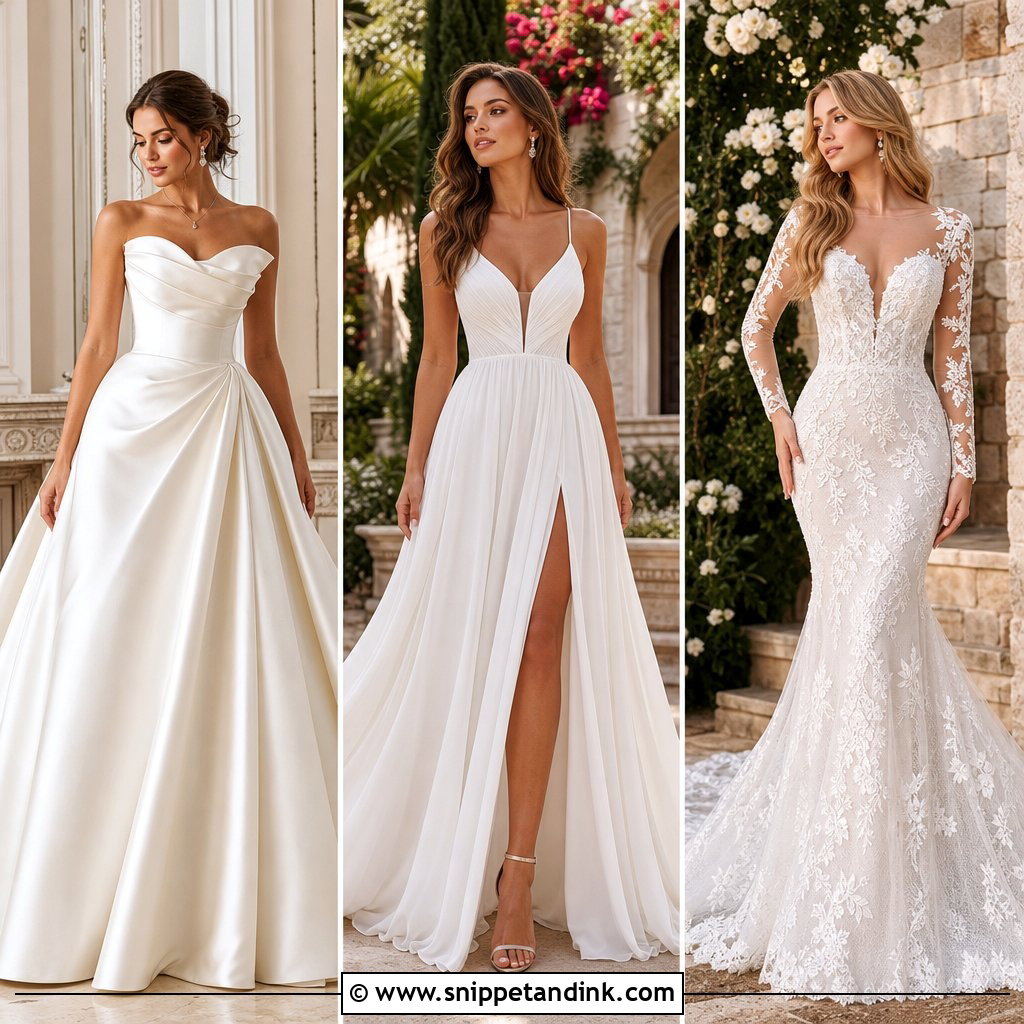
A one-shoulder gown gets its interest from the cut, not the decoration. Diagonal draping across a soft satin or crepe bodice leads into a fitted waist and a column or gentle A-line skirt, and an asymmetric train can continue the line of the neckline. Jewelry is where brides second-guess themselves. I usually suggest one statement earring on the bare side, or small diamond drops if a single earring feels too bold, and no necklace at all. Ivory heels and a wrist-length veil pinned under a side-parted bun finish it. Check the strap at every fitting; draped crepe relaxes with body heat and can slip by evening if it isn’t anchored with a hidden stay.
13. Basque Waist Ball Gown Wedding Dress
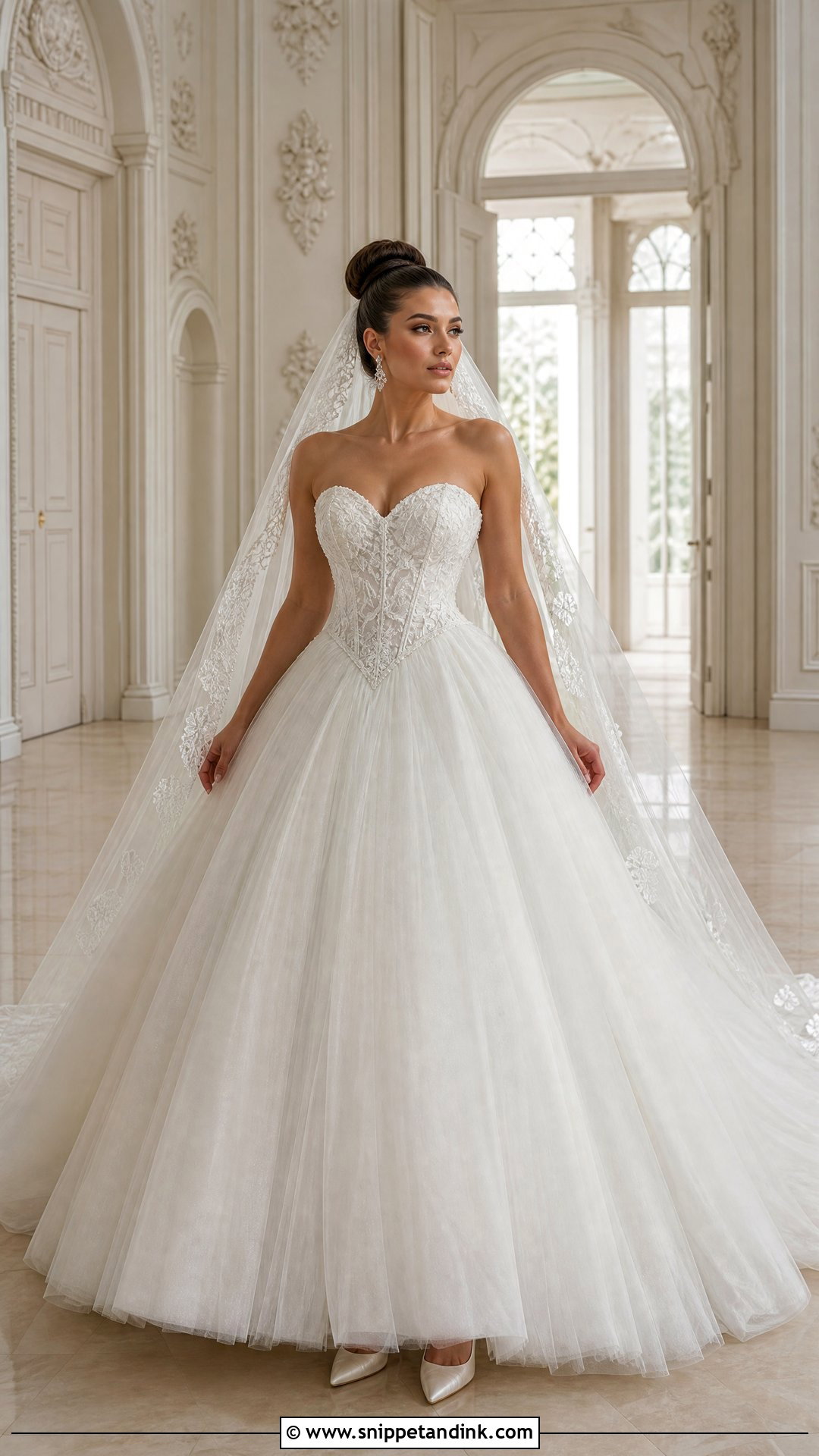
The basque waist extends the bodice into a V below the natural waistline, and it is one of the hardest details to alter well. If the point folds, buckles or tilts when you sit, the whole proportion collapses. I’d only take this gown to a seamstress who has worked on boned bodices before. When it’s done right, a strapless corset with a curved neckline and embroidery that fades out before the skirt makes the waist look remarkably defined. A full skirt of layered tulle or structured satin carries the drama. Sweep the hair into a high polished bun, add a cathedral veil, crystal earrings and closed-toe ivory pumps, and you have the most royal silhouette here.
14. Sheer Sleeve Embroidered Wedding Dress
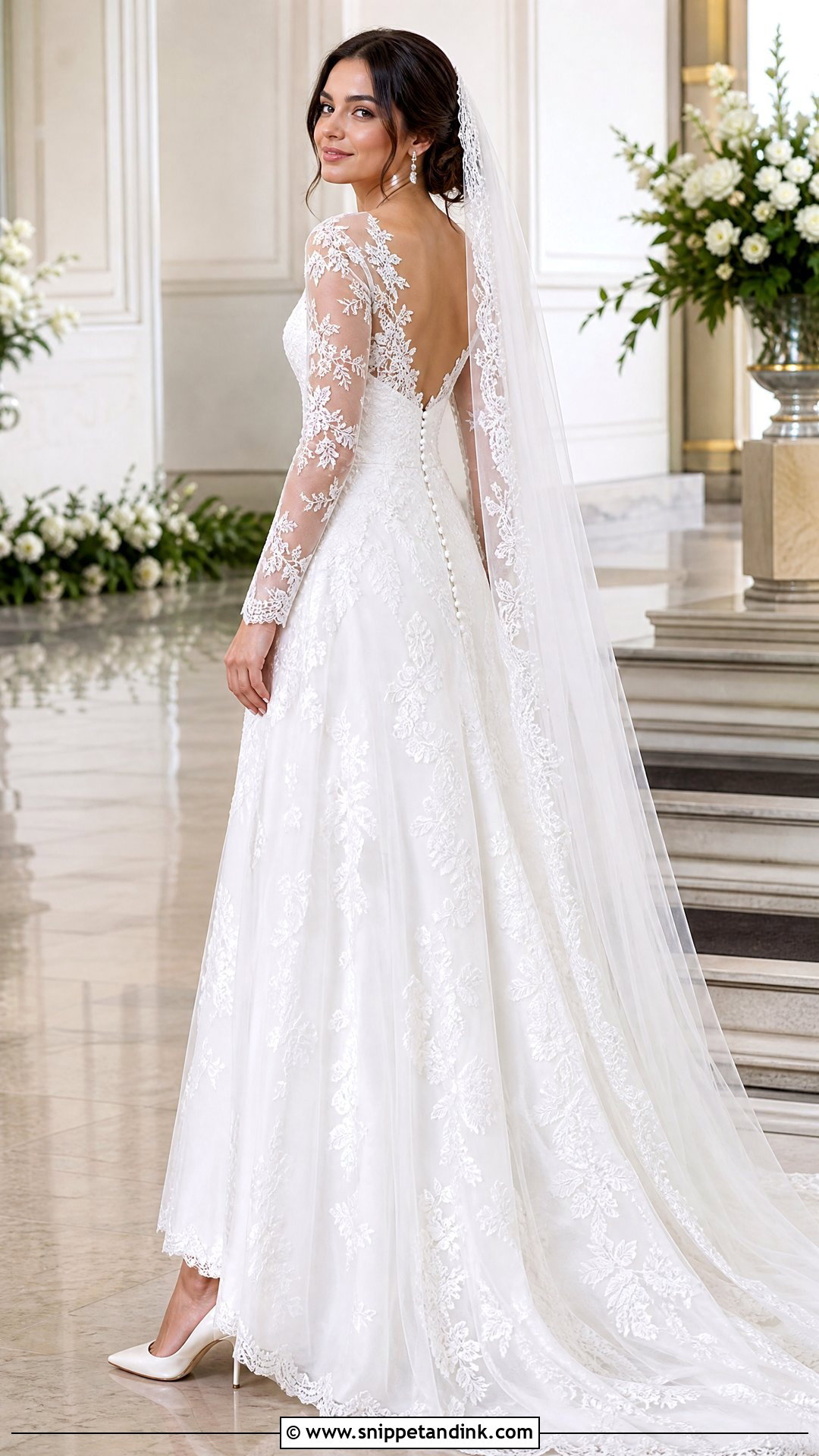
Sheer embroidered sleeves suit cooler weather and evening ceremonies, and they flatter more arms than solid lace sleeves do. The motifs should be placed deliberately across the arms, shoulders and neckline, then repeated on the skirt so the gown reads as one design. A line of fabric-covered buttons down the back adds a traditional touch, though I always remind brides that someone needs ten minutes and steady hands to close them. Pair it with a lace-edged veil, pearl earrings and satin pumps with a supportive heel. A low twisted bun keeps the back visible. Beyond that, leave the accessories off; the embroidery is already doing what jewelry would do.
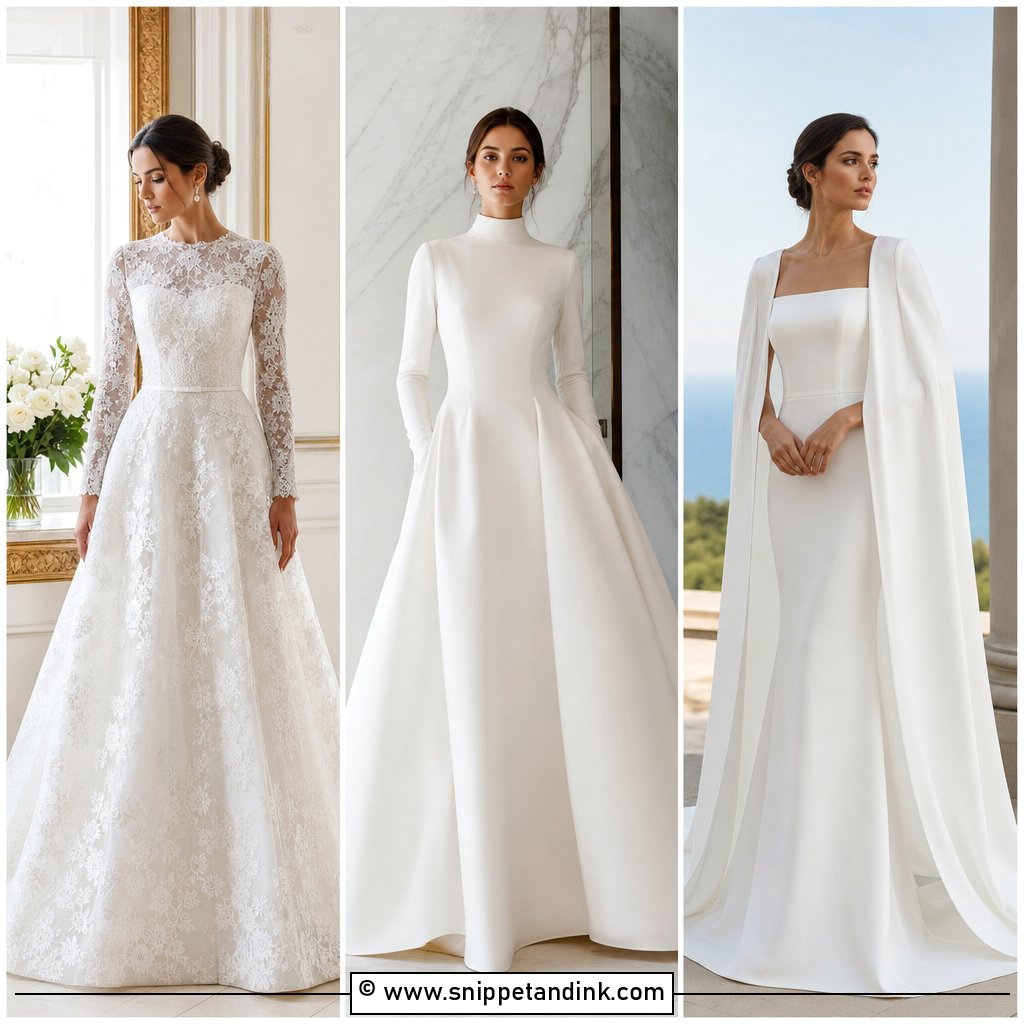
15. Plunging V Neck Lace Wedding Dress
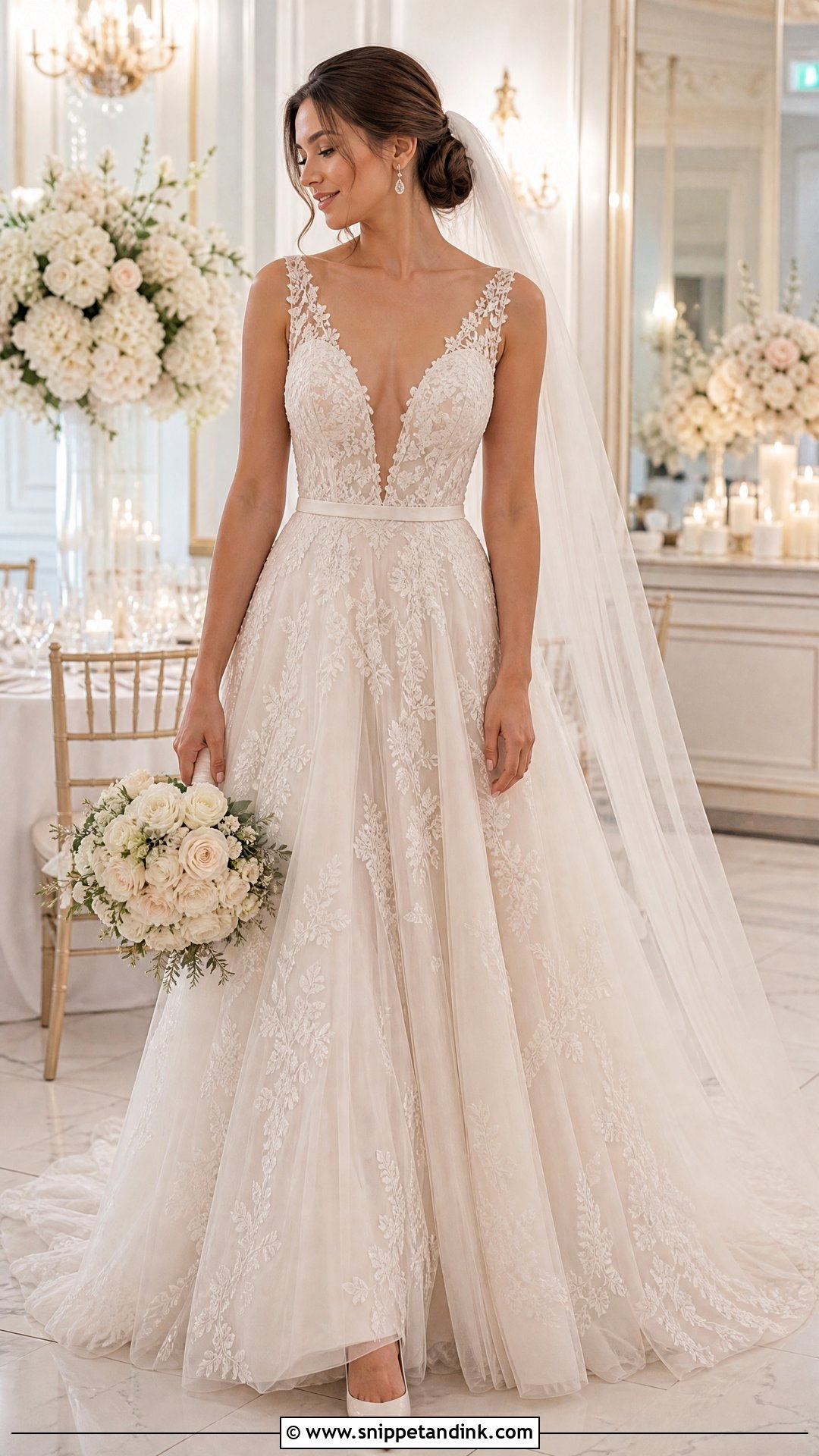
A plunging V-neck lace gown only looks elegant when the support is invisible and secure. Look for illusion tulle at the center of the plunge and wide lace straps that hold the shape, with a defined waistband and an A-line skirt balancing the depth of the neckline. At alterations I have brides sit, bend forward and raise both arms. If the edges of the V lift or gap, they need boning, a bra cup sewn in, or fashion tape on the day. Wear a plain veil, delicate drop earrings and pointed ivory shoes, with no necklace. Soft waves or a low textured bun keep it from feeling too formal for an evening reception.
16. Royal Train Embroidered Wedding Dress
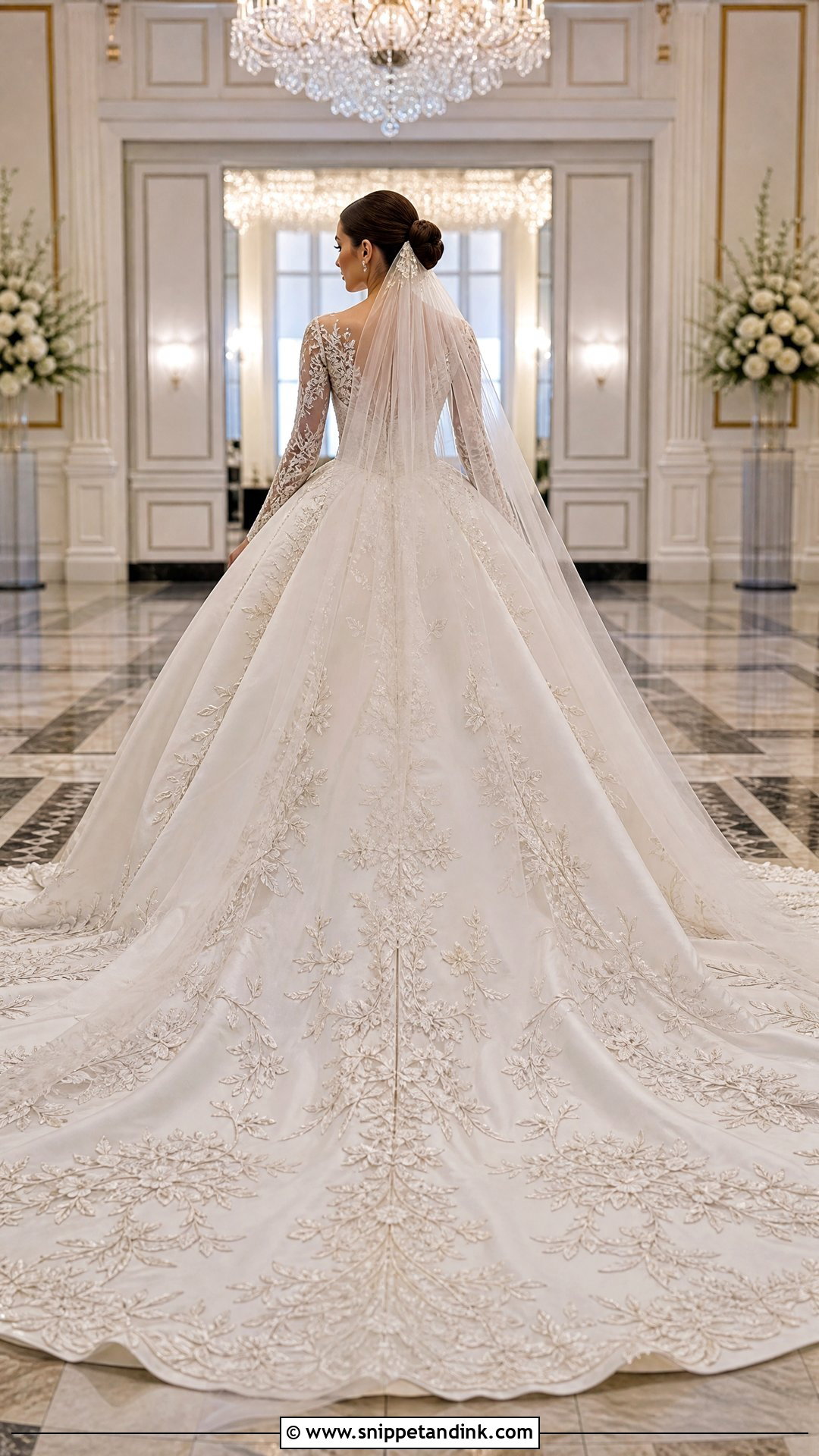
Couture houses often put their best embroidery on the train, which means the back of the gown is what your guests will remember. A structured ball gown with a fitted bodice lets the vines, leaves or symmetrical lace motifs travel down the skirt and spread across the extended train. Choose a long sheer veil so the embroidery shows through it. Crystal studs, ivory platform pumps and a polished bun are all it needs. Ask the salon to bustle the train in front of you at the final fitting, and bring whoever will do it on the day. A heavily embroidered train needs more bustle points than a plain one, otherwise it sags between the hooks.
17. Sculpted Satin Mermaid Wedding Dress
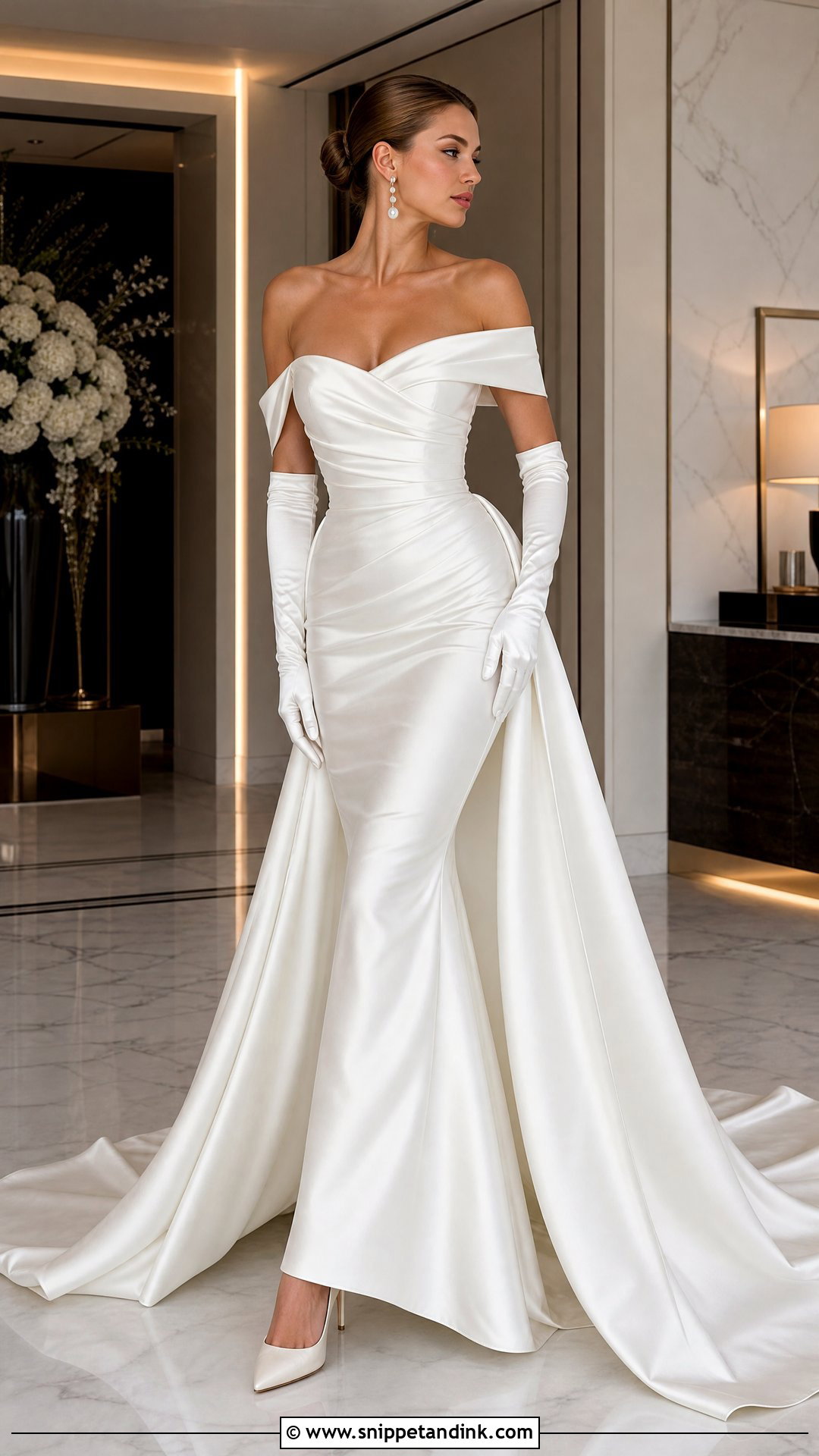
Smooth satin shows every seam, so a mermaid in this fabric needs the most precise tailoring on the list. Look for a sculpted bodice with an angled or folded off-shoulder neckline, then a skirt that fits through the hips and flares near the knee. A detachable satin train adds ceremony drama and comes off for dancing. Satin also creases the moment you sit, especially across the lap, so I steam it on the morning and keep the bride standing between car and aisle if I can. Pearl drops, ivory pumps and a simple veil under a sleek bun keep it architectural. Satin gloves for the formal portraits, removed at the reception, are a nice touch. If lace and crystals aren’t for you, this is the gown to try.
18. Feather Trim Reception Wedding Dress
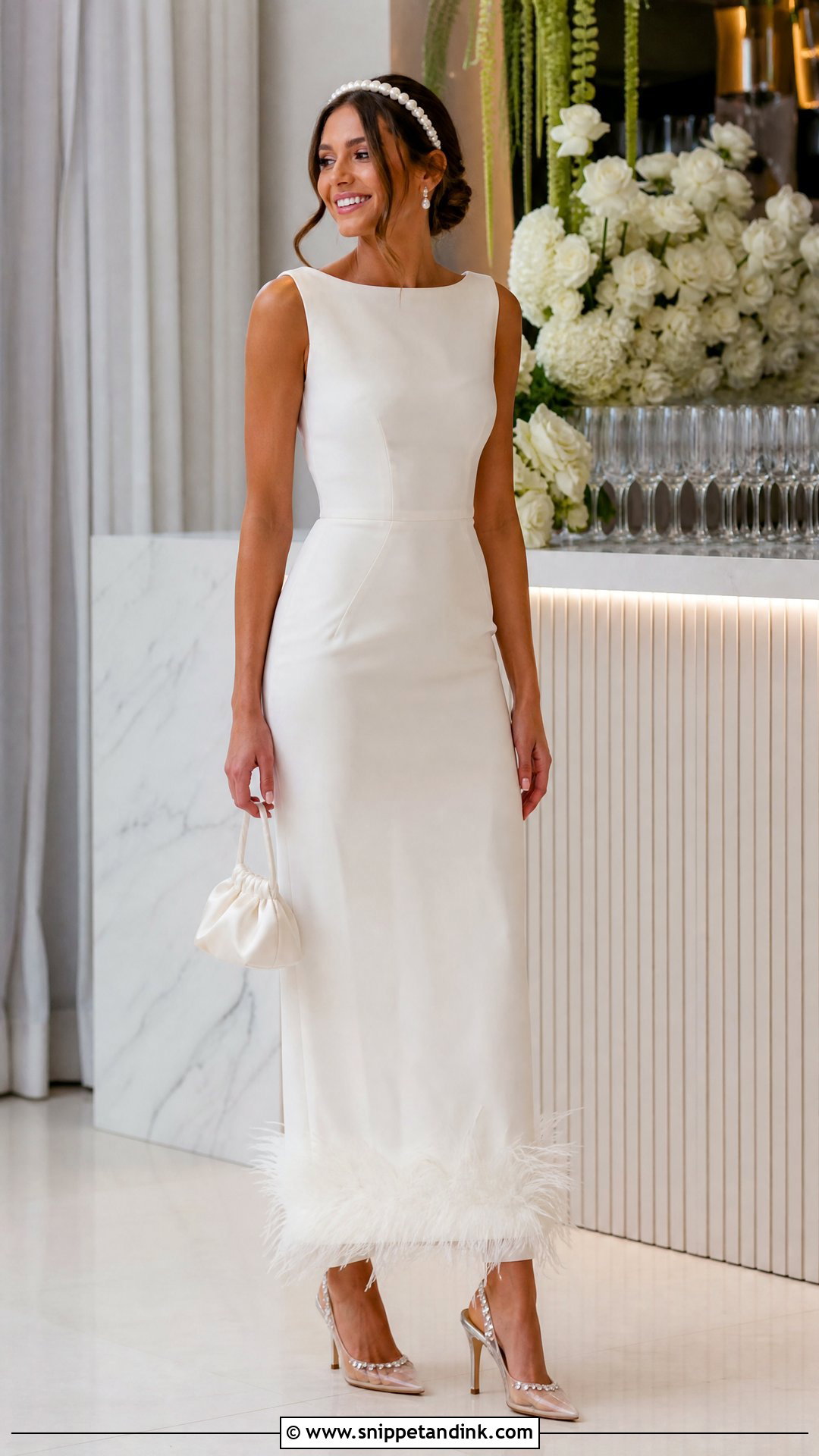
Feathers belong in one place on a dress, not everywhere. Restrained trim at the neckline or the hem of a fitted midi or ankle-length dress gives movement without looking costumey, and it photographs far cleaner than feathers scattered over the whole body. Ask how they’re attached before you buy; ostrich and marabou shed, and a dress with loosely stitched trim will leave fluff on everyone you hug. Crystal slingbacks, small drop earrings and a miniature satin bag work well. Swap the ceremony veil for a pearl headband or a sparkling comb, and pull the hair into a high ponytail or a smooth bun that matches the livelier mood of the party.
19. Beaded Mini Reception Wedding Dress
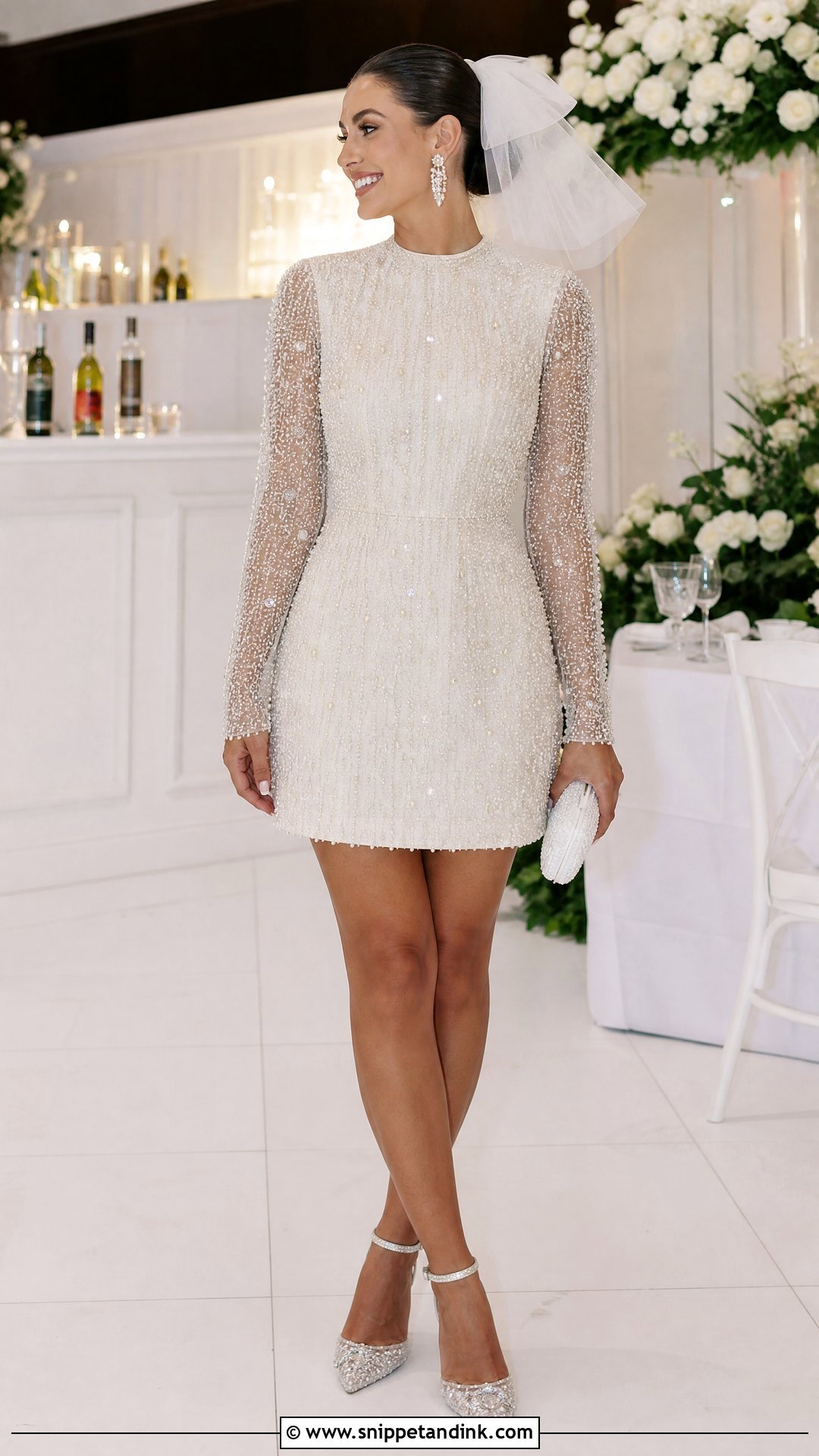
A beaded mini is the easiest way to dance after a formal ceremony, but it has to look bridal rather than like a cocktail dress from the same shop. Long sheer sleeves, a secure neckline and evenly hand-placed beads or crystals help, and so does a white or ivory lining. Sit down in it before you commit. Minis ride up more than you expect, and a stiff beaded skirt won’t stretch to cover the gap. Pointed pumps or embellished block heels, statement earrings and a compact white clutch complete it. Swap the full veil for a short bow veil or a jeweled clip so the head still says bride.
20. Lace Wedding Dress With Cathedral Veil
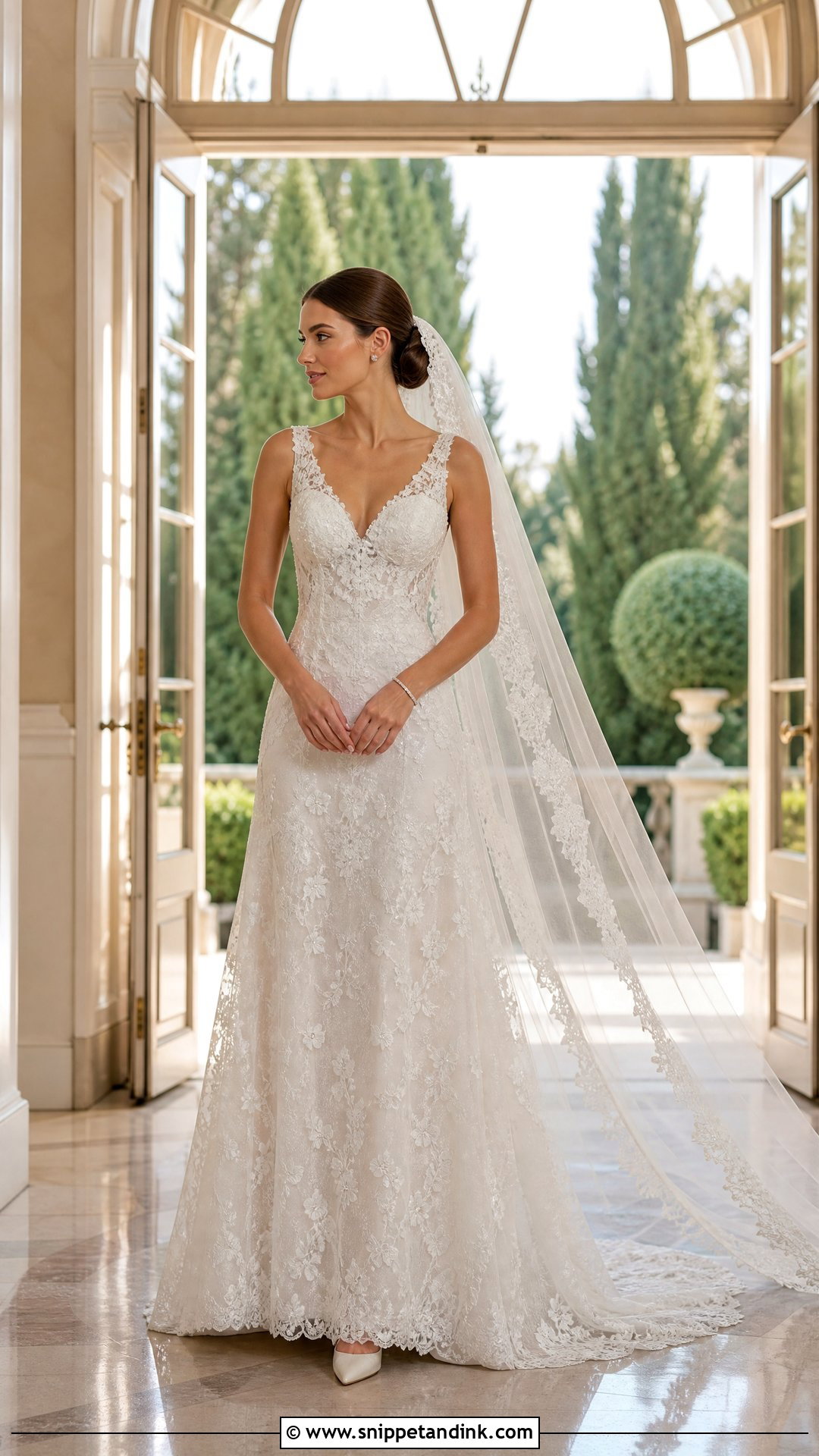
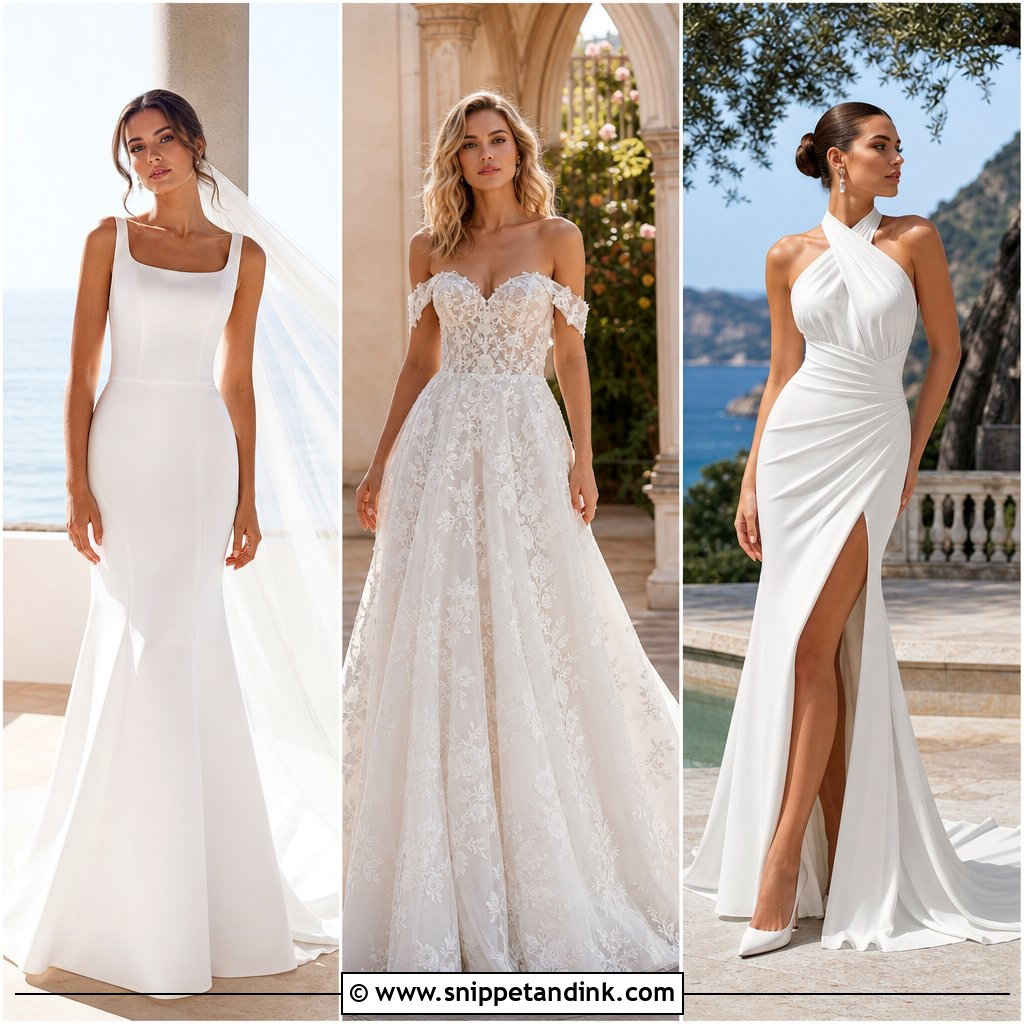
This pairing works in almost any venue because it relies on proportion rather than one show-stopping detail. Start with an A-line or softly fitted gown with lace spread evenly across the bodice, waist and skirt. The veil can repeat those motifs along its border, but avoid stacking dense lace over the busiest parts of the dress; layered lace turns into a flat white blur in photos. The veil should run beyond the train, and someone needs to arrange it before the processional and again before the formal portraits. Keep the hair in a secure low bun so the comb sits flat. Pointed ivory pumps, diamond studs and a small bracelet give all the sparkle it needs.
How a Heavily Beaded Gown Feels by the First Dance
Embellished couture gowns are heavy. Crystals, pearls and layered tulle add up, and by evening that weight is either resting on your hips or dragging on your shoulders. The difference is construction. A well-made gown has a firm waist stay or inner corset that carries the skirt from the waist, so the straps and sleeves are only there for shape.
At the last fitting, wear your actual shoes and spend twenty minutes in the dress. Sit, stand, go up a step and lift your arms. If your shoulders ache or the bodice drops, it will be worse by midnight, and a seamstress can usually add internal support at that stage. Practice the bustle too. An embroidered train needs more pick-up points than a plain one, and whoever closes it on the day should do it once before the wedding.
After the wedding
Never iron over beading. Steam from the inside of the skirt, a hand’s width away, and leave any embroidered sections alone. Once the gown is cleaned, store it flat or folded in acid-free tissue inside a breathable box rather than a plastic bag. Hanging a beaded gown by its shoulders for months stretches the fabric, so if it has to hang, use the inner waist loops.
Twenty Couture Gowns and the One Rule They Share
Look back over these twenty and the best ones all hold something back. The Zuhair Murad Bridal and Elie Saab looks that work hardest let one feature lead, whether that’s a train, a neckline or the embroidery itself, and keep the jewelry and shoes quiet around it. When you try them on, judge the gown from behind and while sitting, not just in the mirror. Ask how the train bustles and how the detachable pieces come off. The dress that fits securely and still lets you move after ten hours is the one that will feel like yours in the photos.
You'll Like These Ideas:


Leave a Reply