
A revealing gown works when the daring part is backed by real structure underneath. Below are sheer fabrics, plunging necklines, open backs, high slits, sculpted corsets and cutouts across very different silhouettes. My rule at every appointment is one or two focal points, never five; a plunge plus an open back plus a slit on one dress usually means none of them reads clearly. Built-in support, careful alterations, mesh matched to your skin and restrained accessories are what let you forget about the dress after the first hour. Lace, satin, tulle and crepe each handle exposure differently, and the notes on each idea explain how.
Planning a Second Layer for the Ceremony
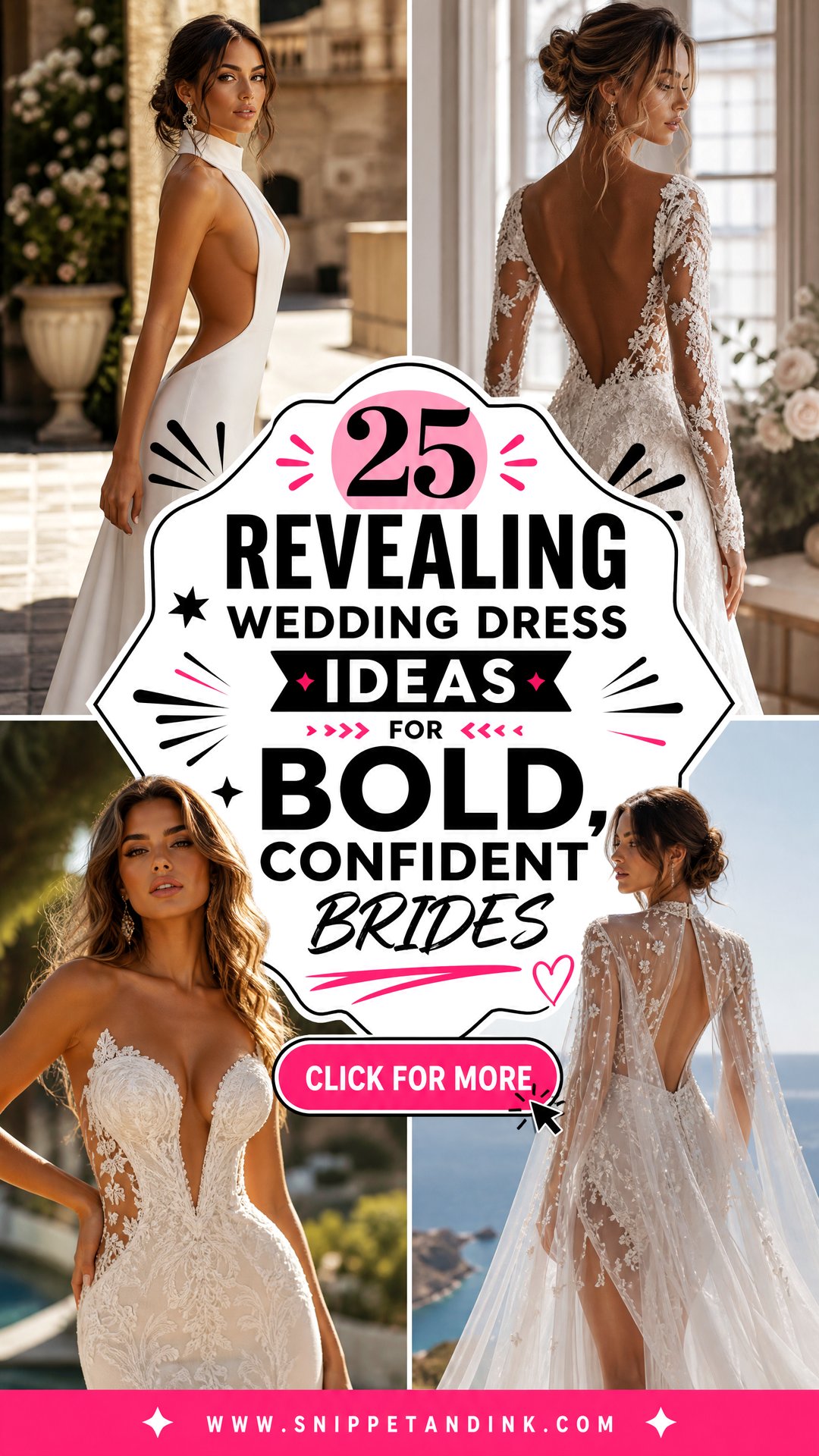
Before falling for a backless or sheer gown, find out what your ceremony venue expects. Many churches, temples and mosques ask for covered shoulders during the service, and some for covered arms or a higher neckline. Families can have expectations too. None of that rules out a revealing dress. It means planning the cover from the start, so it looks designed rather than borrowed.
- A sheer bolero or shrug in matching lace covers shoulders and arms and comes off in seconds.
- A cathedral veil in heavier tulle, or with a lace edge, drapes over an open back during the vows.
- A tulle cape fixed at the shoulders gives coverage that still moves.
- A detachable overskirt deals with a high slit or a mini.
Have the cover-up ready by your final fitting so it can be checked against the dress. Ivory against ivory rarely matches by eye, and a near-miss looks worse than a deliberate contrast.
1. Sheer Corset Wedding Dress
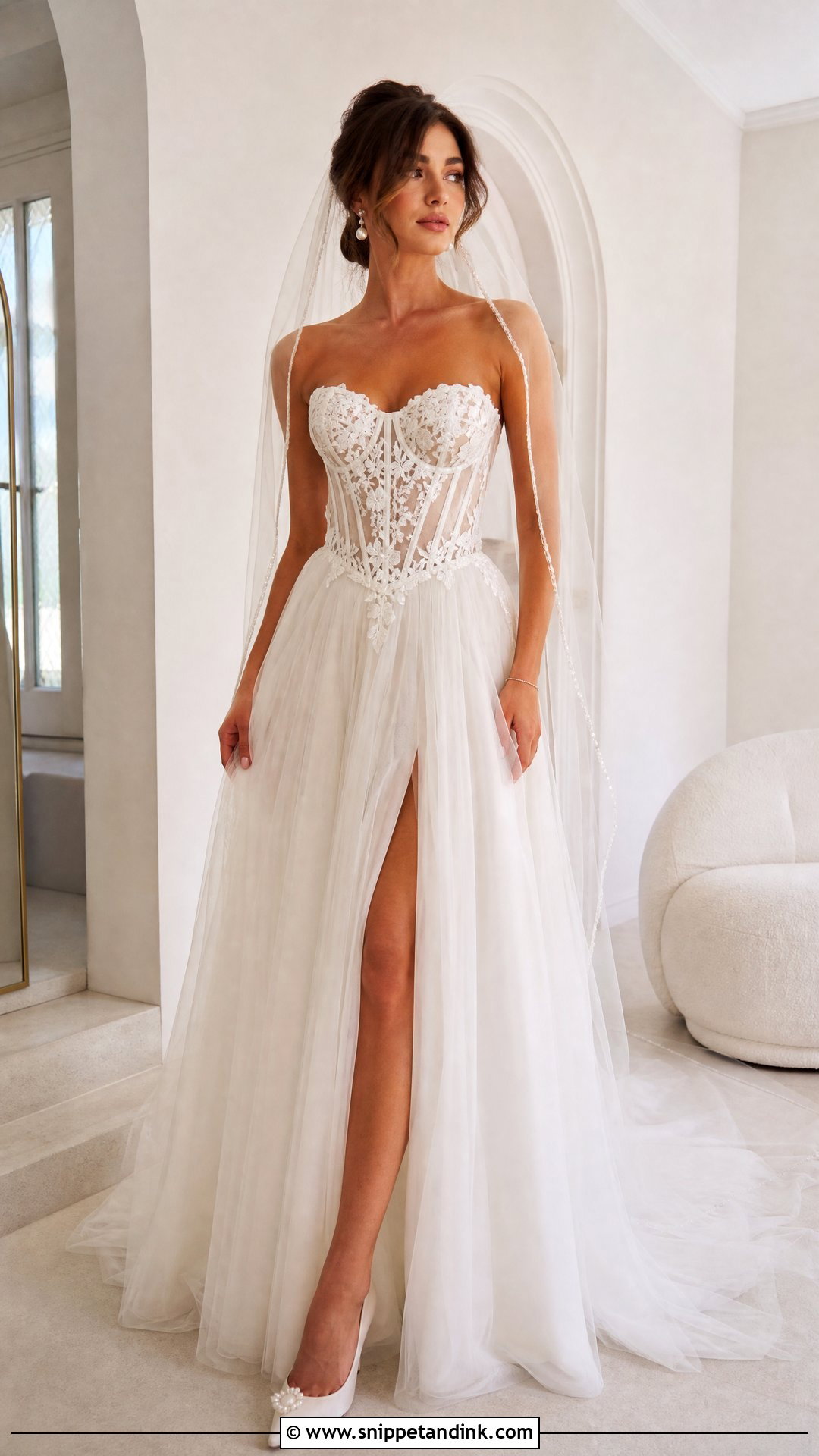
Exposed boning is the point of this dress, so it has to sit flat. Poorly made corsets show bones that twist or bow at the waist, and I check each one runs straight from cup to hip while the bride is seated, because that’s where they buckle. Look for supportive cups and lace appliqués placed where you want coverage, over an A-line or flowing tulle skirt. Removable cups, extra appliqués or a custom skin-tone lining can all be added at alterations. Try the bodice by a window too, since daylight shows sheerness far more than shop lighting does.
2. Deep V-Neck Wedding Dress
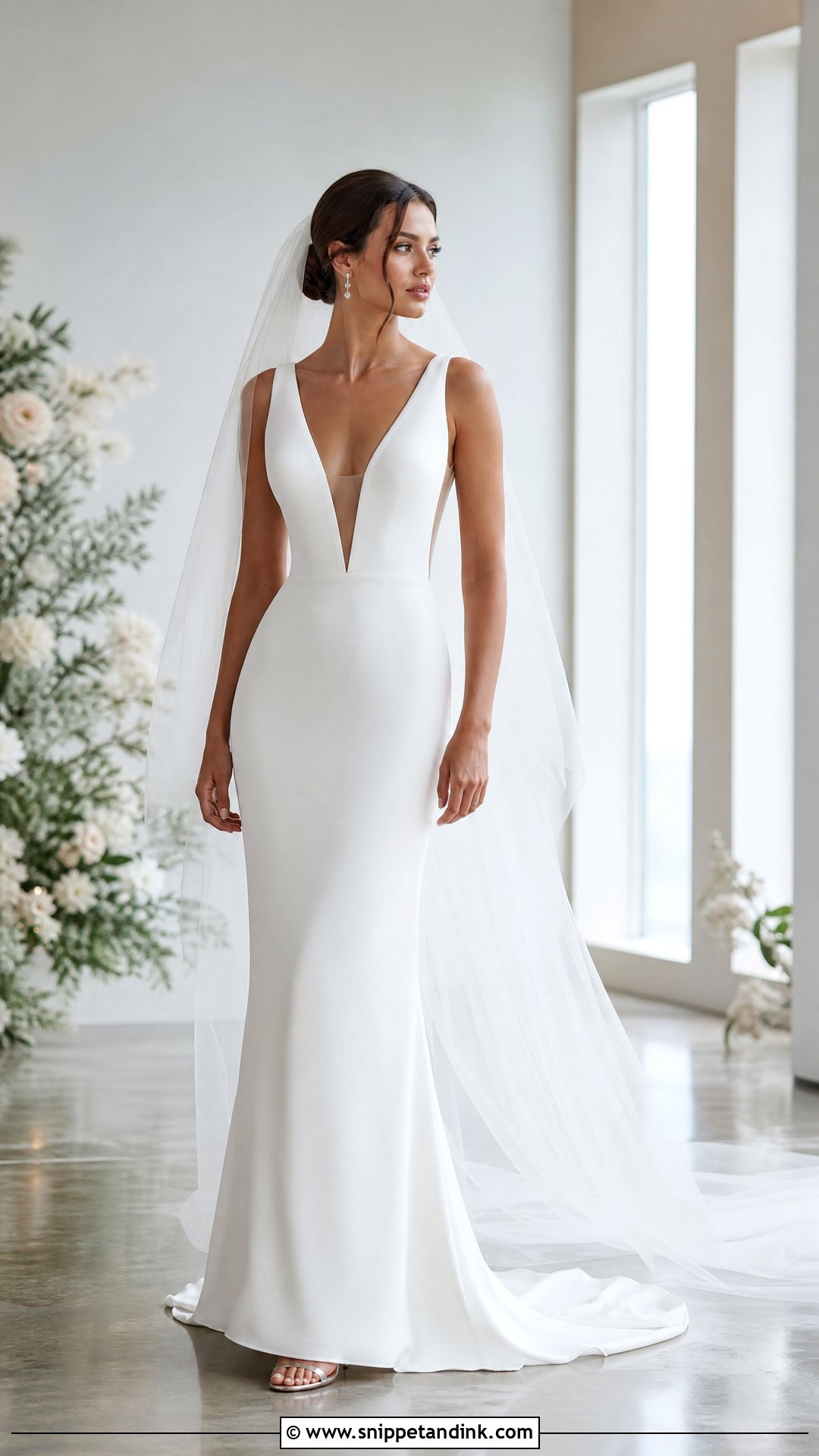
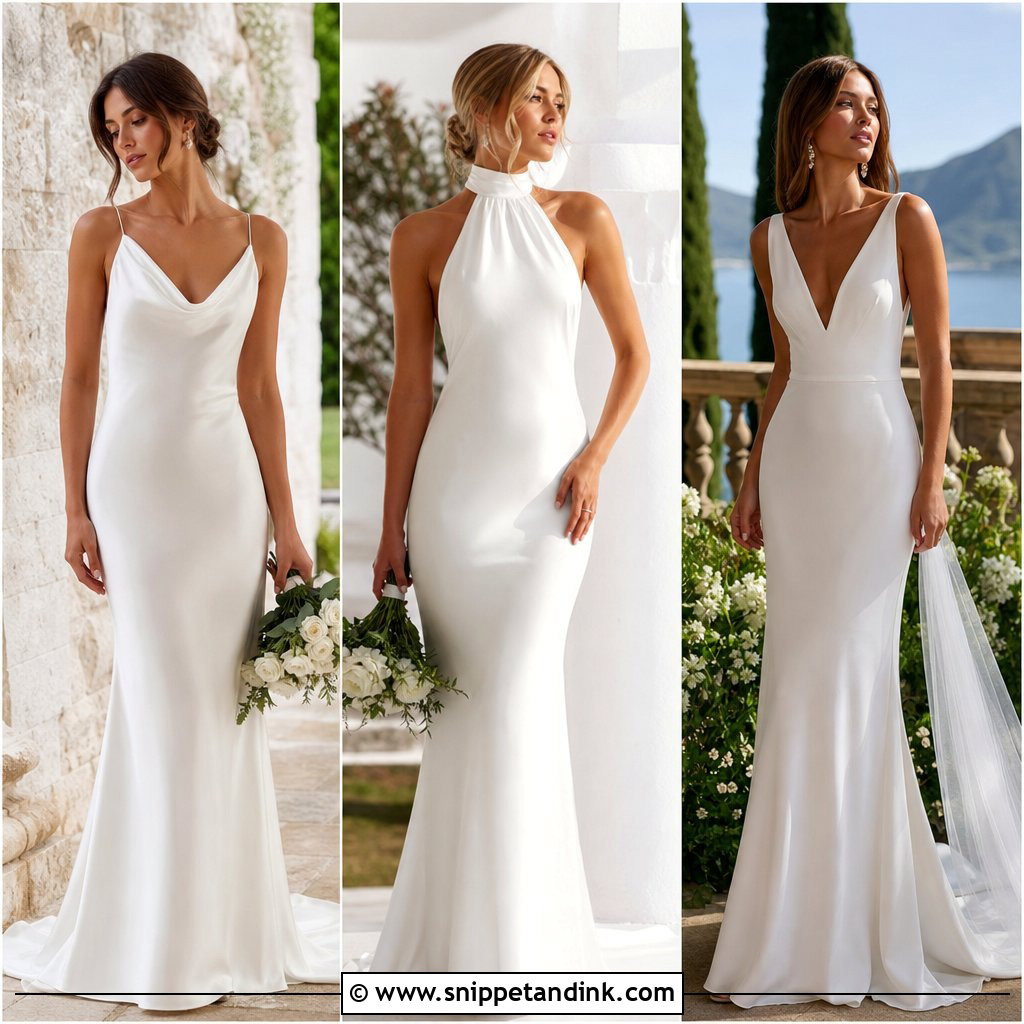
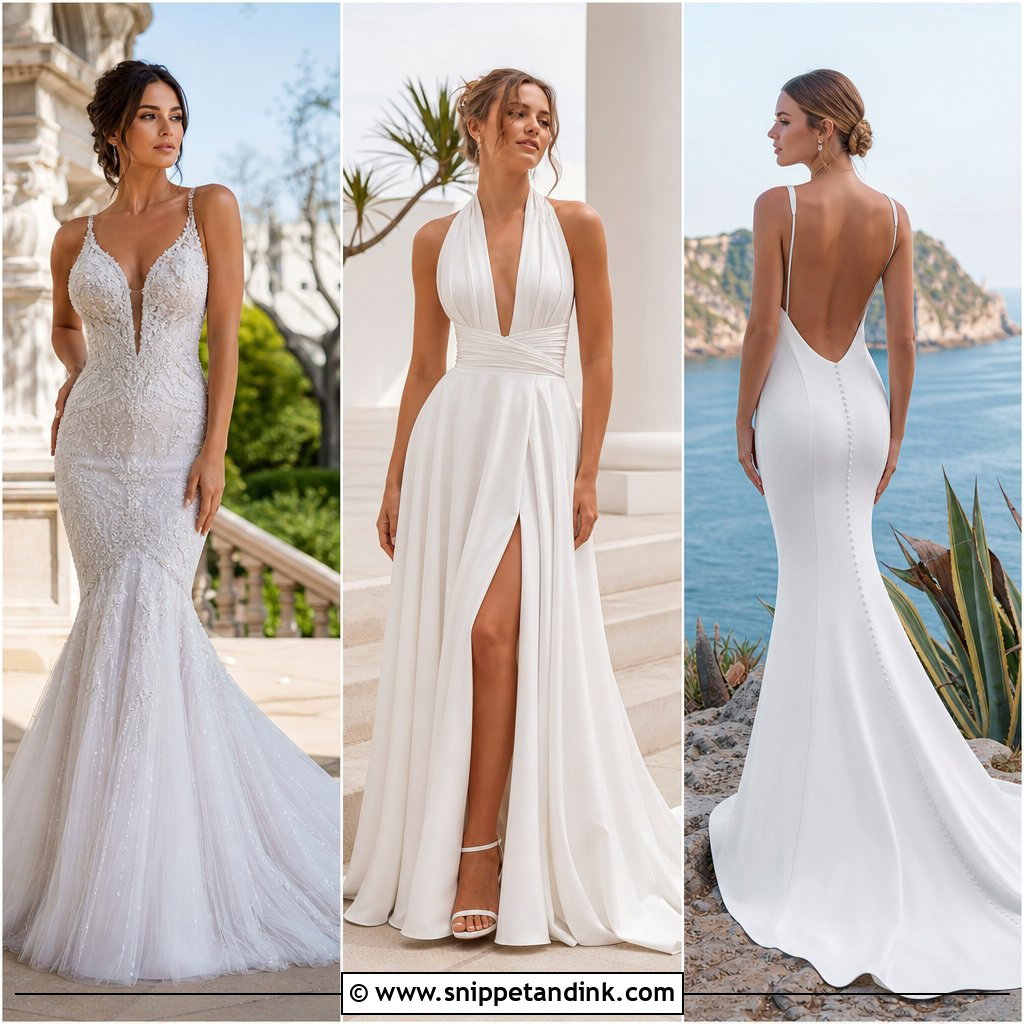
A deep V lengthens the upper body, and the security comes from what bridges the gap. A strip of illusion mesh between the two sides of the neckline stops the edges drifting apart when you lean forward to hug someone. A fitted crepe gown with a gentle train gives the front a clean base. Keep jewelry to a slim pendant and small studs; a heavy necklace fights the line. If you’re fuller in the bust, ask the tailor for hidden cups or a slightly narrower plunge rather than relying on tape alone. A cathedral veil for the ceremony, removed afterward, lets the neckline lead at the reception.
3. Backless Satin Wedding Dress
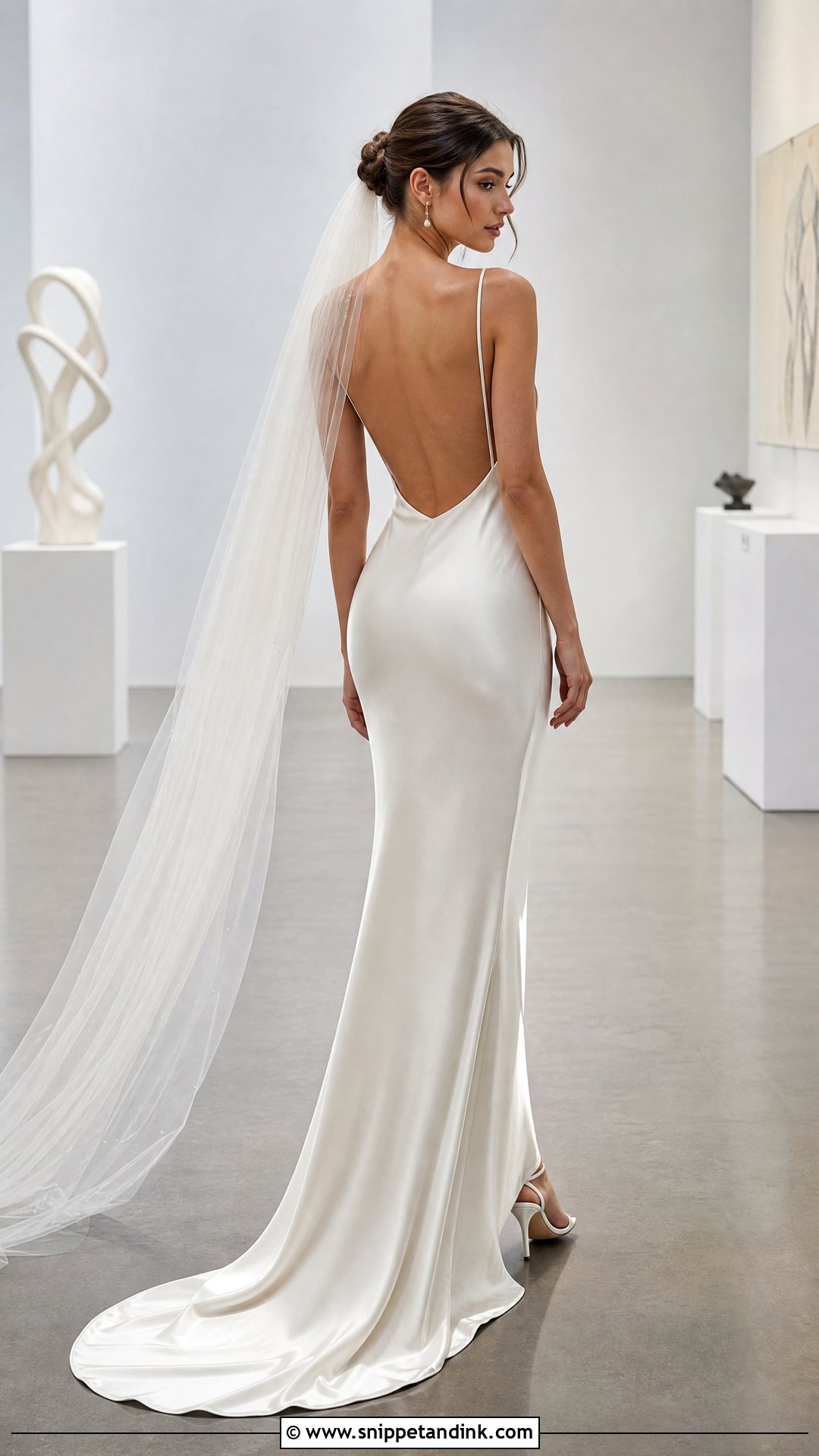
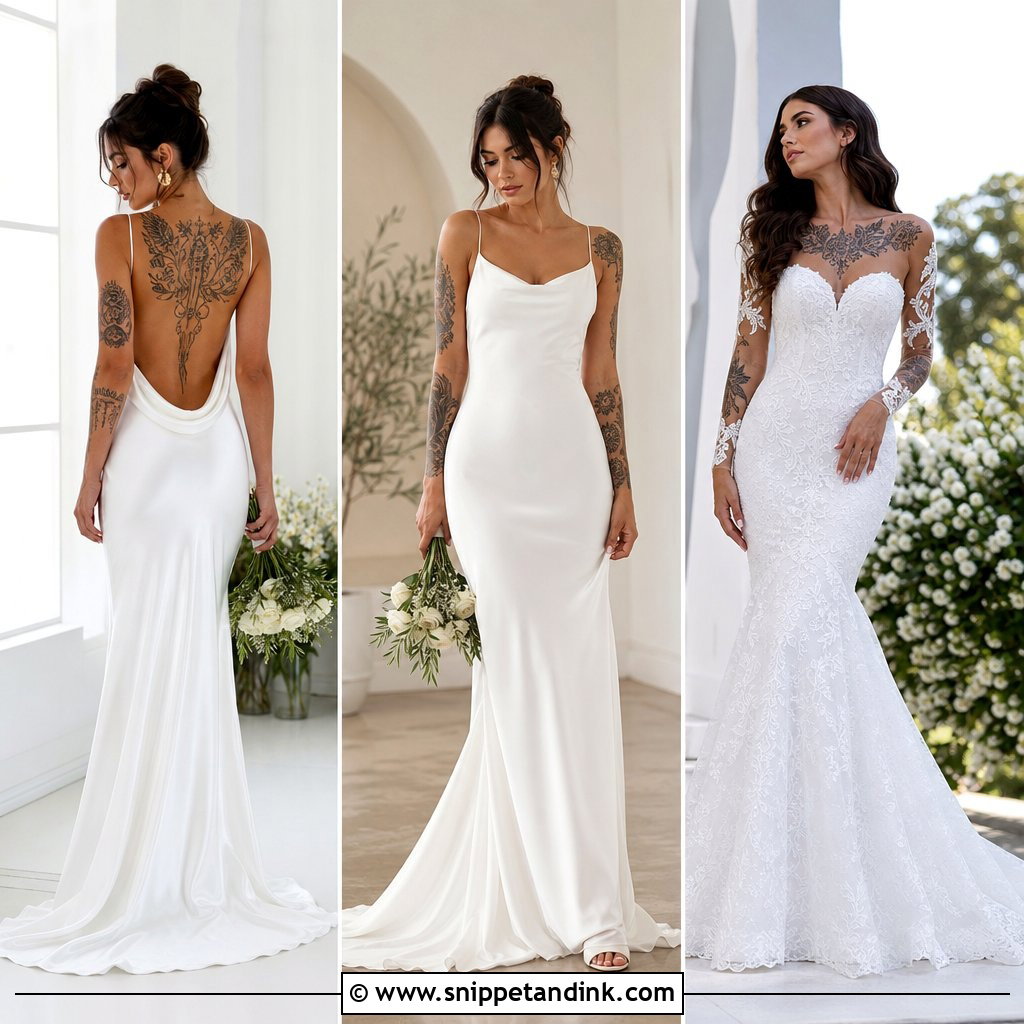
Satin is the most honest fabric for an open back. It either lies flat or it doesn’t, and you’ll see which within a minute of walking. A bias-cut or fitted column gown with a high front, thin straps and a back dipping toward the waist gives the classic balance. The edge of the opening is where gaping starts, so I ask for narrow elastic sewn inside it, plus built-in bust support since a normal bra is out. Walk, sit and lift your arms before you commit. An updo keeps the back visible, and a satin wrap handles a cool evening.
4. High Slit Wedding Dress
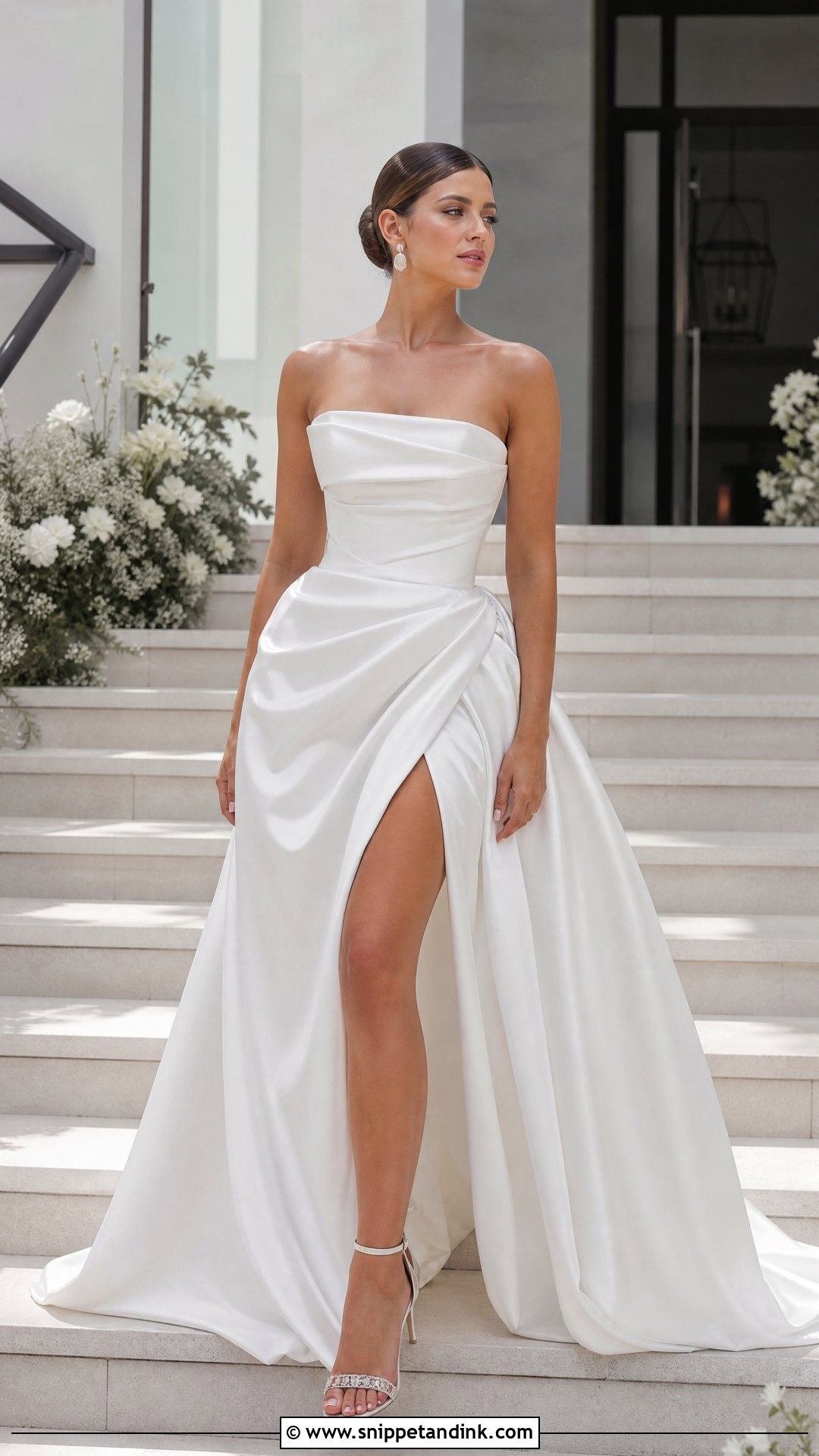
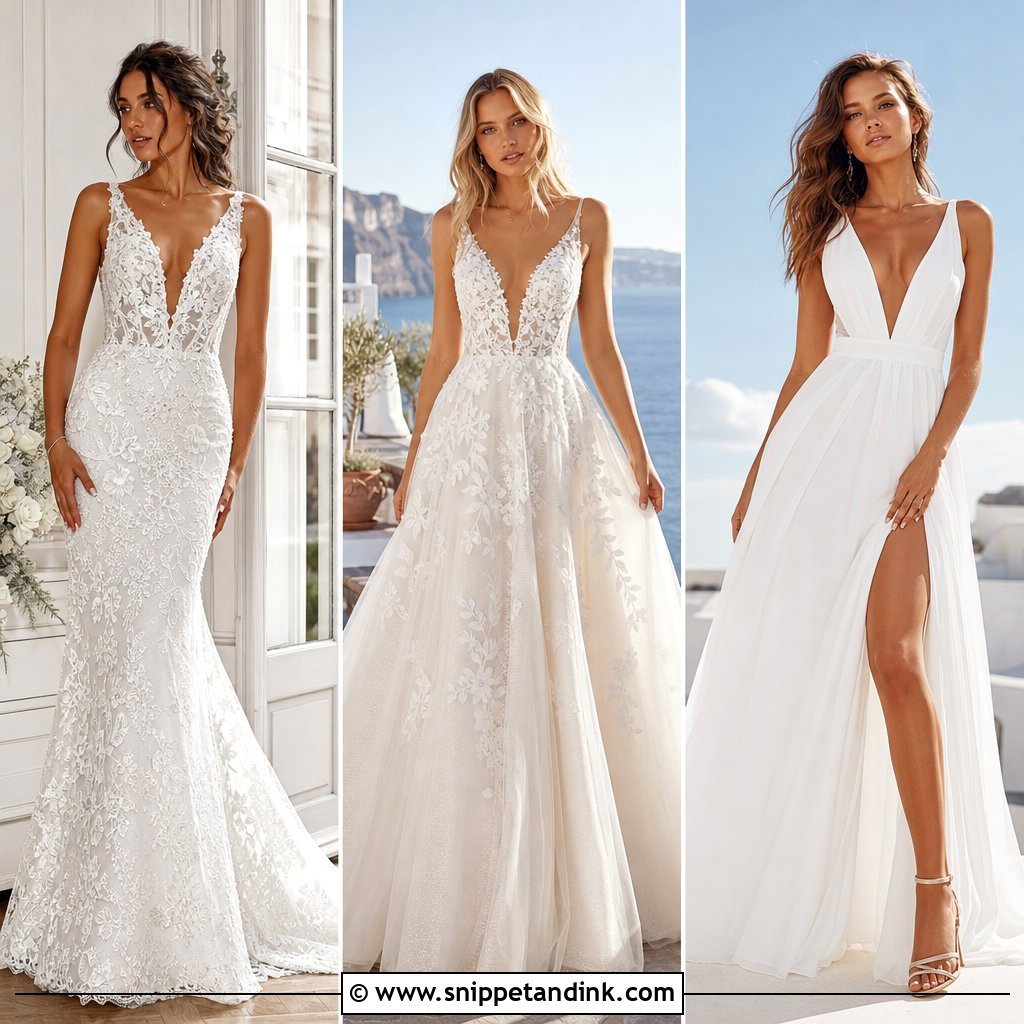
Draped satin A-lines carry a high slit well because the fabric falls closed when you stand still and only opens as you move. Decide where the slit ends at the first fitting, with your shoes on: a slit that looks right standing can climb several inches when you sit or take stairs. A hidden panel or secure lining is easy to add if it goes too far. Ankle-strap heels worth showing, a clean strapless or square neckline and a side-parted bun keep the slit as the one statement. Smooth shorts underneath settle nerves without spoiling the line of the skirt.
5. Illusion Lace Wedding Dress
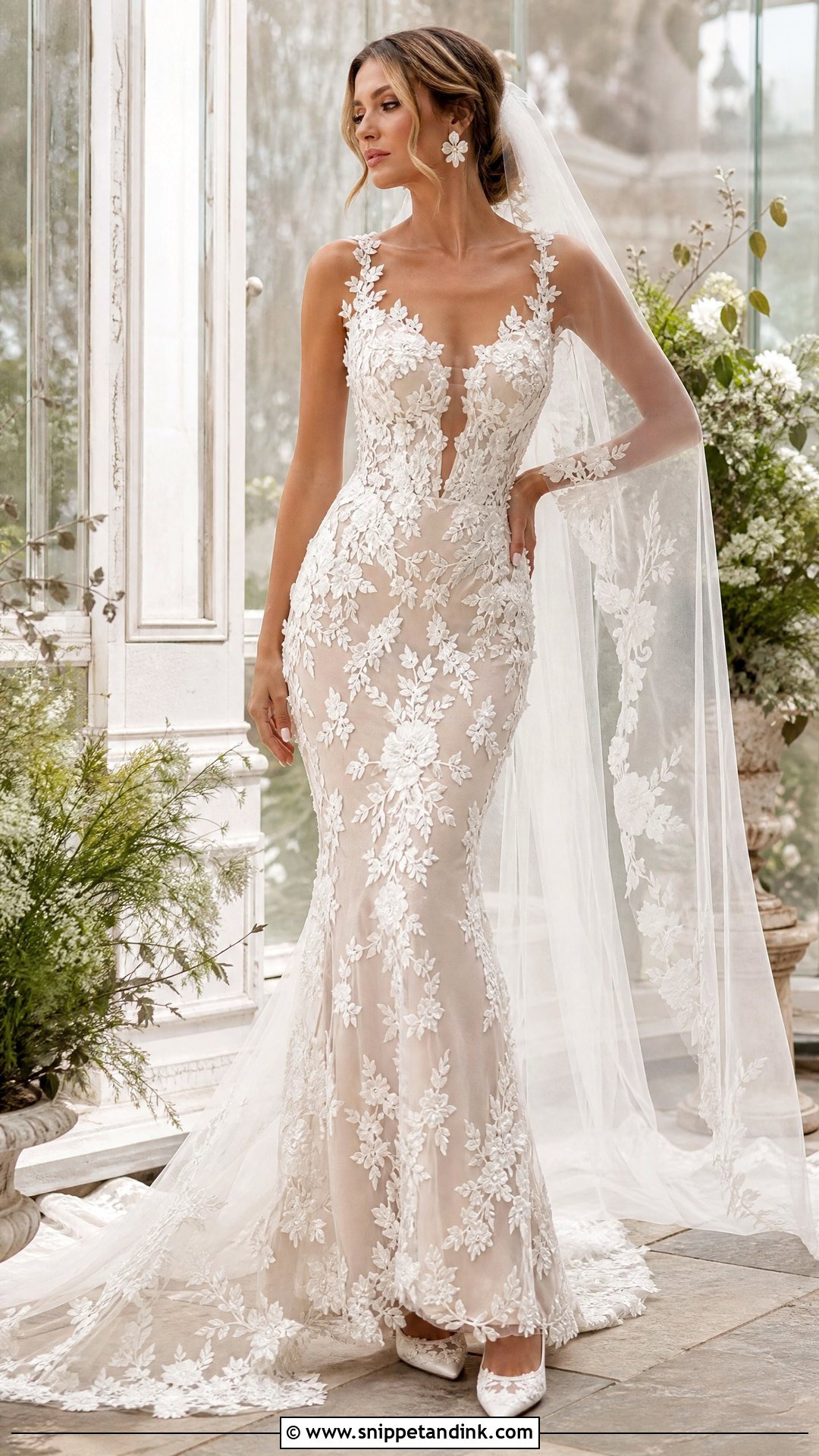
Illusion lace only works if the mesh disappears, and that comes down to color matching. Mesh is made in a range of nude tones, and the one that matches in a fitting room can look gray or pink outdoors, so I hold samples against the bride’s skin in daylight before alterations begin. A fitted gown with floral appliqués across the bodice, waist and upper skirt, in a soft mermaid shape, shows exactly where the lace sits. Appliqués can be moved or added around the bust and waist to change coverage. Since the lace already carries the texture, keep earrings and veil quiet.
6. Plunging Neckline Ball Gown
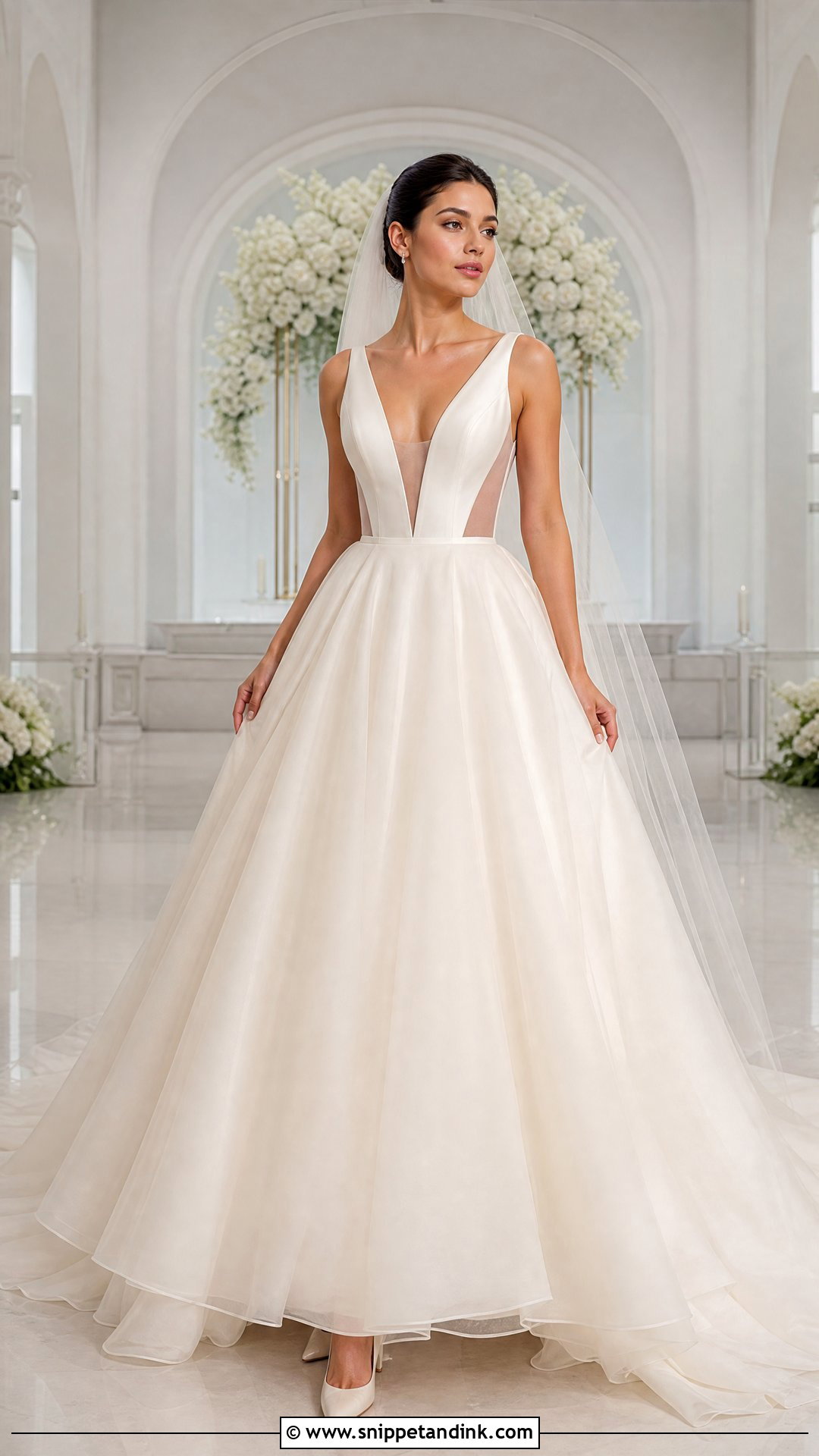
A full skirt is the easiest way to balance a daring plunging neckline, because the volume keeps the gown ceremonial while the neckline adds the edge. Look for a structured bodice with a deep V and supportive side panels over tulle or organza. With a fuller bust, a wider shoulder strap and reinforced cups matter more than anything else, and illusion mesh at the base of the V stops the edges lifting. Ask the seamstress to make the neckline lie flat when you breathe in, not just when you stand still. A polished chignon and a medium, softly structured bouquet suit the proportions.
7. Side Cutout Wedding Dress
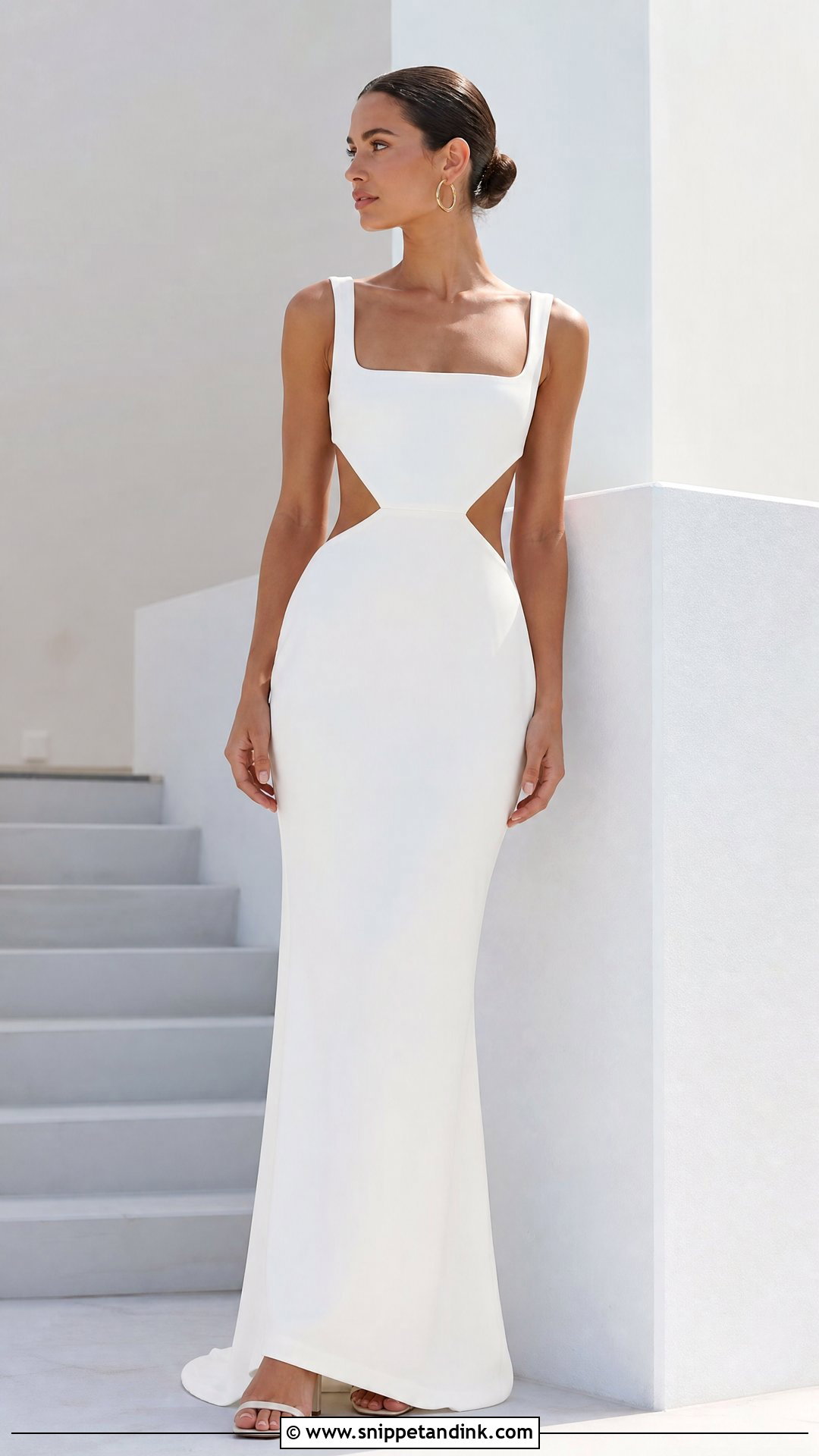
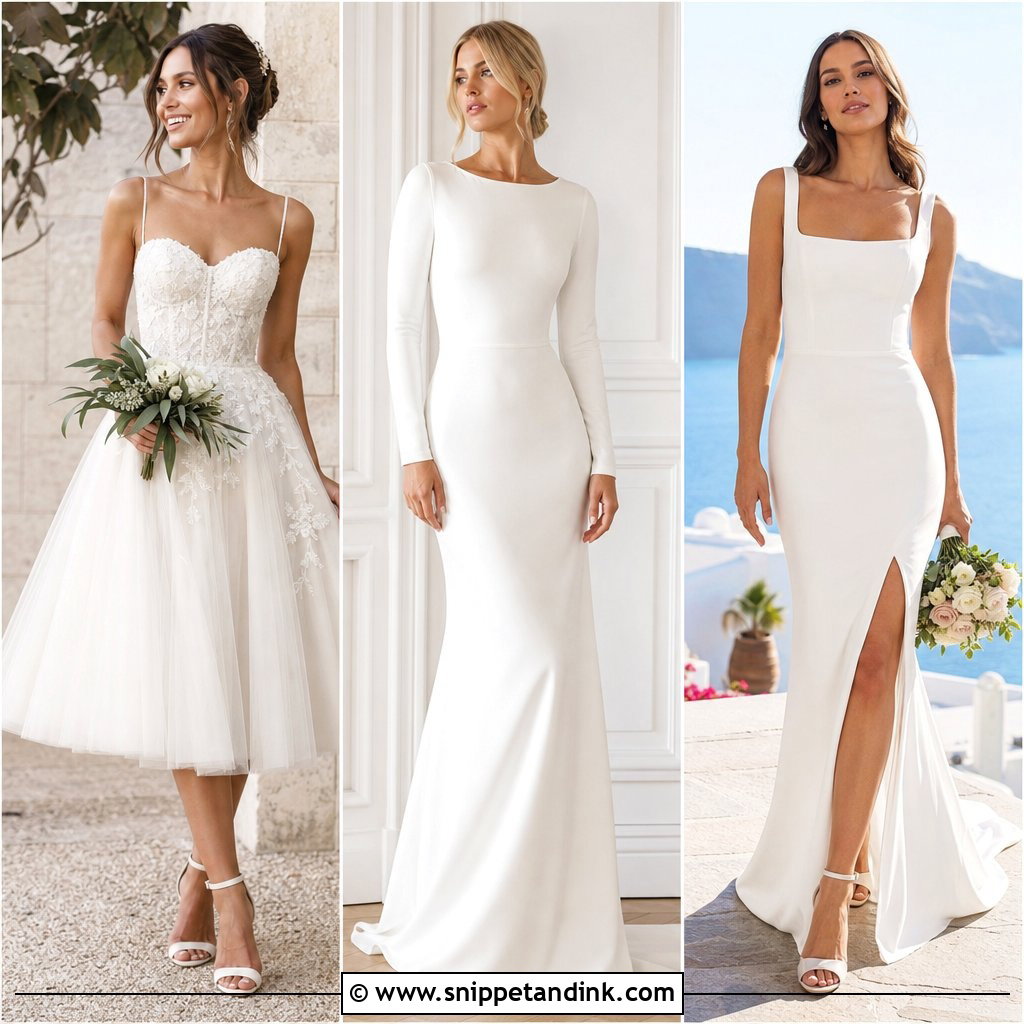
Cutouts look architectural on a fitted crepe dress with a square neckline, as long as the openings stay where they were cut. Crepe has some give, and over a long day cutouts can widen or drift, so sheer mesh inserts are worth having if you’ll dance. Check the openings from front, side and back while seated, because that’s when the waist compresses and the edges fold. Your tailor can reshape them or add skin-tone mesh. Sleek hoops and no necklace keep it clean, and a detachable overskirt makes the ceremony more formal.
8. Sheer Long Sleeve Wedding Dress
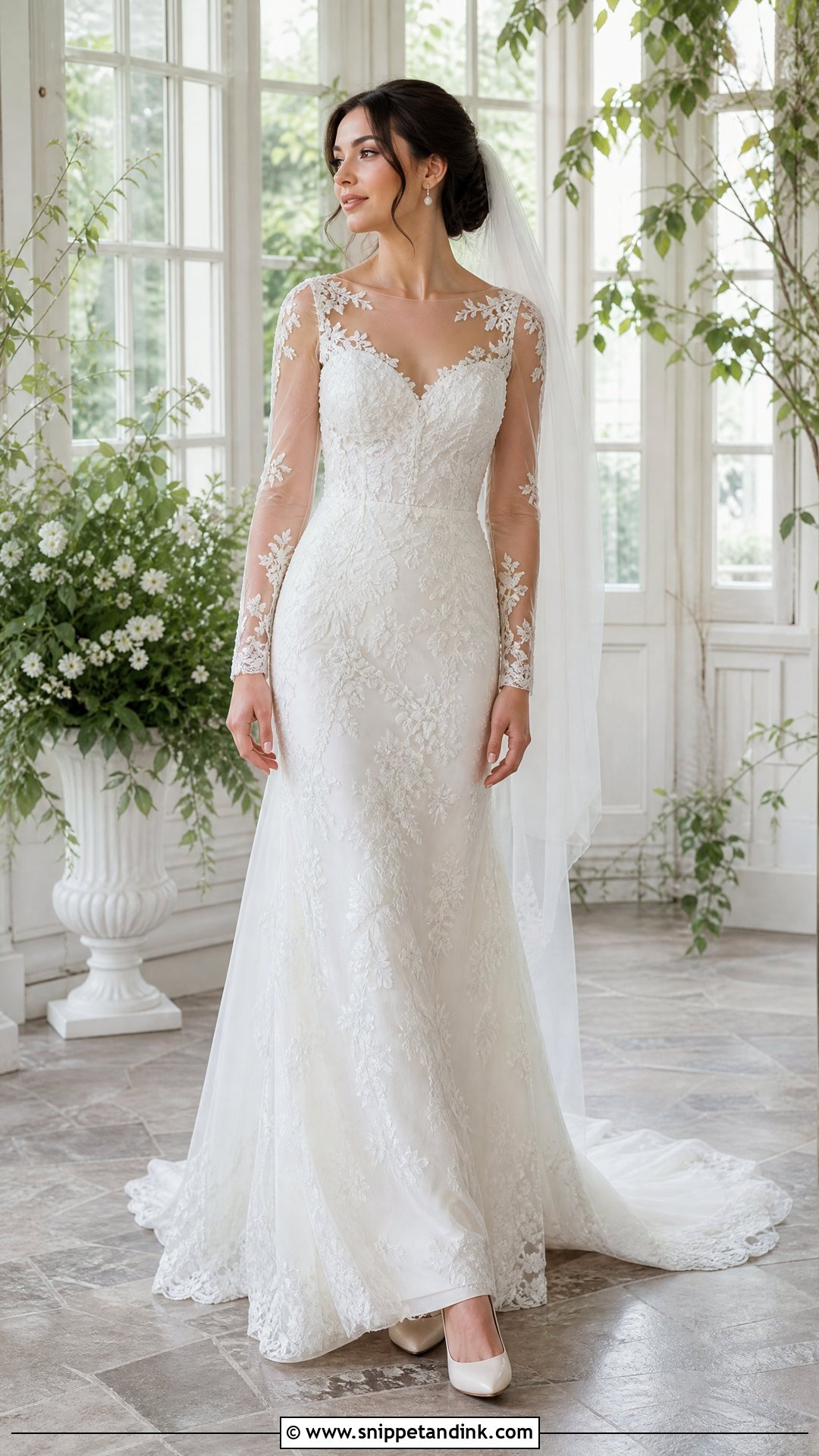
Sheer long sleeves balance a revealing dress and carry it through spring and autumn weddings. A fitted lace gown with transparent tulle sleeves and floral appliqués, plus a low back or soft sweetheart neckline, shows skin without feeling bare. The fitting test I insist on is arms above the head. Tight sleeves set into a fitted bodice often drag the whole dress upward, and you need room to hug and dance. Extra appliqués near the underarm help where mesh looks too transparent. A removable satin overskirt adds volume for the ceremony and comes off for the reception.
9. Low-Back Lace Wedding Dress
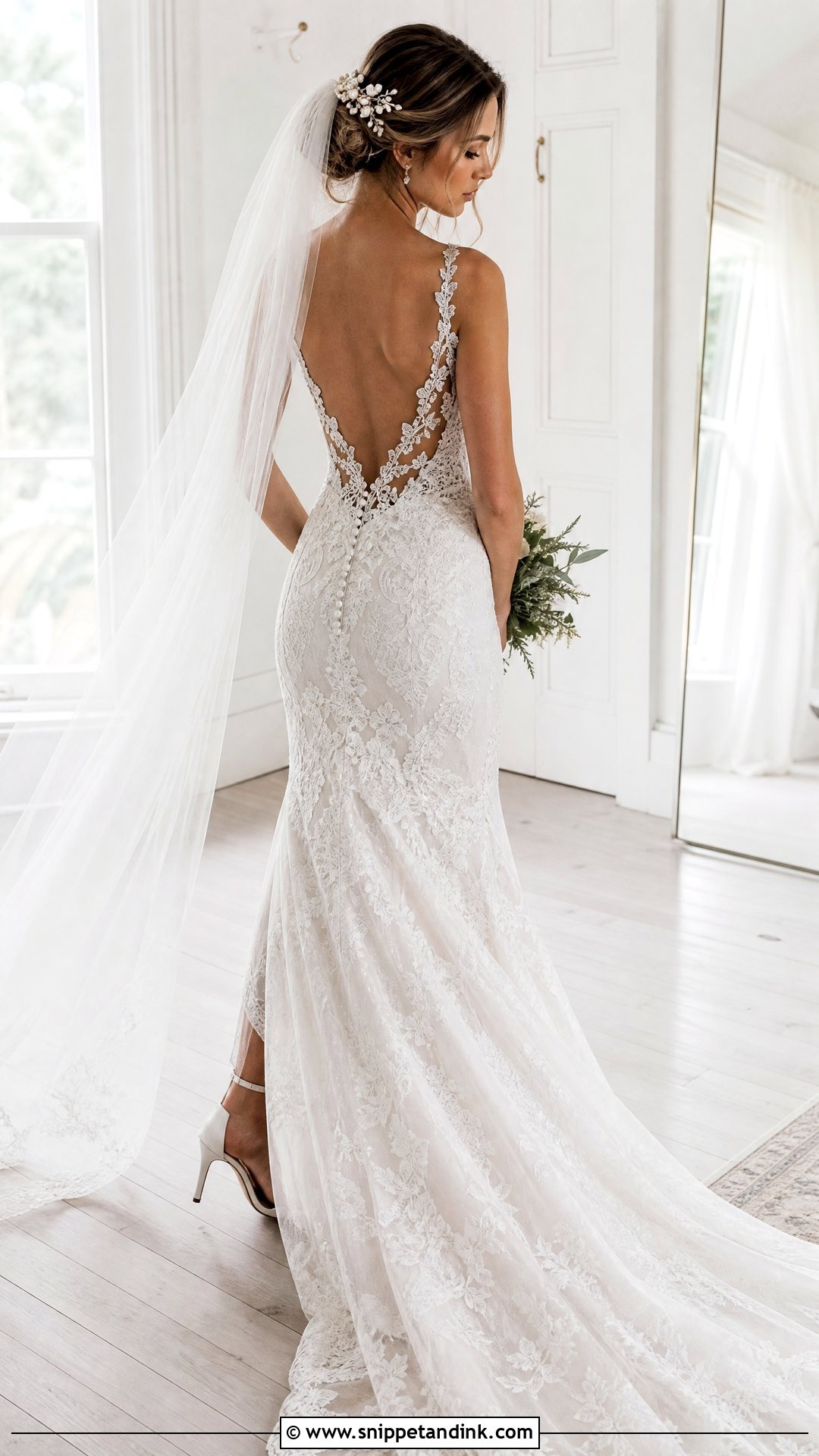
Scalloped lace edging is what makes a low back look finished instead of cut. Choose a fitted trumpet gown with a modest front, delicate straps and a back curving below the waist. Because a conventional bra is impossible, support has to be built in: cups, reinforced side seams and a waist stay that anchors the bodice so the back doesn’t lift away from the skin. A twisted updo keeps the back in view, and a light sheer veil or removable shoulder bows avoid hiding it. Stable mid-height heels suit the trumpet hem.
10. Strapless Bustier Wedding Dress
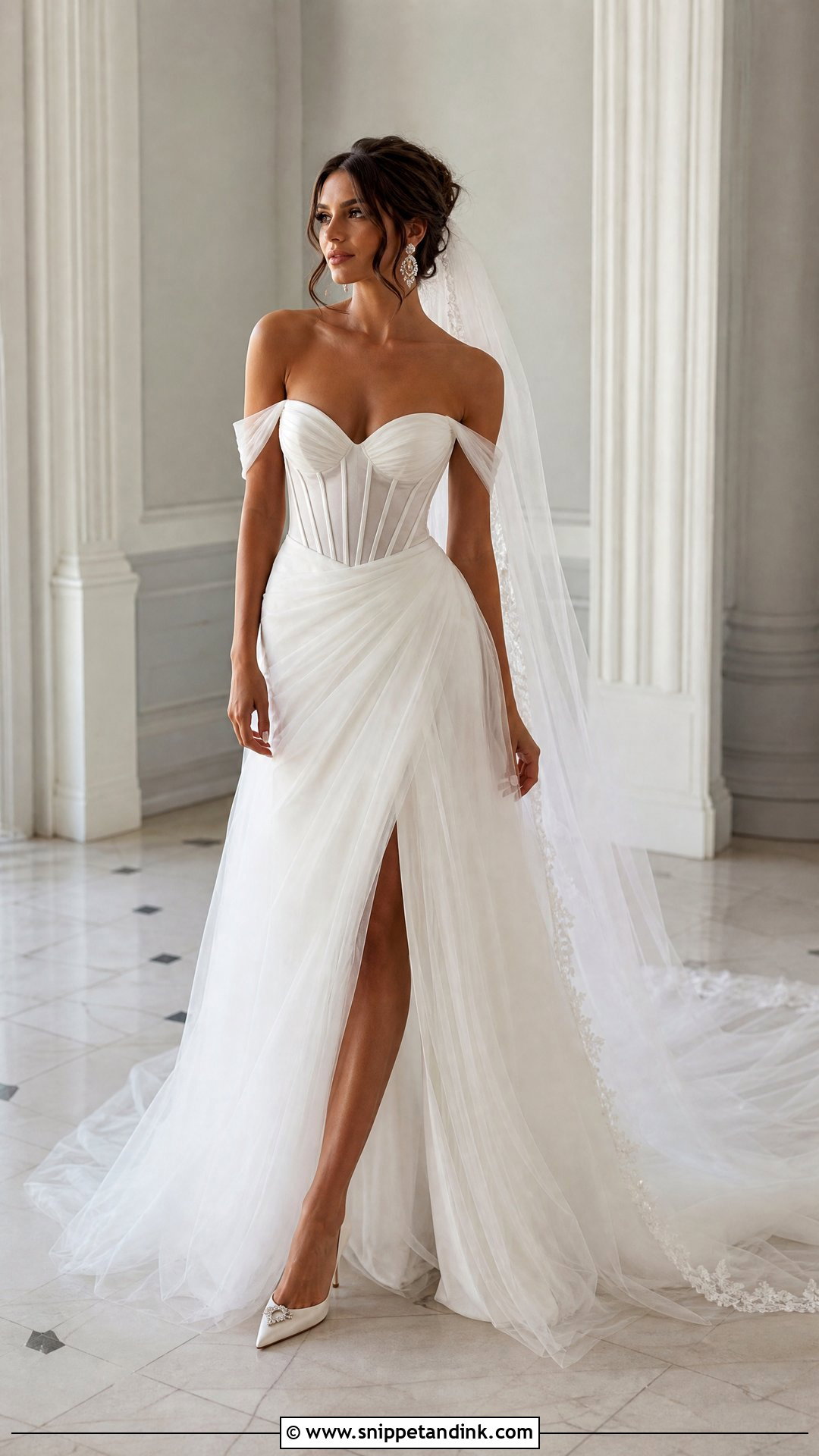
Tightness is the wrong fix for a strapless bodice that slips. What holds it up is correct cup sizing, a longline bodice with flexible boning, and a waist that grips at your narrowest point. At the fitting, raise your arms and bend to pick something up; if you’re hitching the bodice afterward, it needs adjusting. Draped chiffon or soft tulle below keeps the outfit from looking rigid, and a velvet ribbon at the waist only belongs there if it follows the construction. Removable off-shoulder straps are good insurance for the ceremony.
11. Sheer Skirt Wedding Dress
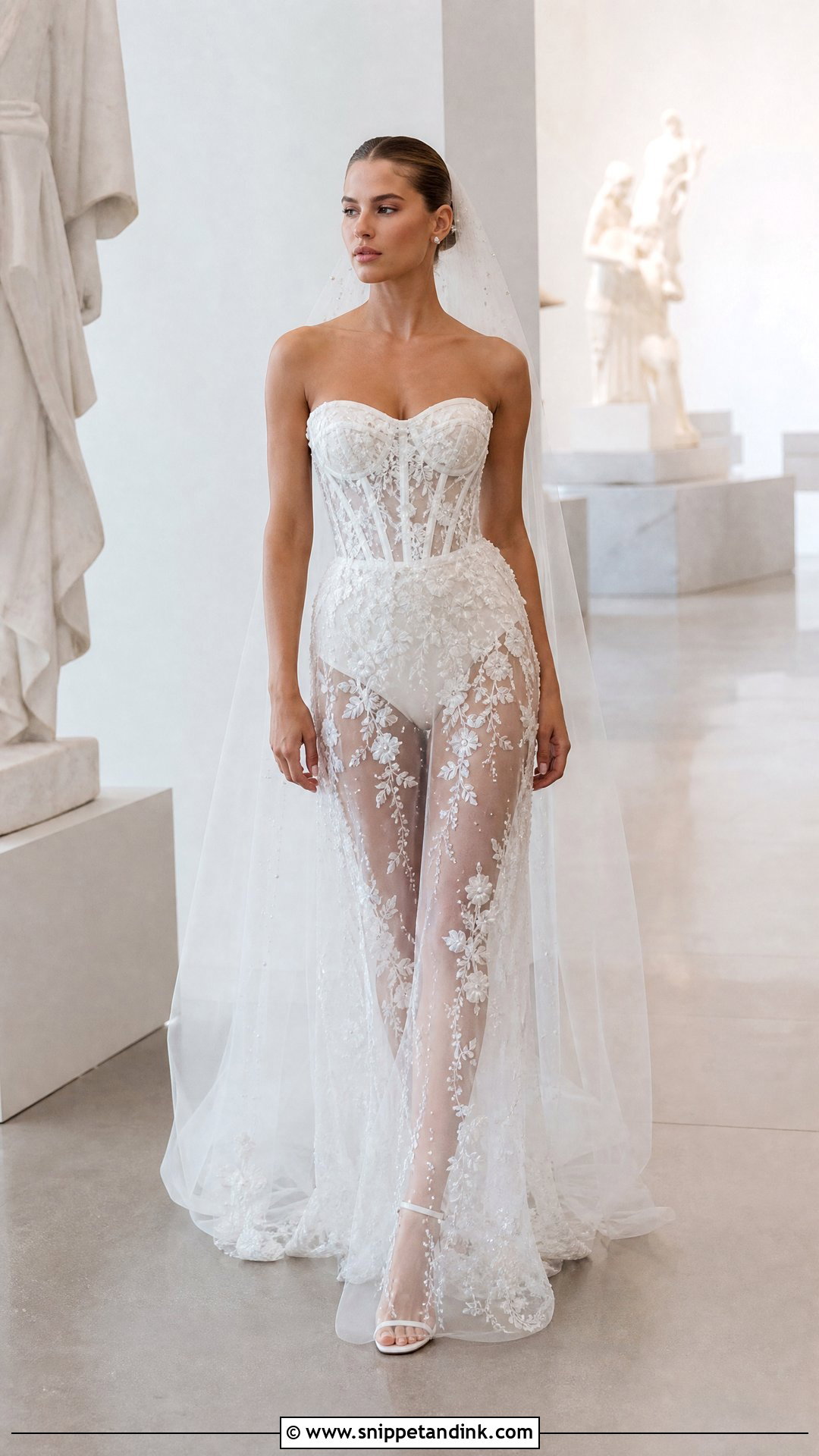
A sheer skirt depends on its underlayer: a bodysuit, a fitted lining or a short underskirt. Embroidered tulle running from a corseted waist to the floor, with appliqués placed to soften the transparency, gives depth. Decide early whether the underlayer matches your skin or the gown’s ivory. Skin tone looks bolder; ivory reads more traditional. Backlighting is the real risk. Outdoors, with the sun behind you, a sheer skirt shows far more than it does indoors, so I always check it in both. A removable opaque overskirt covers the ceremony and lifts off later.
12. Open-Side Wedding Dress
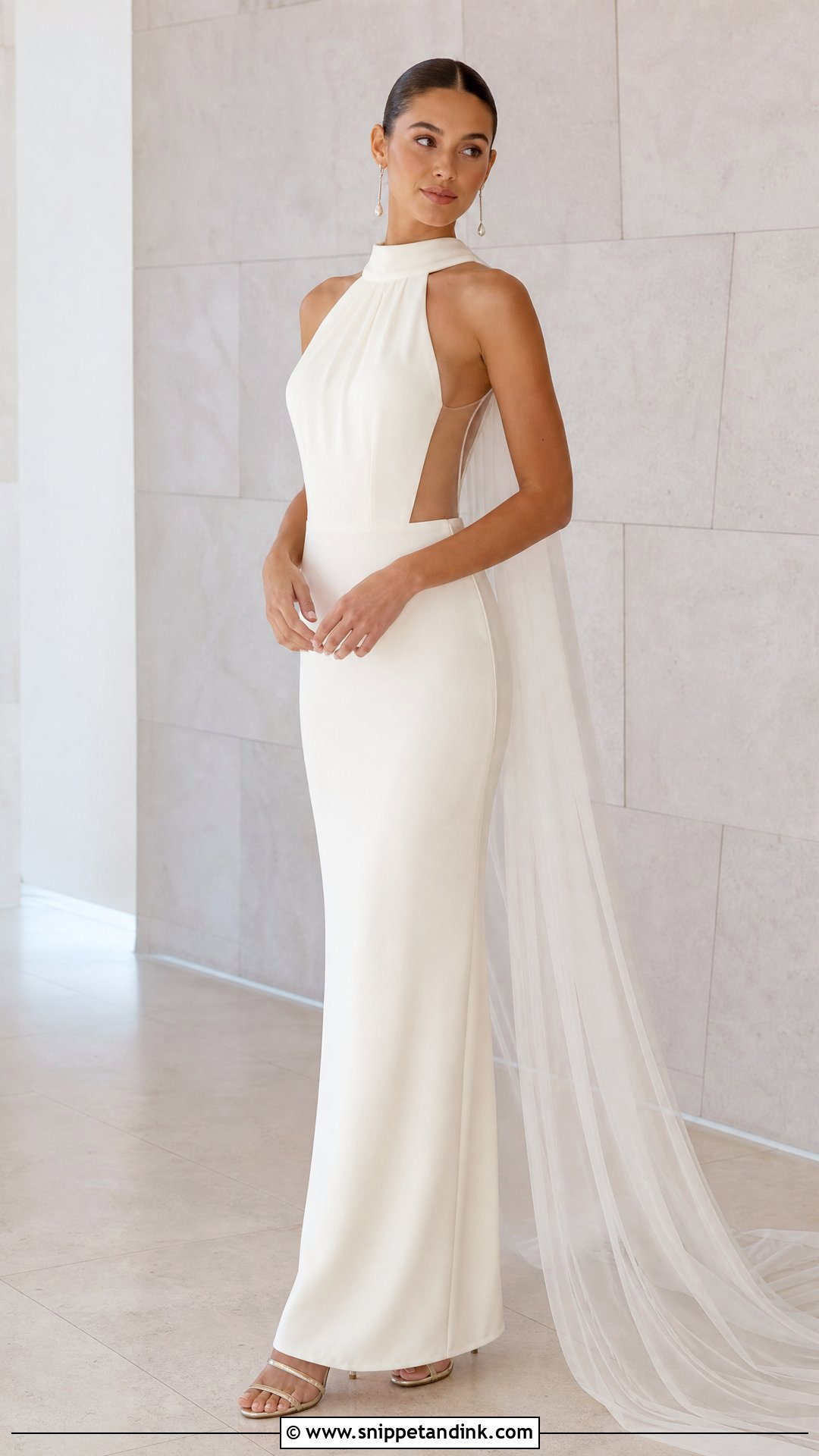
Deep arm openings on a halter show the body in profile while front and back stay simple. The high halter neckline helps, because it gives the tailor somewhere to anchor interior support. Turn, sit and dance in it at the fitting. Side openings are the most likely to shift, since every arm movement pulls on them, and transparent mesh, hidden snaps or extra lining fix that. Adhesive support can work on some fabrics, though perspiration weakens it over a long day. Skip the necklace, and use a sheer cape for ceremony coverage.
13. Off-the-Shoulder Corset Wedding Dress
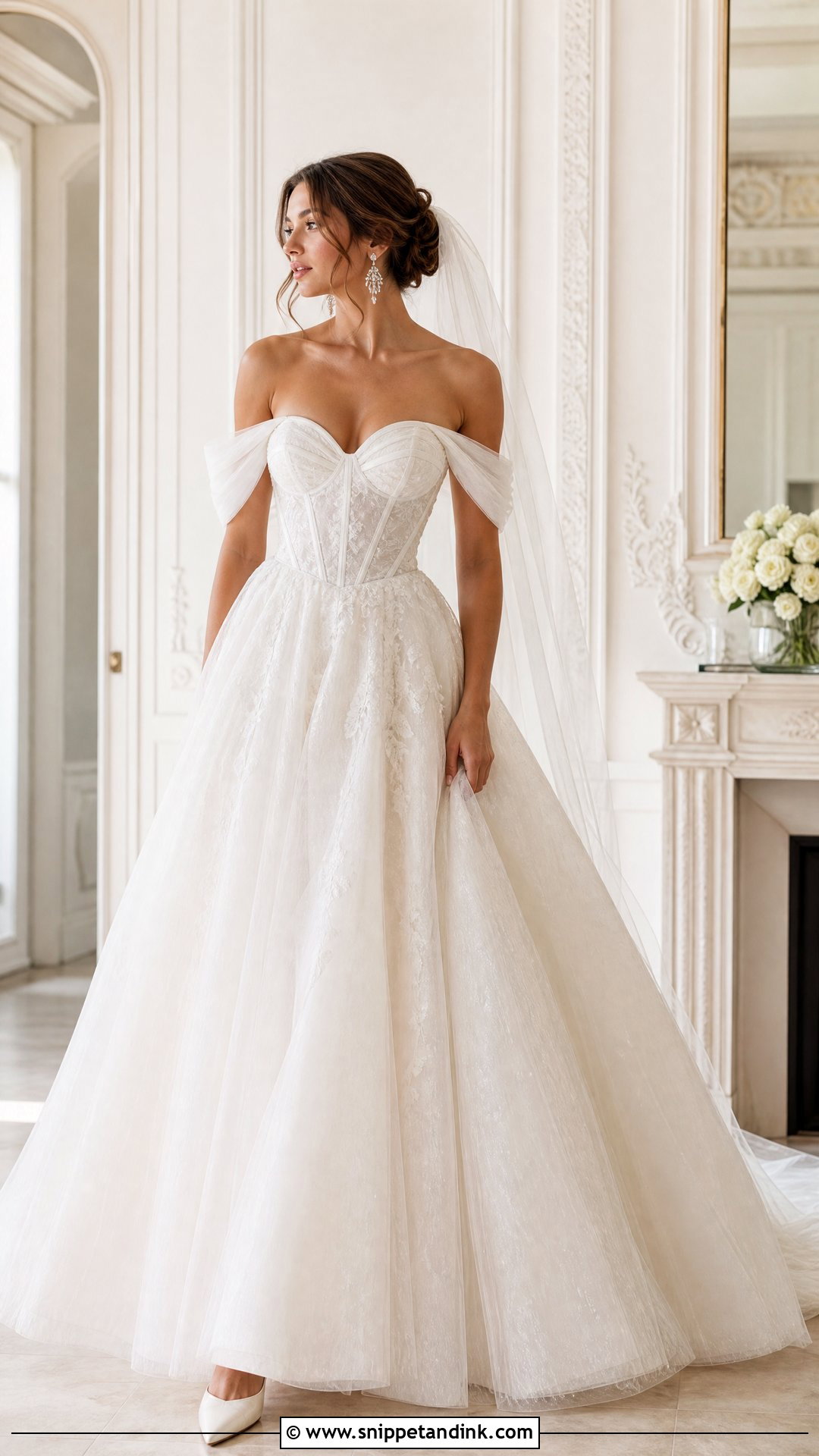
Off-shoulder sleeves soften an exposed corset, but they’re also what limits your arms. Drape resting on the upper arm stops you lifting your hands much above shoulder height, so test hugging and raising a glass before you commit; removable sleeves solve it for the dancing. A structured sweetheart neckline, visible boning and a full A-line skirt keep the look bridal rather than evening wear. If the corset feels too transparent, ask for extra lace motifs, a light lining or slightly deeper cups. Crystal earrings and a loose chignon over a long veil frame the collarbone.
14. Backless Mermaid Wedding Dress
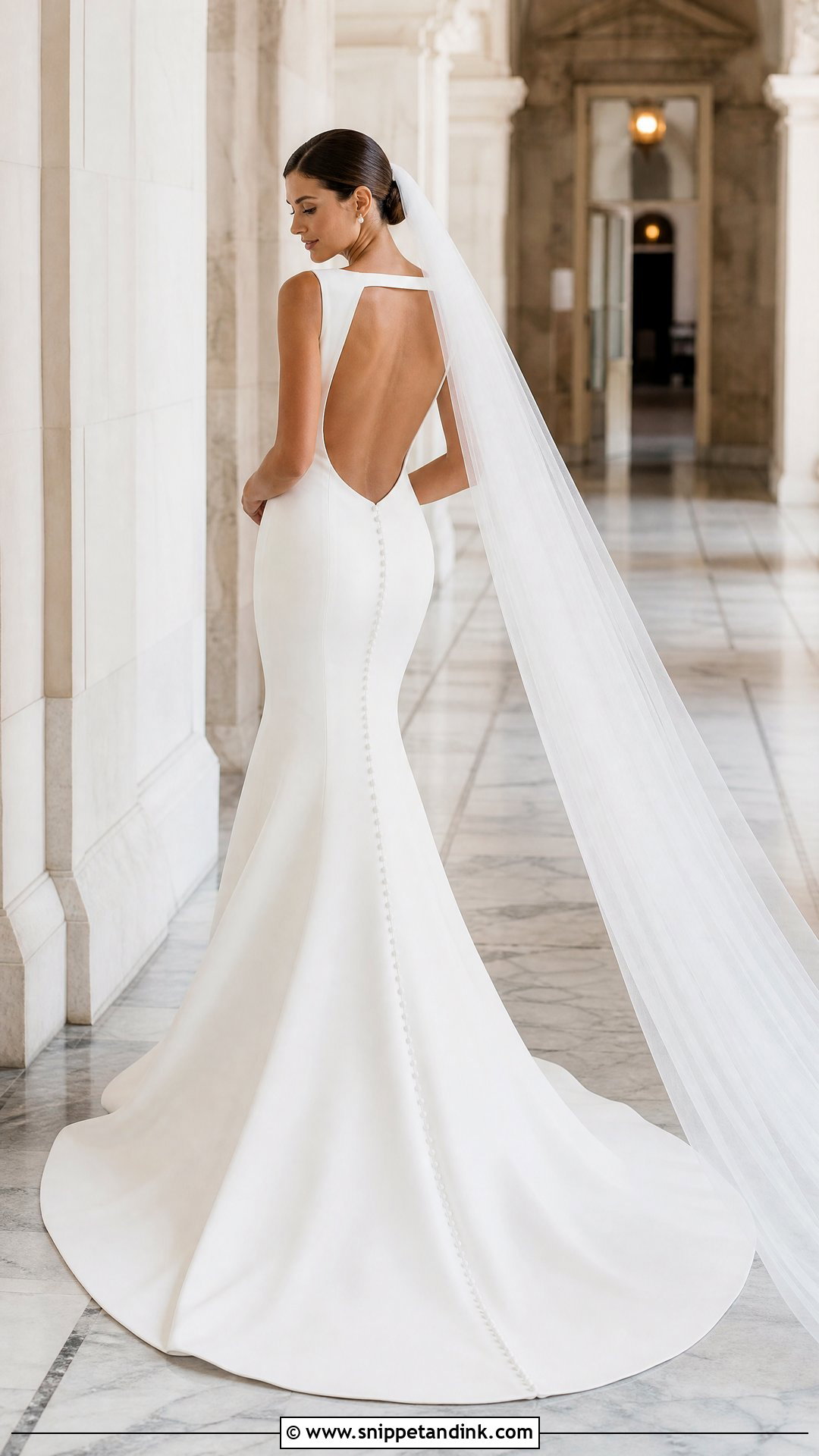
Mermaid shapes depend on fit through the hips, and that matters even more when there’s no back to hold the dress in place. Stretch crepe or lace that follows the body to the flare, with a high or bateau front, sets up the contrast with the open back. Ask the tailor to reinforce the opening and add support inside. Then walk in the finished hem. A flare starting below the knee shortens your stride, and a long train drags on stairs. Attach a plain cathedral veil low enough that the back stays visible.
15. Deep Sweetheart Wedding Dress
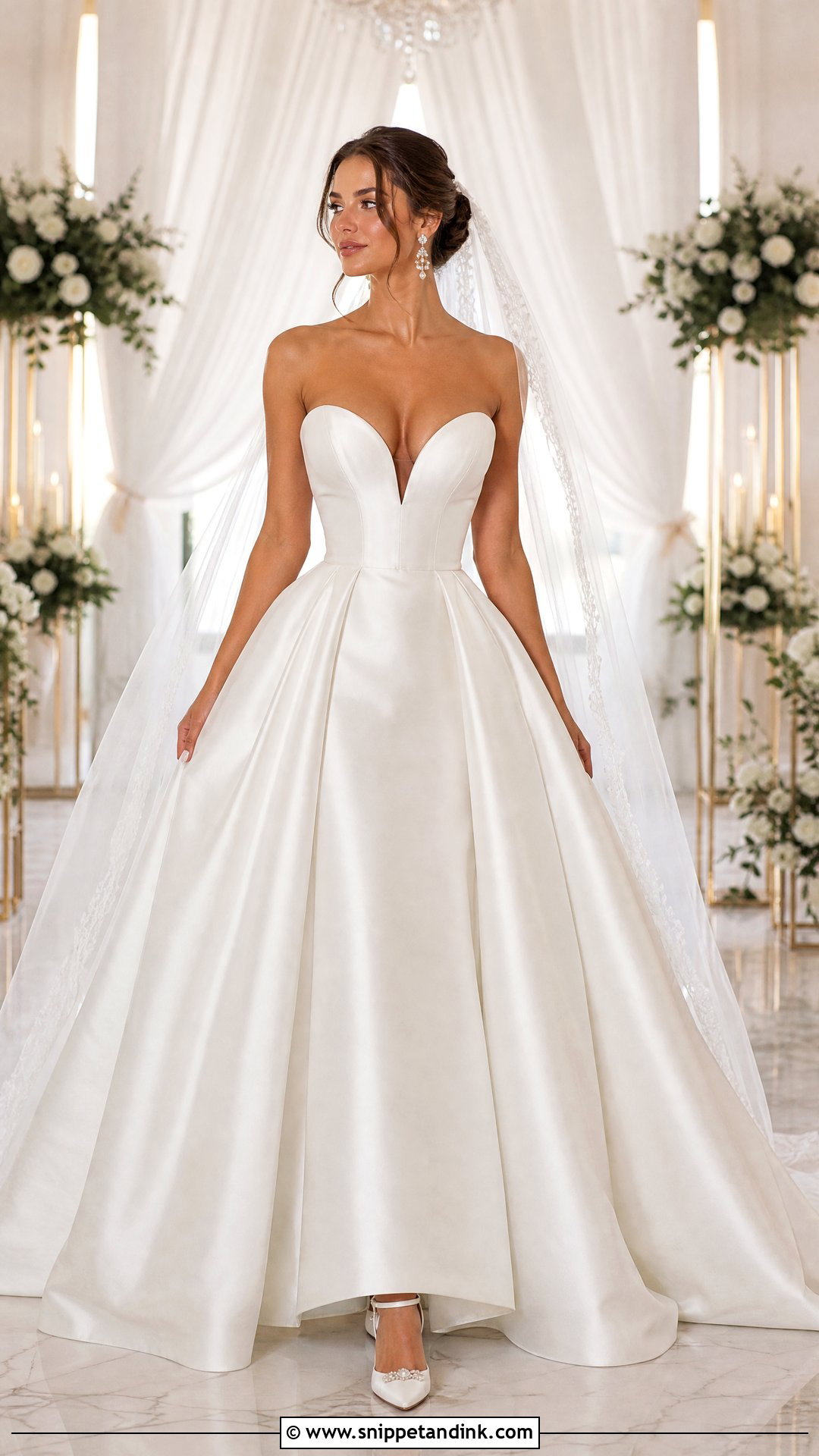
If a sharp V feels like too much, a deep sweetheart gives depth with softer edges. Satin or Mikado with sculpted cups, a lowered center front and a defined Basque waist over a full skirt is a classic build. The neckline should hug without pinching; its center point is where gaps open when you sit forward. Discreet mesh there, internal straps or stronger boning add security. Soft face-framing pieces stop a structured bun looking severe, and a rounded bouquet held low won’t hide the bodice on the aisle.
16. Sheer Back Wedding Dress
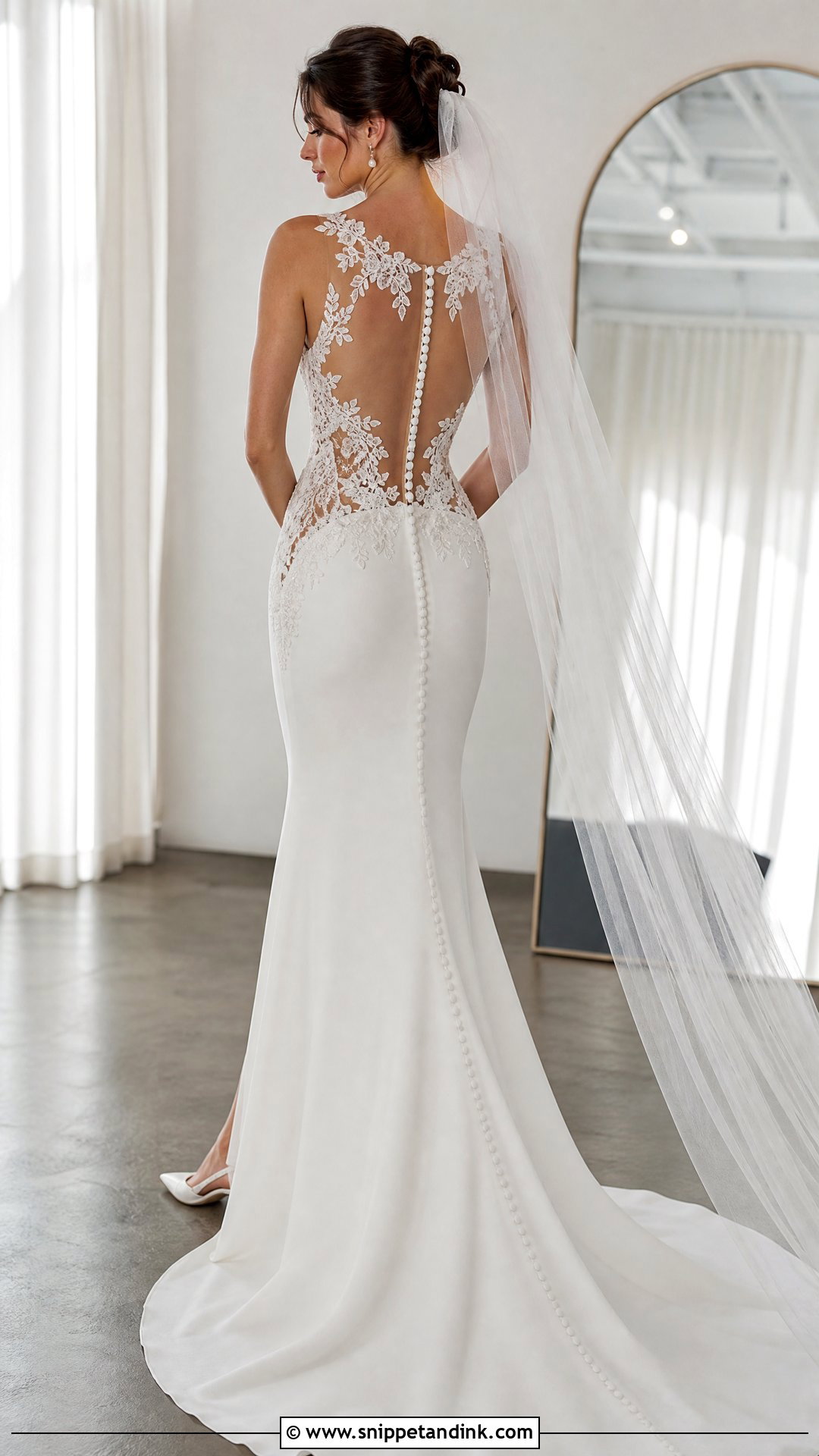
A sheer back gives the look of an open silhouette with much more stability, because the mesh holds the bodice against you. Choose a gown with transparent mesh, covered buttons and lace motifs along the spine and shoulders, over a fitted crepe or satin skirt. The mesh must match your skin and lie without wrinkles. Wrinkles across the lower back usually mean the mesh is cut slightly long, which is a simple alteration. Check the appliqués don’t catch in the zipper or buttons, and set the veil under an updo.
17. Lace-Up Corset Wedding Dress
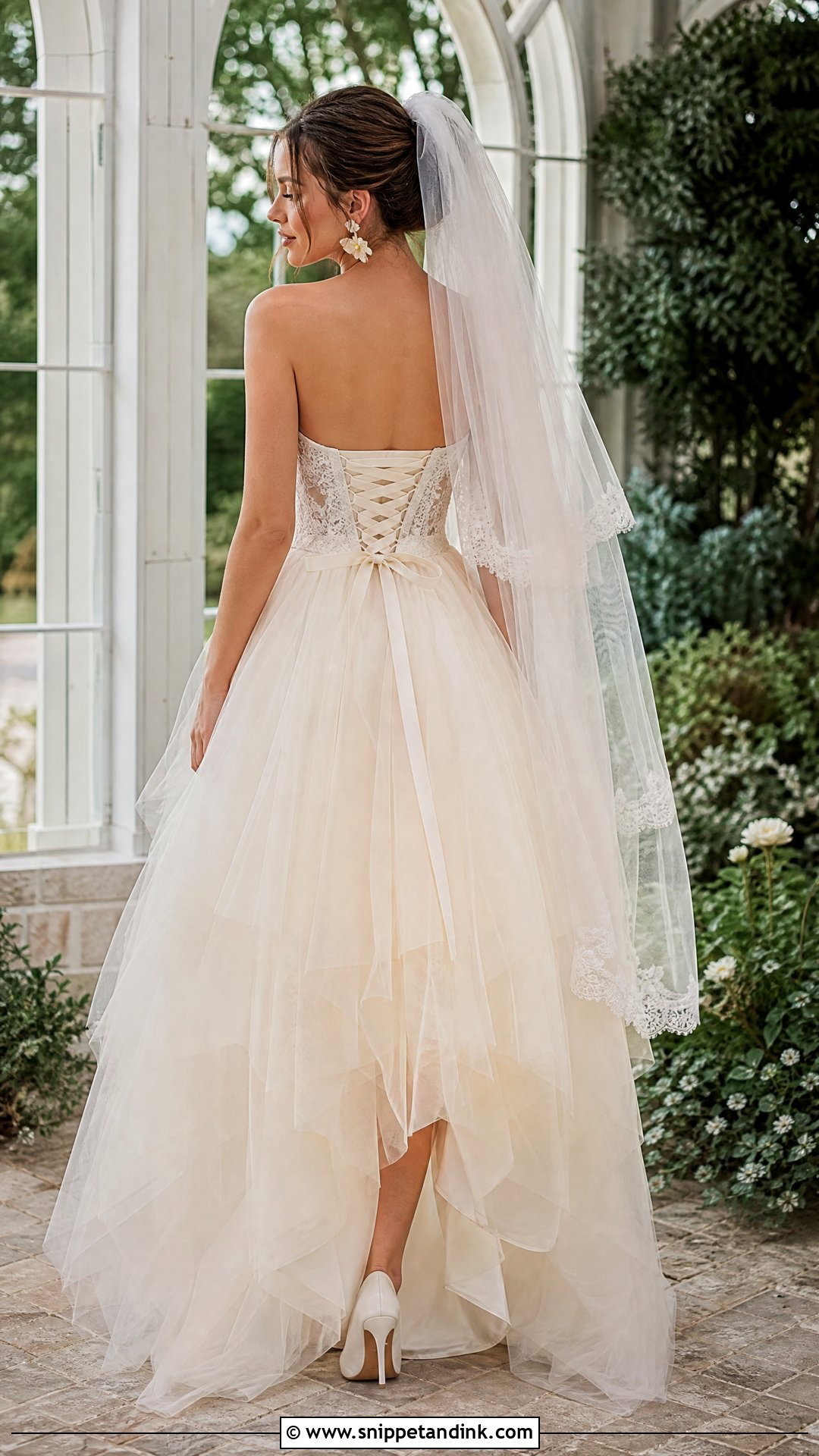
Lacing gives an adjustable waist, a real help if your weight shifts in the weeks before the wedding. A structured lace bodice with exposed ribbon lacing over a layered tulle skirt stays romantic rather than theatrical. Pick lacing in the dress color, not a contrast. Whoever laces you that morning needs a lesson at the final fitting: tighten evenly from the middle outward, and stop when the panels sit comfortably, not when breathing gets hard. A modesty panel under the lacing adds coverage, and a loose low bun keeps the back visible.
18. Plunging Halter Wedding Dress
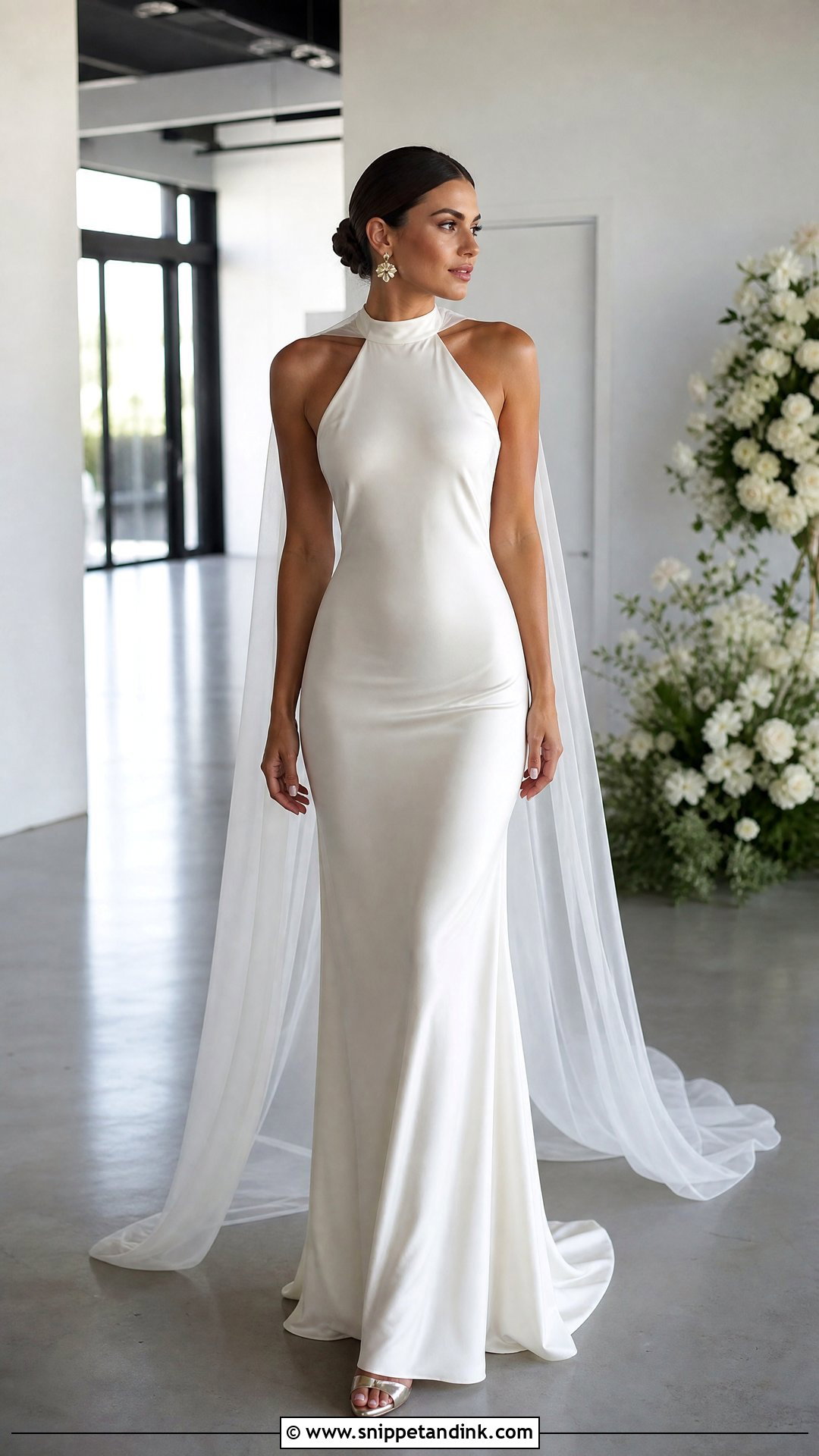
A plunging halter shows the shoulders and draws a long line down the torso. Fluid satin or crepe with a secured neckline, an open back and a lightly flared skirt suit it. I pay close attention to the neck strap. A halter carries much of the bodice weight around your neck, and after a few hours a heavy one can ache, so wear it for a while at the fitting. Invisible mesh at the plunge and hidden support help soft fabric stay put when you bend. A high bun shows the shoulders, and a cape veil fixed at the back straps adds ceremony drama.
19. Thigh-High Slit Lace Wedding Dress
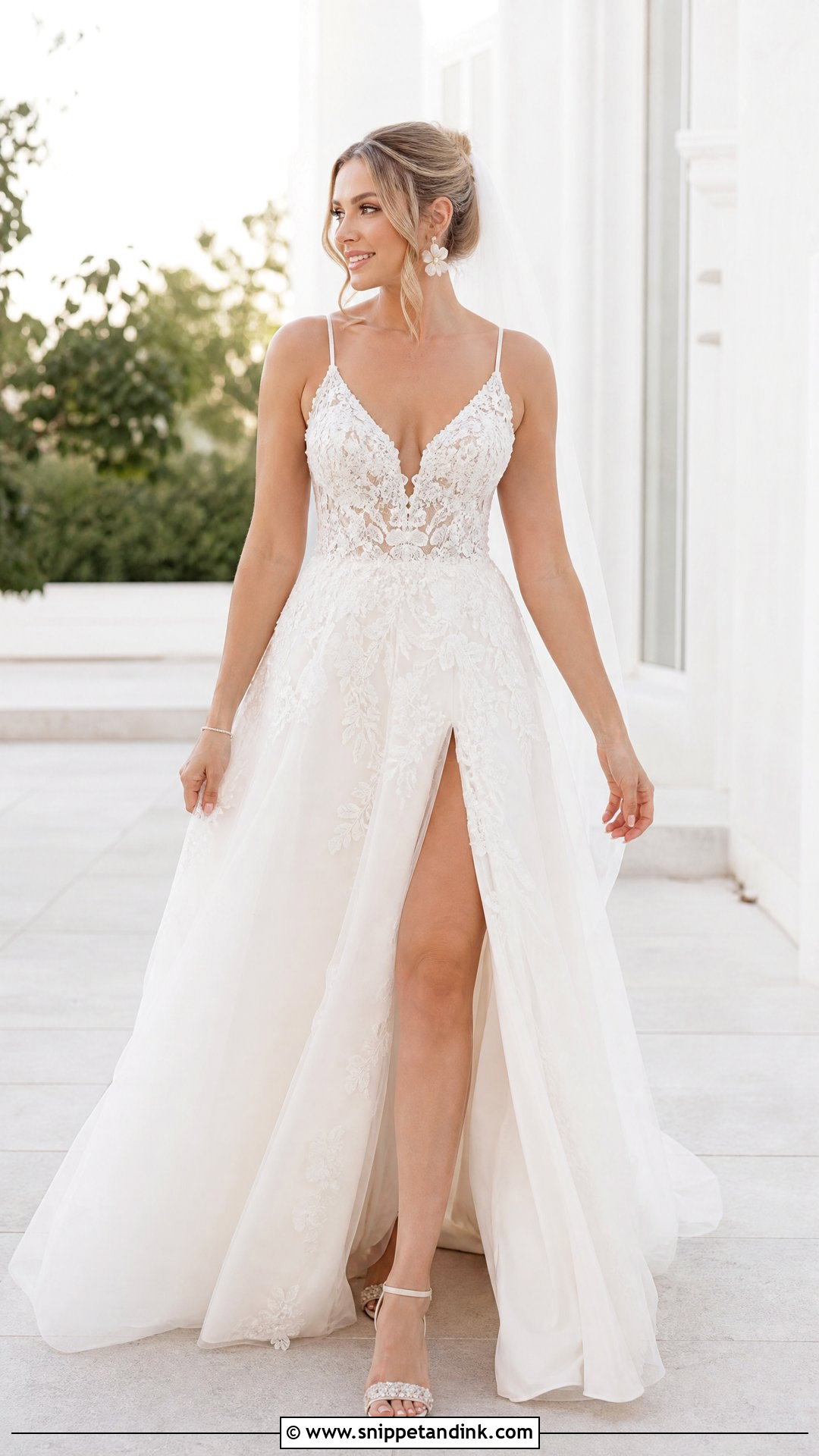
Lace turns noticeably bolder with a thigh-high slit. On an A-line with a fitted lace bodice and layered skirt, the slit appears as you walk and closes when you stop. The top of a slit takes all the strain on steps and chairs, so ask the seamstress to reinforce it with a bar tack; left plain, it can tear upward. Shoes become part of the outfit, and embellished block heels give visibility with stability. For an outdoor wedding, practice walking in a breeze. A removable lace overskirt covers the ceremony and reveals the slit for portraits.

20. Illusion Bodice Ball Gown
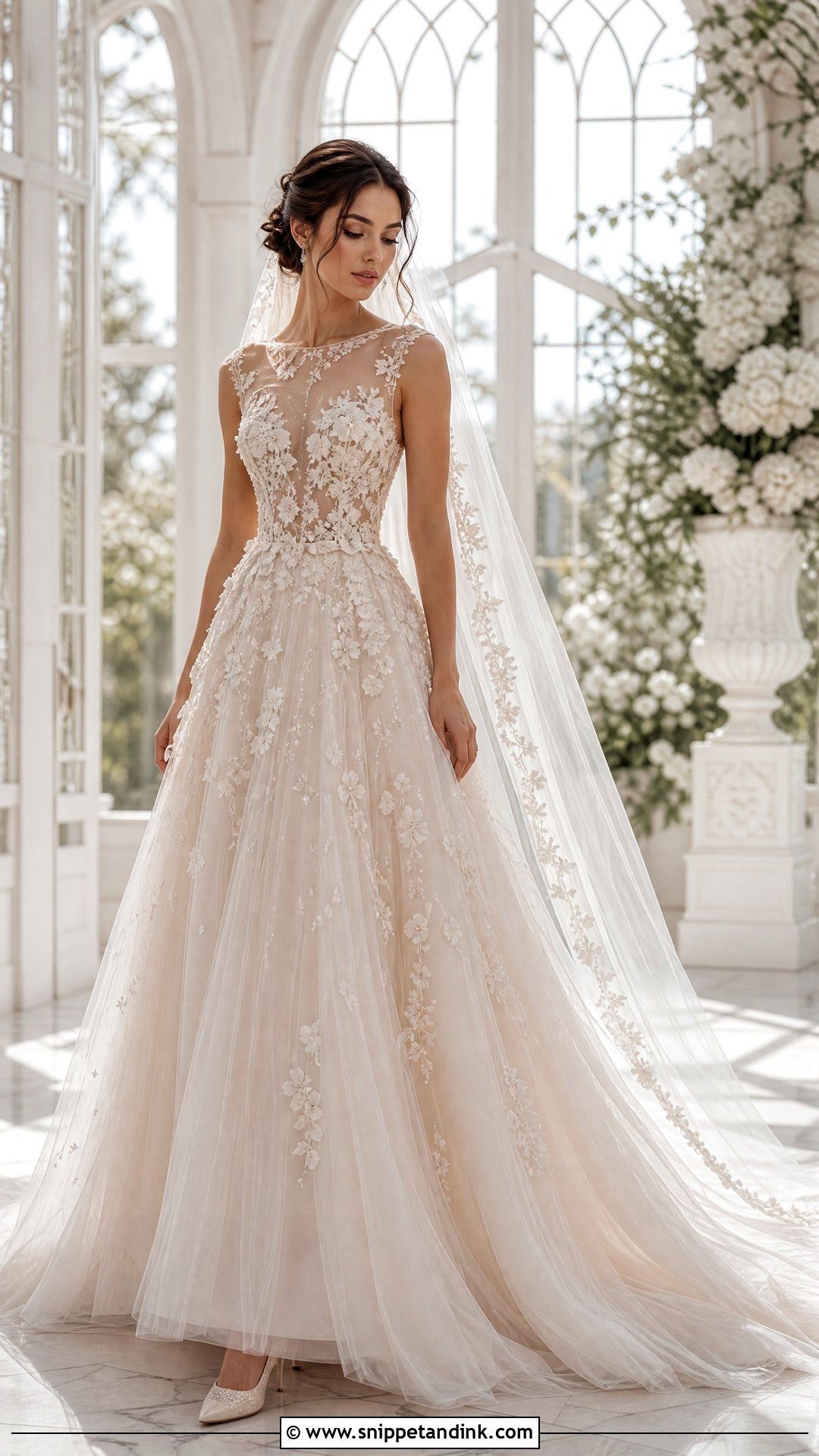
Skin-tone mesh covered with dimensional flowers, light beading or leafy embroidery makes the bodice nearly vanish above a full tulle skirt. Illusion fabric varies in color between makers, so ask for the closest match to your complexion and look at it under flash, which can make mesh glow paler than skin. Extra motifs go wherever you want more coverage. Hem the skirt with your chosen shoes on. The bodice should stay secure without excessive tightness or uncomfortable adhesives, and a veil scattered with matching appliqués ties it together.
21. Two-Piece Wedding Dress
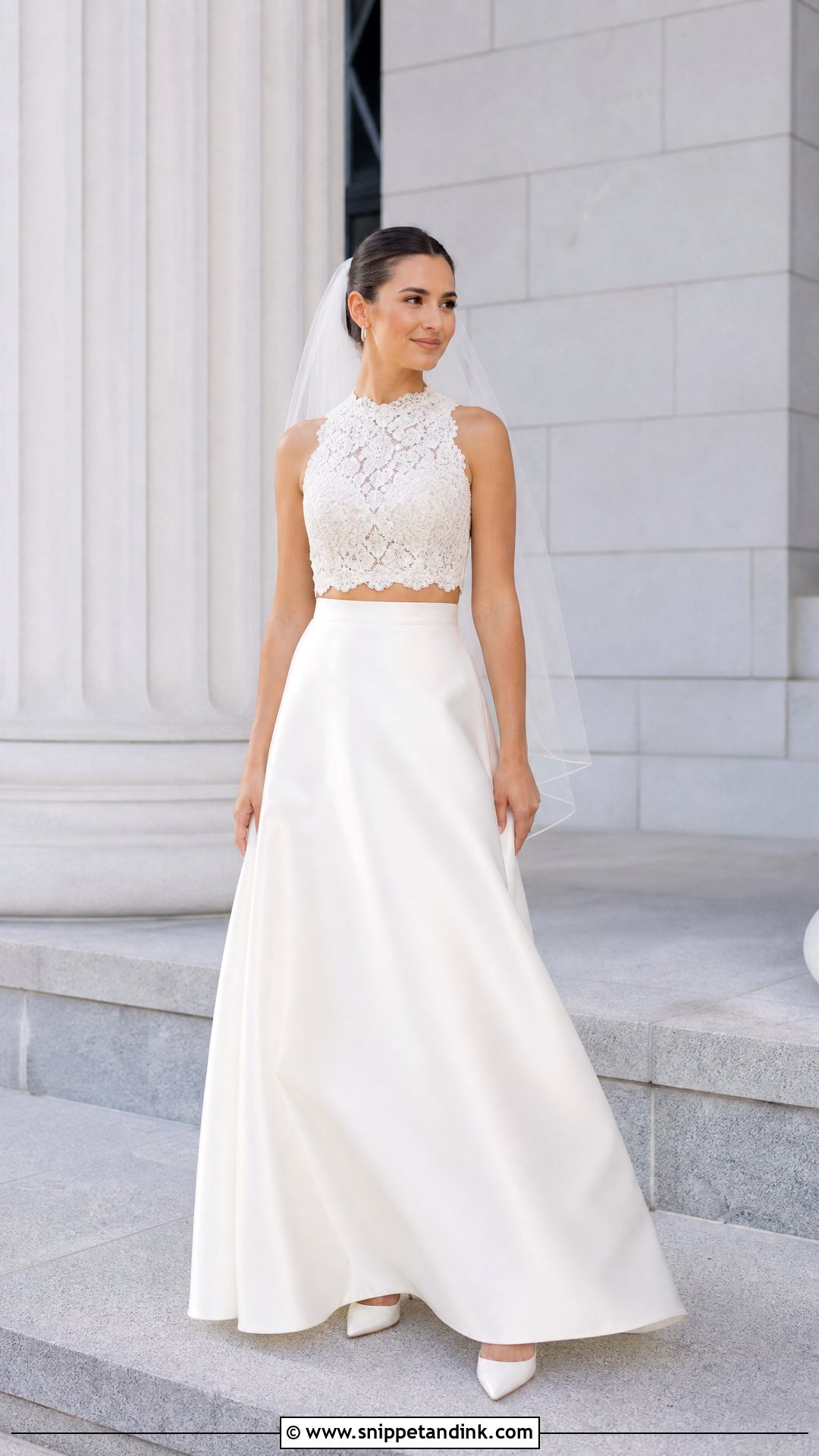
A two-piece shows a narrow strip of waist, and narrow is the word. A gap of an inch or two looks deliberate; a wide one starts to look like separates that didn’t quite match. Pair a structured lace crop top with a high-waisted satin, crepe or tulle skirt. Raise your arms and sit at the fitting, since that’s when the top rides up, and use hidden snaps or small elastic loops to keep the pieces aligned. A detachable overskirt or sheer cape adds formality for the ceremony, then comes off for a lighter reception look.
22. Cutout Satin Wedding Dress
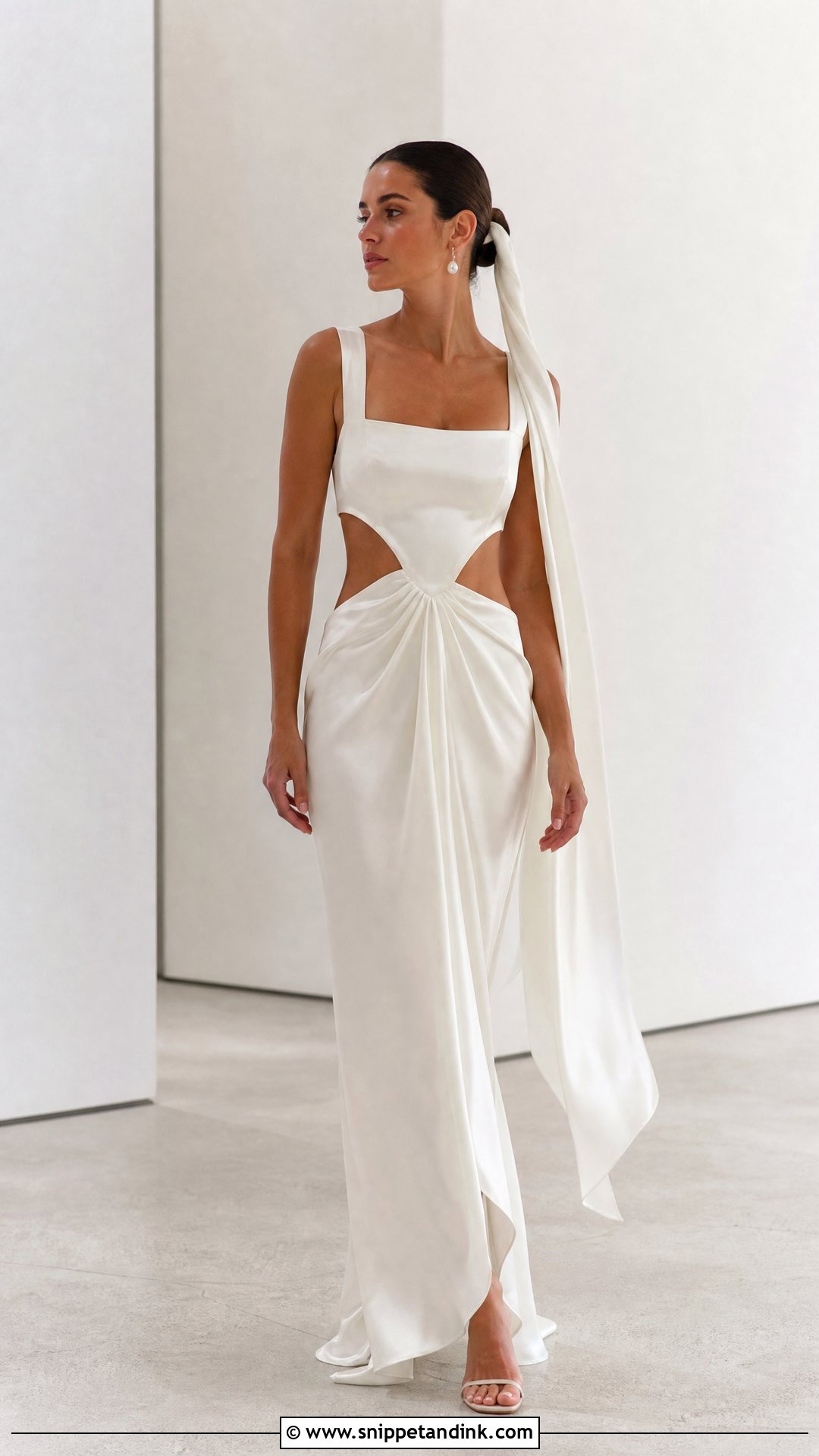
Satin cutouts need precision, because satin doesn’t forgive a curve that’s slightly off. Small waist cutouts, a square neckline and a gently draped skirt keep the rest simple. I have the openings placed at the natural waist, where they sit flattest as you move. Satin also shows every line underneath, so I insist on smooth, line-free undergarments, and the full outfit should be tested in natural light before the final fitting. Skin-tone mesh adds stability. Plain tulle or a removable satin scarf veil and minimal pearl earrings finish it.
23. Mini Wedding Dress With Sheer Tights
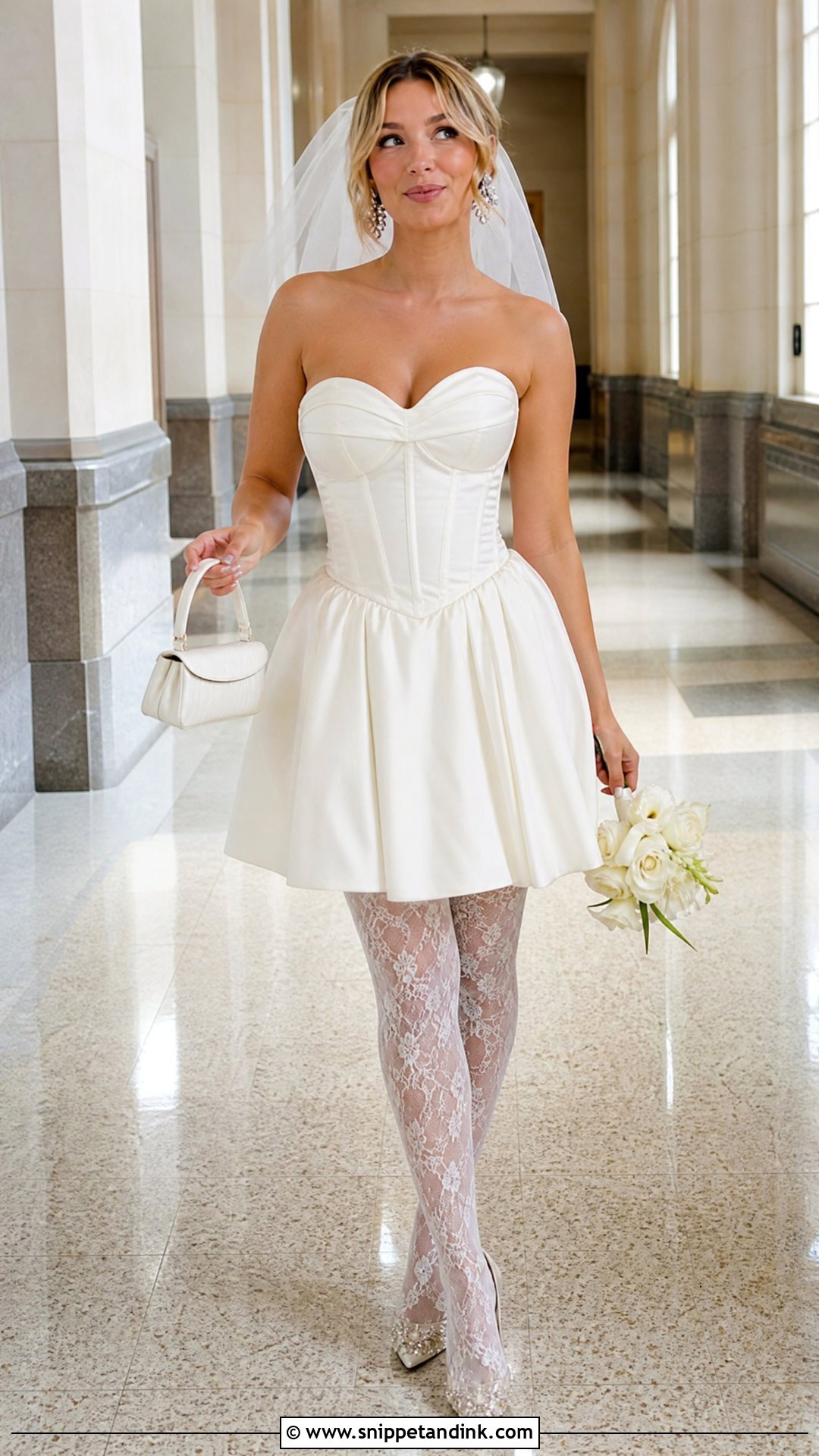
A bridal mini suits a courthouse ceremony, a reception change or an after-party. Choose a structured mini with a corseted bodice, a square or sweetheart neckline and a gently flared skirt; sheer ivory tights add coverage and smooth the line into pointed pumps. Check the hem from every angle, especially walking upstairs and sitting on low chairs, where minis ride up most. Built-in shorts or a lightweight lining help. A low neckline wants wider straps or supportive cups, and a detachable overskirt turns the mini into a ceremony gown.
24. Sheer Cape Wedding Dress
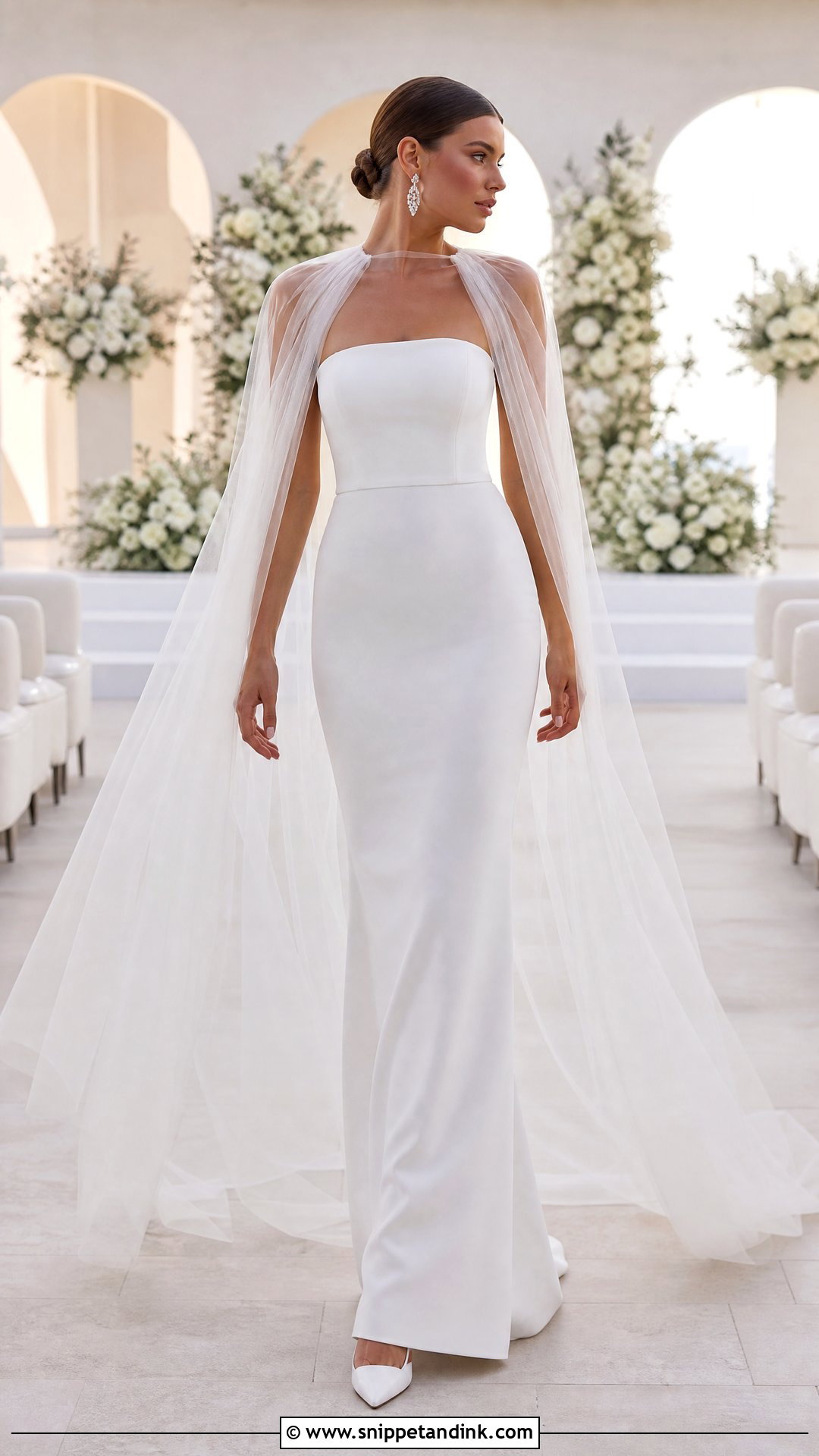
A sheer cape gives you a revealing gown and the option of coverage, which makes it my usual answer for a backless dress at a conservative ceremony. Start with a fitted strapless or backless crepe gown and add a floor-length tulle cape fixed at the shoulders or neckline. Plain tulle looks most modern; embroidered edges or scattered pearls add detail. The attachment points need to be stitched into the gown’s structure, not just its outer fabric, or the cape’s weight pulls the bodice backward. Hem it for your shoes and the actual floor surface, and skip the veil.

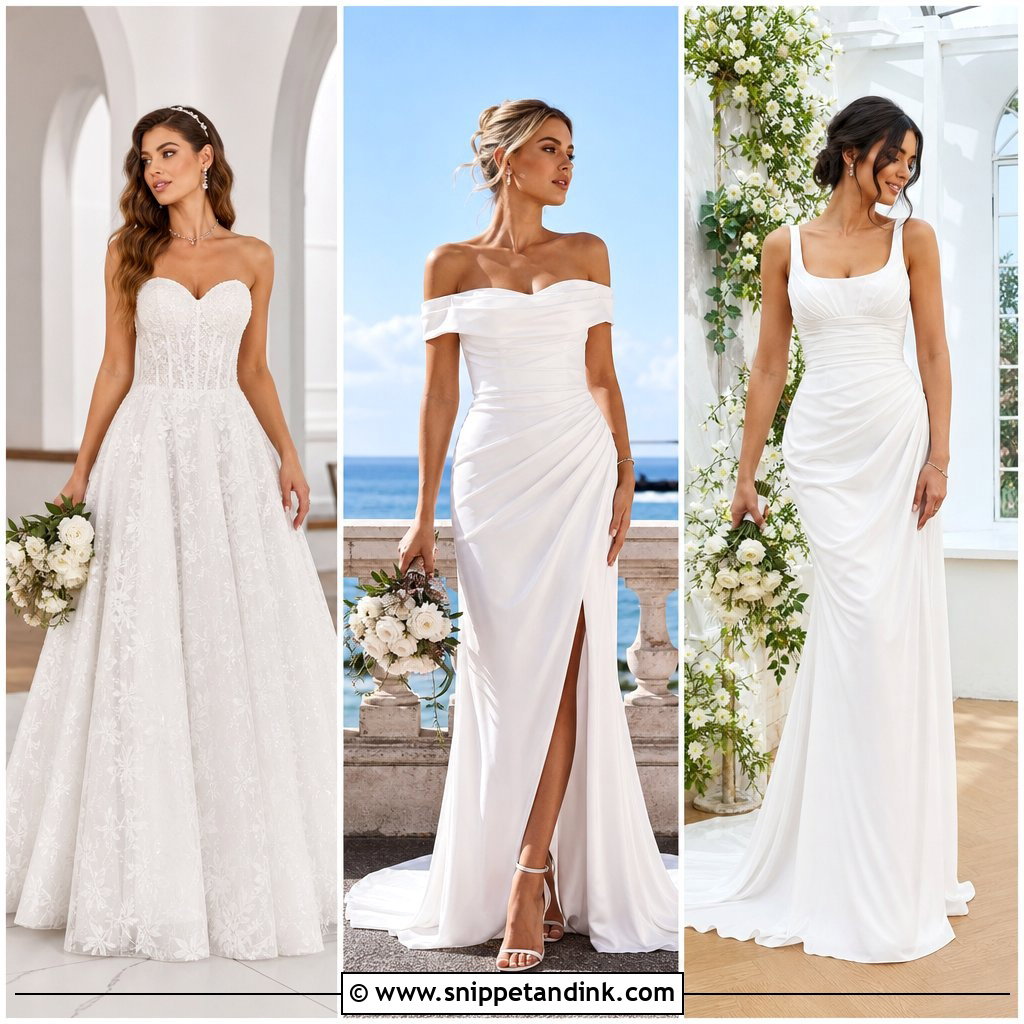
25. Sheer Beaded Wedding Dress
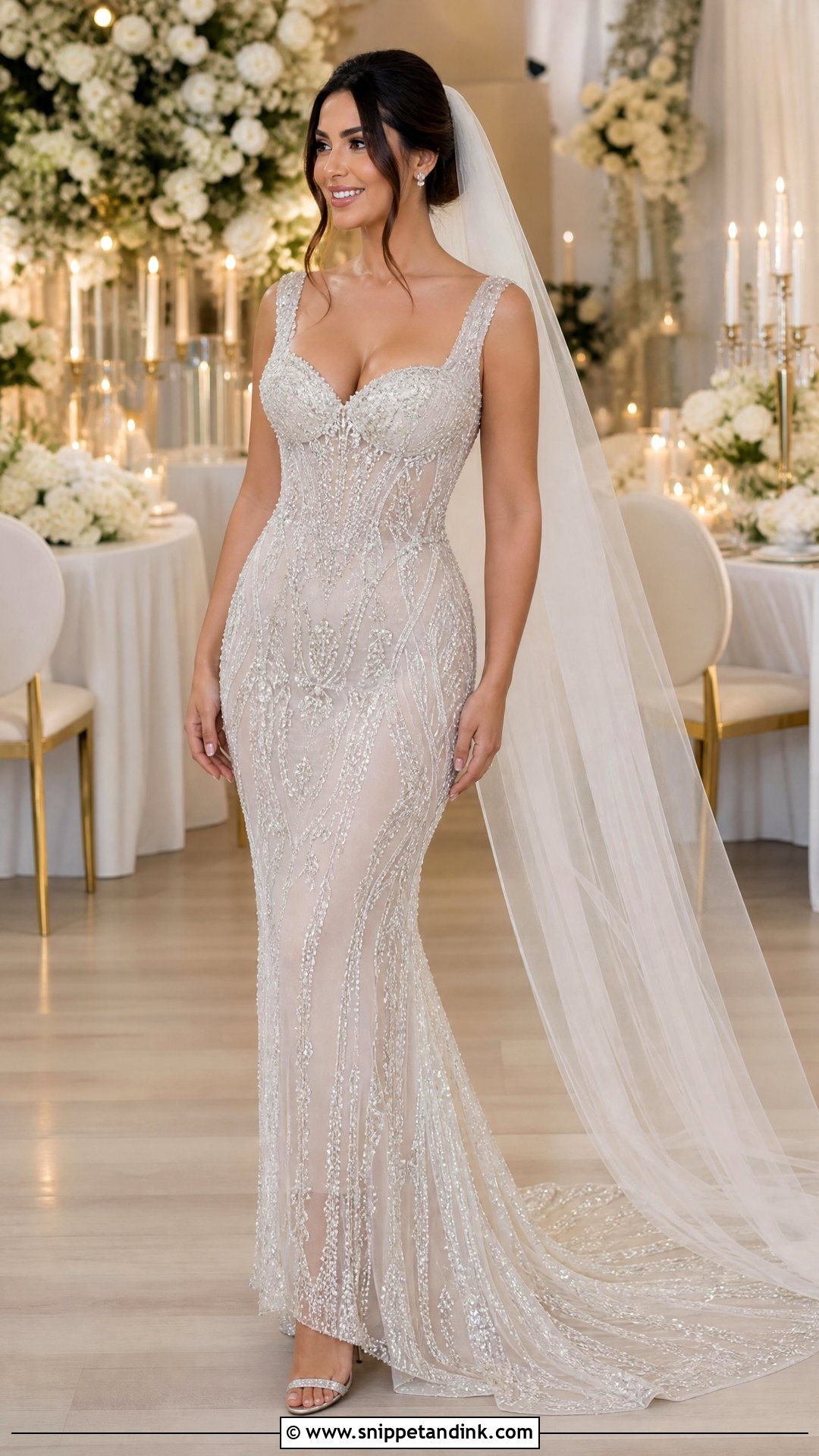
Beads on sheer tulle catch evening light in a way plain fabric can’t. Choose a fitted gown with carefully placed crystals over a supportive nude or ivory base and a modest train. The fitting check I never skip is on the inside: beadwork at the underarms, waist and hips can scratch over several hours, and a soft lining strip behind the roughest areas prevents it. Flash can make tulle more transparent, so ask about extra lining if test photos show that. Keep hair sleek so the beadwork stays central, and save a removable satin overskirt for a later reveal.
Tape, Cups or Stitching Under a Low Neckline
Every revealing gown needs a support plan, and the most reliable one is sewn in. Cups stitched into the bodice, a waist stay and boning placed by your tailor won’t slide, sweat loose or peel.
Where adhesives fit in
Fashion tape and adhesive bras are a backup, not the main structure. Body heat and perspiration weaken them through a long day, and they grip skin better than satin. Test any adhesive on a patch of skin a few days before the wedding, since some people react to it, and never apply it over moisturizer or body oil.
The skin that shows
Open backs and bare shoulders show everything. Body makeup or self-tan applied that morning can transfer onto ivory lining and mesh, so let any product set fully before you step into the dress, or ask your makeup artist to finish with a setting spray. Check tan lines against the gown a month out, not the week of the wedding.
Rehearse the awkward moves
At the last fitting I run through the moments that test a low-cut dress: kneeling or sitting on a low bench, hugging someone taller, climbing into a car, a spin on the dance floor. Whatever gapes or shifts in that fitting room will do the same at the wedding, and a snap or a strip of mesh is far easier to add now than to improvise on the day.
One Daring Detail, Then Real Support
A revealing look isn’t about the lowest neckline or the highest slit. It’s the one you can move in, that holds, and that suits your taste. Corsets, sheer panels, open backs, cutouts and shorter hems all look polished when the construction underneath is sound and the accessories stay quiet. Bring your exact shoes and undergarments to every fitting, look at the dress in several kinds of light, and rehearse the movements of the day before you approve alterations. Removable sleeves, capes, overskirts or extra appliqués let coverage change between ceremony and reception. If you’re still adjusting the dress an hour in, it isn’t finished.
You'll Like These Ideas:




Leave a Reply