
Vera Wang built her bridal name on gowns that pair romance with modern structure and memorable couture details. The range is wide, from sculptural ball gowns to sleek columns, which is exactly why brides arrive at my appointments overwhelmed. I start with three questions: where you’re marrying, how your body likes to be supported, and what you’ll be doing for ten hours in the dress. Fabric movement, waist placement and neckline support follow from those answers, and the accessories come last, chosen so they never fight the gown’s strongest detail. The twenty dresses here run from big skirts and fitted shapes to delicate lace, clean satin and a couple of unexpected finishes.
Matching the Silhouette to the Room You’re Marrying In
Before I pull a single gown, I ask for photos of the ceremony space. The venue rules out more dresses than personal taste does, and it saves you falling for something that won’t work on the day.
- Narrow church or chapel aisles: a very wide ball gown brushes every pew end. An A-line or modest ball gown moves down the aisle more gracefully.
- Grand staircases: you’ll lift the front of the skirt to climb, so a trumpet or mermaid that binds at the knee is hard work. Practice the stairs in fittings.
- Sand, grass and gravel: heavy satin trains drag and stain. Lighter organza or tulle and a shorter train cope far better.
- Places of worship with dress codes: strapless and plunging styles may need a bolero, lace jacket or sleeves for the ceremony. Ask the officiant early.
- Small rooms and intimate dinners: a column or slim A-line looks proportionate where a huge skirt would fill the space.
Temperature matters as much as shape. Satin, mikado and lined lace are warm; tulle and organza breathe. For an outdoor summer ceremony I’d steer you toward lighter fabrics even within the silhouette you love.
1. Vera Wang Strapless Satin Ball Gown
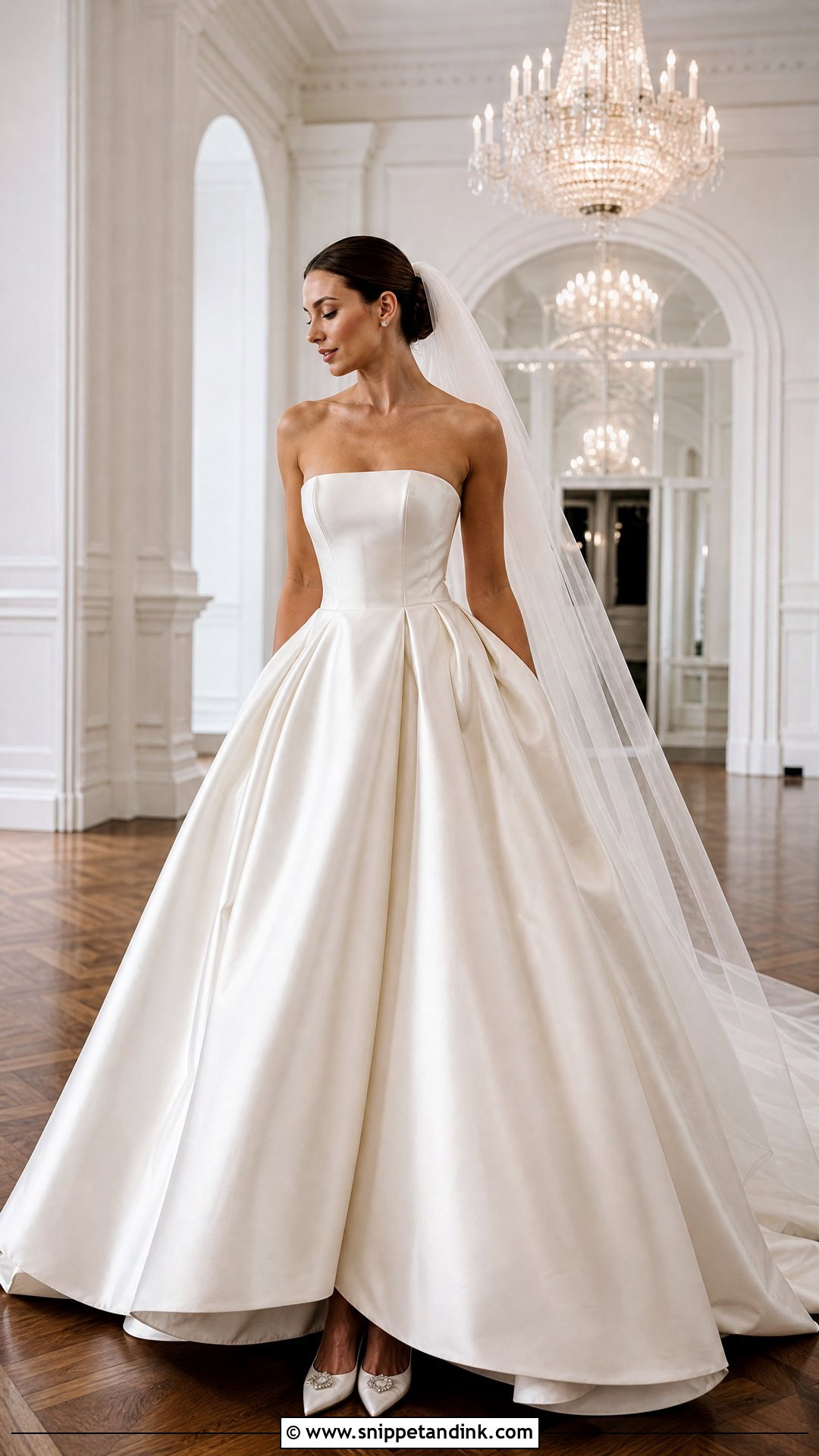
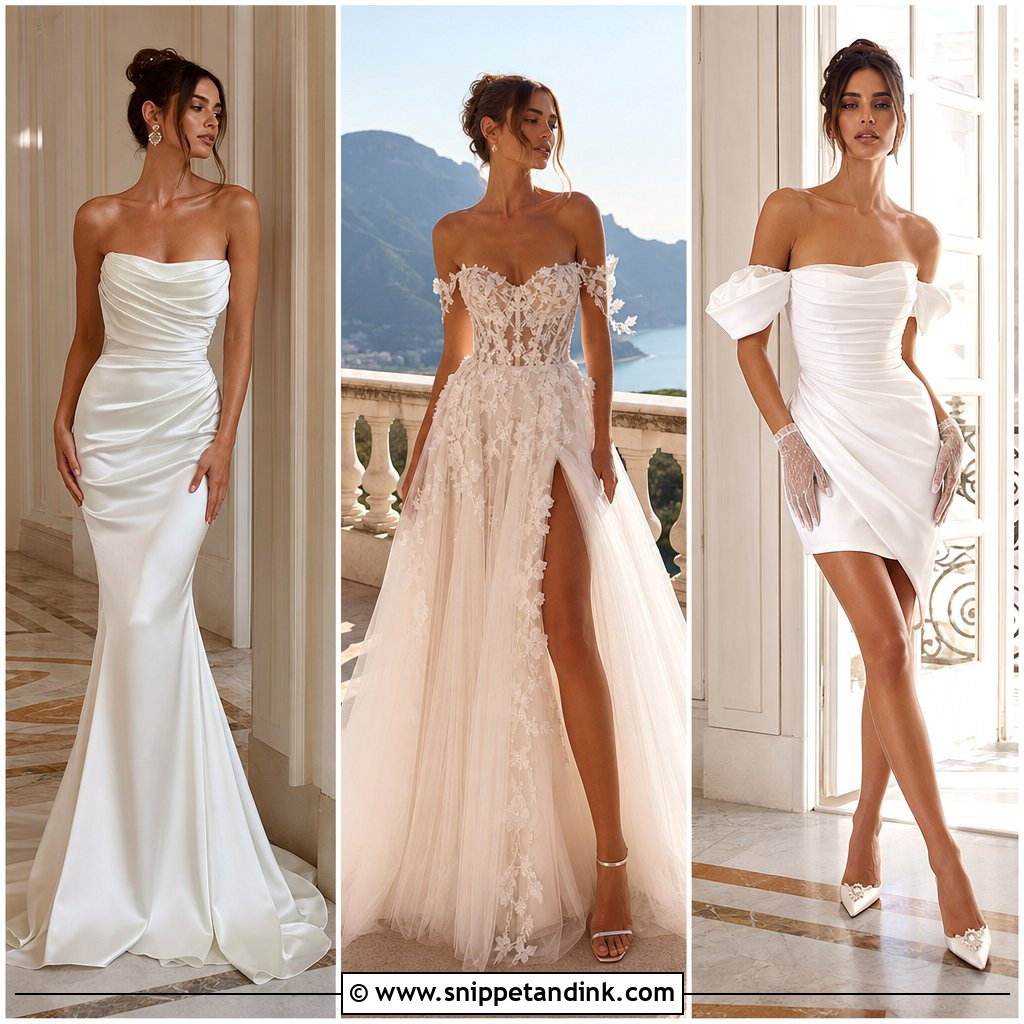
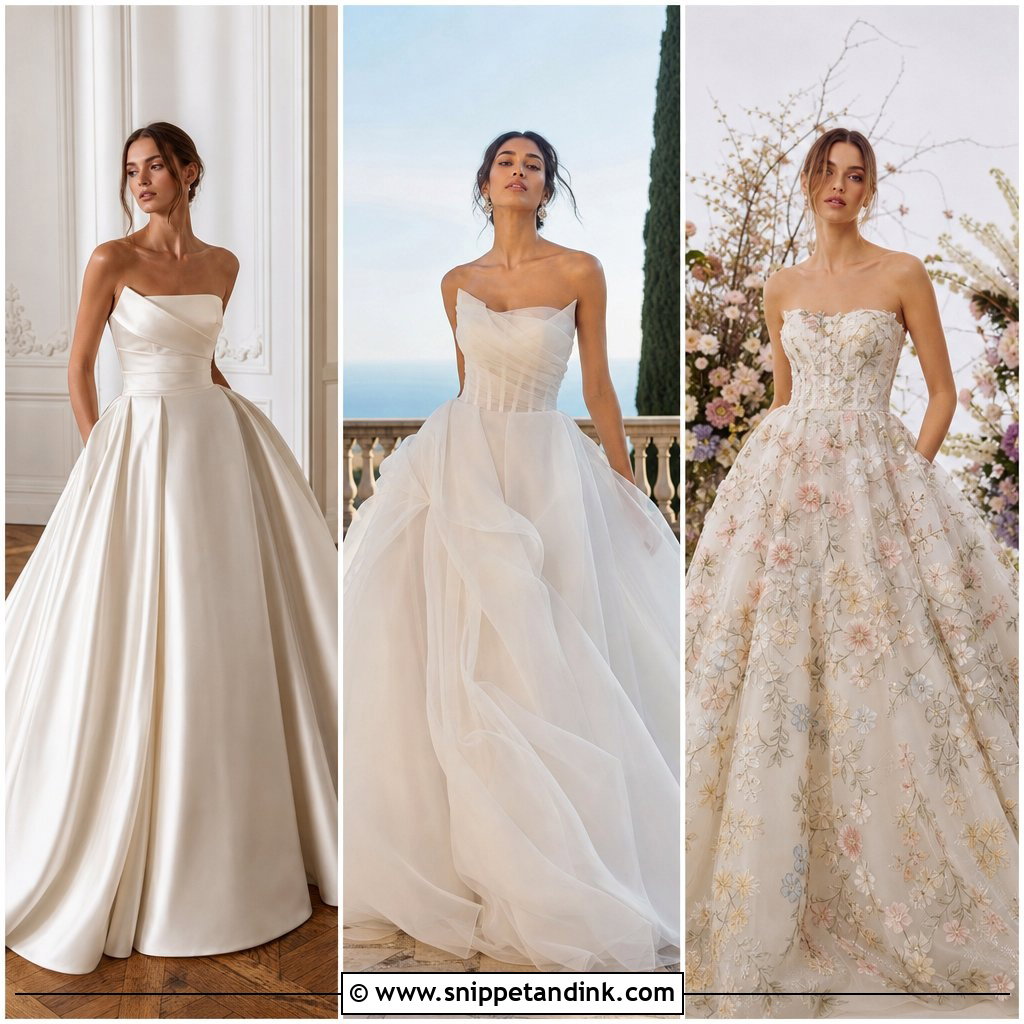
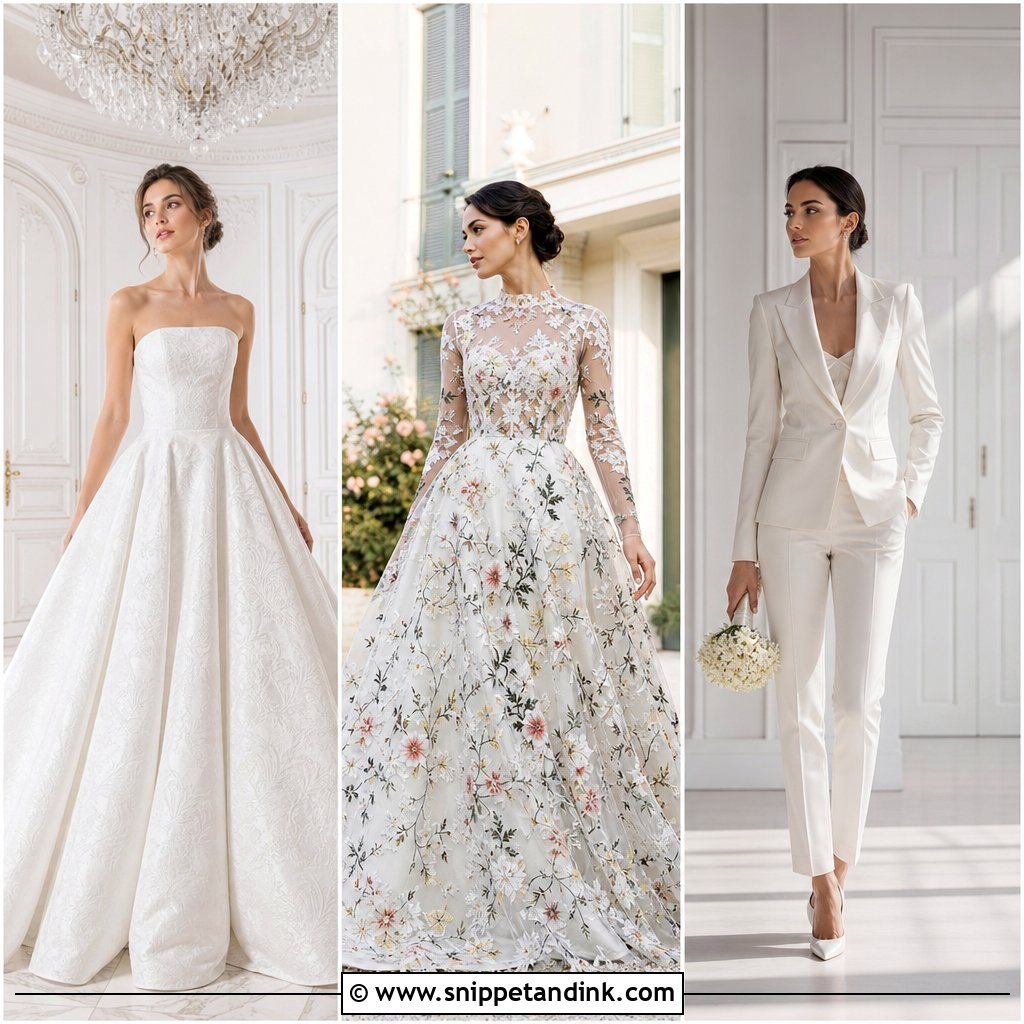
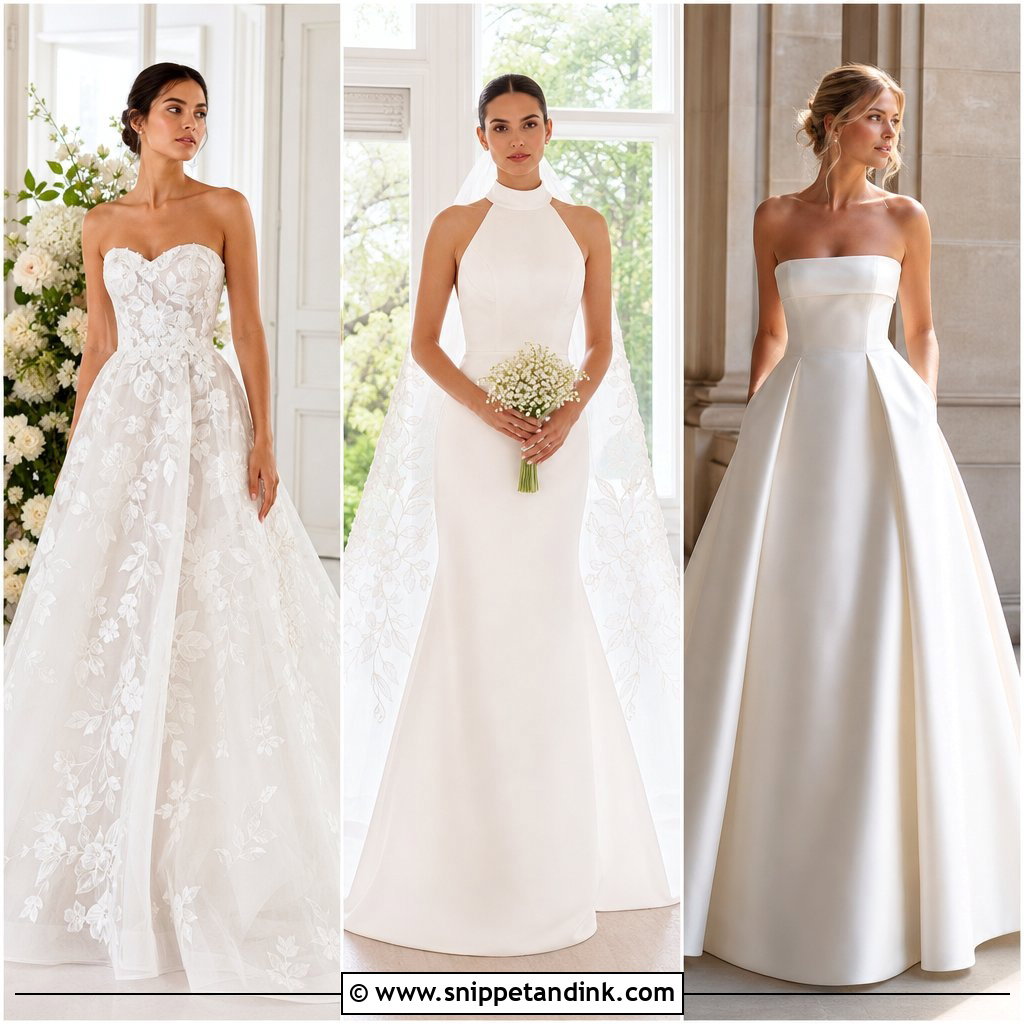
Strapless satin with a full skirt is the gown most people picture when they hear the designer’s name, and it earns that reputation. Structured satin holds its shape all day and photographs with a smooth, even glow. The fitted bodice does the defining work, so I check that it grips at the ribs rather than the bust; if it relies on the bust, it slips. Style it with a cathedral veil, pointed satin pumps and small diamond or pearl earrings. Skip a big necklace, since the bare neckline already frames the collarbones, and wear a sleek bun to keep the bodice visible. Give it a grand hotel or estate where the skirt has room to travel.
2. Vera Wang Sweetheart Princess Wedding Dress
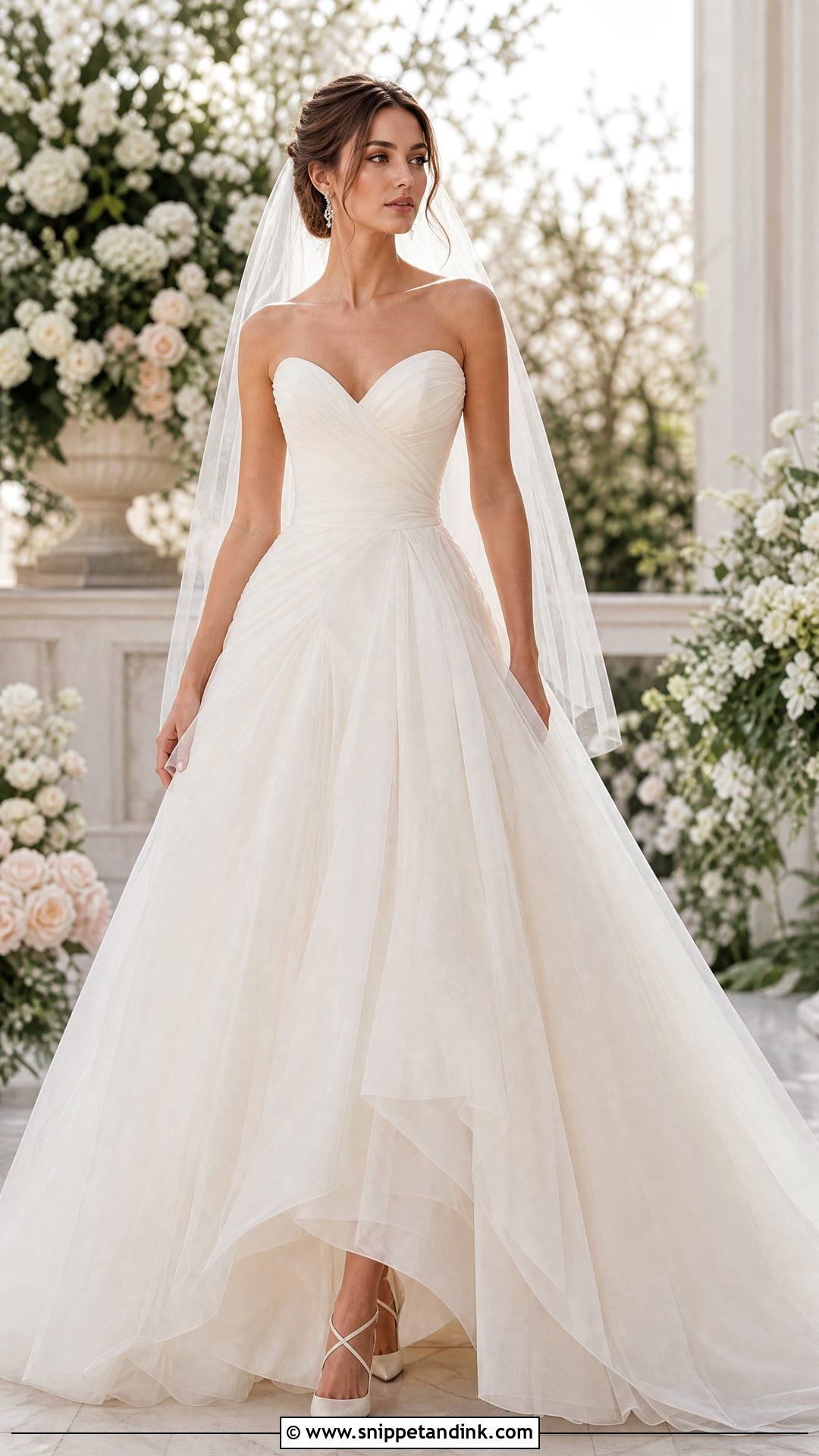
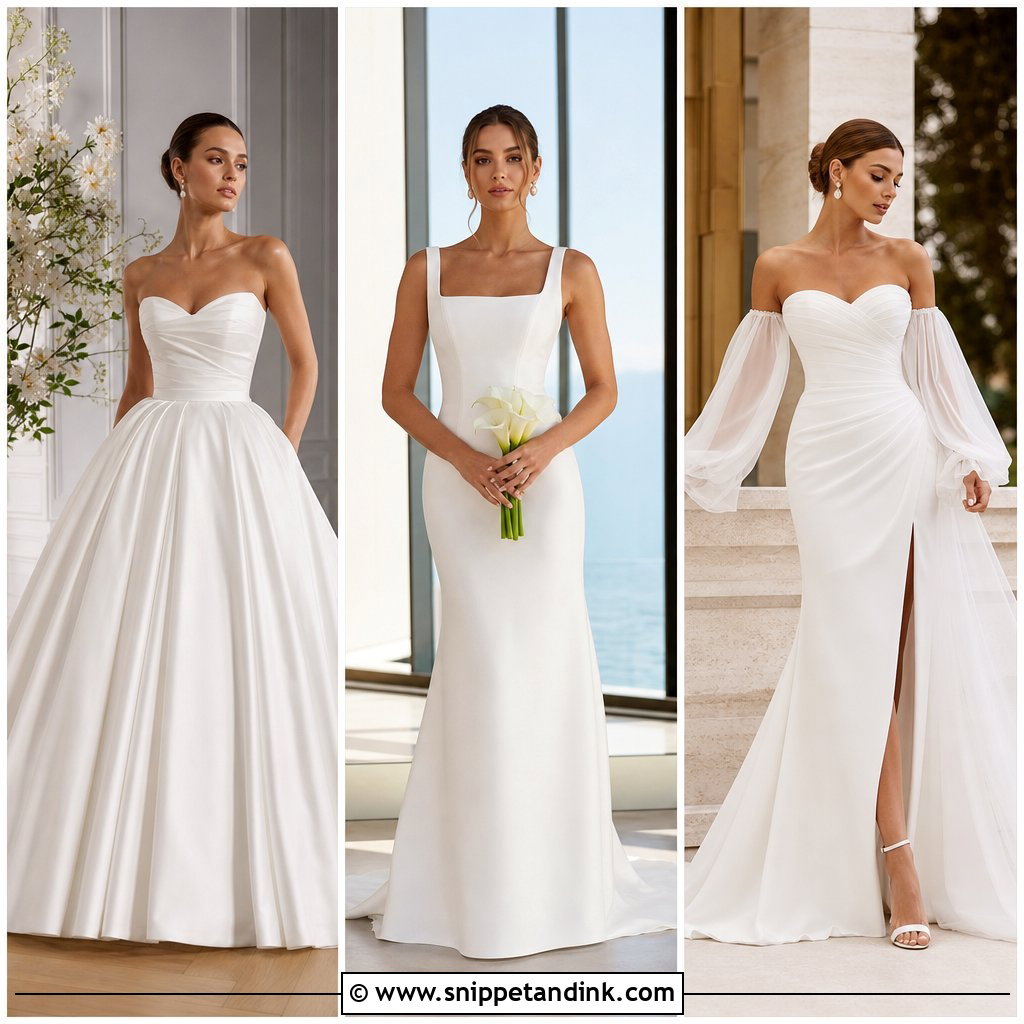
Most brides find a sweetheart princess gown easy to wear, and the reason is proportion: the curved bodice follows the bust, then the full skirt balances the hips. Look for subtle draping, delicate lace or a few restrained floral appliqués rather than all three. A fingertip veil, crystal drop earrings and ivory heels with a block or low stiletto finish it, with loose waves or a soft updo. Alterations make or break this one. The sweetheart dip needs taking in exactly at the center front, or it gapes when you lean forward to sign the register. Garden ceremonies and traditional ballrooms suit it well.
3. Vera Wang Drop Waist Wedding Dress
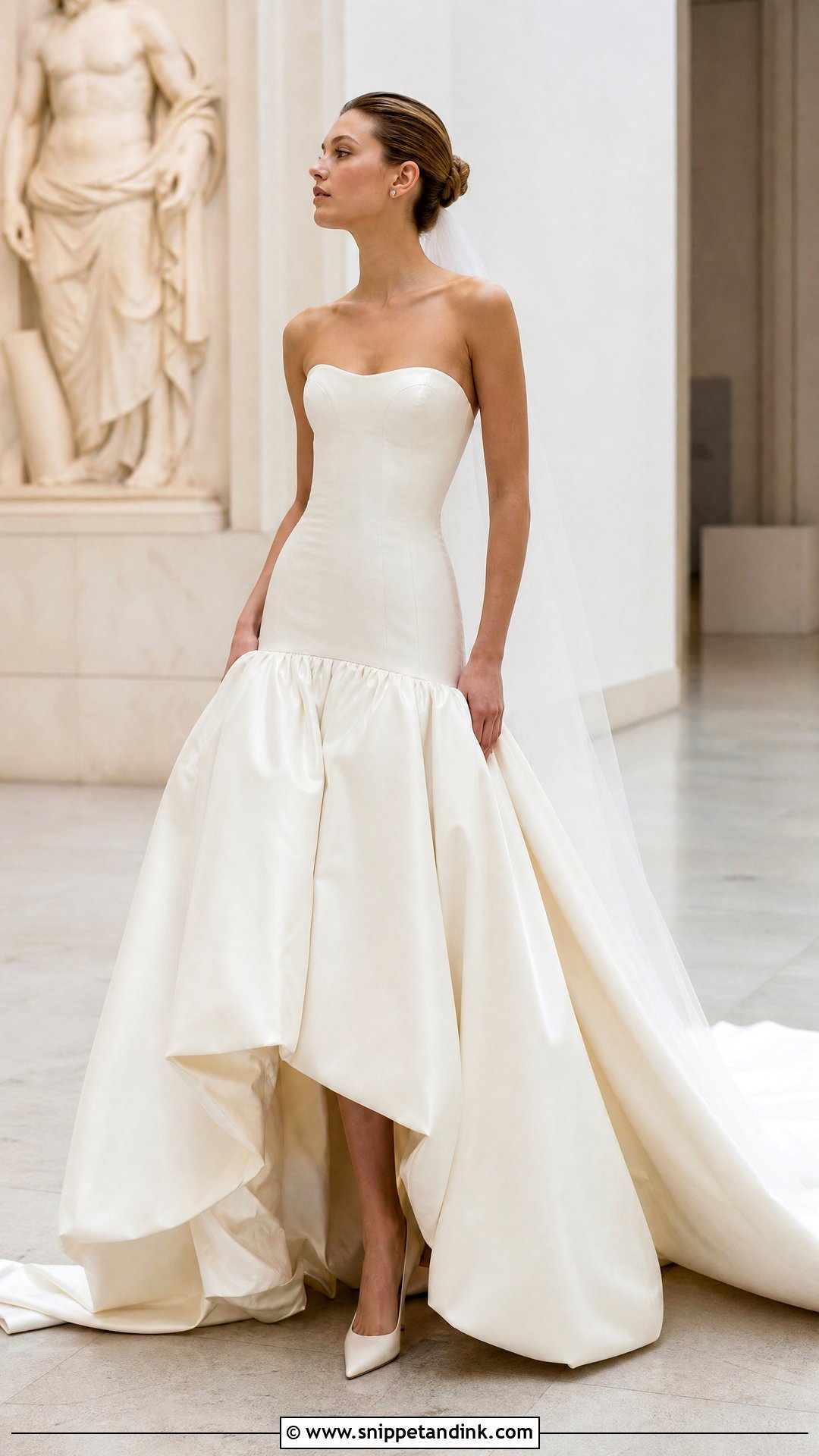
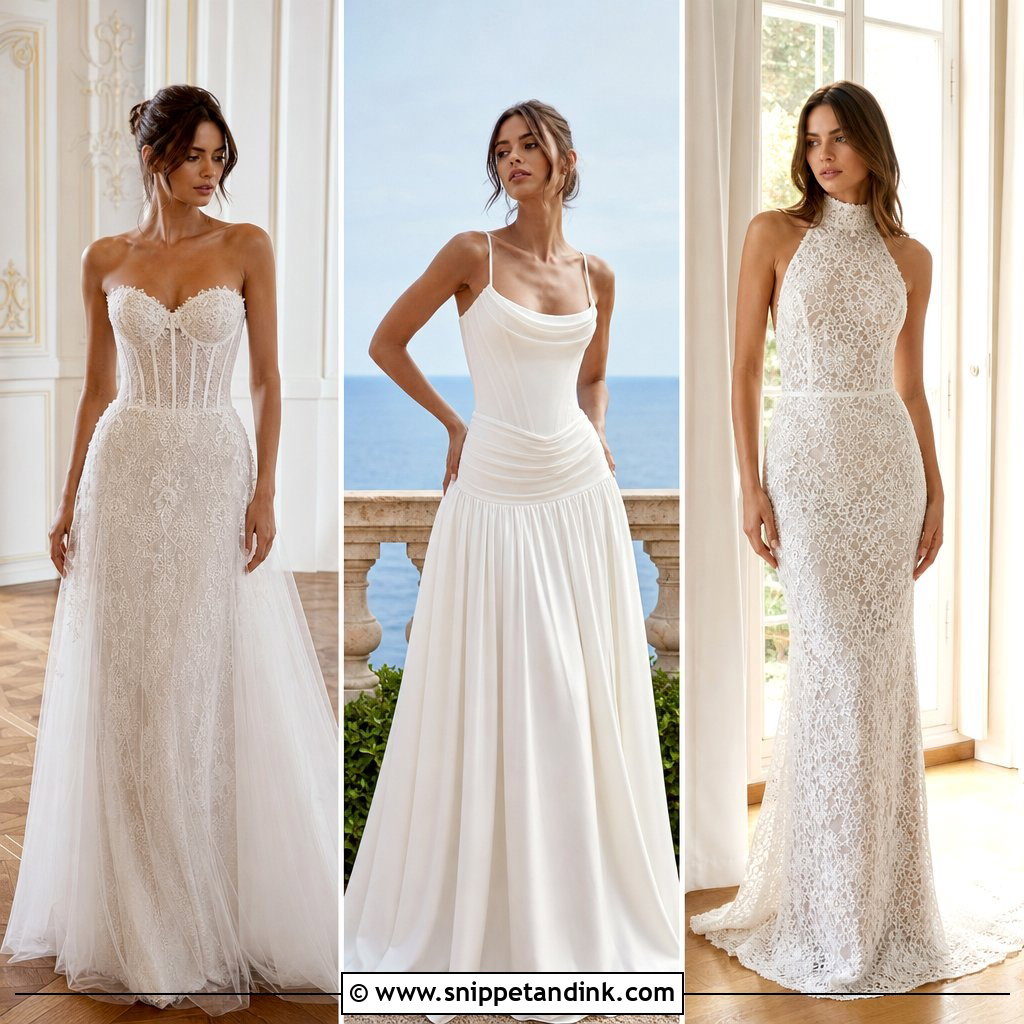
Long, sculpted, then a sudden skirt below the hips. A drop waist feels more architectural than a standard ball gown and less predictable. The seams on the bodice carry the whole look, so I examine them closely at the first fitting: they should run straight down the torso, not twist toward the side seams. Pair it with a long plain veil, minimal studs and streamlined pointed pumps, and keep hair in a low chignon so nothing adds width up top. Because the waist placement controls your proportions, budget for careful alterations. Modern ballrooms, galleries and city venues with clean lines are its natural setting.
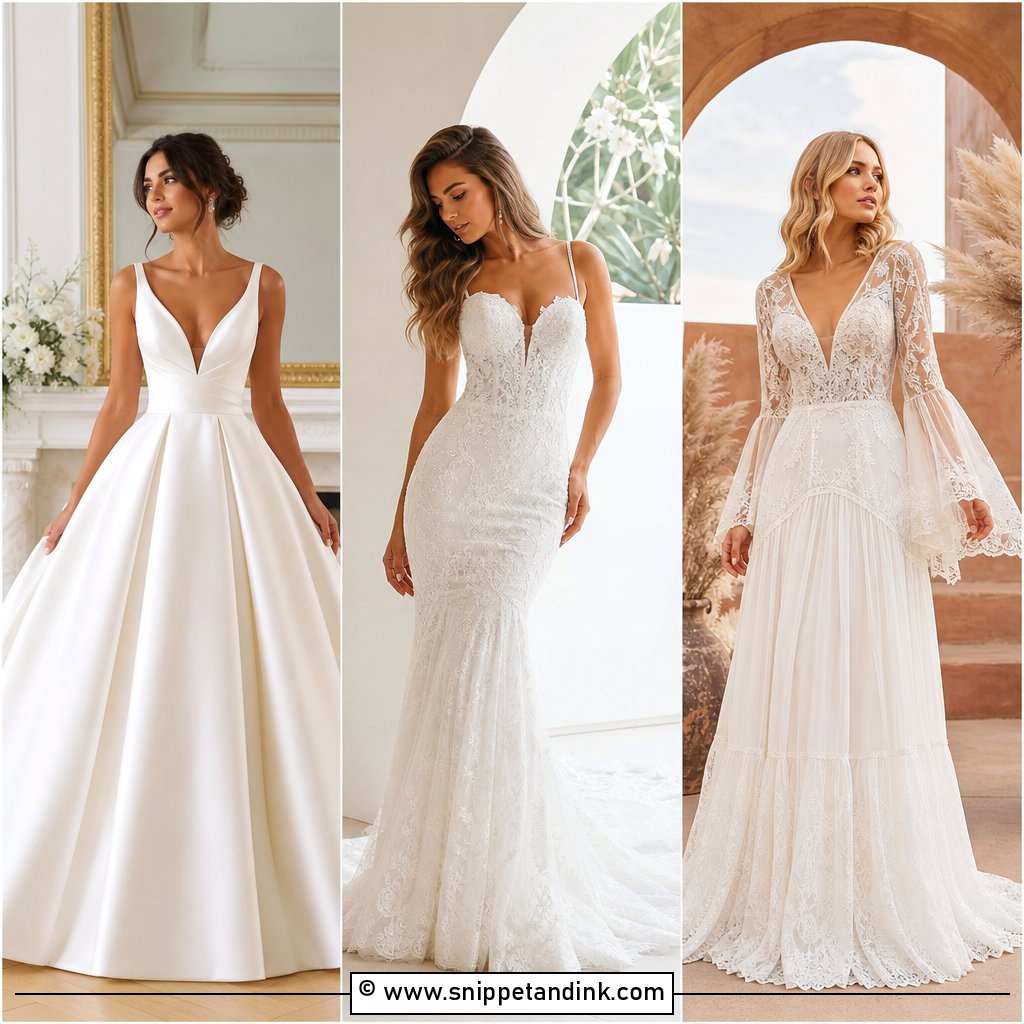
4. Vera Wang Lace A-Line Wedding Dress
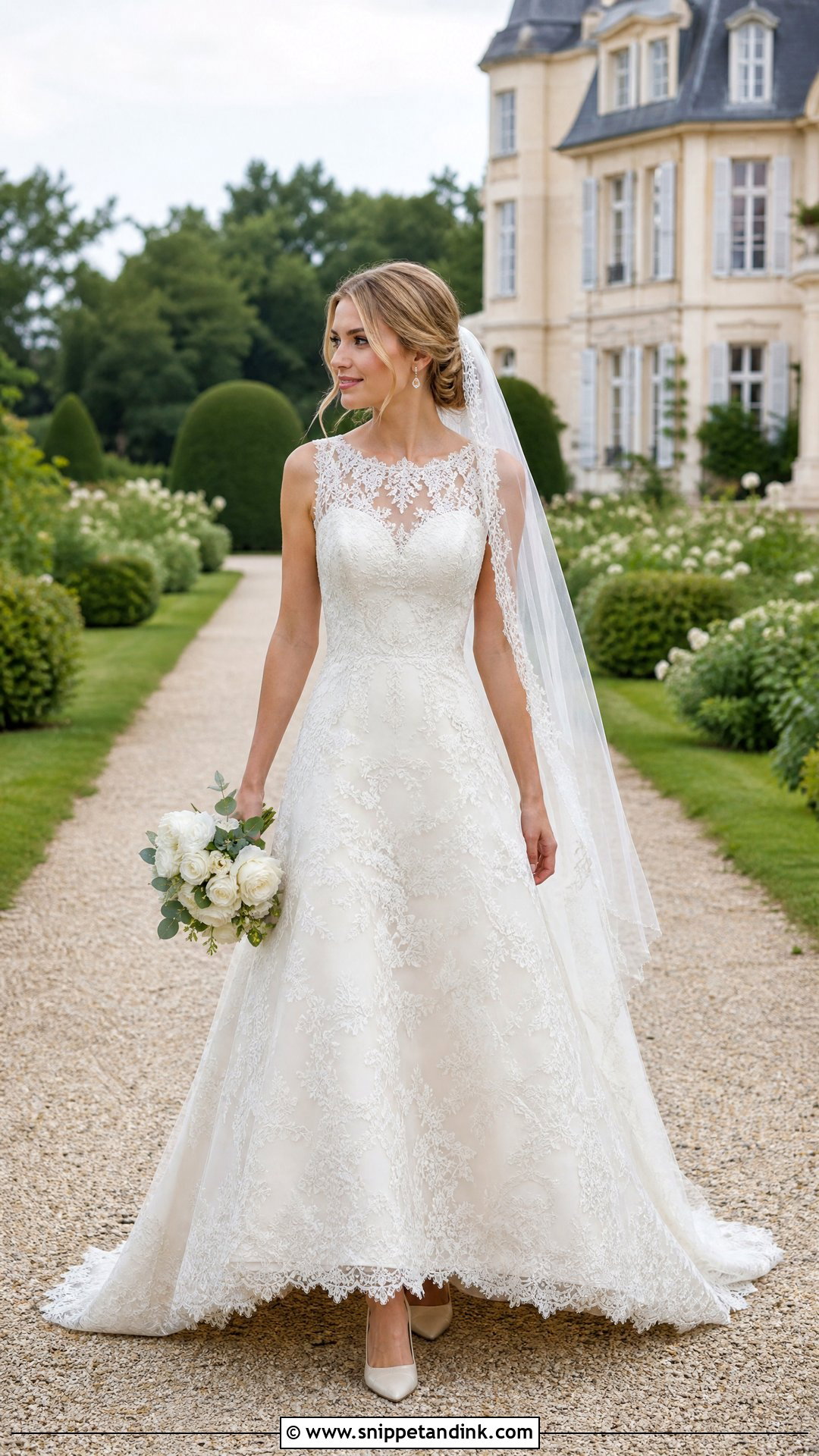
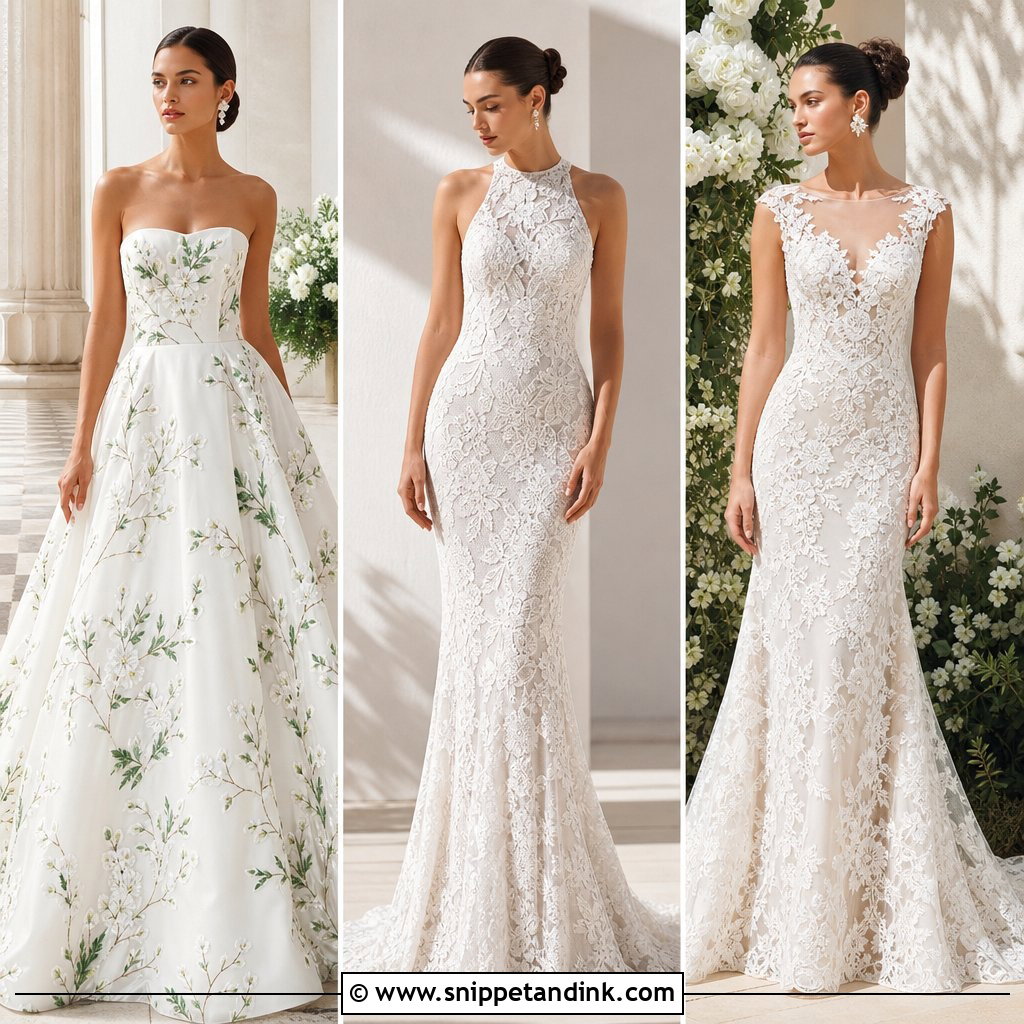
An A-line in lace is the gown I suggest most often to brides who want movement without carrying a heavy skirt. The fitted top widens gradually to the hem, so you can walk, sit and dance freely. The lace decides whether it reads traditional or modern: a dense, scalloped lace over a solid lining looks classic, while sparse motifs on nude tulle look current. Style it with a sheer lace-edged veil, pearl earrings, ivory pumps and a small bouquet with simple greenery, and hair in a low bun or half-up. At fittings I watch the seams, because a skilled seamstress will move lace motifs across a seam by hand so the pattern doesn’t stop dead. Historic houses and garden ceremonies are a natural home.
5. Vera Wang Asymmetrical Wedding Dress
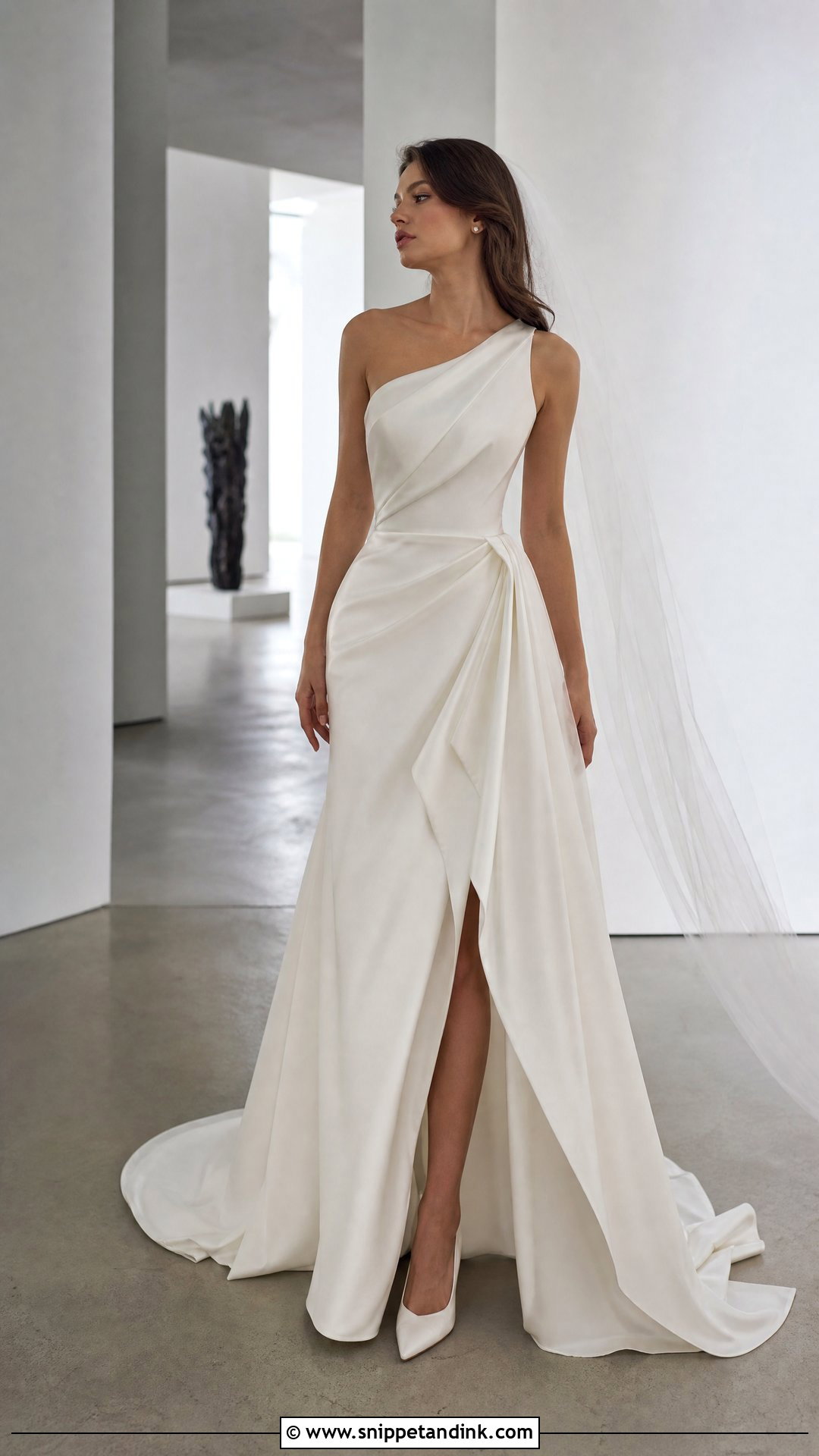
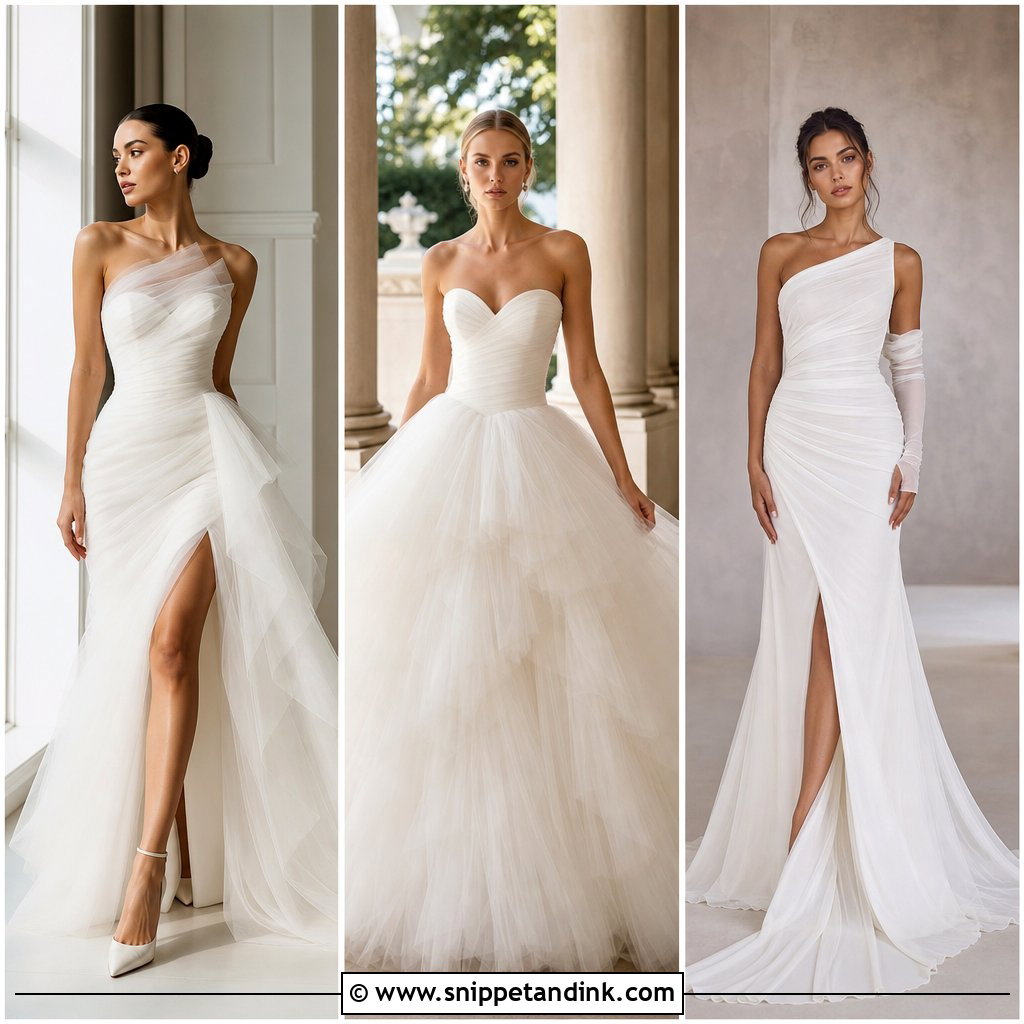
An asymmetrical wedding dress moves the eye with an angled neckline, sculptural draping or an uneven gather across the bodice. It only works if everything else stays quiet. Simple earrings, a slim bracelet, smooth ivory pumps and a plain veil, no more. Sweep the hair away from the detailed shoulder so the line stays clear. Asymmetry is also unforgiving: a strap that sits a few millimeters off or a bra edge on one side shows immediately, so sort undergarments early and expect precise alterations. Rooftops, galleries and contemporary venues suit it.
6. Vera Wang Open Back Wedding Dress
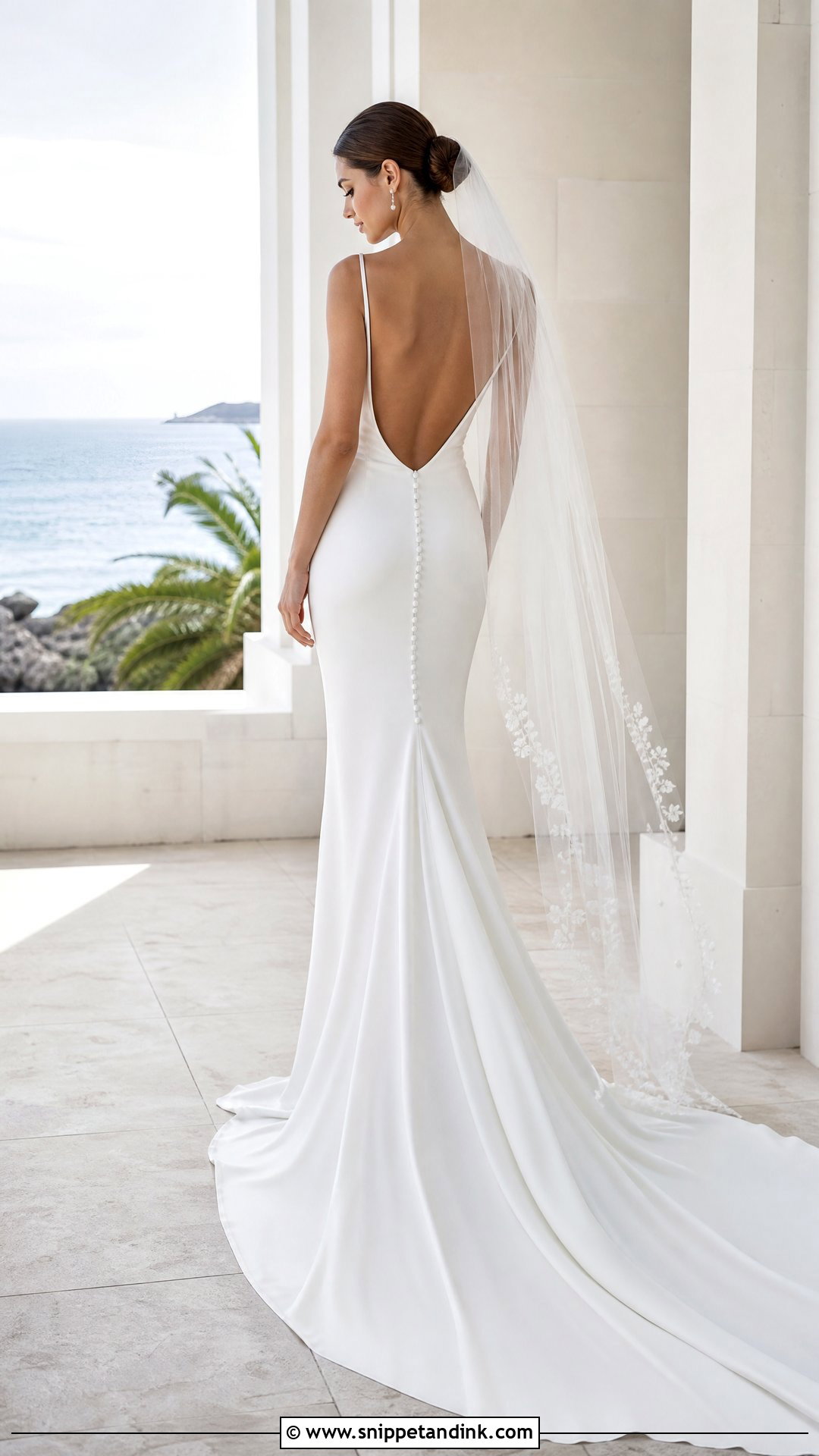
With an open back, the ceremony is your best moment, since guests spend most of it looking at your back. The front can stay simple while the back carries sheer panels, covered buttons, draped fabric or a deep curved opening. Hair needs to clear it, so think bun, braid or a side-swept style, and attach a light veil above the hairstyle. Delicate earrings and comfortable ivory heels are enough. Support is where most brides worry, and the answer is usually built-in cups or a fitted foundation piece added by the tailor rather than a backless stick-on bra, which rarely lasts a warm evening. Sit, walk and dance in it during alterations.
7. Vera Wang Long Sleeve Lace Wedding Dress
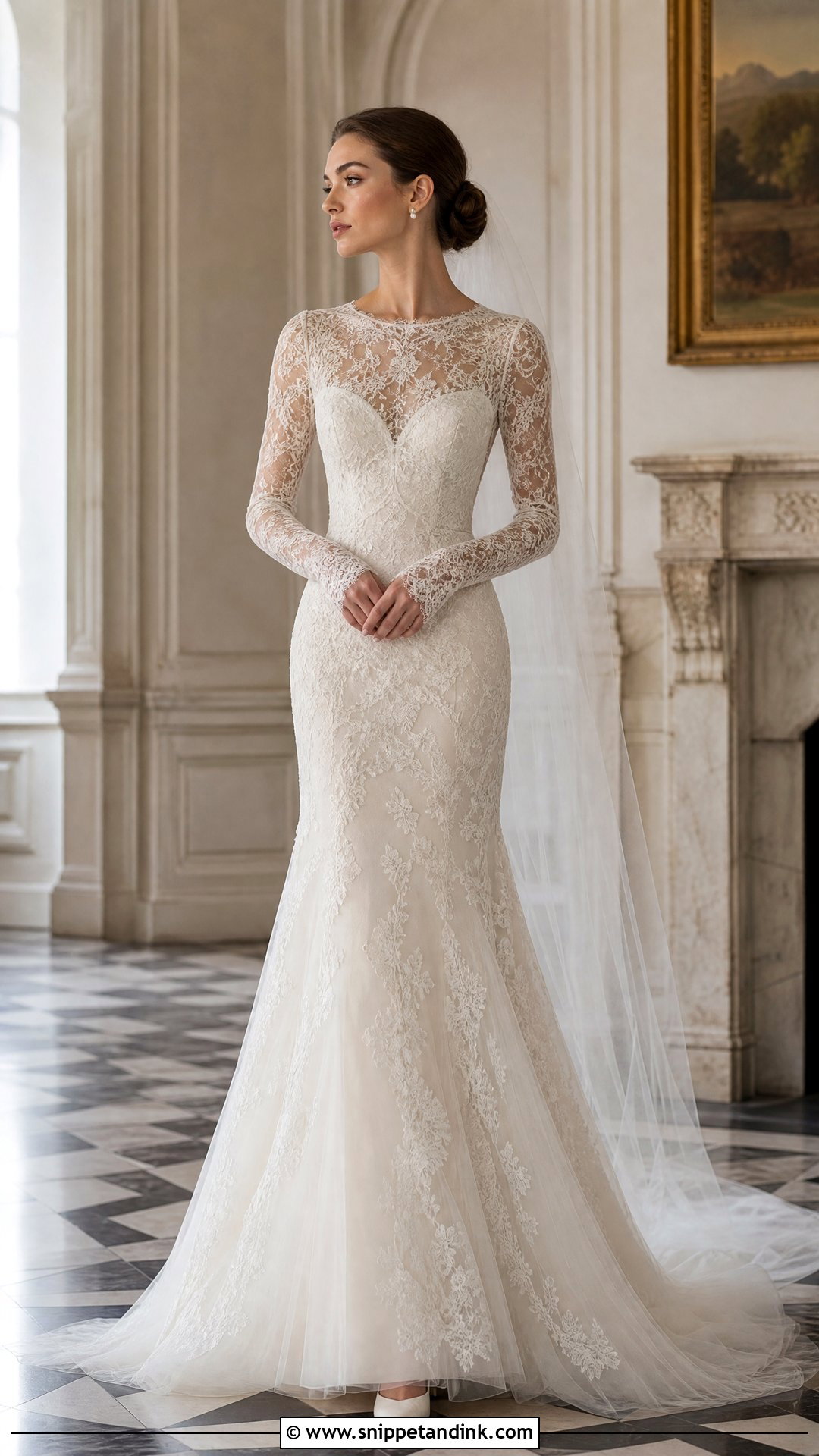
Long lace sleeves give coverage and texture together, and they’re my first suggestion for autumn and winter weddings. Sheer sleeves feel light; lined ones look more traditional and are warmer. A fitted bodice with a softly flared skirt keeps the dress from feeling heavy. Pearl studs, closed-toe pumps, a simple veil that won’t fight the lace pattern and a neat low bun complete it. One test I insist on: bend your elbows and lift your arms above your head during fittings. Lace sleeves cut too close bind at the elbow, and you’ll feel it the first time you hug someone.
8. Vera Wang Minimalist Column Wedding Dress
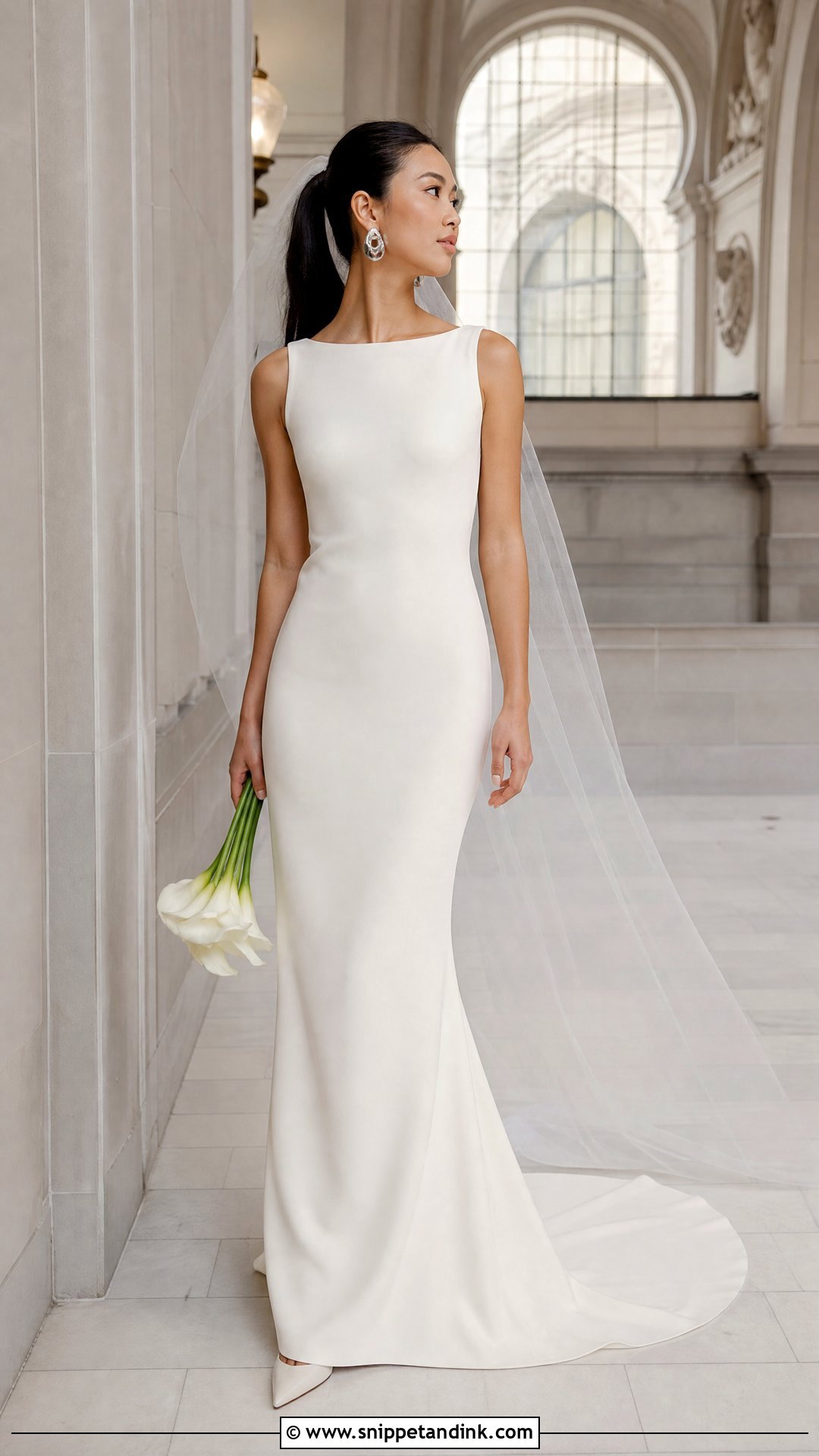
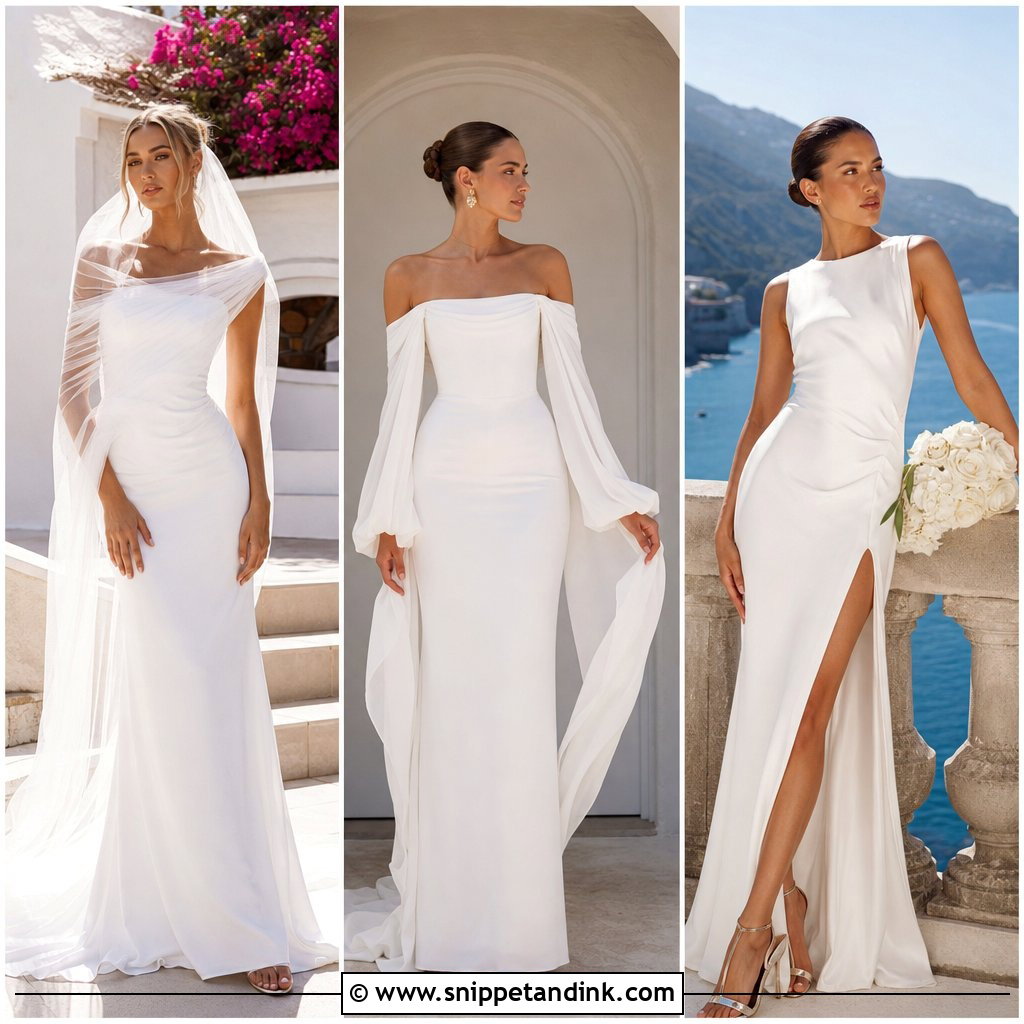
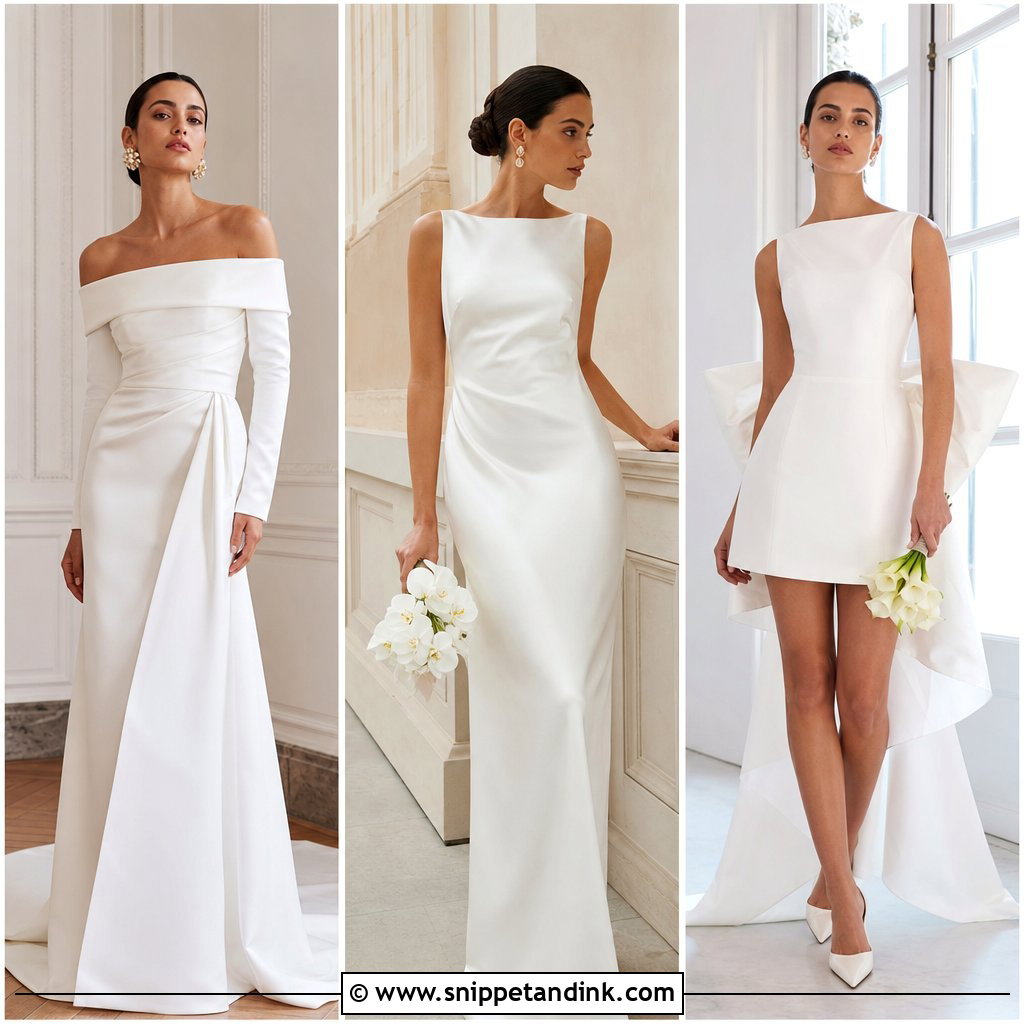
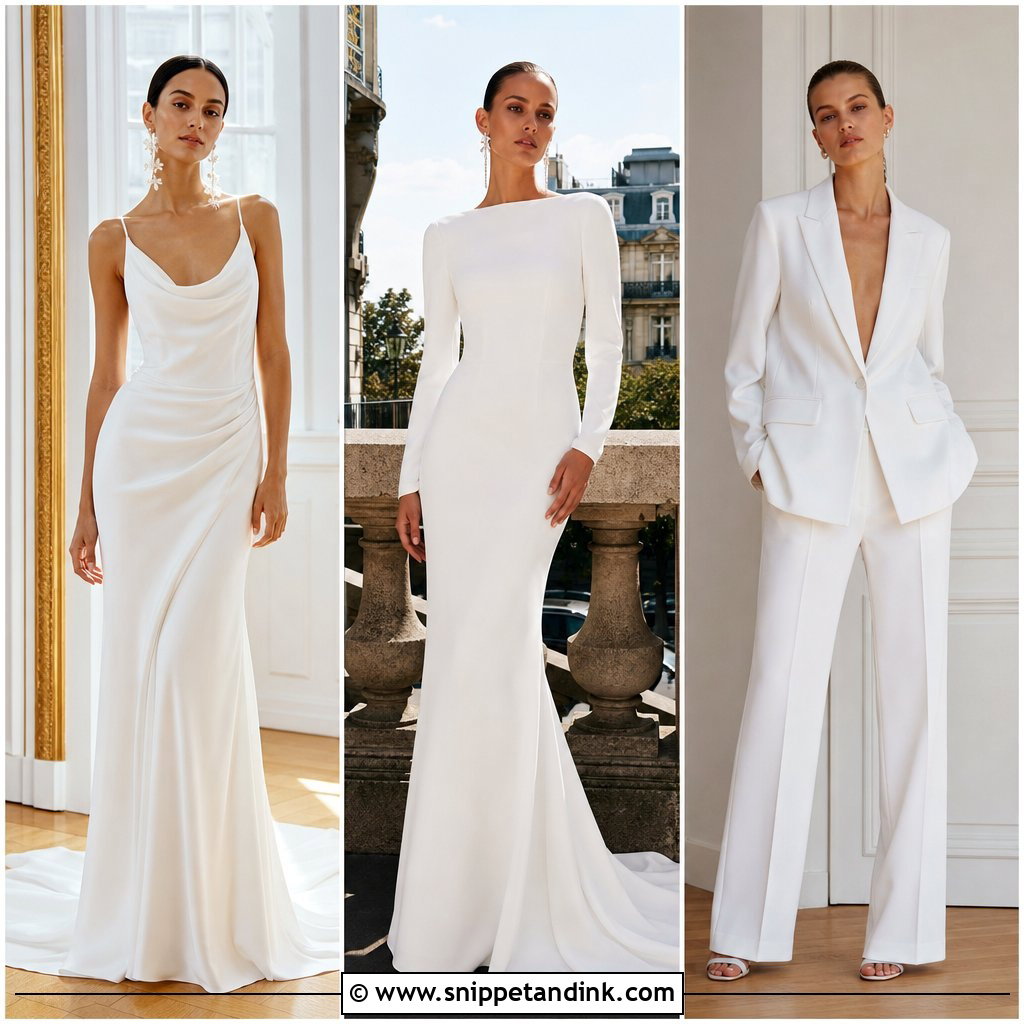
A minimalist column hides nothing, which is both the appeal and the challenge. With no lace or beading, attention goes straight to the tailoring and the fabric. Crepe drapes softly and is fairly forgiving, satin reflects every line beneath it, and silk-like blends sit somewhere between. Pair the dress with pointed pumps, sculptural earrings and a long sheer veil for contrast, plus a sleek ponytail or smooth low bun. Choose undergarments before the first fitting and wear the same ones every time after, because a column is fitted to whatever is under it. City ceremonies, small venues and modern hotels show it off well.
9. Vera Wang Mermaid Wedding Dress
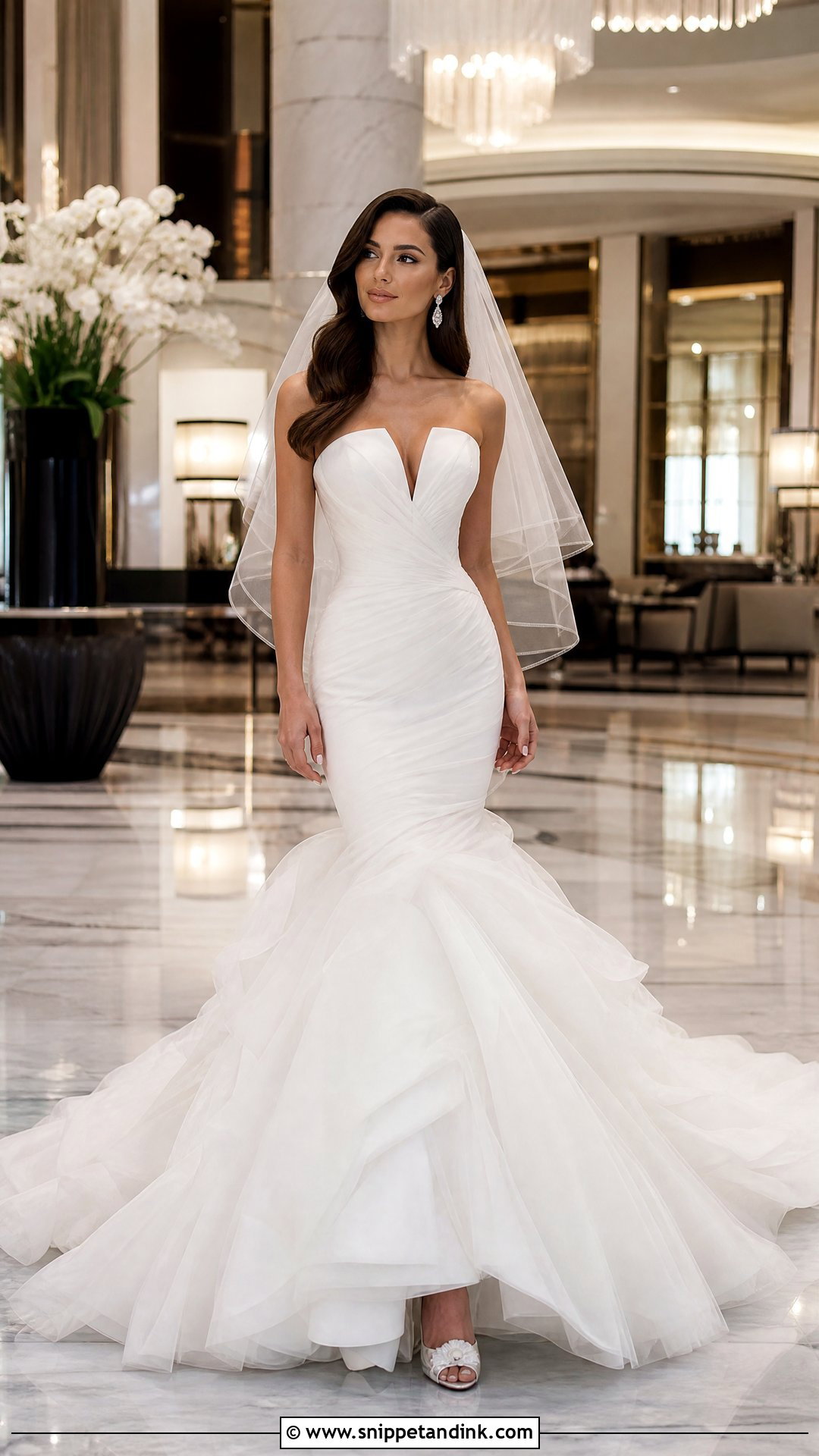
The mermaid hugs the bodice, waist and hips and flares at or just below the knee, so it shows curves and makes a striking walk down the aisle. It is also the silhouette I see brides regret most when they never tested it seated. Look for internal structure that holds you in and for enough stretch or volume in the skirt to sit and climb steps. A medium-length veil, drop earrings and pointed or peep-toe heels suit it, with a side-parted wave or a sleek updo. Practice walking in it before the day, especially with a long train, using small steps from the knee. Evening receptions and formal hotels are where it shines.
10. Vera Wang Organza Wedding Dress
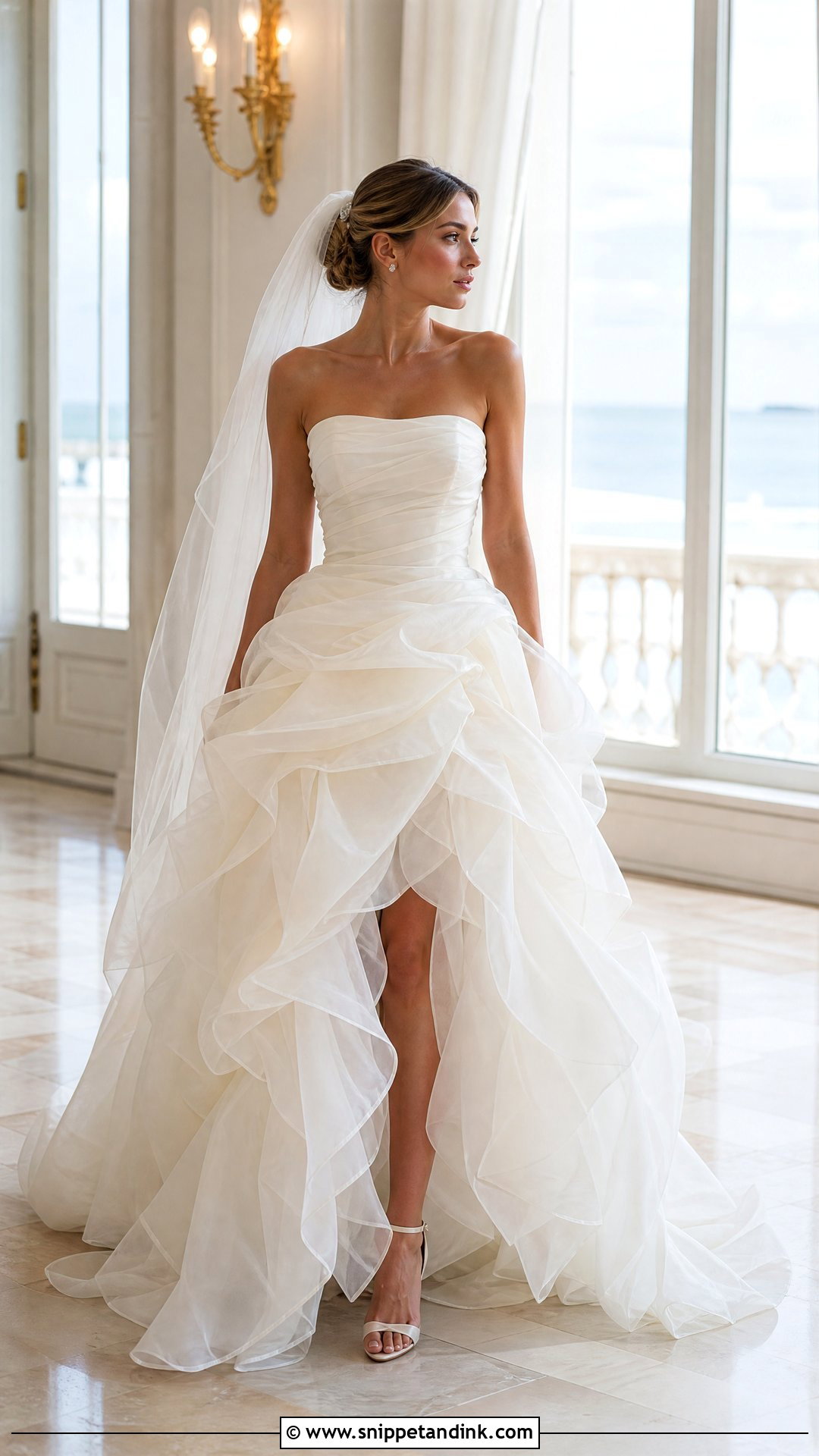
Organza gives volume without satin’s density. It can be pleated, layered, gathered or shaped into sculptural panels, and in an A-line or ball gown it feels airy but still makes a strong entrance. Finish it with crystal studs, slim heels, a sheer veil with minimal edging and a soft bun. Two handling notes from experience: organza creases where it is crushed and holds the crease, and it catches on rough stone, wicker chairs and bracelet clasps. That makes it a better match for ballrooms and smooth garden paths than for rocky coastal walks.
11. Vera Wang Tulle Ball Gown
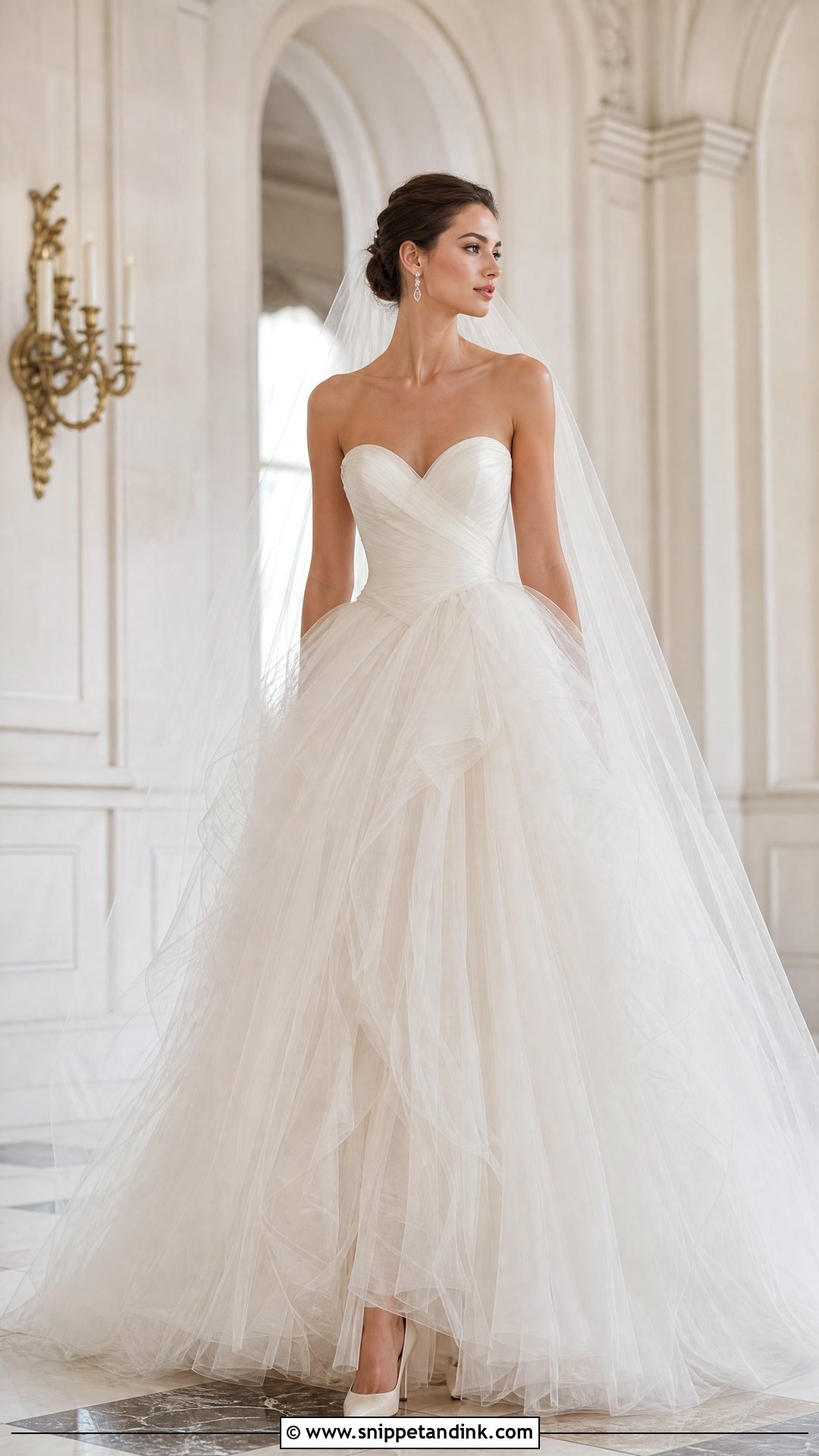
Layers of tulle make the softest ball gown of all, with a skirt that keeps moving after you stop. The structured bodice keeps all that volume from swallowing you, and a defined waist marks the change between the two. Clean layers look modern; subtle appliqués add texture. Delicate earrings, ivory pumps and a long veil that blends into the skirt finish it, and a classic updo adds a little height. Ask about the bustle at your first fitting rather than your last. Tulle trains are long and light, and they need several secure pickup points or they drop halfway through the first dance. A big venue gives the skirt room to flow.
12. Vera Wang One Shoulder Wedding Dress
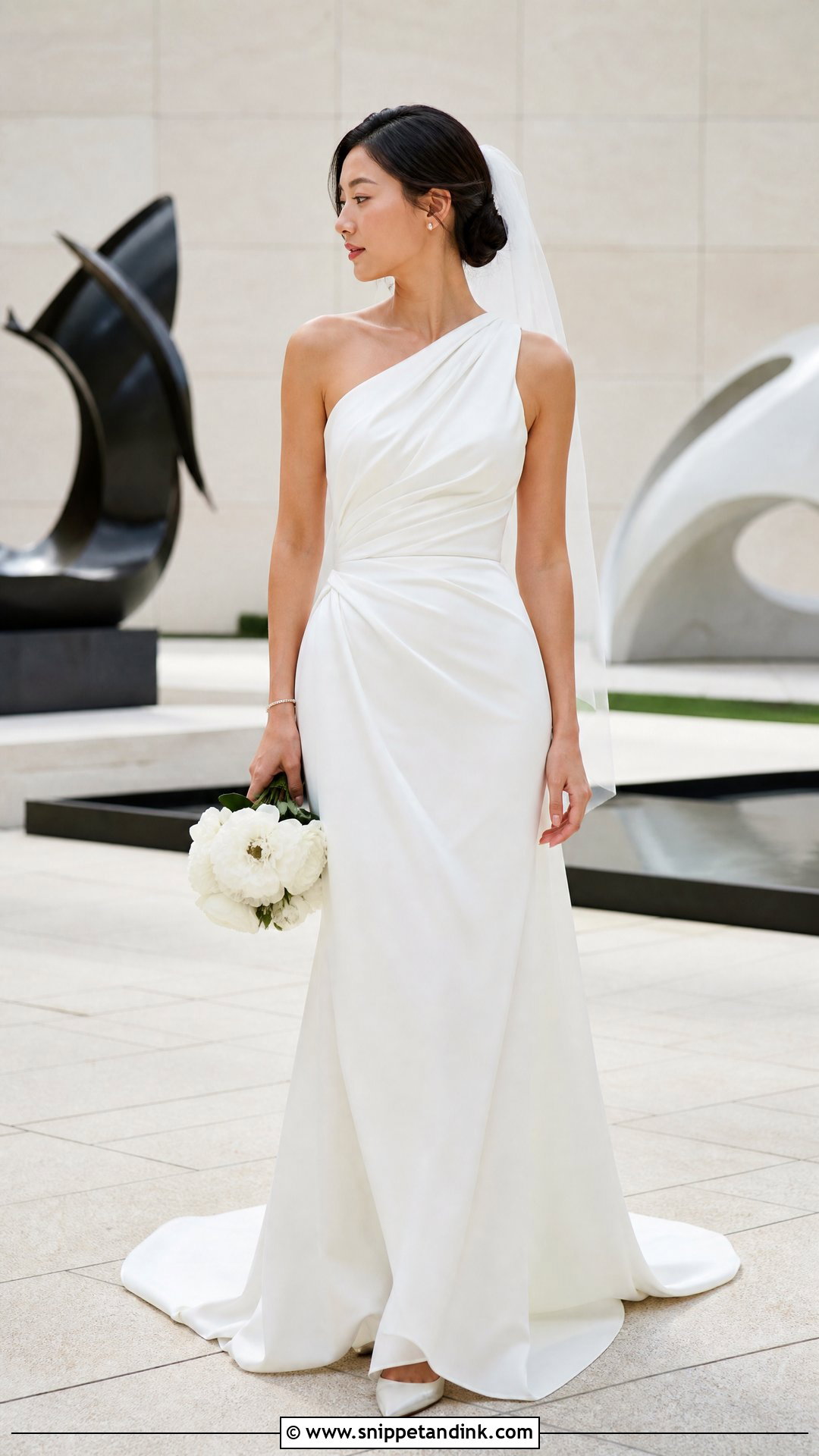
One bare shoulder frames the neck in a way a symmetrical neckline can’t. The single strap may be softly draped, sharply structured or finished with a small bow or flower. Because the neckline is already uneven, I balance it with the jewelry: earrings and a bracelet on the bare side, never a necklace. Pointed-toe heels and a low side bun or sleek pulled-back style keep the shoulder line visible. A plain veil can go on for the ceremony and come off for a cleaner reception look. Contemporary ballrooms, coastal hotels and sculpture gardens suit its modern feel.
13. Vera Wang High Neck Wedding Dress
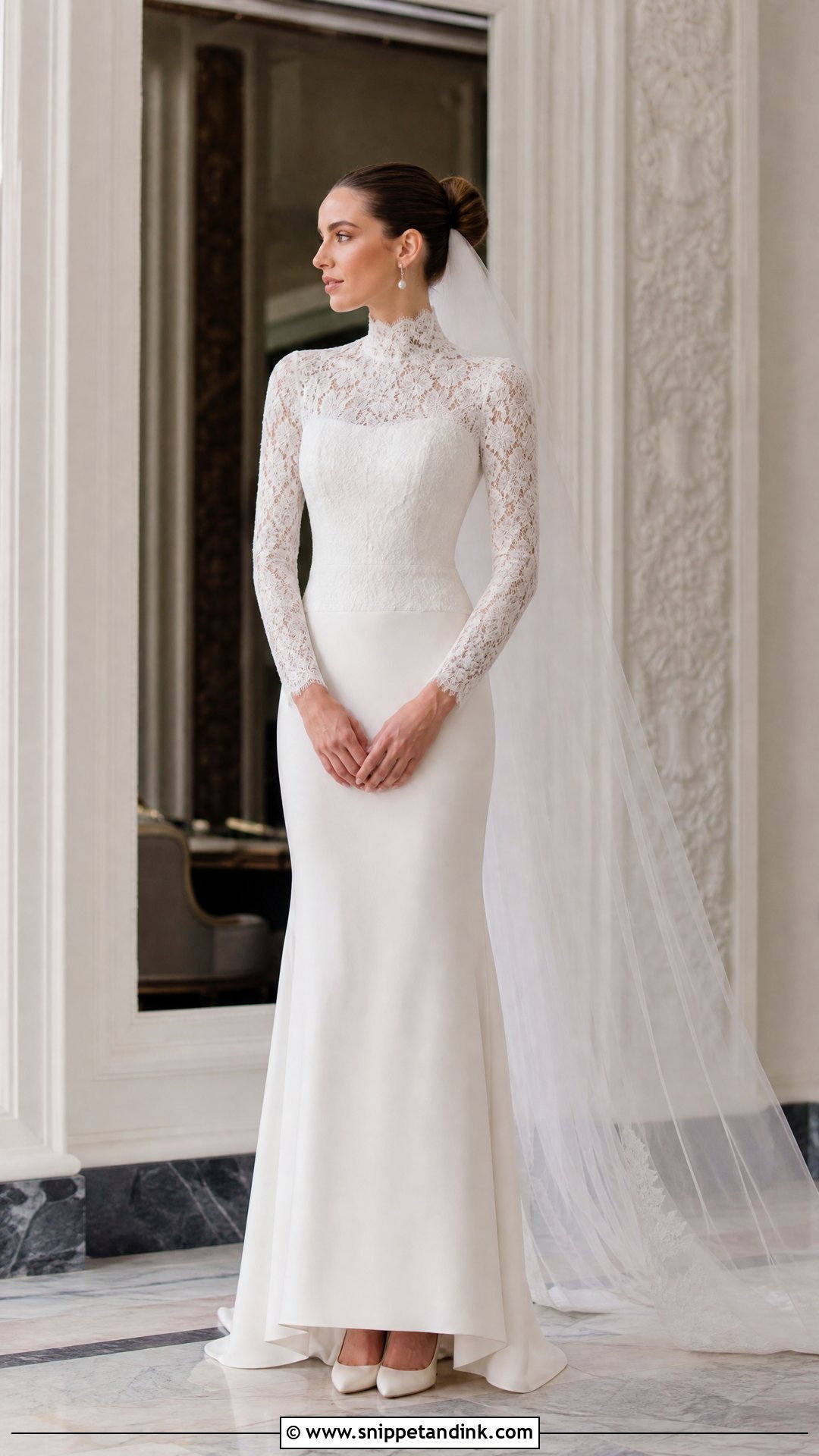
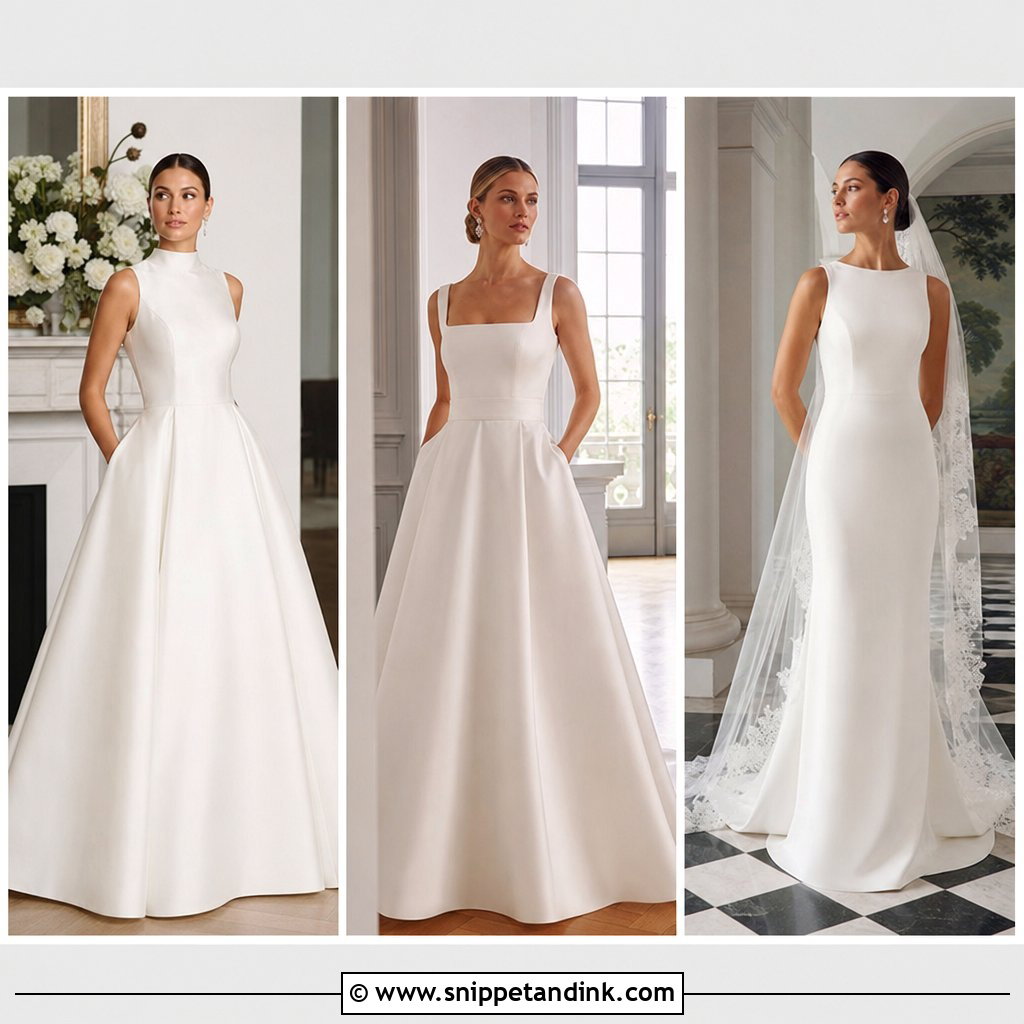
A high neck frames the face and upper body. In smooth crepe it reads sharp and modern; in lace or sheer fabric it softens. Pair it with a fitted column, trumpet or A-line skirt so the neckline doesn’t look too buttoned up. Skip the necklace and choose refined earrings, closed-toe pumps and a low bun or polished ponytail, with a veil set beneath the hairstyle so the collar shows from the front and back. Check the collar while turning your head side to side. A stiff or scratchy edge that seems fine standing still can rub raw by evening, and lining it with soft silk is a simple fix if you ask early.
14. Vera Wang Bow Wedding Dress
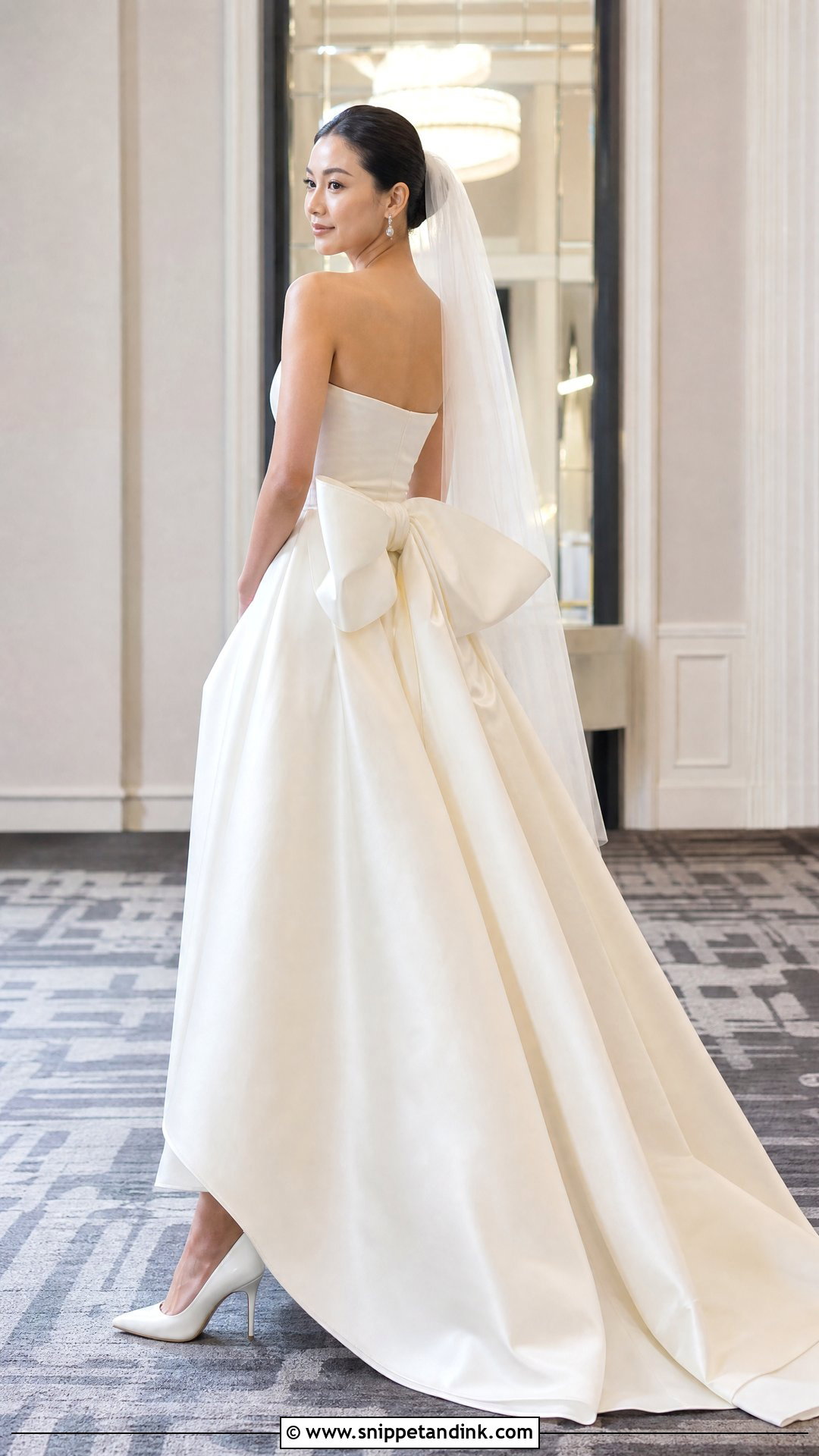
A bow can turn a simple gown into fashion. It might sit across the bodice, define the waist, accent one shoulder or anchor the back. Let it be the only decoration: understated earrings, smooth satin pumps, a plain veil without appliqués and a sleek hairstyle. A large back bow brings practical questions. It gets crushed every time you sit, so ask whether it can be removable or stiffened with interfacing, and work out with your seamstress how the bustle will sit around it. Formal hotels and modern estates suit the editorial feel.
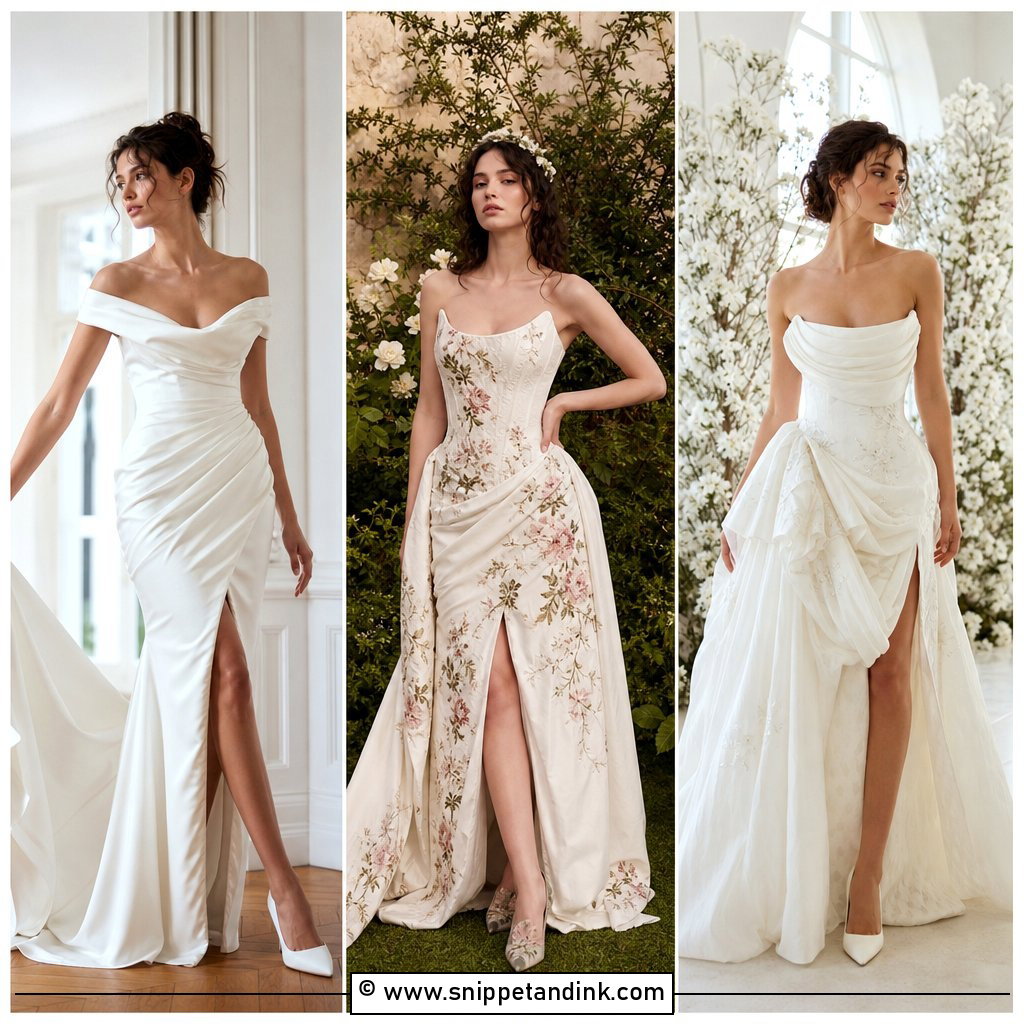
15. Vera Wang Corset Bodice Wedding Dress
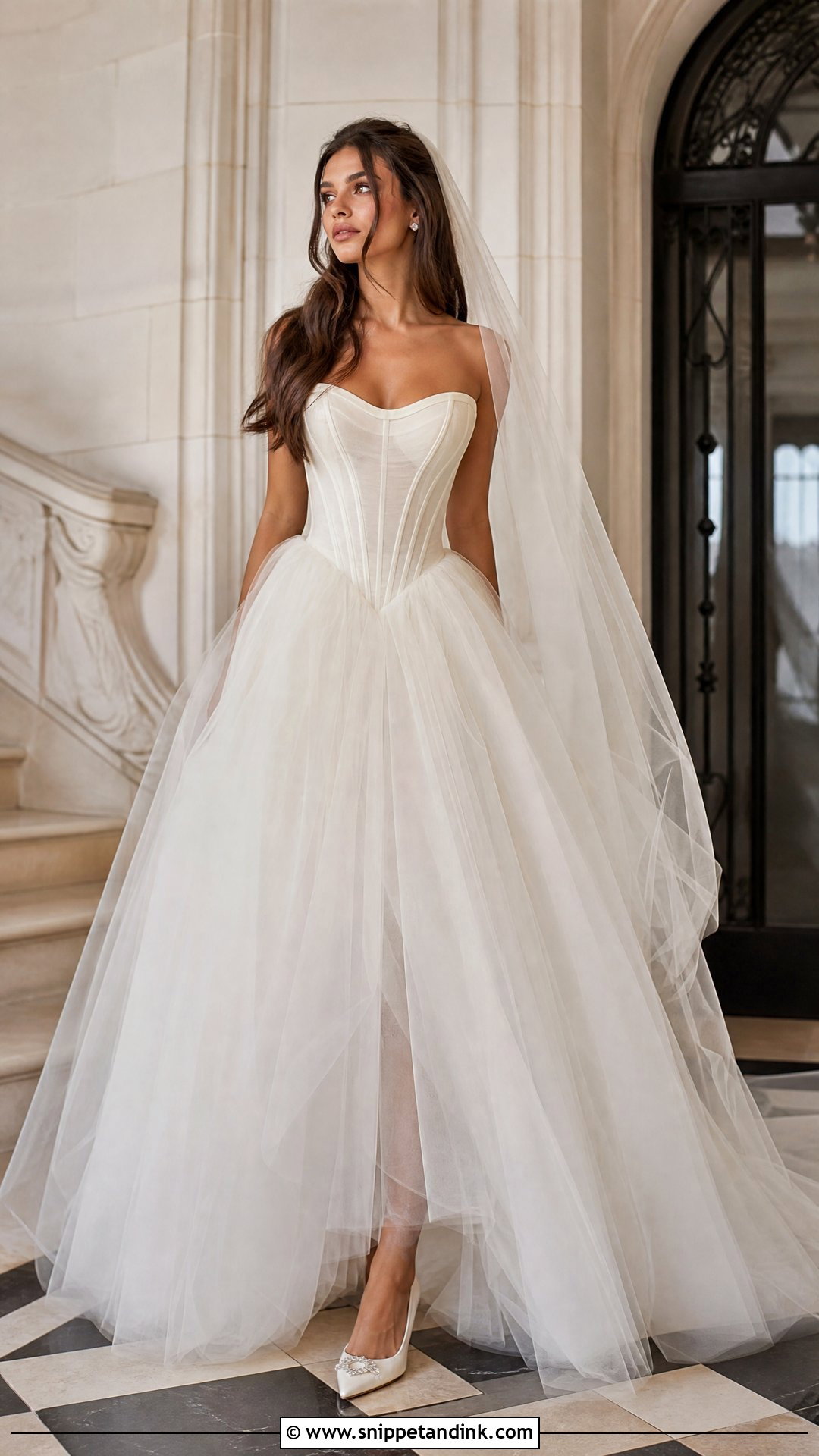
Visible corset construction gives definition, support and a couture edge. Boning and curved seams shape the bodice and set up a strong contrast with a soft tulle, organza or satin skirt. The fit test is simple: you should be able to take a full breath and sit to eat without the top edge digging in. Finish with a long veil, small crystal earrings and classic ivory heels. Loose waves soften the structure, while a sleek bun makes it look more architectural. Ask your tailor to check the neckline and back closure from every angle, since a lace-up back often needs a modesty panel behind it to lie flat.
16. Vera Wang Floral Appliqué Wedding Dress
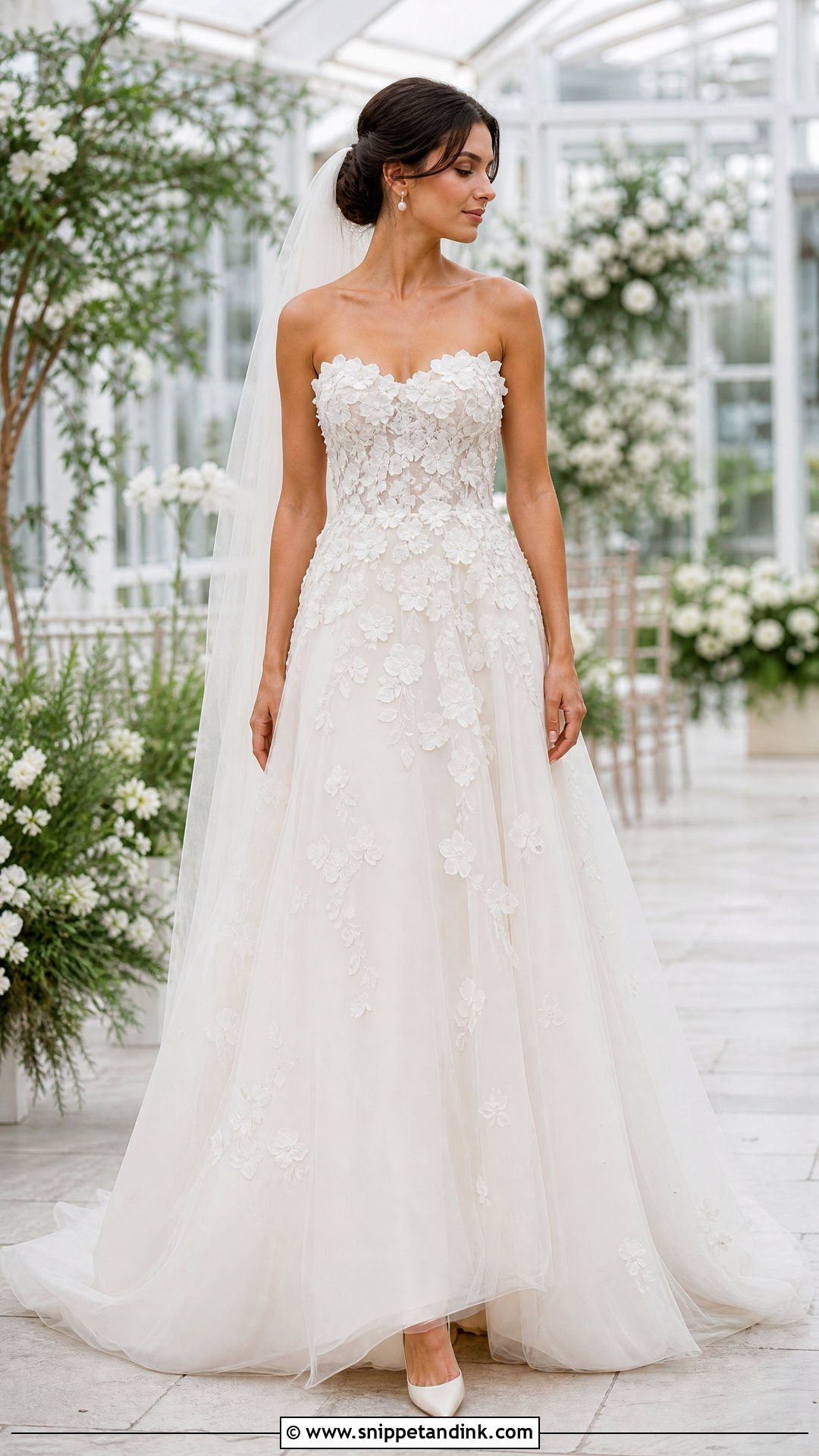
Dimensional appliqués add texture without sparkle. The flowers can cover the whole dress or appear only at the bodice, waist, sleeves or skirt. Keep everything else simple so the flowers look placed rather than crowded: pearl studs, neutral ivory shoes, a sheer veil with a clean edge, a soft updo and natural-looking makeup. Look closely at the placement during alterations. When a seam is taken in or a hem shortened, appliqués have to be lifted and re-sewn, and a careless job leaves half-flowers at the hem. Garden venues, greenhouses and spring ceremonies make sense with all that botanical detail.
17. Vera Wang Off The Shoulder Wedding Dress
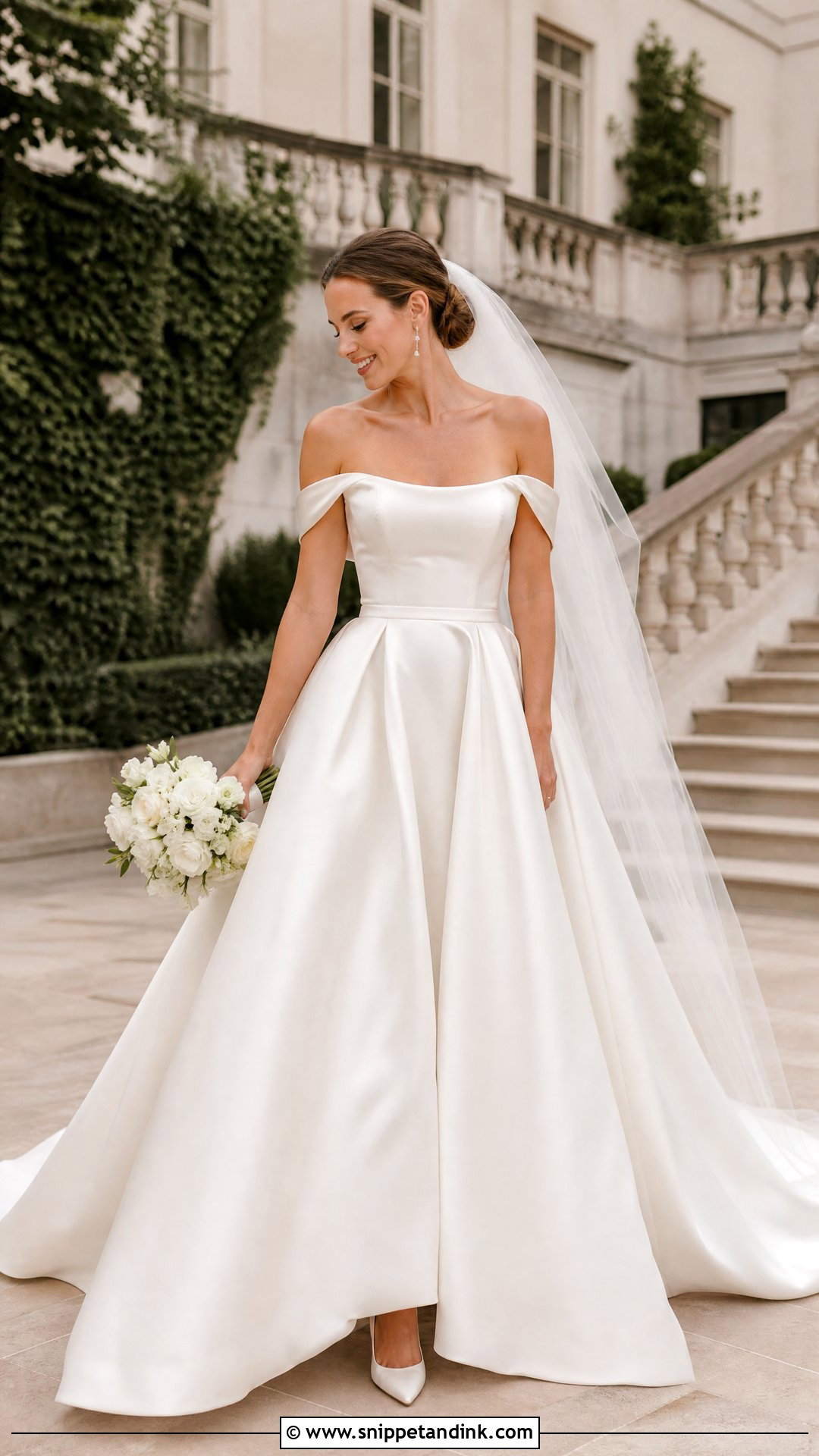
An off-the-shoulder neckline draws a graceful line across the collarbone and softens a structured gown. Draped sleeves feel romantic; sharper folded bands look current. Whichever you choose, the bodice should stay up on its own, with the sleeves only decorating. Drop earrings, a simple veil and classic satin heels finish it, with hair pinned back or worn low to keep the neckline open. I always test arm movement at fittings, because many off-the-shoulder styles stop you raising your arms past chest height. It pairs with a ball gown, an A-line or a fitted skirt equally well.
18. Vera Wang Pleated Satin Wedding Dress
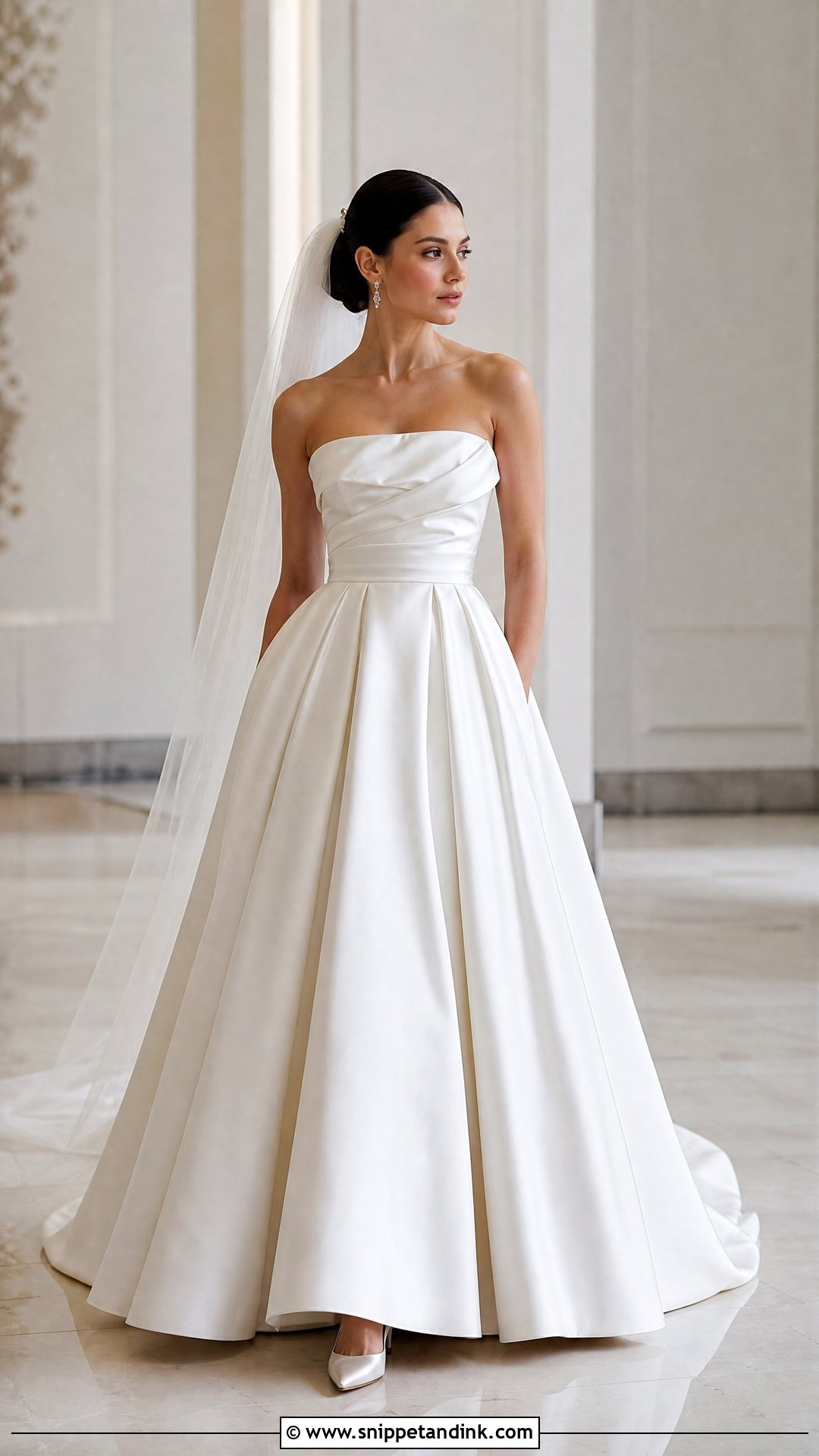
Pleated satin adds controlled texture while keeping a clean, luxurious finish. Folds may shape the bodice, wrap the waist or move through a full skirt, and they can steer the eye where you want it. Understated earrings, pointed satin pumps, a plain cathedral or chapel veil and a smooth updo keep it polished. During fittings, look at the pleats after each alteration. Taking in a pleated panel means re-laying every fold, and pleats that pull or collapse around the changed area are a sign it needs another pass. Hotels, modern ballrooms and evening ceremonies suit brides who want visible detail without lace or beading.
19. Vera Wang Trumpet Wedding Dress
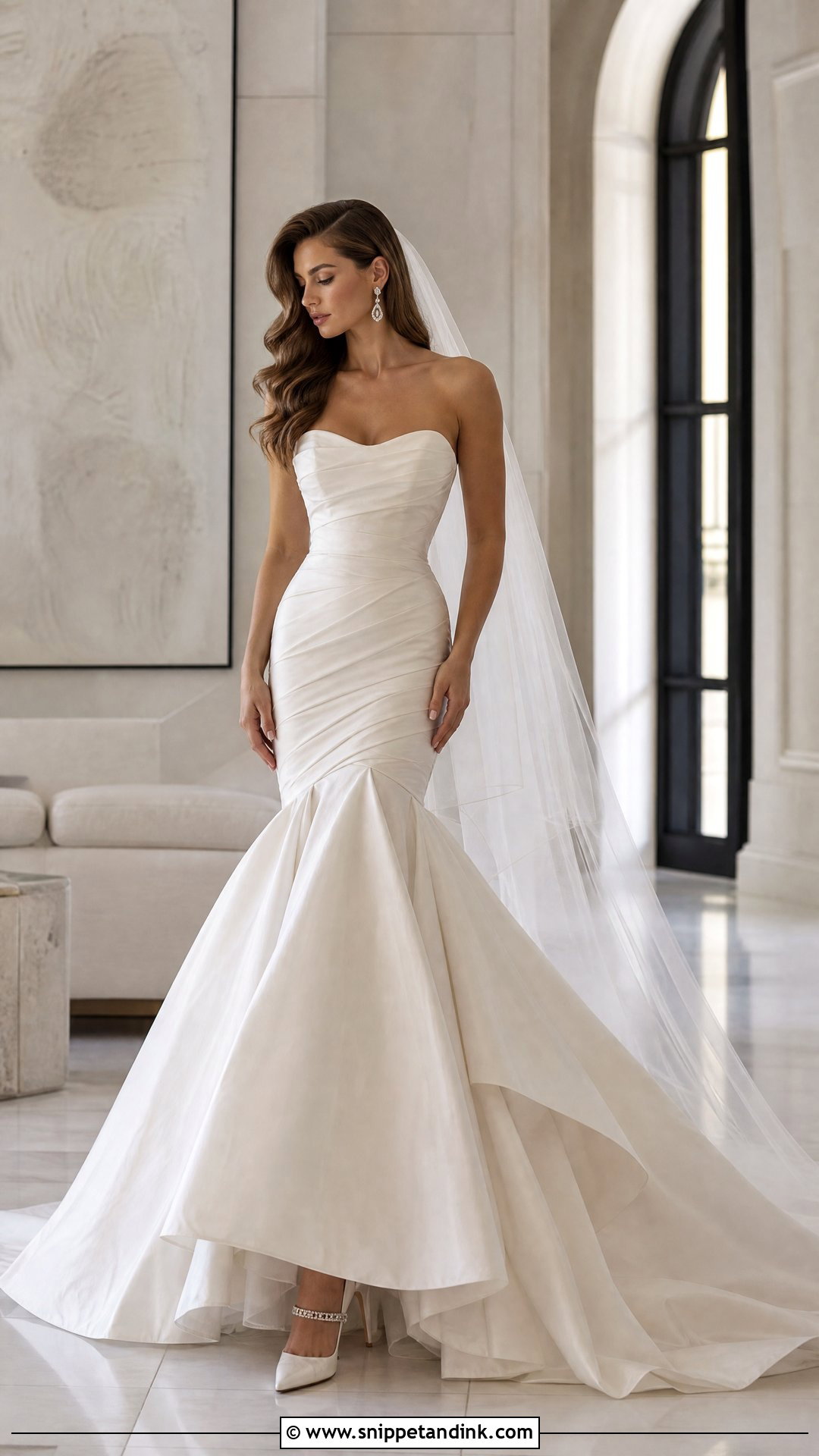
A trumpet dress is the mermaid’s easier sister. It follows the body through the hips but flares higher on the thigh, so walking and sitting are far more comfortable. Satin makes the flare sculptural; organza or tulle below the flare adds lighter volume. Pair it with drop earrings, a fingertip veil and secure pointed-toe heels, plus a polished wave or neat bun. Ask the tailor to place the bustle so it keeps the flare’s shape, since a badly placed bustle on a trumpet bunches right at the flare. Formal receptions and glamorous hotels suit it.
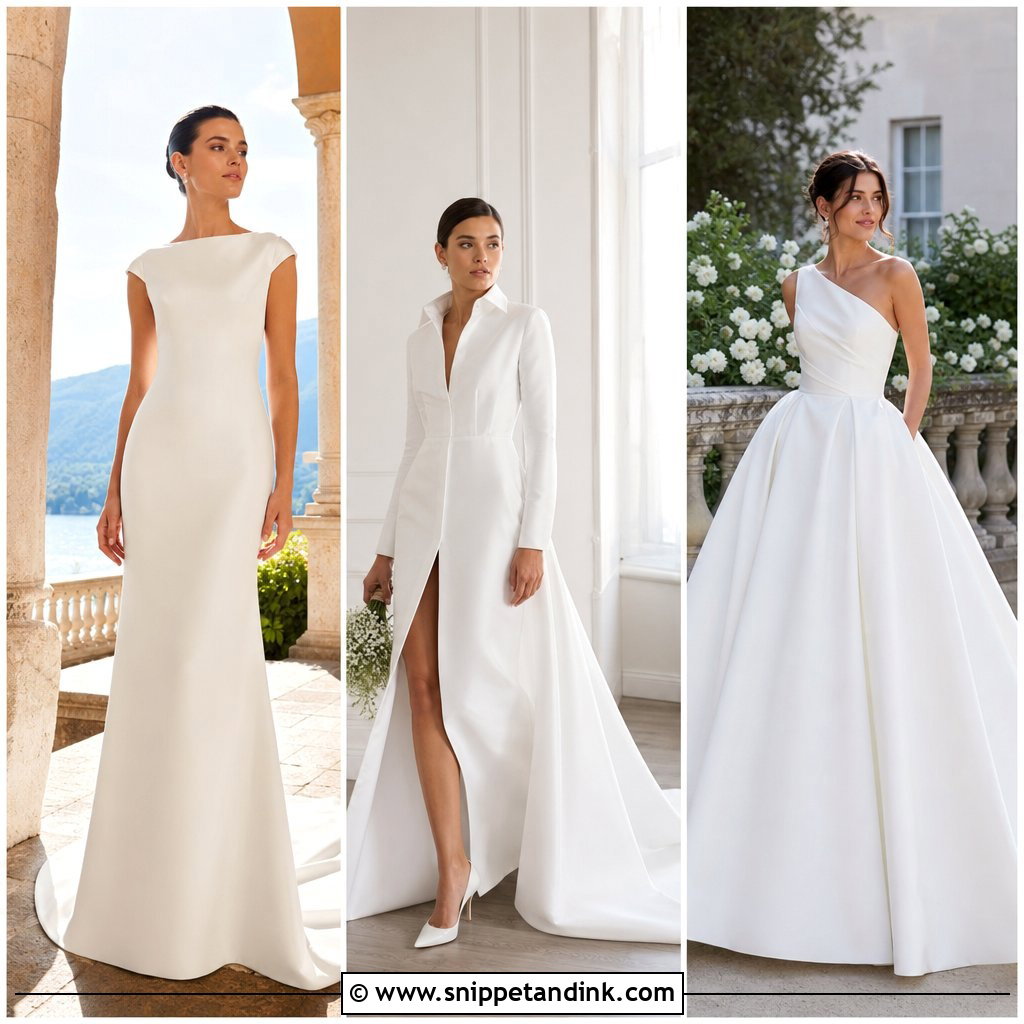
20. Vera Wang Black And White Wedding Dress
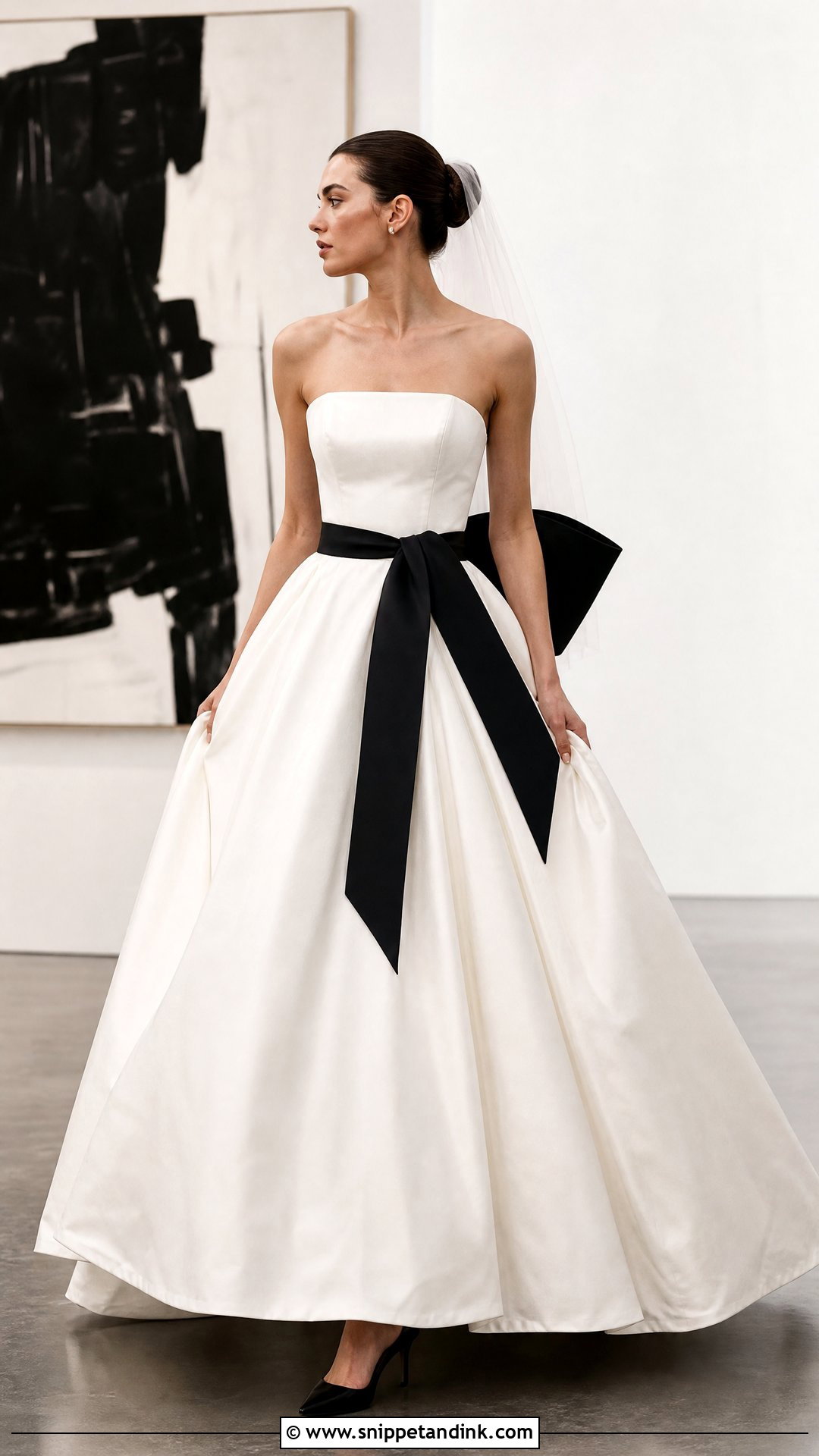
Black on ivory turns a bridal gown graphic. A black sash, bow, glove or neckline accent can define the silhouette while the dress still reads clearly as a wedding gown. Keep the color in one or two places and add nothing else decorative. Black or ivory pointed pumps, simple diamond earrings, a plain white veil, a sleek bun and clean makeup finish it. For flowers I’d keep white blooms with a little dark greenery to tie the contrast in. One practical note: check the black dye on any sash or trim is colorfast before it sits against ivory in a warm room. Evening ceremonies and art-led venues suit it.
Shapewear and Support Under Each of These Shapes
Every one of these designs is only as good as what’s under it, and the best time to sort it is before alterations begin. Here is how I approach support silhouette by silhouette.
Strapless, sweetheart and corset bodices
Many have enough boning to wear with nothing extra, but some brides want a longline strapless bra for more lift. Decide at the first fitting so the seamstress fits the bodice over it.
Columns, mermaids and trumpets
Smooth, high-waisted shapewear that ends below the knee rather than mid-thigh, so there is no ridge where the skirt clings. I check for rolling at the waist after the bride has sat for a few minutes.
Open backs and asymmetric necklines
Sewn-in cups are the most reliable answer. Adhesive bras can loosen as you warm up through a long reception, so I treat them as a backup rather than a plan.
Whatever you choose, buy it before the first fitting and bring it every time after. A change of bra between fittings can undo work that took hours.
Let the Mirror Overrule the Mood Board
Silhouette, fabric, support, movement and venue make this list easier to sort than it looks. A ball gown feels nothing like a trumpet, a column or an airy A-line once it’s on. Try several shapes, including ones that aren’t on your board, because the most flattering option often surprises the bride. Bring your shoes and foundation garments to every appointment, look at each gown from the front, side and back, and sit and walk in it before deciding. Then keep the accessories in support: a simple veil, comfortable heels, refined jewelry and a polished hairstyle let the dress do the talking.
You'll Like These Ideas:


Leave a Reply