
Hair worn down is the style bridesmaids ask me for most, and it’s the one I have to work hardest to keep alive until the evening. With no pins or knots holding it, a curl relies entirely on how it was set, and long hair is heavy enough to pull a wave straight in a few hours. Done properly, though, long hair down gives each bridesmaid movement and a bit of individuality without breaking up the group. The ideas below range from plain waves to twists, braids, clips and face-framing pieces that still show off the length. Which one fits depends on the neckline, the weather and the bridesmaid’s own texture, and I’ve noted where each one tends to struggle.
Setting Curls That Have No Pins to Lean On
An updo has pins doing half the work. Hair worn down has only the set, so the way I build a curl on long hair is different from how I’d curl for a bun. If waves on your hair have fallen out by lunchtime before, it’s usually one of these steps being skipped.
- Product goes on damp hair. A light mousse or setting lotion at the roots and mid-lengths gives a curl something to hold onto. Adding it to dry hair afterwards does very little.
- Smaller sections than you’d think. Long hair is heavy, and a thick section heated once will relax under its own weight. Thinner sections heat through fully.
- Cool before you touch. I pin each curl in a loop against the head, or hold it in my palm until it’s cool. Heat shapes the hair; cooling is what fixes the shape.
- Brush out late. I leave the curls pinned while makeup is done and only brush them into waves shortly before the bridesmaid gets dressed.
Very fine or very straight hair may still need a tighter curl than the look you want. That isn’t a mistake: it is meant to relax into the wave by the ceremony.
1. Long Bridesmaid Hair Down With Soft Waves
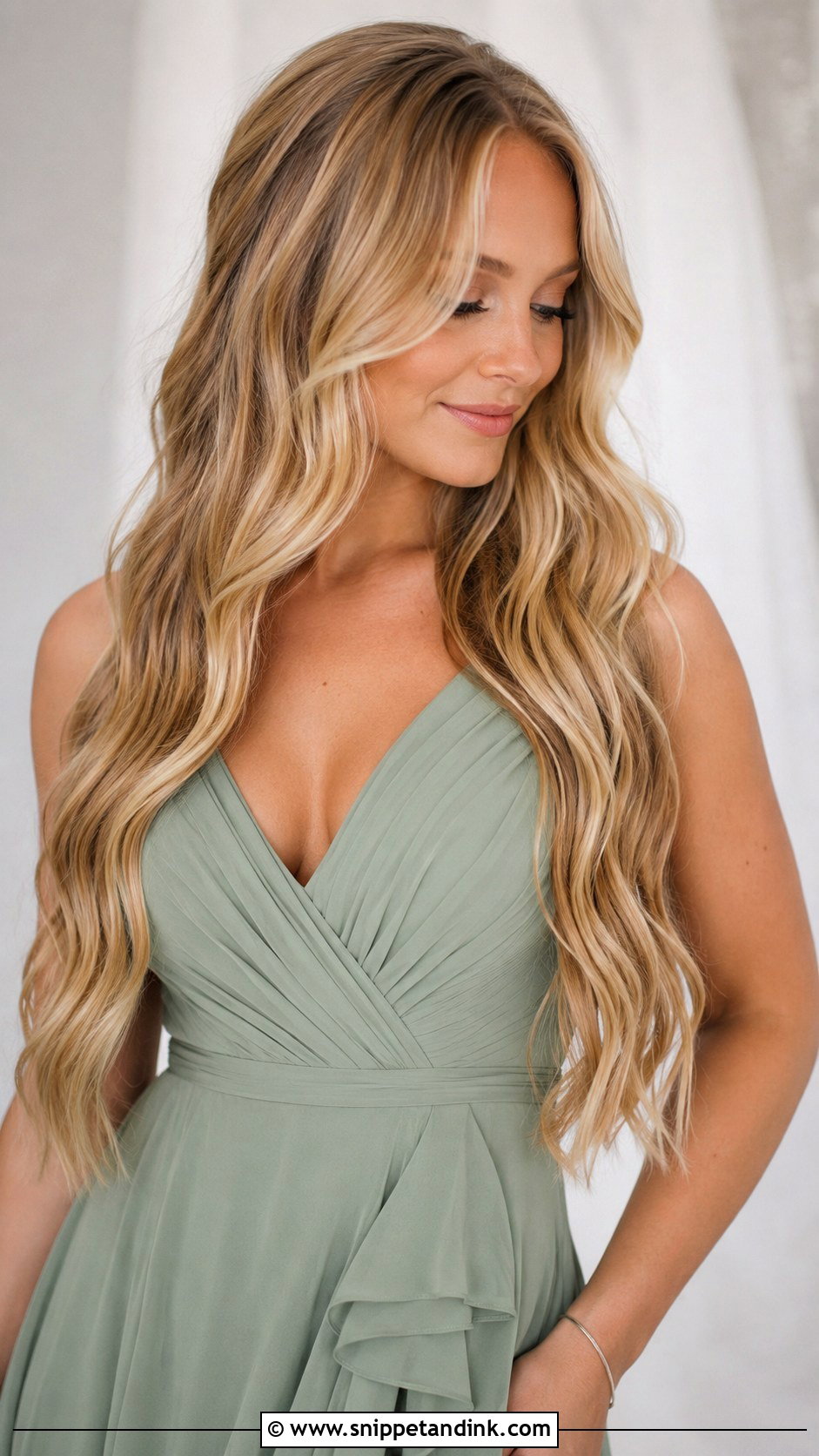
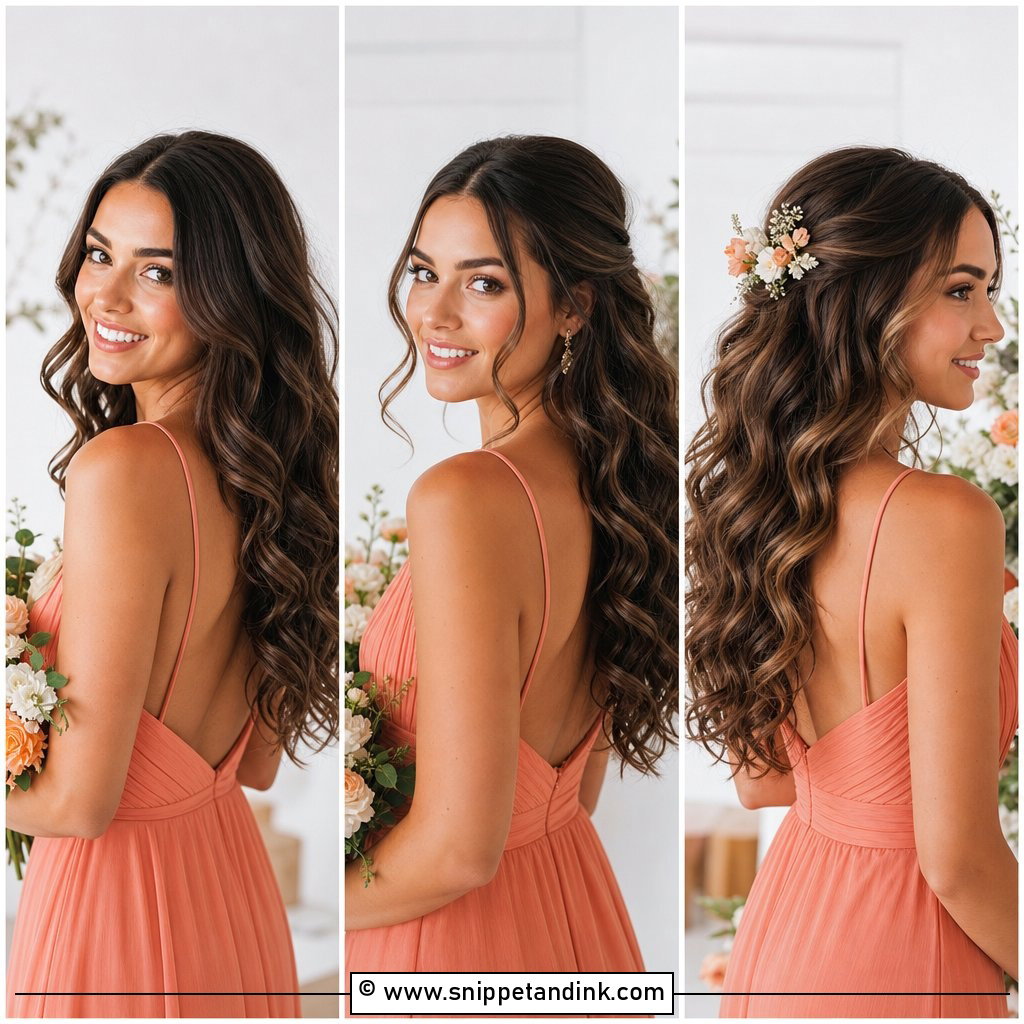
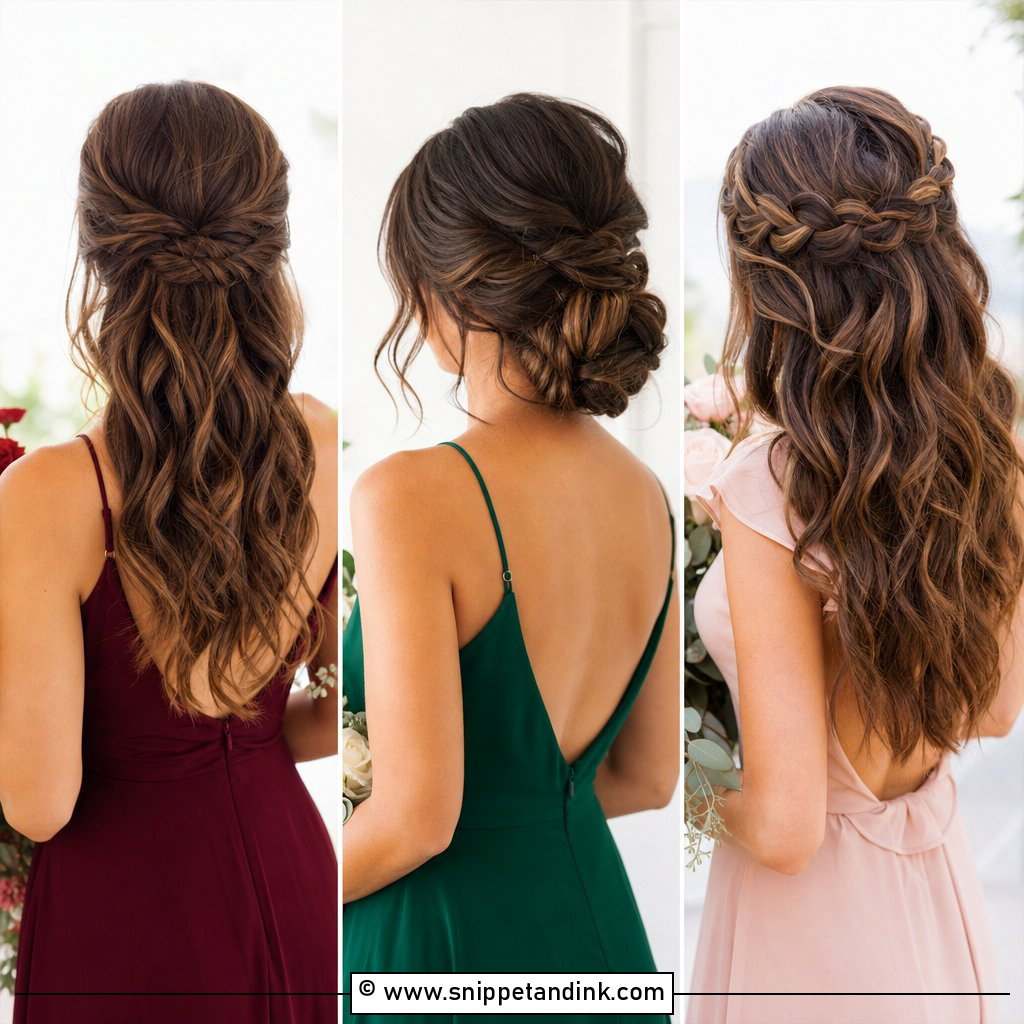
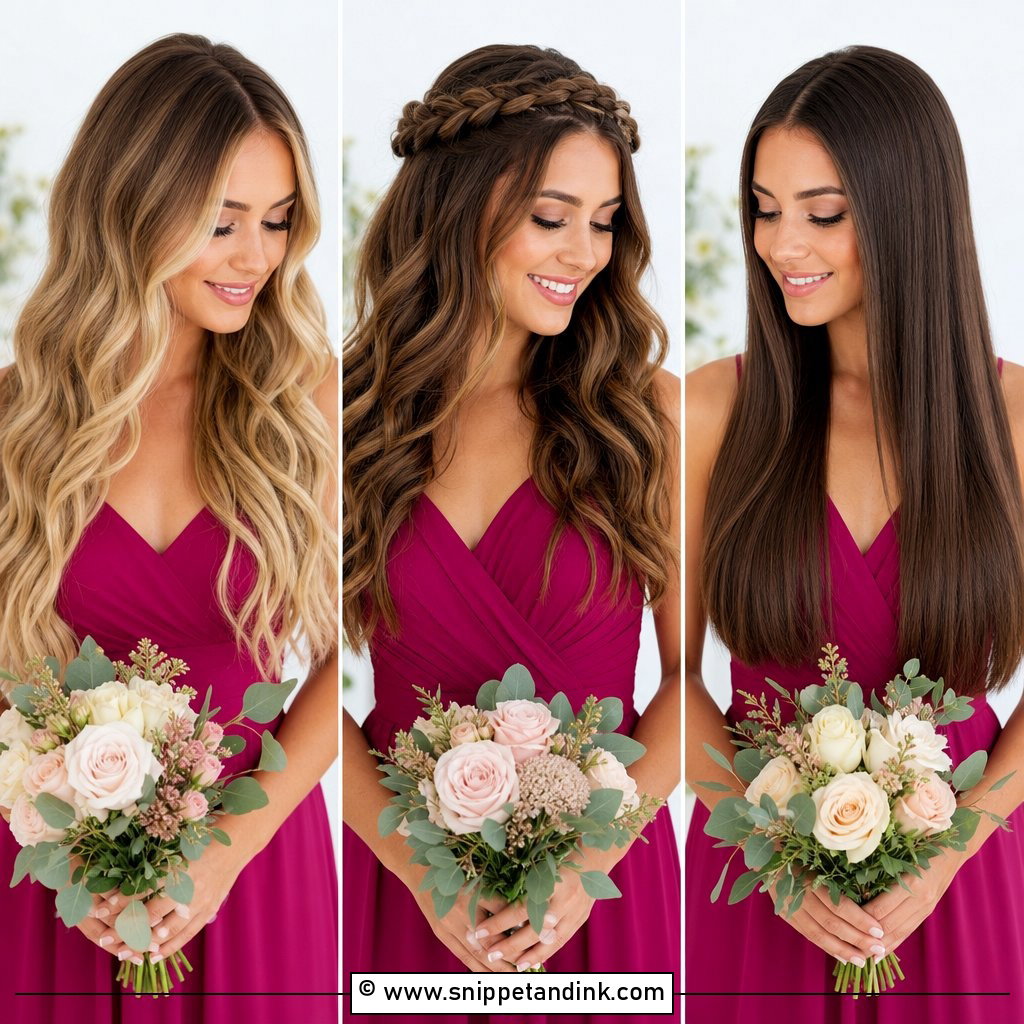
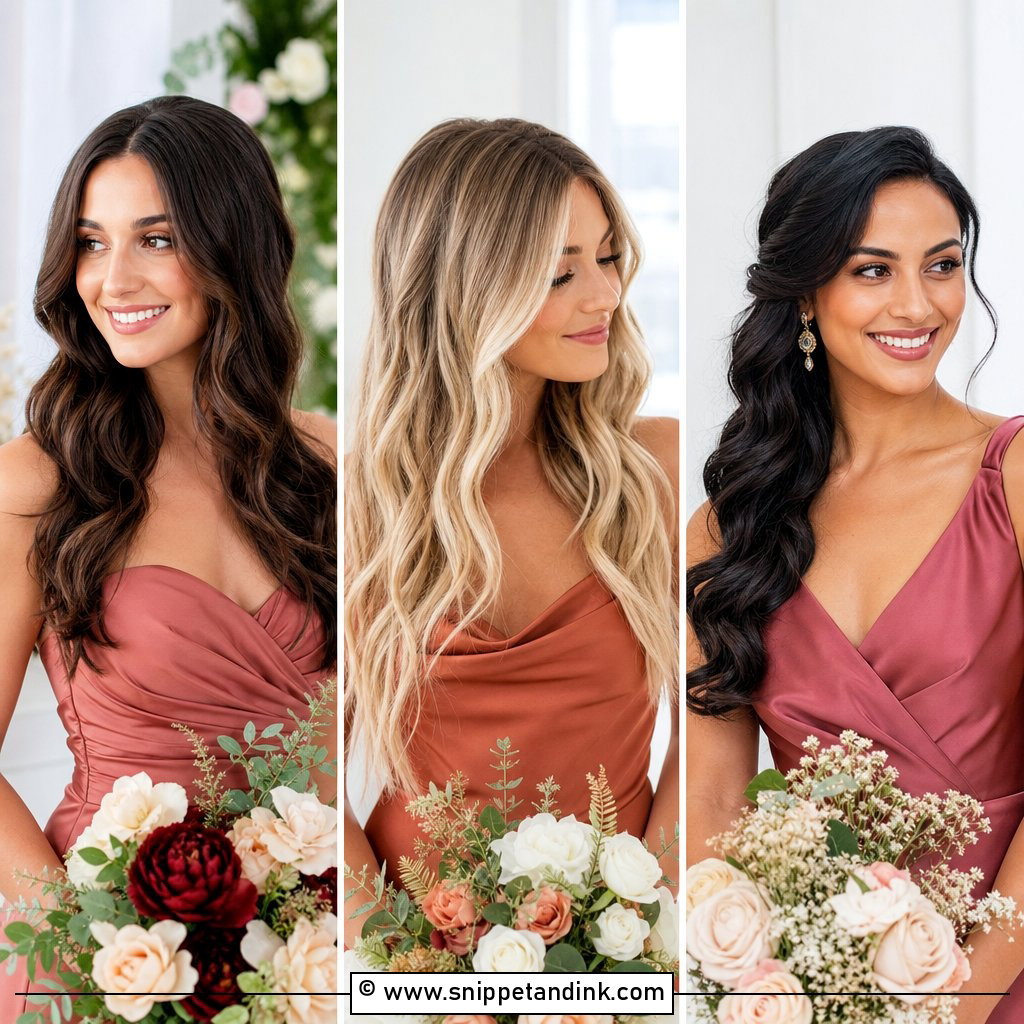
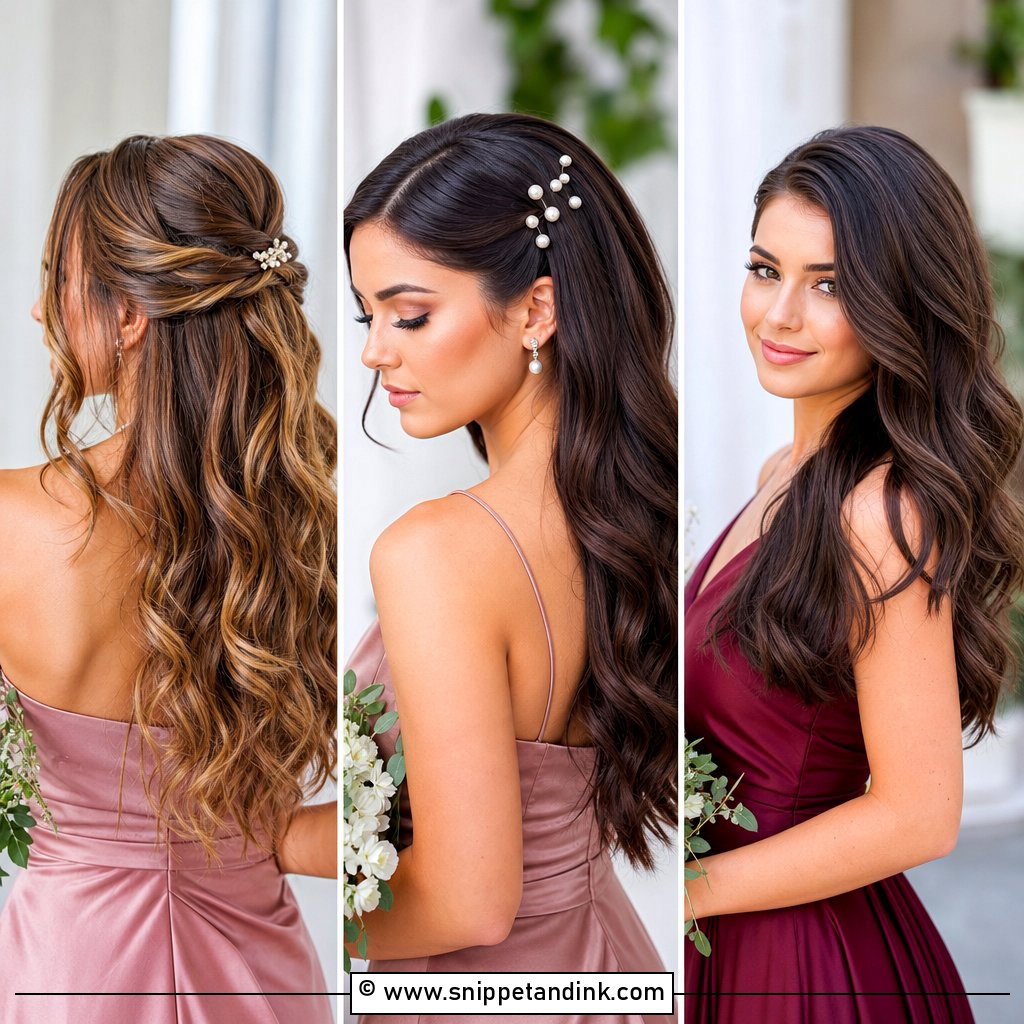
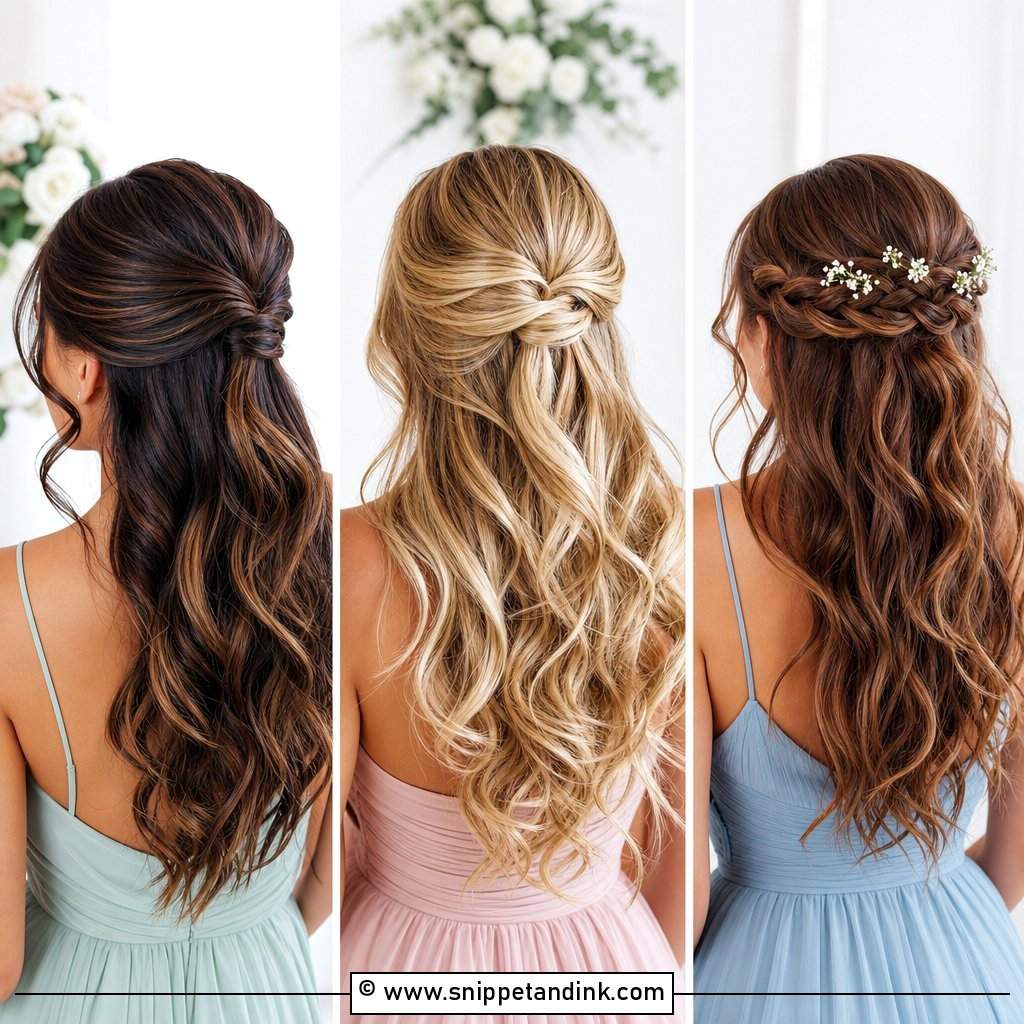
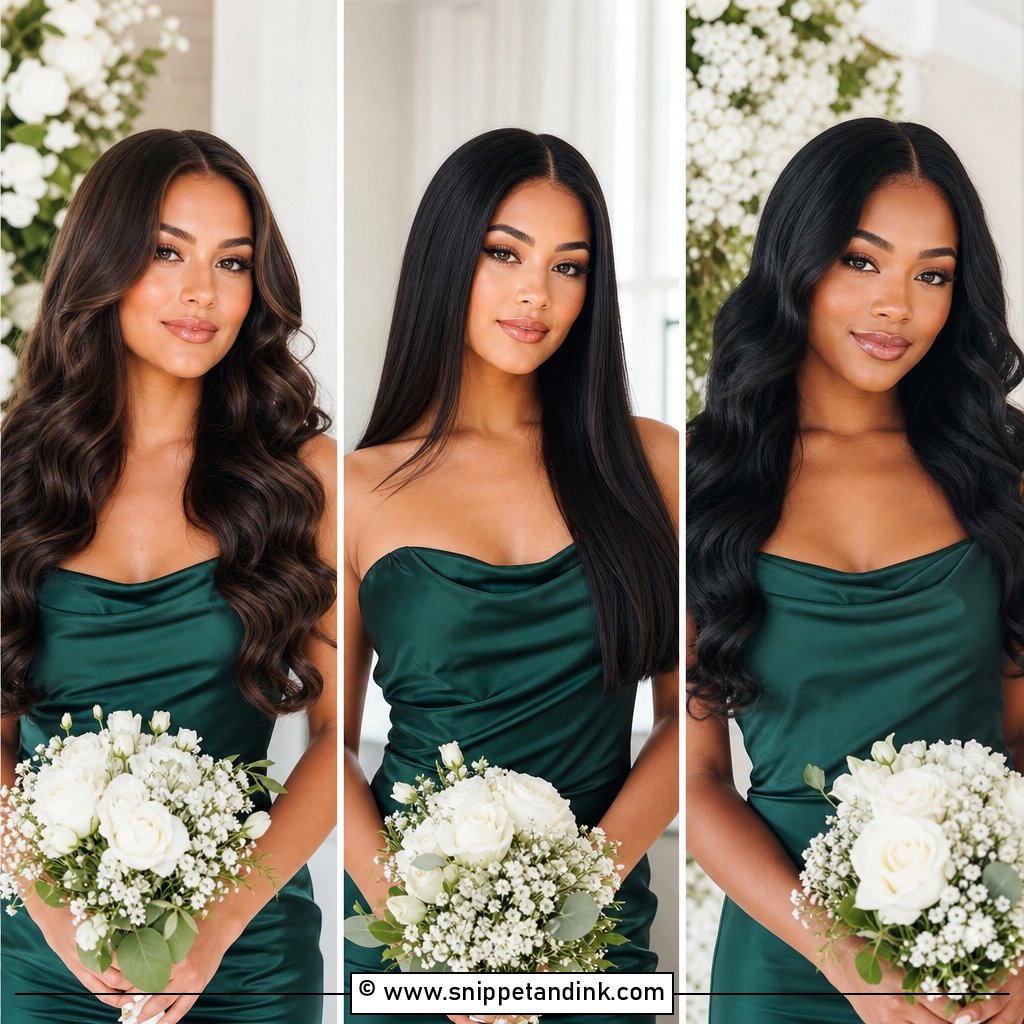
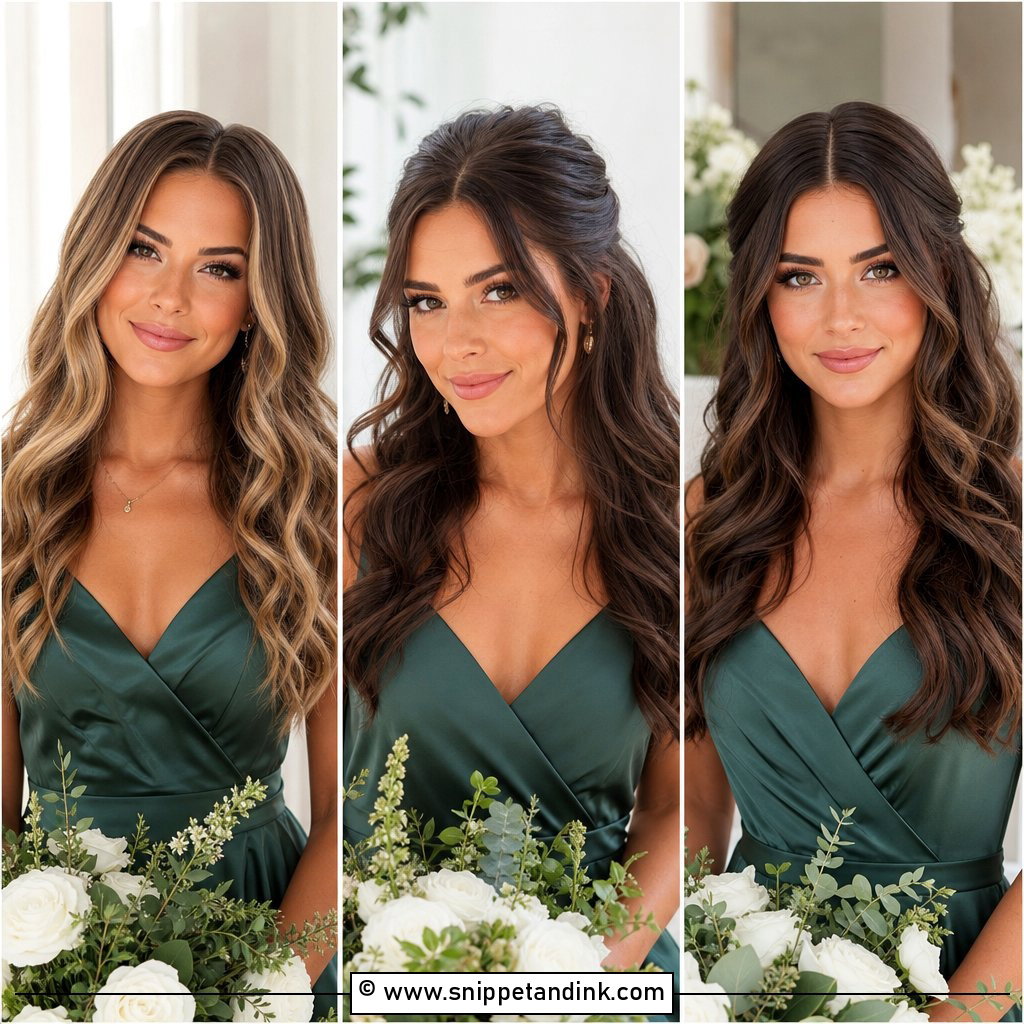
Soft waves are my default for long hair down, and they look natural from almost any angle the photographer finds. They sit well with a middle part, a side part or face-framing layers, and they add enough interest that a plain bridesmaid dress needs nothing else. The order is what makes them last. I start with a smooth blowout, curl in larger sections, let every curl cool, and only then brush them into waves. A light shine spray keeps the finish glossy while the hair still moves.
2. Long Bridesmaid Hair Down With Hollywood Waves
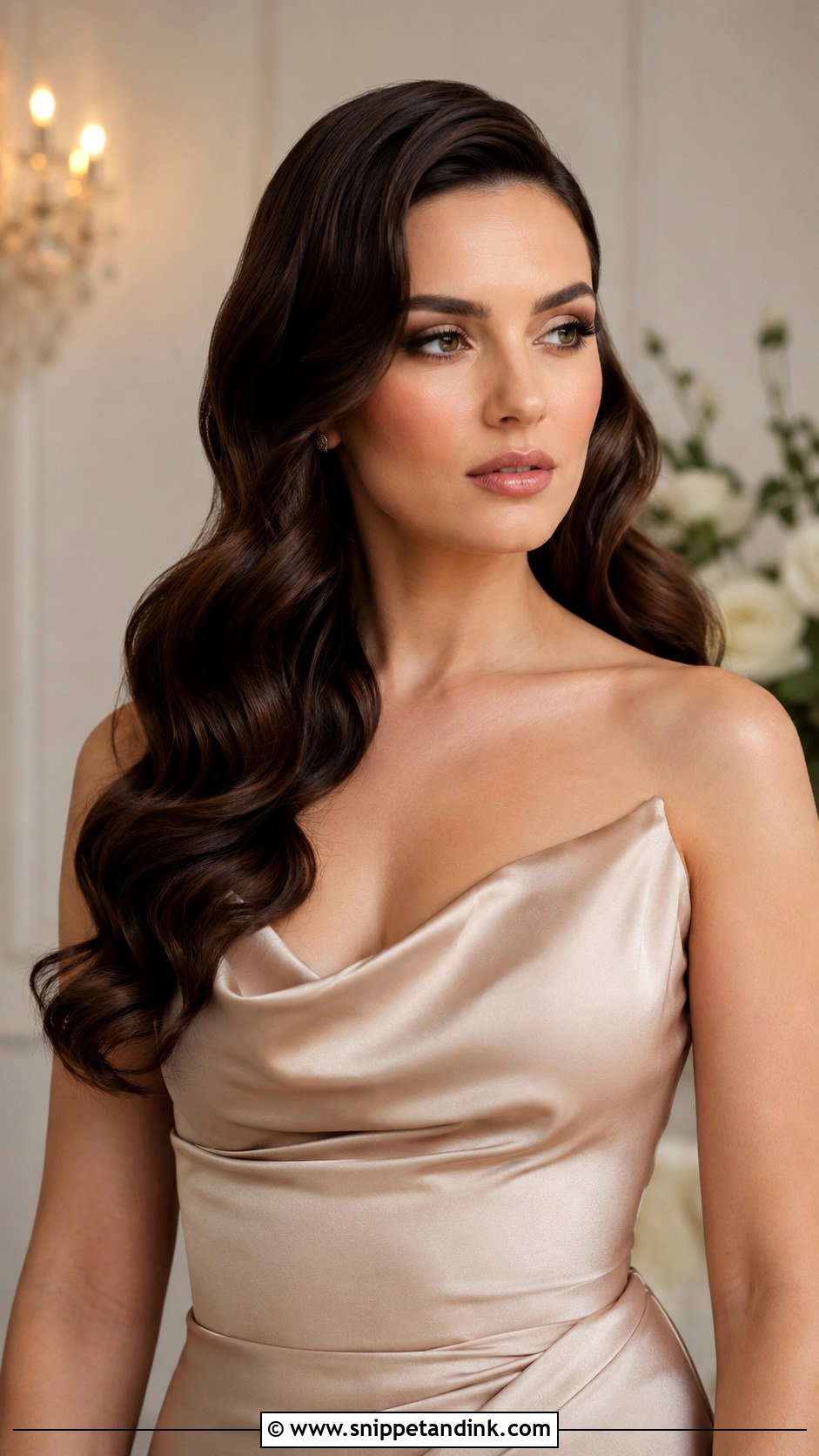
Hollywood waves are a sculpted shape, not a set of curls: deep bends that line up and flow into each other. Every curl has to be wound in the same direction and from the same parting, so clean sections and proper setting time make or break it. I’d keep this for formal weddings, satin dresses and off-the-shoulder necklines. A side part gives the classic glamour, while a center part modernises it. Fine hair loses the shape fastest, so I pin each section while it cools. Any flyaway shows on a surface this smooth, which is why I finish with a light serum.
3. Long Bridesmaid Hair Down With Loose Curls
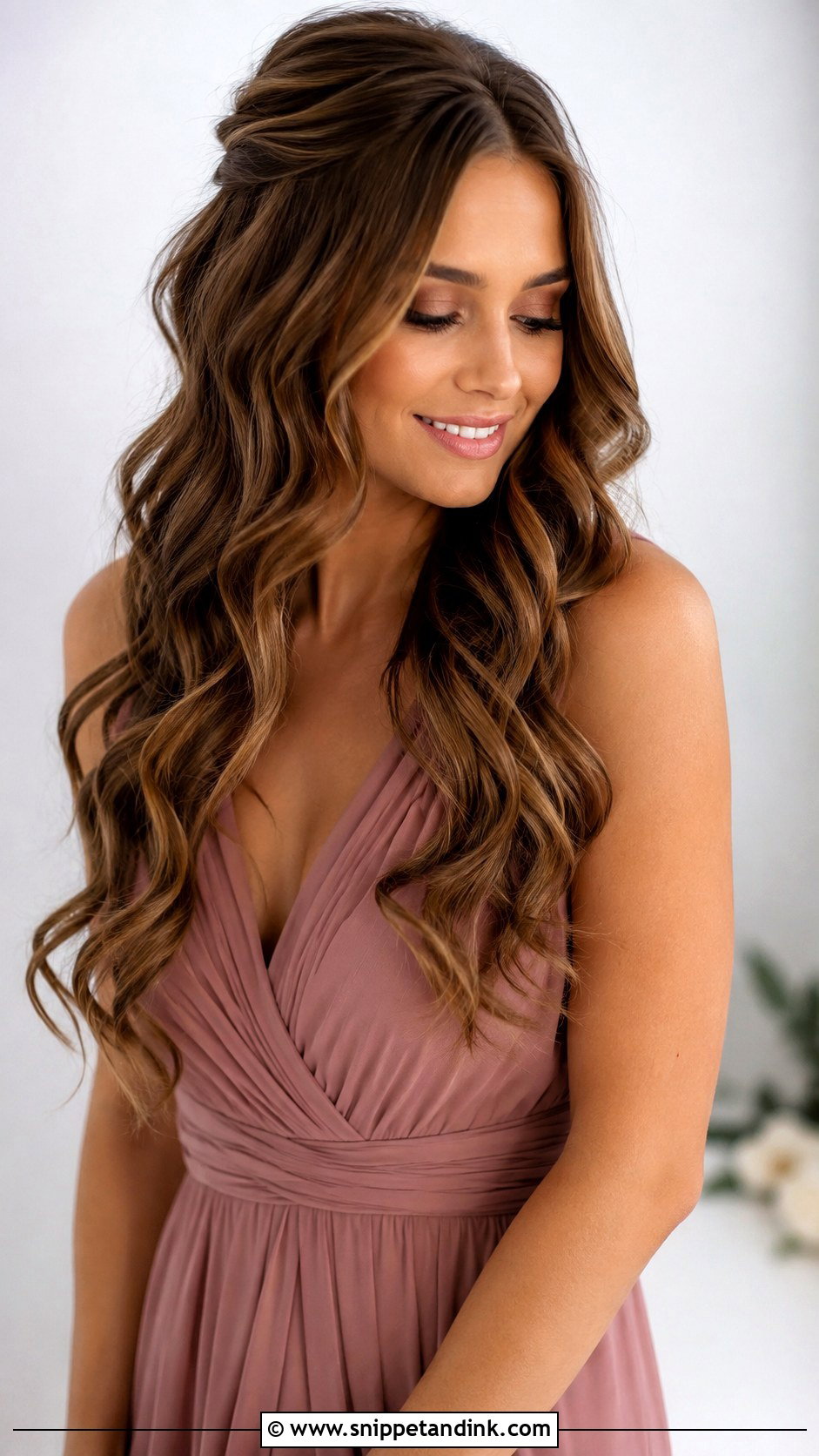
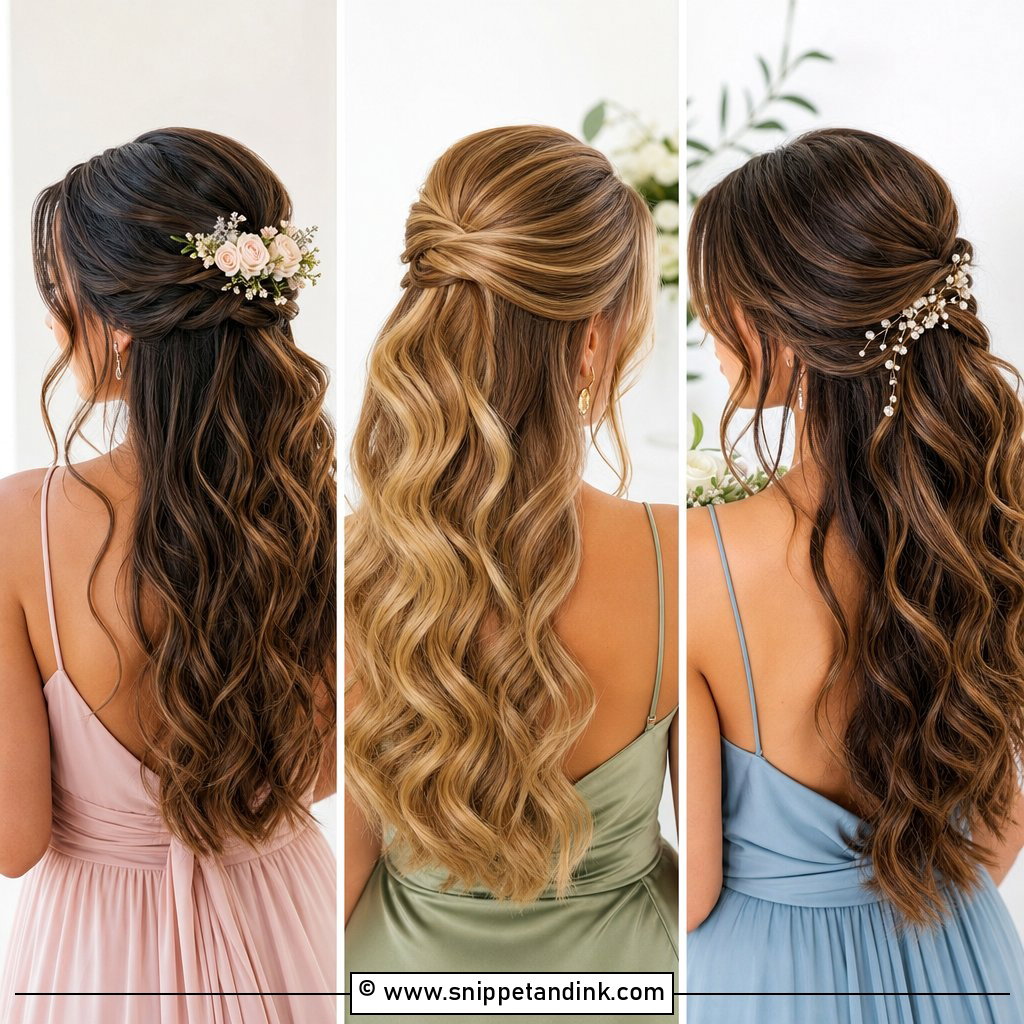
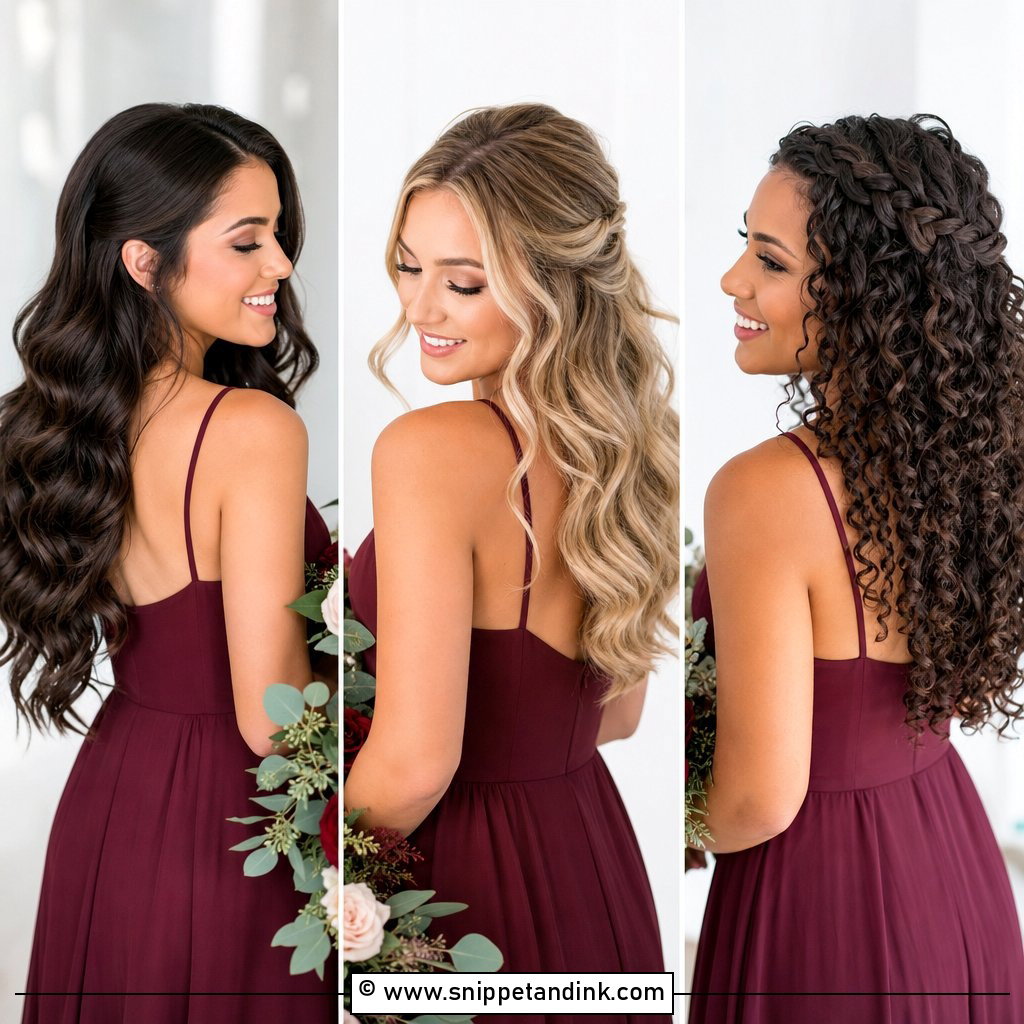
Loose curls give fine or medium hair the volume it doesn’t have on its own. I start the curl at about the cheekbone or lower, which keeps the top smooth and stops the head looking wider than the face. After curling, I separate the pieces with my fingers rather than a brush, so the curls stay defined without turning tight. They take a delicate pin, a small flower or a pearl clip on one side well.
4. Long Bridesmaid Hair Down With Beach Waves
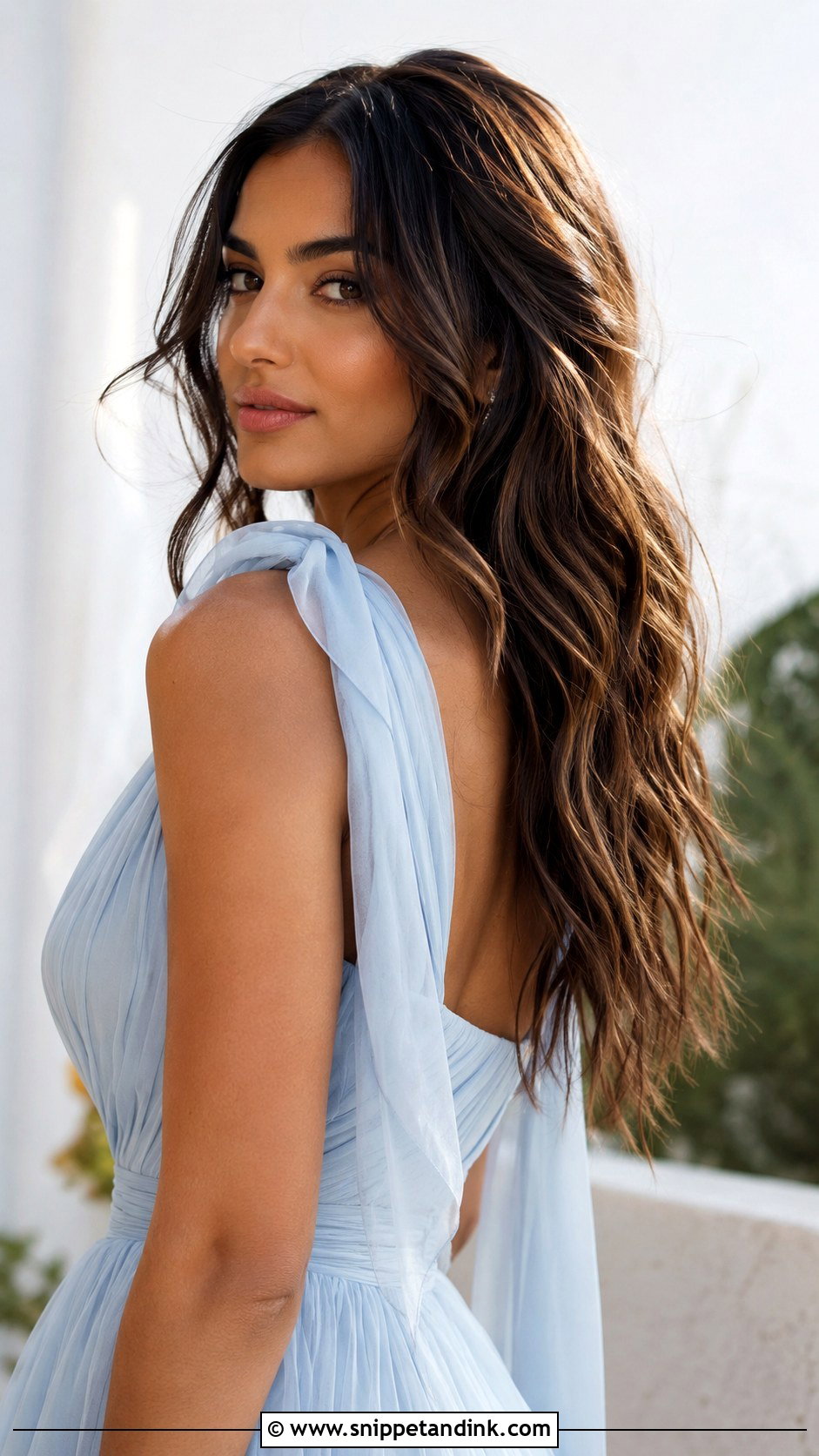
Beach waves suit outdoor, destination, summer and coastal weddings, where a polished curl would look out of place. The pattern is deliberately irregular: soft bends, airy ends, nothing too uniform. They pair with chiffon, floral prints and natural makeup. A texture spray helps the waves hold without crunch. Here’s the catch: sea air and humidity swell the hair shaft, so on a beach I add a frizz-control product before styling, not after. A few face-framing pieces around the jaw finish it.
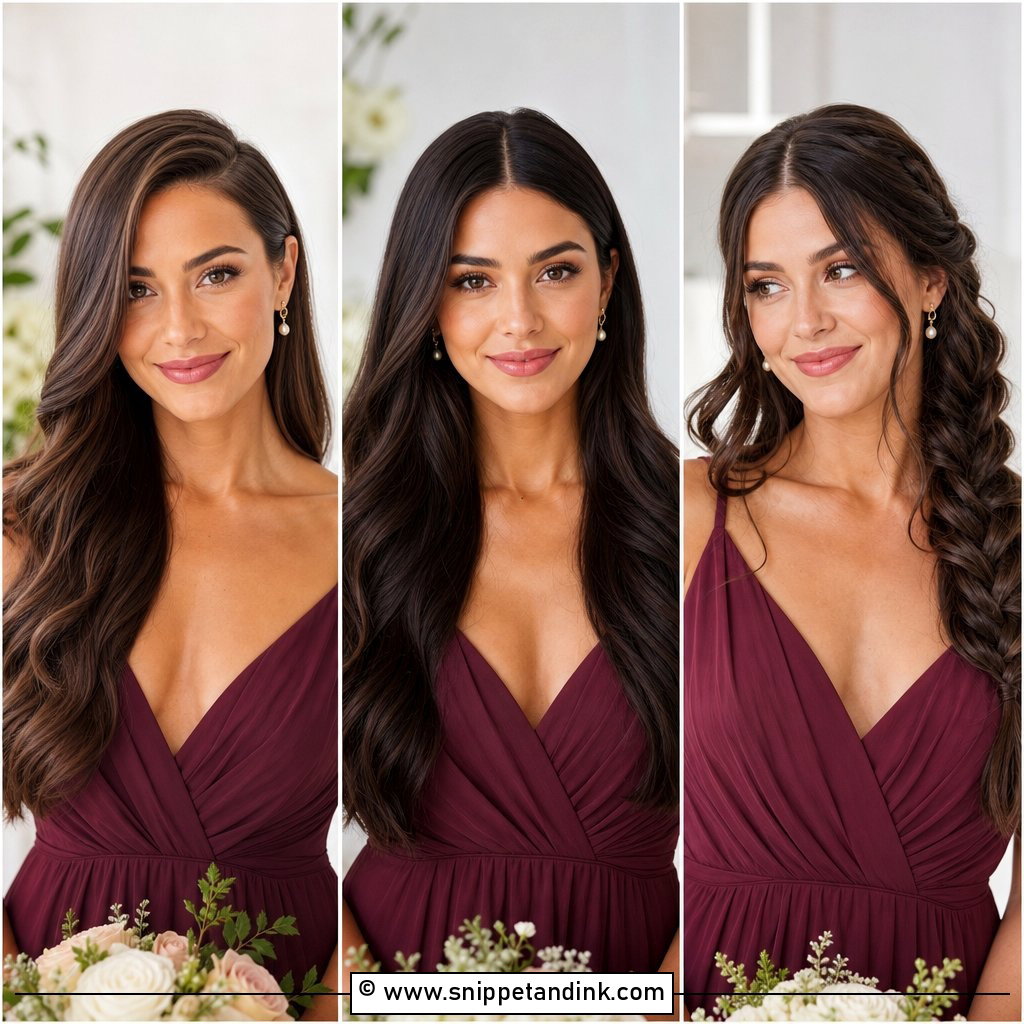
5. Long Bridesmaid Hair Down With Side Part
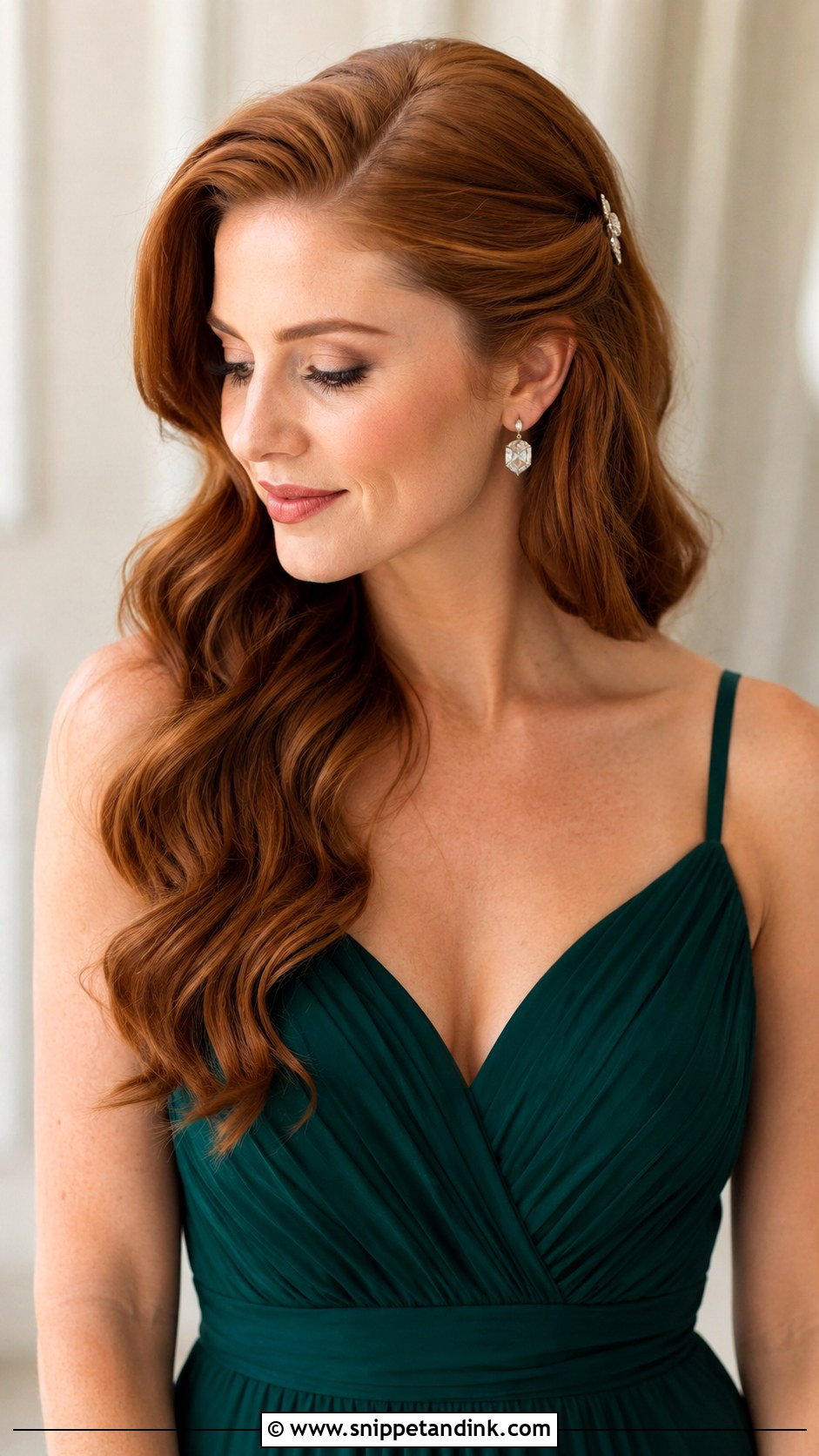
A side part gives long hair instant lift at the front, which makes the whole style look more dressed up. It works over waves, curls or a smooth blowout, and it suits anyone who likes one side tucked behind the ear. It also leaves room for a clip or comb on the lighter side. Watch the heavy side: if the curls there are stiff, the hair falls forward like a curtain over the face. I keep that side soft and brushed through.
6. Long Bridesmaid Hair Down With Middle Part
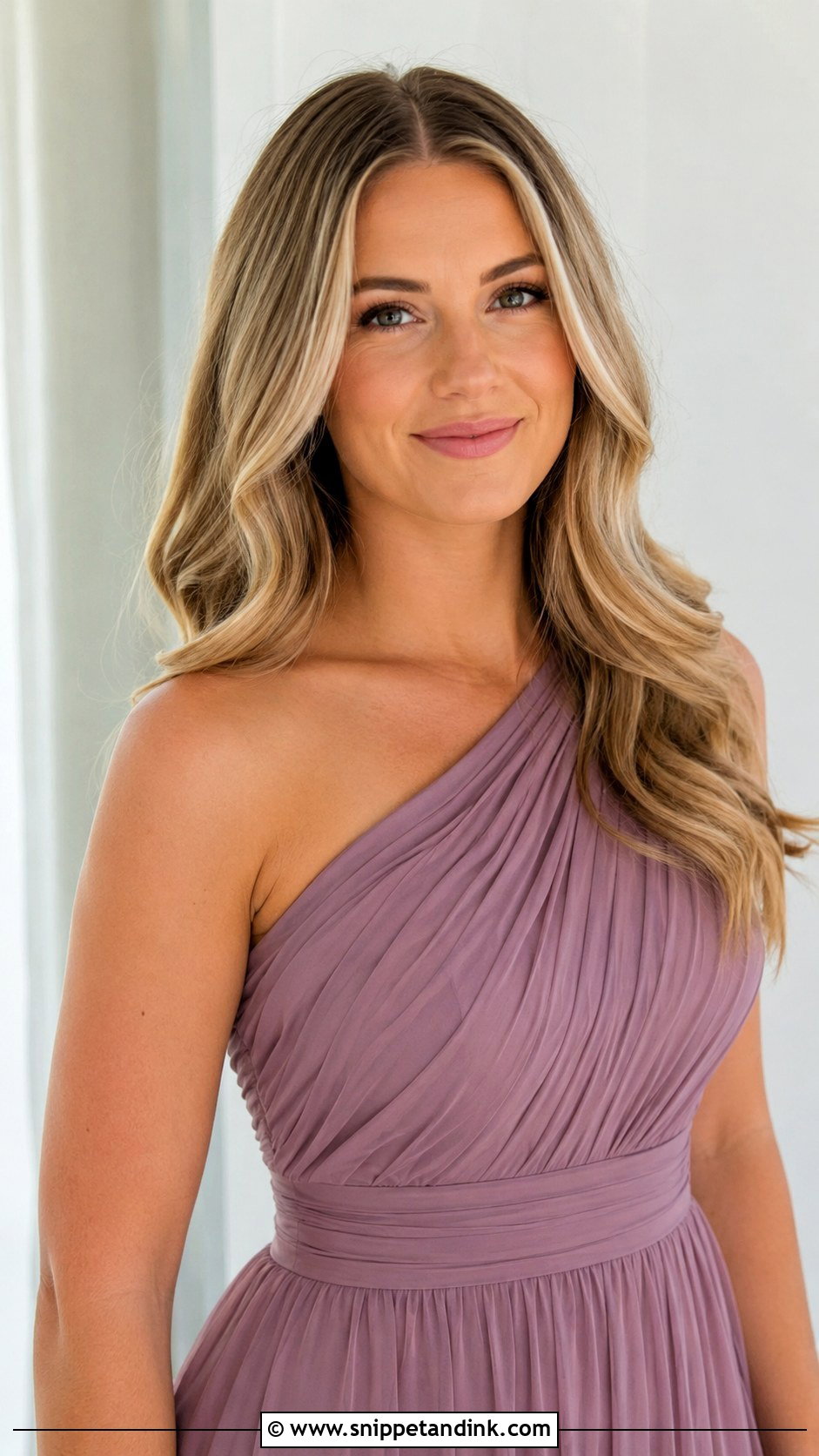
A middle part is the minimal option, and it lines up neatly in group photos when several bridesmaids wear similar dresses. It shows off long layers and face-framing pieces. The trouble with a center part on long hair is that the weight pulls the roots flat against the scalp, so I lift the crown with a round brush or a little root spray before anything else. Keep the roots smooth and the ends full. Simple jewelry and sleek gowns go well with it.
7. Long Bridesmaid Hair Down With Curtain Bangs
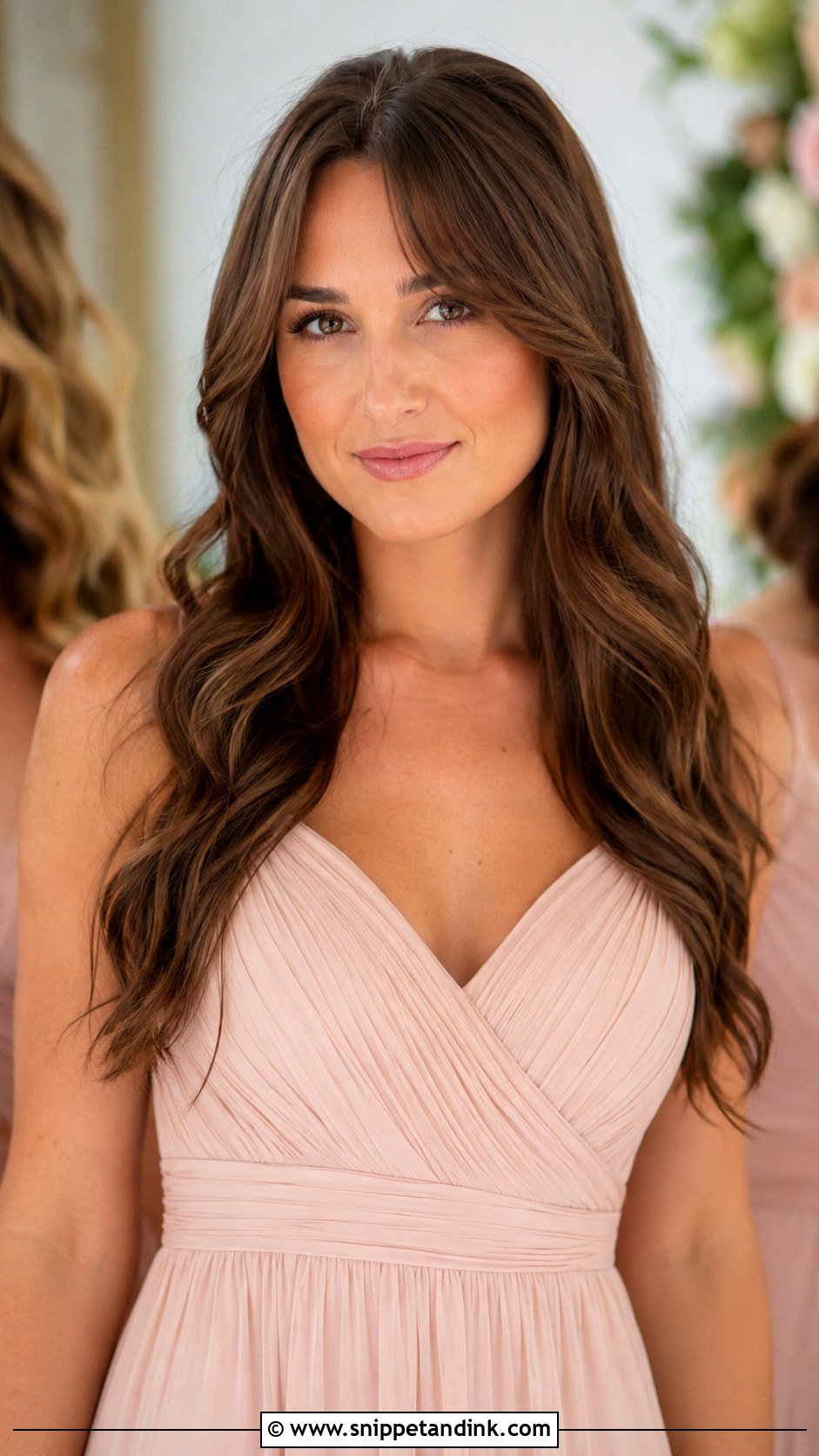
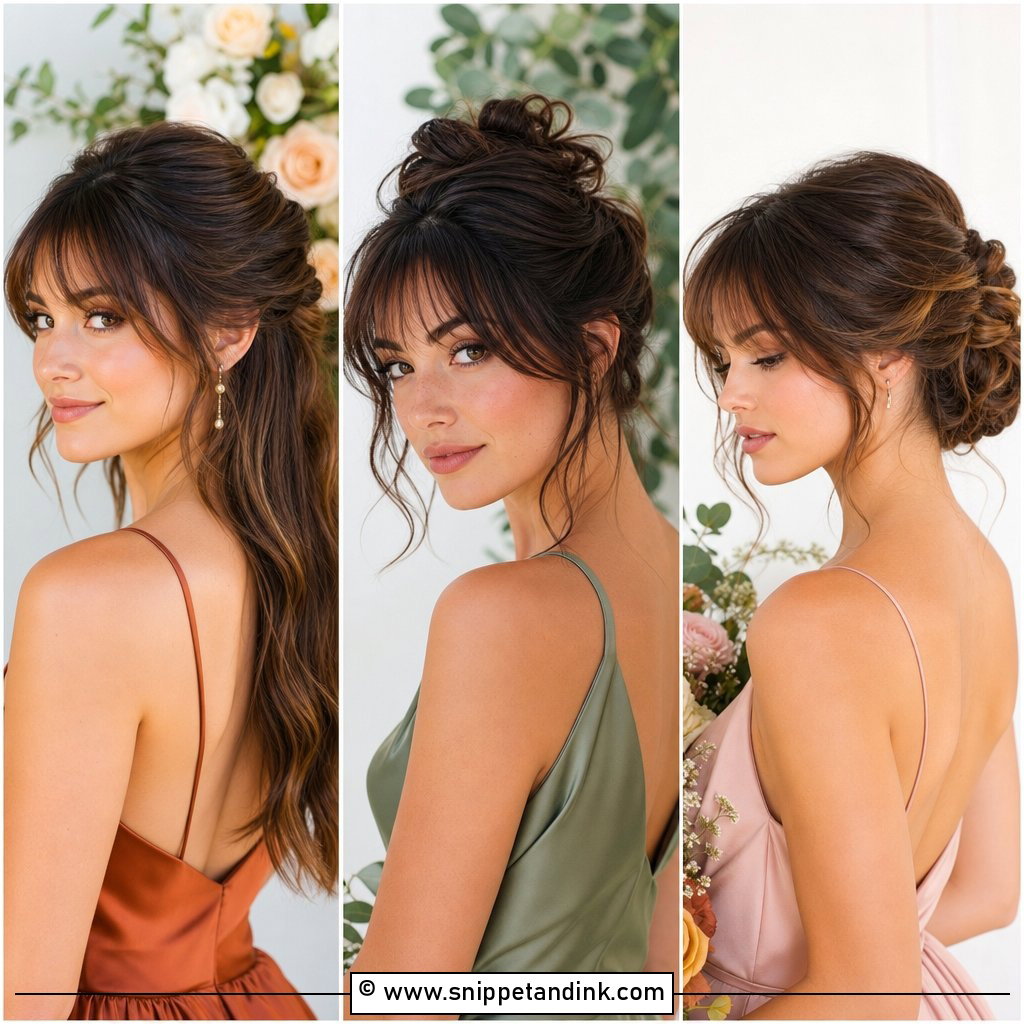
Curtain bangs frame the face while the lengths stay loose and flowing. They only behave if I style them away from the face, with a round brush or a large barrel, while they’re still warm, then let them cool in that shape. The rest of the hair can be waved, curled or blown out. Bangs that were cut in the last few days tend to sit too short and stiff, so I’d suggest a trim a couple of weeks before. A flexible hairspray keeps them lifted without stiffness.
8. Long Bridesmaid Hair Down With Face Framing Layers
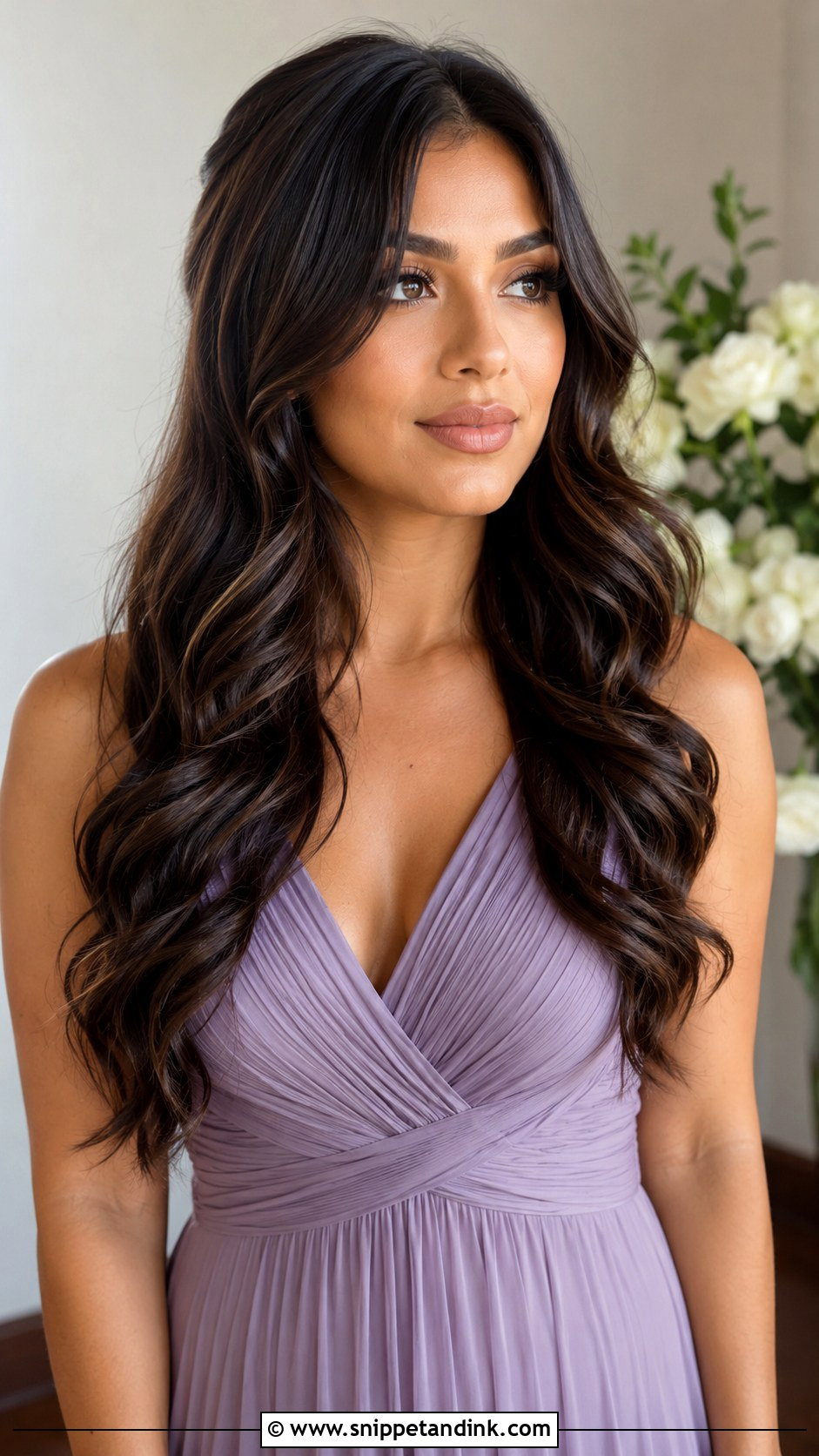
Face-framing layers put shape where the camera looks first, at the cheekbones, jaw and neckline, while the longer hair keeps flowing behind. With waves, the shorter front pieces catch the light and move in photos. They give a strapless, square or V-neck dress a finished look without an updo. One thing I check before styling: where the bridesmaid’s makeup will sit. I curl the front pieces away from the face so they don’t stick to lip gloss or drag through foundation.
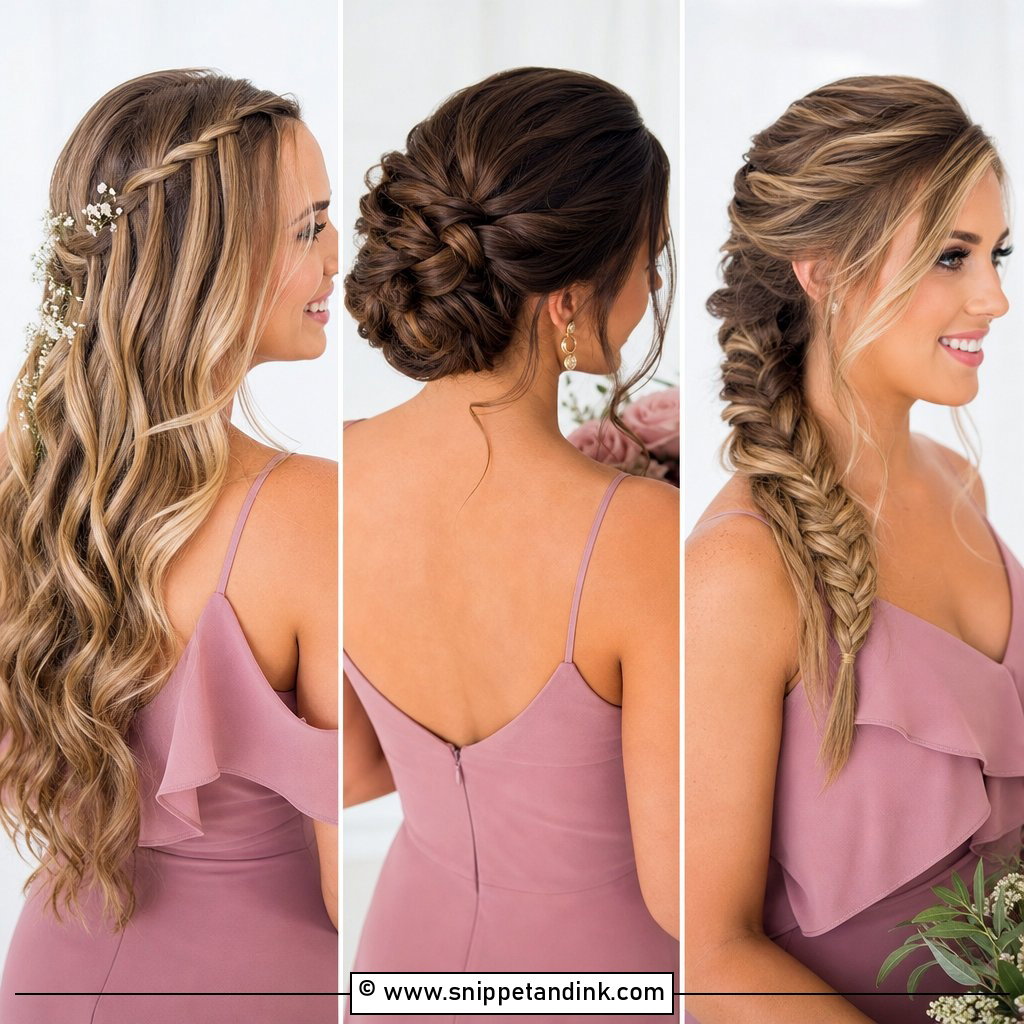
9. Long Bridesmaid Hair Down With Braided Crown
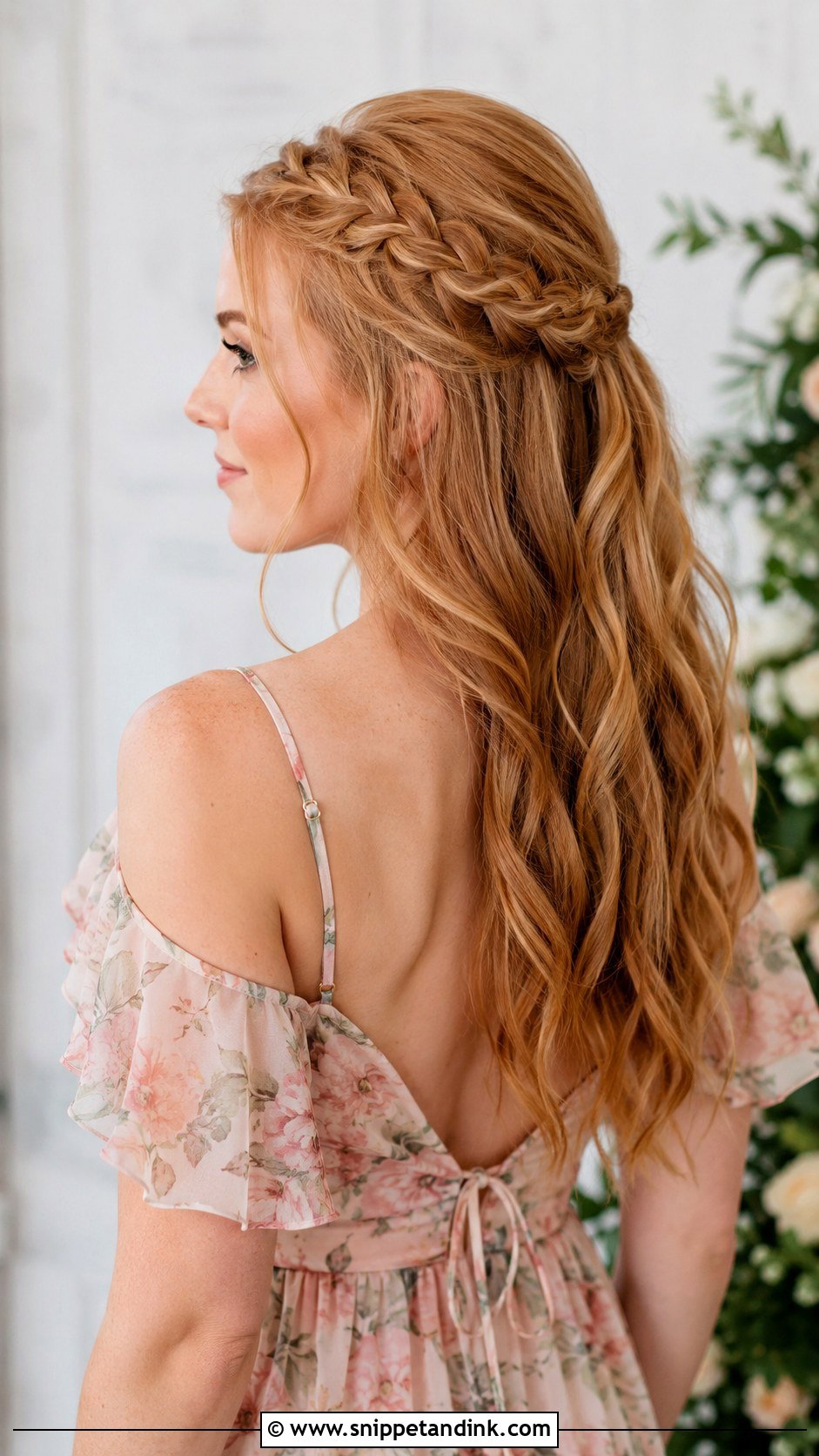
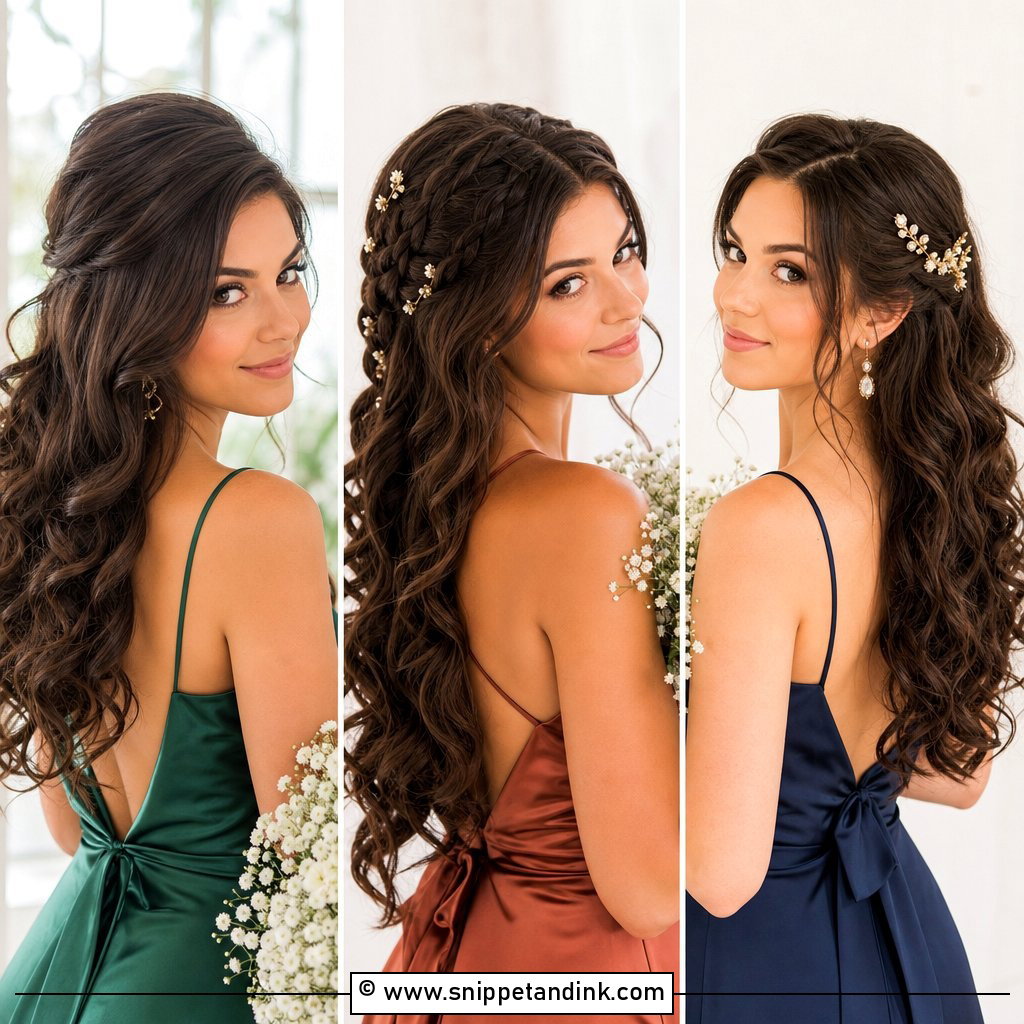
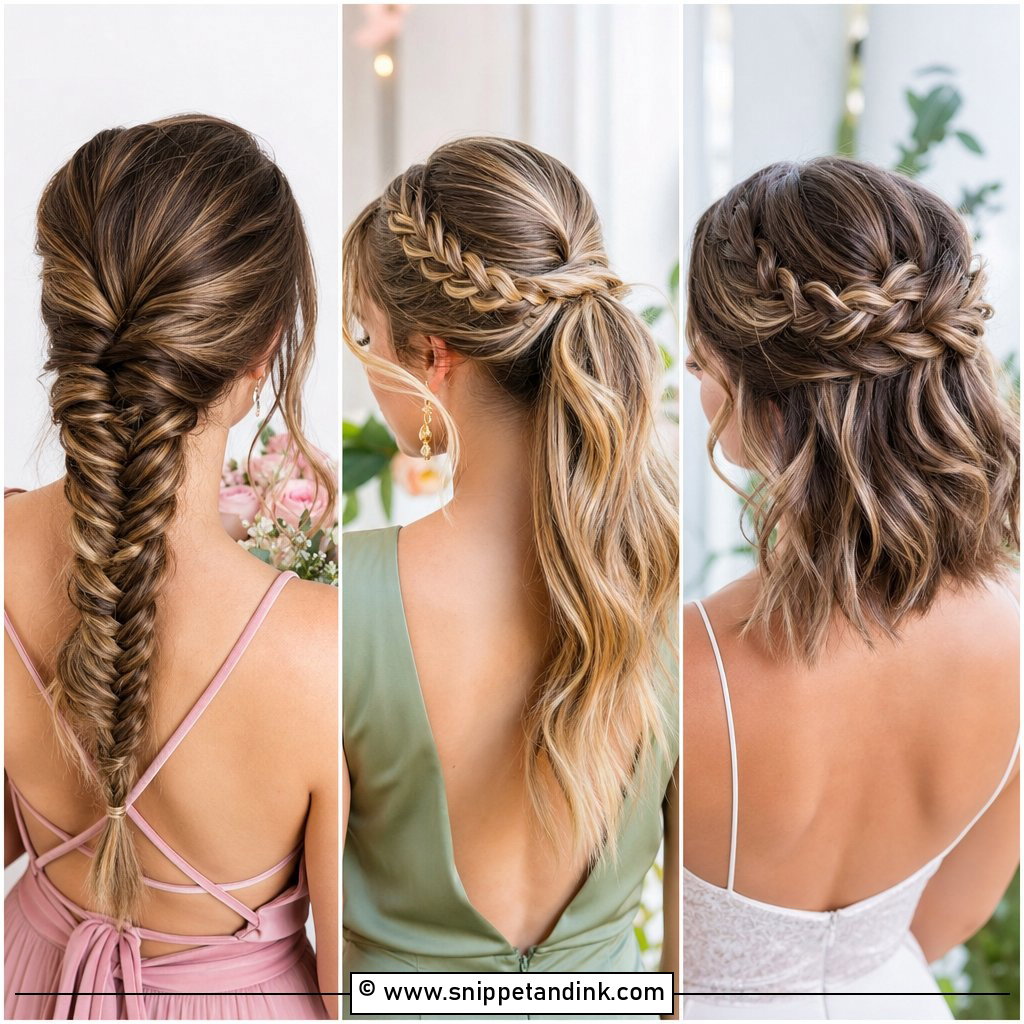
A braided crown keeps the hair off the face while most of the length stays visible. The braid crosses the top like a soft headband and then blends into waves or curls behind. It sits naturally with floral dresses, outdoor ceremonies and pastel palettes. On long, heavy hair, the braid carries the weight of the loose lengths pulling down on it, so I pin each end into the hair underneath, not just into the braid. Loosen it gently once it’s secure, and leave a few face-framing strands out.
10. Long Bridesmaid Hair Down With Waterfall Braid
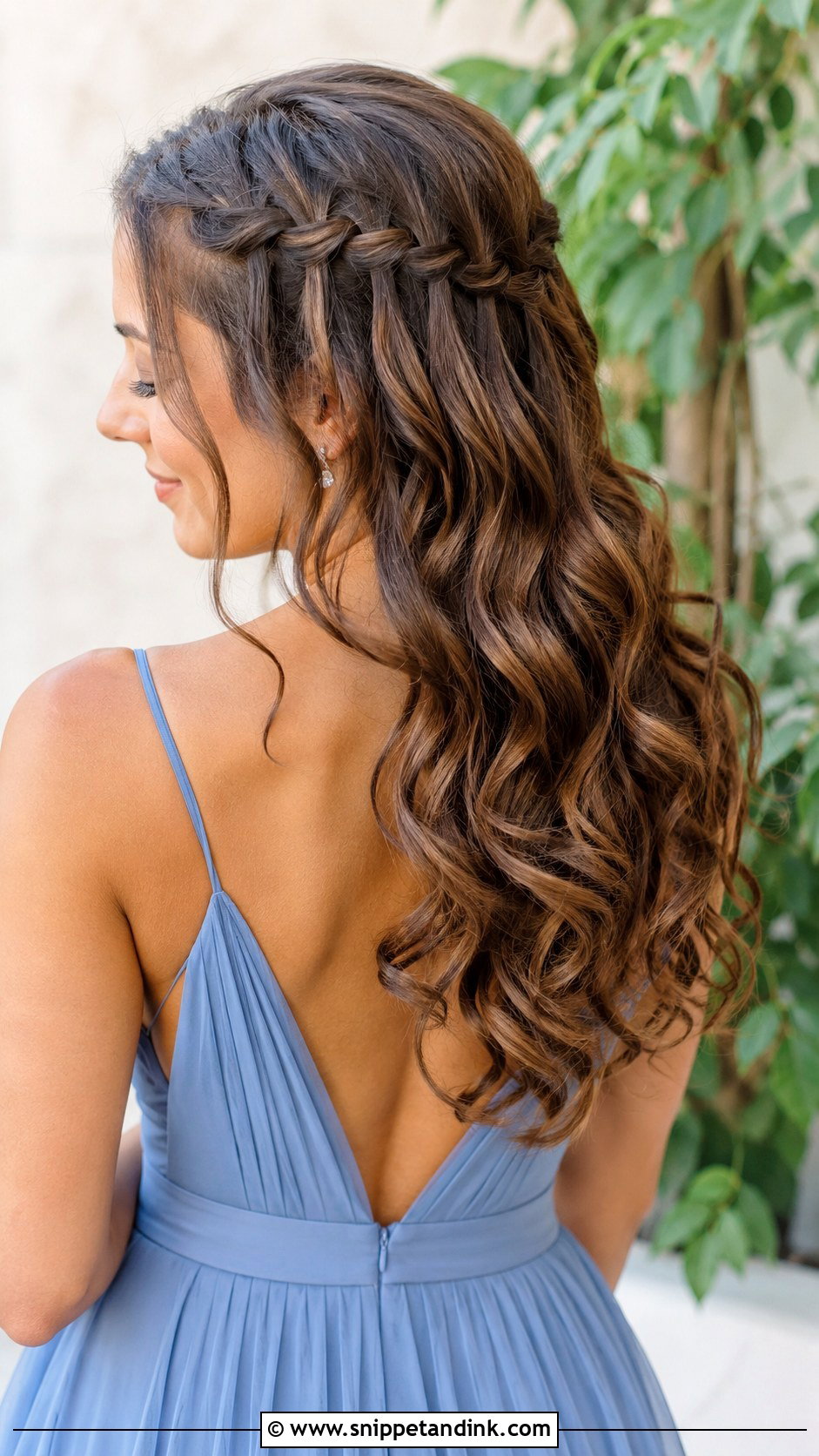
A waterfall braid adds detail without hiding any length. It travels across the back or side of the head, dropping a section from each pass so the hair falls through it. With curls, each dropped piece blends into the waves below. I curl first, because straight dropped strands make the pattern hard to read. It works with a middle part, a side part or some crown volume. Tiny pearl pins or flowers are optional; the braid usually carries itself.
11. Long Bridesmaid Hair Down With Half Up Twist
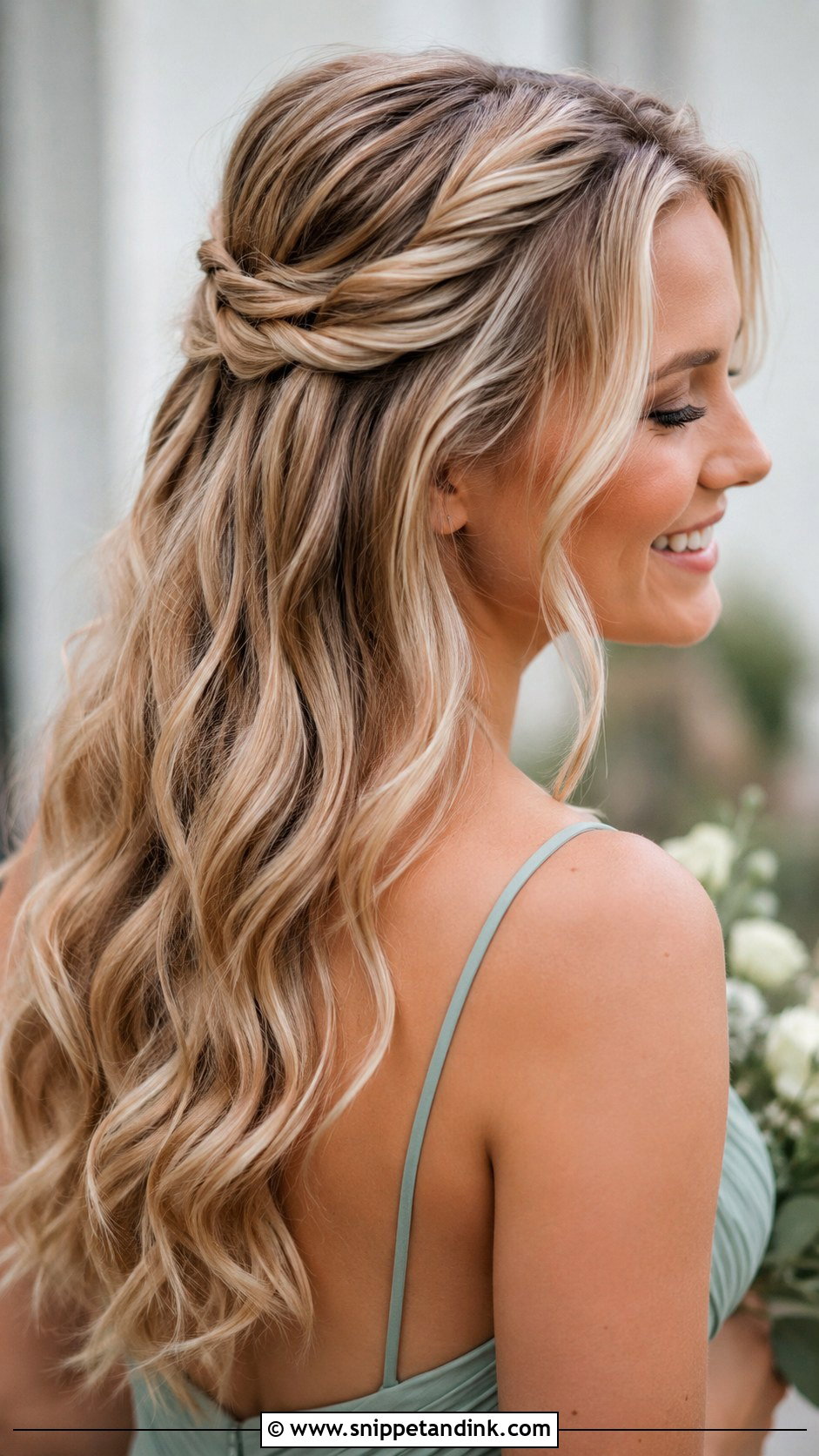
A half up twist takes the front sections back and pins them, while the rest stays down in waves or curls. It’s the one I recommend to bridesmaids who know they’ll be pushing hair off their face all day, because it keeps the front clear for speeches, photos and dancing. Rope-twisted sections hold better than flat twists on silky hair. Keep the twists neat for a formal wedding or pull them apart a little for a softer finish. A small comb or a ribbon can cover the meeting point.
12. Long Bridesmaid Hair Down With Half Up Curls
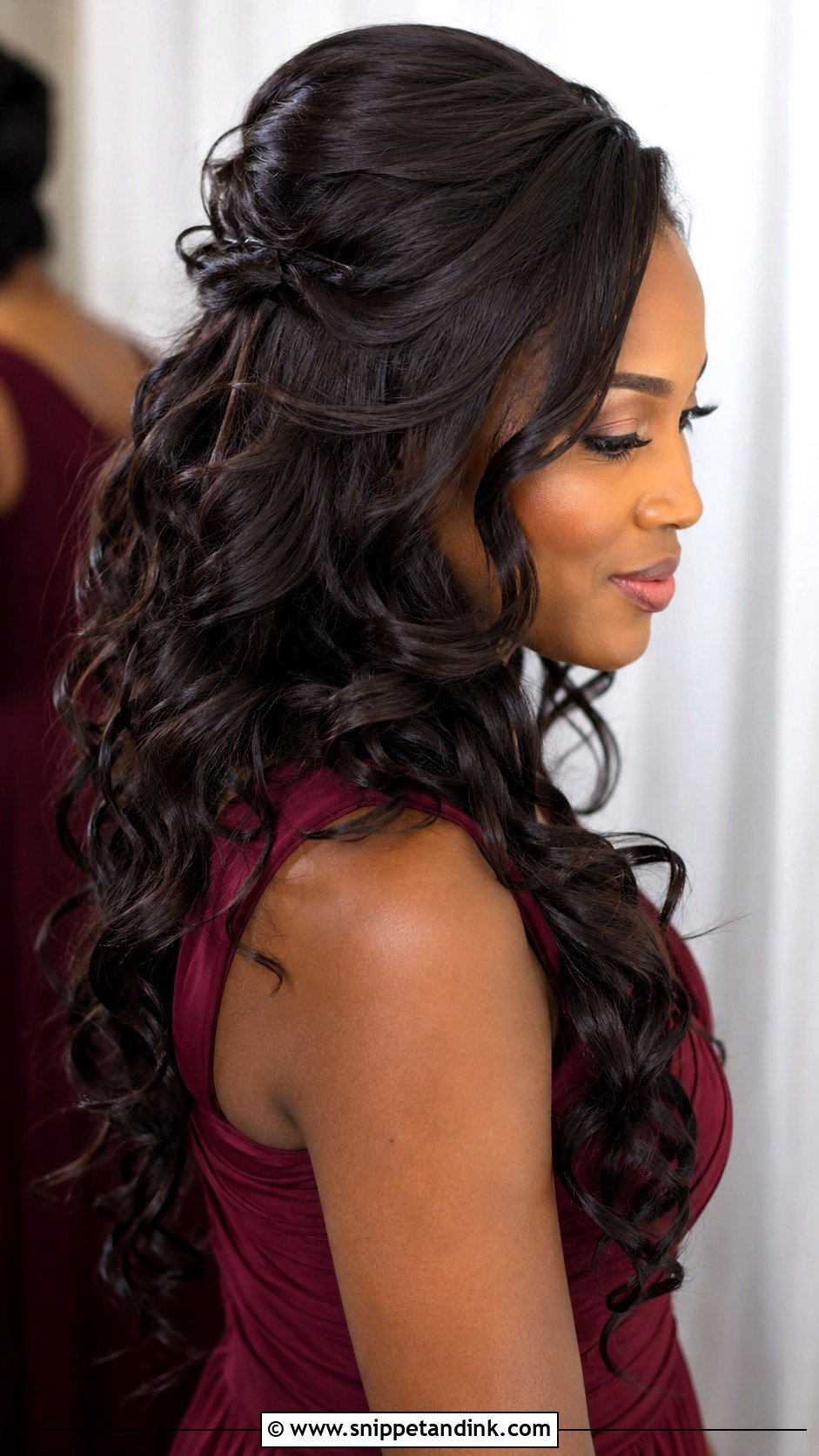
Half up curls add volume at the crown and fullness at the ends. The top section can be softly pinned, twisted or lightly teased before the curls fall down the back. On long, thick hair this is my usual answer, because it controls the front while the length stays on show. The danger is over-brushing: brush only enough to blend the curls, or they lose their bounce. Finish with a flexible hold spray. It suits daytime and evening weddings equally.
13. Long Bridesmaid Hair Down With Pearl Pins
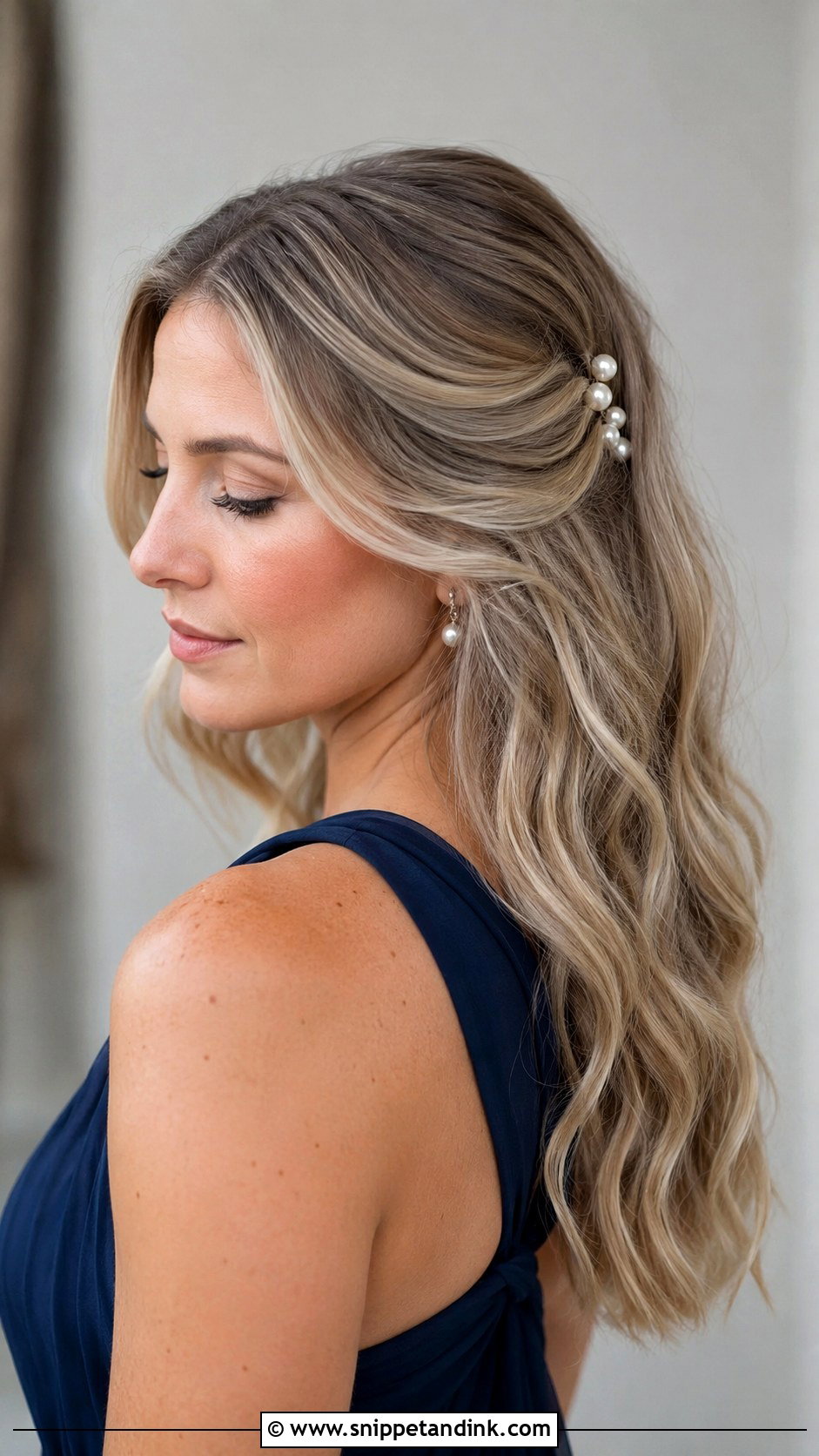
Pearl pins turn plain waves, curls or a blowout into a wedding style without making it complicated. I place them on one side, along a twist, or scattered lightly through the hair. Pearl pins are heavier than they look, and on slippery hair they slide, so I set each one into a small hidden crossed bobby pin. Use enough to look intentional, not so many that the style looks crowded. They’re also handy for holding back face-framing pieces, and they match classic dresses and pearl earrings easily.
14. Long Bridesmaid Hair Down With Floral Clips
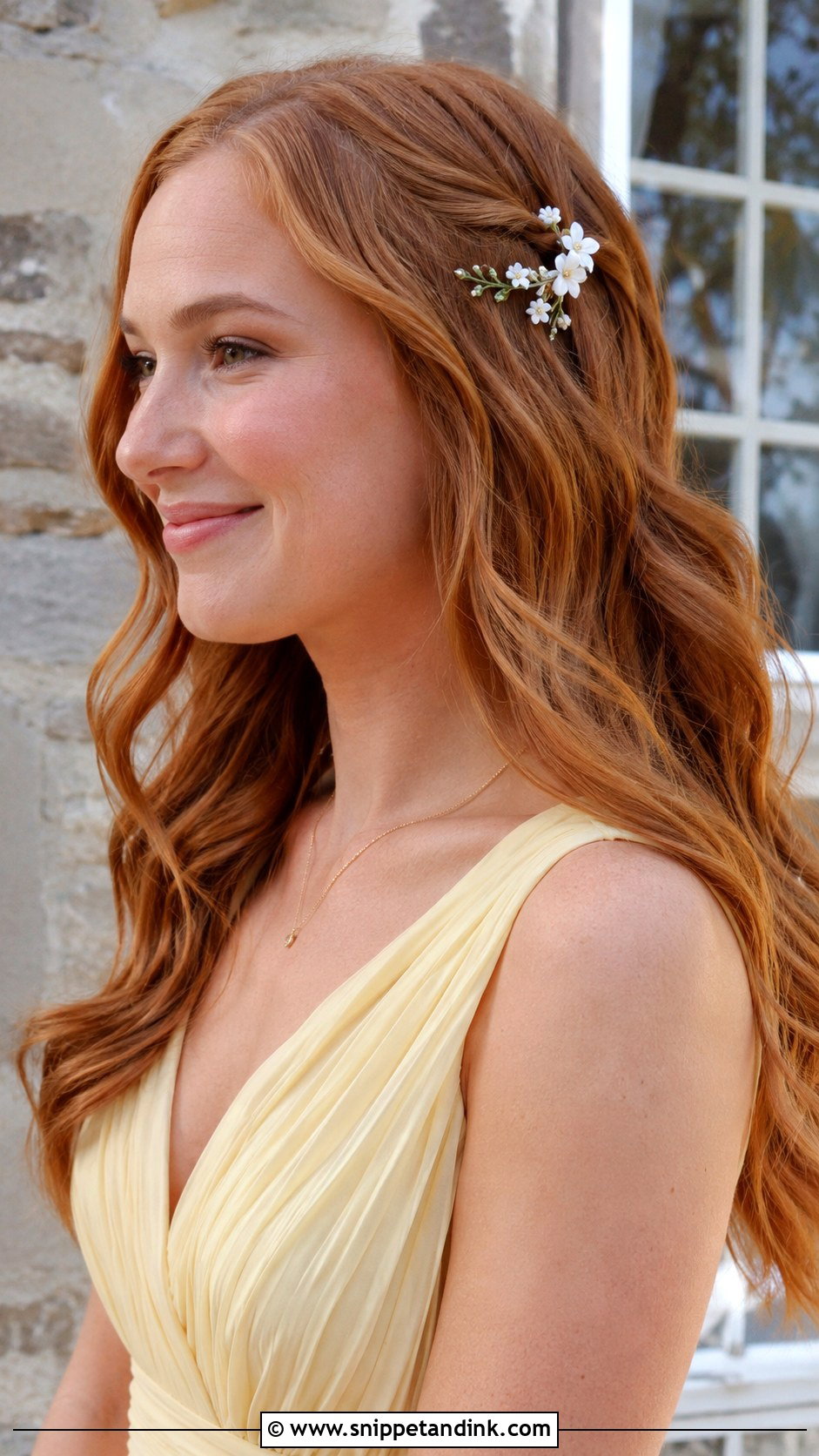
I reach for floral clips at garden, spring and summer weddings. They can be fresh, silk, dried or metal, depending on the style. Waves give a clip texture to grip, while flat straight hair lets it slip. One clip above the ear makes down hair feel finished without a braid. If they’re fresh, I ask the florist for hardy blooms and add them last, because delicate petals bruise and wilt against warm hair. Pick colors that echo the wedding palette quietly rather than shout over it.
15. Long Bridesmaid Hair Down With Side Swept Curls
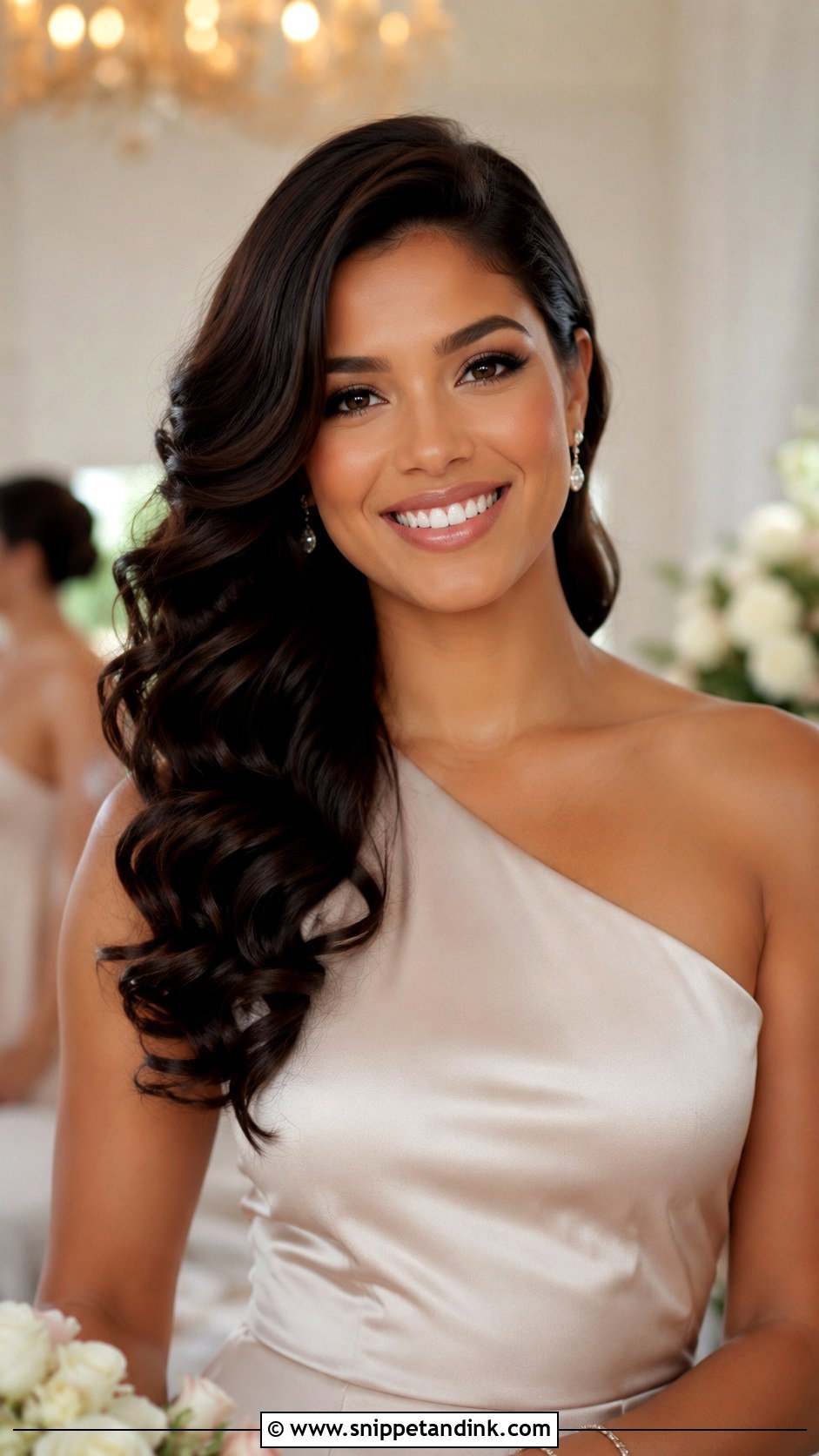
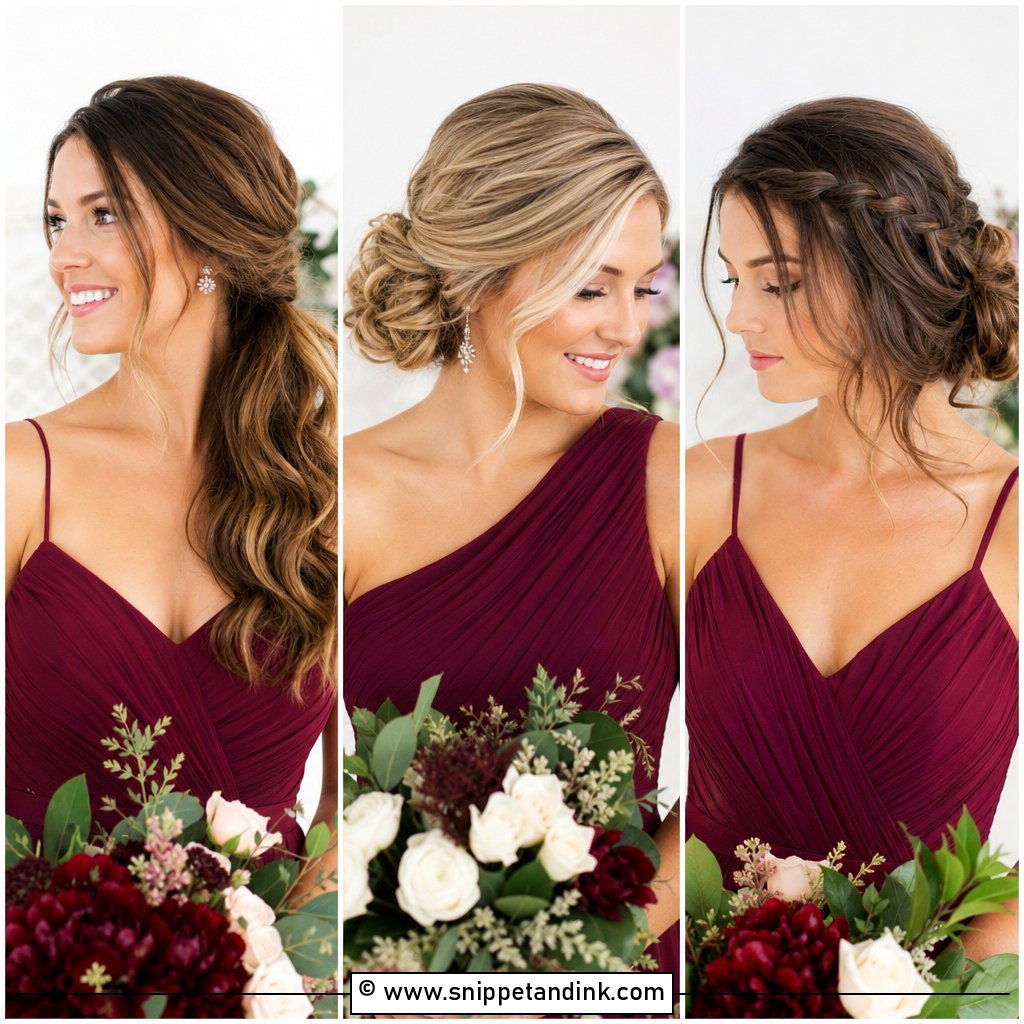
Side-swept curls put most of the hair over one shoulder, which shows off the length and leaves the neckline open on the other side. One-shoulder dresses, strapless gowns and statement earrings all suit it. The curls need to be smooth and blended so the shape reads as deliberate. Behind the ear on the bare side, I cross two hidden pins to stop the hair creeping back over. A little volume at the crown keeps the style balanced. Save it for formal evenings and the bridesmaid who wants one glamorous portrait.
16. Long Bridesmaid Hair Down With Voluminous Blowout
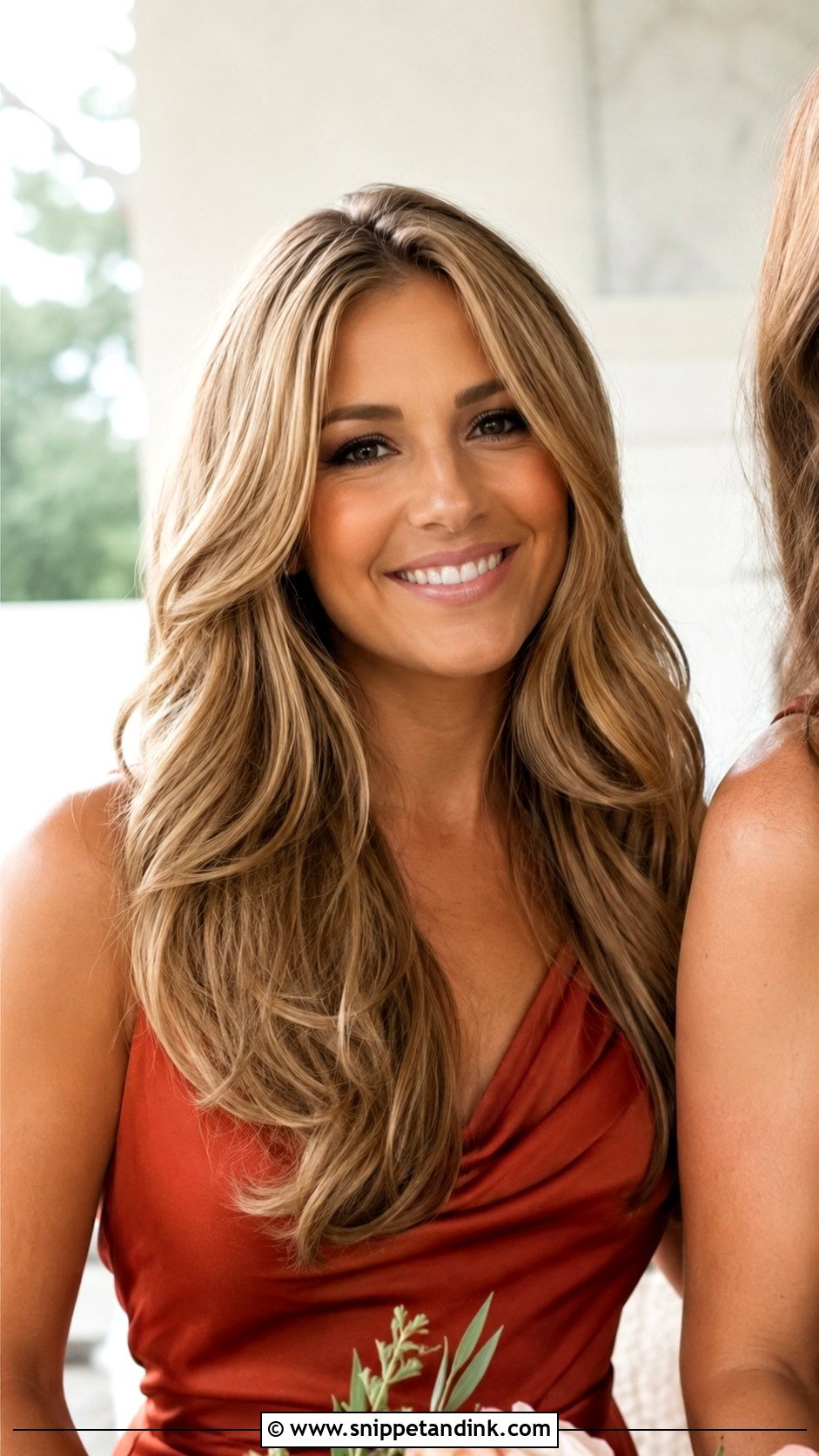
A voluminous blowout trades curls for body and shine. Roots lift, mid-lengths stay smooth and the ends bend softly away from the face. It suits bridesmaids who hate a curled look, and it fits city weddings and sleek dresses. A blowout alone drops fast on long hair, so I set the crown in large hot rollers or velcro rollers while the bridesmaid does her makeup. That cooling time is what gives volume that lasts past the ceremony.
17. Long Bridesmaid Hair Down With Straight Hair
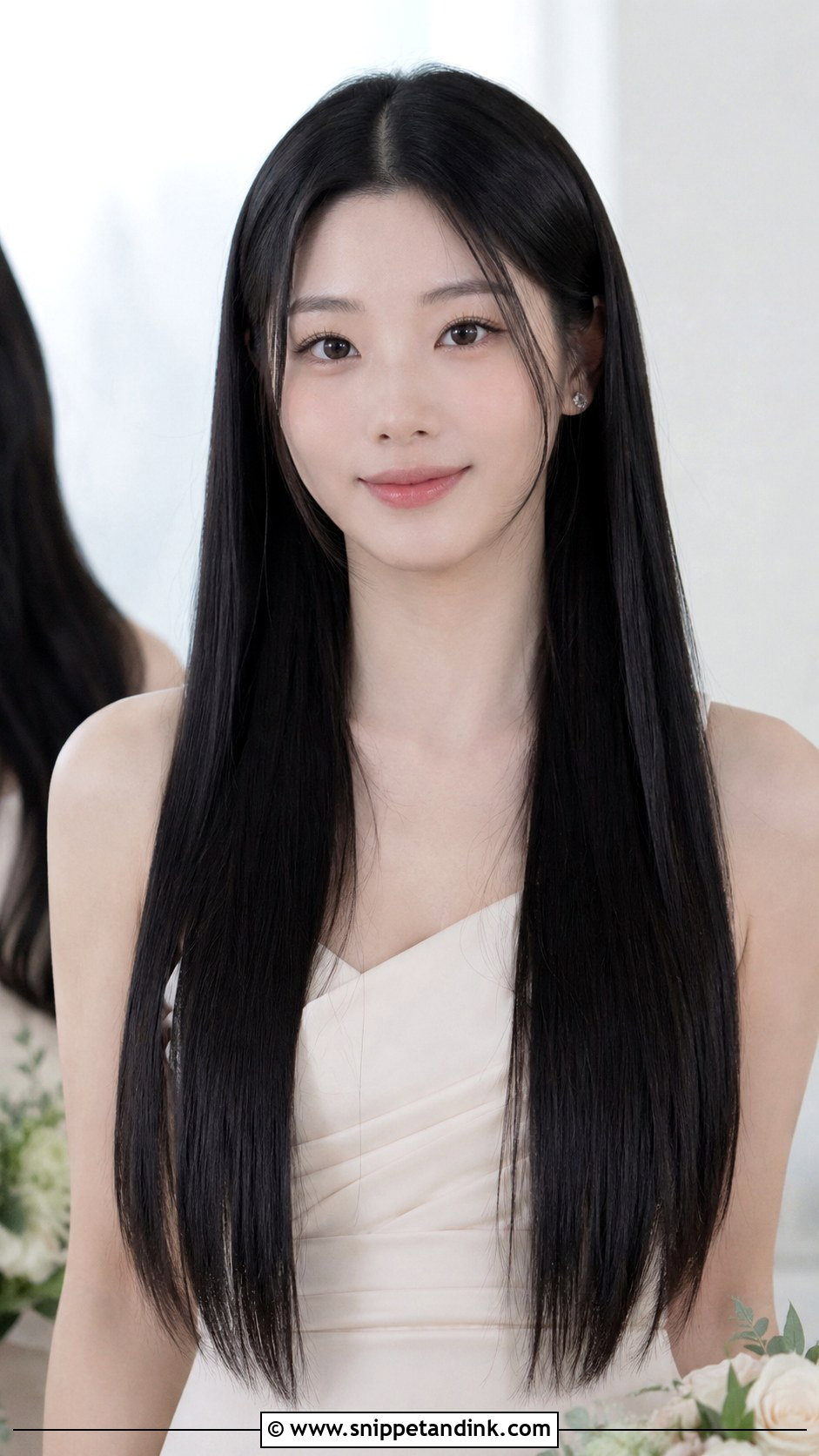
Straight hair can look sharp and chic, but only if the hair is in good condition: clean ends, soft face framing and real shine. Split ends and frizz show far more on straight hair than in a wave, so I’d ask for a trim in the weeks before. It suits modern weddings and simple dresses. A center part reads minimal, while a side part softens it. Heat protectant and an anti-humidity product are essential. I always leave a slight bend at the ends, because poker-straight long hair can look flat in photos.
18. Long Bridesmaid Hair Down With Sleek Waves
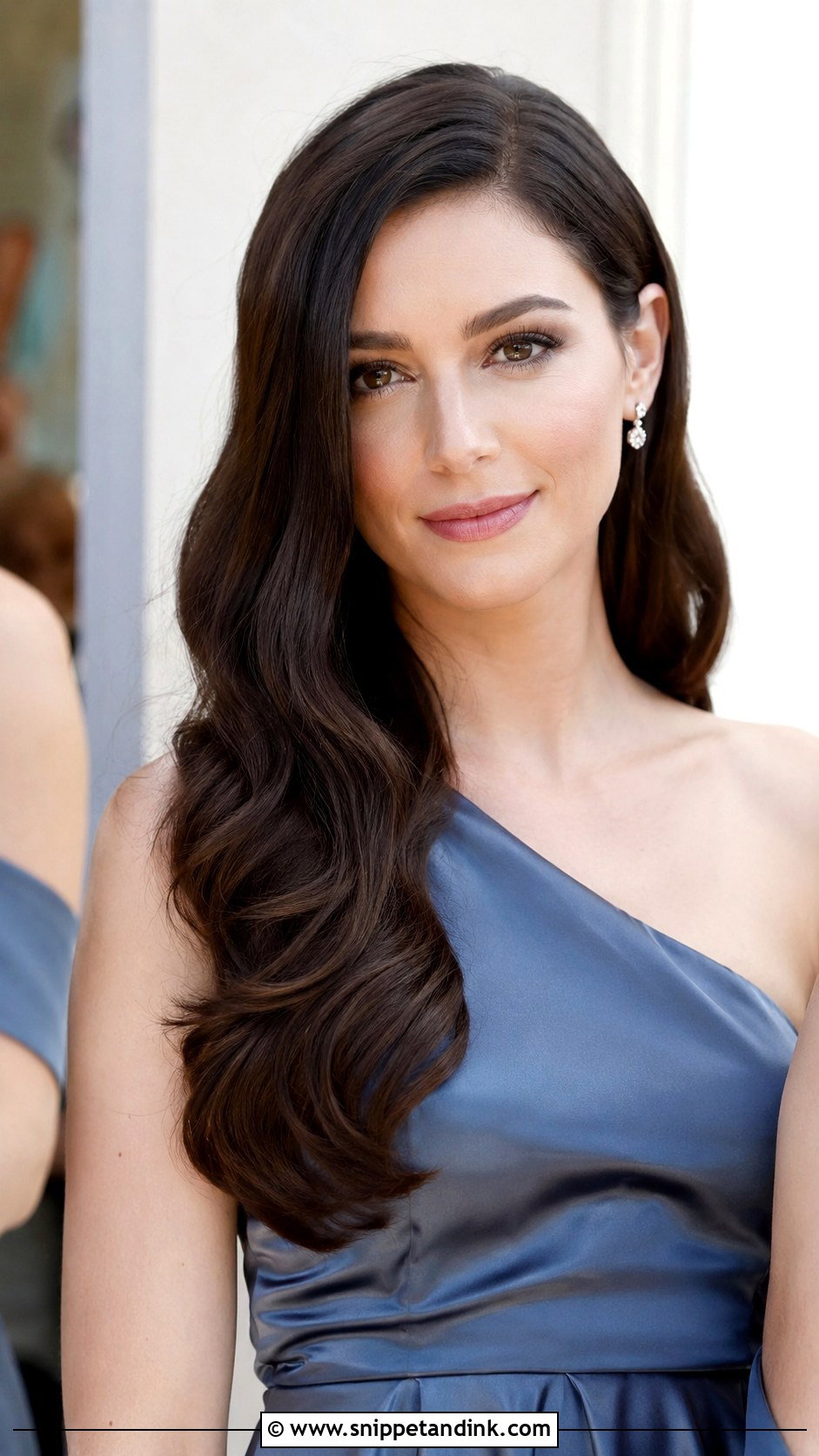
With sleek waves, I keep the roots and crown controlled and start the wave lower so it flows through the ends. It’s a cleaner version of loose waves and suits formal weddings. The finish should be shiny, with flyaways smoothed and the pattern blended so no single curl stands out. Tucking one side behind the ear adds polish. They sit naturally with satin gowns, simple jewelry and soft glam makeup.
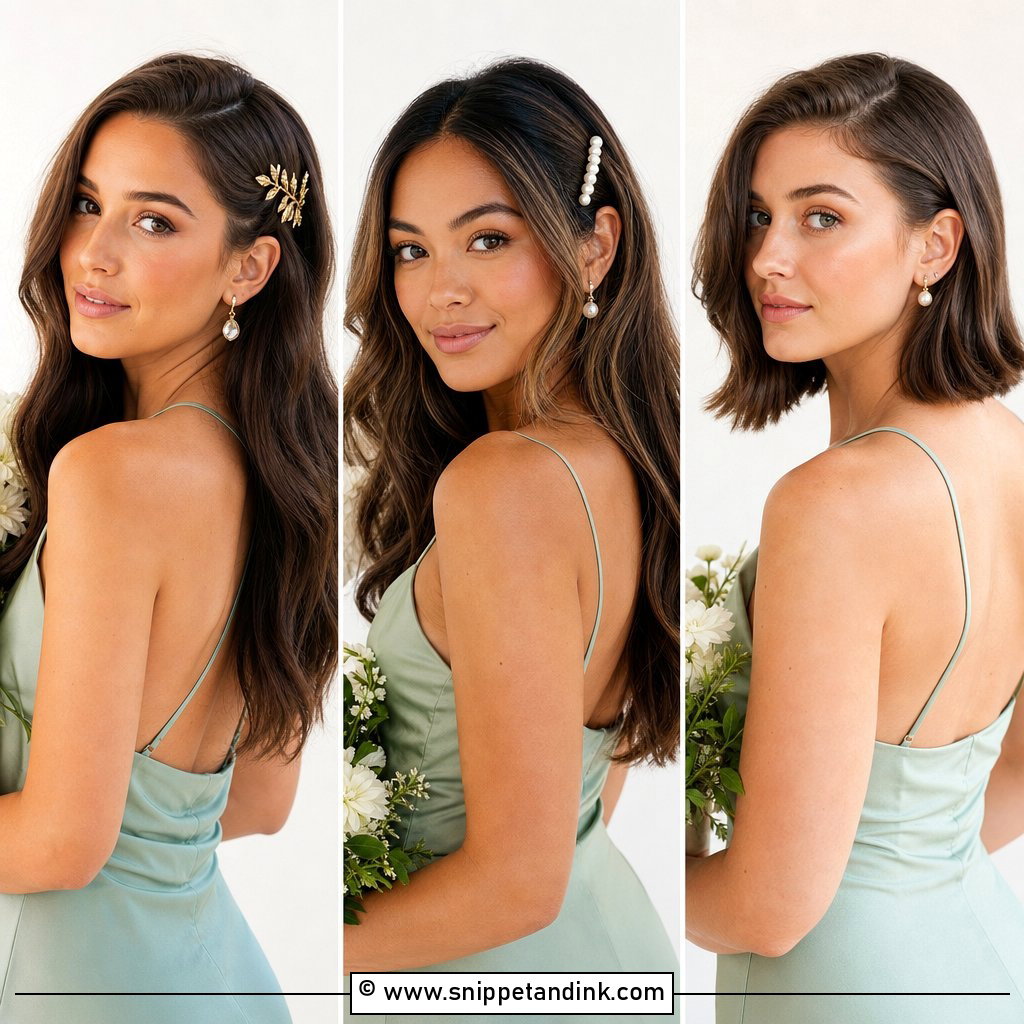
19. Long Bridesmaid Hair Down With Boho Waves
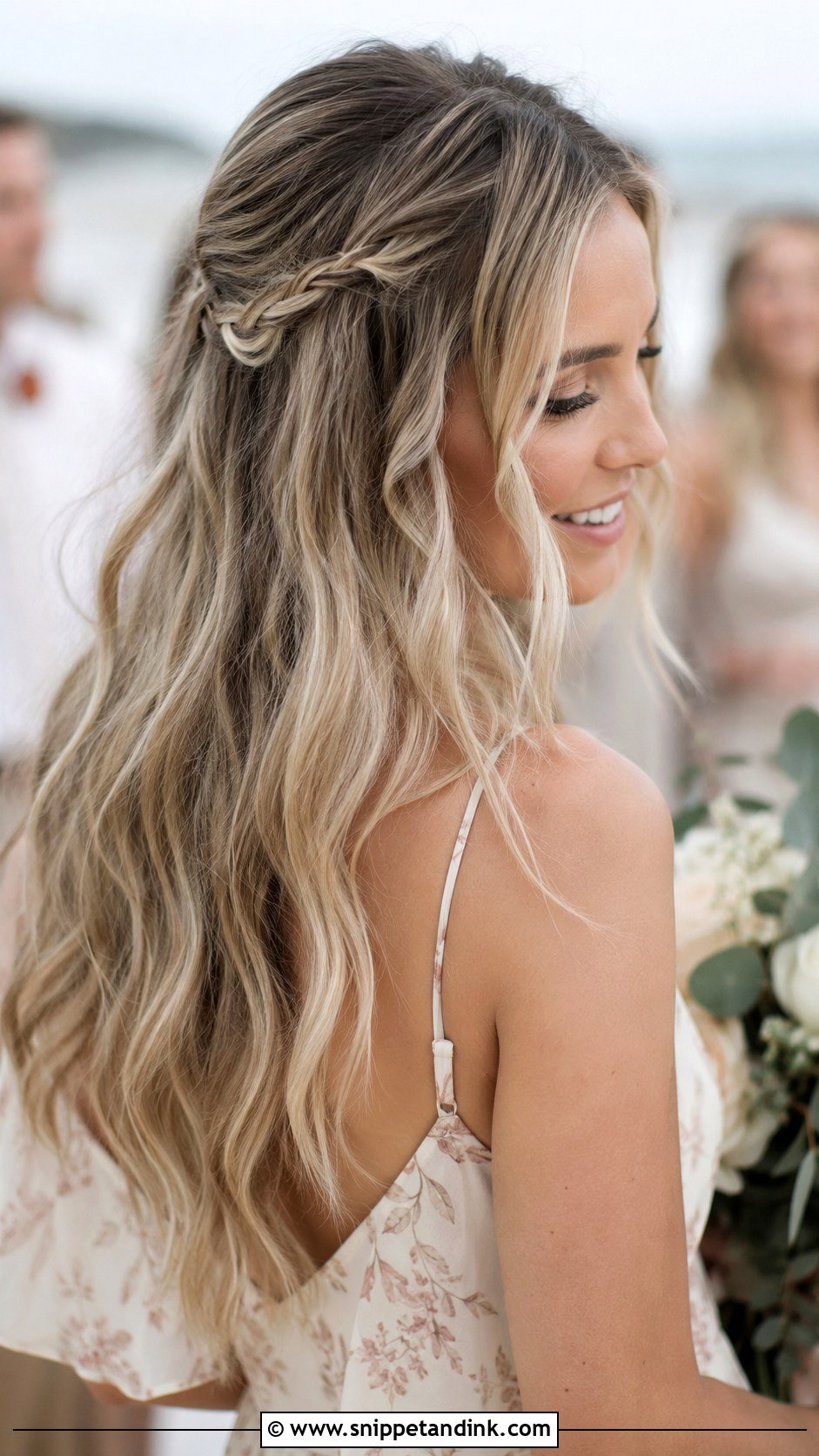
Boho waves are meant to look imperfect, often with small twists, tiny braids or delicate accessories worked in. They belong at barn weddings, garden ceremonies and beach venues. Freshly washed hair is too slippery for this; I use a dry texture spray to give it grip and some grit. The front pieces should stay loose rather than heavily pinned. A bridesmaid with naturally wavy hair is the easiest to style this way, since I’m only enhancing what she already has.
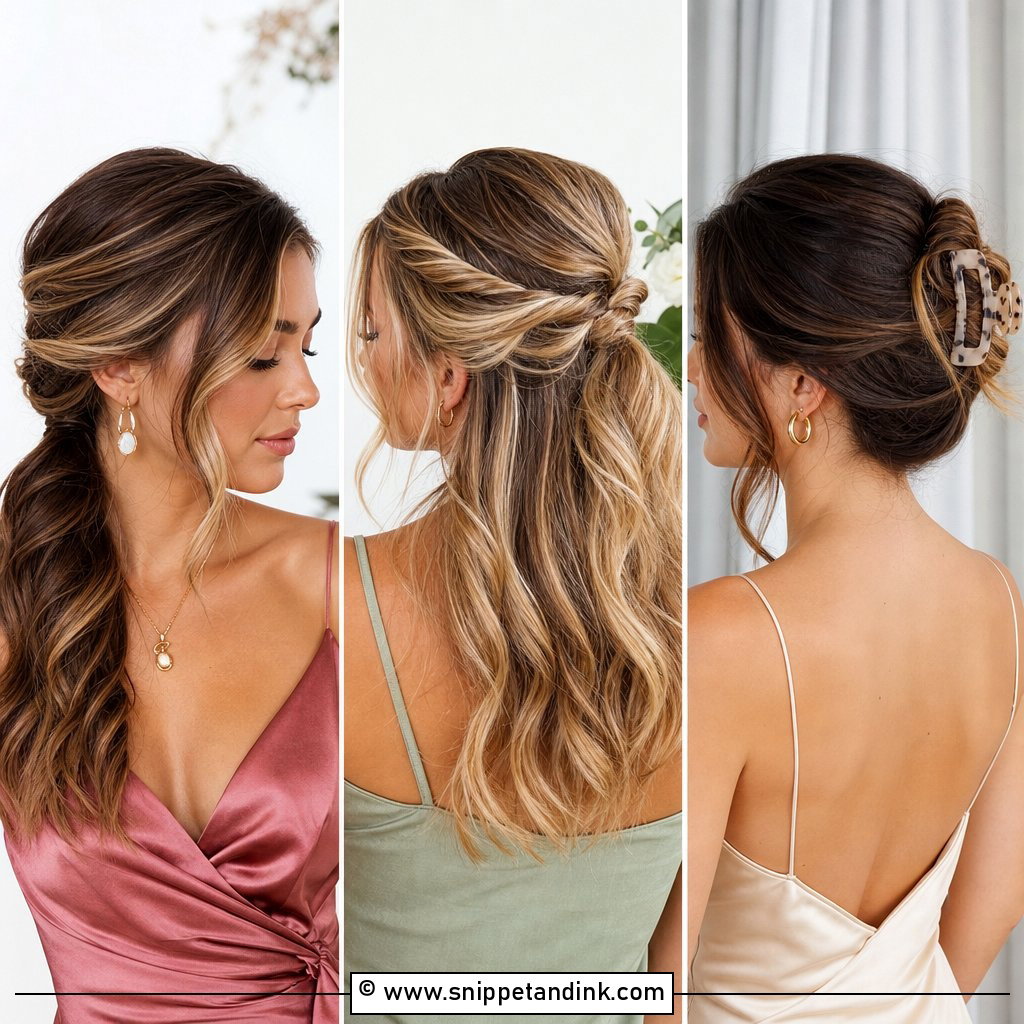
20. Long Bridesmaid Hair Down With Vintage Waves
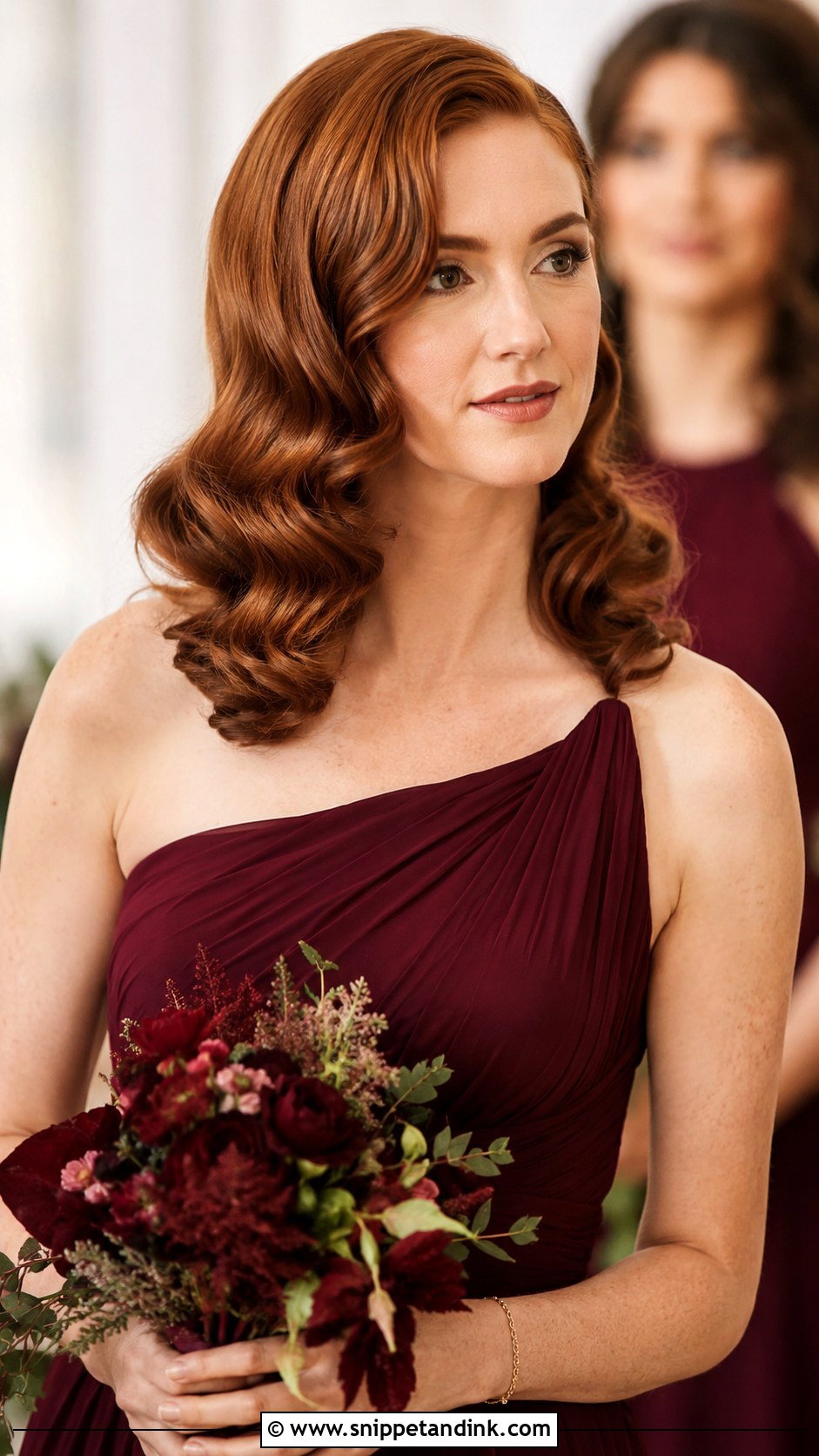
Vintage waves are smoother and more structured than beach waves, with a clear, repeating pattern that frames the face. A deep side part does most of the work in creating that shape. I curl, let the hair set completely, then brush it out into a single sheet and press the ridges in with my fingers or clips. Set it with a flexible but reliable spray, and aim for gloss. It’s built for black-tie weddings and historic venues, and it photographs with real definition.
21. Long Bridesmaid Hair Down With Natural Curls
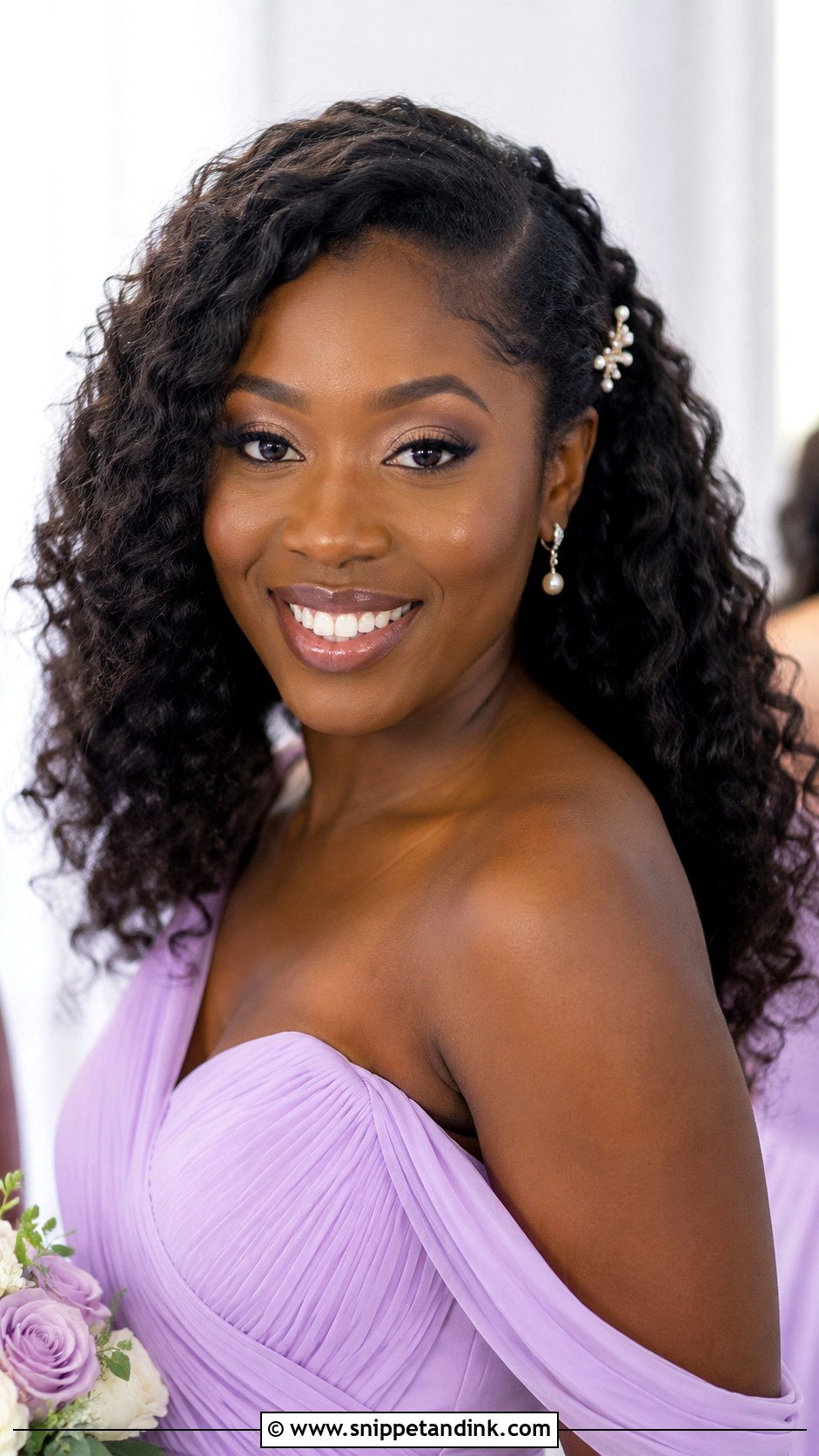
Natural curls deserve to be worn as they are. The aim isn’t to force every curl into the same shape but to make them defined, hydrated and softly arranged. I refresh the pattern with water and a curl cream or gel, shape the front, and pin small sections back if the bridesmaid wants them off her face. I avoid brushing dry curls entirely, since it breaks them into frizz. Depending on the hair, mousse can add hold. A light accessory near one side adds formality without hiding the texture.
22. Long Bridesmaid Hair Down With Loose Ringlets
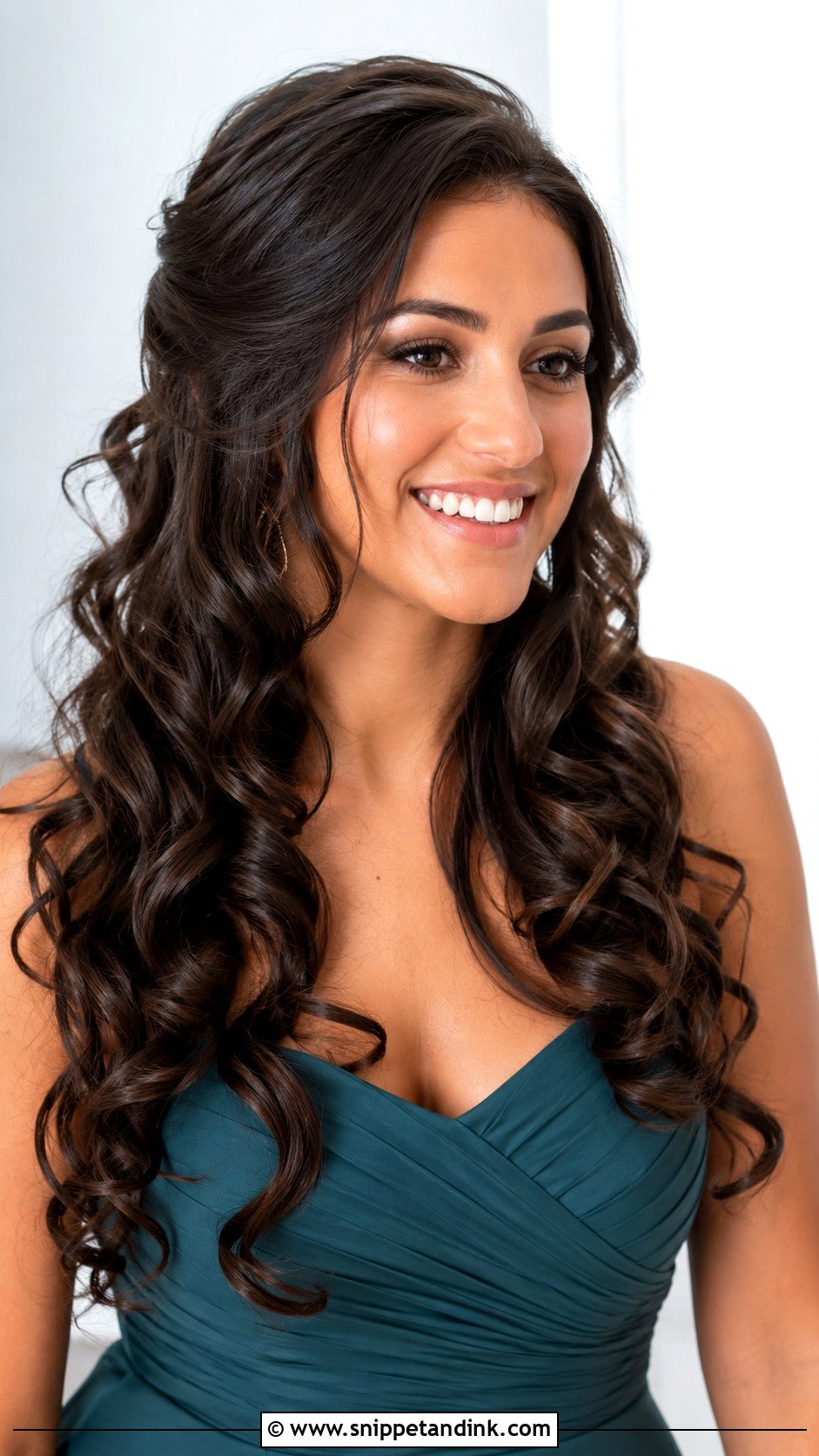
Loose ringlets are fuller and more defined than waves, and they’re my answer for hair that drops curl quickly. Starting from a tighter curl means there’s room for it to relax over the day and still end up as a wave by the evening. The ringlets should be soft and separated, never crunchy. Long hair lets them fall across the shoulders and back. The top can be smooth, lifted or pinned back on one side. A shine mist and flexible hairspray keep them fresh for ceremony photos and dancing.
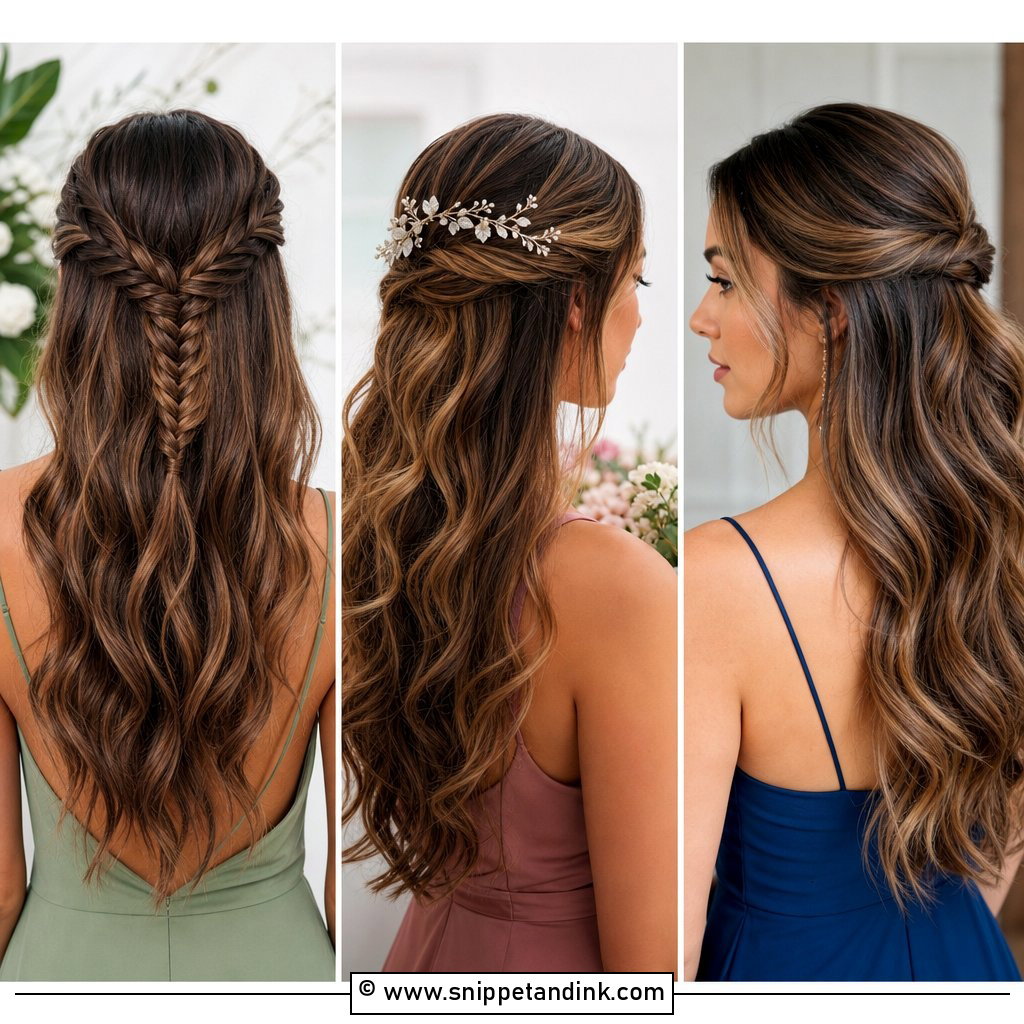
23. Long Bridesmaid Hair Down With Hidden Braids
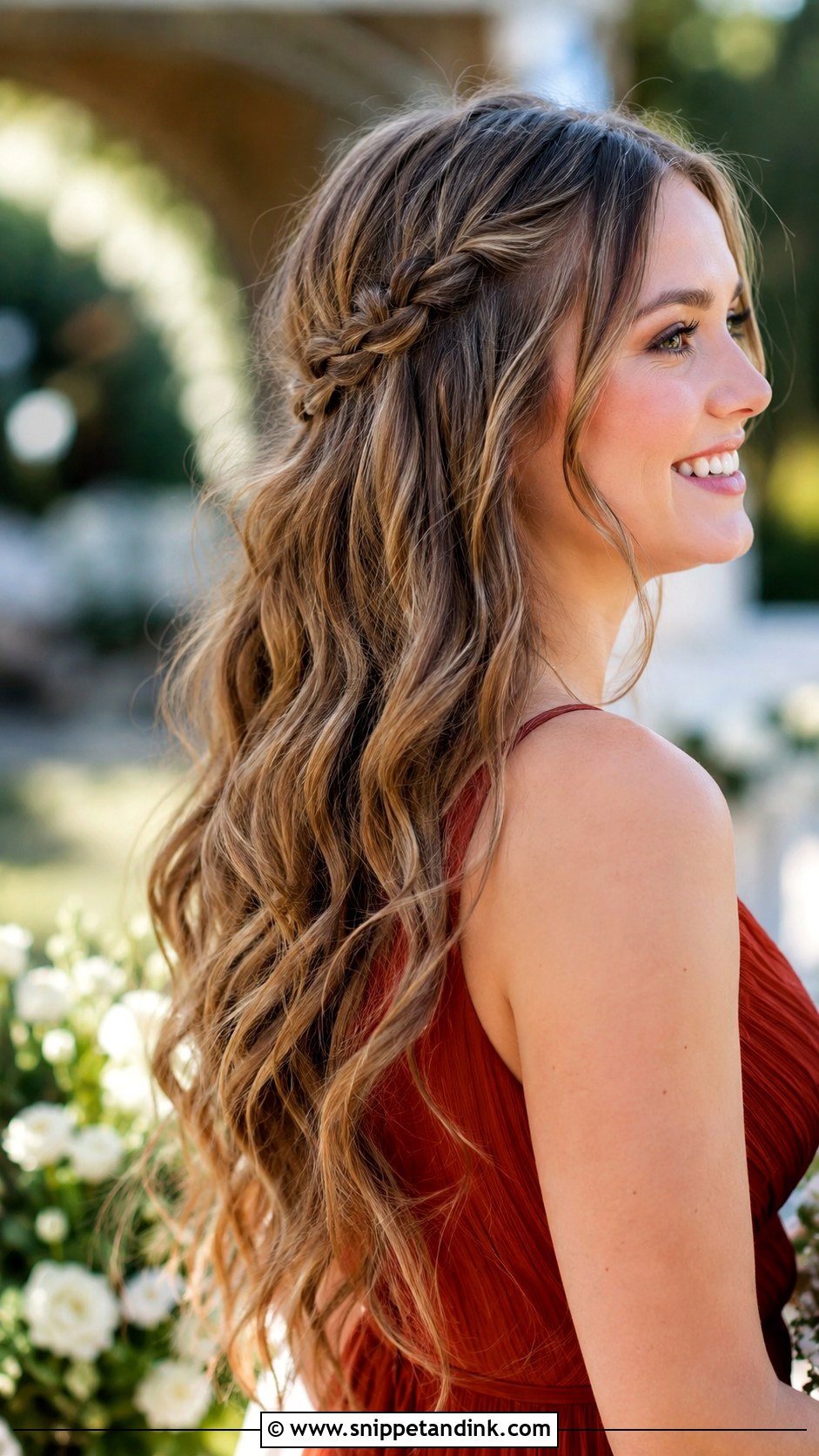
Hidden braids are the detail you only see up close. Small braids sit under the top layers, near the temples or woven into the sides before blending into waves. From across the room the hair looks loose and soft; close up, the texture shows. They suit boho, rustic and romantic weddings. They also double as anchors: a thin braid at the temple holds front pieces back on a windy day better than a pin alone. Keep them small so the style stays delicate.
24. Long Bridesmaid Hair Down With Hair Vine
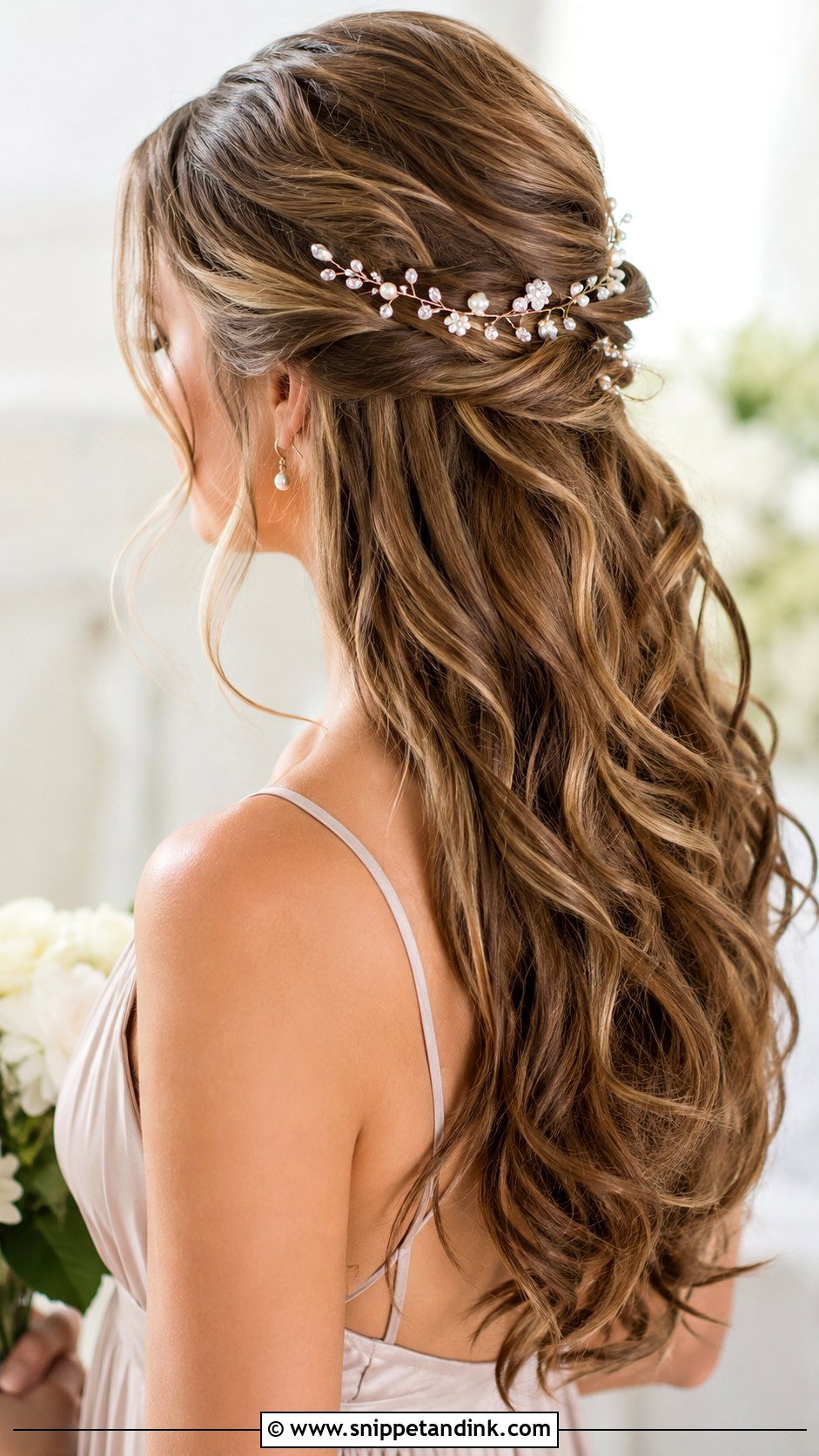
A hair vine is a flexible wire of pearls, crystals or leaves that can be woven through a half-up section, along a side twist or across the back of loose waves. It follows the movement of soft curls. I match the metal to the wedding jewelry, so gold leaves go with gold earrings. Vines are light, but the wire ends can scratch the scalp, so I bend them inward and pin the vine at several points rather than relying on the ends. It should feel secure but barely there.
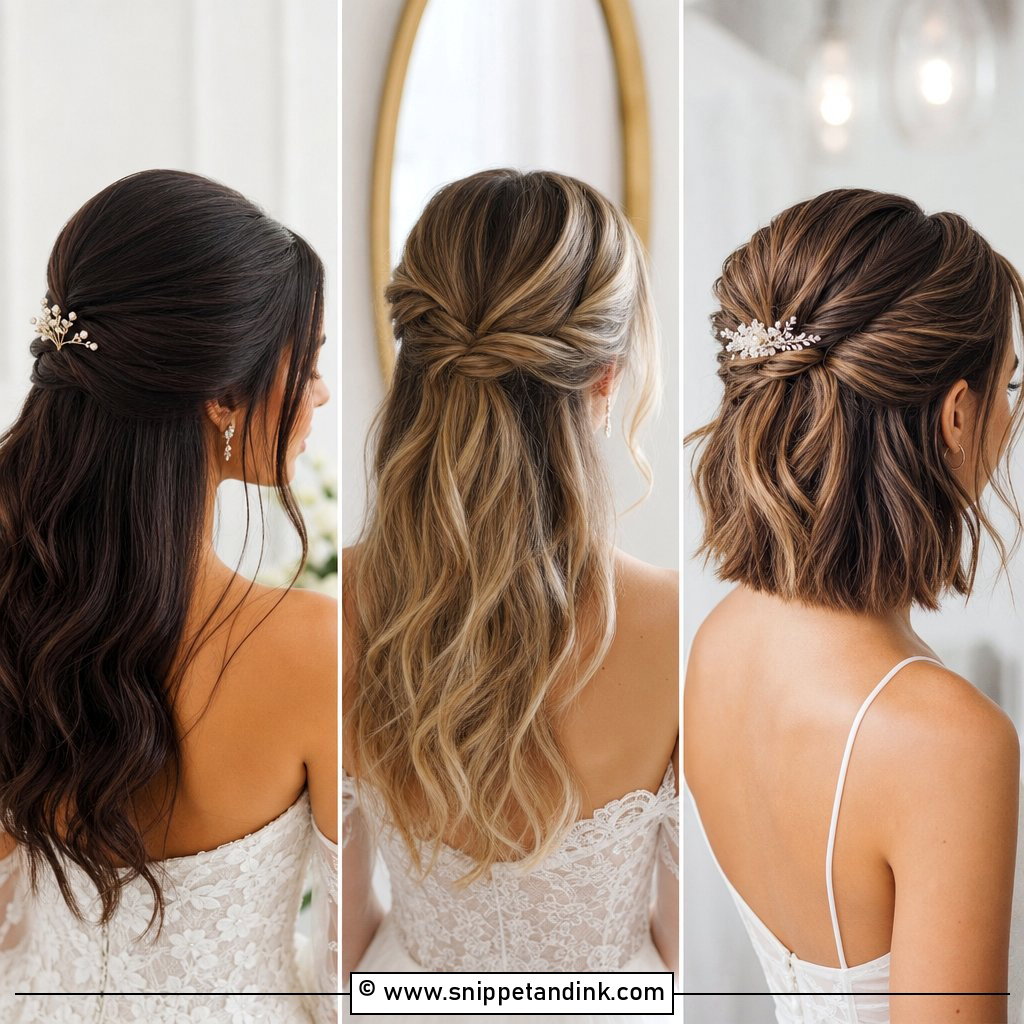
25. Long Bridesmaid Hair Down With Ribbon
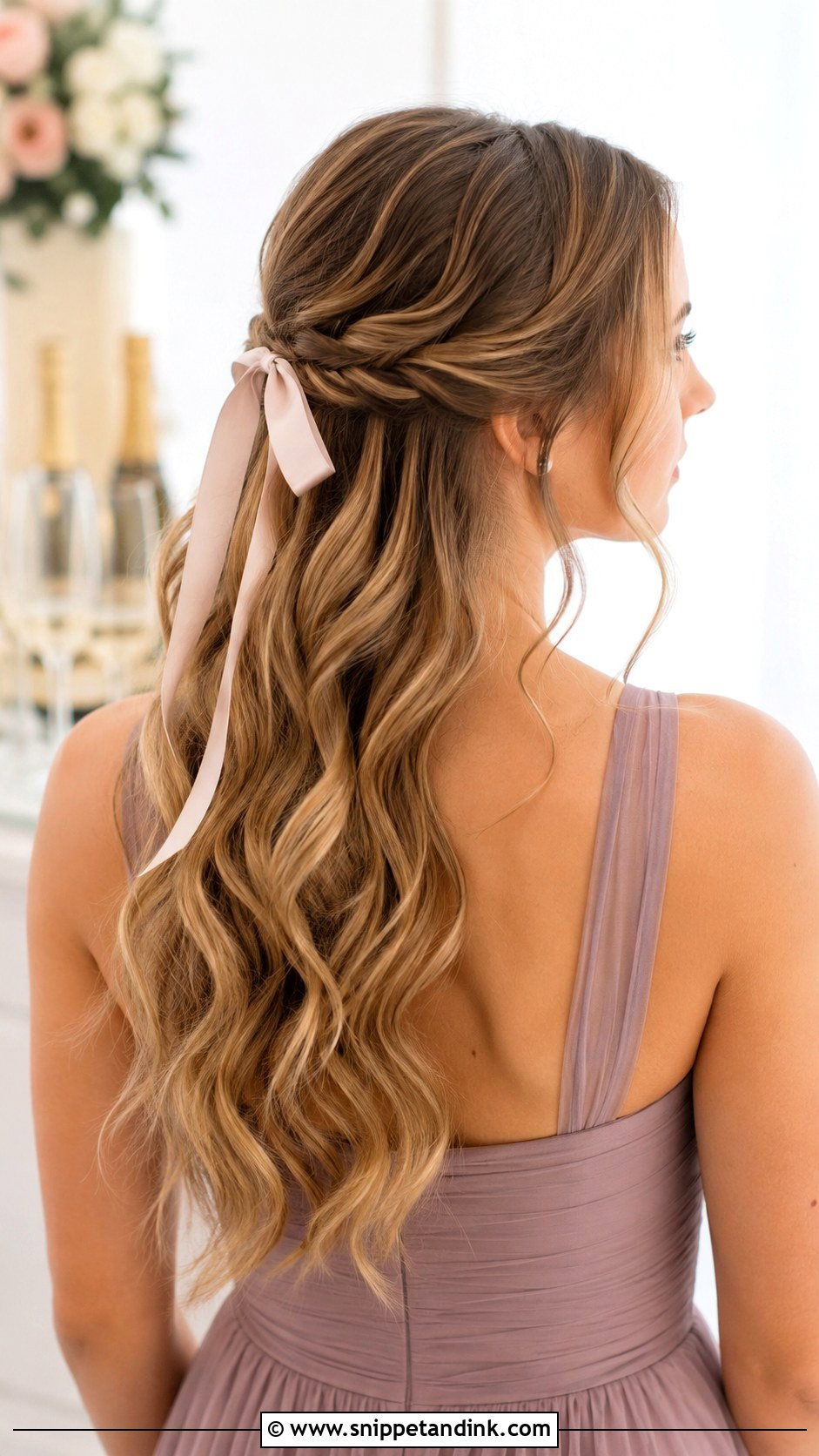
Ribbon is the easiest way to personalise long hair down. It can tie around a half-up section, weave through a small braid or sit at the back of a loose twist. The fabric changes the mood: satin reads polished, velvet feels wintry, sheer ribbon looks light. A thin ribbon stays subtle; a wider bow becomes a feature. Waves or curls stop a ribbon looking flat. Match it to the dresses or flowers, and cut the ends at an angle so they don’t fray before the evening.
The Nape Knot and Other Hazards of Wearing It Down
Long hair down rubs against everything a bridesmaid wears, and that friction causes more trouble by the evening than the weather does. Lace, beading and sequins on the back of a dress rough up the hair at the nape, and by the reception there’s often a matted patch underneath. I spray a little leave-in or smoothing serum at the nape before the dress goes on, and tell the bridesmaid not to keep running her hand through that area.
Necklaces with delicate chains and clasps catch hair constantly. If the jewelry is fine, I suggest putting it on before the hair is finished and lifting the hair over it once, carefully. Bouquets can snag it too, especially anything with wired or prickly stems held close to the chest.
Reviving waves at the reception without tools
If the waves have dropped, twist a section around one finger, hold it for a few seconds and let go, then lightly mist it with hairspray from a distance. Flipping the hair to the other side for a minute brings back root lift. A wide-tooth comb is safer than a brush at this stage, because brushing a tired curl pulls it straight.
Will Loose Waves Make It to the Last Dance?
Long hair down can be simple, polished, romantic or dramatic, depending on the wedding. The right version is the one that suits the bridesmaid’s natural texture and survives the photos, the hugs, the weather and the dancing. Soft waves will always be the most requested, while twists, braids, pearls, ribbons and vines make the look more personal. If the wedding is outdoors, or your hair is known for dropping curl, book a trial or at least a practice run. With the right prep and finish, long hair worn down can look as good at the last photo as it did at the first.
You'll Like These Ideas:


Leave a Reply