
Down styles are the ones bridesmaids ask me for most, and the ones I plan hardest for. Loose hair has nothing pinned to hold it, so every hug, every gust at the outdoor portraits and every hour on the dance floor works against the shape. That is why I start with the dress neckline, the weather forecast and each girl’s texture before I pick a single curling iron. The thirty looks below run from glossy and formal to relaxed and undone, and I’ve added notes on what each one needs to still look intentional at the end of the night.
What Loose Styles Need Before the Curling Iron Comes Out
Down hair has no pins doing the heavy lifting, so the prep decides everything. Before I curl a single bridesmaid, I want to know three things: how her hair behaves the day after washing, whether the forecast is humid and what her dress does at the neck and shoulders.
- Wash timing: most straight and wavy hair holds curl better washed the night before than freshly washed that morning. Very oily hair is the exception, and curly hair should follow its own wash routine.
- Arrive dry: I ask every bridesmaid to show up with completely dry hair, no product, no conditioner left in. Damp roots will undo a curl inside an hour.
- Bring a reference photo of your dress, not just the hairstyle. A high neck changes where I want the hair to fall, and a strapless dress makes me think about the shoulders and back.
- Tell me about cowlicks, recent color, extensions and scalp sensitivity during the trial or the booking message, not in the chair on the morning.
On the timeline, I put the bridesmaids with the longest, heaviest hair first and the sleekest styles last. Long curls get the most time to cool and settle, and sleek straight hair looks freshest when it is done close to the ceremony. If I am styling five or more, I always ask the planner for a buffer of fifteen to twenty minutes; a down look rushed off the clips never lasts as long.
1. Bridesmaid Soft Waves Down
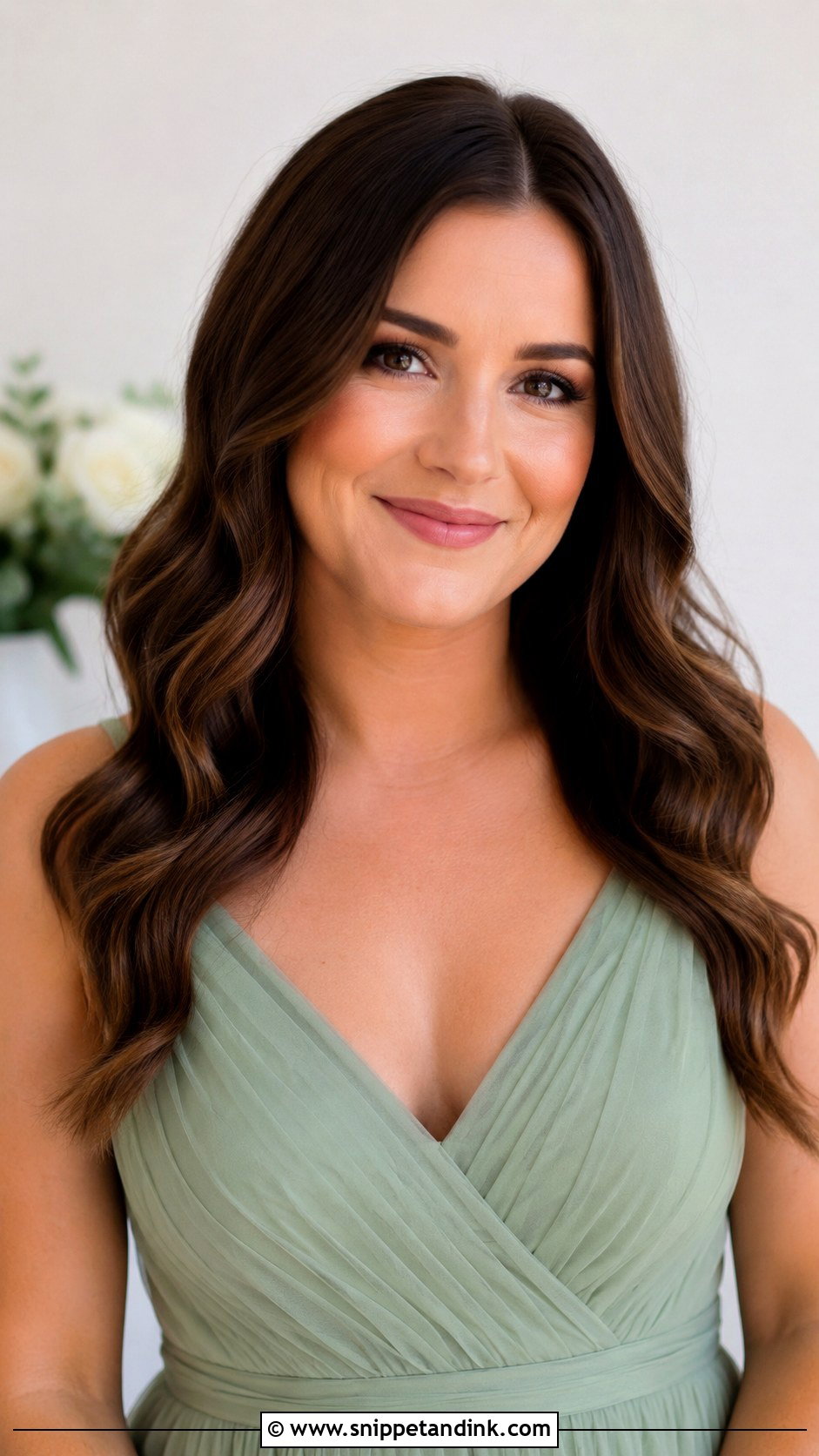
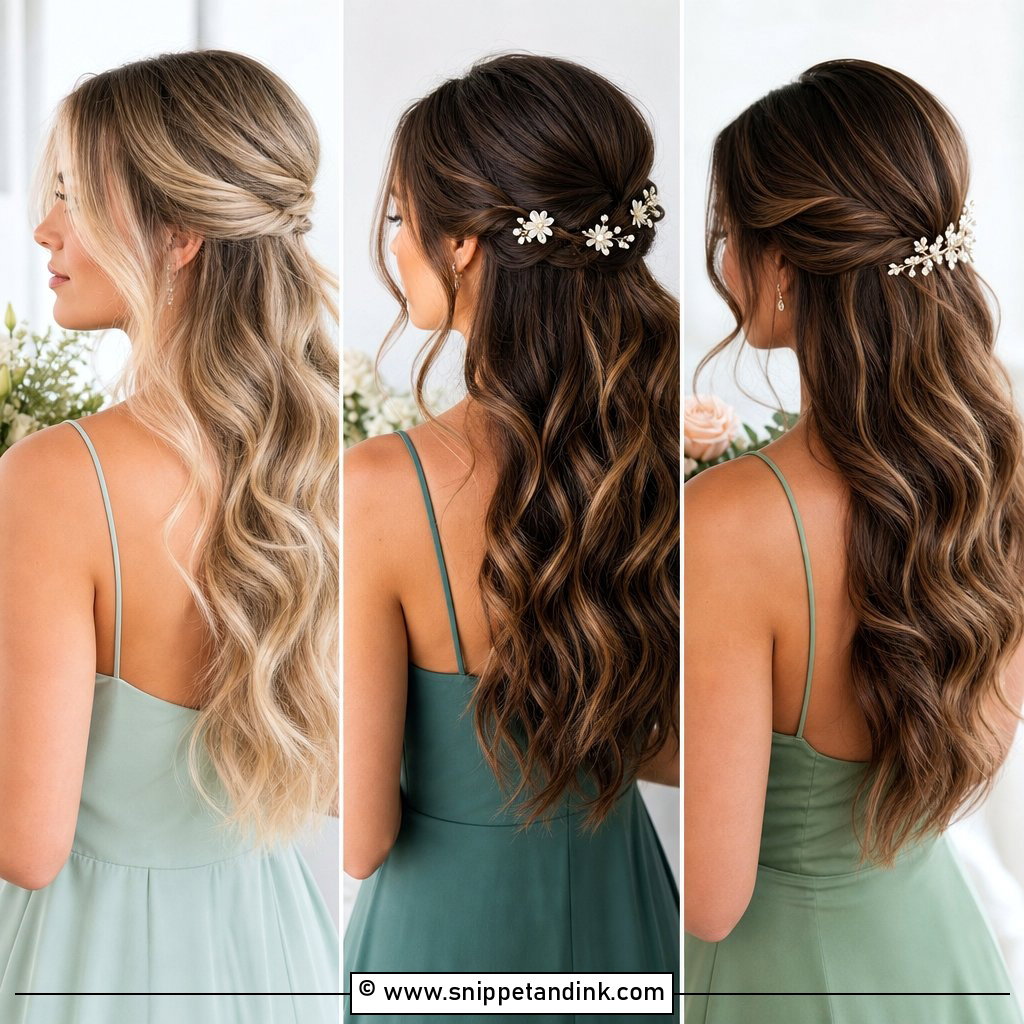
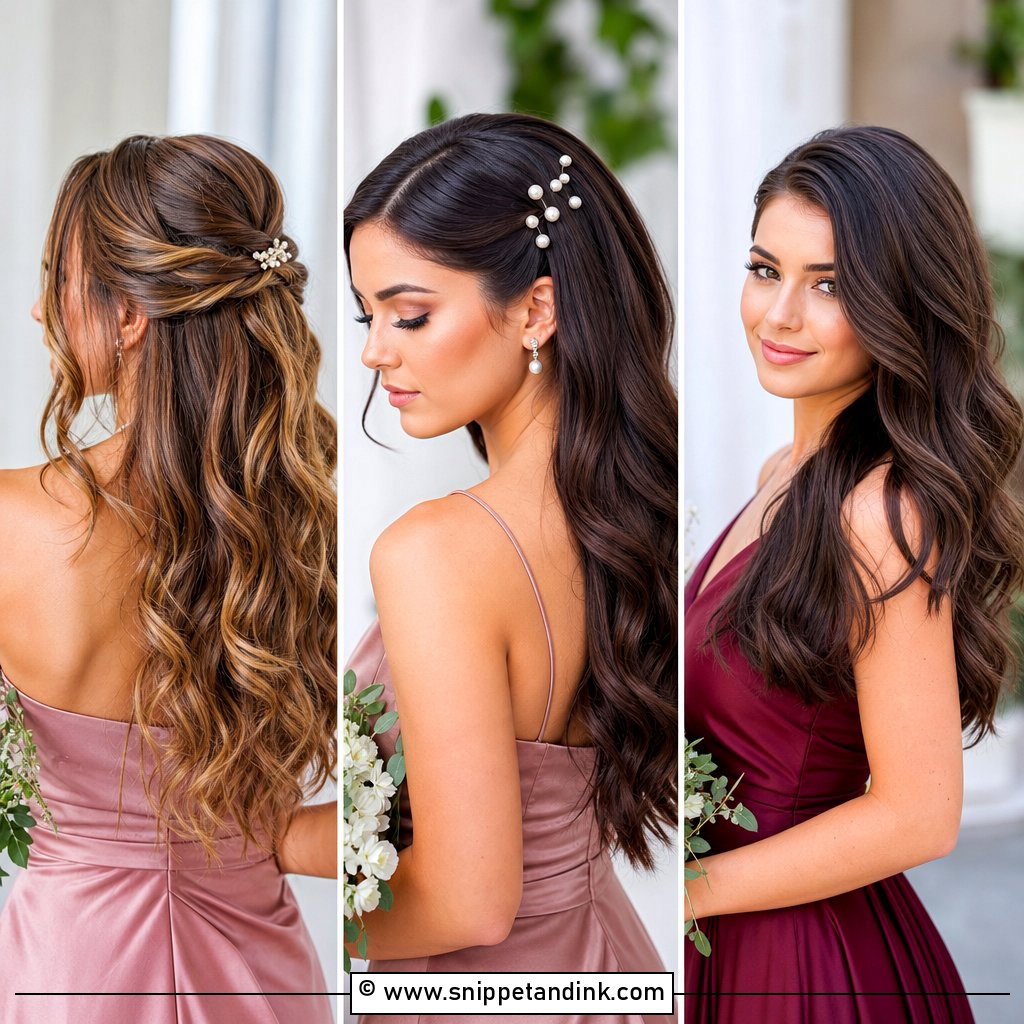
Soft waves are my default when a bridal party mixes satin, chiffon and florals, because the wave never fights the fabric. I start the bend just below the cheekbone so the face stays open, curl in small sections and let every section cool completely in my hand or on a clip before anyone touches it. Brushing too early is the reason most soft waves fall flat by the speeches. A light shine spray at the very end is all the finish they need.
2. Bridesmaid Hollywood Waves Down
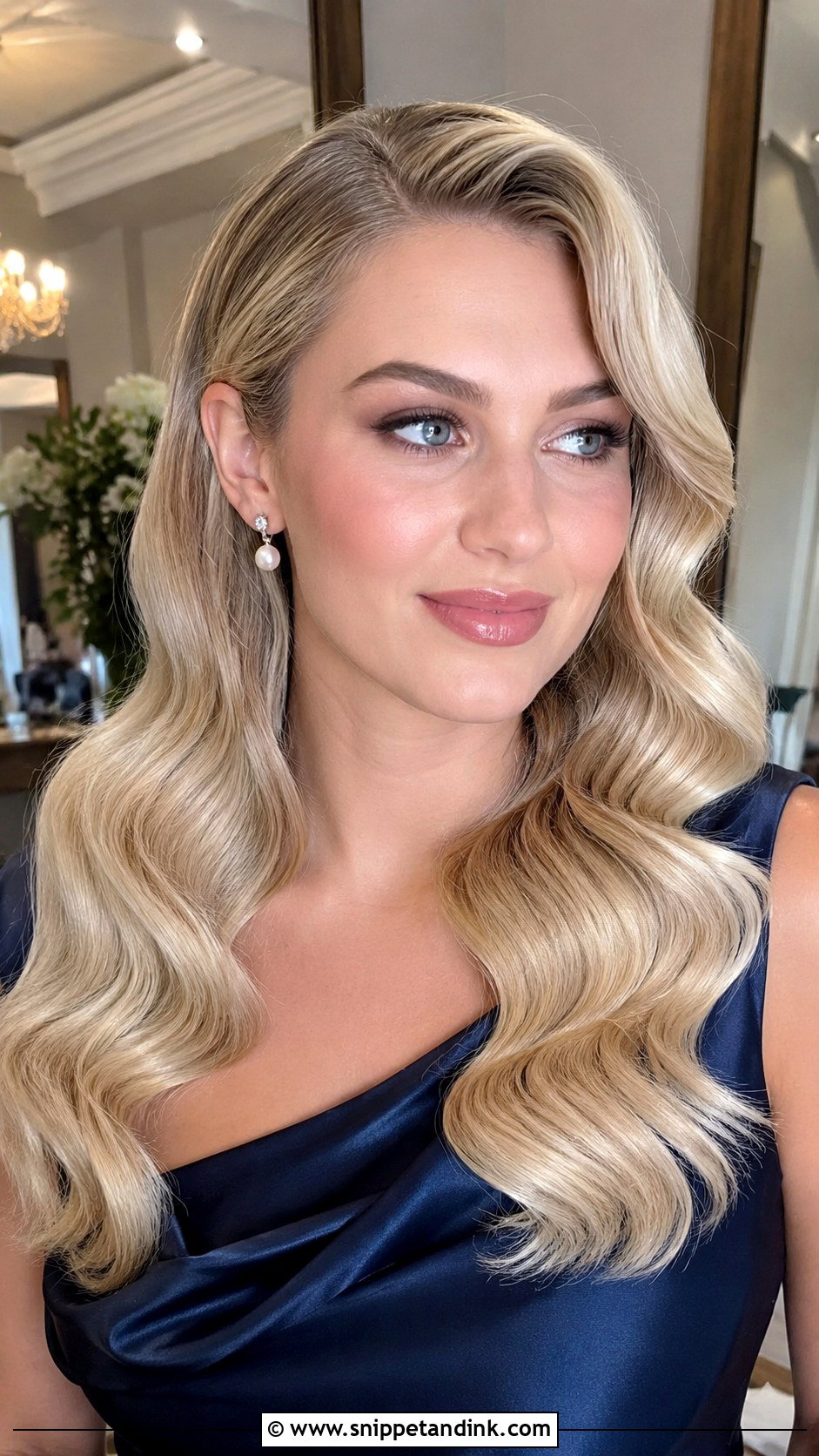
These are the waves I reserve for black-tie rooms and sleek column dresses. Every section gets curled in the same direction, pinned flat while it sets, then brushed with a boar bristle brush until the curls join into one glossy ripple. I almost always pair it with a deep side part, since that is what gives the pattern somewhere to travel. Fine hair struggles to hold the S shape, so I’ll add a few clip-in wefts underneath for weight and grip.
3. Bridesmaid Beach Waves Down
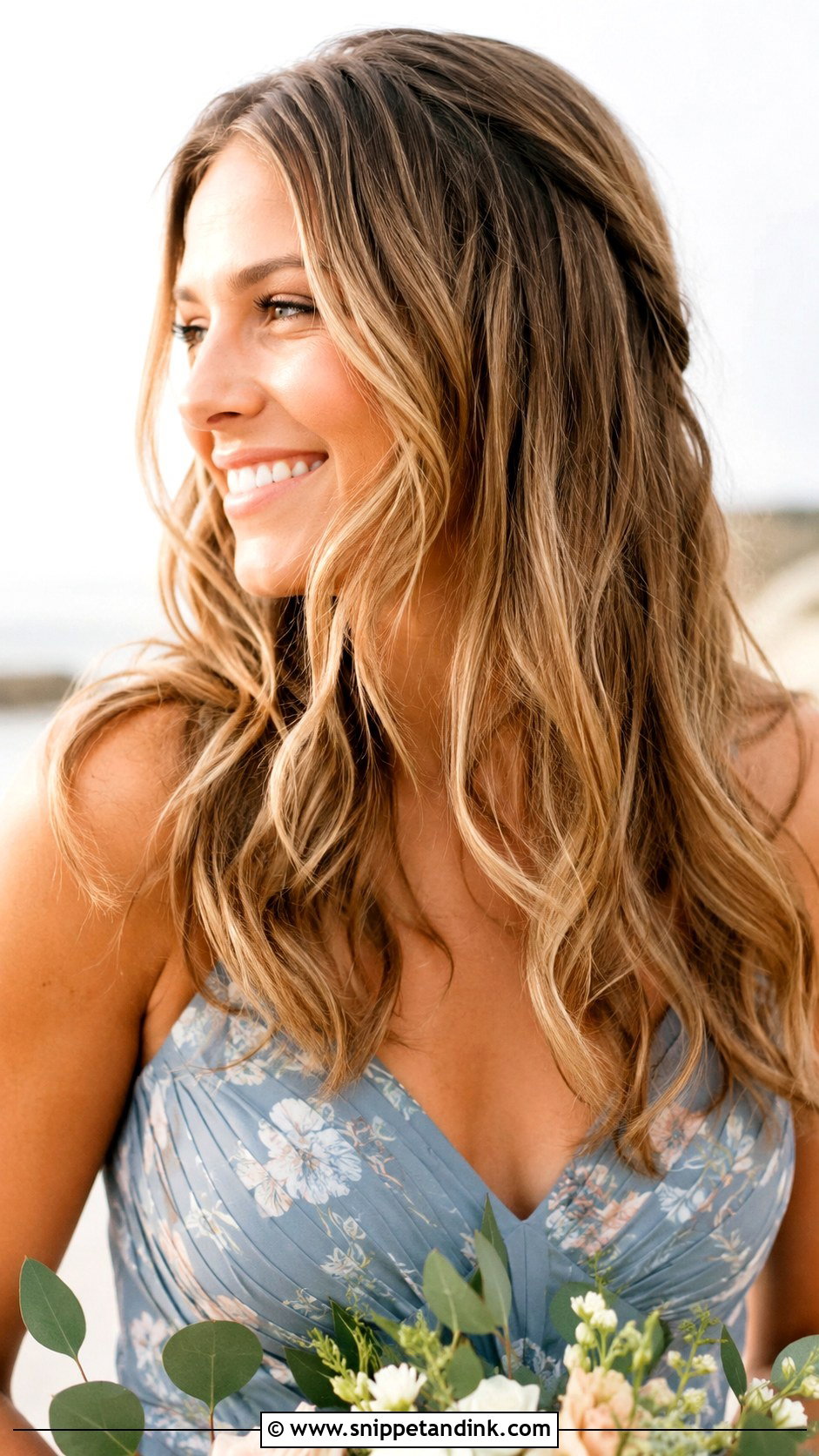
Beach waves suit coastal venues and summer gardens, but they are trickier than they look. The line between undone and simply messy is thin, and humidity crosses it fast. I use a flat iron twist rather than a barrel so the wave stays loose, then work a dry texture spray through the mid-lengths and a pea of smoothing cream on the ends only. Layered cuts show this texture best; blunt one-length hair tends to look heavy at the bottom.
4. Bridesmaid Loose Curls Down
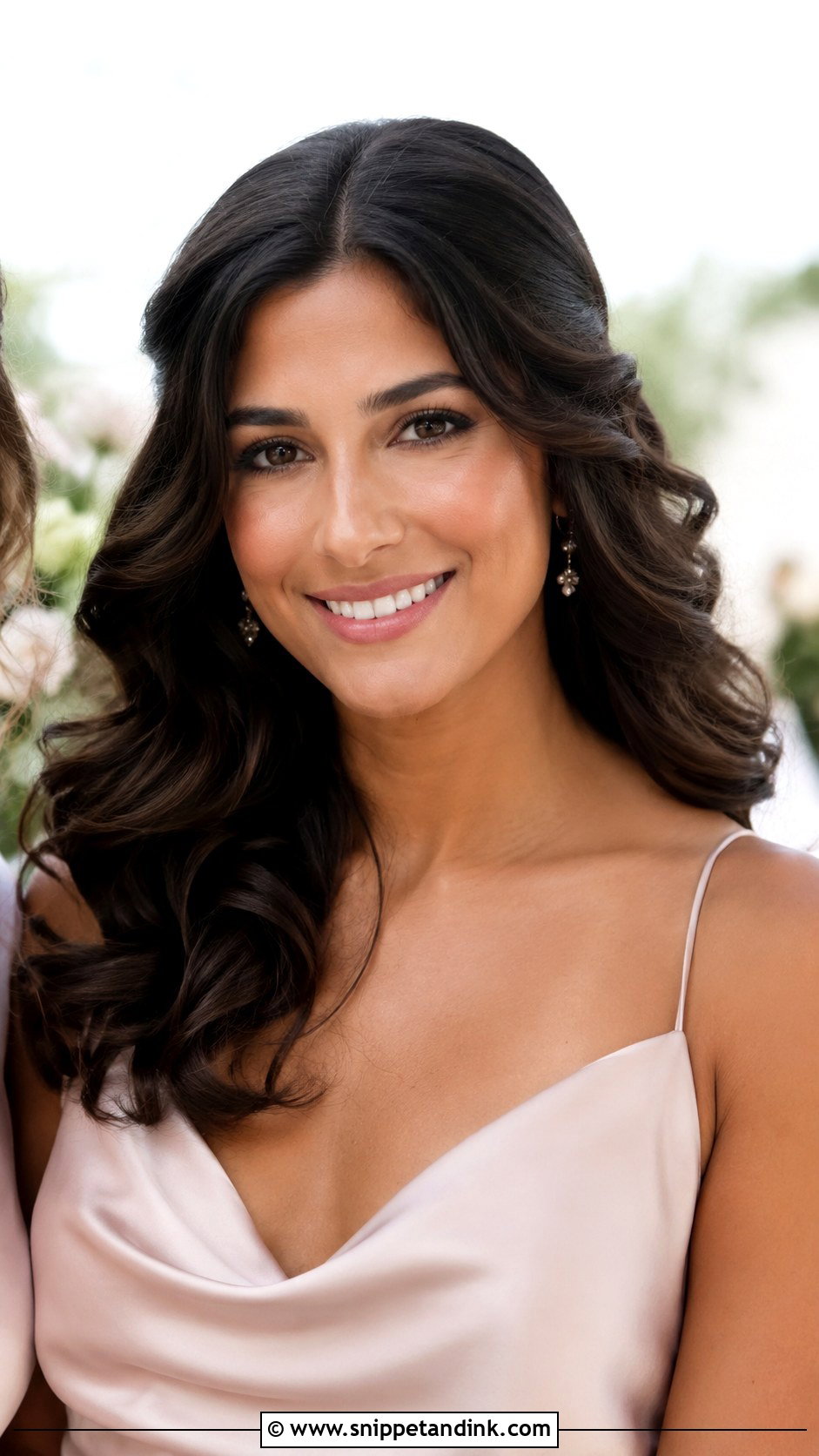
Loose curls have more bounce than waves and less structure than a set curl, which makes them a safe middle ground for classic weddings. The trap is curls that separate into ringlets by the reception, so I finger-brush the ends together while they are still slightly warm. On fine hair I put volumizing mousse in at the blow-dry stage; it is the single step that decides whether the curl lasts. Thick hair needs smaller sections and a stronger setting spray, or the weight pulls everything straight within a few hours.
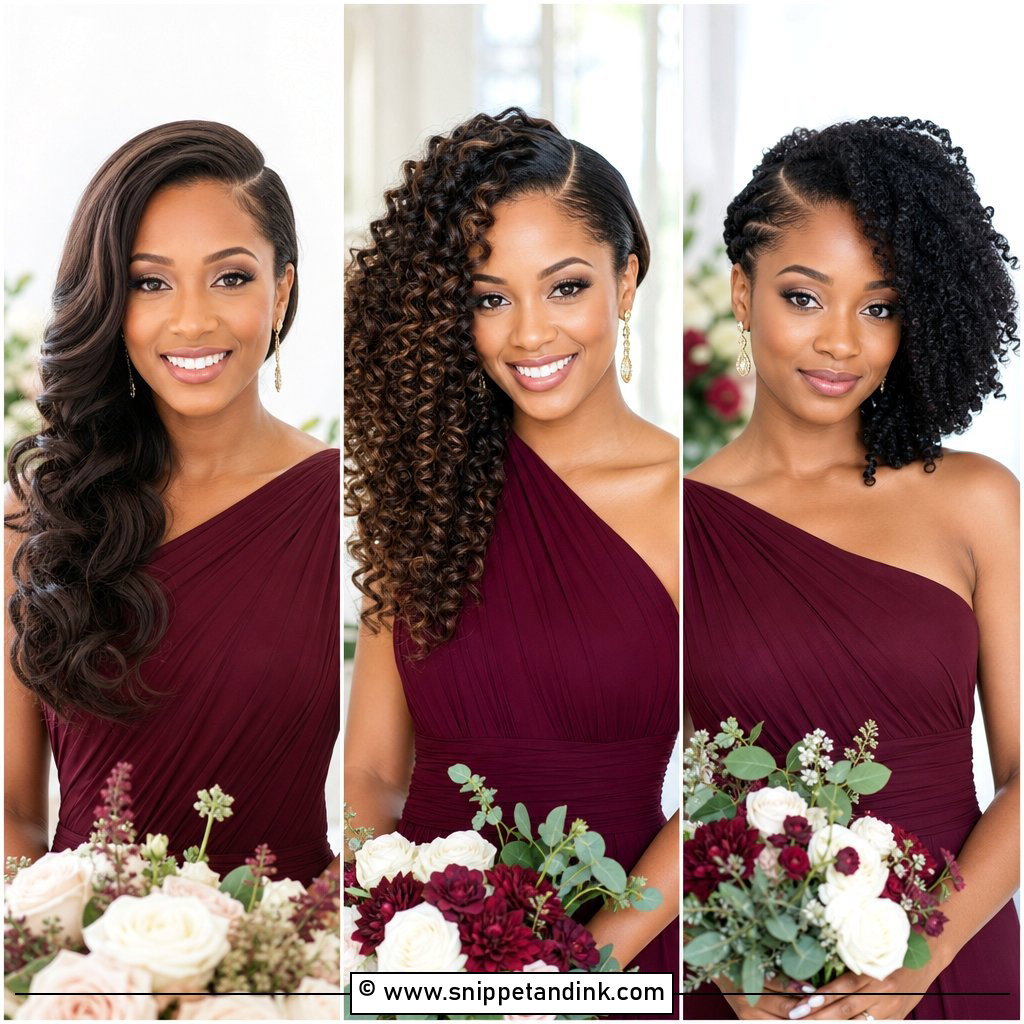
5. Bridesmaid Side Part Hair Down
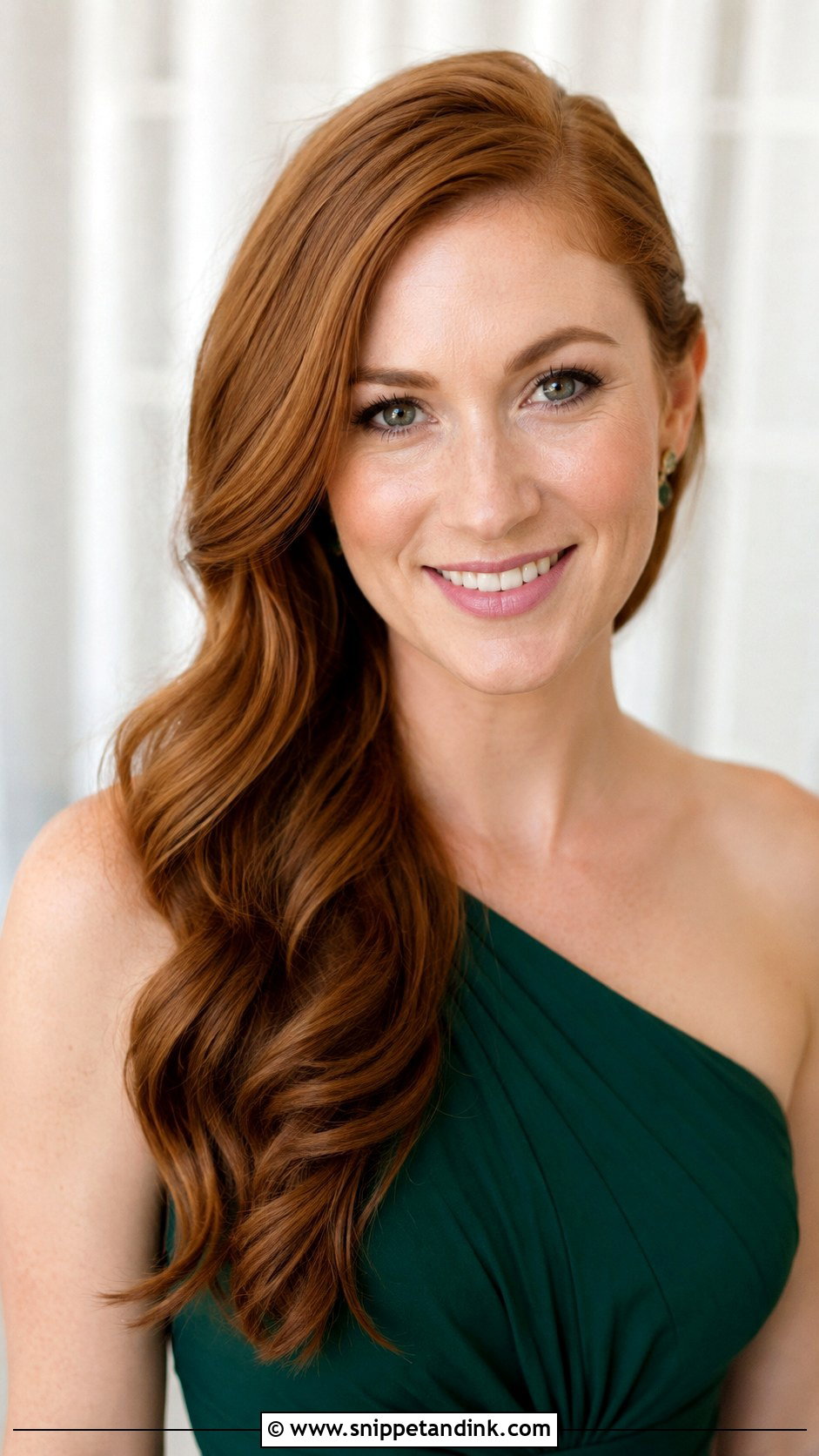
Moving a part is the cheapest change I can make to a face, and a side part on down hair gives instant shape. A soft part reads natural; a deep one reads glamorous. It adapts to any texture, so it is my go-to when one bridal party has straight, wavy and coily hair in the same row. I’ll tuck the heavy side behind the ear with a crossed pair of bobby pins hidden under a curl, which is lovely next to one-shoulder necklines, strapless gowns, and statement earrings.
6. Bridesmaid Middle Part Hair Down
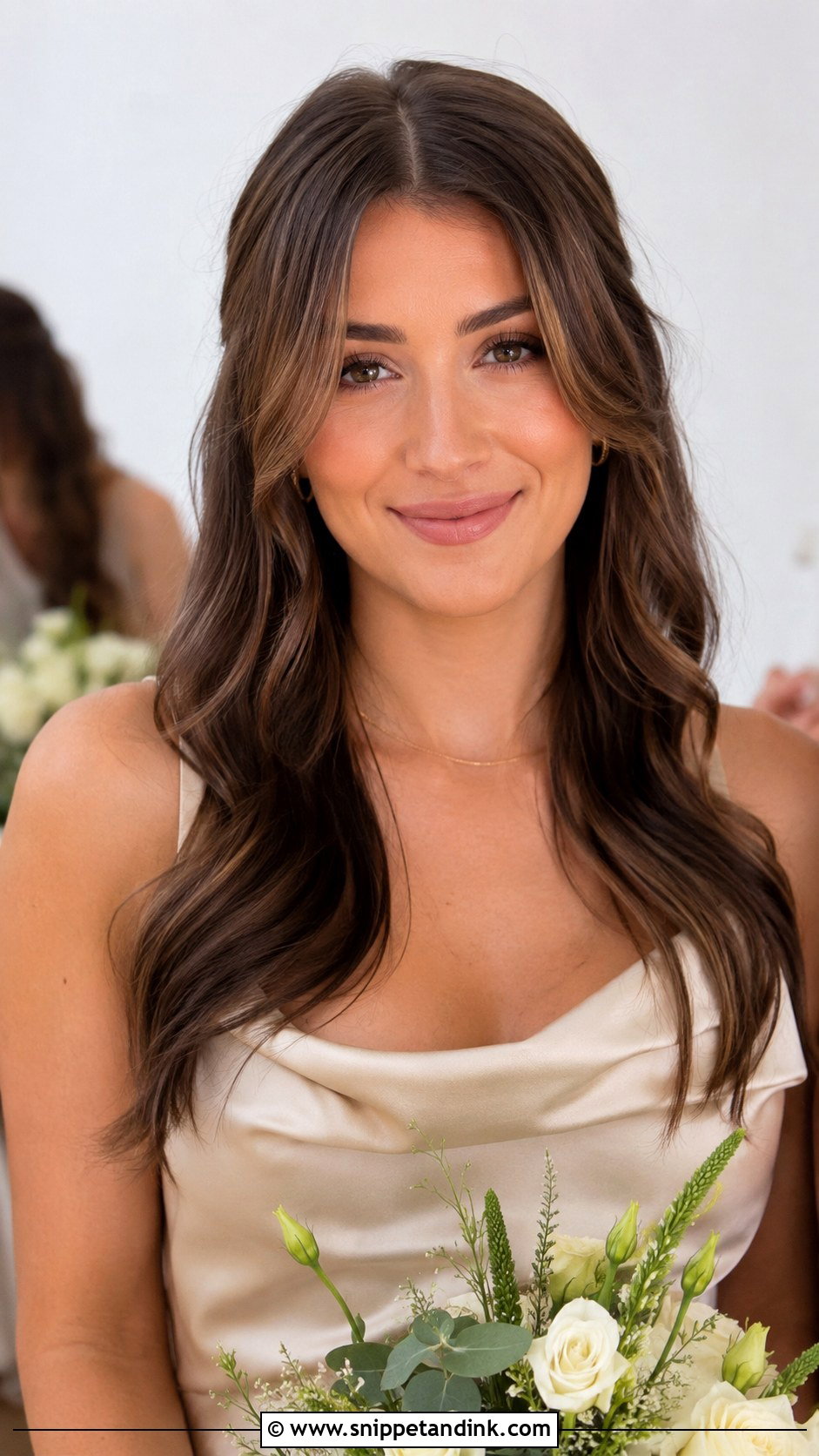
A center part brings symmetry to group photos, which matters when everyone wears the same dress. The catch is that a middle part on straight, flat hair can drag the face down, especially under overhead reception lighting. My fix is one bend at the cheekbone and another at the jaw on the front sections only. If a bridesmaid has a strong cowlick at the front hairline, I’ll warn her early; fighting it all day rarely works.
7. Bridesmaid Sleek Straight Hair Down
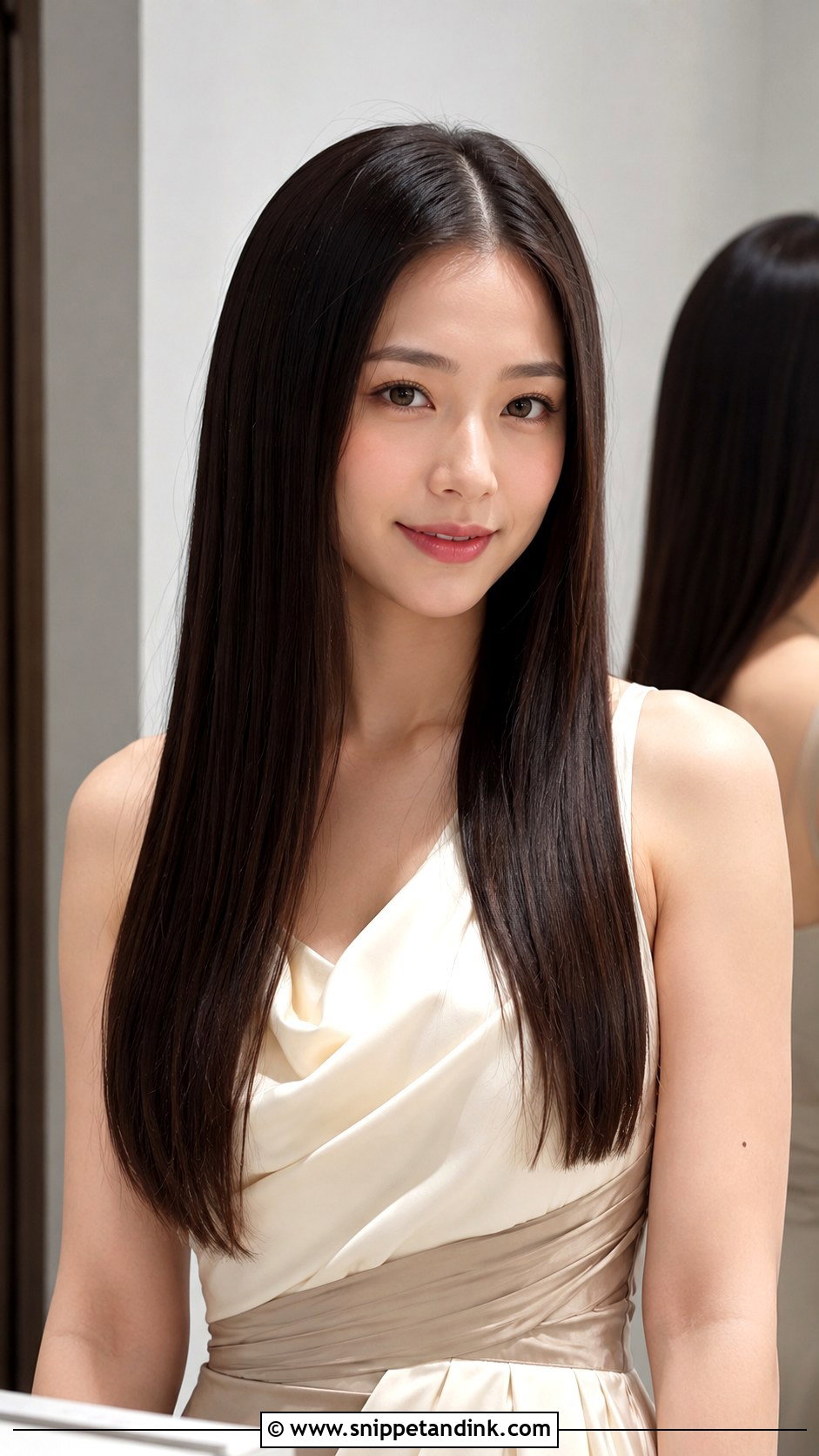
Nothing shows damage like sleek straight hair, so I ask anyone choosing this to book a trim two to three weeks before the wedding. The finish depends on a smooth blow-dry first; the flat iron only polishes it. I use heat protectant, a slow pass with the iron and the smallest drop of serum on the ends, because too much turns into grease by mid-afternoon. In a humid climate I’d steer a bridesmaid toward waves instead, since straight hair is the first look to frizz. Paired with high necks, square necklines or simple pearls, it reads clean and modern.
8. Bridesmaid Bouncy Blowout Down
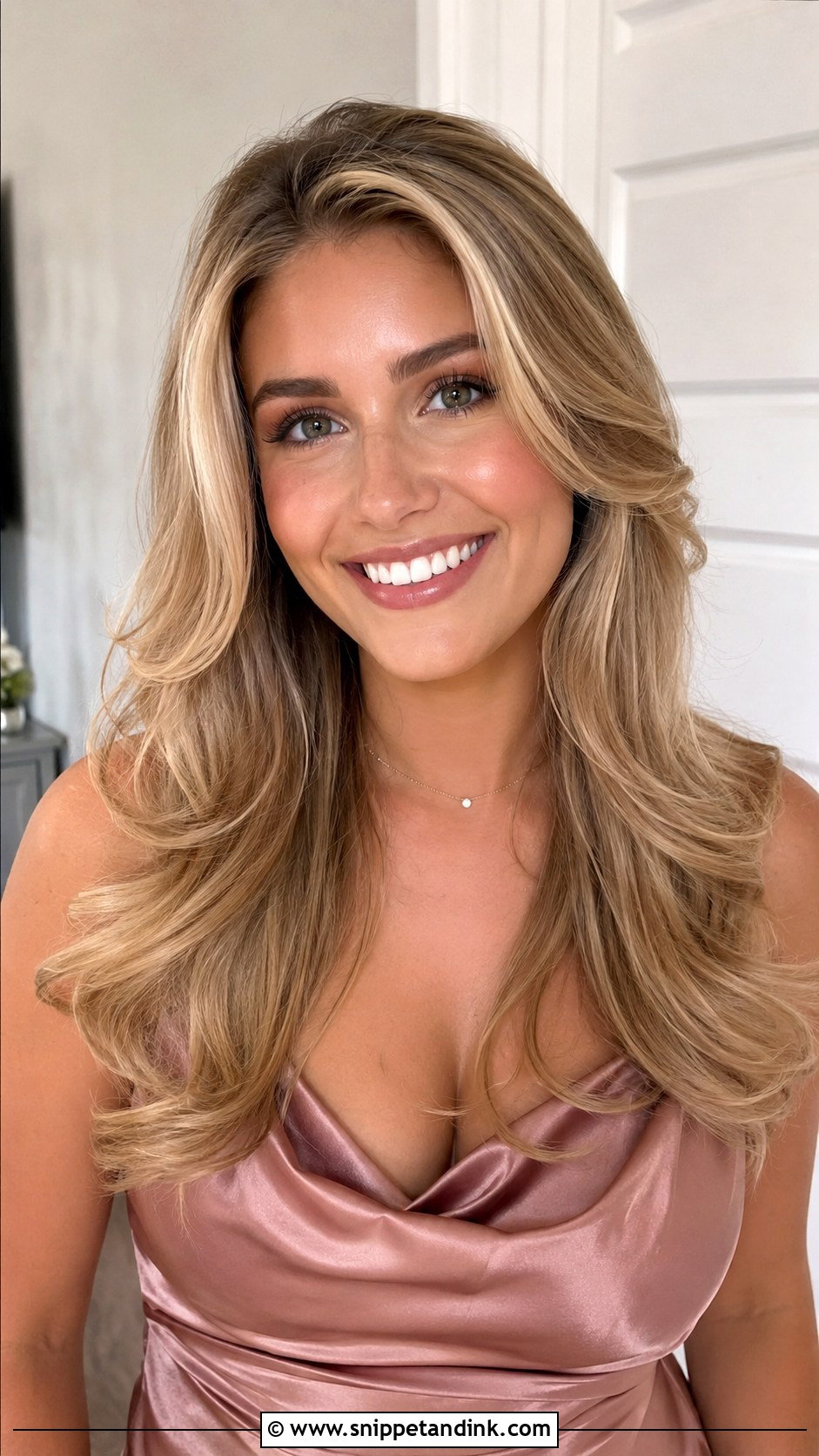
A bouncy blowout down is a good pick for the bridesmaid who hates pins and feels overdone in curls. Root lift, curved mid-lengths and ends that flip slightly is the shape I’m after. To make it last past lunch, I set each section on a large velcro roller while it is still warm from the round brush and leave the rollers in until her makeup is finished. Without that cooling time, a blowout loses half its volume in the first hour.
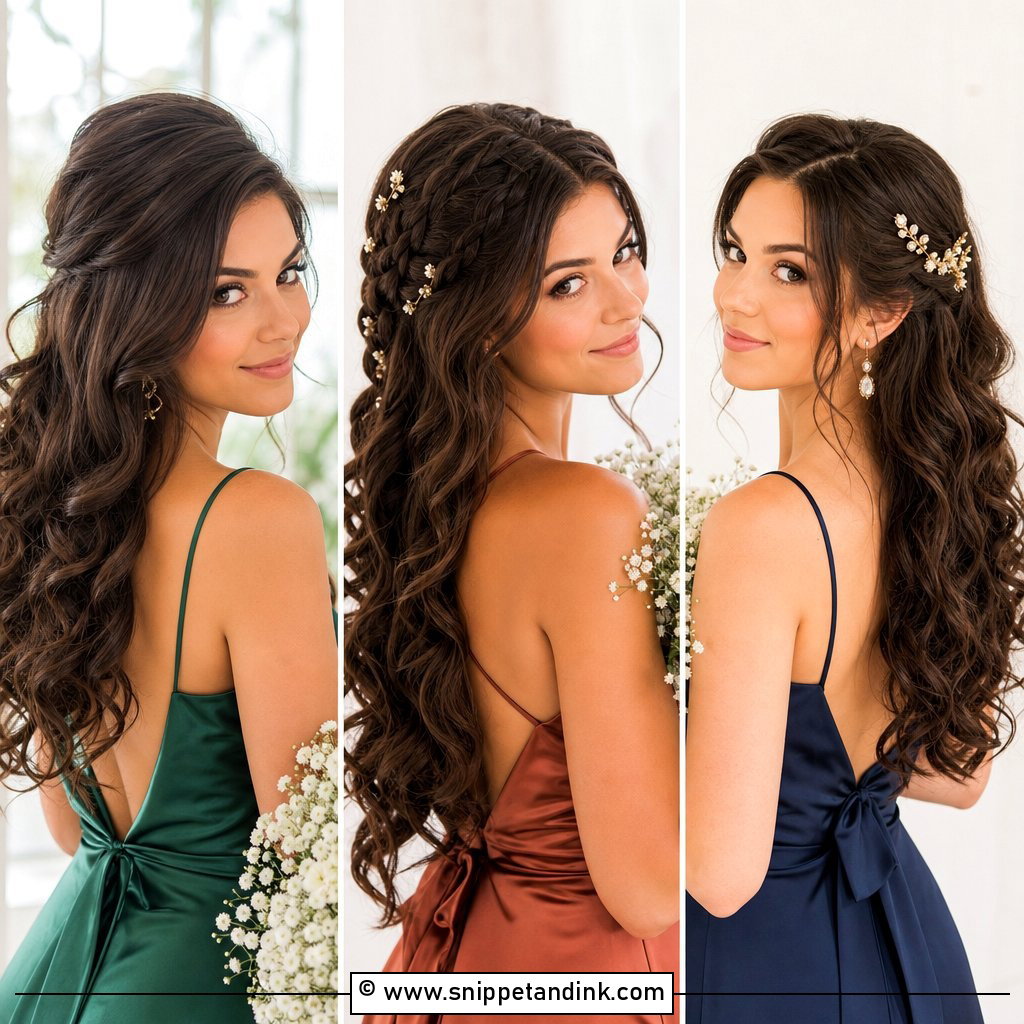
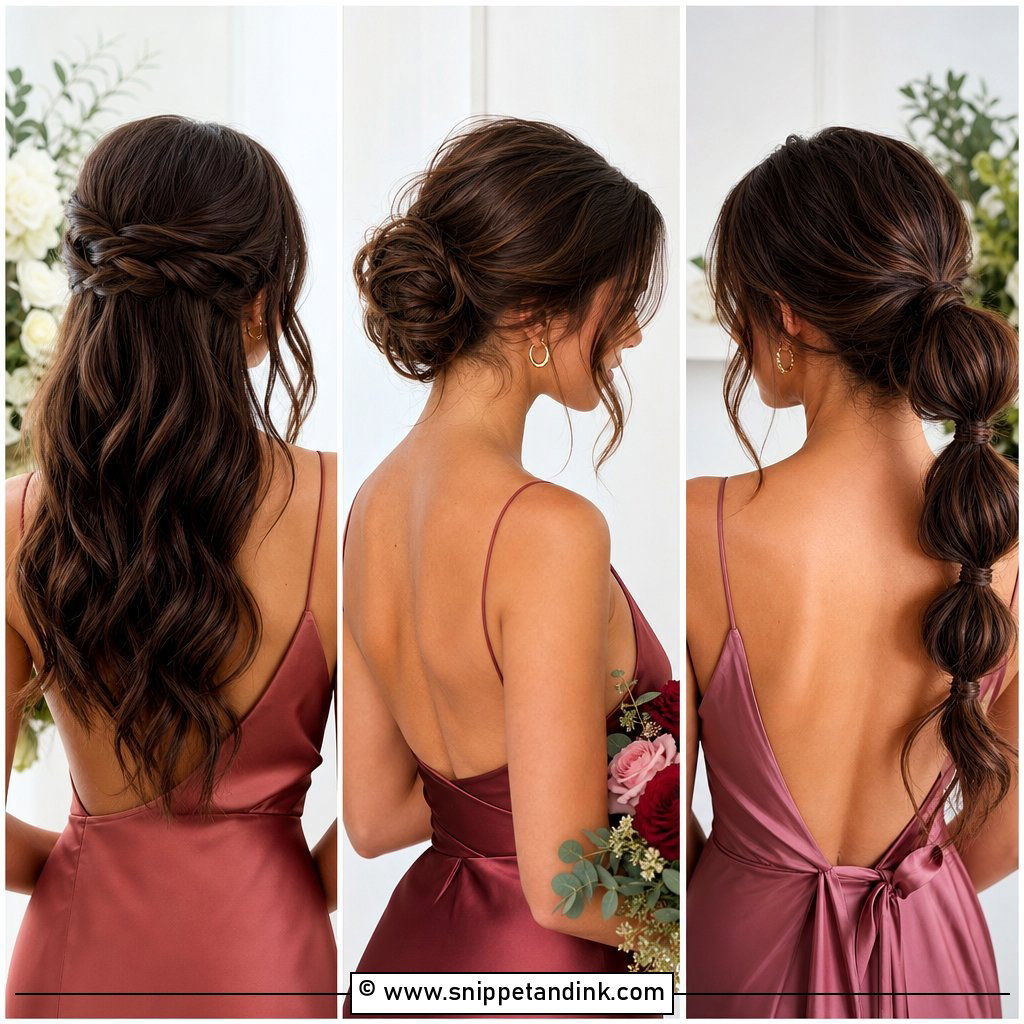
9. Bridesmaid Half Up Half Down Waves
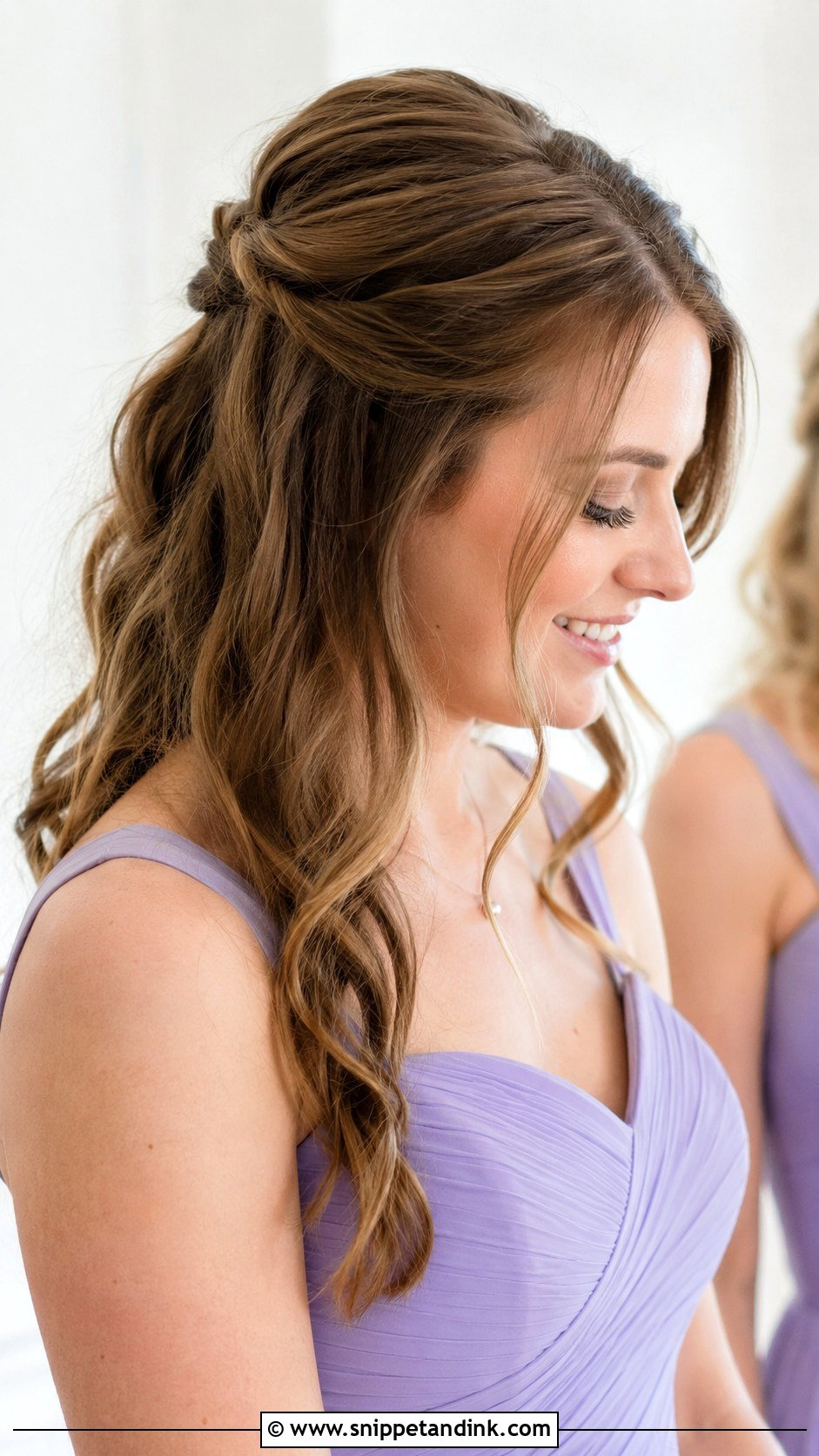
This is the most requested down style in my chair, and for good reason: the face stays clear for photos while the length still shows. I secure the top section with two bobby pins crossed in an X at the crown, then hide them under a small twist or accessory. Outdoors, it is the one I recommend for windy sites because the front pieces cannot blow across the face. A little backcombing at the crown before pinning keeps it from sitting flat against the head.
10. Bridesmaid Half Up Half Down Curls
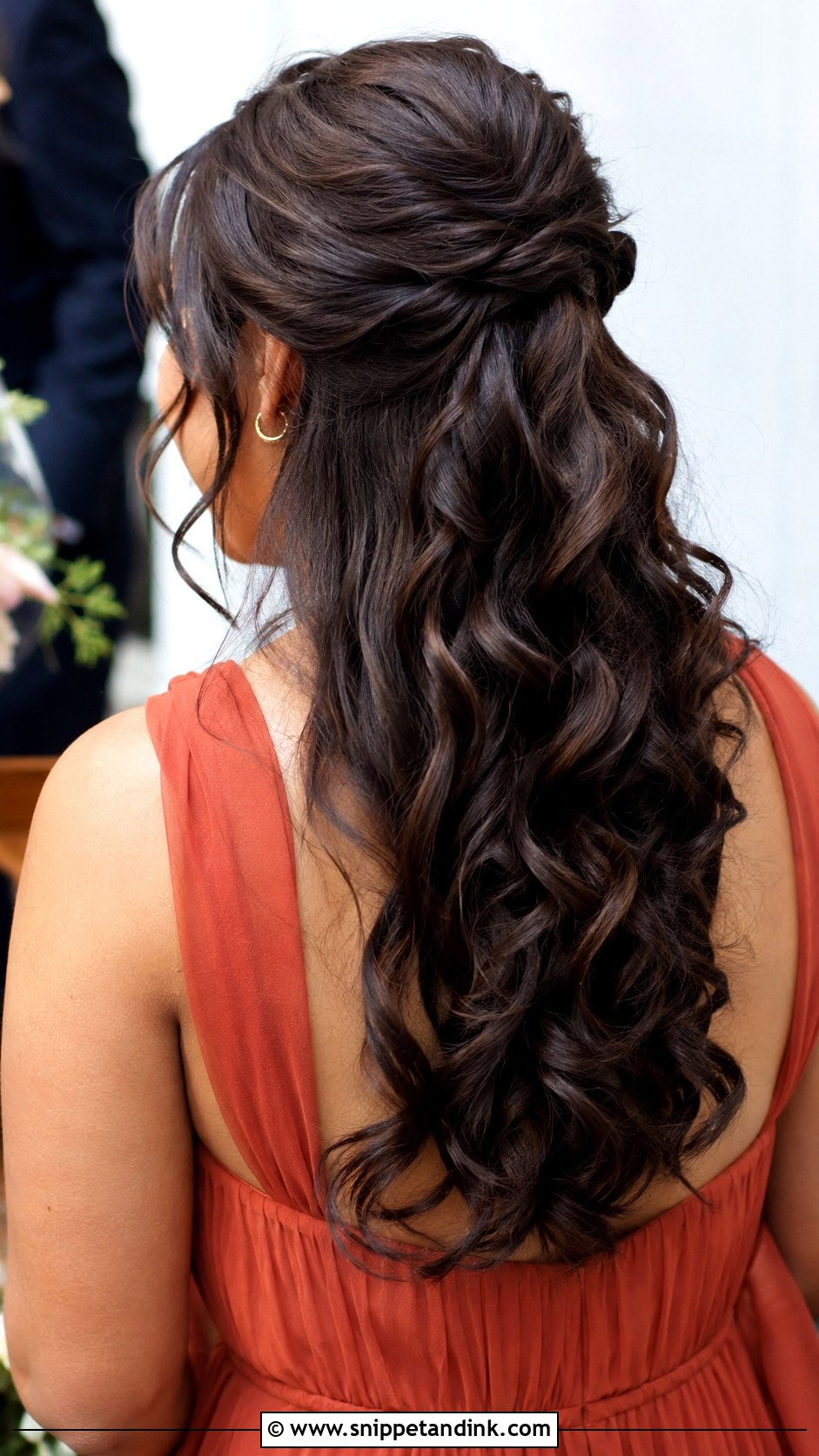
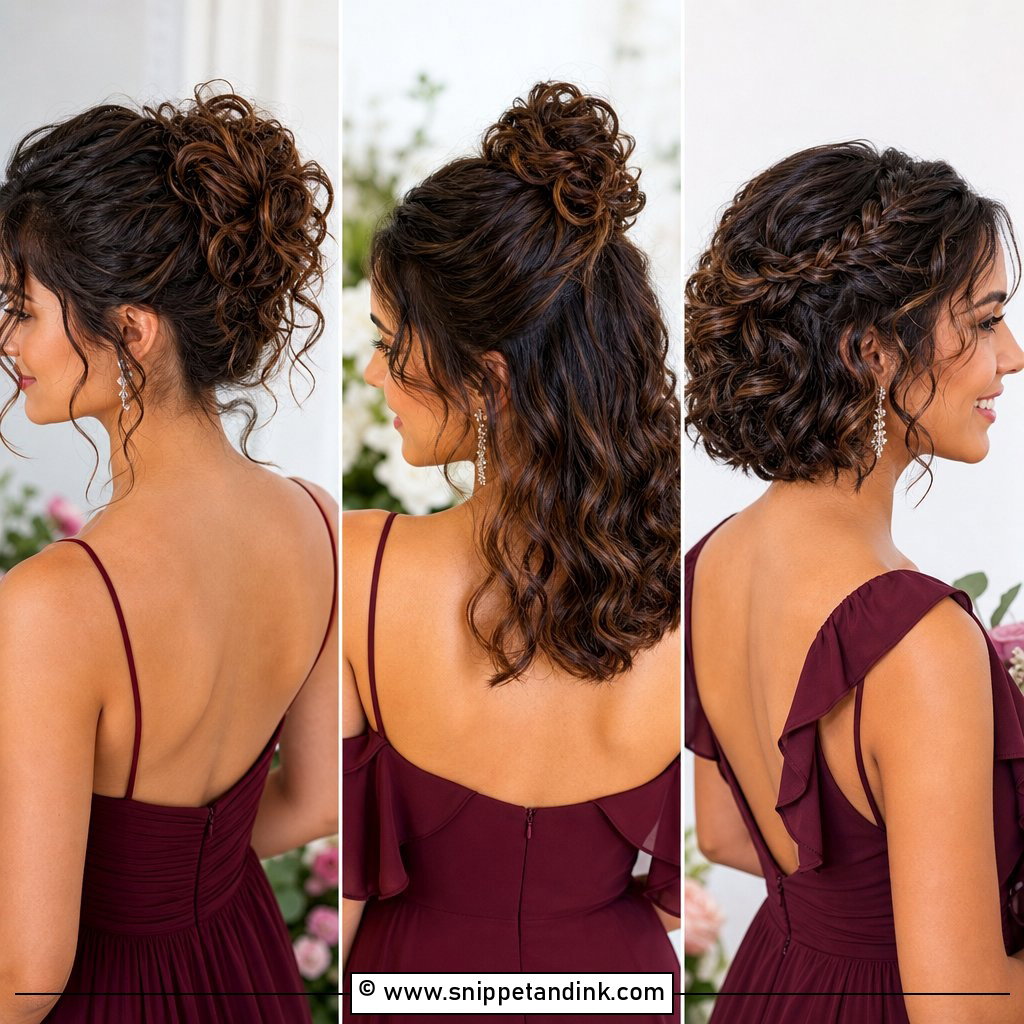
Curls under a half-up section add fullness without letting the hair swallow the face, which is why I suggest it to bridesmaids with very thick hair. The pinned crown does the controlling, so the lower curls can stay generous. Curly and wavy textures should be defined with their own cream or mousse rather than re-curled with a hot tool. Finish with one small comb or pearl pin; two or more starts to compete with the bride.
11. Bridesmaid Half Up Twist Down
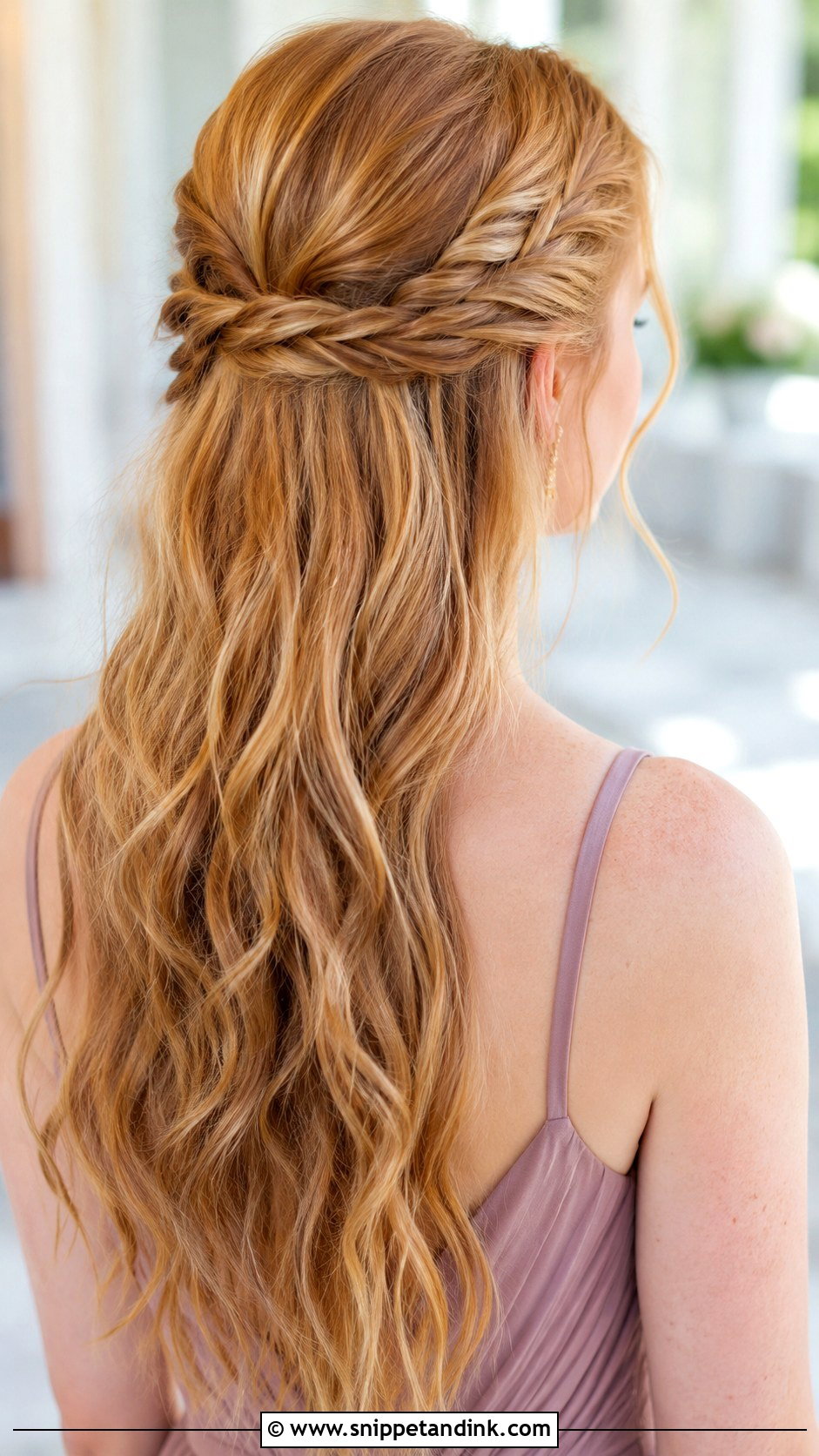
Two small front sections twisted back and pinned together is about the simplest detail I do, and it buys a lot of security. Twist each strand away from the face before joining them, otherwise the twists unravel as soon as she turns her head. The size of the twist scales with the hair: thin twists for fine hair, chunkier ones for thick. Because it works on any texture underneath, it is an easy way to make a mixed bridal party look like one group.
12. Bridesmaid Half Up Braid Down
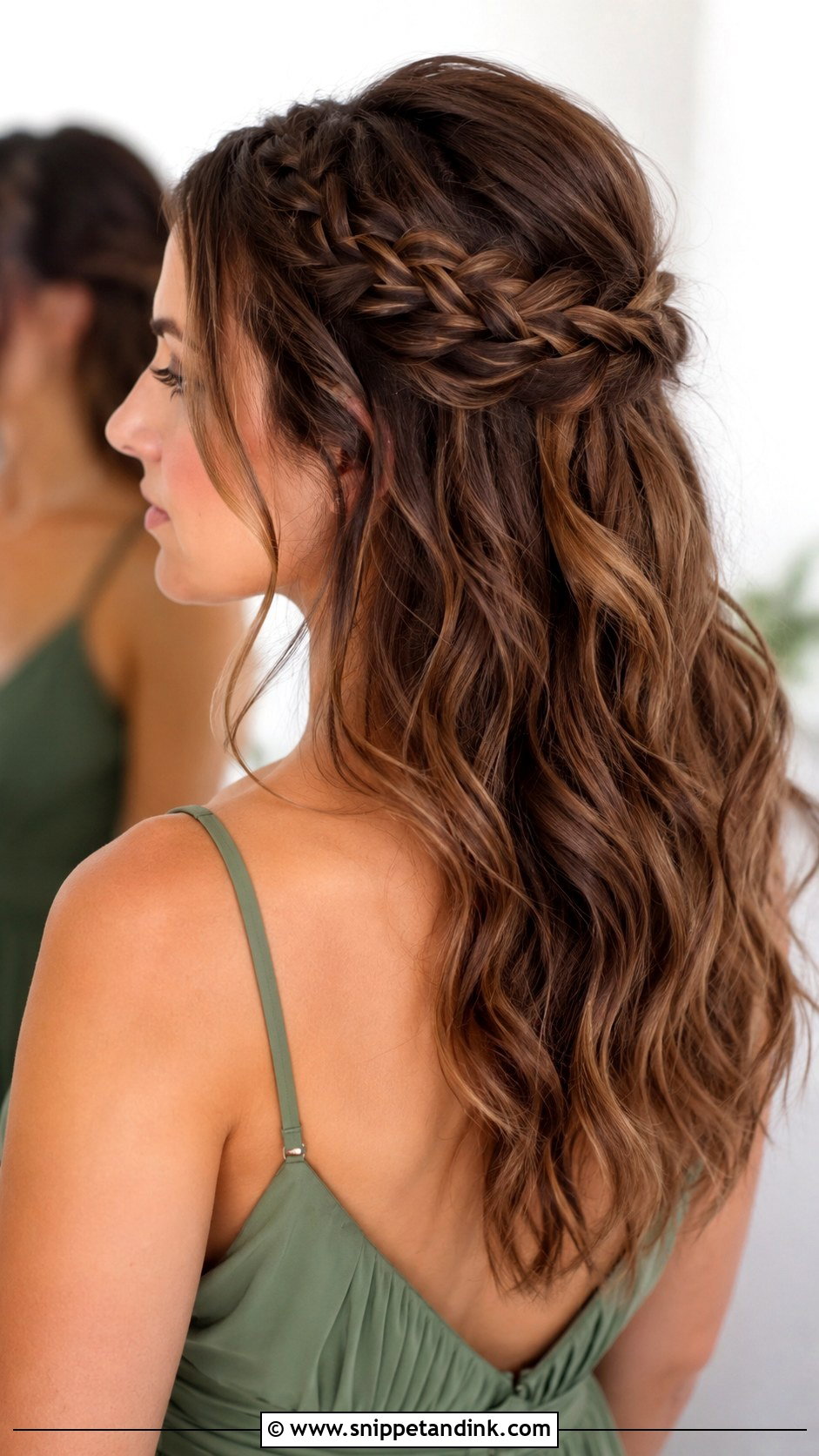
A small braid across the crown gives down hair a crafted detail, and it suits barn, garden and field venues well. I always braid on hair that has already been curled and sprayed, since freshly washed hair is too slippery and the braid slides out by dinner. Pancaking the braid slightly lets it melt into the waves rather than sit on top. Secure the tail with a pin pushed back toward the scalp, not just an elastic, so it survives dancing.
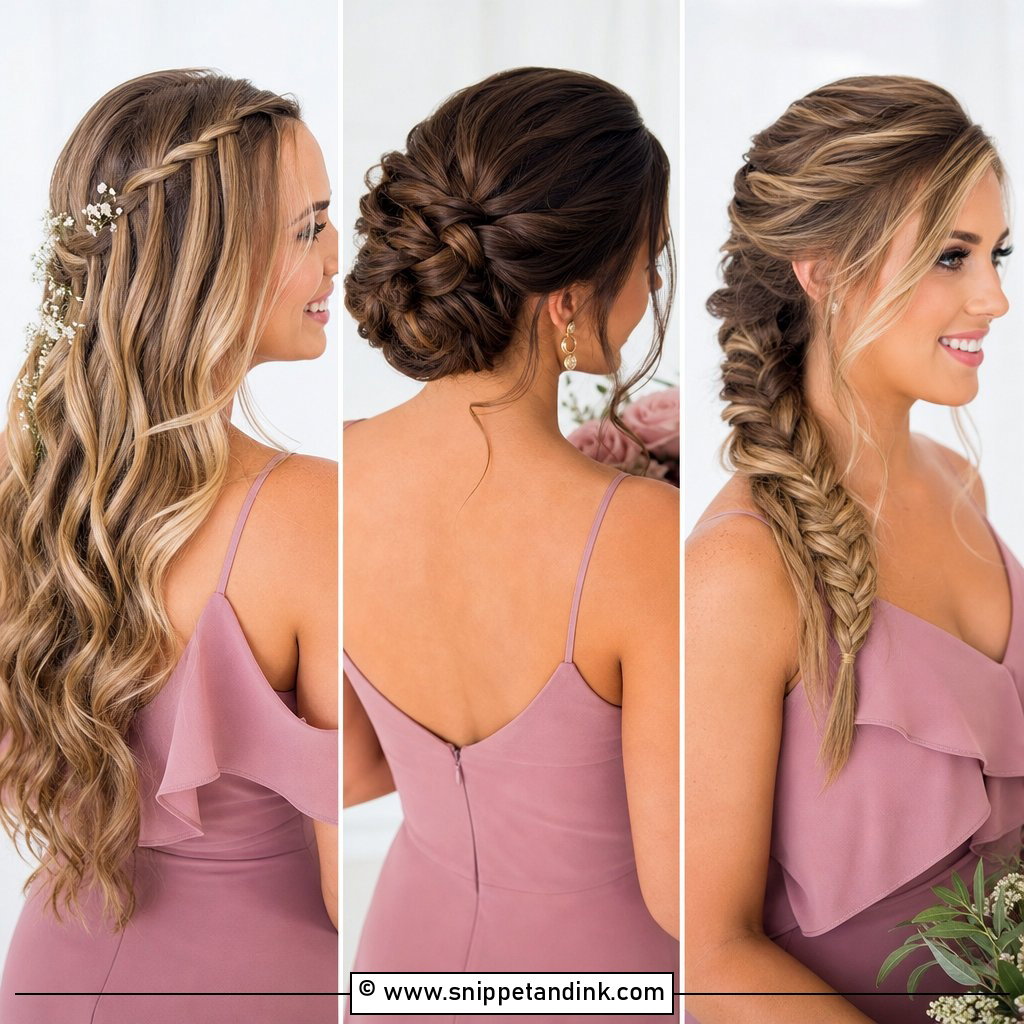
13. Bridesmaid Waterfall Braid Down
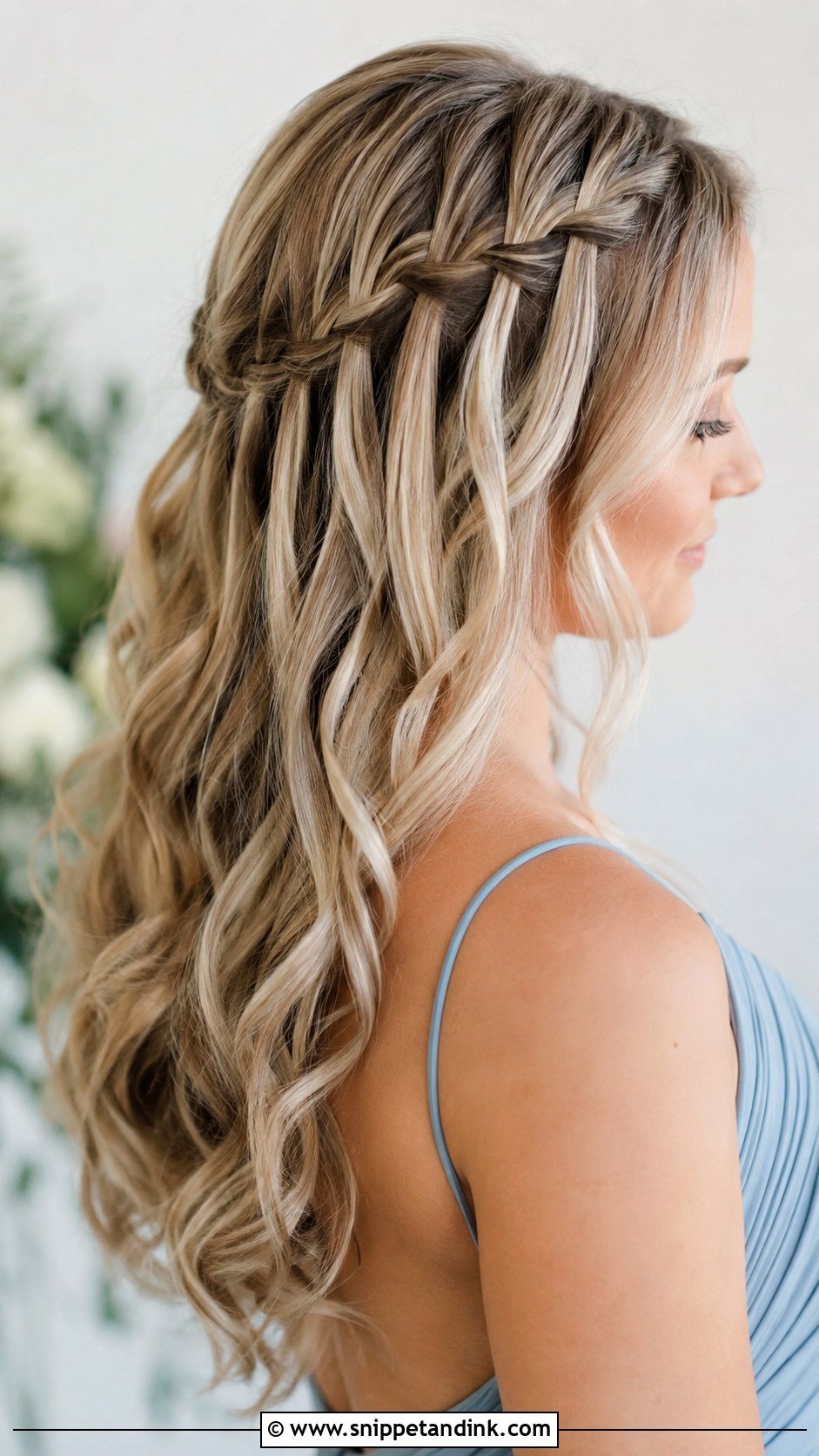
The waterfall braid drops a strand out of each crossover, so the loose pieces fall through like a curtain. It needs medium to long hair; on a lob the dropped strands are too short to blend into curls. I love it on balayage or highlighted hair, where the weave shows the color dimension. Keep the curls underneath soft, because tight curls make the dropped strands look stringy instead of airy.
14. Bridesmaid Crown Braid Hair Down
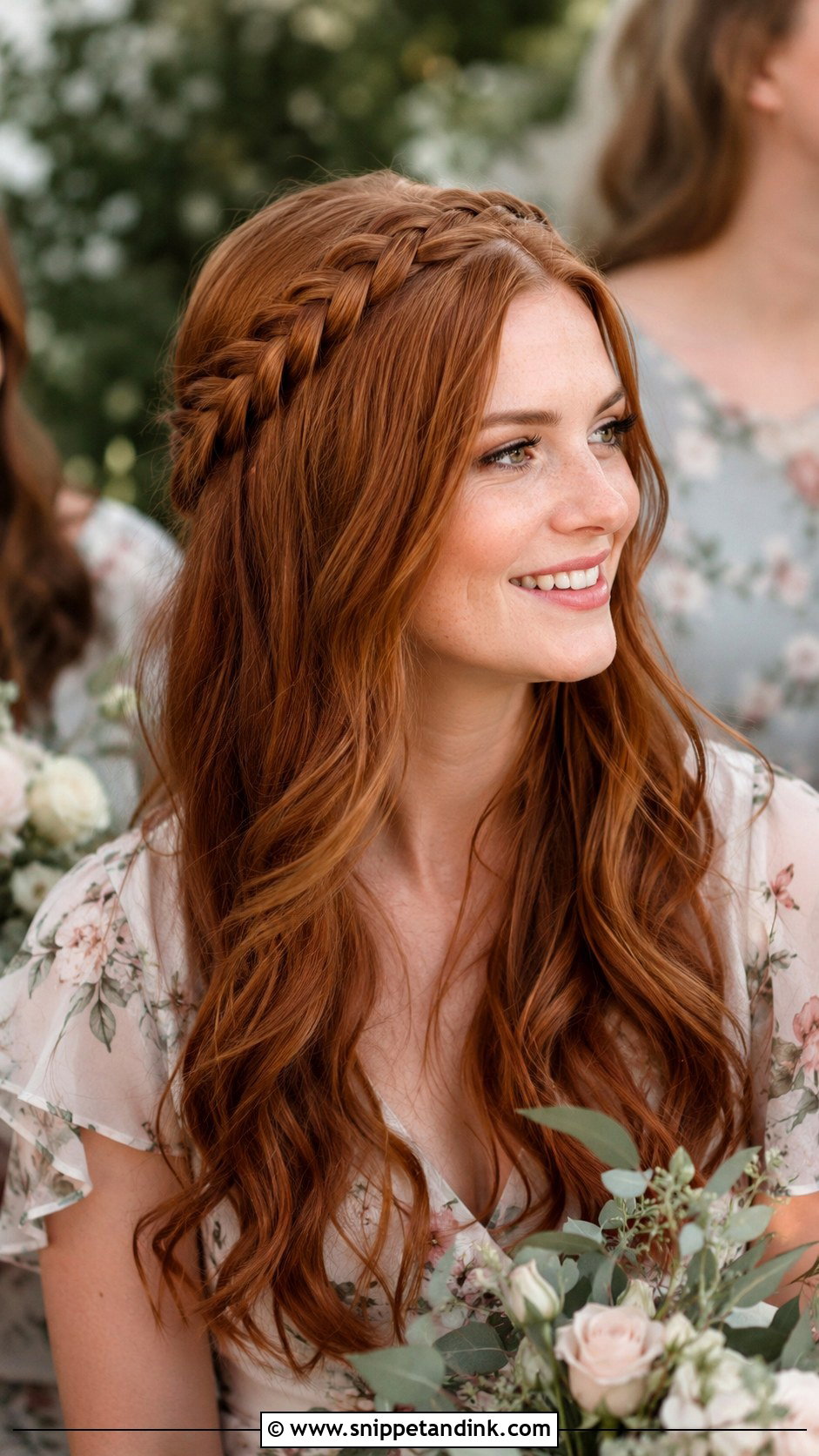
A crown braid that wraps partly around the head works like a soft headband, holding the front while the rest flows down. On shorter or finer hair I’ll braid in a matching clip-in piece so the band has enough body to read from the back of the aisle. The braid should be loose enough to look soft but anchored every few inches with pins pushed in against the direction of the braid. It sits naturally with boho dresses and bare, natural makeup.
15. Bridesmaid Side Braid Hair Down
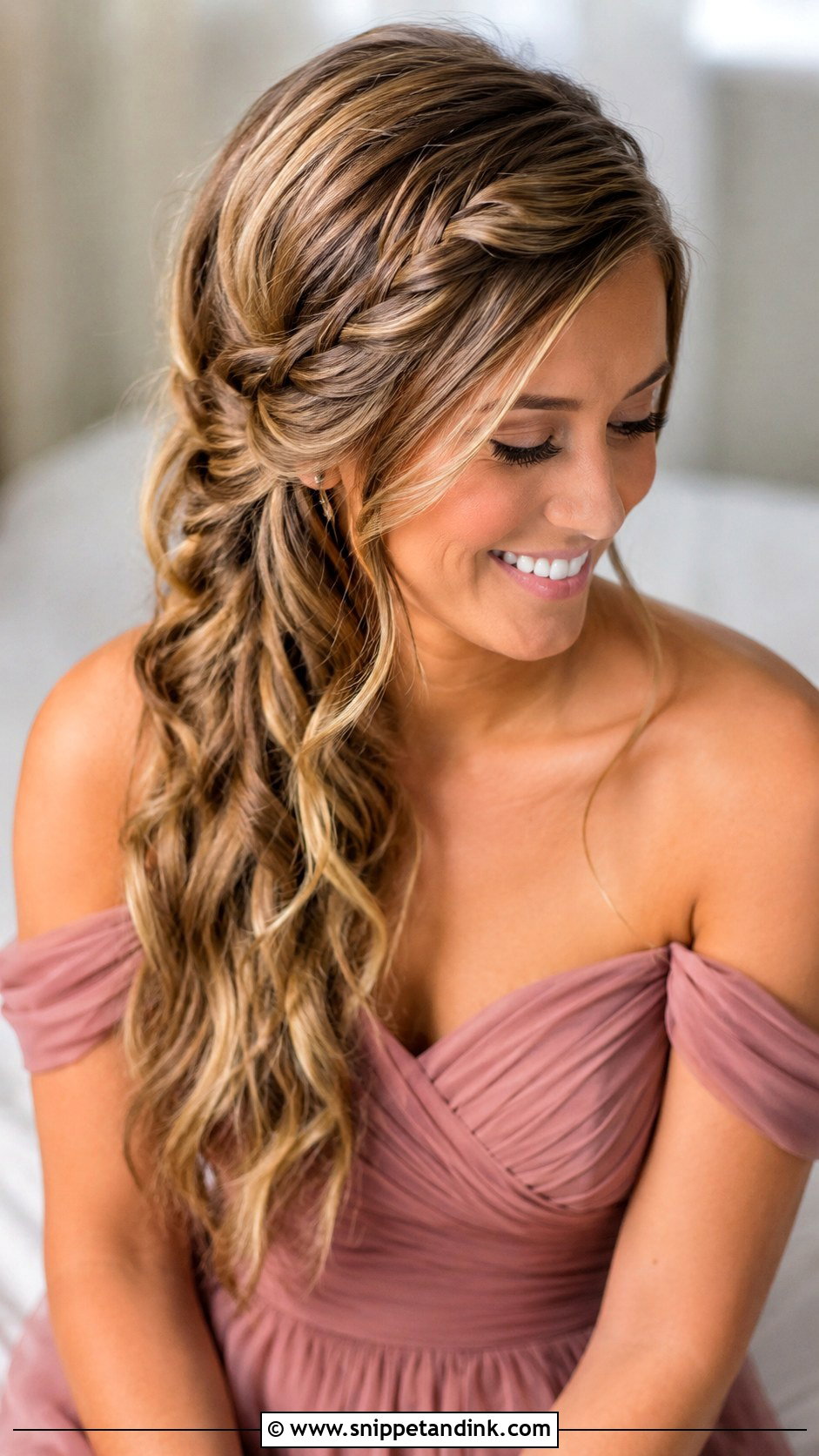
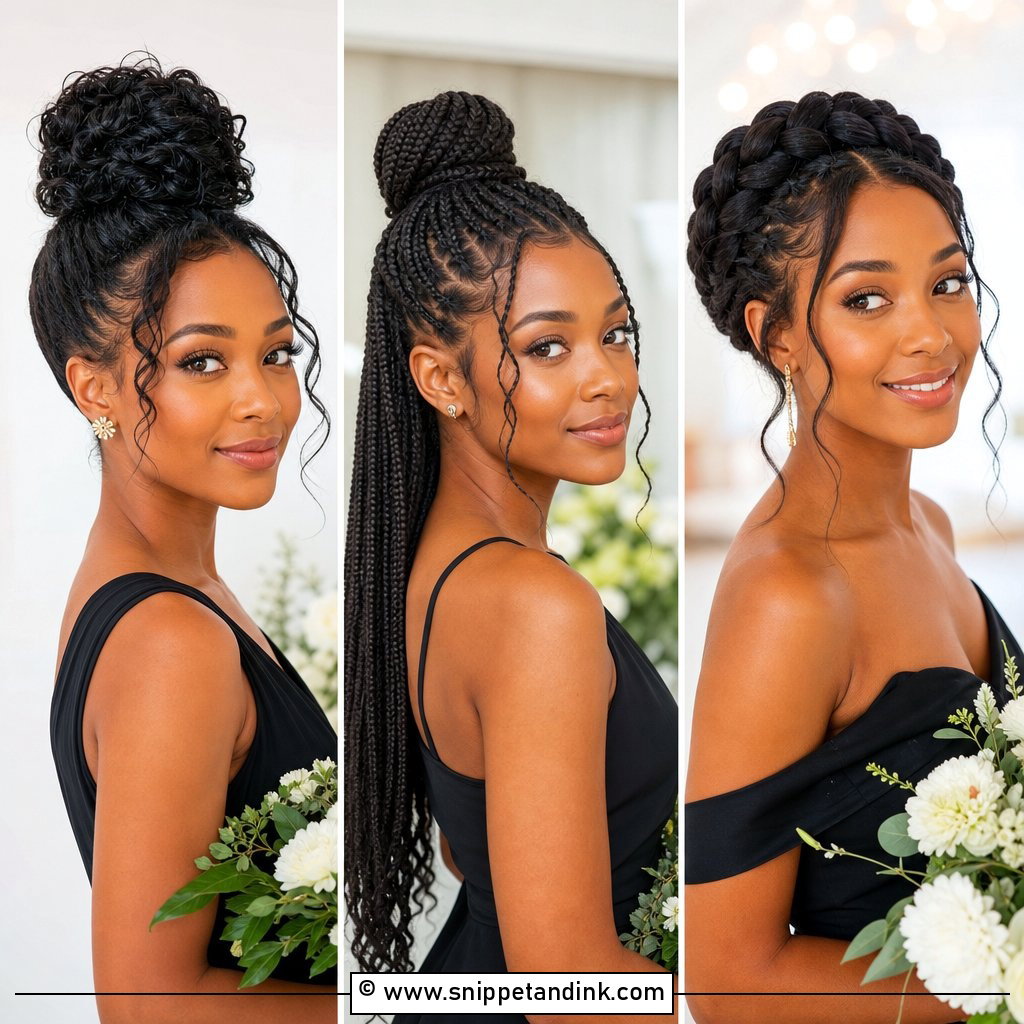
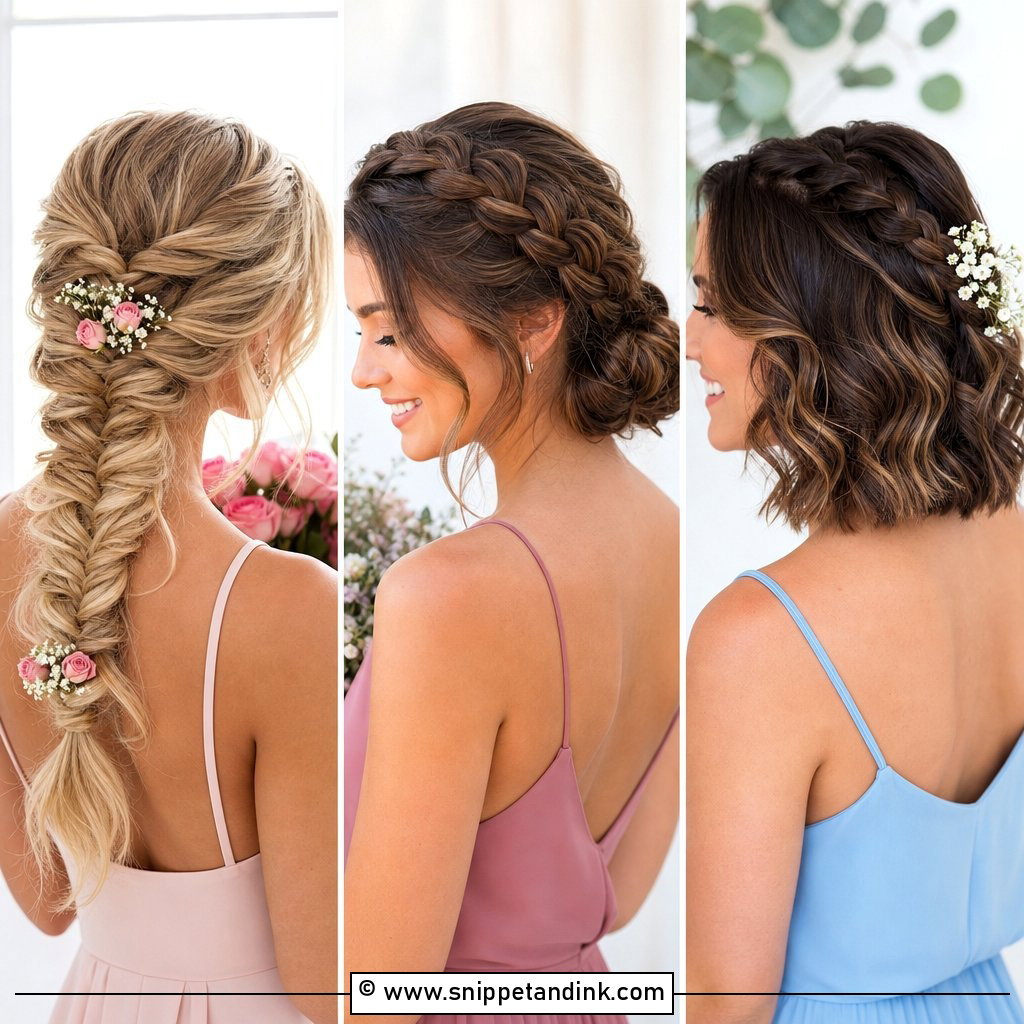
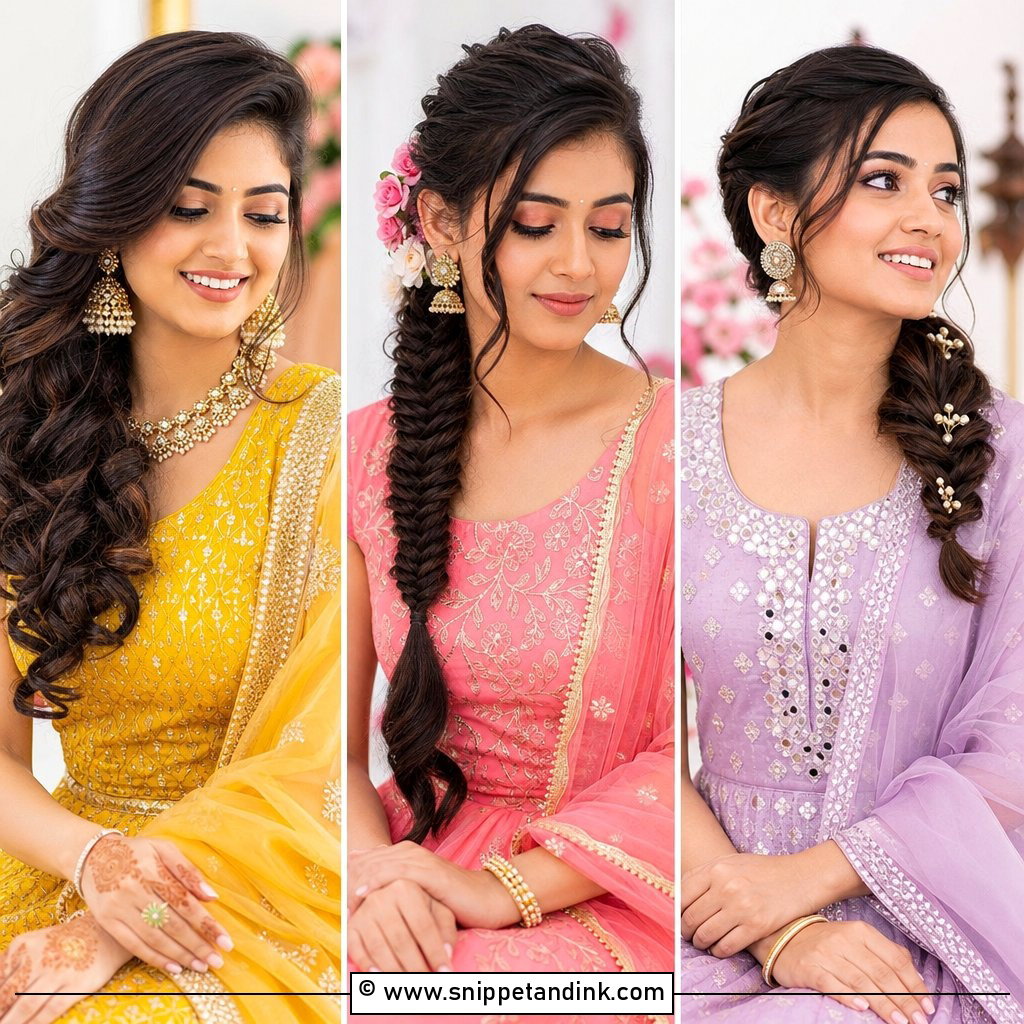
A braid running down one side gives the style an asymmetric line that pairs naturally with off-the-shoulder necklines. It also keeps the windward side under control outdoors, which is more practical than it sounds. A classic three-strand, a fishtail or a Dutch braid will all work; the fishtail holds best on layered hair because short pieces have more crossings to catch on. Pull the edges apart gently for width, then set with a flexible spray.
16. Bridesmaid Down Hair With Pearl Clips
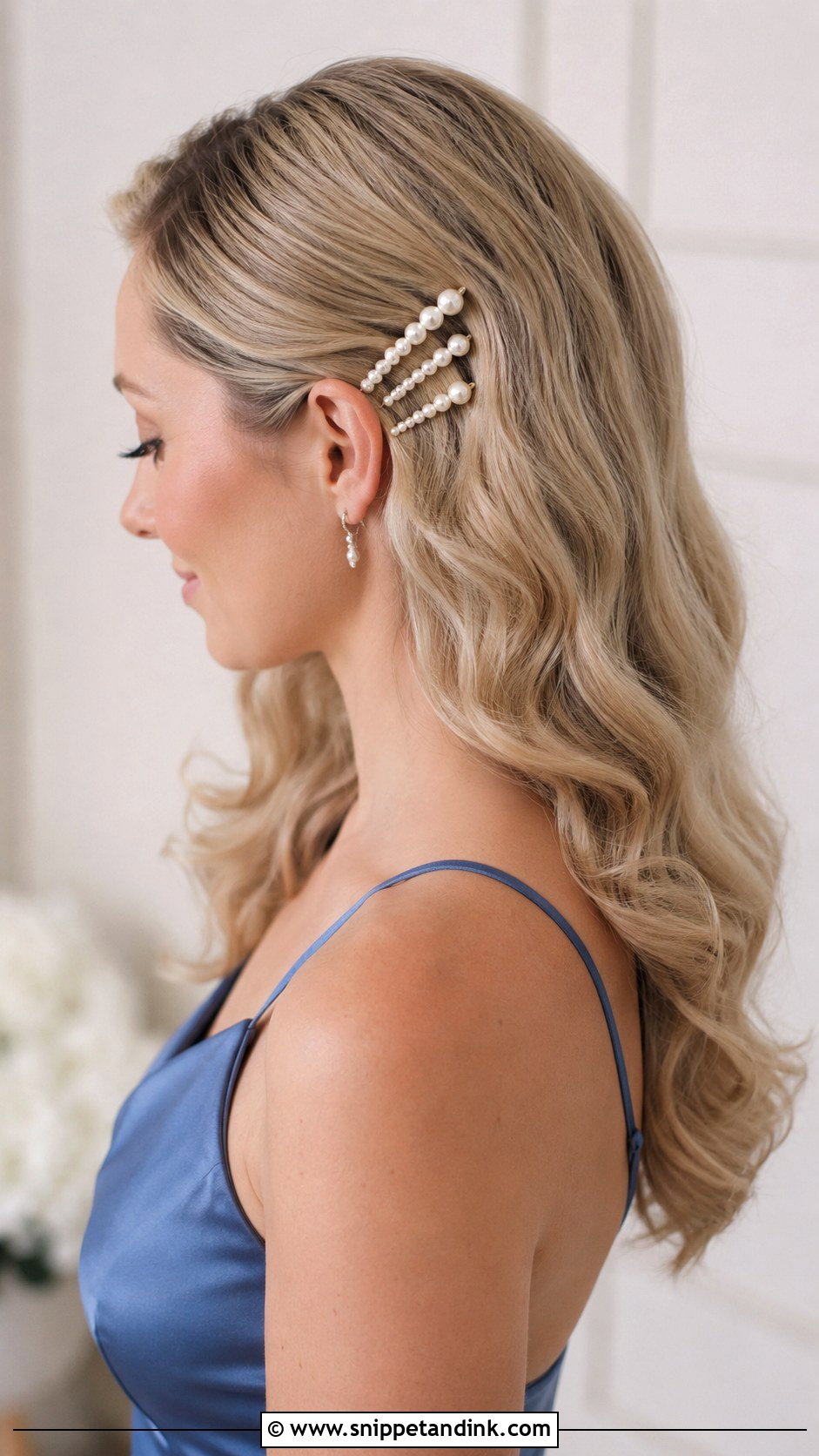
Down hair with pearl clips is how I coordinate a bridal party that doesn’t want identical hair. Each bridesmaid keeps her own base, waves for one and sleek for another, and the same clips tie the group together. I slide each clip in over a pair of crossed bobby pins, because a clip alone on silky hair slips within an hour. Keep the pearls small and grouped above one ear or at a half-up join, and they never steal attention from the bride.
17. Bridesmaid Down Hair With Hair Bow
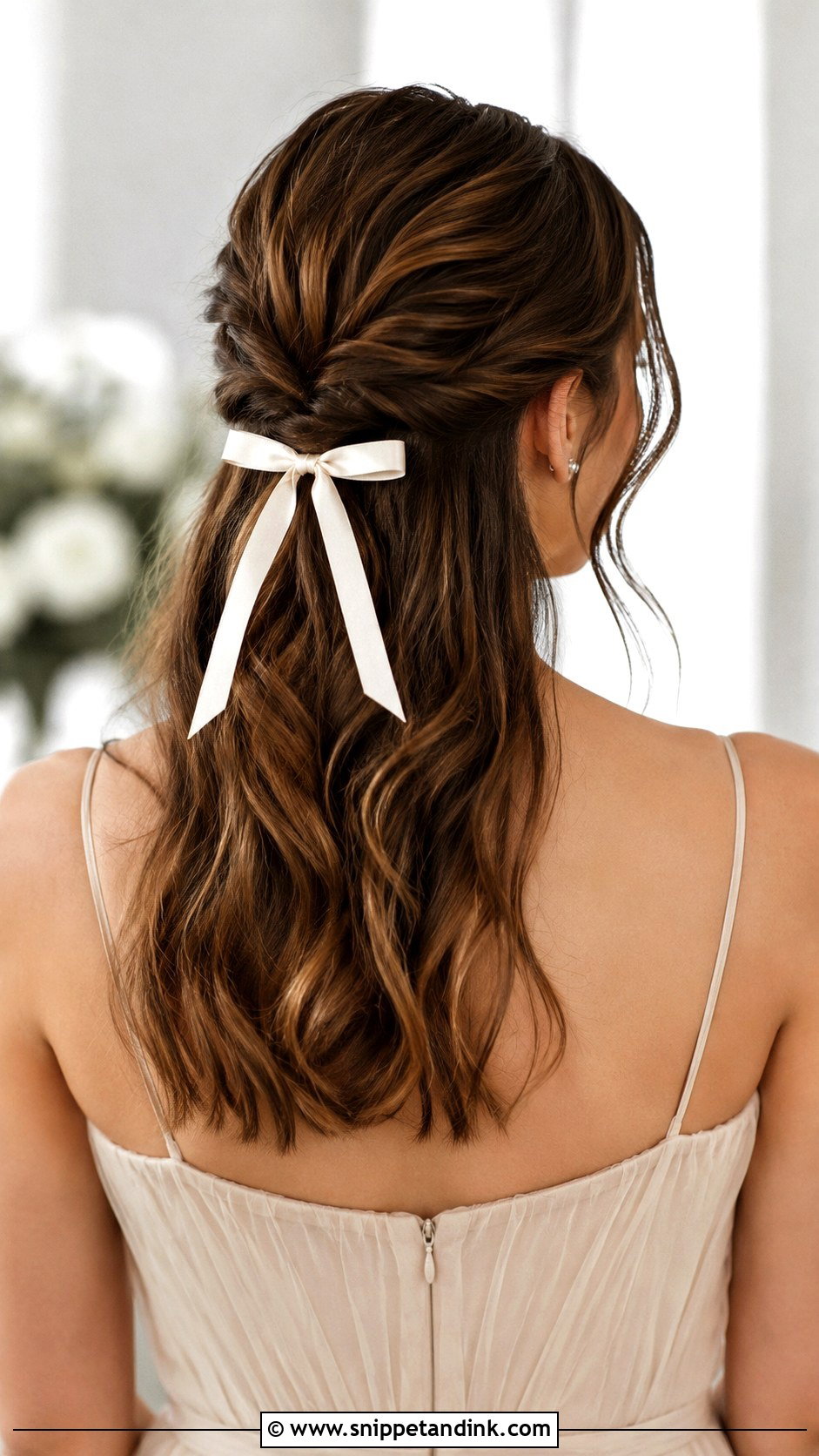
Down hair with a hair bow is sweet and very graphic in photos, which is exactly why size matters. I find a small to medium bow looks polished, while an oversized one can tip into costume. Satin and velvet hold their shape better than chiffon, which tends to wilt by evening in warm rooms. I attach bows to a half-up join, never to loose hair alone, because a bow needs a pinned base to stay upright.
18. Bridesmaid Down Hair With Floral Pins
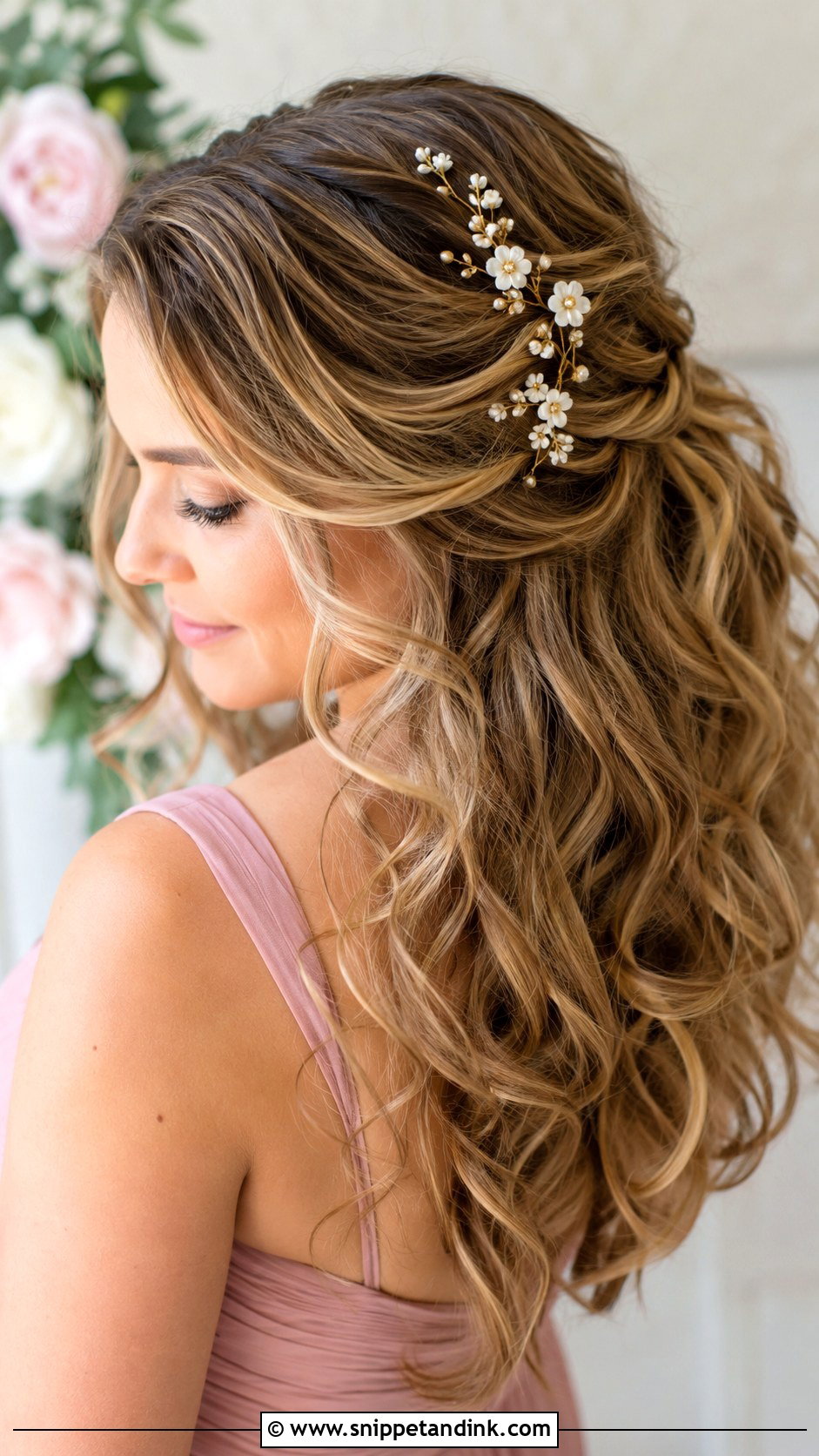
Tiny floral pins scattered through one side give garden and spring weddings a fresh detail without the commitment of a crown. Silk or preserved blooms are what I use for down styles; fresh flowers wilt against warm hair and leave pollen on light-colored strands. I match them to the bouquet or go neutral ivory if the palette is busy. Every pin goes in angled toward the scalp and catches a crossed bobby pin underneath.
19. Bridesmaid Down Hair With Face Framing Layers
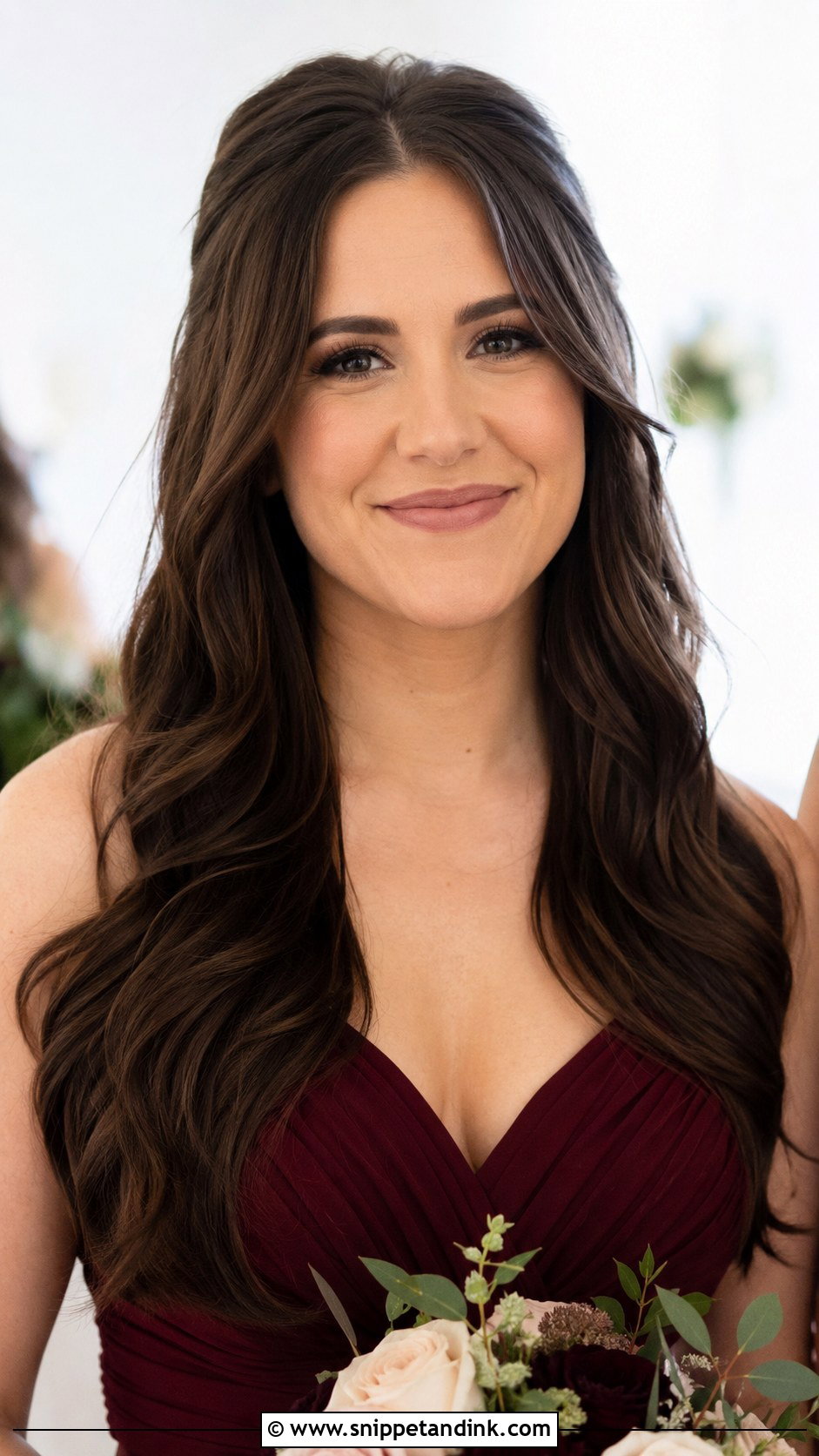
Face-framing layers do half my job for me, as long as I style them away from the face, not into it. I curl the front pieces back toward the ear so they open the cheekbones instead of hiding them. The layers add movement right where strapless, scoop-neck, and V-neck dresses leave skin showing. A tiny amount of finishing cream on the ends keeps those shorter pieces from going fluffy.
20. Bridesmaid Down Hair With Curtain Bangs
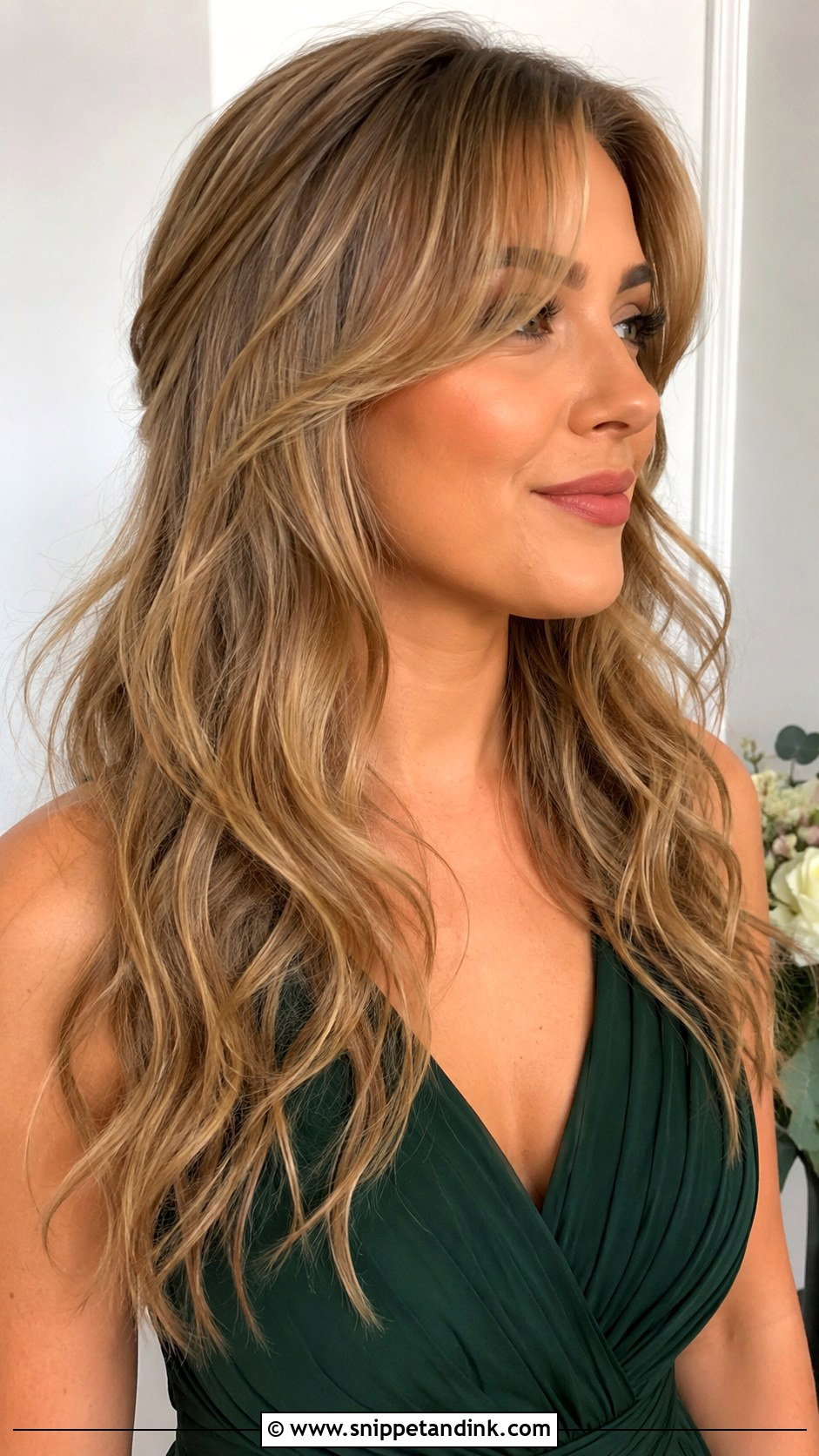
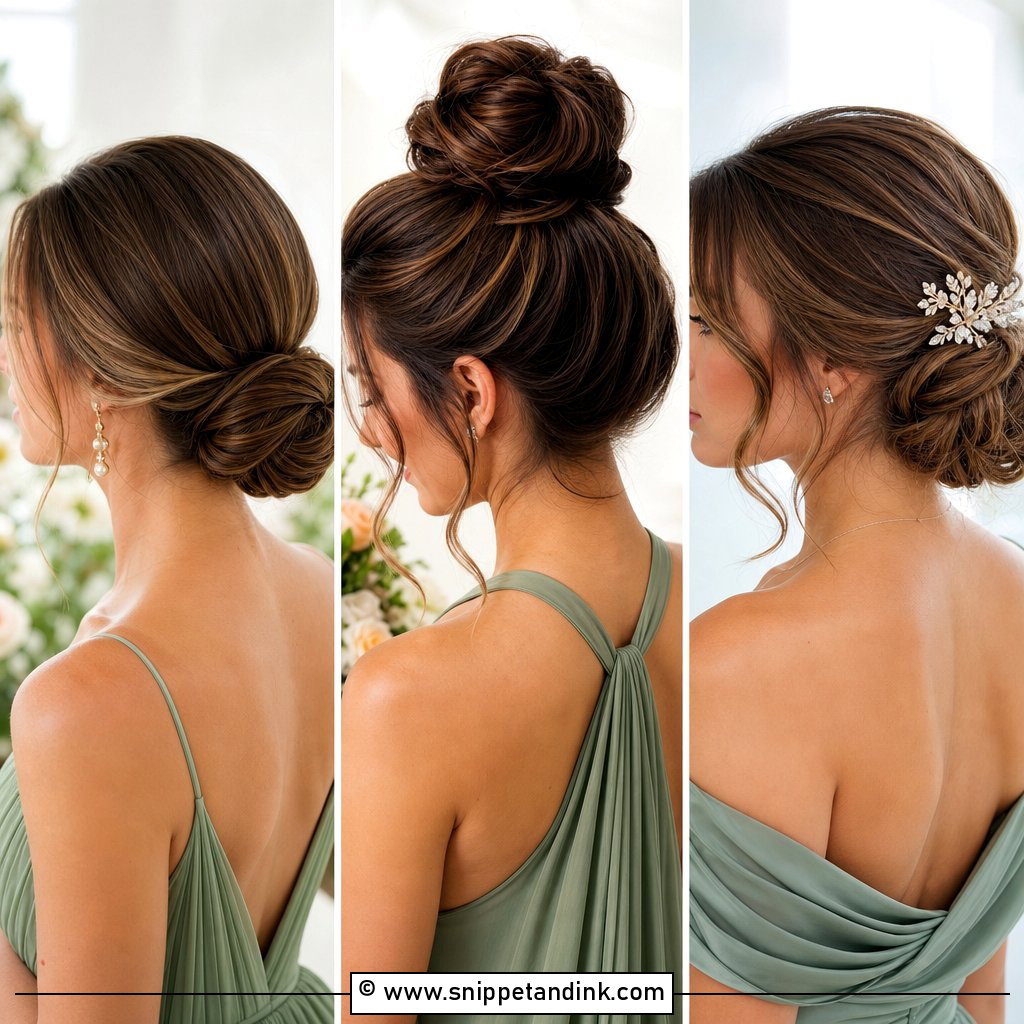
Down hair with curtain bangs only works if the bangs already exist; I never cut a fringe the week of a wedding. I blow them out with a small round brush, rolling each side away from the center so they swing open and join the long layers. The rest of the hair can be waved or blown out. A touch of dry shampoo at the bang roots before styling stops them from separating or turning oily by the reception.
21. Bridesmaid Curly Hair Down
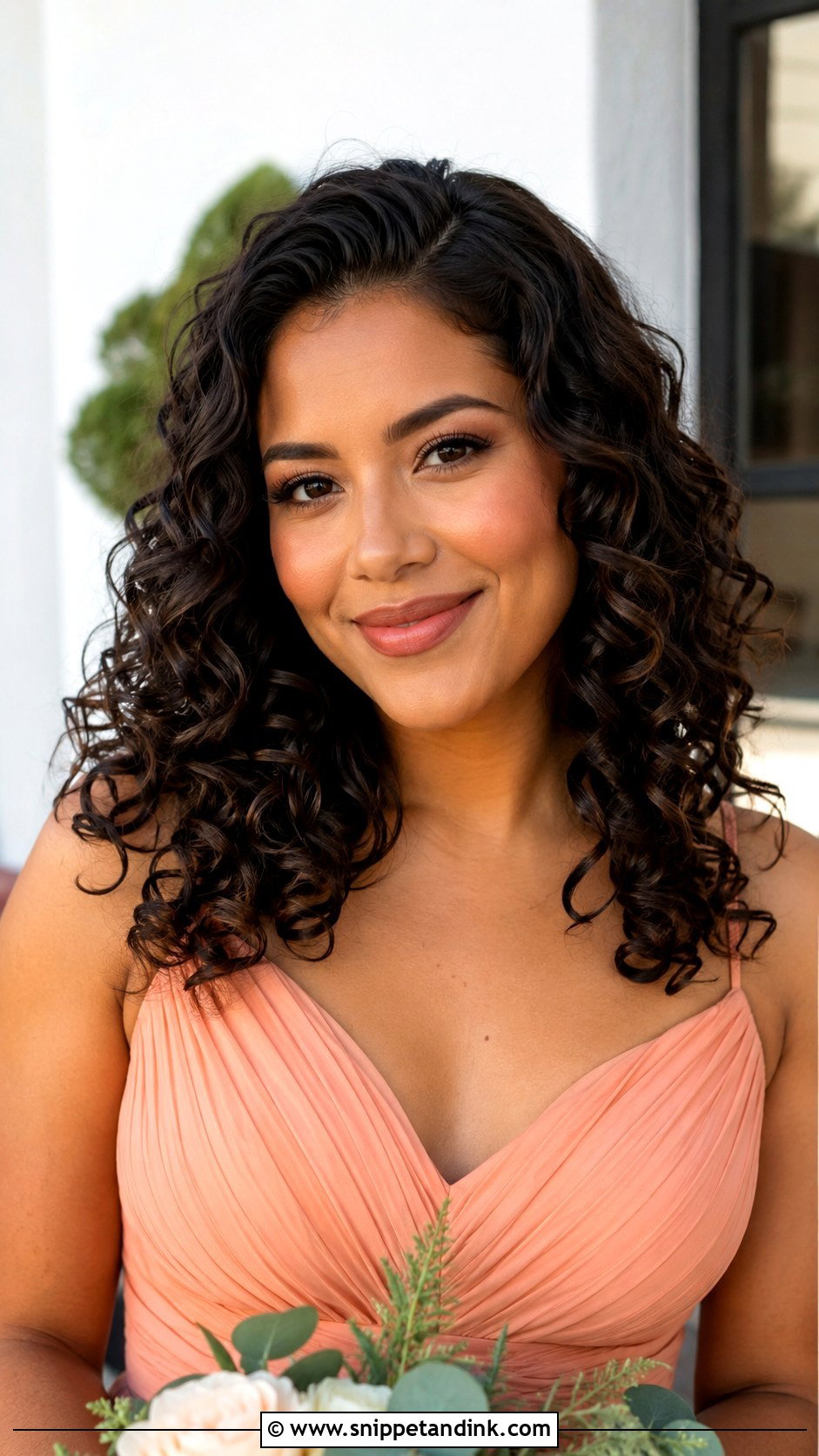
Curly hair down looks best when the curls are hydrated and shaped on their natural pattern, not forced into someone else’s. I ask curly bridesmaids to wash the night before or the morning of with their usual routine, then I add a curl cream and gel and diffuse on low heat so the clumps stay intact. Touching curls while they dry is the fastest route to frizz. Pin one side back or leave the shape fully loose; against a plain dress, the volume itself becomes the feature.
22. Bridesmaid Natural Hair Down
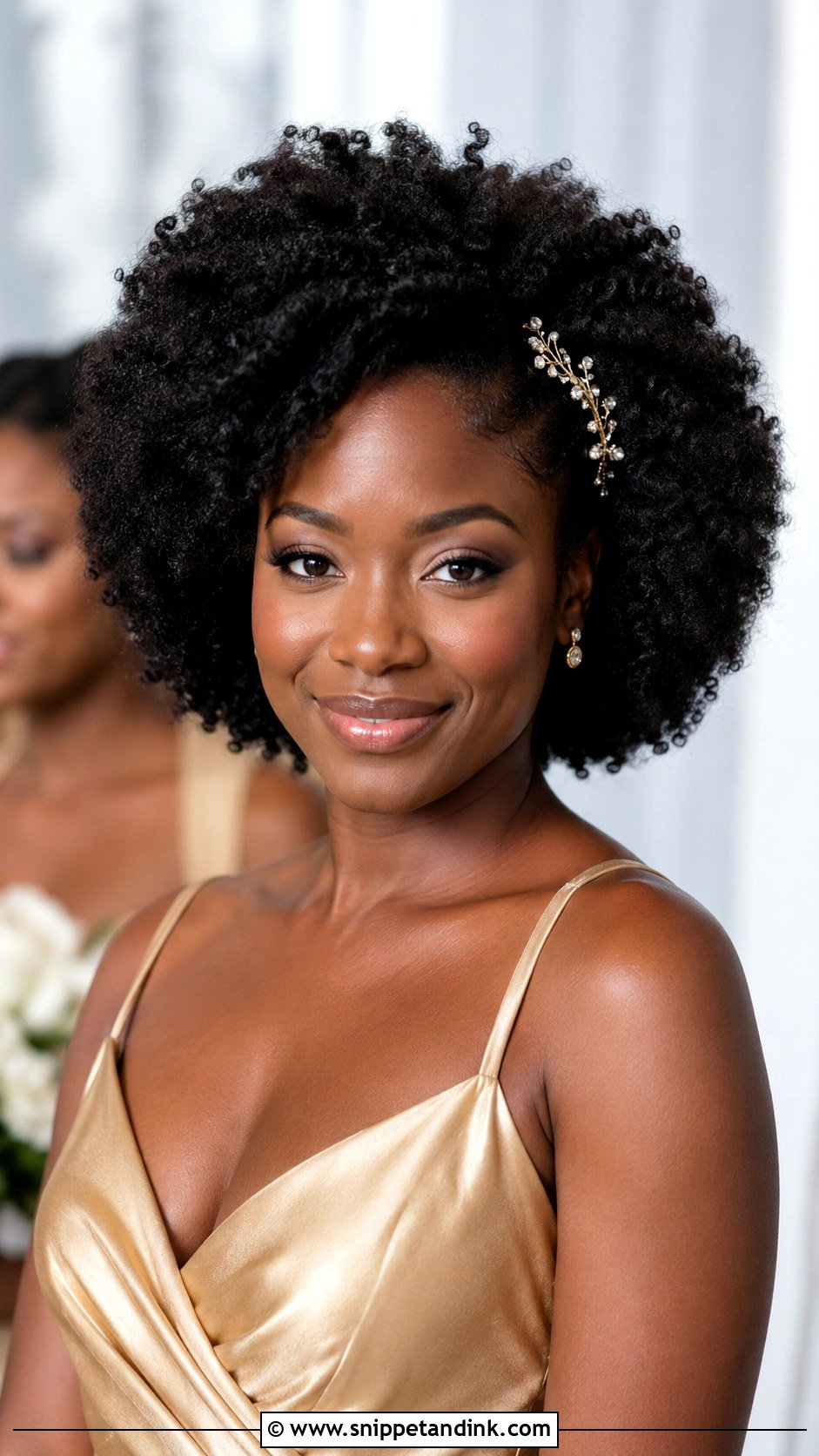
A rounded afro, defined coils, a stretched set or a twist-out all count as natural hair down, and each wants a different prep. Twist-outs should be set the night before and only separated on the morning, otherwise they can lose definition by the ceremony. I shape rather than flatten, using a pick at the roots and a light oil for shine, and add one small pin or accessory if she wants a wedding detail. A bridal party that keeps every texture and ties them together through dress color looks far more natural than one where everyone has been straightened.
23. Bridesmaid Long Hair Down
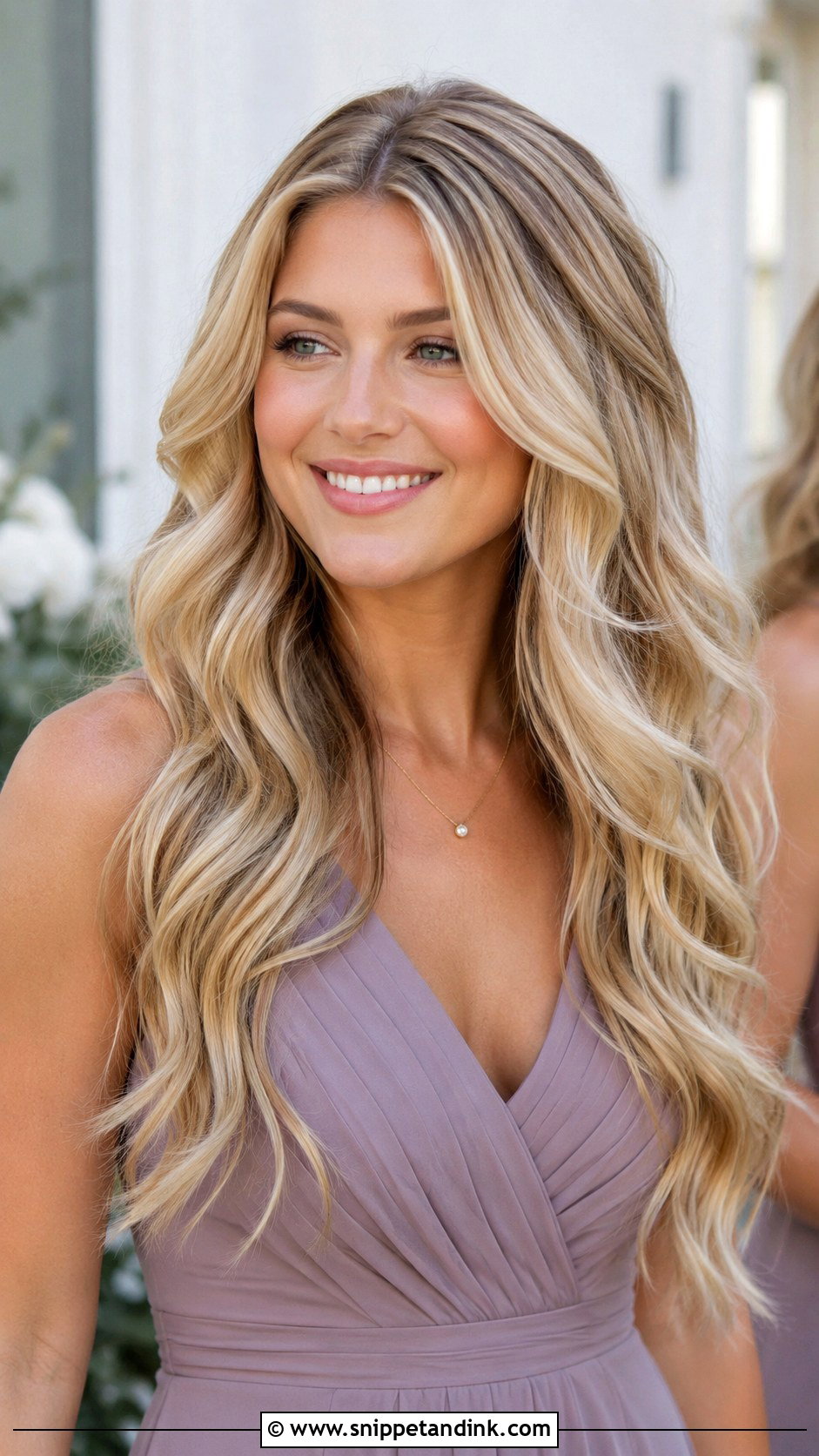
Very long hair looks dramatic from the back and side, but its own weight is the enemy of curl. I prep it with mousse at the roots and a heat setting spray through the lengths, curl in smaller sections than seems necessary and pin each curl up to cool. Long layers or face-framing pieces keep it from hanging like a curtain. In humid weather I’d plan on the curls relaxing by a third over the day, and I build that drop into the shape I start with. Open backs and low necklines show this length off best.
24. Bridesmaid Medium Hair Down
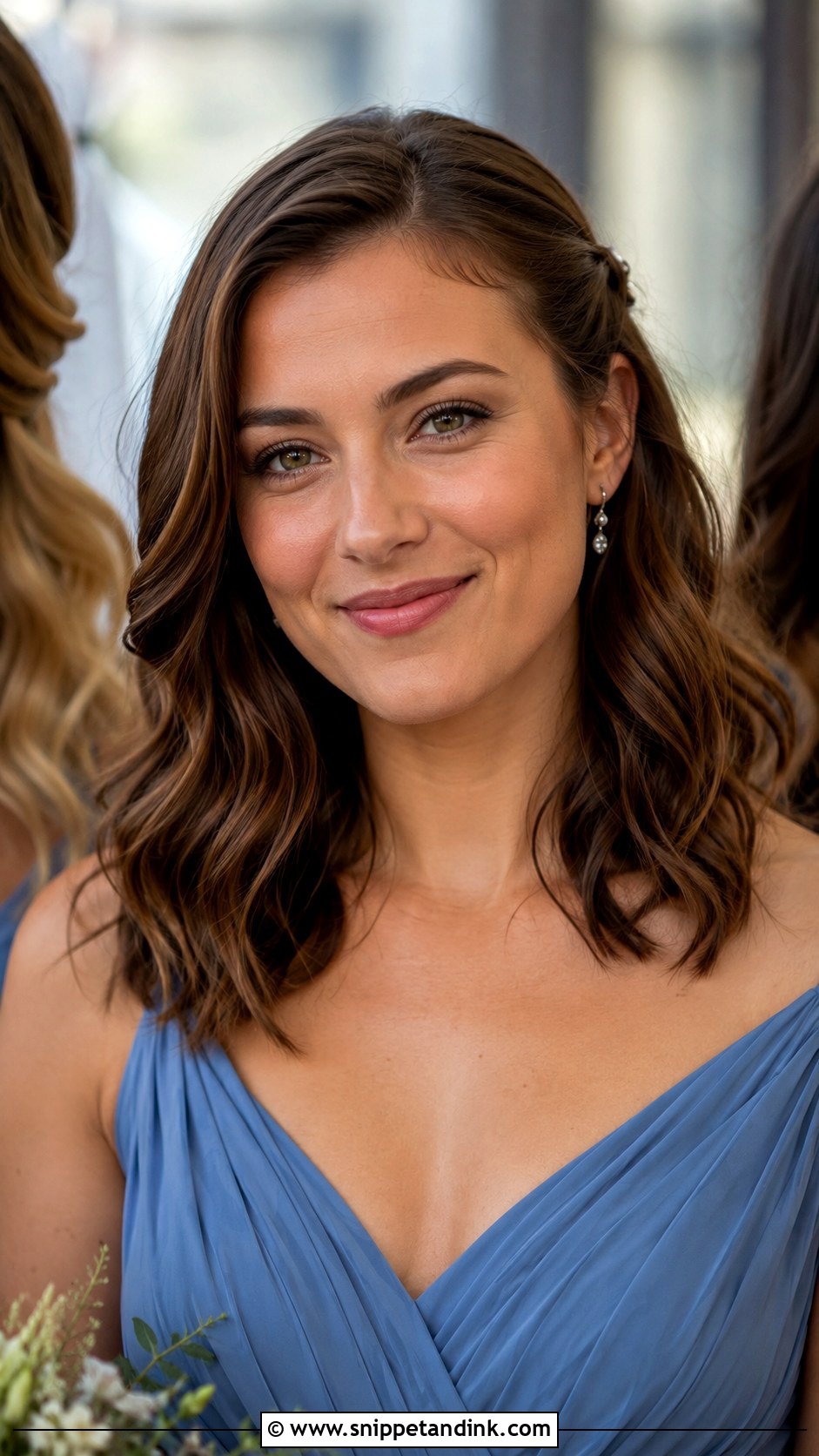
Shoulder to collarbone length is the easiest hair I style for weddings. It holds a curl well, it doesn’t drop under its own weight, and it stays cooler in summer heat. The one problem is the ends flipping out when they hit the shoulders, so I curl the last inch away from the neck. A side tuck or small half-up twist is useful if the neckline needs to be visible.
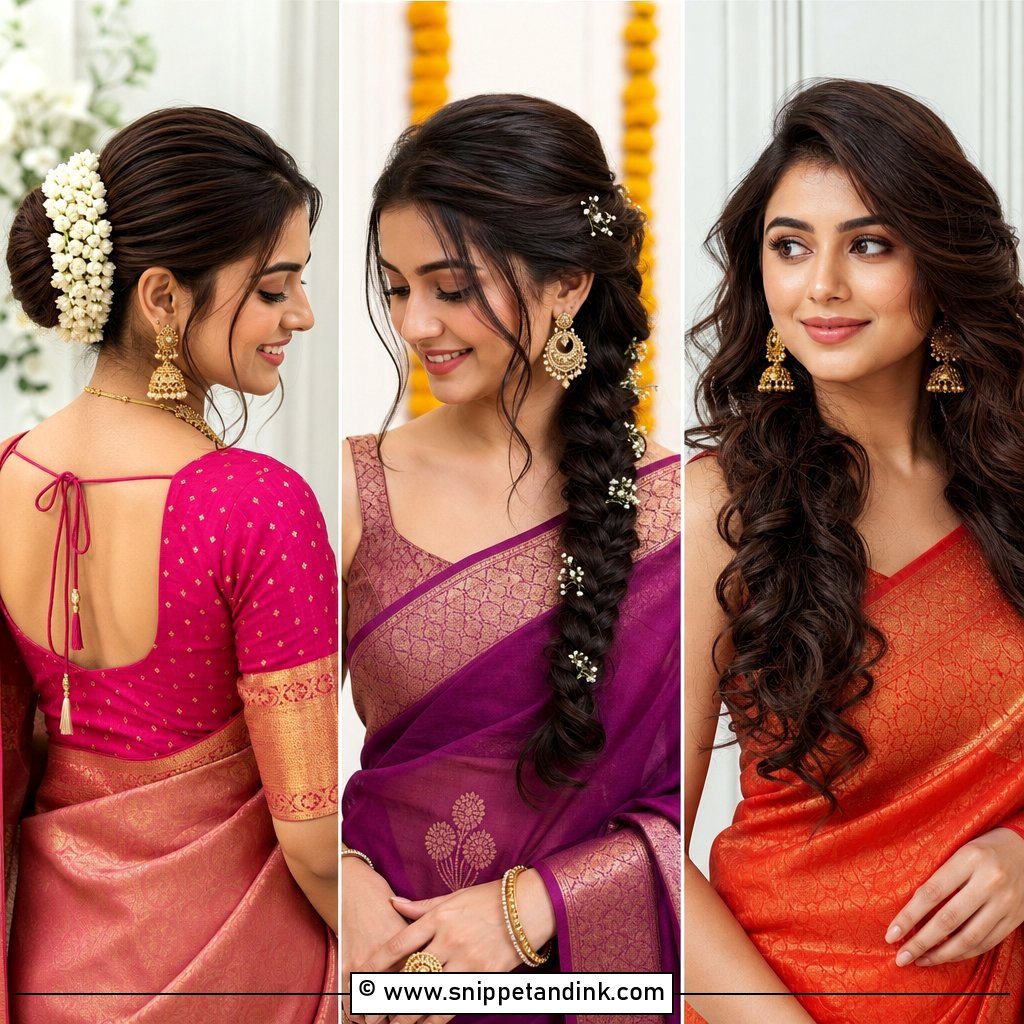
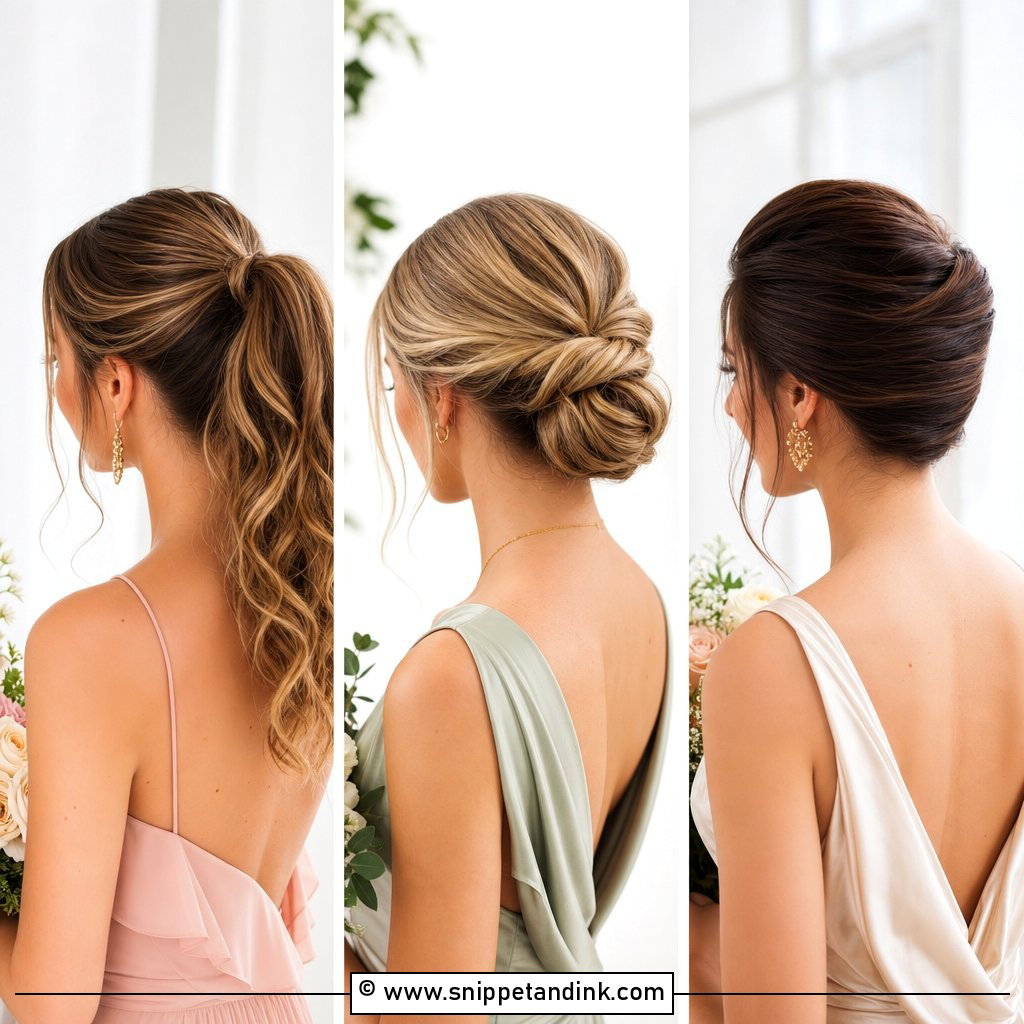
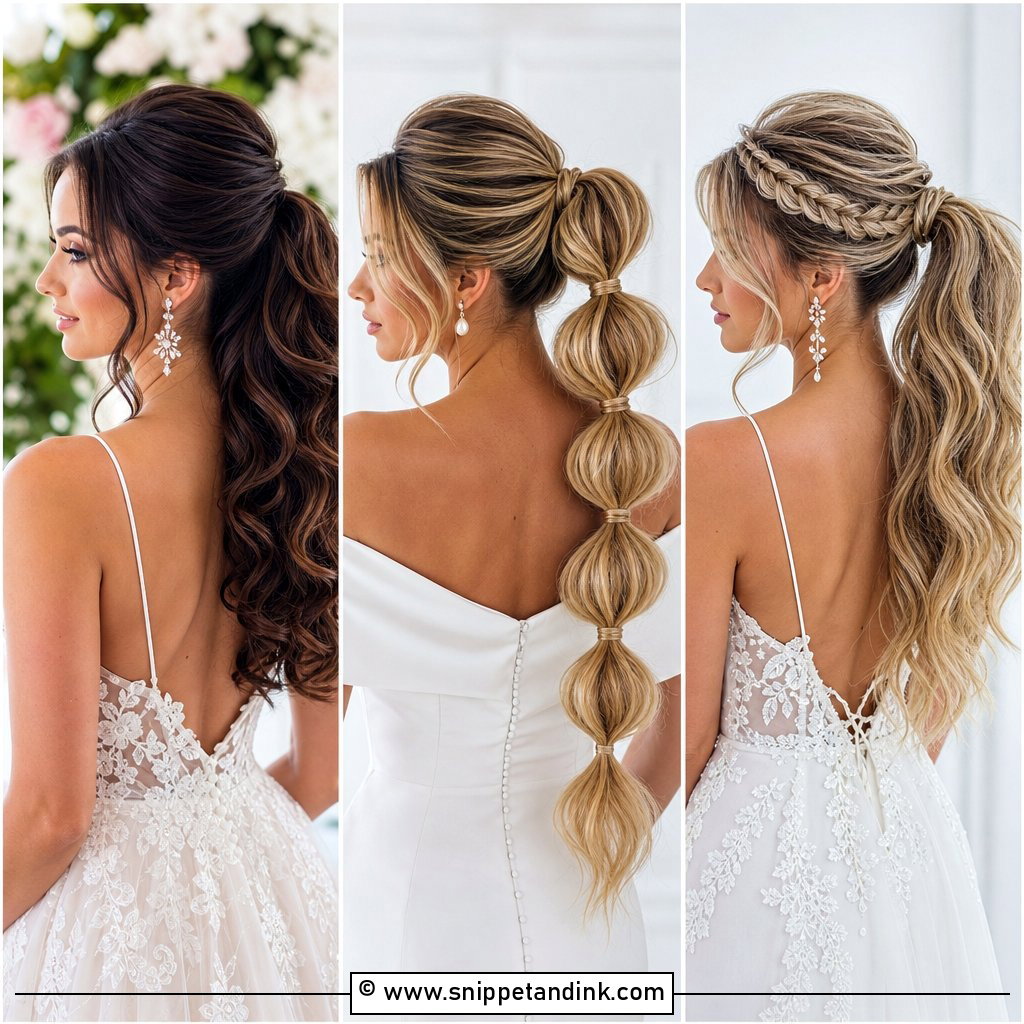
25. Bridesmaid Short Hair Down
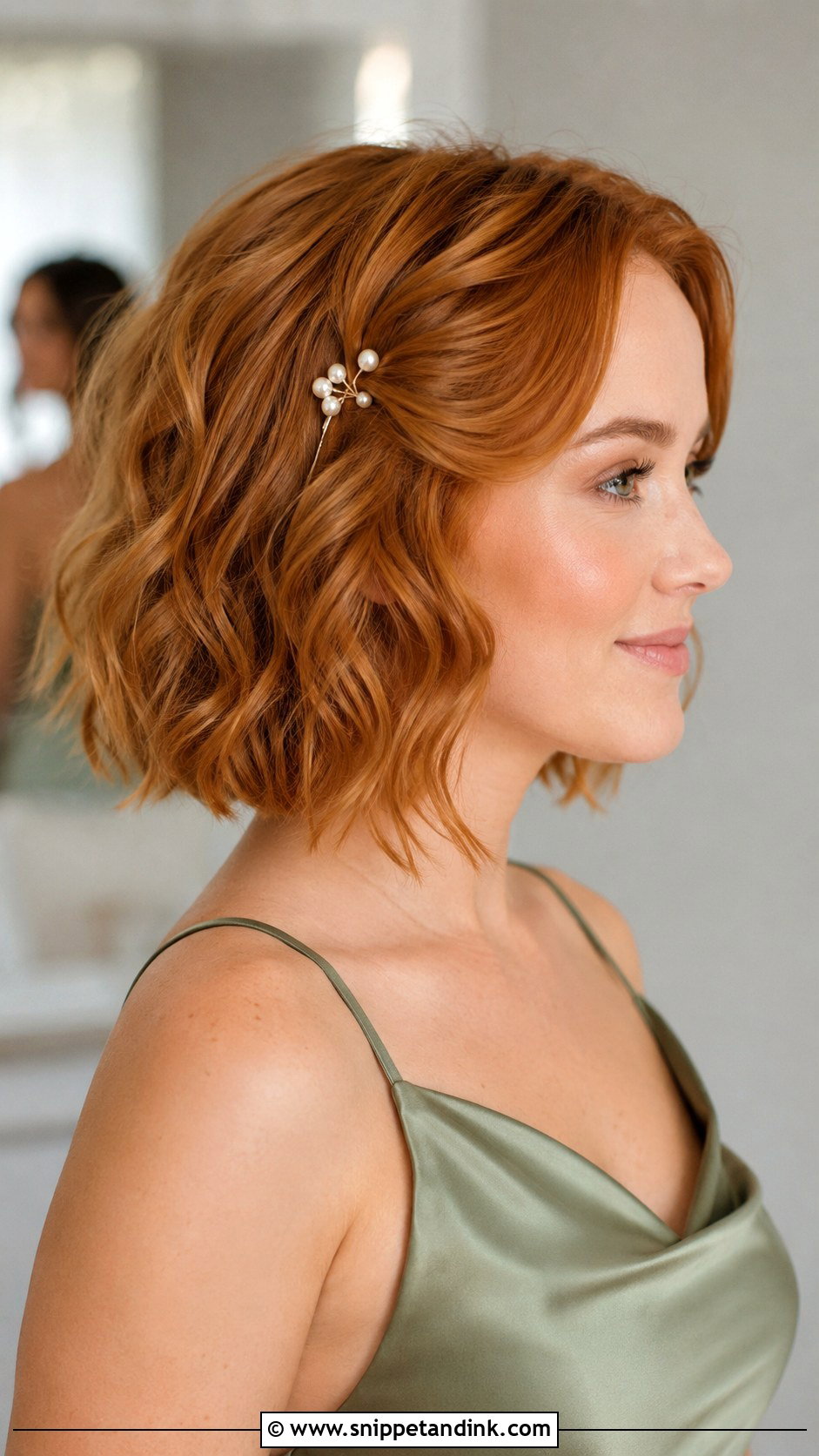
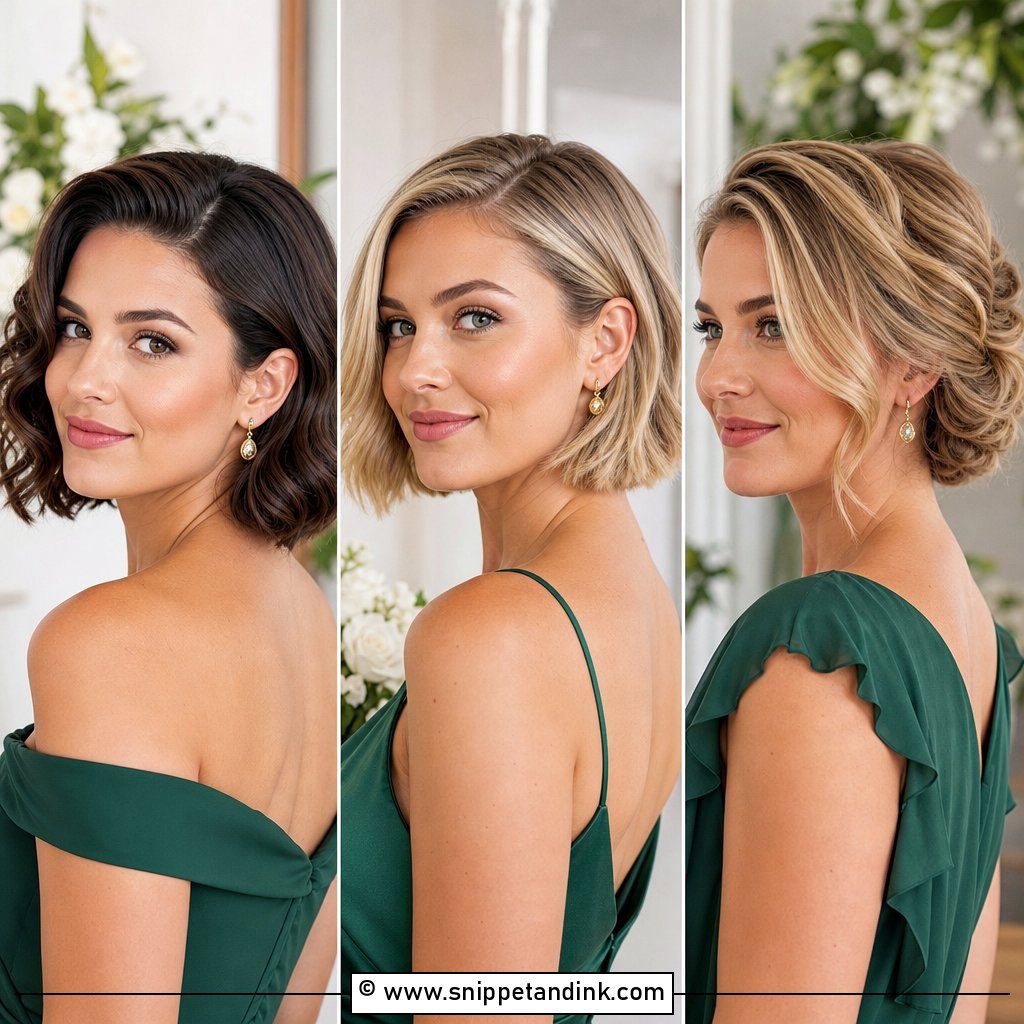
Short hair down needs to look deliberate, since there is little length to hide an unplanned shape. I work with the cut, not against it: a bob gets bends, a crop gets texture and smooth edges, a lob gets a polished wave. A deep side part brings glamour fast. Because the neck and ears are on show, short hair is the natural partner for statement earrings, and a single small clip adds the bridal note.
26. Bridesmaid Bob Hair Down
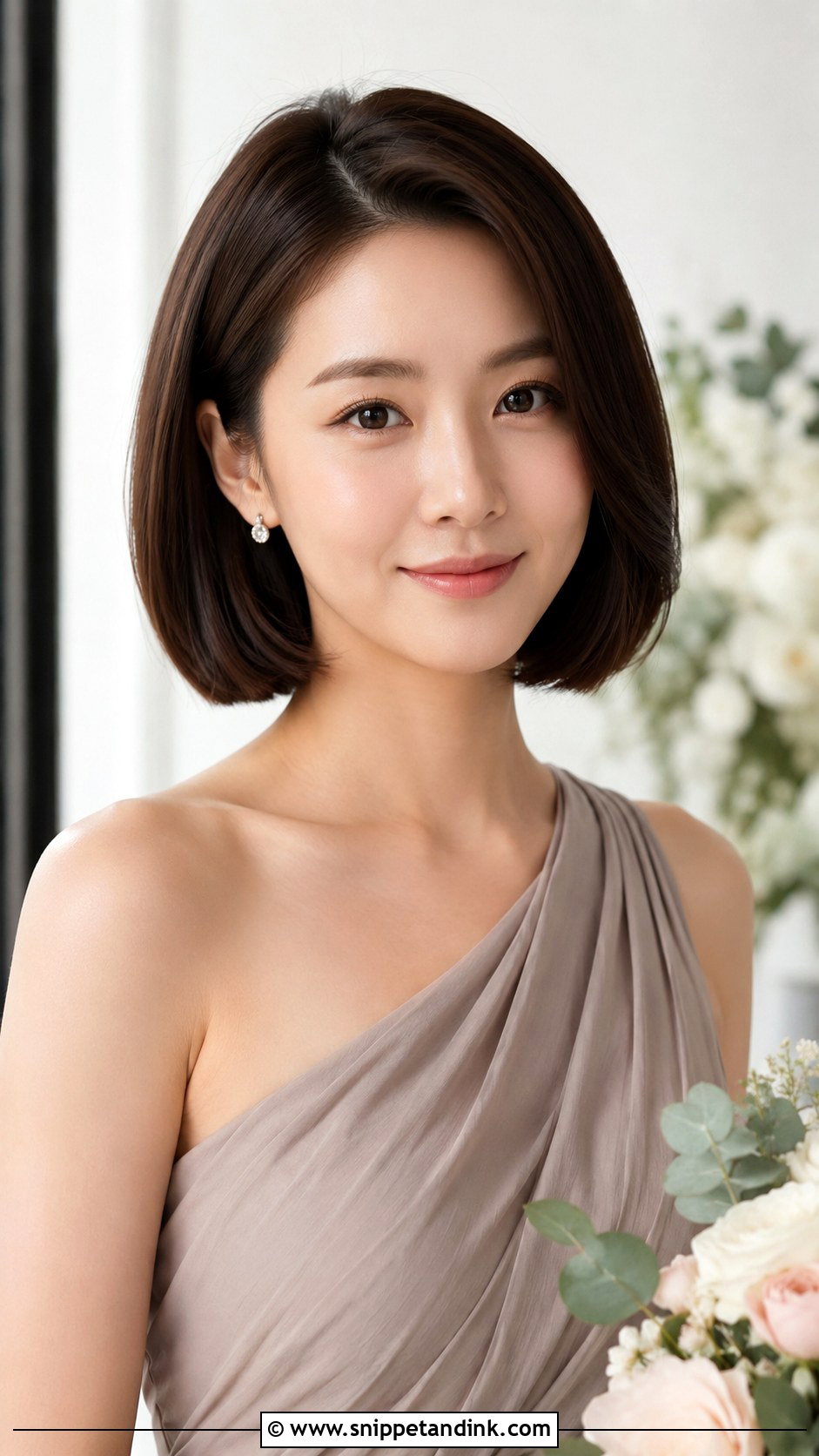
A bob already has a strong outline, so I keep my styling to shine and finish rather than adding volume. A slight S bend through the mid-lengths stops it from looking like an everyday blow-dry. Tucking one side behind the ear sharpens the line against square necklines, slip dresses and tailored gowns. This is the down style that needs the fewest touch-ups all day, which makes it quietly practical.
27. Bridesmaid Vintage Waves Down
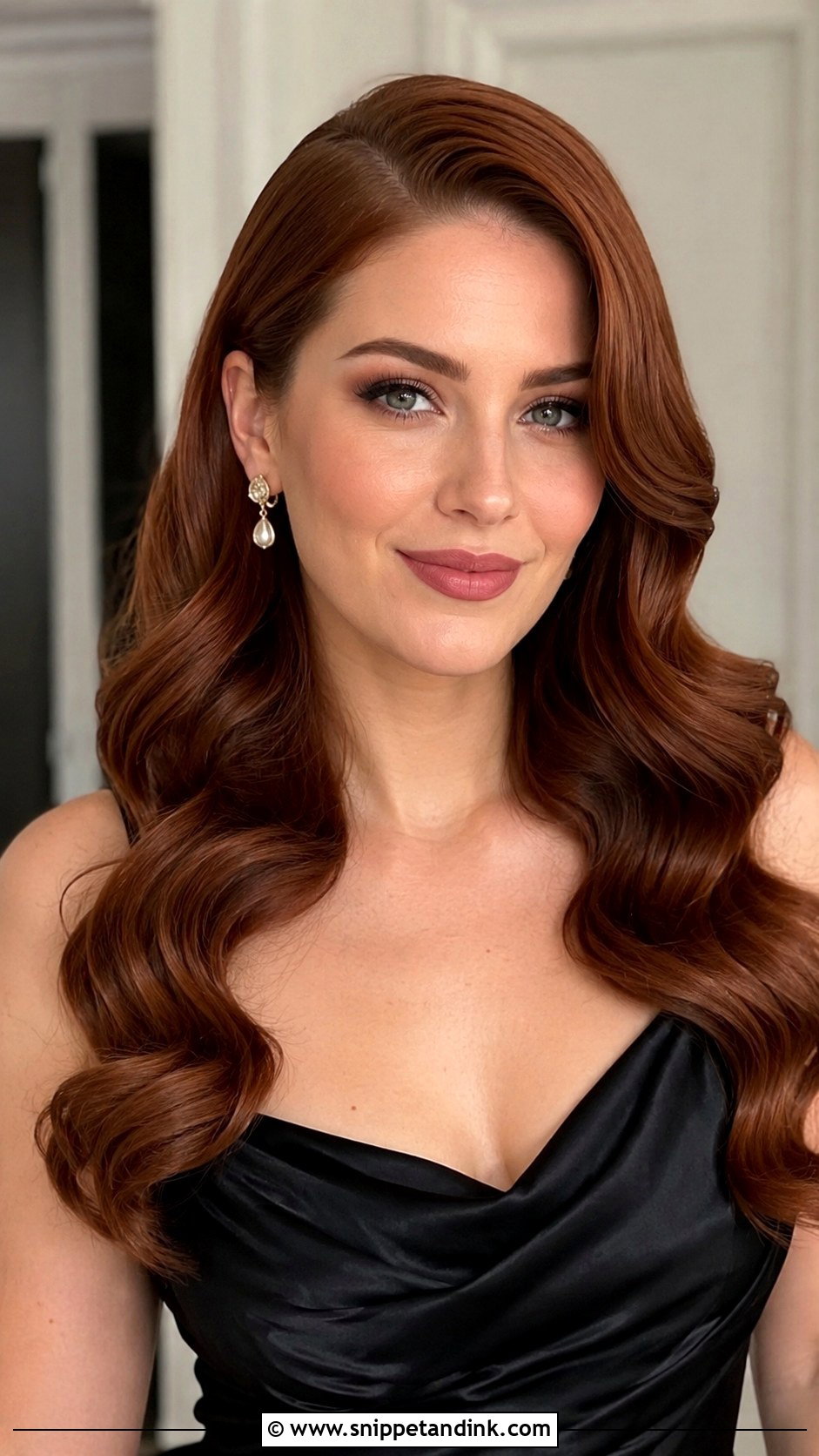
Vintage waves are finger waves’ softer cousin: tight, repeating S curves that sit close to the head and frame the face. They take longer than any other style here, so I schedule at least an extra fifteen minutes per bridesmaid on the timeline. I curl, pin every curl flat with a clip while it cools, then brush through and press the ridges in with clips again for a few minutes. Satin and velvet dresses suit the polish best.
28. Bridesmaid Boho Waves Down
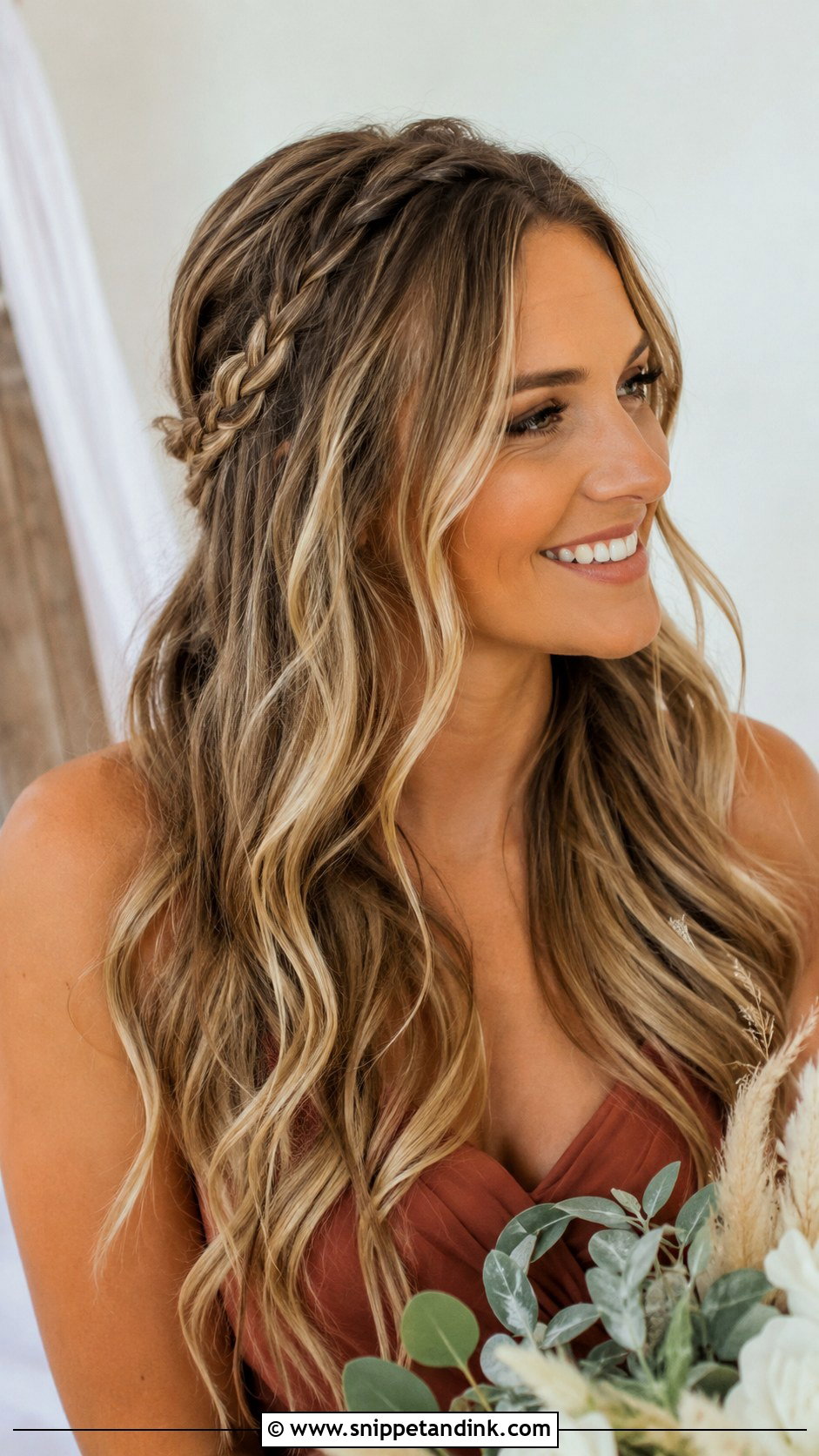
Boho waves should look like you slept on a braid and woke up lucky. I build them with a mix of iron sizes so the texture isn’t uniform, then add a sea-salt or texture mist for grip. A small braid or a floral pin fits the mood, but the style falls apart visually if anything looks too structured. Dry texture products can make hair feel crunchy, so I always follow with a little smoothing cream on the ends.
29. Bridesmaid Glam Curls Down
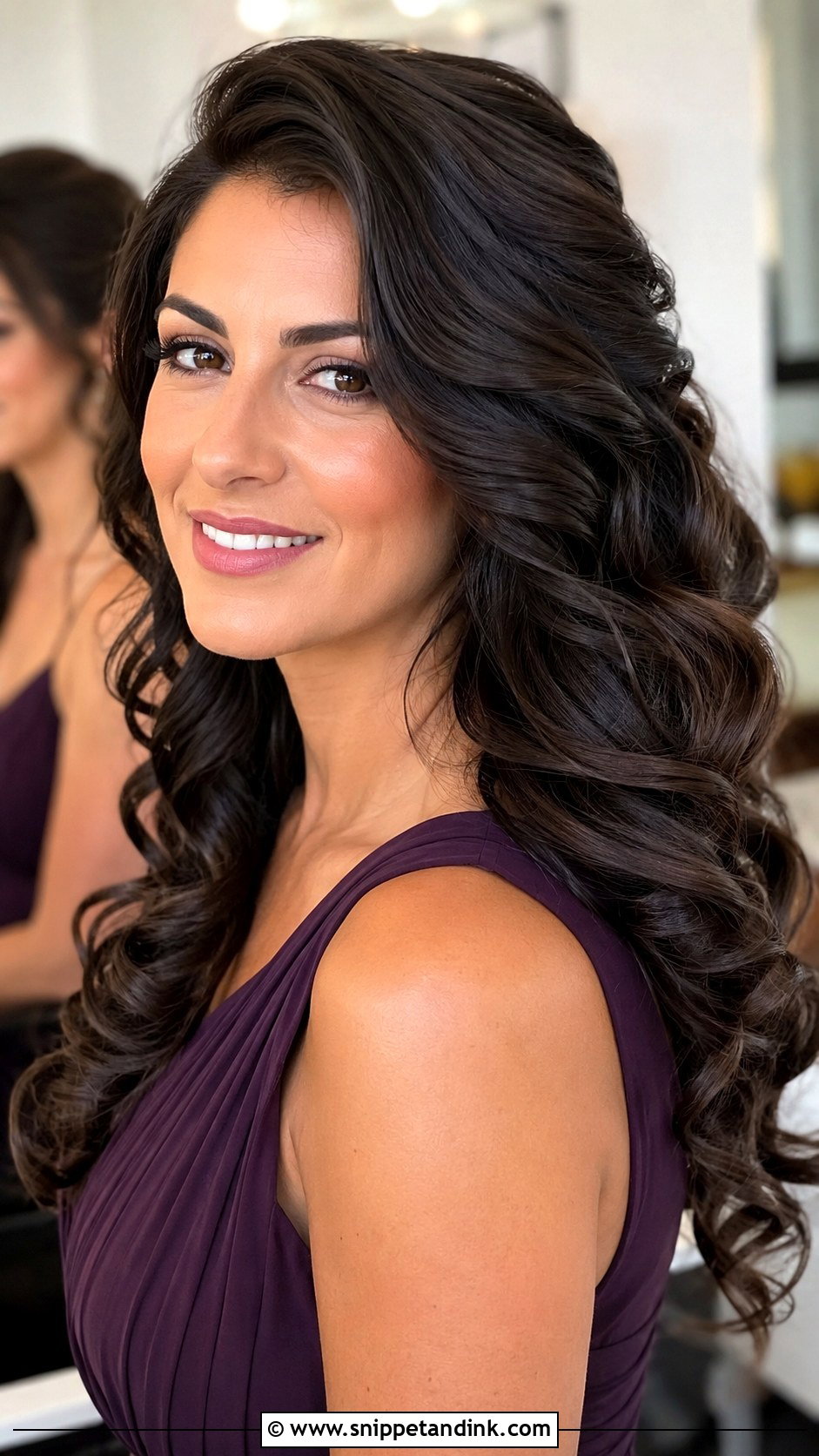
Glam curls are full, shiny and controlled at the hairline, with volume at the crown and real bounce through the length. They suit long and thick hair, and clip-in extensions are often what make them look expensive on finer hair. I set each curl with a strong hold spray while it is still hot, then brush out once everything has cooled so they still move. Keep accessories to almost nothing; the curls do the talking.
30. Bridesmaid Romantic Waves Down
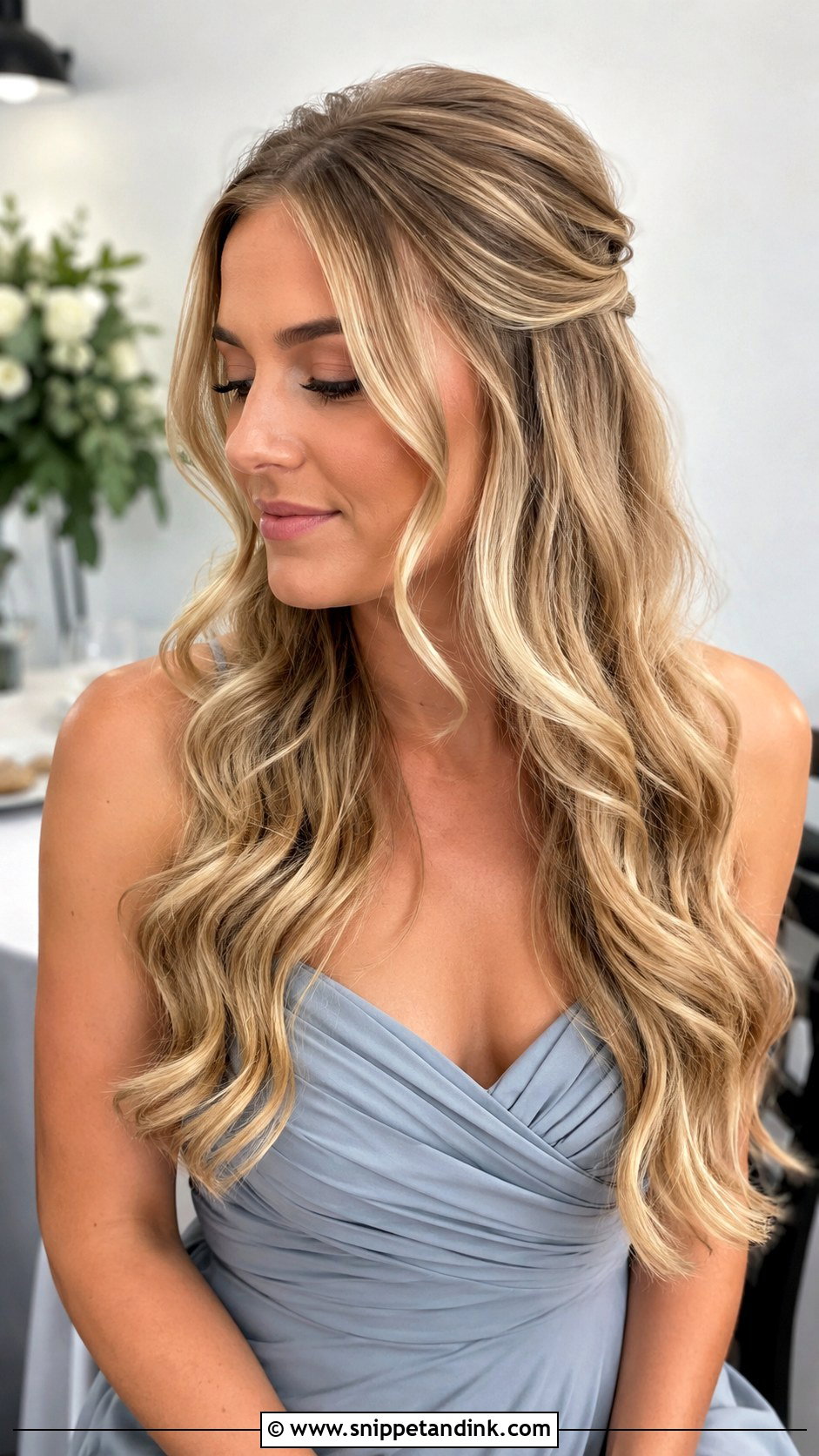
Romantic waves sit smooth near the scalp, widen through the mid-lengths and separate slightly at the ends, and they are the easiest look to match across a group. I lift the crown just enough to stop the head looking flat in group photos, and shape the front pieces toward each face individually. They suit almost every venue from ballroom to backyard. If a bridal party can’t agree on anything, this is usually where we land.
Six Textures in One Bridal Party Without Forcing Them to Match
The fastest way to make a bridal party look uncomfortable is to give everyone the same curl. Straight fine hair, thick wavy hair and type 4 coils simply do not respond to the same tool. I’d rather match one element across the group and let the rest follow each texture.
- Match the part. Everyone on a deep left part reads as coordinated even if one has sleek hair and another has a coily afro.
- Match the accessory. The same pearl clip or bow placed in the same spot ties very different hair together.
- Match the direction. If every face-framing piece sweeps back away from the face, the group looks styled by one hand.
I also adjust products per head. Fine hair gets mousse and a lighter spray so it does not collapse; thick hair gets smaller sections and stronger hold; curly hair keeps its gel and is diffused rather than re-curled. The finish looks consistent because the shapes agree, not because the methods do.
The Small Bag That Rescues Waves at Hour Eight
Loose curls relax over the day. That is normal, and a little relaxing is what makes them look soft in the evening photos. When it goes further than that, a tiny kit in the maid of honor’s bag fixes most of it in under five minutes.
- A travel flexible hairspray and a few bobby pins in her hair color.
- Blotting papers or a little dry shampoo for roots and curtain bangs.
- A small claw clip, so a bridesmaid can twist the front back for ten minutes while a curl resets during cocktails.
- A wide-tooth comb only; a brush will pull loose waves straight.
If a section has gone completely flat, twist it around a finger, pin it to the head and leave it while she eats. Release it before the first dance and it springs back far better than people expect.
Why I Plan Down Hair Around the Last Dance
Down styles give each bridesmaid room to show her own length and texture while the group still reads as one. Soft and Hollywood waves, half-up details, braids, curls, sleek finishes and small accessories each carry a different mood without leaving the loose-hair theme. What decides the right one is less the picture and more the conditions: the venue, the neckline, the humidity and how many hours it has to last. Prep it properly, let every section cool, and loose hair can still look styled when the music stops.
You'll Like These Ideas:


Leave a Reply