
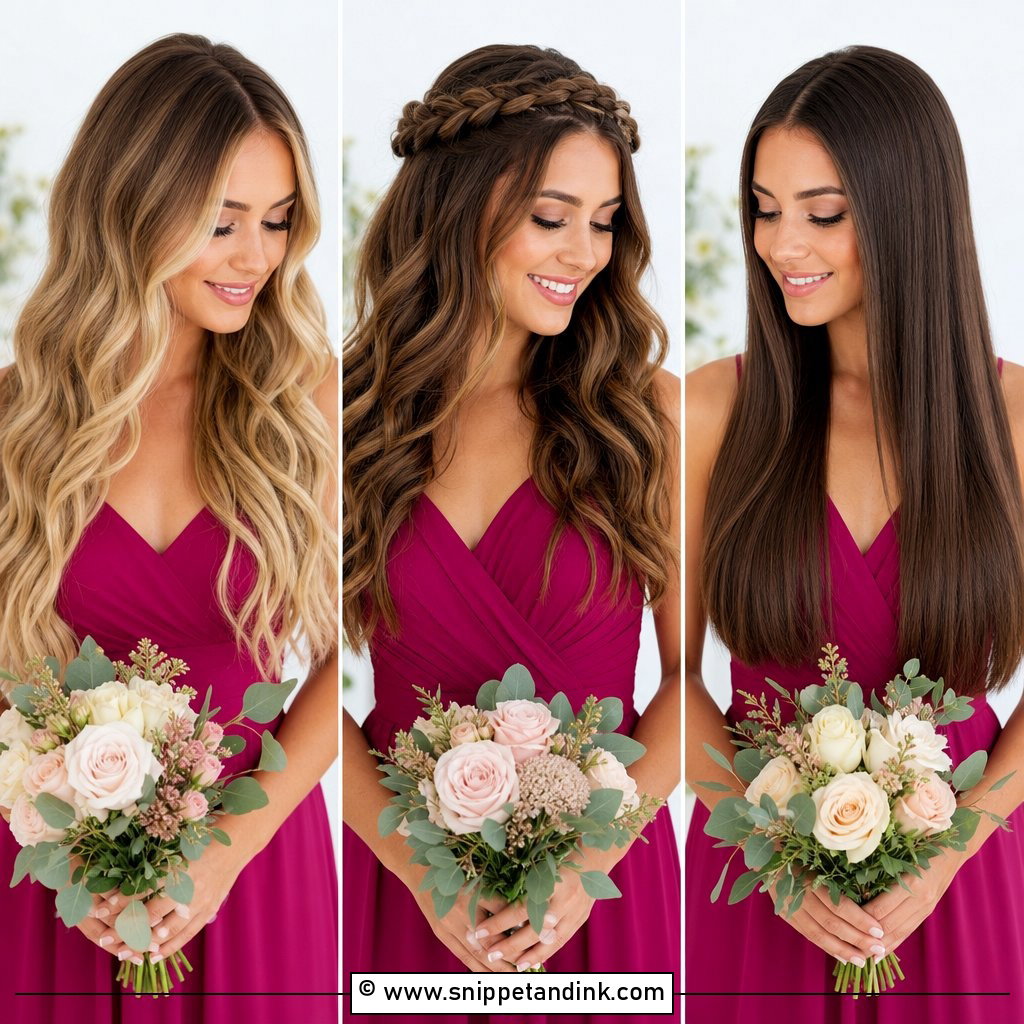
Waves are my answer for nearly any bridal party, from a beach ceremony to a courthouse lunch. They can go down, back, pinned, braided or up and keep their movement either way, and they adapt to different lengths and densities. The part people underestimate is texture: a beachy bend and a brushed Hollywood wave are different styles made with different tools, and picking the wrong one for the venue is the most common mismatch I see. So before the twenty looks, a quick word on which wave you actually want.
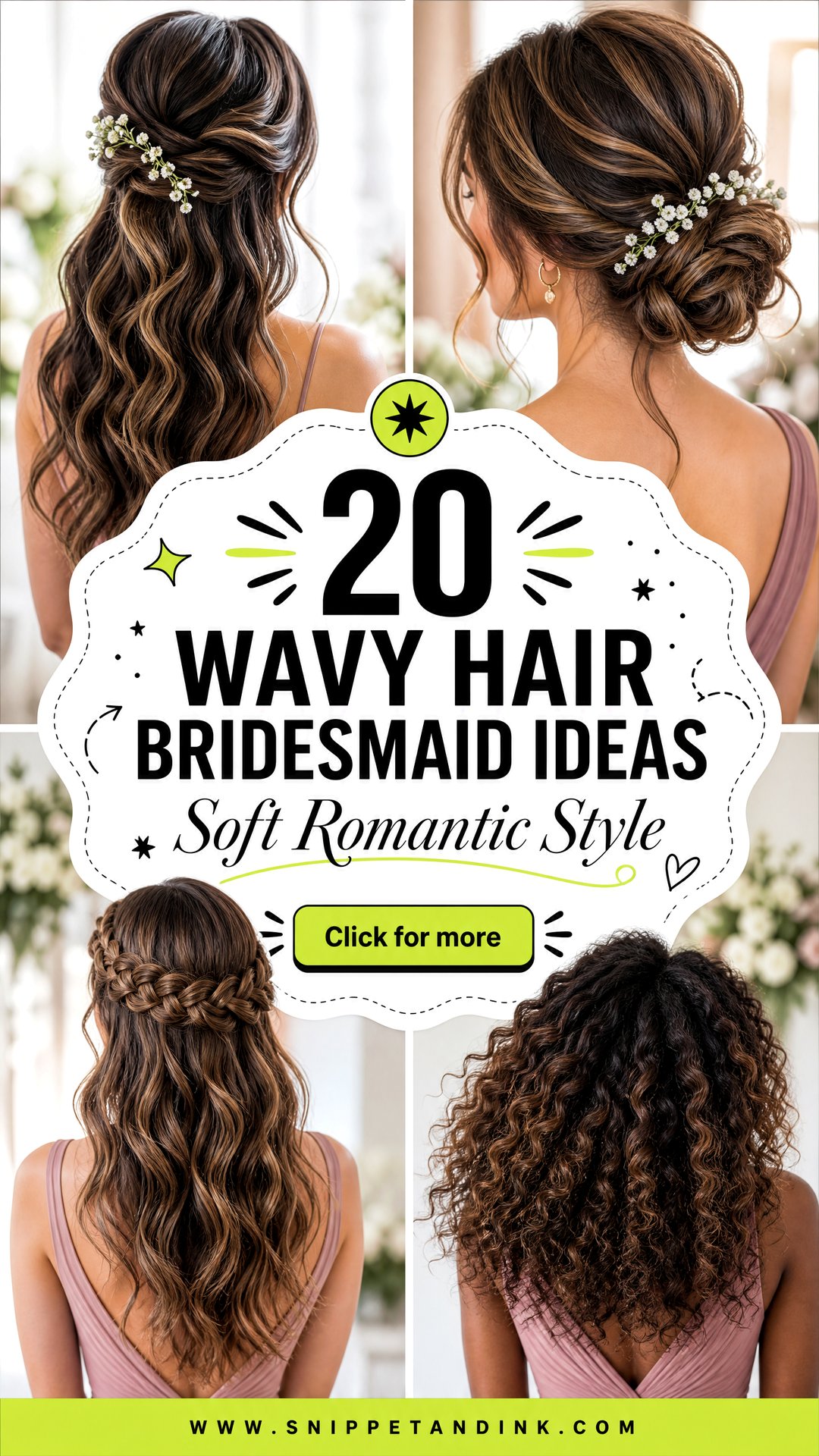
Beachy, Brushed and Glossy Waves Are Three Separate Styles
Ask five bridesmaids for waves and you’ll get three different pictures. I always ask which one before I plug in a tool.
Beachy bends
Made with a flat iron or a wide barrel, with the ends left straight. They’re loose and slightly matte, right for outdoor and coastal weddings. They also drop fastest, so they need a texture spray built in, not just hairspray on top.
Brushed-out curls
Curled with a medium barrel, pinned to cool, then brushed until the curls merge. This is the classic bridesmaid wave and the longest-lasting of the three, because the set happens before the brush ever touches it.
Glossy Hollywood waves
Every curl rolled in one direction, cooled, brushed and pressed with clips into an S pattern. It’s the most formal, takes the most time per person and shows every inconsistency, so it only suits hair that takes heat evenly.
Agree on one wave for the whole party, and the shapes below can vary freely without the group looking mismatched.
1. Wavy Half Up Half Down Bridesmaid Hair
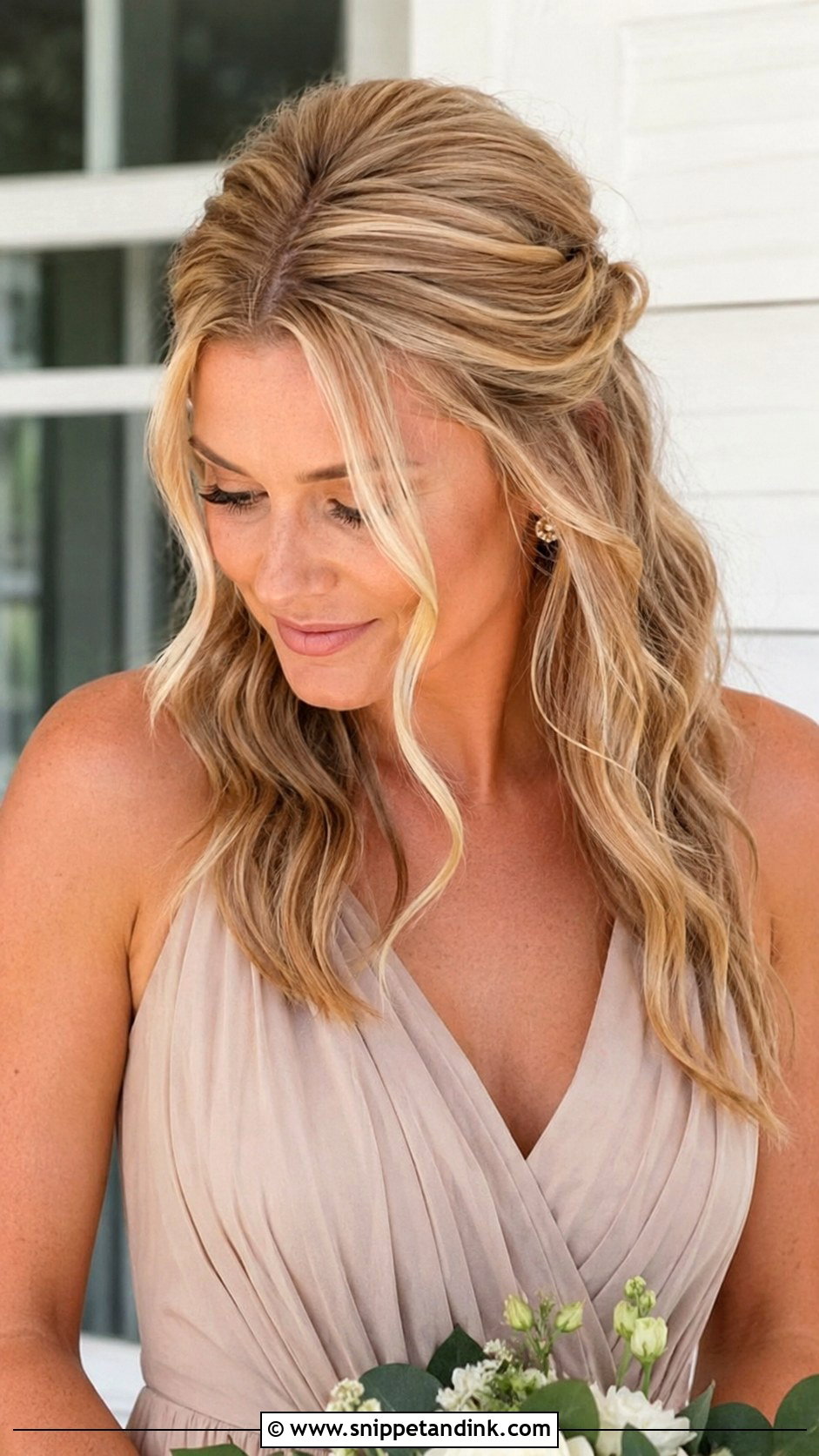
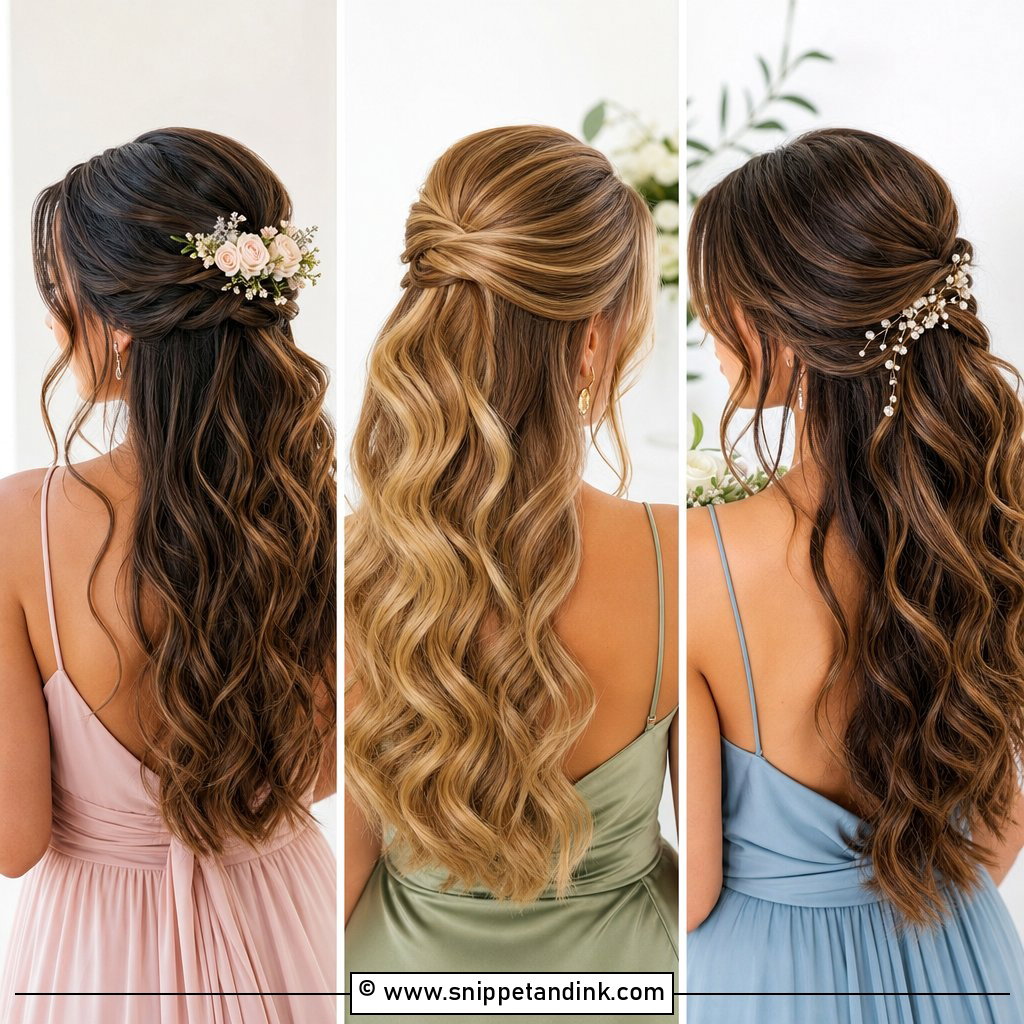
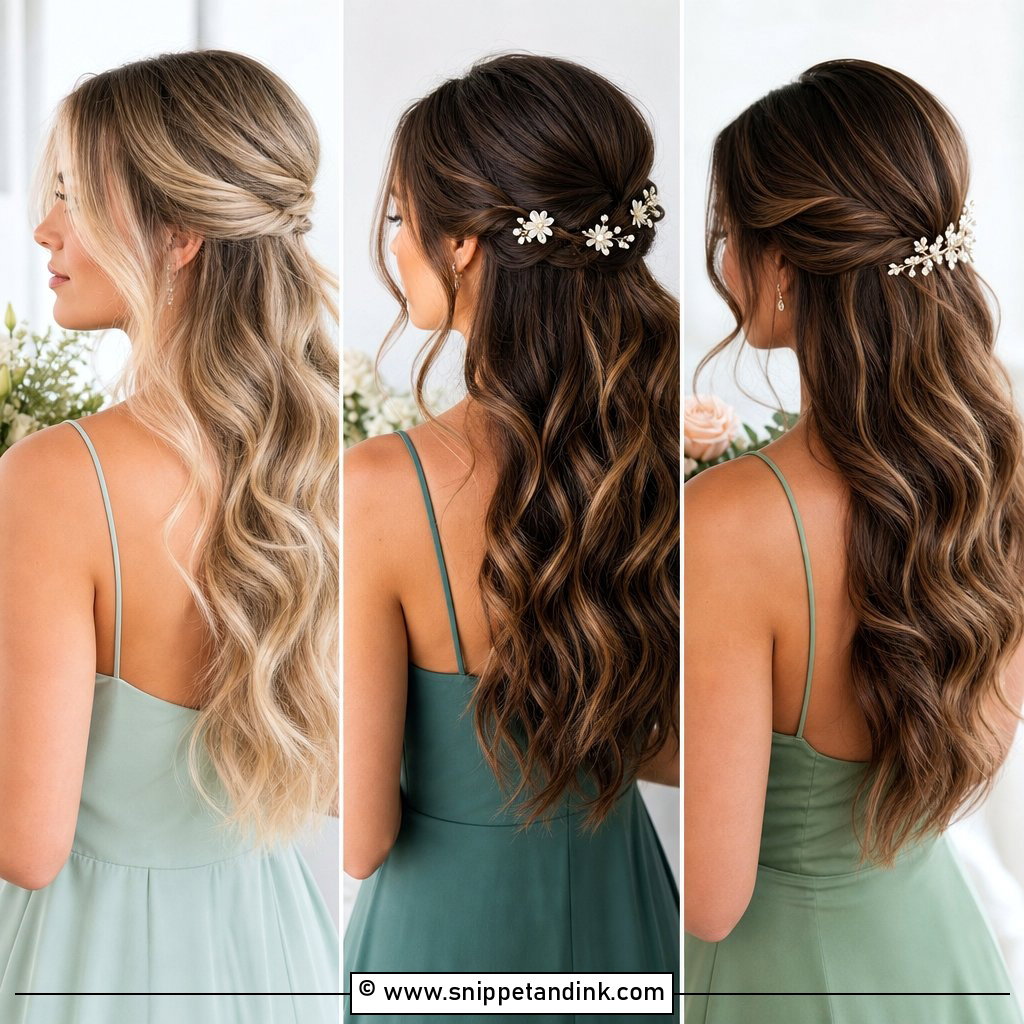
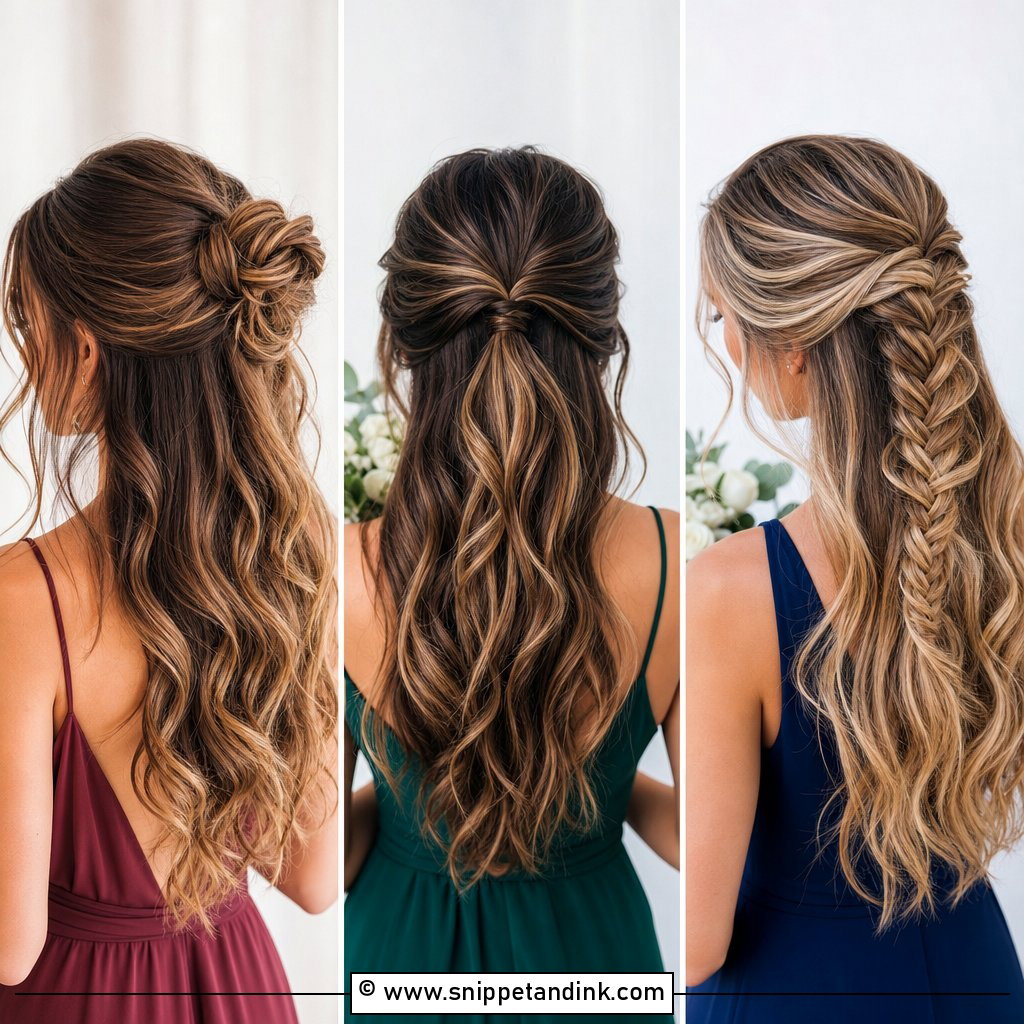
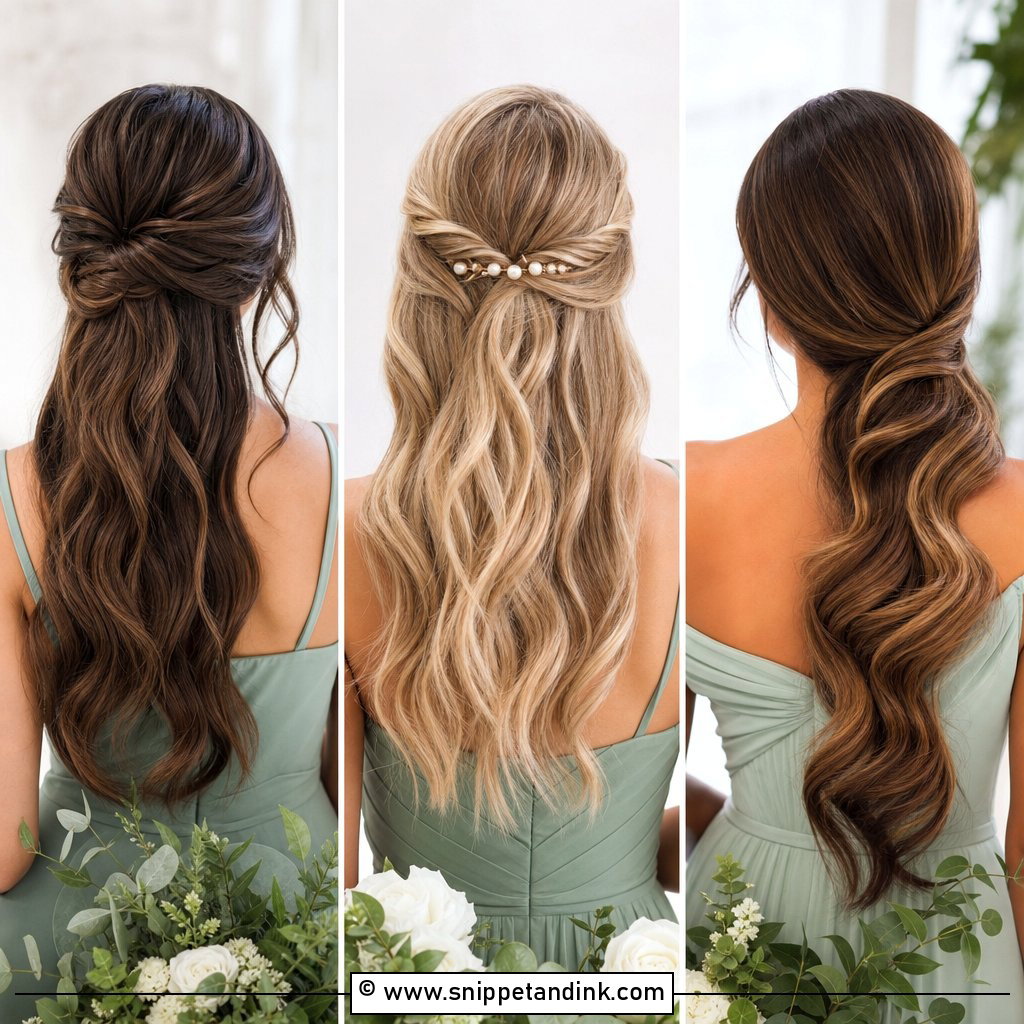
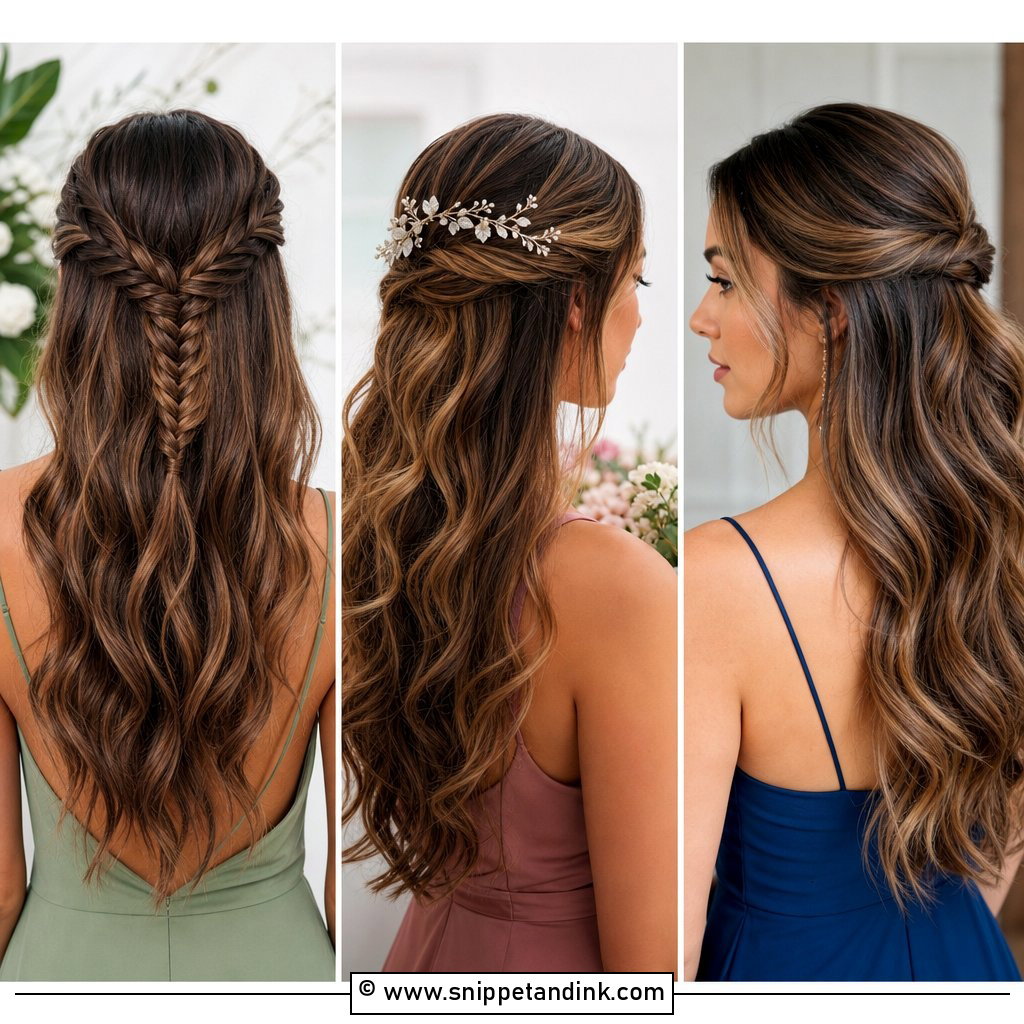
Half up is the low-risk pick. The top section keeps hair out of the face and the waves carry the length. It’s built for medium and long hair, where there’s room for a twist, a few pins or a small flower at the back. Strapless and off-the-shoulder dresses leave the shoulders clear for the waves to land. Ask for smooth roots and hidden pins crossed at the back; crossed pins grip better, so the top won’t look strained to stay put.
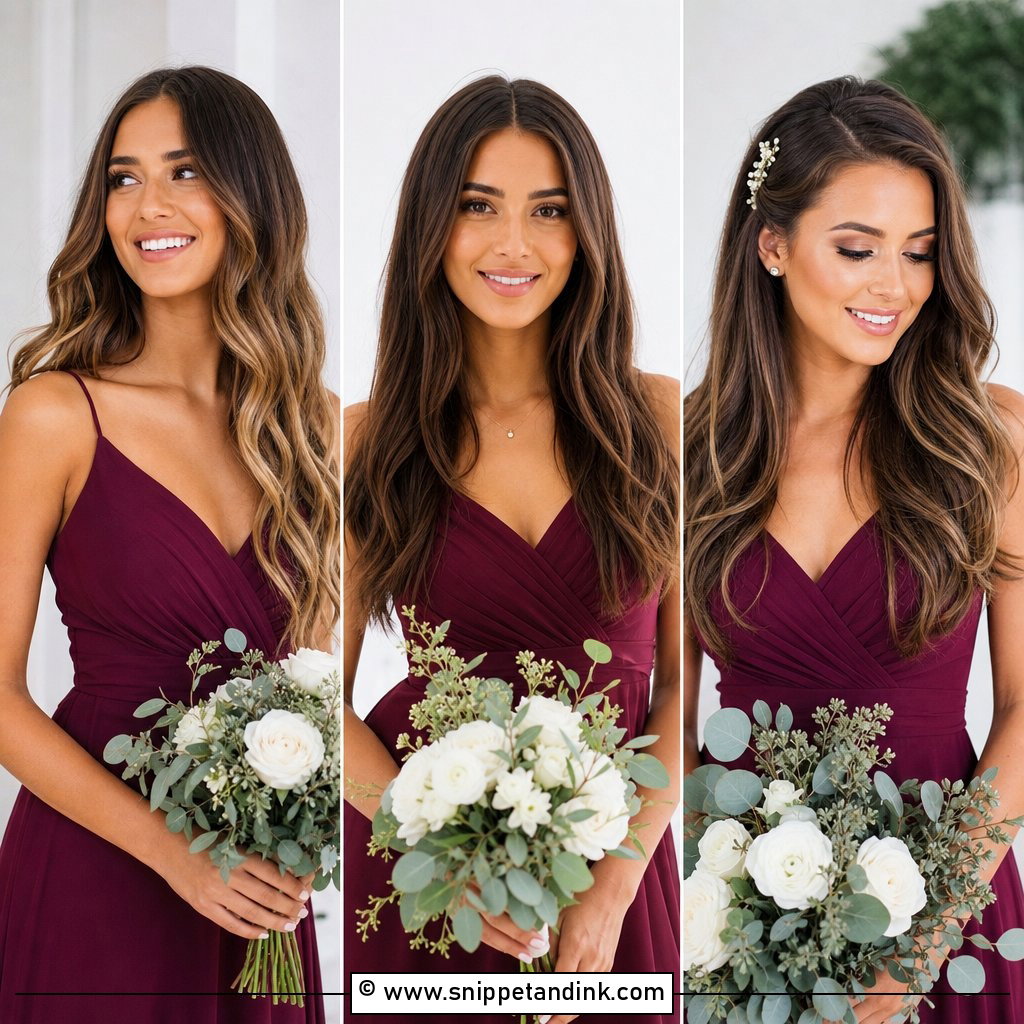
2. Loose Wavy Bridesmaid Hair Down
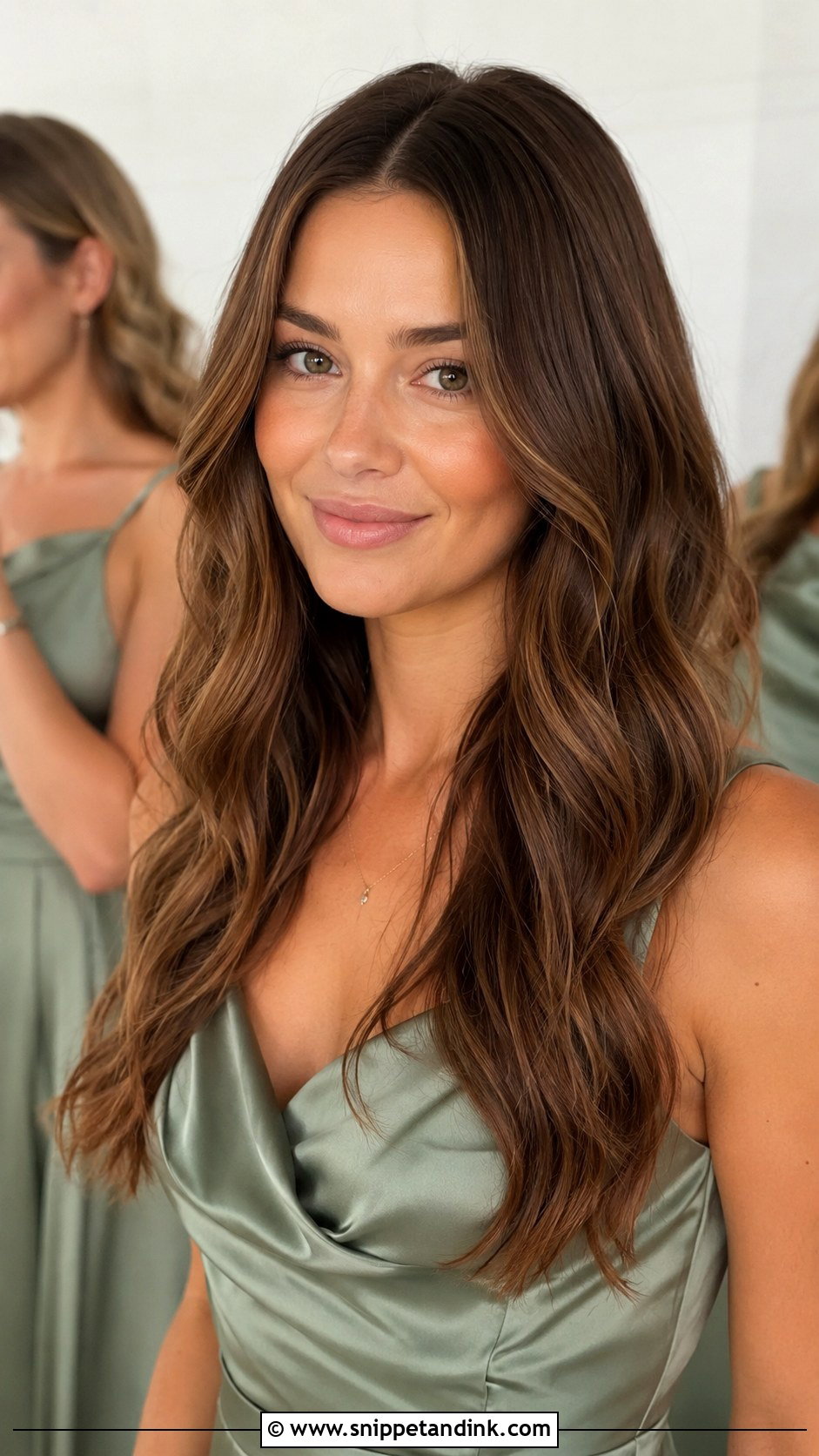
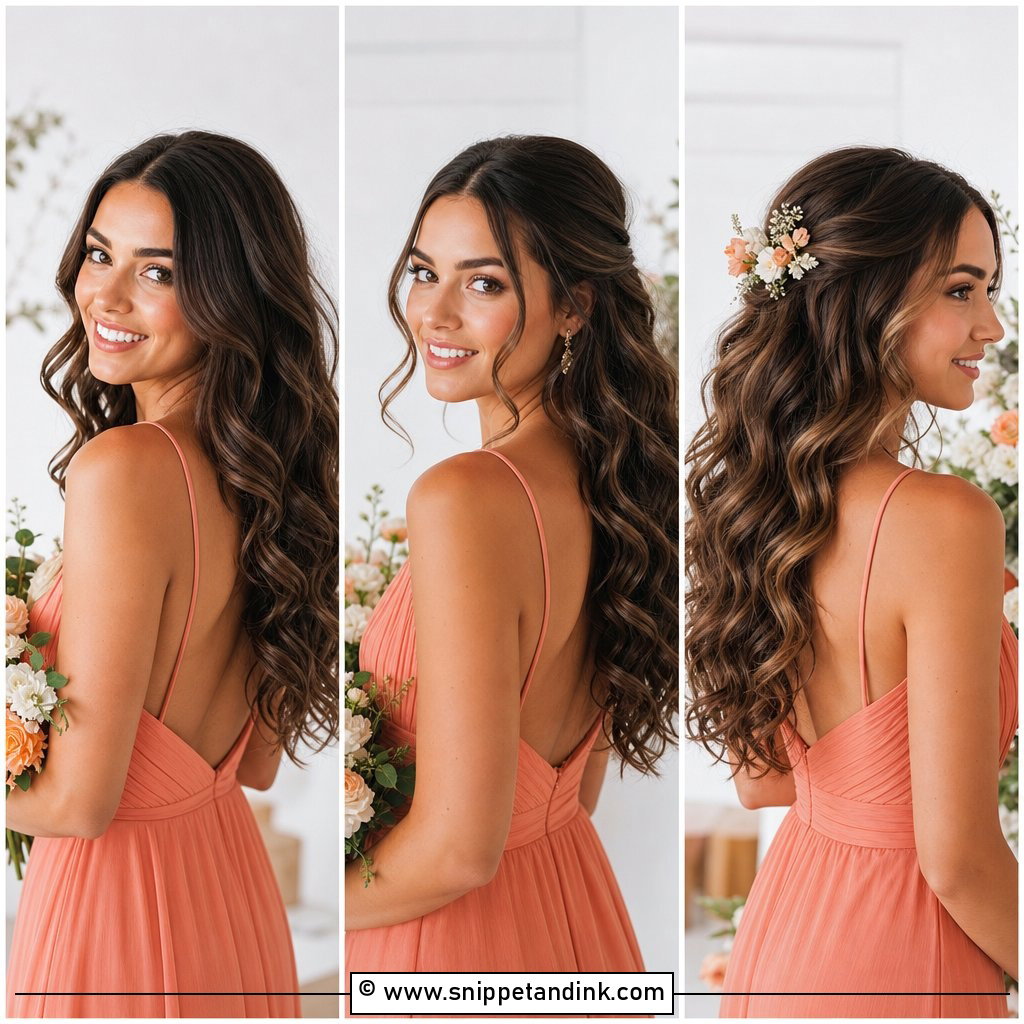
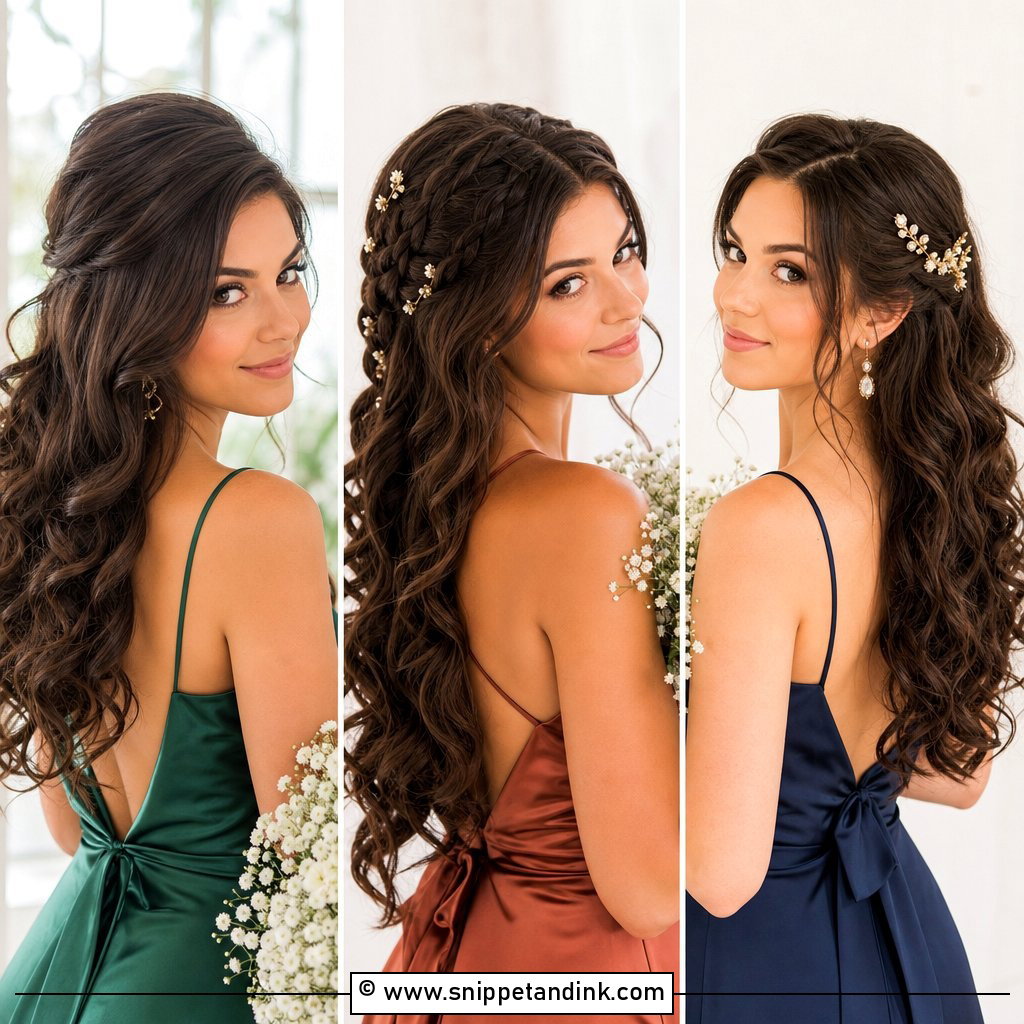
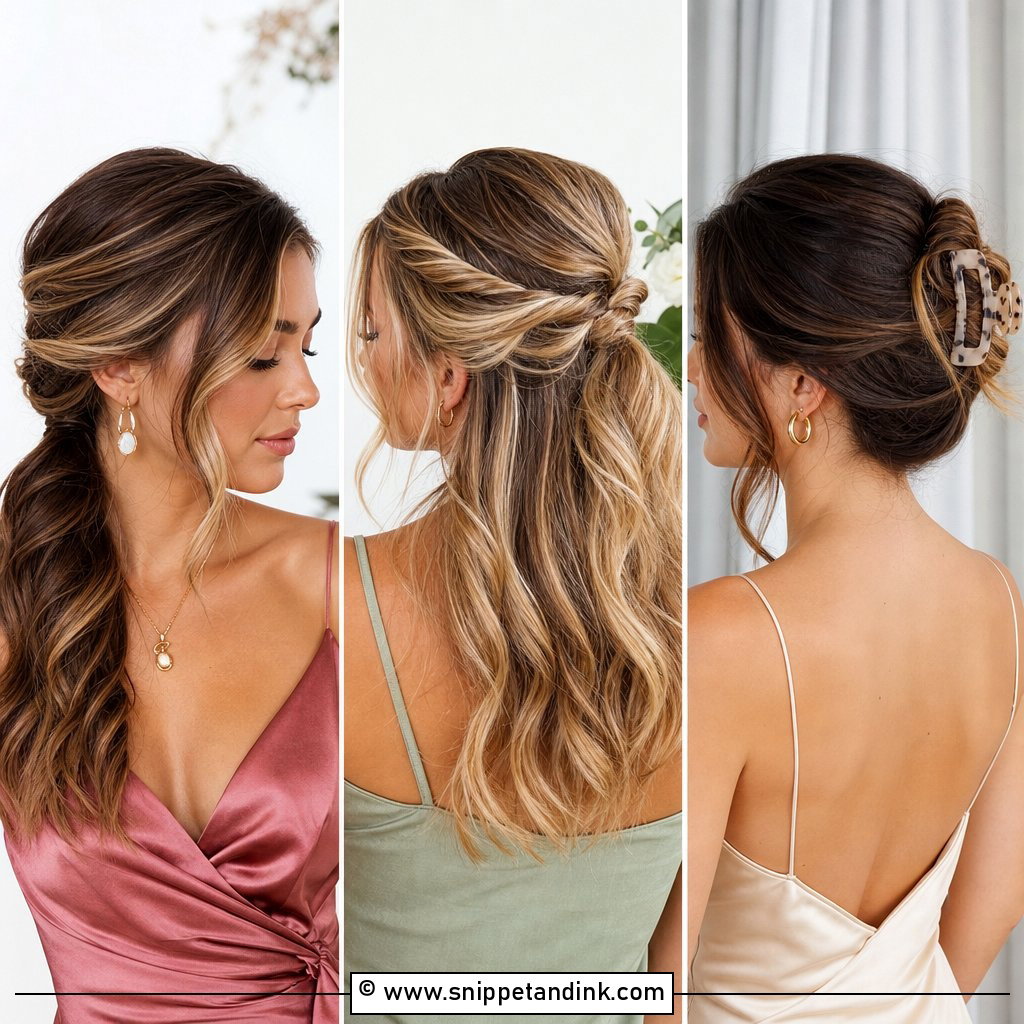
Fully down is the bridesmaid style most likely to fall flat, so it needs more prep, not less. I start the wave around cheekbone level instead of at the root, which keeps the crown smooth and puts the movement where the camera sees it. A center part reads modern, a side part classic. Shine and a flexible spray finish it. I suggest it to the bridesmaid who hates pins, provided her hair has the density to stay full.
3. Side Swept Wavy Bridesmaid Hair
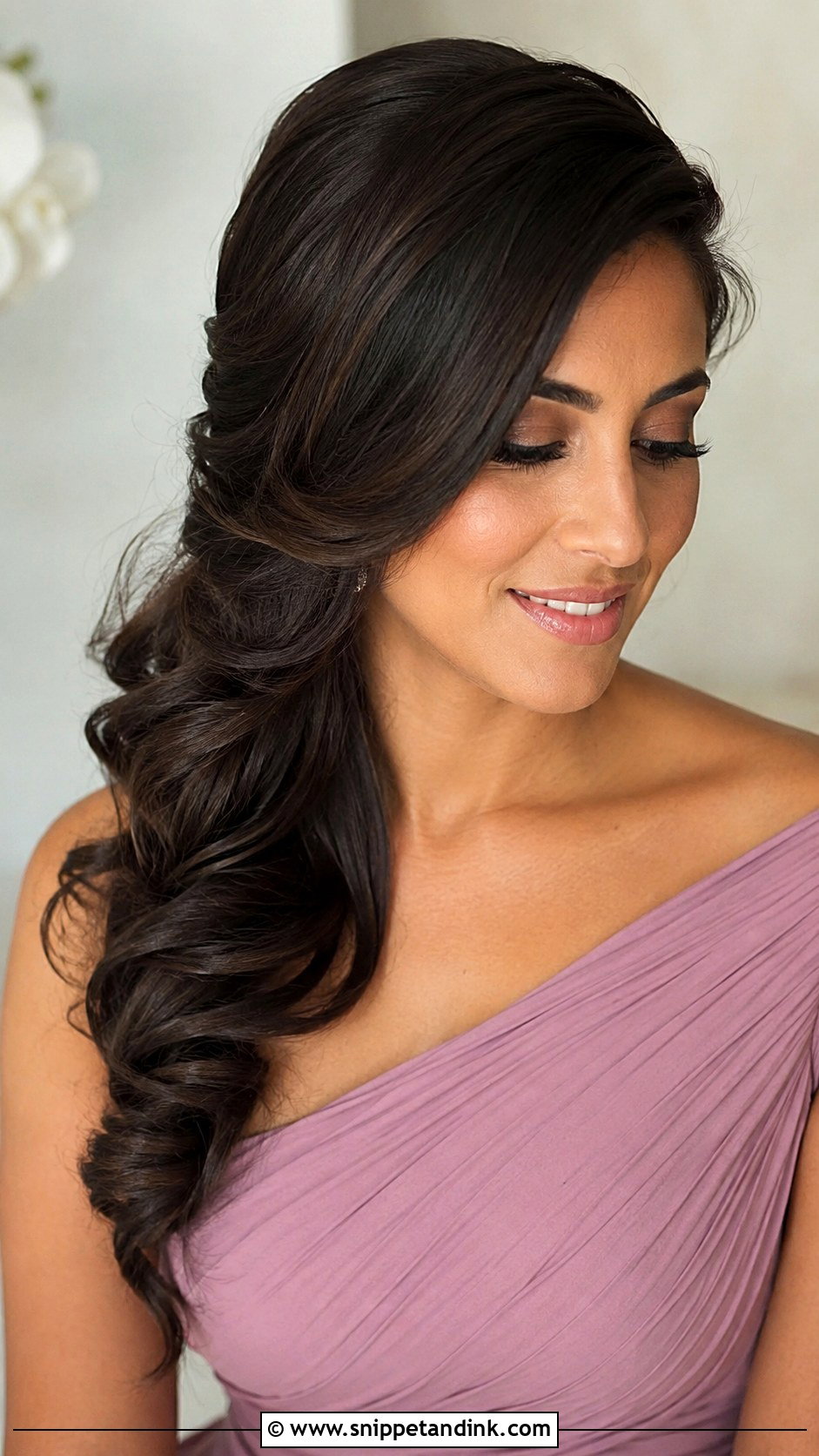
Gathering waves to one side opens up the neckline and earring on the other. One-shoulder and halter dresses, or gowns with an interesting back, benefit most. I twist the hidden side lightly before pinning, because a twist gives the grips something to lock into. From the front and in profile, the waves build shape around the face. Keep any comb or pearl clip modest so it doesn’t pull focus from the bride.
4. Wavy Low Ponytail Bridesmaid Hair
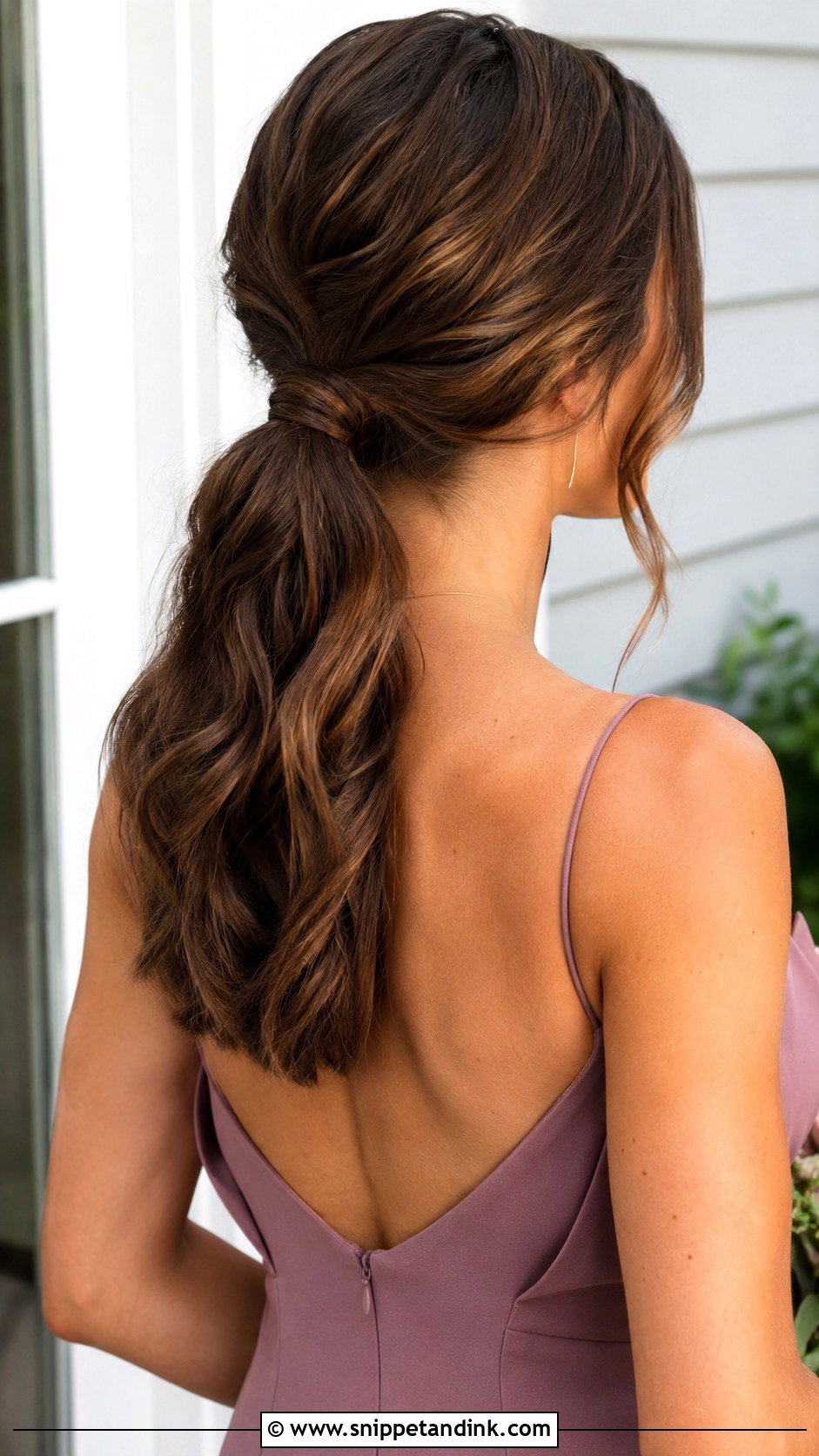
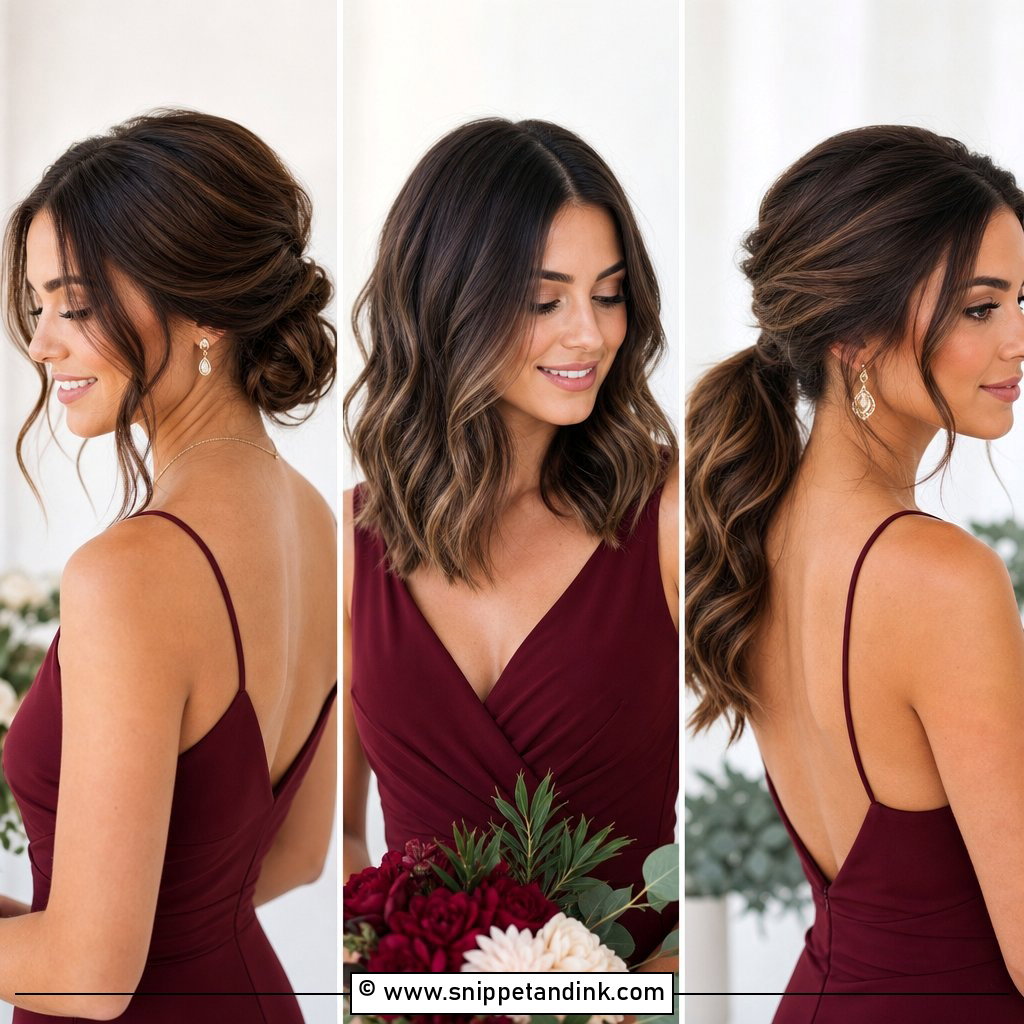
Wind is the low ponytail’s best argument: gathered hair doesn’t blow across faces in the outdoor group shots. The crown can be smoothed flat for a sleek wedding or lifted for something softer. A strand wrapped around the elastic turns it formal. Sitting at the nape, it puts very little tension on the scalp, so it’s still comfortable at midnight. Pull out face-framing pieces after it’s secured, not before, so they fall where you want them.
5. Wavy High Ponytail Bridesmaid Hair
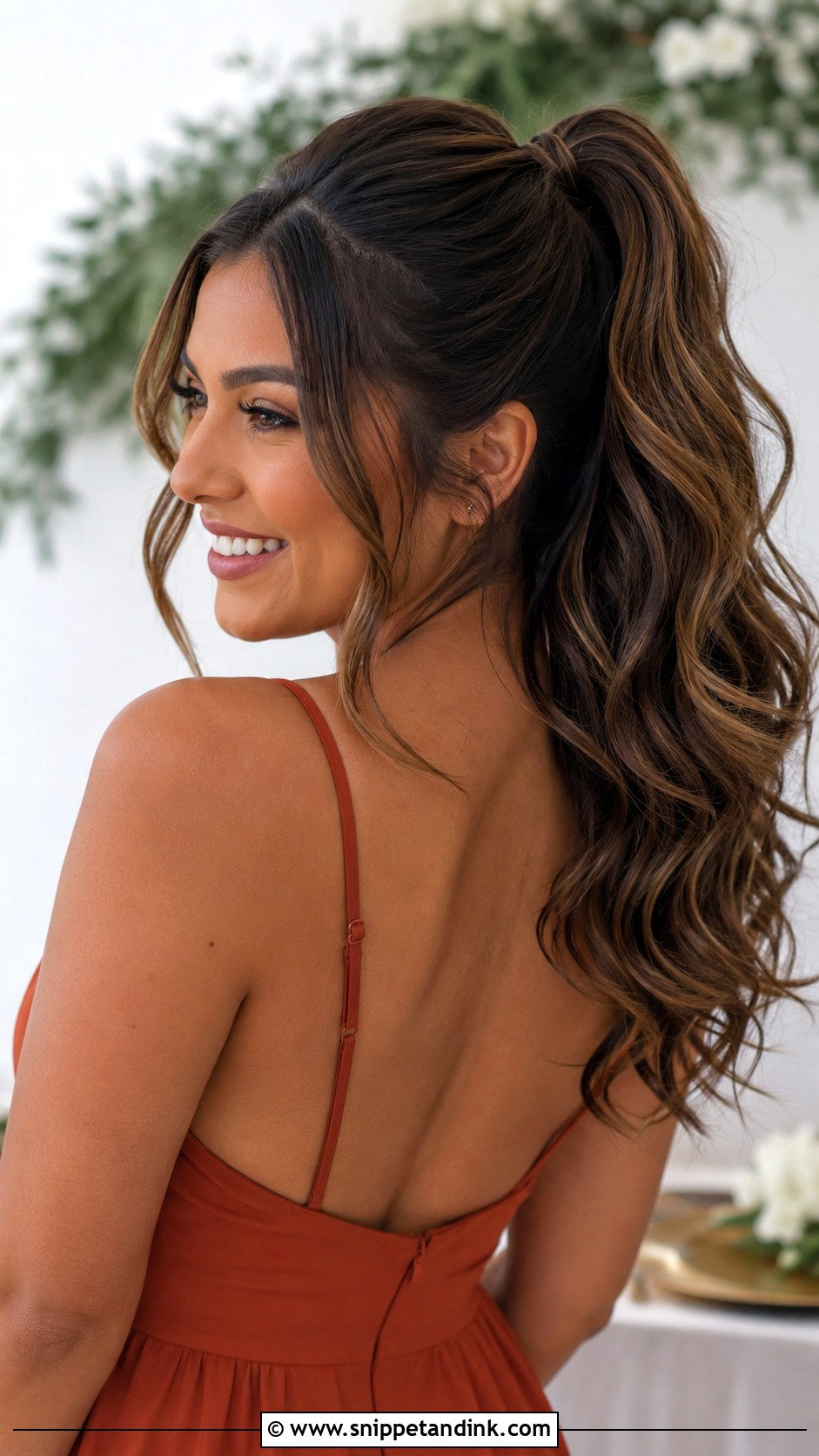
A high ponytail lifts the face and brings some glamour. It only looks bouncy with enough density, so I keep it for medium to long, fairly thick hair or add a clip-in to the tail. The base must be smooth, the elastic wrapped and the waves brushed until they blend rather than hanging as separate curls. Weight is the catch: a heavy high tail drags and can give a headache by the reception, so I anchor it with two elastics and crossed pins under the base.
6. Wavy Low Bun Bridesmaid Hair
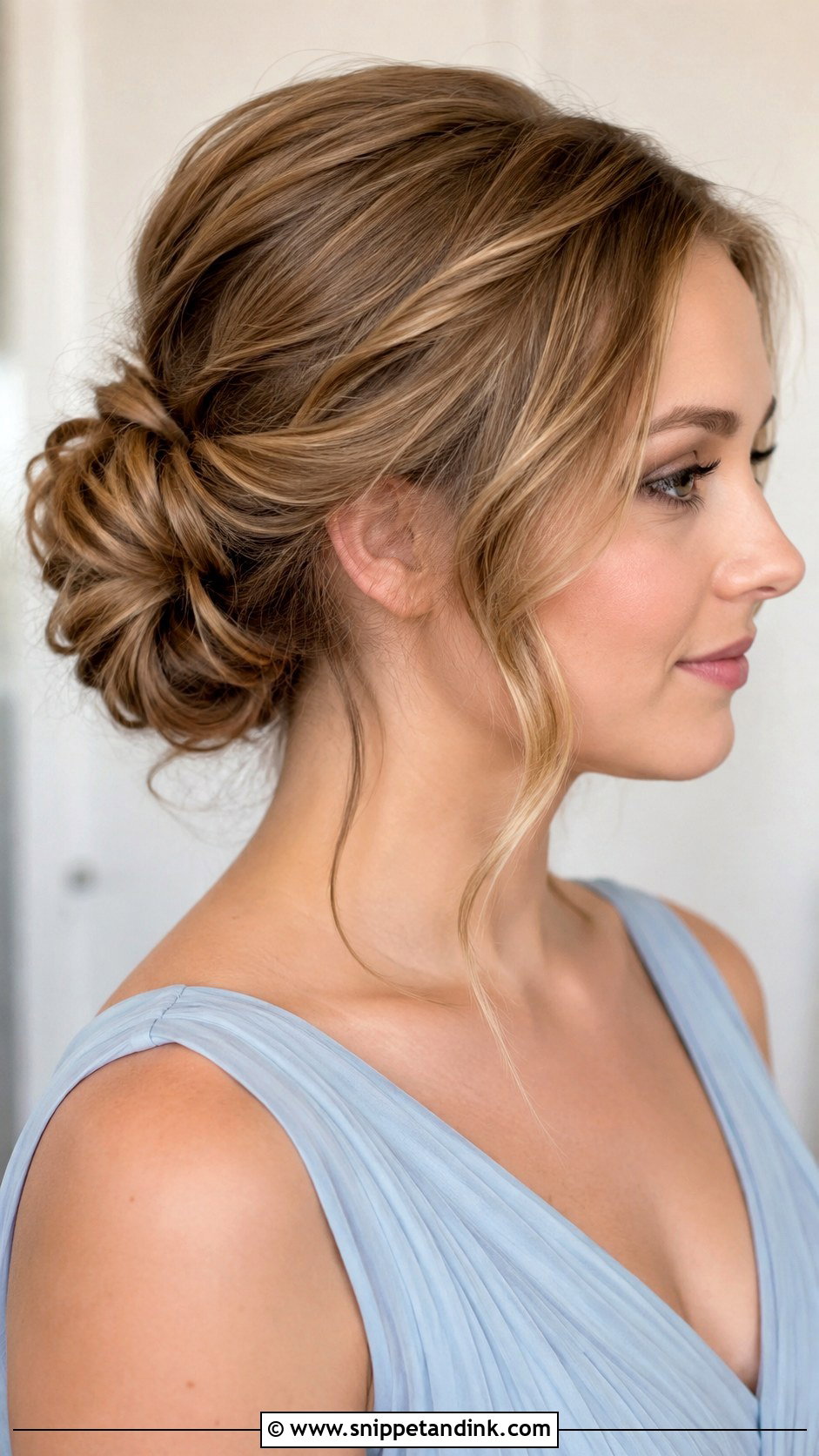
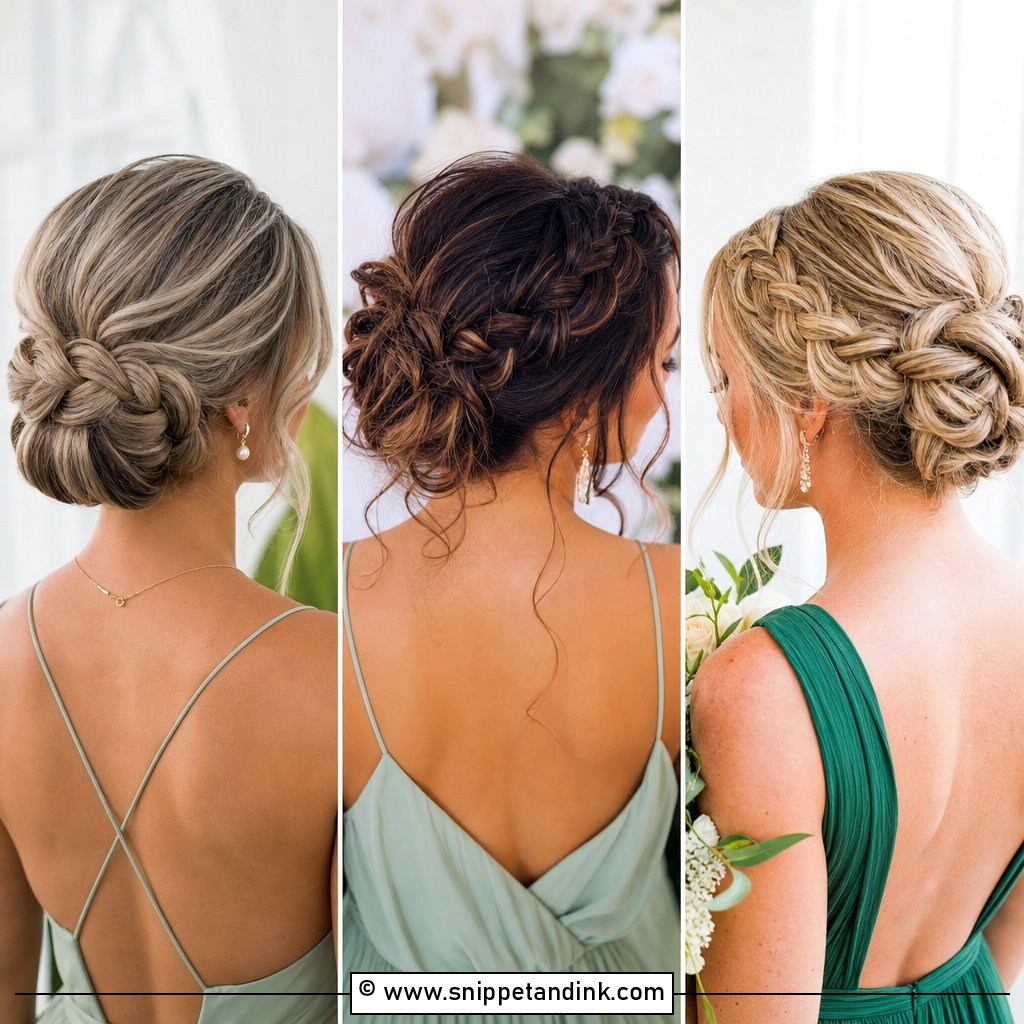
Pinned low, a waved bun has more depth than a sleek knot, and it keeps hair off the shoulders in warm weather. I leave it slightly airy instead of pulling it tight; pulled too tight, it shrinks into something that looks like a work bun. Formal ceremonies and dresses with detailed necklines both suit it. A few soft pieces left at the face finish it.
7. Messy Wavy Bun Bridesmaid Hair
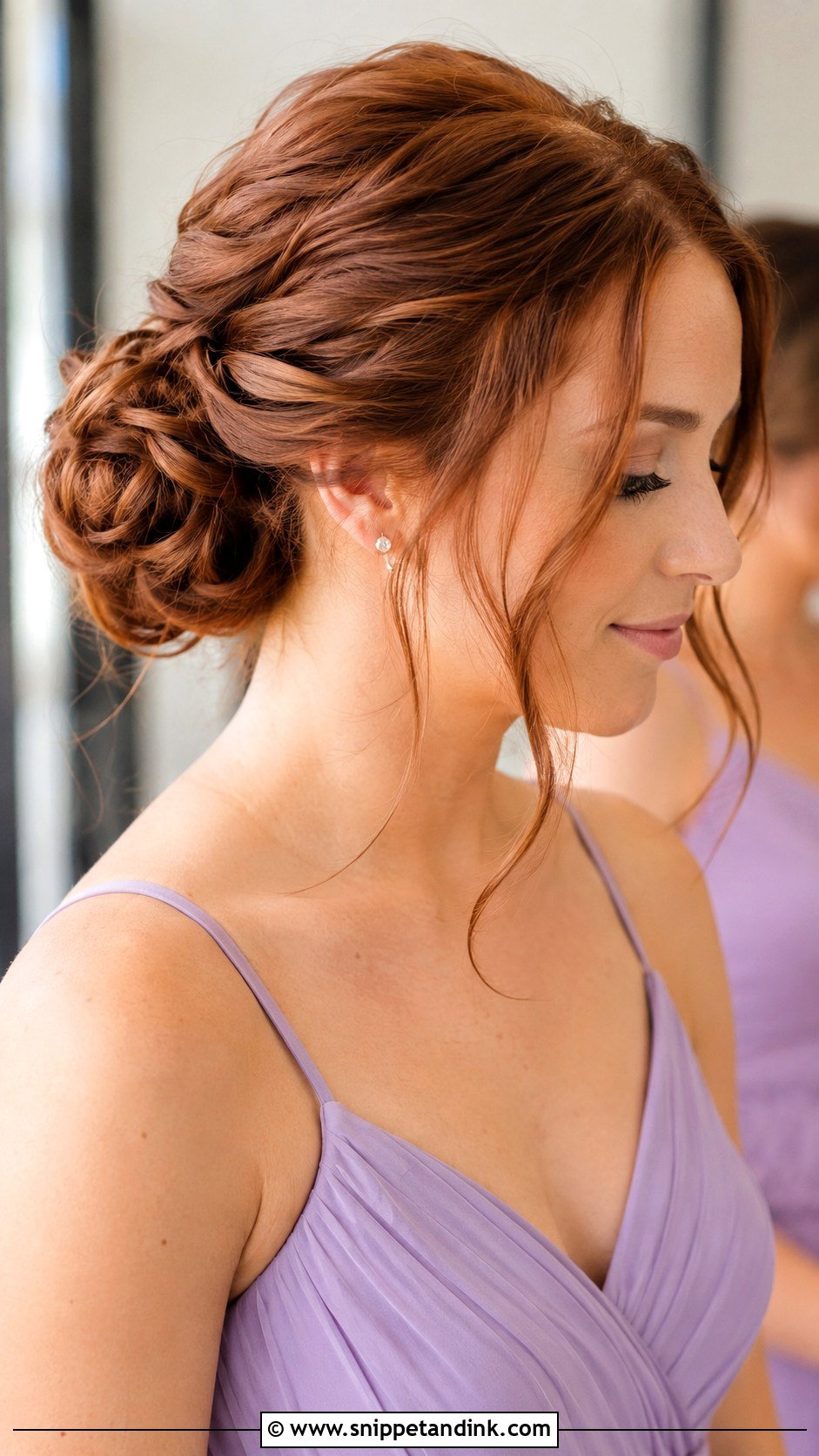
A messy bun has to look placed, not slept-in, and that’s harder than it sounds. Each wave is pinned individually into a loose shape, with volume at the crown and a few strands left near the face on purpose. It fits boho, rustic and outdoor weddings where a sleek bun would feel stiff. Naturally wavy hair is ideal because its own texture keeps the bun full. Very straight, silky hair needs texture spray first, or the pins slip within the hour.
8. Wavy Chignon Bridesmaid Hair
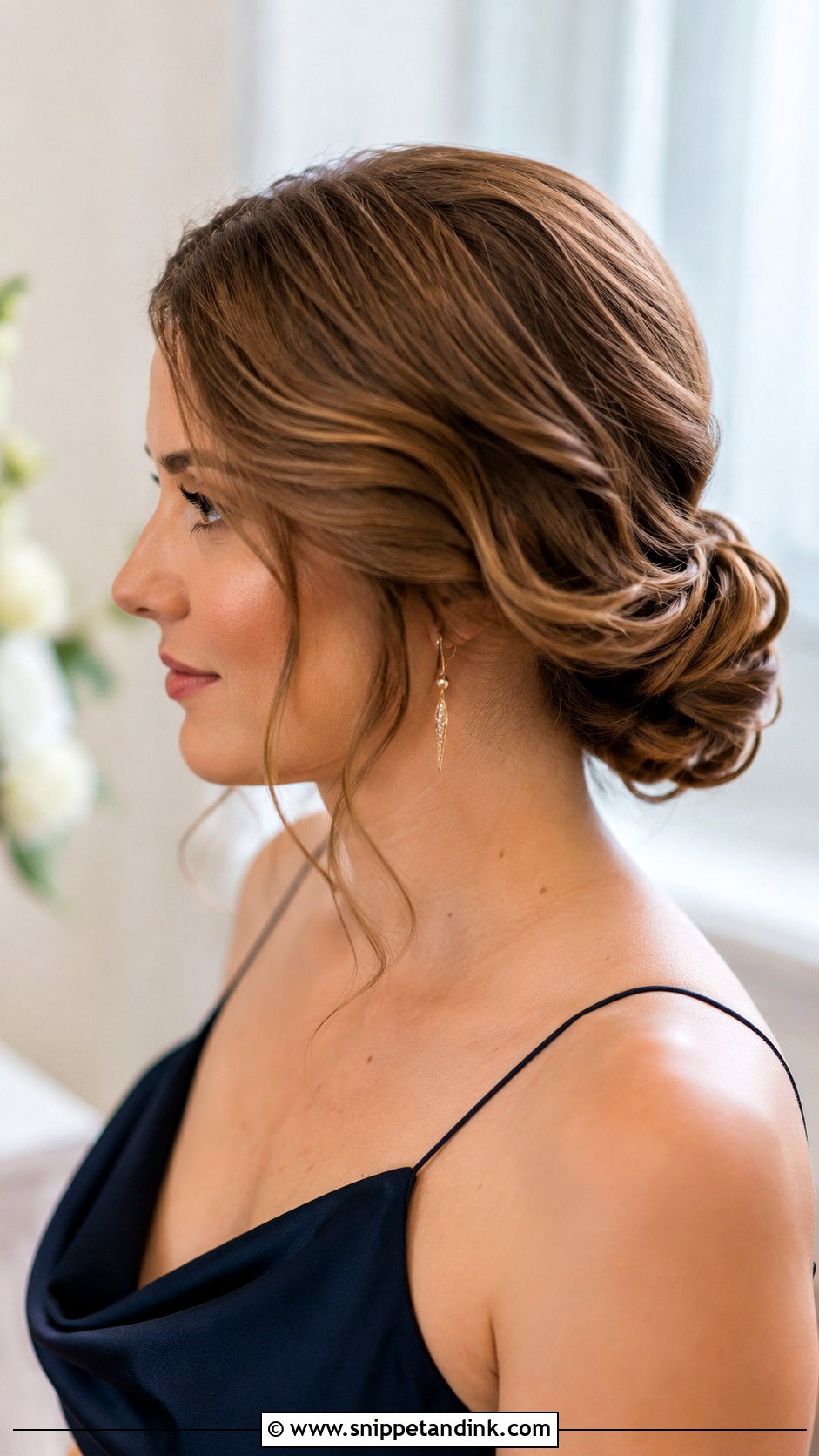
This chignon keeps texture through the sides instead of slicking them flat, which softens a classic shape. Set at the nape, it’s comfortable and looks finished from every angle at a black-tie reception, and it holds through long ceremonies and busy photo lists. Skip heavy backcombing at the crown; a big teased bump is what makes chignons look dated. Shape the front softly and let the waves supply the volume.
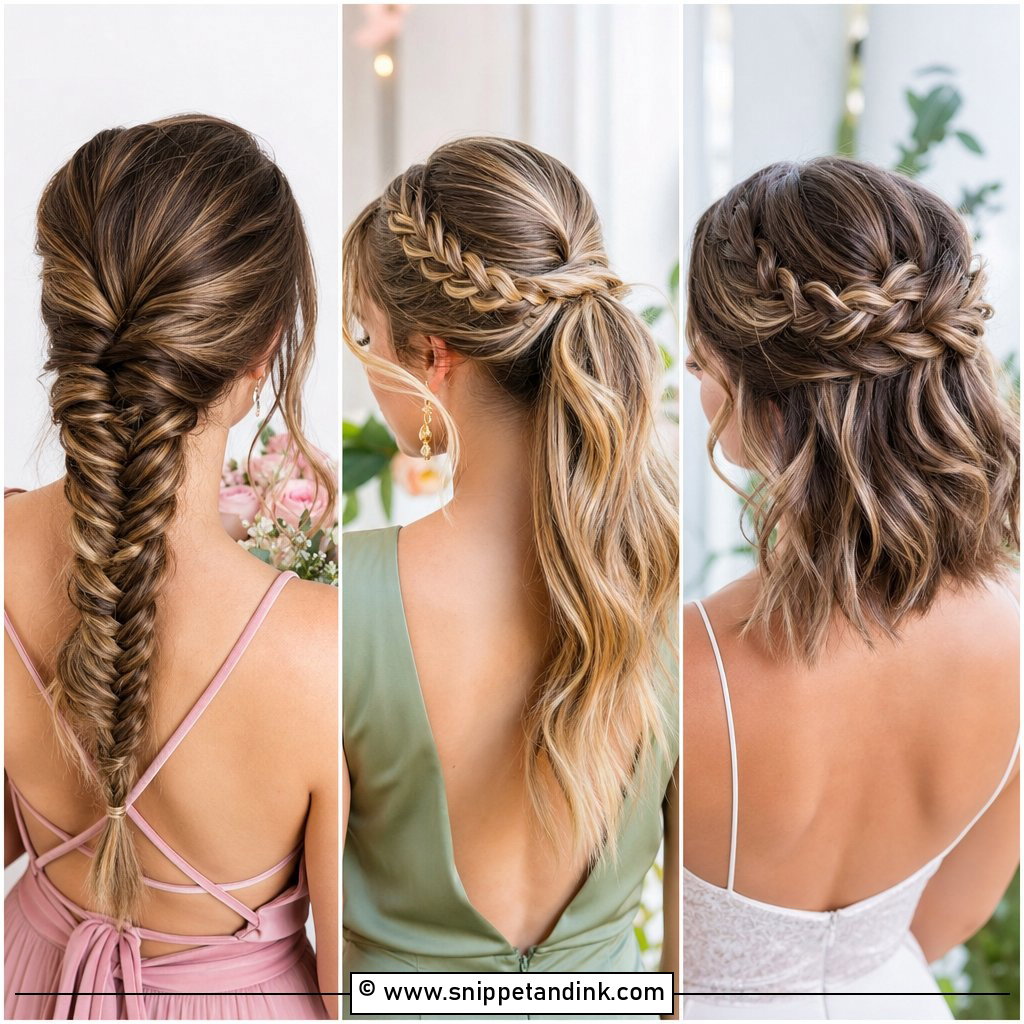
9. Wavy Braided Bridesmaid Hair
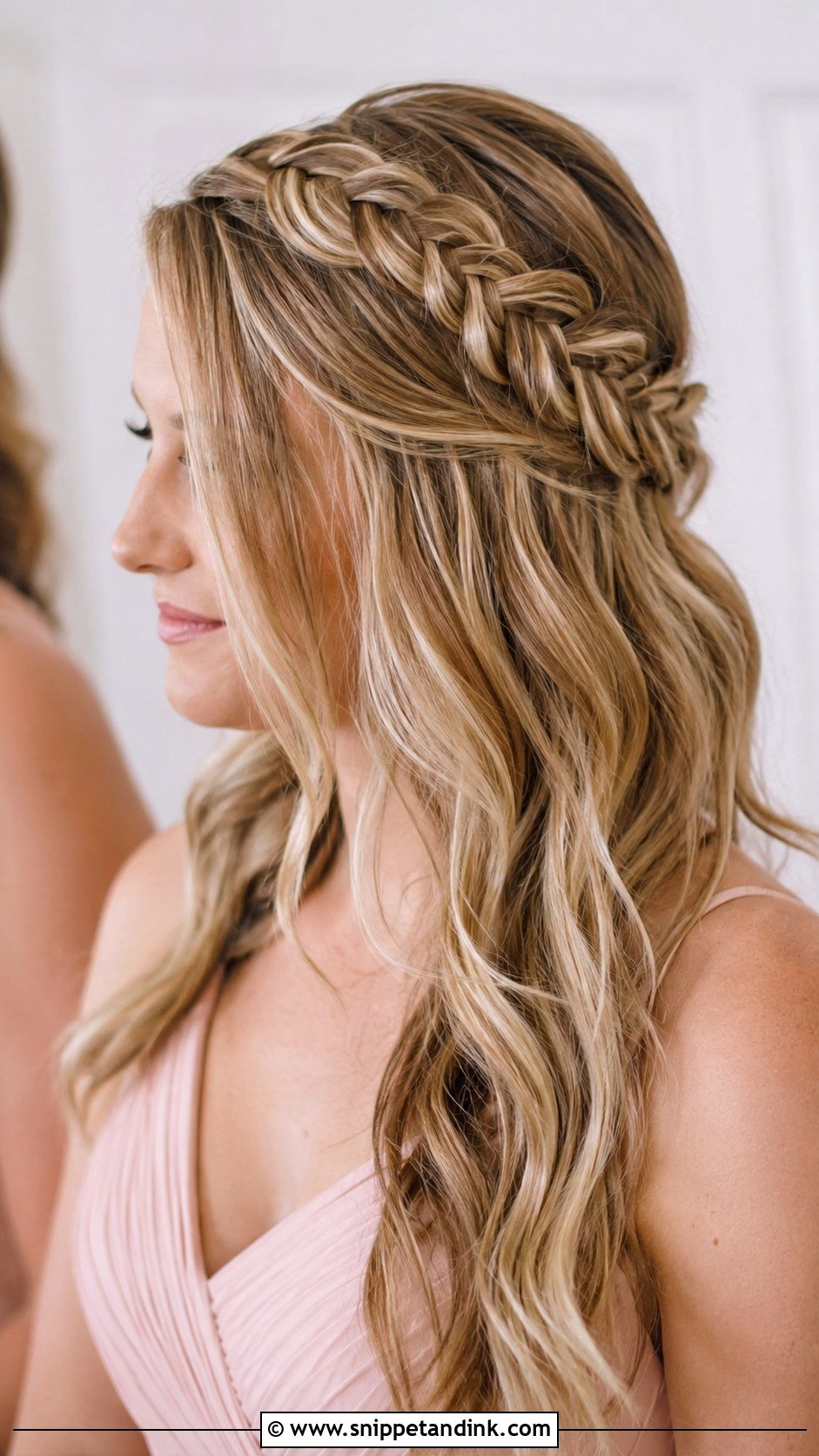
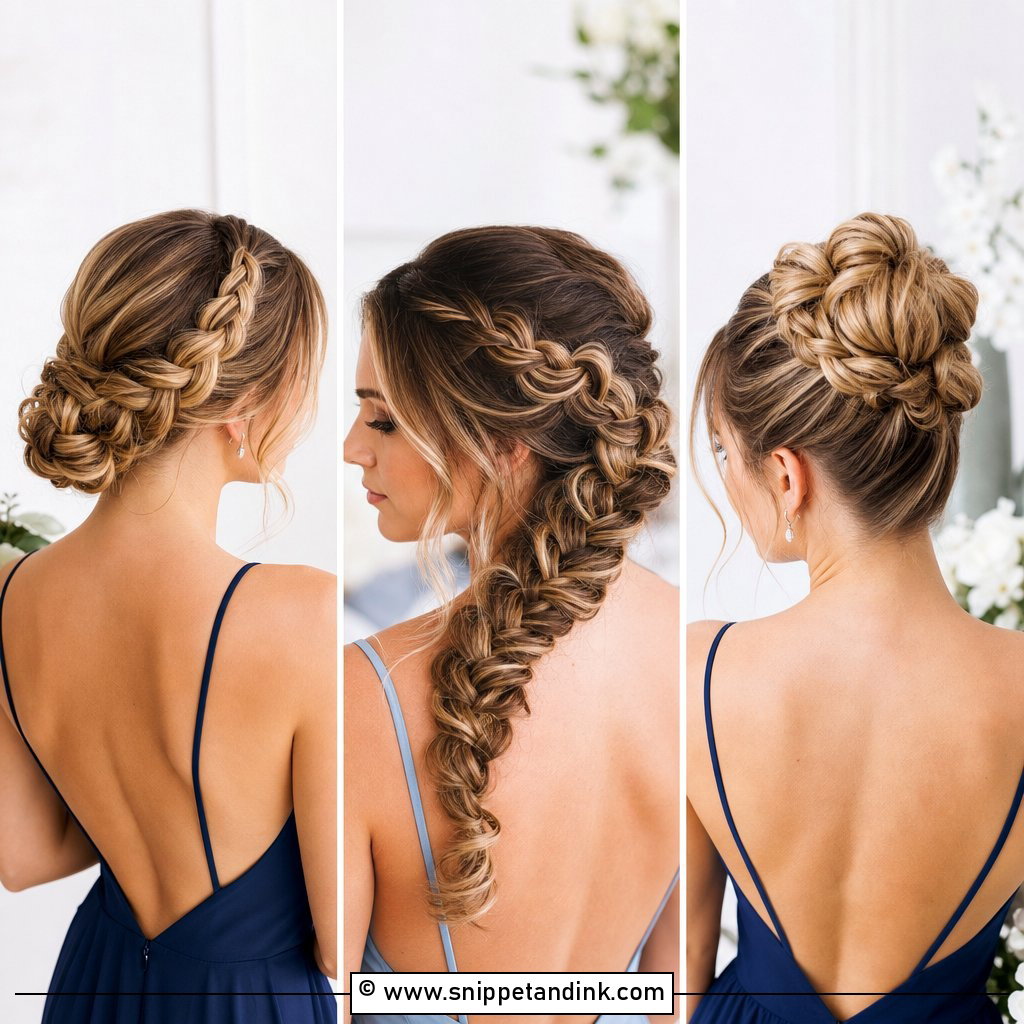
A braid holds hair in place outdoors while the waves keep it soft. It can be worked into a half up style, a side braid or a loose crown with waves below. Highlights show up especially well here, since each crossover catches lighter and darker strands side by side. My test for tension: if the braid looks relaxed but doesn’t shift under a fingertip, it’s right. Small florals or pearl pins finish it.
10. Wavy Crown Braid Bridesmaid Hair
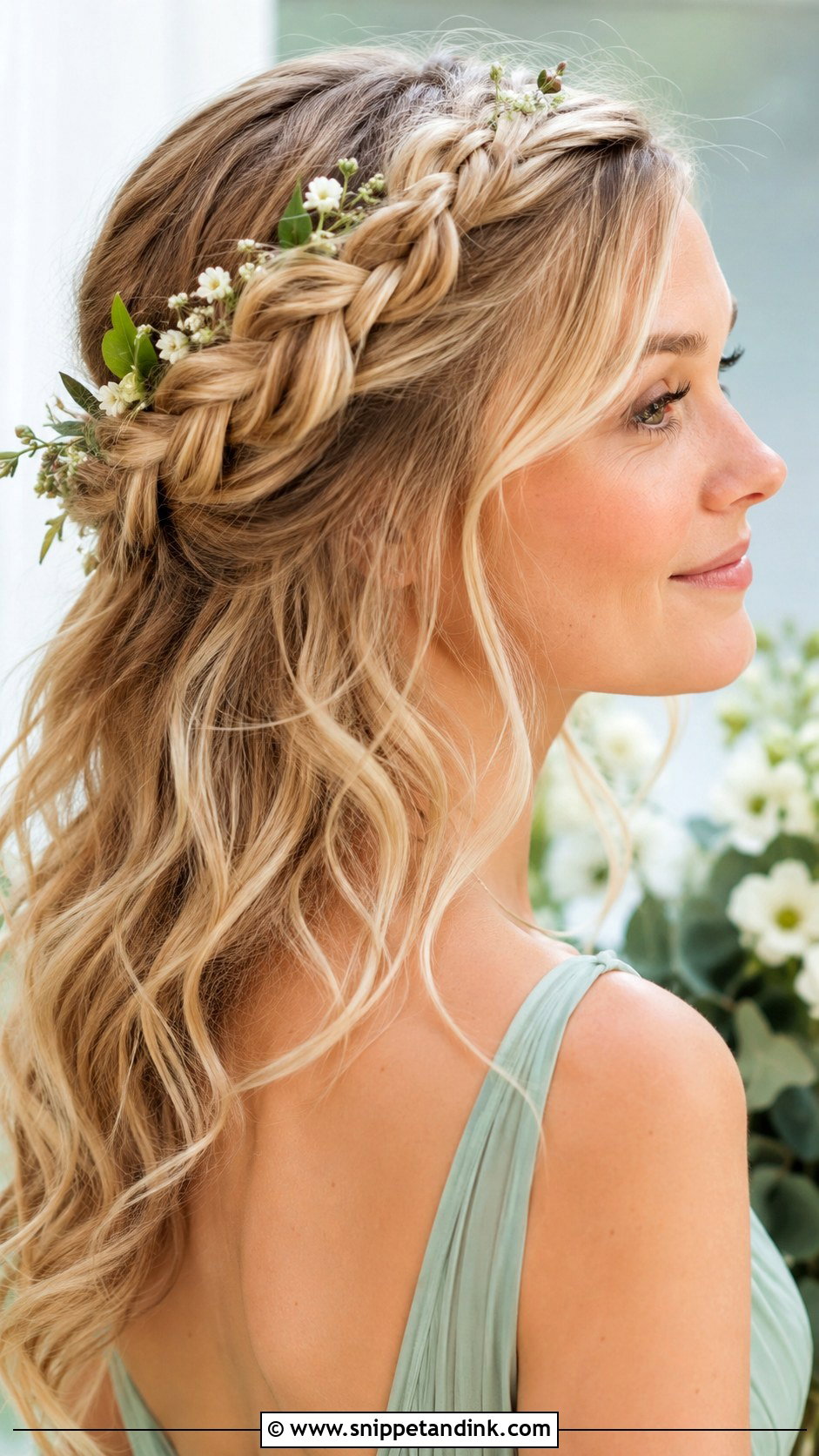
Circling the head, a crown braid controls every front section, which makes it reliable at windy venues and through long photo sessions. The rest can stay down in waves or tuck into a low, textured finish. Garden, woodland and destination weddings are its natural home. Waves stop the braid looking strict. Fine hair often can’t make a full circle, so I braid each side and join them at the back where the join is hidden.
11. Wavy Bob Bridesmaid Hair
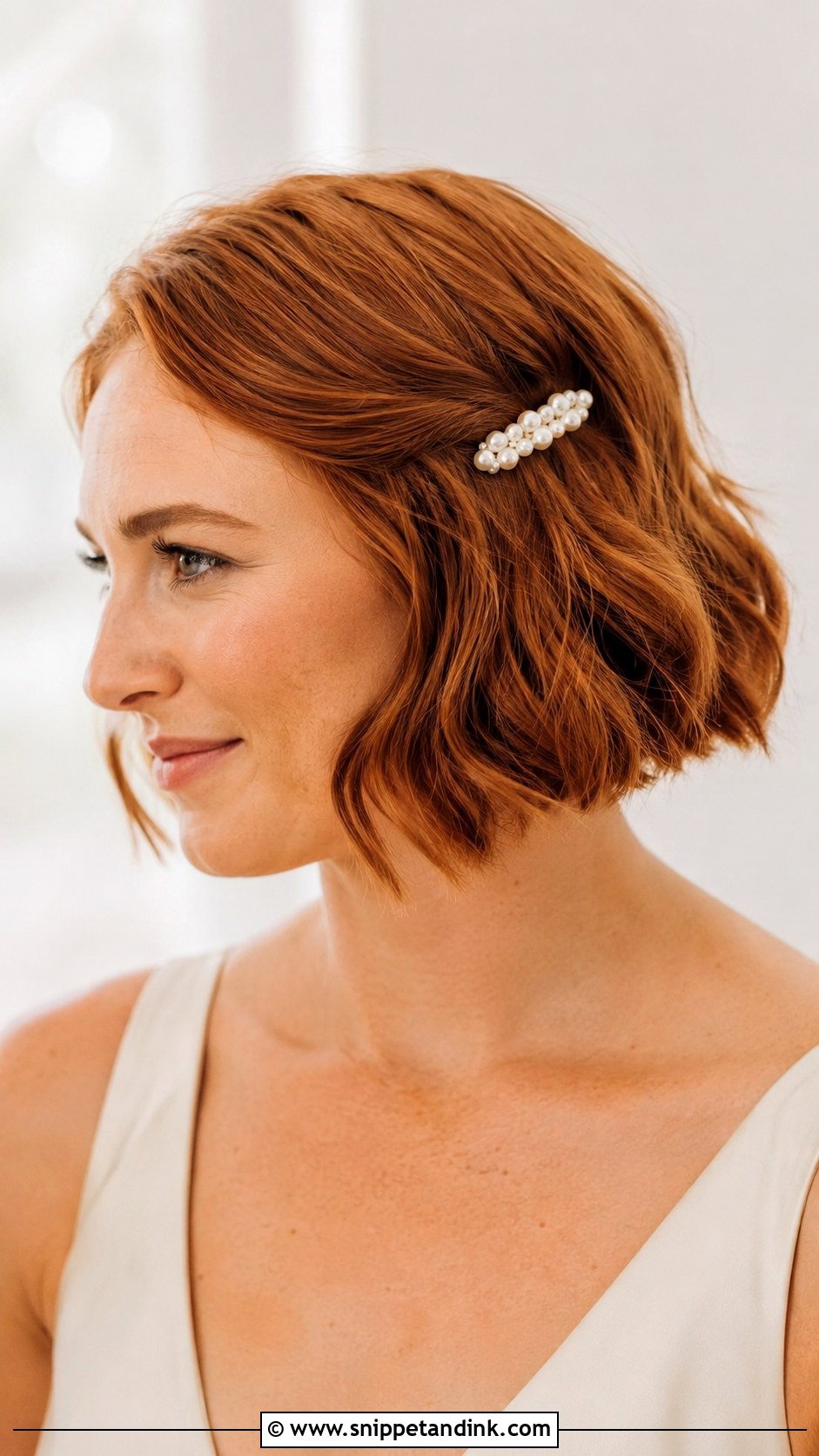
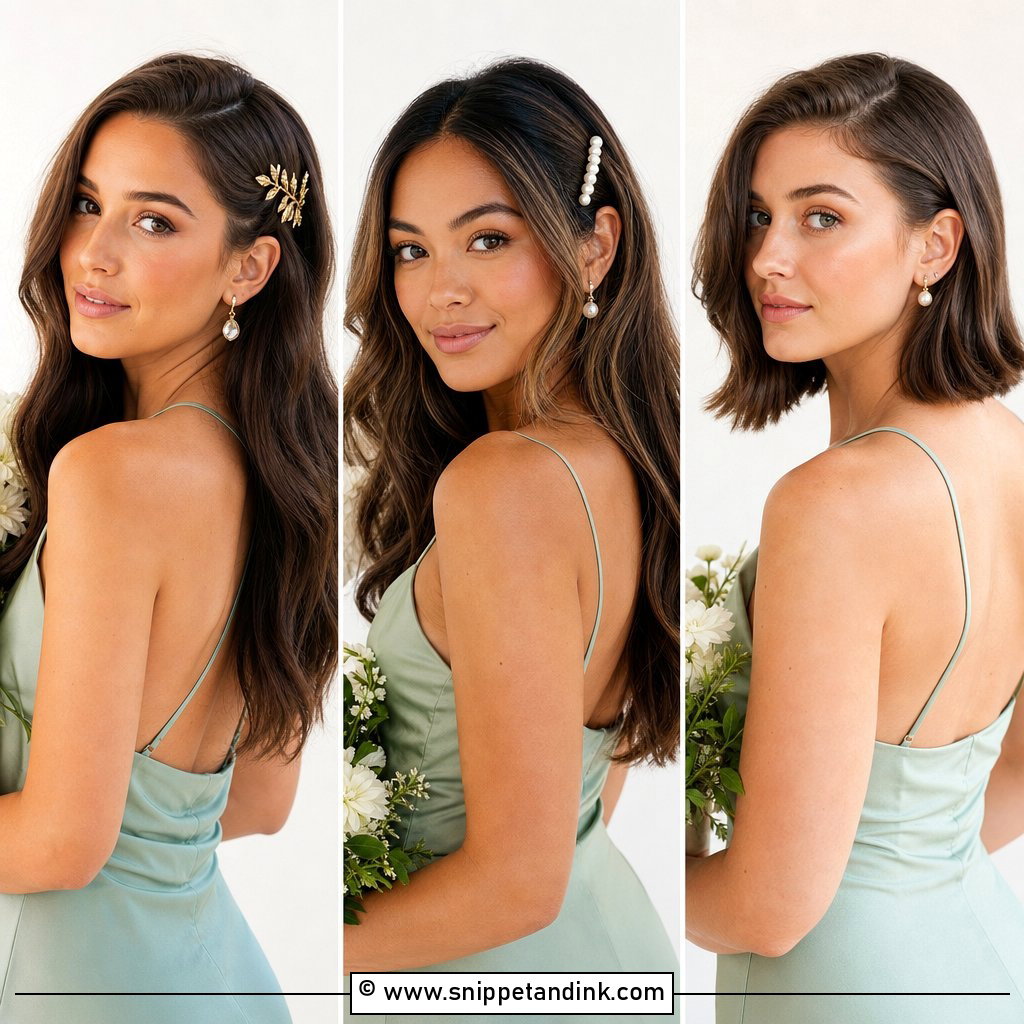
Wavy bob bridesmaid hair can look as formal as any long style. On chin or jaw-length cuts, I keep the ends soft rather than fully curled, since a curled-under bob reads old-fashioned. A side part feels elegant, a center part clean. A pearl barrette or one front piece tucked back gives it a ceremony detail. Bobs reshape quickly in humidity, so a light spray goes on before the waves, not only after.
12. Wavy Lob Bridesmaid Hair
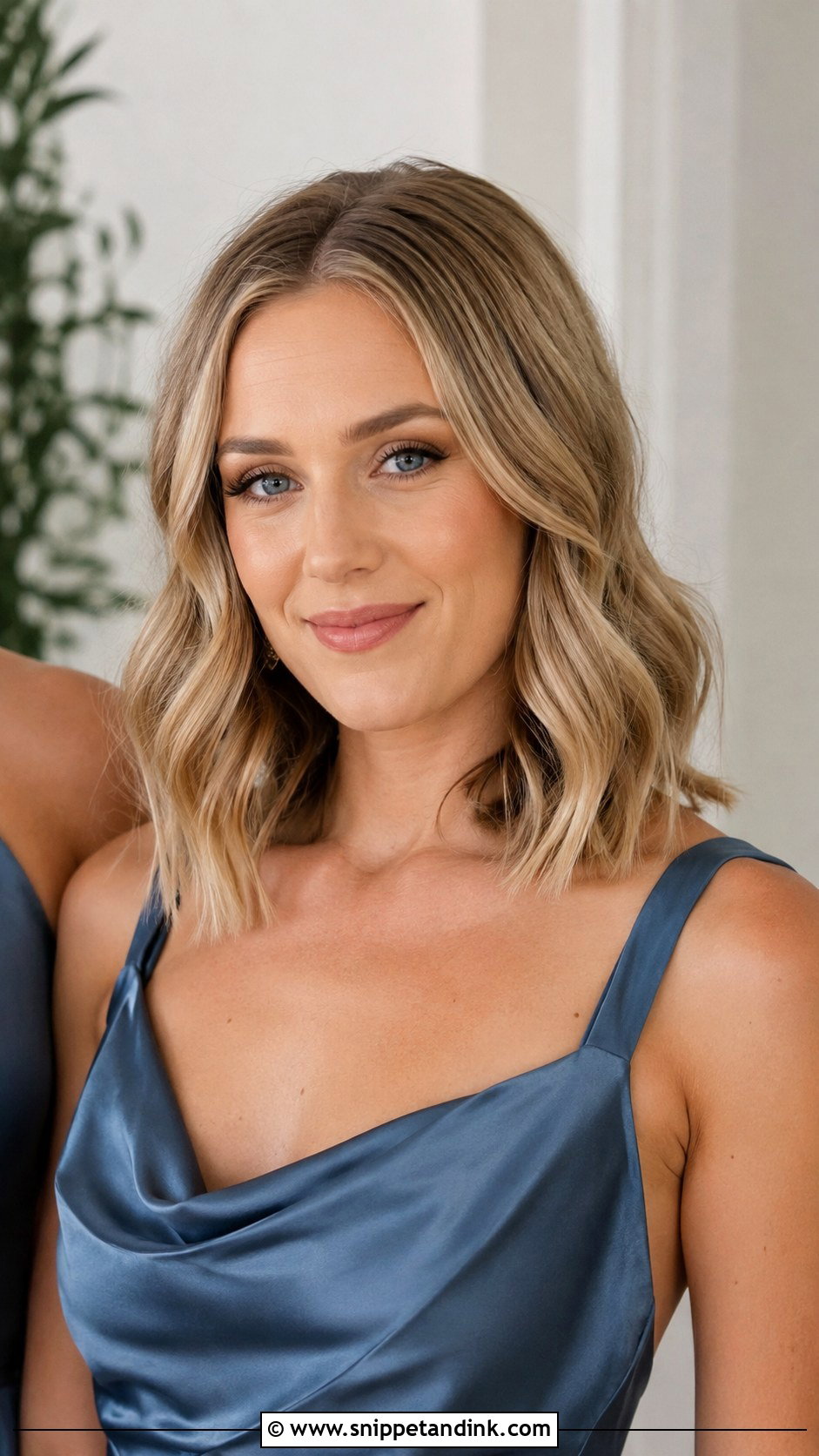
Wavy lob bridesmaid hair may be the most adaptable length in any bridal party. There’s enough hair for a real wave, and it’s light enough to hold one. Middle parts, deep side parts and face-framing layers all work. Aim the bend so the volume sits at the collarbone. Satin and chiffon dresses suit it because the cut already does the modern work.
13. Wavy Hair With Curtain Bangs Bridesmaid Hair
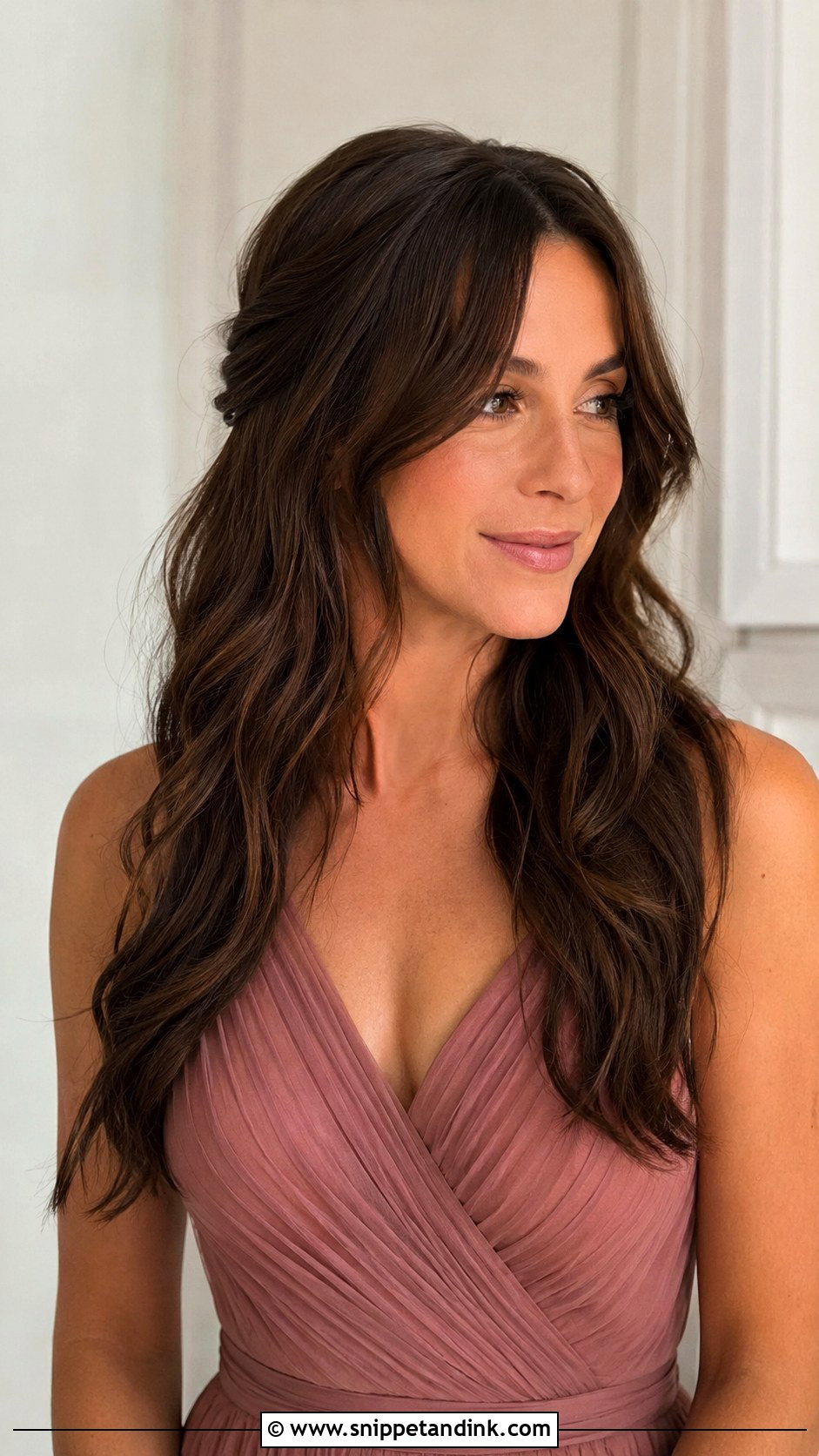
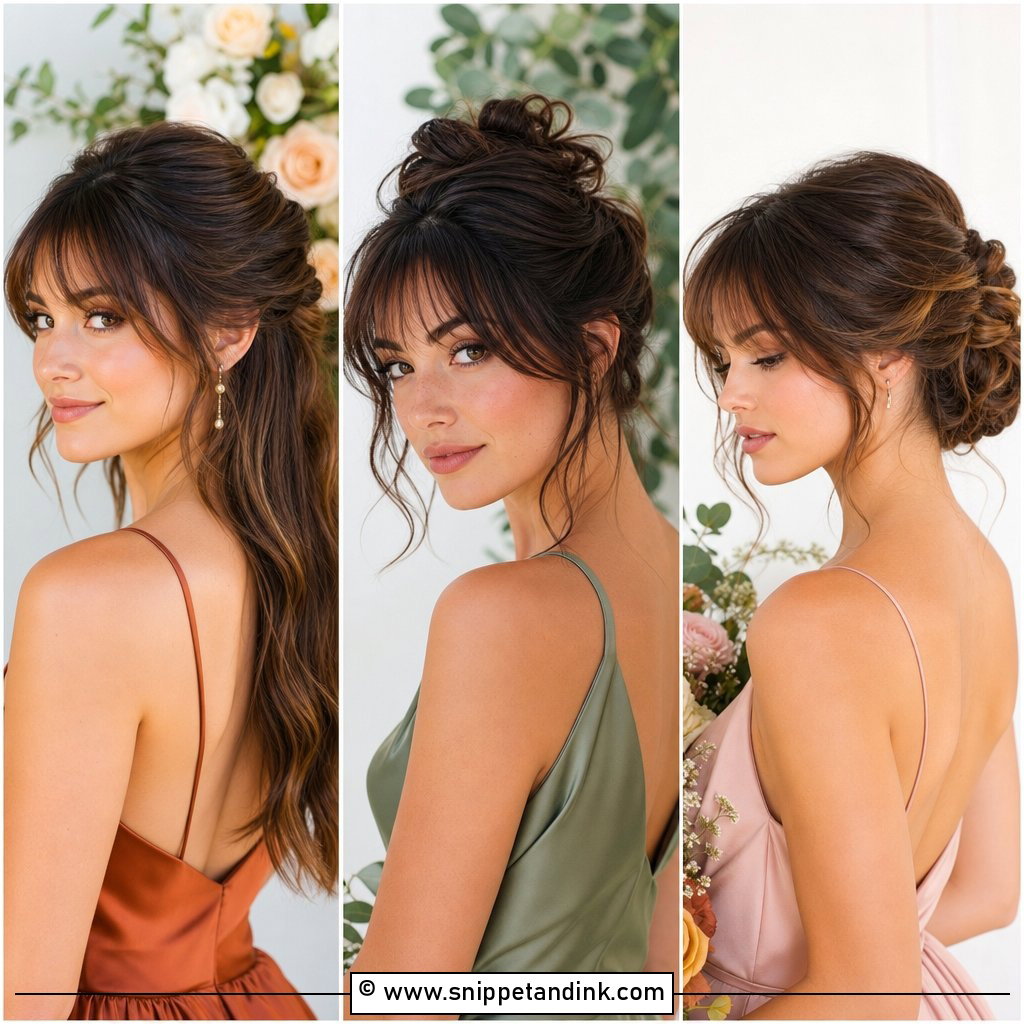
Curtain bangs frame the face and blend into the waves at the sides. Bridesmaids who already wear them usually want to keep them, so they don’t look like a different person in the photos. Worn down, half up or with a low ponytail, the bangs need lift at the root and a bend away from the face, or they fall flat by mid-afternoon. A round brush, a light spray and a soft curve at the ends are all it takes.
14. Wavy Hair With Face Framing Pieces Bridesmaid Hair
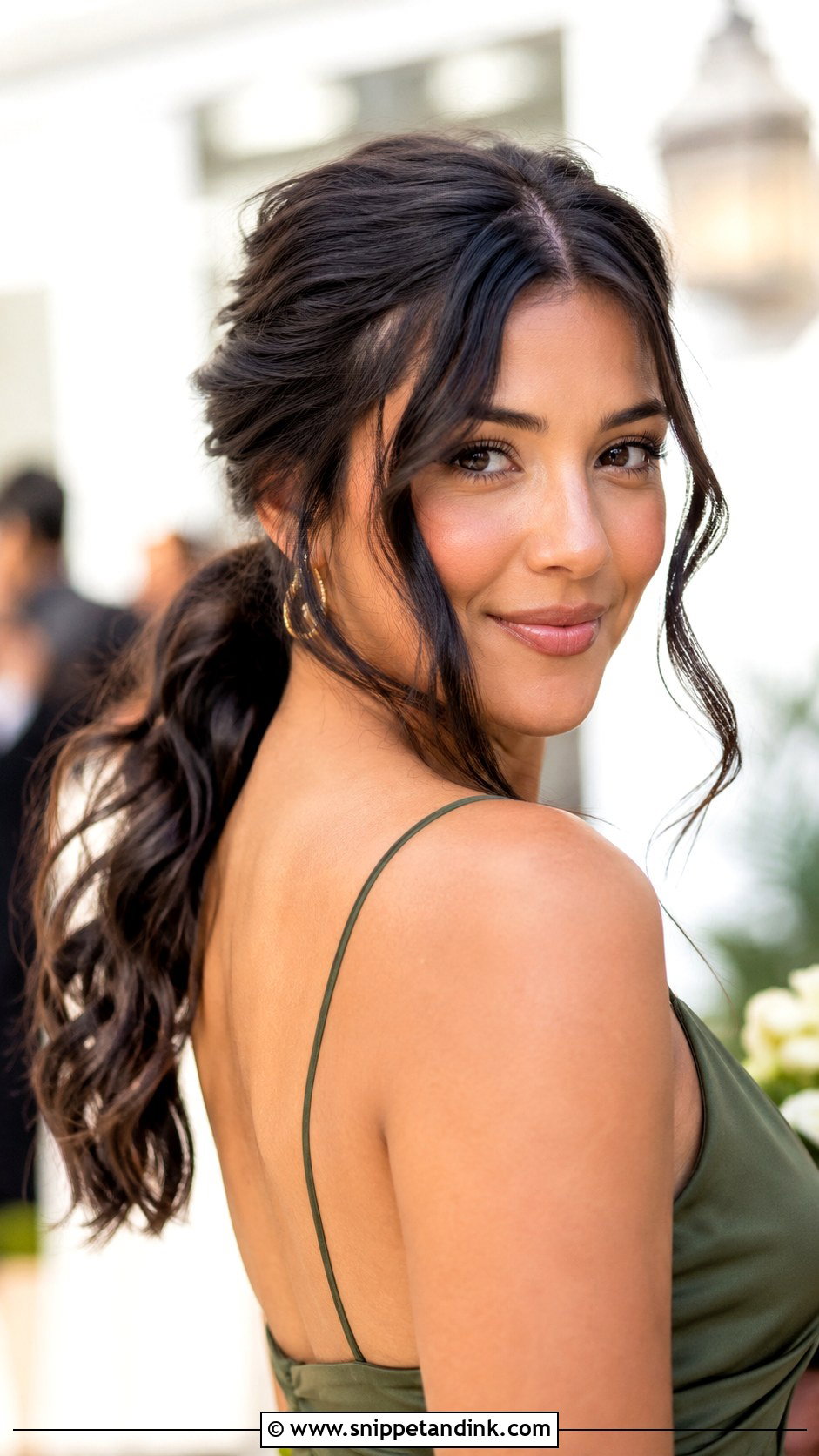
Face-framing pieces can be added to almost any style here, down or pinned. They should be light and blended into the waves, not thick separate chunks. I place them differently by face: longer pieces past the jaw to lengthen a round face, shorter ones at the cheekbone for a long face. That’s why they’re useful in a group, since every bridesmaid gets her own frame inside the same overall look. In close-ups they also soften pinned styles.
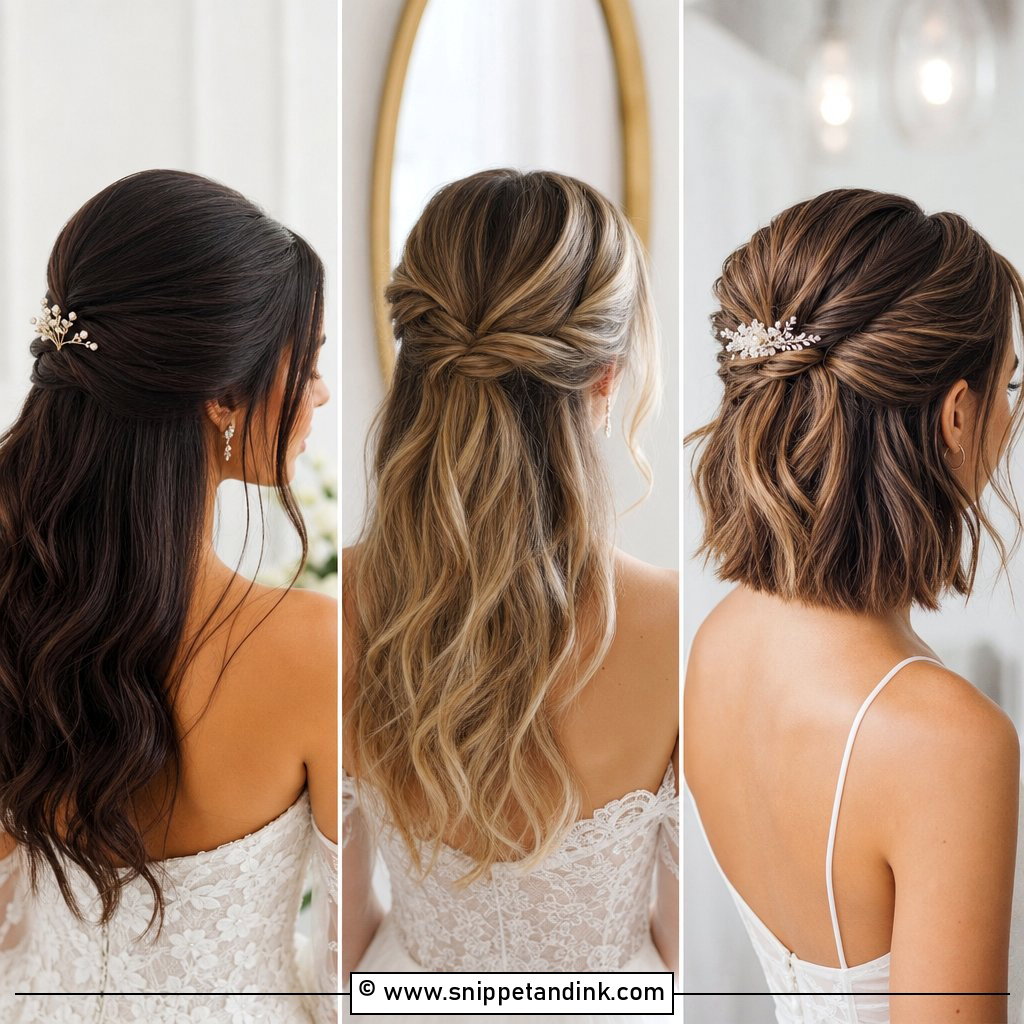
15. Hollywood Waves Bridesmaid Hair
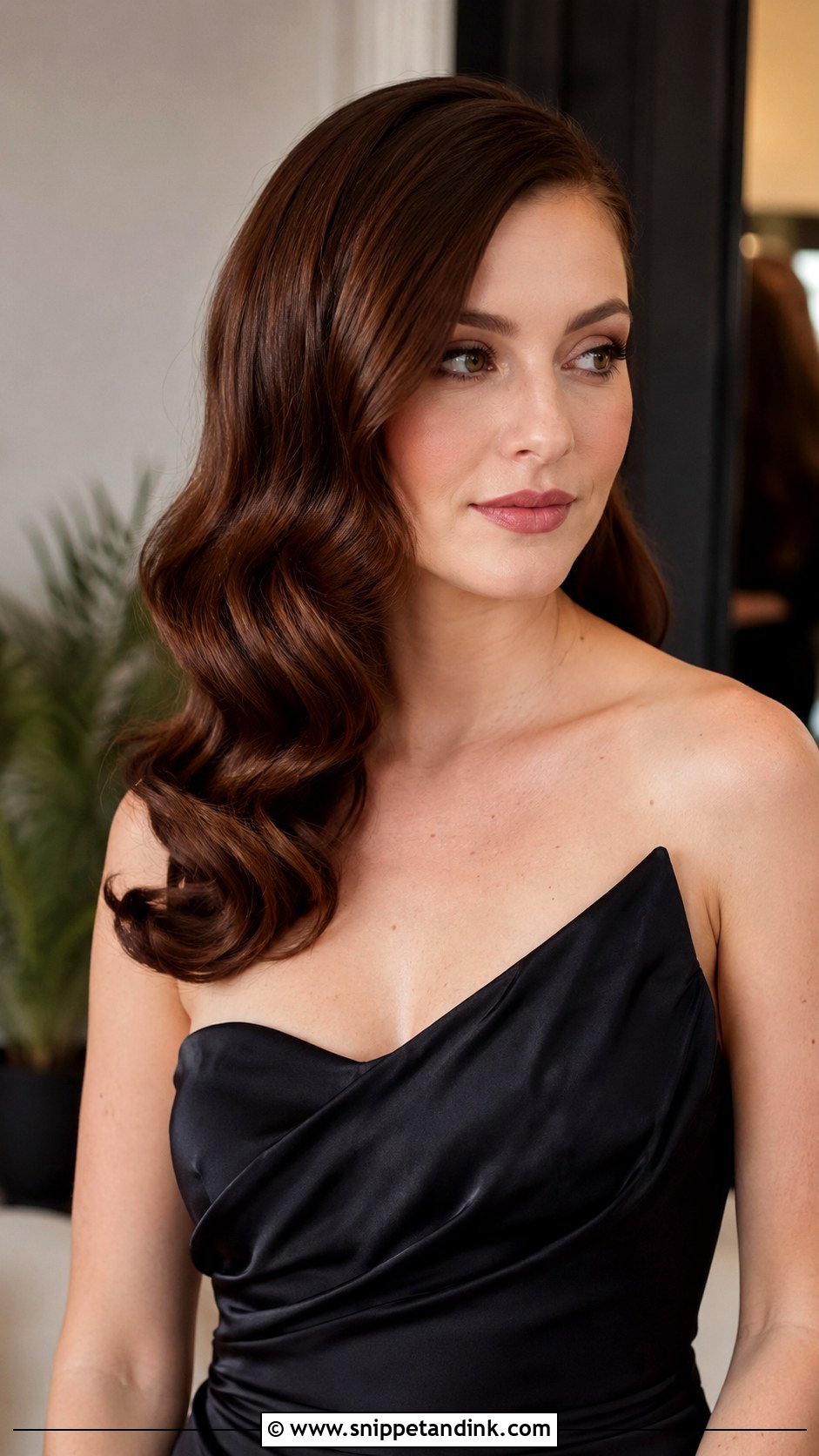
Hollywood waves belong to a formal, glamorous dress code. The waves are brushed into one continuous pattern, usually off a side part, and need medium to long hair. Satin gowns and statement earrings sit well with them. Being more precise than beachy waves, they need a setting spray and careful brushing to keep the pattern from breaking apart. On bridesmaids, keep accessories simple so the look stays a step below the bride’s.
16. Beach Waves Bridesmaid Hair
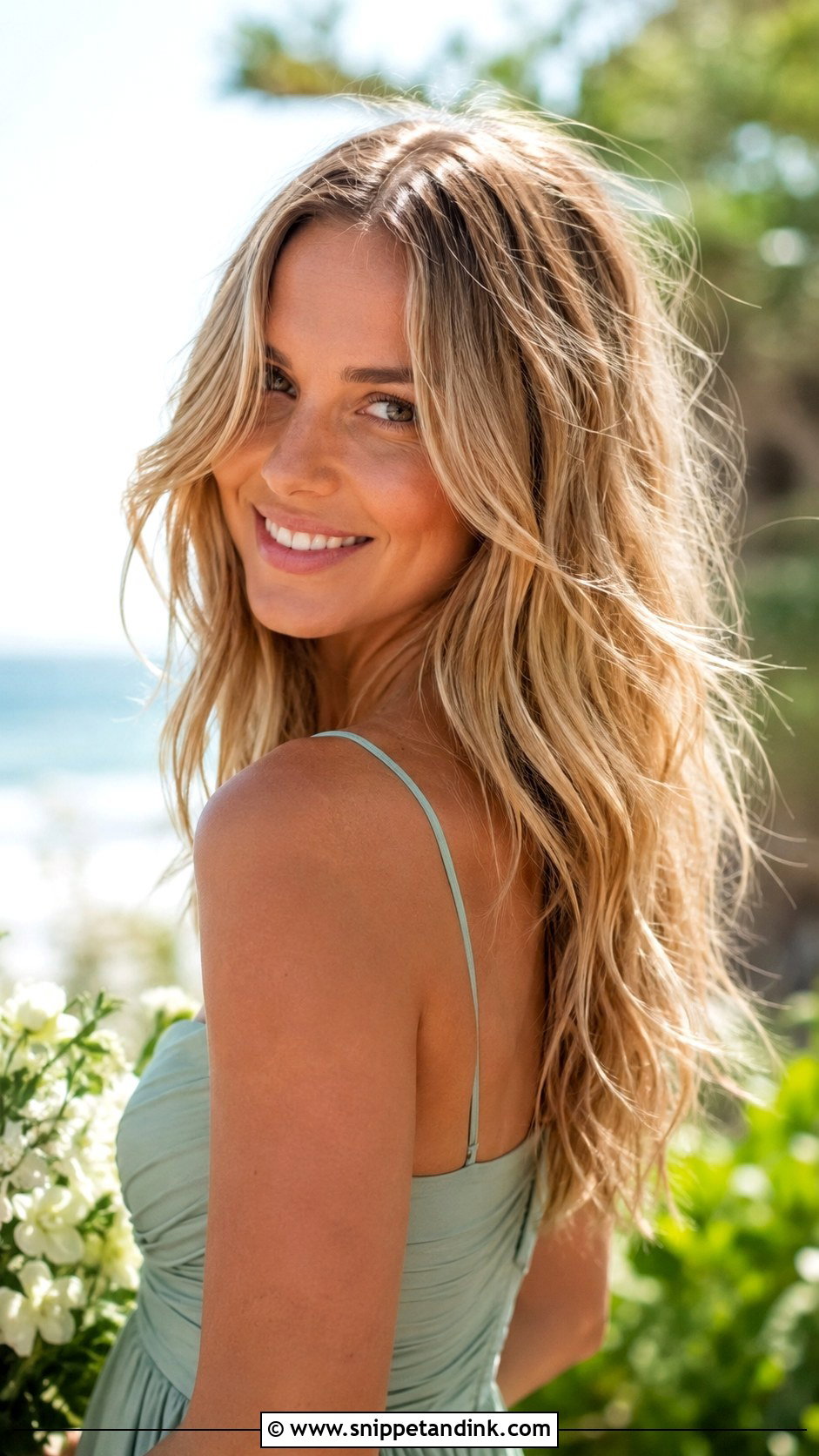
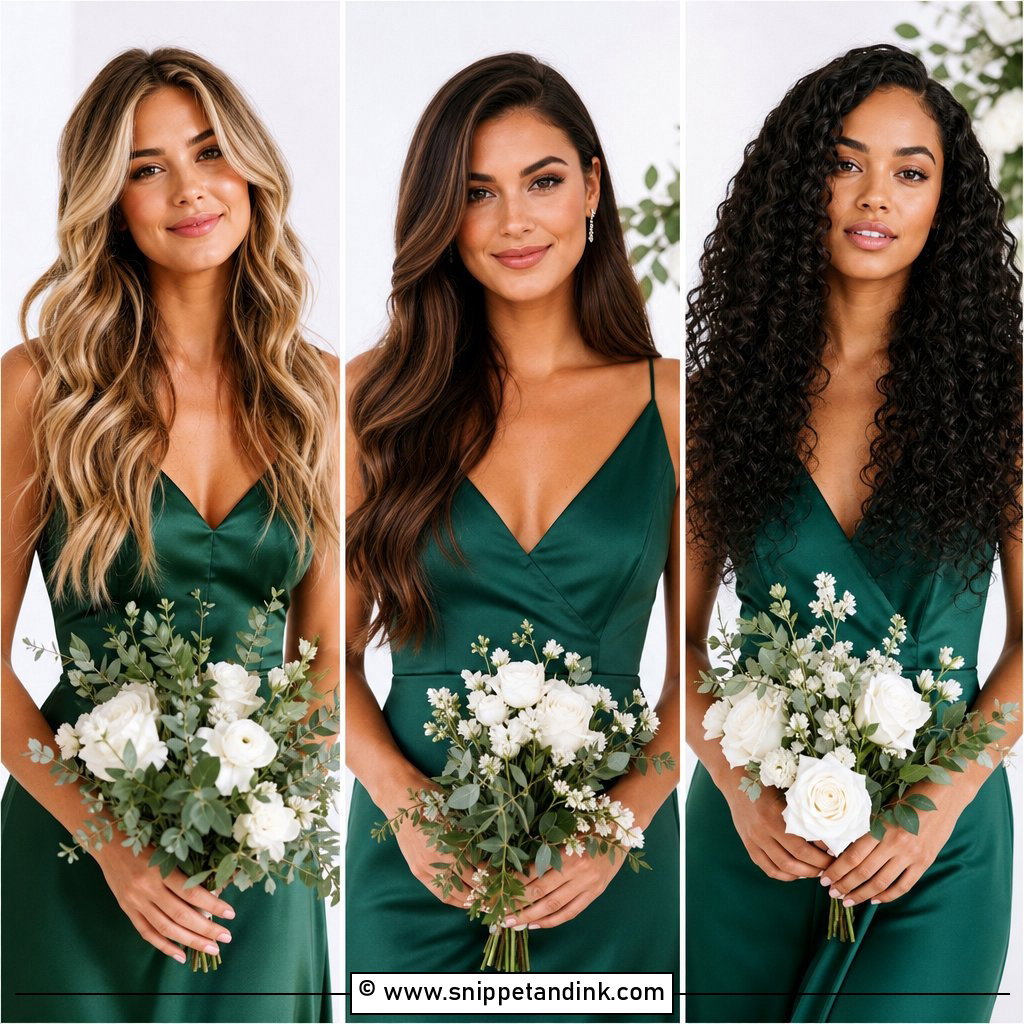
Beach waves bridesmaid hair belongs at coastal, summer and outdoor weddings. The waves should be airy and loosely bent, never tight or crunchy. I make them with a flat iron or a wide barrel and leave the last inch of the ends straight, which is what reads beachy. They work on long hair, lobs and layered cuts, so a mixed-length party can all wear them. For a wedding, a touch more polish than a real day at the beach keeps them photo-ready.
17. Wavy Hair With Pearl Clips Bridesmaid Hair
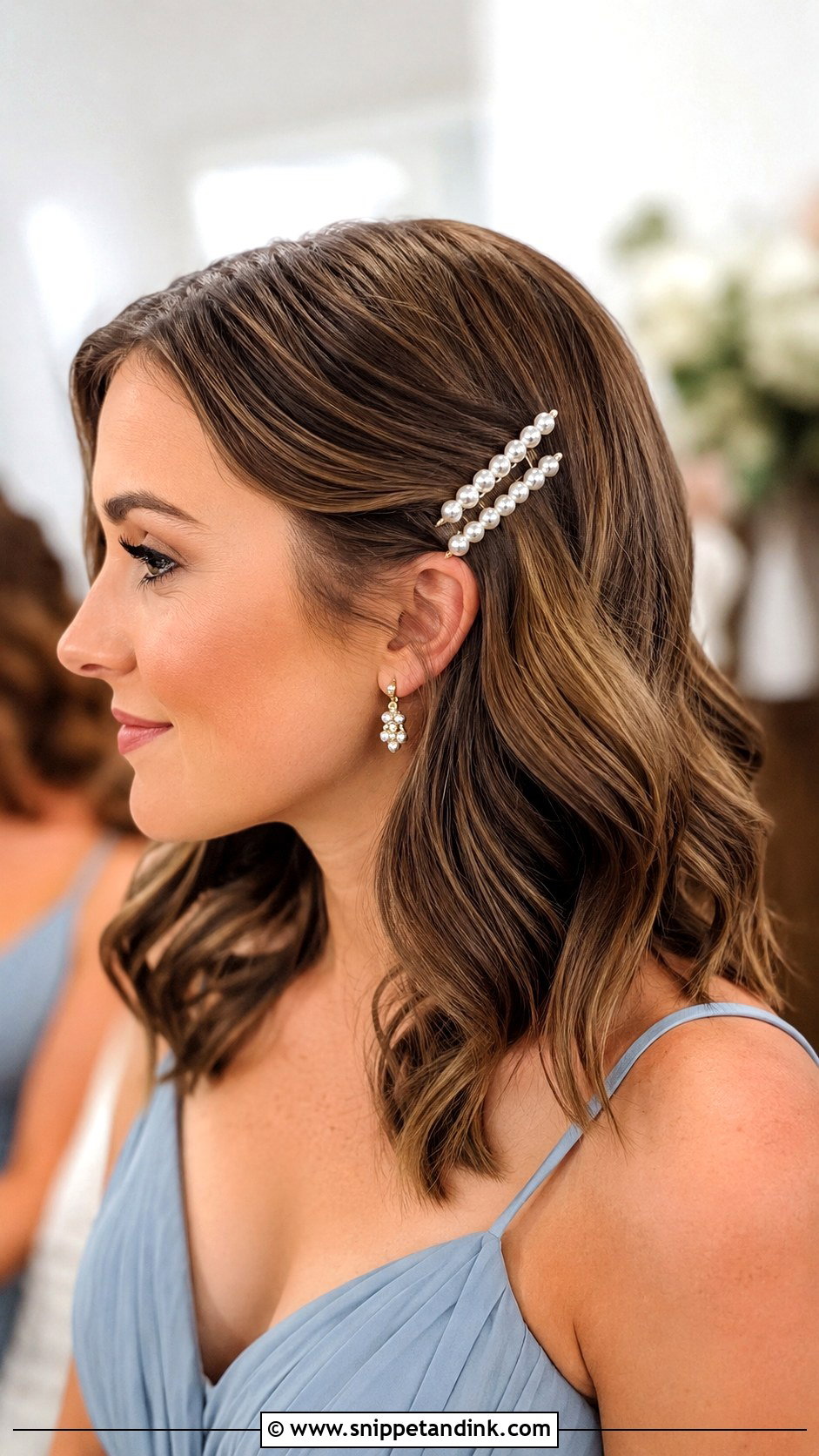
Pearl clips dress up waves fast. One or two well-placed clips usually look better than a scattering, especially in medium and short hair where space is limited. With plain bridesmaid dresses, the clip supplies the shine. Slide them into a slightly backcombed section so they don’t creep down through silky waves during the evening.
18. Wavy Hair With Floral Pins Bridesmaid Hair
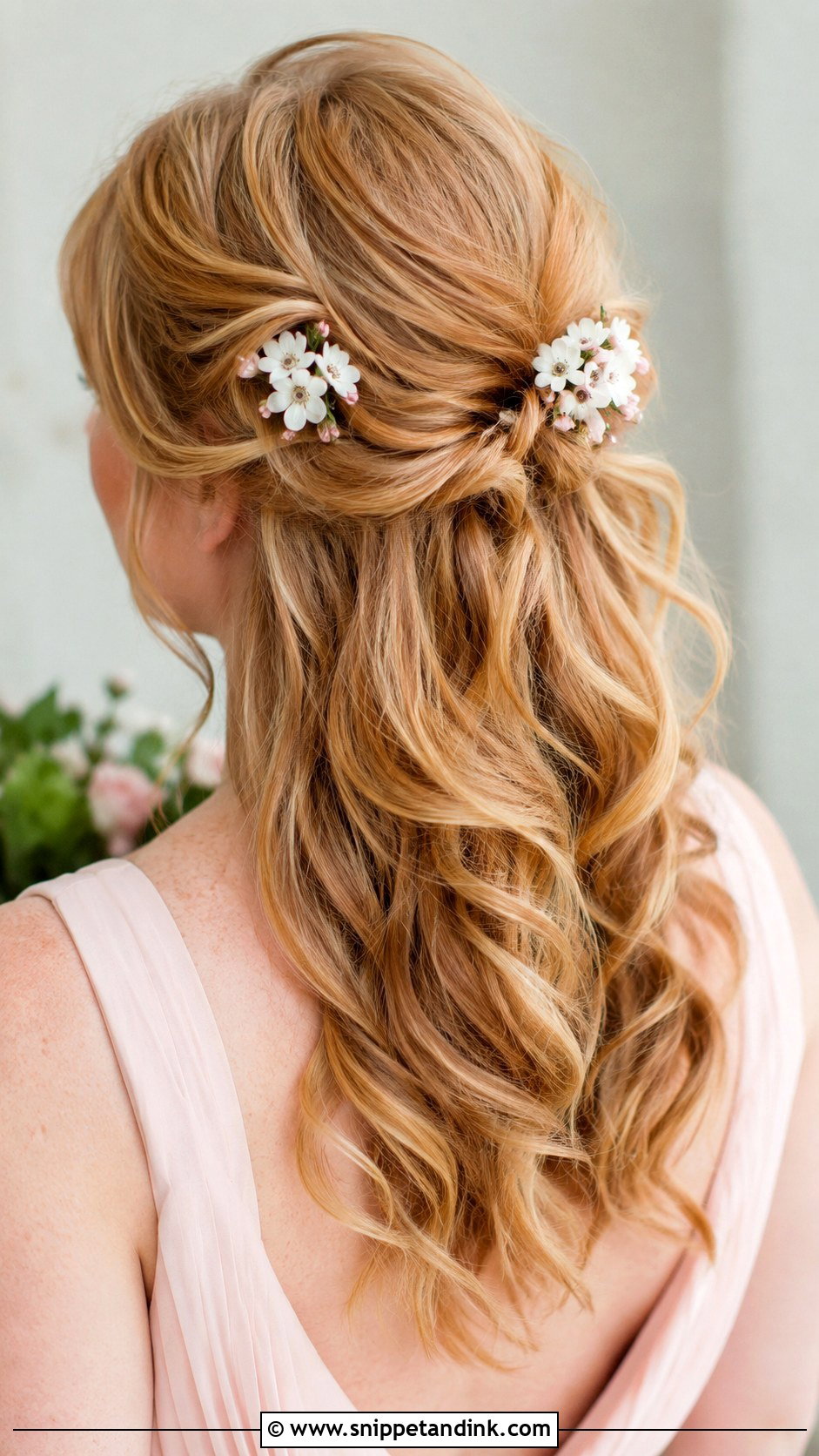
Floral pins suit spring, summer and garden weddings, tucked into a half up twist, around a low bun or into a side-swept style. Match them to the wedding palette and choose small blooms, which stay balanced in photos. The waves around them should be loose; a sleek finish makes flowers look stuck on. They’re also an easy way for a bride to tie her party together.
19. Wavy Natural Hair Bridesmaid Hair
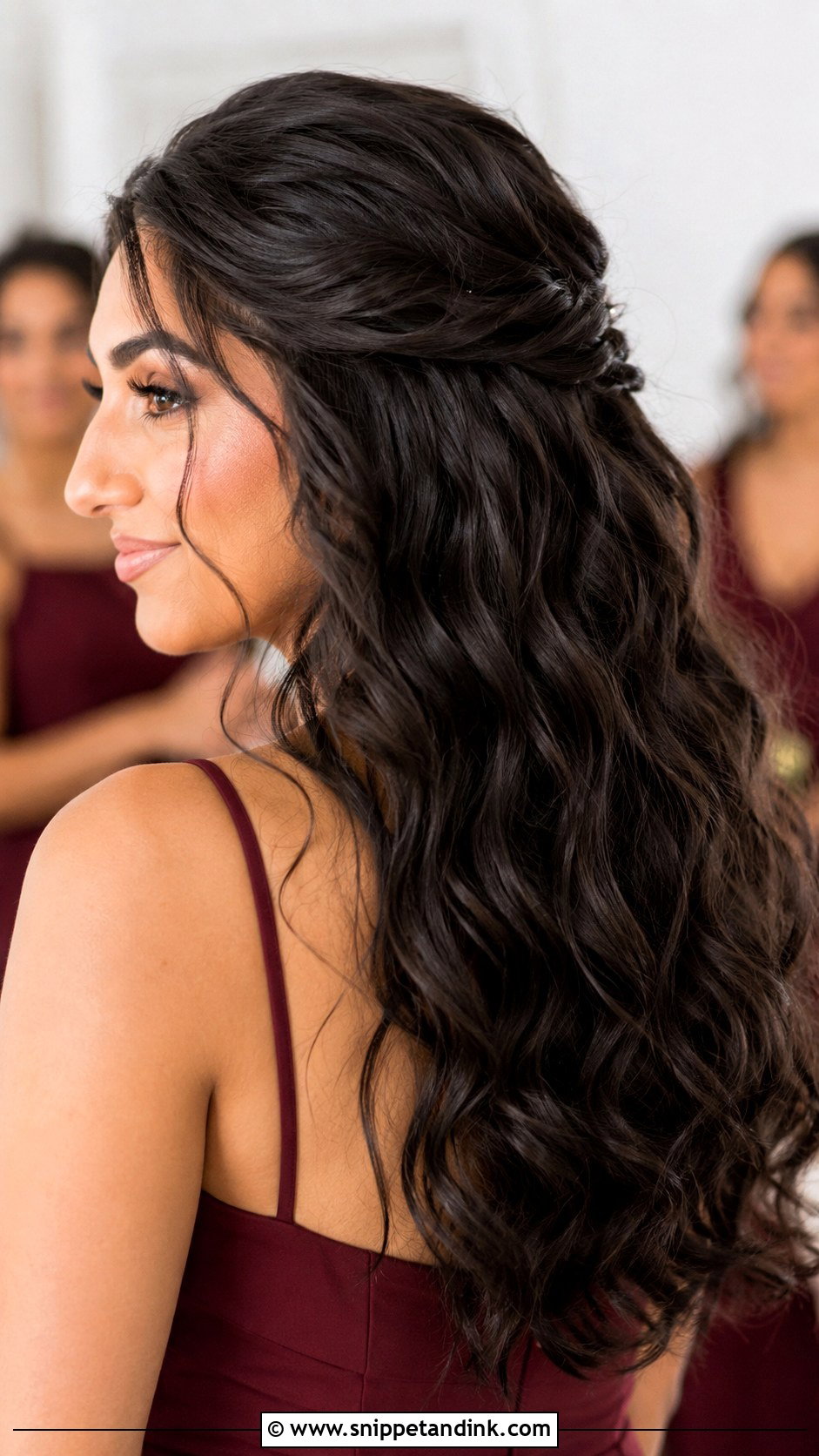
Natural wave is about refining texture that’s already there. Instead of creating a new pattern, the waves are defined and polished, then worn down, half up or in a loose updo. Start with hydrated hair, a frizz-control product and something that supports the wave pattern. A diffuser on low heat, or finger-coiling the few uneven pieces, keeps the waves consistent. Bridesmaids with natural texture usually feel most like themselves in this one.
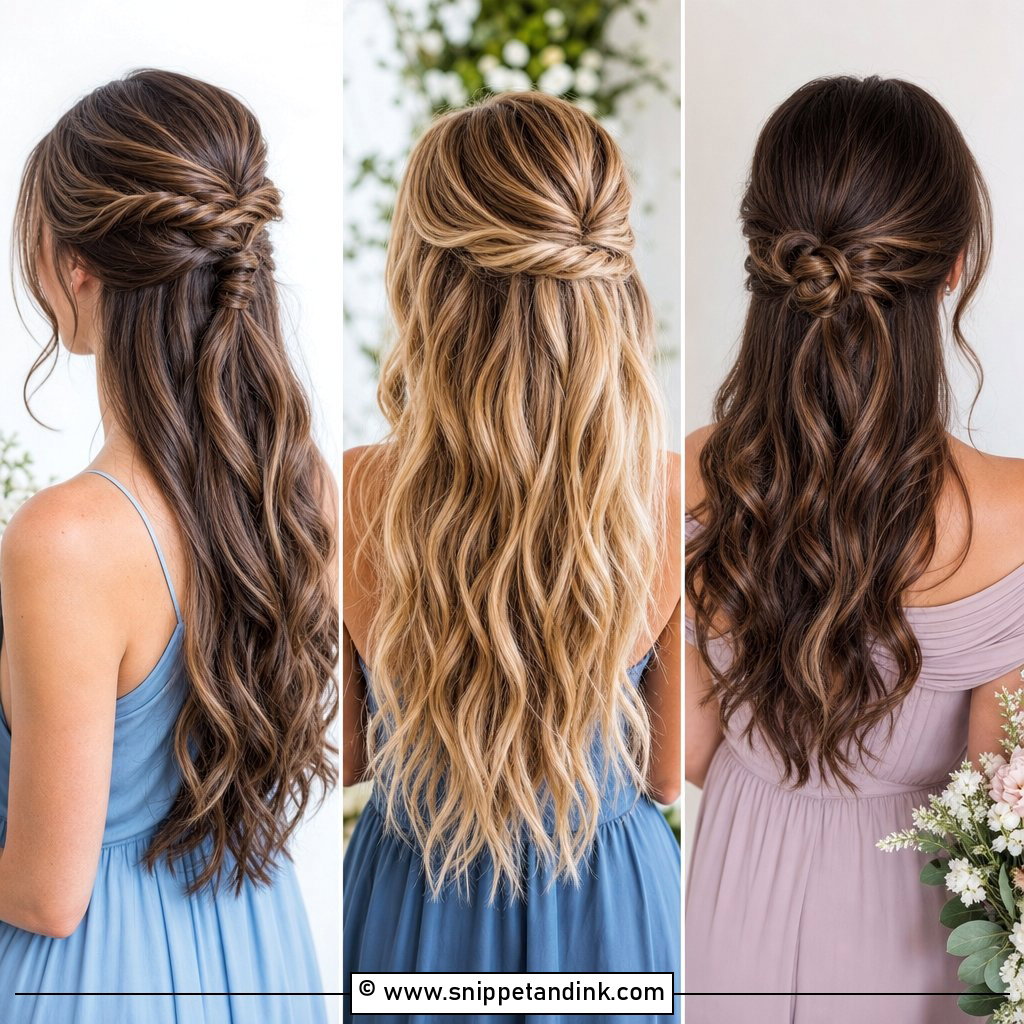
20. Wavy Updo Bridesmaid Hair
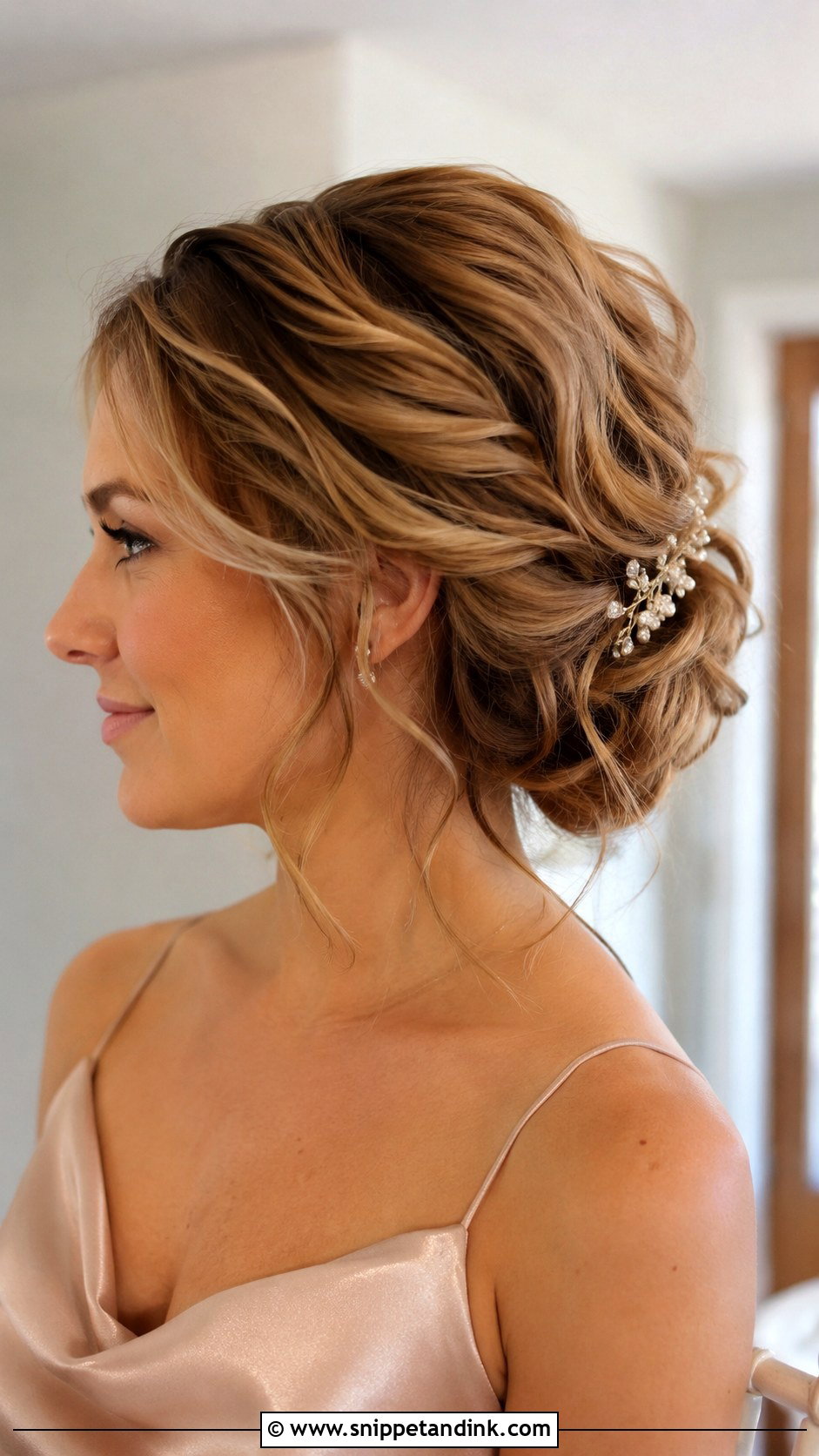
A wavy updo combines structure with softness, and it’s my default when it’s hot, the ceremony is long or a bridesmaid wants hair off her neck. Waving first means the pinned style has movement instead of looking flat. It can sit low, centered or twisted. It also holds accessories well, and on junior bridesmaids it gives a small flower crown or comb something secure to grip. Keep the front soft and the back firmly pinned.
Why the Inspiration Photo Rarely Matches Your Own Hair
Most reference photos show hair with extensions, studio lighting and sometimes a filter. A bridesmaid with fine shoulder-length hair holding up a picture of waist-length waves won’t get that result, and she leaves the chair disappointed rather than styled.
What helps your stylist more than the photo:
- A clear picture of your own hair, dry and unstyled, front and back
- The dress, ideally showing the neckline and the back
- Whether you’ll wear glasses or very large earrings
- How curls usually behave on you: still there at night, or straight by lunch
- Anything you won’t wear, such as hair scraped tight off the face
With that, a stylist can tell you which part of the inspiration will translate, usually the shape or the part, and which part came from extra hair, usually the volume. Clip-ins are a fair answer if you love the fullness. They just need to be color-matched, blended at the trial, and brought to the appointment on the day. A trial is also where you learn whether your hair needs a day-old wash to hold the wave or a fresh one, which varies more from head to head than most people expect.
Waves Pinned, Braided or Left to Fall
Waves adapt to almost any wedding style. Your party might choose soft hair down, polished Hollywood waves, a low ponytail, a textured bun or a braid, and the wave carries through all of them. Let the neckline, the weather and each bridesmaid’s length make the decision. Keep the pattern soft, use accessories with restraint, and make sure every style still looks like the person wearing it.
You'll Like These Ideas:


Leave a Reply