
Boots used to be the shoe a bride hid under her hem because the venue was a field in November. Now plenty of brides pick them first and build the outfit around them, for ranch weddings, mountain elopements, courthouse ceremonies and reception changes. I start every boot conversation with three questions: how long is the dress, what’s the ground like, and how many hours will you be standing? White ankle boots are easy to wear again, lace and pearls lean romantic, and cowboy boots bring the western feel. Heel height ranges from flat to platform. Below are 25 options for bridal footwear in boot form, with the fit and styling notes I’d give a bride trying each one.
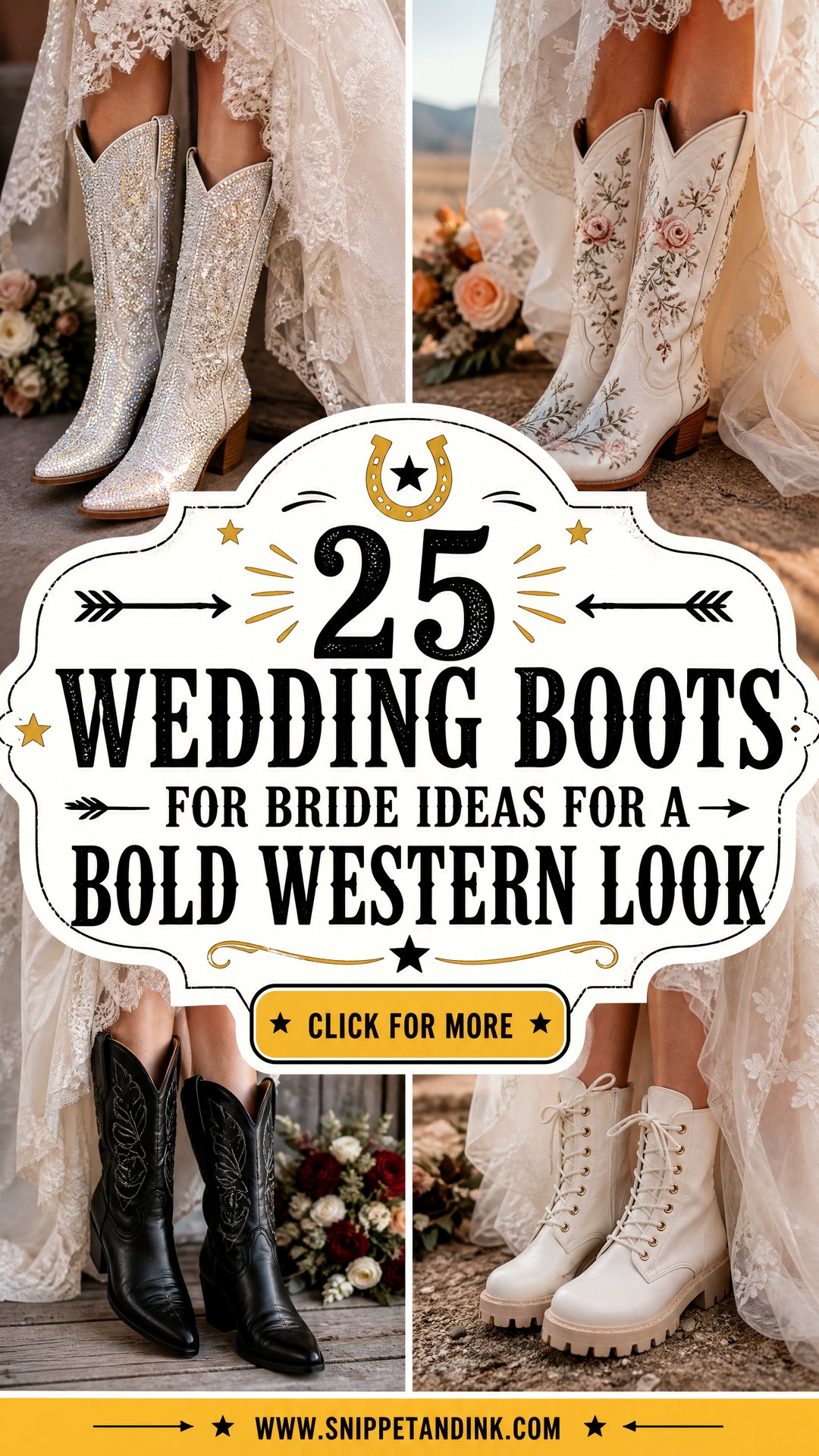
Gravel, Grass or Hardwood? Read the Ground First
I ask about the venue floor before I ask about the dress, because the ground rules out more boots than style does. Walk the route you’ll take on the day if you can: from the getting-ready room to the aisle, out to the photo spot, onto the dance floor.
- Lawns: thin heels sink. Block heels, flats and wide western heels stay on top of the grass.
- Gravel and cobbles: a narrow heel catches and scuffs. Leather survives this; satin and suede pick up marks.
- Sand: almost any boot fills with sand. Flat suede or leather is fine for a short walk; plan to change for a long beach portrait session.
- Polished dance floors and wet stone: new leather soles are slippery. Scuff them lightly with fine sandpaper or add rubber grip pads.
- Mud after rain: suede and satin will not recover. Leather wipes clean.
If the venue mixes surfaces, choose for the worst one. Or do what many brides do: wear a sturdy pair for the outdoor parts and save the delicate pair for indoor portraits and dancing.
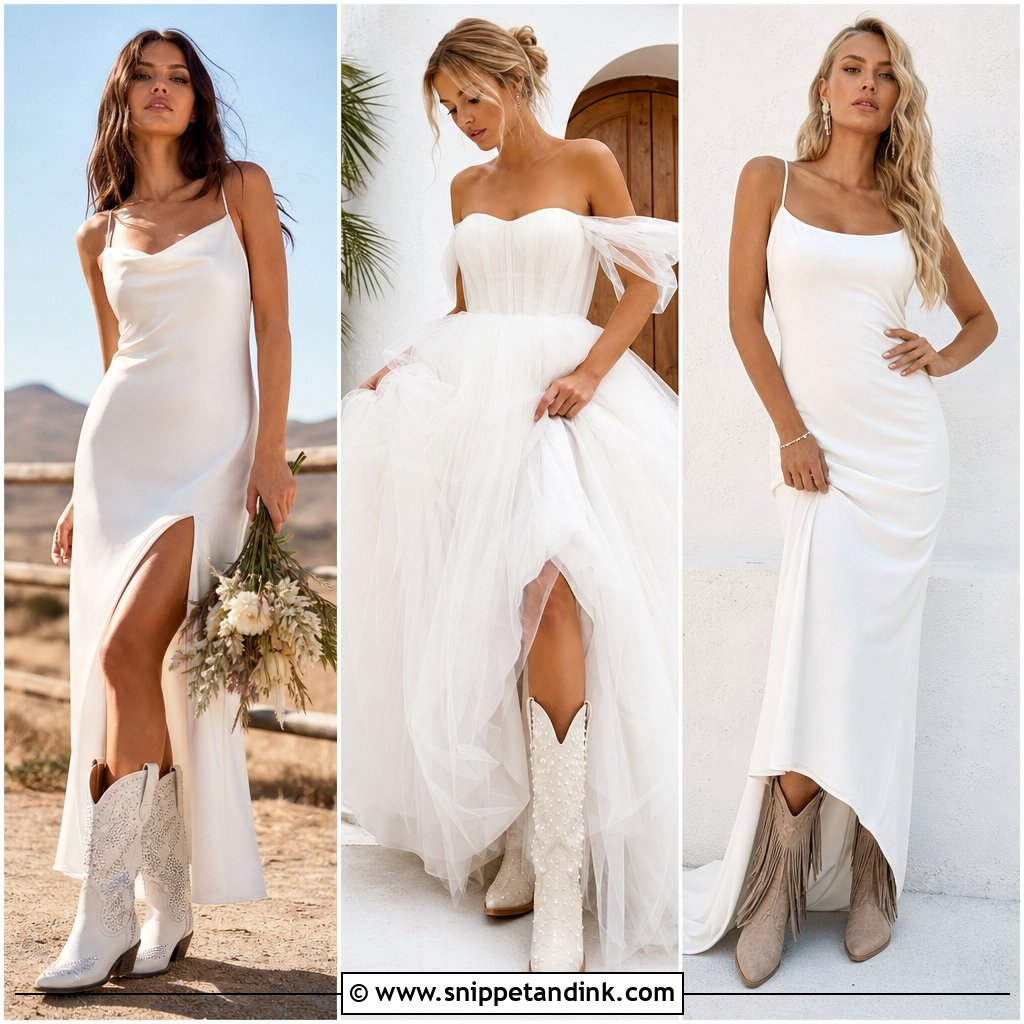
1. White Ankle Wedding Boots
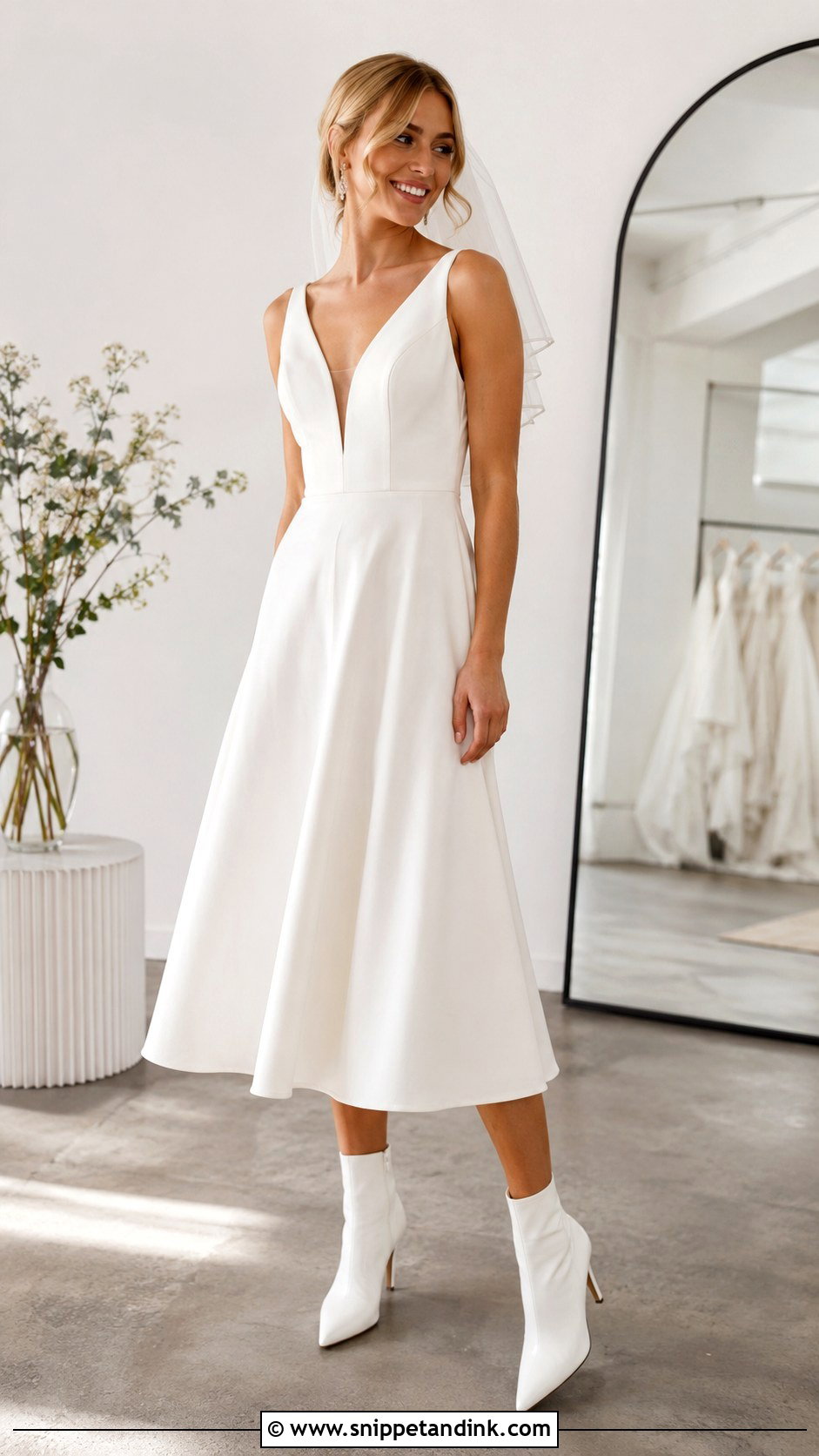
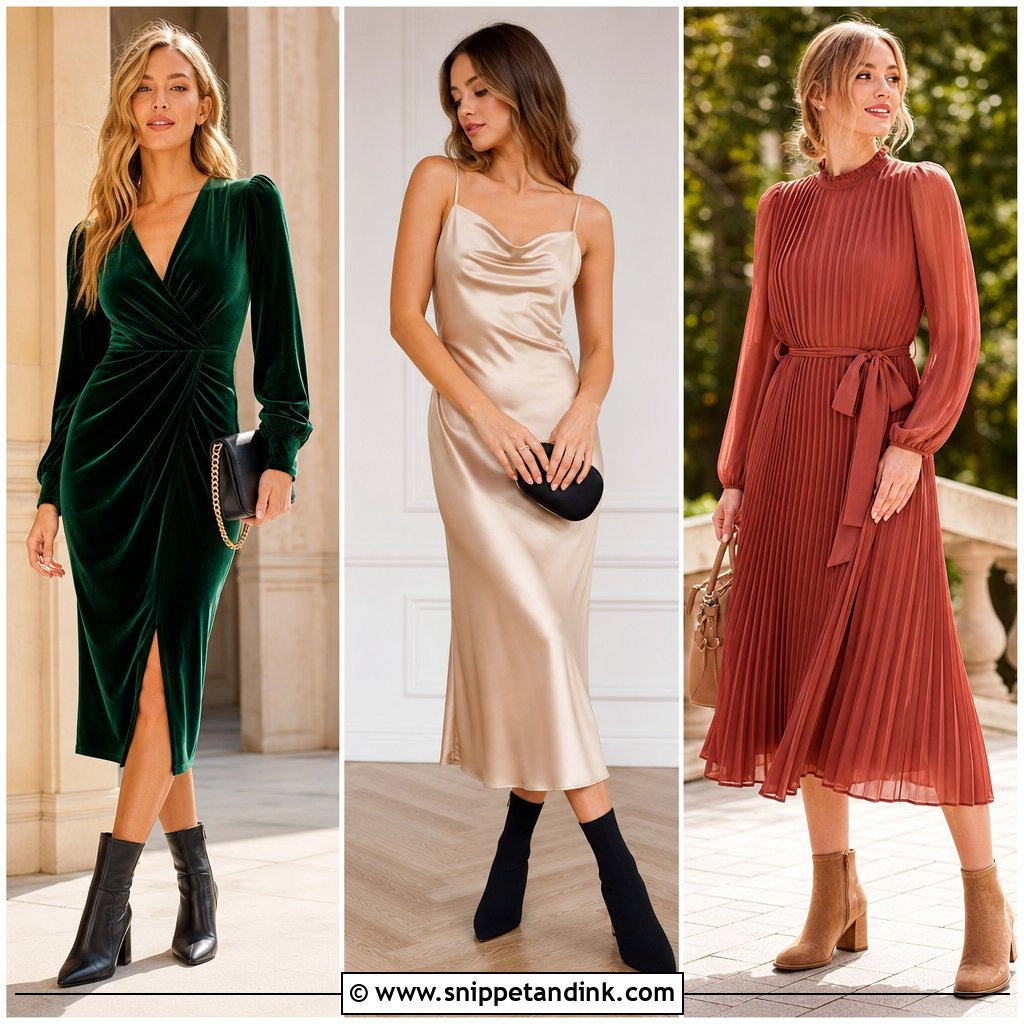
If you only buy one pair, make it this. A white ankle boot sits right under a midi, a high-low hem, a bridal suit or a reception mini, and you’ll wear it again afterward. A pointed toe suits a city look; a rounded toe is kinder on a long day. On grass, stone or old wood floors I push brides toward a block heel. One styling rule: with a heavily laced or beaded dress, keep the boot plain leather or satin so the two don’t compete.
2. Lace Wedding Boots
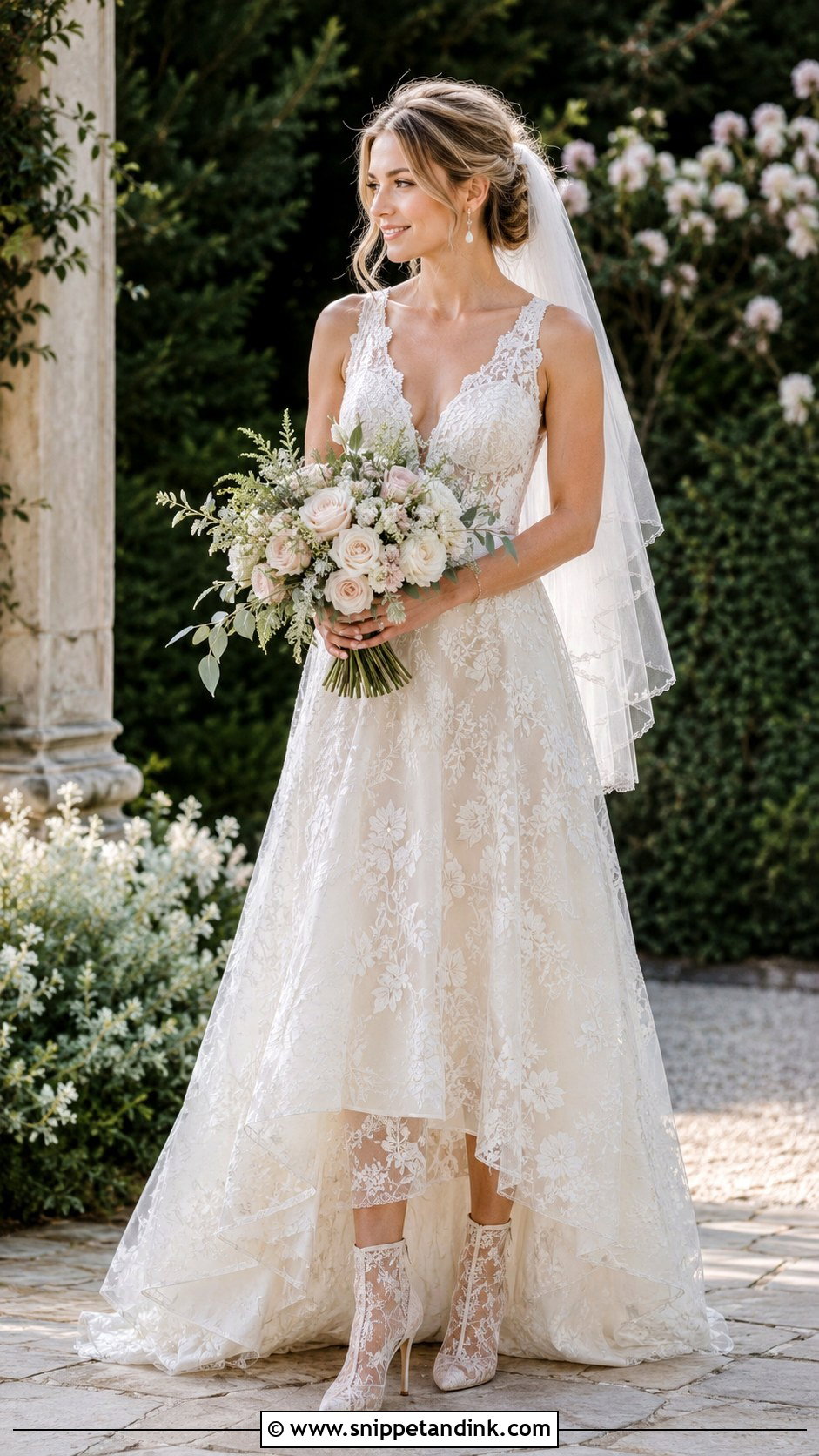
Lace on a boot sounds delicate, but most lace bridal boots are lace laid over a leather or satin base, so they cope with real walking. They suit vintage-inspired gowns, boho lace, tea-length dresses and long sleeves. Scalloped edges or a lace-up front show best under a shorter hem. When your dress is lace too, match the undertone rather than hunting for the same pattern; ivory lace beside bright white lace makes both look off.
3. Pearl Wedding Boots
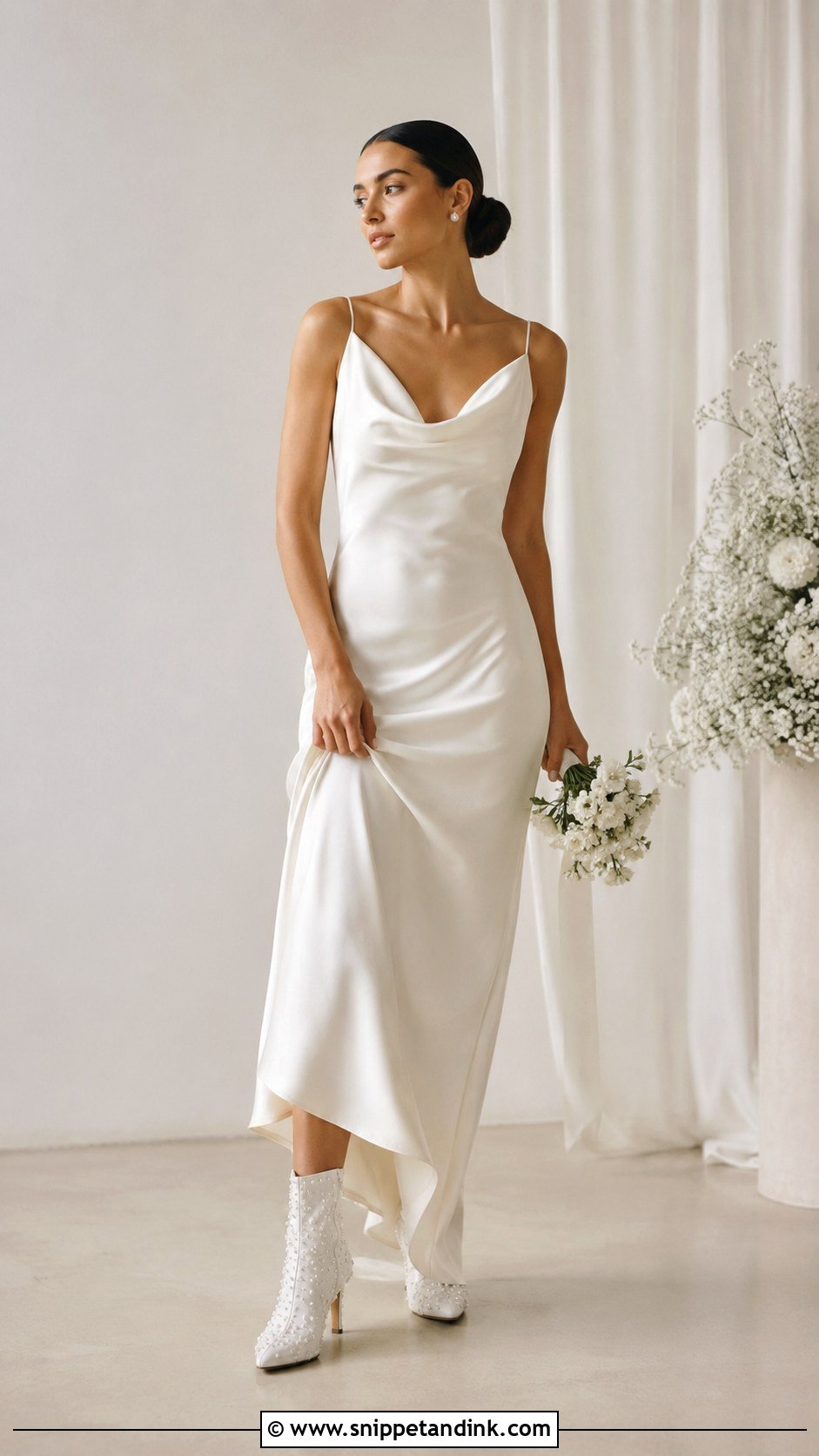
A full pearl boot is a statement; pearl buttons or a pearl-trimmed heel is a whisper. Over a satin gown or a bridal mini, either works with a sleek bun and pearl studs. My caution is practical: pearls on the toe take every knock, so I check that they’re sewn on and not glued before a bride commits. Pair a heavily embellished gown with small pearl accents only. Close-up shots of the boots beside the bouquet are where these really earn their keep.
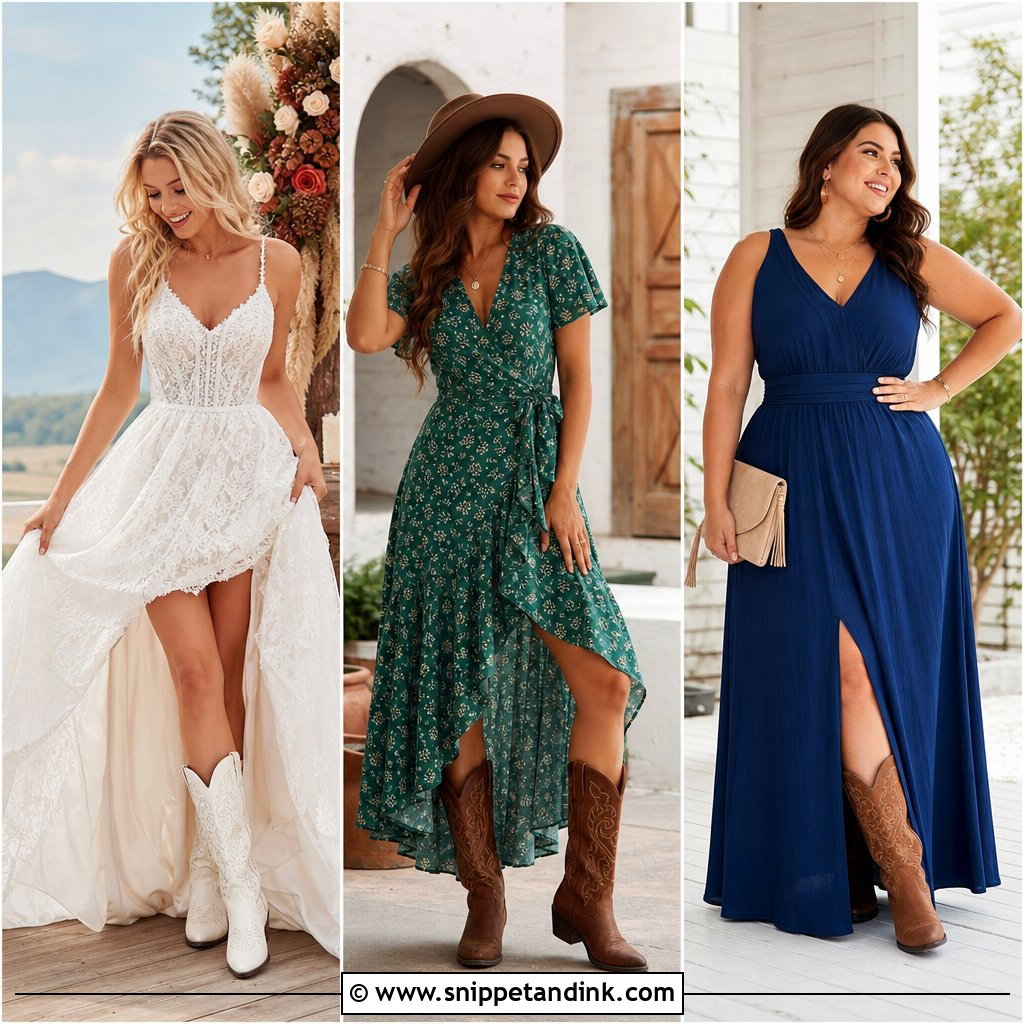
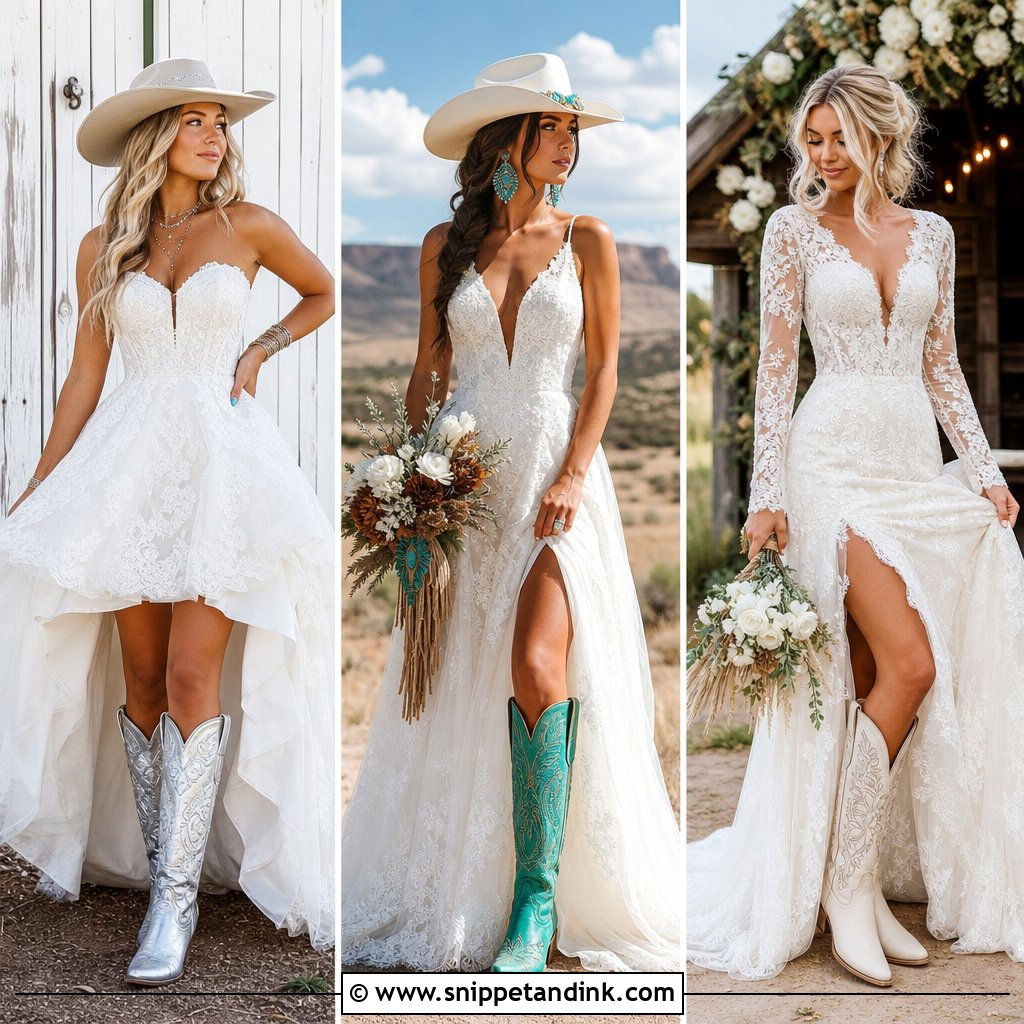
4. Western Wedding Boots
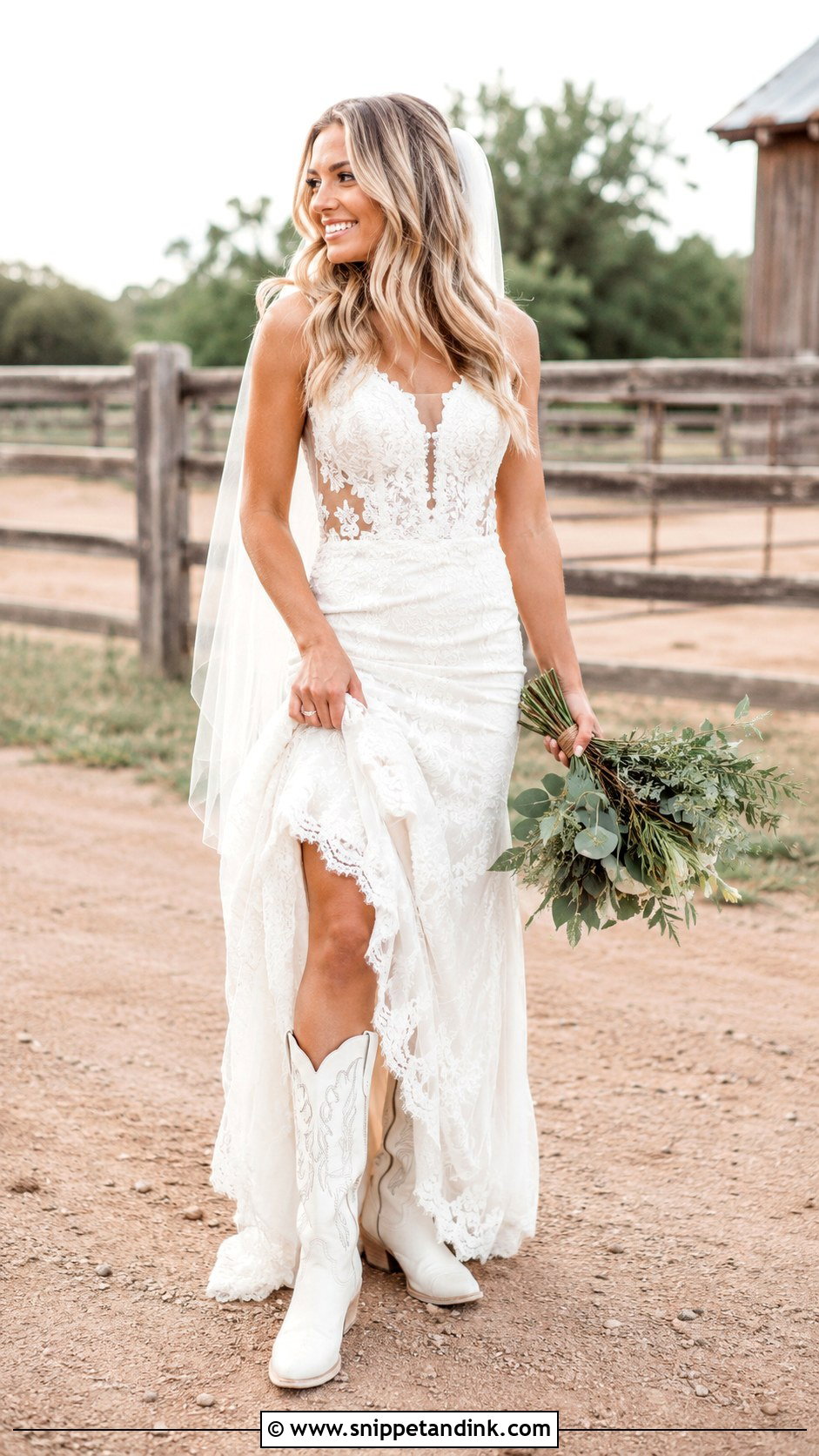
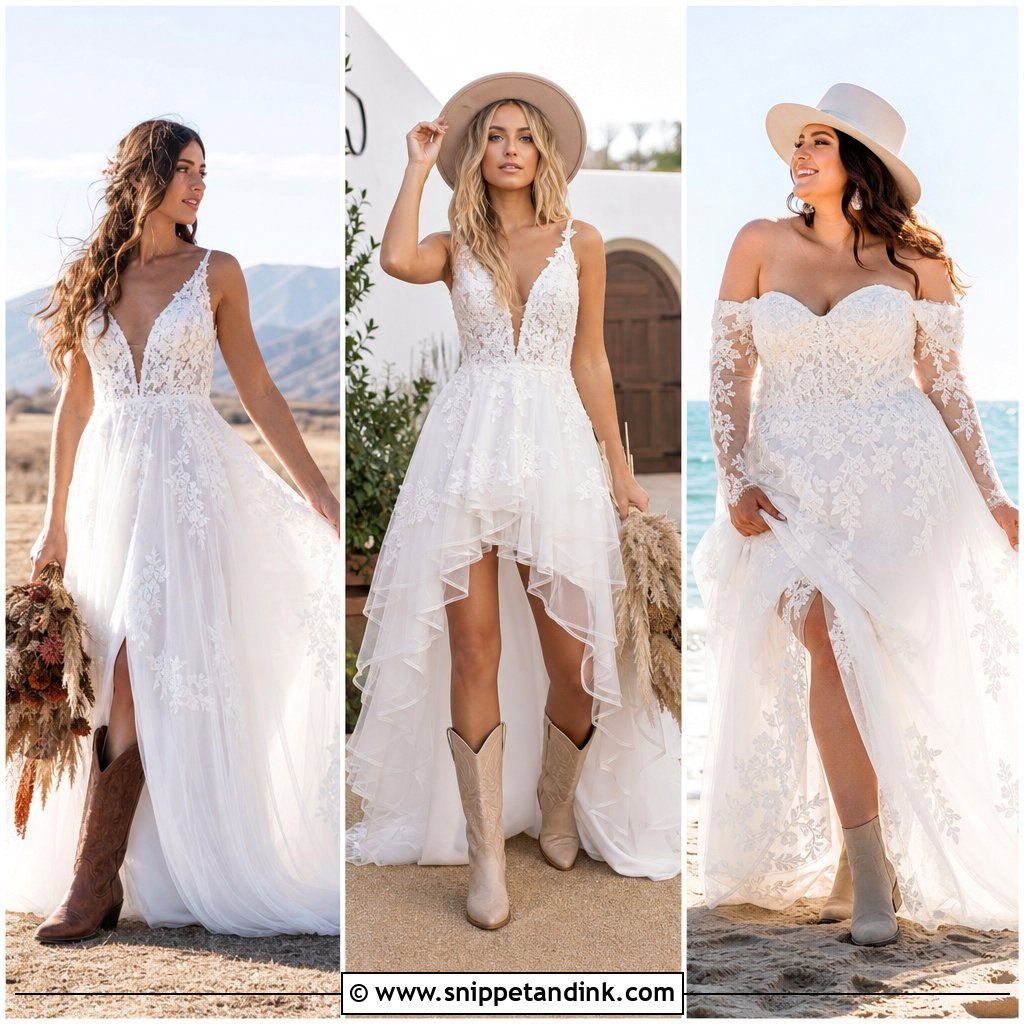
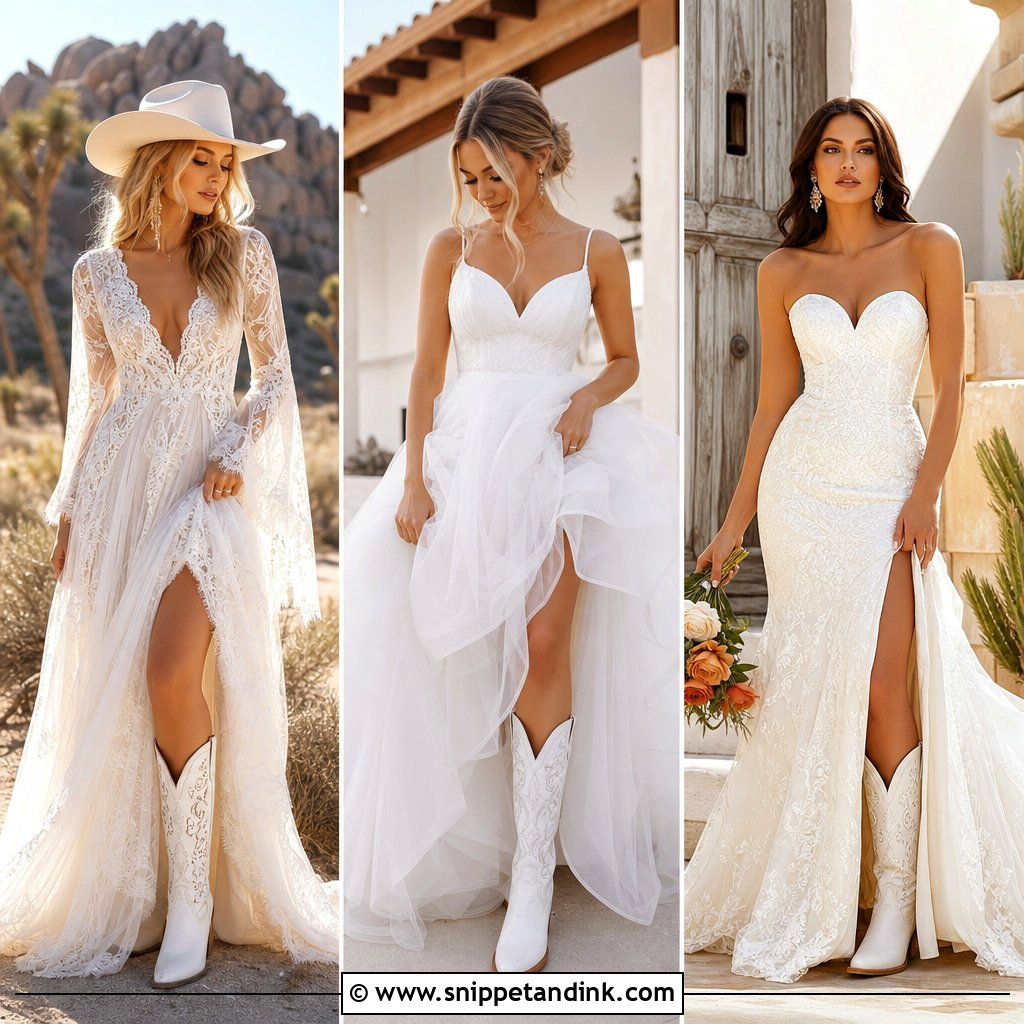
Western wedding boots belong at ranches, barns and desert ceremonies. White or ivory reads bridal, while tan, cream or soft brown warm up a boho dress. A lace A-line, a floral embroidered gown or a satin slip with a denim jacket for portraits all suit them. The shaft height matters with a slim gown: a wide, tall shaft pushes the skirt out at the calf. Choose refined stitching and a toe shape that sits right under the hem, and keep it feeling western rather than costume.
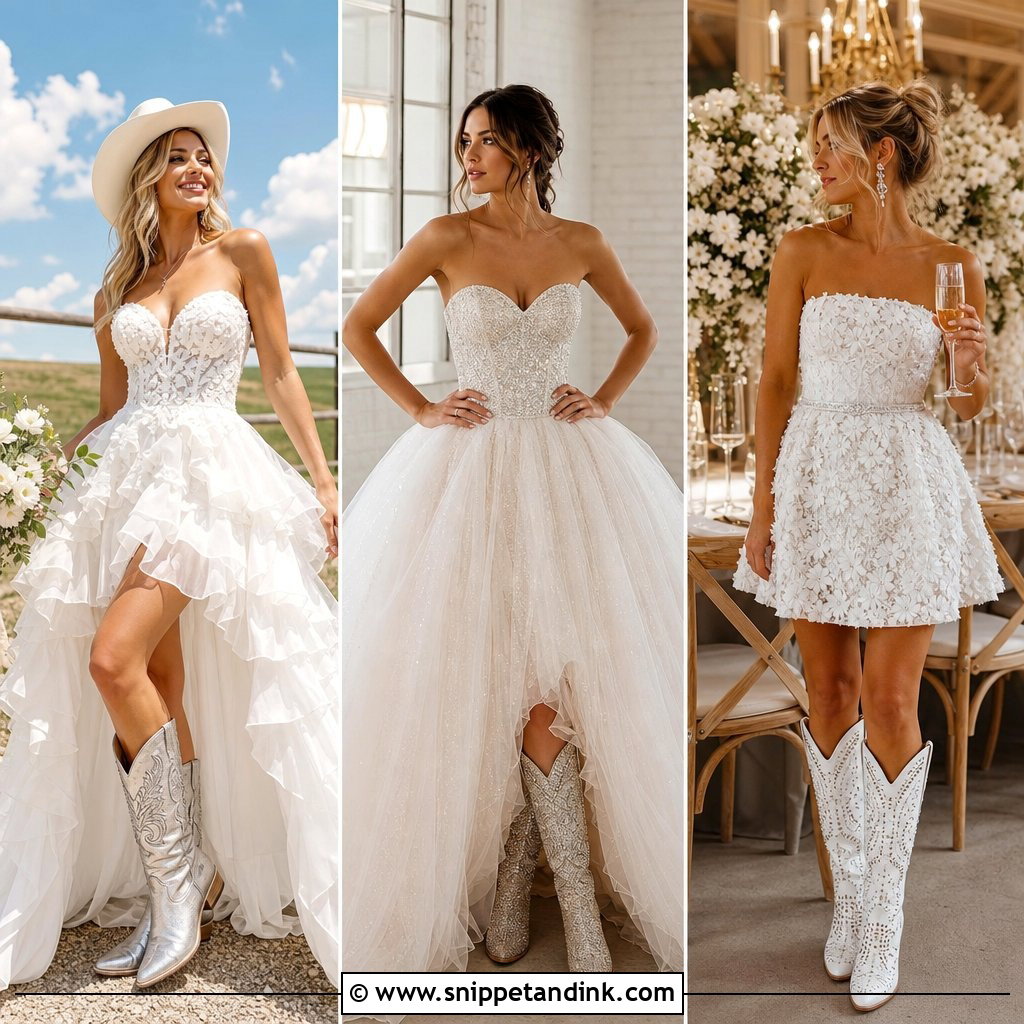
5. White Cowboy Wedding Boots
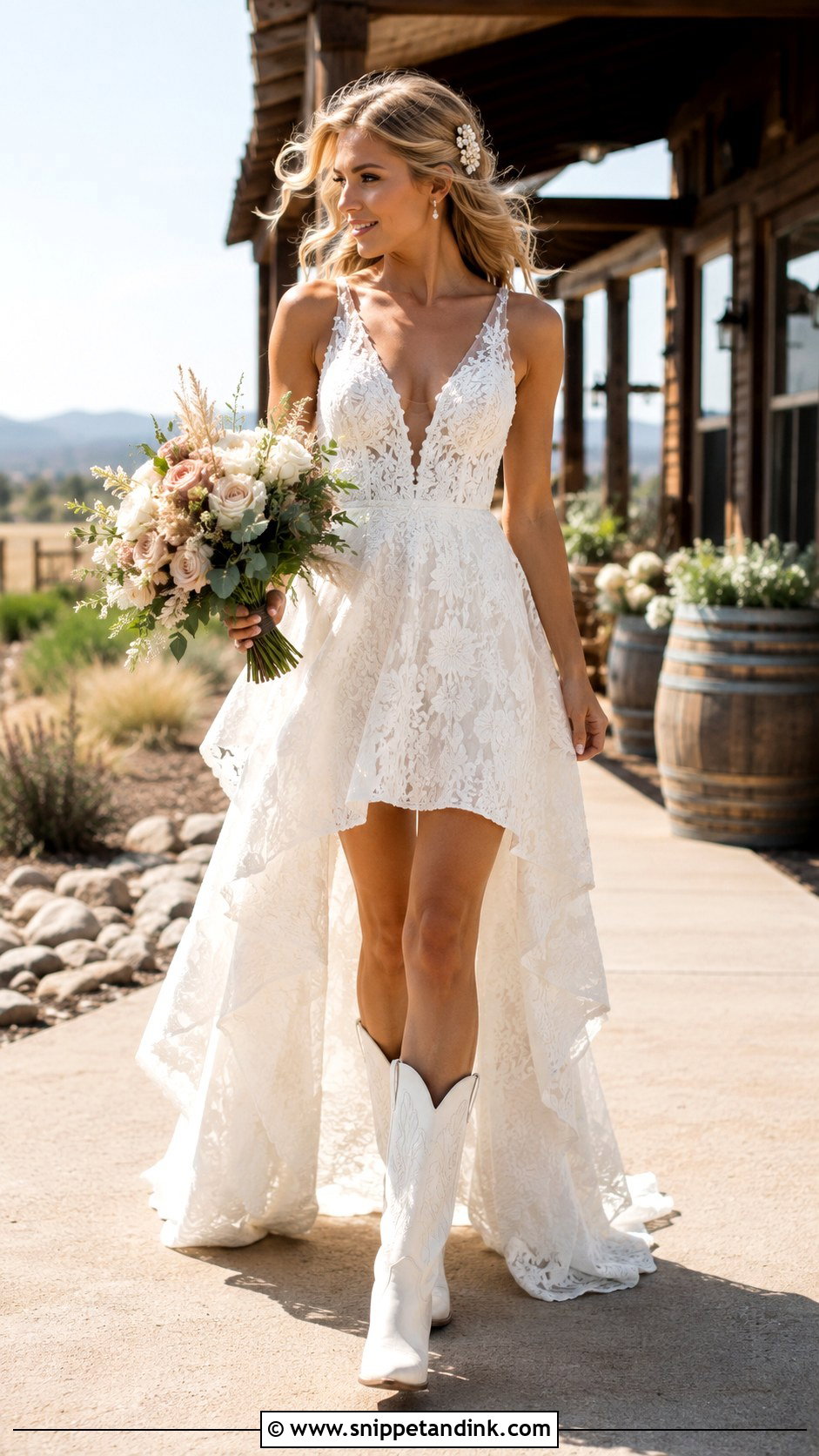
White cowboy boots are the reception favorite for a reason: they’re made for dancing on a wooden floor. They suit minis, high-low gowns, lace dresses and party outfits. A tall shaft is dramatic, an ankle-height cowboy boot more subtle. With a formal gown I’d choose clean white leather with minimal stitching; with a simple dress, white-on-white embroidery adds the detail. Soft waves and a pearl clip finish the look. Brand-new cowboy boots are stiff, so read the break-in notes further down before you buy a pair three days out.
6. Ivory Bridal Booties
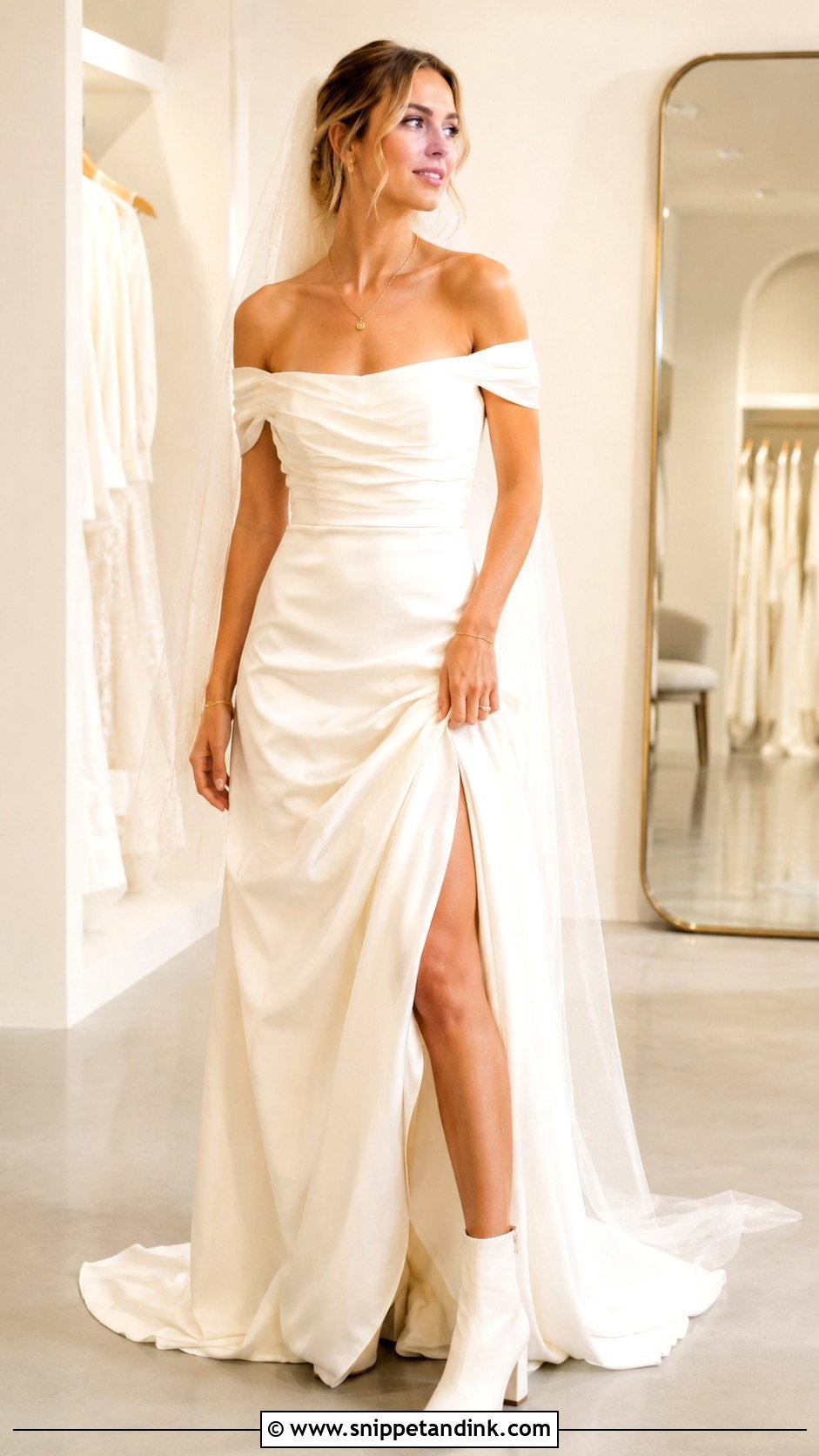
Bright white boots can make a champagne or warm ivory dress look yellow next to them. Ivory booties solve that. They blend well with lace, tulle, chiffon and silk. A mid-height heel gives lift without strain, and a fitted ankle keeps the line clean under an off-shoulder gown. Put the boots beside the dress by a window before deciding, because ivory varies hugely from one brand to the next and the label name tells you little.
7. Block Heel Wedding Boots
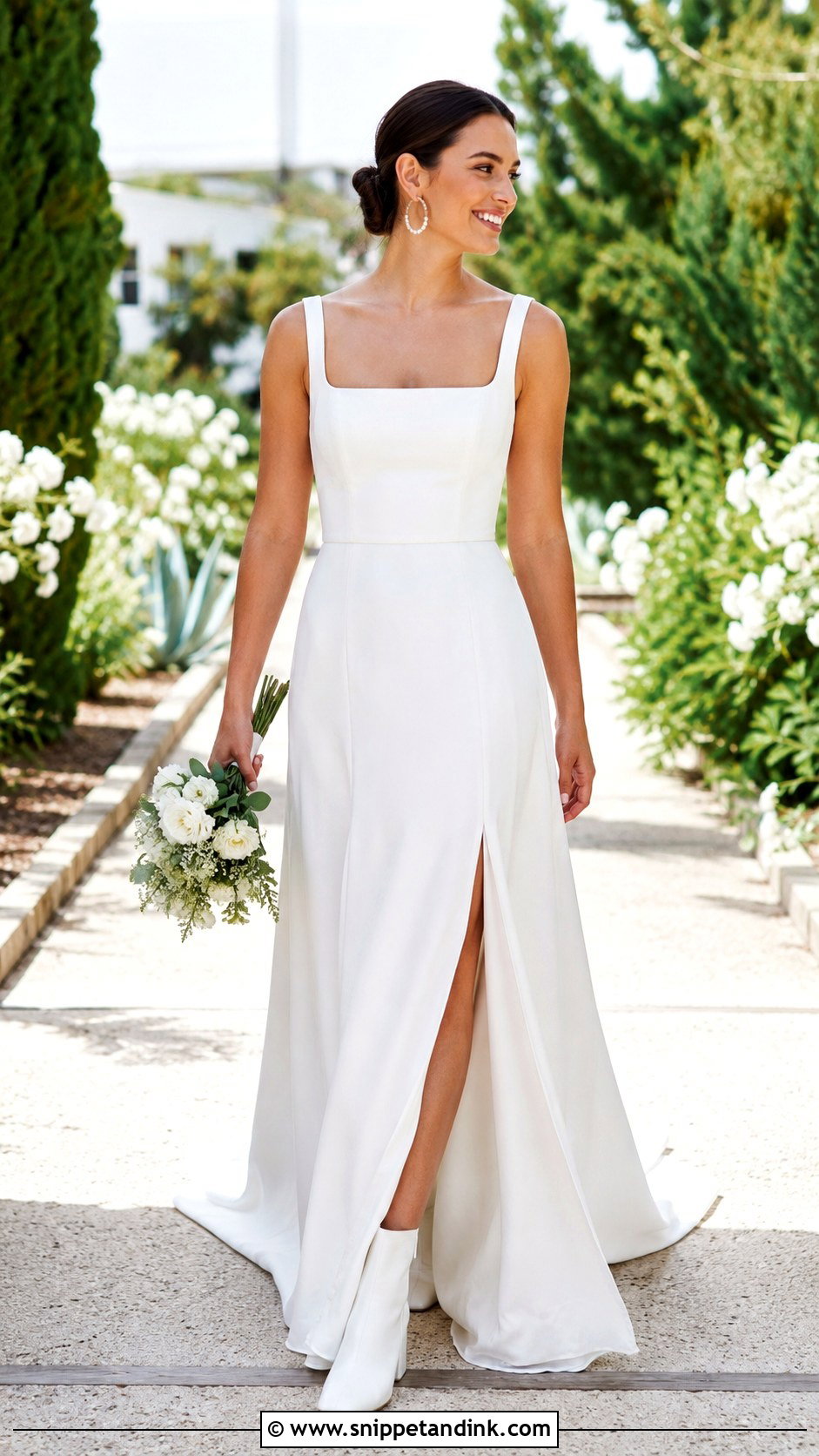
A wide heel spreads your weight, which is why block heels don’t sink into lawns or catch between decking boards the way stilettos do. That makes them the sensible pick for outdoor aisles, garden paths and rooftops, and for dancing late. A white block heel ankle boot works with almost every bridal style. With a square-neck dress and a low bun it looks quite modern. Check for padding at the ball of the foot and a full-length zip, which makes getting in and out of a gown far easier.
8. Low Heel Wedding Boots
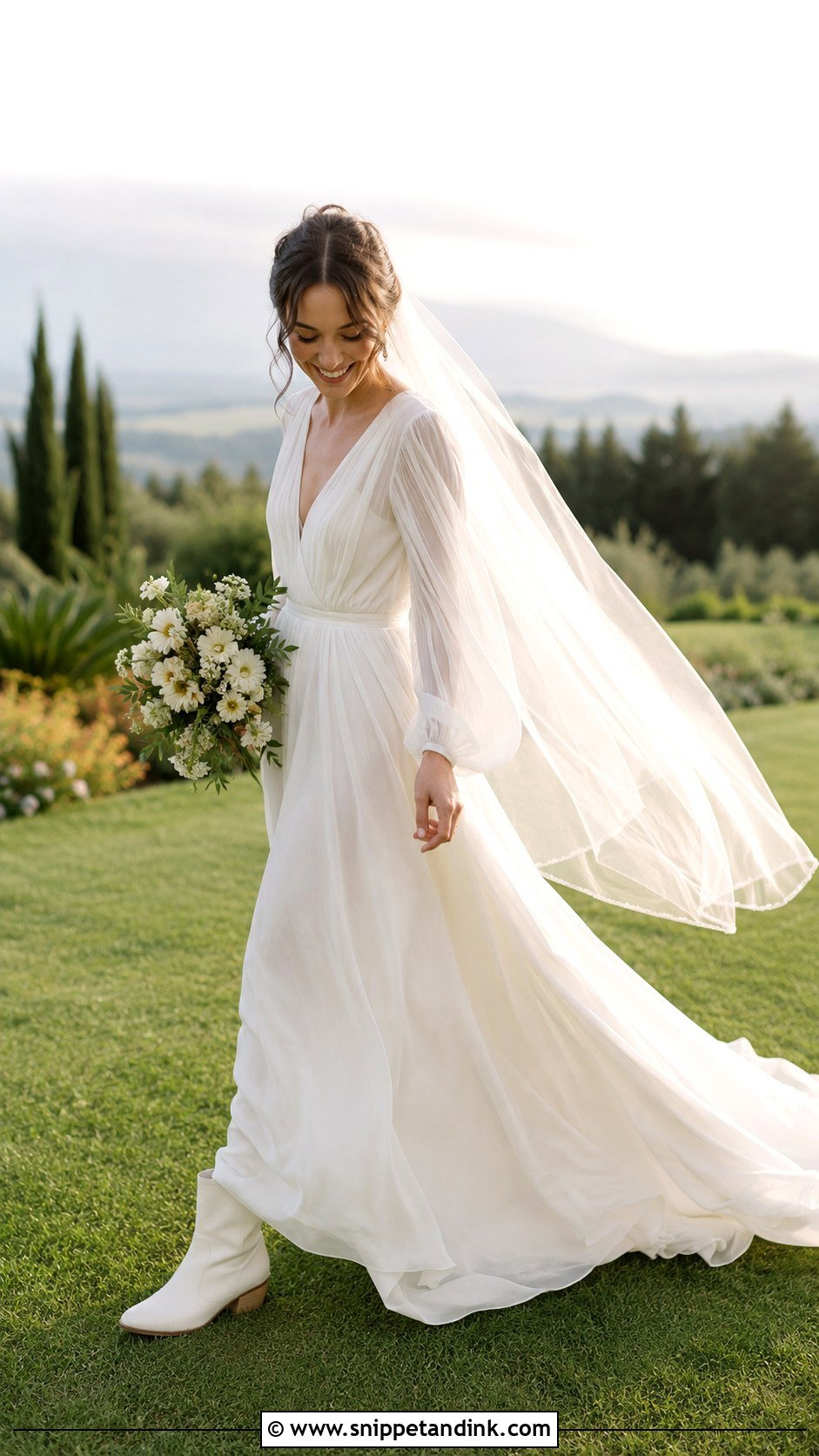
A one- or two-inch heel is the height I recommend most often for a long day. It still gives the outfit some shape and posture, but keeps pressure off the balls of your feet through the ceremony, photos and reception. With a flowing gown and a soft veil, nobody can tell. It’s also the easy answer when your partner is close to your height. The boot shape does the work here, so choose a clean, slim one.
9. Flat Wedding Boots
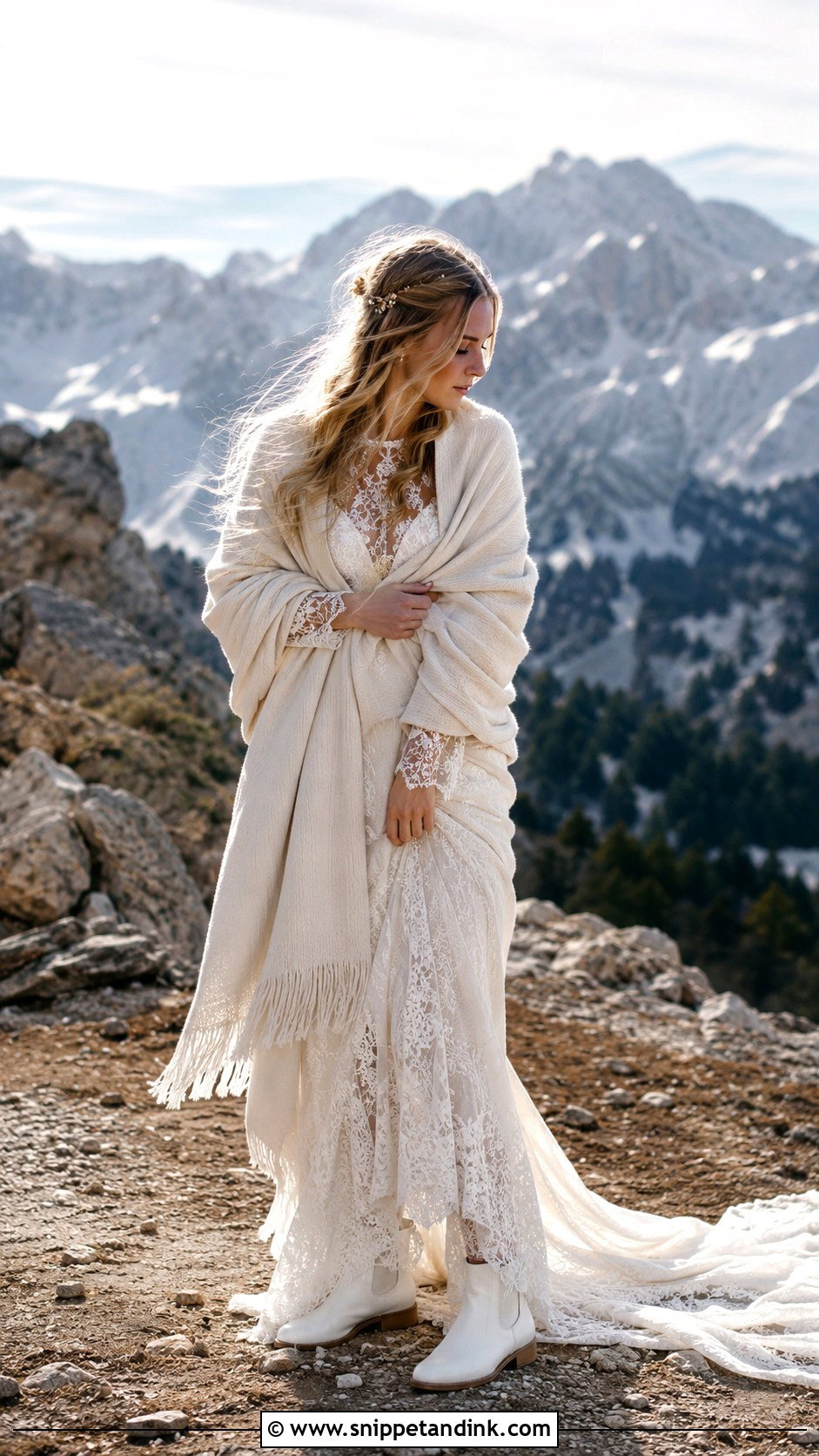
Mountain trails, beach paths and forest ceremonies are where heels simply don’t function. Flat boots let you walk to the spot without help. In sleek leather, satin or lace they still look chosen rather than practical. With a long boho dress and natural makeup they feel at home outdoors; for a city wedding, flat white Chelsea boots under a tailored suit work well. Fit is everything with a flat boot: a loose ankle turns it casual instantly.
10. Platform Wedding Boots
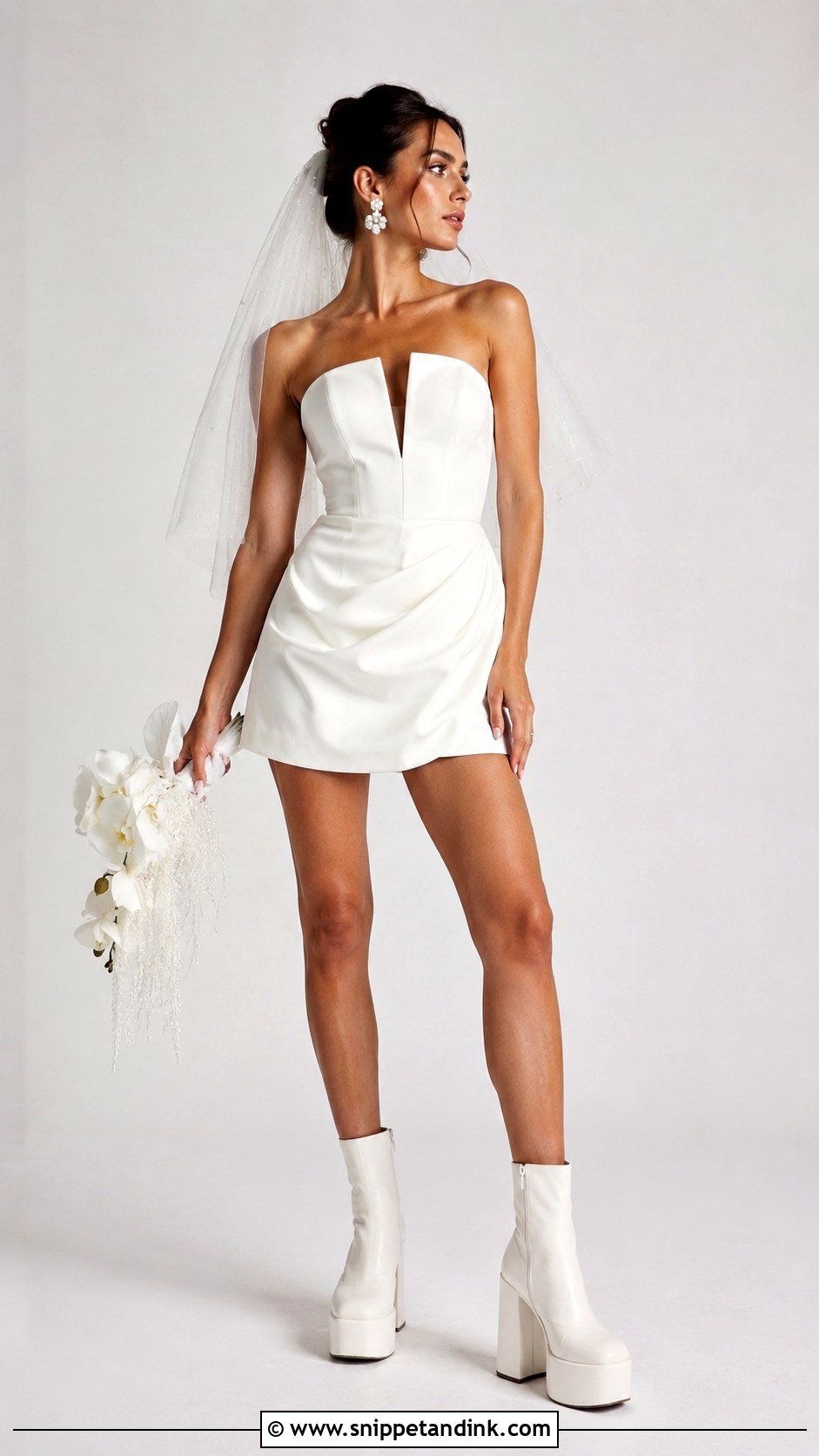
Platforms give height with less strain because the raised front reduces the angle your foot sits at. Many brides who can’t manage a standard heel cope fine in them. They suit minis, sleek reception dresses, jumpsuits and modern courthouse outfits. White patent, satin or pearl-detailed platforms read bridal. Practise on stairs before the day; the thicker sole changes how you feel each step. With shoes this strong, keep accessories simple.
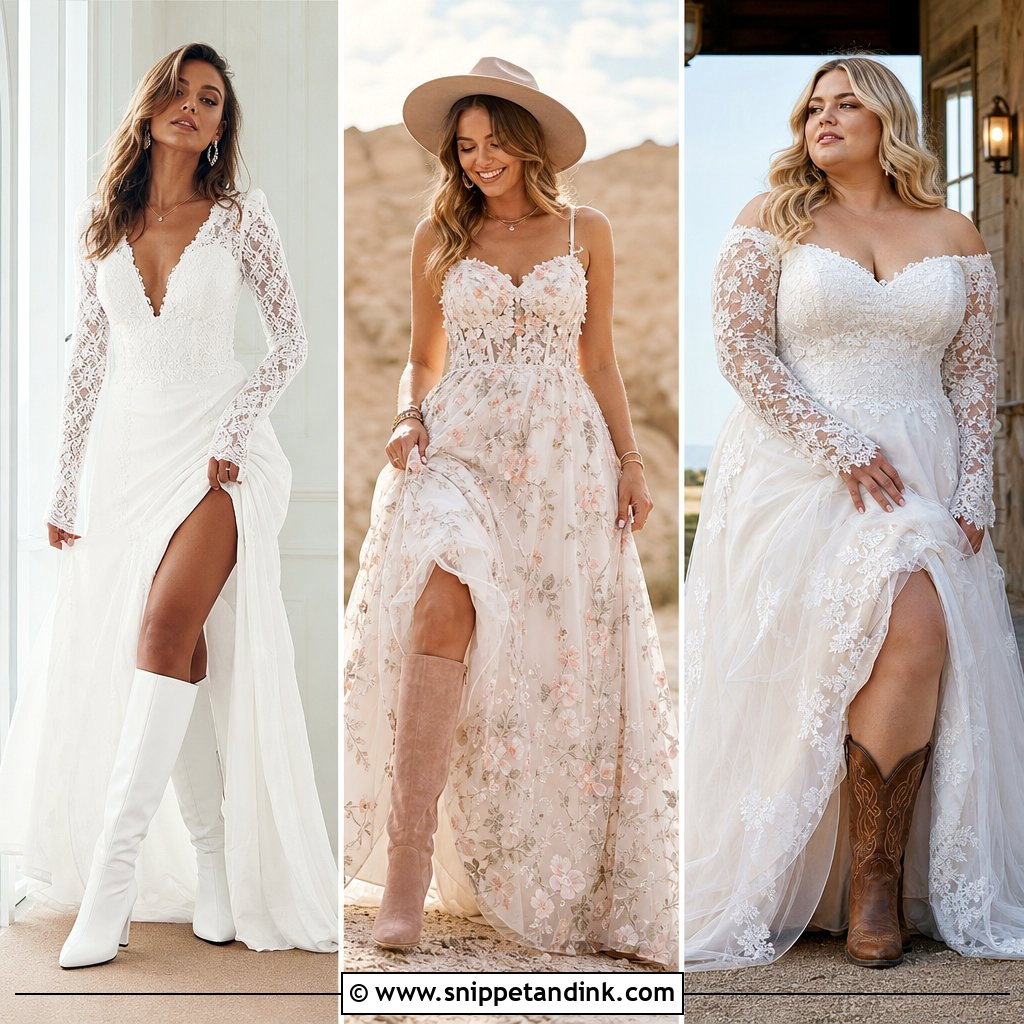
11. Knee High Wedding Boots
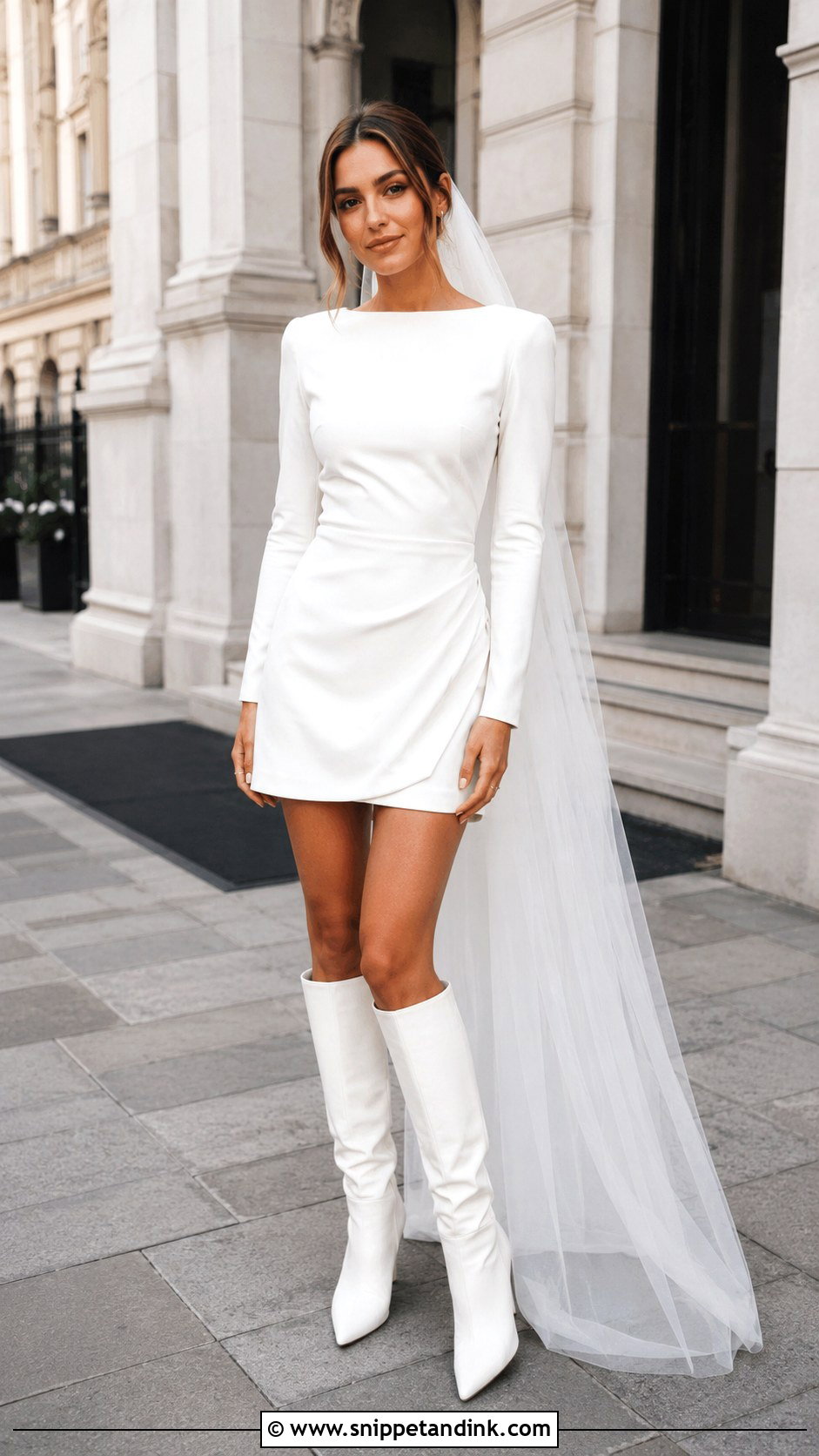
Knee-high boots only make sense when the boot is meant to be seen, so pair them with a mini, a slit gown or a structured reception outfit. White leather feels modern; lace or satin softer. The shaft must fit the calf closely. A boot that gaps at the top looks loose and bulky in photos, and stretchy leather or a back zip helps. A long-sleeve mini and a sleek veil keep the overall shape lean.
12. Satin Wedding Boots
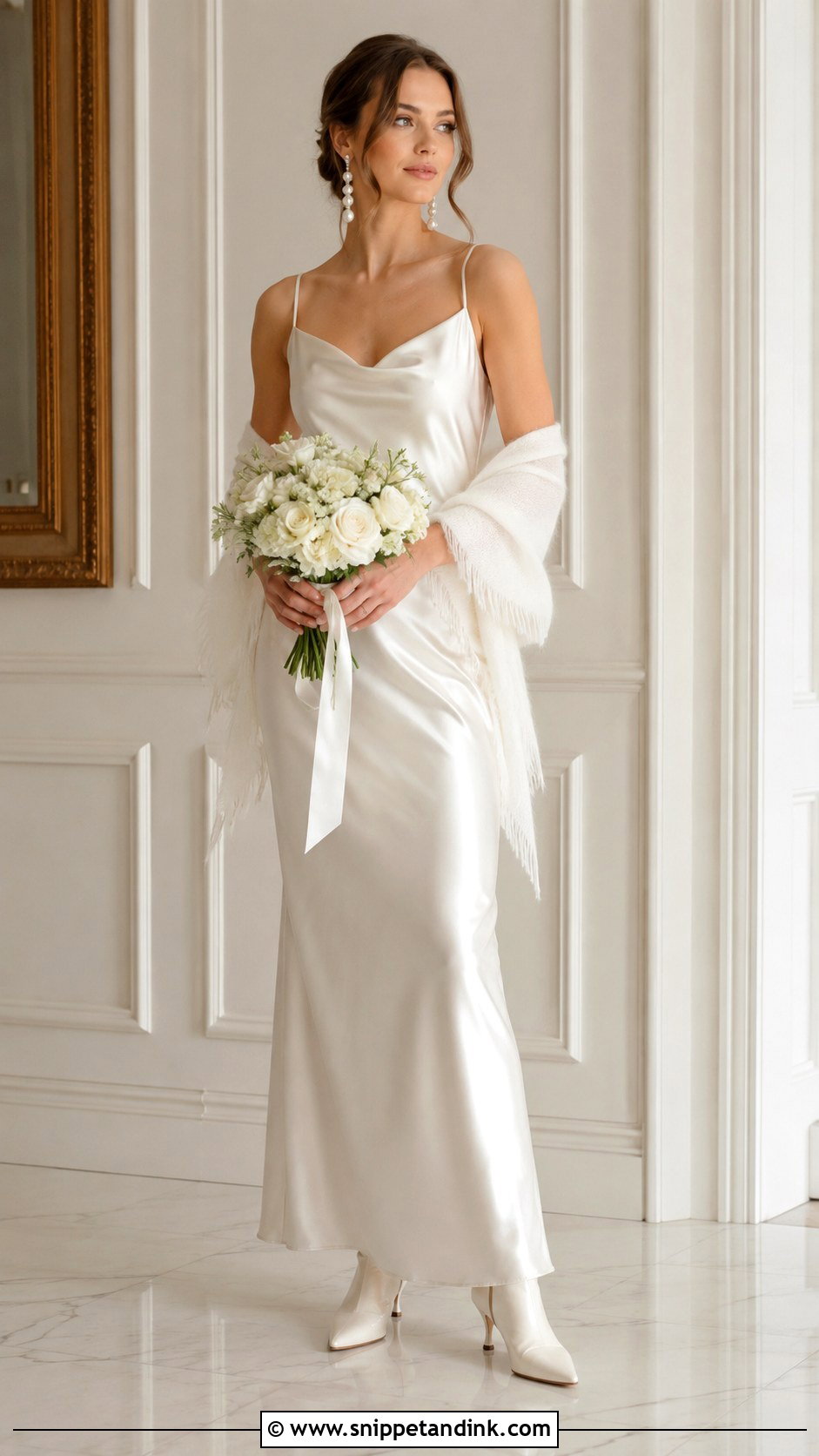
Satin is the dressiest boot fabric and the least forgiving. A pointed toe satin boot under a bias-cut gown looks refined, and it matches silk and satin dresses well. Satin marks with water and grass, though, so I keep these for indoor venues and paved settings. If your day includes a lawn or gravel, wear them for portraits and the reception rather than the walk to the ceremony. A fabric protector spray helps, but test it on the inside edge first, since some sprays darken pale satin.
13. Rhinestone Wedding Boots
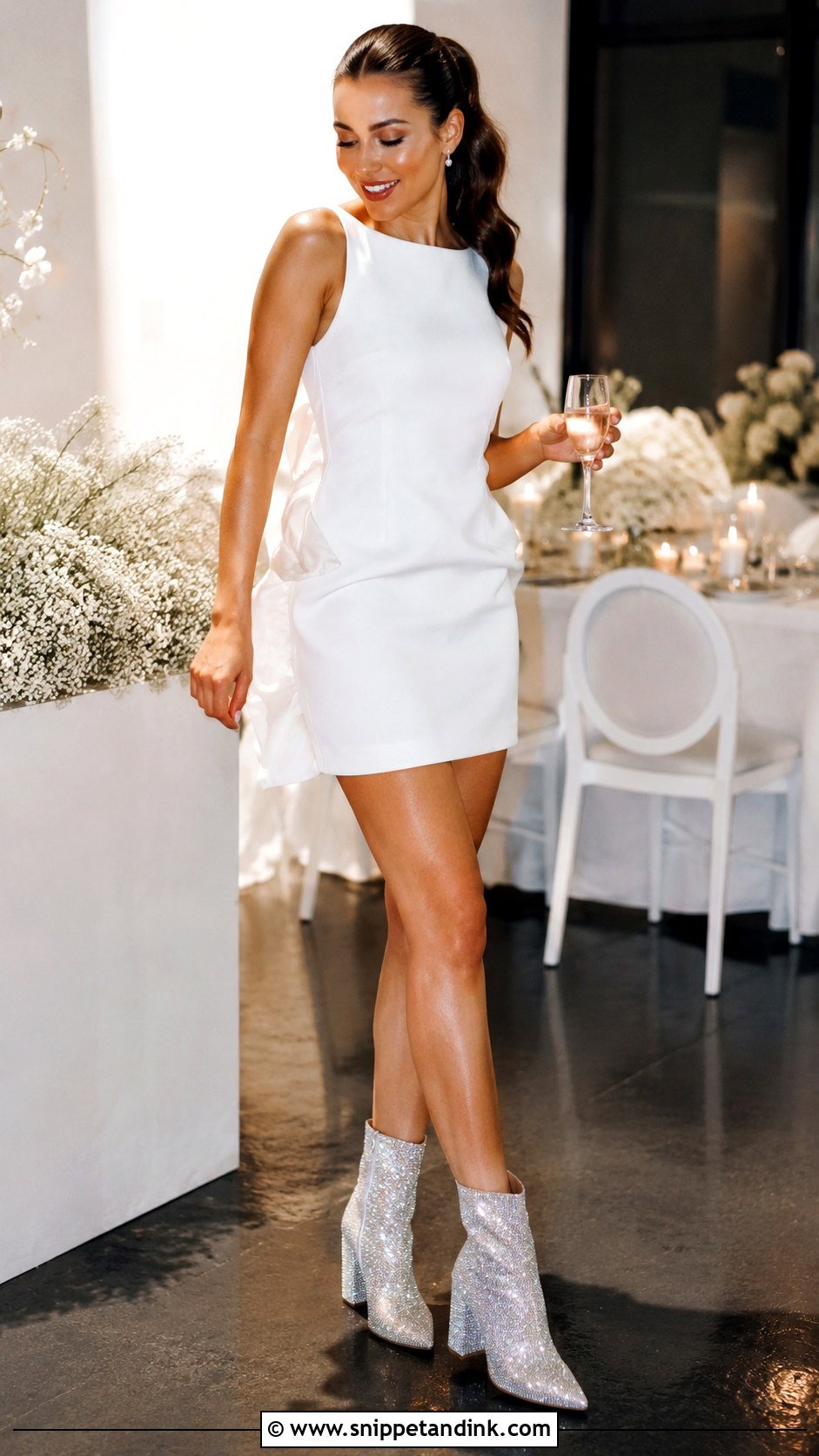
Sparkle on the feet works best when it’s the only sparkle. With fully embellished rhinestone boots I’d pair a clean dress shape and almost no jewelry. Prefer a softer effect? Look at rhinestone buckles, crystal trim or a sparkly heel instead. They suit minis, jumpsuits and simple gowns, and they come alive on the dance floor when they catch the lights. Rough settings can snag tulle or a lace hem, so run your hand over the stones before buying.
14. Embroidered Wedding Boots
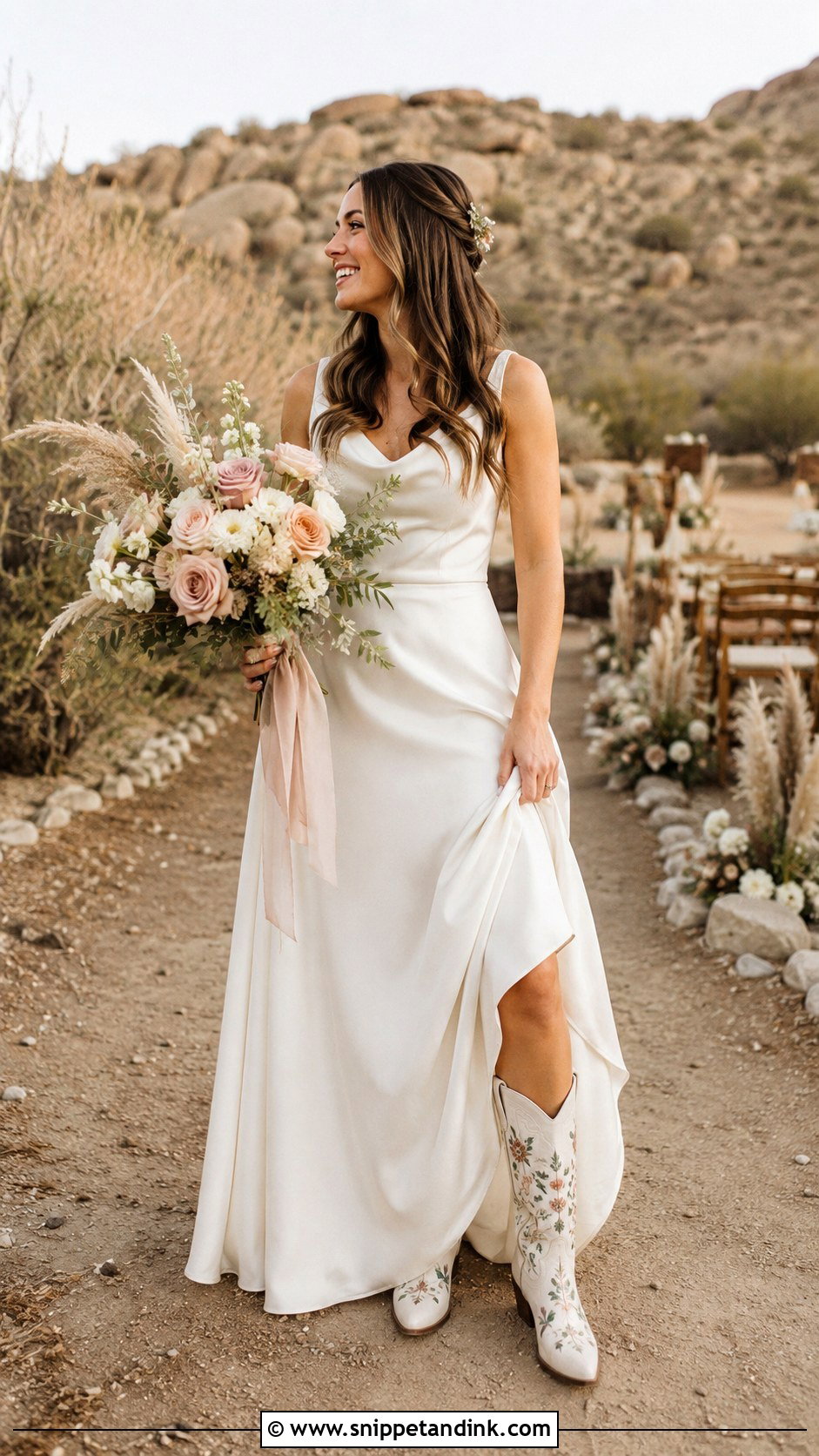
Embroidery adds personality, and the style of stitching sets the tone: florals feel romantic, western stitching rustic, tonal white embroidery quietly elegant. These boots sit well with lace gowns, plain crepe, high-low hems and boho separates. With a simple A-line gown, I sometimes pull one thread color into the bouquet ribbon so the boots look connected. Keep other accessories quiet if the stitching is colorful.
15. Blue Wedding Boots
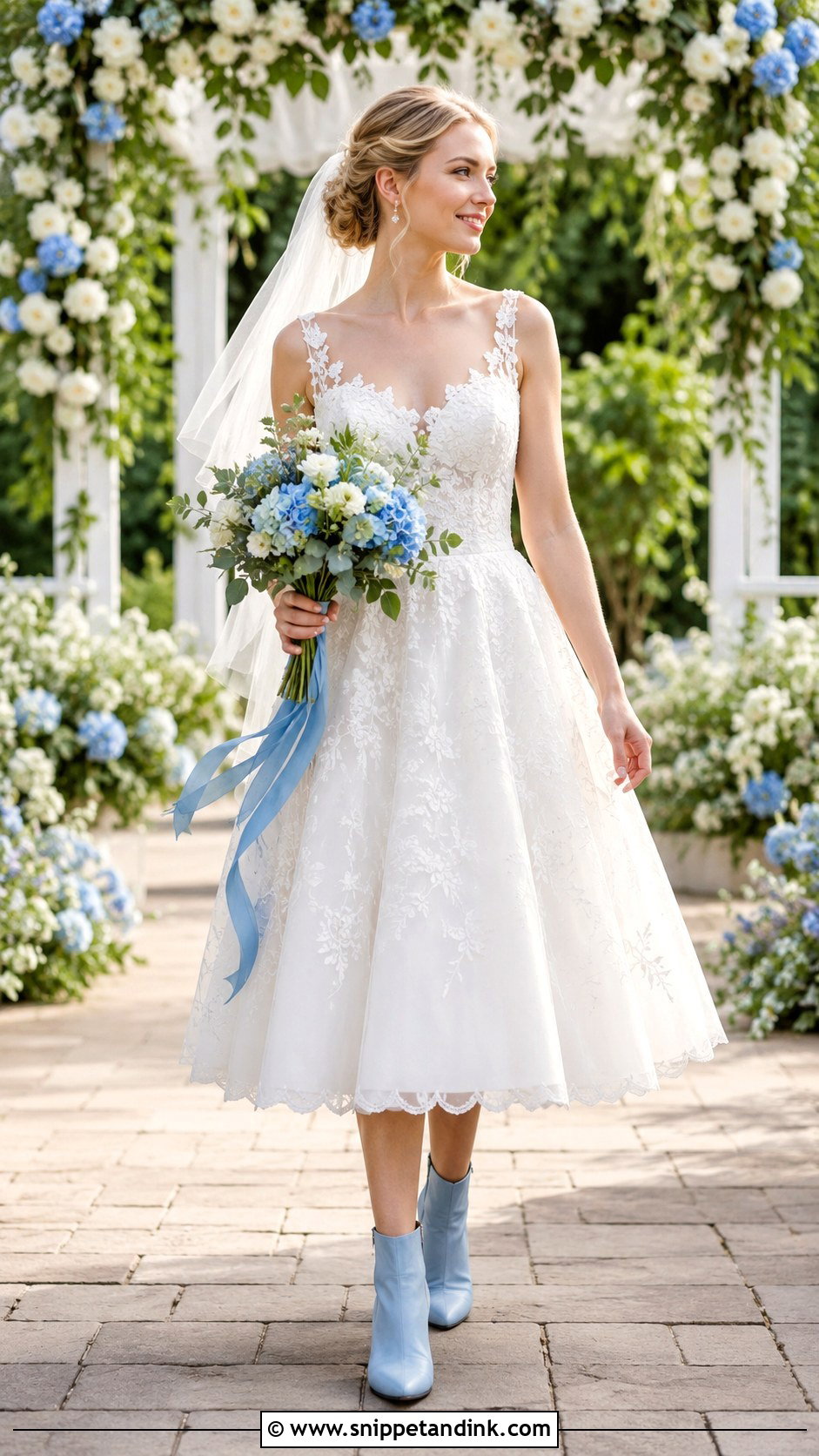
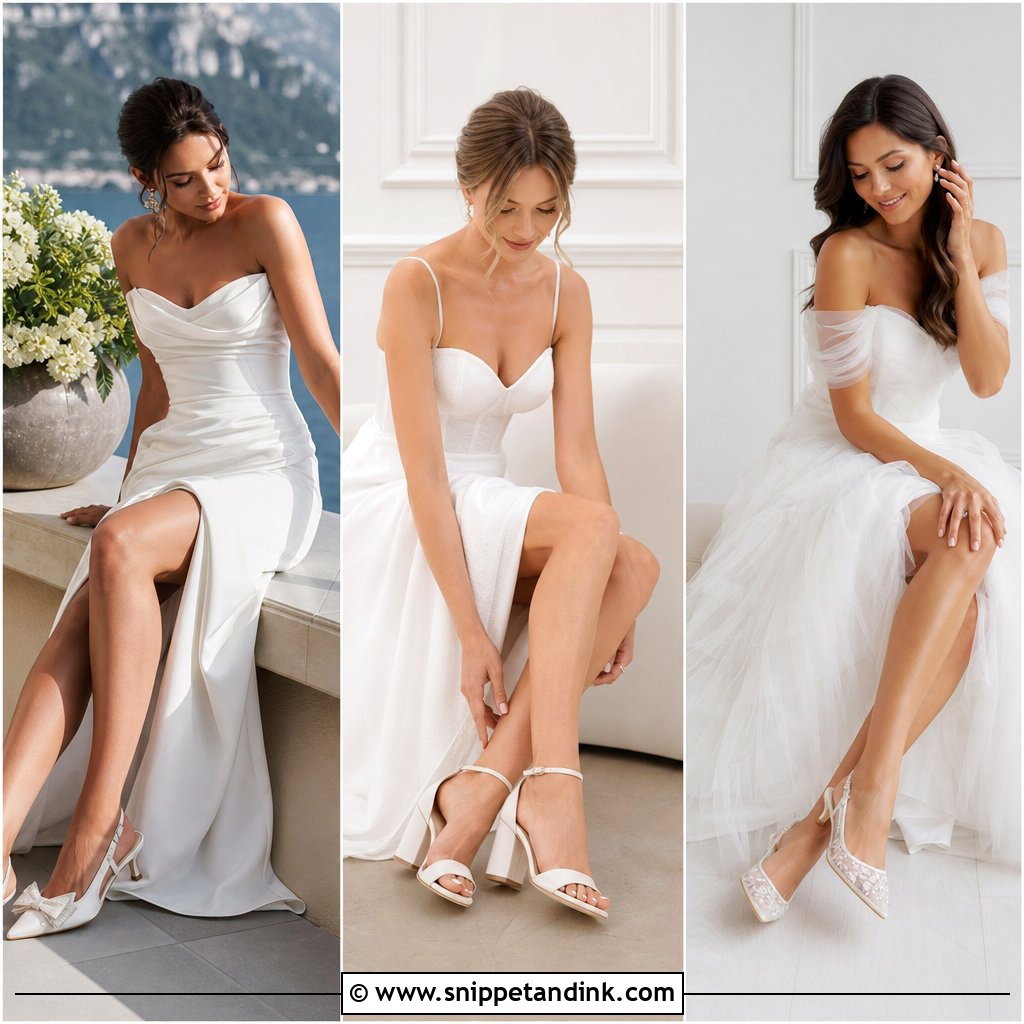
Blue boots are a good way to carry your “something blue” where it will actually be seen. Pale blue reads soft, dusty blue and navy stronger. Against a white or ivory gown, a tea-length hem or a bridal suit, they show clearly. One small echo, a ribbon on the bouquet or a blue stone in an earring, ties them in. More than that and the outfit starts to look themed. Blue boots are also one of the pairs brides genuinely wear again.
16. Silver Wedding Boots
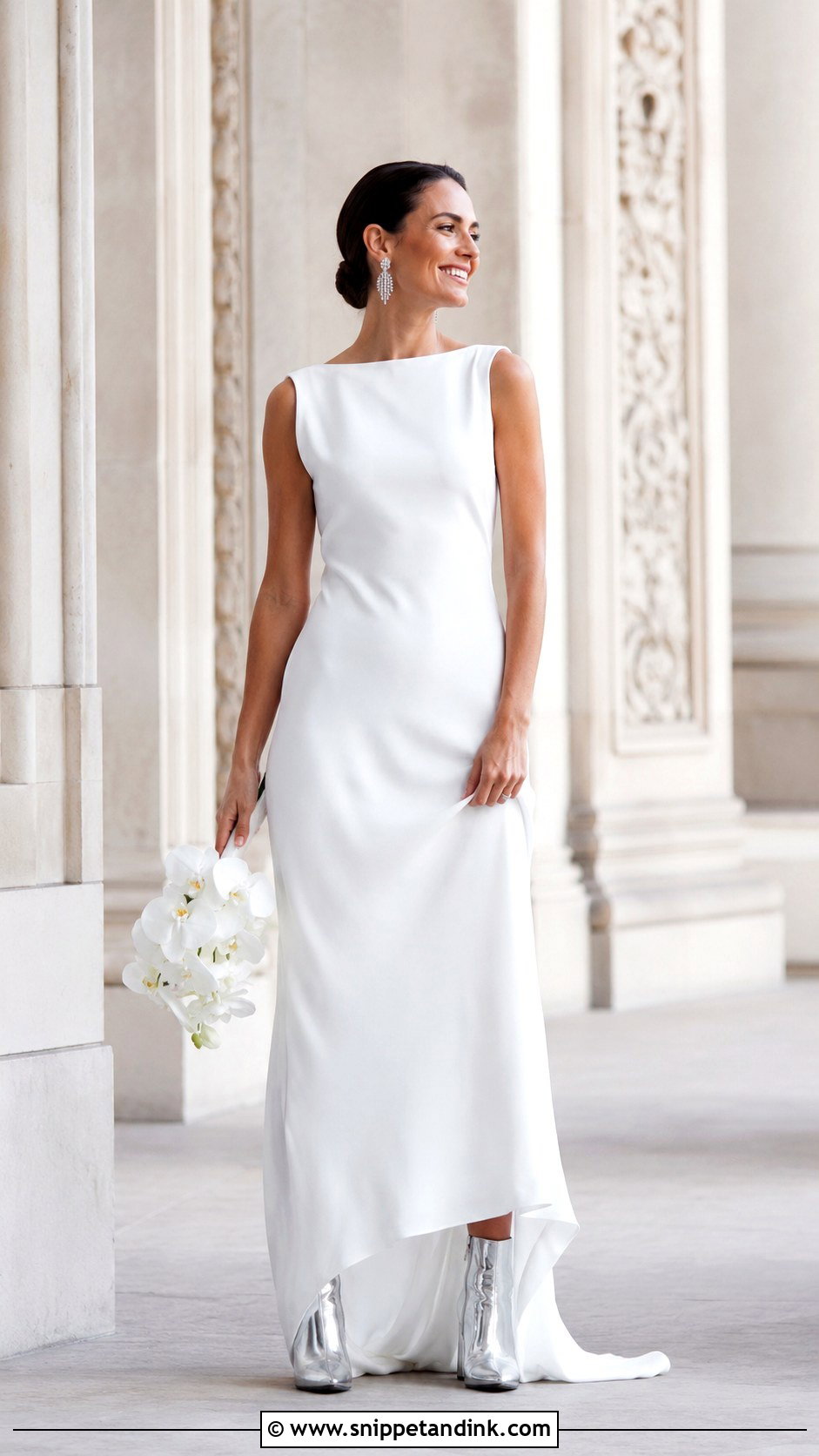
Silver suits cool-toned gowns. If your dress is bright or soft white, a silver ankle boot under a minimalist column gives it a sharp, editorial edge. With warm ivory, bright chrome clashes; a softer champagne-silver finish sits better. Crystal earrings and a smooth low bun keep everything in the same register. Metallic leather can crack at the toe crease, so flex the shoe in the shop and look for fine lines.
17. Gold Wedding Boots
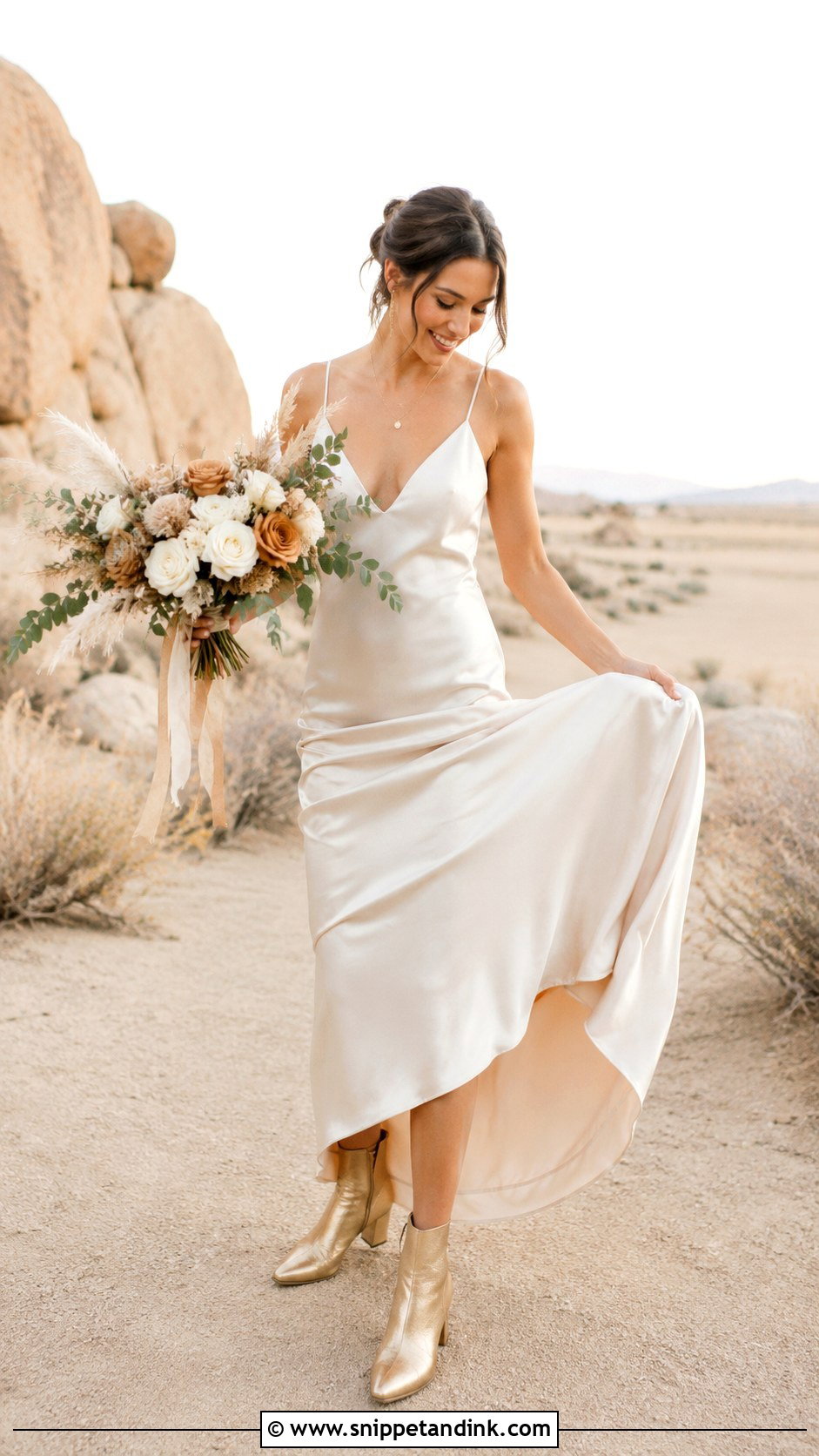
Gold is warm, and it belongs with champagne dresses, cream gowns and autumn or desert weddings. I’d pick brushed, pale or champagne gold over bright yellow gold, which tends to look brassy in photos. With a simple satin dress and warm-toned flowers the outfit hangs together. Shiny gold boots want a simple heel shape and refined accessories; it should never feel glittery from head to toe.
18. Black Wedding Boots
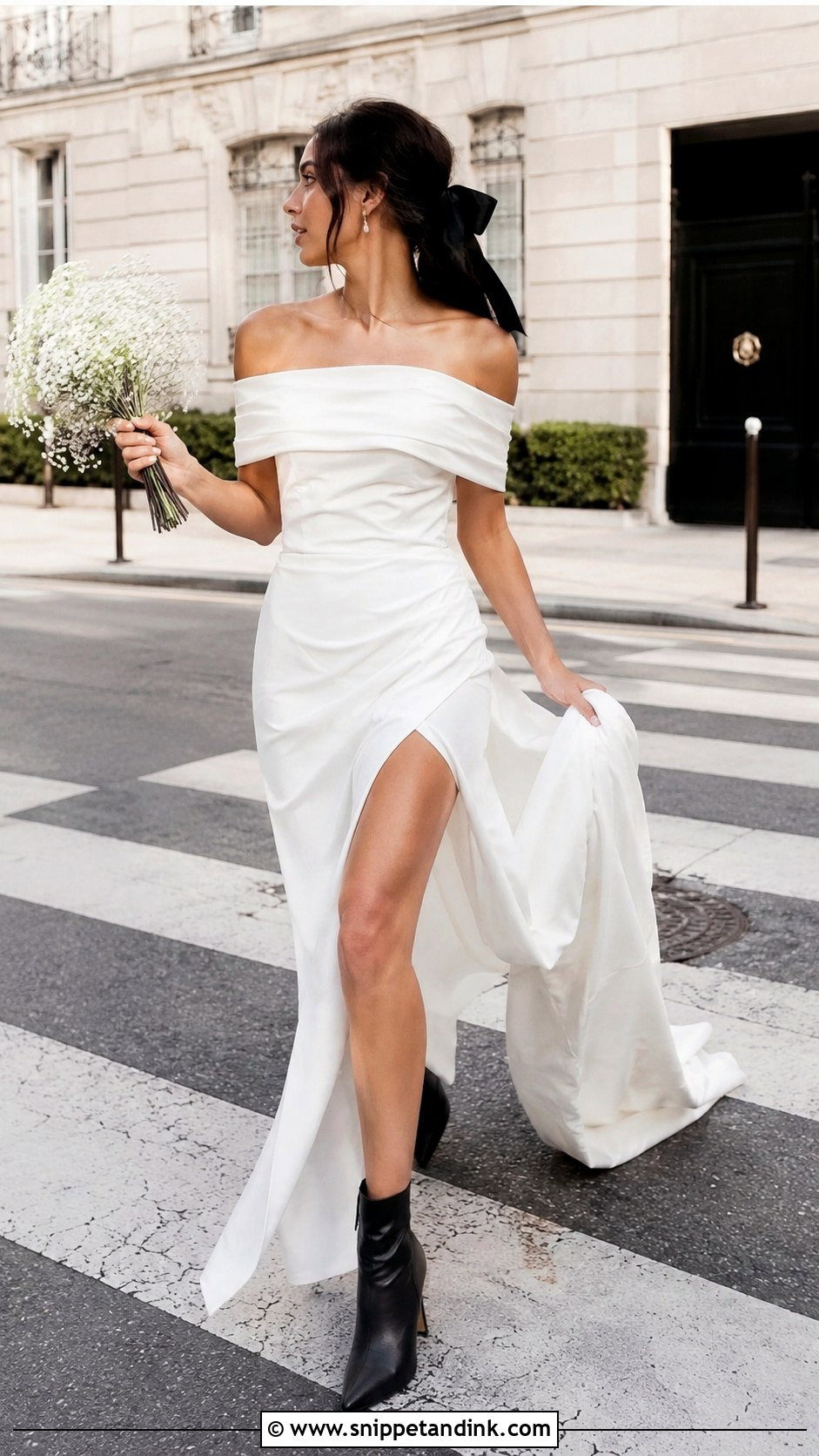
Black boots under a white gown are a deliberate contrast, and they need a reason to be there. Repeat the black once: a black bow in the hair, a black-trimmed veil or a tailored black jacket. Without that echo, the boots look disconnected from the outfit. A pointed black ankle boot feels city-chic, while black lace or mesh softens it. With a minimalist dress or a bridal suit, they can look very polished.
19. Brown Leather Wedding Boots
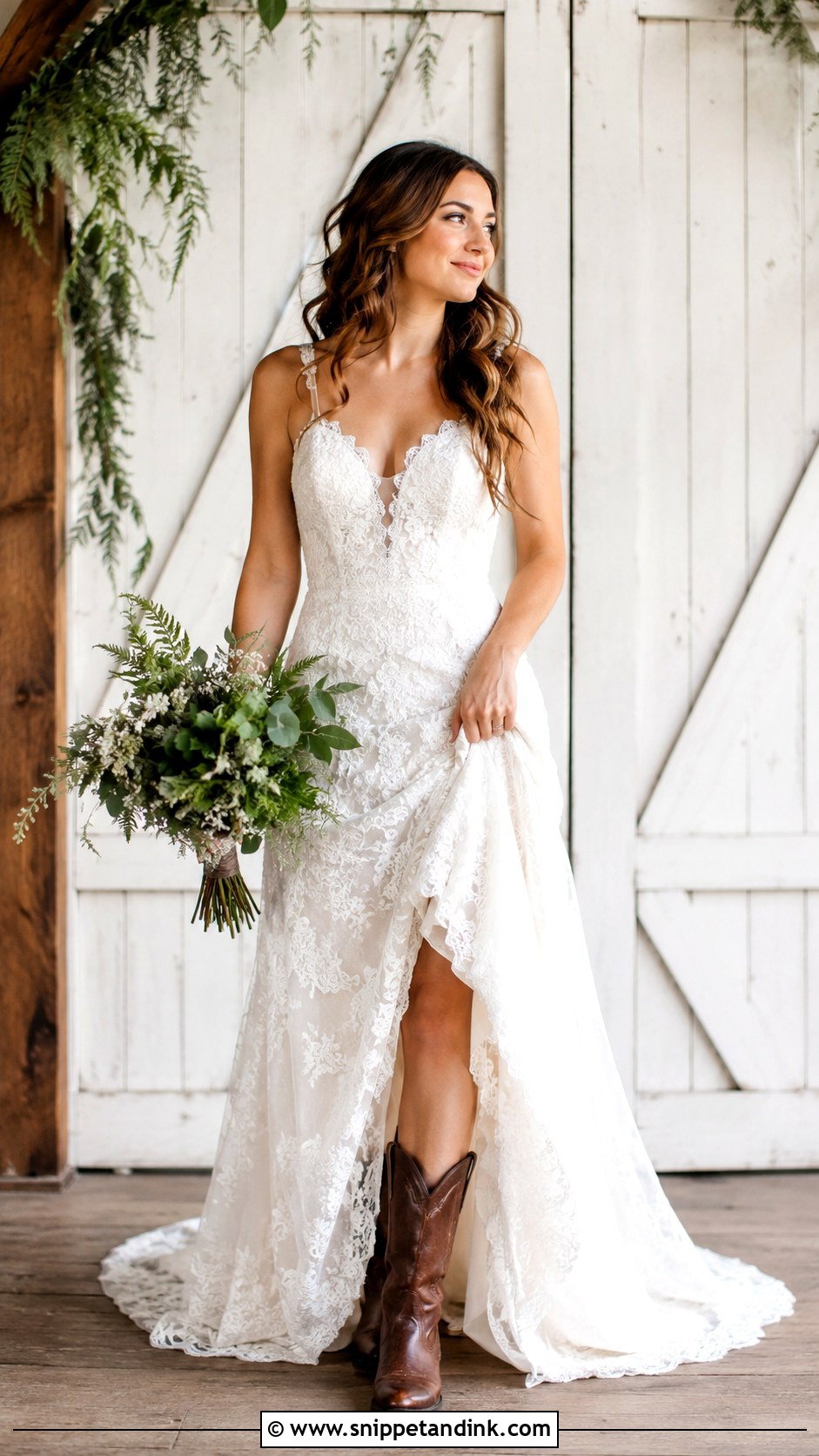
Brown leather is the most forgiving boot on uneven ground, and the most wearable afterward. It belongs at boho, western, mountain and rustic weddings. Light tan looks softer next to white; rich brown gives a stronger contrast. A lace gown with a suede jacket or an ivory wrap keeps it relaxed. For a dressier finish, choose smooth leather and refined stitching, and avoid chunky work-boot soles that look heavy under a gown.
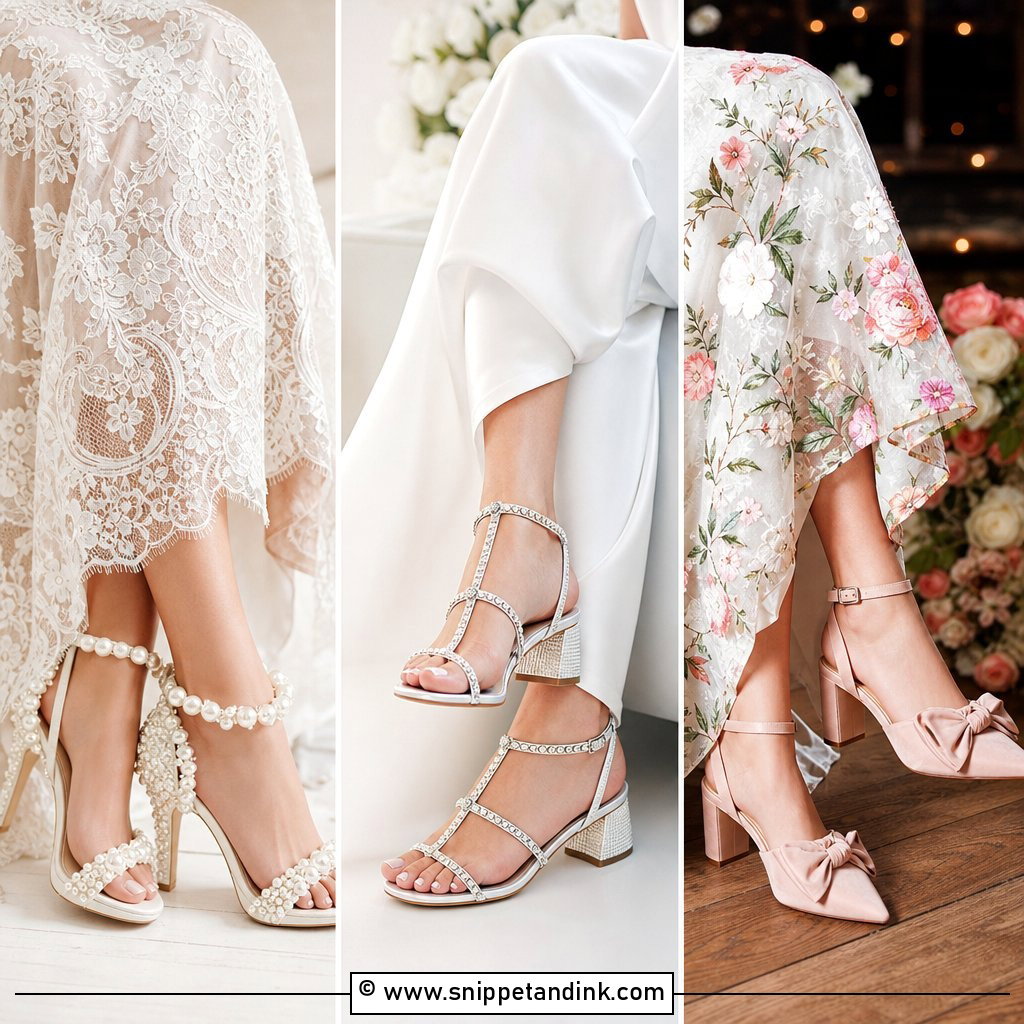
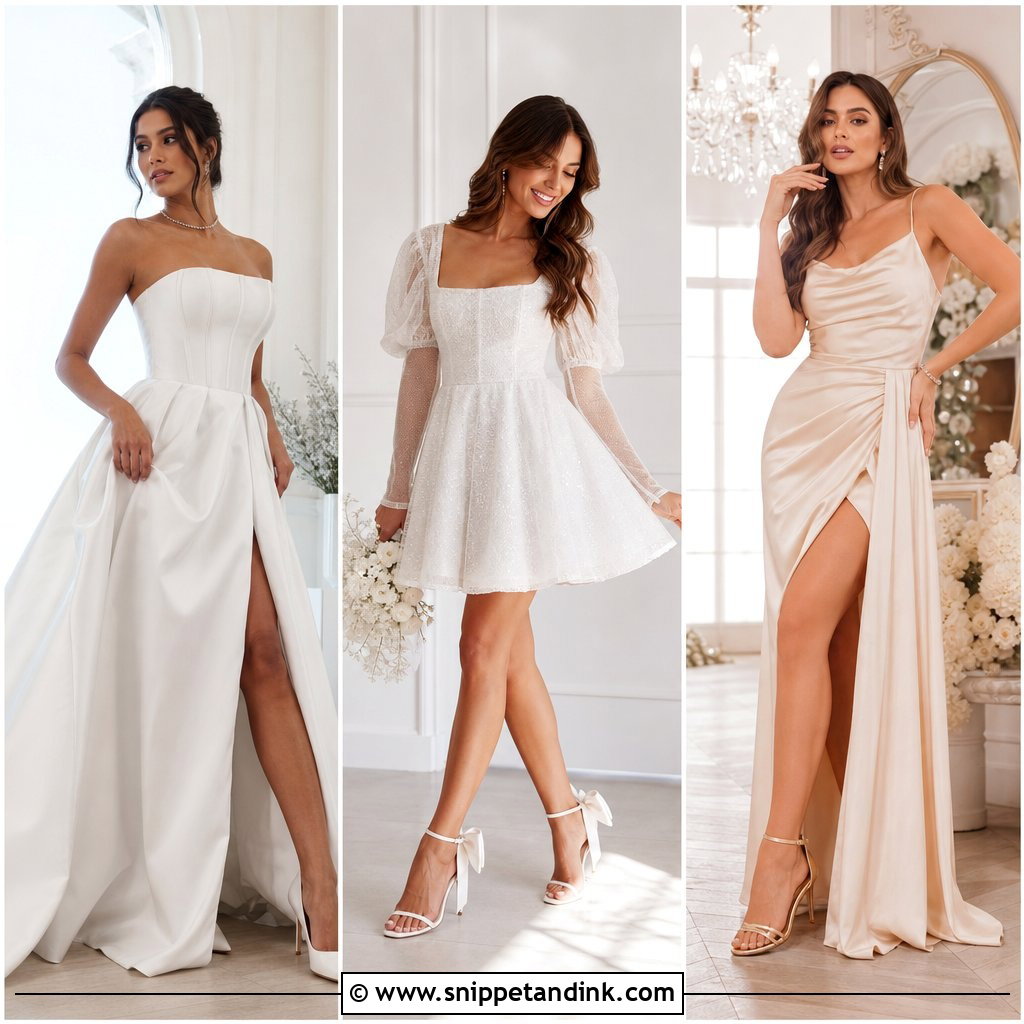
20. Suede Wedding Boots
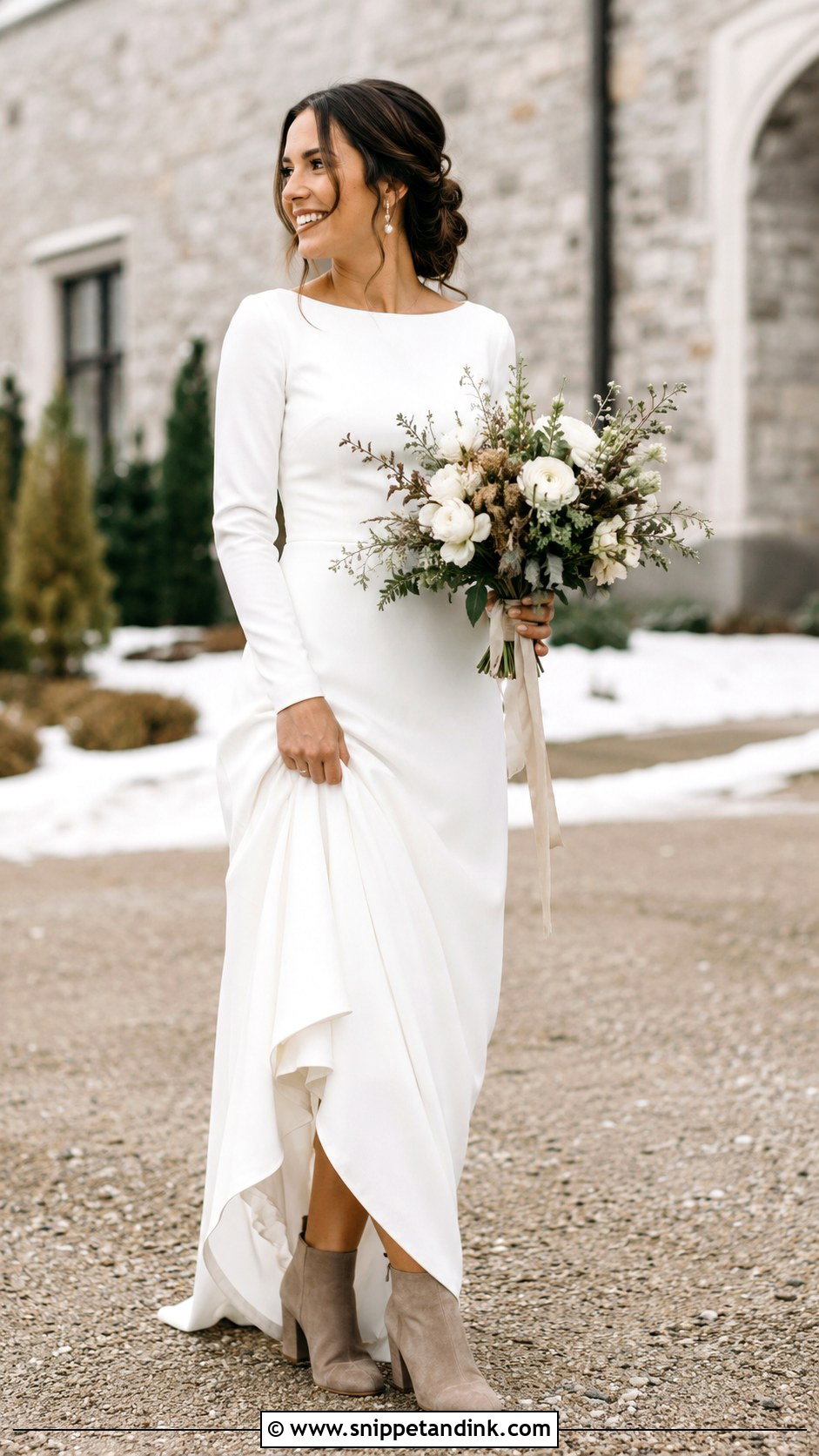
Suede wedding boots add a soft texture that suits fall, winter, desert and mountain weddings. Ivory, taupe, beige and soft gray pair nicely with lace, chiffon and crepe. Suede stains easily and water leaves marks, so I treat new pairs with a suede protector a few days ahead and pack a suede brush. A block heel is the most practical for outdoor venues. With a long-sleeve gown and a textured bouquet, the look is cozy without being casual.
21. Mesh Wedding Boots
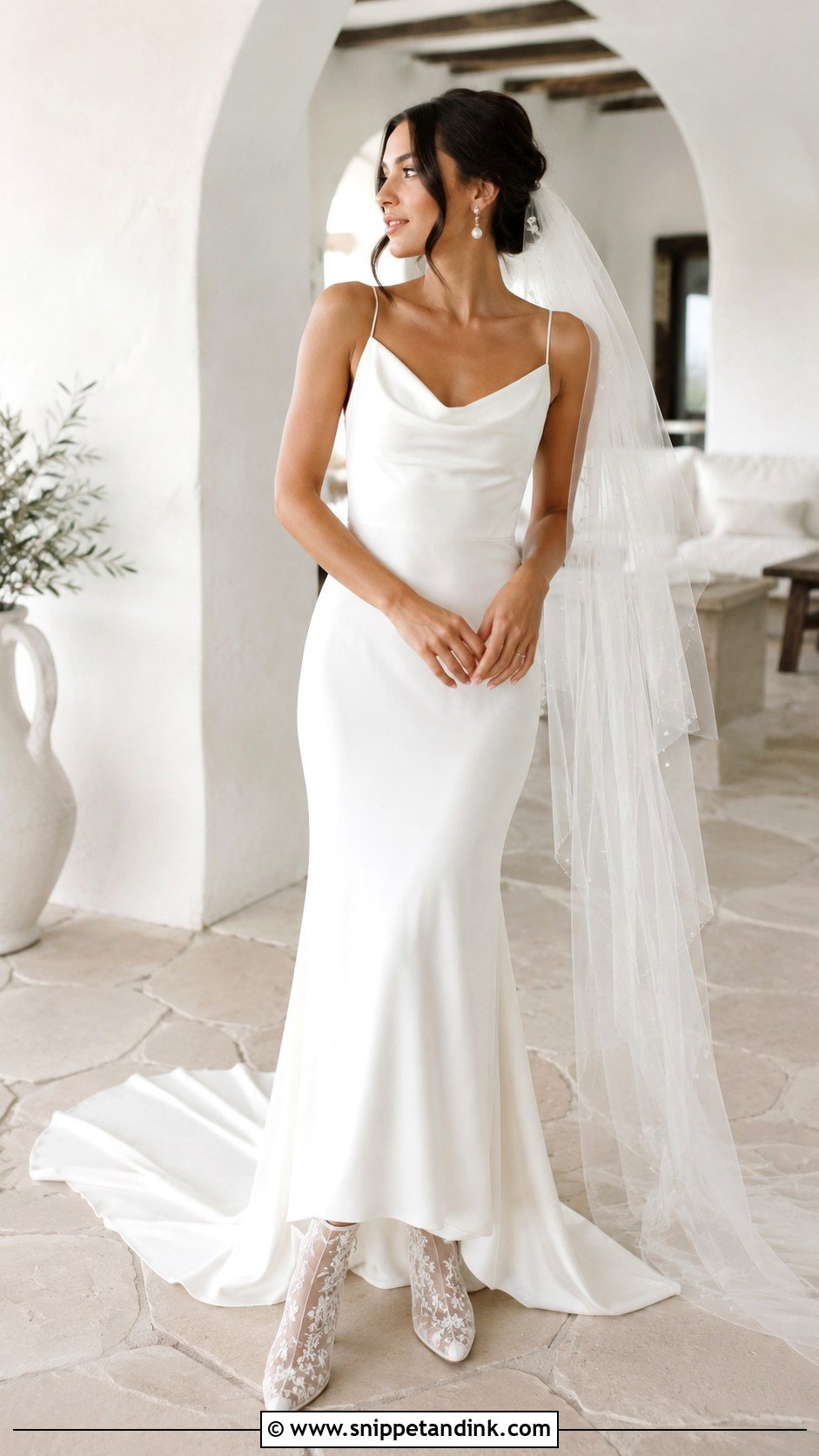
Mesh gives you the shape of a boot without the weight, which makes it the warm-weather option on this list. Sheer panels and fine embroidery keep it airy. It pairs with fitted gowns, modern minis and dresses that already have sheer sleeves or a corset. Pick a nude or ivory mesh close to your skin tone so the boot blends in. Mesh has little structure, so it offers less ankle support than leather; it suits a short walk better than a long outdoor day.
22. Lace Up Wedding Boots
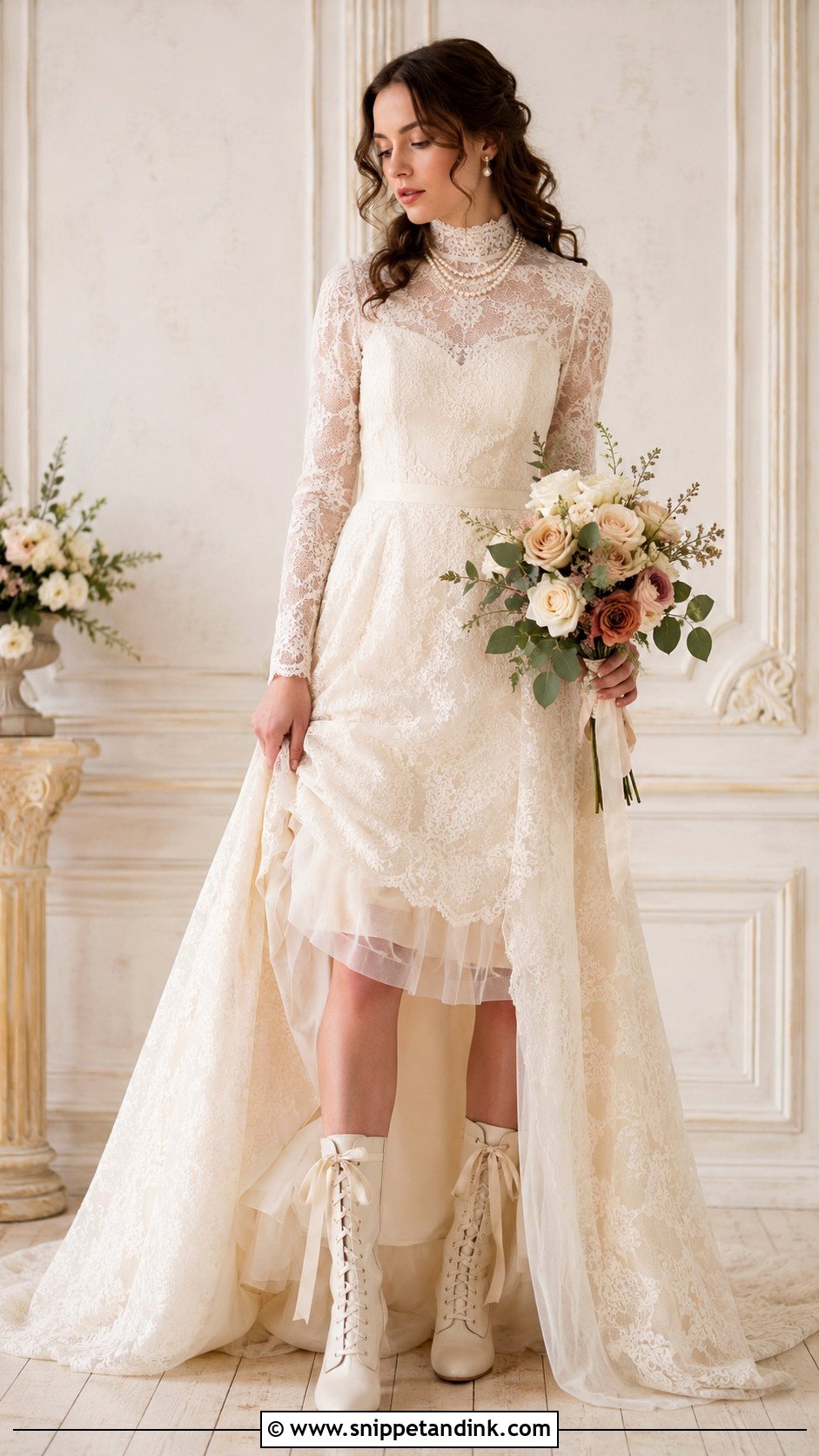
Laces let you adjust the fit as your feet swell, which is a genuine advantage over a zip. They suit Victorian-inspired gowns, lace dresses, long sleeves and tea-length silhouettes. With a high-neck lace gown, soft curls and pearls, ivory lace-up boots look like part of the period. Ask a bridesmaid to retie them after the ceremony; they loosen with walking. If the boots have lots of eyelets or ribbon, keep the dress simpler so the two don’t compete.
23. Bridal Combat Boots
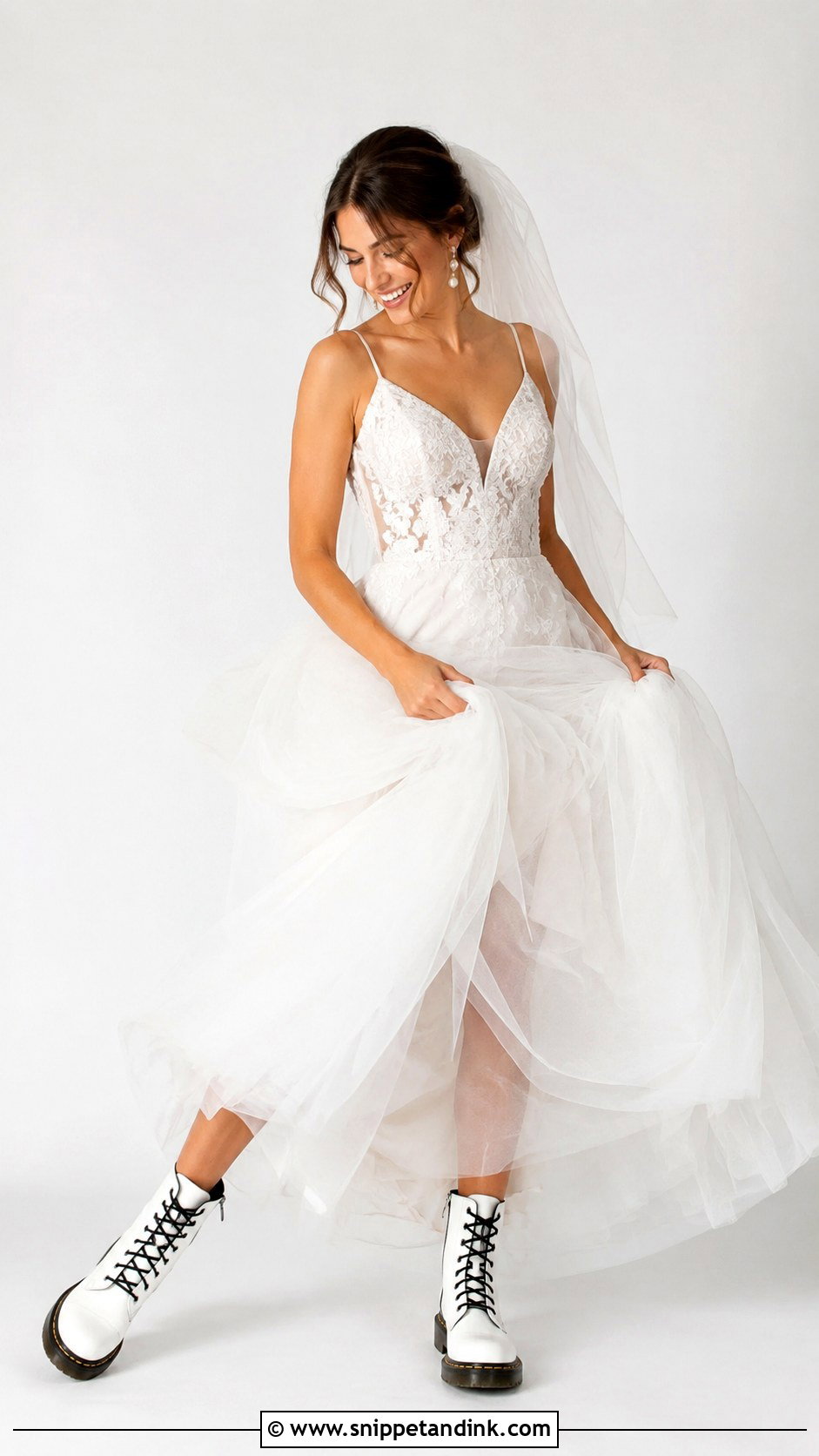
Combat boots under a tulle skirt are a contrast some brides love, and they’re among the most comfortable shoes you can wear. White feels modern and playful; ivory leather softer. They suit short dresses, tulle skirts, separates and reception outfits. Balance the weight with something feminine: pearl earrings, a soft veil or a fitted lace bodice. Very chunky soles look heavy under a delicate dress, unless that contrast is the point.
24. Bridal Chelsea Boots
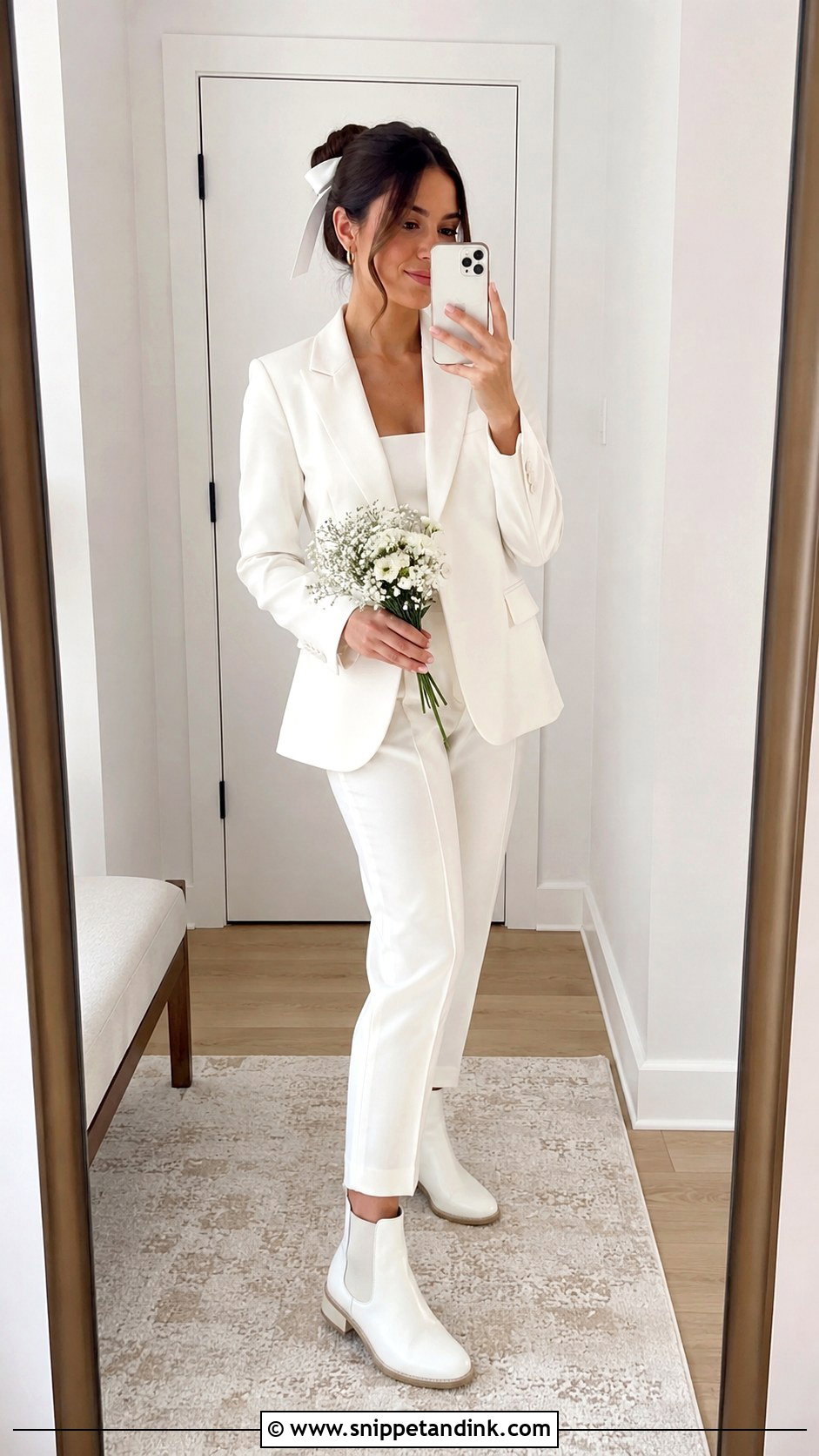
No laces, no zip: Chelsea boots go on in seconds, which is handy for a quick change. Clean and minimal, they suit courthouse weddings, city ceremonies and elopements that involve travel. White leather pairs well with a tailored suit, slip dress, midi or structured mini. A low platform adds height; a slim sole with an almond toe stays classic. The elastic side panels stretch over time, so buy them snug.
25. Reception Wedding Boots
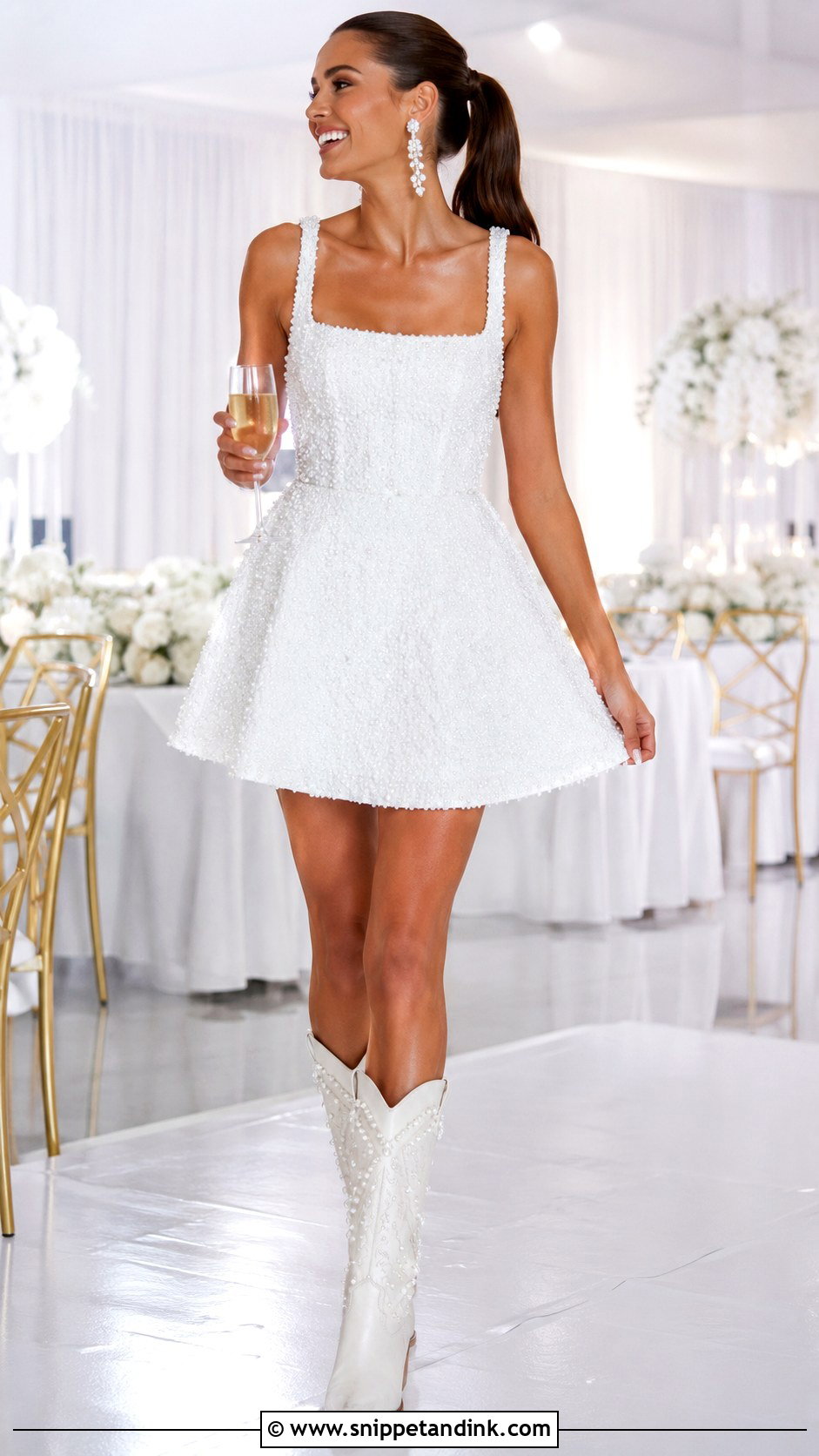
Reception wedding boots are the change lots of brides make after wearing formal heels for the ceremony. White cowboy boots, rhinestone booties, pearl boots or platforms all suit a bridal mini or shorter reception gown. Bold earrings and a sleek ponytail finish the change. Keep the boots in the getting-ready room with the reception outfit so the swap is quick. And break them in first; new boots can rub within an hour of dancing.
Cowboy Boots Need Weeks of Wear, Not a Weekend
Western boots are cut differently from fashion boots, and they behave differently when new. The leather is thicker, the shaft is stiff, and a little heel slip is normal at first. That slip settles as the sole flexes and the leather shapes to your foot. Pinching across the width usually eases too. Toes pressing against the end will not; leather stretches in width, not length.
A break-in plan that works
- Buy at least four weeks ahead, and try them in the afternoon when your feet are larger.
- Wear them indoors for an hour a day, with the socks or tights you plan to wear on the day.
- Climb stairs and dance a little in the kitchen. The sole needs to bend where your foot bends.
- Treat any hot spot right away with a stretch spray or a cobbler’s stretcher. Don’t wait to see if it improves.
- Pack blister plasters and a spare pair of soft flats for the end of the night.
Check the shaft against your gown as well. A tall, stiff boot can catch a slim skirt and hold it out at the calf. Do a walk test in the dress at your final fitting, and have the hem checked with the boots on, since a western heel is often taller than it looks.
From Ranch Aisles to City Steps in the Right Boots
There’s a boot for nearly every kind of wedding. Venue, dress length, season and comfort decide which one. White ankle boots are the safest all-round pick, while lace, pearl, rhinestone and satin pairs are more decorative. Western and cowboy boots belong at outdoor celebrations, and flat or low heels make a long day easier. Knee-high, platform, silver, blue or black boots make the strongest statement. Whichever you choose, wear them in for a few weeks first, so you move freely from the aisle to the last dance.
You'll Like These Ideas:



Leave a Reply