
Autumn brides tend to come to my table with two wishes that pull against each other: they want the warmth of the season, and they want hands that still look like a bride’s in the ring close-up. Most of the sets below sit somewhere between those two, from milky whites and sheer pinks to champagne chrome, burgundy, chocolate and copper. I’ve added what I actually watch for with each one, because a shade that looks right on a swatch stick can read very differently next to a diamond, a lace cuff or a candlelit reception table.
Timing an Autumn Set So It Still Looks Fresh at the Send-Off
For gel or builder gel, I like the final appointment one to three days before the wedding. That gives any tiny lift or rough edge a chance to show itself while there’s still time to fix it, and the cuticle area hasn’t grown out yet. Dark shades like burgundy, plum and black cherry make that window even more important, because a millimetre of regrowth shows as a pale crescent against deep color.
A trial is worth booking about a month out if you’re switching shapes or trying chrome, foil or hand painting for the first time. Wear it through your normal life, then decide. Bring three things to the final appointment:
- Your engagement ring, so we can check the shade next to the stone and metal rather than guessing.
- A photo of the gown fabric in daylight, or a small swatch, since ivory, champagne and white each change which nude looks right.
- A note of the reception lighting. Candlelight warms everything, so a shade that looks perfect under salon lamps may read orange by the cake cutting.
Skip cutting your own cuticles in wedding week. Fresh nicks sting under polish, and swelling around the nail is easy to see in a ring shot. A cuticle oil twice a day does more for the photos than any trim.
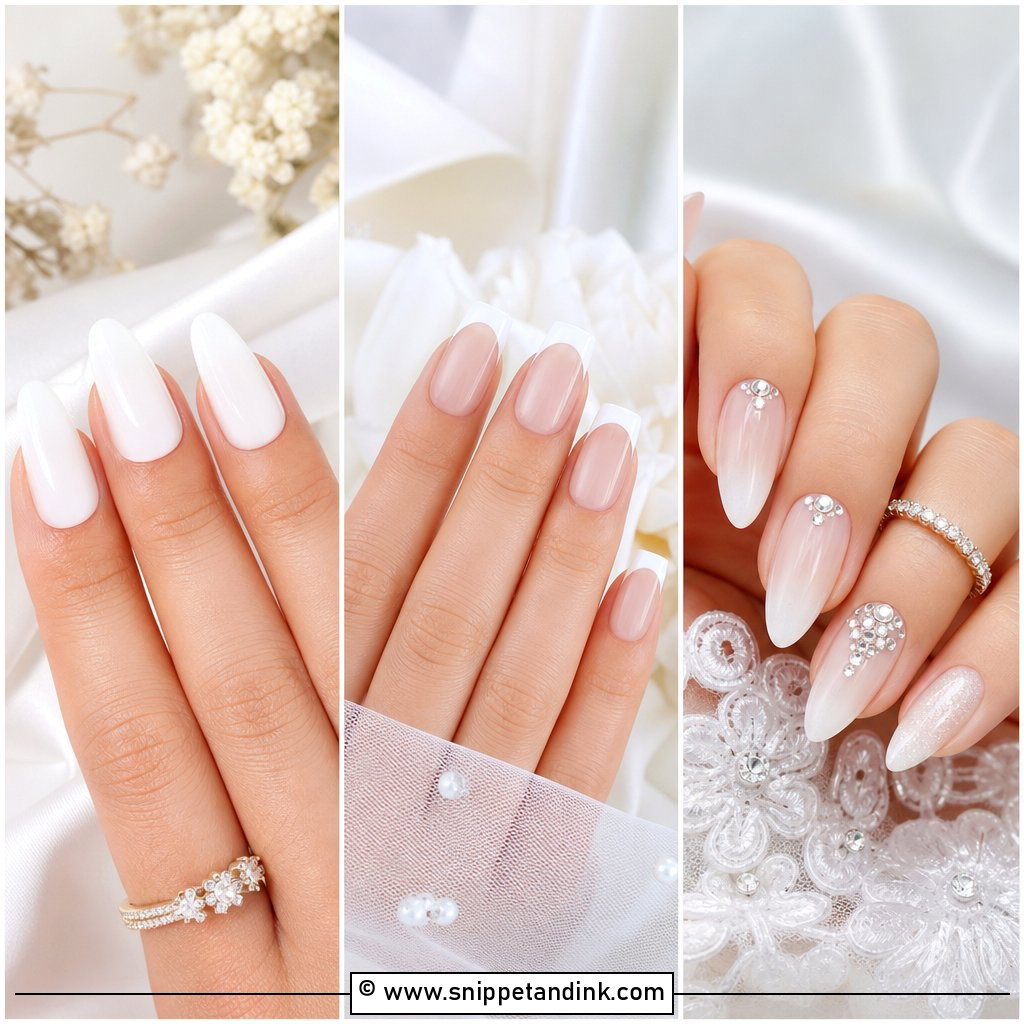
1. Milky White Chrome Fall Bridal Nails
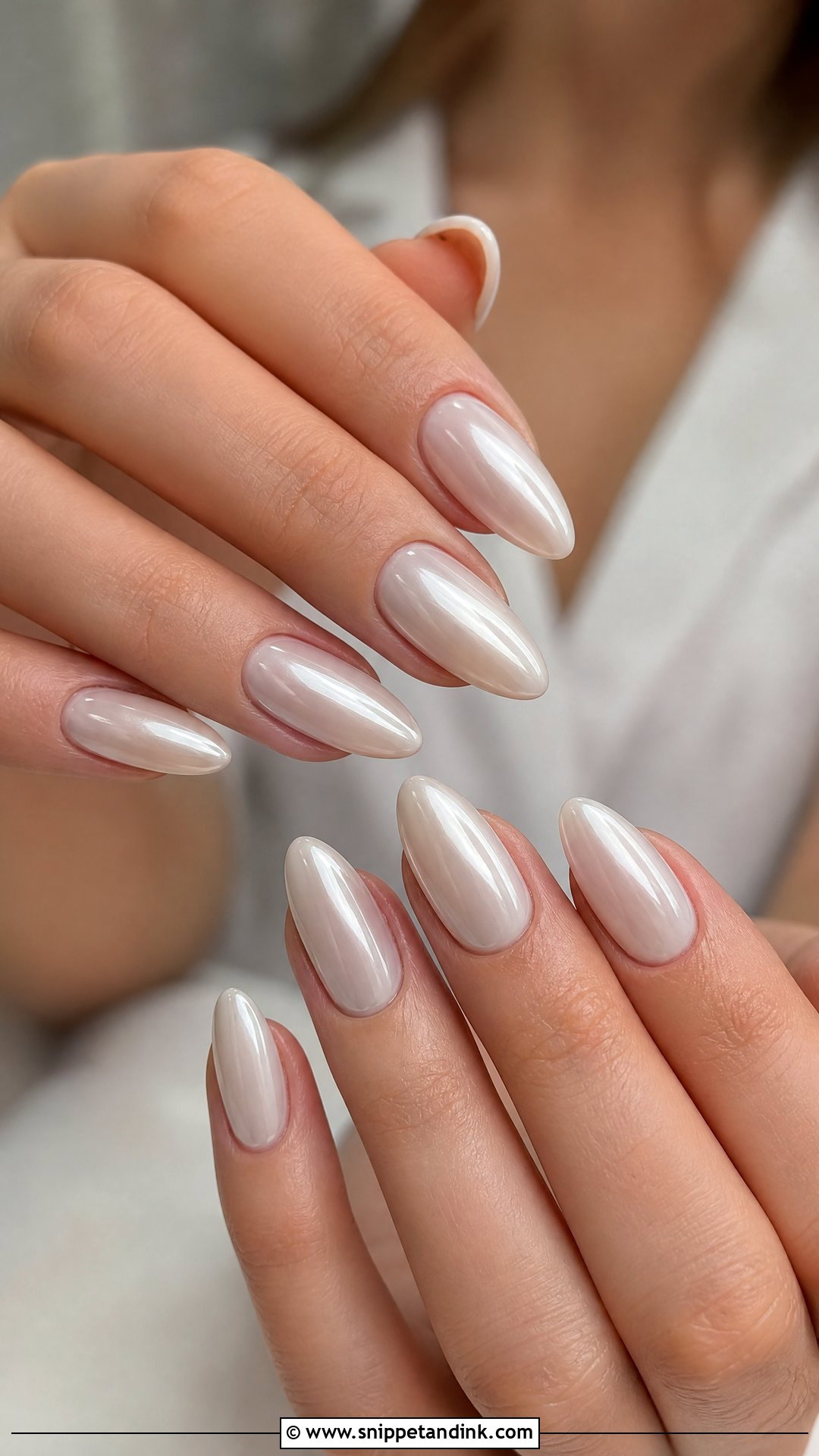
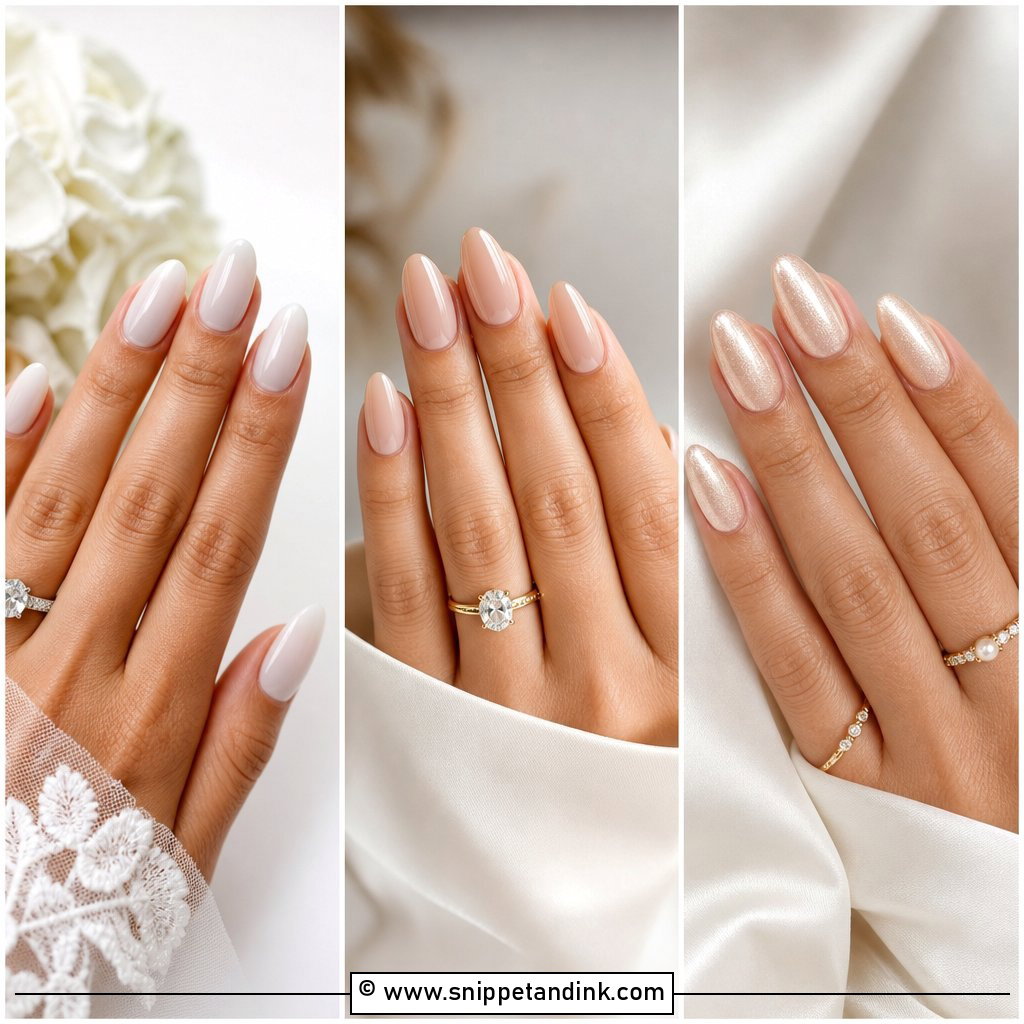
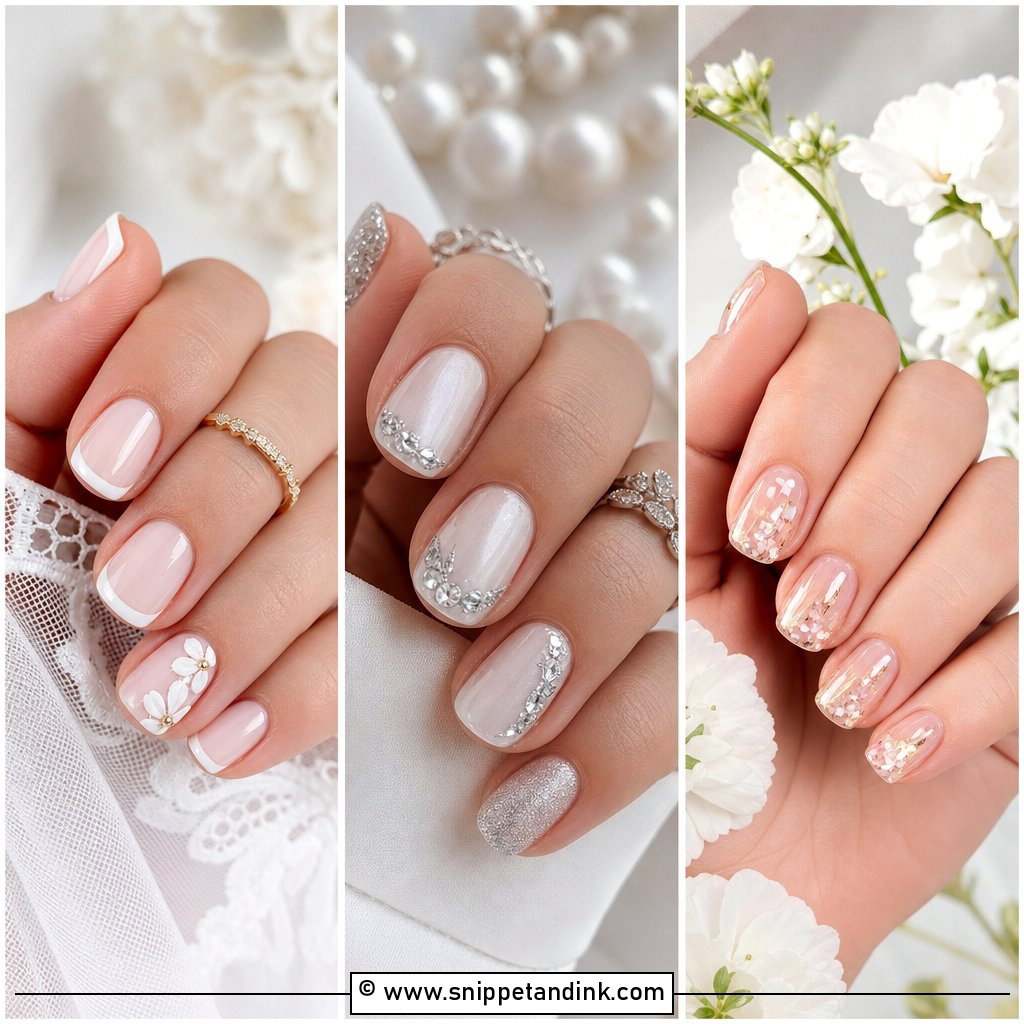
This is the set I reach for when a bride wants glow without color. I lay down one or two thin coats of a sheer milky white so the nail bed still shows through, cure it, then buff a pearl chrome powder over a no-wipe top coat. The trap is opacity: three coats of white turns chalky and makes short nails look stubby. For fall, ask for a pearl or champagne-leaning powder rather than an icy silver one, which pulls cold next to warm skin and gold bands.
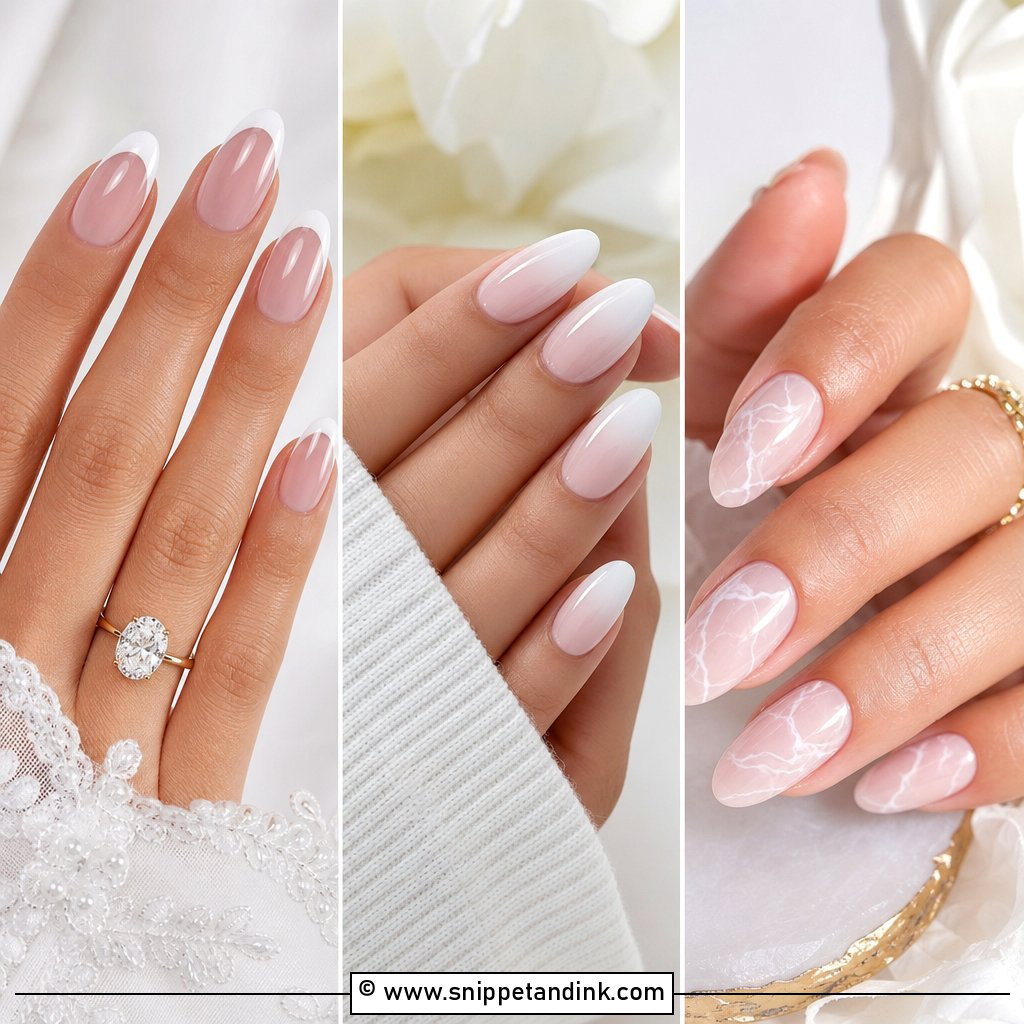
2. Soft Pink French Fall Bridal Nails
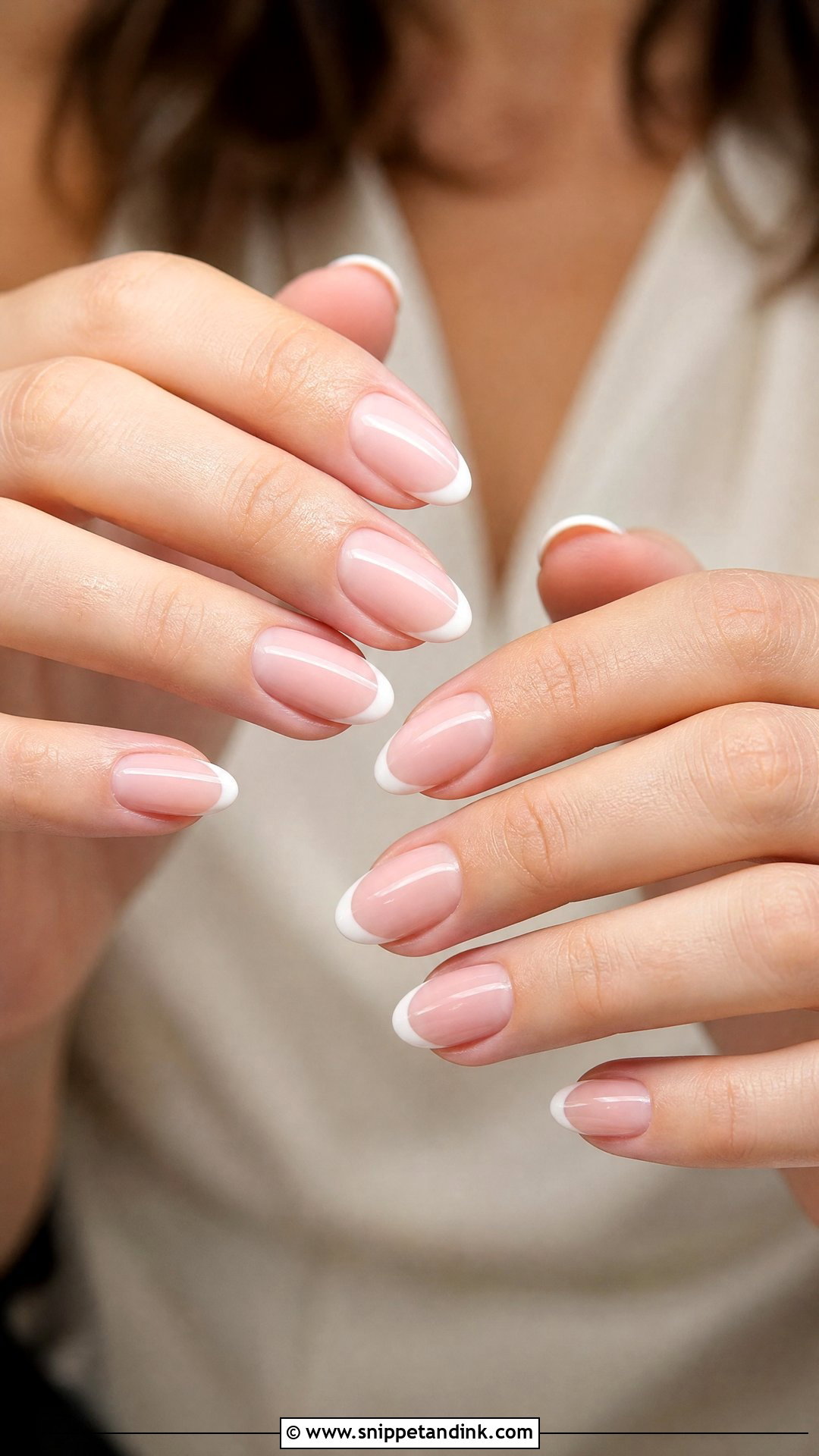
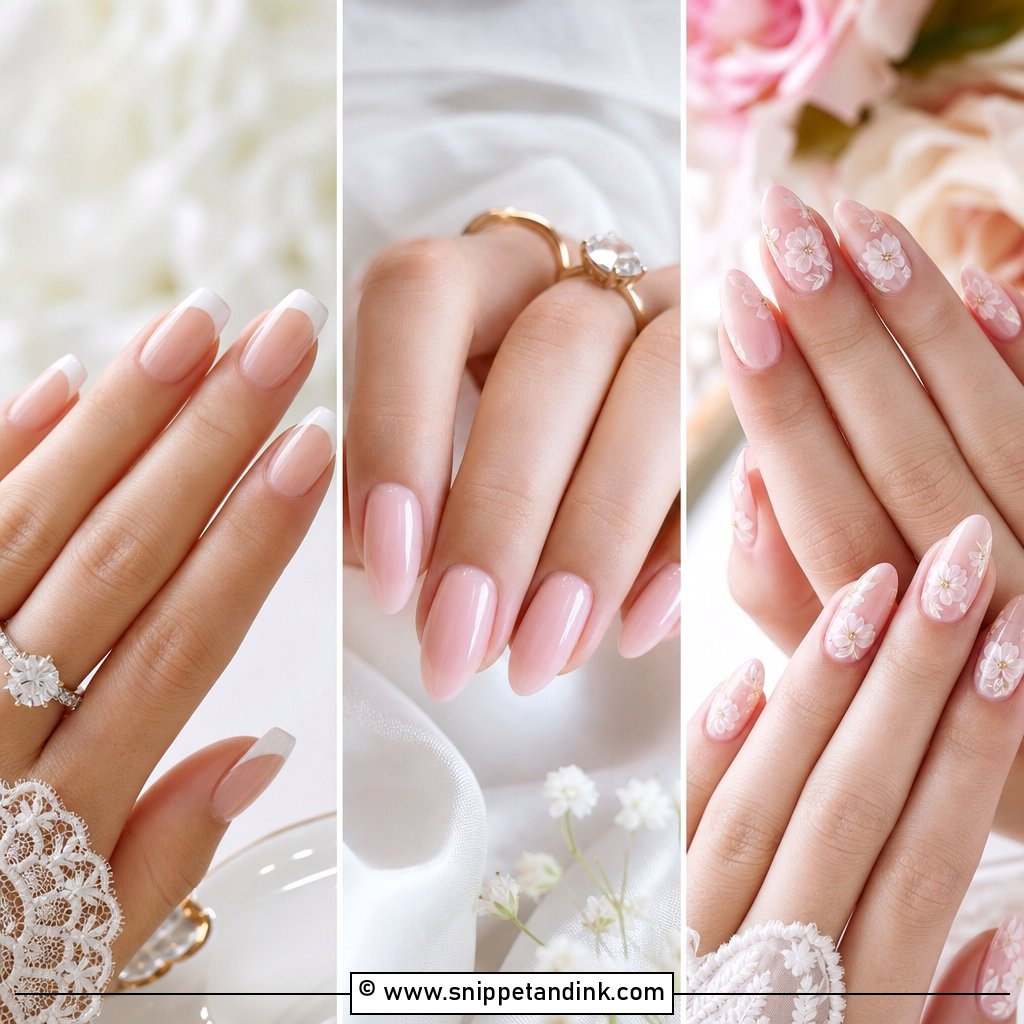
A blush base with an ivory tip is the version of the French I find easiest to live with, because a stark white tip fights with an ivory gown and the bride ends up holding her hands awkwardly in photos. I warm the base a shade deeper for an autumn date so it doesn’t look like a June set. Keep the smile line thin on short nails; a deep tip on a short nail makes the bed look shorter than it is. Almond and oval suit it, and so does a short square if you type or work with your hands every day.
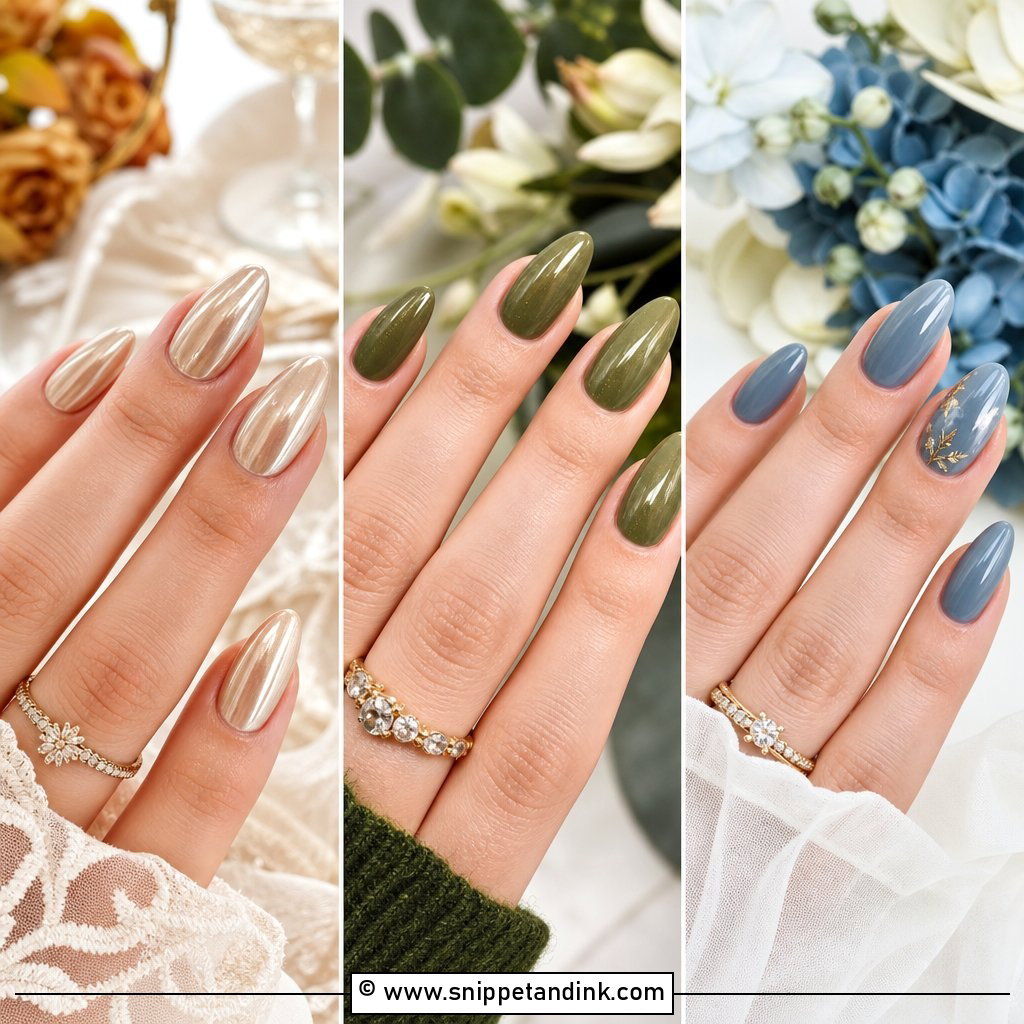
3. Champagne Chrome Fall Bridal Nails
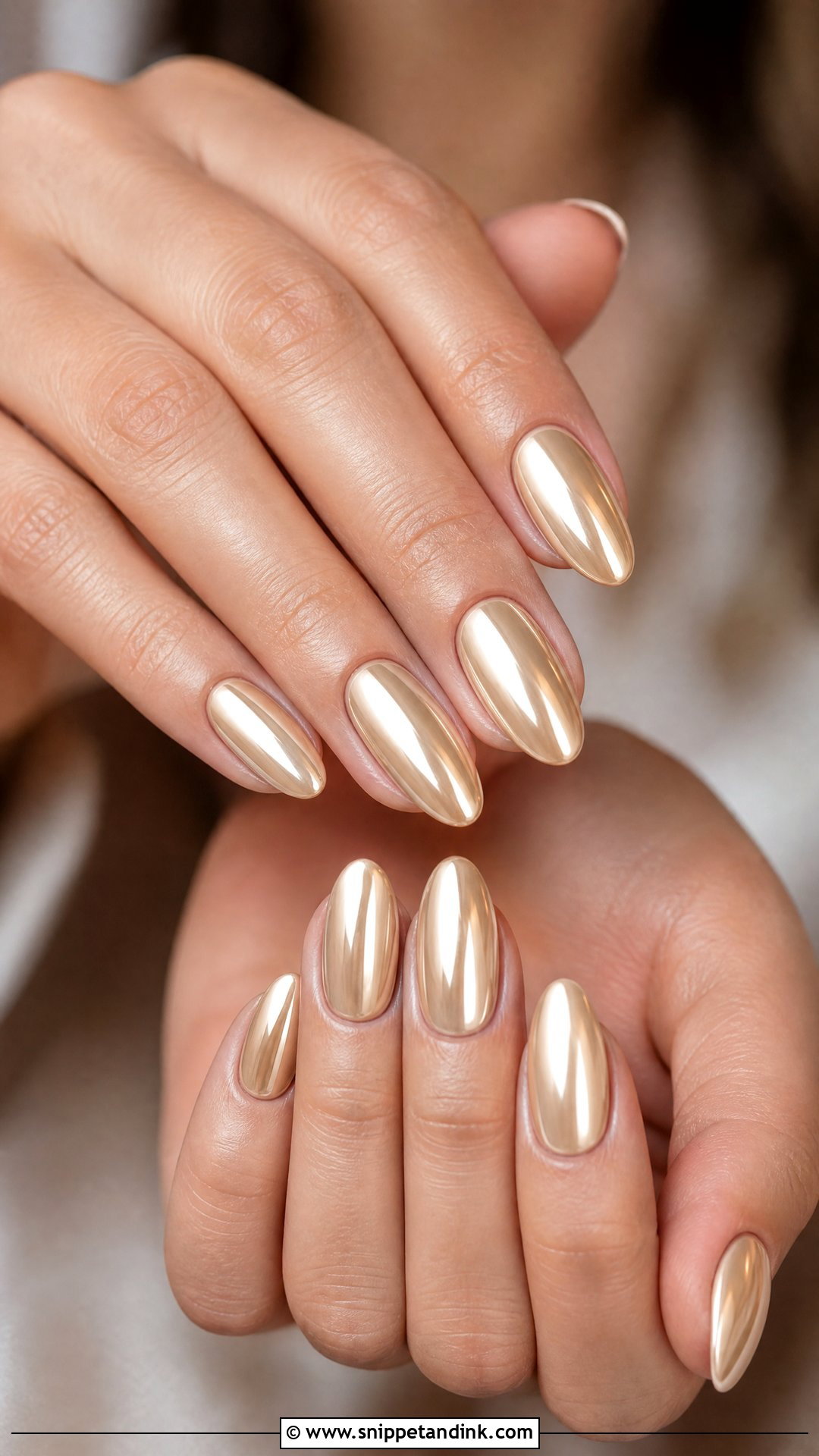
Champagne chrome gives shimmer without the grit of glitter, which matters because glitter top coats can feel rough and catch on fine lace. The shade sits between beige and gold, so it settles in next to warm makeup and yellow-gold jewelry. I always apply it over a sheer nude, pale taupe, or soft beige base rather than straight over the natural nail, since the base color decides whether the chrome reads gold or pink. If you want one crystal near the cuticle, limit it to the ring hand’s accent nail; crystals on every finger snag hair and veils.
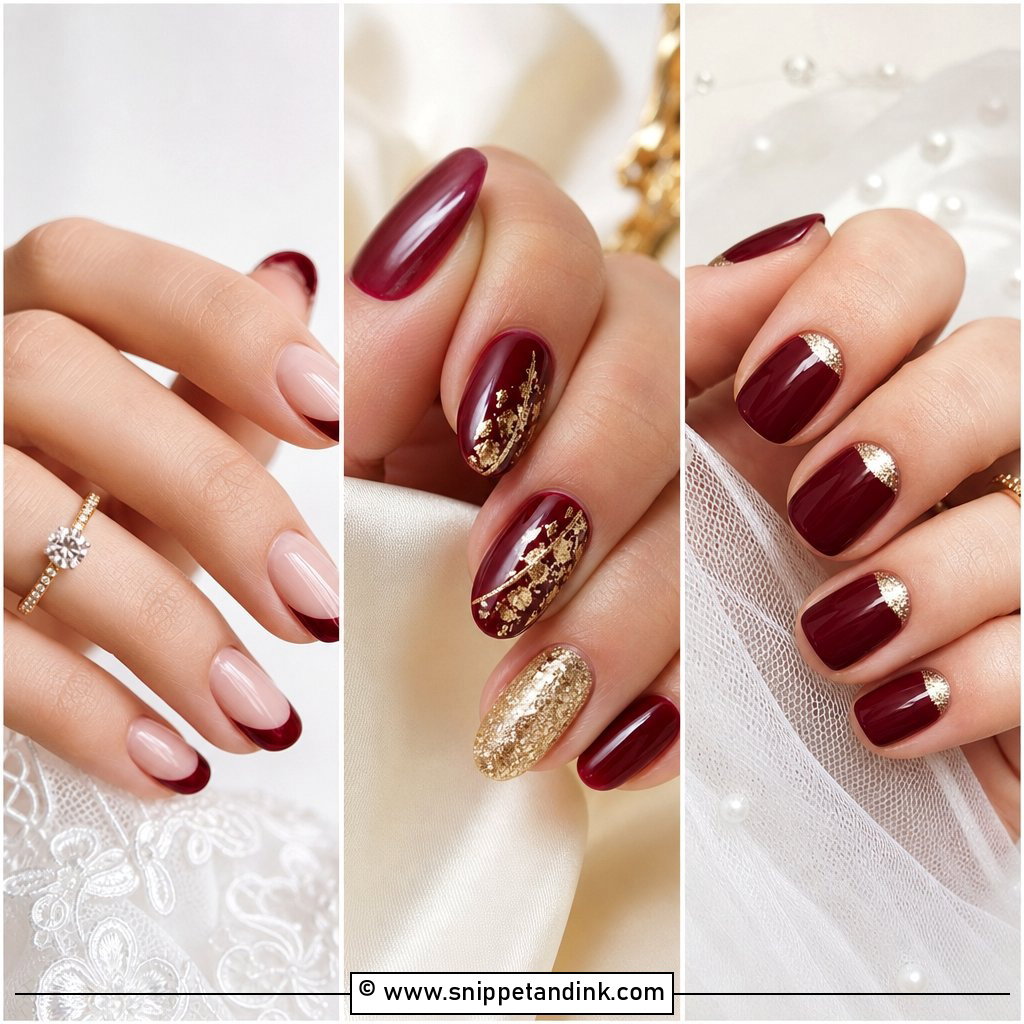
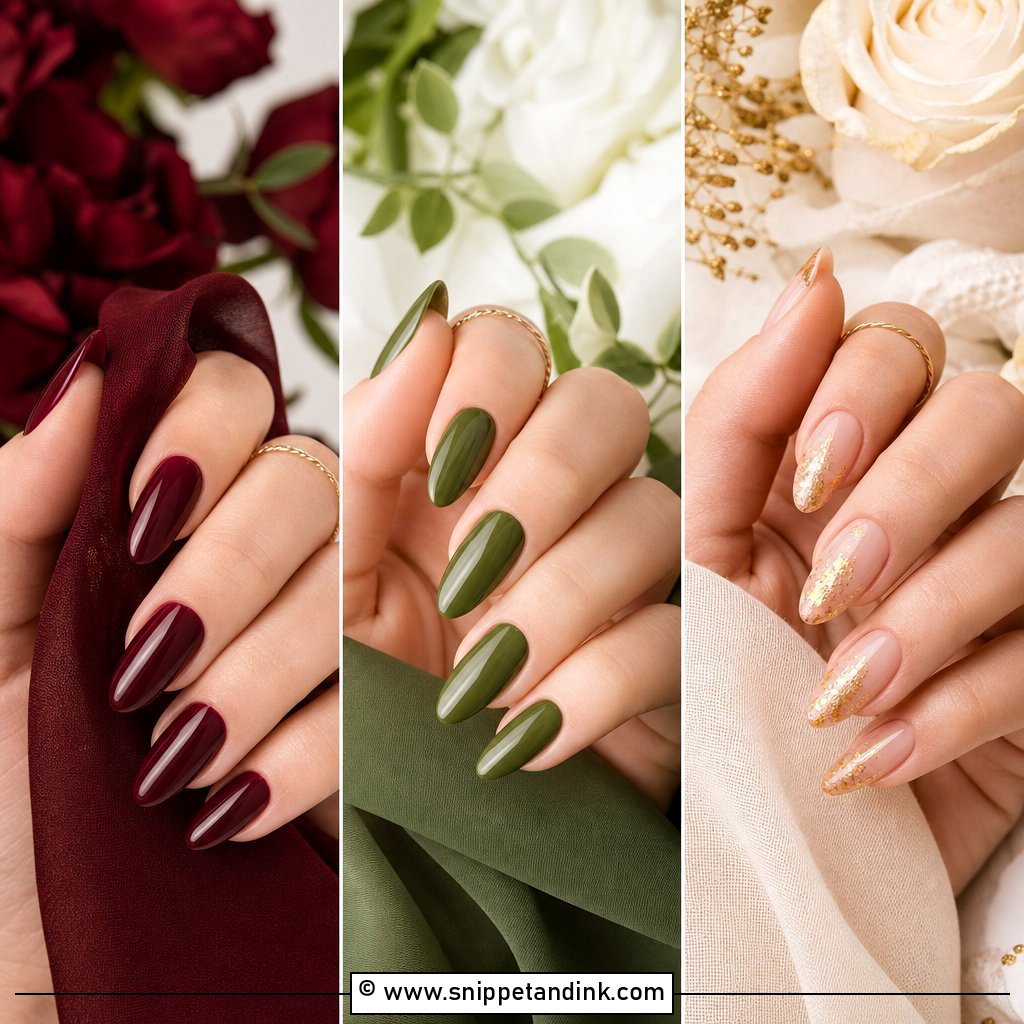
4. Burgundy Almond Fall Bridal Nails
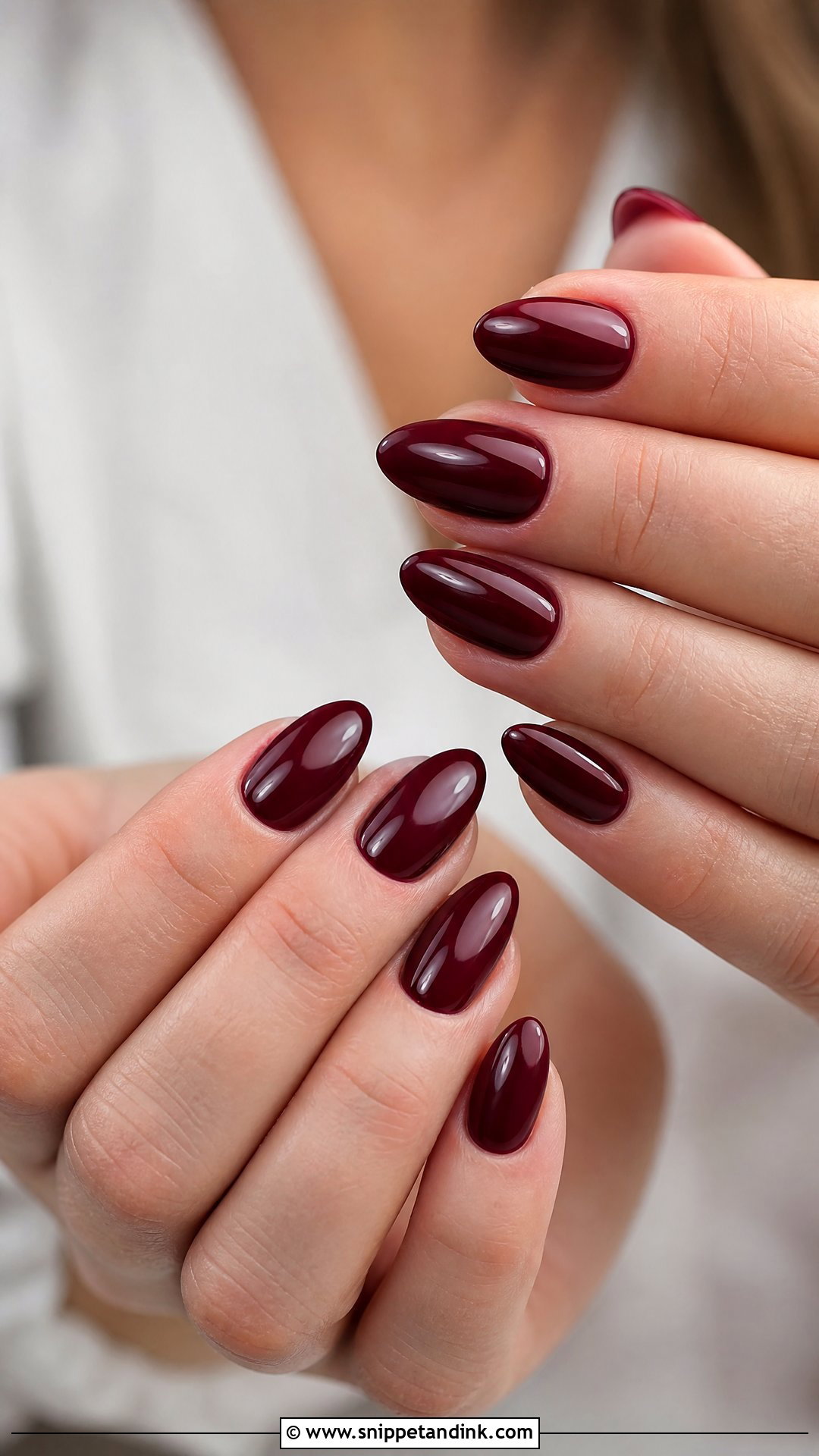
Burgundy almond fall bridal nails are my answer for the bride who wants real color but worries it will look heavy. The almond shape tapers the dark shade, while a sharp coffin in the same wine color can look severe. If you’re nervous, ask for a jelly burgundy: it’s translucent, so you build depth in thin layers and the nail never looks flat. A cat-eye version gives a soft band of light that moves as you gesture. One honest caution: dark red shows any gap at the cuticle within a few days, so this set wants to be done close to the date.
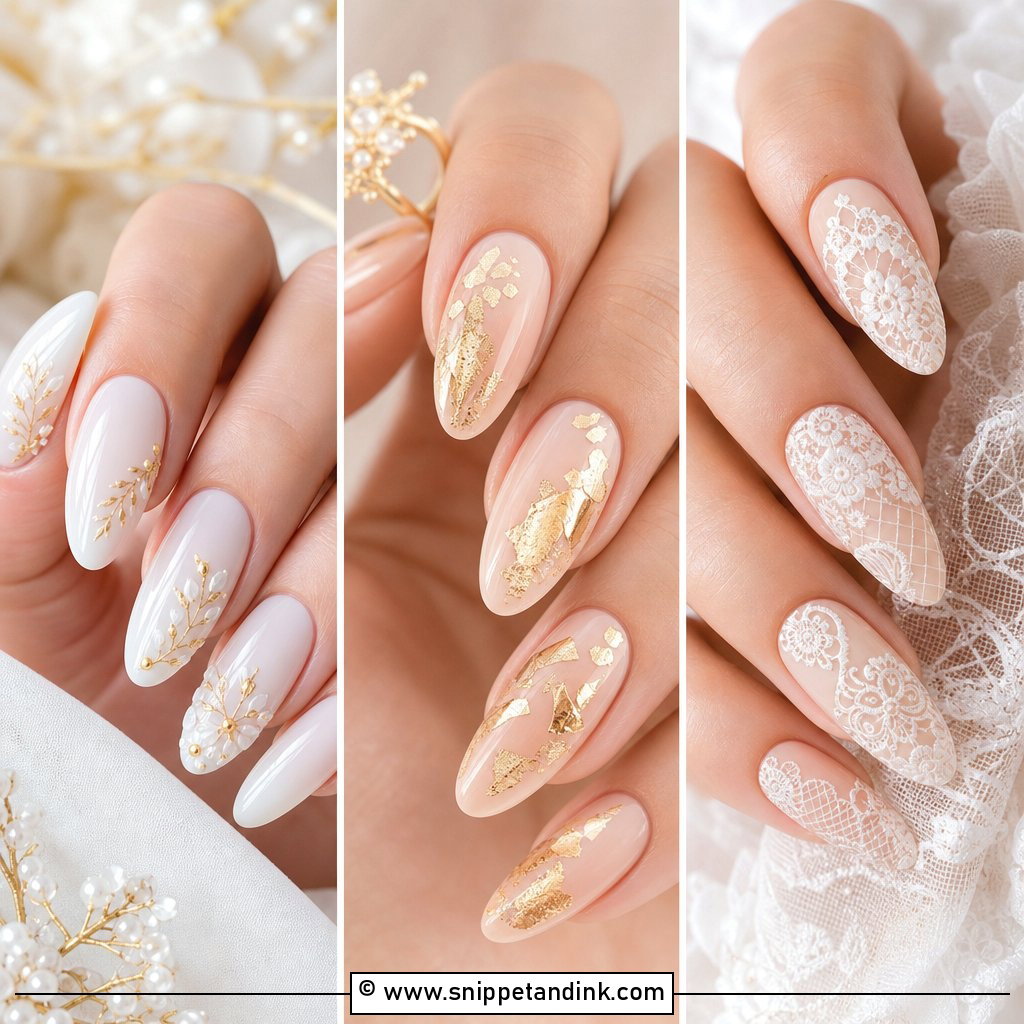
5. Nude Gold Foil Fall Bridal Nails
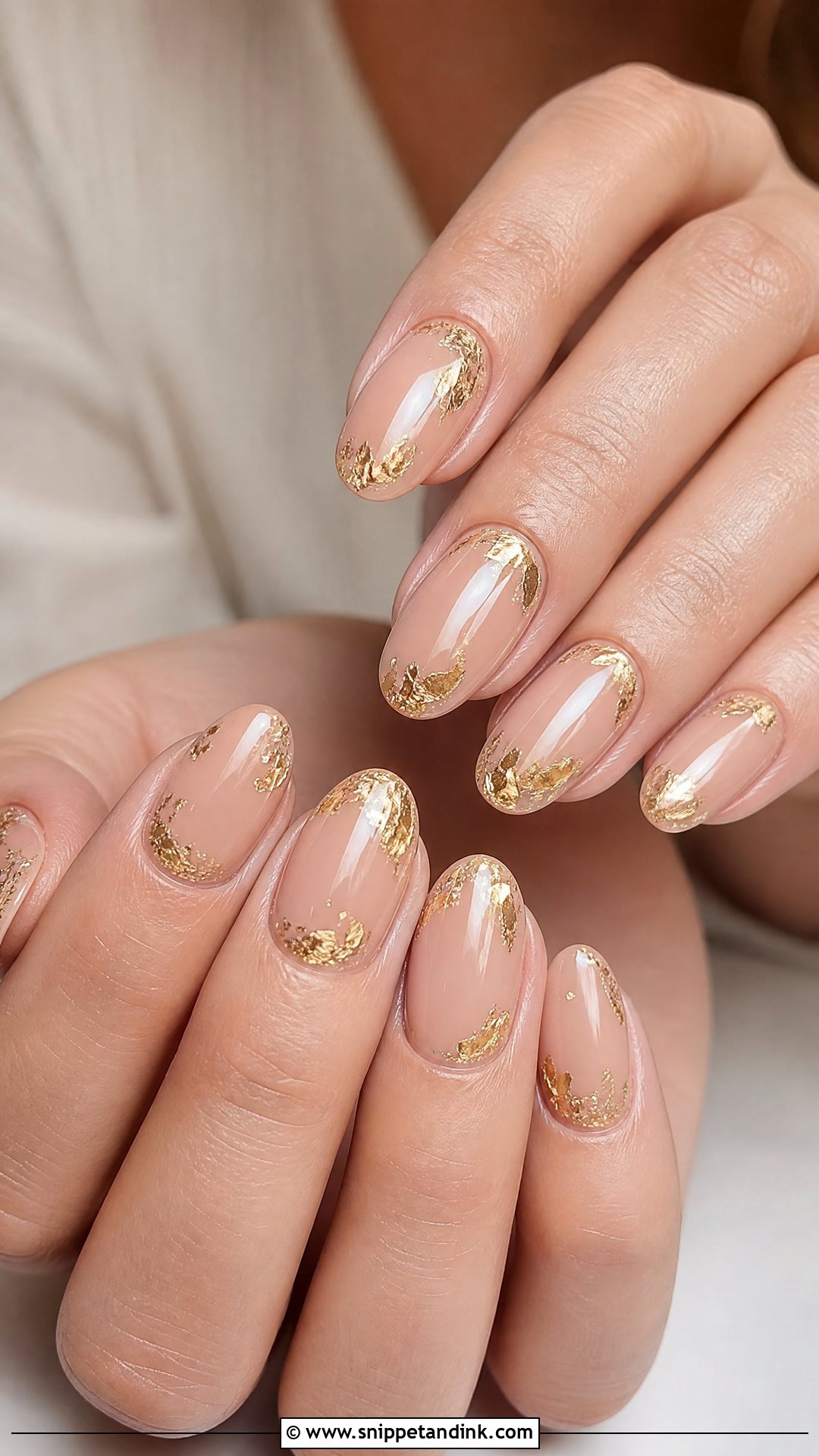
Gold foil works best when it looks scattered by accident. I press a few flakes near the free edge or along one side of the cuticle and leave most of the nude visible, then seal everything under two layers of top coat so the edges of the foil don’t lift. Full-coverage foil looks busier in pictures than people expect. The nude matters more than the gold here: a rosy beige suits pink undertones, while caramel or peach nudes sit better on olive and deeper skin.
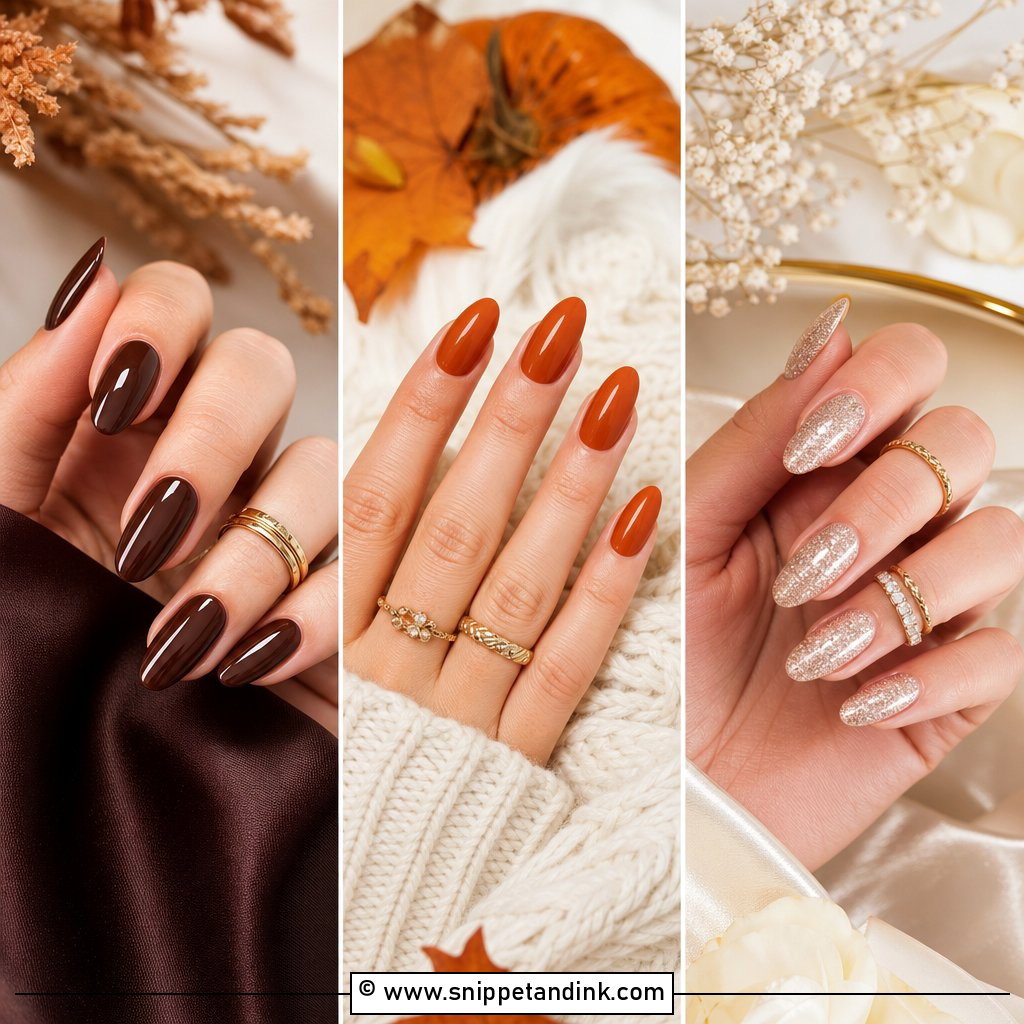
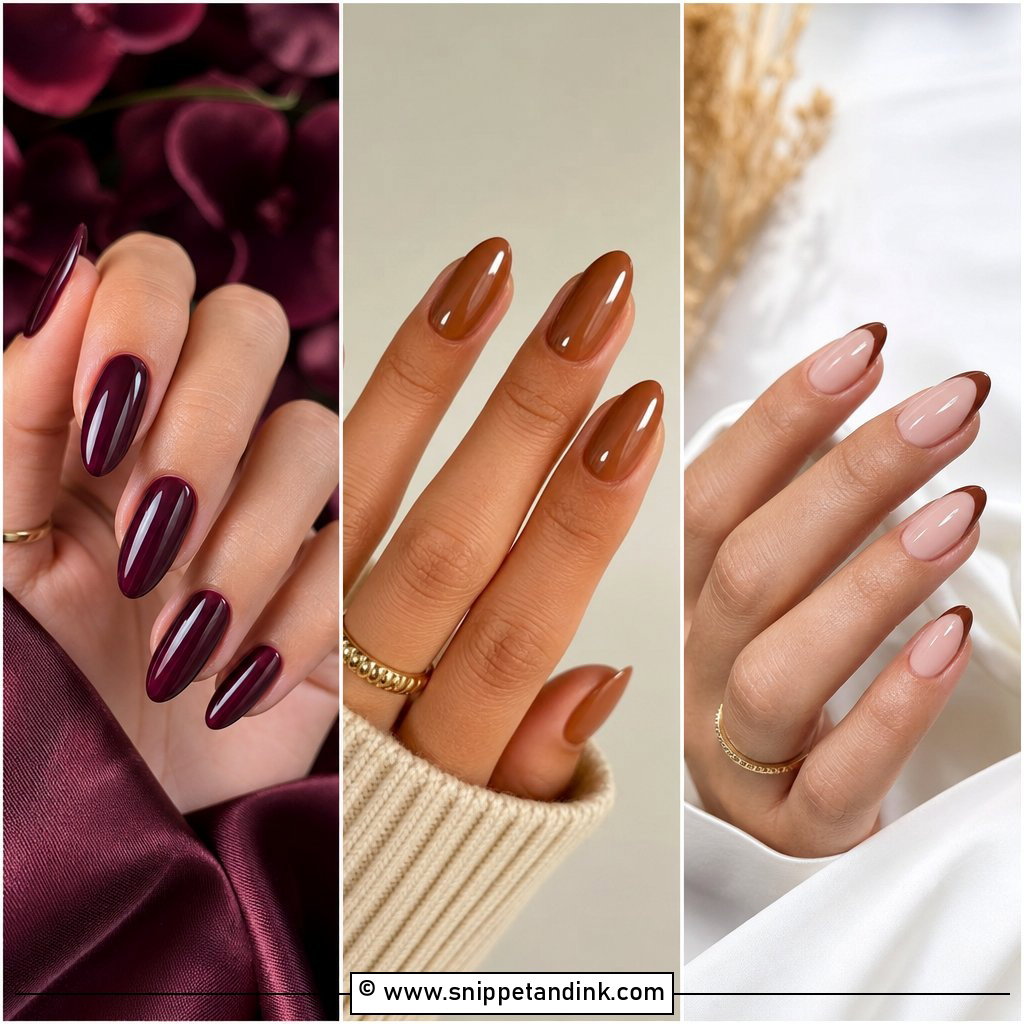
6. Chocolate Brown French Fall Bridal Nails
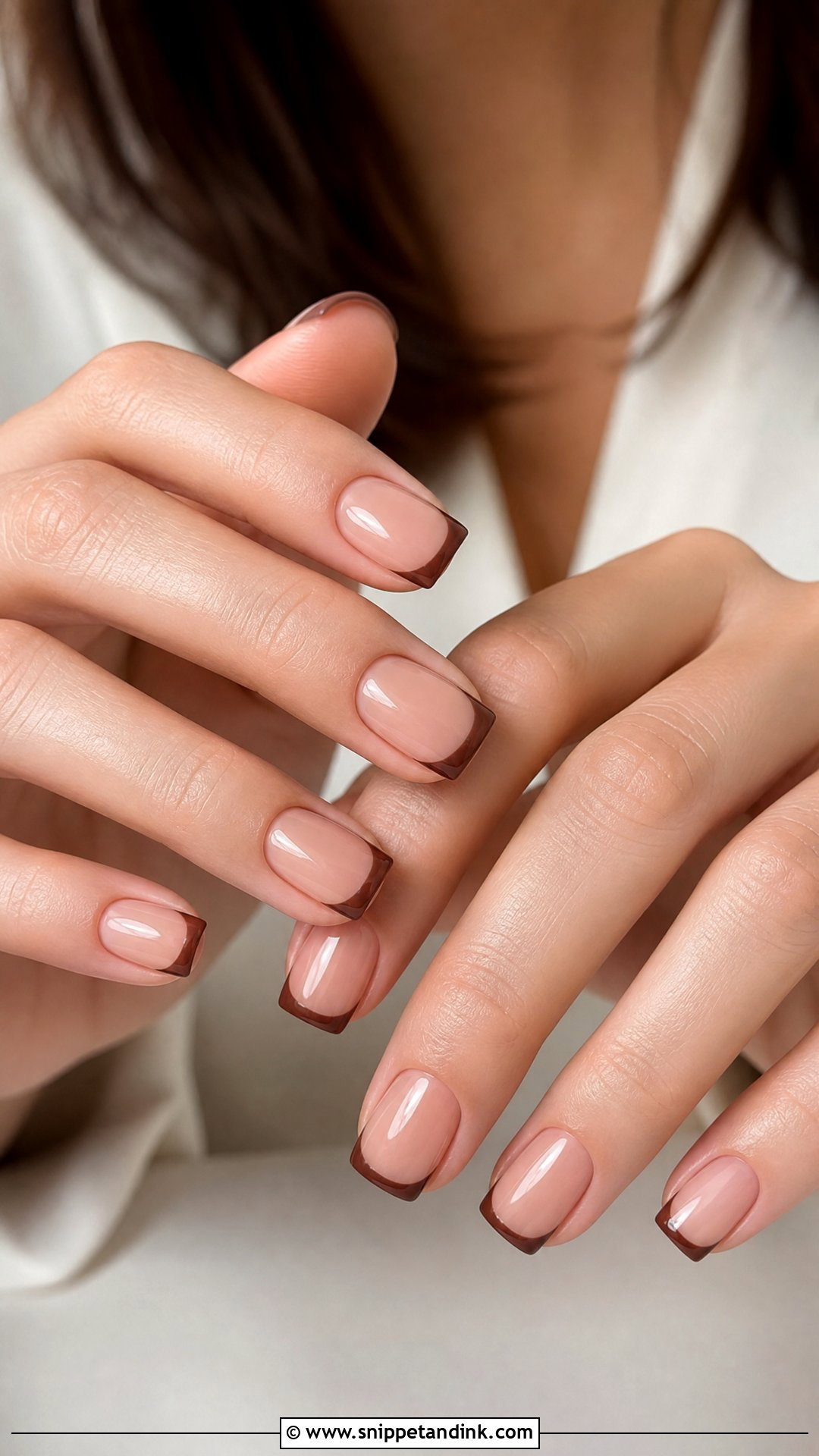
Brown tips are a quieter departure from white than they sound. On a pale pink or sheer nude base, a thin chocolate line reads almost like a shadow at the edge of the nail, and it hides the small wear a white tip shows by day two. I’d do a micro version for anyone with short nails and save the deeper curved tip for longer almond shapes. Keep it glossy. Matte brown in the hand can look like dirt under the nail in a close crop, which nobody wants in a ring photo.
7. Taupe Glazed Fall Bridal Nails
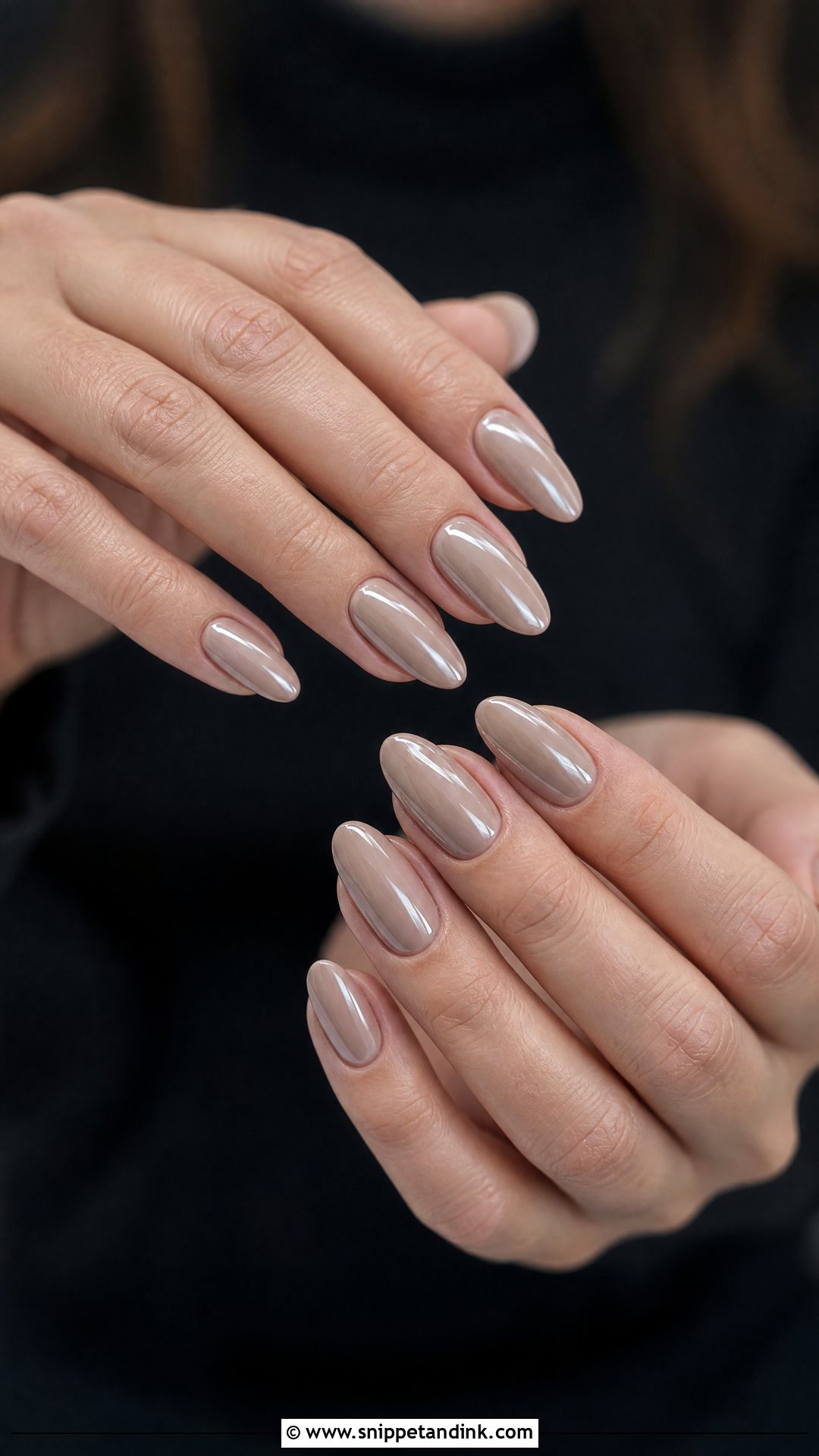
Taupe glazed fall bridal nails are what I suggest when a bride says she wants “nude, but not boring.” Taupe carries a little grey and brown, so it feels like autumn without any orange in it, and a pearl glaze on top stops it going flat under flash. Because it is a single quiet shade, every flaw shows: lifted cuticle skin, a ridge, an uneven edge. I spend more time on prep for this set than for any nail art, and I’d ask your artist to do the same.
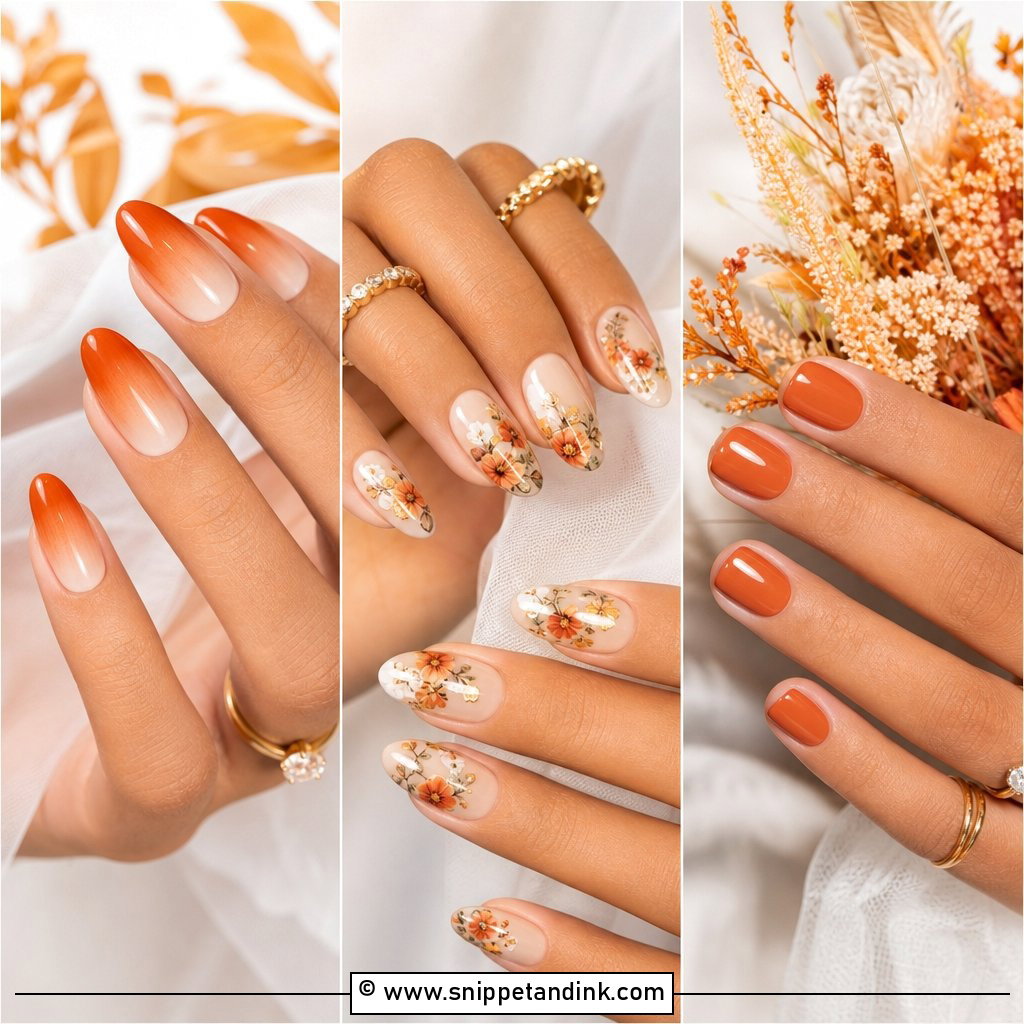
8. Autumn Floral Fall Bridal Nails
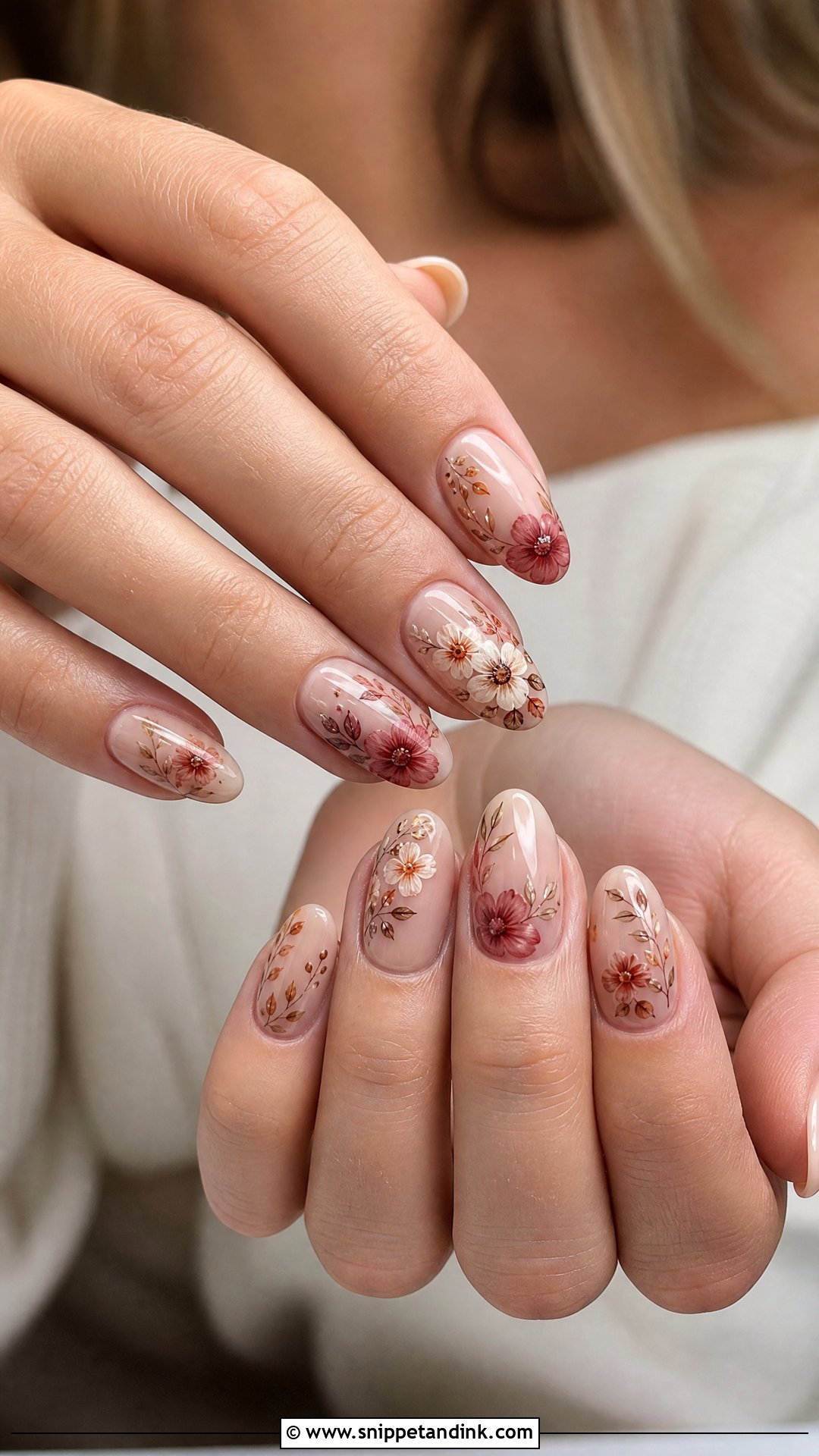
Painted florals are easy to overdo. I keep the flowers to two accent fingers and work with a fine liner brush in muted tones (dusty rose, cream, a touch of terracotta) over a sheer pink or milky nude. Petals painted in bright reds and oranges can look cartoonish at bridal scale, which is why I mix those colors down with a little white first. Allow extra appointment time: hand painting at this size takes longer than most people budget for, and rushing it is how petals turn into blobs.
9. Pearl Accent Fall Bridal Nails
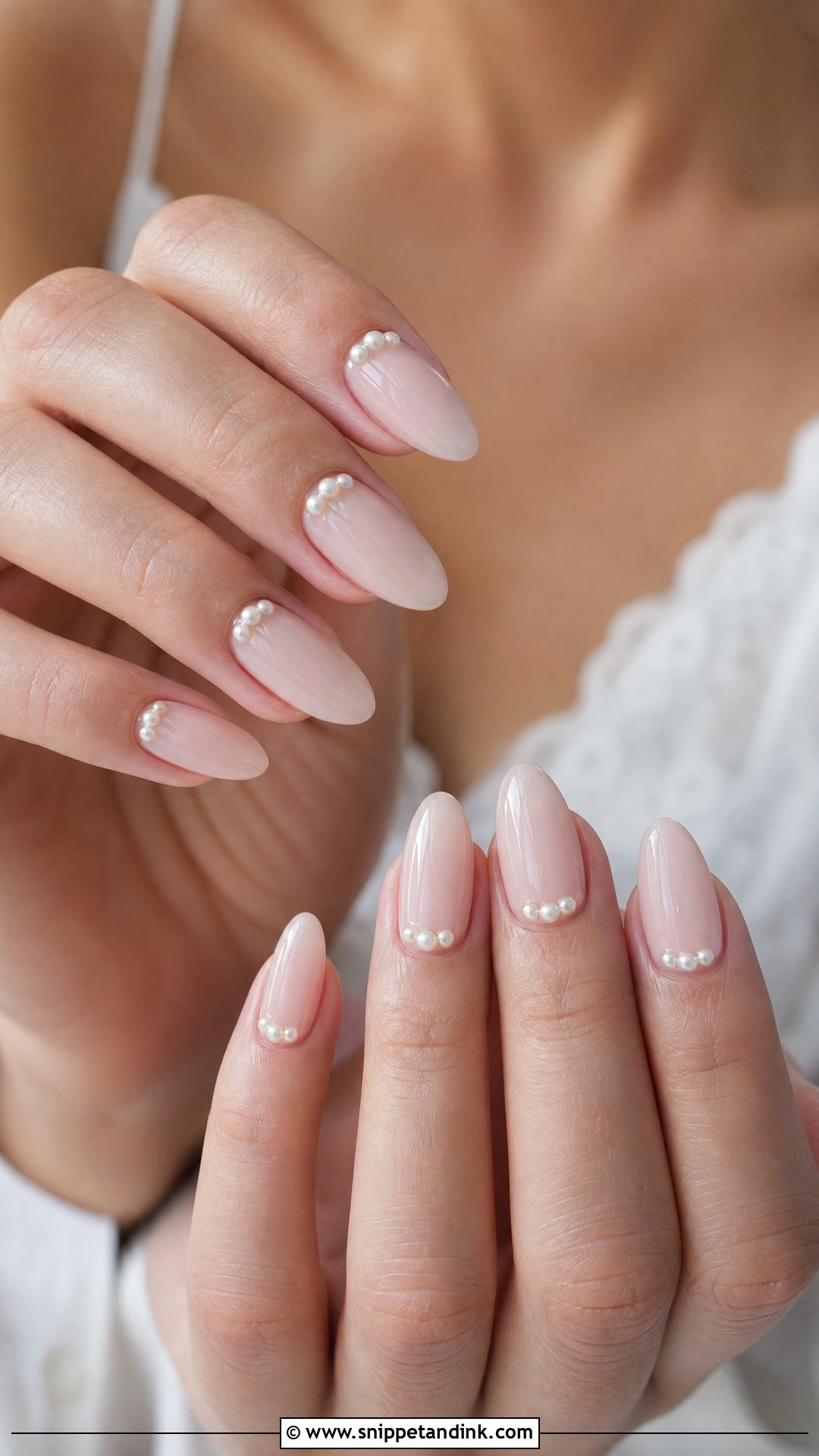
Small half-pearls near the cuticle or along a French line pick up pearl earrings and a pearl-buttoned gown without shouting. I use the smallest flat-backed pearls I can find and set them in builder gel, not just glue, because a pearl that pops off during the reception leaves a crater in the polish. Keep them to one or two nails on each hand. For autumn, set them on vanilla, rose nude or creamy ivory rather than bright white, which can make pearls look grey.
10. Burnt Orange French Fall Bridal Nails
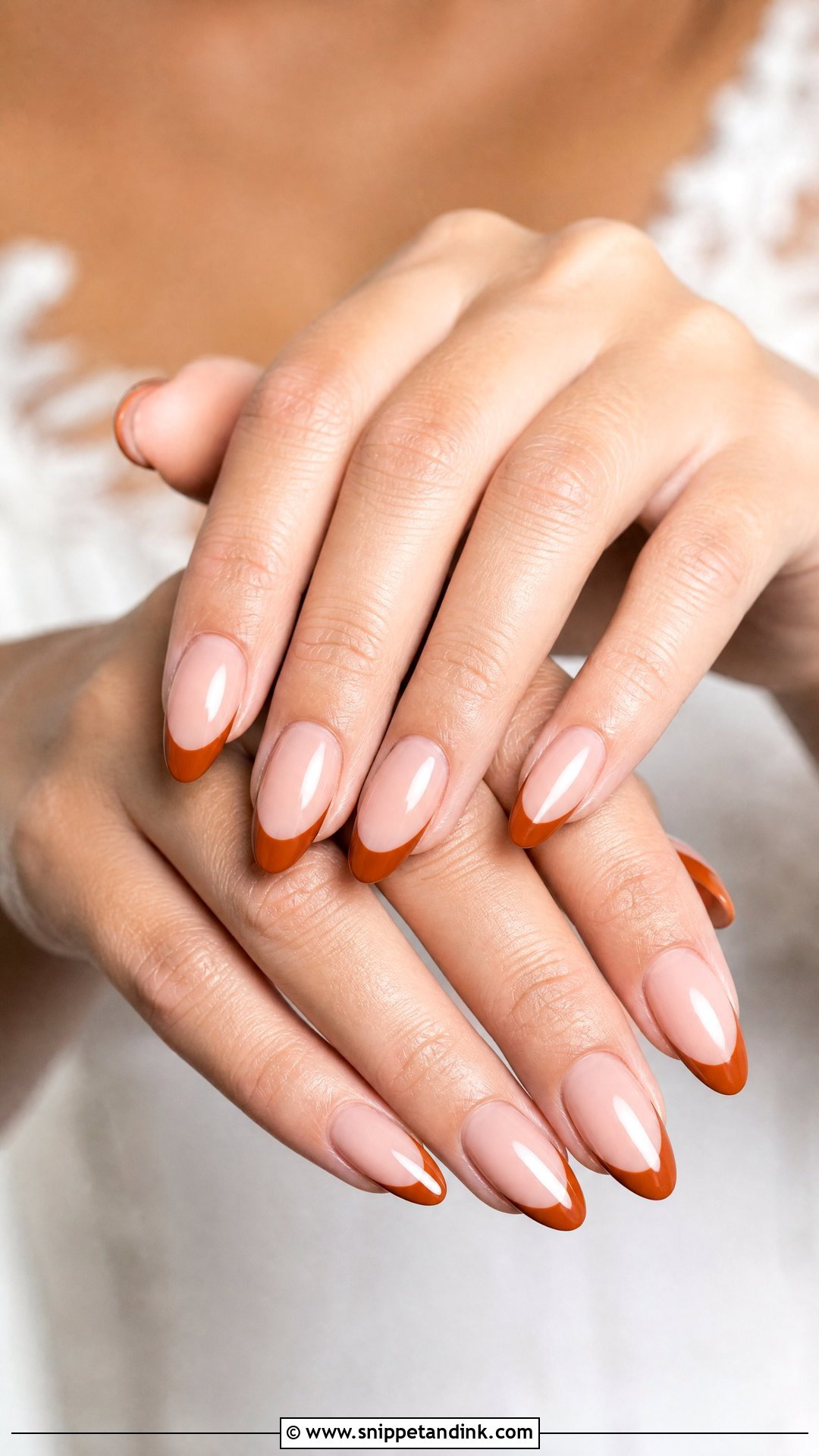
Burnt orange French fall bridal nails let you bring in the season without painting the whole nail a color you might regret by the reception. The nude base carries the bridal feel and the tip echoes copper, terracotta or dried florals in the bouquet. I mix the orange with a little brown before I paint it; straight orange polish reads close to neon under flash. A hairline tip feels most formal, while a deeper one feels more playful, so pick based on the tone of the day rather than the photo you saved.
11. Rose Gold Chrome Fall Bridal Nails
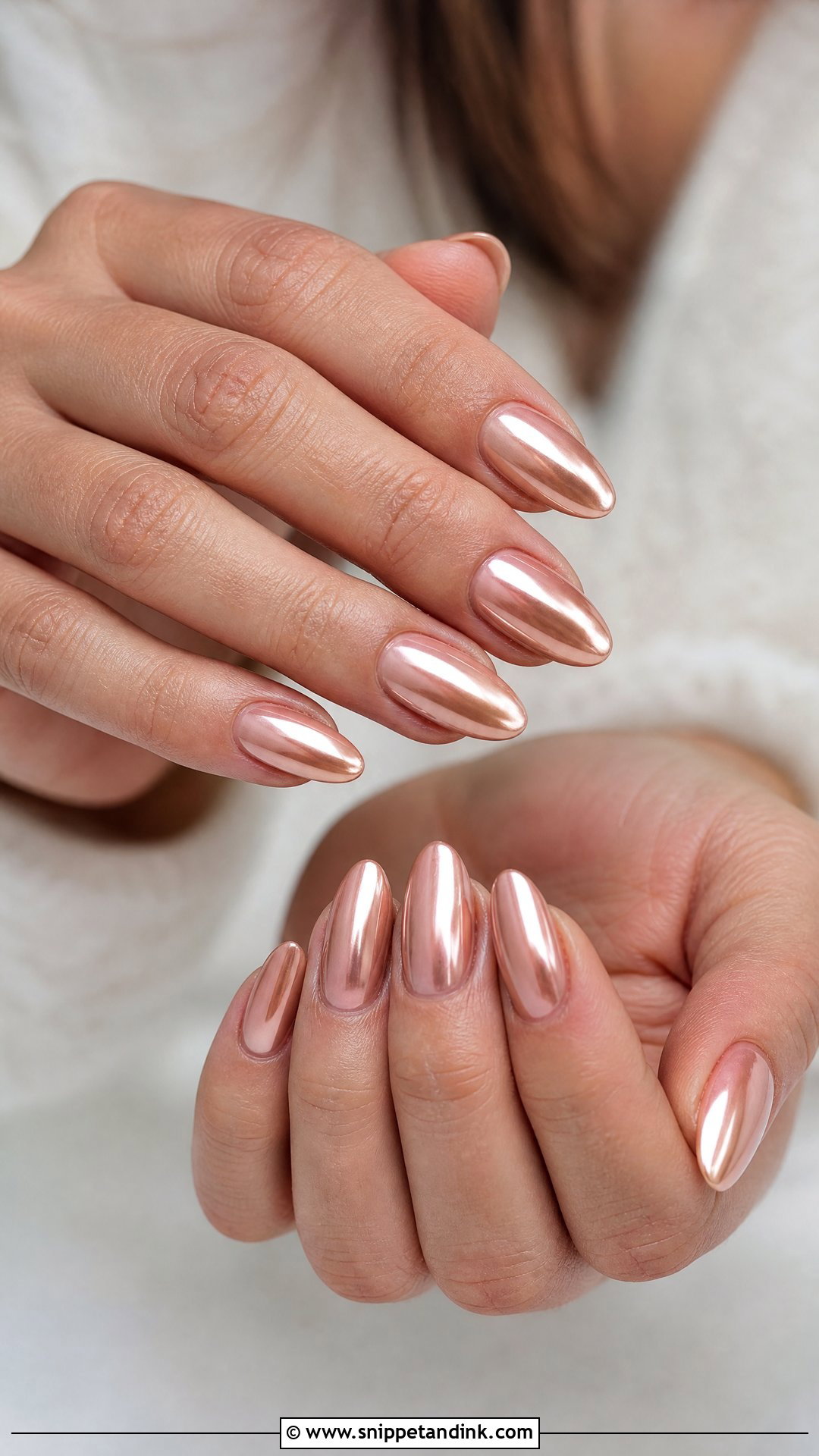
Rose gold sits between pink and yellow metal, so it flatters a lot of skin tones and plays well with mixed-metal rings. The chrome needs a perfectly smooth base under it; chrome powder magnifies every bump, so I file and buff more carefully here than for a crème polish. If full chrome feels too much, try it only on the tips or as a fine line traced around the edge of a sheer pink nail. Medium almond gives the reflective surface enough length to catch light.
12. Mauve Ombre Fall Bridal Nails
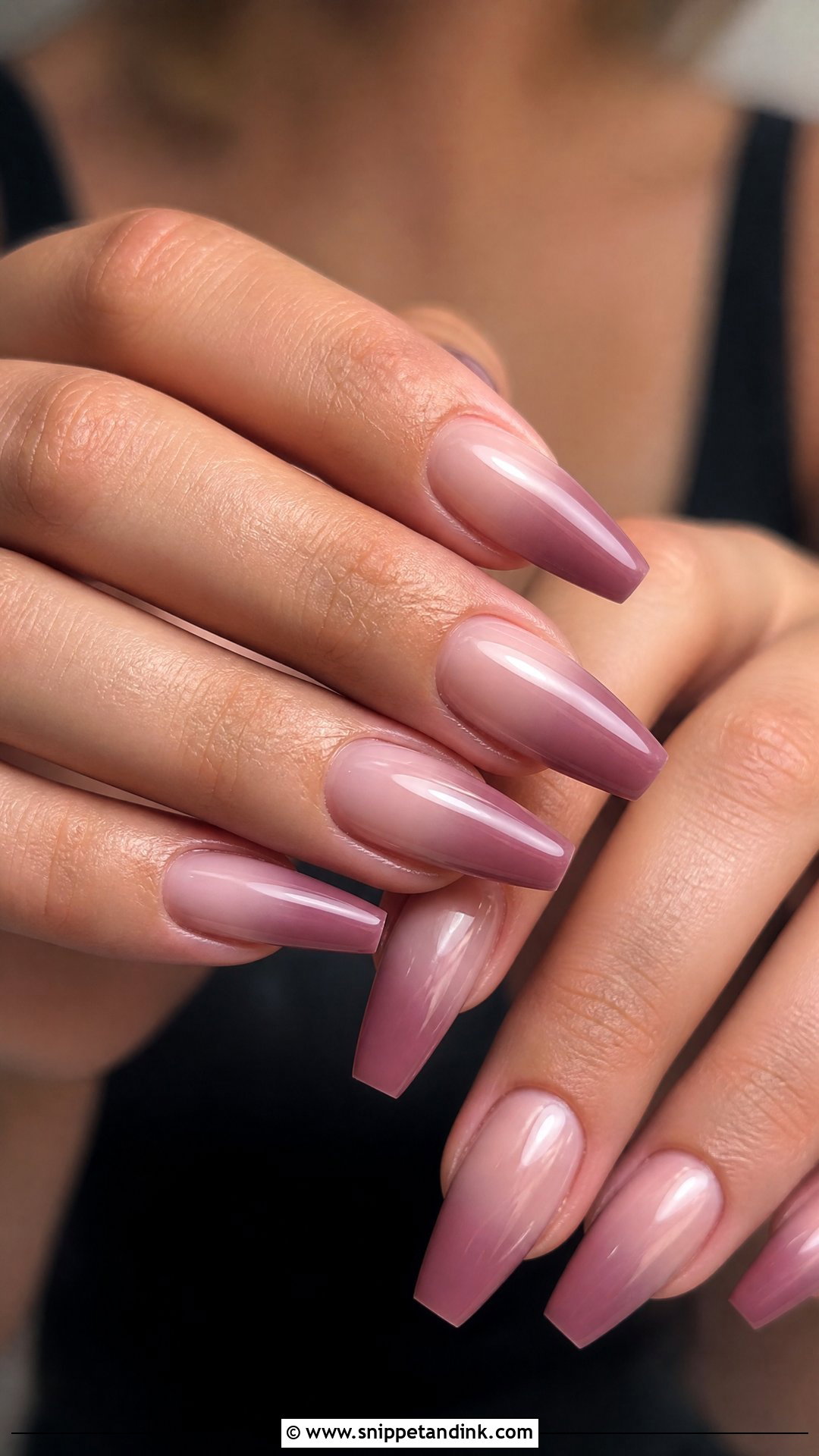
An ombre lives or dies on the blend. I sponge mauve from the free edge down into a nude cuticle area in several thin passes, then seal it, because one heavy sponge pass leaves a visible stripe and bubbles. Mauve sits a step moodier than pink, so it pairs well with berry lipstick and plum or taupe bridesmaid dresses. On very short nails there isn’t much room for a fade, and I’d steer those brides toward a solid dusty rose instead.
13. Ivory Lace Fall Bridal Nails
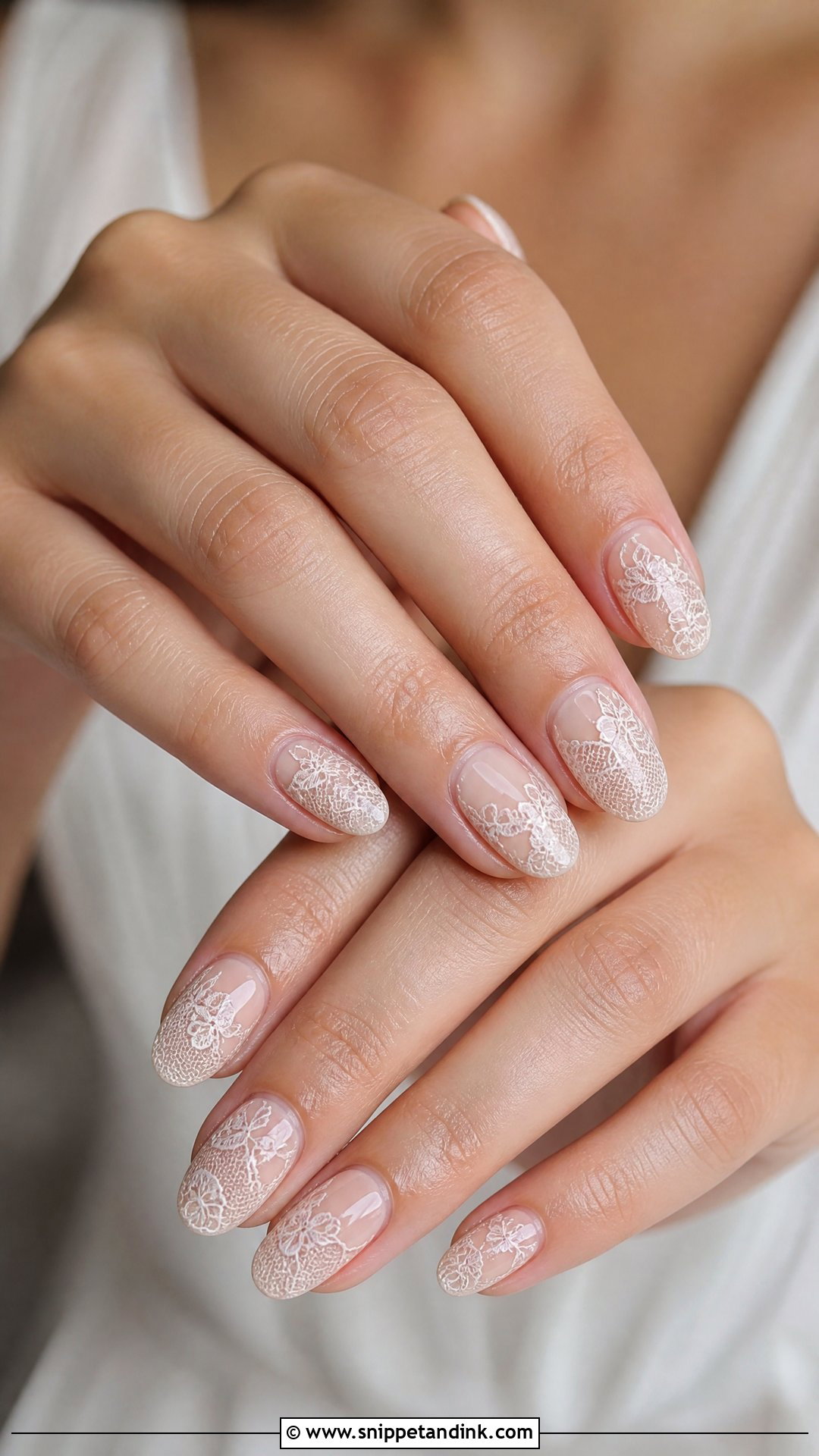
Lace nails are worth it when the dress actually has lace, sleeves or embroidery to echo. I paint the pattern freehand in ivory over a sheer nude or milky base, keeping the lines as thin as the brush allows; thick lace lines look like doilies. Bright white on top of the base tends to look cold beside an ivory gown, so I’d match the paint to the fabric if you can bring a swatch. Put the lace on two or three nails, not all ten.
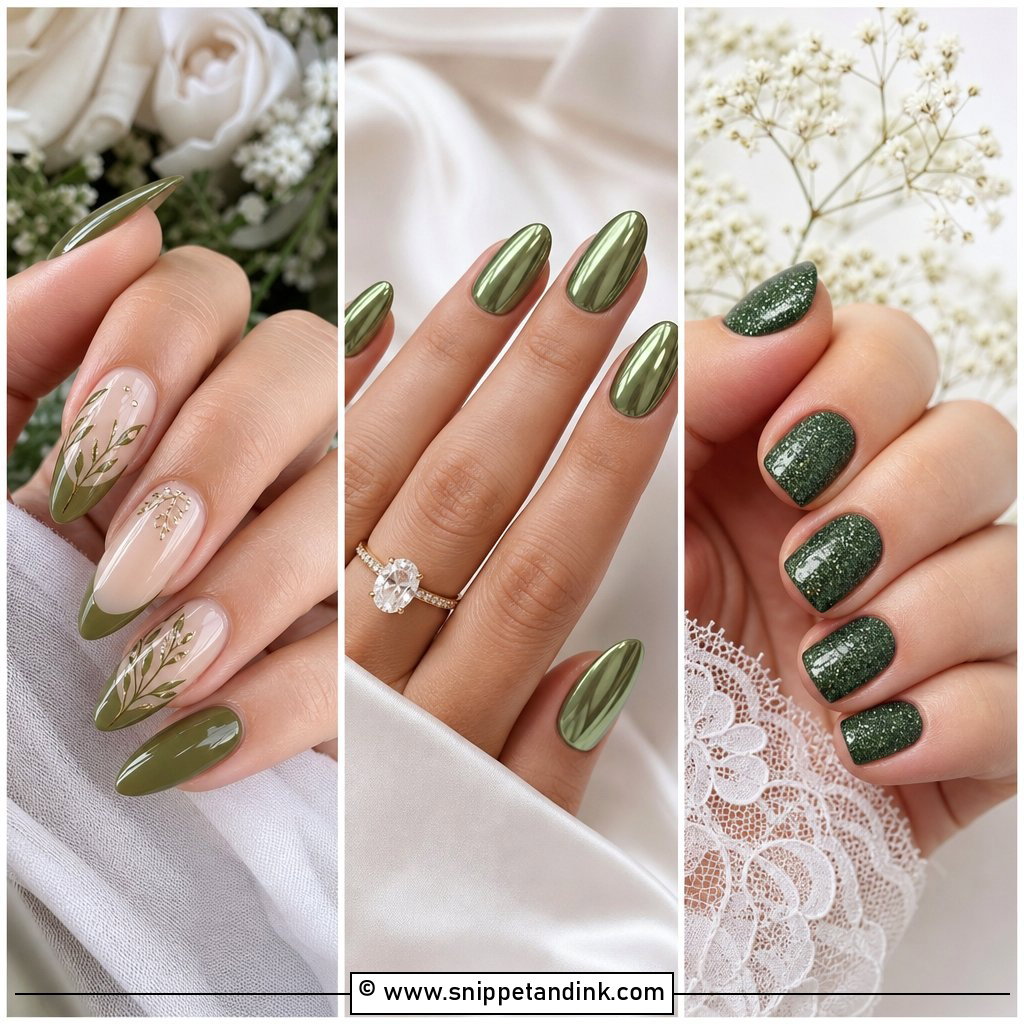
14. Emerald Green Fall Bridal Nails
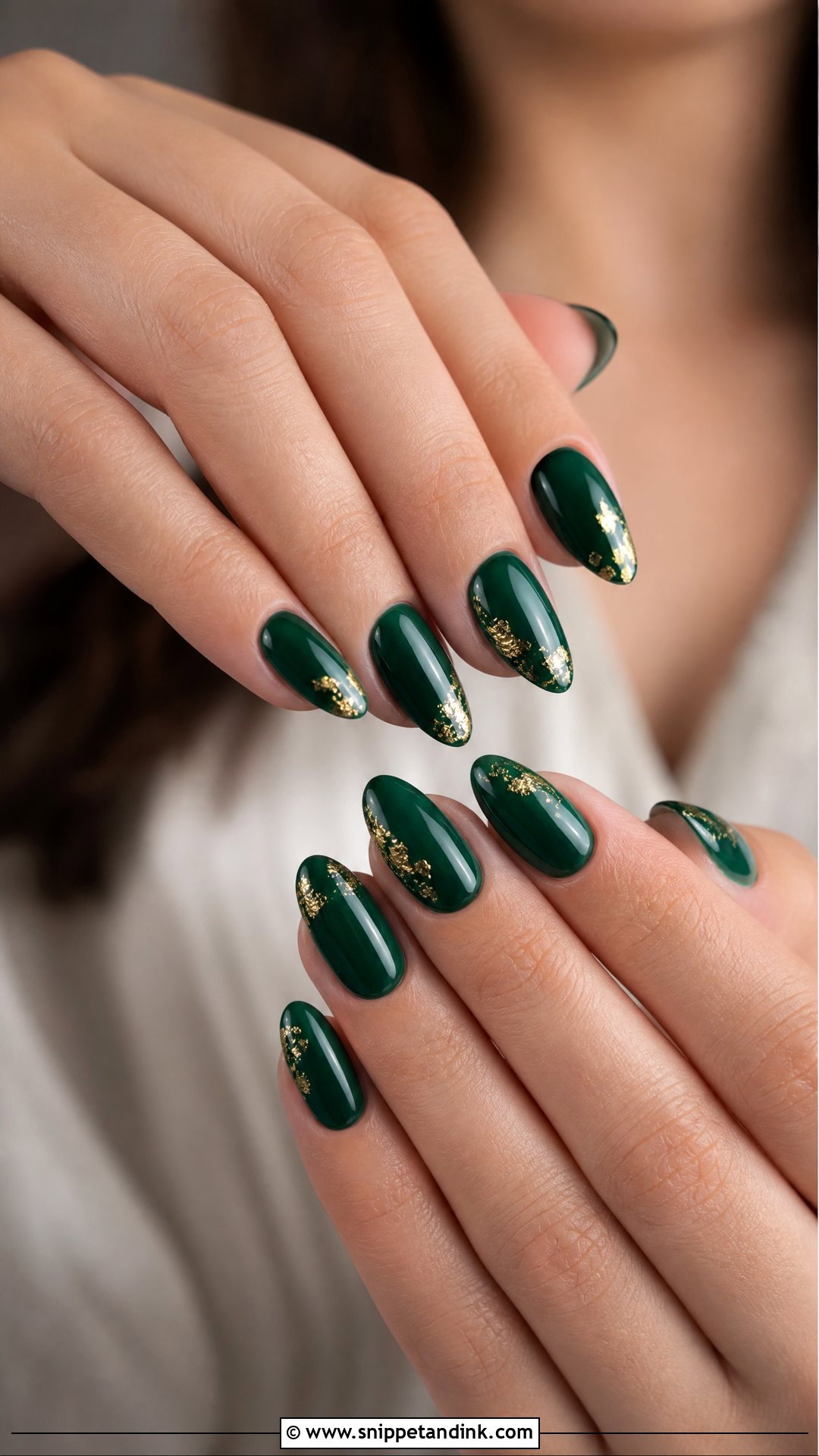
Emerald is the jewel tone I see brides hesitate over most, then love once it’s on. A glossy deep green suits forest venues, black-tie evenings and bouquets with lots of foliage. It’s a strong color against a white gown, though, so if full emerald feels too heavy, try it as a French tip over nude or on two accent nails. A little gold foil near the cuticle pairs with it better than large gems, which can make dark green look costume-like.
15. Caramel Nude Fall Bridal Nails
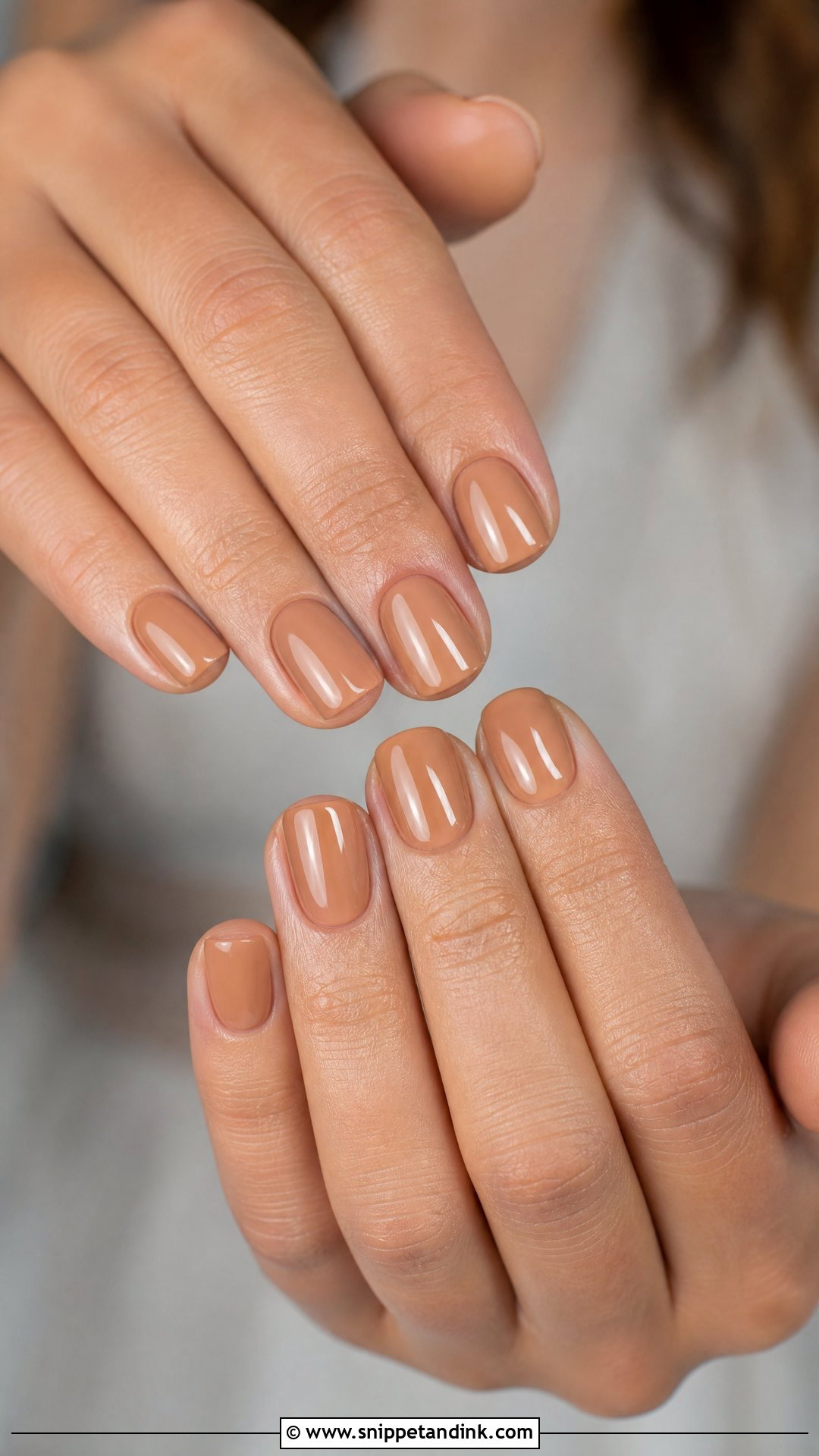
Caramel is the nude I recommend to brides with warm, olive or deeper skin who find that standard pinky nudes look ashy on them. It sits between beige and tan, so the hand reads warm and the nails don’t compete with the dress. Hold the bottle against your own skin before committing: if your fingers look grey, it’s too cool; if they look orange, it’s too warm. One tiny gold dot at the cuticle is enough decoration for this one.
16. Plum Velvet Fall Bridal Nails
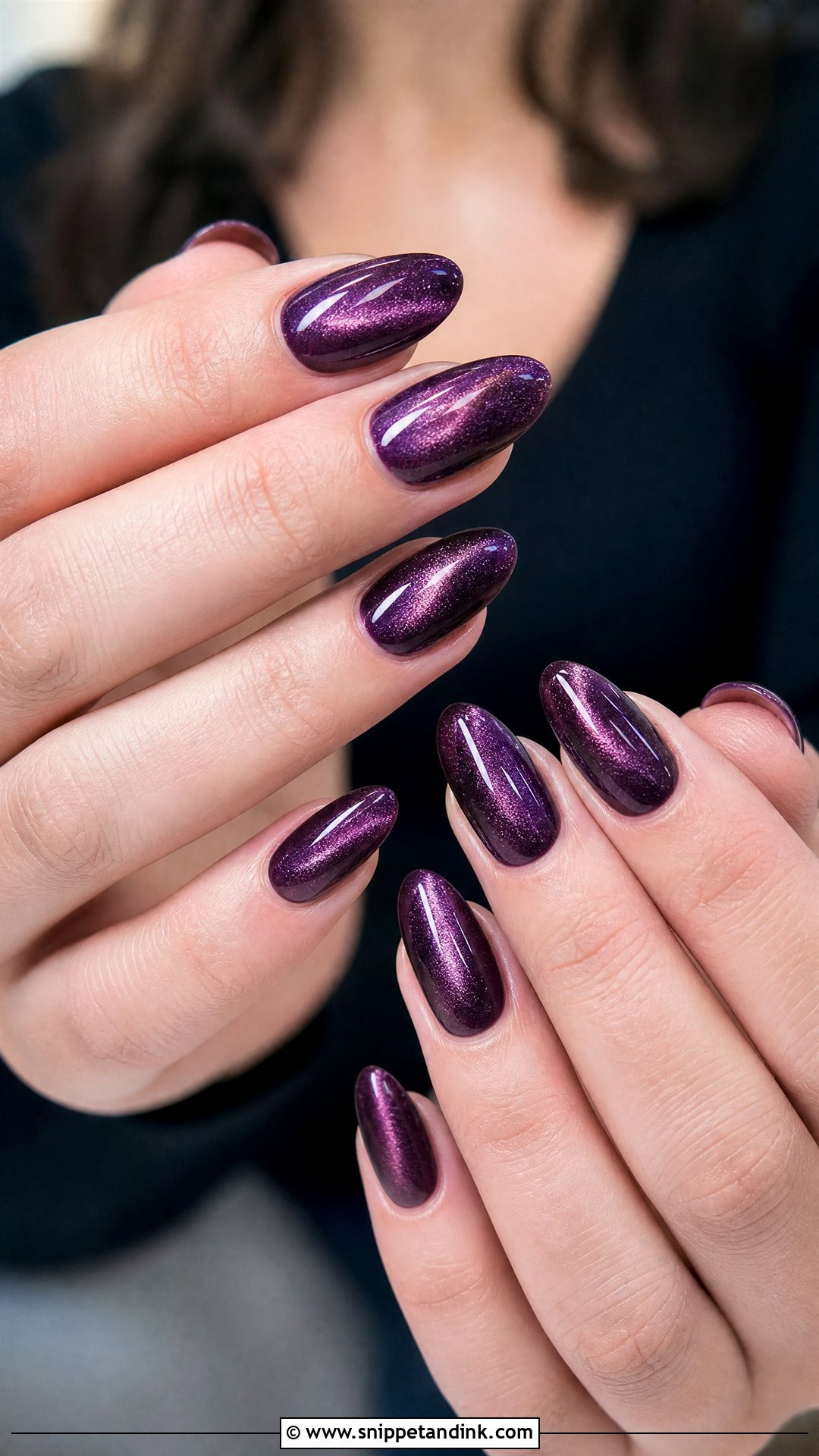
The velvet look comes from magnetic polish: I hold a magnet over the wet color before curing and the metal particles gather into a soft band of light. It shifts as the hand moves, which is lovely in video and harder to capture in still photos, so I tilt the band slightly so it reads in most angles. Plum feels a little less expected than burgundy and works well at candlelit evening receptions. Keep the shape soft, almond or oval, because dark velvet on a sharp stiletto looks more Halloween than wedding.
17. Maple Leaf Fall Bridal Nails
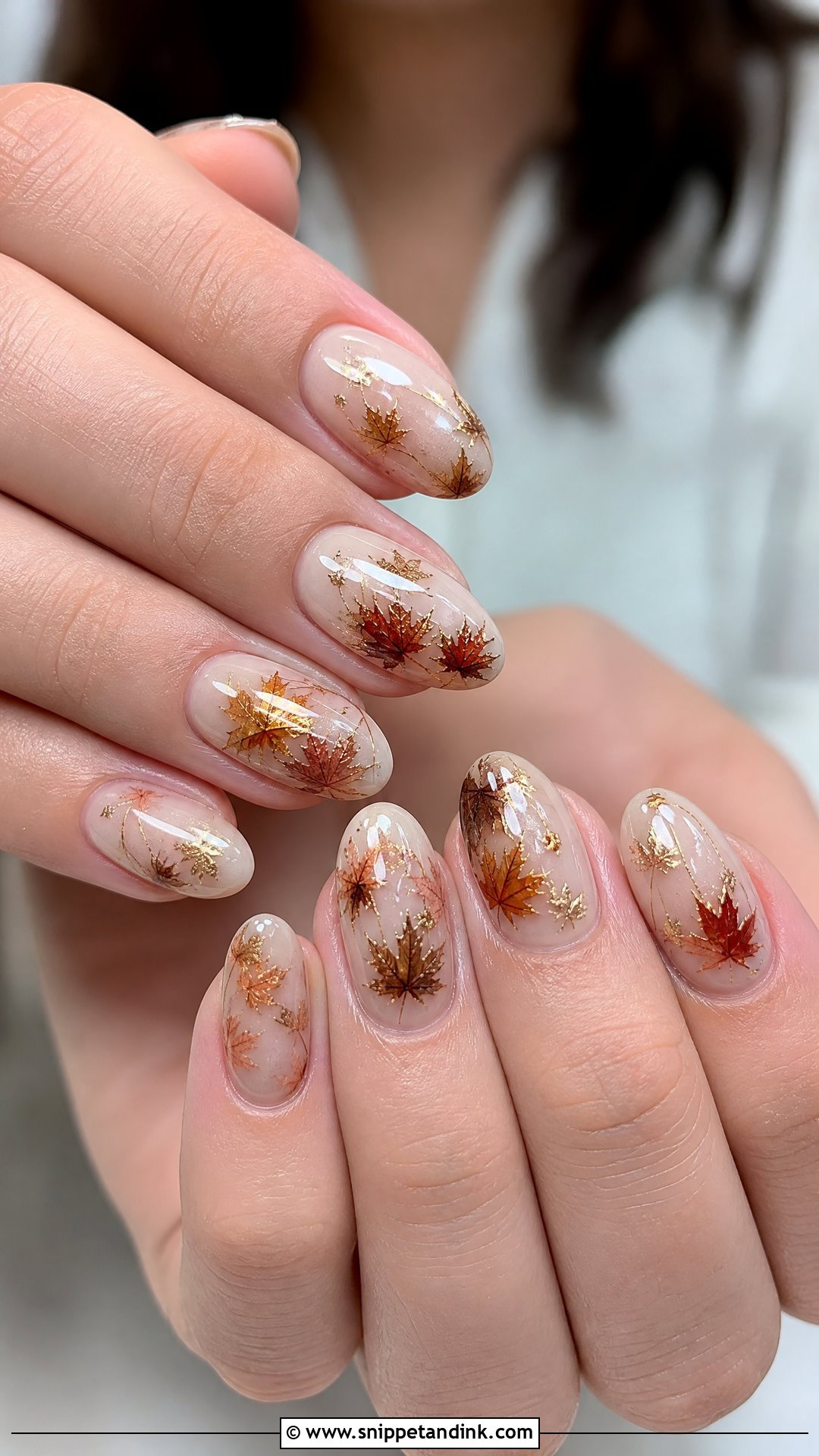
Leaves are the easiest motif to get wrong. Big bright leaves on every finger look like a school craft; two or three tiny ones in copper, rust or gold on accent nails read as a seasonal wink. I paint them over a sheer nude, milky white or blush base and keep the stems fine. This one suits outdoor ceremonies and mountain venues where the foliage is part of the backdrop. Almond or oval gives enough canvas without crowding.
18. Dusty Rose Fall Bridal Nails
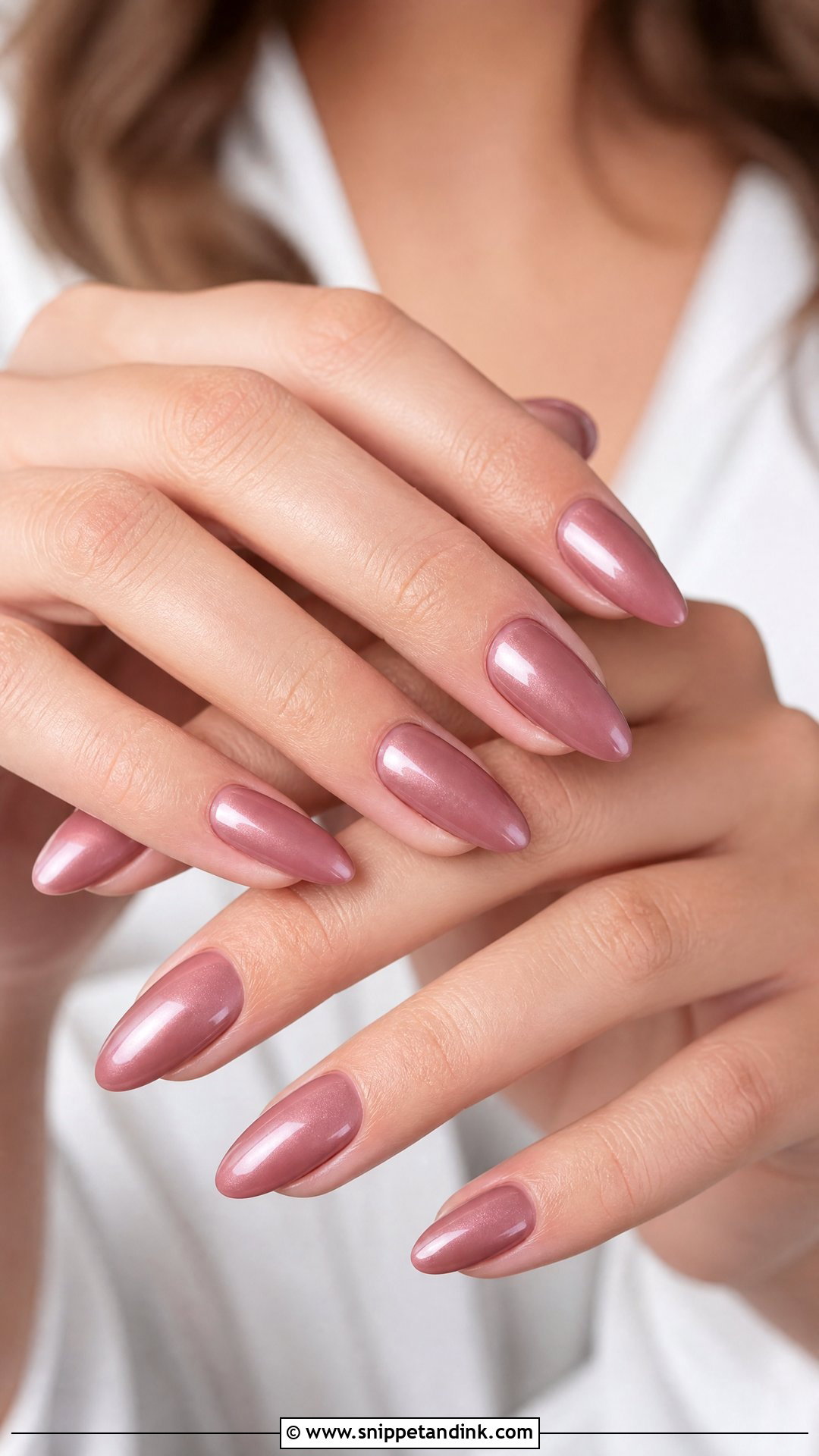
Dusty rose has a muted mauve undertone that makes it feel more grown-up than baby pink, and it works across a wide range of skin tones because it has both warmth and softness. I like it on its own as a glossy full set, but it also takes a fine gold line or a few pearl dots well. It goes with slip dresses and full lace gowns alike. If you’re torn between pink and something seasonal, this is often where brides land.
19. Gold Glitter Ombre Fall Bridal Nails
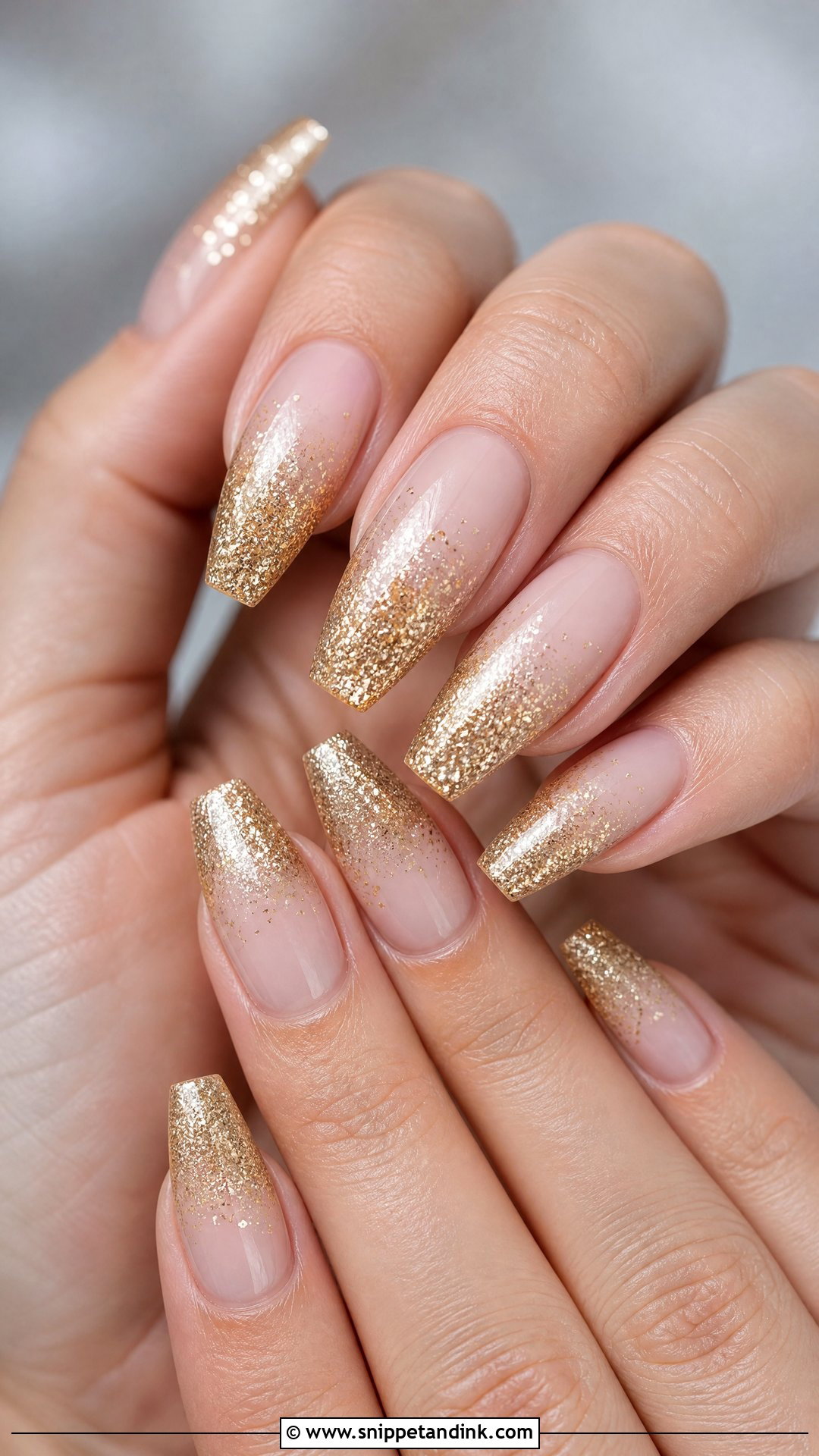
Glitter ombre is the sparkle option I trust most for a bride, because the density fades out before it reaches the cuticle, so grow-out is barely visible. I use fine glitter, not chunky, and bury it under enough top coat that the surface stays smooth; rough glitter catches on tulle and lace. Fading from the tip suits most hands, while fading from the cuticle draws attention to the ring. Pick it if your dress is simple and you want the hands to carry some of the shine.
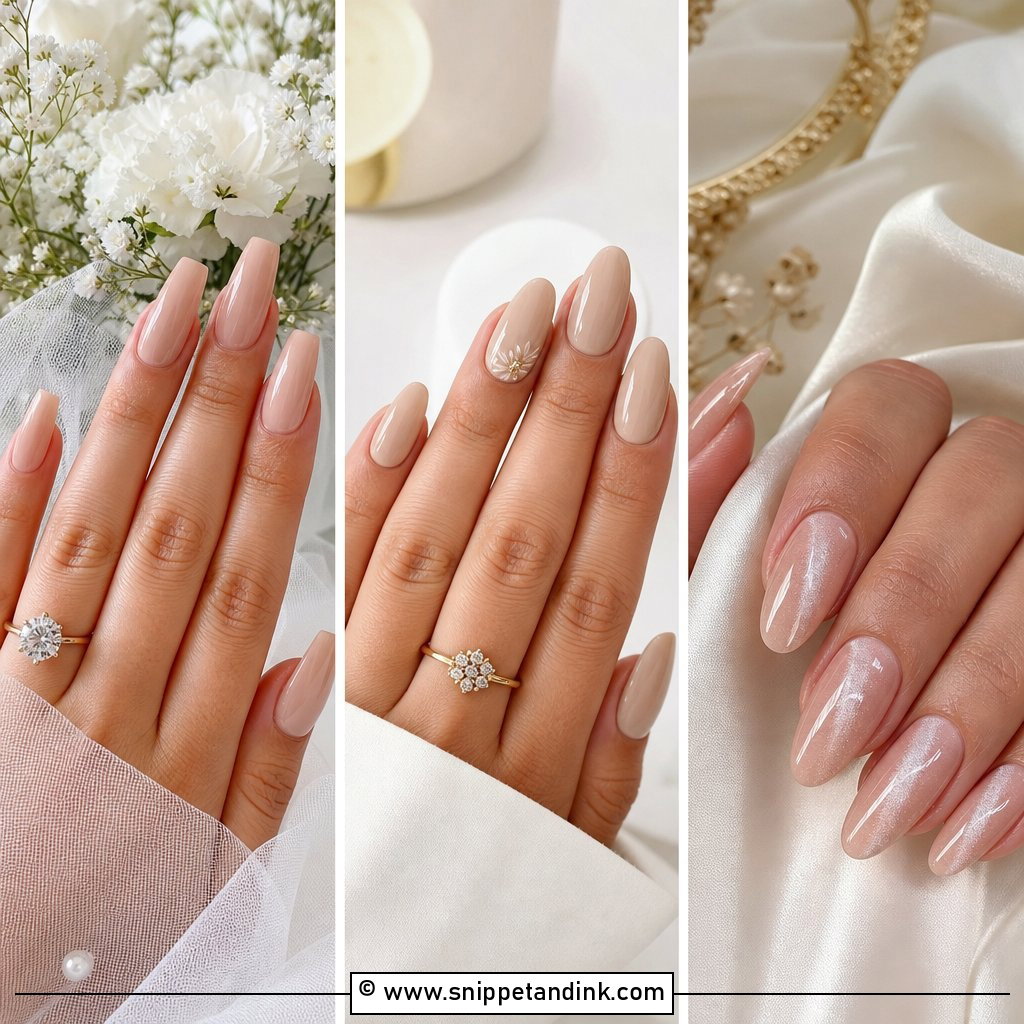
20. Terracotta Fall Bridal Nails
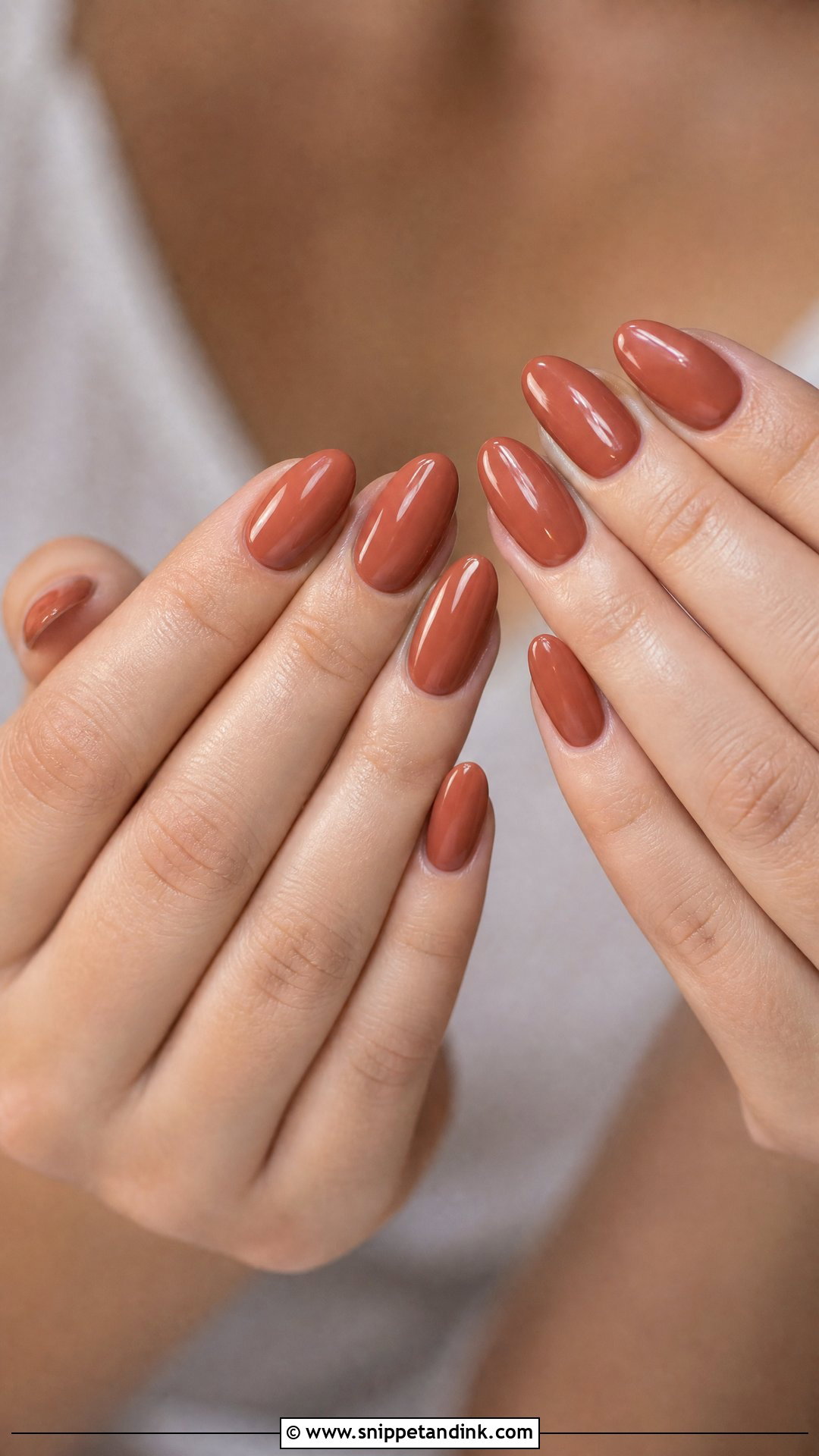
Terracotta fall bridal nails have an earthy, clay warmth that pairs with dried florals, pampas and rust bridesmaid dresses. I mute the shade slightly so it reads more brick than pumpkin. A full set looks smart on short square or medium almond nails; for a softer version, I paint terracotta tips over a nude base and sometimes add a hairline of gold along the smile line. If your florist is working with a lot of orange, hold a petal against the polish before the appointment.
21. Mocha Marble Fall Bridal Nails
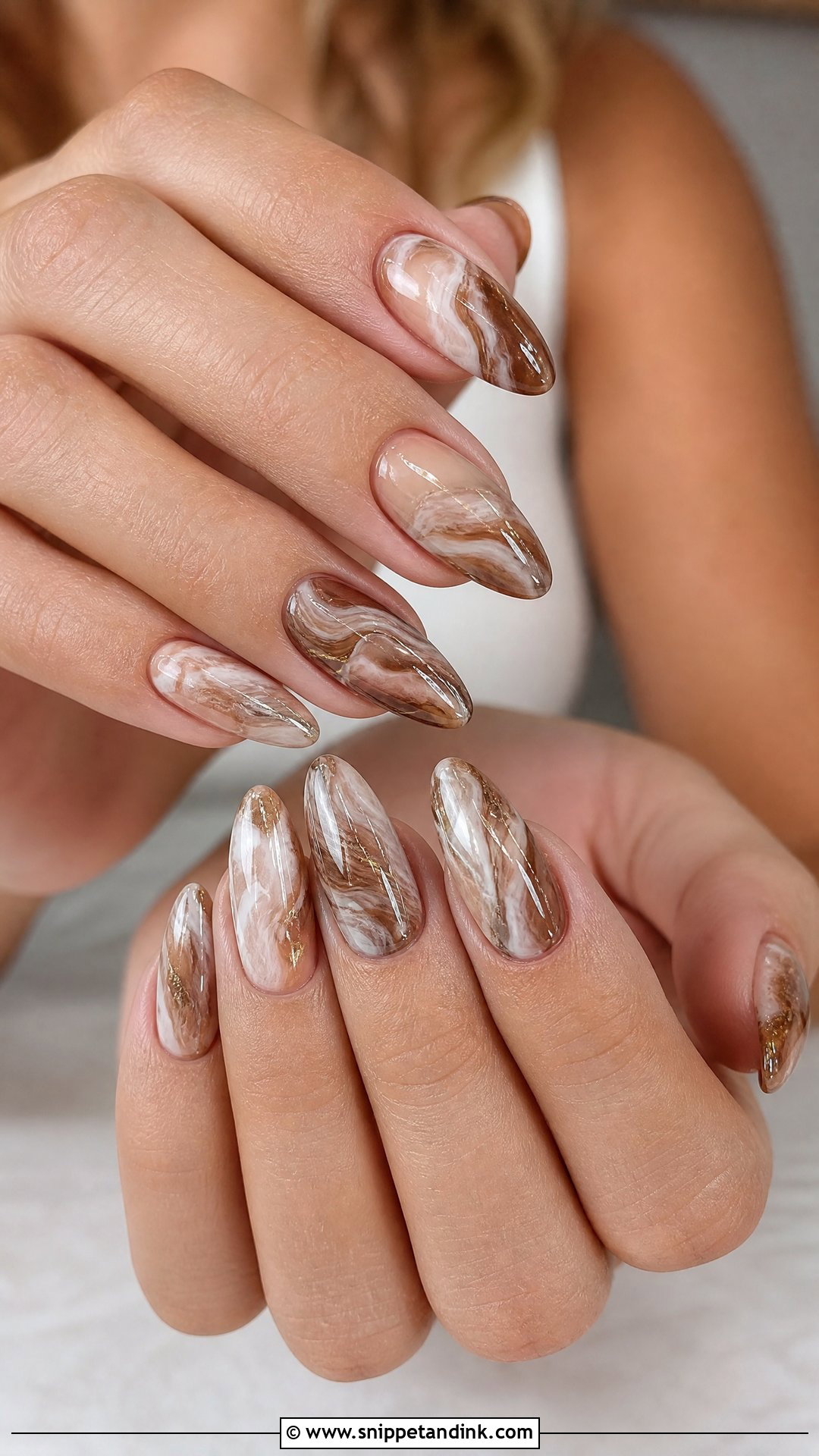
Marble takes some patience. I drop mocha and cream onto a wet base and drag them with a fine brush, stopping before the colors muddy into a single beige. Kept to two or three accent nails, with the rest in solid nude or mocha, it reads like polished stone. Done across all ten fingers, the pattern starts to fight with lace and beading. It’s a good fit for a bride who loves neutrals but finds a plain nude too quiet.
22. Copper Chrome Fall Bridal Nails
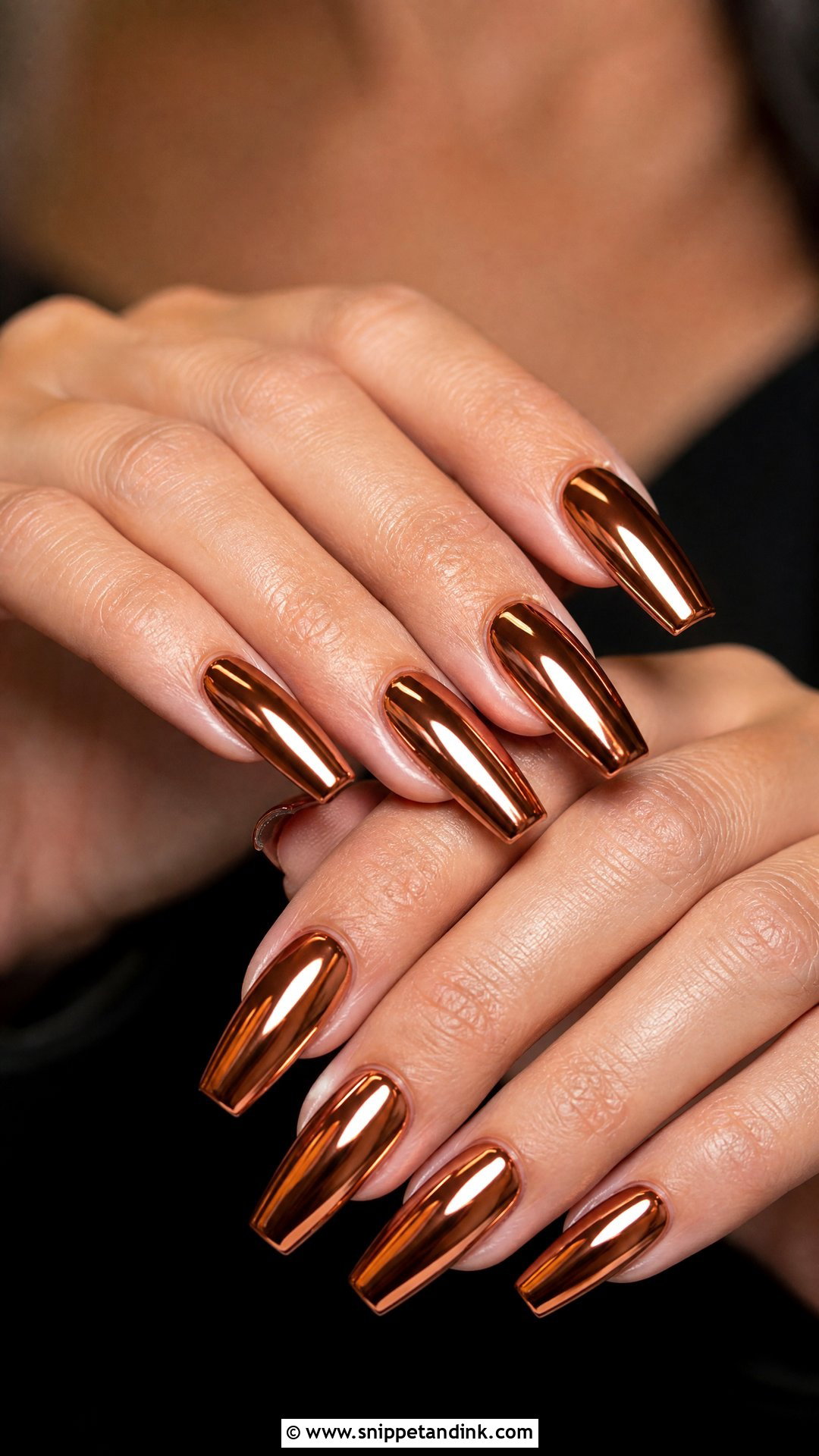
Copper chrome is the boldest metallic here. It has more warmth than silver and more depth than yellow gold, so it suits fall bouquets, bronzed makeup and gold rings. Under a photographer’s flash, though, a full set of chrome can bounce light hard, so I often suggest copper on the tips or on a single accent nail beside nude. Almond and coffin shapes give the shine a long surface to catch. Keep jewelry quiet so the hands don’t get crowded.
23. Short Sheer Pink Fall Bridal Nails
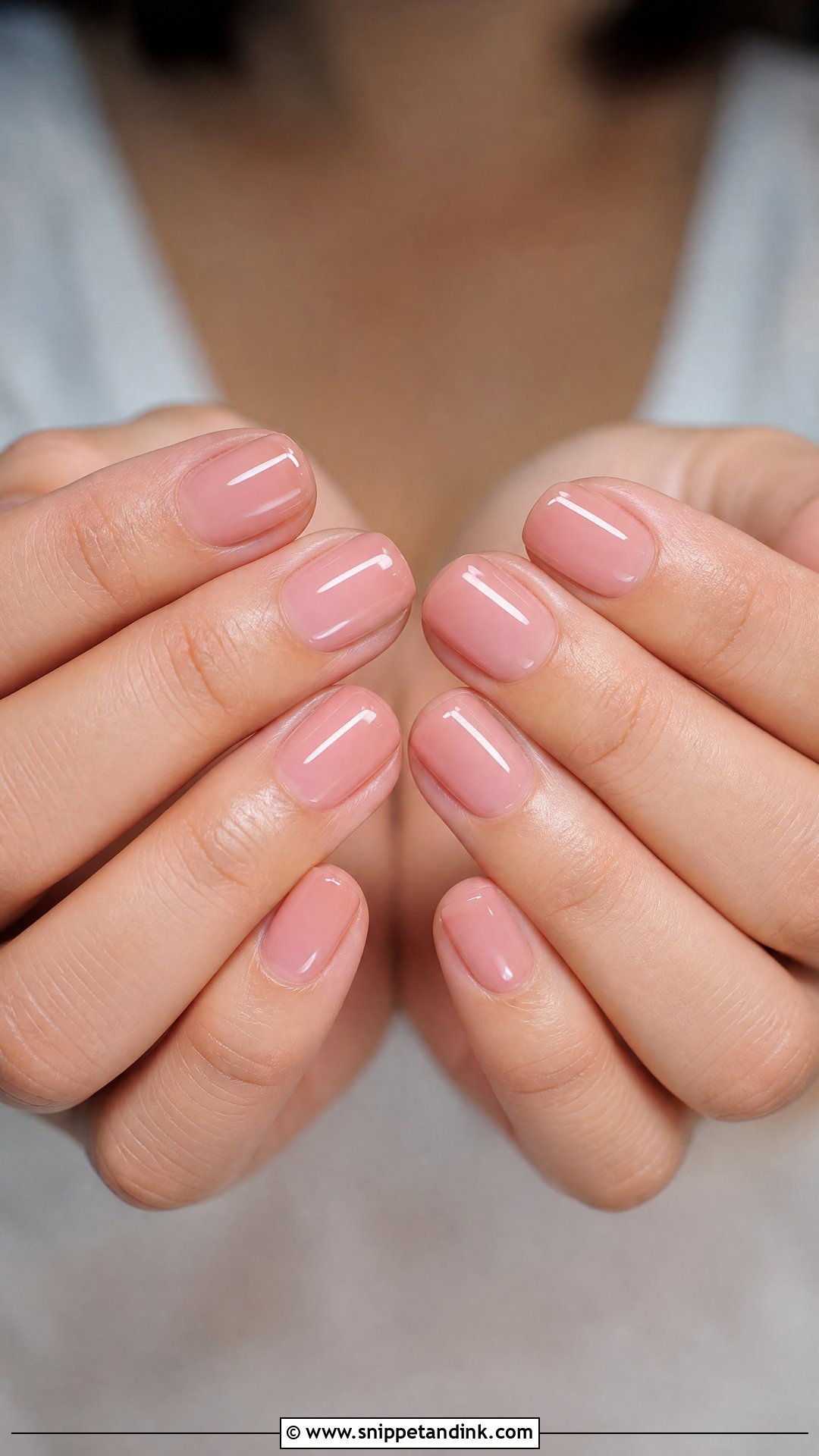
Short sheer pink is the set I’d book for a bride who never wears long nails and doesn’t want to feel clumsy on the day. The polish tints the nail rosy while letting the natural nail show through, so chips and grow-out barely register by the end of wedding week. Choose a sheer pink with a beige or warm rose undertone; cool pastel pinks look like spring in autumn photos. Finish with high gloss, and the hand looks well kept rather than decorated.
24. Black Cherry Fall Bridal Nails
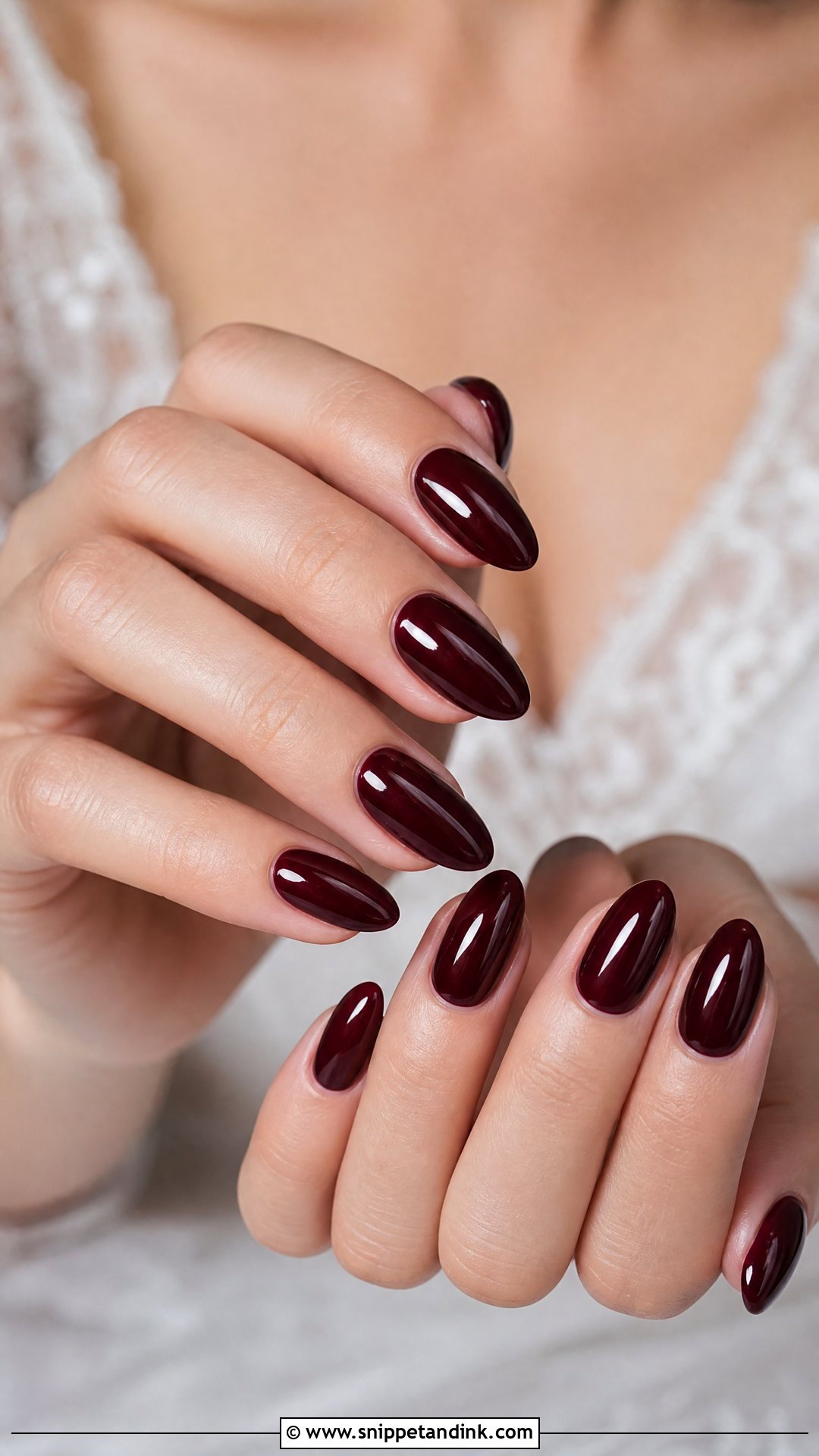
Black cherry looks nearly black indoors and flashes red when light hits it, so it never goes flat the way true black can. It’s my pick for evening weddings and formal venues where the makeup is also richer. A glassy top coat is not optional; dark shades lose their depth the moment the shine dulls. For a softer take, I paint it as a French tip over a nude base, which grows out more gracefully if the wedding is a few days after the appointment.
25. Beige Micro French Fall Bridal Nails
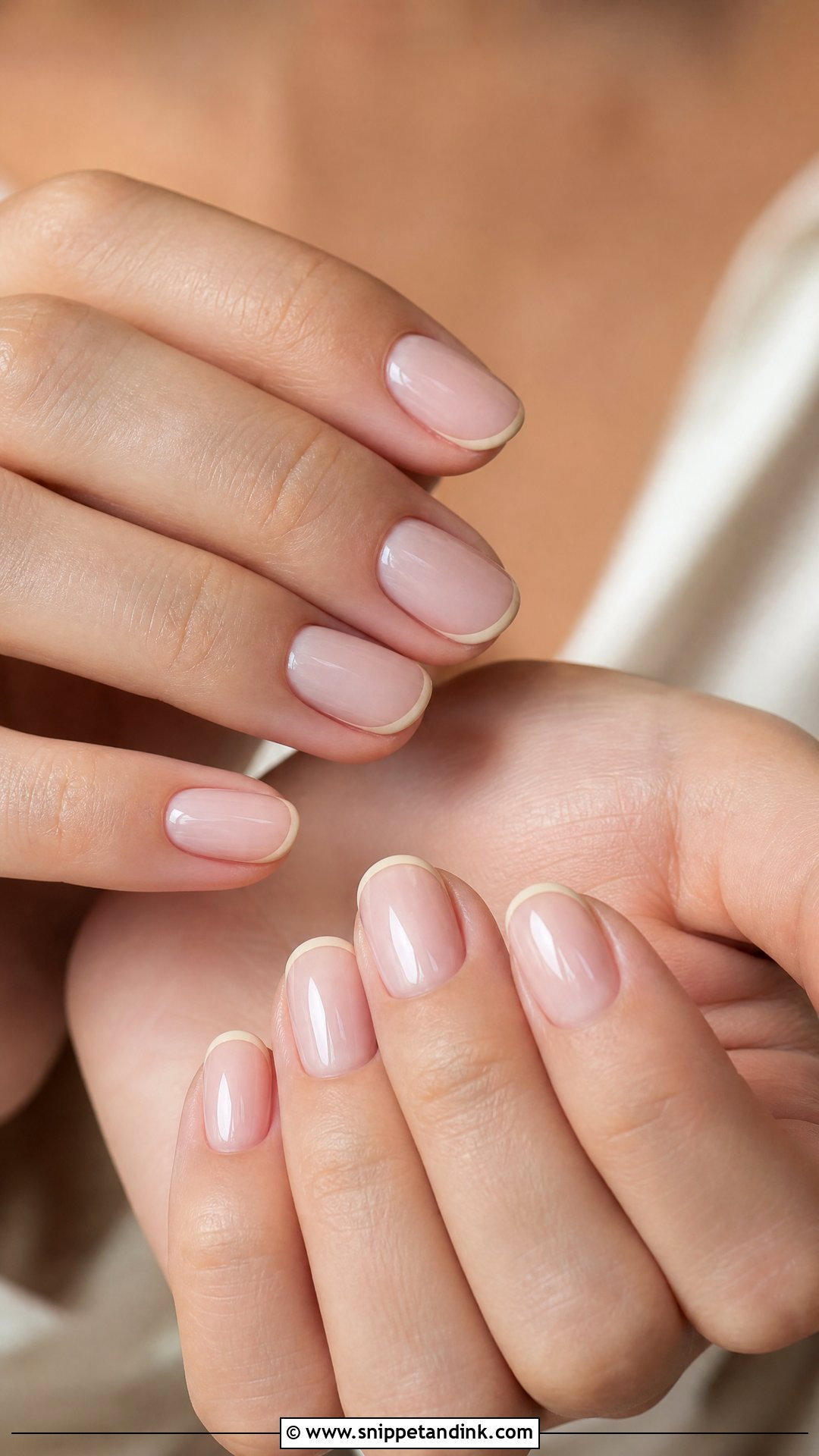
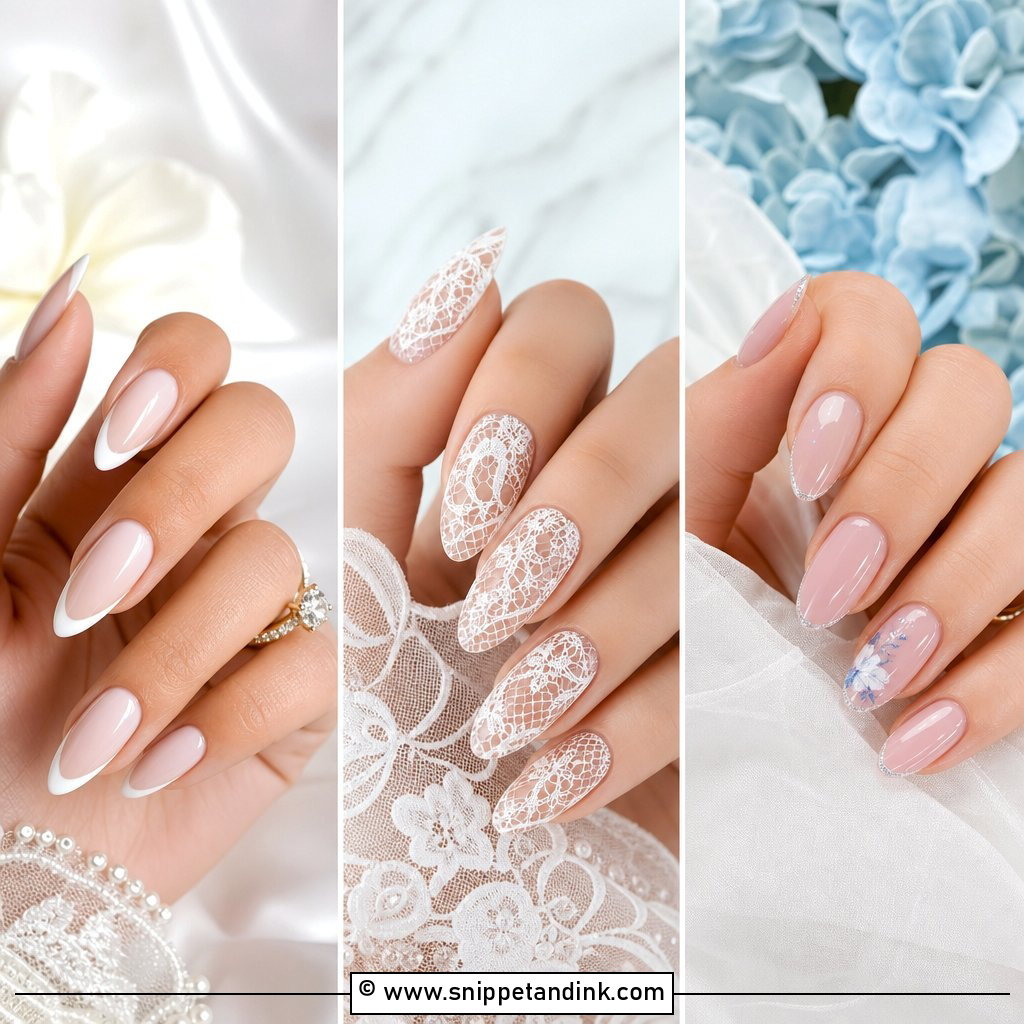
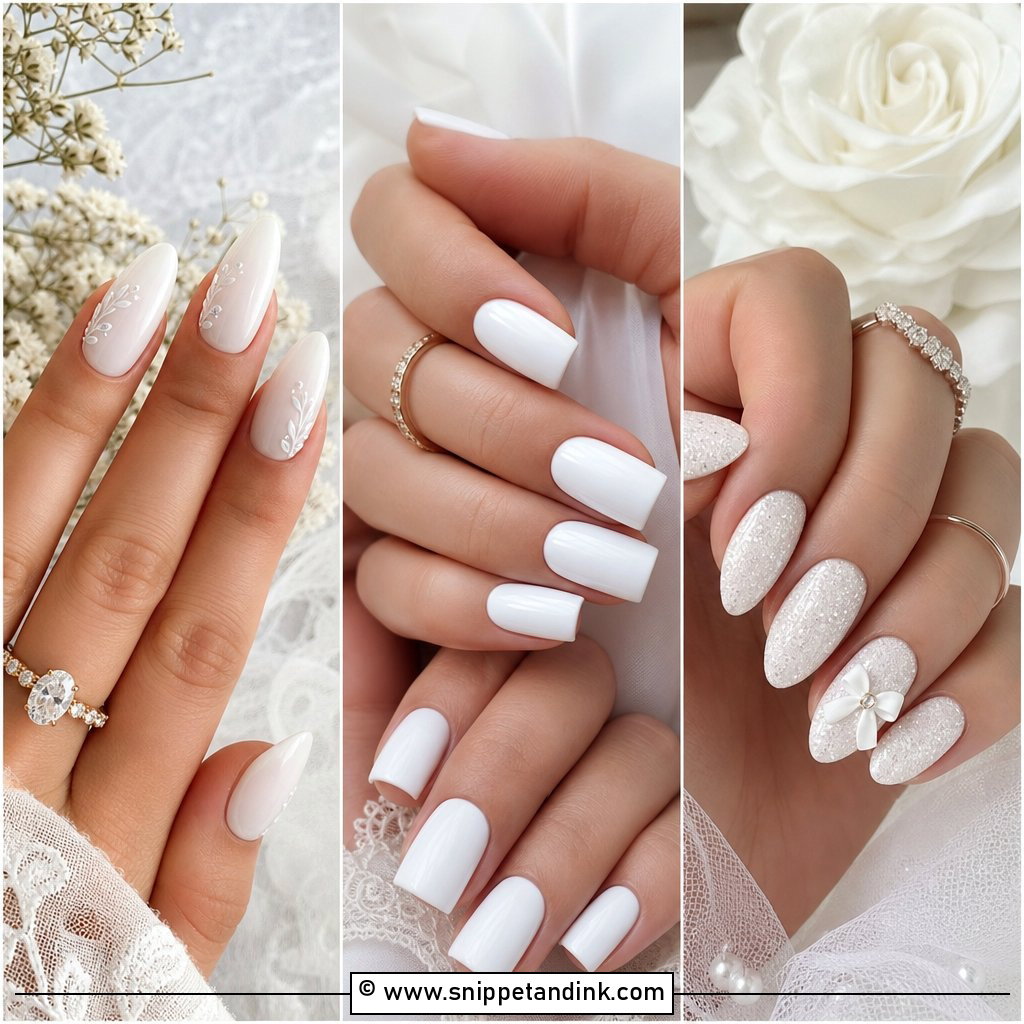
Beige micro French fall bridal nails are probably the most understated set in this list, and the one I’d send home with the bride who isn’t sure what she wants. A very thin beige tip over sheer nude or pale pink makes the nail look longer and cleaner without the contrast of white. The tip has to be even across all ten fingers, so it’s slower work than it looks. Warm beige keeps it seasonal next to ivory, champagne and brown wedding colors.
How Deep Shades and Chrome Behave in a Ring Close-Up
Ring shots are shot tight, often with a macro lens, so the nail is bigger in the frame than it ever is in real life. That changes which sets hold up. Deep colors and chrome both magnify flaws: a flooded cuticle, a thin patch at the free edge or a ridge in the natural nail all show at that scale.
What I check before a bride leaves the chair
- The free edge is capped with color and top coat, so the tip doesn’t wear pale by evening.
- There’s a hair’s width of clean space between polish and skin all round, which keeps dark shades looking crisp.
- Chrome has no fingerprints or dust trapped under the top coat; I check under a bright light at an angle.
- The ring finger sits flat when the hands rest on the bouquet stems, so no accent stone digs in.
If something does chip on the day, a clear top coat or a matching polish swiped over the spot hides it well enough for photos. I’d keep a small bottle of the exact shade in the bridal emergency bag, especially for burgundy, emerald or any dark set.
Matching the Manicure to How Much Your Gown Already Says
The dress is usually what settles it for me. A plain crepe or satin gown leaves room for chrome, glitter fade or a jewel tone, while a gown with lace, beading or heavy embroidery usually looks calmer with milky white, sheer pink, taupe or a beige micro French. If you’re trying a new shape or a color you’ve never worn, book a trial a few weeks out and live with it for a week. You’ll know by day three whether you still like looking at your hands.
You'll Like These Ideas:


Leave a Reply