
White is the color brides ask me for most, and it’s also the one I spend the longest talking through. Opaque white straight from the bottle can look chalky on camera and stark against an ivory gown, which is why the current bridal nail trends lean toward milky bases, pearl chrome and fine French tips instead. Shape matters as much as shade, so I’ve noted below which lengths and shapes each design needs to work. Here are the 25 white sets I’d put in front of a bride at her consultation, from short and natural to long coffin.
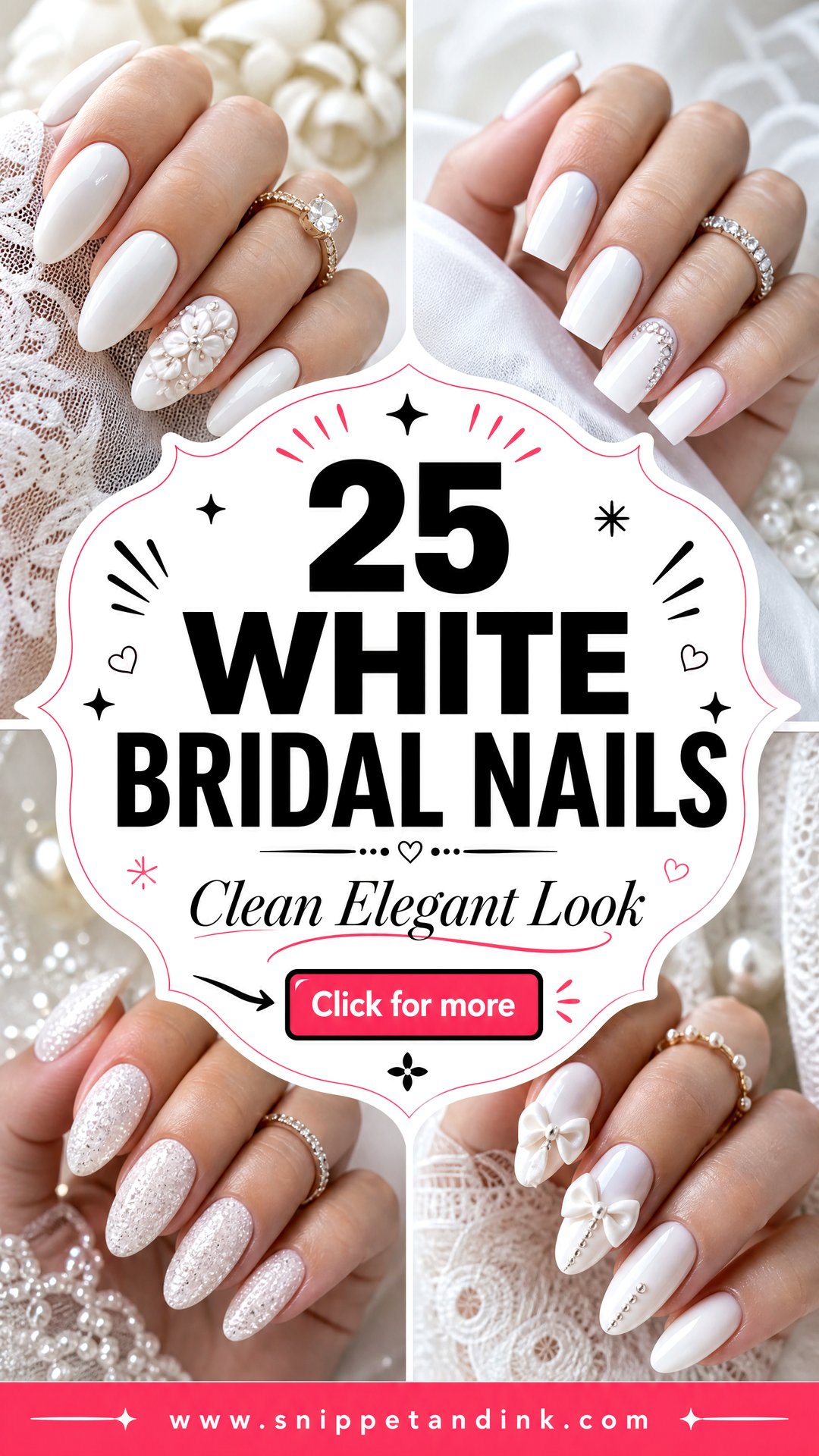
Optic White, Milky or Ivory Against Your Skin and Dress
White polish comes in more shades than people expect. Optic white is bright and opaque, the white of a classic French tip. Milky white is sheer and soft. Ivory and soft cream have a touch of yellow in them. Which one looks right depends on your skin and on your gown far more than on trends.
At a consultation, I paint a strip of each shade onto a nail tip and hold it against the bride’s hand and, if she brings one, a swatch of her dress fabric. A few patterns come up again and again:
- Next to an ivory or champagne gown, optic white can make the dress look dingy. Milky or ivory nails usually sit better.
- On deeper skin tones, a sheer milky white can turn slightly grey; a creamier white or a nude base under the white often looks warmer.
- On very fair, pink-toned skin, ivory can read yellow. A cool milky white tends to be kinder.
Photograph your hand with the swatch in daylight too. Camera flash makes bright white glare.
1. Milky White Bridal Nails
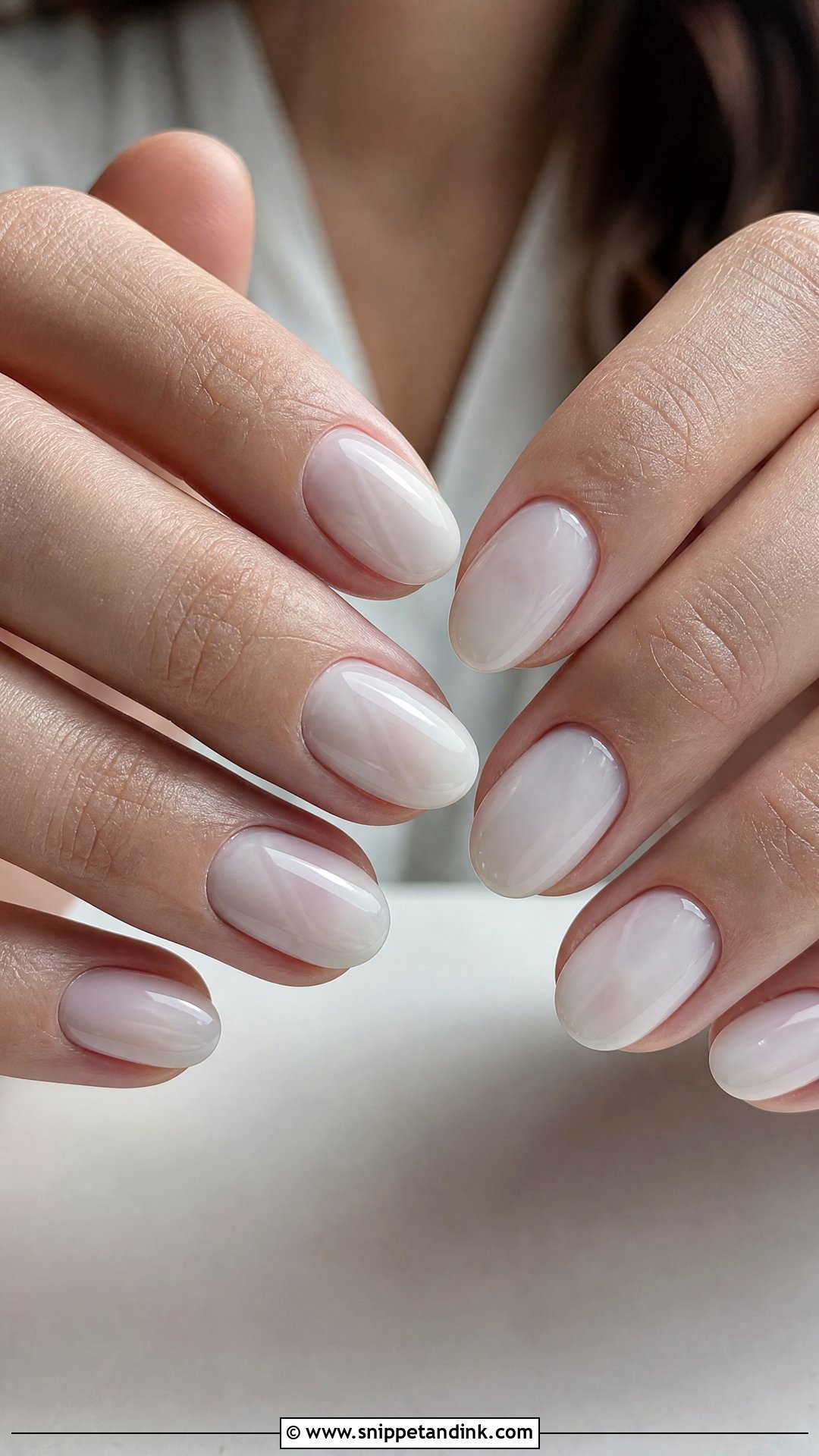
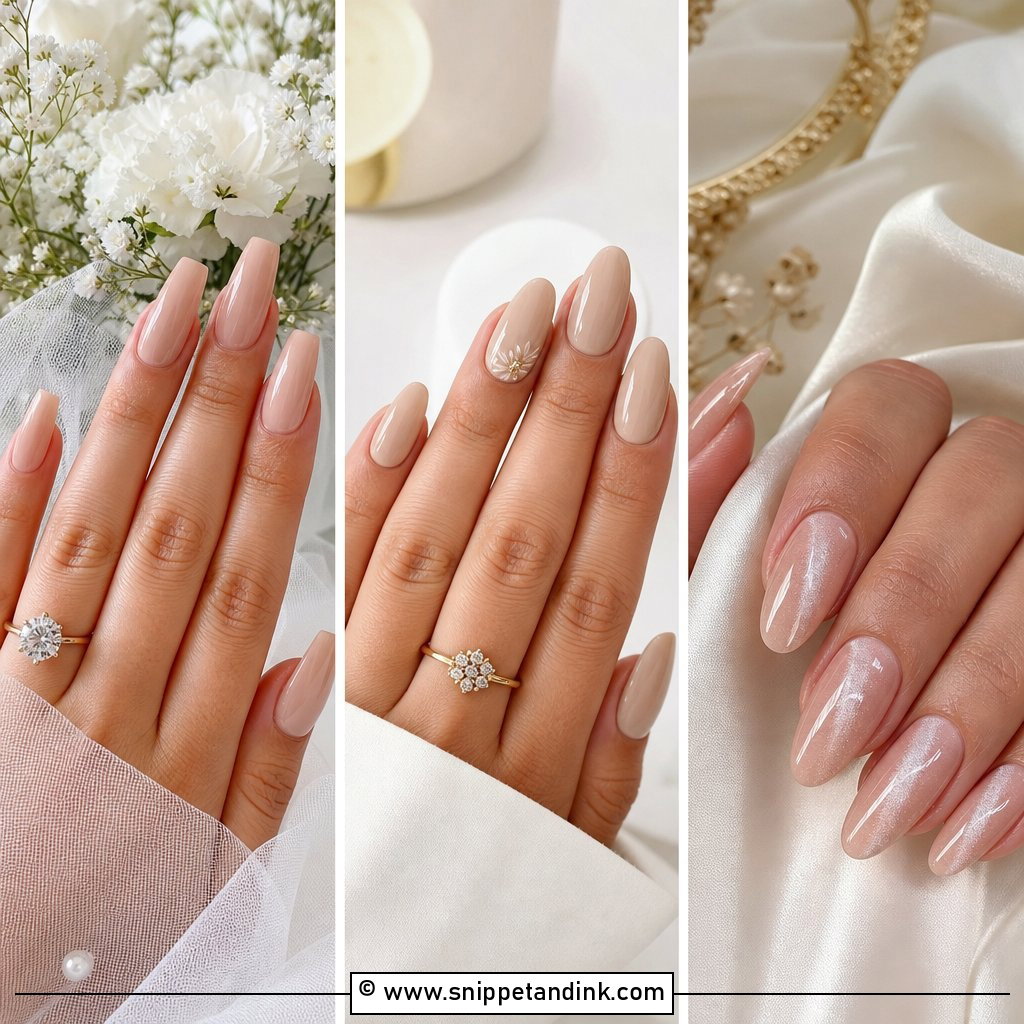
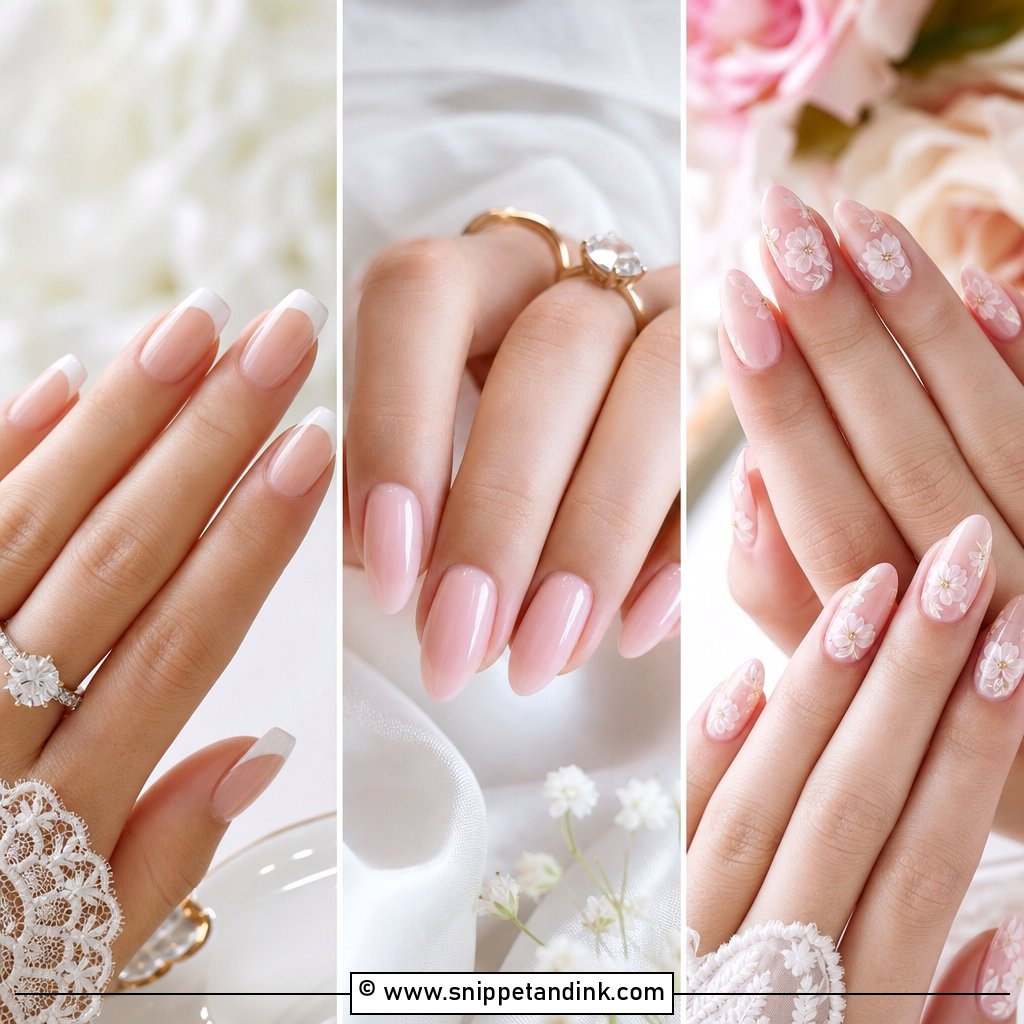
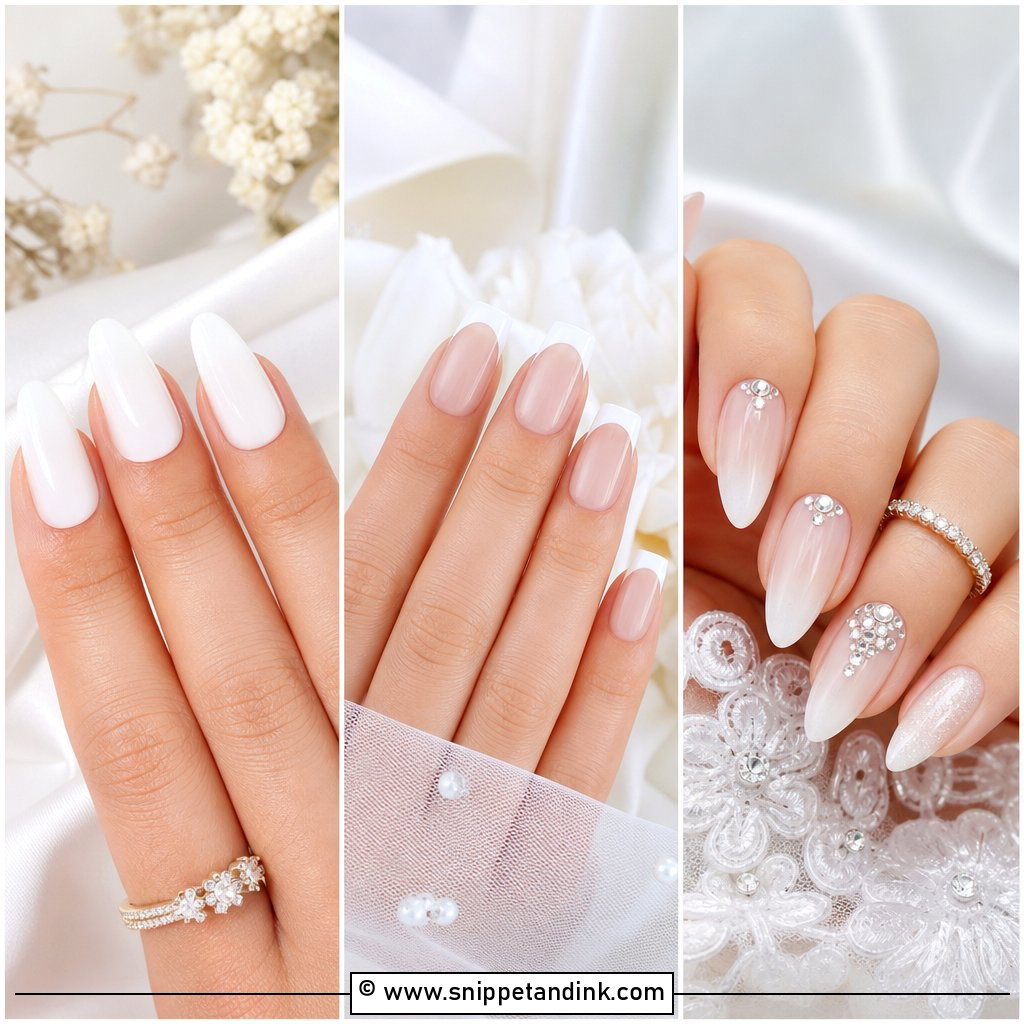
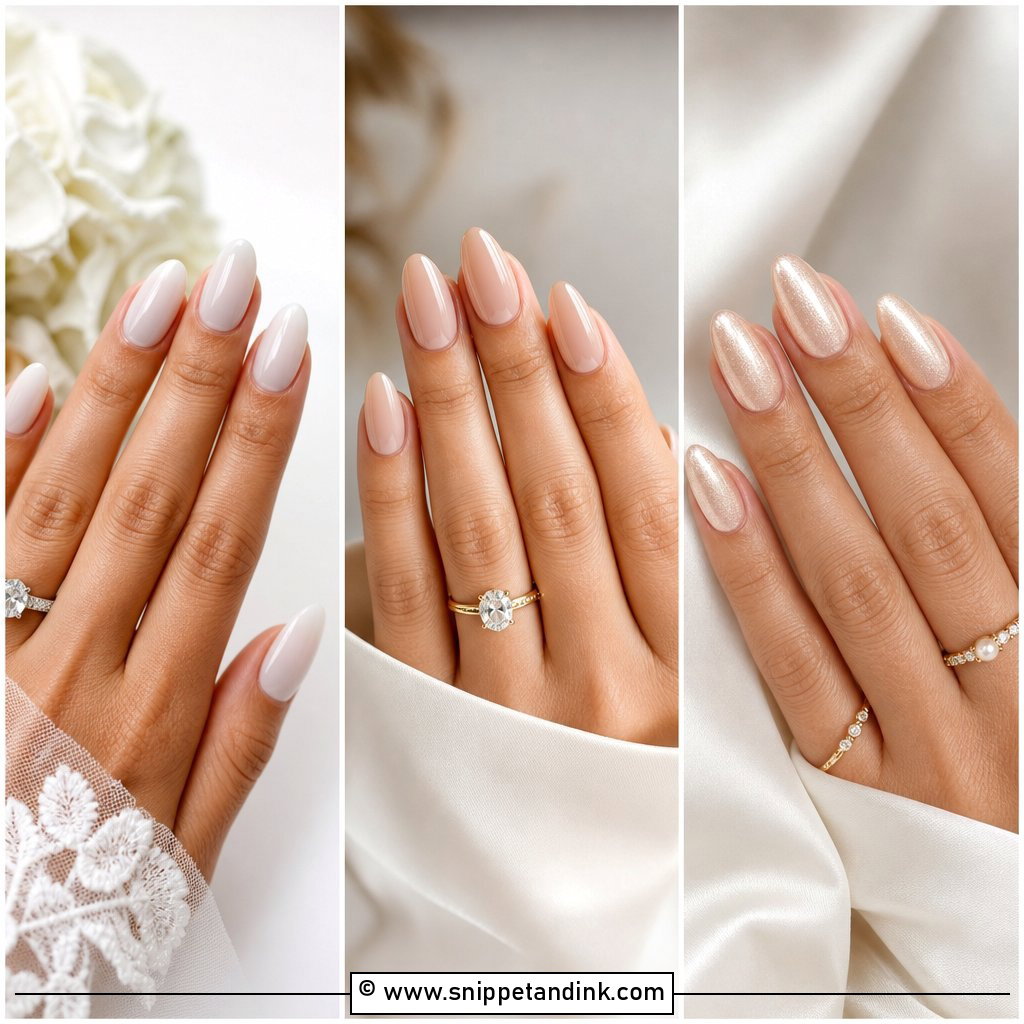
Milky white is my default suggestion, because it’s almost impossible to get wrong. It’s a semi-sheer gel, often a tinted builder, that lets a little of the natural nail show through and reads as clean rather than painted. The one thing I check first is the free edge: on sheer white, a visible white tip underneath can show as a stripe, so I sometimes add a second thin coat to even it out. It suits short ovals as well as medium squares. A high-gloss top coat finishes it.
2. White French Tip Bridal Nails
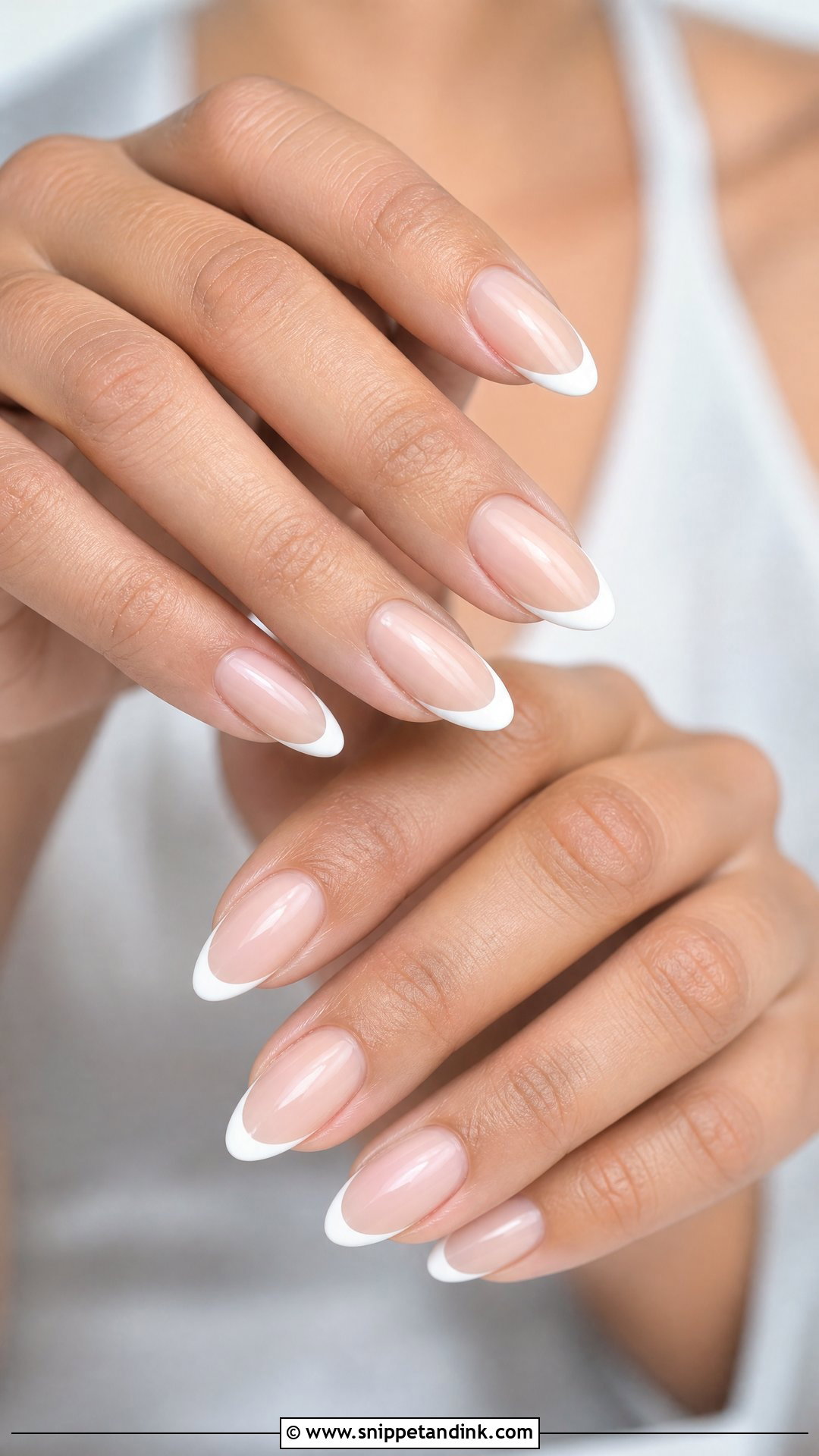
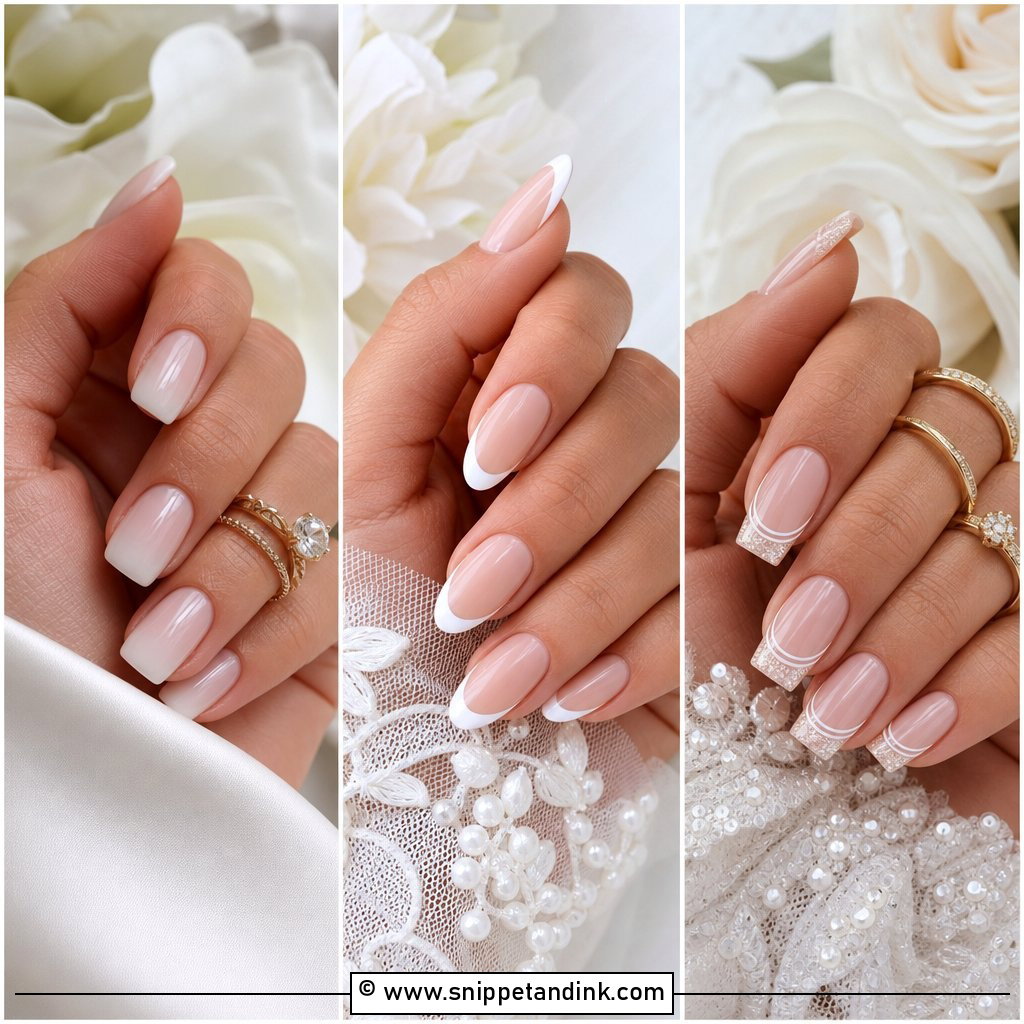
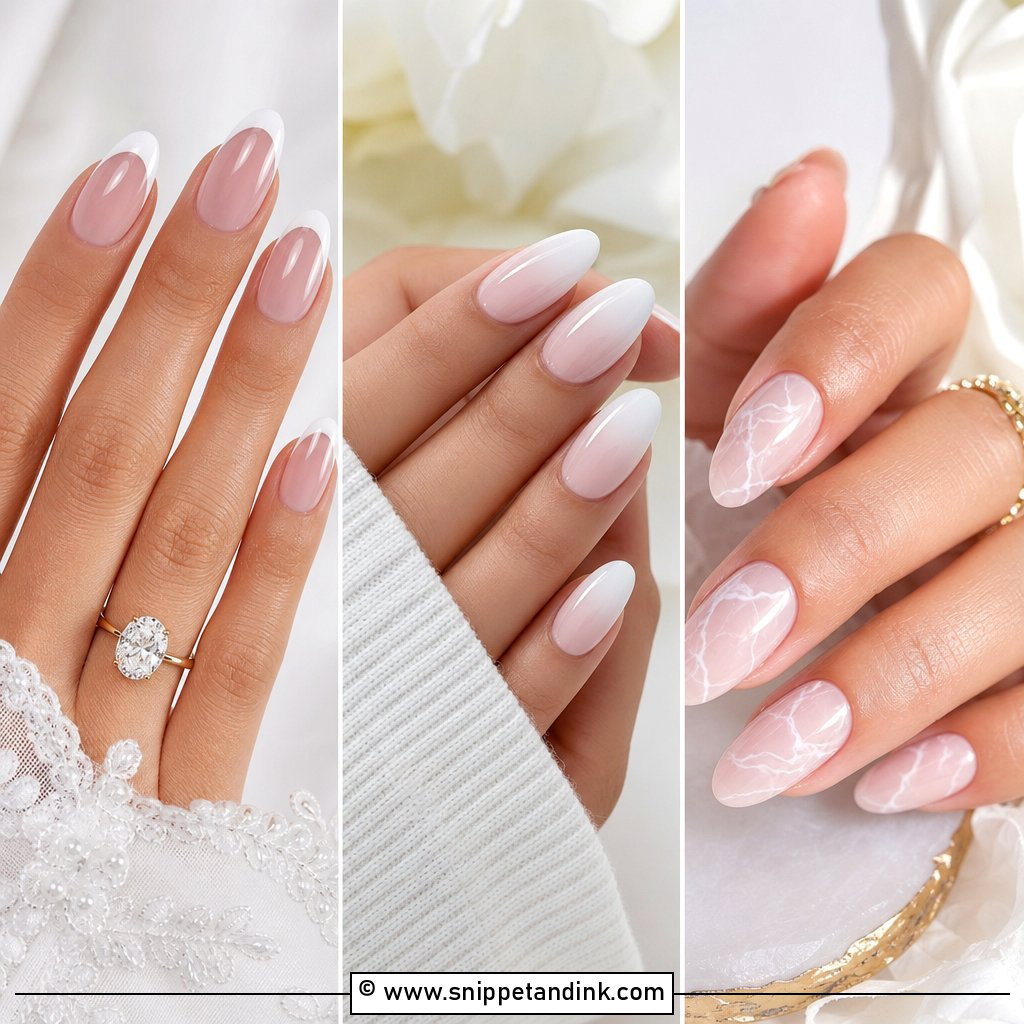
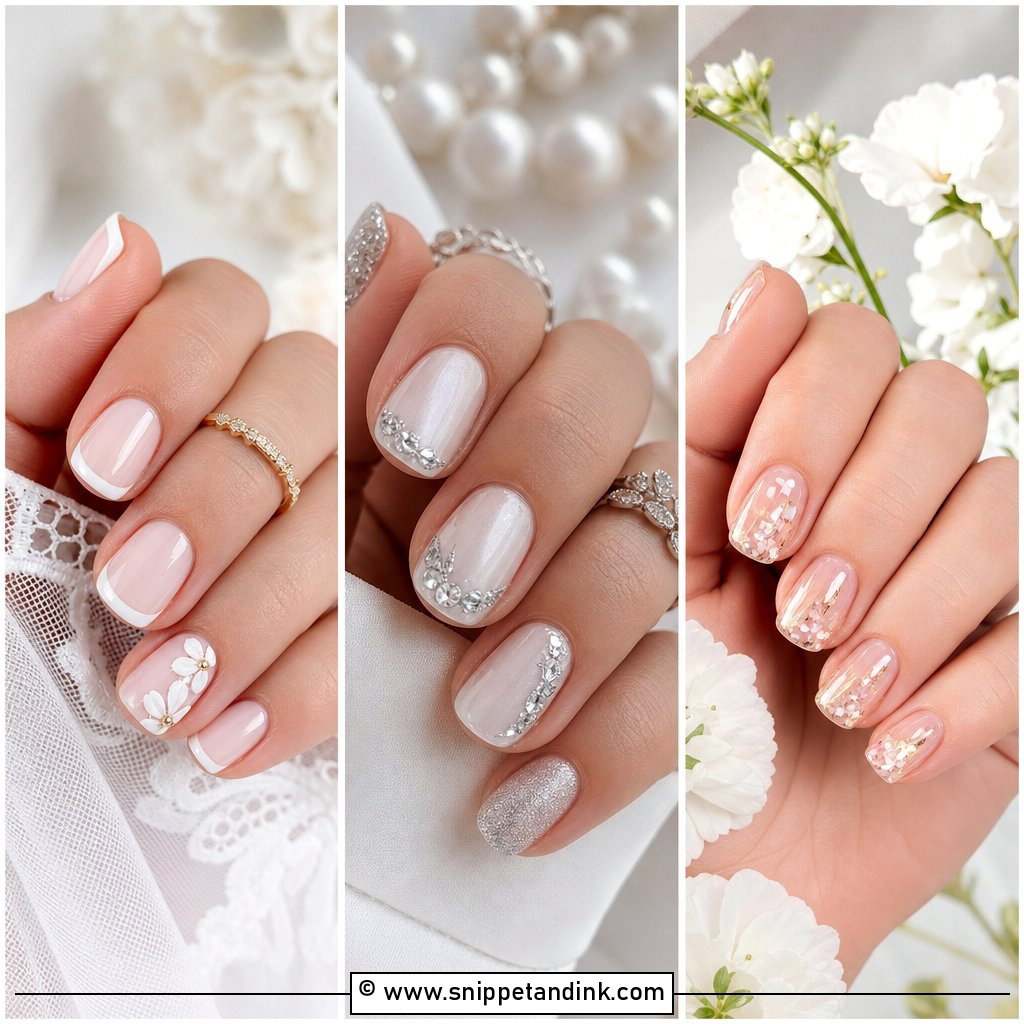
A French tip frames the nail, and a pink or nude base keeps the white from looking harsh. The smile line is where a French succeeds or fails. I match its curve to the natural nail bed, and on short nails I keep the white thin so the nail bed looks longer. A deeper smile line suits brides who want the traditional version. In ring shots, a slim French makes the fingers look longer and doesn’t compete with the stone.
3. White Chrome Bridal Nails
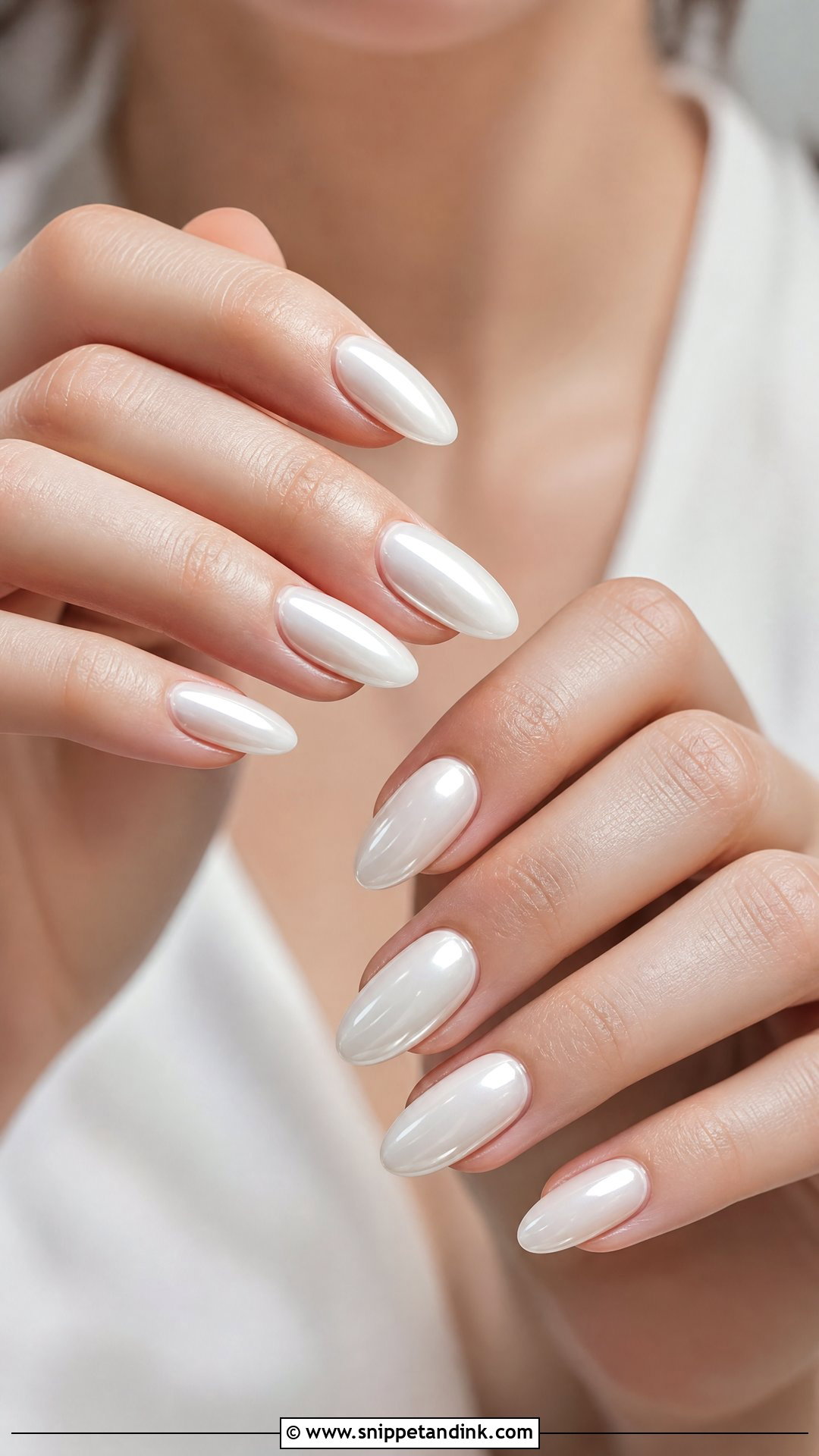
White chrome is a fine pearl powder buffed over a milky, ivory or nude base, and it glows rather than sparkles. The powder needs a no-wipe top coat underneath, cured and still smooth, or it won’t grab evenly. Almond and oval shapes show the sheen best because the light rolls along the curve. Keep the base soft; chrome over bright white can read silver in photos. Satin and silk gowns suit it particularly well.
4. Pearl White Bridal Nails
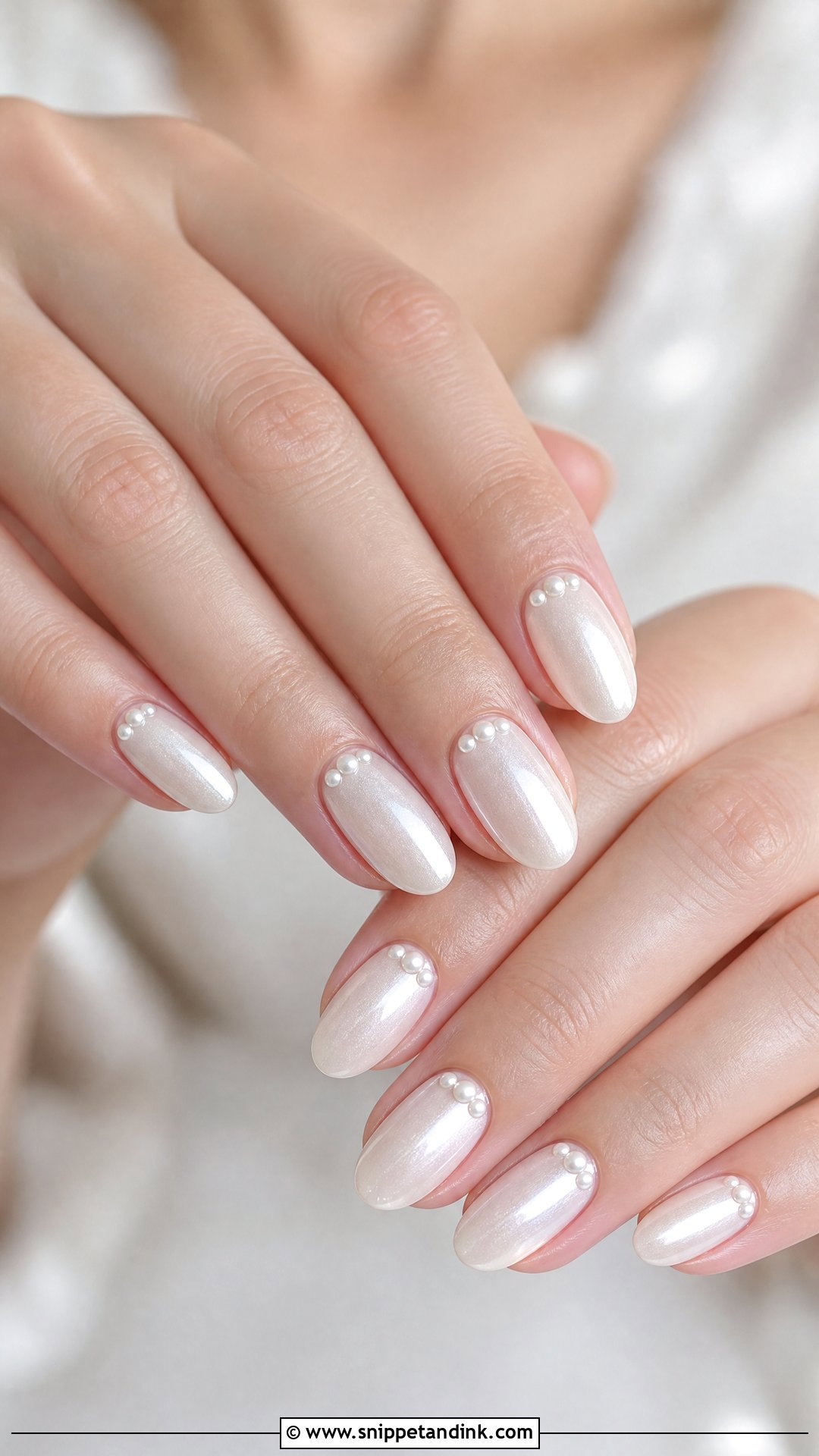
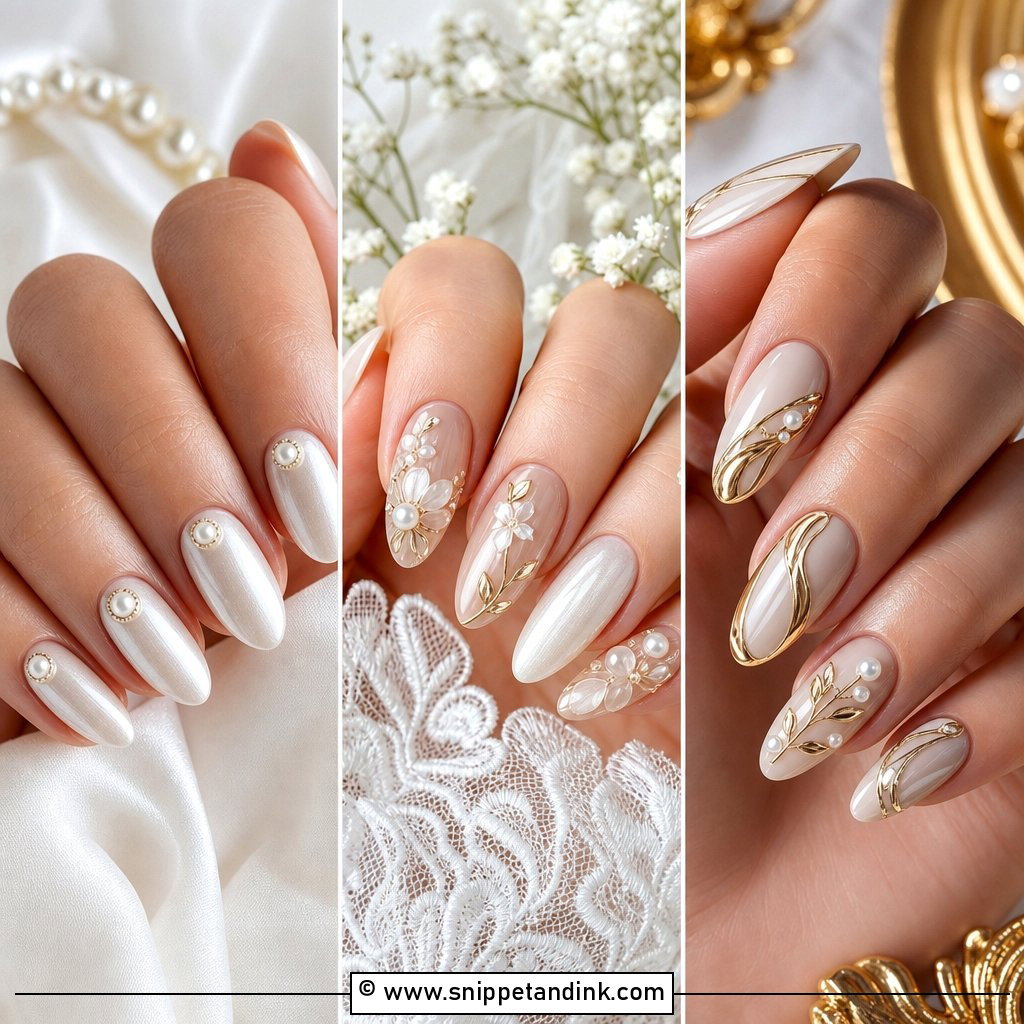
Pearl sets can be a shimmer base, tiny pearl accents, or both, and balance is everything. A full hand of pearls catches on lace and tulle and feels heavy. I prefer a milky base with a couple of small pearls at the cuticle, along a French line or on one accent nail. Each pearl is set in a little gel and capped, so a flat-backed pearl lasts better than a round one. Pearl earrings or a pearl-edged veil tie it in.
5. White Ombre Bridal Nails
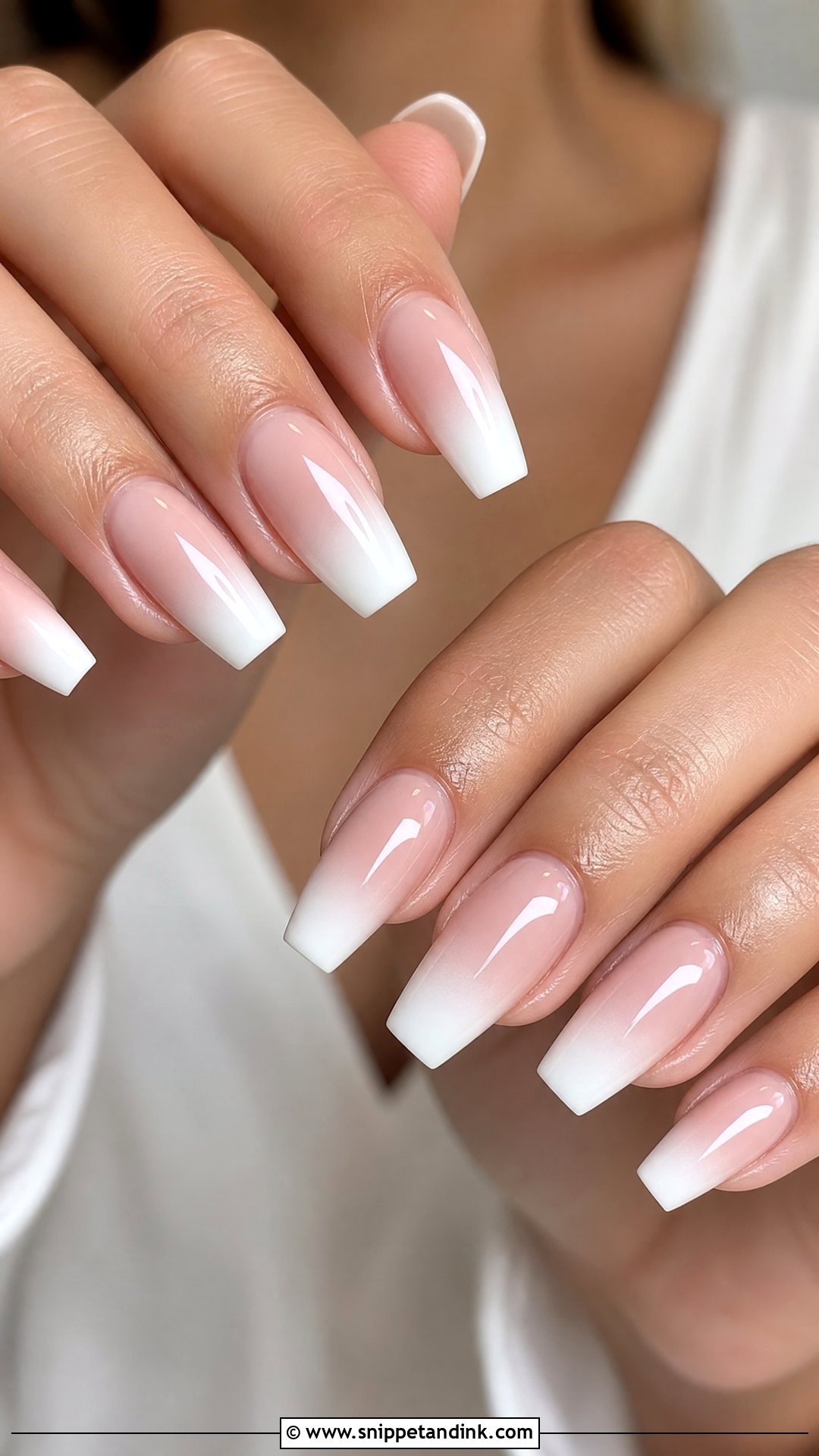
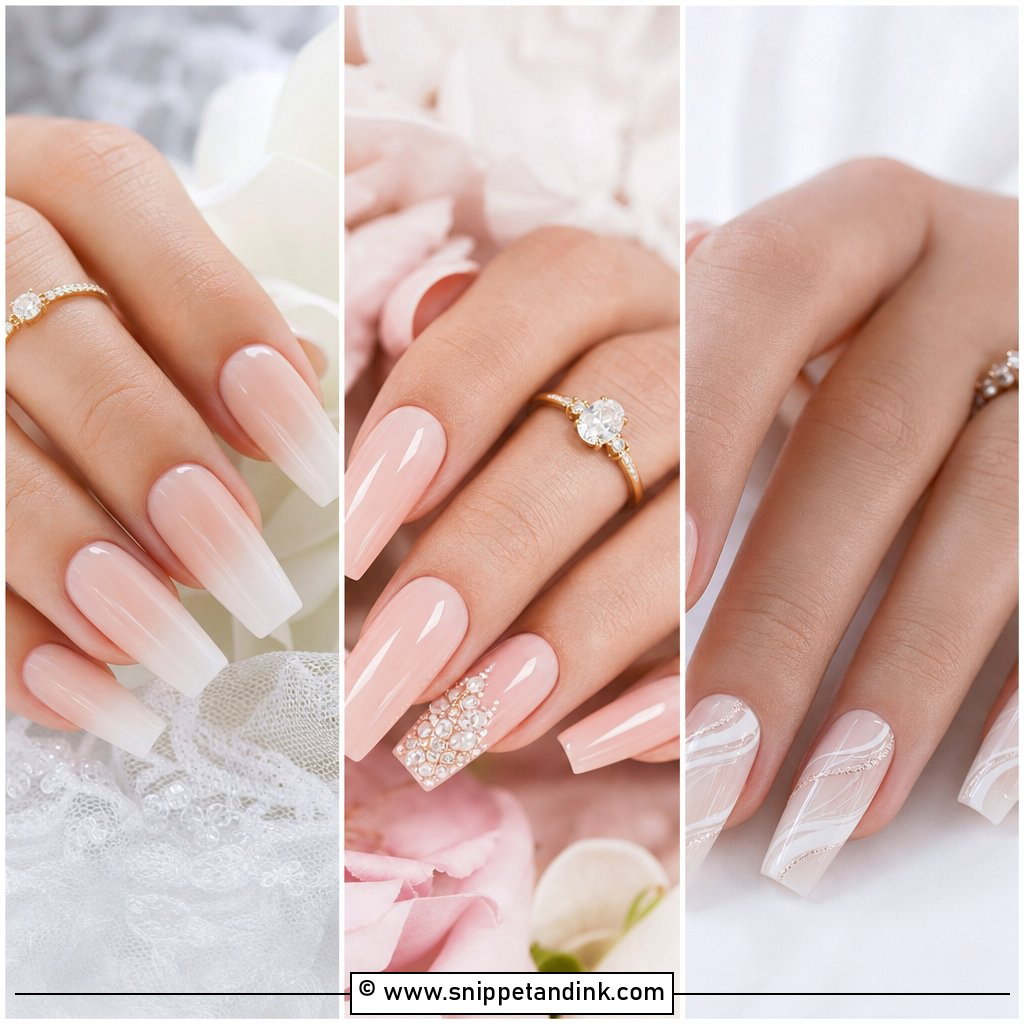
Ombre is a fade from a nude or blush base into white tips, sometimes called baby boomer nails. I blend it with a sponge or an airbrush-style gel technique, and the blend should have no visible line at all. It’s forgiving as the nail grows, since growth shows at the nude cuticle end first. Almond, coffin and oval shapes give the gradient room to show. Choose gloss for a clean finish or a pearl top coat for more glow.
6. White Almond Bridal Nails
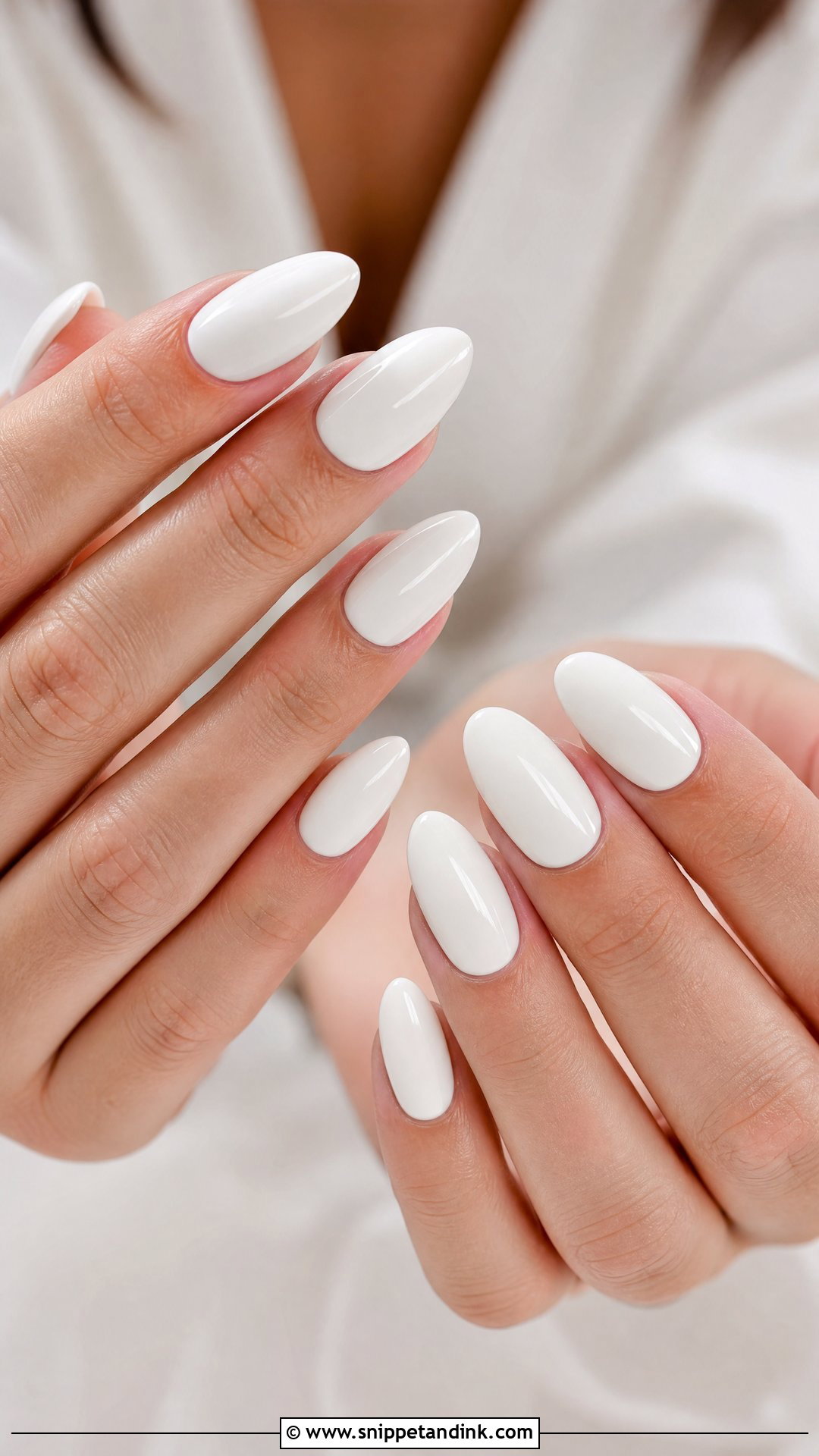
Almond is the shape I recommend most for weddings. It tapers to a soft point, which makes fingers look longer, without the corners that snag on a dress or a veil. Almond carries any white well: solid milky, sheer, chrome or a soft French. On very short natural nails a true almond isn’t possible, so I’d suggest an oval instead of forcing it. Tiny pearls or fine silver lines add detail if you want it.
7. Short White Bridal Nails
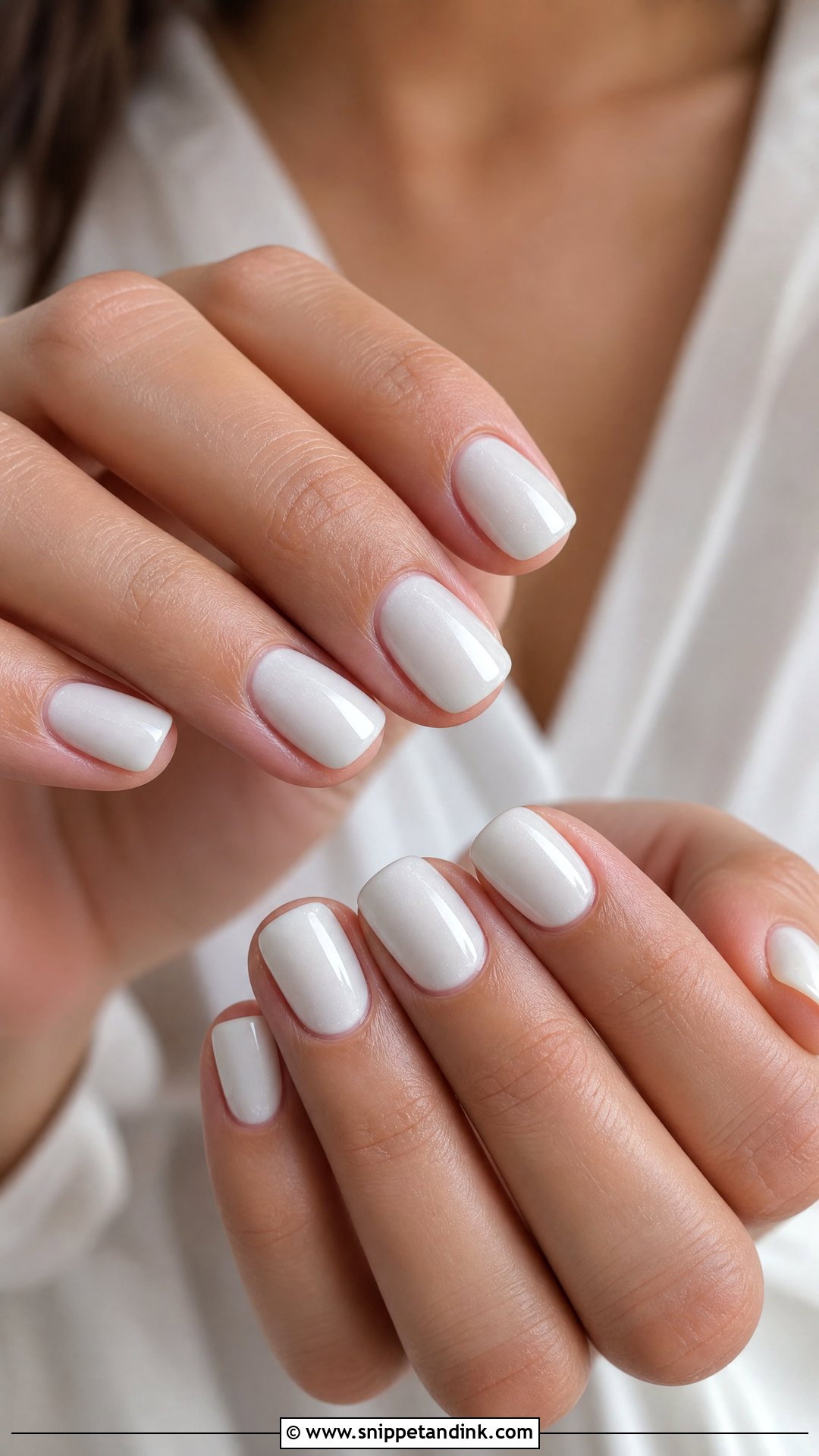
Short nails look polished when the shape is good and the white isn’t flat. I file short oval, squoval or natural square shapes, and I avoid bright opaque white on short nails because it makes them look stubby. Milky white or sheer ivory is far kinder. Short sets are also the practical choice for zips, buttons, bouquets and travel after the wedding. One tiny pearl or a thin chrome layer adds a little detail.
8. White Square Bridal Nails
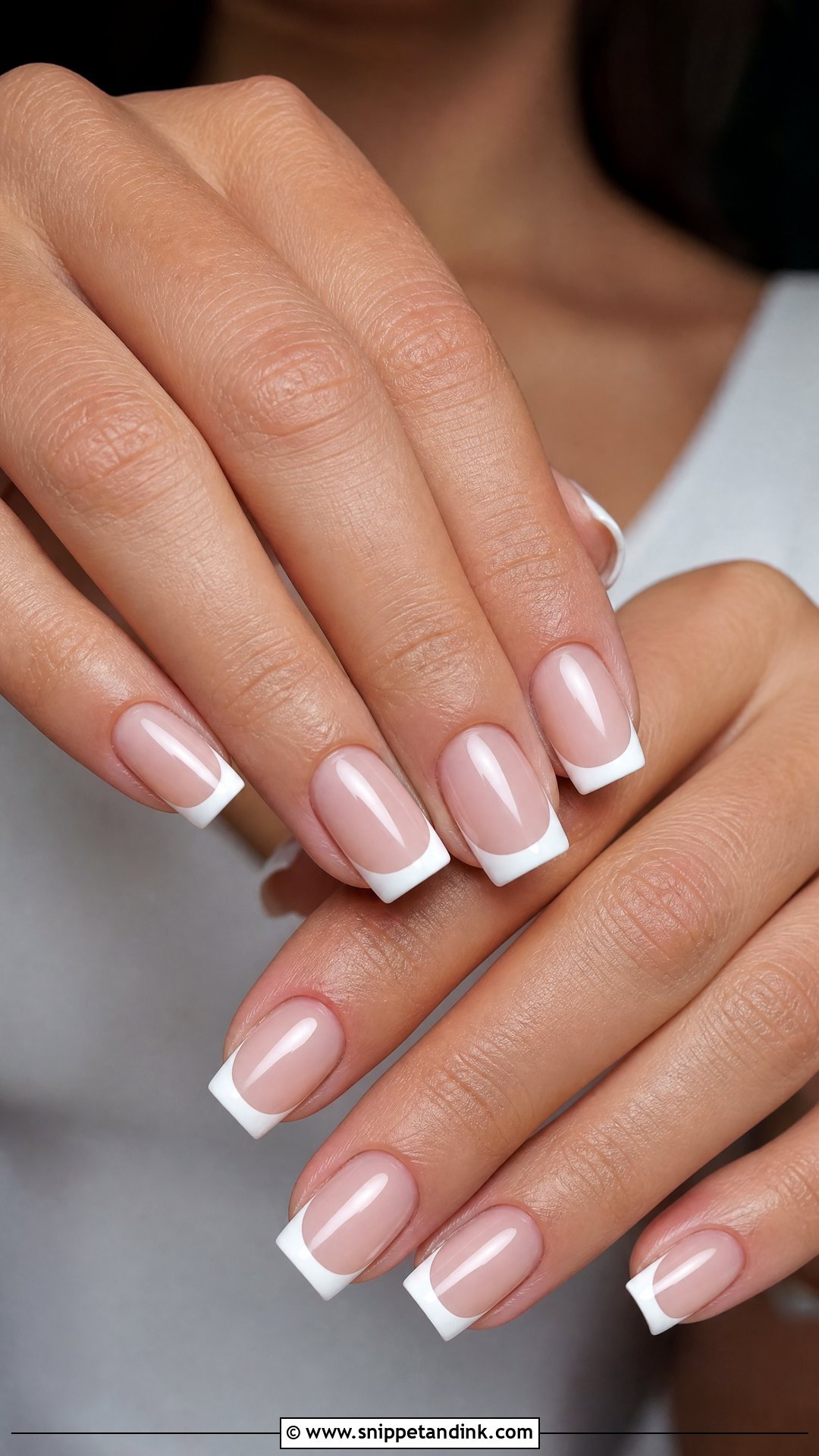
Square nails look structured and traditional. A soft white French tip suits the shape well, while solid milky white looks more current. Sharp square corners chip and snag, so I almost always soften them slightly into a squoval. Medium length gives enough canvas for chrome or lace art. Square sets pair well with clean-lined gowns and sleek hair.
9. White Coffin Bridal Nails
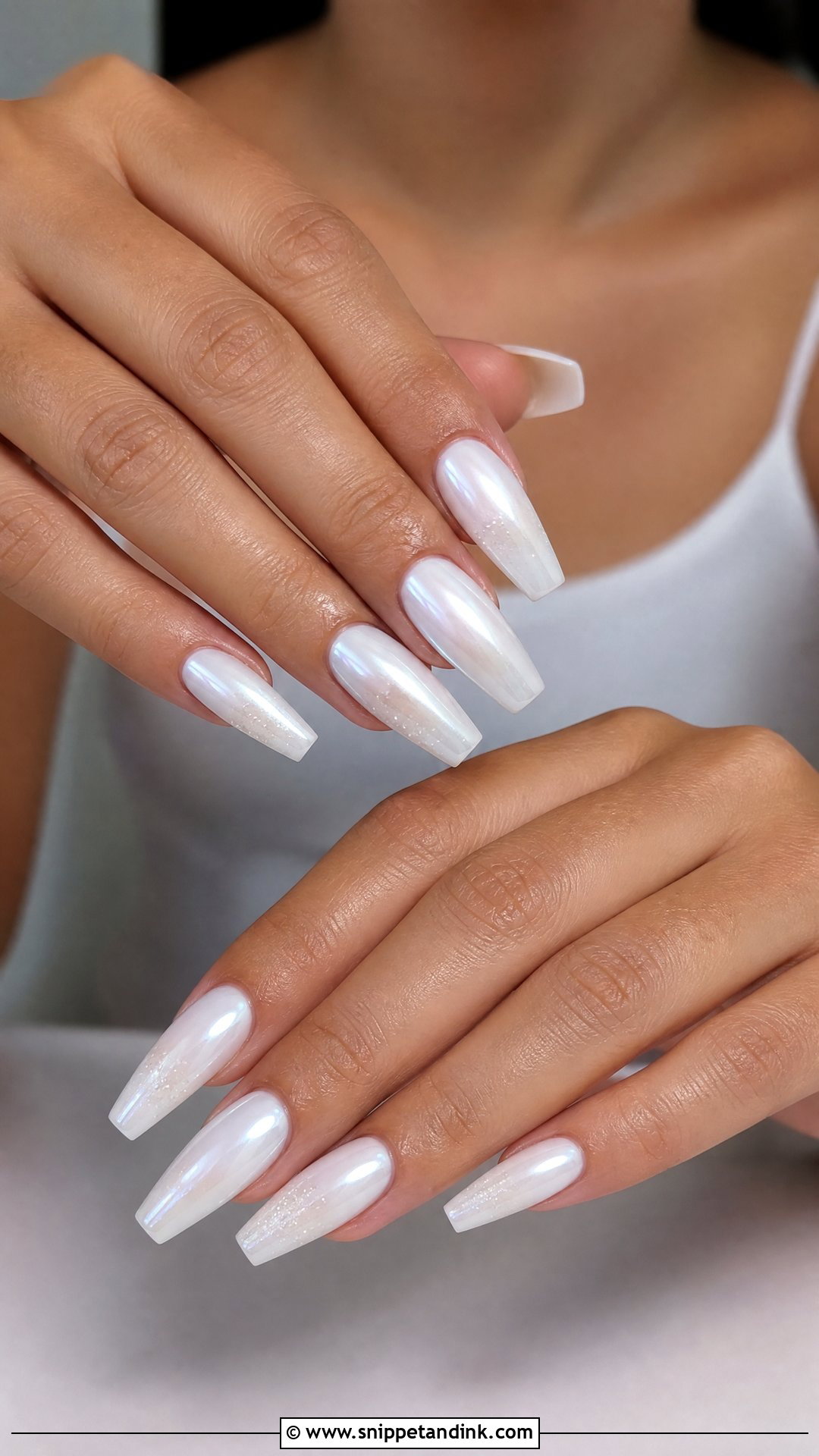
Coffin is the glamorous option, tapering to a flat tip. I usually steer brides toward a medium coffin rather than long, because long coffins are hard to manage with bridal buttons, contact lenses and pinning a veil. Milky white with chrome, an ombre or pearl accents at the tips all work. Since the shape is already bold, keep the art restrained. It suits fitted silhouettes and modern styling.
10. White Lace Bridal Nails
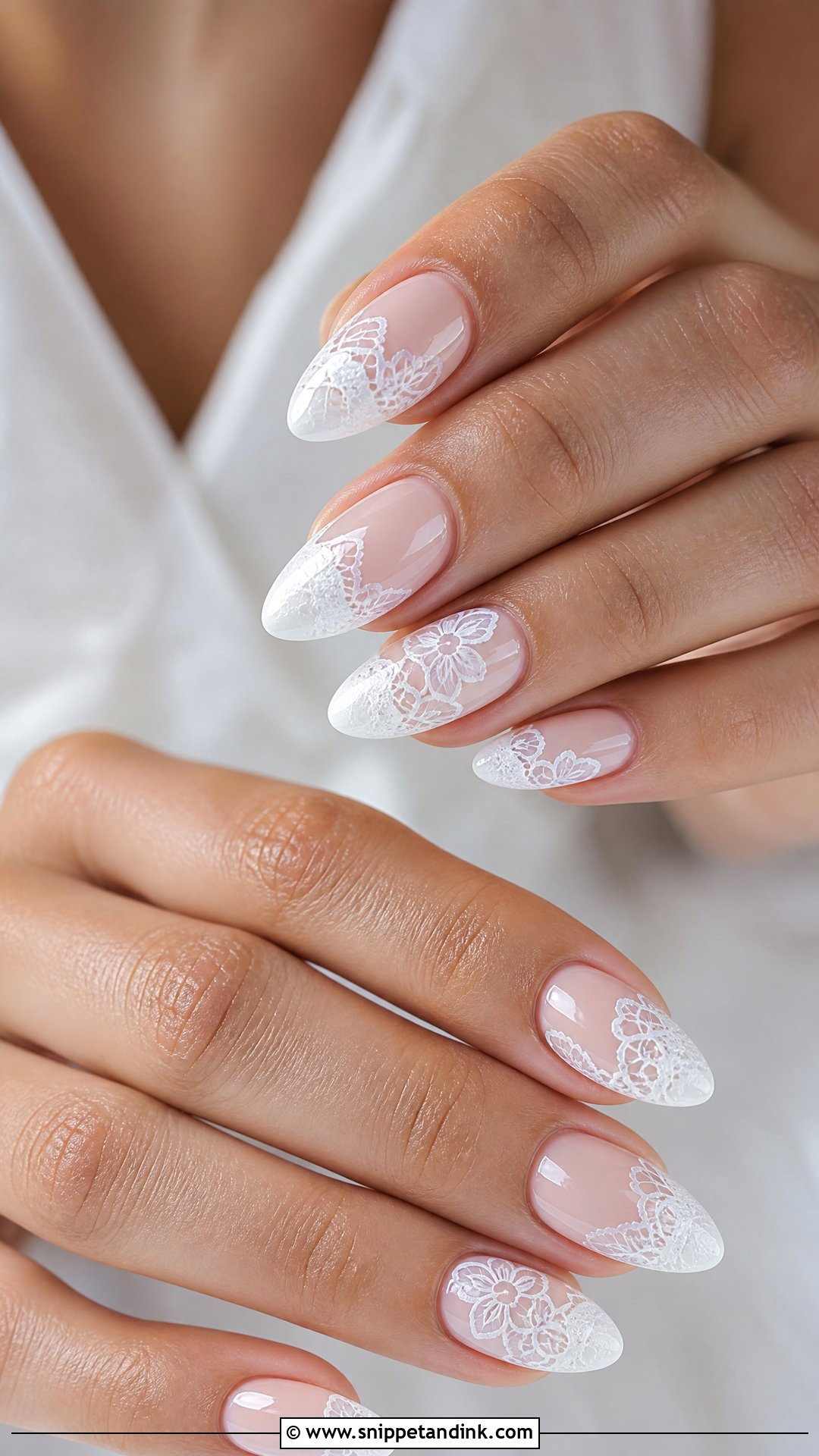
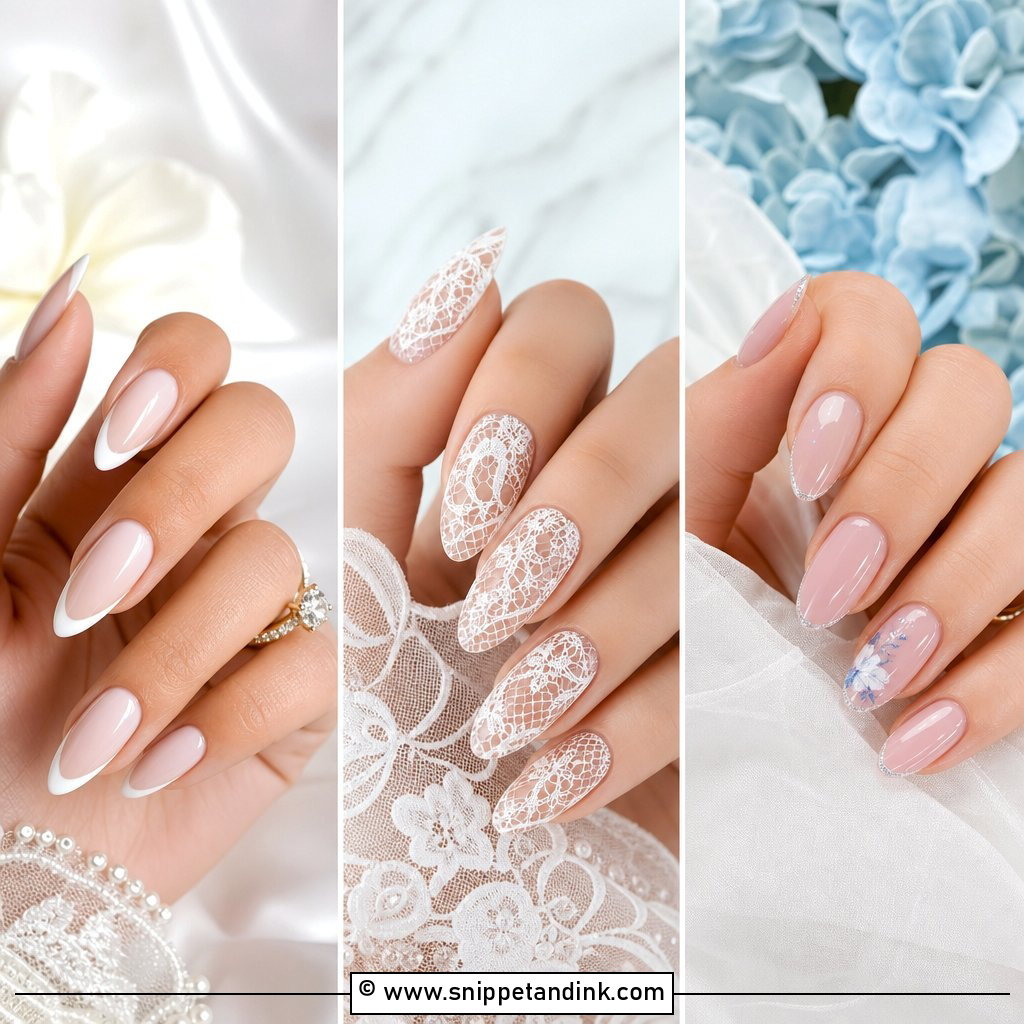
Lace nails echo a lace gown or an embroidered veil. I paint the lace by hand with a fine liner brush over a sheer nude, blush or milky base, and I ask to see a photo of the actual lace so the motif relates. Thick lines look like doodles, so keep them fine. Matte or gloss both work, depending on the dress fabric. Almond and oval nails leave enough room for the pattern.
11. White Floral Bridal Nails
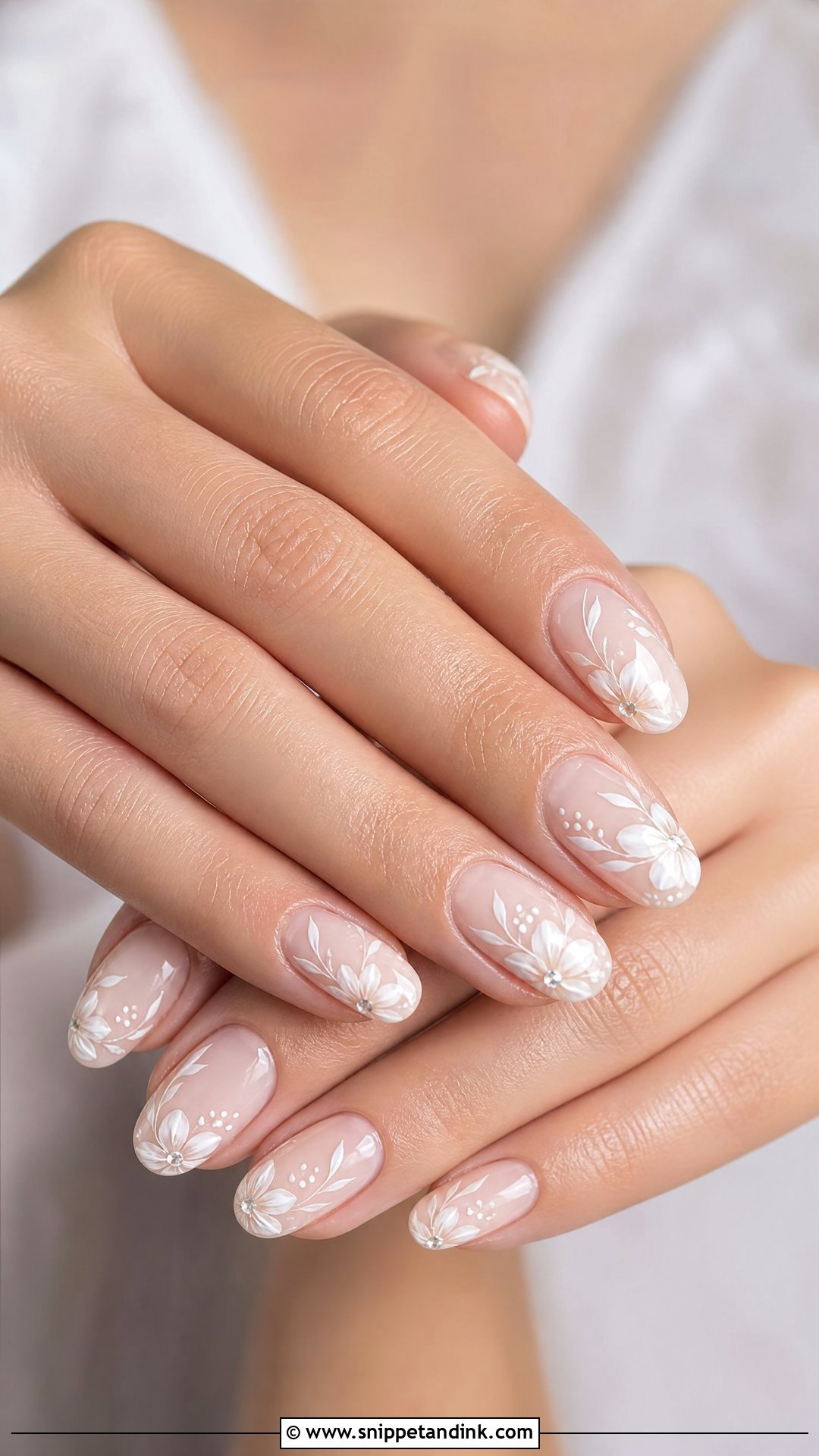
Floral nails can be hand-painted white flowers, raised petals or simple outlines over a sheer base. Small flowers on two accent nails are subtle; a full floral set is much busier. I’d match the flower to the bouquet loosely, a five-petal blossom for baby’s breath or a rounded bloom for roses. Keep the base milky or nude so the white flowers don’t disappear into it.
12. White Glitter Bridal Nails
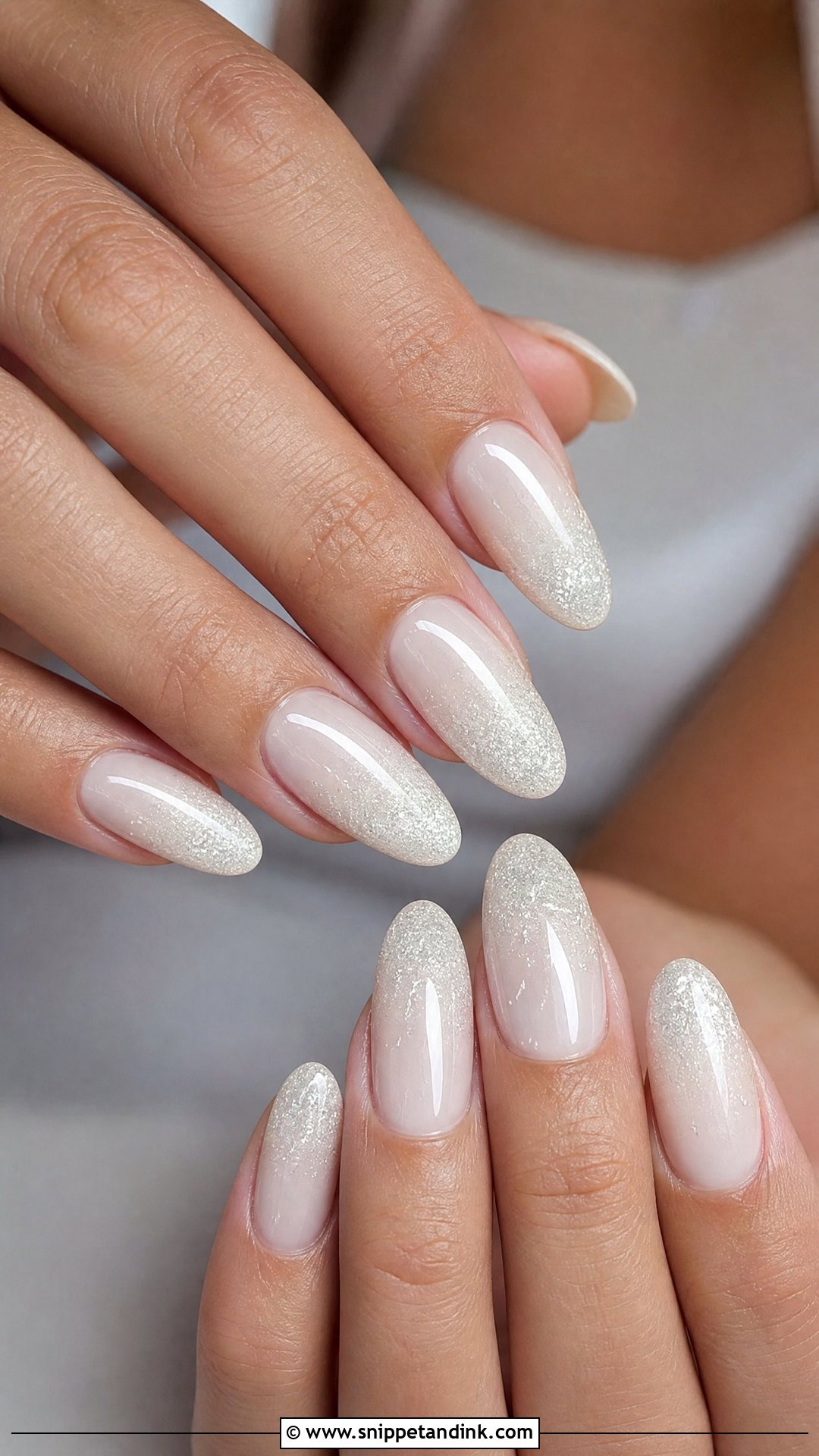
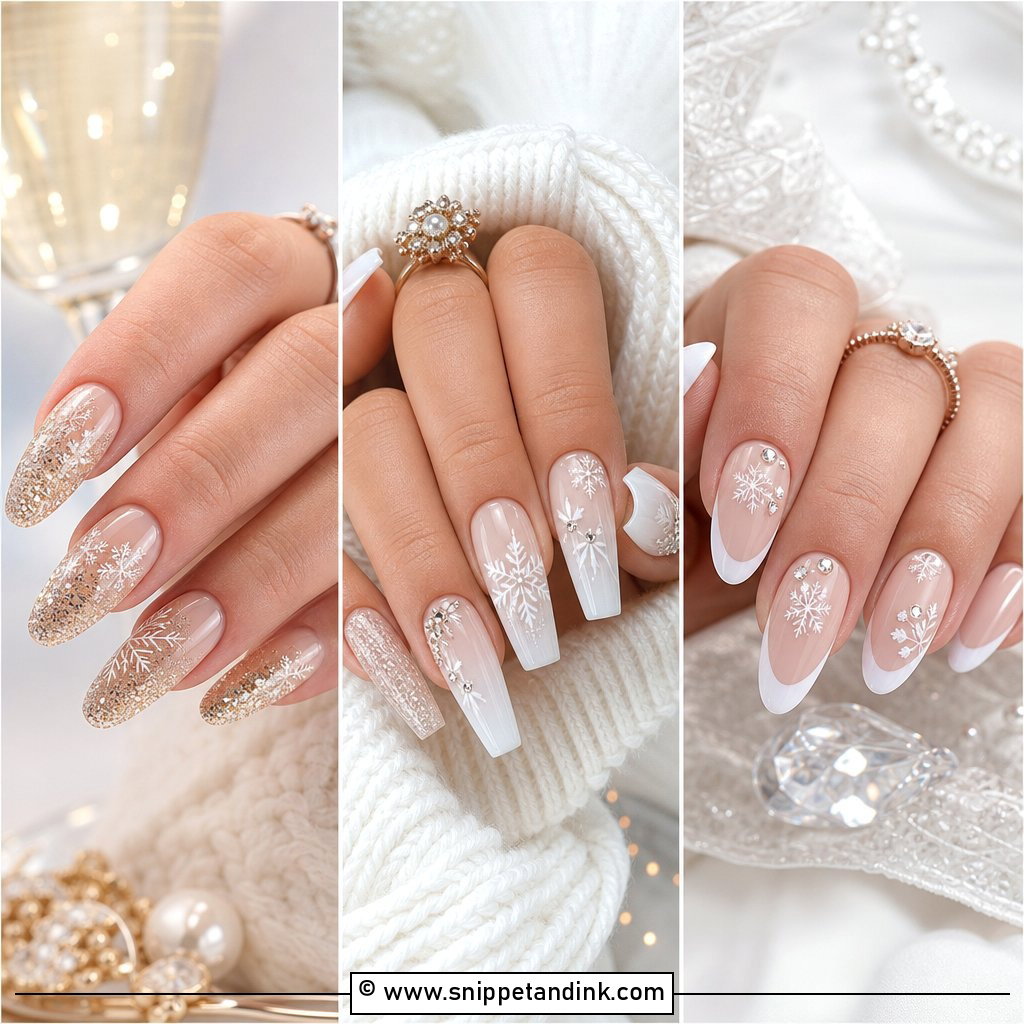
Sparkle on a bridal set should be fine shimmer, not chunky glitter. Large flakes compete with the ring and are rough to the touch unless they’re buried in thick top coat. I use glitter as a fade from the tips, a sheer overlay, or on one or two accent nails. Paired with milky white or ivory, it stays refined. Almond and coffin shapes let the sparkle run along the length.
13. White Marble Bridal Nails
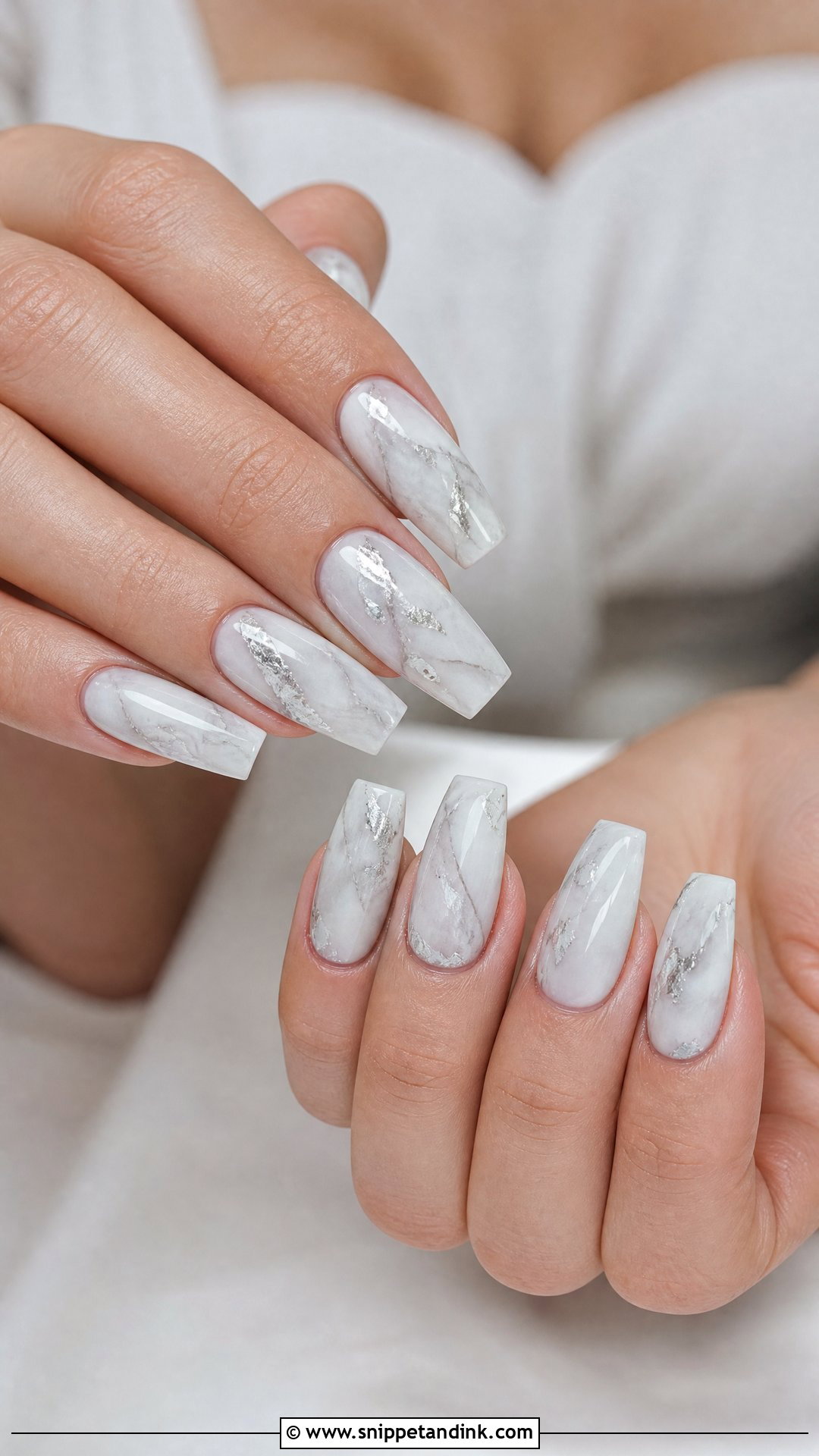
Marble is a white or milky base with soft grey, ivory or silver veining. I make the veins with a thin brush and a little blooming gel so they soften at the edges, and for a bride they should be faint, not dark. A touch of silver foil adds a luxe note. Use marble on every nail for a strong look, or on accents beside plain white. Almond and coffin shapes show the pattern well.
14. White Matte Bridal Nails
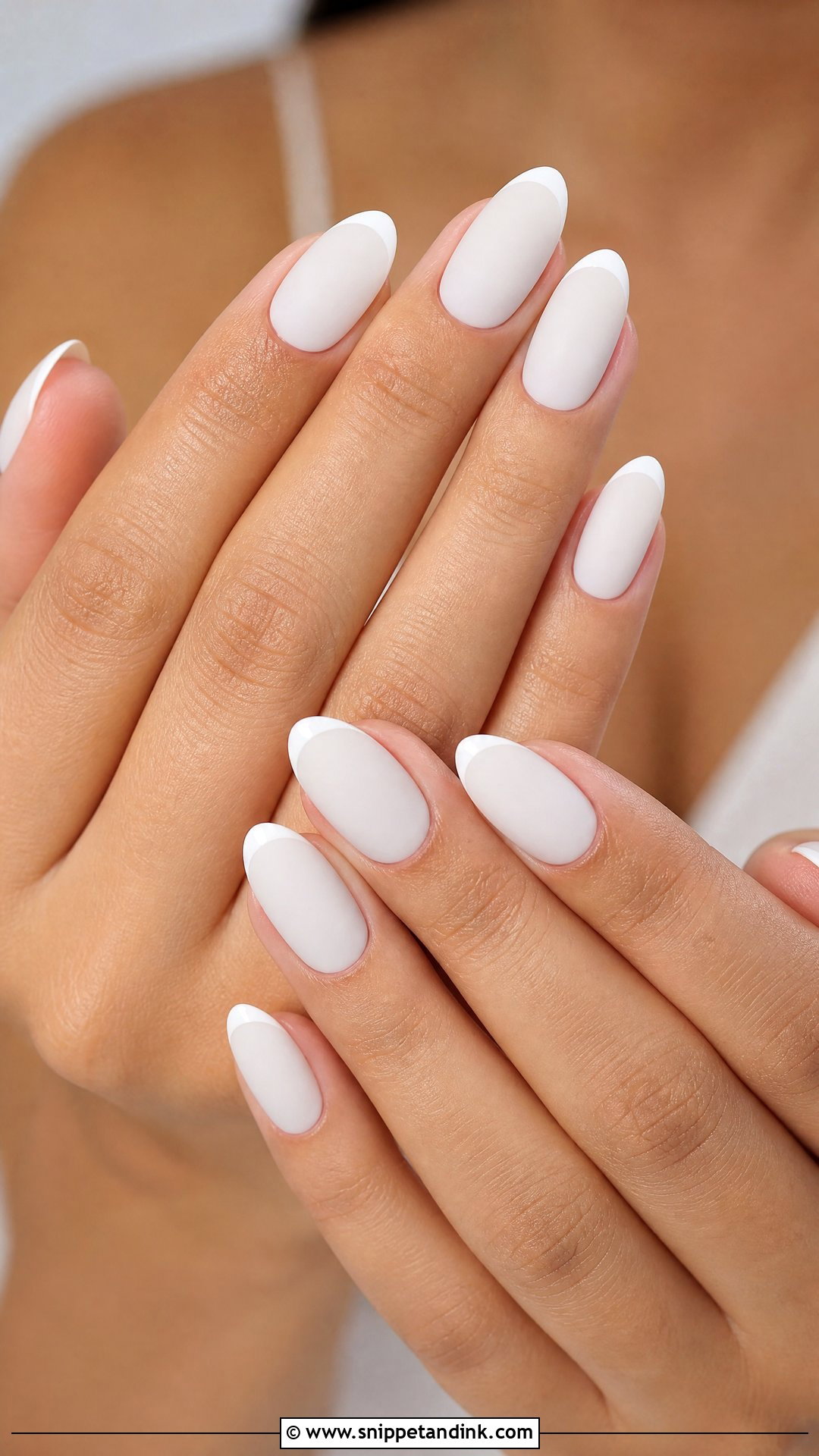
Matte white has a soft, velvety finish, sealed with a matte top coat rather than gloss. It works best in milky white, ivory or cream, since matte pure white can look like correction fluid. Matte also shows every ridge and bump, so the base has to be perfectly smooth, which is where builder gel helps. Glossy French tips over a matte base give a nice contrast. Matte top coats can also pick up stains and shine slightly with wear, something to know before booking it for a long trip.
15. White Bridal Nails With Rhinestones
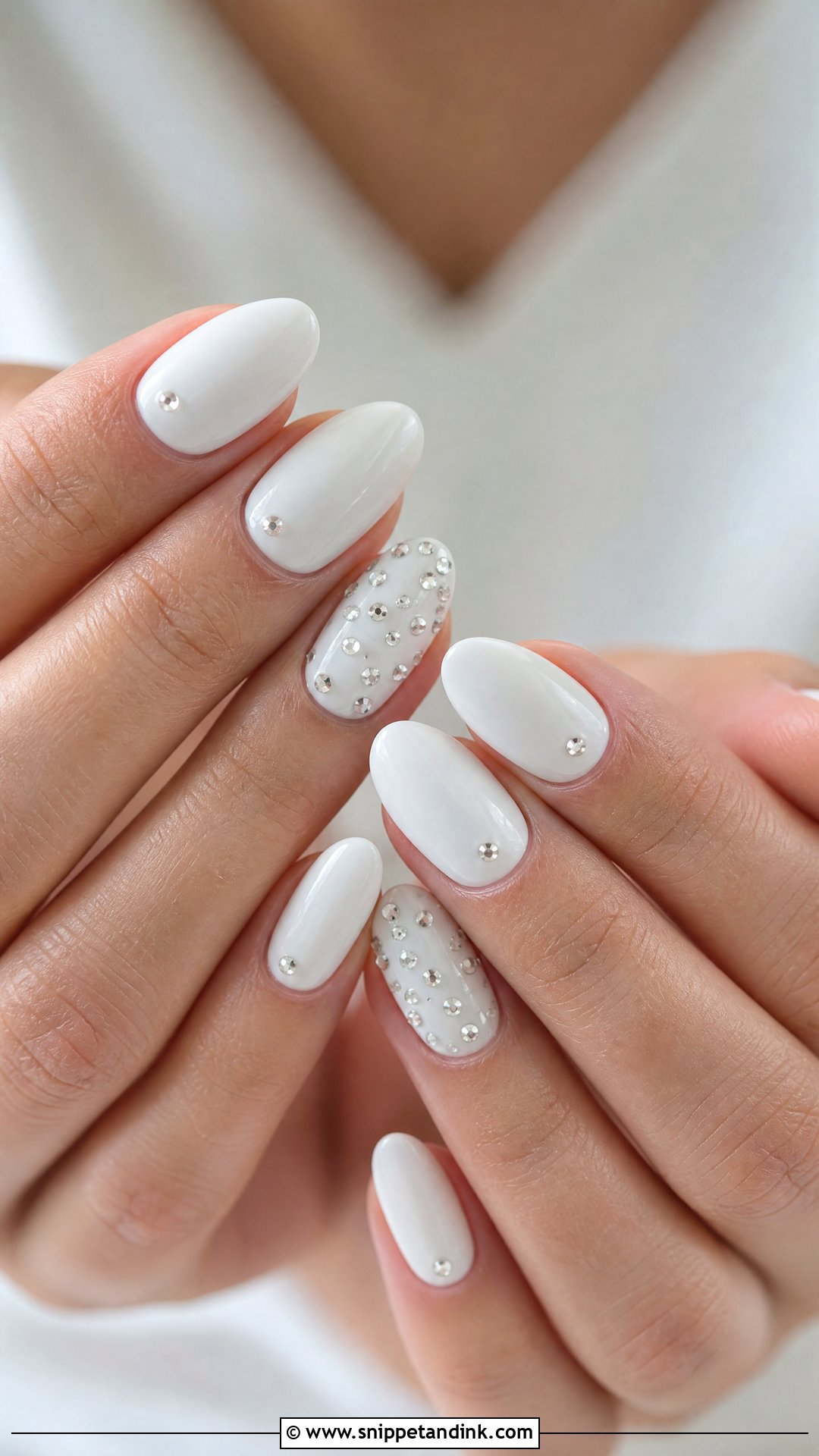
White bridal nails with rhinestones come down to placement. Small crystals at the cuticle, along a French line or on one accent nail look refined. Large stones on every nail snag tights, hair and fabric. I set each stone in gel and cap around it so it survives the reception and the honeymoon. Clear stones on milky white or chrome sit closest to a bridal look.
16. White Bridal Nails With Gold
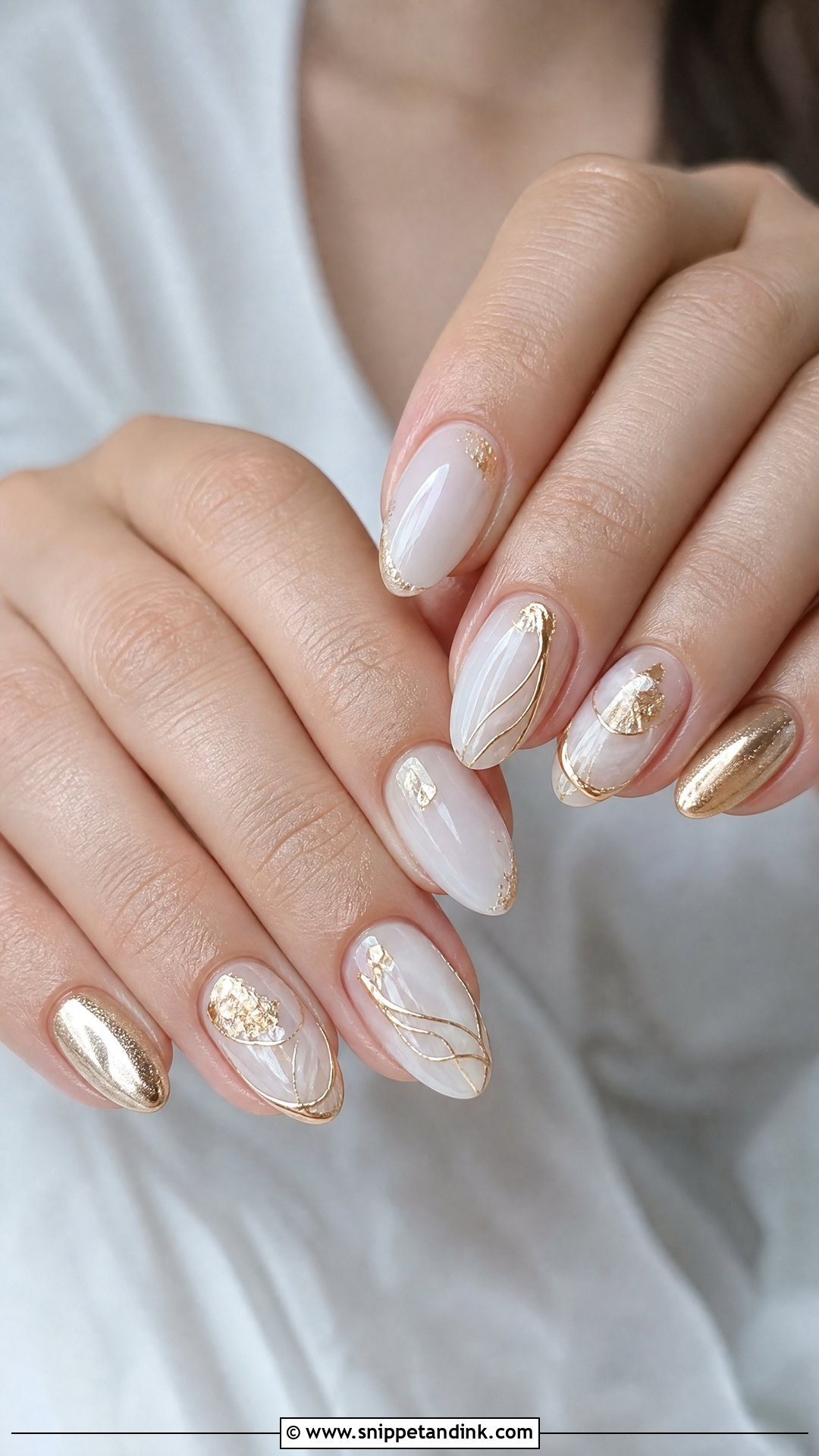
Gold accents warm up white. Thin foil flakes, fine metallic lines, a cuticle accent or a gold French outline are enough, over a milky or sheer white base. Gold suits ivory gowns and gold jewelry, and it tends to flatter warm and medium skin tones. Almond or oval shapes keep it soft; square makes it more structured. Fine and sparing is the rule.
17. White Bridal Nails With Silver
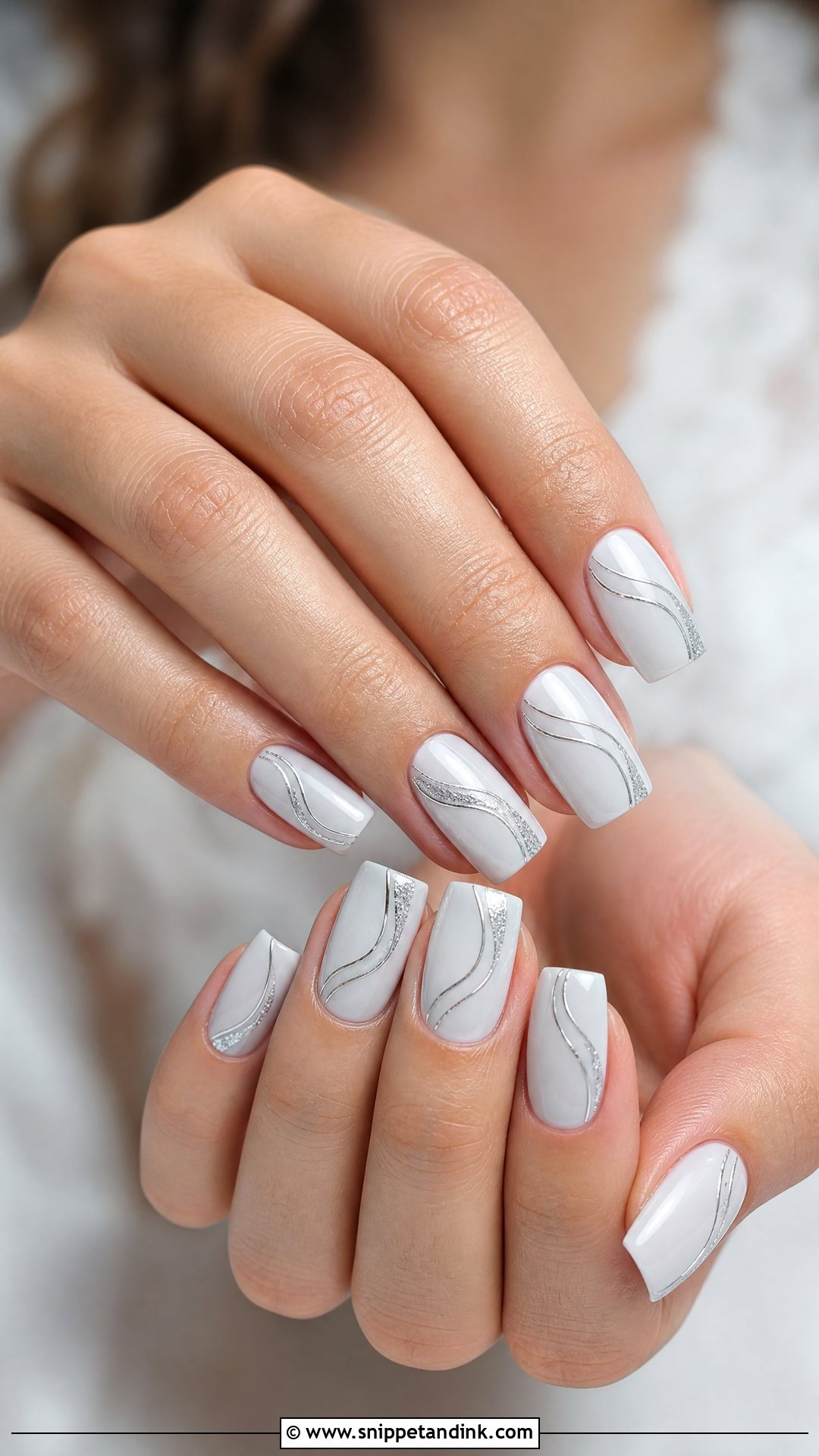
Silver is the cool counterpart to gold, and it suits platinum rings and a bright white gown. Fine silver lines, chrome details, a glitter fade or tiny foil pieces all work over a sheer or brighter white base. It’s a natural fit for winter weddings and cool-toned accessories. I keep the lines thin and clean, since thick silver stripes quickly look busy. Almond, oval and square shapes all carry it.
18. White Bridal Nails With Pearls
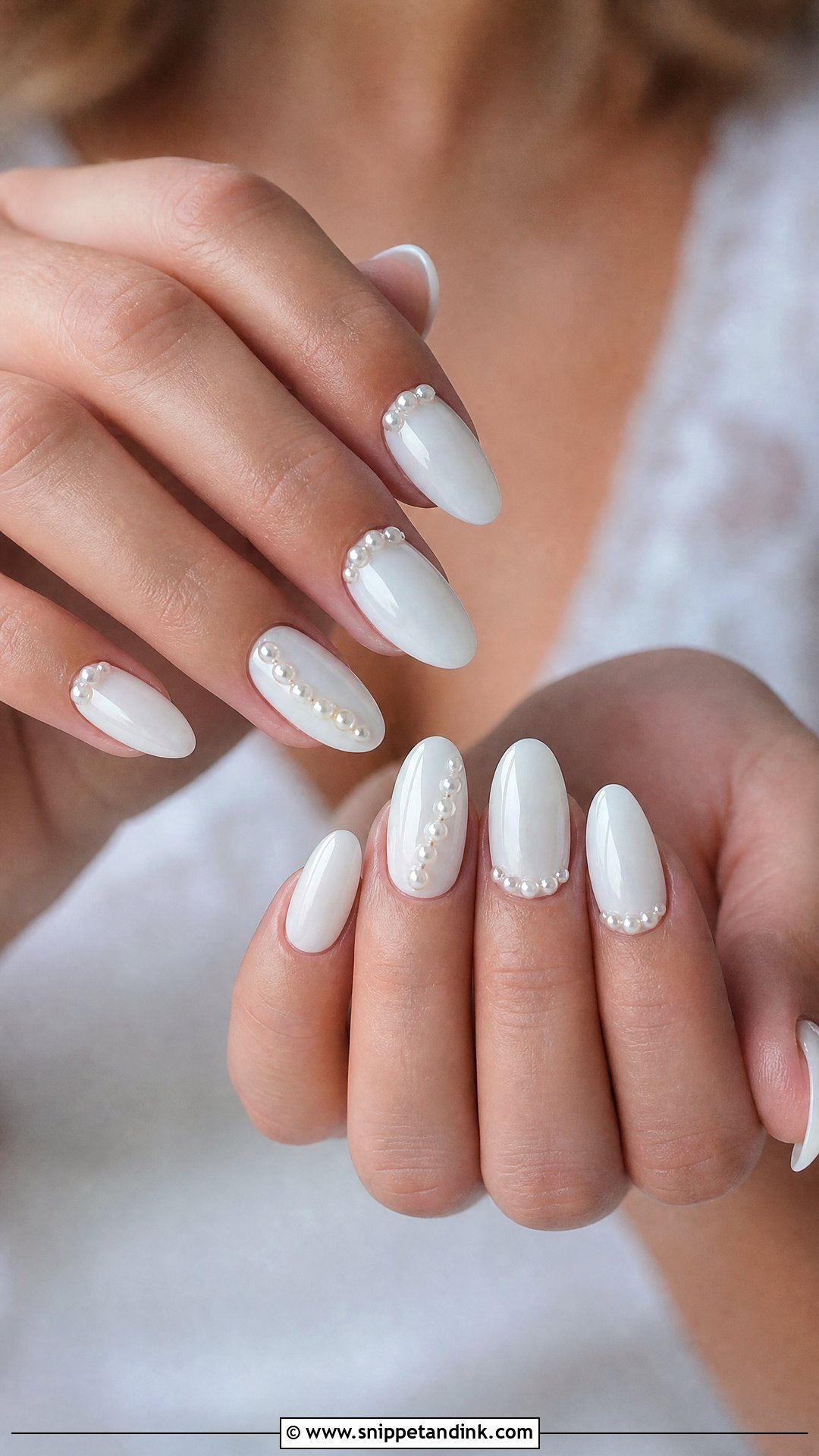
Pearls on white nails tie directly to the most traditional bridal accessory. One small pearl near the cuticle on each nail, a pearl-lined accent nail, or pearls mixed with a few tiny crystals all look delicate. If the dress has pearl buttons or beading, this set ties straight to it. Keep the pearls small; large ones catch on fabric and pop off. Short almond, oval and medium square nails all work.
19. White Bridal Nails With Bow Details
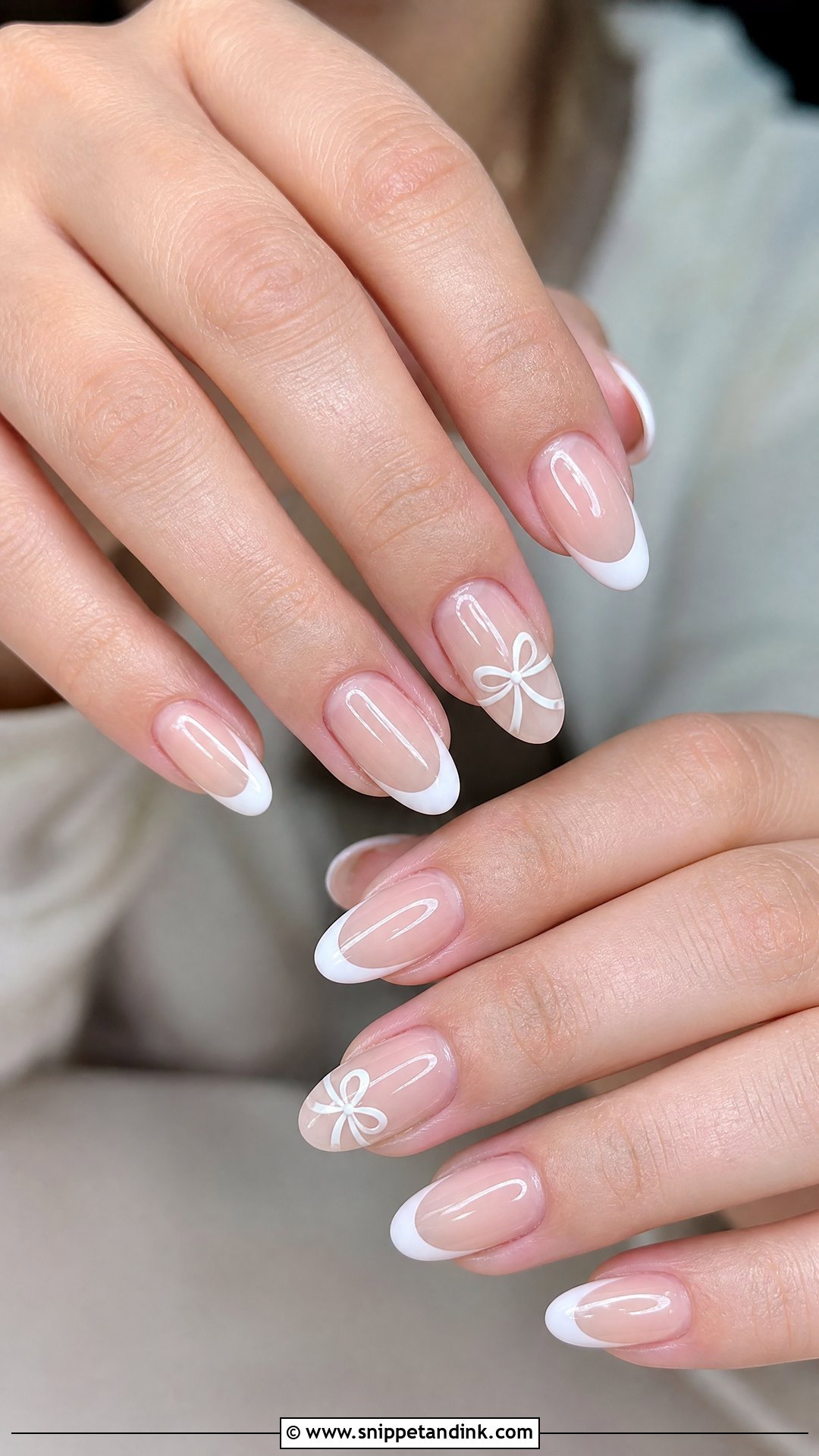
Bows are a fun detail, painted flat in white or added as tiny 3D accents over a sheer nude base. I keep them to one or two accent nails, with milky white or French tips on the rest. 3D bows sit proud of the nail, so they need sealing well and avoid the thumb, which does most of the catching. They suit a bow-back gown or a ribbon veil.
20. White Bridal Nails With Heart Details
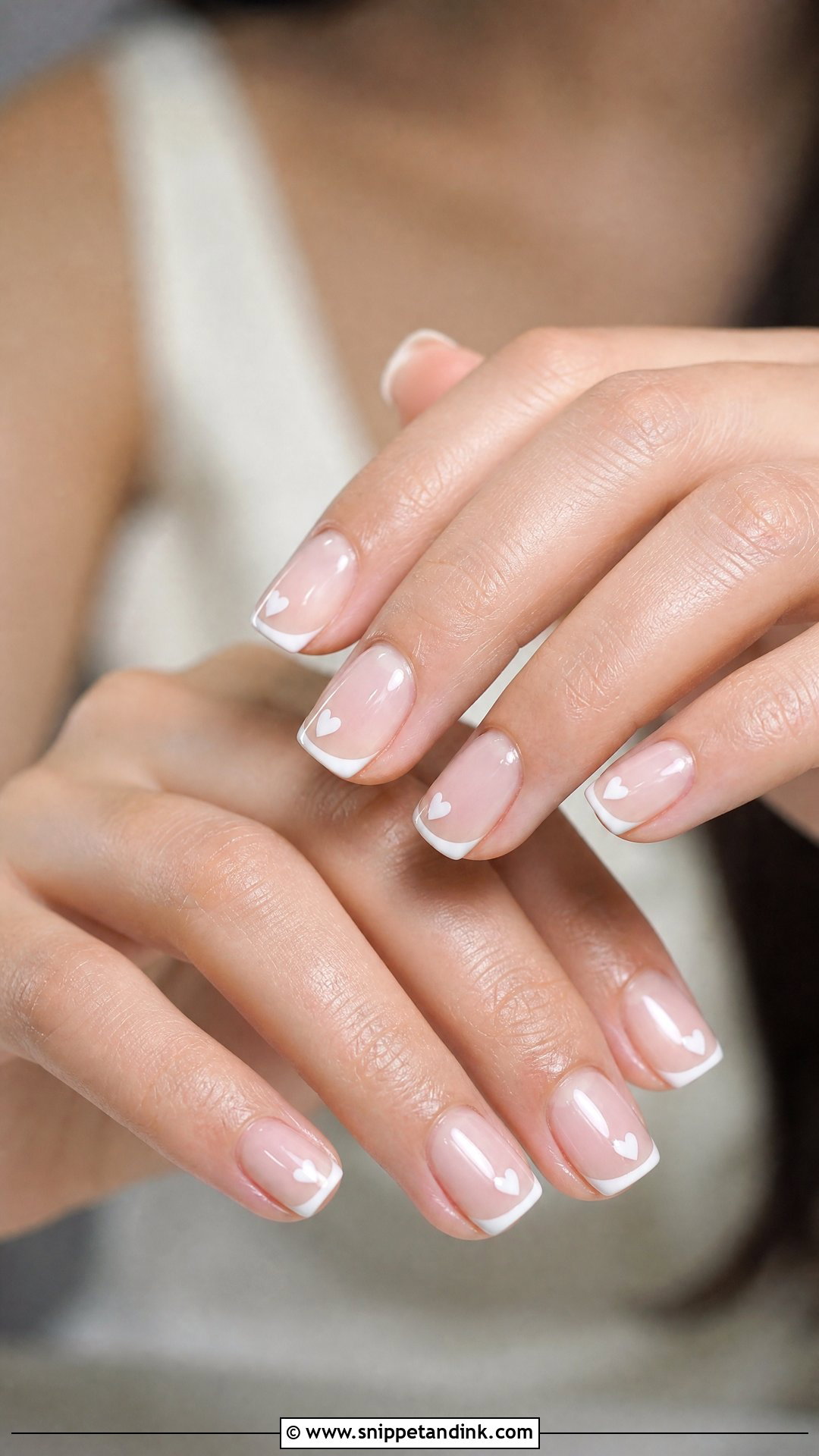
Hearts work best tiny. I place small white hearts over a sheer nude base, tucked near the tip or on the ring fingers. Pair them with micro French tips for a modern version, or keep them alone on a glossy milky base. Large hearts look playful rather than bridal. Short oval, almond and square nails all work.
21. White Micro French Bridal Nails
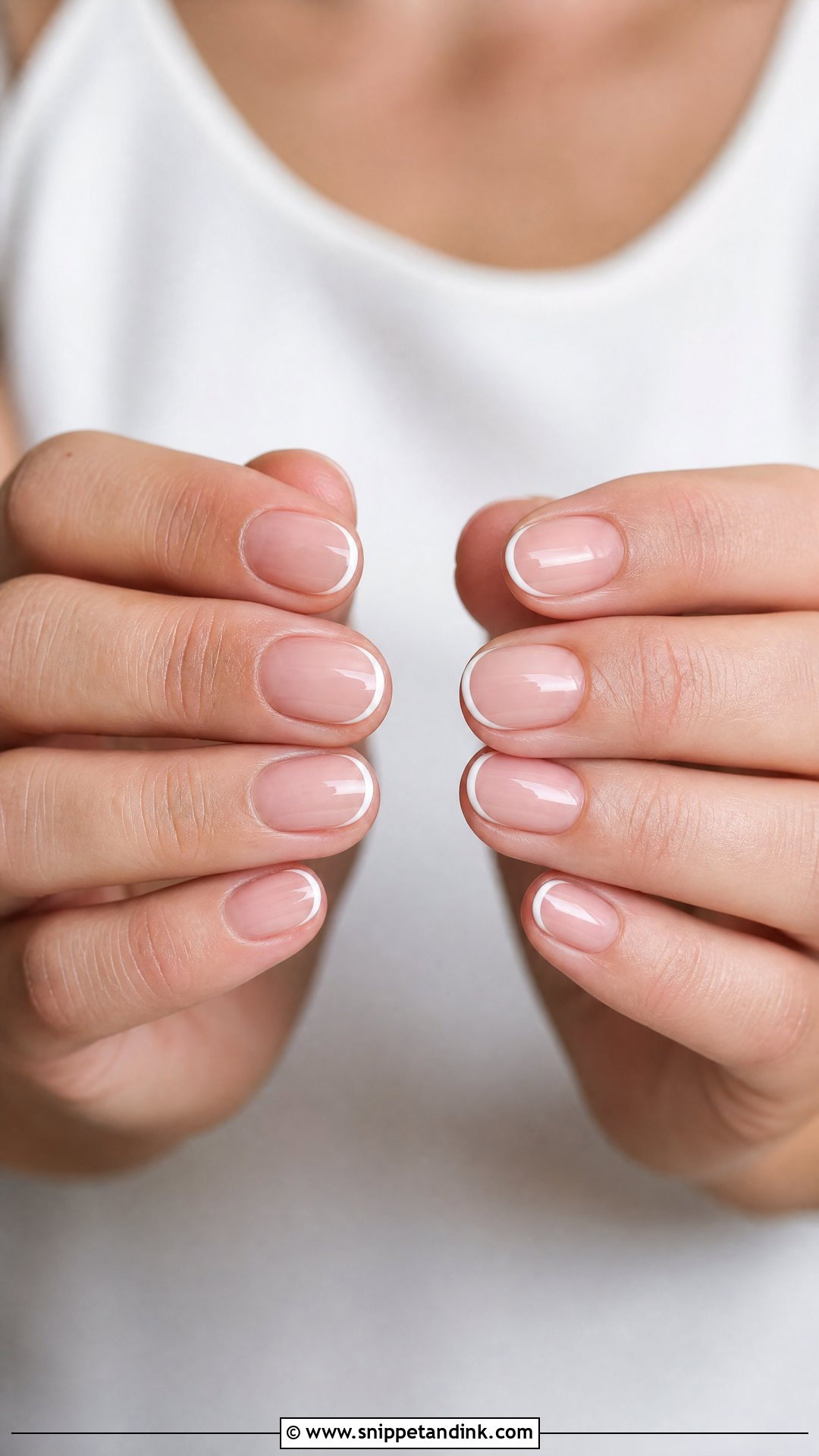
Micro French is an ultra-thin white line along the tip, over a sheer pink, nude or milky base. It’s more delicate than a classic French and works well on short nails, because it doesn’t eat the nail bed. Brides who never wear nail art usually feel comfortable in it. The line has to be painted with a very fine brush and steady hand; any wobble shows. Oval, squoval and almond shapes suit it.
22. White Swirl Bridal Nails
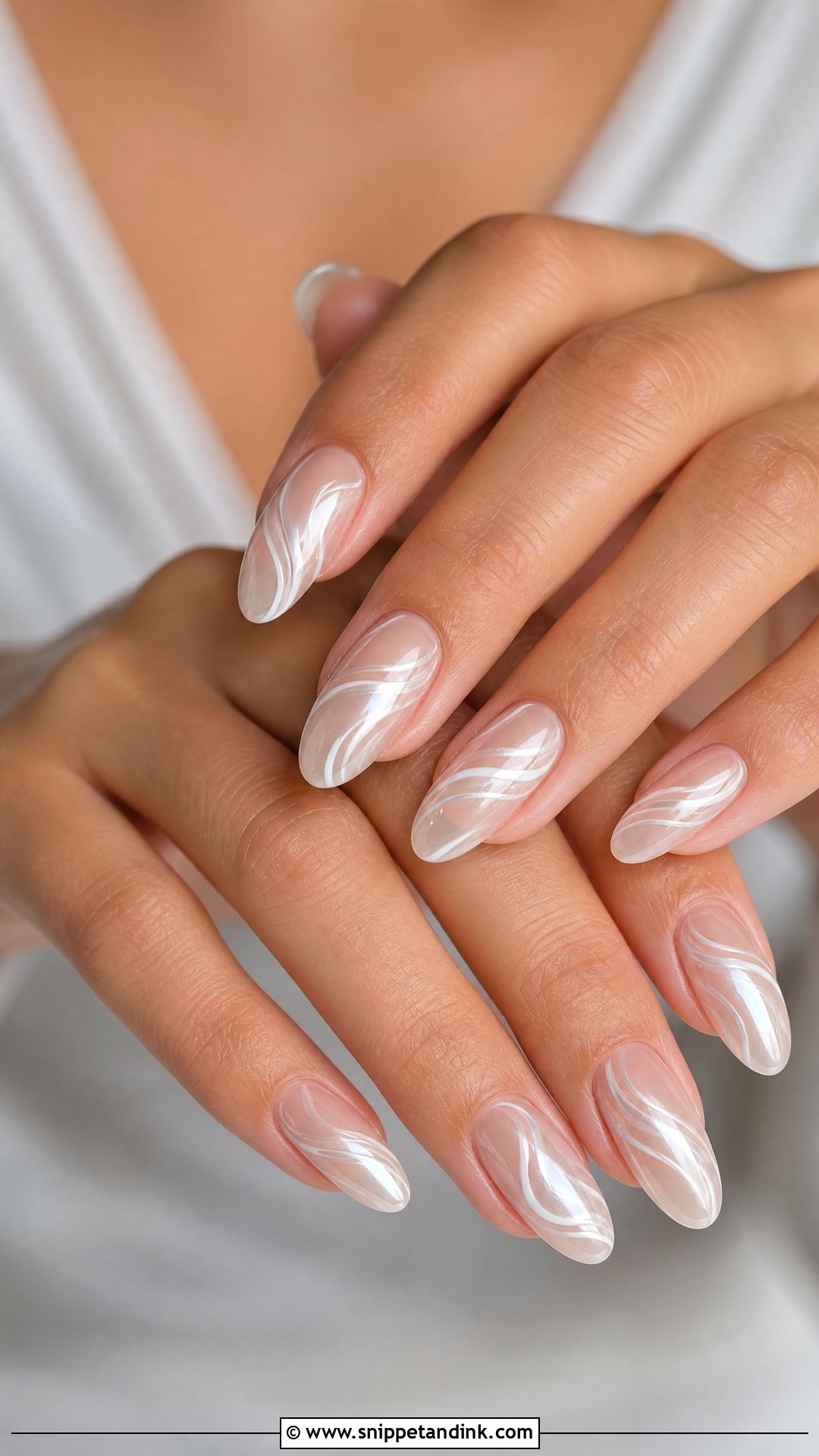
White swirl bridal nails are thin curved lines over a sheer nude, blush or milky base, drifting across the nail like ribbon. I keep the linework fine and let the curves follow each nail’s shape so the hand reads as one design. A pearl chrome top coat adds dimension. I suggest it when a French tip feels too expected. Almond and coffin shapes show the flow best.
23. White 3D Floral Bridal Nails
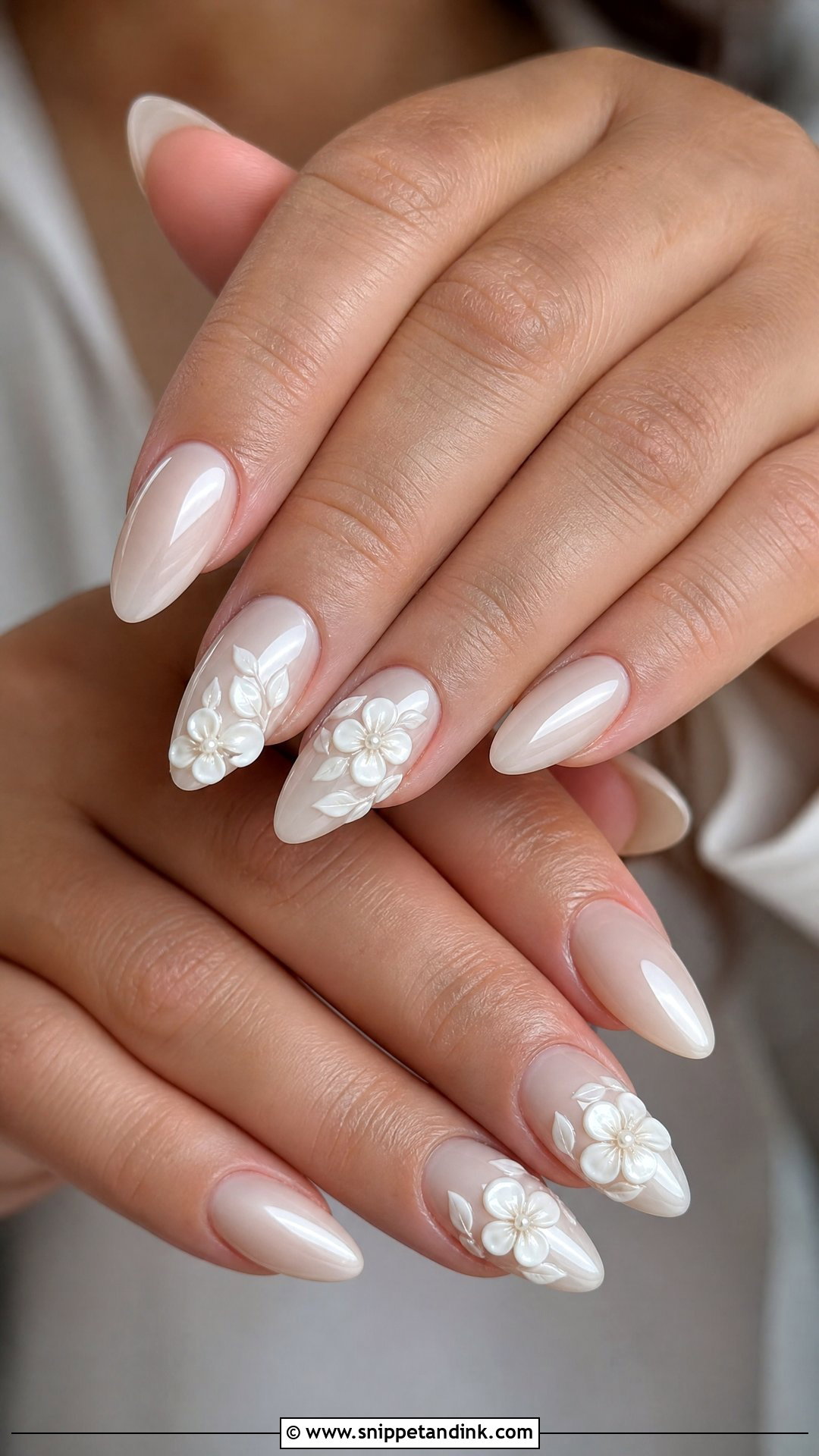
Raised floral work gives a couture texture, with tiny sculpted petals in builder gel or acrylic. It suits gowns with lace, organza or 3D appliques. I keep the 3D flowers to accent nails, because a full hand of raised art is uncomfortable and catches on everything. The rest can be milky, chrome or French. Each flower needs a careful seal around the edges to last through a long day.
24. White Bridal Nails With Sheer Nude Base
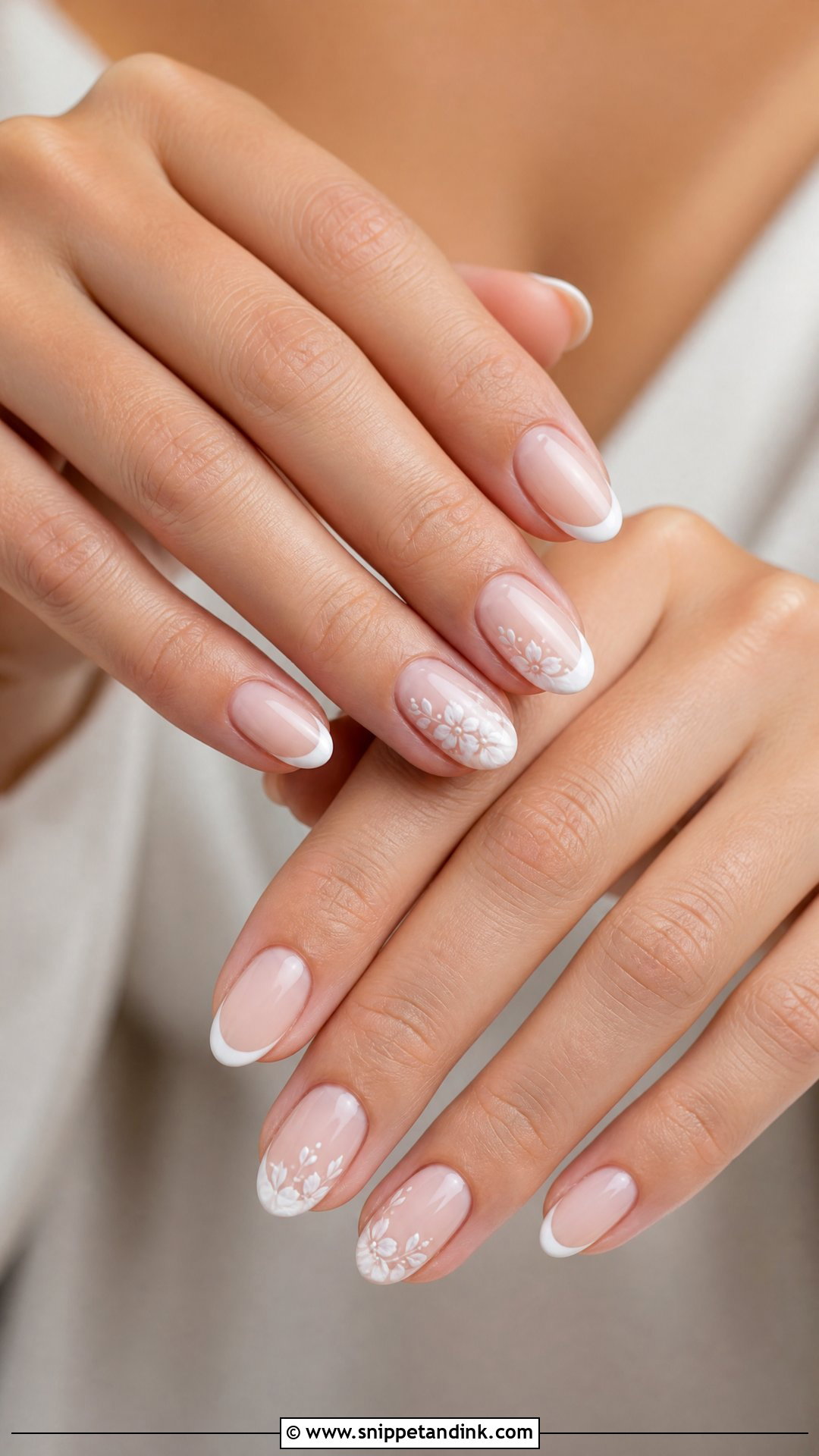
A sheer nude base softens white details and blends the manicure with your skin. Over it, I can add French tips, florals, swirls, lace or pearls. The nude shade has to match your undertone, pink nude, beige nude or peach nude, or the hand looks greyish. This is the base I suggest to brides who find bright white too strong.
25. White Bridal Nails With Clear Tips
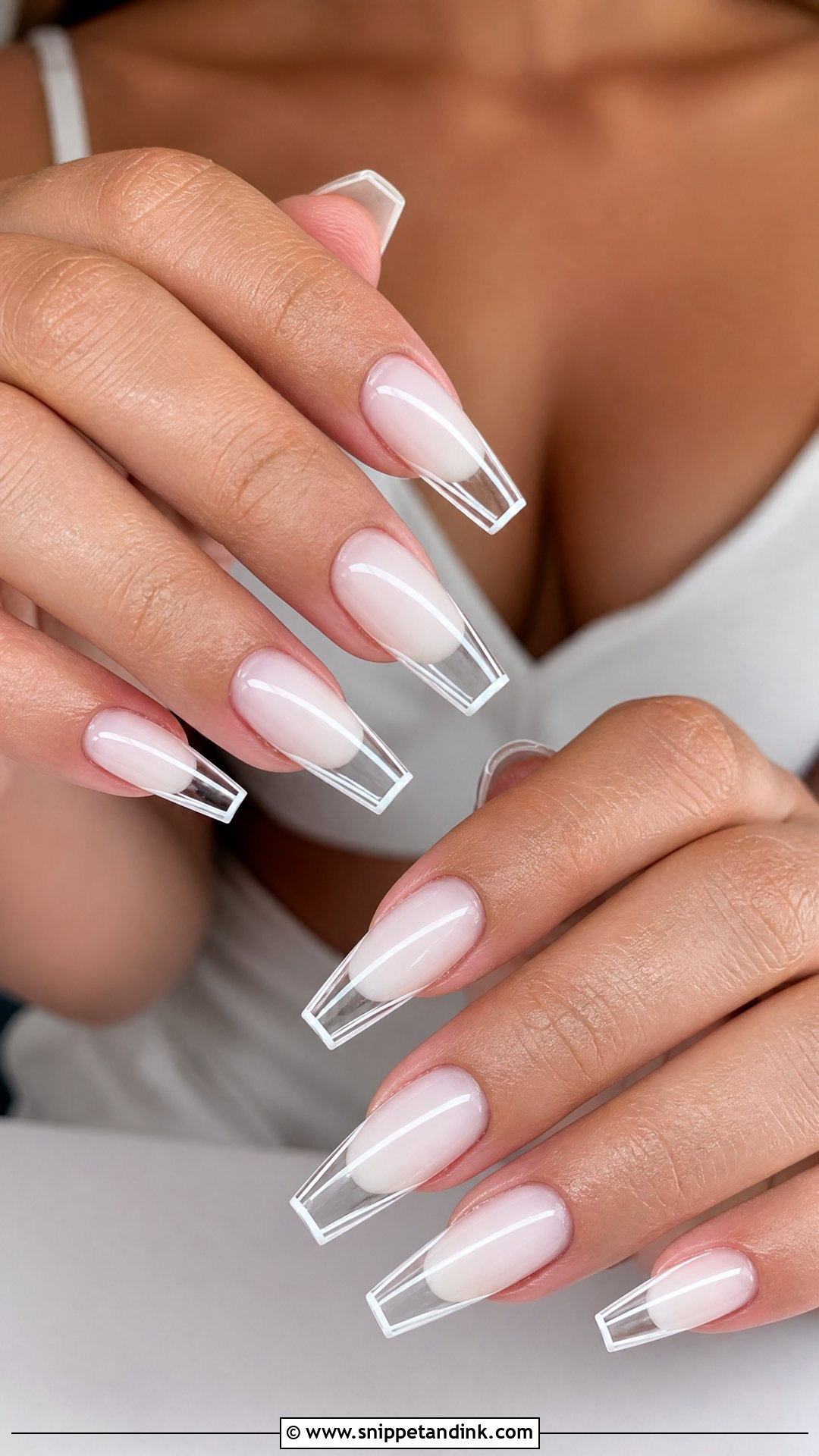
Clear tips are a modern, glassy take: a milky base that fades into transparent or lightly tinted tips. The clear part needs length to show, so I’d only do this on medium almond, coffin or square extensions. Some versions add a white outline or shimmer over the clear edge. The fade needs to be smooth, without a hard line. Clear tips also show anything underneath, so the nail must be clean.
What Turns White Gel Yellow Before the Wedding
White and pale gels show staining more than any other color. Turmeric and curry, self-tanner, hair dye and some sunscreens can all leave a yellow cast on the top coat. Spray tans are the usual culprit in wedding week, because the tanning solution settles on the nails and edges.
- Book a spray tan before your manicure, not after, or wear gloves while applying any self-tanner.
- Wear gloves if anyone is coloring your hair that week.
- Ask for a non-yellowing top coat; it makes a visible difference on white.
- If staining does happen, a fresh layer of top coat can often fix it without redoing the set.
Two or Three Days Out Is Usually Right
I like a bridal manicure done two to three days before the wedding. That’s close enough that there’s almost no regrowth at the cuticle in photos, and far enough out that if a nail breaks or a stone pops off, there’s time to repair it. A trial set a few weeks earlier lets you test shape and length, and I’d suggest wearing it for at least a few days to see how it holds up with your normal routine.
Start With Your Shade, Then Add One Detail
Most bridal white sets fall into three groups. The classics are milky white, French tips and ombre. The newer looks are pearl chrome, clear tips, swirls and 3D florals. Then there are the detail options: pearls, lace, rhinestones, gold and silver. My advice is to settle your shade and shape first, add a single detail, and wear a test set before the wedding, so you know how it feels holding a bouquet and doing up your own buttons.
You'll Like These Ideas:


Leave a Reply