
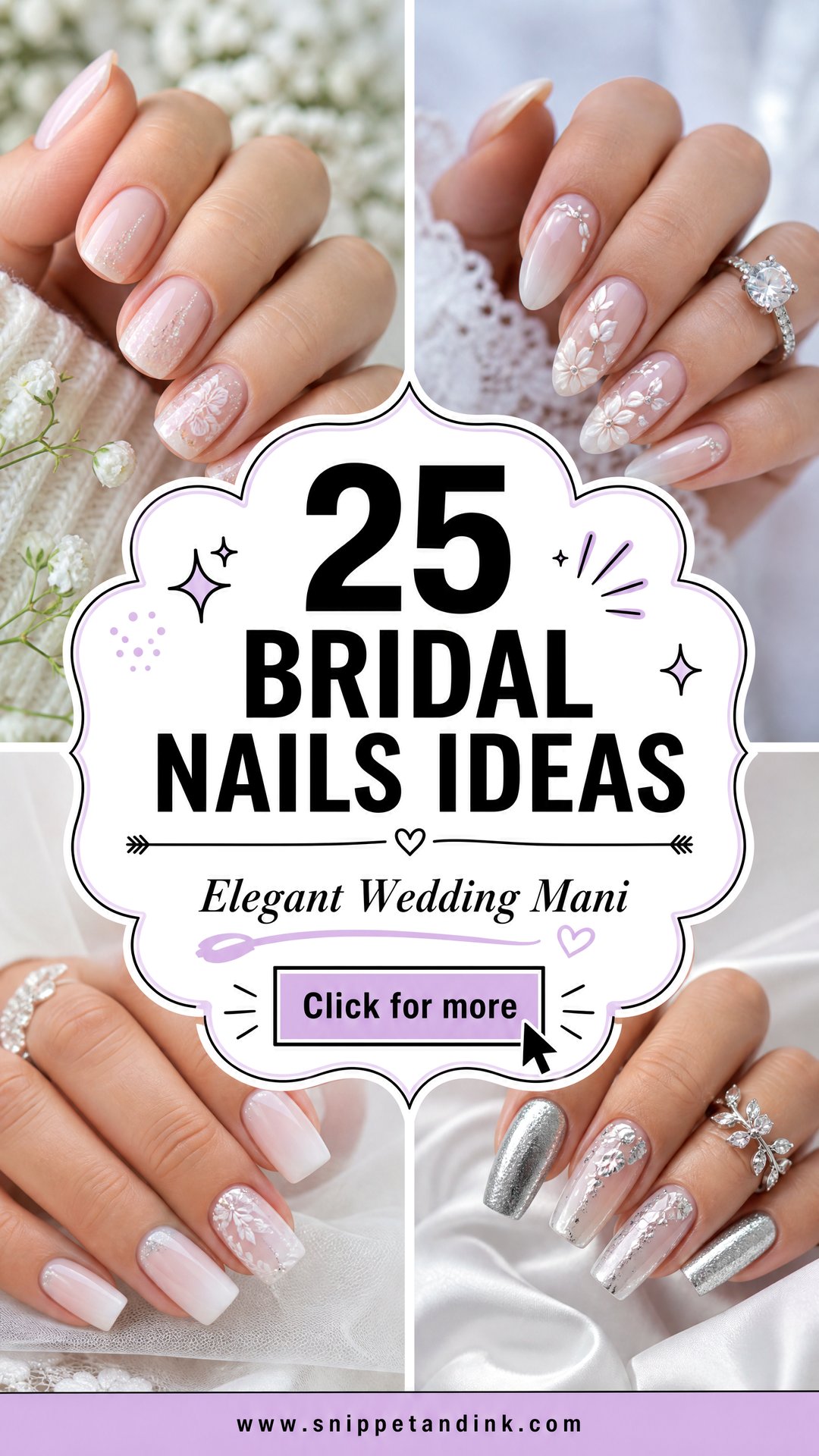
Your hands show up in more wedding photos than your shoes ever will: on the bouquet stem, in the ring exchange, around a champagne glass, on your partner’s shoulder. That’s why I treat a bridal manicure as part of the outfit and not an afterthought. The set has to sit politely beside your dress, your jewelry and your skin tone, and it has to feel normal enough that you stop noticing it by lunchtime. Some brides want a classic French tip; others lean toward soft chrome, pearls, lace, tiny flowers or a short natural nail. Below are 25 sets I’d happily paint for a wedding, with the details that decide whether each one works on your hands.
Reading Your Ring Metal Before You Pick a Polish
The first thing I ask a bride is what her ring looks like. Your engagement ring and band sit on your hand in the most-photographed shot of the day, and the polish either supports them or fights them.
Yellow gold and rose gold
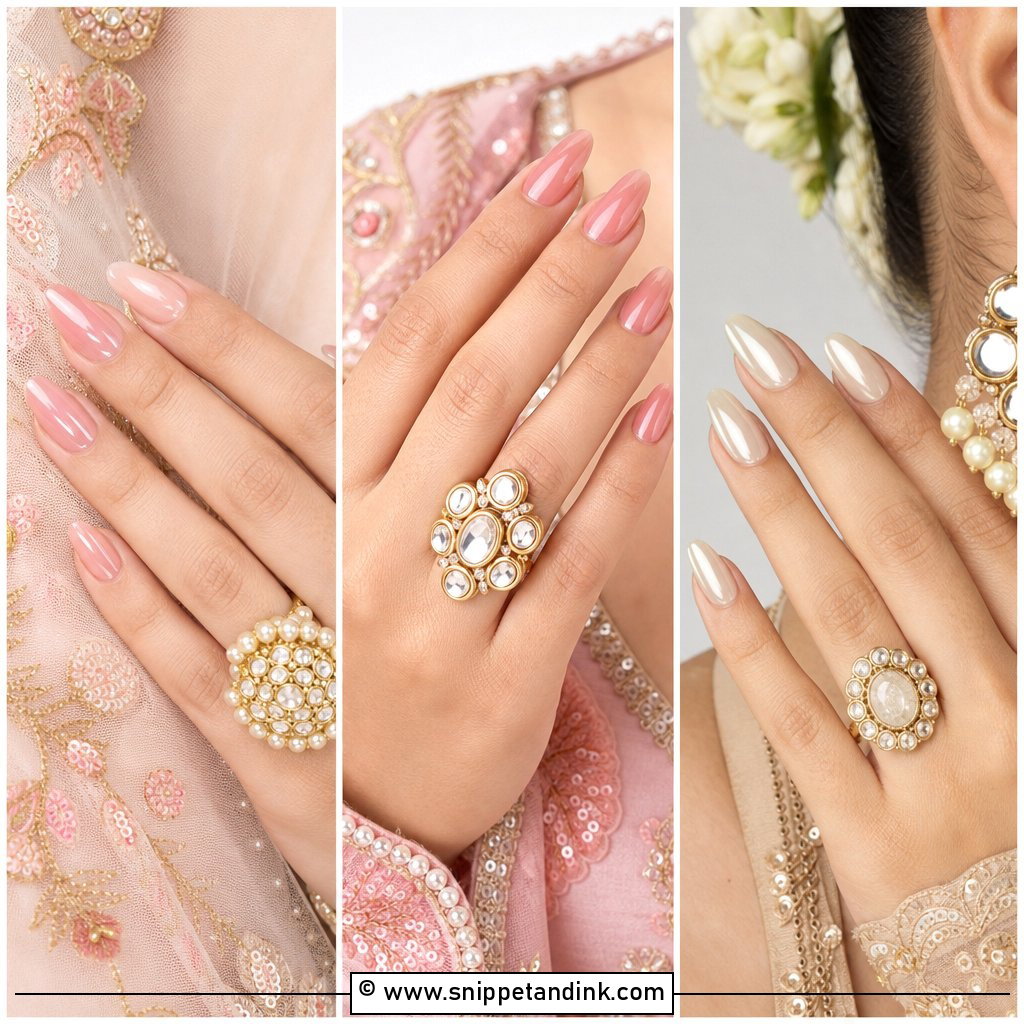
Warm metals sit best beside warm neutrals: peachy nudes, blush, champagne shimmer, a gold-tipped French. Bright icy white can make yellow gold look slightly brassy next to it.
Platinum, white gold and silver
Cool metals like milky white, cool pinks, pearl chrome and silver details. A very warm, orange-leaning nude can make a white metal look dull.
Colored stones
With a sapphire, emerald or morganite, I keep the nail neutral and sheer so the stone is the only color on the hand. If you want a nod to it, one tiny accent in a muted version of that color is plenty.
Shape matters too. A large center stone looks balanced with medium-length almond or oval nails, while a very long nail can make a delicate solitaire look smaller.
1. Bridal French Tip Nails
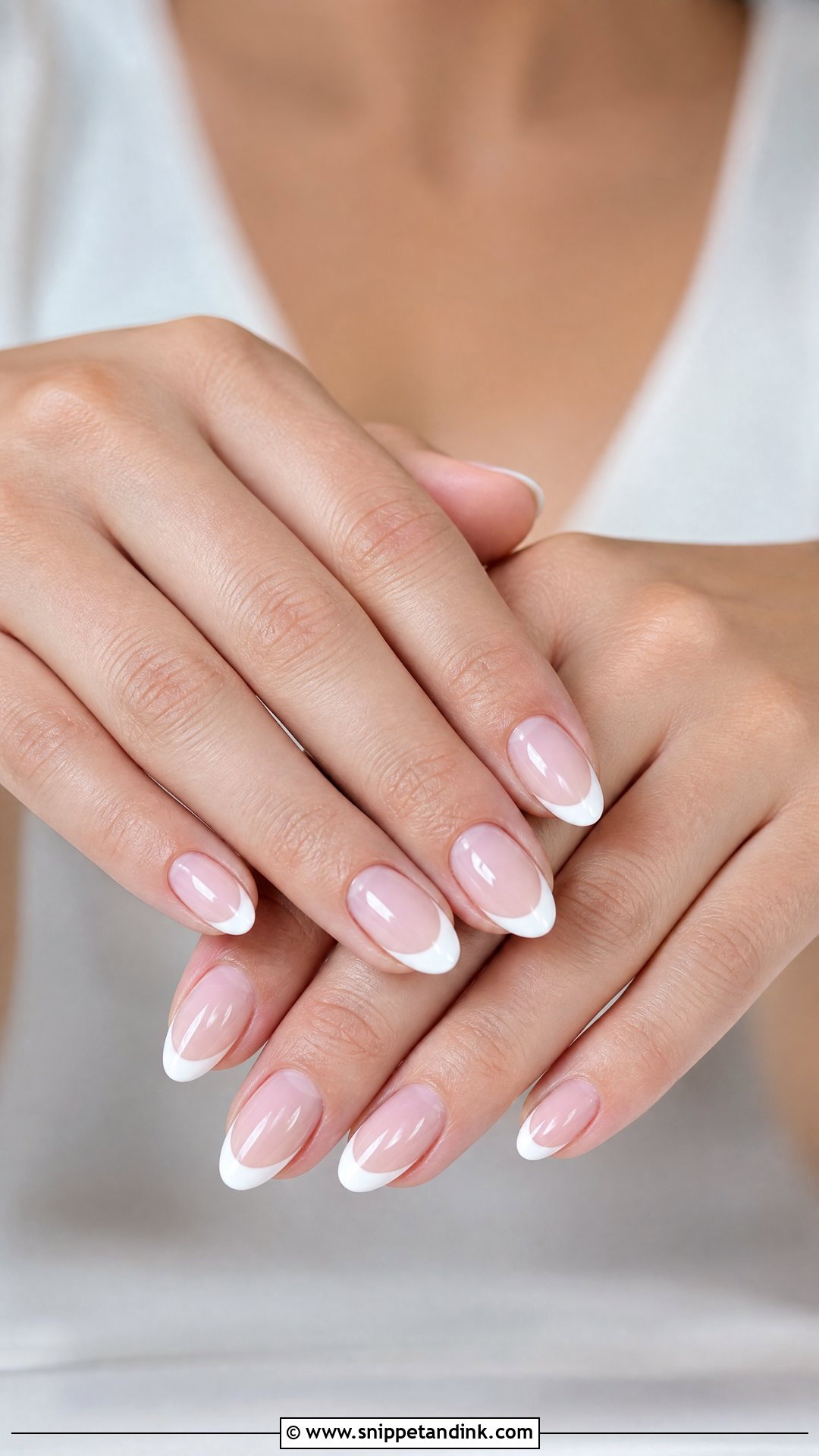
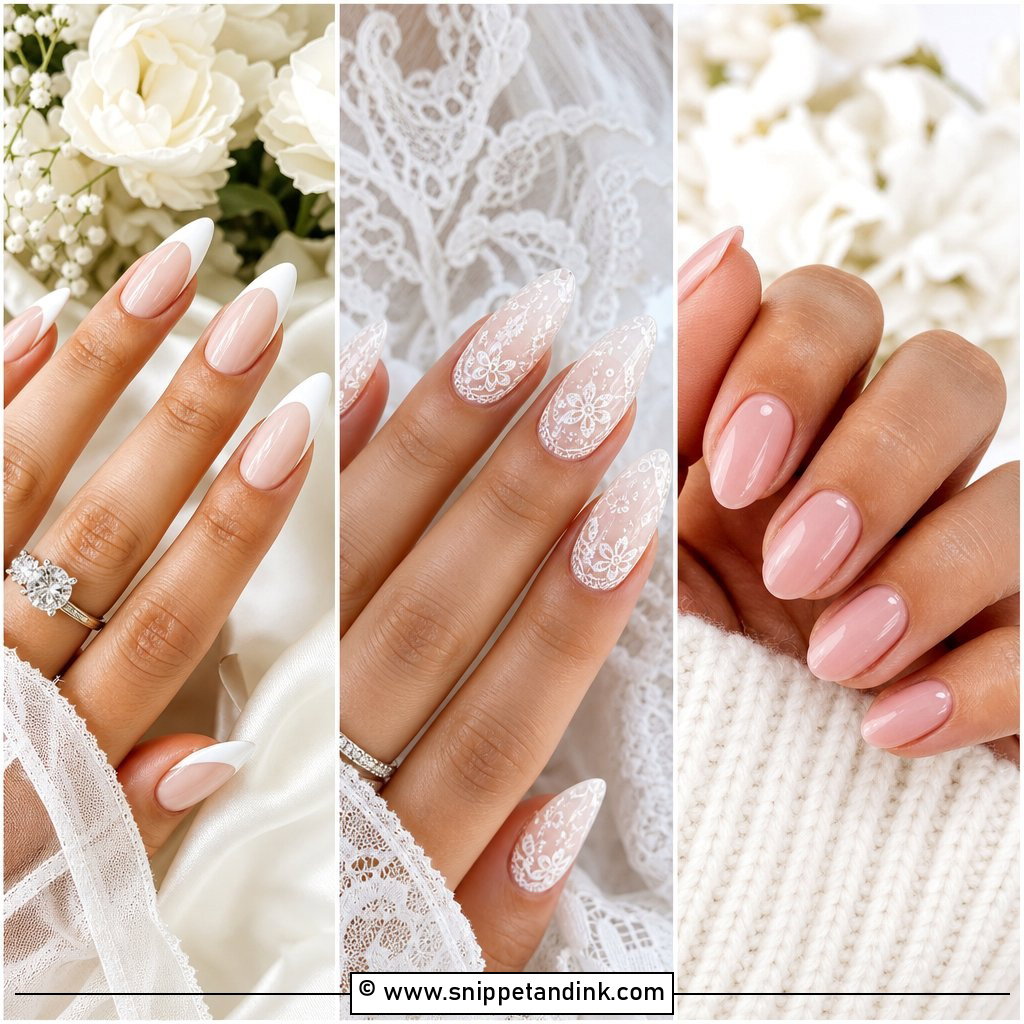
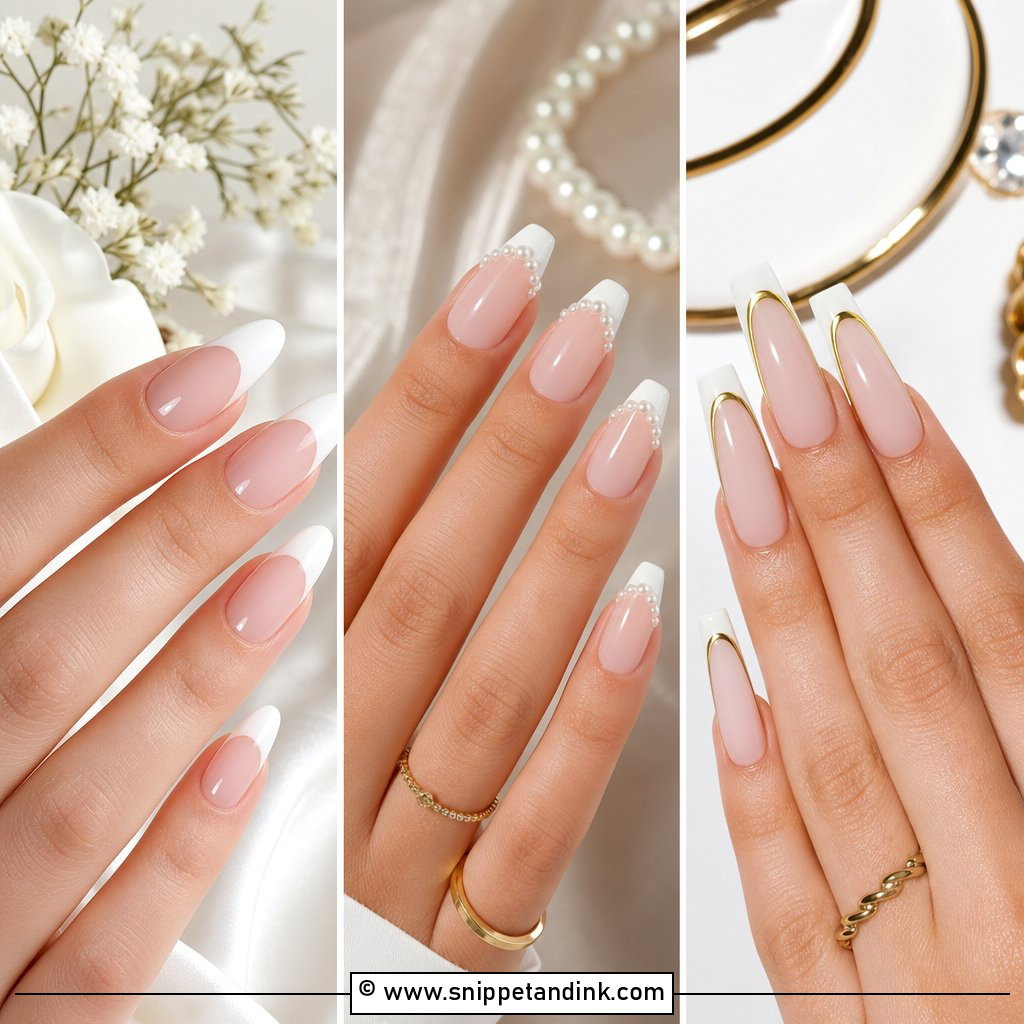
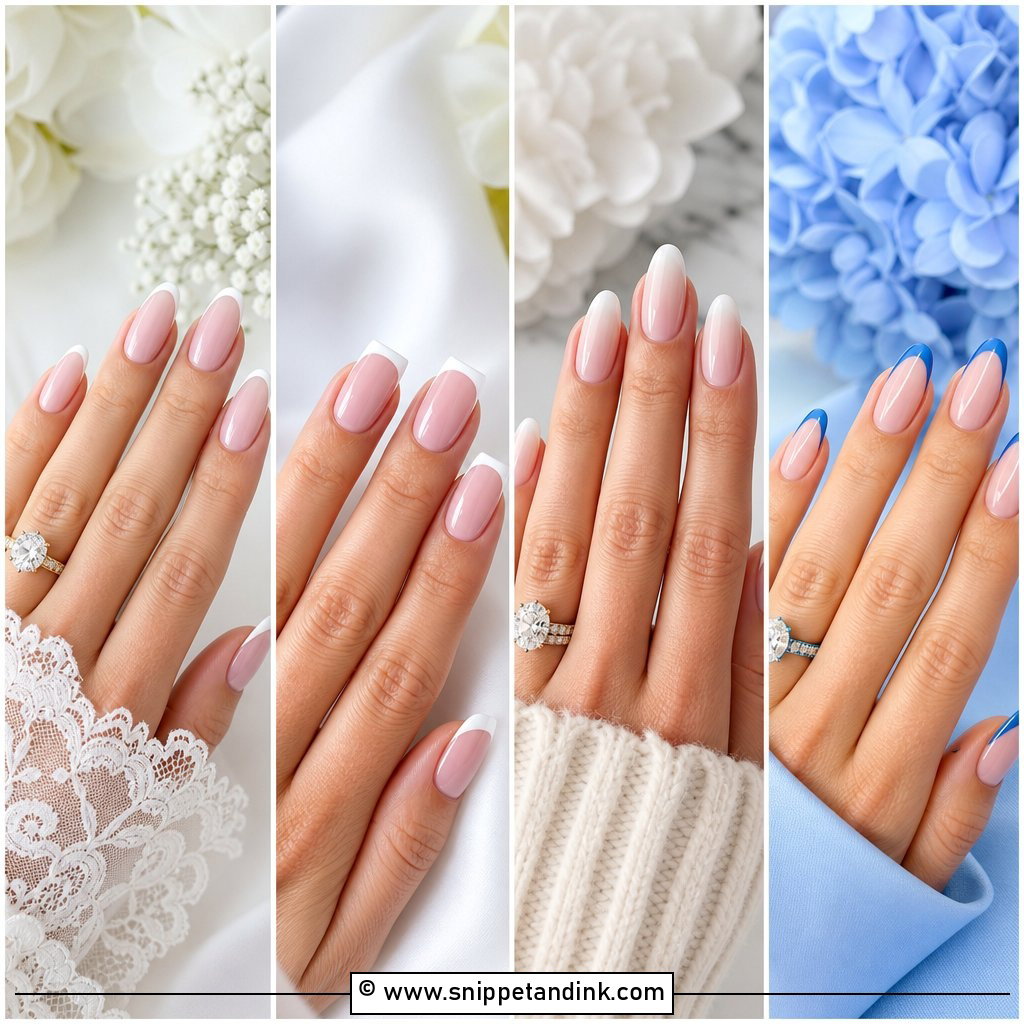
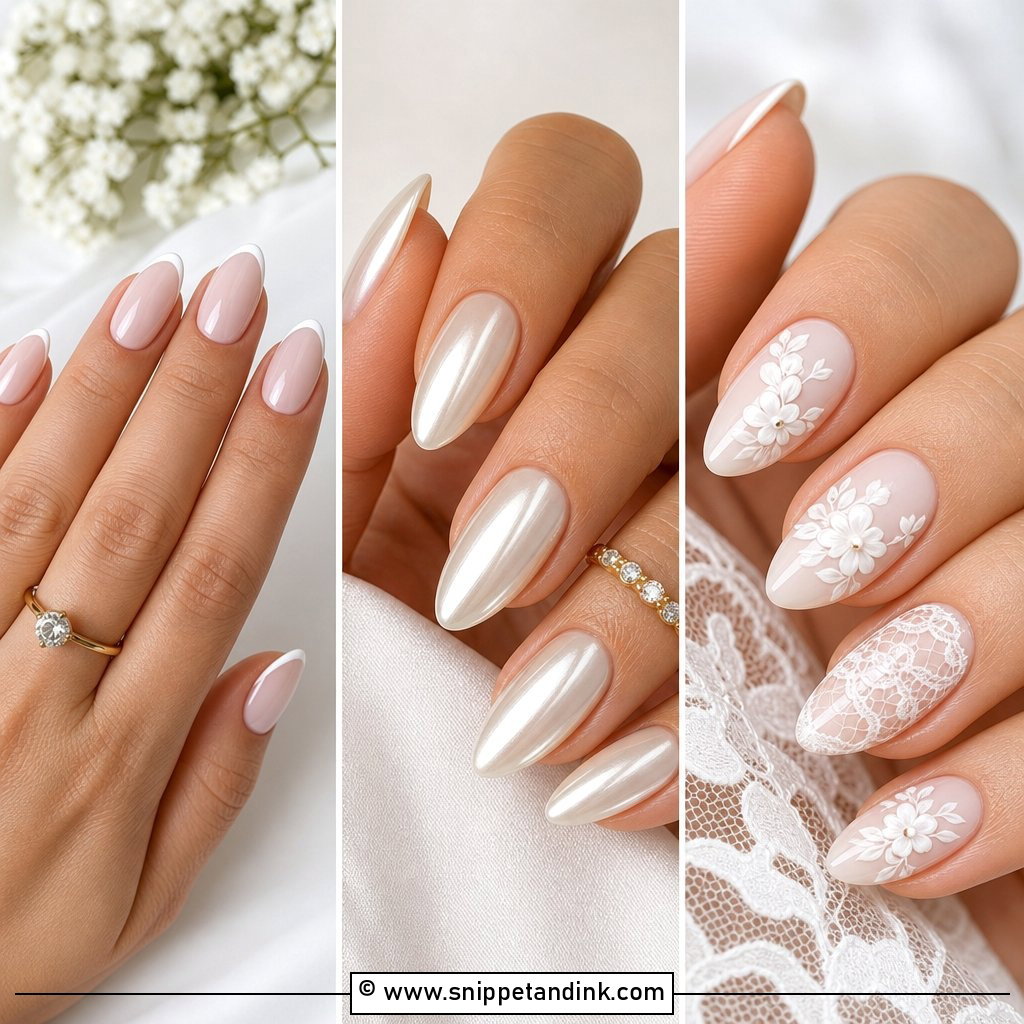
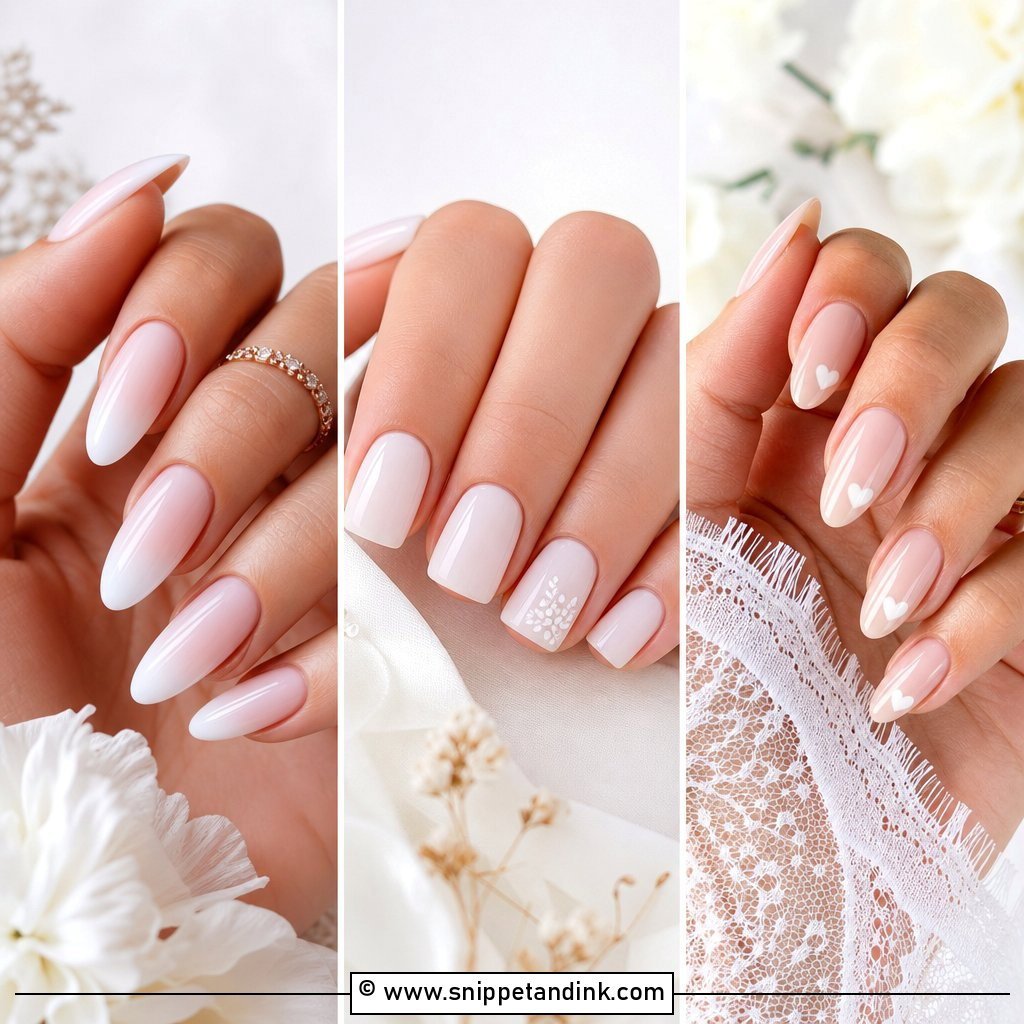
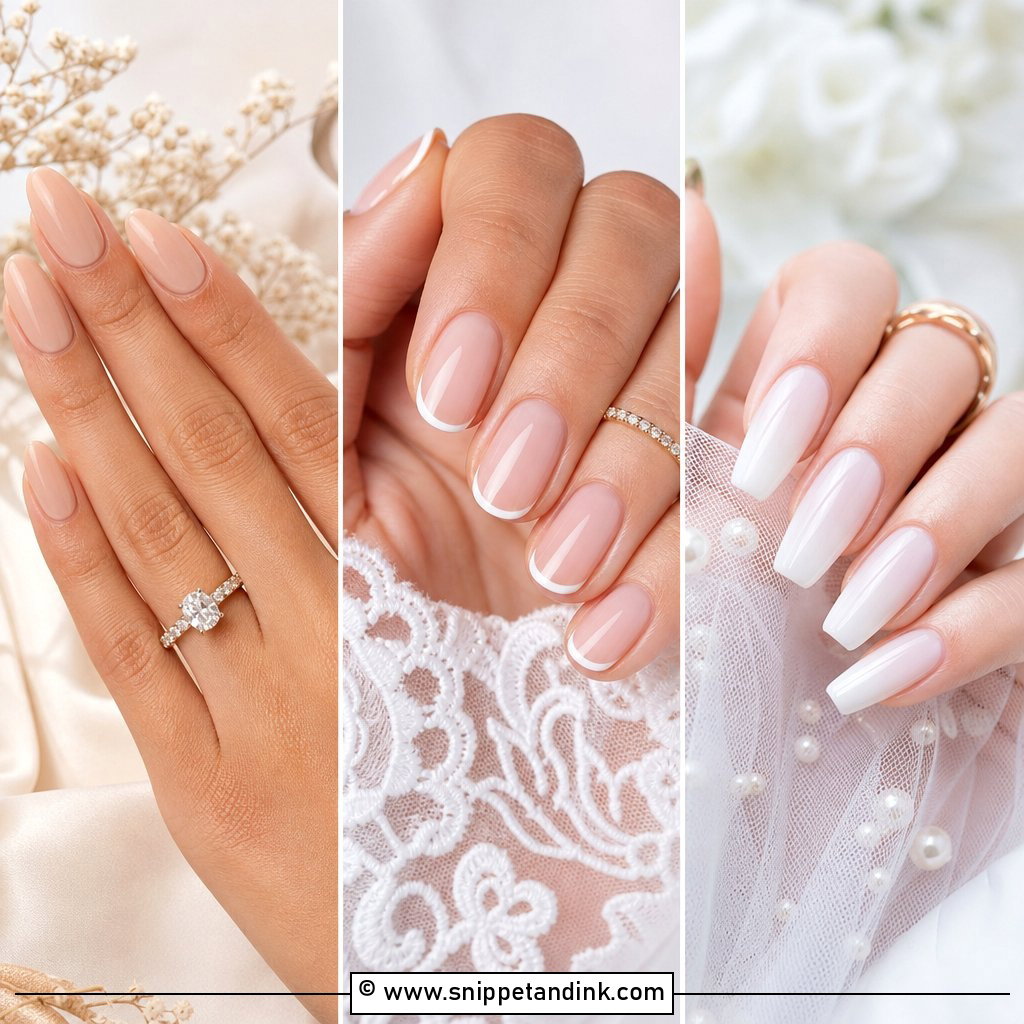
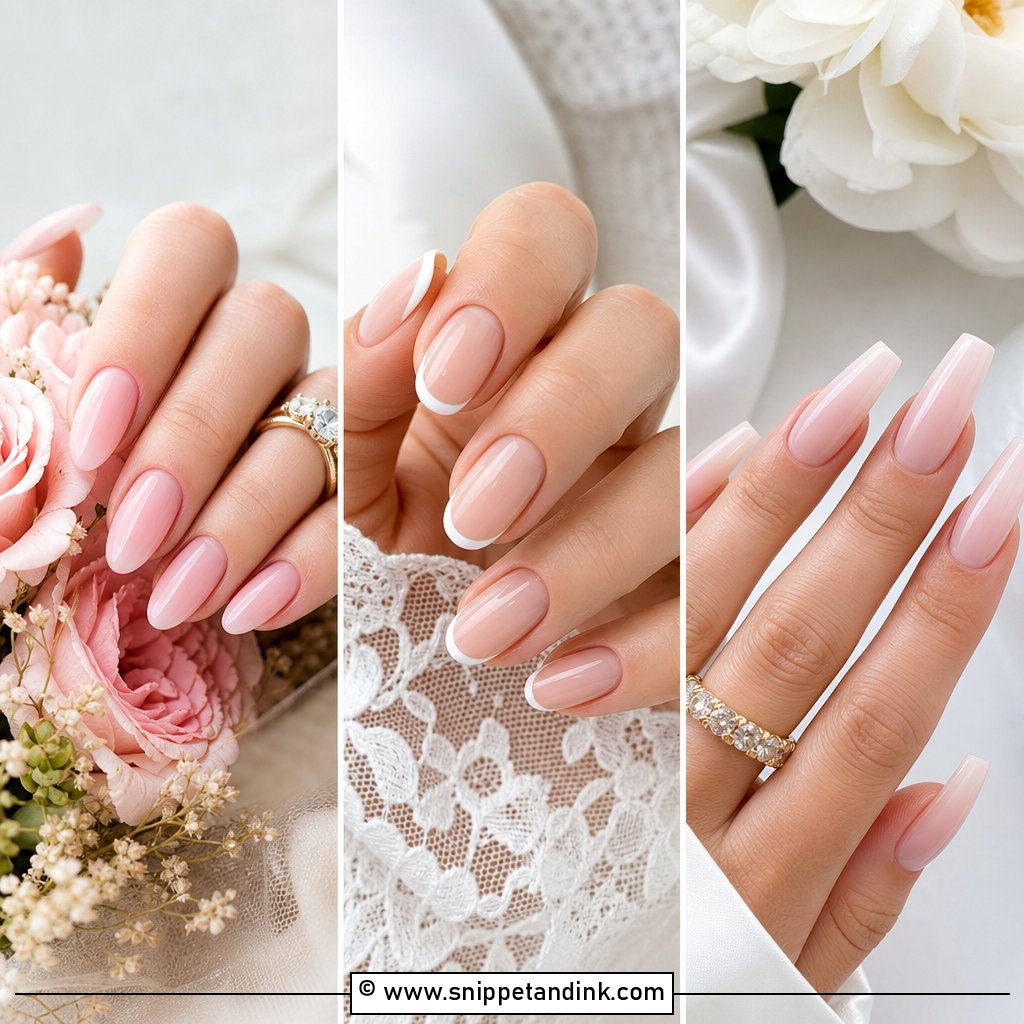
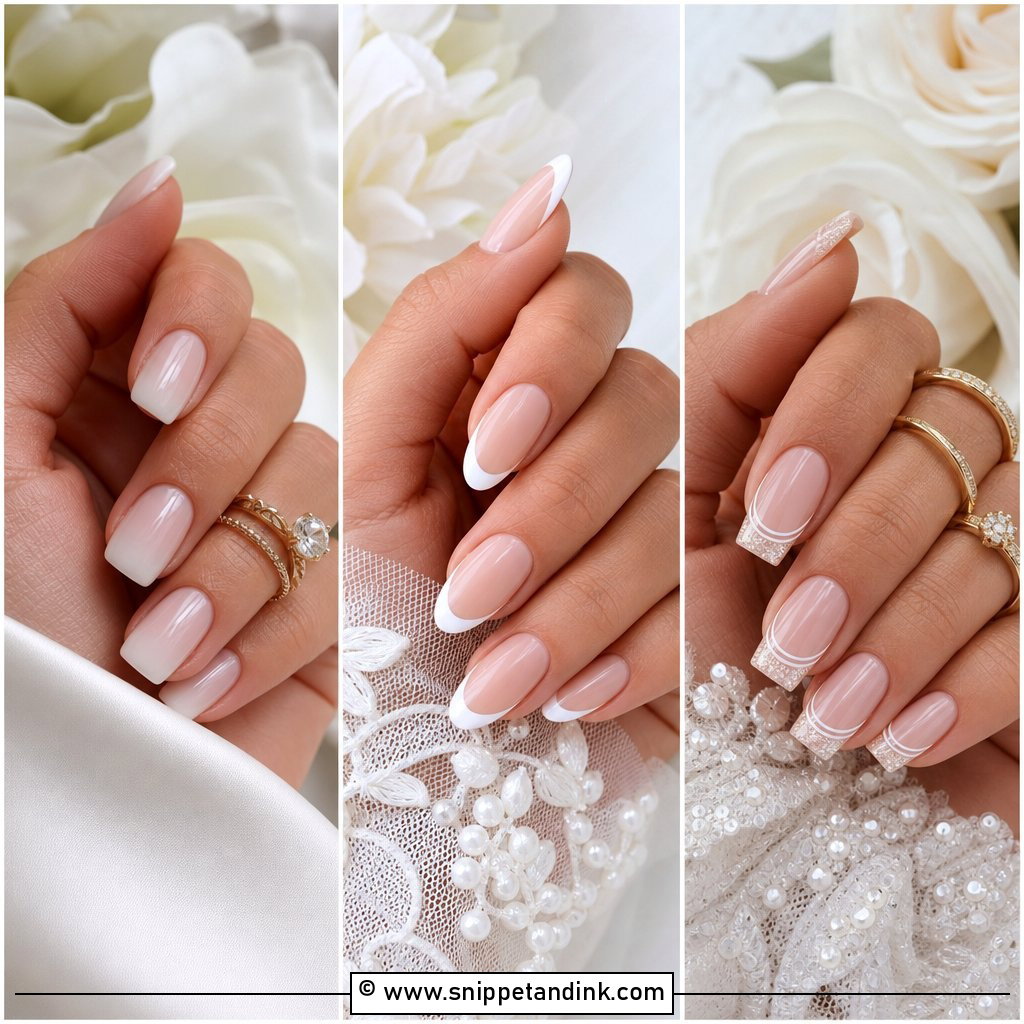
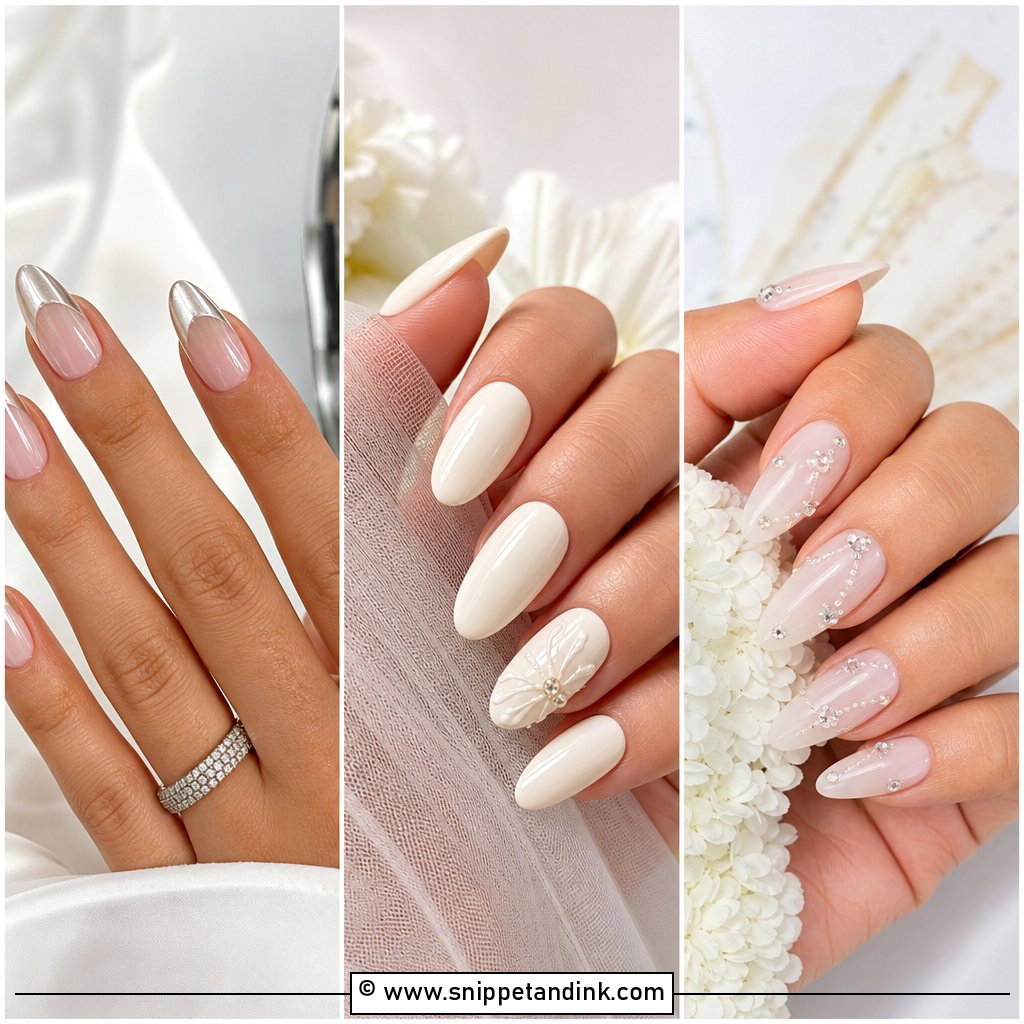
A French tip is still the set I’m asked for most, and its success depends on the smile line. Over a sheer pink or nude base, I paint the white to follow the natural curve where your nail separates from the skin, because a line that cuts across that curve makes the nail look crooked from certain angles. Thin micro tips read modern and suit clean-lined gowns; a slightly deeper, rounder smile line feels softer next to lace. Almond, oval, square and short round shapes all take it.
2. Milky White Bridal Nails
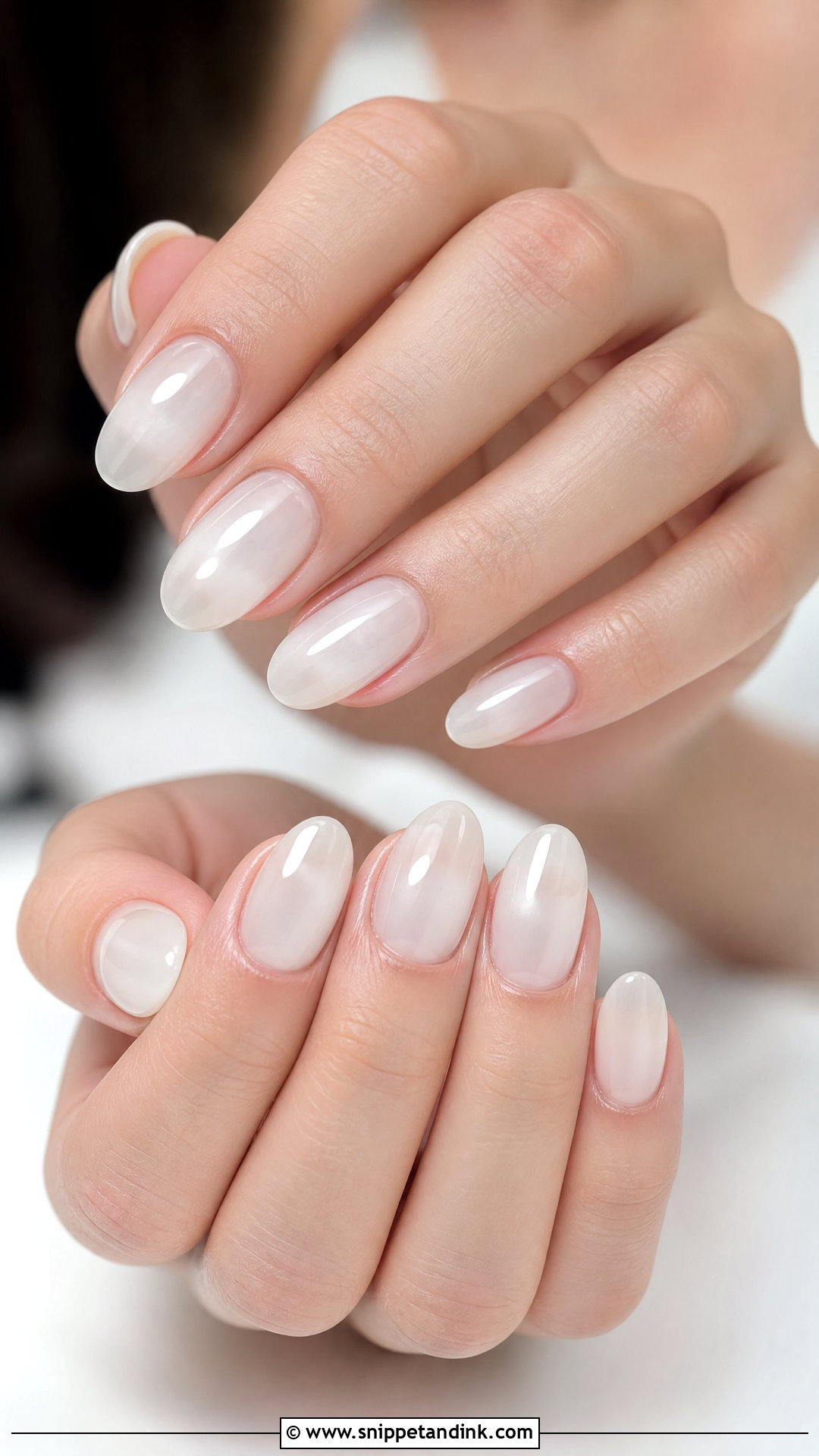
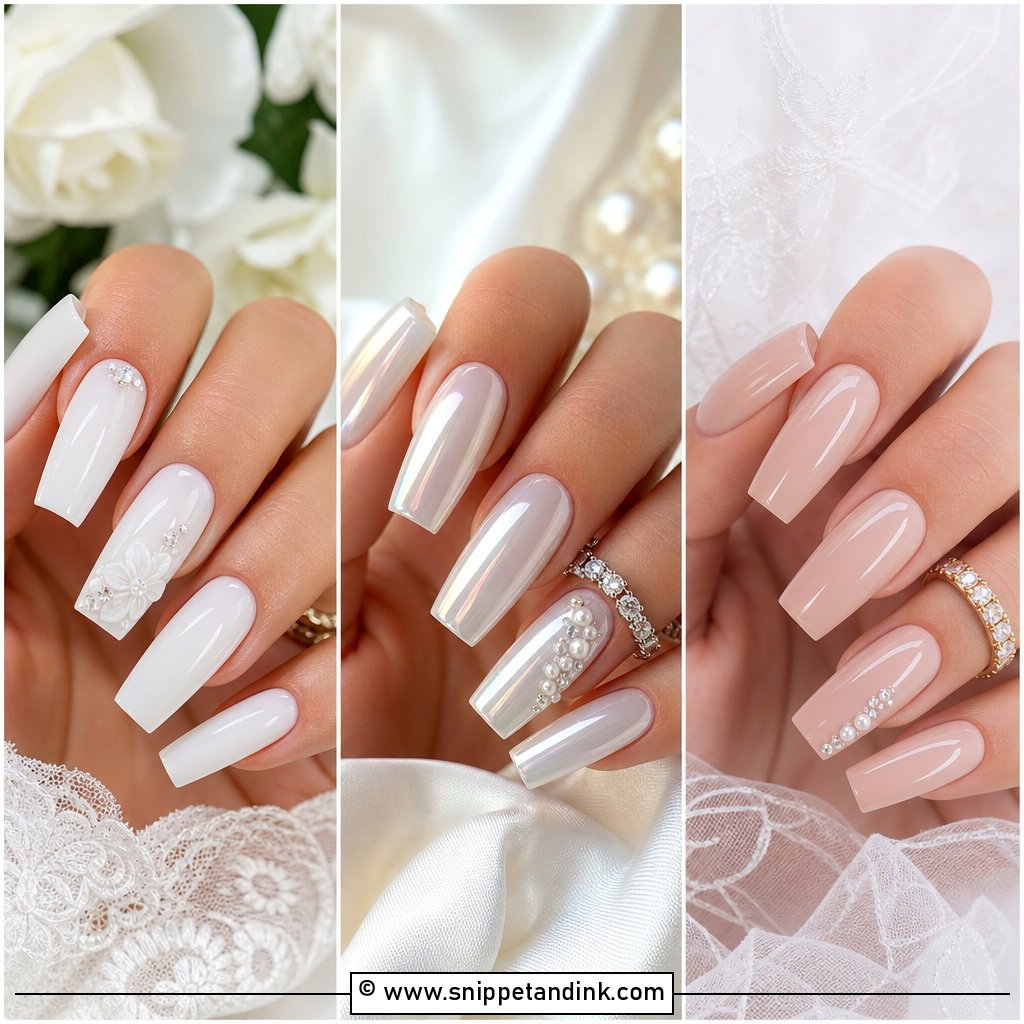
Milky white is built from several thin sheer white layers, which gives that cloudy, veil-like finish instead of the flat look of one opaque coat. It’s a good middle ground if you want white nails but find solid white too harsh against your skin. On deeper skin tones I sometimes warm the white slightly with a drop of nude so it doesn’t look grey in photos. Leave it plain, or add a fine shimmer top coat. Almond and oval are where I’d put it.
3. Pearl Chrome Bridal Nails
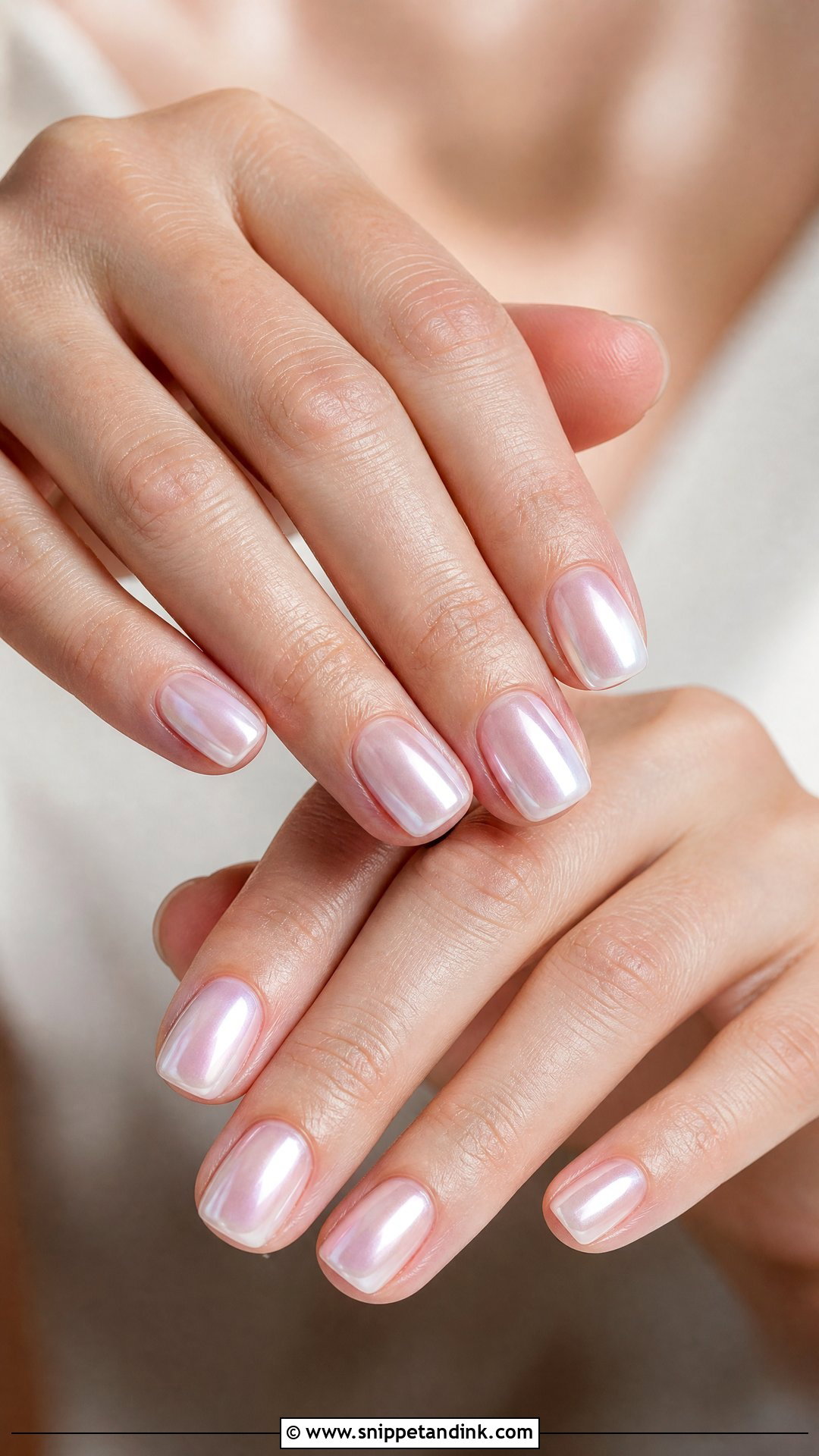
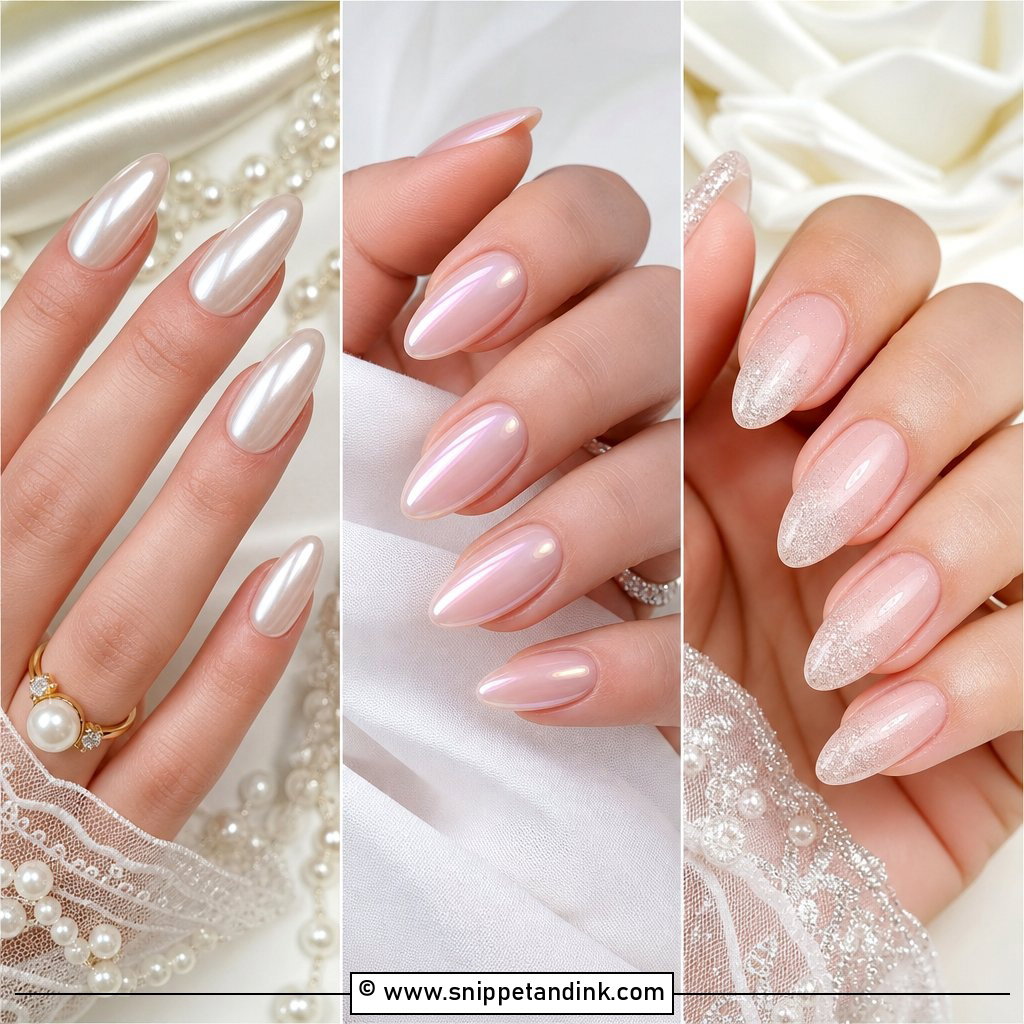
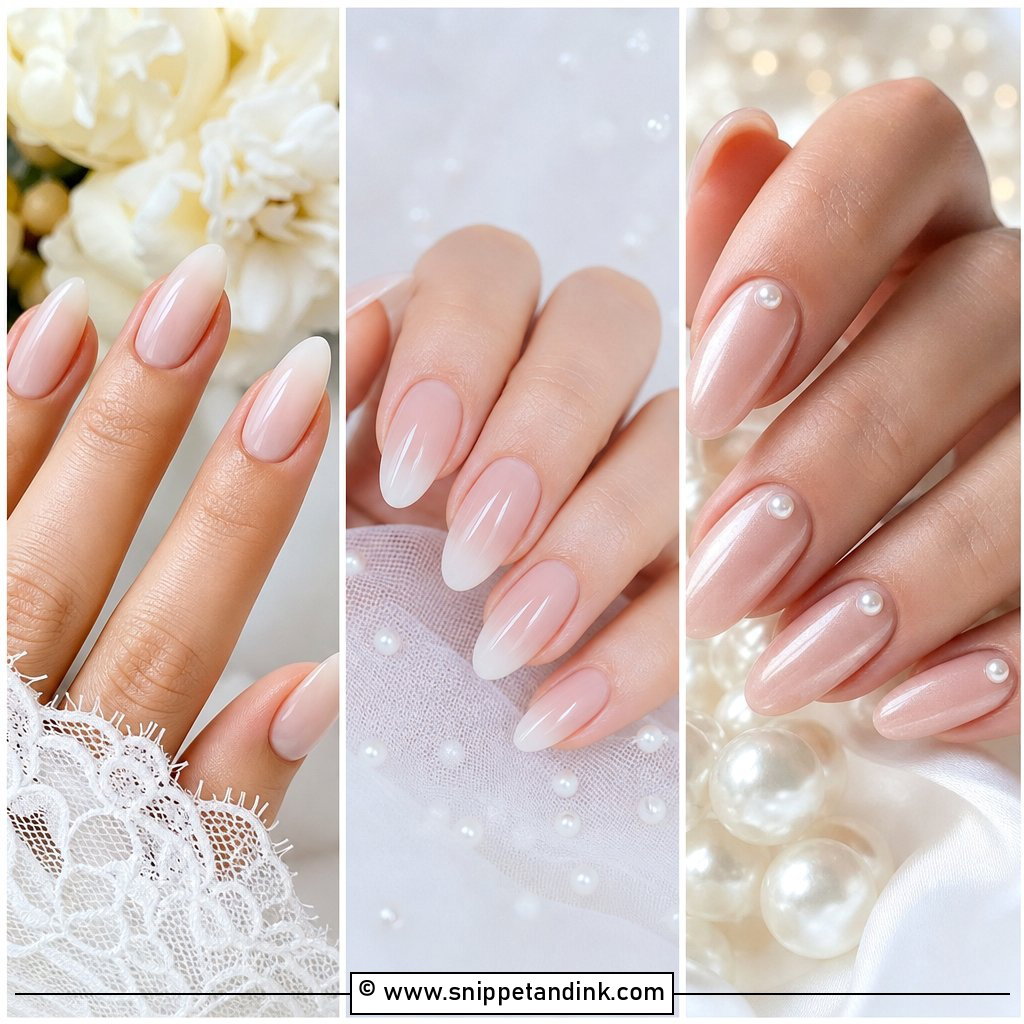
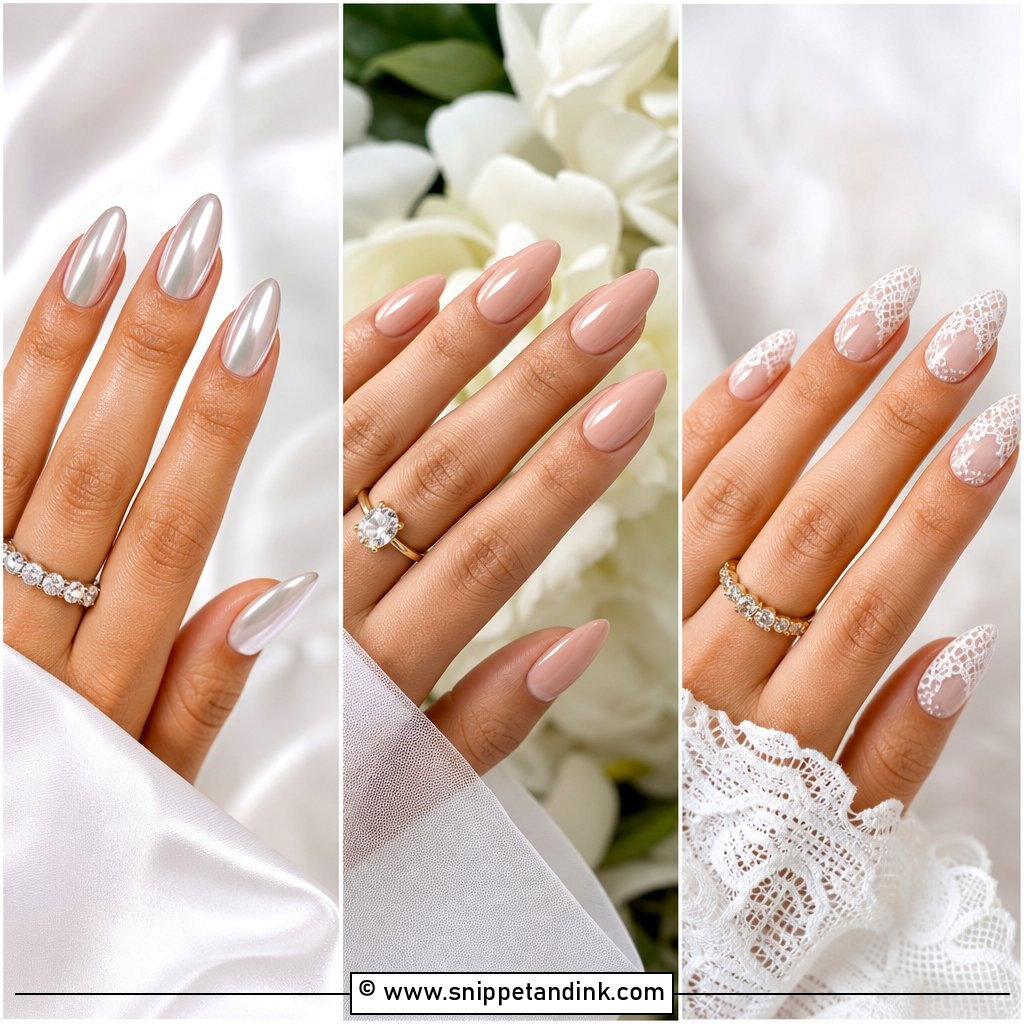
Pearl chrome bridal nails start on a sheer pink, nude or milky white base and get a fine pearl powder rubbed over the cured top coat. The glow comes from light bouncing off that powder, so it changes as your hand moves, which is why it reads so well beside pearls, white gold or silver. The mistake I see most is too much powder, which looks metallic rather than pearly. Keep the shape simple, short square, oval or almond, and let the finish do the work.
4. Blush Pink Bridal Nails
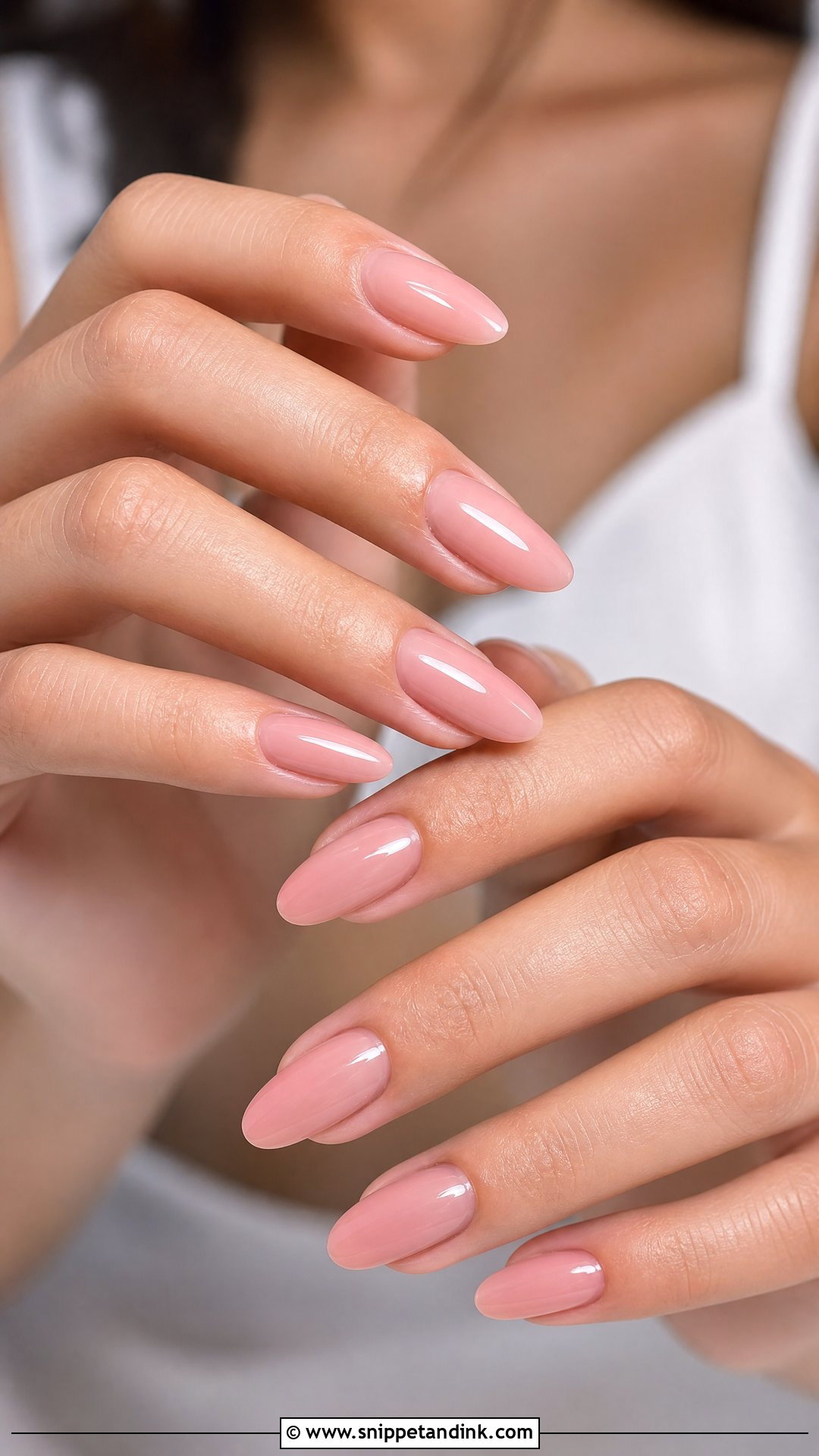
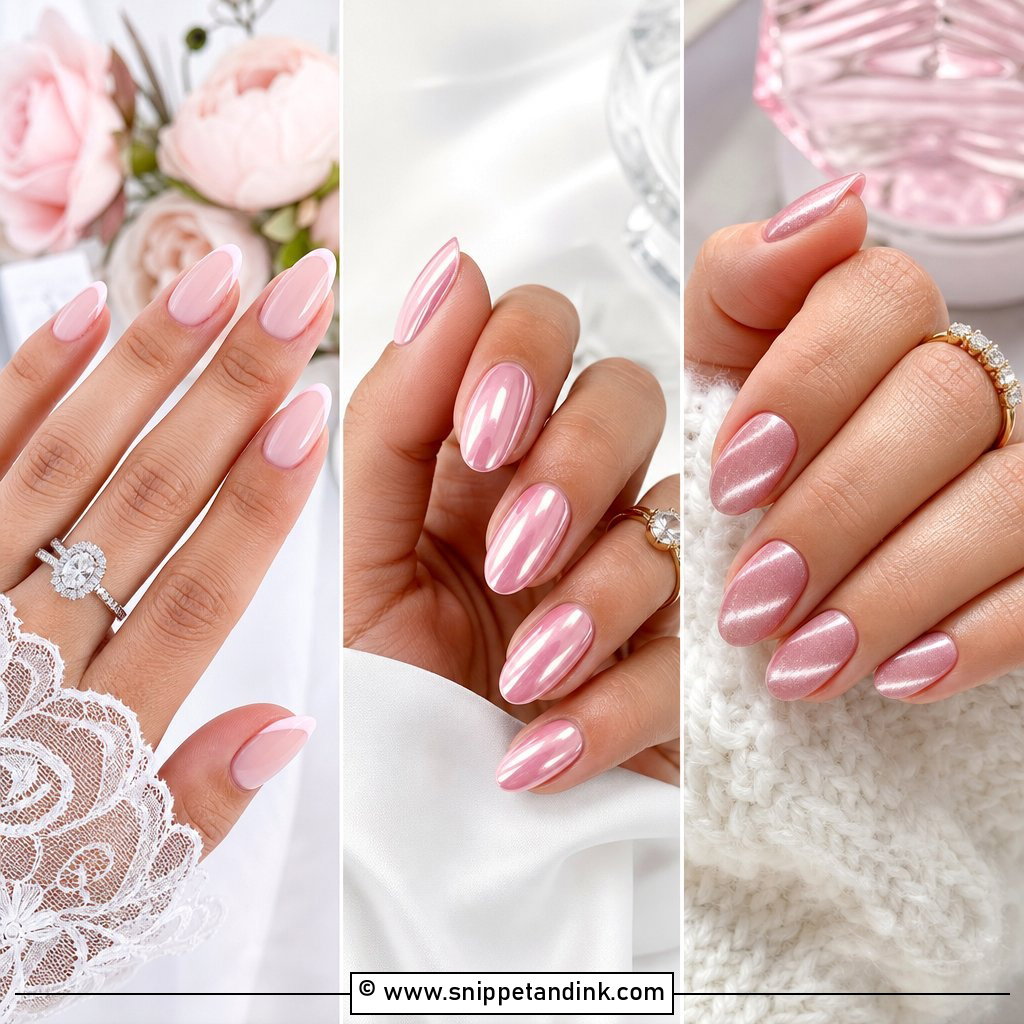
Blush pink gives hands a healthy flush without reading as a color, so it goes with whatever you’re wearing. I match the blush to your undertone: too cool on warm skin looks chalky, too warm on cool skin can look orange. A glossy finish is the cleanest; a satin shimmer softens it if you like a little glow. If your bouquet runs pink, peach, ivory or mauve, blush ties your hands to the flowers in close-ups.
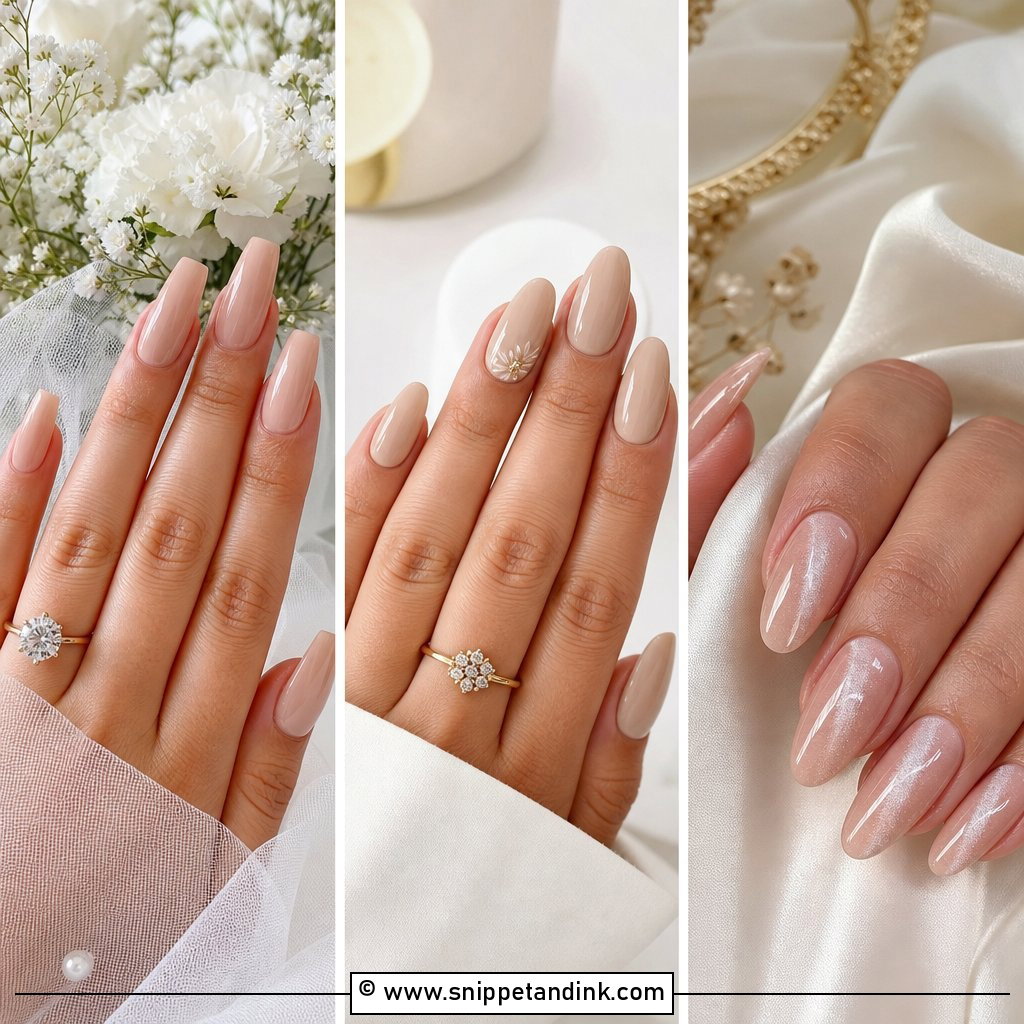
5. Nude Bridal Nails
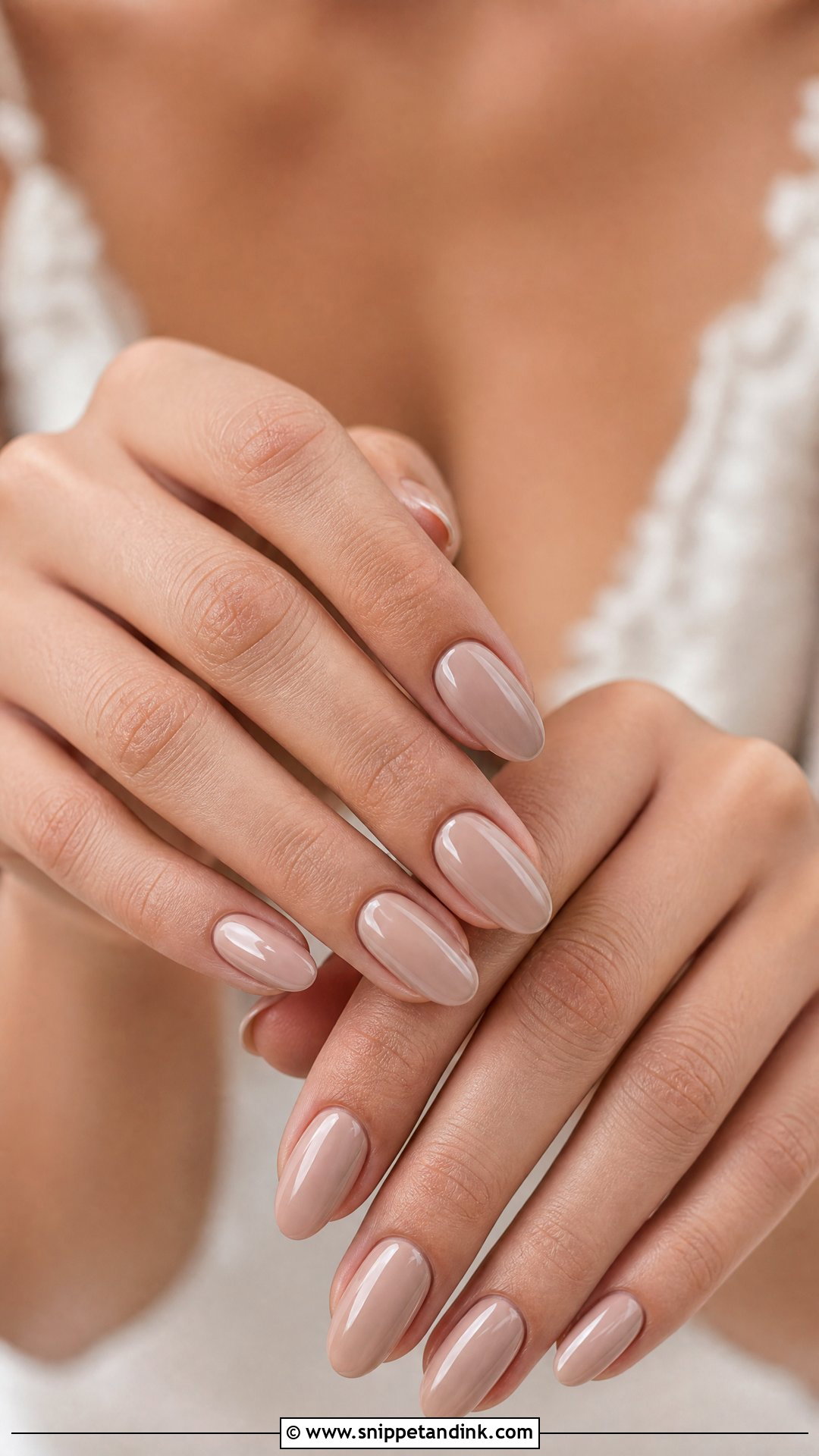
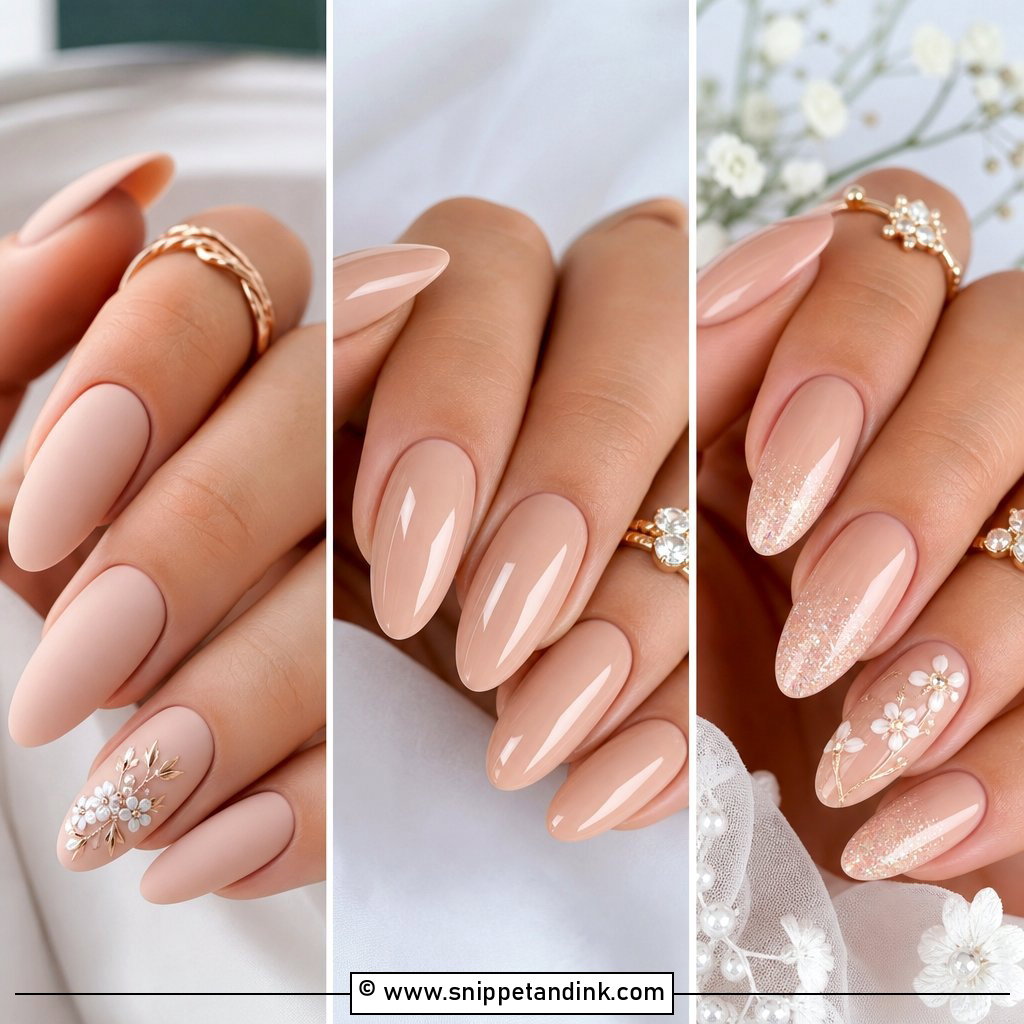
A nude set looks expensive only when the nude is right for your skin, and that’s the step most people rush. On fair skin I try soft beige-pinks; on medium skin, peachy nude or warm tan; on deeper skin, caramel, mocha or cocoa usually glows. I paint a stripe of two candidates side by side on one nail at the trial, then look at them in daylight by a window, because salon lighting flatters every nude. Glossy nude lengthens the fingers. Add a thin French tip, a single pearl or a hint of shimmer if plain feels too plain.
6. Short Bridal Nails
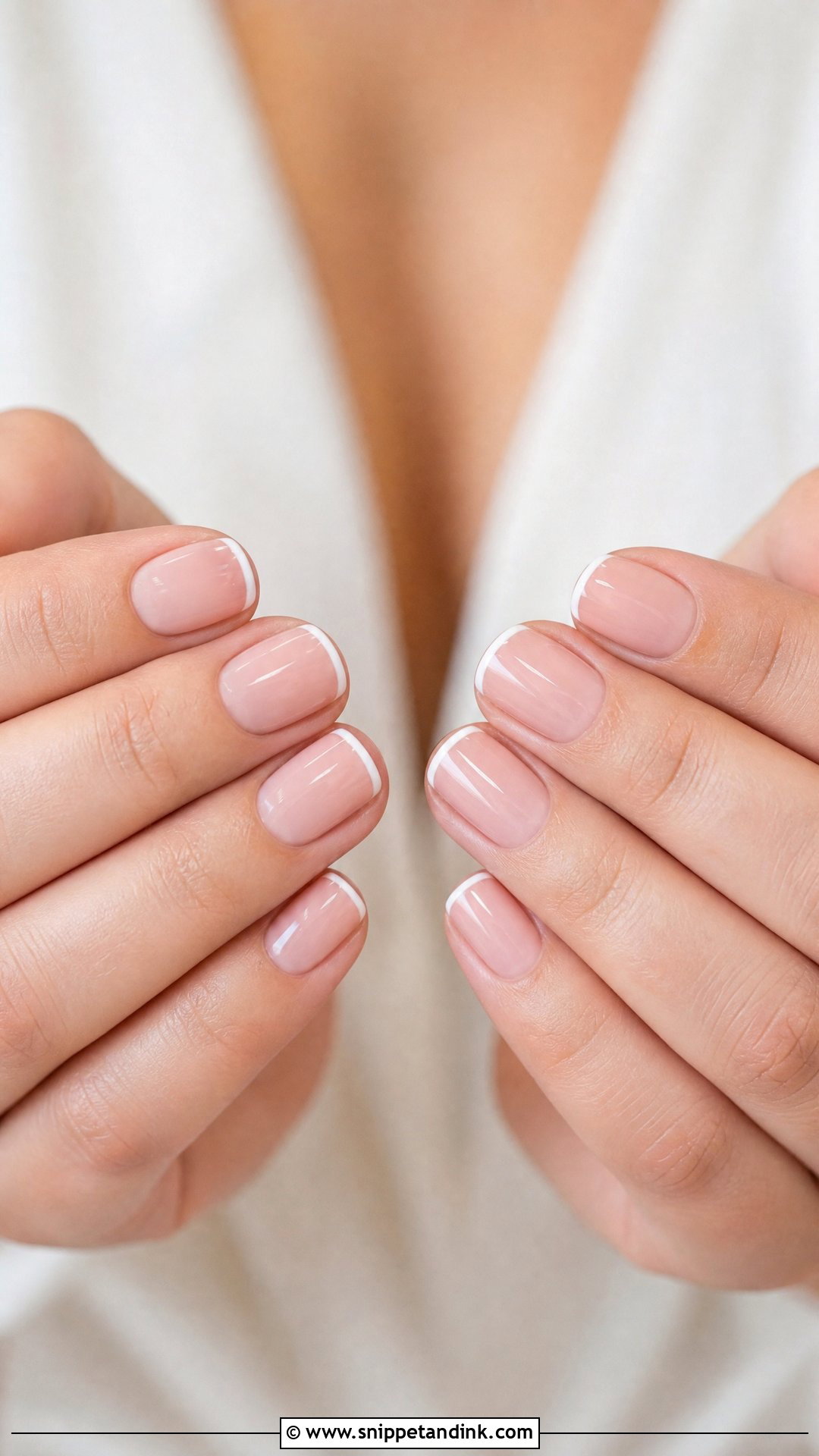
Short nails suit you if long ones get in your way, and on a day of buttons, earring backs and hairpins that counts for a lot. A short square, soft round or squoval looks tidy in photos with sheer pink, nude, milky white or pearl chrome. With a short nail there’s nowhere for messy prep to hide, so most of my time goes into the cuticle area and getting the side walls even. Micro French tips, tiny pearls or a fine shimmer top coat are enough detail. Heavy art on a short nail tends to crowd it.
7. Almond Bridal Nails
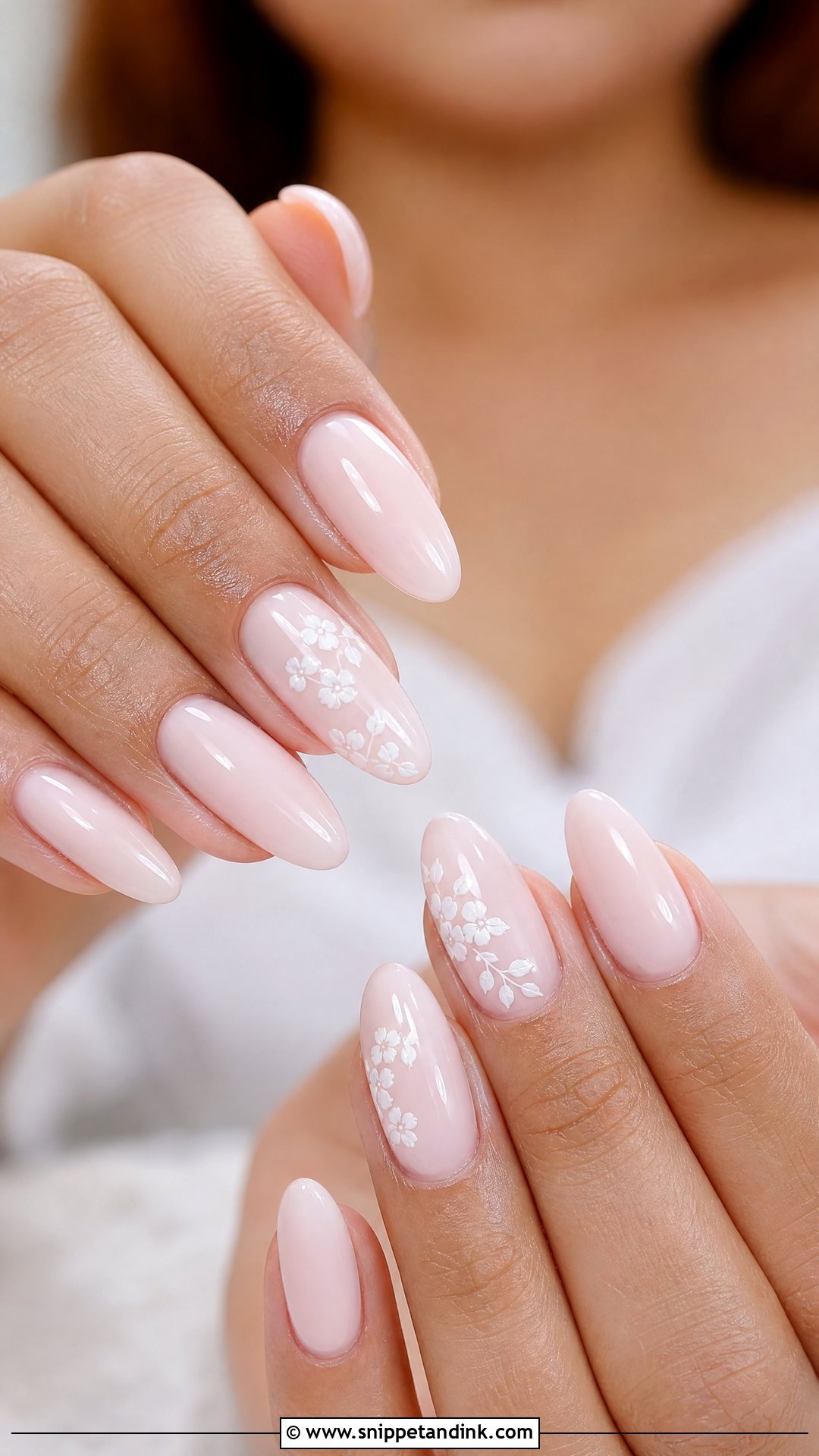
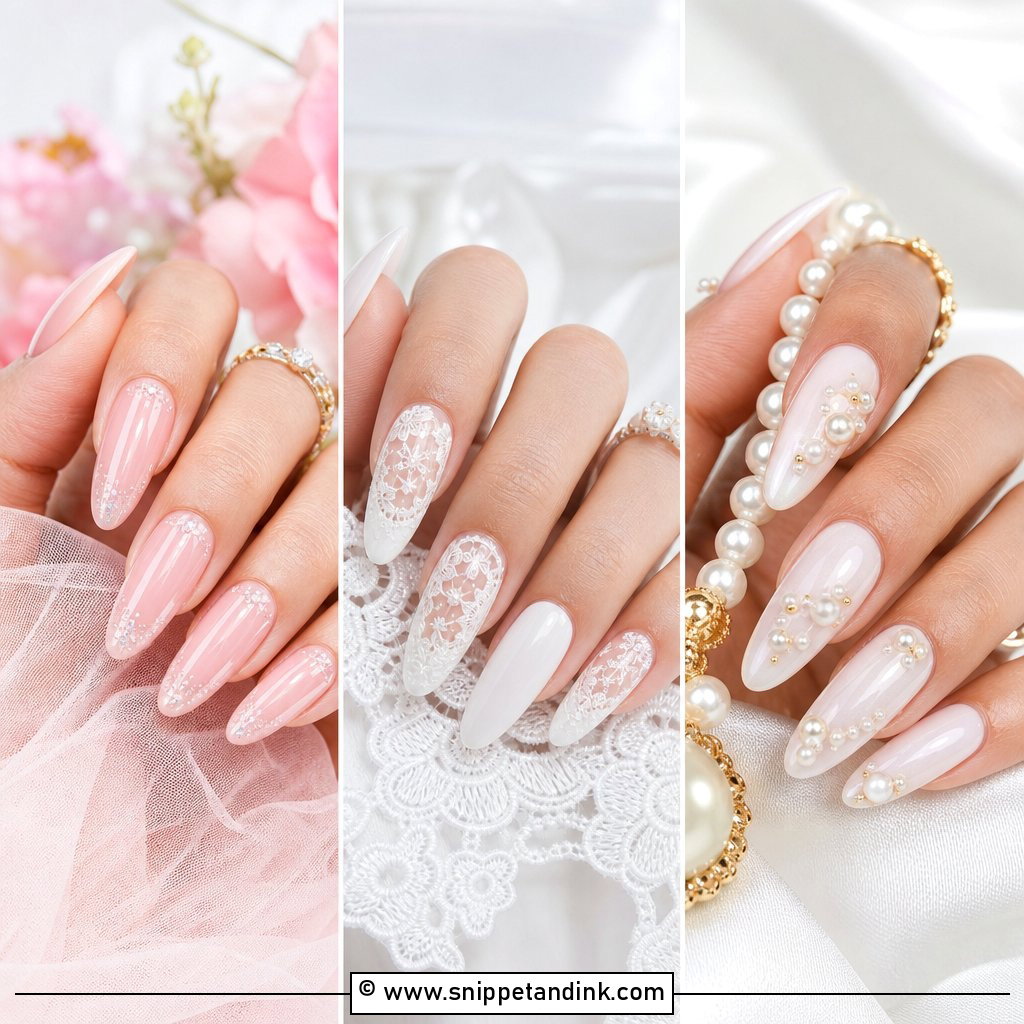
Almond tapers gently toward a rounded point, which lengthens the fingers without the sharpness of a stiletto. It takes most wedding nail designs, from French tips to milky chrome, floral art and pearl accents. Medium length is what I recommend for the day itself; long almonds can snag lace and make it awkward to fasten jewelry. Sheer pink almonds with tiny white flowers suit a detailed gown, while pearl chrome suits a sleek one. On a wide, flat nail bed I soften the taper so it doesn’t look pinched.
8. Oval Bridal Nails
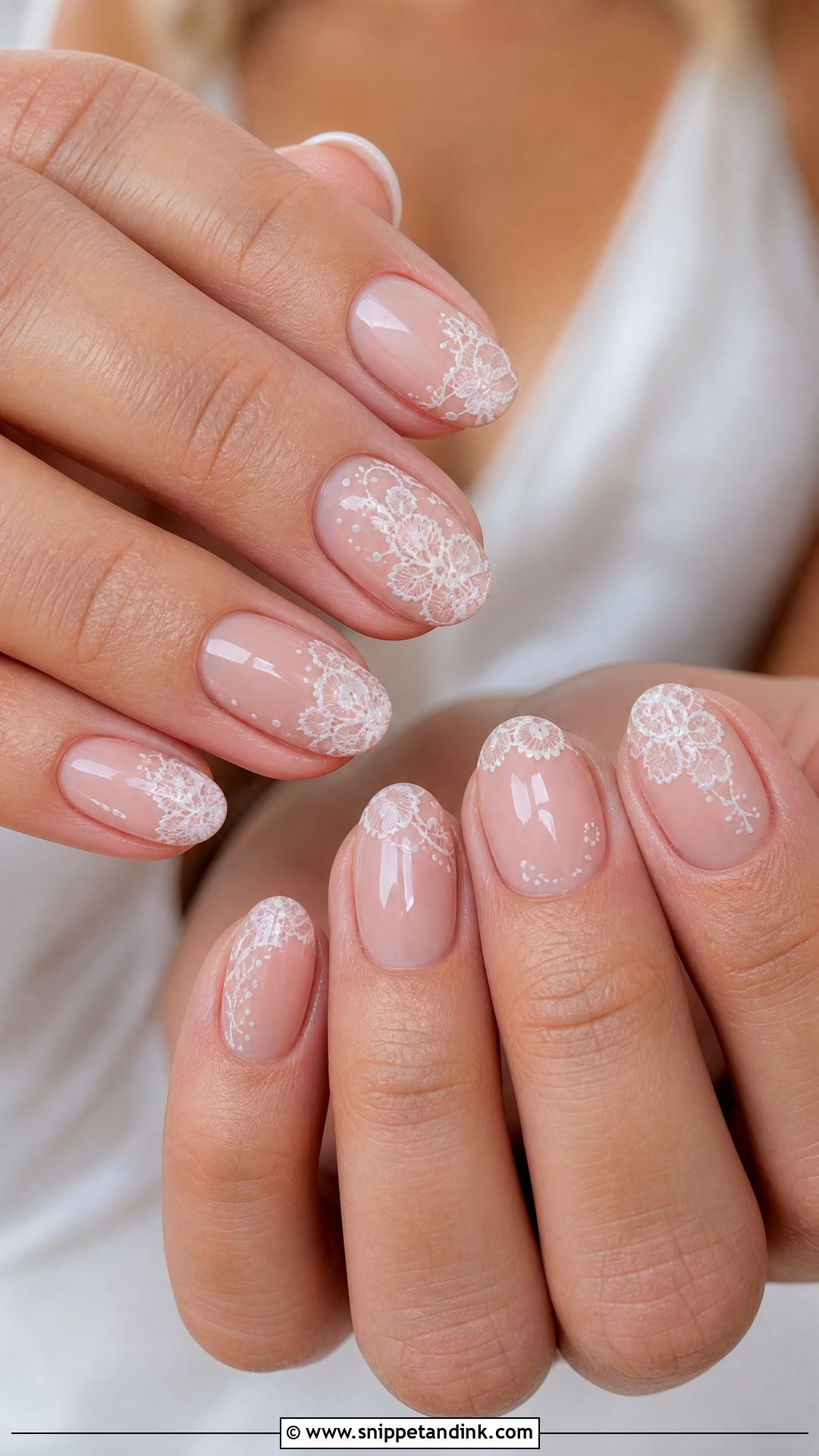
Oval is soft and rounded, and it gives you length without anything pointed. It suits sheer nude, blush pink, milky white and classic French equally well, and it makes hands look relaxed in ring photos. I file ovals from both sides toward the center and check them from above, because a slightly lopsided oval is obvious when ten fingers line up on a bouquet. Keep it plain with a sheer pink and gloss, or add tiny pearls, lace-like lines or a little shimmer near the cuticle. In twenty years’ worth of photo albums, it’s the shape least likely to look dated.
9. Square Bridal Nails
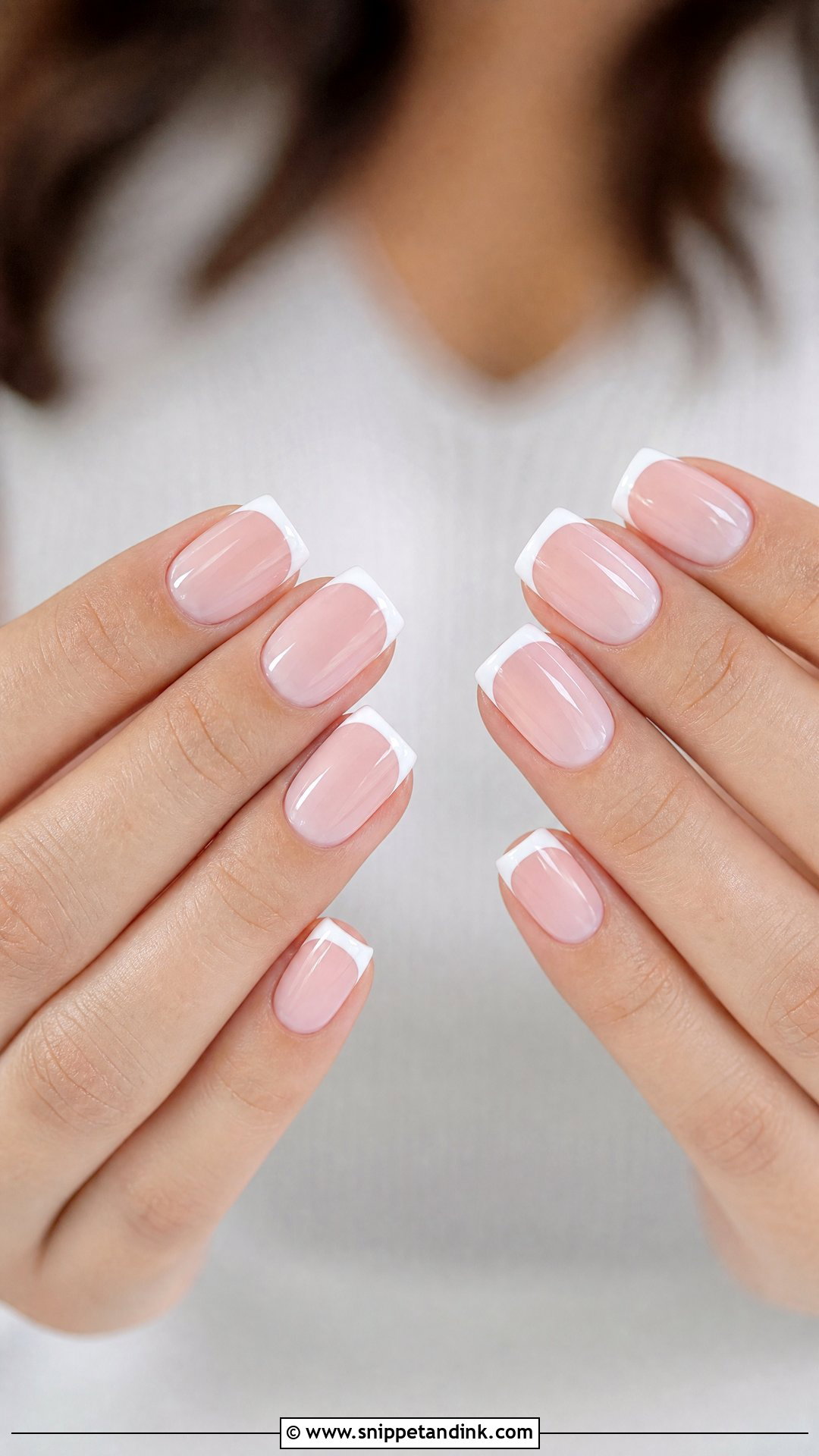
Square nails look structured and neat, with a straight free edge. Short or medium length works best; a long square can look heavy on smaller hands. Pair it with soft pink and white French tips for a traditional finish, or pearl chrome or a sheer beige for something more modern. I always round the very corners a touch, since sharp corners catch on tulle and are the first place a gel set chips. You get a strong-looking edge without needing much length.
10. Coffin Bridal Nails
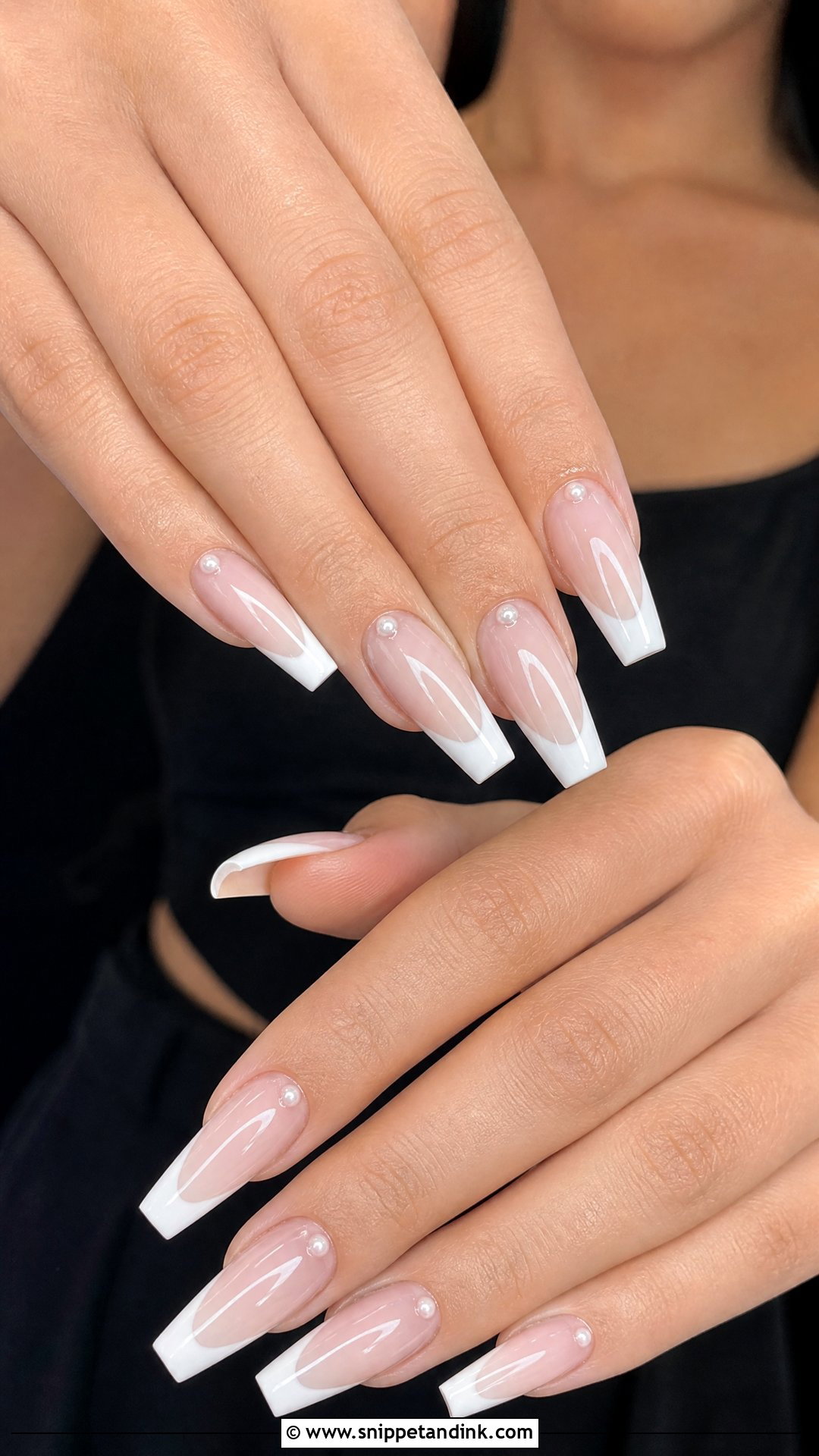
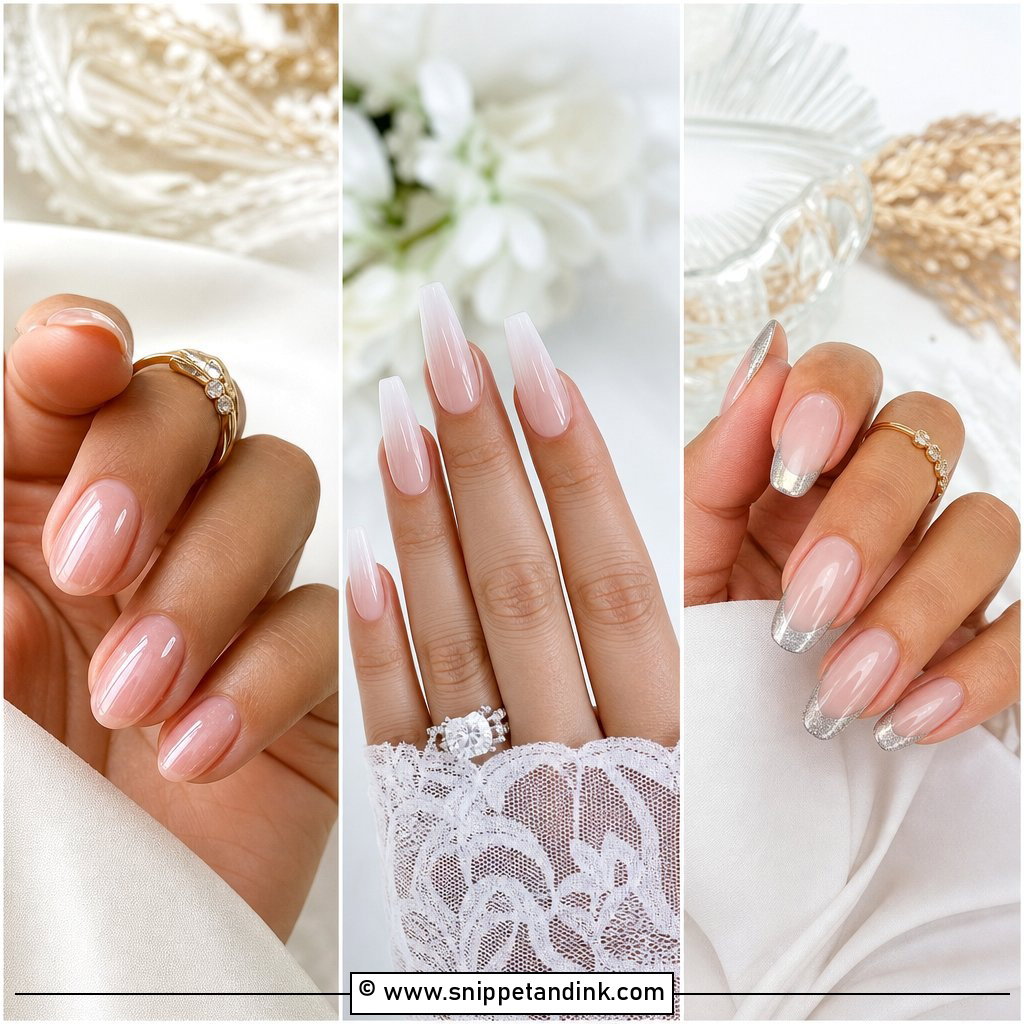
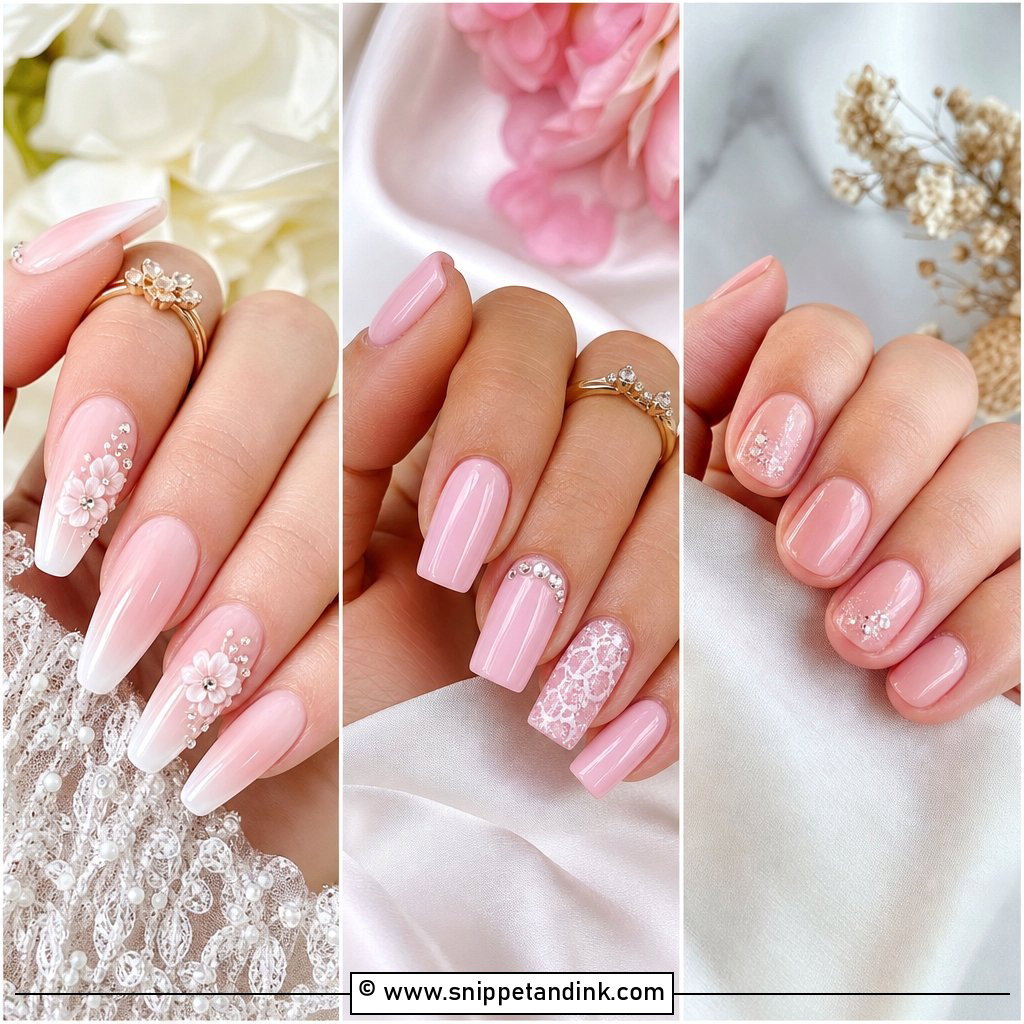
Coffin nails, tapered with a flat tip, are the most glamorous shape on this list. Medium coffin is easier to live with; long coffin is a bigger statement and harder to handle when you’re pinning a veil or fastening a bracelet. Soft colors keep it bridal: milky white, blush pink, nude or champagne shimmer. A French tip on a coffin shows off that flat end. Most coffins are extensions, and the flat tip leaves a wide free edge that needs a well-sealed top coat to stop lifting.
11. Bridal Ombre Nails
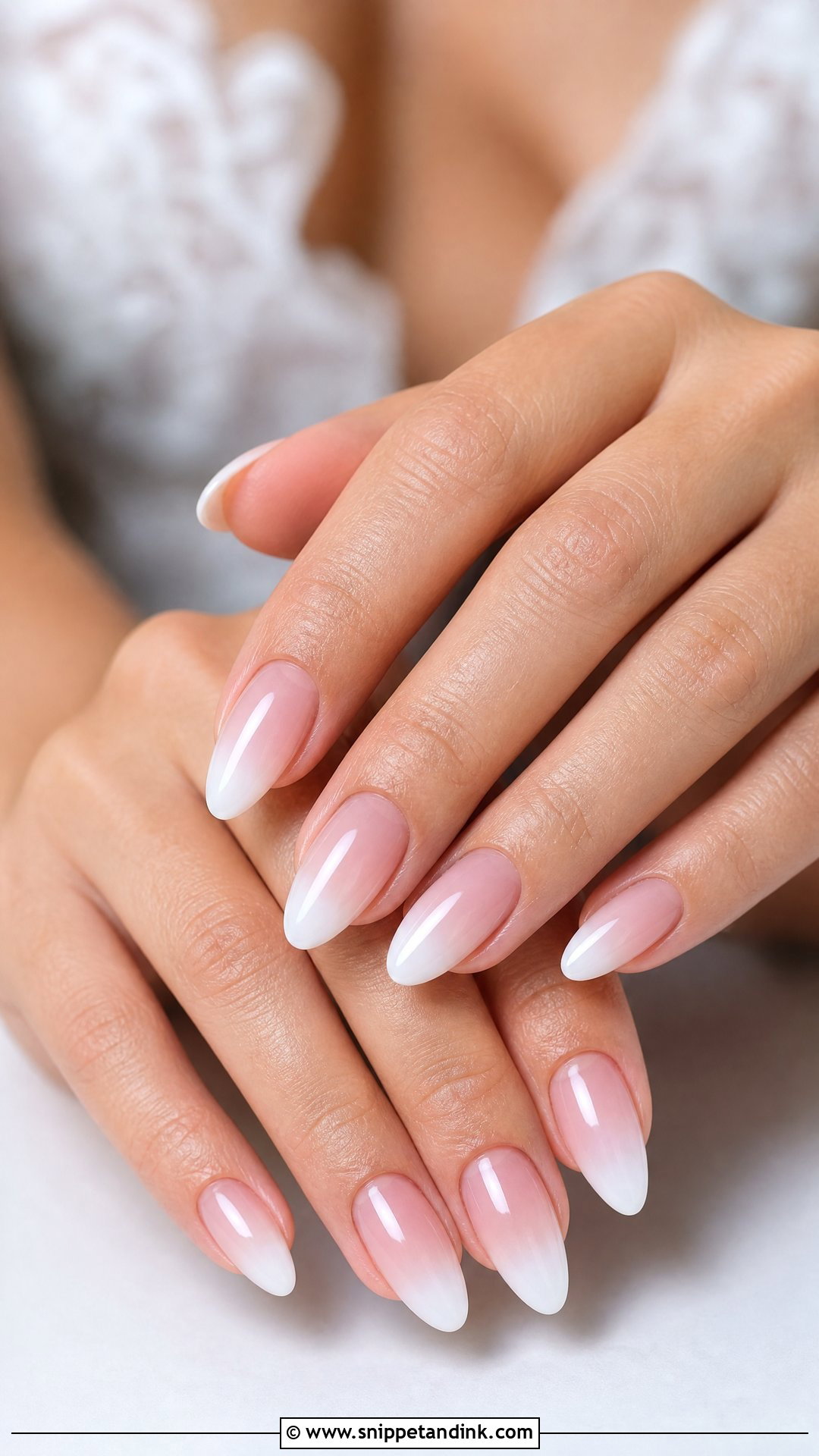
Ombré blends a nude or blush pink base into white tips, so it reads like a French manicure without the line. I sponge or brush the gradient in thin layers; building it slowly is what keeps it from going patchy. Because there’s no hard edge, it makes the nail look a little longer, and small grow-out near the cuticle hides well. Almond, oval and coffin give the fade enough room. A thin layer of pearl shimmer on top is a nice finishing touch.
12. Bridal Lace Nails
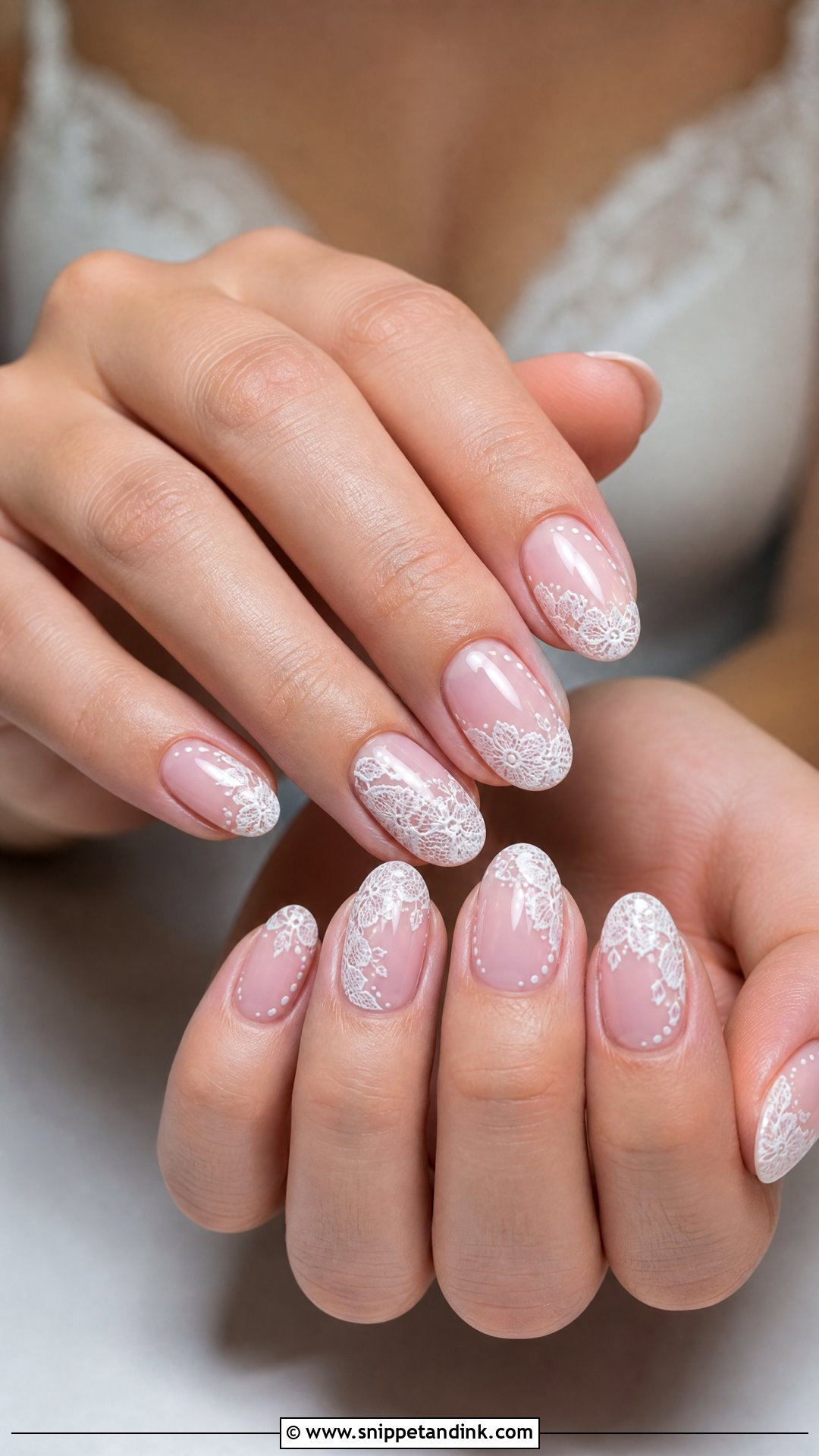
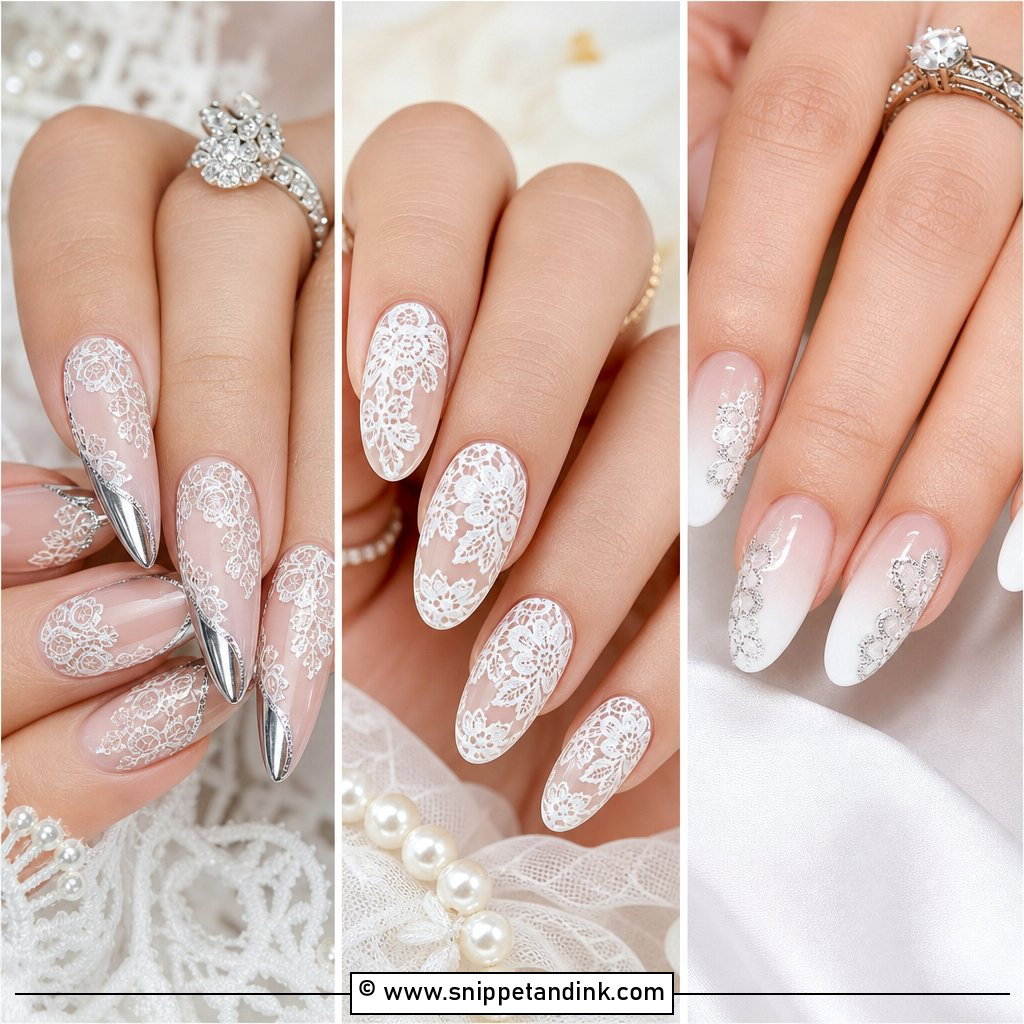
Lace nails make sense when your dress has lace sleeves, embroidery or other fine detail you want to echo. Over a sheer nude, pink or milky base, I paint thin white lines, tiny dots and loose floral curves. The skill is leaving enough bare nail between lines; packed lace looks like a sticker. Two accent nails are enough for most brides. Bring a close-up photo of your actual lace, since I’ll pick out a motif from it rather than using a generic pattern.
13. Floral Bridal Nails
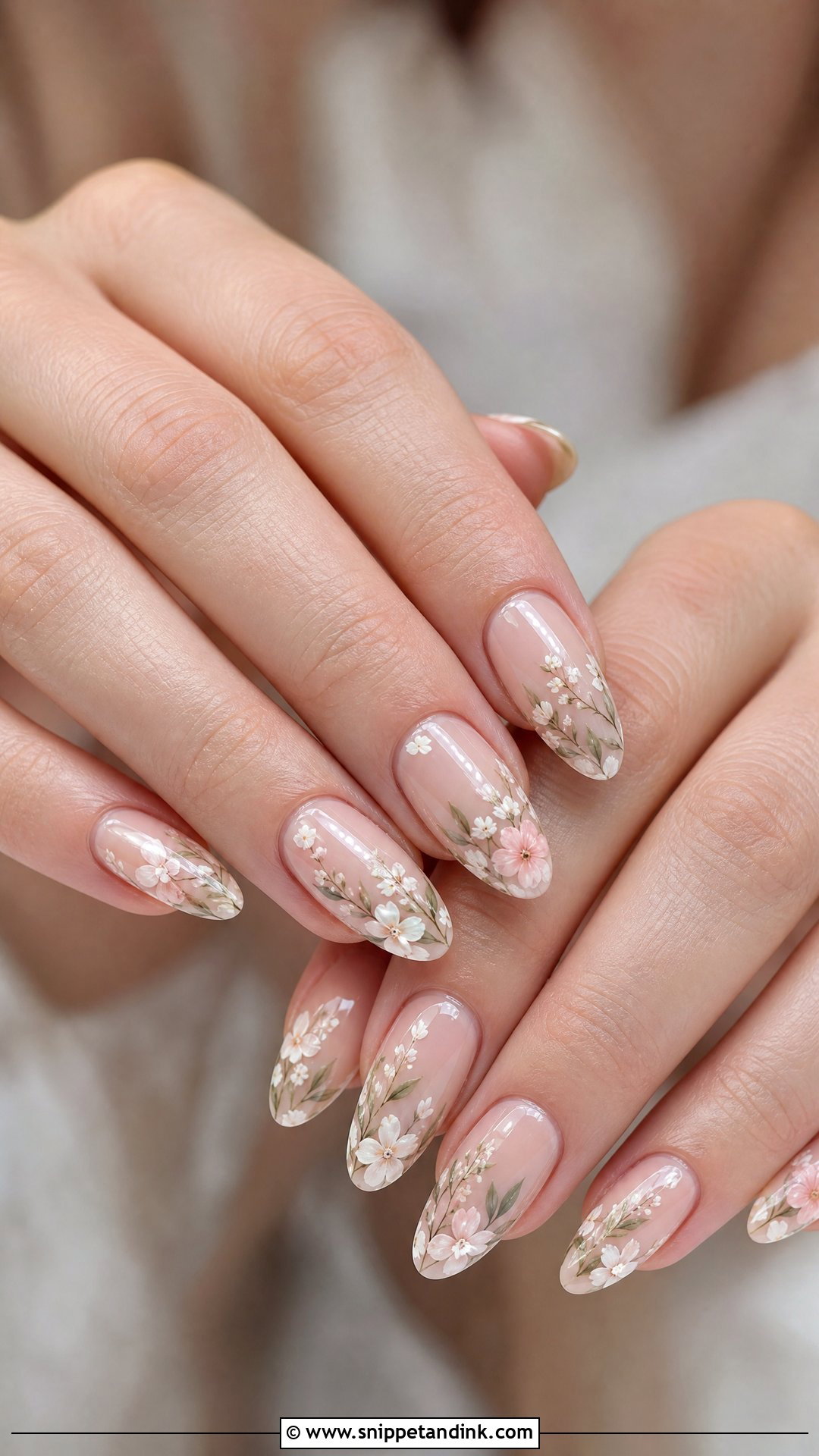
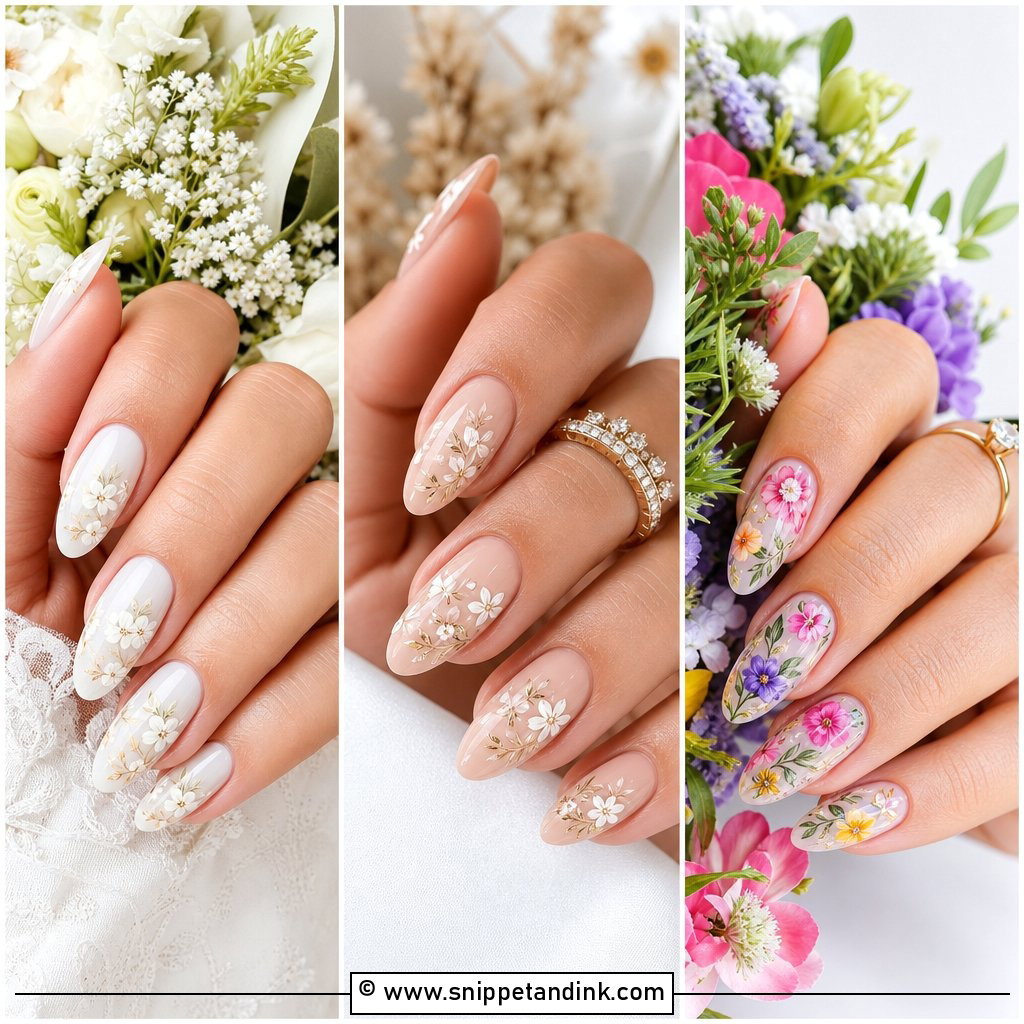
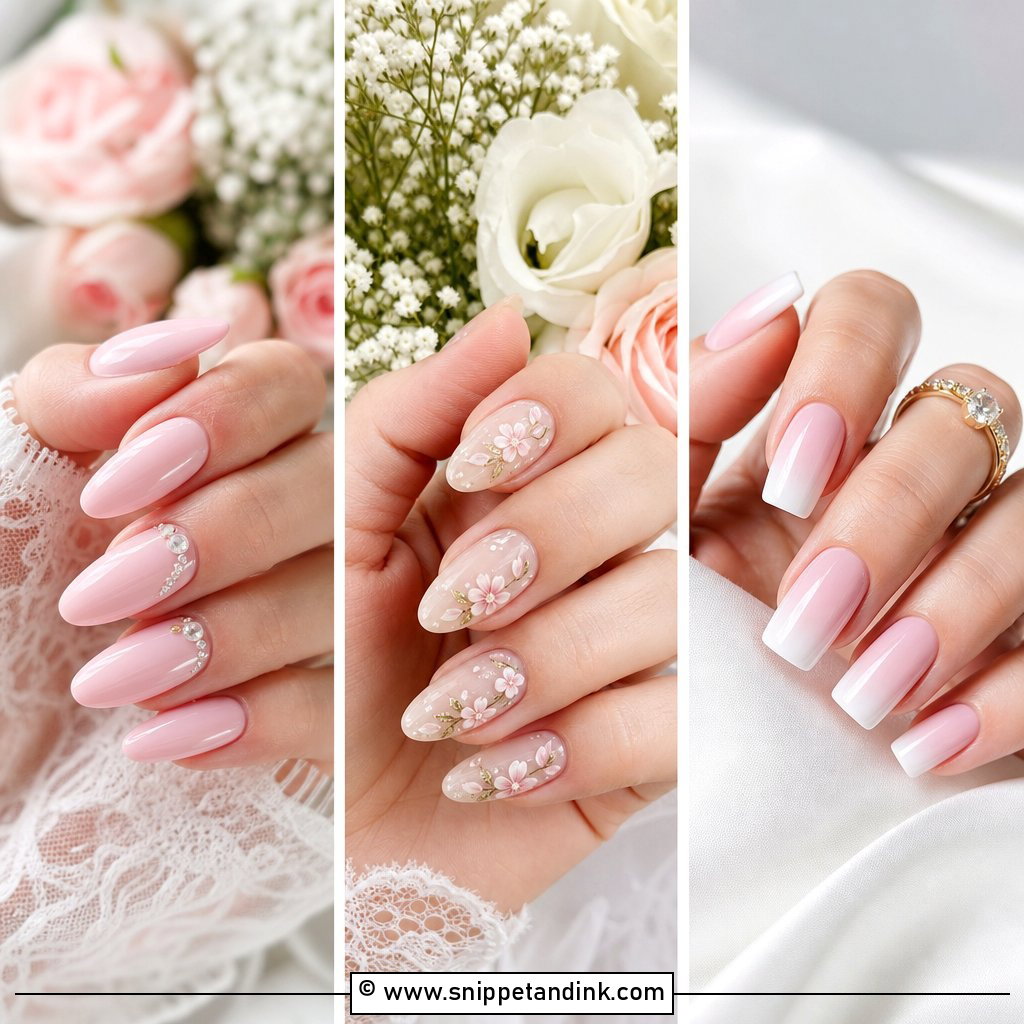
Small white flowers, blush petals and a few green leaves over a sheer nude or milky pink base feel right at spring, summer and outdoor weddings. Keep the flowers small and spaced, otherwise the set reads playful rather than bridal. Green is the color I’m careful with: a bright leaf green can look harsh next to an ivory gown, so I tone it down with grey or sage. Gloss makes the art look fresh; matte softens it. Almond and oval shapes suit the curves of petals best.
14. White Chrome Bridal Nails
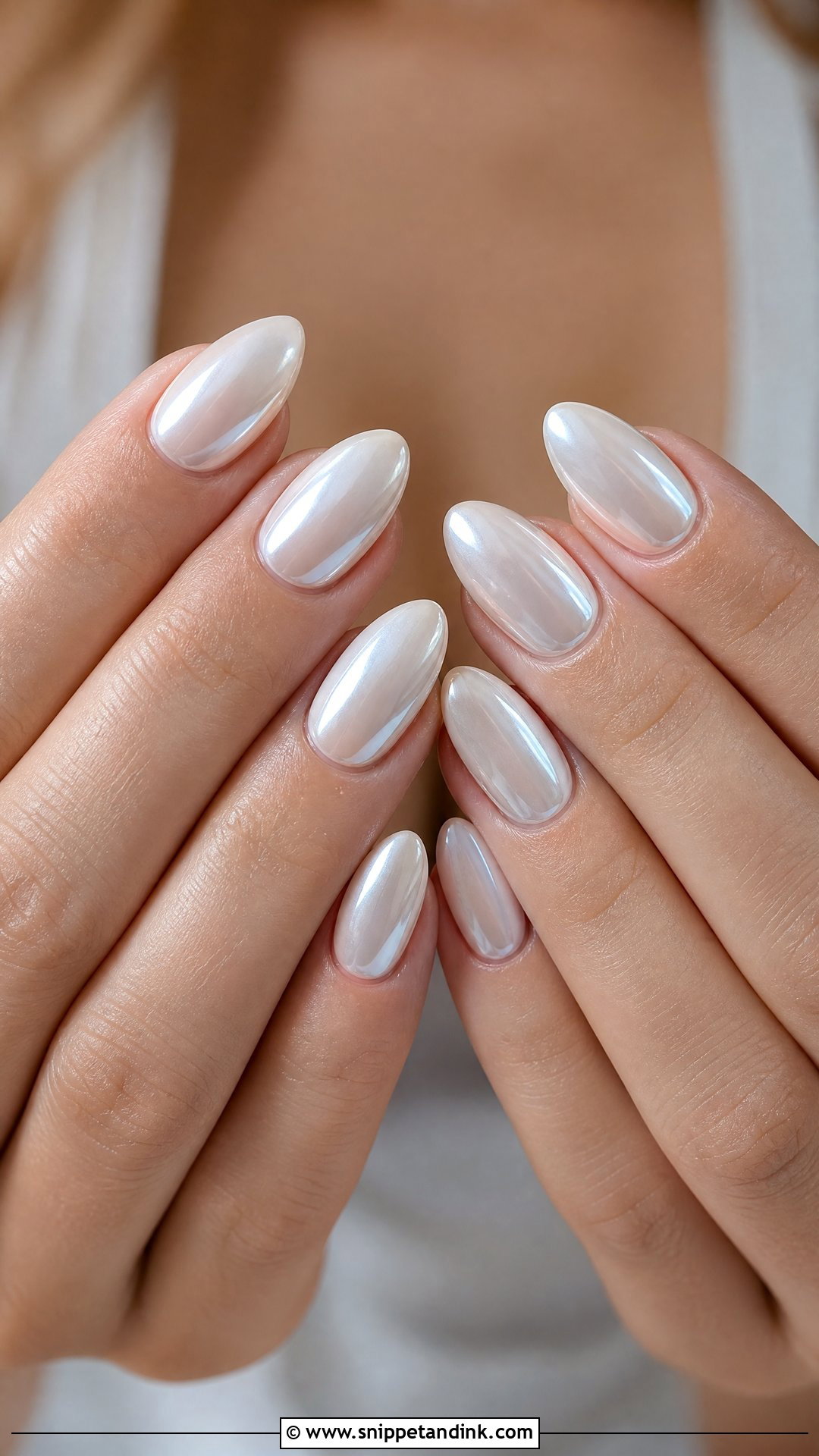
White chrome is the stronger cousin of pearl chrome, with a brighter, more reflective finish. A milky white, soft ivory or sheer pink base keeps the reflection from looking harsh. It goes with minimalist gowns, satin and simple jewelry, and it shifts as your hand moves, so it reads well in candid shots. The catch: chrome highlights every bump and ridge beneath it, so the base needs to be perfectly level. I’d do it on a medium almond or square and skip any art on top.
15. Glitter Ombre Bridal Nails
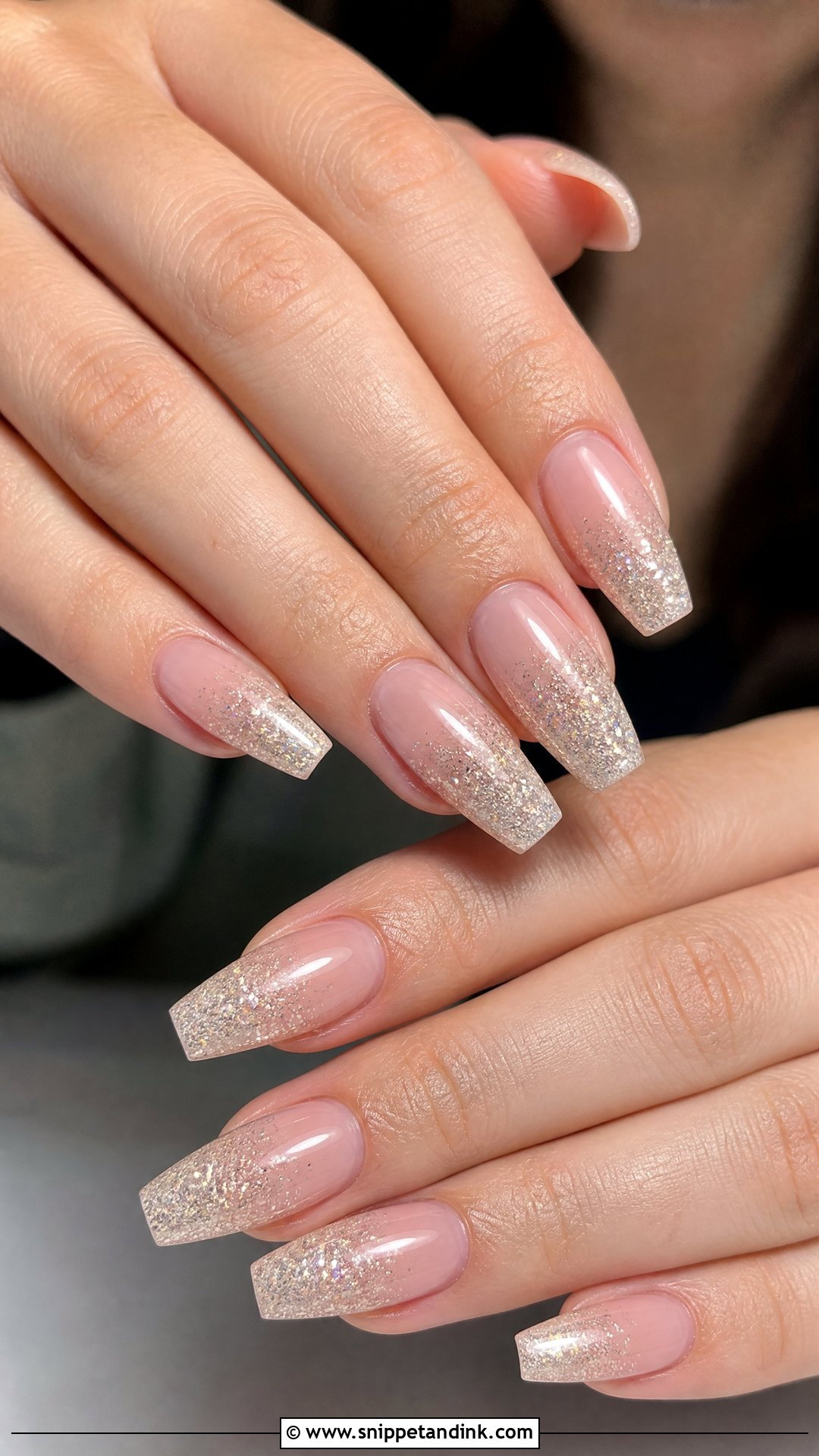
Glitter ombre bridal nails fade fine glitter from the tip or the cuticle over a nude, blush or milky base, so the sparkle stays in one zone. Silver, champagne, pearl and soft rose gold are the shades I’d use. It makes sense if your dress has beading or crystals, because the glitter picks up the same light. Fine glitter is the key word; coarse glitter feels rough and looks like a party set. Almond, oval and coffin shapes give the fade room to blend.
16. Pearl Accent Bridal Nails
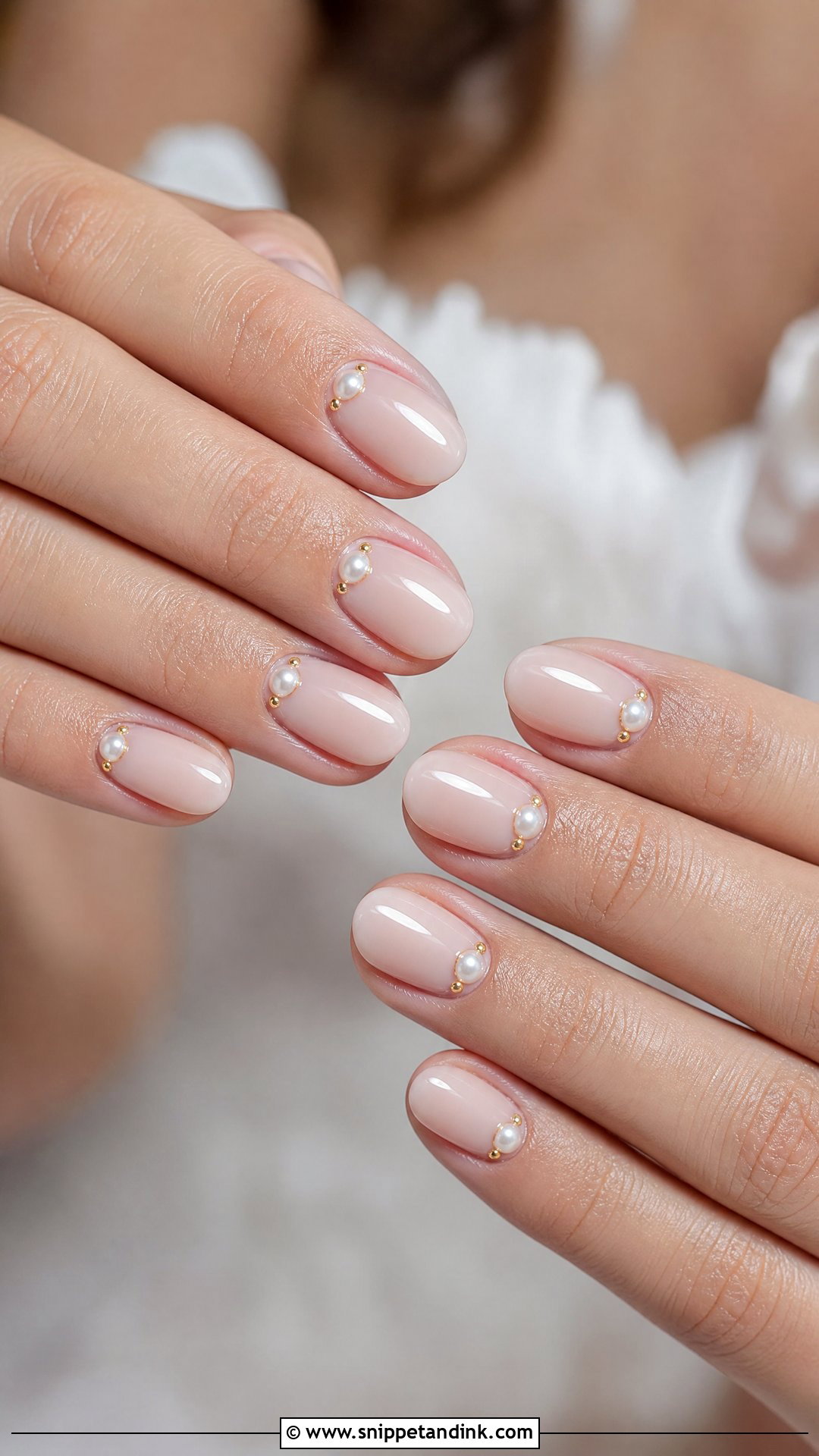
Pearl accents add a jewelry-like detail over a sheer nude or milky base. One pearl at the cuticle, a short line of them, or a small cluster on one accent nail are the usual layouts. It makes the most sense alongside pearl earrings, a pearl-edged veil or a pearl-trimmed dress. I set flat-backed pearls into gel and keep them away from the free edge, because pearls near the tip catch on hair and fabric and loosen by evening. Short and medium nails suit it best.
17. Gold Foil Bridal Nails
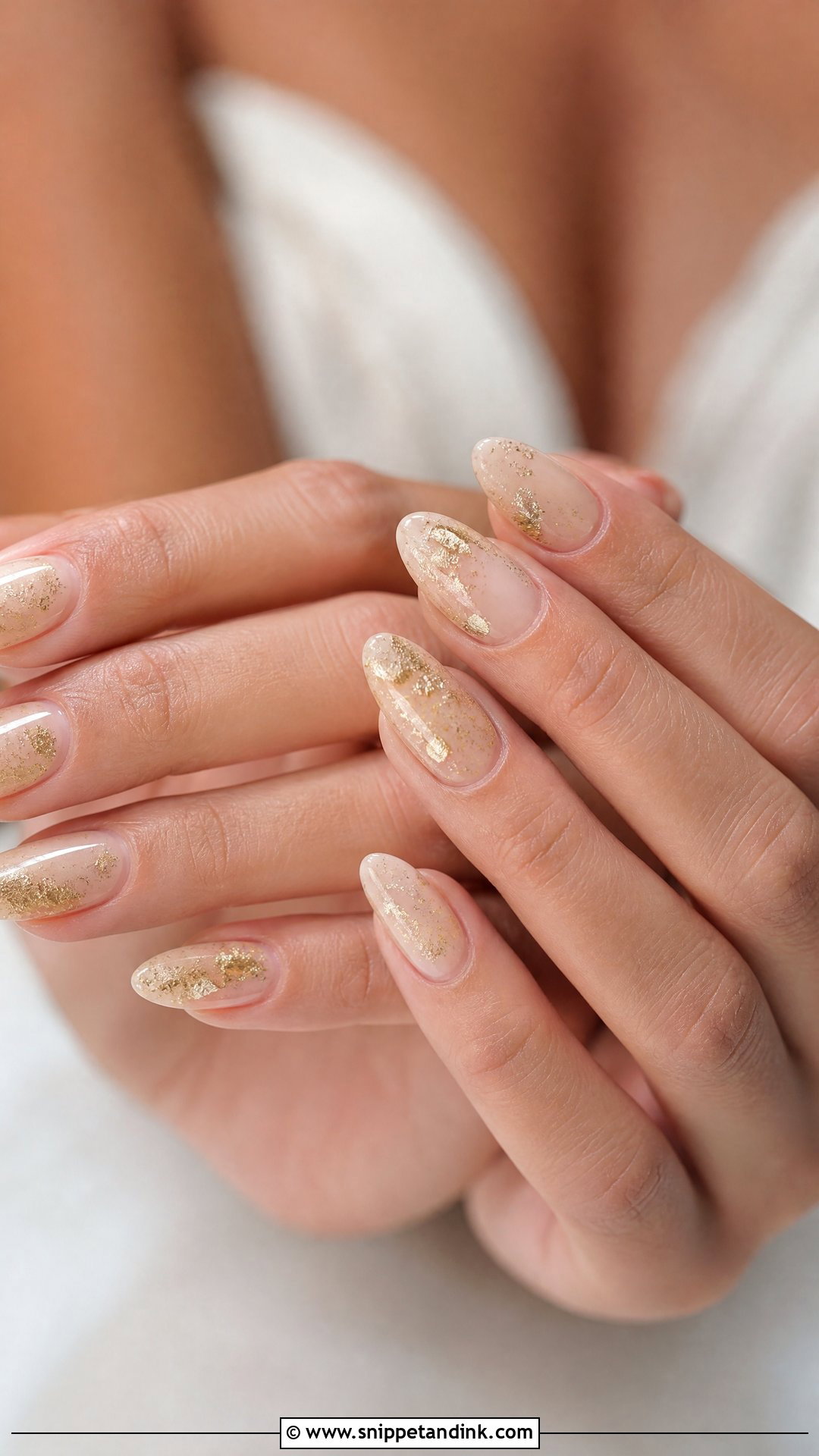
Gold foil is pressed onto a tacky layer of gel and sealed under top coat over a nude, blush, ivory or milky base. Small torn pieces scattered lightly look delicate; large sheets look heavy. Foil can wrinkle as it sets, which is fine, that texture is part of the charm, but it needs a full top coat over every edge or it lifts. It sits well with gold jewelry, warm makeup and cream dresses, and gives a bit of shine without glitter. Almond and oval keep it soft; square makes it modern.
18. Silver Bridal Nails
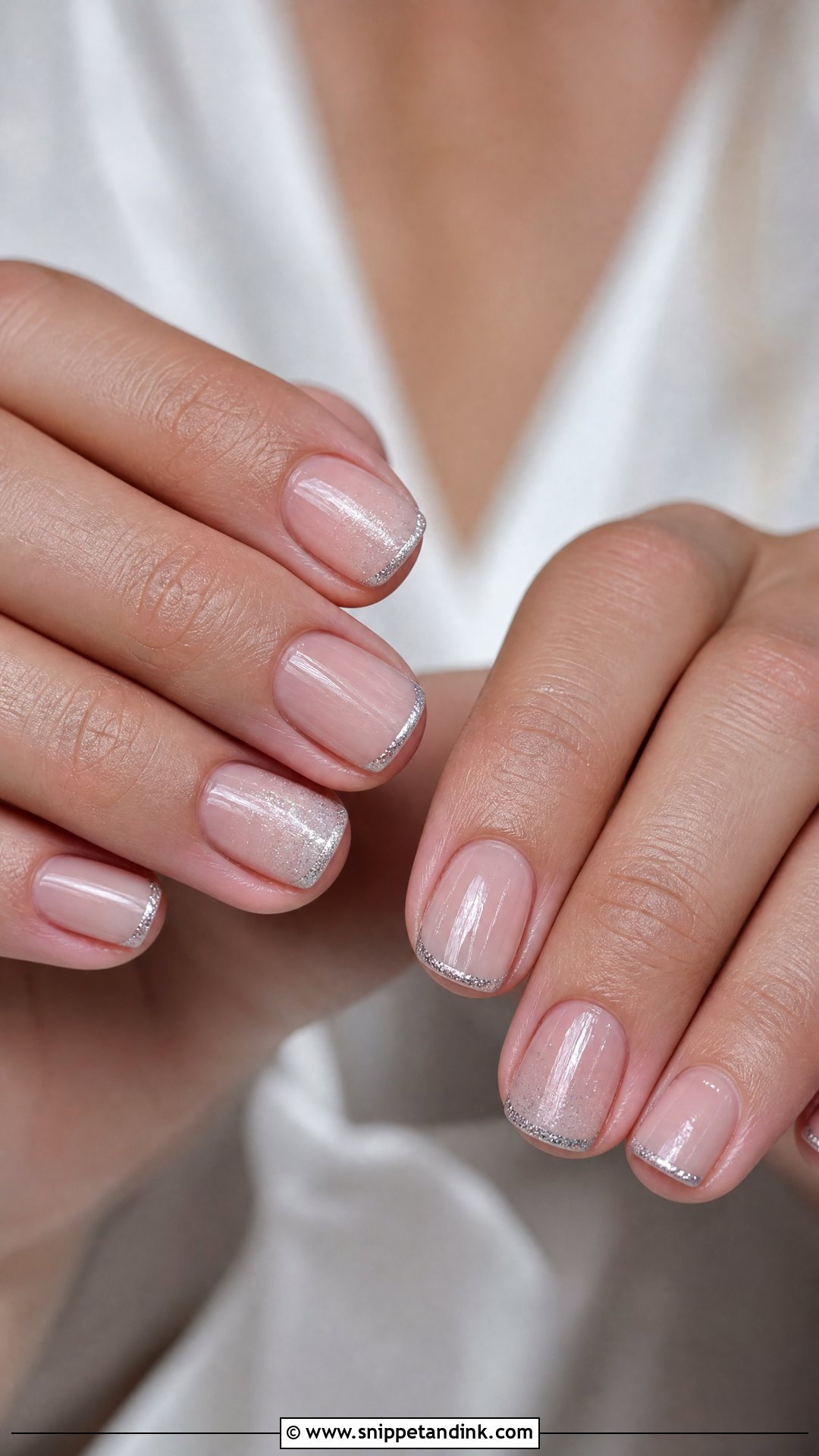
Silver belongs with platinum, white gold, diamonds and cool-toned accessories. I use it in small doses: silver micro French tips, fine silver shimmer or a little silver foil over a sheer pink base. A full silver glitter nail can work as an accent, but a whole set of it overwhelms a ring. Cool undertones, white gowns and icy pearl details pair well with silver nail designs. Keep the shape simple, a short square, oval or almond.
19. Rose Gold Bridal Nails
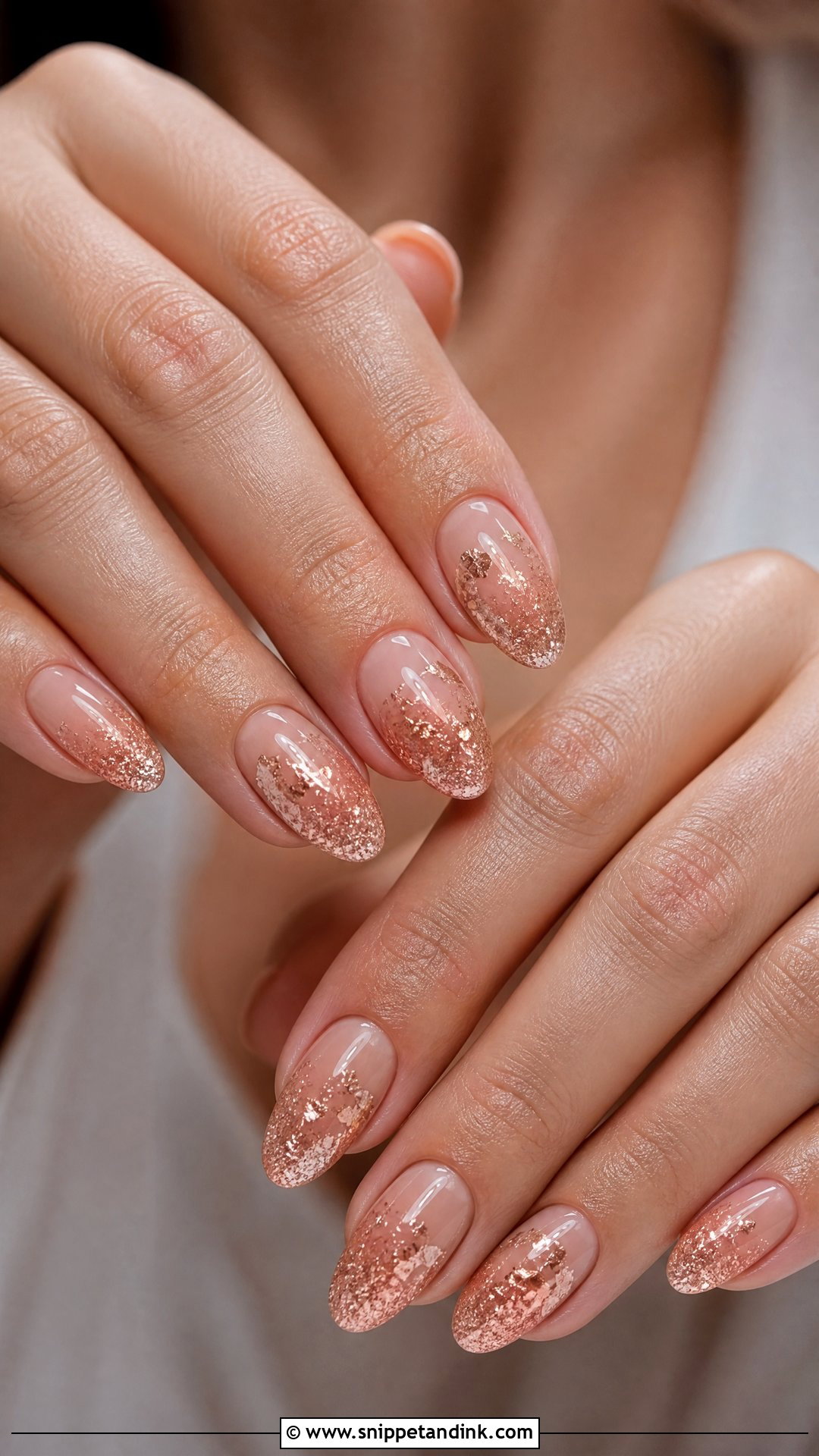
Rose gold is warm without being brassy, and it suits a wide range of skin tones. I’d use it as a thin French tip, a glitter ombre, a chrome accent or tiny foil flakes over a nude base. It lines up with blush dresses, rose gold jewelry, peach florals and soft glam makeup. One thing to check: rose gold varies a lot between brands, from coppery to pinkish, so bring your ring or jewelry to match the actual tone. A sheer pink or warm nude background lets the details blend; almond and oval shapes suit it best.
20. Minimal Bridal Nails
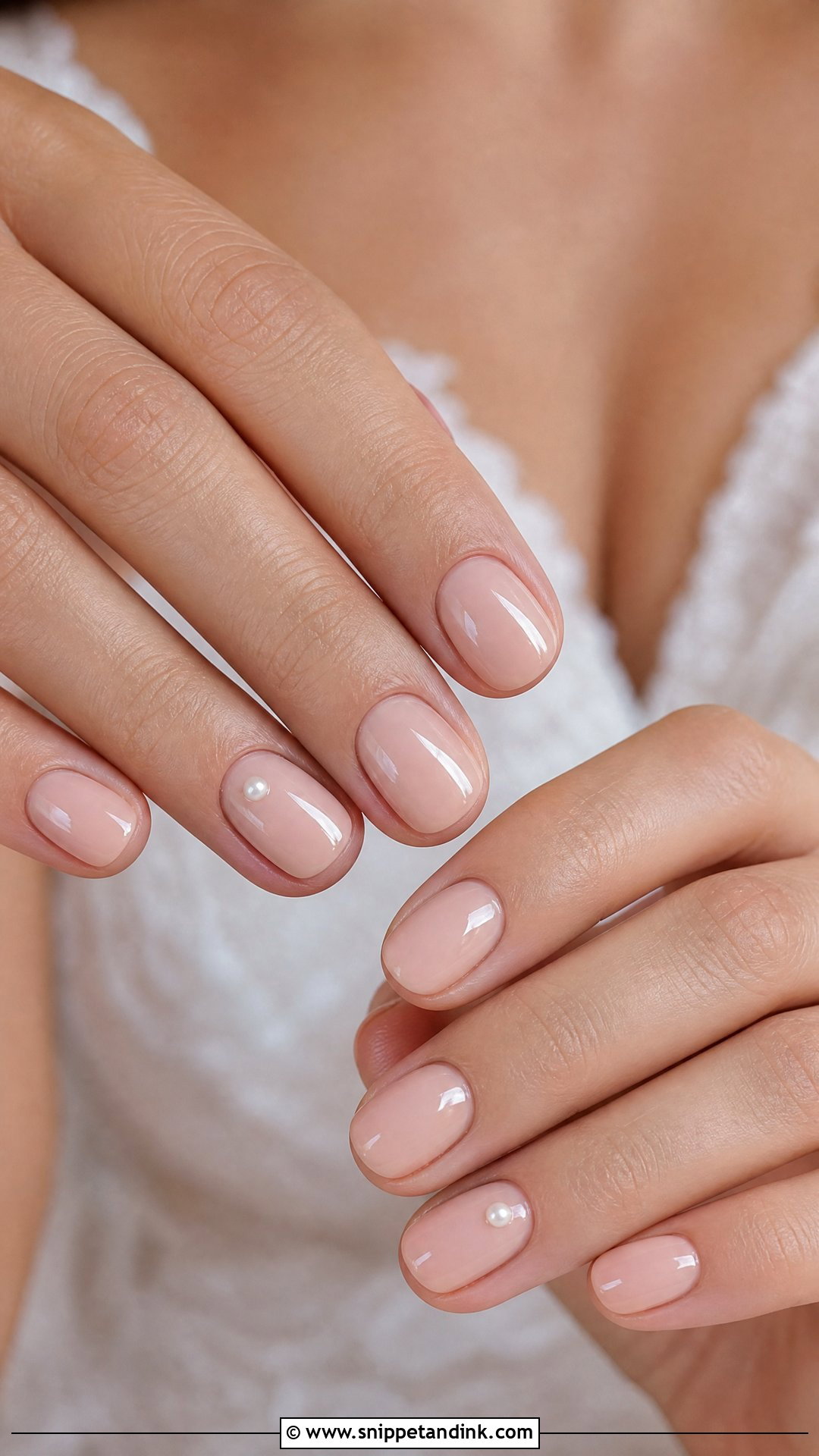
Minimal nails rely on healthy-looking nails, soft color and one tiny detail: sheer pink, nude gloss, micro French tips, a single pearl or one fine line. They’re the smart call when your dress, veil, bouquet or jewelry already has a lot going on, because they balance the whole look. Short and medium lengths suit them. With so little decoration, shaping and a smooth glossy top coat carry the whole set, so that’s where I spend the appointment.
21. Matte Bridal Nails
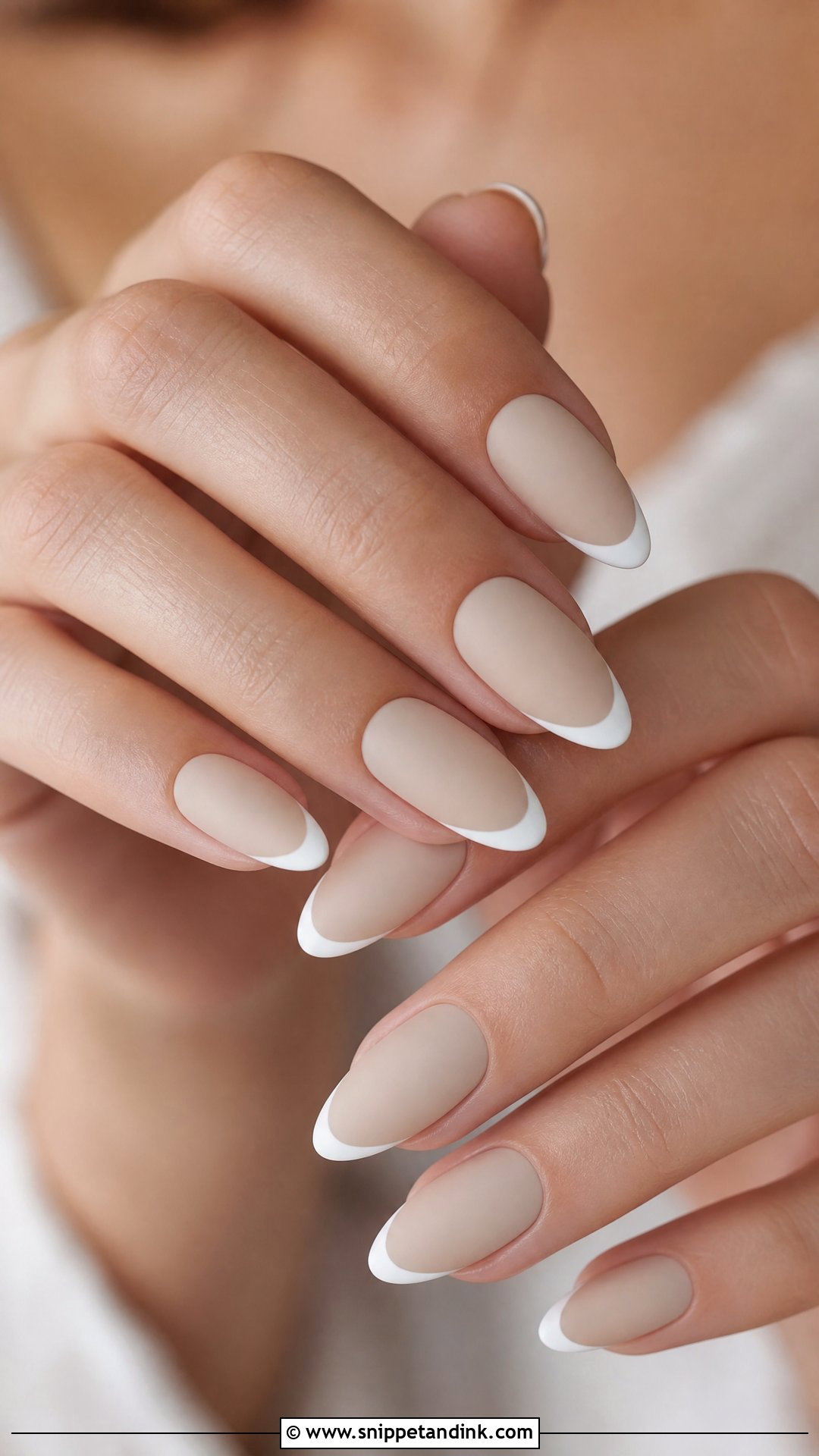
Matte gives nails a soft, velvety finish instead of shine, and it works with nude, blush, ivory and milky white shades. It suits a simple, natural or softly romantic wedding look. Matte can look flat on its own, so I often add contrast: white line art, tiny pearls or a glossy French tip over the matte base. Be aware that matte top coats pick up hand cream and food oils and develop shiny patches by evening. Almond, oval and short square shapes all suit it.
22. Sheer Pink Bridal Nails
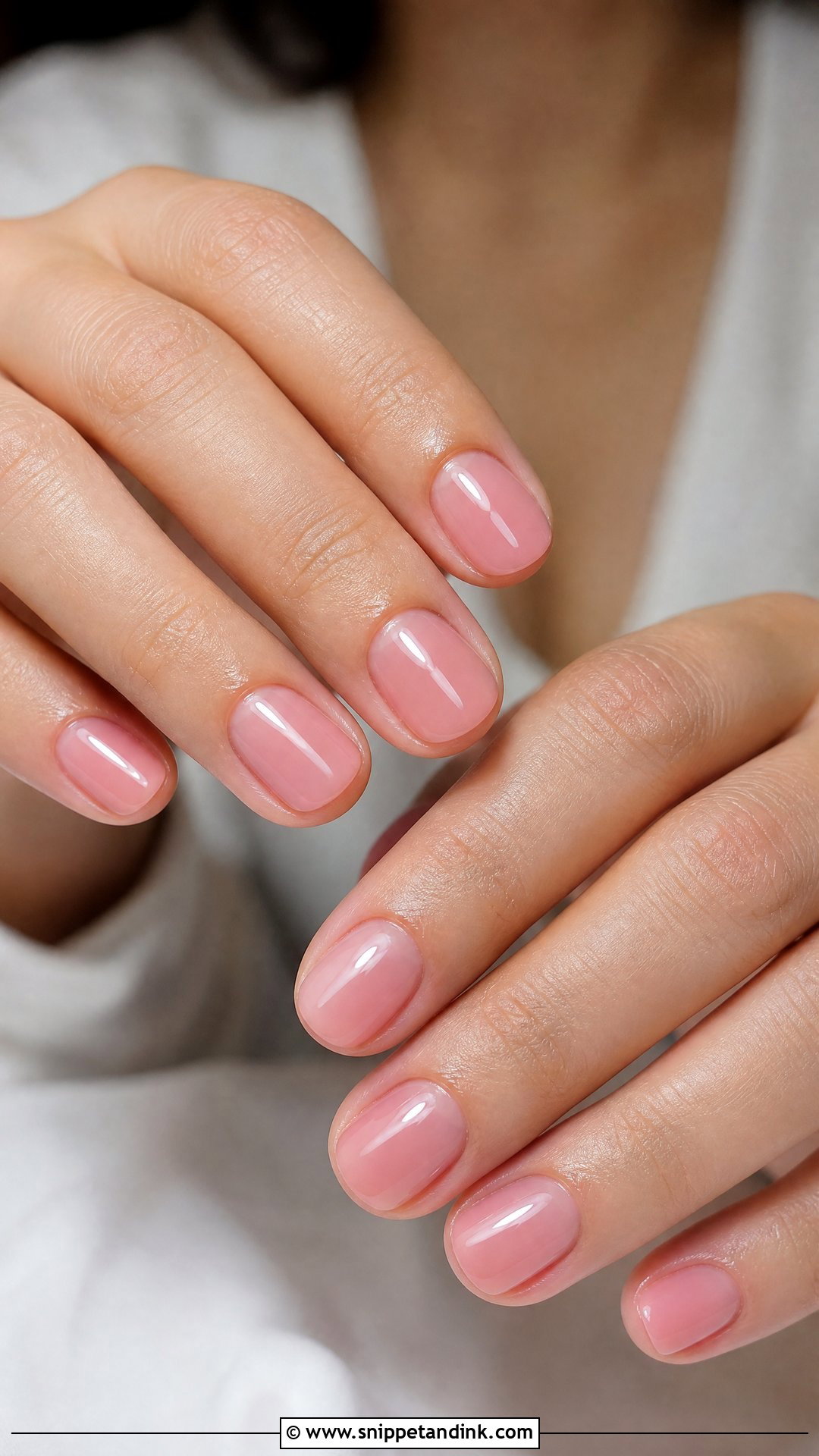
Sheer pink is a wash of color that lets your natural nail show through, so it looks real rather than painted. Hands look bright and healthy in photos with it. Pick cool baby pink, warm peach-pink or a neutral rosy shade depending on your skin tone. Sheer polish shows every streak, which is why I prefer sheer gel for a wedding: it self-levels better than regular polish. A glossy top coat is classic; a thin pearl shimmer adds dimension. Any nail length can wear it.
23. Micro French Bridal Nails
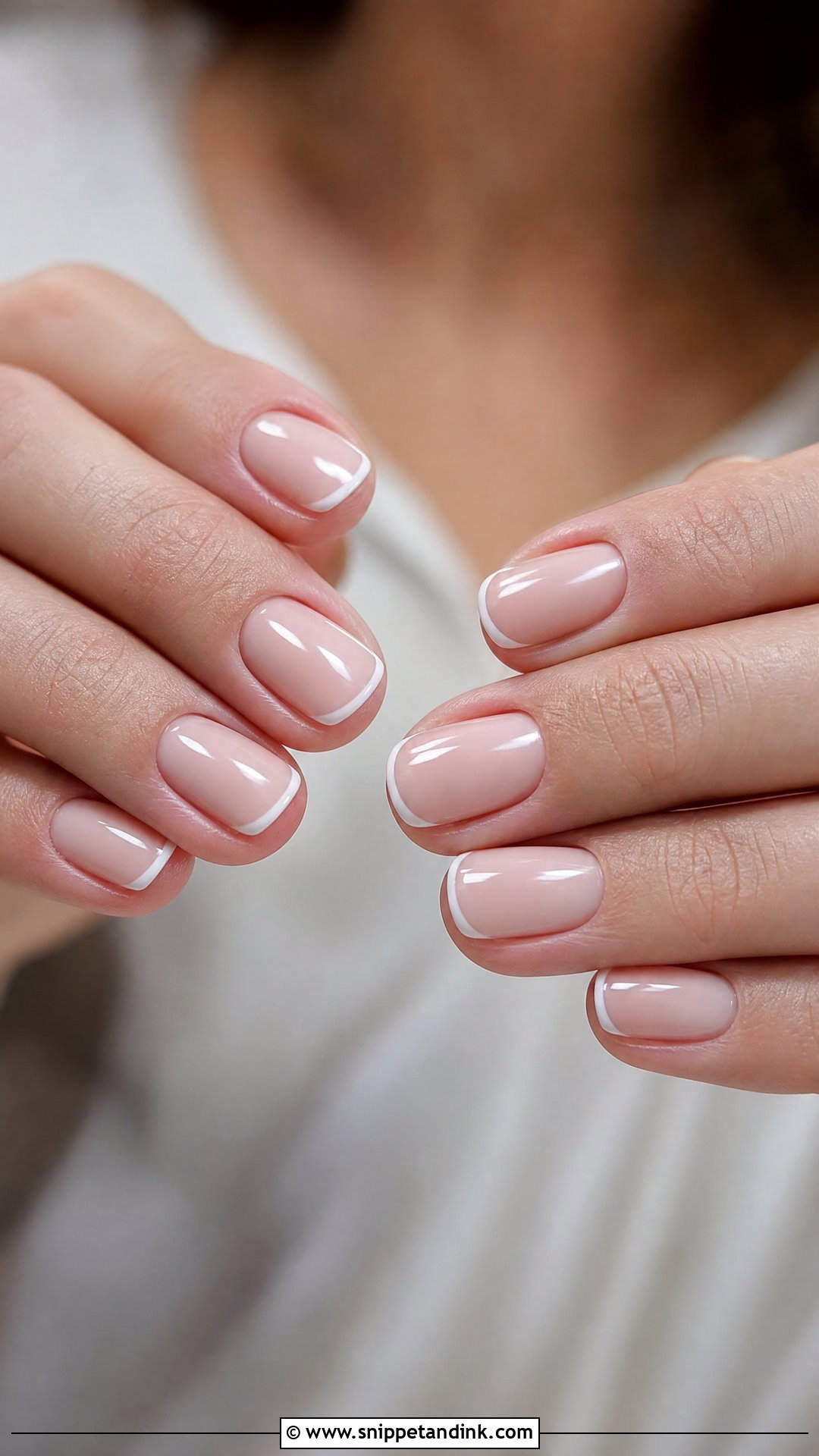
Micro French bridal nails use a very thin line at the edge instead of a thick white tip. They suit short nails especially, because a fine tip doesn’t visually shorten the nail bed. I paint them with a long thin striping brush, and the line needs to be the same width on all ten nails, which is harder than a thick tip. Over a sheer pink, nude or milky base, try white for a classic finish, pearl for glow or champagne for warmth.
24. 3D Flower Bridal Nails
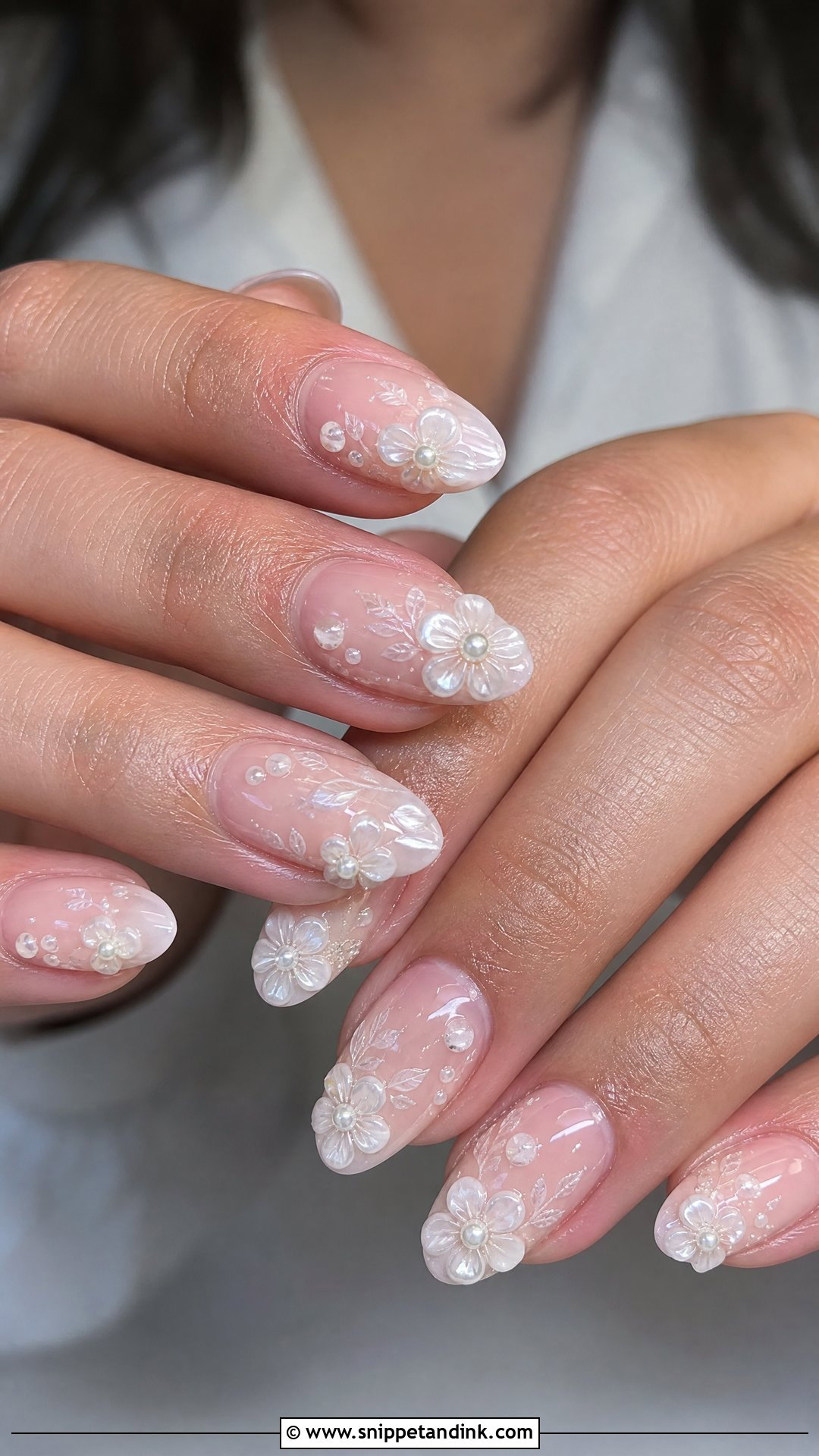
3D flowers are sculpted from thick white, ivory or blush gel and placed over a sheer base, giving a raised effect that looks great in detail shots. The trick is moderation: a few small flowers on accent nails look more elegant than covering every nail. Raised art can catch on lace, knitwear and hair, so I keep flowers low and centered, away from the edges. Pair them with simple glossy nails, French tips or milky polish. Floral gowns, textured veils and soft bouquets suit them, and almond or oval shapes keep the flowers from looking bulky.
25. Something Blue Bridal Nails
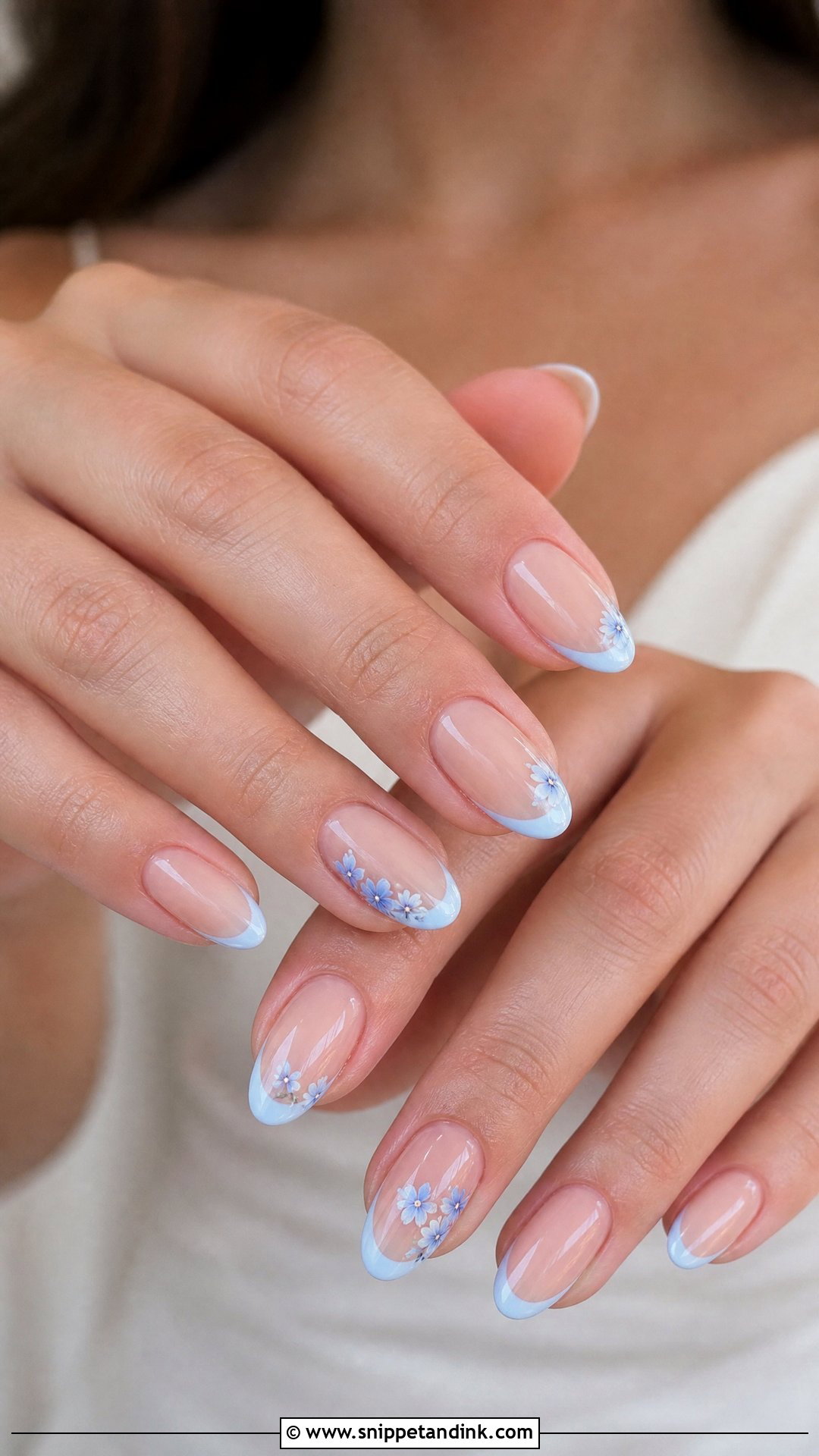
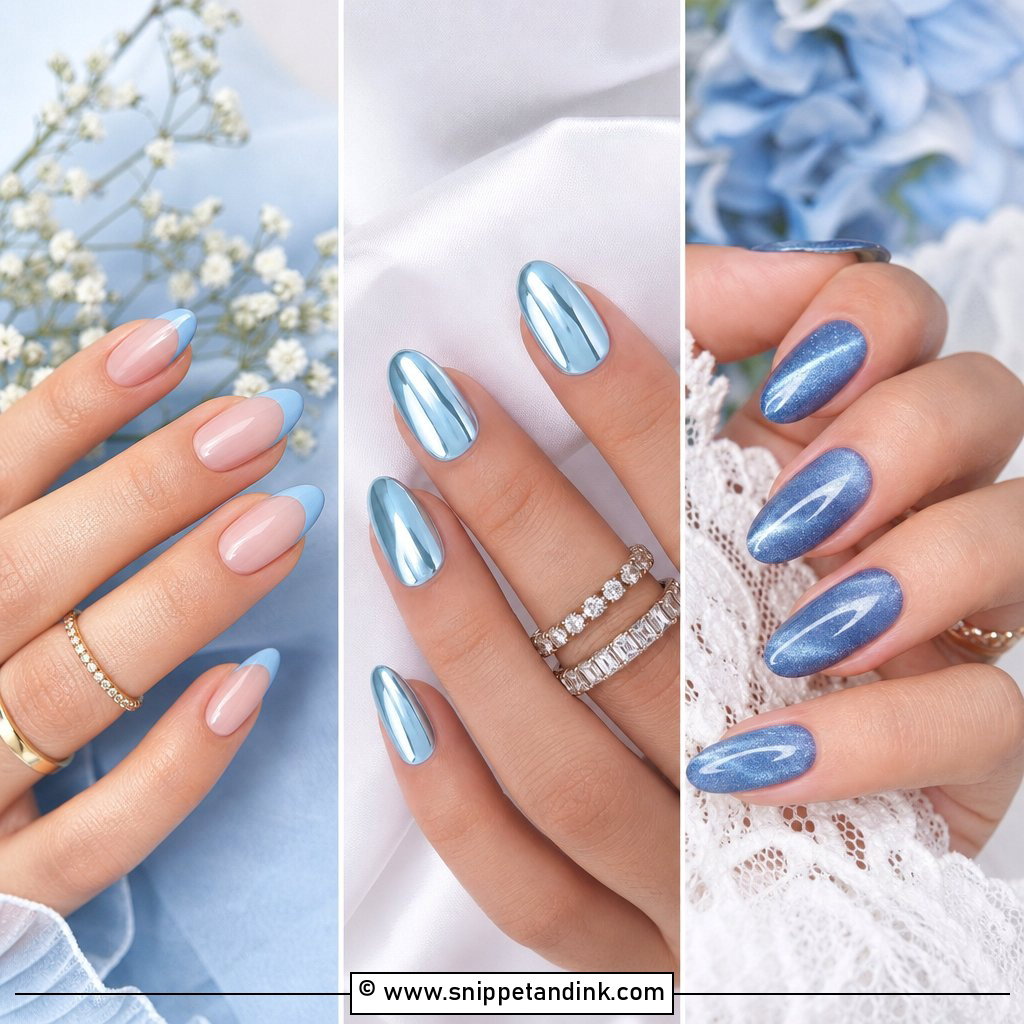
Something blue doesn’t have to be bright. Powder blue French tips, tiny blue flowers, pale blue shimmer or one hidden blue accent nail all add the tradition without taking over. A sheer nude or milky base keeps the design bridal. I’d choose a muted, slightly grey-blue over a bright one; it sits better with white and ivory and looks more refined in photos. Putting the blue on the ring finger is a quiet nod that most guests won’t notice.
Growing Out Bitten or Peeling Nails Before the Wedding
If your nails are short, bitten or peeling, give yourself time. Fingernails grow roughly a few millimeters a month, so two or three months out is when I’d start, not the week before.
- Stop using your nails as tools: opening cans, scraping labels and picking at gel all weaken the free edge.
- Oil your cuticles every night. It keeps the nail flexible so it bends instead of splitting.
- Wear gloves for washing up and cleaning; long soaks in hot water make nails peel.
- Have a builder gel overlay done if you bite. A hard layer is surprisingly good at breaking the habit, and it protects the edge while it grows.
- Let gel come off by soaking, never by peeling it off yourself, because peeling takes layers of nail with it.
If they still aren’t where you want them by the trial, soft gel extensions are a perfectly good answer. Book them as part of the trial so you know how they feel.
Will a Pale Manicure Disappear Against a White Gown?
Brides worry about this, and it’s a fair question. A very pale, opaque white can blend into a white dress in full-length photos. A sheer pink, nude or milky finish doesn’t, because the natural nail bed tone shows through and separates your hand from the fabric. If you love white, go milky rather than solid, or add a fine French line so the nail has an edge. In close-up ring shots, any of these reads clearly.
Bring Your Ring to the Trial
Every one of these sets works when the shade suits your skin, the shape suits your nail bed, and the length suits a full day of moving around. Classic French, milky white, sheer pink and pearl chrome are safe; lace, flowers, foil and chrome take more testing. Do a trial if you can, wear it for a few days, and photograph your hand with your ring in daylight. Whatever survives a few days of normal life is ready for the wedding.
You'll Like These Ideas:


Leave a Reply