
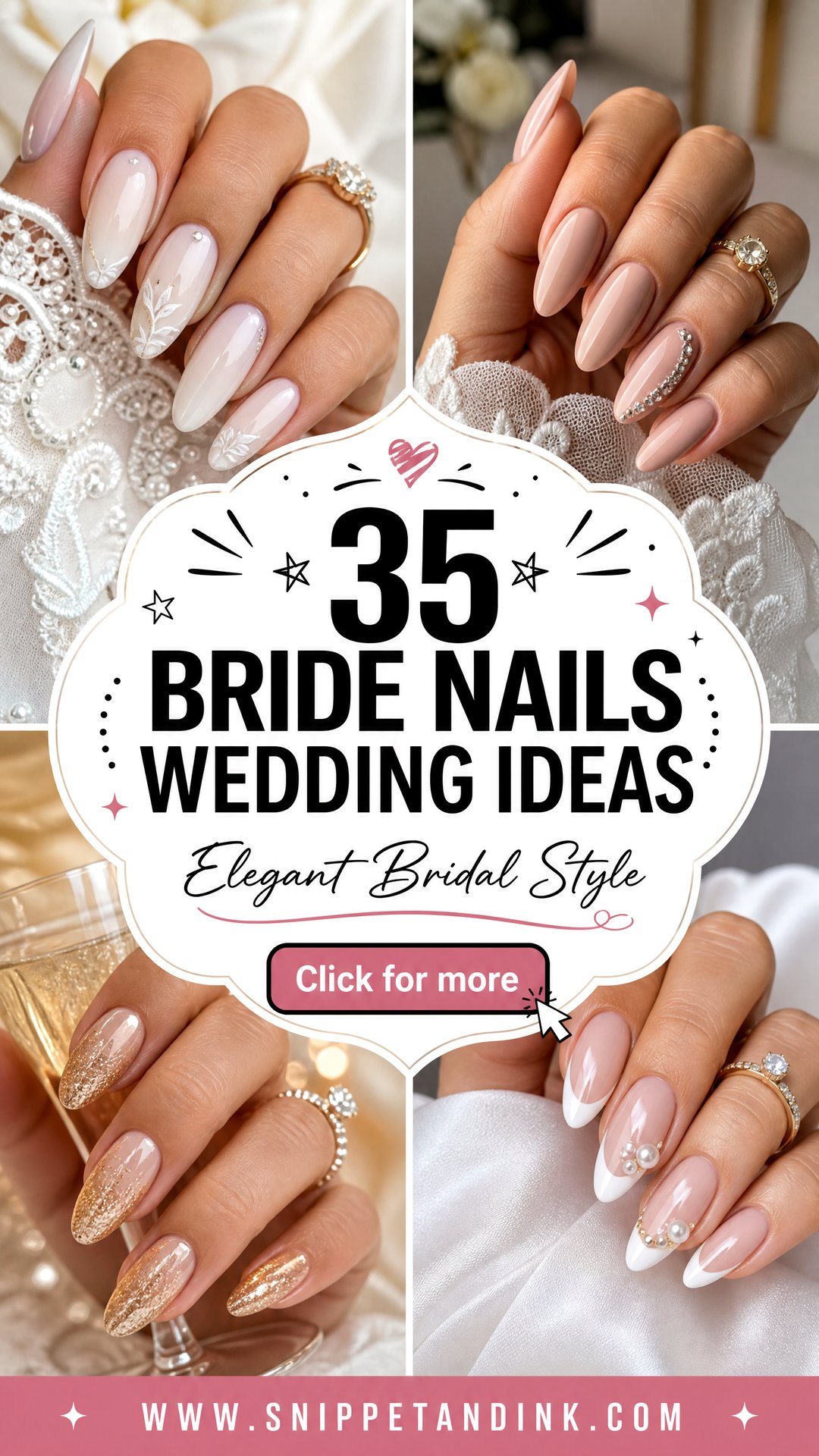
A wedding manicure gets looked at more closely than any other set you’ll ever wear. Guests hold your hand to see the ring, the photographer shoots it at close range, and you’ll be gripping a bouquet stem for an hour. So the set that works best is rarely the most elaborate one; it’s the one that’s cleanly shaped, sealed well at the edges and still intact on day three. Below are the 35 looks I’m asked for most, from milky whites and micro French to pearl chrome and fine florals, worn on short natural nails or almond extensions. For each one I’ve noted what I’d watch for at the table.
Which Product Lasts From the Rehearsal to the Honeymoon
Before we talk color, we talk about what the set is made of, because that decides whether it lasts. Here’s how the main options behave over a wedding week.
- Regular polish: cheapest and gentlest, but it chips within a few days. Only choose it if your appointment is the day before.
- Gel polish: lasts around two to three weeks on most people and won’t chip during the wedding. Removal needs soaking, so don’t peel it off afterward.
- Structured or builder gel: a thicker layer that strengthens weak or bendy nails and can add a little length. Good if your nails tend to break.
- Extensions: needed for length and dramatic shapes. Wear them a week or two before the wedding to get used to them.
- Press-ons: handy for a backup set or a nervous bride, but they can pop off, so take glue on the day.
If you have a destination wedding or honeymoon straight after, gel is the safest choice, since it stays intact through travel and swimming.
1. Classic French Tip Bride Nails
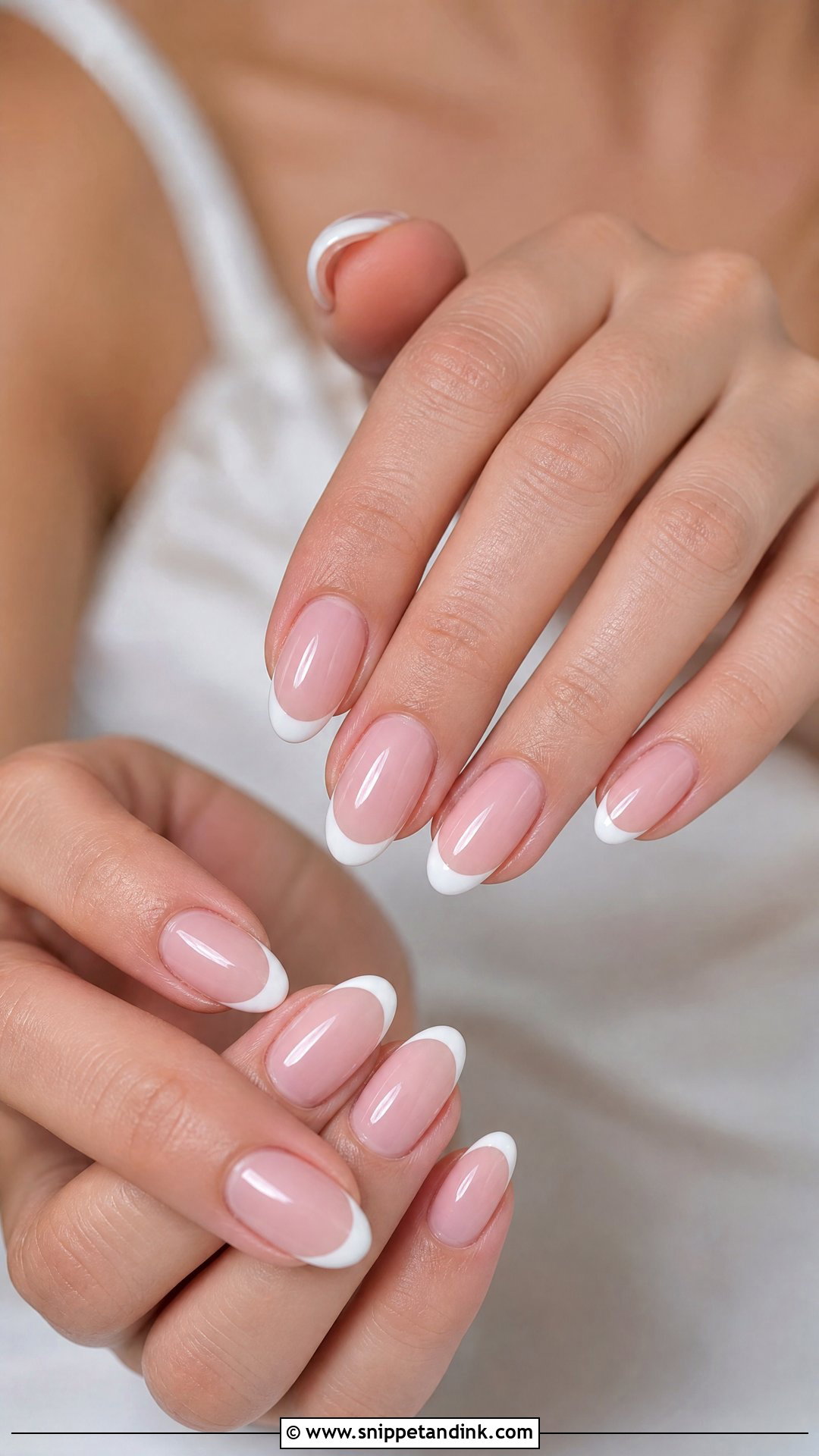
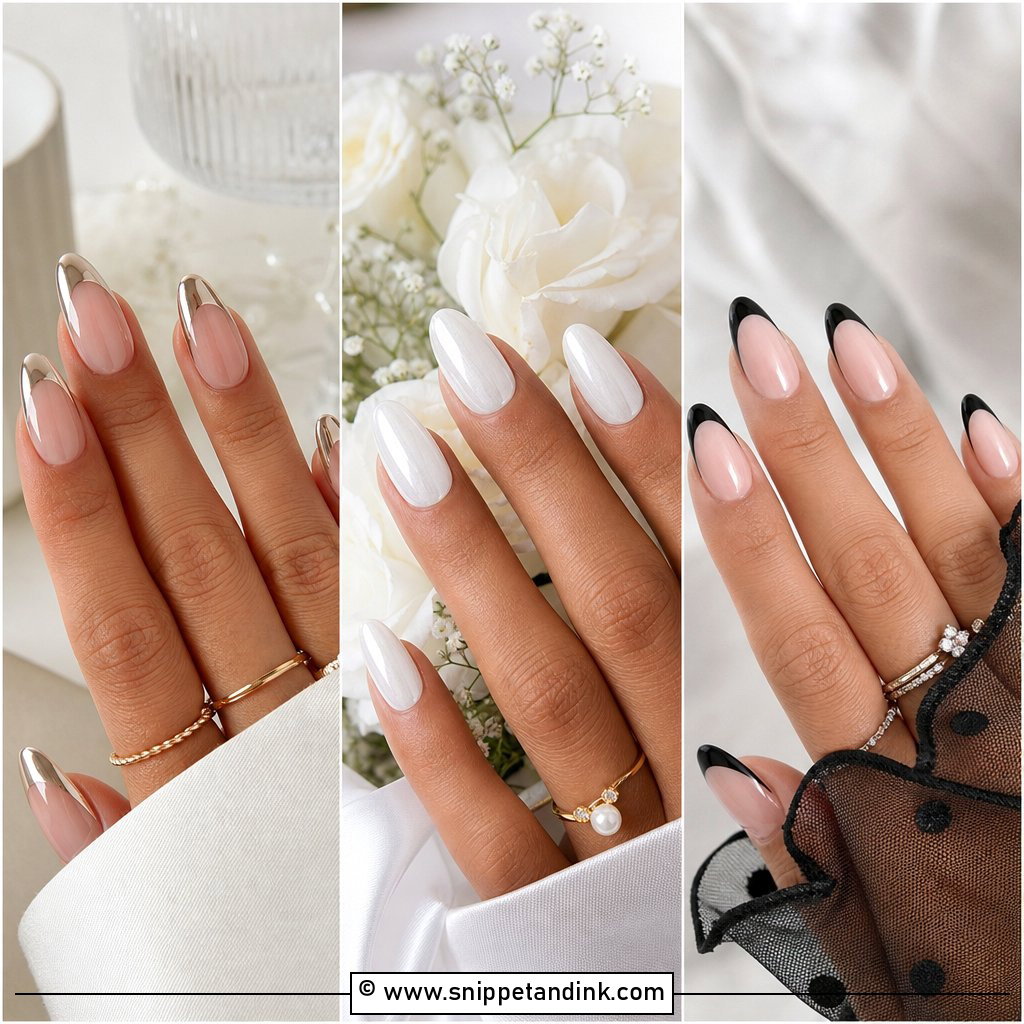
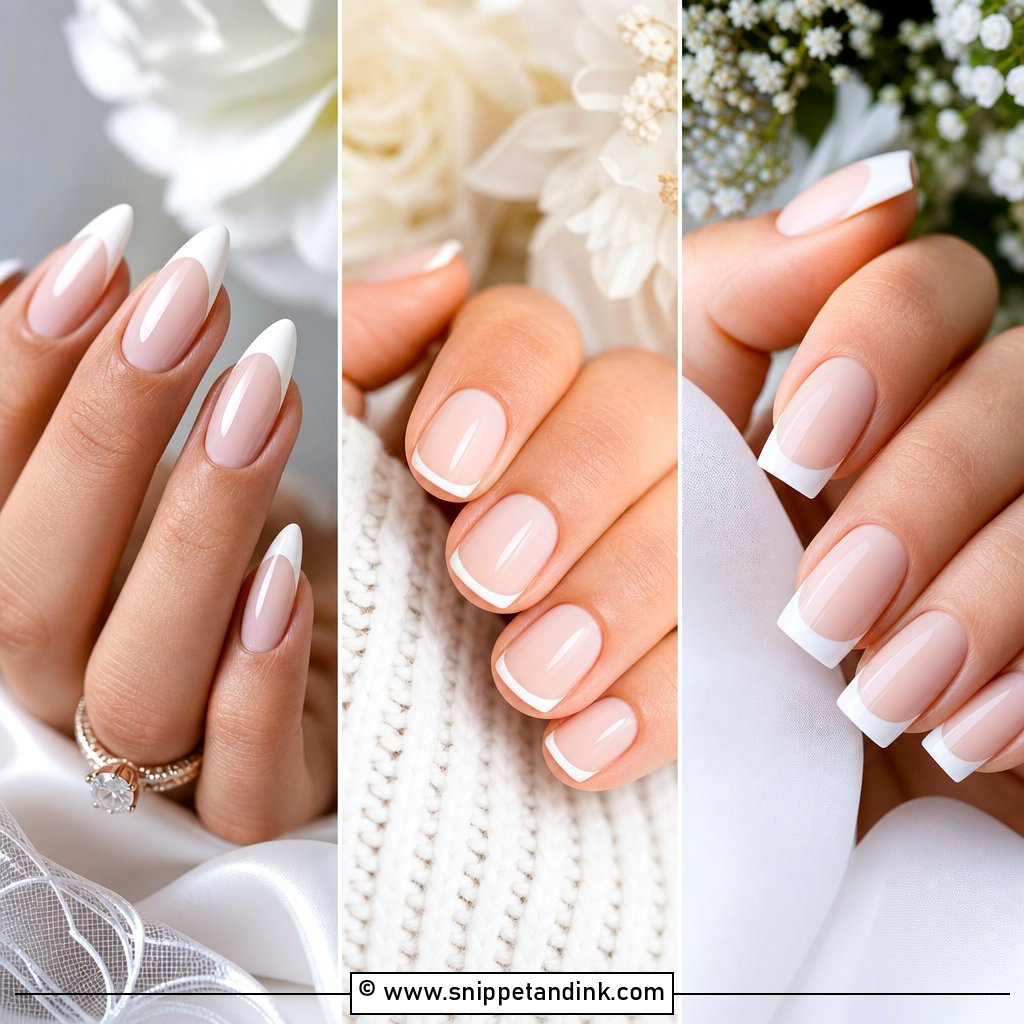
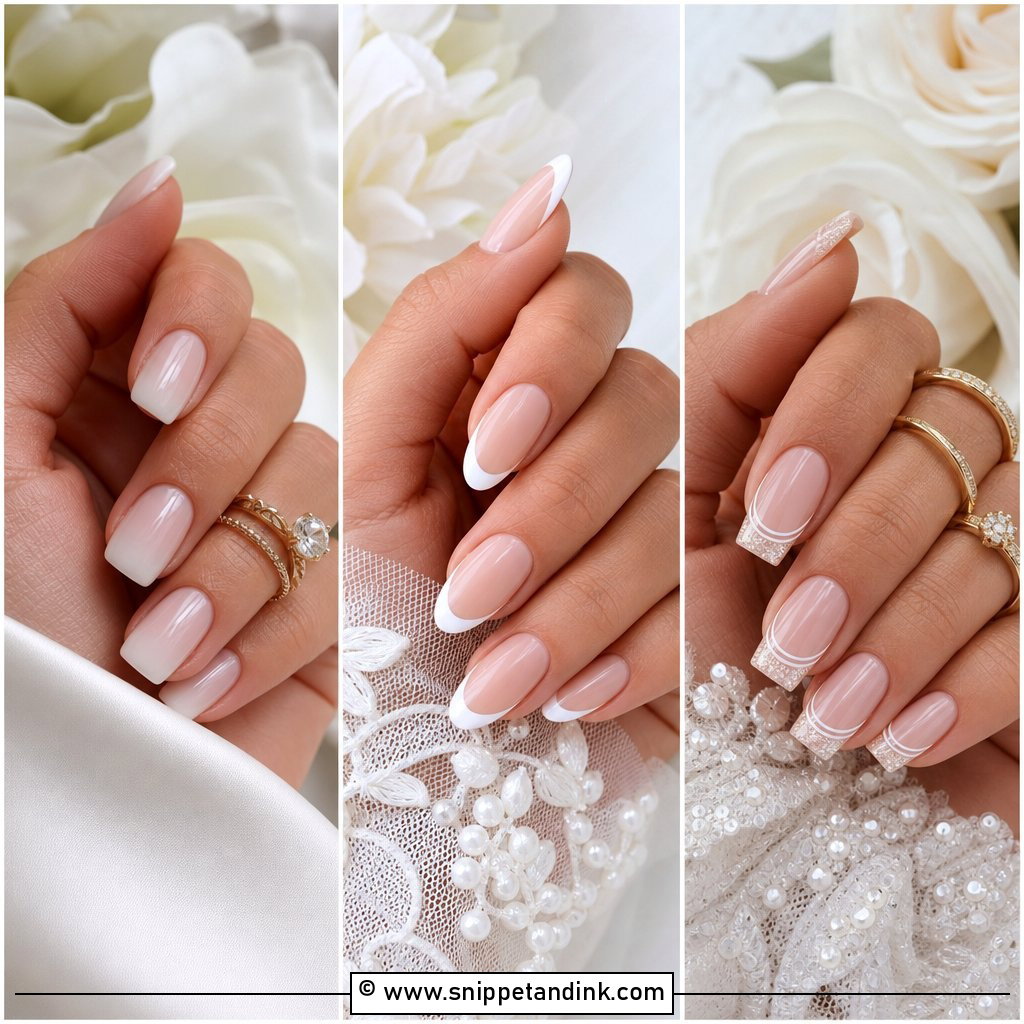
Classic French is still the set I’d call safest, and the detail that keeps it current is the width of the tip. A thick, chalky white band looks dated; a slimmer tip following the natural smile line looks crisp. I paint the white freehand in gel rather than using stickers, which can lift at the edges. Almond, oval and short square all carry it. In ring photos the white edge frames each nail neatly, which is why photographers like it.
2. Milky White Bride Nails
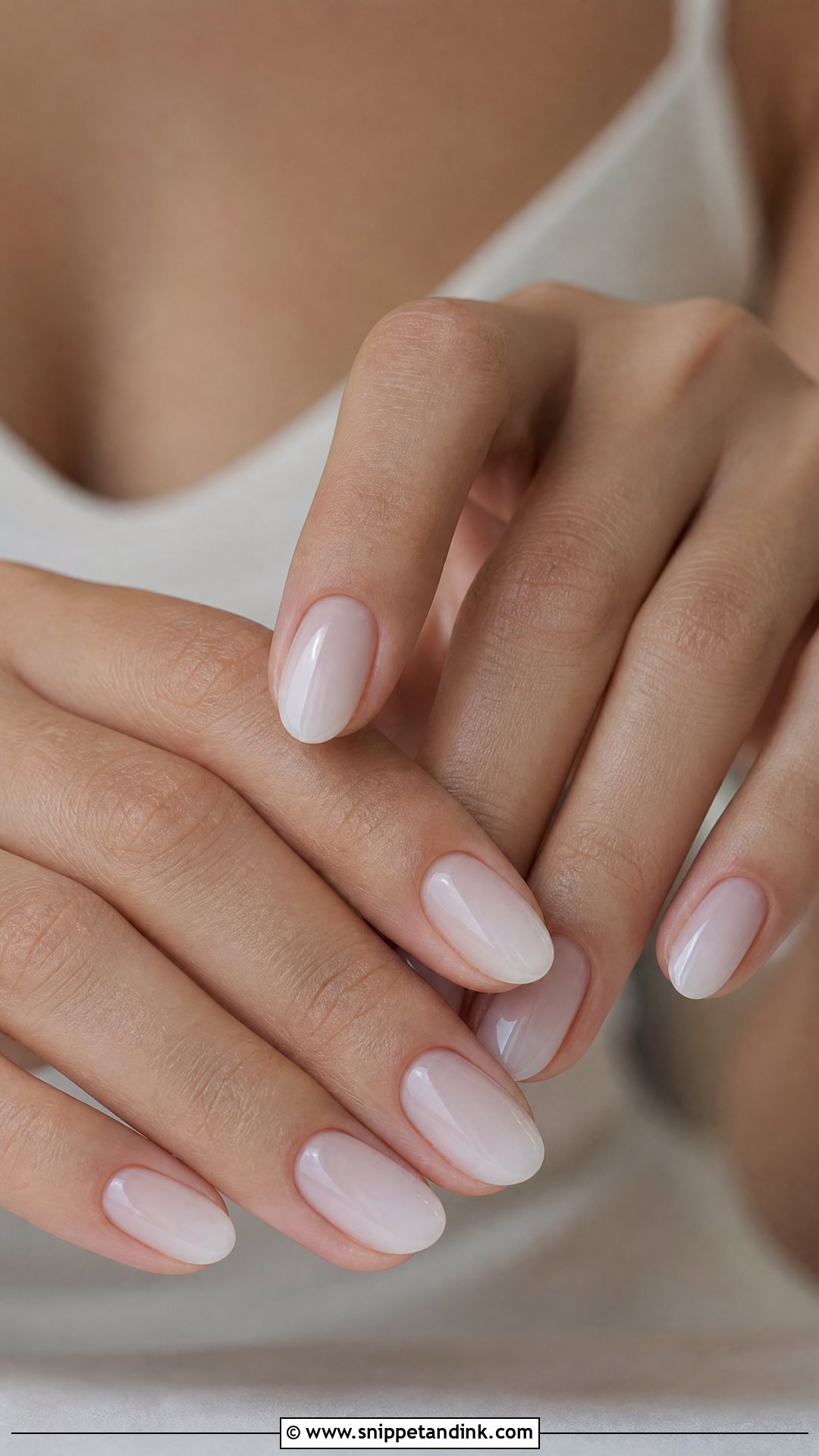
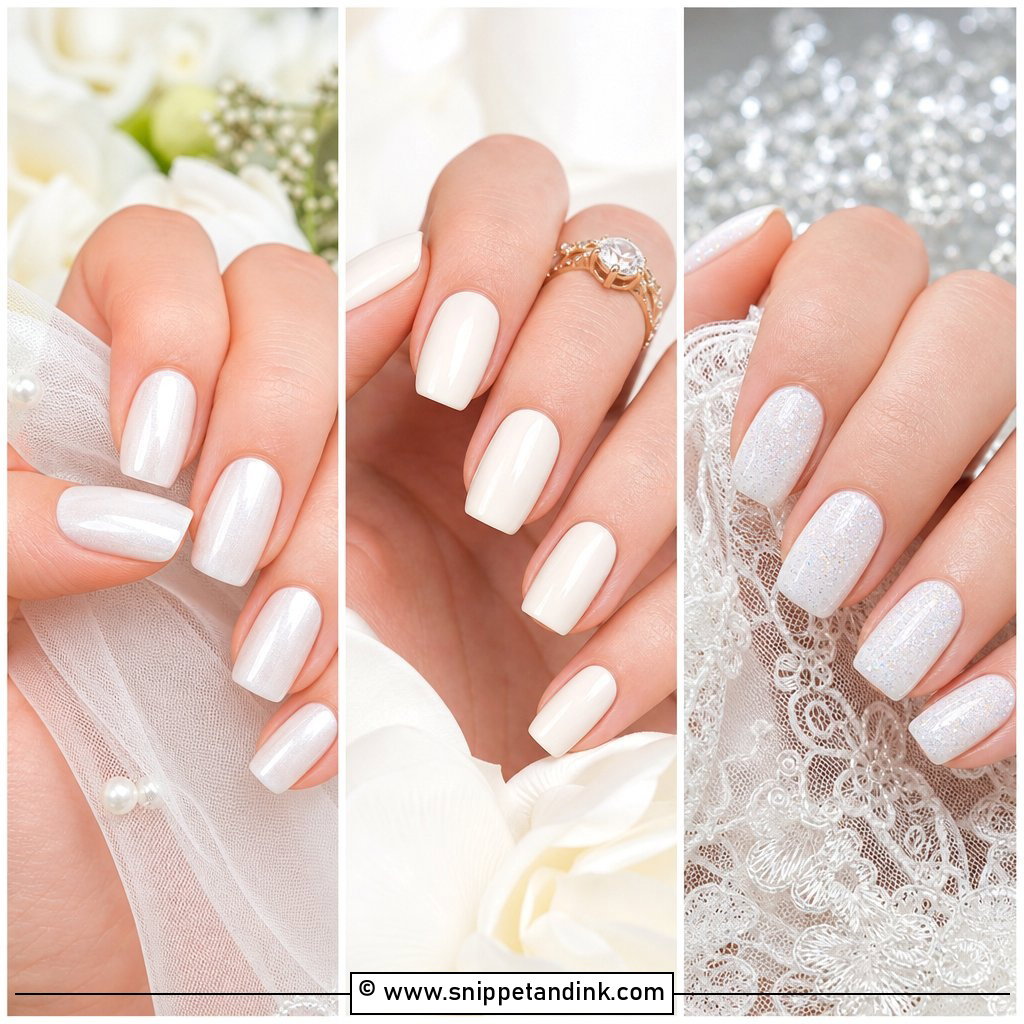
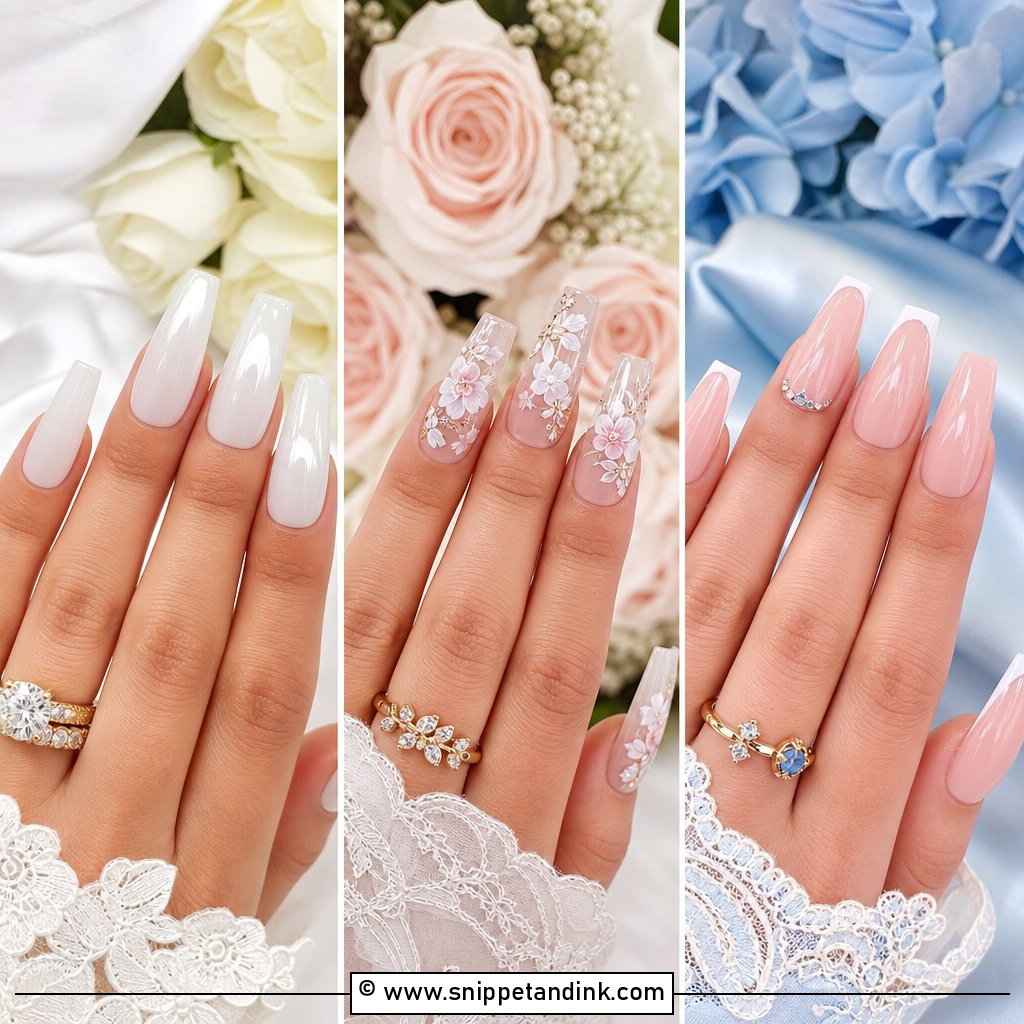
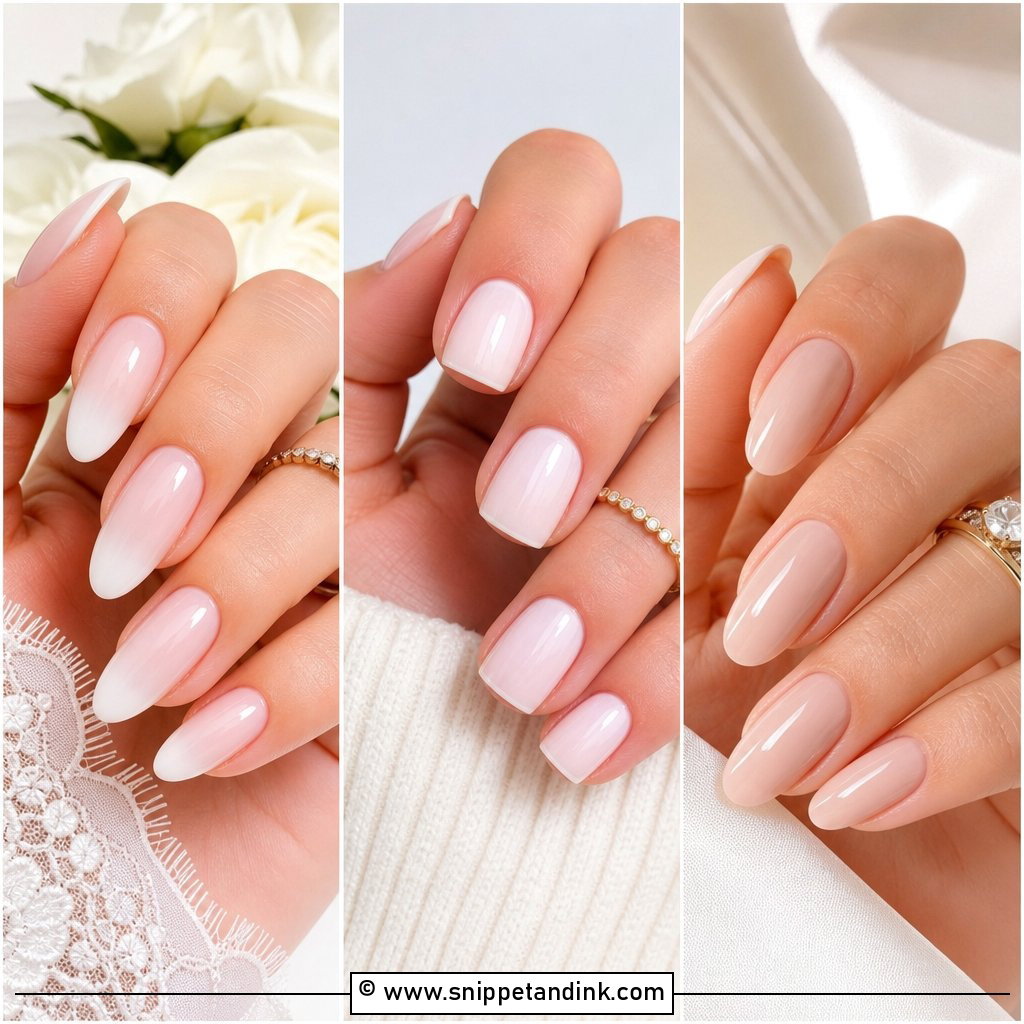
Milky white is a semi-sheer jelly, so a little of your nail bed shows through. That softness hides regrowth at the cuticle far better than solid white, which matters if your appointment is a few days before the wedding. Two thin coats usually give the right cloudiness; a third starts to look like plain white. It works on short ovals and medium squoval shapes alike, and a light pearl top gives it a faint glow under reception lights.
3. Pearl Chrome Bride Nails
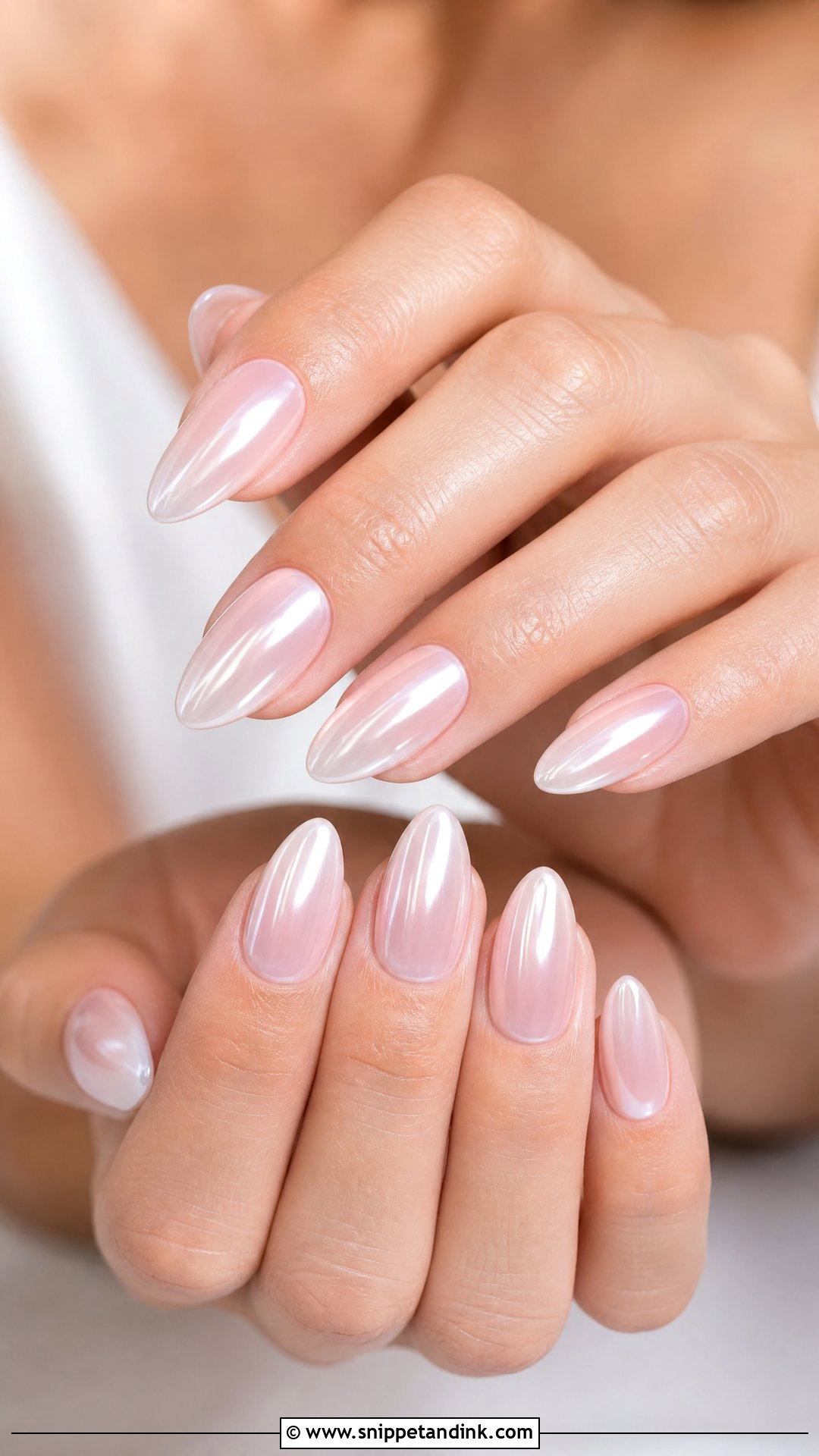
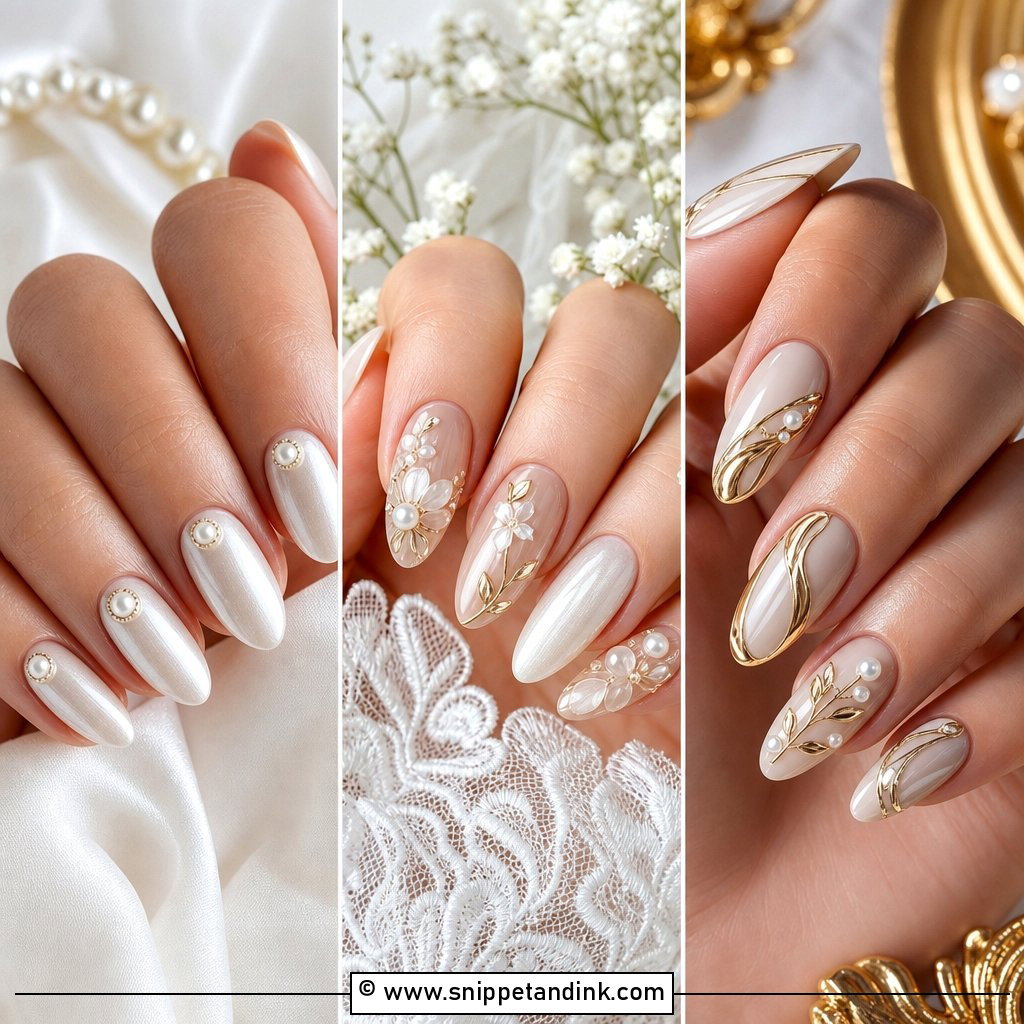
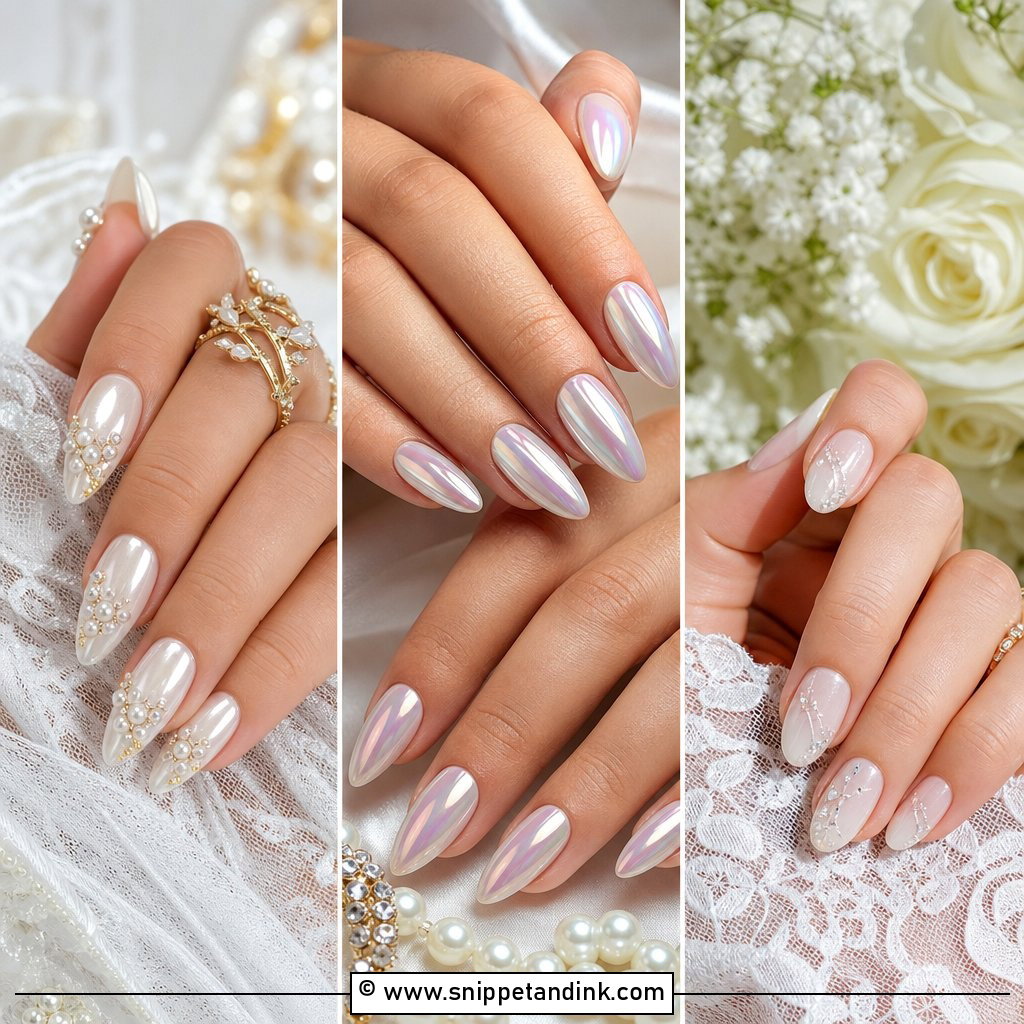
Pearl chrome is a fine powder buffed onto a cured, no-wipe top coat, then sealed with another layer. Over sheer pink it looks like the inside of a shell; over milky white it reads brighter and more obviously bridal. The powder shows every ridge on the nail, so I take extra time smoothing the base before it goes on. It catches light in close-ups without the scratchy look glitter can have, and it’s subtle enough to keep wearing afterward.
4. Blush Pink Bride Nails
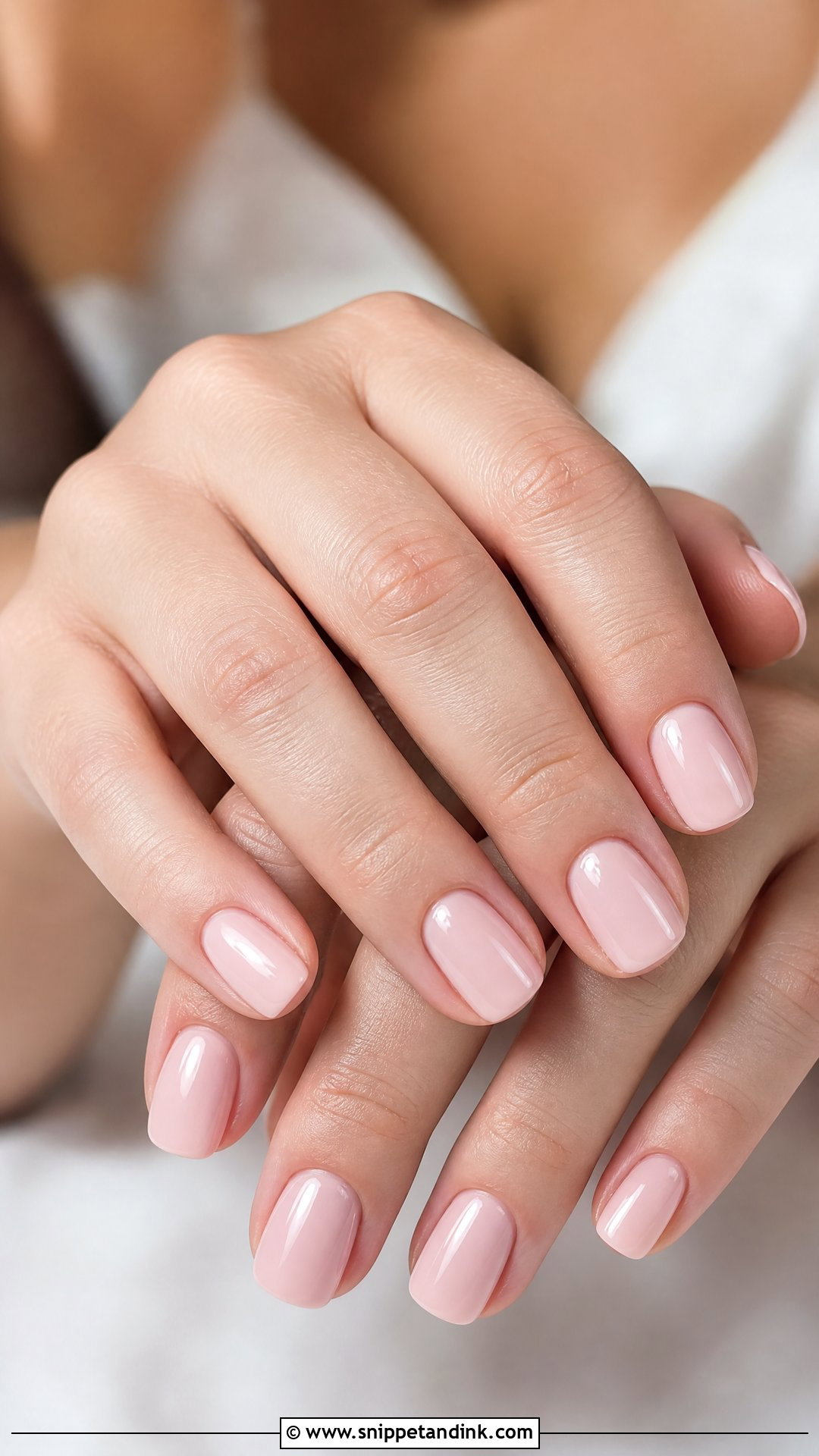
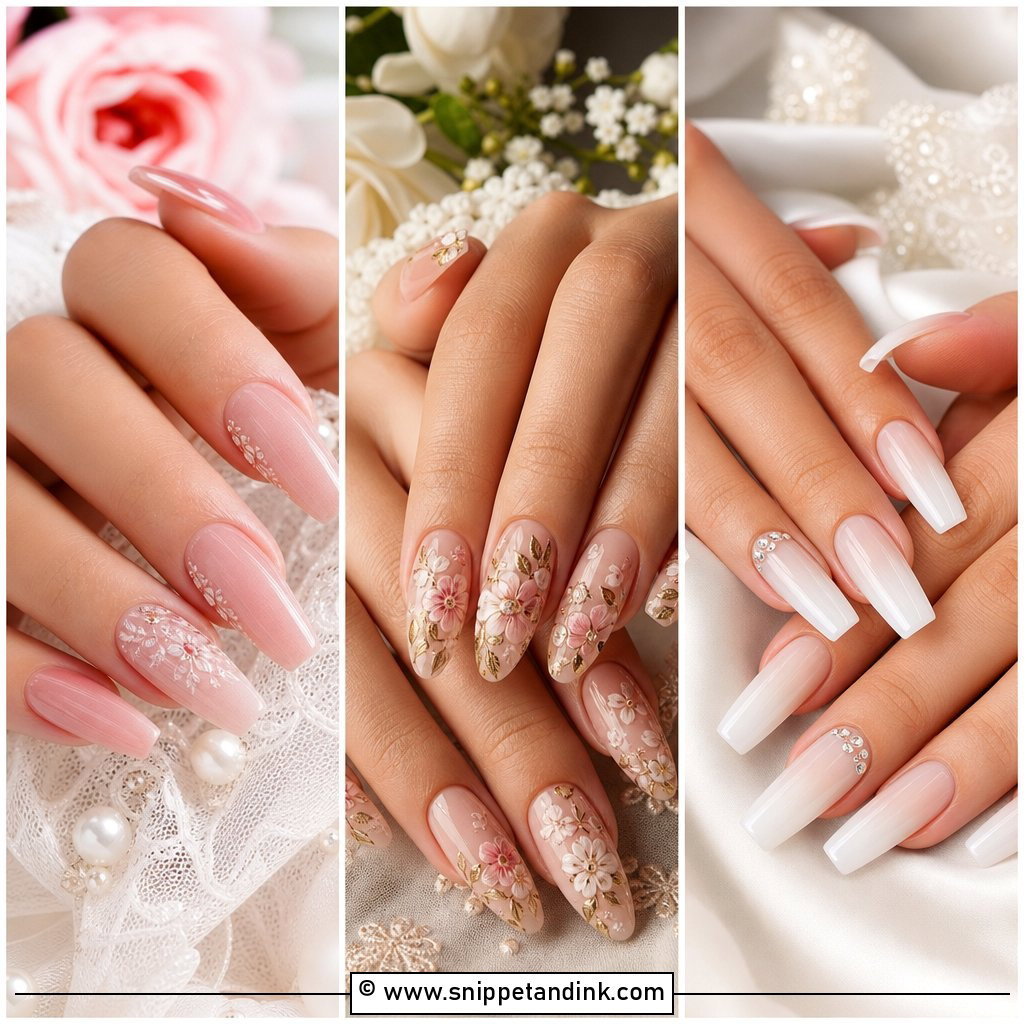
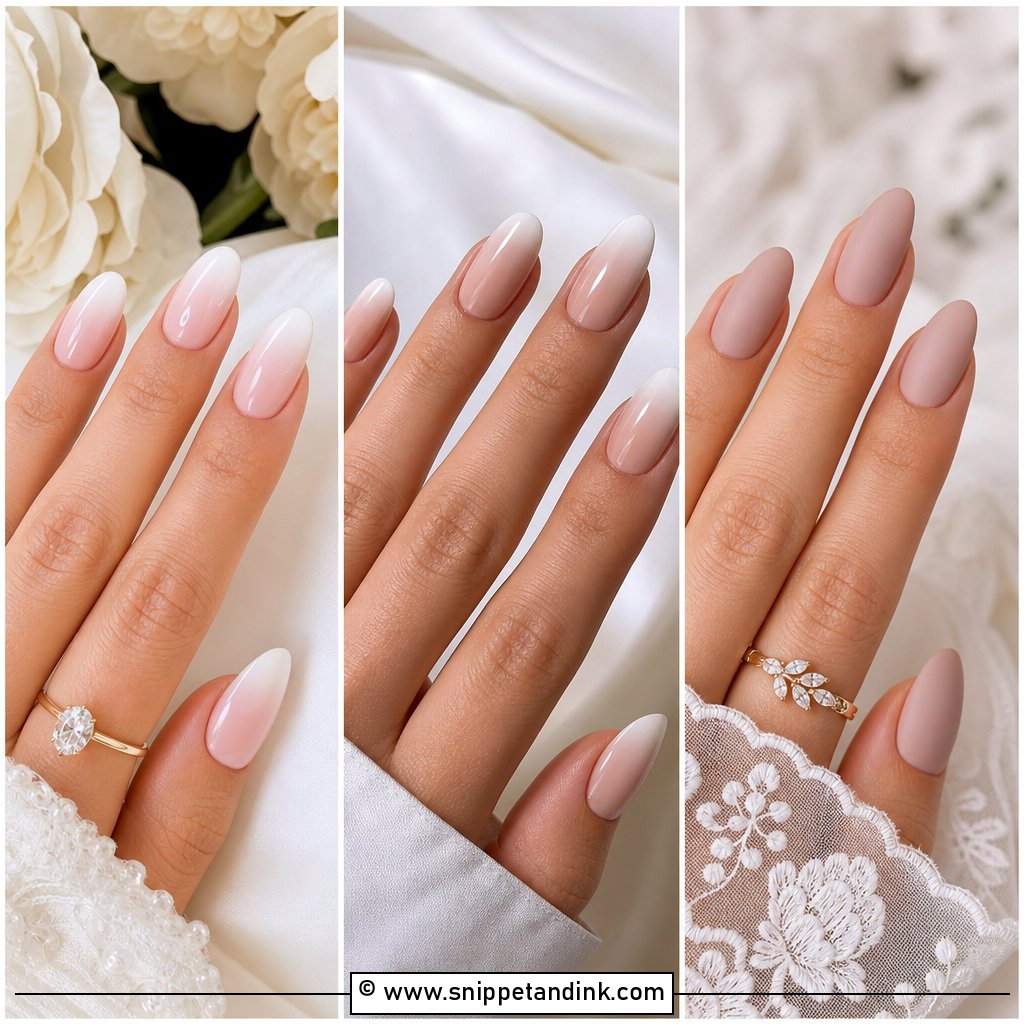
Blush pink looks like healthy nails, only better. A sheer blush suits natural nails and short lengths; an opaque pink gives a more finished, salon look and covers staining or white spots on the nail. Some pinks pull purple against very fair skin, so I swatch two or three on your actual nail rather than choosing from a bottle. A few small pearl accents work if you want more.
5. Nude Almond Bride Nails
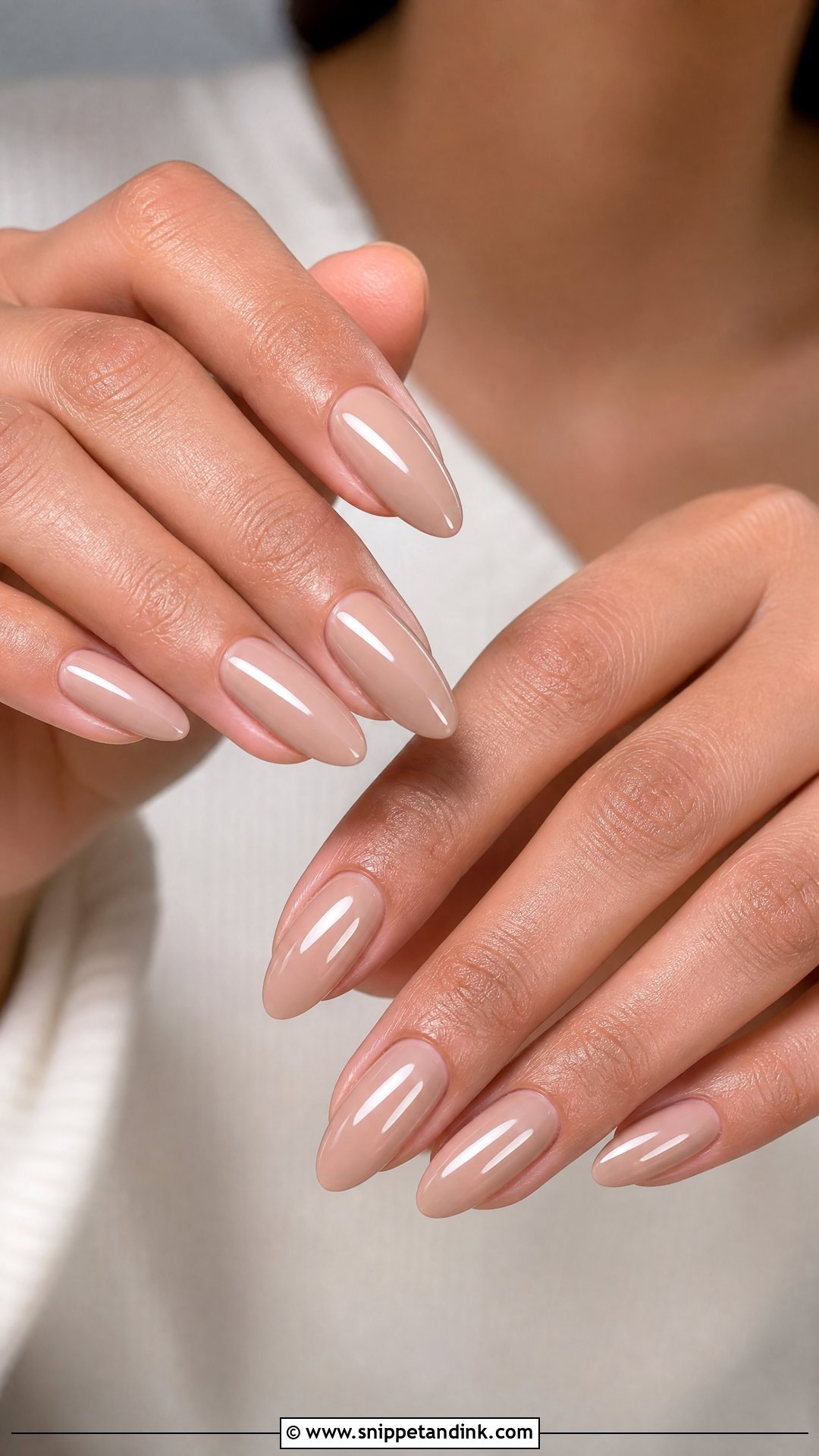
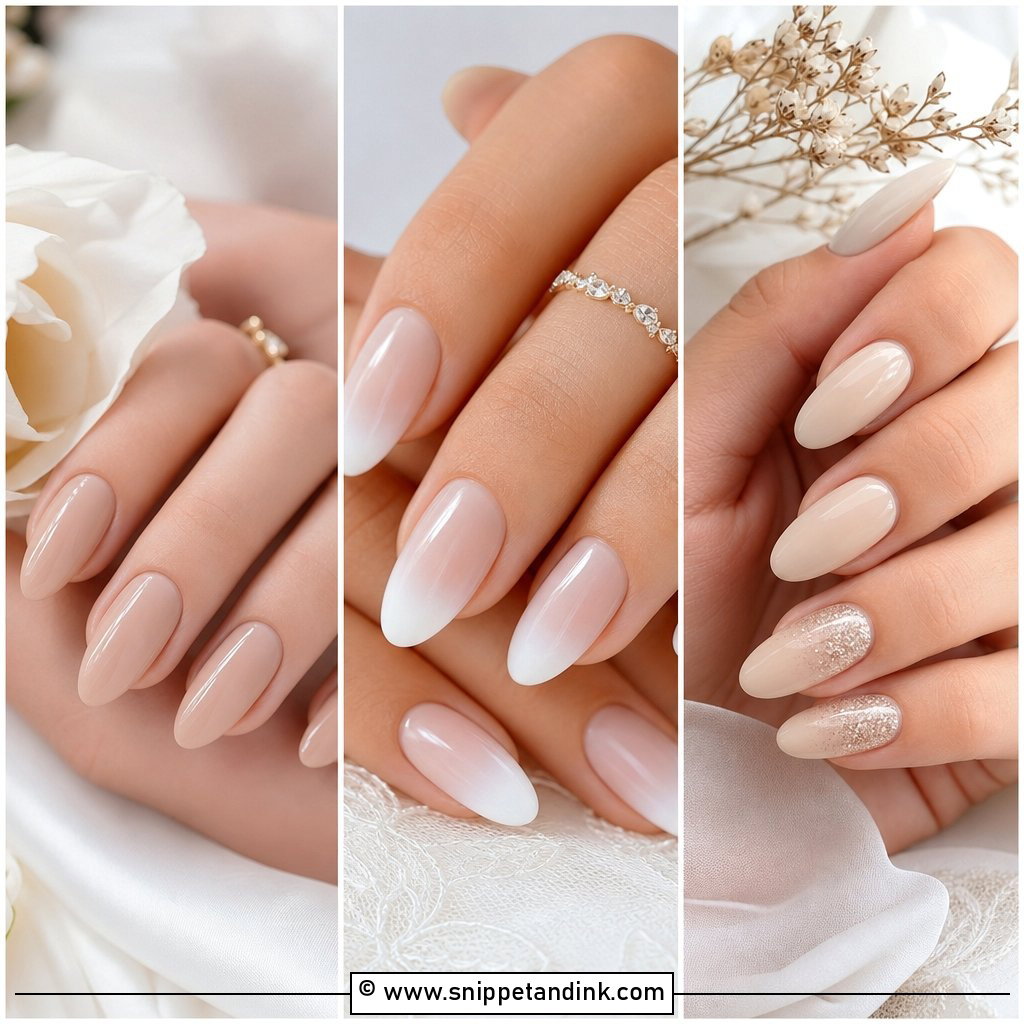
Choosing the right nude is the hard part, not the shape. I swatch against the skin of your fingers, because a nude that matches your face can look grey against your hands. Pink-beige usually suits fair skin, peachy nudes suit medium tones, and caramel, mocha or rosy brown suit deeper skin. The almond shape lengthens the fingers, and a glossy top coat keeps it looking healthy rather than flat.
6. White Ombre Bride Nails
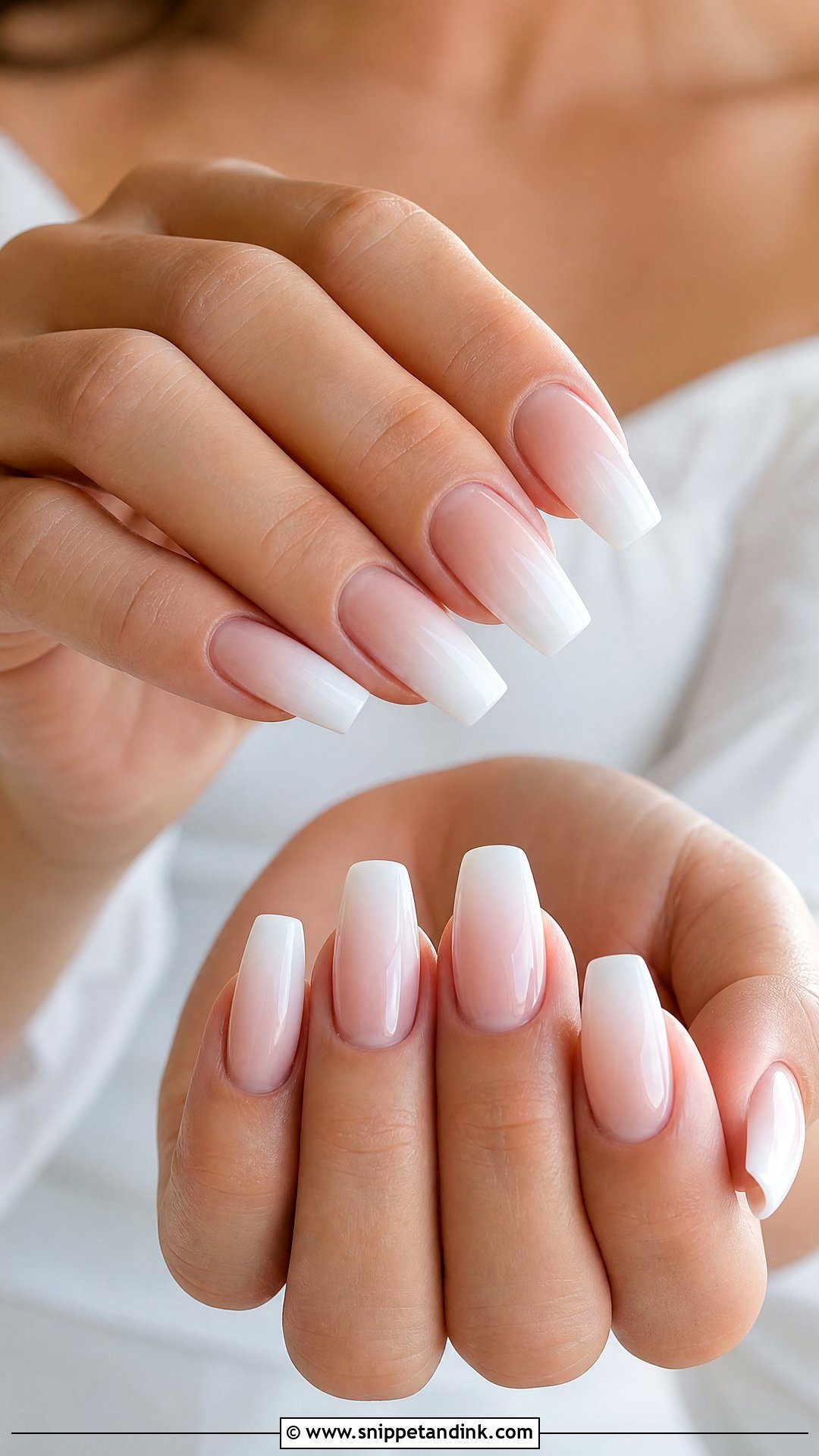
A white ombre blends from nude or pink at the base into white at the tip. I build it with a sponge or a fine brush in gel, layering the white gradually so there’s no hard line. The gradient needs some nail length to show, so almond, coffin or oval shapes at medium length work better than very short nails. Keep the base sheer if you want it natural, or pinker if you want warmth.
7. Micro French Bride Nails
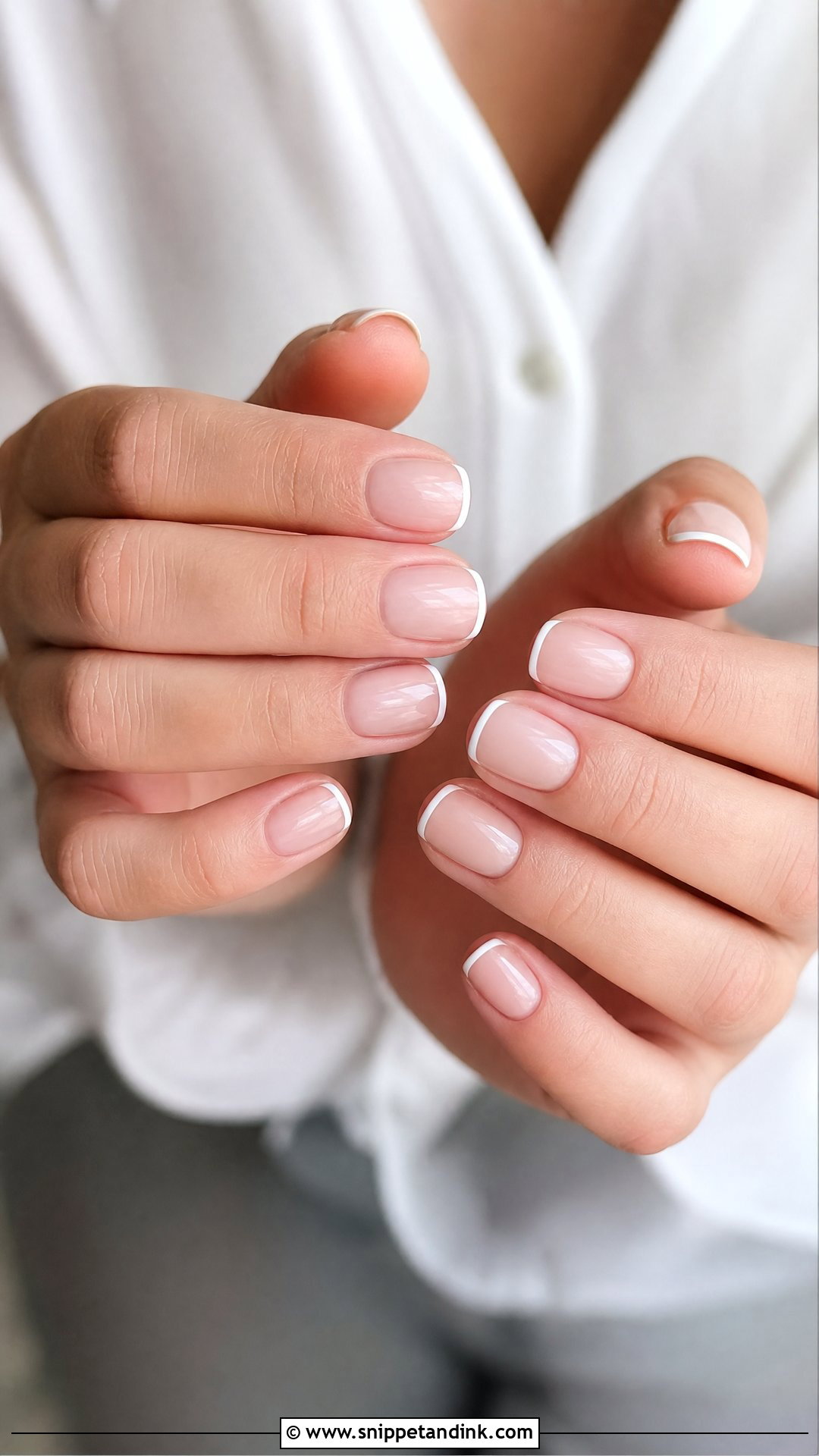
Micro French tips are just a hairline of white at the very edge, and they’re the best French option for short nails, since they don’t need any length to look balanced. The line has to be even across all ten nails, so I use a long, thin striping brush and paint it in one pass. Pearl tips in place of white give a softer look. It’s minimal, but every wobble shows, so it needs a steady hand.
8. Glazed Donut Bride Nails
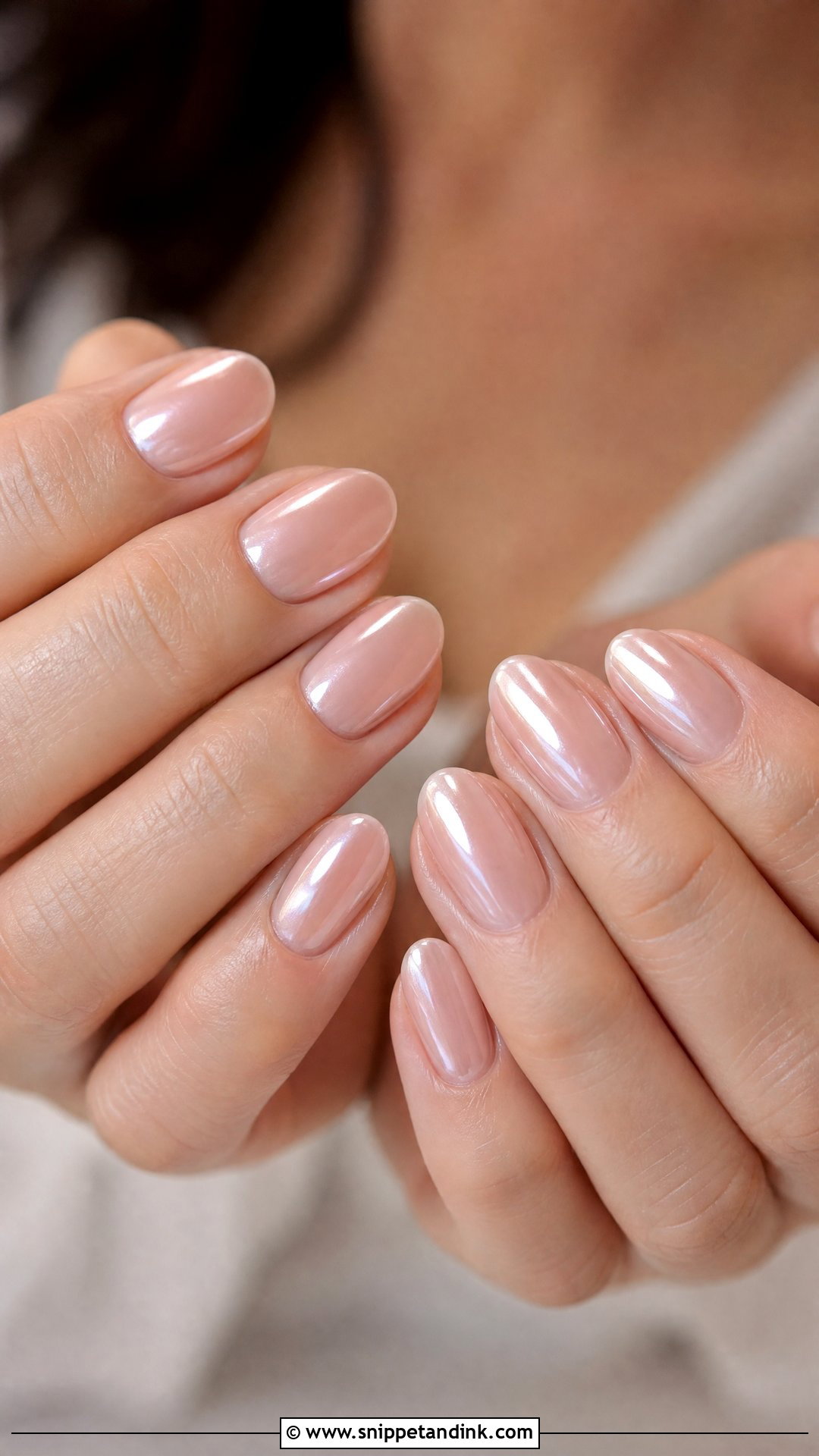
Glazed nails are a sheer pale base with a light chrome rubbed over the top, giving a wet, pearly shine. The trick is restraint: too much chrome turns it metallic. It looks best under daylight and warm indoor light, less so under cold fluorescents. Almond and oval shapes suit it; short square nails make it feel more modern. Keep the base color very light.
9. Lace Bride Nails
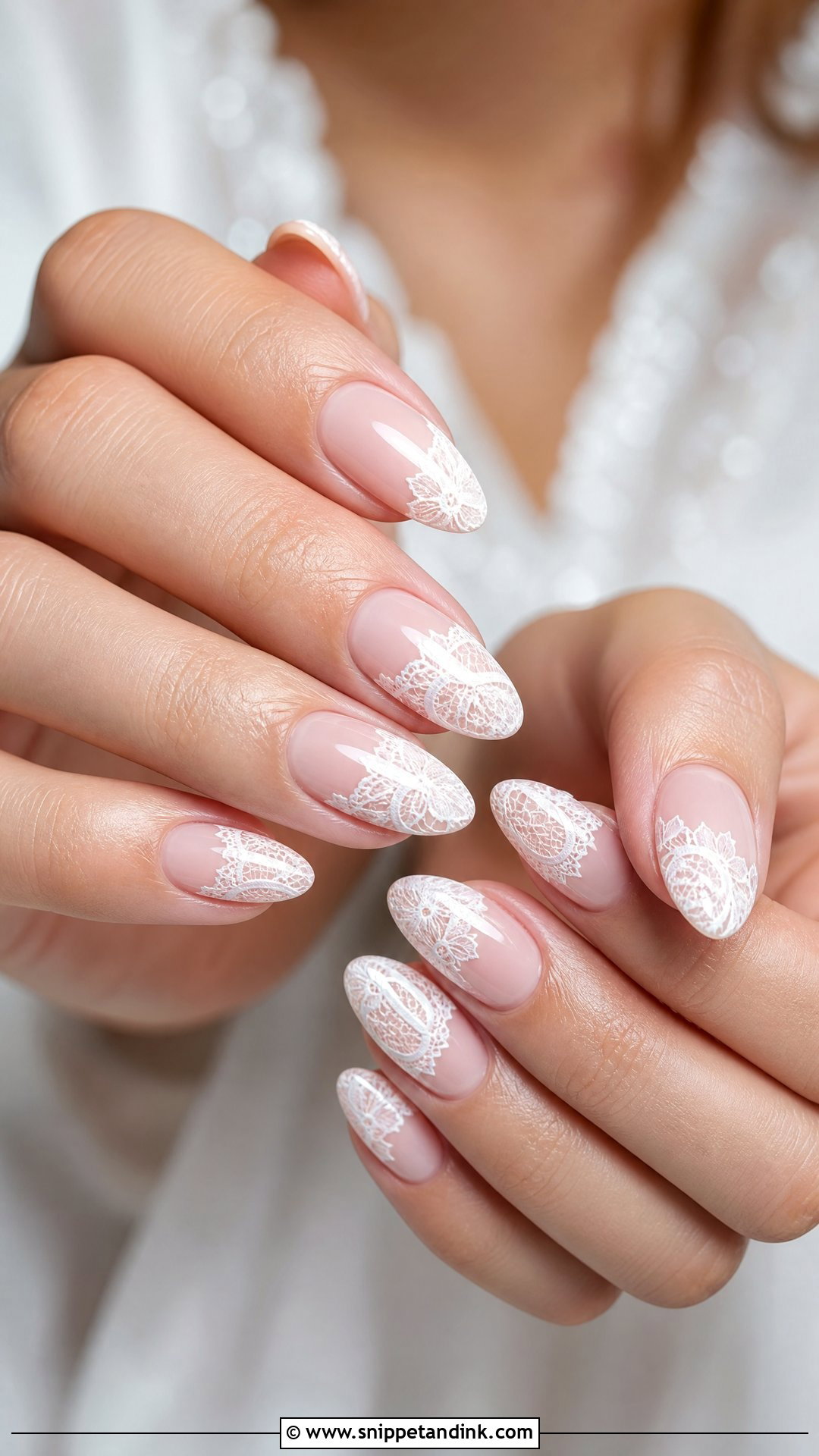
Lace nails echo a lace gown, but hand-painted lace takes time, so I’d budget a longer appointment. The lines need a fine liner brush and a steady hand; stamping plates are quicker but less detailed. Lace on every nail can look busy in photos, so I usually suggest two accent nails per hand on a sheer base. If your dress has a specific lace pattern, bring a fabric swatch or a close photo.
10. Floral Bride Nails
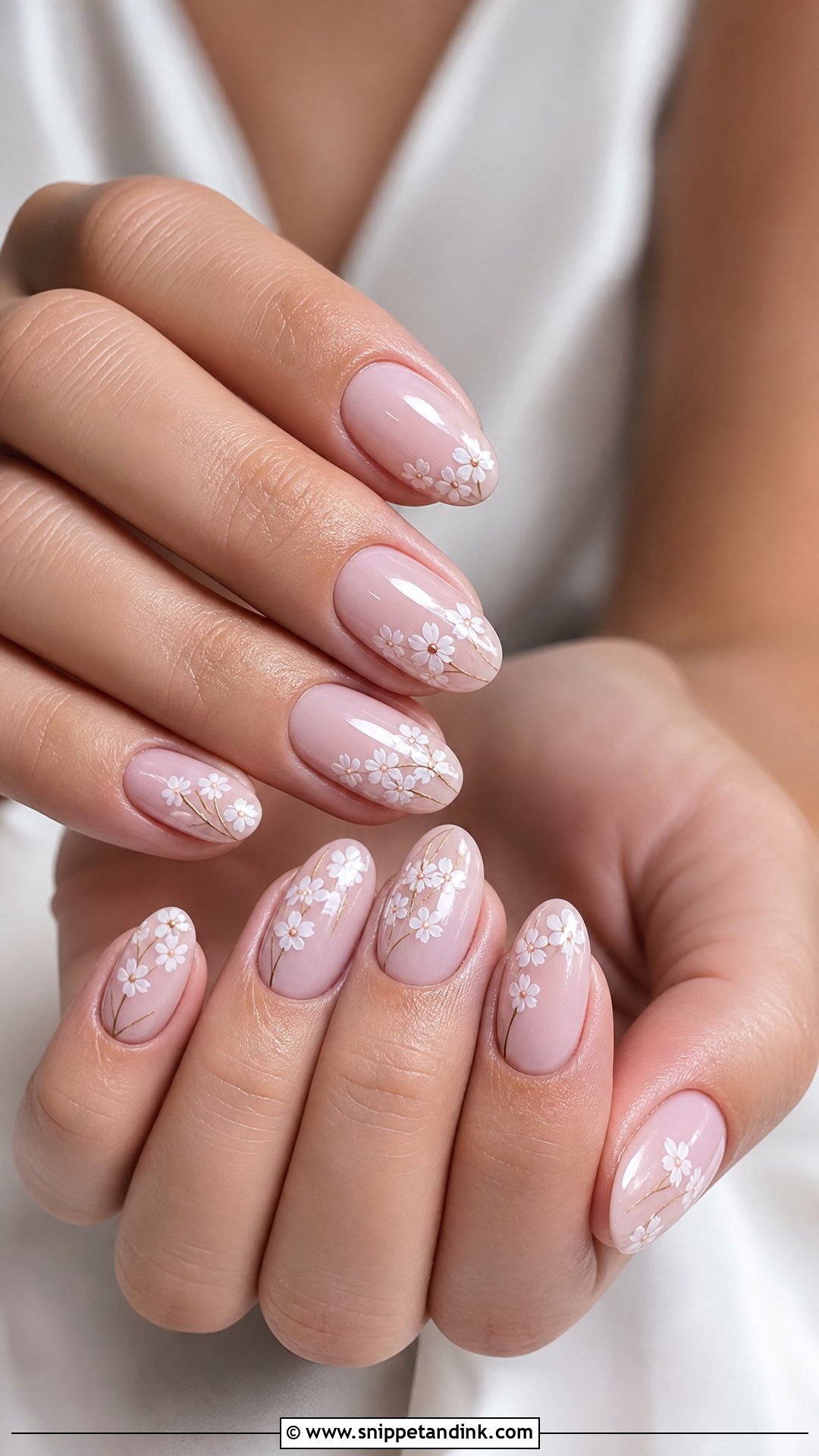
Floral nails suit spring and garden weddings, and the smaller the flowers, the more elegant they look. I paint petals in gel with a fine brush, or use pressed dried flowers sealed under top coat. Raised gel petals add texture but can catch on lace or tulle, so think about your dress fabric. A sheer base keeps the flowers from looking crowded. Matching the blooms to your bouquet is a subtle touch.
11. Pearl Accent Bride Nails
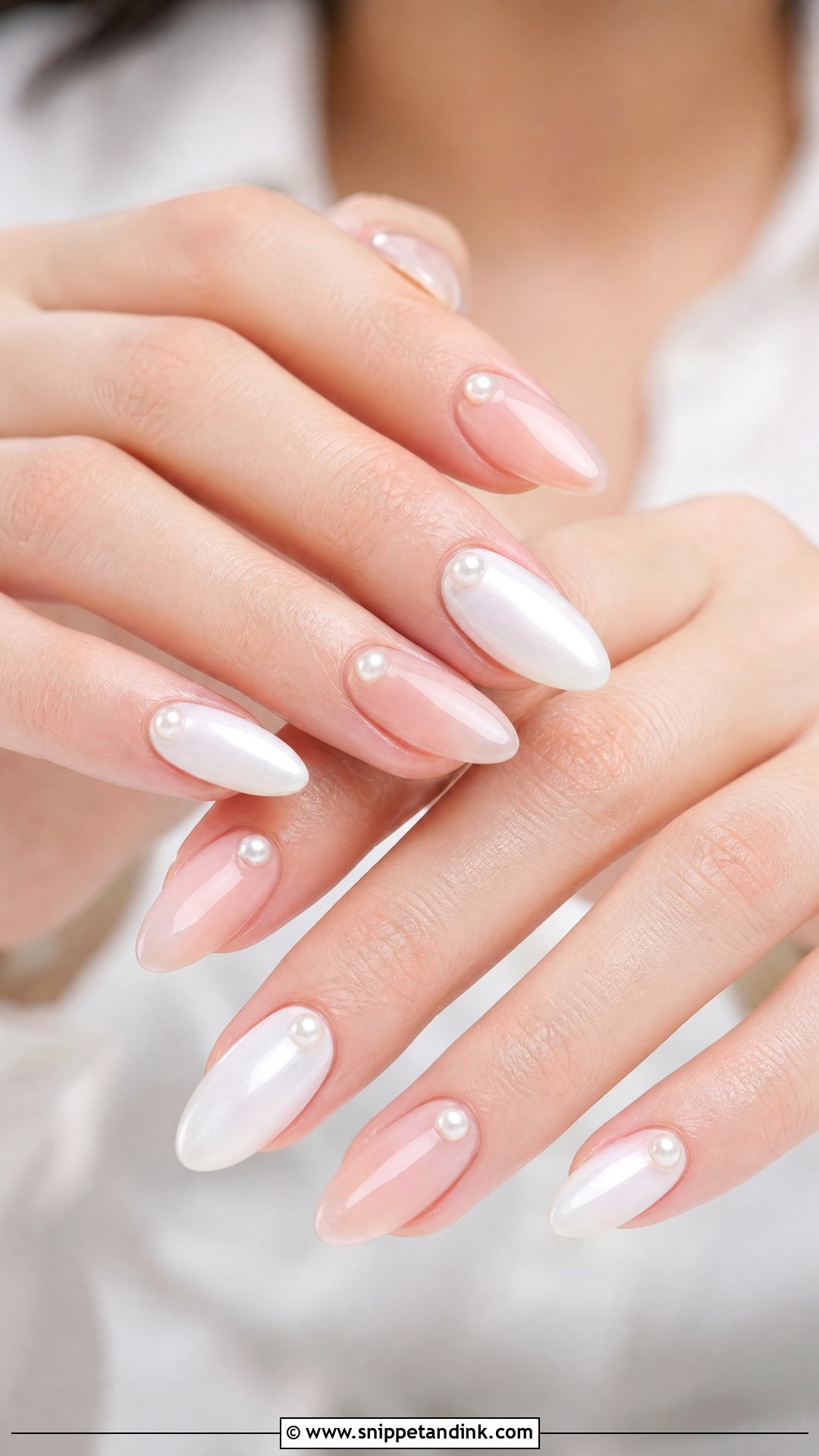
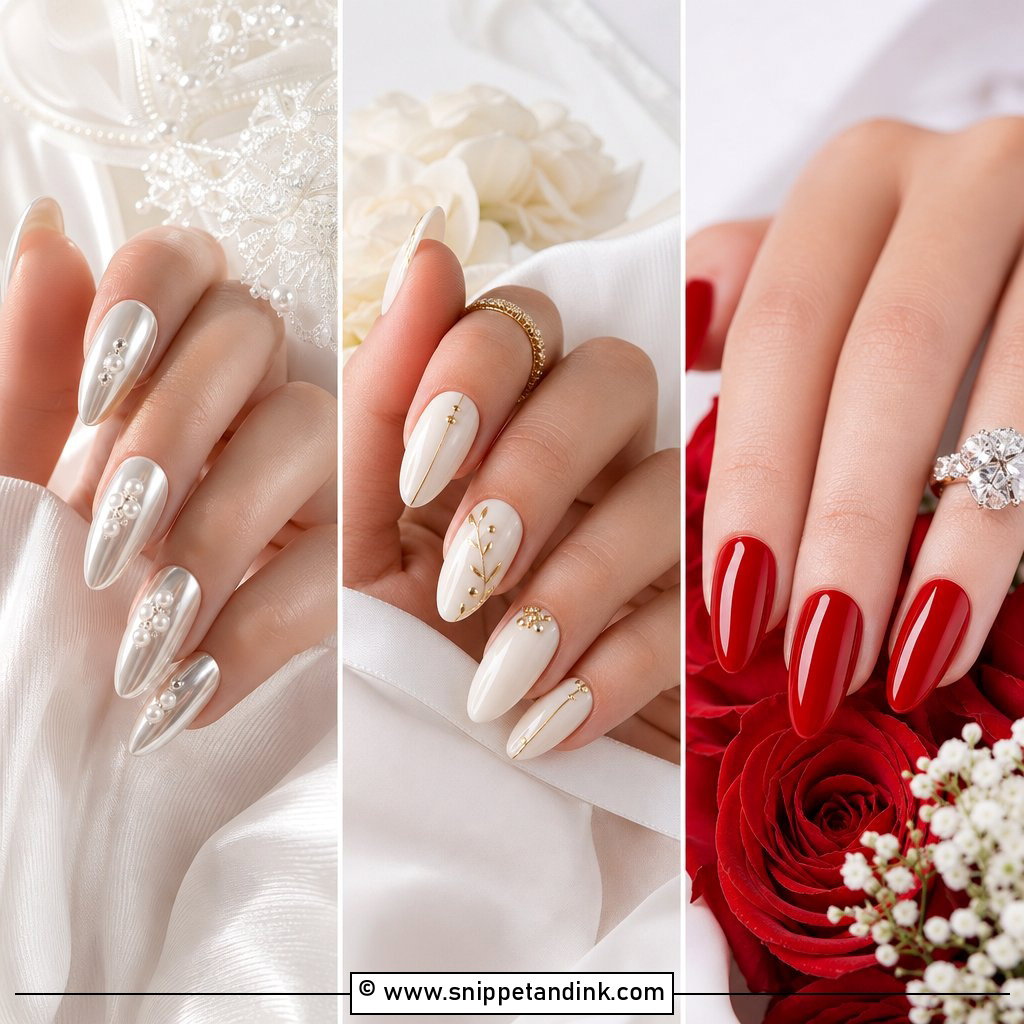
Pearl accents need to be set flat into builder gel, not glued on top, or they’ll pop off by the reception. I place them near the cuticle or along the smile line, a few per nail at most. Raised pearls can snag a veil, lace sleeves or hair, so I keep them small and flush on brides wearing delicate fabric. A milky white or blush base suits them best.
12. Crystal Bride Nails
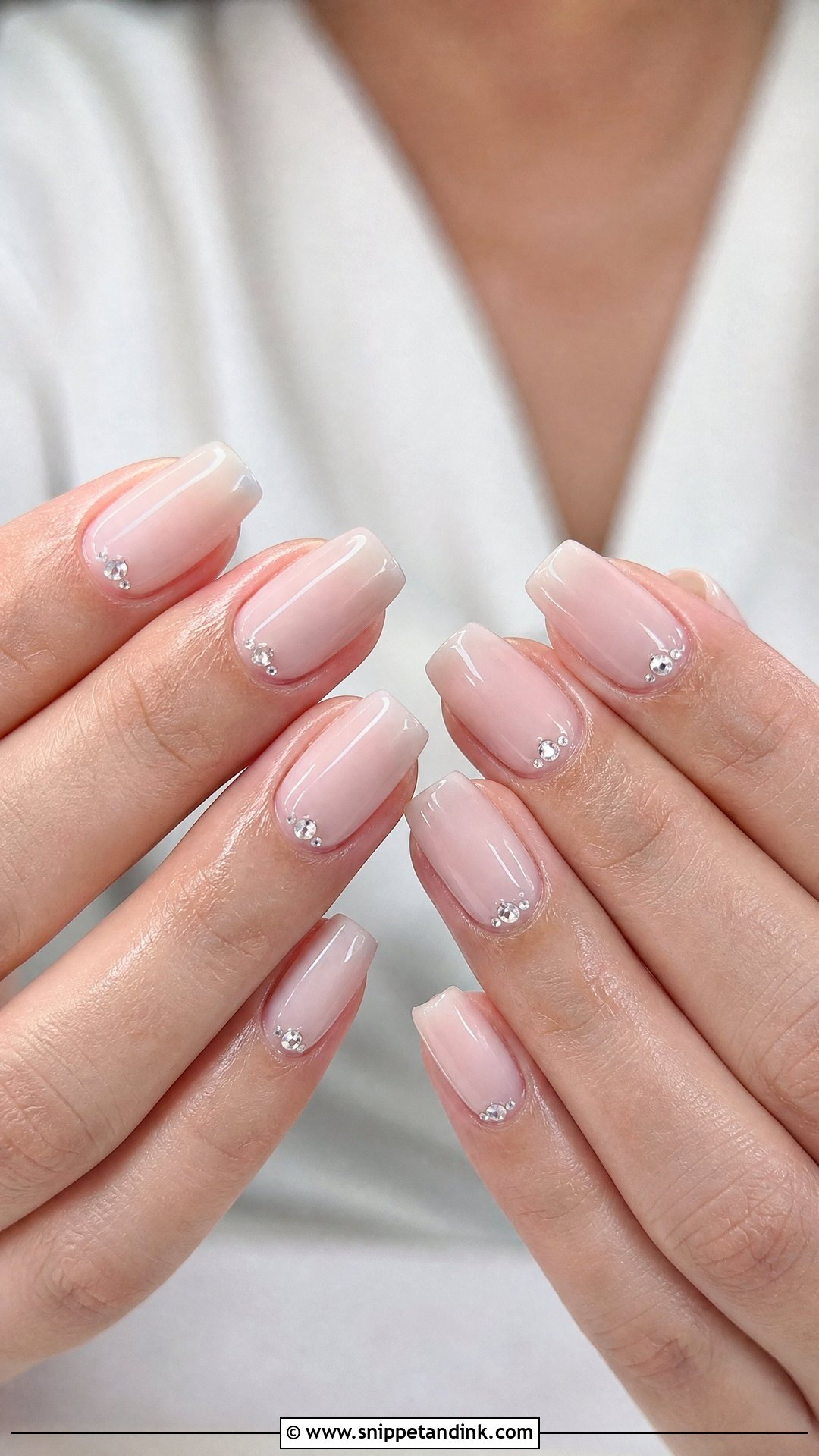
You don’t need a full set of glitter to get sparkle. Crystal bride nails work best with a few small, clear or champagne stones placed at the cuticle or along a French tip. I set them into gel and cap the edges so they don’t catch. Oversized stones look cheap in close-ups and snag on fabric. A beaded or sequined gown pairs naturally with this.
13. Short Bride Nails
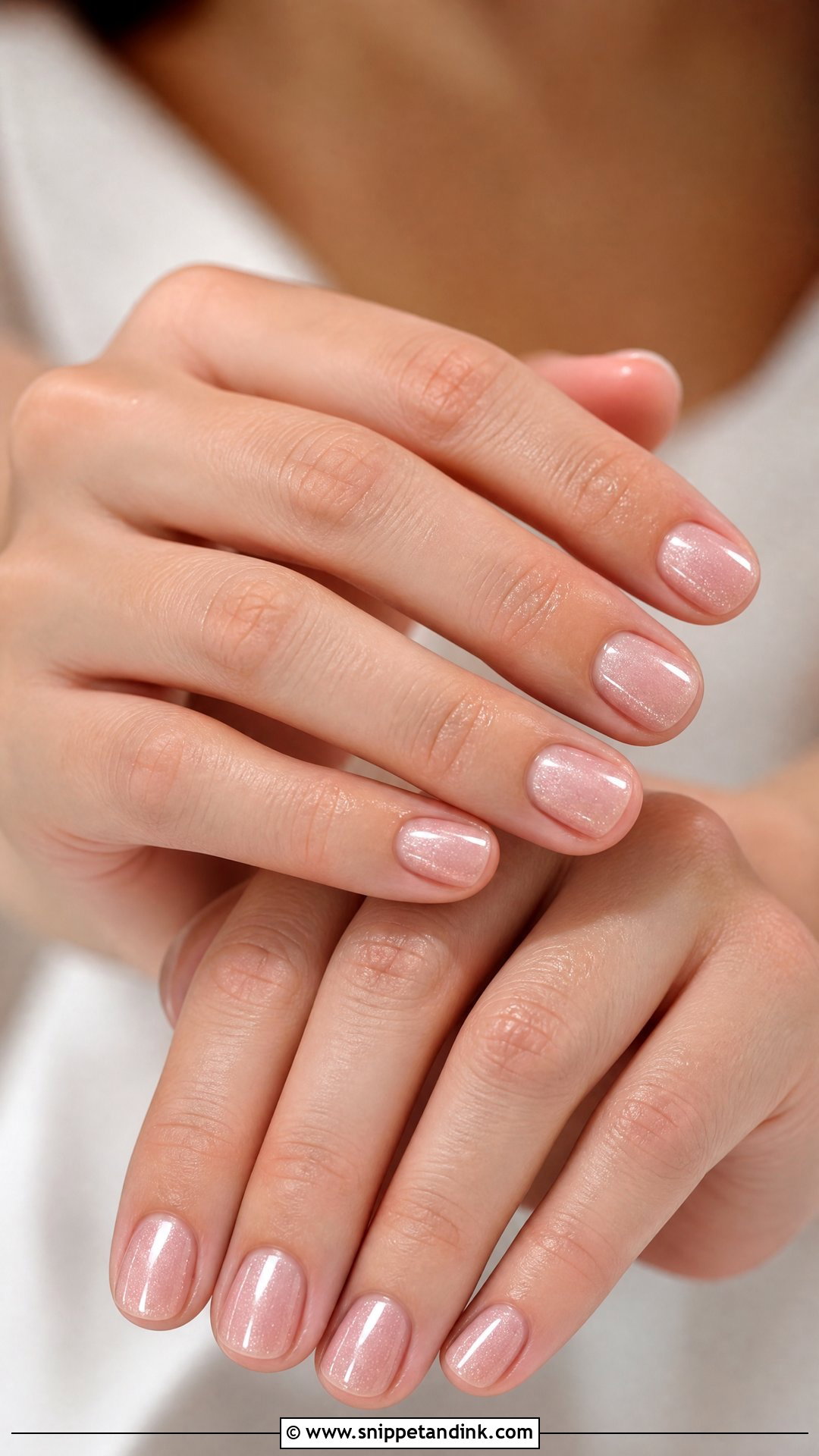
Short nails are honestly easier to wear for a wedding than long ones. You’ll be holding a bouquet, fastening jewelry and maybe signing documents, and short nails make all of that simpler. Soft square, oval and round shapes suit them. Neat cuticles and a glossy finish matter more on short nails, because there’s less length to draw the eye. Micro French, sheer pink or milky white all look polished.
14. Almond Bride Nails
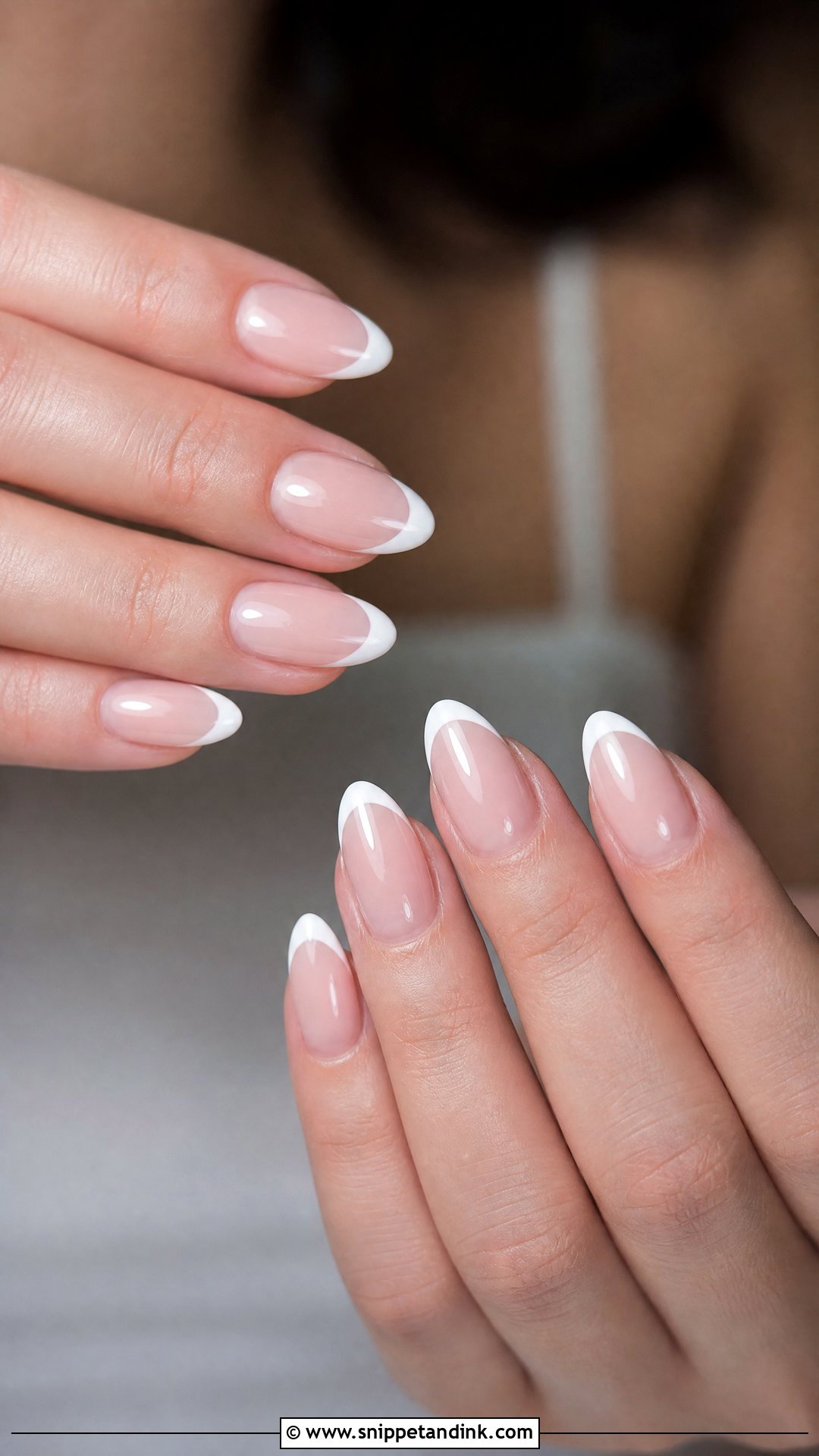
Almond is the shape I recommend most for ring photos, since its taper makes fingers look longer. At medium length it’s practical; very long almonds can get in the way of buttons and zippers on the dress. Almost every design here works on it, from French and chrome to lace and florals. If your nails are short but you want almond, a gel extension or a structured gel overlay builds the shape.
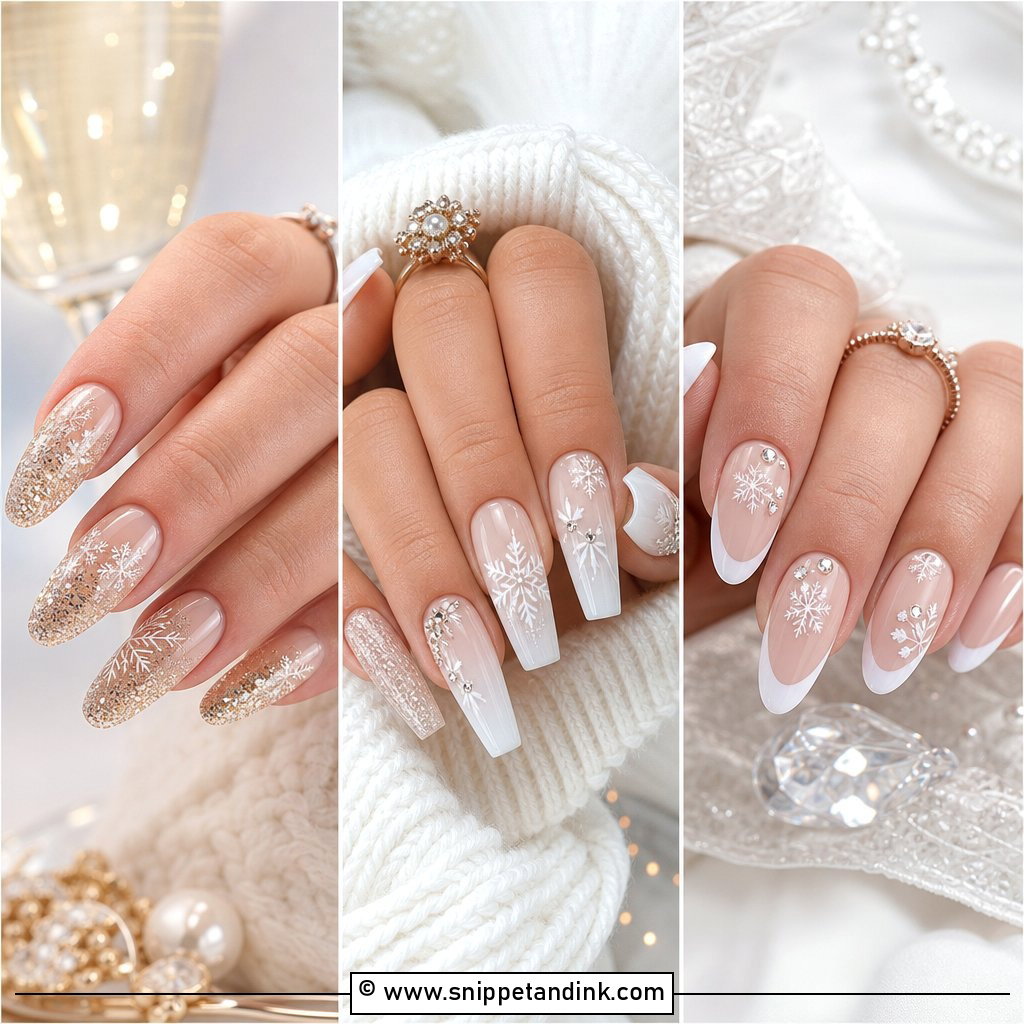
15. Square French Bride Nails
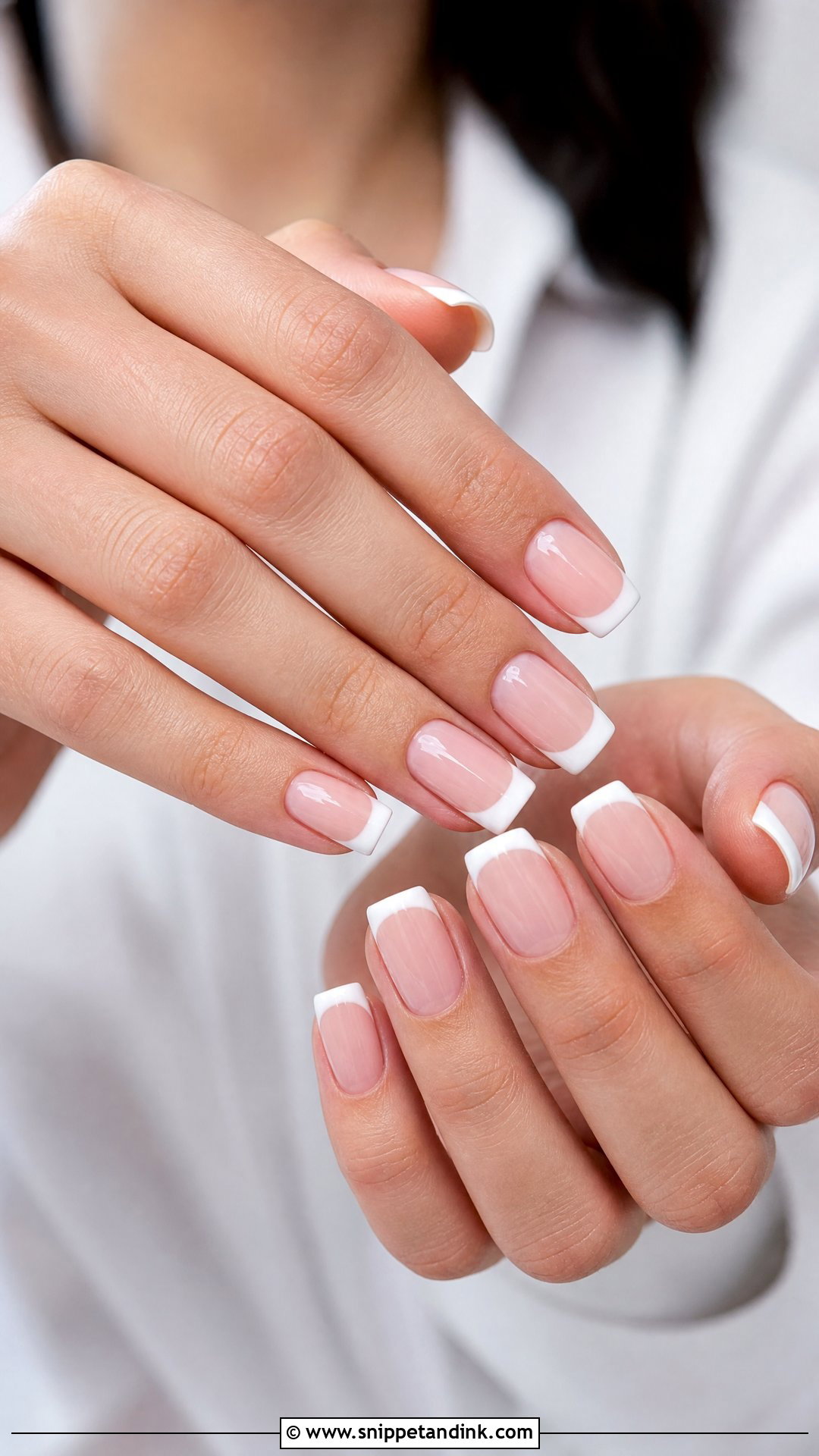
A square French looks crisp, but I always soften the corners slightly. Sharp square corners catch on fabric and chip first. Short and medium lengths are most practical. A sheer pink base with a soft white tip is the classic version; a micro tip modernizes it. It suits structured gowns and sleek hairstyles.
16. Coffin Bride Nails
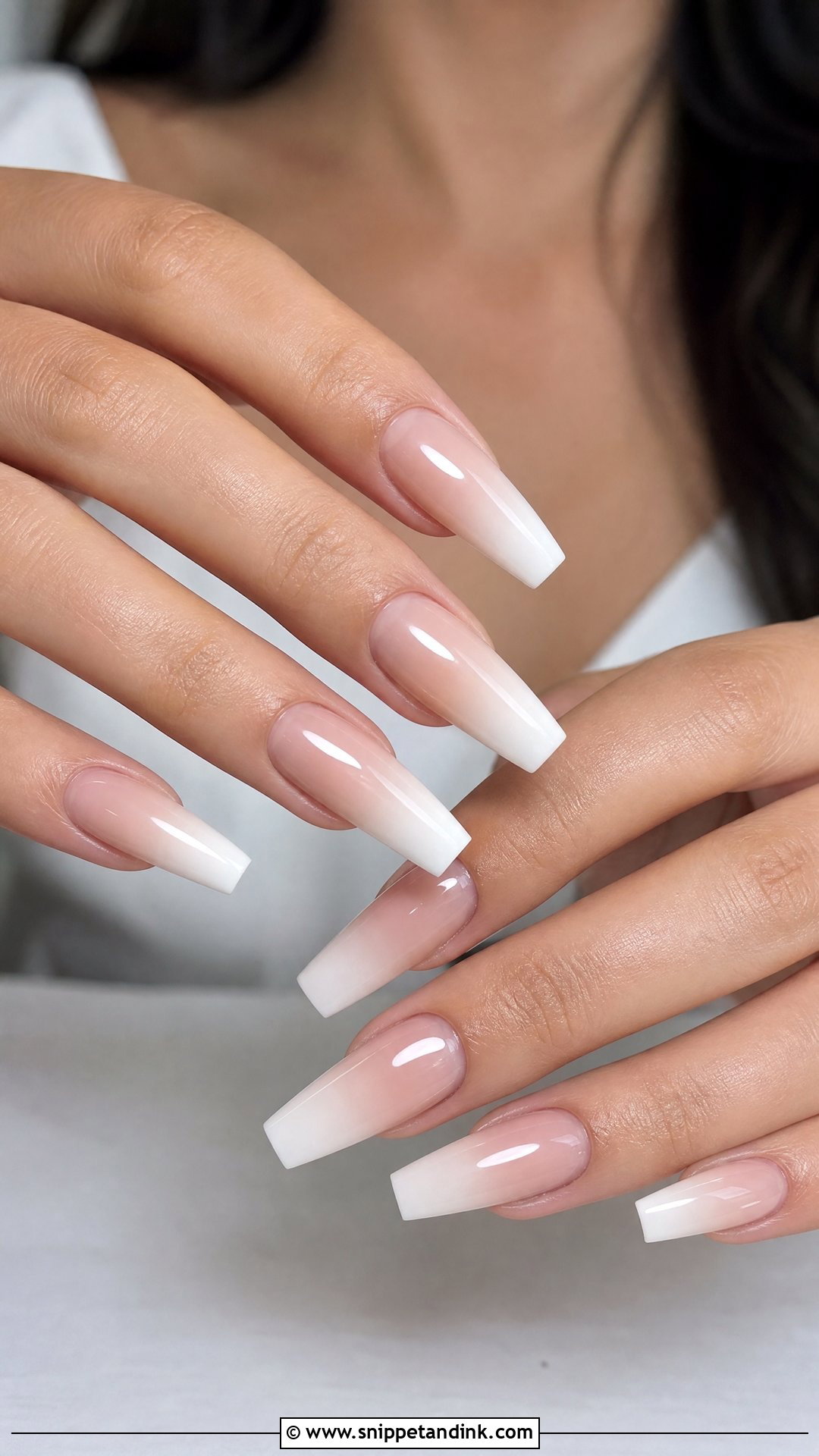
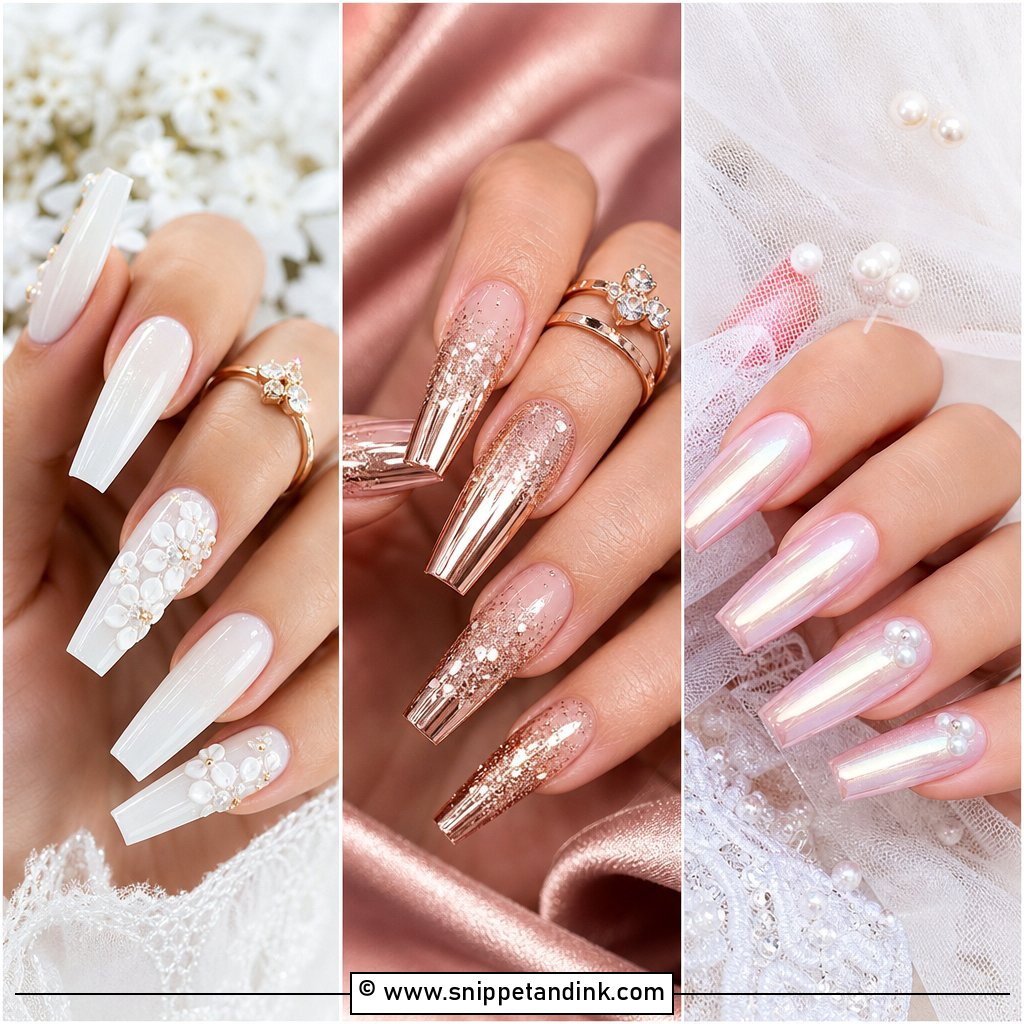
Coffin nails are a bold shape, with tapered sides and a flat tip, so I keep the color soft for a wedding. Nude, blush and milky white suit it; white ombre or pearl chrome softens the shape. Medium length is far easier to manage than long. If you’ve never worn extensions, wear them for a week beforehand, because adjusting to longer nails takes time.
17. Oval Bride Nails
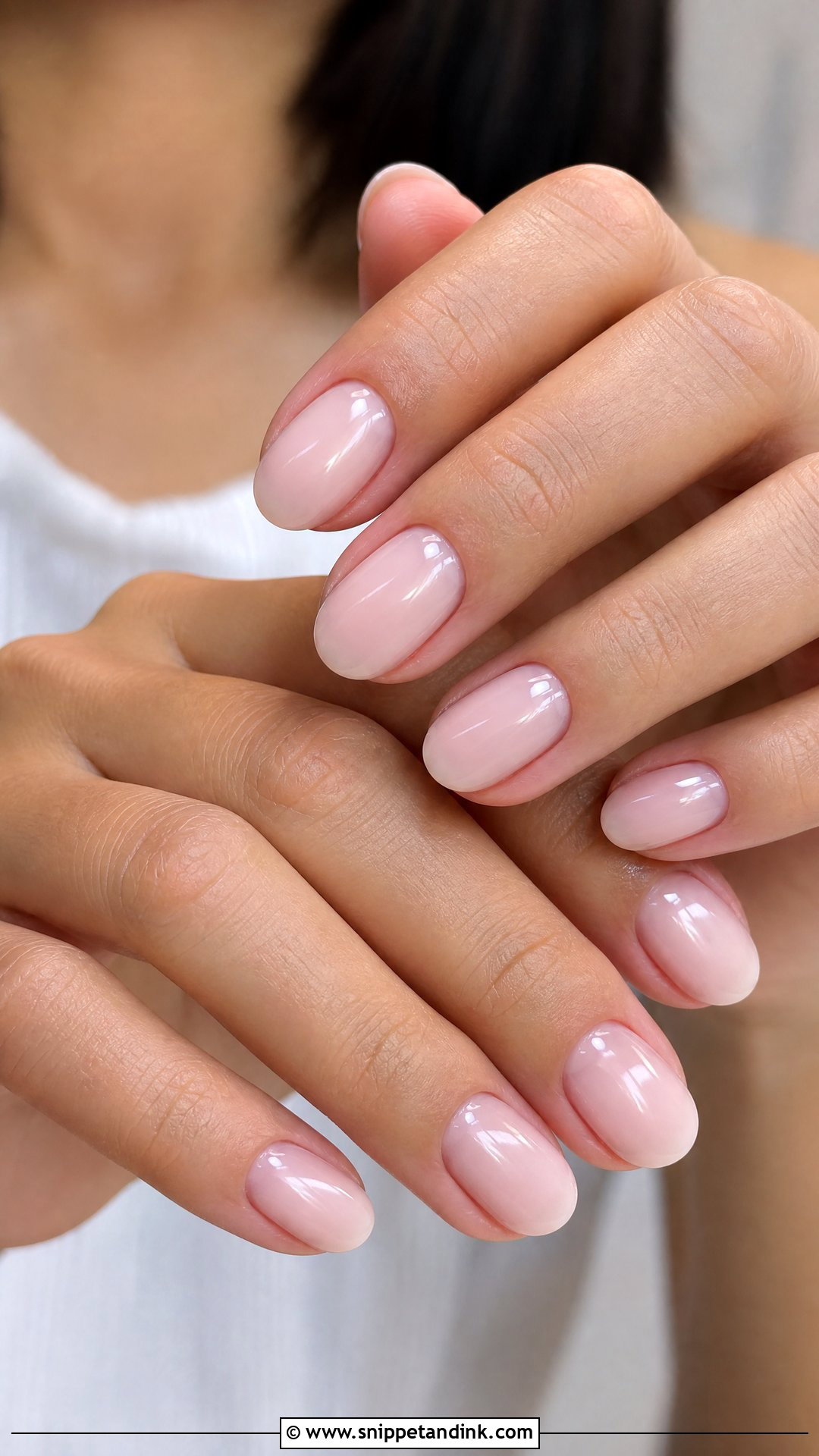
An oval follows the curve of the fingertip, which makes it the most natural shape and the easiest to grow from your own nails. Short ovals look clean; medium ovals leave room for a little art. Sheer pink, milky white and classic French all suit it. It’s also the hardest shape to chip, since there are no corners.
18. Sheer Pink Bride Nails
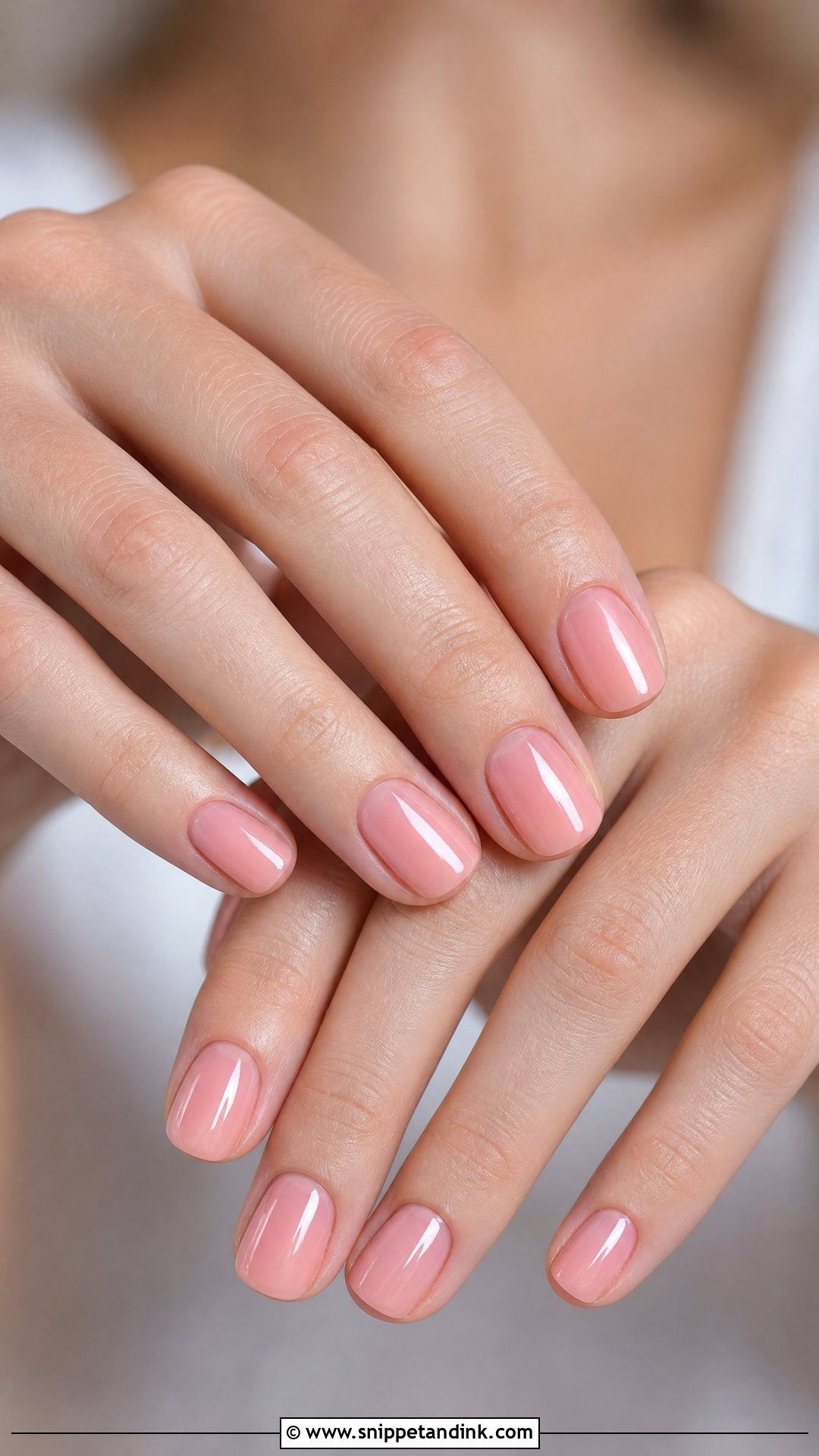
Sheer pink gives the ‘your nails, but better’ finish. It brightens the nail bed slightly without looking painted. I usually apply it in a jelly gel, which levels itself and hides small ridges. It works on every length and with every dress shade, from bright white to blush. A tiny crystal or a thin micro French adds detail if you want it.
19. Ivory Bride Nails
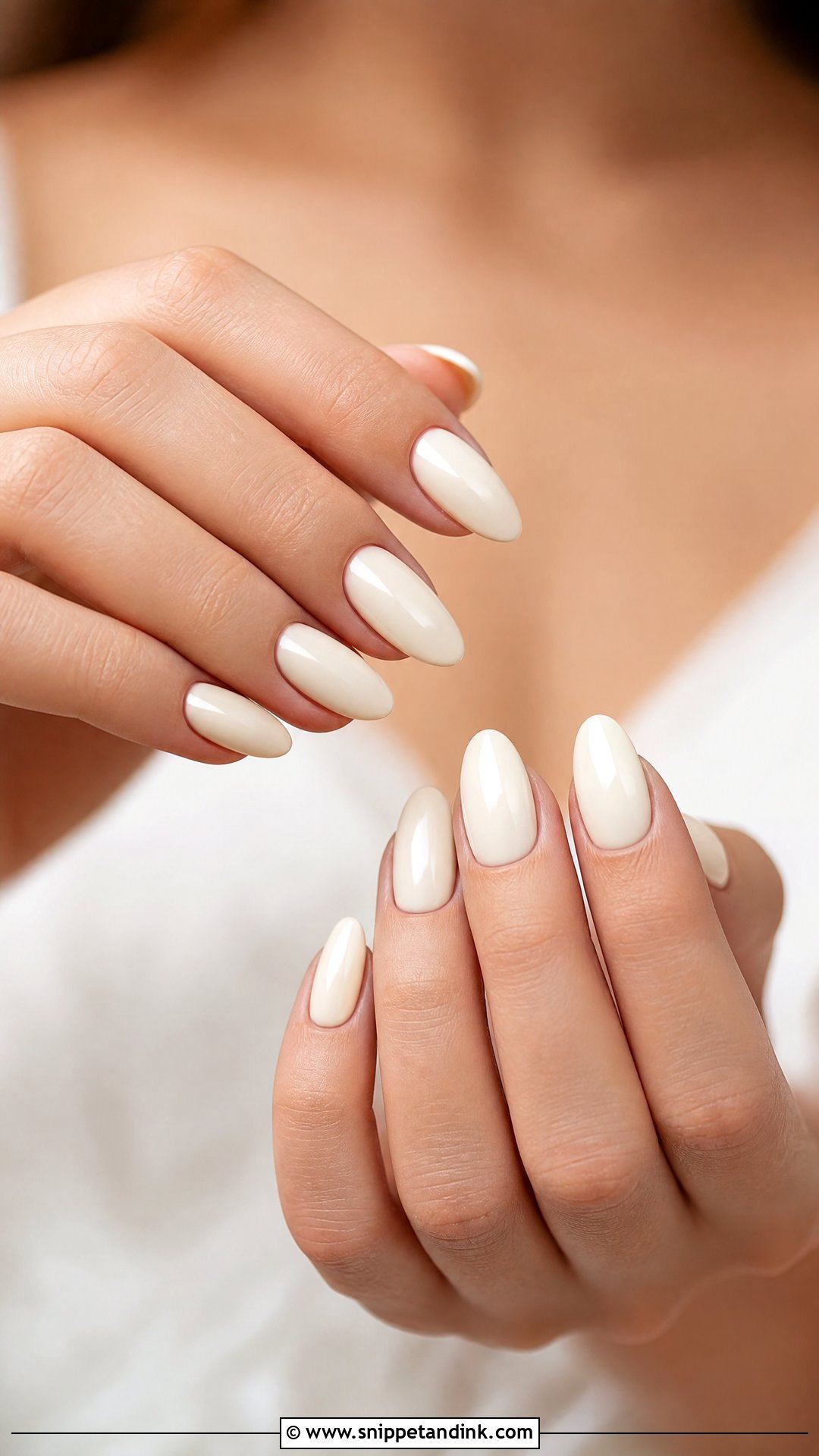
Bright white polish next to an ivory dress can make the dress look yellow. Ivory nails avoid that clash and suit cream, champagne and warm white gowns. I bring a few shades to compare against a swatch of your fabric. Solid ivory, a soft French or a milky semi-sheer all work. Pearl chrome over ivory gives a warm glow.
20. Champagne Bride Nails
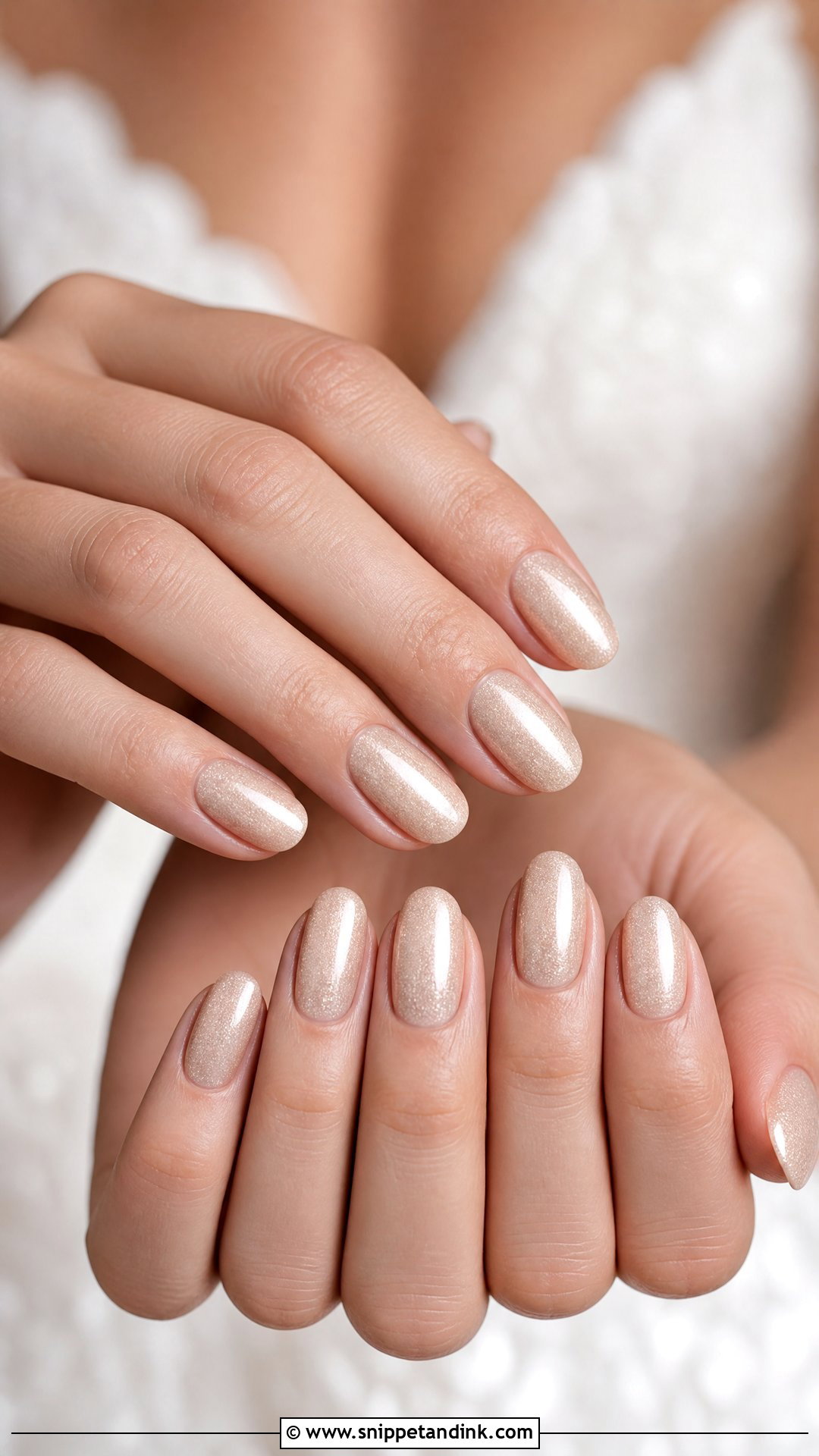
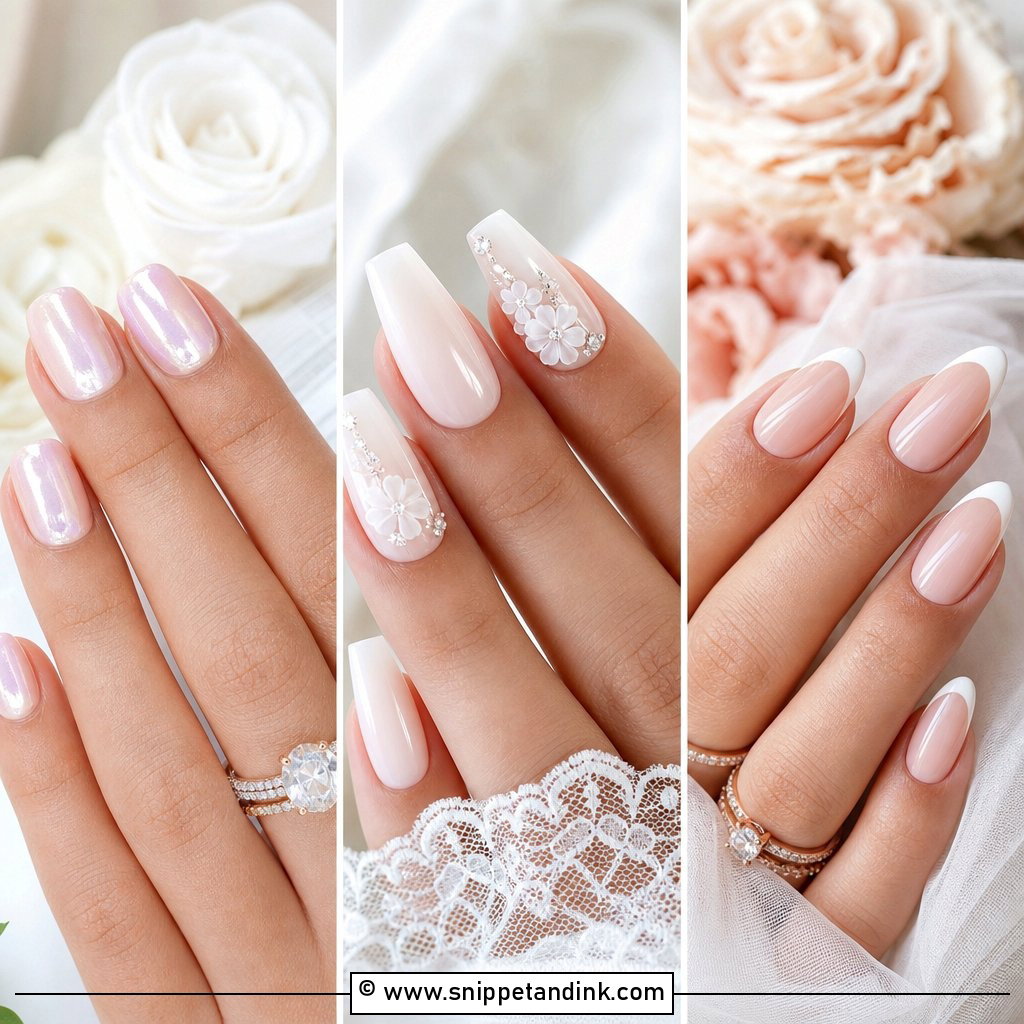
Champagne sits between beige and pale gold, so it suits gold jewelry and warm makeup well. Shimmer polishes can show brush strokes, so I apply thin coats and let each one level. It catches candlelight nicely, which makes it a good pick for evening receptions. Almond and squoval keep it elegant. A soft white tip over champagne is an option if you want a French.
21. Rose Gold Bride Nails
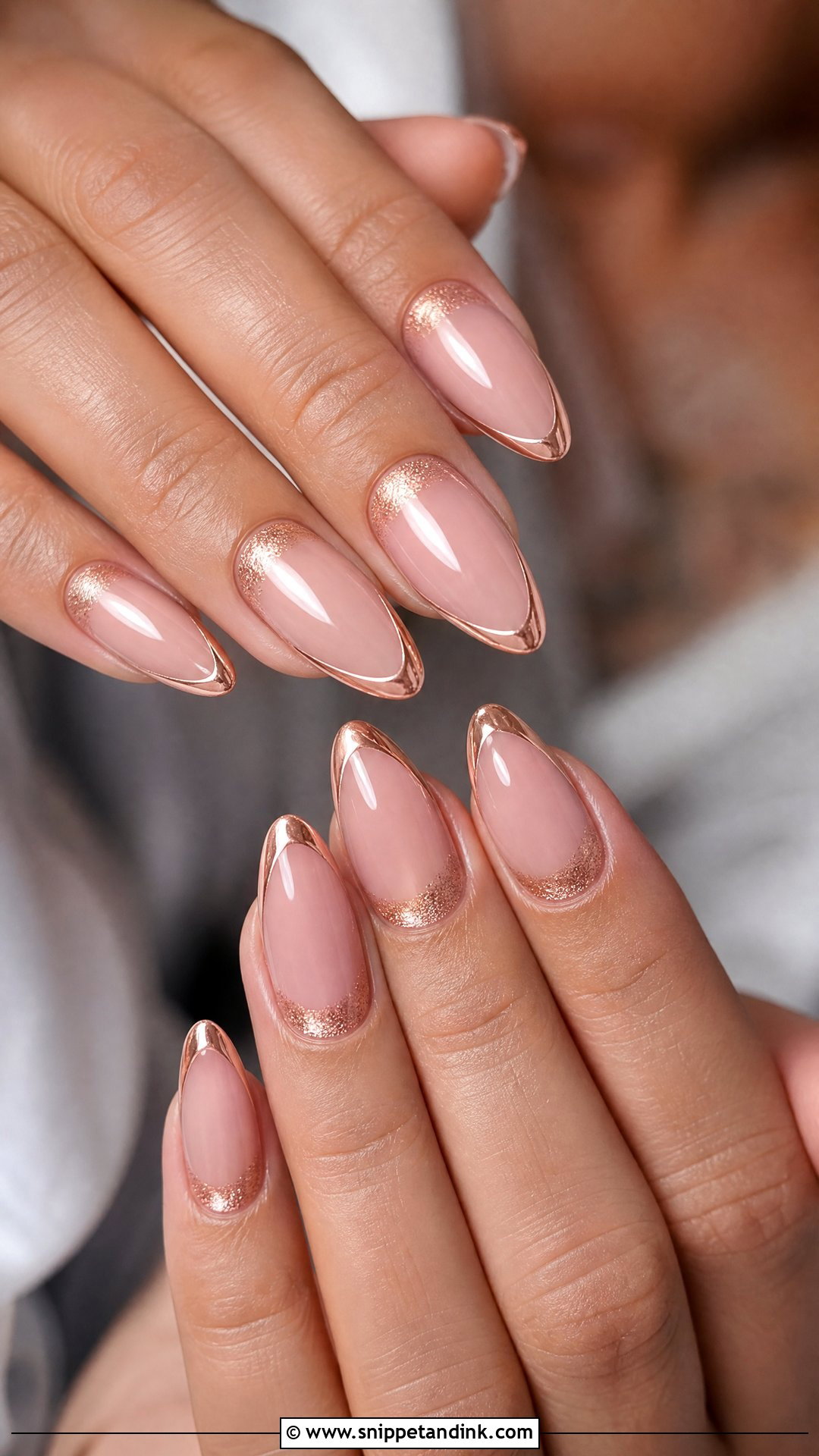
Rose gold suits brides wearing rose gold rings or blush and mauve color schemes. A fine metallic finish looks bridal; chunky glitter looks more like a party set. I’d test it against your engagement ring before the day, since rose golds vary in pinkness and a mismatch shows in ring photos. It flatters warm and neutral undertones especially.
22. Gold French Bride Nails
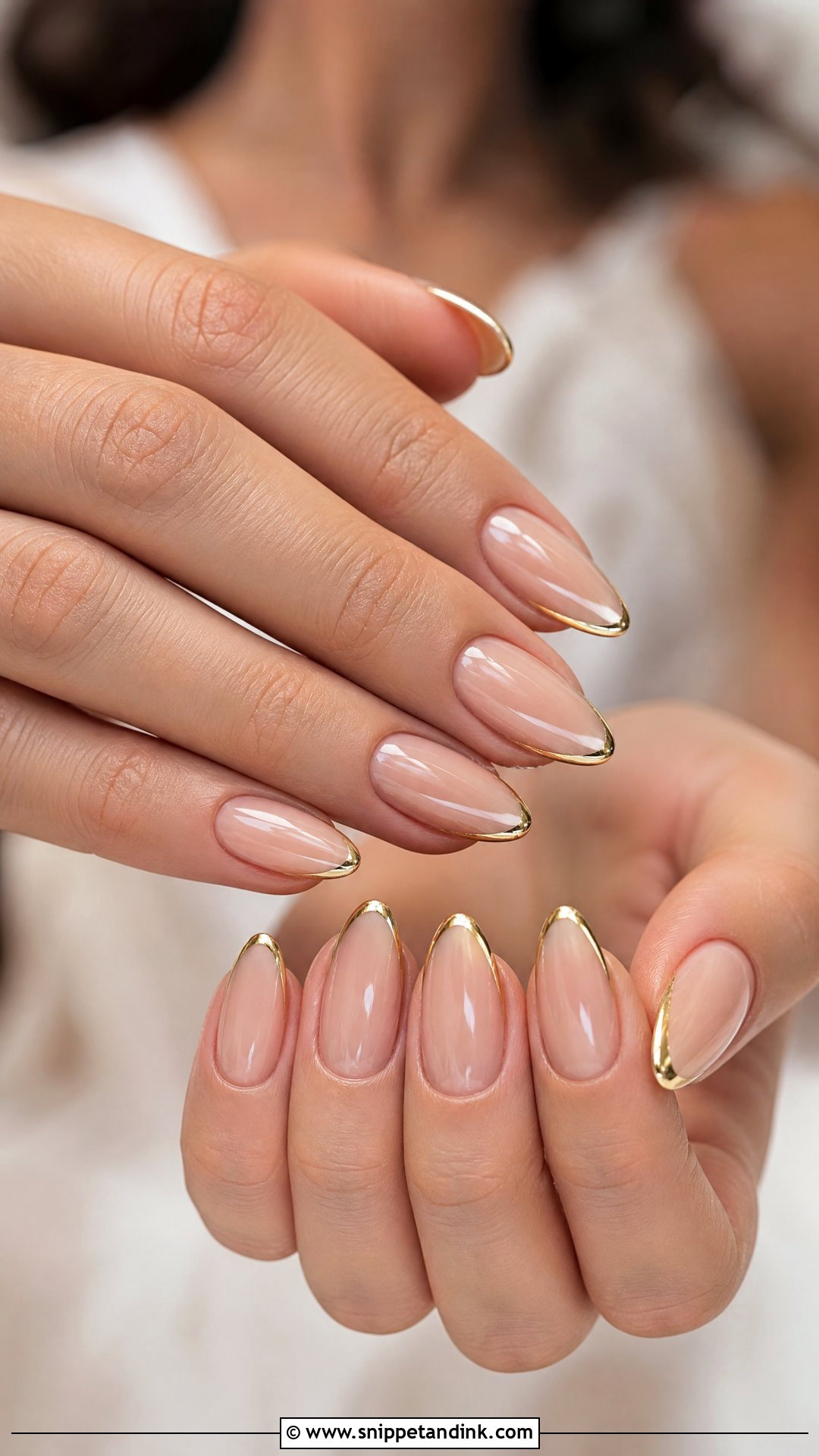
Gold French tips work when gold runs through your ring, earrings or hair accessories. The tip should be thin and painted with a gold gel or foil, not a glittery polish. Thicker tips have more impact but can look heavy on short nails. Over a nude or sheer pink base, keep the rest of the nail glossy so the gold edge stands out.
23. Silver French Bride Nails
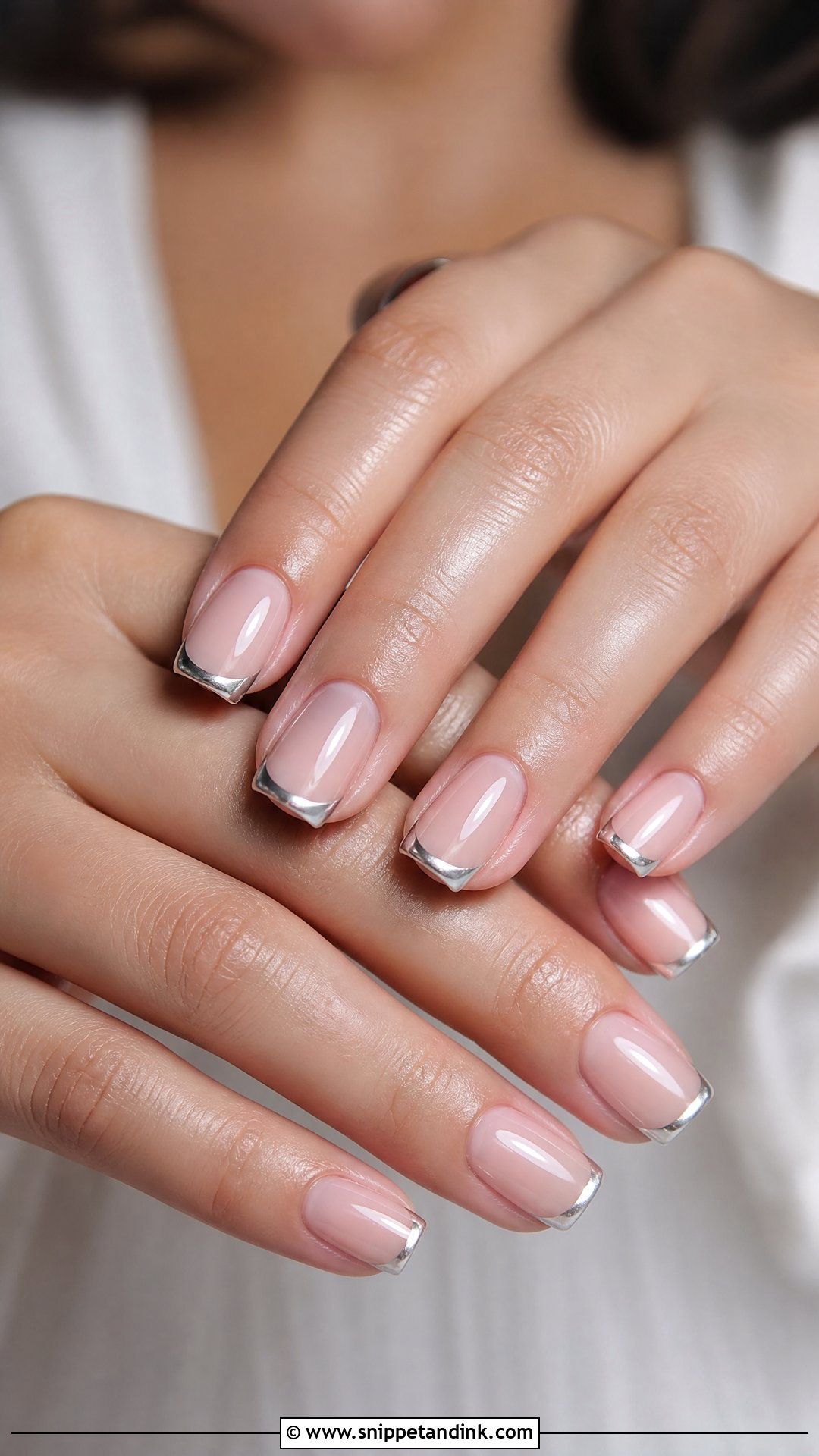
Silver French tips suit white gold, platinum and silver jewelry. A pearly silver looks softer than mirror metallic, which can look harsh in flash photos. It’s a good choice for winter weddings and gowns with crystal or beaded detail. Almond, oval and square shapes all carry it. Thin tips look more refined than thick.
24. White Chrome Bride Nails
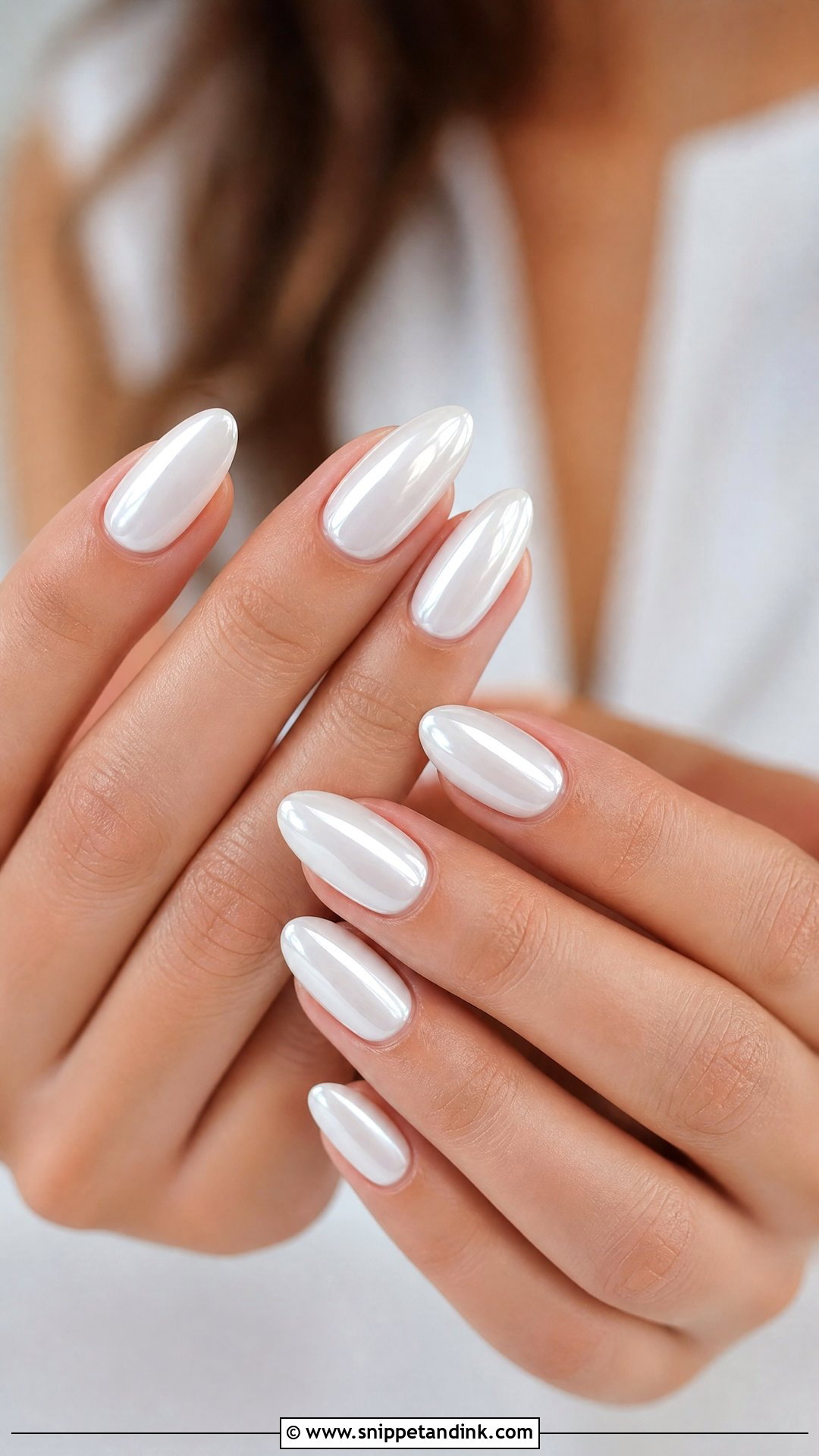
White chrome bride nails start with a white or milky base and a pearl-white chrome powder over the top. The result is brighter than plain white but softer than a mirror finish. White shows every imperfection, so the base has to be completely smooth. Almond and coffin make it look glamorous; short ovals keep it quiet.
25. Cat Eye Bride Nails
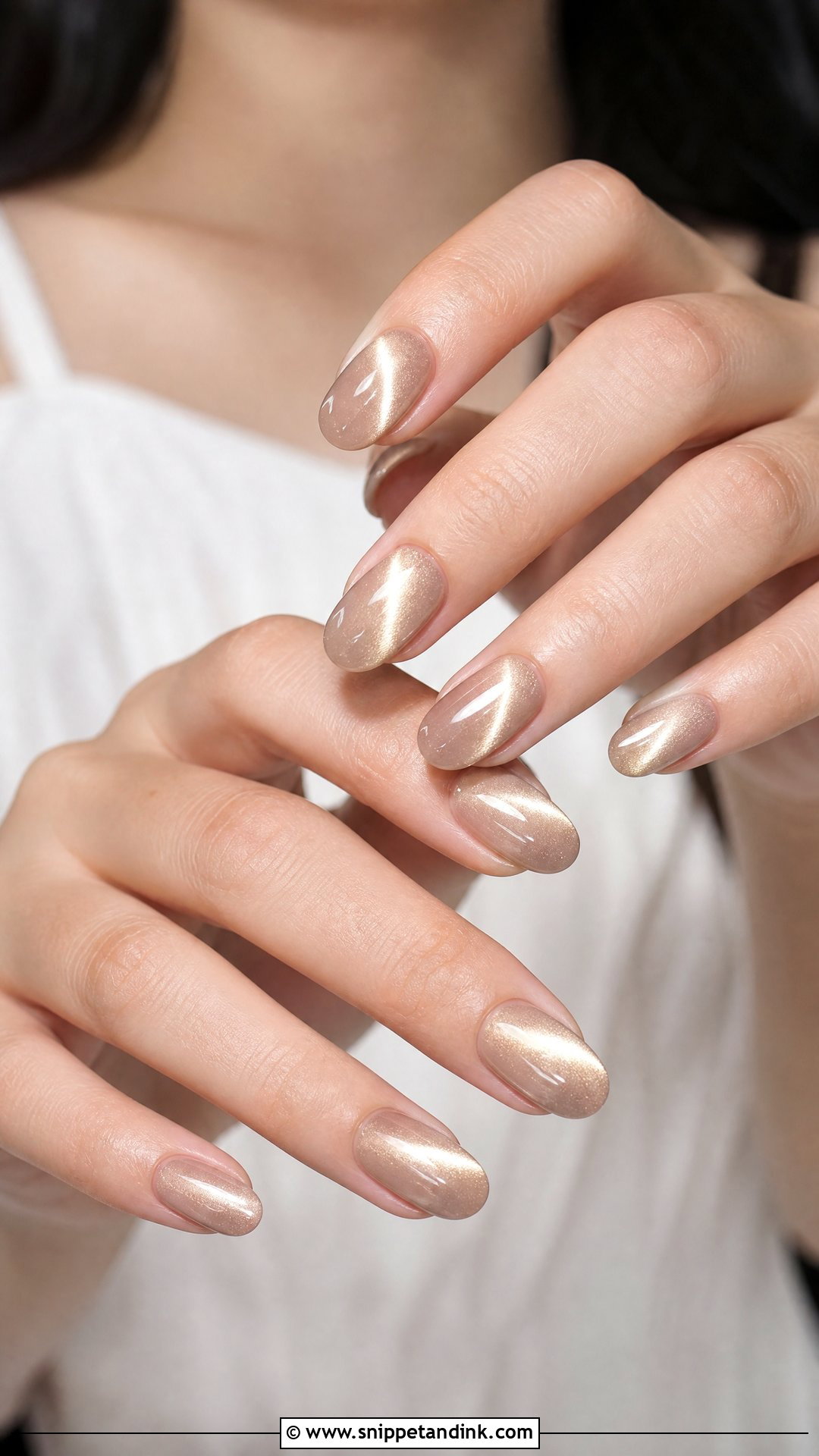
Cat eye polish has magnetic particles that I pull into a line with a magnet before curing. For a wedding, soft shades like champagne, pearl, blush or silver look best. A velvet cat eye, where the shimmer is spread across the nail rather than a single line, looks softer. It shifts as you move your hands, so it reads well in video.
26. Minimal Bride Nails
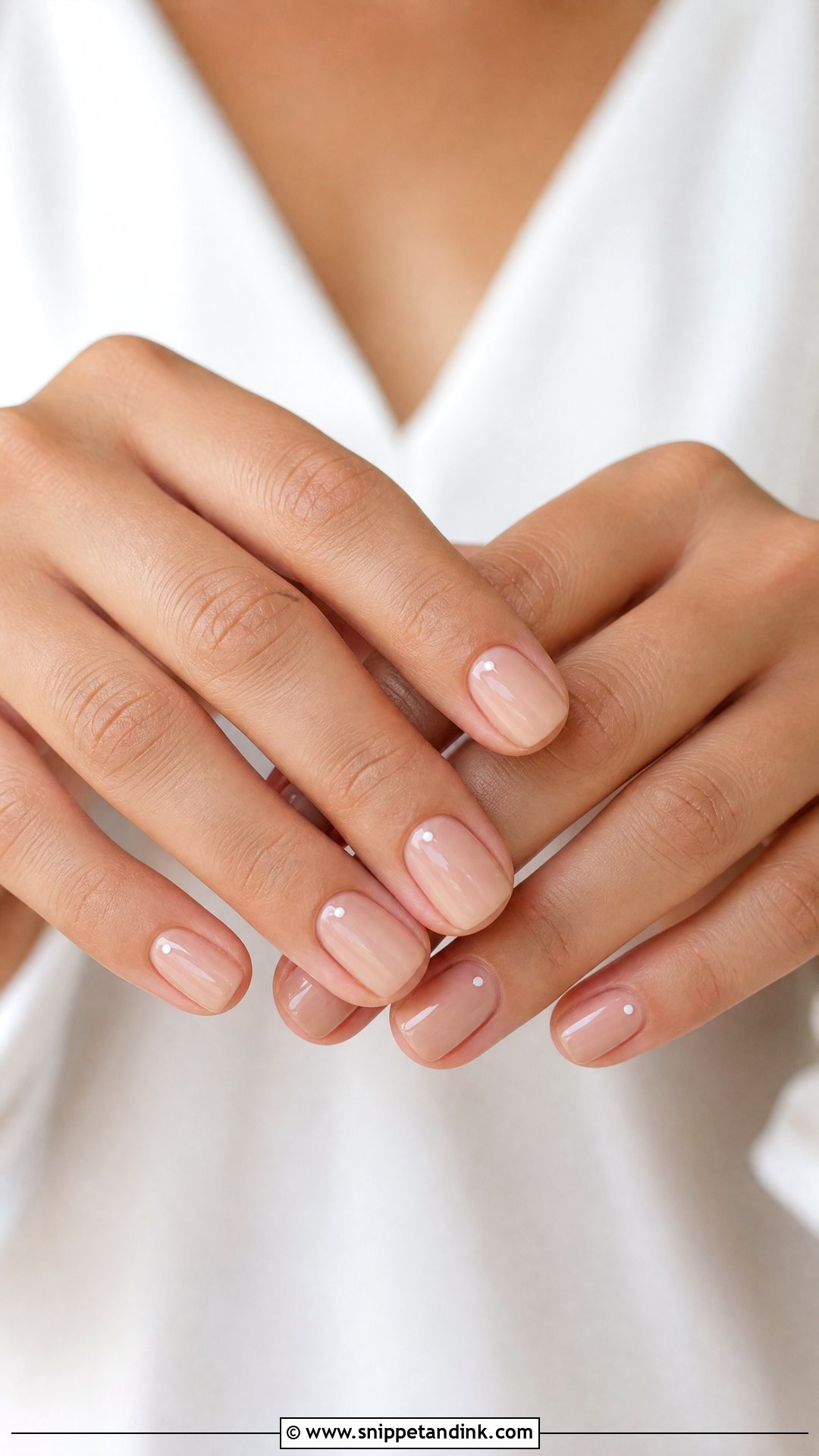
A minimal manicure depends entirely on the prep: shaping, cuticle work and a smooth base. With no art to distract the eye, any uneven edge shows. Sheer nude, pale pink or soft white suit it. A single small dot or line adds detail without cluttering. It suits every length and won’t compete with the dress.
27. Matte Bride Nails
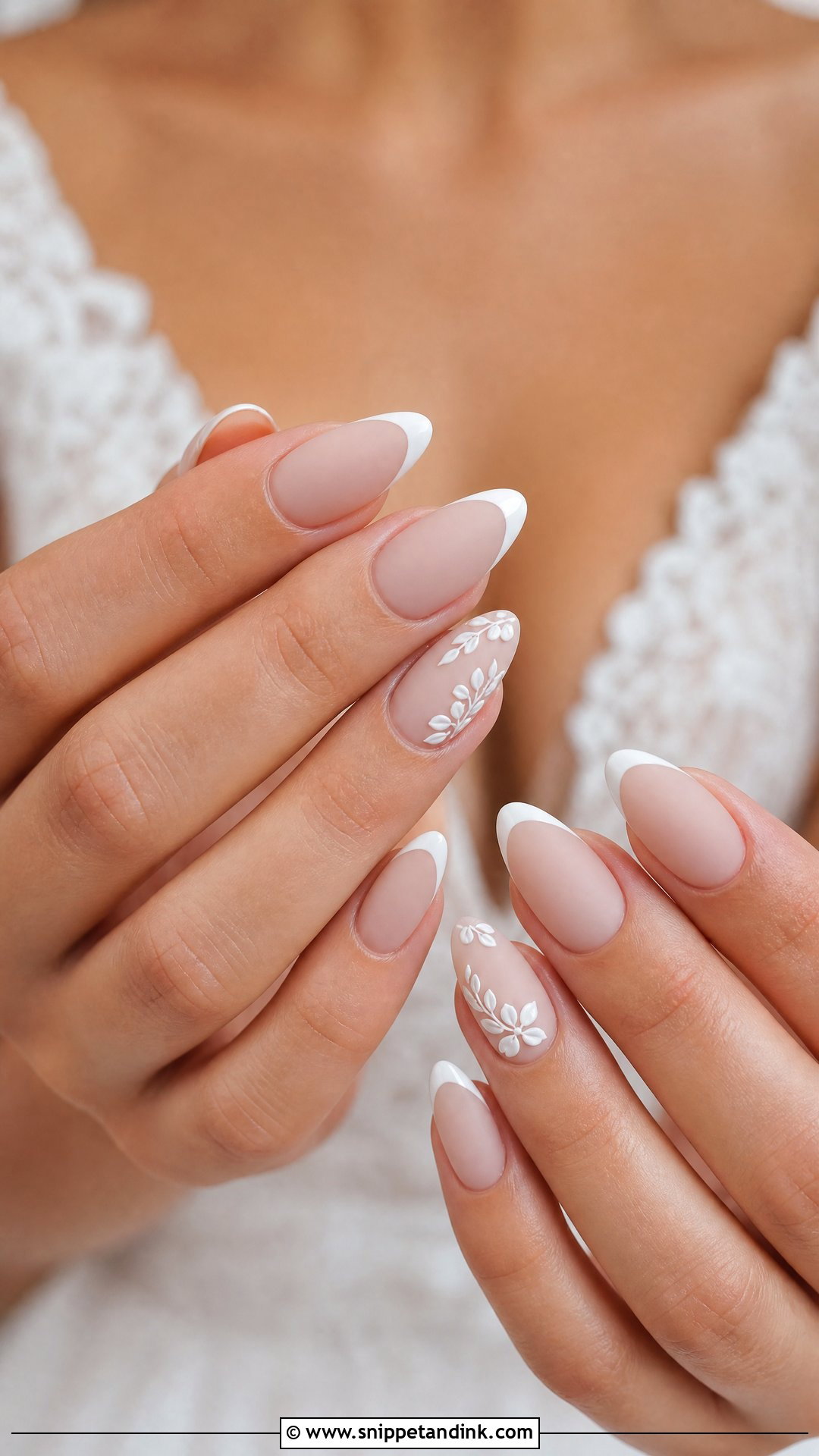
Matte top coat gives a velvety finish but marks easily, picking up oils from hand cream and food. I’d recommend it only if you’re comfortable with a slightly less pristine finish by the end of the night. A matte nude with glossy French tips is a nice contrast. Ask for a durable matte gel top rather than a regular polish.
28. Baby Boomer Bride Nails
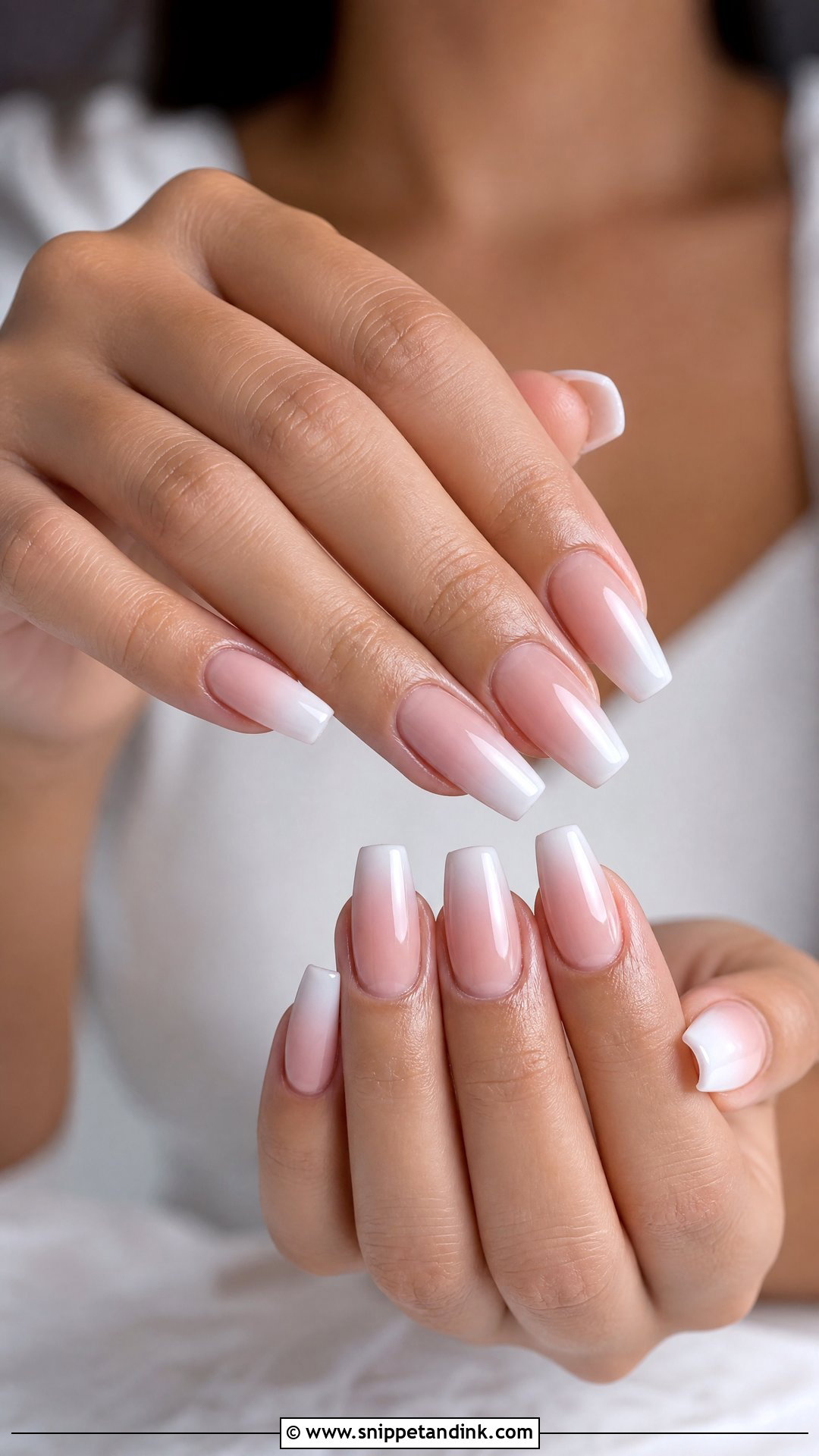
Baby boomer bride nails blend pink at the base into white at the tip, a softer version of French. I build the fade in gel, which takes more time than a standard French. It grows out gracefully, since there’s no sharp line at the cuticle. Almond, coffin and square shapes all suit it.
29. Something Blue Bride Nails
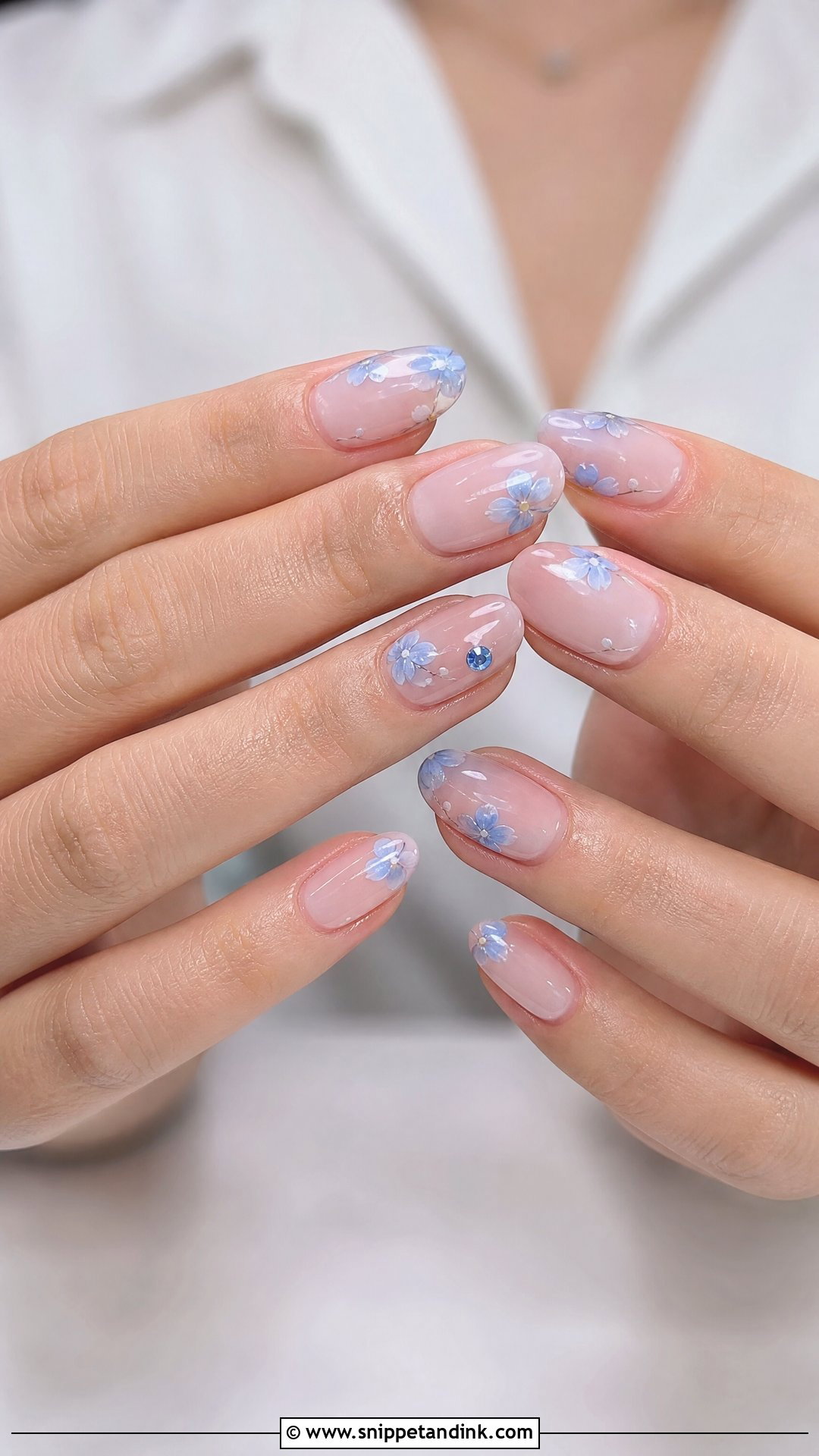
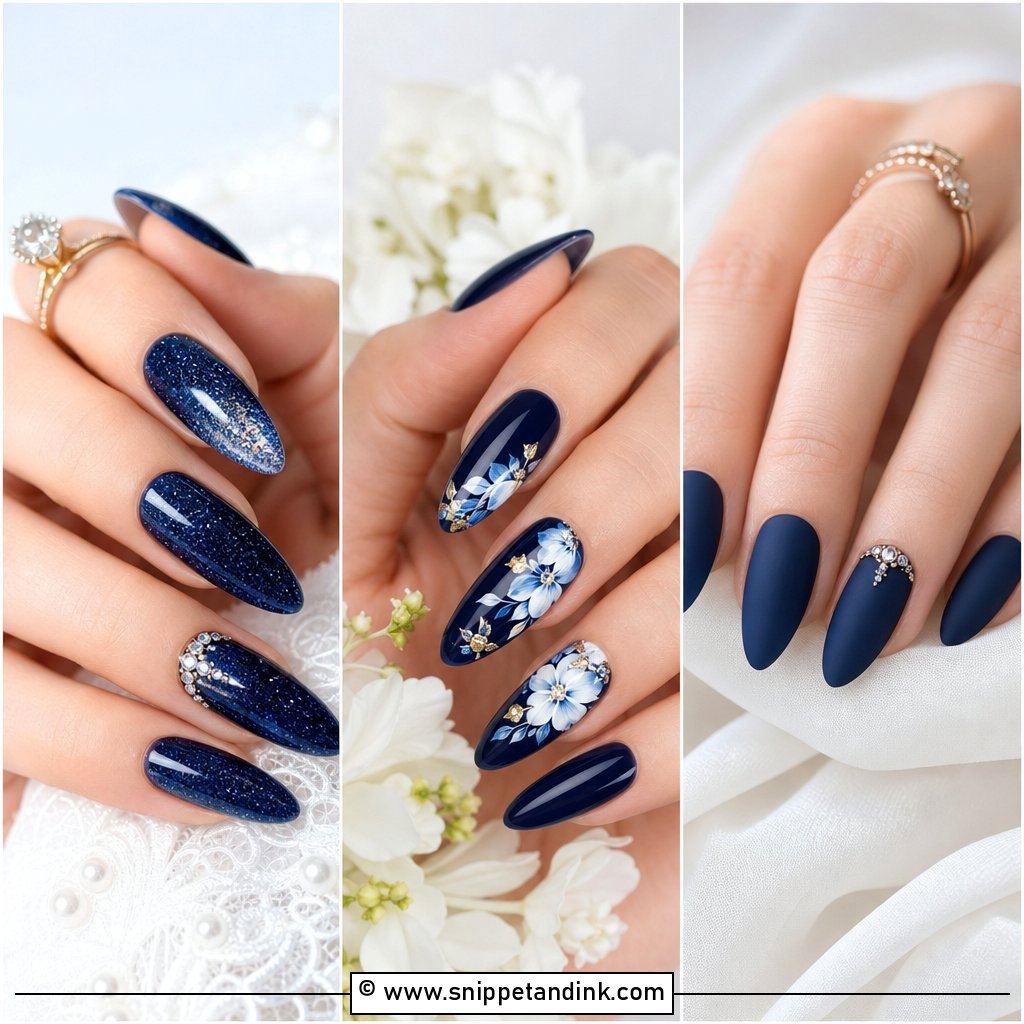
A little blue on one nail is the easiest way to include something blue. I’d suggest a pale blue French tip on one finger, a tiny blue flower, or a single blue crystal. Keep the rest of the set bridal. It ties in nicely if your shoes, garter or bouquet ribbon is blue.
30. Blue French Bride Nails
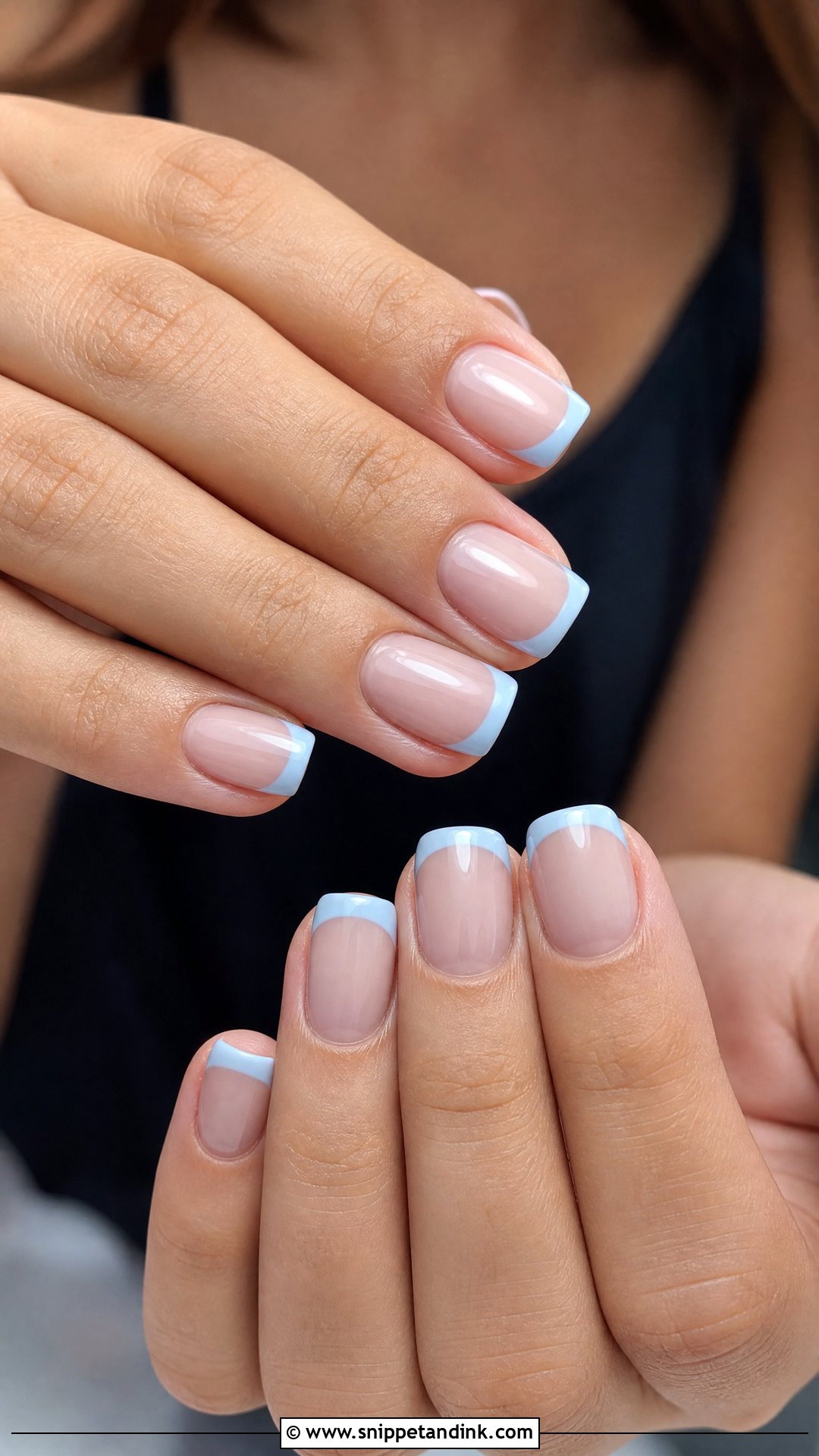
Pale blue tips over a nude base give a French manicure some color without losing its shape. Beach and spring weddings suit it best. Short square nails make it playful; almond makes it more elegant. A pearly top coat over the blue softens the color.
31. Floral French Bride Nails
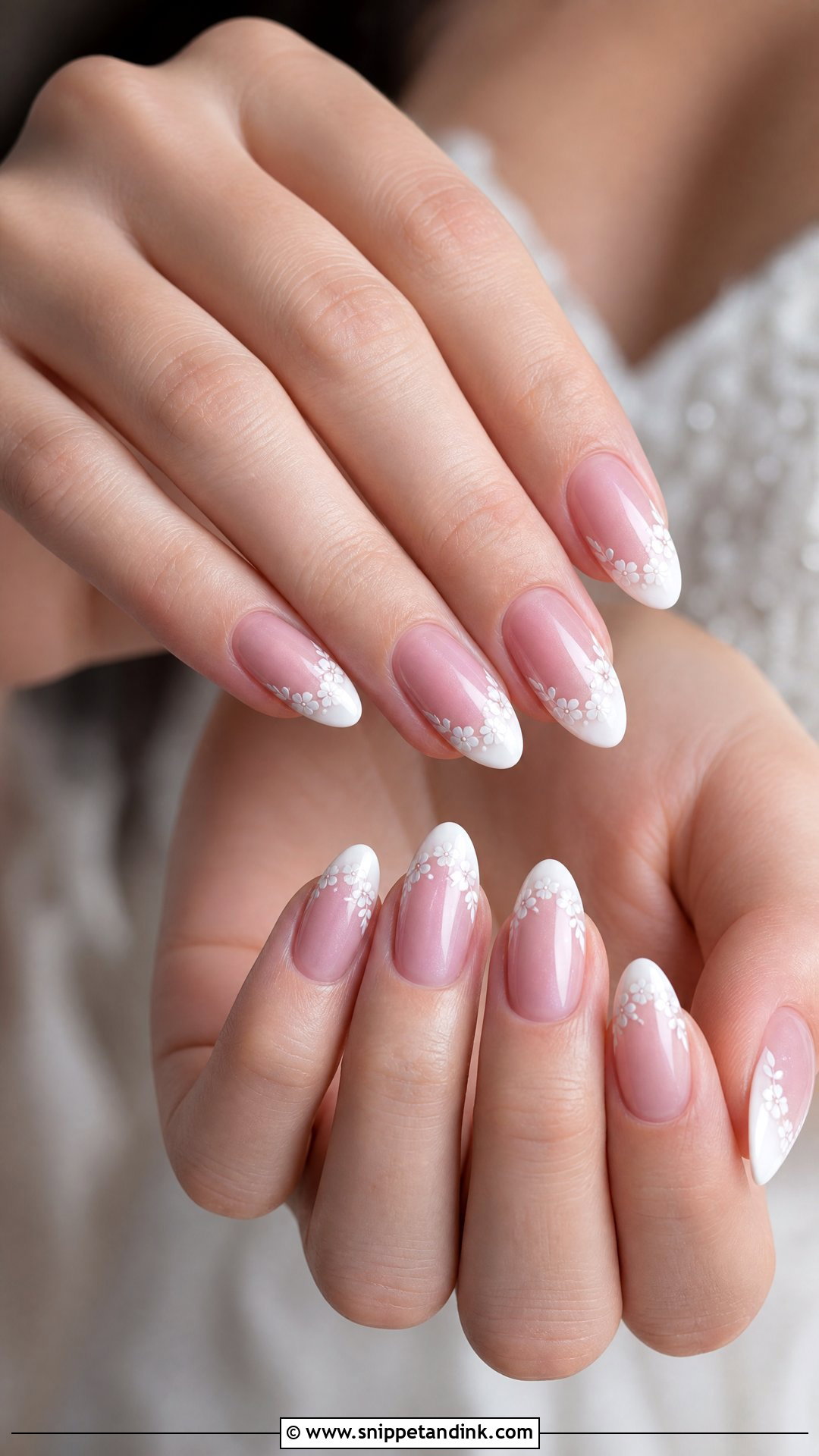
Floral French combines white tips with small painted flowers near the edge. Keep the flowers fine and soft-colored; big bright flowers look busy. It suits floral lace gowns and soft bouquets. Almond and oval shapes look romantic; square looks crisper.
32. Pearl French Bride Nails
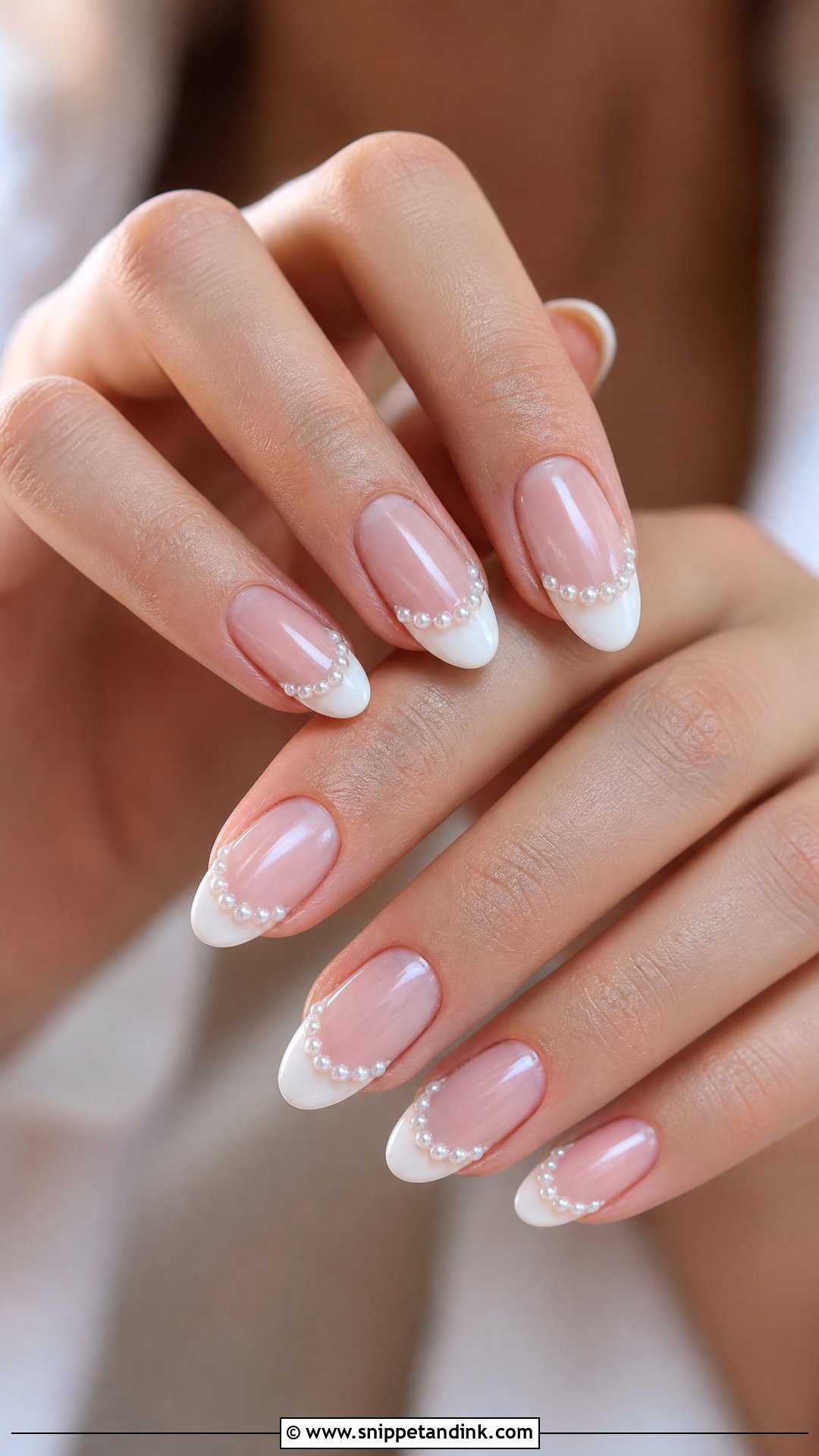
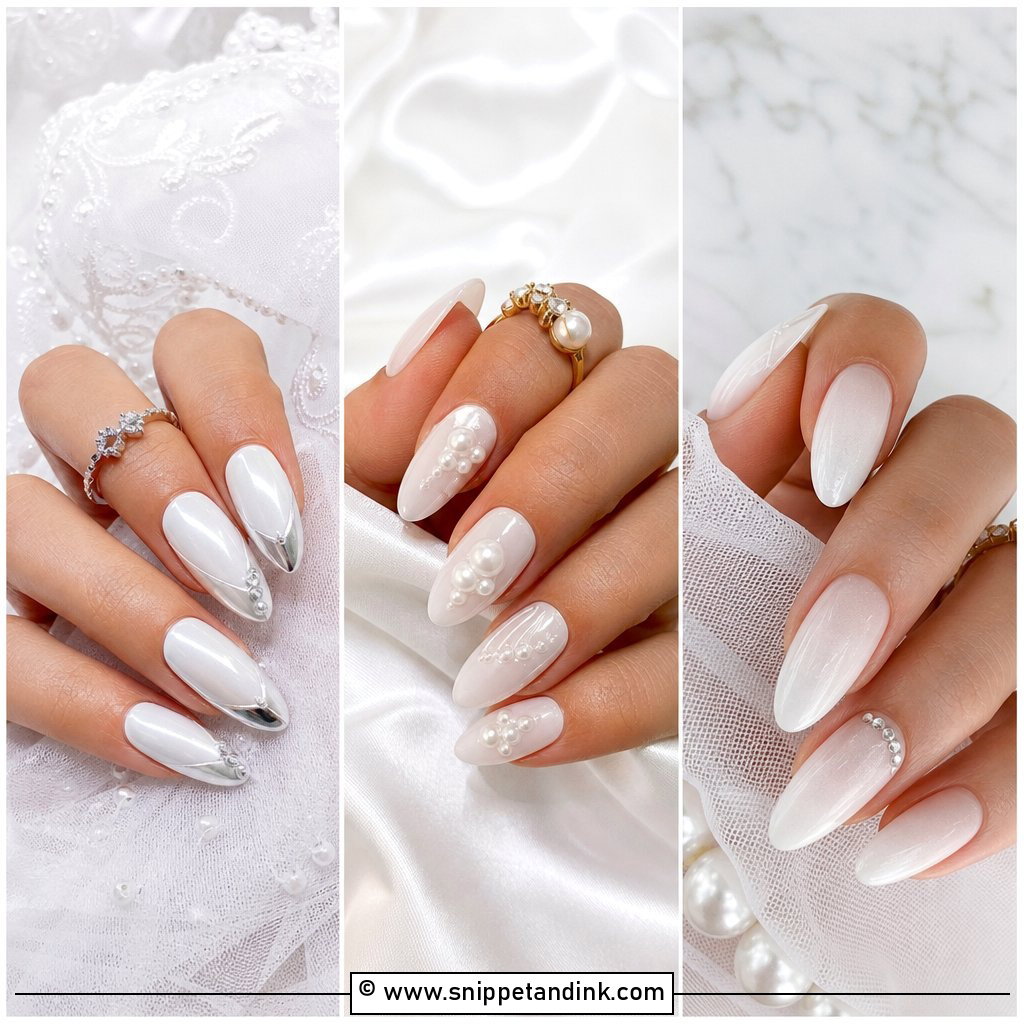
Pearl French can be a chrome over white tips, small pearls along the smile line, or a milky base with pearly edges. It suits pearl jewelry and beaded gowns. Raised pearls can catch fabric, so I keep them small and use them sparingly.
33. Marble Bride Nails
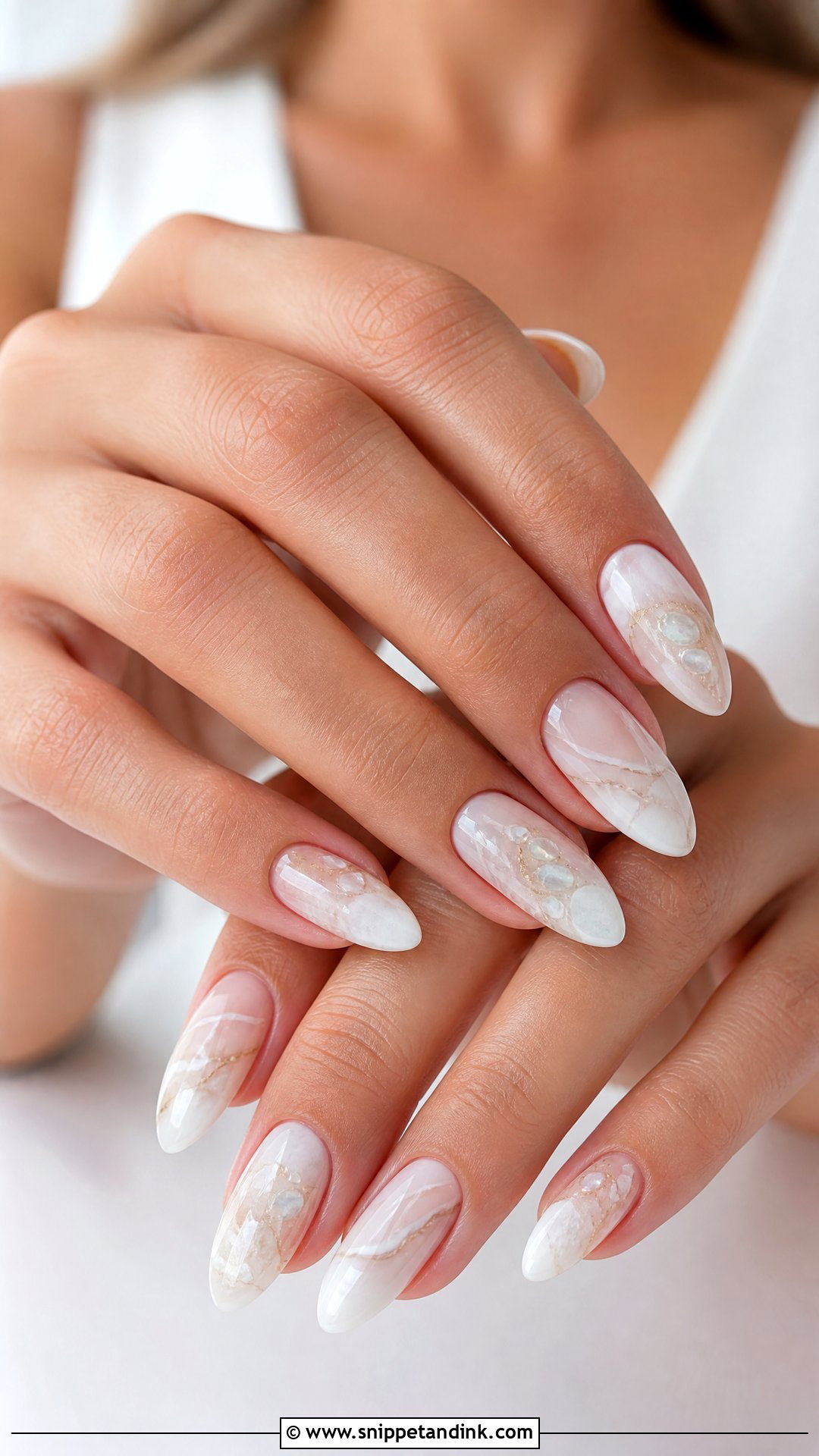
Marble nails use fine white and beige veining over a sheer base. I do it with a thin brush and a little alcohol to diffuse the lines. Mixed with solid nude nails, it looks balanced. Almond and coffin show the pattern clearly; short square keeps it subtle.
34. Rhinestone French Bride Nails
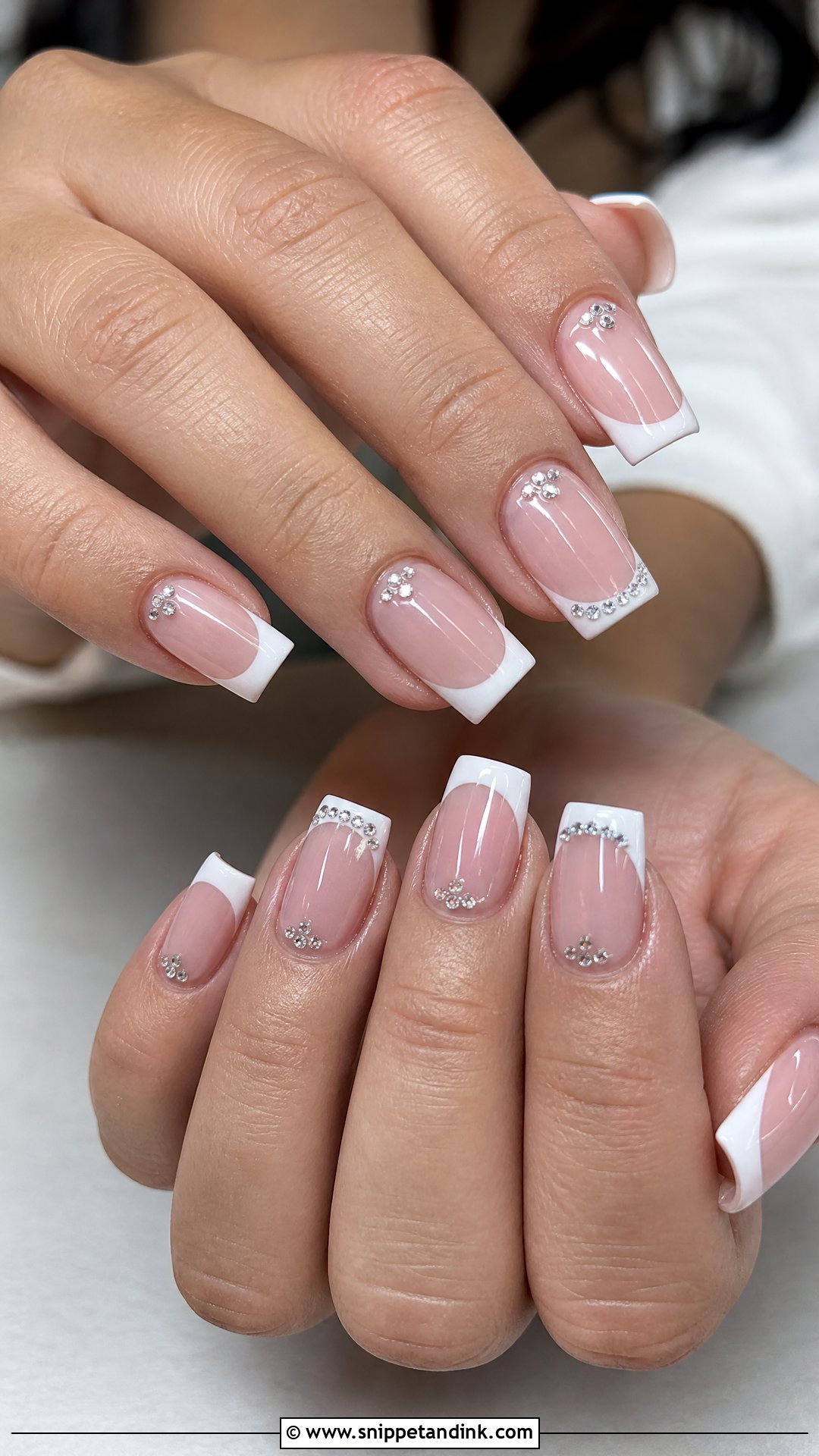
Rhinestone French adds a row of small stones near the cuticle or along the tip line. Clear, small stones look elegant; oversized ones look cheap in close-ups and snag tulle. I set them into gel and cap the edges so nothing catches when you run your hands over the skirt. It suits beaded gowns, crystal hairpieces and sparkly shoes.
35. Natural Bride Nails
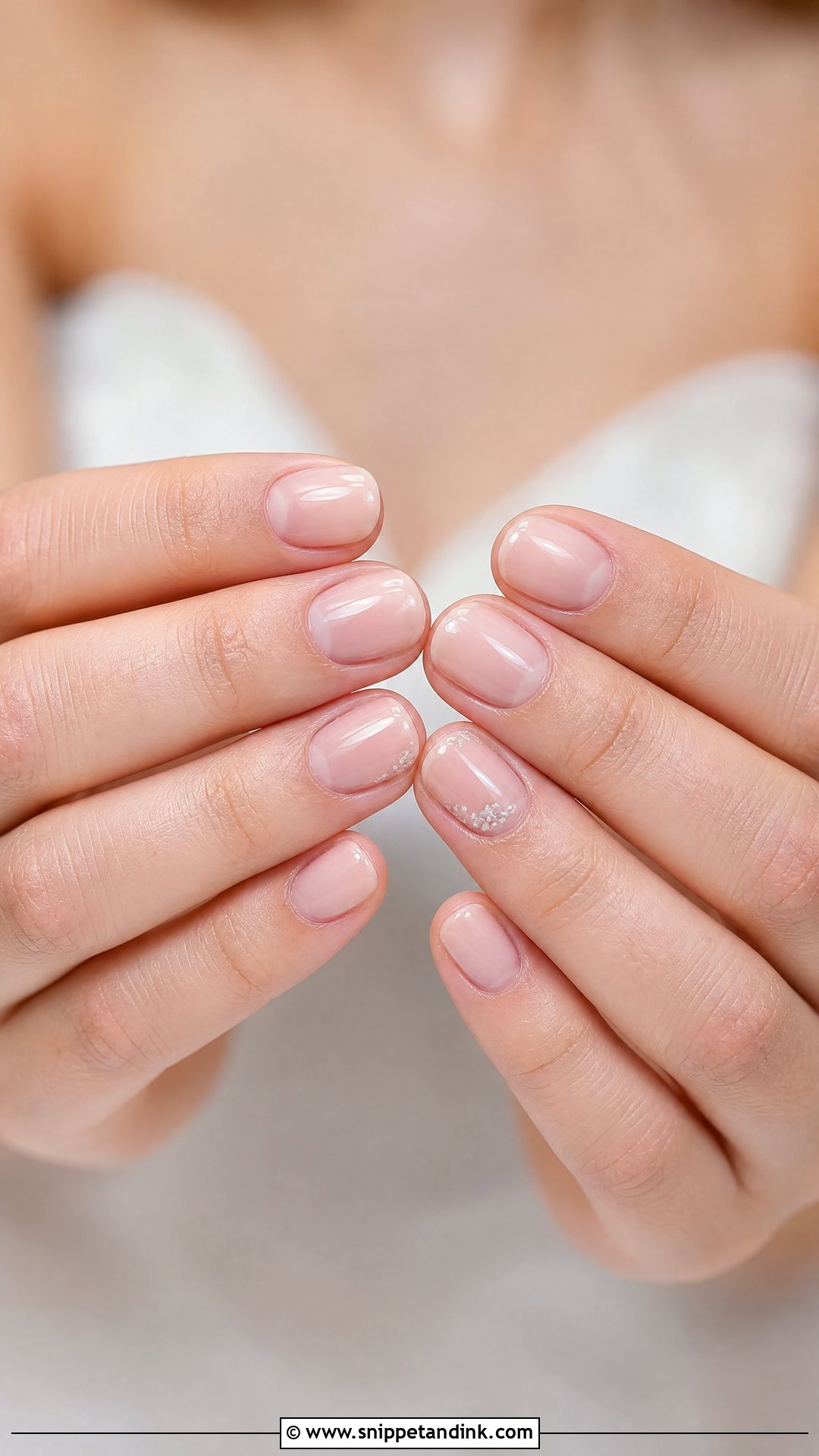
Natural nails rely on care: smooth shaping, clean cuticles, even length and a glossy sheer finish. Soft pink or clear nude polish looks healthy. It suits short nails and brides who rarely wear polish. A fine shimmer or a single pearl adds detail if wanted.
Caring for the Set Between the Salon and the Aisle
The days after your appointment are when most damage happens. Wear rubber gloves for washing up and cleaning, use cuticle oil every evening, and avoid using your nails to open cans or peel labels. Self-tan can stain the edges of light polish, so apply it before your nail appointment, not after.
Hands get photographed as much as nails
A close-up of the ring shows the skin around the nail too: dry cuticles, hangnails and rough knuckles all show up. In the week before, use a rich hand cream at night, push cuticles back gently after a shower, and leave the cutting to me. Skip any new hand scrub or peel that week, since an irritated reaction is the last thing you want in the photos.
If a nail breaks the night before
Don’t panic and don’t cut it short yourself. Call your nail artist first; many keep a slot for emergencies near wedding dates. If that’s impossible, a press-on in a matching shade or a little nail glue and a file can hide a small crack until the photos are done. A bridesmaid with a small kit of glue, a file and a spare press-on is worth having.
The Set to Book for Your Hands and Your Ring
Match the set to the dress, the ring and how you actually use your hands. Classic French, sheer pink, milky white and nude almond are the safe options. For more shine, pearl chrome, glazed finishes or a few crystals add detail. Book a trial a few weeks ahead and your final appointment one to three days before, so the set is fresh and has time to settle.
You'll Like These Ideas:


Leave a Reply