
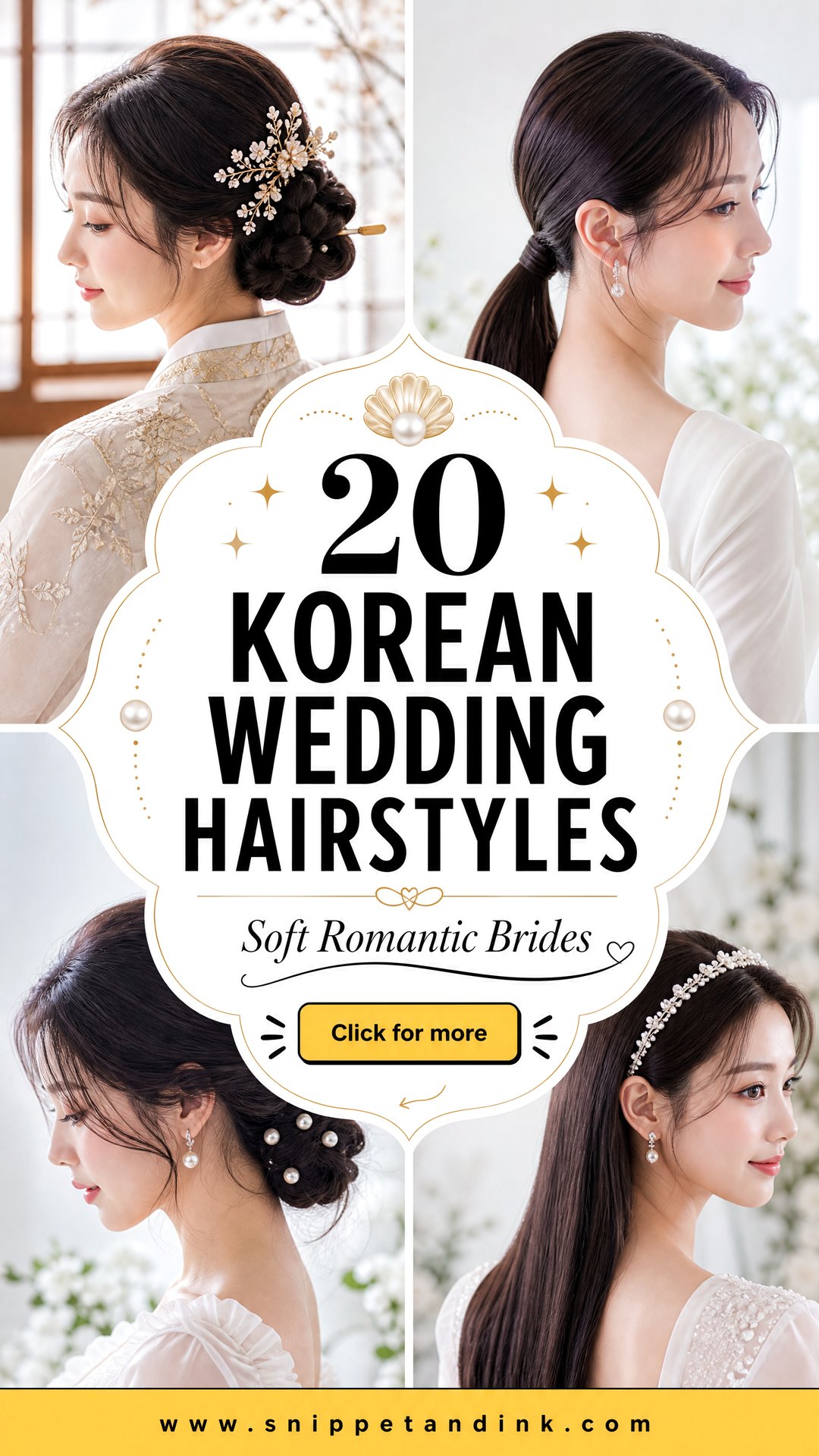
Korean bridal hair is quieter than most Western bridal styling, and that restraint is exactly what makes it hard to fake. The finish is smooth at the roots and soft at the ends, built so your skin and your dress carry the look. I style it for brides in white gowns and for brides changing into hanbok, and the shapes below cover both, from low buns at the nape to half-updos and fine face-framing pieces. These are the 20 gorgeous Korean wedding hairstyles I’d show a bride at a first consultation, with notes on how each one behaves once the pins go in.
Straight, Slippery Hair and How These Styles Are Built to Hold
Much of the hair I style for Korean bridal looks is straight, dense and very smooth. That flat cuticle gives the glossy finish these styles are known for, and it’s also why curls fall out and pins slide. So the work starts the day before, not in the chair.
- Wash the evening before rather than the morning of. Freshly washed hair is the slipperiest it will ever be.
- Skip heavy conditioning masks that week; they leave the lengths too soft to hold a set.
- Arrive with hair fully dry and loose, with no ponytail dent and no oil at the roots.
On the morning itself, I build grip before shape. Texture spray or dry shampoo goes through the roots and mid-lengths, curls are pinned while they cool, and every bun sits on a hidden elastic base. None of this shows in the finished look, but it decides whether your hair still looks the same at the last dance.
Fine, thick or chemically straightened hair
Fine hair benefits from a small padded base or a few clip-in wefts, so a low bun keeps a round shape. Very thick hair needs more sectioning than you’d expect, or the bun gets heavy and drags at the nape after a few hours. Hair with a straightening treatment, such as a magic straight perm, often struggles to hold a curl, so I steer those brides toward sleek buns and ponytails rather than waves.
1. Korean Low Bun Updo
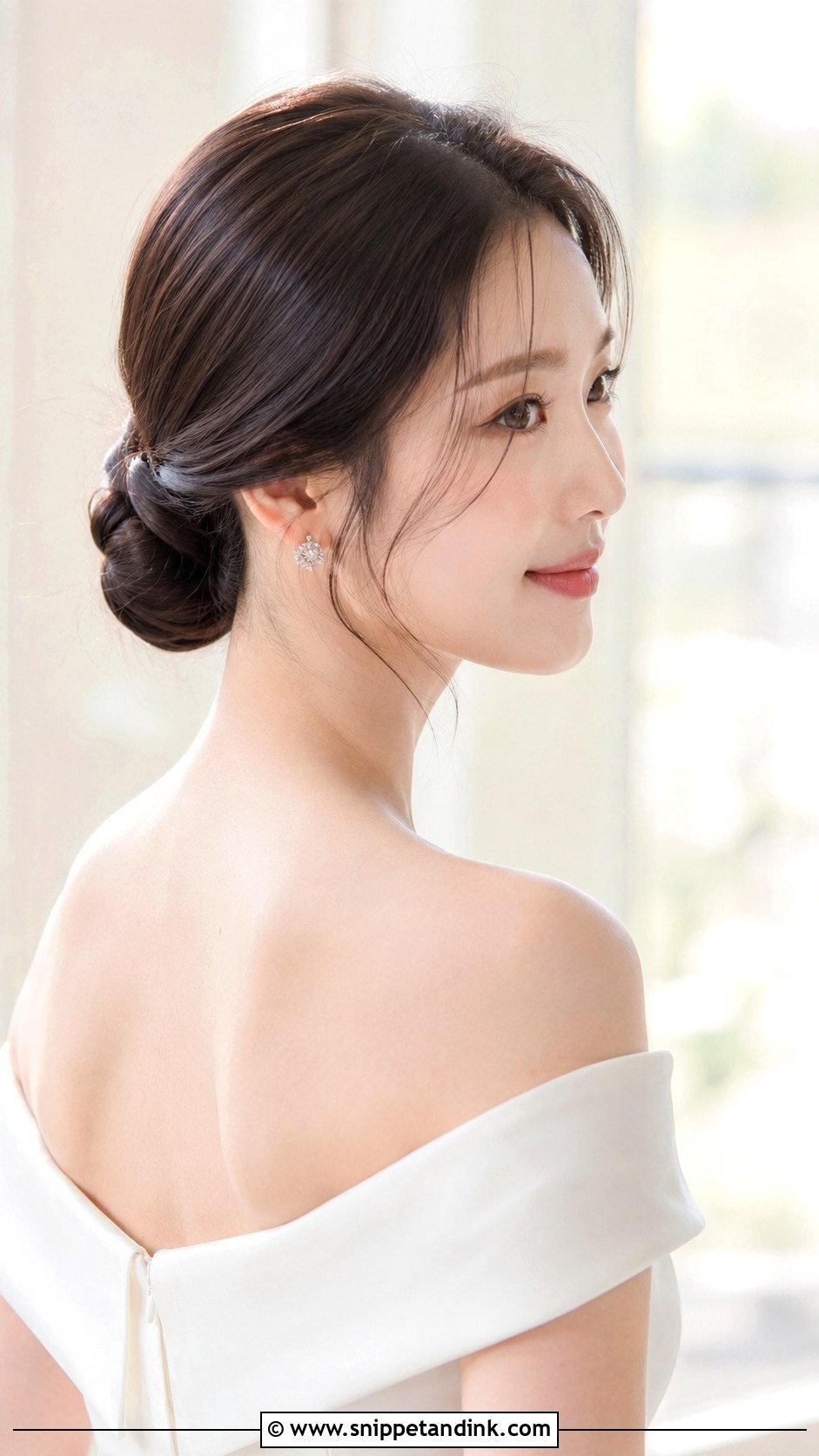
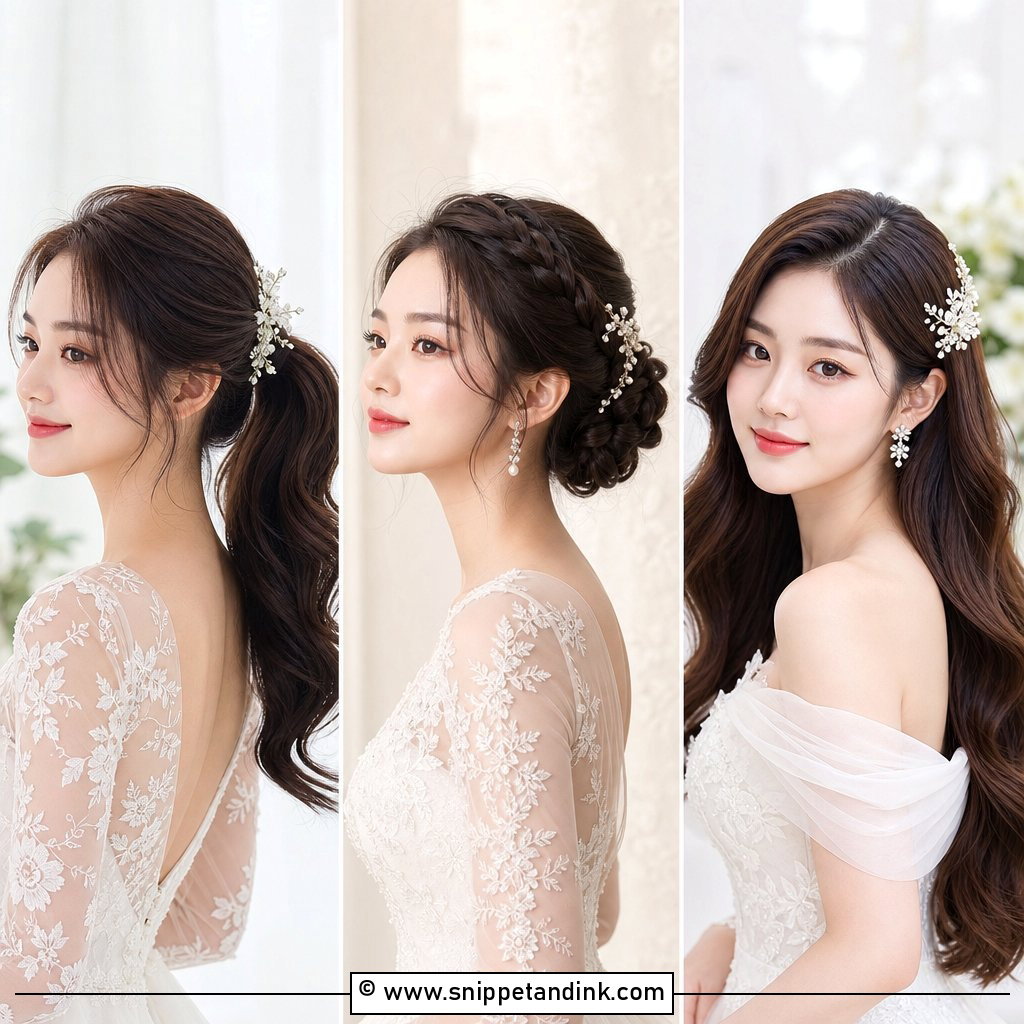
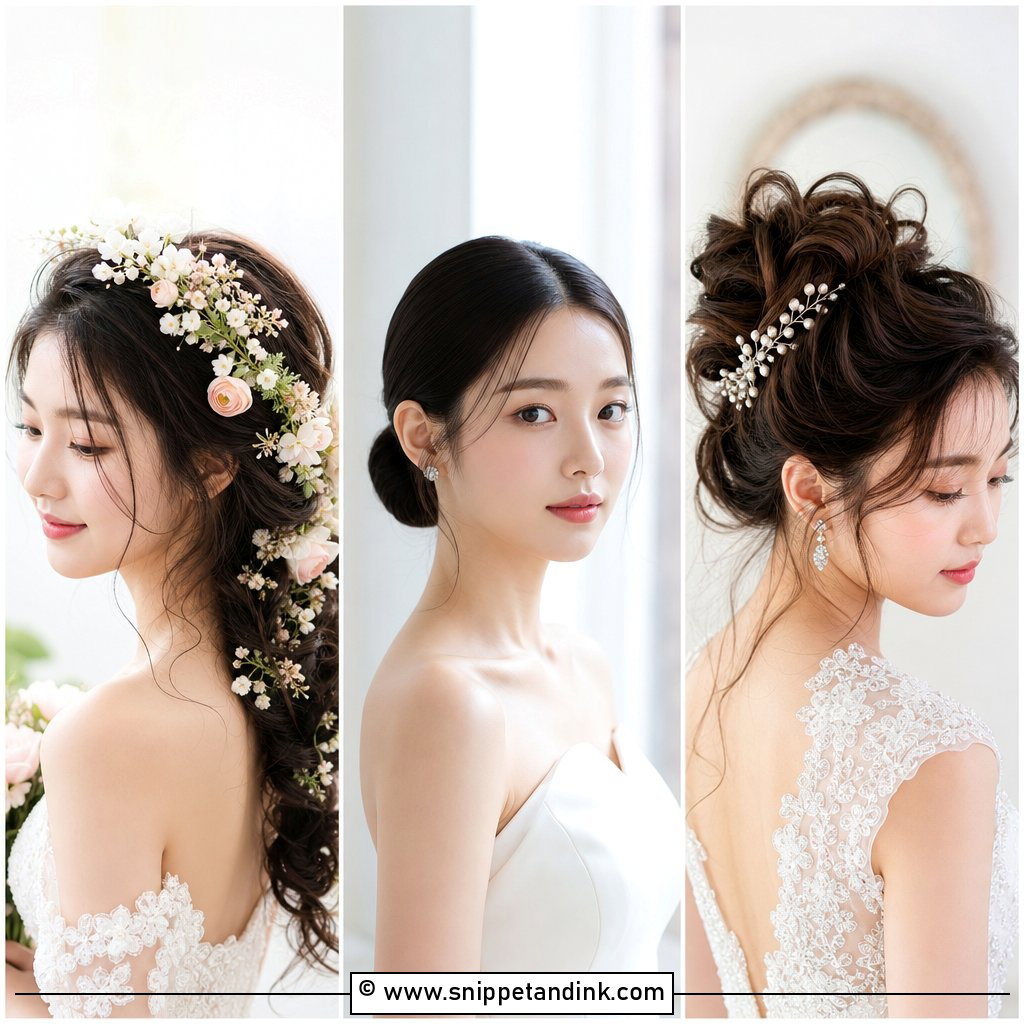
Most Korean brides I work with lean toward the low bun first, and it earns that spot. Sitting at the nape, it stays clear of a veil comb and never presses into the back of your head during a long ceremony or a seated dinner. The trick is the base: I build it on a small elastic ponytail just above the nape, because pins anchored into an elastic hold far better than pins pushed into loose hair. It works with modern gowns and traditional hanbok, and it leaves the neckline and your earrings in plain view. Keep the tendrils to two or three a side, or the clean outline gets lost.
2. Korean Half-Up Half-Down Wedding Hair
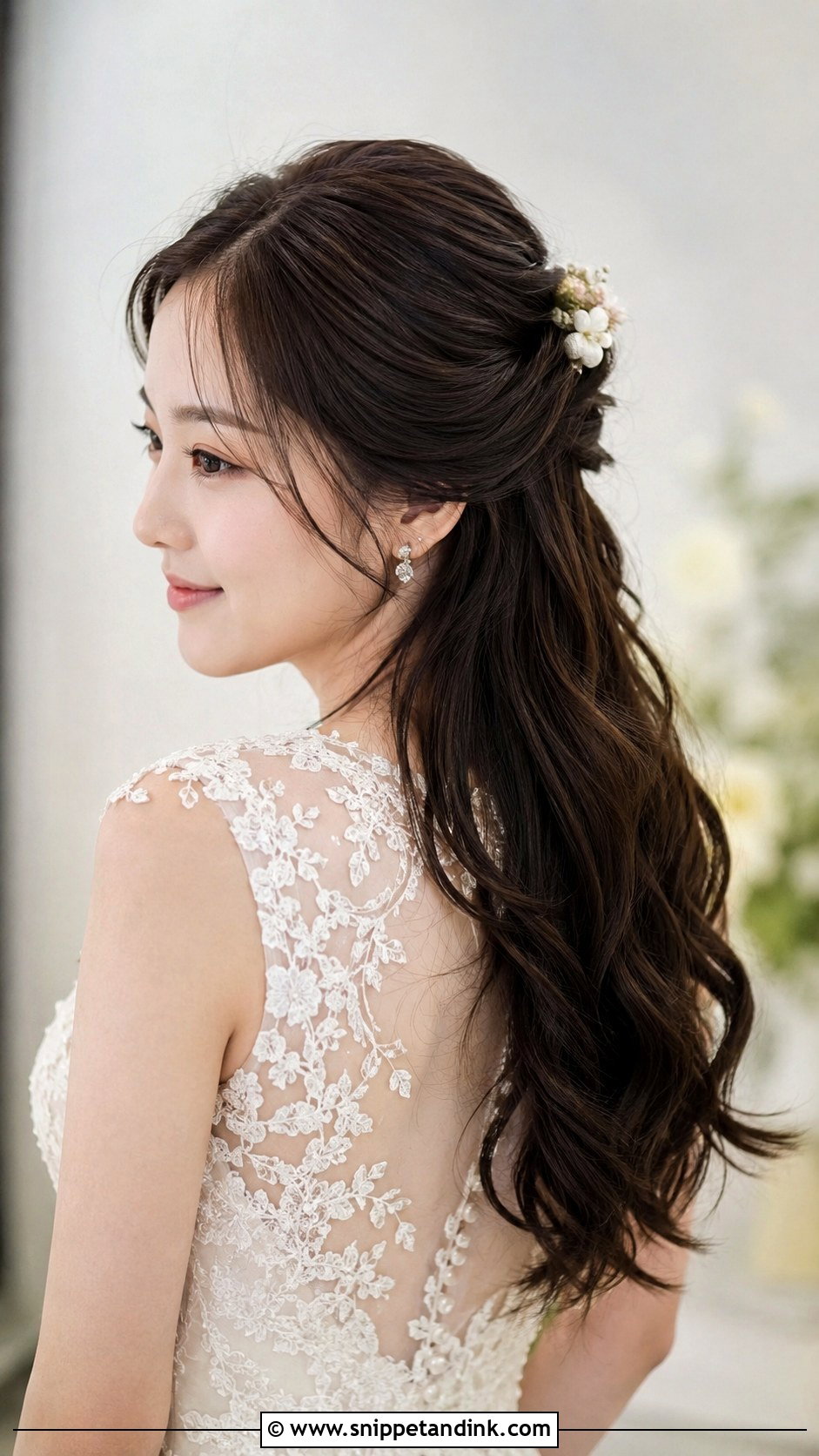
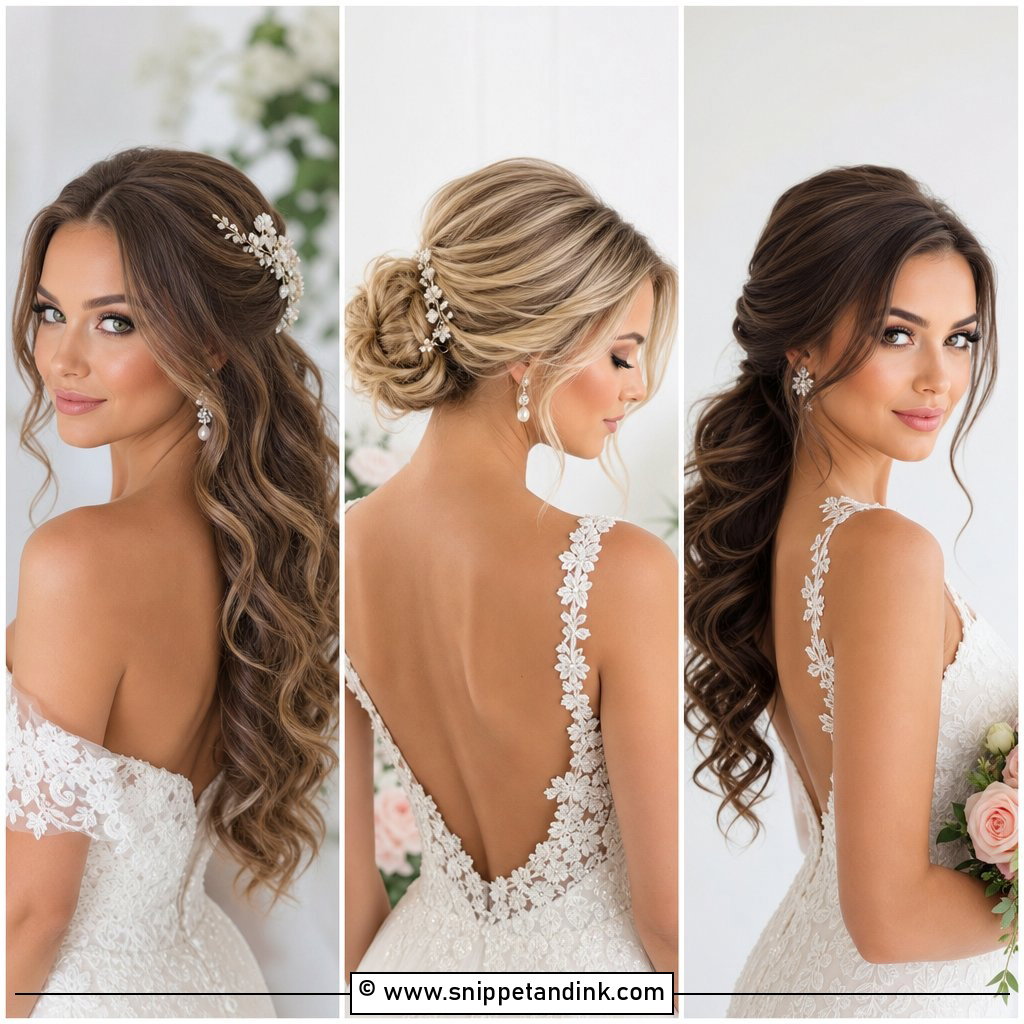
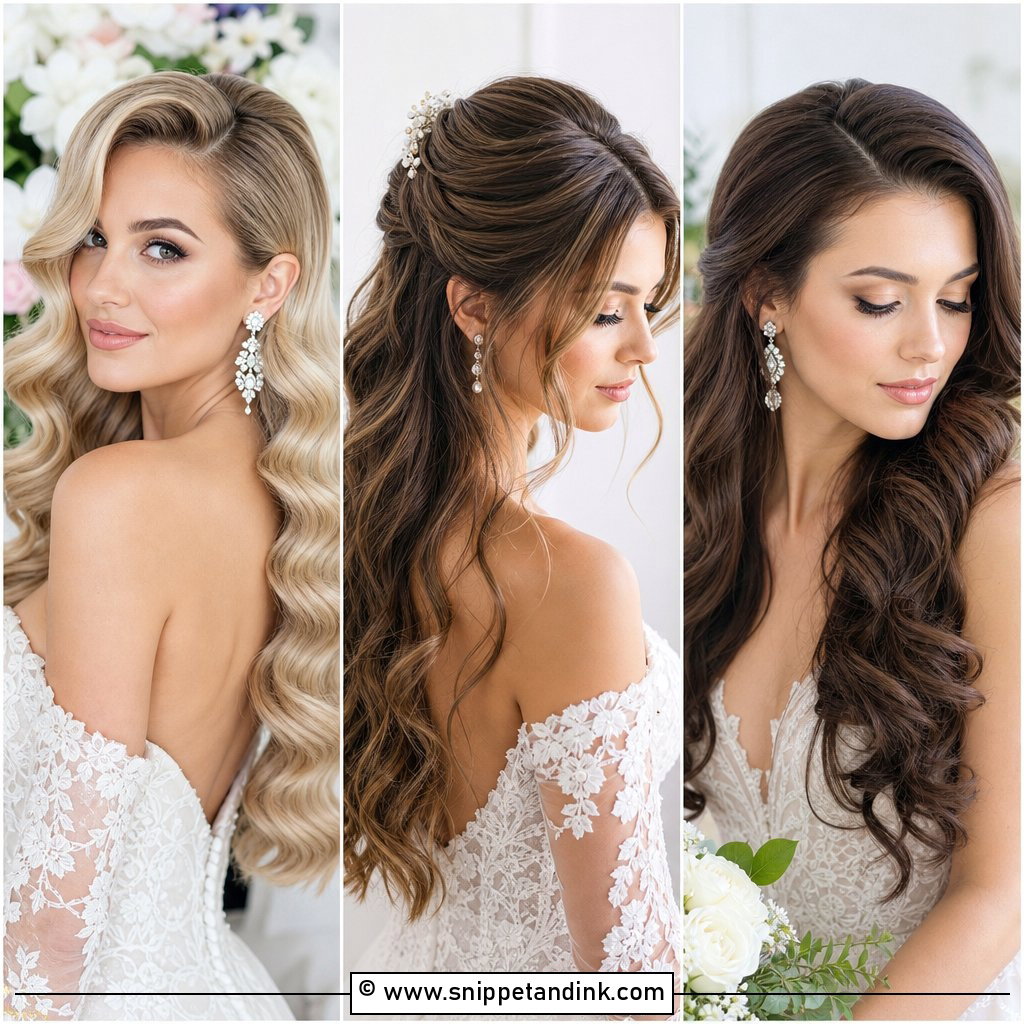
Can’t decide between an updo and wearing it down? The half-up style gives you both. The Korean version keeps the top section pulled back flat rather than teased, with large, loose waves below that read soft rather than curly. My one warning is that the down section takes all the wear. Hugs, a veil brushing across it and humid air relax those waves, so I pin each curl while it cools and only brush them out at the very end. A plain clip at the join covers the anchor point neatly.
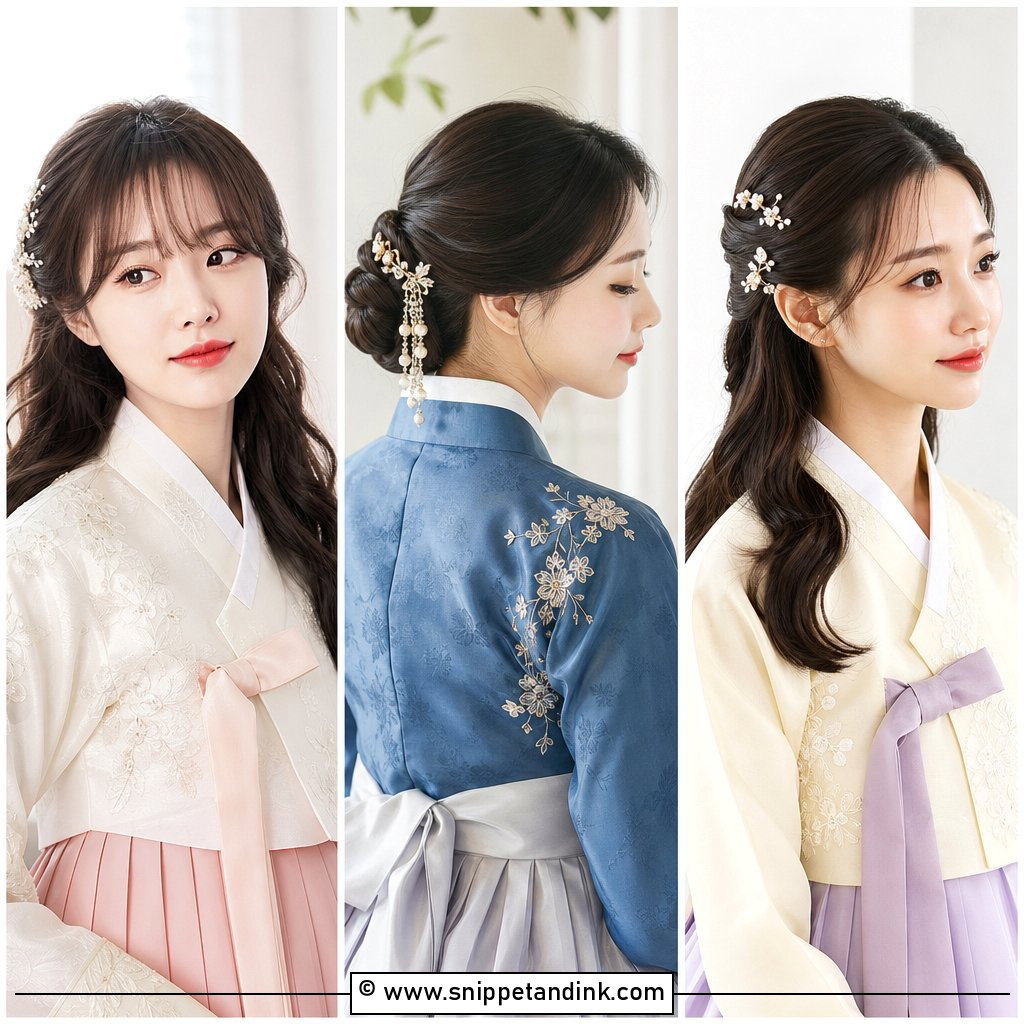
3. Korean Hanbok Updo
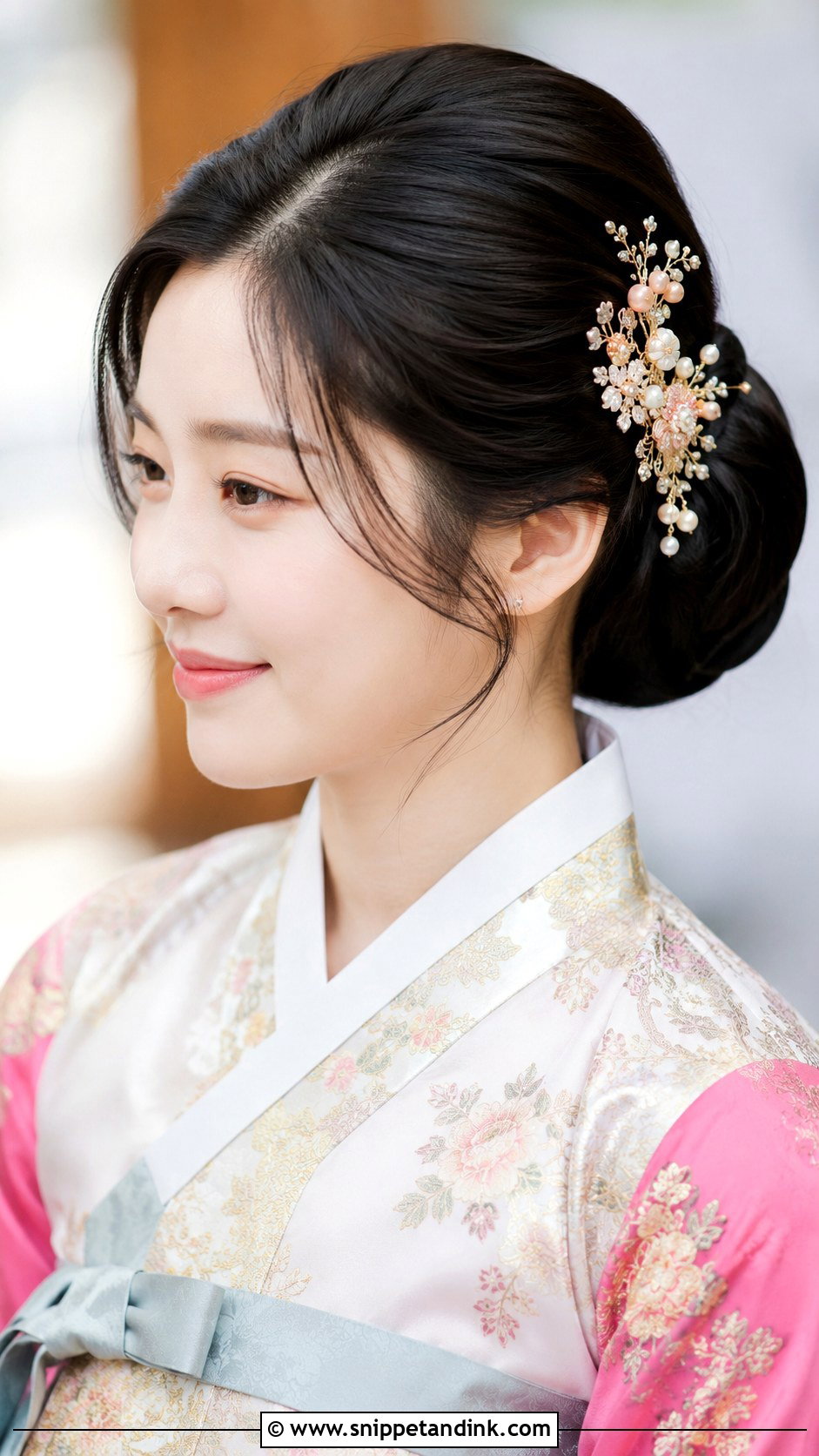
A hanbok has a high, curved collar and a short jacket that sits close to the neck, so the hair has to stay up and well out of its way. I keep the shape smooth and rounded, with modest lift at the crown and nothing resting on the collar. Traditional brides often add a decorative binyeo pin, and a real binyeo is heavier than it looks. It needs a firm bun to slide through, or it tilts by the end of the family photos. A couple of fine wisps near the temples stop the face looking severe against strong hanbok colors.
4. Korean Sleek Low Ponytail
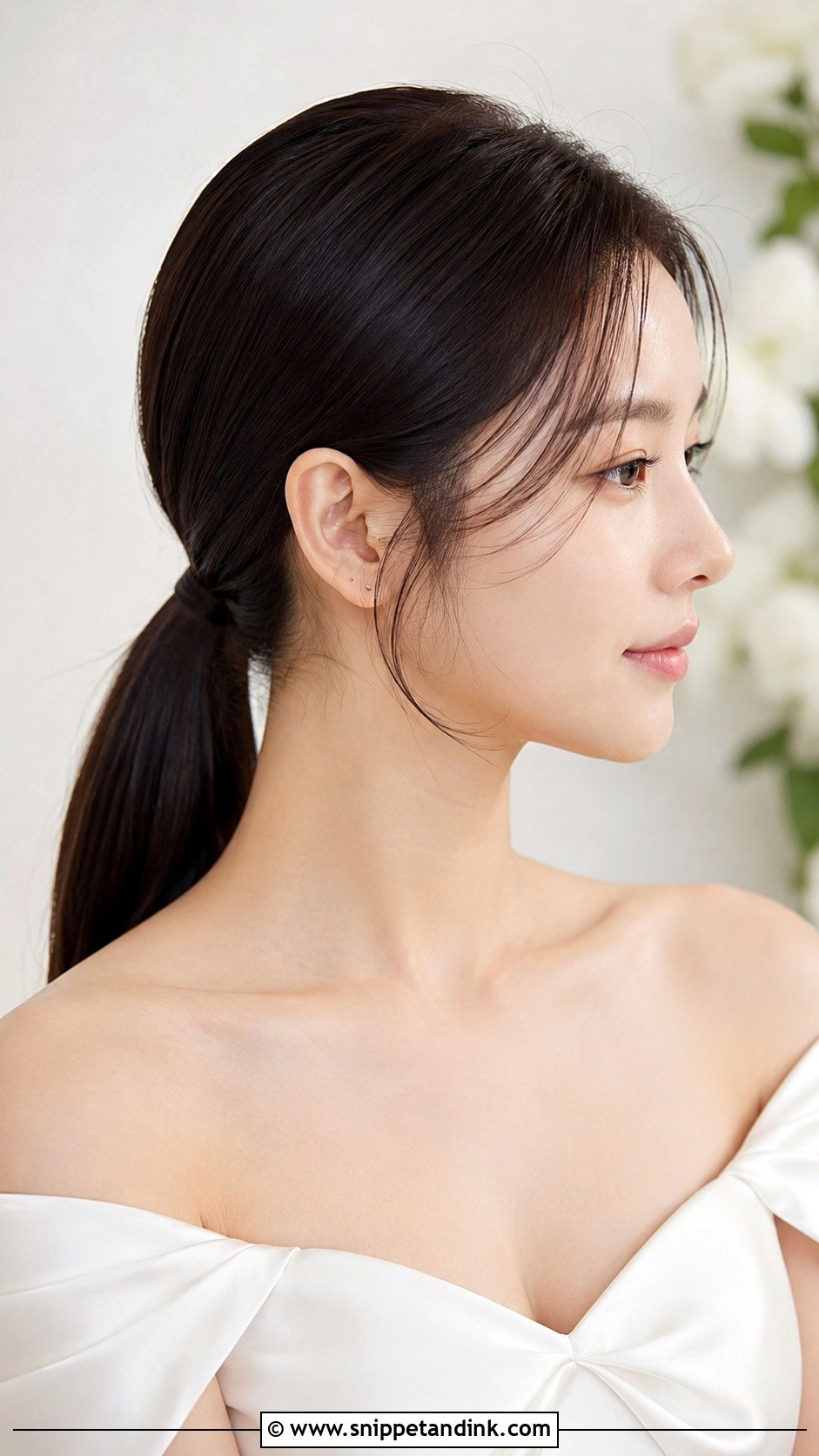
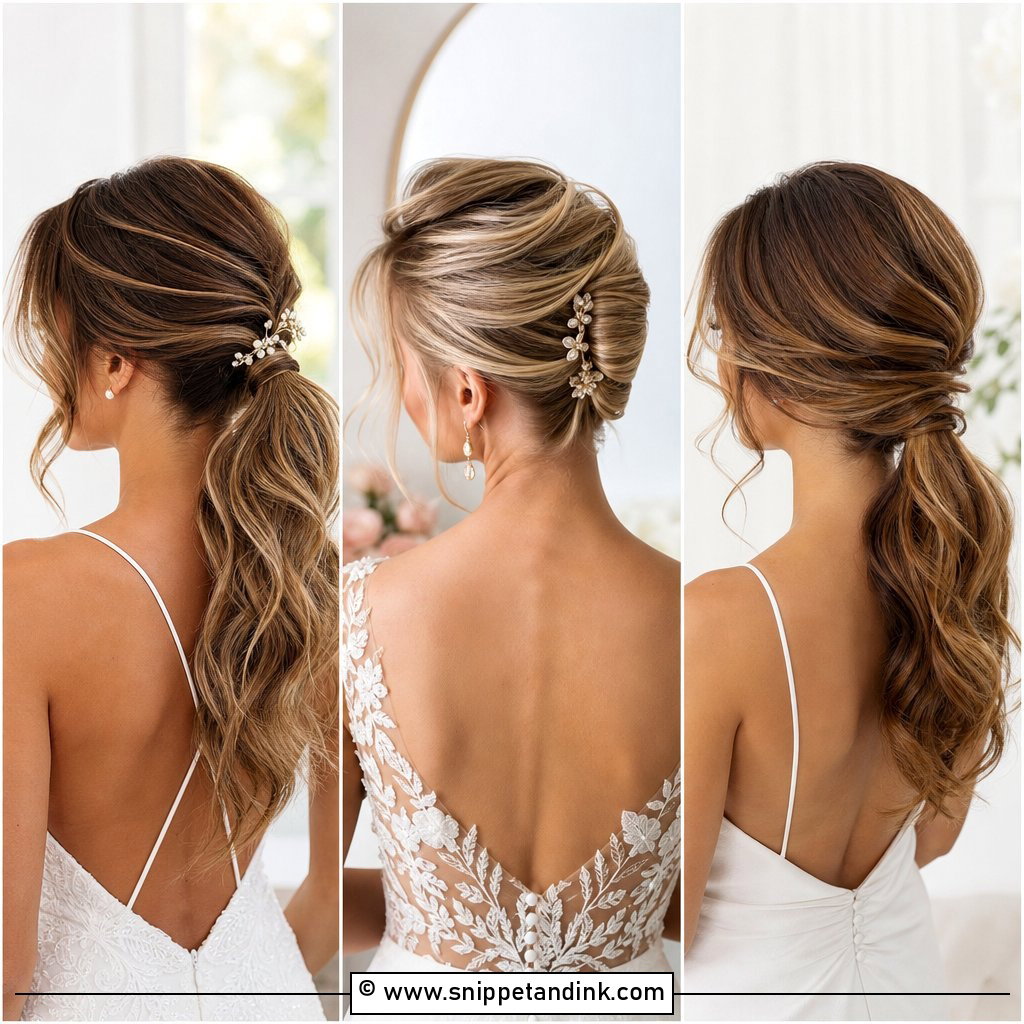
This is the quickest style on the list, and the one I suggest for civil ceremonies and small weddings. Smoothness is everything, so I blow-dry the hair straight first, then brush it back with a little smoothing cream before securing it at the nape. A strand wrapped around the base hides the elastic, and I pin that wrap underneath rather than tucking the end, because a tucked end works loose. Heavily layered hair is the weak point here: short layers spring out of a low ponytail within an hour.
5. Korean Romantic Loose Waves
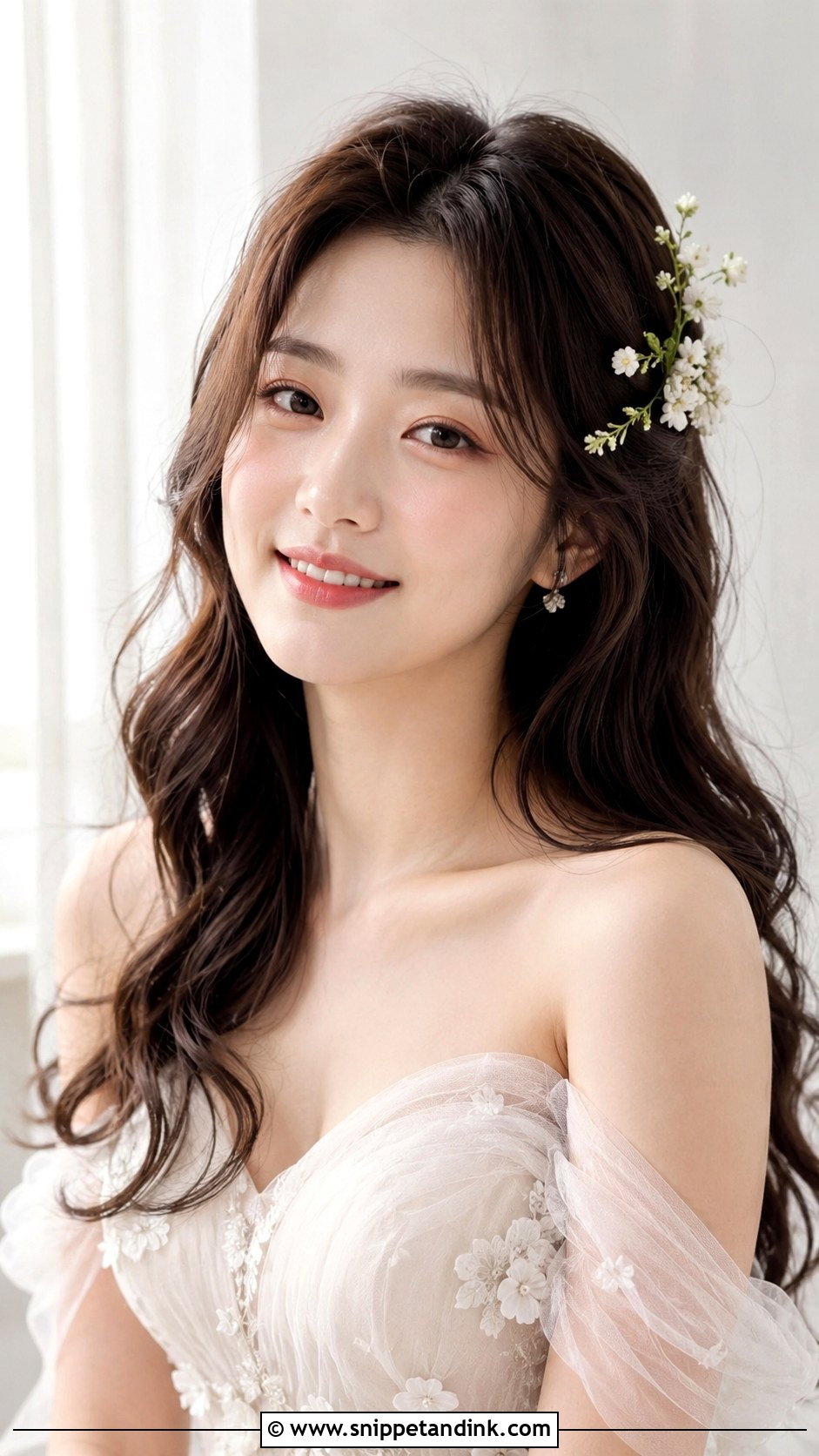
Loose waves keep your length down while giving it shape, and Korean styling keeps them big and rounded rather than tight. Straight hair often looks right at ten in the morning and limp by the reception, so I curl with a larger barrel, pin each curl to set, and put a texture spray on before the iron instead of piling on hairspray after. A middle or side part both suit it; I decide by watching which way your hair naturally falls. A sheer veil sits well over the waves, though tulle catching on the ends is worth testing at your trial.
6. Korean Faux Bangs Wedding Hairstyle
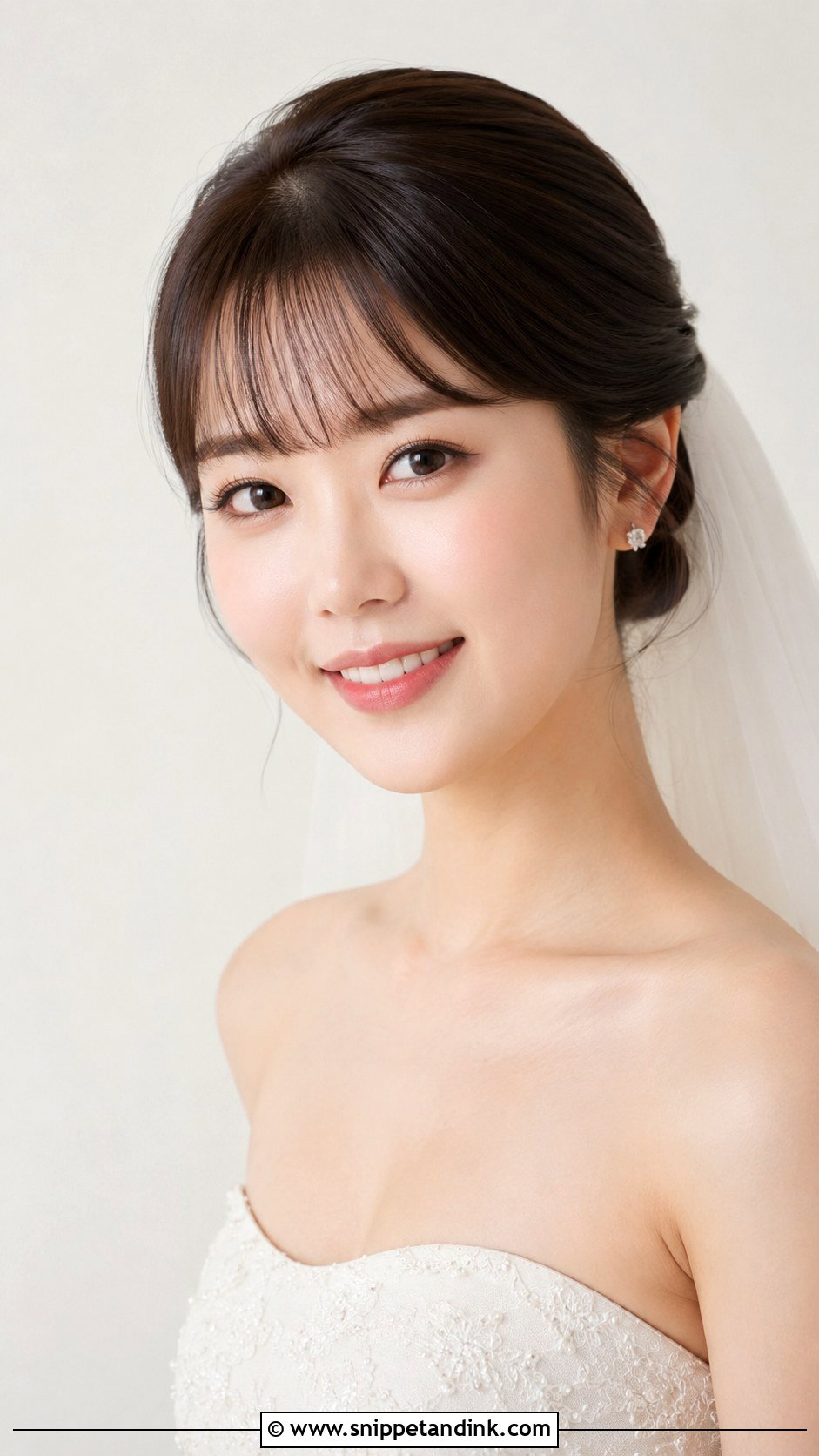
Not ready to cut a fringe? Faux bangs give you one for a single day. I take a section from the front, curl it under, and pin the ends at the hairline behind the top layer, so it reads as a light, see-through fringe. It draws attention to the eyes and pairs naturally with a neat low bun. Tell your stylist if your front hairline has a strong cowlick, because a fake fringe splits right along it. Oily foreheads also separate the ends by evening, and blotting papers help more than extra spray.
7. Korean Side-Swept Chignon
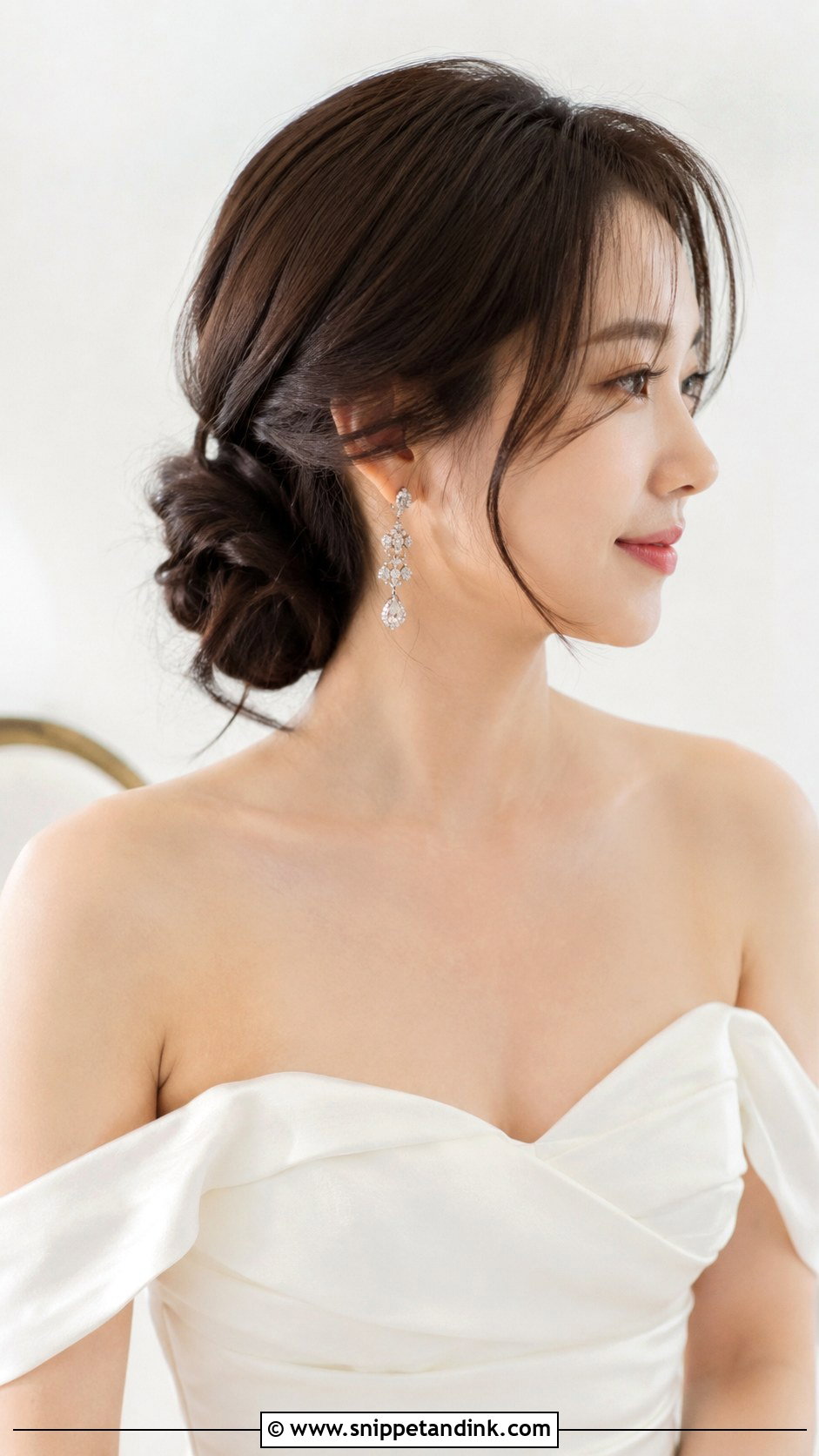
Pinning the knot low beside one ear gives a classic chignon a little asymmetry. I usually put it on the side that faces your guests during the vows, since that is the side the camera sees most, and a long earring then shows on the open side. It needs more pins than a centered bun because the weight pulls sideways, so I cross pairs of pins into the base to stop it sliding. It works under a veil or beside a small hairpiece, with a gown or a hanbok, though with a hanbok the knot has to sit high enough to clear the collar.
8. Korean Braided Crown Updo
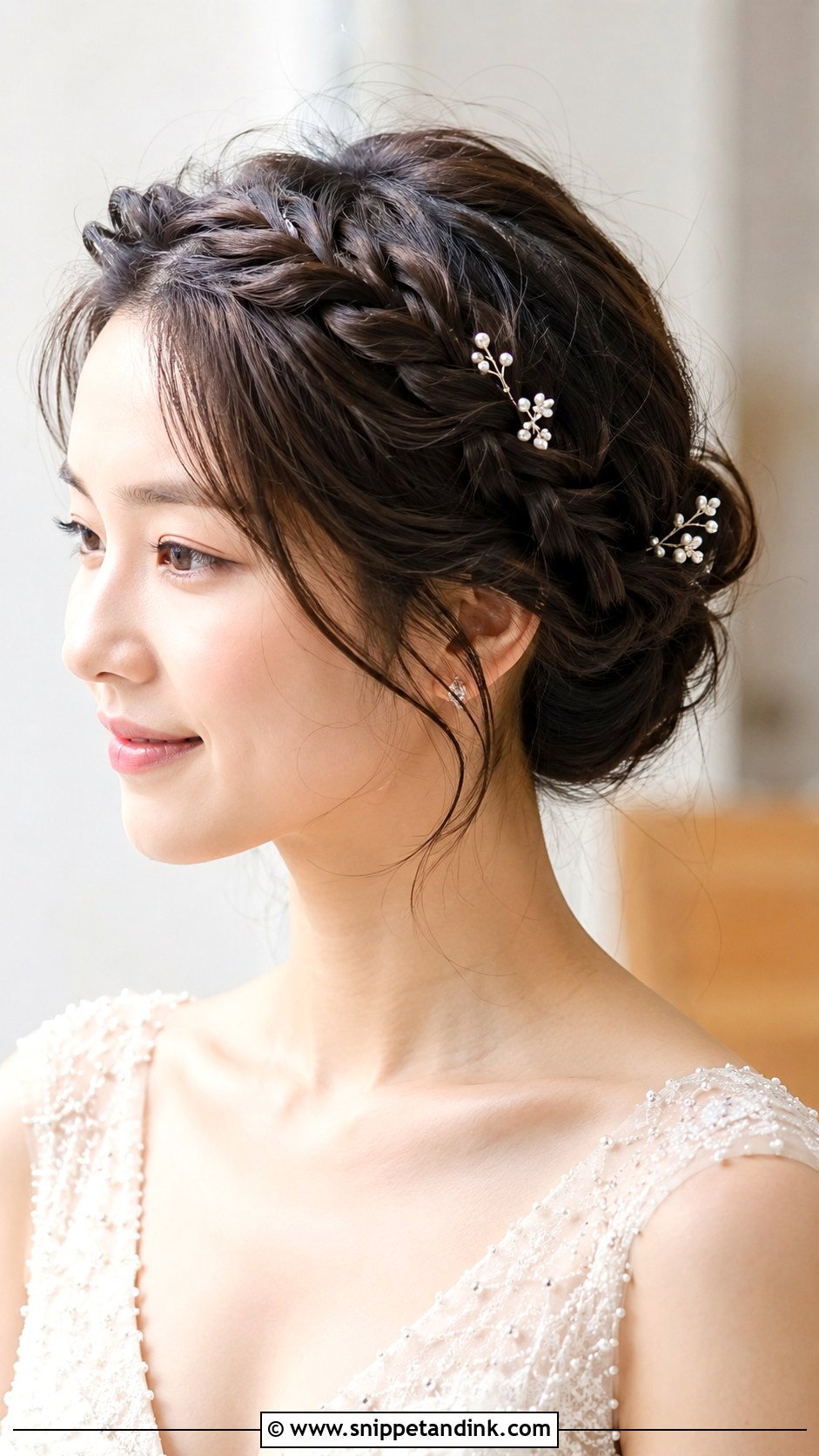
There’s something storybook about a braided crown, and in Korean styling it stays loose and airy, never the tight plait you see on festival hair. I braid each side, gently pull the edges wider, then pin the braids over the top and finish the back in a low twist. Fine hair often lacks the length to meet across the crown, and a small matching extension braid is the usual fix. Tiny pearl pins tucked between the plaits add light without weight. It holds up well outdoors in a breeze, which makes it a sensible garden choice.
9. Korean Twisted Low Bun
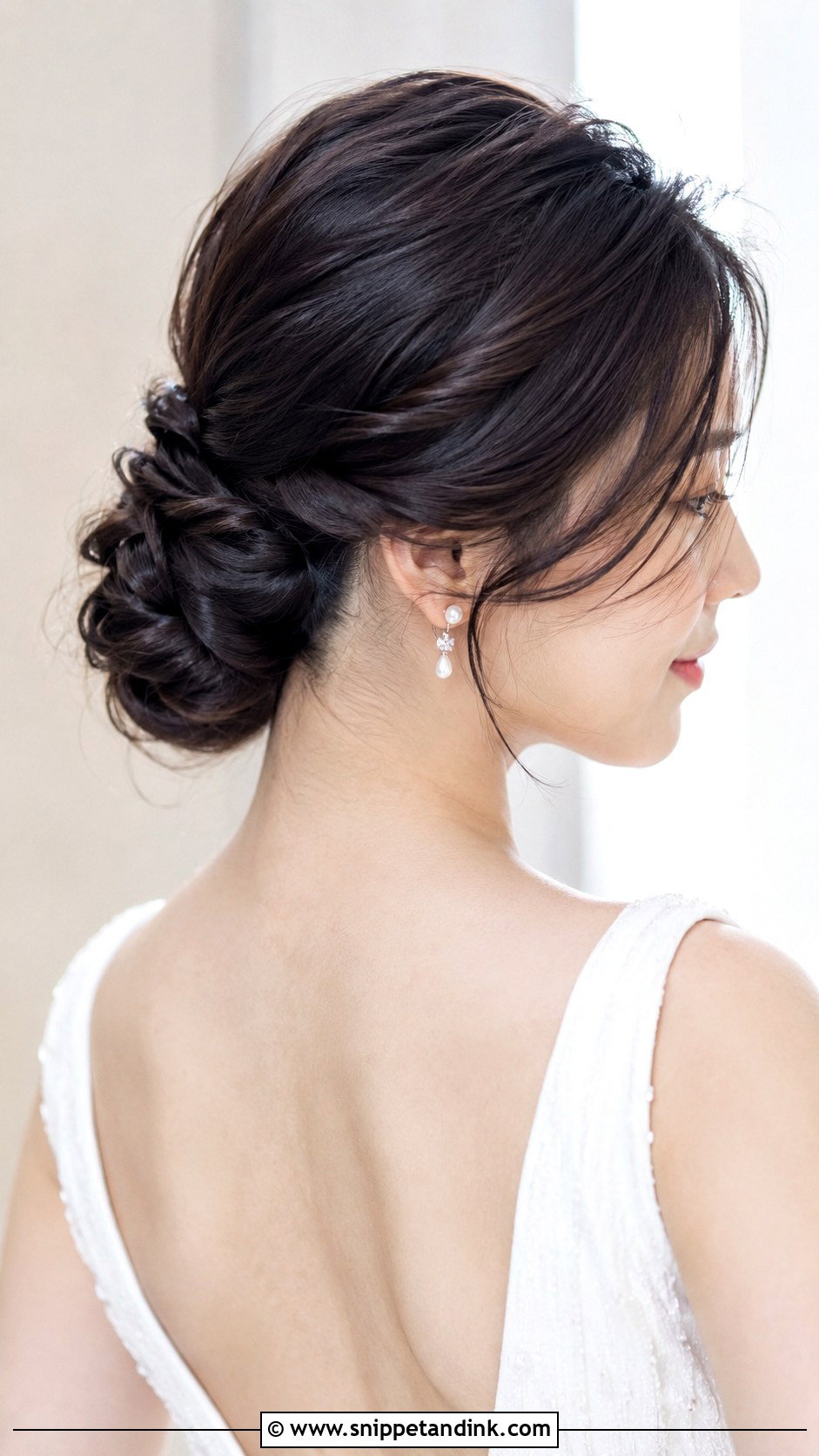
Twisting the sections before wrapping them gives a low bun texture without a single accessory. I twist every section away from the face so the lines all run one way, which looks tidy in close-up shots. This is my pick for thick, heavy hair: twisted sections lock against each other and keep their shape for the whole day. Simple studs or two pearl pins are plenty.
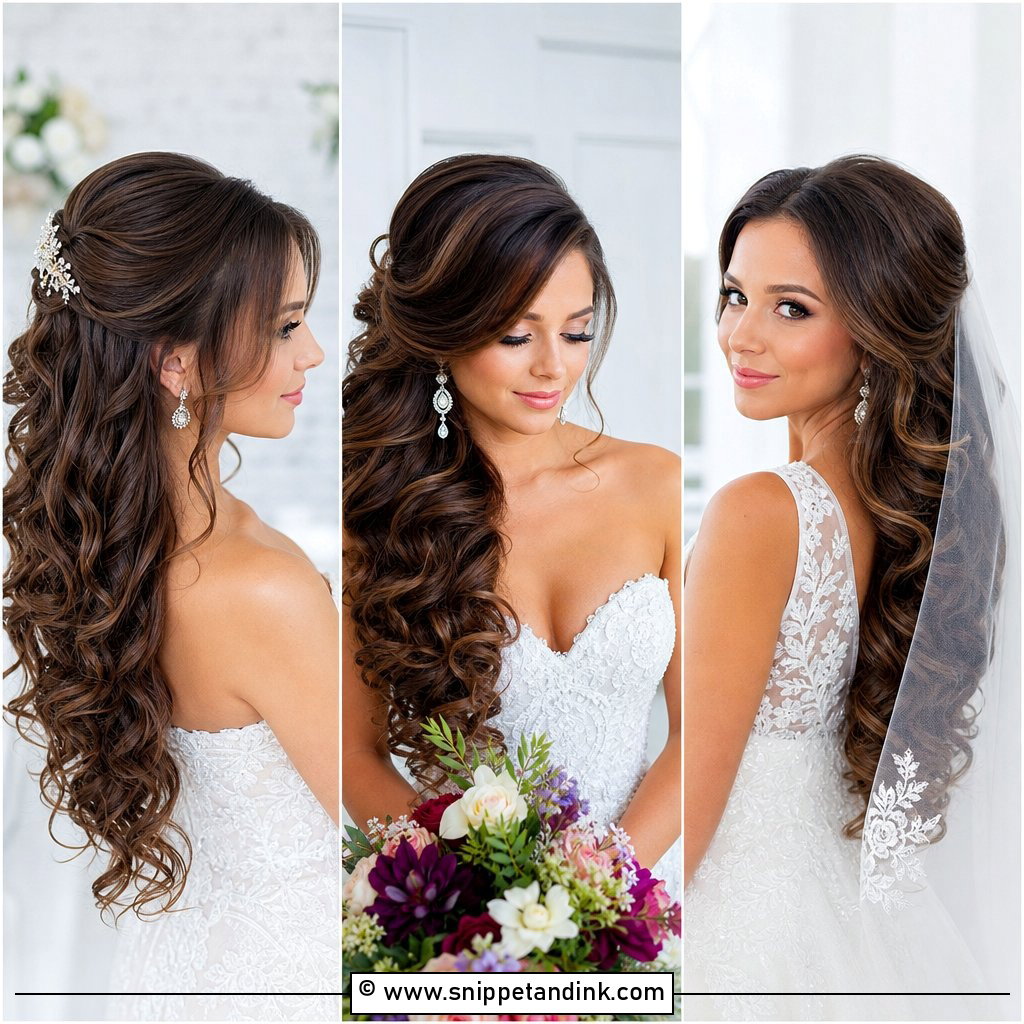
10. Korean Soft Curls With Veil
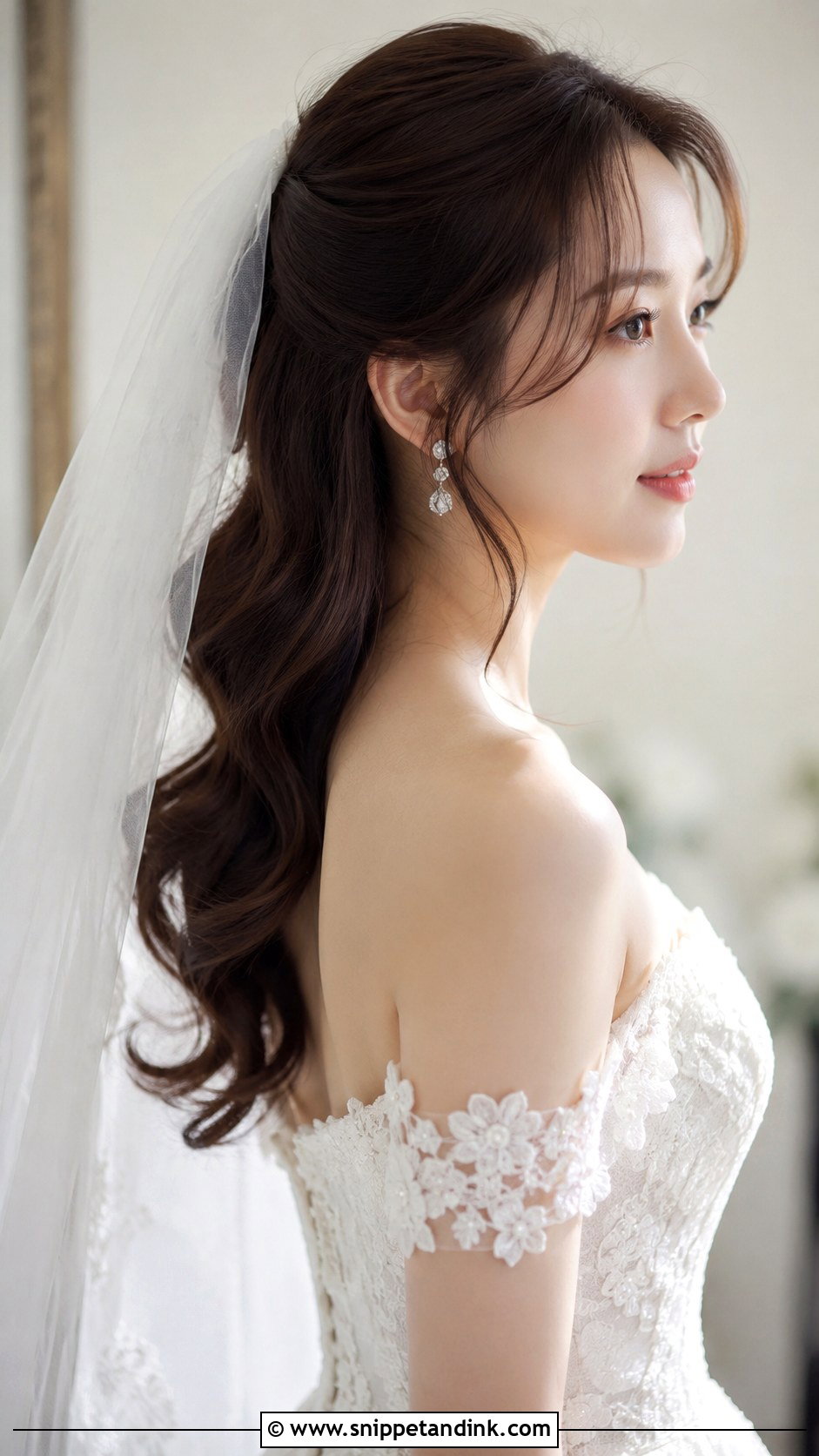
Soft curls under a veil are the classic ceremony look, and the veil decides how the hair is built. A comb needs something to grip, so I hide a small backcombed pad or a mini bun under the crown where the comb slides in. On loose curls alone, the weight of the tulle drags it backward through the vows. Once the veil comes off for the reception, the curls stay, apart from one dent where the comb sat. A quick pass of the iron fixes that before the first dance.
11. Korean Sleek Bun With Tiara
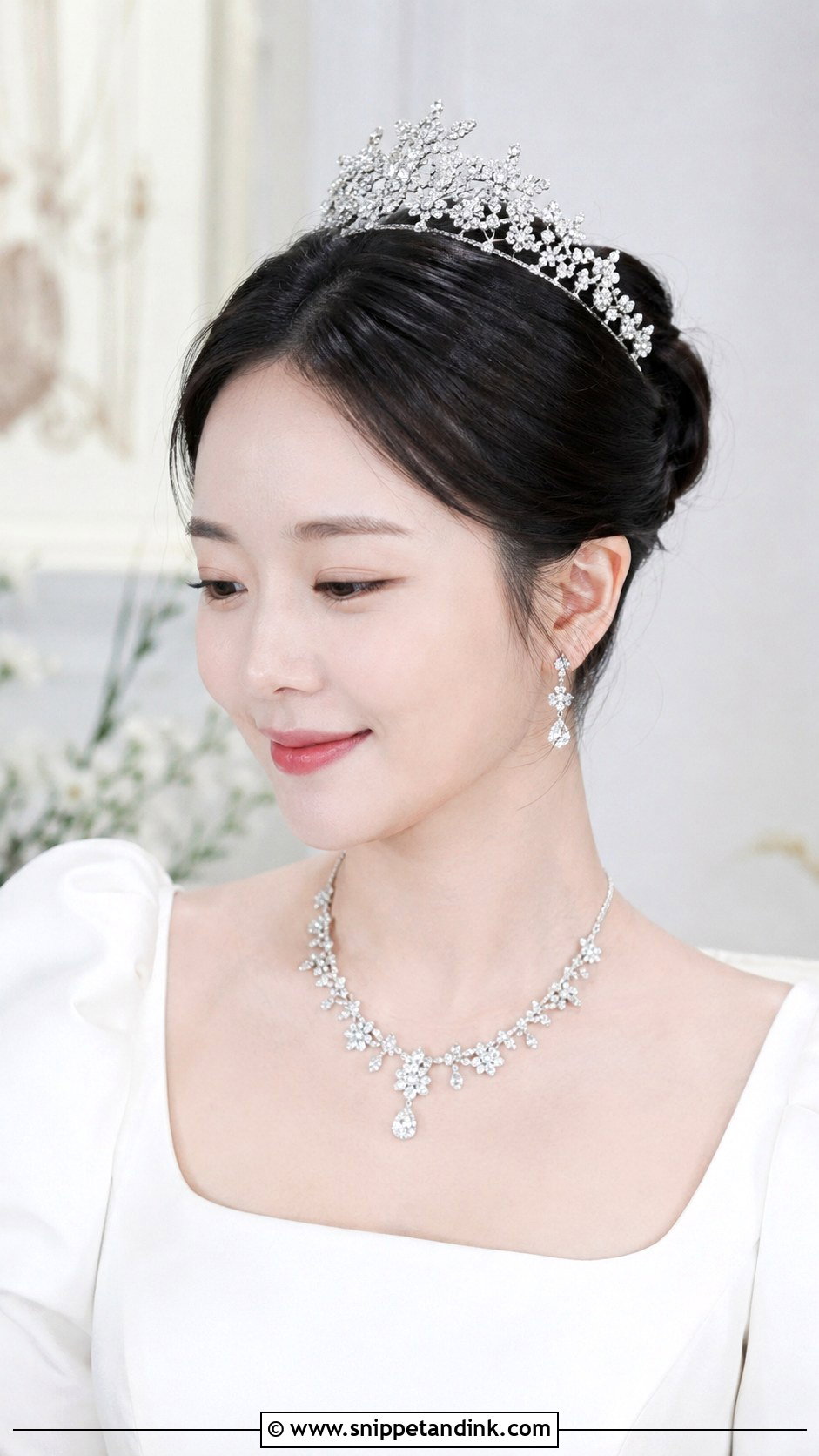
A tiara needs a smooth, tight base, which is why it sits so well on a sleek bun. The band goes an inch or two behind the hairline, and I secure it with bobby pins threaded through the loops at each end, crossed so the tiara can’t rock forward when you lower your head. The finish is formal, so it suits structured gowns and heavier jewelry. Keep the pieces at the temples short and few, otherwise they tangle in the tiara’s prongs.
12. Korean Voluminous Half-Updo
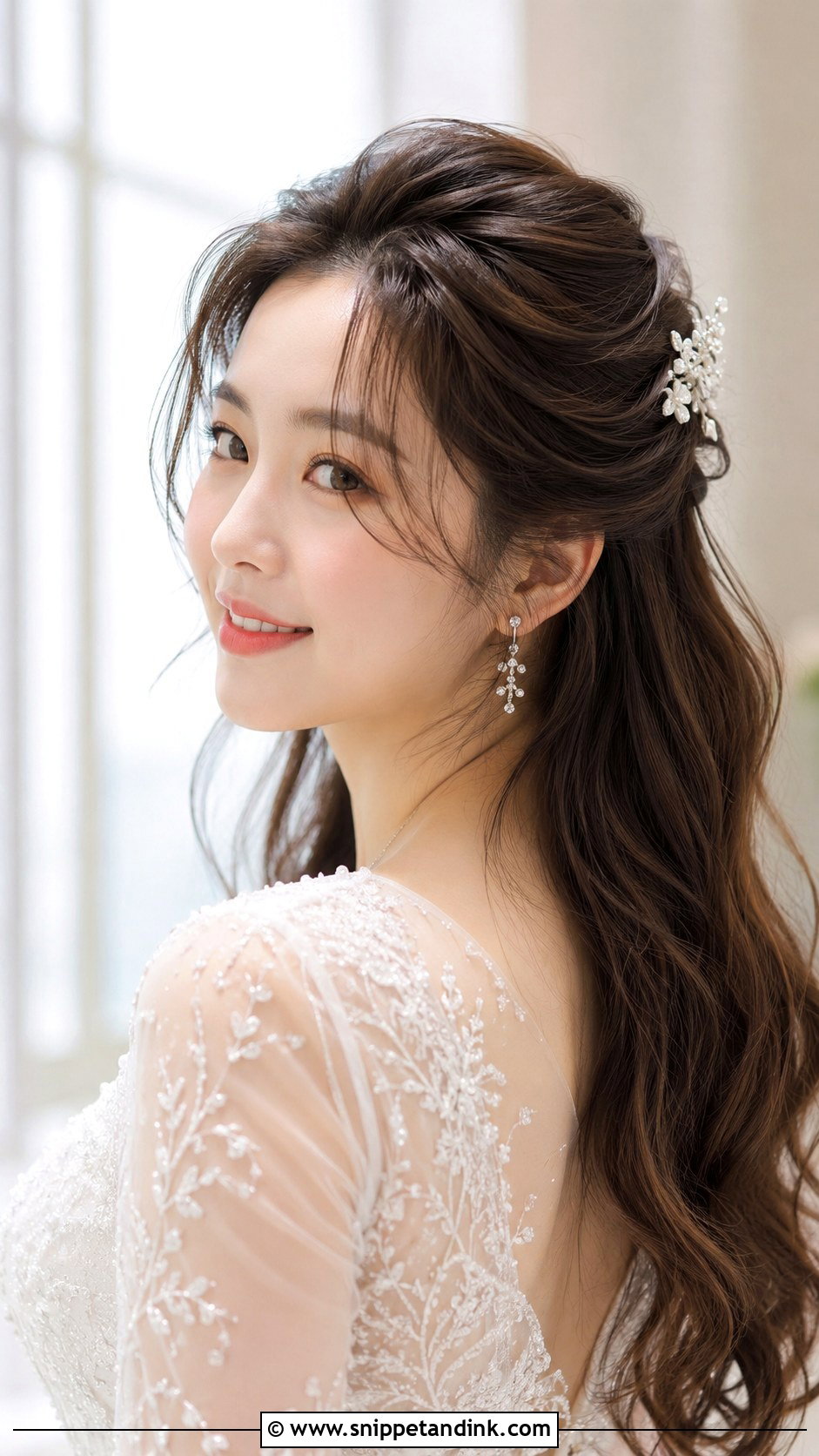
Height at the crown lengthens the face, so I often suggest this half-updo to brides with round or softly rounded features. I tease only the underside of the crown section and smooth the top layer over it, which gives lift with no visible backcombing. Korean styling keeps that volume rounded rather than tall. A clip or floral pin at the join hides the pins. Very straight, heavy hair can deflate under a veil, so if you’re wearing one, I build a tiny padded base under the top section first.
13. Korean Low Knotted Bun
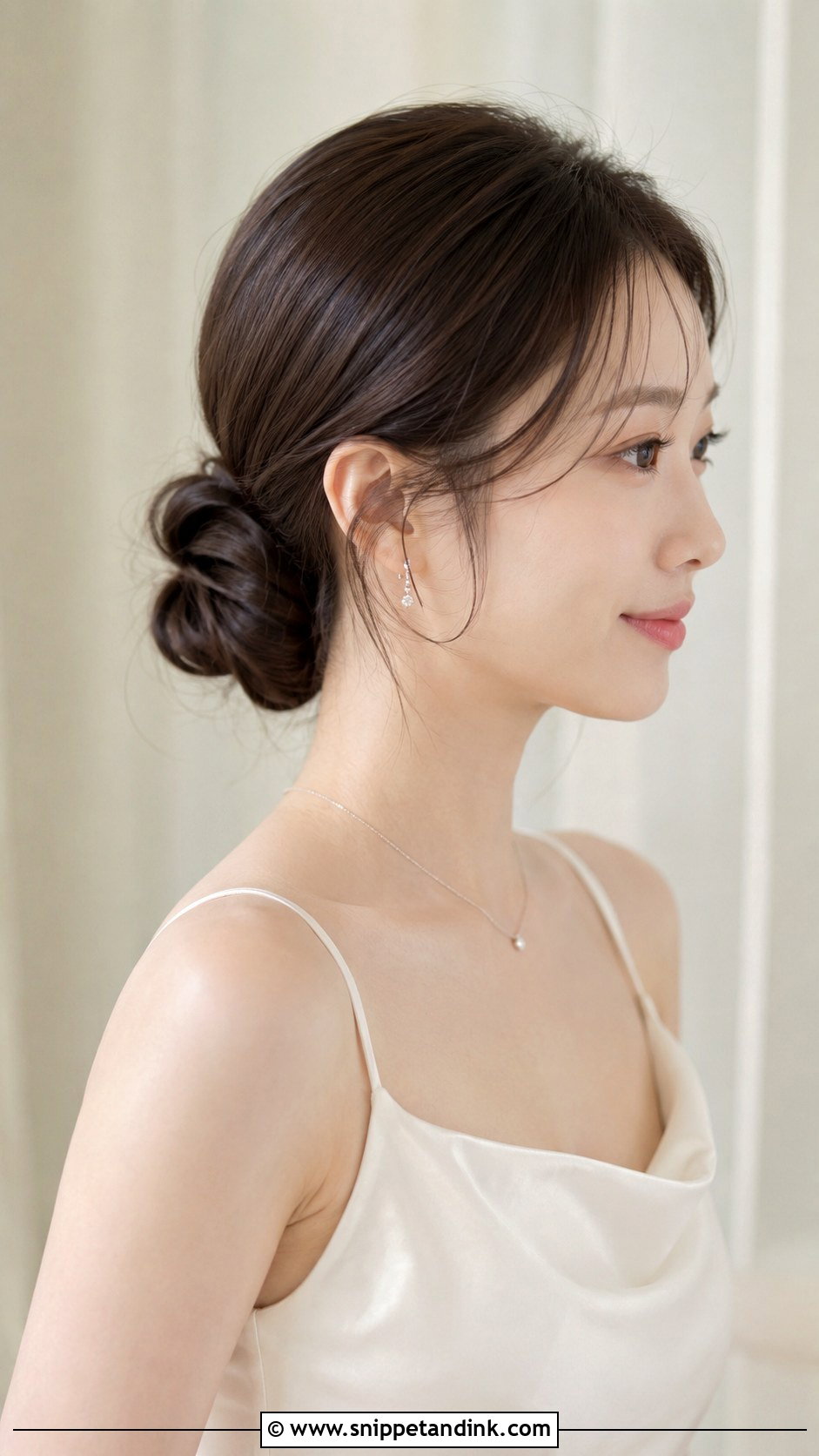
The low knotted bun is two sections tied into a loose knot at the nape and pinned flat, so it looks relaxed but sits secure. It’s quick, takes very few pins, and suits a minimalist dress with fine jewelry. Because the knot is meant to look loose, it forgives a slipped piece better than any sleek style. Hair shorter than the shoulder blades usually can’t make the knot, and then I switch to a twisted bun.
14. Korean Wavy Side Part Down Style
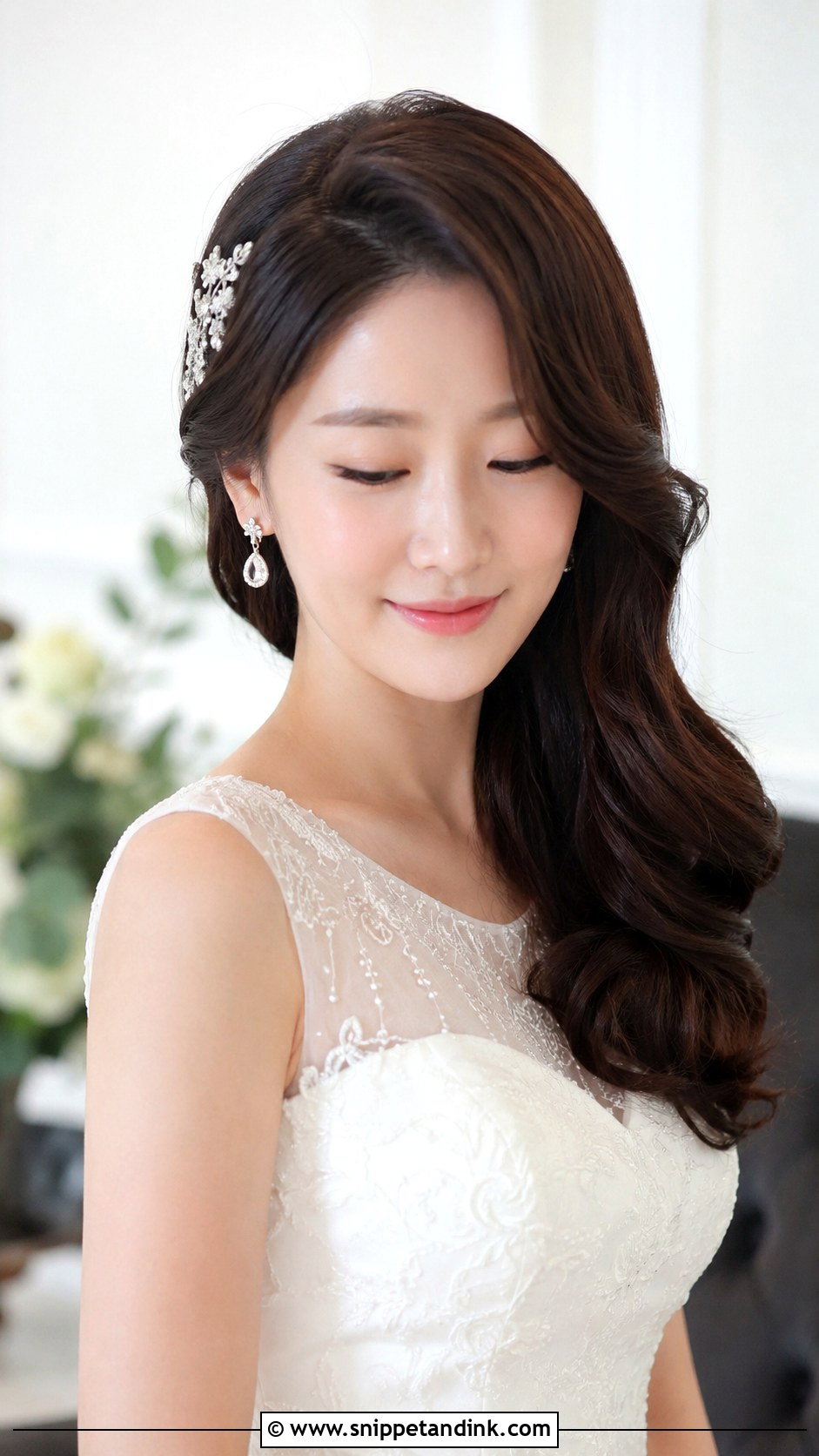
A deep side part gives down hair a slightly vintage feel and frames one side of the face more than the other. I always confirm the part direction at the trial. Most people have a natural side, and forcing the opposite one makes the roots lift and then drop flat over and over all day. The waves are brushed over one shoulder, with a jeweled pin behind the ear holding the lighter side back. Mind the neckline too: with a one-shoulder dress, the hair should fall on the bare side.
15. Korean Classic French Twist
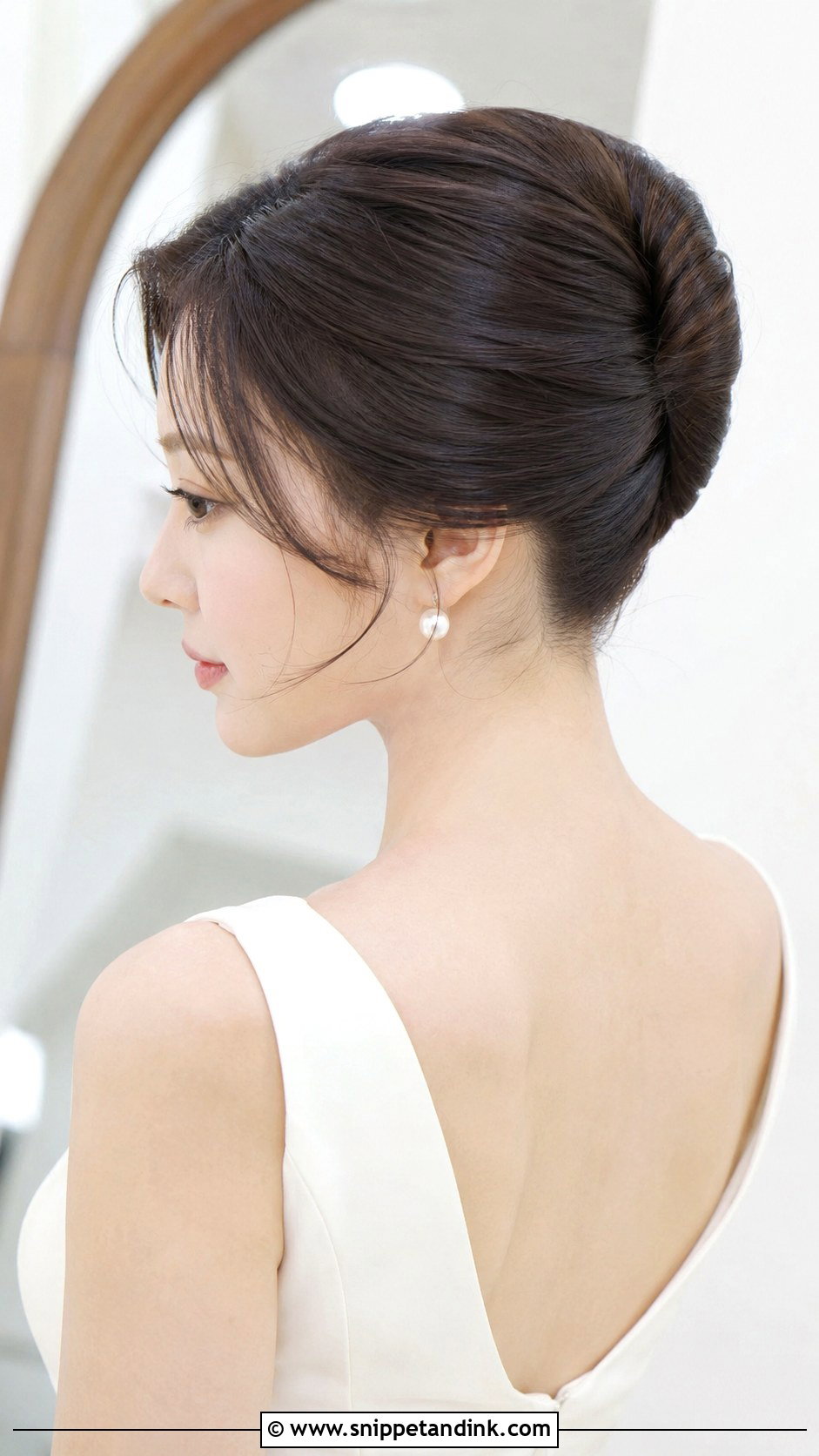
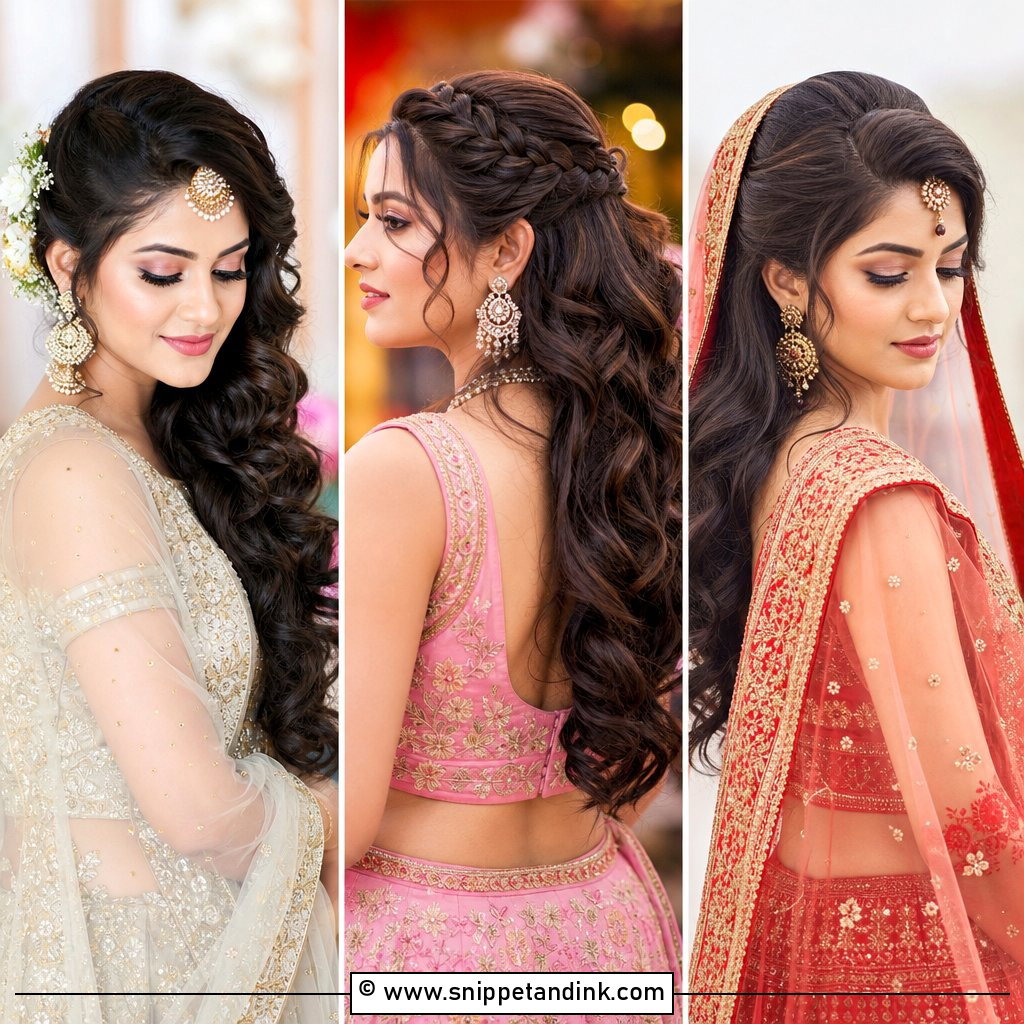
The French twist is a vertical fold up the back of the head, and for Korean brides I keep it smooth with no height on top. Once it’s done it’s very secure, because the pins run along the seam of the fold into the hair underneath. Short layers at the nape are the problem, as they won’t stay inside the fold, so I pin them flat before I start twisting. A few loose tendrils near the face keep it modern, and it sits neatly under a veil comb while showing off your earrings.
16. Korean Bun With Pearl Pins
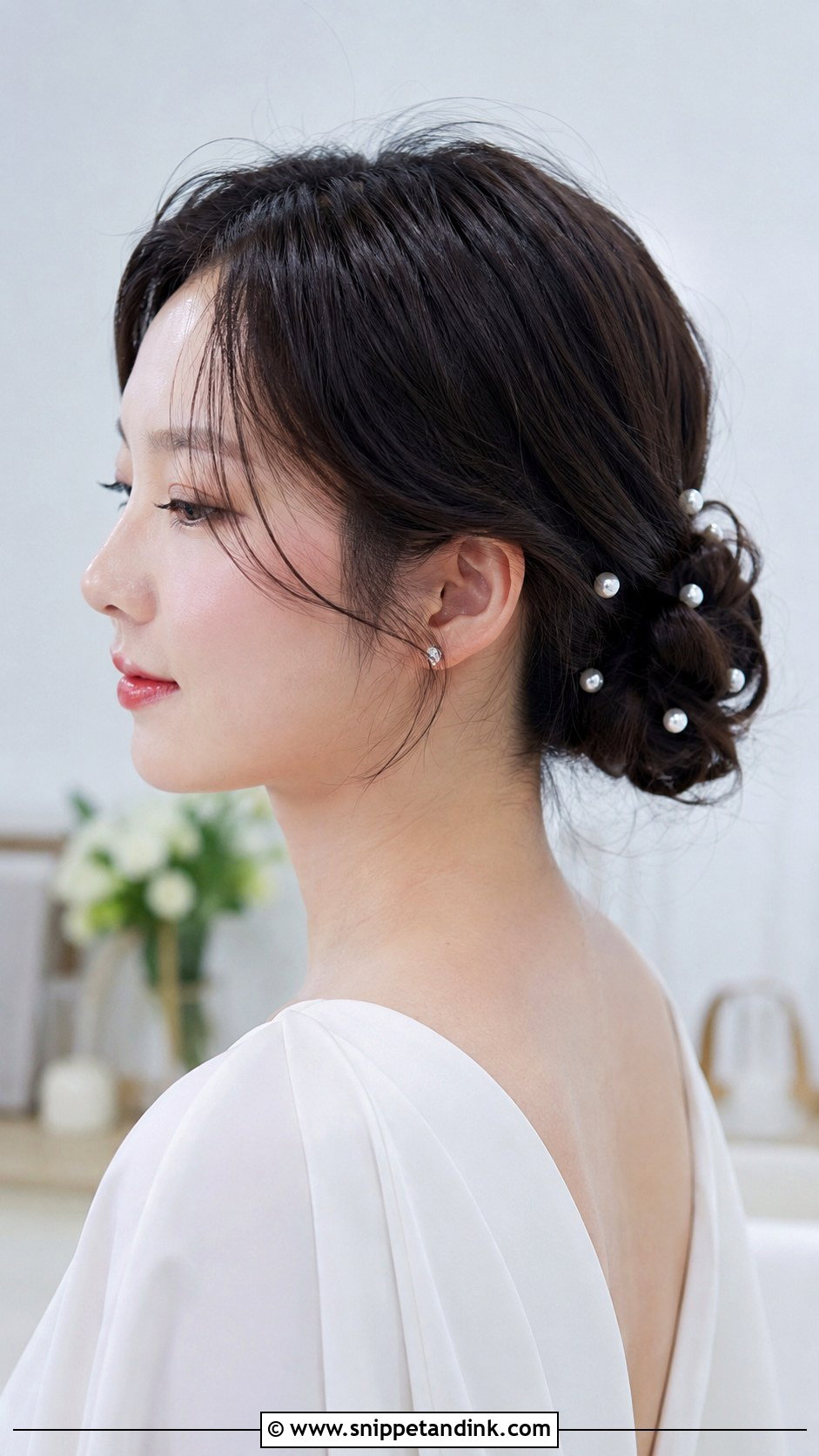
Pearl pins on a low bun are one of the most requested details I see for Korean bridal looks. I keep the bun itself plain so the pearls have a clean background, and I place them after the veil is fitted, never before, so the comb doesn’t knock them out. Clusters read clearly in wide photos, while single scattered pins show best in close-ups. Pick pins with a spiral or U-shaped stem, because straight stems slide out of smooth hair. This pearl-accented bun sits well with dewy, natural makeup.
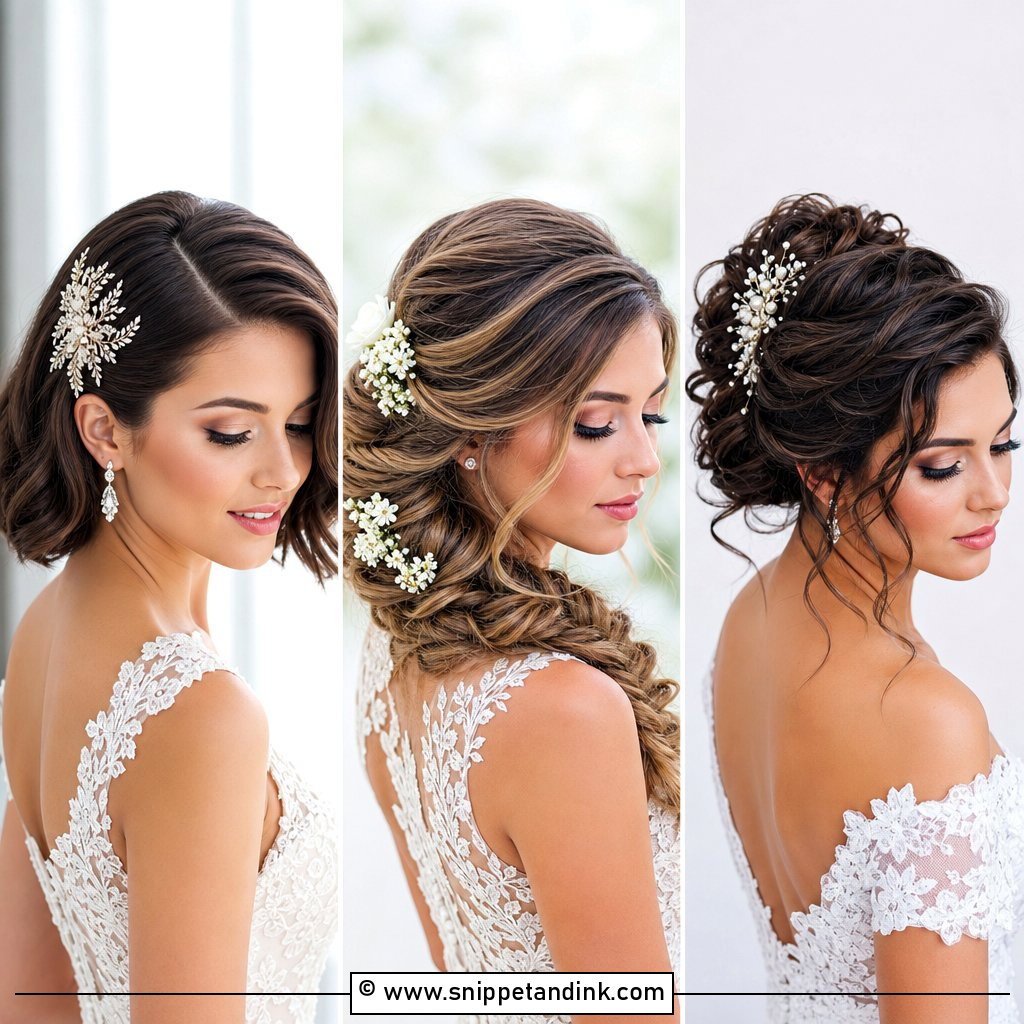
17. Korean Short Hair Bridal Curls
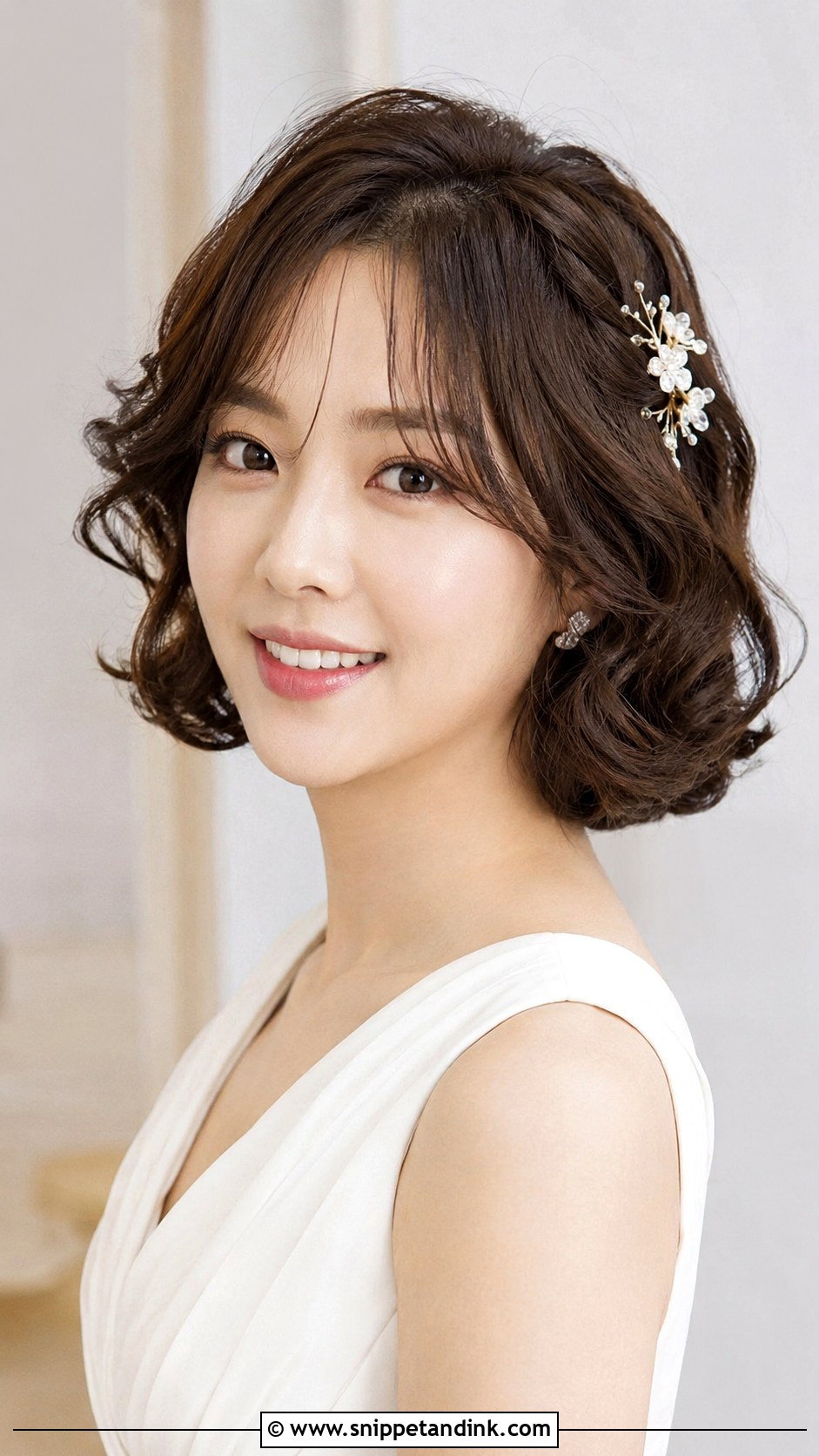
Short-haired brides, this one’s for you. On bobs and lobs I curl rounded waves that sit away from the face and set them with a light hold spray, since shorter hair doesn’t have the weight to pull curls flat and they stay put longer than you’d think. A small clip or floral pin behind one ear adds a detail and keeps that side off your cheek. A blunt bob grown out to the chin is the hardest length to curl, so book your trim a couple of weeks before the wedding rather than the week of, which gives the ends time to soften.
18. Korean Effortless Messy Bun
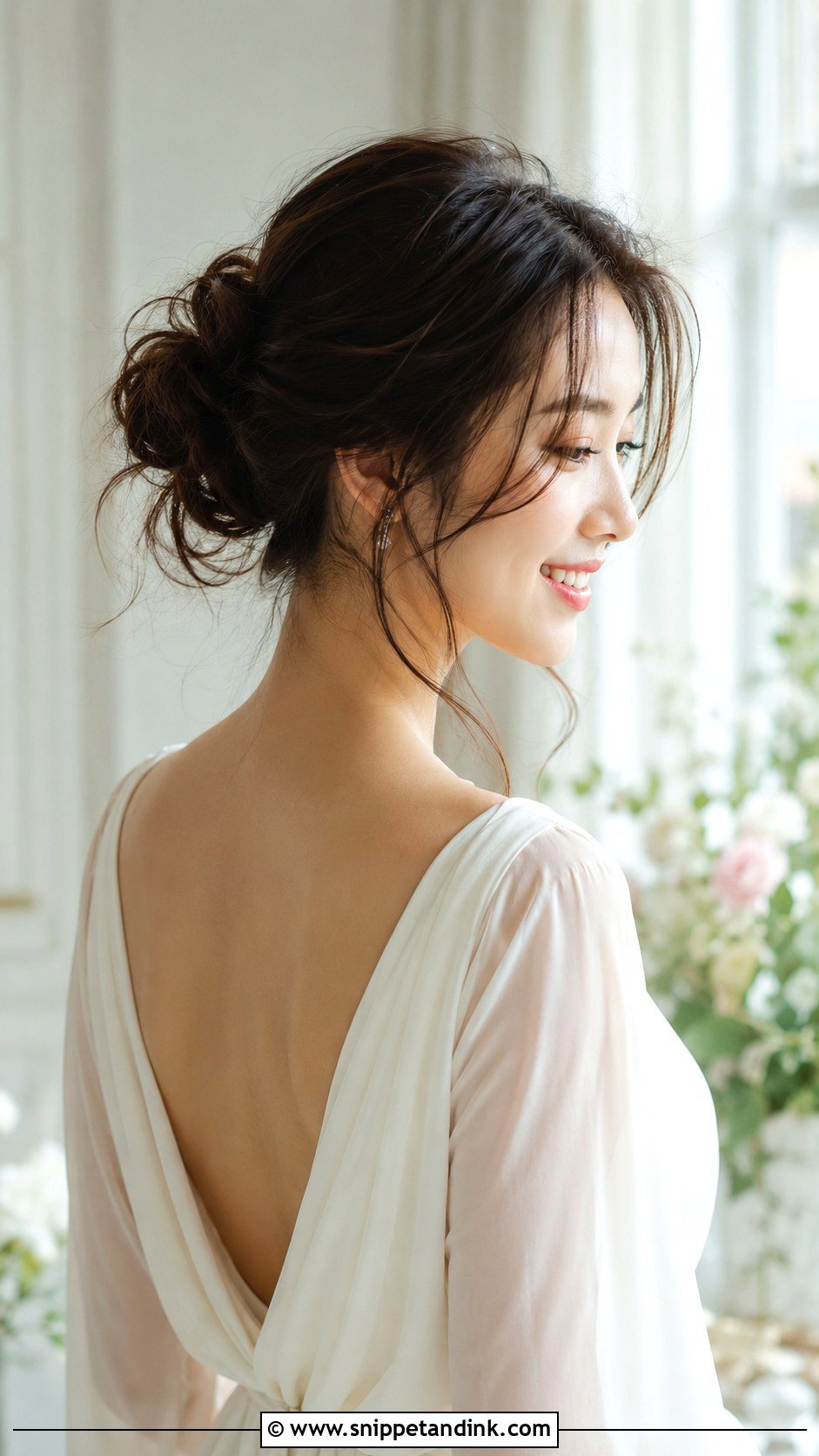
The messy bun only looks careless. Under that loose texture there is a firm base, and every piece around the face is pulled out on purpose and pinned in place. I prep with texture spray, wrap a loose bun, then tug sections out with my fingers. Silky straight hair slides right out of this style unless it has grip first, so dry shampoo at the roots is part of my prep. It sits naturally with a flowing chiffon gown.
19. Korean Sleek Straight Hair With Headband
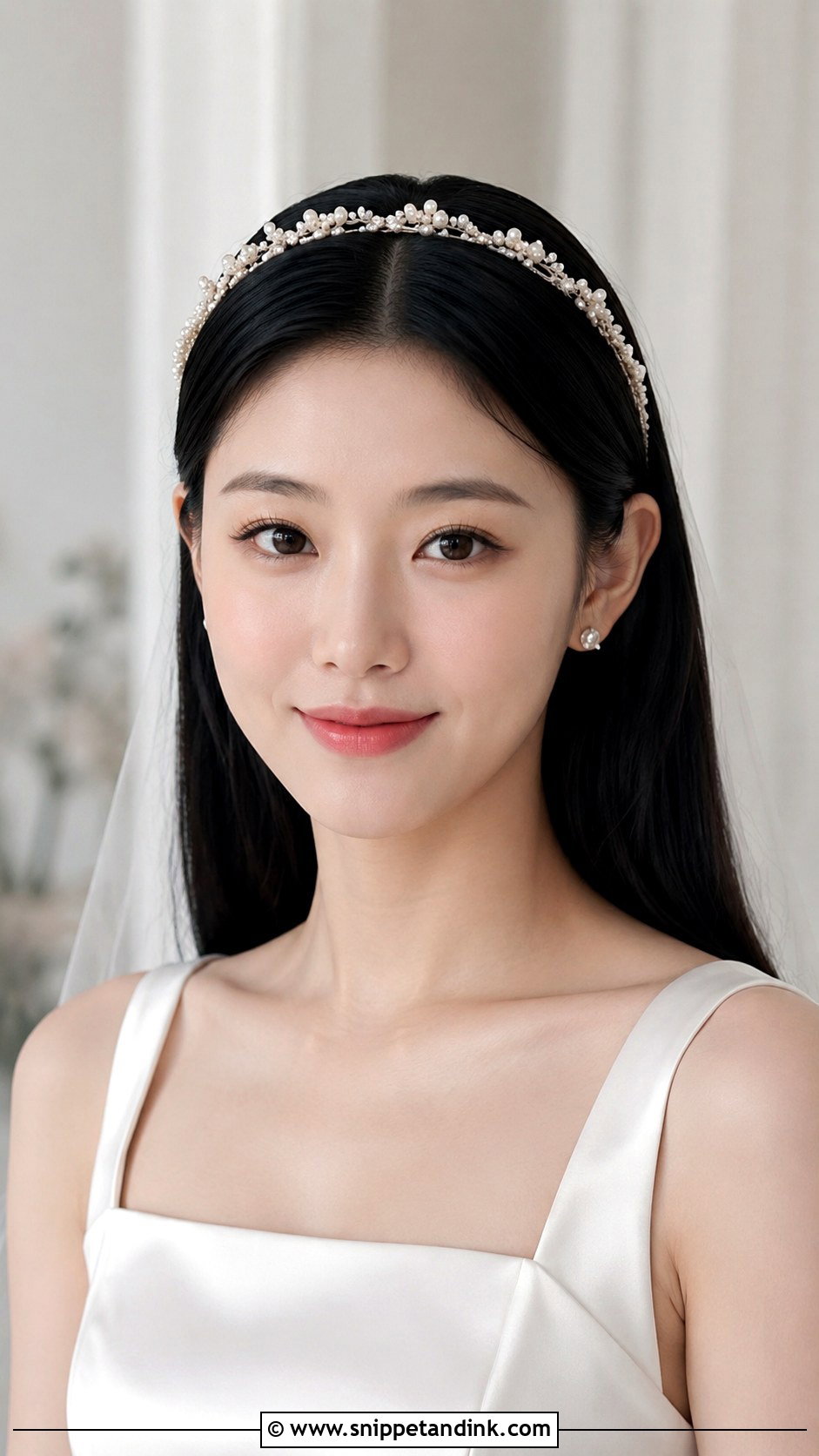
Sleek straight hair with a pearl or crystal headband is simple, and that simplicity means hair condition is everything. Dry or split ends show along the whole length, so a gloss treatment in the weeks before is worth more than any product on the day. I flat-iron small sections at a moderate heat and finish with a drop of shine serum on the lengths only. A center part keeps the headband even. Headbands can press behind the ears after a few hours, so wear yours for a full hour at home before the wedding.
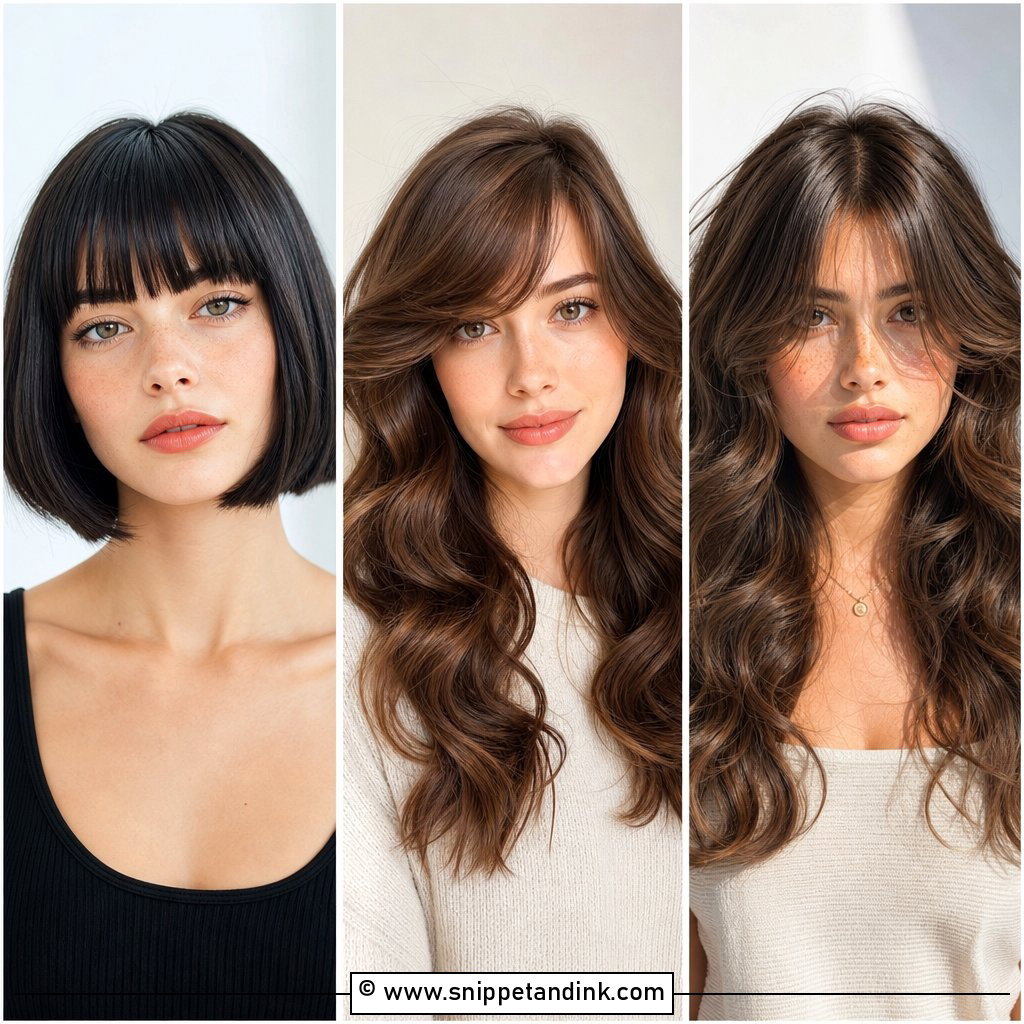
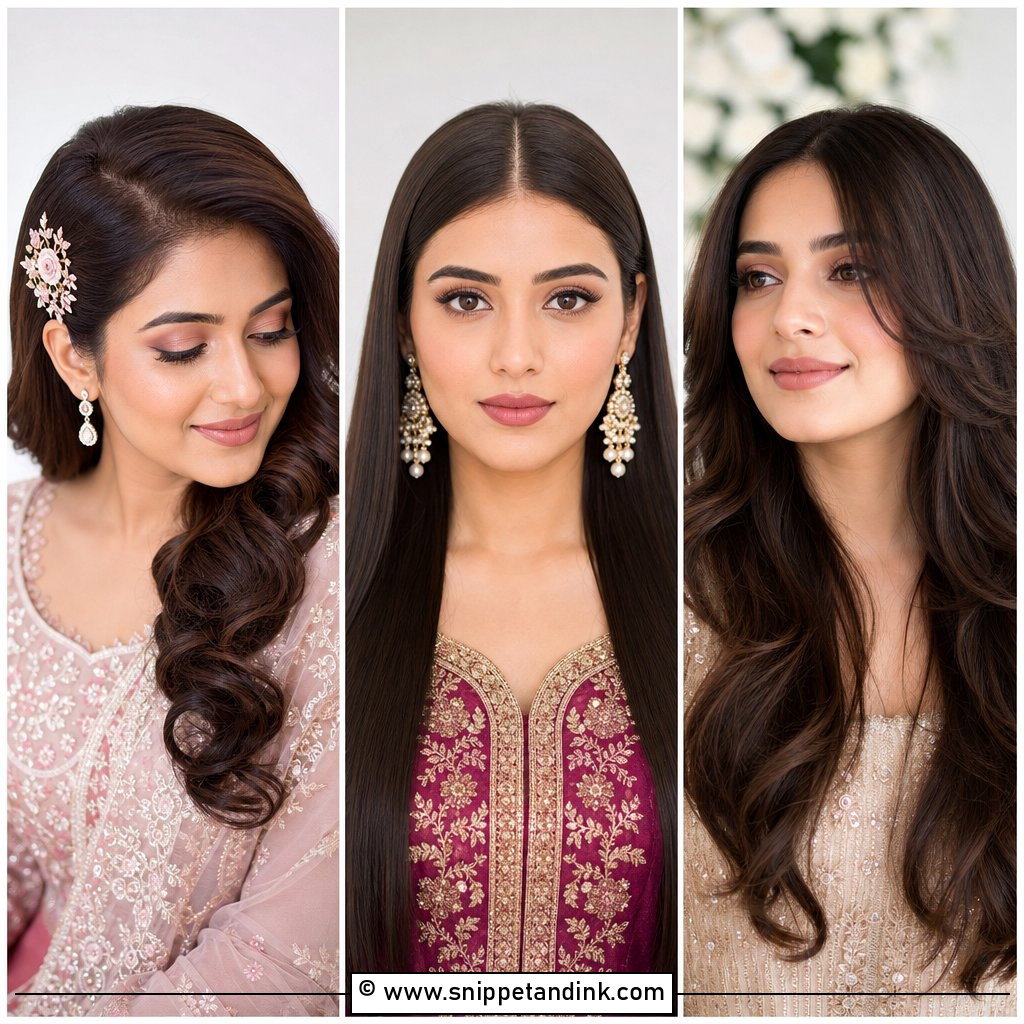
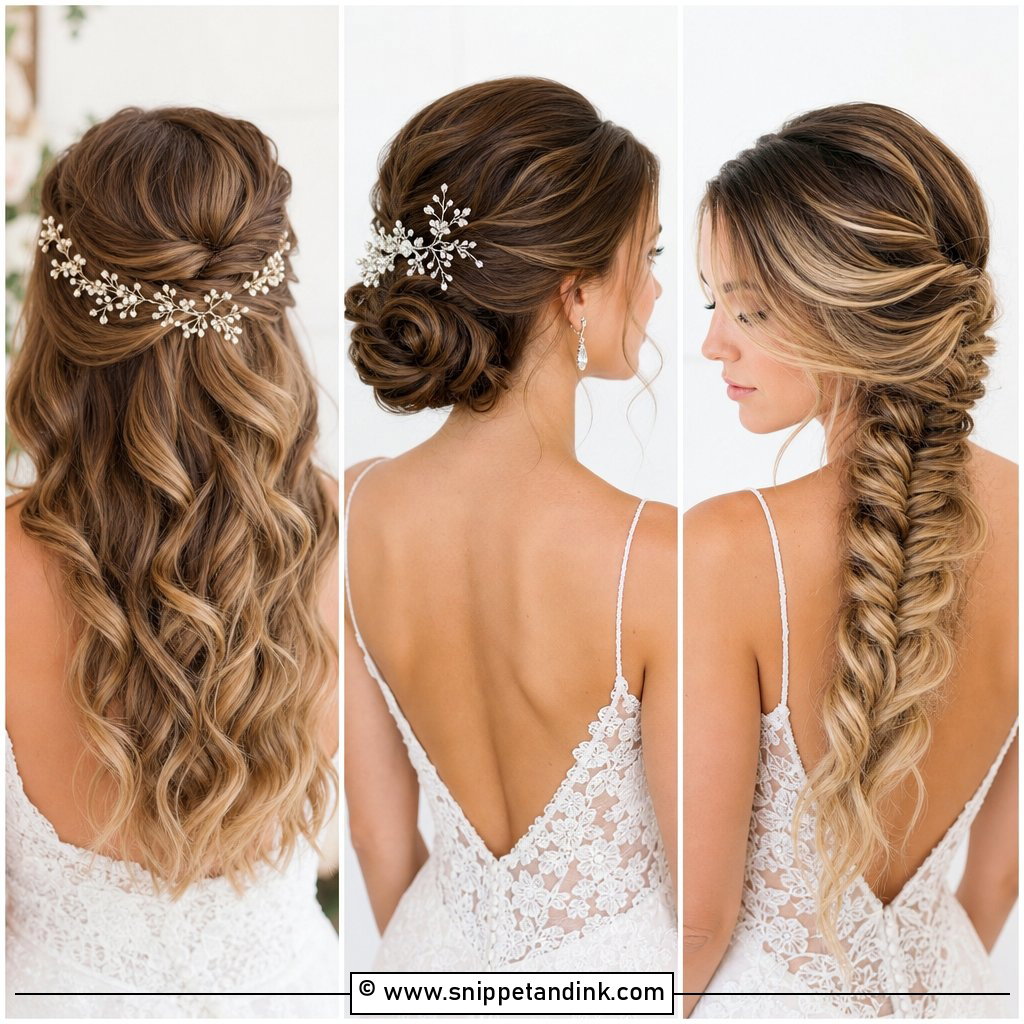
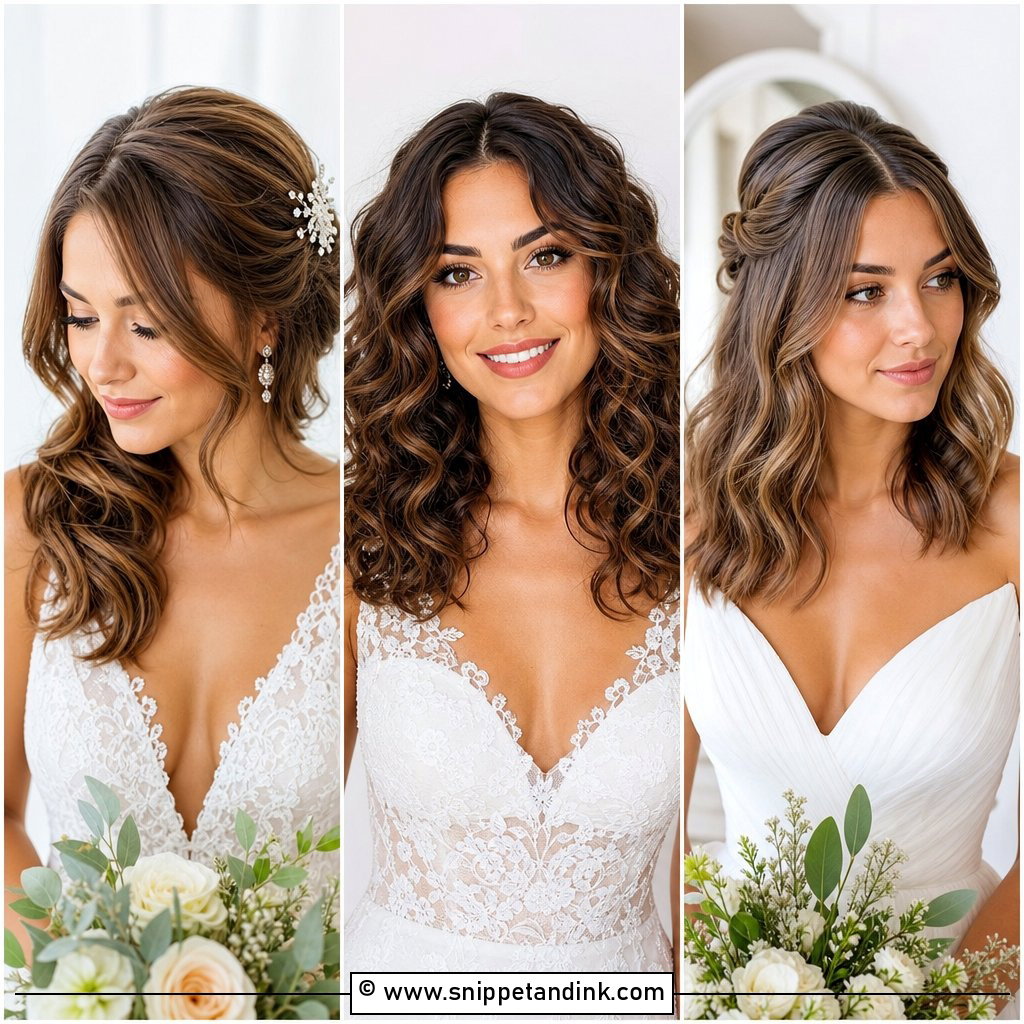
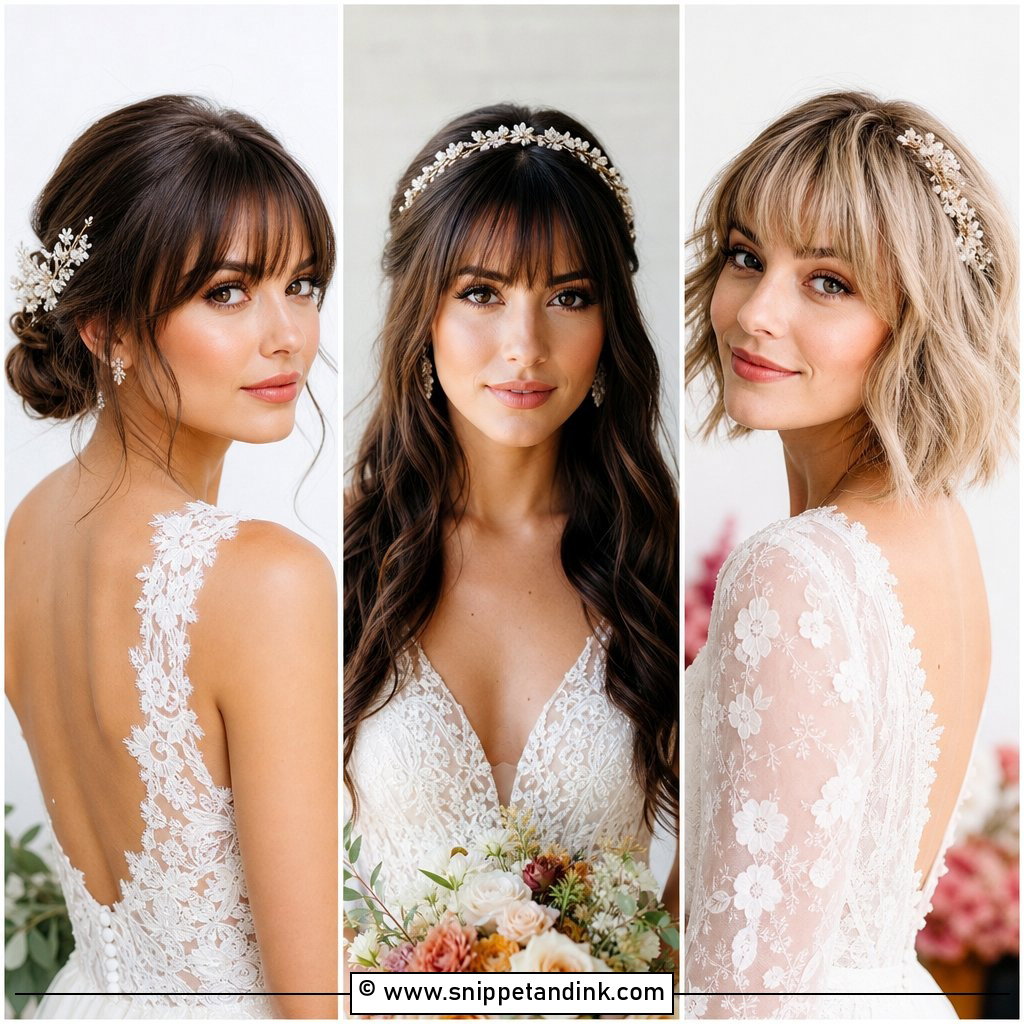
20. Korean Curtain Bangs Updo
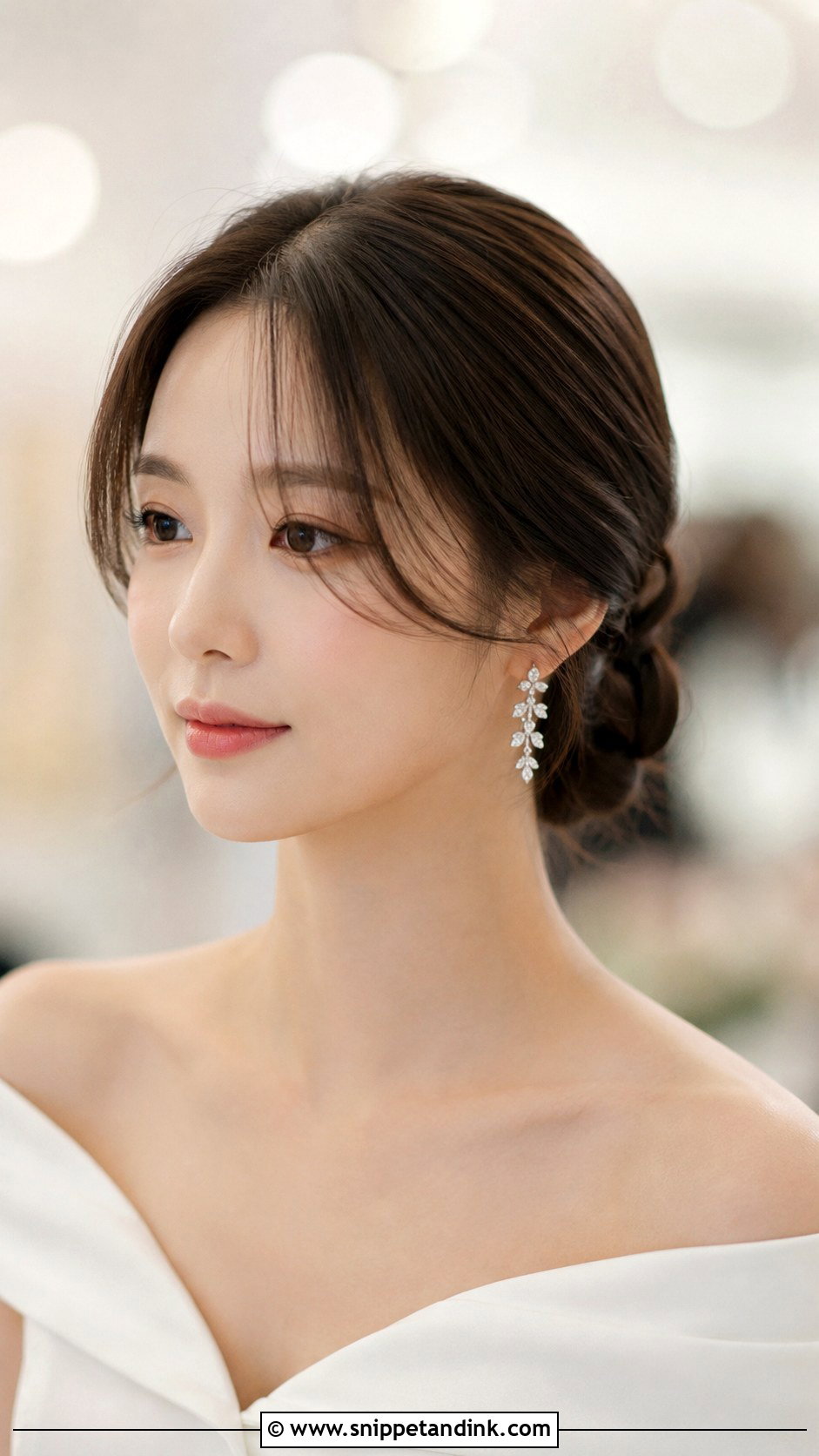
Parted in the middle and swept outward, curtain bangs soften the forehead and cheekbones around an otherwise clean updo. If yours are already cut, I curl them back with a large round brush and set them away from the face. If they aren’t, I can fake them from the front section the same way as faux bangs. They balance a low bun or chignon and leave your earrings visible. Humidity is the catch: fine bangs split and stick to the forehead, so I keep a mini round brush and a dry spray on hand between the ceremony and the portraits.
Switching From the Gown Hair to a Pyebaek Look
Many Korean weddings include a pyebaek, the family ceremony after the main wedding, where the bride changes into a hanbok or a ceremonial robe. The hair often changes too, and the window for it is usually short. If you want both looks, plan the change with your stylist from the first trial.
The easiest route is a low bun from the start. Then the change is just removing the veil, tightening the base and adding a binyeo or a jokduri, the small traditional crown. Down styles and half-updos take longer, because the loose lengths have to be brushed, gathered and pinned before any ornament can go in.
What I pack for the change
- a strong elastic and pins matched to your hair color
- the binyeo or ornament you’ll wear, already tested at the trial so we know it fits through your bun
- a fine-tooth comb and a light hold spray
- a hand mirror so you can check the back before you walk in
A jokduri sits on top of the head and is held with pins or ties, so lots of height at the crown gets in its way. Keep the volume low if a crown is part of the plan.
Those Front Pieces Are the First Thing to Wilt
Almost every style above uses a few loose strands near the face, and they are the part of Korean bridal hair that gives up first. They sit against warm skin, pick up foundation and flatten in humidity. I curl them last, away from the face, and leave them clipped up until just before you walk out.
Keep them few and fine. Thick pieces look heavy in photos and stick to lip gloss. If your hairline has baby hairs, I usually smooth those down with a little gel instead of curling them, because they frizz the moment the room warms up.
Soft on the Surface, Secure Underneath
Korean bridal hair works because it holds back. Smooth roots, soft ends and a few placed strands let your skin and your dress do the rest. A half-updo, a sleek low bun or loose waves can all fit that approach, as long as the structure under them is built for a full day. Personal touches like pearl pins or a family binyeo matter more than the name of the style. Take the photos you keep coming back to into your trial, and ask your stylist to show you exactly how each one is anchored.
You'll Like These Ideas:


Leave a Reply