
Dressing the father of the bride starts with four facts: the dress code on the invitation, the venue, the season and the couple’s colors. He should clearly belong with the groom, the groomsmen and the mother of the bride, yet not look like he’s wearing the same outfit as any of them. When I dress a bride’s father, the conversation usually begins with a tuxedo and ends somewhere more personal. The twenty outfits below run from black tie to breathable beachwear and traditional formalwear, and each comes with the shirt, shoes and accessories I’d put with it. Before any of that, though, fit comes first. Shoulders, sleeve length and trouser hem decide whether a suit looks expensive or borrowed.
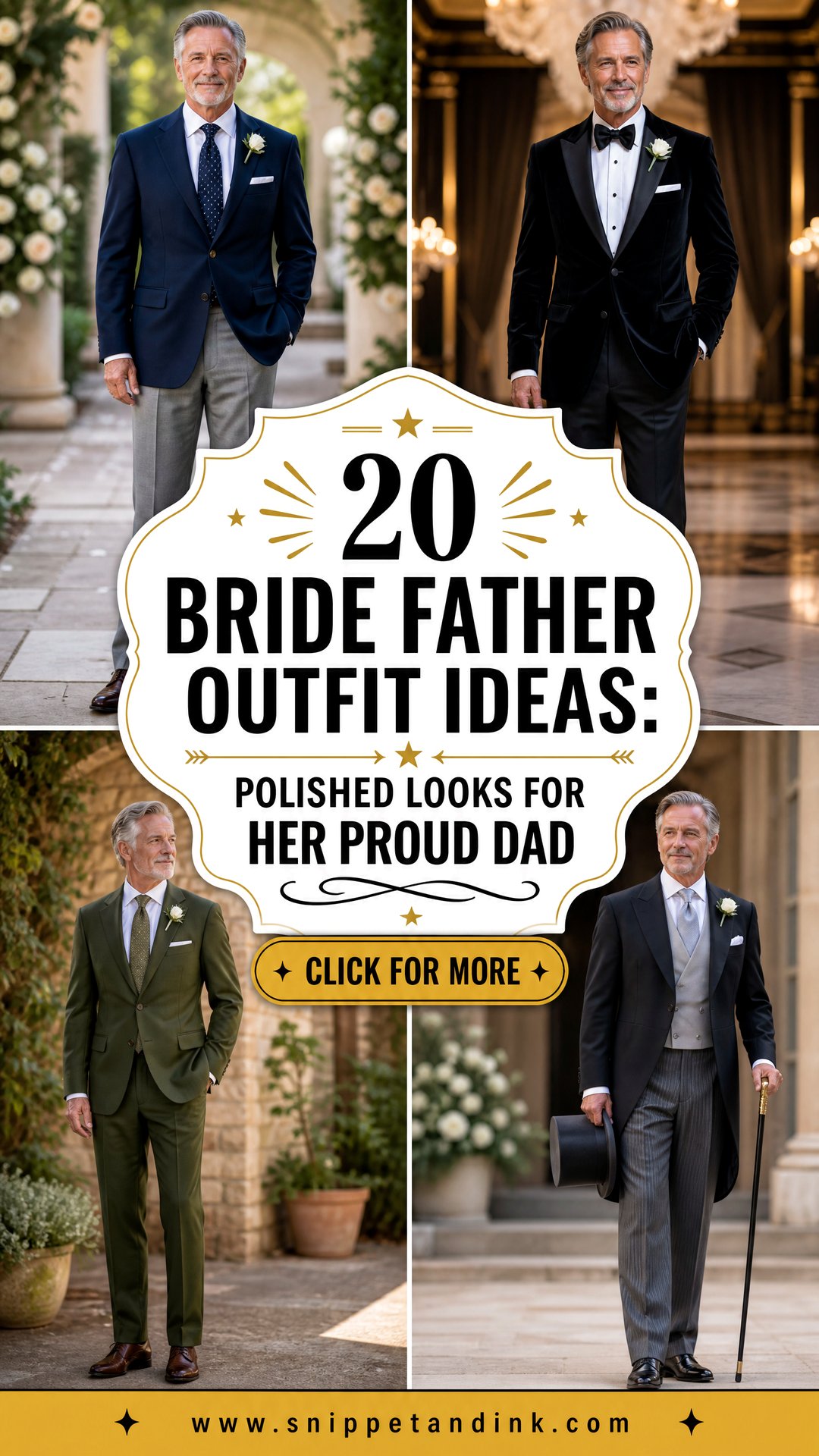
Dad Should Look Related to the Groom, Not Like a Groomsman
The father of the bride stands in the most photographed family groupings of the day, usually between his daughter and the groom’s side. I aim for three outfits that clearly go together without matching. The usual way is to share one element and change another.
- Same formality, different color: if the groom is in a black tuxedo, a midnight blue one keeps Dad at the same level.
- Same color, different texture: a navy groom and a navy father can work when one wears smooth wool and the other a waistcoat or a subtle check.
- Echo the wedding palette in the tie or pocket square only, and let the groomsmen carry the main accent color.
- Agree on the boutonniere with the florist. Fathers often get a slightly different flower from the groomsmen, which marks them out in group photos.
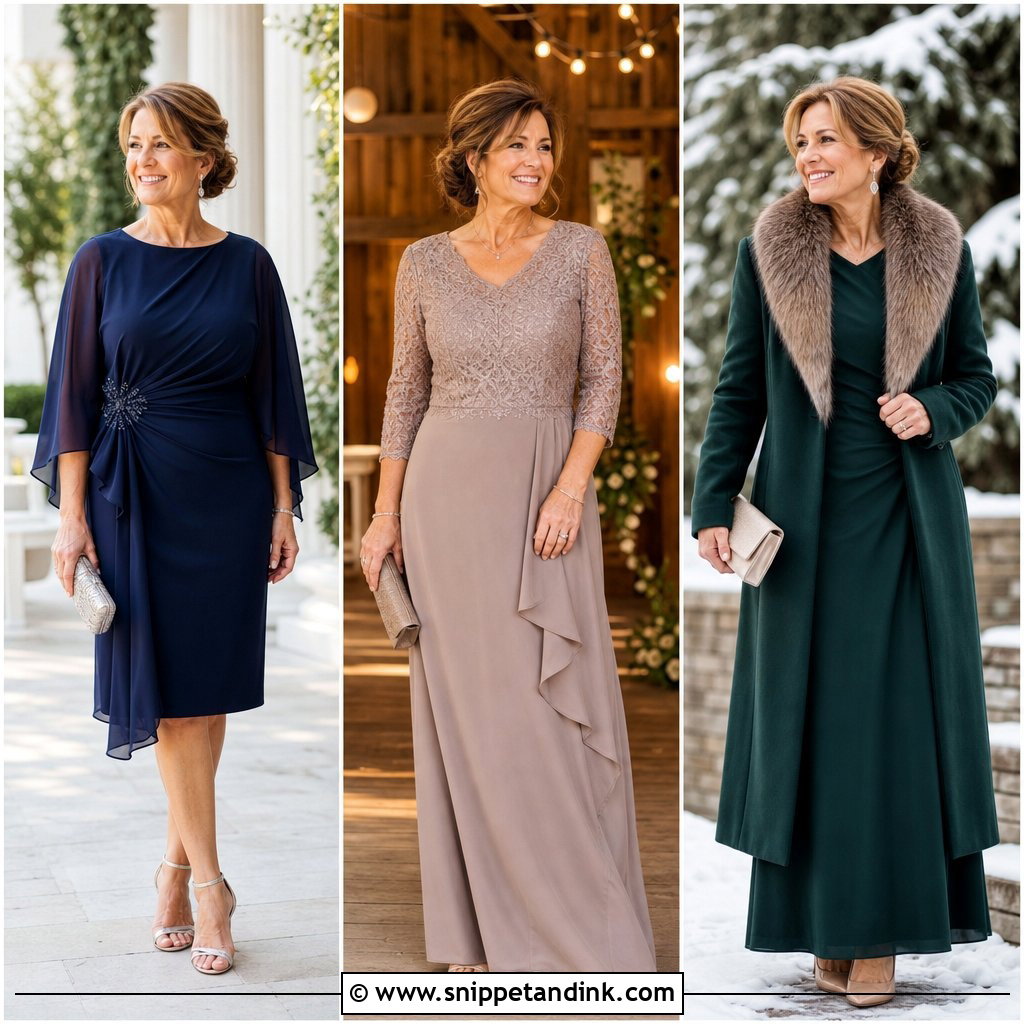
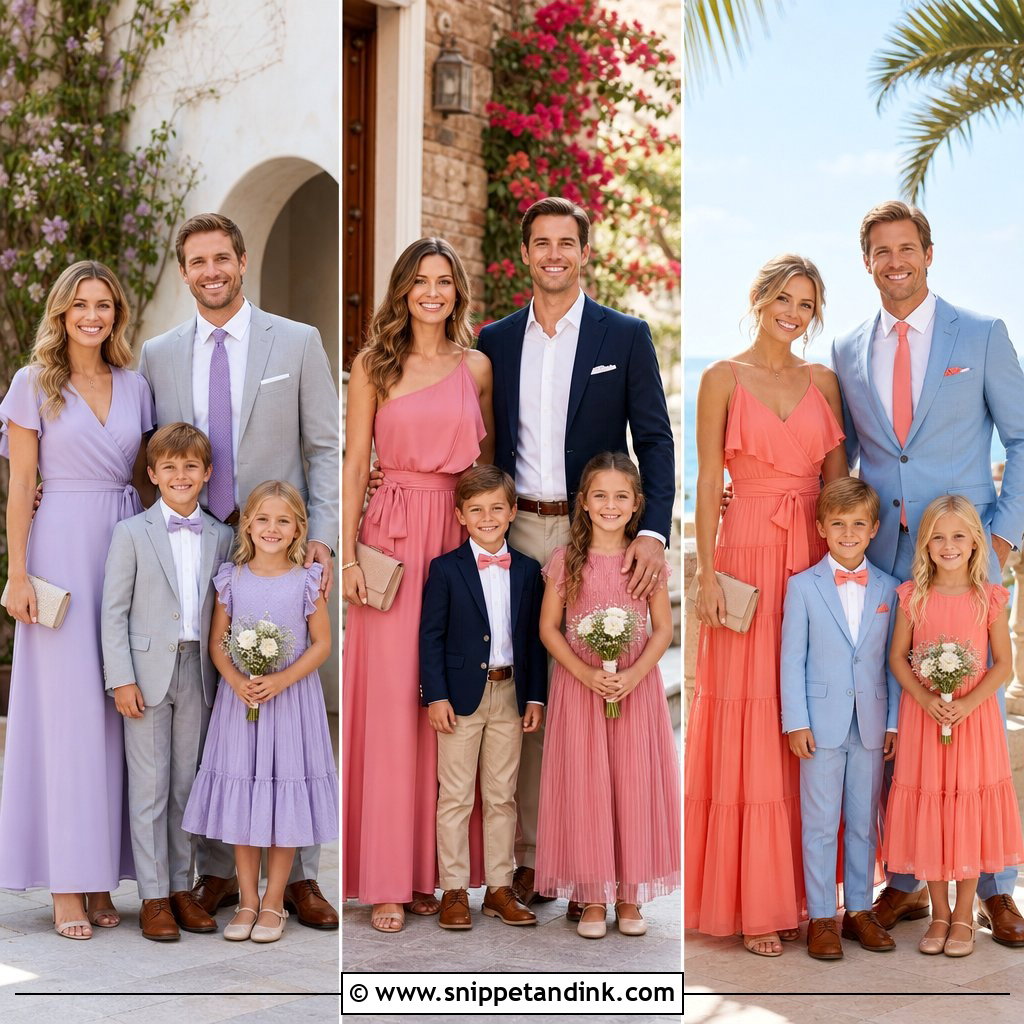
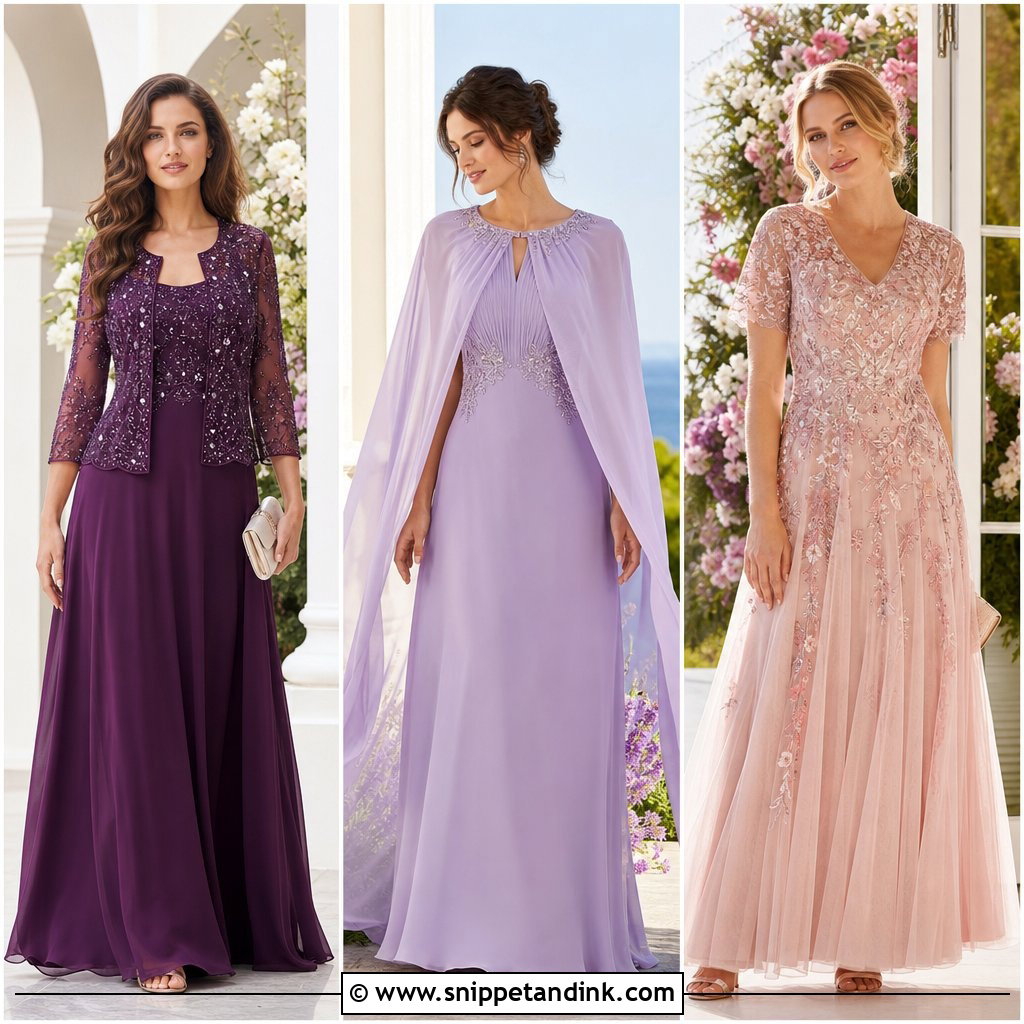
It also helps to see what the mother of the bride is wearing. I won’t match a tie to her dress exactly, but choosing a tie from the same family of colors makes the parents look like a pair when they walk in together.
1. Father Of The Bride Black Tuxedo
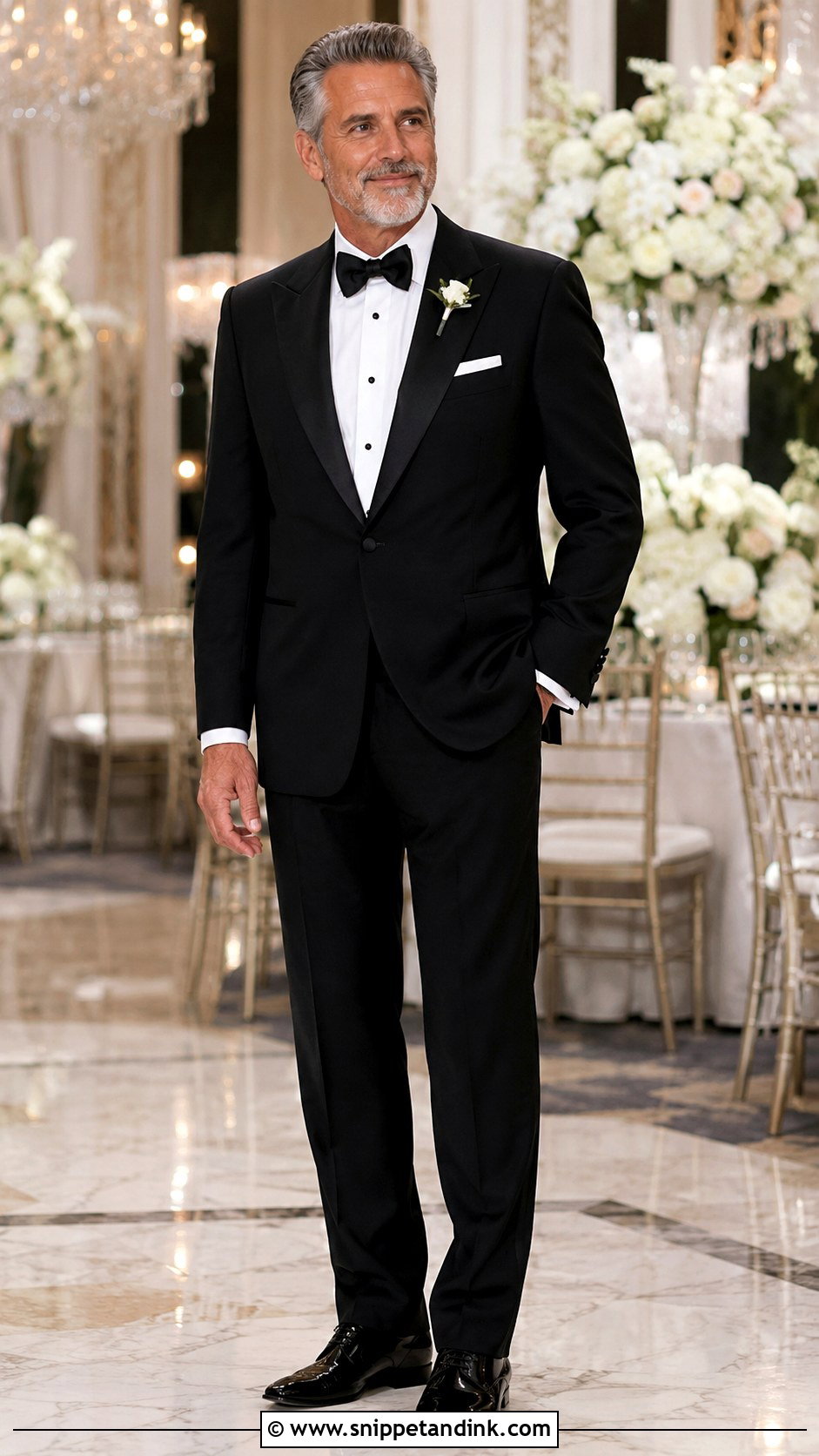
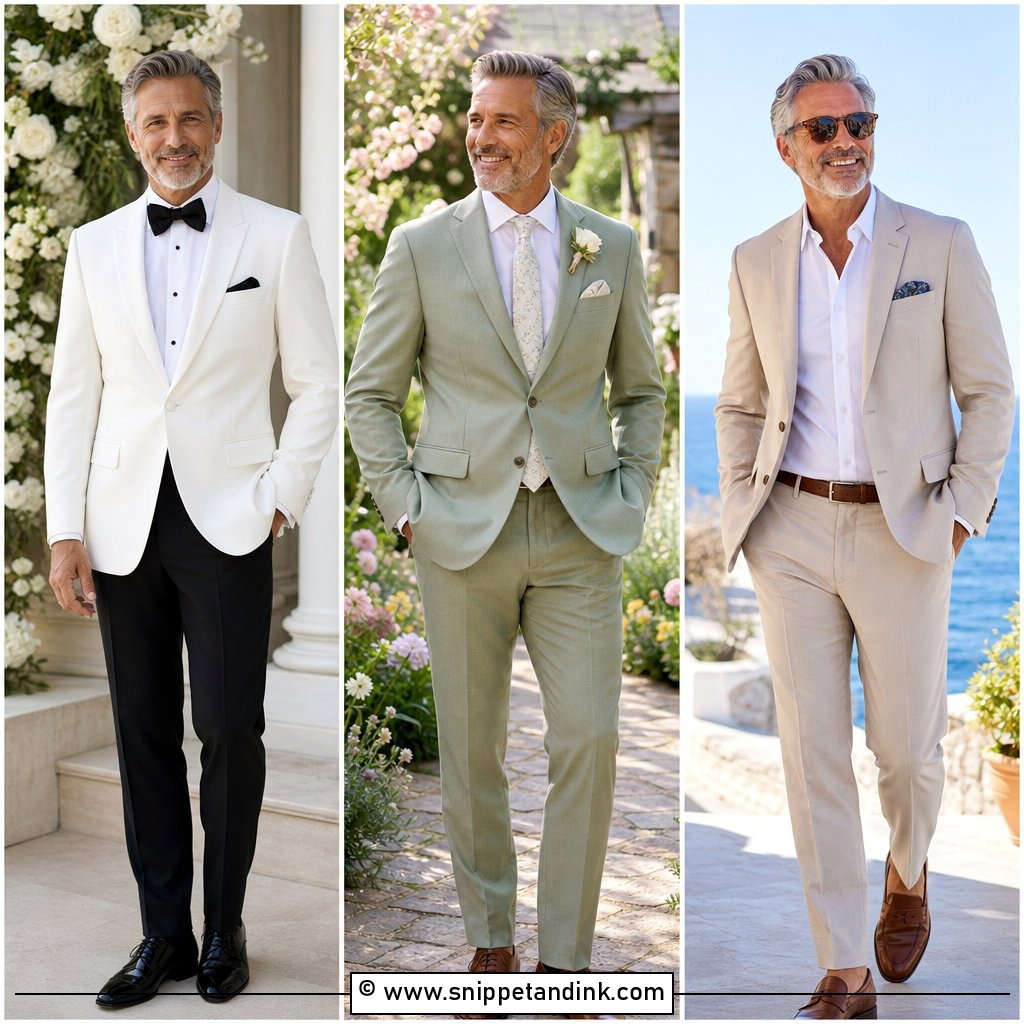
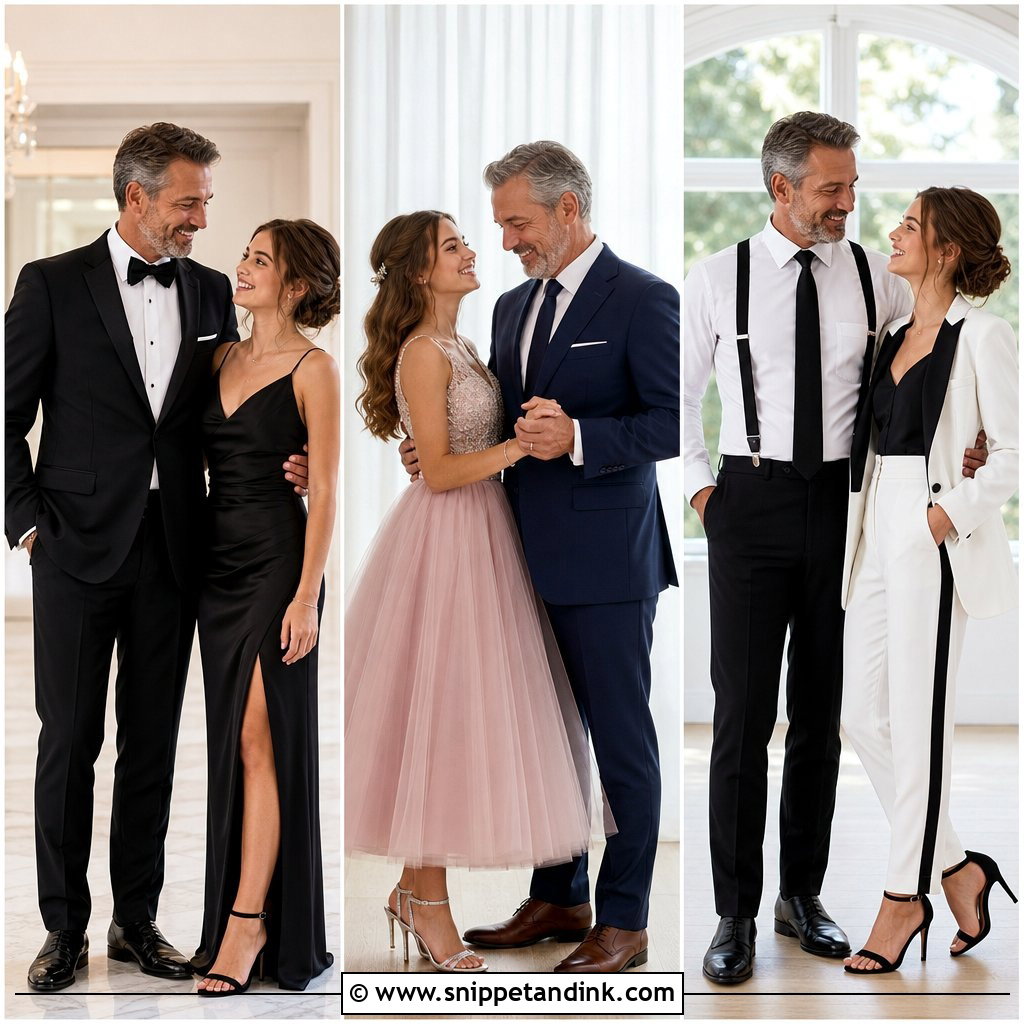
For black tie, a classic black tuxedo is still the right answer. I’d choose a single-breasted jacket with satin peak lapels, flat-front trousers with the satin side stripe, a crisp white shirt, a black silk bow tie and slim black patent shoes. A white pocket square and his own cuff links add the personal note. A boutonniere matched to the bouquet is a nice touch, but check with the couple first. The fit is where older tuxedos give themselves away: sleeves should show about a quarter to a half inch of shirt cuff, and the trousers should just touch the shoe with a slight break, not pool over it.
2. Father Of The Bride Midnight Blue Tuxedo
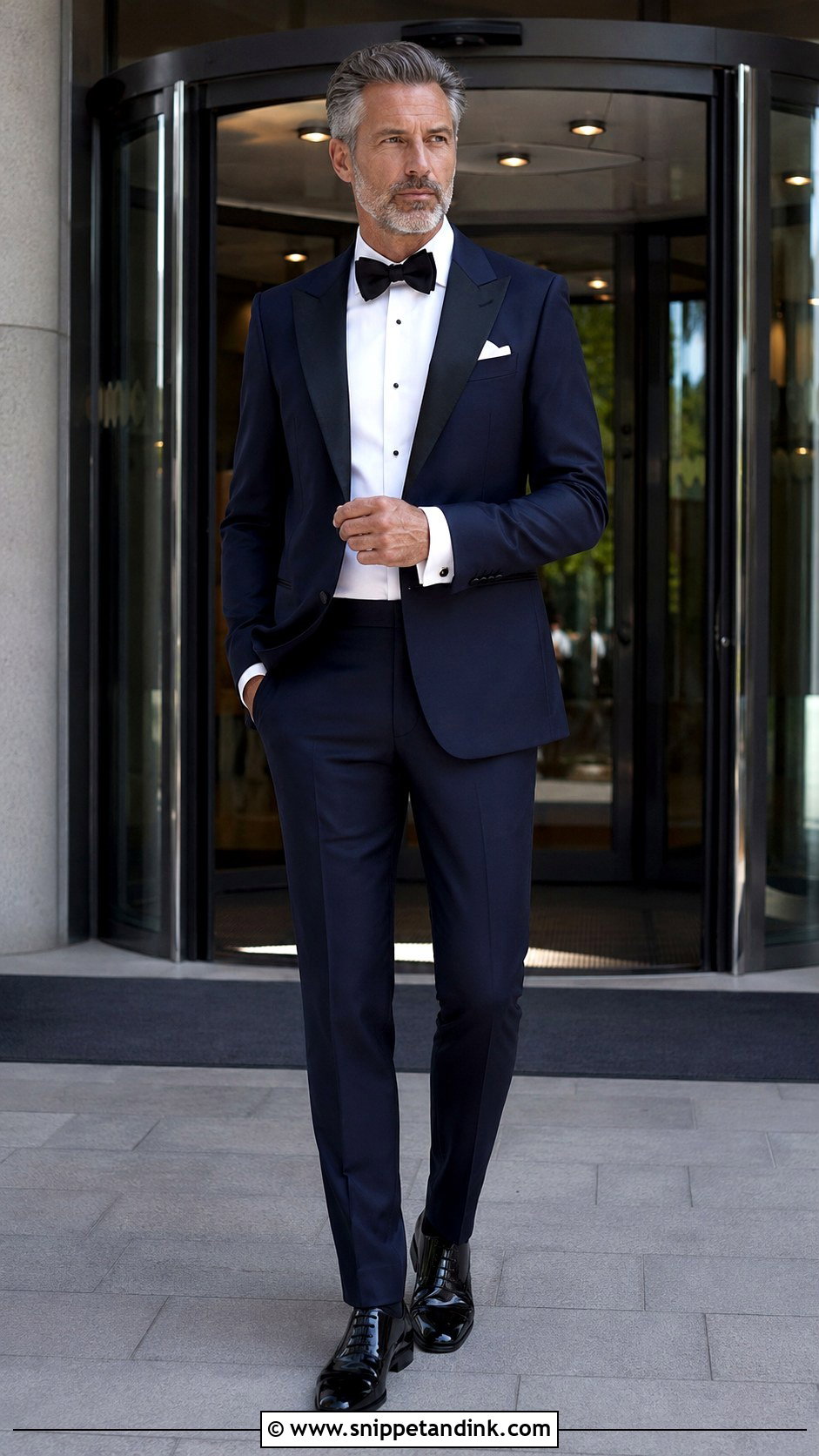
Midnight blue reads almost black at night but holds its color in photos, where black can flatten into a single dark shape. It’s the tuxedo I suggest to fathers who want to stay traditional while looking slightly different from the groom. Black satin lapels and a matching side stripe keep it formal. A pleated or plain white tuxedo shirt, black bow tie and polished black oxfords complete it, with silver cuff links and a white pocket square lifting the area near the face. One small detail matters more than people think: black socks long enough to cover the shin when he sits in the front row.
3. Father Of The Bride Navy Three-Piece Suit
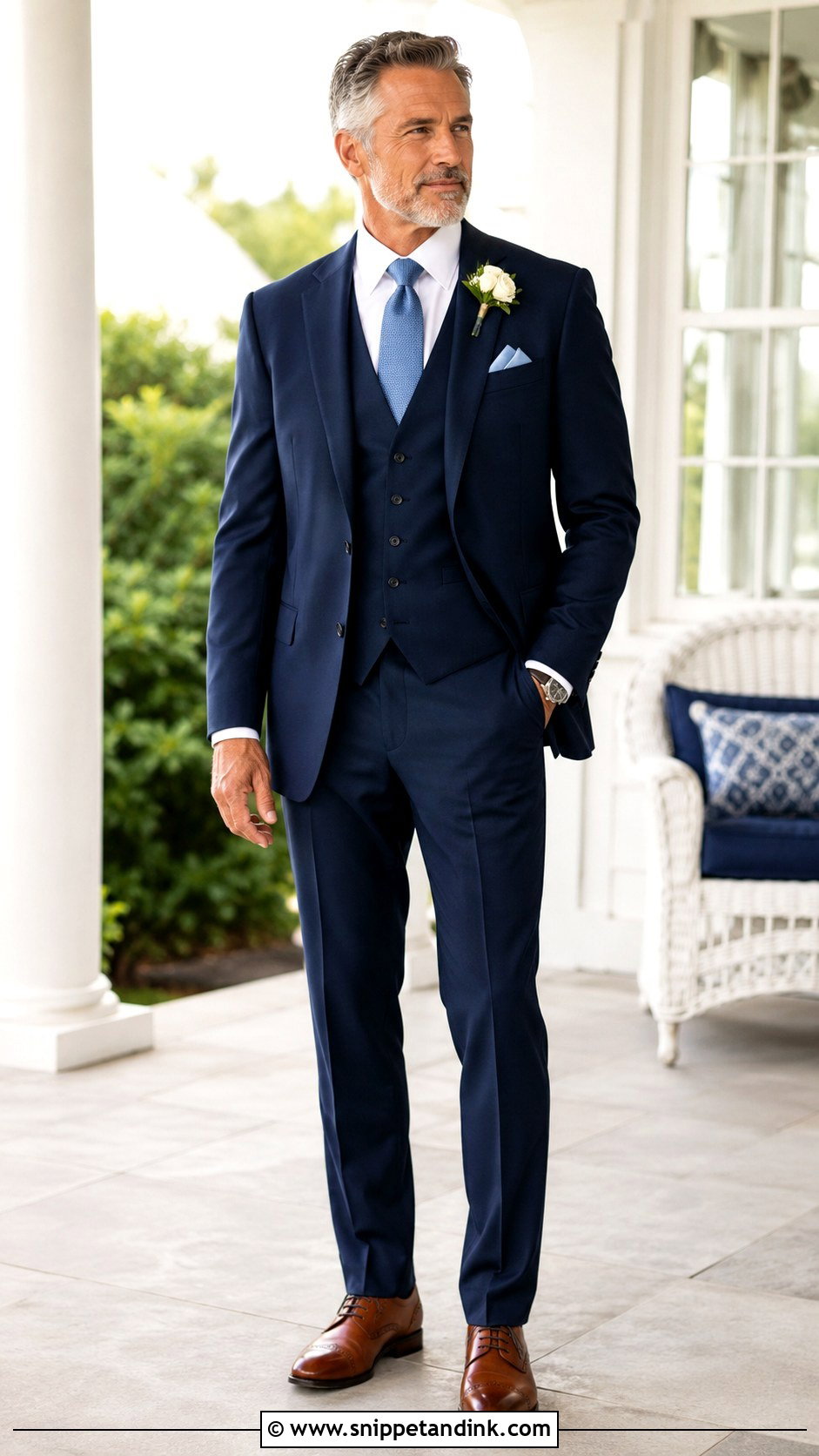
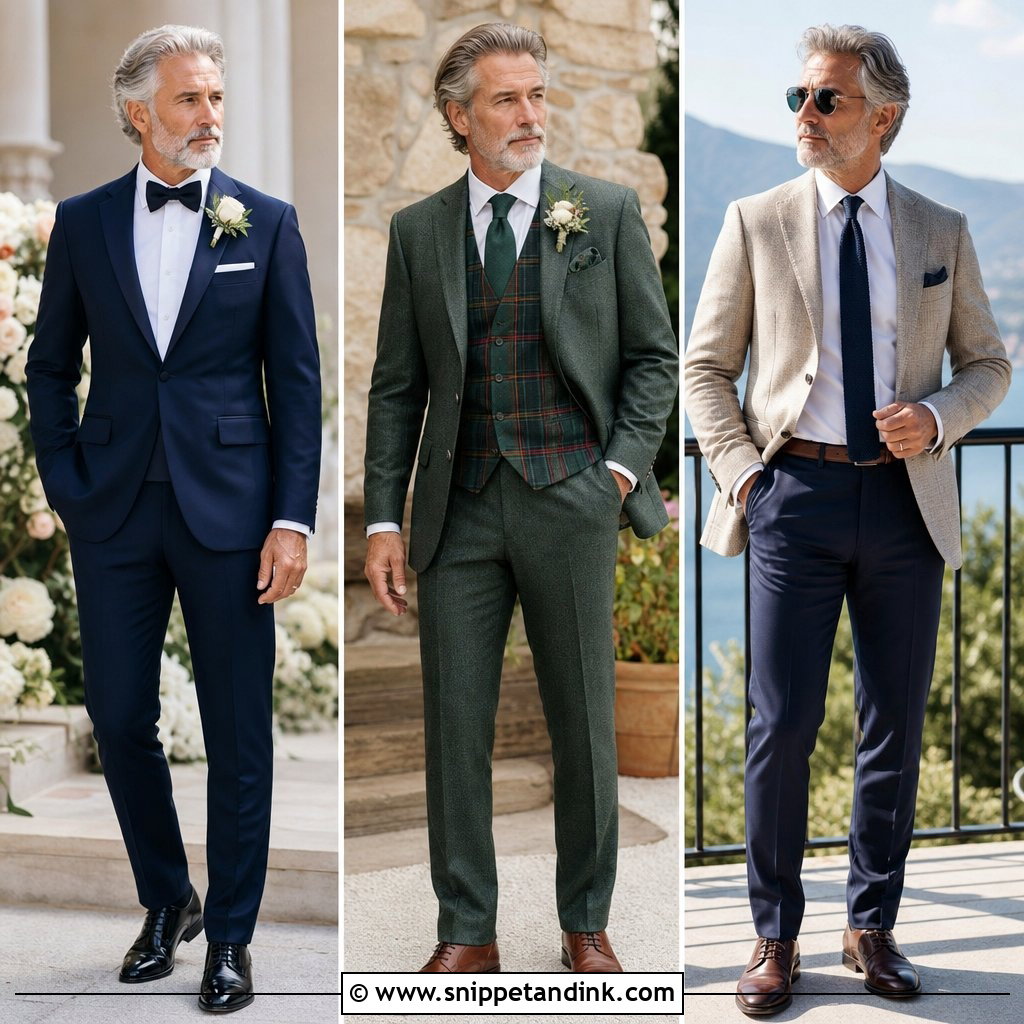
A navy three-piece suit gives structure without the formality of a tuxedo, and the waistcoat is the reason I like it. When the jacket comes off at the reception, he still looks dressed. A white spread-collar shirt, a silk tie in dusty blue, burgundy, silver or another color the couple chooses, and dark brown oxfords finish it. A patterned pocket square should sit near the tie’s color, not copy it exactly. Choose lightweight wool for comfort through a long day. The waistcoat needs checking at the fitting: if the buttons pull or the bottom shows a gap above the waistband, it’s too short or too tight.
4. Father Of The Bride Charcoal Gray Suit
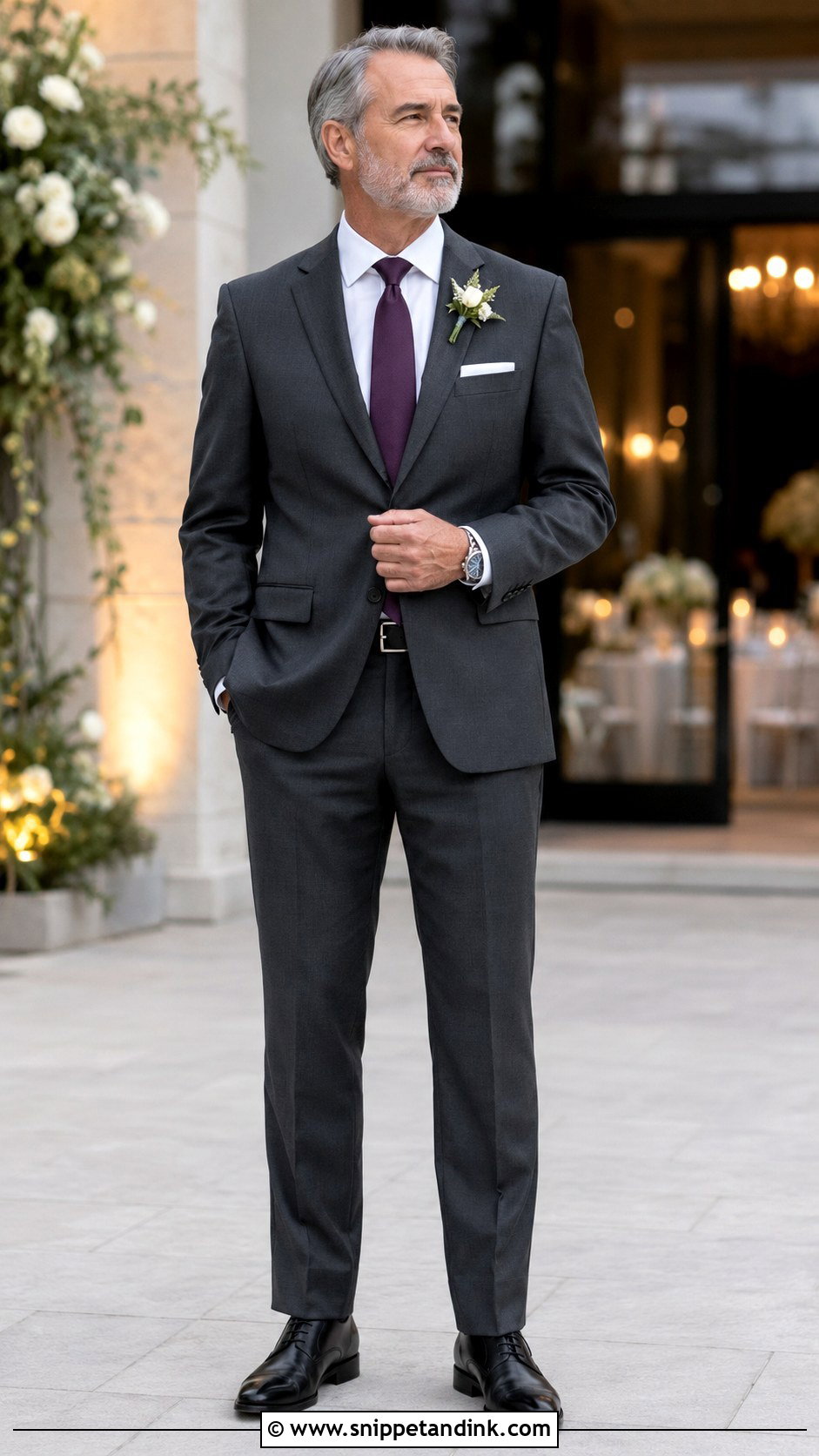
Charcoal is the suit I’d pick for a fall, winter or evening wedding when a father wants something dependable. Start with smooth worsted wool, then a white or pale blue shirt and a tie in deep navy, plum, forest green or a quiet pattern that pulls in the wedding colors. Black cap-toes, a black belt and a plain metal watch keep it sharp. Matte cloth looks modern; shiny suiting looks dated under flash. If the groomsmen are in light gray, charcoal sets him apart while still sitting in the same family. A white pocket square and boutonniere stop it looking like a Monday meeting.
5. Father Of The Bride Light Gray Suit
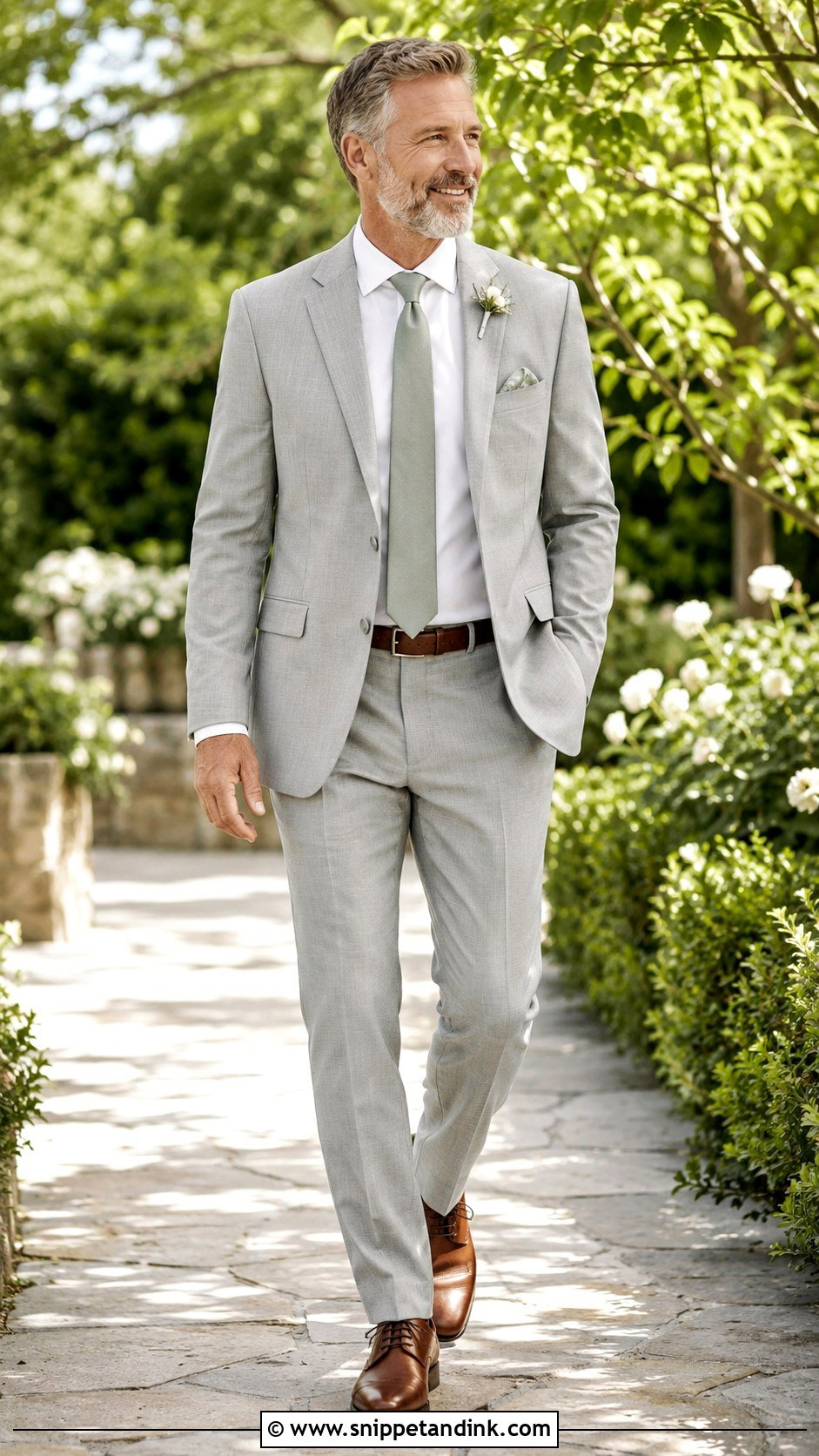
In a sunny garden, a dark suit can look like the heaviest thing on the lawn. Light gray solves that. A two-button jacket and matching trousers with a white shirt and a soft blue, lavender, sage or blush tie suit spring and summer daytime weddings. Medium-brown derbies, a matching belt and a textured pocket square complete it. The cloth needs enough body to stay crisp in the heat. Light gray also shows every mark, from grass stains at the knee when he crouches for photos to a drop of red wine at dinner, so I always tell fathers to keep a lint roller and a stain pen in the car.
6. Father Of The Bride Medium Blue Suit
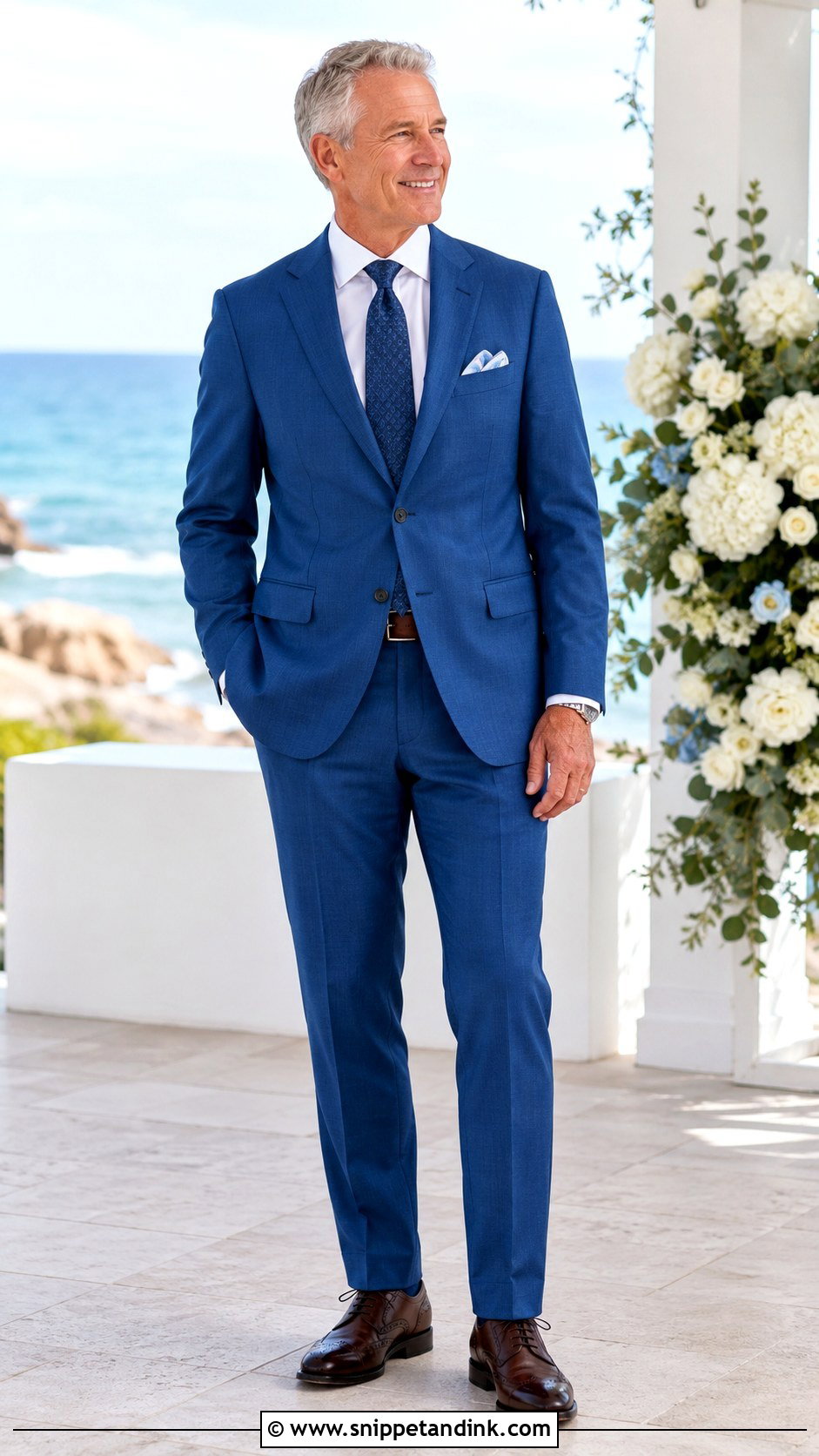
Medium blue sits between navy and something bolder, and it suits coastal venues and semi-formal daytime weddings. Look for a balanced mid-blue, never electric. A white poplin shirt and a navy, silver or quietly patterned tie keep it grown-up; dark brown brogues or sleek derbies with a matching belt add warmth. If the wedding colors already include blue, I put a different accent in the pocket square or boutonniere so he doesn’t vanish into the theme. Button the jacket and look in the mirror. Creases pulling into an X from the button mean it’s too tight across the middle.
7. Father Of The Bride Tan Linen Suit
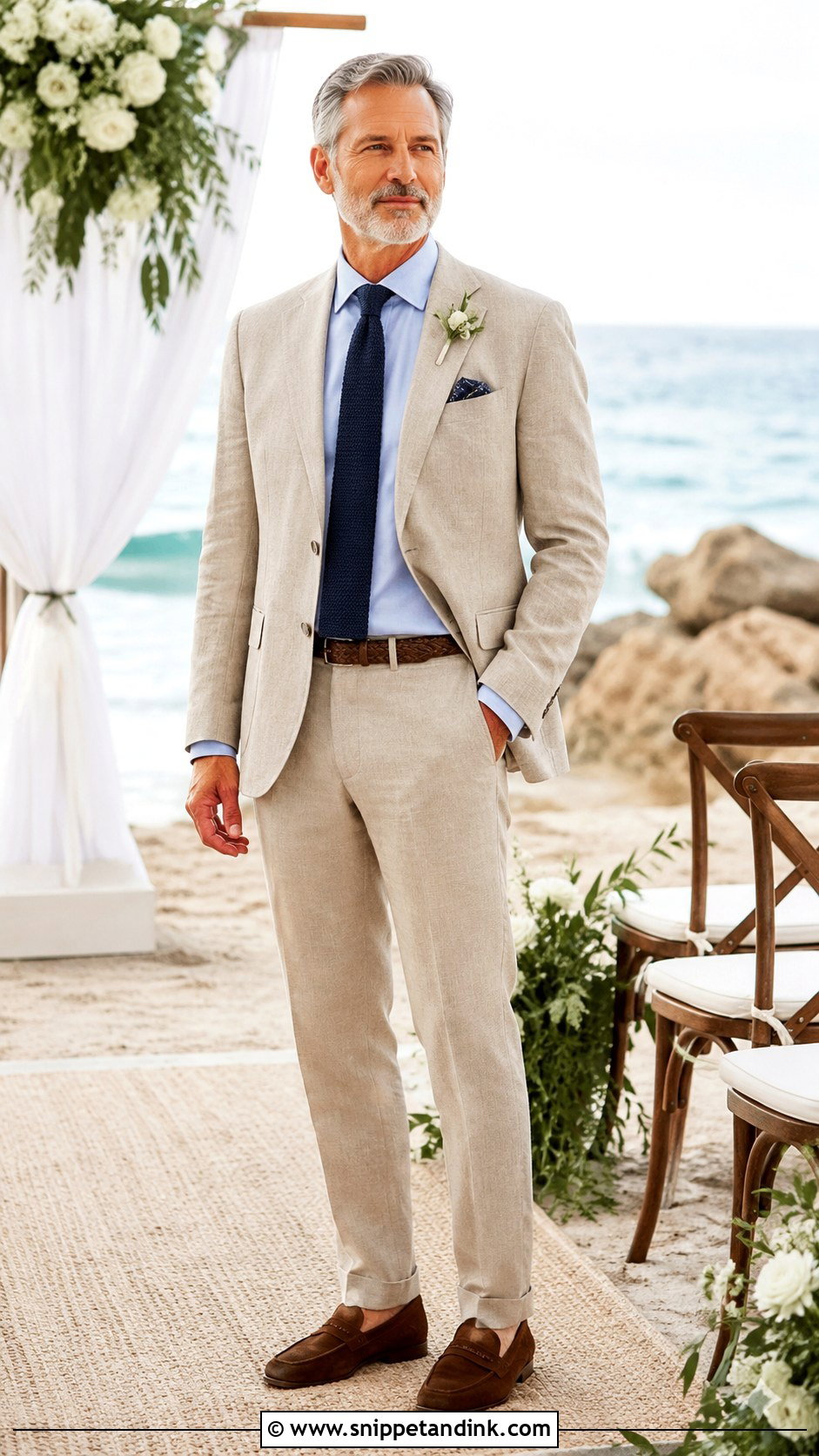
For a beach or a hot destination, I reach for a tan linen suit, ideally a linen blend. Pure linen breathes beautifully but creases the moment he sits down; a blend with cotton or wool keeps the airy feel and holds its shape for photos. A white or pale blue cotton-linen shirt, open at the collar or with a light tie depending on the dress code, brown suede loafers and a woven belt finish it. No-show socks are fine if the venue is relaxed. Check the tan against the setting: on a sand-colored beach he can blend into the background in every wide shot.
8. Father Of The Bride Beige Summer Suit
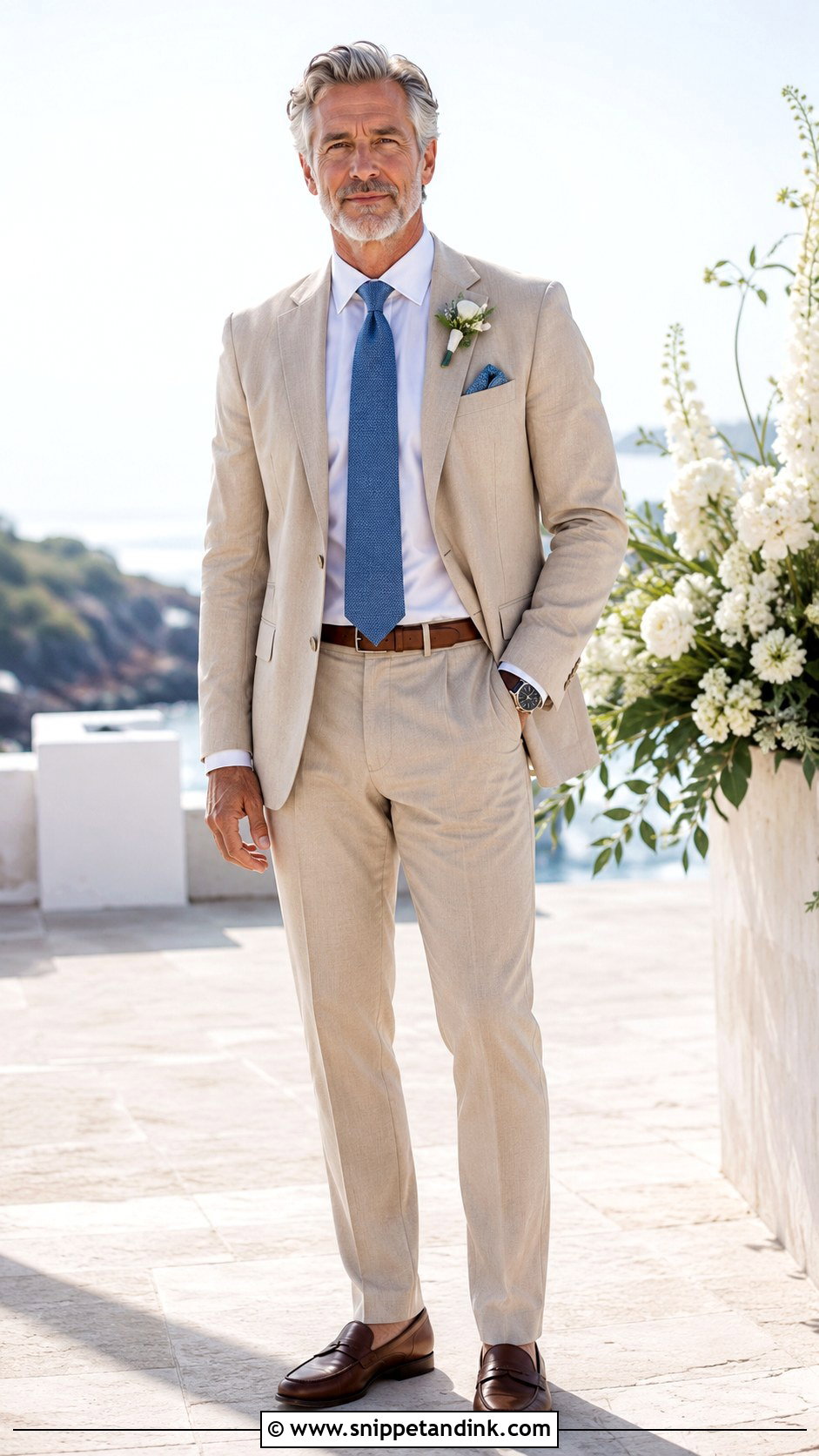
Beige is lighter and softer than tan, and it suits summer palettes of white, pale blue, sage and muted florals. Pair the suit with a white spread-collar shirt and a textured taupe, dusty blue or soft green tie, with medium-brown loafers and a matching belt. A folded pocket square and a small boutonniere chosen by the couple finish it. Light cloth can turn slightly see-through in direct sun, which few men think about until they see the photos. I’d ask for lined trousers and wear skin-tone or light undergarments, never bright white ones.
9. Father Of The Bride Seersucker Suit
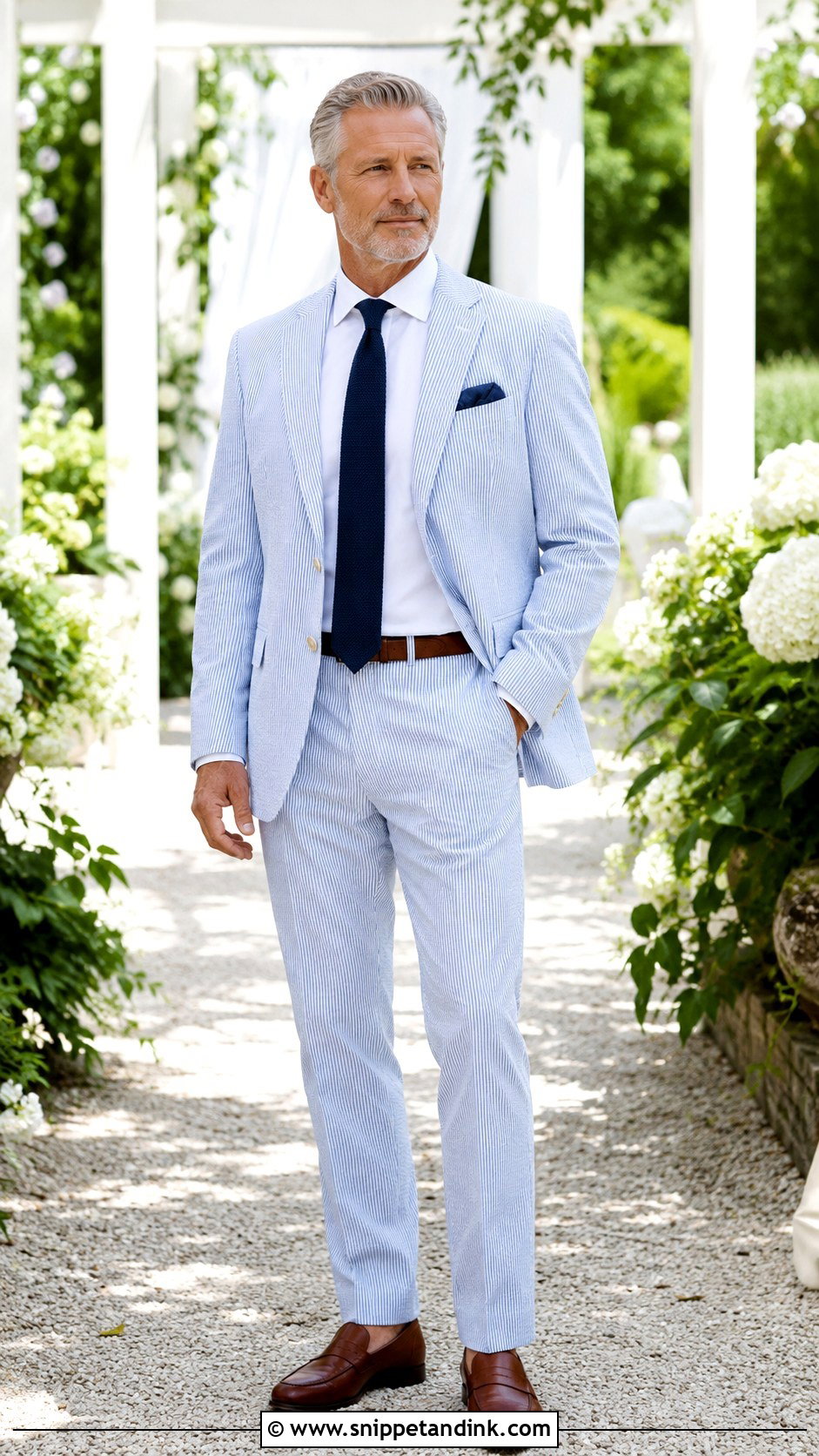
A seersucker suit is built for humid heat. The puckered weave holds the cloth slightly away from the skin, so air moves and the creases from sitting don’t show. It’s a natural fit for a Southern outdoor wedding. Keep the stripe subtle, blue and white or gray and white, and pair it with a solid white shirt, a navy knit tie and brown loafers. A navy pocket square is plenty; the suit already has its own texture. Seersucker looks deliberately relaxed on its own, so tailoring has to be sharp at the shoulders and hem, otherwise it tips into rumpled.
10. Father Of The Bride Navy Blazer And Gray Trousers
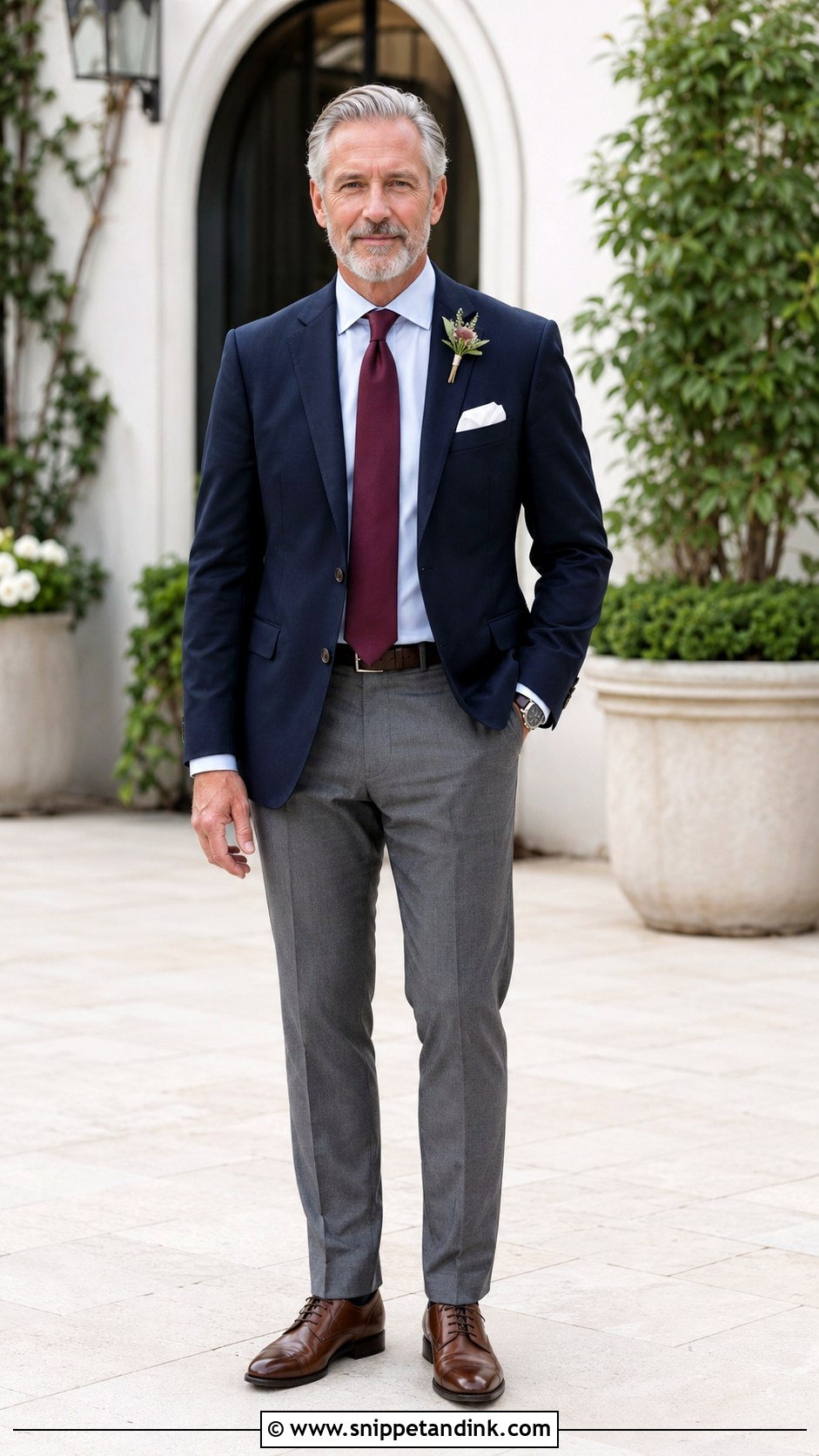
Not every wedding needs a matching suit. A navy blazer with tailored gray trousers suits cocktail, semi-formal and relaxed daytime weddings, and he’ll wear the pieces again for years. I’d swap shiny brass buttons for dark horn ones, because brass reads yacht club. A white or pale blue shirt, a burgundy, navy or patterned silk tie and medium to dark brown derbies with a matching belt suit it. The trousers should be dressy wool with a sharp crease, never cotton chinos. A white pocket square and a quiet boutonniere make it wedding-ready while keeping him a step less formal than the groom.
11. Father Of The Bride Brown Tweed Suit
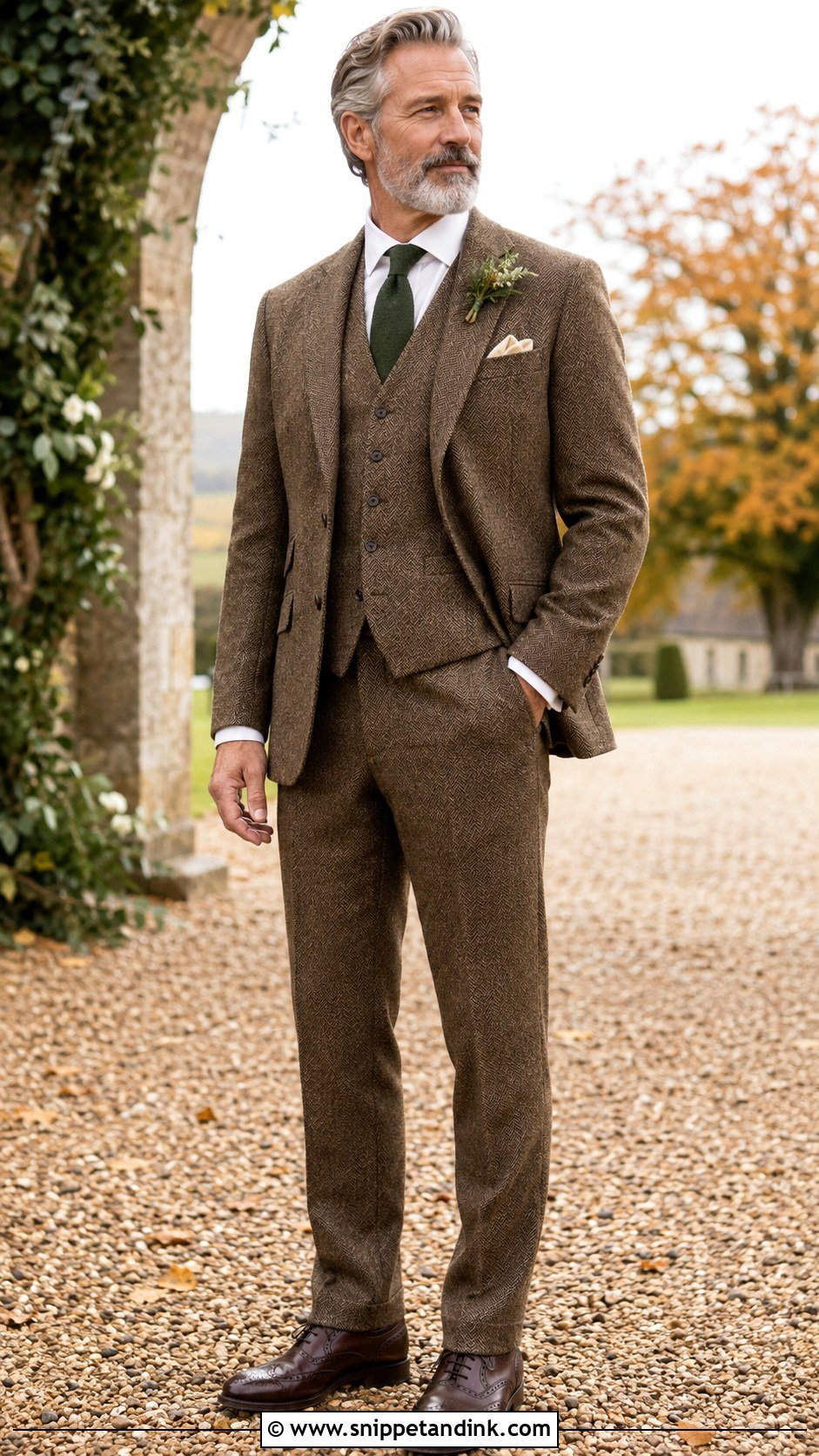
On a cold day at a country venue, a smooth business suit can look too corporate. Brown tweed fits the setting. A medium-brown or taupe tweed with a subtle herringbone, an ivory or pale blue shirt, a forest green or burgundy wool tie and dark brown brogues make a warm, seasonal outfit. A matching vest adds warmth and formality. Keep the pocket square plain against all that texture. Tweed is thick, so I’m strict about fit through the shoulders and waist; a loose tweed jacket adds bulk, while a well-cut one looks distinguished and very comfortable in a drafty barn.
12. Father Of The Bride Velvet Dinner Jacket
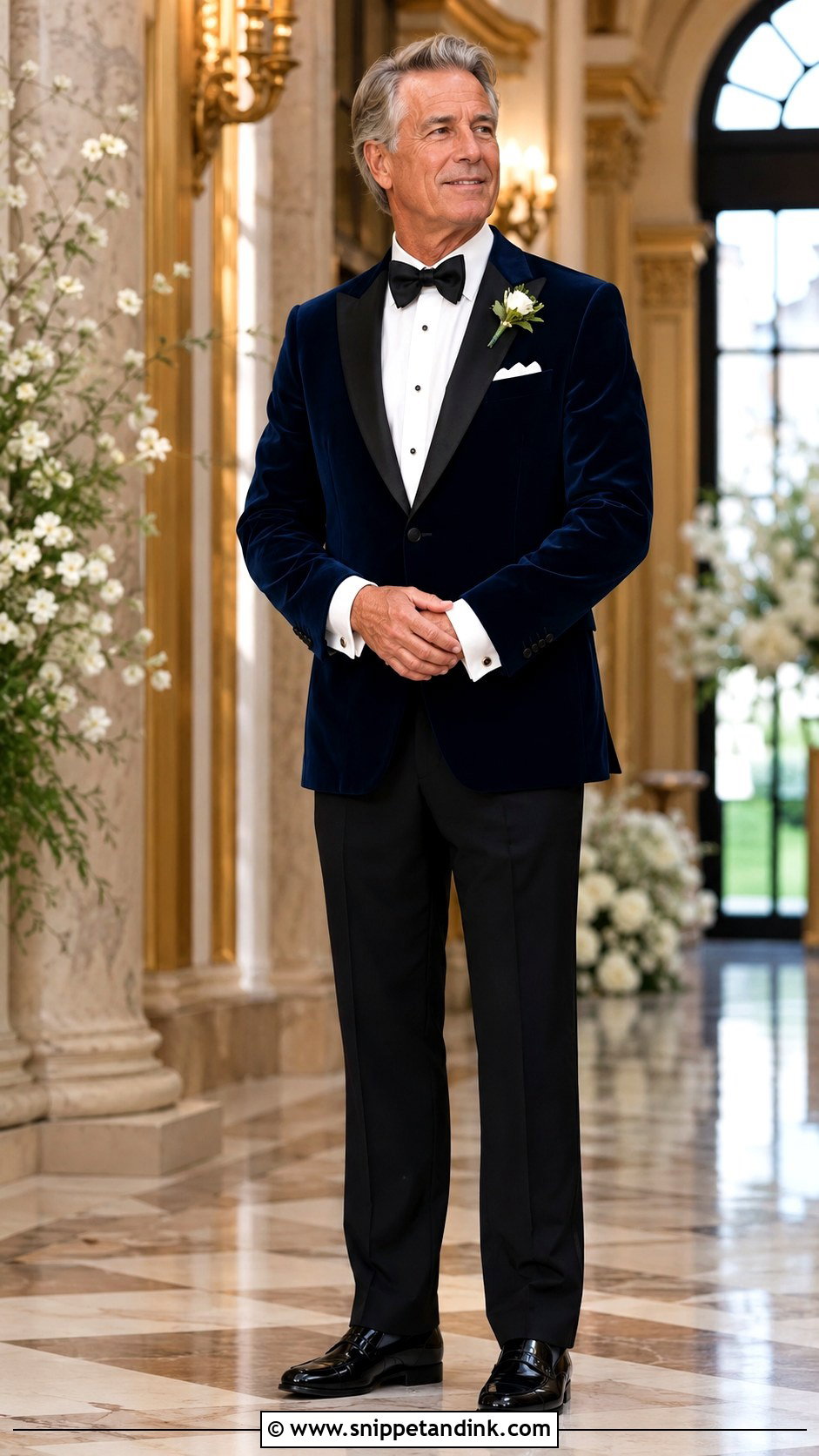
A velvet dinner jacket is my favorite way to dress a father for a winter evening wedding. Black, midnight blue or deep forest green velvet over plain black tuxedo trousers, a white formal shirt, a black silk bow tie and black velvet or leather loafers. A crisp white pocket square brightens the rich fabric. Keep everything else quiet; one bold piece is enough. Velvet is a showy choice, so he should check the groom is happy with it. In candlelight the pile catches the glow in a way no wool can, and it looks wonderful in a historic house or ballroom.
13. Father Of The Bride Black Suit
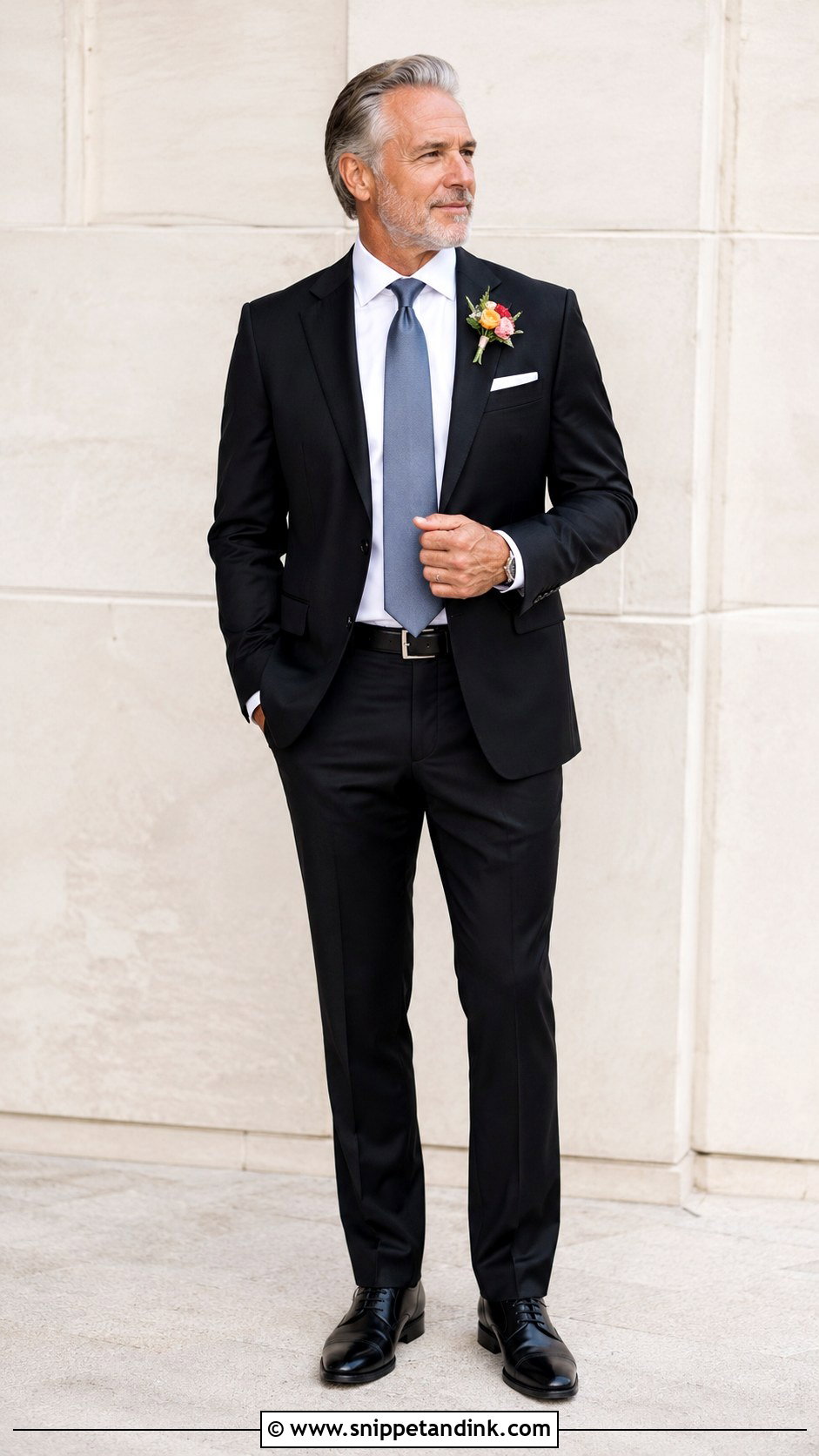
A black suit works for a formal wedding that stops short of black tie, but it needs celebratory details or it risks looking like funeral or office wear. Start with a sharply tailored two-piece and a bright white shirt. Add a silver, soft blue, burgundy or muted floral tie tied to the wedding colors, black cap-toe shoes, a matching belt, a white pocket square and a boutonniere for a touch of color at the lapel. Matte wool, please, not shiny cloth. I’d steer away from black shirts and very dark ties entirely; they drain the face in photos and turn the outfit somber.
14. Father Of The Bride Dark Brown Suit
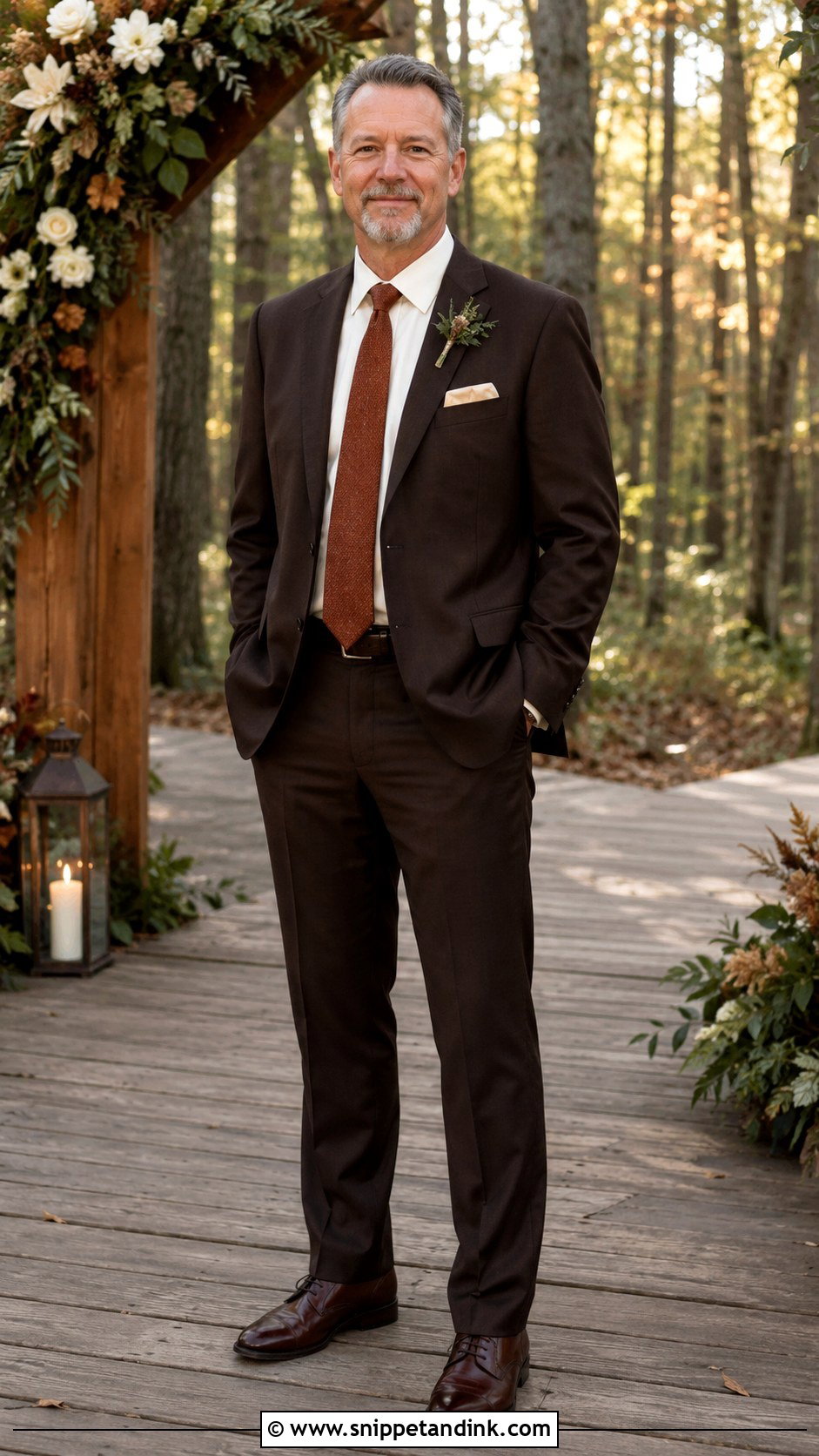
Dark brown is warmer and less expected than navy or charcoal, and it suits autumn weddings in the woods or anything built on earth tones. A chocolate or espresso suit with an ivory, white or light blue shirt, and a rust, sage, navy or burgundy tie, gives seasonal depth. Dark brown oxfords, a matching belt and socks close to the trouser color keep the line unbroken; a cream pocket square and a greenery boutonniere soften it. Brown cloth changes a lot under different lights, from reddish in sun to nearly black indoors. I always check the suit against the wedding colors in daylight and under the venue’s lighting before it’s final.
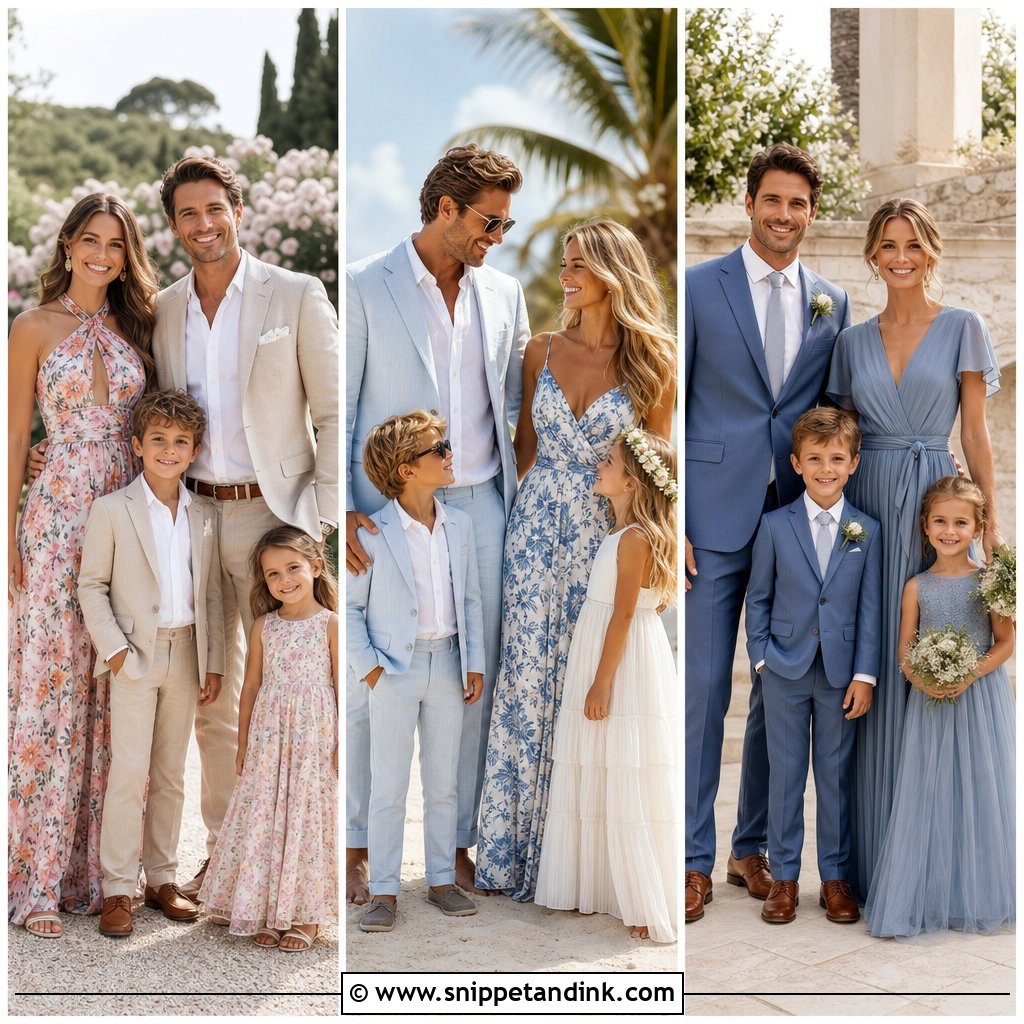
15. Father Of The Bride Olive Green Suit
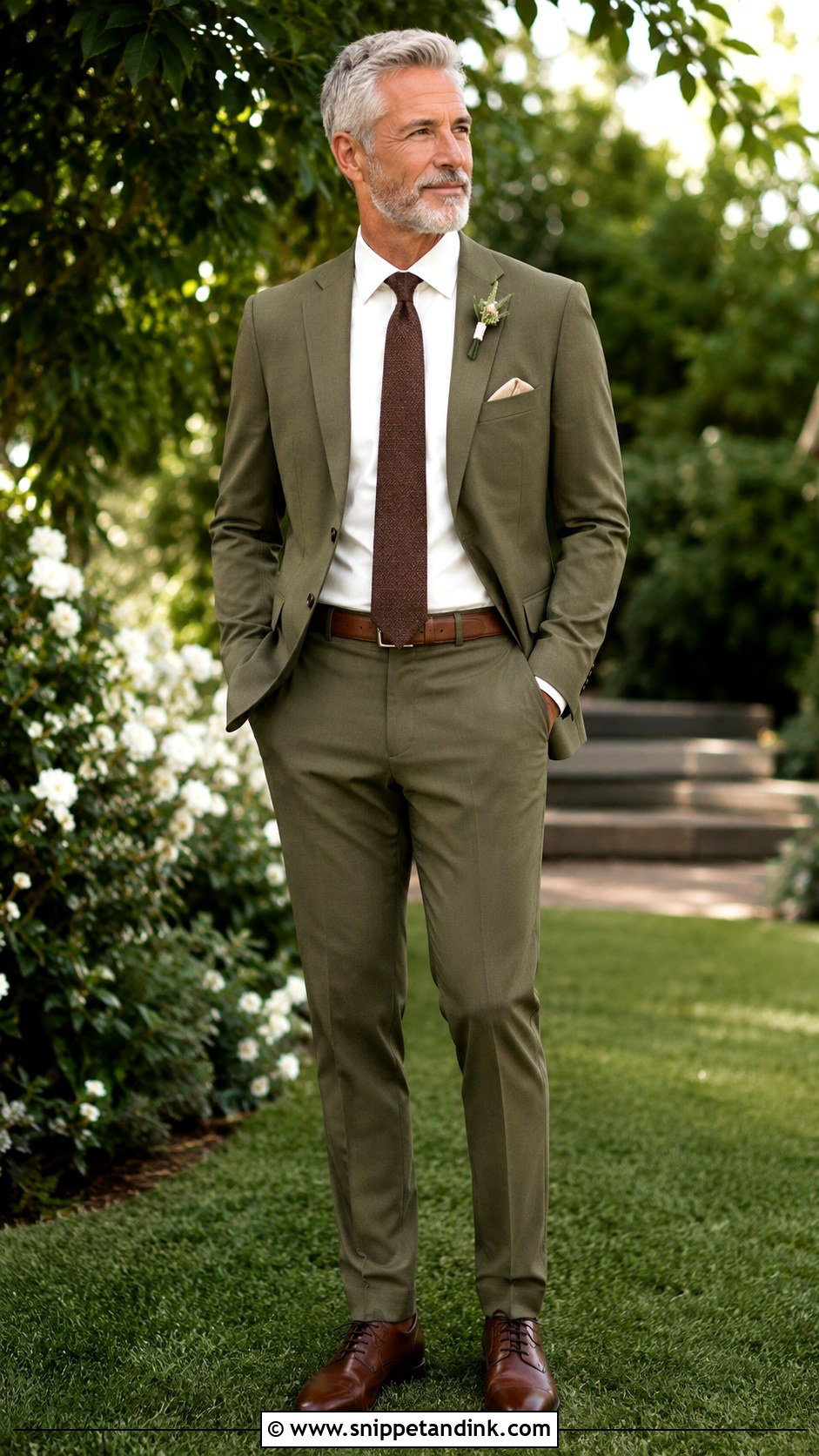
Will a neutral suit look out of place at a botanical or outdoor wedding? Deep olive answers that with color that still looks mature. Choose a muted olive or moss shade in smooth wool or a light wool blend, never a bright green. A white or pale cream shirt with a brown, navy or patterned tie, dark brown derbies, a matching belt and a neutral pocket square finish it. Give the boutonniere a small pale bloom, since a sprig of greenery alone disappears against the jacket. Olive sits well beside blush, terracotta and neutral palettes in group photos, which is why I suggest it for gardens, mountains and fall weddings.
16. Father Of The Bride Burgundy Dinner Jacket
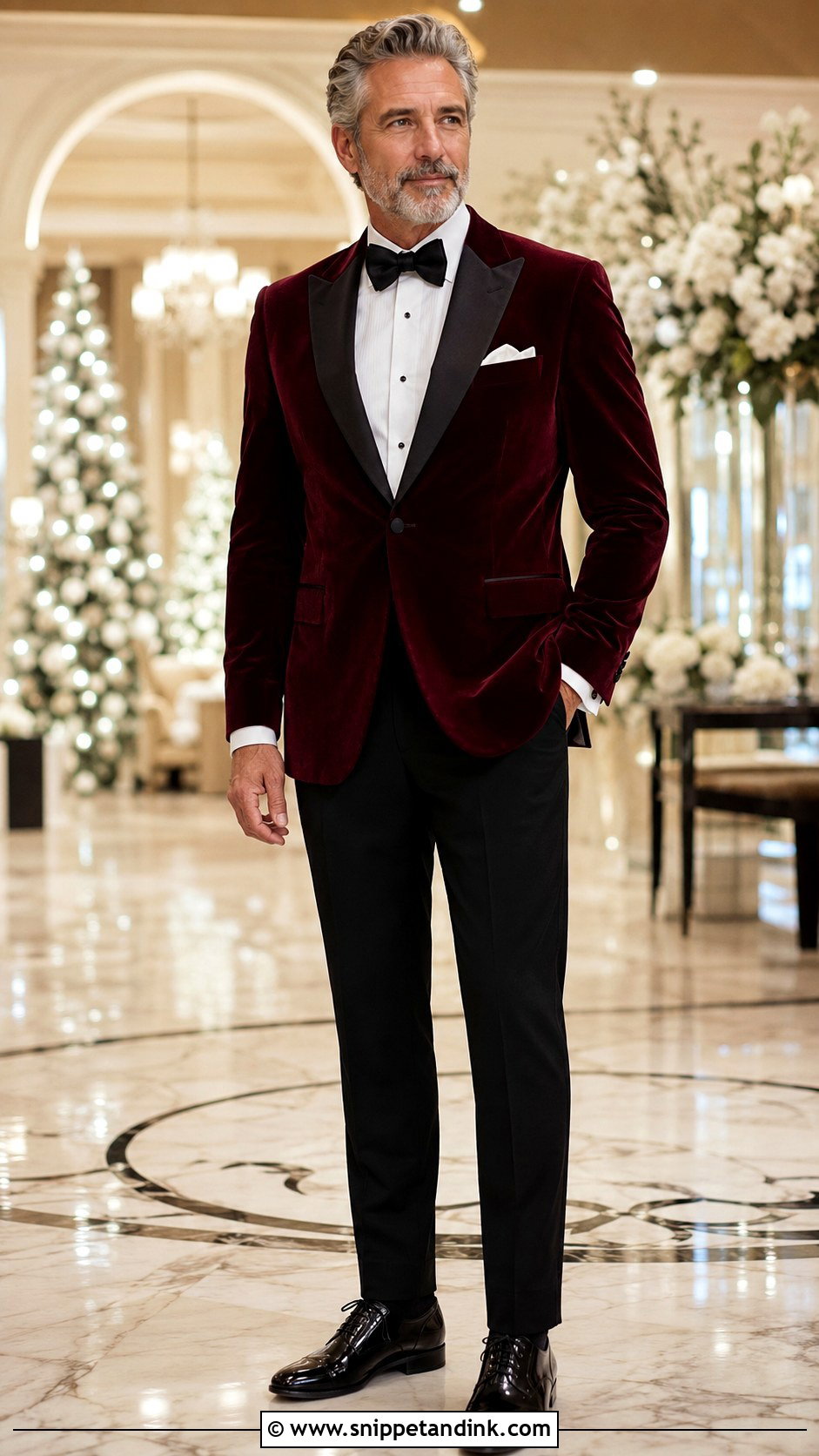
A burgundy dinner jacket is a confident choice, and it works only if everything else stays formal and plain. Black tuxedo trousers, a white pleated or plain formal shirt, a black bow tie, polished black oxfords or formal loafers, black socks and a white pocket square. Pick a deep wine burgundy rather than bright red, in matte velvet or fine wool. It suits fall and winter evenings and rooms dressed in jewel tones. Because the color pulls the eye, I’d have him show the couple a photo before buying, so the groom’s outfit stays the one people notice first.
17. Father Of The Bride Morning Suit
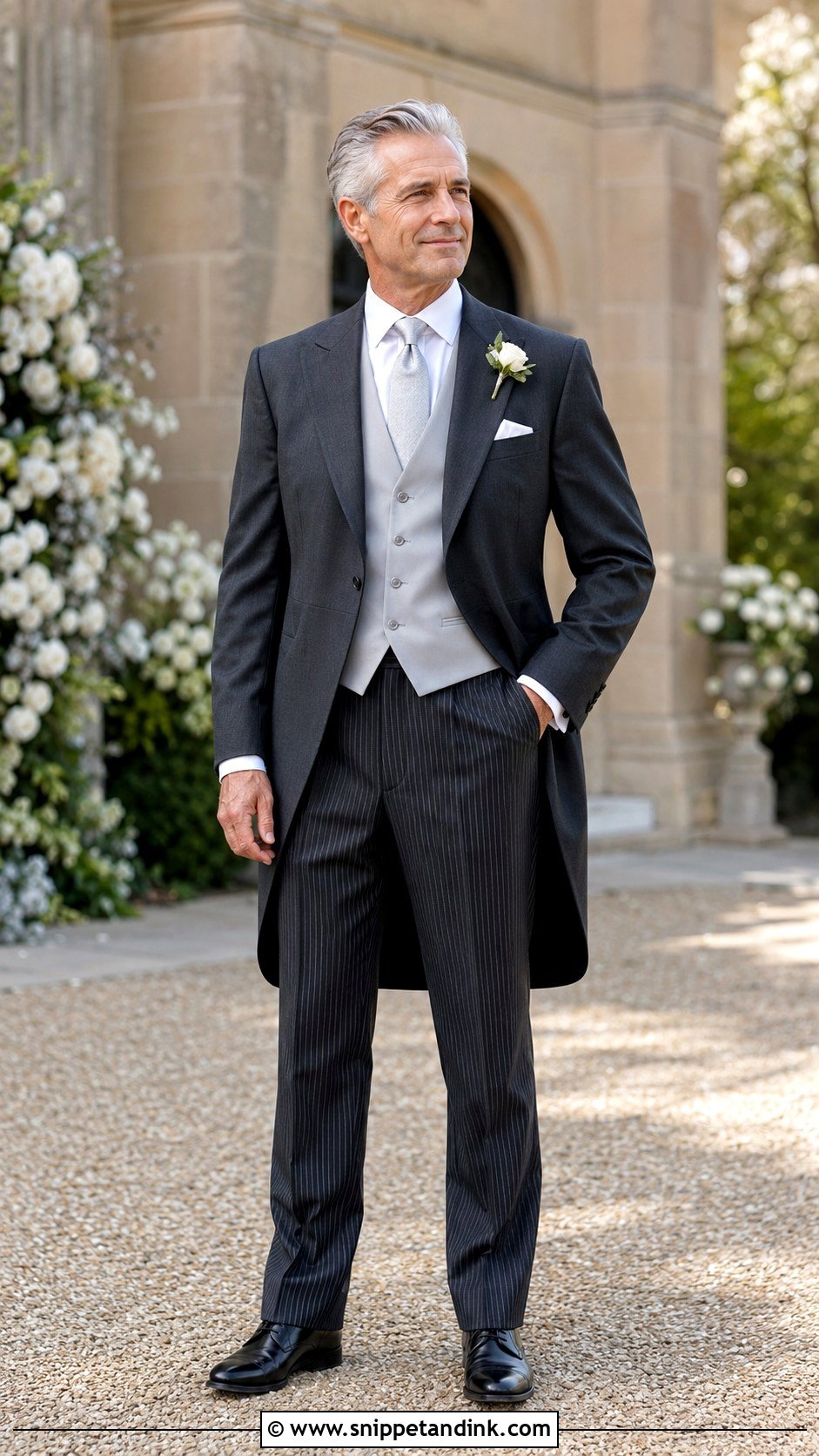
When the invitation says morning dress, it means a specific outfit, and the pieces are designed together. The father wears a black or charcoal morning coat with curved front tails, striped formal trousers and a light gray or buff waistcoat, plus a crisp white shirt, a conservative silk tie and polished black oxfords. A white linen pocket square and a small boutonniere add the wedding detail. The waistcoat must cover the trouser waistband, and the tails should hang smoothly behind the knee. Don’t mix ordinary suit trousers with a morning coat; the proportions look wrong immediately. It’s strictly daytime dress, so it suits grand ceremonies held before evening.
18. Father Of The Bride Sherwani Outfit
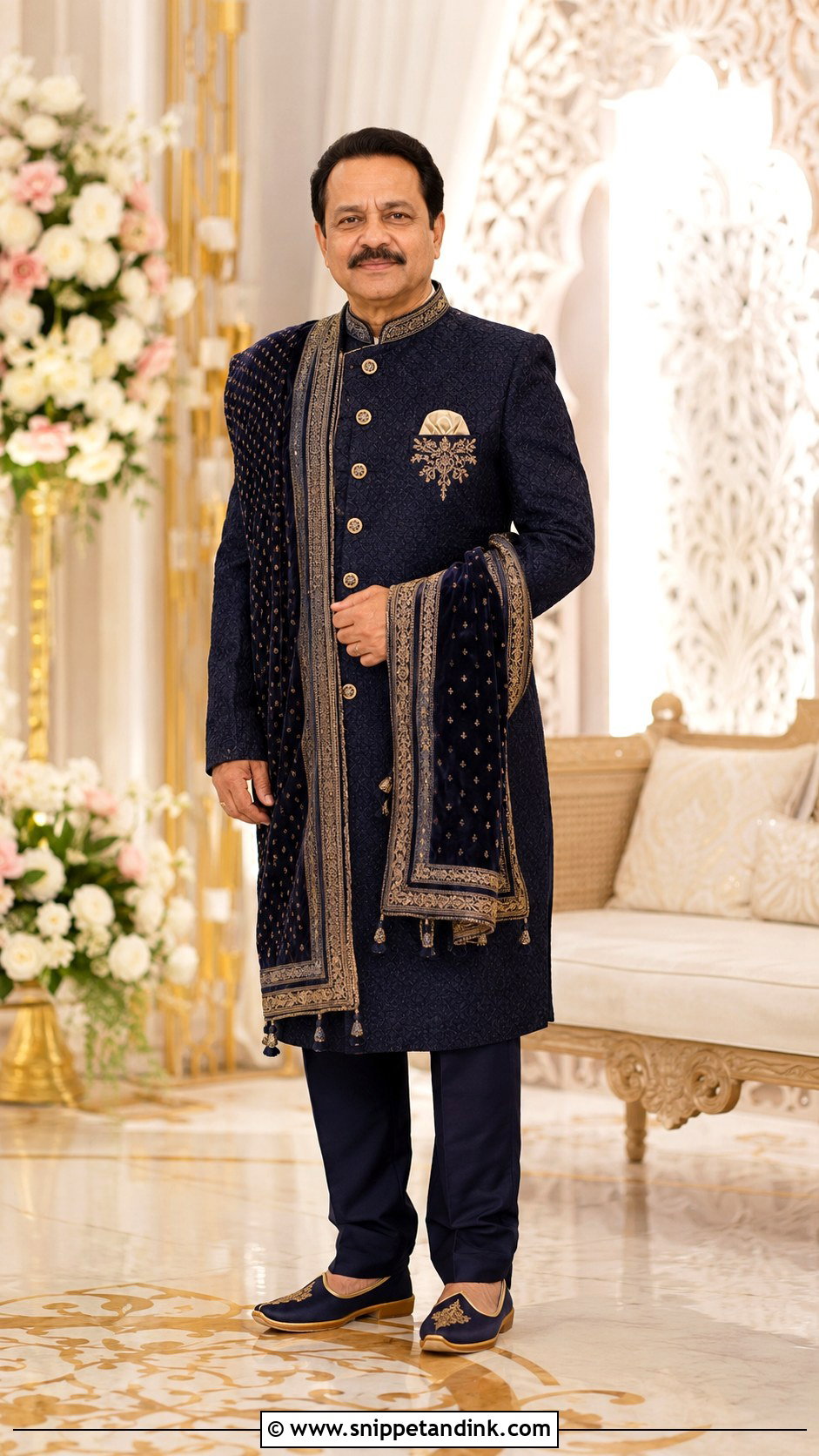
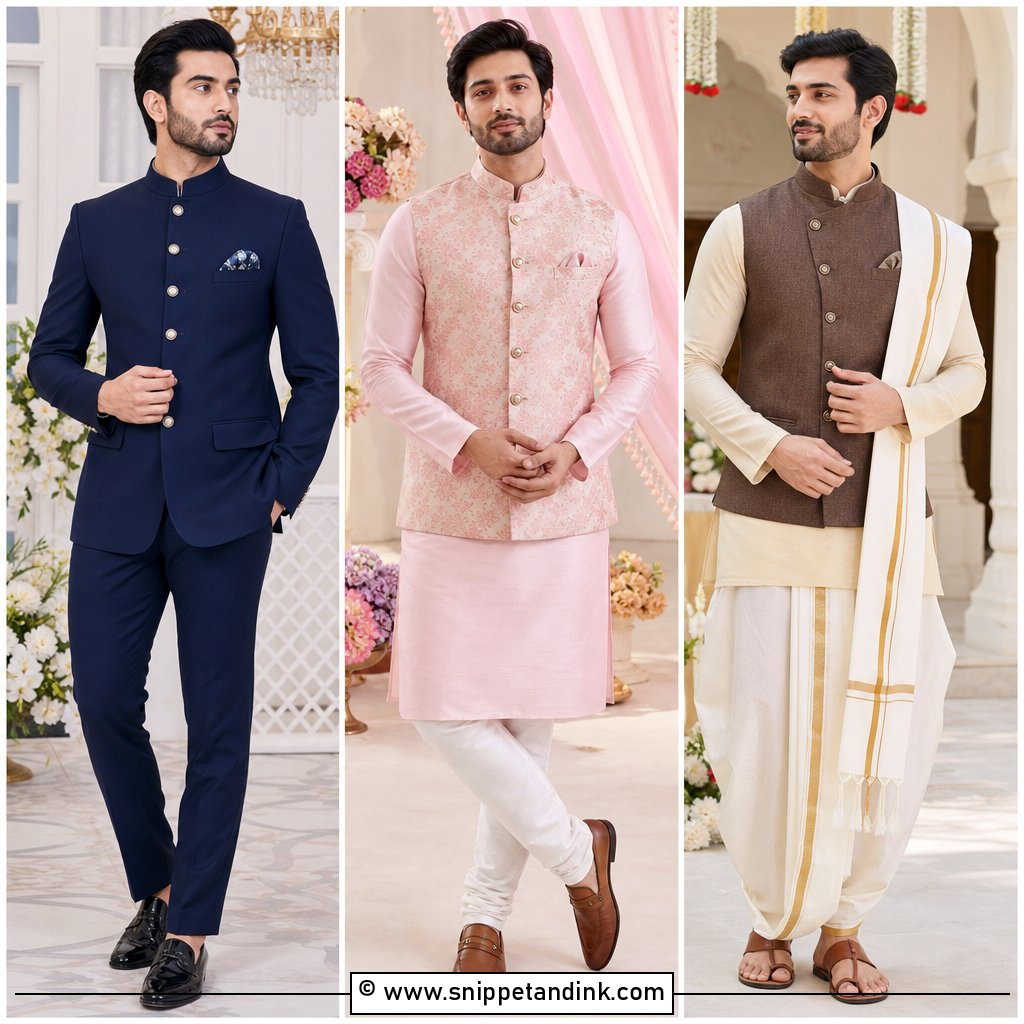
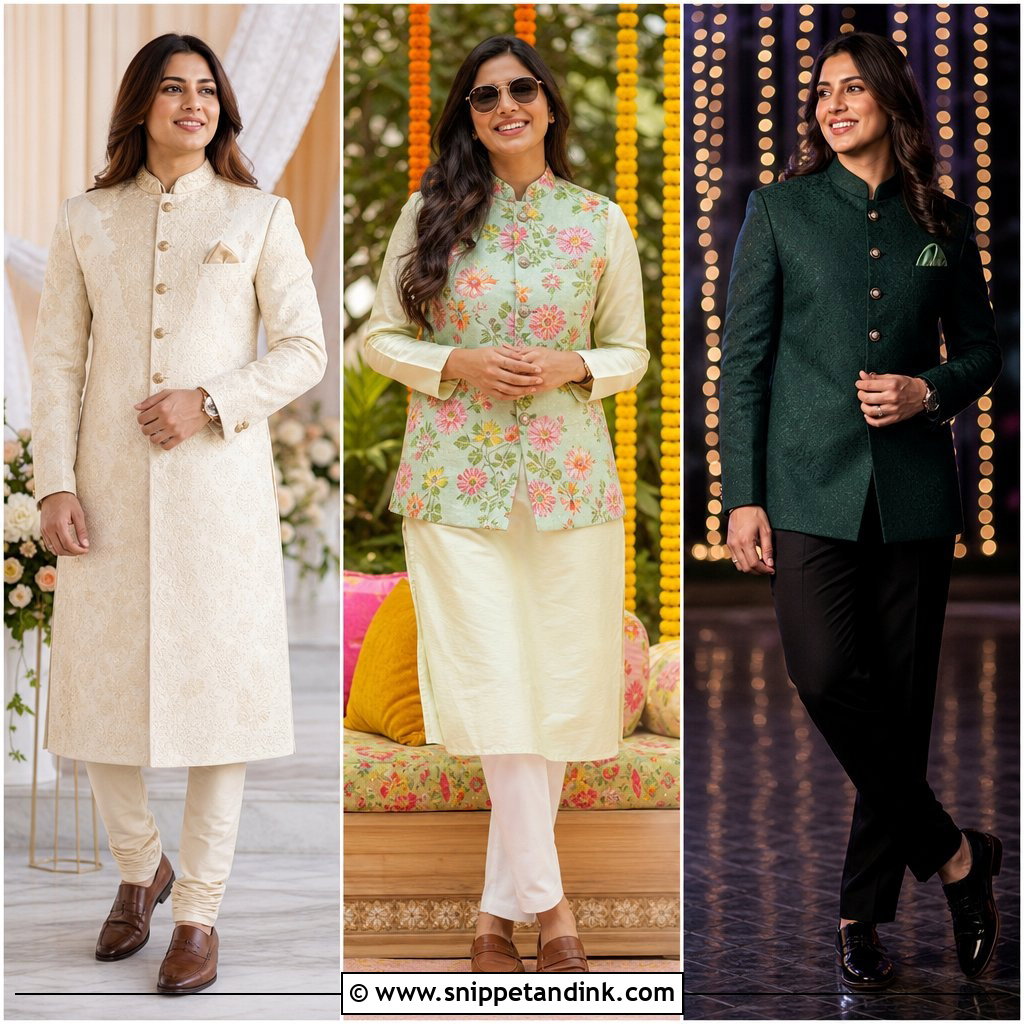
At a South Asian wedding, or a mixed celebration with South Asian family, a sherwani lets the father take part in the tradition. Choose a knee-length sherwani in ivory, navy, soft gold, sage or another color the couple approves. Churidar or straight formal trousers and polished mojari shoes complete it. Subtle embroidery and covered buttons add richness, but the groom’s sherwani should always be the more decorated one. A light stole is right only where family custom includes it. I’d ask the elders in the family about colors and details before buying; some shades carry meaning for particular ceremonies. The shoulders and chest need careful tailoring to keep the long line sharp.
19. Father Of The Bride Bandhgala Suit
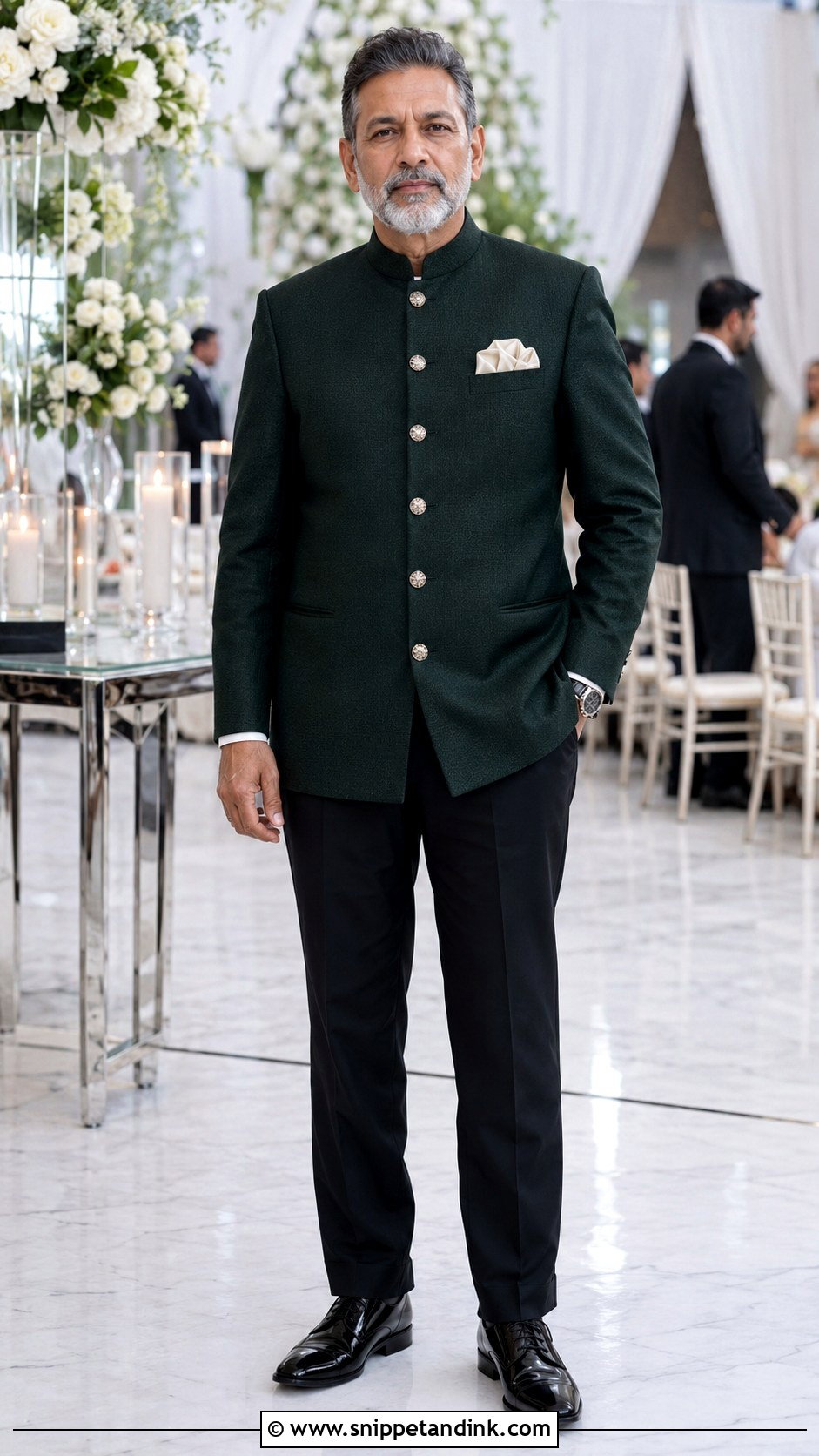
A bandhgala or Jodhpuri suit is traditional Indian formalwear cut like a modern suit. Its closed high collar replaces the shirt collar and tie, which makes it neat and comfortable for long ceremonies. Navy, charcoal, black, deep green or muted beige all work, with matching or contrasting trousers, black or dark brown formal shoes and a folded pocket square. Decorative buttons are a nice detail; heavy embroidery competes with the groom. That collar is what I fit most carefully. It should close without pressing on the throat, because he’ll be bending, greeting and eating in it for hours.
20. Father Of The Bride Guayabera Outfit
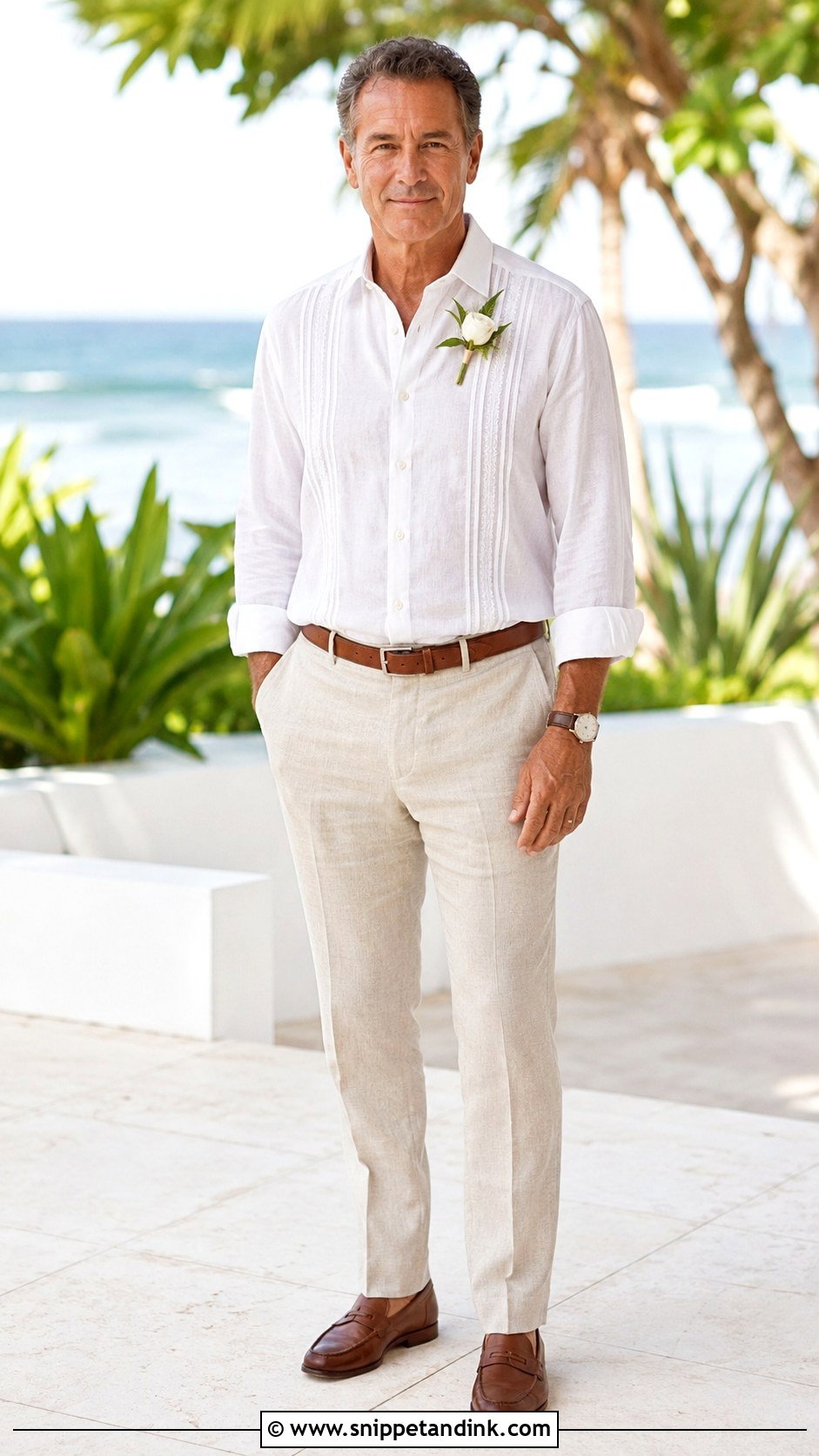
For a tropical or Caribbean destination, or a wedding with Latin American family roots, a formal guayabera is elegant and cool. Look for a long-sleeved one in white, ivory, pale blue or soft beige with crisp pleats and restrained embroidery. Tailored linen trousers in beige, stone or light gray, brown leather loafers, a coordinated belt and a classic watch complete it. It’s traditionally worn untucked, so the length matters: the hem should fall around the top of the hip, not halfway down the thigh. Leave sandals for weddings where the couple asks for beach-casual. Worn with care for its cultural roots, it suits the heat far better than any jacket.
Rent or Buy? How the Decision Changes the Timeline
Renting suits a tuxedo or a morning suit that he’ll likely never wear again. Buying makes more sense for a navy, charcoal or tweed suit that will go to every family event afterward. The trade-off with renting is fit. Rental garments can usually only be adjusted a little, so sleeves and trouser hems are set within a range rather than cut to his exact measurements.
- Renting: many rental shops ask for measurements several weeks to a couple of months before the wedding, and the outfit arrives only a few days before. Try it on the moment it arrives, so there’s time to swap a size.
- Buying off the rack: allow at least four to six weeks for alterations, longer in spring and early autumn when tailors are busiest.
- Made to measure or a traditional outfit like a sherwani or bandhgala: start around three months ahead, since there may be two fittings.
Pockets, speech cards and the father-daughter dance
Fathers tend to fill their pockets on the day: phone, wallet, keys, reading glasses and the speech. Every bulge shows in photographs and pulls the jacket out of shape. I suggest handing the wallet and keys to someone else, keeping the speech folded flat in the inside breast pocket, and using a glasses case thin enough to sit flat. Before the wedding, he should also raise his arm as if leading his daughter into a dance. If the jacket lifts high on the back or the sleeve pulls hard at the shoulder, the tailor still has time to fix it.
Ask the Couple, Then Book the Tailor
The right outfit for a bride’s father respects the dress code and still lets him feel like himself. Formal weddings call for a tuxedo, a morning suit or a dinner jacket; garden, beach and destination weddings allow lighter tailoring; and traditional dress can connect the day to family heritage when chosen with care. Before buying or renting, confirm the formality, colors and accessories with the couple. Then book alterations early, wear the shoes around the house for a week, and try on the whole outfit together at least once. If he’s comfortable when he stands up for the toast, the outfit has done its job.
You'll Like These Ideas:


Leave a Reply