
Navy is the suit color I recommend more than any other for weddings, because it sits between the severity of black and the office feel of gray. The twenty looks below cover classic two-pieces, three-pieces, tuxedos and seasonal fabrics, then a run of tie colors and the shoe question every groom asks me sooner or later. The same suit can dress a groom, a groomsman, a father of the couple or a guest; the shirt, tie, shoes and fit decide which. It comfortably handles anything from cocktail attire to black tie optional. Treat each outfit as a starting point and adjust it for your season and venue.
Off the Rack, Made to Measure or Rented
How you get the suit decides how well it can fit, so I settle this with a groom before we talk about ties.
Off the rack, then altered
The quickest and usually cheapest route. Sleeves, trouser length and the jacket waist are easy for a tailor to adjust. Shoulders are not, so buy the jacket that fits your shoulders and have everything else brought in.
Made to measure
A house pattern adjusted to your measurements and cut in the cloth you choose. It usually takes several weeks plus a fitting, so it suits grooms who plan ahead, and it’s the best way to get patterns like windowpane lined up properly at the seams.
Rented
Rental is practical for a large group of groomsmen who need to match. The trade-off is fit: suits arrive close to the date and can only be adjusted so much. Send accurate measurements early, and have every groomsman try his on the day it arrives, not the morning of the wedding.
1. Classic Navy Blue Suit Wedding
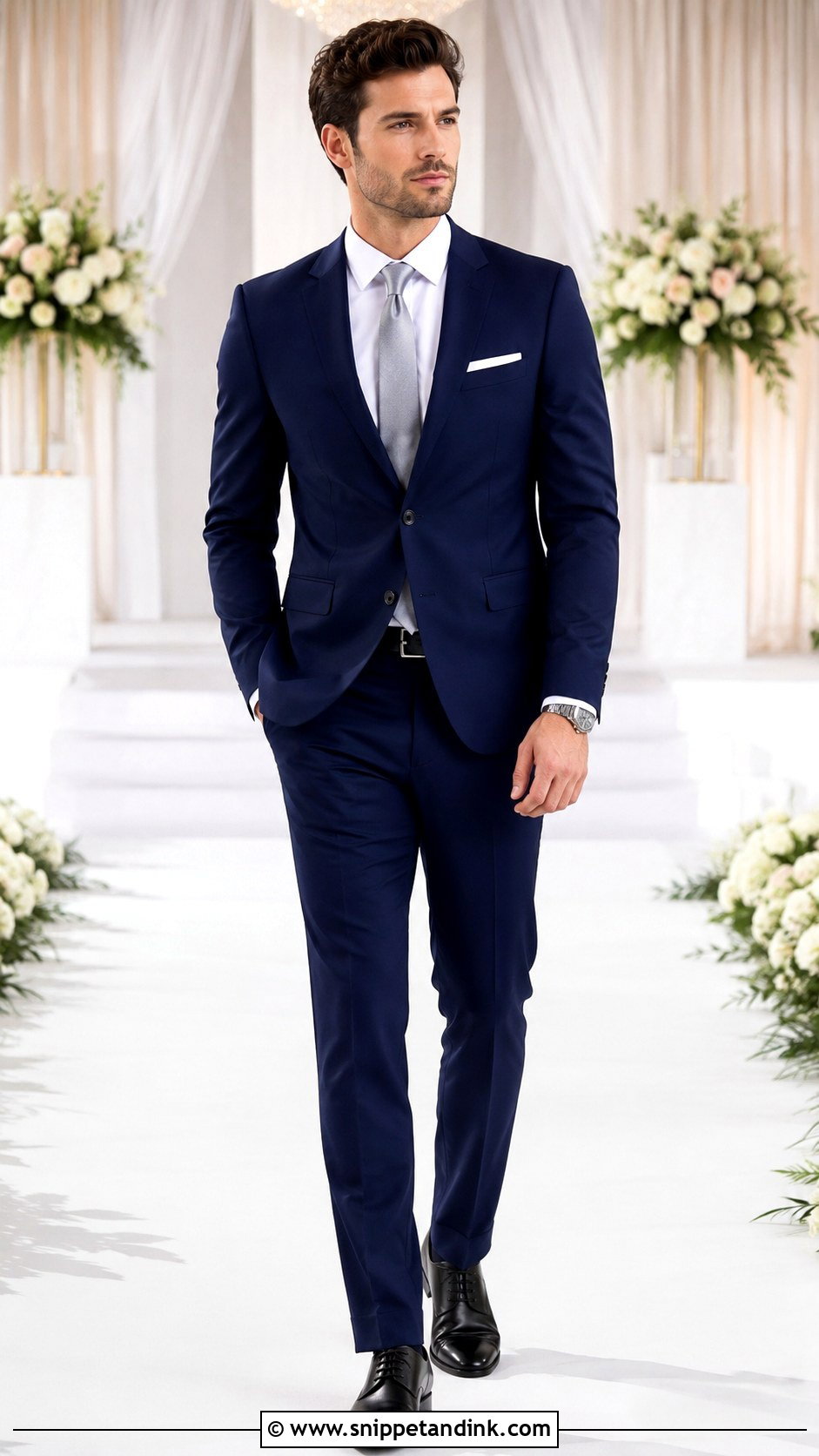
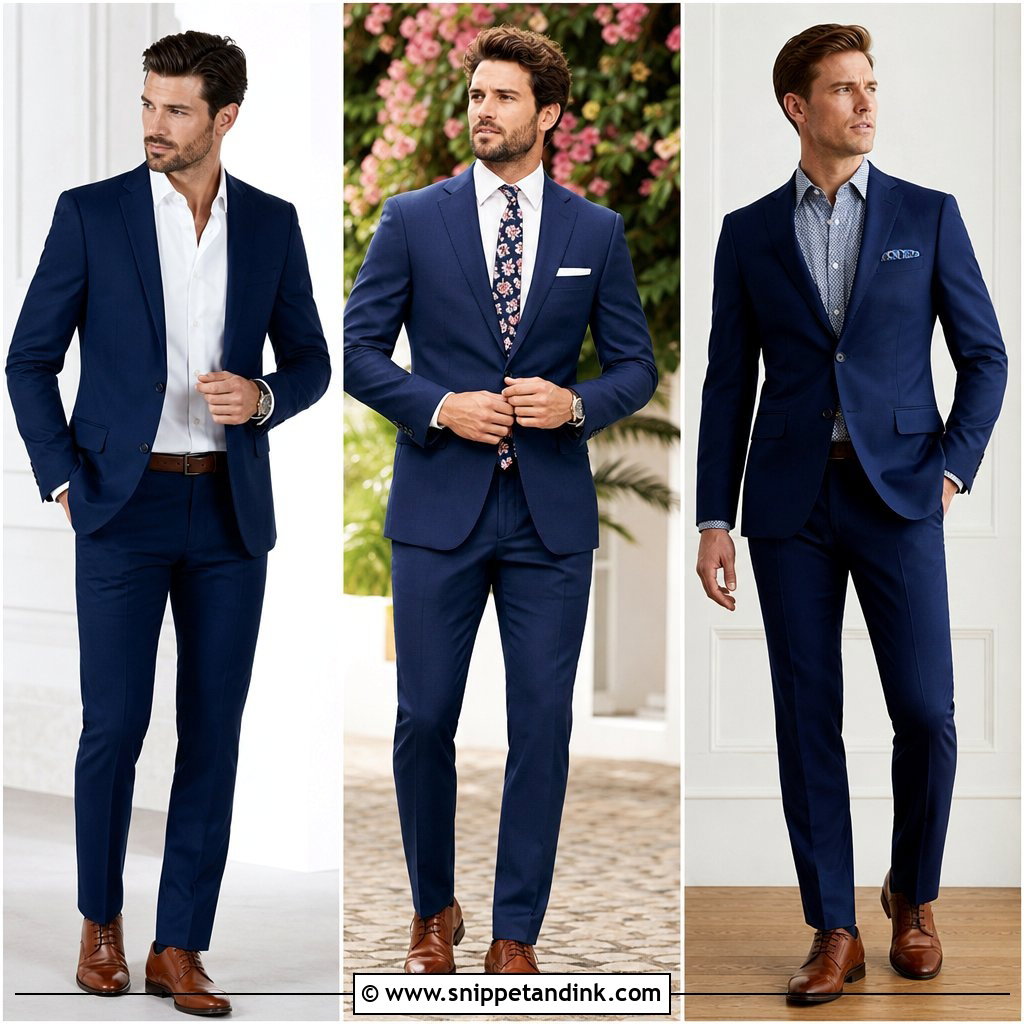
If you only ever own one wedding suit, make it this one. Single-breasted, notch lapels, flat-front trousers, a crisp white shirt and a silver-gray silk tie. A folded white pocket square, black Oxfords and a slim black belt keep it formal, and a plain dress watch with silver cufflinks is all the jewelry it needs. Most of the work happens at the tailor. I check that the shoulder seam ends where the shoulder does, with no dent below it, and that the trousers have only a slight break over the shoe. It reads formal without the strictness of black.
2. Navy Blue Three-Piece Suit Wedding
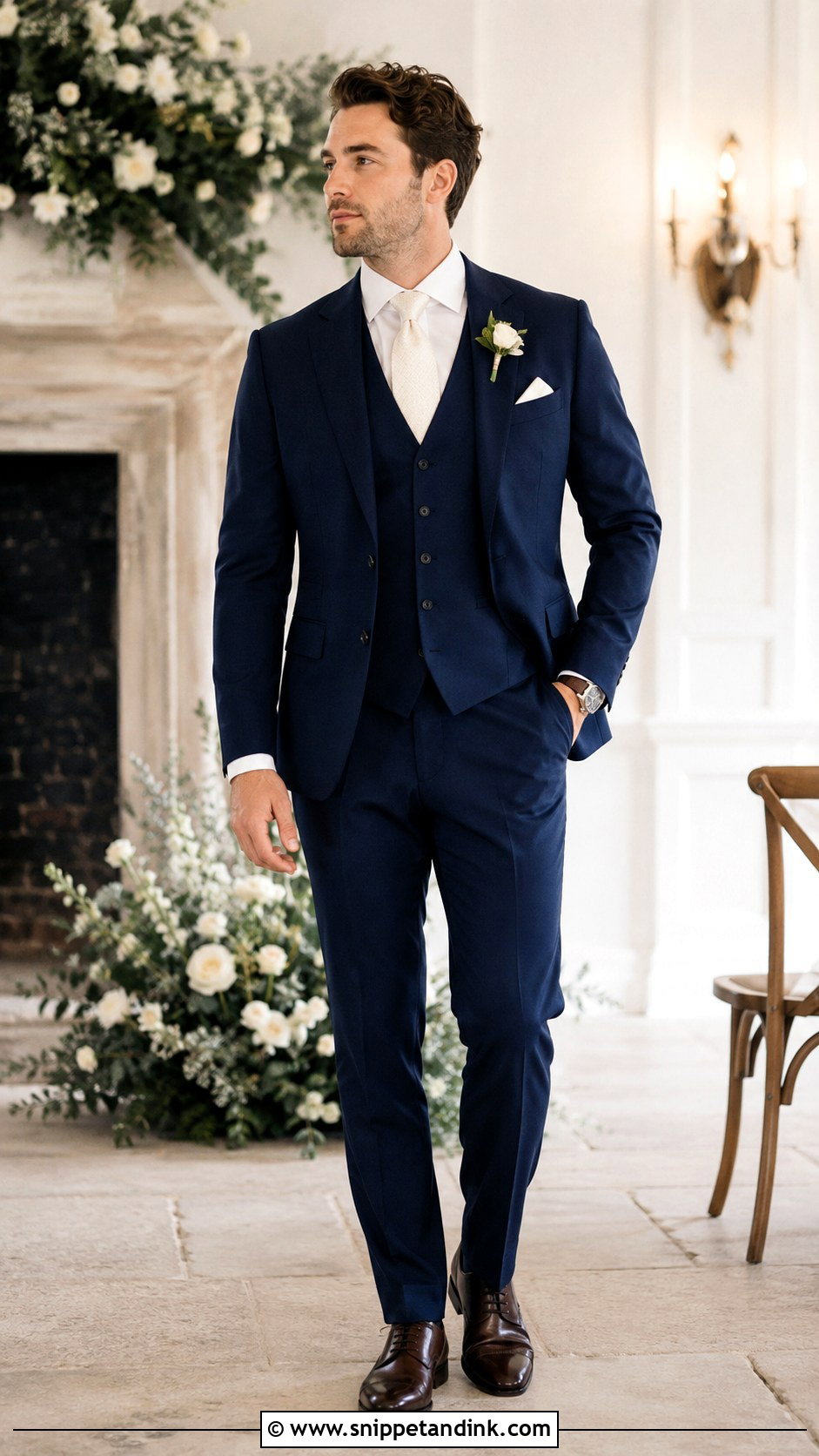
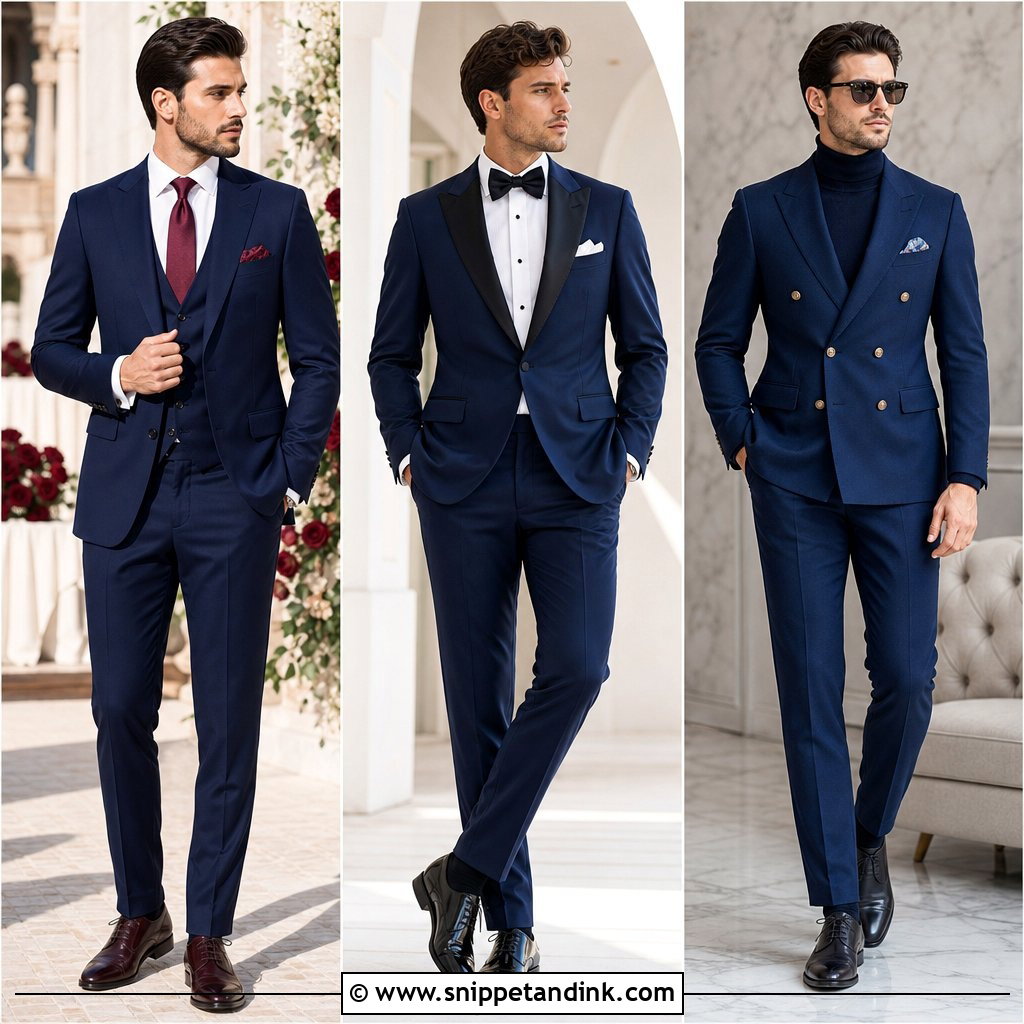
The vest is what makes a three-piece so useful for a groom: once the jacket comes off for the first dance, he still looks dressed. I style it with a white spread-collar shirt, a textured ivory tie, a white pocket square and dark brown cap-toes, which soften the navy without lowering the formality. The vest has to cover the trouser waistband completely, so the trousers need to sit at the natural waist rather than on the hips. Leave the bottom vest button undone. A boutonniere finishes it, and it carries a formal daytime ceremony well into the evening.
3. Navy Blue Tuxedo Wedding
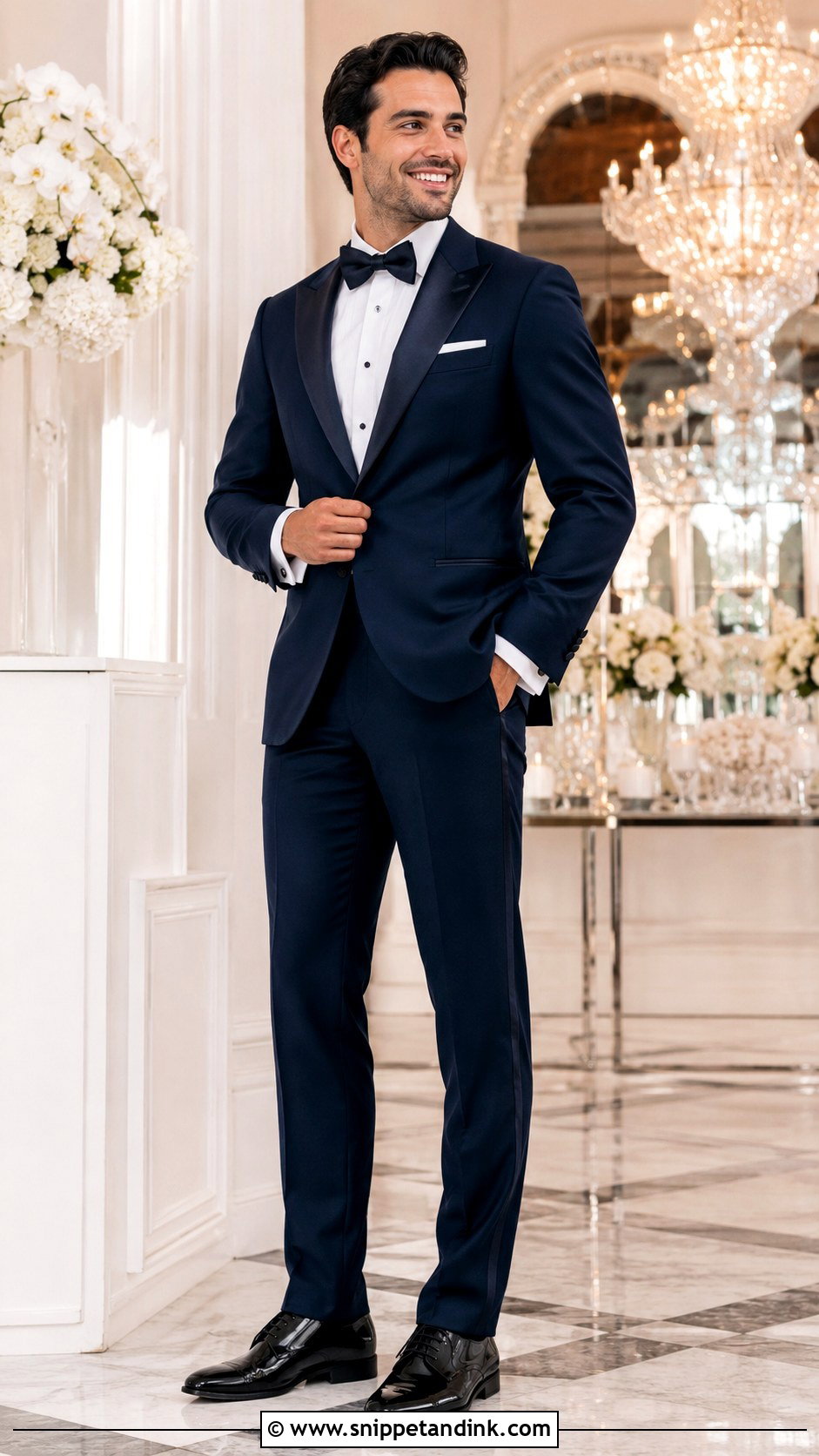
Under artificial evening light, a navy tuxedo can look richer than black, which is the old argument for midnight blue in formalwear. I go for a one-button jacket with satin peak lapels and trousers carrying a matching satin side stripe. Then a white tuxedo shirt, pleated or plain; a black silk bow tie; a white pocket square; black patent shoes and simple cufflinks. No belt. Tuxedo trousers should have side adjusters or take braces. Let a little shirt cuff show past the jacket sleeve. Groomsmen can wear the same tuxedo with a different boutonniere so the groom still stands apart.
4. Navy Blue Double-Breasted Suit Wedding
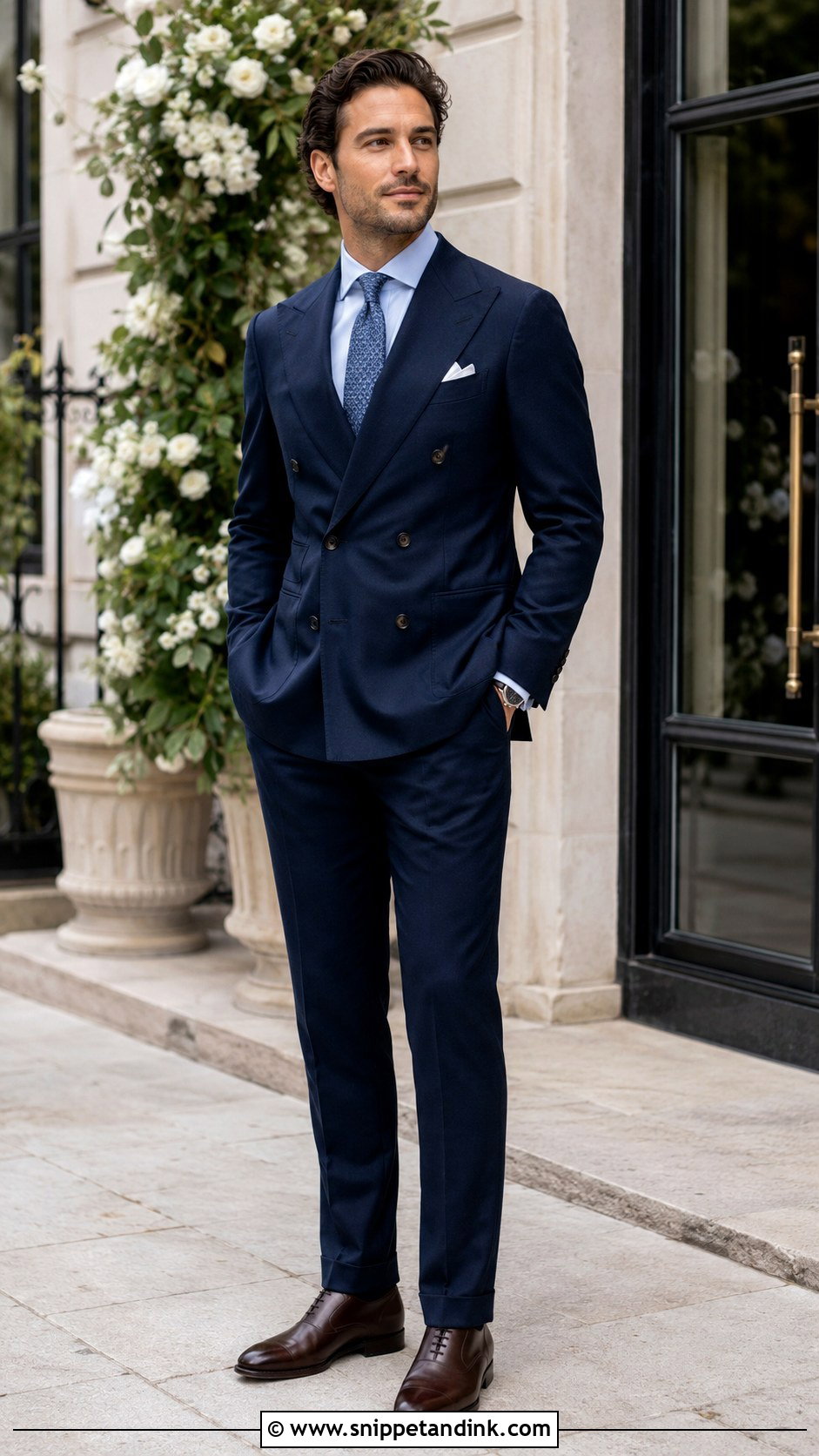
Double-breasted jackets are built to stay buttoned, and that shapes everything about wearing one. Look for a six-button front with peak lapels and a waist that’s defined but not tight. A pale blue shirt with a navy patterned tie builds quiet tonal depth, a white linen square brightens the face, and dark brown wholecuts with a matching belt keep the lower half calm. Fit is less forgiving here than on a single-breasted suit, because the overlapping front adds bulk of its own. Ask the tailor to take in the waist rather than sizing up for comfort. City weddings and upscale hotels in autumn suit it best.
5. Navy Blue Linen Suit Wedding
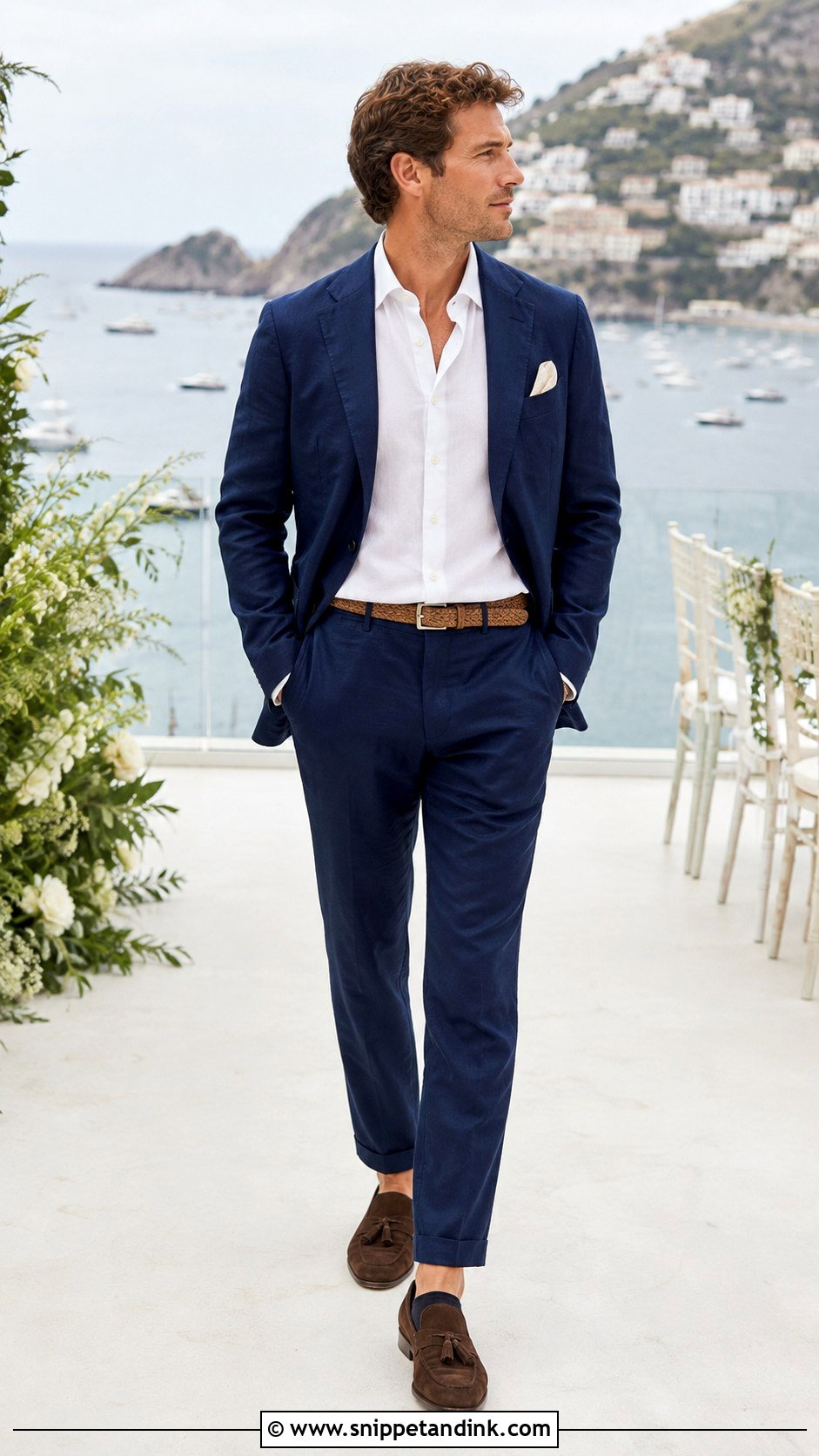
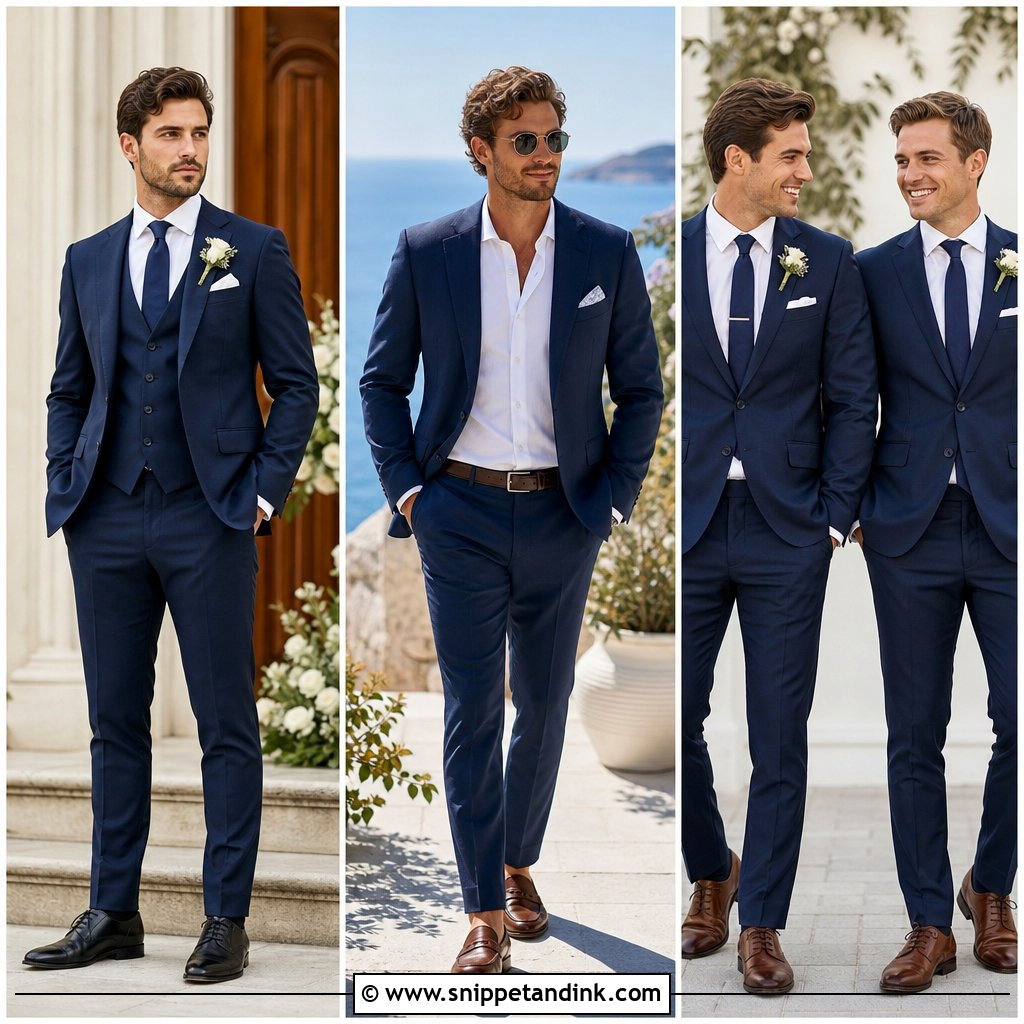
Linen will crease. I say that to every groom who asks for a linen suit, because the creasing is part of the look rather than a fault. Choose a lightweight two-piece with a relaxed but tailored cut, a white cotton-linen shirt and no tie if the dress code allows. A tan woven belt, brown suede loafers and a cream pocket square keep the mood light, with no-show socks only if the trousers are slightly cropped. The shoulder still has to be right; a sloppy shoulder makes creased linen look slept in. For a more formal ceremony, add a pale blue knit tie and change into brown lace-ups.
6. Navy Blue Wool Suit Wedding
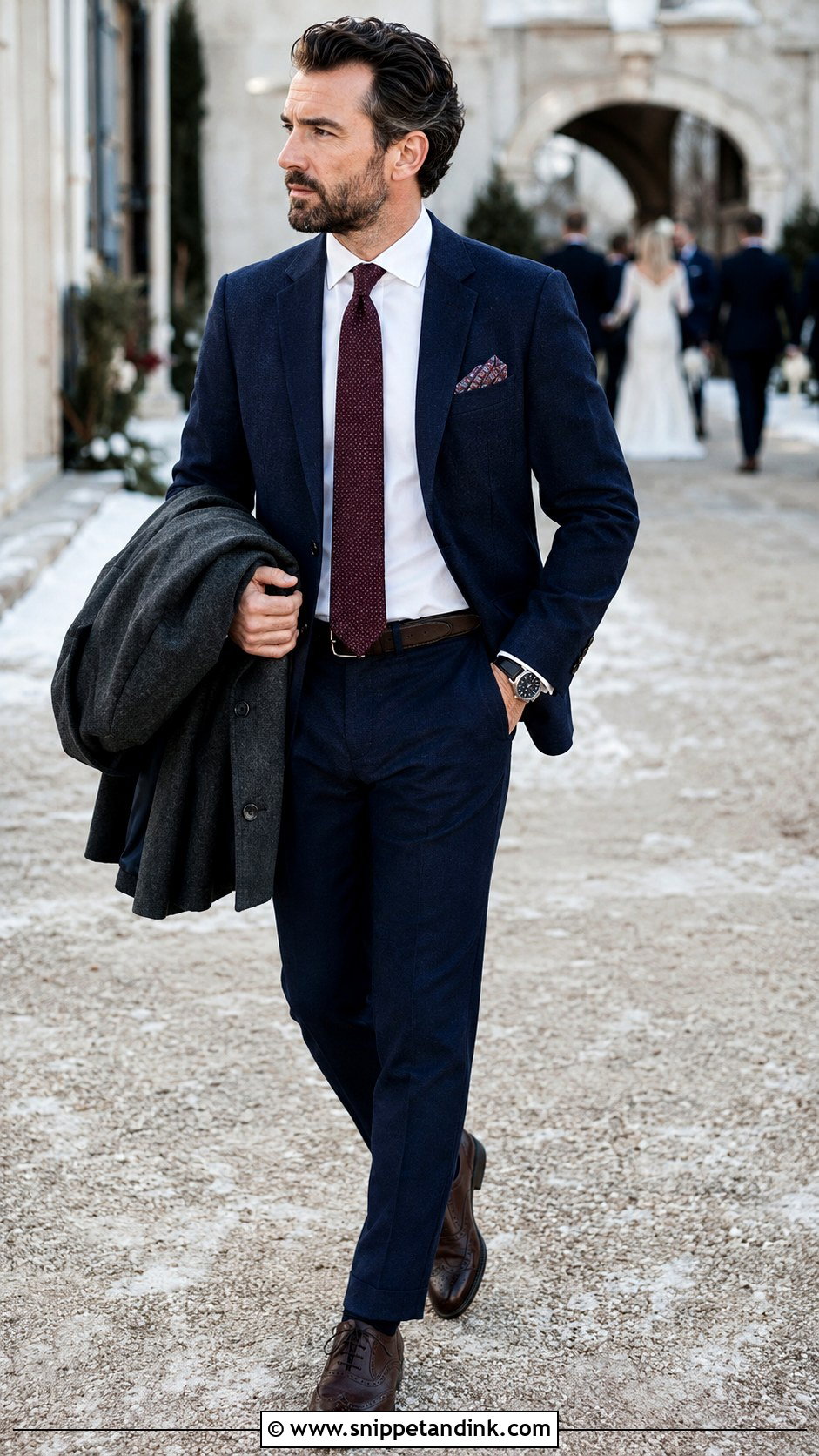
Once the temperature drops, fabric matters more than color. For a navy wool suit I steer grooms between two options: smooth worsted for a clean finish, or flannel, whose brushed surface looks right in low autumn light. A crisp white shirt, a burgundy grenadine tie and a patterned square with small touches of navy suit either. Dark brown brogues and a structured belt complete it, with a charcoal overcoat for traveling between venues. Wool recovers from creasing better than most fabrics over a long day. I’d skip a heavy vest, though, because a full reception room gets warmer than you expect.
7. Navy Blue Velvet Tuxedo Wedding
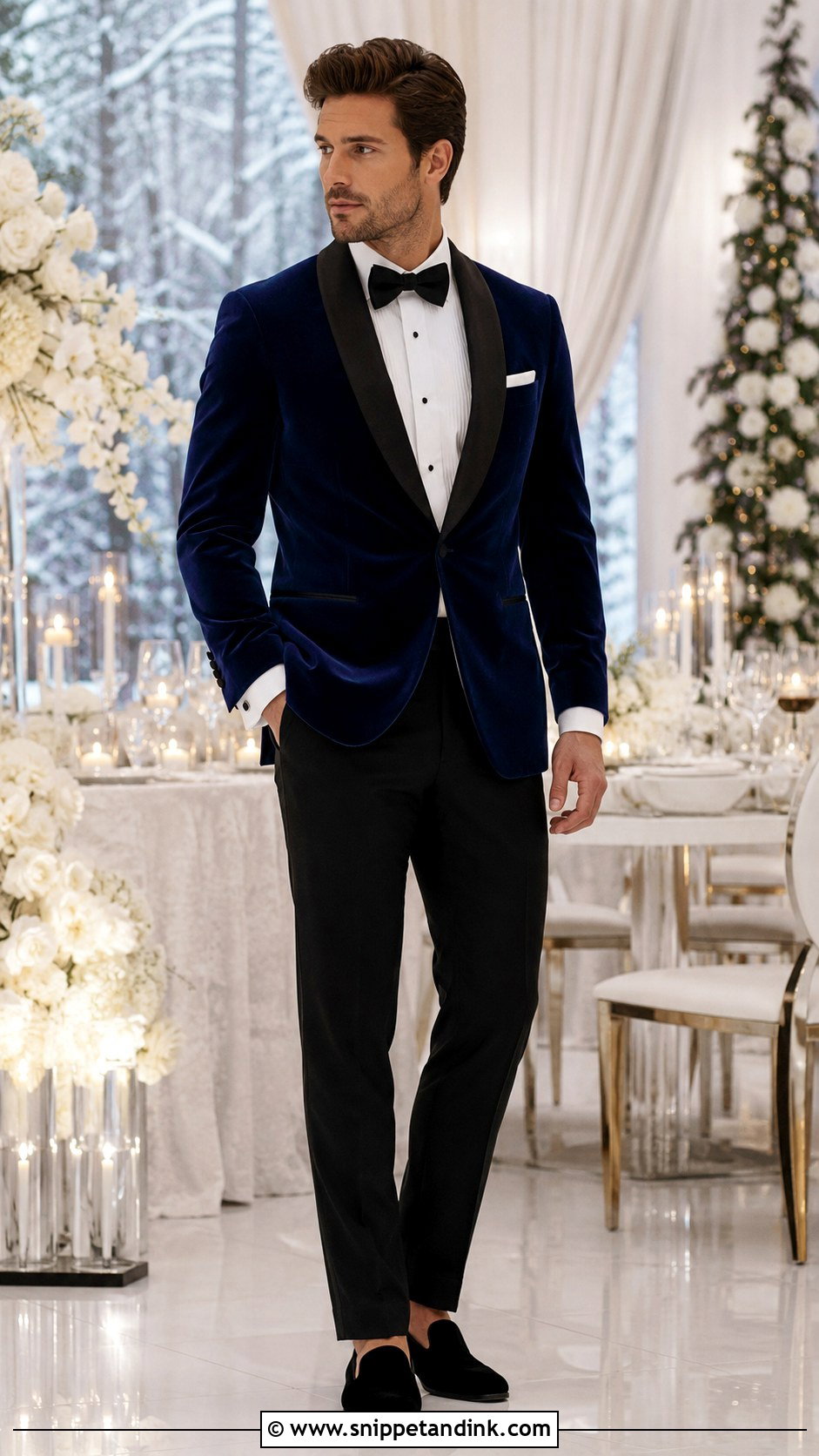
A velvet dinner jacket is a winter piece, and I wouldn’t put anyone in one for a summer wedding. Navy velvet with black satin shawl lapels, black tuxedo trousers and a smooth white shirt, then a black bow tie, patent or velvet loafers and a white pocket square. Velvet already gives the eye plenty, so jewelry stops at a black-strap watch or discreet cufflinks. The trousers want little or no break. Velvet also crushes wherever you lean, so hang the jacket between photos instead of draping it over a chair. Guests should wear one only when the invitation clearly calls for formal evening attire.
8. Navy Blue Peak Lapel Suit Wedding
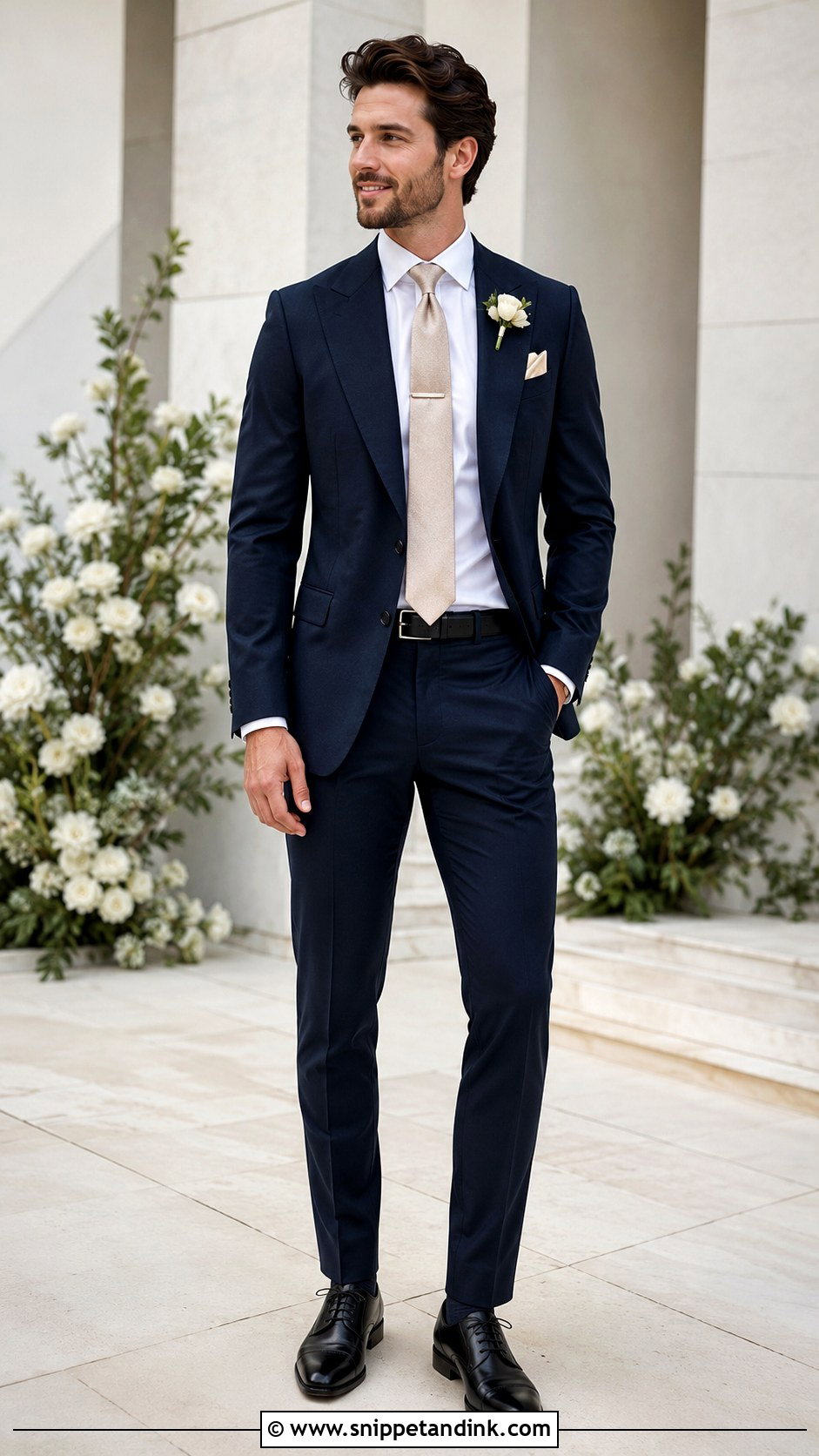
Peak lapels sit between a business suit and a tuxedo. Pick medium-width lapels on a structured shoulder, then a white spread-collar shirt with a champagne silk tie, plus a pocket square that complements the tie rather than copying it. Black cap-toe Oxfords, a black belt and dark navy socks keep it formal. Because the lapels point upward, they draw the eye toward the face, but only when they lie flat against the chest. A bowing lapel usually means the jacket is too tight across the chest. If you wear a tie bar, it belongs between the third and fourth shirt buttons.
9. Navy Blue Shawl Collar Tuxedo Wedding
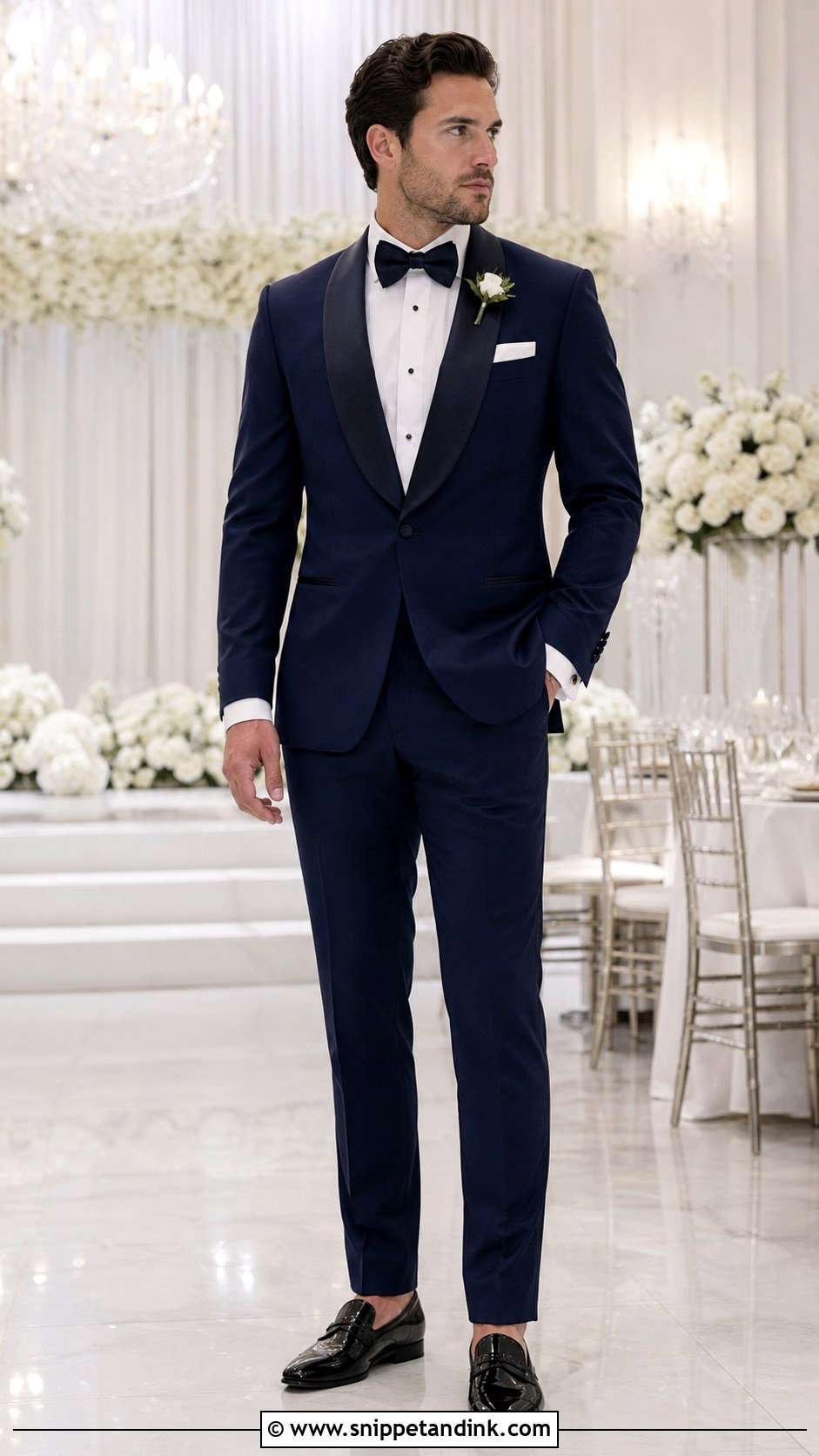
A shawl collar has no notch to break its line, so a navy tuxedo jacket cut this way looks sleek from across a ballroom. I pair it with matching navy tuxedo trousers for a tonal look, a white French-cuff shirt, a black silk bow tie and polished black loafers. Silver cufflinks and a folded white square are the only details. Choose a single-button jacket and leave the belt off. Match the bow tie roughly to the width of the collar, since an oversized bow on a slim shawl looks like costume. When the whole party wears navy, the shawl collar itself can mark out the groom, helped by a pleated shirt front or a more detailed boutonniere.
10. Navy Blue Windowpane Suit Wedding
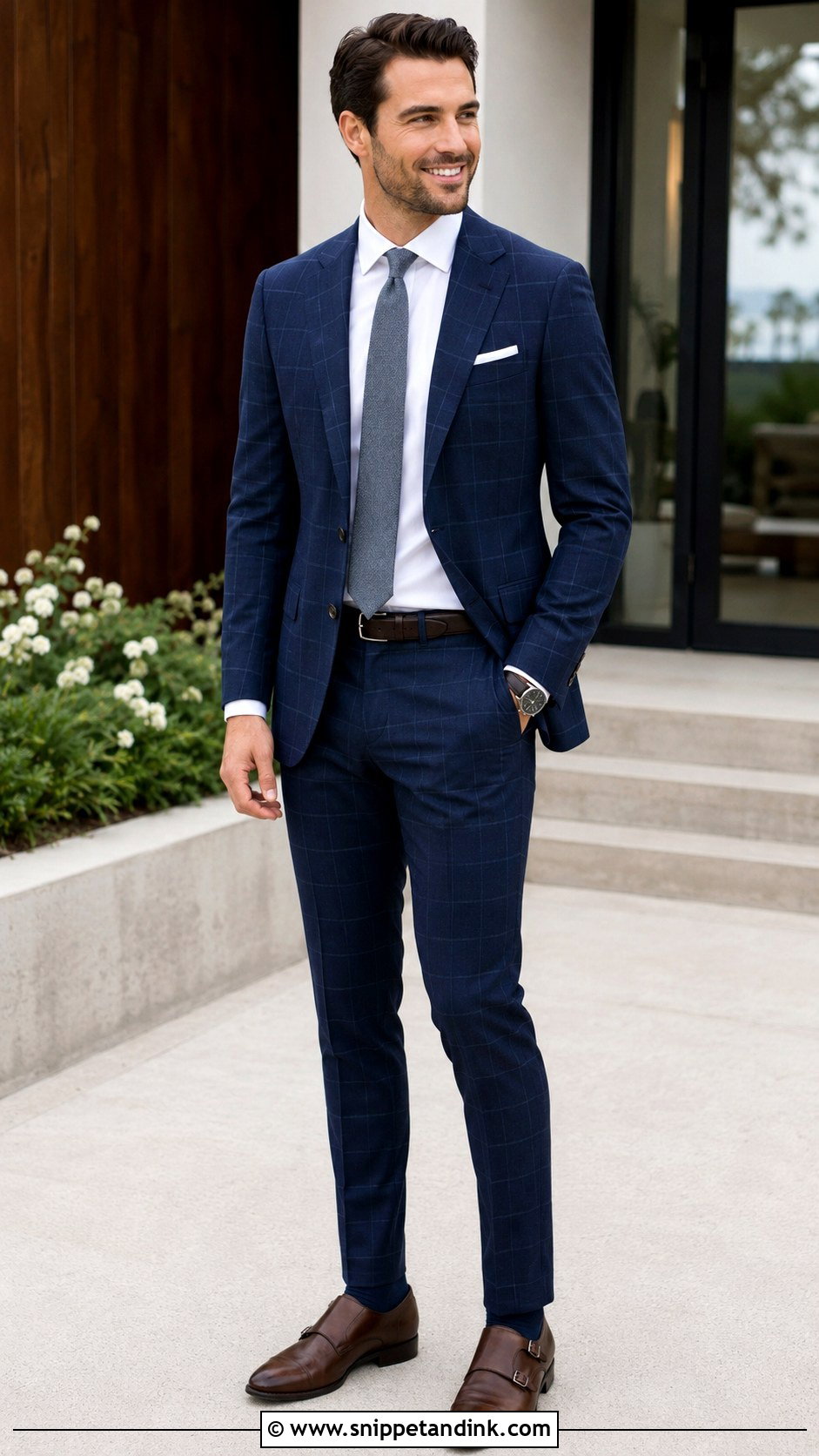
Windowpane is the pattern I suggest to grooms who find solid navy dull but don’t want stripes. Keep it to thin gray or light blue lines, never a bold, high-contrast check. A solid white shirt keeps it readable; a muted blue-gray tie, a plain white square and dark brown monk straps finish it. The tailoring test is alignment: the lines should meet across the front seams and the pocket flaps. Ready-made suits rarely get that fully right, which is a fair reason to consider made-to-measure for this one. Cocktail and semi-formal weddings give it the most room.
11. Navy Blue Pinstripe Suit Wedding
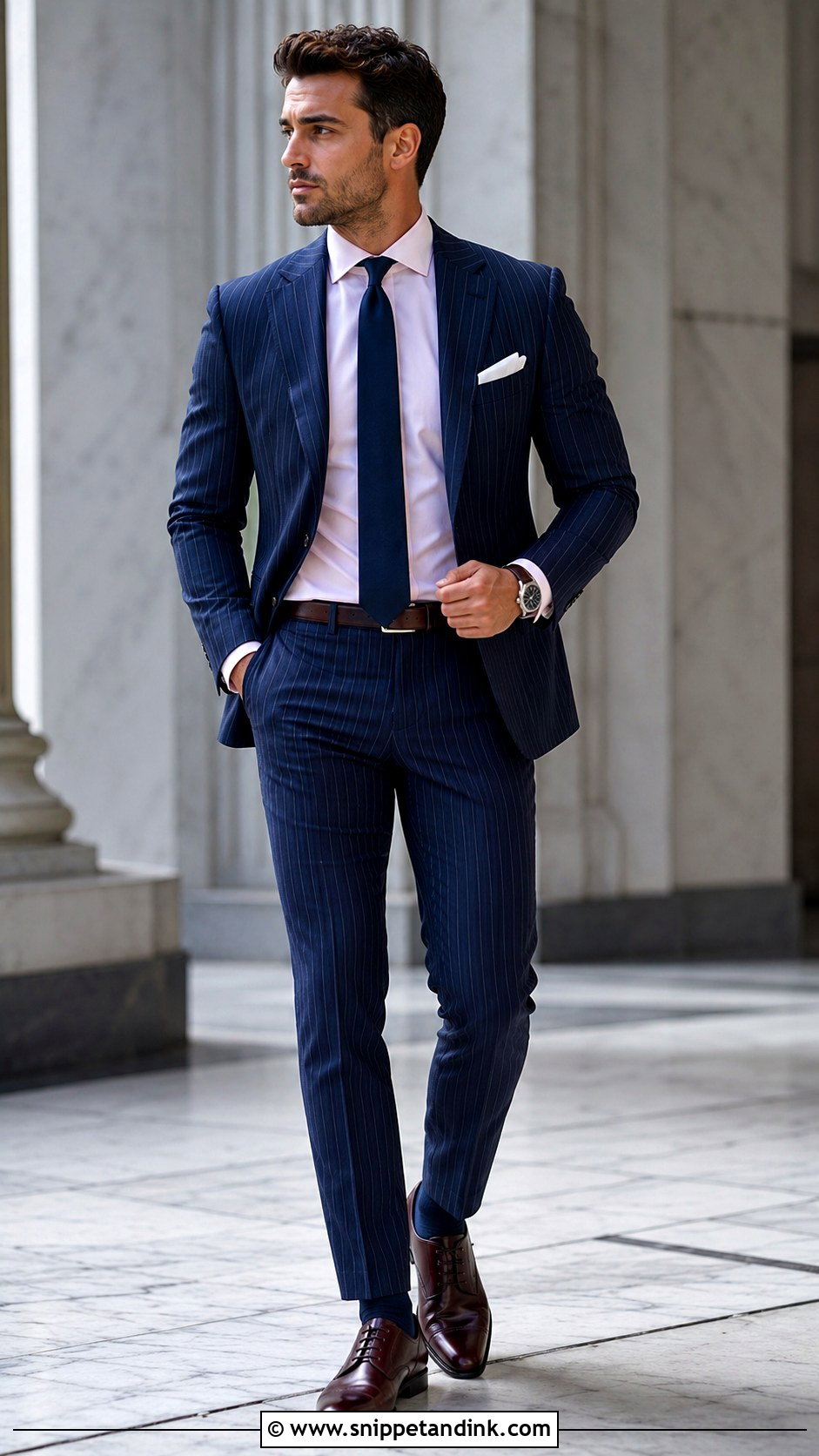
Pinstripes make you look taller because the eye follows the vertical lines. Keep them narrow and low in contrast, or the suit drifts into banker territory. A pale pink shirt and a solid navy silk tie make a soft transition, while a white square, oxblood shoes and a matching belt add warmth. The hem matters more than usual here; stripes that bunch at the ankle break the very line you chose them for. A three-piece suits the groom, two pieces are plenty for a guest, and nobody needs a patterned shirt or tie on top. City venues and evening receptions are where it belongs.
12. Navy Blue Suit With Blush Tie Wedding
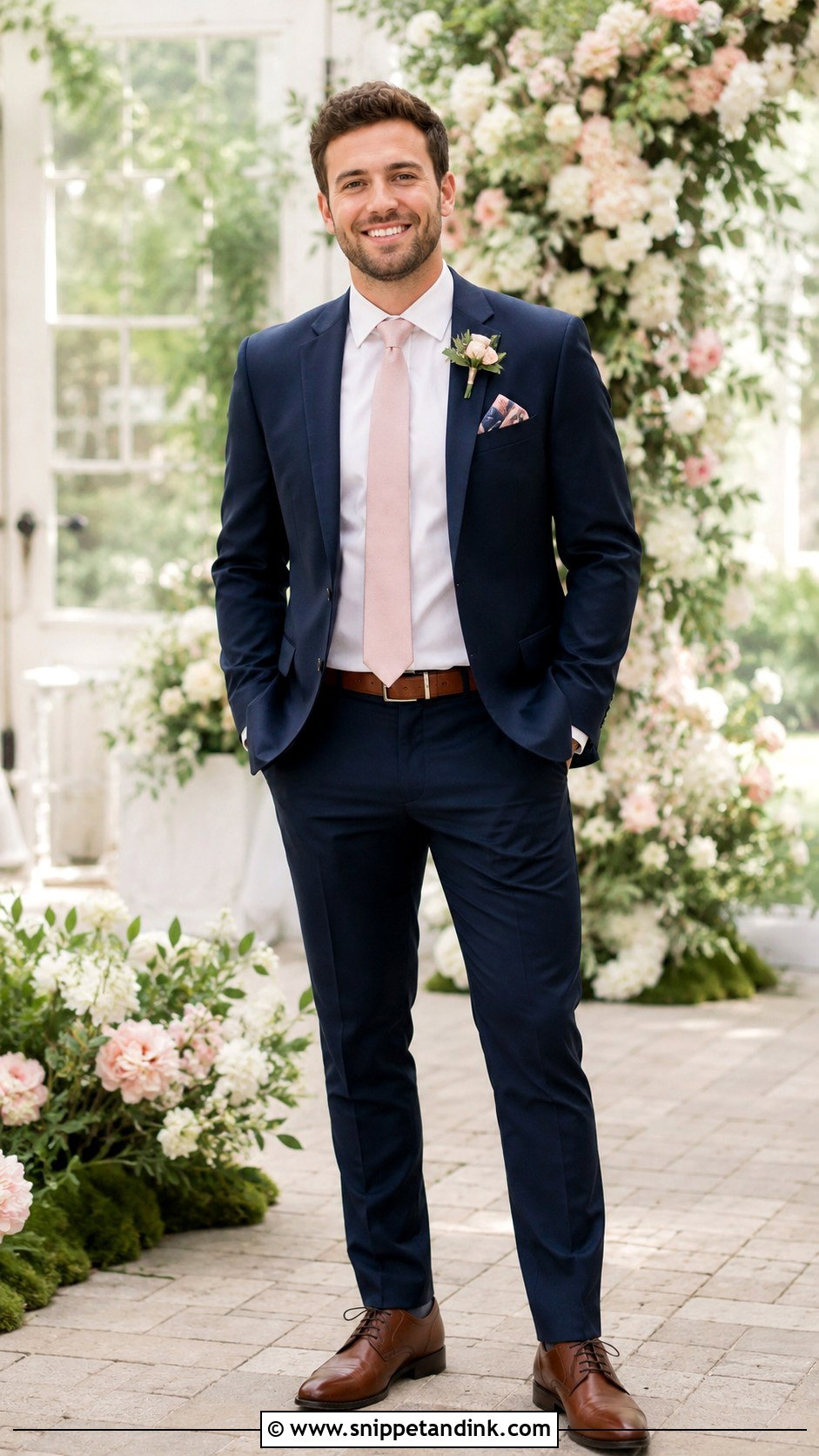
Blush ties go wrong when the pink is too bright, so I bring a fabric swatch from the flowers or bridesmaid dresses to the shop. Start with a well-fitted navy two-piece and a fresh white shirt, then a matte blush tie in silk, linen or a textured weave depending on the season. A pocket square with small blush and navy accents is enough coordination. Medium-brown Derbies, a matching belt and navy socks finish it. Groomsmen match one another, and the groom adds a navy vest or a more detailed boutonniere. Go for dusty blush rather than candy pink, especially at a spring wedding.
13. Navy Blue Suit With Sage Tie Wedding
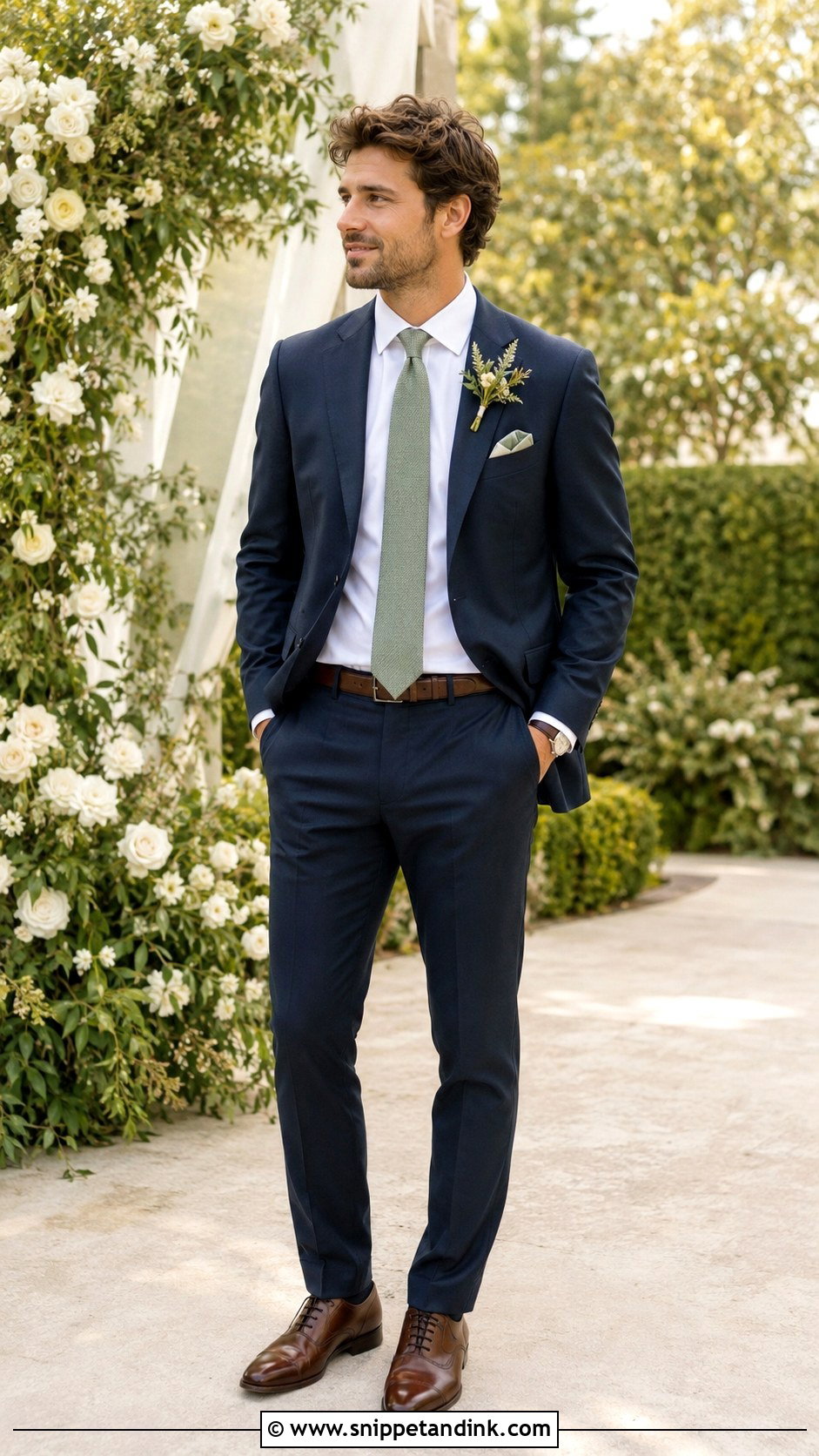
Earthy sage green calms navy down, which suits outdoor and garden weddings. With sage I swap the bright white shirt for ivory or soft white, because stark white makes a muted green look flat. A woven sage tie, a cream pocket square with a narrow green border, dark brown shoes and a matching belt anchor it. One or two green pieces is the limit; more and the outfit starts to look themed. Groomsmen wear identical ties while the groom takes a sage vest or a patterned tie. It sits comfortably beside botanical arrangements and neutral palettes.
14. Navy Blue Suit With Burgundy Tie Wedding
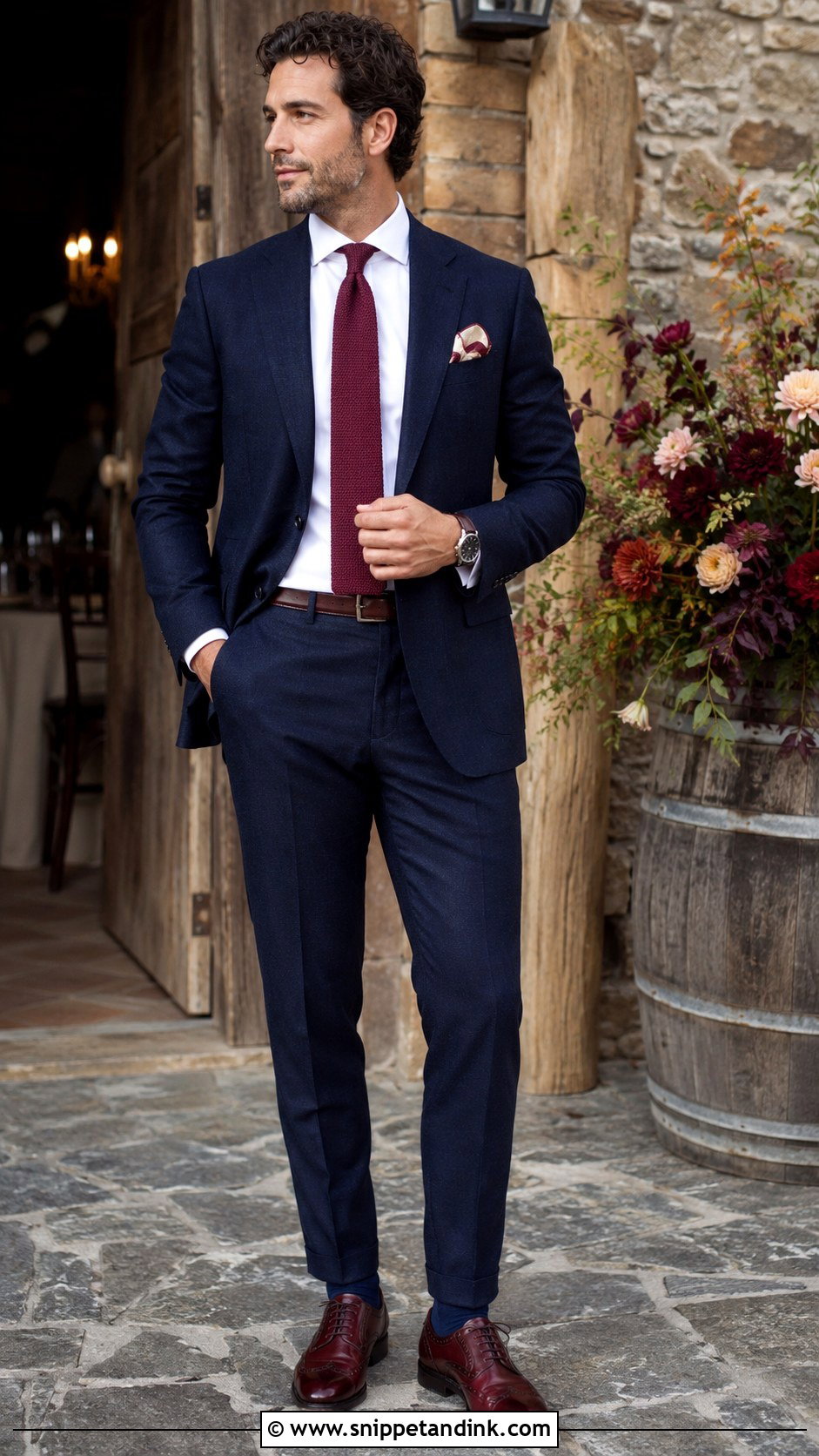
Burgundy is the tie color I suggest most often for navy at autumn and winter weddings. Dark navy wool, a white shirt, a burgundy silk or grenadine tie and a pocket square with restrained navy, cream and burgundy. Oxblood brogues and a matching belt carry the color down, and navy socks keep the trouser line unbroken when seated. The one mistake I see is a burgundy so dark it merges with the suit in photos. Hold the tie against the jacket at arm’s length; if the two blur together, go a shade brighter. A burgundy boutonniere marks out the groom, while guests keep florals small.
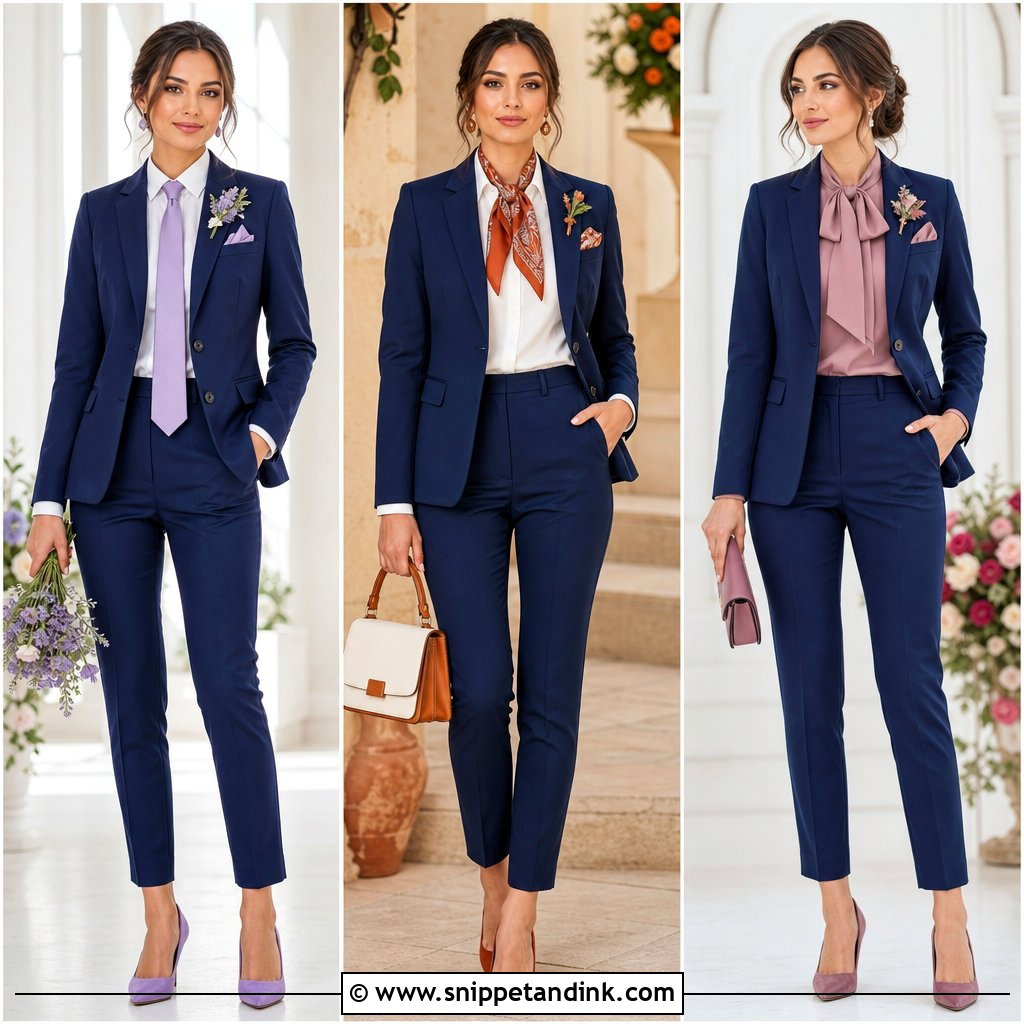
15. Navy Blue Suit With Champagne Tie Wedding
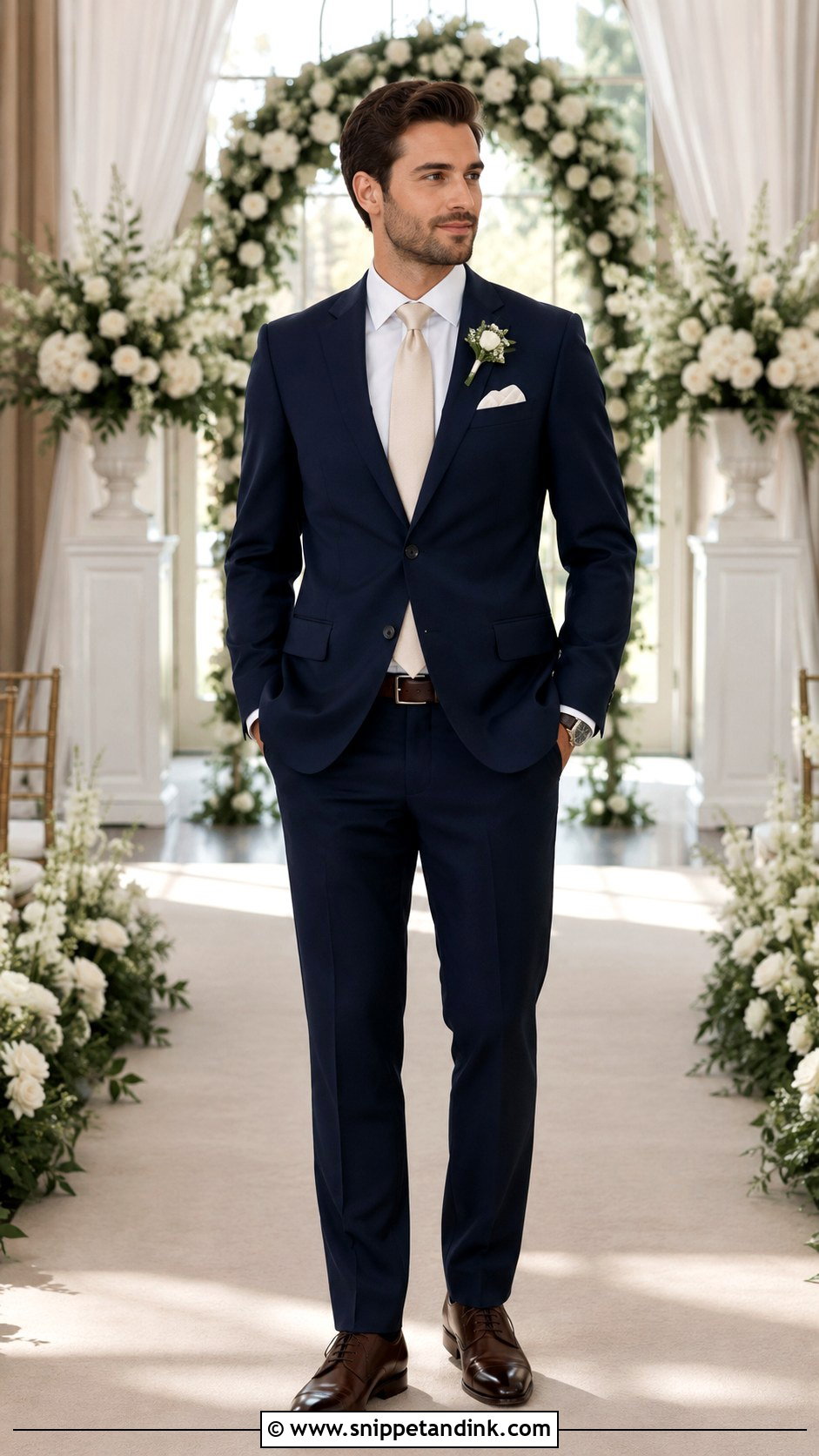
Champagne is tricky because shine changes everything. A glossy champagne tie can flare almost white in flash photography, so I always pick a low-sheen finish. The rest is simple: a single-breasted navy suit, a sharp white shirt and a white square with a narrow beige edge, then dark brown cap-toes, a matching belt and a silver watch. It works for grooms, fathers and groomsmen at formal daytime weddings. If the whole party wears champagne ties, put the groom in a navy waistcoat or a textured tie so he reads differently in group shots.
16. Navy Blue Suit With Light Blue Tie Wedding
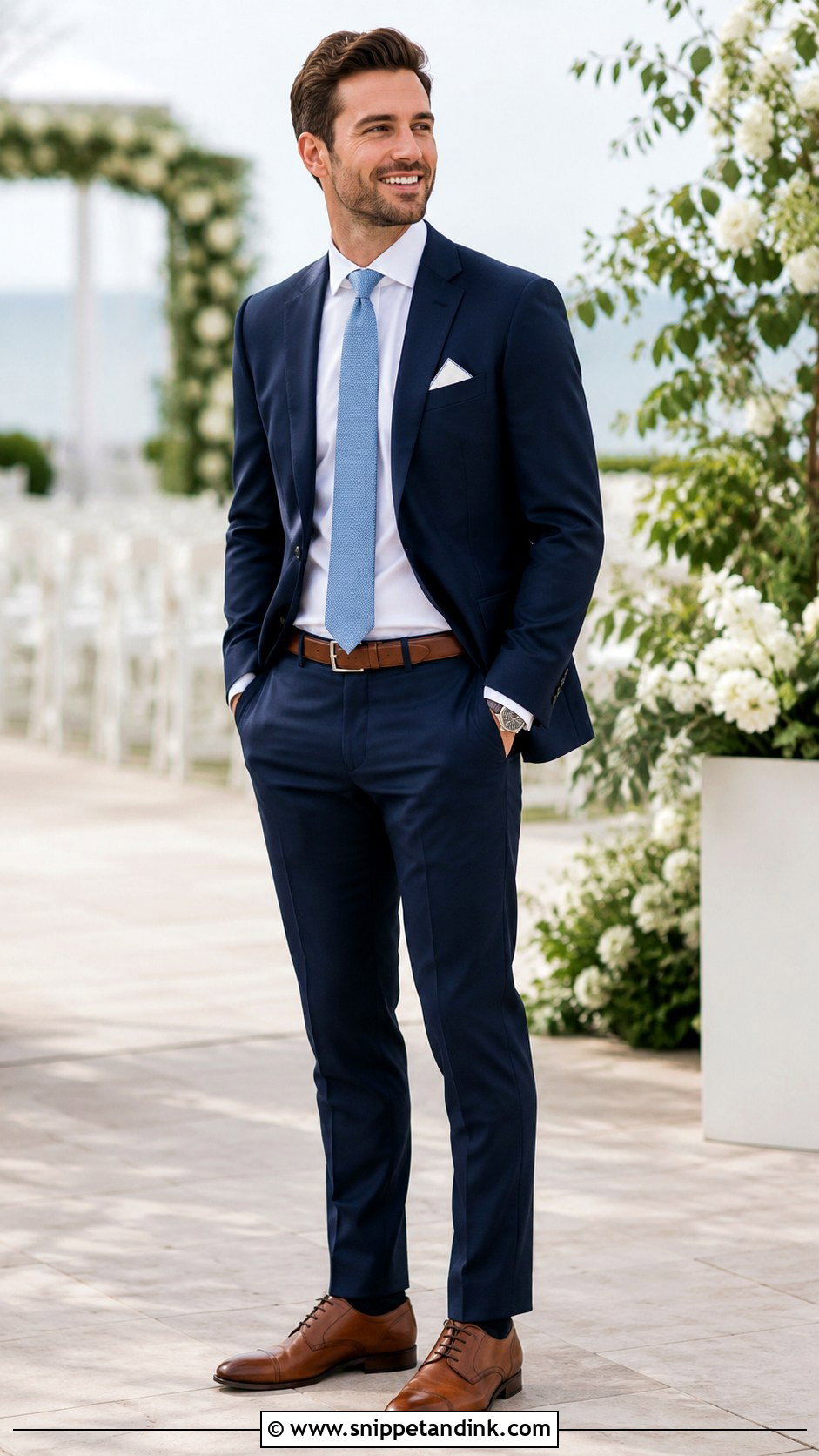
Blue on blue only looks flat when the shades sit too close together. Start with dark navy and a bright white shirt to separate them, then a light blue tie in silk, knit or textured linen and a white square with a fine blue border. Medium-brown Oxfords and a matching belt warm up the cool palette, with navy socks below. I like it for groomsmen in spring and summer. The groom can take a three-piece version or a patterned light blue tie. Don’t chase exact matches between the blues; a clear step from dark to light looks intentional.
17. Navy Blue Suit With Brown Shoes Wedding
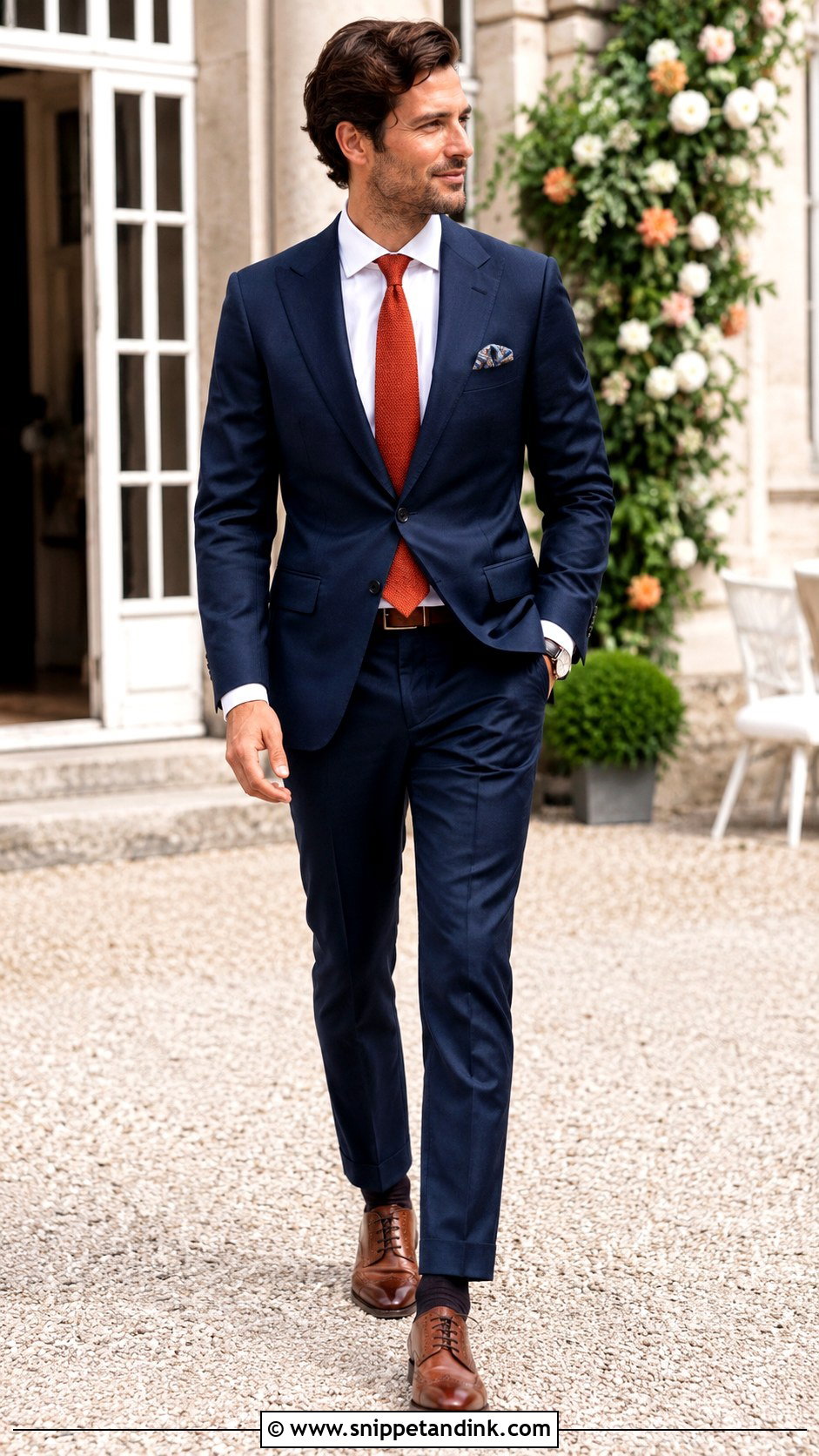
Brown shoes relax a navy suit slightly, which is exactly why they suit most daytime weddings. Wear a white shirt, a textured navy or rust tie and a patterned square that picks up both blue and brown. Dark brown Oxfords are the most formal option; medium-brown Derbies or brogues fit semi-formal daytime events. The belt matches the shoes, but the socks stay navy, never brown. Polish the shoes the week before and check the heels, because scuffs show more against sharp tailoring than they do with jeans. Evening calls for darker leather, sunny outdoor ceremonies for cognac.
18. Navy Blue Suit With Black Shoes Wedding
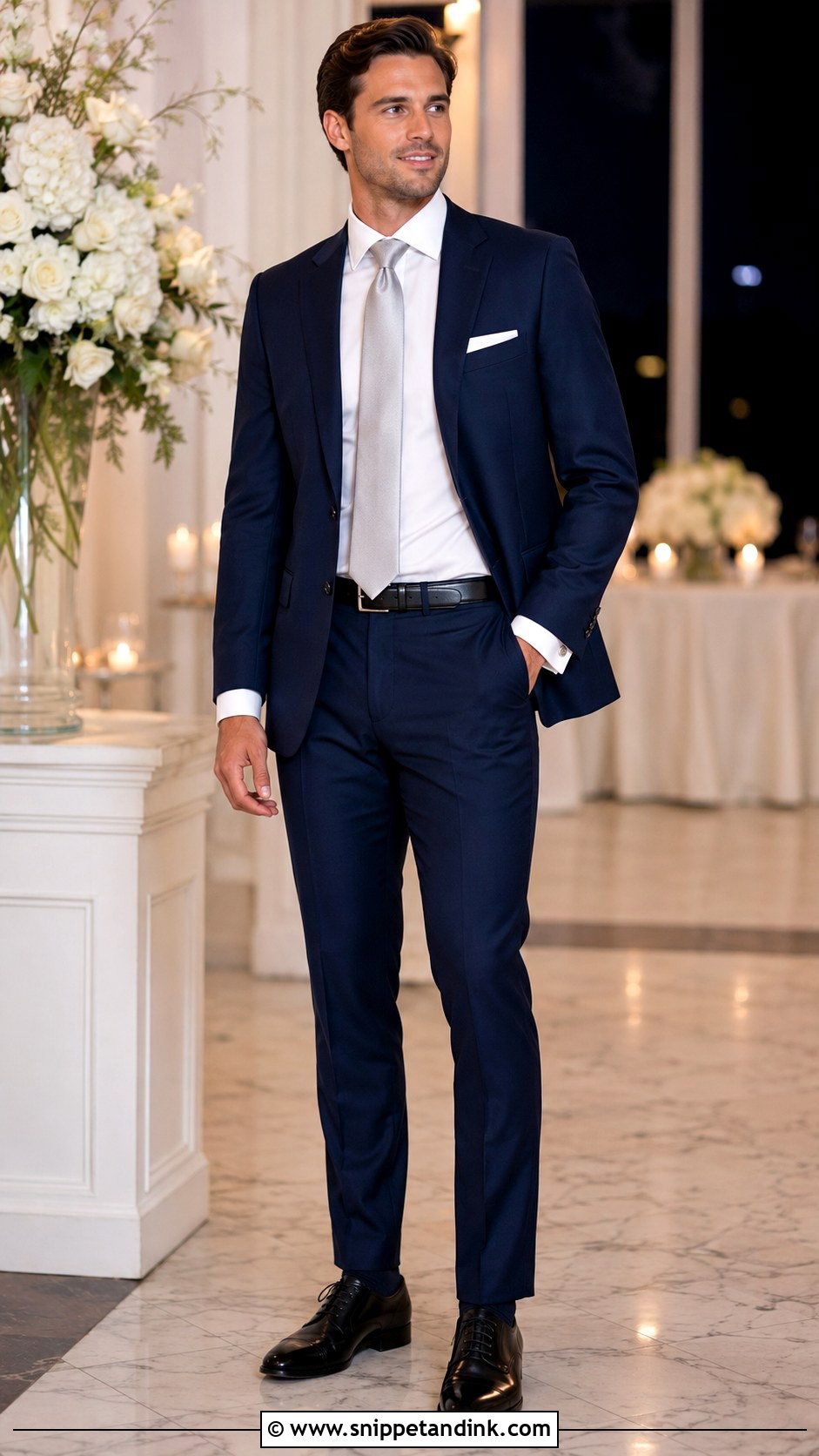
Black shoes make navy formal, but only when the suit is clearly blue. A navy so dark it reads almost black beside black leather looks like a mismatch rather than a choice, so I check the cloth in daylight before committing. The outfit is a white shirt, a silver, black or navy tie, a plain white square, polished black cap-toe Oxfords, a matching belt, dark navy socks and understated silver cufflinks. Sleek leather soles only; a chunky rubber sole makes it look casual. Hem the trousers to show enough shoe while keeping one continuous line. A groom at a formal evening ceremony or a guest at a cocktail dress code will look right in it.
19. Navy Blue Suit Beach Wedding
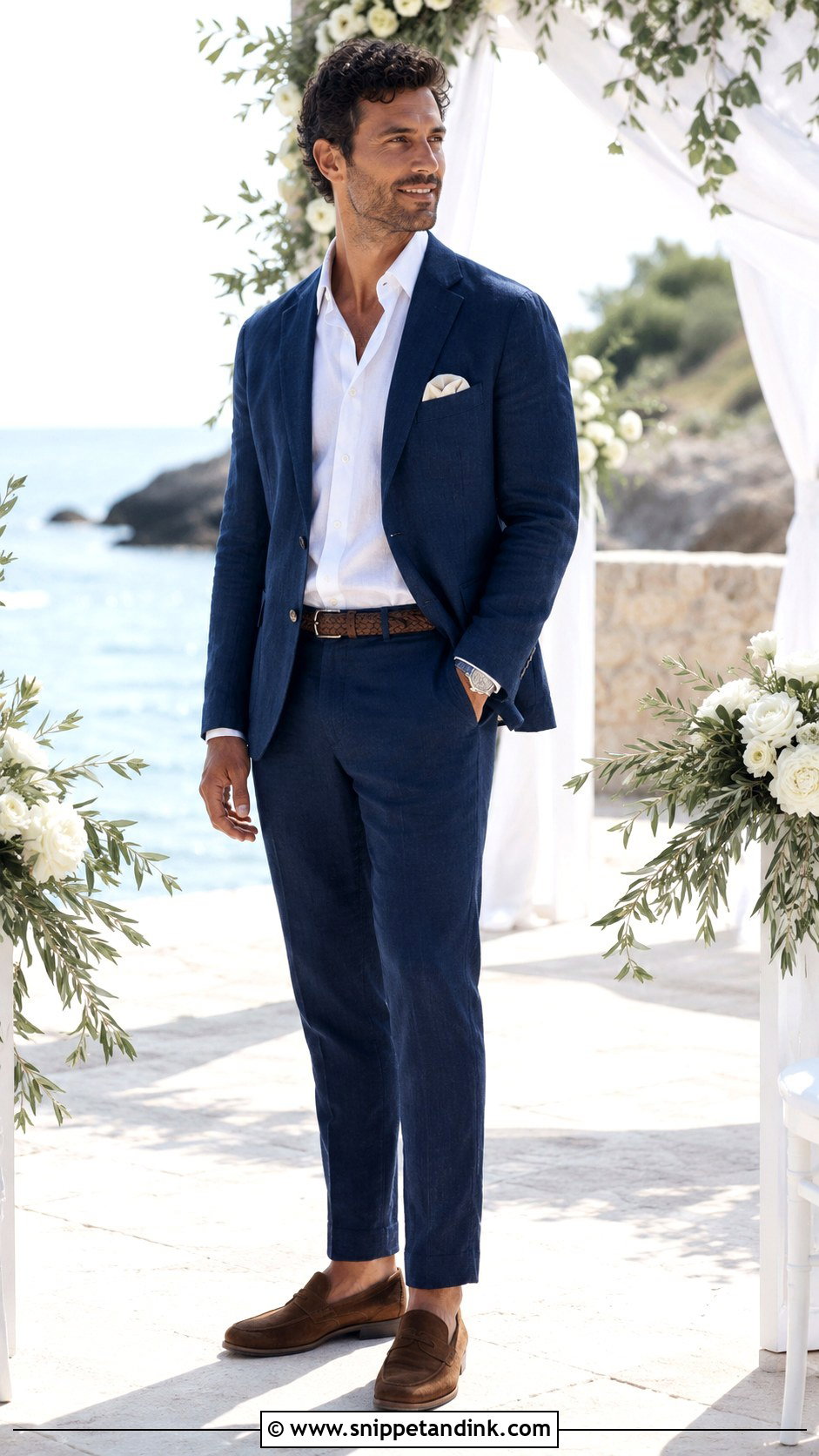
Sand is hard on tailoring. For a beach ceremony I choose an unlined or half-lined navy linen-blend suit with slightly relaxed trousers, a breathable white cotton or linen shirt and no tie for a casual code. Brown suede loafers, invisible socks and a cream pocket square complete it. For a more formal ceremony, add a pale blue knit tie and lightweight leather loafers. Leave heavy wool, vests and patent shoes at home. I hem beach trousers a touch shorter than a city suit so they don’t drag through damp sand, and navy hides a splash of seawater far better than a pale suit would.
20. Navy Blue Suit Fall Wedding
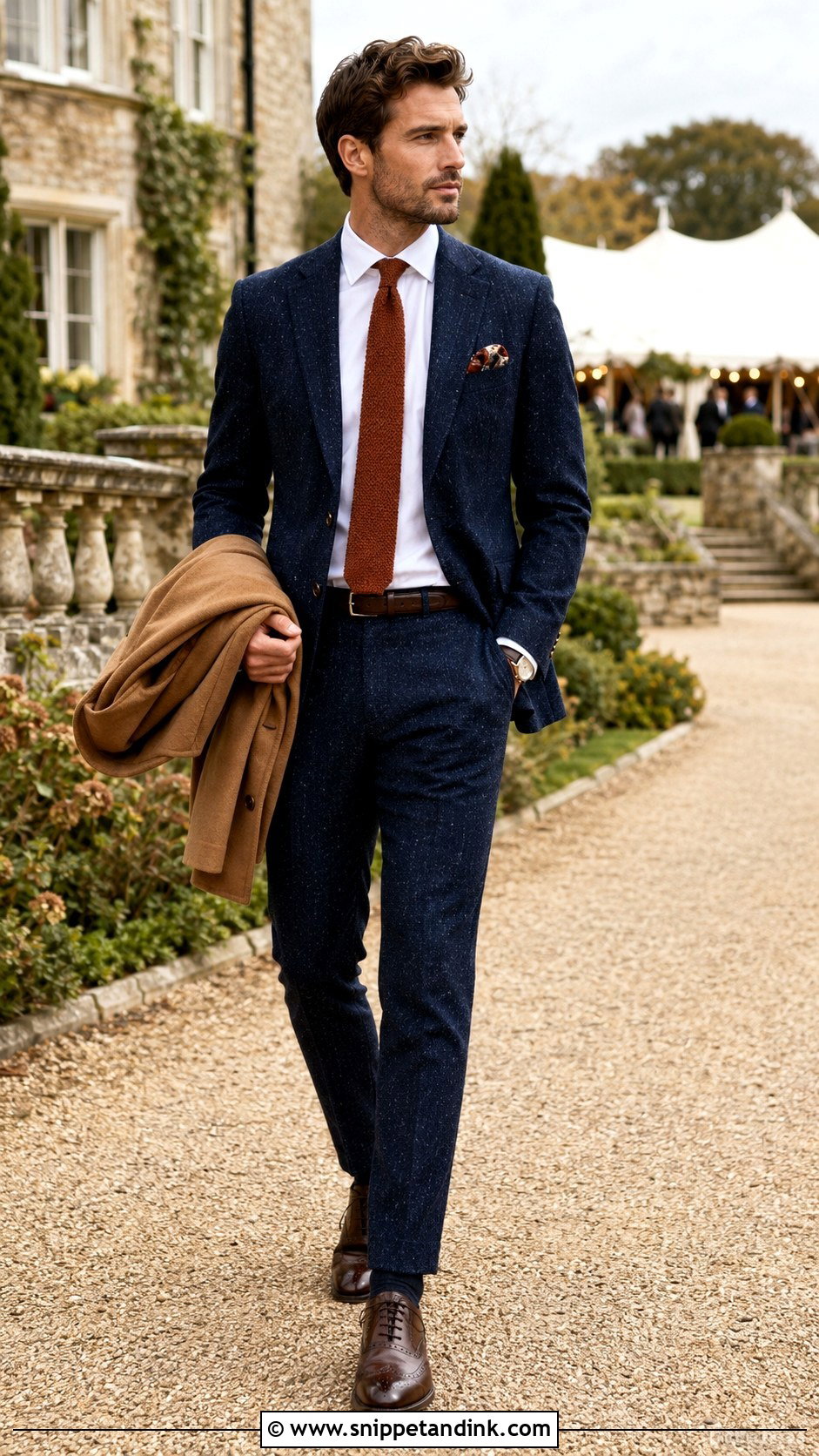
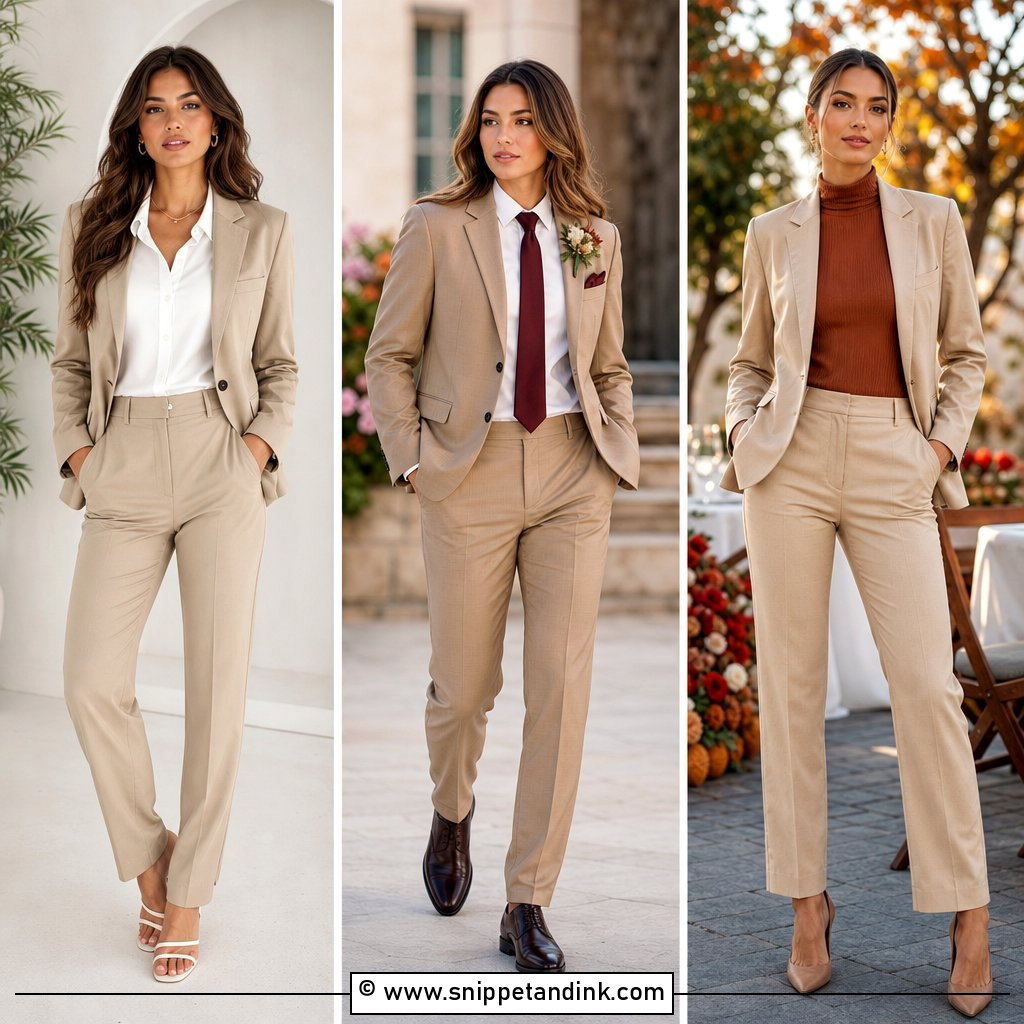
Autumn is when navy gets texture: brushed wool, flannel or a substantial wool blend in a tailored two-piece. A soft white shirt and a rust, burnt orange, or burgundy tie bring in the season, and a patterned square can mix navy with muted autumn shades. Dark brown brogues, a matching belt, navy socks and a leather-strap watch finish it. For an outdoor ceremony, layer a charcoal or camel overcoat rather than a casual jacket, since whatever you wear outside ends up in the photos. Barns, countryside venues and formal indoor celebrations in the cooler months all suit it.
Cloth Weight Is the Real Seasonal Choice
Two navy suits that look identical on a hanger can feel completely different by the third hour of a reception. The difference is cloth weight, which mills usually list in grams per meter. As a rough guide, lighter cloths under about 250 grams breathe well in summer, the middle range is the all-season workhorse, and heavier flannels and tweeds belong to winter. Labels vary between mills, so feel the cloth and ask the shop which season it was woven for.
Super numbers on a label describe how fine the wool fibre is, not how good the suit is. Very fine cloth feels soft but creases and wears faster, which matters for a suit you will sit, stand and dance in all day. For a wedding I lean toward a moderate grade with some resilience.
Steam, Hang and Carry on the Morning
- Hang the jacket on a broad, shaped hanger the night before so the shoulders hold their form.
- Steam out creases rather than ironing. A hot iron pressed straight onto dark wool can leave a shine that won’t come out.
- Pack a lint roller. Navy shows every white thread, hair and speck of confetti.
- Empty the pockets. Phones and keys drag the jacket out of shape in photos.
- Carry the jacket in the car instead of wearing it, and put it on just before you step out.
The Tailor Matters More Than the Exact Navy
One navy suit can cover a cocktail party, a black-tie-optional evening or a beach ceremony, depending on the fabric, shirt and shoes you put with it. A classic two-piece handles cocktail and semi-formal dress codes; a three-piece or a satin-lapel tuxedo gives the groom more presence. Linen and loafers belong at warm outdoor ceremonies, while wool, velvet, deeper ties and lace-ups suit cold weather and evenings. Whatever you settle on, spend the money on alterations. Shoulders that sit cleanly and trousers at the right length do more for you than any tie color.
You'll Like These Ideas:


Leave a Reply