
Long hair gives a bride more options than any other length, and it also gives her stylist more problems. It’s heavy, it pulls pins loose, and curls on long lengths drop faster than curls on a bob. So when I go through looks with a long-haired bride, I’m thinking about her dress and venue, but I’m also thinking about weight, grip and how many hours the style has to last. Here are the styles I’d put in front of her, with what each one asks of the hair.
Weight, Length and Grip: What Long Hair Asks of Your Stylist
Long hair is heavy. A curl on hair past the shoulder blades has more weight pulling it straight, so it drops faster than the same curl on a shorter cut. Very smooth, freshly washed hair is also slippery, and pins slide out of it. That’s why I usually ask brides to wash their hair the evening before and skip conditioner on the roots.
At the trial, I’m looking at three things: how thick your hair is, how well it holds a curl, and where the weight sits once the style is done. Thick, long hair might need a hidden braid or a small ponytail base inside an updo. Fine, long hair can look thin when worn fully down, and may need padding or clip-in extensions to fill it out.
- Wear the style for at least a few hours after the trial, and notice anything that pulls or slides.
- Bring your veil or hairpiece to the trial; it changes where the weight sits.
- Tell your stylist about any headaches from tight styles, so the base is placed lower.
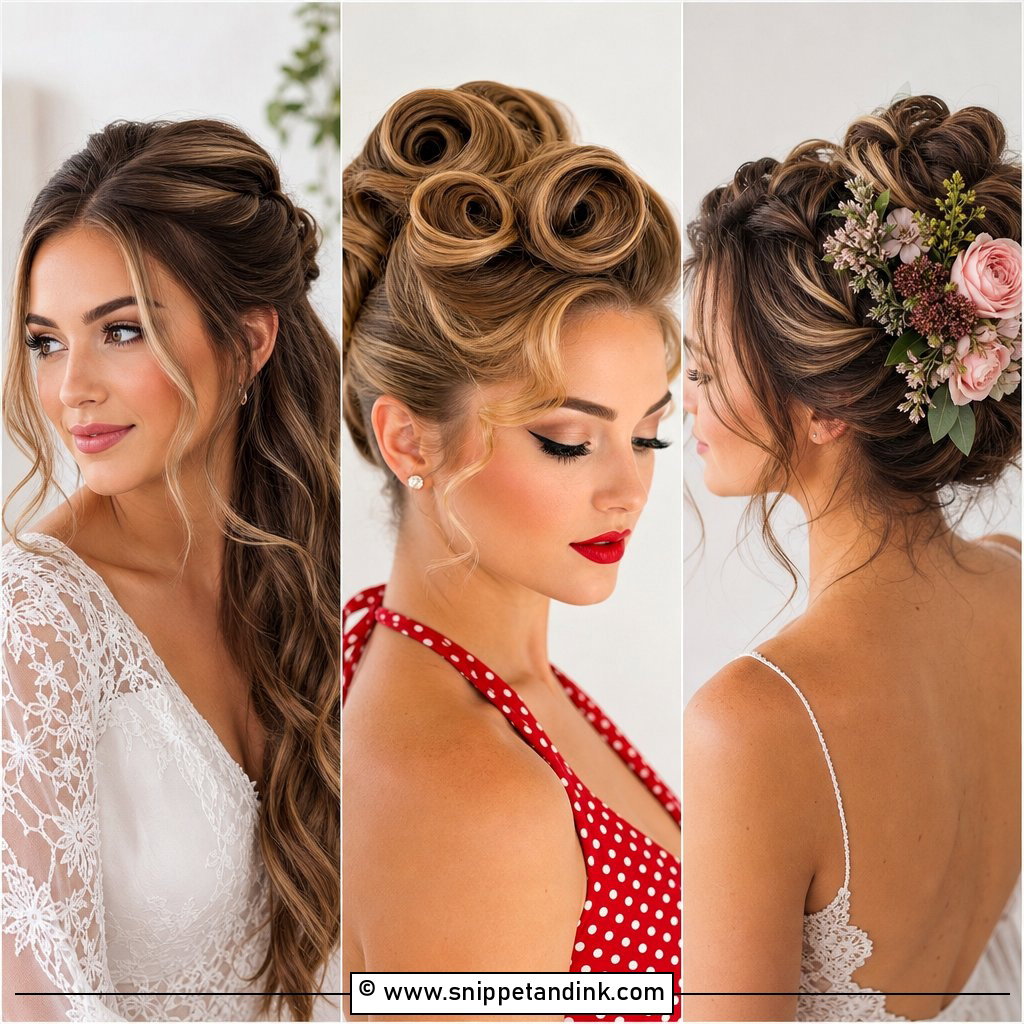
1. Half-Up Half-Down Wedding Hairstyle
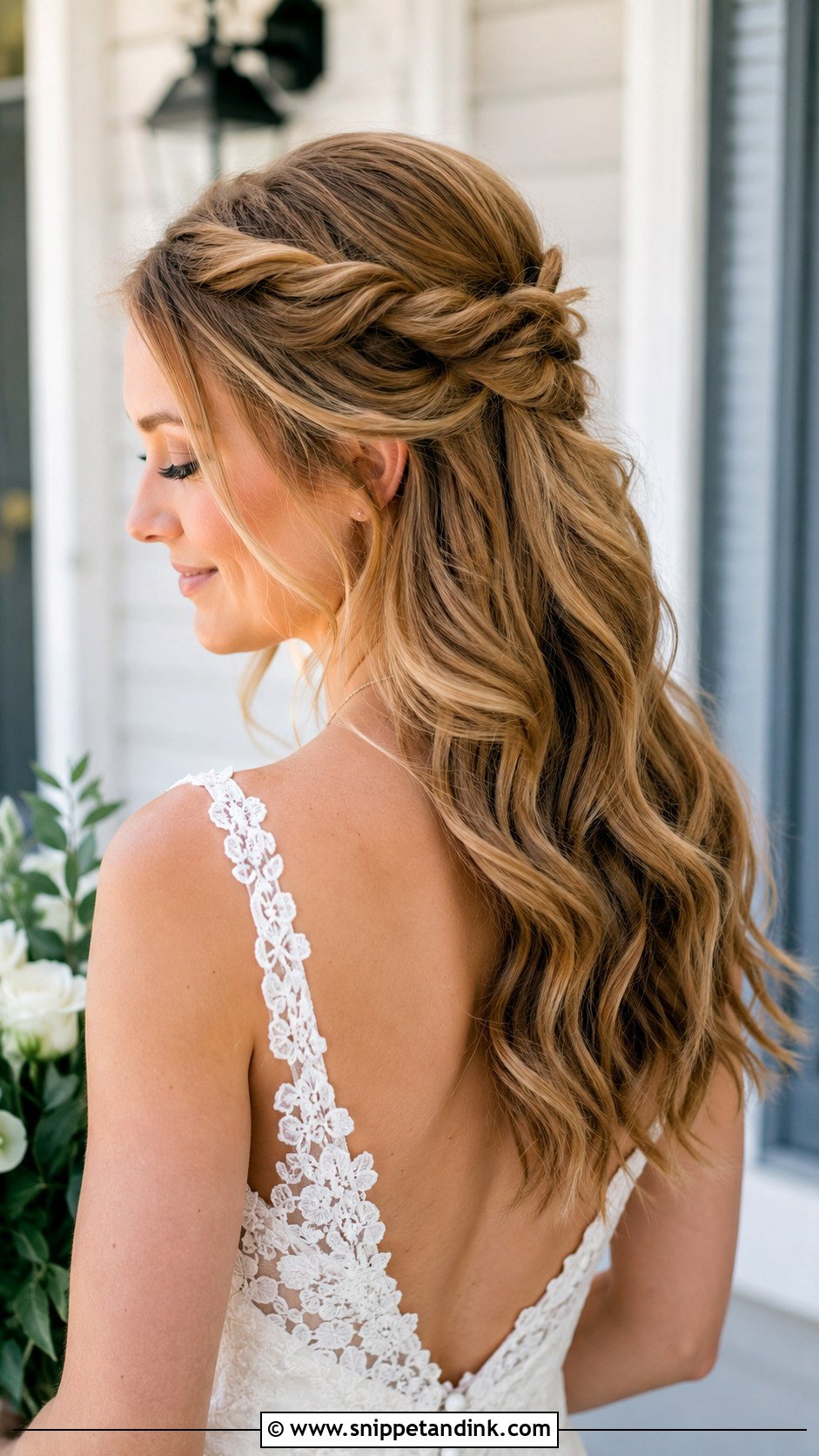
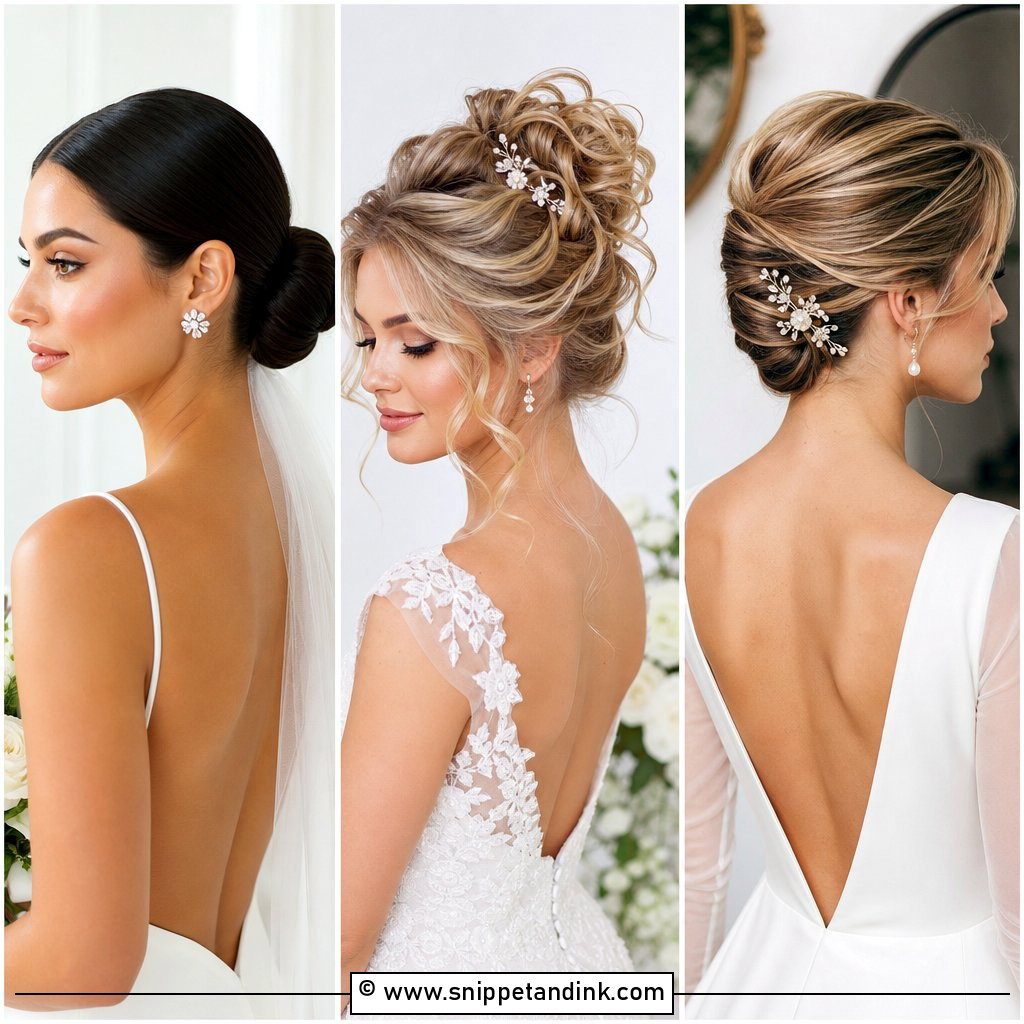
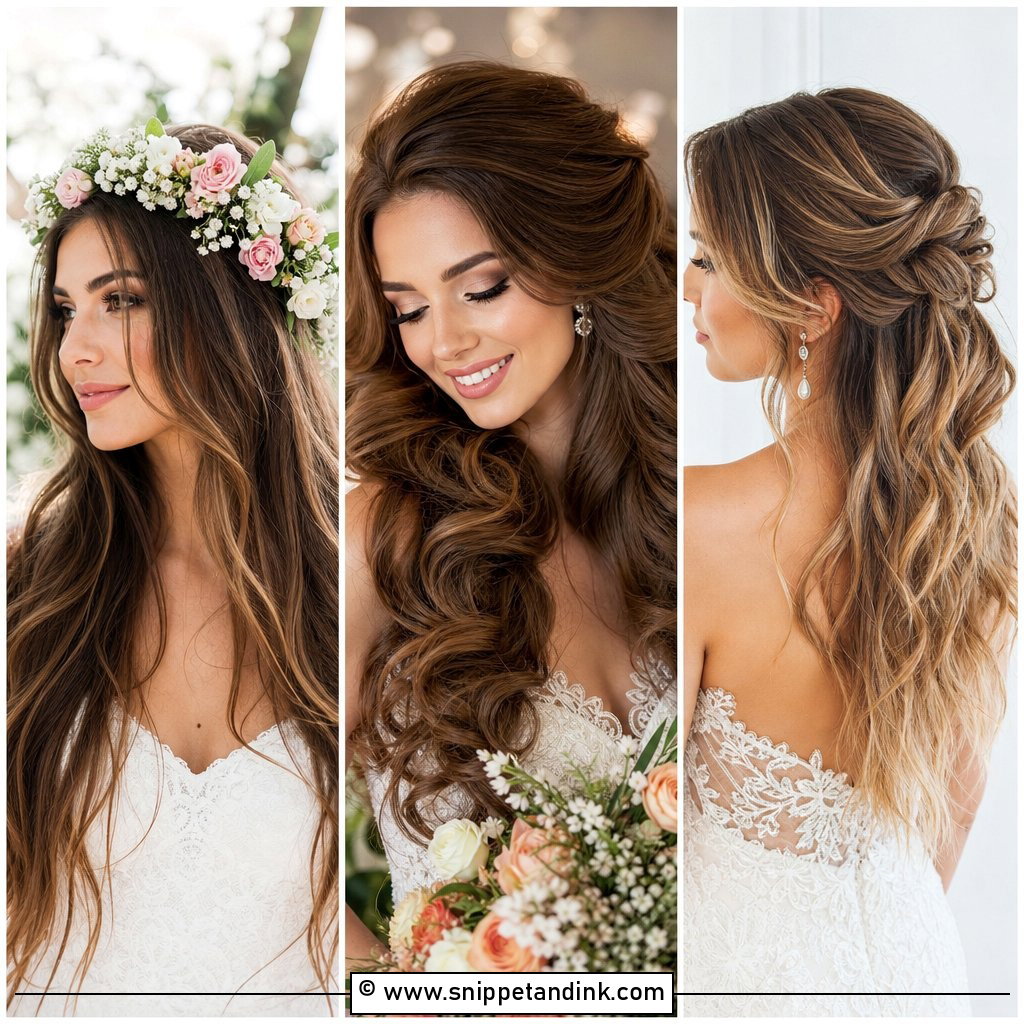
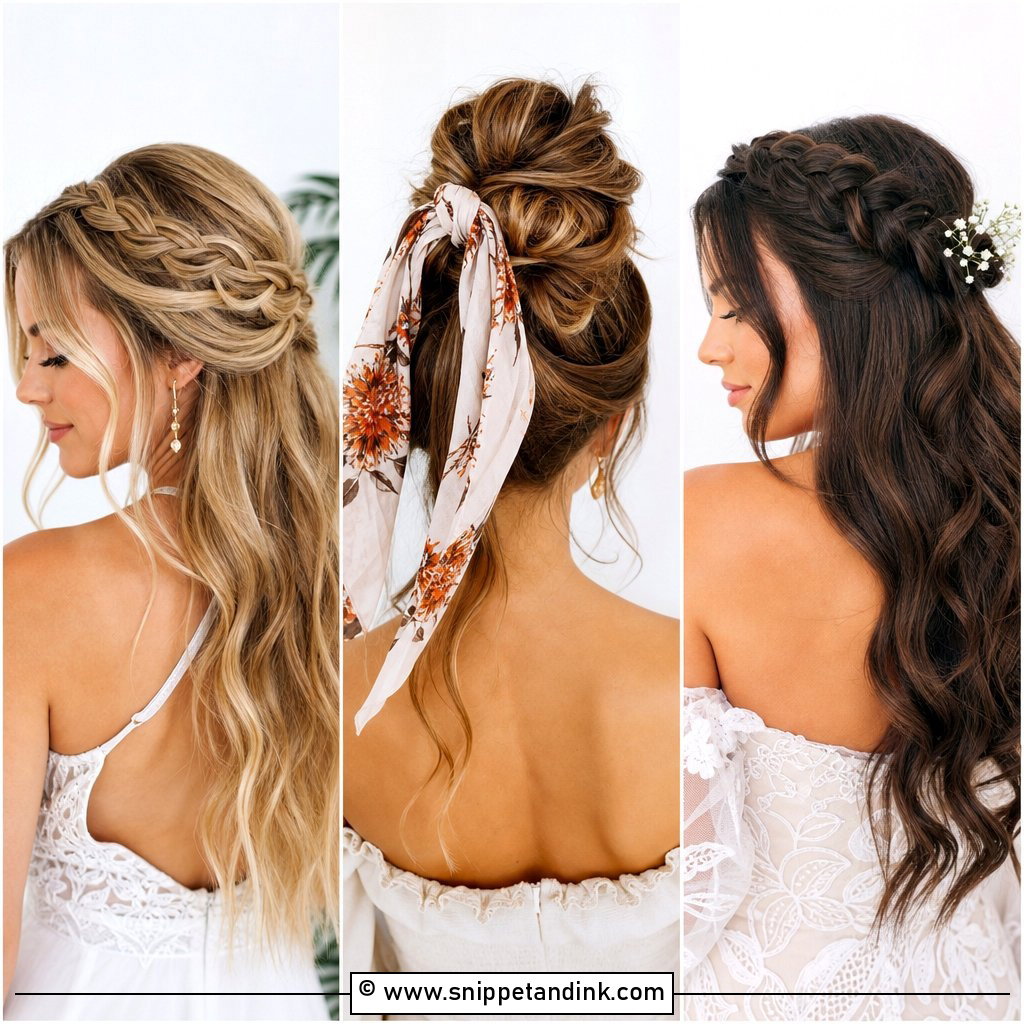
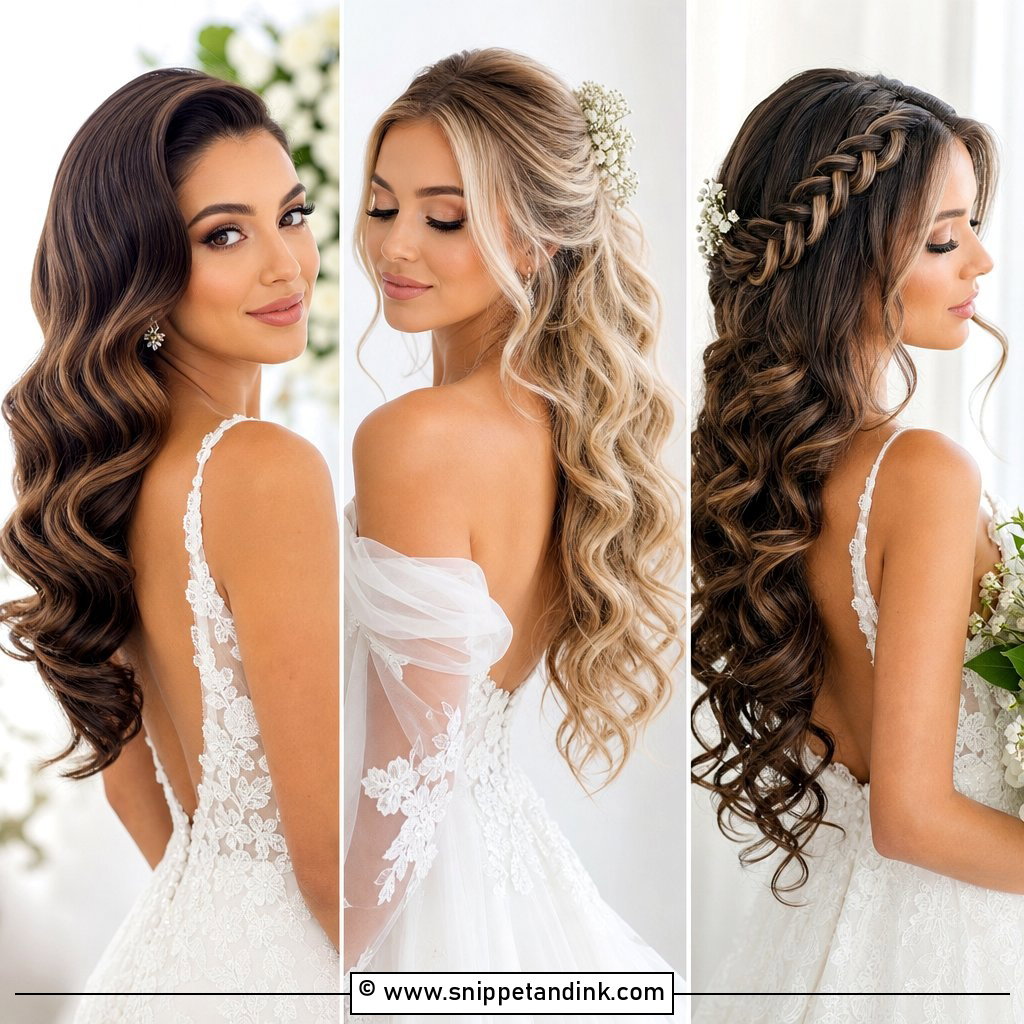
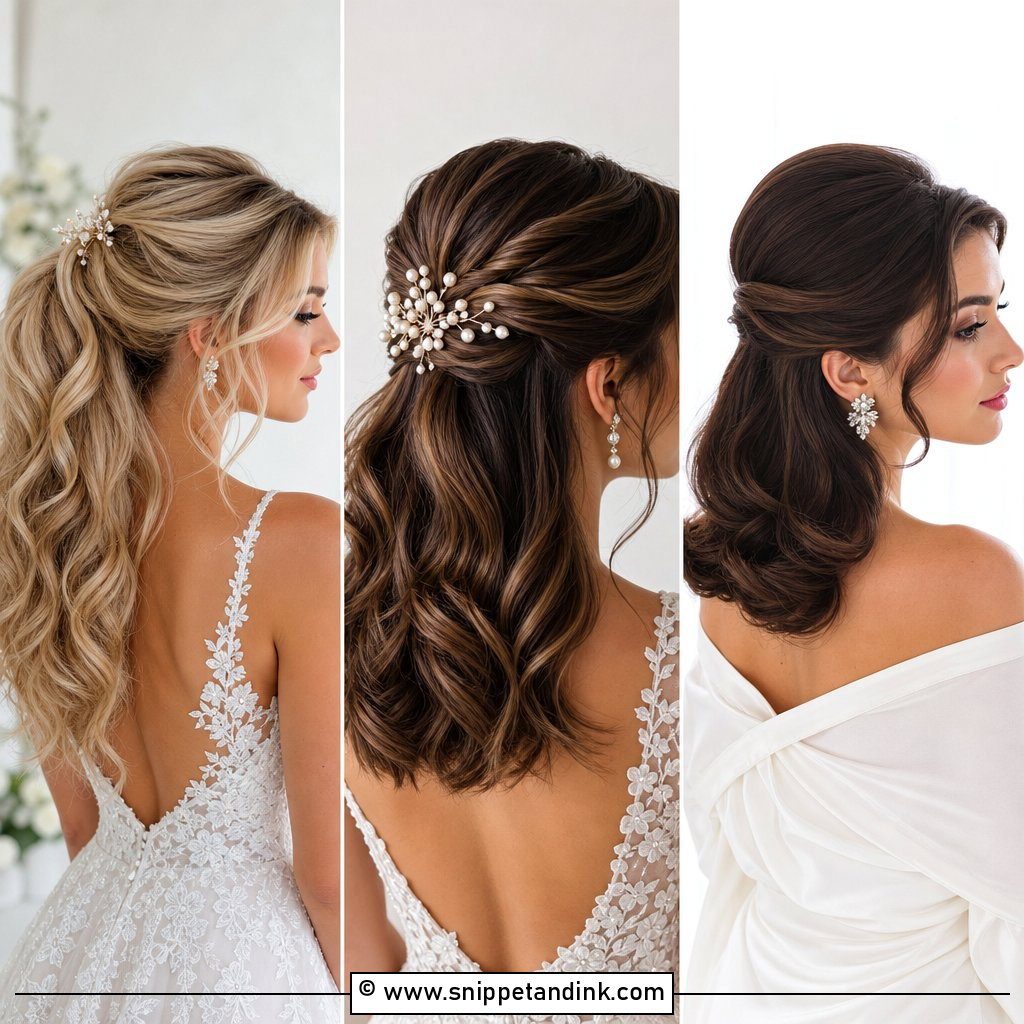
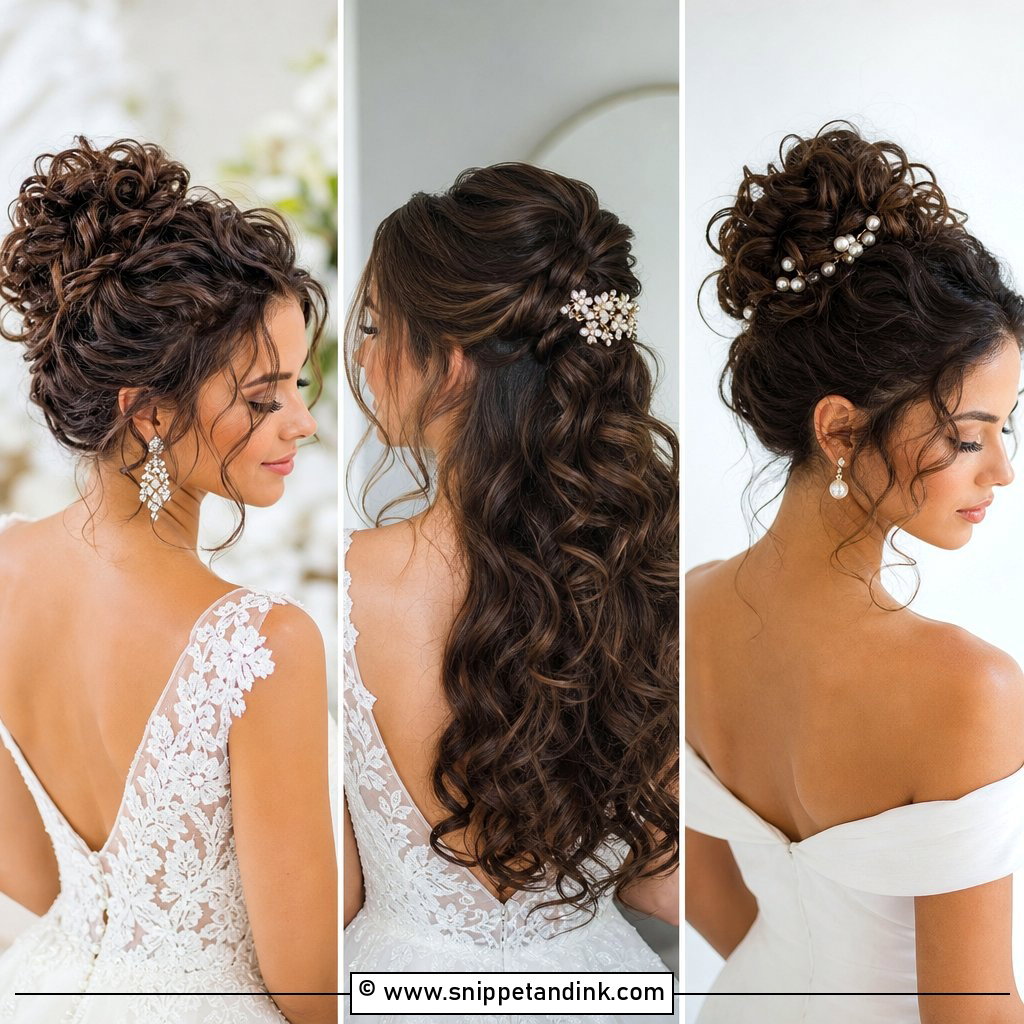
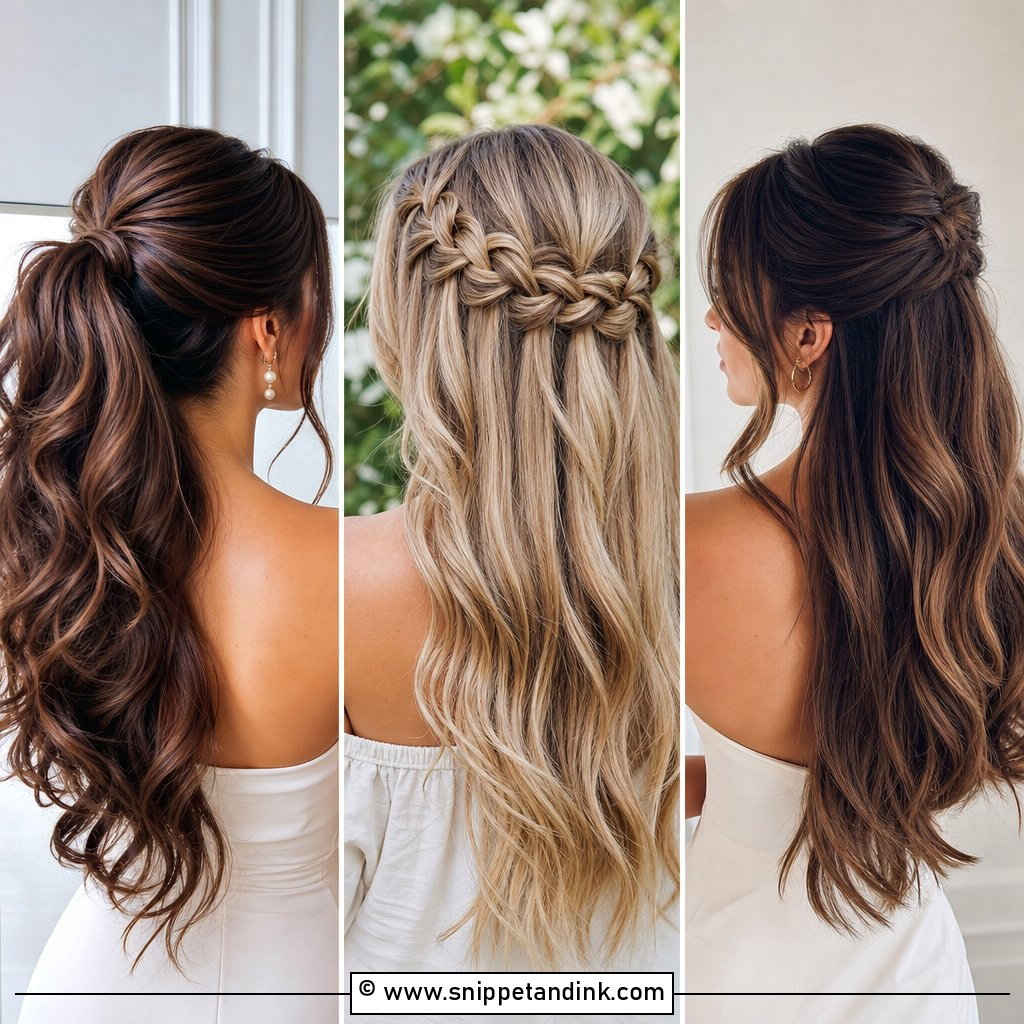
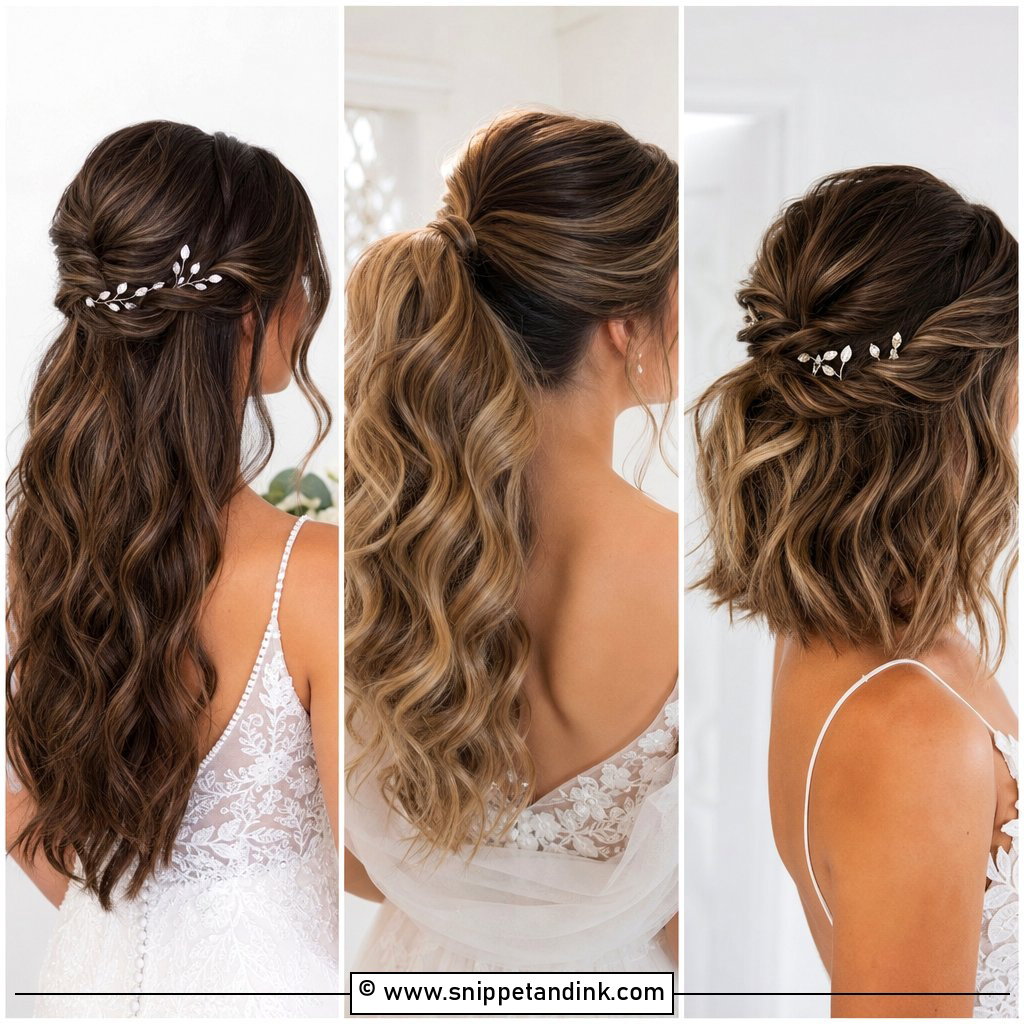
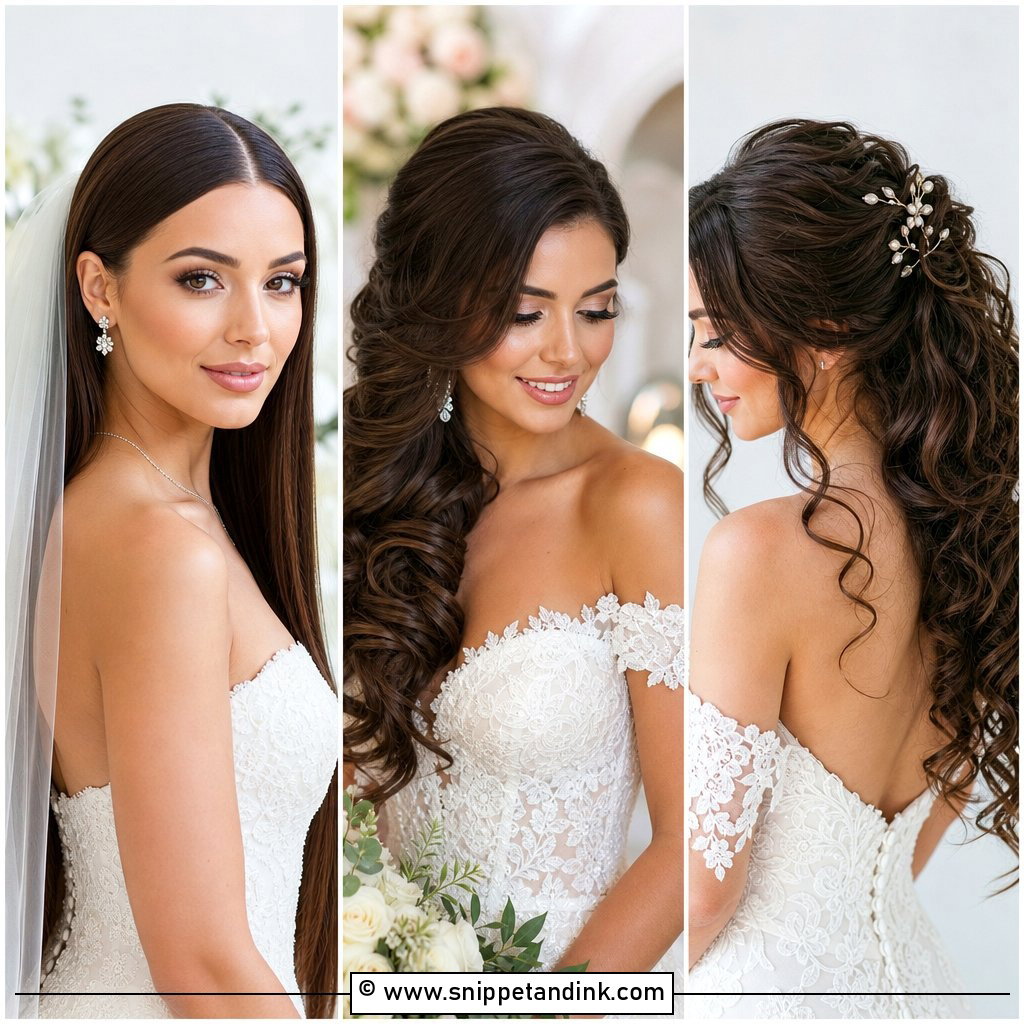
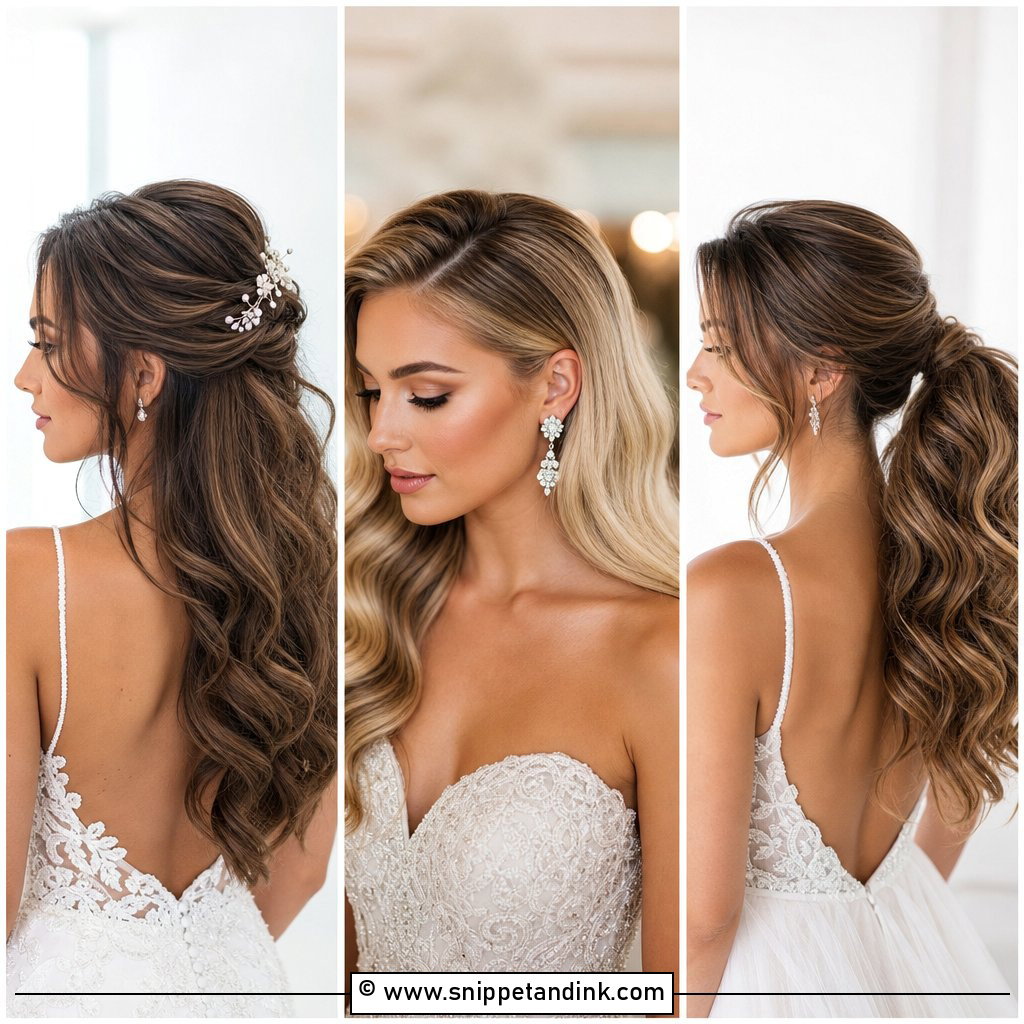
Half up, half down is the most requested style I do, and for long hair it’s a sensible compromise. Pulling the top section back takes some weight off the loose lengths, so the curls below last longer than they would fully down. I secure the top with a small elastic and crossed pins before adding twists or flowers over it. It sits well with a veil, which can be anchored straight into that pinned section.
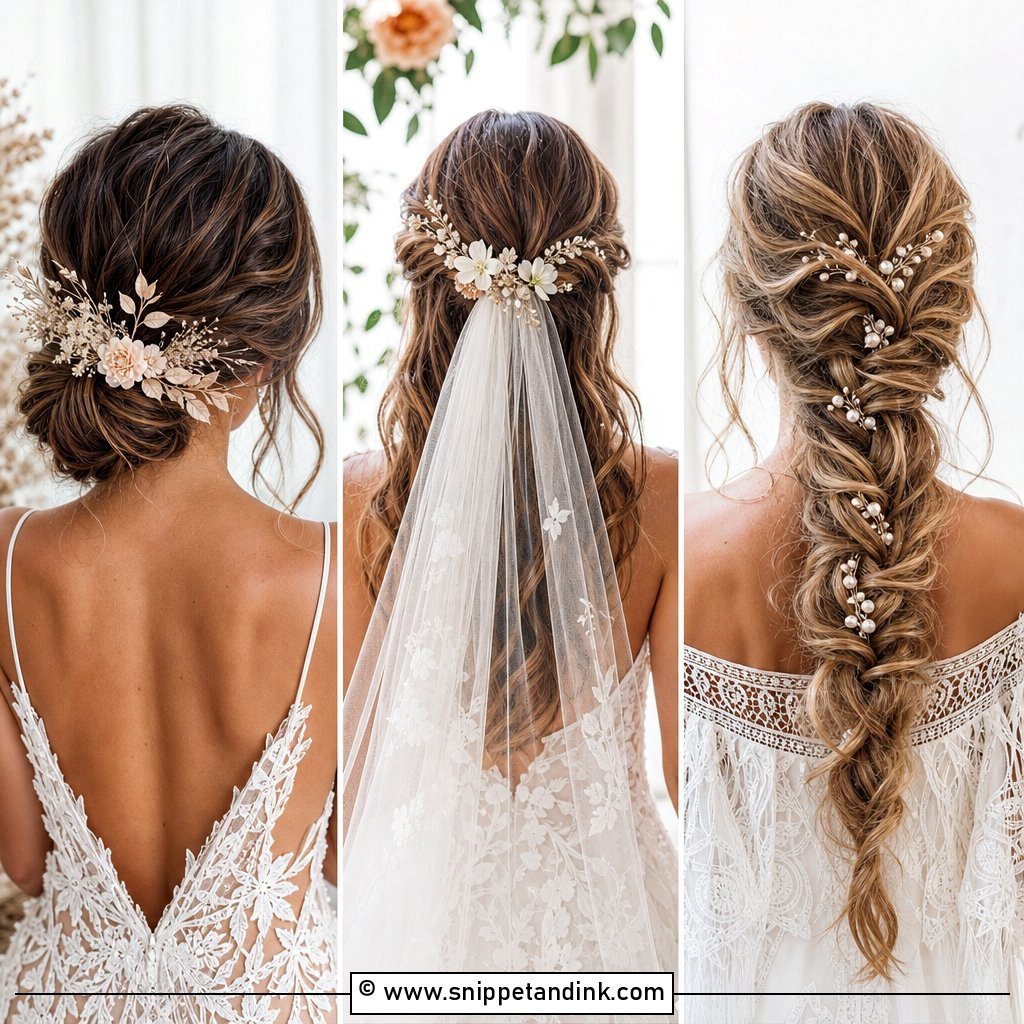
2. Classic Low Chignon for Brides
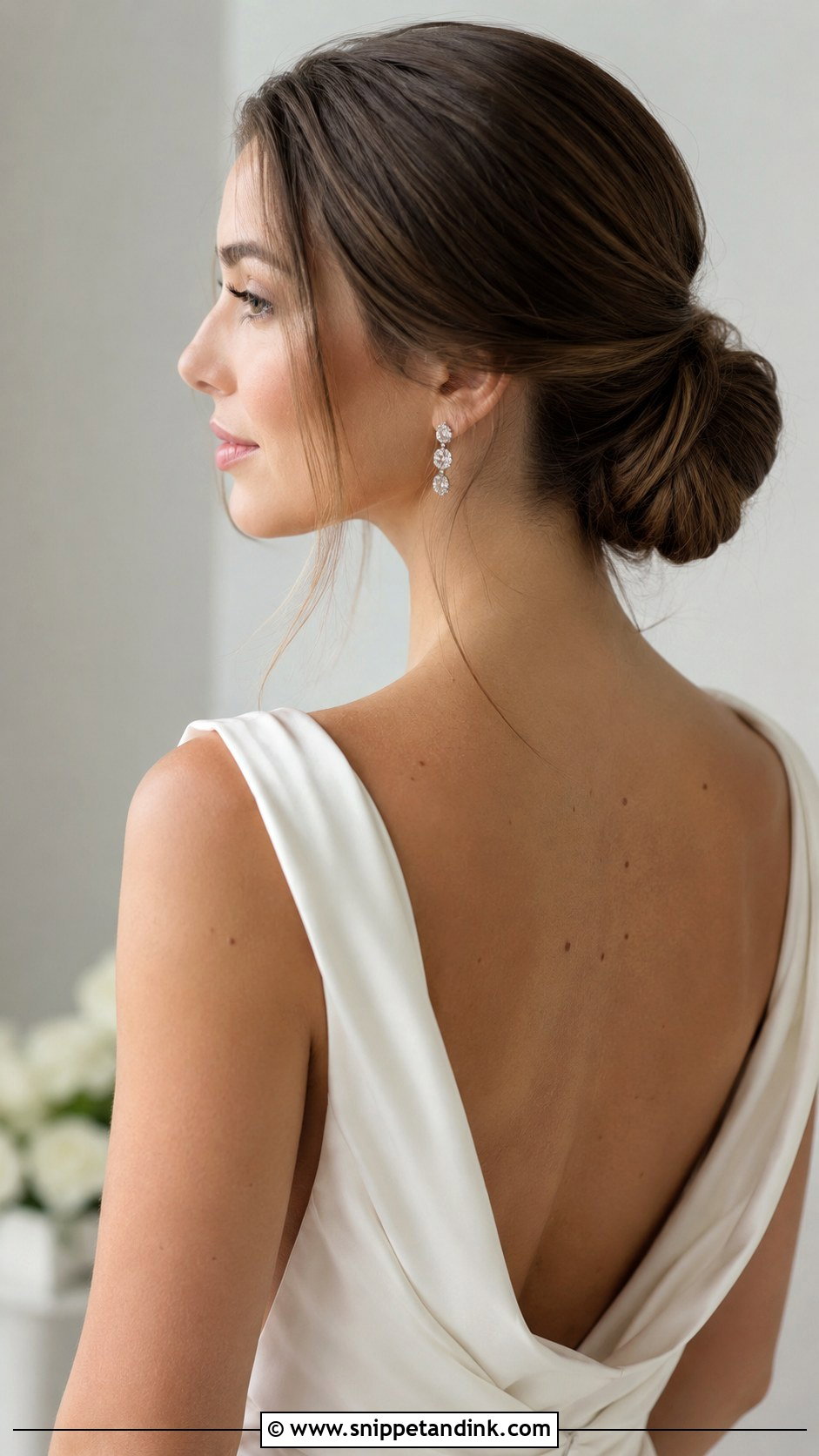
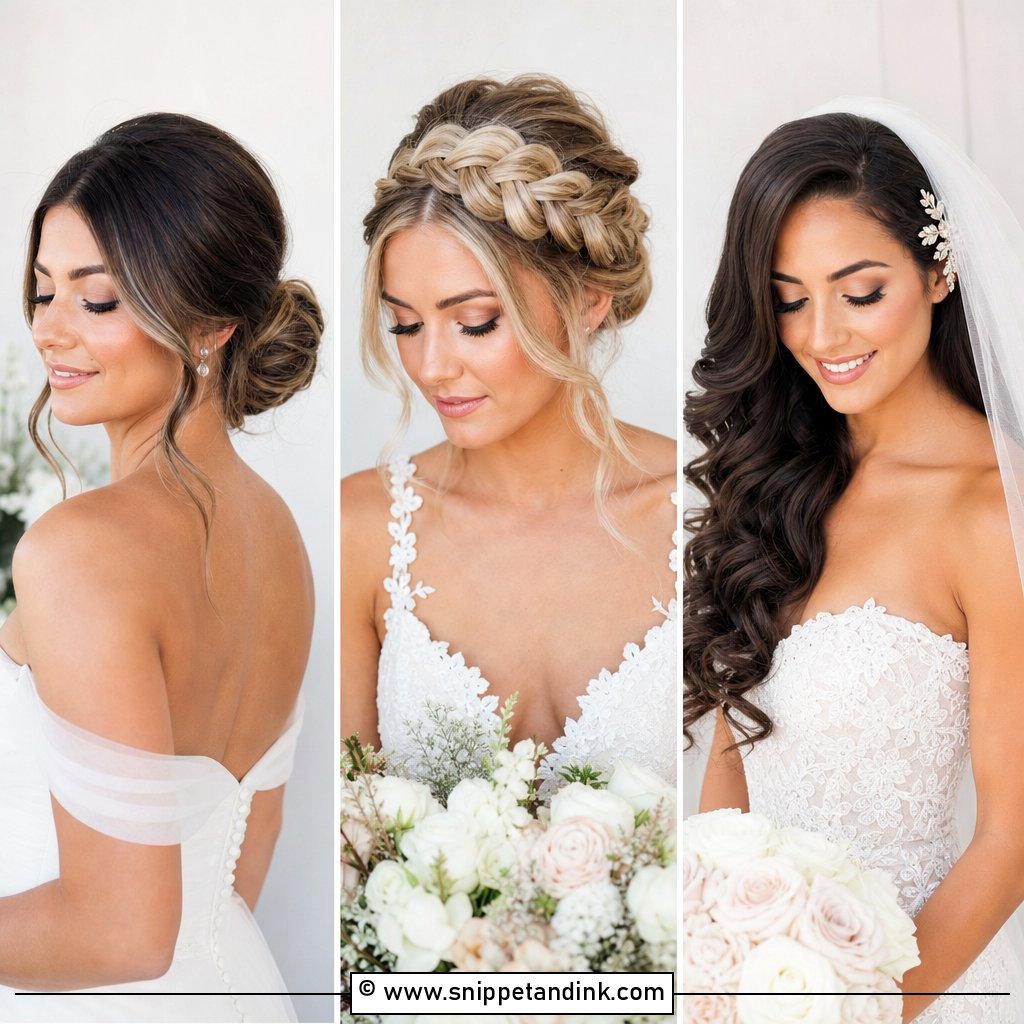
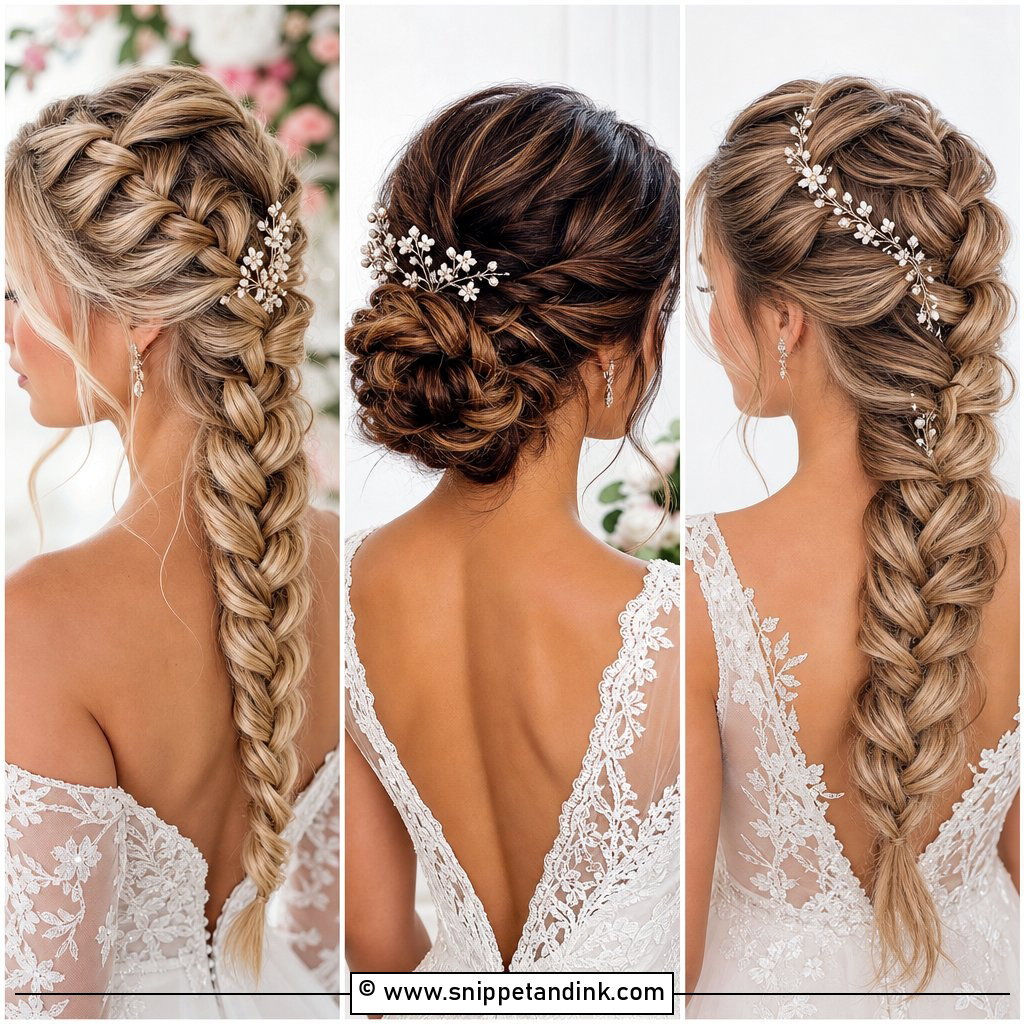
A low chignon is the style I trust most for a long, formal day. The hair is coiled at the nape, which puts the weight right where the neck supports it, so nothing drags. I build it over a small ponytail base rather than pinning loose hair into a roll; the base is what keeps it solid through hugs and dancing. Keep it smooth for a modern line, or leave a few strands out at the temples if a fully sleek look feels severe on you.
3. Loose Romantic Waves for Wedding
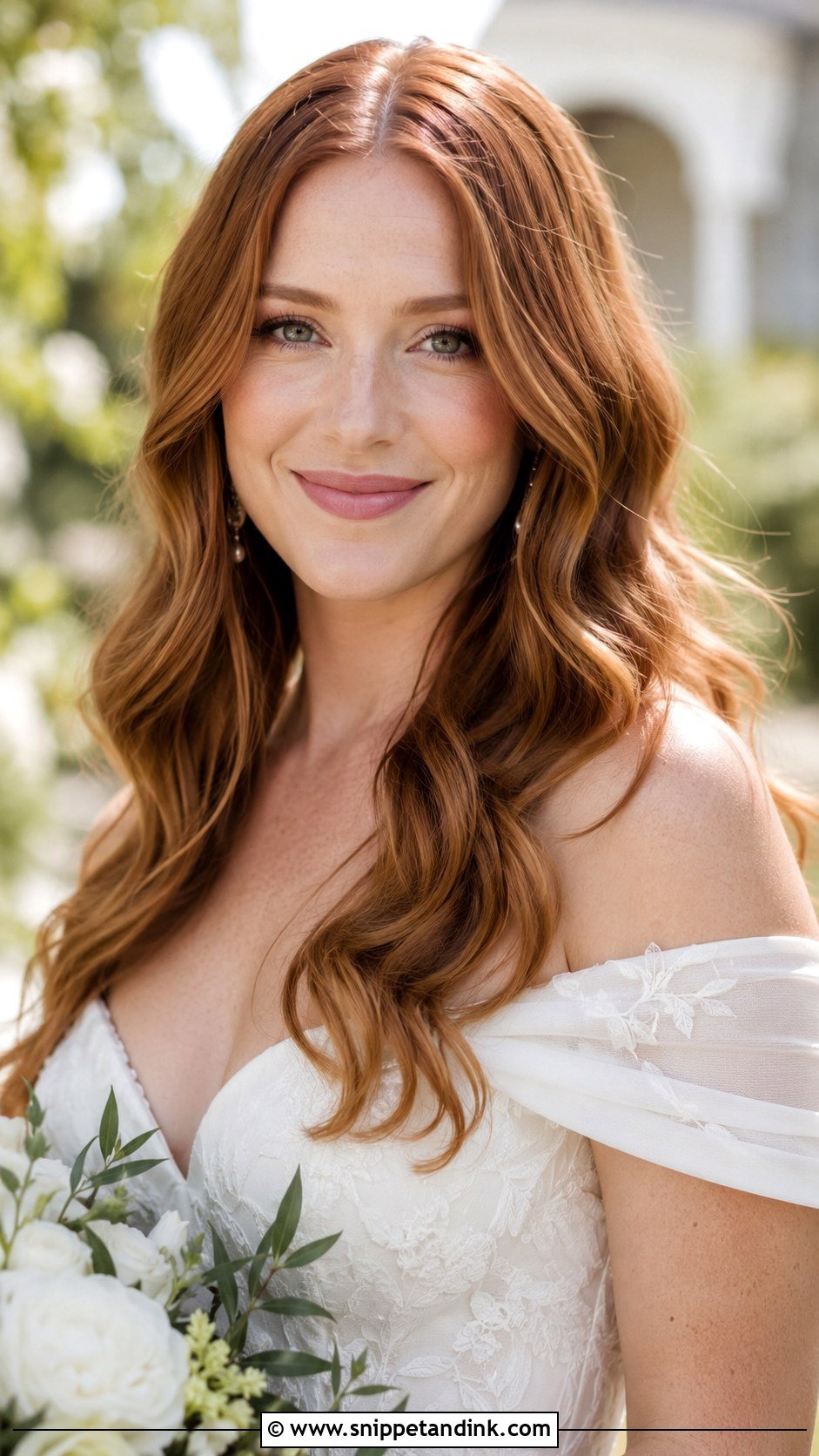
Loose waves look simple, but on long hair they’re the hardest style to keep. Length and weight stretch a curl out, so I curl tighter than the finished result and brush the curls out only once they’ve cooled completely. A center or side part both work; a deep side part gives more lift at the root. For a beach or outdoor wedding with humidity, I’d consider this style only with a half-up section or a clip ready to pull it back later.
4. Sleek High Ponytail for Brides
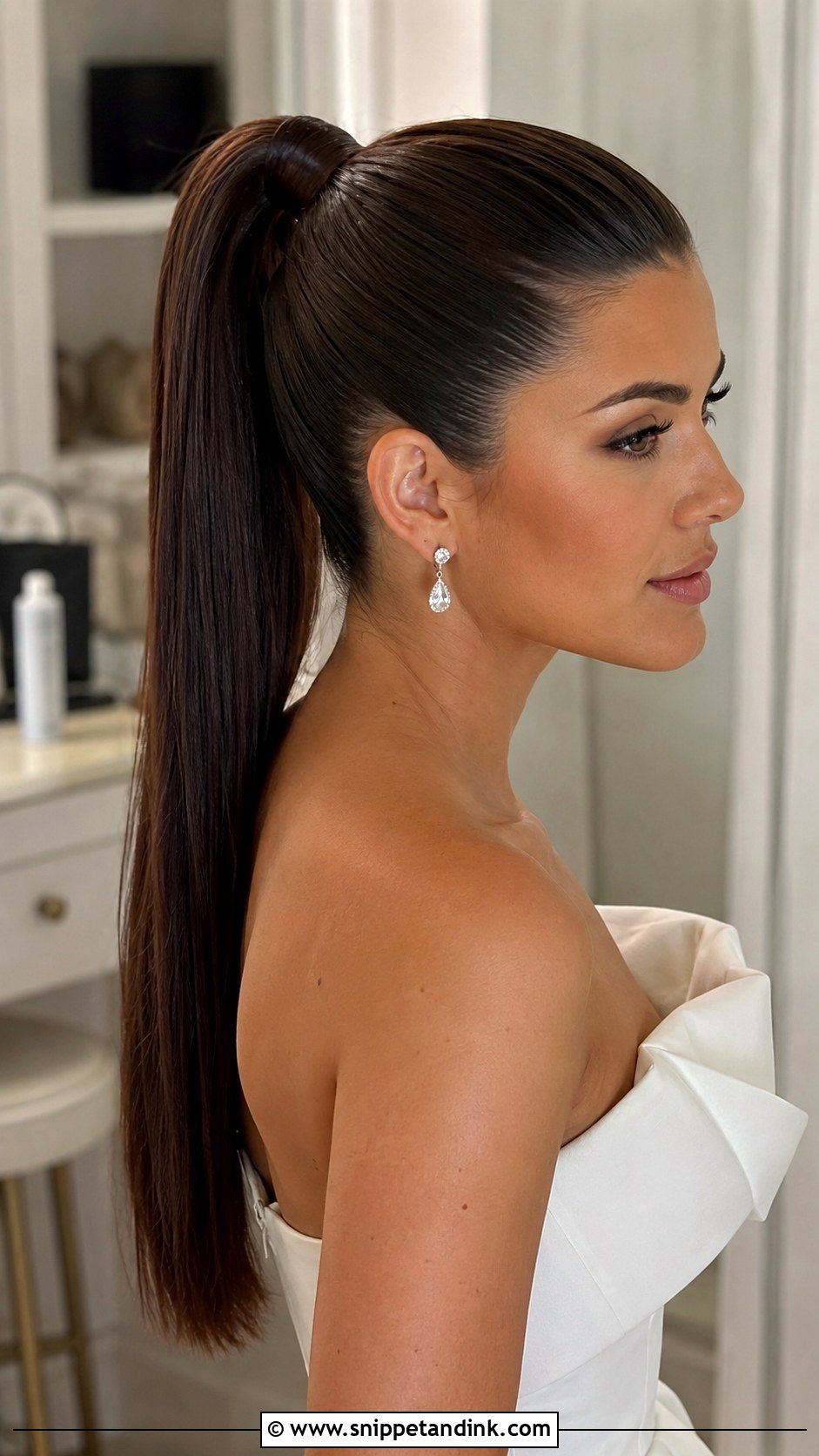
A sleek high ponytail is bold, and it shows off the face and jawline completely. On long, thick hair, the ponytail gets heavy, so I sometimes build it as two ponytails stacked one above the other, which spreads the weight and makes the result look fuller. A strand wrapped around the base hides the elastic. Wear it with a structured gown and bold earrings, and expect some scalp tension by evening if your hair is very heavy.
5. Braided Crown Wedding Hairstyle
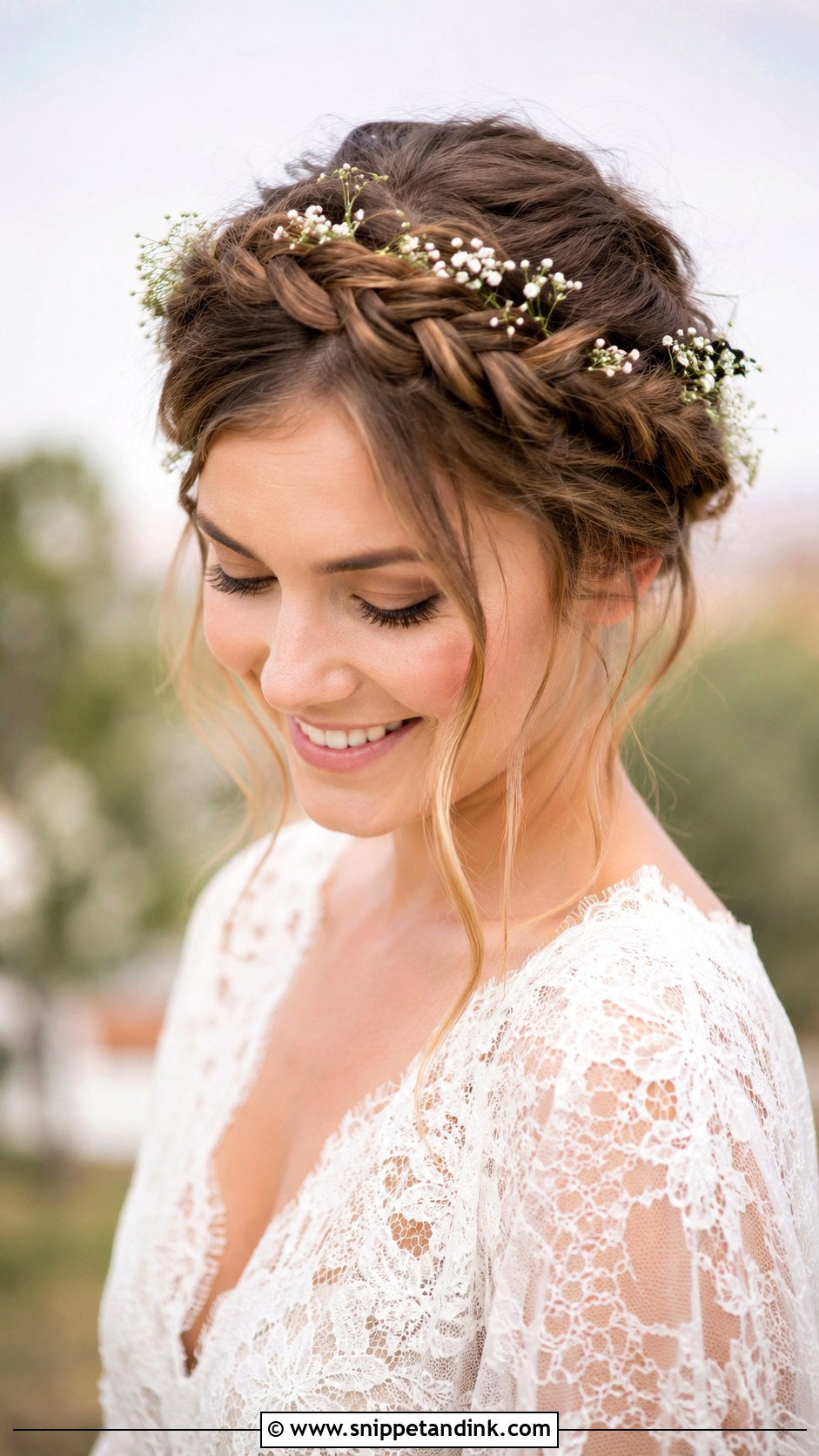
A braided crown circles the head like a halo and works best on long hair, because you need the length to get all the way around. I braid two sections, one from each side, and pin them over the top so they meet behind the ear. The rest can stay down or be pinned up underneath. Tiny flowers or greenery tucked into the braid suit a garden setting. It holds well all day, but it takes time, so it needs a real slot in the schedule.
6. French Twist Updo for Wedding
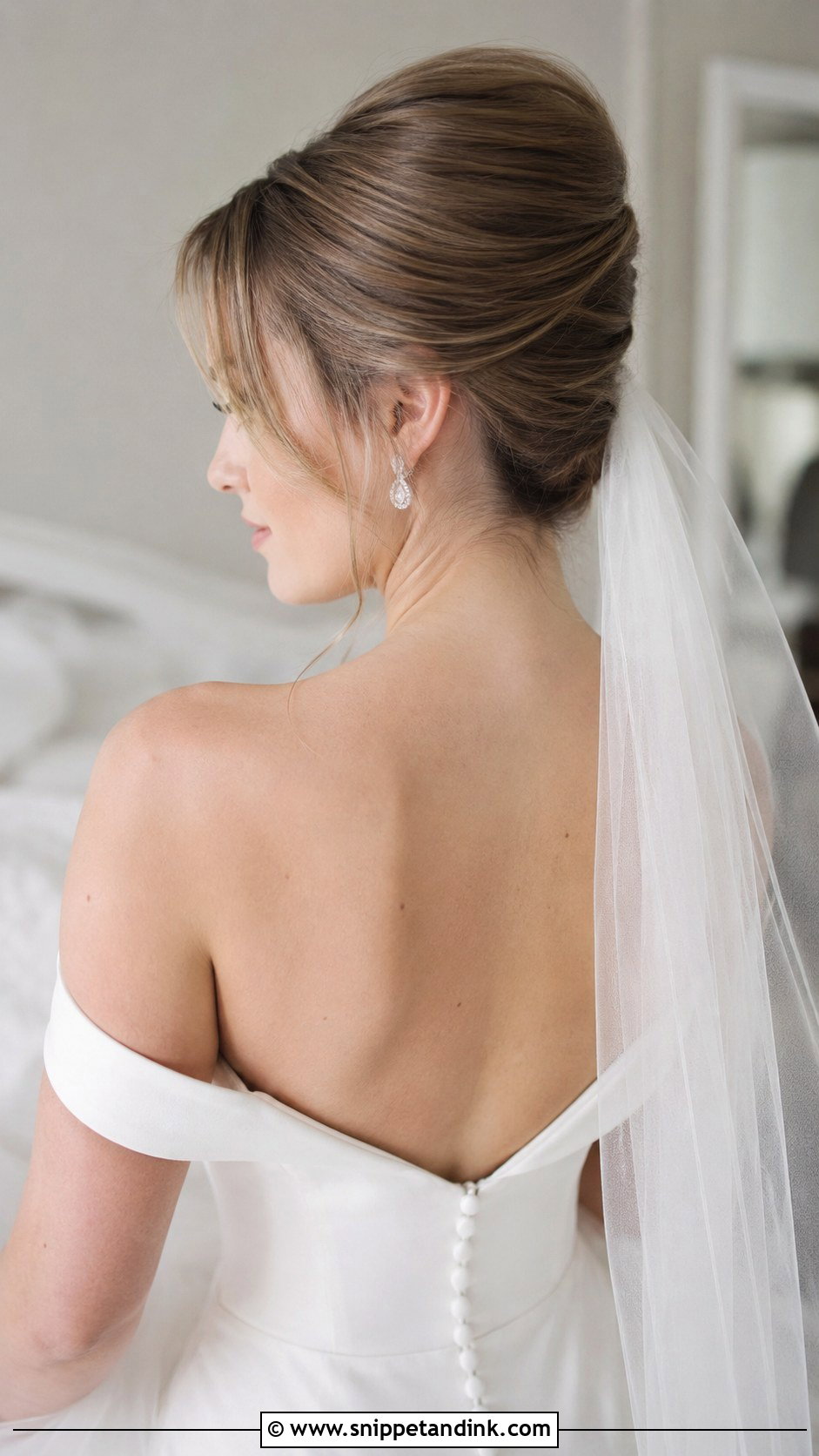
A French twist gathers the hair into a vertical roll at the back of the head. Long hair actually makes this harder, since there’s a lot of length to tuck into the roll. I backcomb lightly at the base and use long pins inserted vertically into the twist. It keeps a clean line under a cathedral veil and suits a formal ceremony. If your hair is very thick and past your waist, a low chignon will usually hold better.
7. Boho Braided Wedding Hairstyle
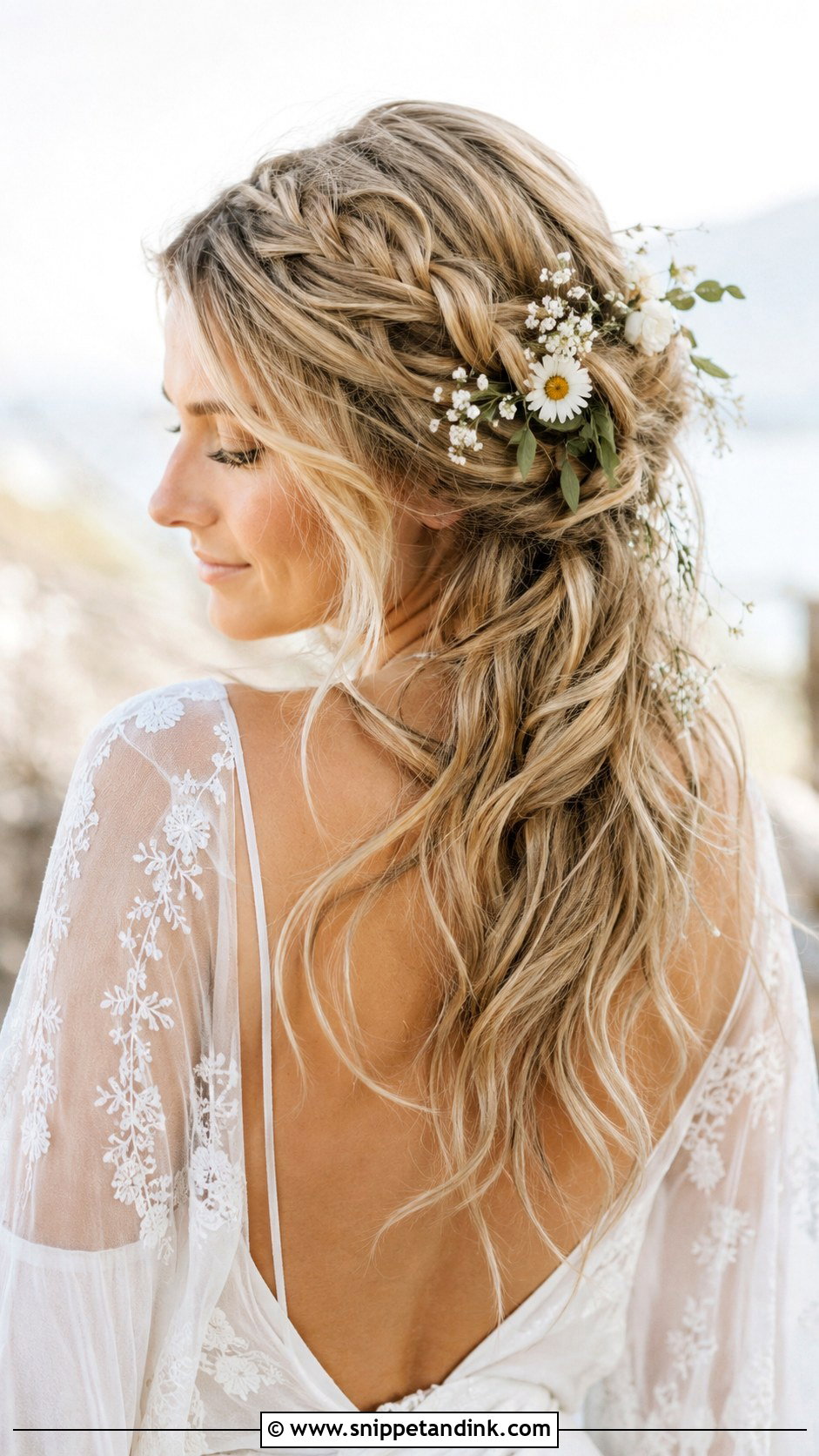
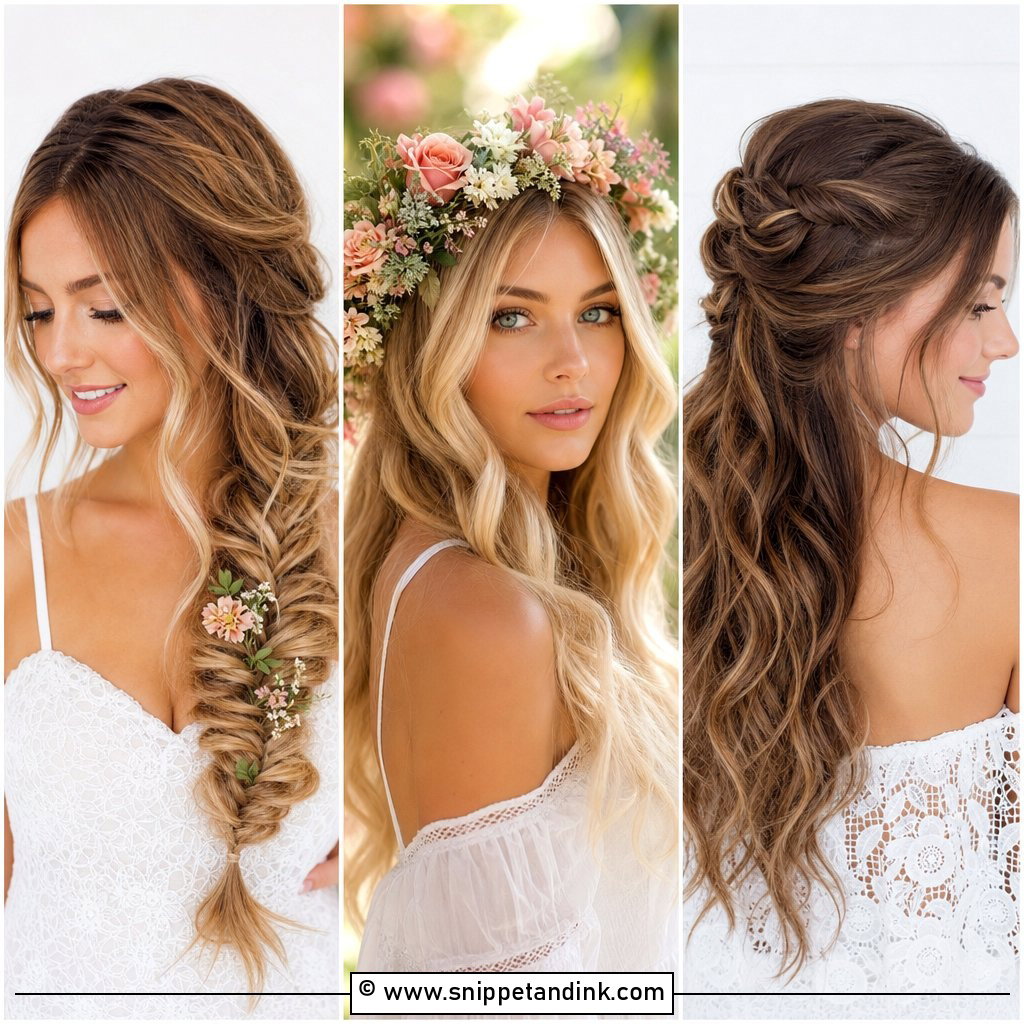
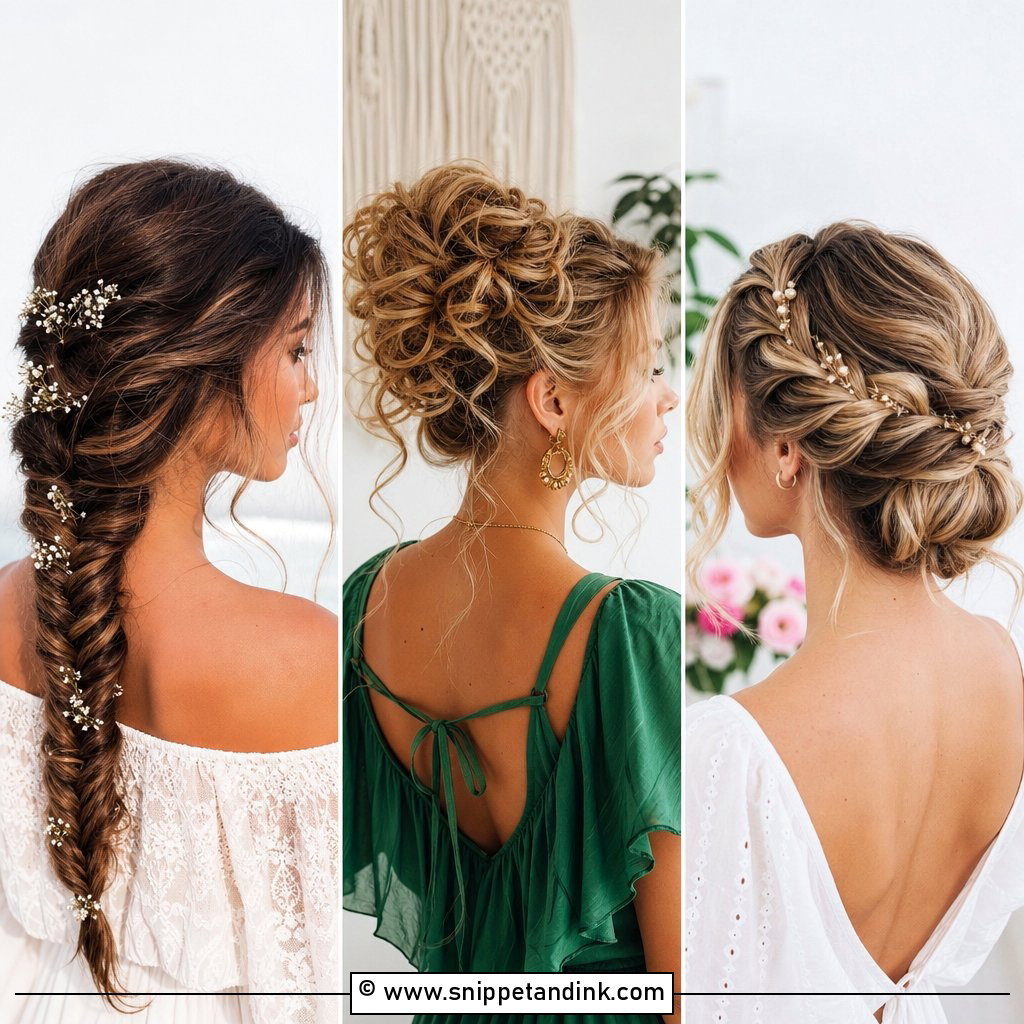
Free-spirited brides tend to ask me for loose braids mixed with waves. The braids can run along the sides or come together in a low knot. I keep them loose, but I set each one with a little texture spray so the pulled-out pieces stay where I put them. Wildflowers, pampas or ribbons all look at home here. It suits barns, fields and beach ceremonies better than a black-tie ballroom.
8. Vintage Finger Waves for Brides
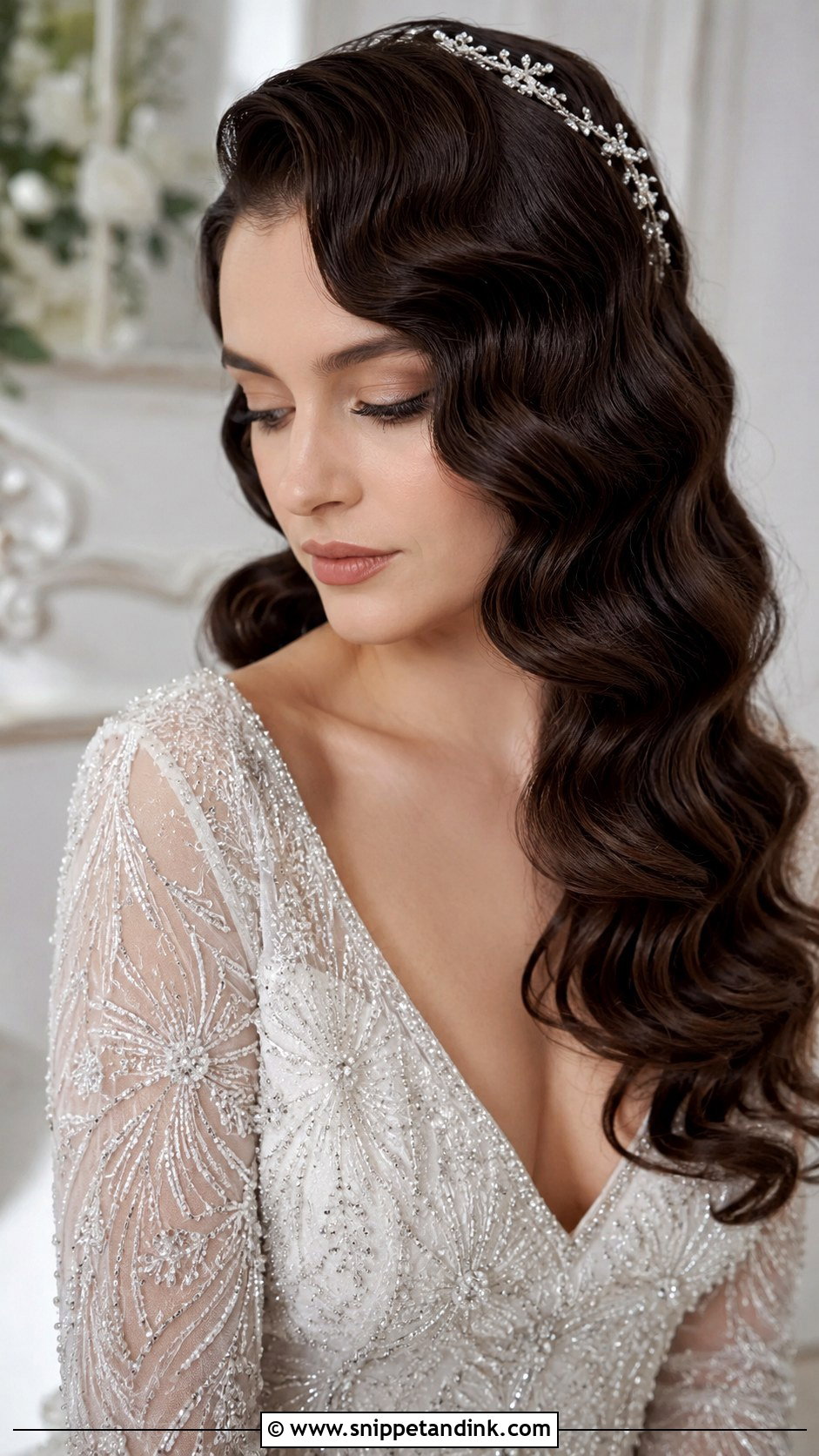
Finger waves are sculpted S-shaped waves pressed close to the head. Traditionally they’re set wet with gel and combs, and on long hair I usually set waves near the face only and let the lengths fall in soft curls behind. Finger waves need a strong hold to survive the day, so the finish is glossier and firmer than many brides expect. It suits a vintage or art-deco theme with matching accessories.
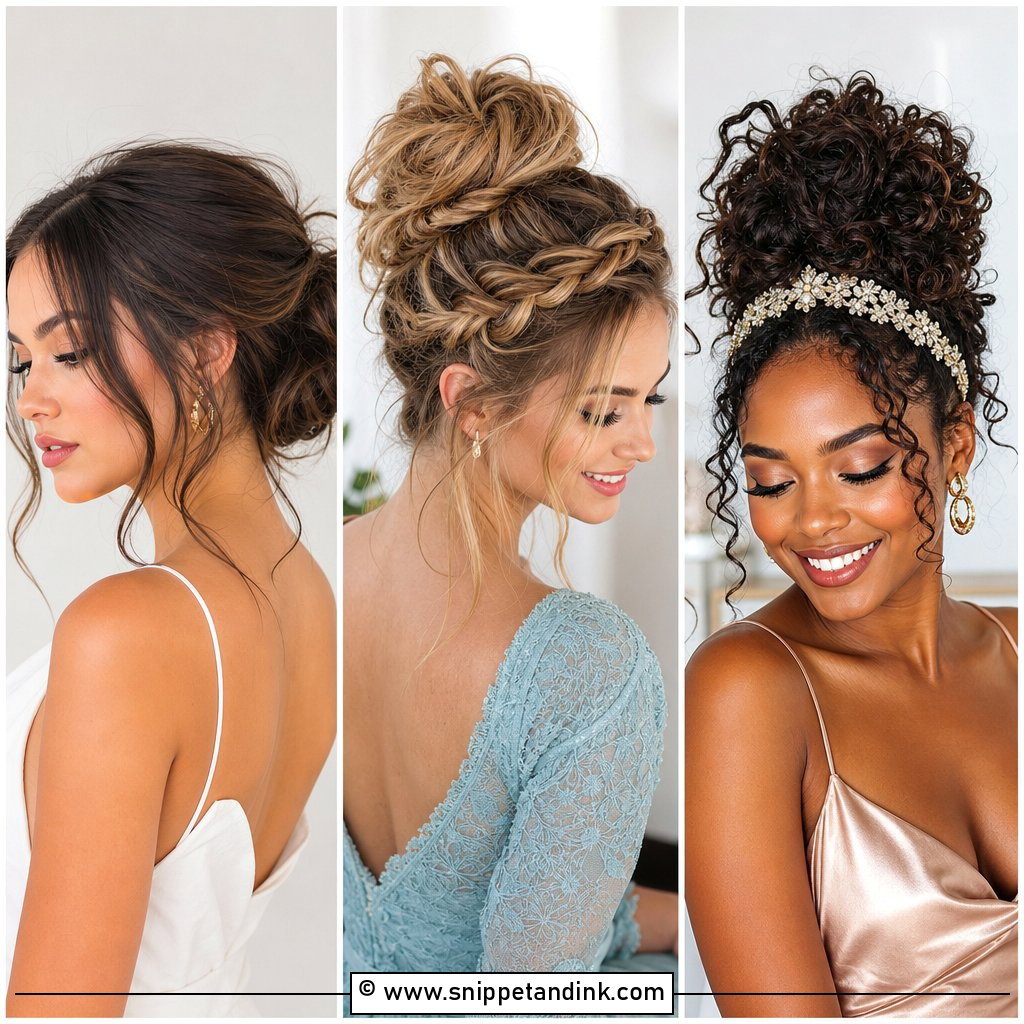
9. Messy Low Bun Wedding Hairstyle
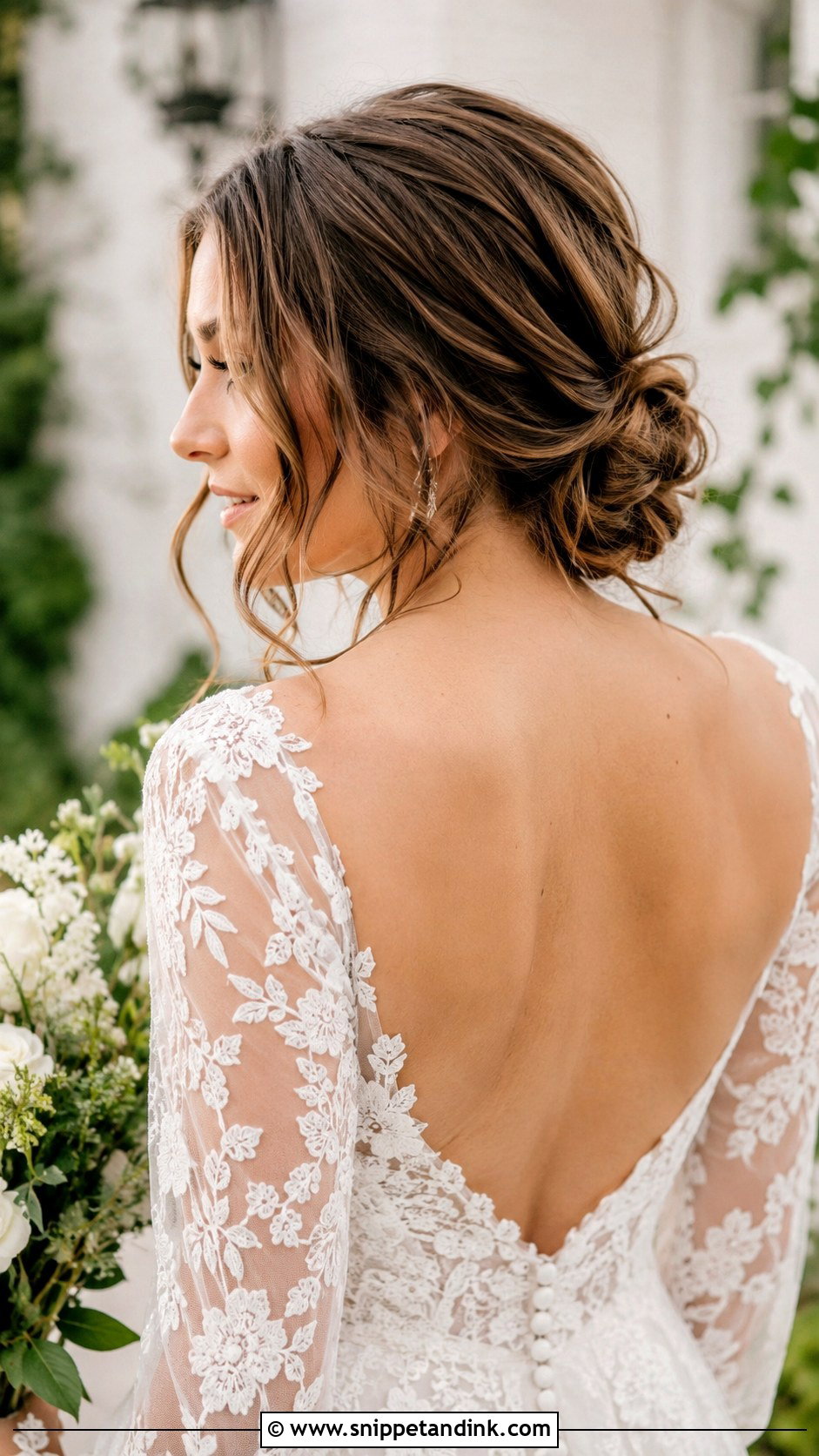
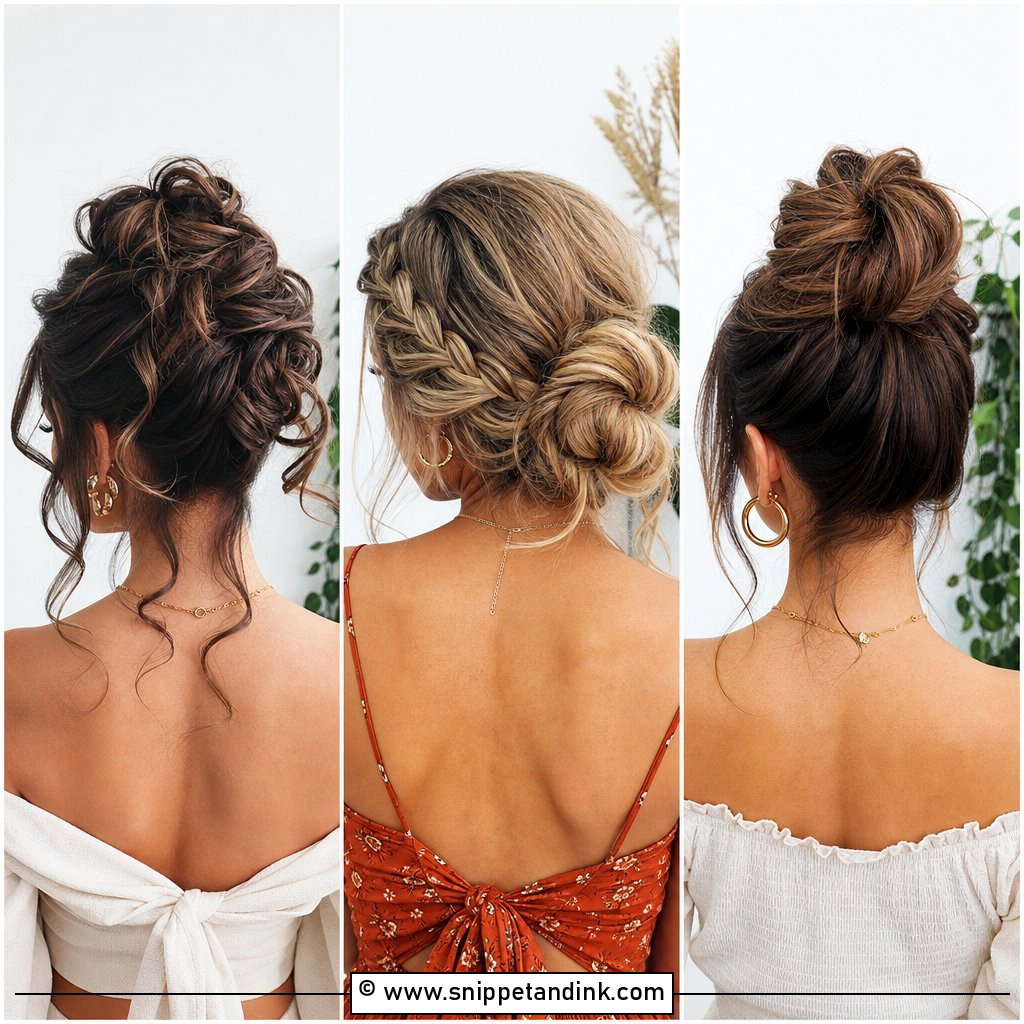
A messy low bun sits at the nape with deliberate texture and loose tendrils frame your face. The word ‘messy’ is misleading: I pin these as carefully as a sleek bun, then loosen the outside. On long hair, I often braid the length before coiling it, because the braid gives the bun shape without needing as many pins. Delicate hairpins and fresh flowers suit it. It works for a garden wedding and is comfortable to wear all day.
10. Fishtail Braid for Long Wedding Hair
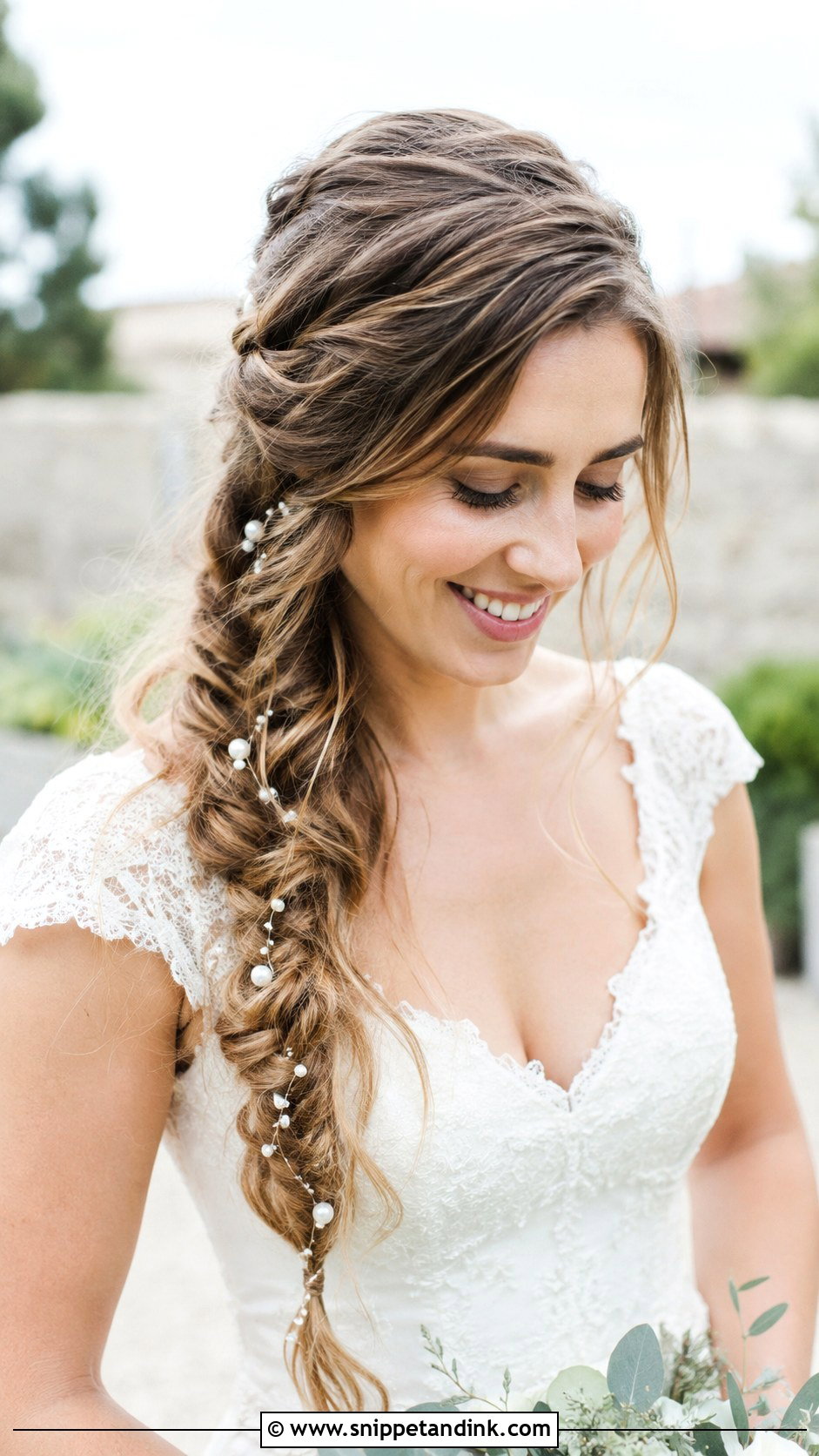
A fishtail braid crosses very thin sections from one side to the other, which gives it that woven texture. Long hair shows the pattern best, since there’s more length to see. I usually drape it over one shoulder, which keeps it in front for photos. Tight looks neat; pulled-apart looks softer. Pearls or small flowers fit into the gaps, and because the sections are fine, a fishtail grips itself well through the day.
11. Sleek Bridal Bun With Center Part
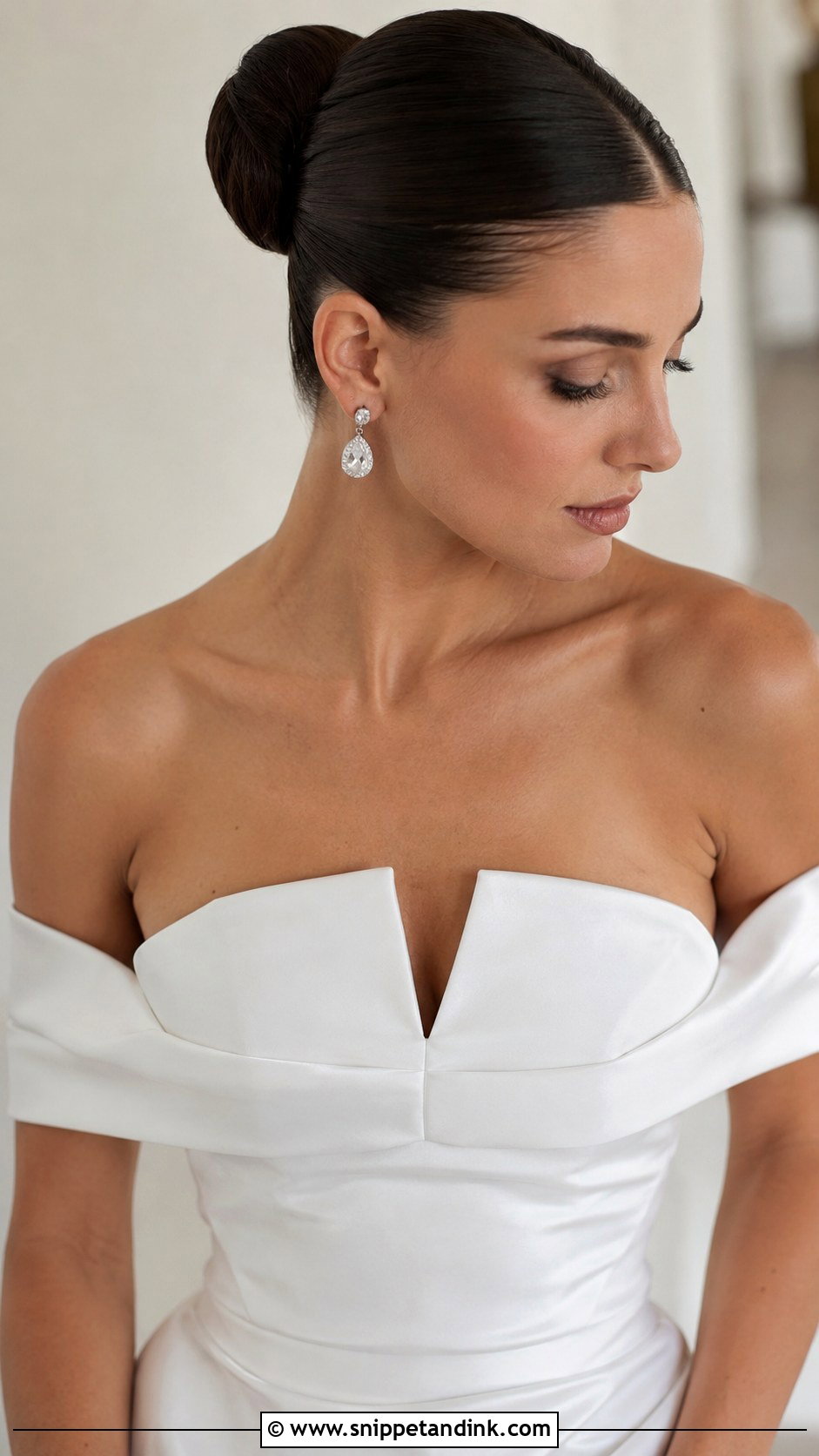
A sleek ballerina bun with a center part is the most minimal look on this list. The part has to be precise, and every hair has to sit flat, so I smooth the hair with a gel or cream while it’s still slightly damp. Long, thick hair makes a large bun, and some brides like that; if you’d rather it smaller, I can braid the length and coil it tighter. It shows off bold earrings and the face, which isn’t everyone’s comfort zone.
12. Curly Half-Up Wedding Hairstyle
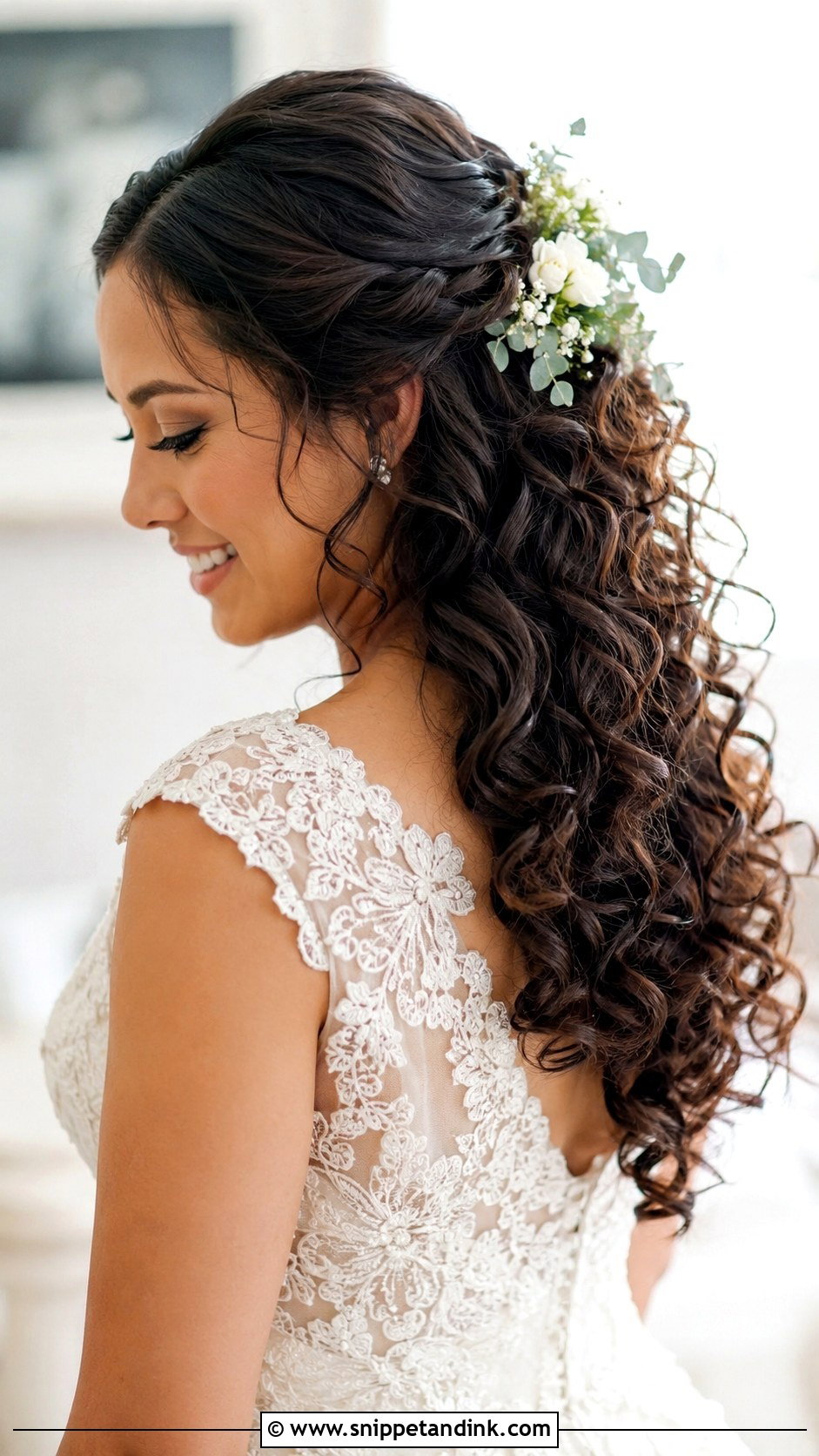
Naturally curly brides often get told to straighten for their wedding. I’d rather work with the curl. For a curly half up, I define the curls with a cream, let them dry fully, and only then pin the top section back with decorative clips or flowers. Avoid brushing curly hair once it’s dry; use fingers to separate the curls. It suits a formal or casual wedding, and it lets your own texture lead.
13. Side-Swept Curls for Wedding
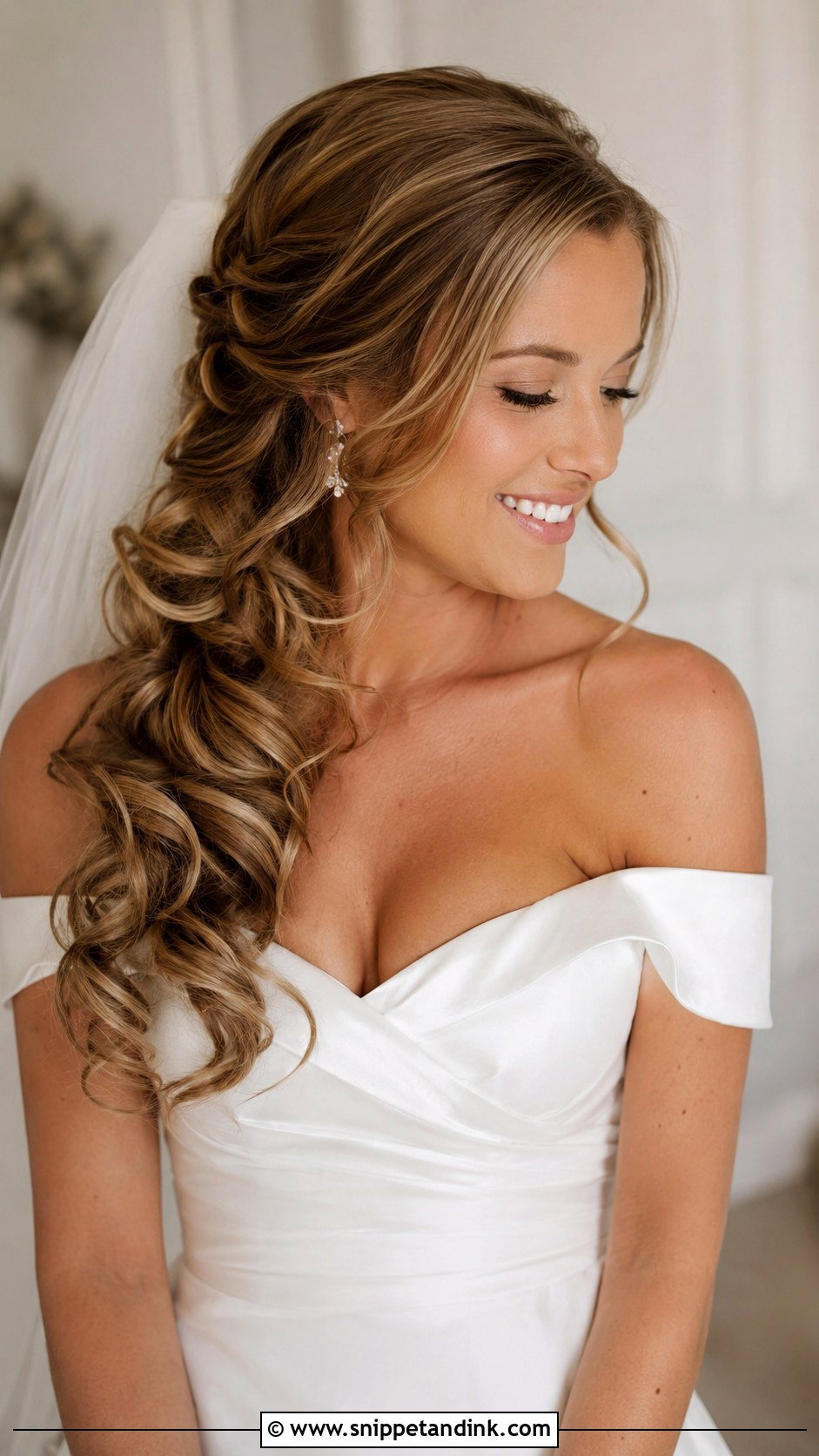
Side-swept curls gather the hair over one shoulder. The secret is pinning behind the opposite ear, hidden under the curls, so everything stays on one side when you turn your head. A sparkling pin can cover the anchor. It suits an off-shoulder or one-shoulder gown that leaves the side of the neck open. Long hair can get heavy on one shoulder, so I sometimes pin a few curls in place underneath to share the load.
14. Dutch Braid Wedding Hairstyle
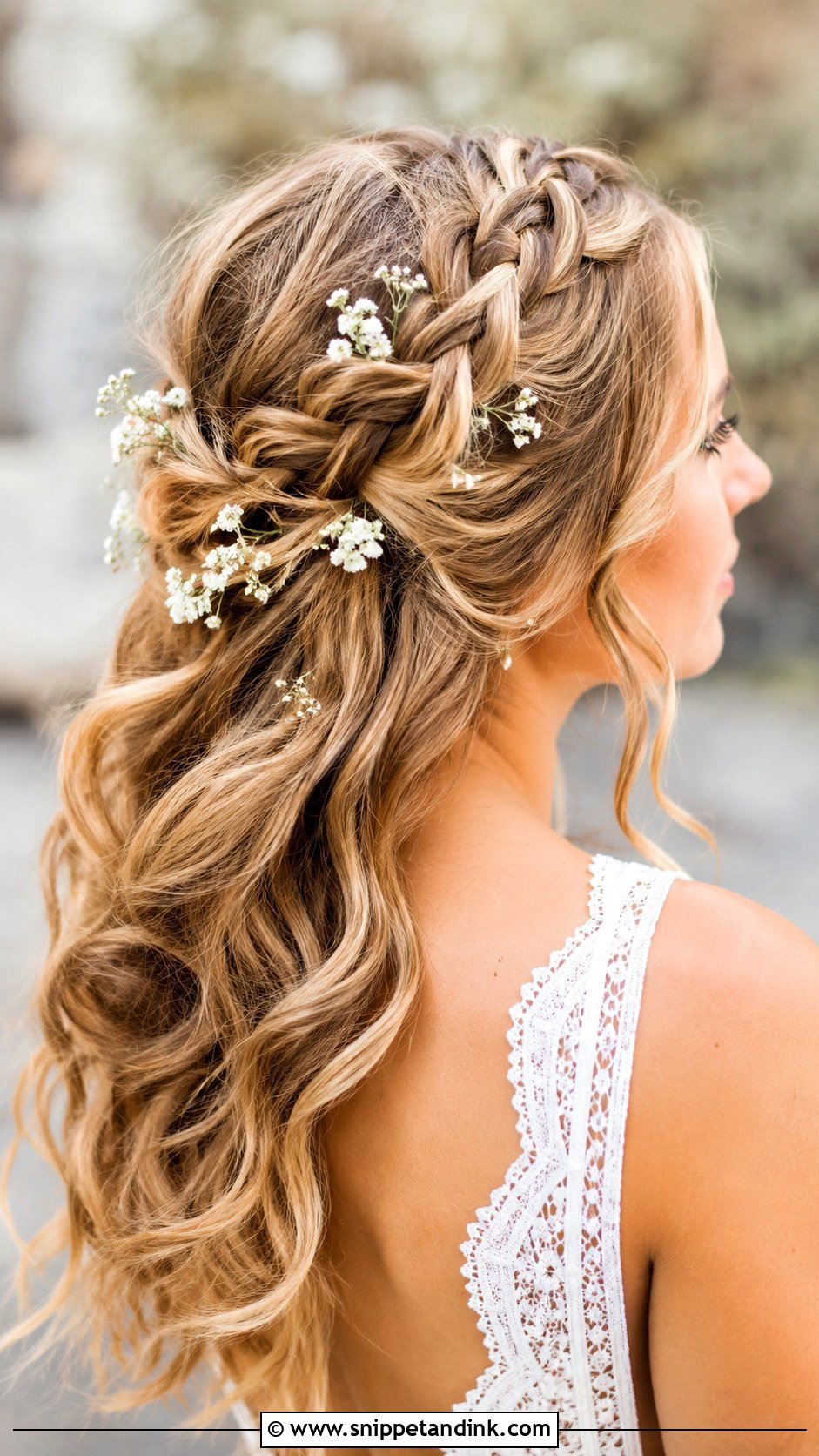
A Dutch braid crosses the sections under rather than over, so the braid sits raised on top of the hair. One braid down the crown looks clean; two look more playful. I like it for brides with very thick, long hair, because braiding tight to the scalp takes some bulk and weight out of the loose lengths. The rest can stay loose or go into a low bun. Tiny blooms pressed into the raised braid show up well in photos.
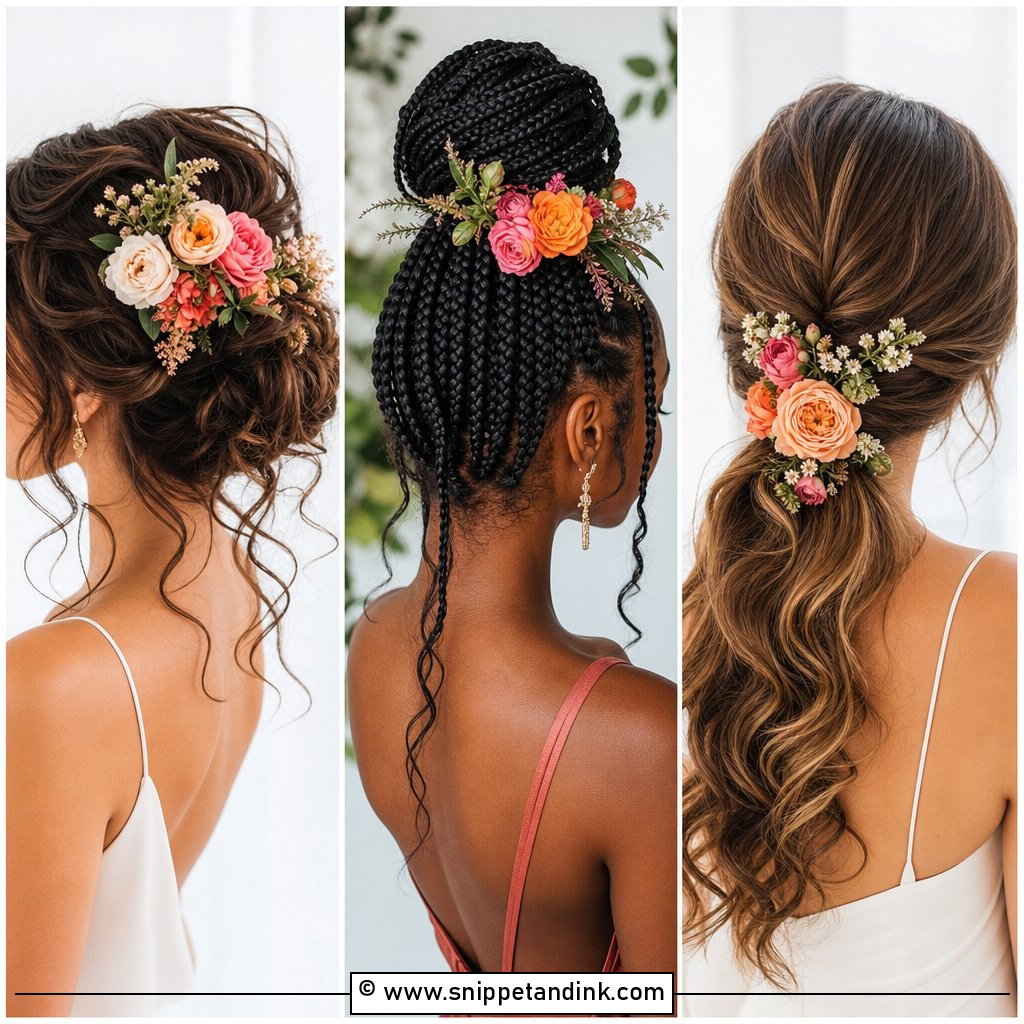
15. Bridal Blowout With Volume
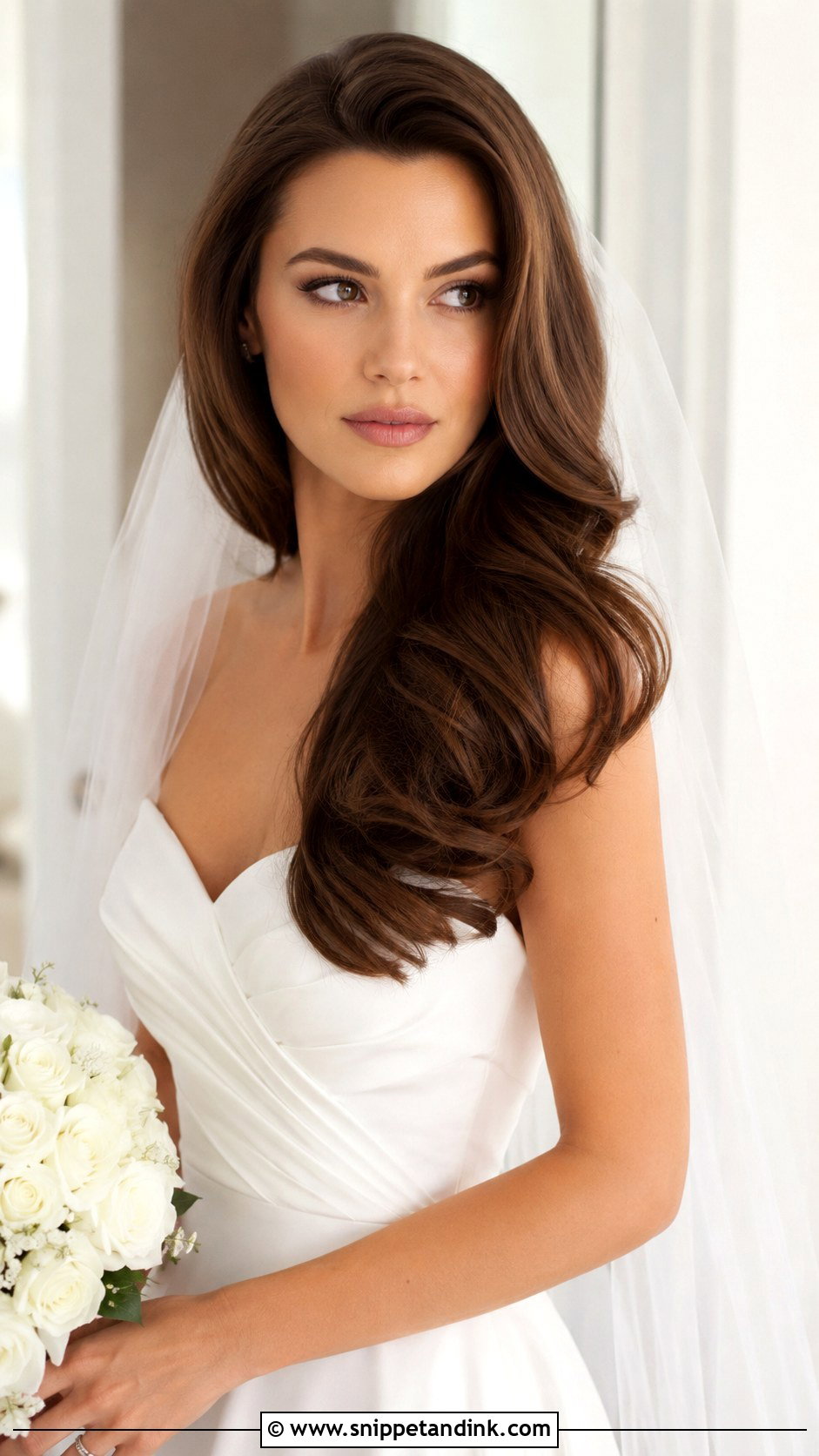
A bridal blowout is smooth, full hair left down. Long hair needs a good round brush and a lot of patience to get volume at the root without frizz on the length. I add soft bends at the ends with a large barrel iron rather than tight curls. It’s a simple look, and simple looks show any frizz or flat roots more, so I’d only suggest it for a dry, cool venue or an indoor reception.
16. Twisted Updo for Long Hair
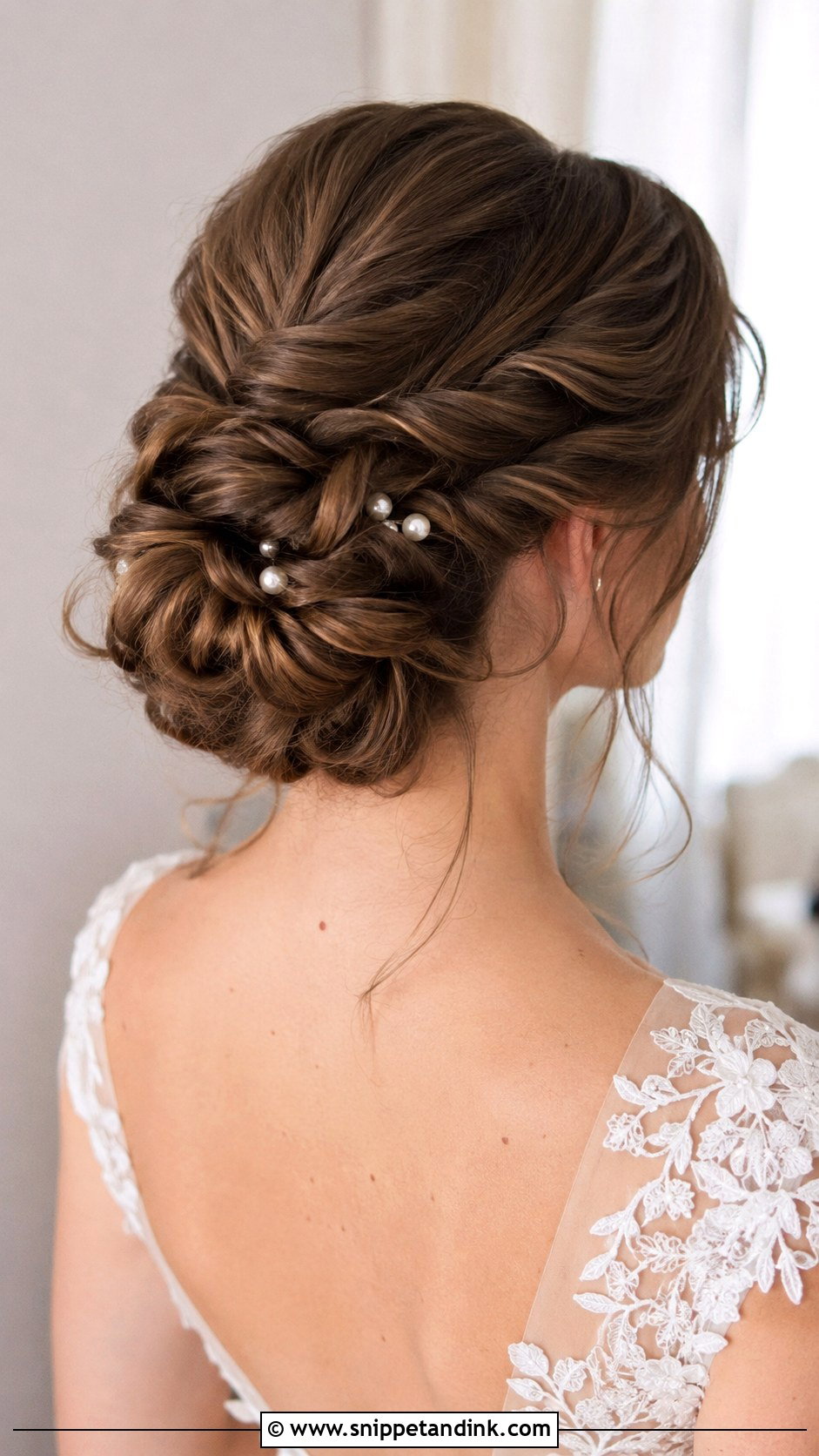
A twisted updo is built from many small twists pinned into a low bun or around the back of the head. Twists are softer than braids and easier to adjust if something feels too tight. On long hair, I sometimes leave the ends of each twist loose and tuck them, rather than forcing every inch into the shape. Pearls or decorative pins work well over the joins. It suits formal weddings, and it holds through a long reception.
17. Flower Crown Wedding Hairstyle
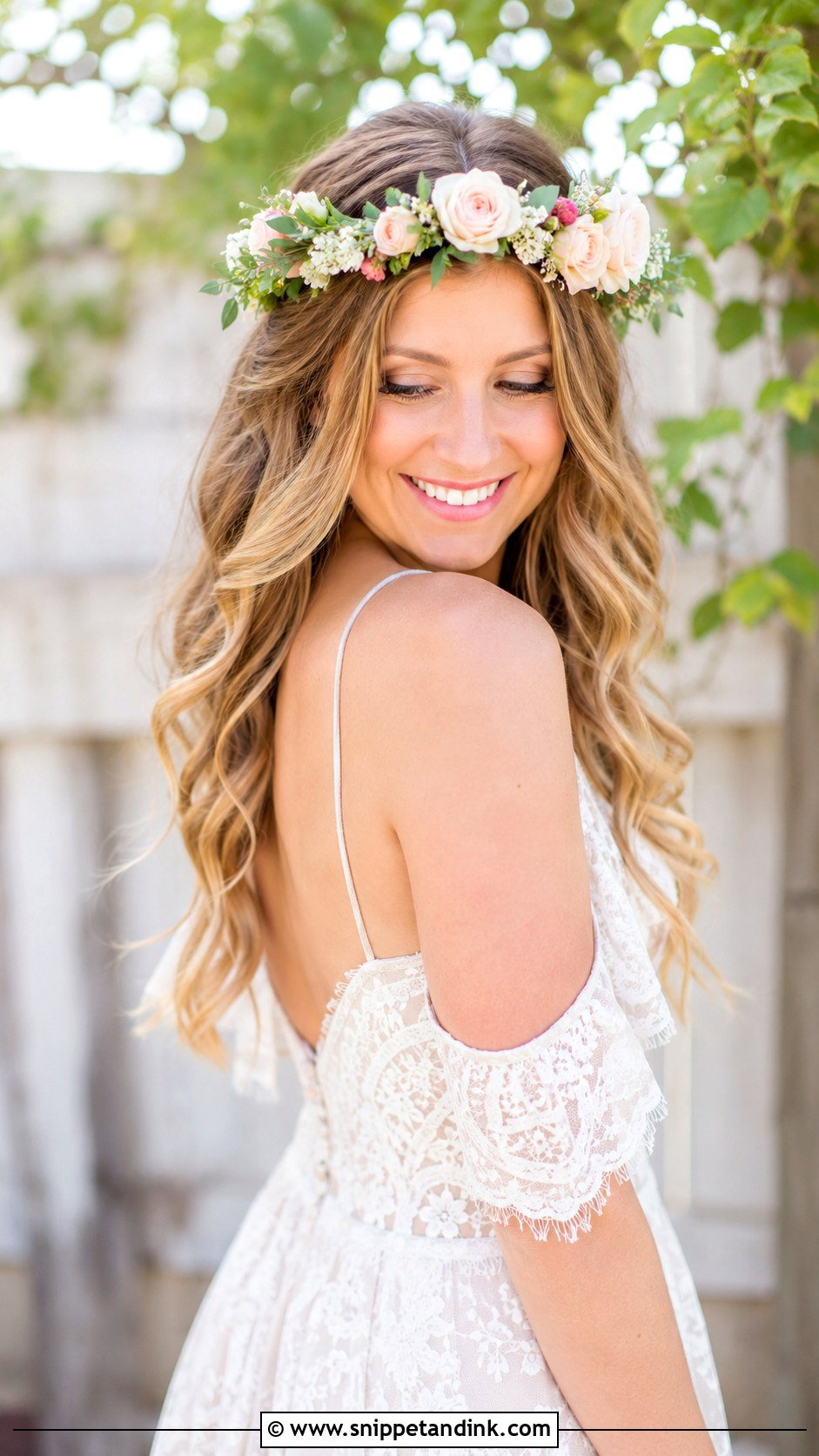
A flower crown sits over long hair worn down in soft waves or half up. Real flowers are heavy and wilt in heat, so I anchor the crown on small hidden braids or pinned twists at each side. Baby’s breath lasts well; large roses can droop by evening. The crown suits an outdoor or garden wedding much more than a formal ballroom. If you’re unsure, you can wear the crown for the ceremony and remove it for the reception.
18. Low Ponytail With Soft Waves
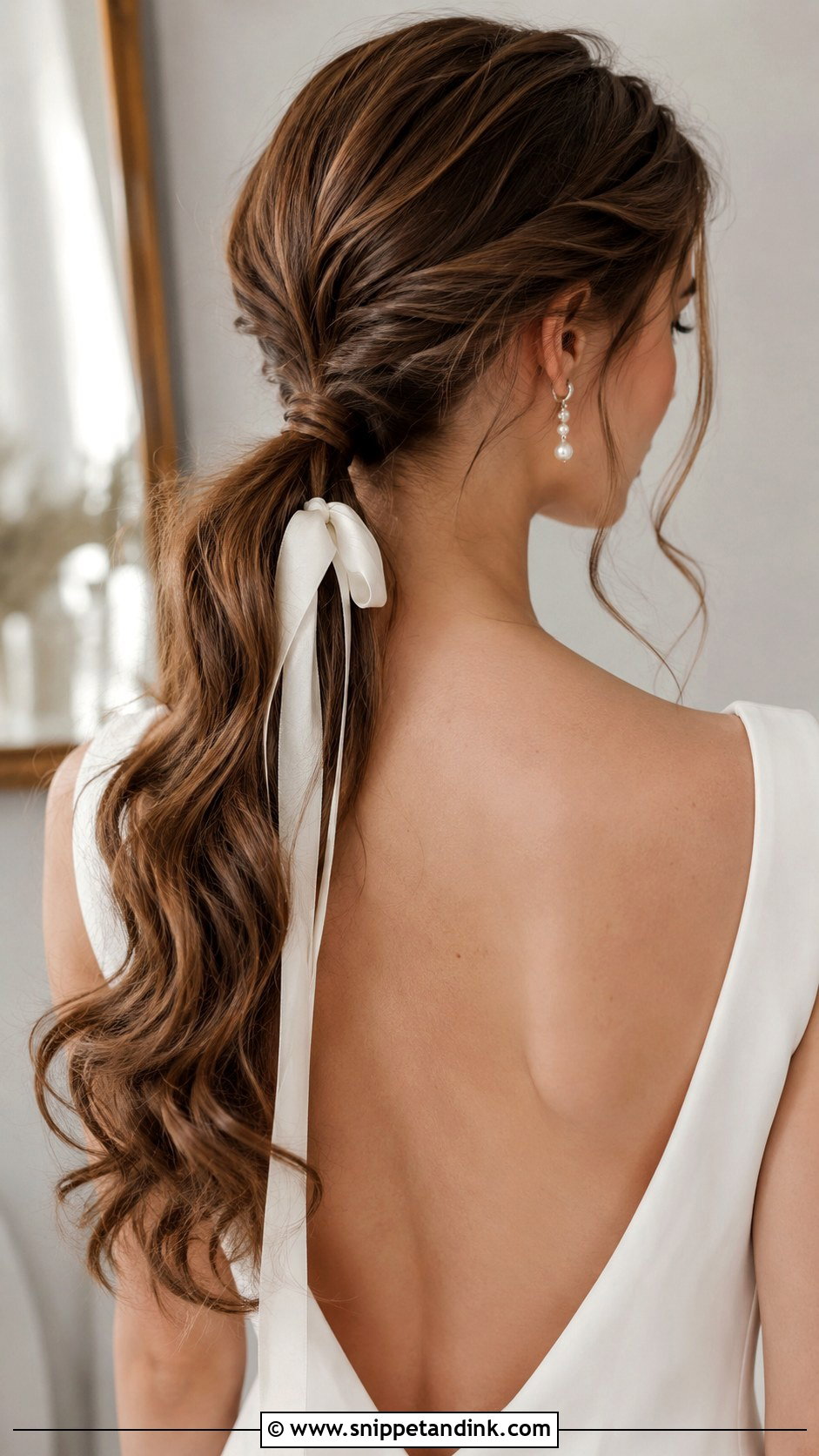
A low ponytail with soft waves is gathered at the nape and wrapped with a strand to hide the elastic. I curl the length after tying it, since tying the ponytail flattens curls near the base. It suits a modern or classic gown. A ribbon or bow adds a soft finish. On very long hair, the ponytail can be quite heavy, so I add a couple of pins under the base to stop it drooping.
19. Bubble Braid Wedding Hairstyle
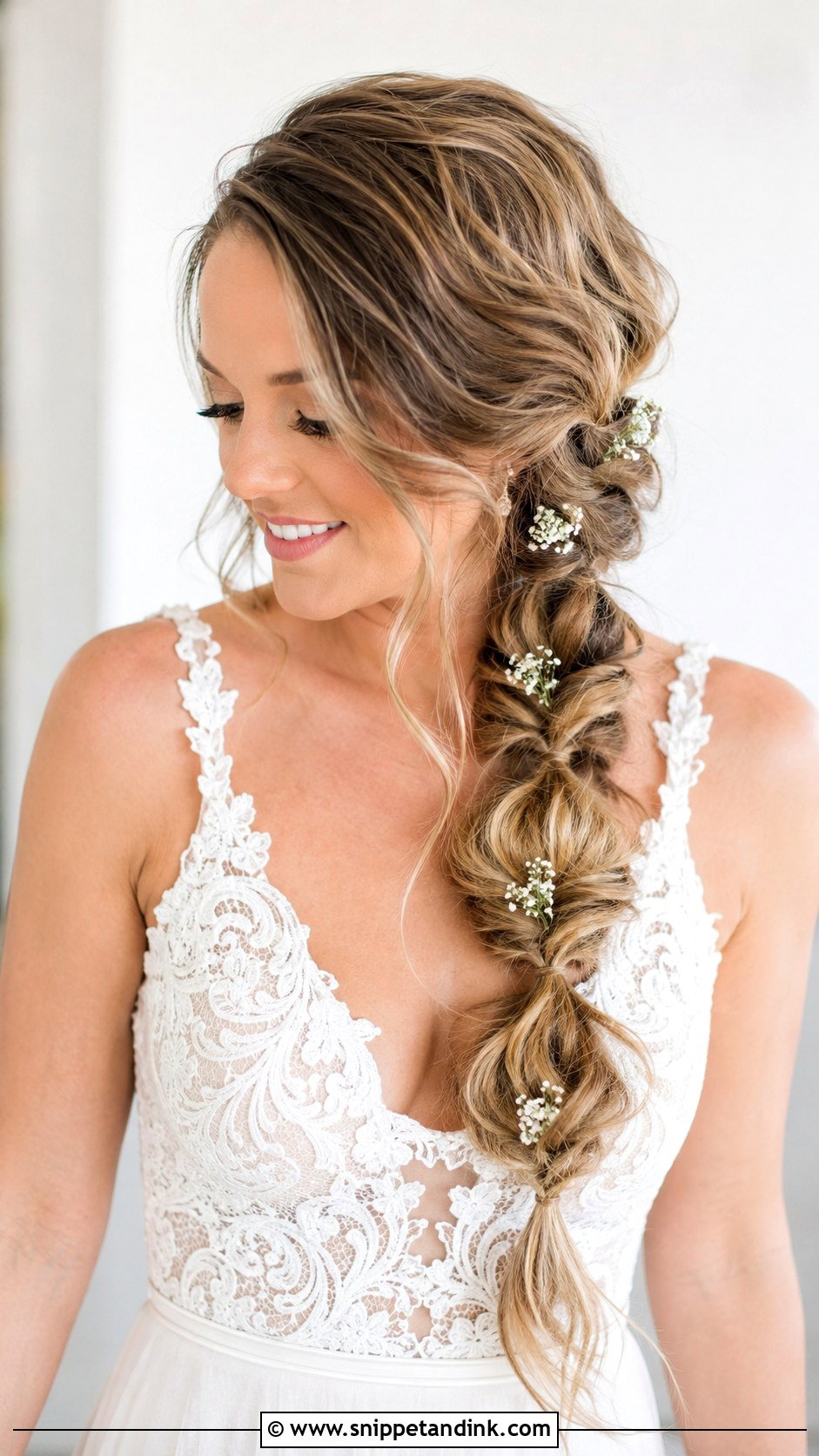
A bubble braid is a ponytail with elastics spaced along it, and each section between them pulled out into a rounded bubble. It’s quick to do and fun to wear. Long hair gives you more bubbles. I use clear elastics and pull each bubble out evenly, or it looks lumpy. Tiny flowers or pearls between the bubbles look sweet. It’s playful rather than formal, so it suits a relaxed or contemporary wedding.
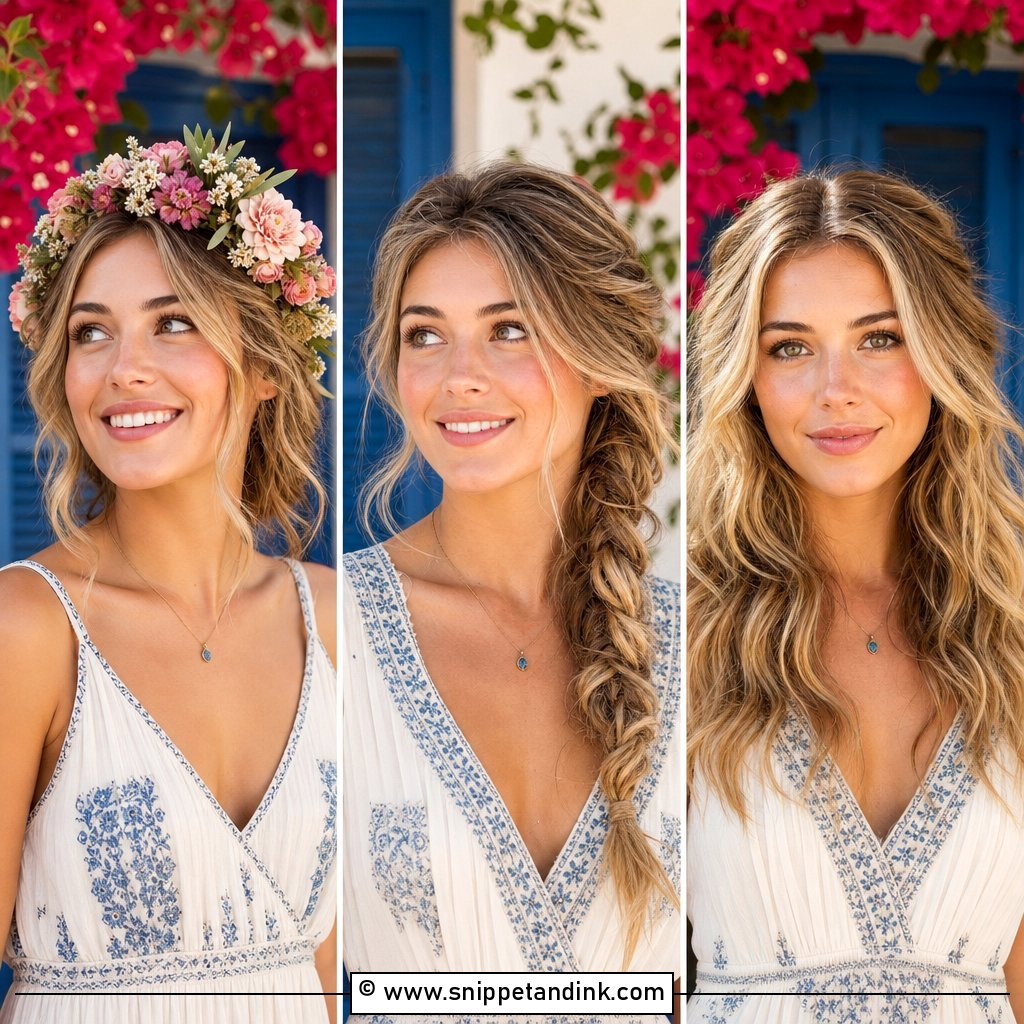
20. Pinned Back Wedding Hairstyle
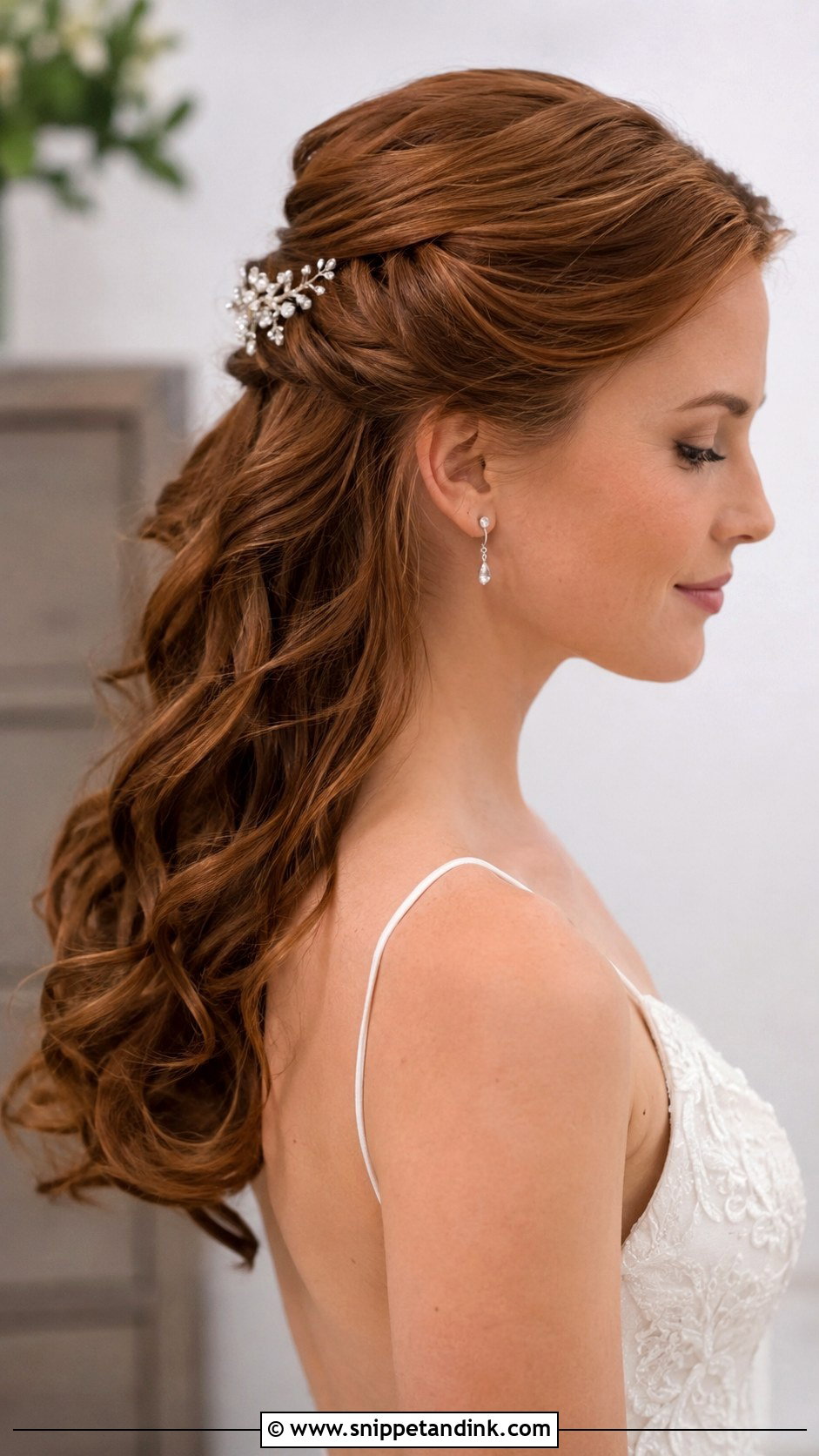
Pinning back the front sections is the simplest way to keep long hair out of your face while leaving it down. I take a section from each side, twist slightly and pin at the back, crossing the pins for a firmer hold. Decorative pins or small flowers cover the join. The loose lengths can be curled or left straight. It works with a veil and is easy to touch up yourself.
21. Sculpted Chignon With Accessories
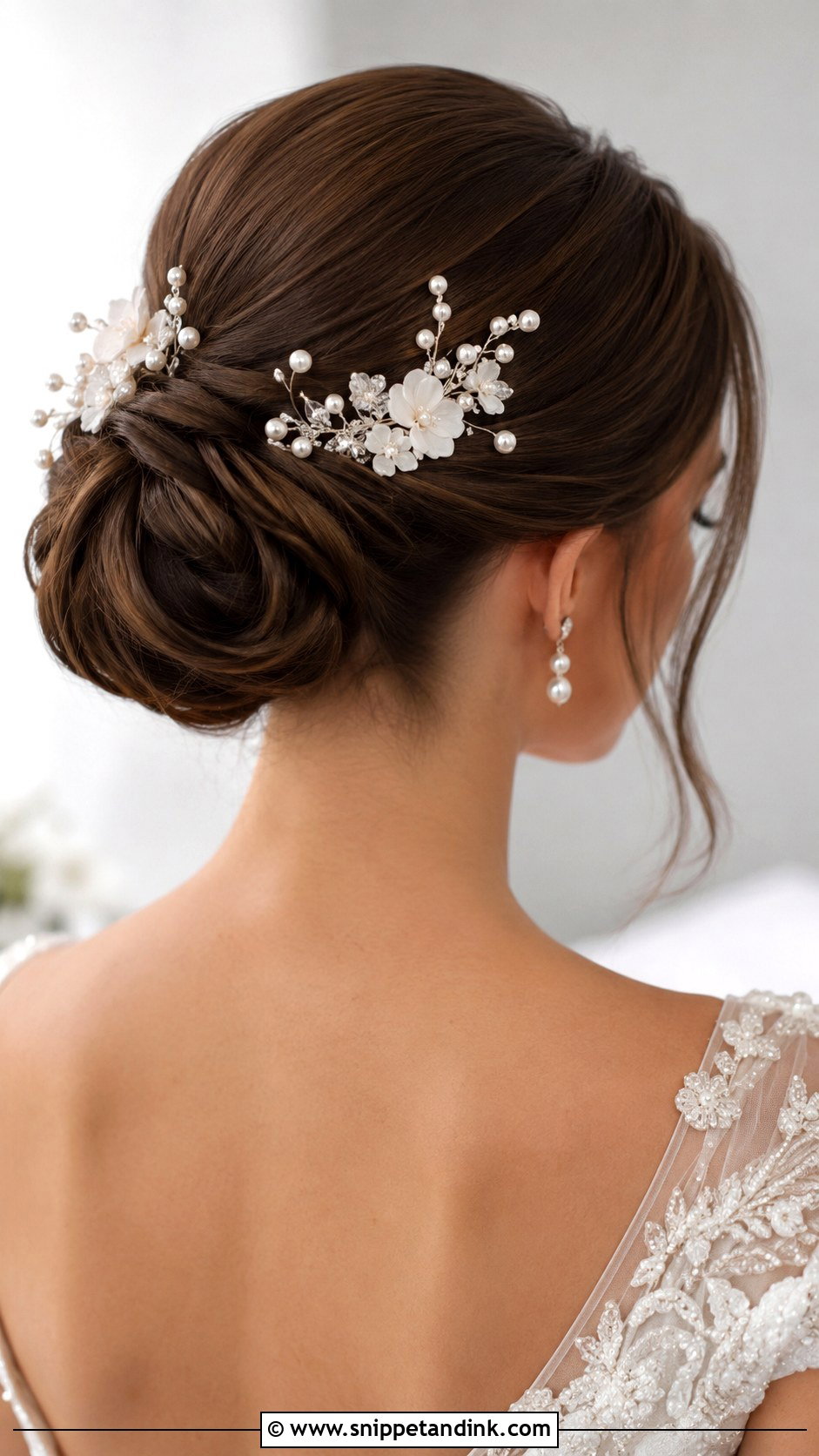
A sculpted chignon is a smooth, shaped knot at the back of the head, dressed with barrettes, pearls or florals. The sculpting takes time: I shape the hair over a padded base or a small pony, smoothing each section before pinning. Accessories should be placed after the shape is set, not used to hold it. It suits a formal venue and a structured gown, and accessories let you match your theme.
22. Waterfall Braid for Brides
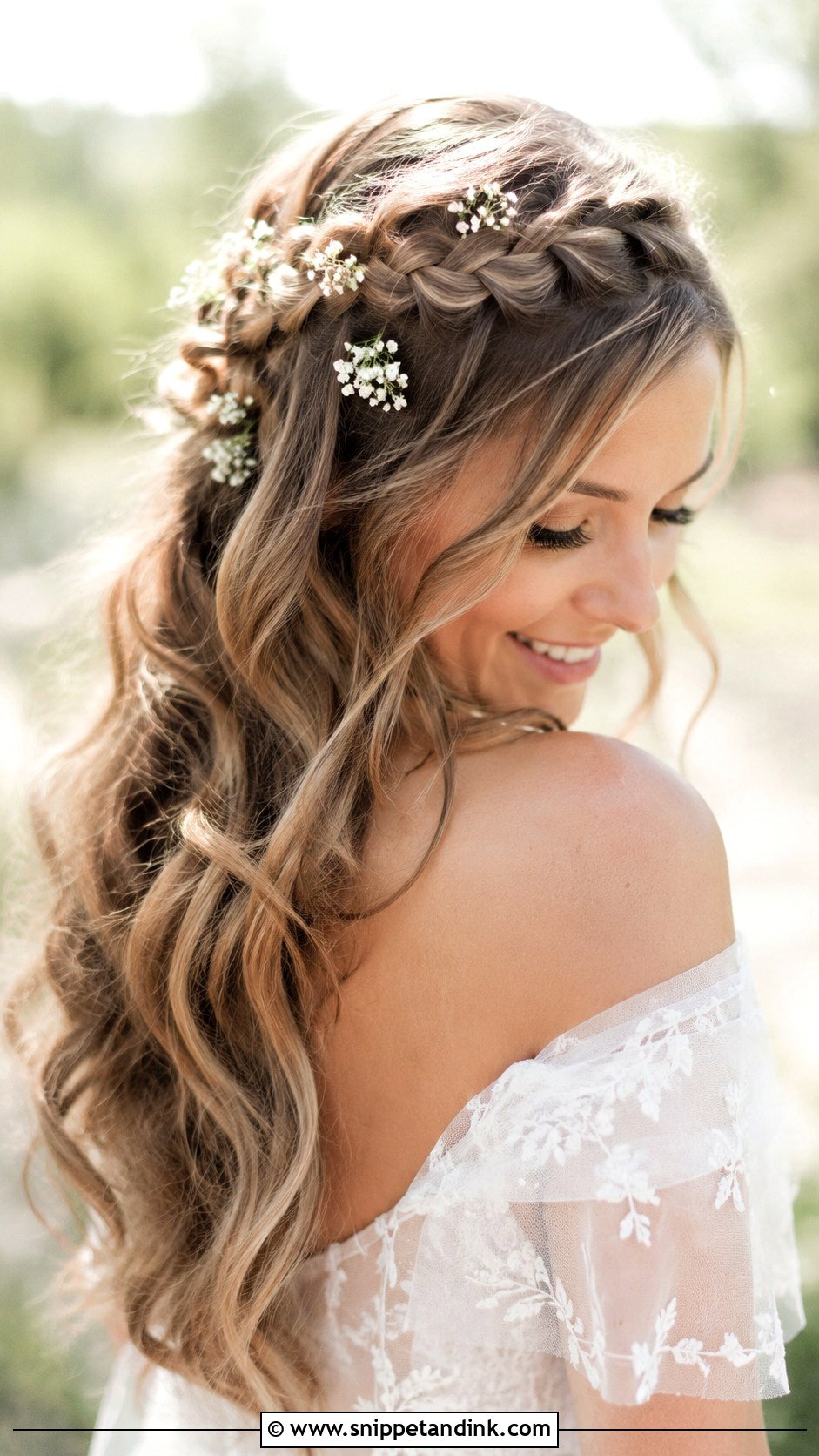
A waterfall braid runs across the head, dropping one strand at each pass so it falls through, while the rest of the hair stays loose underneath. Long hair shows off the falling strands best. Wear it across the crown or angled to one side. On layered hair, short pieces can pop out of the braid, so I use a little texture spray first. Tiny flowers along the braid finish it.
23. Vintage Updo With Volume
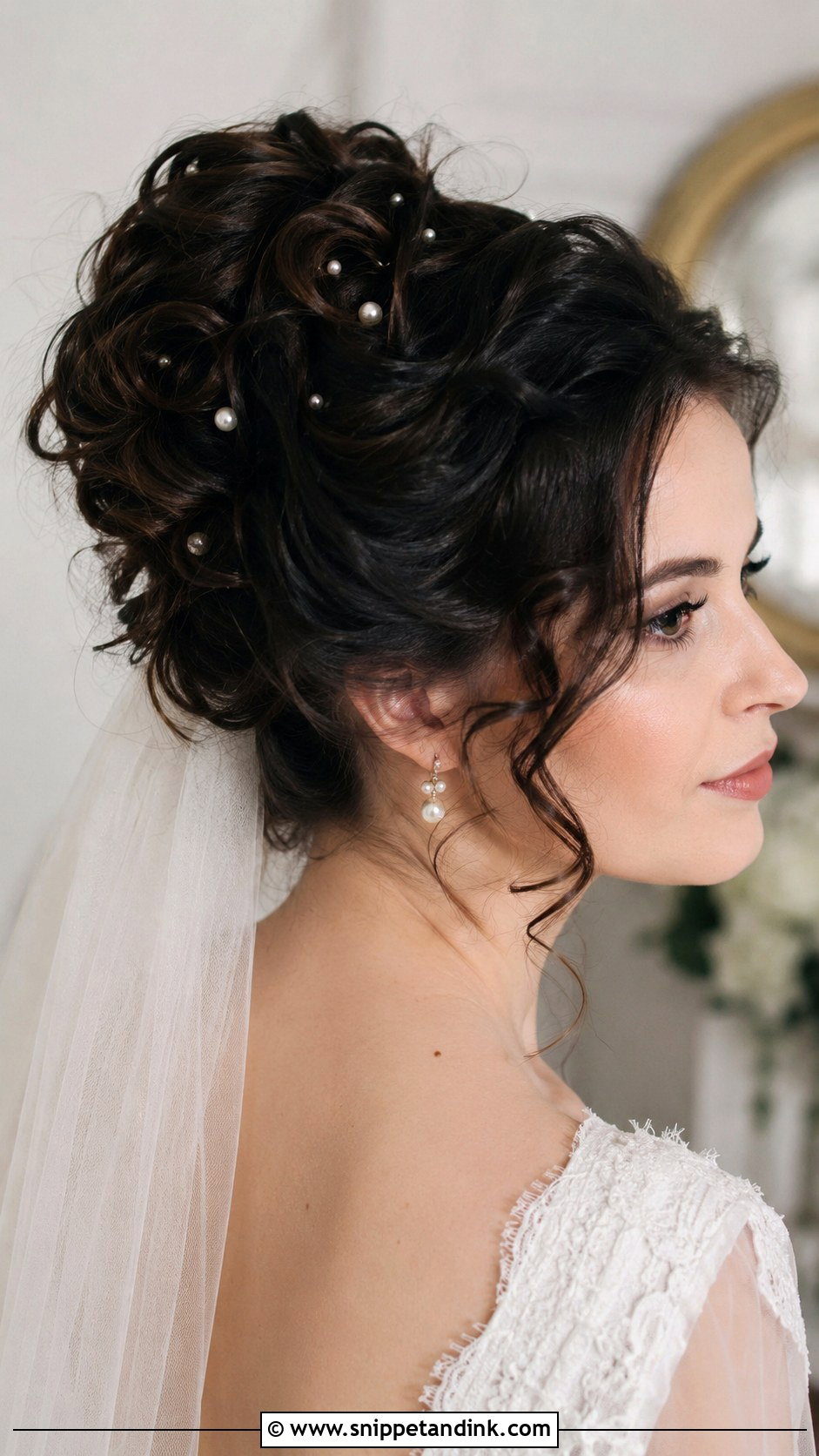
A vintage updo builds height and volume at the crown, with curls and twists pinned in loose layers. Inspired by Edwardian hair, it needs some backcombing at the crown and plenty of pins. On long hair, there’s a lot to work with, so the volume comes more easily than on short hair. Decorative combs or pearls finish it. It suits a classic gown with a statement veil.
24. Twisted Half-Up With Flowers
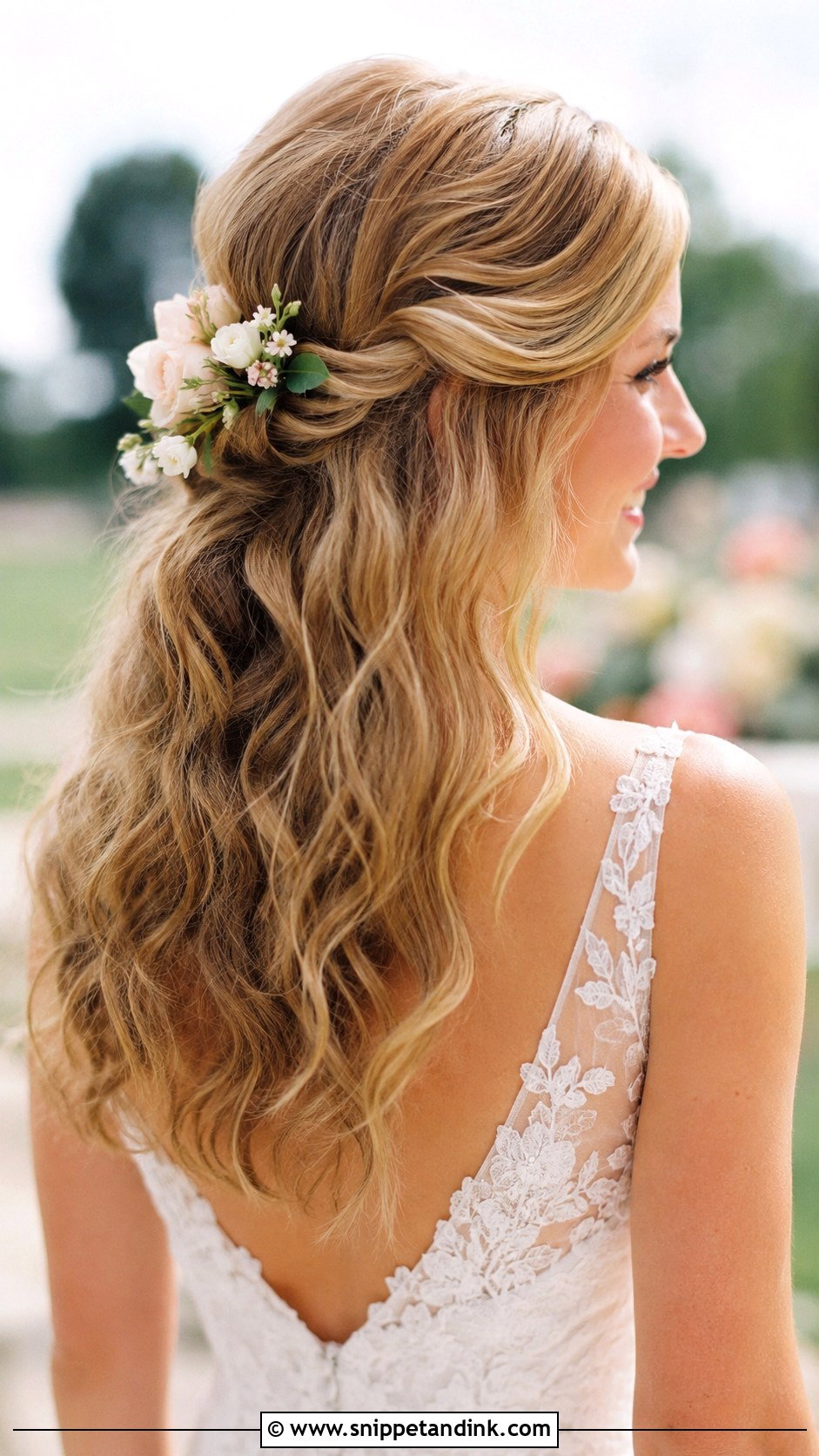
A twisted half up takes soft twists from each side and pins them at the crown, with the rest of the hair flowing in waves. Fresh flowers placed along the twists suit spring and outdoor weddings. Keep the twists loose for an airy finish. On long hair the loose lengths are heavy, so I set the waves before pinning the twists, then pin the flowers last.
25. Glamorous Hollywood Curls
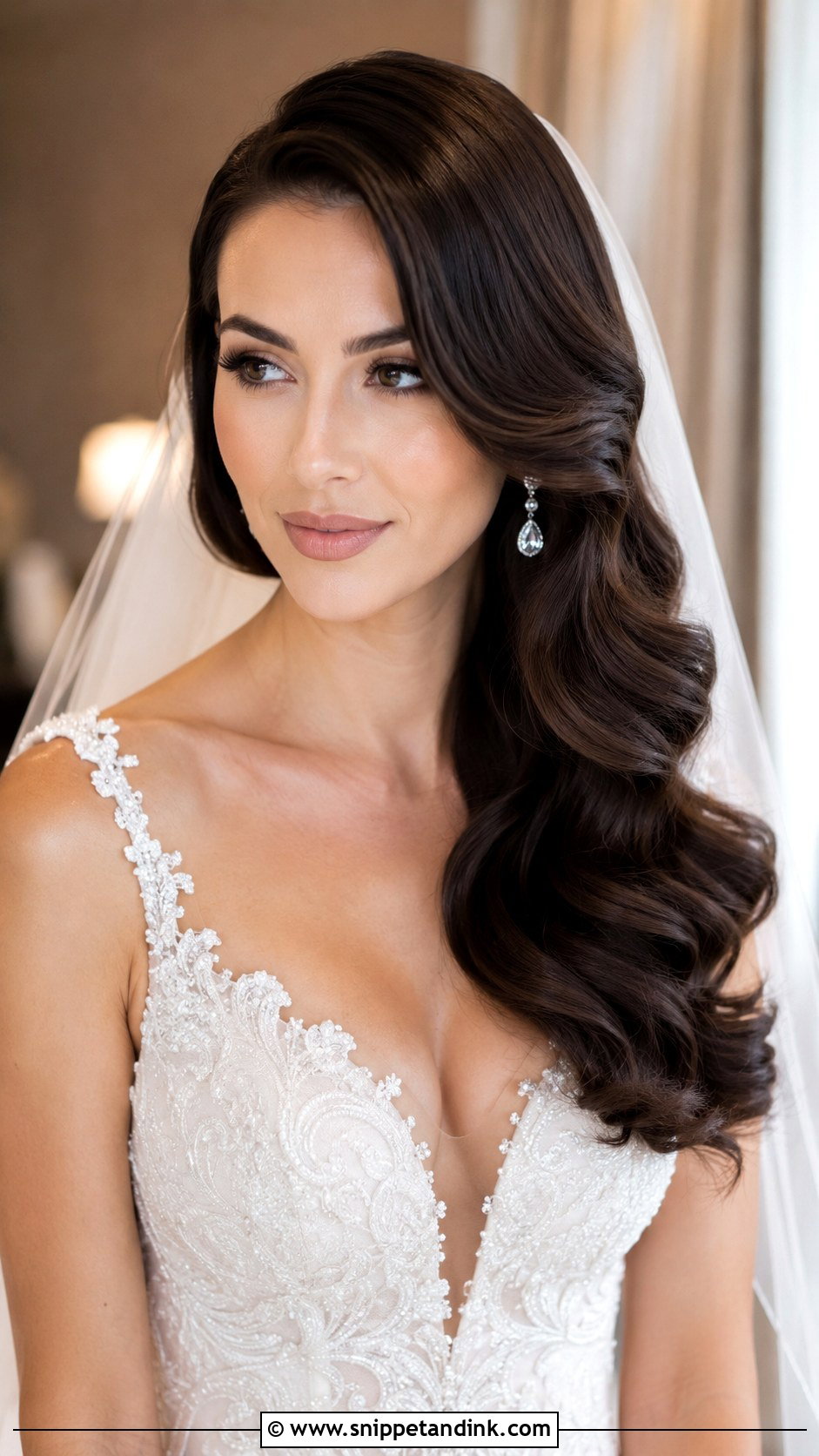
Hollywood curls are smooth, glossy waves that run in the same direction. I curl every section away from the face, pin each curl while it cools, then brush them out with a boar bristle brush into one continuous wave. Long hair makes the waves longer and more dramatic. Wear them all down or swept to one side with sparkling jewellery. They need a firm hold to last, so the finish is polished rather than loose.
Trims, Color and Extensions Before the Wedding
Timing matters more than most brides think. A trim to tidy split ends is best about two to four weeks out, so the edges have softened a little. Any color work, especially a big change, should be done a few weeks before the trial so you can see the result in the style, then refreshed closer to the date if needed.
Clip-in extensions are the usual fix when long hair looks thin in an updo or worn down. Match them to your color in daylight, and bring them to your trial so your stylist can see how they blend. Tape-ins or sewn-in extensions need more planning and maintenance, so I’d only suggest those if you already wear them.
How each type of style holds up over a long day
- Updos and buns: the most secure; a good base and crossed pins keep them solid through dancing.
- Braids: grip themselves well; loose braids may need a quick tidy before the reception.
- Half up: a good middle ground; the loose lengths may relax by evening.
- Fully down: looks soft but changes the most; bring a clip or a few pins for later.
Long Hair Gives You Room, So Test It Properly
Long hair can carry almost any wedding style, from loose waves to a sculpted chignon. The right one depends on your dress, your venue and how your hair behaves after a few hours. Book a trial, wear the style as long as you can, and look at the photos from behind as well as from the front. Your hair should still feel like yours when you walk down the aisle.
You'll Like These Ideas:


Leave a Reply