
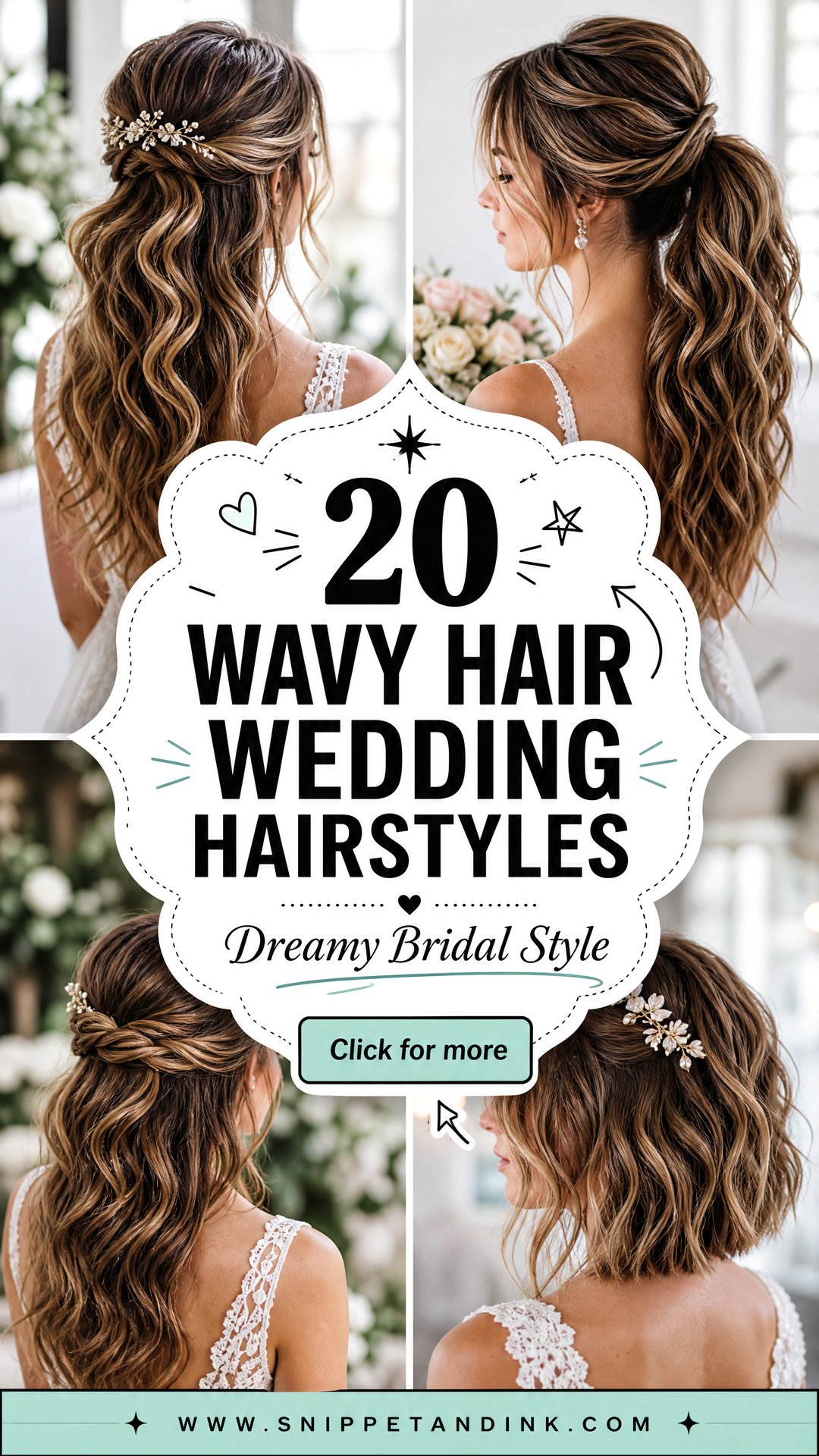
I rarely meet a bride who can’t wear waves. They move in photos, sit kindly on most face shapes, and take veils, pins, ribbons, crowns and flowers without complaint. What makes wavy wedding hair so useful is its range: loose and glossy, pinned into a bun, swept aside, braided or pulled into a ponytail. The direction I’m seeing now is softer, more sculpted waves shaped around the person rather than copied from a photo. The twenty here are written for brides, though most translate easily to bridesmaids and guests.
When to Cut, Color and Gloss Before Wearing Waves
Waves show the condition of your ends more than any updo does, because light runs down the whole length. A little timing beforehand makes the styling far easier.
- Haircut: a last trim about two to four weeks before. Freshly cut blunt ends can look stiff, and a dramatic new shape needs time to settle.
- Color: a final appointment roughly one to two weeks out, so the tone has softened slightly and no roots show.
- Gloss or toner: a few days to a week before, for shine that shows on every wave.
- Extensions: fitted before the trial if at all possible, so they’re blended and color-matched when you test the style.
Treatments to skip in the final weeks
Hold off on keratin or other smoothing treatments close to the wedding; they can loosen your hair’s ability to hold a curl. Deep conditioning is fine, just not the night before, because very soft, freshly conditioned hair is slippery and drops a wave faster.
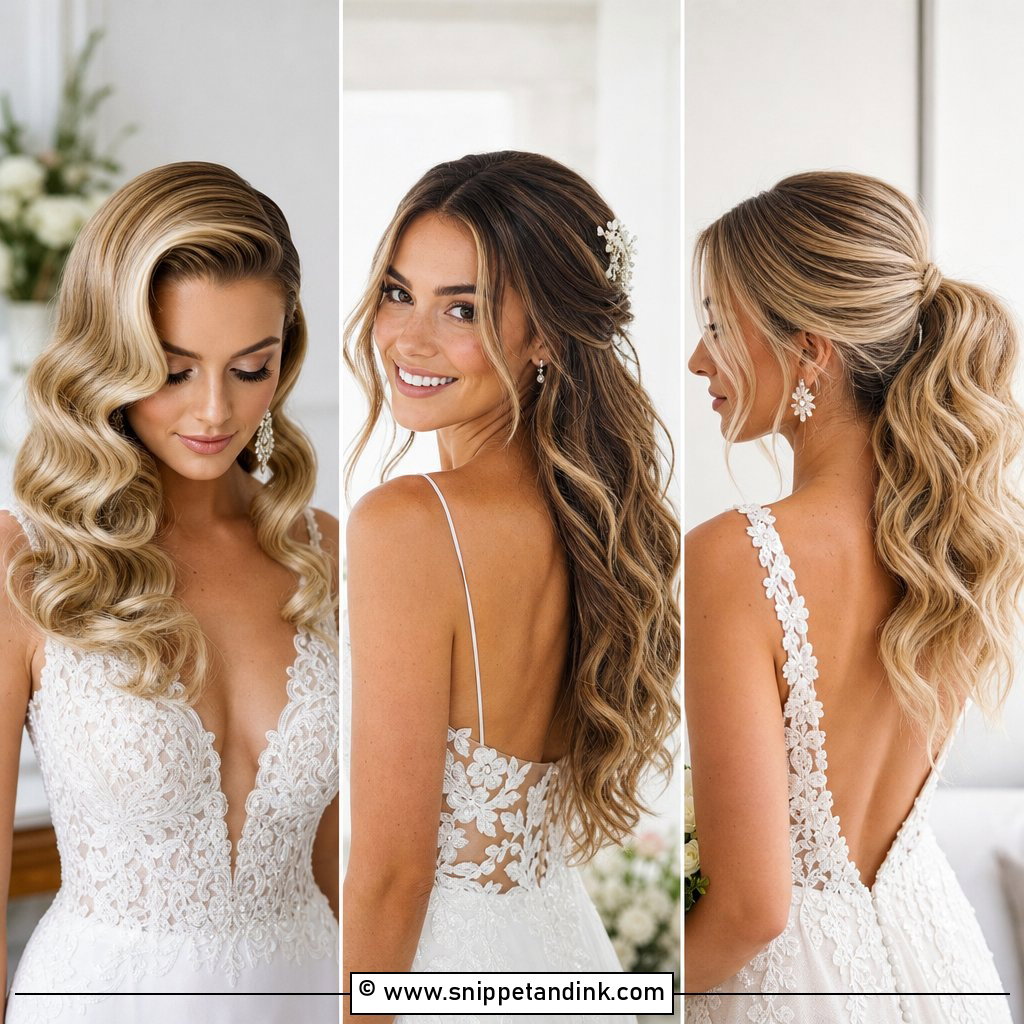
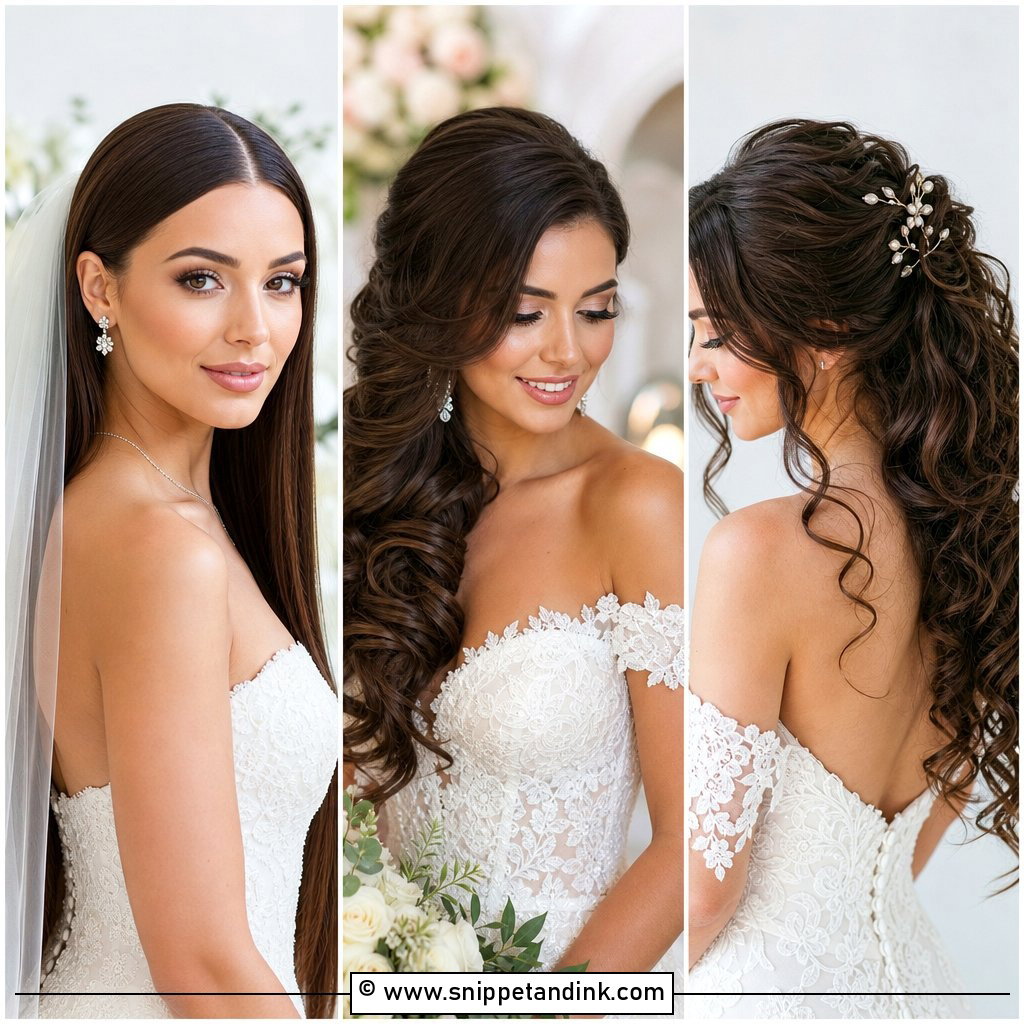
1. Hollywood Waves Wedding Hair
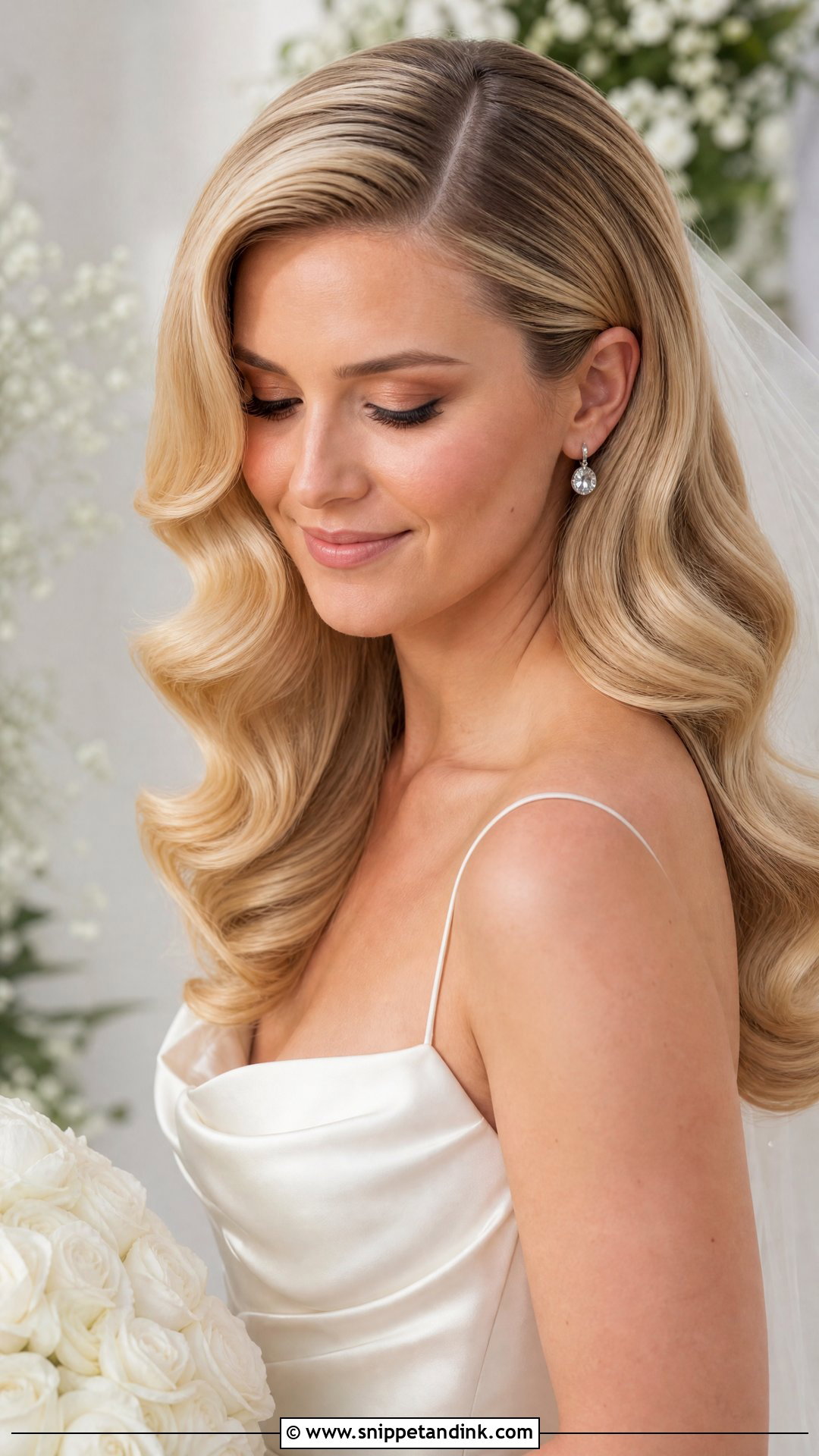
Of every style here, Hollywood waves give the most consistent result on camera, because the pattern is uniform: smooth, structured waves brushed into one flowing shape. Long hair, a deep side part, satin gowns and vintage veils all suit it. Ask for shine, soft hold and careful placement around the face, since the first wave at the temple sets the line for all the rest. If your hair drops curls quickly, each curl has to be clipped while it cools. A flexible finishing spray keeps it touchable.
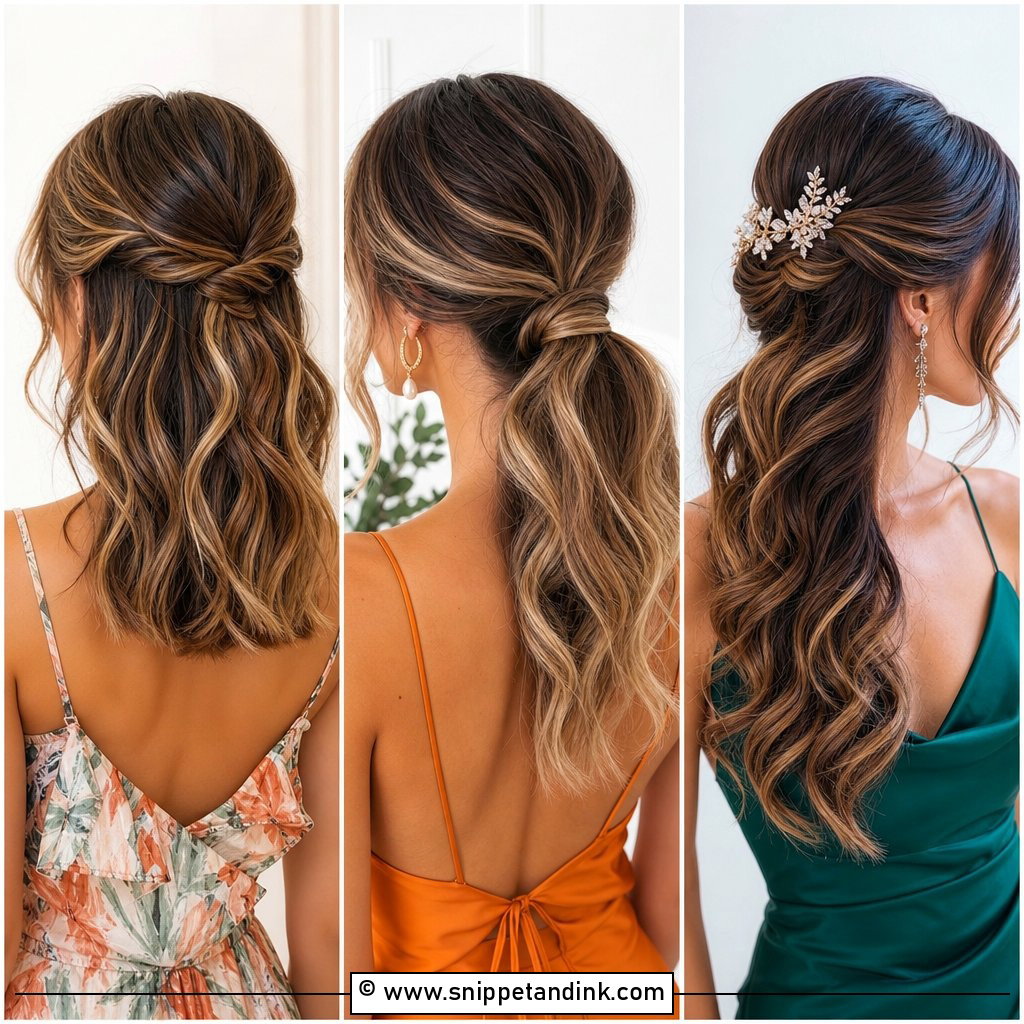
2. Half Up Half Down Wavy Wedding Hair
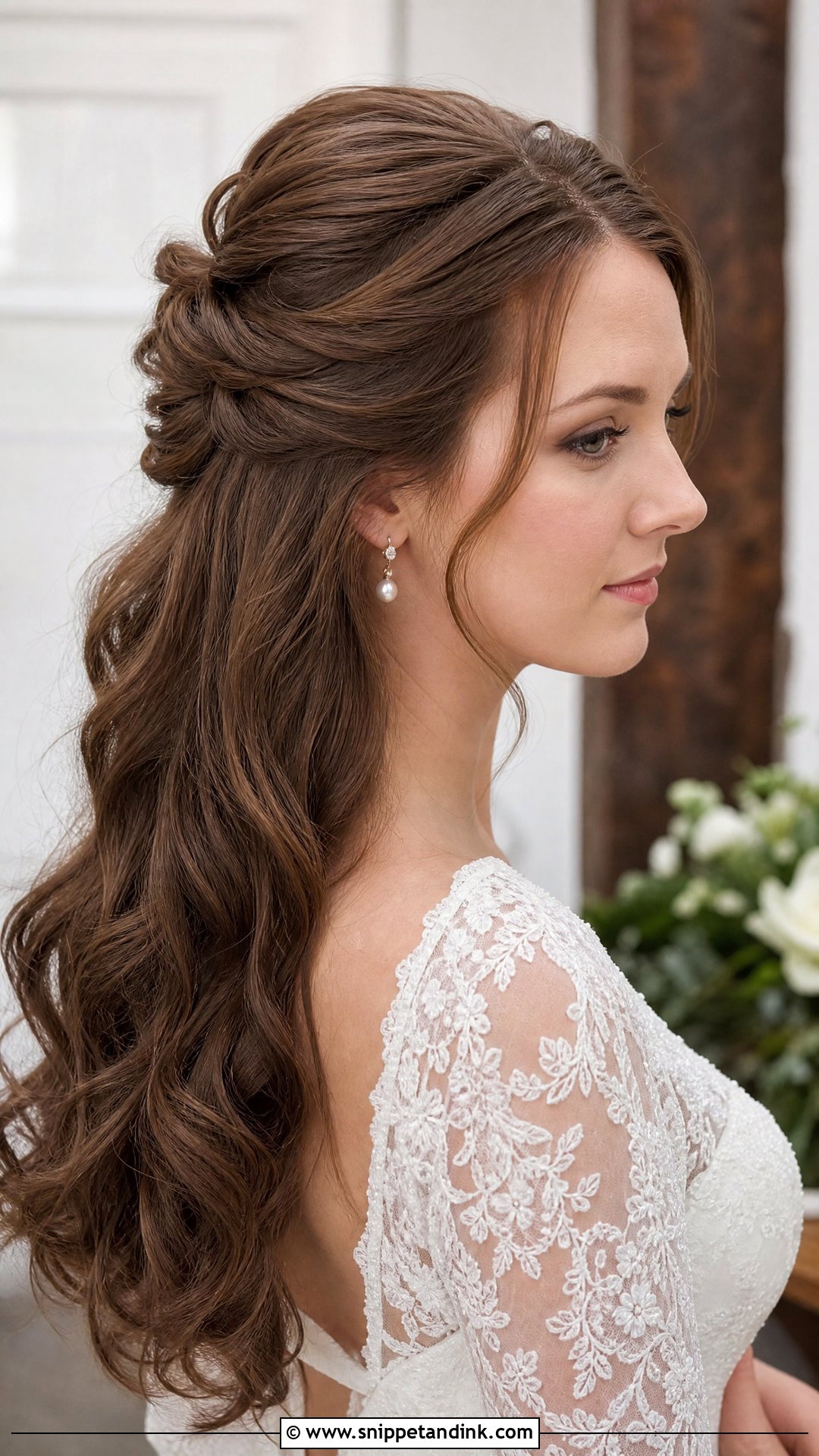
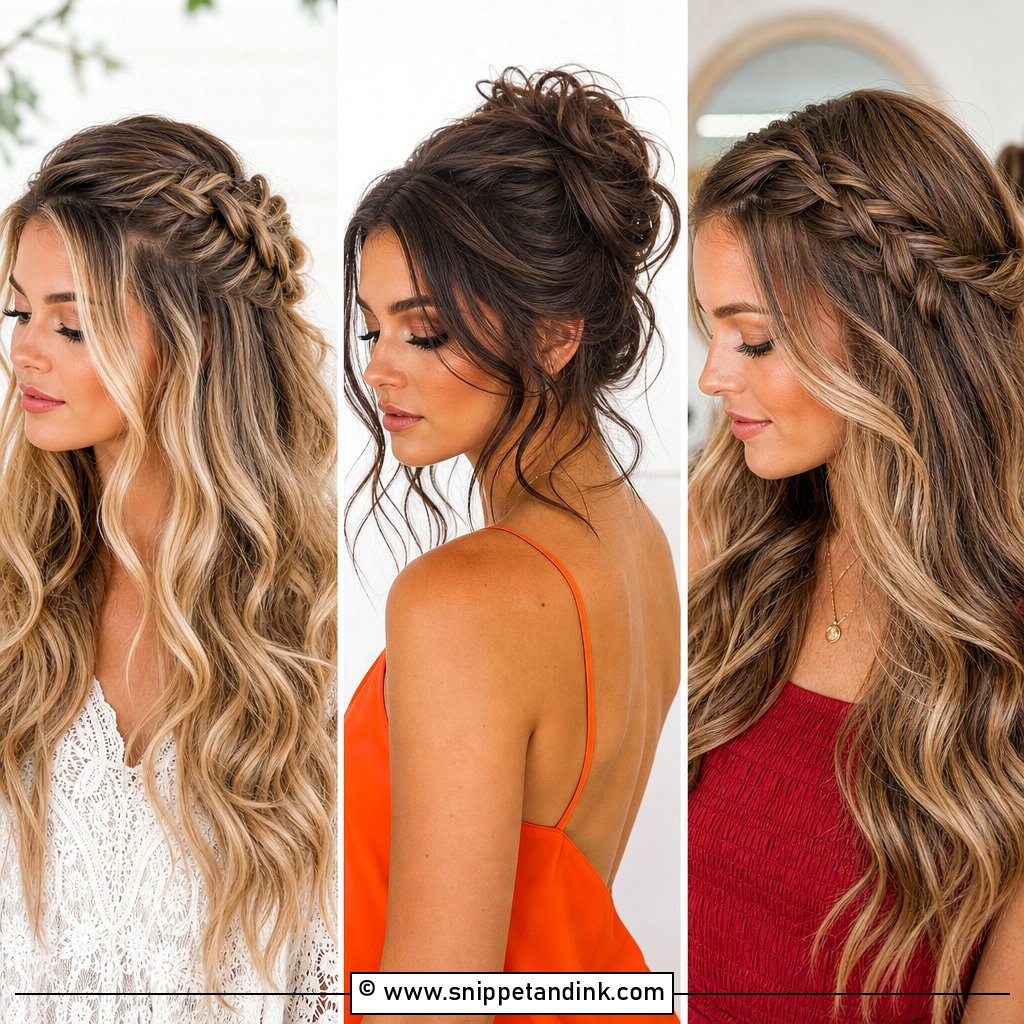
Half up is reliable because it gives you loose waves with pinned security. I twist, braid or simply lift the top at the crown, and the rest falls in waves. Planning a veil? The pinned section gives the comb its grip. Medium and long hair suit it, with a few face-framing pieces left out. It’s also the easiest style to adjust at the trial, since moving the pinned section up or down an inch changes the whole profile.
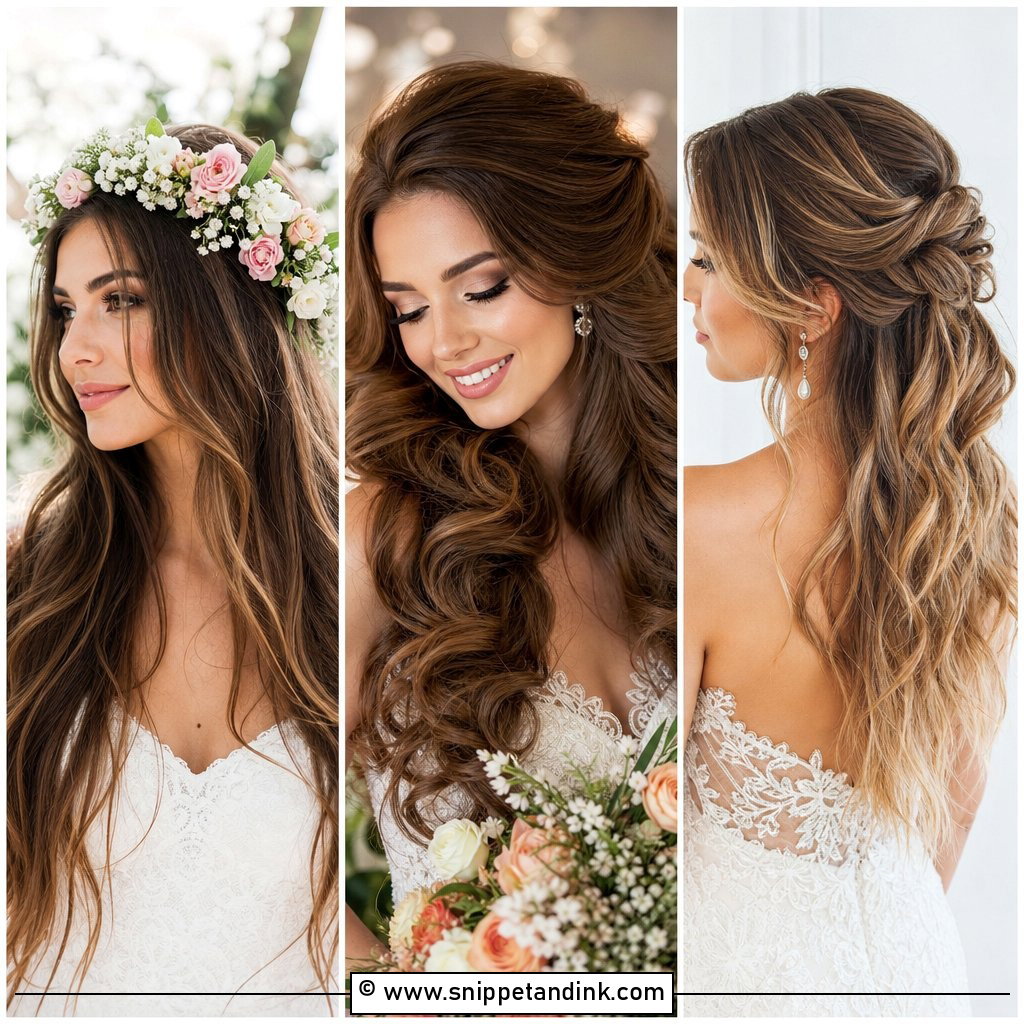
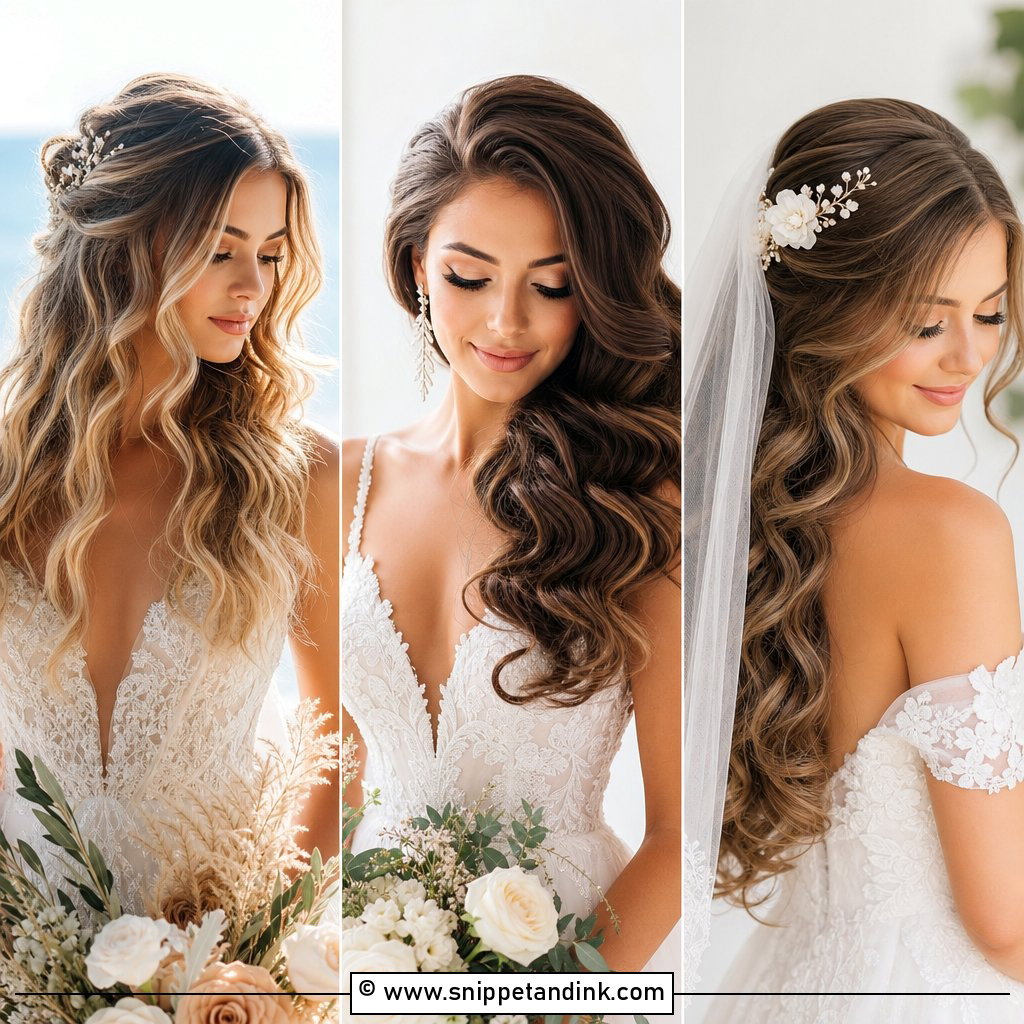
3. Loose Waves Wedding Hair
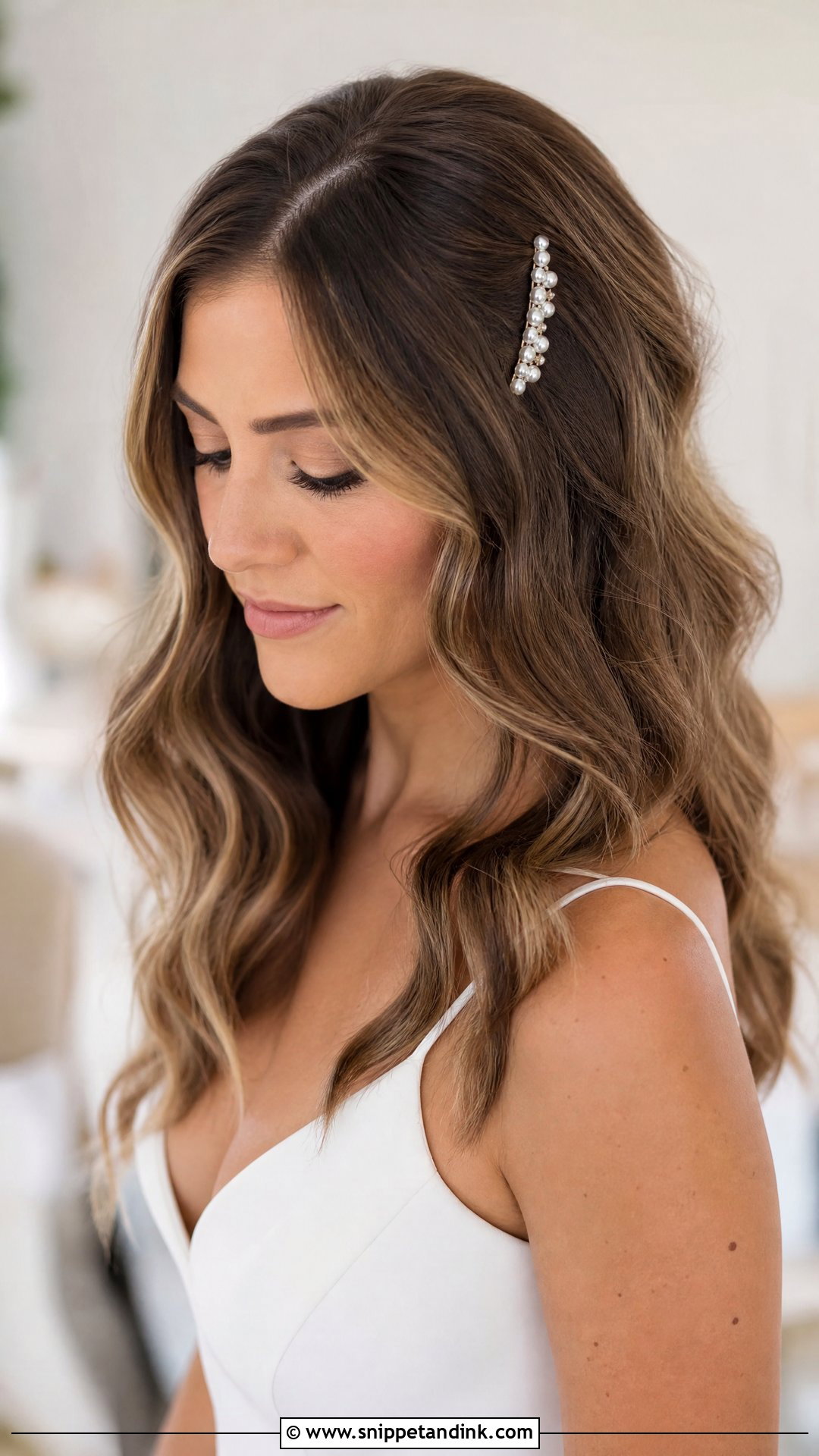
Loose waves suit the bride who wants to look like herself on a very good day. The bend is relaxed but deliberate, running through the mid-lengths and ends. Garden, beach and courthouse weddings pair best, as do simple modern gowns. Smooth roots and polished ends are what separate this from everyday hair. A pearl pin, delicate barrette or small floral comb adds the bridal note. Bridesmaids can wear the same wave without competing with the bride.
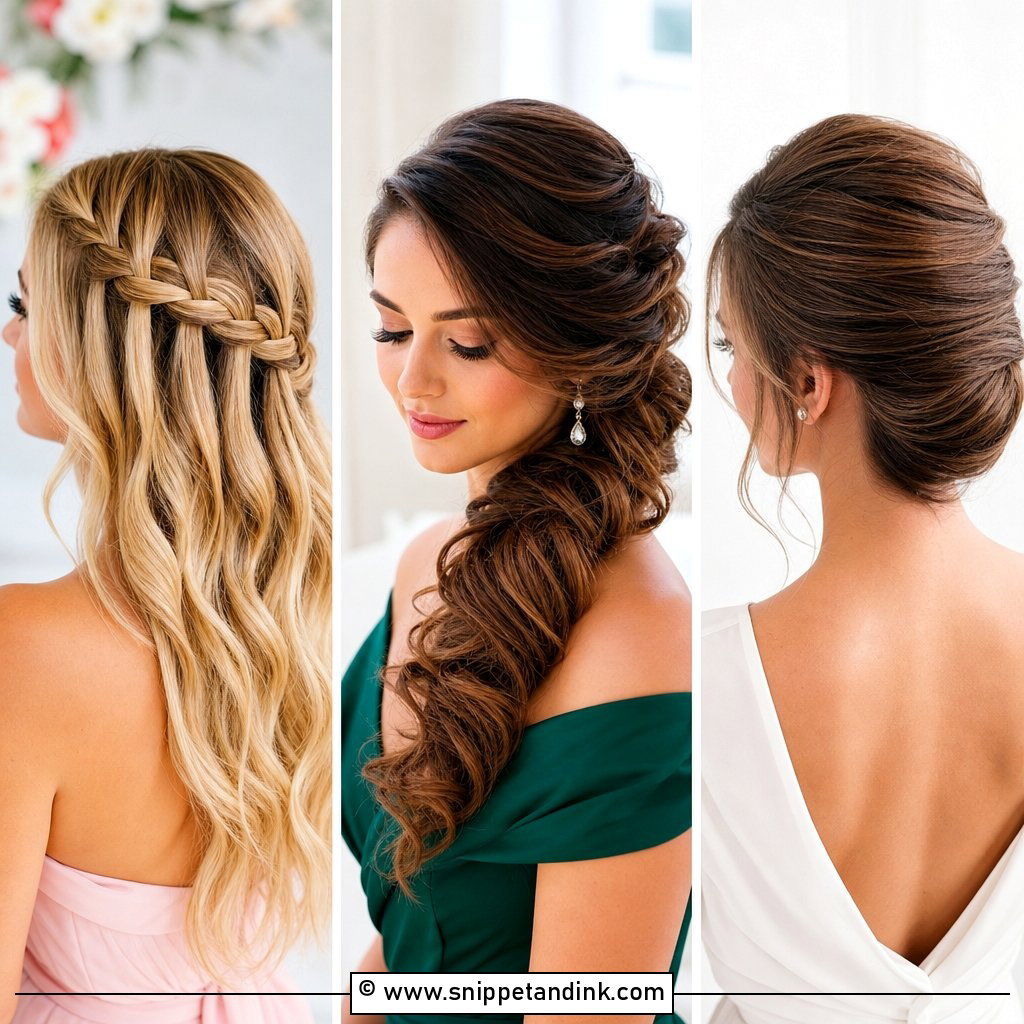
4. Side Swept Wavy Wedding Hair
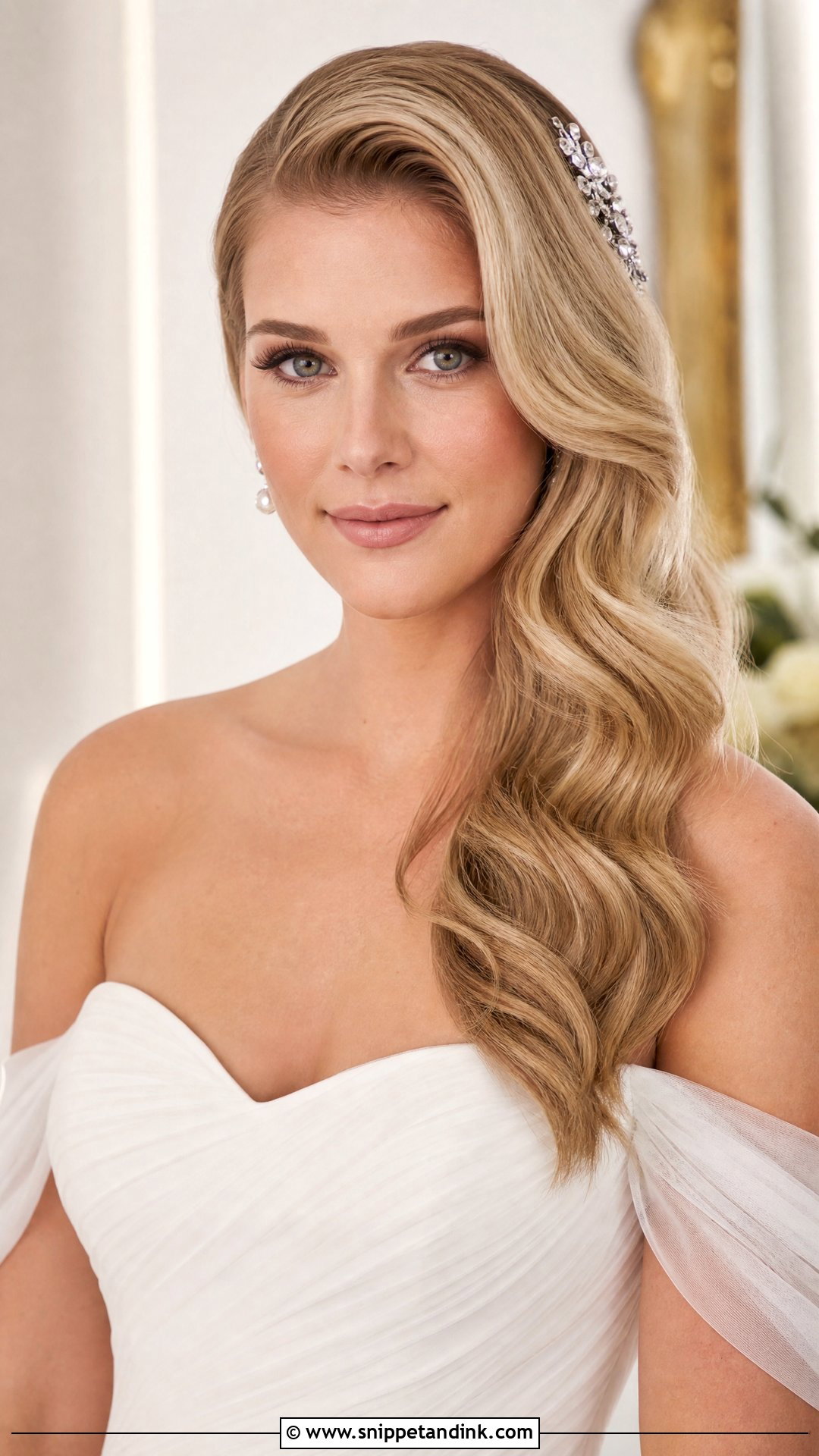
A deep part with waves swept over one shoulder gives drama while staying wearable, and it shows off the neckline and earring on the open side. One-shoulder and off-the-shoulder dresses suit it. One side is held with hidden pins or a decorative comb, which keeps the shape through the walk, the hugs and the dancing. Smooth or airy, the finish depends on your mood and natural texture. Check the ceremony layout first, though: if most guests will sit on your swept side, they’ll mostly see hair.
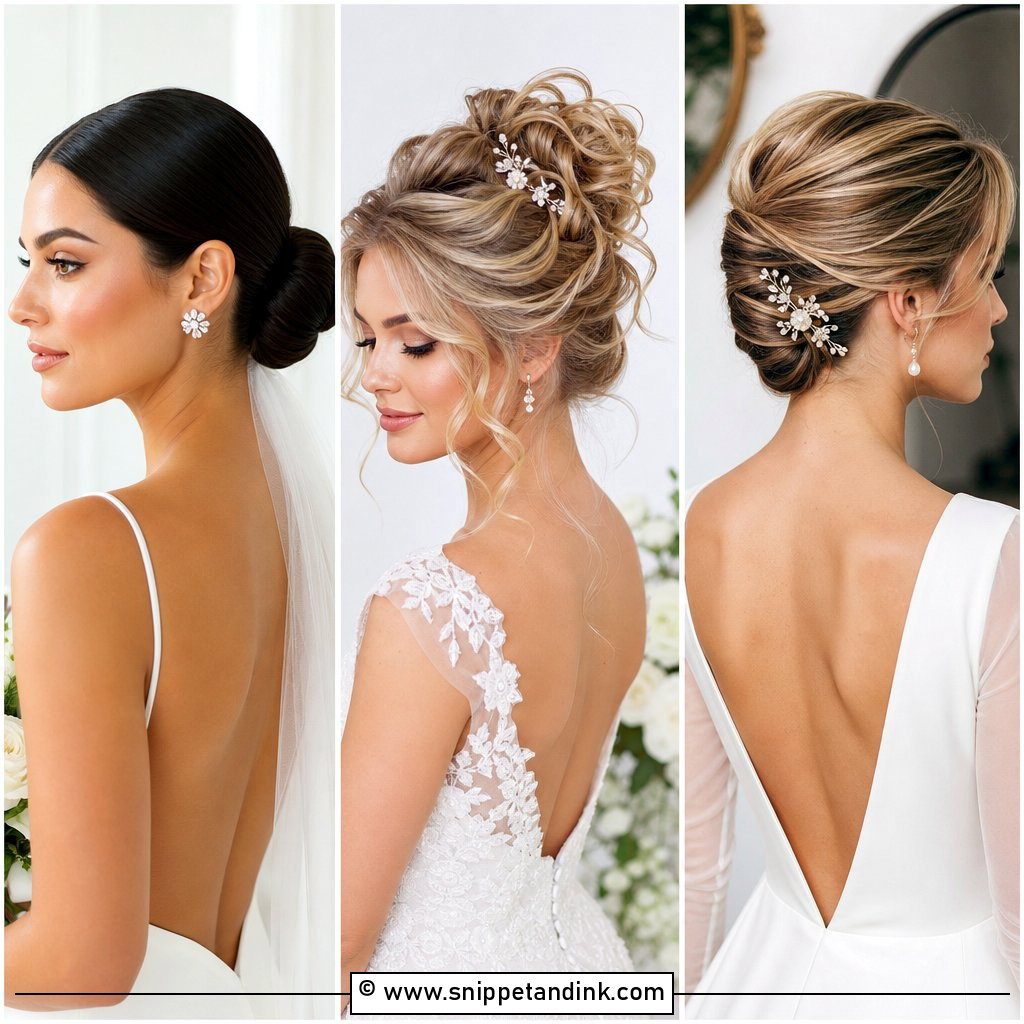
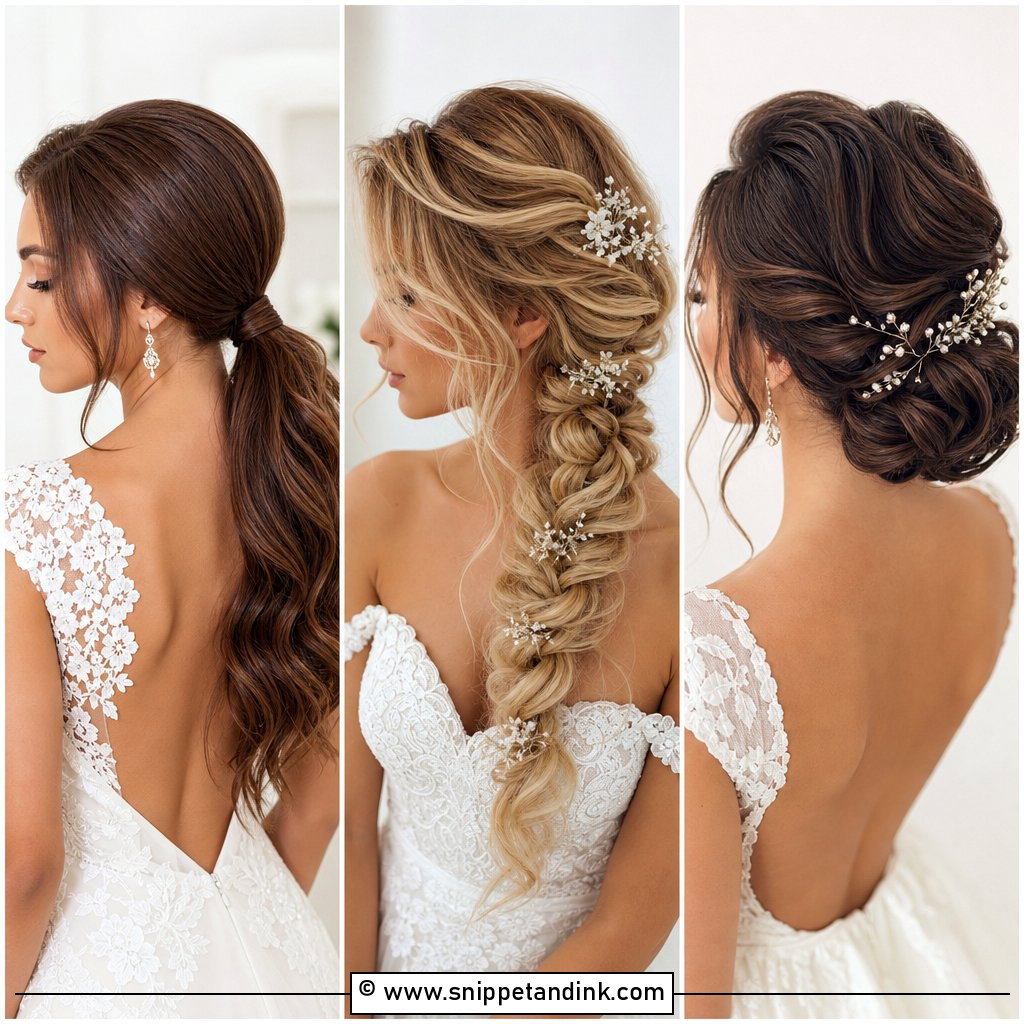
5. Wavy Low Bun Wedding Hair
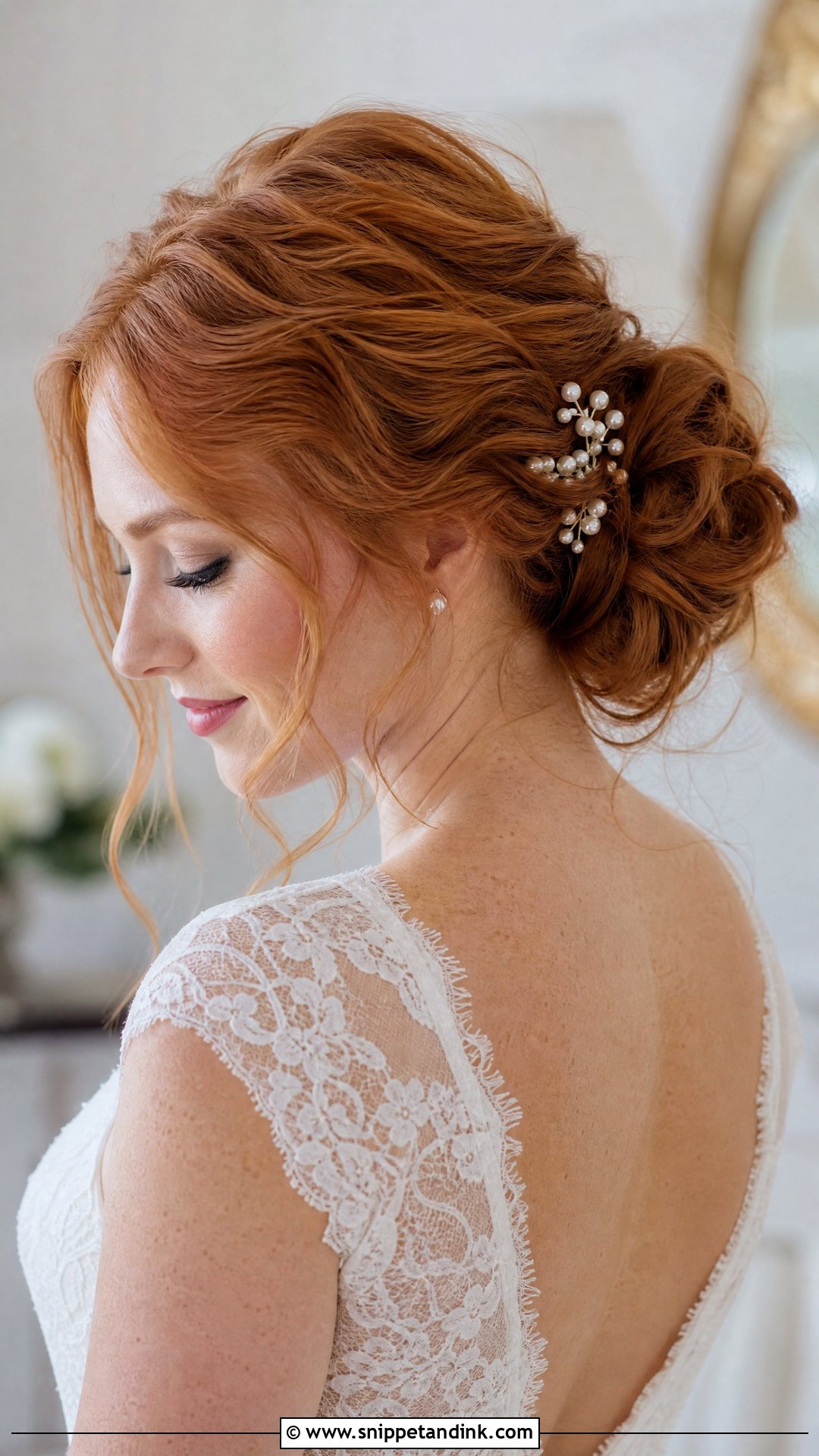
An updo can still feel soft. Waving first gives this low bun its fullness, so it doesn’t need to be pinned tight. Veils, pearl pins, floral combs and gowns with detailed backs all suit it, and it copes with heat because the hair is off the neck. I add gentle crown volume and leave a few soft pieces at the face. The balance sits between messy and stiff; if it looks like neither, it’s right.
6. Wavy Chignon Wedding Hair
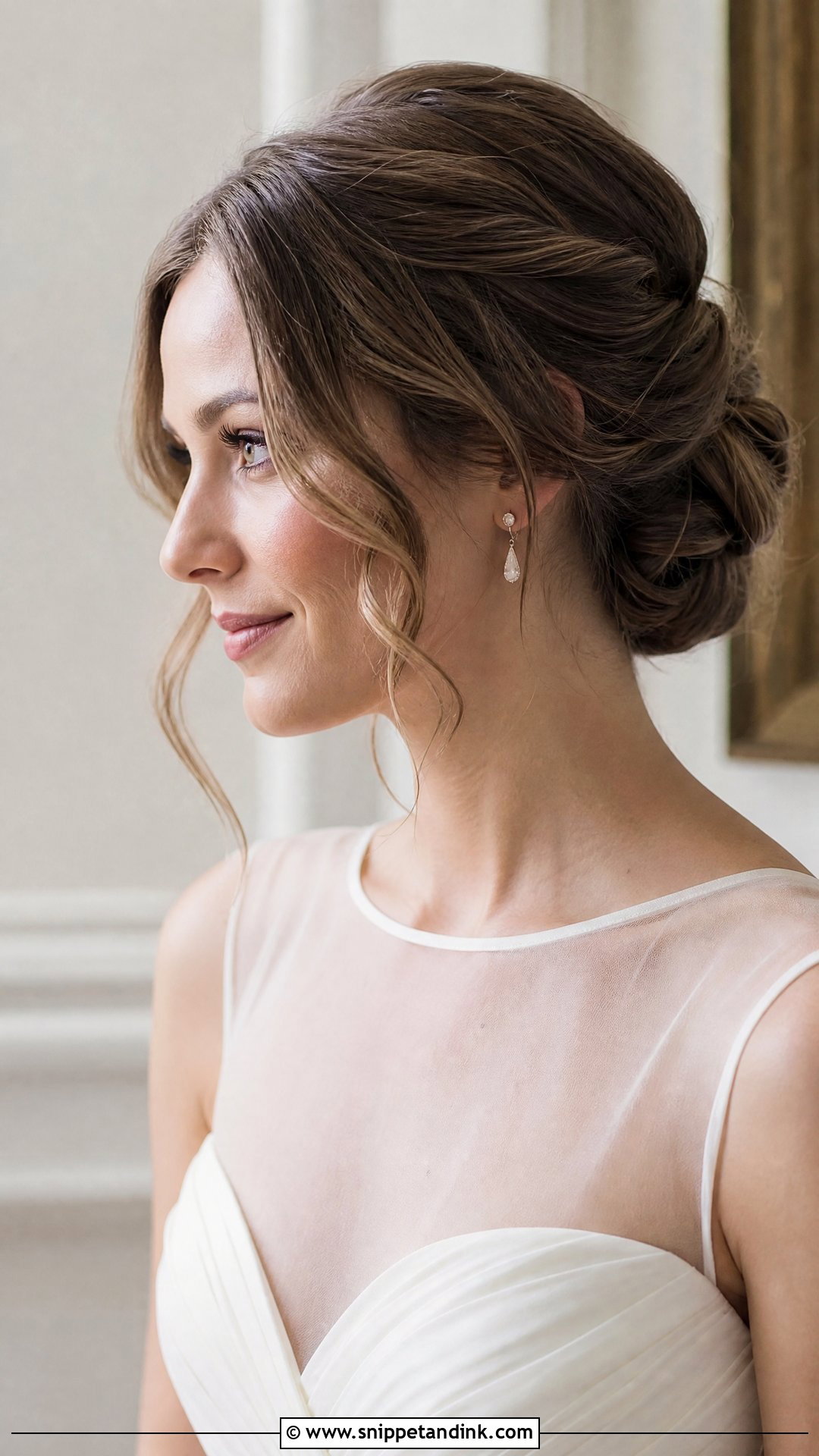
A chignon sits lower and more tucked than a standard bun, with a sculpted shape that waves keep from looking severe. Classic dresses, lace gowns, cathedral veils and formal indoor venues are its home. It’s a strong pick for fine hair, because waving before pinning creates volume that isn’t there when the hair is straight. A center or side part keeps the front soft. Cathedral veils are heavy at the comb, so I anchor them just above the chignon rather than into it, which stops the shape sagging.
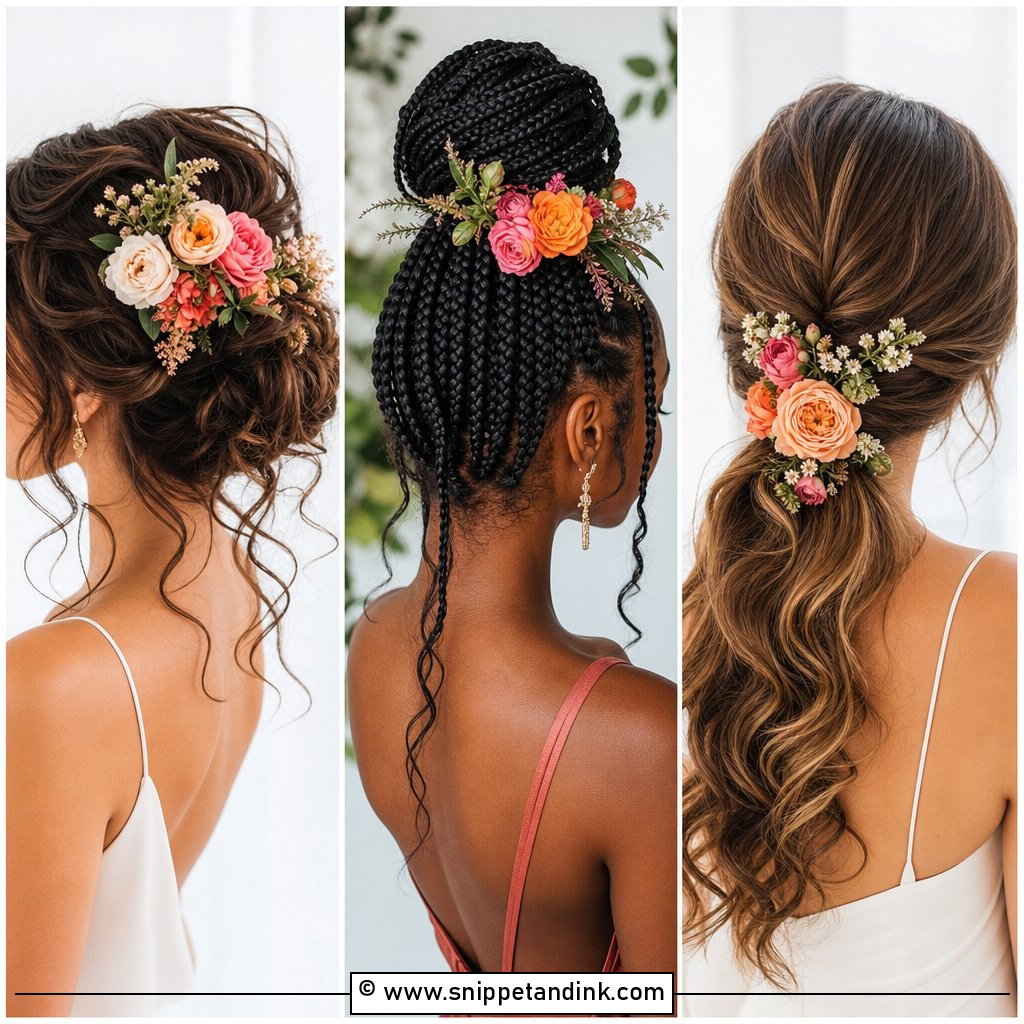
7. Wavy Ponytail Wedding Hair
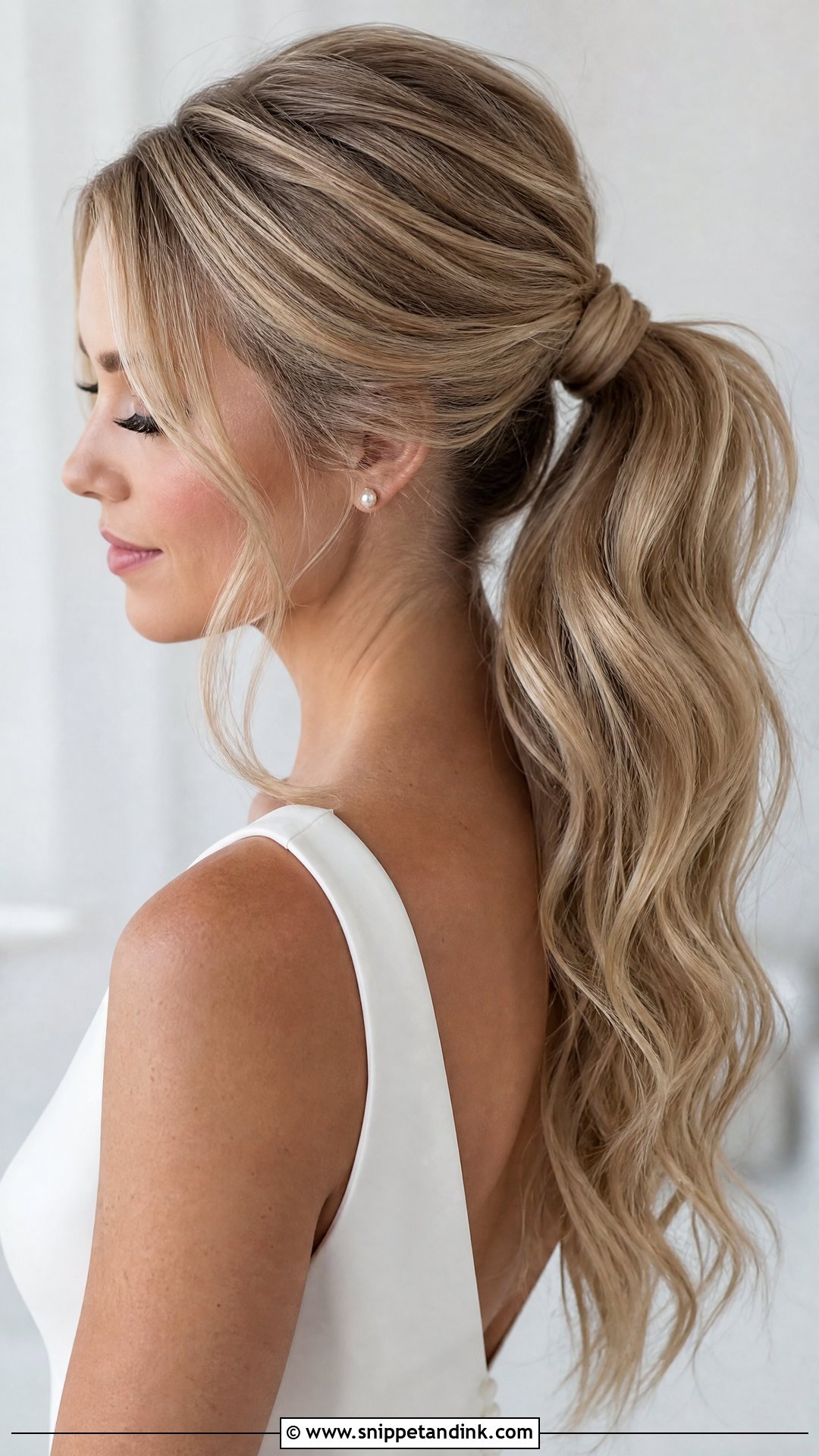
Wavy ponytail wedding hair has become a modern favorite, and practicality is a big part of why. Low, mid or high, its height should follow your dress and face shape. Waves through the length make it romantic rather than sporty, and a wrapped section at the base polishes it. It keeps hair off your face while still moving in photos, and it sits well with square necklines and statement earrings. A ribbon tied over the wrap is an easy soft touch, as long as it’s pinned so it can’t slide.
8. High Wavy Ponytail Wedding Hair
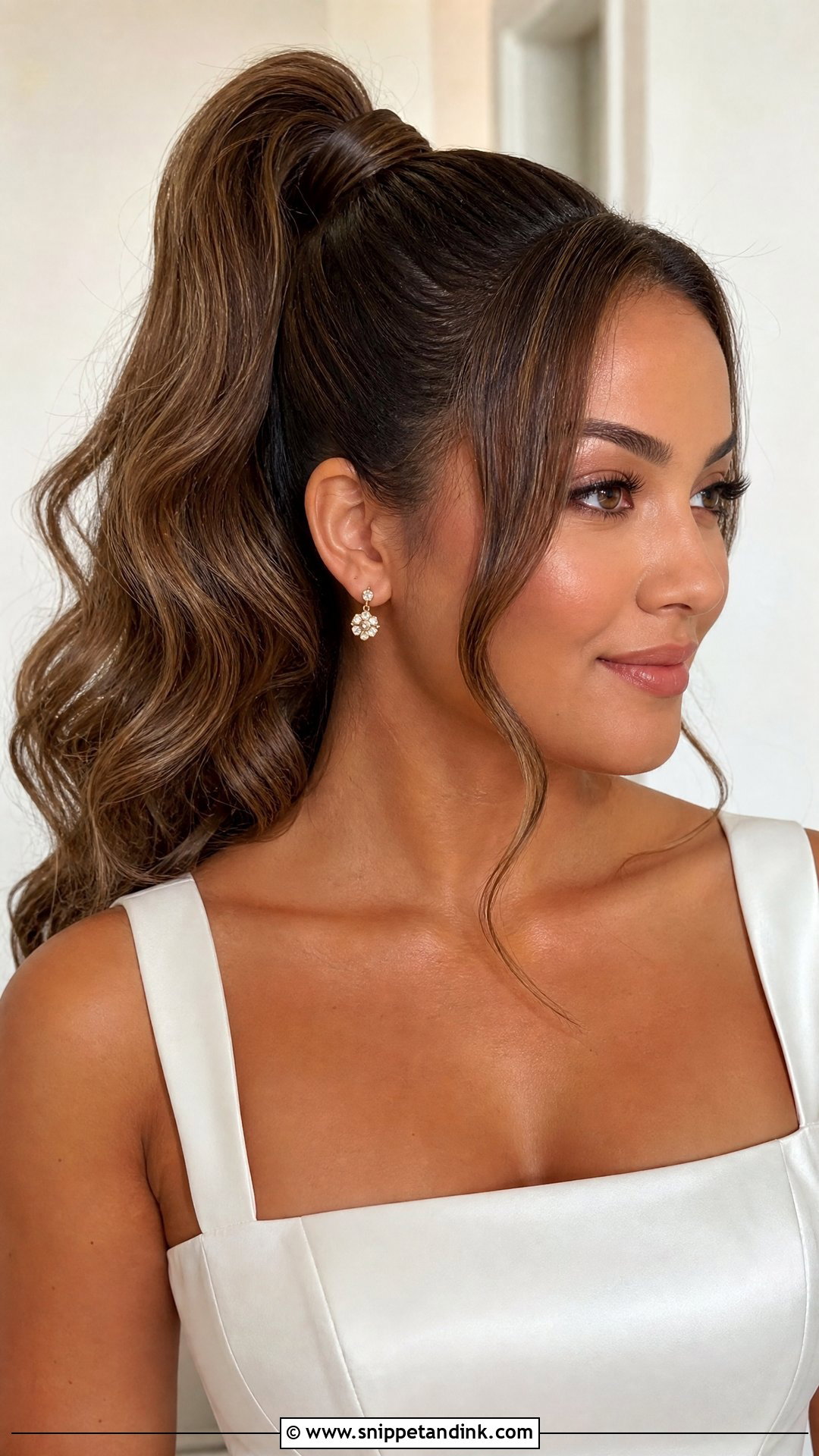
Height at the crown lifts the face slightly, and waves add bounce through the tail. Medium to long hair works, and extensions are common here to get real fullness in photos. The base must be smooth and secure. Sleek gowns, clean makeup and dramatic earrings suit it. Weight is the comfort issue: a full, extended high ponytail pulls on the scalp after a few hours, so ask your stylist to split the support between two anchor points rather than one tight elastic.
9. Low Wavy Ponytail Wedding Hair
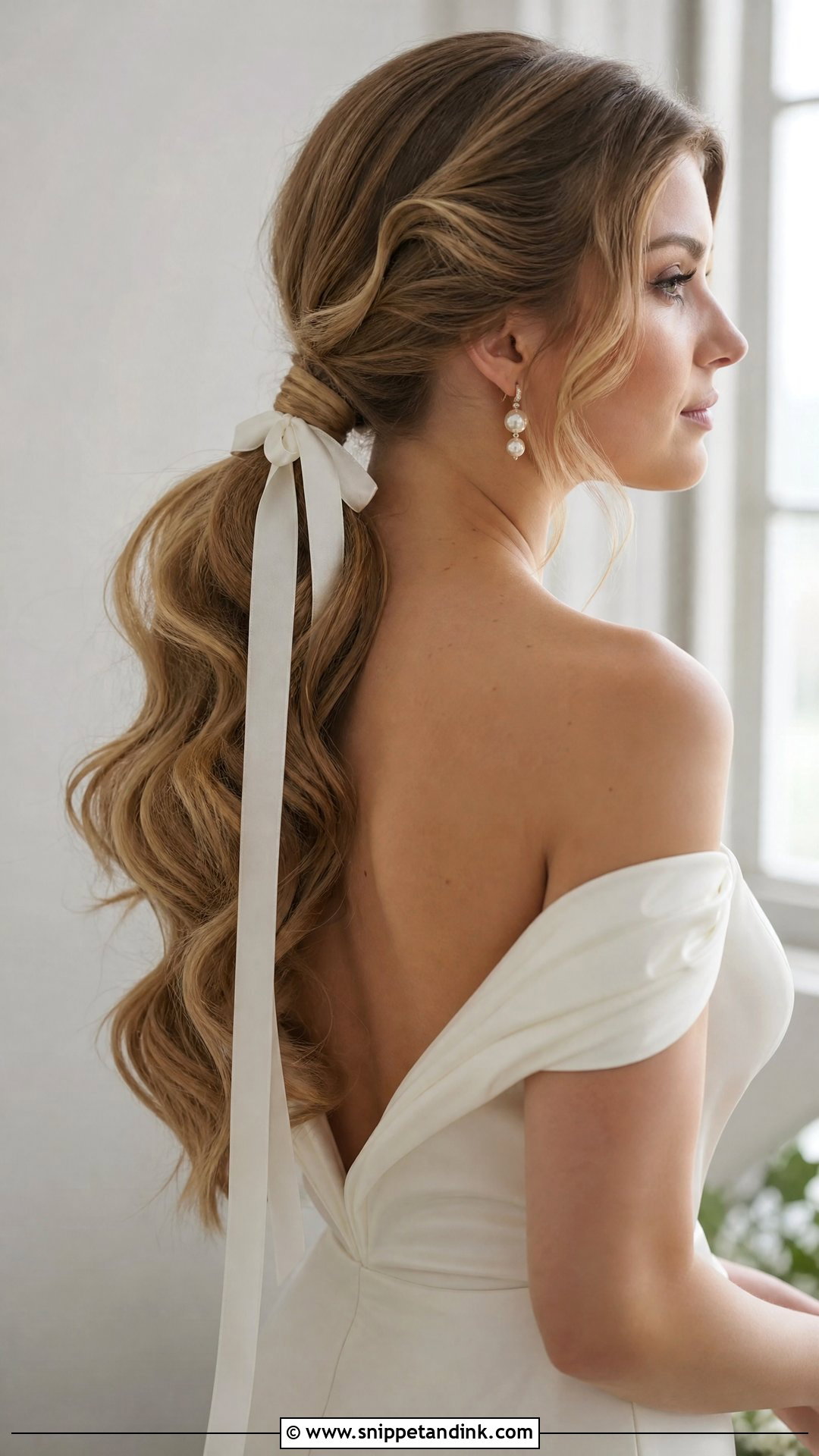
Sitting at or just above the nape, a low ponytail is soft and easy to wear for a long day, with waves down the back or over one shoulder. Minimalist gowns and open backs suit it, and a veil can sit just above the tie. It’s equally good on bridesmaids. The front can be parted or swept back. To keep it bridal, wrap the base with hair and add pearl pins, a satin ribbon or a small comb by the tie. Of all the styles here, this one survives a reception with the fewest touch-ups.
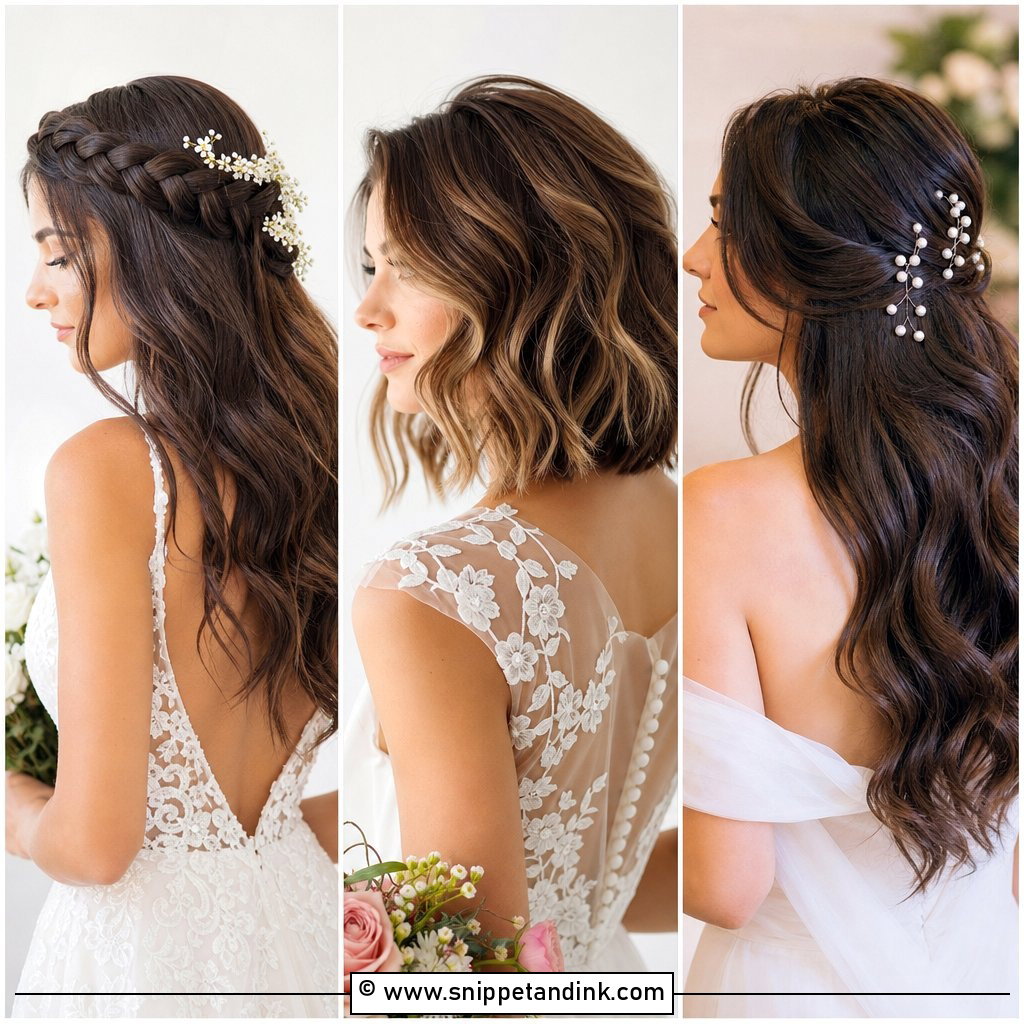
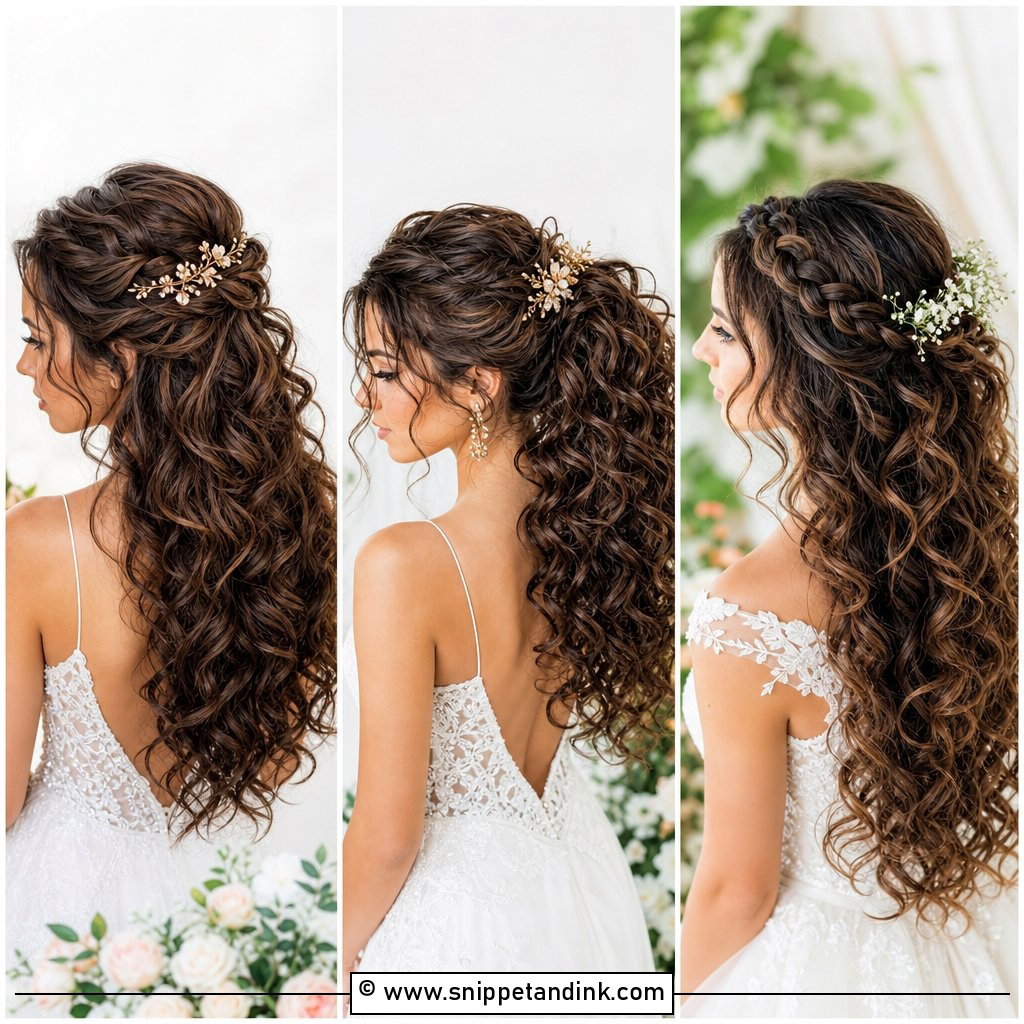
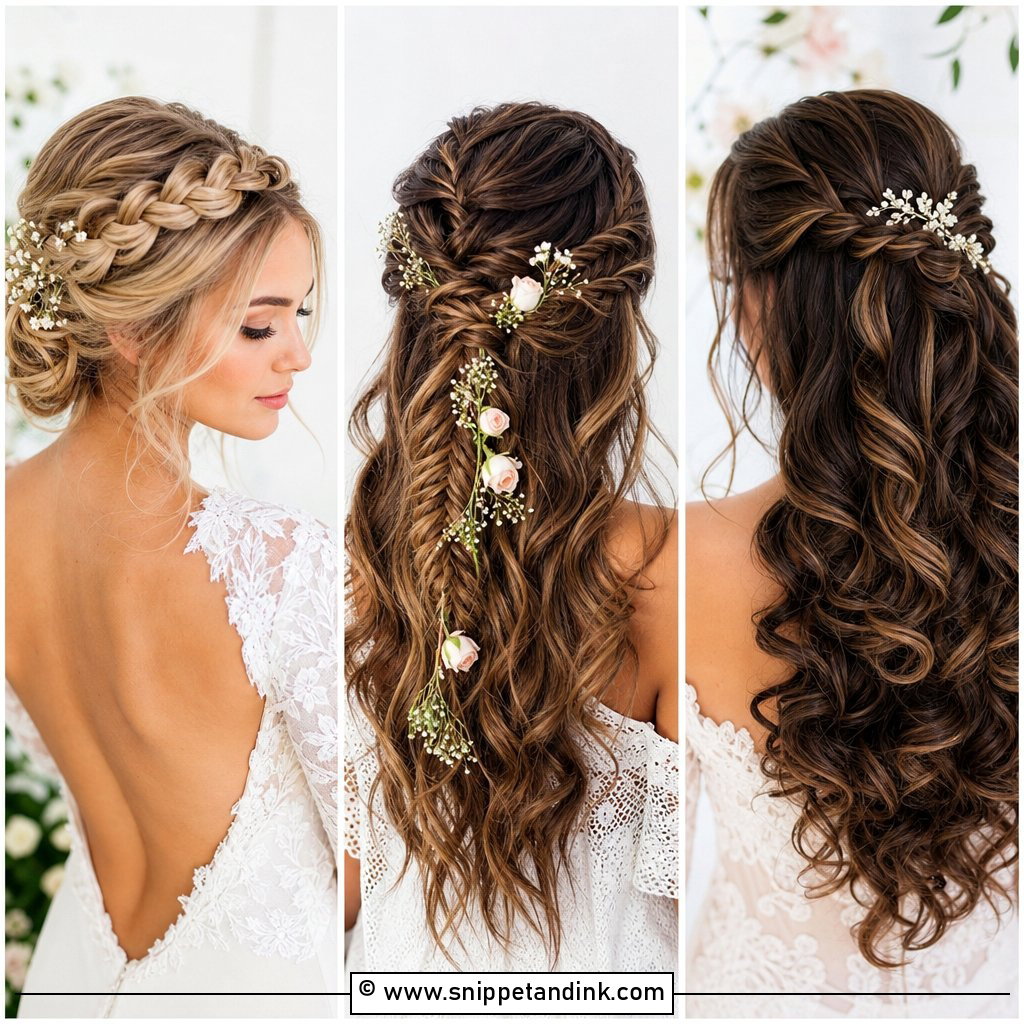
10. Braided Half Up Wavy Wedding Hair
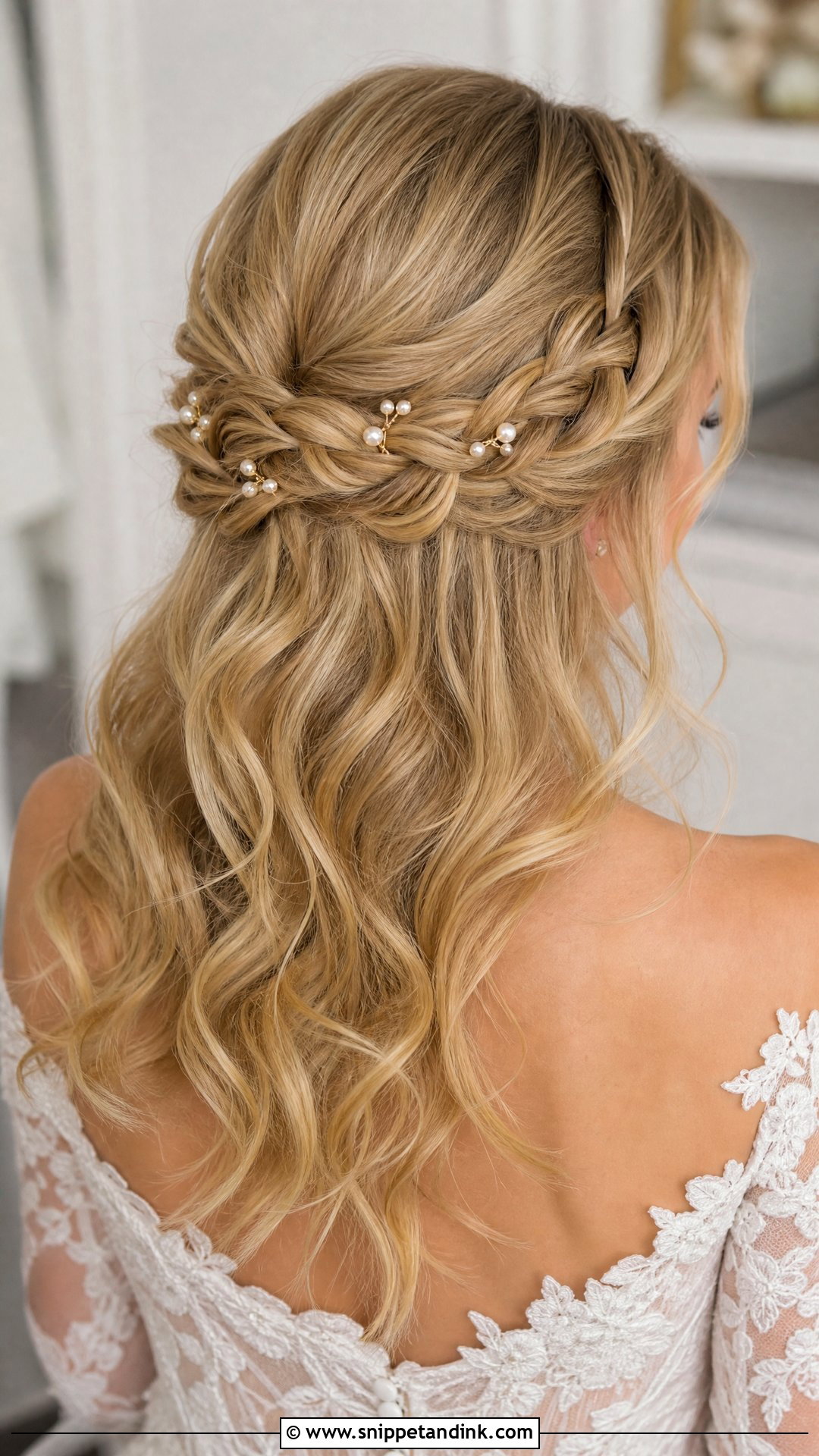
This one belongs at outdoor and rustic weddings. The braid crosses the crown or back while waves flow below. Long hair shows the braid best, though medium lengths work. Ask for it to be gently pulled apart once finished so it looks fuller; on thin hair that can nearly double its apparent width. Small pins, pearls or tiny flowers tuck into it. The braid also does a structural job, holding the top so the waves can stay loose.
11. Crown Braid Wavy Wedding Hair
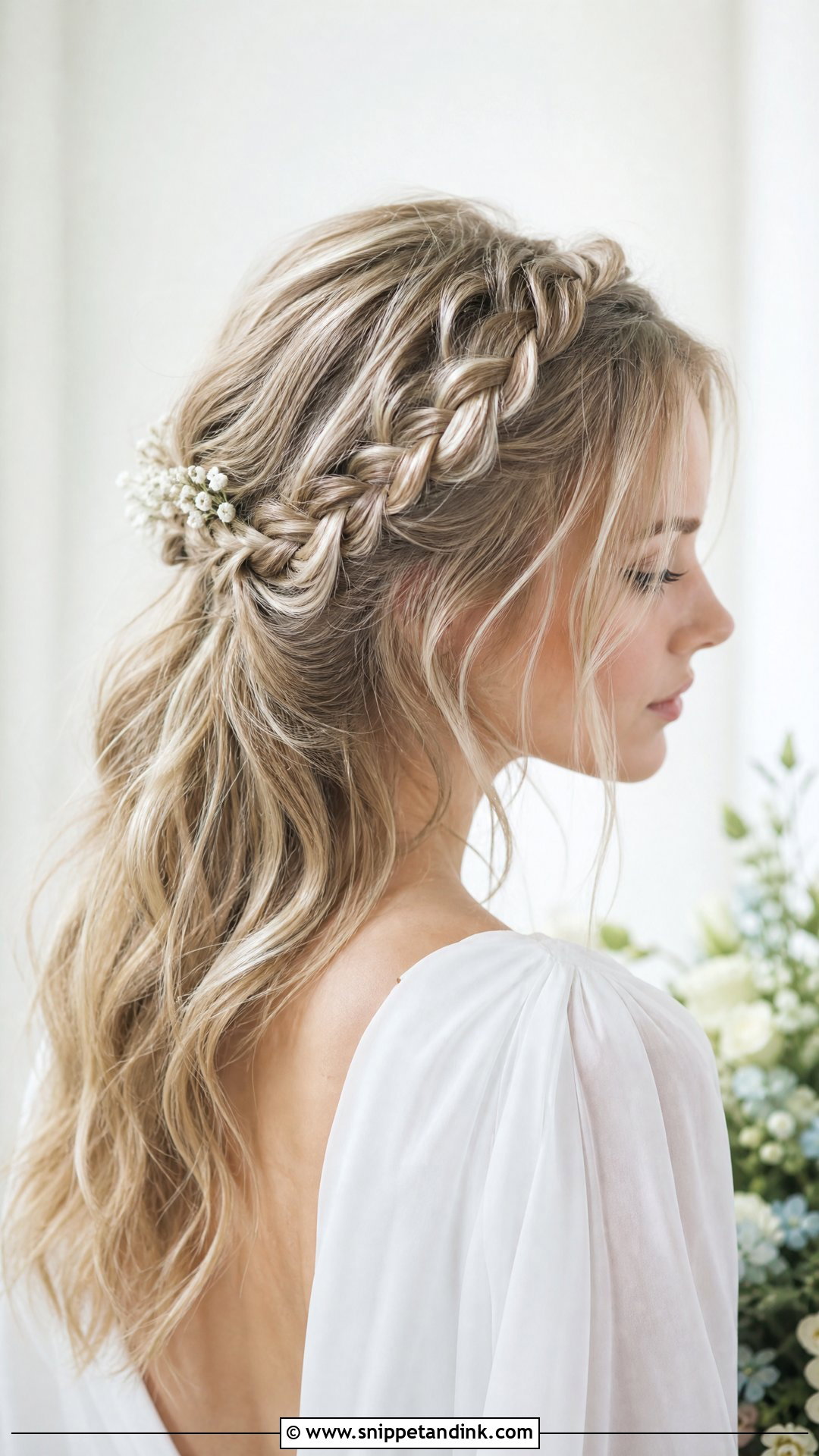
A crown braid wraps the head or crosses the top like a halo, with the rest falling in waves or lightly pinned. Outdoor ceremonies and dresses with lace or flowing fabric suit it, and it keeps short face pieces under control through a long day. The braid should look soft and full. A tight crown braid can bring on a headache by evening, so I’d rather pin it loosely in more places than pull it snug.
12. Waterfall Braid Wavy Wedding Hair
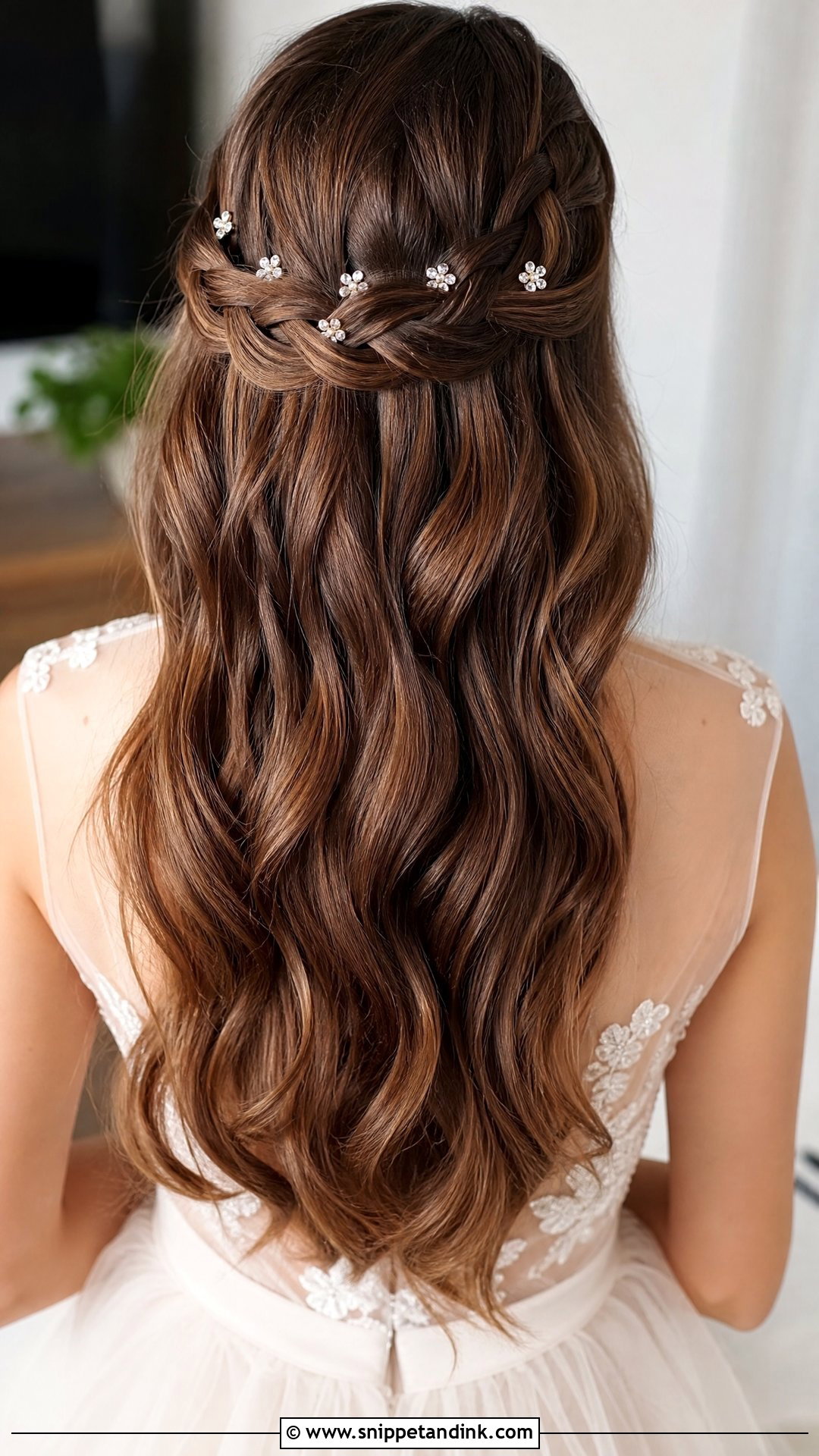
Waterfall braid wavy wedding hair adds detail while the waves stay loose. The braid travels across the side or back, dropping strands that blend into the waves below, which reads especially well from behind during the ceremony. Medium to long hair gives it room to show. Keep the waves smooth and defined so the waterfall isn’t lost in frizz. Simple veils and floral pins pair well. It’s one of the slower braids to do neatly, so allow extra time in the schedule.
13. Twisted Half Up Wavy Wedding Hair
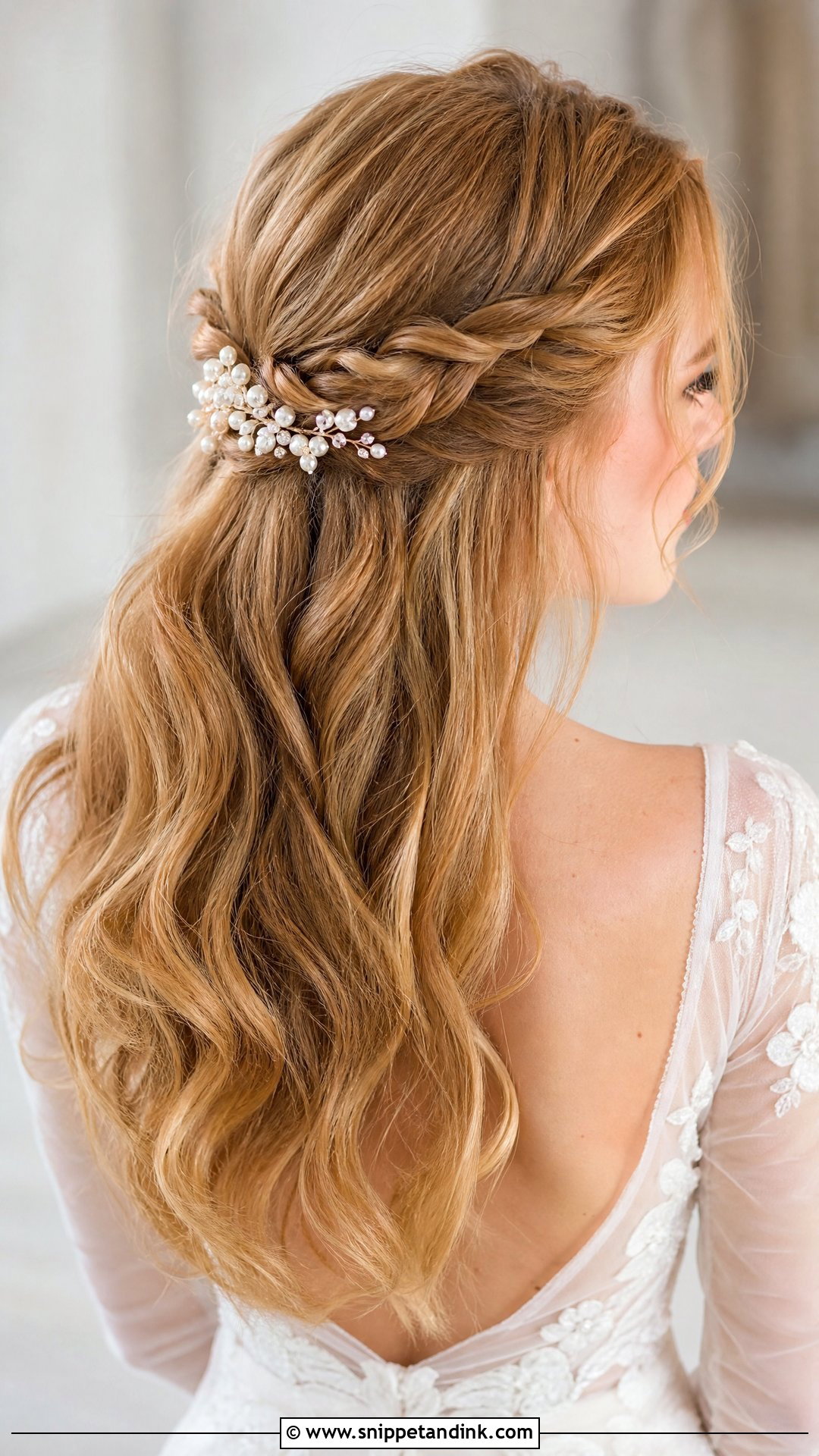
Twists give softness without the time a full braid takes. A section from each side is twisted back and pinned at the crown or lower, with the rest in waves. It’s especially useful with layers around the face, since the twists catch the short pieces. Add crown volume for a more formal finish. A pearl comb or small clip over the join makes it bridal and conveniently hides the pins.
14. Wavy Updo Wedding Hair
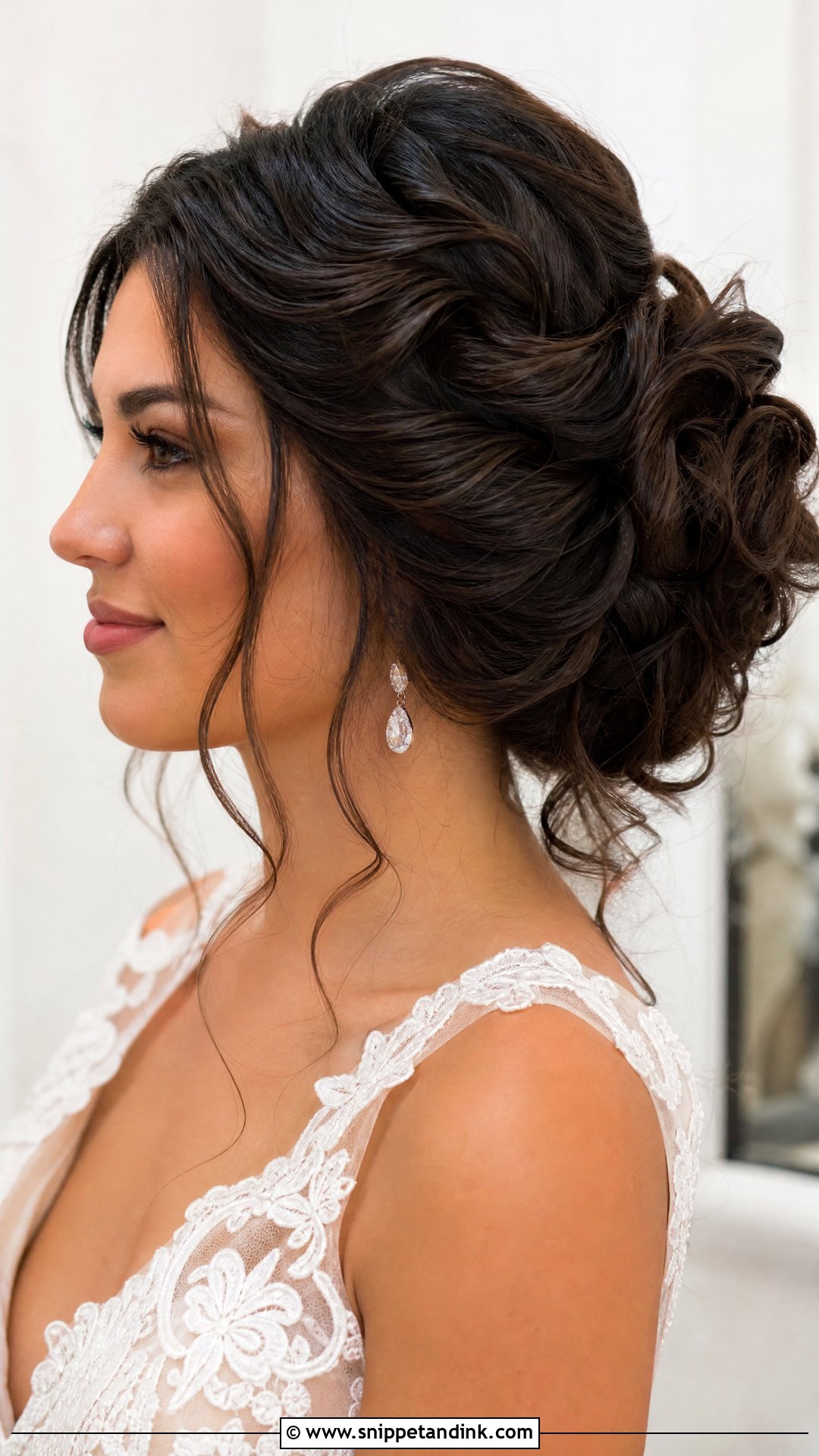
Waved first and then pinned, this updo shows movement instead of a flat shape, with lift and strong hold. It can sit low, centered or higher, depending on dress and veil. On thick hair the waves organize the volume; on fine hair they make it look fuller. Leave a few soft tendrils around the face for romance. It’s practical for heat, dancing and long ceremonies. Ask for the pins to be placed so none press into your head when you lean back in a chair.
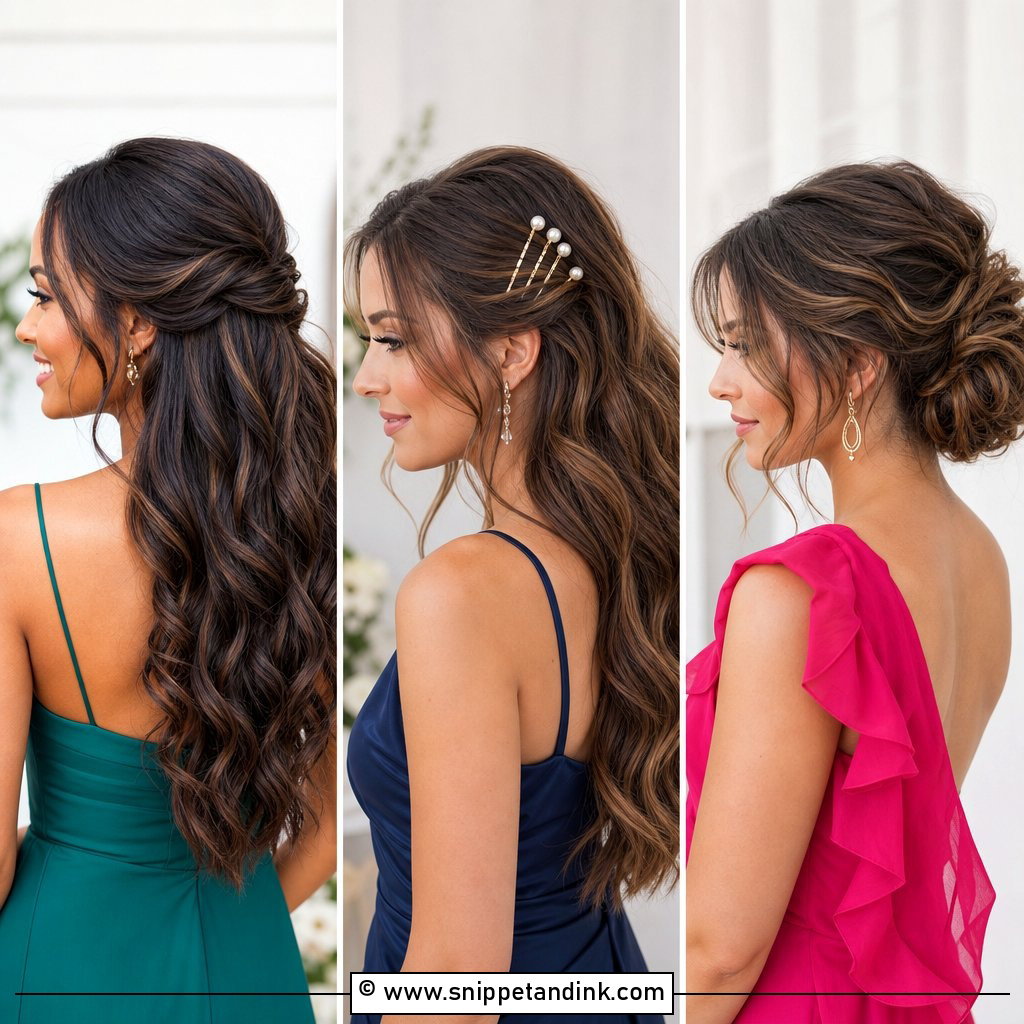
15. Messy Wavy Bun Wedding Hair
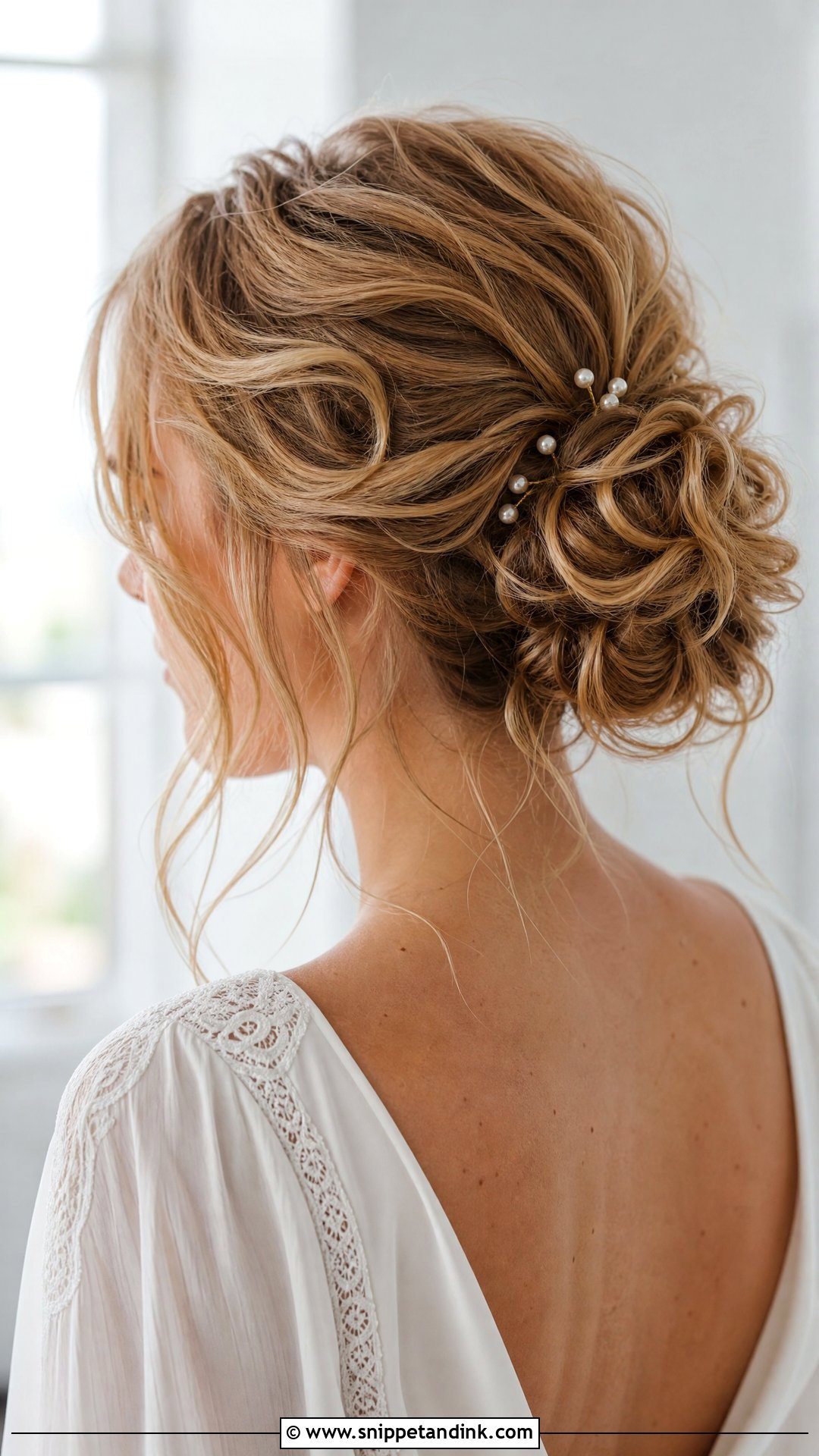
A messy bun should look controlled and undone, never careless. Waves give it texture and loose face pieces keep it soft. Beach, garden and barn weddings suit it, along with brides who dislike anything too polished. Flower pins or a soft veil pair well. Ask for secure hidden pins; the airier a bun looks, the more pins are holding it from underneath. Very straight hair needs texture spray first, or it slides back into a smooth knot by evening.
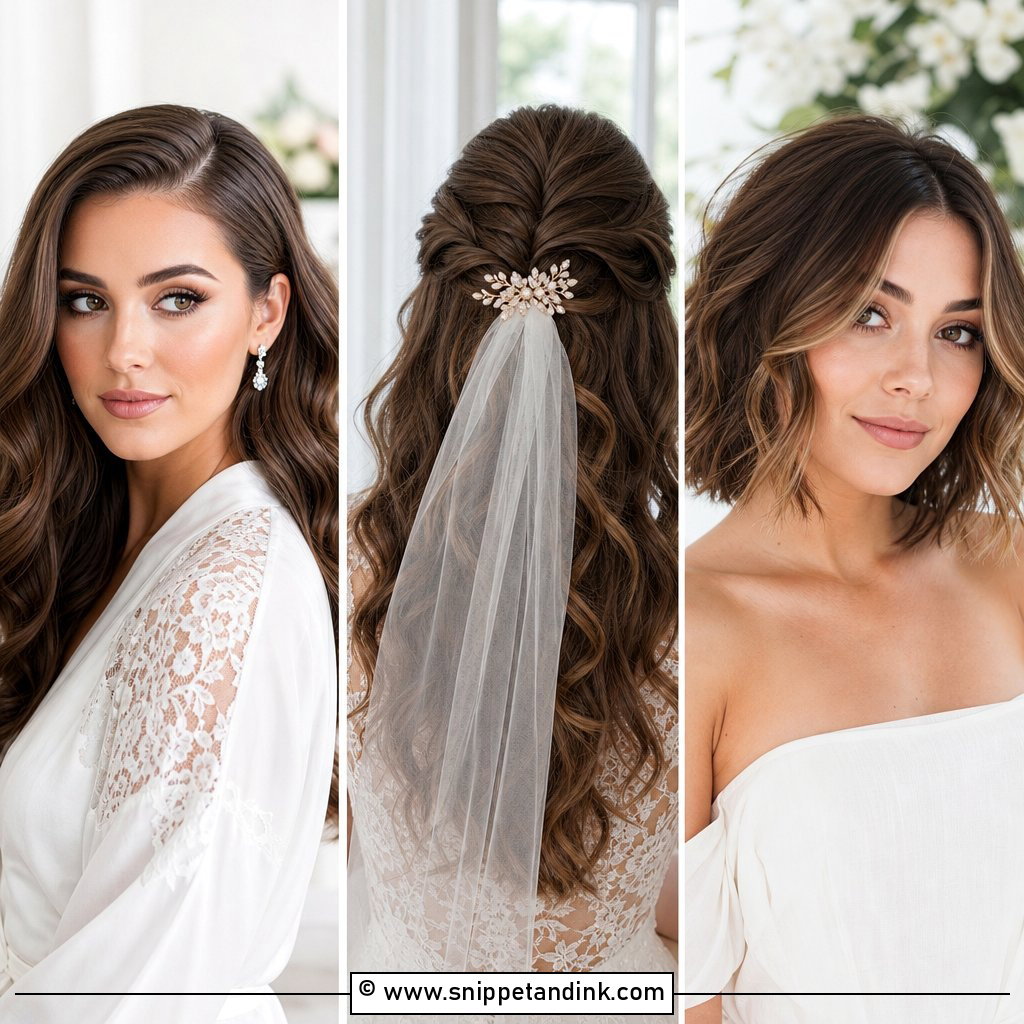
16. Wavy Hair With Veil Wedding Hairstyle
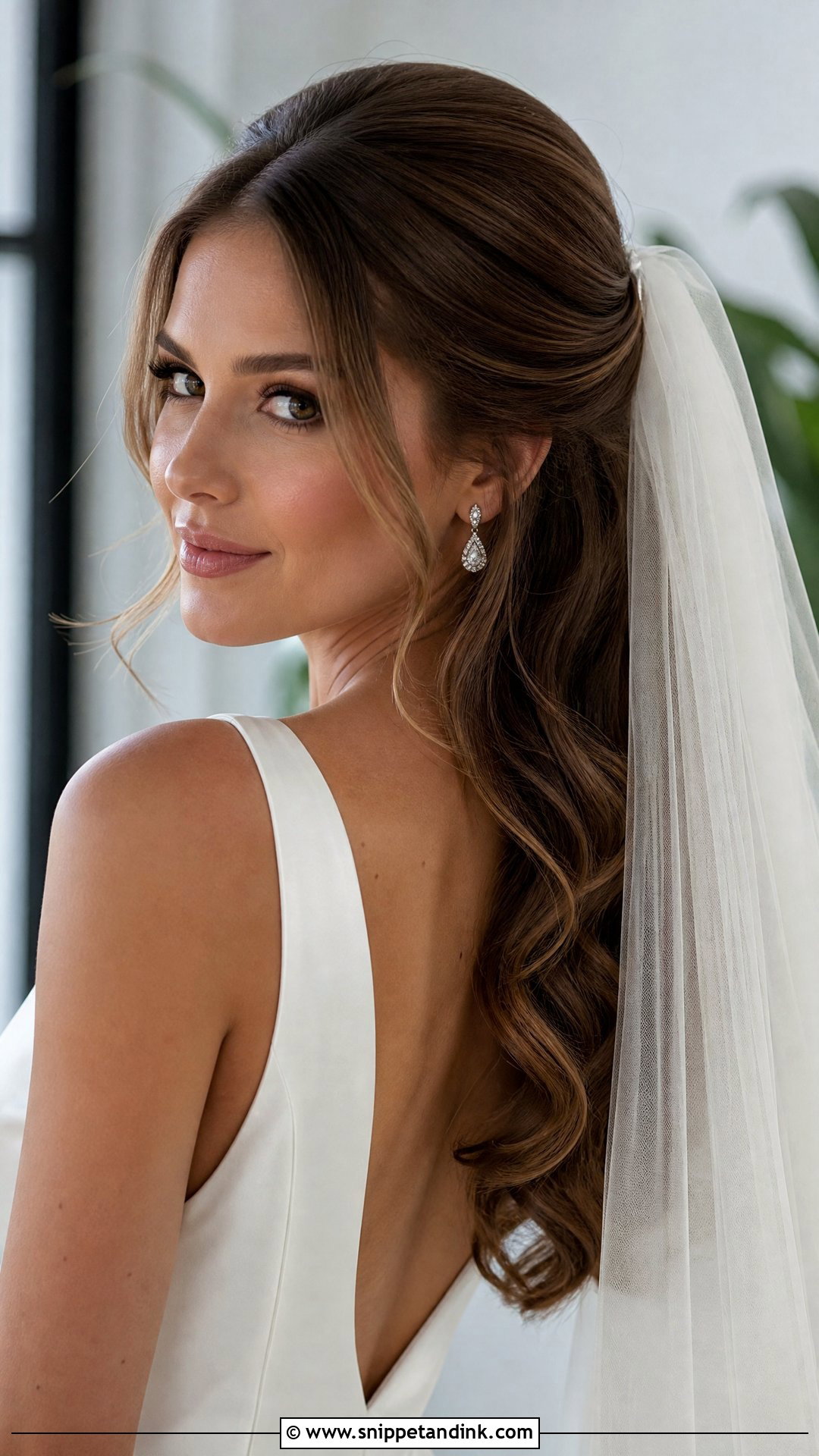
With a veil, placement matters more than the style. If your waves are down, a small hidden section at the crown anchors the comb. With half up waves, the veil slides in just under the pinned area for a natural look. Soft waves help the veil blend in rather than perch on top. Medium and long lengths with face-framing layers suit it. Keep the crown smooth where the comb sits, because textured hair at that spot lifts the veil away from the head.
17. Wavy Hair With Pearl Pins Wedding Hairstyle
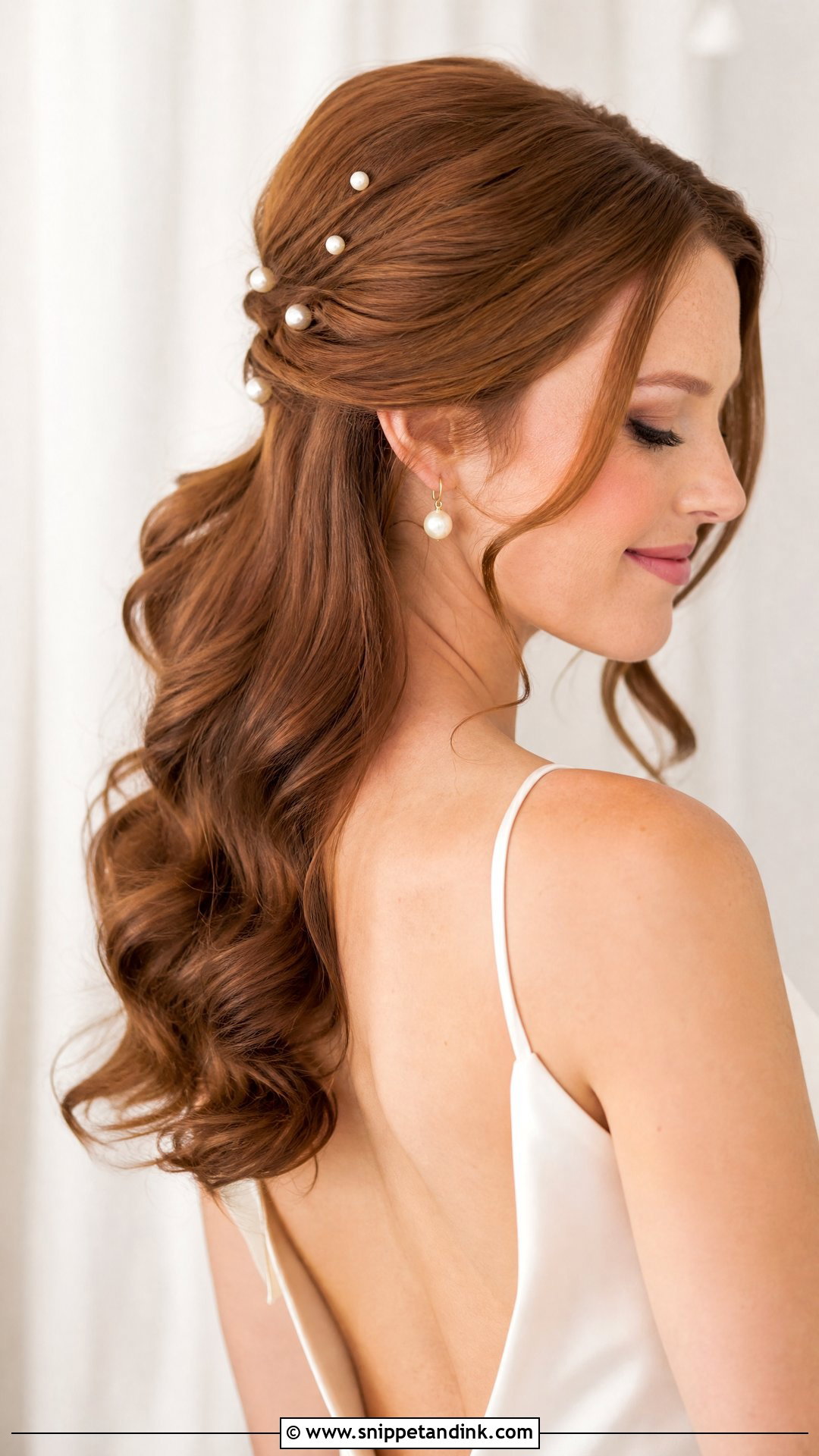
Pearl pins make simple waves feel bridal. Place them along one side, scatter them through a half up section or tuck them into a low bun. The waves give a soft base and the pearls add points of light. Satin, lace and minimalist dresses suit them. Keep them balanced rather than crowded. I count the pins at the trial and photograph the placement so it can be repeated exactly on the morning.
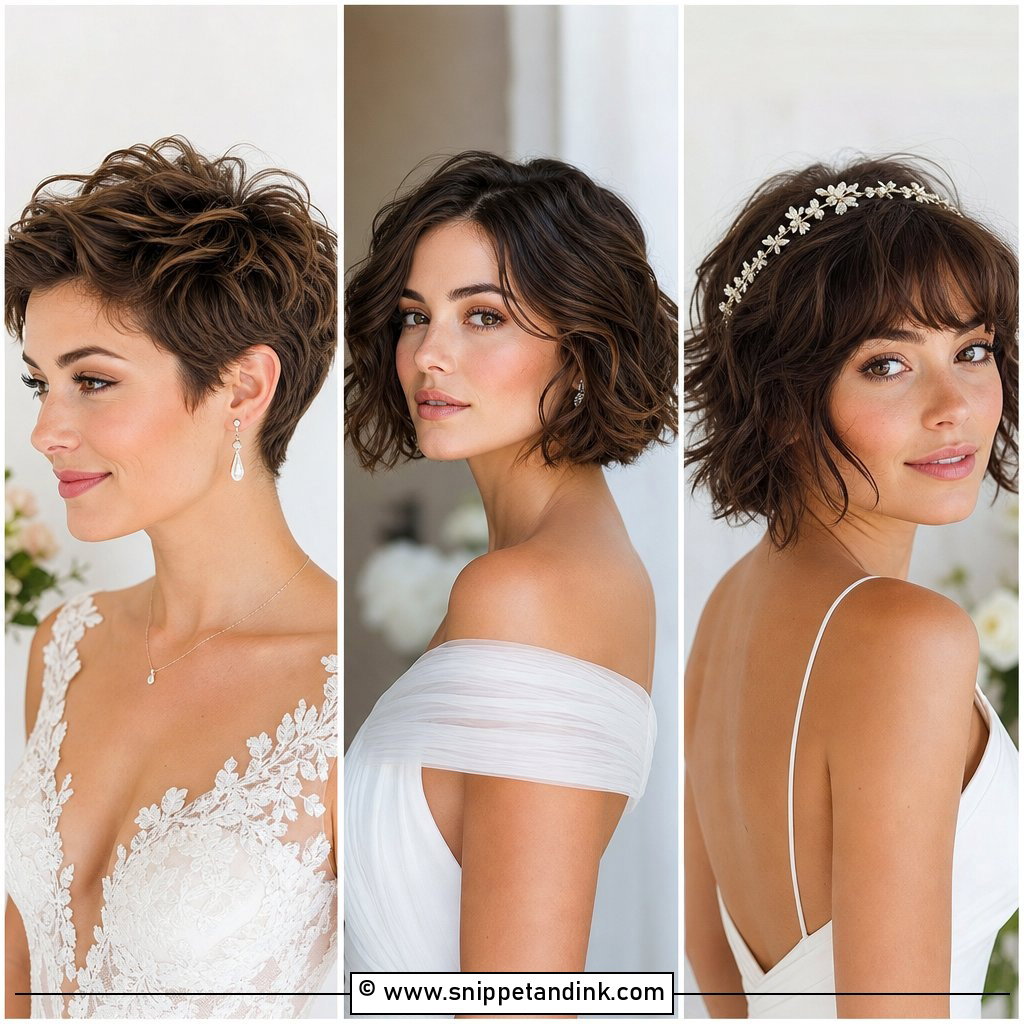
18. Wavy Bob Wedding Hair
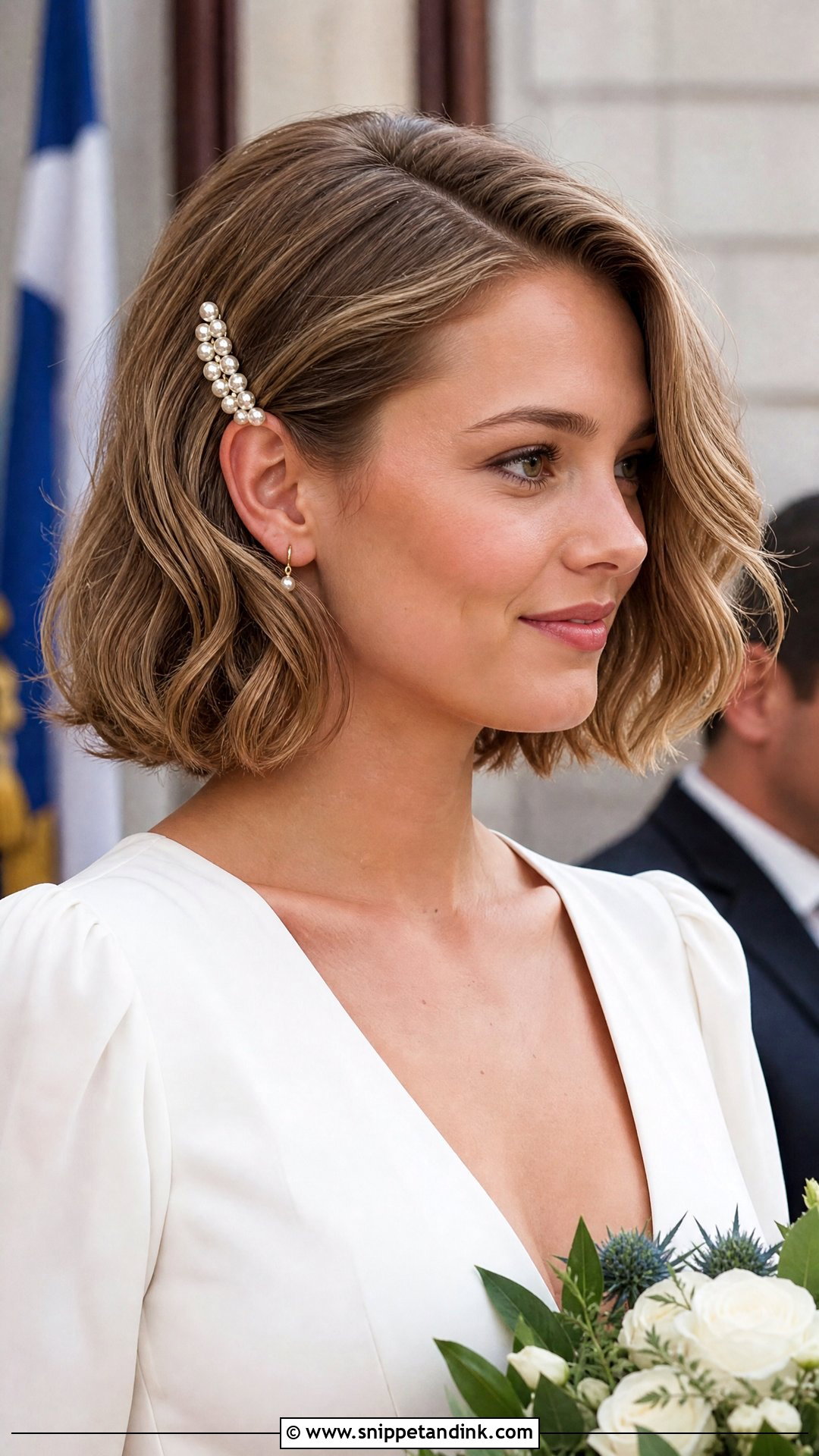
Wavy bob wedding hair can look polished and modern. A bob takes soft bends, brushed waves or a deep side part for glamour. Shape around the face matters most, with smooth ends. A pearl clip or tiny floral comb on one side adds the bridal detail. Strapless and high neck gowns both suit it. Very fine bobs need texture spray and soft backcombing at the crown, or the waves collapse onto the scalp.
19. Wavy Lob Wedding Hair
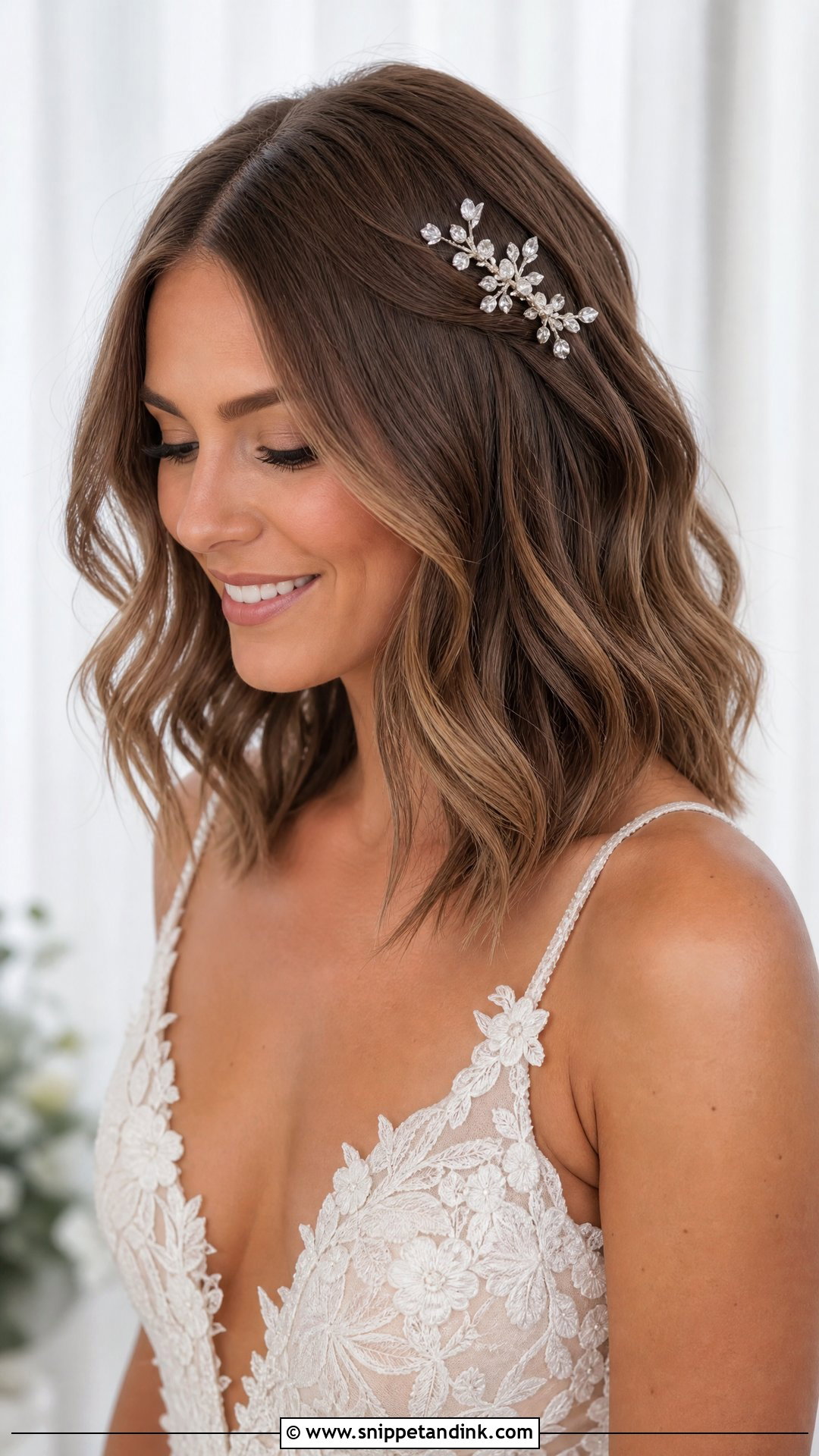
The long bob gives enough length for soft waves while staying light. It takes a center part, side part, hair clip, mini veil or half up twist. Polish the waves through the top and separate them softly at the ends. Because it ends near the shoulders, it frames the neckline well in photos. If you’re thinking of cutting to a lob before the wedding, do it at least a month ahead so the shape has time to settle.
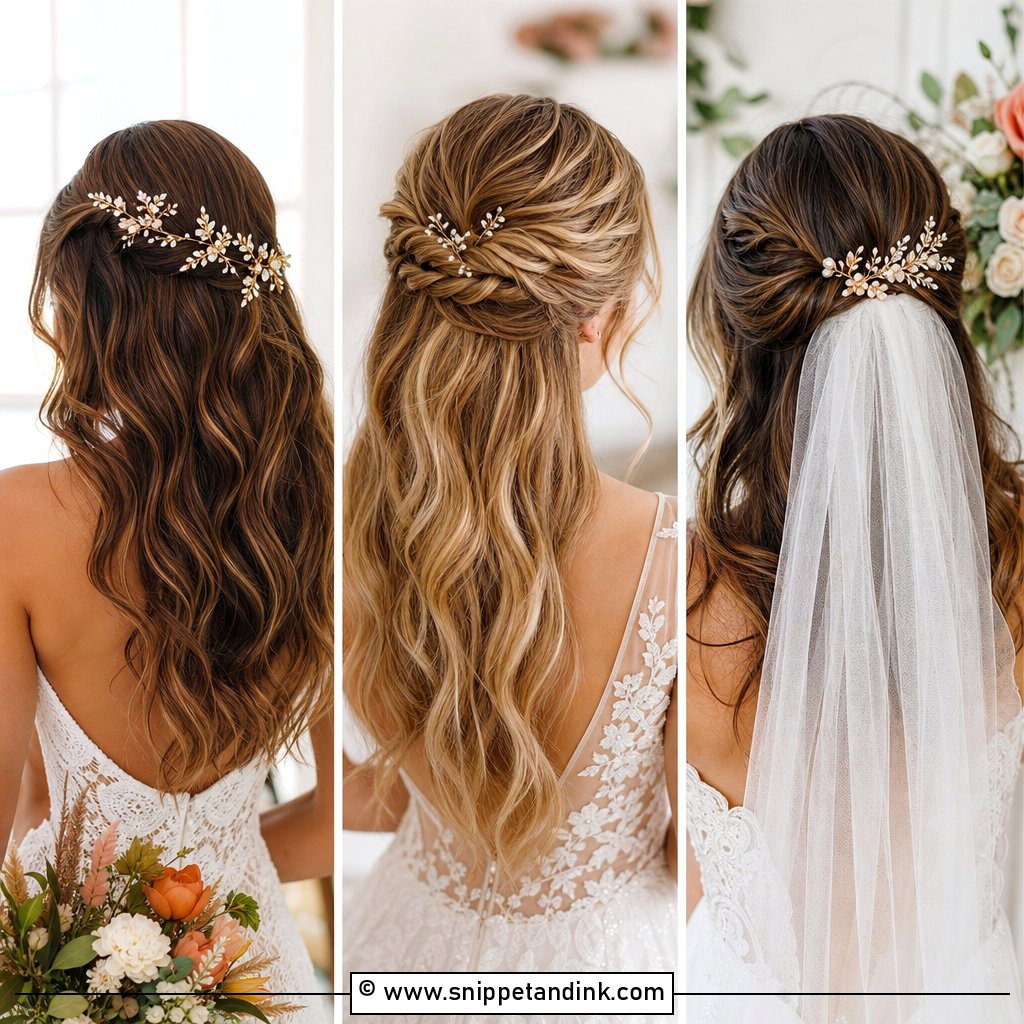
20. Natural Wavy Wedding Hair
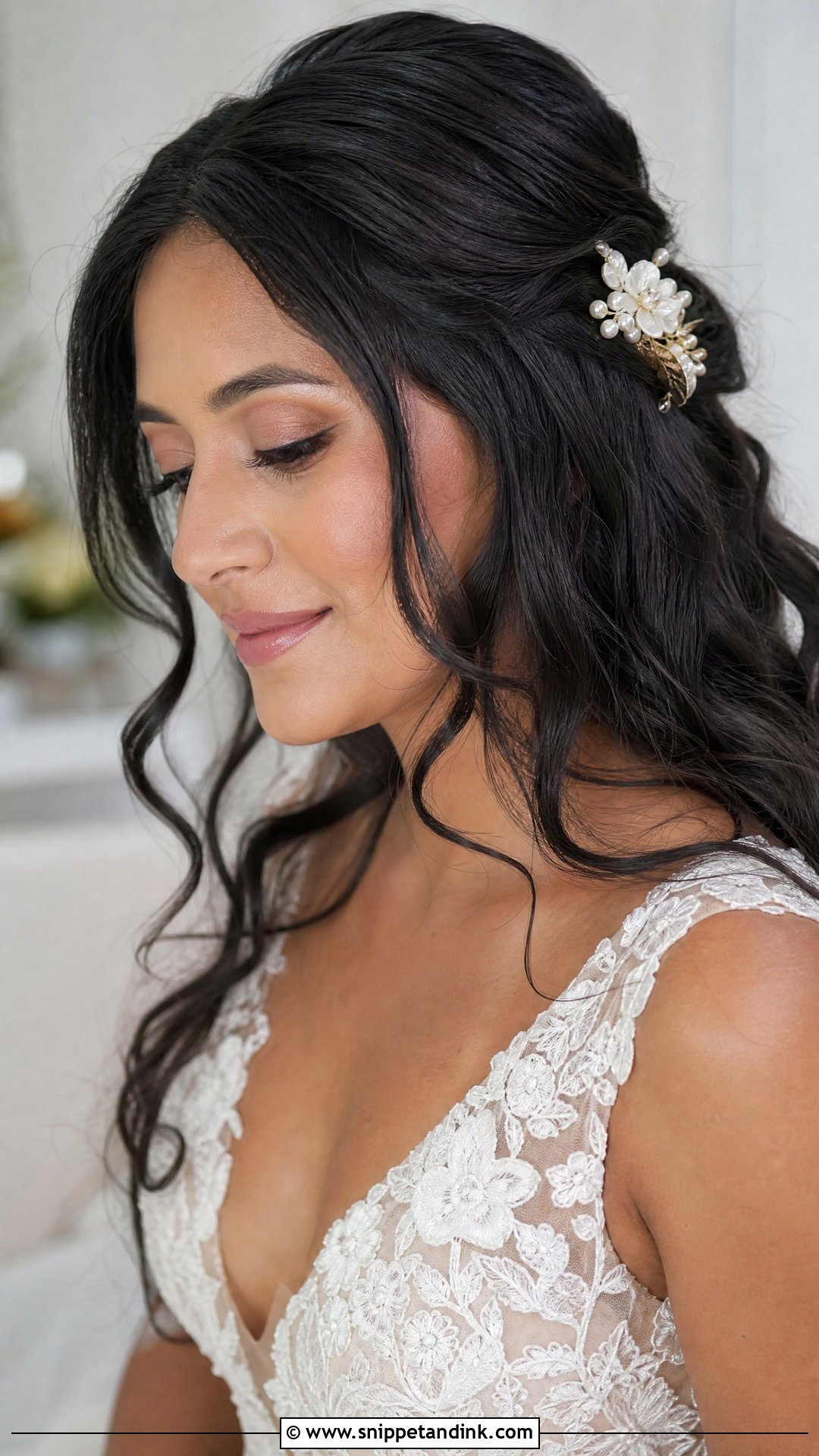
Natural waves honor your real texture while looking refined. The pattern is defined and polished rather than replaced, using diffusing, curl cream, light-hold gel or curling only the few sections that need it. Wear it loose, half up or gathered low. Moisture and frizz control before styling matter most. Natural wave changes from day to day, so I ask brides to wash and style it their usual way two or three times in the week before the trial, to see its range.
A Ten-Minute Switch From Ceremony Waves to Reception Hair
Many brides wear waves down for the ceremony and want them off the neck once the dancing starts. The change is easy when it’s planned at the trial instead of improvised in a restroom mirror.
- Choose the second style at the trial, and have your stylist show a bridesmaid how to do it, or book the stylist to stay on.
- Pack a small elastic, a few bobby pins and a clip in a bridesmaid’s bag, along with any ribbon or comb for the second look.
- For a ponytail, gather the waves at the nape using fingers only; a brush straightens the texture you want to keep.
- For a low bun, twist that ponytail loosely and pin it around the base. Hair that has worn waves all day holds a bun better than fresh hair would.
Take the veil out first and remove every one of its pins before restyling, since a forgotten pin tangles into the new shape. By evening the waves will have relaxed, which suits a looser second look rather than working against it.
A Wave Is Only as Good as Its Prep
Waves bring movement to almost every bridal look, from polished Hollywood waves to a soft low bun, a modern ponytail or a relaxed half up style. Shape them around your dress, veil and venue. The right wedding style looks good in photos and feels comfortable in real life. Bring clear inspiration photos to your trial, be honest about how your hair behaves, and test the hold. With the right prep, waves can still look fresh at the last dance.
You'll Like These Ideas:


Leave a Reply