
Bridal hair has to survive a long list: a veil going on and off, a dozen hugs, wind at the church door, and hours of dancing. A style that looks right in a photo but slides by dinner isn’t the right style. When a bride sits in my chair, I look at her texture, neckline and veil before I look at her inspiration board, because those three decide what will hold. The 20 styles below run from classic chignons to natural curls and ponytails, each with a note on what it needs to last from ceremony to last dance.
What a Bridal Hair Trial Should Actually Test
A trial isn’t just a preview. It’s a test run, and I treat it that way. Most brides book theirs one to three months before the wedding, often on the same day as the makeup trial so they can see the full face together.
- Wear a top with a neckline close to the dress. A crew-neck T-shirt makes every updo look different from how it will look with a strapless gown.
- Bring the veil, comb or any hair accessory. Veil weight changes where pins need to go.
- Come with hair prepped the way it will be on the day, usually washed the day before for most textures.
- Ask for photos from the back and both sides, in daylight and with flash.
- Keep the style in for the rest of the day and check it in the evening. That’s the real test.
If something drops by dinner, tell your stylist. It’s far easier to change the prep or the pinning now than on the morning of.
1. Bridal Low Bun
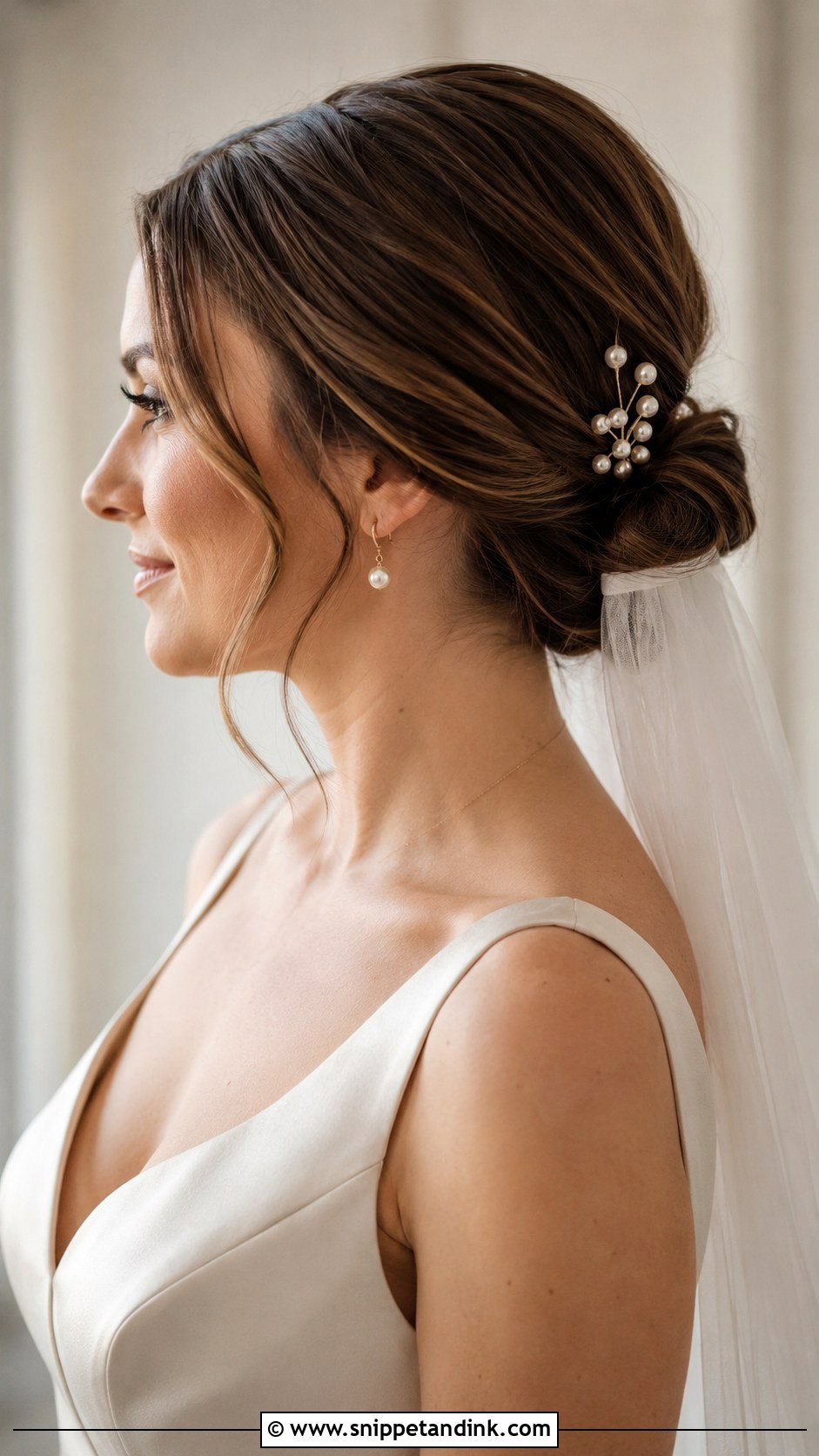
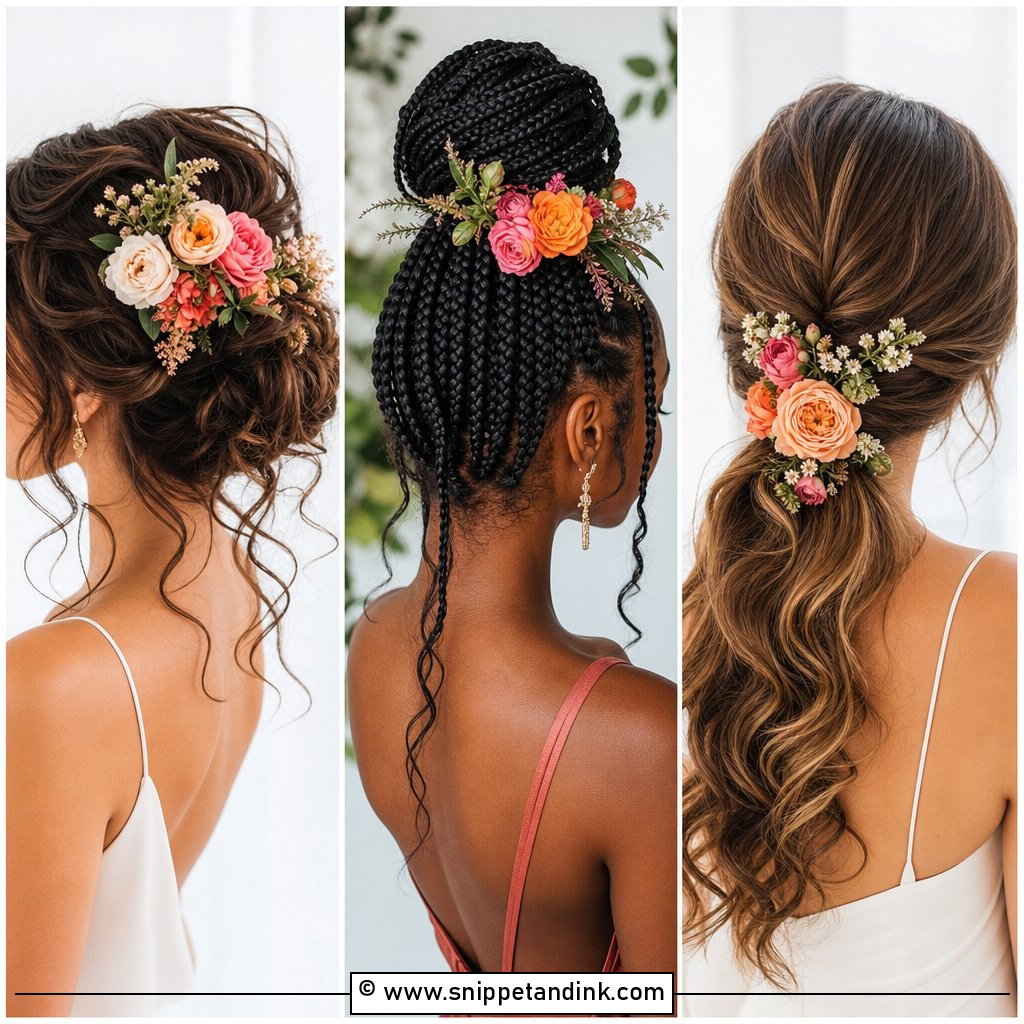
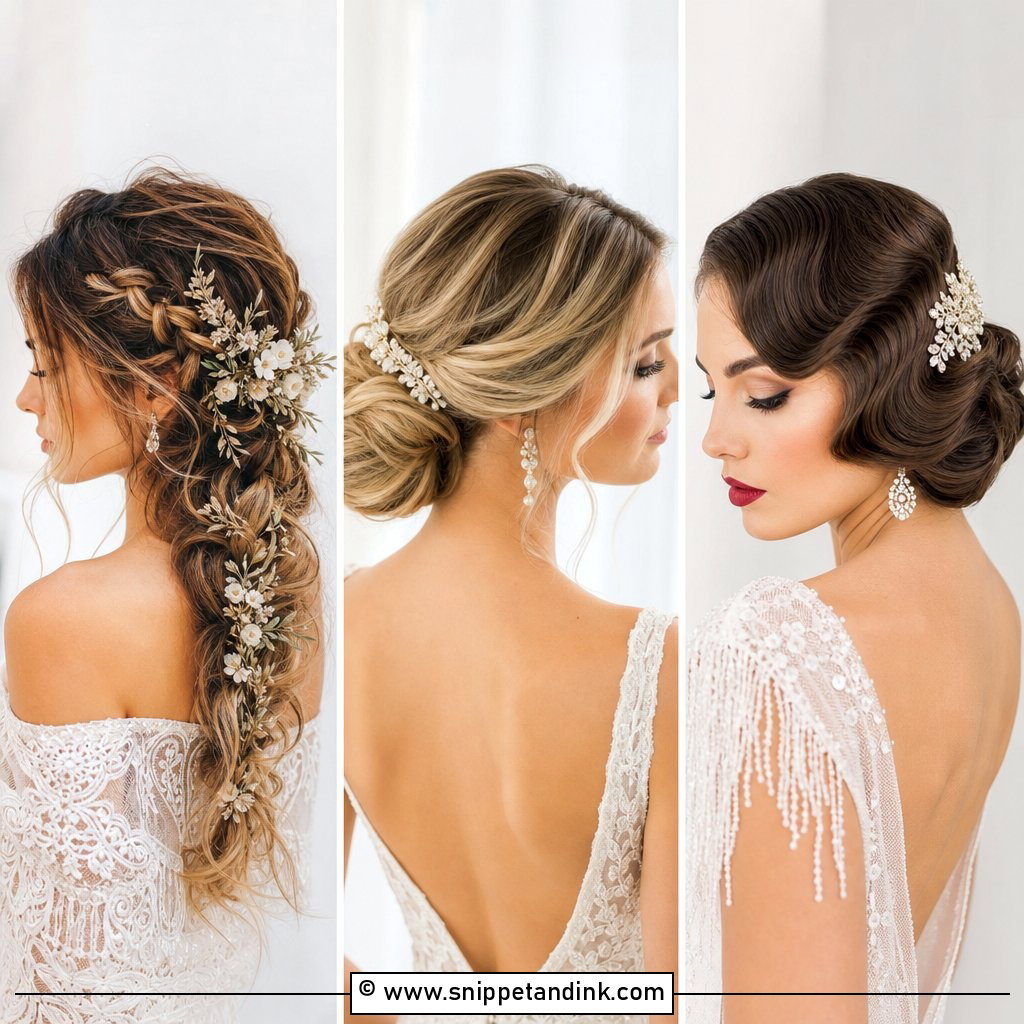
The low bun is still the style I’m booked for most. It sits at the nape, so a veil comb slides in right above it, and it leaves the neckline, earrings and any back detail on the dress completely visible. I always build some lift at the crown, since a flat top looks severe in photos taken from slightly above. Face-framing pieces soften it; leave them out for a more formal look. It’s also the coolest option in summer.
2. Bridal Chignon
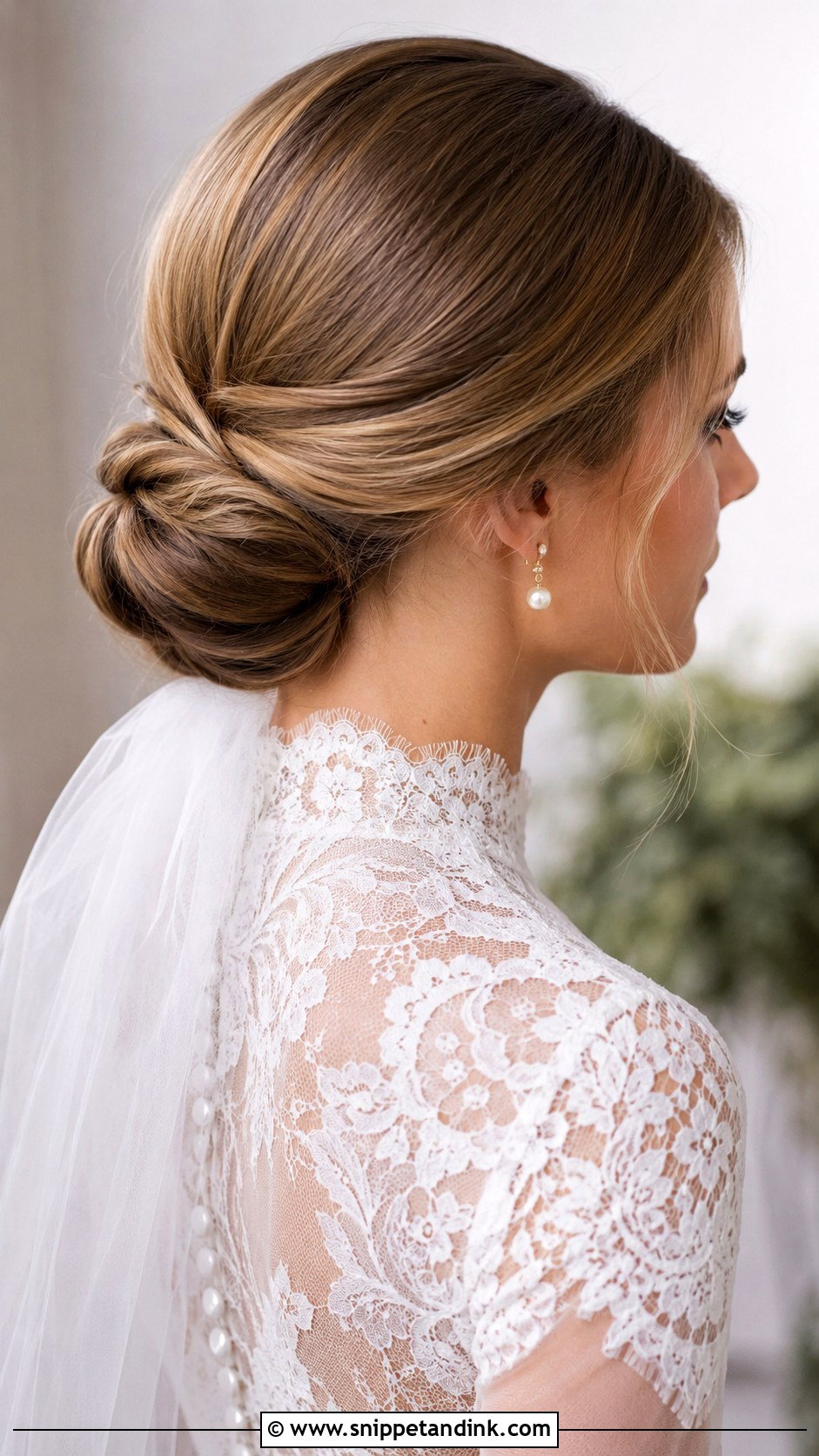
A chignon is the low bun’s more tailored relative. It’s tucked and pinned rather than wrapped, which gives a neater outline that sits well with lace, beading, high necklines and long veils. Sleek, twisted or slightly loose, the structure underneath is the same. On fine hair, I add a small padding or a few wefts so the chignon has shape without looking stuffed. Use shine spray in one light pass; a heavy coat reads as oily under flash.
3. Bridal Hollywood Waves
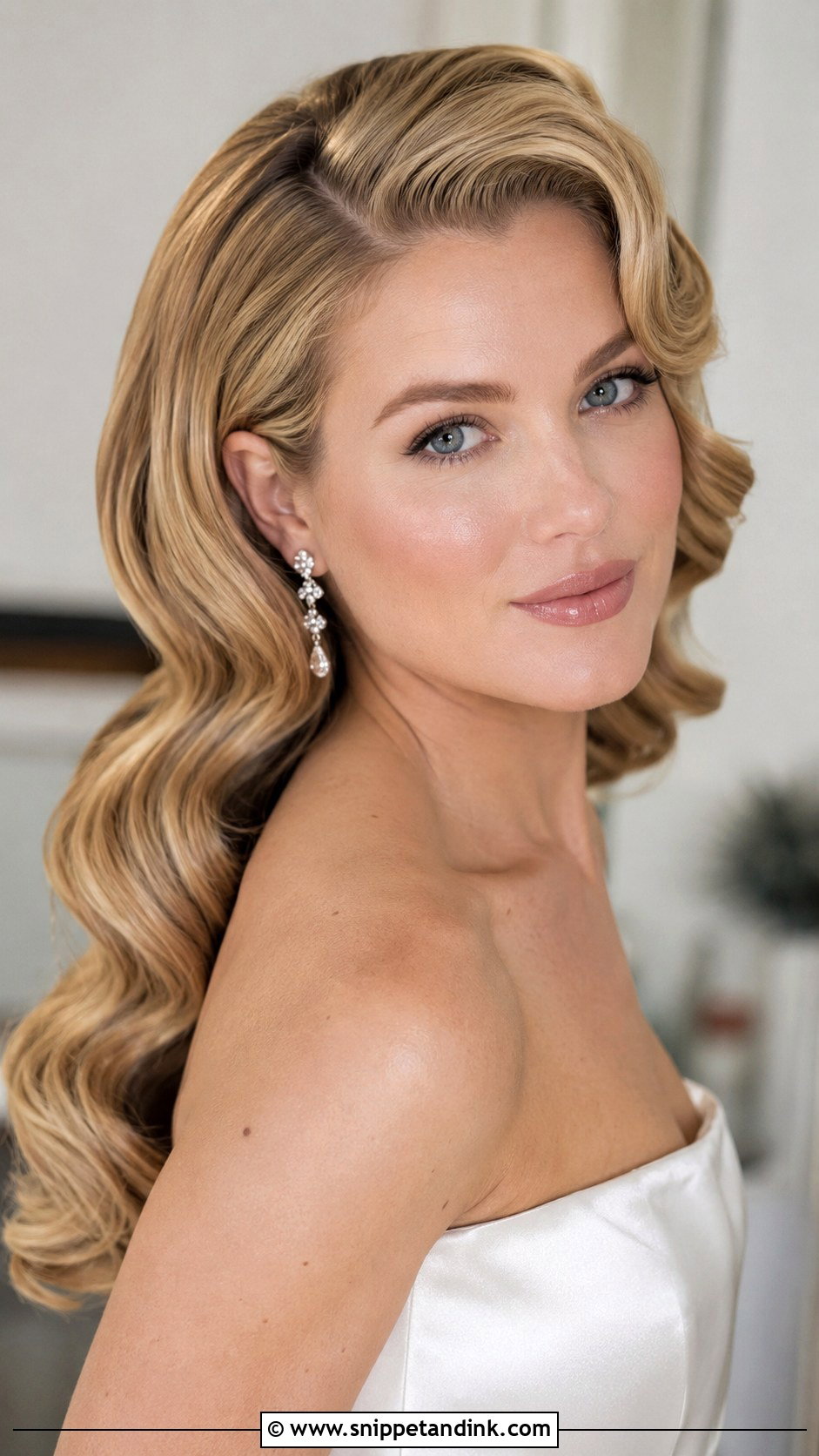
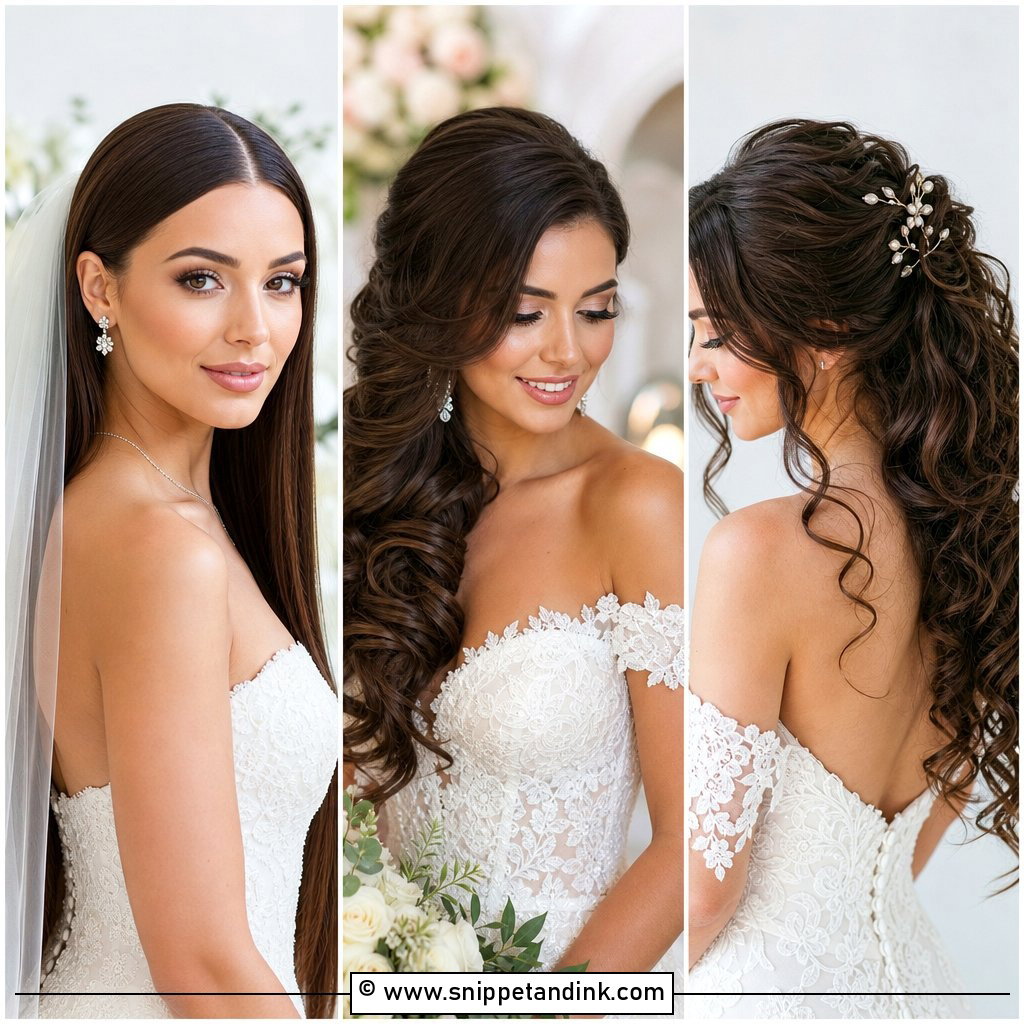
Hollywood waves give you that glossy, red-carpet look. Every curl is set in the same direction and pinned to cool, then brushed out until the waves join into one shape. They suit strapless gowns, satin, a side part and statement earrings. Medium to long hair works, and extensions help even out a layered cut. I’ll be honest: these take the longest to set of anything here, and they’re the first to drop if that step is rushed.
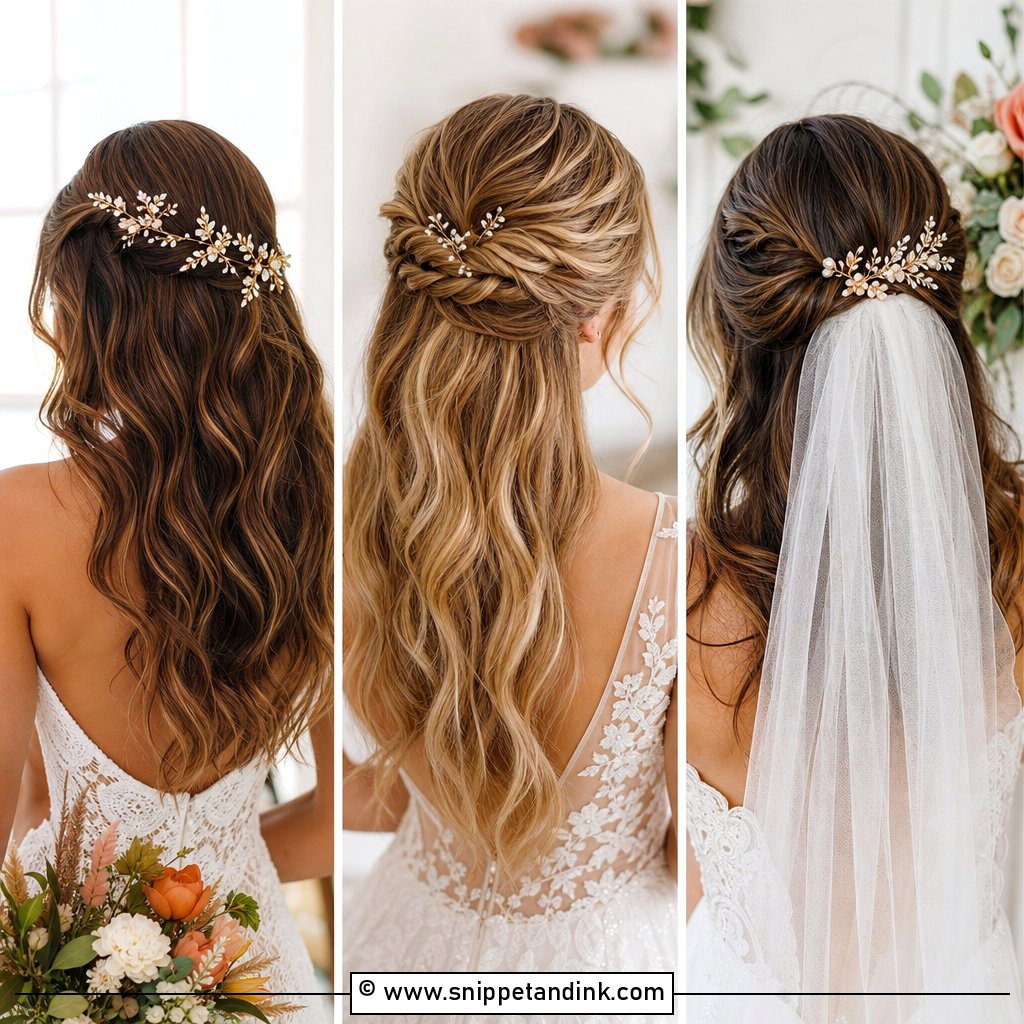
4. Bridal Half Up Half Down
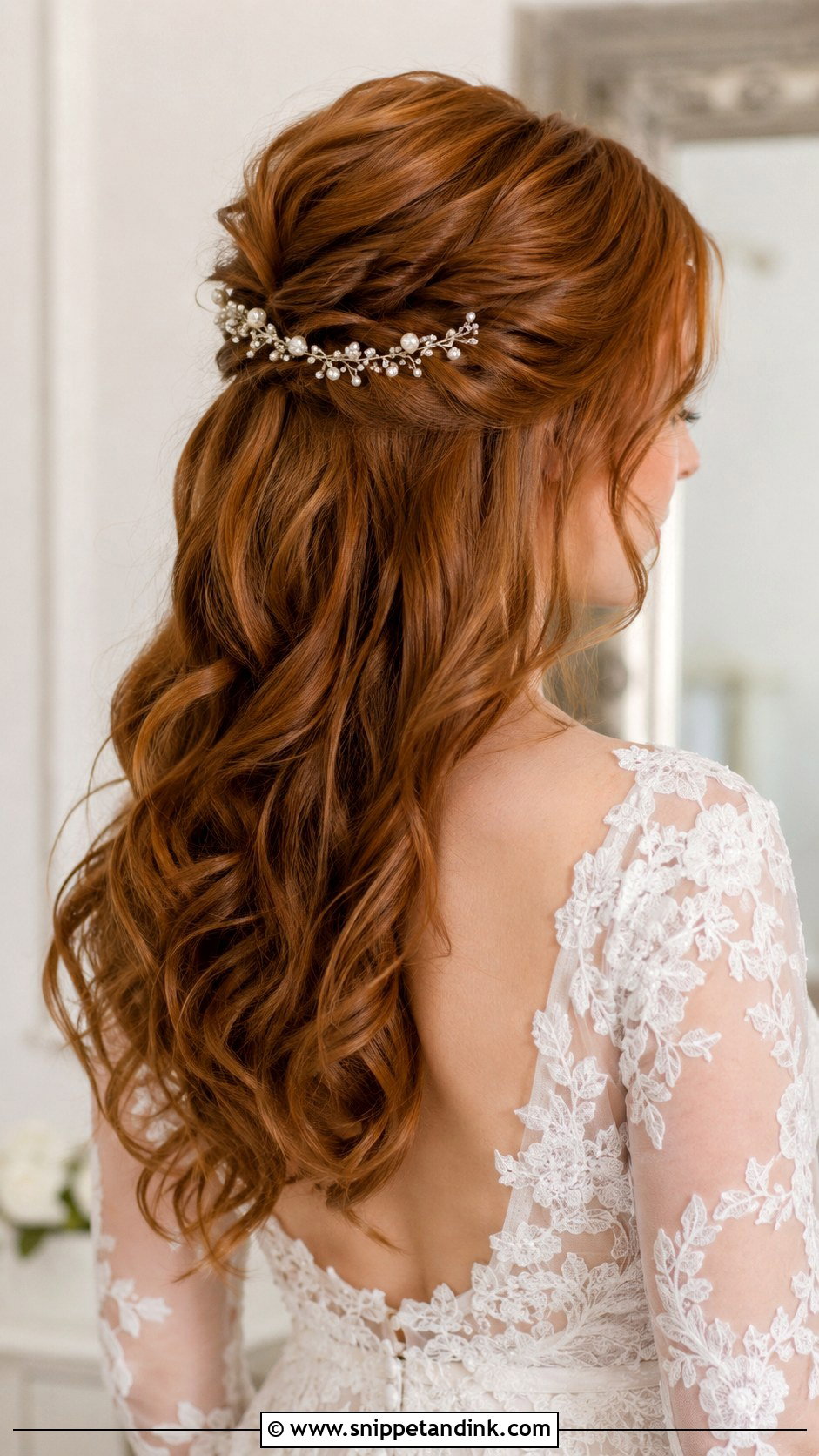
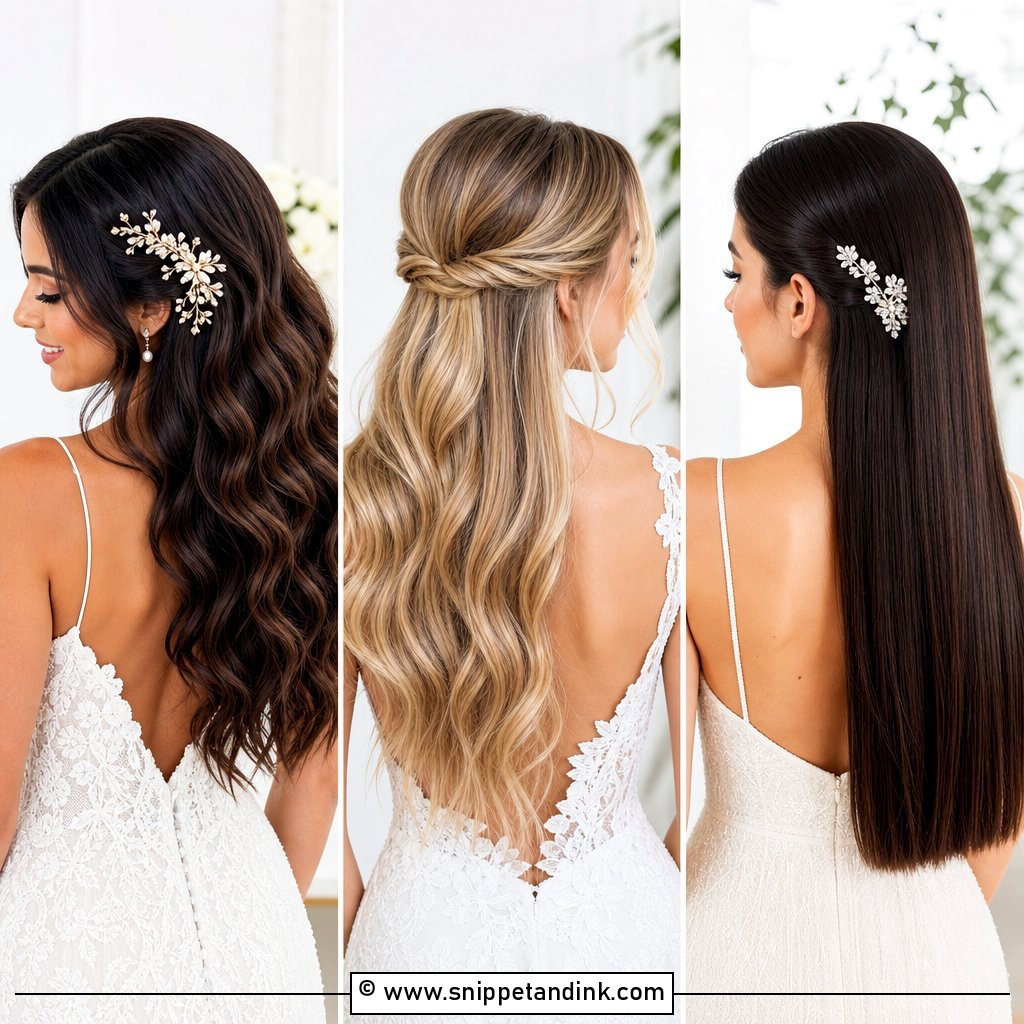
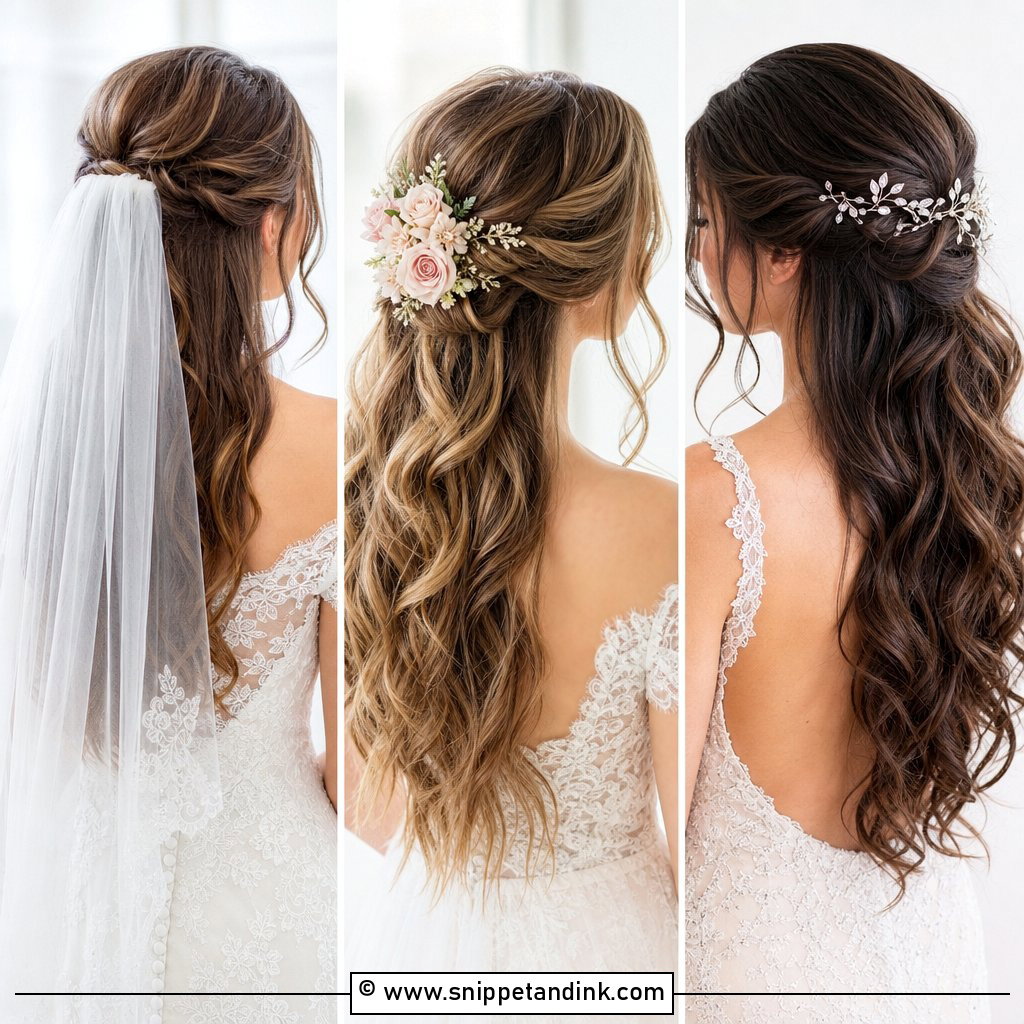
Half up gives you hair on the shoulders and control near the face. The top section can be twisted, braided or lifted with a little volume, with the rest in waves. It’s an easy base for a veil, floral pins or a delicate vine, and it suits brides who feel exposed with everything pulled back. The usual problem is a flat crown by the reception, so I tease underneath where it won’t show and pin the top with crossed pins rather than a single elastic.
5. Bridal Loose Waves
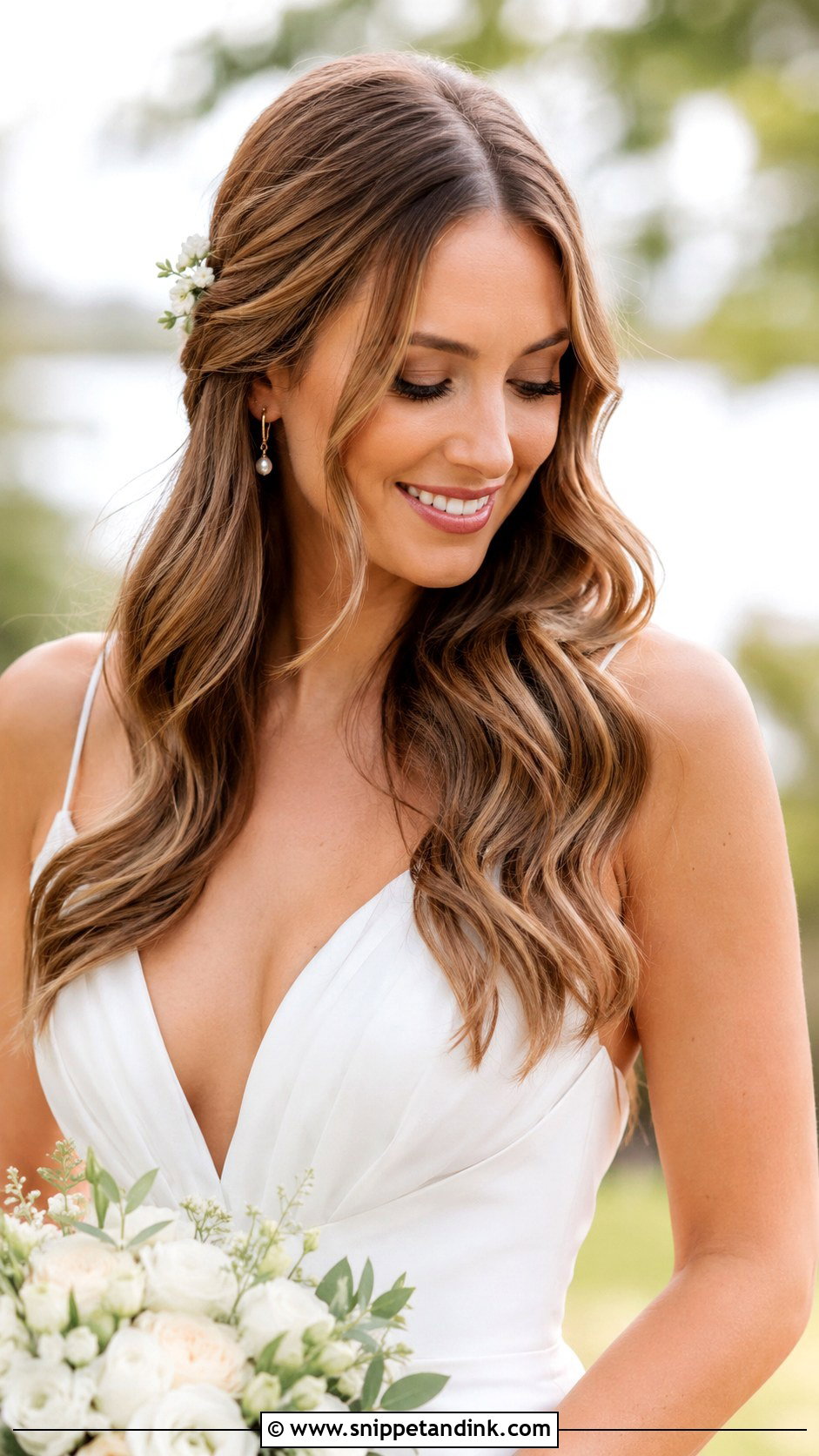
Loose waves are what most relaxed brides picture: soft movement without formality, right for a beach, an outdoor ceremony, a rustic venue or a simple gown. They work on long, medium and layered hair. I alternate curl direction so the waves don’t clump into one sausage-shaped mass, then brush them out softly and set with a flexible spray. Hair that drops curls quickly needs tighter waves at the start; they’ll relax into the shape you want by the first dance.
6. Bridal Sleek Bun
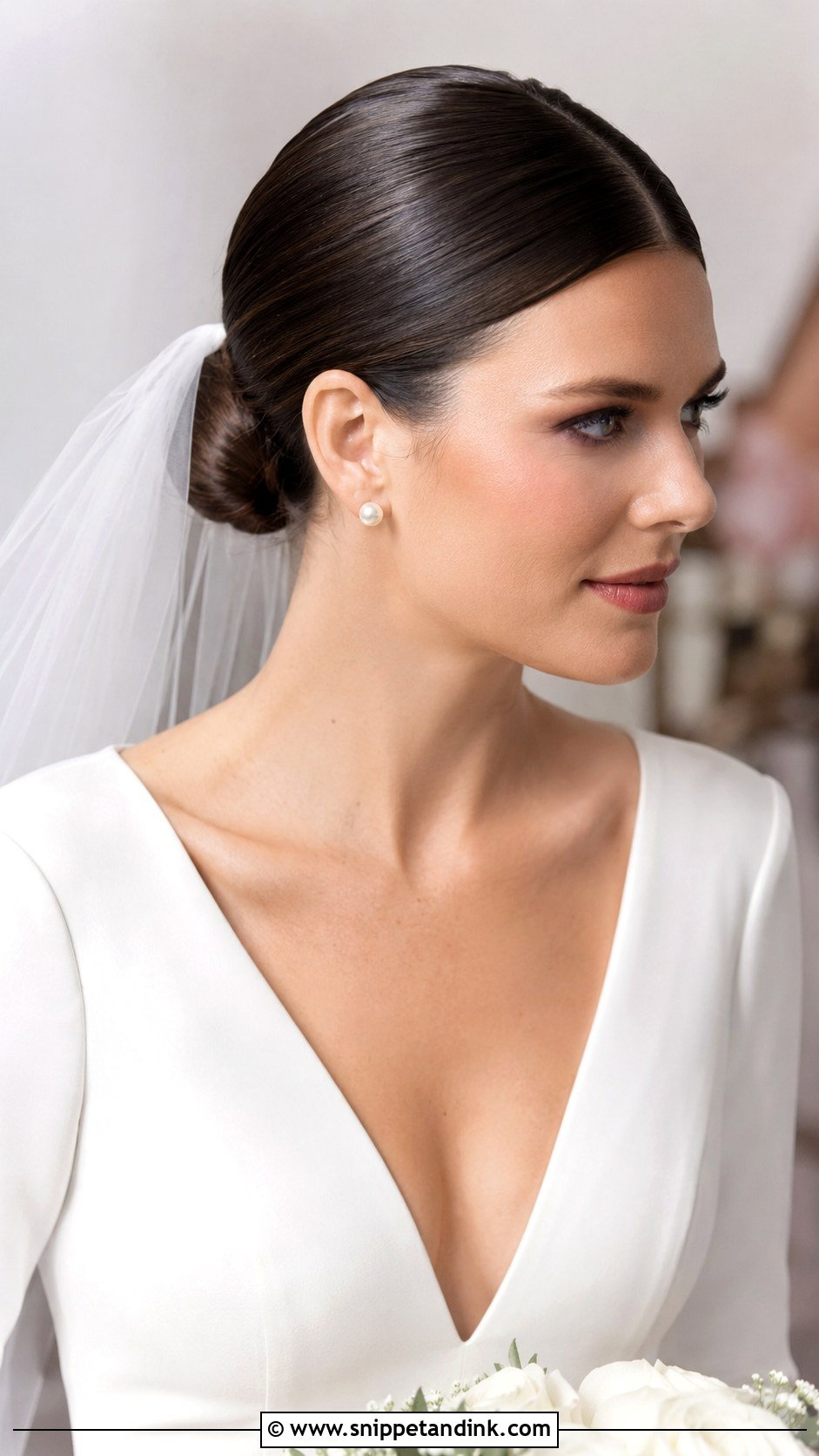
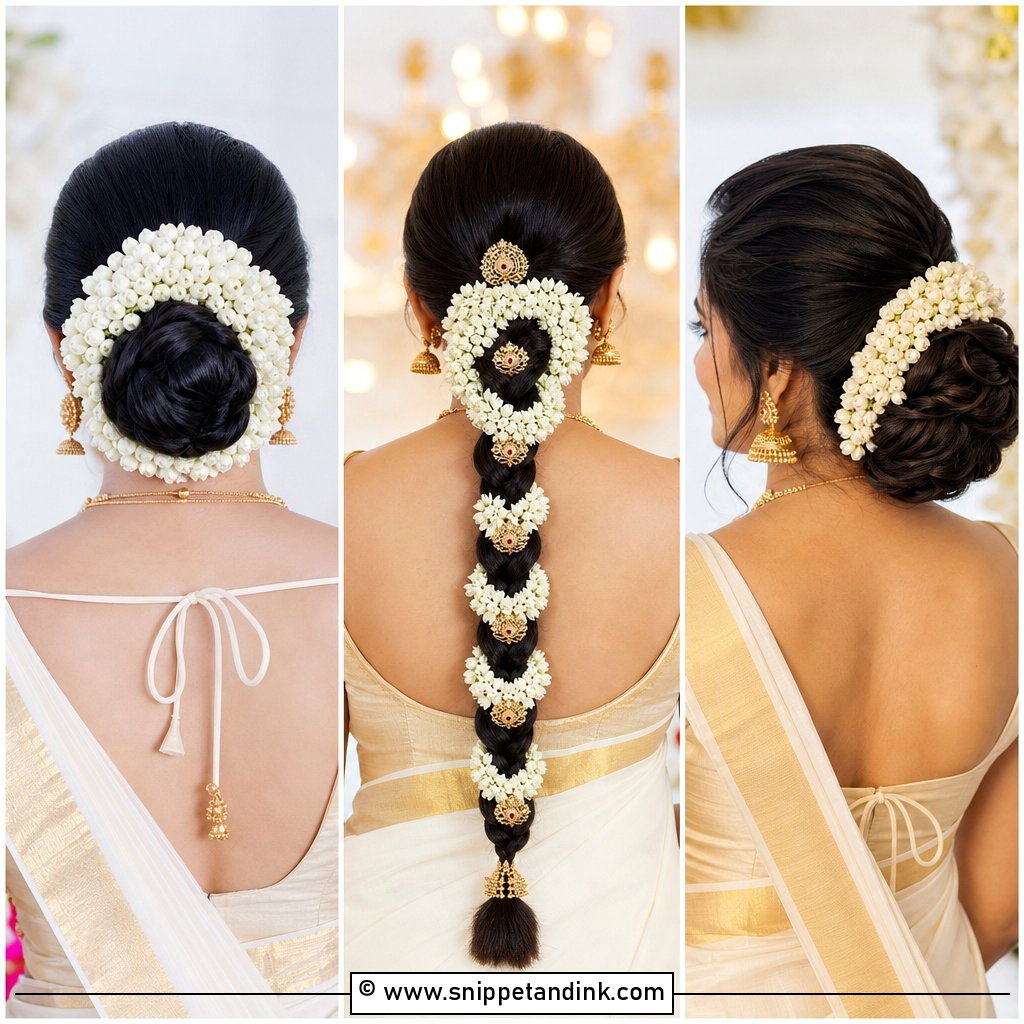
Sleek buns look simple and are almost entirely prep. If the hair isn’t blow-dried smooth first, no amount of gel will hide the kinks. Once it is, I smooth it close to the head and secure it at the nape or mid-back. It suits minimal dresses, structured gowns, pearl earrings and a long veil. In humidity, it’s one of the few styles that keeps its line. Centre part looks fashion-forward; a deep side part softens it.
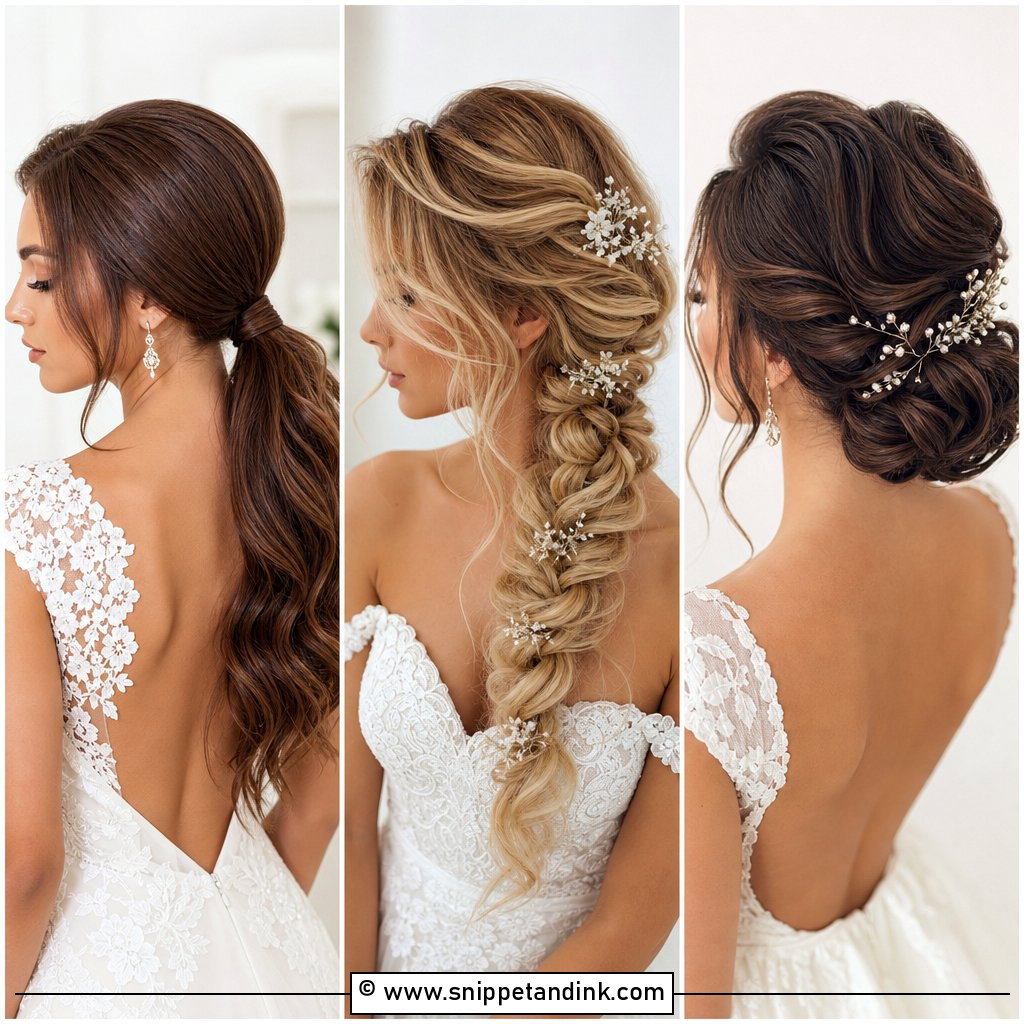
7. Bridal Textured Updo
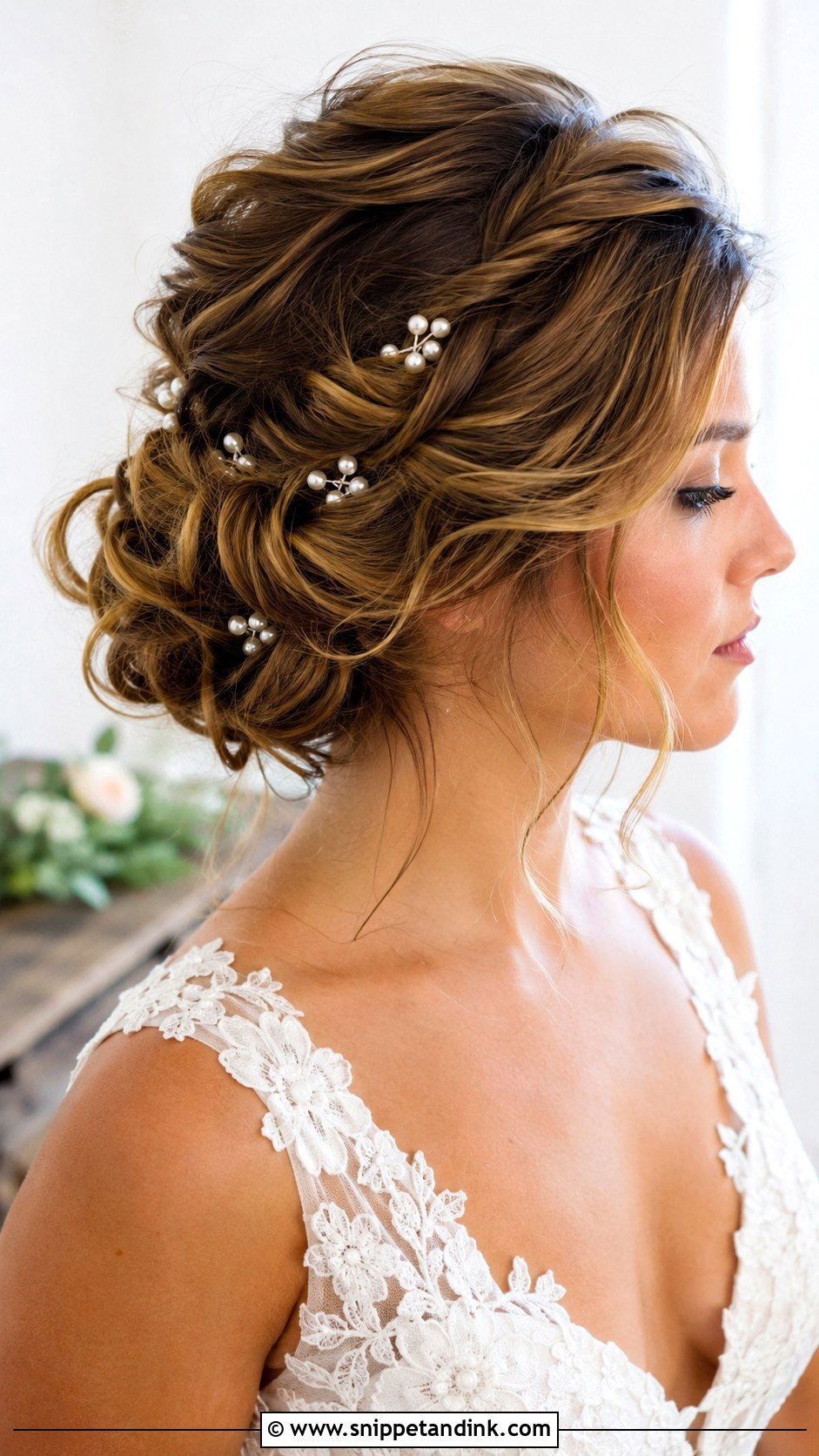
Textured updos have the security of an updo without the polished finish. Soft bends, pinned sections and a few loose pieces make the shape. Fine hair looks fuller this way, and thick hair becomes easier to control. I usually pre-curl and backcomb at the base of each section so the pins have something to grab. Keep the front balanced to your face, and remember the difference between relaxed and messy is where the loose pieces are placed.
8. Bridal Braided Updo
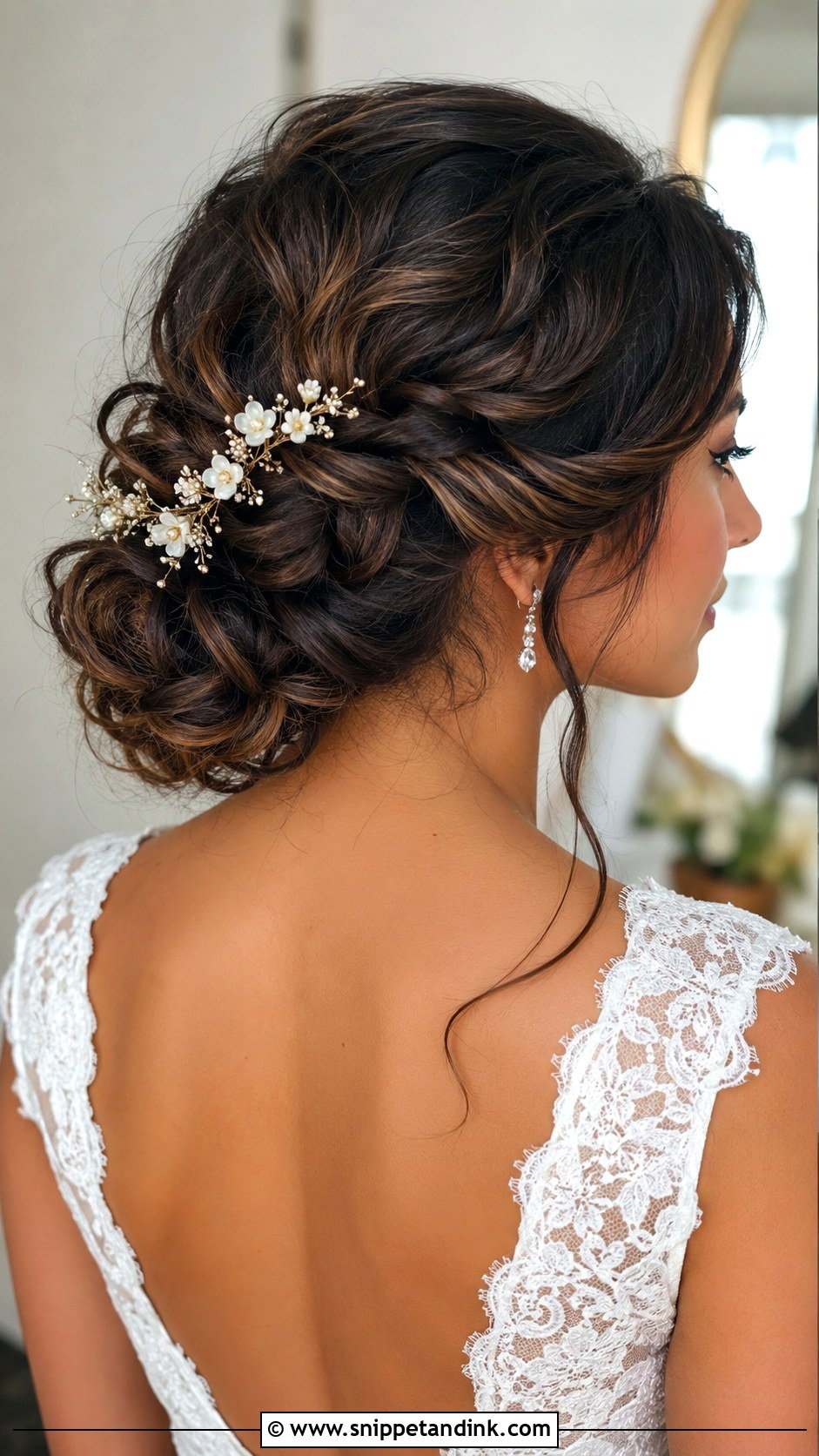
The braid can wrap into a bun, cross the crown or blend into pinned curls at the back. Braids hold an updo together outdoors, and they take floral pins, tiny pearls and a soft veil easily. I loosen the braid after it’s pinned so it reads full rather than tight. If you have highlights or balayage, this is the style that shows the colour best, because the woven sections catch light differently.
9. Bridal High Bun
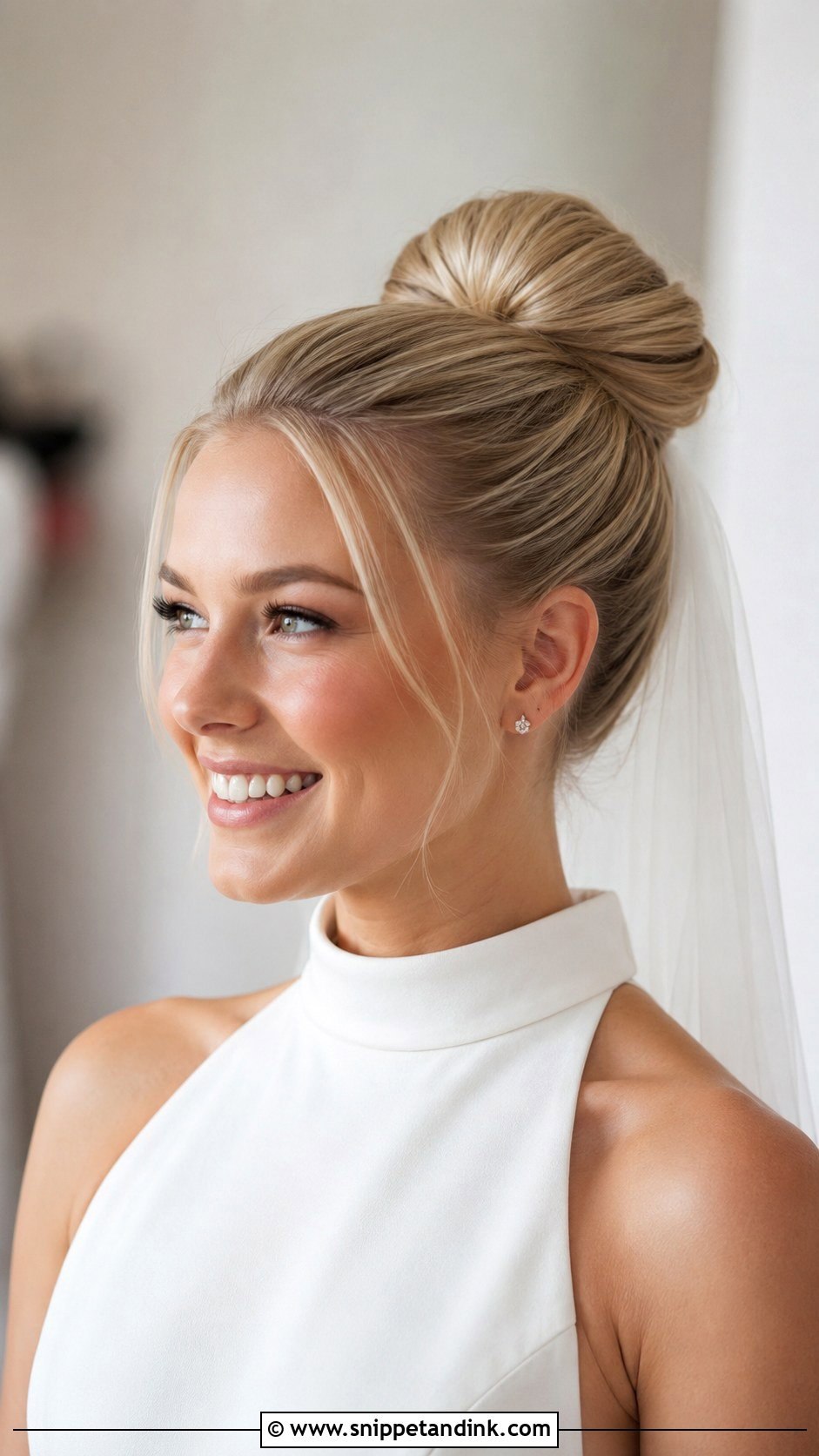
A high bun lifts the whole look and lengthens the neck. It keeps hair completely off the face and suits high-neck gowns, dramatic earrings, clean makeup and cathedral veils placed below the bun. Fine hair usually needs a padding to make the bun full; thick hair needs careful sectioning so it isn’t heavy on one side. I check it from the back and both sides before I spray, because an off-centre high bun is very obvious in photos.
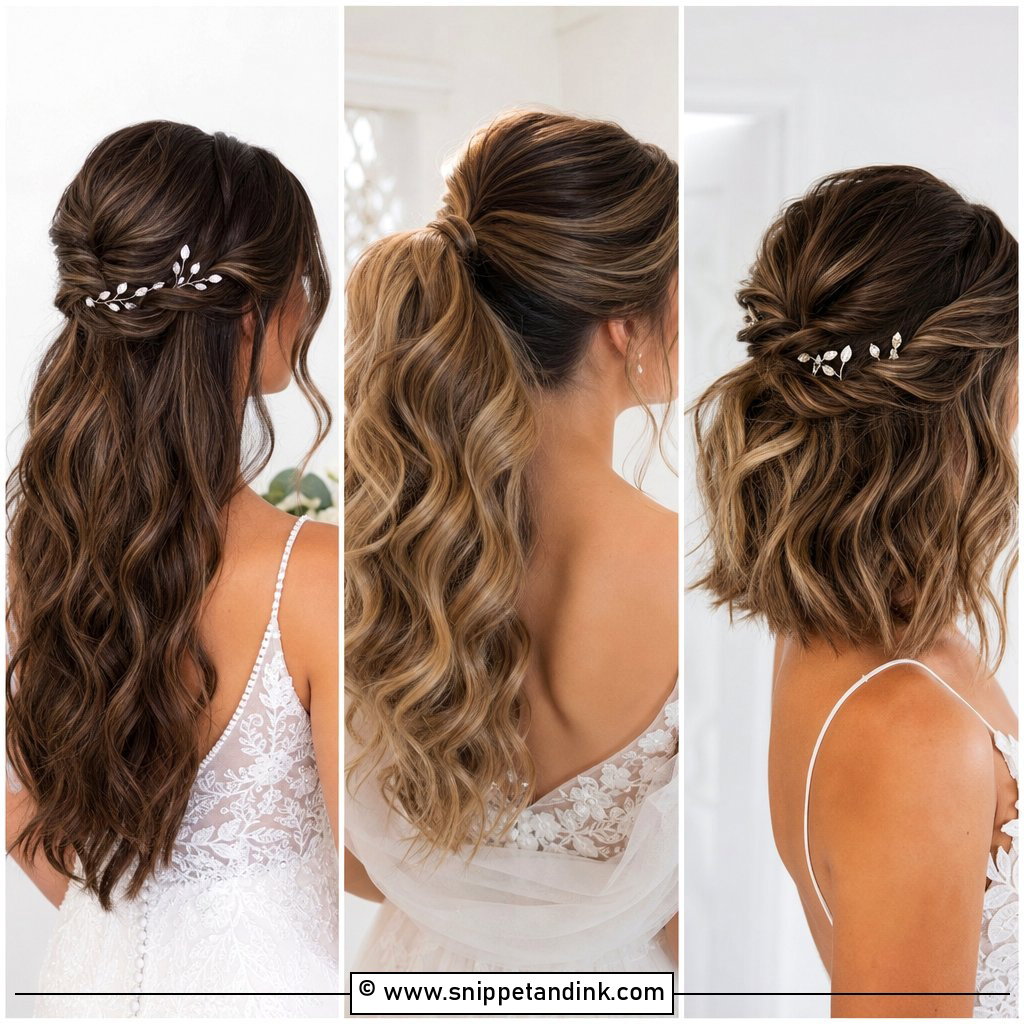
10. Bridal Ponytail
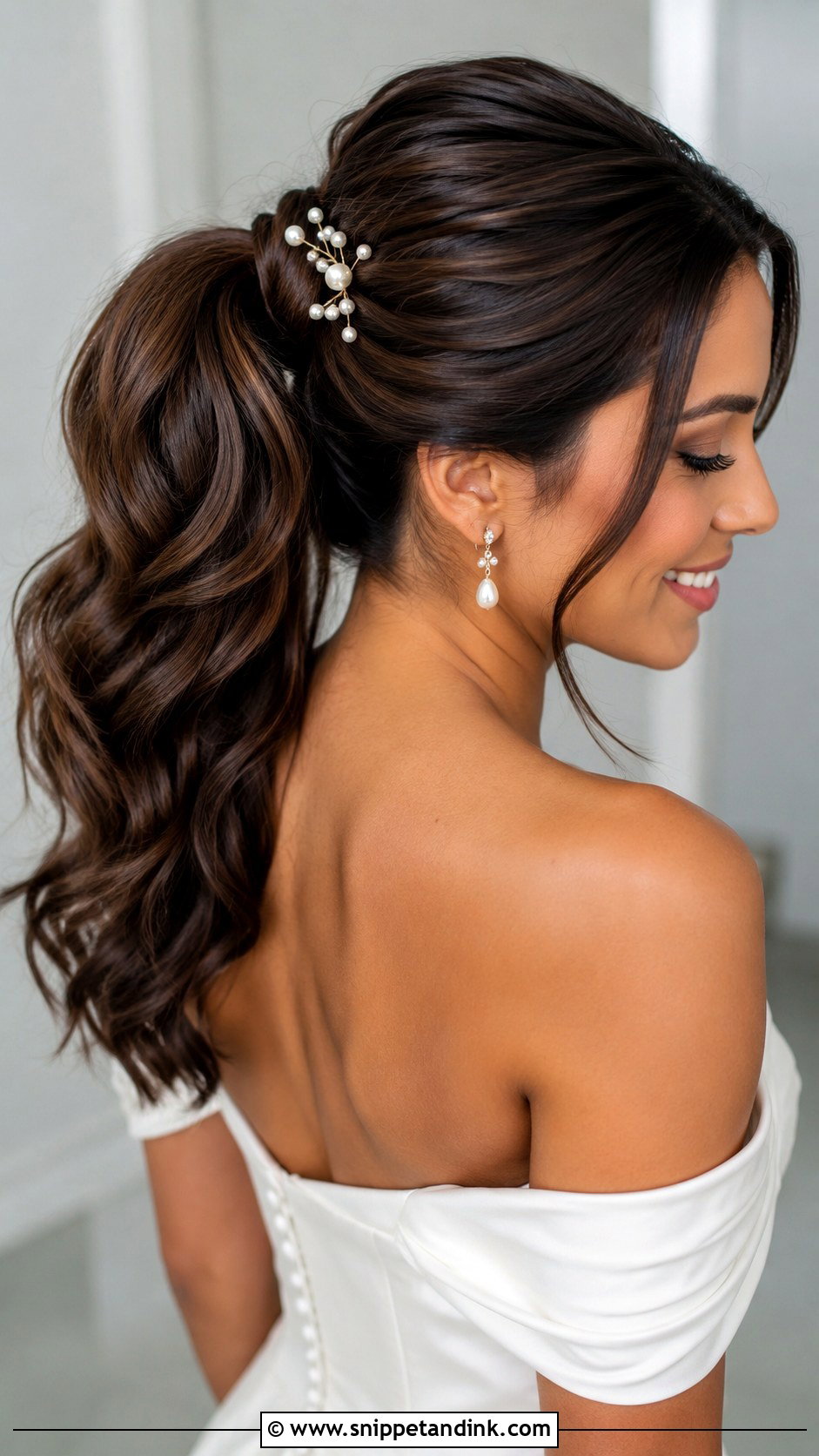
A ponytail can be as polished as an updo with enough volume and a clean wrap at the base. It’s comfortable, and it moves when you dance. Height depends on the dress and your face shape: low reads classic, mid-height is the most wearable. Soft waves through the length make it romantic. I secure the elastic with two crossed pins underneath, or a heavy ponytail slowly slides down. Add a veil above the tie, a pearl comb or a bow.
11. Bridal Side Swept Curls
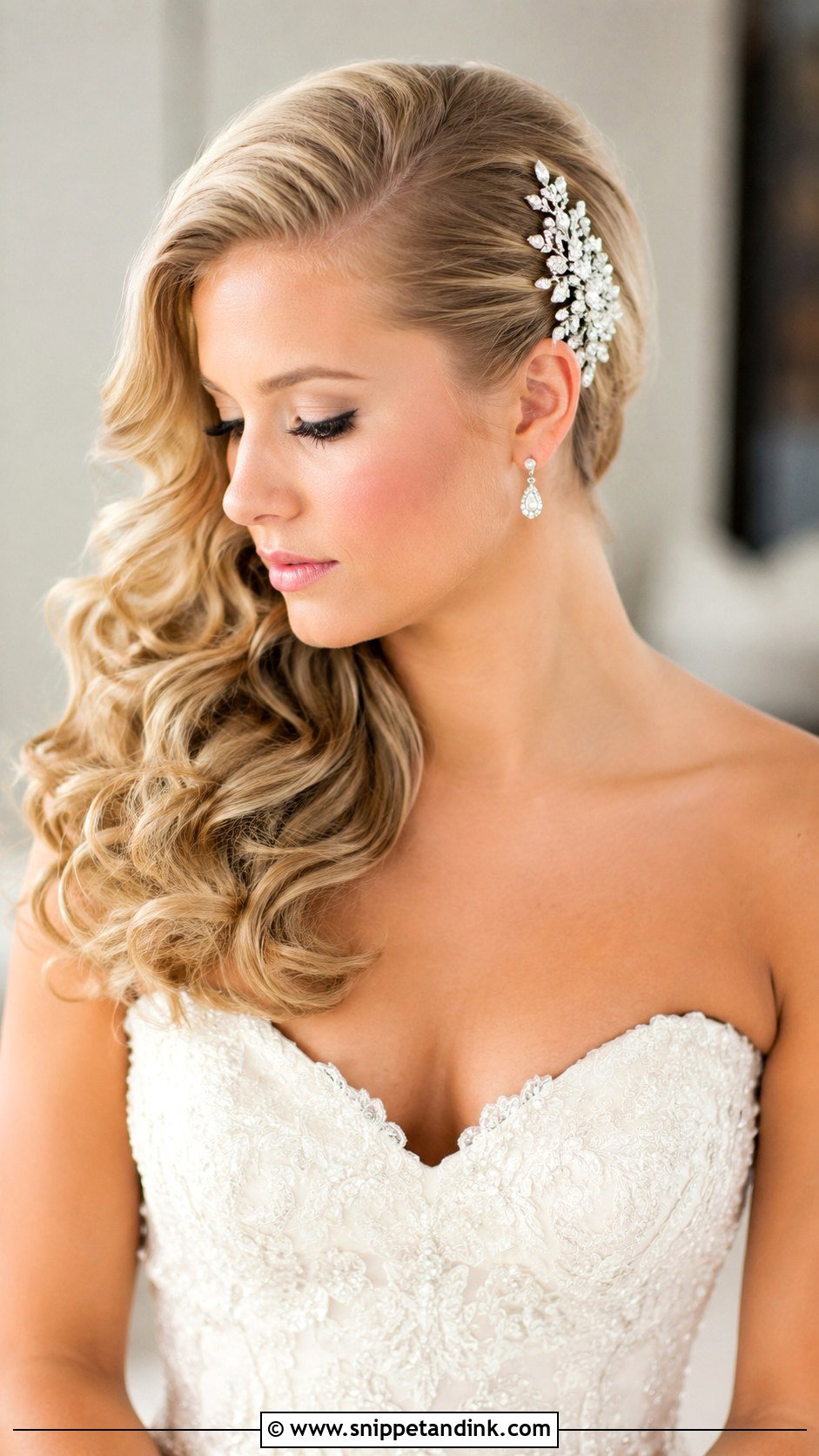
Side-swept curls gather everything over one shoulder, giving the feel of hair down with more structure. They work with one-shoulder gowns, sweetheart necklines and dresses with detailed backs. Underneath, I build a small pinned foundation behind the ear so the curls stay put when you turn your head. For more drama, add a deep side part and a sparkling comb on the tucked side.
12. Bridal Soft Curly Updo
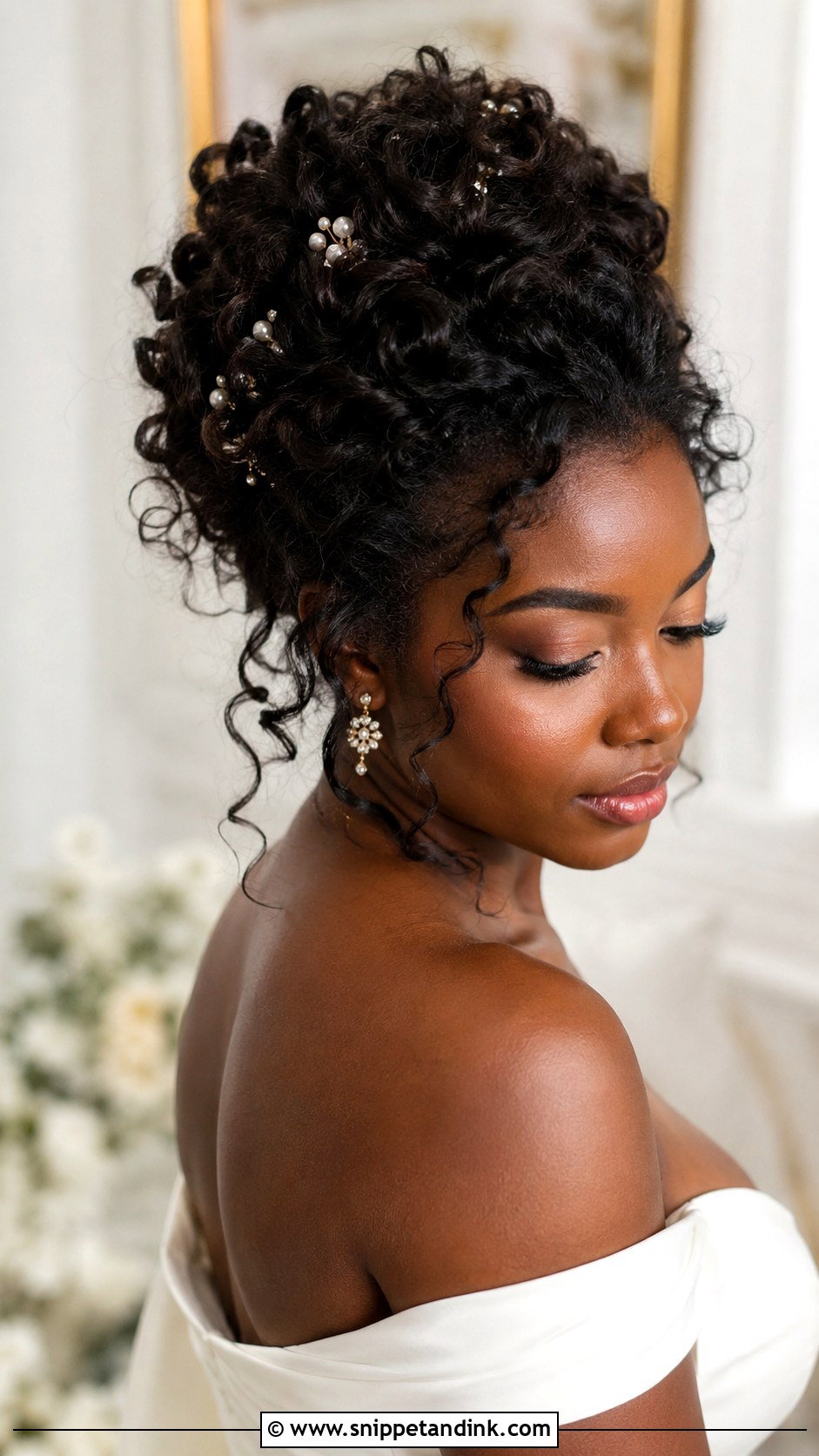
A soft curly updo keeps volume and movement without stiffness. The curls are pinned loosely into a full shape, whether they’re natural curls, curled straight hair or extensions. It suits off-the-shoulder gowns, florals and a romantic veil. Curl definition is the whole look, so I choose products that control frizz without crunch or heavy shine, and I leave a few curls near the face to soften it.
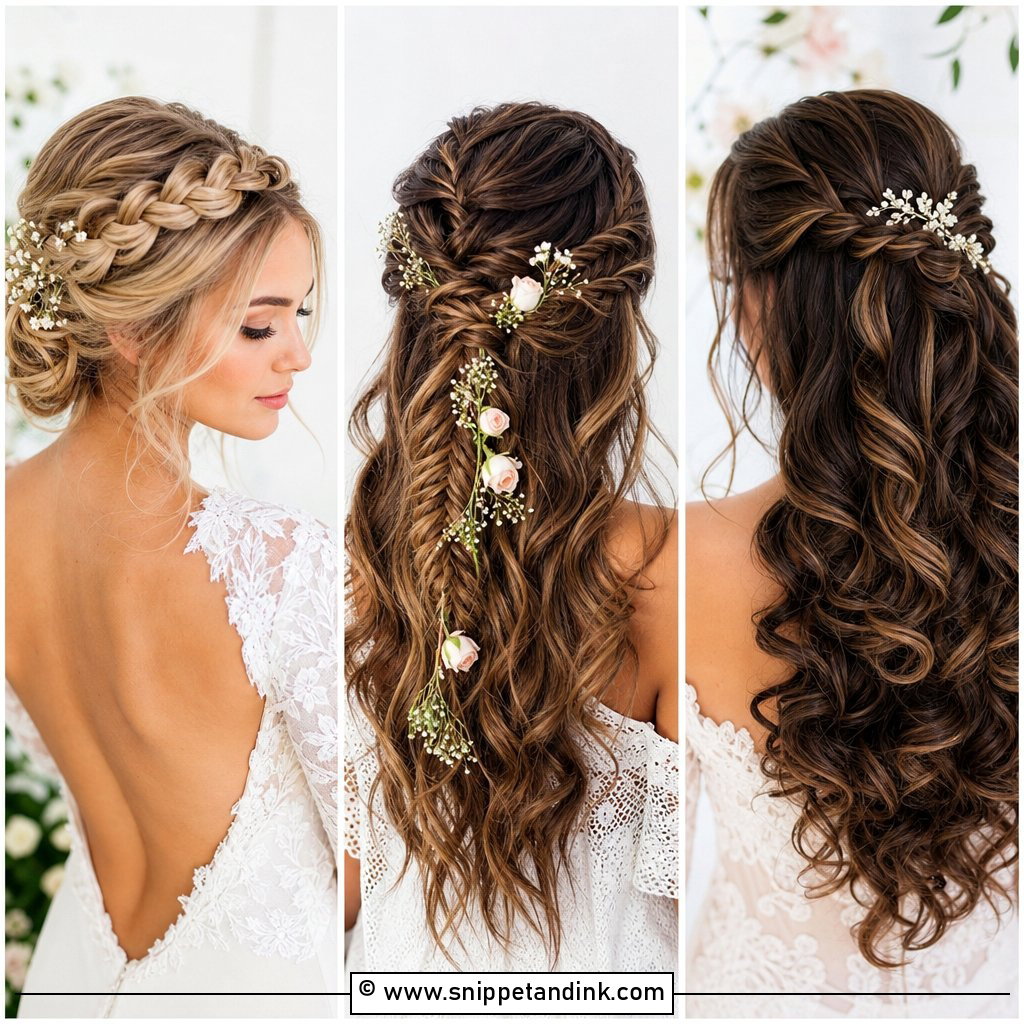
13. Bridal Boho Waves
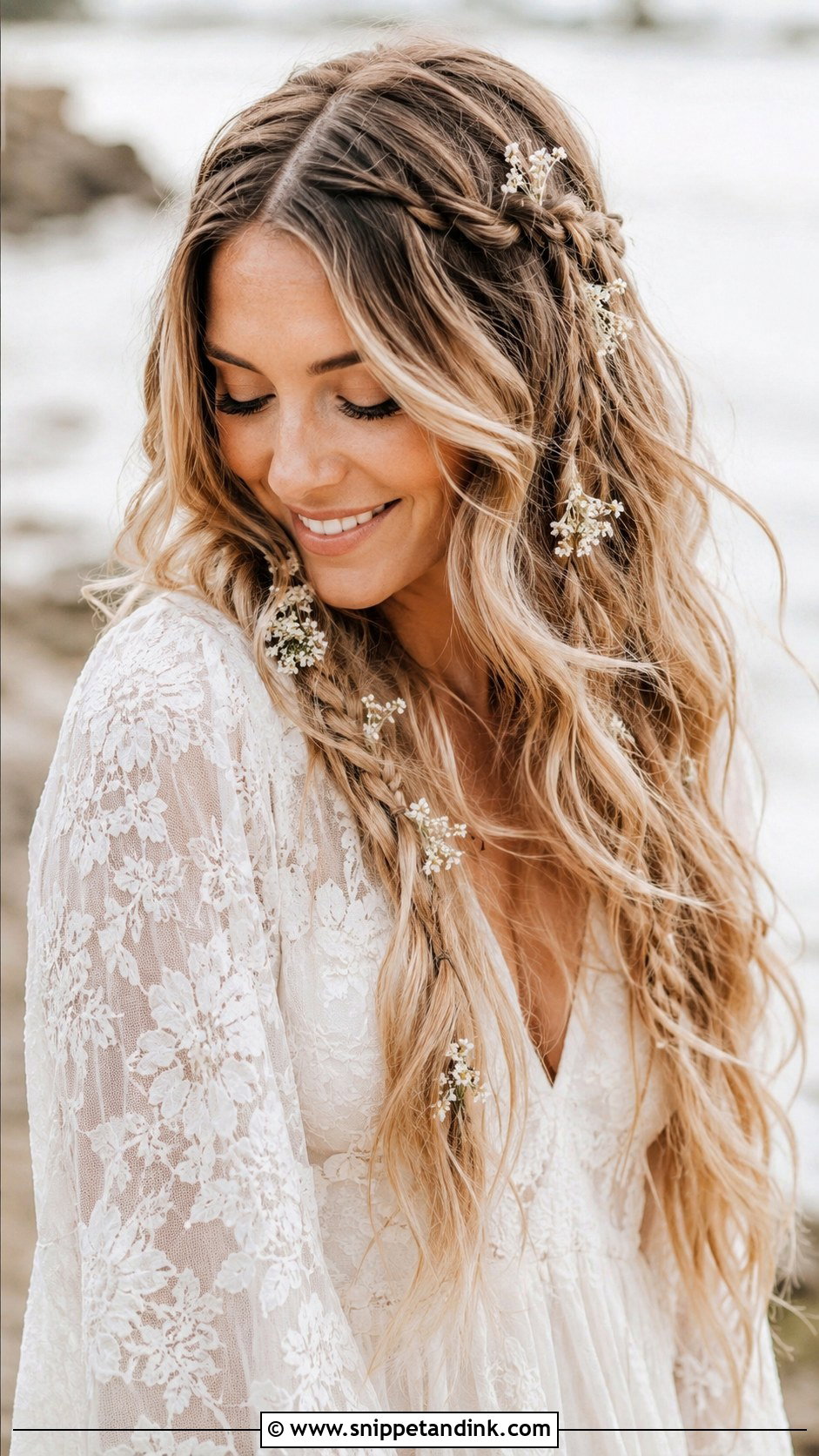
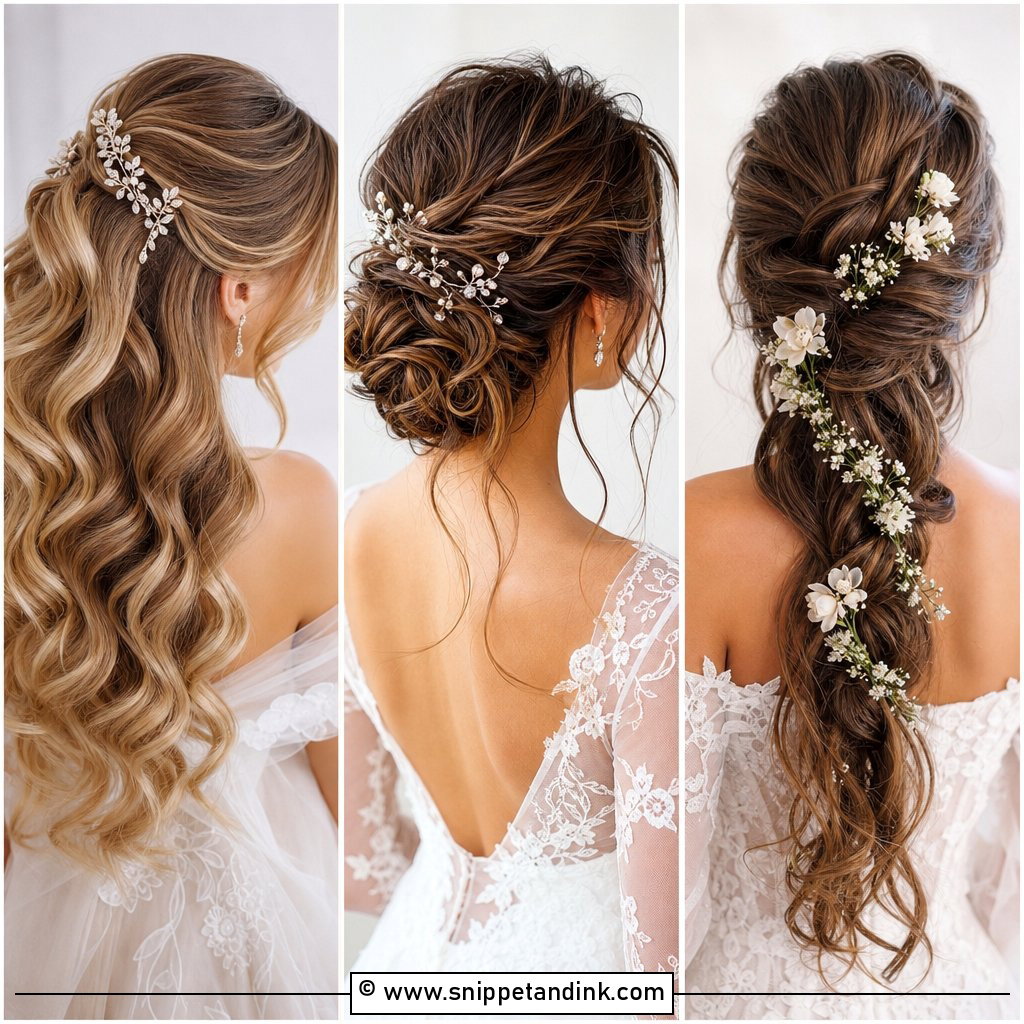
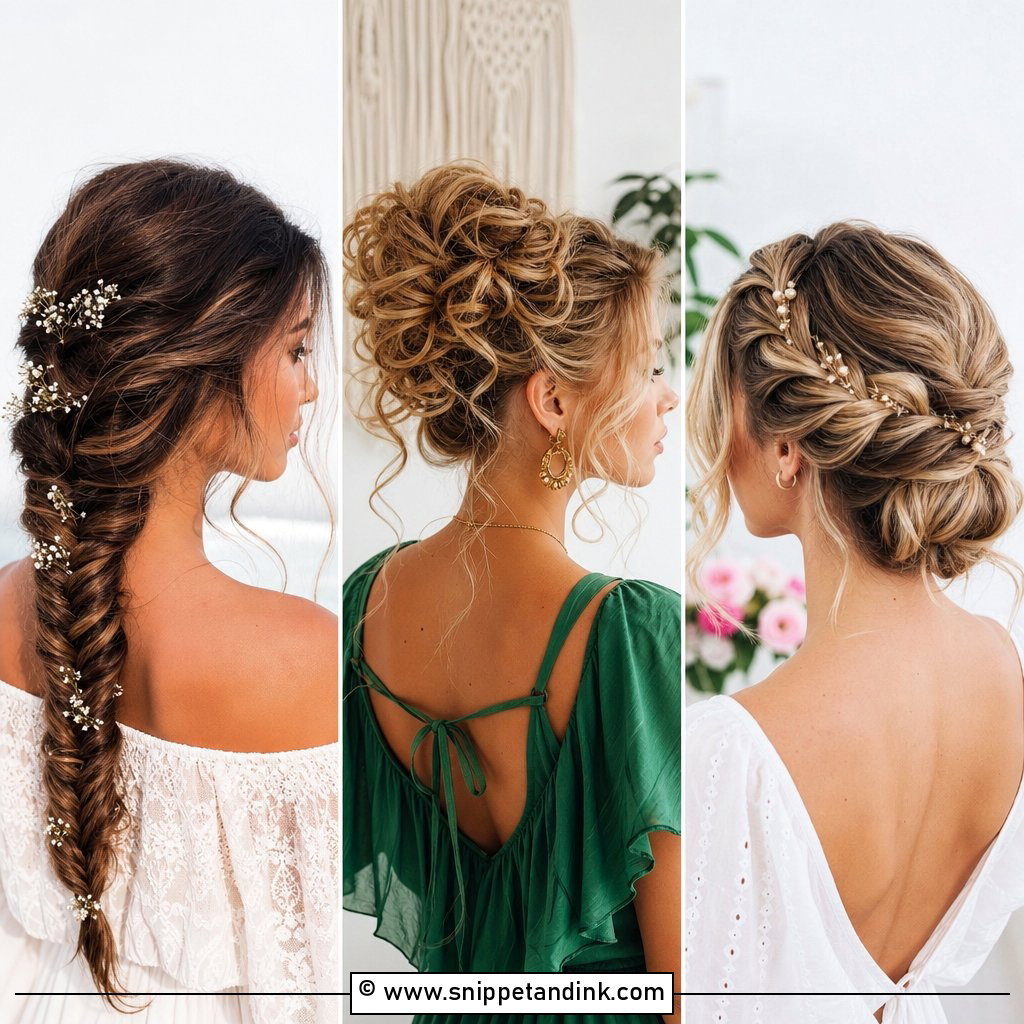
Boho waves are looser and more touchable than classic waves, often with small braids, floral pins or a delicate crown. They suit outdoor ceremonies, beach weddings, barns and simple lace. Texture matters more than smoothness here. On fine hair, extensions add fullness without making it look heavy. Tiny braids at the temple add detail. Keep accessories light so the waves stay the focus.
14. Bridal French Twist
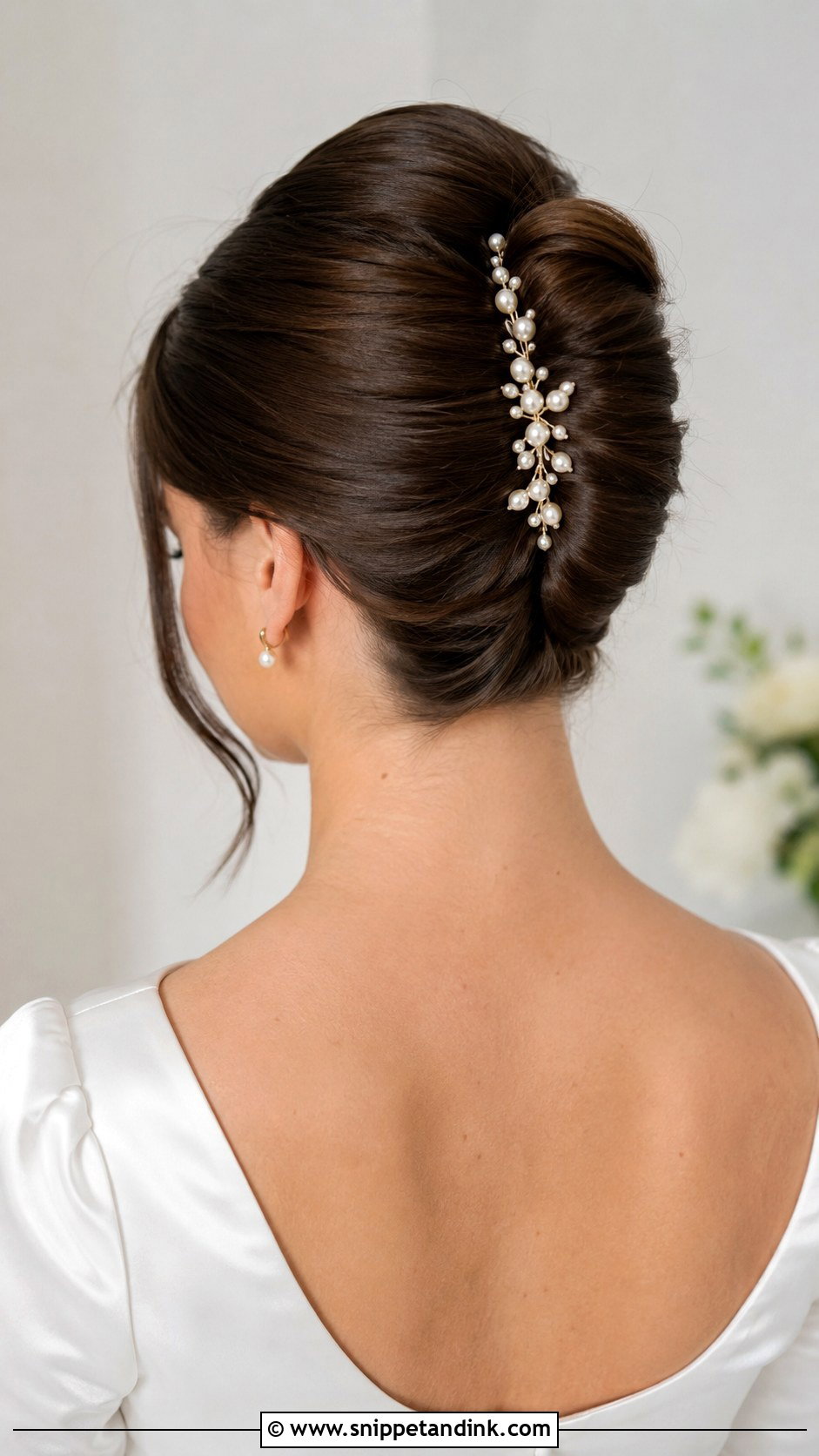
The French twist sweeps the hair up into a vertical roll at the back of the head. It pairs with classic gowns, bateau necklines, satin and vintage accessories, and it’s structured without feeling trendy. Very thick hair can be too bulky for a neat roll, so I may thin out the underneath section with a few pins first. A softer twist allows face-framing pieces and crown volume; a formal one keeps the sides smooth with a pearl comb.
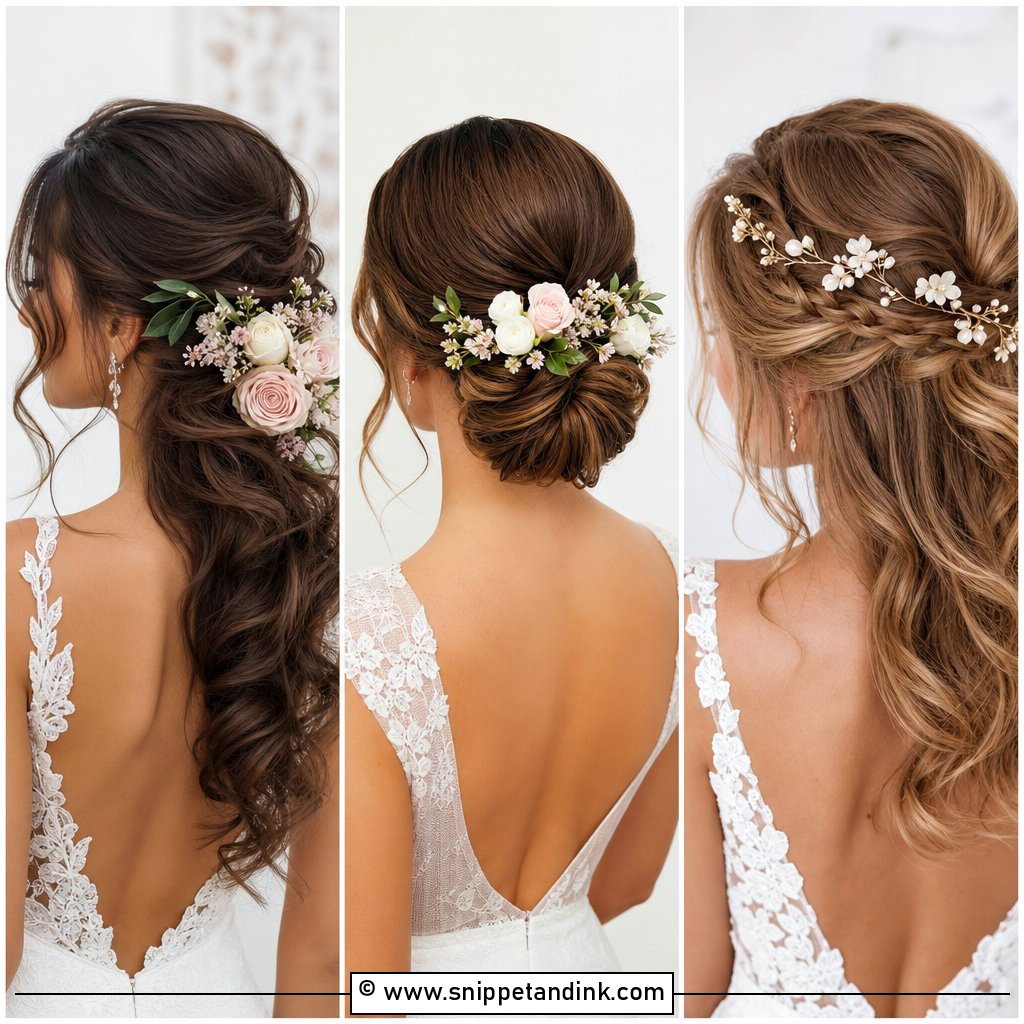
15. Bridal Messy Bun
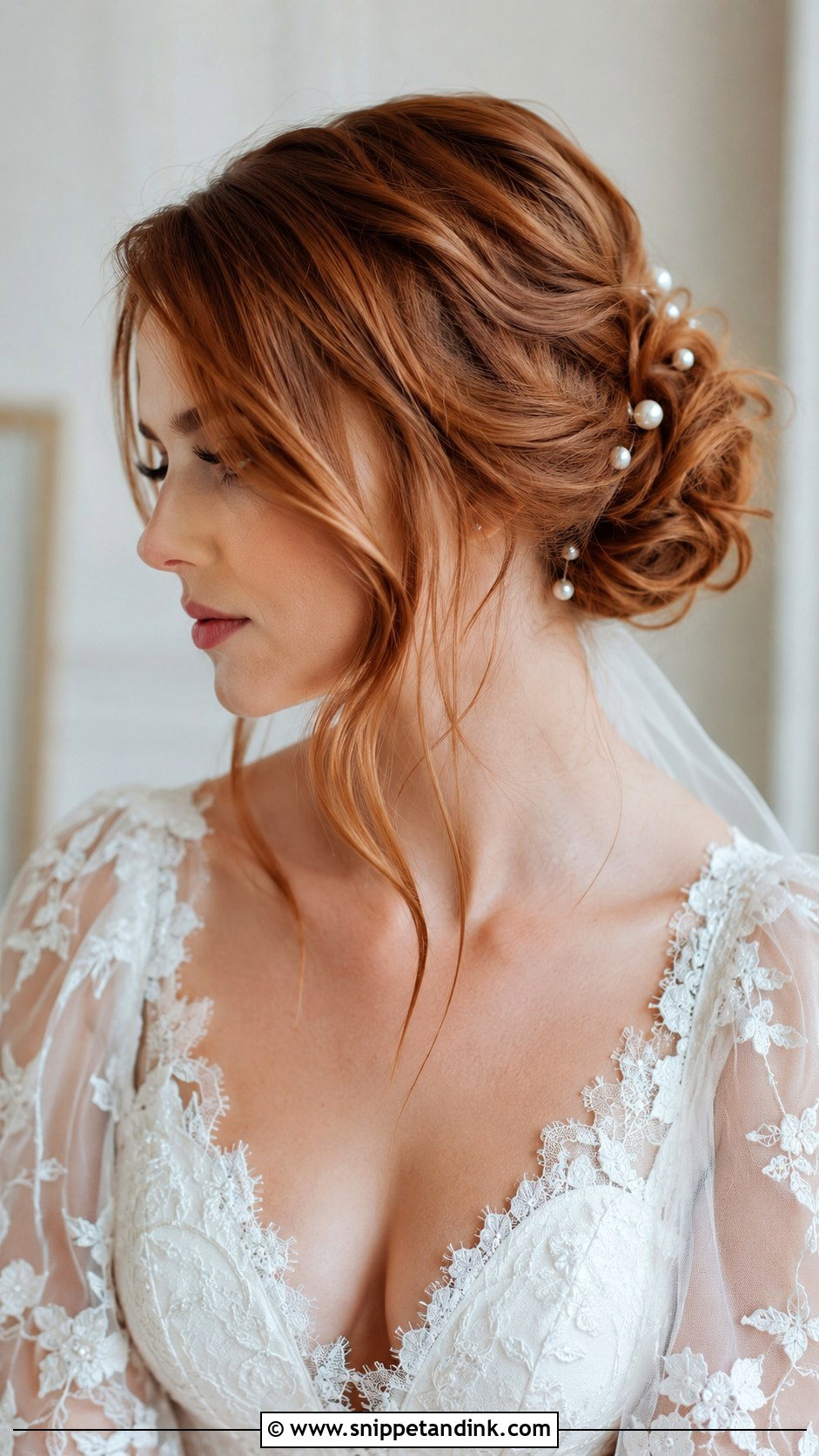
A messy bun at a wedding should look soft, not careless. The best version uses controlled texture, gentle volume and loose pieces I place deliberately around the face. Texture spray gives fullness, and strong pins keep it secure. It sits well with boho gowns, garden ceremonies and lace sleeves. Low reads softer; slightly higher lifts the shape. Too many loose pieces and it looks unfinished, so I usually take out half of what a bride first asks for.
16. Bridal Crown Braid
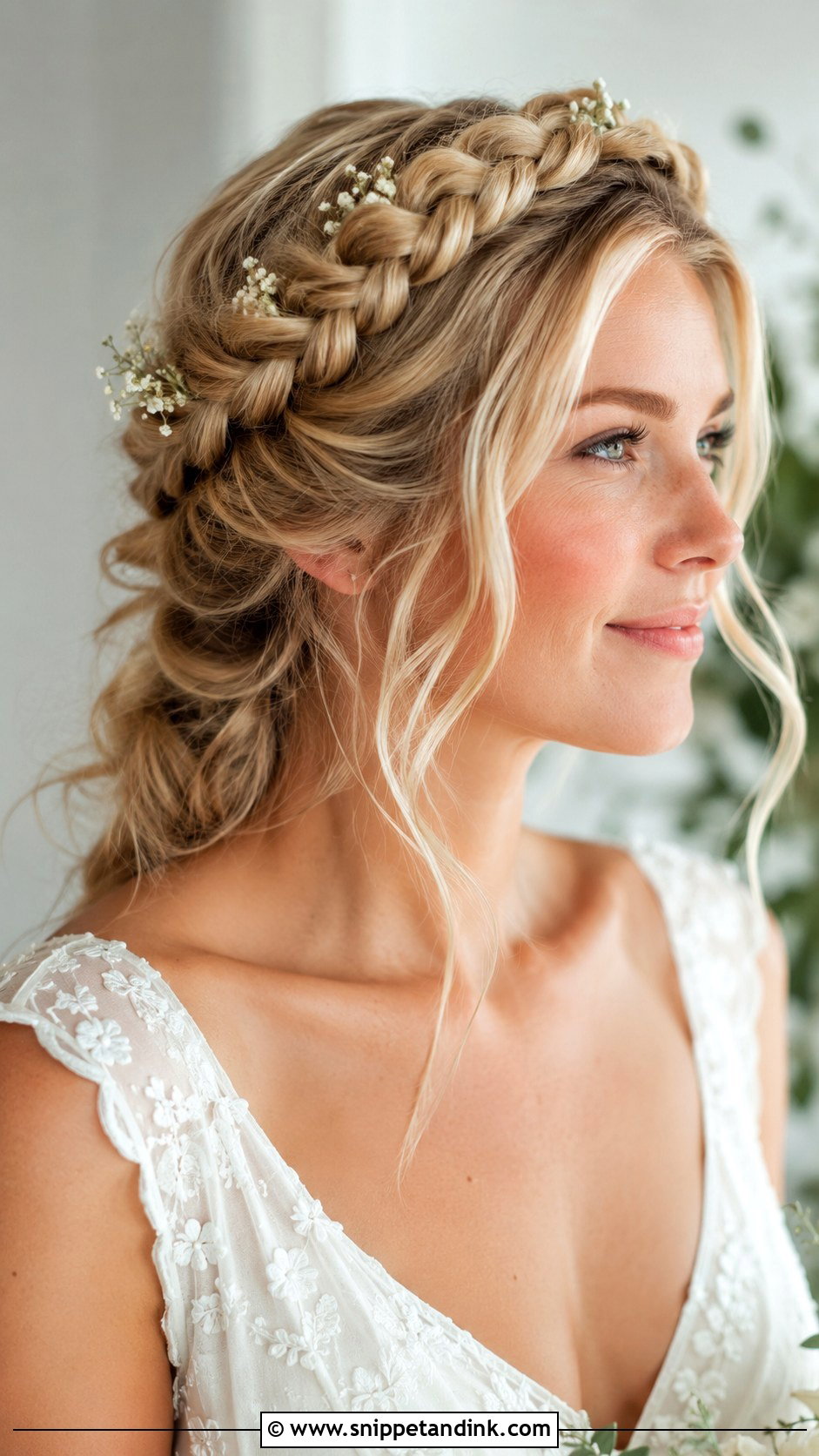
A bridal crown braid wraps around the head or sits across the front like a halo, then blends into a bun, curls or waves. It keeps hair controlled outdoors while still looking detailed. Floral accessories, simple veils and soft fabrics all suit it. After securing, I pull the braid gently apart so it looks thicker; it reads well from the front and the back.
17. Bridal Bubble Ponytail
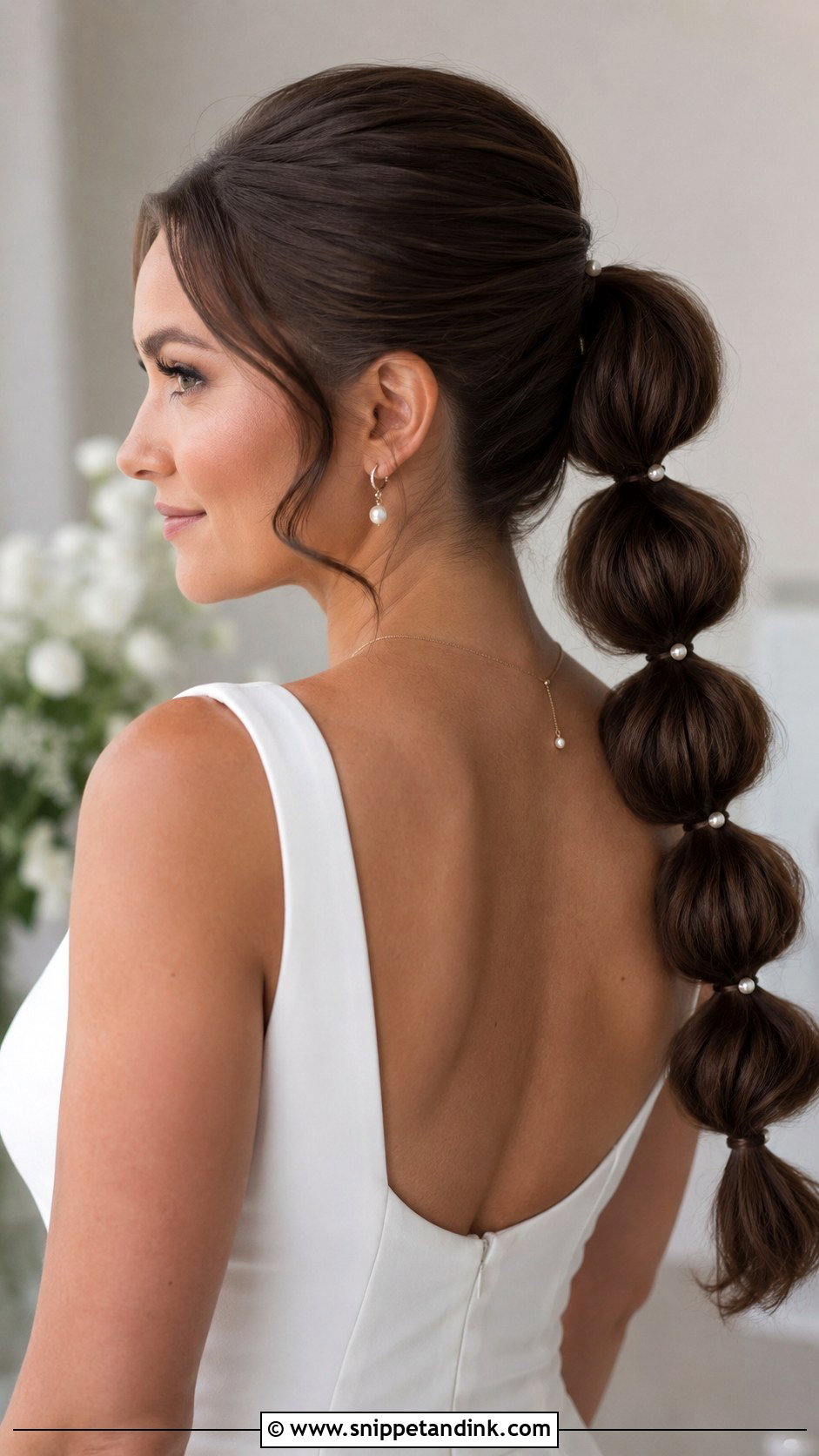
A bridal bubble ponytail is playful but still polished. The ponytail is sectioned into rounded bubbles down the length, so it needs long hair or extensions. It suits sleek gowns and modern venues, and it’s very secure for dancing. Keep the crown smooth or slightly lifted. I use clear elastics and sometimes small pearl pins between the bubbles to make it bridal.
18. Bridal Short Bob Waves
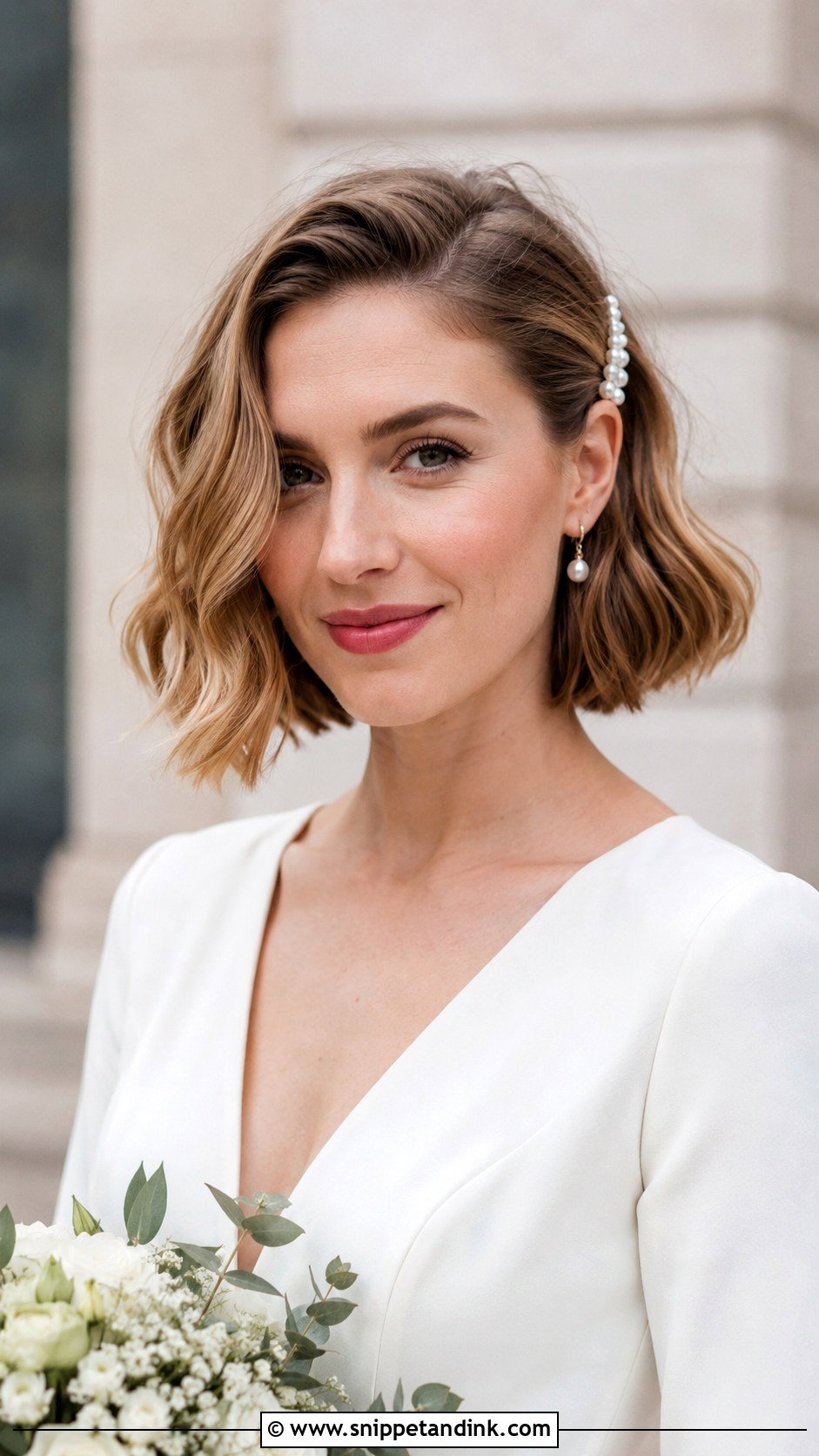
Bridal short bob waves are fresh and need neither extensions nor an updo. A waved bob frames the face and works with veils, headbands, pearl clips and side combs. It suits simple dresses, courthouse weddings and vintage looks. I use a smaller barrel than I would on long hair, and I curl away from the face so the bob doesn’t puff out at the jaw. Deep side part for glamour, centre for clean.
19. Bridal Natural Curls
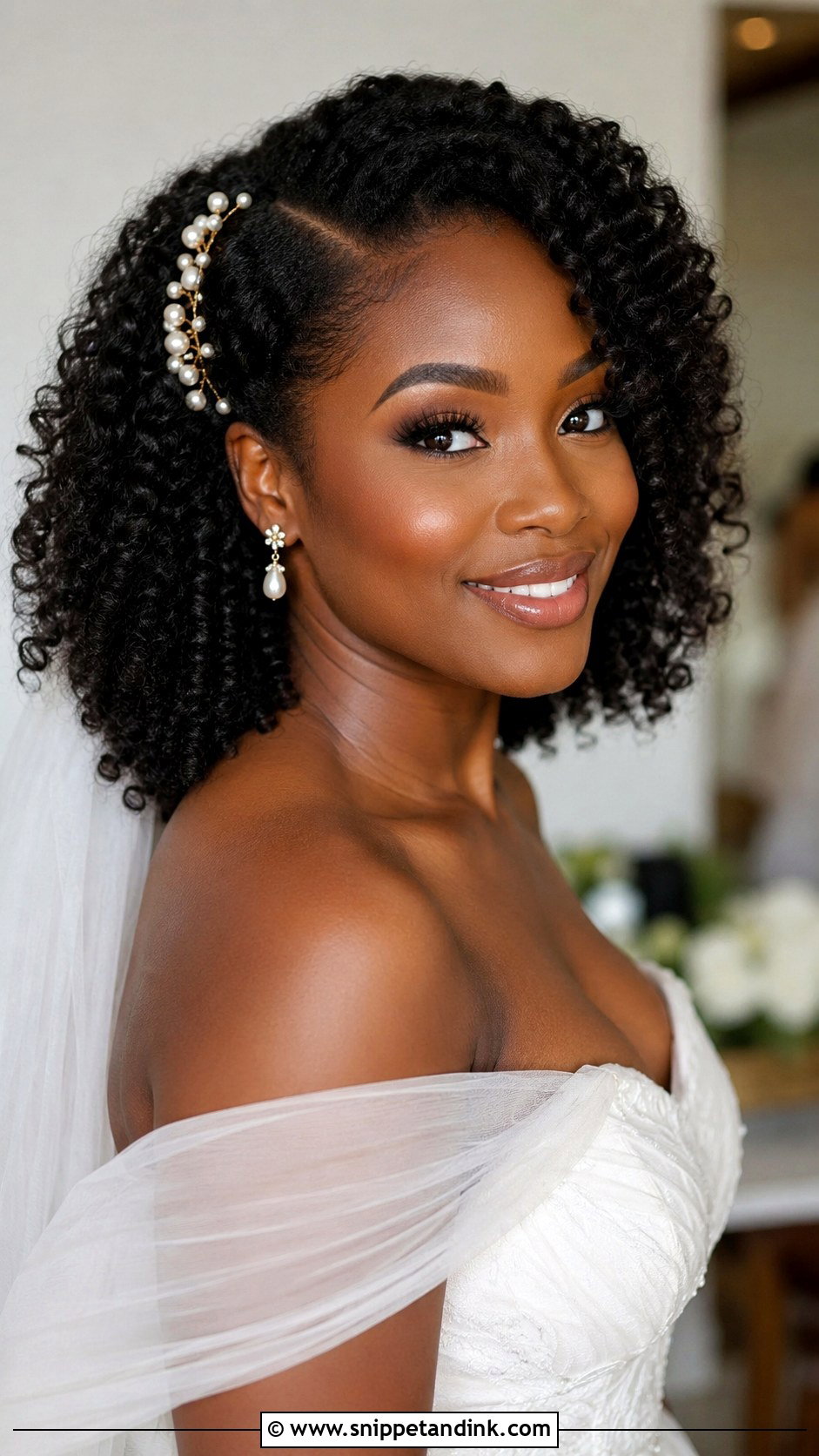
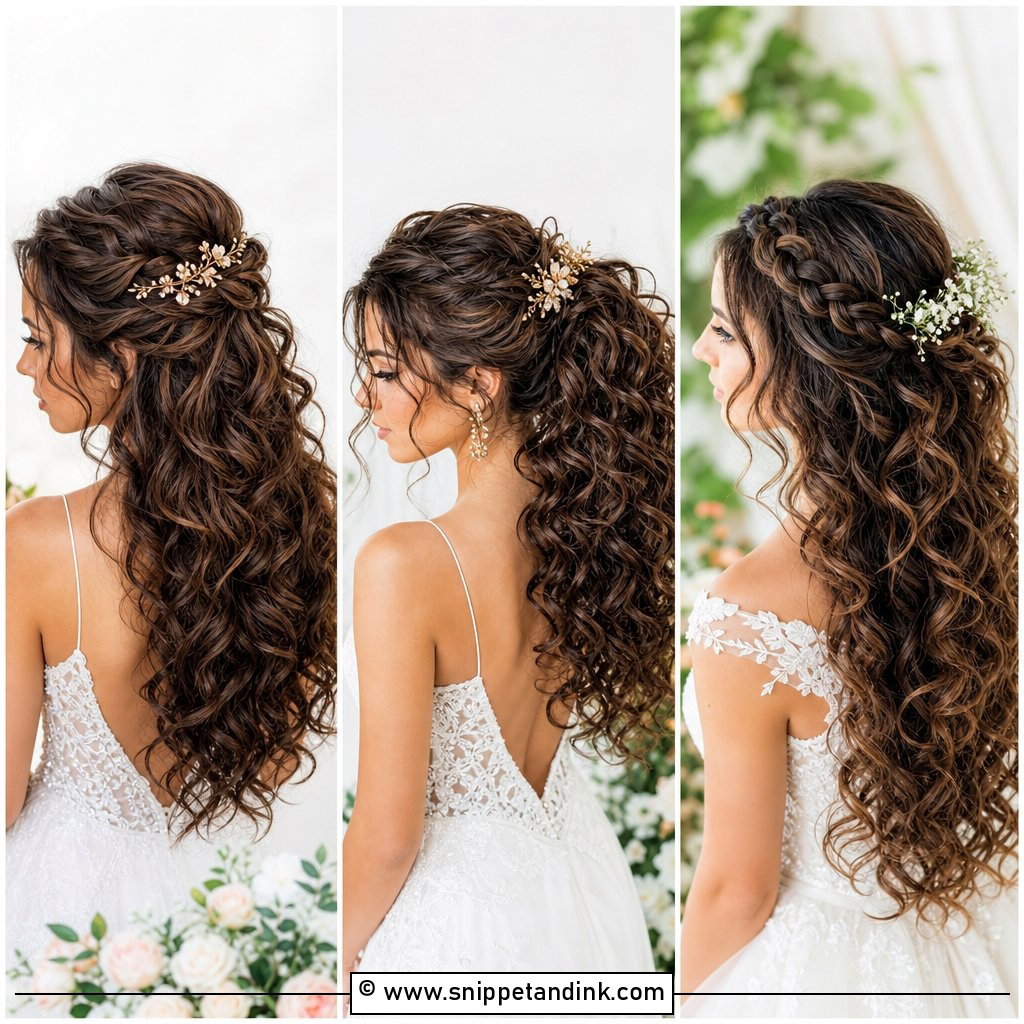
Natural curls can be worn down, half up, pinned to one side or shaped into an updo. Most of the work happens in the weeks before: hydrated curls with good definition and frizz control make the final look polished. Find a stylist who works with natural texture regularly, so the curls are shaped without being stretched out. Add pearls, flowers or a delicate veil if you’d like detail.
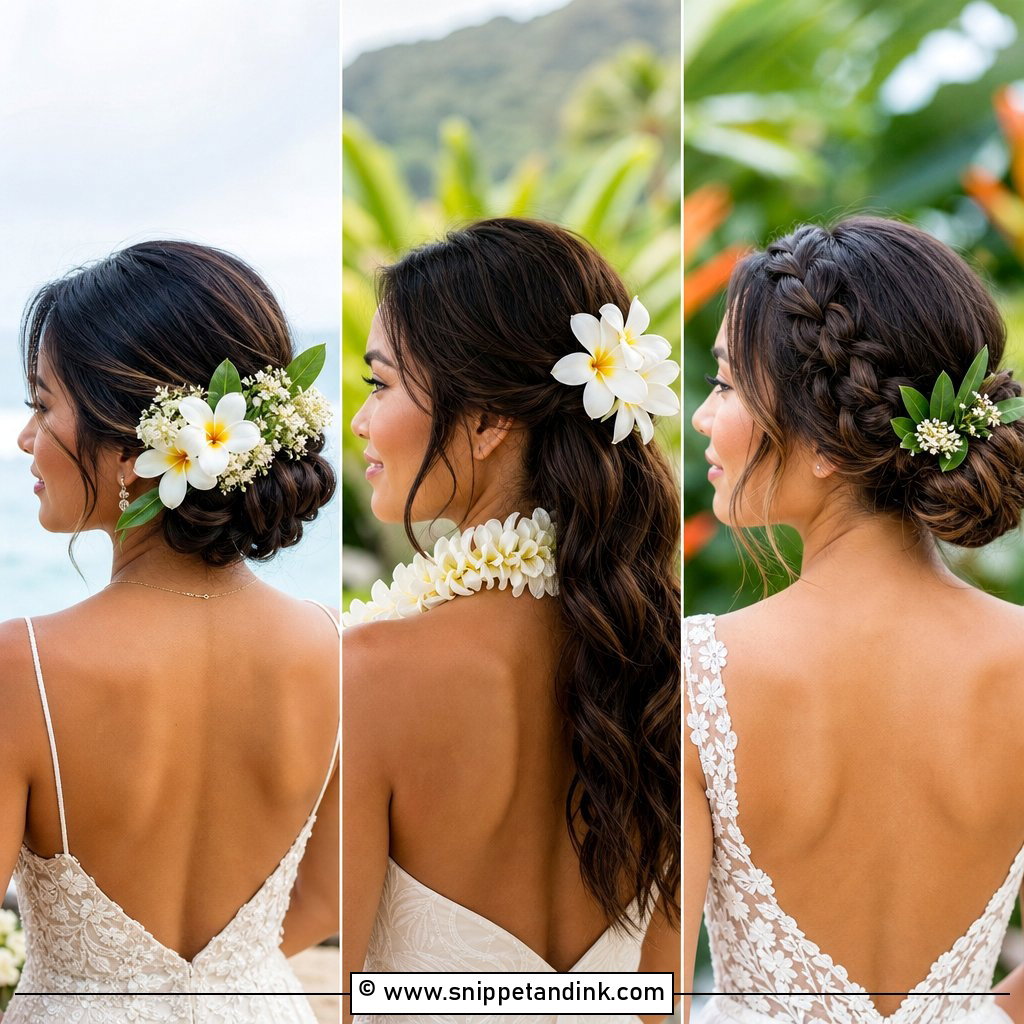
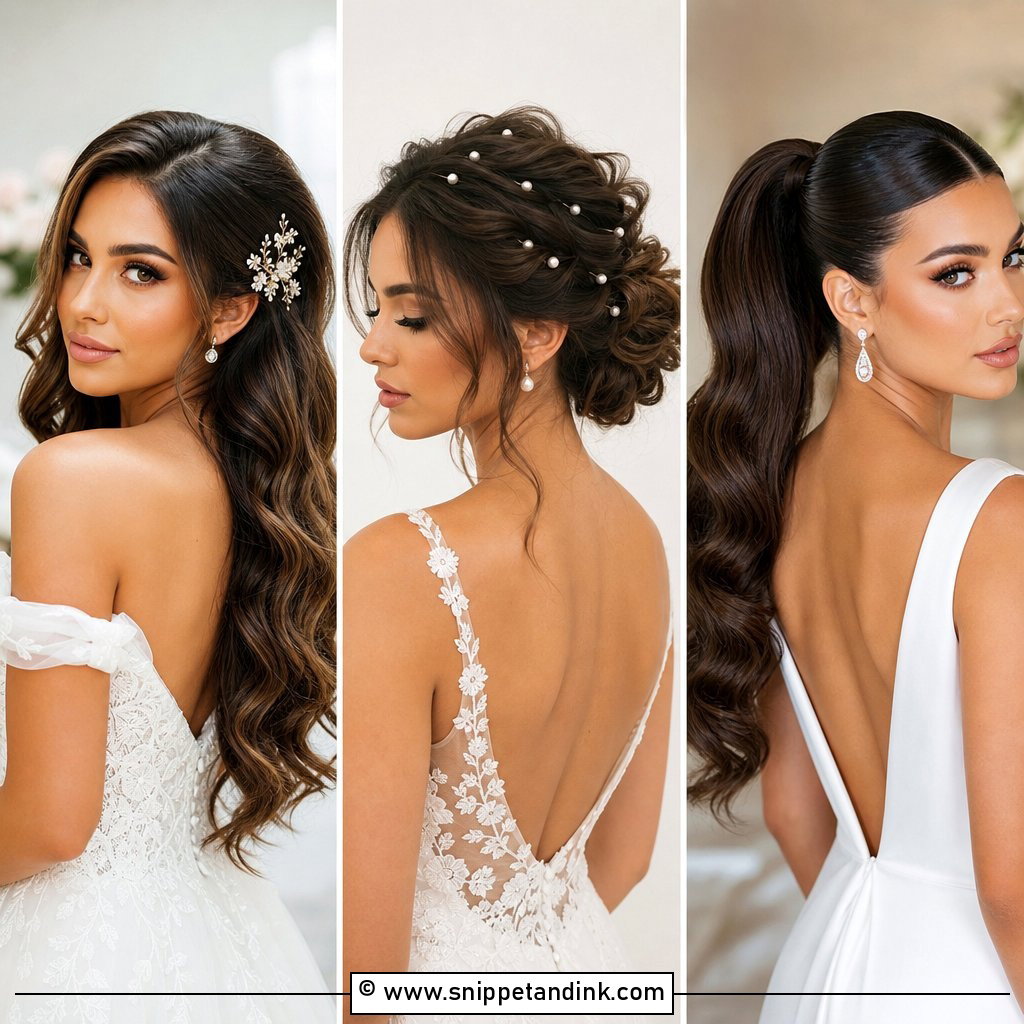
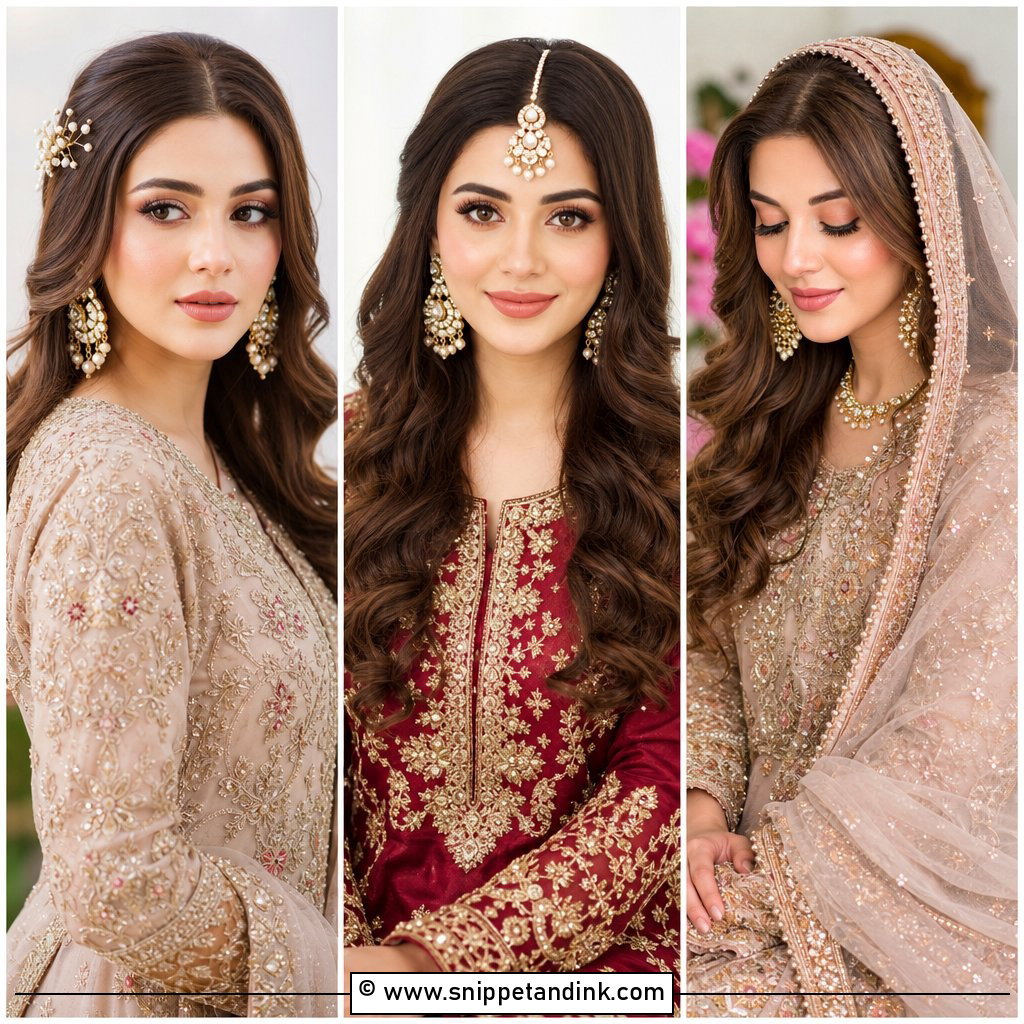
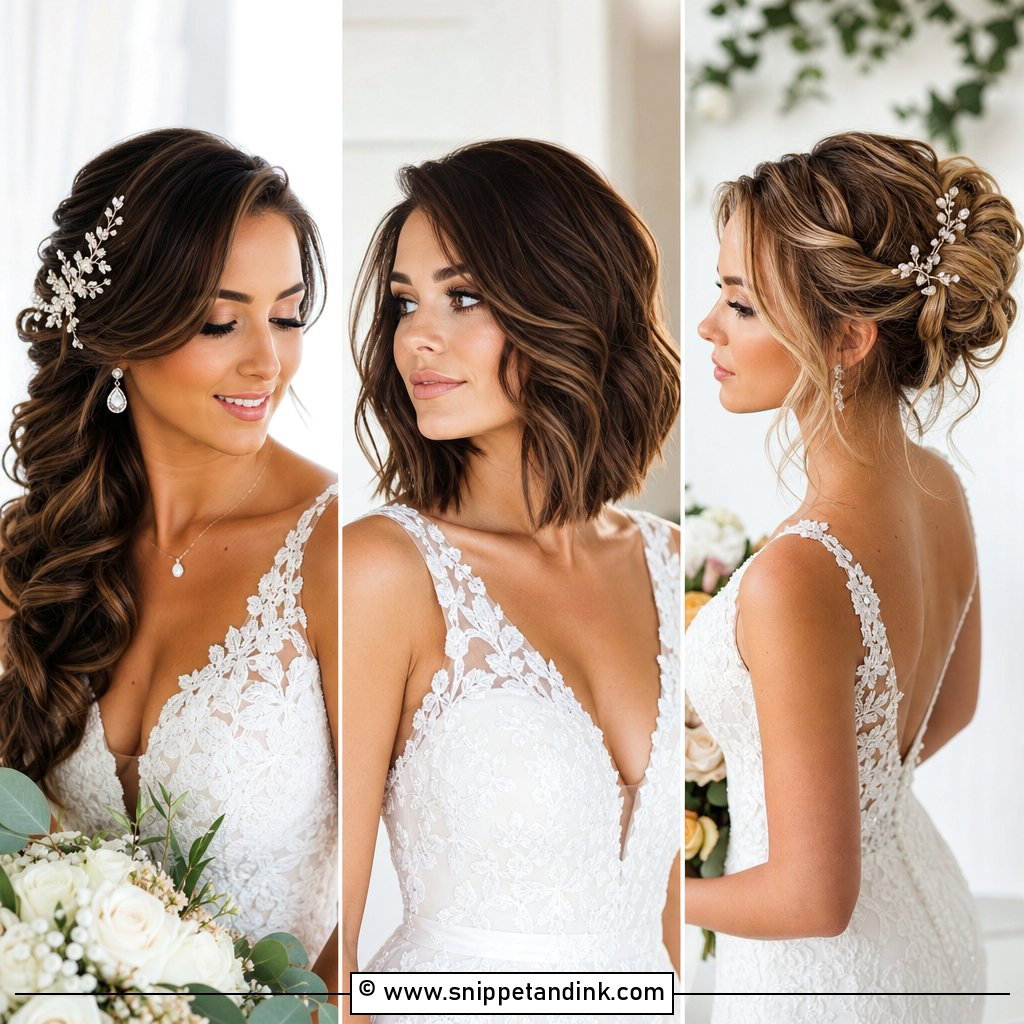
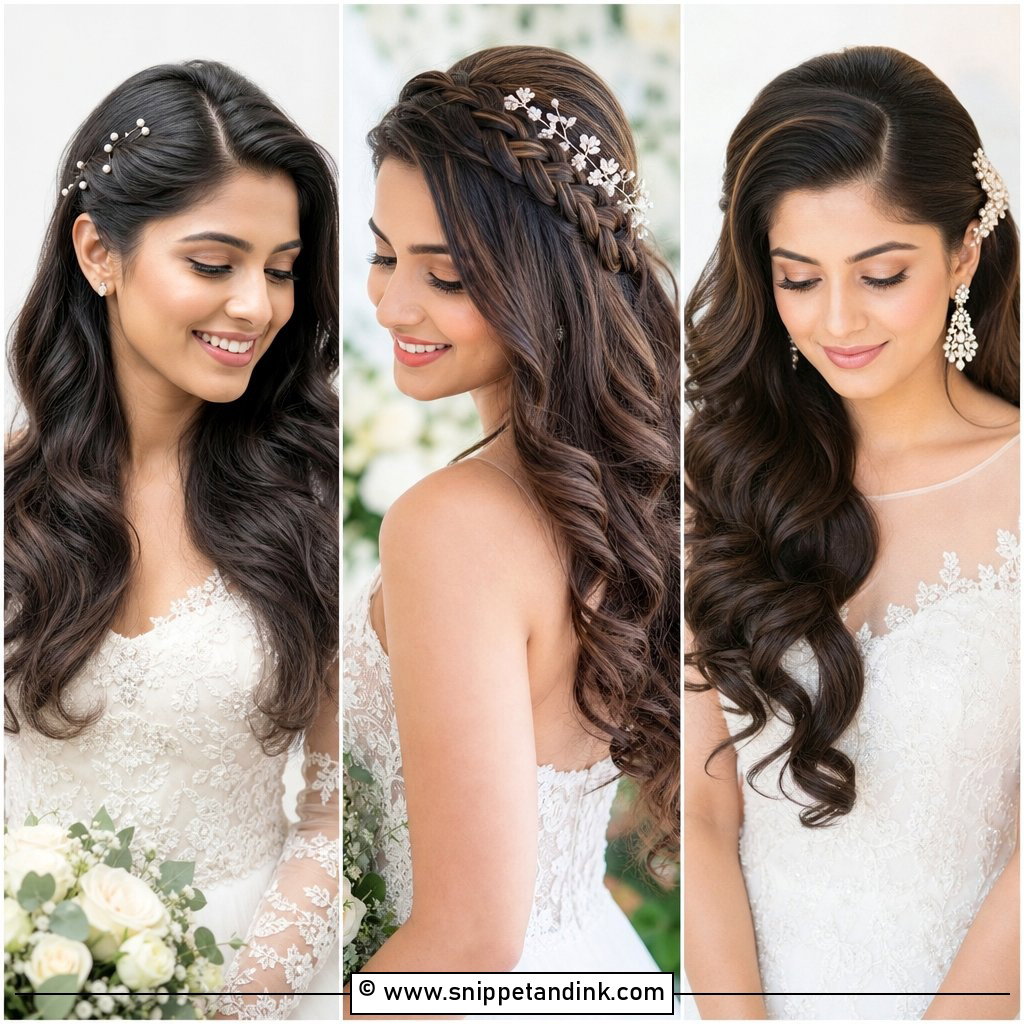
20. Bridal Long Braid
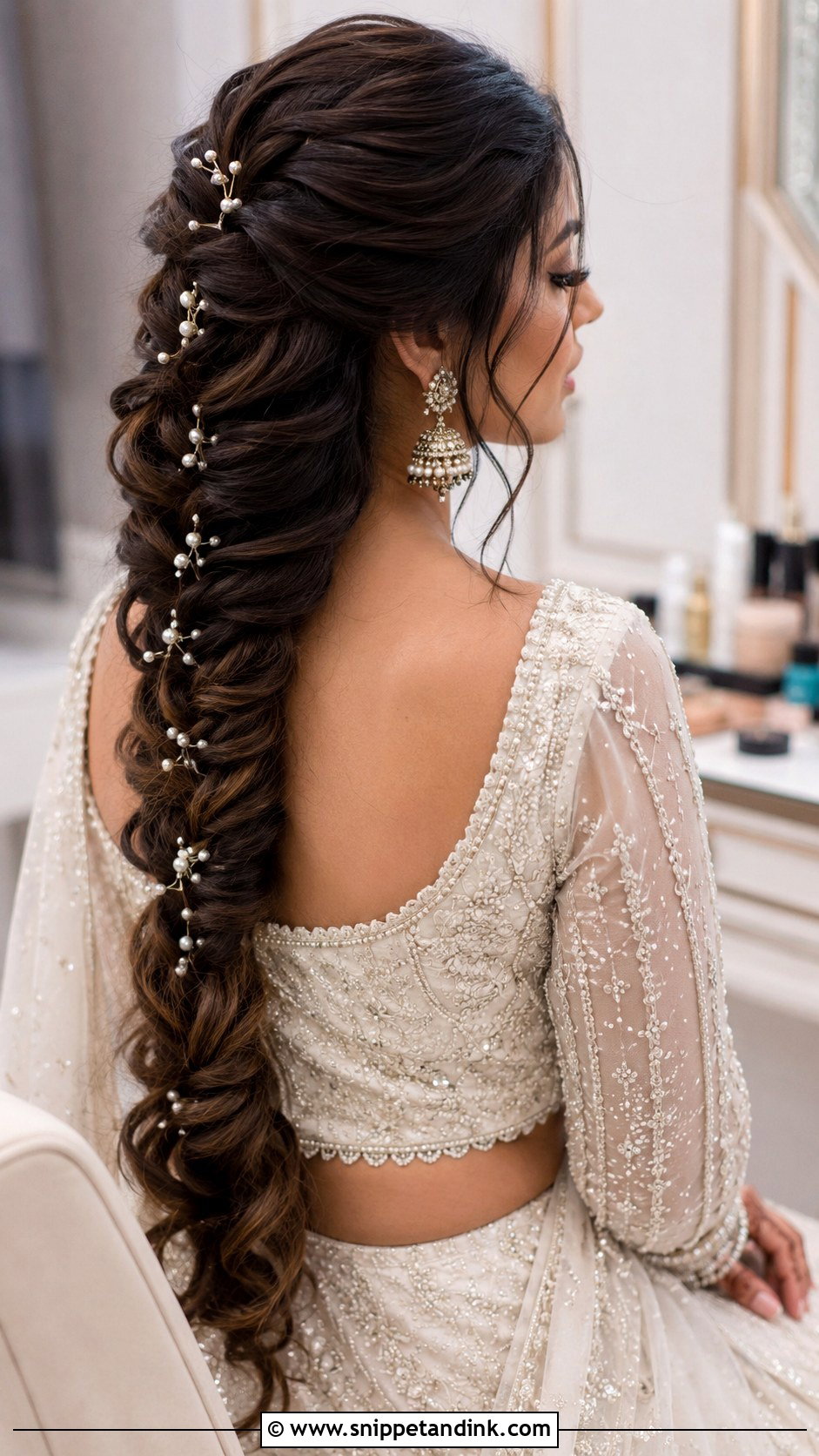
A long braid is secure and detailed, and it lasts. It can be a fishtail, Dutch, pull-through or a softer weave down the back. Outdoor ceremonies, destination weddings and open-back dresses suit it best. Extensions add fullness, but the braid should still look soft. I pull it slightly apart to look thicker, then add tiny flowers, pearl pins or a ribbon.
Veil Placement Shifts With the Style
The same veil can look very different depending on where the comb goes. With a low bun or chignon, I set the comb just above the bun so the veil falls from behind. With a high bun, the comb goes below it. With hair down or half up, I place a small hidden base of crossed pins first, then slide the comb in over it, otherwise the weight of a long veil drags the comb down and pulls the curls flat.
Plan when the veil comes off. Most brides remove it after the ceremony or the portraits. A short break for removal is easy if someone knows where the pins are.
A Second Look for the Reception Without Starting Over
Some brides want a change for the evening. The simplest switches build on the ceremony style instead of undoing it. A half-up look can become a full ponytail in a few minutes. Waves can be gathered into a low, loose bun. A braid can be pinned up into a crown. A full sleek bun usually can’t be taken down into waves without visible kinks, so if you want hair down later, start with a style that’s curled first.
Your Texture, Neckline and Veil Come First
A good bridal style starts with texture, neckline, veil, venue and weather, not with a pretty photo. A sleek bun may suit a modern gown while waves suit a beach. A braided updo is romantic and secure; natural curls show off your real texture. Schedule a trial, bring clear photos and test accessories before the wedding. The style that holds, and still feels like you at midnight, is the one to book.
You'll Like These Ideas:


Leave a Reply