
Juliet hair is mostly about shape and restraint. The styles that read as Renaissance have a smooth, centred crown, hair that sits close to the head, and softness coming from waves, loosened braids and a ribbon or two rather than height. I get asked for these looks by brides, by bridesmaids at themed weddings, and by people dressing for a play or a fair. Each one below comes with how I’d actually build it and where it tends to fail, so you can pick one your hair can hold.
How I Keep a Renaissance Style From Looking Like Fancy Dress
The difference between bridal Juliet hair and a costume wig is mostly finish. Period hair was smooth and close to the head, so I avoid backcombed height at the crown and big, bouncy blow-dry volume. Waves should look brushed and soft, not tight ringlets, and the shine should come from the hair rather than a heavy oil.
I also limit the accessories to one material. Pearls with pearls, or gold with gold. A ribbon, a pearl comb, flowers and a cap all at once is the fastest route to fancy dress. Pick the one that echoes your dress: velvet ribbon for a velvet bodice, pearls for a satin gown, small blooms for a garden ceremony.
- Keep the parting central or very close to it; a deep side part reads 1940s, not 1590s.
- Let braids look loosened and full rather than neat and tight.
- Leave two or three fine strands at the temples, never a heavy curtain fringe.
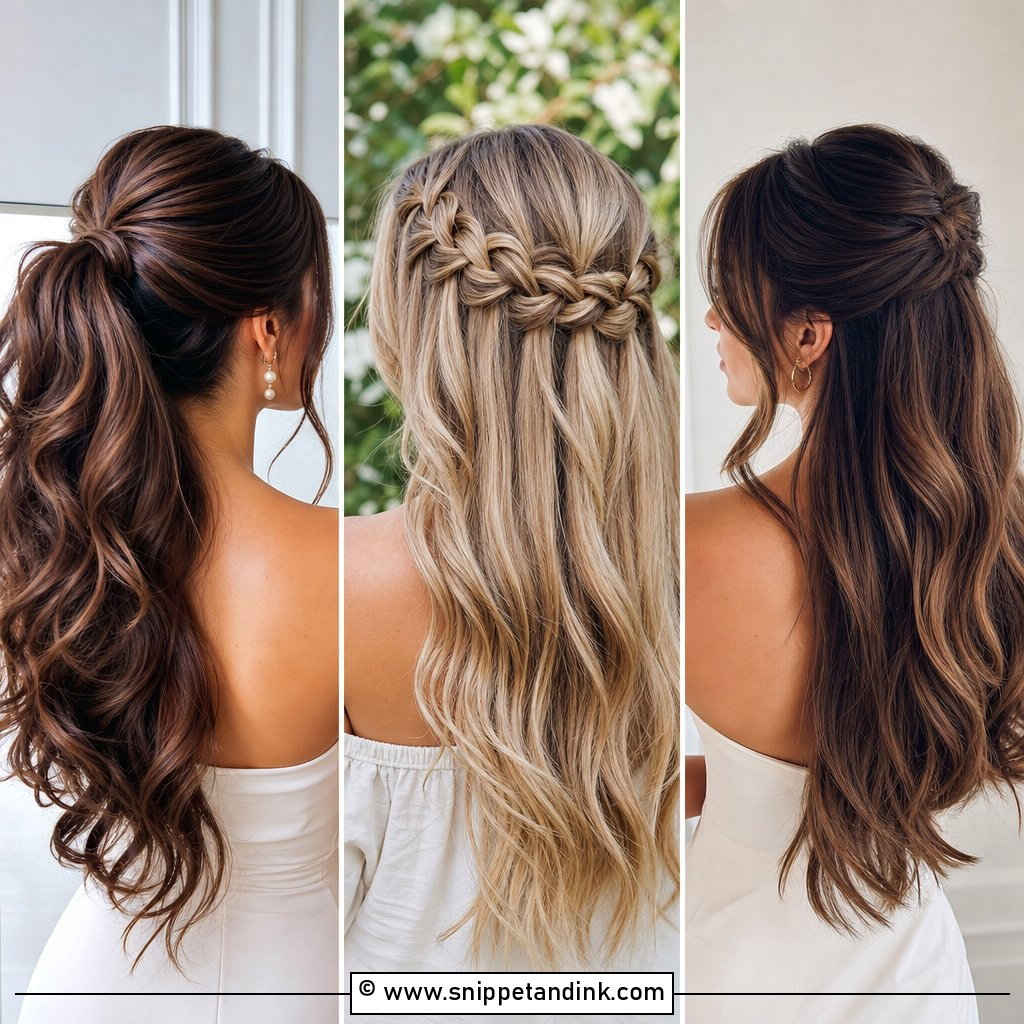
1. Romeo And Juliet Half Up Hairstyle
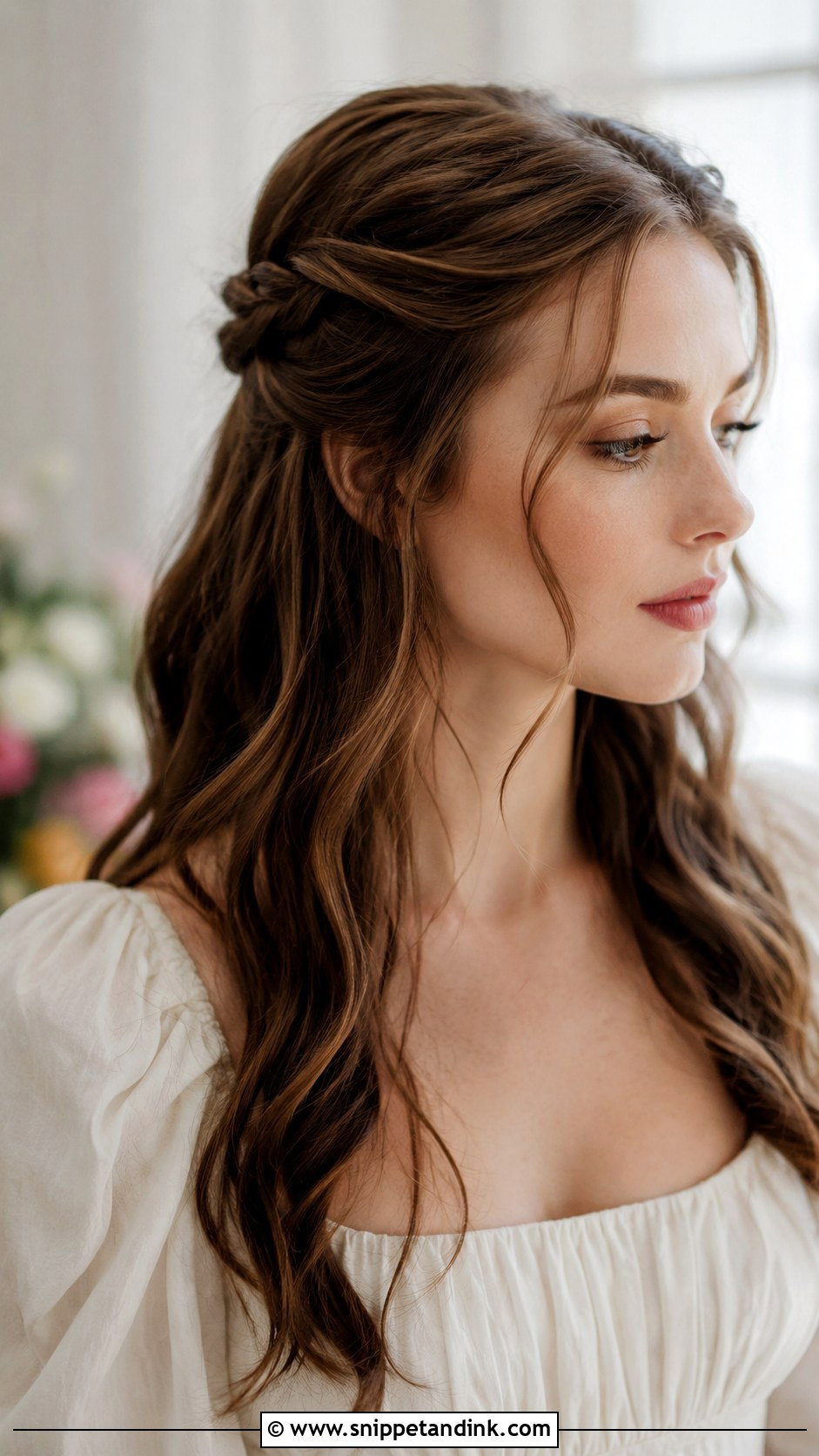
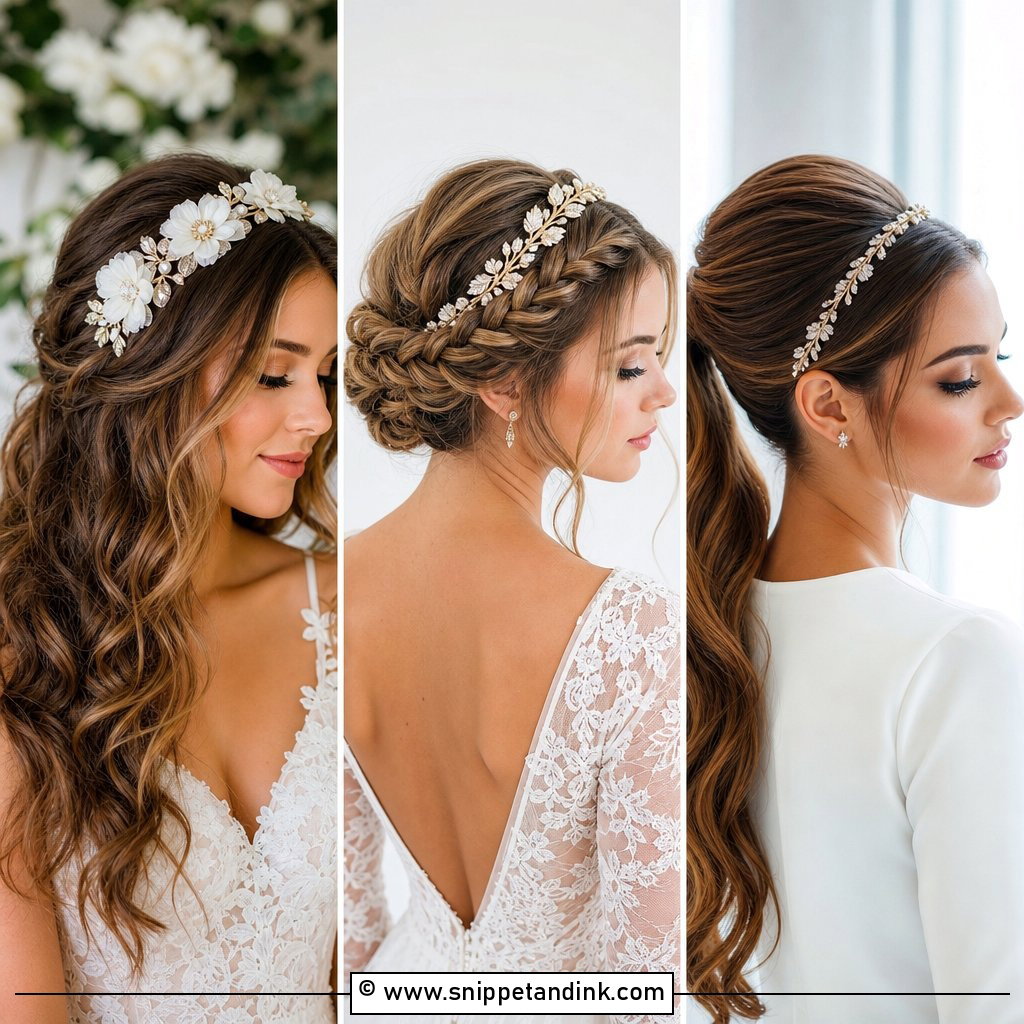
This is the half up I’d start most first-timers with. I take the top section from the temples back, not from the hairline, so the front still frames the face, and I lock it with two bobby pins crossed in an X under the join. Waves in the lower hair do the romantic work. On very fine hair the pinned section can slide down by evening, so I backcomb the root of that section lightly before pinning. A small ribbon or a tiny gold clip hides the join neatly on long or mid-length hair.
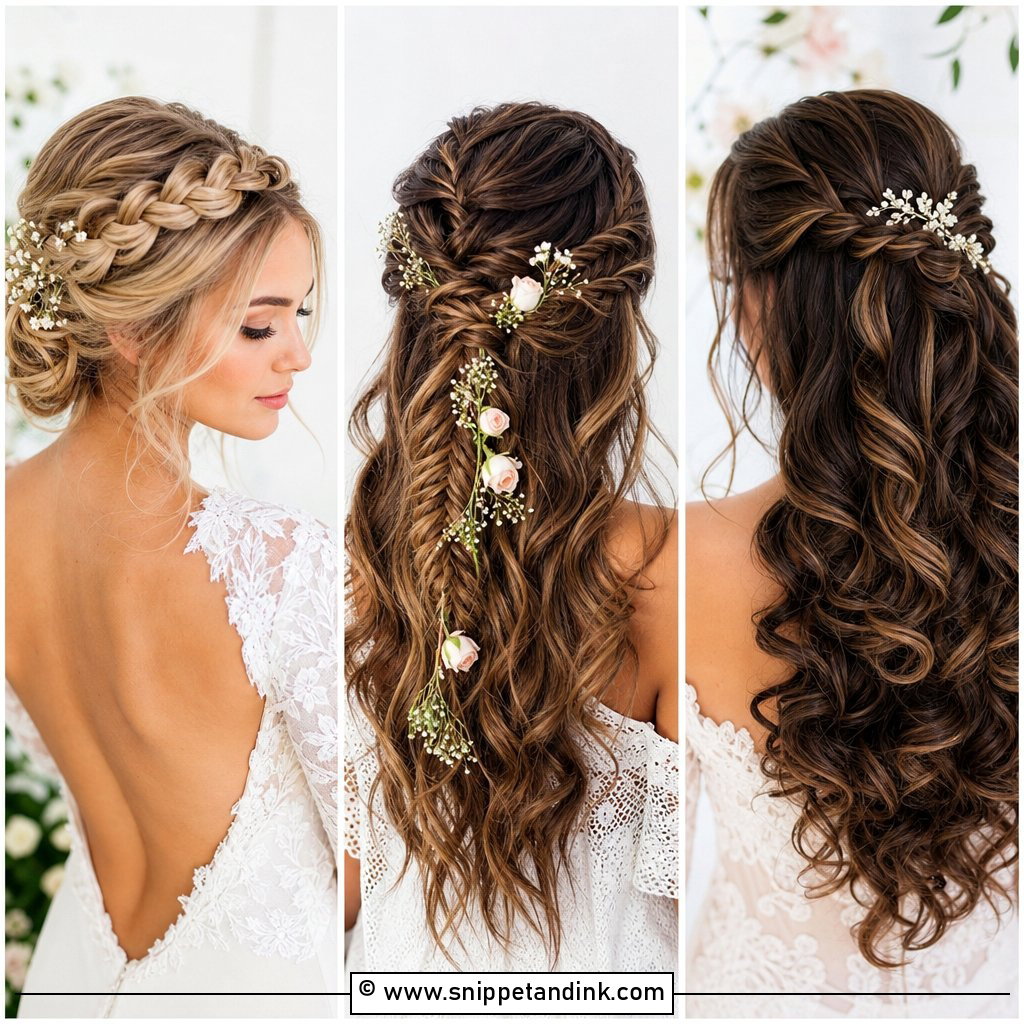
2. Romeo And Juliet Braided Crown
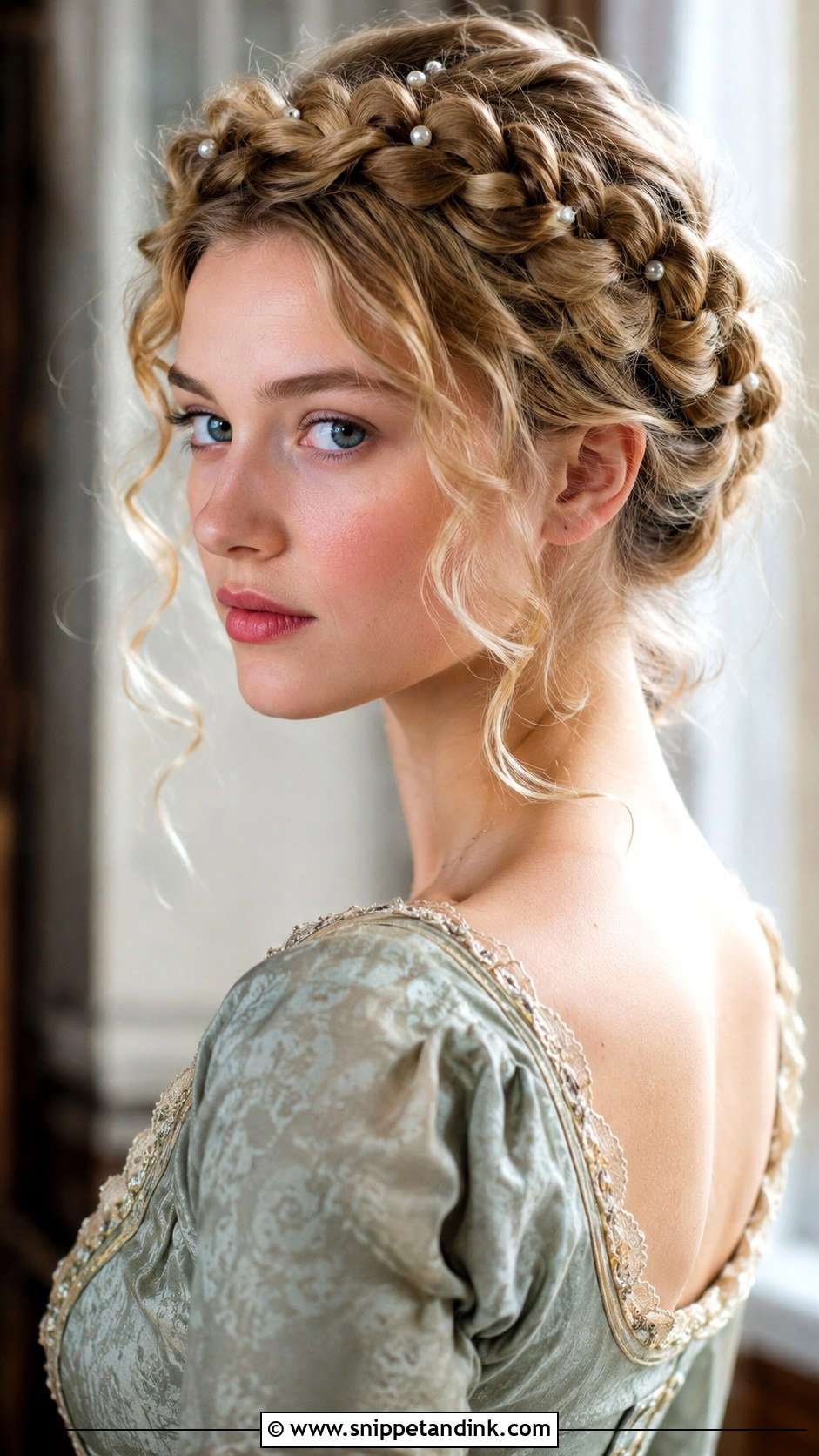
A braided crown is the shape most people picture when they hear Juliet. I usually braid two Dutch plaits and cross them over the top rather than wrapping one braid all the way around, because two shorter braids sit flatter and hold better. Once pinned, I pancake the edges with my fingertips so the halo looks full. Curled ends and a few wispy face-framing strands soften it. It’s one of the most secure styles on this list, which matters for a stage or a long reception. Hair shorter than the shoulders usually can’t reach across, and a clip-in braid is the honest fix.
3. Romeo And Juliet Loose Waves
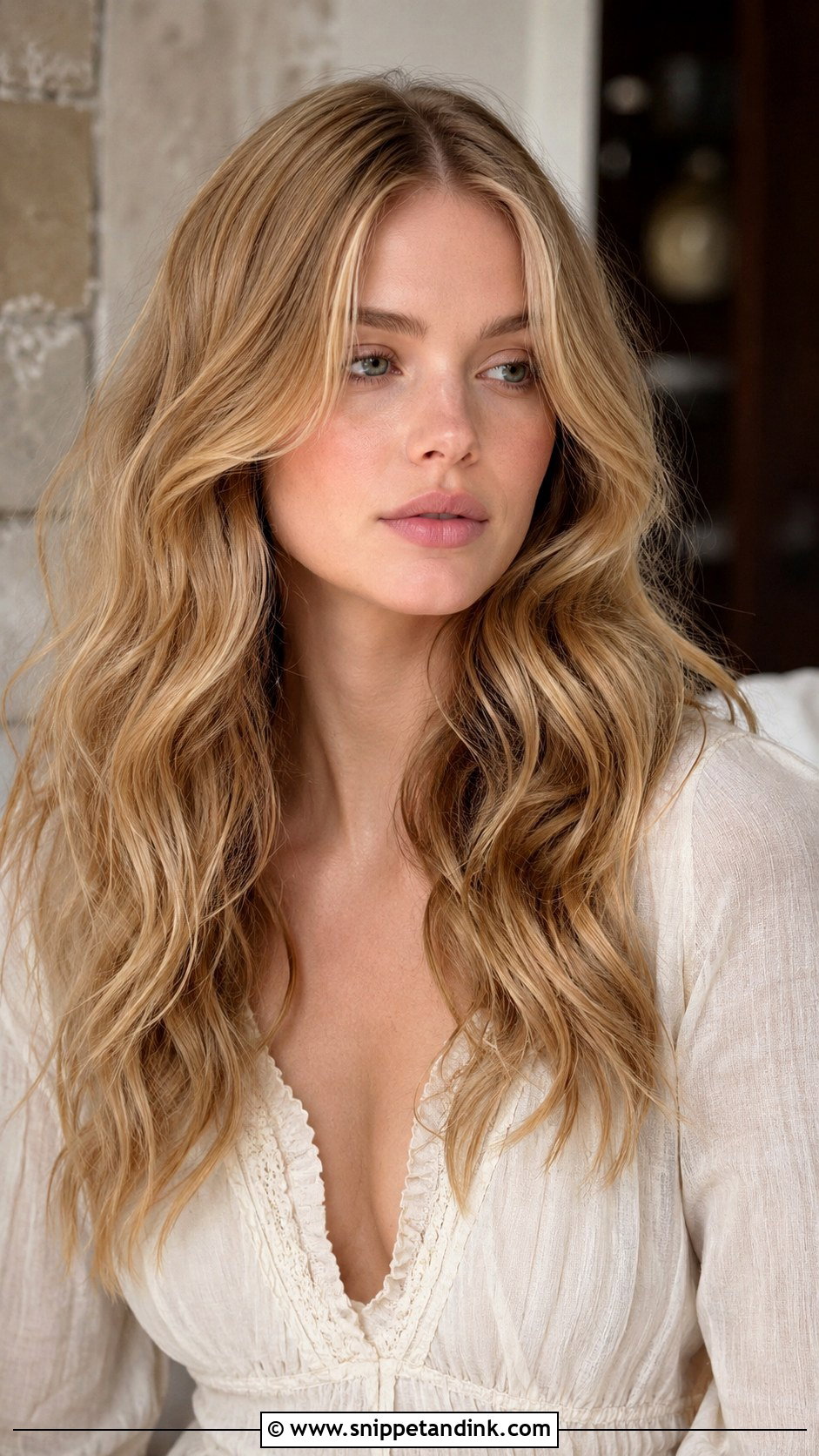
Loose waves are the least effort and the most likely to drop. I set them with a 1.25 inch iron, pin each curl to cool, and only brush them out once they’re cold; brushing warm curls is why waves vanish by the first dance. A middle part gives the period-drama read. Dress them up with a ribbon, a small braid, or a jeweled pin. For a modern finish I keep the crown glossy and let only the ends go airy.
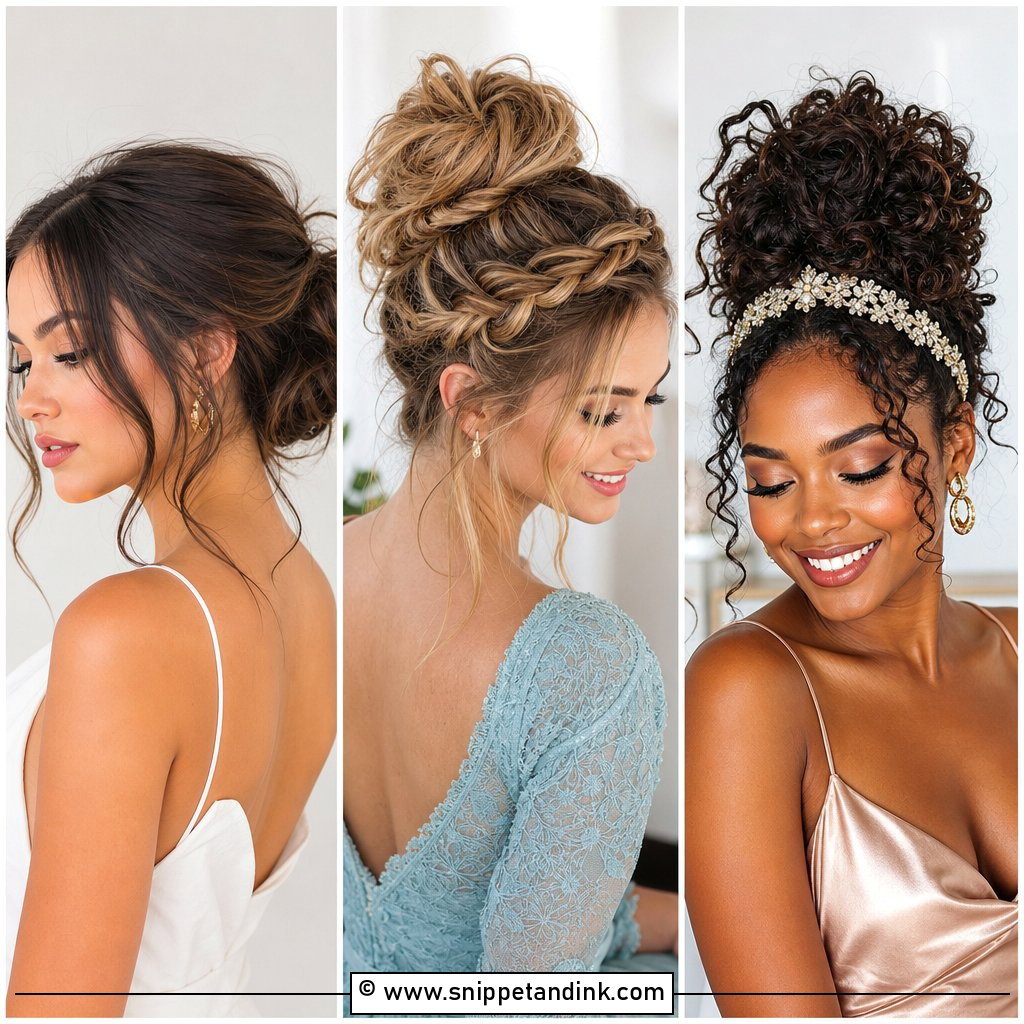
4. Romeo And Juliet Low Bun
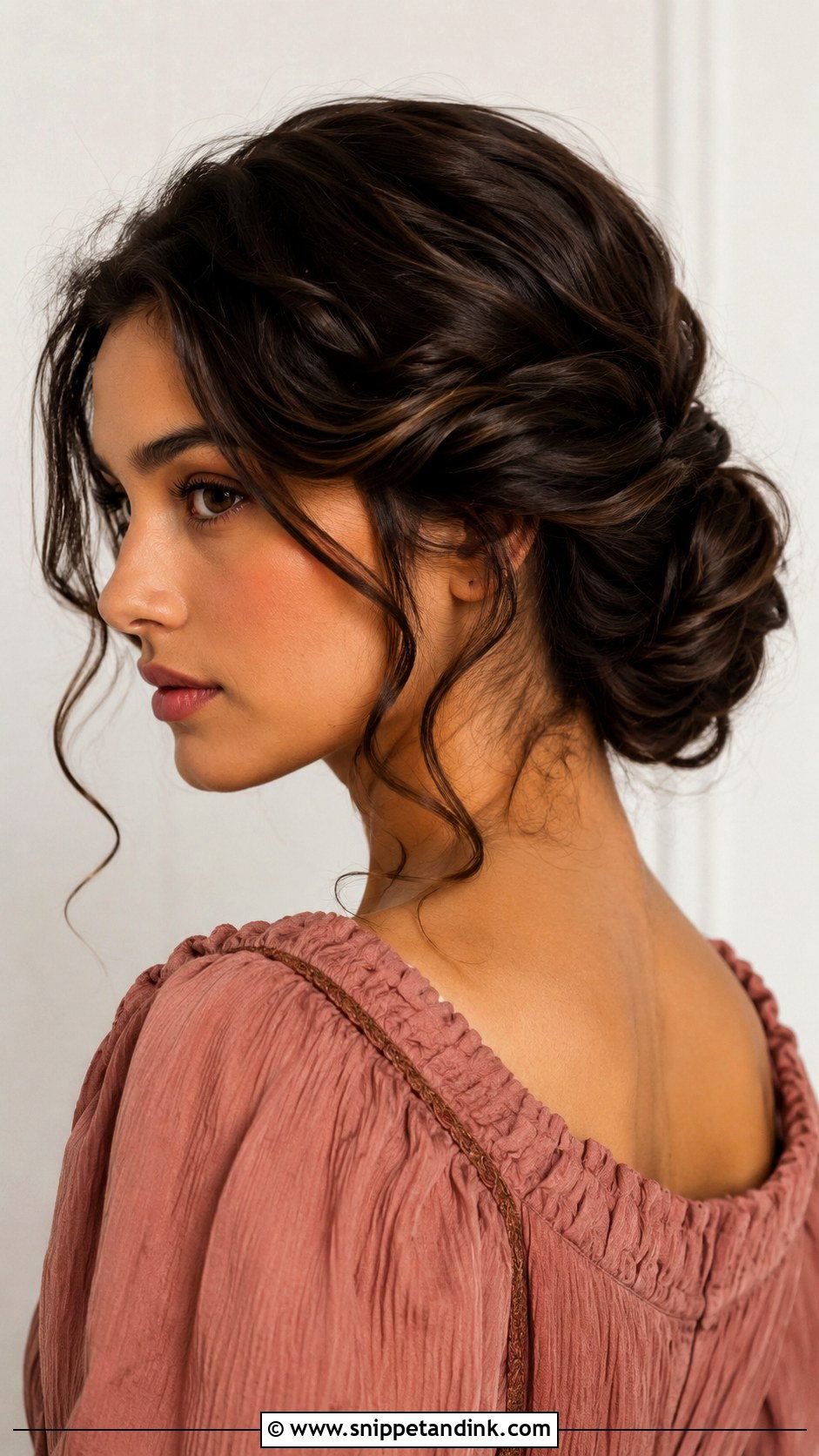
The low bun is my safe pick for anyone wearing a veil or a heavy collar. I build it loose at the nape, then wrap twisted side sections into it, which gives that historical, layered look without a donut or padding. Leave it too loose, though, and it sags on fine hair after a few hours, so I anchor the base with a small elastic ponytail first and pin into that. Curled face pieces keep it from looking severe. It sits cleanly above a square neckline or flowing sleeves.
5. Romeo And Juliet Ribbon Hairstyle
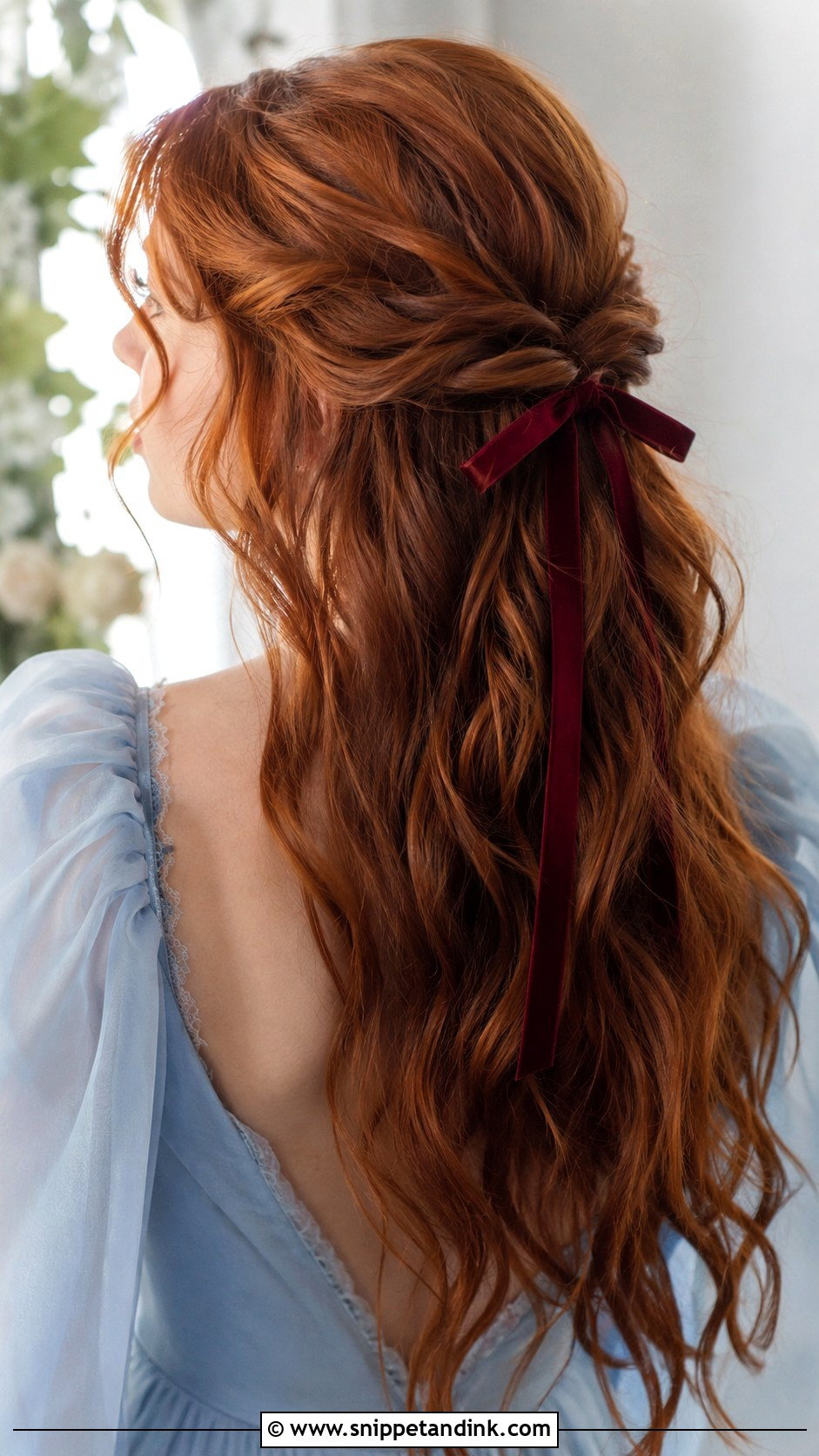
Ribbon is the quickest way to make any of these read as Juliet. Velvet grips hair and stays where I put it; satin slides, so I only use satin when it’s woven through a braid that holds it. Tie it around a half up, thread it through a plait, or wrap it over a low ponytail elastic. Ivory, dusty rose, soft blue and burgundy all suit the period. Keep the bow small and the tails short, because a big bow tips the look from romantic to childish.
6. Romeo And Juliet Twisted Half Up Hair
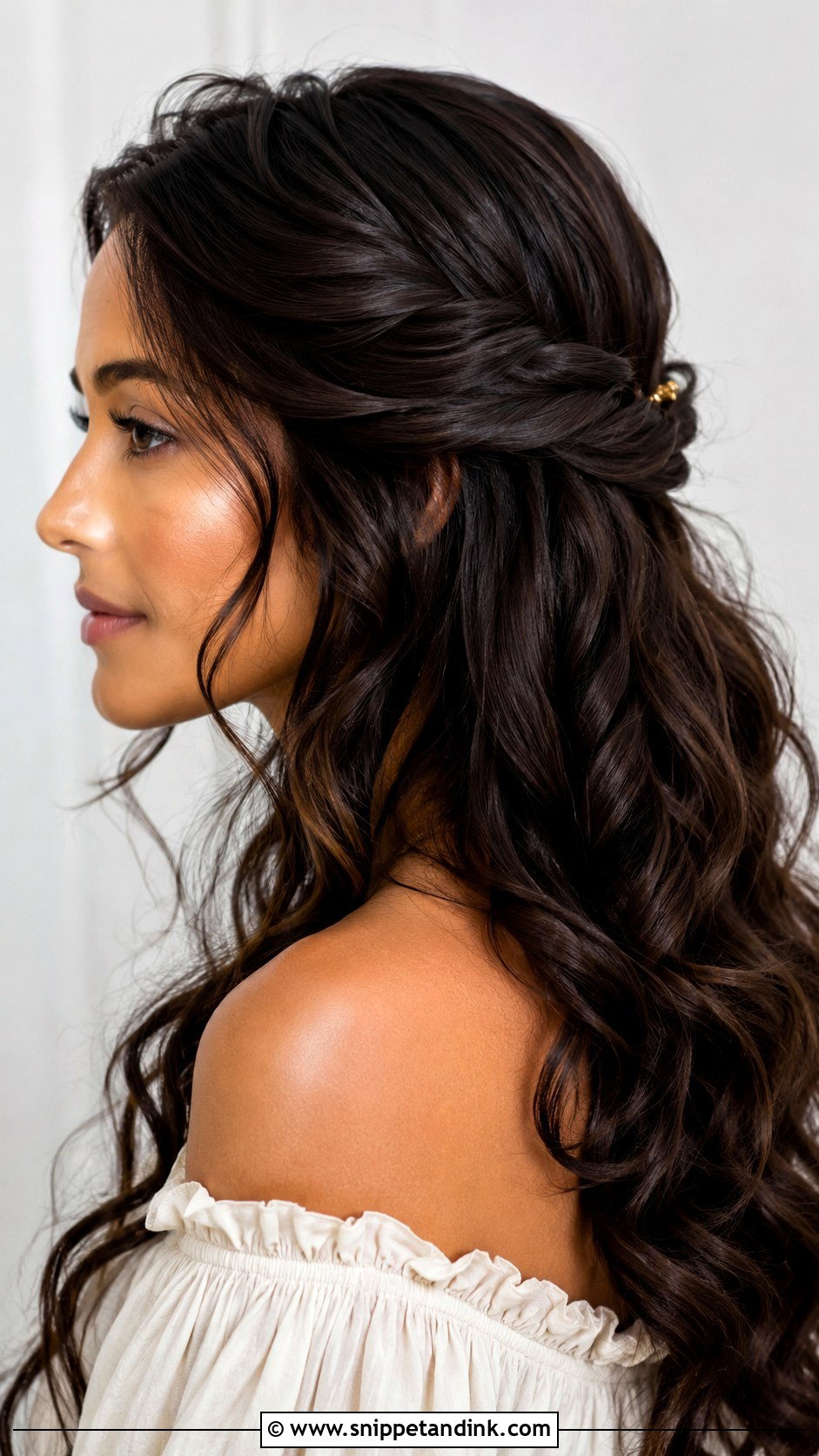
If braiding isn’t your skill, twist instead. I take small sections from each side, twist them away from the face, and pin them together at the back of the crown, overlapping the pins so they don’t show. The lower hair can be curled, waved, or left in its natural texture. Twists open the face and keep the length on show. They do loosen faster than braids, so I spray each twist before pinning. A gold pin, pearl comb, or a couple of small blooms finish it without weight.
7. Romeo And Juliet Braided Updo
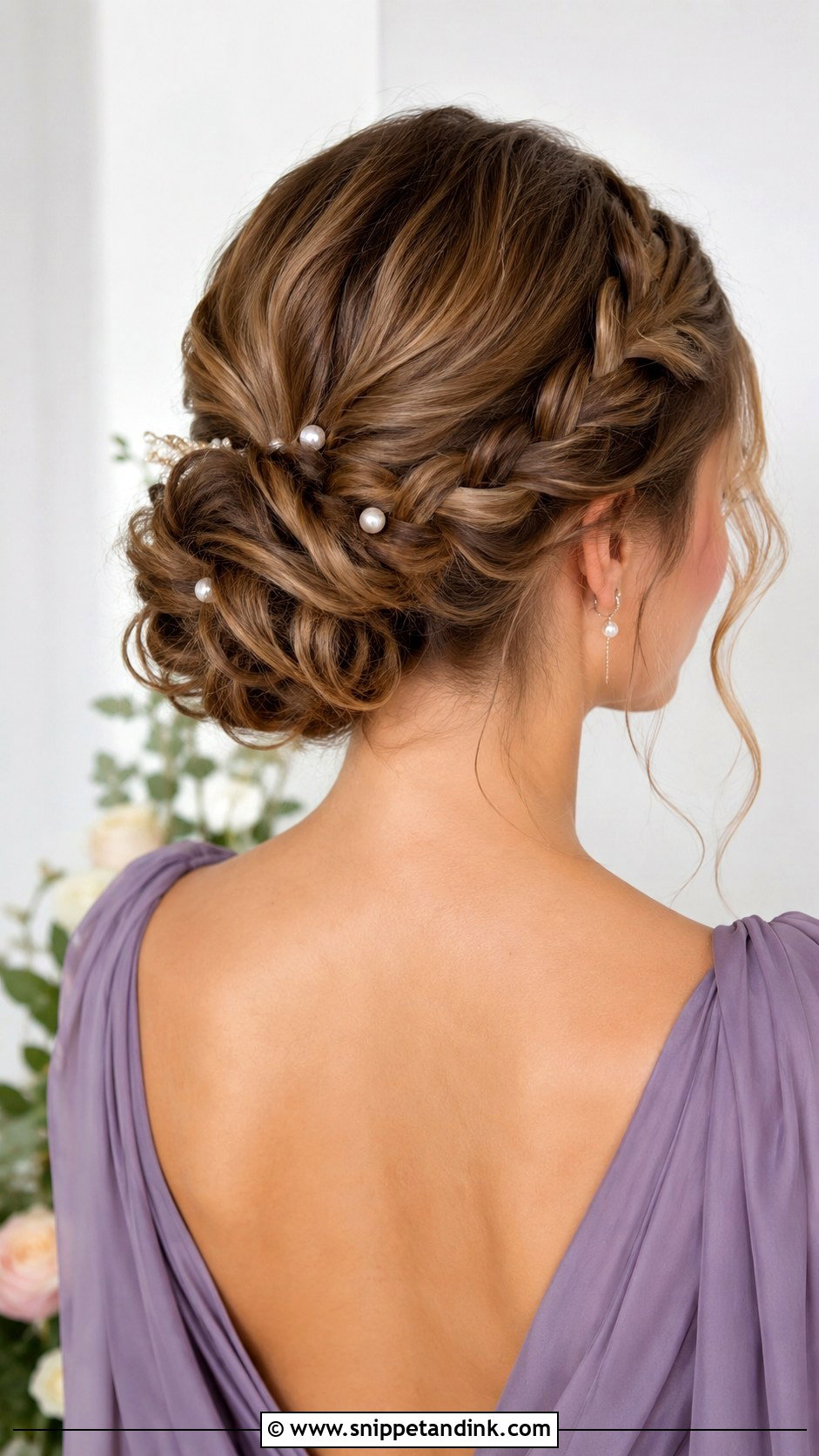
For a long performance or a full wedding day, a braided updo is the one I trust. Centre part, braids along each side, everything pinned into a soft bun at the back. I keep the outline rounded; tight, sharp braids look modern and lose the Renaissance mood. Pull a few short pieces loose at the temples once it’s set, not before, or they get caught in the pins. With pins and light hairspray it holds through dancing and looks finished from the front, side and back.
8. Romeo And Juliet Long Curly Hair
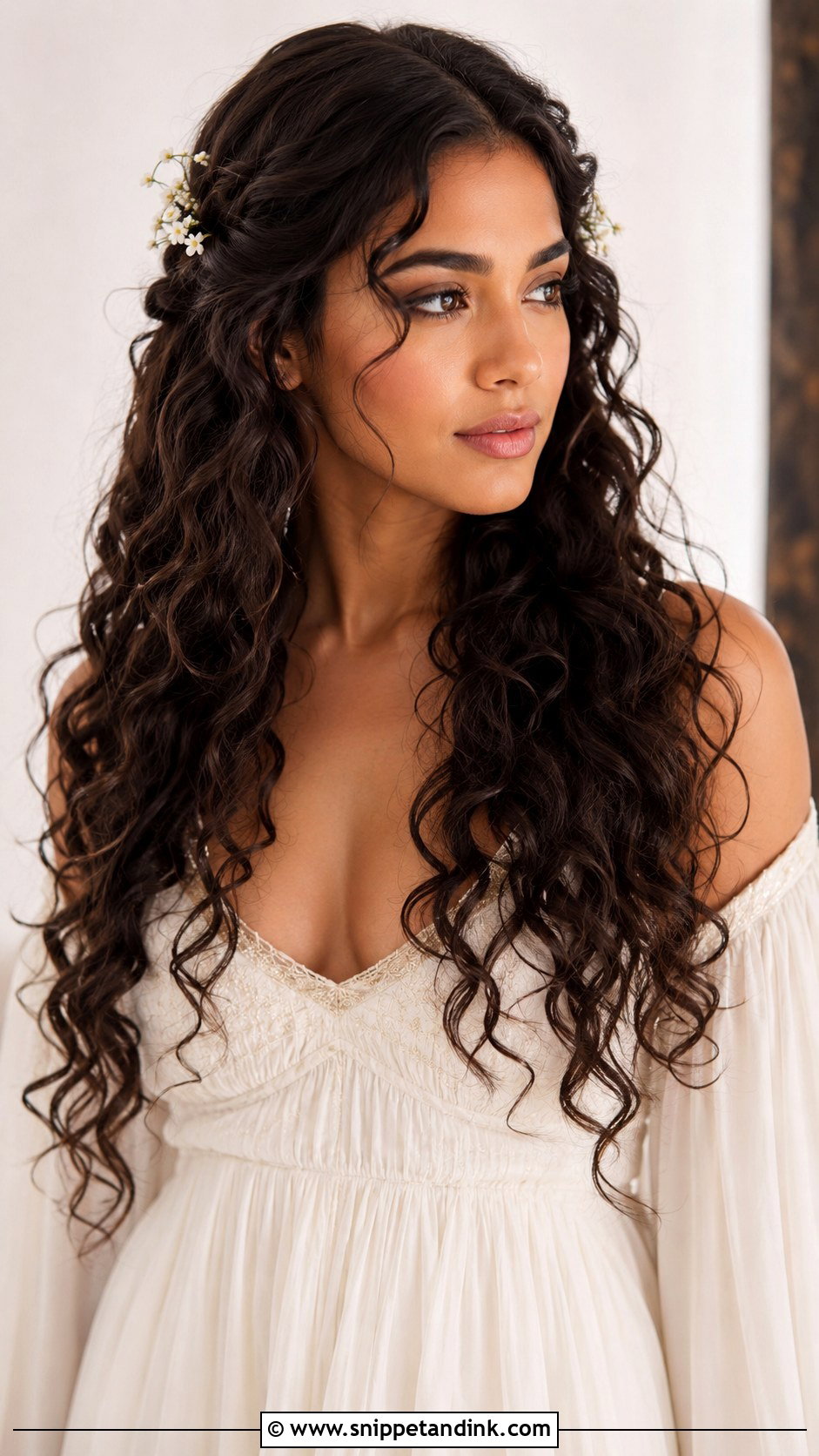
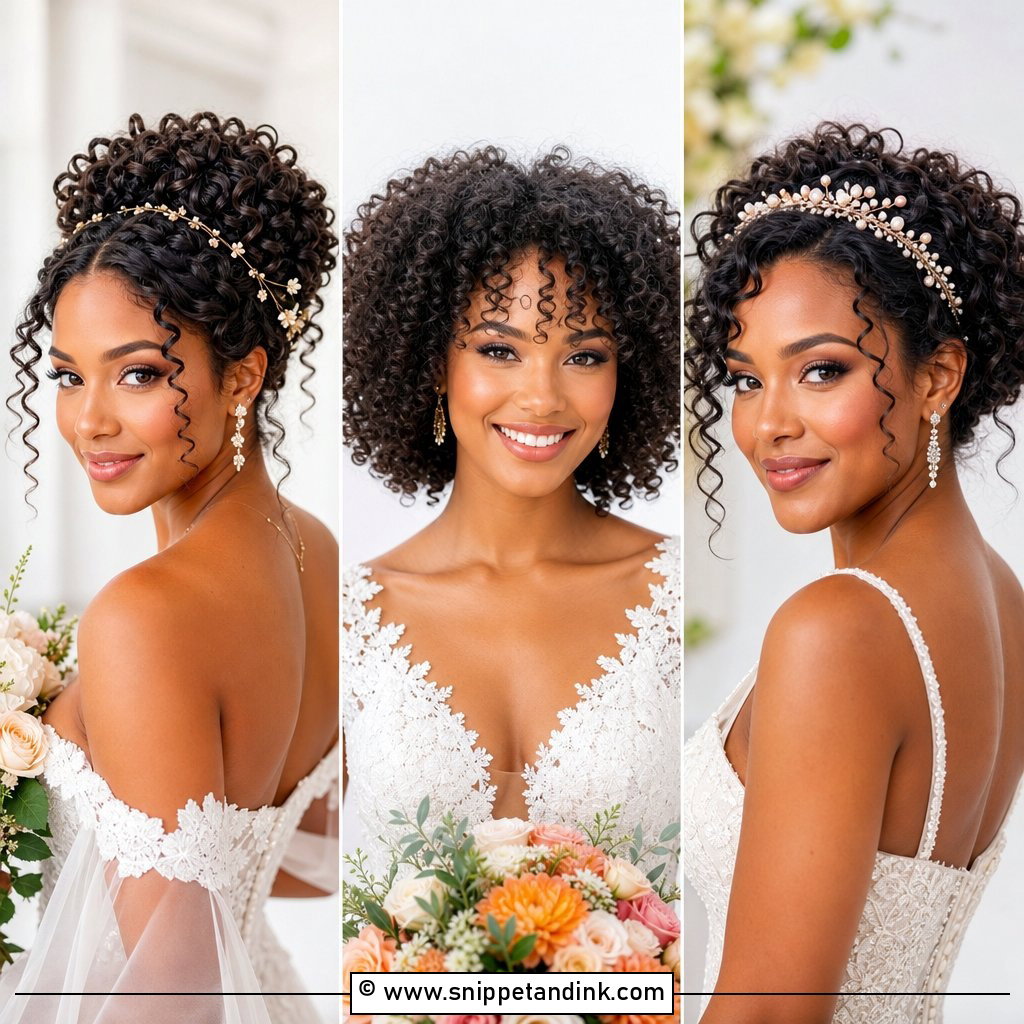
Naturally curly hair already has the volume and movement these looks chase, so I do less, not more. I define curls with a cream and a light gel, leave them to dry fully, then scrunch out the cast so they’re soft rather than crunchy. A middle or slightly off-centre part keeps it classic. Wear it down, half pinned, or with small side twists pulling it from the face. The main trap is brushing: it turns curls into frizz, so I shape with fingers only. Small flowers or pearl pins suit it best.
9. Romeo And Juliet Juliet Cap Hairstyle
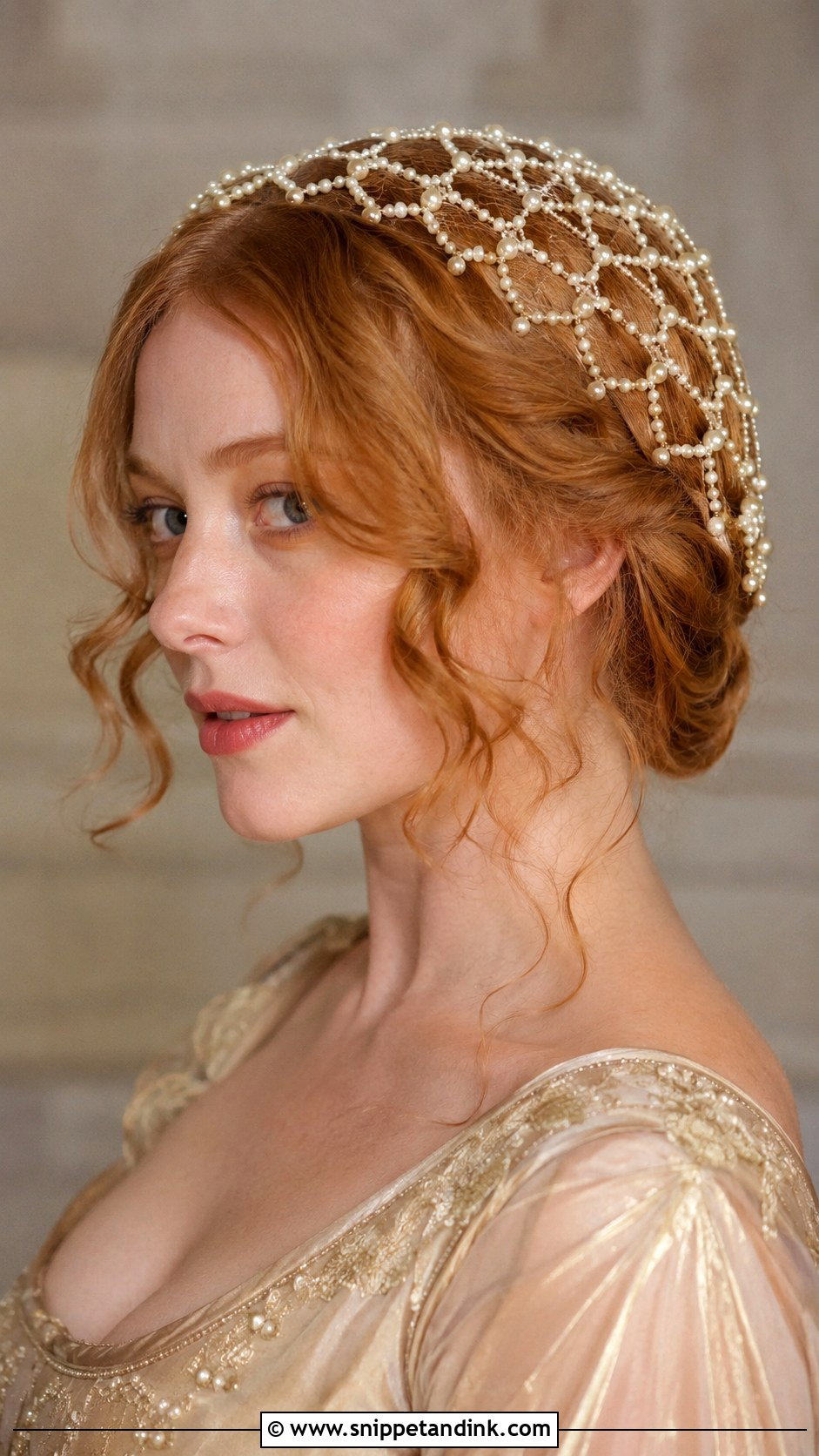
The Juliet cap is the most theatrical look here. The crown is styled smooth, and the hair underneath is tucked, curled, or softly waved under a delicate cap or netted headpiece. I fit the cap before the final curls so it sits lightly on the head and doesn’t crush the volume. Two small combs sewn inside, or pins through the mesh, keep it from sliding back. Loose tendrils at the face stop it looking like a swim cap. Pearls, fine mesh or subtle gold are the details I’d choose.
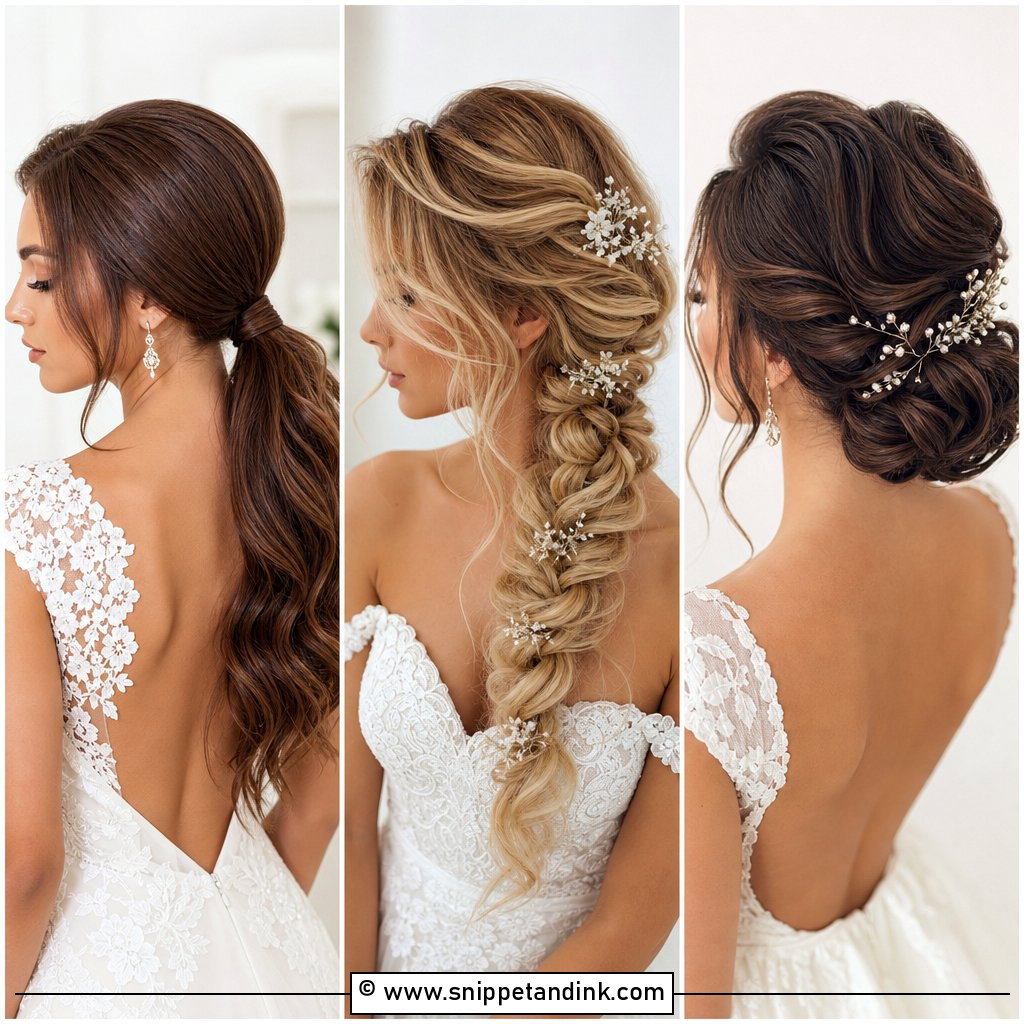
10. Romeo And Juliet Side Braid
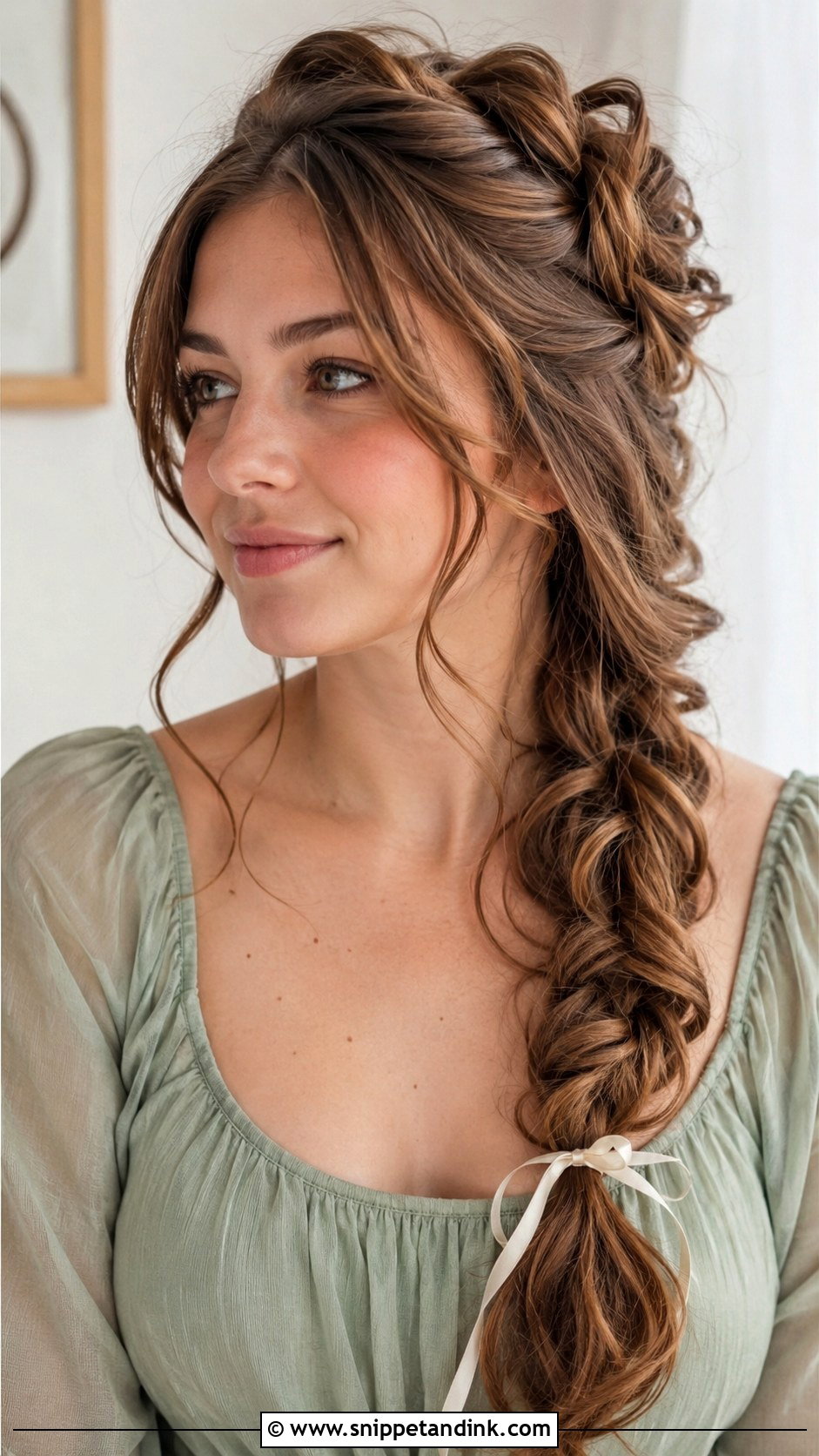
A side braid is the relaxed, younger option, less formal than a crown or updo. Start it near one temple and carry it over the shoulder, or start lower at the nape for something simpler. I loosen it gently once it’s tied off and pull small pieces free around the face. It’s easiest on thick hair, long layers and natural wave, because layered ends poke out of a tight braid but disappear into a loosened one. A thin ribbon at the end does the rest.
11. Romeo And Juliet Medieval Braid Hairstyle
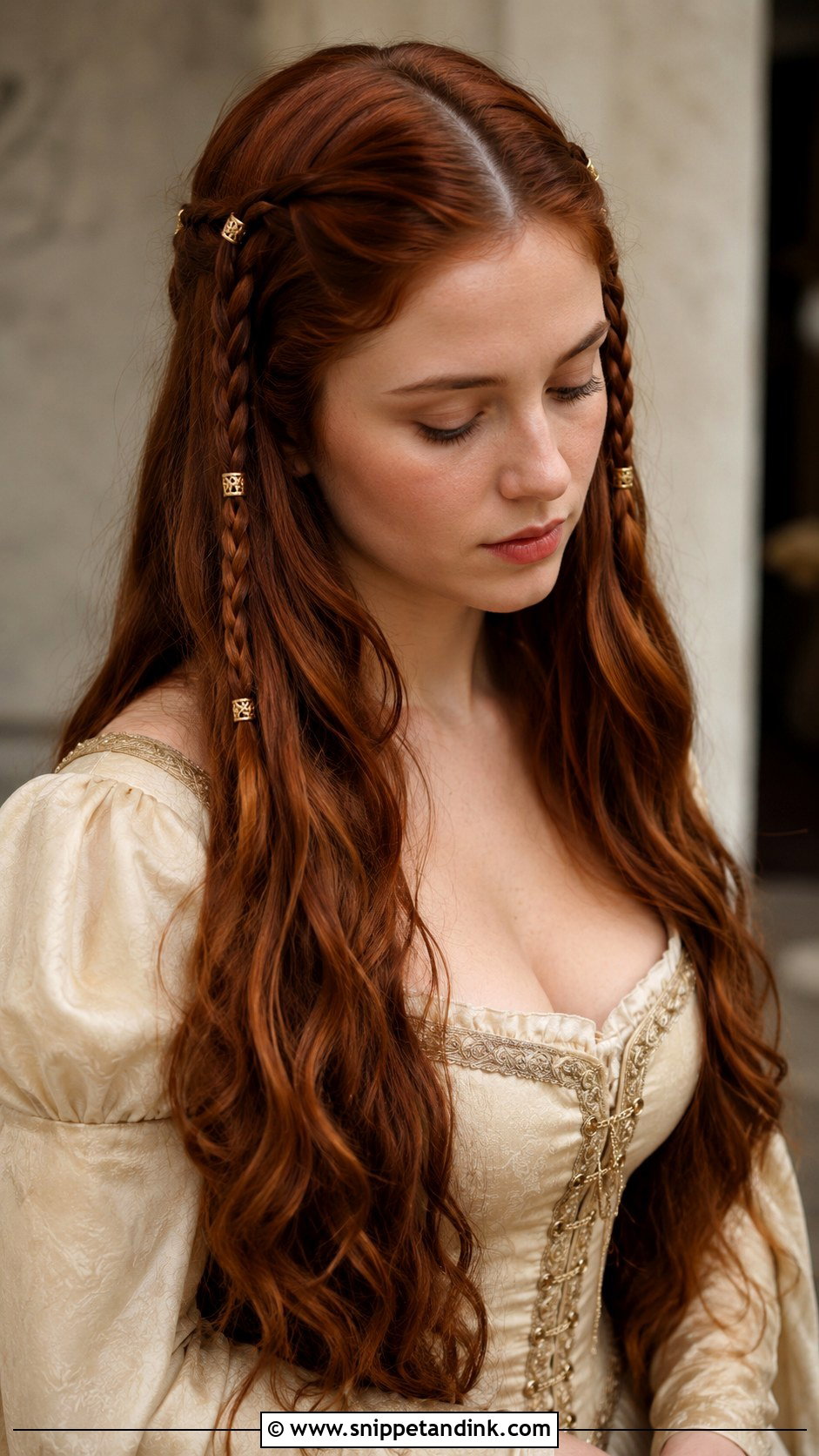
A medieval braid hairstyle leans furthest into history: two side braids from a centre part, with the lengths left loose or pinned at the back. Slim braids look delicate; wider ones read as more dramatic. I always prep with a texture spray first, since freshly washed, silky hair lets braids slip and look thin. Second-day hair braids fuller. A simple ribbon, a metal hair ring, or a pearl pin at the end of each braid is all it needs.
12. Romeo And Juliet Flower Crown Hairstyle
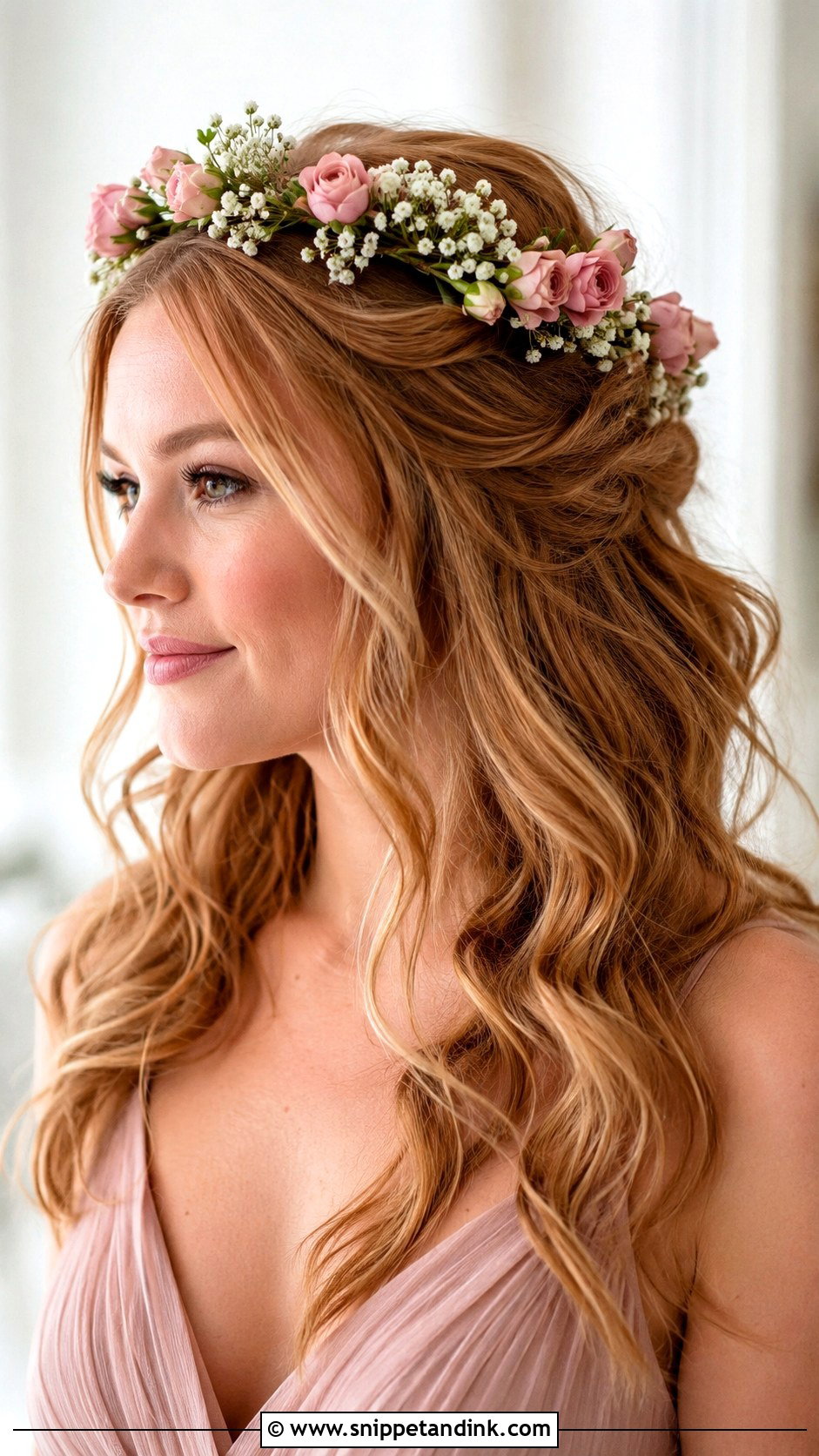
Flower crowns go wrong when they’re oversized, so I keep the blooms small and the crown narrow. Pair it with loose waves, long curls, or a relaxed half up. Baby’s breath, small roses, a little greenery and tiny wildflowers all work. I lift the hair at the crown slightly before the crown goes on, then pin through the wire frame at each side so it can’t ride up. Fresh flowers wilt in heat by late afternoon; for outdoor summer photos I’d use dried or silk.
13. Romeo And Juliet Soft Curled Updo
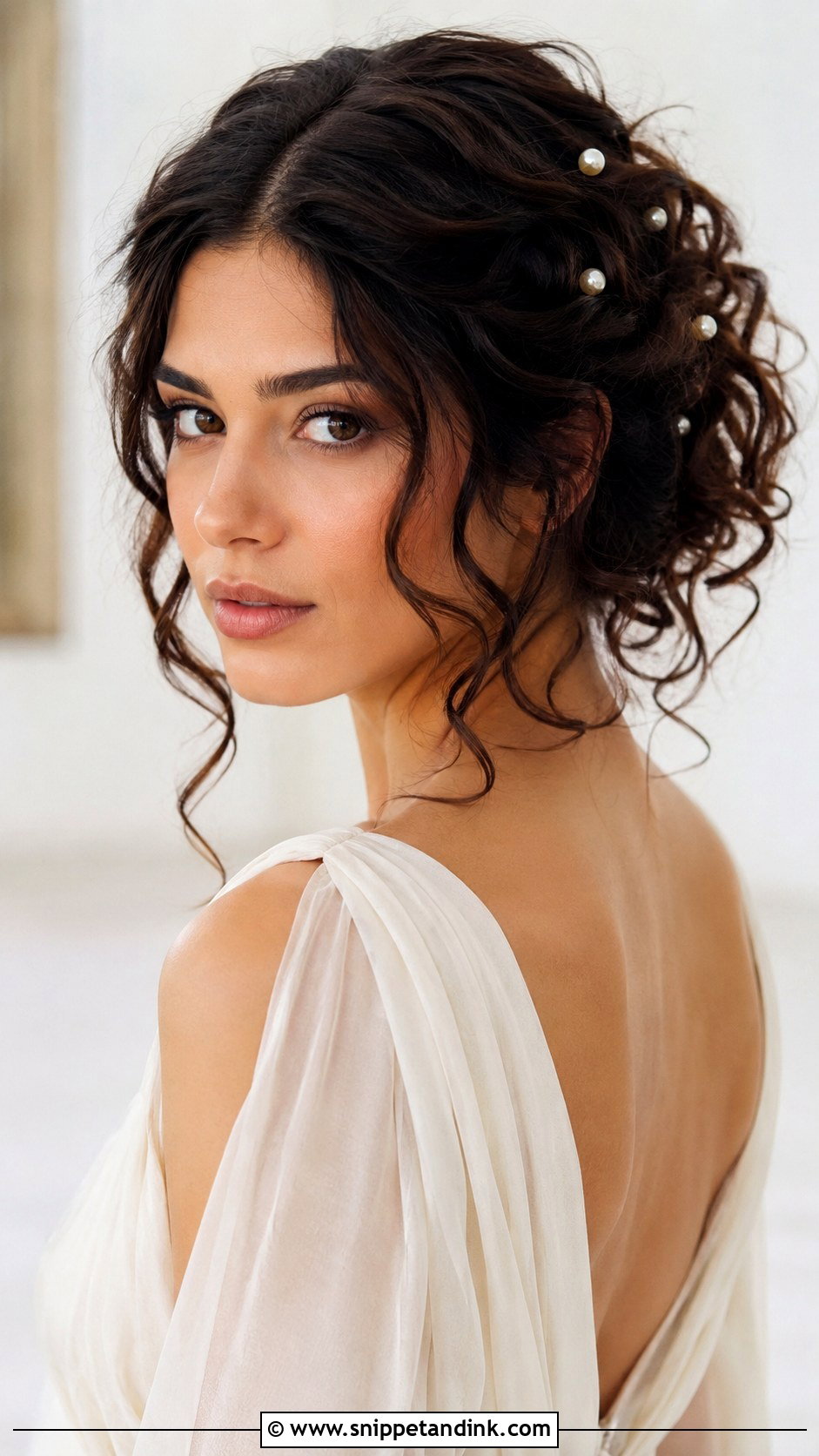
A soft curled updo is the polished Juliet. The curls are pinned loosely at the back into a rounded shape, so the hair is off the shoulders while the face keeps some softness. I curl everything first and pin each curl in place while it’s still holding its shape, which is what gives the updo movement instead of a flat knot. The front can be centre parted, twisted back, or left with a couple of light curls. A few pearl pins add formality without weight.
14. Romeo And Juliet Center Part Hairstyle
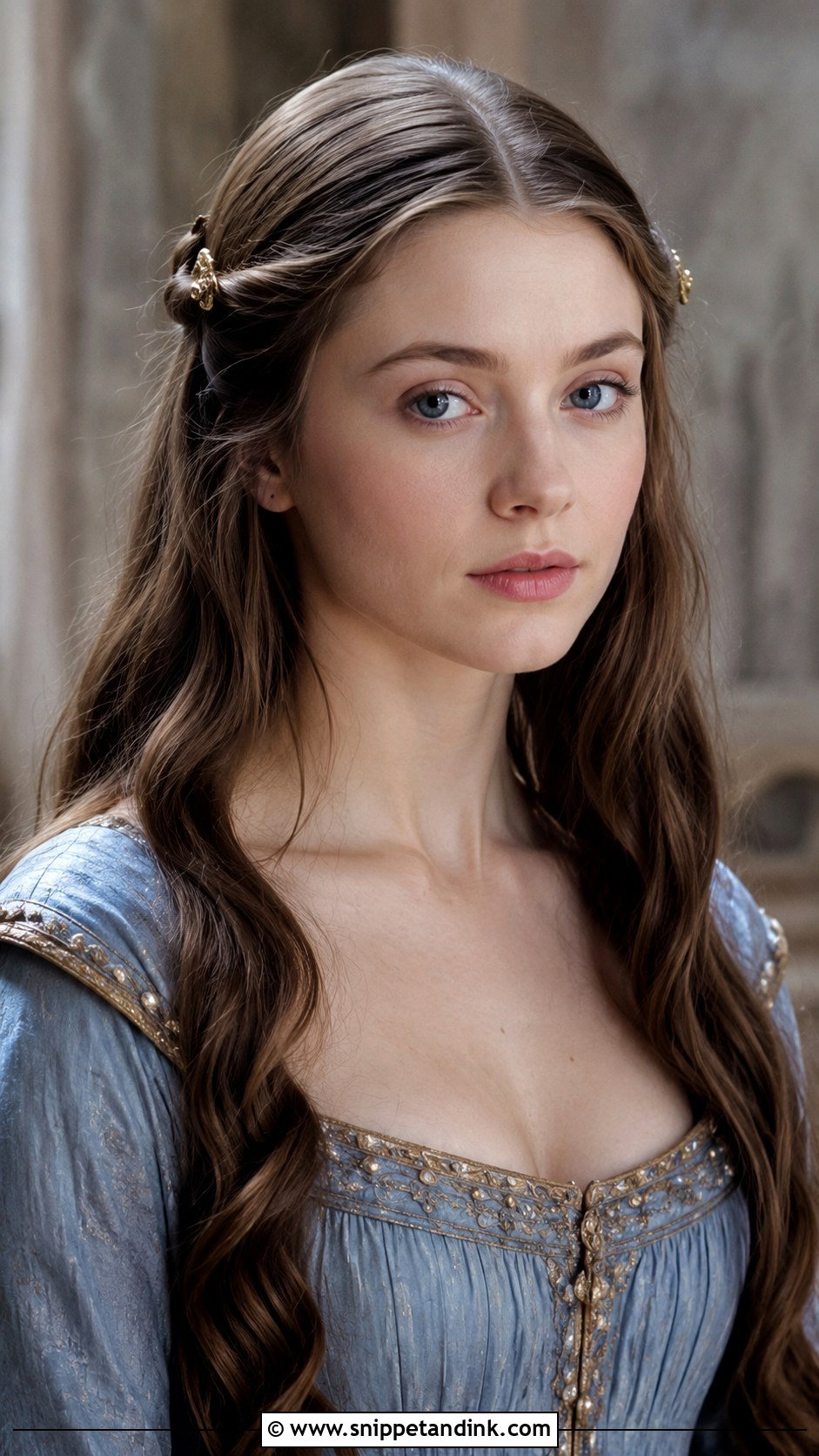
Never underestimate the part. A clean centre part gives the face a balanced, period shape on its own, even with no braiding at all. I set the part while the hair is damp and blow-dry it flat at the root; trying to force a centre part on dry hair that naturally falls to one side usually ends in a cowlick by lunchtime. Wear the lengths down, half up, or pinned behind the ears. A fine headband, small clips or a ribbon at the back add detail.
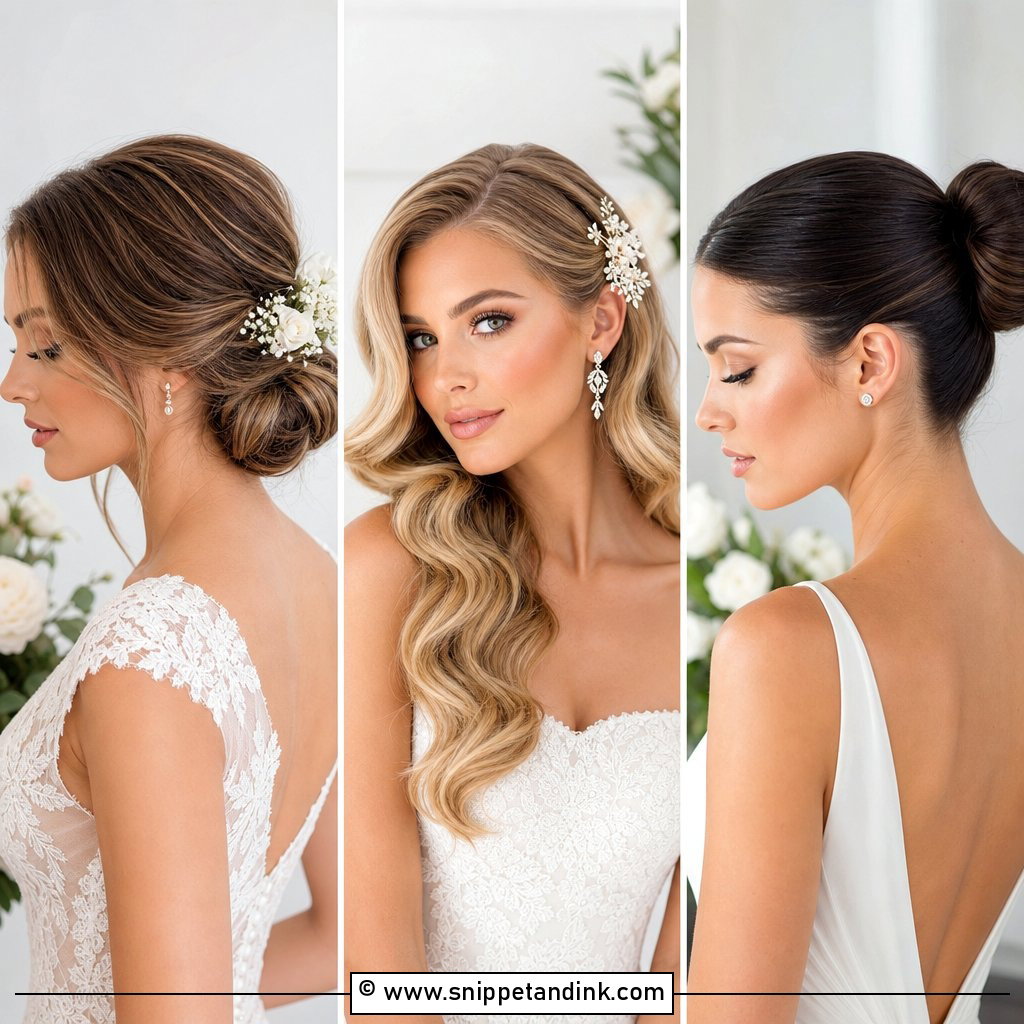
15. Romeo And Juliet Renaissance Updo
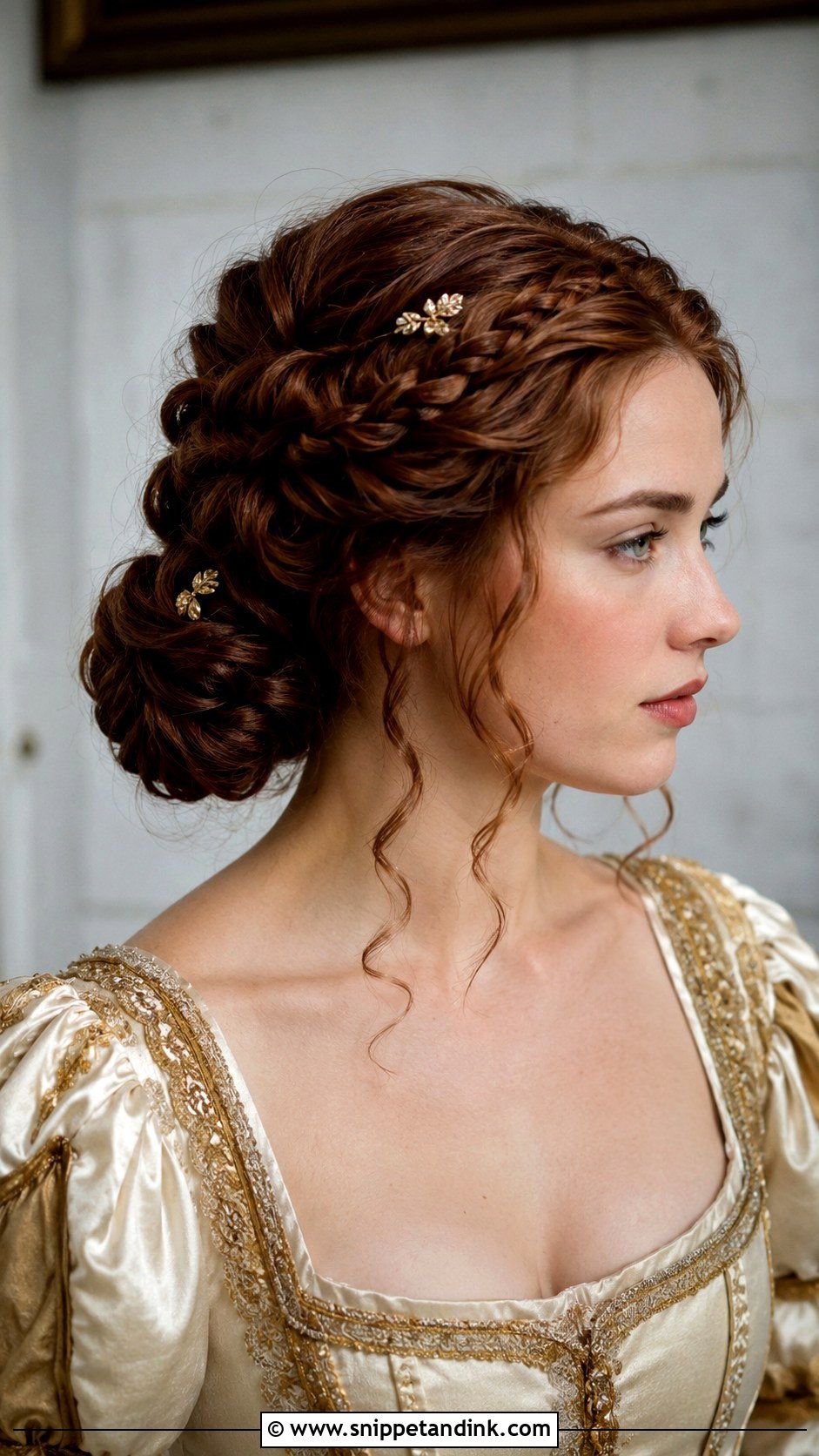
The Renaissance updo pulls braids, twists, volume and pinned texture into one shape. Everything lifts away from the face and gathers low or at mid-height at the back, which gives a refined profile. I keep the front smooth but not flat by teasing a little at the crown underneath the top layer. Let a few soft strands frame the face. Pearls, gold pins, or a delicate hairnet make it feel authentic while staying wearable today. It takes the longest of anything here, so book extra chair time.
Fine, Layered or Short Hair Can Still Wear These
Most Juliet references show waist-length, thick hair. If yours is fine or cut in layers, the styles still work; they just need a different build.
Fine hair
Day-old hair grips pins far better than freshly washed hair, so I ask fine-haired clients to wash the night before. I add a dry texture spray before braiding, then pancake the braid wider than you’d think. Bobby pins with a matte, ridged finish hold better than shiny ones.
Layered or shoulder-length hair
Short layers escape crown braids and twists. I braid with a little styling cream on my fingers so the short ends stick down, then hide escaping ends under a ribbon or behind a comb. A clip-in weft at the back gives a low bun or side braid enough length to look generous.
Planning the trial
Bring the actual ribbon, cap or flowers to your trial, plus a photo of the neckline. Wear the style for at least four hours afterwards, including sitting in a car. If anything slips, it’s much easier to change the pin plan at the trial than on the morning itself.
A Juliet Look Lives or Dies at the Face Frame
Every style above can go simple, with waves and a centre part, or dramatic, with a crown braid, cap or full Renaissance updo. Let your hair length and texture decide first, then the event and how long you’ll wear it. Whatever you choose, keep it touchable and leave a little softness around the face. A few loose strands at the temples are what make these looks feel romantic instead of costumed.
You'll Like These Ideas:



Leave a Reply