
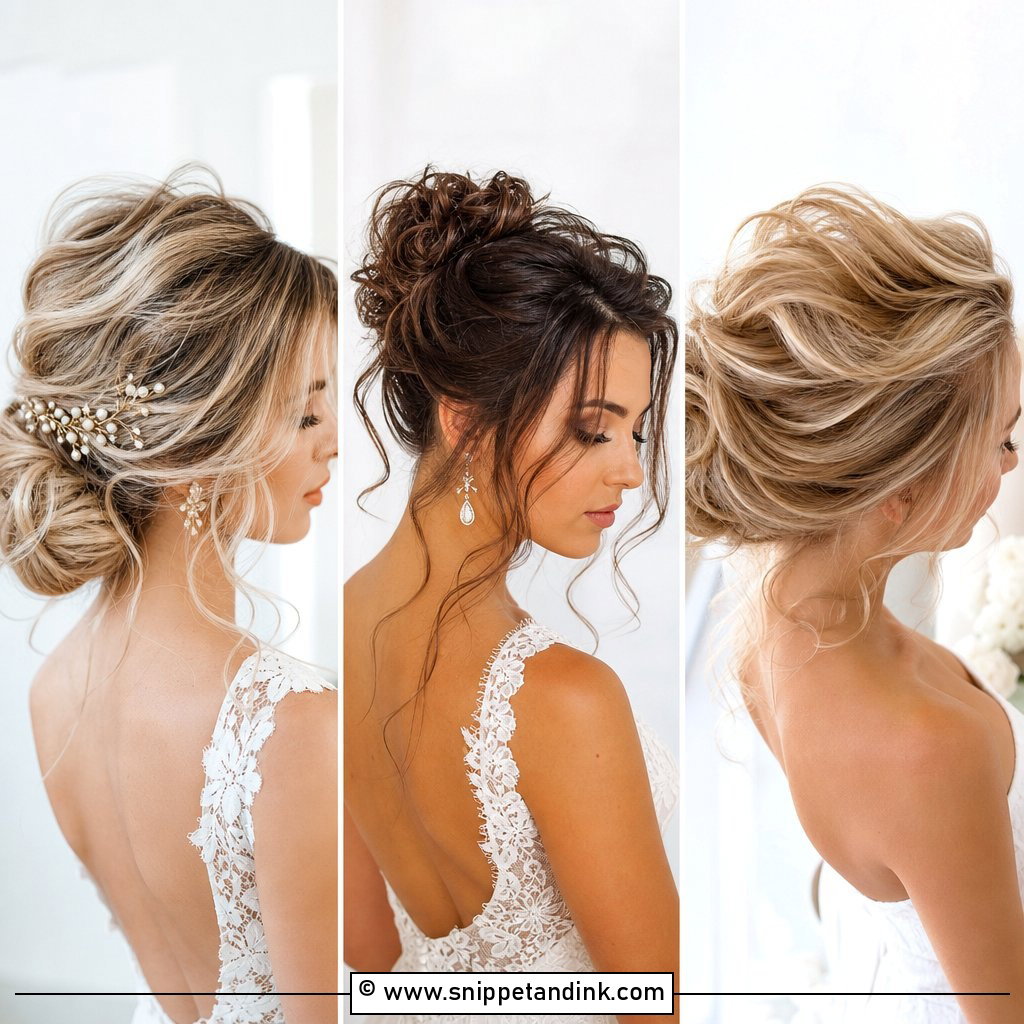
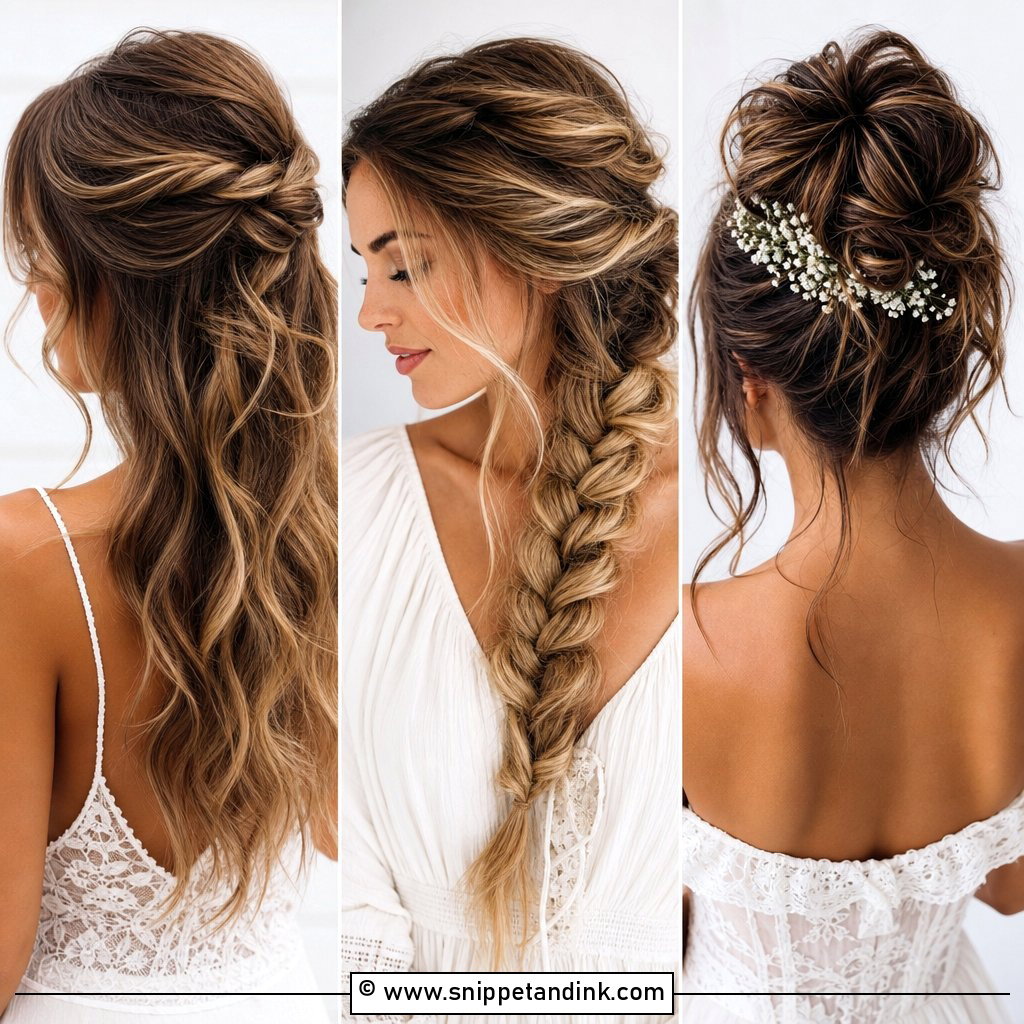
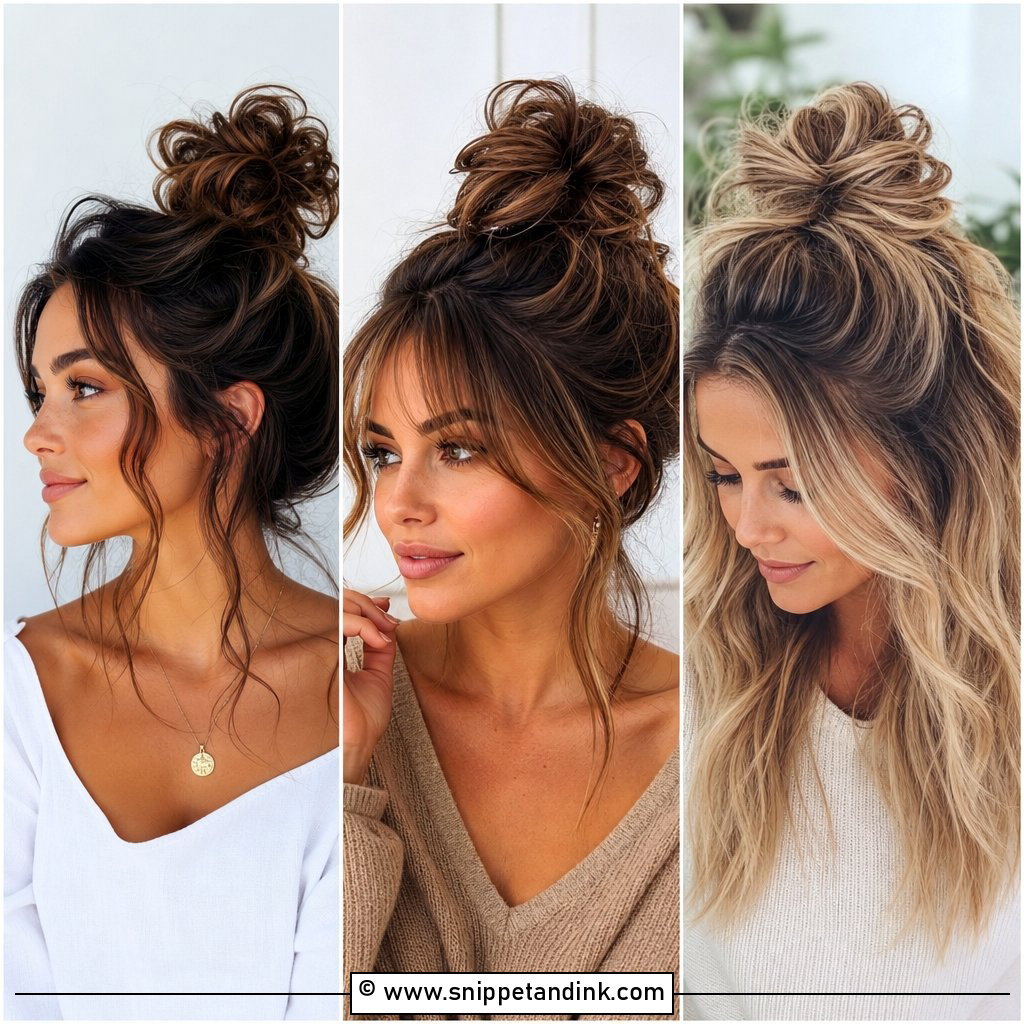
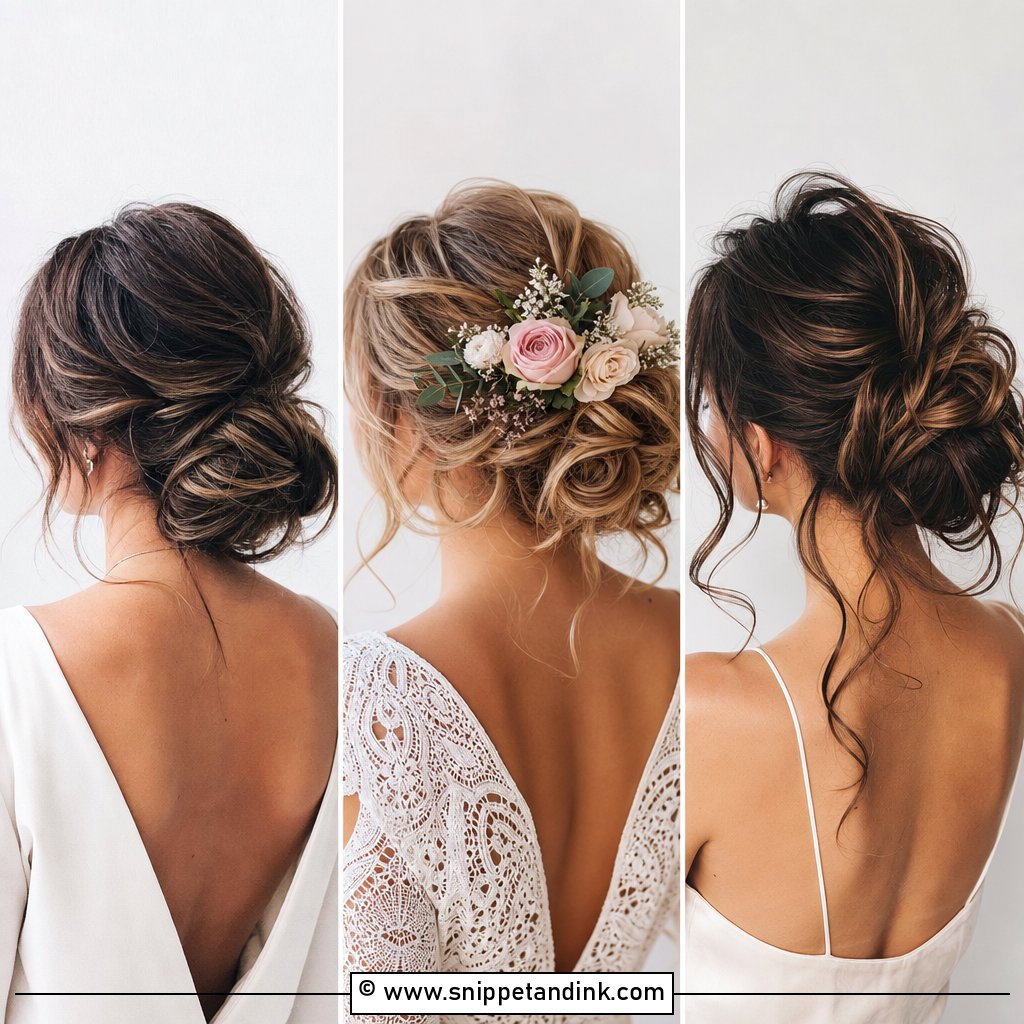
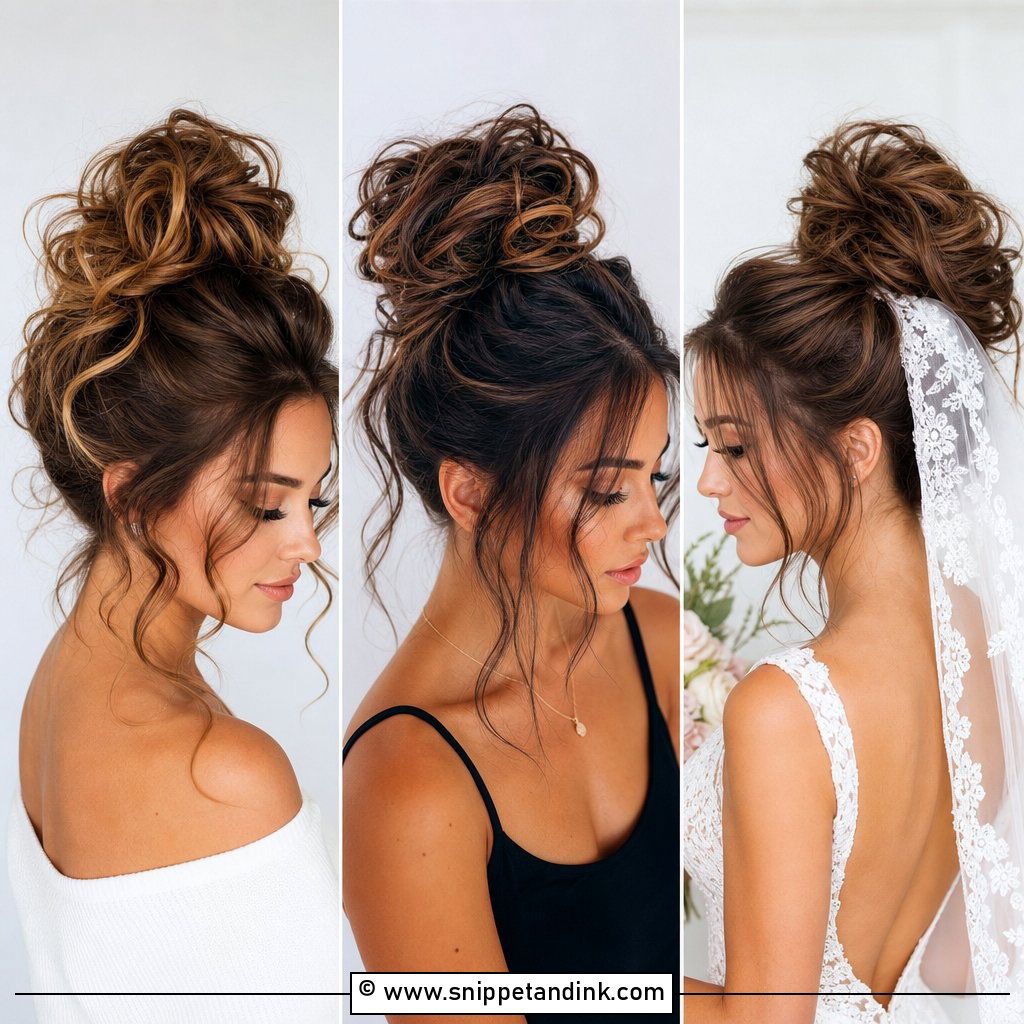
A messy bun at an Indian wedding does far more work than it seems to. It sits under a dupatta for hours, carries the weight of gajra or a maang tikka chain, and has to survive the pheras, a long photo session and a lot of hugging. Built properly, it’s one of the most comfortable updos I can give a bride, and it sits as naturally with a saree, lehenga, or gown as it does with a simple suit. The looseness you see in pictures is planned; underneath there is almost always a tight anchor nobody sees. Below are 25 versions I’d actually put on a bride or a guest, from jasmine-wrapped knots for the ceremony to braided buns built for sangeet dancing.

The Hidden Anchor Inside a Loose Bridal Bun
The looser a bun looks, the more work happens underneath. I start almost every one with a small, tight ponytail or a pair of crossed pins at the exact spot where the knot will sit. That base takes the weight of flowers, a tikka chain and a dupatta, so the texture on top can stay soft. Without it, a messy bun creeps down the neck over the evening and looks tired by the reception.
Hair washed the night before holds pins far better than squeaky clean hair. If you wash on the wedding morning, I’ll need texture spray or dry shampoo just to create grip.
Adjusting the base to your hair
- Fine or thin hair: I backcomb at the roots and add a clip-in piece or a small bun filler so the knot has real bulk.
- Thick, heavy hair: I split it into two smaller knots pinned together, since one big knot pulls on the scalp and causes headaches after a few hours.
- Curly or coily hair: I work it while the curls are defined and never brush it out; a curl cream holds better than spray.
- Shoulder-length hair: a low bun is usually possible, but a high one often needs extensions.
What to carry to your hair trial
Bring the actual dupatta, your maang tikka, any hair jewelry and a daylight photo of the outfit. Wear a button-front shirt so nothing gets pulled over your head afterward. Then keep the bun in for at least four hours and notice where it starts to pull, because that’s exactly what I’ll fix before the wedding.
1. Low Messy Bun With Gajra
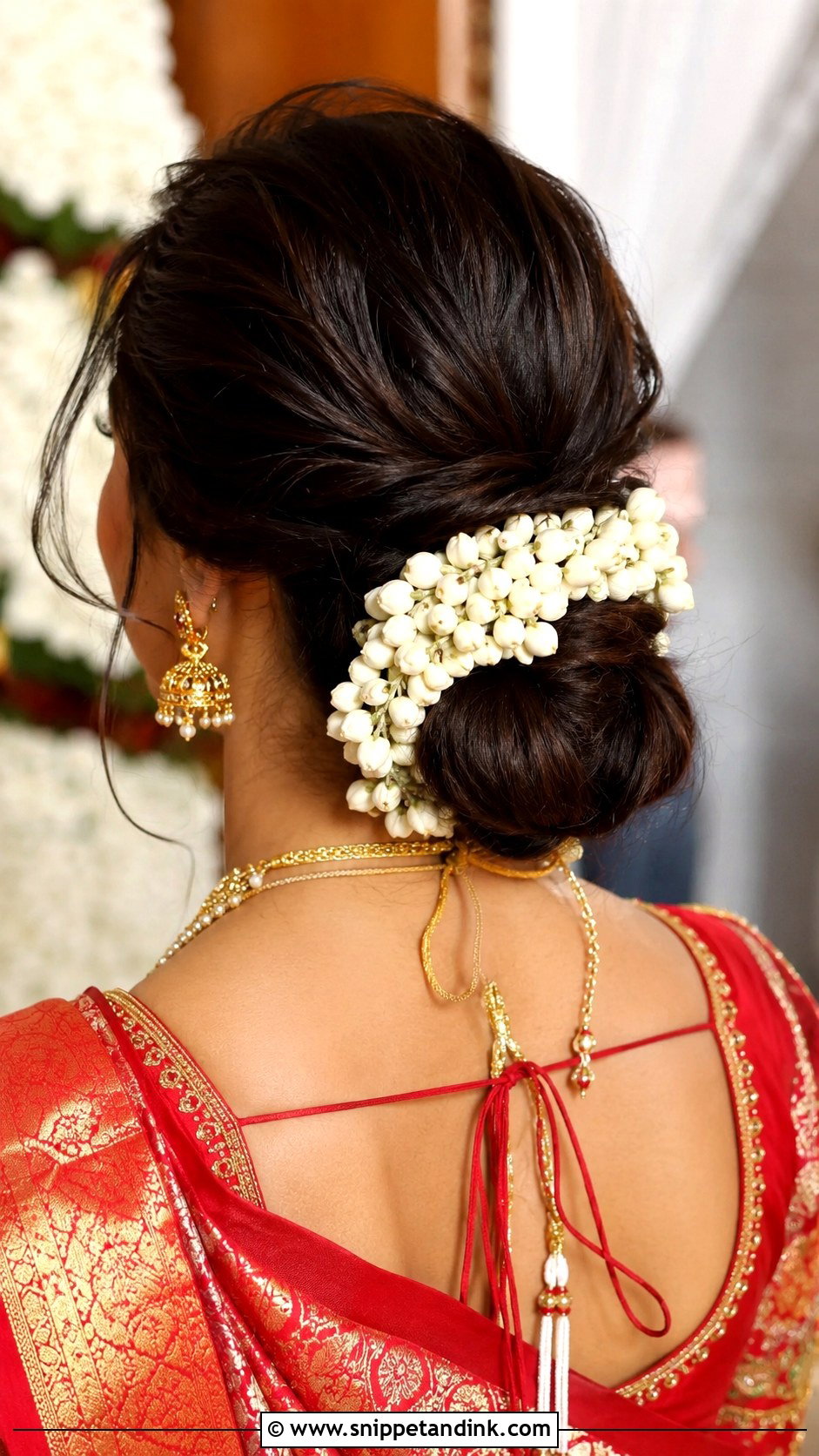
Jasmine strands are heavier than they look, especially the thick double-row gajra worn at South Indian weddings. For a low bun I make a small, firm ponytail at the nape first and shape the loose knot around it, so the flowers have something solid to pin into. Two or three strands circled around the base is plenty; add more and the bun starts tugging backward halfway through the ceremony. I leave a couple of soft pieces at the temples and stop there. Because the knot sits low, it never presses on the head during long rituals at the temple or the mandap.
2. Curly Messy Bun for Brides
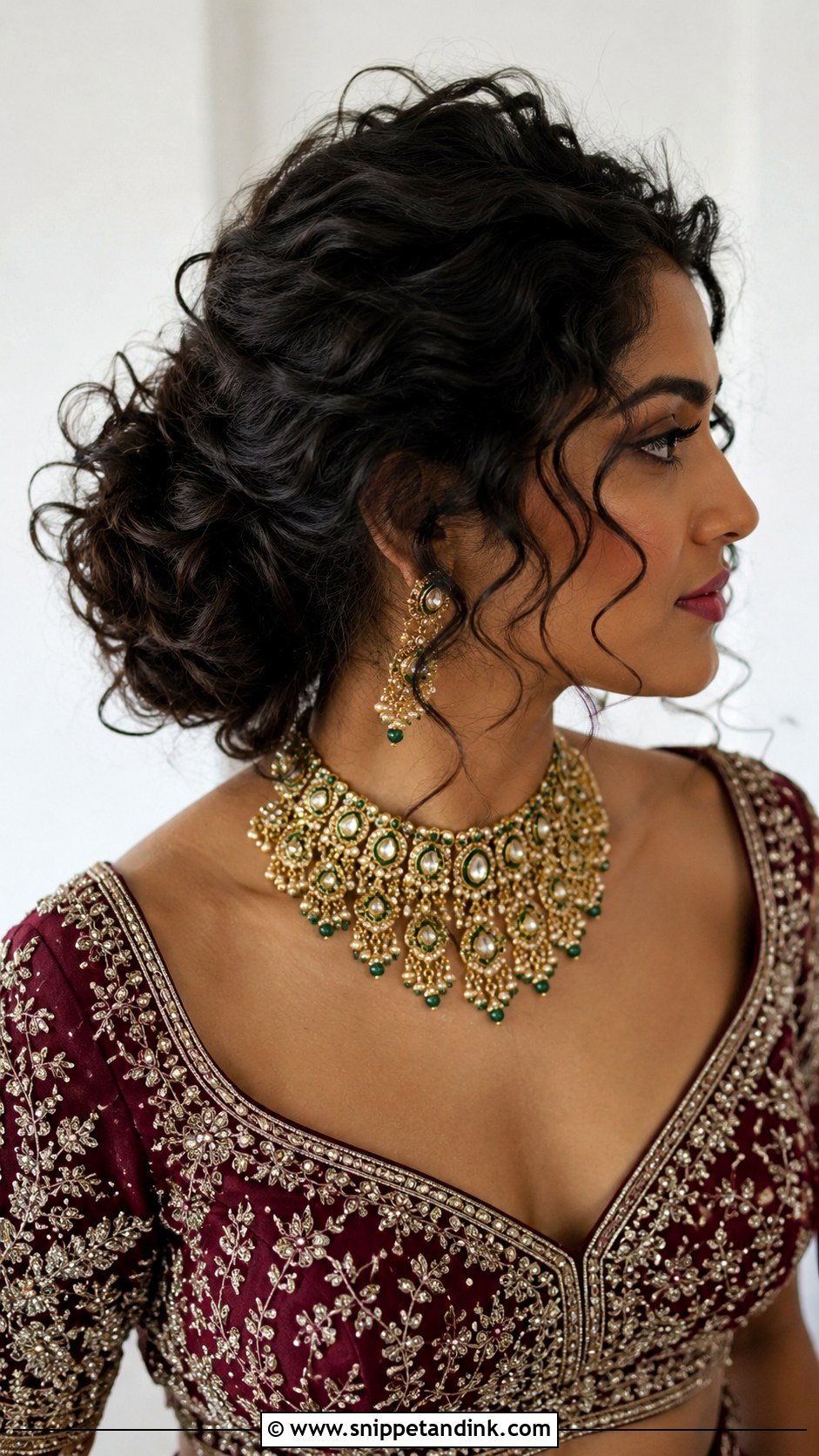
Curls rarely need straightening for a bun. They hold pins far better than silky straight hair, so I work with the curl pattern, gathering the coils loosely and setting the bun low or mid-height wherever you’re comfortable. A few coils pulled forward at the hairline soften the frame. What I watch is frizz: a brush turns defined ringlets into a cloud, so I shape with fingers and a curl cream instead. A jeweled pin or a small flower cluster is all it needs for a reception or sangeet.
3. Braided Messy Bun
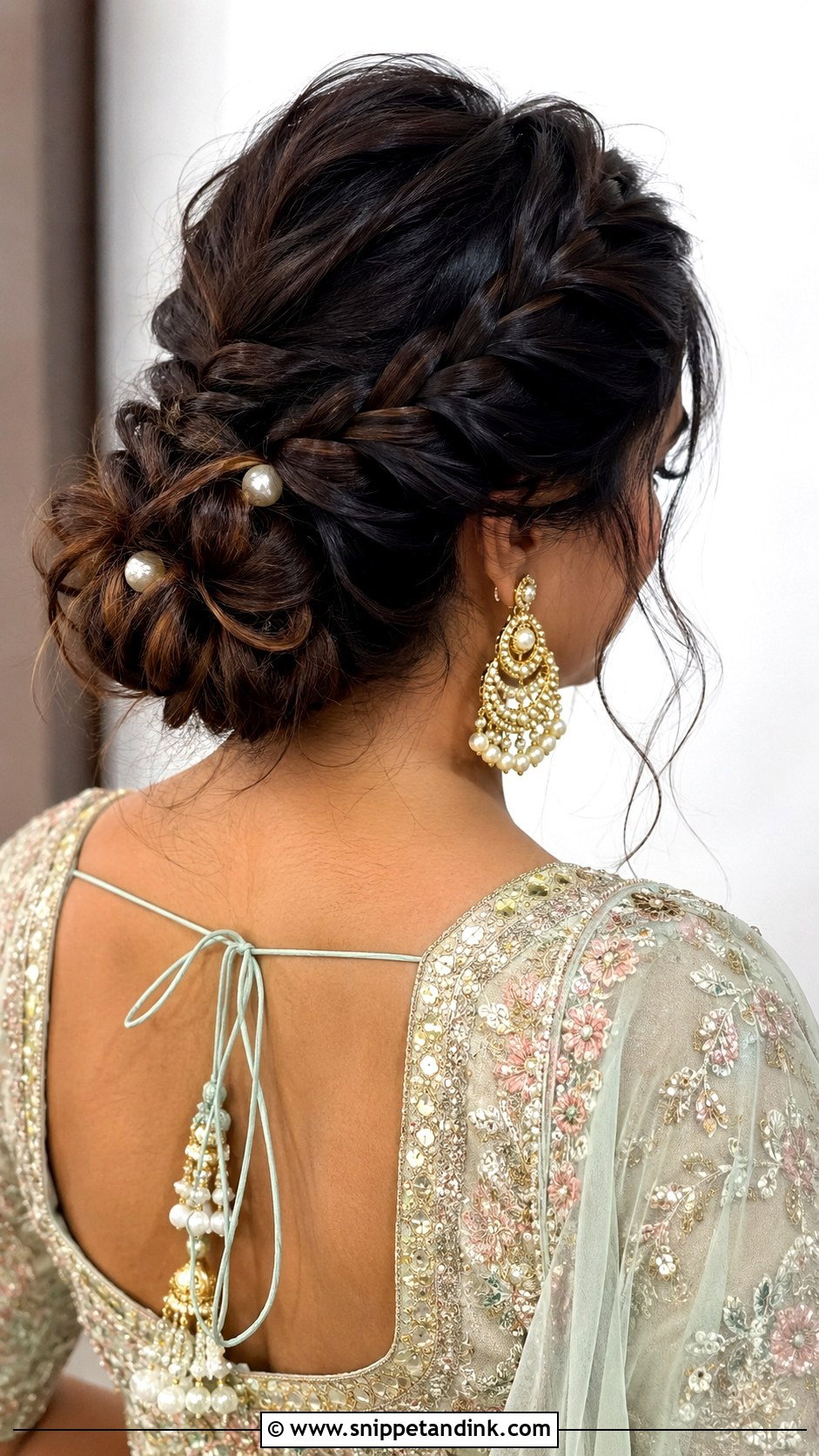
A braid gives a messy bun something structured to lean against. I start a loose three-strand or Dutch braid along one side or across the crown, pull its edges out a little so it looks wider, then coil the remaining length into a textured knot. Against a heavily embroidered lehenga, that bit of detail stops the back of the head looking plain. Pearl pins tucked along the braid hold well because they grip the woven sections. Since it barely shifts, this is the version I suggest for mehendi or haldi functions, where you’ll be dancing and leaning in for hugs all day.
4. Messy Bun With Maang Tikka
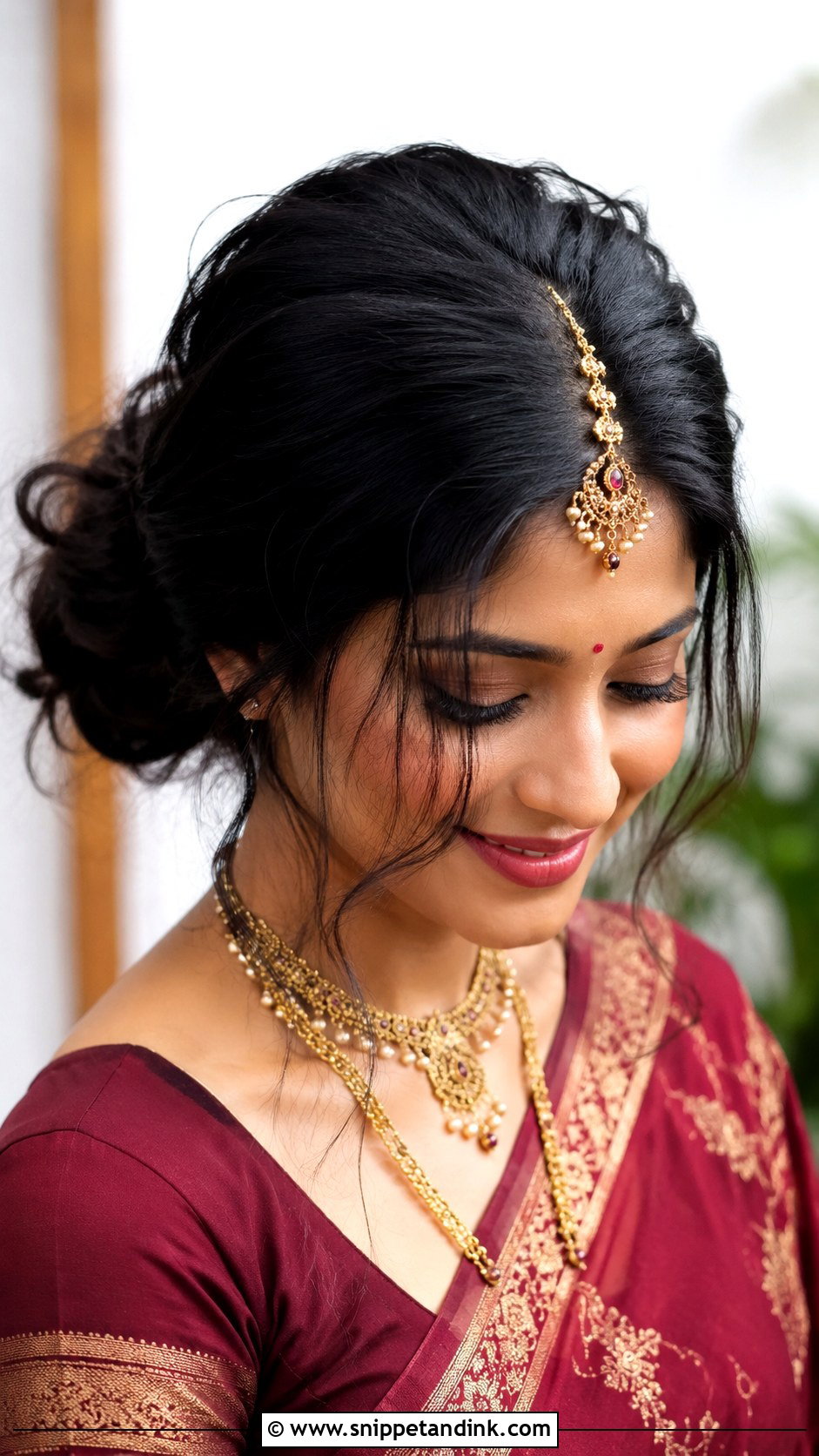
A maang tikka has to go in before the bun is finished, not after. I set the part, pin the tikka chain into a small hidden section at the crown, and only then gather the loose knot behind it, so the chain doesn’t drag the bun forward. Keep the back soft and slightly tousled; a heavily styled bun competes with forehead jewelry. A center part keeps a large tikka sitting straight, while a side part suits a smaller piece or a passa worn on one side.
5. Side Messy Bun
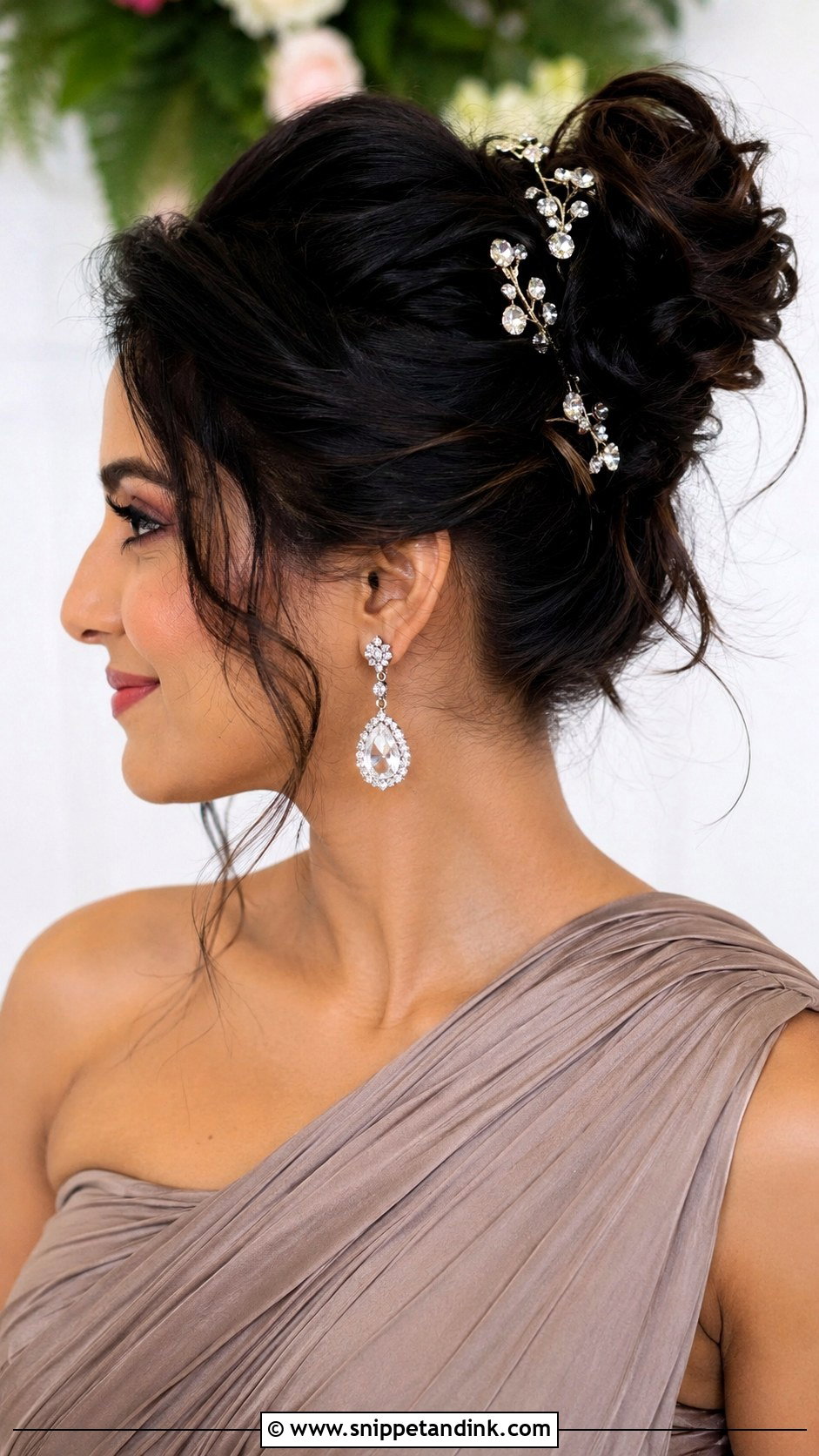
The side bun is the one I adjust most at trials. Sit it right on the shoulder line and a heavy pallu or a dupatta pinned on that side will crush it, so I usually place it just behind the ear instead. With a one-shoulder blouse it leaves the opposite side of the neck bare and clean. The texture stays airy, with one or two pieces escaping near the cheek, and a floral clip or jeweled comb hides the pins where the bun meets the neck. Ask your photographer which side they’ll shoot the varmala from and put the bun on that side.
6. Messy Bun With Roses
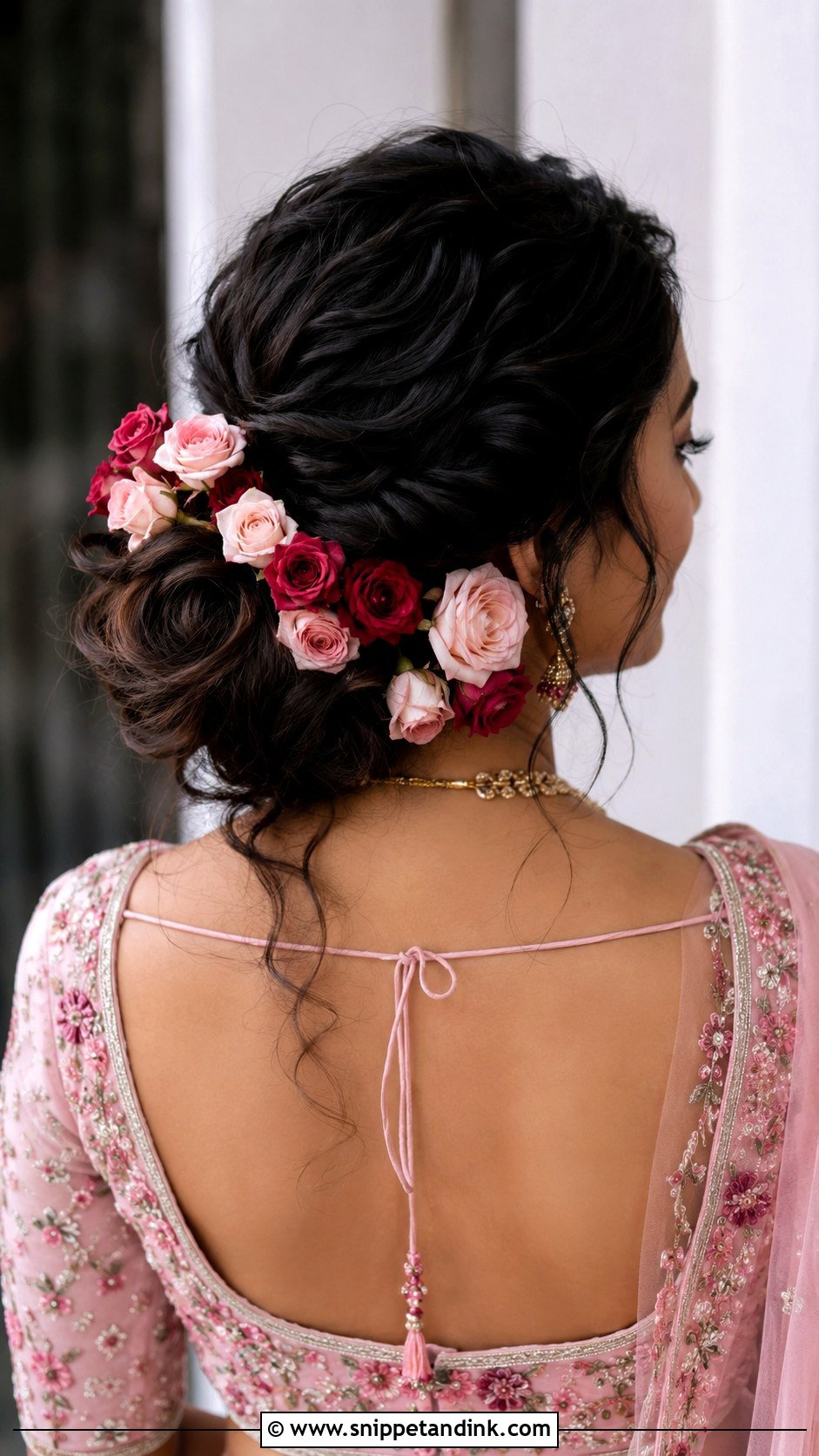
Fully open roses are heavy and bruise easily, so I pin buds or half-open blooms, with the stems cut short and wrapped in florist tape before they go in. Red, blush and white read very differently against dark hair. Blush can disappear in photos if your outfit is blush too, so bring a petal to the trial and hold it against the fabric. The messy texture is why roses work here: the flowers sink into the folds instead of perching on top, and they add bulk to thin hair. Roses wilt fastest in direct sun, so for an outdoor daytime mandap I keep spares in a cool box.
7. Messy Bun With Curtain Bangs
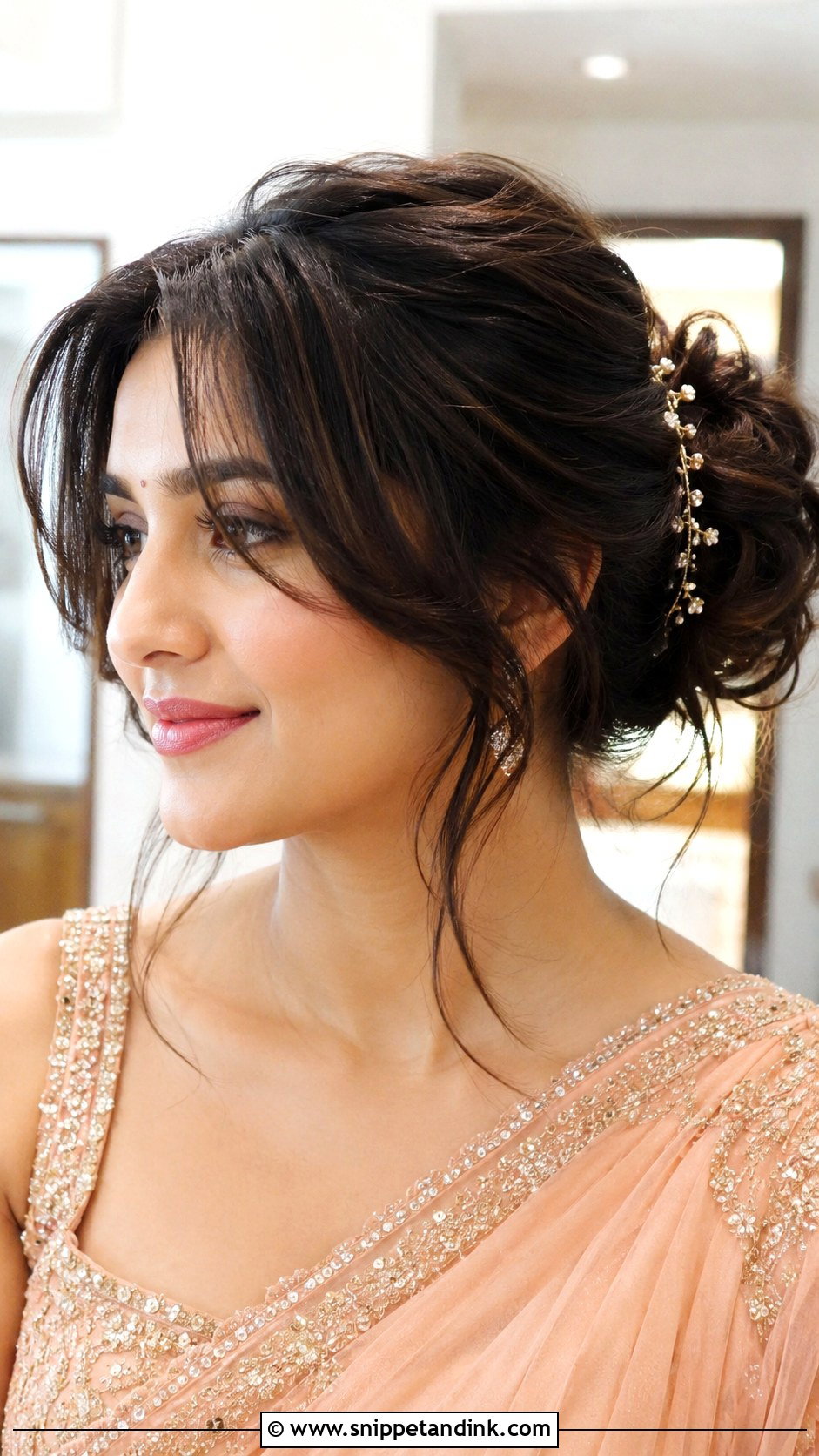
Curtain bangs need to be cut at least two or three weeks before the wedding. Fresh bangs always sit too short and too straight until they’ve grown a little and settled. On the day I blow-dry them over a round brush so they part from the center and fall along the cheekbones, then leave the bun loose at the back. They soften round and oval faces well. The catch is a head dupatta, which pushes bangs flat, so I shape them slightly back and set them with a light spray before the fabric goes on.
8. Twisted Messy Bun
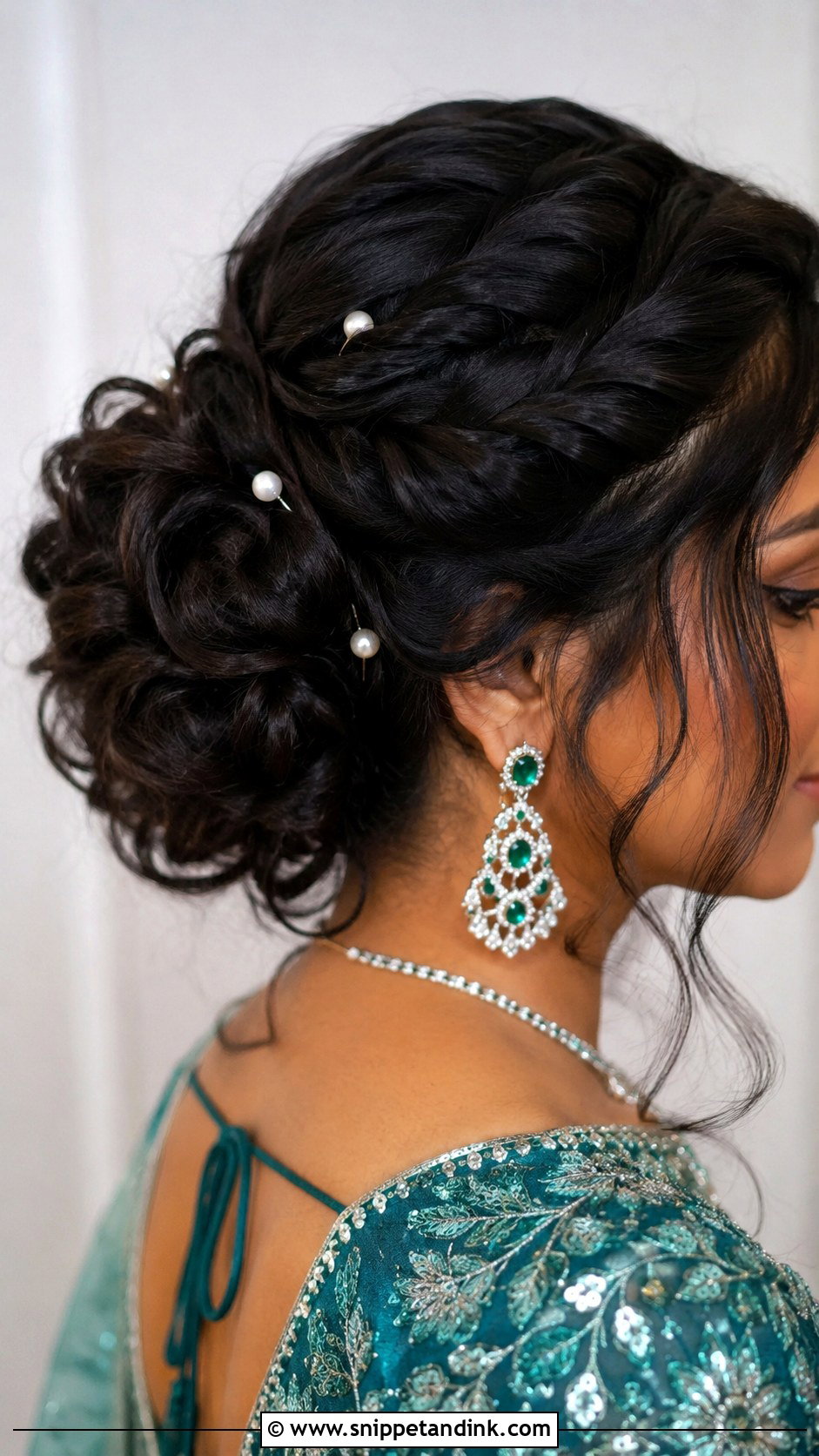
Twists are my fallback for medium-length hair that won’t quite make a full braid. I take two-strand twists from the front, pin each one toward the back and fold the ends into the loose knot. Every twist acts like a small anchor, so this version outlasts a plain messy bun. It looks more involved than it is, which means a cousin can redo a loose twist later in the evening without help. Pearl pins or a thin jeweled band sit neatly along the twist lines for a sangeet or reception.
9. Messy Bun With Baby’s Breath
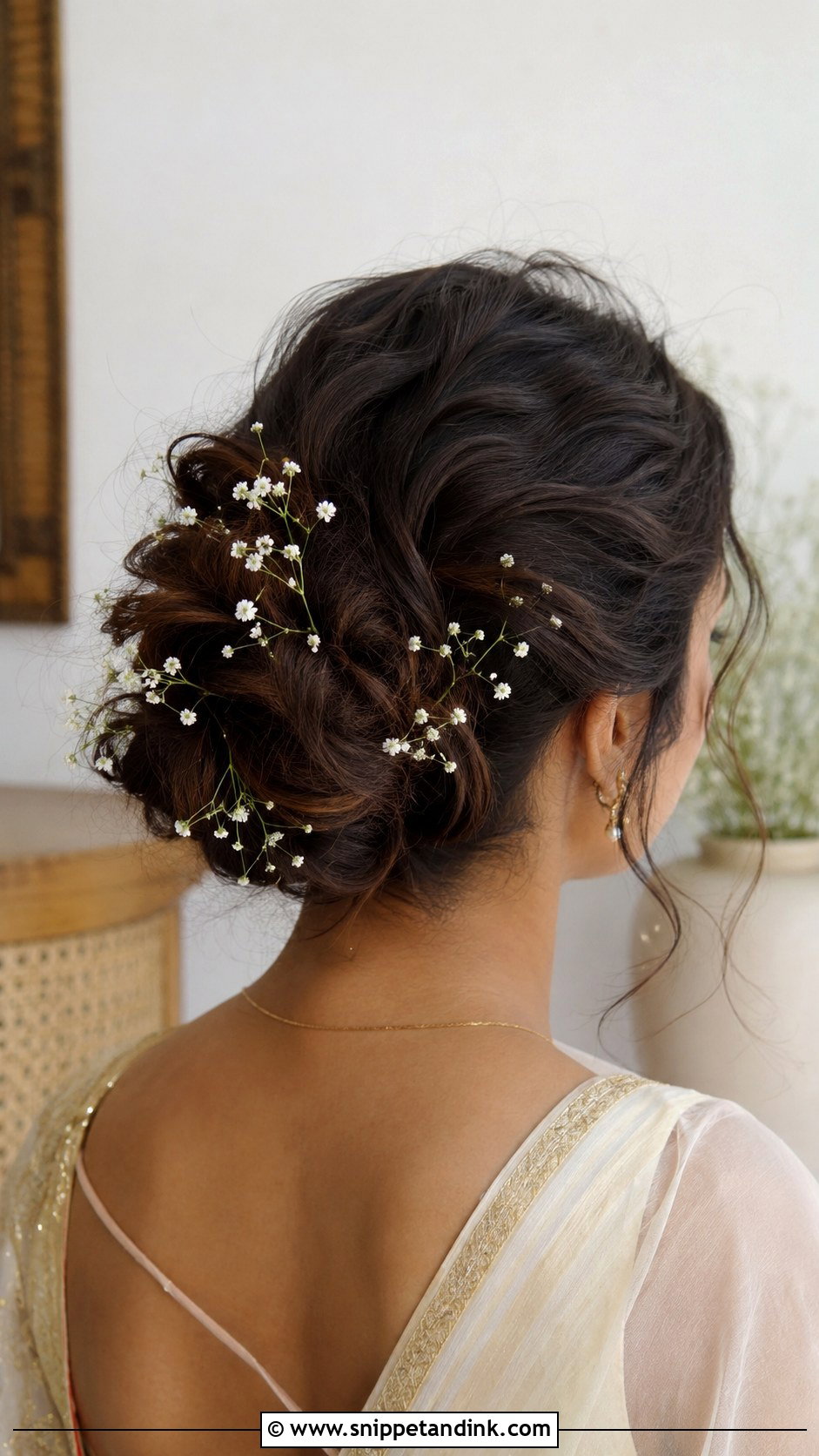
Baby’s breath is what I suggest to brides who want flowers in the hair but find gajra too heavy or too strongly scented. The tiny clusters weigh almost nothing, and I tuck them in as small sprigs throughout the knot rather than one big bunch. With pastel and ivory outfits they read airy and soft; against deep red, they can look like scattered lint in photos, so think about your outfit color first. The sprigs last many hours without water, though they dry out and turn brittle by evening. It’s a sweet fit for daytime events, engagements or a dreamy mehendi function.
10. Messy Bun for Reception
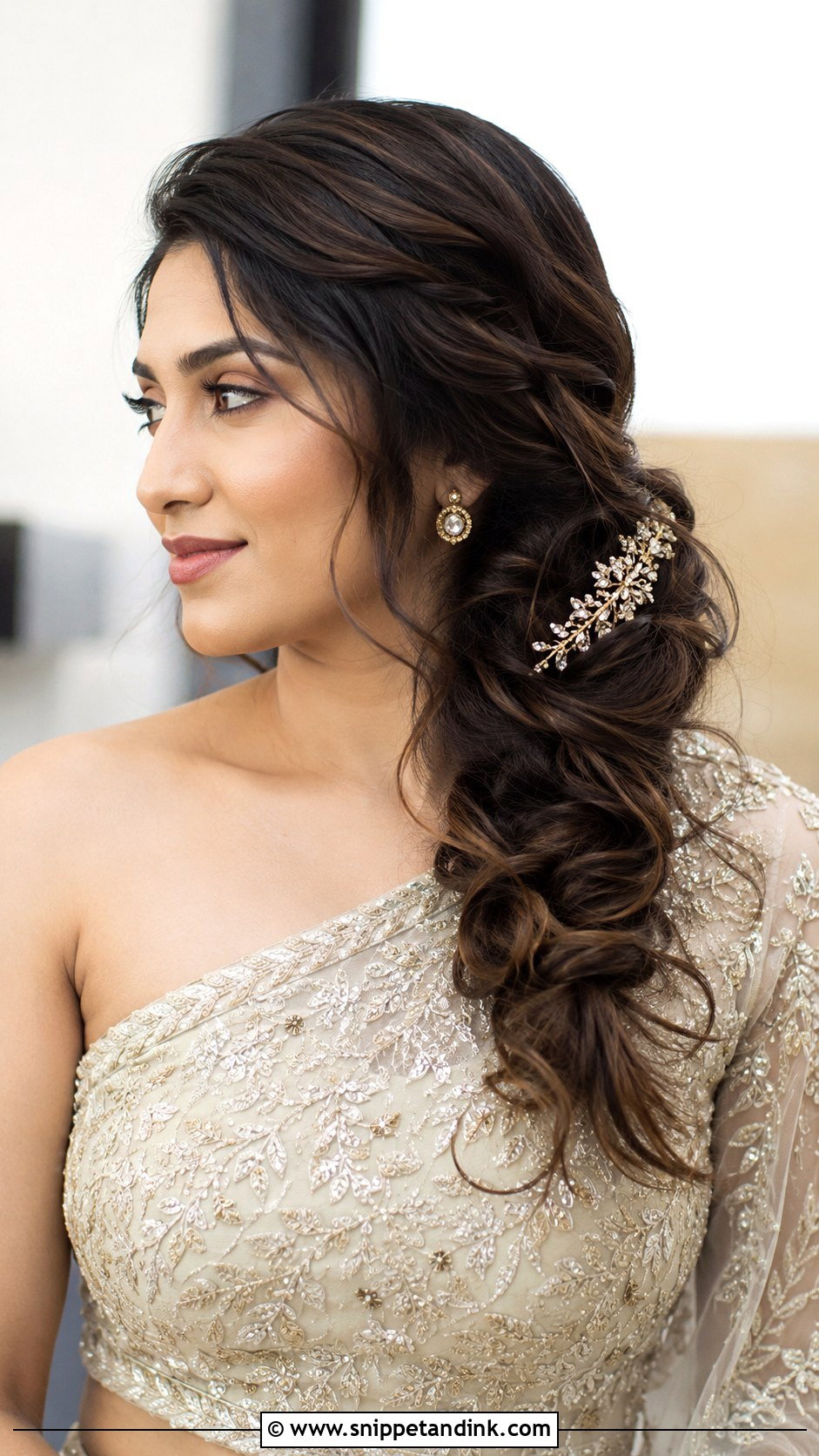
For the reception I usually build more height than for the ceremony, because there’s no dupatta on the head and the crown can finally show. Volume comes from backcombing at the roots and setting it with spray, while the bun underneath stays loose. A sleek center part makes it look modern; side-swept pieces soften it. Statement earrings get their moment with the neck clear. If you’re changing straight from the ceremony bun, keep the base ponytail and rework only the top. Starting from scratch on a tired scalp takes far longer than brides expect.
11. Messy Bun With Hair Extensions
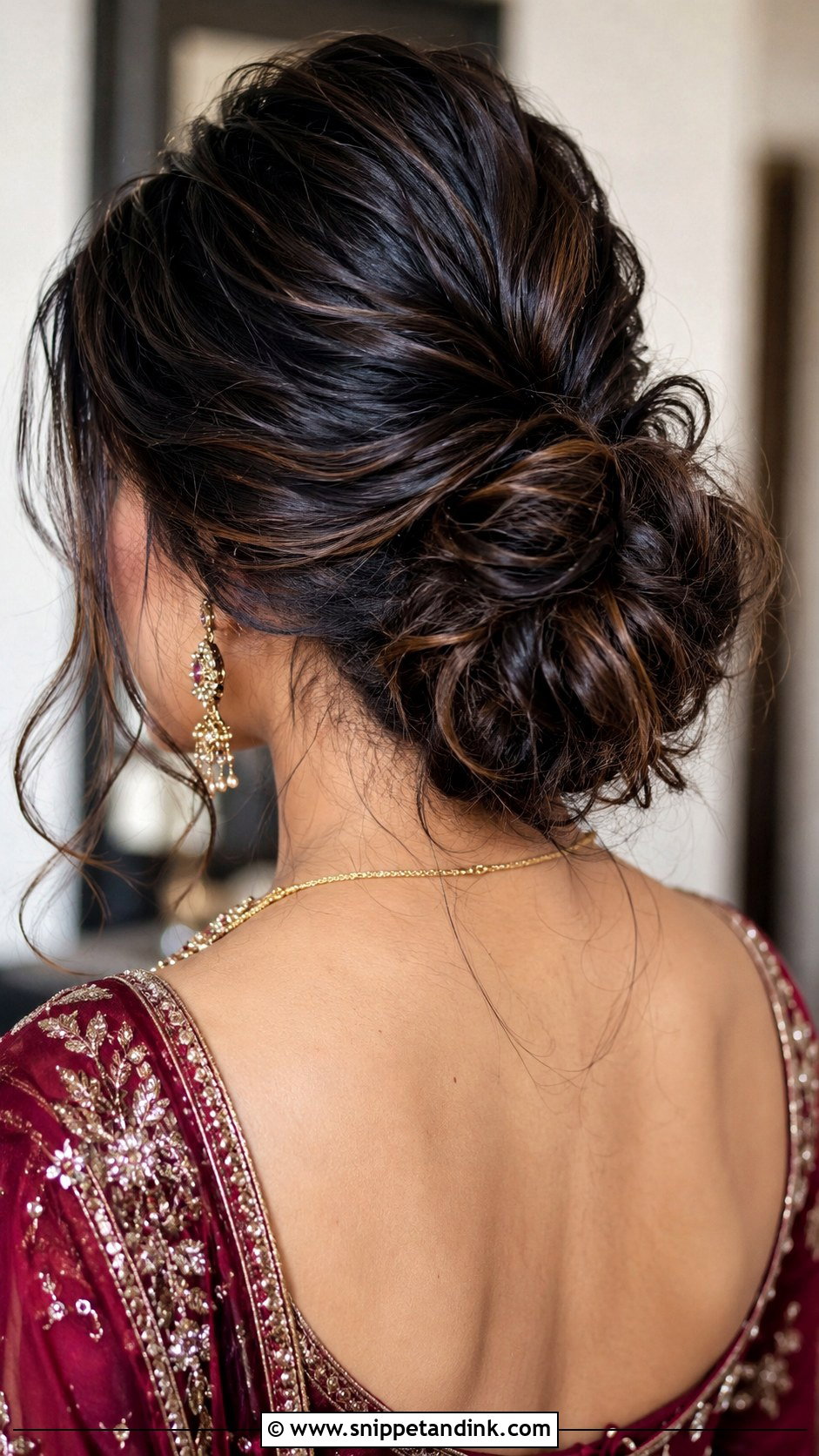
Thin or short hair? Clip-in extensions are how most brides with fine or shoulder-length hair get a full bun. I match them to the color of your ends, not your roots, and clip them in rows below the crown where your own hair covers the tracks, then gather everything into the knot together. Human hair extensions take heat and curl like your own hair, while many synthetic ones can’t handle a hot iron, so check what you’re buying. Color streaks look fun in the mirror but show up much stronger under flash than you’d expect. Extensions add weight, too, so they need a firmer base and more pins.
12. Messy Bun With Saree
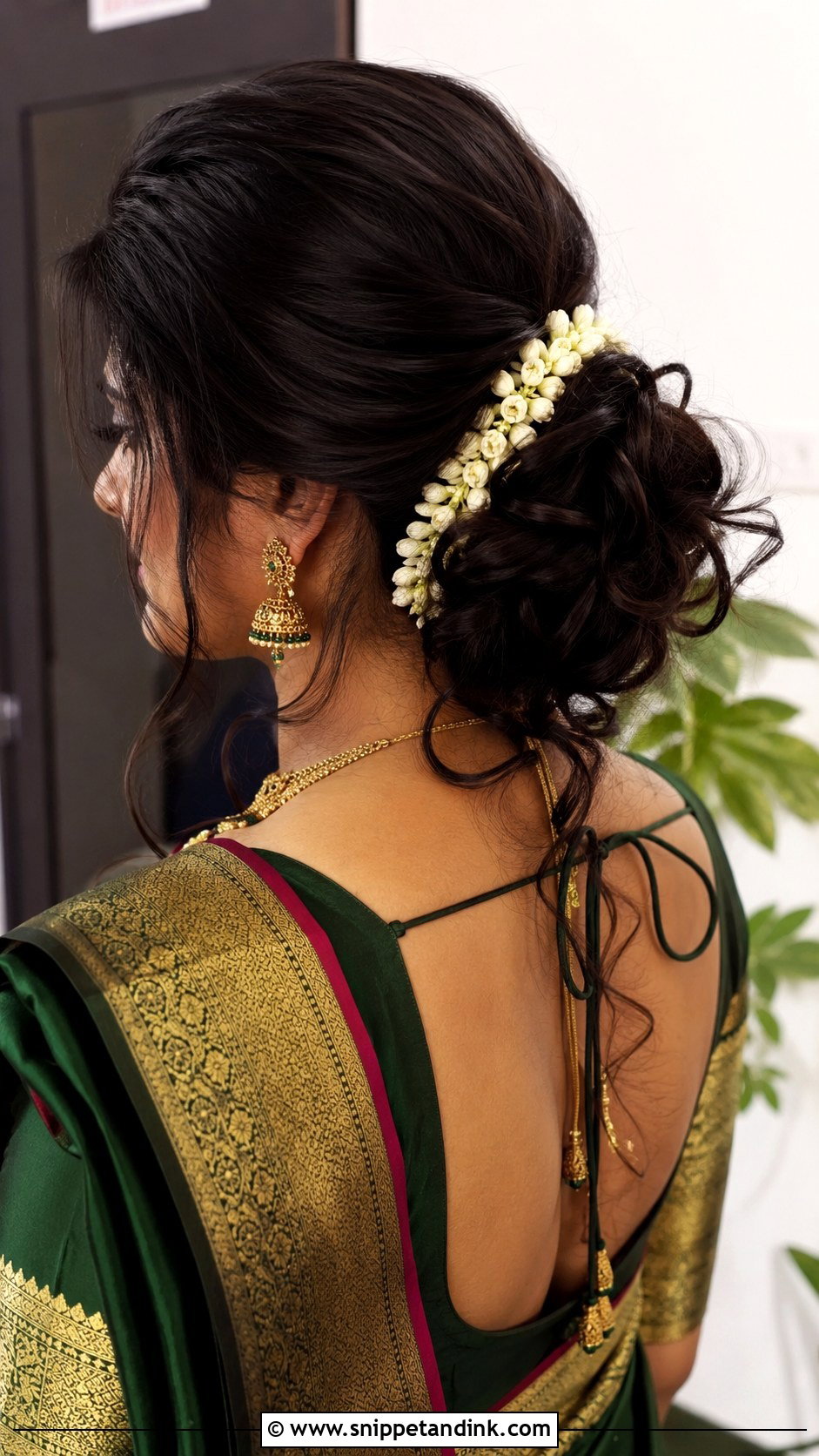
With a saree, the pallu decides the bun height. If the pallu goes over the head for a puja, the bun has to sit low so the silk drapes smoothly; a mid-height knot makes a visible lump under the fabric. With an open pallu at an evening function, I can lift it. I leave a couple of soft strands near the face and add gajra or a jeweled pin. Silk slides on hair, so I mist the back of the bun with texture spray for grip. Comfortable through long functions, it suits a traditional saree without any fuss.
13. Messy Bun With Lehenga
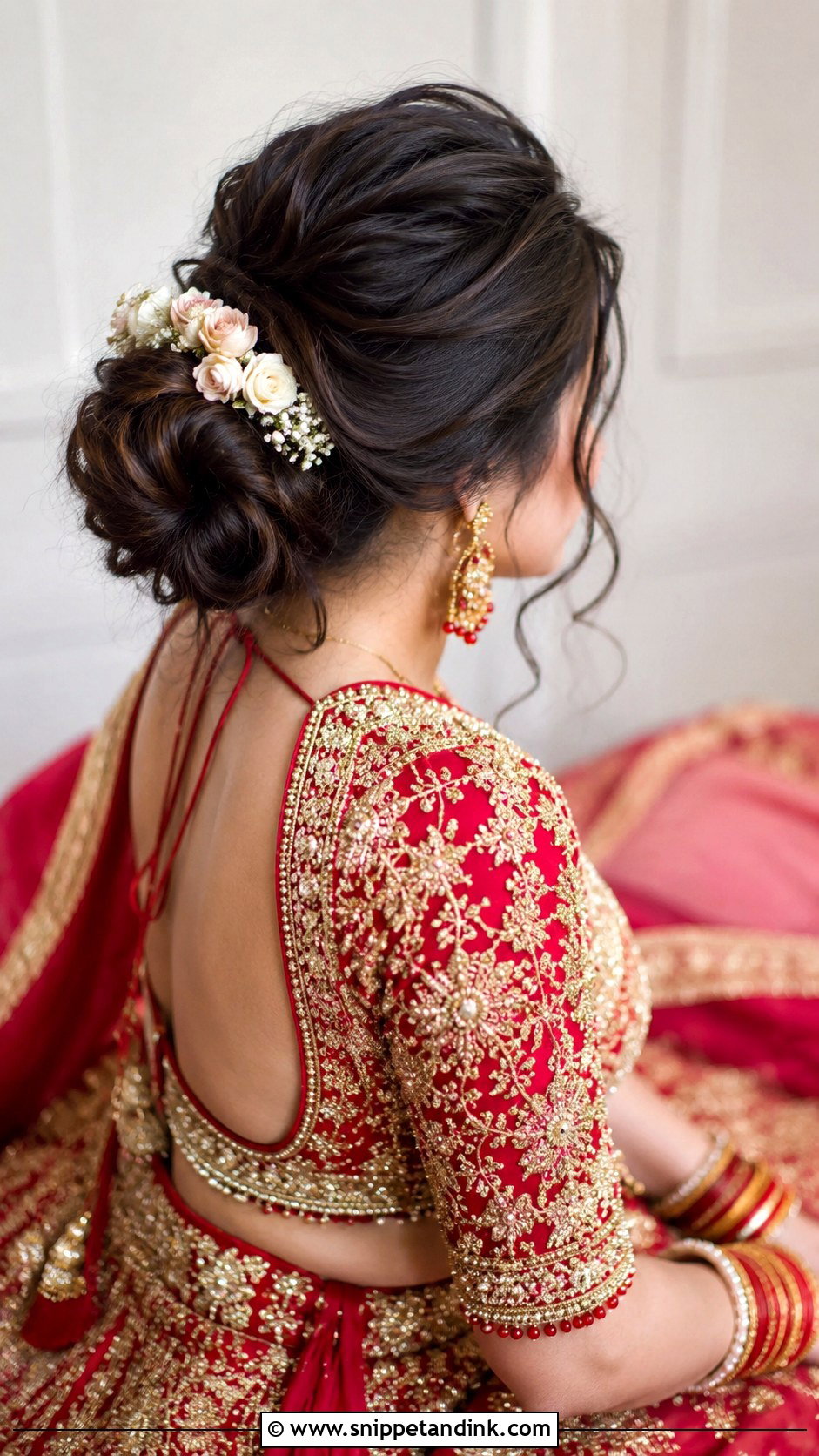
Heavy lehengas need hair with enough volume to balance the skirt, otherwise the head looks small against all that fabric. I build height at the crown and make the bun fuller than I would for a saree. The dupatta is the real puzzle. Many brides wear one over the head, so I place the bun exactly where that dupatta can be pinned into it with U-pins without sliding back. Flowers and the maang tikka go in only after we’ve tested the dupatta. Set up that way, the bun holds through the pheras and the dancing afterward.
14. Floral Messy Bun
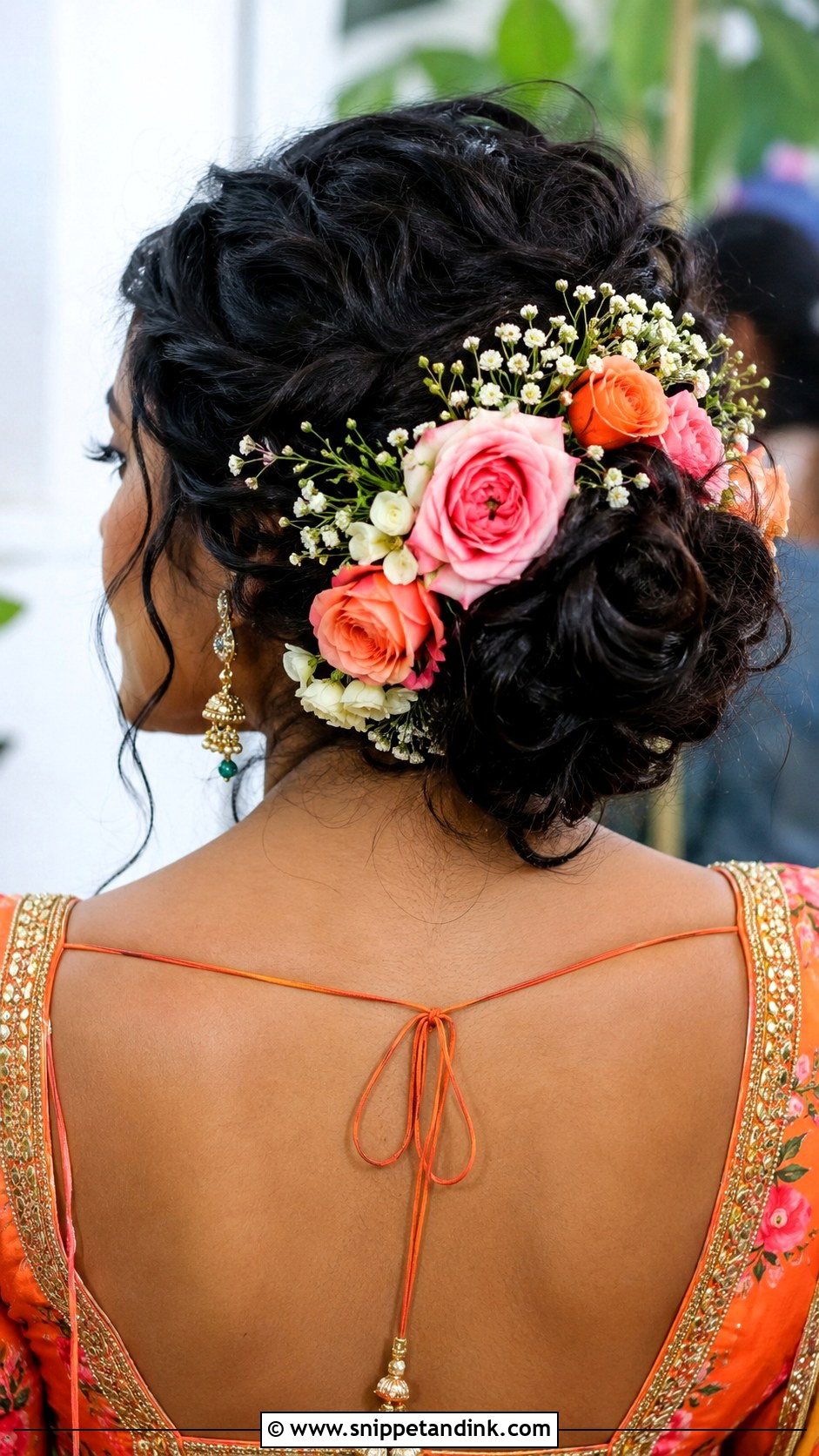
Why pick one flower when you can use many? Mixing them is where I get careful about weight. Roses are heavy, jasmine sits in the middle, and fillers like baby’s breath are light, so the heavy blooms go low where the bun is anchored and the light ones scatter higher up. Match one flower to your outfit and keep the rest neutral; four colors at once starts to look like a bouquet stuck to the back of your head. In daylight at an outdoor wedding it looks fresh and full, but it does need a florist who can deliver early enough for pinning.
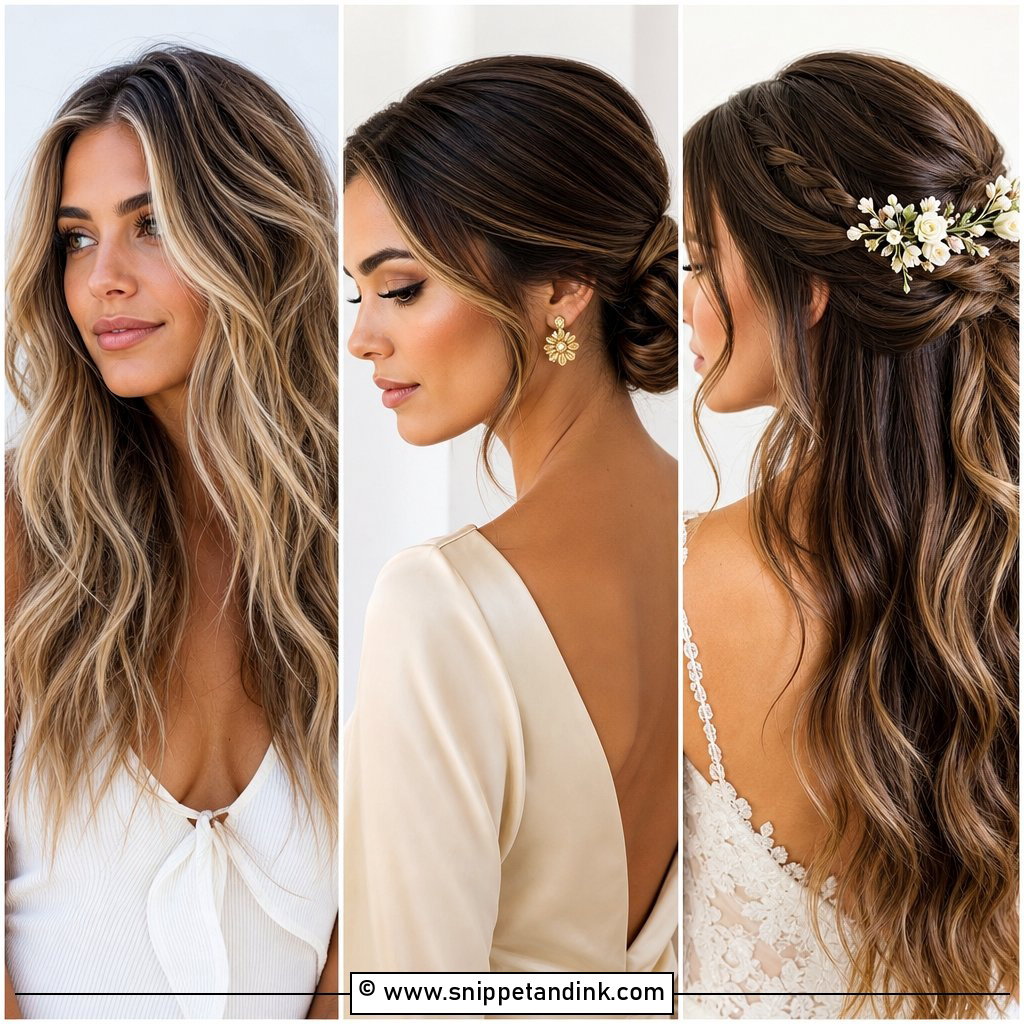
15. Messy Bun With Pearls
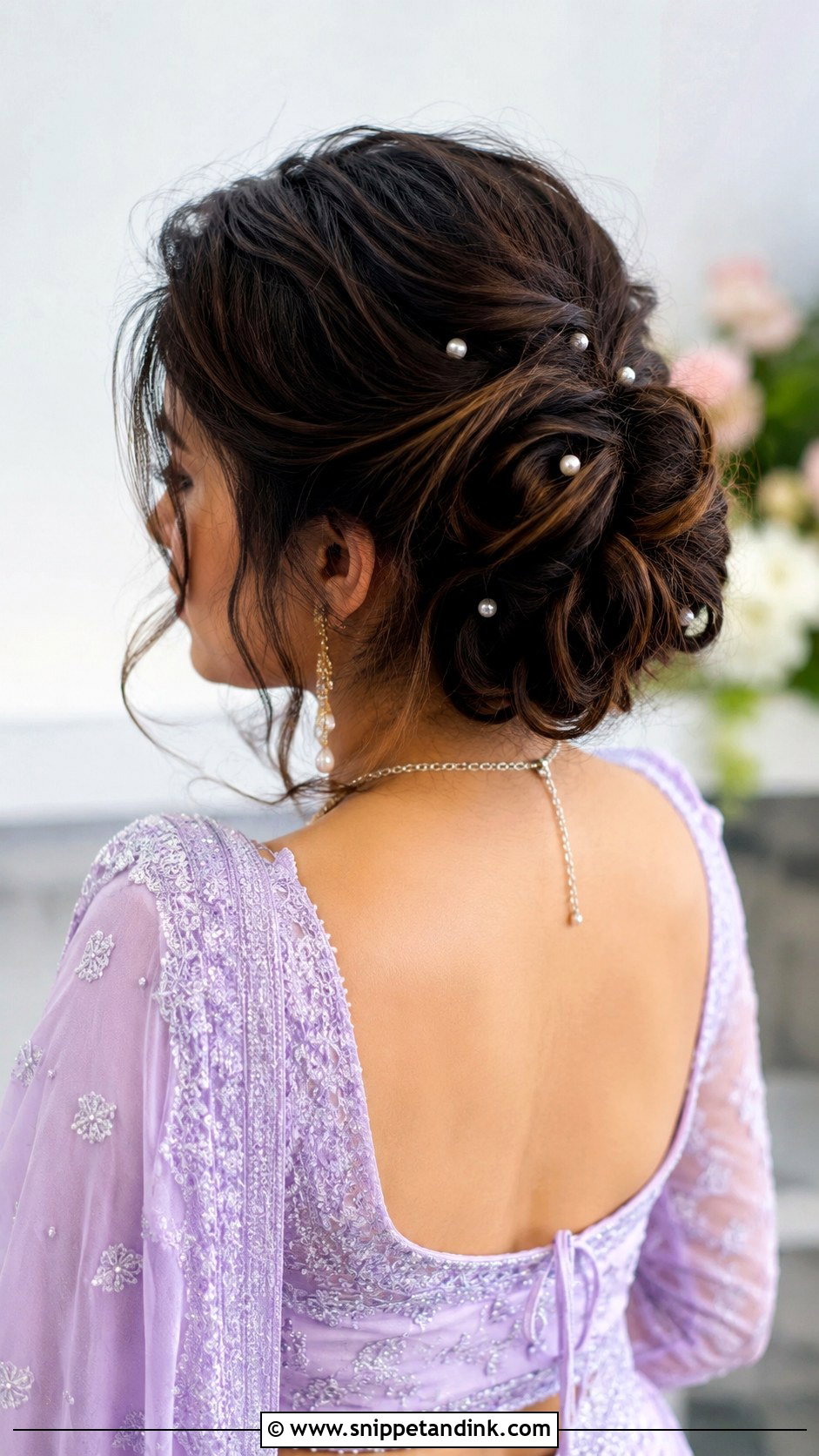
Pearl pins suit brides who want a little shine without flowers. I space them unevenly, a few clustered together and a few alone, because evenly spaced pearls look like a grid from behind. Pins with a U-shaped stem grip a loose bun better than straight ones. They sit quietly with pastel lehengas and pearl sets at an engagement or reception. On very fine hair, pearl pins slide out after a few hours, so I anchor each one through a crossed bobby pin hidden underneath.
16. Messy Bun With Veil
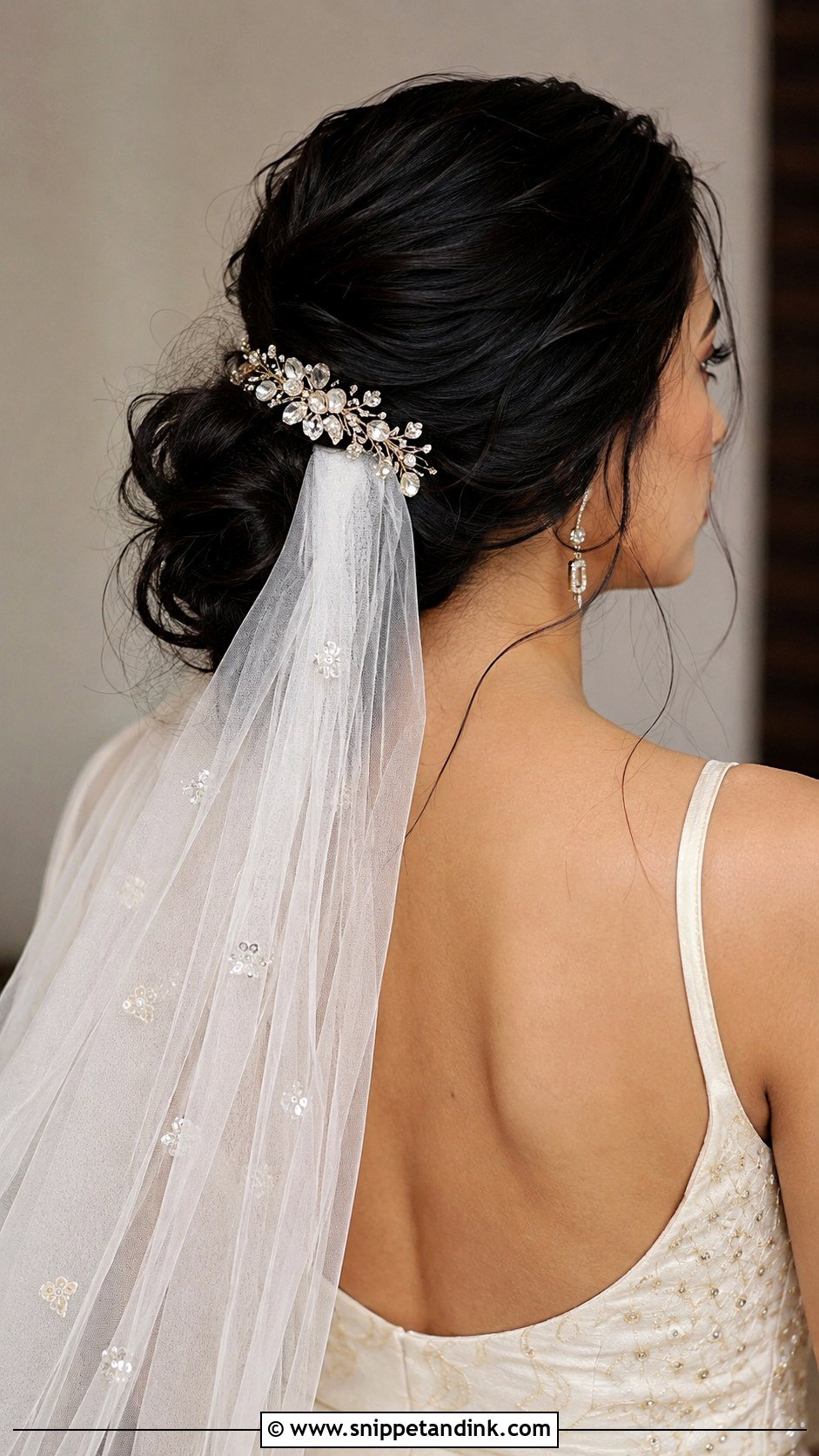
A veil brings weight and pull, especially a long one. I secure the bun low or at mid-height and slide the veil comb in just above it, angled into the anchor ponytail rather than the loose texture. If the comb only grips the messy part, the veil slowly drags the bun down. I see this combination most at Christian-Indian fusion weddings. Once the veil comes out for the reception, the bun stays intact, and a jeweled comb can fill the gap where the veil sat.
17. Messy Bun for Mehendi
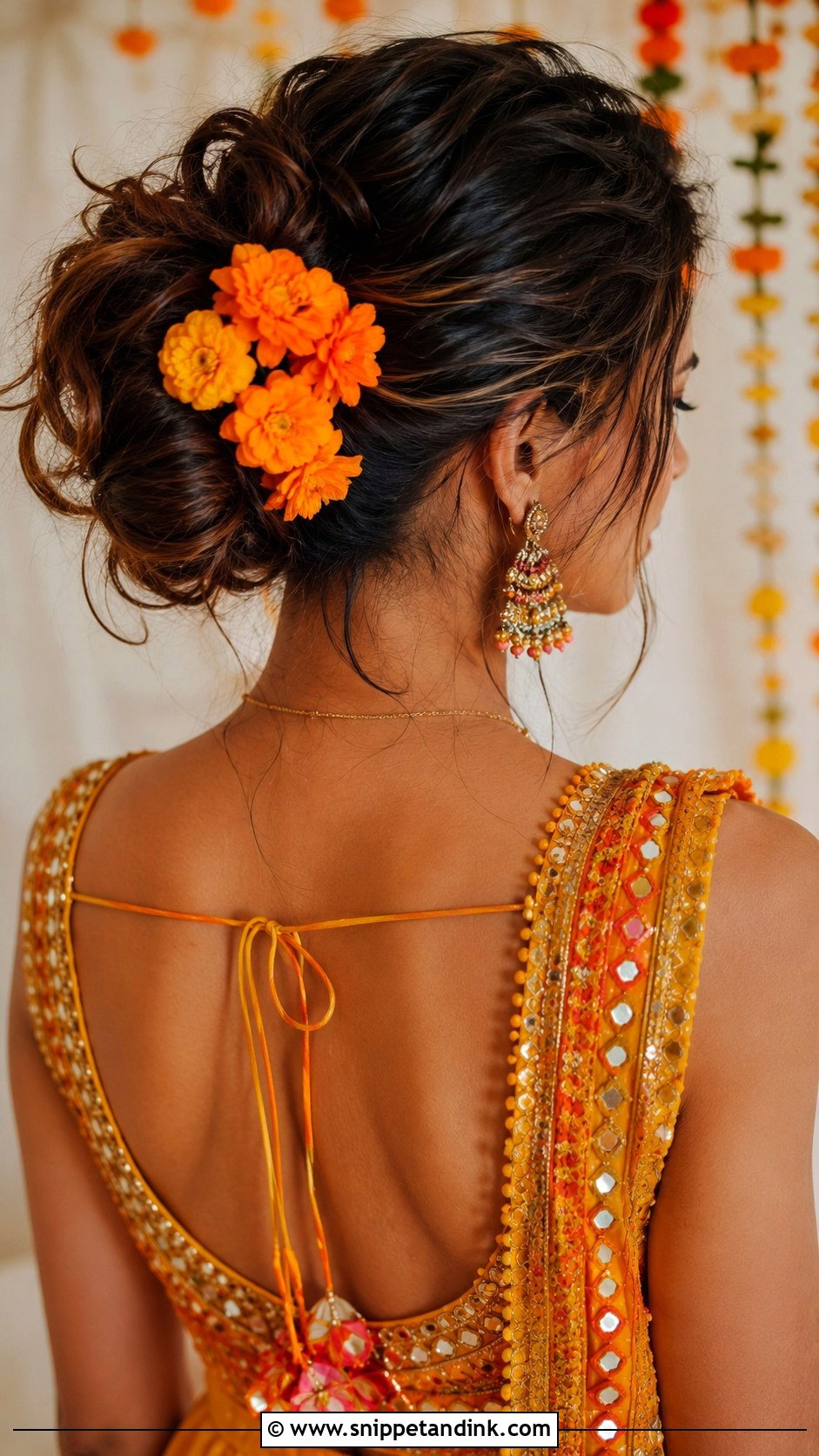
At a mehendi you sit still for hours with both hands covered in wet paste, so you can’t fix your own hair. That’s why this bun is more secure than it looks, with every pin hidden underneath. It keeps hair off the neck and away from the drying henna. Marigolds or bright blooms suit the mood, but I’d skip anything that sheds petals onto your hands. Mirror-work or floral jewelry and yellow or orange flowers match the energy of your pre-wedding henna day.
18. Messy Bun With Center Part
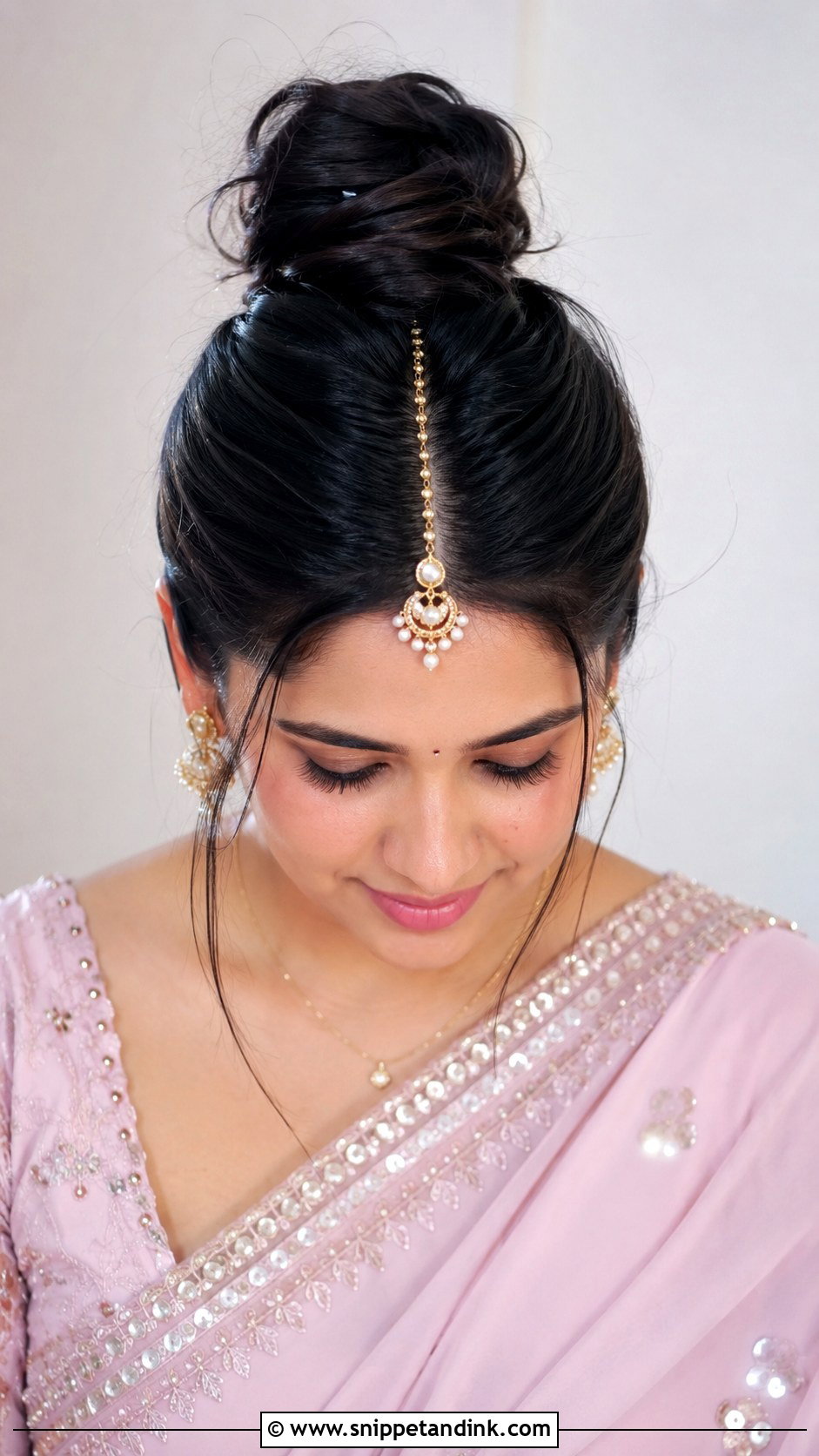
A center part shows every asymmetry in the face and hairline, so I always check where your hair naturally falls first. A strong cowlick sometimes means shifting the part a few millimeters. I smooth the front sections with a little cream and let the bun at the back stay soft. It frames oval and heart-shaped faces evenly and carries a maang tikka straight down the part. Expect the front to need one quick touch-up with a comb and spray around midday.
19. Messy Bun With Puff
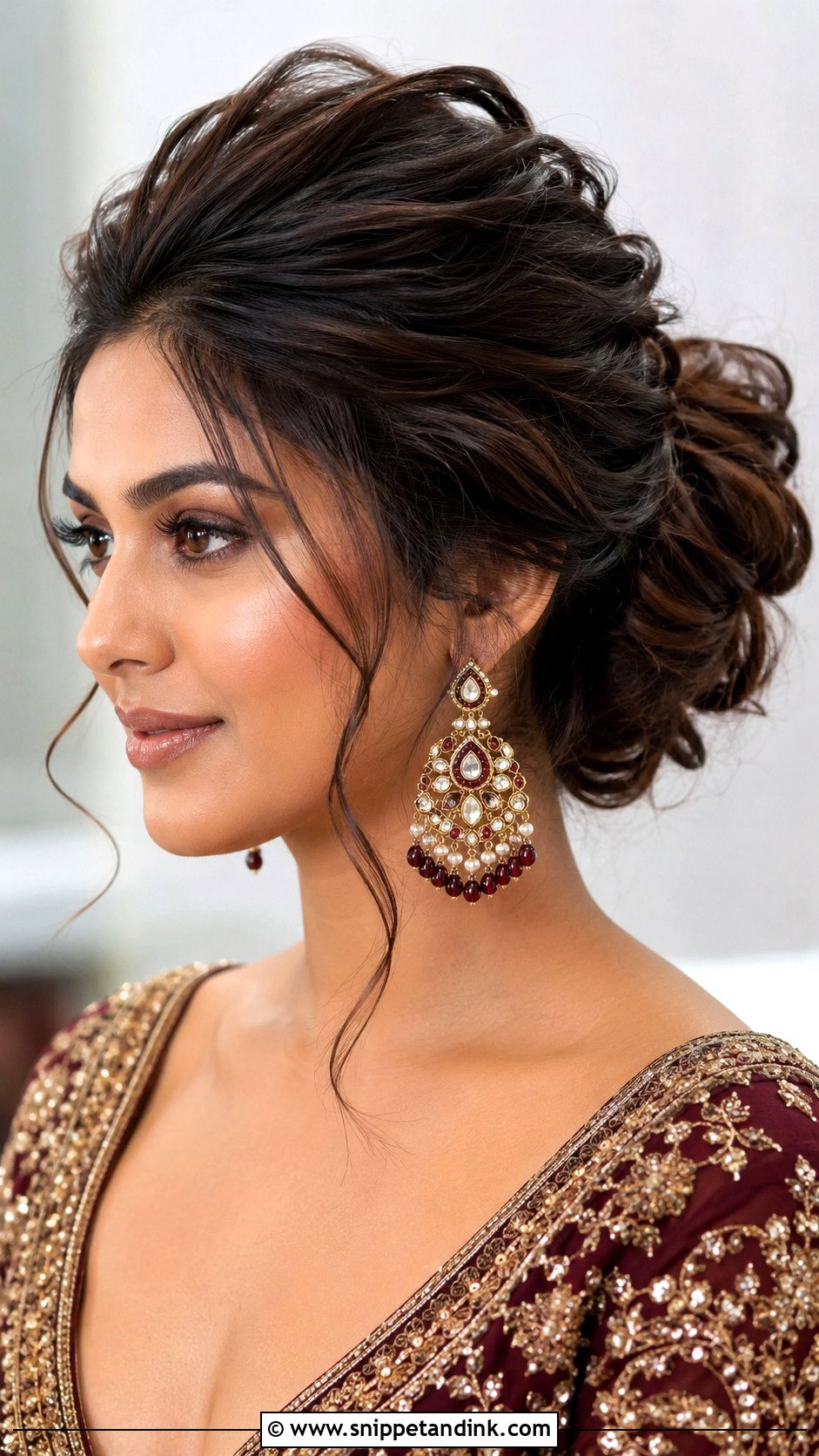
A puff adds height and lengthens the face, which is why so many brides ask for one. I backcomb the front section at the roots, smooth the top layer over it and pin it, then gather the bun behind. The usual mistake is making it too tall: under a head dupatta, a big puff pushes the fabric up so it sits like a tent. I keep it modest for the ceremony and raise it for the reception. Paired with a maang tikka and statement earrings, it has the regal shape brides want with heavy lehengas.
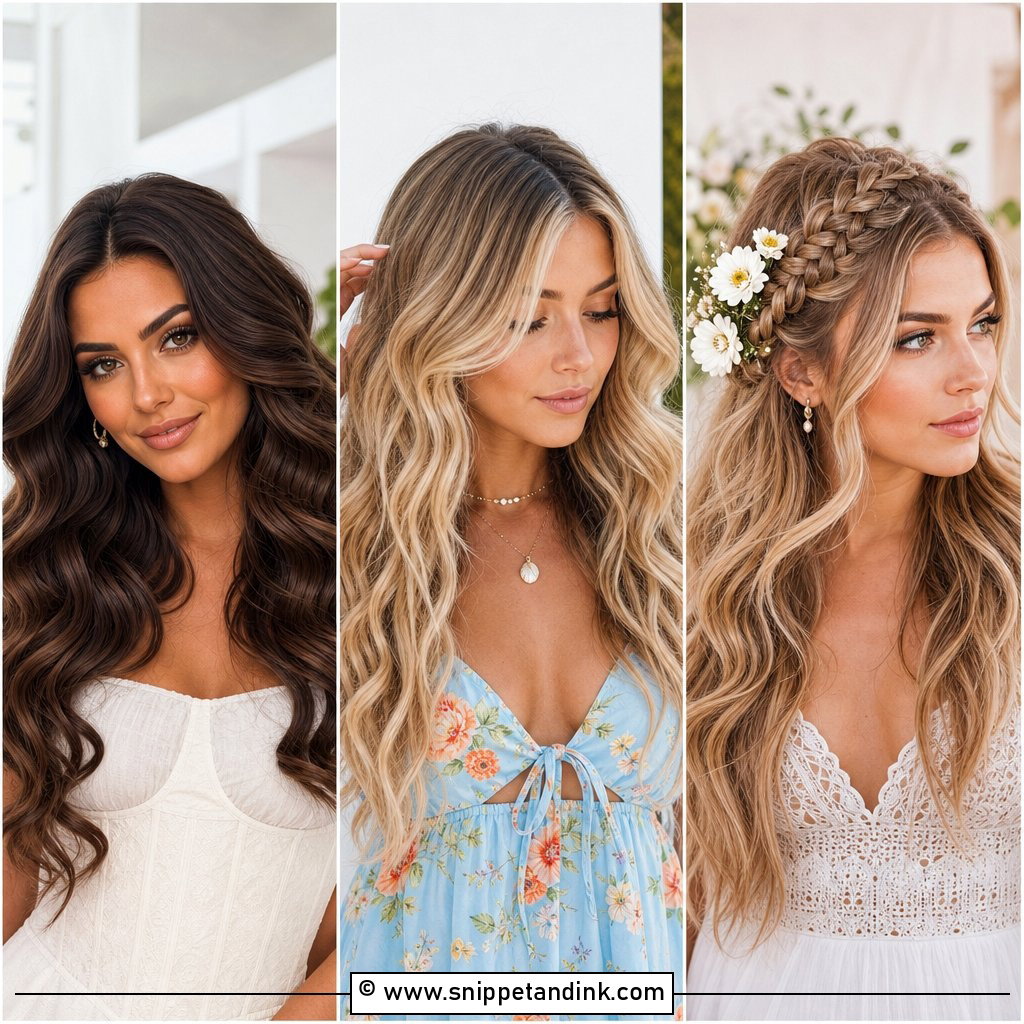
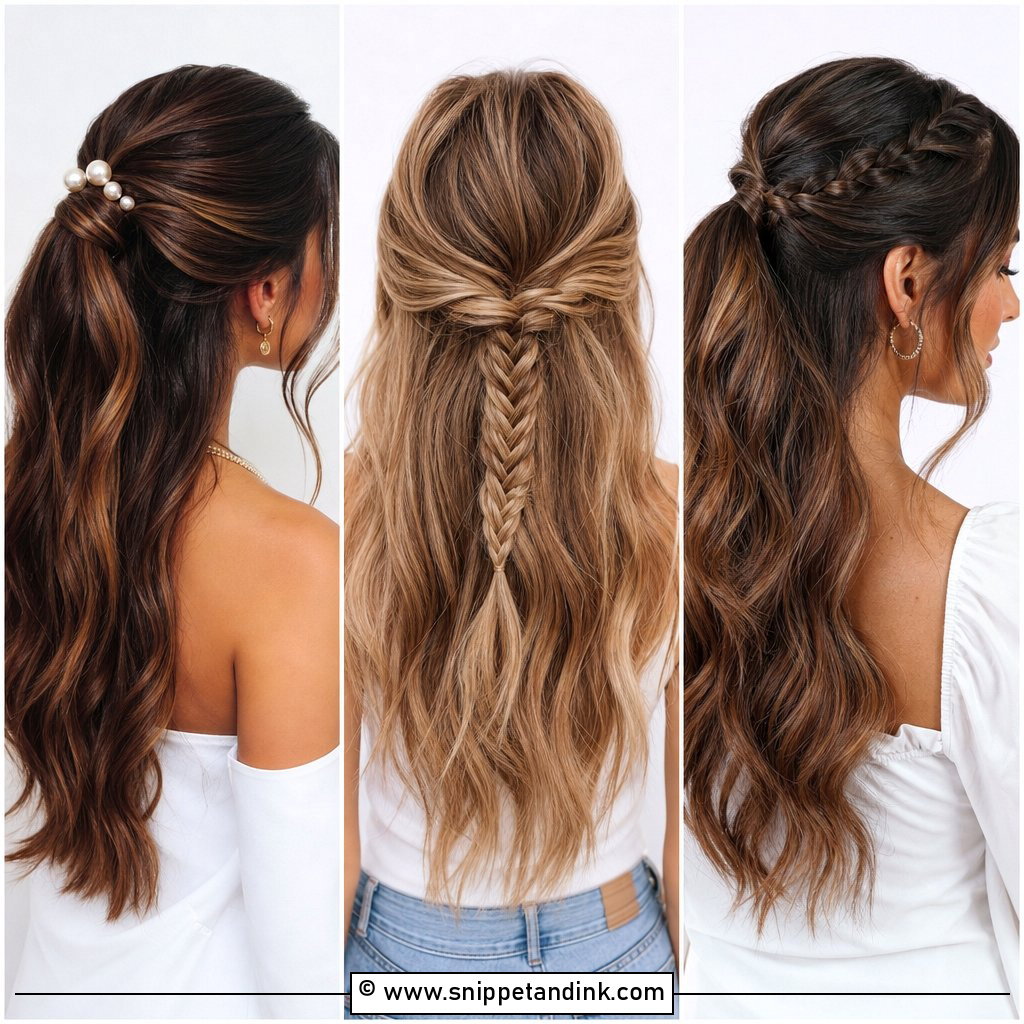
20. Messy Bun With Hair Accessories
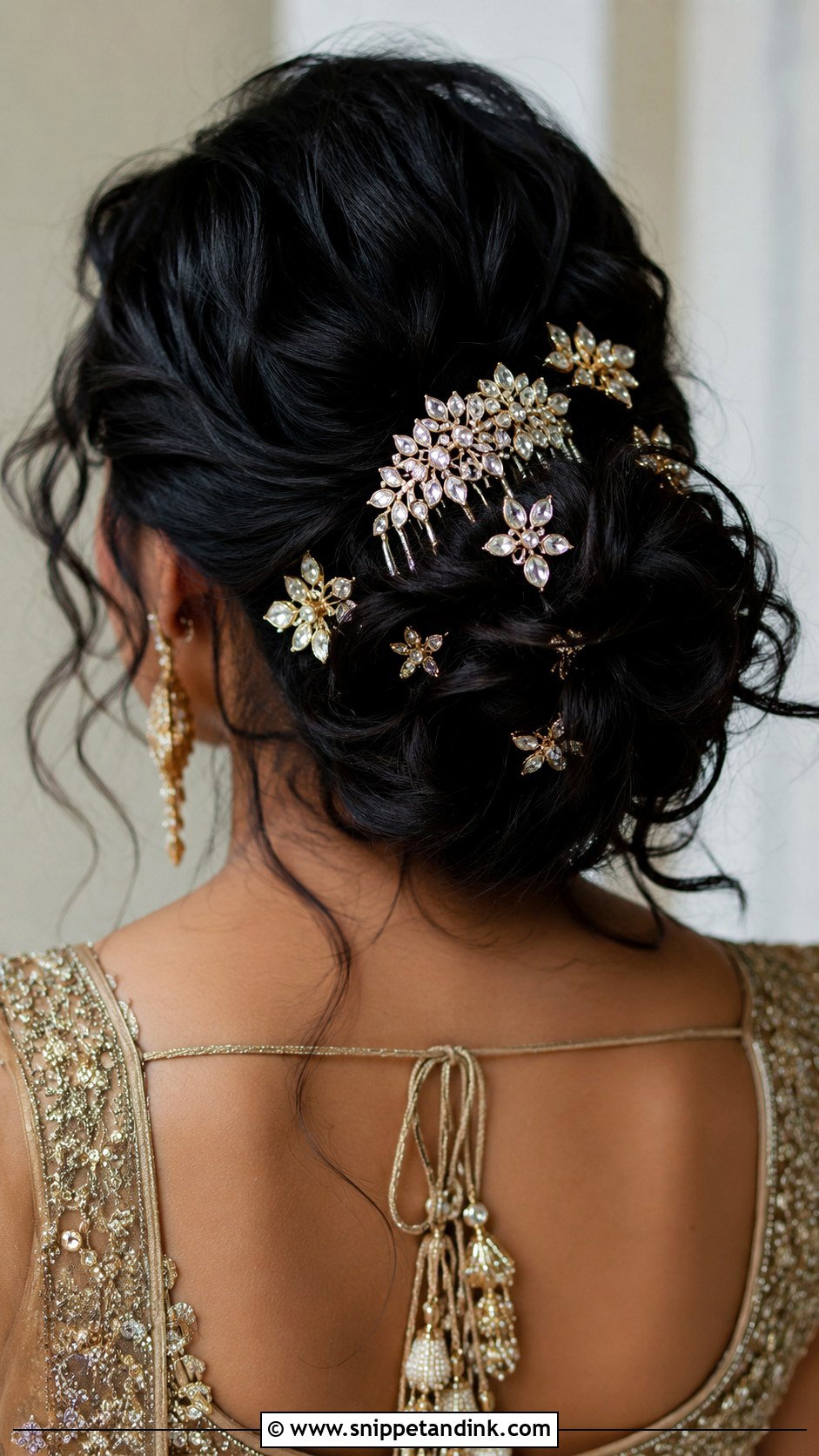
Hair jewelry changes a plain bun completely, as long as you limit yourself to one or two types. Kundan combs, crystal pins or a gold hairband each work; all three together look busy. Accessories go in after the bun is finished and only into its densest sections, otherwise they sag by the second hour. I push combs in against the direction of growth so the teeth lock. Bring every piece to your trial, plus spares, because some jewelry looks small in the box and heavy once it’s in.
21. Messy Bun With Loose Curls
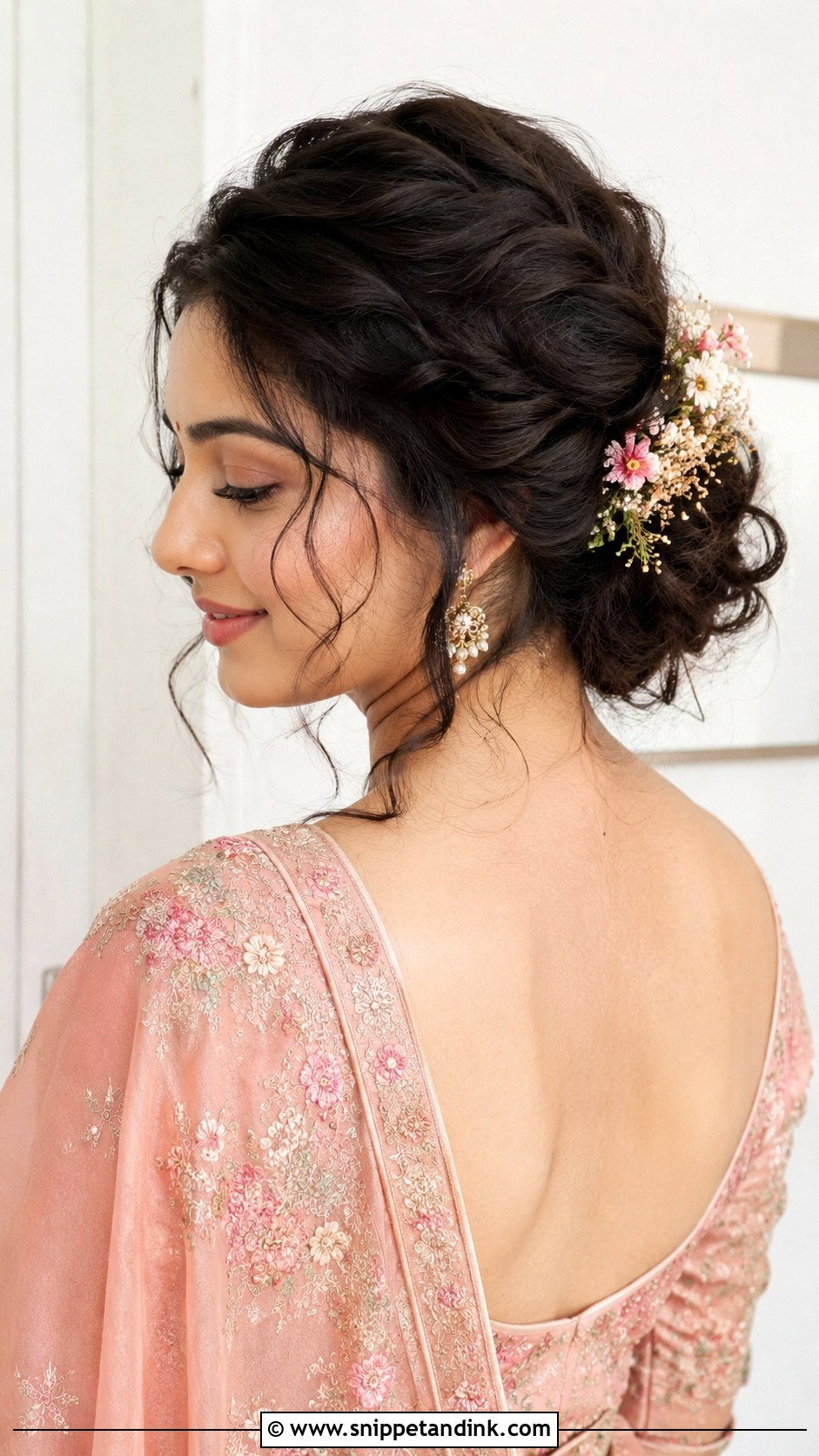
For curls around a bun, I curl the front sections and a few strands with a medium barrel iron, pin each curl up while it cools, and only release them once everything else is done. Curls touched while still hot drop within the hour. The bun itself stays textured. Wavy hair holds this best; straight, silky hair loses curl fastest, especially in humid weather. For a monsoon wedding I set the curls with a stronger spray and accept that they’ll relax into waves by evening.
22. Messy Bun With Backless Blouse
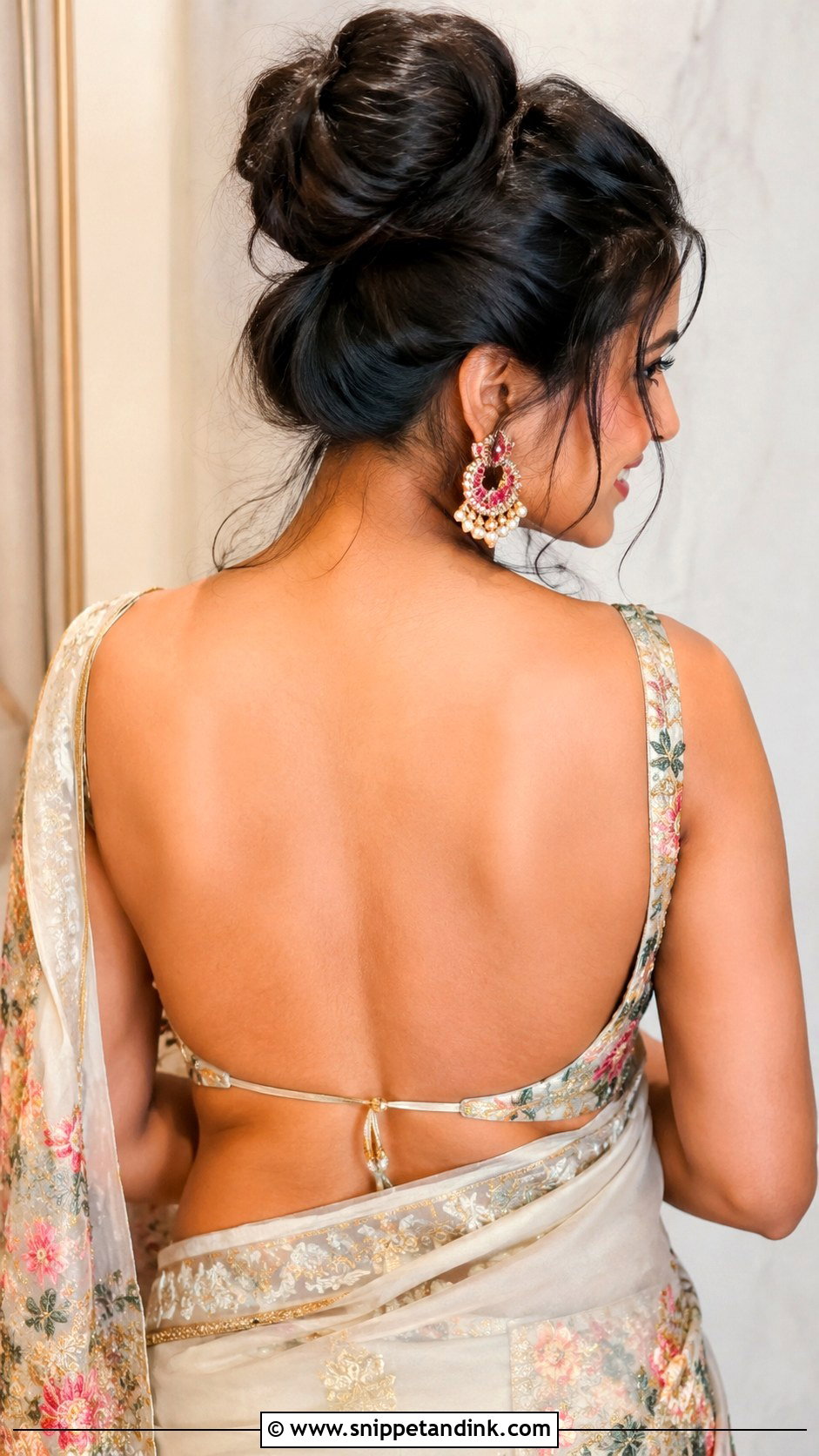
A backless blouse is where bun height really matters. Too low and the knot hides the back neckline, so I set it mid or high to leave clear skin between the nape and the blouse. I also check what’s hanging: loose strands and a dupatta both cover the back, so the dupatta should be draped from the front. Statement earrings work well with this. Keep the underside of the bun tidy, because with the back on show, every visible pin ends up in the photos.
23. Messy Bun With Gold Leaves
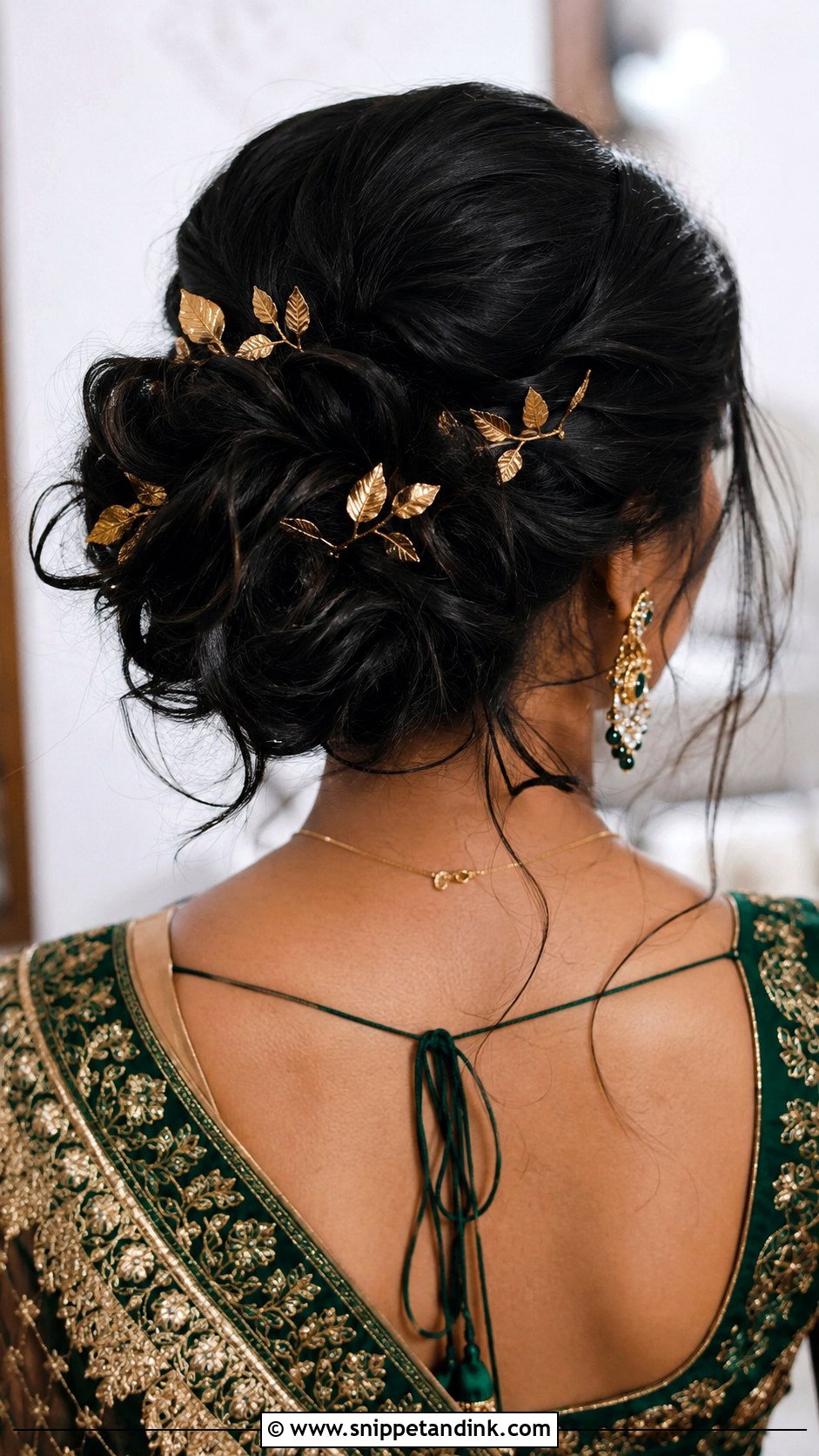
Gold leaf pins give a bun shine without the scent or wilting of fresh flowers. I place them along the curve of the knot so they follow it like a vine instead of sticking straight out. Against dark hair, gold catches the light strongly. They suit gold jewelry and deep-toned outfits; with silver or rose gold jewelry, I’d choose a matching metal so the tones don’t fight. Since nothing droops, they’re a sensible pick for long evening functions.
24. Messy Bun for Sangeet
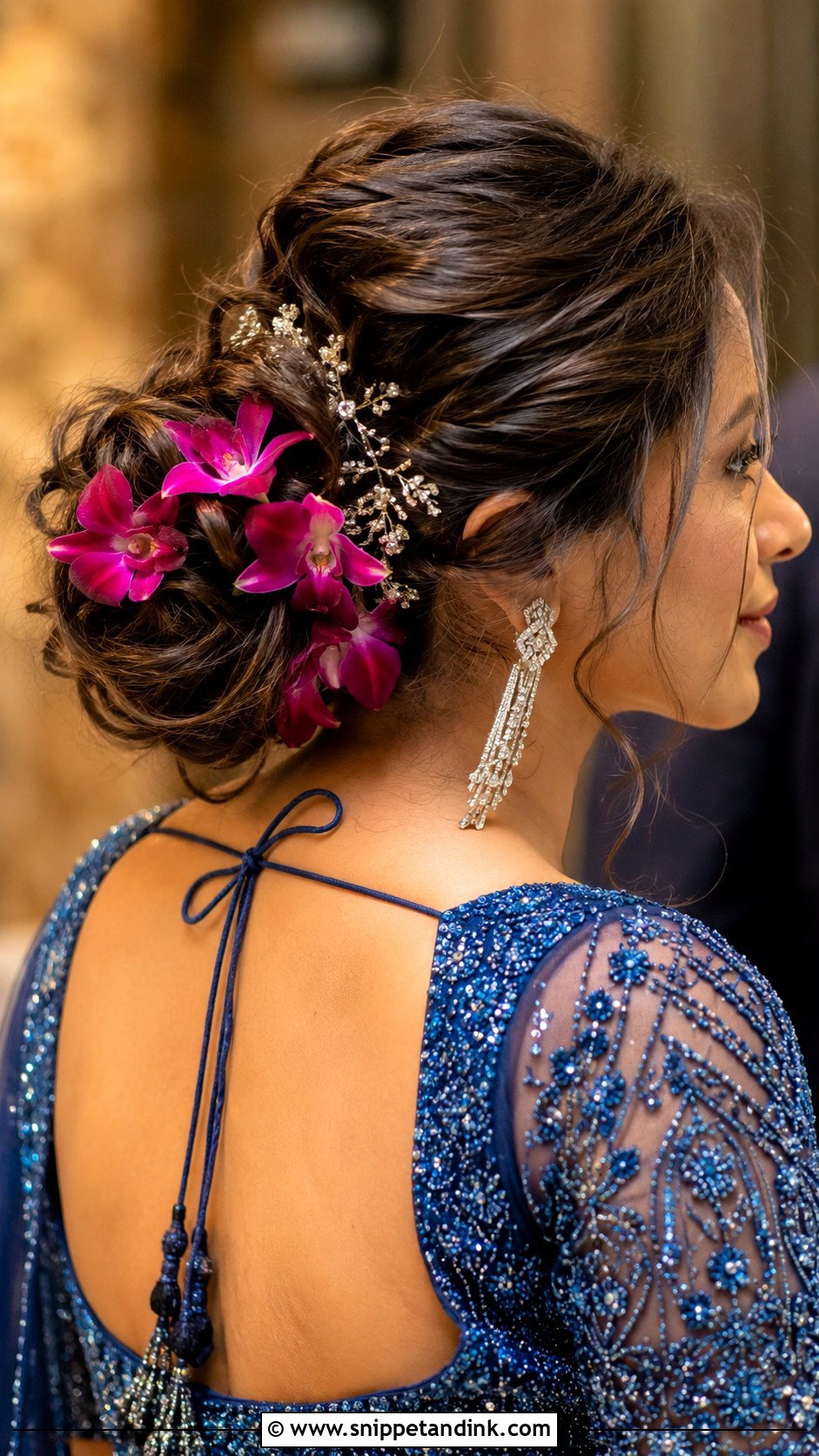
Sangeet night is all about dancing, so your hair needs to move with you. I build this bun around a firm elastic ponytail and lock it with crossed bobby pins, then pull texture out on top. Spins and choreographed numbers shake loose anything pinned only into loose hair. Sparkly pins or bright flowers match the festive mood. The undone texture also hides any shifting, so if a section falls during a performance, it still reads as intentional.
25. Messy Bun With Jasmine Crown
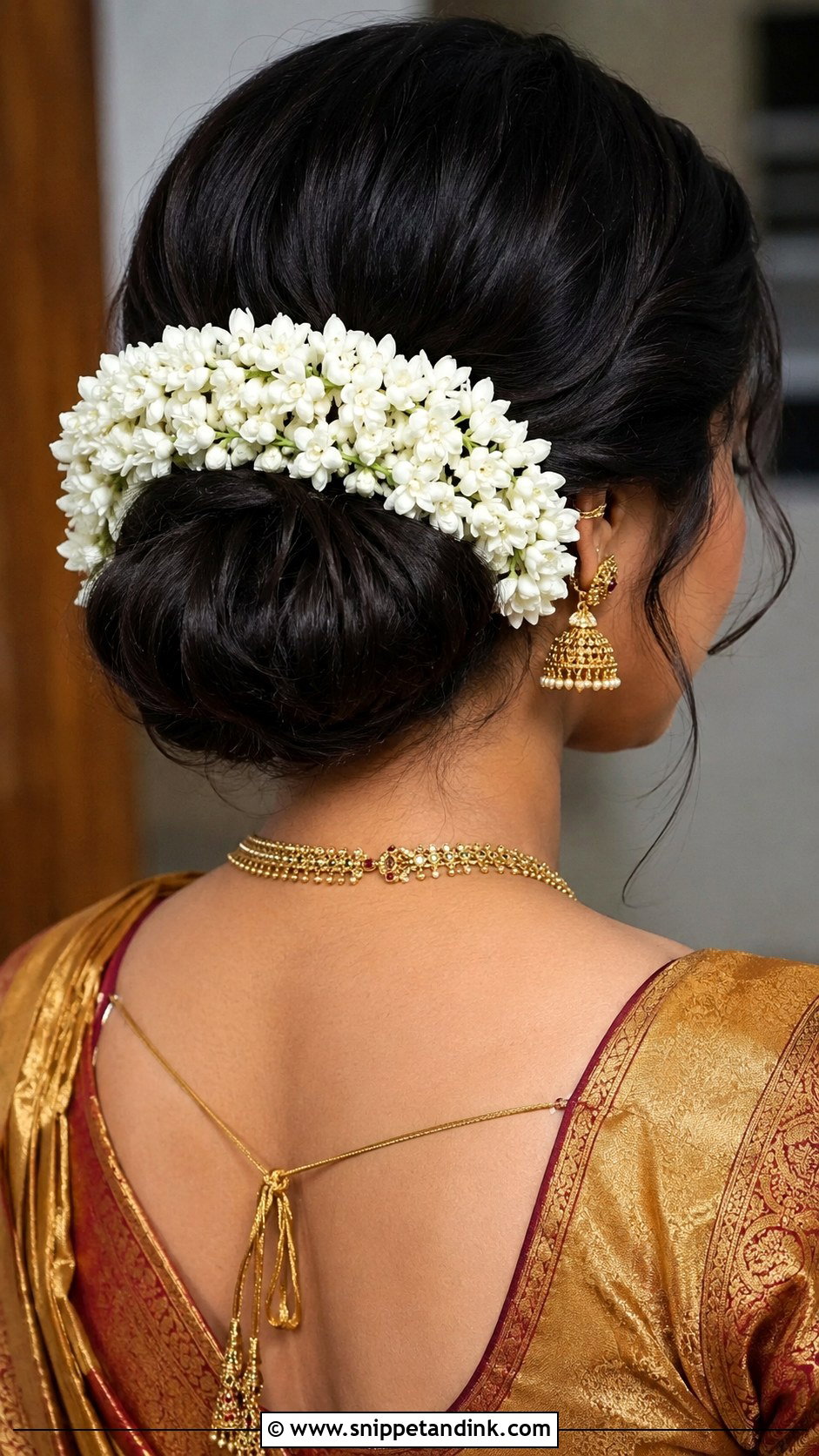
A full jasmine crown wraps the bun like a halo and is the most traditional look in this list. I pin each strand separately, starting at the base and working up, so one loose strand doesn’t unravel the rest. Jasmine browns where it’s handled, so the flowers should arrive the morning of the wedding and stay wrapped in a damp cloth in the fridge until pinning. With a silk saree and temple jewelry it’s the classic South Indian ceremony look. The scent is strong, though, so if strong fragrance gives you headaches, wear a strand through your trial first.
Keeping Gajra and Roses Fresh From the Pheras to Dinner
Fresh flowers are the most common reason a bridal bun looks tired by evening. Jasmine browns wherever it’s touched, roses droop in heat, and cut stems can leak moisture into the hair. Order flowers for the morning of the wedding, not the night before, and ask for buds rather than fully open blooms.
- Keep jasmine strands wrapped in damp muslin or paper towel in the fridge until pinning time, and don’t spray water on them once they’re in the hair.
- Wrap rose and filler stems in florist tape so cut ends never touch your hair or blouse.
- Ask for a spare strand of gajra for the reception, or to swap in if one browns.
- If you’re sensitive to scent, test jasmine at your trial; it smells far stronger sitting behind your head for hours than it does in the shop.
Late at Night, Out Come the Pins
After a full wedding day a bun can hold dozens of pins, so take it down slowly. Remove flowers and jewelry first, then feel for each pin and pull it out the way it went in. Tugging the bun loose with pins still inside snaps hair.
Never brush backcombed sections while dry. Work conditioner or a little oil through the lengths, then detangle from the ends upward with a wide-tooth comb. If you have functions on back-to-back days, sleep with your hair in a loose braid on a silk pillowcase, and I can rework the previous day’s base instead of starting over from wet hair.
From Mehendi to Mandap on the Same Strong Base
Every bun here holds up as long as the base underneath is solid. Match the version to the function and the outfit, then choose flowers or jewelry your hair can actually carry. Do your trial with the real accessories and dupatta, wear the result for a few hours, and notice how it feels by evening. From the mehendi to the mandap, a well-built messy bun lets you stop thinking about your hair and pay attention to everything else.
You'll Like These Ideas:


Leave a Reply