
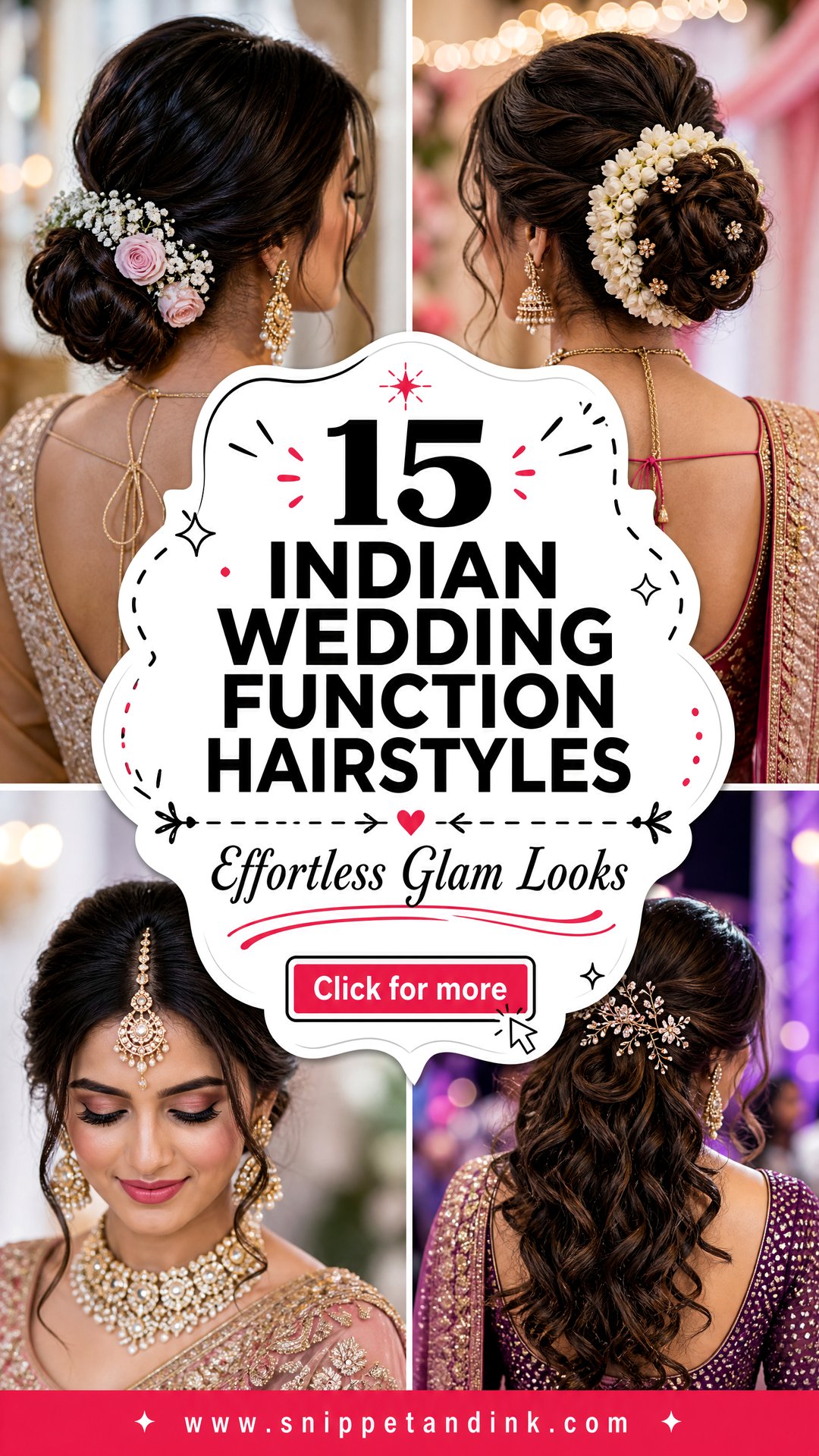
An Indian wedding runs from sunlit morning rituals to late, loud nights, and hair that looked right at the haldi can be wrong by the reception. Each function asks something different. A mehndi look can be loose and decorated with flowers, the ceremony needs a base strong enough for a matha patti and dupatta, and the reception usually wants something sleeker. I style brides, sisters, bridesmaids and guests through these days, and the styles below are the ones I come back to, with honest notes on when each holds up and when it doesn’t.
Six Cousins, One Stylist and an Early Call Time
Function hair is rarely just the bride’s. Mothers, sisters, cousins and bridesmaids often want their hair done the same morning, and the order matters more than people realise. I put the most complex styles first while I’m fresh and there’s time to fix anything, and the bride near the end so her look is newest for photos, but never last, in case something runs over.
Timing varies with hair length and thickness, but a plain braid or ponytail is quick, while a built bridal bun with gajra, tikka and dupatta setting takes much longer. Tell your stylist the head count and styles when you book, so they can bring an assistant if needed.
- Come with clean, fully dry hair unless your stylist asks otherwise. Drying thick hair eats into everyone’s slot.
- Wear a button-front top so you don’t pull a shirt over finished hair.
- Have flowers, tikka, pins and dupatta ready in one bag with your name on it.
- Send each person’s reference photo the day before, not in the chair.
1. Indian Bridal Bun With Gajra
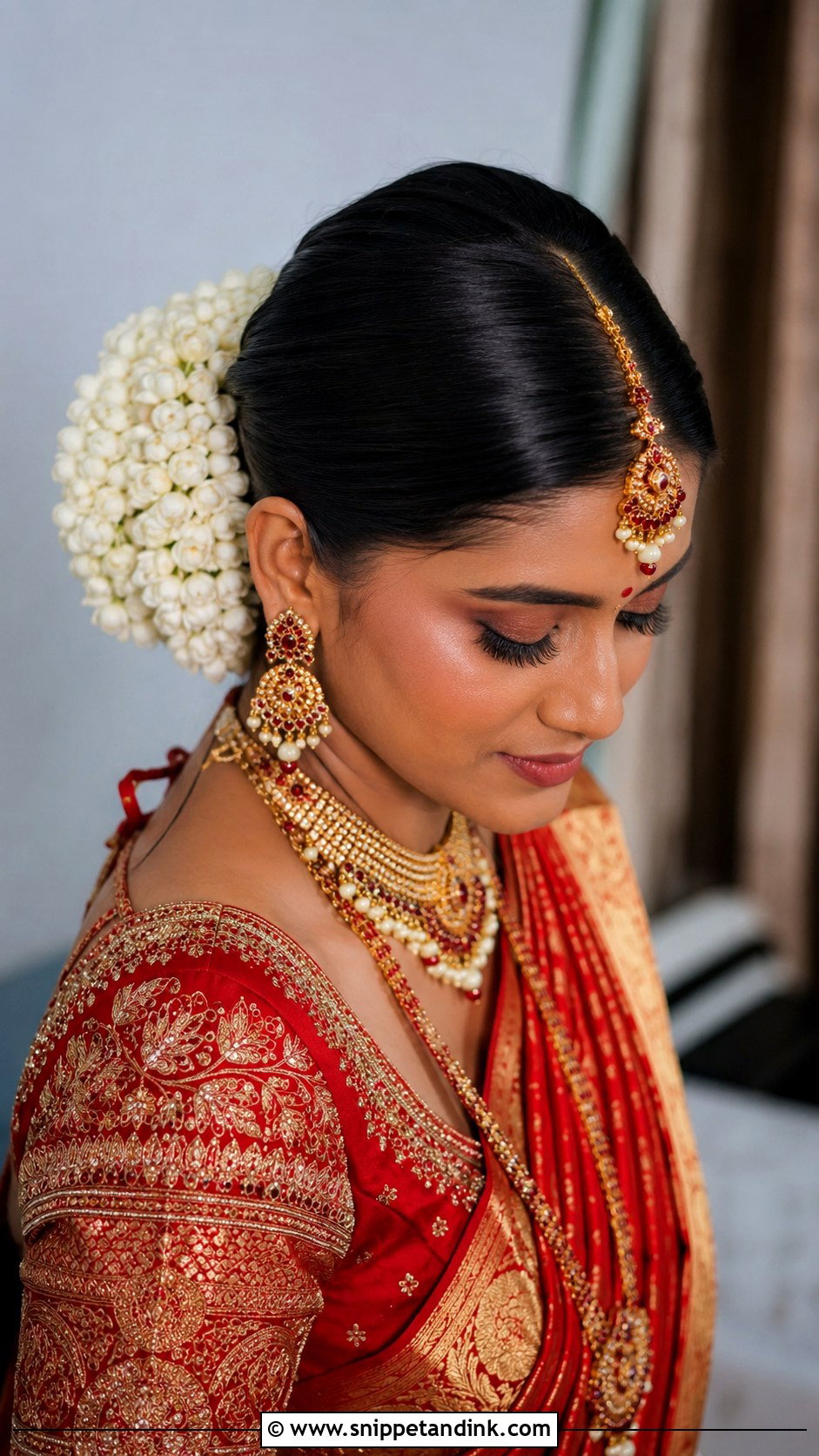
For the main ceremony, I still reach for a bun with gajra more than anything else. It carries a saree or lehenga, a heavy dupatta, a matha patti and full bridal jewellery without shifting, because every pin has solid hair to grip. Low at the nape suits most faces; a slightly higher bun works if the dupatta sits further back. The jasmine goes on last. I hide the pins inside the bun, cross them in pairs, and the shape stays put for hours of sitting and standing.
2. Indian Wedding Low Bun
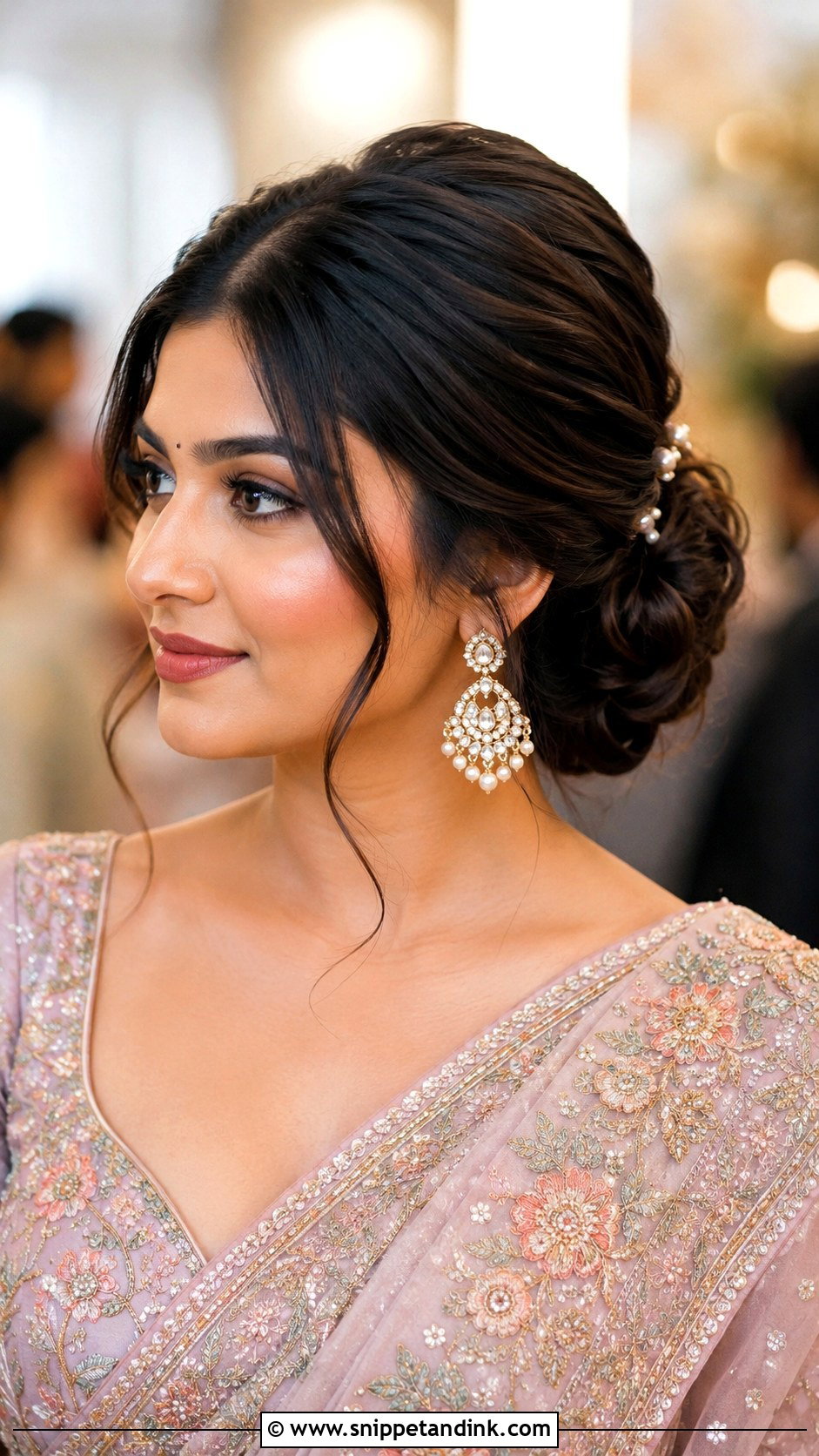
An Indian wedding low bun keeps everything clean around the face, which is why I use it for engagements, pheras and reception greetings where the jewellery should lead. Sleek, softly twisted or textured are all options; I decide by how busy the outfit is. A centre part suits a maang tikka, a side part reads more modern. On medium-length hair, a small padding piece builds the fullness the hair can’t make alone. Keep the decoration to a few flowers or one gold accessory if the lehenga is heavily embroidered.
3. Indian Wedding Braided Bun
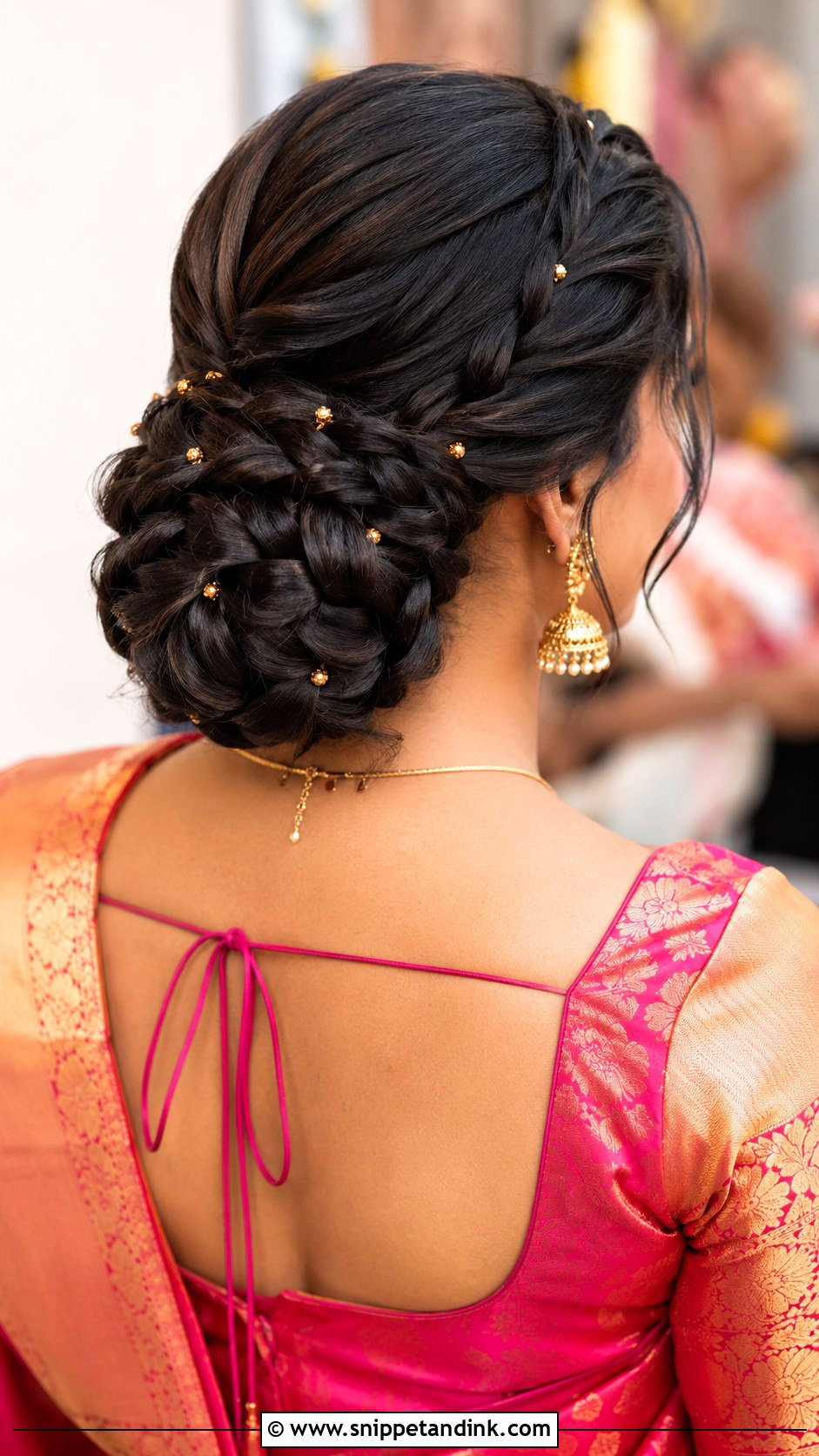
Braiding the bun gives it texture and makes it sturdier. The braid can wrap the bun, cross the crown or form the base, and those woven sections give pins something to bite into on long function days. It sits naturally with lehengas, silk sarees and temple jewellery, and small flowers, gold pins or pearls tuck straight into the braid. The catch is time: a braided bun takes noticeably longer than a plain one, so I schedule it for the person with the earliest slot, not the one squeezed in last.
4. Indian Wedding Side Braid
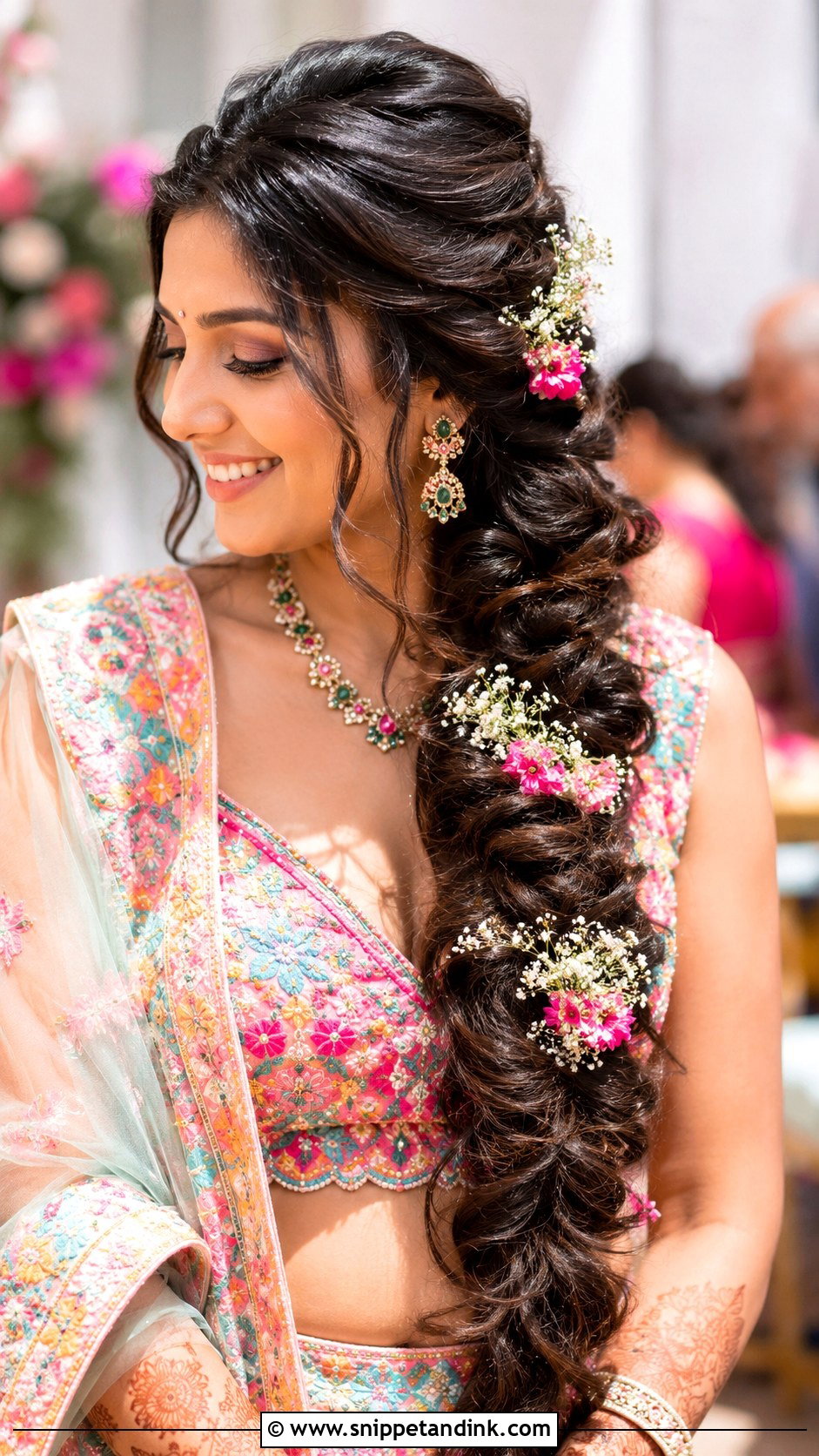
Mehndi and haldi are where I see the most side braids, and for good reason. You’re sitting with your hands out for hours, then moving, dancing and getting hugged, and a braid over one shoulder keeps hair off your arms and out of the paste. Loose, fishtail-style or built up with extensions all work. Gota ribbon, pearls or tiny mirror accessories woven in pick up the outfit. I leave one soft front section free so it doesn’t look scraped back.
5. Indian Wedding Flower Braid
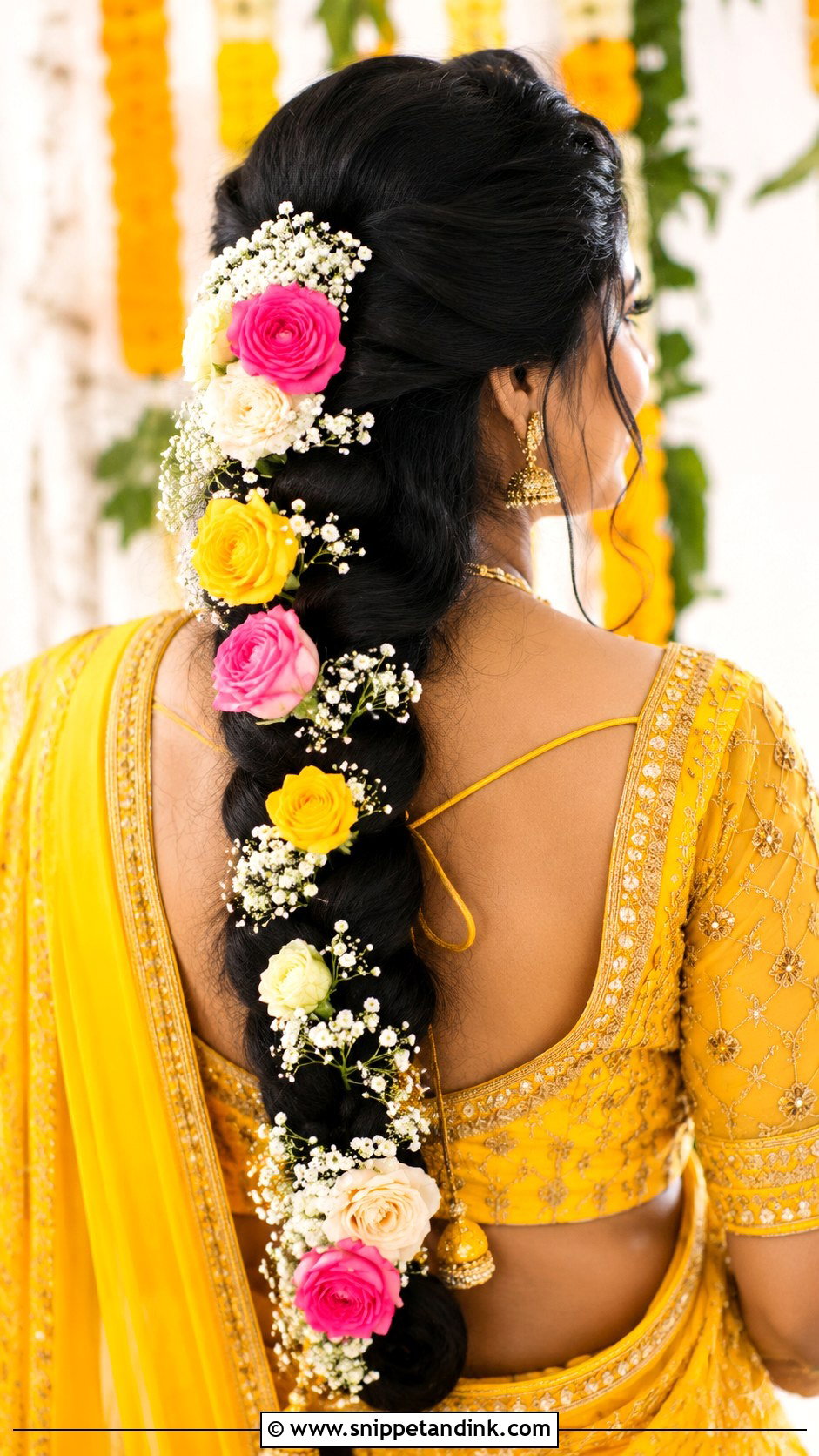
An Indian wedding flower braid is pure celebration for mehndi and haldi. Roses, baby’s breath, jasmine, marigolds or pastel blooms run the length of a long, thick braid, and the effect with a bright lehenga or sharara is hard to beat. How the flowers are attached matters more than which flowers you pick. I wire or pin each cluster into the braid itself; flowers laid on top fall out the first time you dance. A gentle puff at the crown balances the weight lower down.
6. Indian Wedding Open Curls
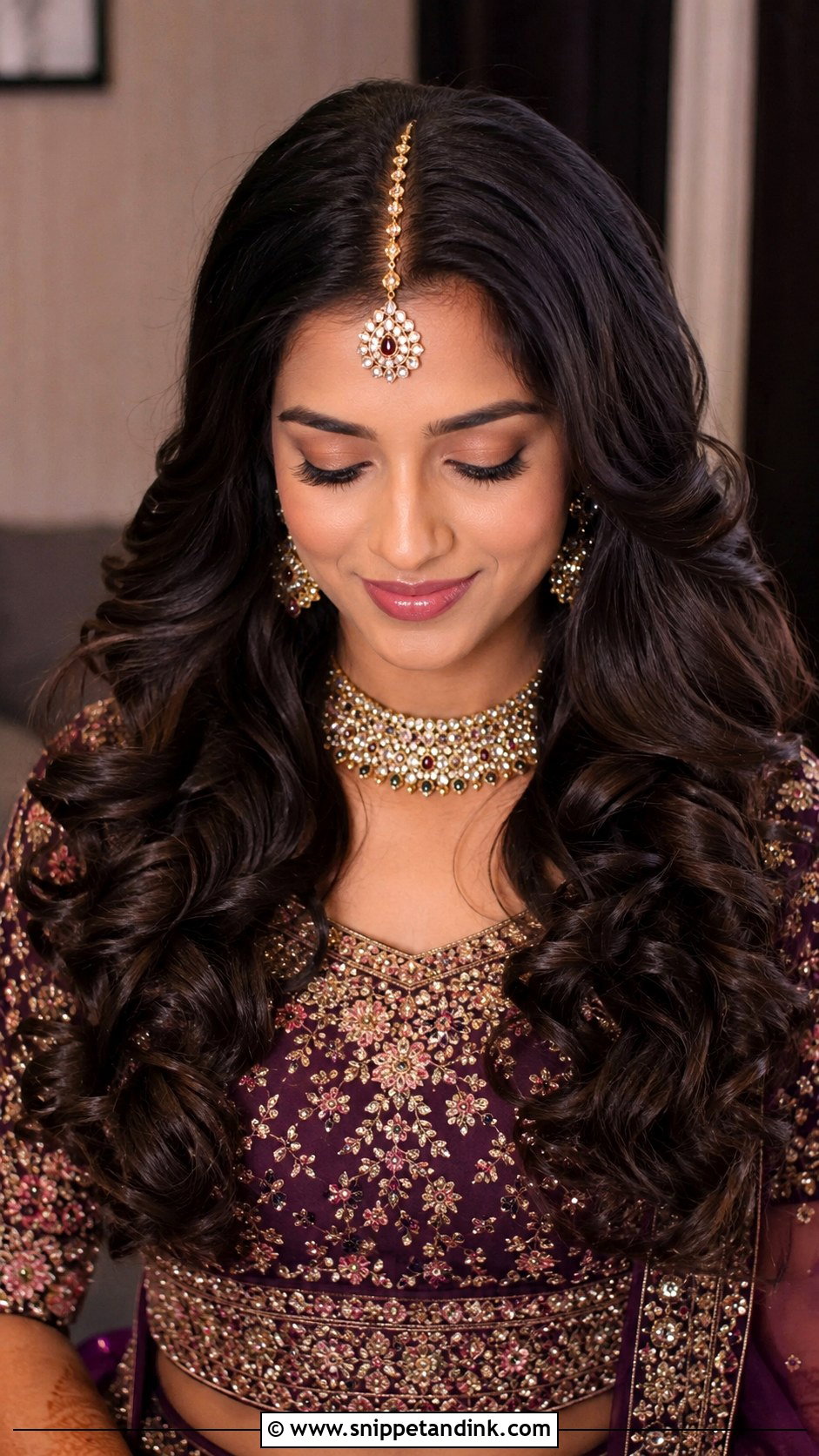
Open curls come into their own at the sangeet, engagement and reception, and they’re the style bridesmaids ask for most. They move when you dance and show off length. I set the curls fully and let them cool before brushing, because hot curls brushed out too early drop fast. Lightweight products hold better than heavy ones on most Indian hair, which is often thick and weighs curls down. With a deep neckline or a statement blouse, open curls frame the shoulders well; with a high collar, they tend to bunch.
7. Indian Wedding Half Up Half Down Hair
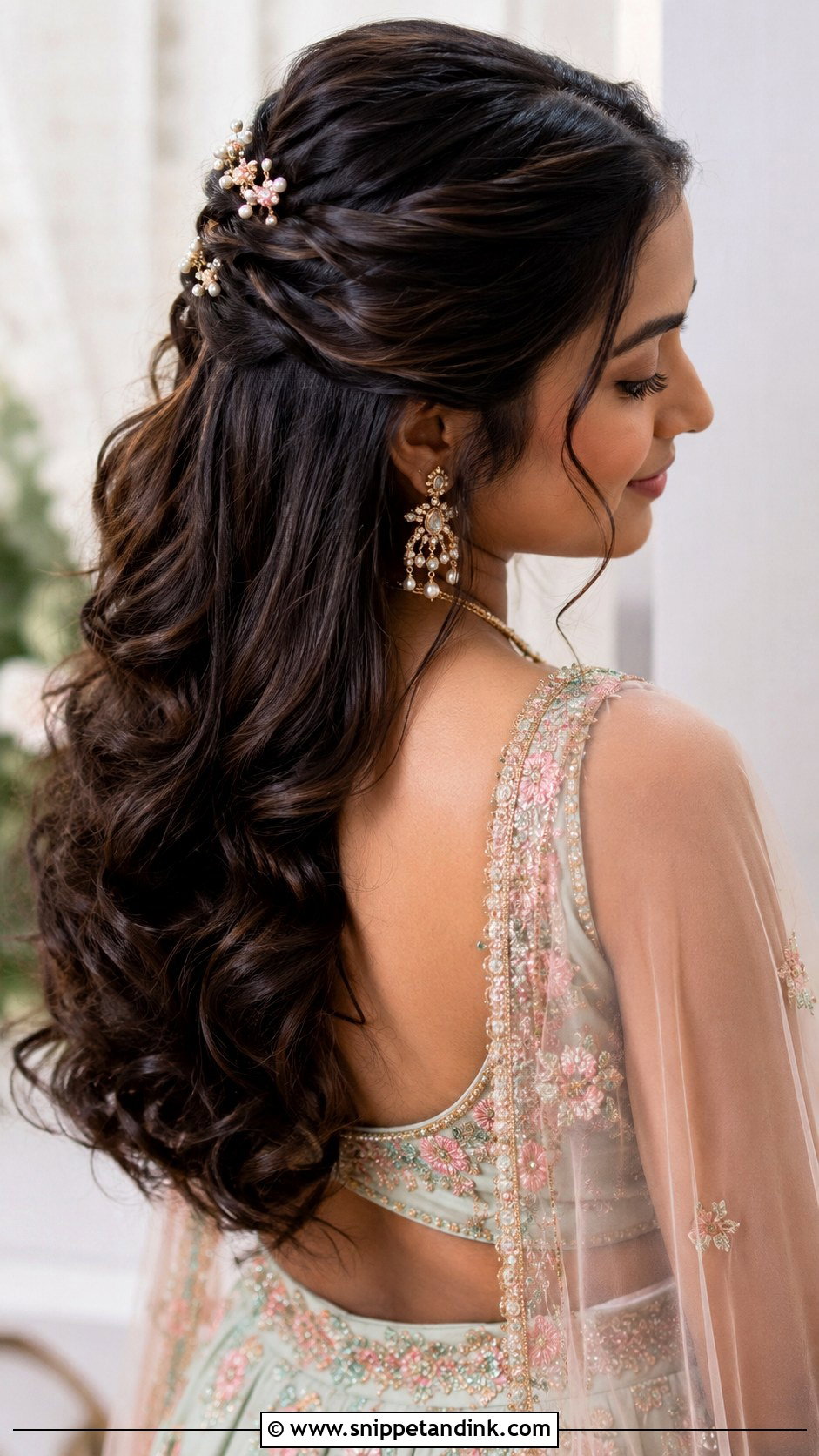
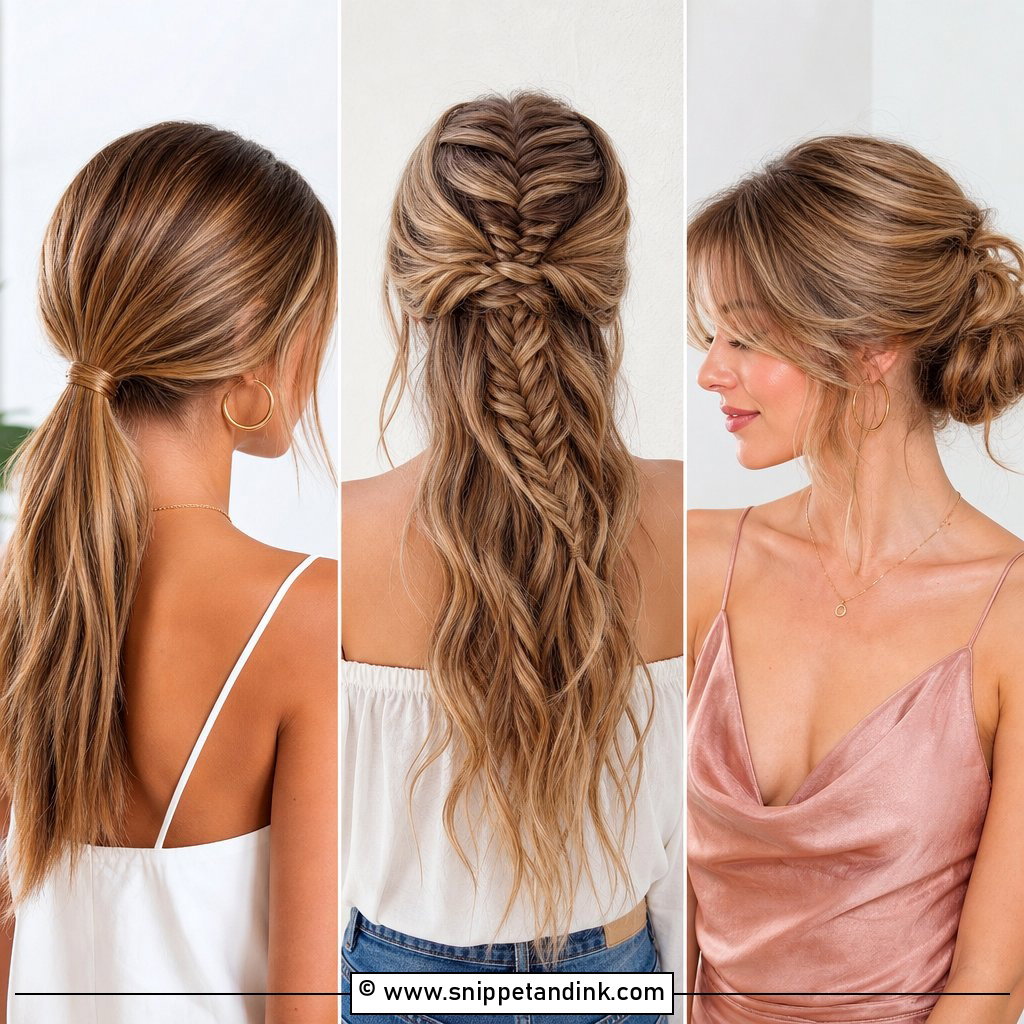
Half up, half down is my answer for the bride who can’t decide between open hair and an updo. It suits engagements, roka, sangeet and receptions, and it stays dressy without looking casual. The top section can be twisted, braided, puffed or pinned with pearls, flowers or kundan pieces, and the lower lengths get soft waves. It needs at least shoulder-length hair to look finished. I’d suggest it for a lehenga, gown or saree where the back of the blouse is plain, since the curls will cover any detail there.
8. Indian Wedding Sleek Ponytail
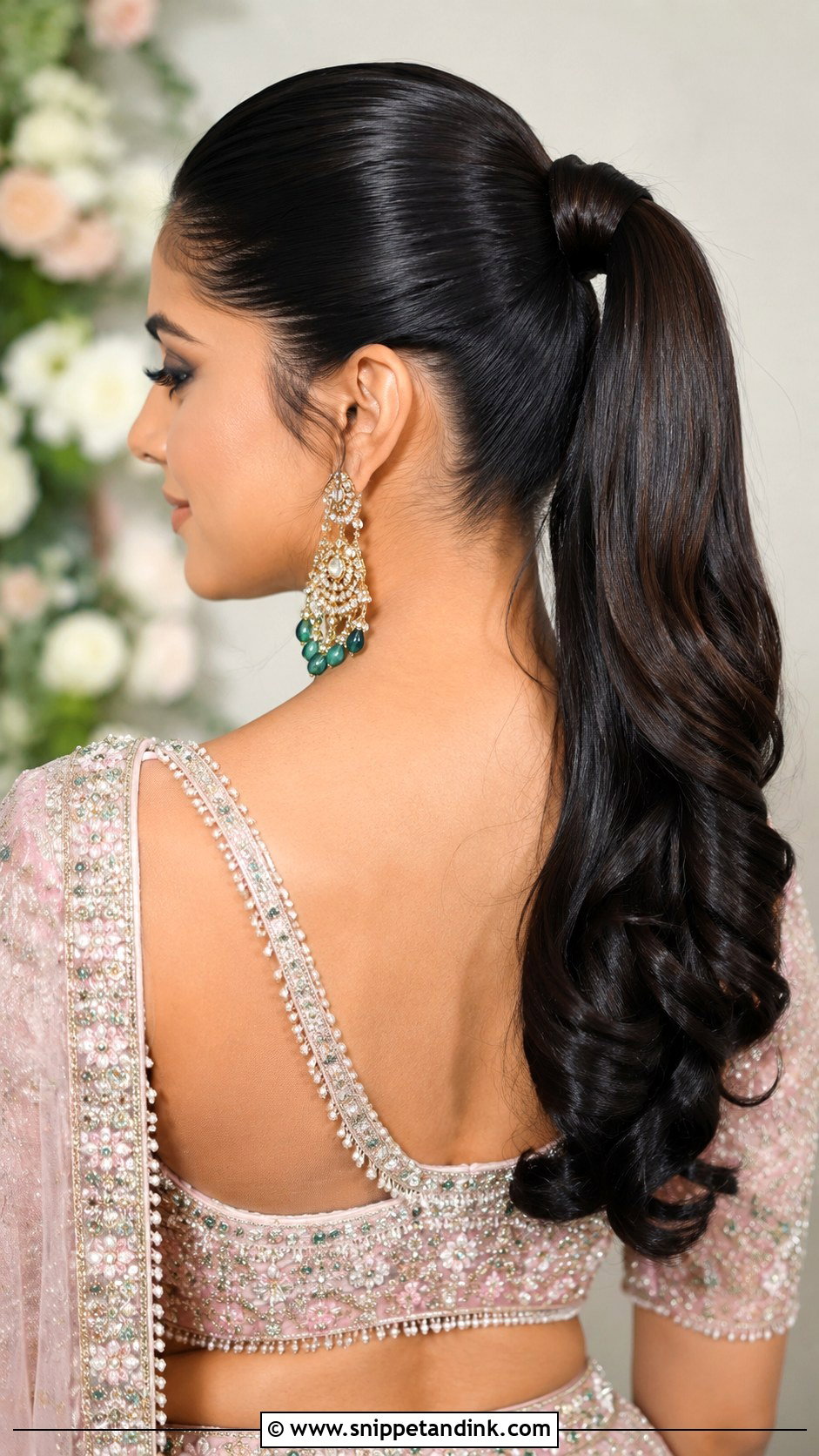
A sleek ponytail says modern and confident, and it’s one of the most practical styles for a sangeet or reception with a lot of dancing. High is dramatic, mid-height balanced, low softer. Smooth roots and a strand of hair wrapped around the elastic do most of the work; waves through the length keep it from looking like gym hair. Statement earrings and structured blouses suit it well. If you’re adding extensions for swing, warn your stylist, because the base has to be secured more firmly to carry the extra weight.
9. Indian Wedding Messy Bun
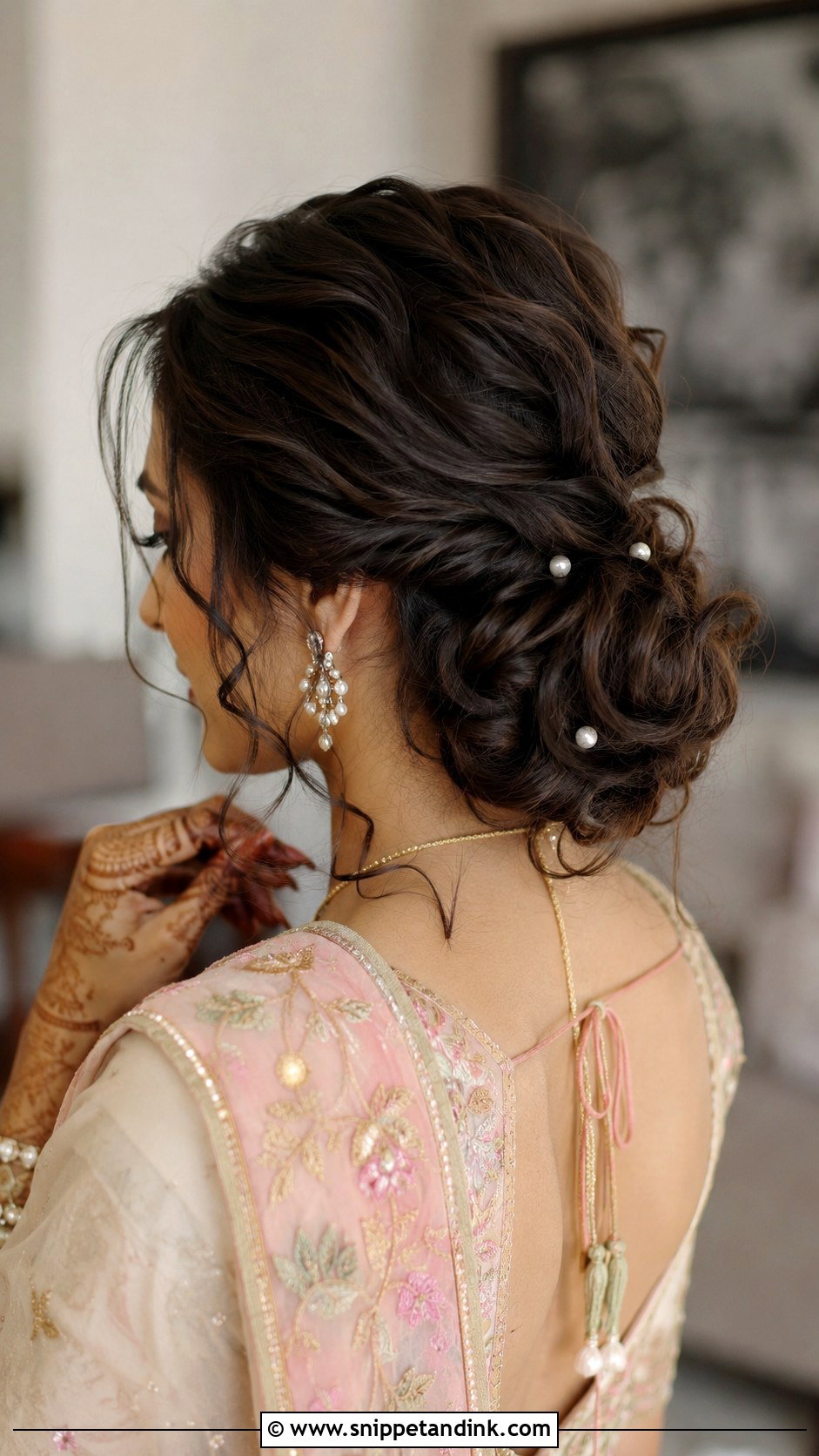
A messy bun is built from careful texture: loose curls, face-framing strands and some volume at the crown, all pinned so it looks relaxed but doesn’t move. It’s a soft choice for mehndi, engagements or receptions, with pastel lehengas, light sarees and soft glam makeup. Small flowers or pearl pins dress it up without weighing it down. The risk is the loose pieces wilting in humidity, so on a humid day I curl them a little tighter than they need to be and let them relax.
10. Indian Wedding Juda Hairstyle
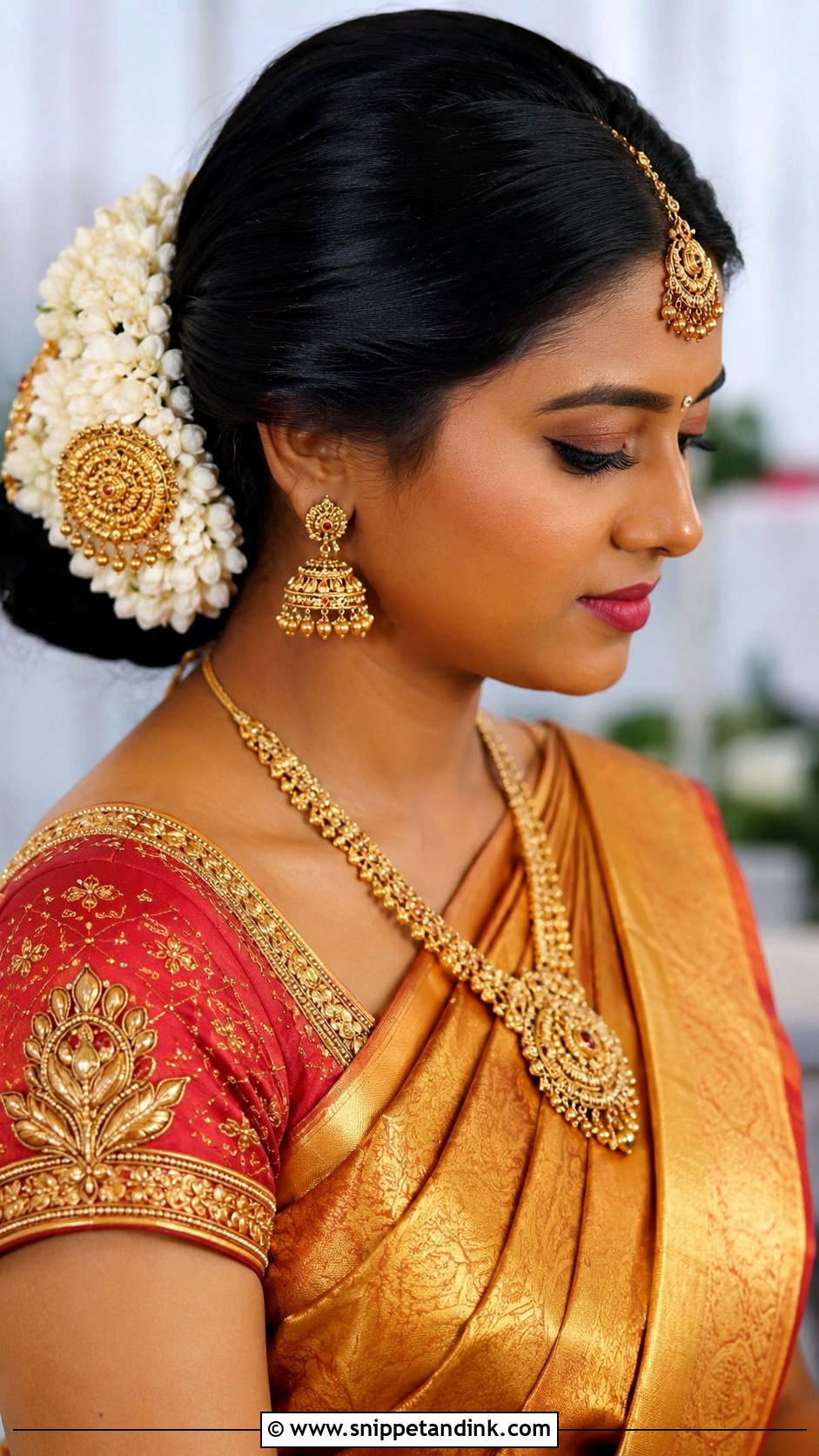
An Indian wedding juda hairstyle is my go-to for mothers, aunts and anyone wearing a saree to a formal family function. It sits low and neat, takes a dupatta or pallu pin easily, and keeps every strand tucked away. Gajra, roses, gold accessories or a round bun ornament finish it. In humid weather it’s one of the few styles I’d trust to look the same at the end of the evening as at the start.
11. Indian Wedding Front Puff Hairstyle
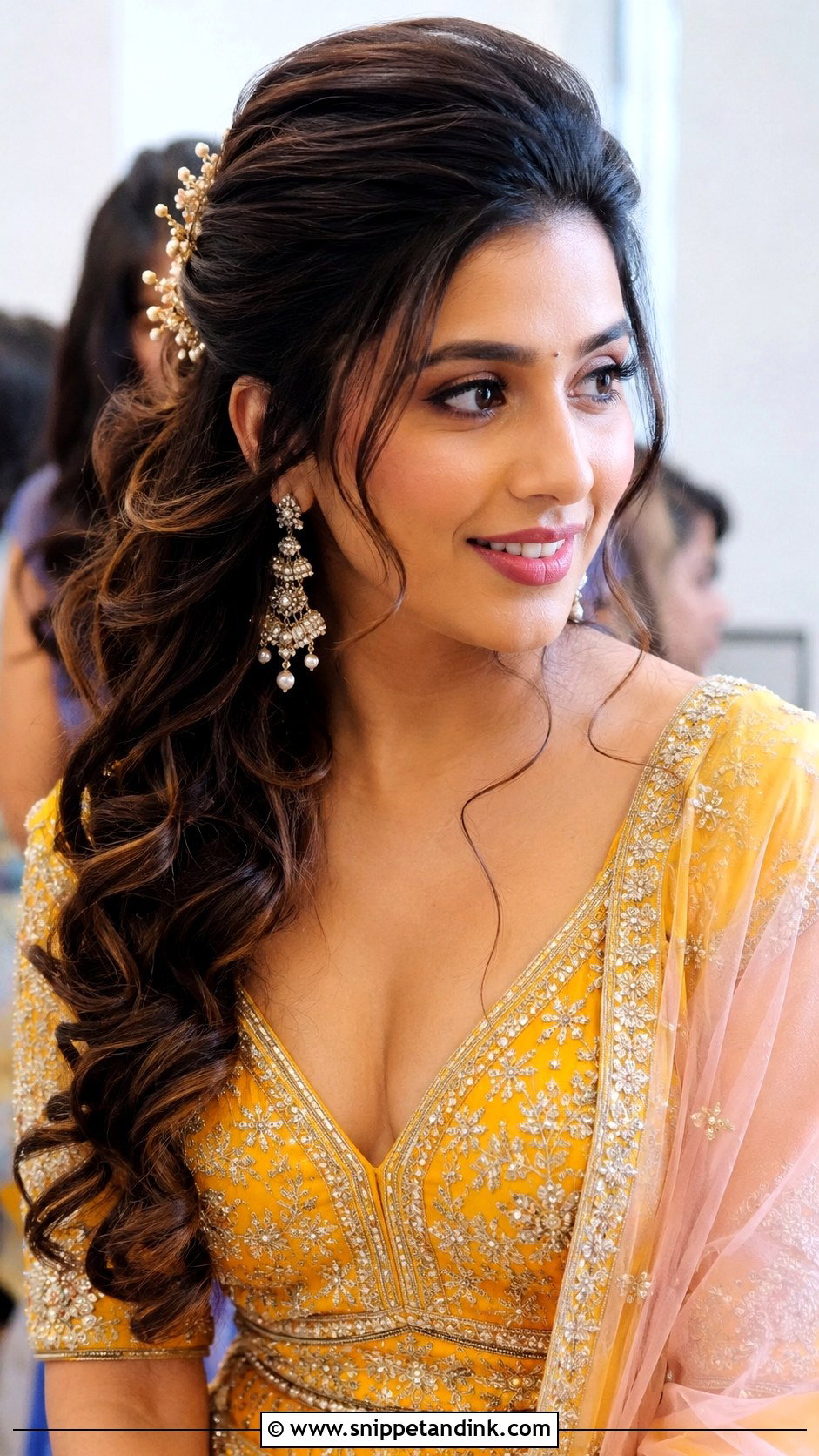
A front puff adds height and helps balance a heavy dupatta or large jewellery. Pair it with a low bun and gajra for the ceremony, curls or a full ponytail for the sangeet. I backcomb only the underside of the crown section and smooth the top over it, so the puff looks blended rather than lacquered. Too high and it looks dated, and it can push a dupatta up into an odd peak. Bridesmaids like it because it adds polish without a complicated updo.
12. Indian Wedding Maang Tikka Hairstyle
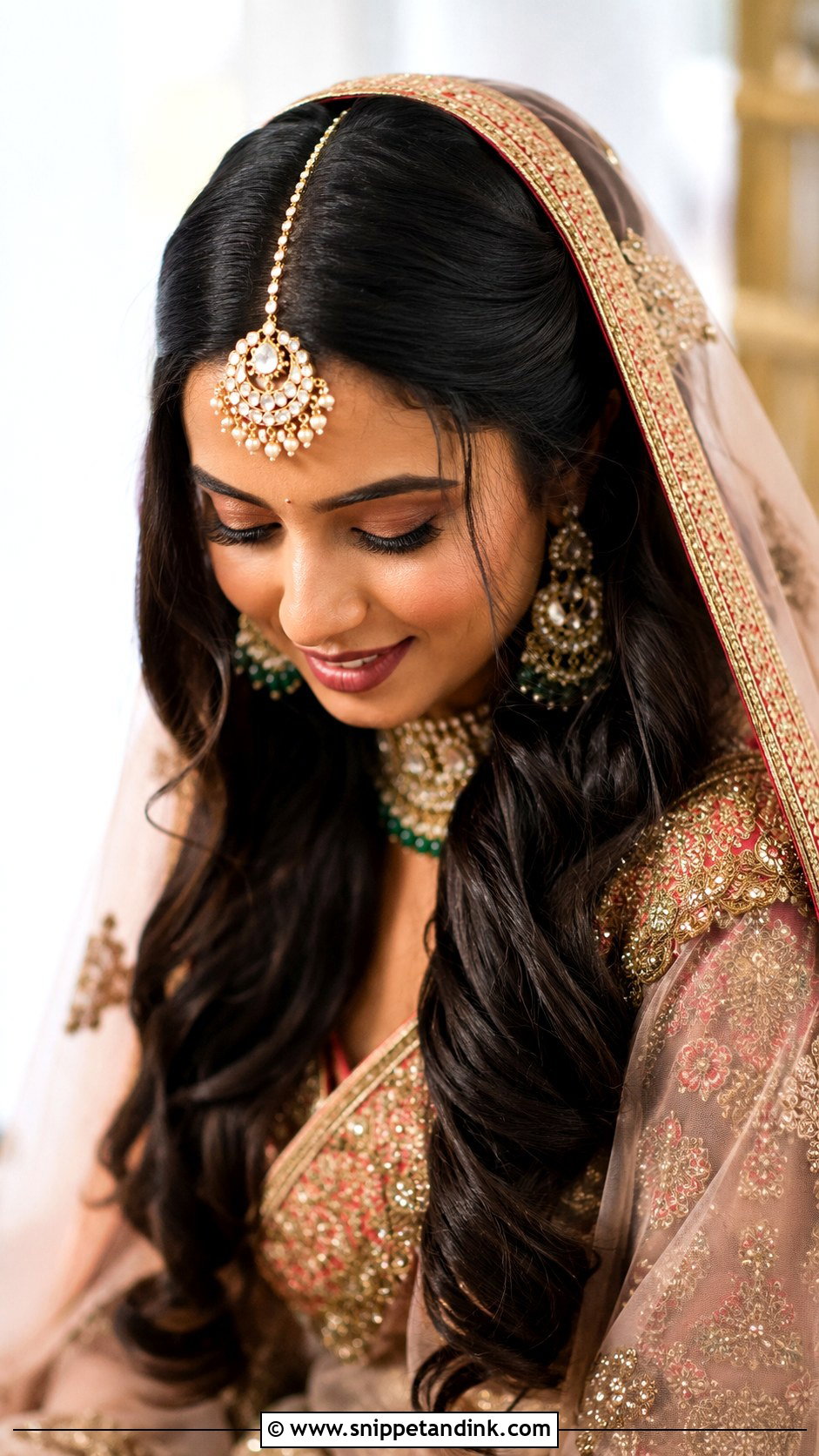
The tikka decides more about the hairstyle than most brides expect. It needs a clean parting and, more importantly, a firm anchor: I pin the chain into a bun, braid or a small hidden section, never into loose hair, or it slides off-centre with the first hug. That works with a bun, braid, half-up style or open curls. A sleek middle part feels traditional, soft waves around the face more romantic. Check at the trial that the tikka sits where you want it when you look down, not just when you face the mirror.
13. Indian Wedding Reception Hairstyle
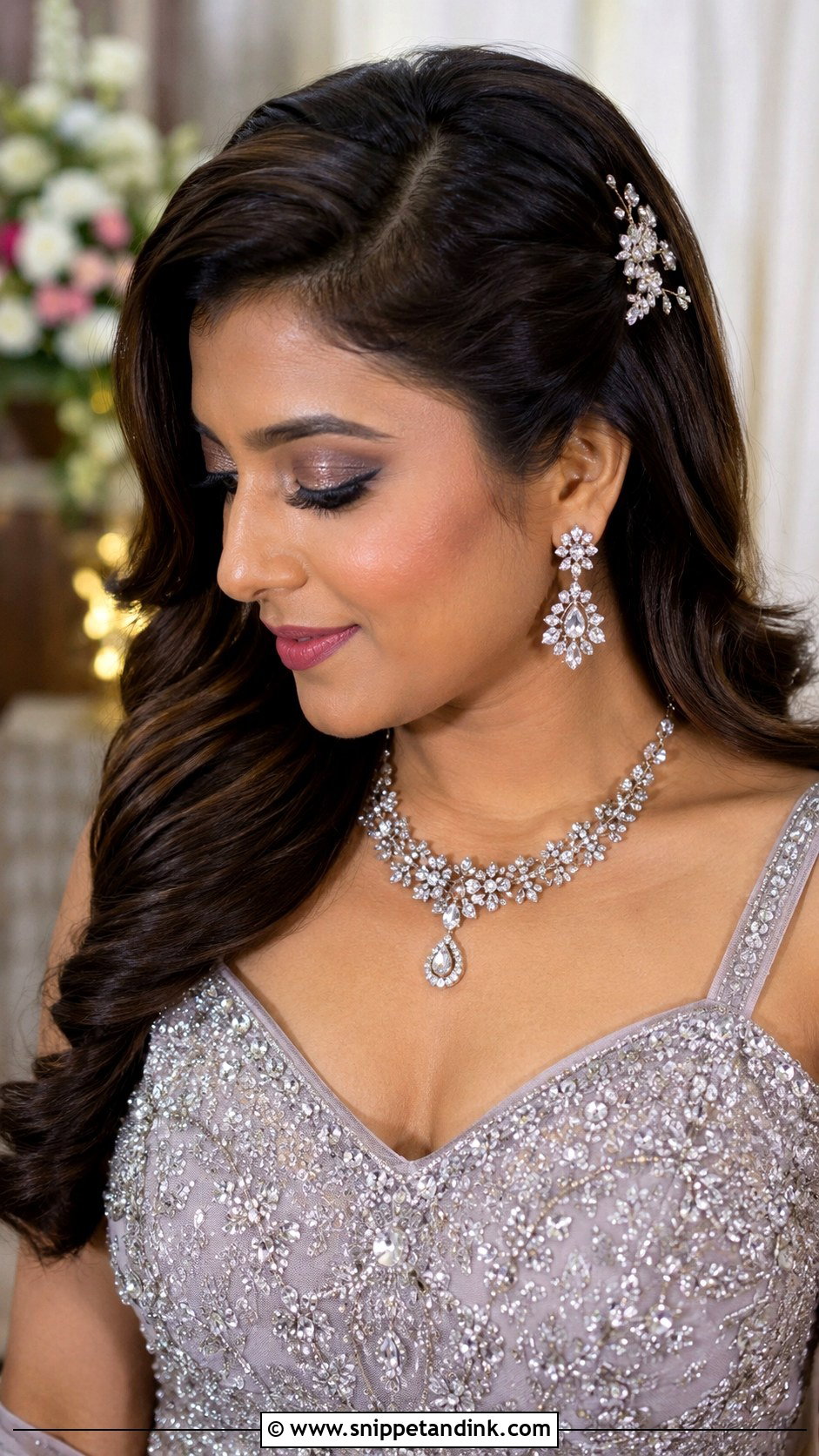
Reception hair can be the most polished of the whole wedding. Smooth waves, sleek buns, Hollywood-style curls and structured ponytails all suit it, and the choice comes down to the outfit: gown, saree or modern lehenga. Stage lighting is harsh on frizz, so I spend extra time on smoothing and finishing shine here. If you wore a traditional bun for the ceremony, the reception is a natural moment to switch to open waves or a sleek modern updo, and many brides enjoy that change.
14. Indian Wedding Sangeet Hairstyle
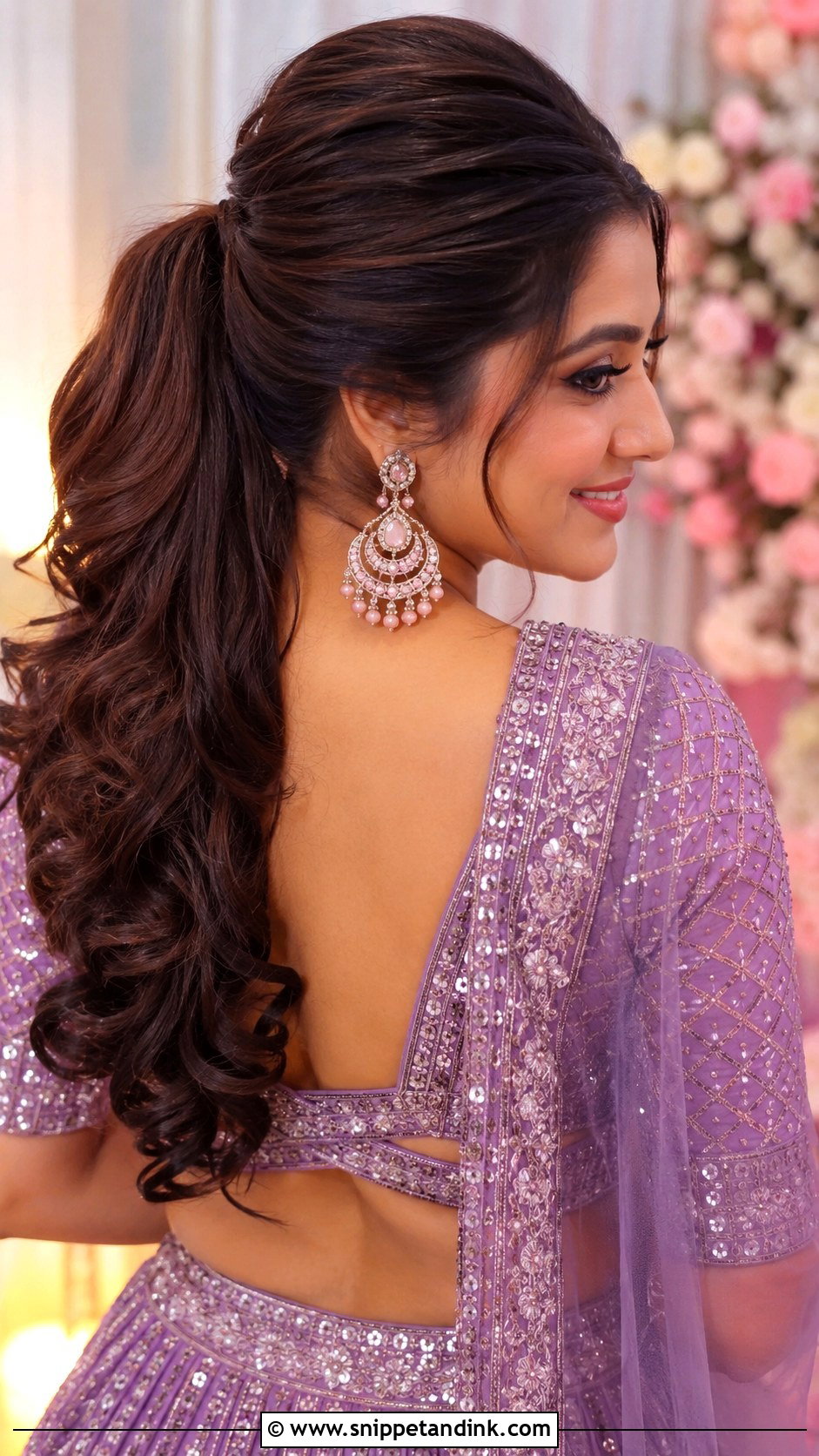
A sangeet hairstyle has to survive choreography. Full ponytails, half-up curls, soft waves and textured buns all work, but each needs real hold, because hair that looks great at entry can collapse after three songs. With a heavily embellished outfit, a sleek ponytail or polished waves keeps the balance. With a simpler outfit, crystal clips or one bold hair accessory adds sparkle. I pin the front with hidden pins and do a quick head-shake test before you leave the chair.
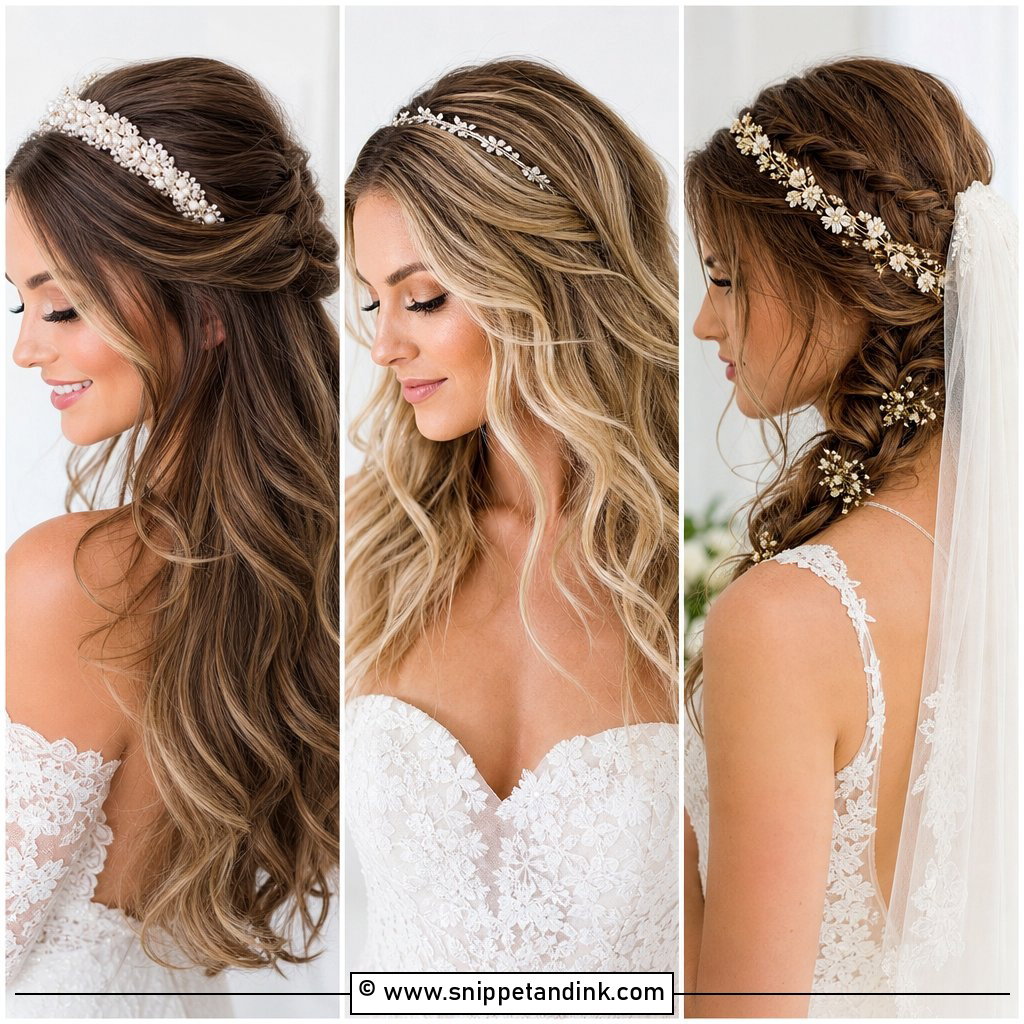
15. Indian Wedding Haldi Hairstyle
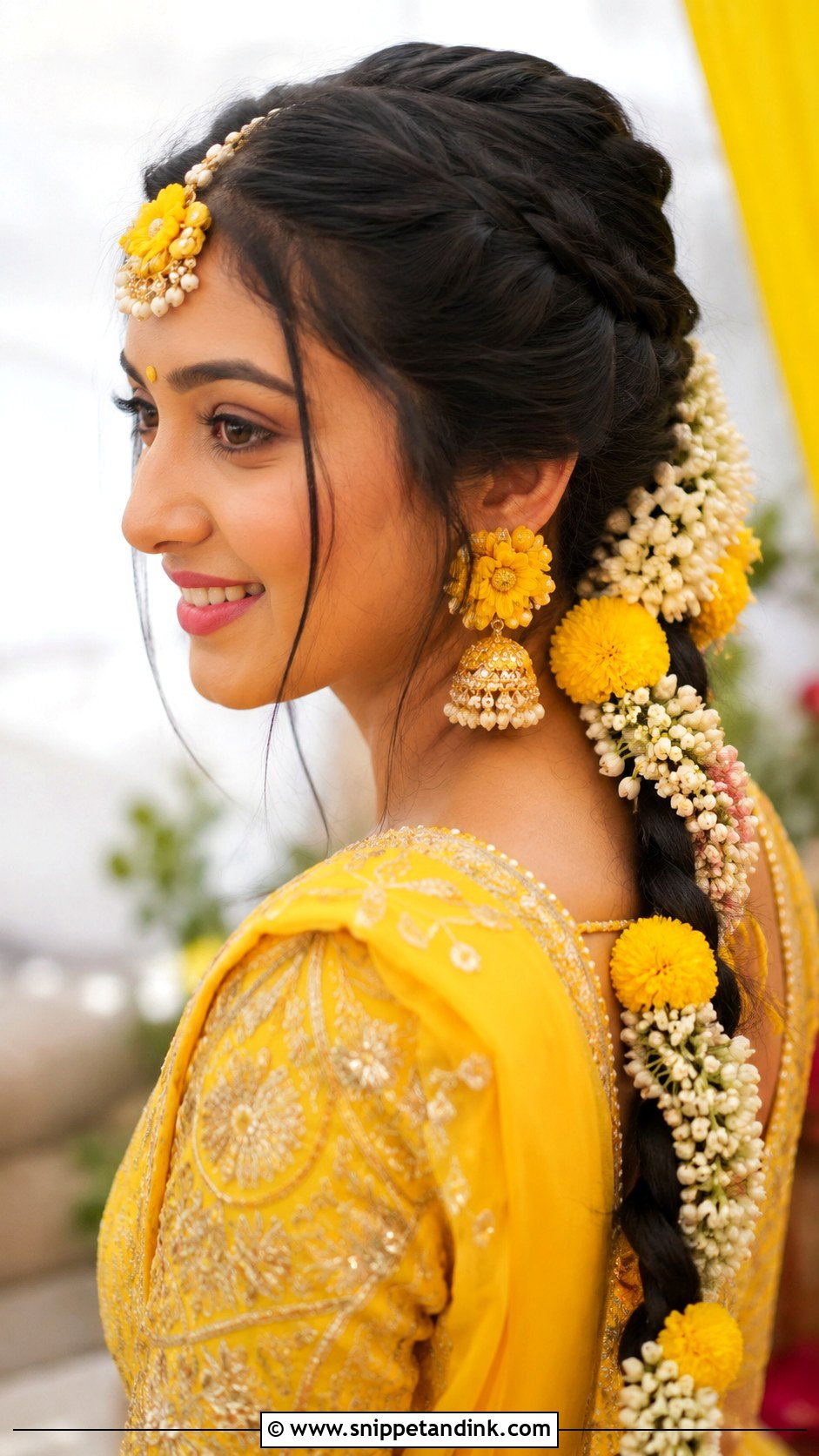
Haldi is wet, sticky and usually outdoors, so a haldi hairstyle has to cope with turmeric paste, water and heat. Braids, low buns, half-up waves and flower-trimmed ponytails all hold up. I talk brides out of fully open hair for this one; turmeric in loose lengths is hard to wash out and can tint light or highlighted hair. Marigolds, jasmine, yellow roses or floral clips fit the mood. Keep it off the face, keep it simple, and save the heat styling for the next function.
Turmeric, Oil and Henna Between Back-to-Back Events
When functions fall on consecutive days, what happens to your hair at one shapes how well it styles at the next. Oiled hair, the traditional prep before haldi, won’t take a curl or hold a pin until it’s properly washed, and that usually means two rounds of shampoo. I ask brides to wash the evening before the ceremony, not the morning of, so the hair has a little grip.
If turmeric gets into light hair
Turmeric can leave a yellow tint on blonde, grey or highlighted strands. Rinse with cool water before shampooing, then use a clarifying shampoo. A light layer of oil through the lengths before the haldi acts as a barrier, which is one good reason the old tradition still makes sense.
Henna paste and sealant
At the mehndi, wet paste and sticky lemon-sugar sealant end up in loose hair surprisingly often. Tie long hair back or braid it before the artist starts. If paste does land in your hair, let it dry and brush it out rather than smearing it wet, which spreads the stain.
Different Functions, Different Hair, Same Bride
No single hairstyle carries a whole Indian wedding. A secure bun suits the ceremony, a flower braid the mehndi, soft curls the reception; sangeet hair needs movement and haldi hair should stay simple. Planning each look against its function makes the full wardrobe feel considered rather than repeated. Save the styles you like early, test accessories at a trial, and book a stylist who understands dupatta placement, jewellery weight and how long Indian celebrations actually run.
You'll Like These Ideas:


Leave a Reply