
I spend hours sitting knee to knee with brides at their mehndi, so I see exactly which outfits help and which ones get in the way. The night is loud, colorful and full of movement, and the bride’s clothes have to cope with all of it while her hands and feet are covered in wet paste. Bright lehengas, shararas, anarkalis, cape sets, mirror work, gota patti and floral embroidery all suit the mood. What matters more to me is the cut: short or sleeveless blouses, open wrists, hems that clear the ankle, and fabric light enough to sit in for hours. Home, garden, banquet hall or poolside, these are the outfits I’d be happy to henna a bride in, and what to watch for with each.

What Your Outfit Has to Survive While I Work
A full bridal design on hands and feet takes several hours, and the paste should then stay on for as long as you can manage, ideally overnight. During all that time you can’t use your hands. Plan the outfit around that.
- Sleeves above the design. If your mehndi goes to the elbow, your sleeves need to stop above it. Anything that touches drying paste smudges it.
- Hems clear of the ankle. Foot designs need the hem lifted. Shararas and palazzos tuck up easily; full lehengas and ghararas need someone to hold them back.
- Dupatta pinned before I start. Once your hands are covered you can’t fix a sliding dupatta, and it will drag through the paste.
- Get dressed before the application. Hooks and back closures need a helper either way, but once the paste is on you can’t even hold a sleeve open.
Many brides have their bridal mehndi applied a day or two before the function, so the stain has darkened by the event. If that’s your plan, wear something comfortable for the application and save the main outfit for the night itself.
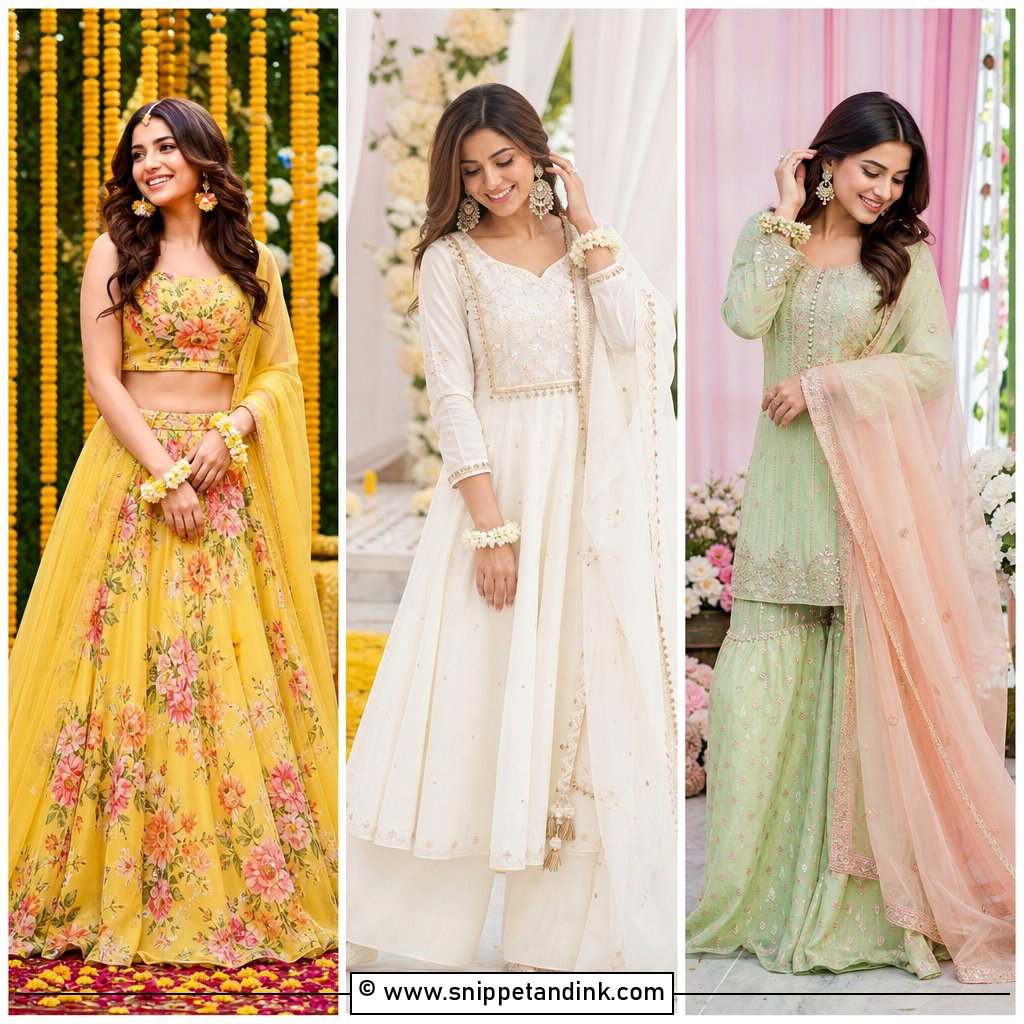
1. Yellow Bridal Mehndi Lehenga
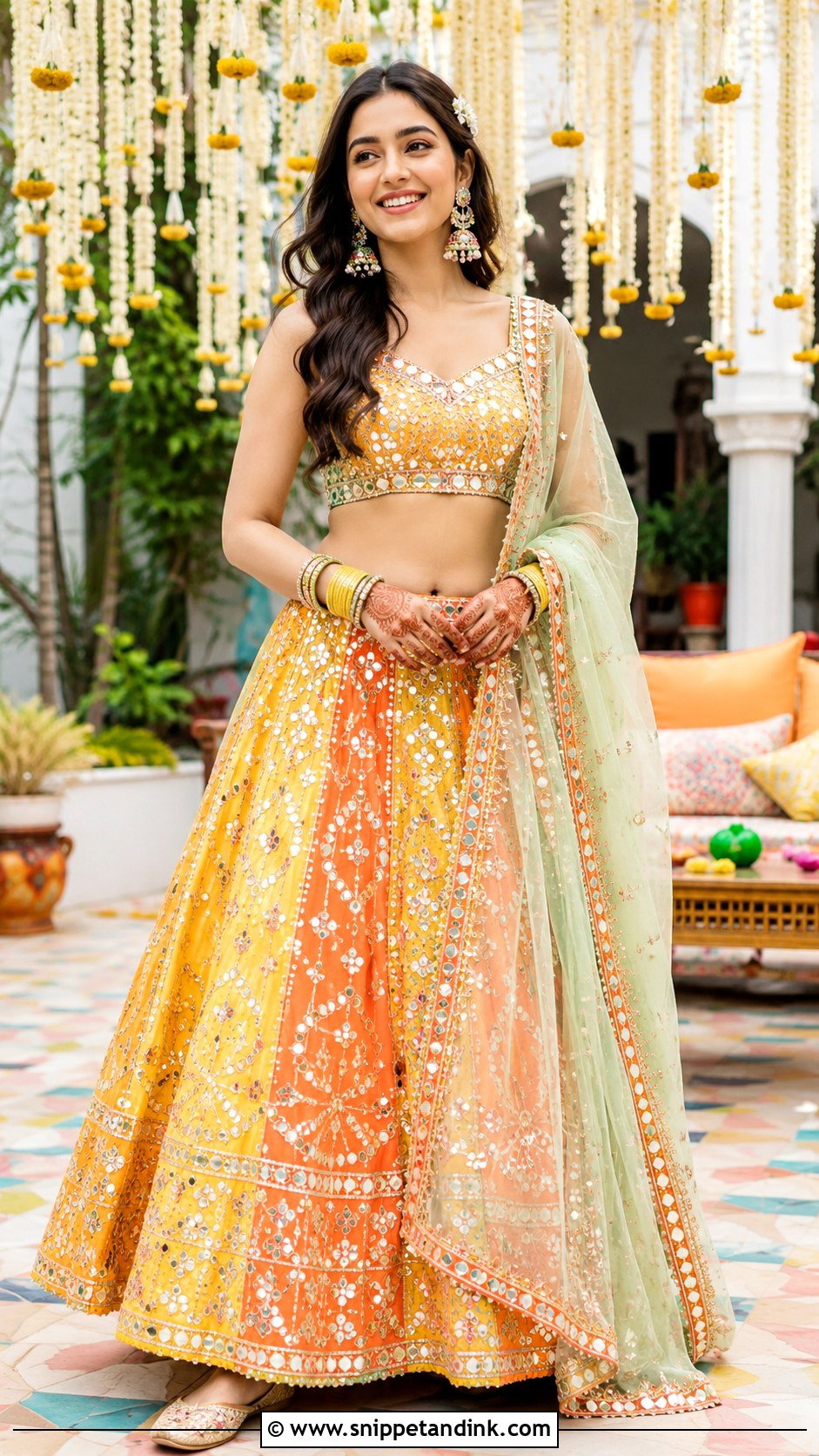
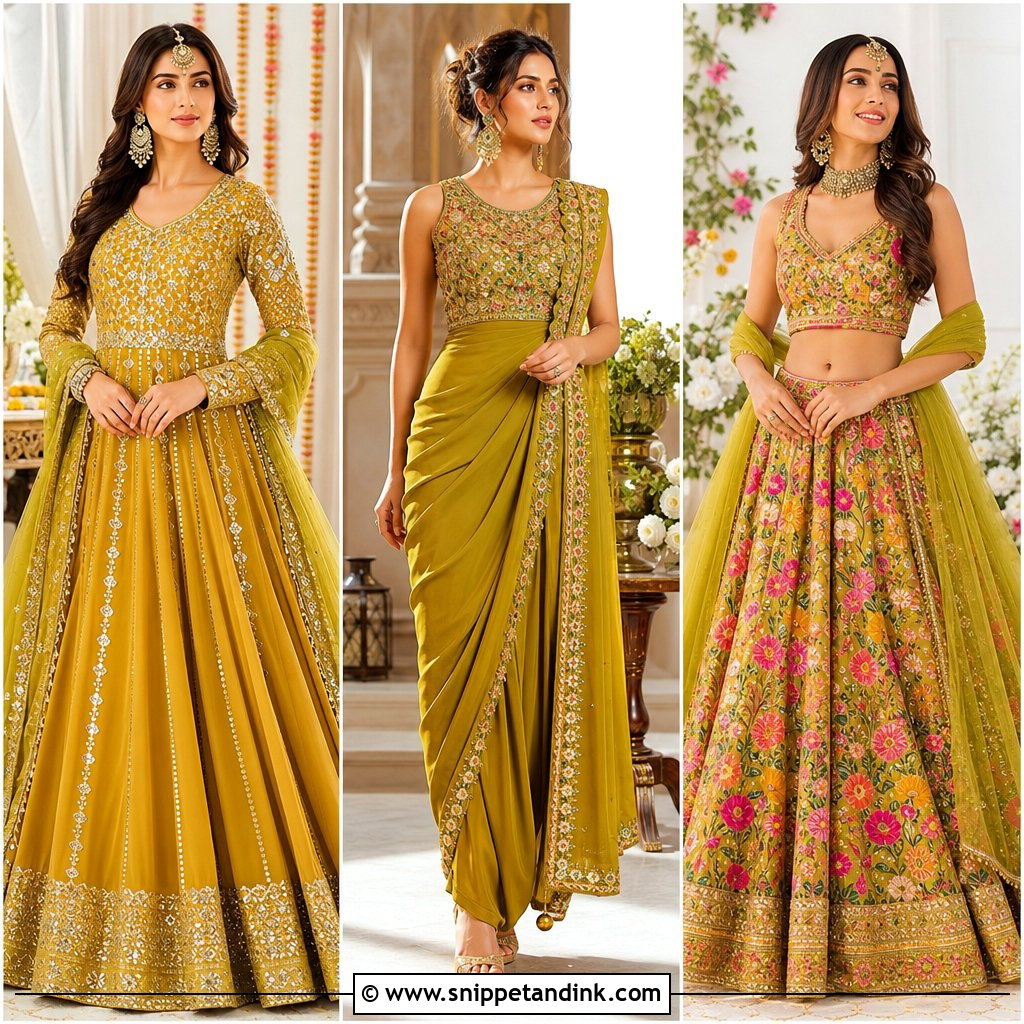
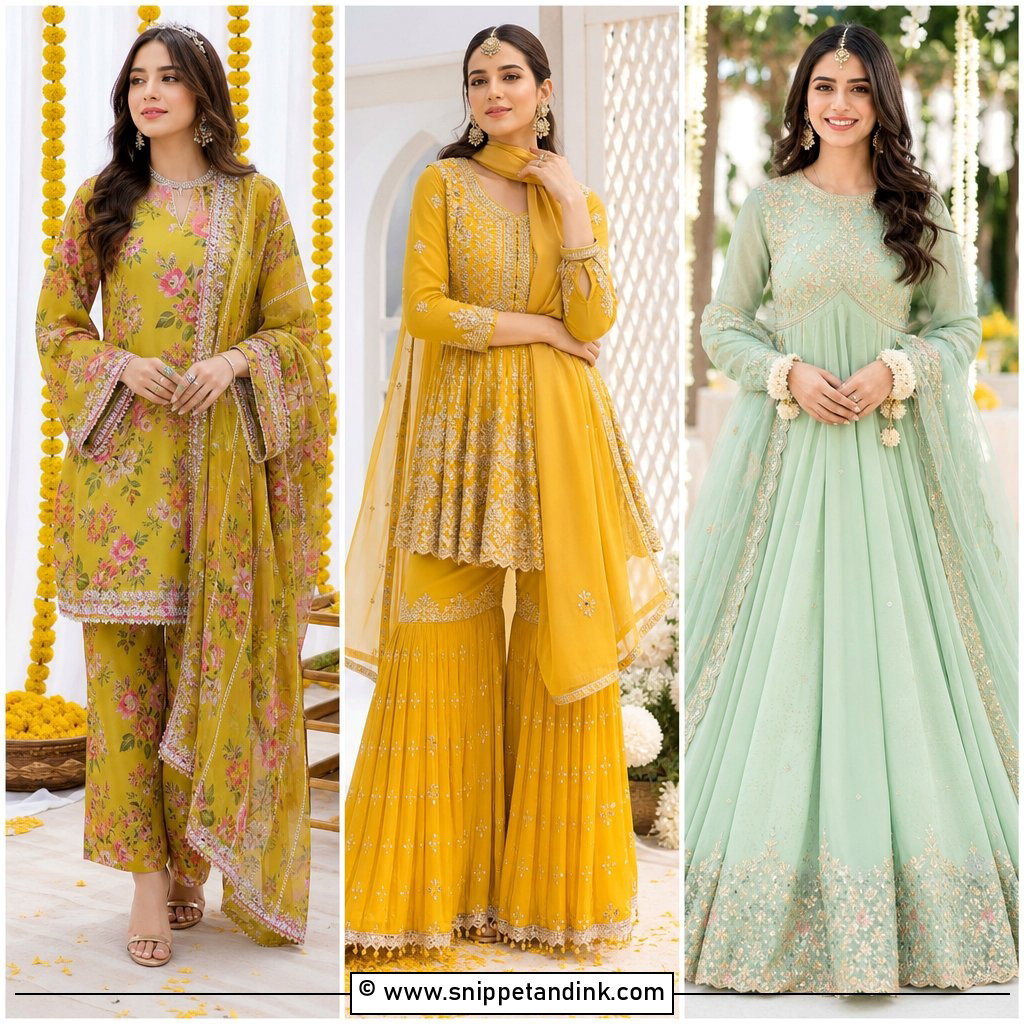
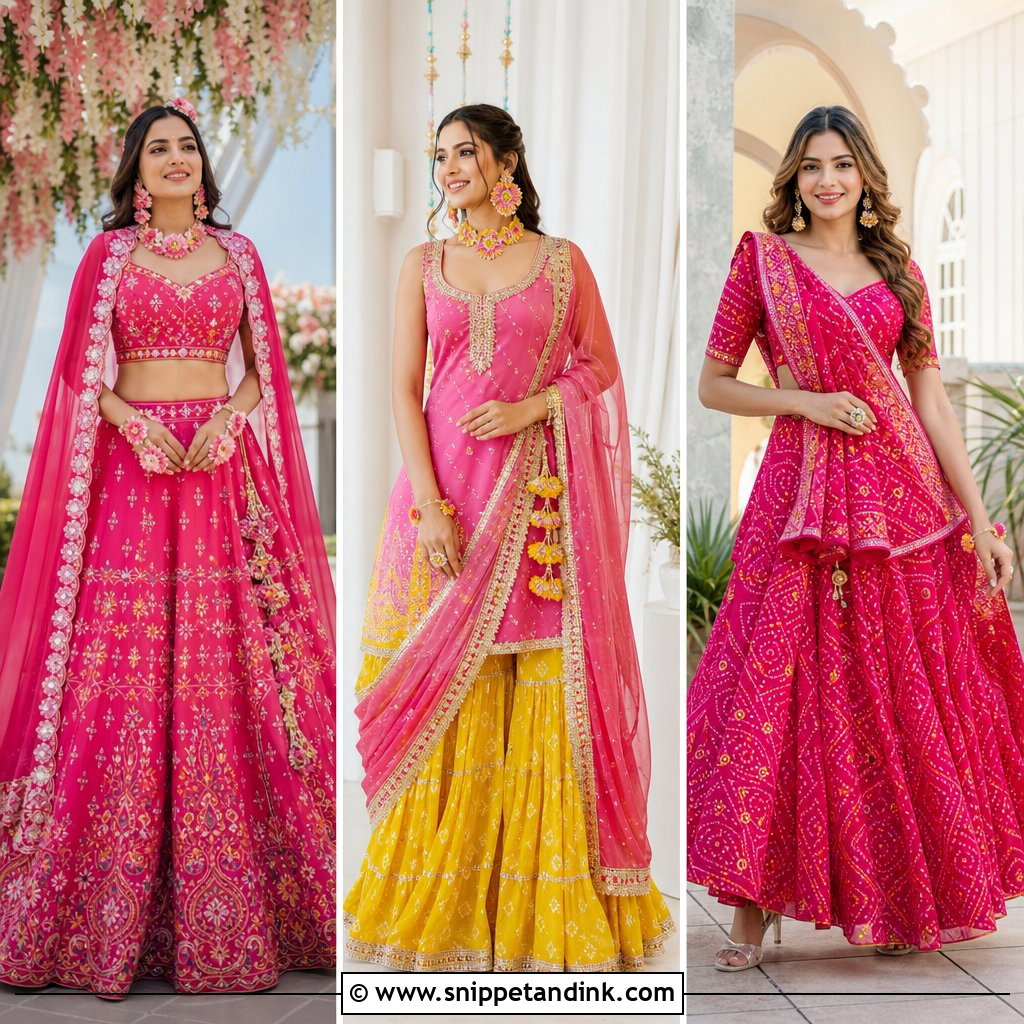
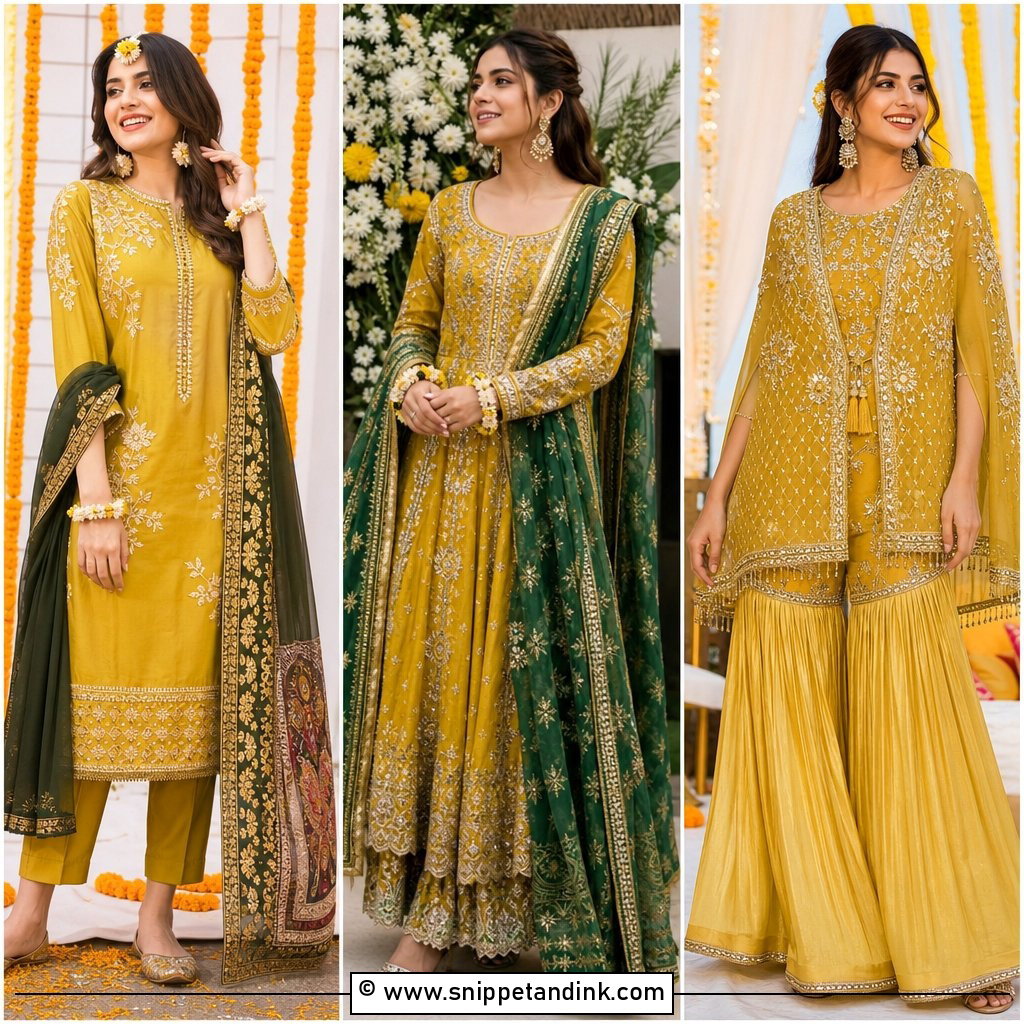
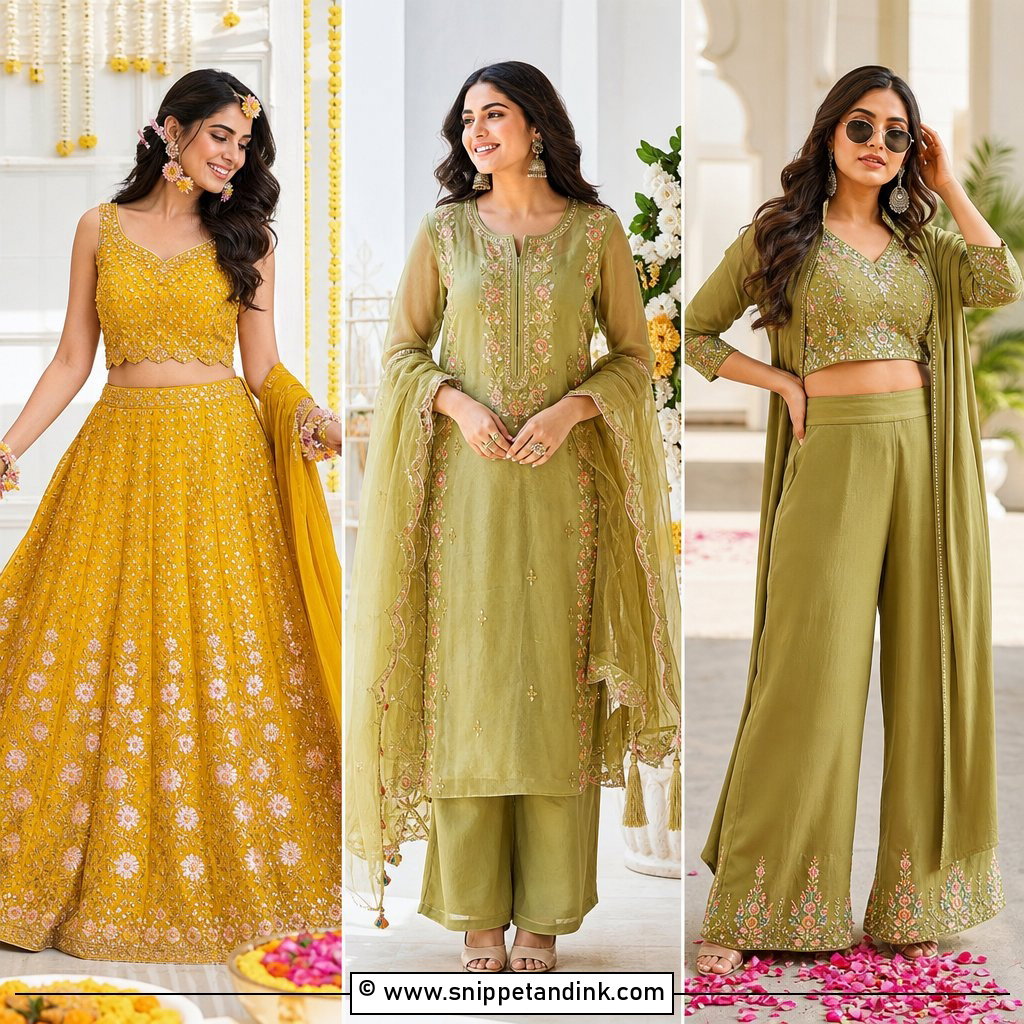
Yellow is the traditional mehndi color, and it’s my favorite backdrop for the stain itself, because deep brown henna reads clearly against it in photos. Keep the lehenga light; gota patti and thread work weigh far less than heavy zardozi, and you’ll be sitting still for a long time. A short choli or sleeveless blouse leaves your arms completely free, which I need if the design runs past the wrist. Drape the dupatta over one shoulder and pin it before I start. Juttis are easier than heels when your feet are drying.
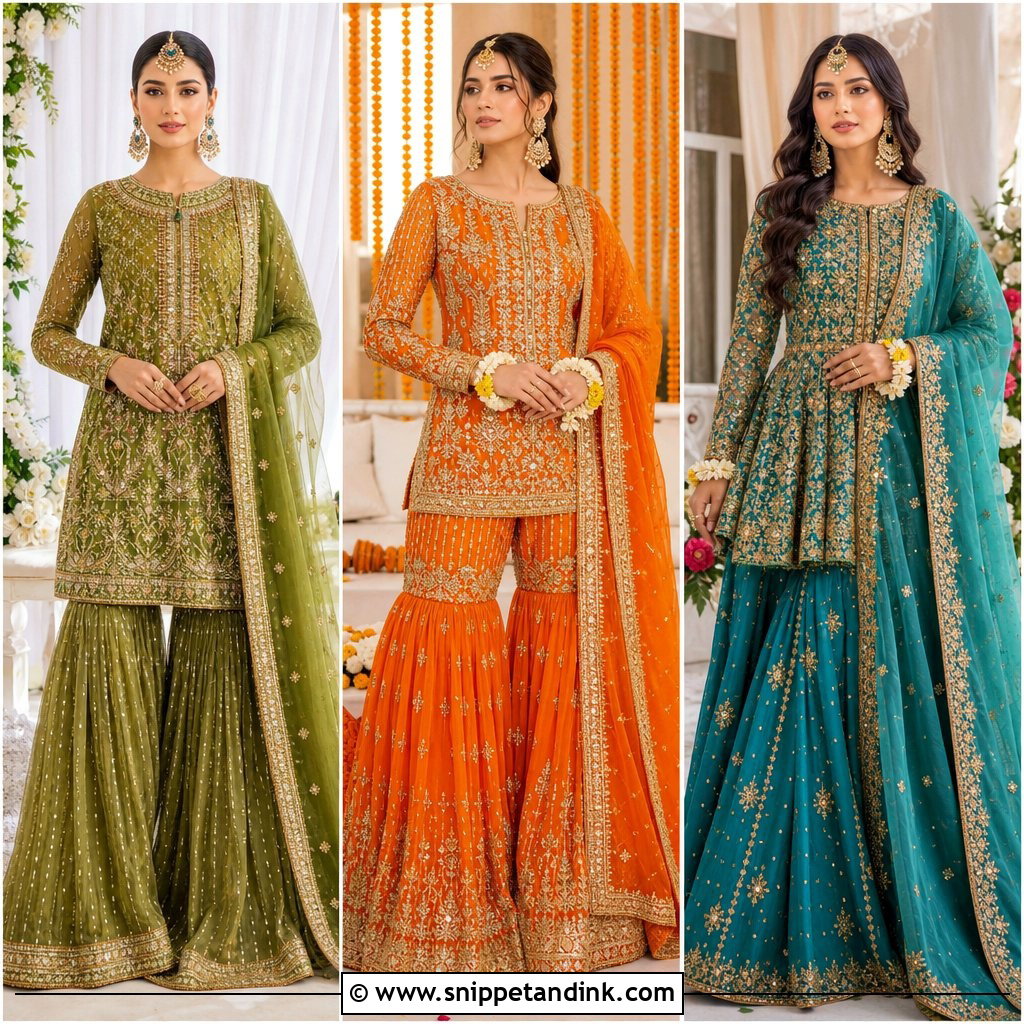
2. Green Bridal Mehndi Sharara
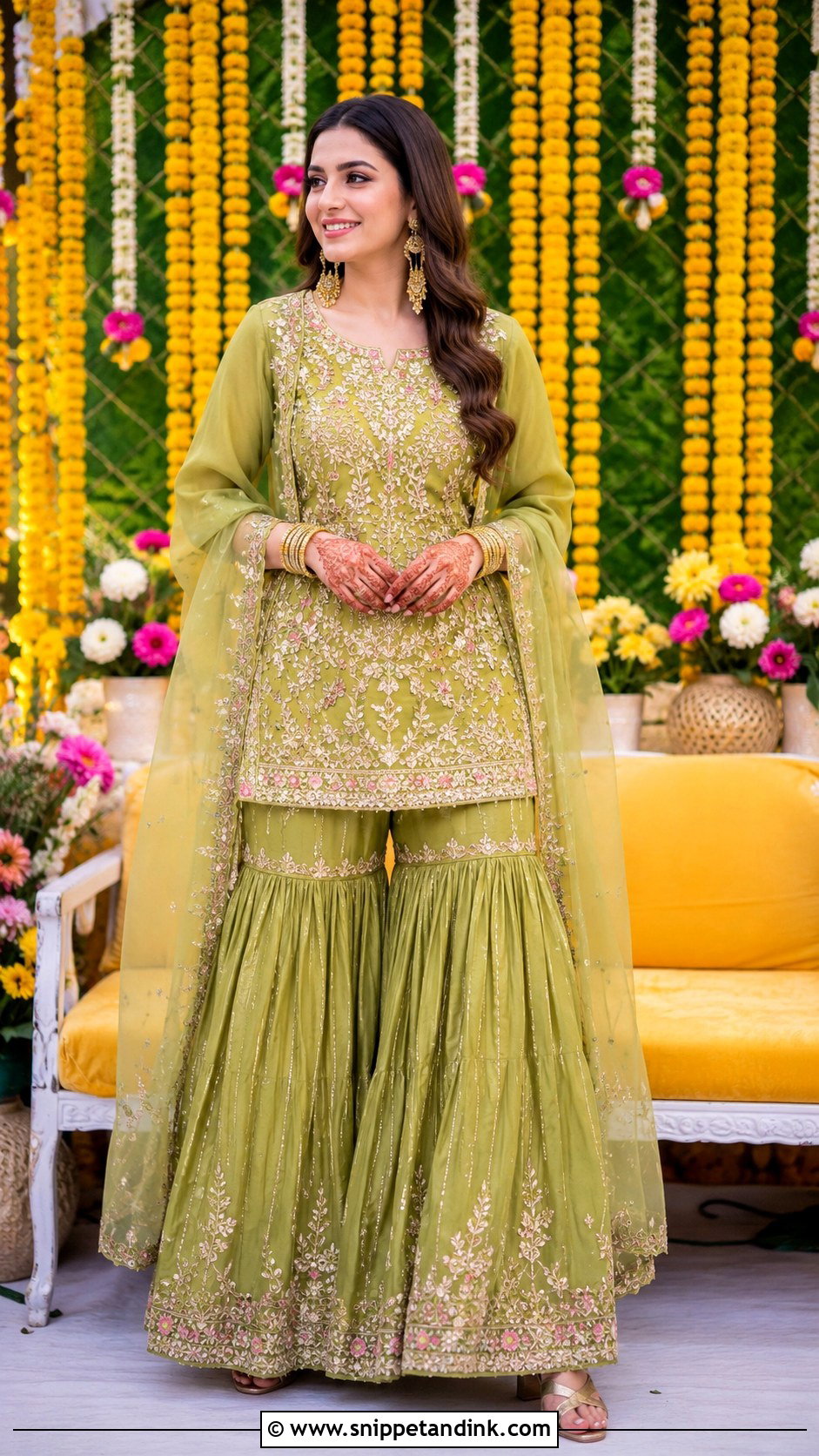
A green sharara is one of the easiest outfits to be hennaed in. The wide pants let you sit cross-legged or with a foot raised on a cushion, and nothing tightens around your knees. Pair it with a short kurti in silk, organza or georgette. Emerald, parrot and olive all look rich against marigold decor. One caution from my side: mehndi green is close to the color of fresh paste, so smudges on the fabric show less, which some brides find a relief.
3. Pink Bridal Mehndi Anarkali
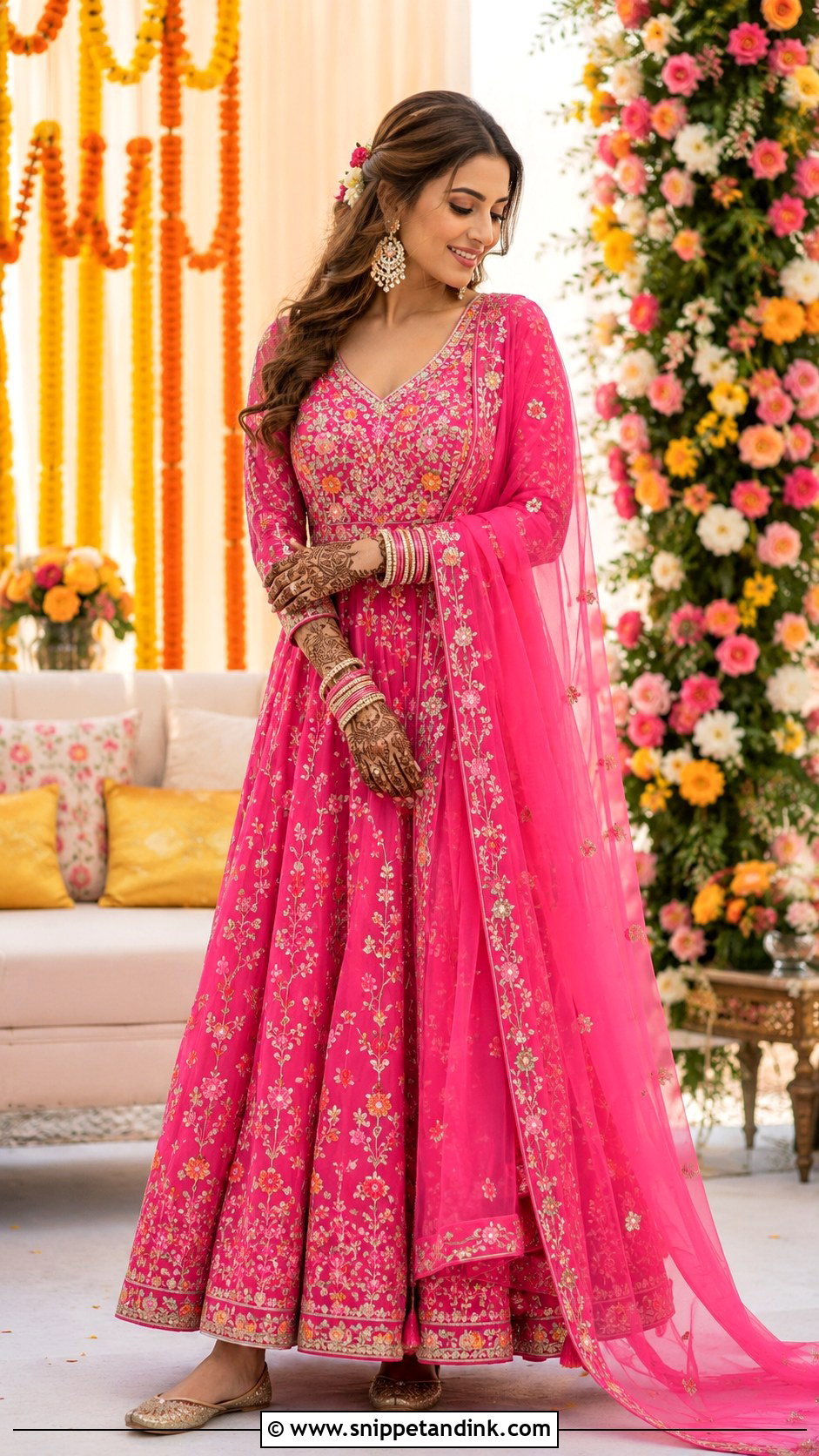
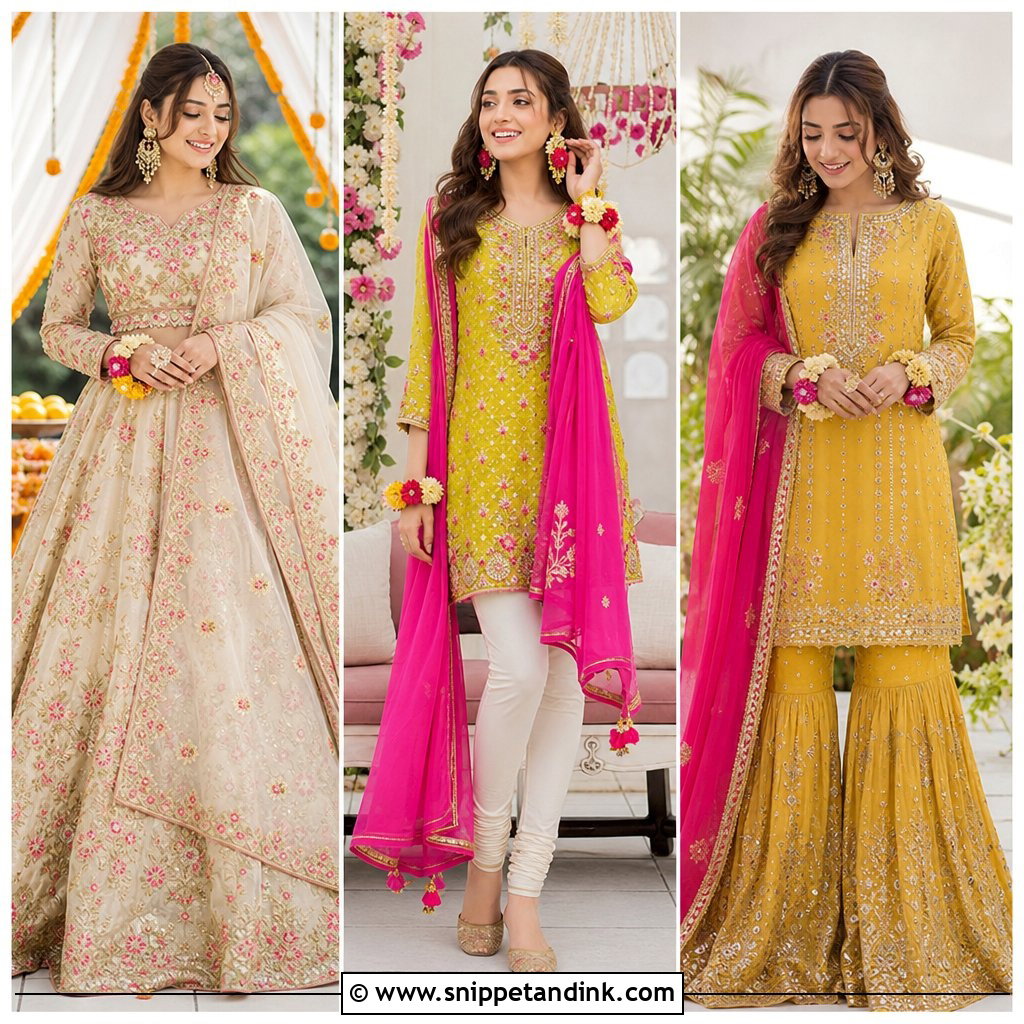
Anarkalis flow and twirl, which makes them lovely for dancing later in the night. For the application itself, sleeve length is the thing to check. If your design goes up to the elbow, a three-quarter sleeve will rub the fresh paste, so choose sleeveless or short sleeves. A light net dupatta is easier to keep away from your hands than a heavy one. Hot pink reads bold and festive, blush pink softer. Stacked bangles go on after the paste has dried and been scraped, not before.
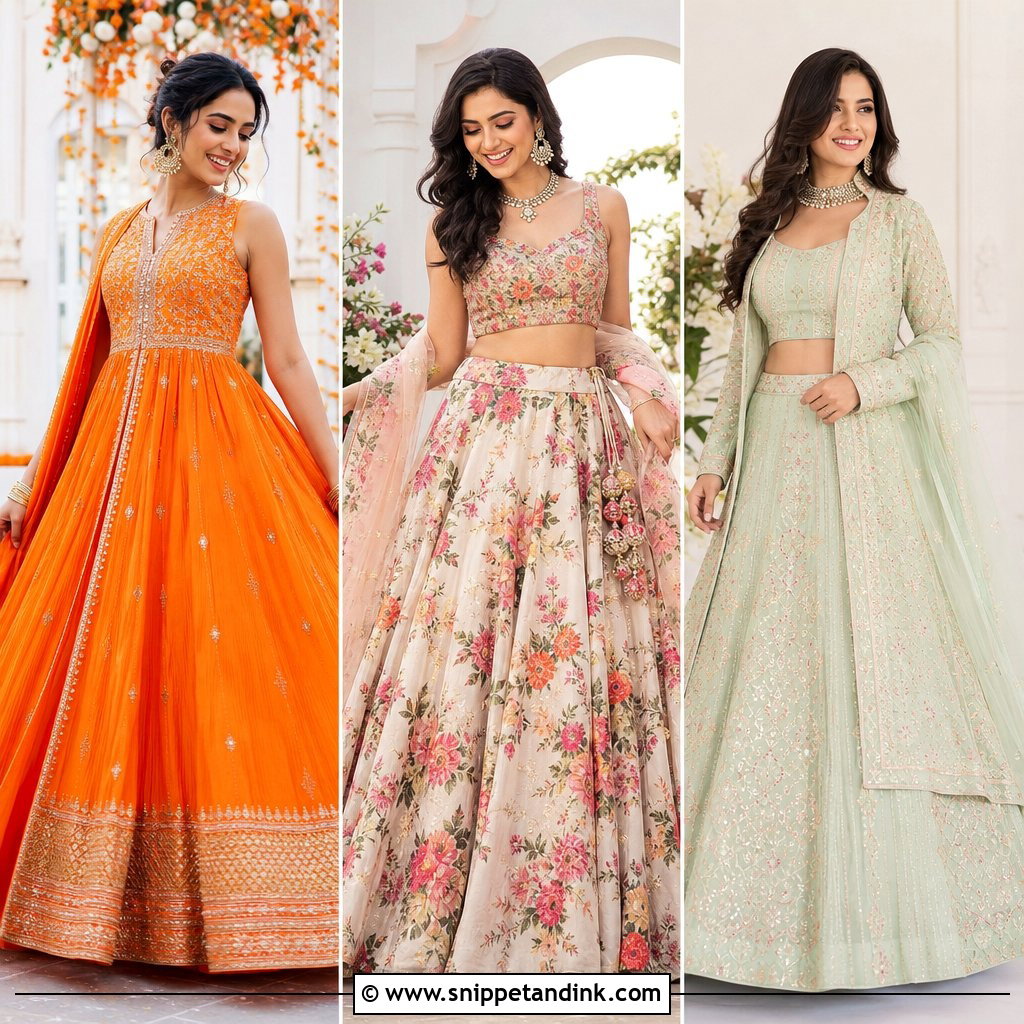
4. Orange Bridal Mehndi Gharara
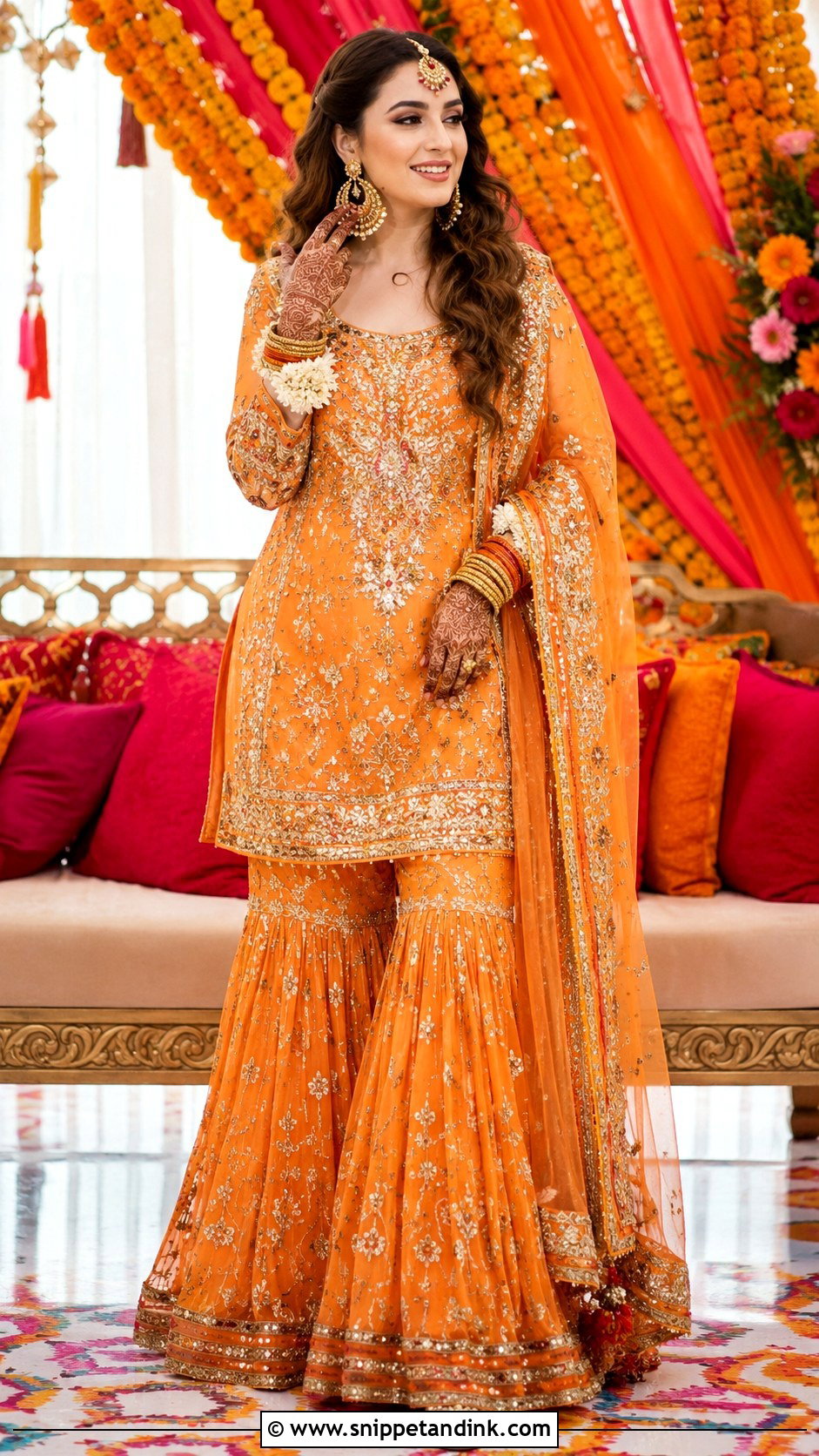
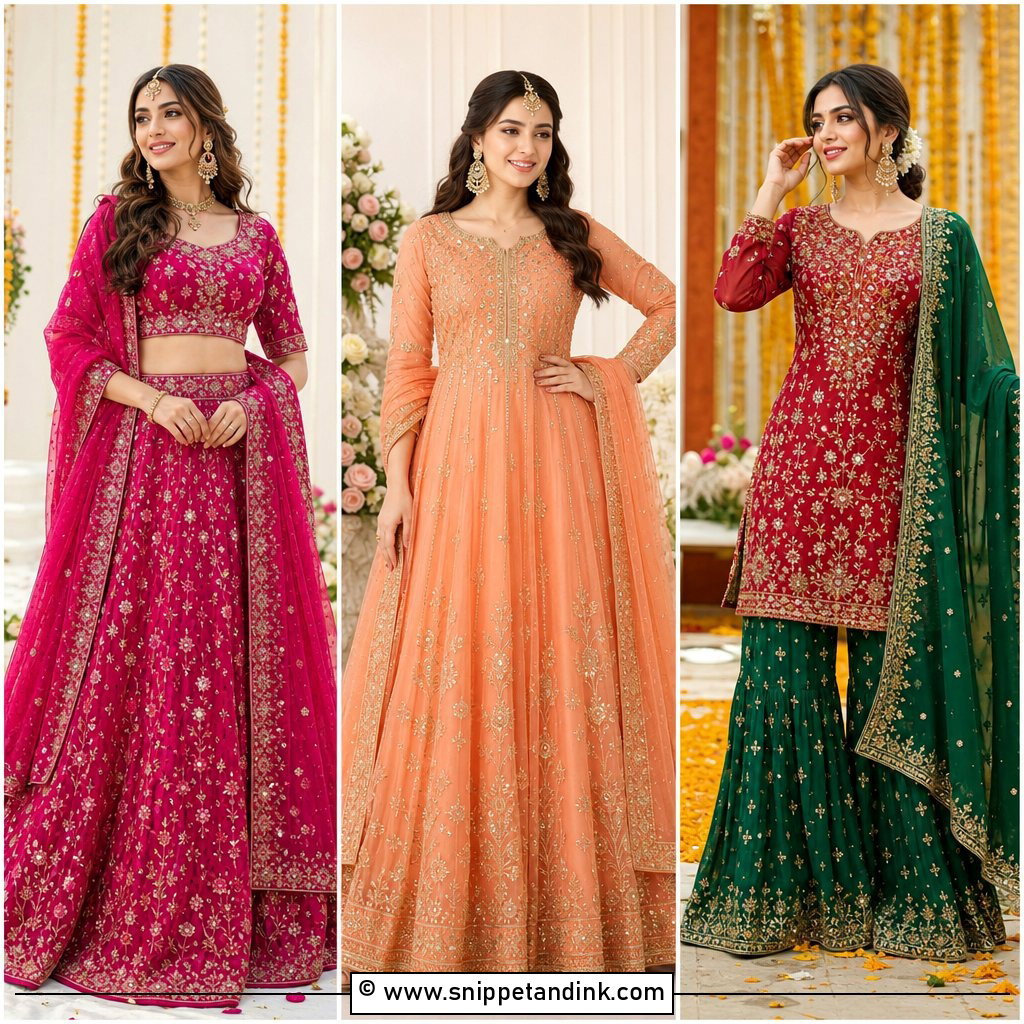
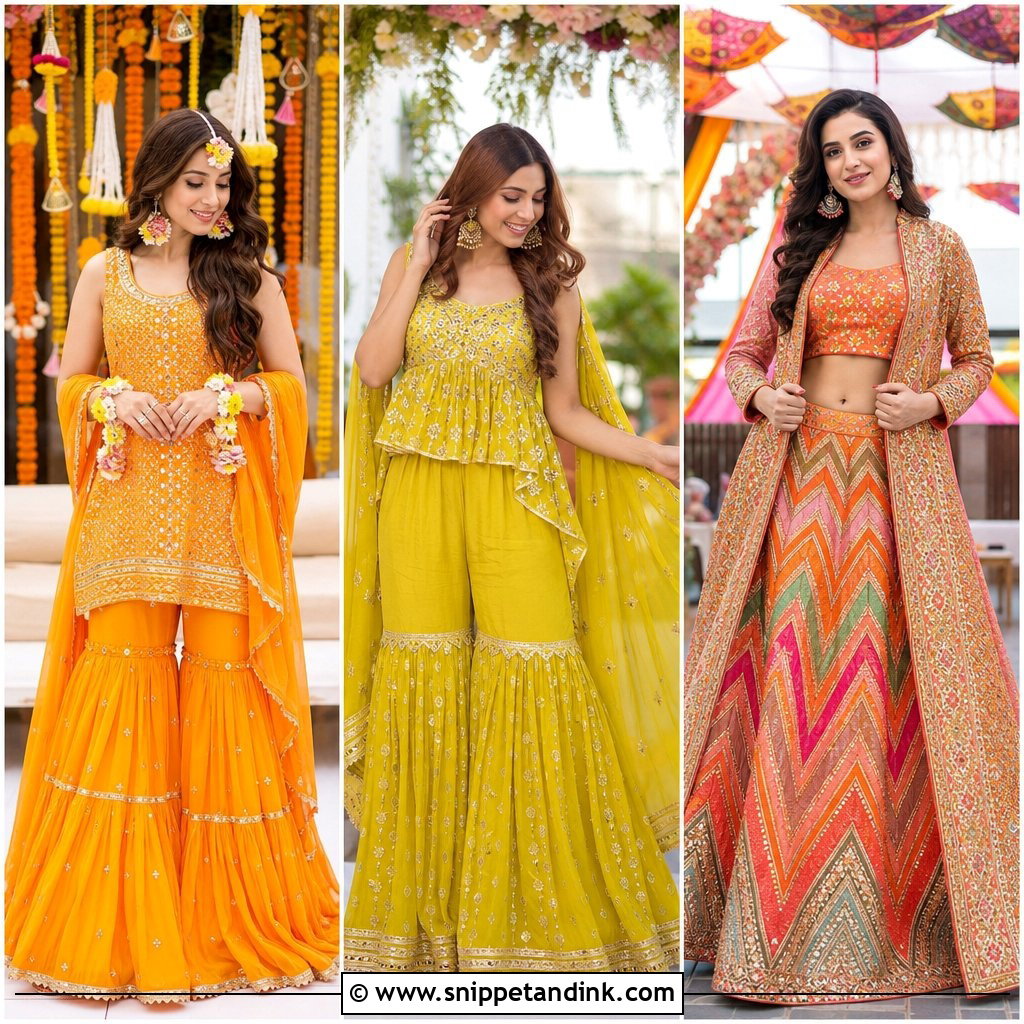
A gharara is fitted at the knee and flares out dramatically below, which is part of its charm and also its one problem for a mehndi bride. That flare pools around the feet, right where I’m working on your foot design. I ask brides in ghararas to have someone hold the hem back or to sit with the gharara gathered on a stool. Orange looks especially warm with gold embroidery and accents of pink and green. Chandbalis and a passa suit the heritage look.
5. Multicolor Bridal Mehndi Lehenga
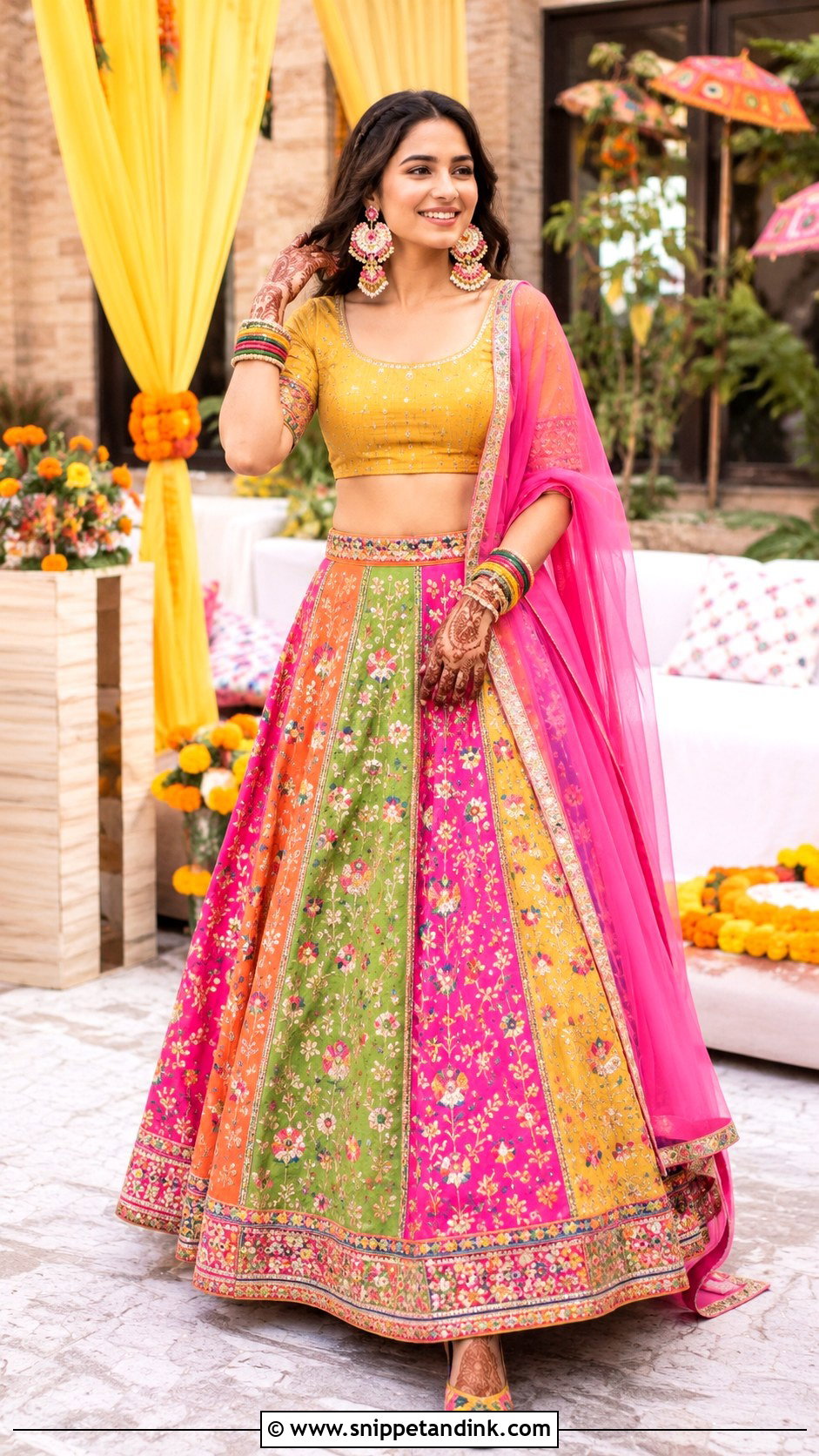
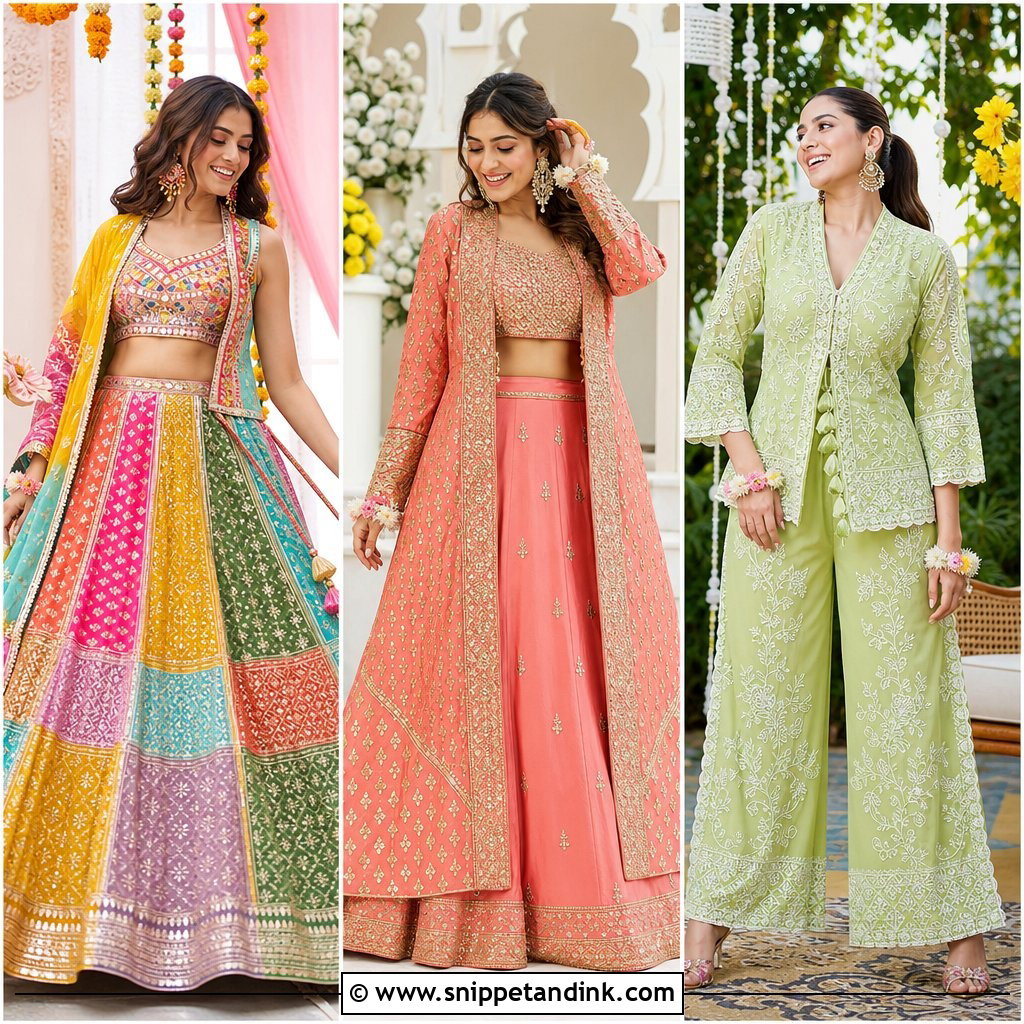
A multicolor bridal mehndi lehenga carries the festive mood on its own, with panels, patchwork or embroidery in yellow, green, pink, orange and blue. If the skirt is busy, keep the blouse or dupatta solid so the eye has somewhere to rest. Busy prints also hide small henna marks on the fabric. Colorful bangles and embroidered juttis finish it. It’s at home at outdoor functions and dance performances.
6. Mirror Work Bridal Mehndi Dress
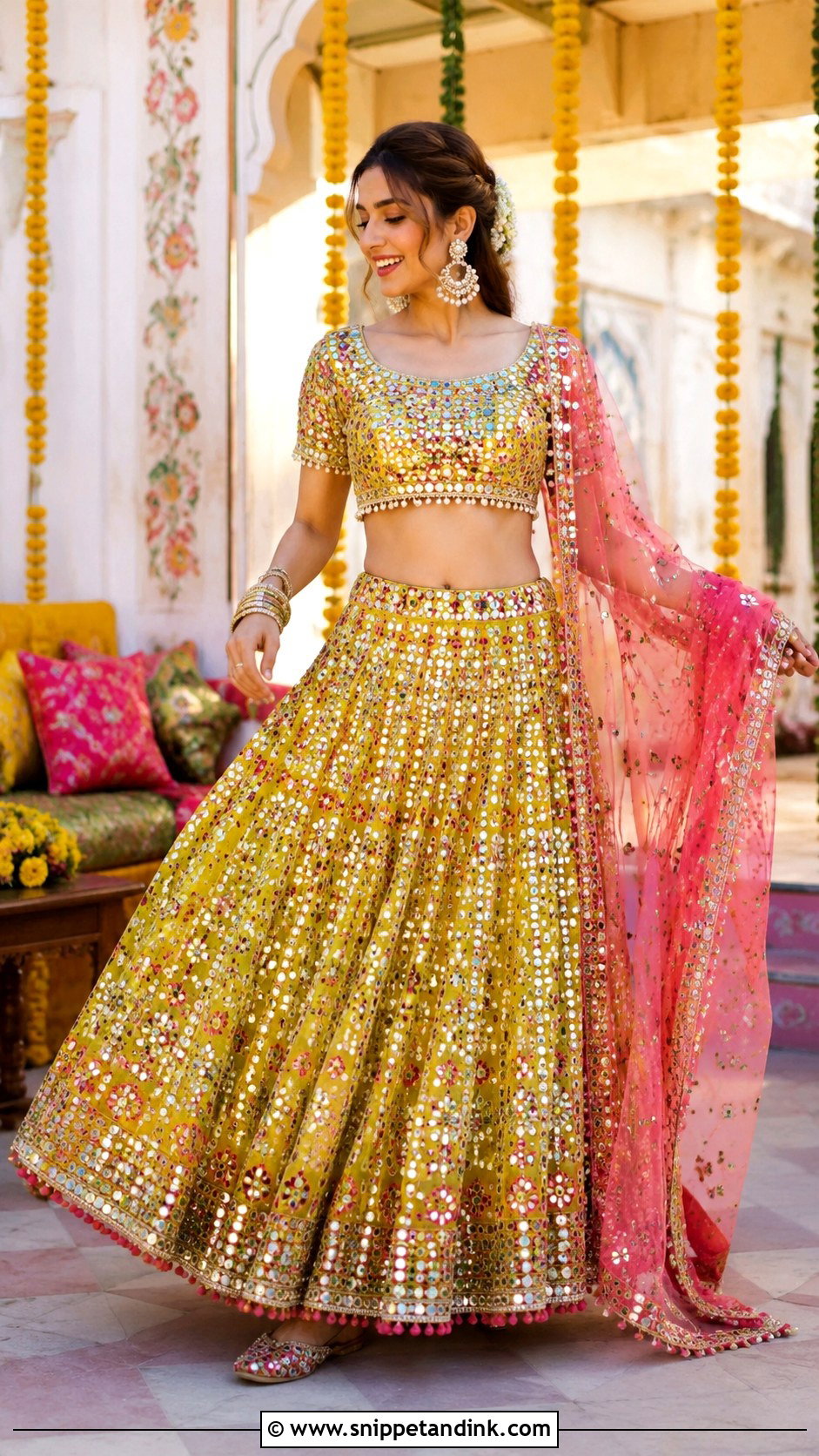
Mirror work catches every light at the event, daytime sun or fairy lights. It also has edges. Little mirrors sewn onto the sleeves or cuffs can scrape fresh paste as you move your arms, so I prefer mirror work kept to the skirt, hem and back. Keep jewelry simple. A sleek bun or a braid with flowers keeps hair off your hands while they dry.
7. Gota Patti Bridal Mehndi Lehenga
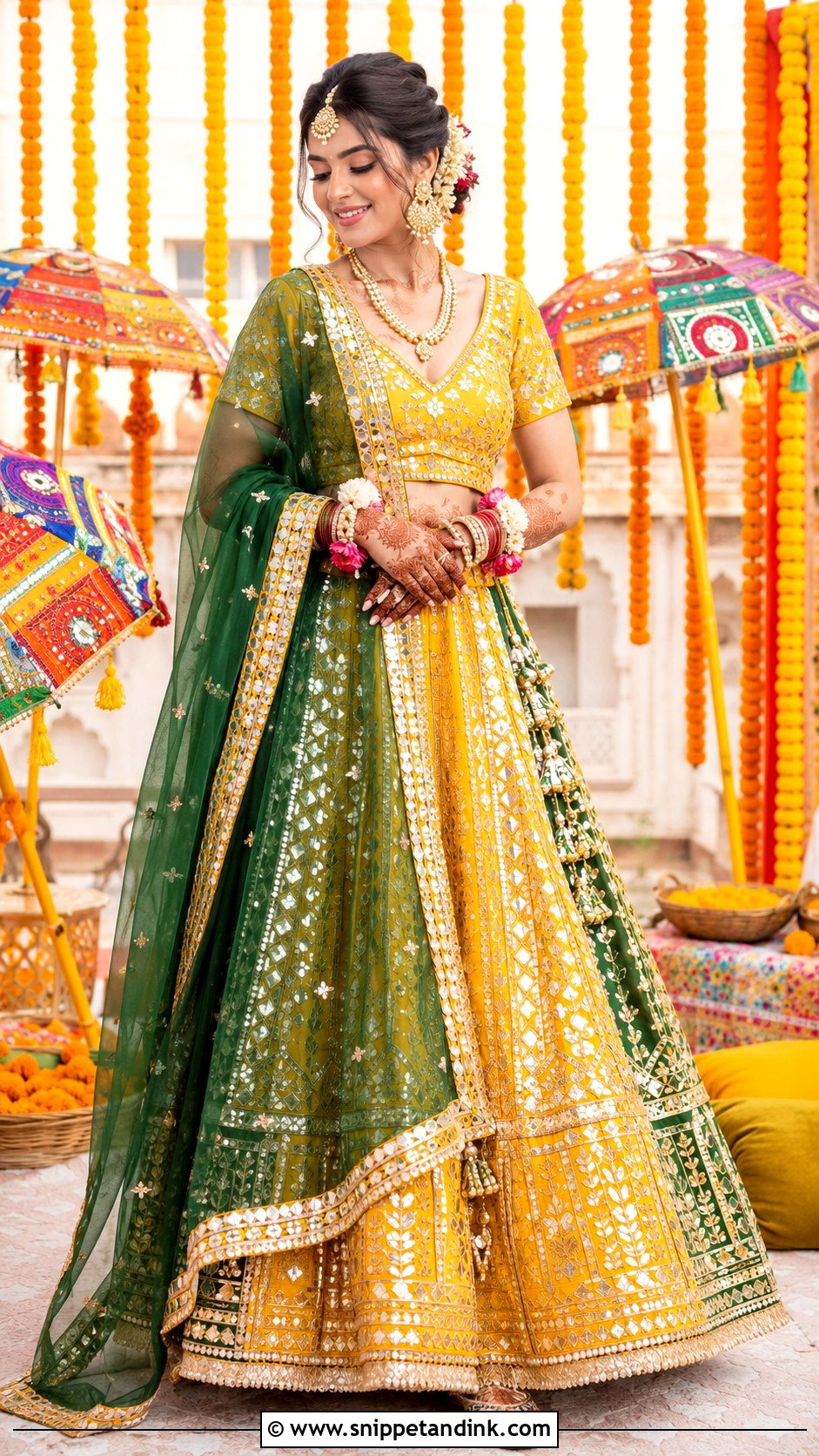
Gota patti is metallic ribbon appliqué from Rajasthan, and it’s much lighter than metal embroidery, which is why a gota patti bridal mehndi lehenga is so comfortable to dance in. It works on yellow, green, orange and pink. Pin the dupatta firmly at the shoulder and waist so it doesn’t swing into your hands. Pearl jewelry and gold bangles suit the traditional look. It photographs well against marigolds and folk-inspired decor.
8. Floral Bridal Mehndi Dress
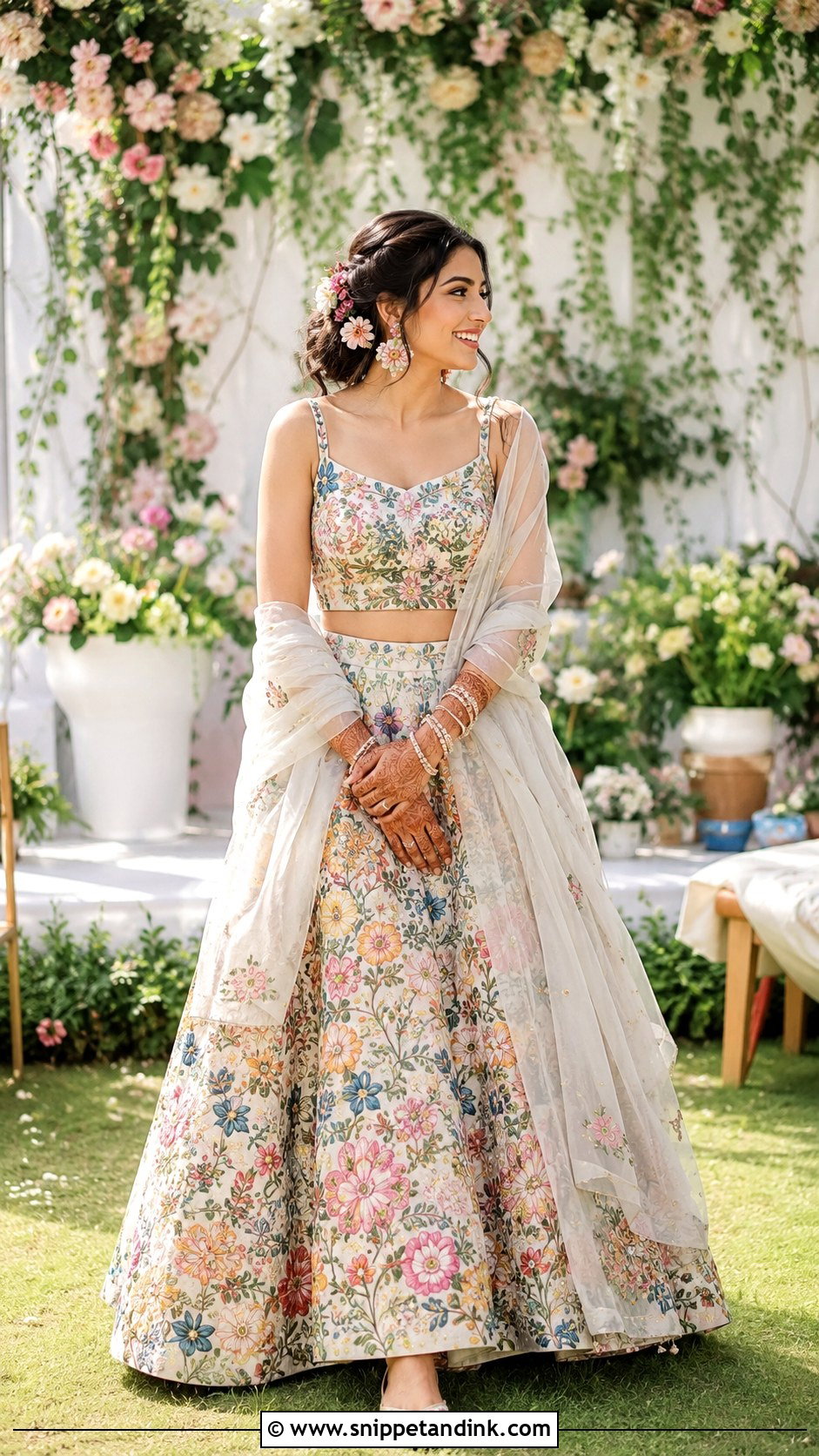
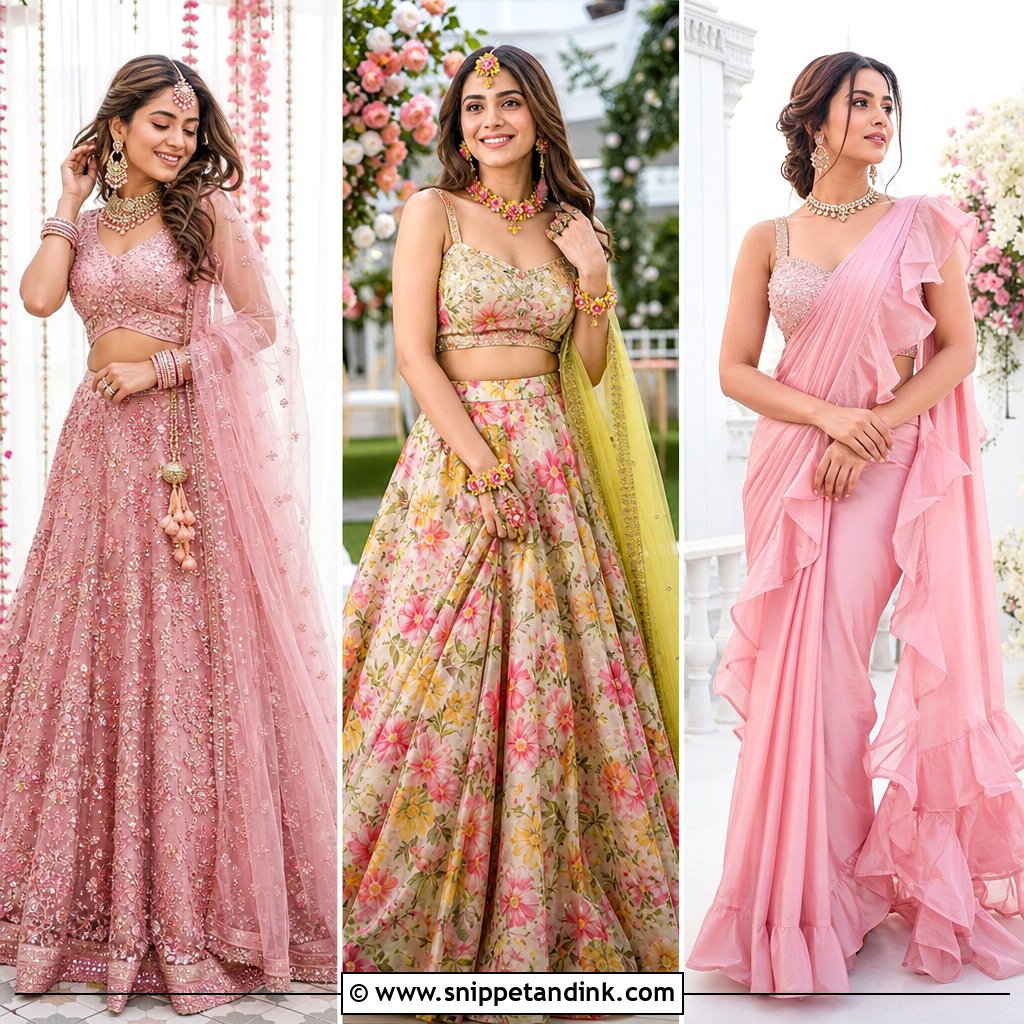
Floral outfits suit a daytime mehndi best, especially in a garden or by a pool. The florals can be embroidered, printed on organza or added as appliqué. A floral lehenga with a plain blouse feels cheerful; a floral anarkali feels softer. Pale colors like ivory, peach and mint show paste smudges most, so if you choose them, sit on a cloth during the application. Keep jewelry light.
9. Cape Bridal Mehndi Lehenga
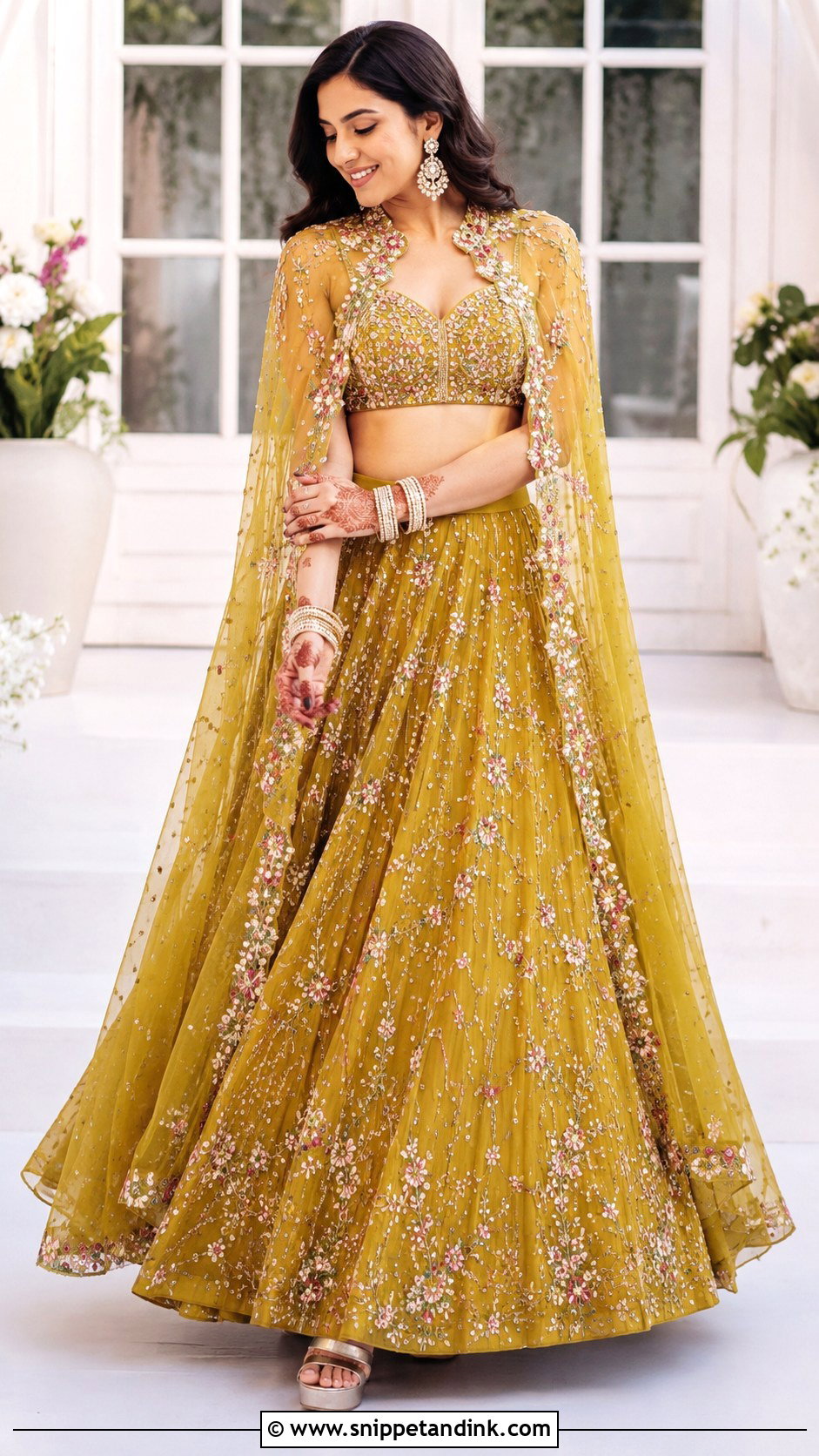
A cape solves the dupatta problem entirely. It sits on the shoulders, doesn’t slide into wet henna and gives coverage at the same time. Choose a short cape, or one with side openings, so your arms stay visible for the design. Pair it with a cropped blouse and an embroidered lehenga. This is one of the most practical outfits I see brides wear during application.
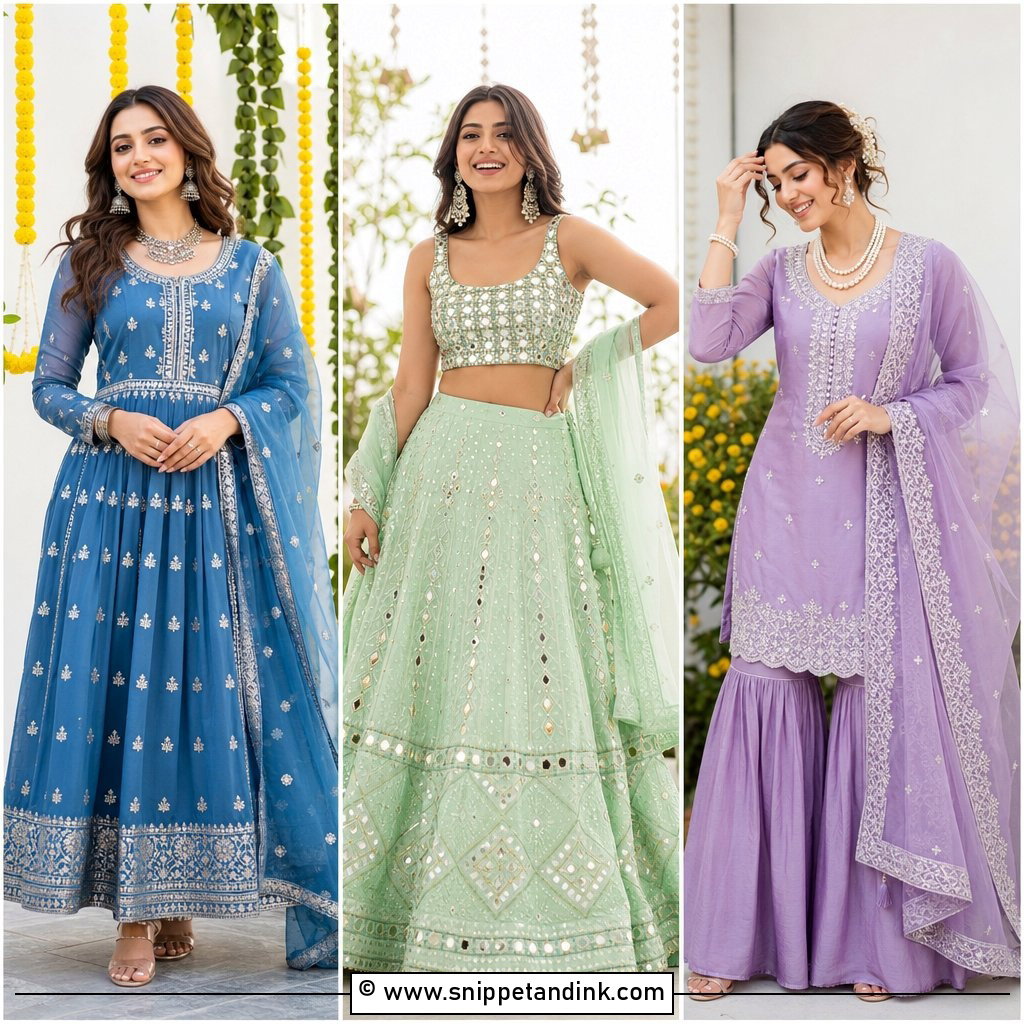
10. Pastel Bridal Mehndi Anarkali
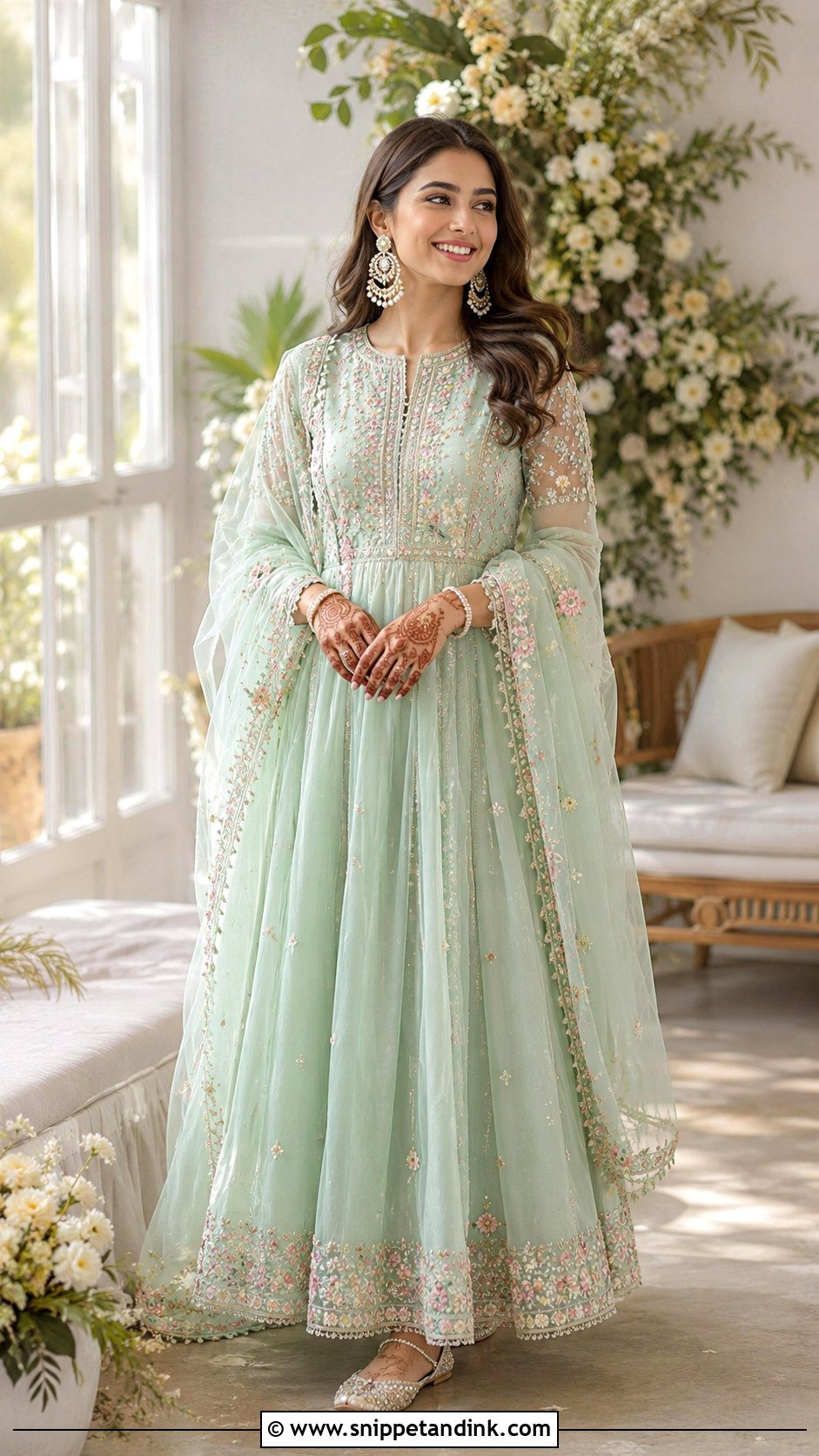
Pastels give a calm, modern alternative to the bright palette. Mint, powder blue, blush, lemon and lavender all work with delicate embroidery. A long, flowing anarkali moves easily. Choose a neckline and sleeves that leave your mehndi visible, especially if your design goes up the arms. Pale fabric shows every orange smear, so be careful when the paste is being scraped off.
11. Red Bridal Mehndi Lehenga
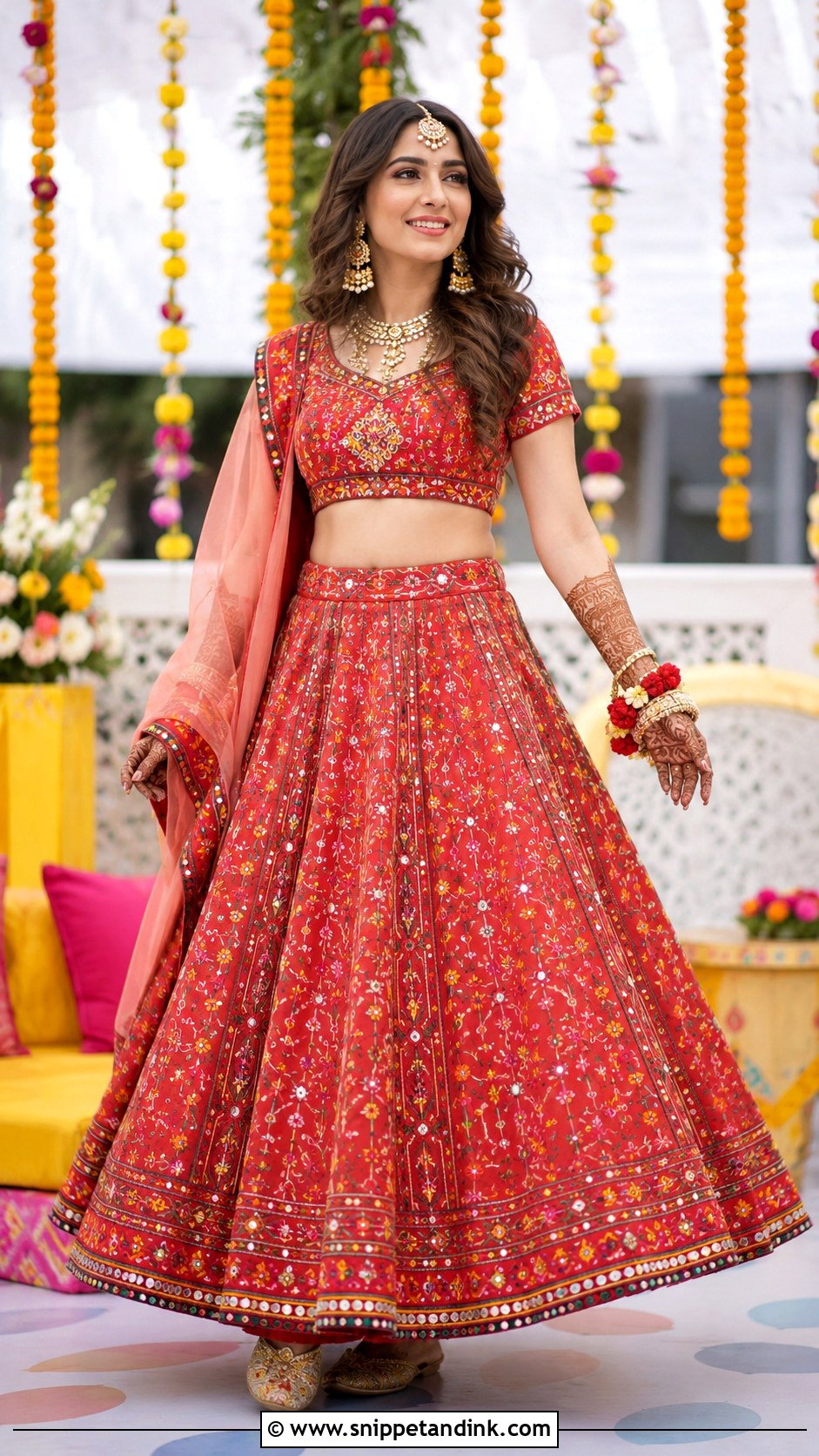
Red is often kept for the wedding day itself in many families, but a lighter, playful red lehenga can work for the mehndi. Mirror work, colorful thread embroidery and gota keep it from looking too formal. Pair it with a short blouse and a light dupatta. One thing worth knowing: a dark henna stain against red fabric reads less sharply in photos than it does against yellow or green, so expect the hands to blend in a little.
12. White Bridal Mehndi Dress
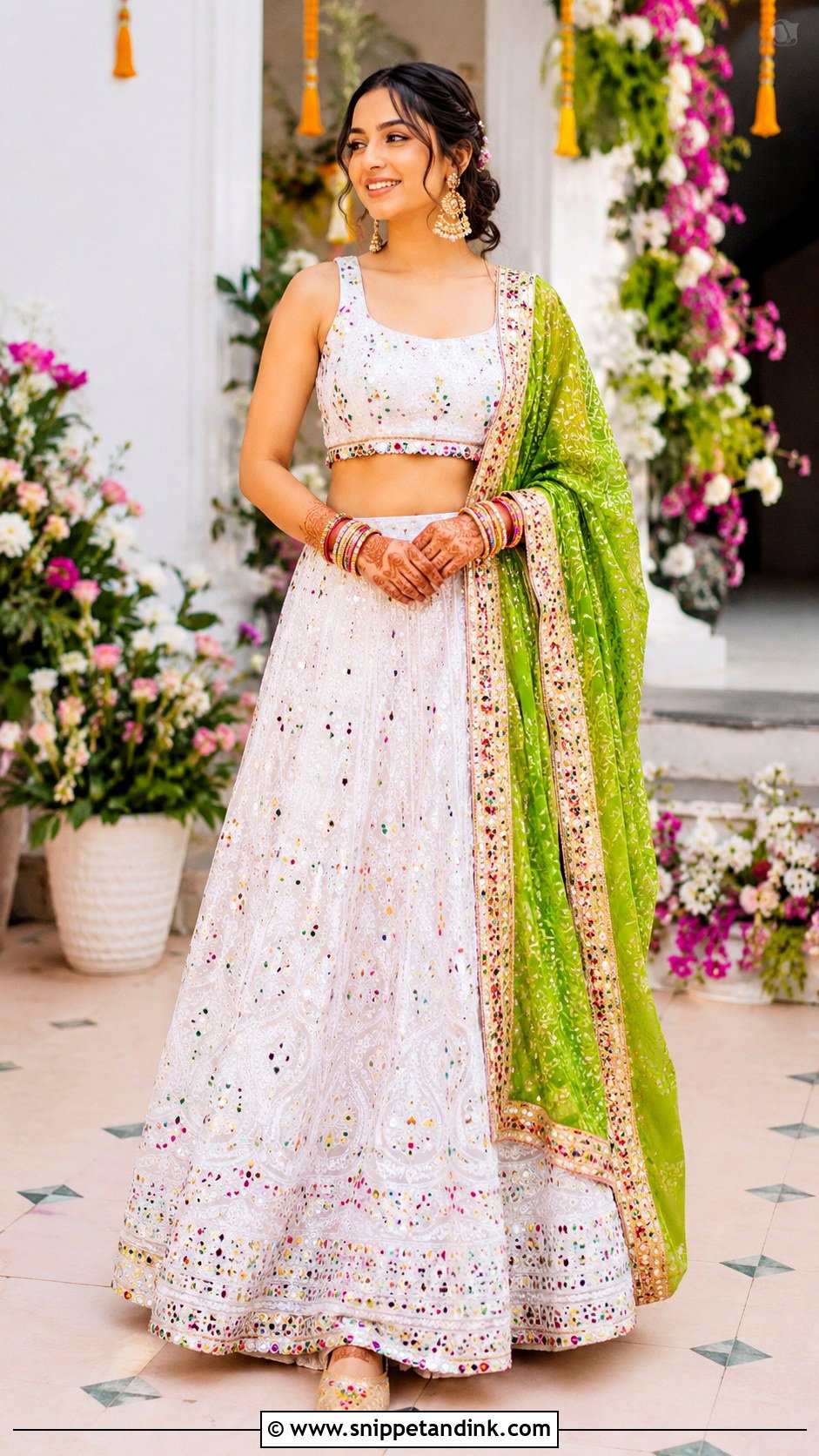
White against a dark henna stain gives the strongest contrast of any outfit here. It’s also the color I worry about most, because paste and lemon-sugar sealant both leave orange marks that rarely wash out of white silk. If you choose white, wear it after the paste has been scraped, or keep a cloth over your lap during application. Mirror work, colorful embroidery and bright dupattas give it festive energy.
13. Blue Bridal Mehndi Sharara
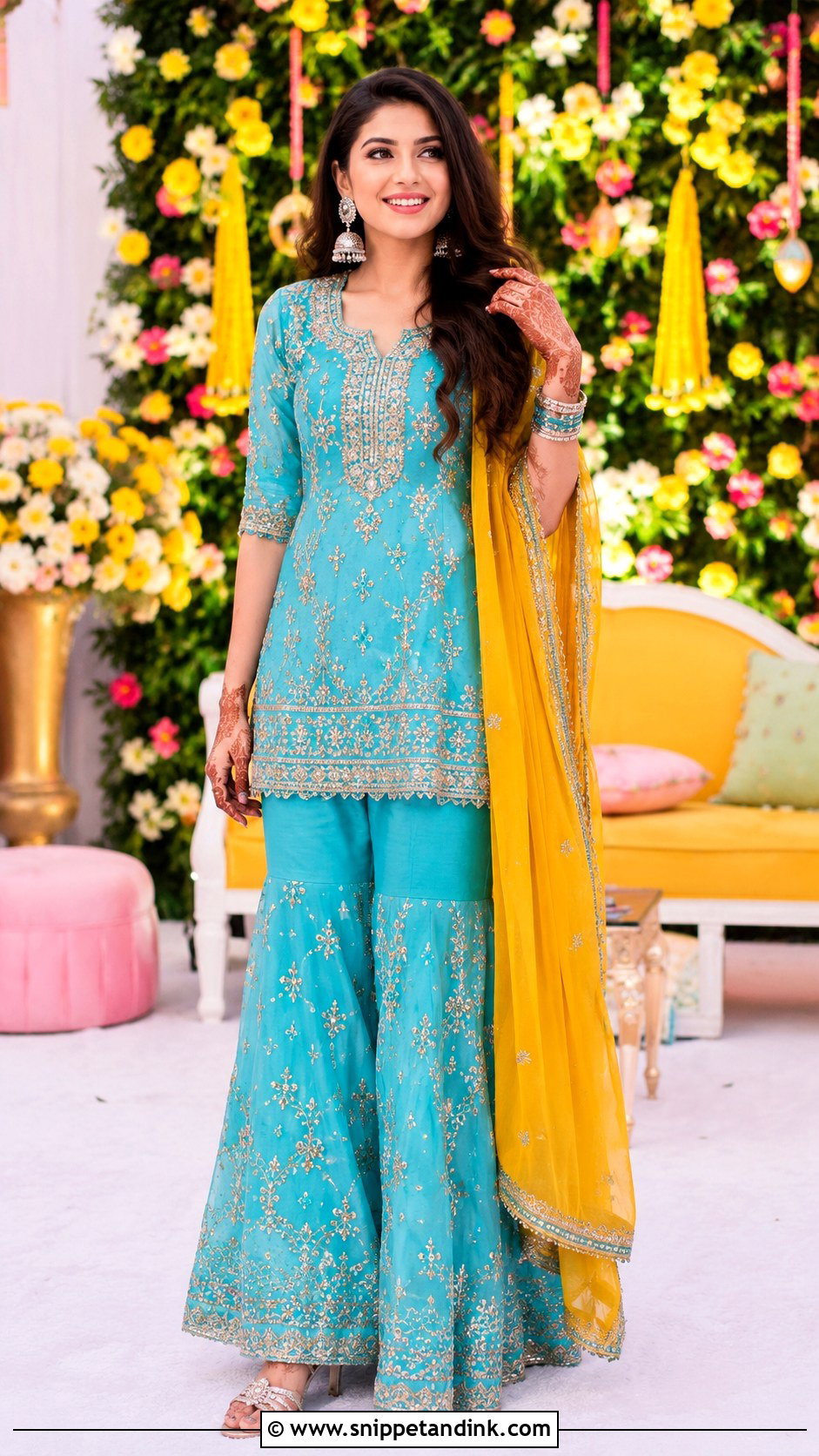
Blue is an unexpected and fresh change from yellow and green. Turquoise, royal blue and powder blue all suit a sharara. A short kurti with wide pants is comfortable to sit in. Silver jewelry suits cool blues; gold adds warmth. A contrasting dupatta in pink or lime adds color. It works well under stage lighting at indoor events.
14. Lime Green Bridal Mehndi Lehenga
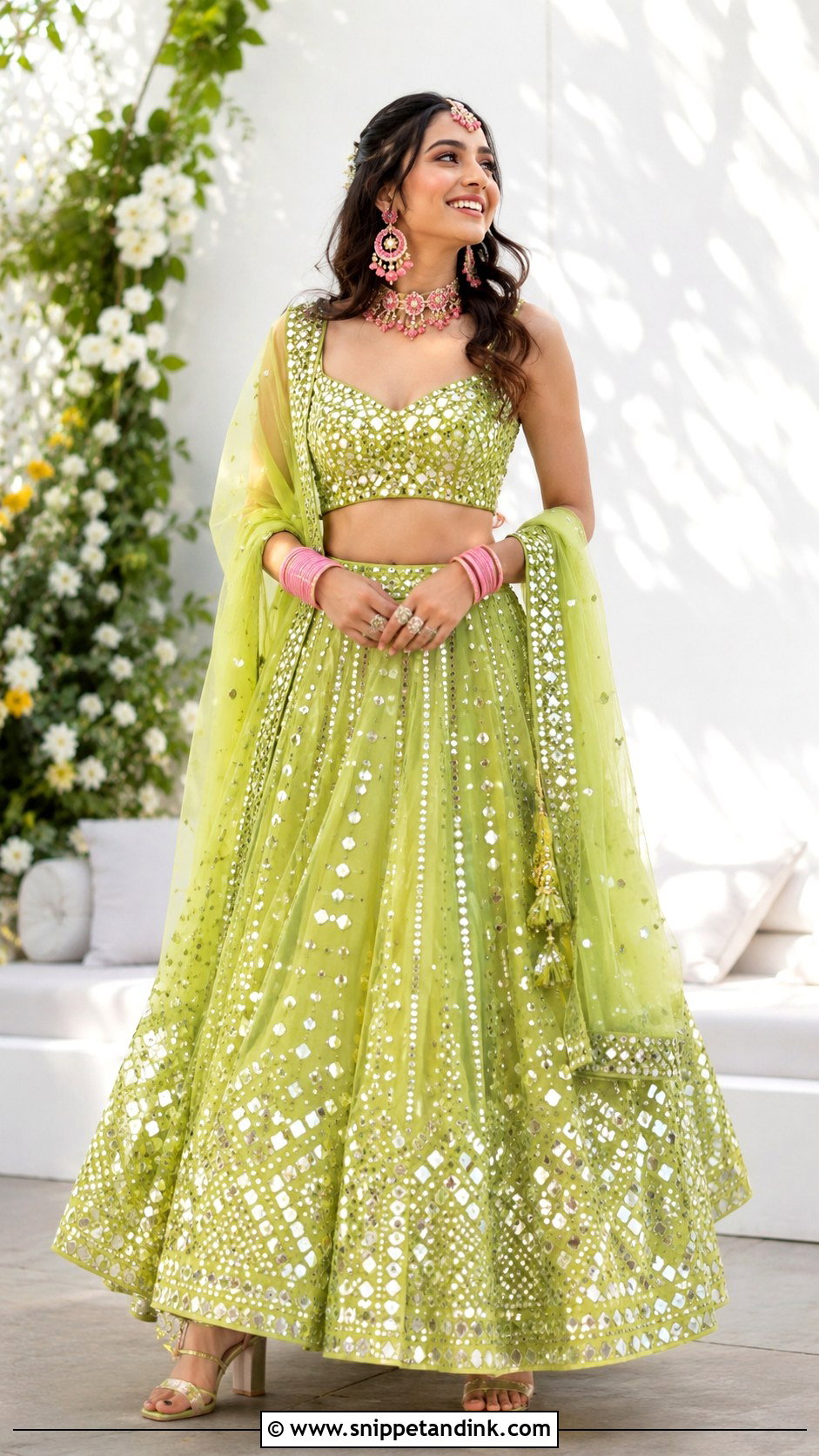
A lime green bridal mehndi lehenga is bright and playful, and the color ties naturally to the mehndi theme. Choose a skirt with mirror work, sequins or floral embroidery. A fitted blouse stays out of the way of your arms. Drape the dupatta behind you during application. Pink or orange accents add fun contrast.
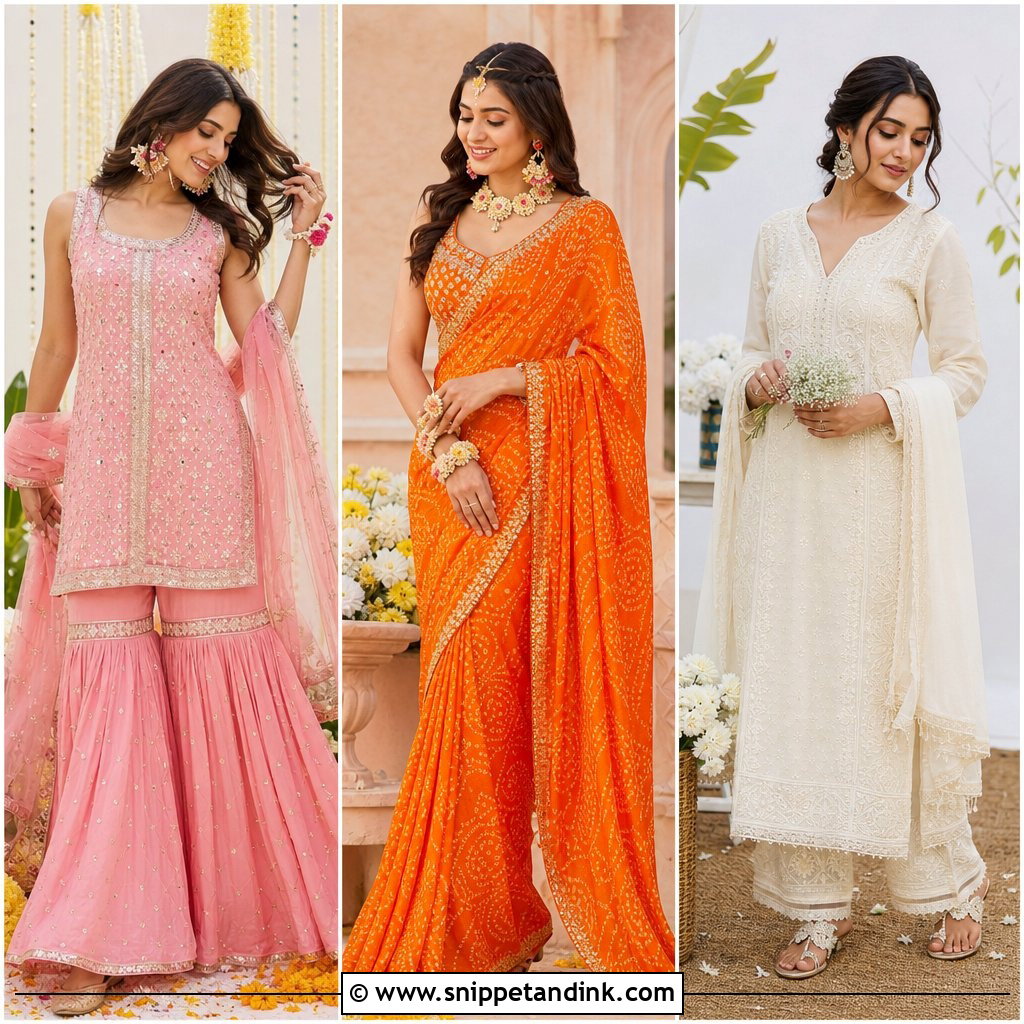
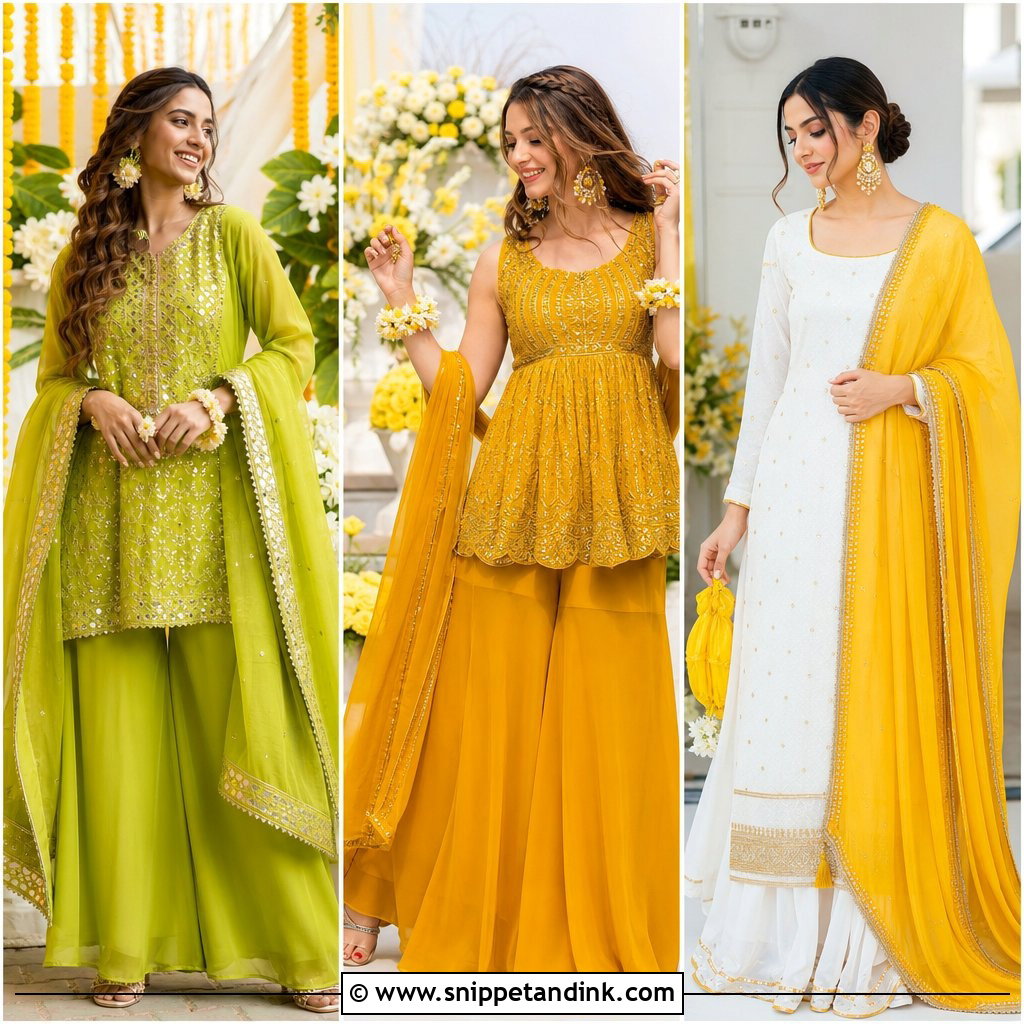
15. Palazzo Bridal Mehndi Suit
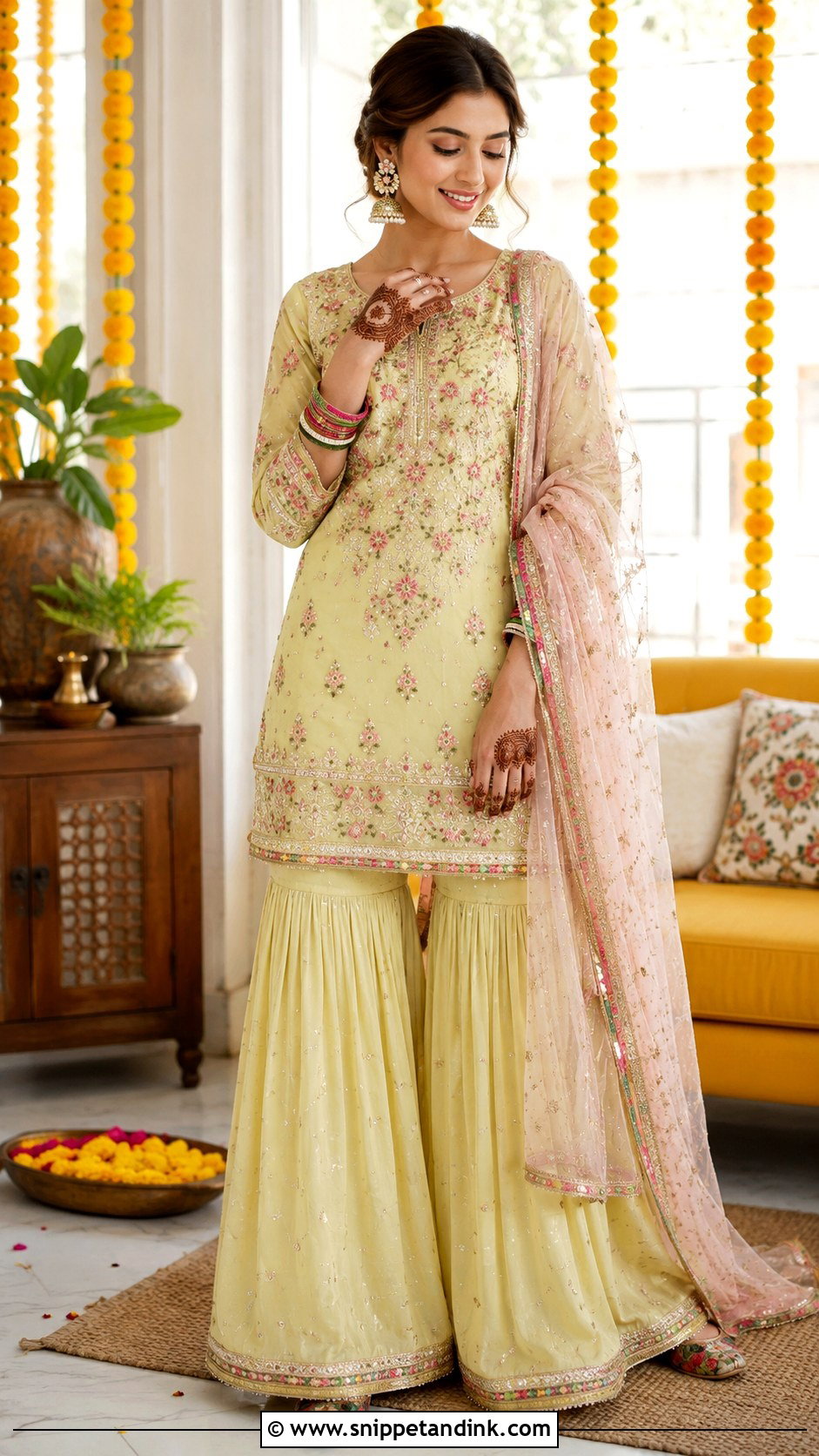
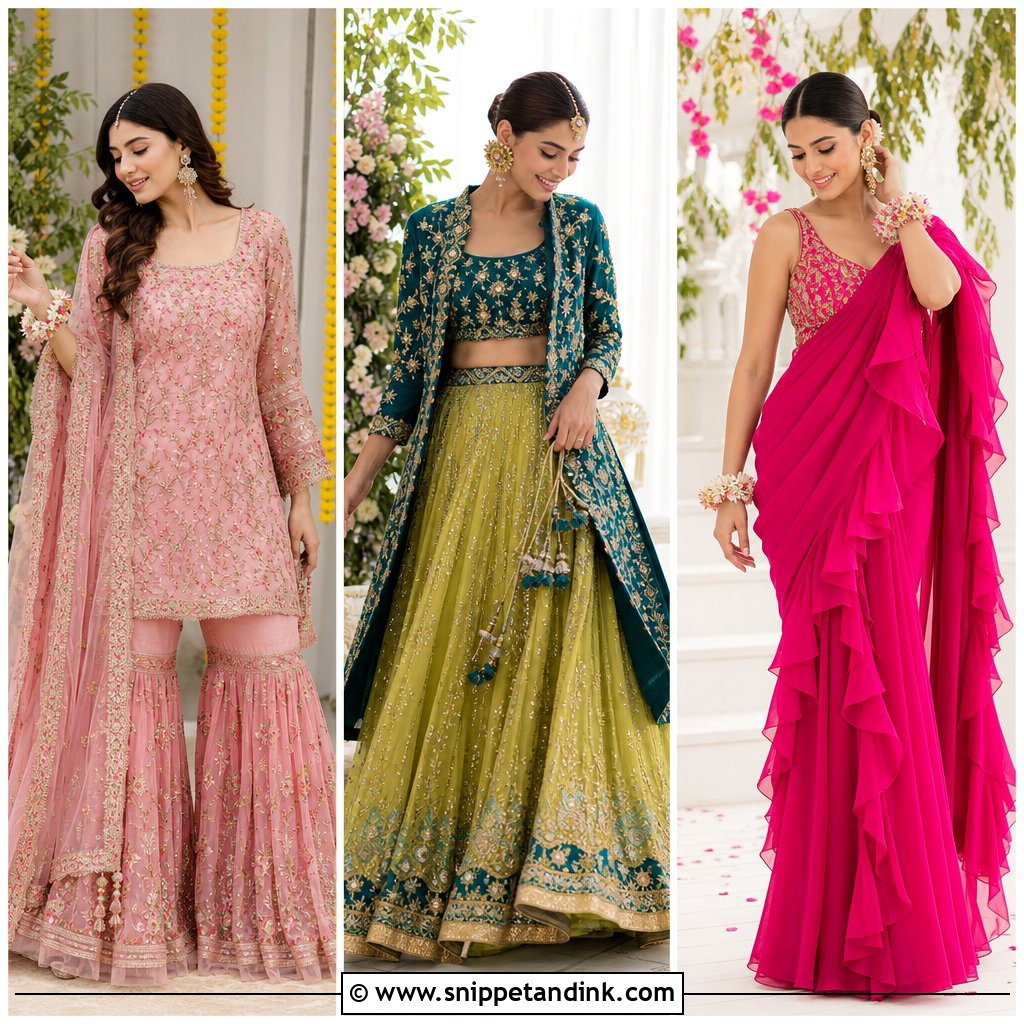
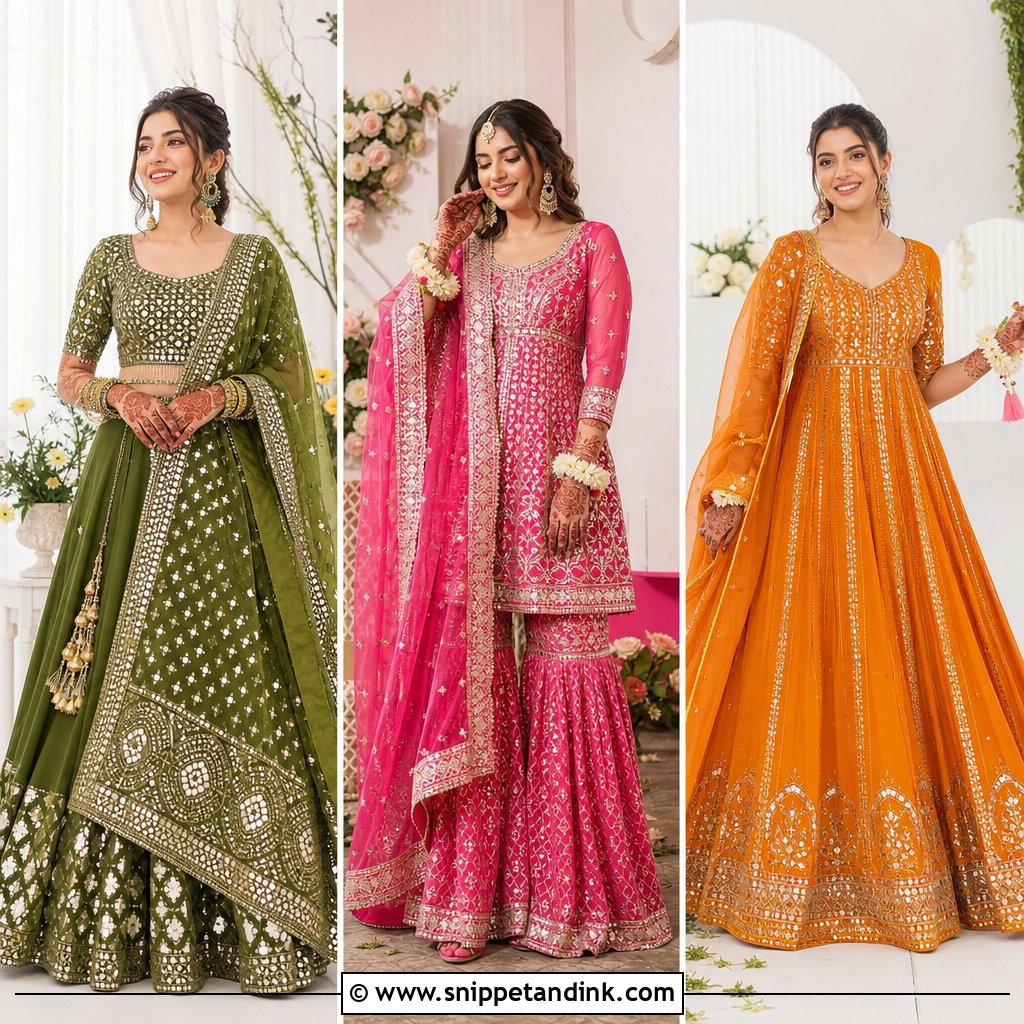
Palazzo suits are the most comfortable outfit for a long application. Wide trousers let you sit cross-legged, and there’s no heavy skirt pulling at your waist. Pair them with an embroidered short kurta or peplum top and a light dupatta. Yellow, green, coral and pink keep it festive. It suits home functions and warm weather.
16. Peplum Bridal Mehndi Lehenga
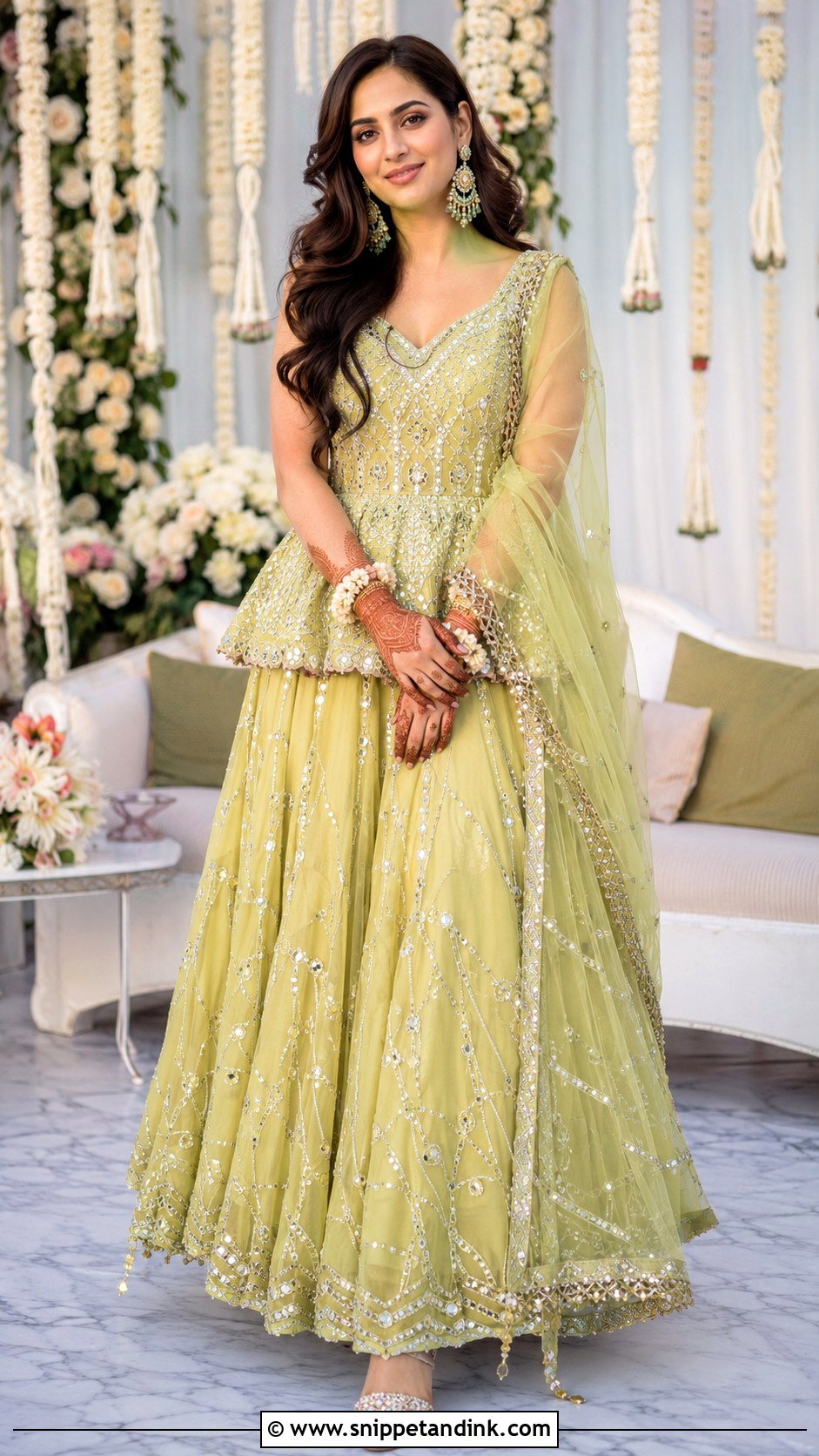
A peplum gives more coverage than a cropped blouse while keeping a defined waist. It pairs well with a flowing skirt. Watch the peplum’s length: a long flared peplum drapes over your lap and can brush the wet design on your thighs or knees if you have leg mehndi. Embroidery, mirror work or gota keep it festive. Wear the dupatta to one side.
17. Banarasi Bridal Mehndi Saree
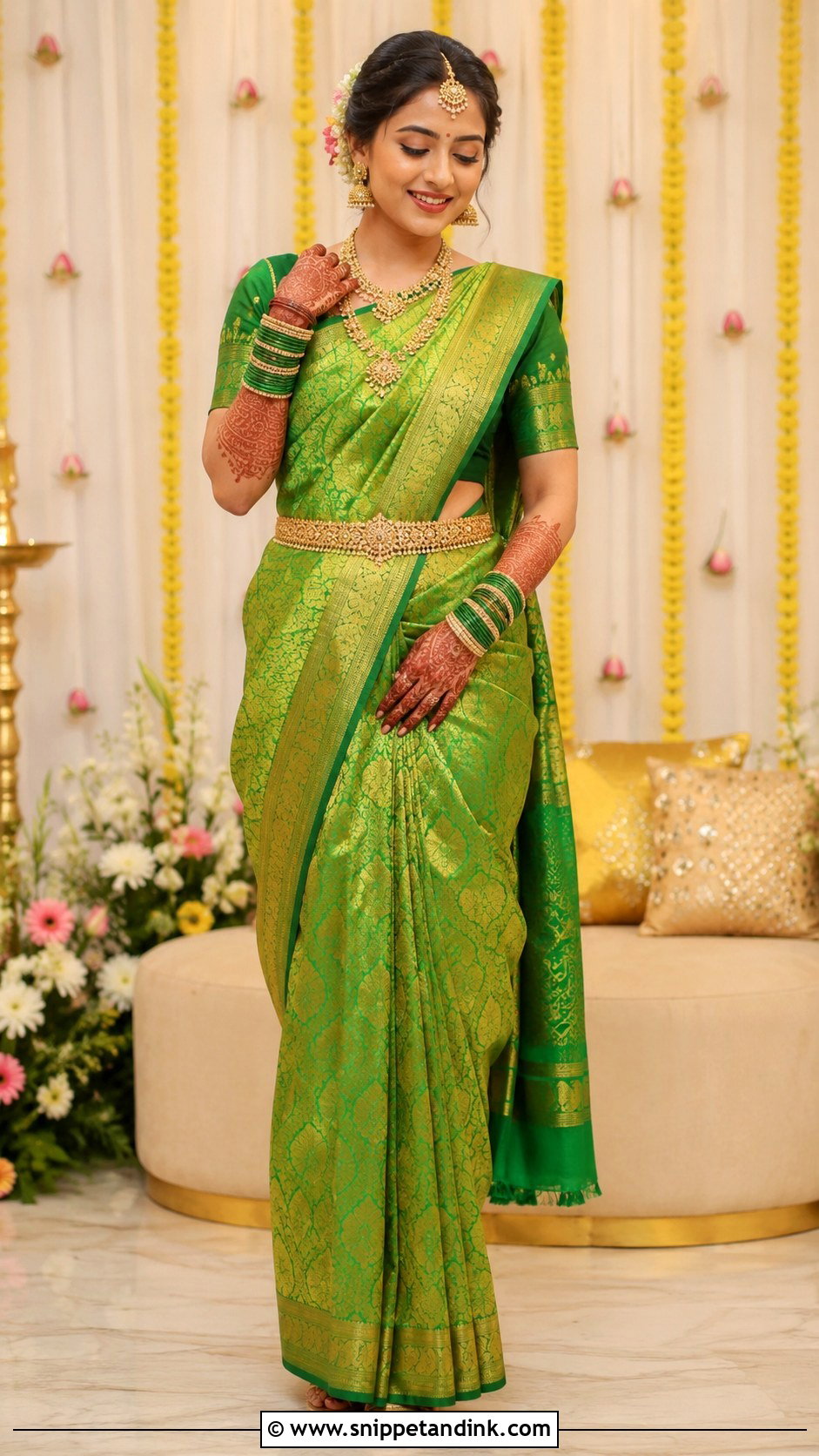
A Banarasi saree has woven gold motifs and a richness that stands out among lehengas. It’s harder to manage during application, though, because the pallu tends to slide off the shoulder toward your hands. Pin it firmly, or add a waist belt to hold the drape. Choose a short-sleeve blouse so your arms are free. Yellow, green, pink and orange Banarasi all suit the event.
18. Indo Western Bridal Mehndi Dress
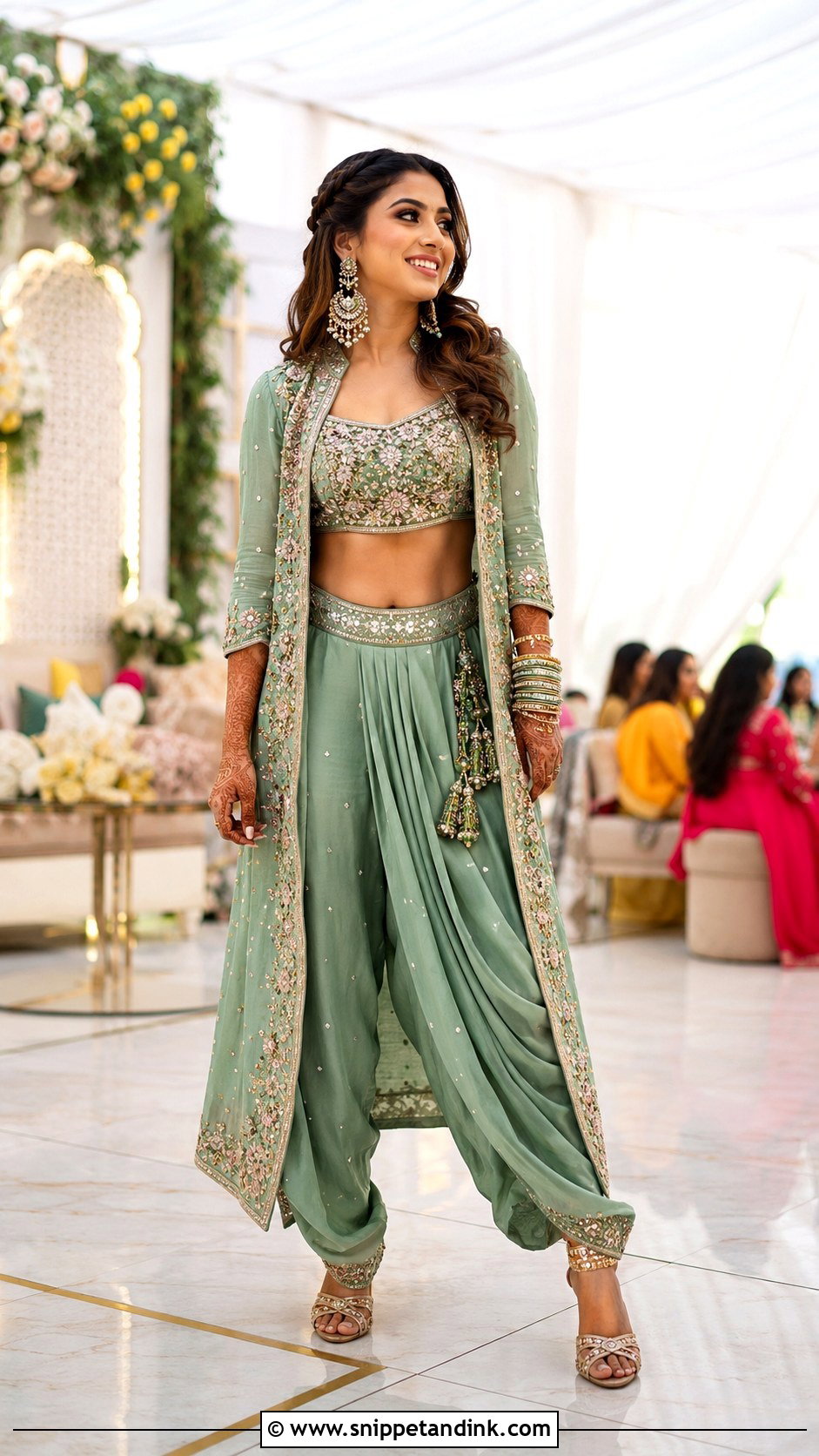
An Indo western bridal mehndi dress mixes modern cuts with traditional detail, such as draped skirts with crop tops or dhoti pants with embroidered jackets. Color, texture and accessories keep it ceremonial. Mirror work, tassels and metallic embroidery all help. Check that jackets have short or open sleeves before your application. It suits choreographed entrances and modern venues.
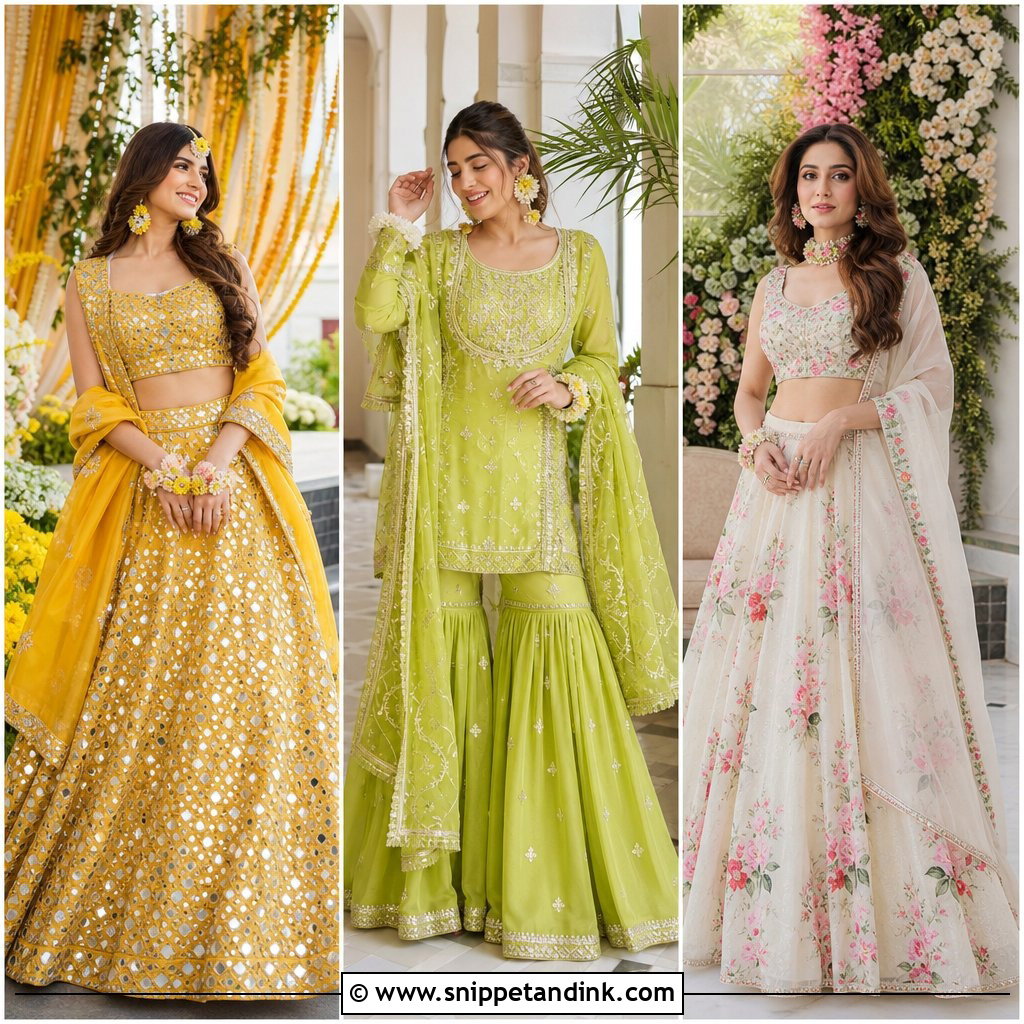
19. Yellow Sharara Bridal Mehndi Dress
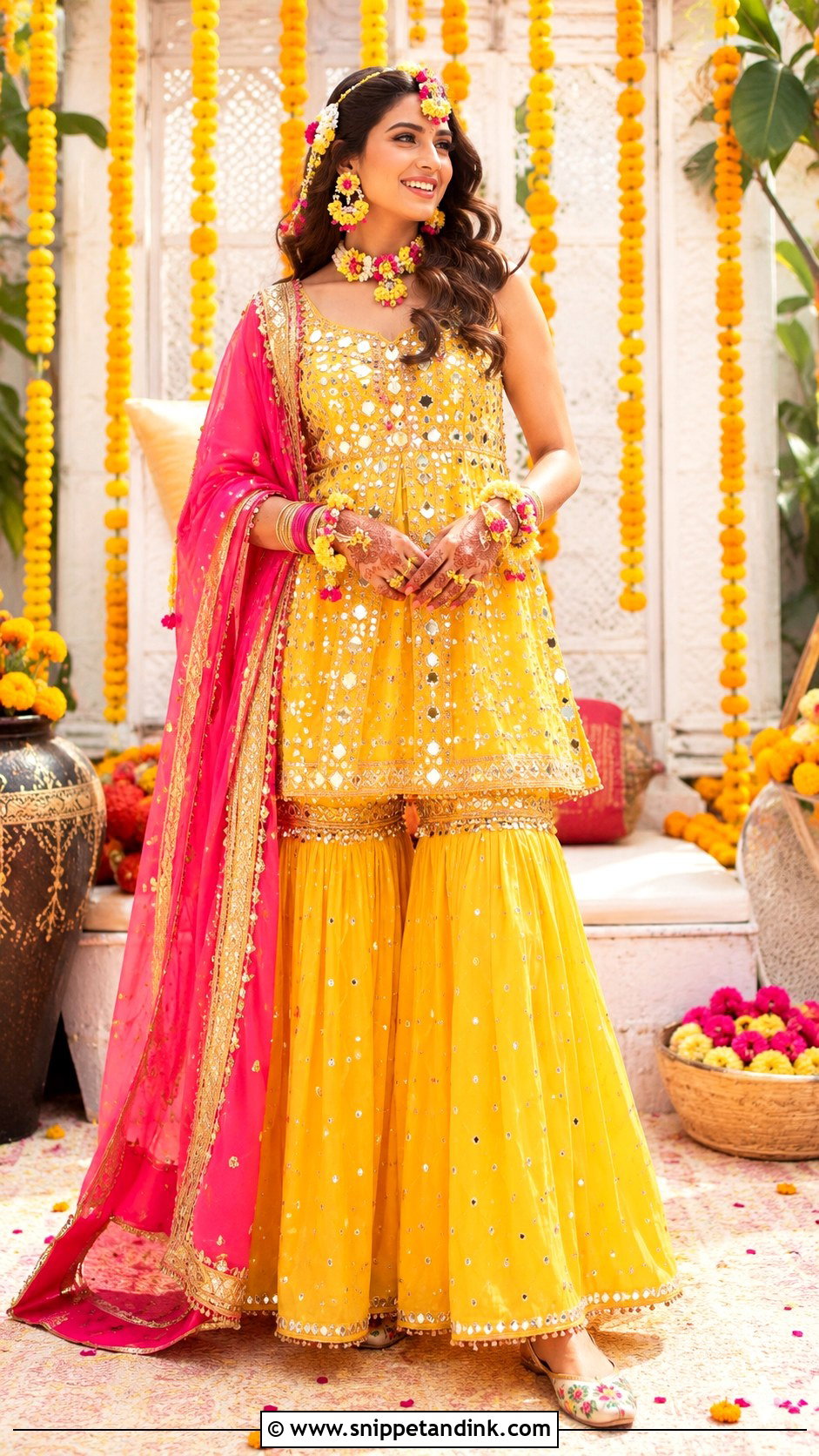
A yellow sharara bridal mehndi dress pairs the classic mehndi color with the comfiest silhouette. The sharara lets you sit, walk and dance easily, and the short kurti keeps your wrists clear. Mirror work, thread embroidery or gota add texture. Floral jewelry is a good choice if you’re combining haldi and mehndi on the same day, since turmeric paste will mark anything you’d rather keep clean.
20. Sequin Bridal Mehndi Lehenga
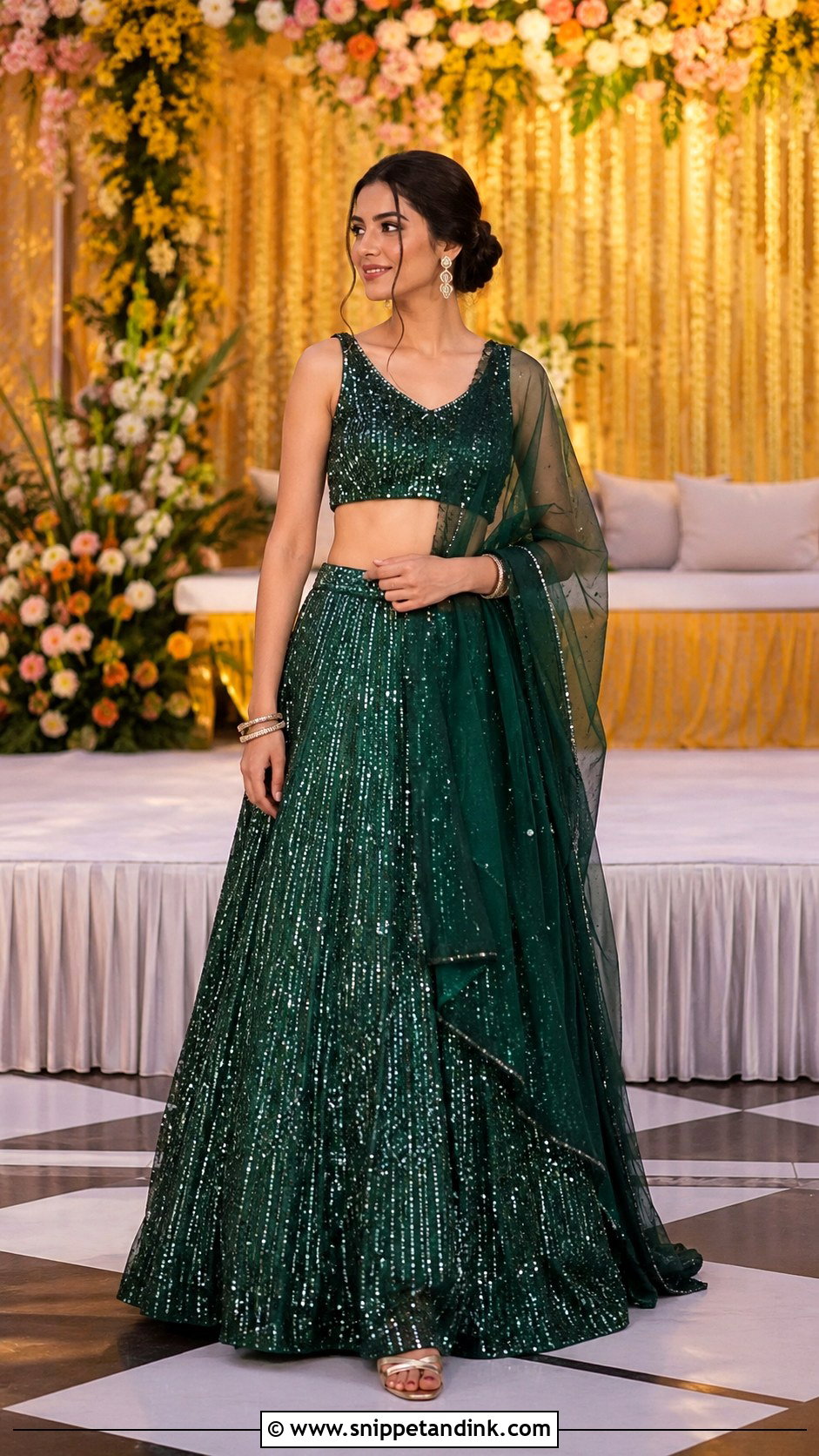
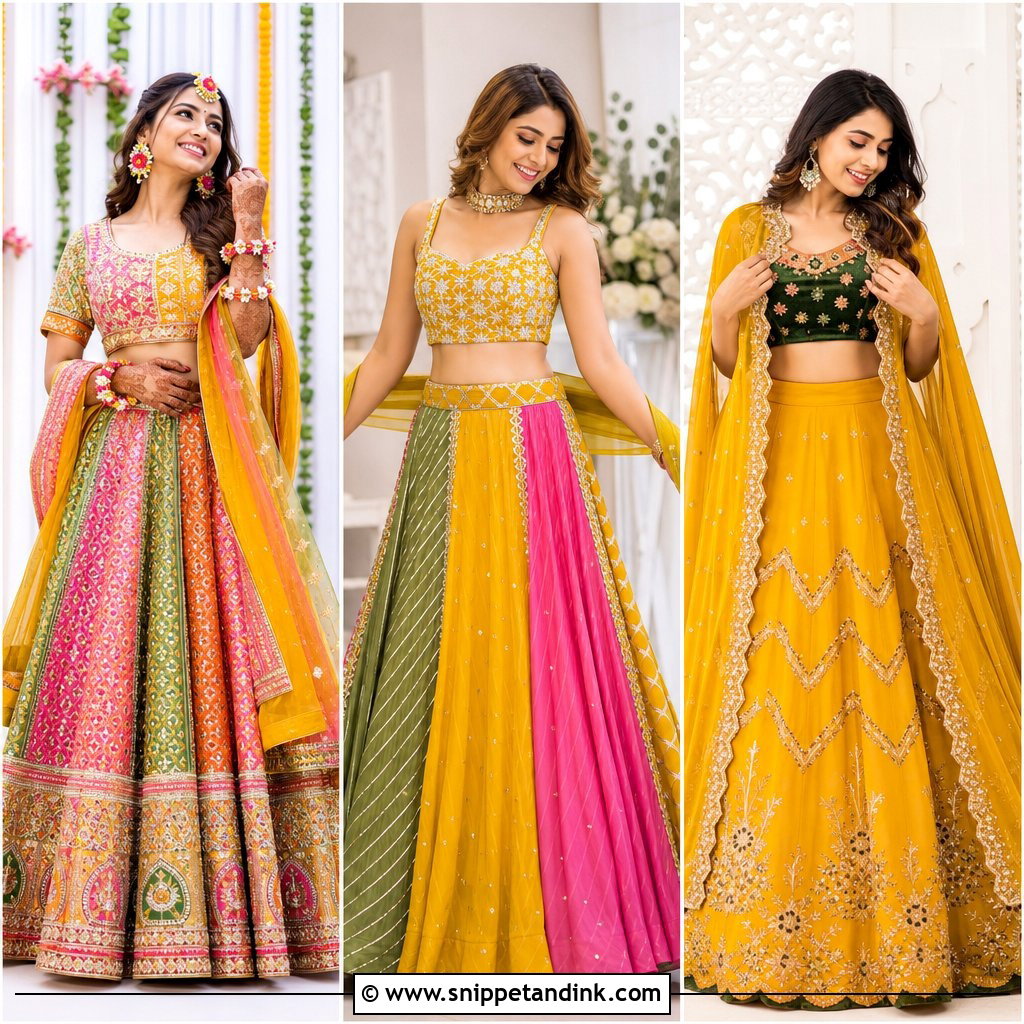
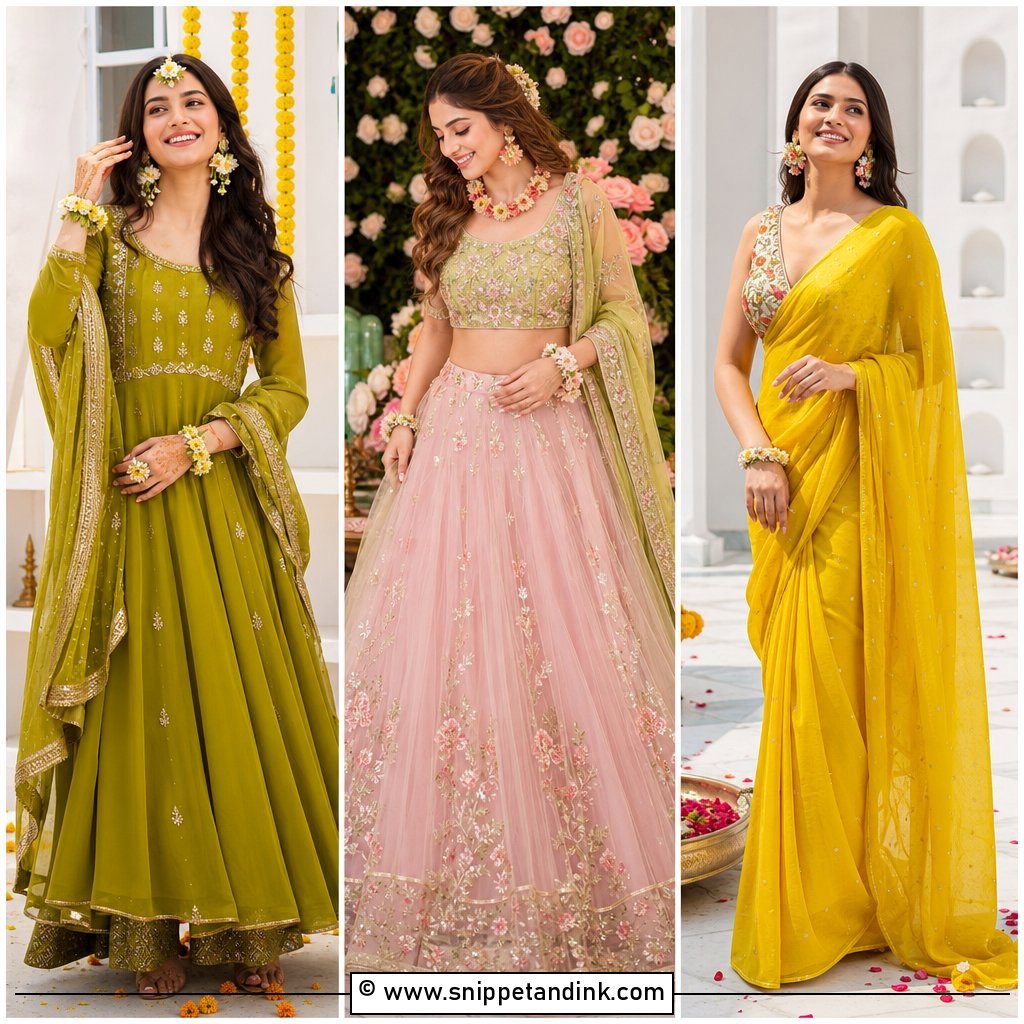
Sequins suit an evening mehndi with music and lights. They catch light without extra jewelry, so keep earrings and bangles simple. Choose a colorful base like emerald, pink, teal or mustard. A sleeveless or short-sleeve blouse keeps your henna visible. Sequins can snag on the dupatta, so keep it light and pinned. Sequins also hold paste in the gaps, which makes cleanup harder.
21. Thread Work Bridal Mehndi Dress
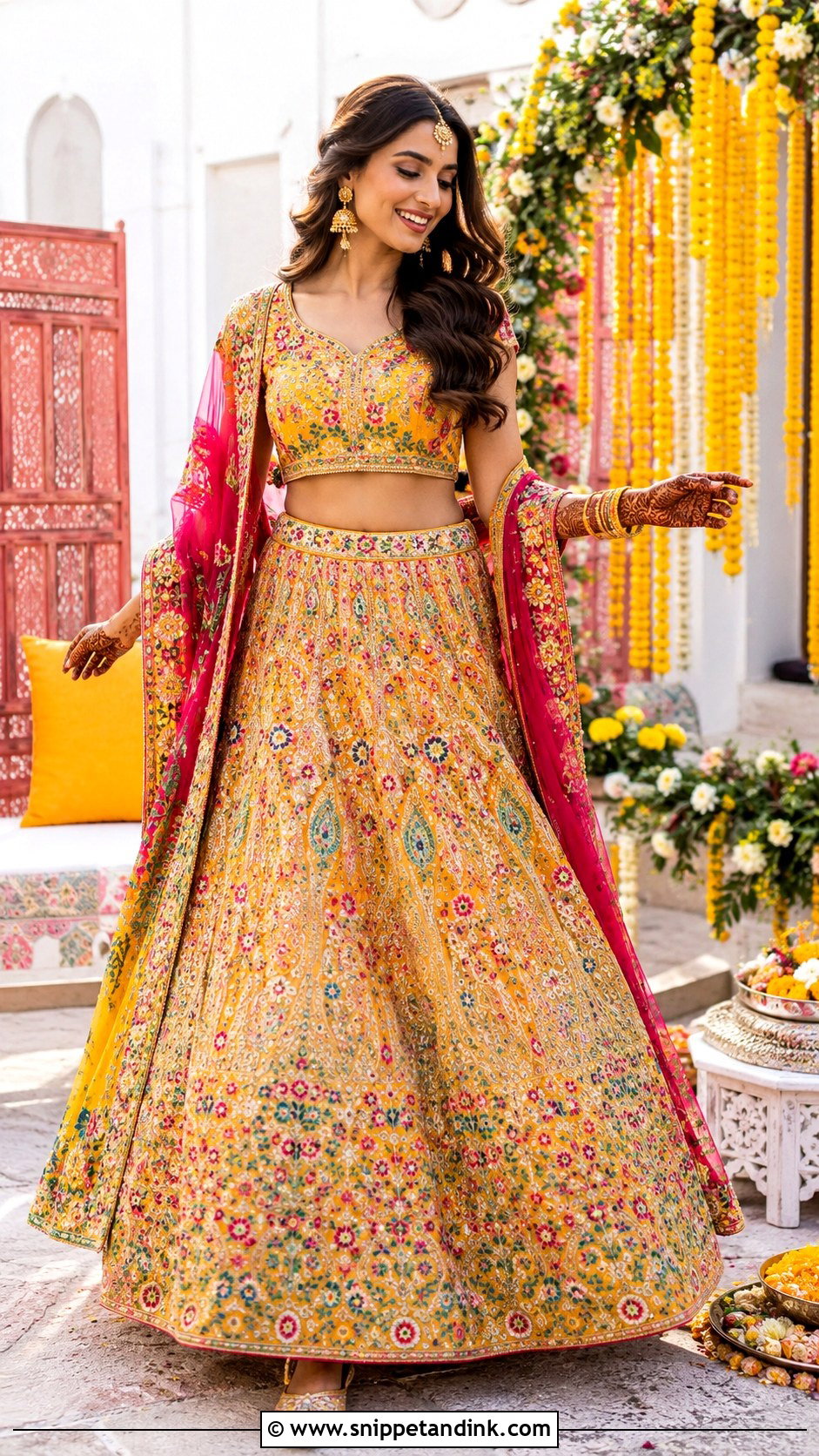
Thread embroidery gives detail without shine, in floral, paisley or geometric patterns that look handmade. It works on lehengas, anarkalis, shararas and suits. Choose breathable fabrics like cotton silk, organza, georgette or light raw silk. Thread work is softer against the skin than metal embroidery, which matters when your arms rest against the outfit for hours.
22. Chikankari Bridal Mehndi Dress
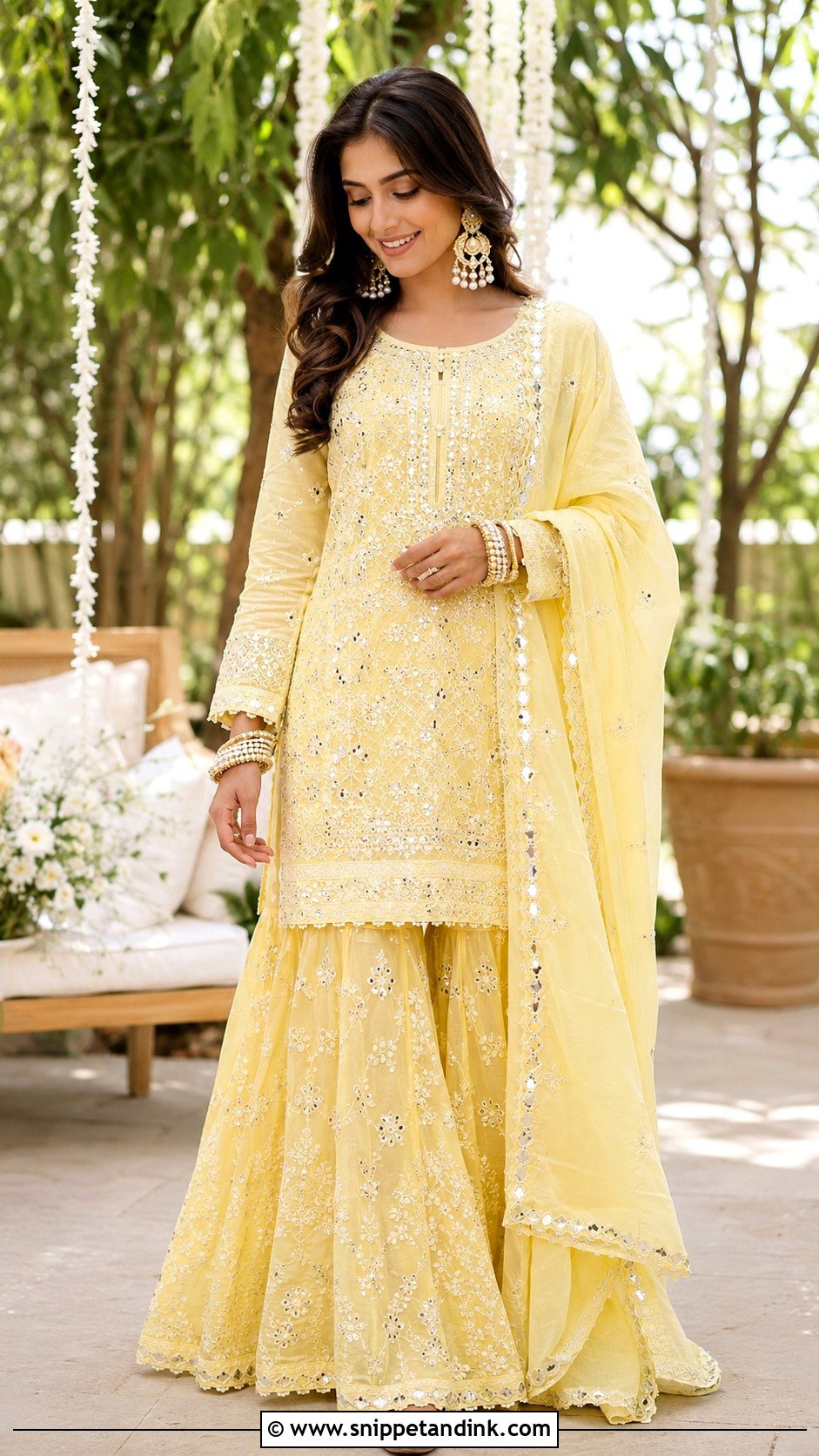
Chikankari is delicate white-on-white hand embroidery from Lucknow, traditionally on light fabrics like muslin and georgette, so it’s one of the coolest outfits you can wear in hot weather. Choose a chikankari lehenga, sharara or anarkali with mirror accents, sequins or colorful borders to make it bridal. Lemon, mint, ivory, peach and pastel pink suit it, and brighter shades work too. Pearl jewelry and glass bangles finish it gracefully.
23. Ruffle Bridal Mehndi Saree
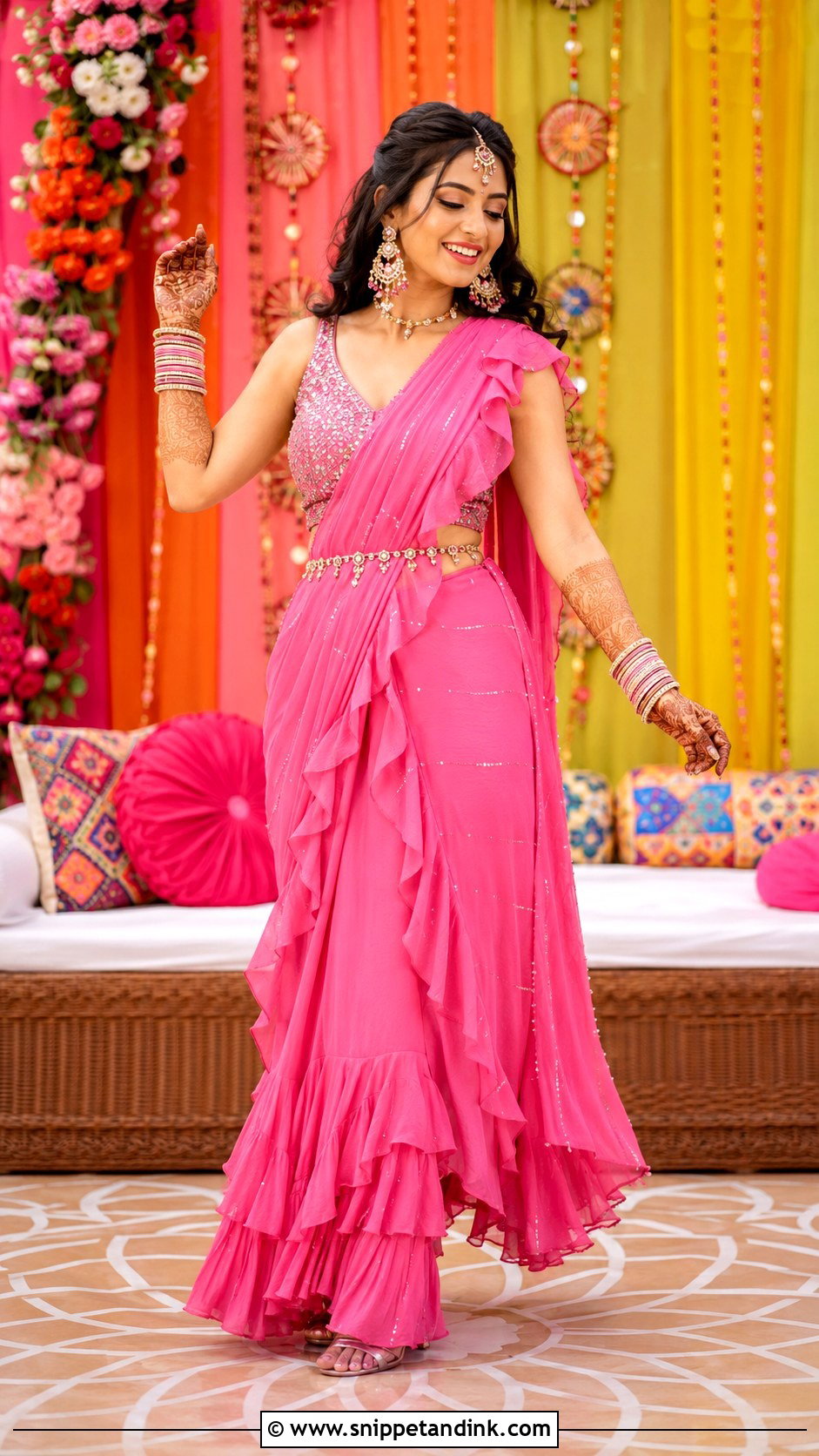
A ruffle bridal mehndi saree is often pre-draped, which makes it far easier than a traditional saree when your hands are covered in paste. It stays in place without you adjusting it. Bright colors like yellow, pink, orange and green suit it. A belt defines the waist and holds the drape. It works well at dance-focused mehndi events.
24. Jacket Bridal Mehndi Lehenga
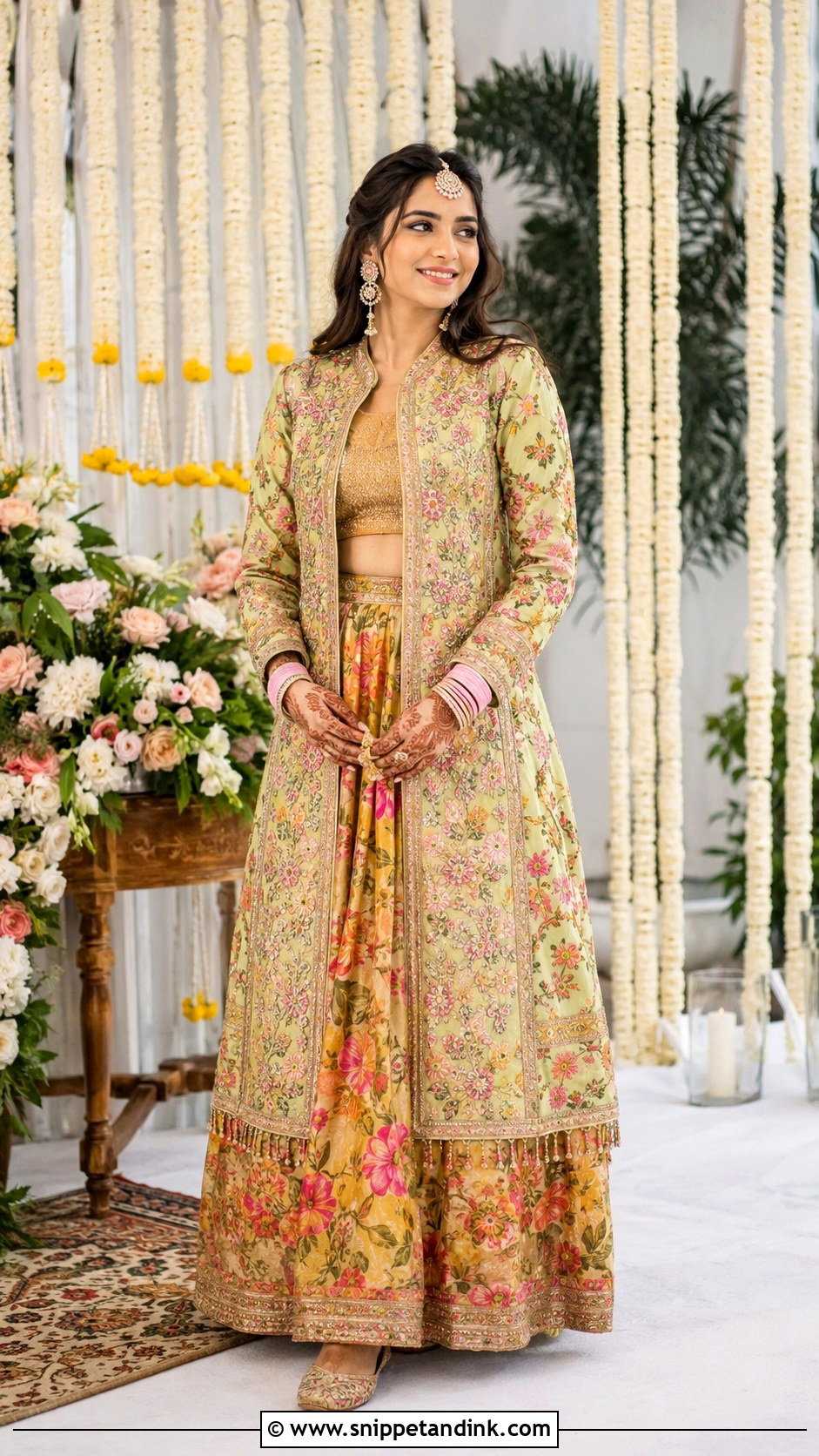
A jacket over a lehenga replaces the dupatta, and it stays put while your hands dry. Short, long, sheer, embroidered or mirror-worked jackets all work. Pair it with a simple blouse and a flowing skirt. Choose a jacket with short or no sleeves so the design is visible and the paste isn’t disturbed. Yellow, green, pink and multicolor combinations keep it festive.
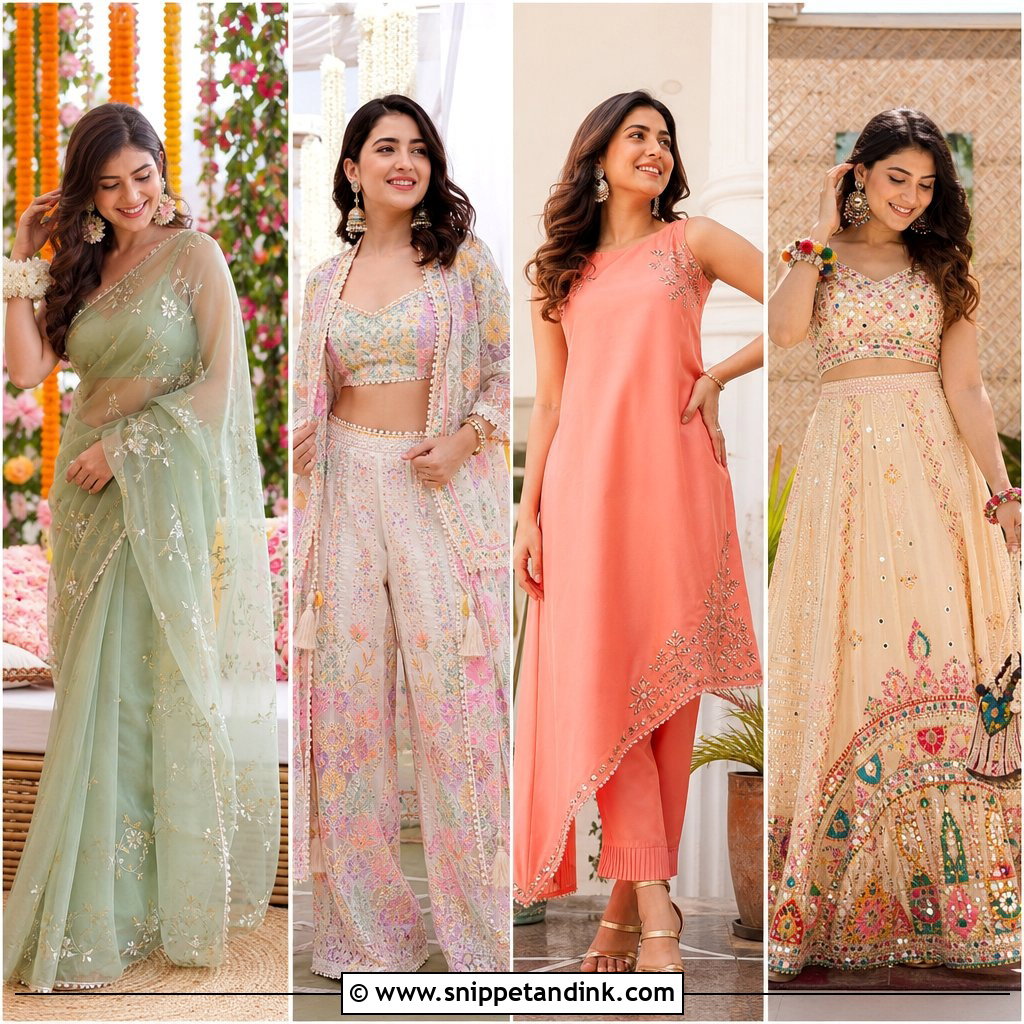
25. Draped Skirt Bridal Mehndi Dress
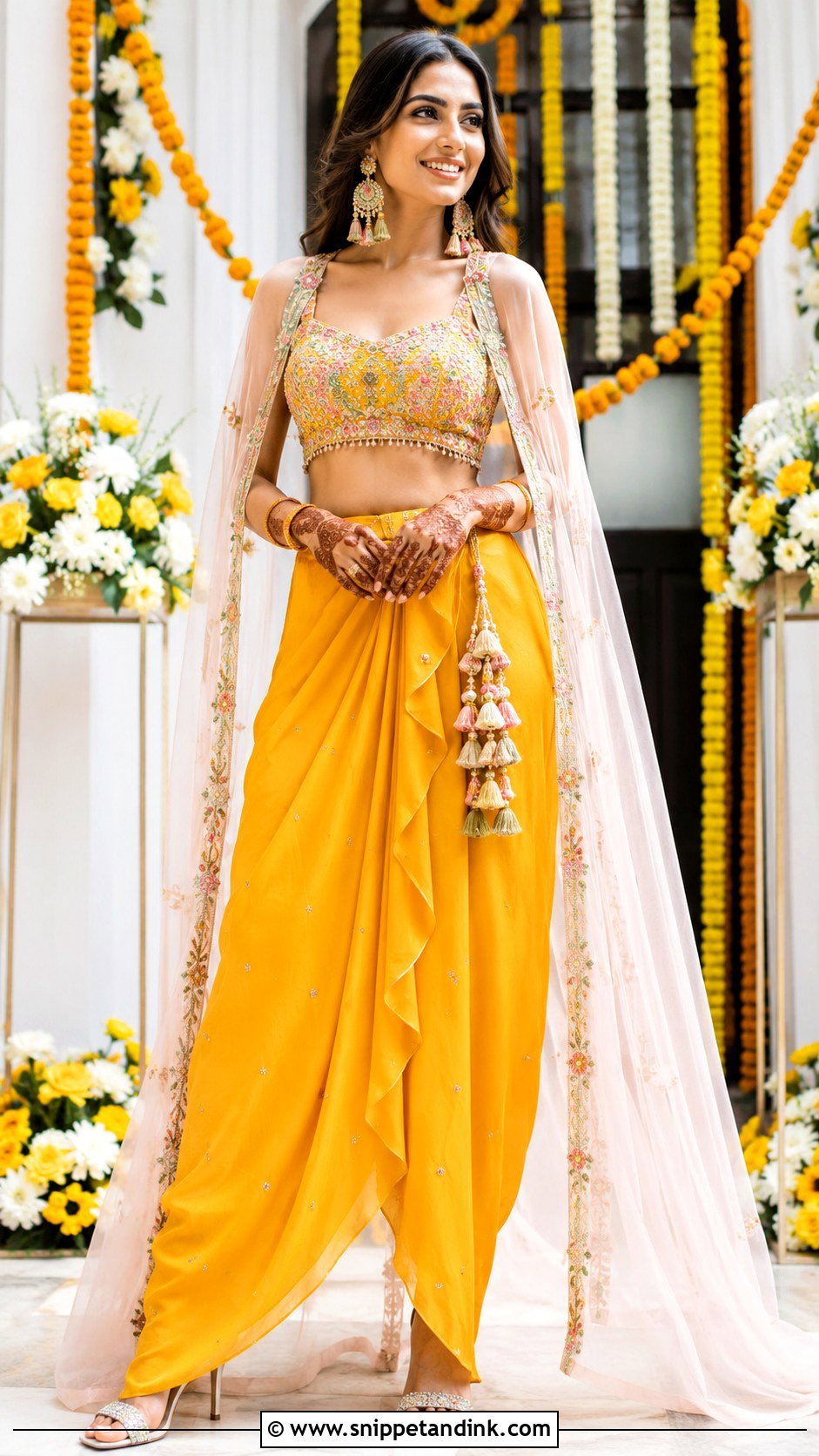
A draped skirt moves like a lehenga but is pre-styled, so it needs no adjustment once you’re seated. Pair it with an embroidered crop top, peplum blouse or short kurti. Add a cape or light jacket for more coverage. Mirror work, tassels, sequins and thread embroidery suit the mehndi mood. Block heels or juttis keep you comfortable.
When Paste Lands on the Fabric
It happens at almost every mehndi. A cousin hugs you, a dupatta swings, or the lemon and sugar sealant drips. Fresh henna paste will stain fabric orange-brown, and the sooner and more gently you deal with it, the better your chances.
- Don’t rub. Rubbing pushes the dye deeper into the weave.
- Let the paste dry, then lift it off with the edge of a card or a blunt knife.
- Rinse the back of the stain with cold water, not hot, which sets the color.
- For cotton and georgette, a gentle soap can help. For silk, Banarasi weaves, zari or heavy embroidery, take it straight to a specialist cleaner and tell them it’s henna.
Darker and busier fabrics hide small marks, which is one practical reason mehndi outfits tend to be bright and patterned. A light cotton cloth over your lap during application, and a towel under your feet, saves more outfits than any cleaning method.
Protecting the Stain on the Night
If your design was applied earlier, try to keep water away from your hands for the first day so the stain can deepen; it usually reaches its darkest over the next day or two. Stacked bangles and rings rub the skin, so add them for photos and take them off afterward.
An Outfit That Lets the Henna Be the Star
Color is the easy part. The mehndi outfit that works is the one you can sit in for hours, that shows your henna clearly and moves when you dance. Yellow lehengas, green shararas, pastel anarkalis, cape sets, ruffle sarees and Indo-western looks all have their place. Choose breathable fabric, secure drapes, short sleeves and details that suit your venue. Then sit still, let the paste dry, and enjoy watching the stain come up the next morning.
You'll Like These Ideas:


Leave a Reply