
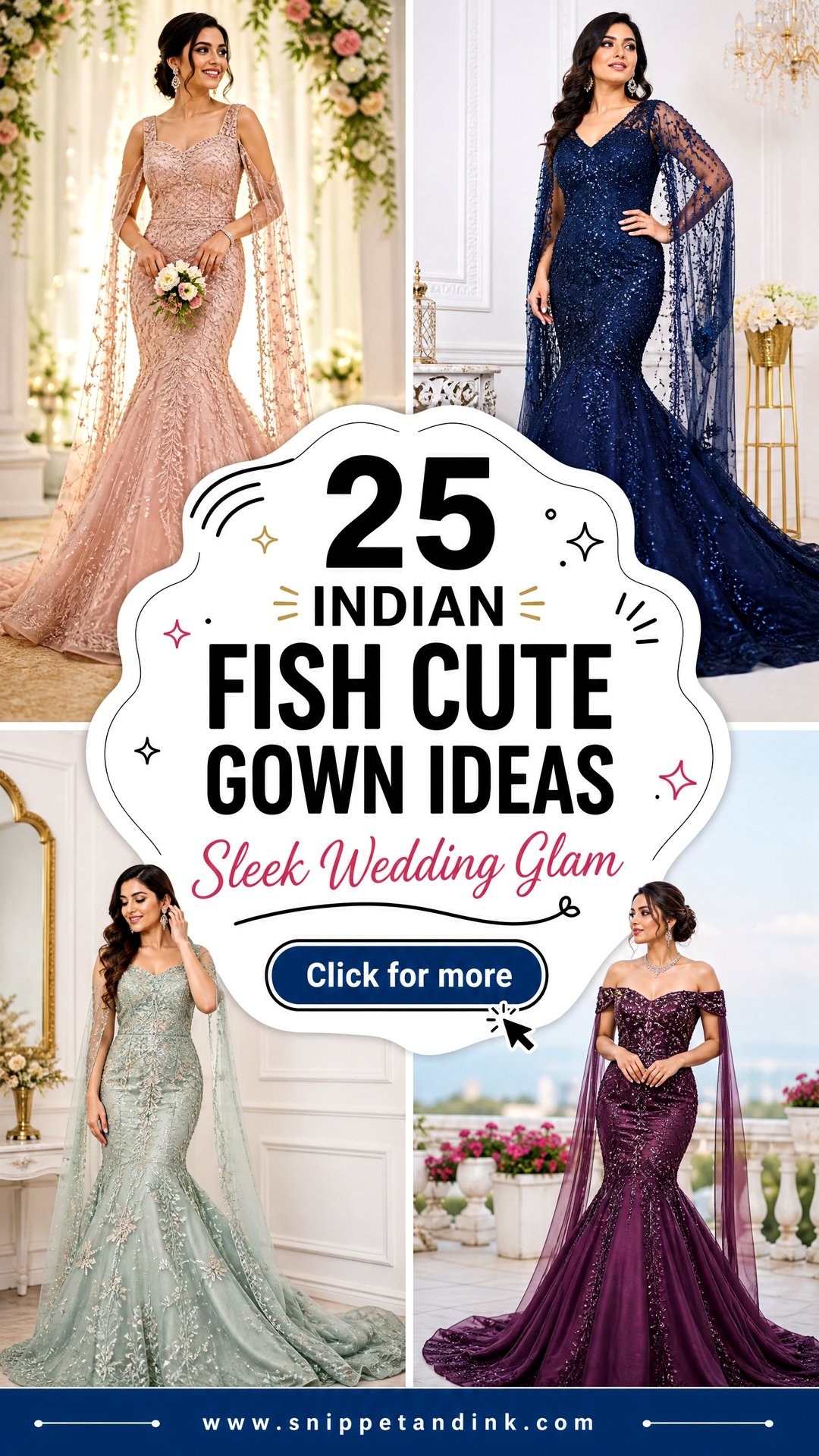
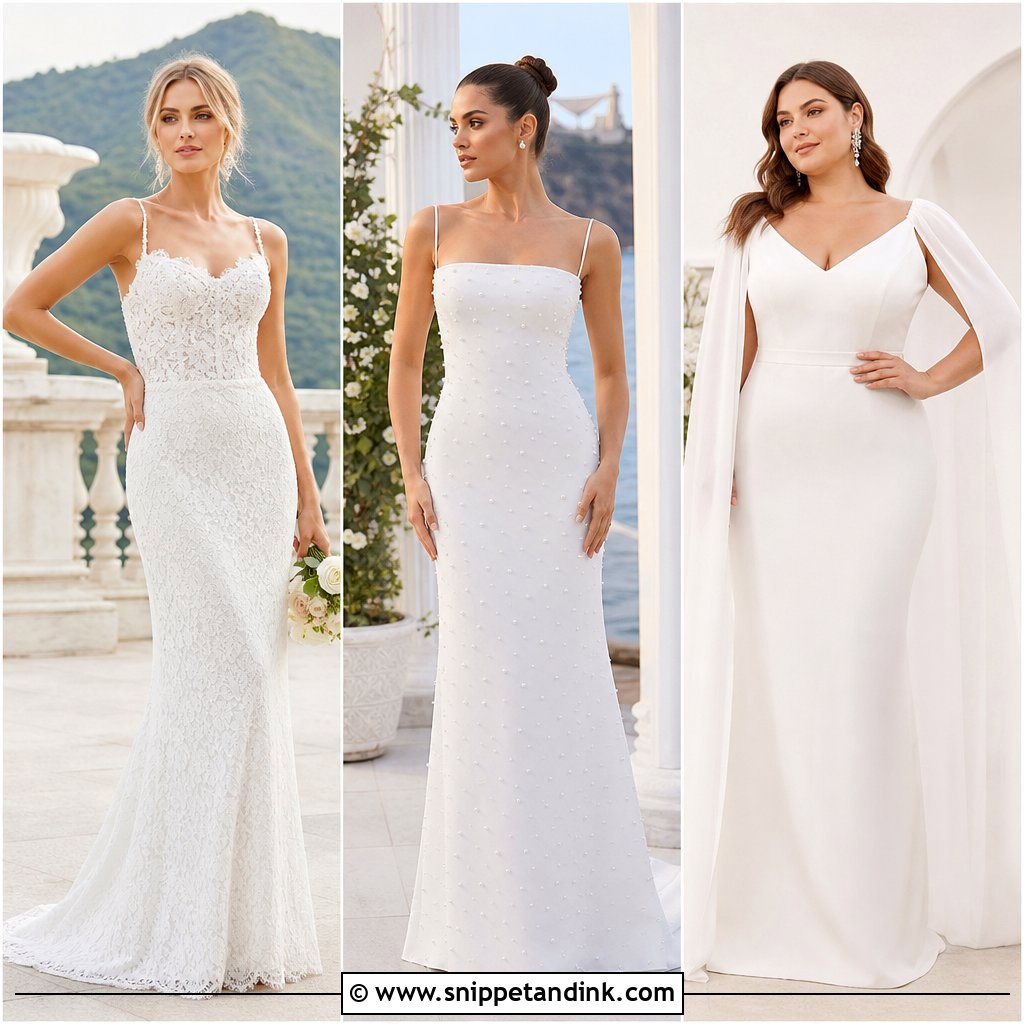
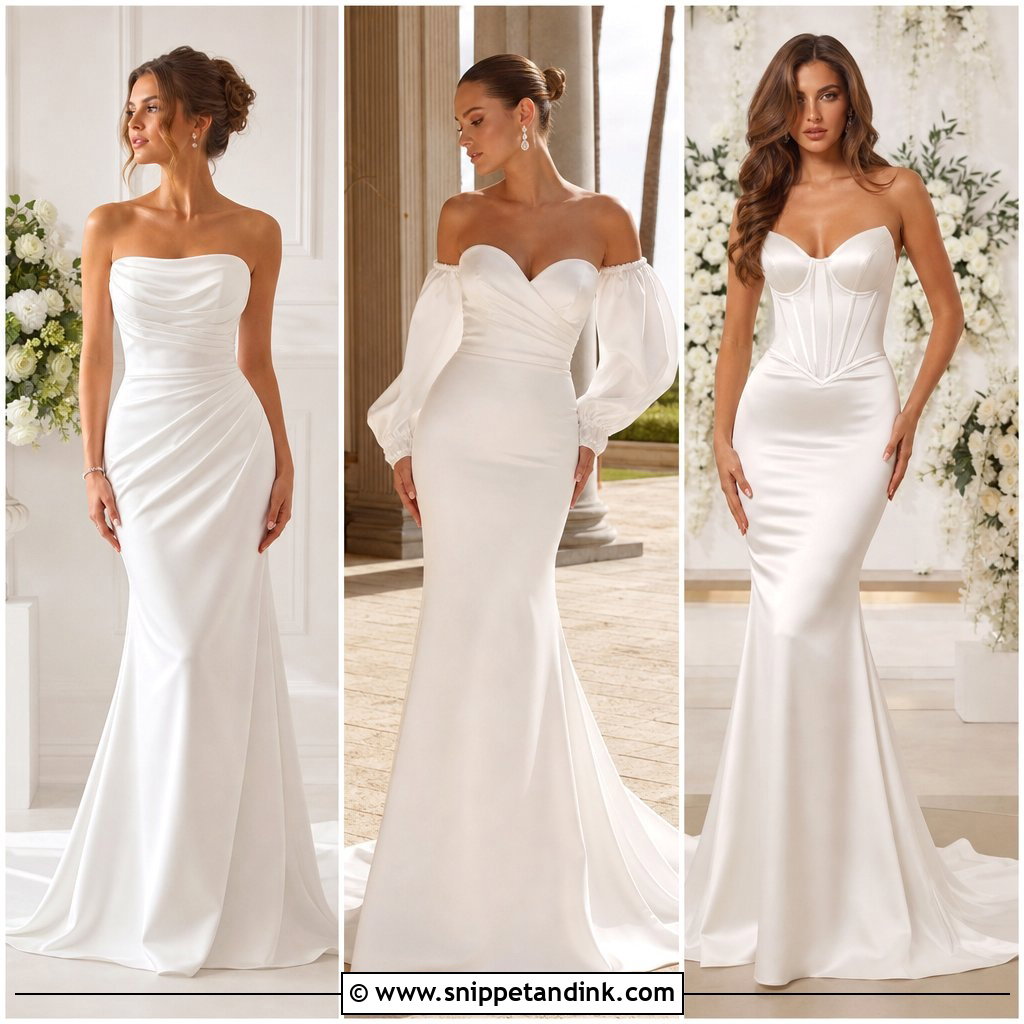
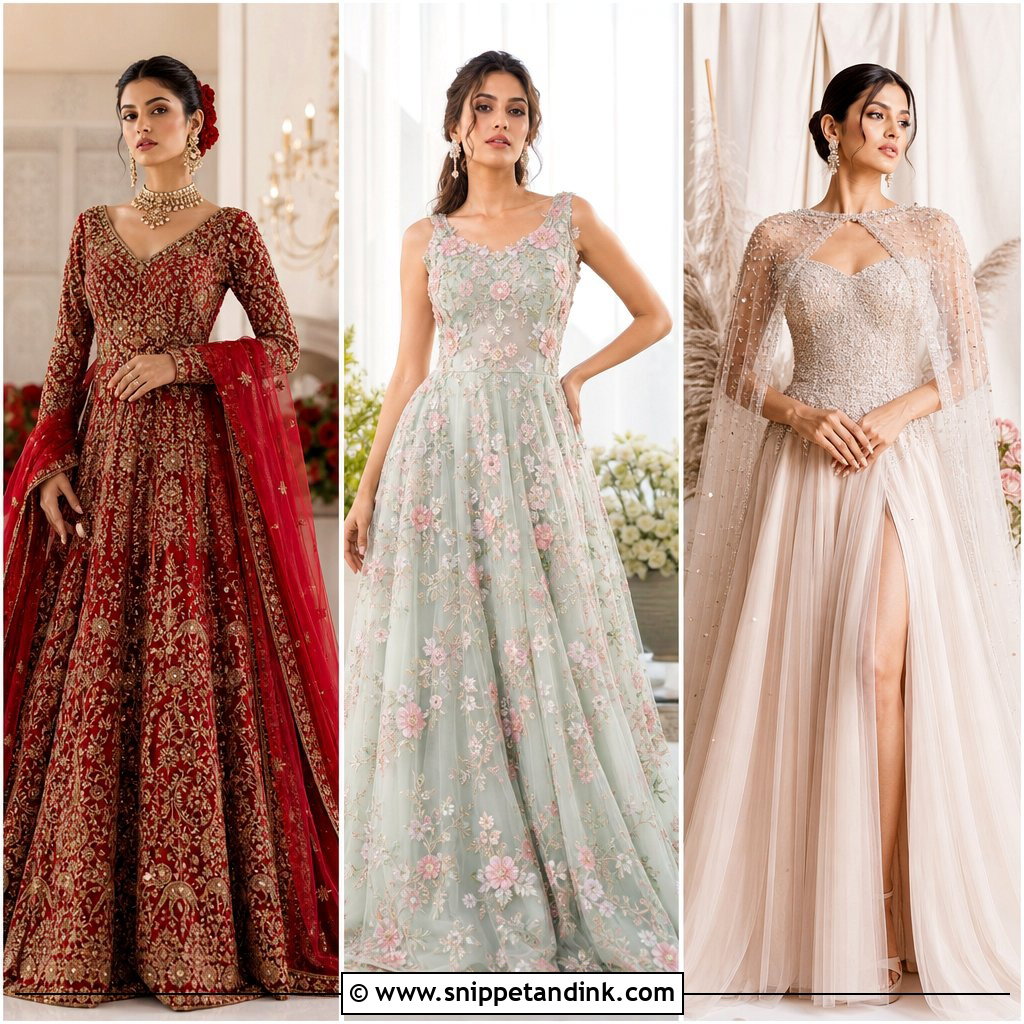
A fish cut gown hugs the waist and hips and then breaks into a flare near the hem, the same mermaid line you see at receptions everywhere now. What decides whether it feels cute or punishing is where that flare starts, how much stretch the fabric has, and how well it’s tailored to you. I dress clients in these for receptions, engagements and sangeets, in sequins, net, silk, georgette and velvet, and occasionally as a modern Indo-western look for the bride herself. Below are 25 ways I’d style the silhouette, with the fit notes I give at fittings.
Where the Flare Breaks Decides How You Walk All Night
Every fish cut gown has a break point, the place where the fitted part stops and the flare begins. Most of the discomfort people blame on this silhouette comes from that point being set too low. When the flare starts at or just below the knee, you can take a normal stride. When it starts mid-calf, you shuffle, and stairs become a negotiation.
At a first fitting, I ask clients to do three things before we discuss any embroidery: walk the length of the room, sit on a regular chair, and step up onto a low platform. If any of those feels risky, we raise the break point or add a godet panel.
- Trumpet cut: the flare opens around mid-thigh. Easiest to move in, still looks shaped.
- Classic fish cut: the flare opens near the knee. The best balance for most events.
- True mermaid: the flare opens below the knee. Dramatic, and best kept for a short reception appearance.
1. Indian Fish Cut Gown For Wedding Reception
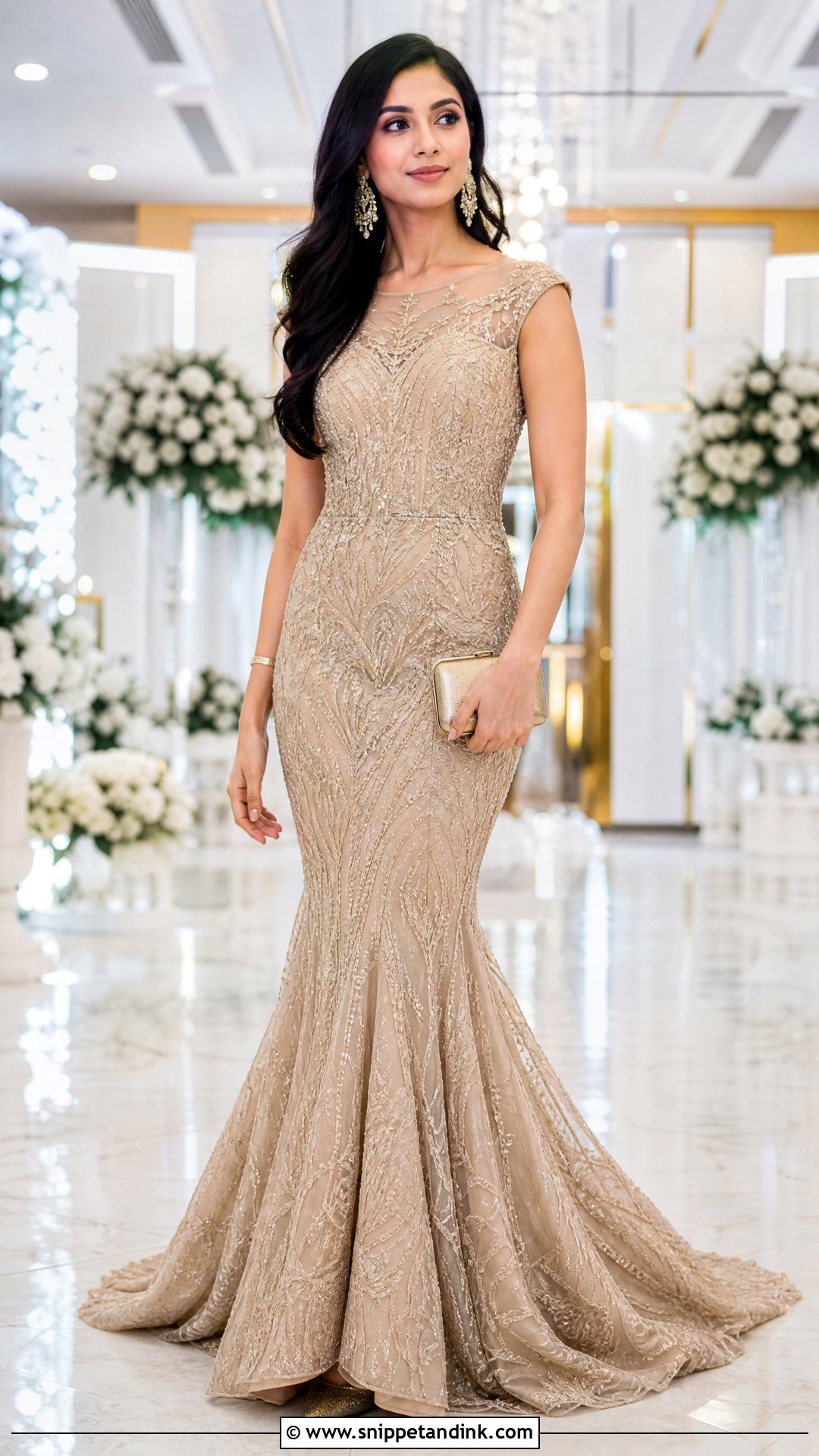
For a reception I like a structured bodice with fine sequin work in champagne, blush or emerald, because stage lighting picks up small sequins far more kindly than large paillettes. The flare should open around the knee so you can still climb the two steps to the couple’s stage. Pointed heels, chandelier earrings, and no necklace if the bodice is heavily worked. Hair in a low bun keeps the neckline readable in photos.
2. Indian Fish Cut Gown For Sangeet
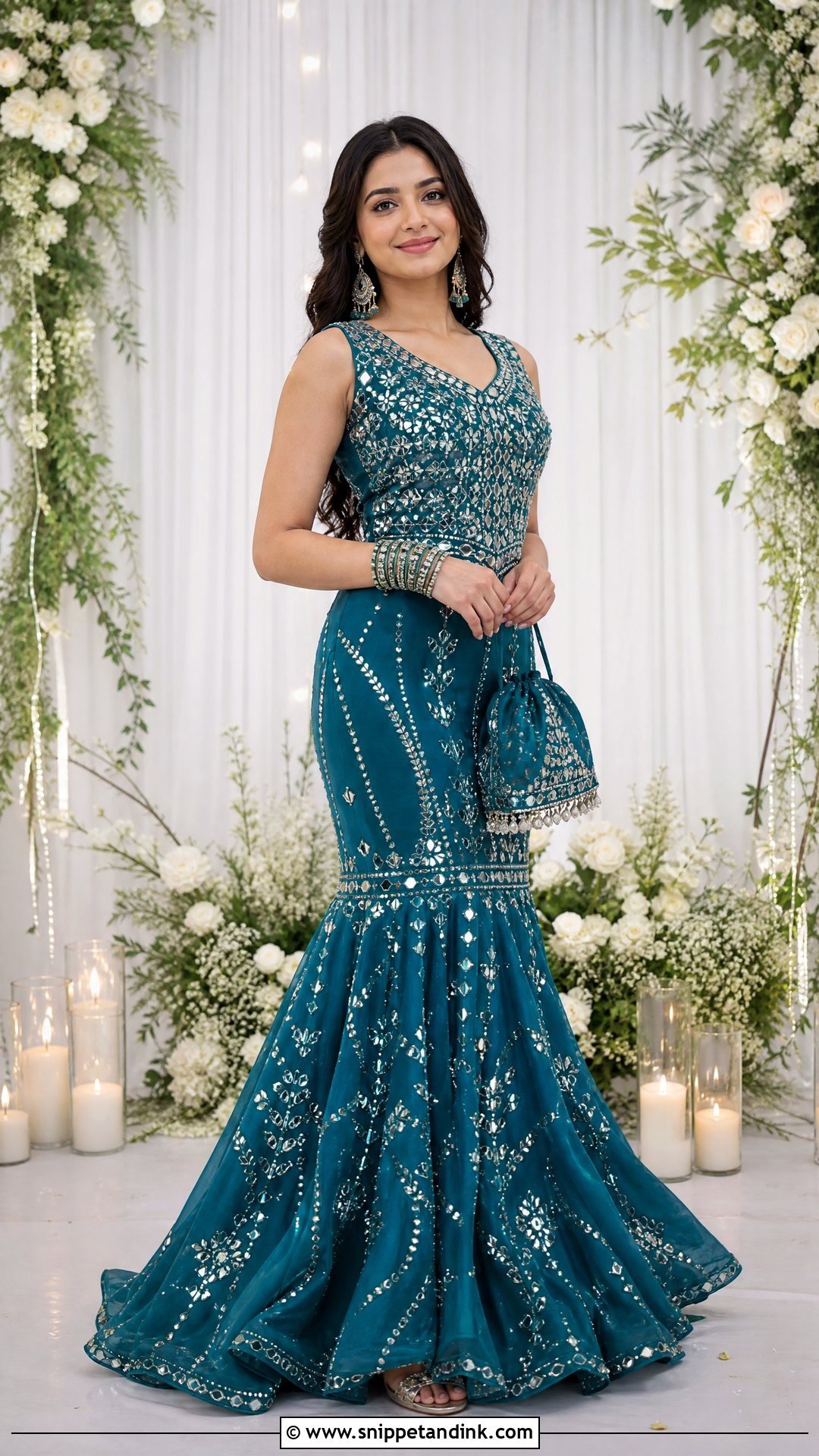
Sangeet gowns get tested harder than anything else you’ll wear, so this is where I insist on stretch. A georgette or stretch net base with mirror work or beads lets you bend your knees through a choreographed number. Rani pink, teal or gold all read well in a crowded hall. Wear block heels or platforms you’ve danced in before. If you can’t lift your knee to hip height in the trial, the flare starts too low.
3. Indian Fish Cut Gown For Engagement
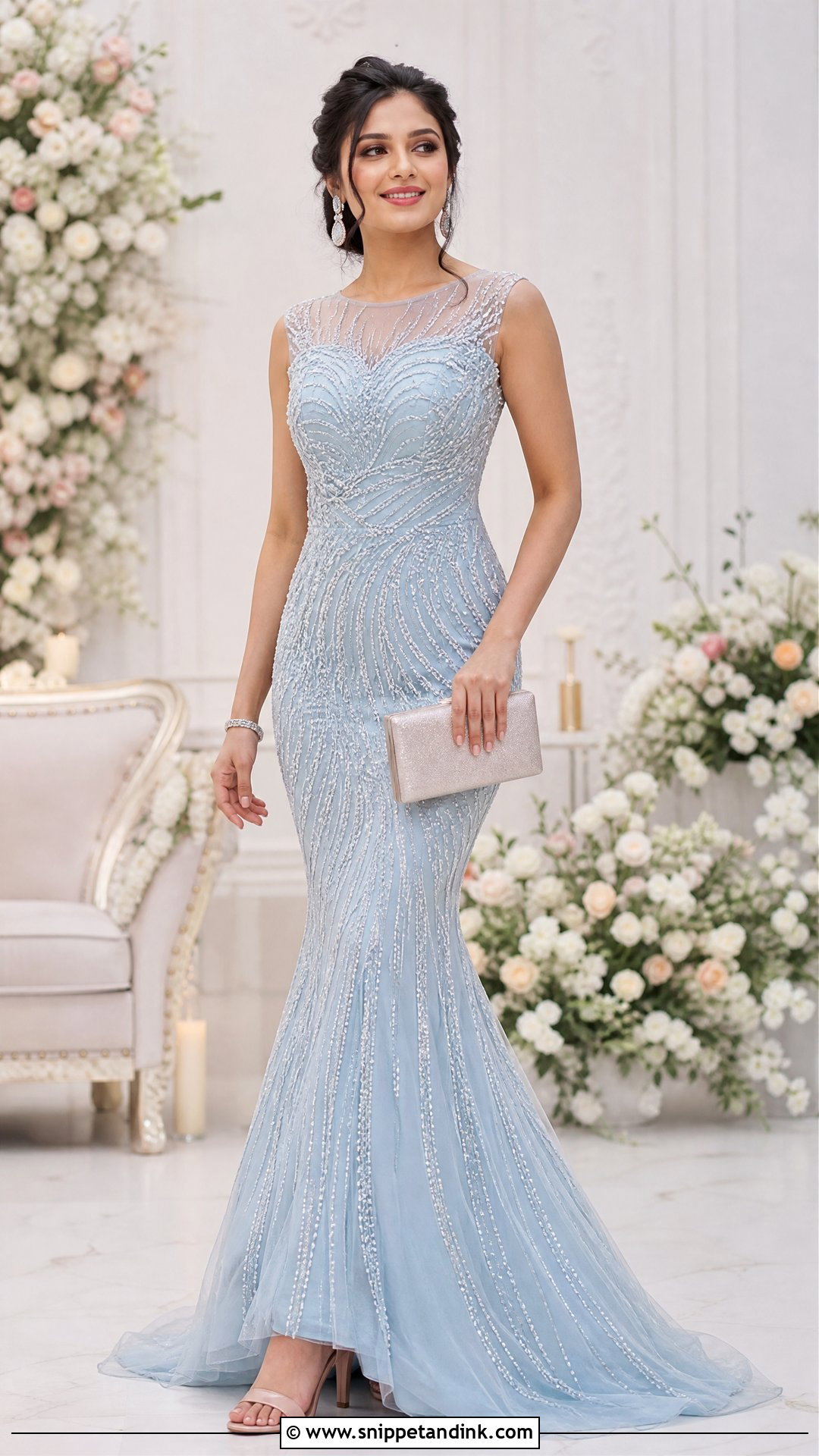
At a ring ceremony people are close to you, looking at hands and faces, so I go lighter here: powder blue, mint or ivory with pearl or thread embroidery that rewards a close look. Nude heels and drop earrings keep the attention near the face. A sheer dupatta over one shoulder makes it more traditional without making it bridal. Avoid a deep sweetheart neckline if elders will be doing the tilak; you’ll be bending forward a lot.
4. Indian Fish Cut Gown With Dupatta
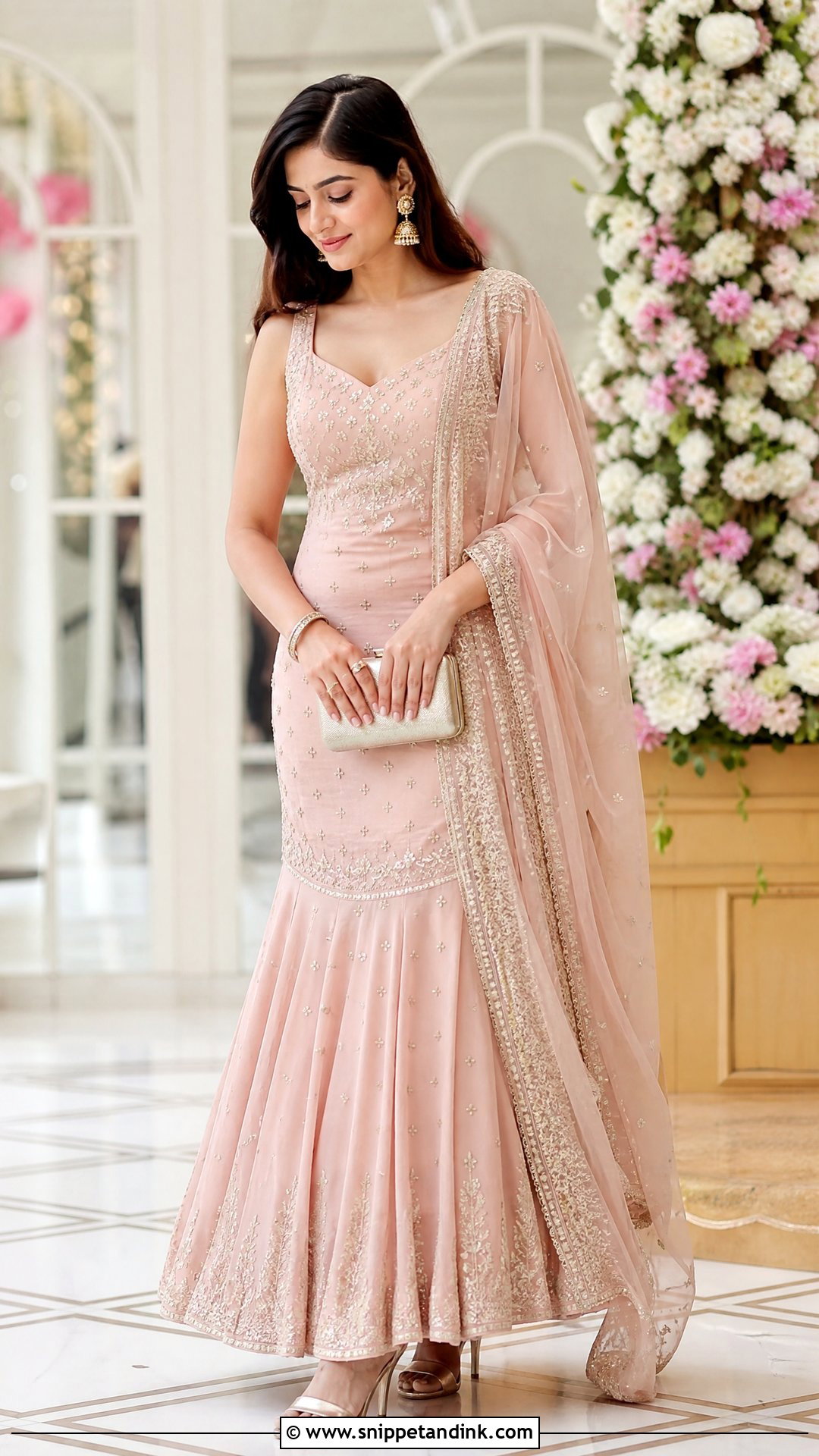
A dupatta changes a gown from party wear to wedding wear in one move. Net, organza and chiffon are the fabrics I’d use; anything heavier drags the gown’s line sideways. I pin it at the shoulder like a pallu with two hidden pins, so it stays put when you hug relatives. A plain gown with an embroidered dupatta balances better than two worked pieces fighting each other.
5. Indian Fish Cut Gown With Cape
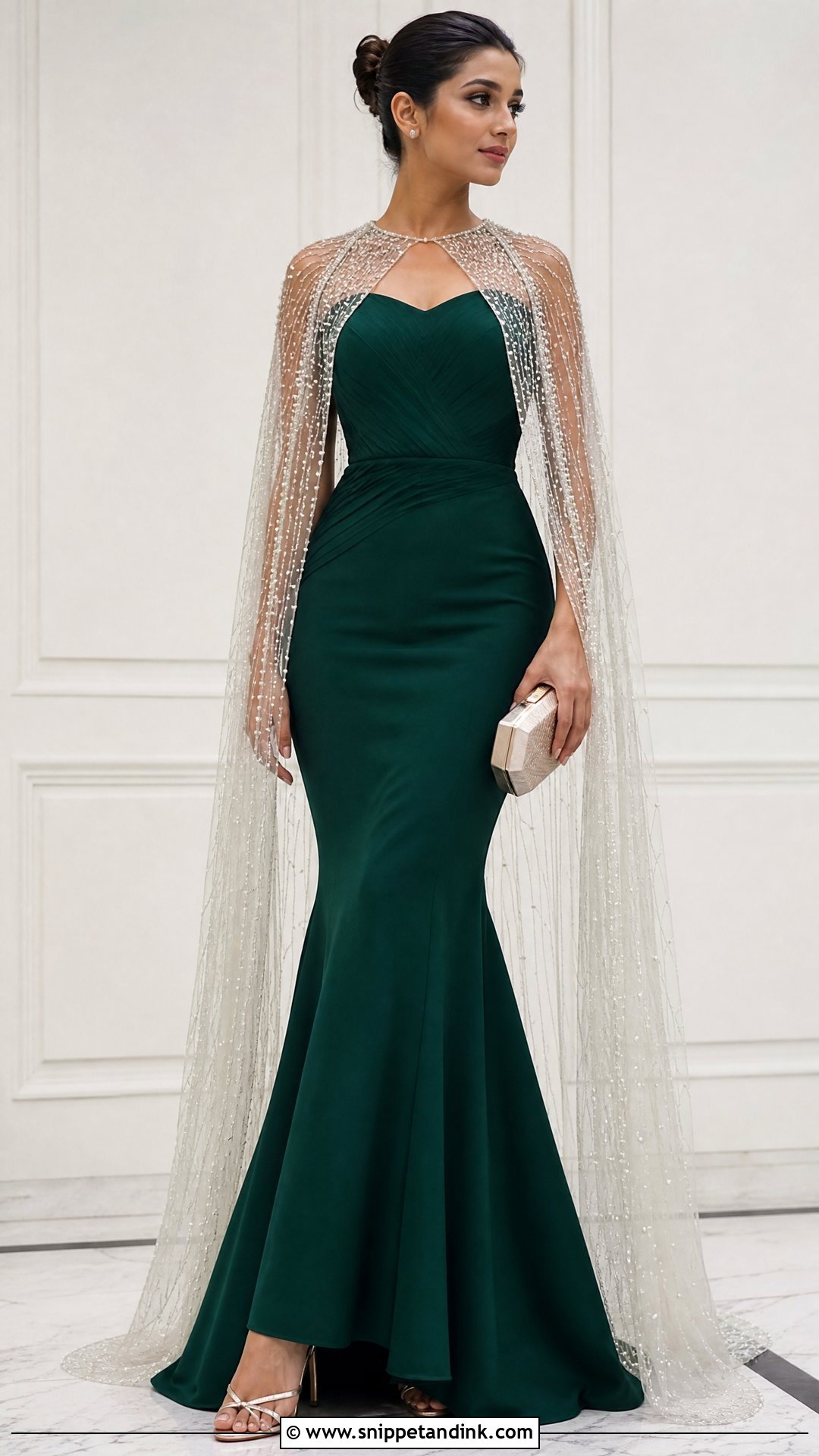
The cape is my answer for clients who want arm coverage without sleeves cutting across the body. A plain fitted gown in wine, beige or deep green under a sheer embellished cape keeps the silhouette visible. Scalloped edges or pearl trim along the cape hem look lovely when you walk. Check that the cape is attached at the shoulder seam, not just hooked at the neck, or it will drift backward and pull at your throat.
6. Indian Fish Cut Gown With Jacket
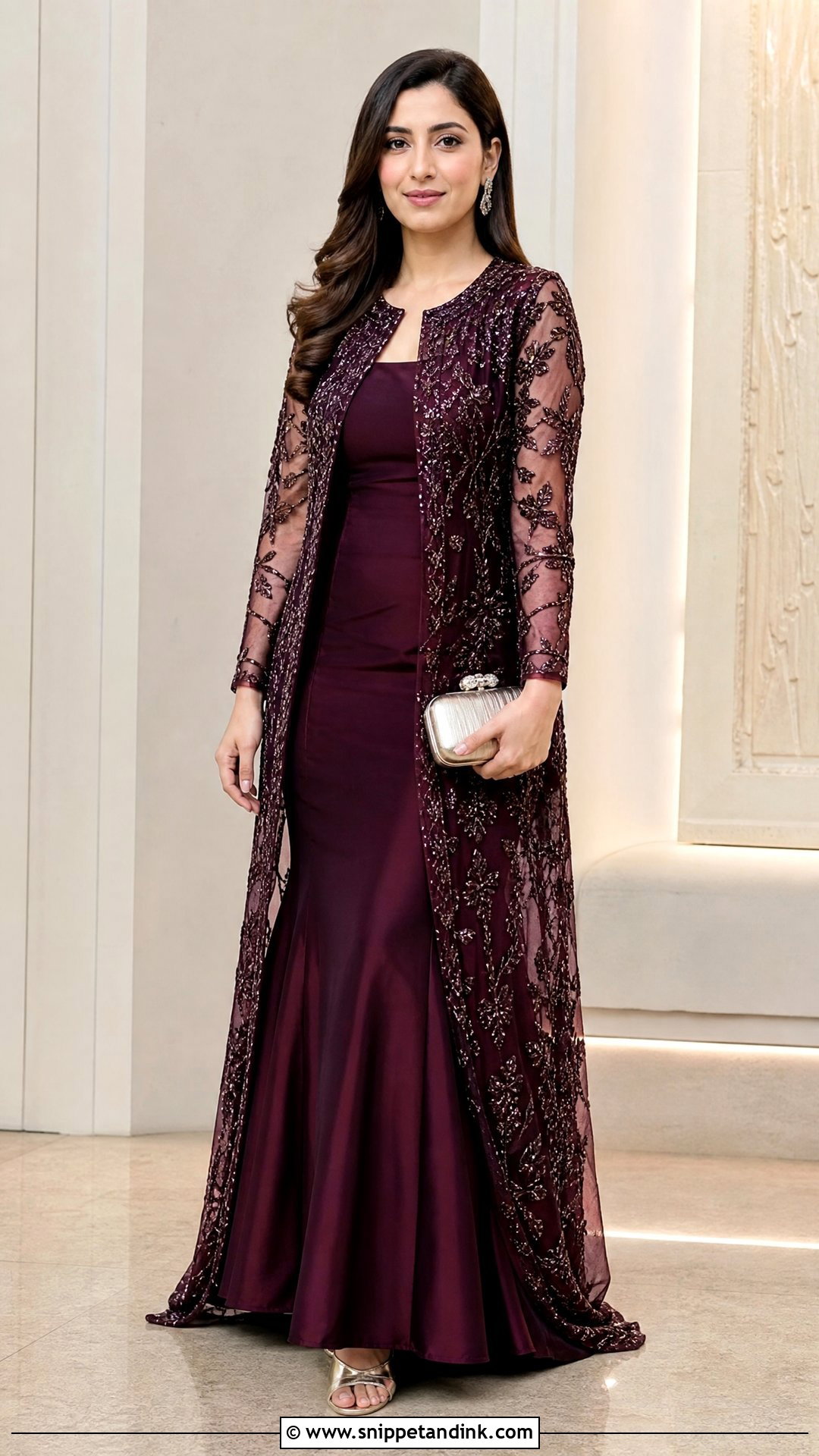
A jacket-style fish cut gown gives you two looks: jacket on for the ceremony, off for dancing. A short embroidered jacket adds structure at the waist; a long sheer one adds movement. Silk, brocade, velvet and net all work. If the jacket is heavily detailed, the gown underneath should be plain. I’d keep jewellery minimal and save this one for a cooler evening.
7. Indian Fish Cut Gown For Bridesmaid
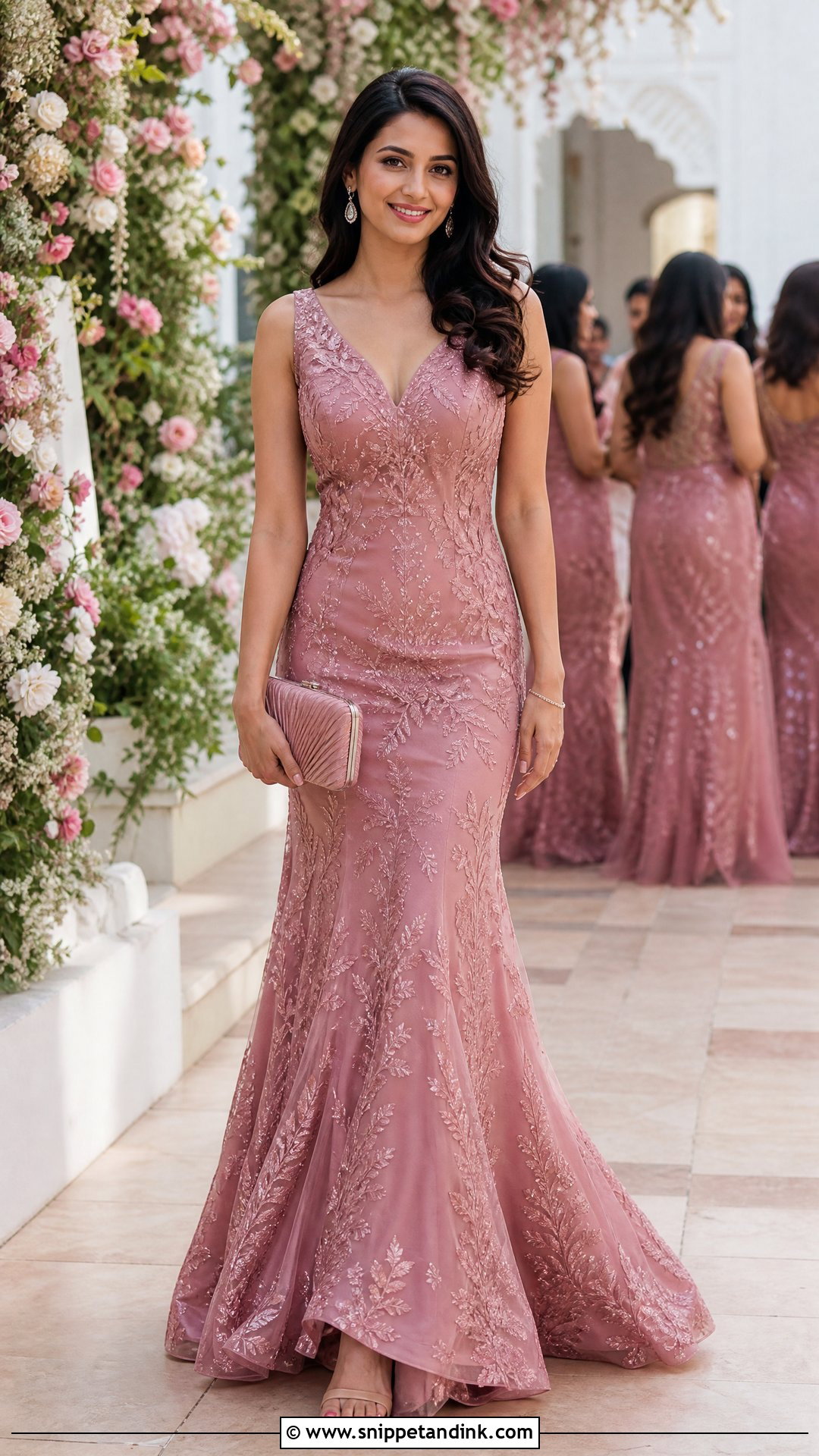
Bridesmaid gowns have a different job: they have to suit five different bodies in one colour. Mauve, sage, dusty rose and champagne flatter more skin tones than bright shades. I’d keep the shade the same and let each girl pick her own neckline, which solves most fit arguments. Lighter embroidery keeps the bride as the focus. Comfortable heels matter more here than anywhere, since bridesmaids stand longest.
8. Indian Fish Cut Gown For Bride
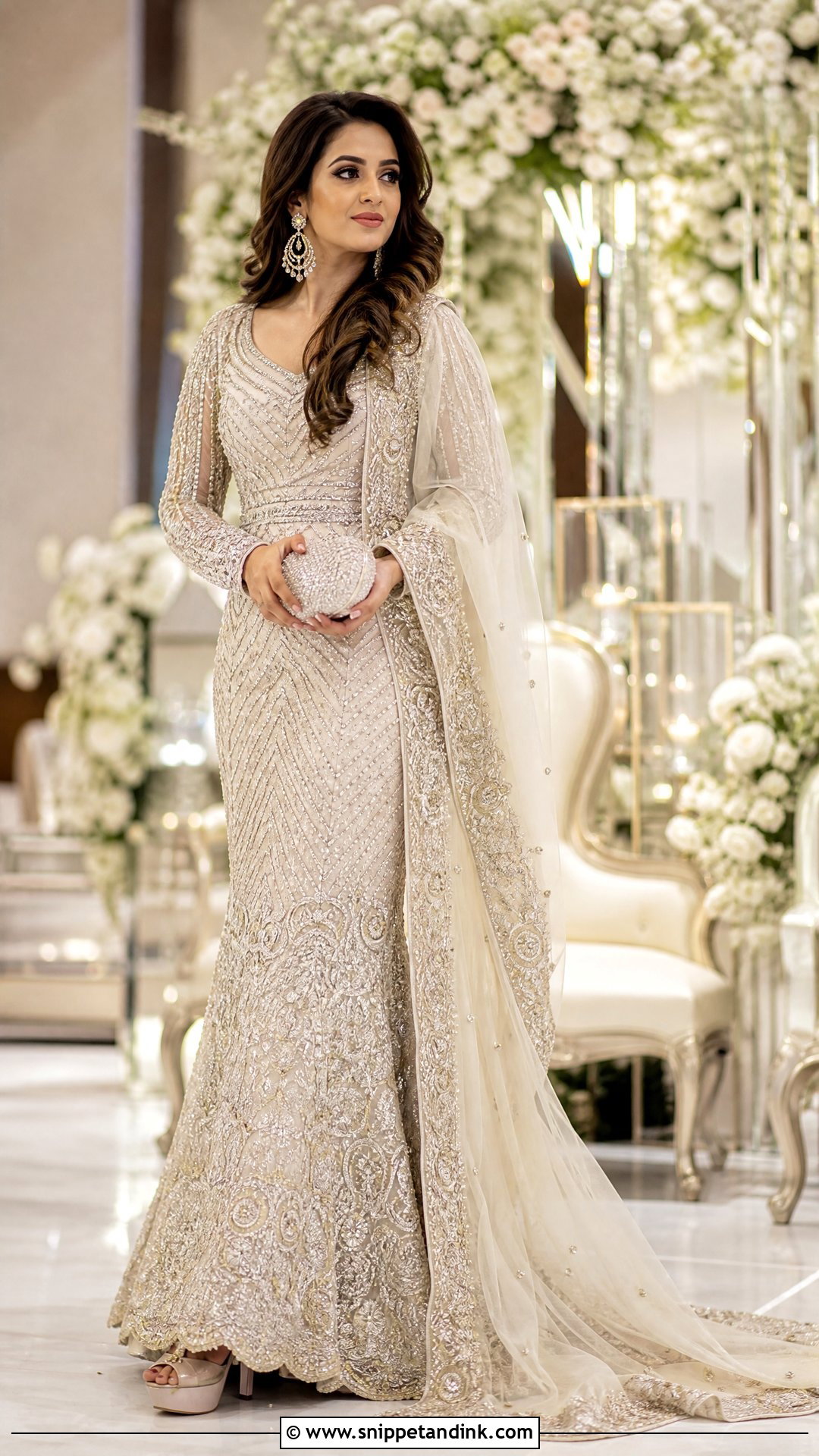
A bride wearing a fish cut gown to her reception or cocktail night is wearing the least forgiving silhouette there is, so tailoring has to be exact. Velvet, silk or heavy net with zardozi, crystals or pearl work, in ivory, red, maroon or champagne. A long veil-style dupatta pinned into the hair finishes it. I’d book three fittings, not two, for this one. It suits the bride who wants Indian detailing with a contemporary gown shape and is willing to wear shapewear for it.
9. Indian Fish Cut Gown In Pastel Color
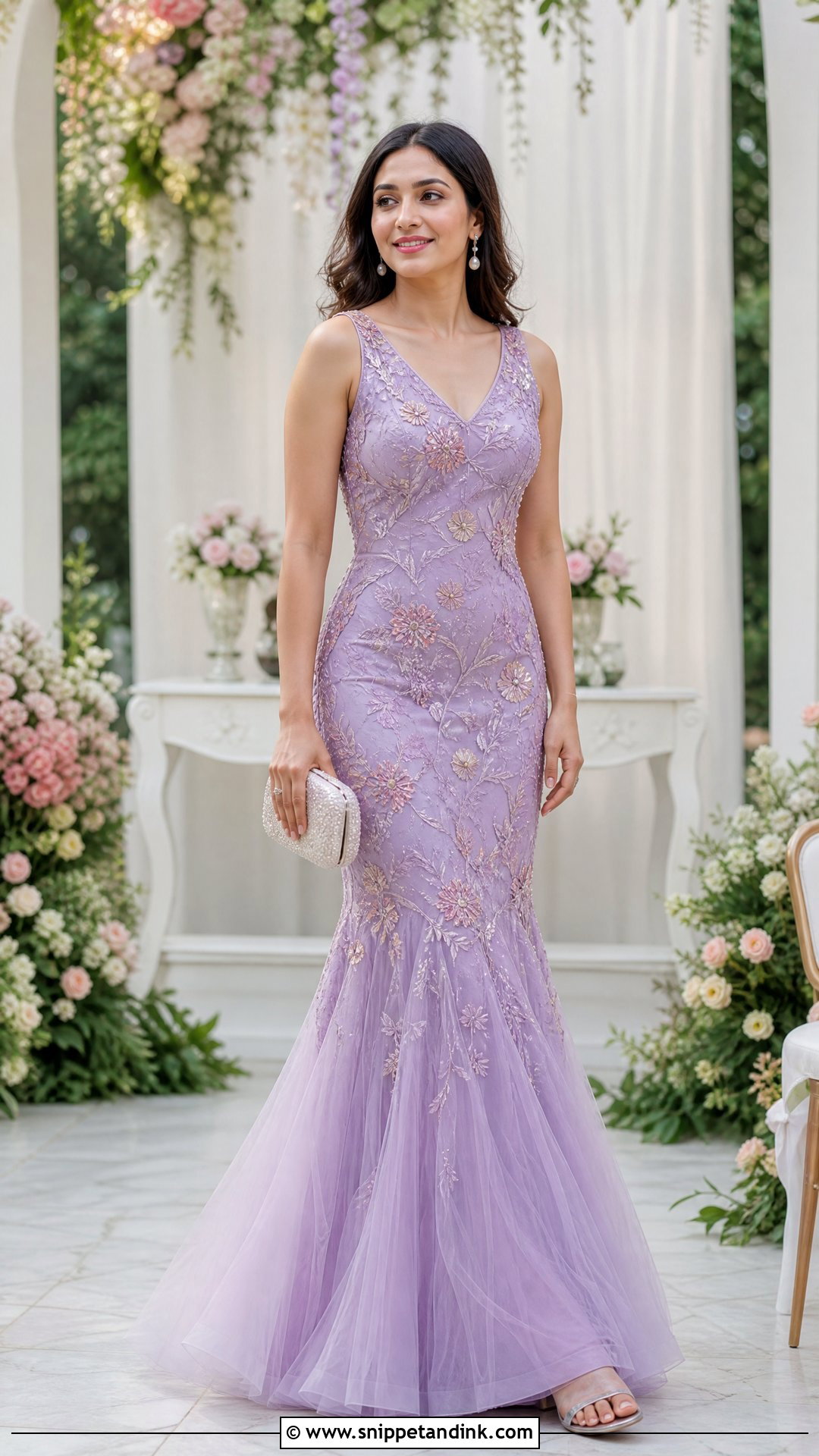
Pastels belong to daytime. Blush, pistachio, lavender and soft peach look washed out under yellow banquet lights but glow outdoors. Pearl work and floral embroidery suit these shades better than heavy sequins. On petite frames, a pastel in one tone from neckline to hem makes you look taller. Keep makeup fresh and the hair simple: a soft braid or loose waves.
10. Indian Fish Cut Gown In Red
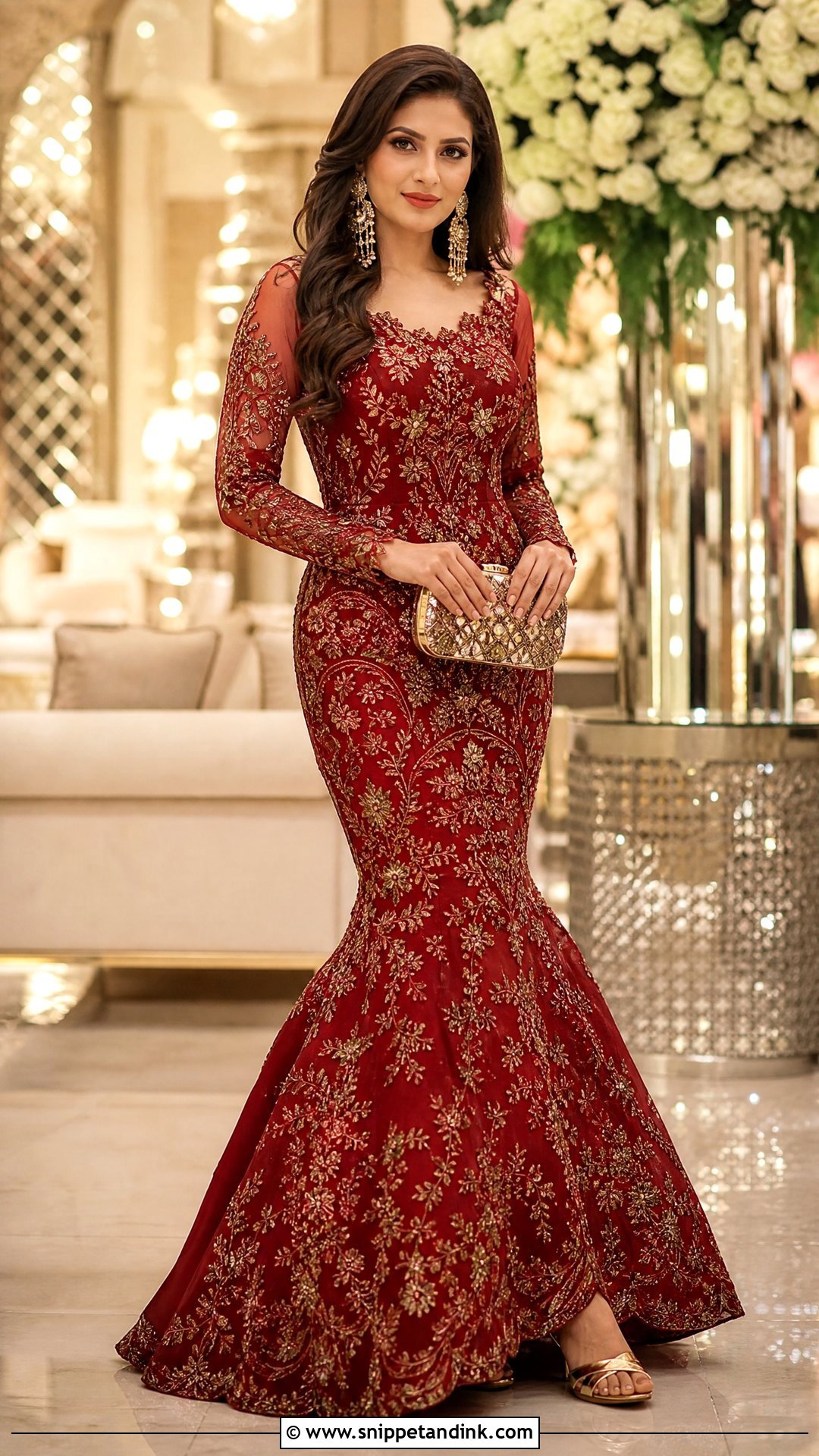
Red is bold enough that it doesn’t need help. A deep ruby or cherry with gold embroidery reads traditional; red sequins with almost no jewellery reads modern. One thing I always check: if you’re a guest, make sure the bride isn’t wearing red to the same event. Gold heels and kundan earrings, and a sleek bun or side waves so the colour has room.
11. Indian Fish Cut Gown In Black
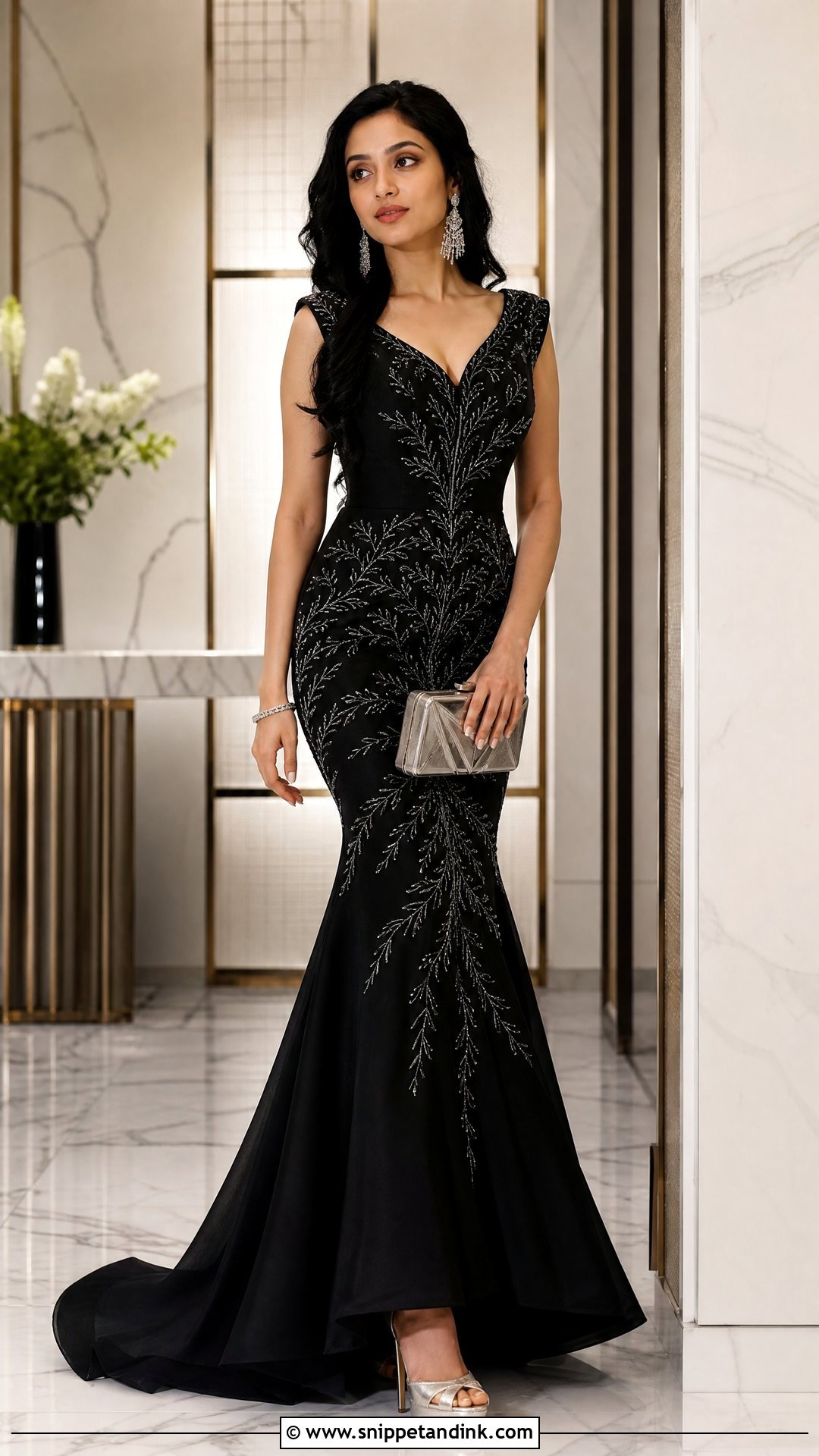
Black fish cut gowns read sleek, but at Indian functions some families still see black as inauspicious, so I’d ask before wearing one to a ceremony rather than a party. Gold, silver or black-on-black embroidery keeps it festive. A sheer embellished cape softens it if you’re unsure. Metallic heels and lined eyes with a neutral lip finish it well.
12. Indian Fish Cut Gown In White
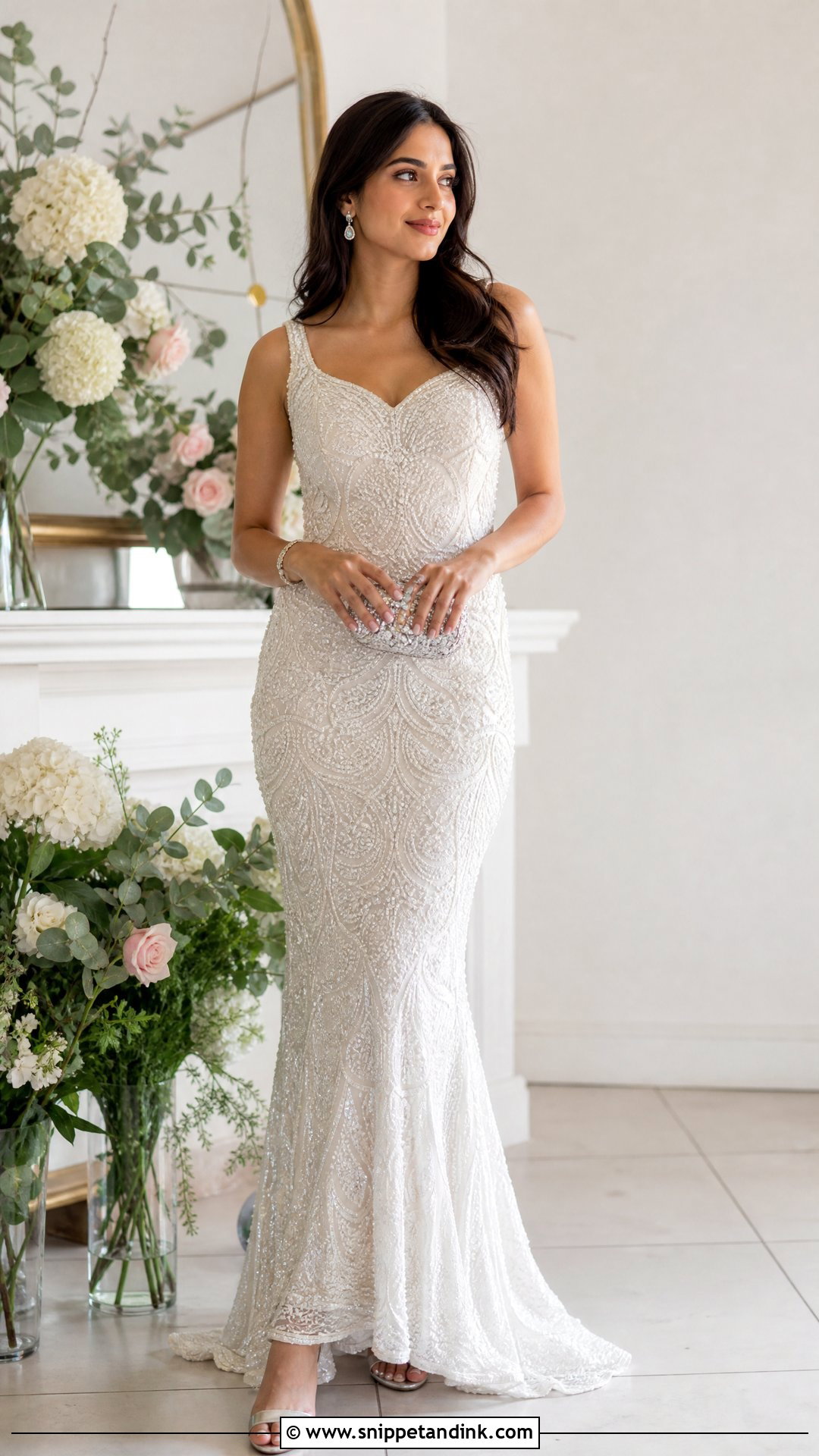
White in a mermaid shape looks dreamy, but stark white can flatten skin in flash photos. I almost always steer clients to ivory, pearl or off-white. Chikankari-inspired work, pearls and silver sequins keep it festive. Silver heels and delicate earrings, or emerald accessories if you want colour. Pack a stain pen; a white hem picks up everything on a lawn.
13. Indian Fish Cut Gown In Gold
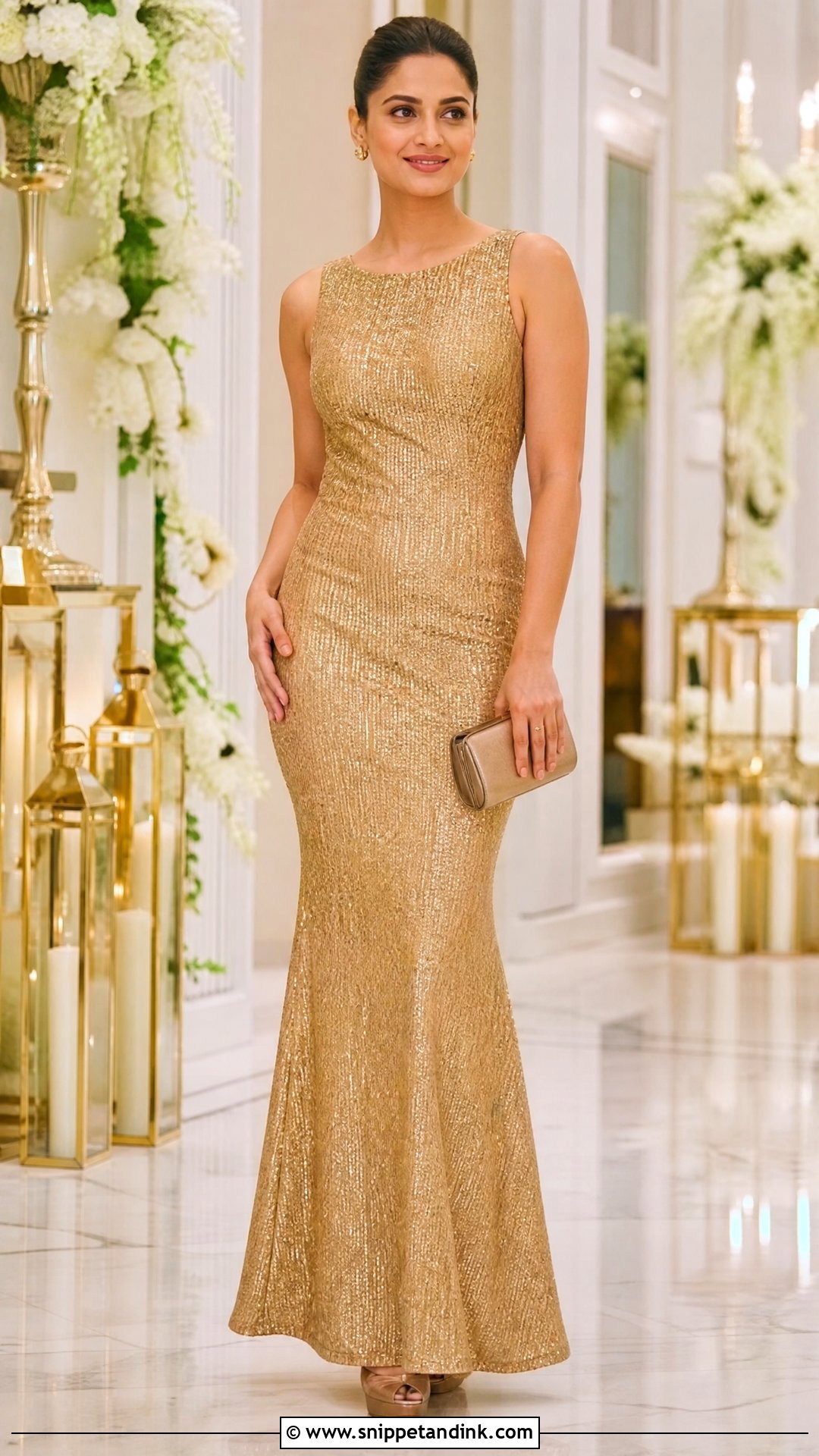
Gold comes in two moods. Matte gold reads refined, full sequin gold reads party. The undertone matters more than people think: warm, yellow-leaning gold suits warm and olive skin, while champagne gold suits cooler undertones. Nude or bronze heels keep the leg line long. Small earrings if the gown is loud, statement pieces if it’s plain.
14. Indian Fish Cut Gown In Navy Blue
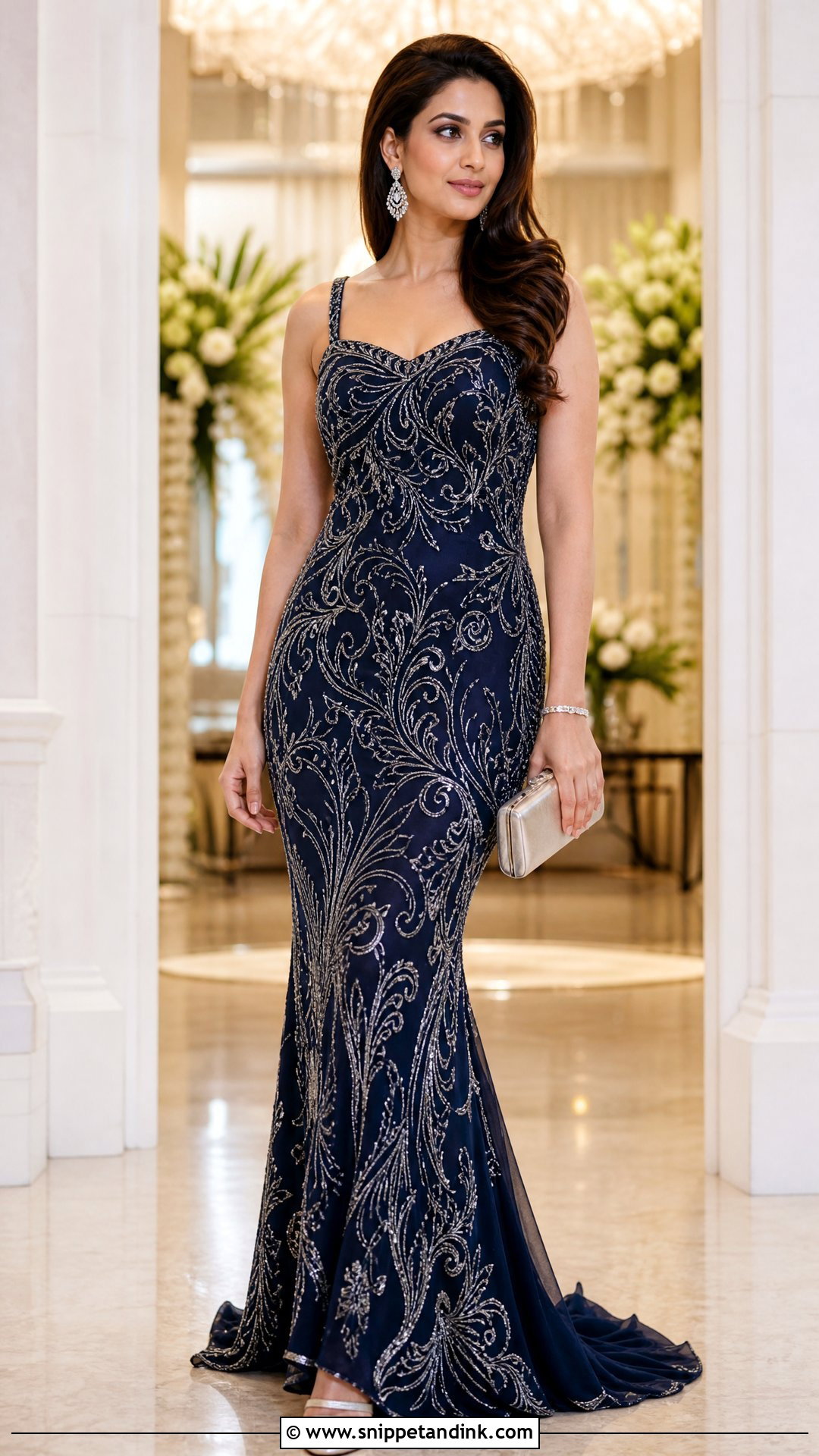
Navy is the colour I suggest when a client wants depth without black. It handles sheer sleeves, capes and high necks well because the dark base keeps the extra fabric from looking busy. Silver or tone-on-tone embroidery and sapphire or pearl jewellery. In evening light, navy reads almost black in photos, so a little shimmer in the fabric helps it show as blue.



15. Indian Fish Cut Gown In Emerald Green
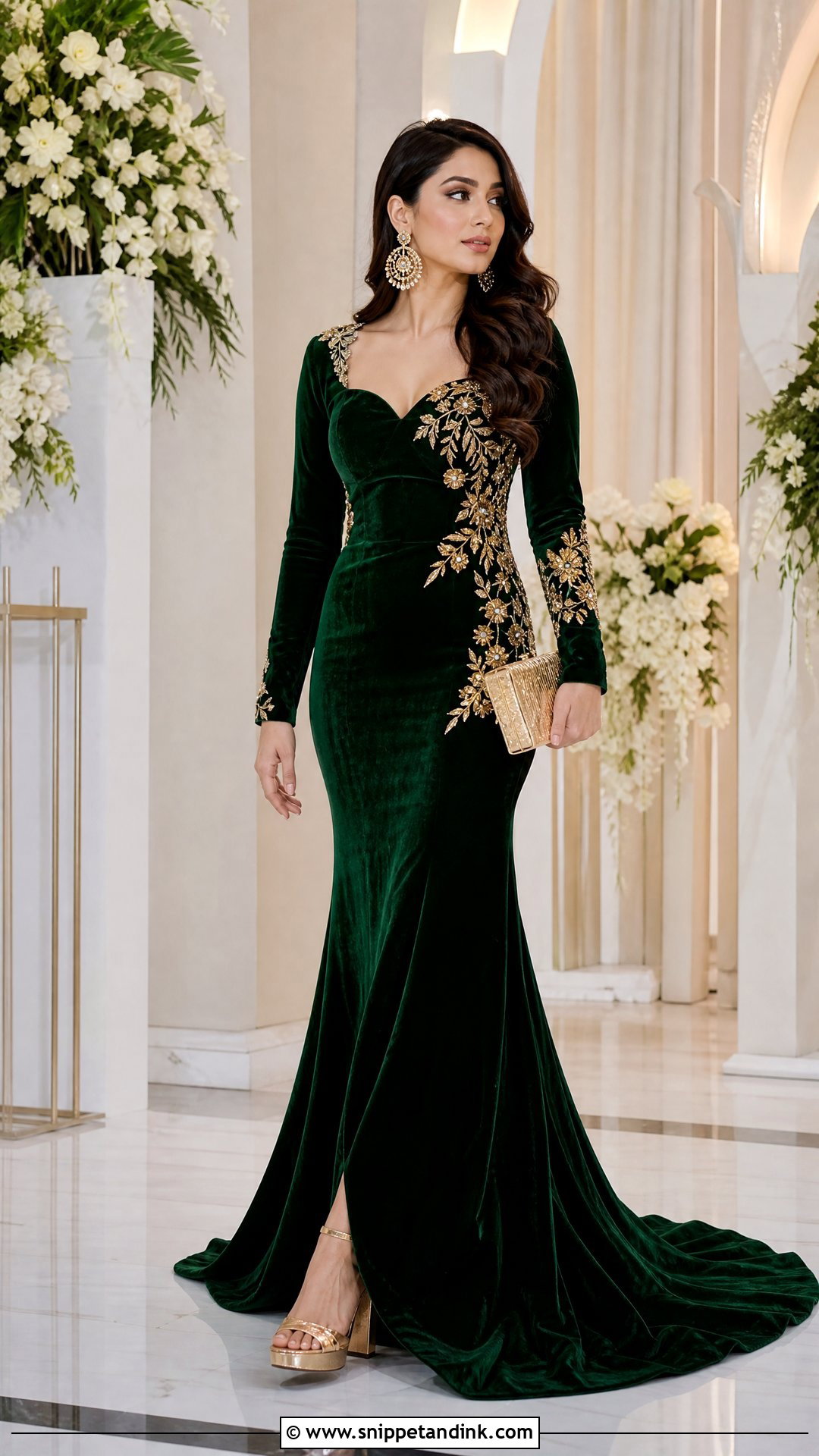
Emerald in velvet or satin is one of my favourite evening colours for this cut, because it holds depth under warm lights where lighter greens go flat. Gold embroidery makes it traditional; silver makes it cooler and more modern. Let the neckline decide the jewellery: a choker for a deep neck, bold earrings for a high one. Gold heels and a box clutch complete it.
16. Indian Fish Cut Gown With Sequins
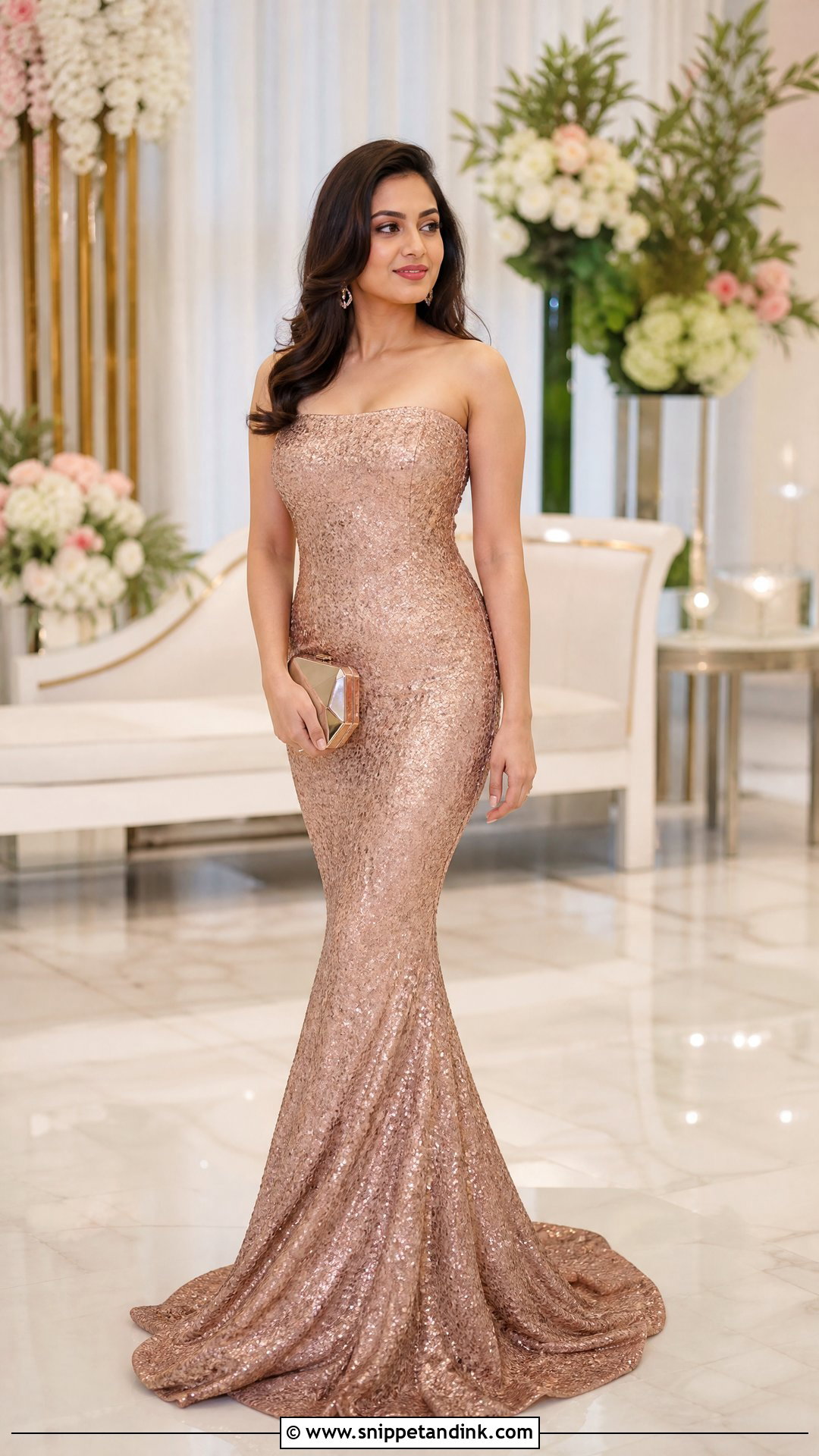
Full sequin gowns are heavy, and they scratch. The first thing I check is the lining: you want soft lining along the inner arm and at the hips, where sequins rub when you walk. Silver, champagne or rose gold catch light best. A smooth hairstyle and very little jewellery stop it from becoming too much. Look for a little stretch in the base, or sitting through dinner gets uncomfortable.
17. Indian Fish Cut Gown With Embroidery
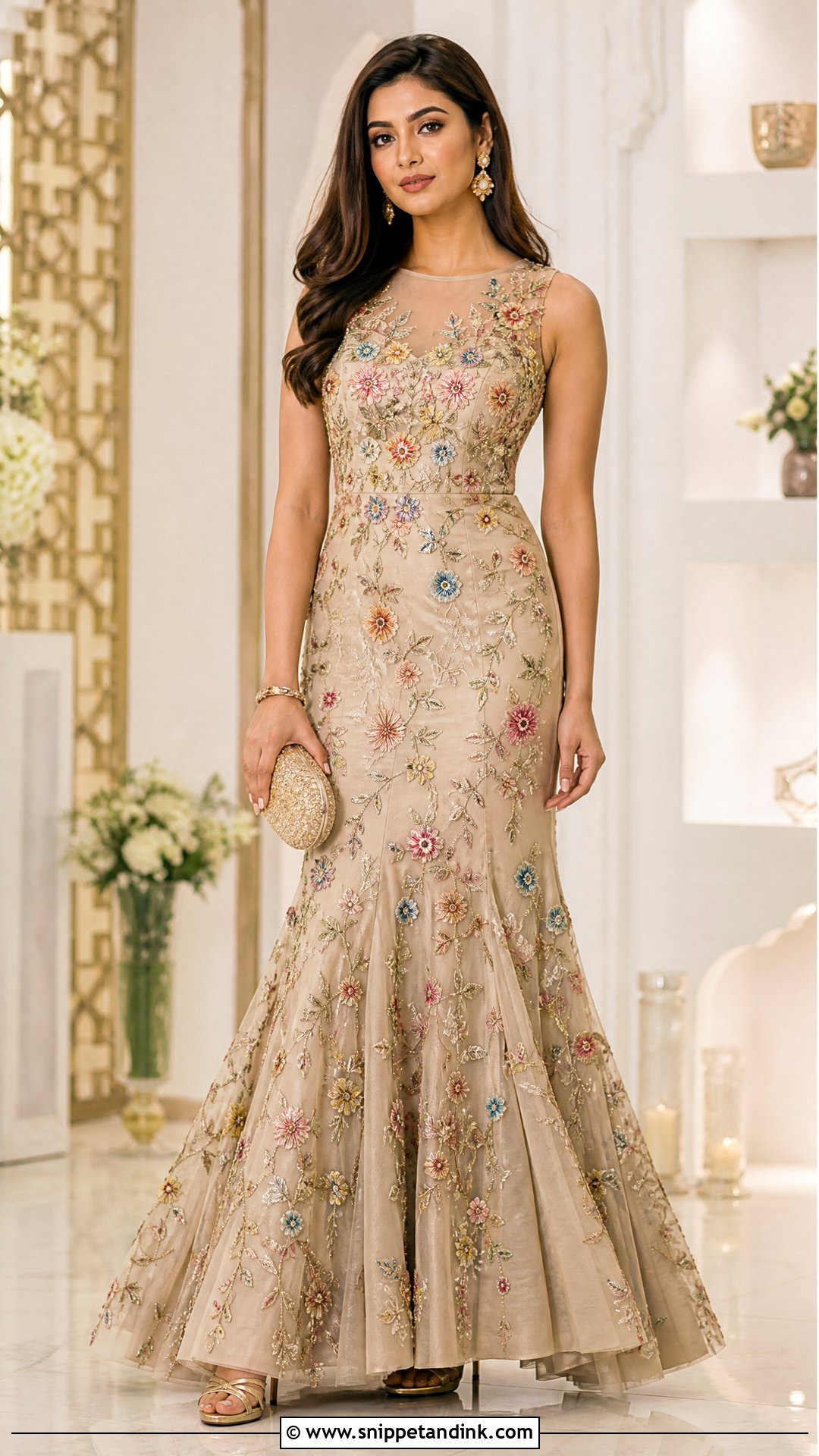
With an embroidered gown, I look at where the weight sits. Zardozi and beads concentrated on the bodice are fine; the same density across the flare makes the hem swing heavily and tire you out. Floral work feels soft, geometric work feels modern. Match the heels to the metal of the embroidery, gold with zardozi, silver with crystal. Keep the rest simple.
18. Indian Fish Cut Gown With Net Sleeves
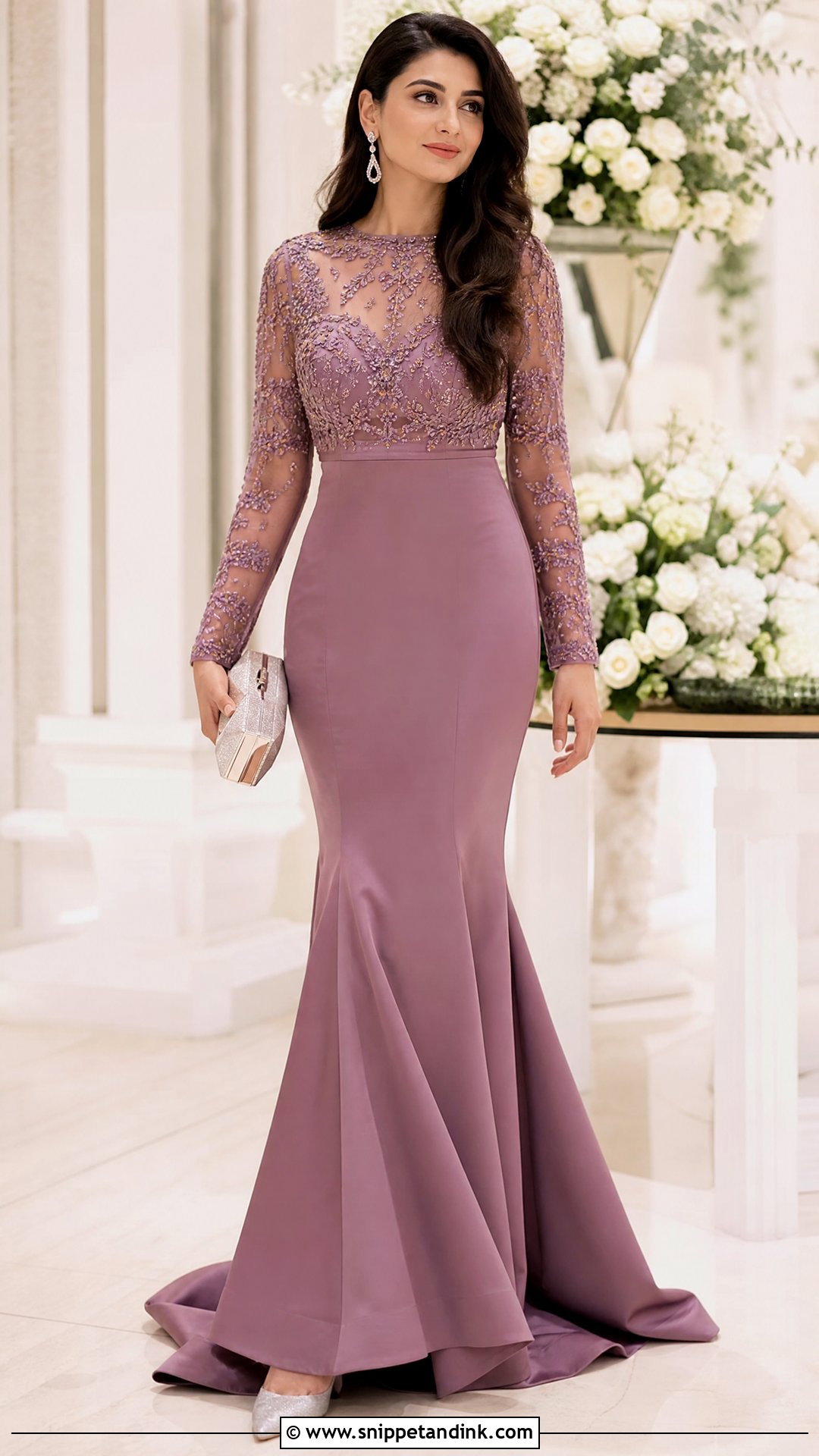
Net sleeves give coverage while still looking dressy, a good middle ground if you don’t want a sleeveless design. Pearl dots, fine sequins or lace borders all suit this sheer fabric. A boat or V-neck bodice pairs well with it. Bangles snag net, so I’d move to a bracelet or a single kada on the other wrist. It suits almost every age.
19. Indian Fish Cut Gown With Long Trail
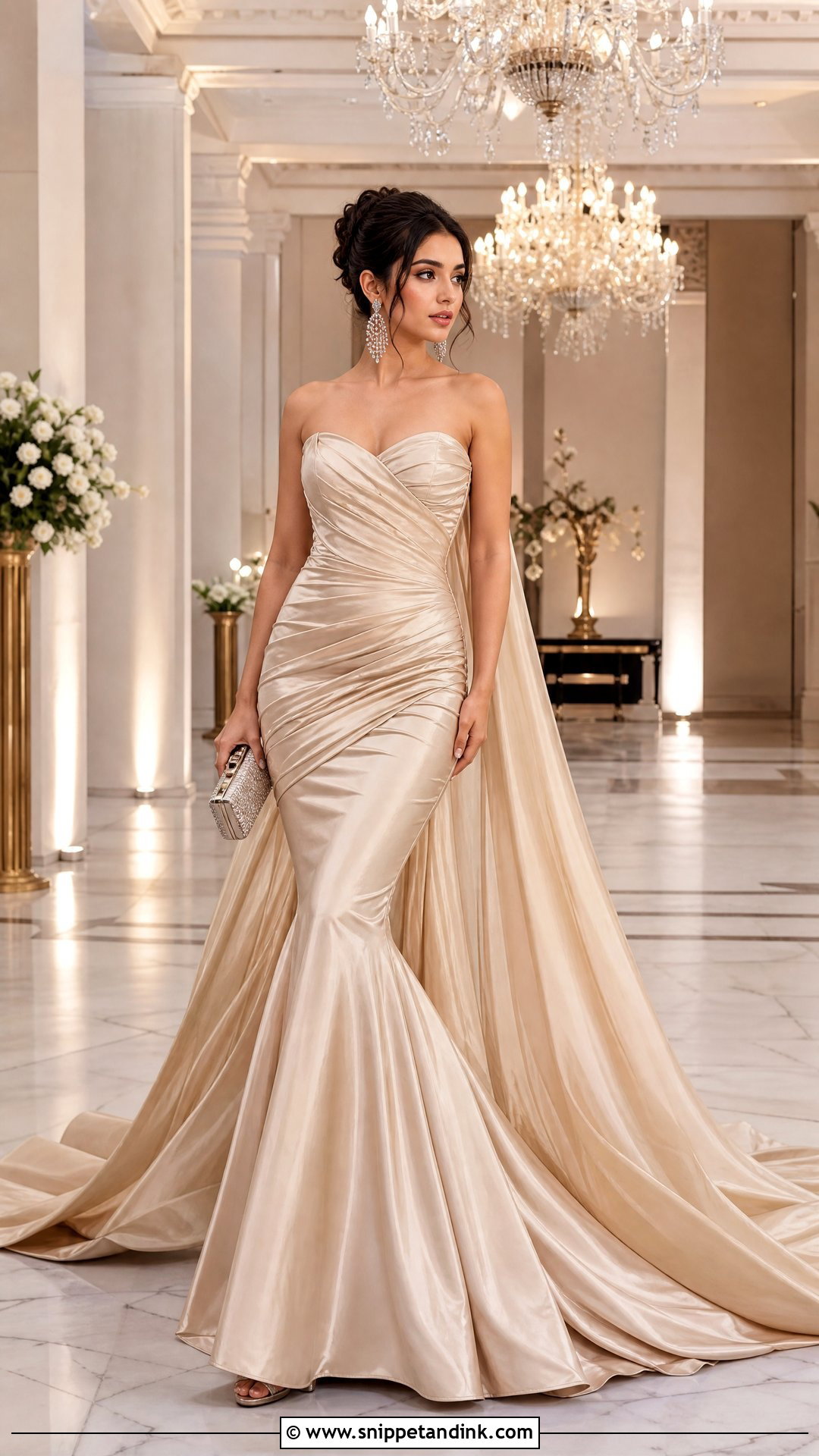
A long trail makes an entrance, then becomes something to manage. Satin, net and organza trails move well; heavy embroidered trails drag. I’d ask the tailor for a wrist loop or a bustle point so you can lift it after photos. Keep the front hem off the floor in your heels. Leave the accessories light, since the trail is already doing the work.

20. Indian Fish Cut Gown With Ruffle Hem
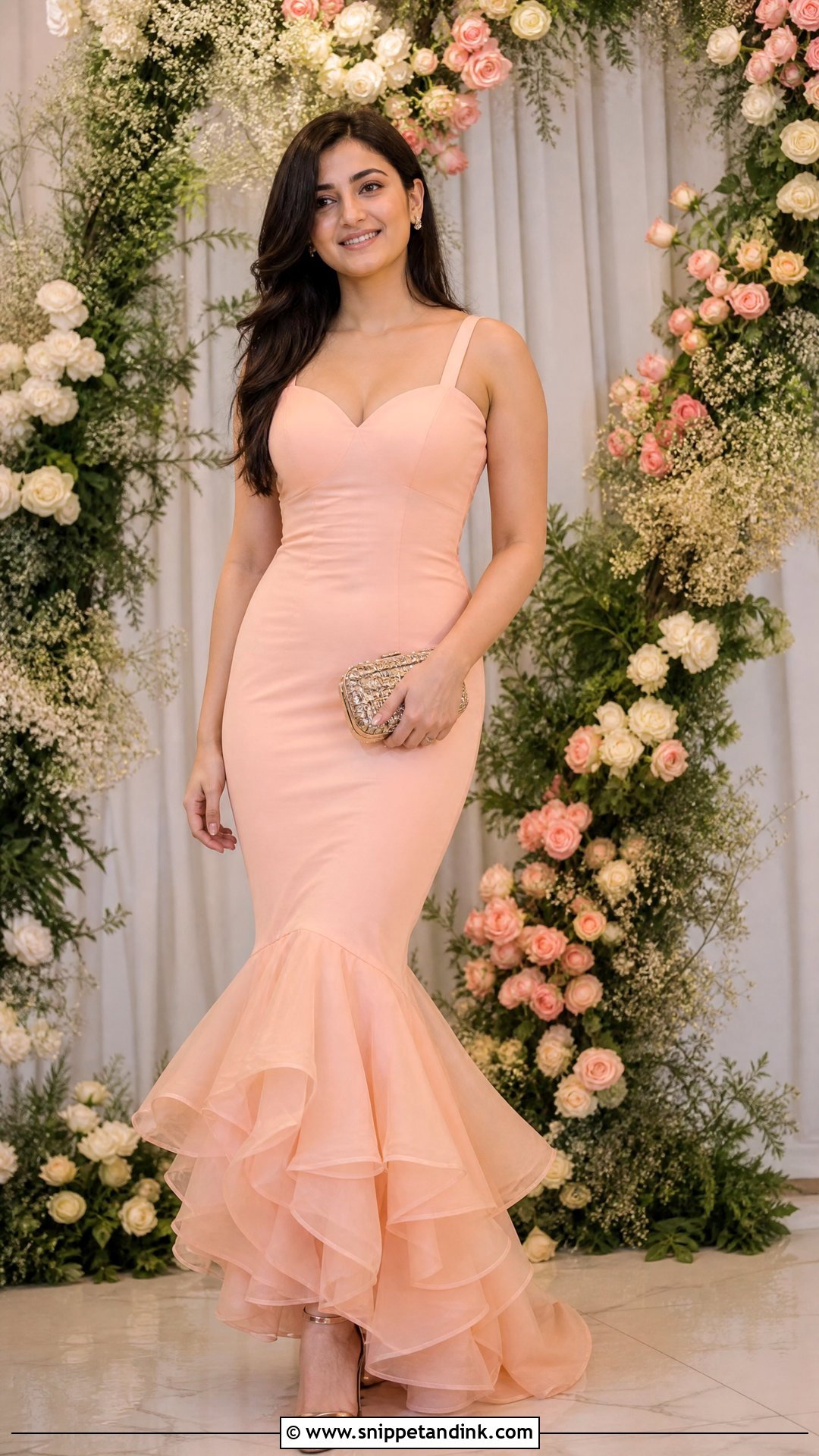
A ruffle hem puts the volume at the very bottom, so the waist and hips stay shaped and the gown gets a cute, playful finish. Organza and tulle ruffles hold their shape; chiffon ruffles collapse by evening. Slim heels let the ruffles show. Studs or small drops, and a half-up style if you want the look younger.
21. Indian Fish Cut Gown With Off Shoulder Neck
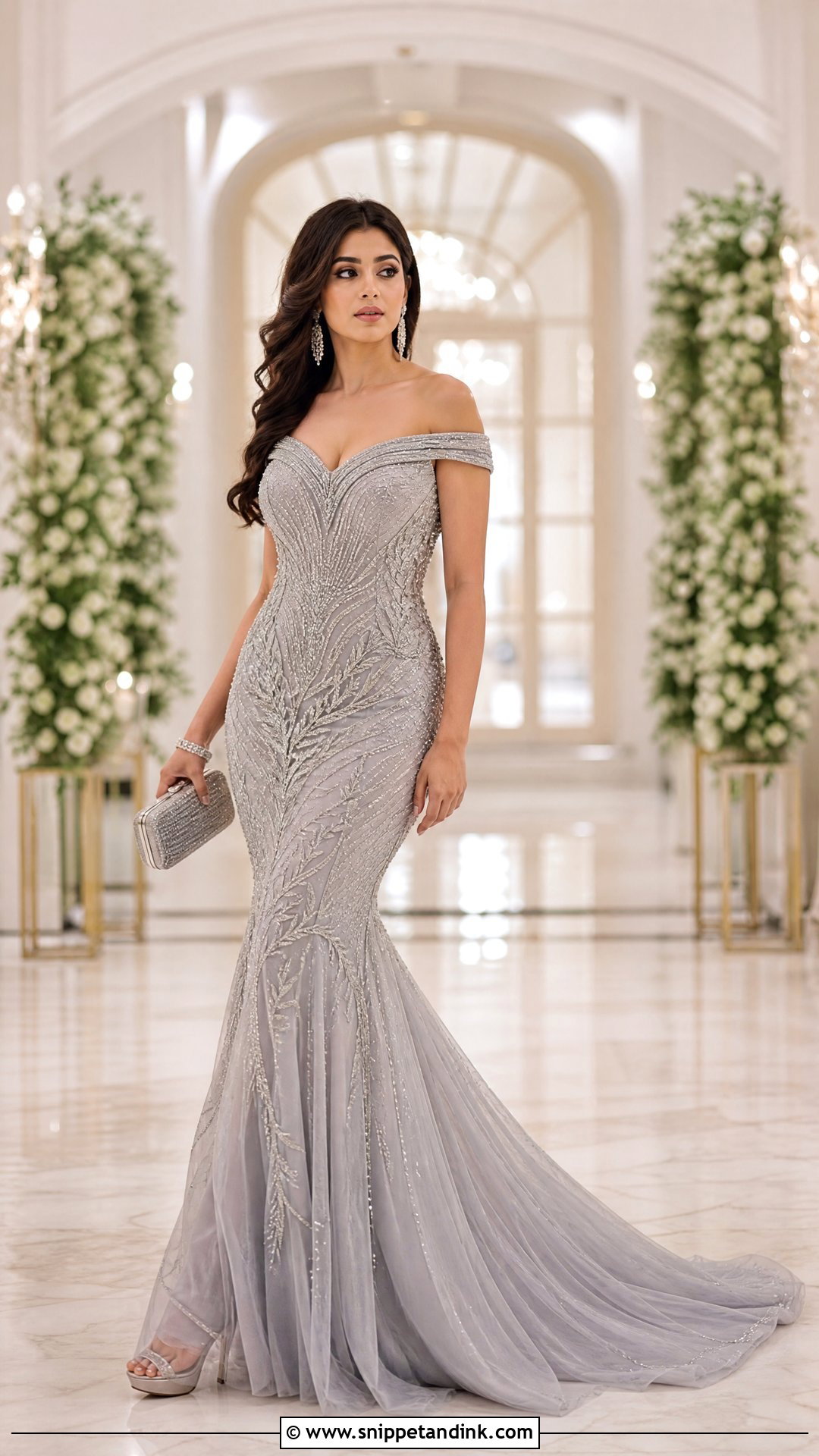
Off-shoulder gowns need a bodice with boning and silicone grip at the neckline edge. Without it, you’ll spend the night pulling the sleeves up. I check this by having the client raise both arms at the fitting. If the neckline already has detail, skip the necklace. Heels help the flare fall where it should.
22. Indian Fish Cut Gown With High Neck
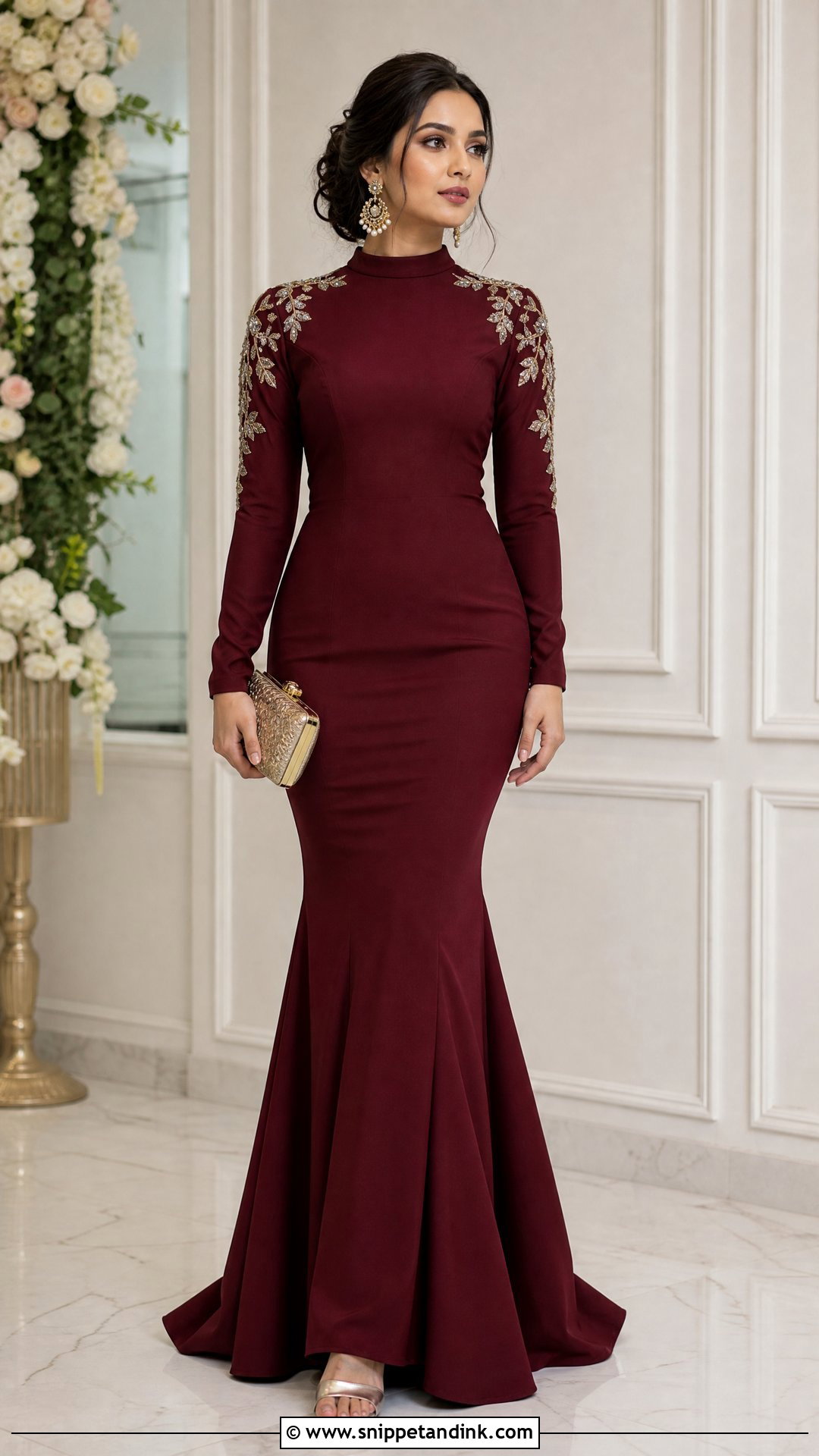
With a high neck, the earrings and rings do the work a necklace would. Velvet, crepe or silk in maroon, navy, emerald or champagne look rich with embroidery near the shoulders. A sleek bun or ponytail keeps the neckline readable. In summer, check the fabric breathes; a high-neck velvet gown at an outdoor function is a hard evening.
23. Indian Fish Cut Gown With Saree Drape
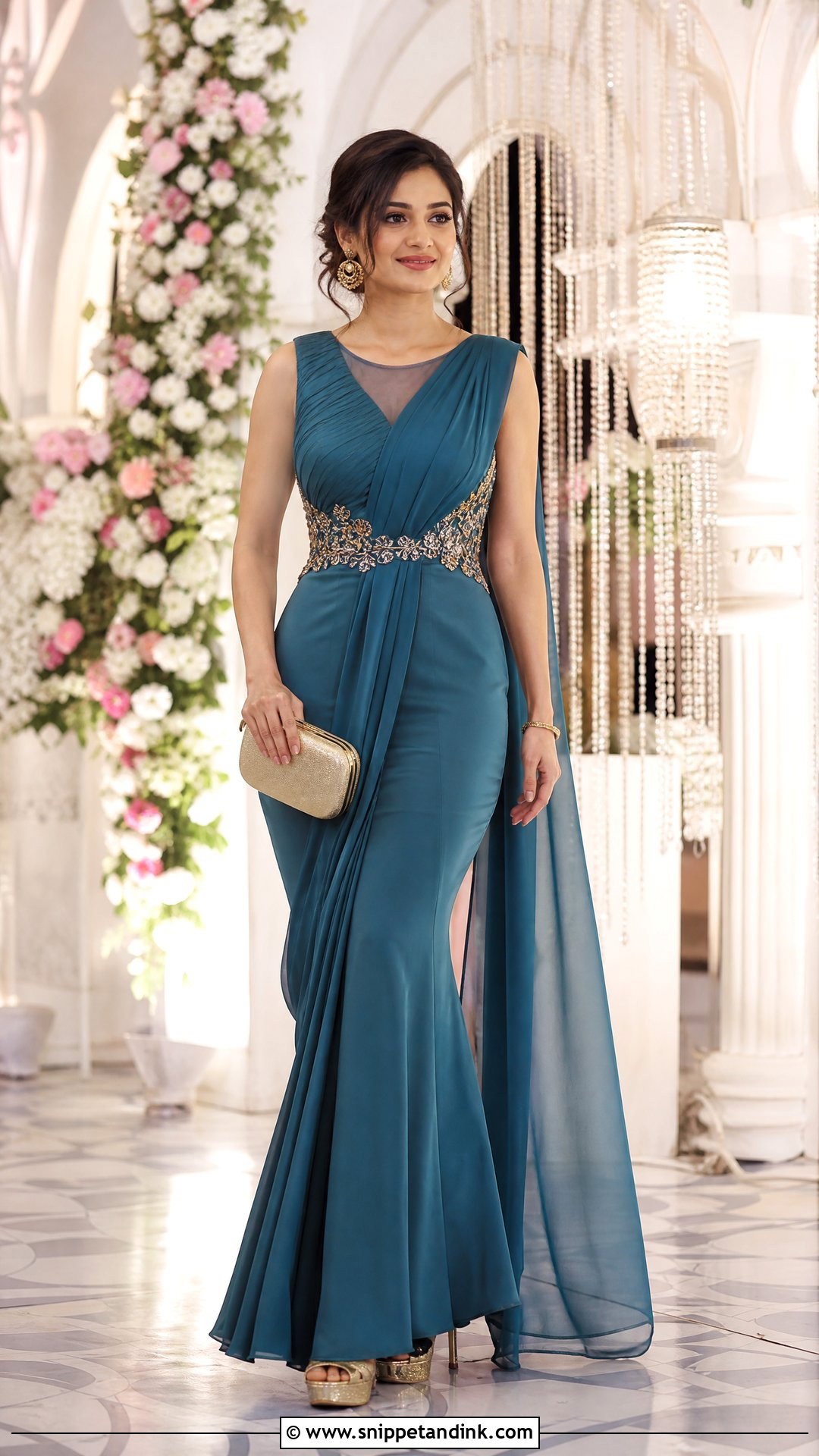
A saree drape gown gives you the pallu without the pleats, which is why I recommend it to clients who love sarees but don’t trust their own draping. The drape is stitched in, so it won’t slip. Chiffon, georgette and satin fall smoothly. The bodice must be well-fitted, or the drape pulls it sideways. Indian earrings and heels finish the look.
24. Indian Fish Cut Gown For Plus Size
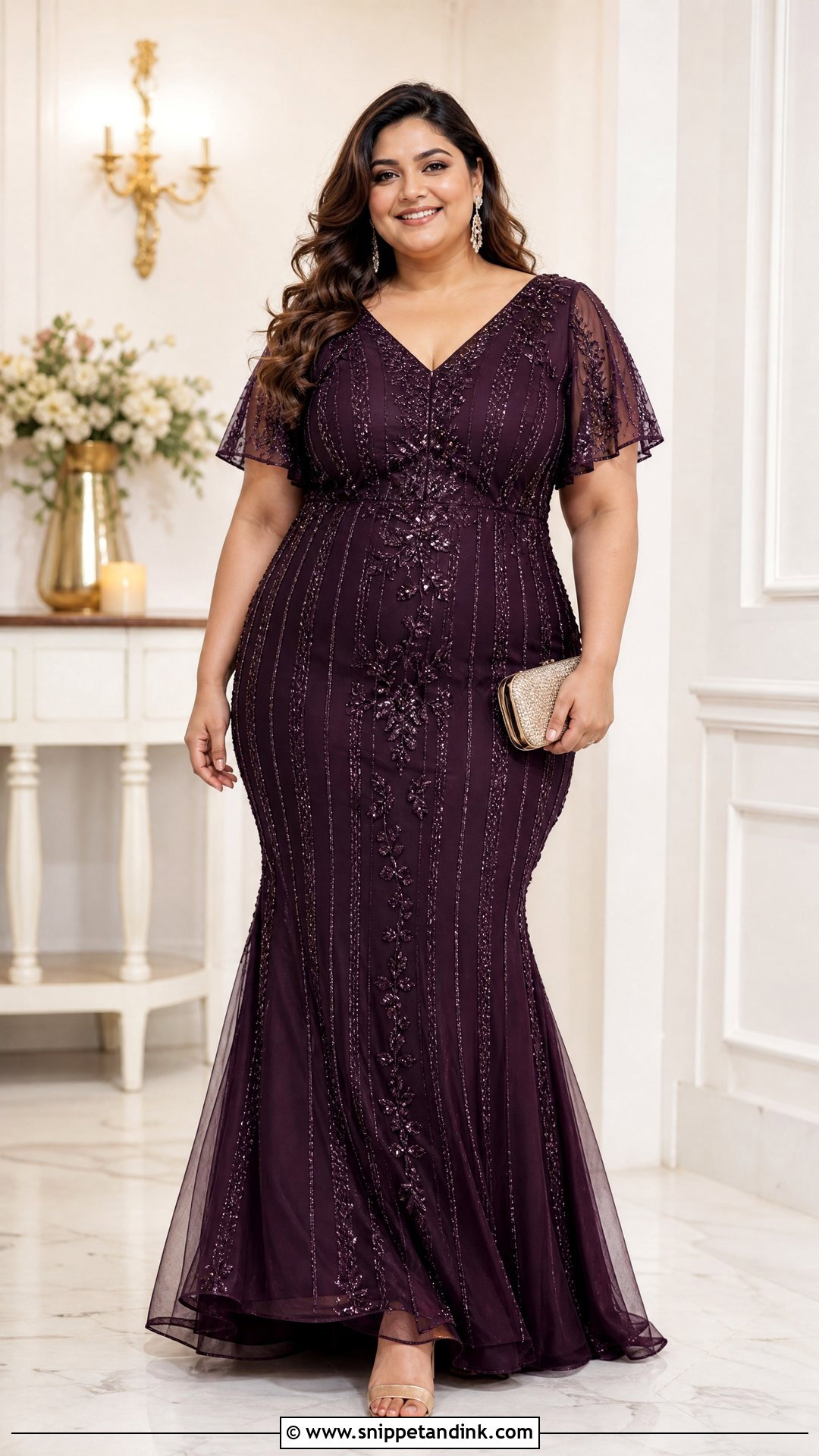
On a curvier body, a fish cut gown works when the structure is right. I look for a defined waist, a fabric with some stretch, and a flare that starts just below the knee rather than mid-calf. A V-neckline and vertical embroidery give a longer line. Avoid stiff, unforgiving fabrics around the hips. The goal isn’t to hide your shape but to support it, so good shapewear and a well-placed waist seam matter more than any styling trick.
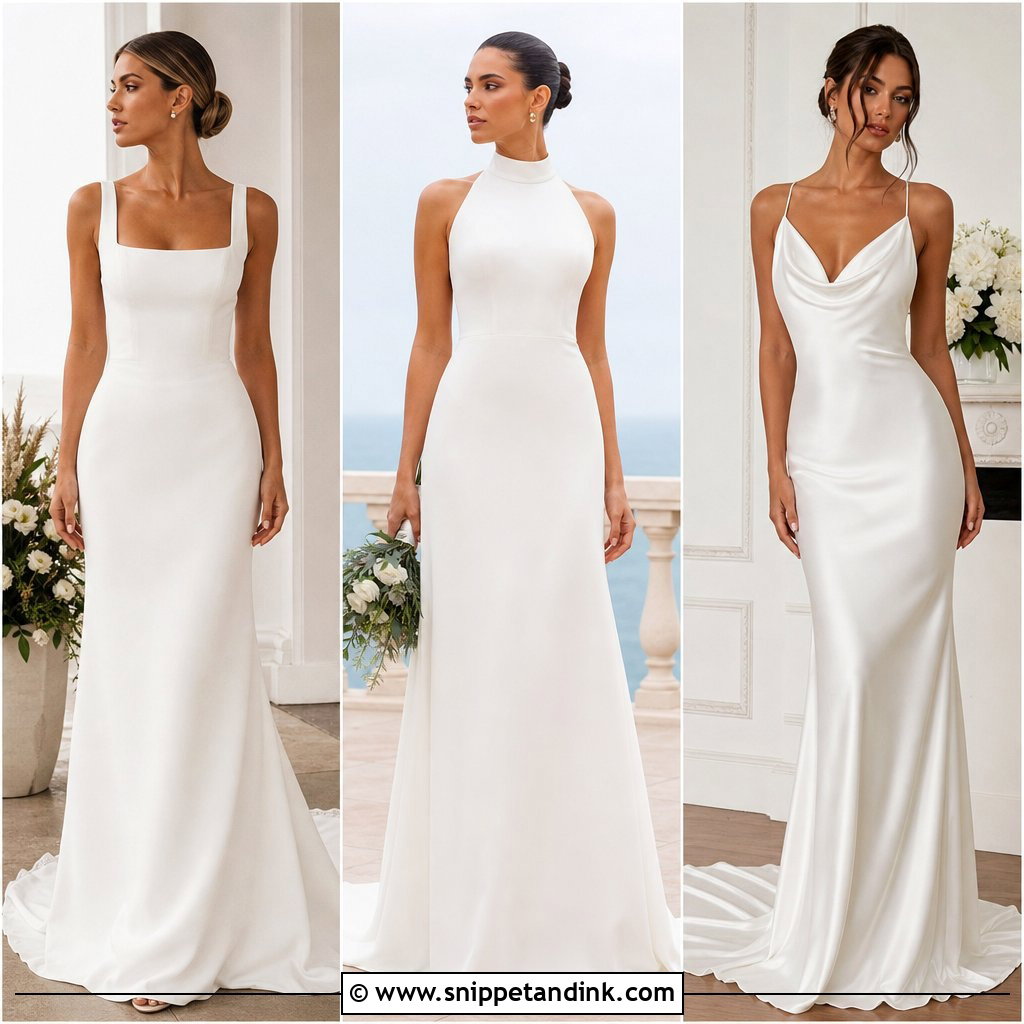
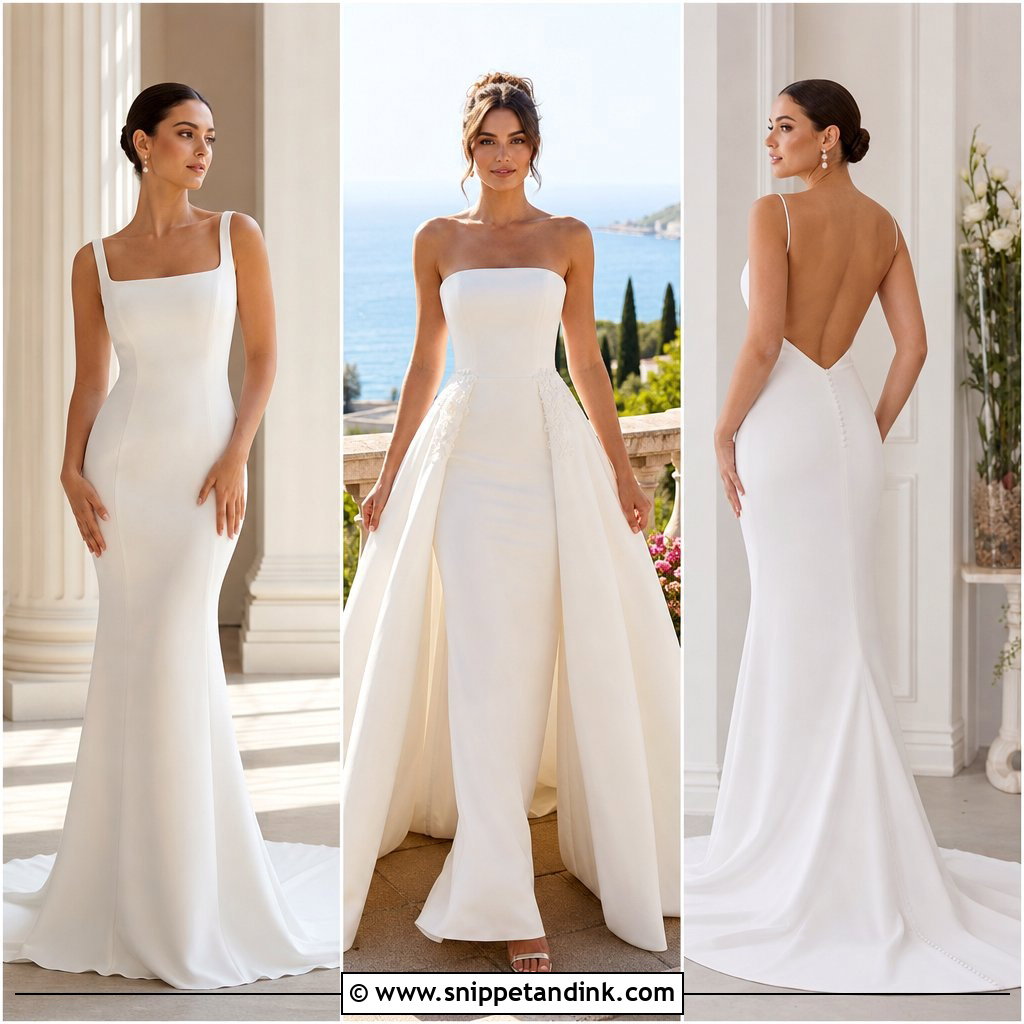
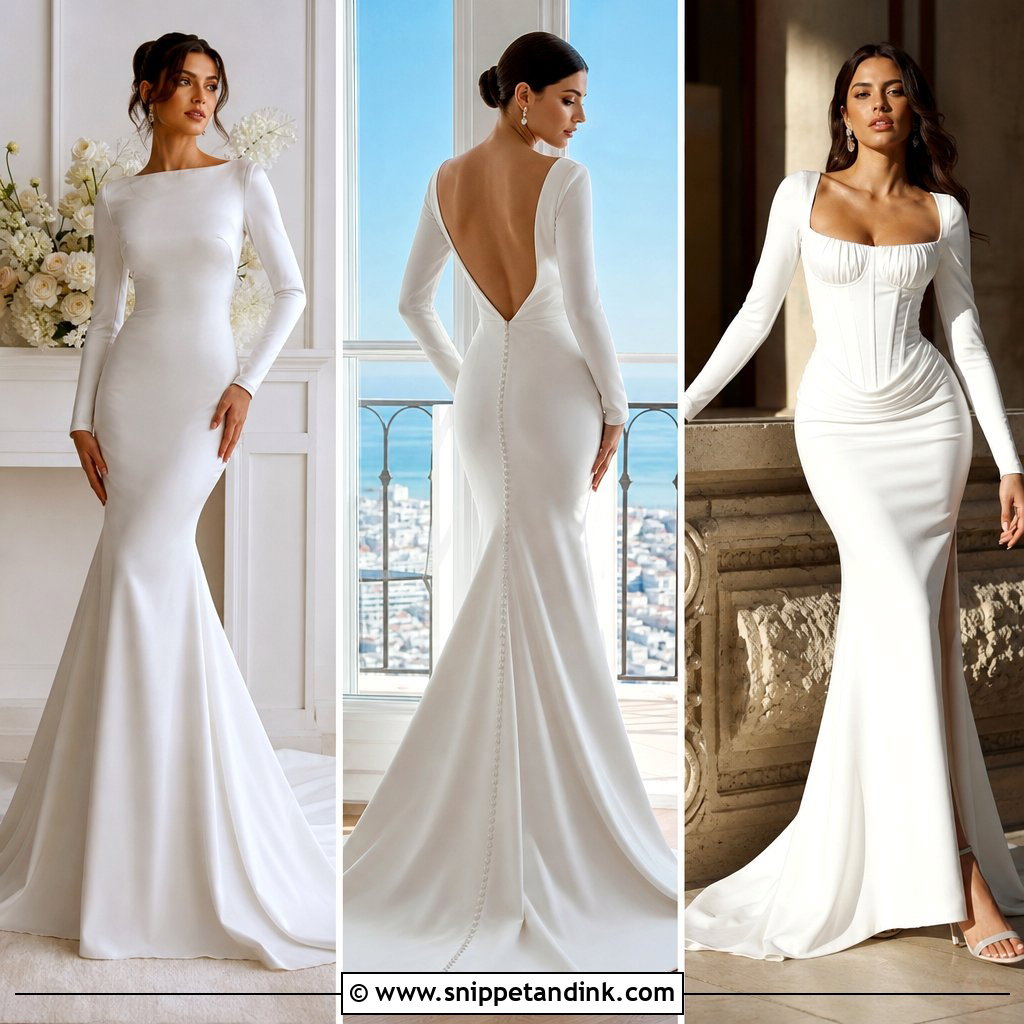
25. Indian Fish Cut Gown For Petite Women
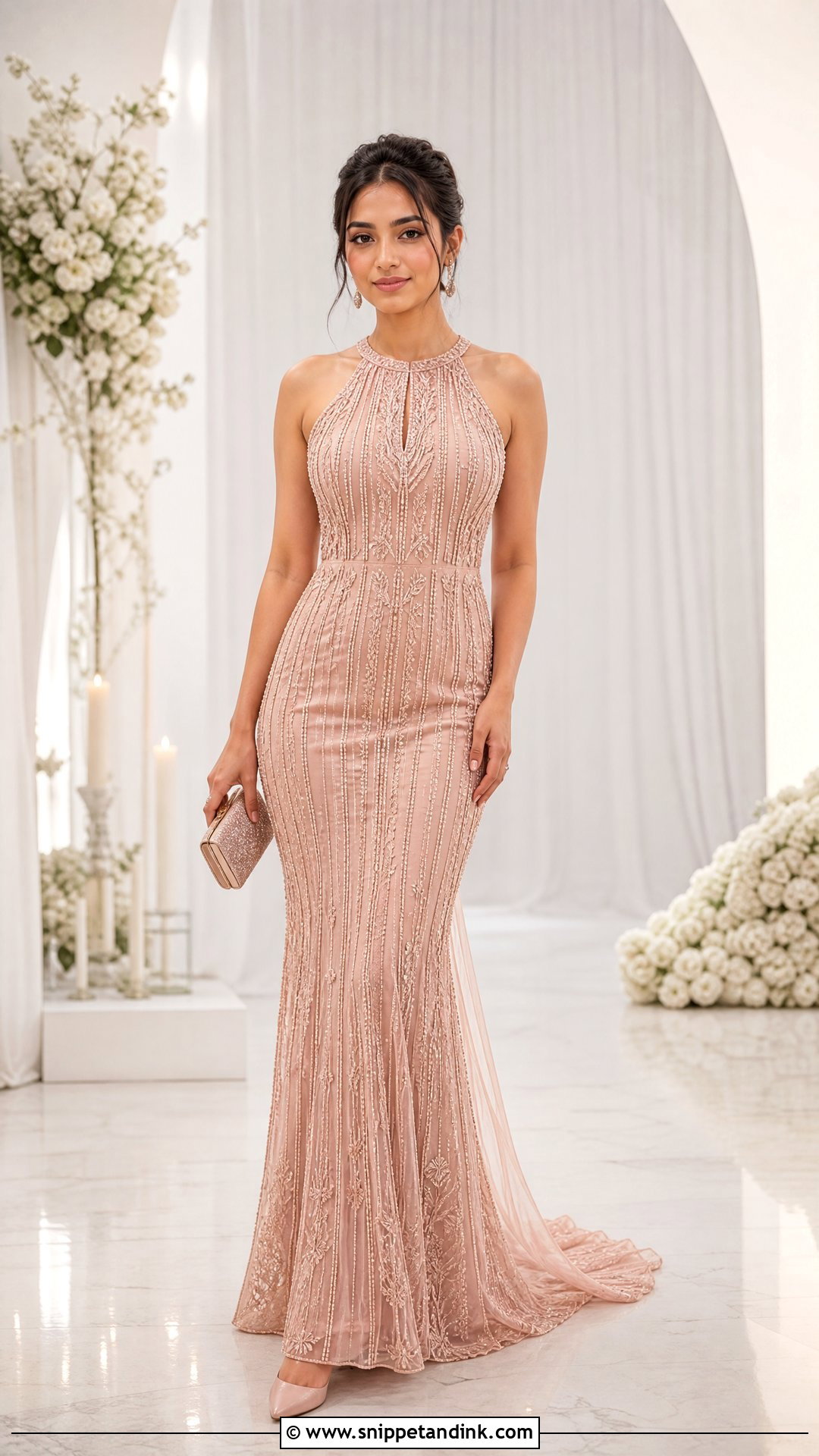
For petite women, proportion is everything. A slightly higher waistline, vertical embroidery and a narrower flare stop the gown from swallowing you. One colour from neck to hem helps, as do pointed heels or slim sandals. Avoid long, heavy trails. A V-neck or sweetheart neckline lengthens the upper body. The tailoring should be close; even an inch of extra length at the hem shortens you visibly.
Getting a Tailor-Made Fish Cut Gown to Fit on the Night
This silhouette has almost no ease, so a small change between your last fitting and the event shows. I’d start a custom gown two to three months ahead and plan at least two fittings, with the last one about a week before the function.
Bring these to every fitting
- The exact heels you’ll wear. The hem is cut to them; switching shoes later ruins the line.
- The shapewear you’ll wear, since it changes the hip measurement.
- Your heaviest jewellery, if it sits on the neckline.
Ask the tailor to leave a little seam allowance at the side seams so the gown can be let out if needed. Check whether it closes with a zip, a dori or hooks; a long back zip is easiest to get into alone, while a dori back can be adjusted on the day. A can-can layer under the flare keeps it from collapsing, but it adds heat, so skip it for an outdoor summer event. Finally, transport the gown hanging, and steam it at the venue rather than ironing sequins or net.
Fit Is the Whole Story With This Silhouette
A fish cut gown can look bridal, simple, modest or playful depending on fabric and styling, but fit comes first every time. I’d decide where the flare starts and confirm you can walk, sit and dance in it, then choose the neckline, embroidery and colour. Sequins, pastels, capes, saree drapes or jewel tones all work once the gown sits right. It should feel secure without gripping your knees, and comfortable enough that you stop thinking about it after the first hour.
You'll Like These Ideas:




Leave a Reply