
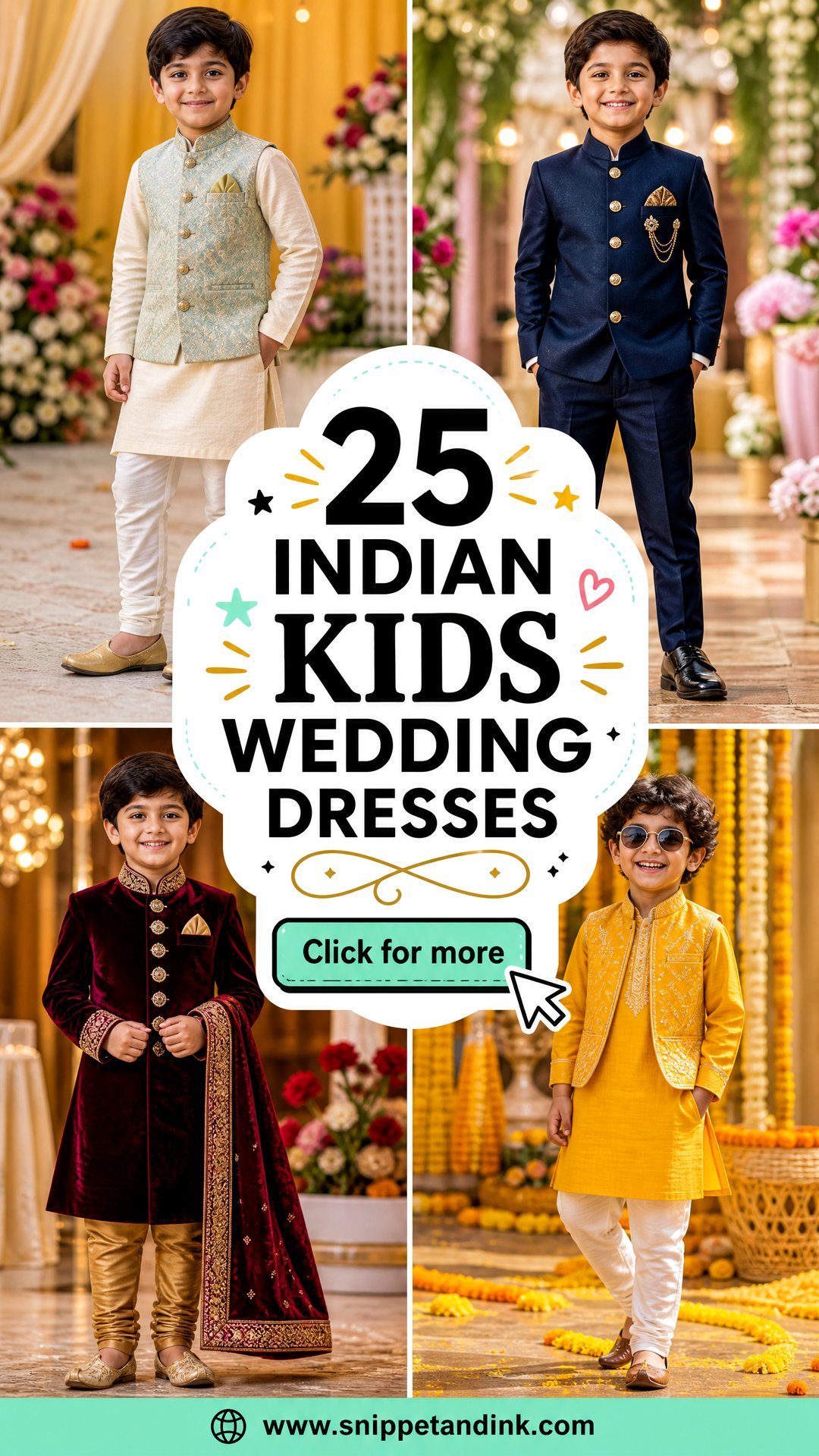
Children at an Indian wedding are on duty for longer than most adults: early rituals, a lunch, photos in the heat, and dancing past their bedtime. When I dress kids for a family wedding, I judge an outfit by what it feels like on the inside, not just how it looks on a hanger. Seams, linings, waistbands and how a dupatta is fixed decide whether a child is happy at hour five. Below you will find lehengas, kurta pajama sets, sherwanis, shararas, Anarkalis, dhoti outfits and coordinated sibling looks for haldi through to the reception, with the details I check on each.
Sizing for a Child Who Will Grow Before the Wedding
Children can grow noticeably in a few months, and wedding outfits are often bought well ahead. I plan kids’ outfits differently from adults’ for exactly that reason.
- Buy no more than six to eight weeks ahead if you can, and do a full try-on two weeks before the first function.
- Ask the tailor for extra seam allowance at the side seams and hem so the outfit can be let out.
- Choose elastic or drawstring waists and adjustable back ties where possible; they absorb a growth spurt.
- Measure the child in the shoes they will wear. A hem that is right in bare feet can be too short in mojaris.
- Have them sit, squat and lift their arms during the try-on. Children will do all three within minutes of arriving.
1. Lehenga Choli Indian Kids Wedding Dress
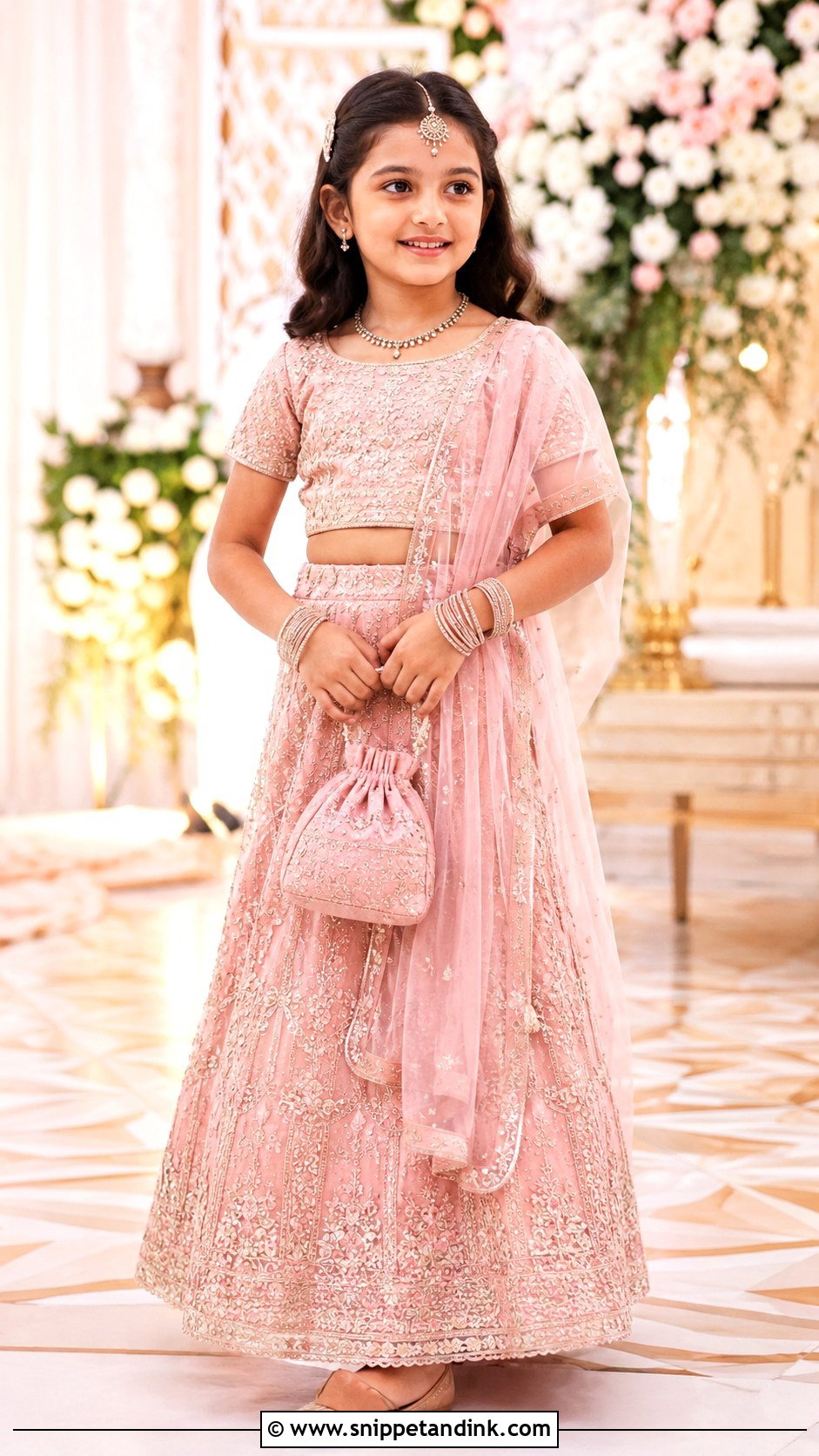
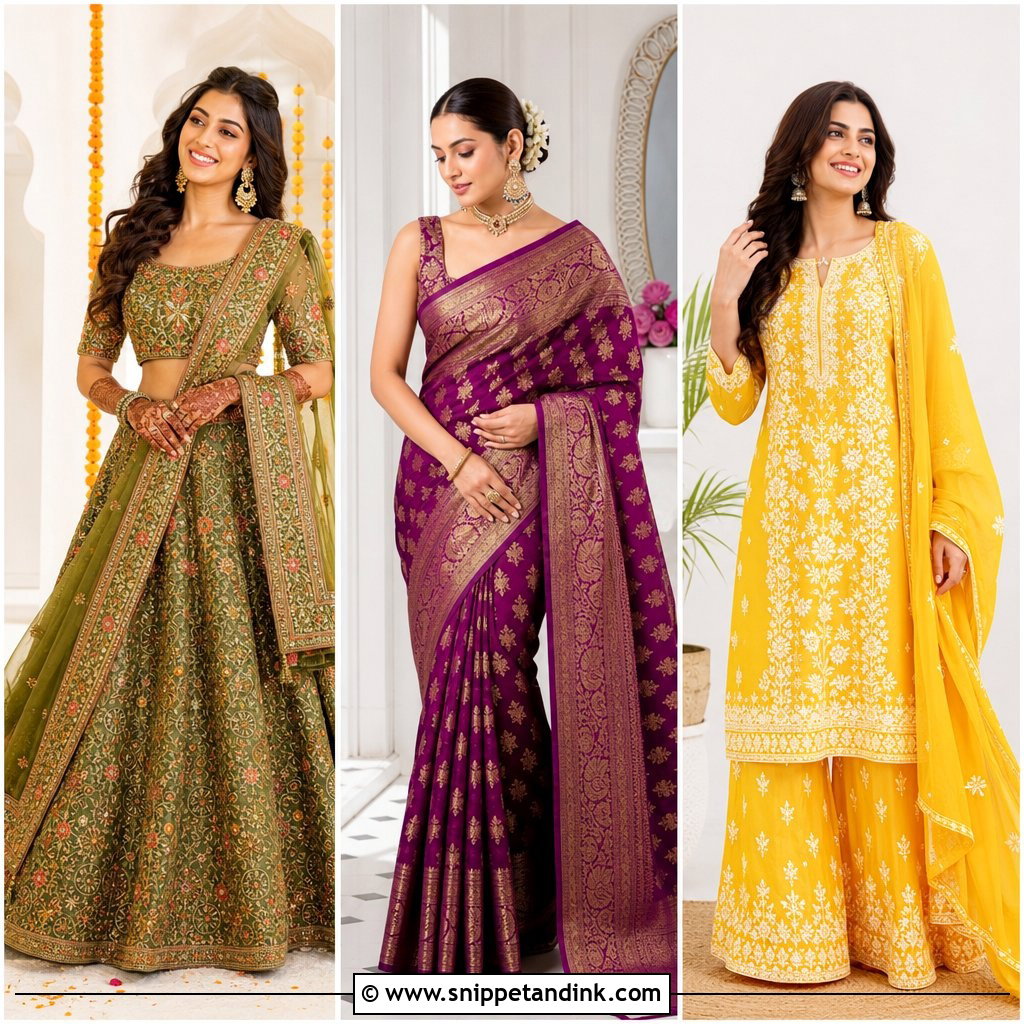
Little girls adore a lehenga choli, and the trick is keeping it light. I look for a soft cotton lining against the skin, a short choli that does not ride up and a dupatta pinned safely on one shoulder. Pastel pink, mint, peach and lavender suit daytime; royal blue, maroon and emerald look rich in the evening. Turn the skirt inside out before you buy: scratchy zari borders and a heavy can-can layer are what make children pull at their clothes within an hour. Soft juttis, a few bangles and a tiny potli finish it.
2. Sherwani Indian Kids Wedding Dress
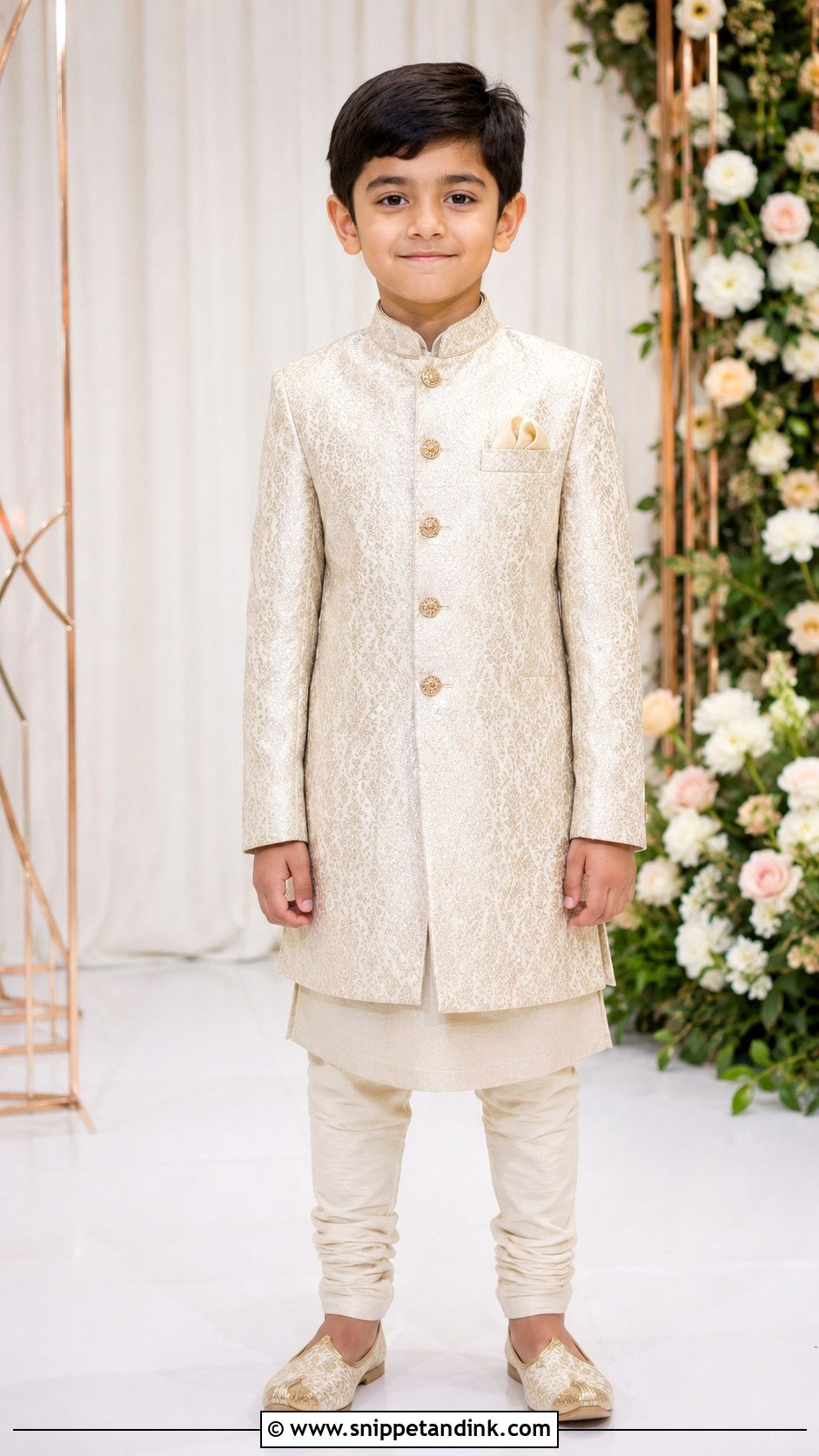
Boys look smart in a sherwani for the main ceremony or reception, but a child’s version has to be softer than an adult’s. A silk blend, cotton silk, jacquard or brocade sherwani over a breathable kurta is the right weight. Cream, gold, navy, wine and sage match most wedding palettes. The first thing I check is the collar. A stiff, high band collar is the number one reason boys refuse to keep a sherwani on, so ask for a soft interlining there. Churidar or straight trousers and mojaris complete it.
3. Anarkali Indian Kids Wedding Dress
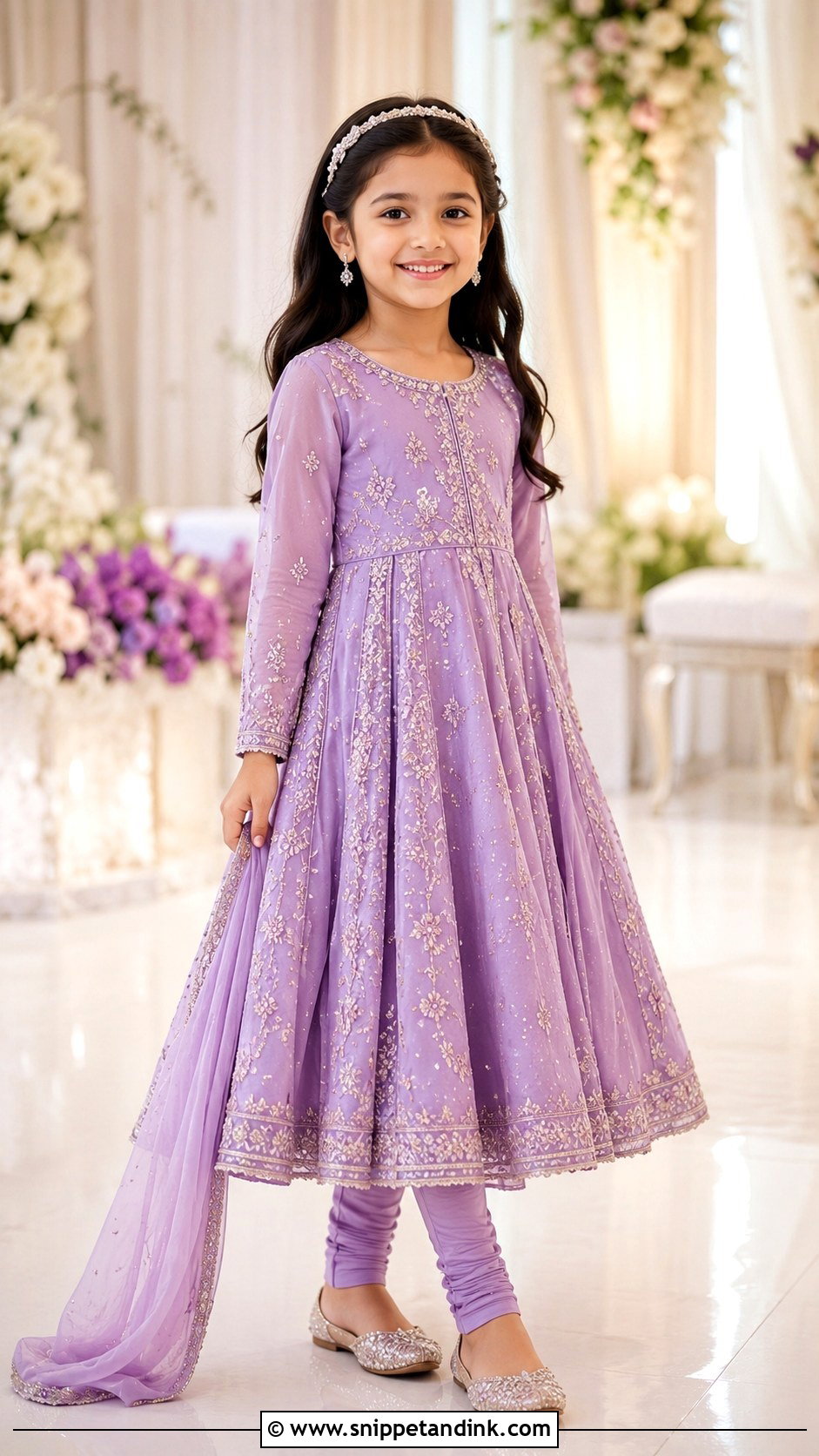
One piece is easier than two for small children, which is why I like an Anarkali for long ceremonies. There is no separate skirt to slip and no blouse to tug down. Georgette, cotton silk, chiffon or soft organza with embroidery at the neckline or hem stays light. Blush, powder blue, lemon and lilac suit daytime; jewel tones suit evening. Check that the back closure is a zip with a fabric guard or hooks with a placket, so nothing metal presses into the spine when she sits. Leggings or churidar, flats and a hairband complete it.
4. Kurta Pajama With Nehru Jacket Indian Kids Wedding Dress
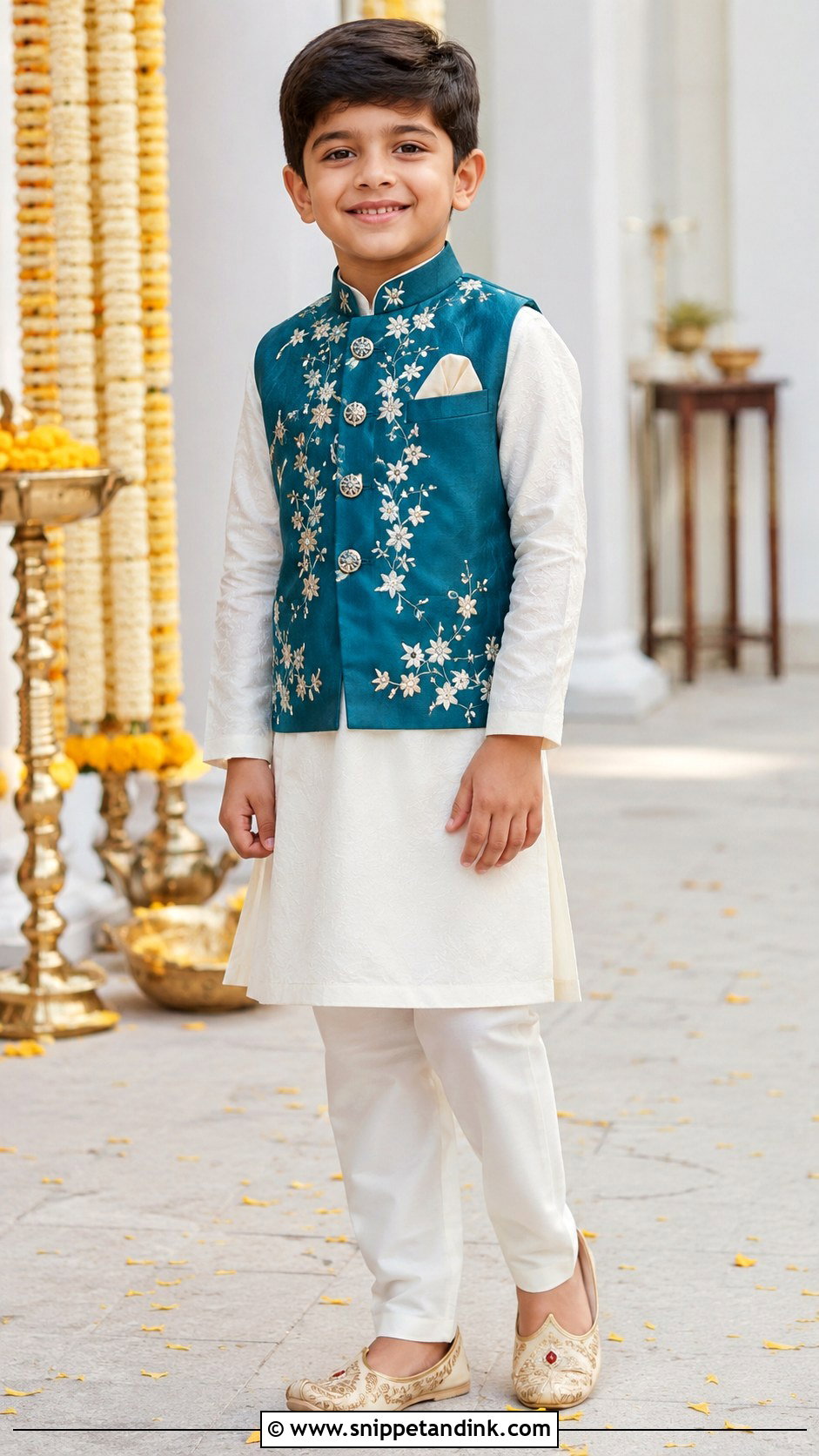
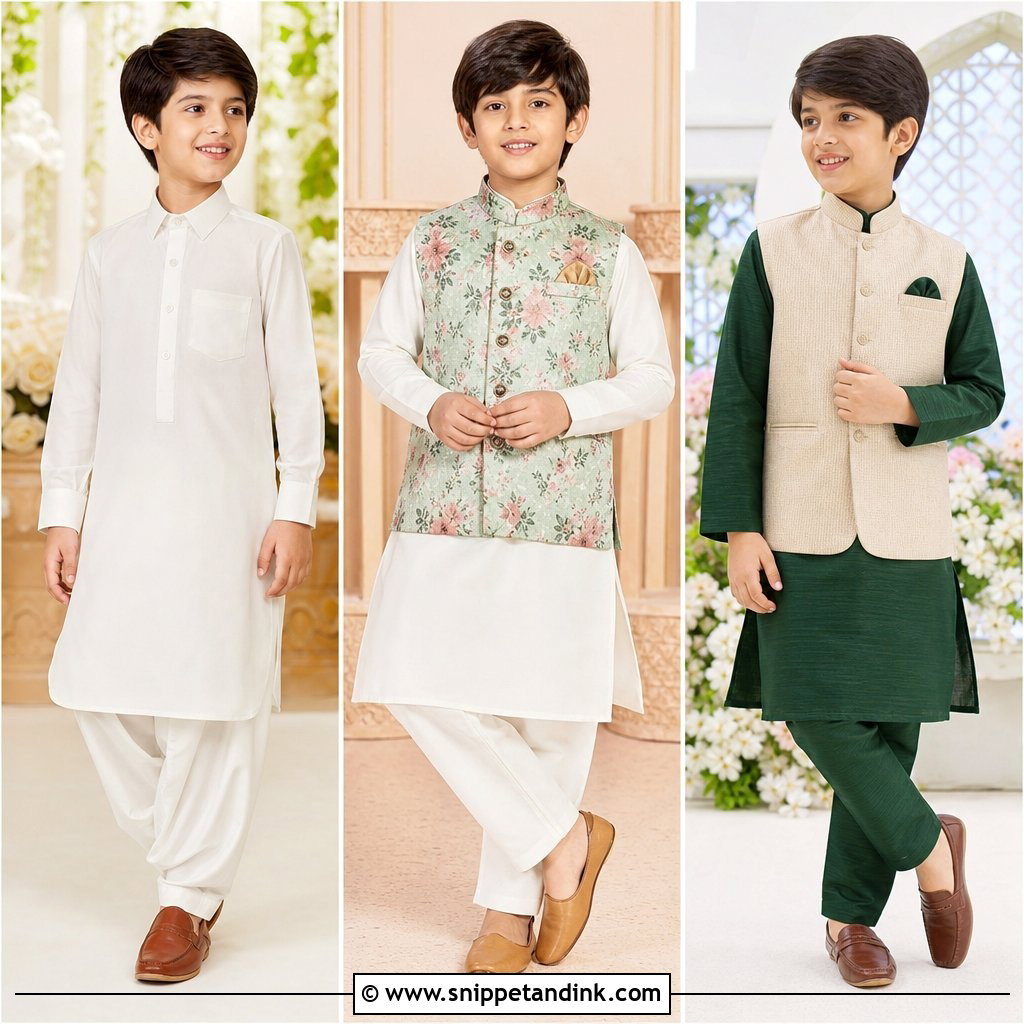
If I could put boys in just one outfit for a whole wedding weekend, it would be a kurta pajama with a Nehru jacket. The plain kurta works alone for haldi or mehendi, and the jacket dresses it up for the ceremony. A printed, embroidered or brocade jacket gives balance. Cotton silk and linen blends suit warm weather, while velvet or quilted jackets help in cold months. The jacket can come off when he gets hot, which is the real advantage. Pair with pajama pants, slim trousers or dhoti pants and mojaris.
5. Sharara Indian Kids Wedding Dress
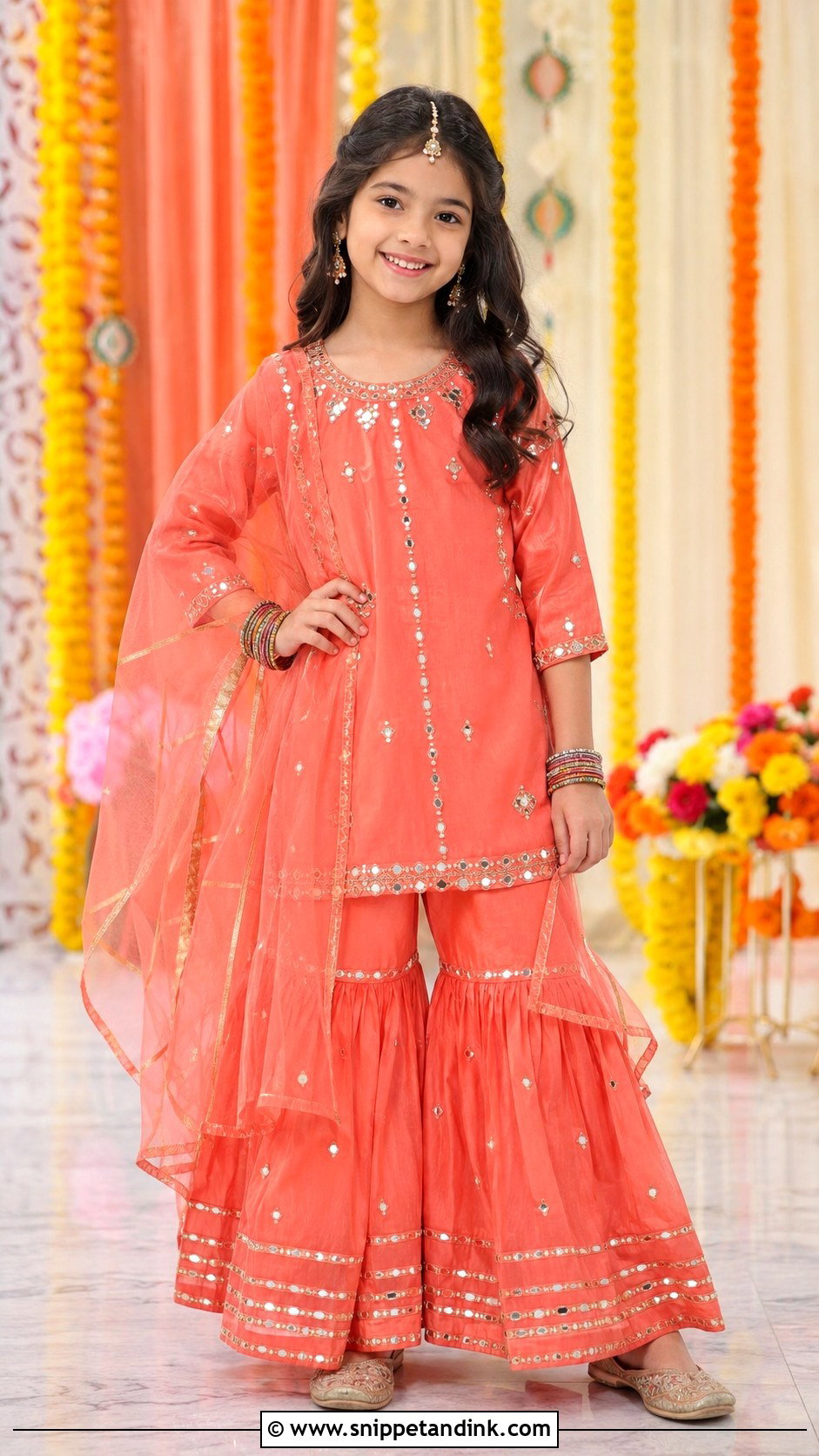
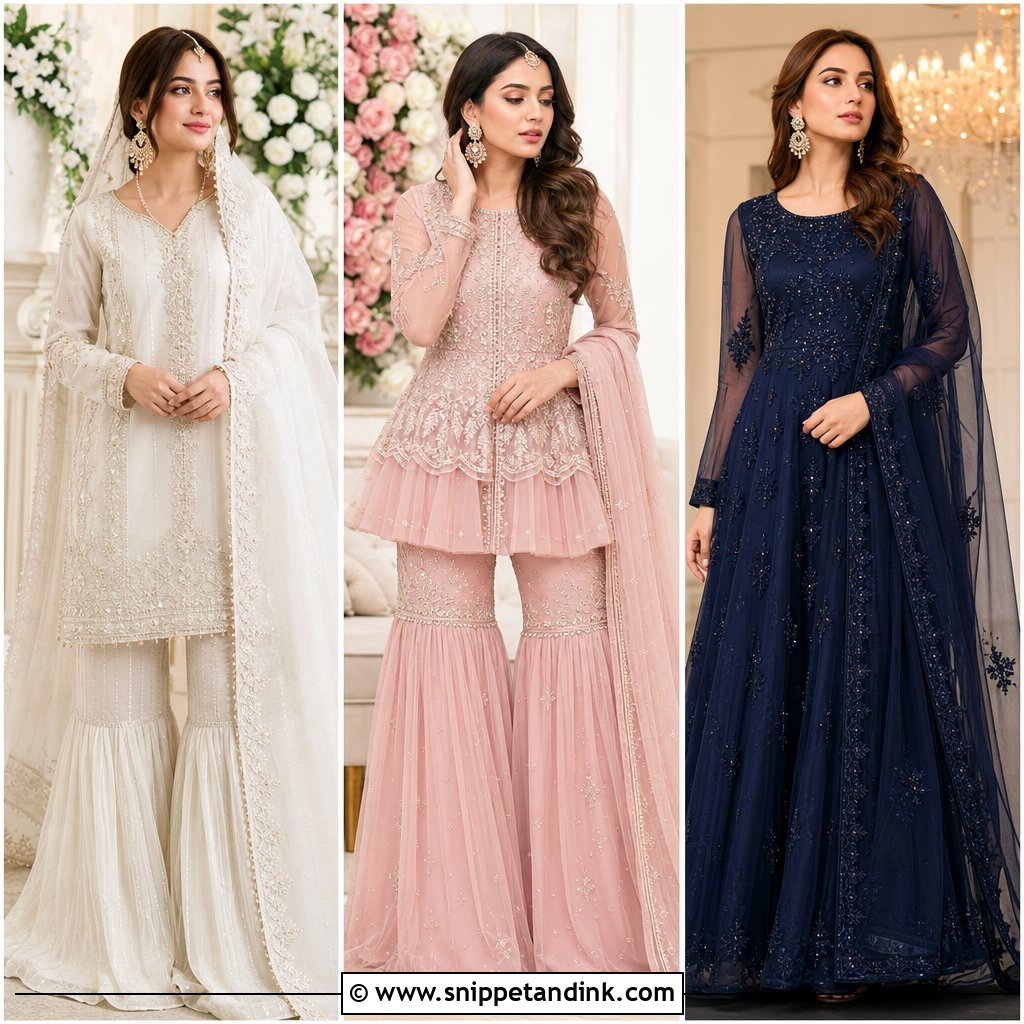
Sharara sets let girls run and twirl without tripping over a full-length skirt. The wide-leg pants move freely and the short kurti keeps the outfit age-appropriate. Choose a soft elastic waist; a drawstring comes undone and the flare drops under small feet. Mirror work, gota patti and small sequins are best used sparingly, as heavy embellishment near the waist digs in when sitting. Skip the dupatta for toddlers. Yellow, coral, fuchsia, teal and peach suit mehendi or sangeet.
6. Dhoti Kurta Indian Kids Wedding Dress
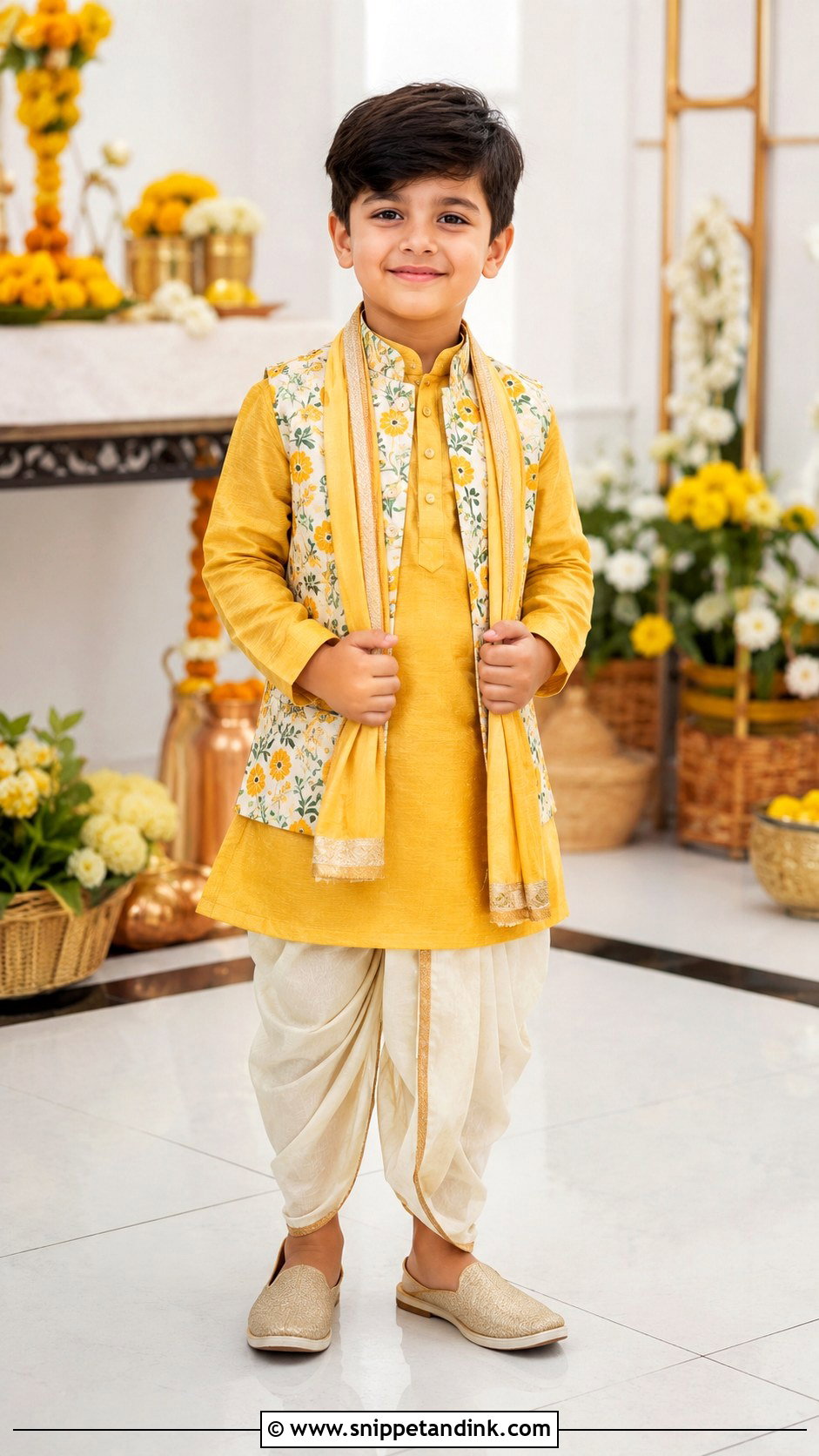
For haldi, pujas and daytime rituals, a dhoti kurta is traditional and cool. The dhoti must be pre-stitched or pre-draped for a child; loose dhoti fabric unravels the first time a boy runs. A short kurta in cotton silk, silk blend or soft jacquard sits on top. Yellow, cream, orange, green and white with gold are classic. Add a printed waistcoat for structure. Watch the crotch depth: the drape should allow him to sit cross-legged on the floor during a puja without pulling. Soft mojaris or sandals finish it.
7. Gown Indian Kids Wedding Dress
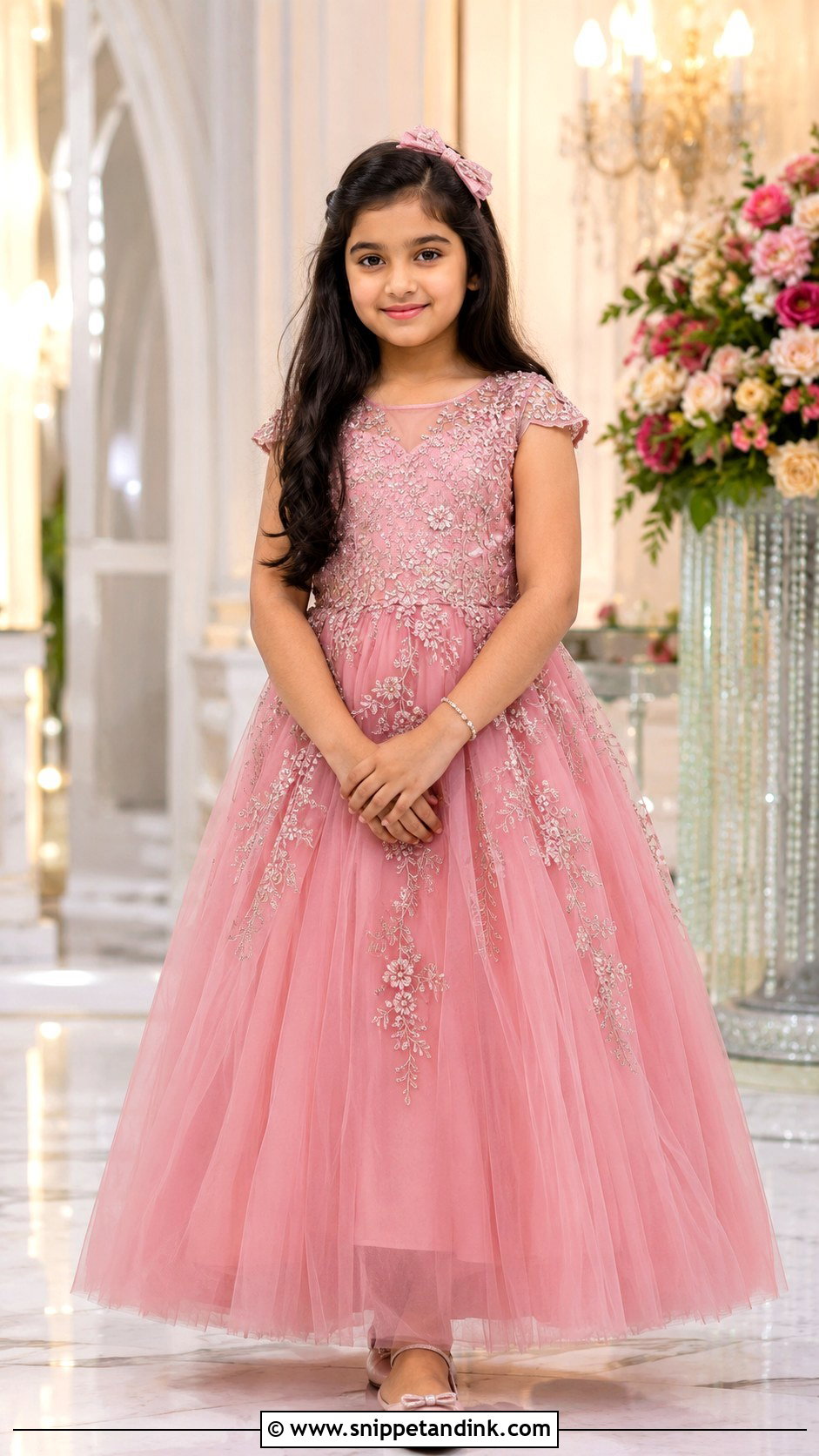
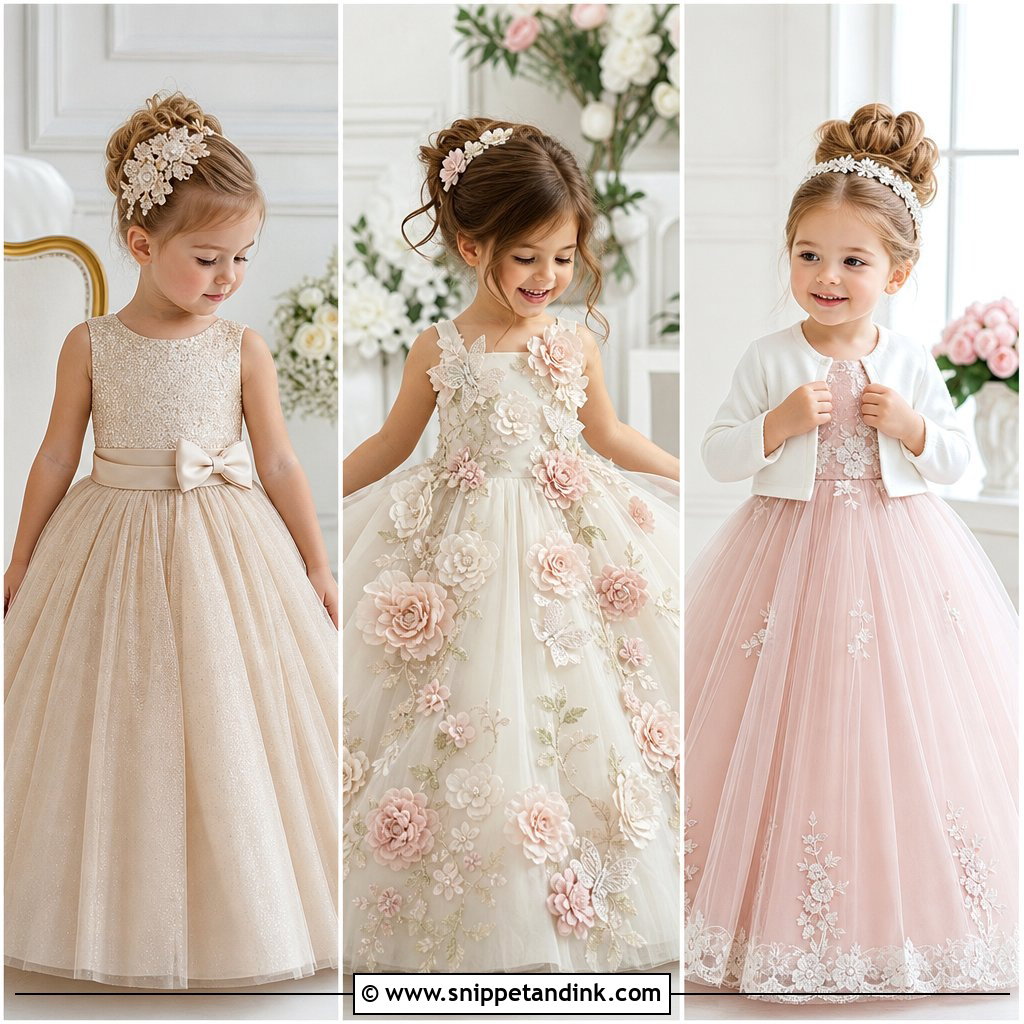
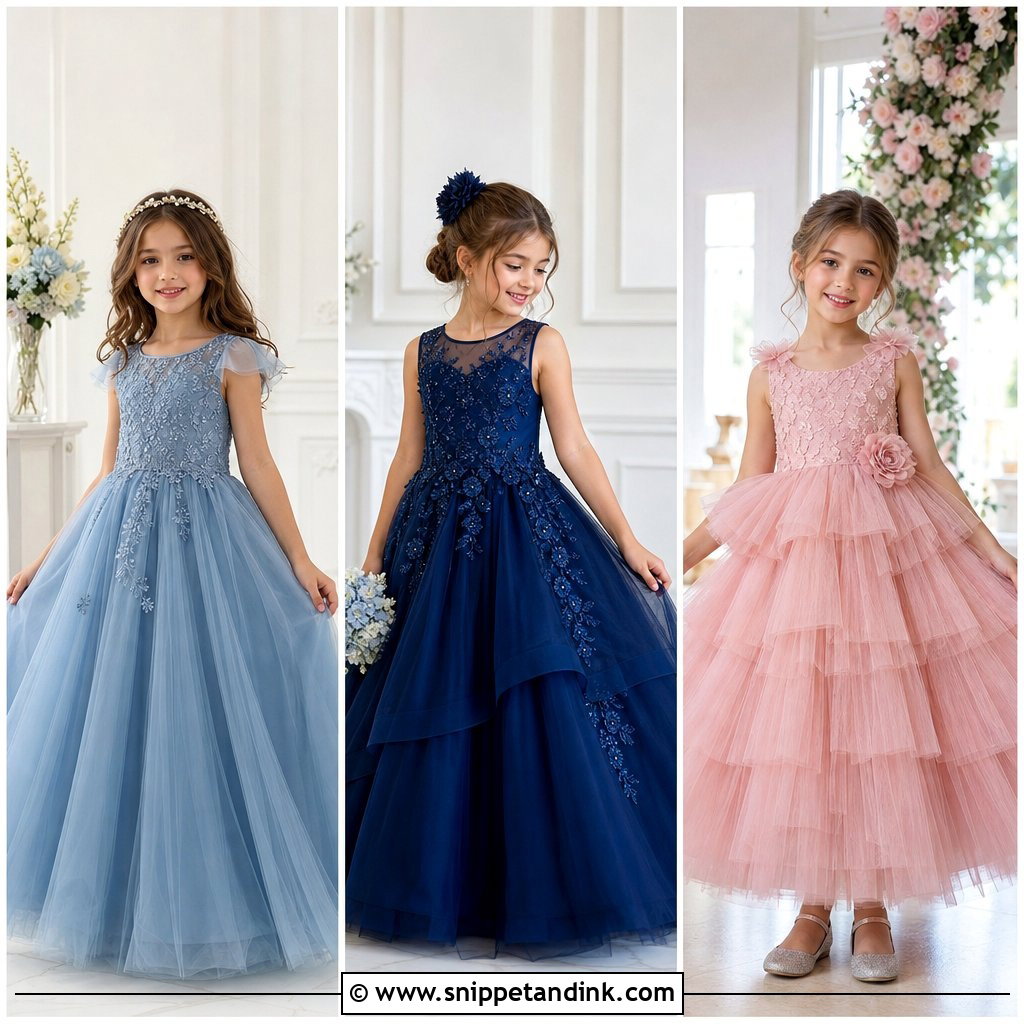
Receptions and evening parties suit gowns, and Indian details such as embroidery, mirror work, zari borders or a cape layer keep them wedding-appropriate. My rule for children’s gowns is simple: no train, no hard boning and no net touching the skin. Tulle, satin, organza and georgette all work when the lining is smooth cotton. Champagne, rose pink, lavender, powder blue and silver photograph well. Hem it just above the ankle so she can walk on stairs. Ballet flats, a dainty bracelet and a neat bow finish it.
8. Pathani Suit Indian Kids Wedding Dress
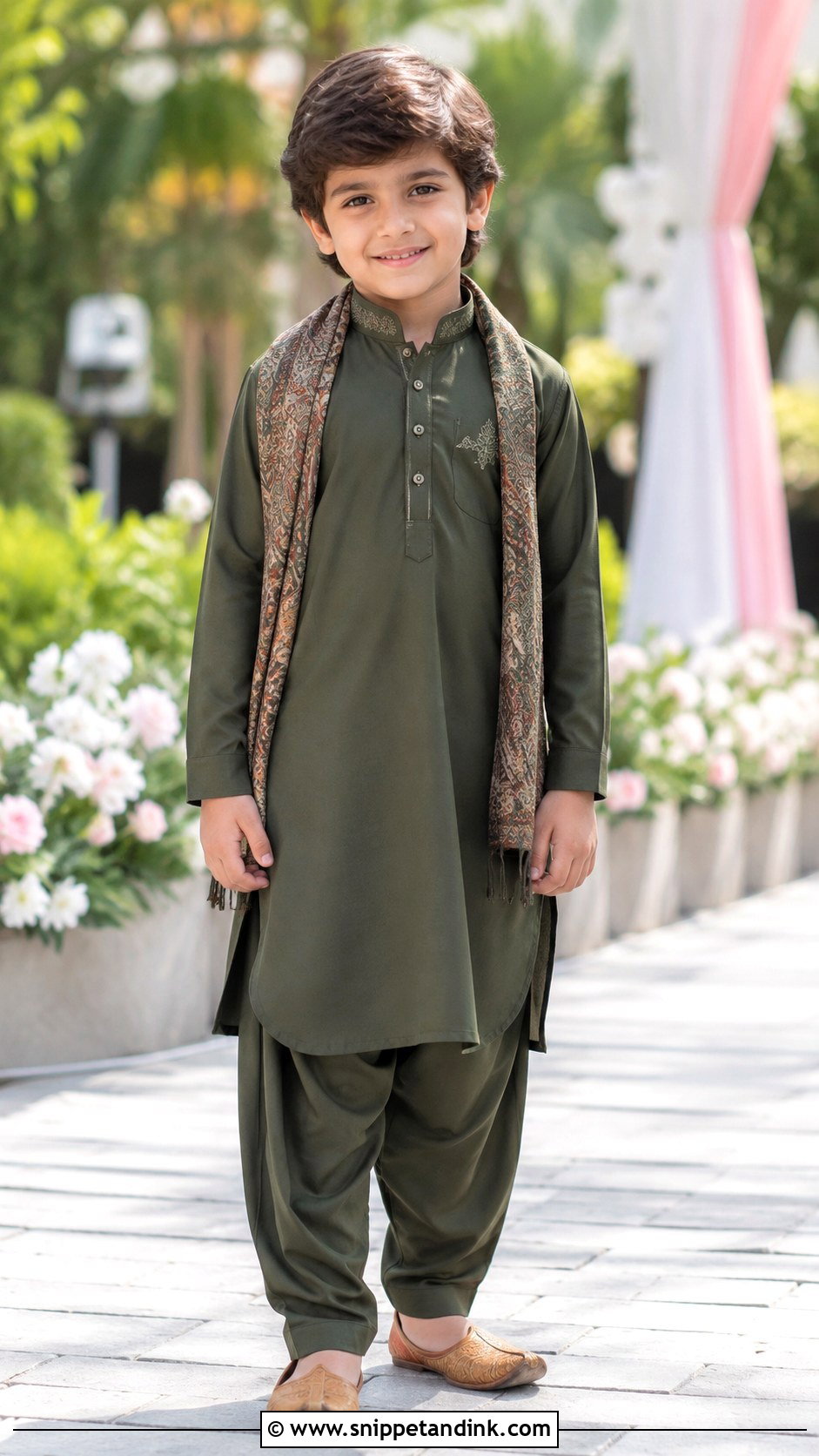
A Pathani suit looks smart without the formality of a sherwani. The straight kurta, front placket and roomy salwar are easy to wear for many hours at pre-wedding events and daytime ceremonies. Cotton silk, linen or blends with light embroidery at the collar or cuffs keep it cool. Navy, olive, beige, rust and cream are strong colours. I size the salwar with a little extra room at the waist so he can wear it again in six months. A stole or waistcoat dresses it up; mojaris or slip-ons finish it.
9. South Indian Pattu Pavadai Indian Kids Wedding Dress
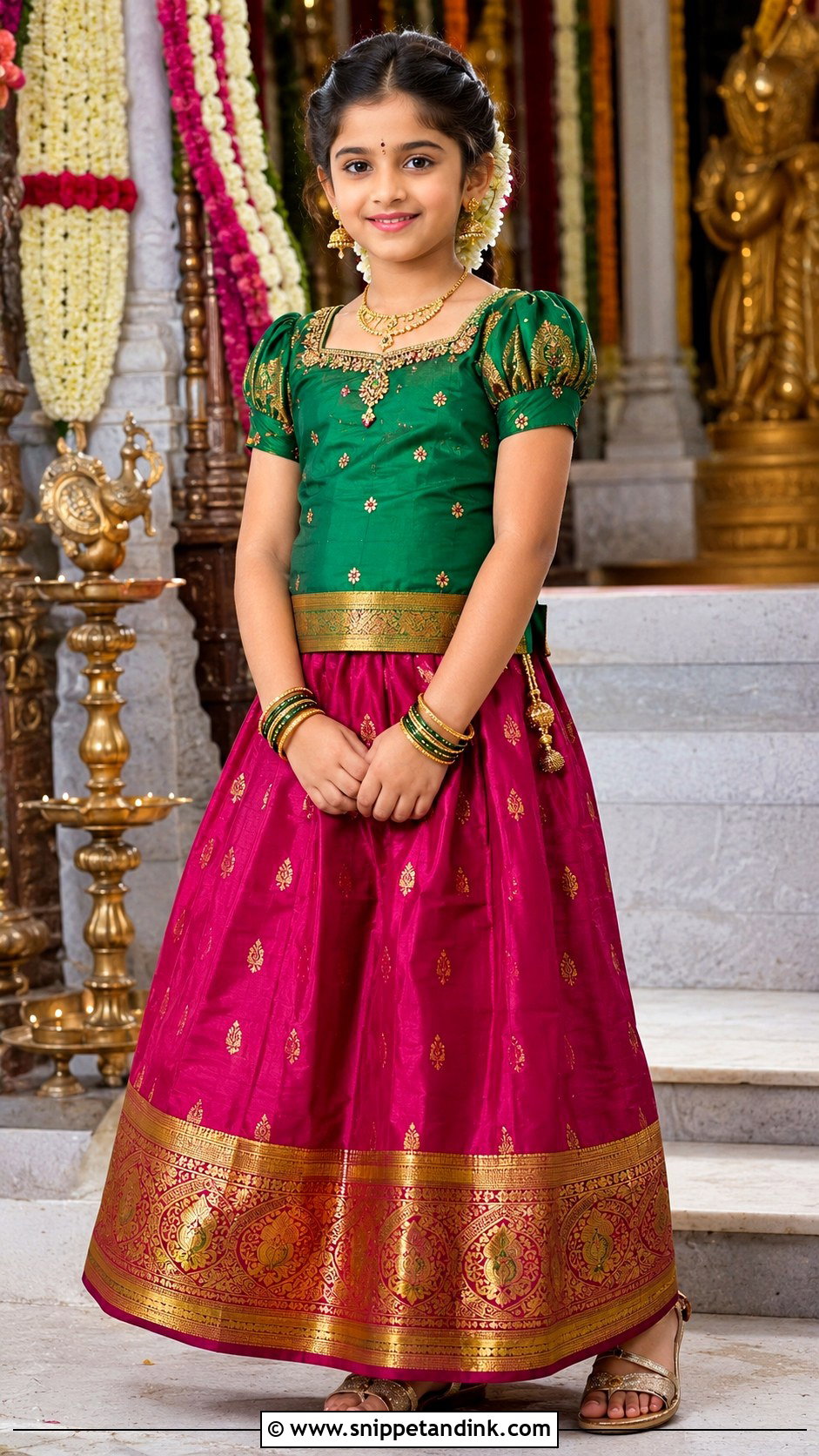
In South Indian families, the pattu pavadai is often a girl’s first silk outfit and carries real meaning at a wedding. It is a silk skirt and blouse, usually with a gold zari border. Parrot green, magenta, orange, purple and turquoise are common. The zari border adds weight at the hem, so for toddlers I prefer a softer silk blend with a narrower border. Keep the waistband adjustable with a drawstring or hook, and the length above the ankle. Bangles, tiny jhumkas, a simple chain and soft sandals complete it.
10. Bandhgala Suit Indian Kids Wedding Dress
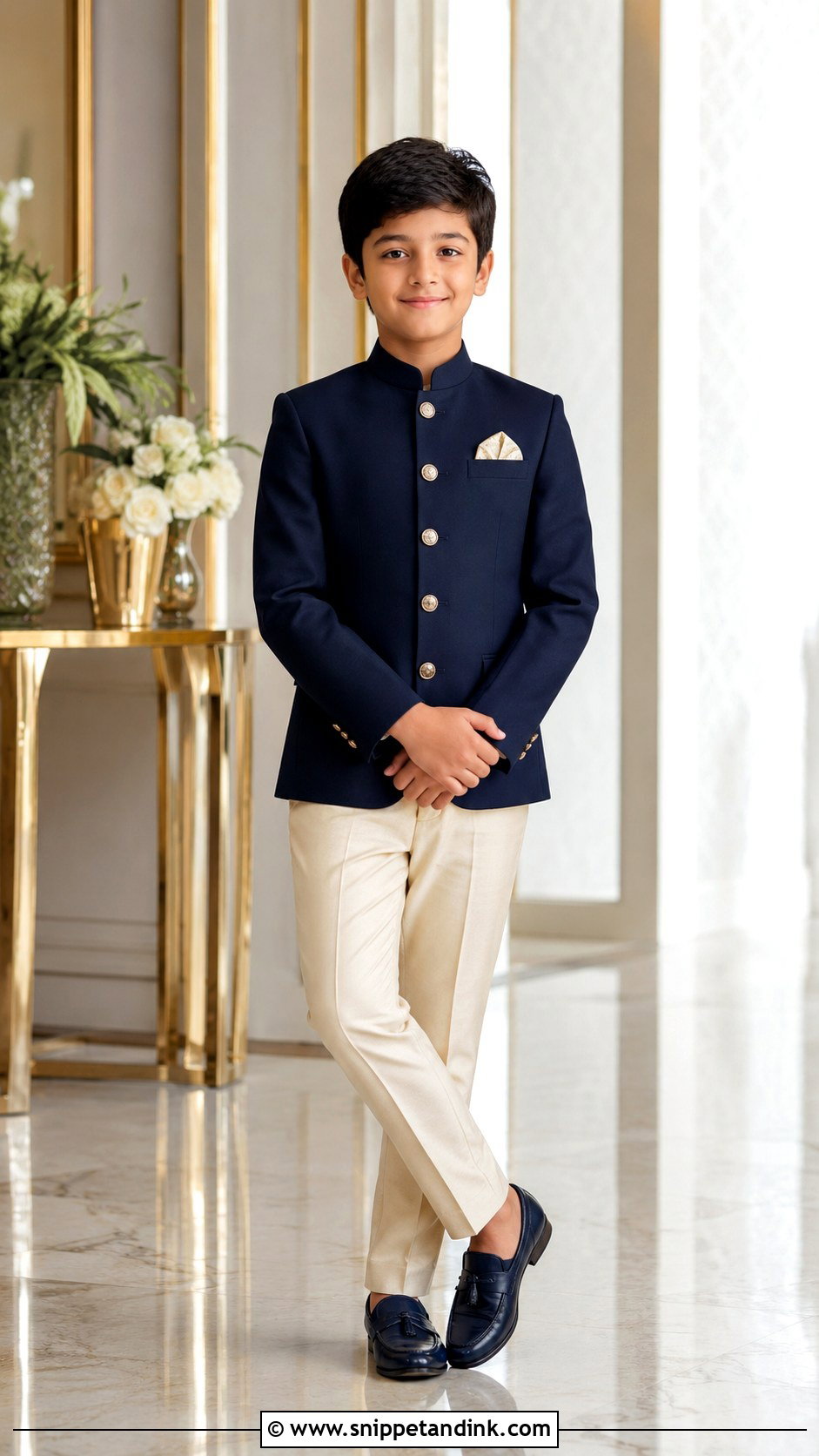
Older boys and teens often want something more grown-up than a kurta, and a bandhgala delivers it. The structured, closed-neck jacket with trousers suits receptions and evening ceremonies. For children, insist on a lightweight version with a soft inner lining. Navy, black, ivory, bottle green and charcoal look sharp. The fitting point I care about is the armhole; a high, tight armhole looks neat in a mirror but stops a boy lifting his arms to dance. Slim trousers, loafers or ethnic shoes and a pocket square finish it.
11. Chikankari Kurta Indian Kids Wedding Dress
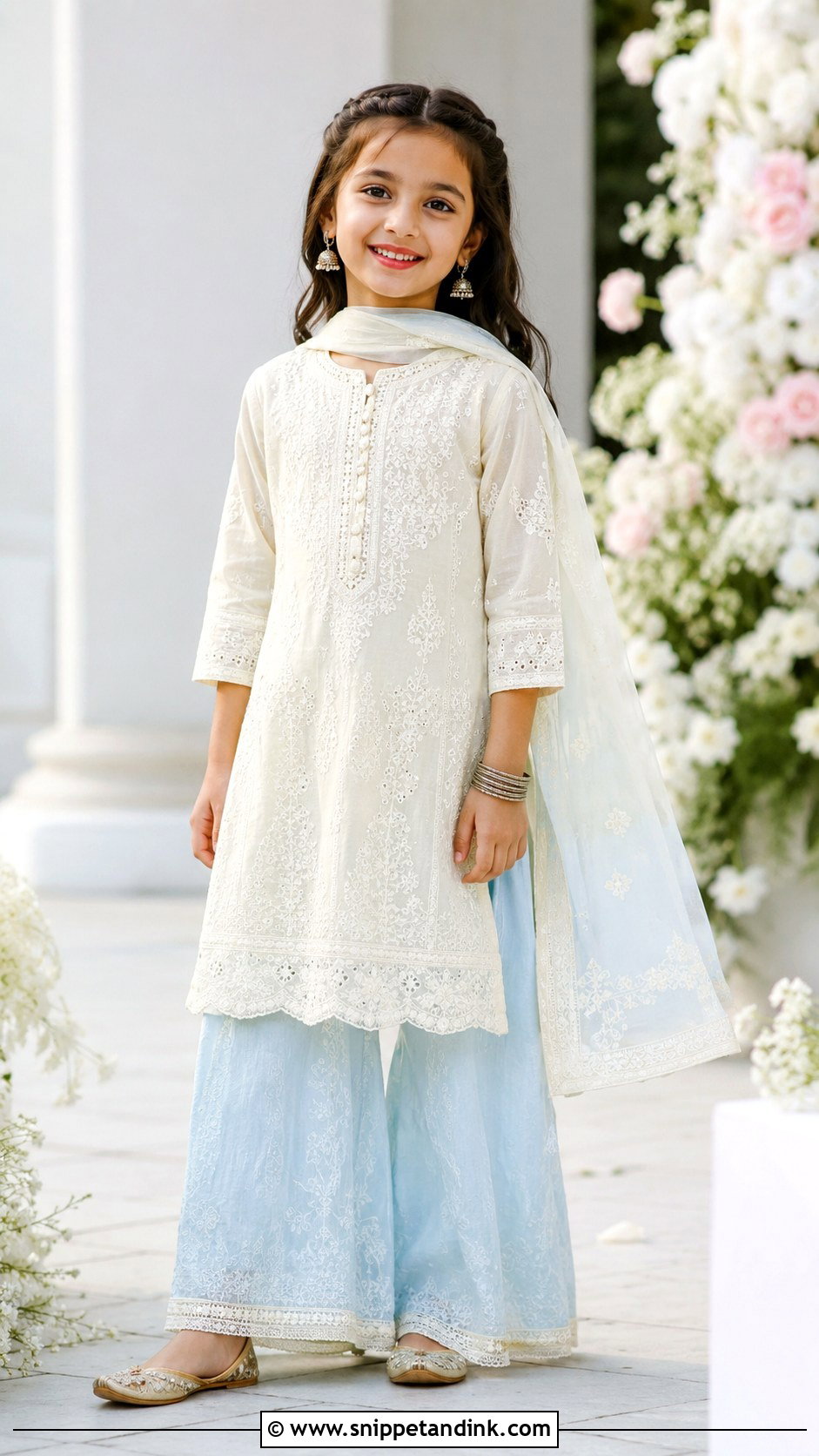
Warm-weather weddings are where chikankari comes into its own for children. Its fine hand-done shadow work is detailed but light, so kids who hate bulky embroidery tolerate it well. Girls can wear the kurta with palazzos, leggings or a flared skirt; boys, with pajama or straight trousers. White, ivory, pastel yellow, powder blue and mint look airy. Pale chikan shows every food spill, so I pack a second kurta for little ones. Flats, sandals or juttis, plus a light dupatta or waistcoat, dress it up.
12. Indo Western Indian Kids Wedding Dress
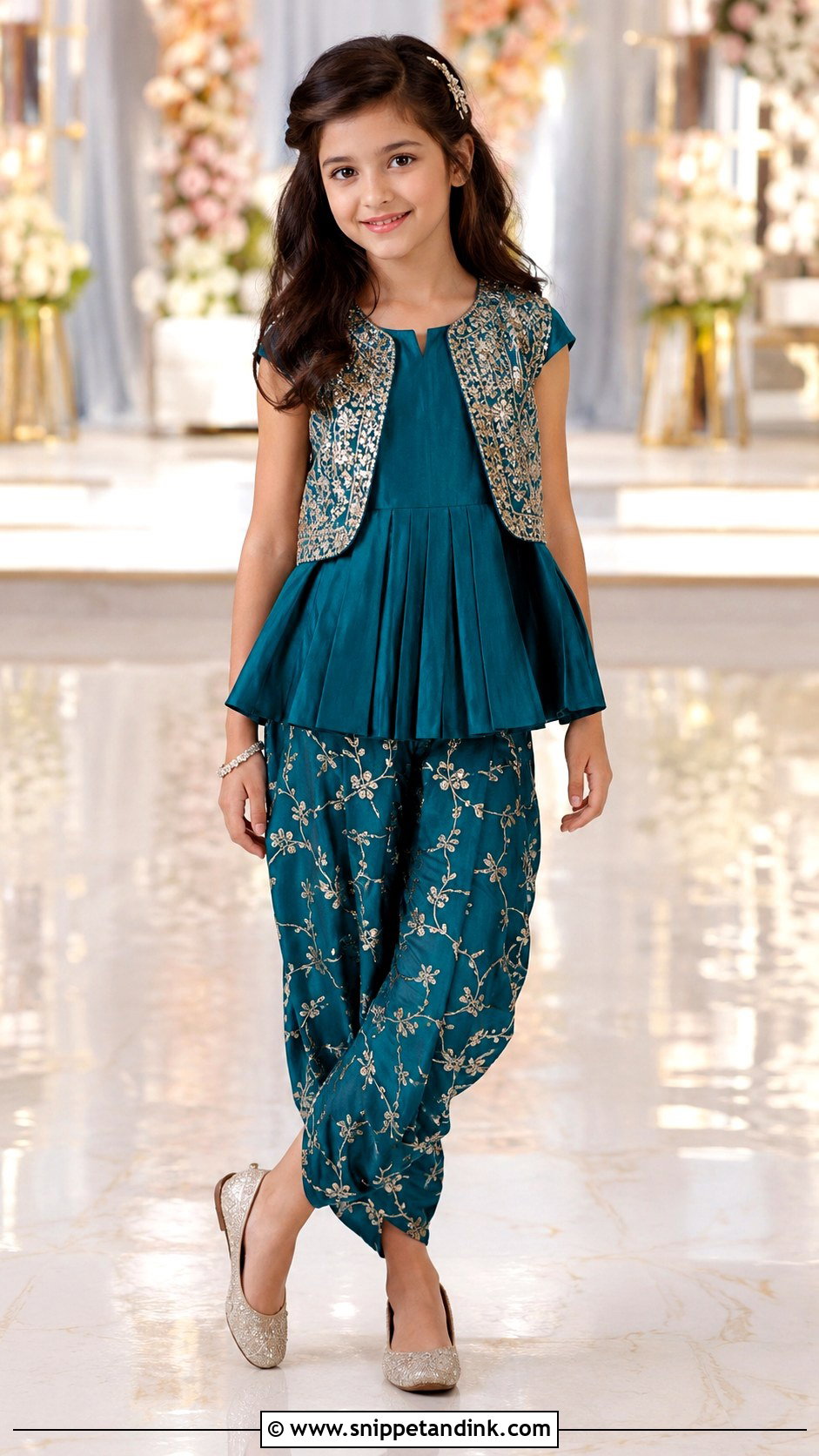
An Indo western outfit gives tradition a modern shape: a crop top with dhoti pants, an asymmetric kurta, a jacket set or a fusion gown with ethnic embroidery. For girls, a peplum top over sharara pants is practical. For boys, a draped kurta with trousers or a jacket set looks sharp. I keep crop tops for older girls and choose a longer peplum for little ones so there is no gap at the waist. Keep the fit relaxed; sneakers, loafers, juttis or embellished flats all suit sangeet and reception.
13. Kurta With Dhoti Pants Indian Kids Wedding Dress
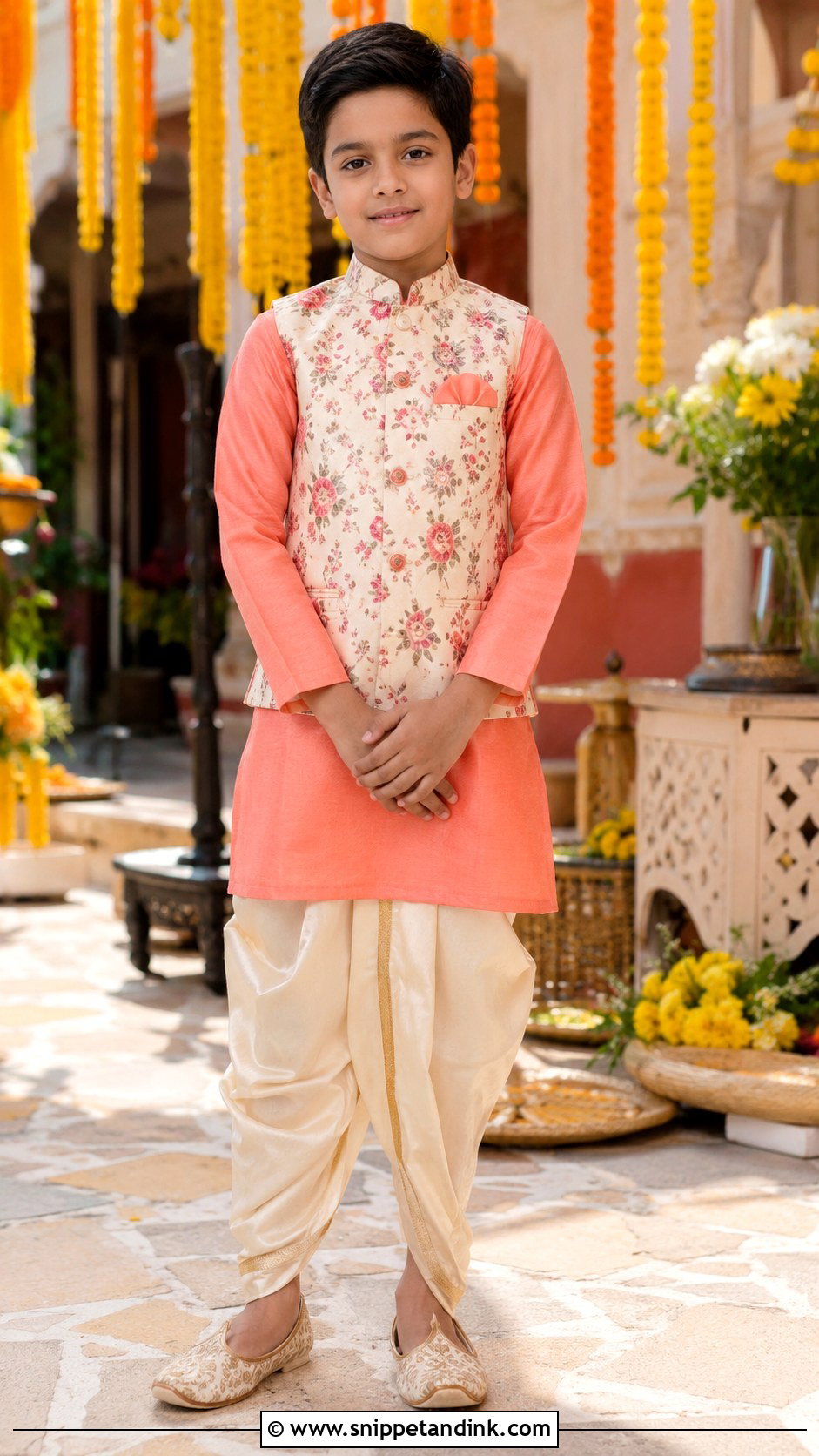
Kurta and dhoti pants suit boys and girls alike, and the pre-stitched dhoti shape is easy for kids to get on and off. Boys can add a Nehru jacket or printed stole; girls a peplum kurti or embroidered top. Yellow, ivory, coral, teal, mustard and green suit haldi, mehendi and daytime events. An elastic waistband matters here more than anywhere, because toilet trips in a tie-up dhoti are a struggle for small children. Juttis, bangles or a small brooch finish it.
14. Floral Lehenga Indian Kids Wedding Dress
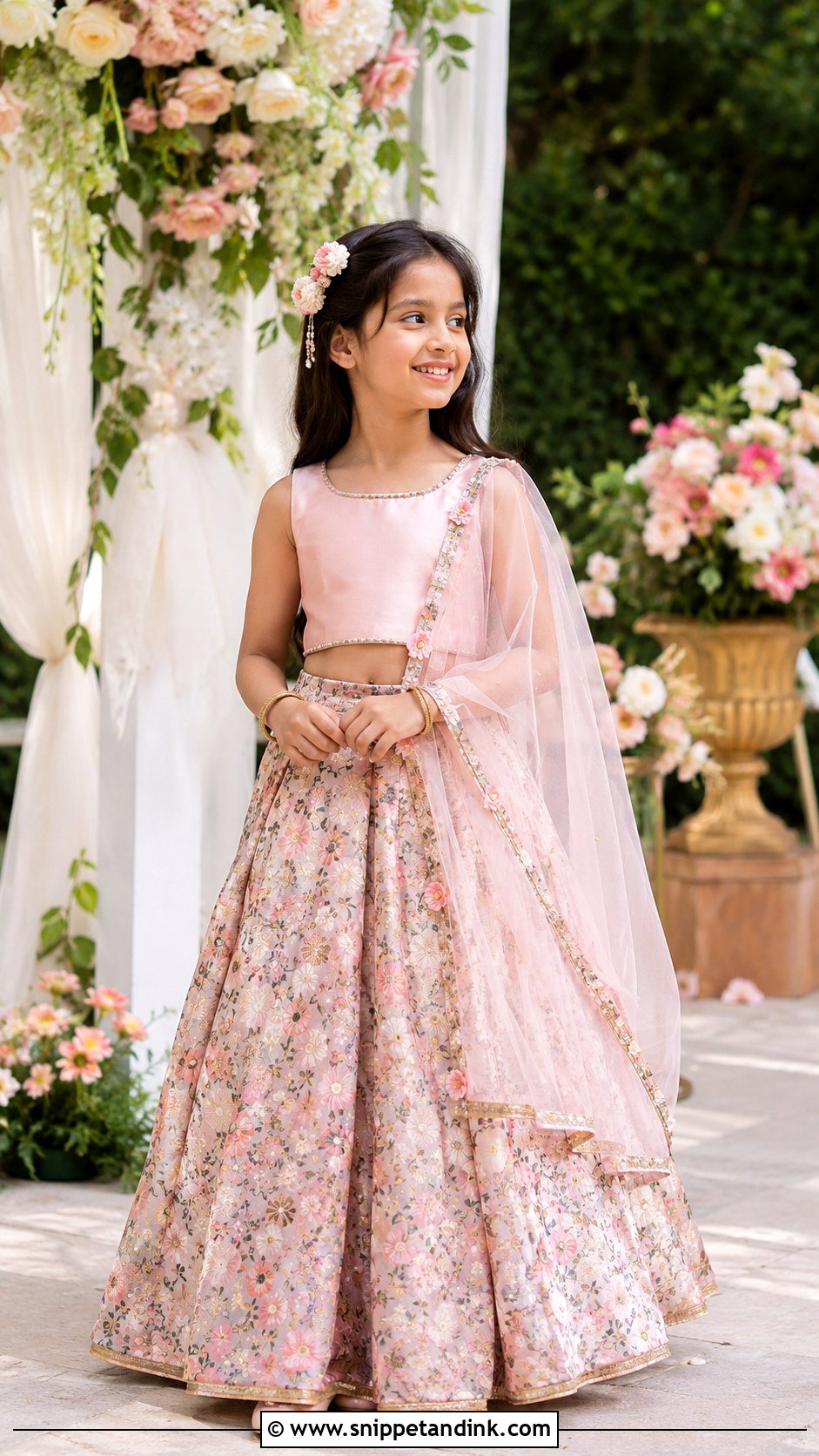
Garden weddings and daytime ceremonies are a good fit for a floral lehenga, which is far lighter than a heavily embroidered one. Printed or embroidered flowers or small appliqué on a soft skirt, with a plain blouse, keep it balanced. Pastel florals read gentle; brighter florals suit mehendi. Prints also hide small marks, a practical bonus with children. A lightweight dupatta, soft flats and a floral clip or headband are enough. Keep the skirt length just off the floor so she can walk without lifting it.
15. Velvet Sherwani Indian Kids Wedding Dress
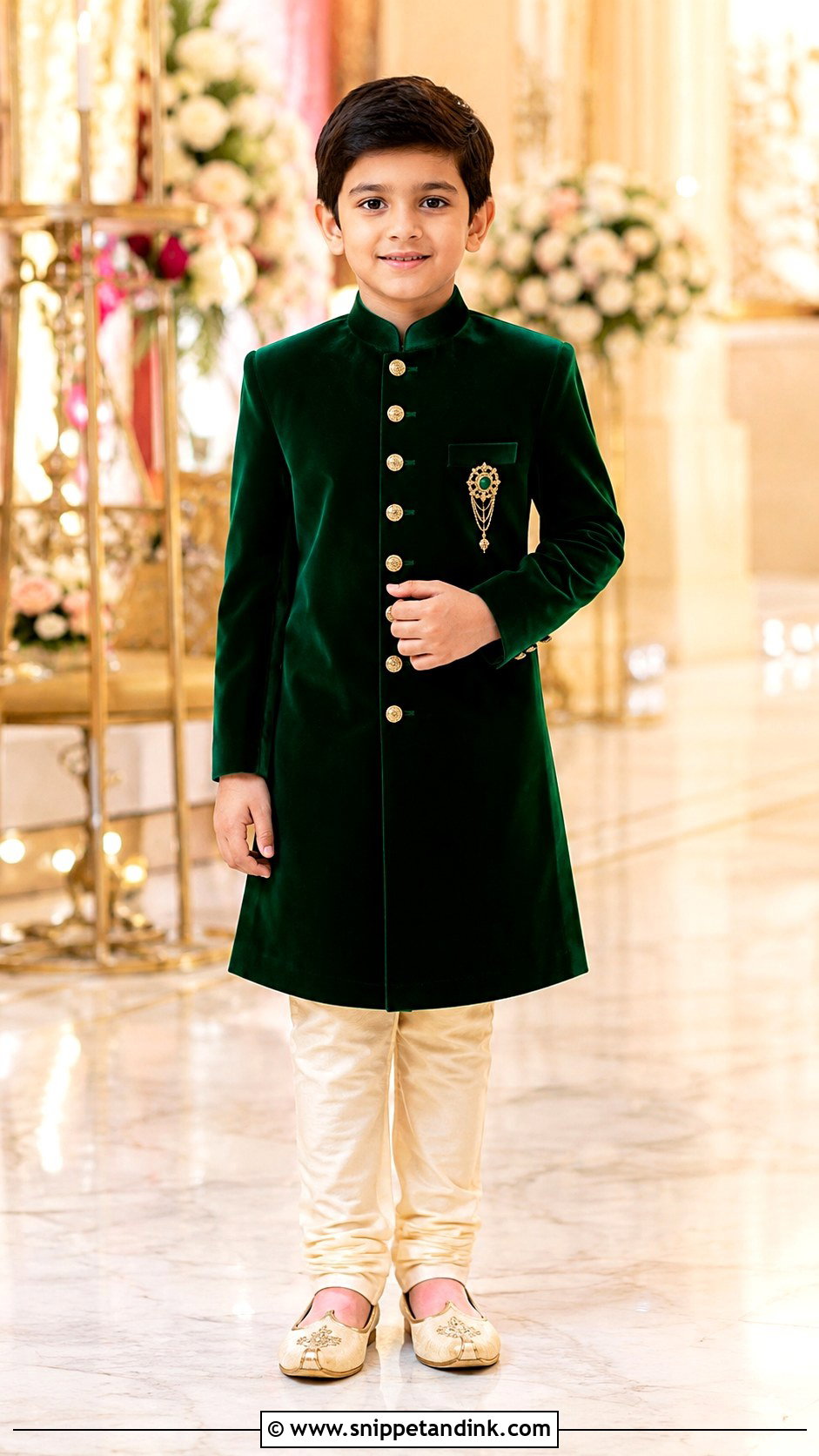
Velvet sherwanis look rich, but I only suggest them for cooler weather and shorter formal events. Velvet does not breathe, and a boy who has been dancing in a warm hall will overheat in it quickly. Emerald, maroon, navy and plum look best. Choose a soft lining and a lighter-weight velvet if the venue is heated. Pair with cream churidar, straight trousers or pajama bottoms and comfortable mojaris. Gold buttons or a small brooch add a royal touch. Have a plain kurta ready for after the photos.
16. Palazzo Suit Indian Kids Wedding Dress
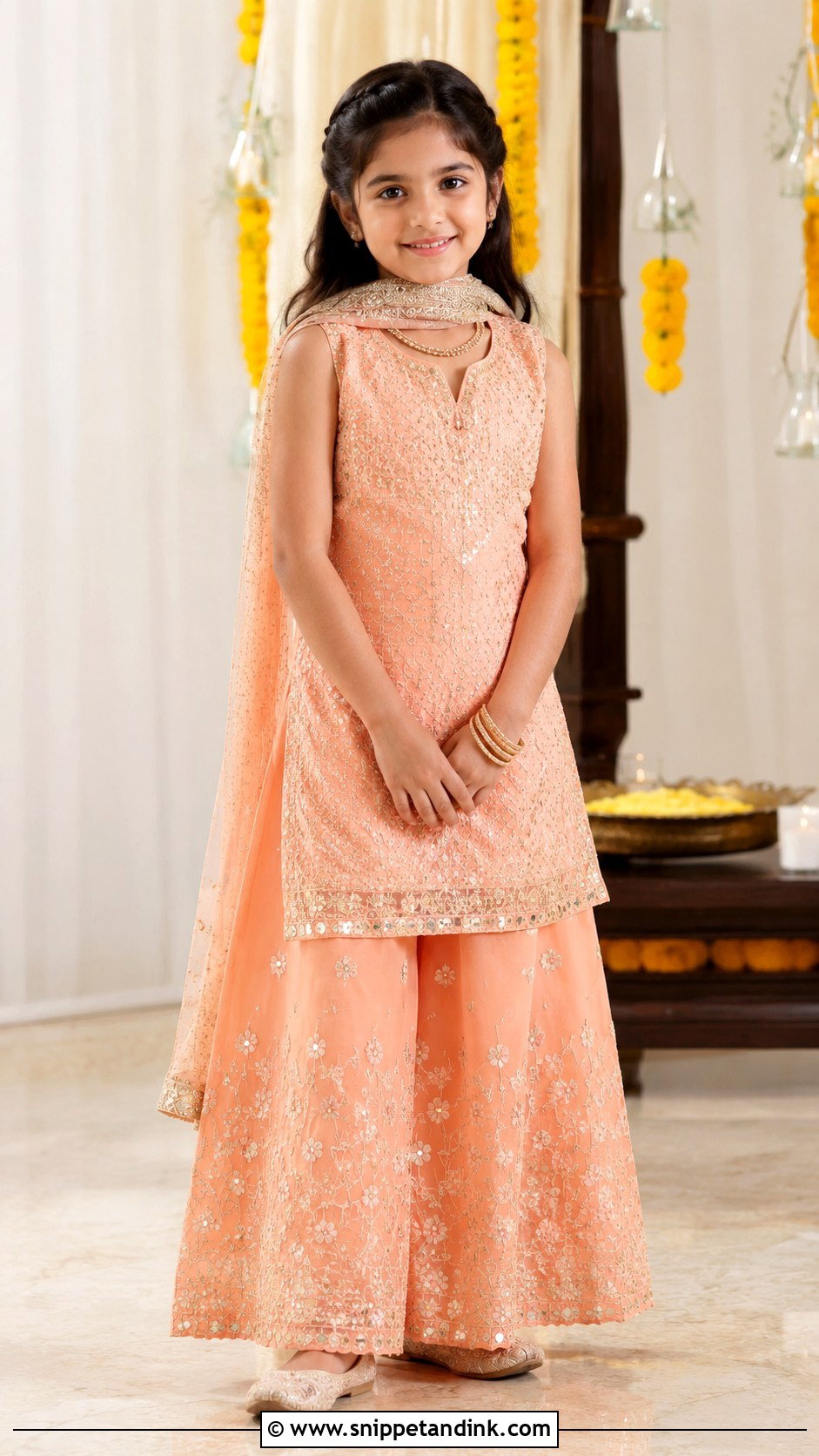
Girls who like to move freely tend to prefer a palazzo suit to anything with a skirt. Wide-leg pants feel relaxed, and the kurti keeps it festive for mehendi, haldi, family dinners and daytime ceremonies. Soft georgette, cotton silk, rayon or chiffon with a smooth lining is comfortable. Embroidery at the neckline or hem is enough detail. I hem the palazzos to just above the shoe, because children step on long palazzos on stairs. A light dupatta, soft juttis and a few bangles finish it.
17. Jodhpuri Suit Indian Kids Wedding Dress
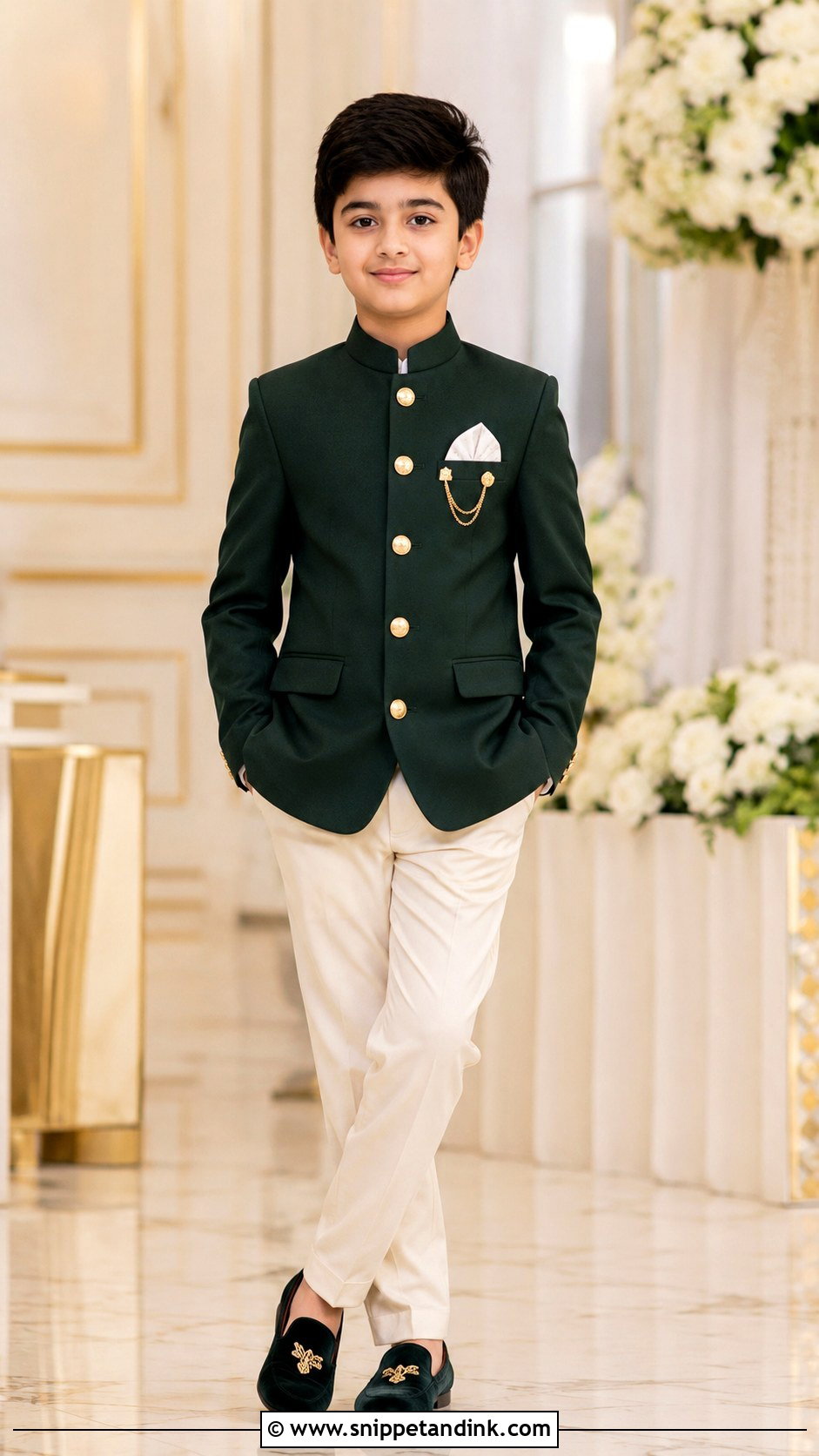
A Jodhpuri suit gives boys a neat, royal look for receptions and formal photos, with a structured jacket and trousers. For kids, the jacket must be lightweight and roomy across the shoulders, since boys reach, wrestle and hug far more than adults. Ivory, navy, beige, wine and forest green are good colours. Subtle embroidery or metallic buttons add festivity. I’d steer younger boys toward a kurta instead; this is best for older boys who want something sharper than a kurta but easier than a heavy sherwani.
18. Cape Lehenga Indian Kids Wedding Dress
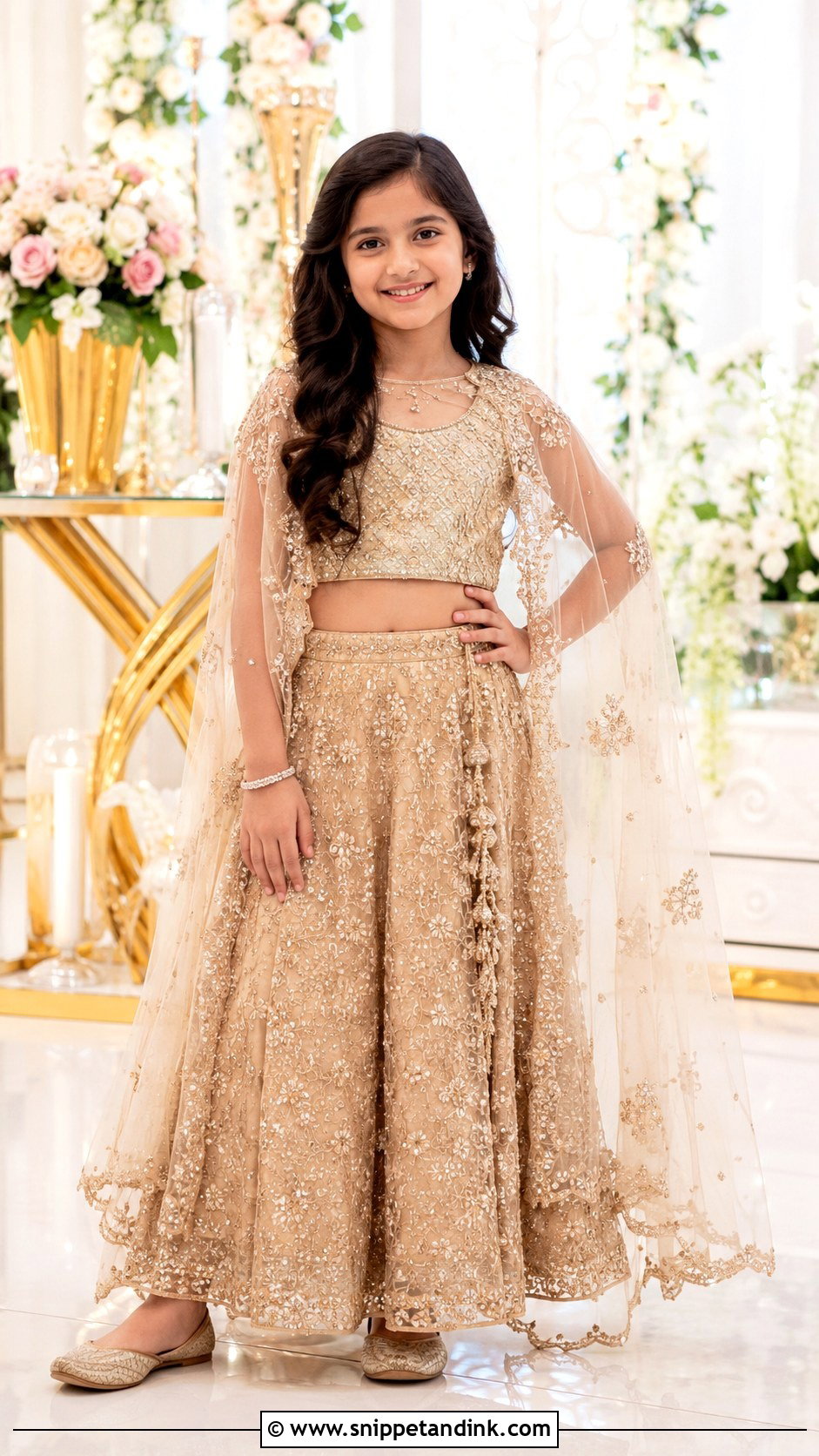
A cape lehenga removes the dupatta, which with children is one less thing to lose or trip on. The cape can attach to the blouse or sit as a separate layer. Soft net, organza or georgette works, with light embellishment at the shoulders so nothing scratches the neck. I prefer the cape attached with snaps rather than sewn, so it can come off if she gets hot. Pastels, metallics and soft jewel colours suit receptions and sangeet. Flats, a simple bracelet and a ponytail or soft curls complete it.
19. Kurta With Waistcoat Indian Kids Wedding Dress
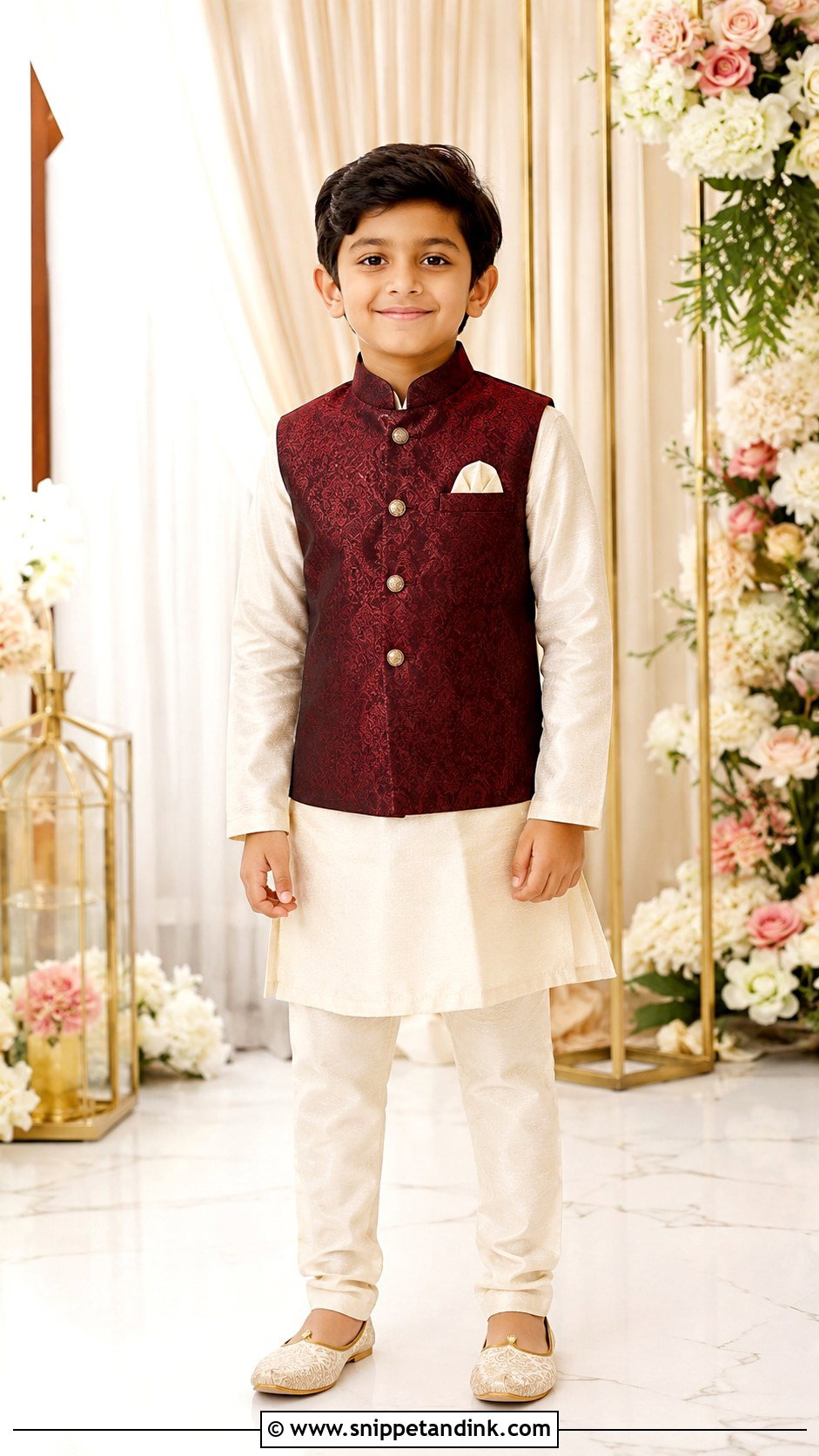
Practical and festive at once, a kurta with a waistcoat suits boys at almost any function. The kurta can be plain or lightly embroidered while a brocade, jacquard, printed silk or quilted waistcoat brings colour. Pajama, trousers or churidar all work. Cream with mint, yellow or peach suits daytime; navy, maroon and gold suit evenings. A waistcoat with a slightly adjustable back strap lets it fit a growing child for longer. Add mojaris and a pocket square.
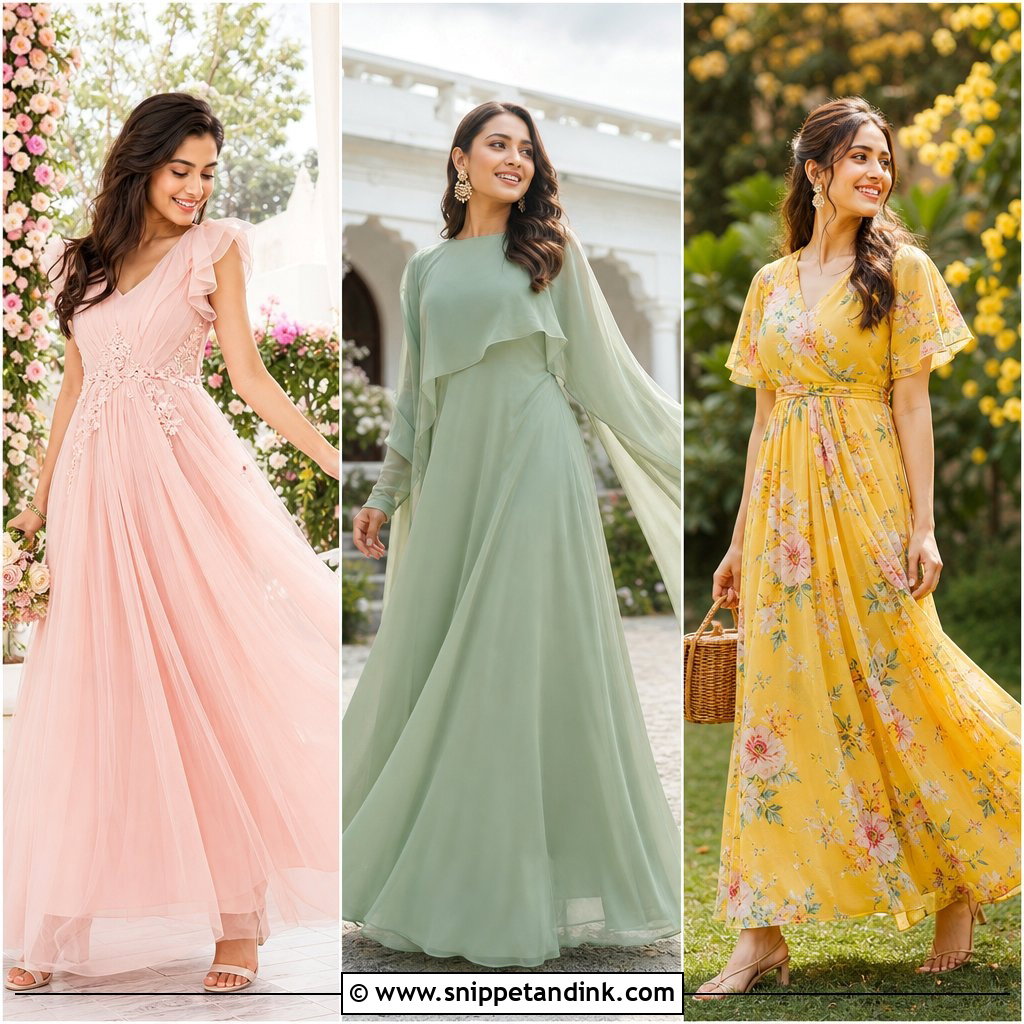
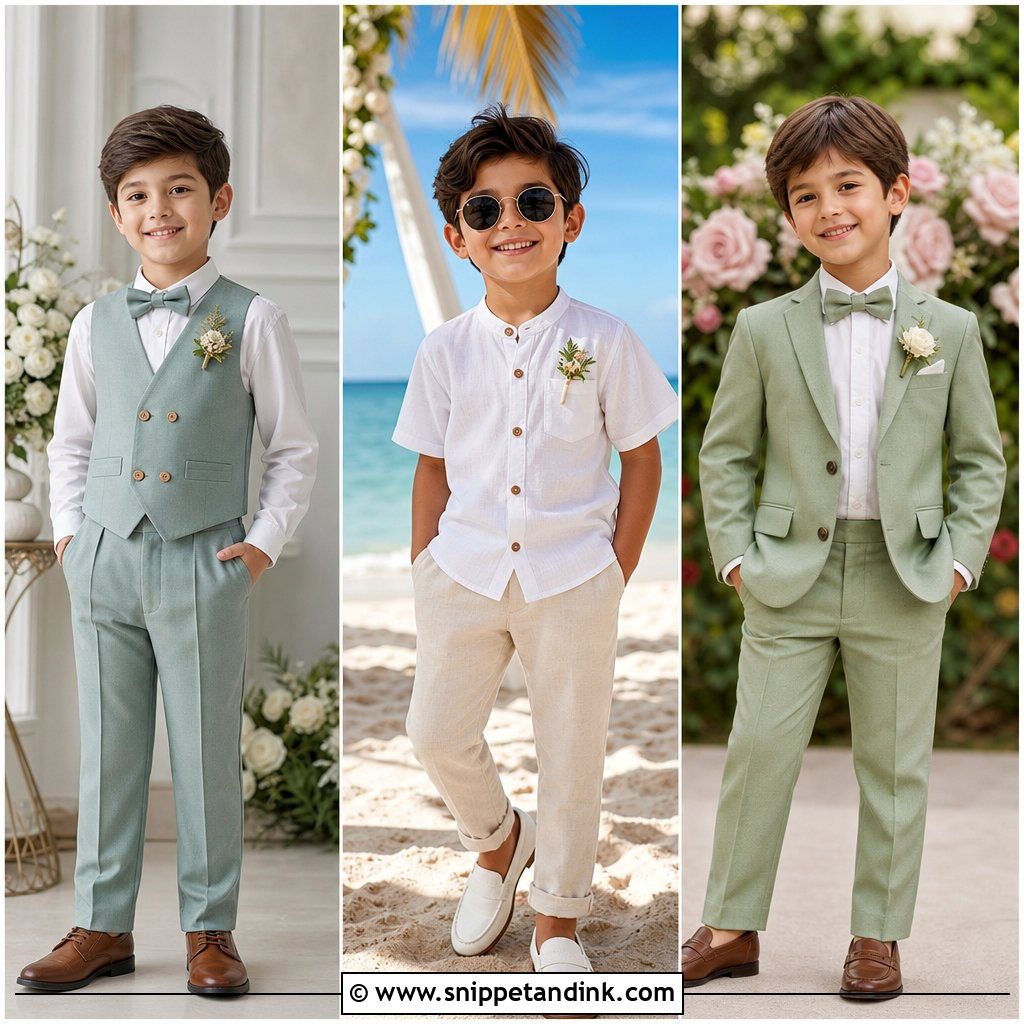
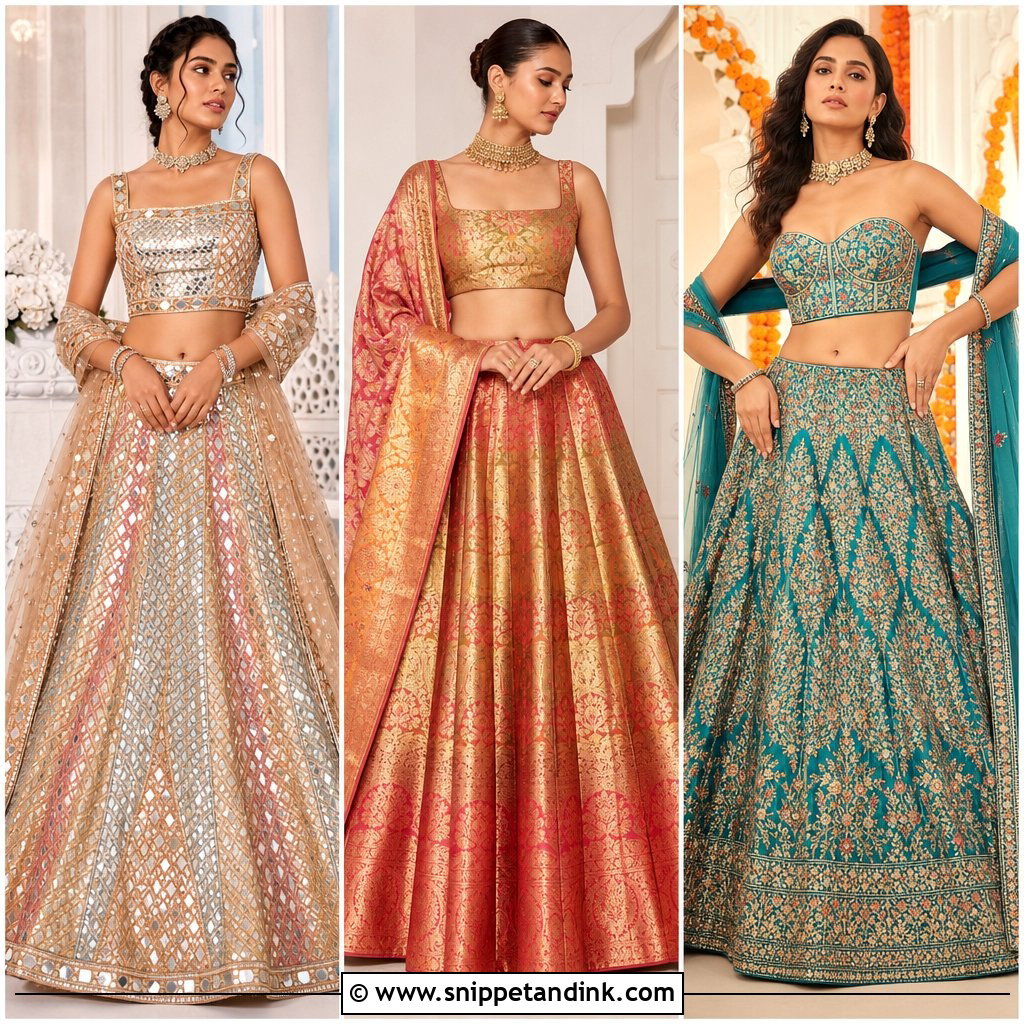
20. Saree Gown Indian Kids Wedding Dress
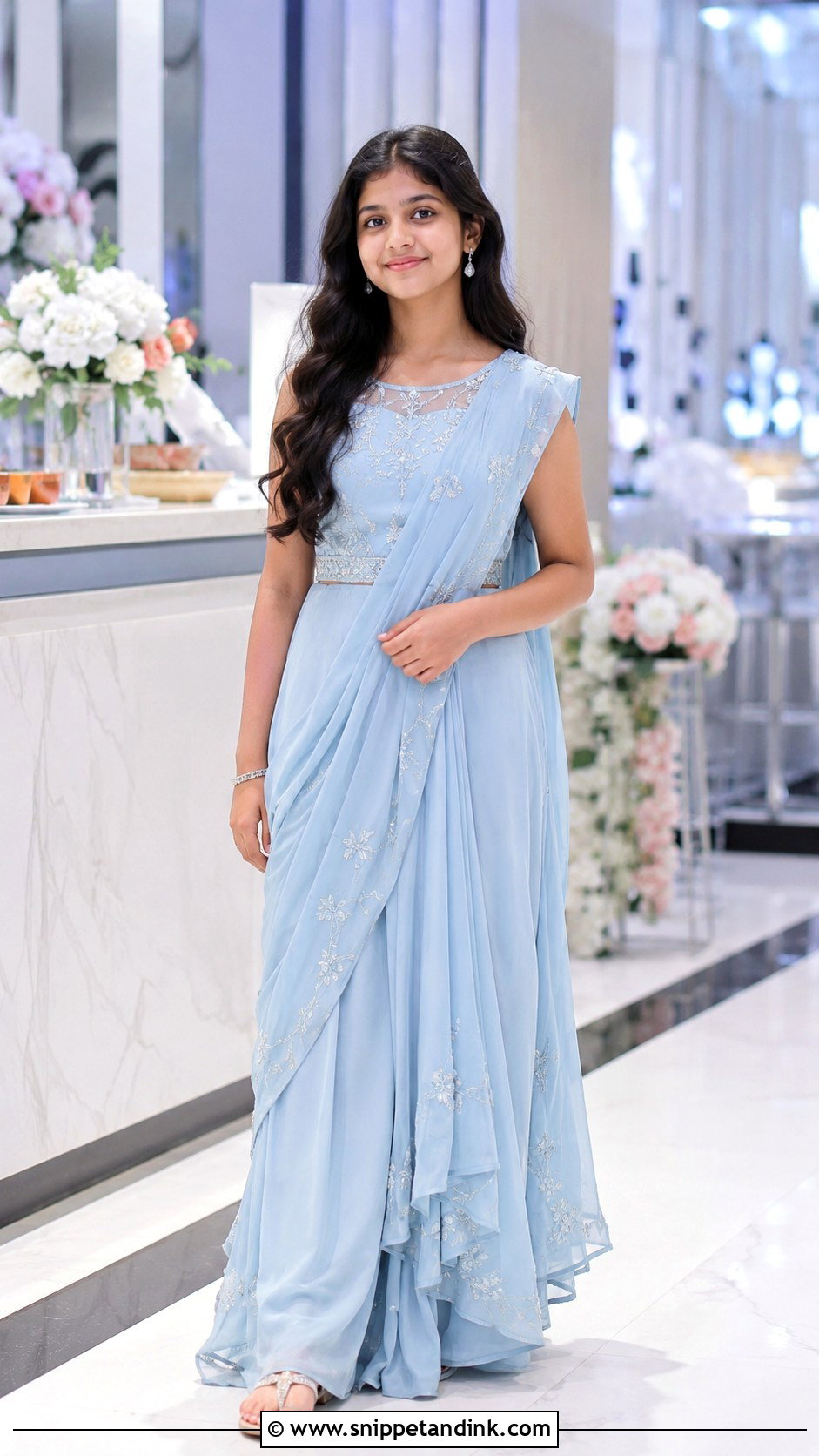
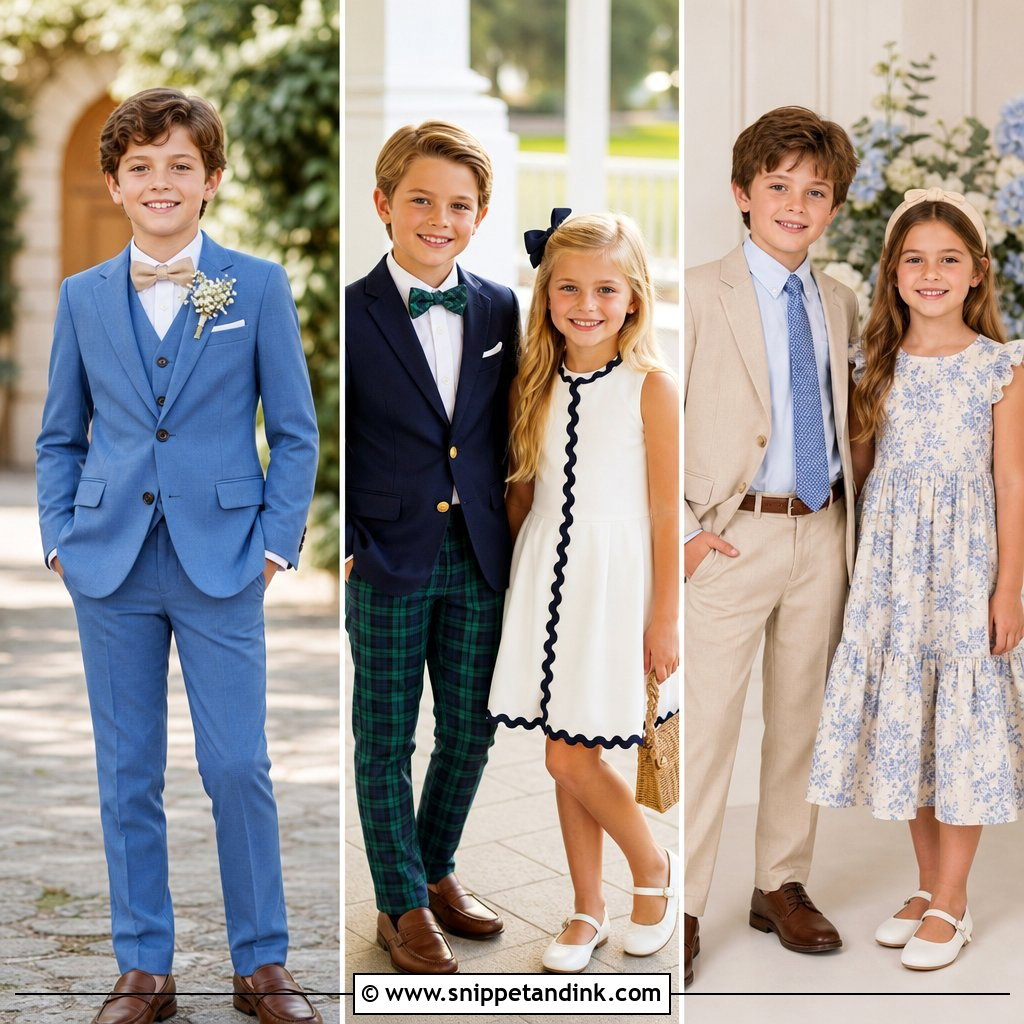
A saree gown gives an older girl the draped look without the struggle of a real saree. The pre-stitched drape stays secure and the gown shape allows easy movement. I keep these for older girls and teens; younger children find the pallu layer annoying and pull at it. Soft fabric with a light pallu, gentle pleats and simple embroidery in lavender, blush, teal or champagne suits receptions and sangeet. Make sure the pallu is tacked at the shoulder. Low sandals, small earrings and a bracelet are enough.
21. Matching Sibling Indian Kids Wedding Dress
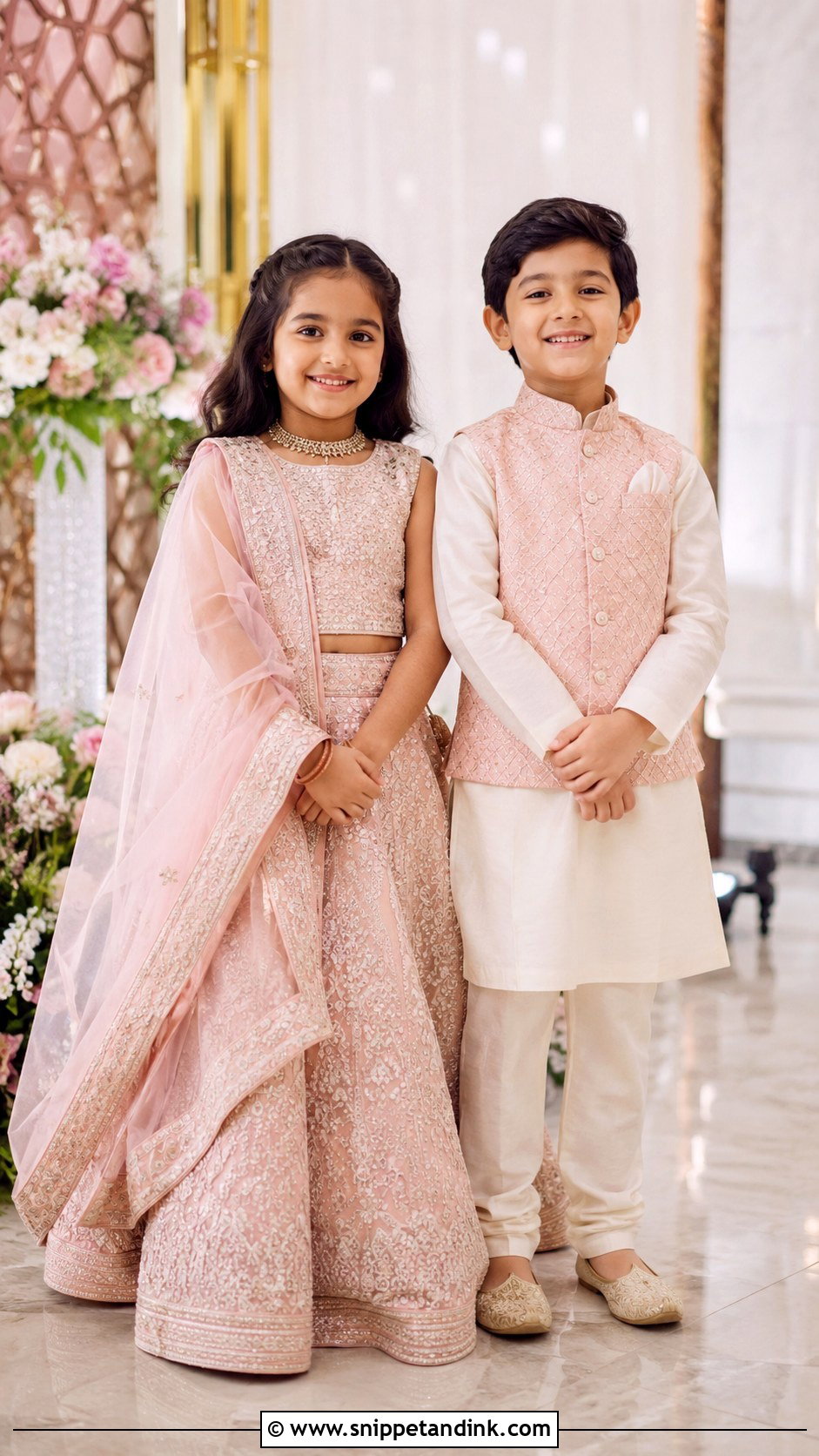
Families love sibling outfits in photos, and they can be fully matching or simply coordinated by colour, fabric or embroidery. A sister in a lehenga and her brother in a kurta and jacket of the same shade look planned without looking like uniforms. Two sisters can wear matching Anarkalis or the same lehenga in different tones. Two brothers can coordinate waistcoats. I always dress each child for their own age, so a toddler is not stuck in a stiff copy of a teenager’s outfit. Pick one palette, such as ivory and gold or blush and sage.
22. Haldi Yellow Indian Kids Wedding Dress
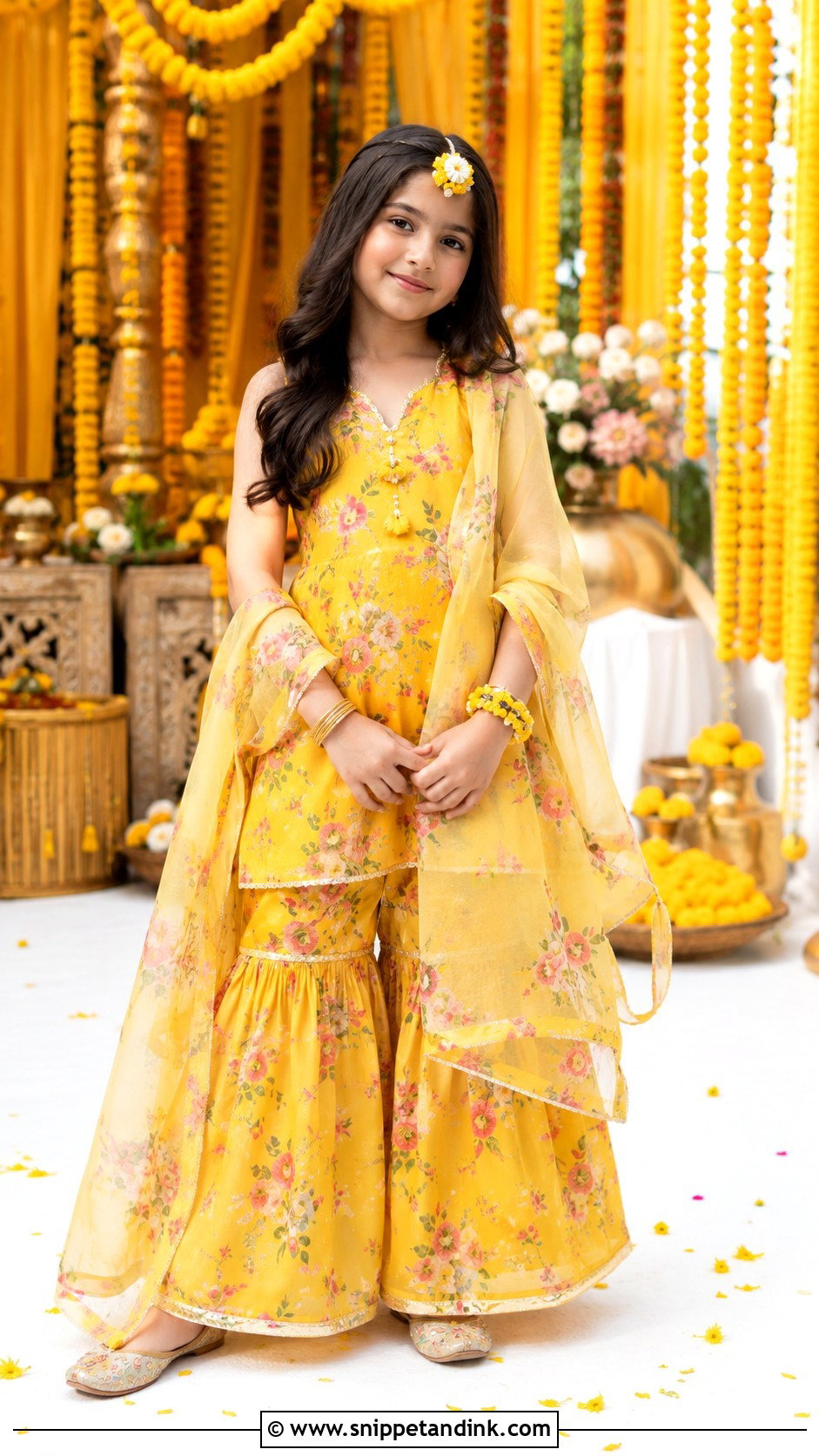
Haldi is messy, so a yellow outfit for a child needs to be washable above all. Girls look sweet in a yellow lehenga, sharara, Anarkali or palazzo suit with floral details; boys in a yellow kurta with white pajama, dhoti pants or a printed waistcoat. Cotton silk, rayon and soft cotton blends are easy to wash. Turmeric stains on white pajamas are almost permanent, so a yellow or printed bottom is wiser. Floral accessories and simple juttis or sandals finish it.
23. Mehendi Green Indian Kids Wedding Dress
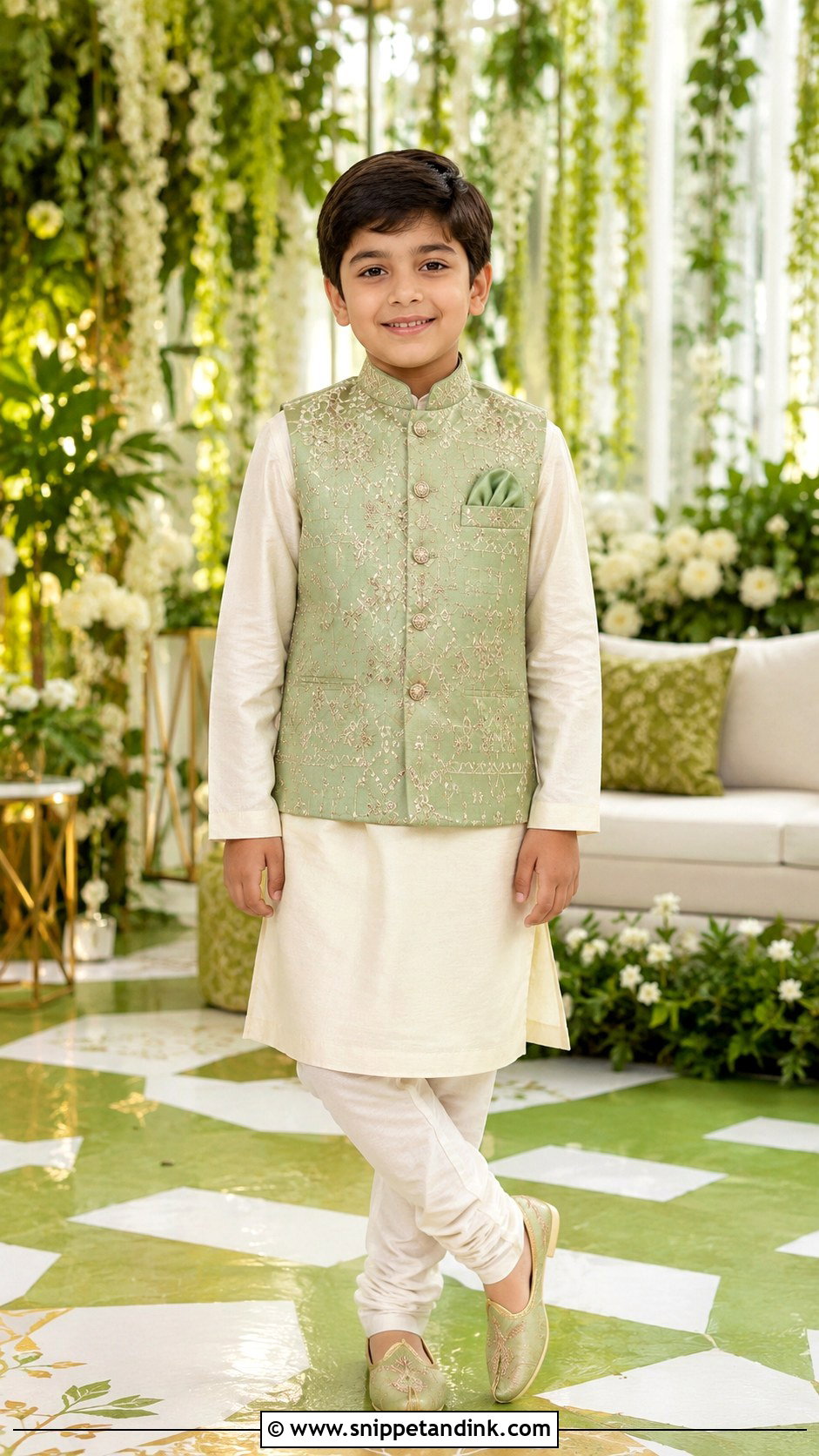
Green is the natural colour for mehendi, and it suits kids in traditional and modern shapes. A green lehenga, kurta pajama, sharara, dhoti set or jacket outfit all work. Mirror work and gota add sparkle for girls; a green Nehru jacket over an ivory kurta suits boys. Mint, sage, parrot, emerald and olive cover most moods. Children often get a small henna design too, so short or three-quarter sleeves keep wet paste off the fabric. Flexible waistbands and breathable fabrics are best for games and dancing.
24. Reception Gown Indian Kids Wedding Dress
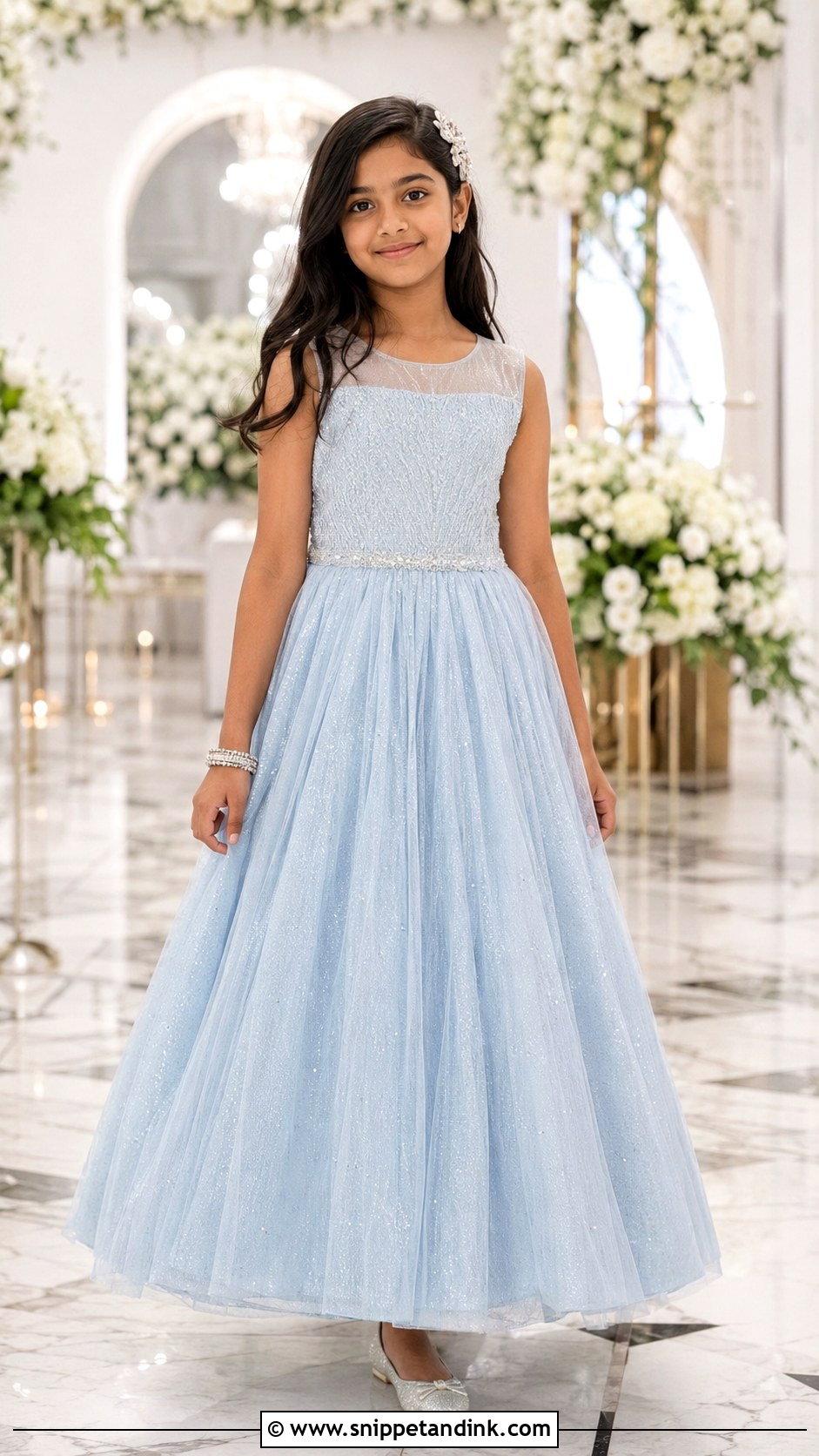
For formal, photo-led receptions, a gown with soft sparkle or ethnic detail keeps a girl connected to the wedding look. A-line gowns are far easier for kids than fitted styles, because they can sit and climb onto chairs. Tulle, satin, organza or georgette look elegant with a smooth lining. Champagne, dusty rose, icy blue, lavender and pearl white suit evenings. Glitter tulle sheds onto everything and can irritate skin, so I check the inside of the bodice by hand. Ballet flats and a floor-clearing hem prevent trips.
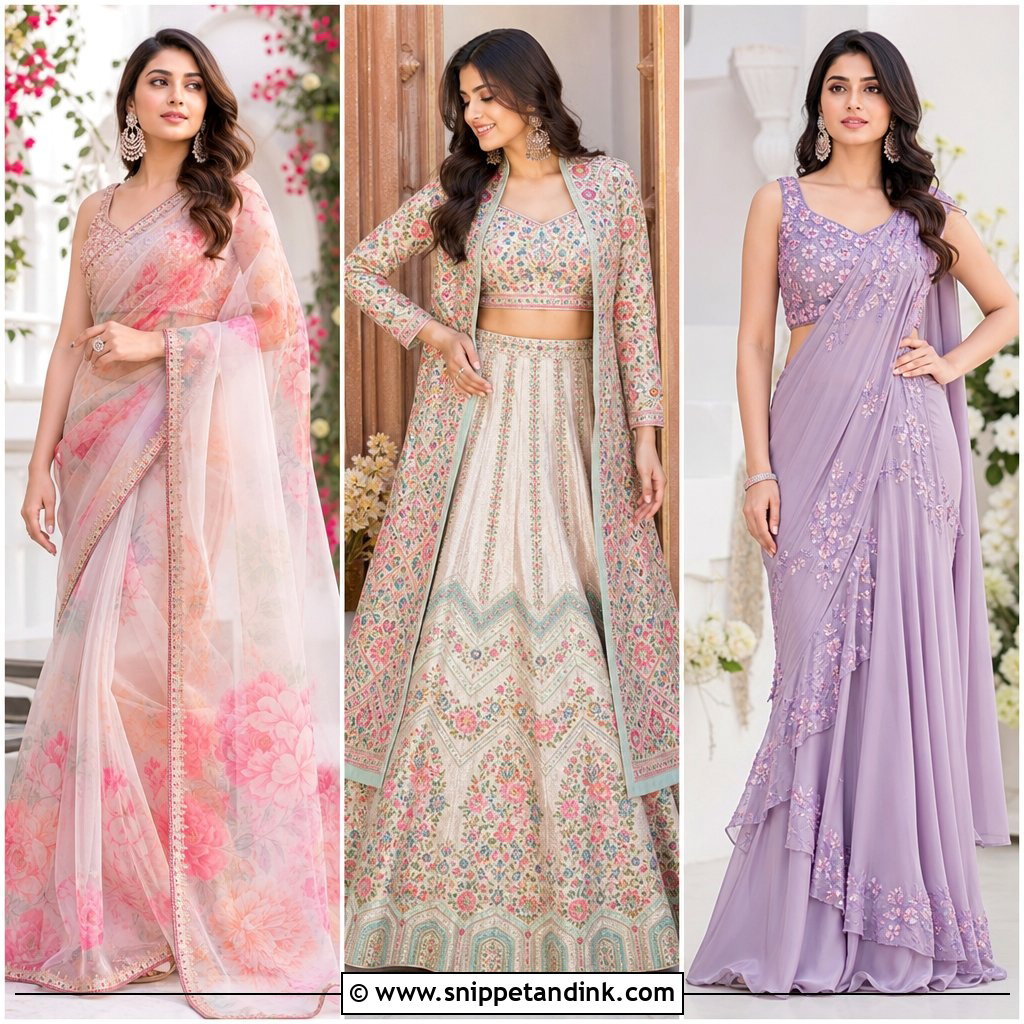
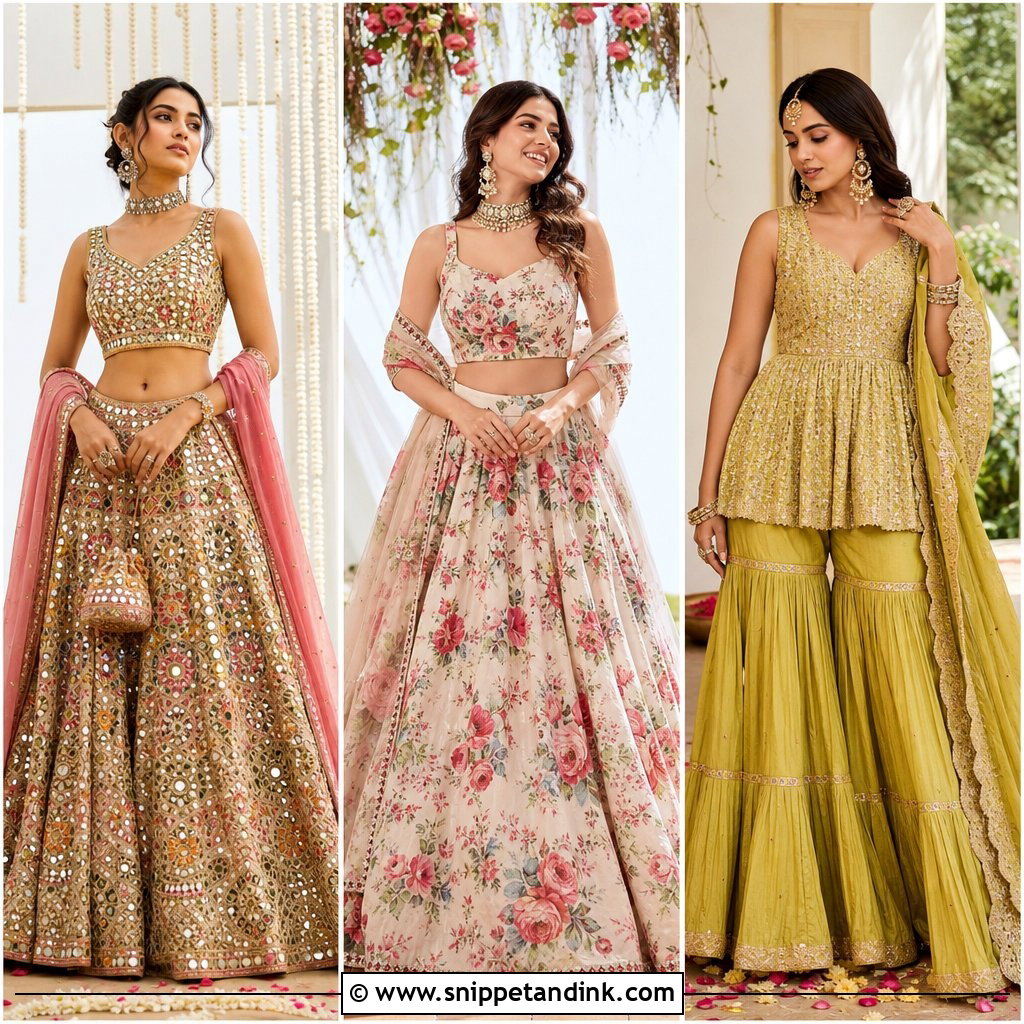
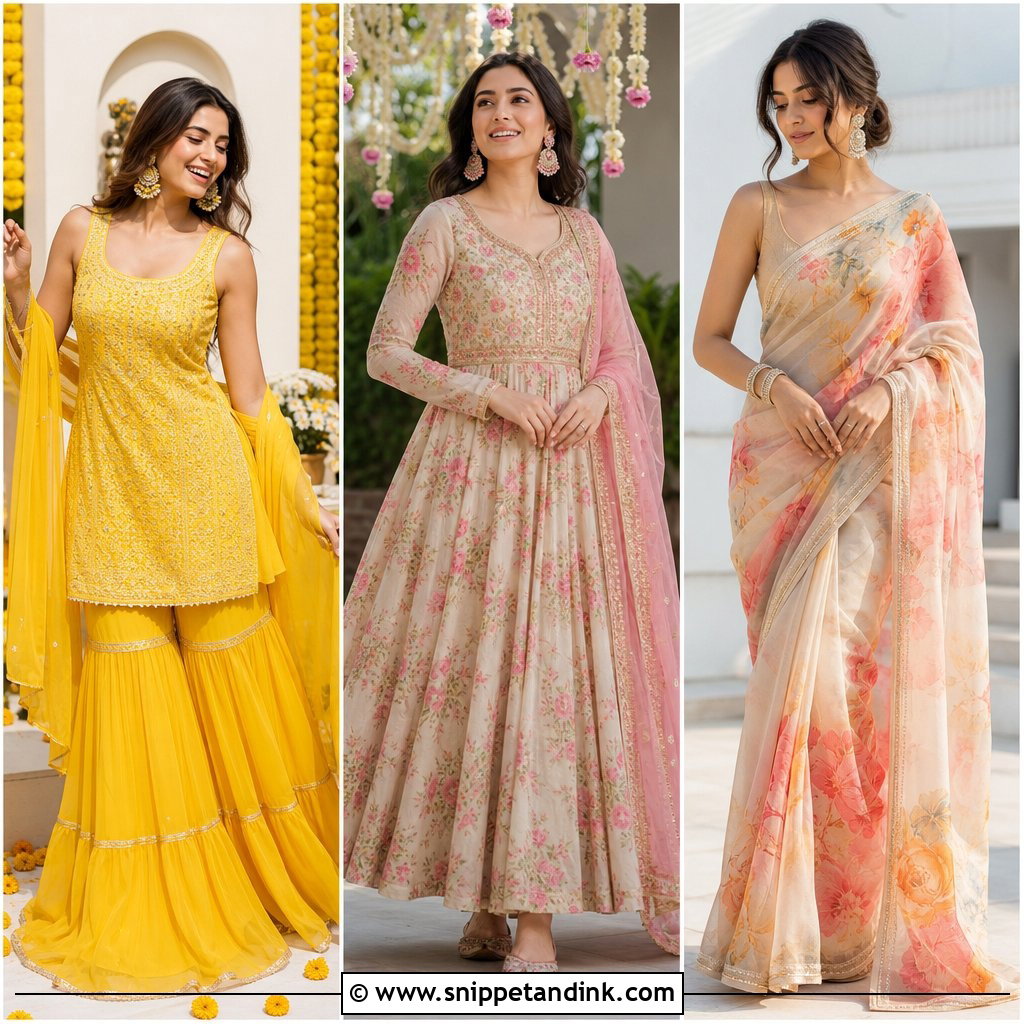
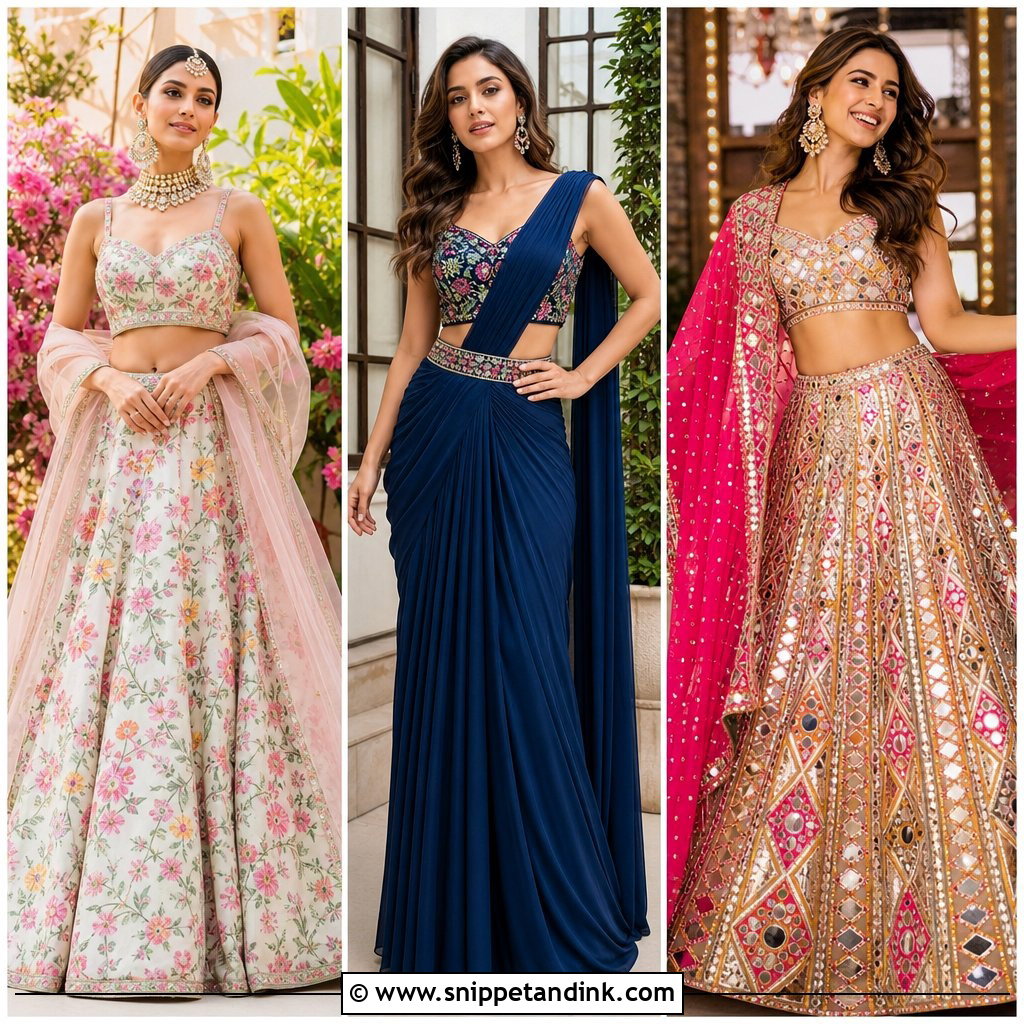
25. Coordinated Family Indian Kids Wedding Dress
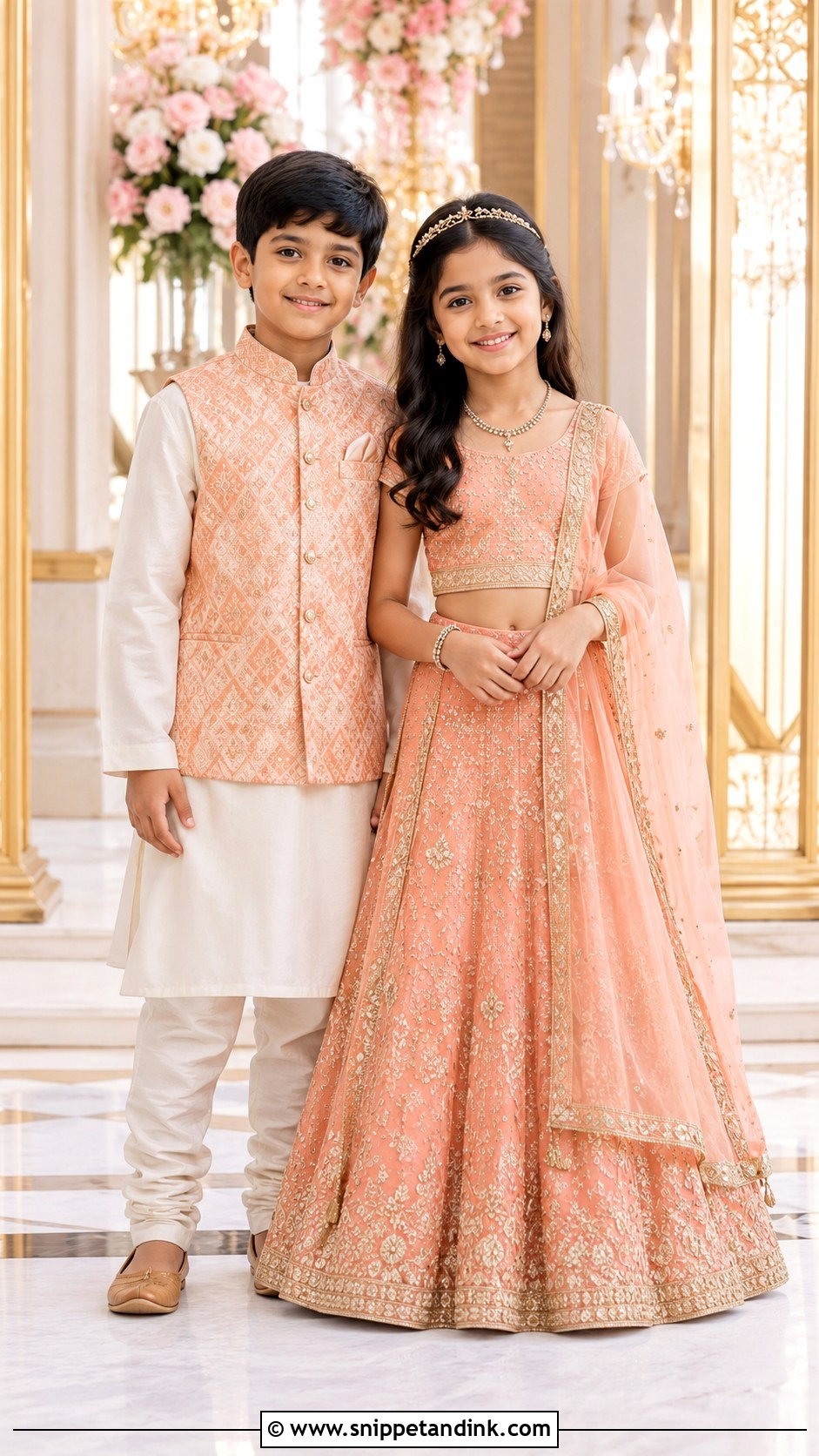
Coordinated family dressing makes photos feel planned without forcing everyone into identical outfits. The children’s clothes share a colour story with the parents: a girl in a peach lehenga, a boy in an ivory kurta with a peach waistcoat. Matching embroidery, border work or fabric texture works too. I always keep children’s pieces lighter than the adults’, because they are running about while grown-ups are standing. Pastels suit daytime ceremonies and jewel tones receptions. Simple shoes and neat hair let the family look carry the picture.
Safety Checks I Do on Every Child’s Outfit
Wedding clothes are made for looks, and children’s sets are often small versions of adult designs. A few quick checks at home save tears and worse on the day.
- Never wrap a dupatta or stole around a young child’s neck. Pin it at the shoulder and waist, or leave it off.
- Tug every bead, button, mirror and sequin. Anything loose is a choking risk for toddlers and should be stitched down or removed.
- Keep synthetic net, georgette and long sleeves well away from diyas, havan fires and sparklers.
- Hems should clear the ankle, especially on stairs and stage steps.
- Small earrings and bangles for toddlers should be lightweight with no sharp clasps.
Pack the Second Outfit Before You Pack the First
Most children last a few hours in their best outfit before something gets spilled, wet or simply too hot. I plan for the ceremony outfit to come off after the main photos and a soft cotton kurta or frock to go on for dinner and dancing. Keep a small bag with the change of clothes, wipes, a few safety pins, a spare pair of comfortable shoes and a light layer for air-conditioned halls. Then nobody spends the evening chasing a child to keep an expensive outfit clean.
A Happy Child Looks Better in Every Photo
Dressing children for an Indian wedding comes down to celebration and comfort in equal measure. They should look festive and still be able to walk, sit, dance, eat and play. Light fabrics, soft linings, a safely fixed dupatta, flexible waistbands and good shoes matter as much as embroidery. Girls have lehengas, Anarkalis, shararas, gowns and palazzo suits; boys have sherwanis, kurta sets, dhoti outfits, waistcoats and bandhgalas. Plan by event, weather and age, and let them change into something simpler once the photos are done.
You'll Like These Ideas:


Leave a Reply