
Muslim brides often wear their henna through three or four events, the mehndi night, the nikah, the rukhsati and the walima, so I design for a stain that has to look good across several days and several outfits. The vocabulary is wide: Arabic trails, Khaleeji florals, Pakistani bharwa filling, and personal motifs like initials, dates, domes and crescents. Below are thirty complete hand designs, from full bridal coverage to open negative space, with notes on what each one asks of your schedule and your sleeves.
Henna, Nail Colour and Wudu on Your Wedding Days
It’s one of the most common questions at a consultation. Natural henna leaves a dye in the skin, not a coating on top of it, so once the paste is scraped off, water still reaches the skin. It sits comfortably within a long Muslim bridal tradition. The paste itself has to come off before you make wudu.
Anything that forms a layer on the skin or nails is different. Regular nail polish, white mehndi, glitter and some instant temporary pastes sit on the surface and block water, so many brides remove them before each prayer or skip them. If you follow a particular scholar’s guidance, check with them; I only explain how each product behaves.
Options that work through several days of prayer
- Henna on the nails themselves: a little paste on each nail stains it a warm orange-red that lasts until the nail grows out.
- Breathable or water-permeable nail polish, which many brides choose, though opinions on it differ.
- Keeping white mehndi and glitter for one evening event only, rather than wearing them for days.
1. Arabic Muslim Bridal Mehndi Design
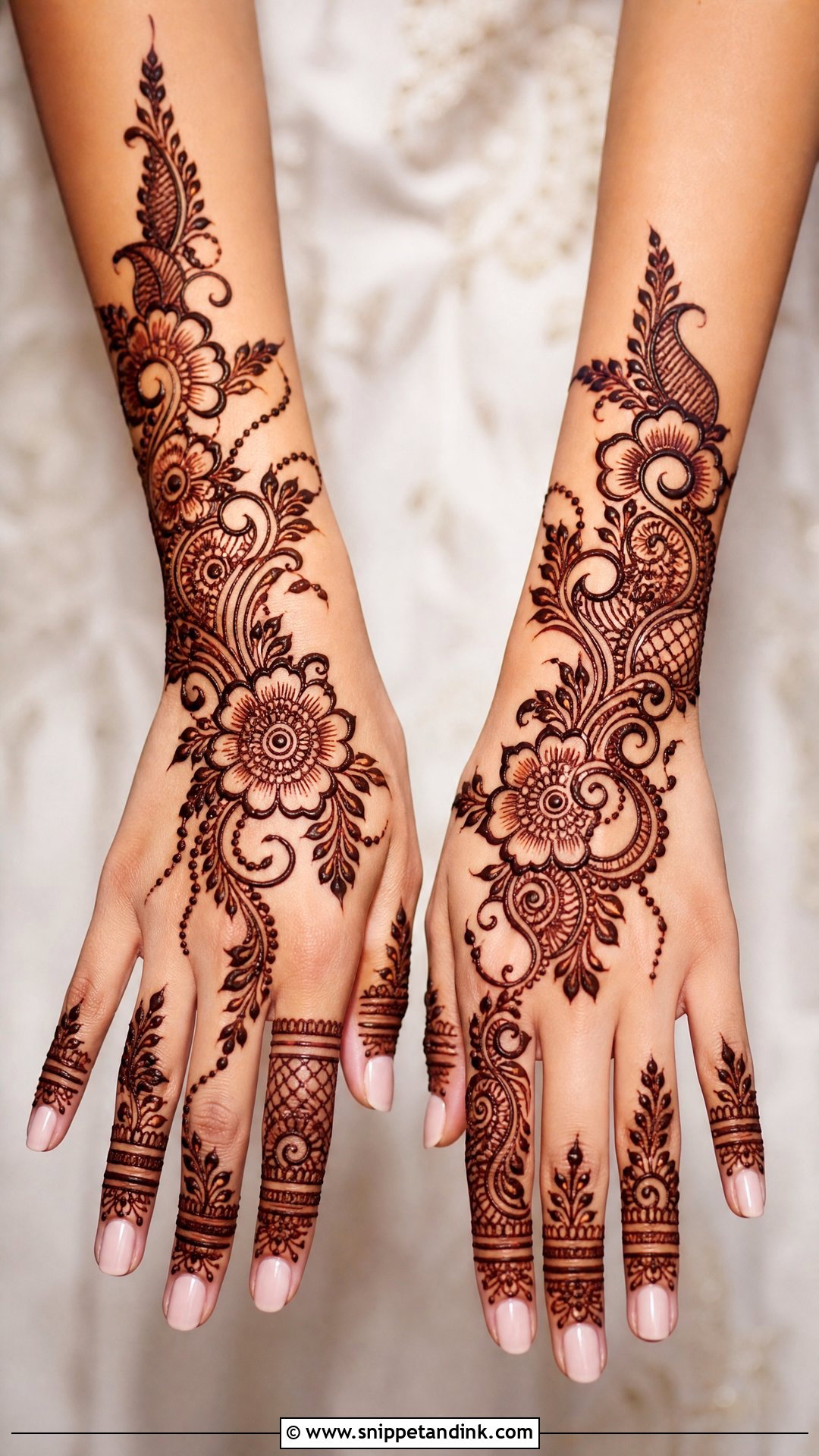
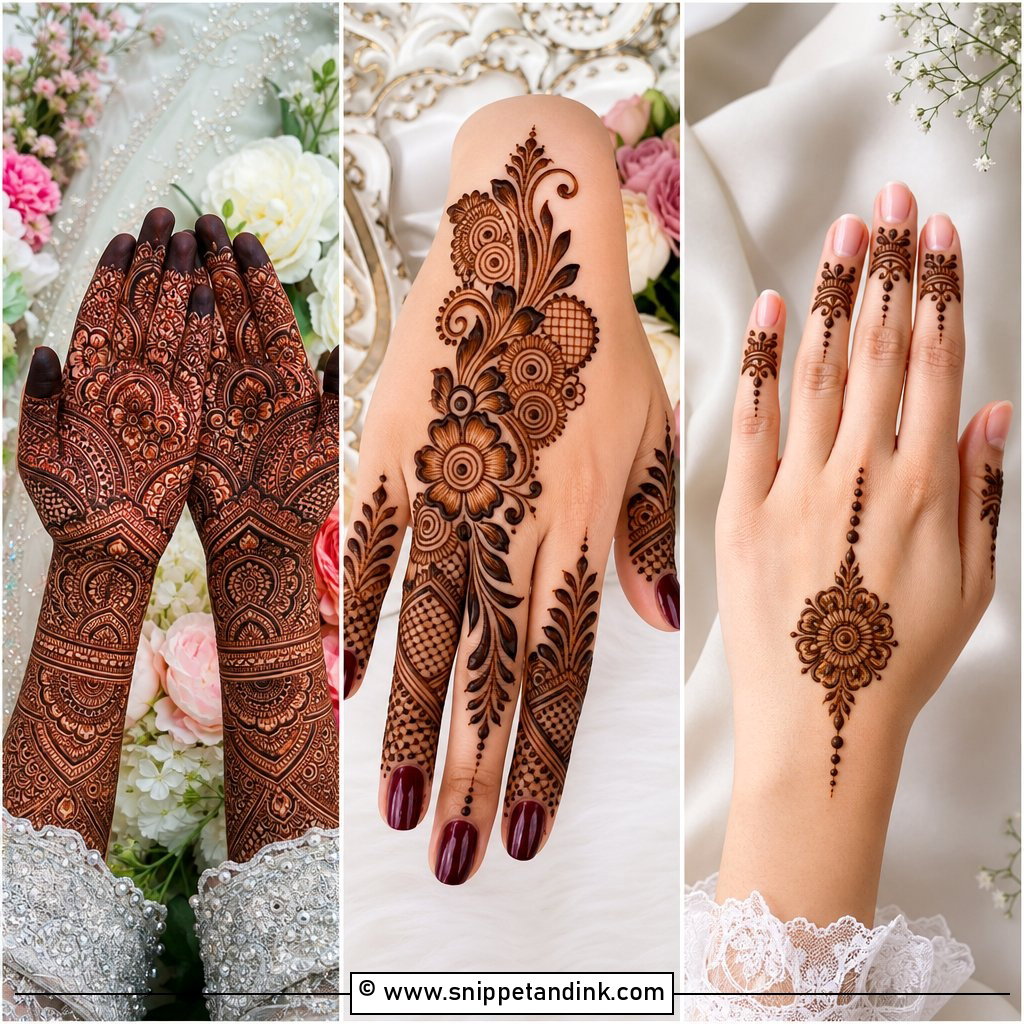
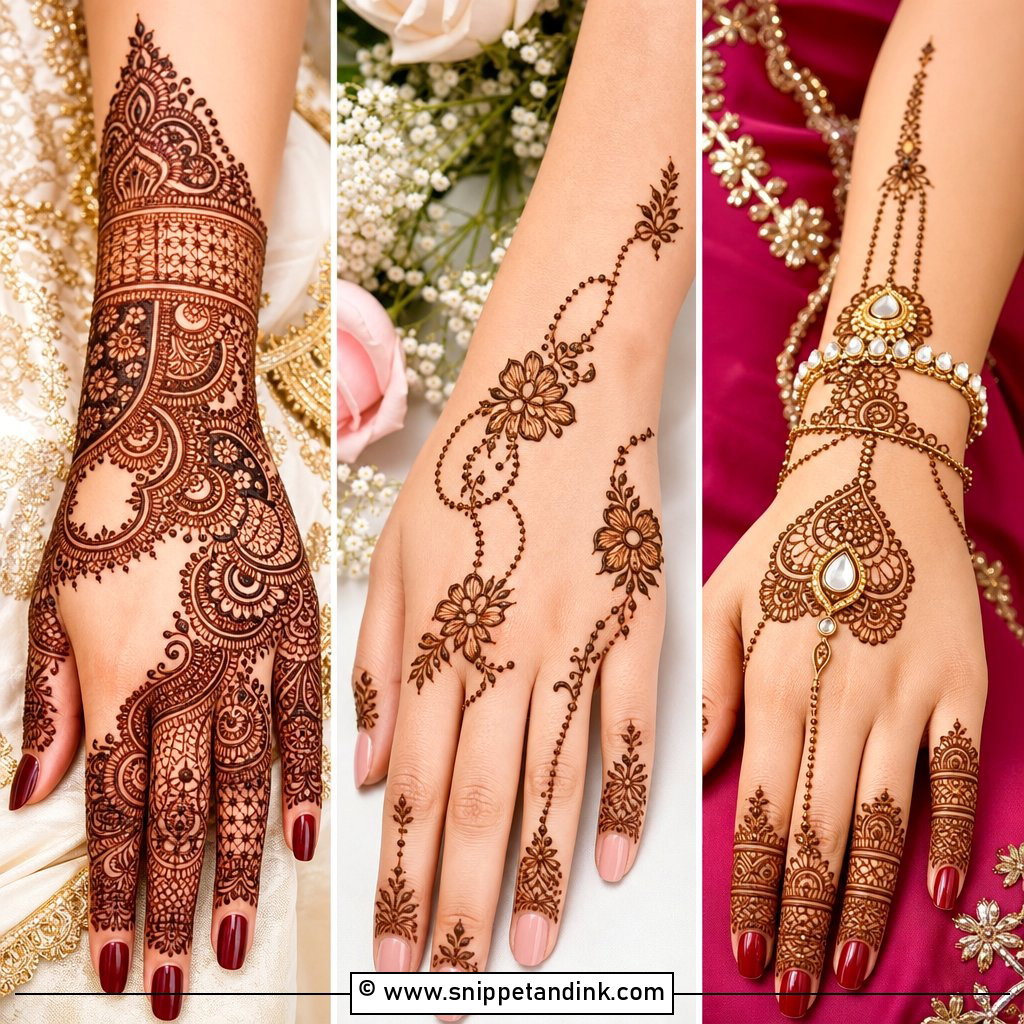
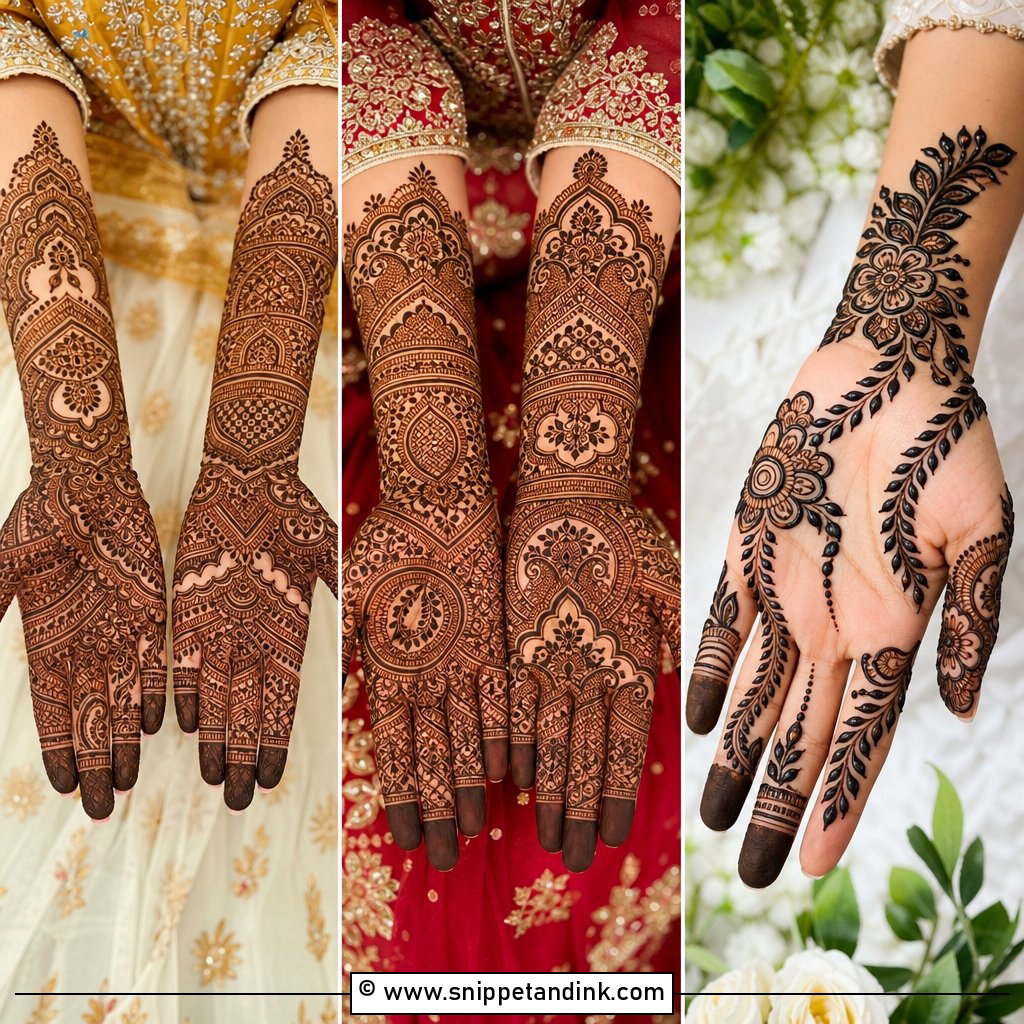
Arabic Muslim bridal mehndi design starts with bold florals on the palm, then runs diagonally across the back of the hand with leafy vines and shaded petals. The open skin keeps it light, which balances a heavily embroidered outfit. I fill fingers with neat bands and finish the wrist with a bracelet line. Its weakness is that one thin trail can look sparse on a broad hand, so I widen the main vine accordingly.
2. Full Hand Muslim Bridal Mehndi Design
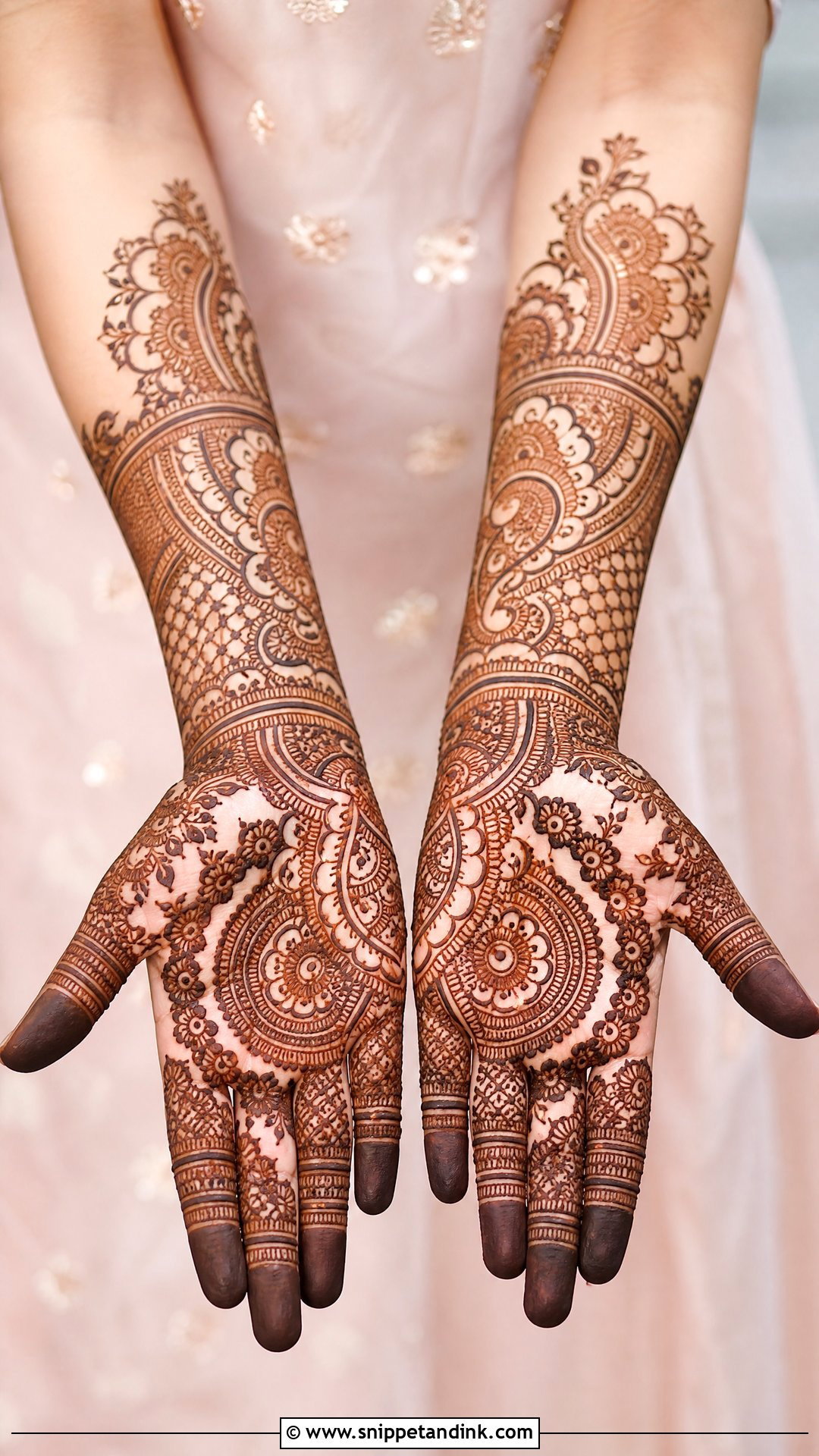
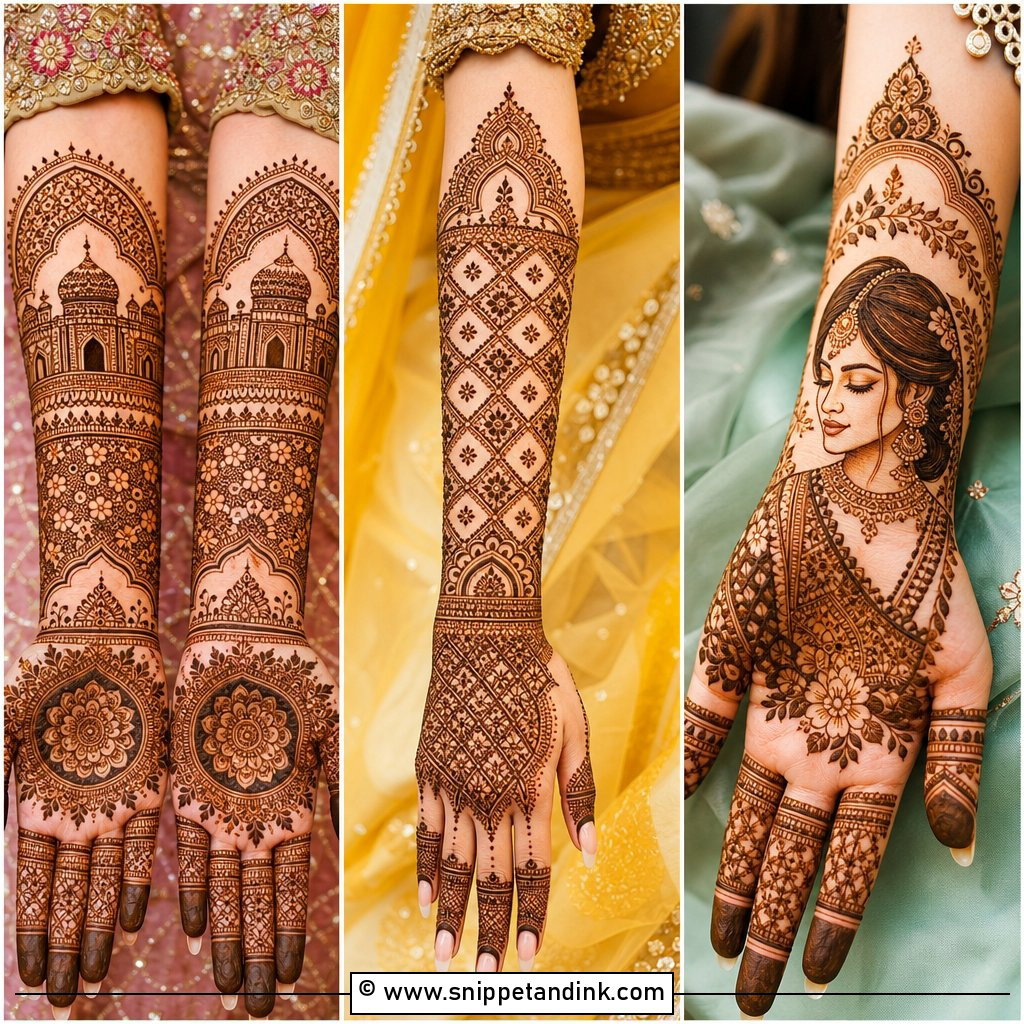
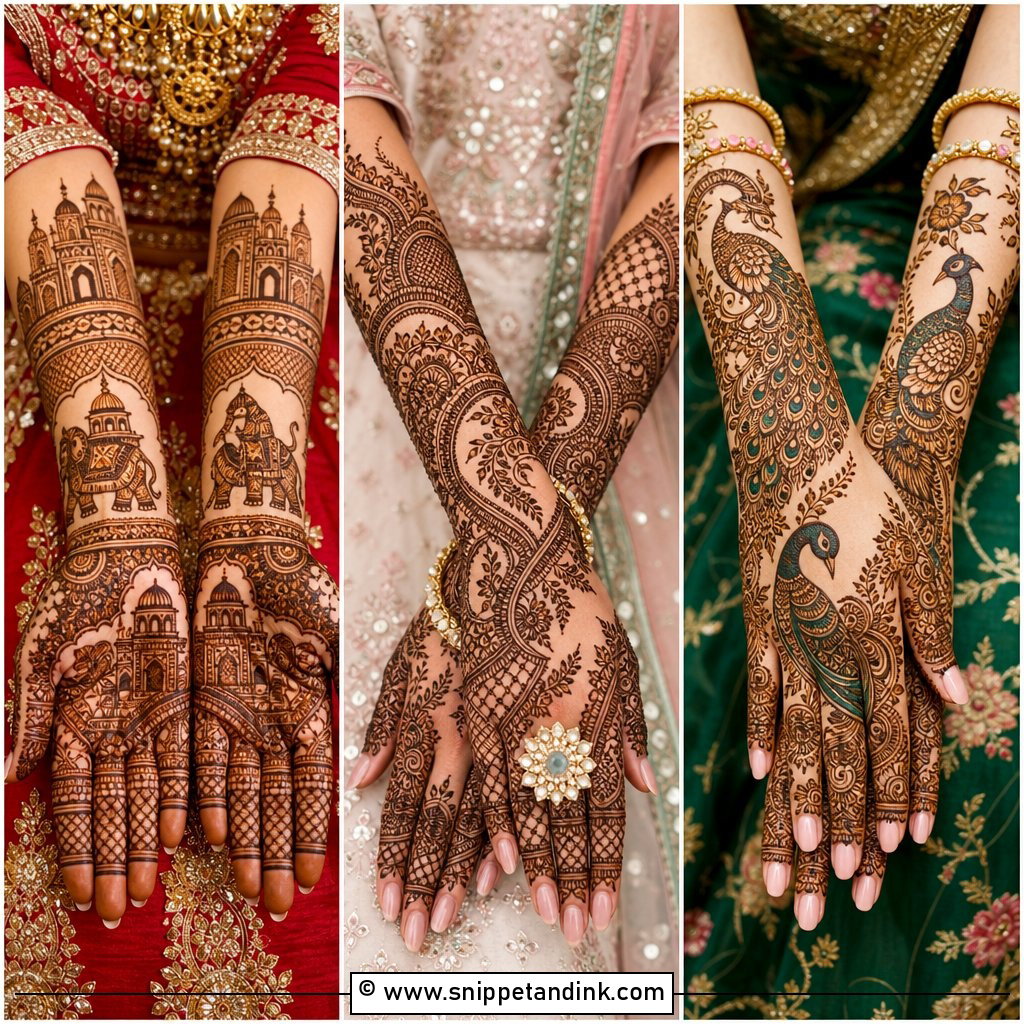
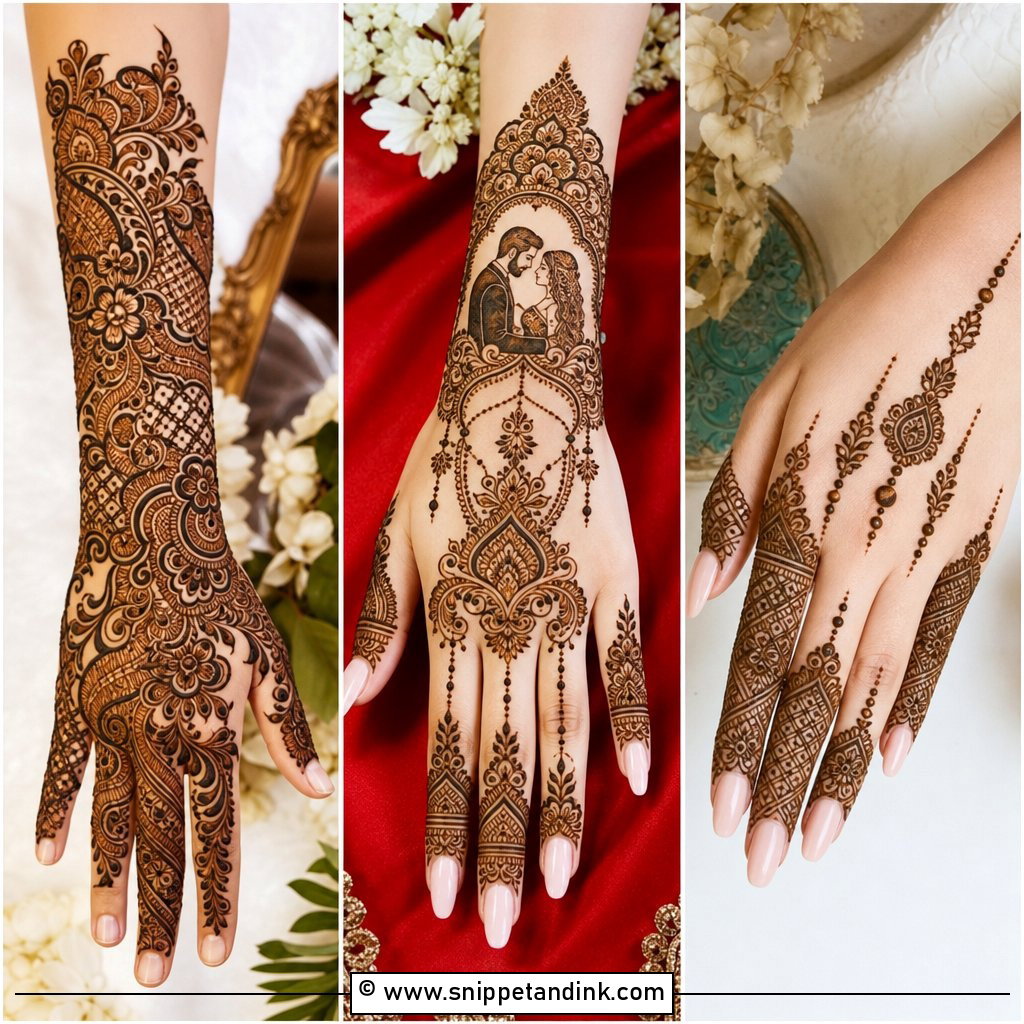
Full coverage runs from fingertips to forearms with floral vines, paisleys, jaali and fine filler, often with a personal centre such as initials, the nikah date or a small arch. Depth comes from contrast between sections, so I divide the arm into bands before I start and change the filler texture in each one. It sits naturally beside traditional lehenga, sharara, gharara and heavily embellished outfits.
3. Simple Muslim Bridal Mehndi Design
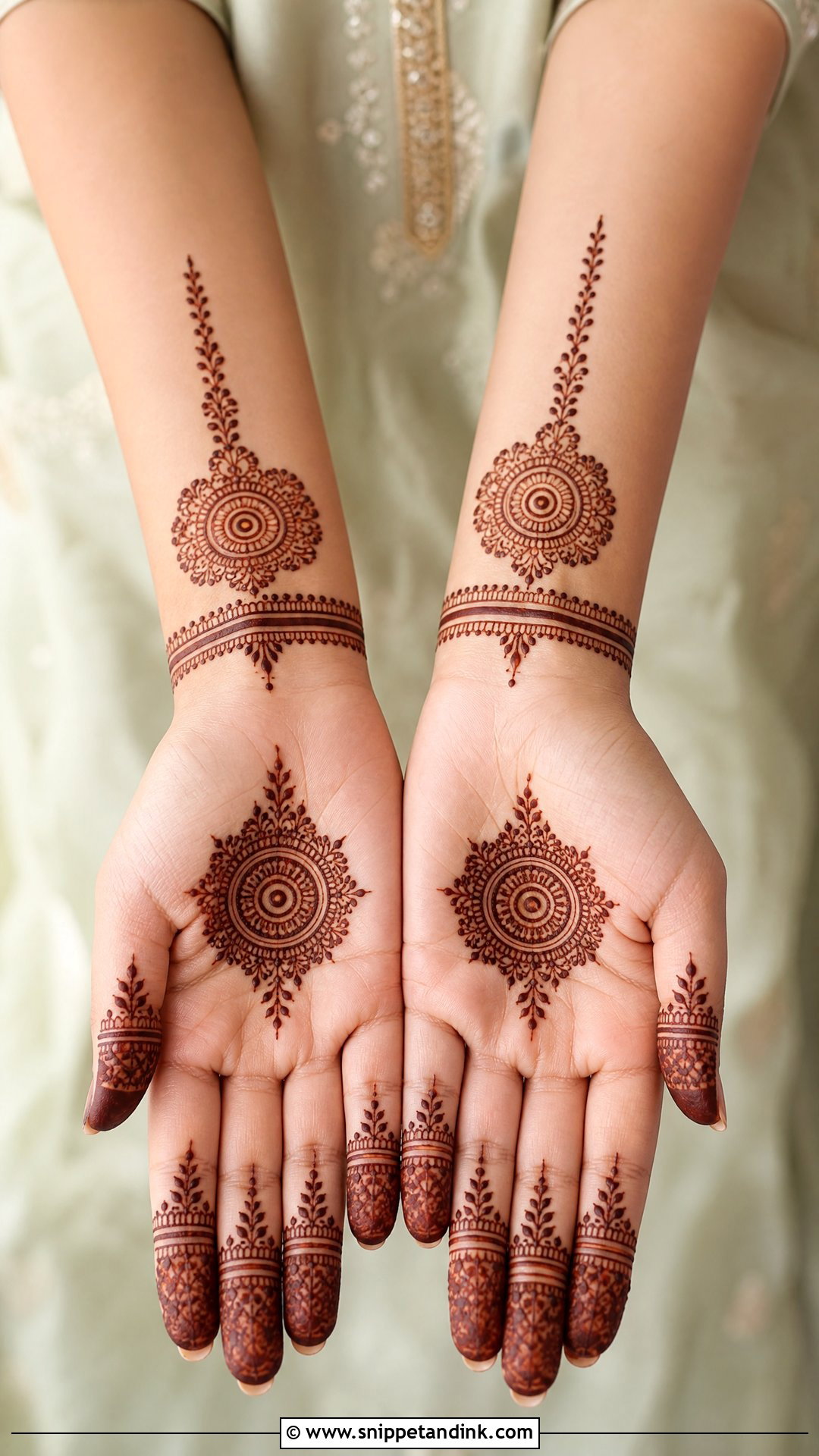
A simple bridal design might be a neat mandala on each palm, filled fingertips, fine wrist bands and a slim trail toward the forearm. It’s quicker to sit through, which matters in a packed wedding week. What keeps it bridal is clean, confident line work and balanced symmetry, because with so little on the hand there’s nowhere for a shaky stroke to hide.
4. Pakistani Muslim Bridal Mehndi Design
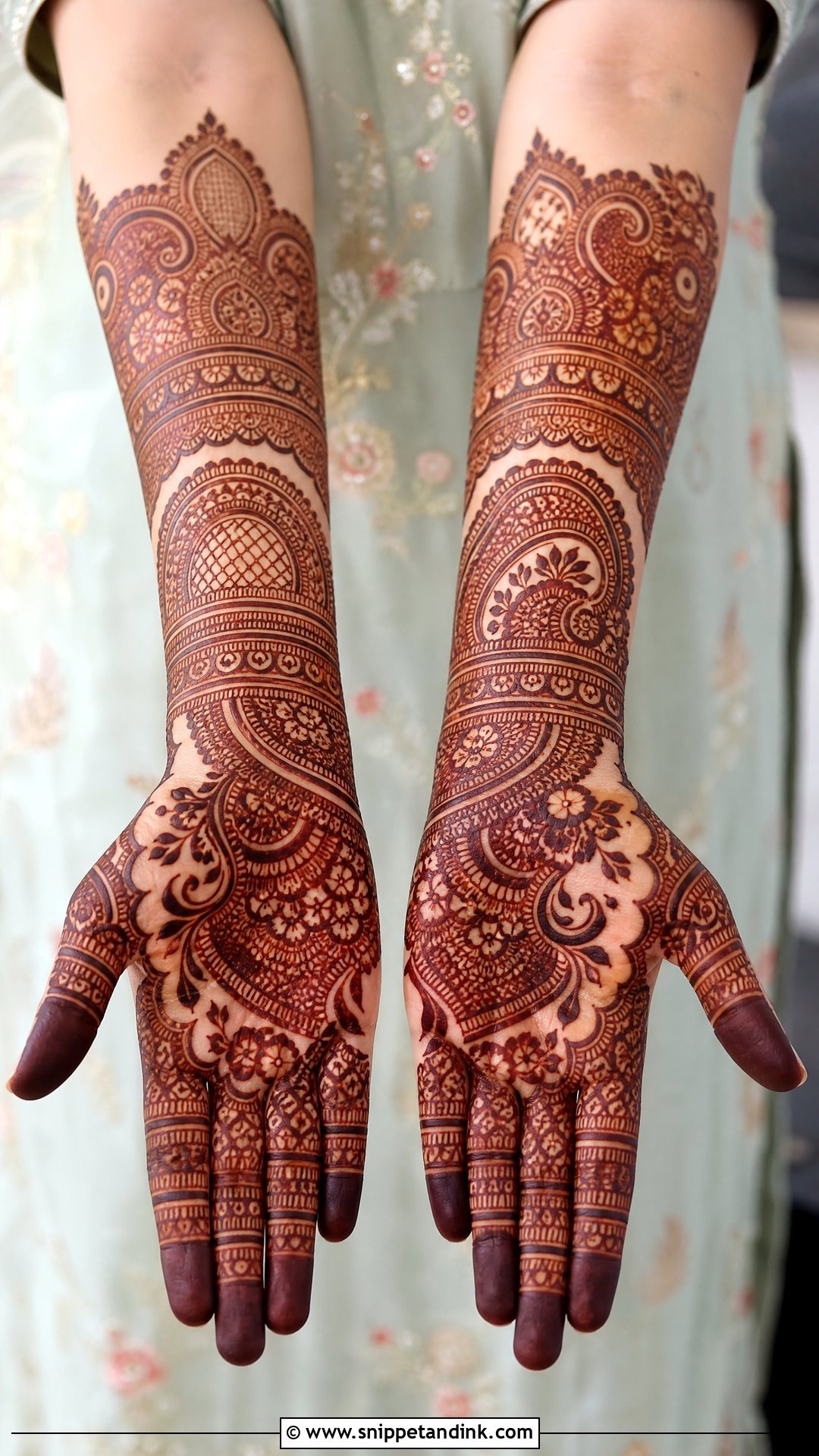
Pakistani bridal work, often called bharwa, means filled: dense palms, detailed forearms, florals and paisleys packed with mesh and fine lines. Hidden initials and coordinated motifs on both hands are common requests. I fill the fingers last, once I can see the weight of the palm, so they match it. It pairs with gharara, sharara and embroidered bridal suits. Expect a long sitting and a very dark stain on the palms.
5. Indian Muslim Bridal Mehndi Design
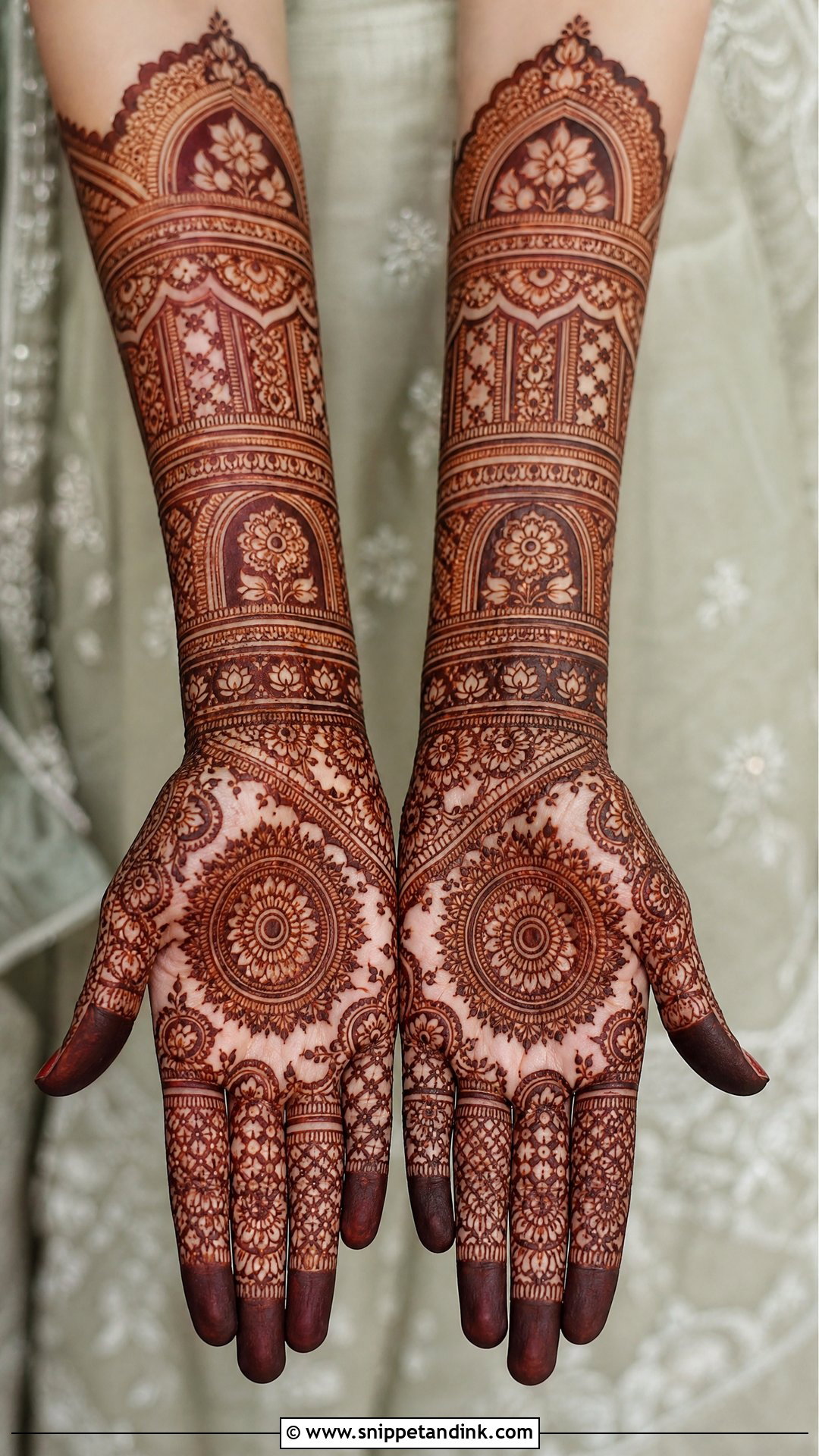
Indian Muslim bridal designs mix fine traditional detail with mandalas, paisley clusters, floral belts and jaali grids. Many brides prefer abstract wedding motifs, calligraphy-like curves, crescents or palace arches instead of human figures, and I plan the composition around that from the start. The result is intricate without being busy. Hands are photographed constantly at the nikah, so I keep the palm centre clean and readable.
6. Indo Arabic Muslim Bridal Mehndi Design
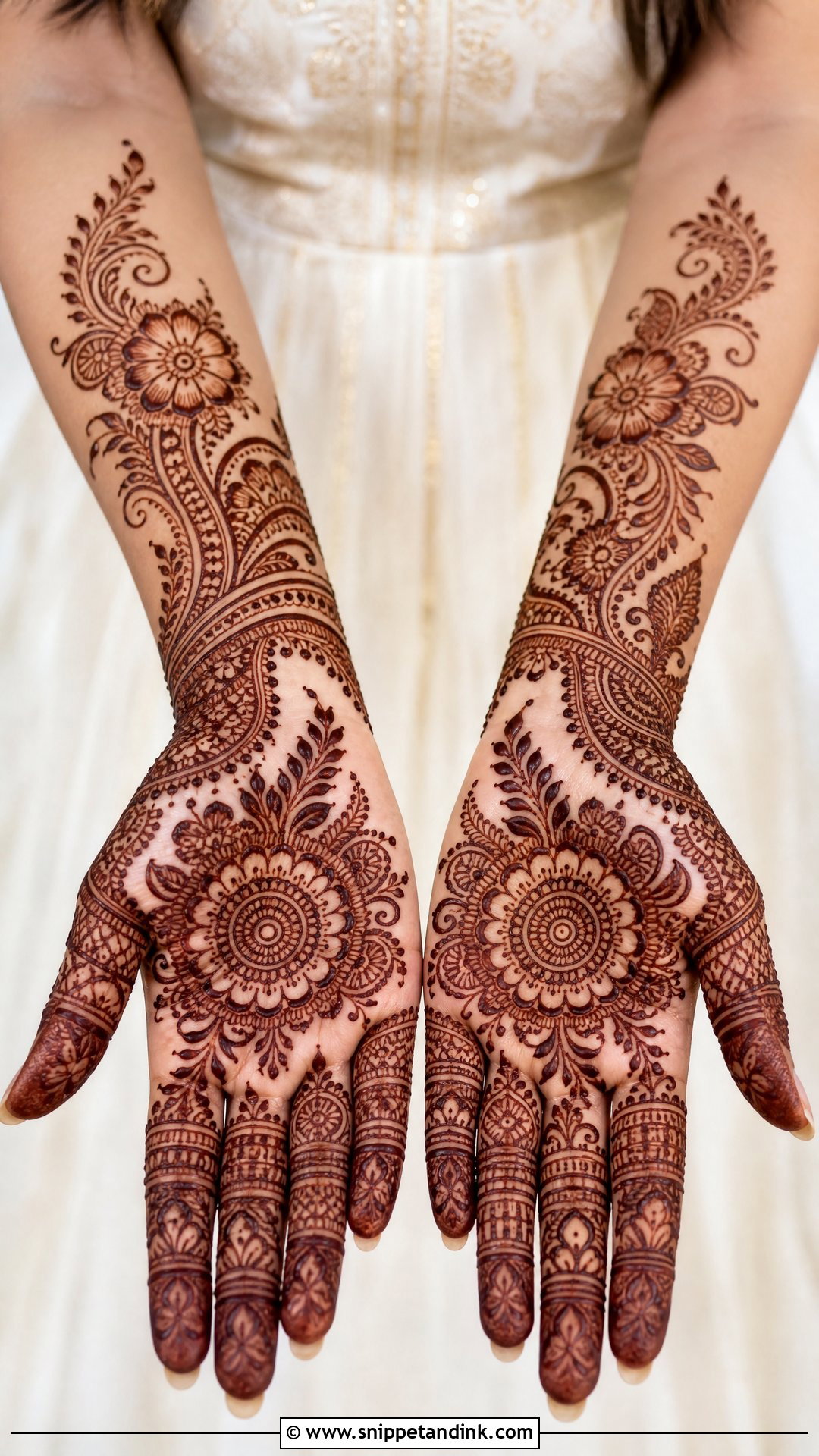
Indo Arabic gives Arabic flow with Indian richness: bold floral trails and open space outside, mandalas or fine mesh inside the palms. The diagonal movement flatters slim and fuller hands alike, because it draws the eye along the length of the hand. I add wrist cuffs to anchor the trail. Small initials can sit in a leaf without disturbing the flow.
7. Gulf Muslim Bridal Mehndi Design
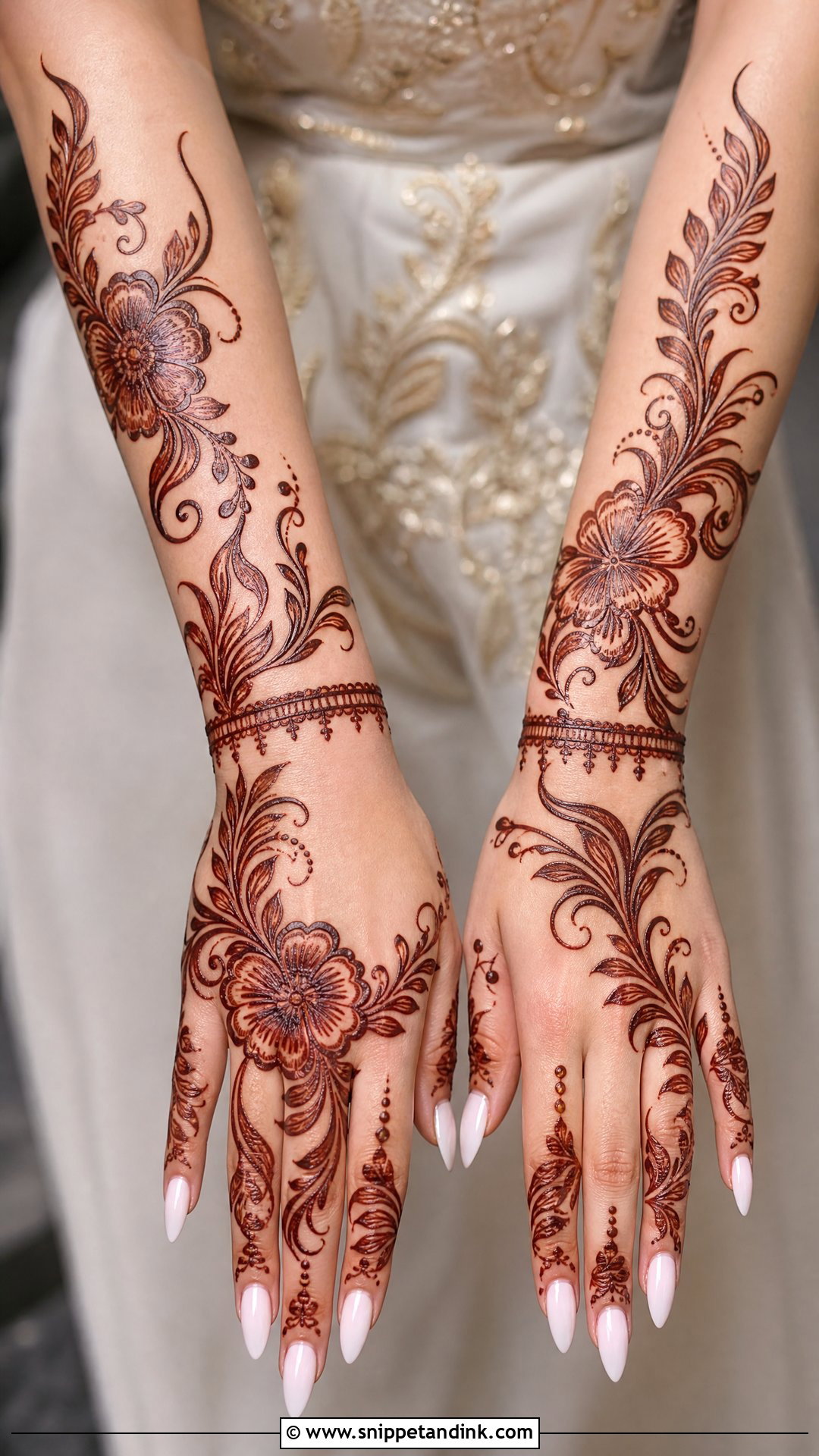
Gulf, or Khaleeji, designs use large flowers, thick outlines and smooth spacing across the back of the hand and forearm. They read from across a hall, which is why they suit big receptions. I shade the petals by thinning the paste, and that needs smooth, fresh henna; lumpy paste leaves blotchy shading. A bracelet line at the wrist completes it.
8. Moroccan Muslim Bridal Mehndi Design
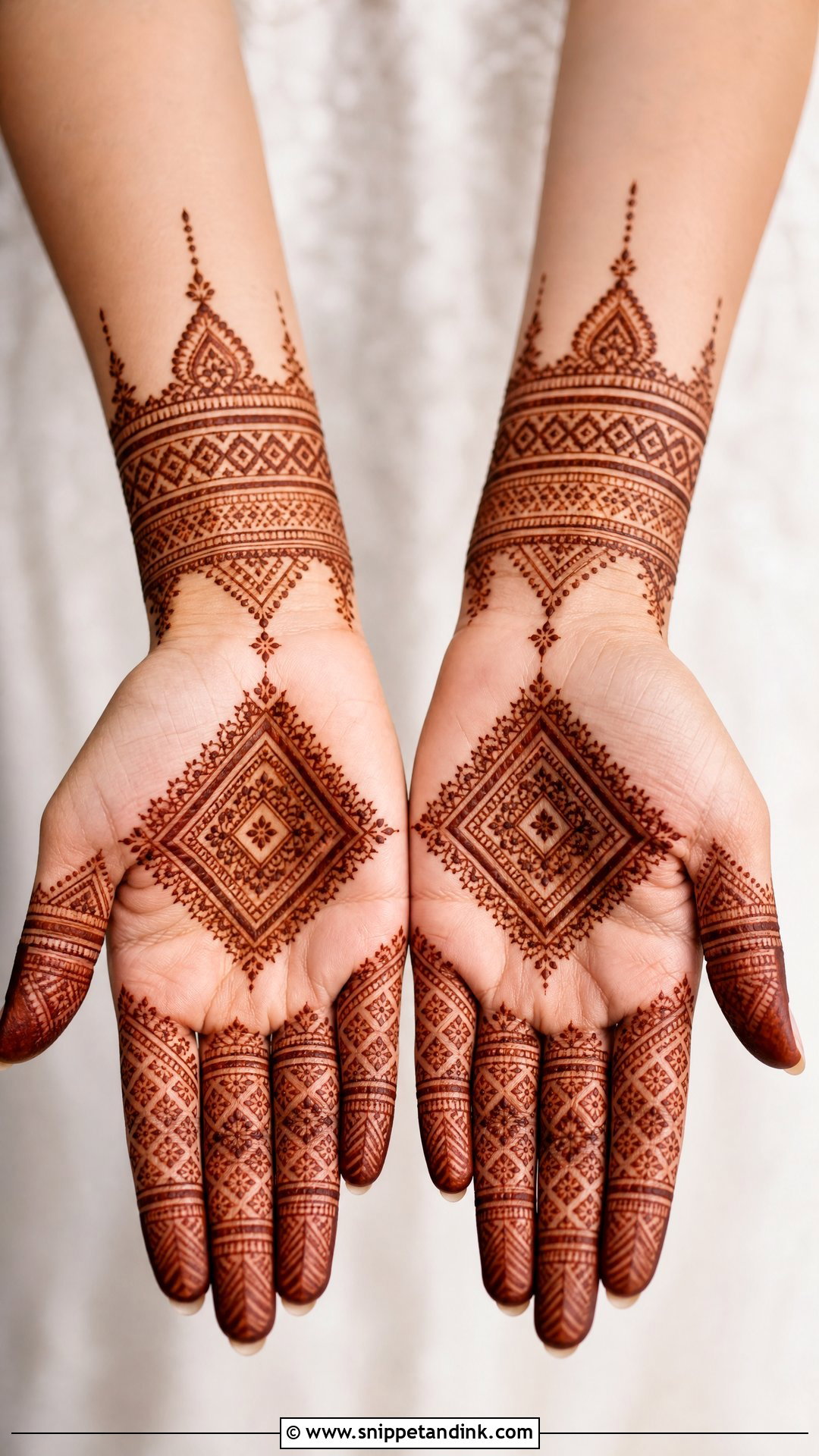
Moroccan Muslim bridal mehndi design swaps florals for diamond grids, chevrons, dots and angular cuffs. A geometric medallion on the palm with matching linear fingers looks crisp and modest. Because it has no florals, it doesn’t fight with embroidered fabric. Straight lines are unforgiving, though, so this is one to book with an artist whose geometric work you’ve seen stained.
9. Nikah Muslim Bridal Mehndi Design
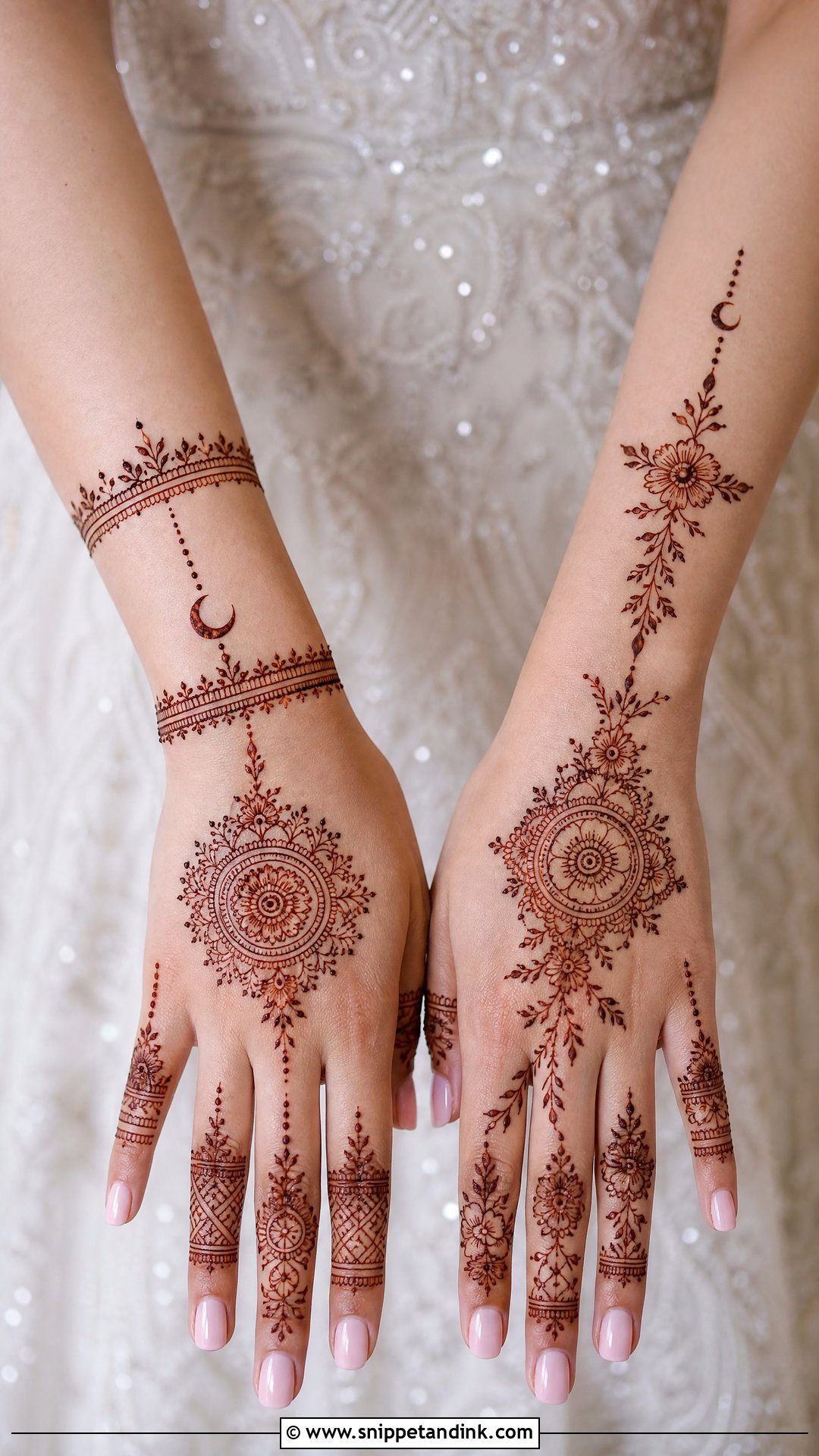
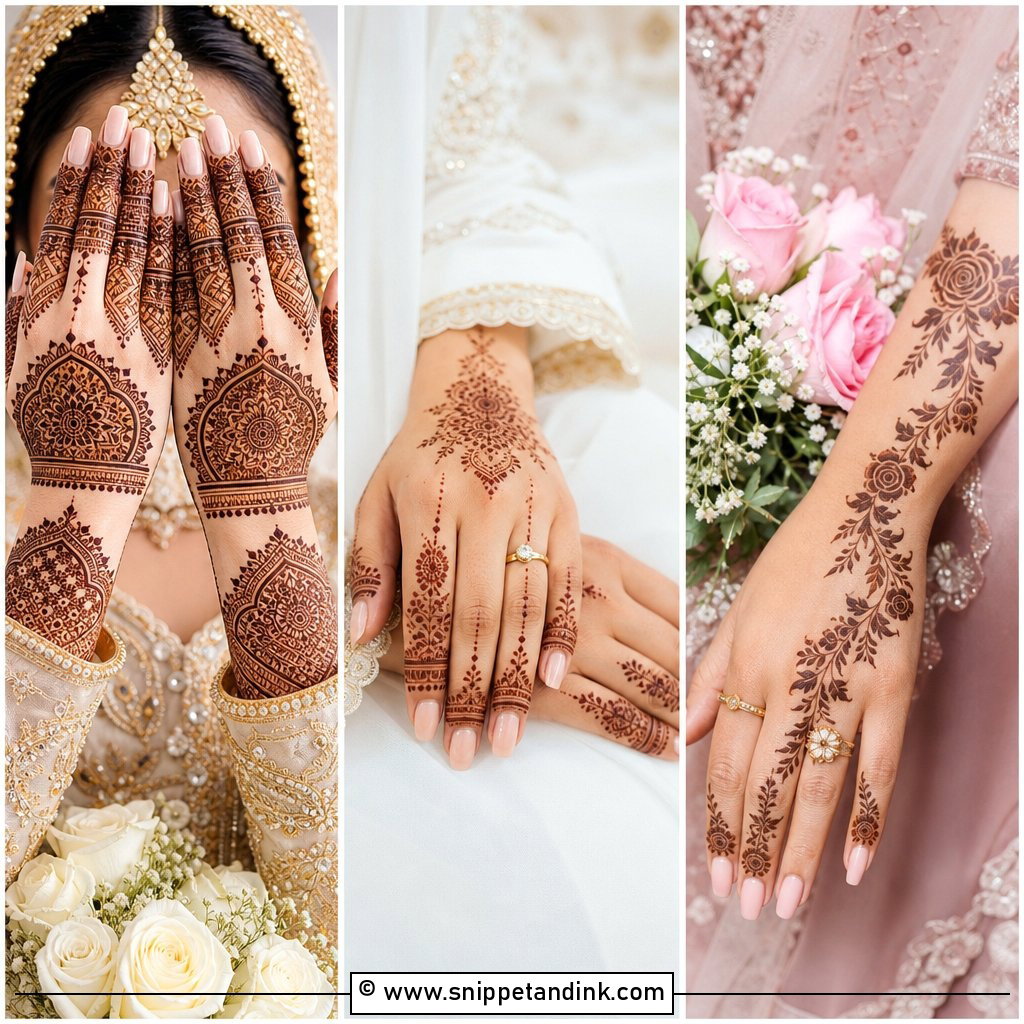
For the nikah itself, most brides I work with want something softer: palm mandalas, florals on the back of the hand, delicate fingers and a slim wrist line. You’ll be photographed raising your hands for dua and signing the nikah nama, so I keep the palms clean and readable rather than packed. Initials, a small date or a crescent can be tucked in quietly.
10. Walima Muslim Bridal Mehndi Design
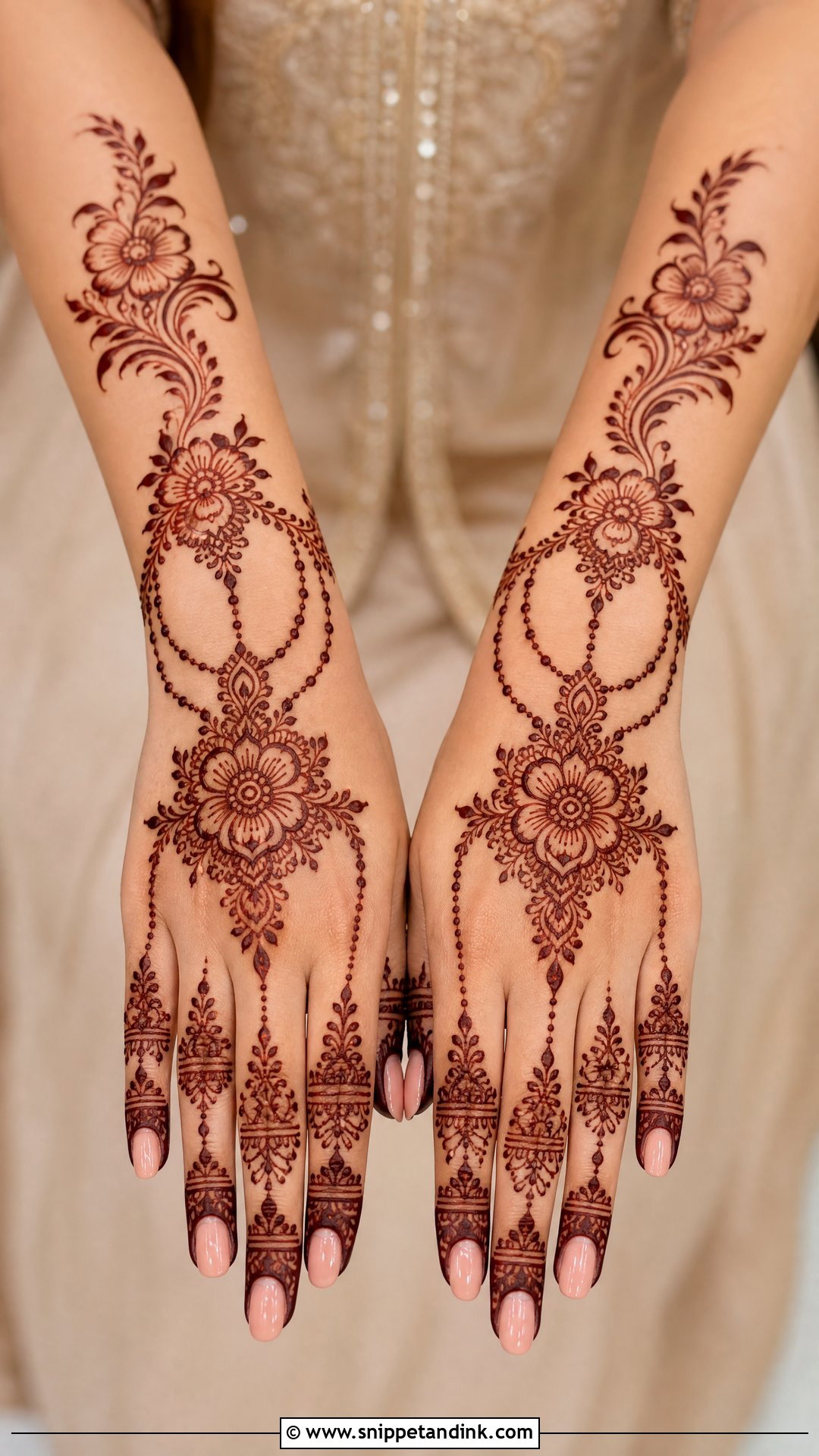
By the walima your henna is usually a day or two old and at its darkest. Walima outfits are often lighter or pastel, so an open design with back-hand trails, fine wrist cuffs and chain details suits them. If you had heavy henna for the mehndi night, you won’t need anything new; the deep stain alone looks finished. Some brides add a light touch-up on the back hand for a fresh line.
11. Back Hand Muslim Bridal Mehndi Design
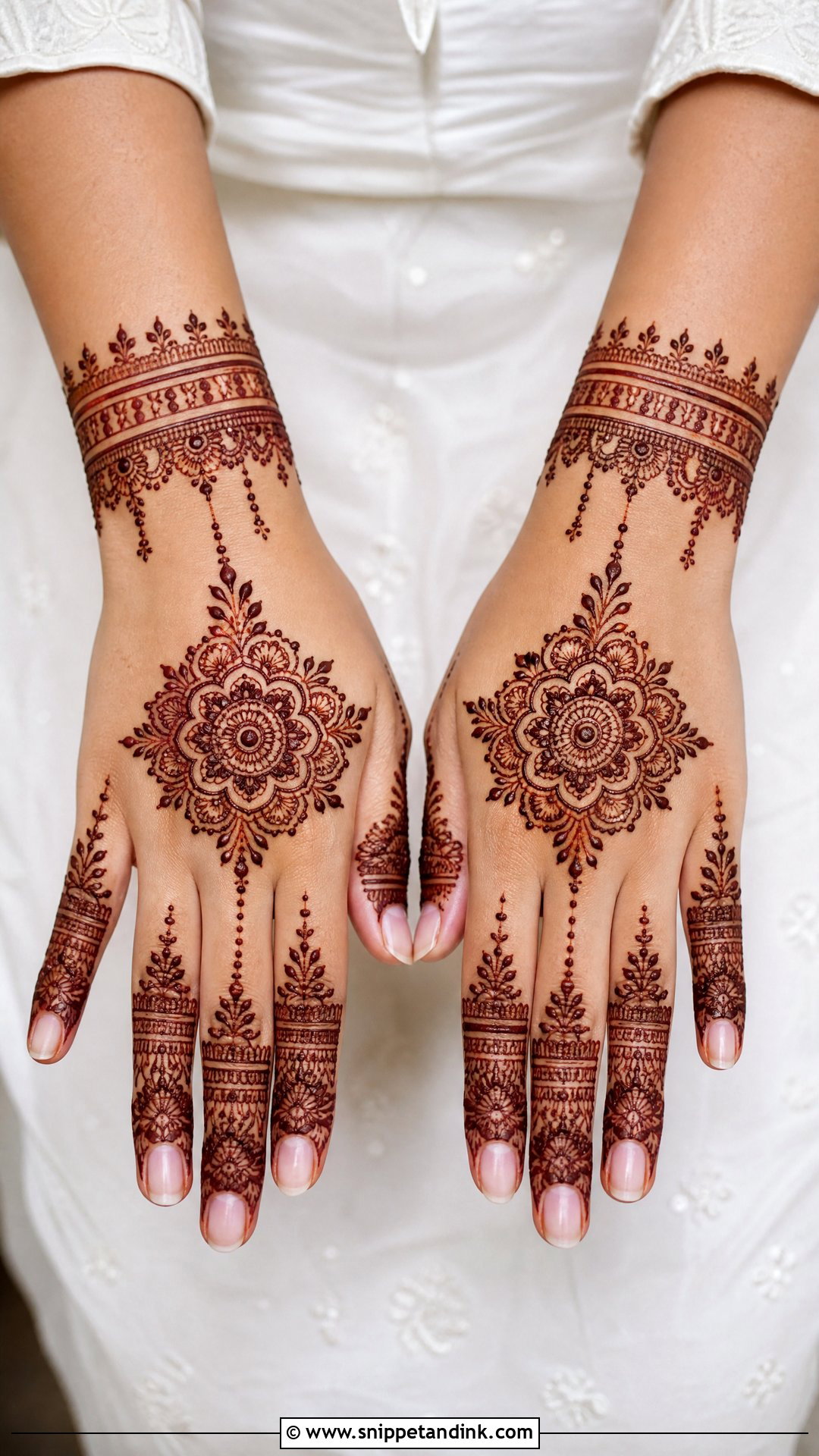
The back hand appears in ring shots and jewellery close-ups more than any other area. A central mandala or floral medallion with finger extensions, chain lines and a wrist cuff reads like henna jewellery. Keep the centre bold and the fingers detailed, and leave room around the ring finger for a statement ring or haath phool.
12. Front Hand Muslim Bridal Mehndi Design
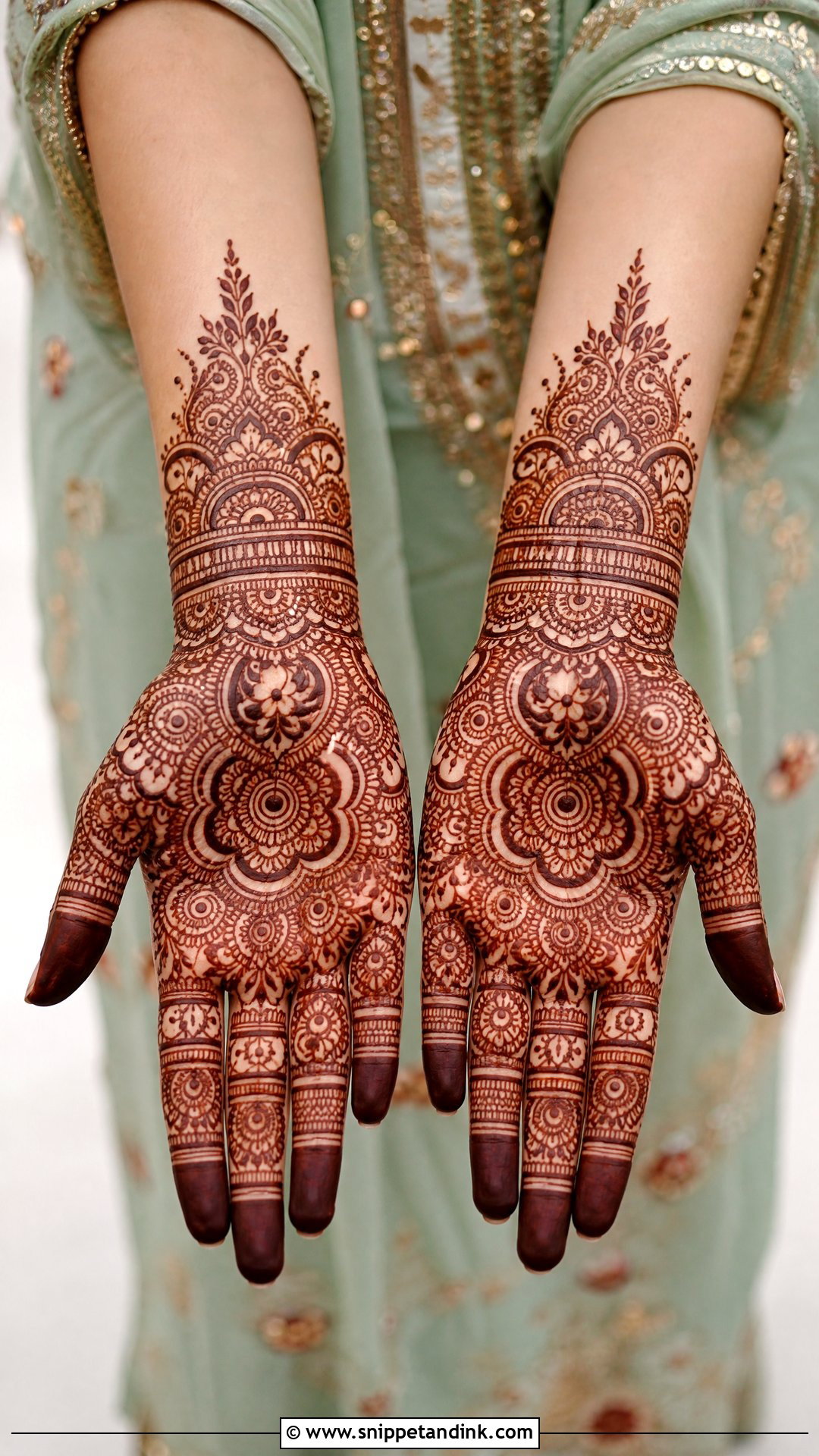
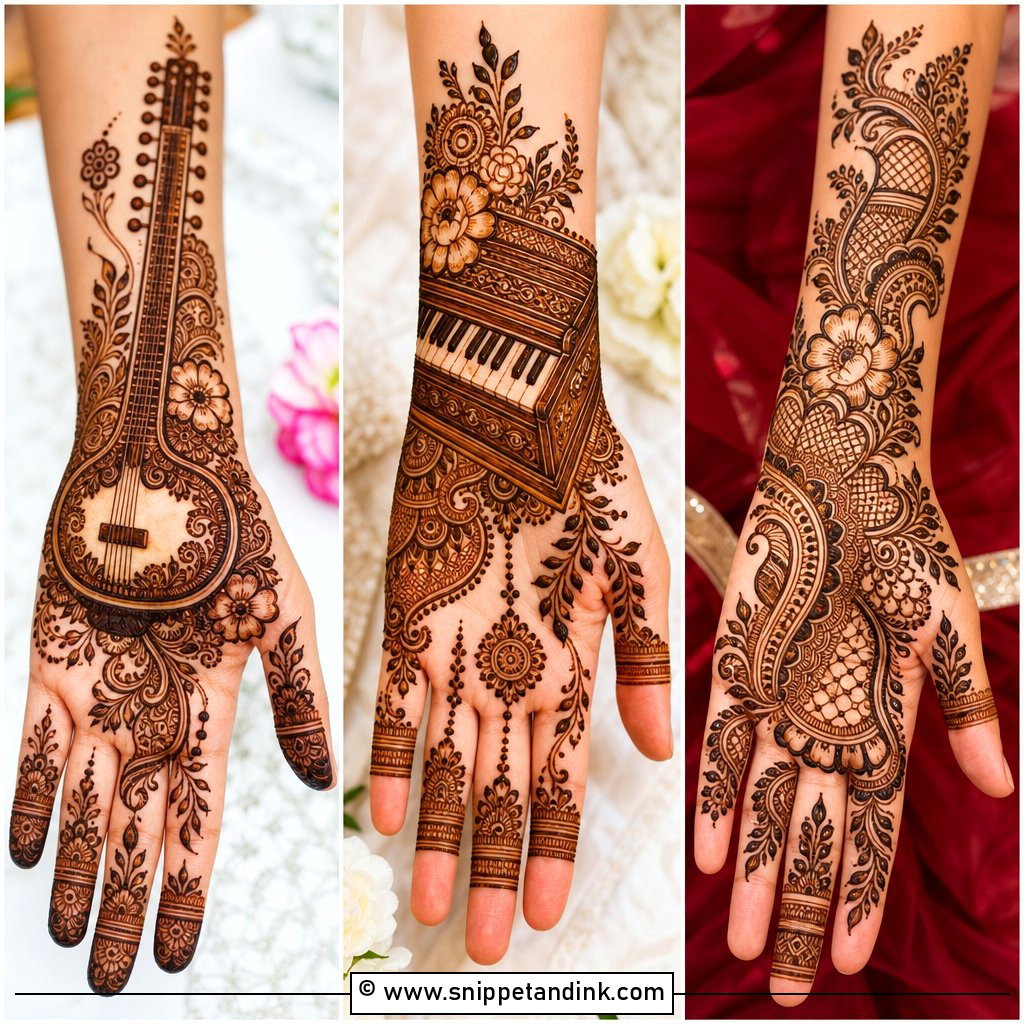
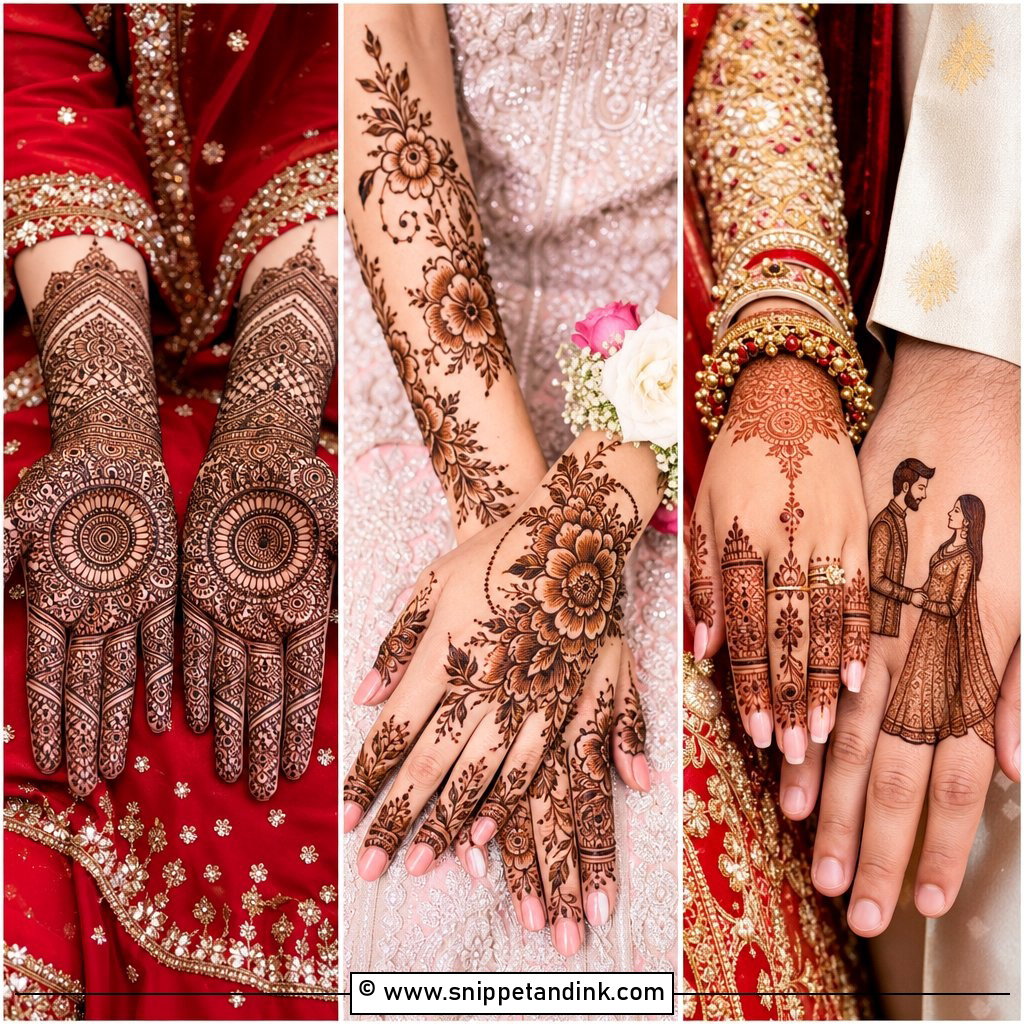
Palms take the deepest stain on the hand, so mirrored mandalas, paisley fillings and filled fingertips show here at their richest. I link the two palms in theme even when the motifs differ, because they’re held up together in photos. Initials, a nikah date or an arch shape can personalise the centre. Cuff bands at the wrist balance the weight.
13. Muslim Bridal Mehndi Design With Initials
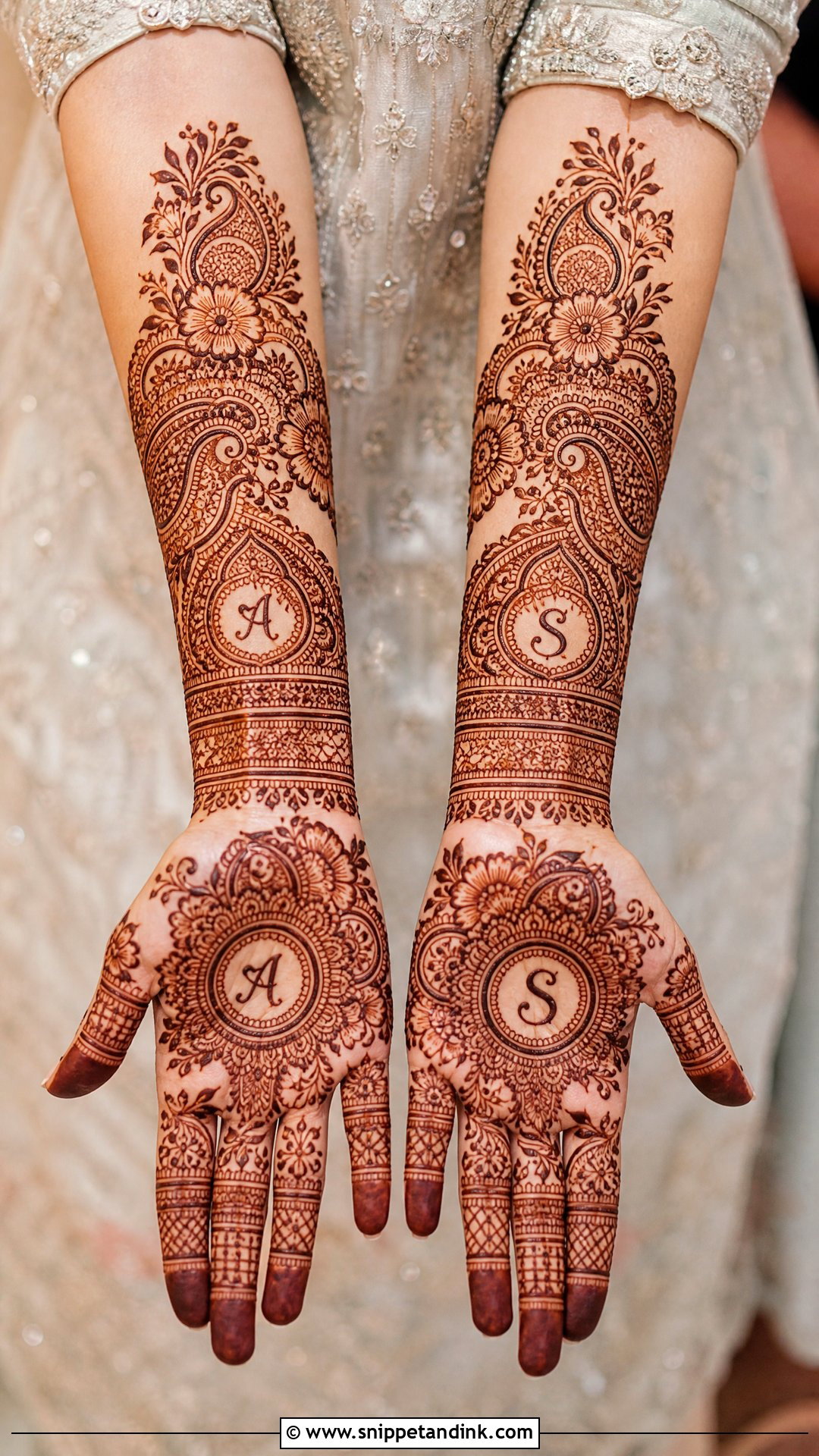
Initials work best when they look like part of the pattern: tucked into a paisley, framed by a negative-space heart or set in a wrist medallion. Henna lines thicken slightly as they dry, so I draw letters a little larger than feels natural and leave a clear margin around them. Corner placement keeps them private; centre placement makes them easy to photograph.
14. Muslim Bridal Mehndi Design With Date
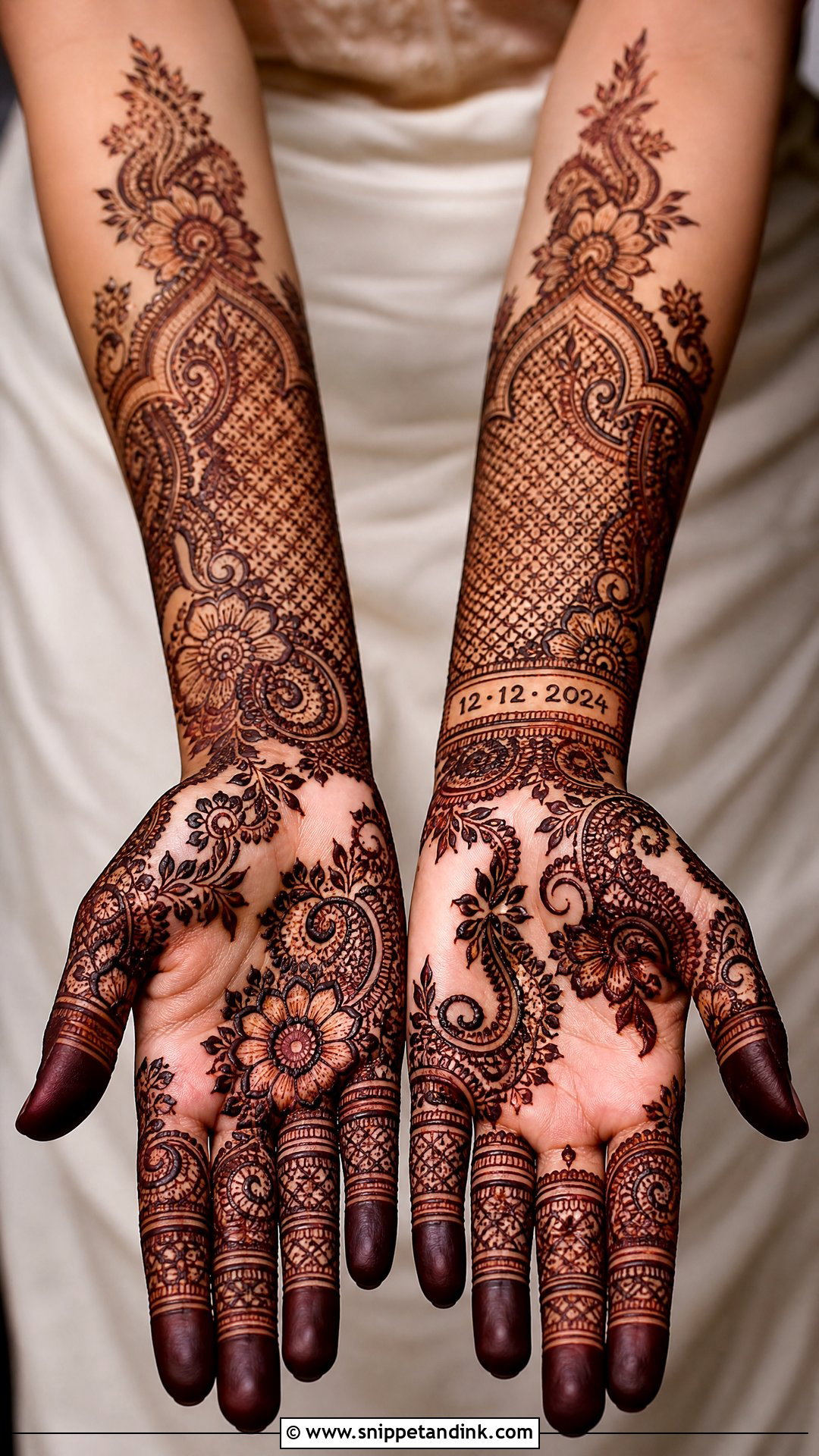
A wedding date fits inside a wrist band, under a palm motif or along a forearm border. Numbers are the hardest thing to keep legible in henna because the loops of 6, 8, 9 and 0 close up as the paste spreads. I open those loops slightly and space the digits generously. Tucked into the design, the date feels like a keepsake rather than a label.

15. Muslim Bridal Mehndi Design With Crescent
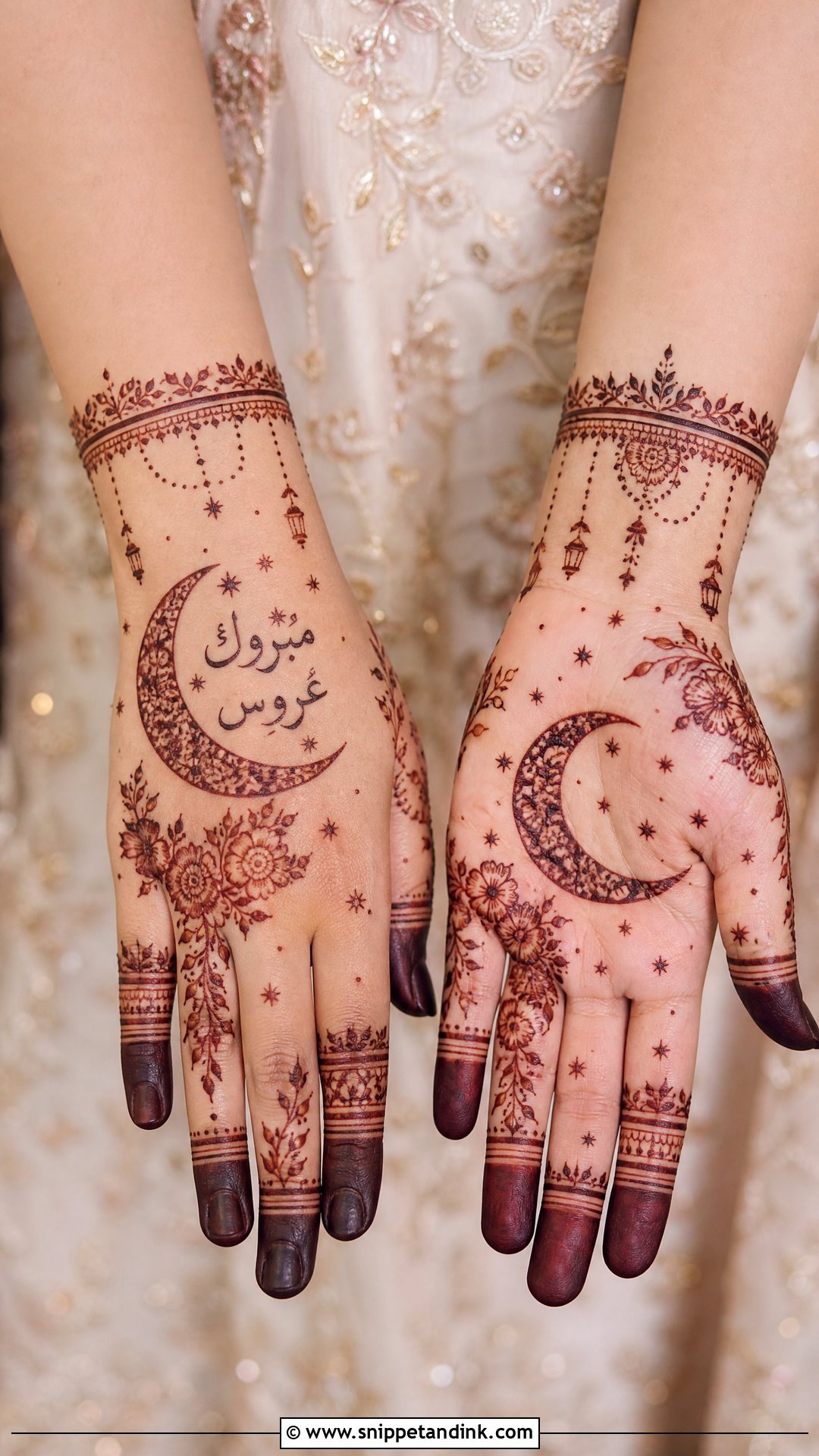
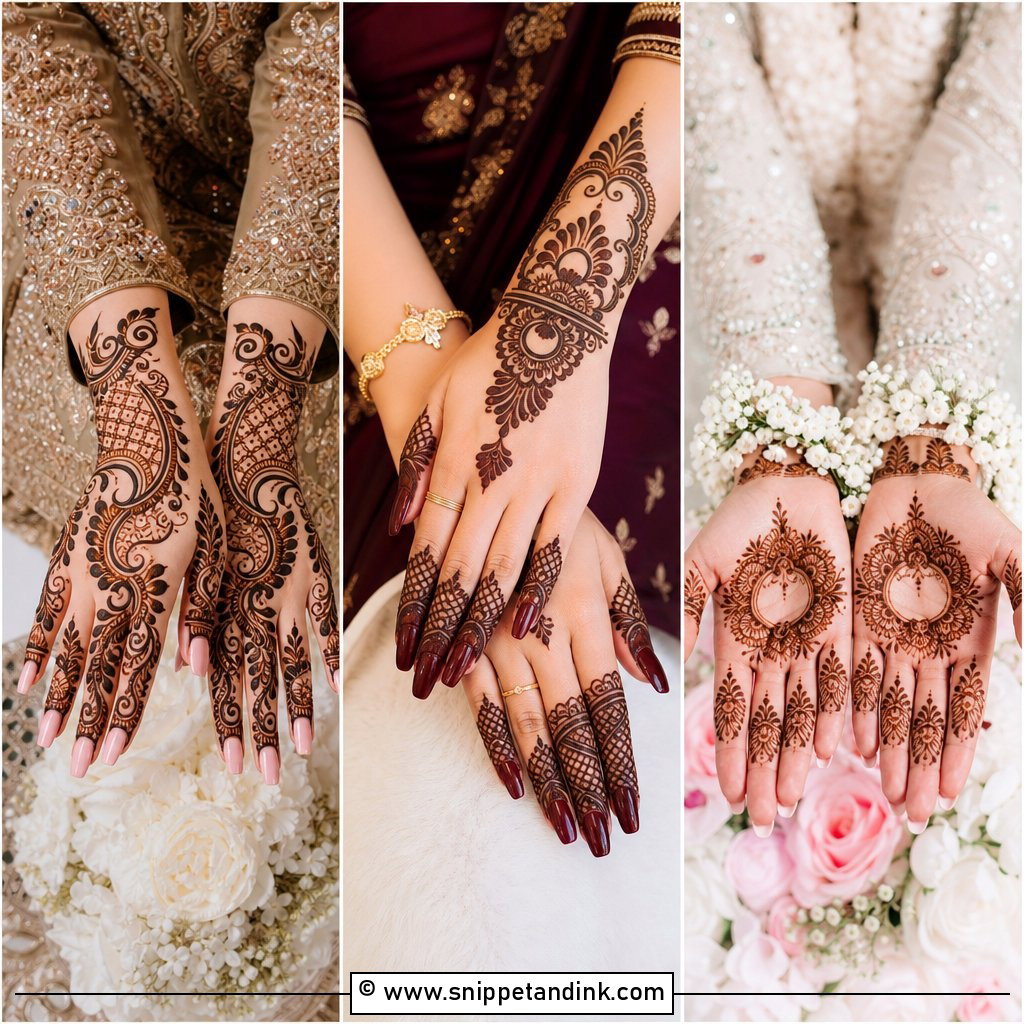
Crescents can sit at the palm centre, repeat as a wrist border or pair with tiny stars along the fingers. I keep them decorative and in proportion to the surrounding florals and jaali; an oversized crescent dominates the hand. It works for nikah, Eid weddings and evening receptions alike.
16. Muslim Bridal Mehndi Design With Mosque Dome
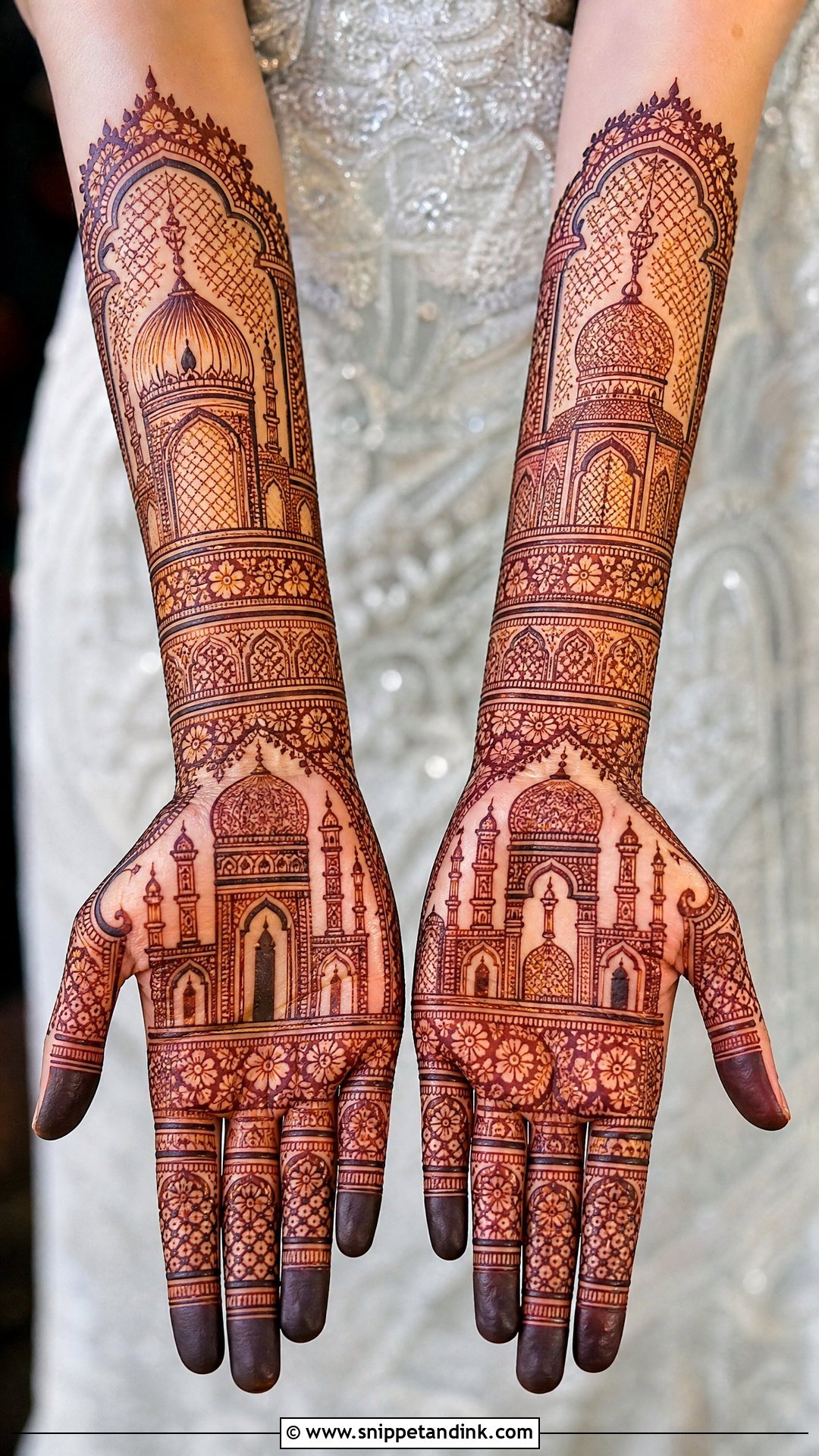
Dome silhouettes, arch borders and minaret lines bring an architectural feel, usually near the wrist or palm centre, framed by vines and symmetrical fillers. The outline has to be clean and symmetrical or the dome looks lopsided once stained. I draw the dome’s centre line first and build each side from it. It gives a cultural note without any portrait work.
17. Muslim Bridal Mehndi Design With Arabic Calligraphy
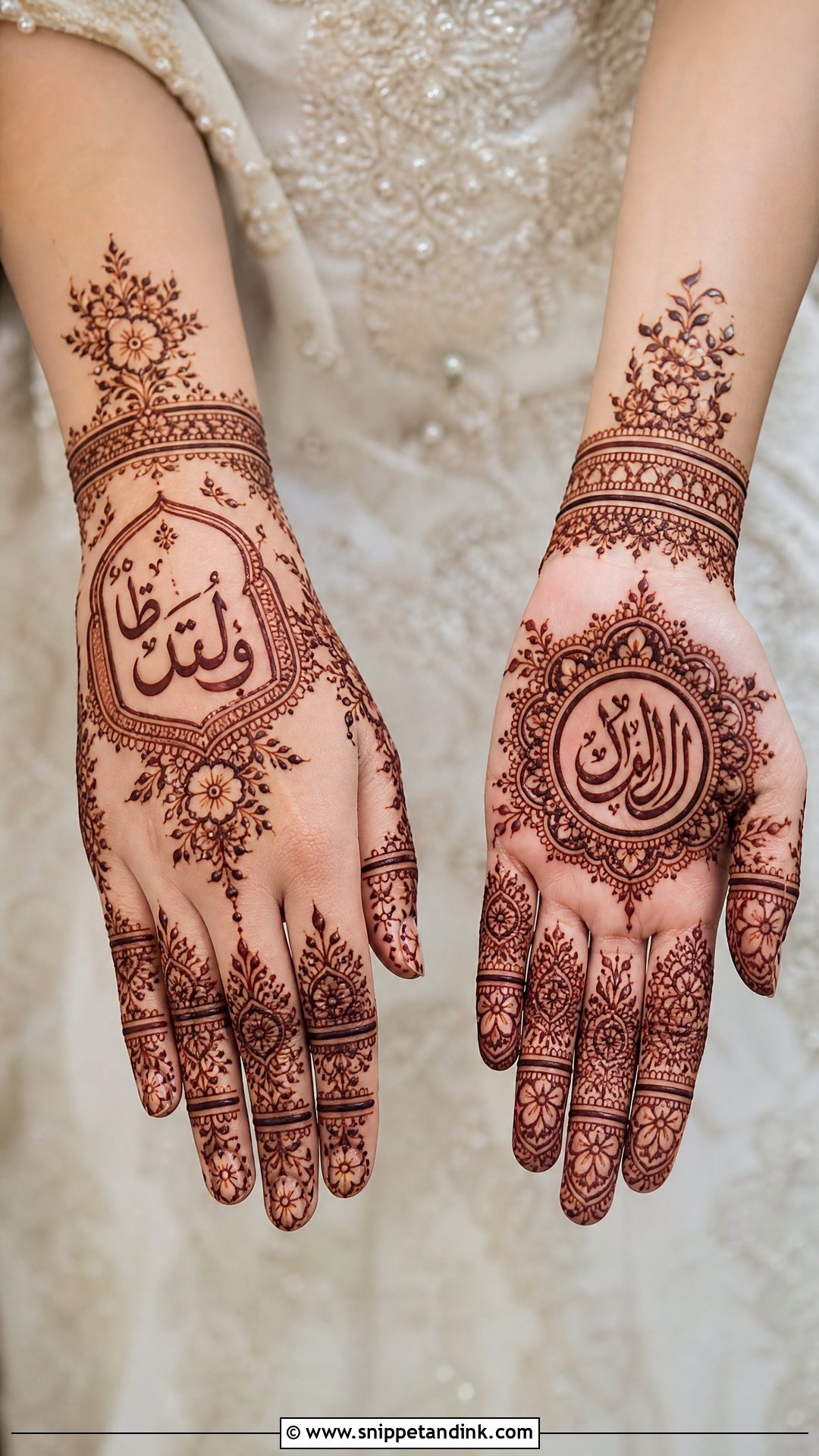
Arabic-style lettering can be lovely for names, initials or a meaningful word. Many brides, and many artists including me, keep sacred text such as Quranic verses or the names of Allah off the hands entirely, because hands are washed, used in the washroom and rested on surfaces. Decorative Arabic letters for a name avoid that concern. Lettering needs a precise artist, so ask to see their stained calligraphy before booking.
18. Heavy Muslim Bridal Mehndi Design
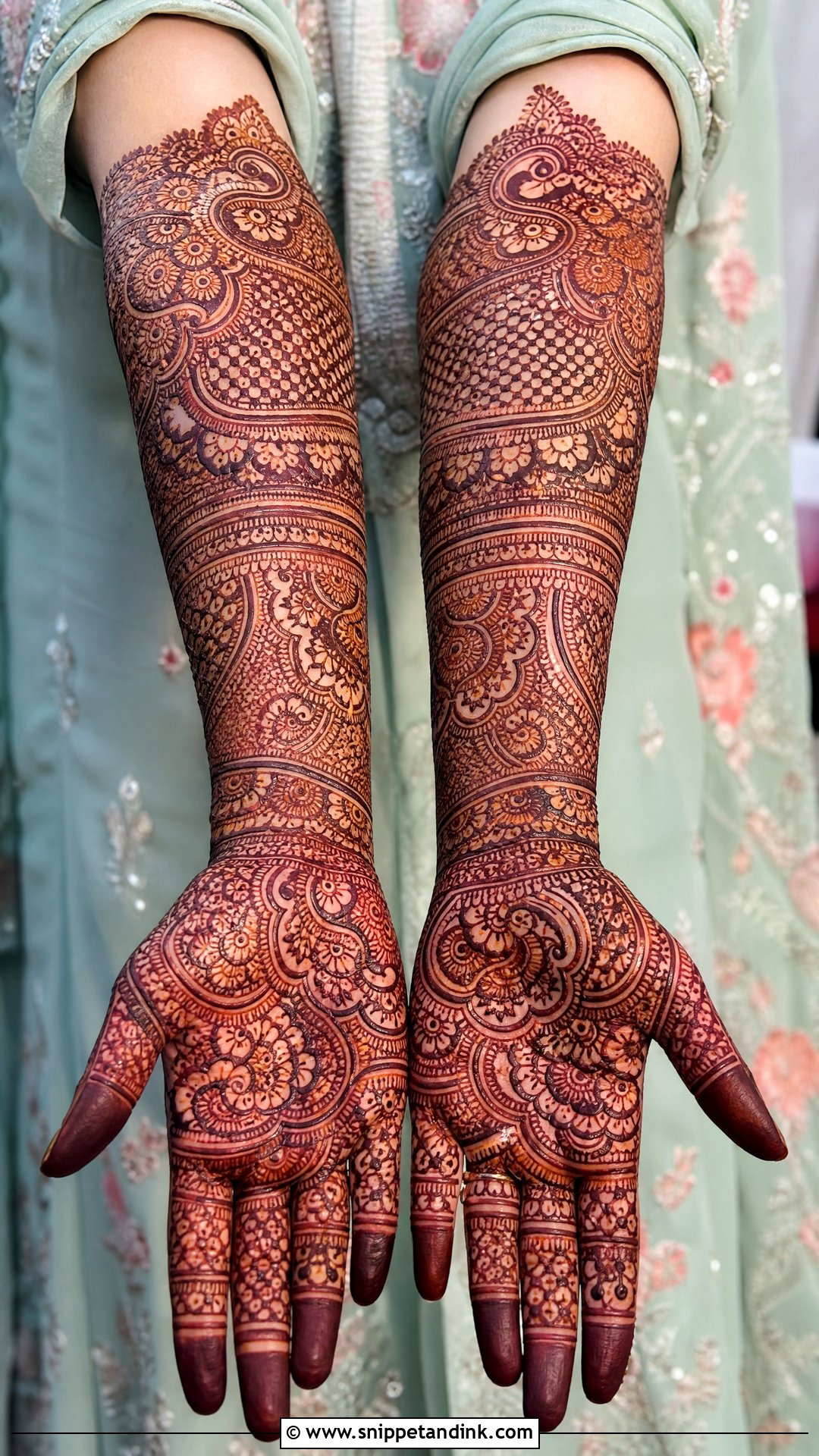
Heavy designs cover palms, fingers, wrists and forearms with dense paisleys, mesh, mandalas and layered borders. The danger is flatness: without tiny gaps, a dense stain reads as one dark mass. I leave hairline spaces between motifs and vary the filler so each panel has its own texture. It holds its own next to heavy bangles and ornate outfits in close-up shots.
19. Minimal Muslim Bridal Mehndi Design
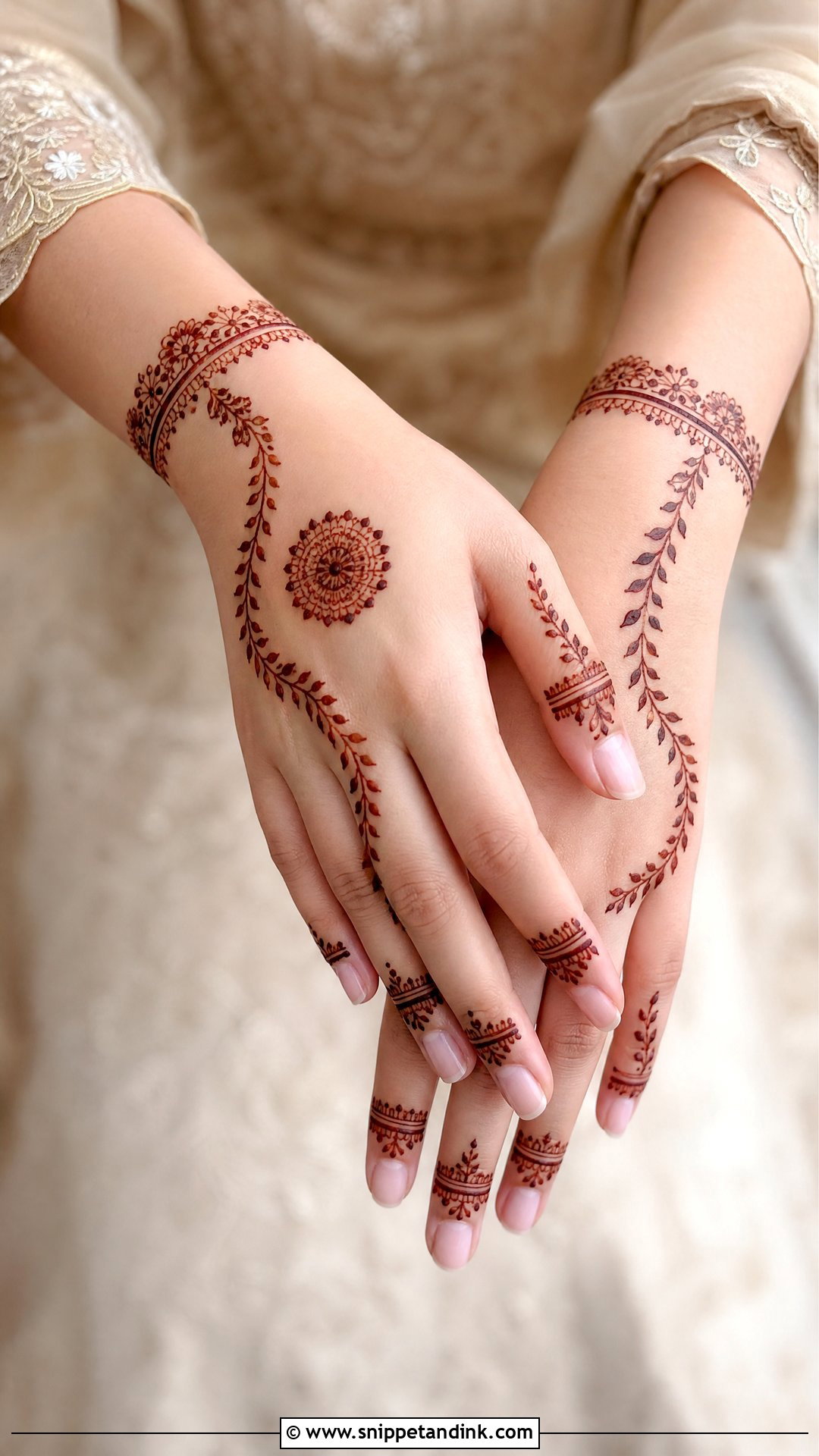
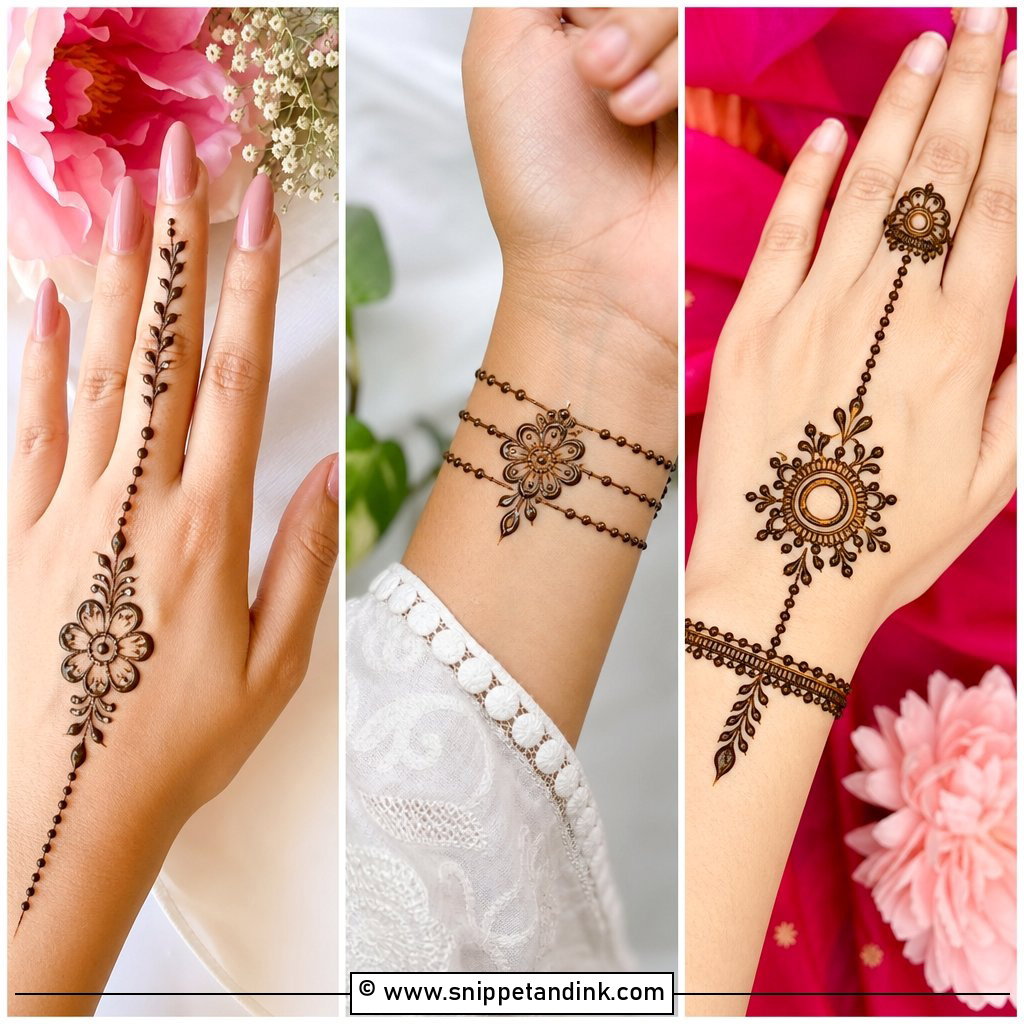
Minimal bridal henna relies on placement: small palm mandalas, fine finger bands, open back-hand vines and a slim bracelet. It pairs with pastel nikah outfits, abayas, gowns and modern suits. It’s practical when time is short, and it’s the easiest design to keep fresh-looking across several days because there’s little to fade unevenly.
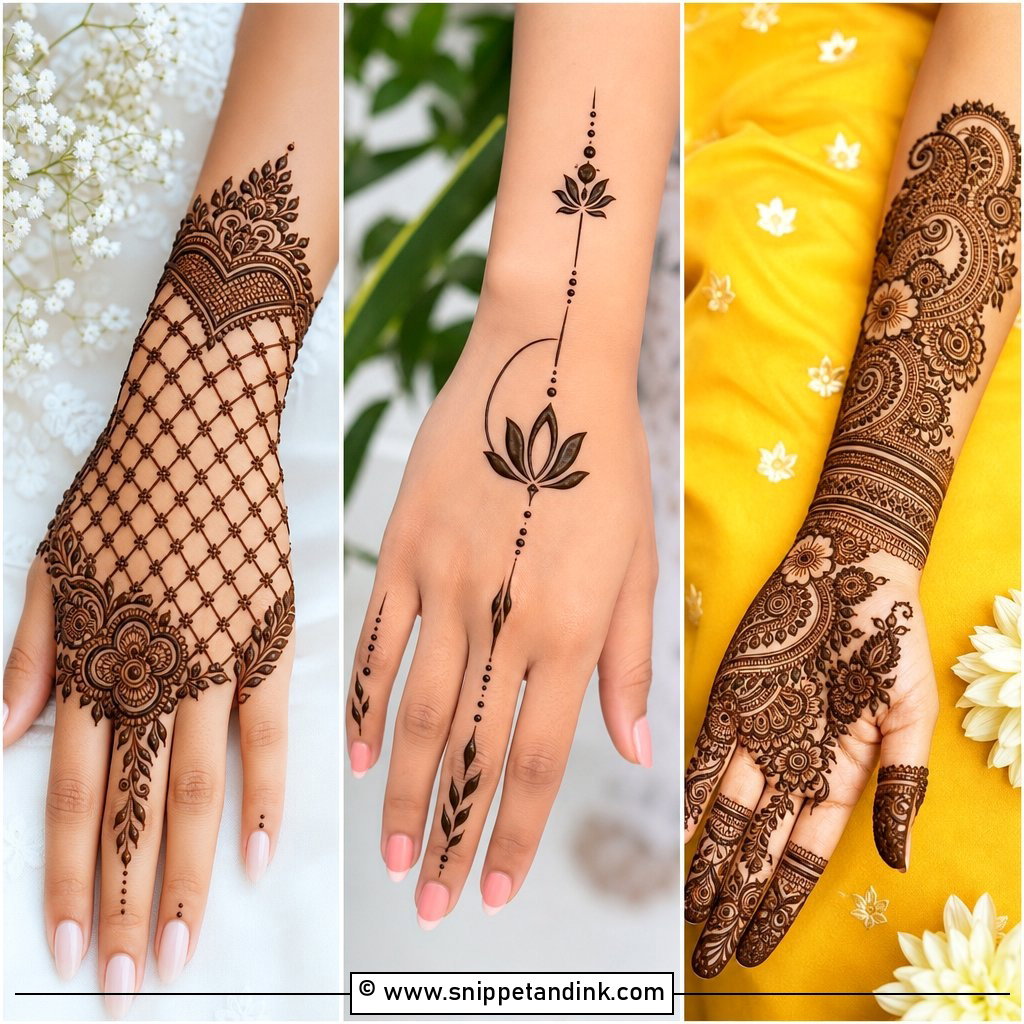



20. Rose Muslim Bridal Mehndi Design
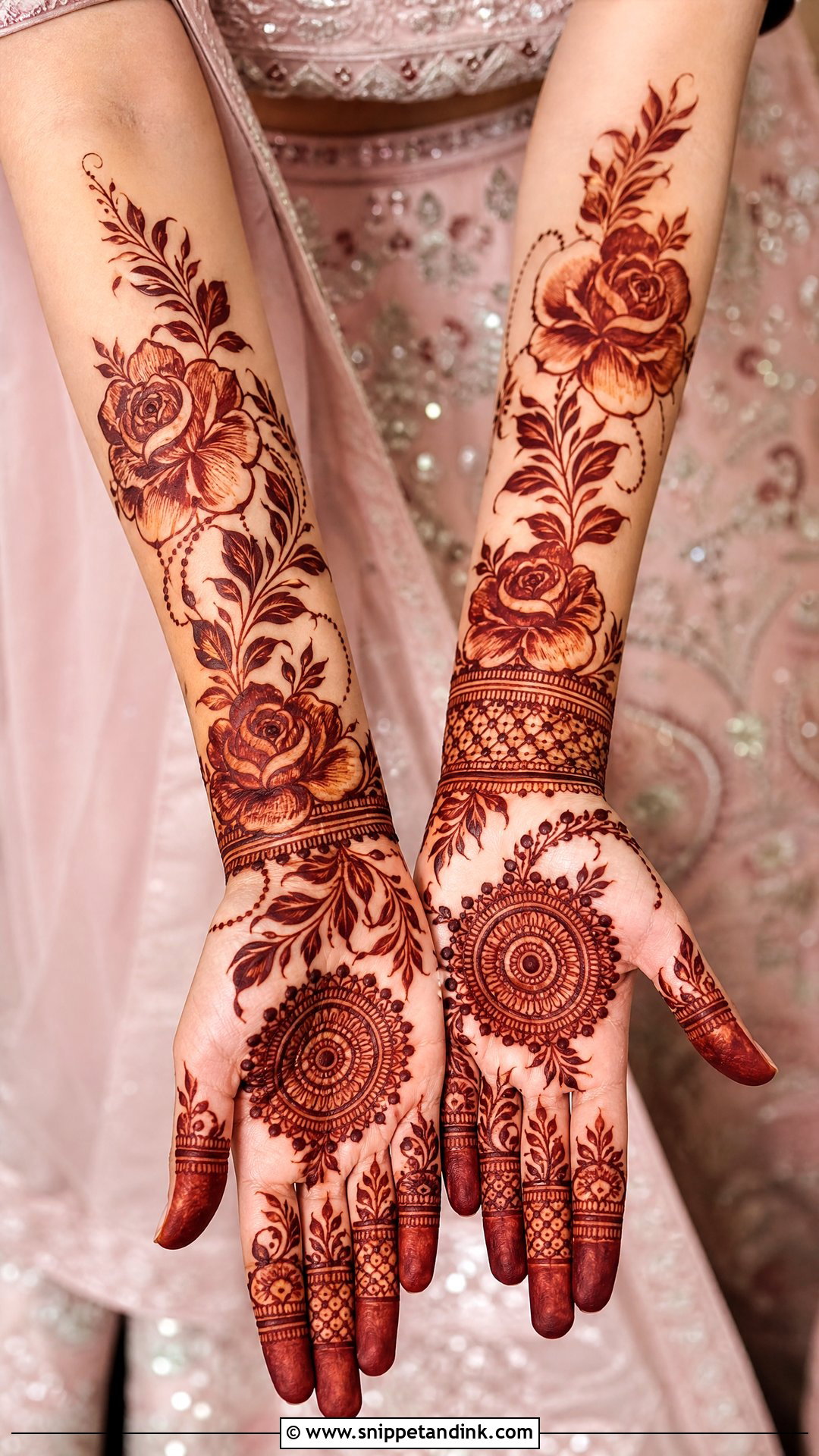
Roses suit the back of the hand as large blooms, with rosebuds on the fingers and leafy trails across the wrist. On the palms they pair with mandalas and fine mesh for fuller coverage. I make the roses bolder than I would on paper, since petals drawn too finely merge once stained. Rose-gold jewellery and pastel outfits suit it.
21. Floral Muslim Bridal Mehndi Design
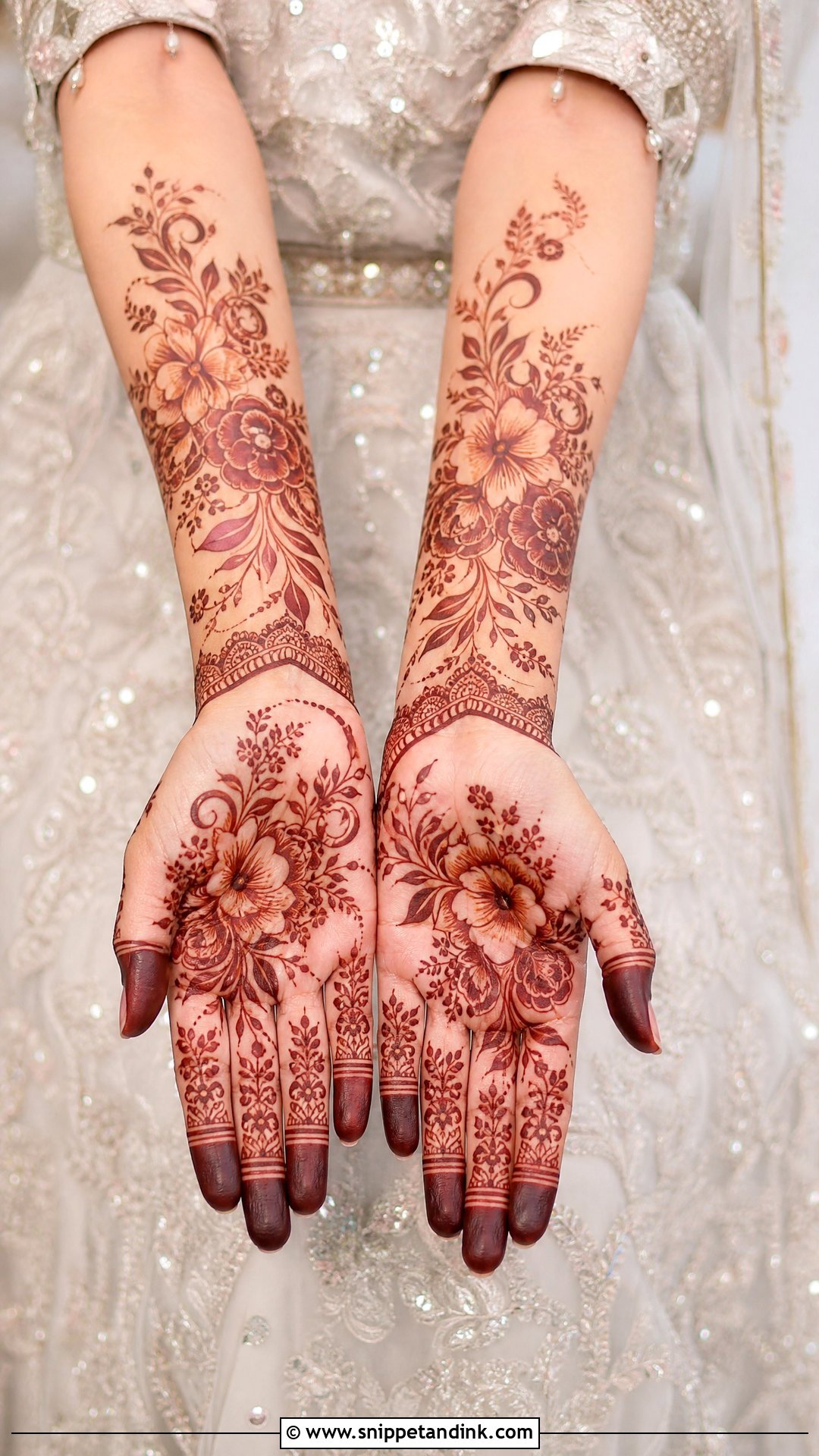
Florals adapt to any outfit and any hand. Bold Arabic flowers keep things open; small Indian-style blooms build dense coverage. I mix one or two large flowers with smaller fillers so the eye has somewhere to land. Flowers carry from mehndi night to walima without ever feeling out of place.
22. Paisley Muslim Bridal Mehndi Design
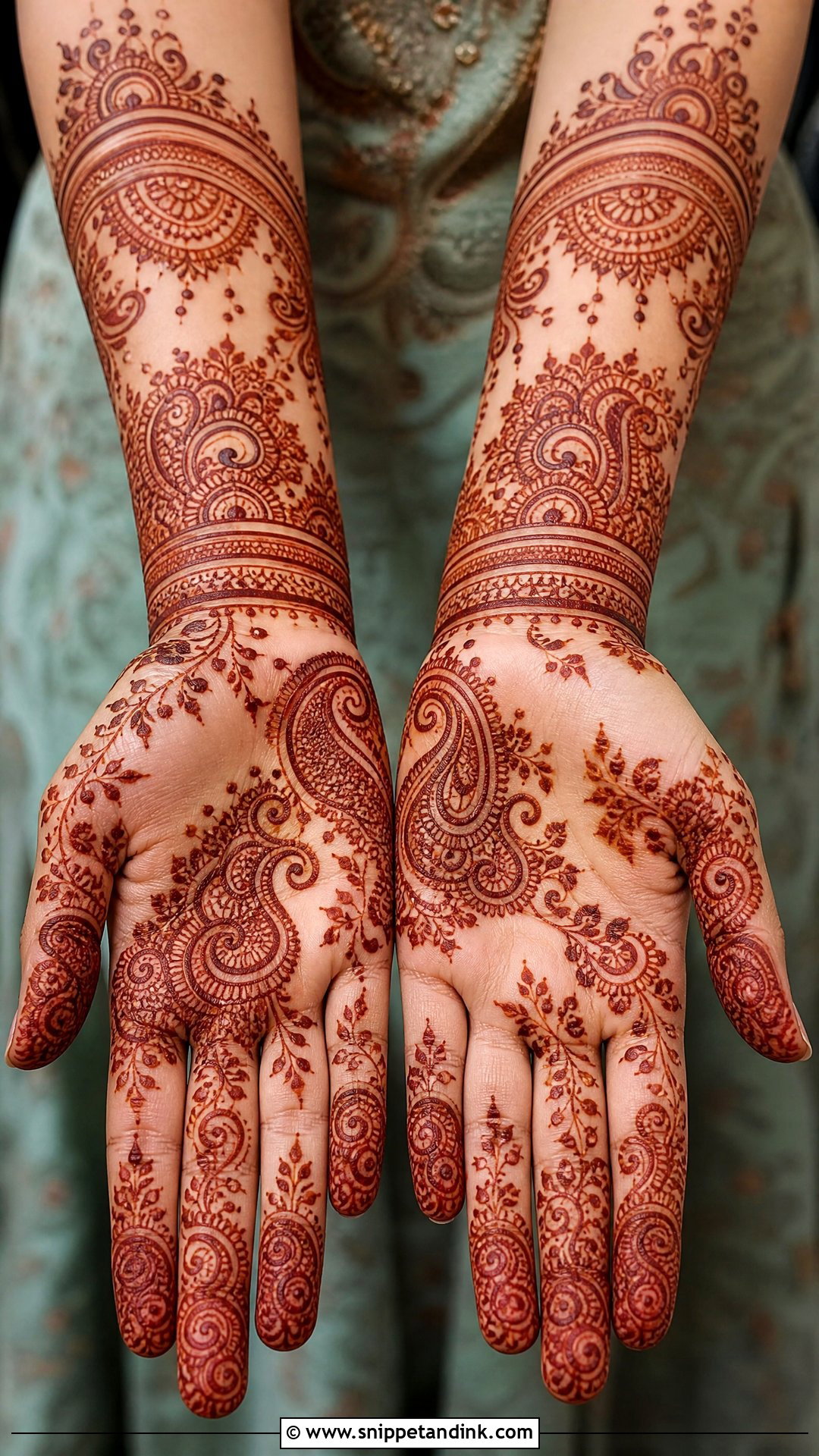
Paisleys curve with the hand, which is why they flatter almost every shape. I place large paisleys across the palms, link them with vines, and carry small paisley tips onto the fingers. They take customisation easily, since an initial, a date or a small crescent fits neatly inside one. It’s a reliable choice that won’t look dated in your albums.
23. Mandala Muslim Bridal Mehndi Design
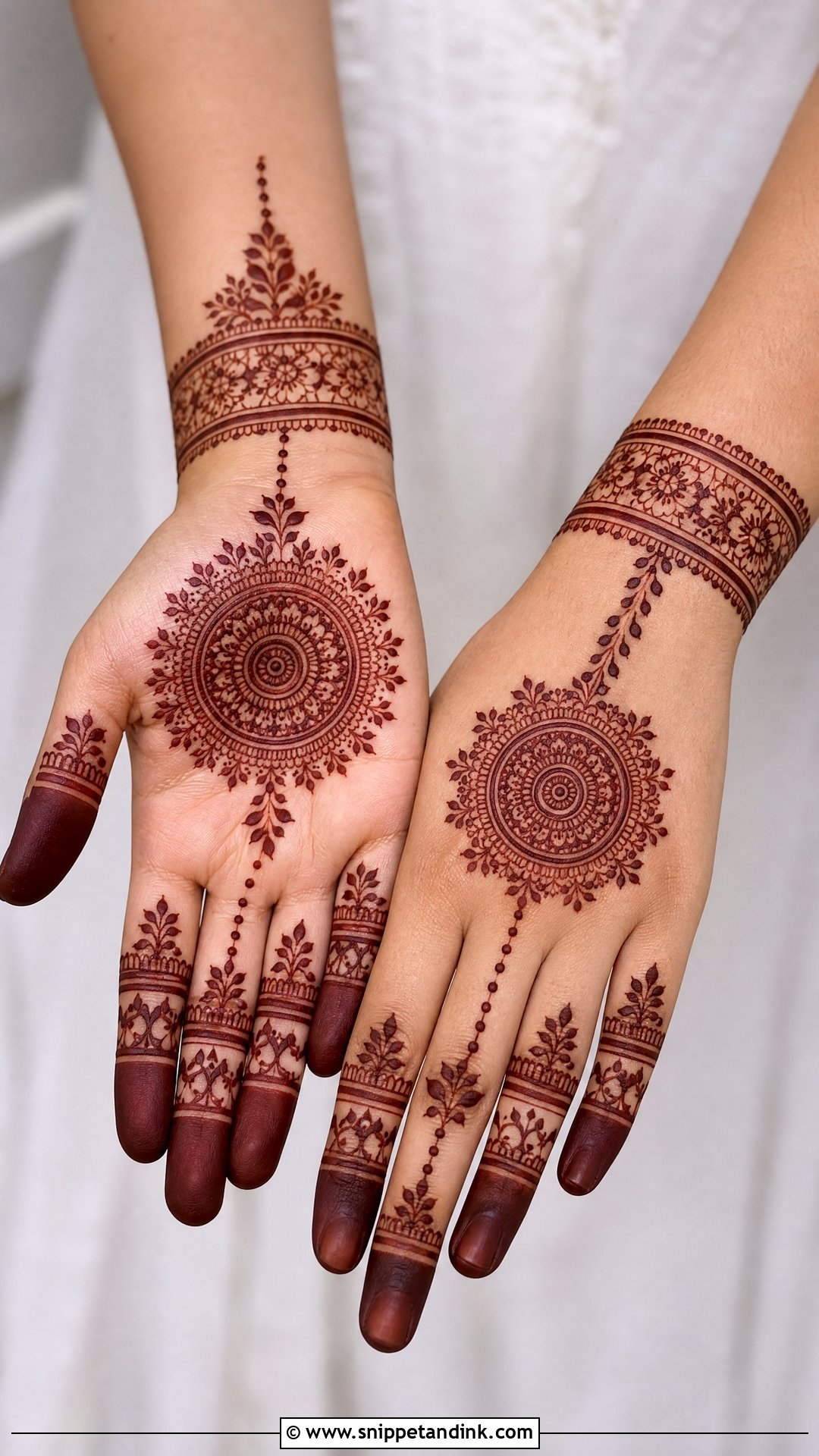
A mandala looks simple until you see a well-planned full hand: a large mandala on the palm, filled fingertips, leafy bands, and a matching back-hand mandala linked to the wrist with fine chains. Wobbly rings show instantly, so it reveals an artist’s control. The open space lets a deep stain stand out on any skin tone.
24. Jaali Muslim Bridal Mehndi Design
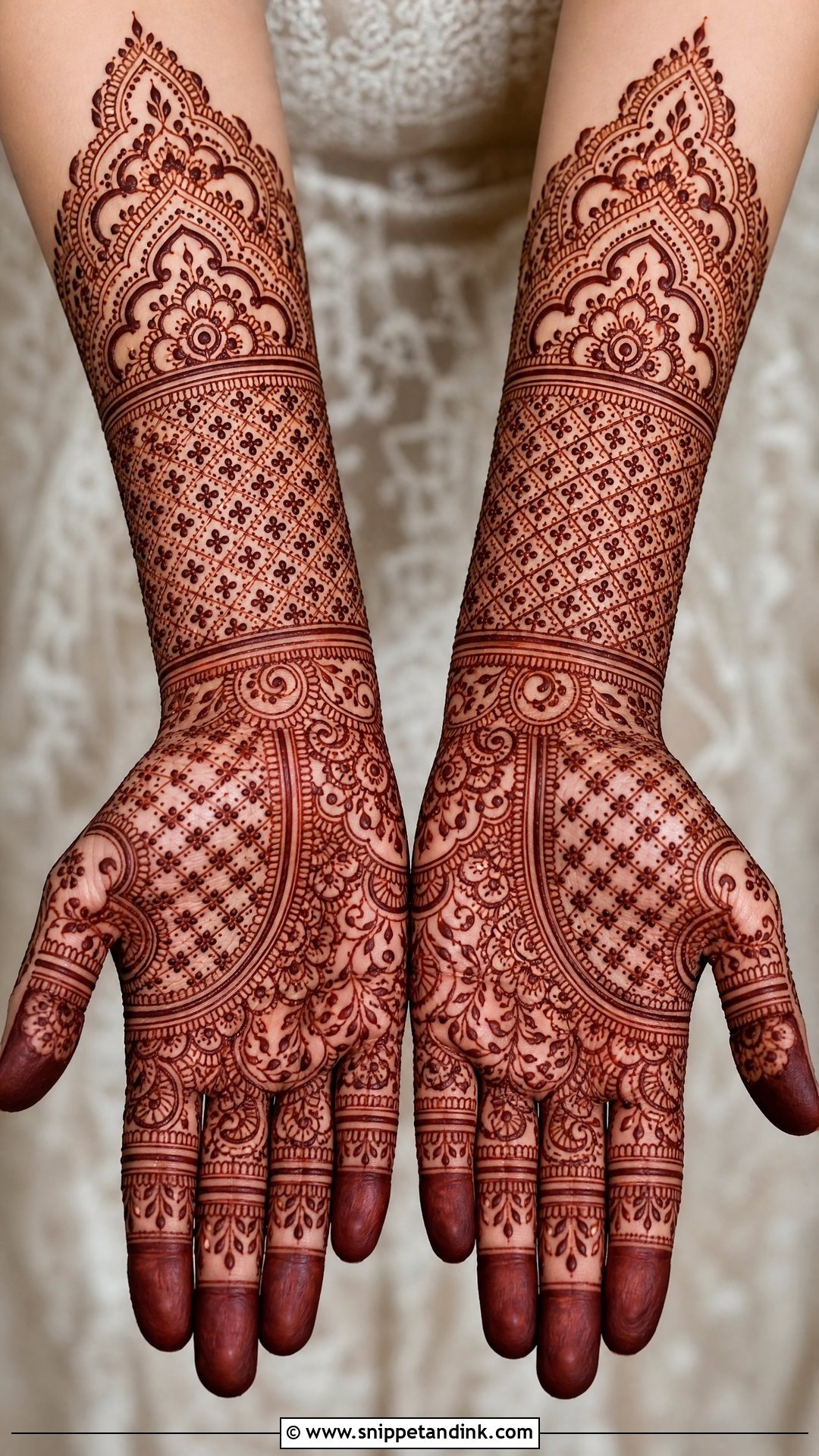
Jaali mesh gives a lace-like finish that pairs naturally with embroidered sleeves and bangles. I combine mesh panels with floral wrist borders and shaded paisleys near the thumb. Precision is everything. Uneven grid lines make the whole hand look crowded, so I keep the mesh slightly wider than it looks on paper to allow for the paste spreading.
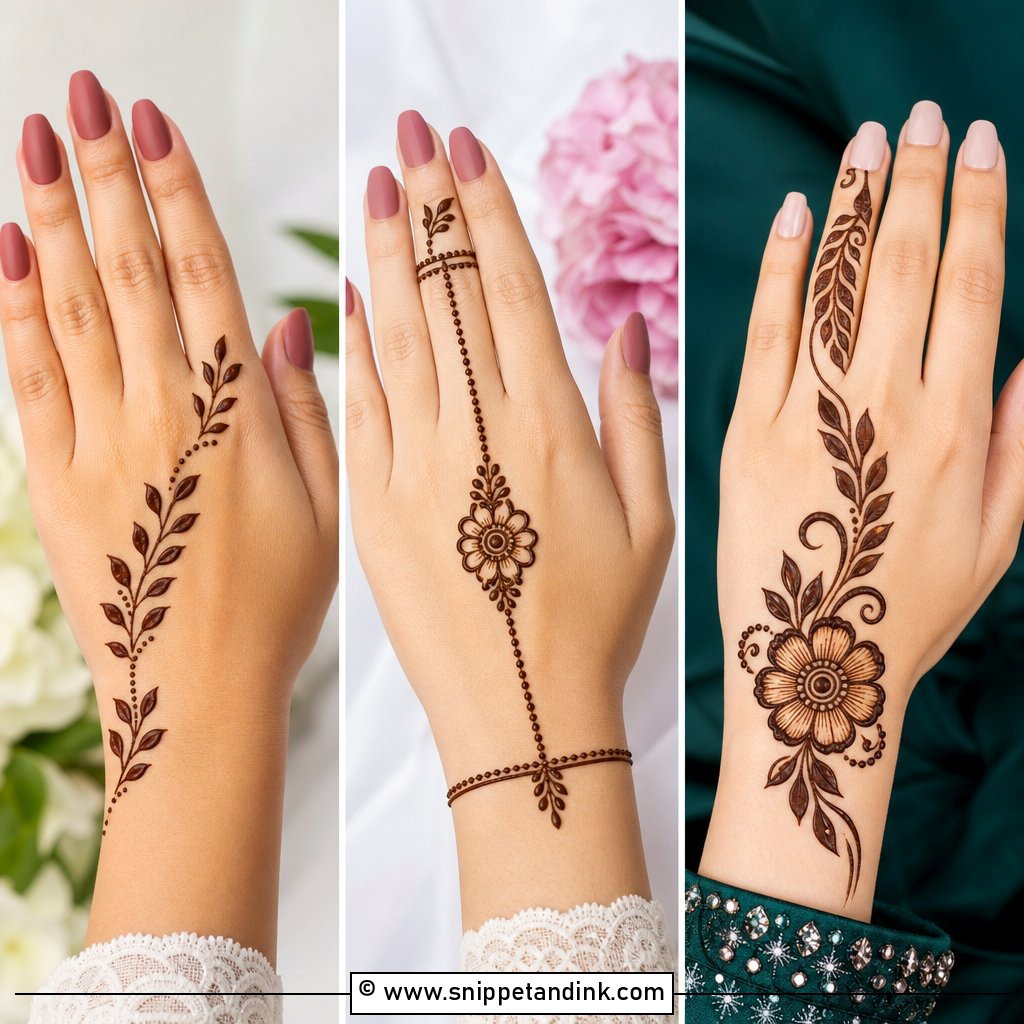

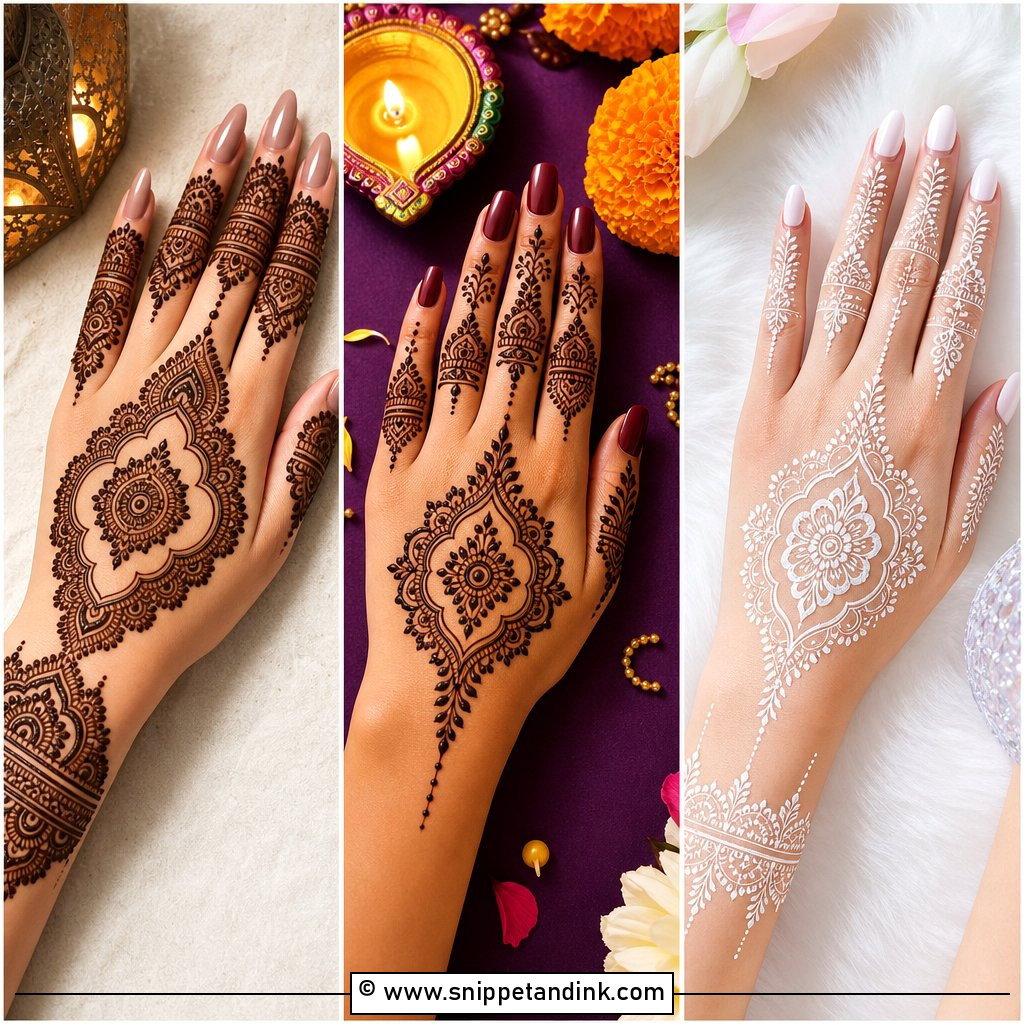
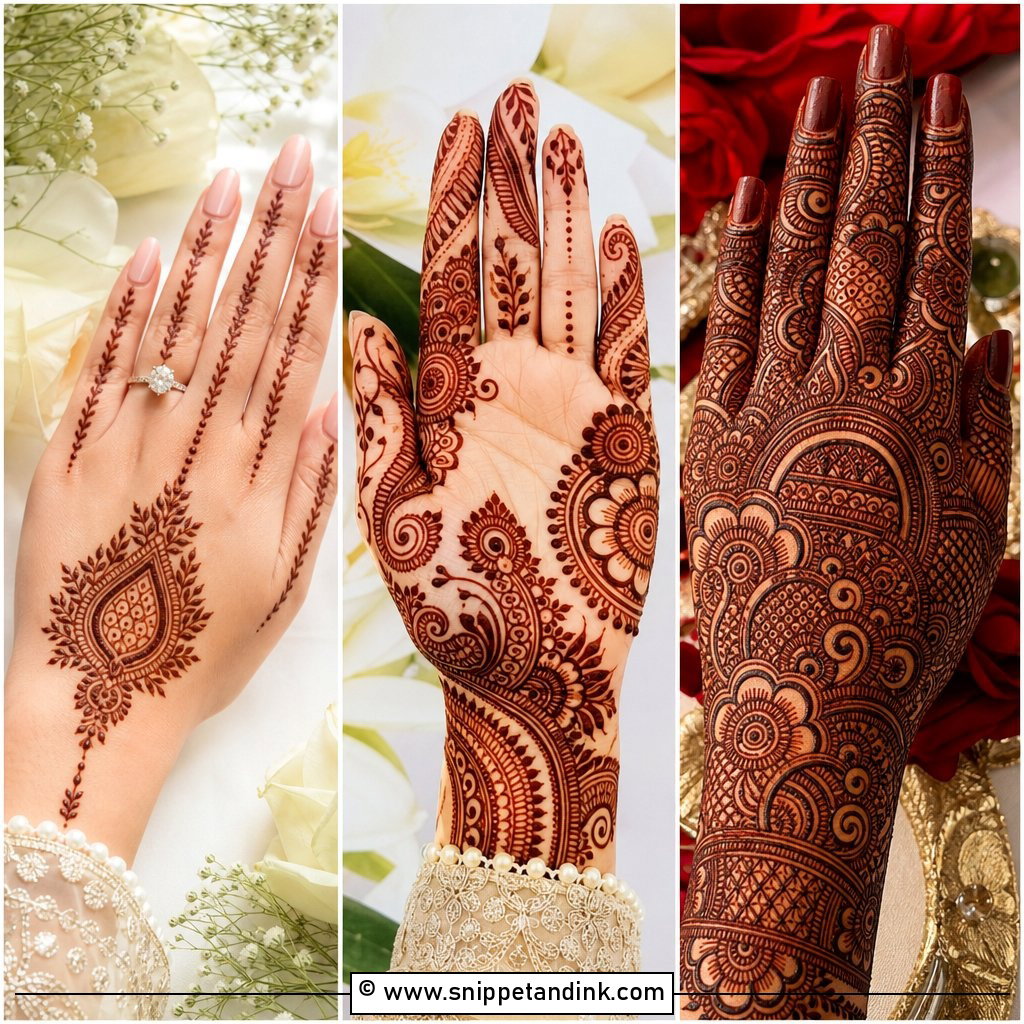
25. Bracelet Muslim Bridal Mehndi Design
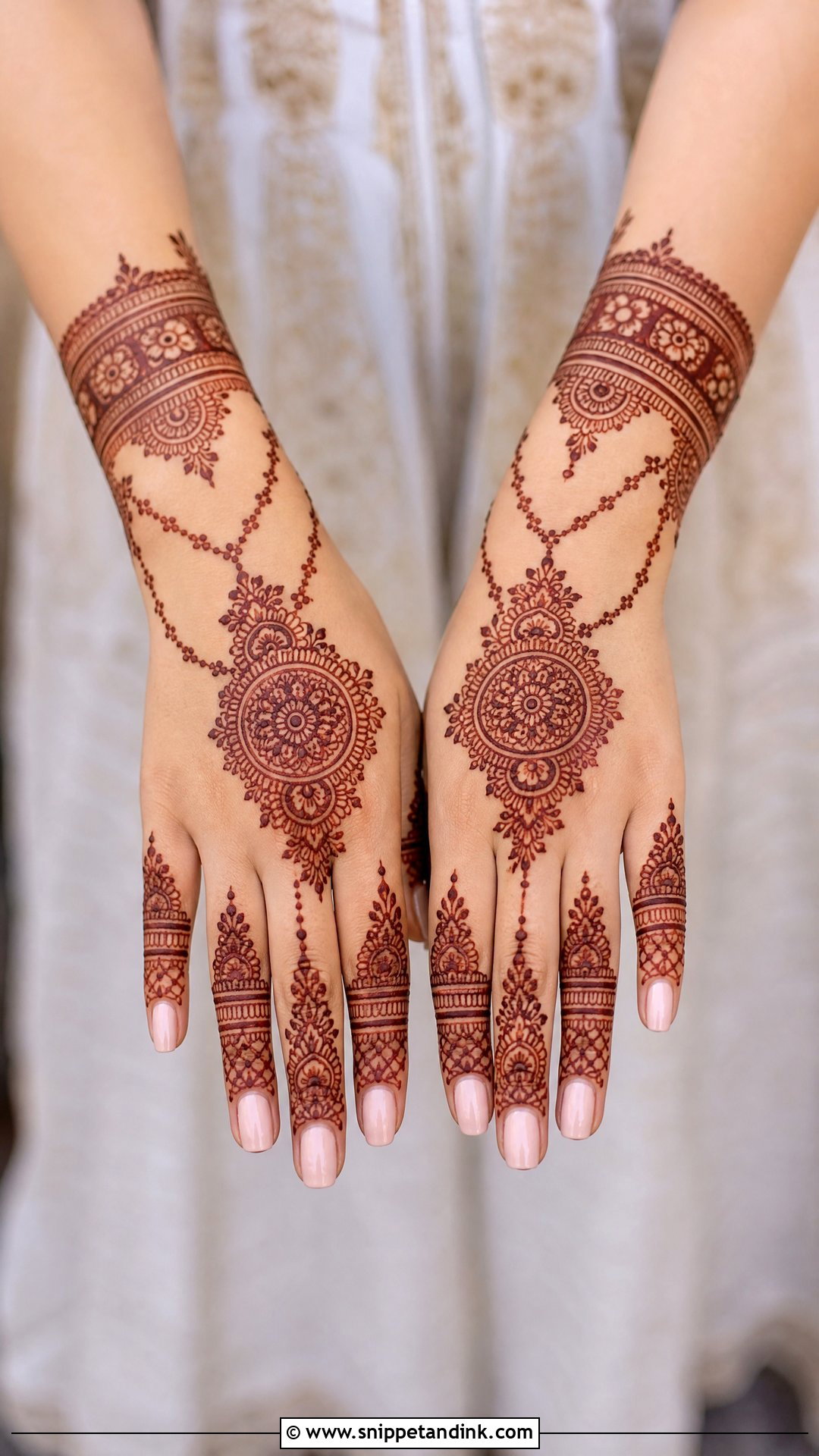
Jewellery-style henna draws wrist cuffs, chains, finger rings and a hand harness around a central back-hand motif, with soft florals on the palms. It complements bangles, rings and haath phool jewelry. Bring the real pieces, or photos, so I can align the drawn chains with where the metal will sit.
26. Finger Muslim Bridal Mehndi Design
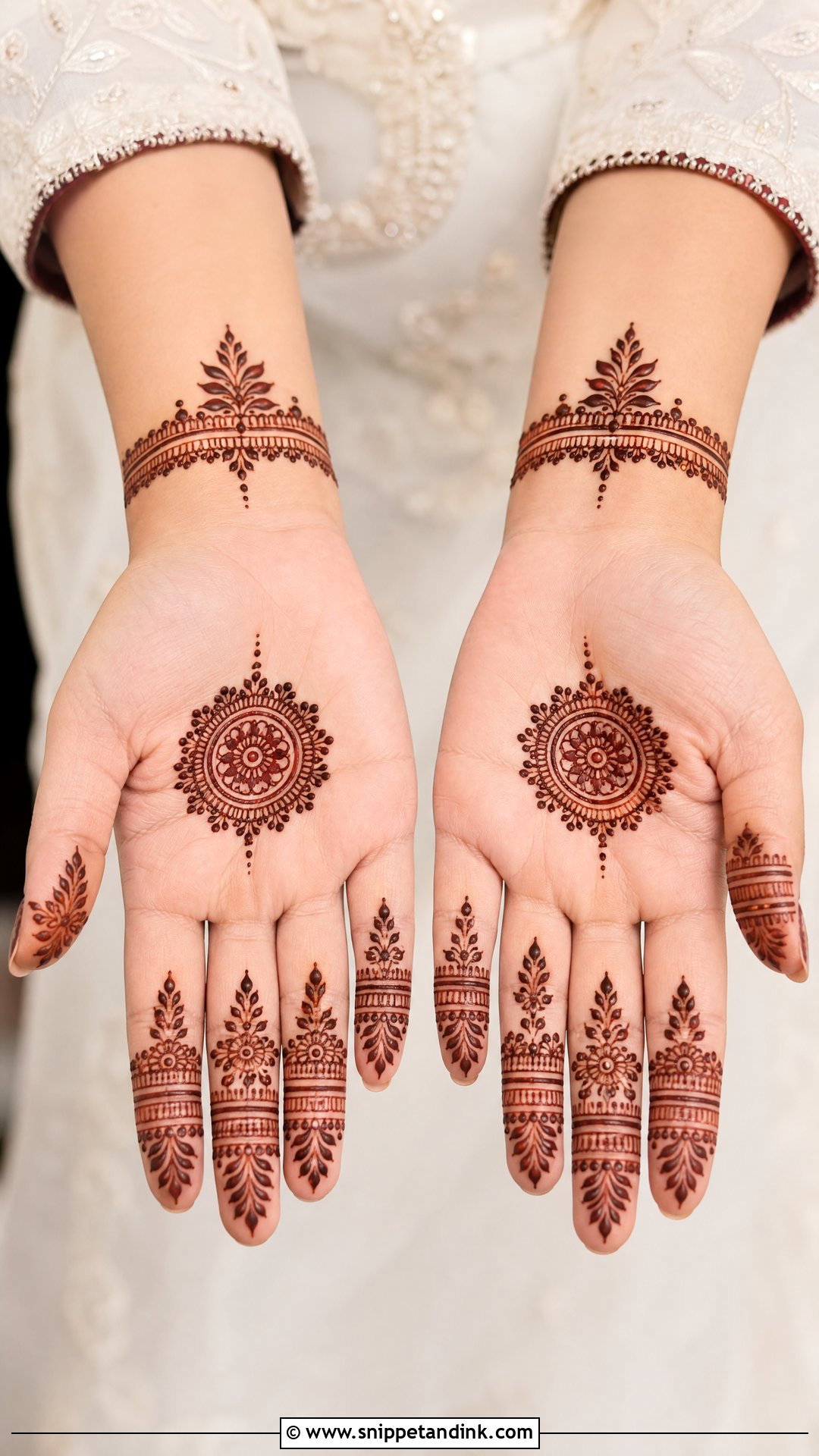
Finger-focused designs put the detail on each finger, with bands, leafy tips, dots and mini florals, while the palm keeps a small mandala and the wrist a slim bracelet. Rings stand out against this layout. The fingers need to be rich and symmetrical; light, uneven finger work reads as casual rather than bridal.
27. Shaded Muslim Bridal Mehndi Design
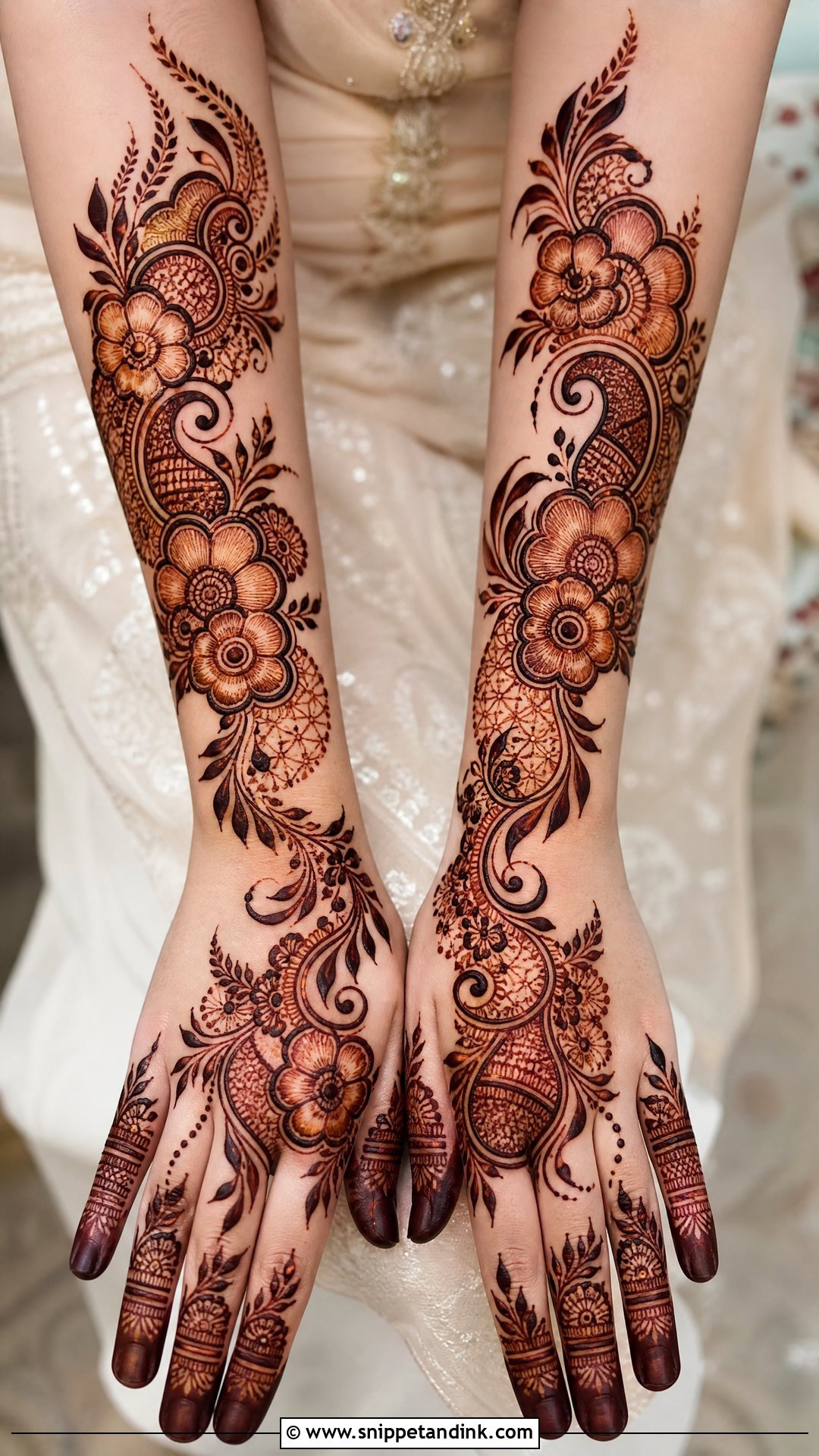
Shading fills petals and leaves with a lighter tone instead of solid paste, which gives depth without packing every space. It looks dramatic but stays airy. Good shading is smooth; rough, scratchy filling looks unfinished once stained. I ask brides to check close-up stained photos of an artist’s shading before booking, since fresh paste hides the difference.
28. White Muslim Bridal Mehndi Design
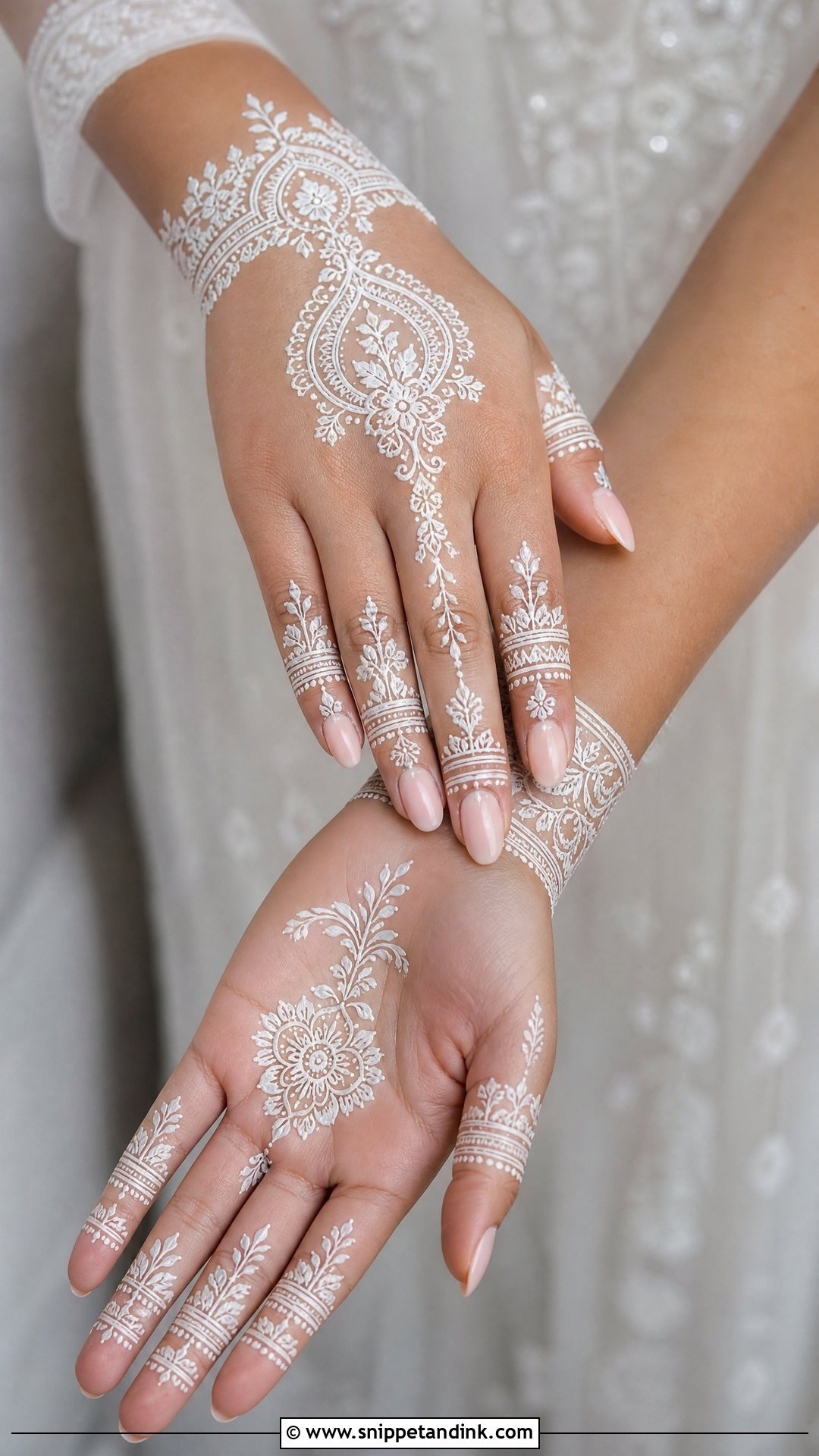
White mehndi is not henna. It’s usually a body-safe adhesive or paint that sits on top of the skin and leaves no stain, so it lasts hours, not days. It looks crisp in photos with pastel outfits and pearls, which makes it a good choice for a single walima or reception look. Plan to remove it before wudu, since it forms a layer on the skin.
29. Glitter Muslim Bridal Mehndi Design
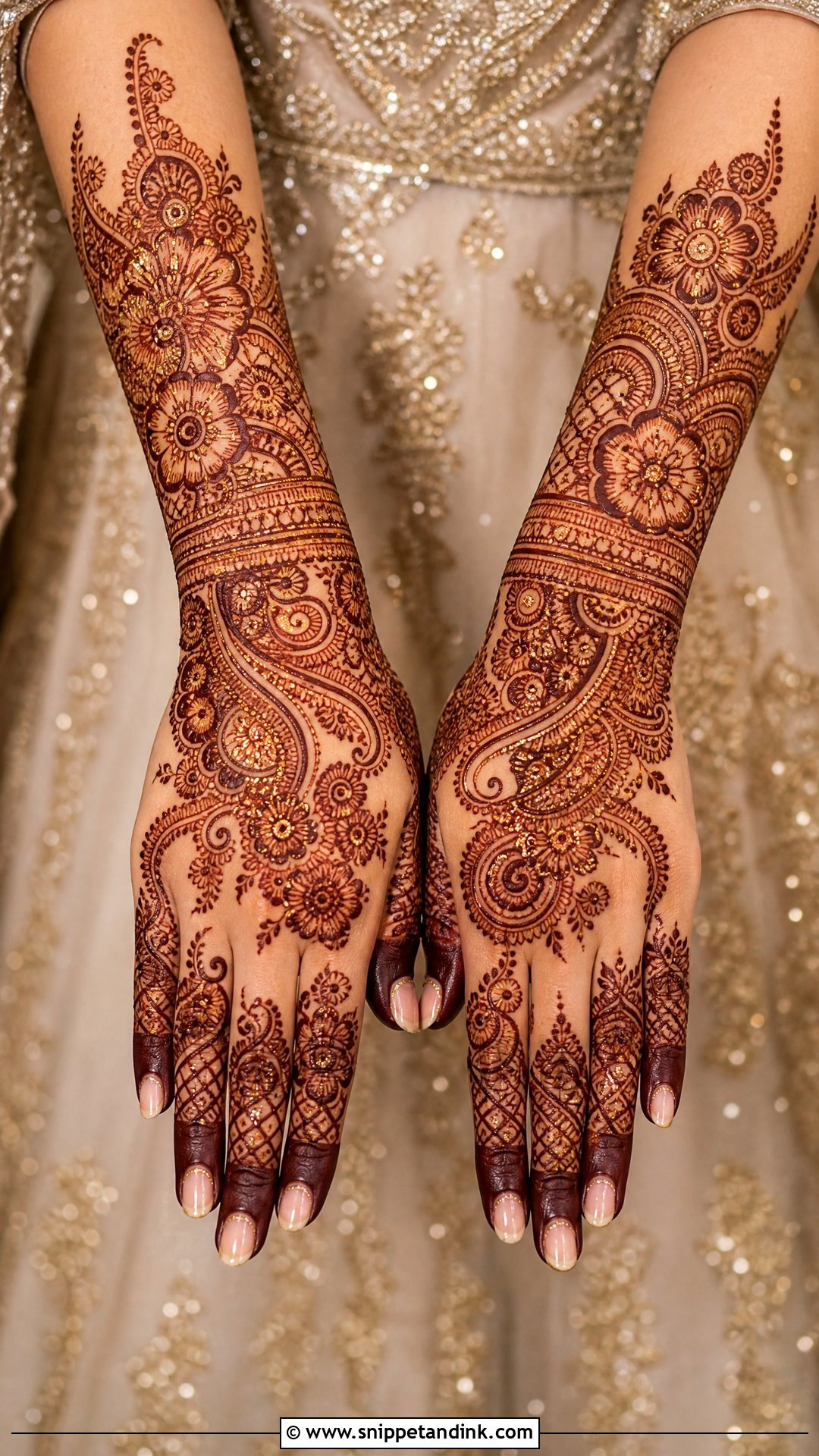
Glitter goes on after the henna paste is removed, as small accents on flowers, wrist bands or open spaces. Gold, bronze or maroon glitter looks most bridal. Use it lightly; heavy glitter hides the henna you sat hours for. Like white mehndi, it’s a surface layer, so it comes off before prayer and isn’t meant to last beyond the event.
30. Feet Muslim Bridal Mehndi Design
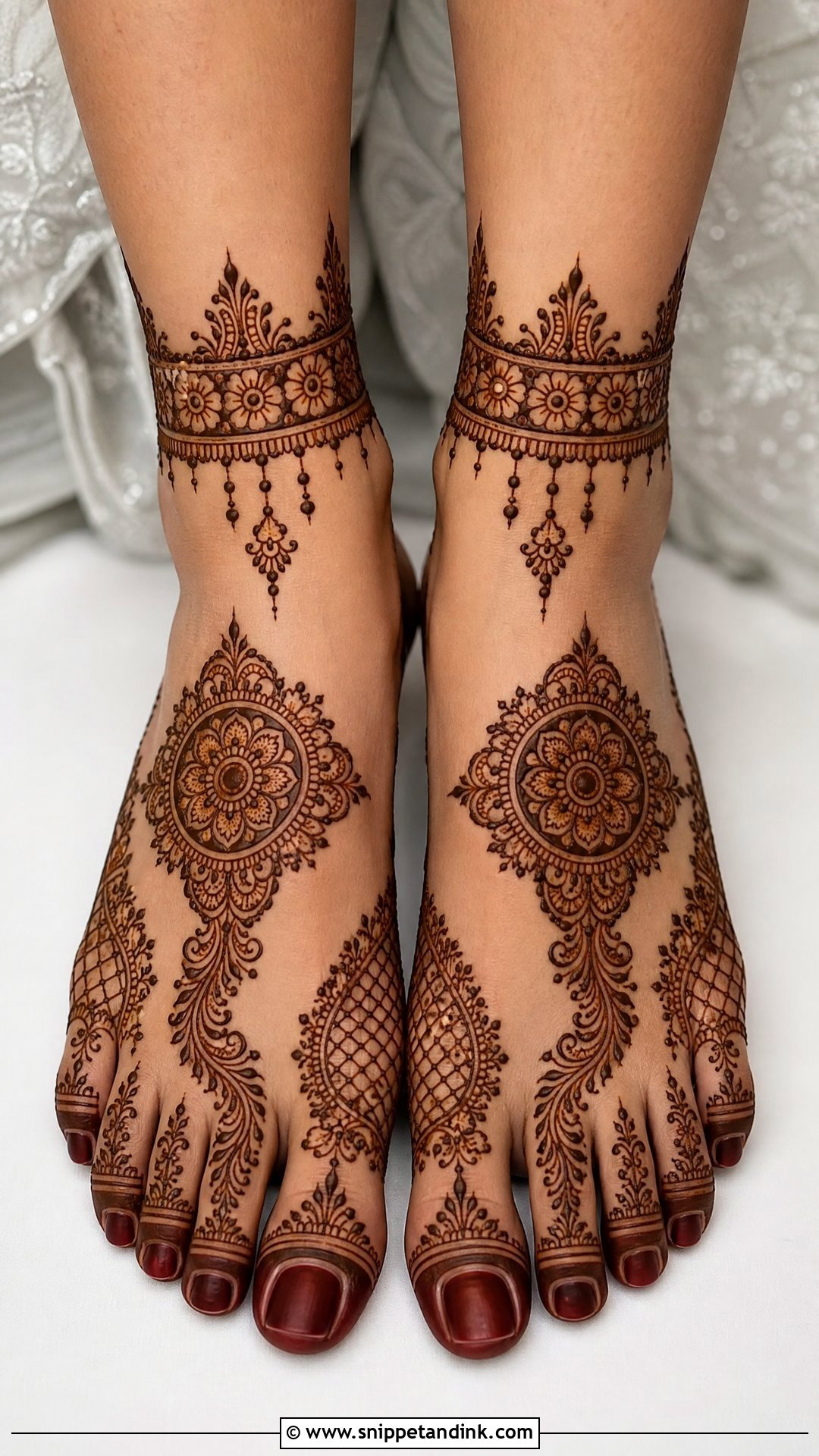
Foot henna completes the look with open sandals and anklets: floral anklets, toe details, a mandala on the top of the foot and paisley trails. Feet stain very dark, so I use slightly larger motifs than on the hands to keep shapes clear. Matching the theme to the hand design ties the getting-ready photos together.
Full Sleeves Change Where the Detail Should Go
Many nikah outfits have full or three-quarter sleeves, often lined, and that changes my plan. If the forearm will be covered all day, I don’t spend an hour on it. I move the richest work to the fingers, palms and the wrist edge, the parts the sleeve leaves showing, and finish with a defined cuff right where the fabric ends.
- Tell your artist your sleeve length for every event, not just the nikah.
- With sheer sleeves, keep forearm work bold and open; fine filler disappears behind net or chiffon.
- Ask for the wrist cuff to sit slightly above the sleeve hem so a gap of plain skin never shows between henna and fabric.
- Lined sleeves rub; avoid putting them on until the paste is scraped and the hands are oiled.
This also saves you sitting time. A bride in full sleeves can have a design that looks fully bridal in every photo with a fraction of the forearm work, and the time saved can go on the feet.
Plan the Henna Around Every Event, Not One
Plan your henna around your days, not just one photo. Whether you lean toward Pakistani filling, open Arabic florals, minimal patterns or personalized nikah motifs, ask for clean linework, balanced spacing and natural henna. Give your artist your sleeve lengths and the order of your events, and have initials, dates, crescents or domes placed so they read clearly once the stain darkens.
You'll Like These Ideas:




Leave a Reply