
A Jaggo is not a sit-down function. You will walk through the lanes behind a lit pot, clap through boliyan, and spend hours in a gidda circle with the dhol so loud you feel it in your ribs. When a family asks me to dress them for it, I start with one question: can you dance, raise your arms and sit on the floor in this? Patiala suits with phulkari dupattas, sharara sets with mirror work, ghararas with short kurtis and straight suits with bold jewelry all pass that test if the fabric is right. Silk, cotton silk, georgette, organza, crepe and chiffon give movement without weight. The thirty looks below are complete outfits, from dupatta to juttis, with the details I adjust for a long, loud night.
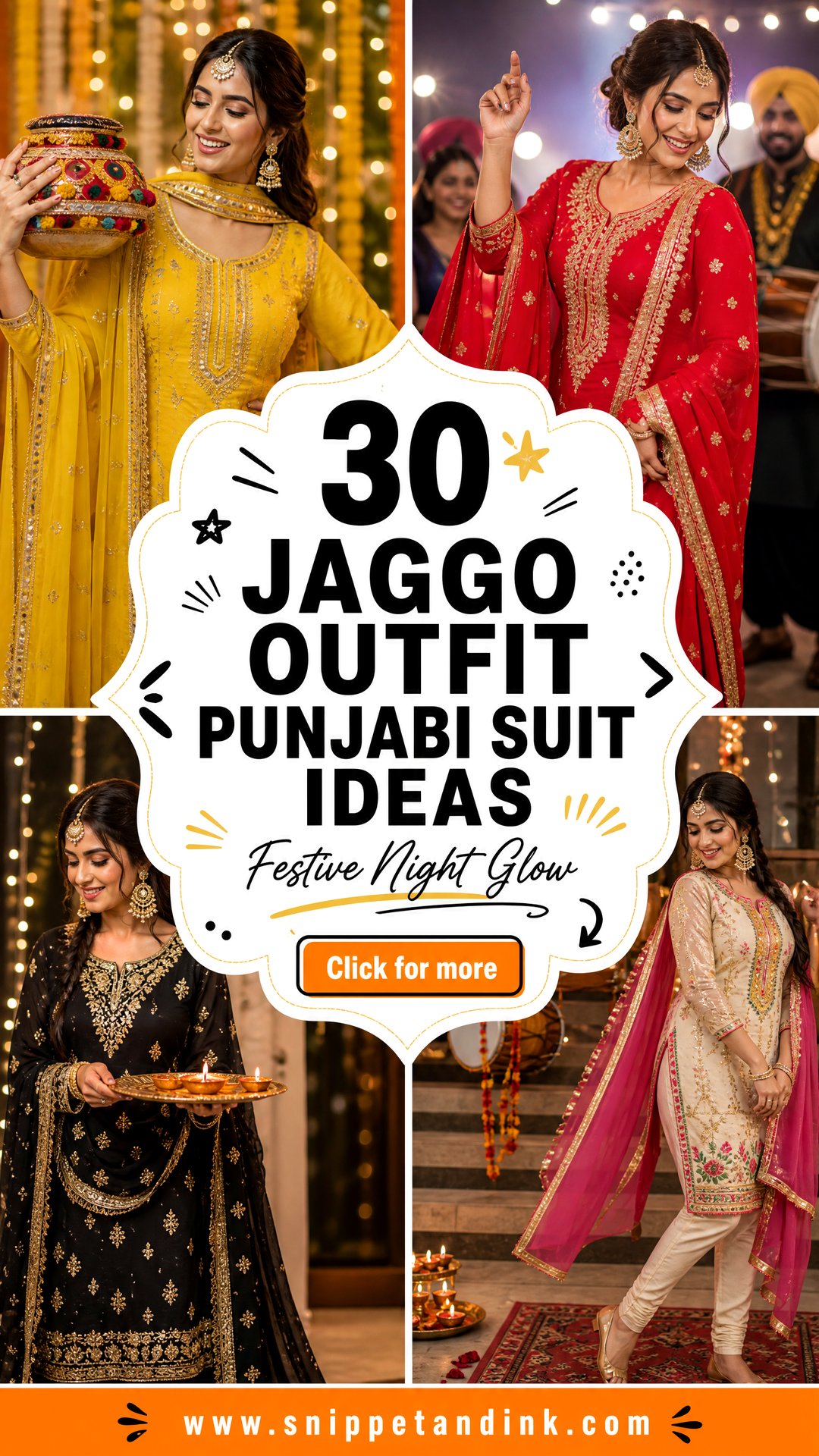
Dressing Around the Lit Pot and the Gidda Circle
The Jaggo is the night before the wedding, when the women of the family carry a decorated brass or clay pot lit with diyas through the neighbourhood, singing and dancing. That means open flames close to your dupatta and hair, and plenty of arm movement. Here is how I prepare a client for it.
- Whoever carries the pot: wear the dupatta pinned flat across the body or tucked at the waist, not loose over the head. Tie long hair back or braid it.
- Near the diyas: cotton, cotton silk and pure silk are safer than polyester georgette or nylon net, which melt quickly when they catch a flame.
- Sleeves: fitted or elbow length. Wide bell sleeves swing into the flames and catch on bangles.
- Floor seating: you’ll sit on durries for boliyan, so check that the kurta slit and salwar allow you to sit cross-legged.
Do a test in front of a mirror at home. Raise both arms, clap overhead, spin twice and sit on the floor. If anything slips, rides up or pulls, fix it with a pin or an alteration now rather than on the night.
1. Phulkari Patiala Suit For Jaggo
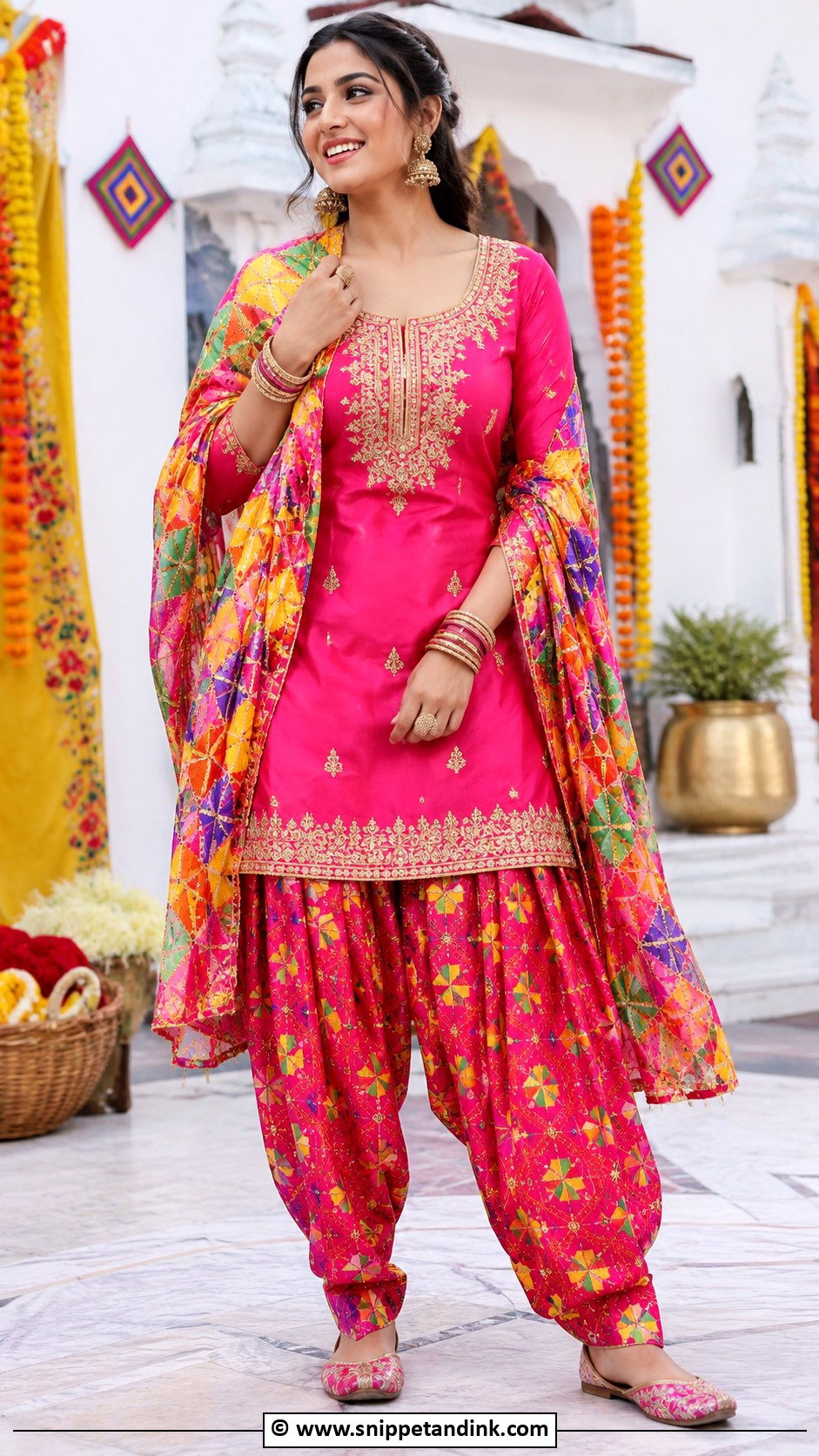
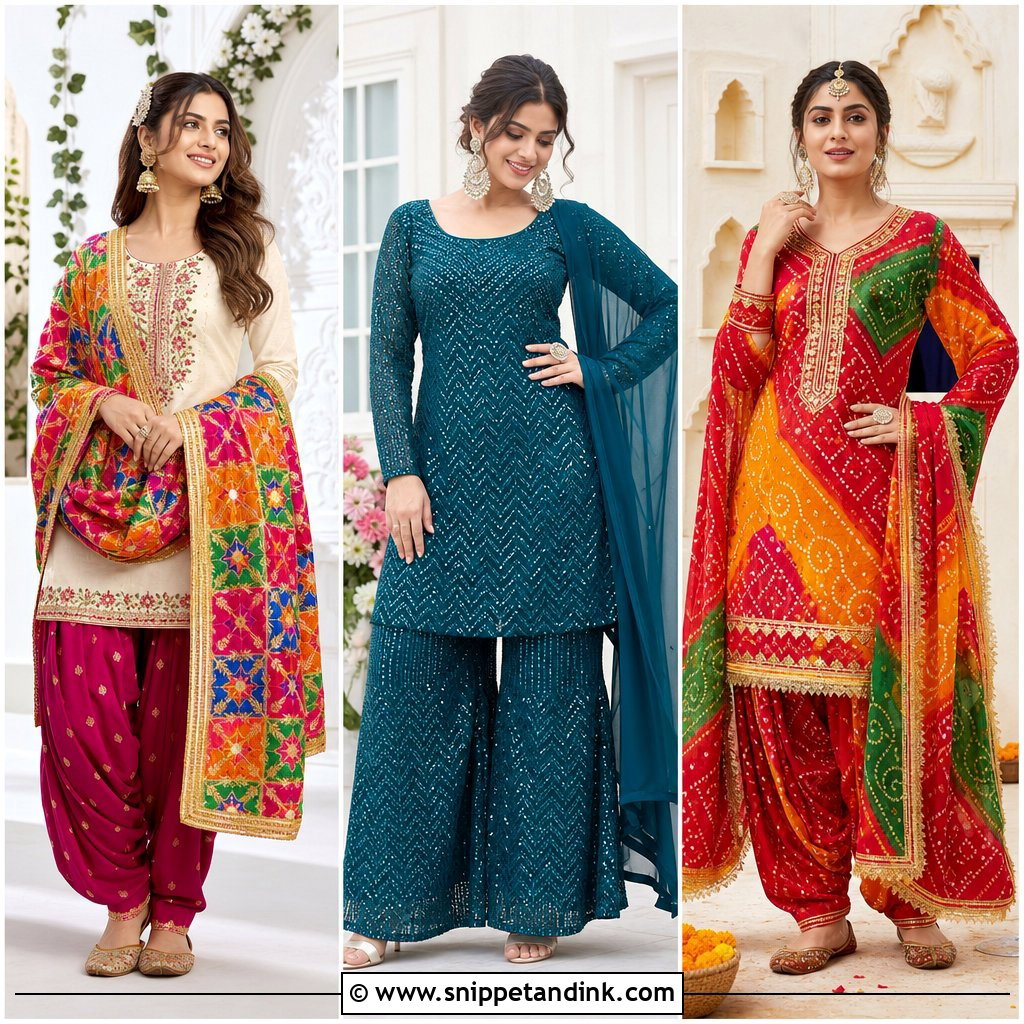
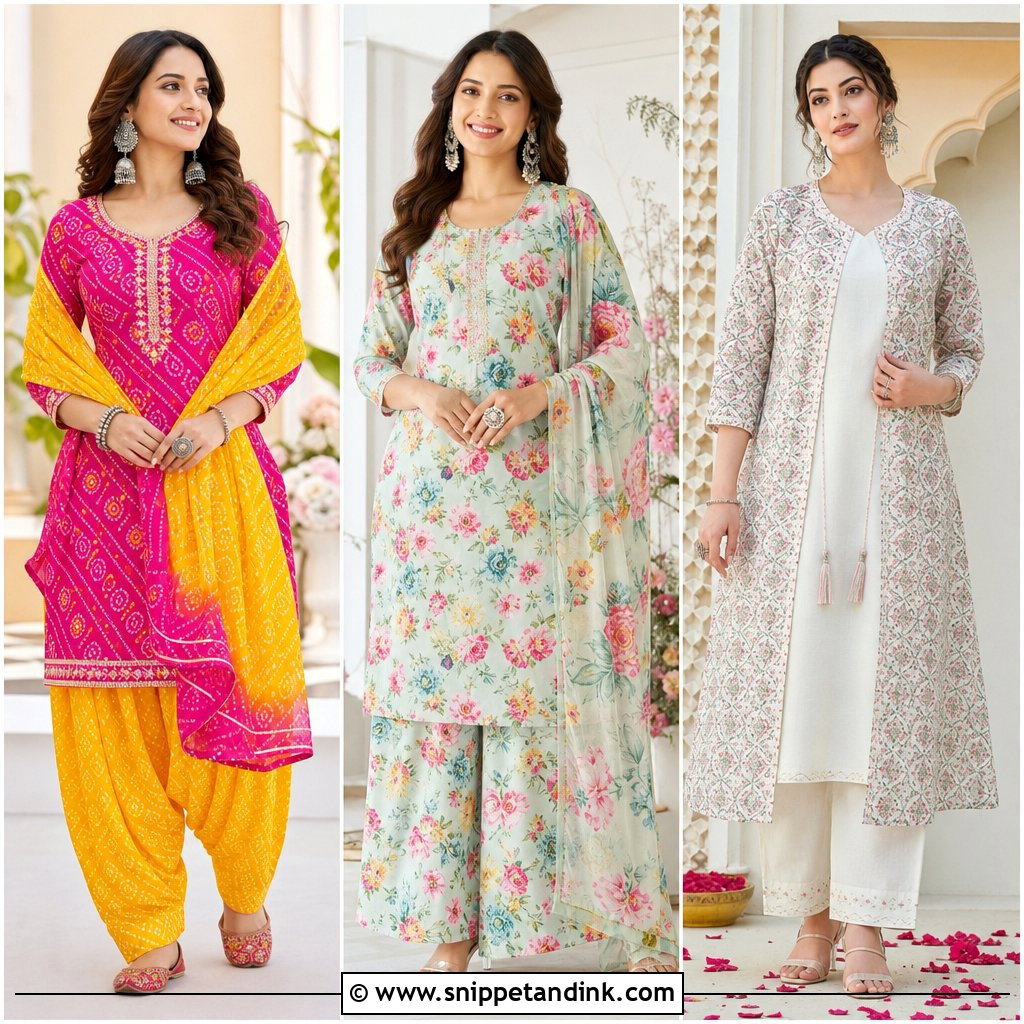
A phulkari Patiala suit is the outfit I picture first for a Jaggo, because it was made for exactly this kind of dancing. A short kameez in hot pink, mustard, orange or royal blue shows off the pleats of the salwar. The phulkari dupatta carries the colour, so the kameez can stay simple. Original hand phulkari is heavy and precious; if it’s an heirloom, I pin it across one shoulder rather than letting it trail on the ground through a procession. Juttis, large jhumkas, a stack of bangles and a soft braid finish it.
2. Mirror Work Punjabi Suit For Jaggo
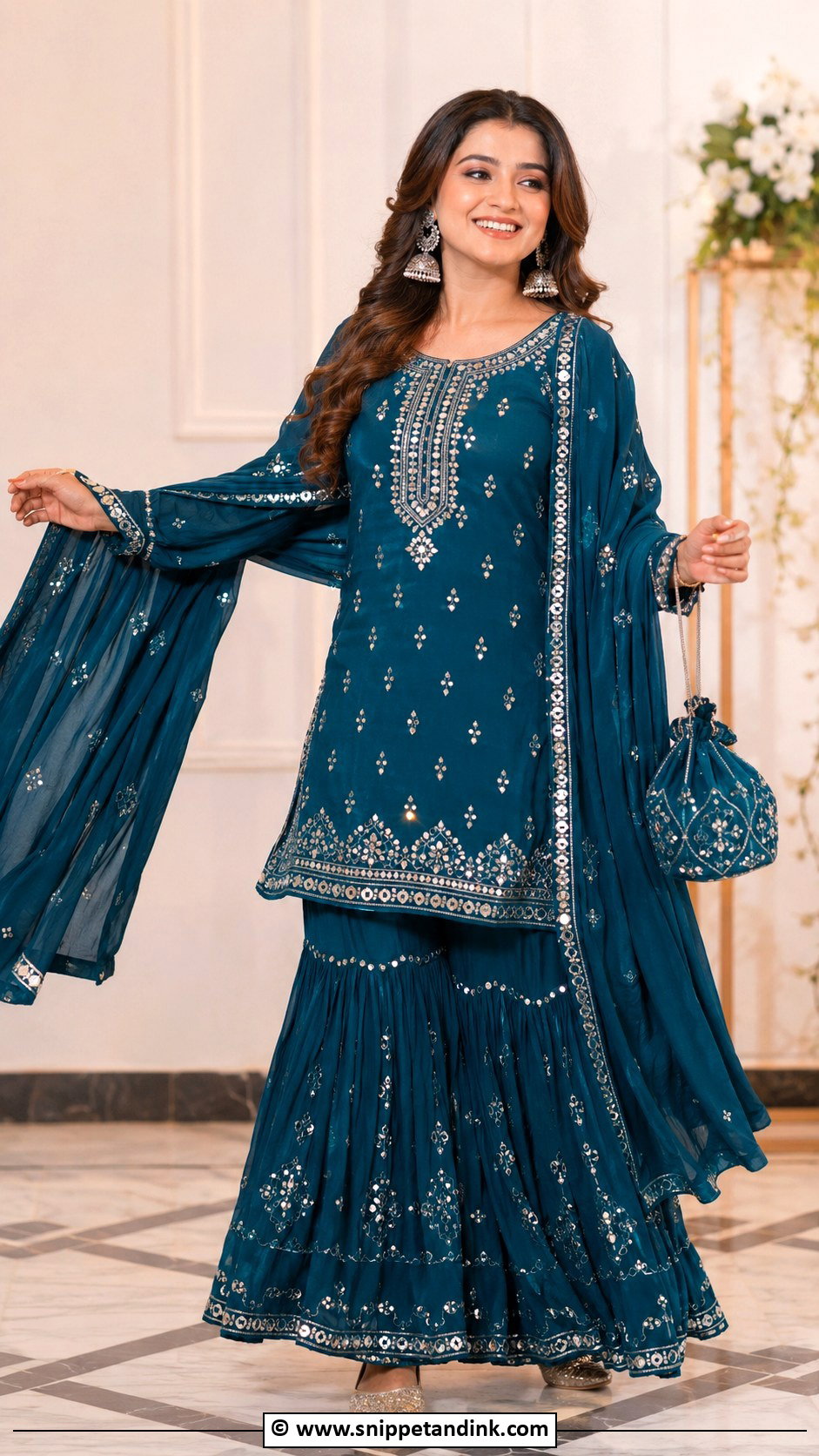
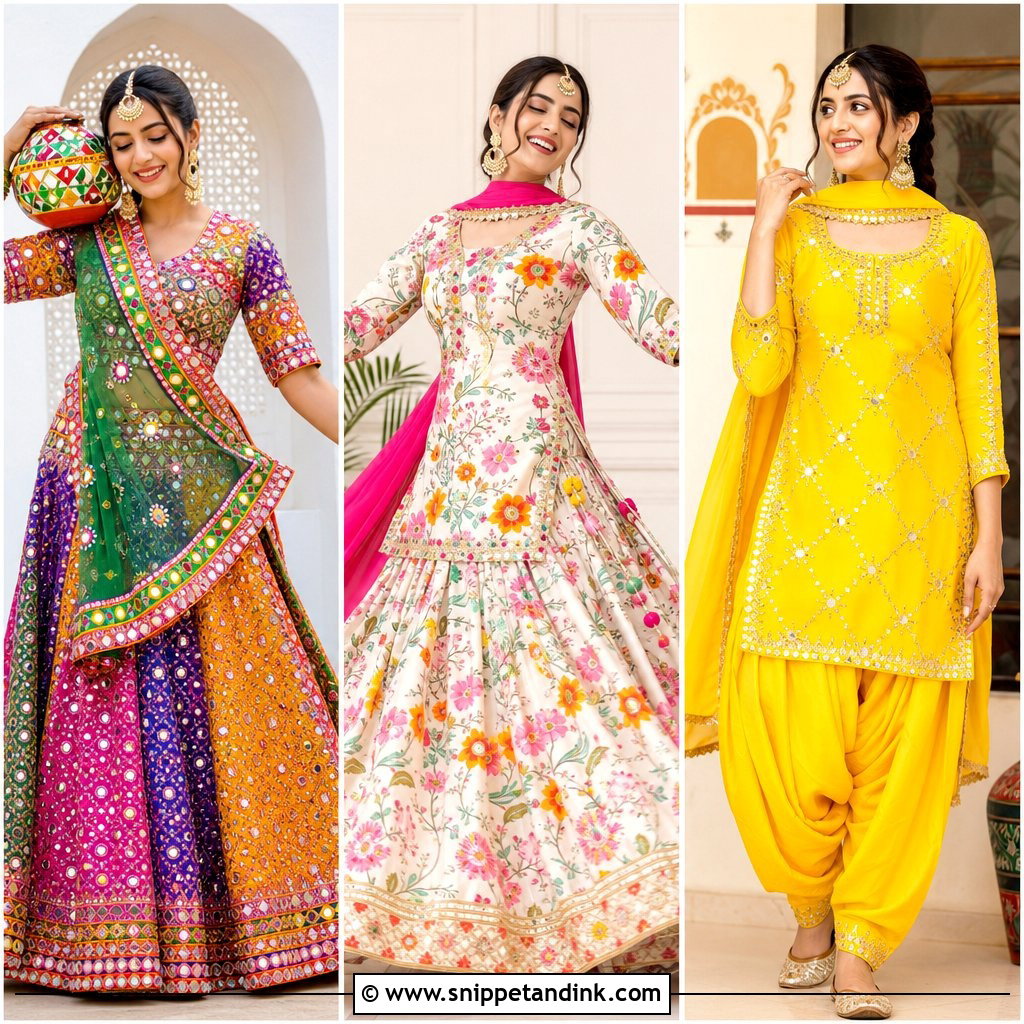
Mirror work does its best work at night, when the lights and the diyas bounce off it. I like a straight or slightly flared kurta with small mirrors at the neckline, sleeves and hem, worn with a matching salwar, cigarette pants or a light sharara. Small mirrors are the practical choice; large ones on the sleeves scratch your neighbours when the gidda circle tightens. Keep the dupatta to chiffon or georgette with a mirror trim, and finish with silver jhumkas, metallic juttis and a potli bag.
3. Yellow Punjabi Suit For Jaggo
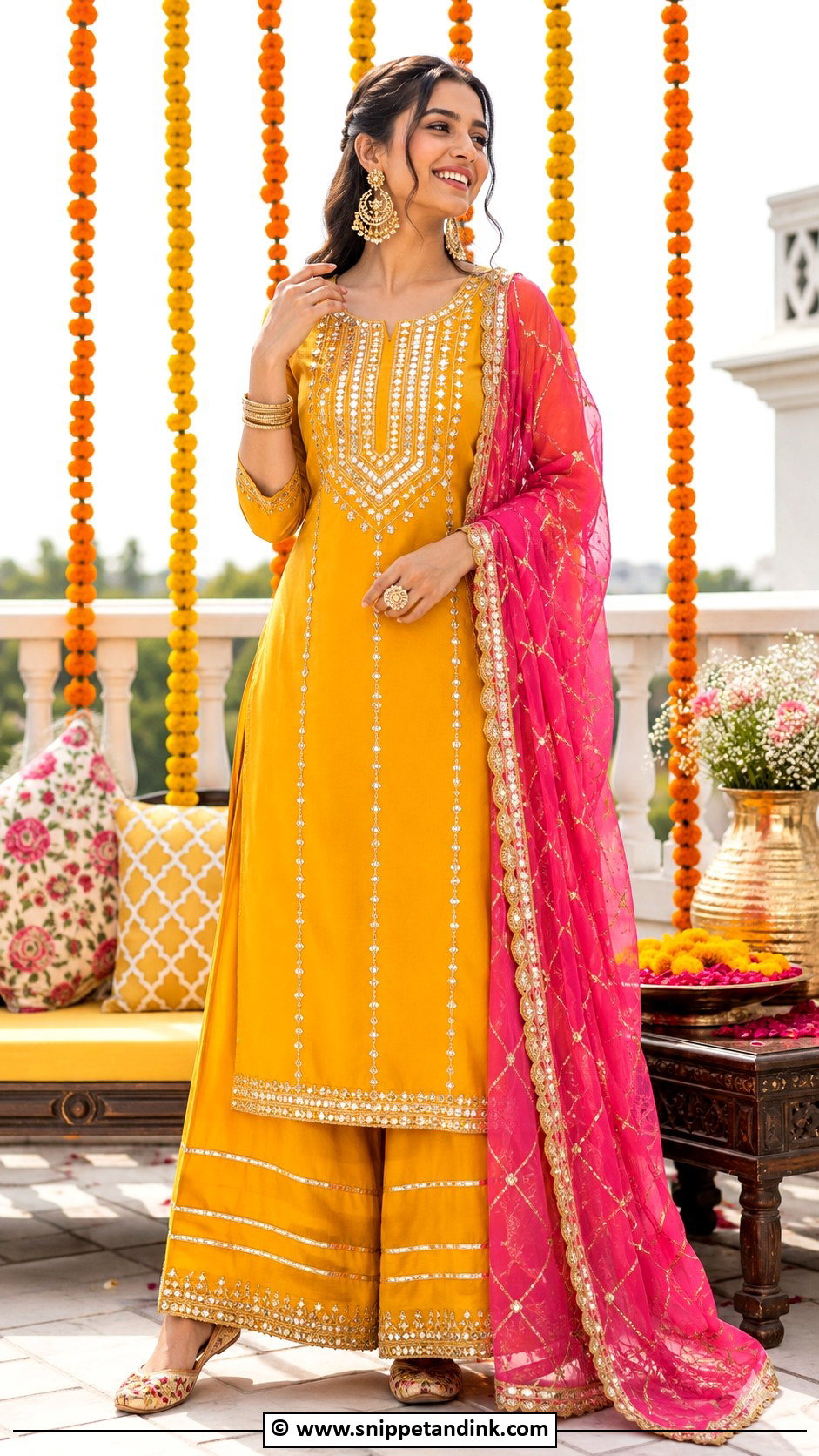
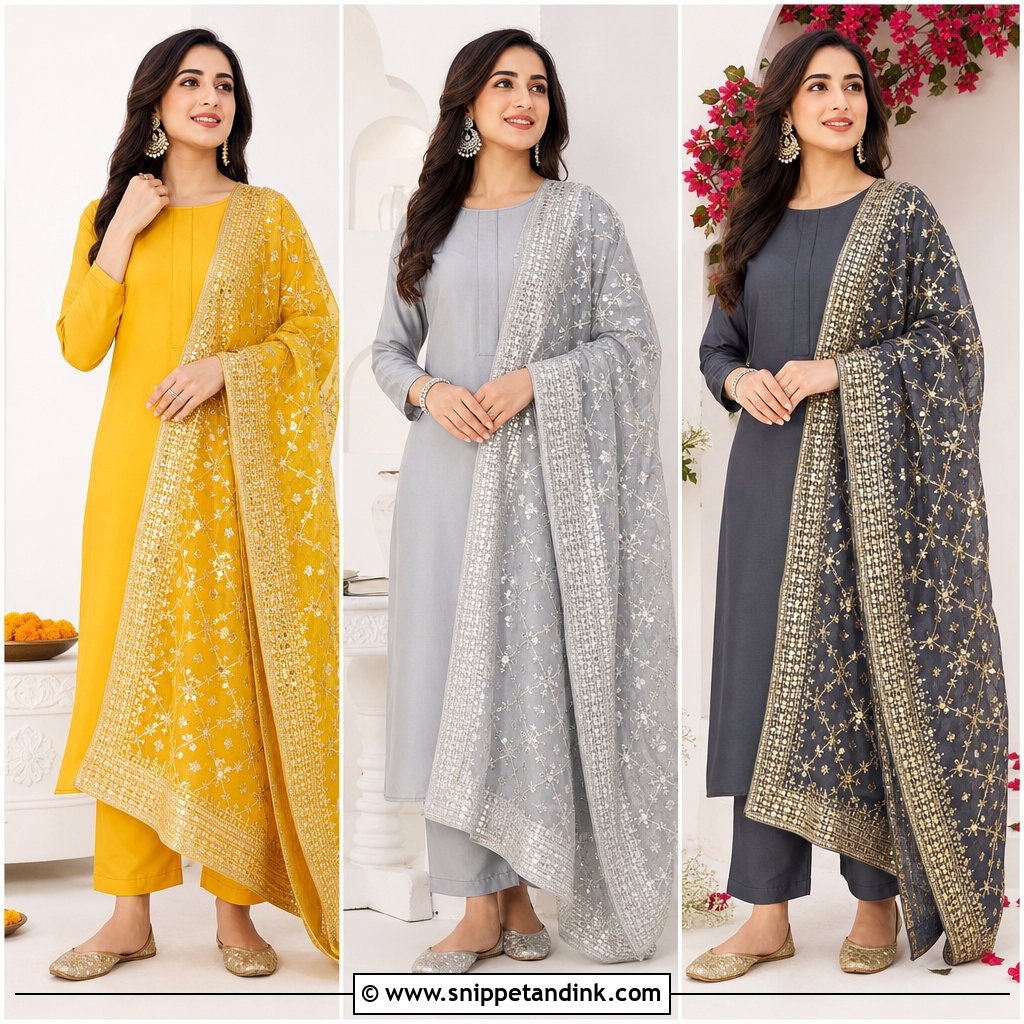
Yellow reads as celebration before anyone sees the embroidery. Mustard, marigold or lemon kurtas with gota patti, threadwork or light sequins all work, with a Patiala salwar, palazzo or gharara. The undertone matters more than people think: I put warm mustard on deeper and olive skin, and a clearer lemon on cool, fair skin, because the wrong yellow makes the face look tired under warm bulbs. A contrast dupatta in pink, green or orange adds the Punjabi play of colour. Gold jhumkas, bangles, embroidered juttis and a small clutch are enough.
4. Pink Patiala Suit For Jaggo
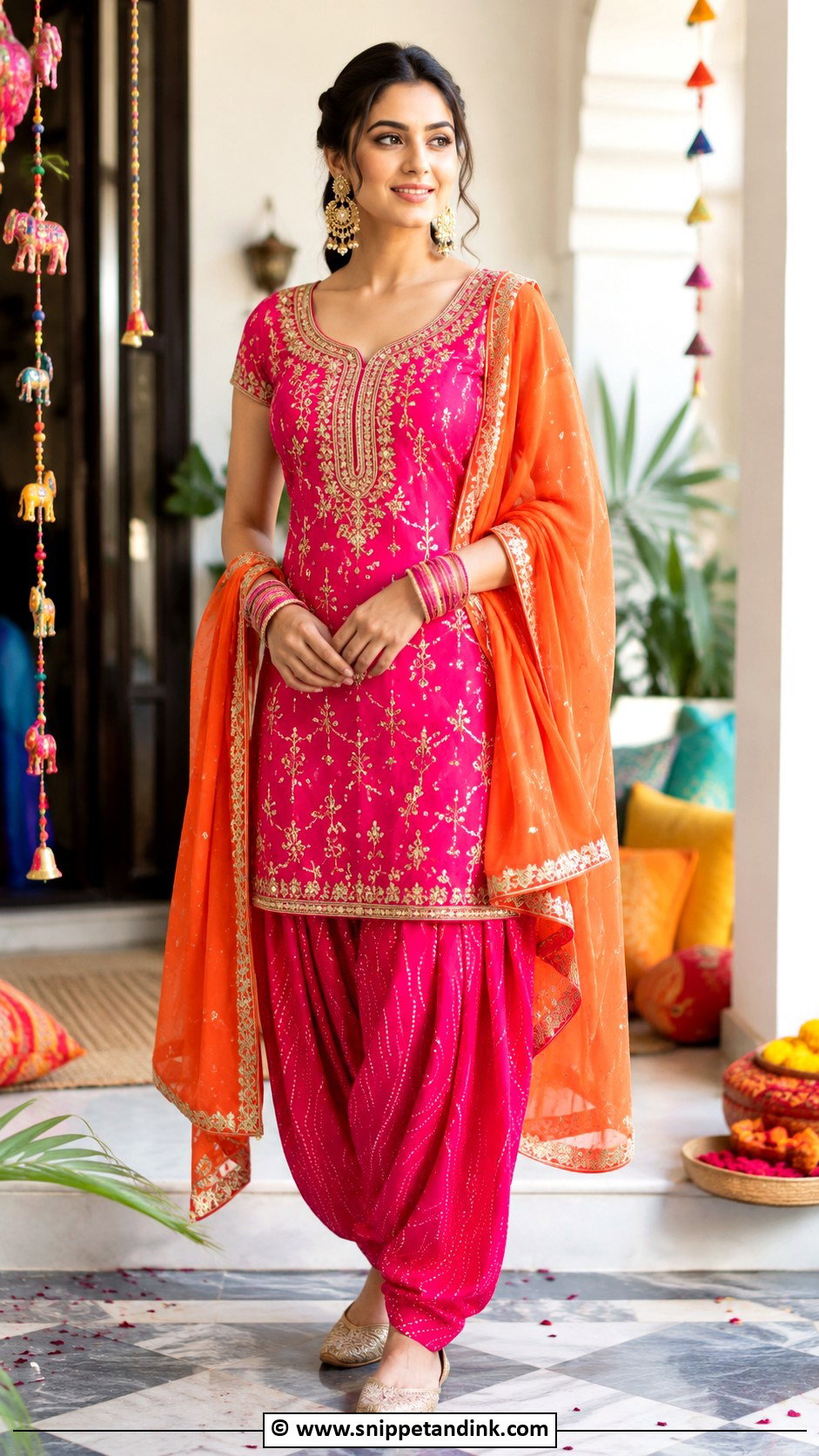
With a pink Patiala suit, the depth of pink sets the mood: rani and fuchsia for full festivity, rose and blush for something gentler. A short fitted kurti embroidered at the neck pairs with a voluminous Patiala. I add a contrast dupatta in orange, green or gold, then kundan earrings, glass bangles, a small bindi and gold or embroidered juttis. Glass bangles break during gidda, so I always keep a spare set in the potli. Younger cousins and bridesmaids tend to love this one.
5. Green Punjabi Suit For Jaggo
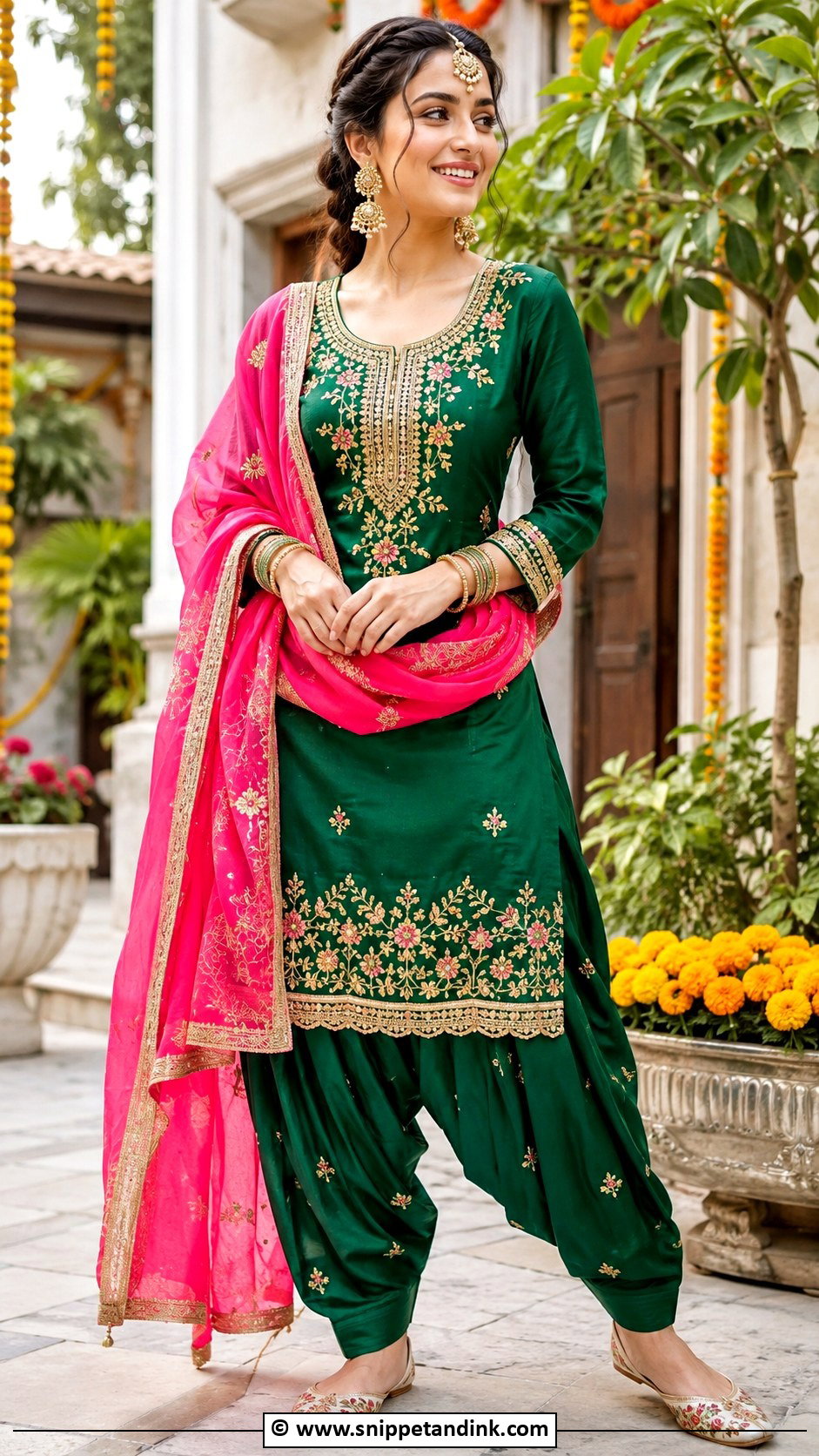
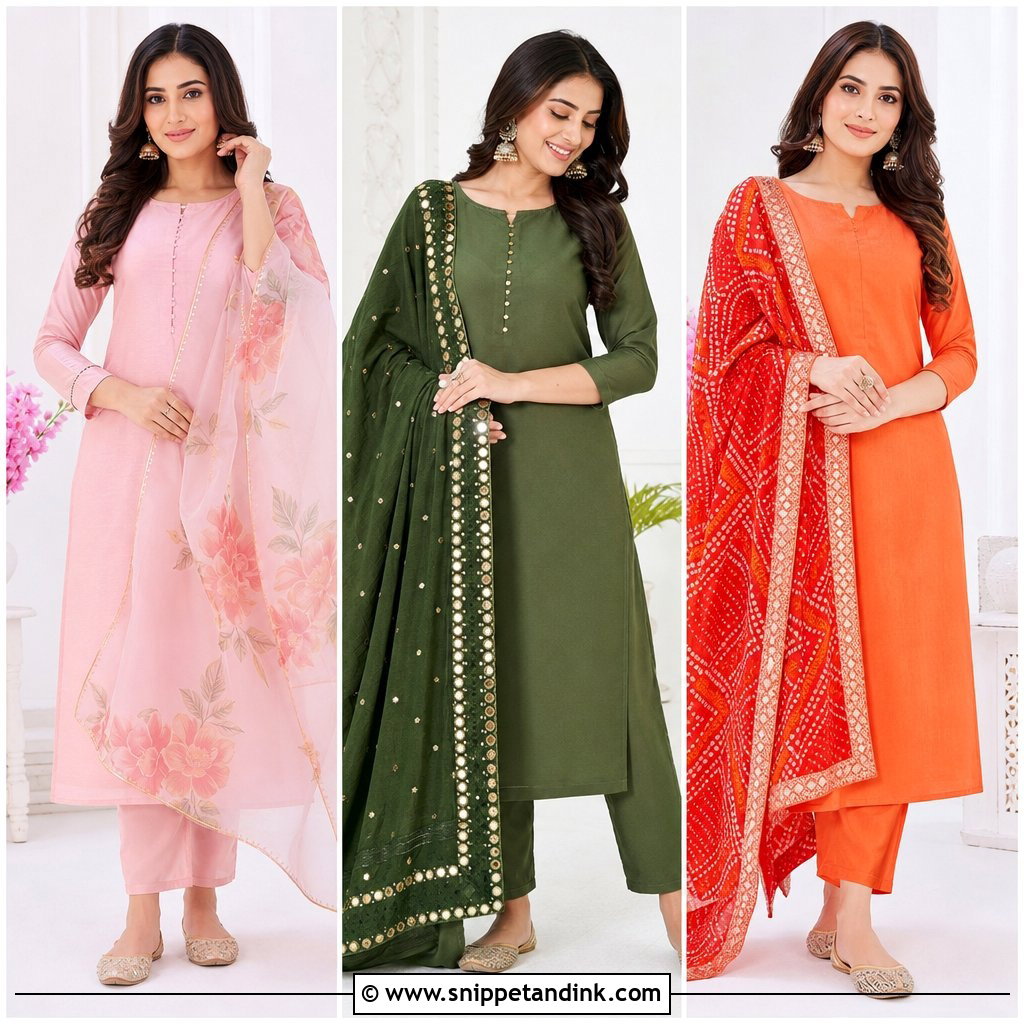
Green covers a wide range. Emerald reads elegant and evening; parrot and mehendi green read playful and traditional. Choose zari, gota or resham embroidery on the kurta, with a matching salwar or sharara, and lift it with a pink, orange or golden dupatta. Antique gold suits green better than shiny yellow gold, which can look brassy against emerald. Finish with jhumkas, bangles, juttis and a neat low bun or soft waves. It gives a regal note without going to red.
6. Red Punjabi Suit For Jaggo
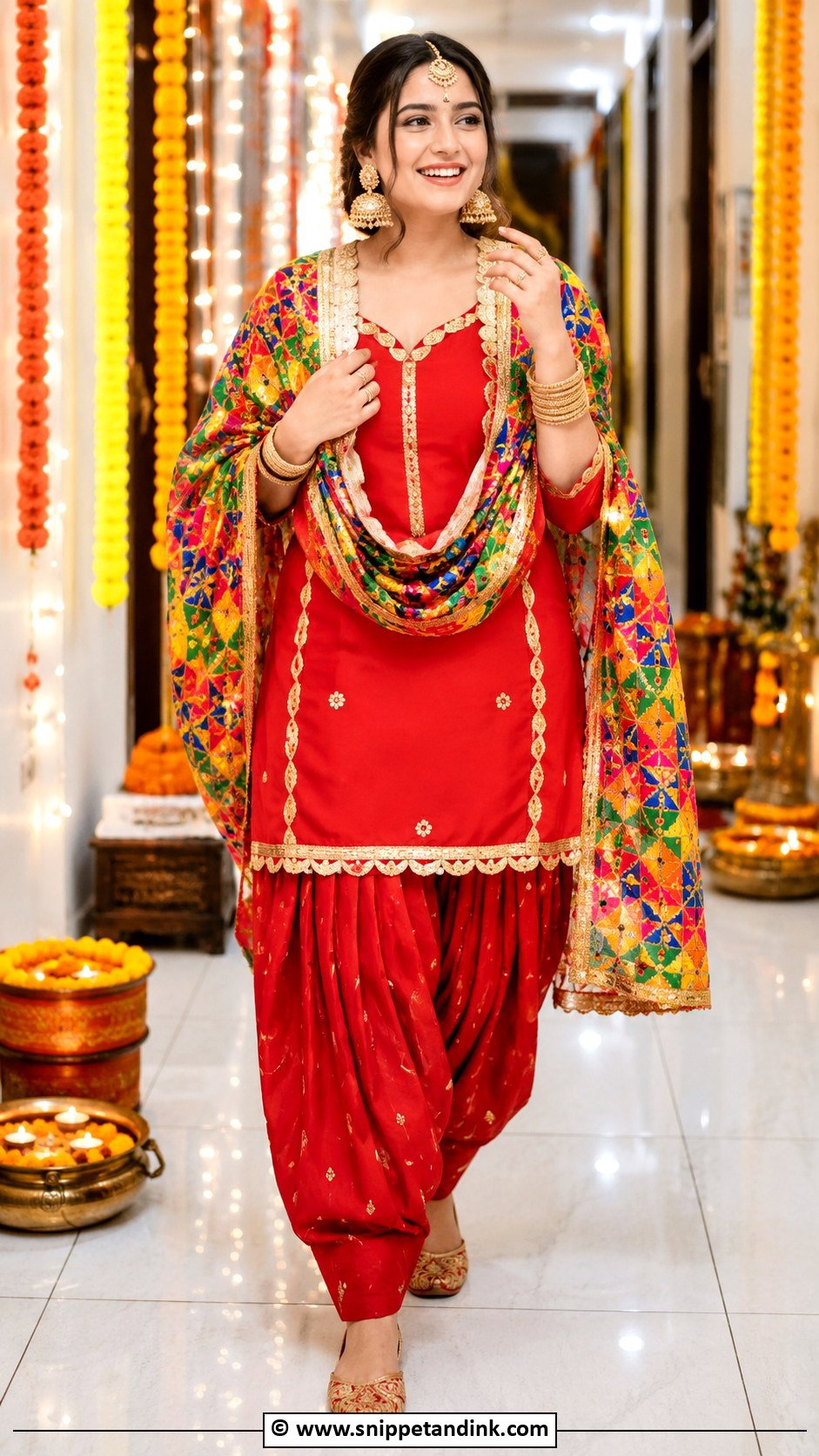
Red is the colour I handle most carefully at a Jaggo, because the bride may be wearing it. If you are a guest, ask first. For close family, a red short kurti with a Patiala salwar and phulkari dupatta looks energetic and very Punjabi, and a red straight suit with gold gota details is the cleaner version. Keep the embroidery celebratory rather than bridal. Gold juttis, traditional earrings and a potli bag complete it; if the suit is heavily embellished, I pare the jewelry back. Red holds its colour well in night photos under warm lights.
7. Orange Punjabi Suit For Jaggo
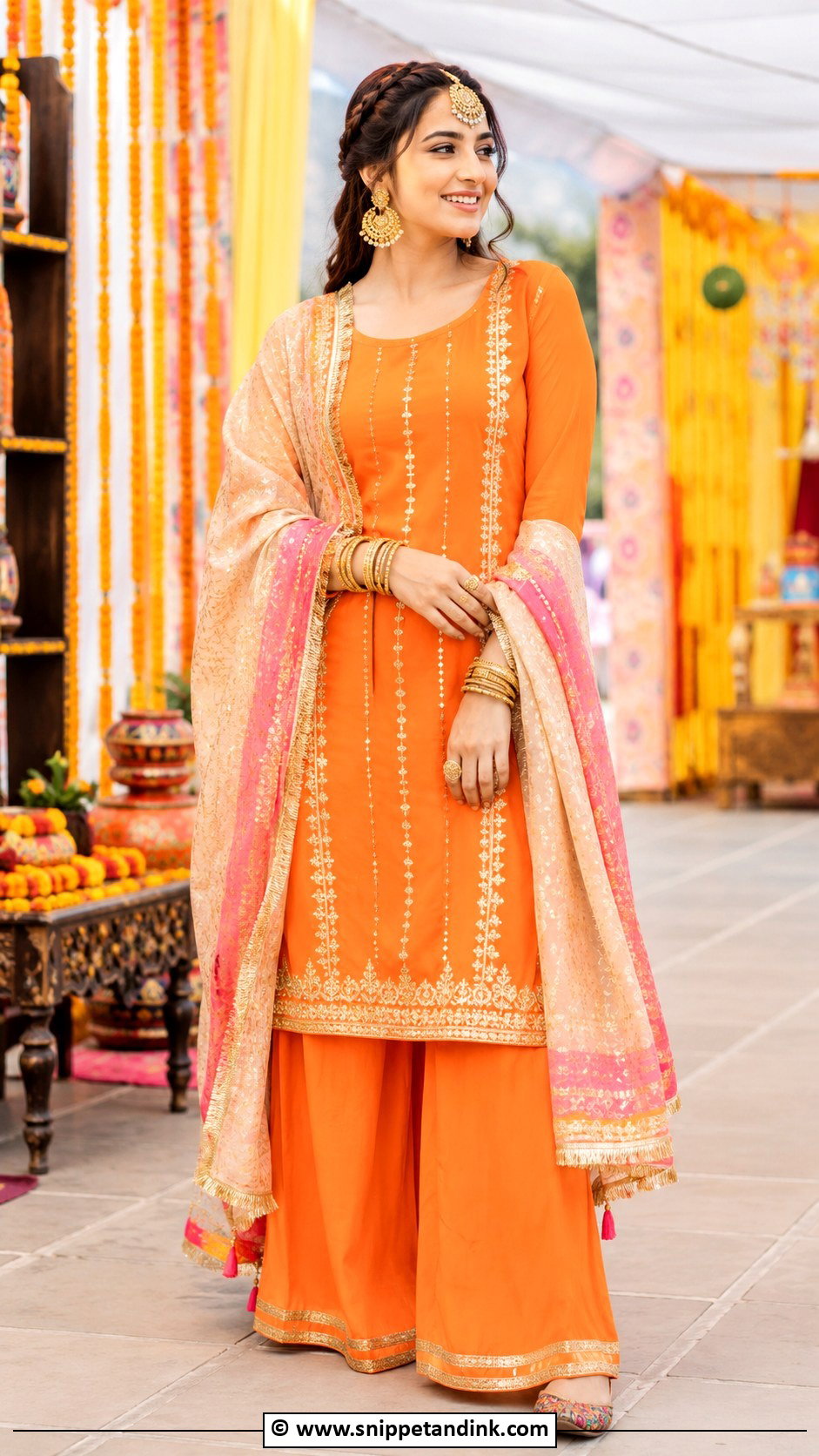
Orange in tangerine, rust or burnt shades feels less expected than pink and stays bright in candlelight. Try a short kurta with a Patiala salwar, or a straight kurta with palazzos for a modern shape. Rust needs a lighter contrast near the face, so I often bring in a cream or pink dupatta; pure orange next to the skin can drain some complexions. Gold jhumkas, bangles and a small maang tikka suit it, with embroidered juttis and soft makeup.
8. White Punjabi Suit With Phulkari Dupatta
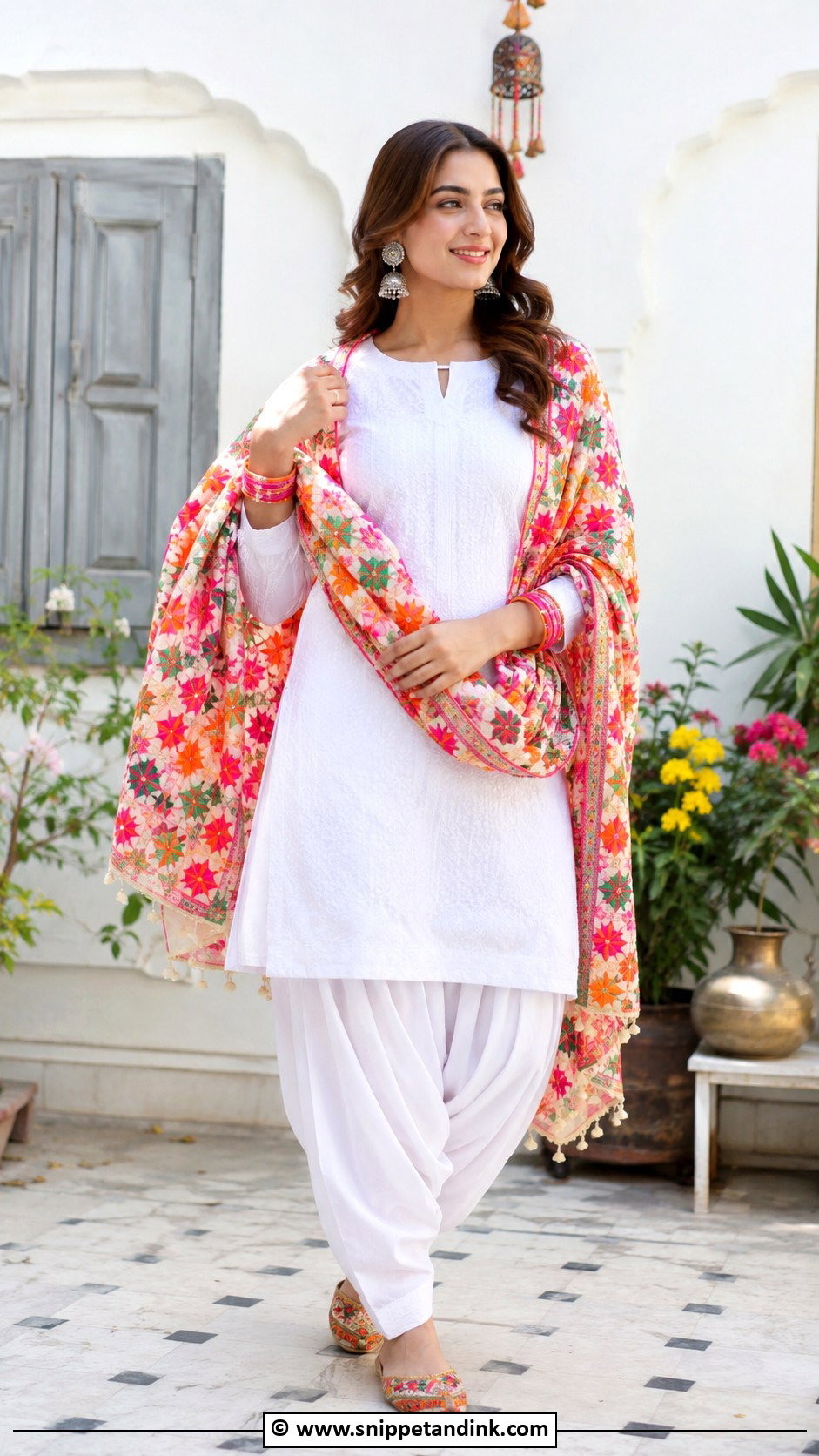
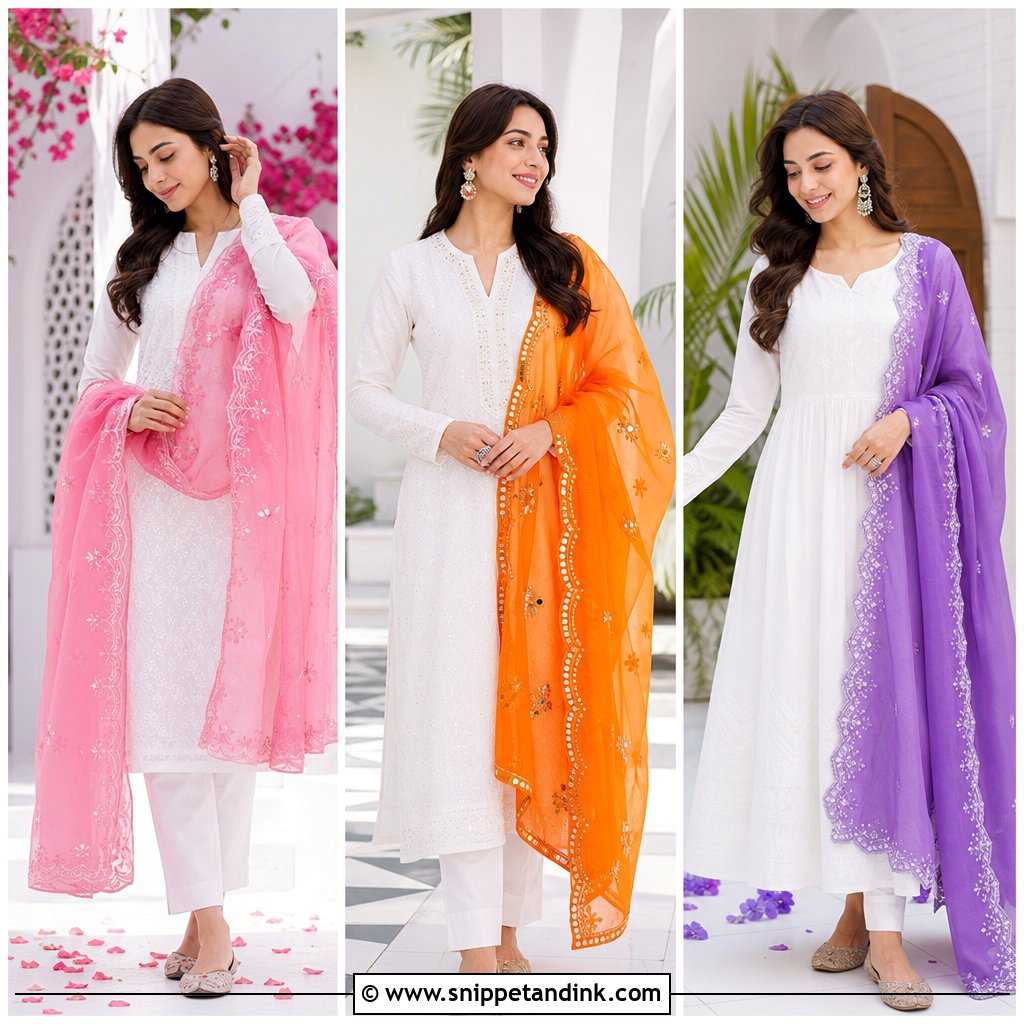
A white base with a bright phulkari dupatta is one of my favourite ways to let a single piece speak. The plain suit, in cotton silk or georgette with a salwar, churidar or wide-leg pants, makes the threadwork in pink, orange, yellow, blue or green look even brighter. White is unforgiving at a Jaggo, though: oil from the diyas, turmeric and spilled chai all show, so carry stain wipes. Oxidized silver gives a folk feel; gold makes it more festive. Colourful juttis and bangles tie it together.
9. Black Punjabi Suit For Jaggo
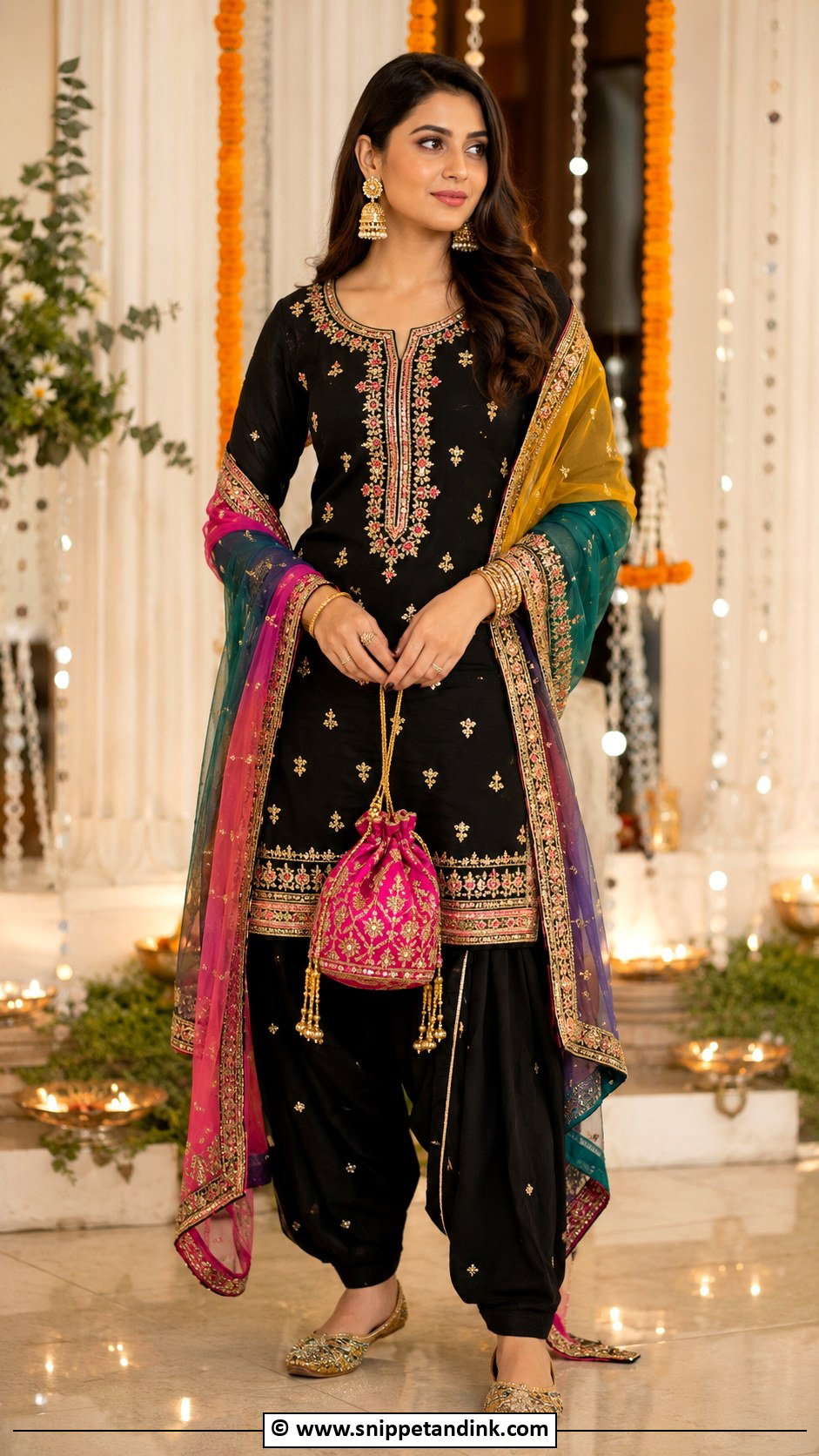
Black needs festivity built in or it looks like an evening dinner outfit. I insist on gold gota, mirror work, phulkari accents or colourful thread embroidery. A black kurta with a Patiala salwar and a multicolour dupatta is bold without heaviness; a black sharara suit with statement earrings is dressier. Some families avoid black at wedding functions, so check with the hosts before you buy. Gold bangles, embellished juttis and a bright potli stop the look going flat. Embroidery and makeup stand out clearly against black in night photos.
10. Blue Punjabi Suit For Jaggo
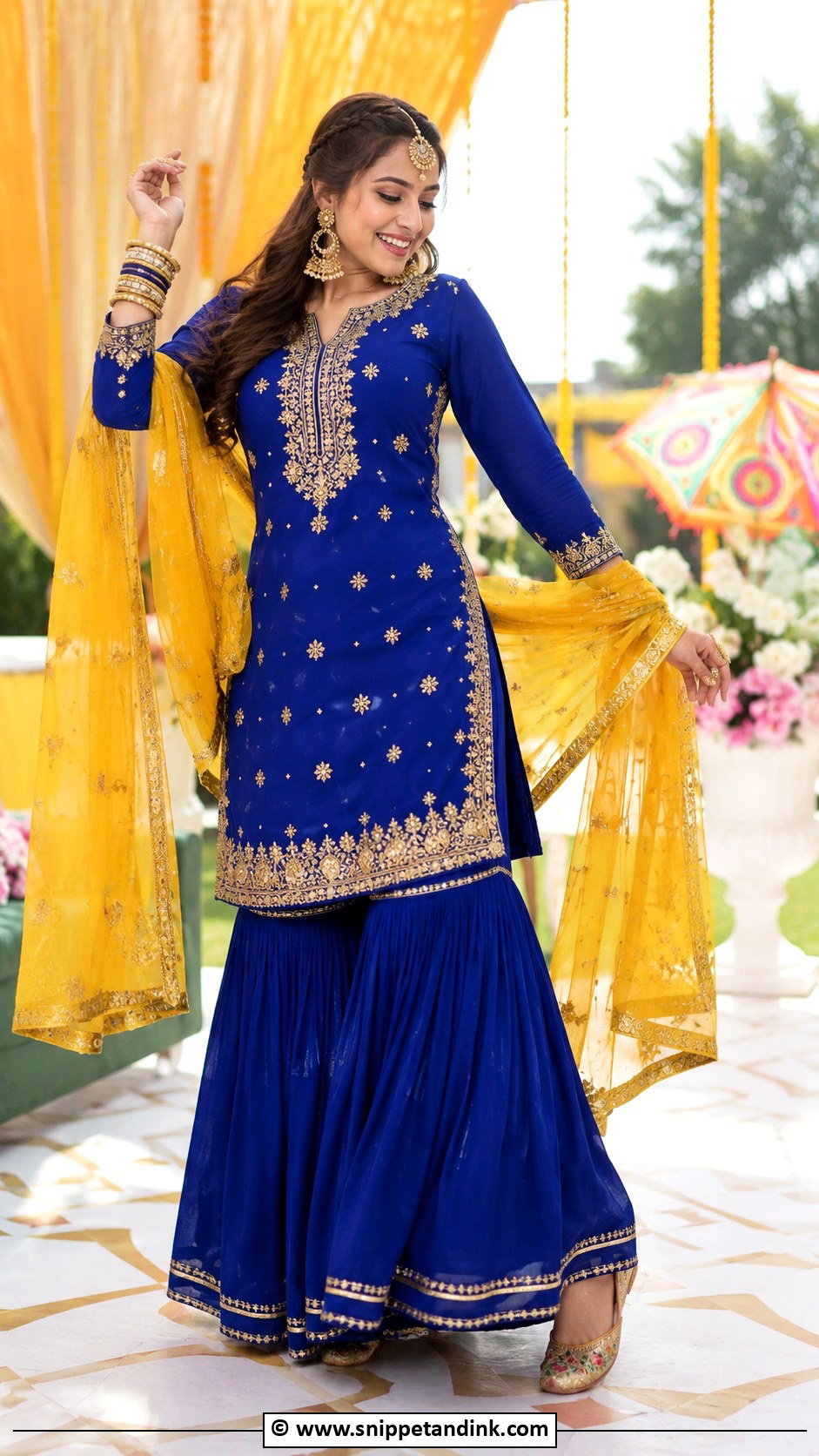
Royal blue, cobalt, turquoise and peacock blue all give a polished, slightly less common alternative to pink and red. The embroidery colour changes the temperature of the outfit: silver thread and silver jewelry keep cool blues crisp, while antique gold warms up peacock. Pair the kurta with a Patiala salwar, gharara or palazzo, and add a contrast dupatta in yellow, pink or orange for energy. Embroidered juttis and a small clutch finish it.
11. Purple Punjabi Suit For Jaggo
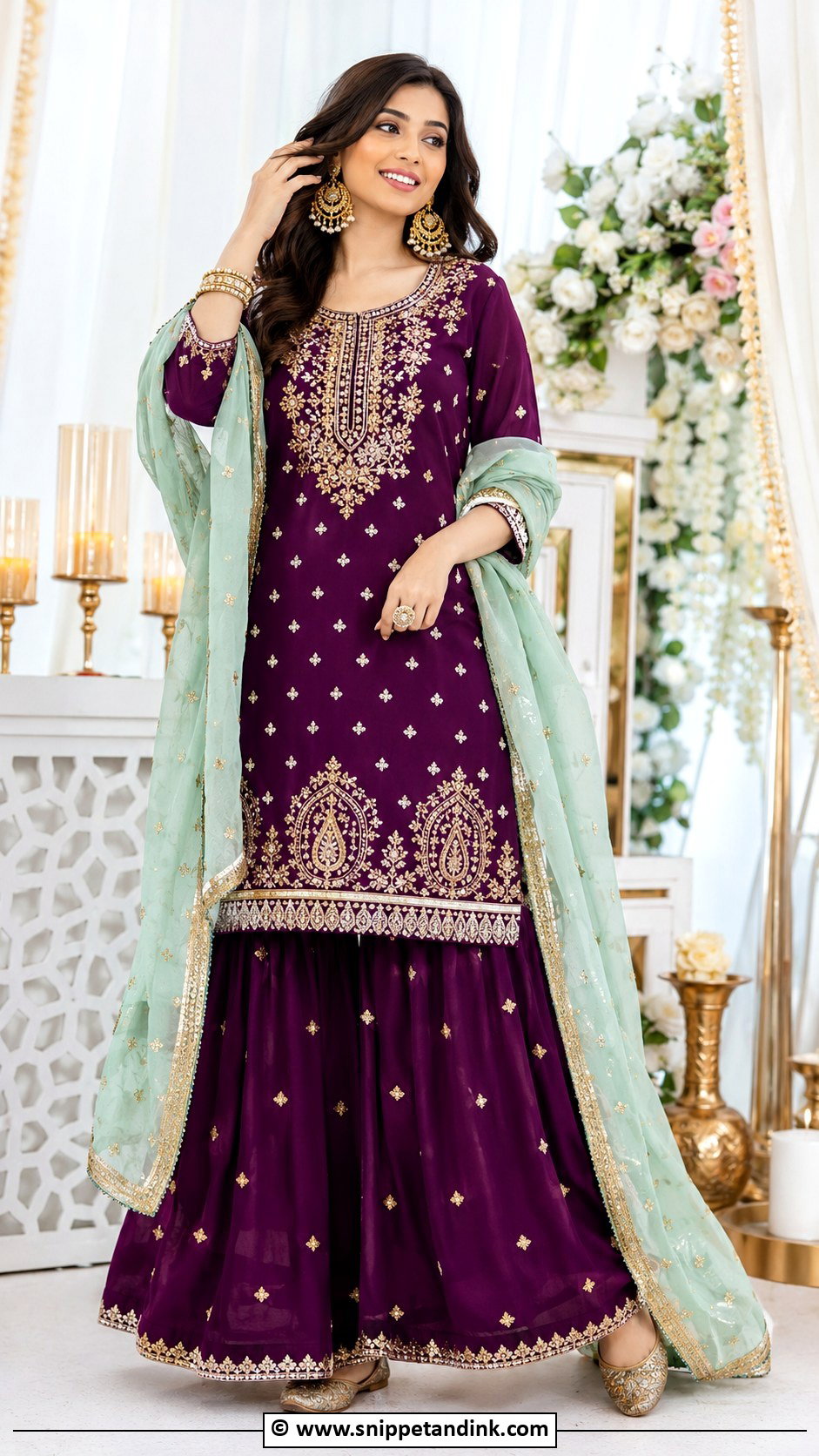
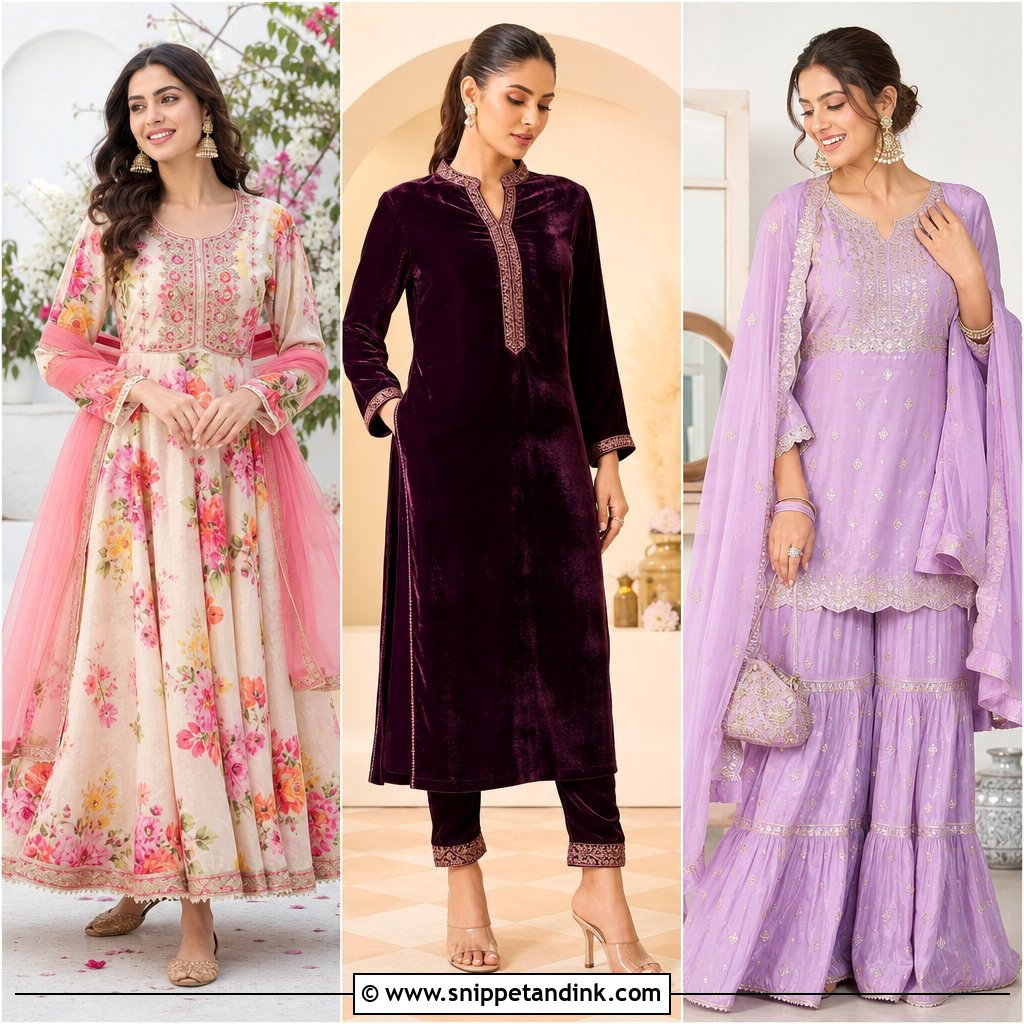
Purple is my pick for the guest who wants colour but nothing loud. Deep plum and wine suit evening; lavender and lilac suit an afternoon gathering. A purple kurta with gold embroidery and a matching Patiala is traditional; a purple sharara with a light net or organza dupatta is modern. Gold jhumkas, bangles and metallic juttis warm the colour, and a contrast dupatta in mint, yellow or blush brightens it. Lavender can look grey under yellow bulbs, so I hold the fabric up under warm light before deciding.
12. Sharara Punjabi Suit For Jaggo
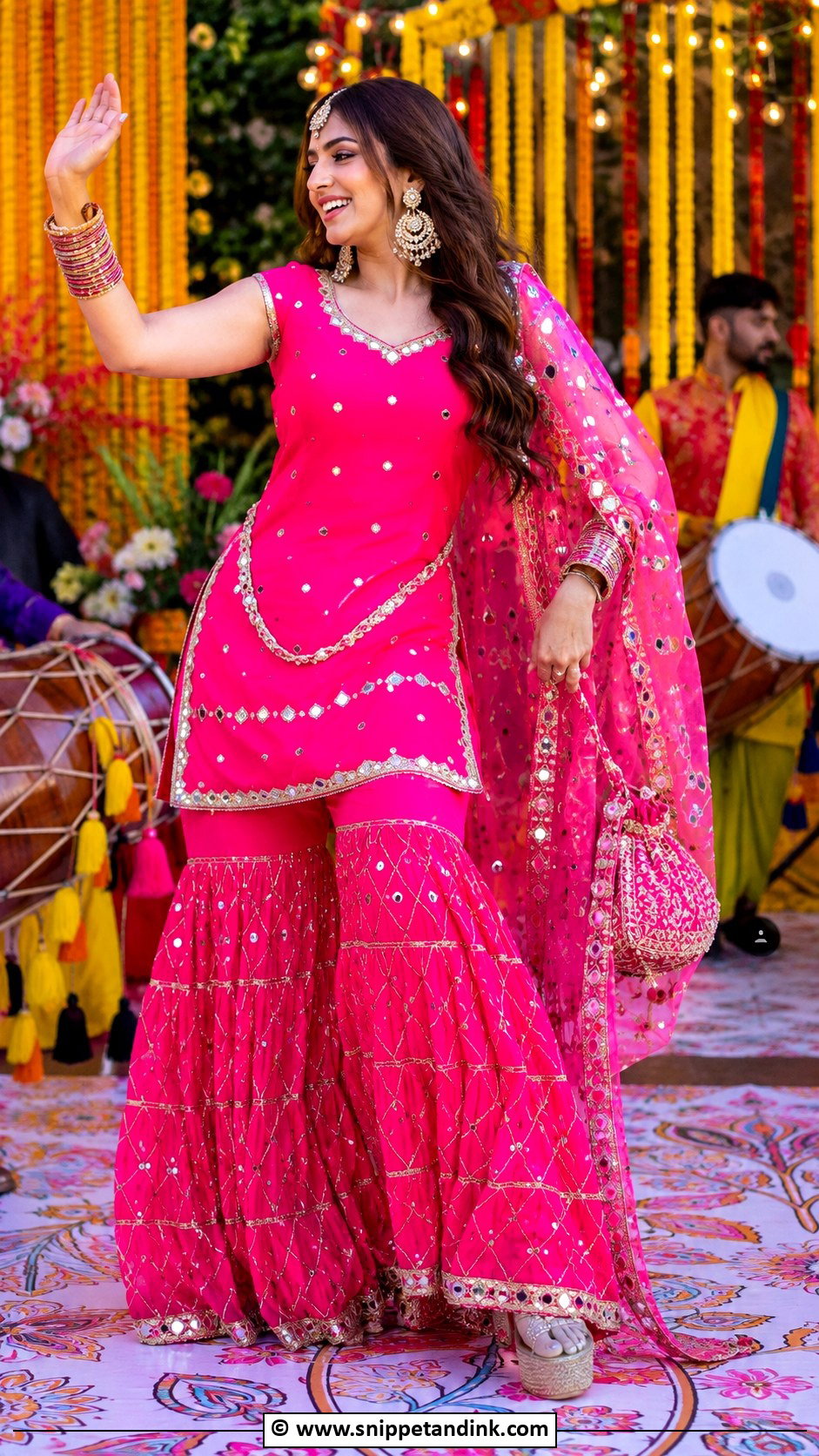
A sharara gives volume and swing when you spin, which is half the fun at a Jaggo. A short or mid-length kurta over flared sharara pants, with embroidery at the hem, sleeves and dupatta border, looks wedding-ready. Teal, pink, yellow and maroon suit the shape. The thing I check is the hem length: a sharara that touches the floor in heels will drag in the dust once you switch to flat juttis, so I hem it to the shoes you’ll actually dance in. Jhumkas and a potli bag complete it.
13. Gharara Punjabi Suit For Jaggo
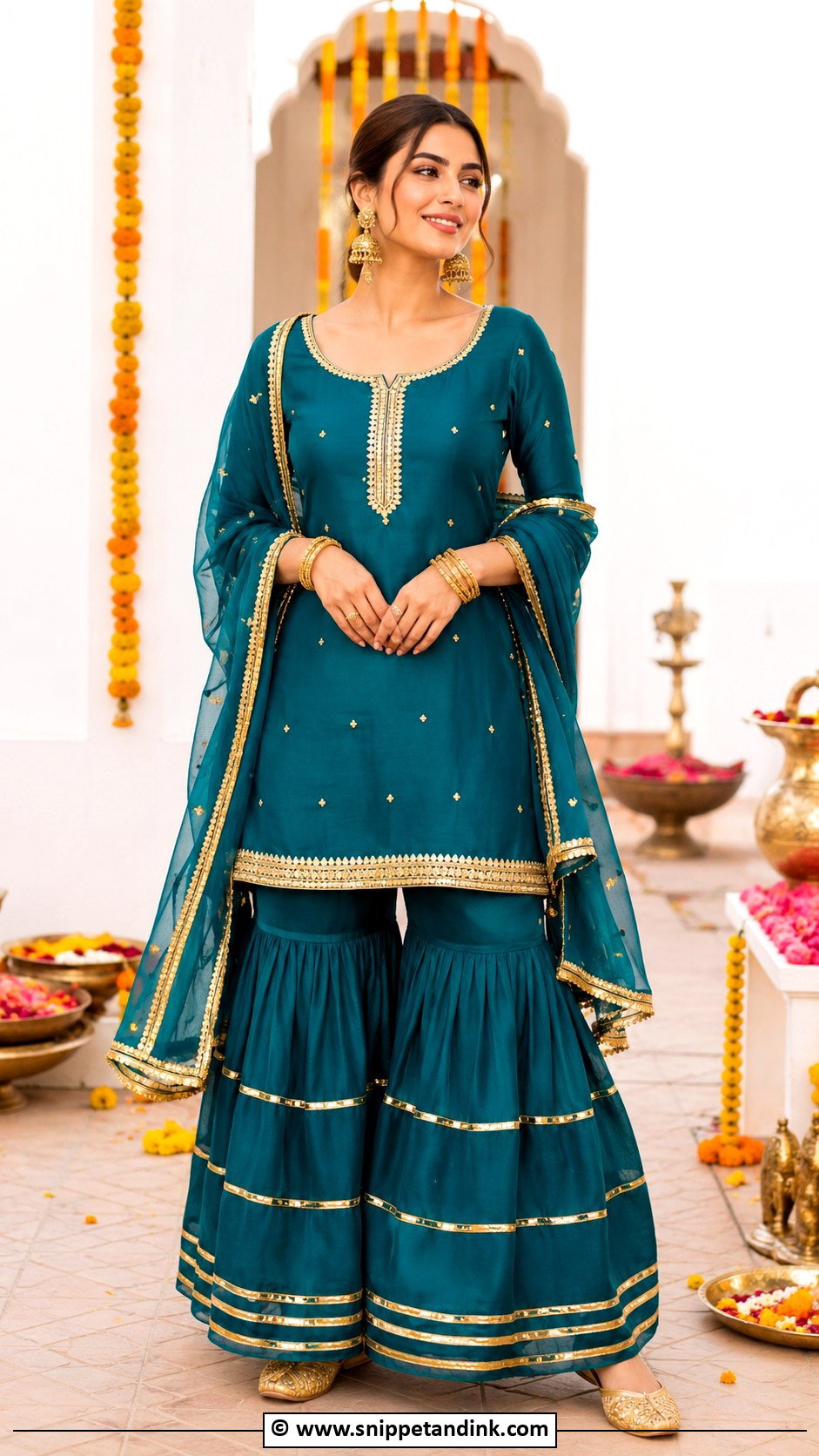
The gharara is fitted to the knee and then flares from a joined panel, which gives a vintage shape that moves well in dancing. Georgette, silk or brocade give a polished finish, and gota patti, zari, mirror work or lace borders highlight the flare. Brocade ghararas are heavier than they look on the hanger, so I suggest them for sisters and cousins doing photos more than the full procession. A matching dupatta, statement earrings and embroidered juttis or low heels complete it.
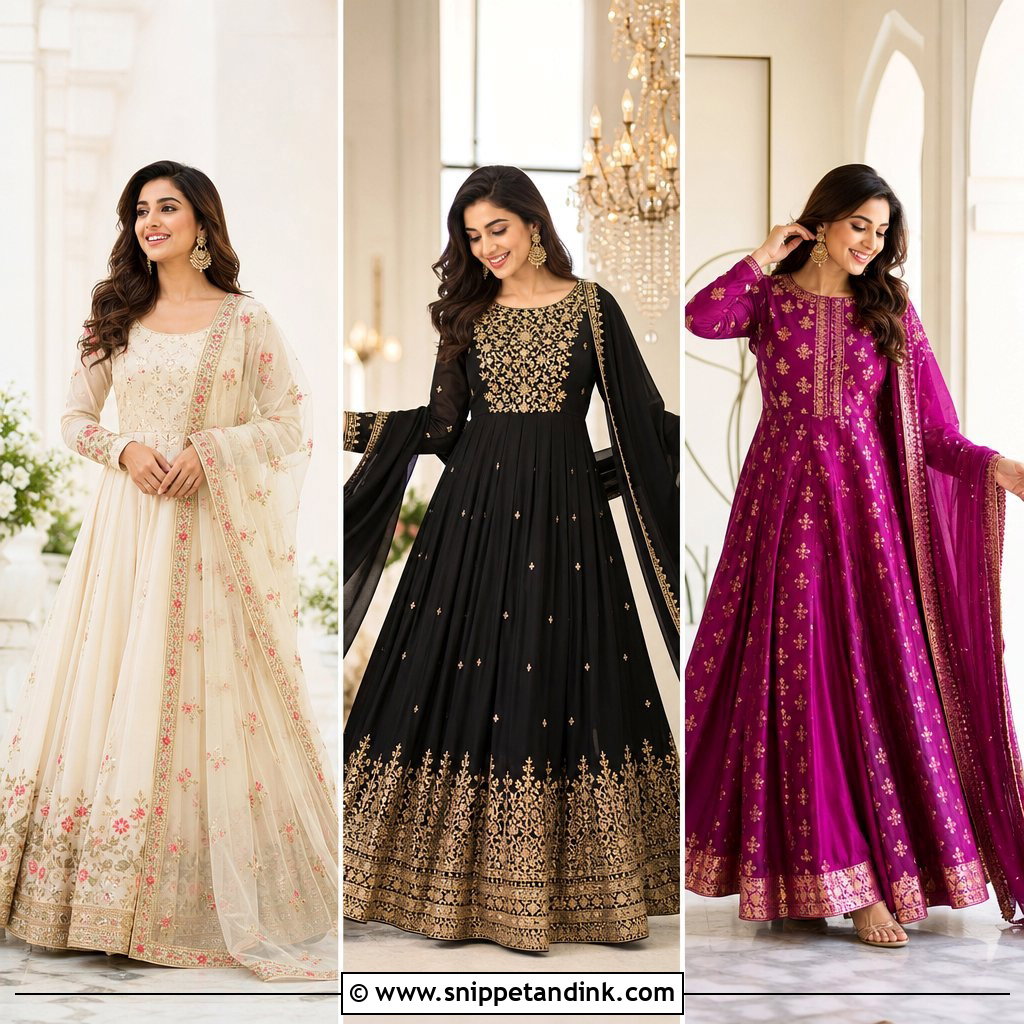
14. Anarkali Punjabi Suit For Jaggo
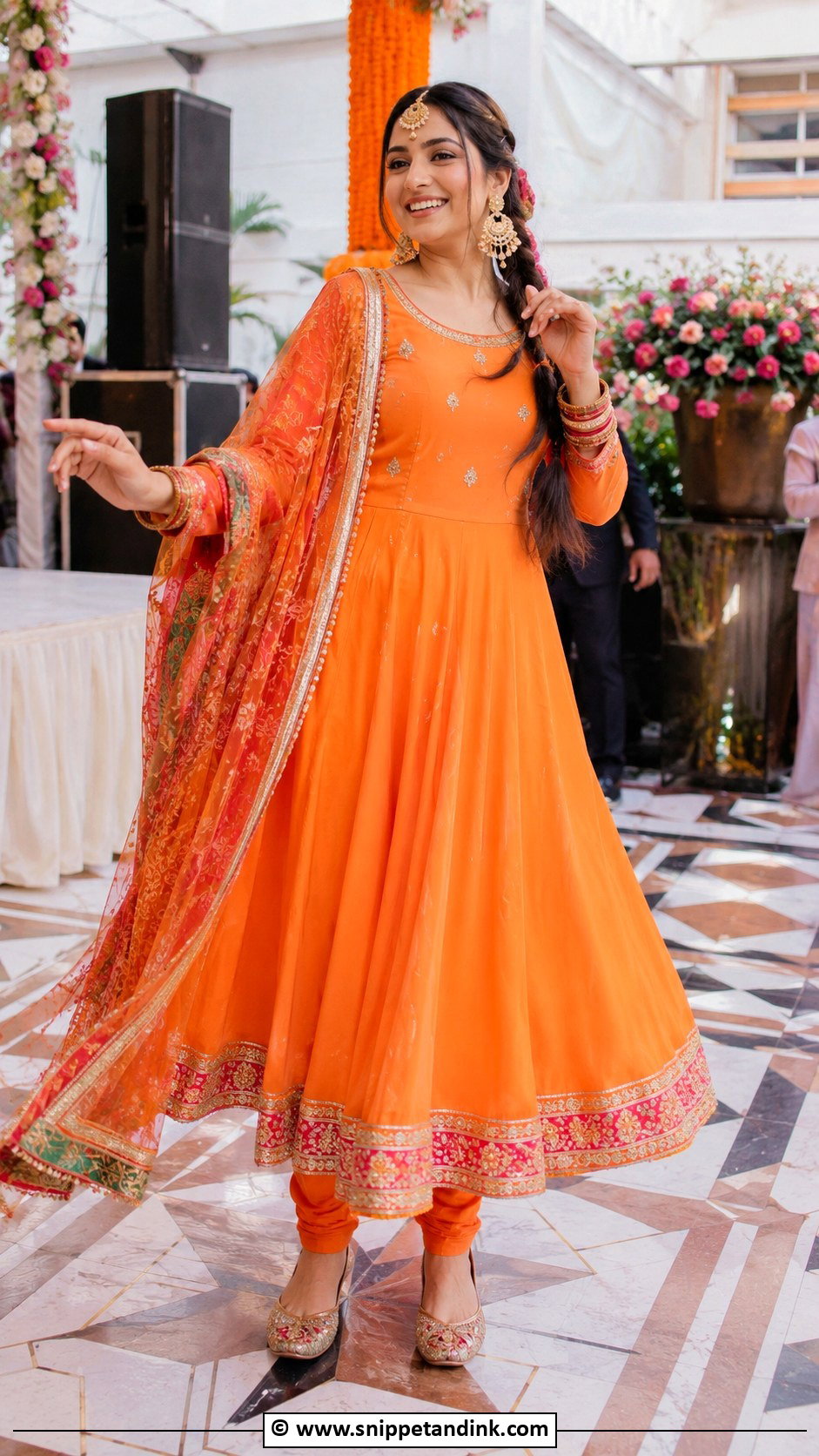
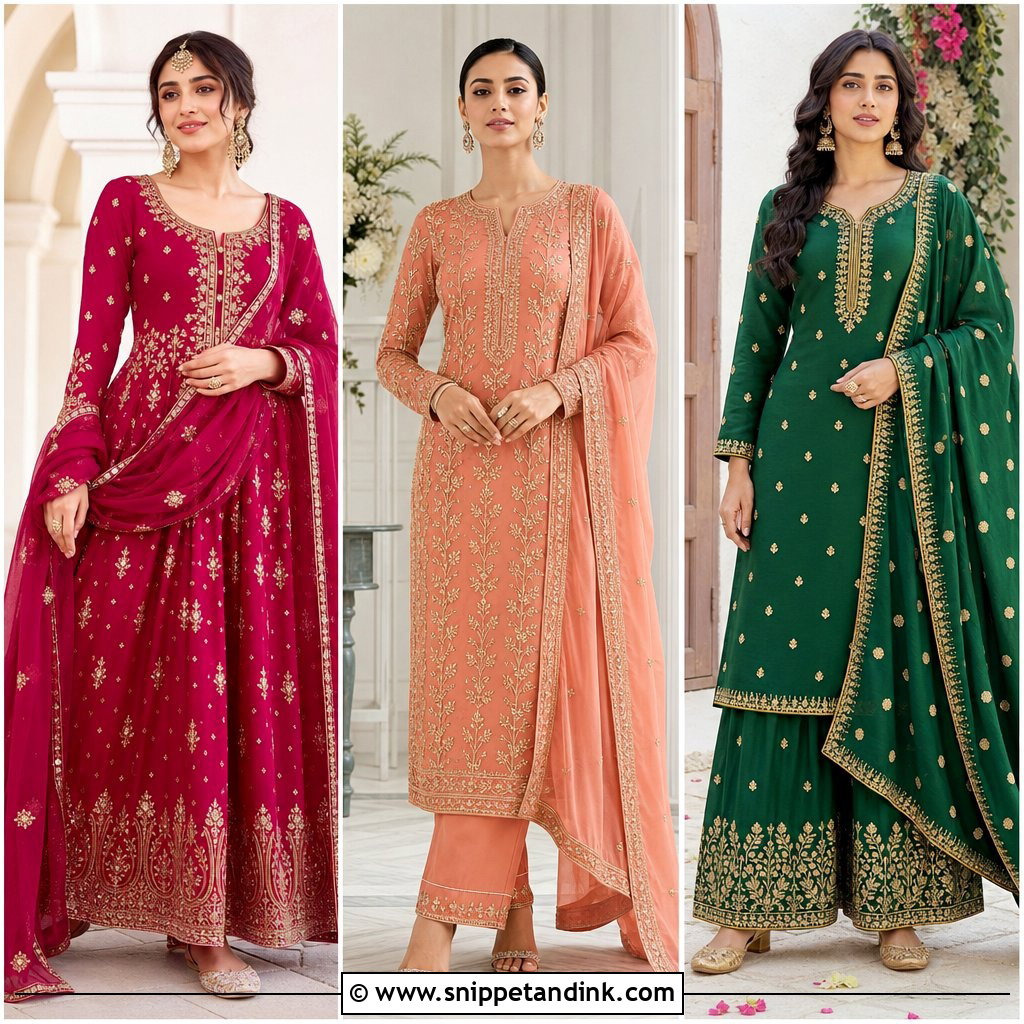
An Anarkali flows beautifully, but length decides whether you can dance in it. I recommend knee or calf length for a Jaggo; floor-length versions look dramatic but collect dust and get stepped on in a crowded gidda circle. Bright shades, printed panels, mirror work and gota borders keep it festive. Pair it with churidar or slim trousers and a light dupatta, then chandbali earrings, bangles and juttis or comfortable heels.
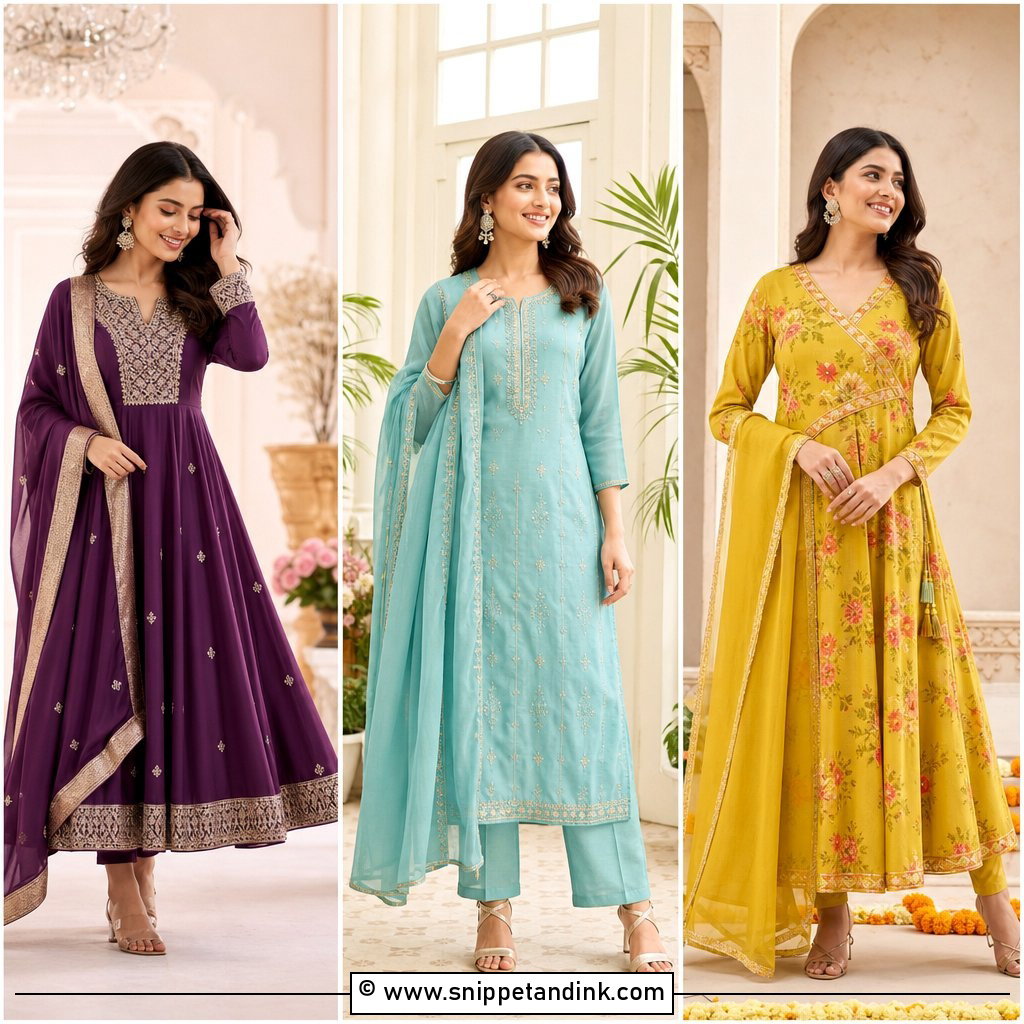

15. Straight Cut Punjabi Suit For Jaggo
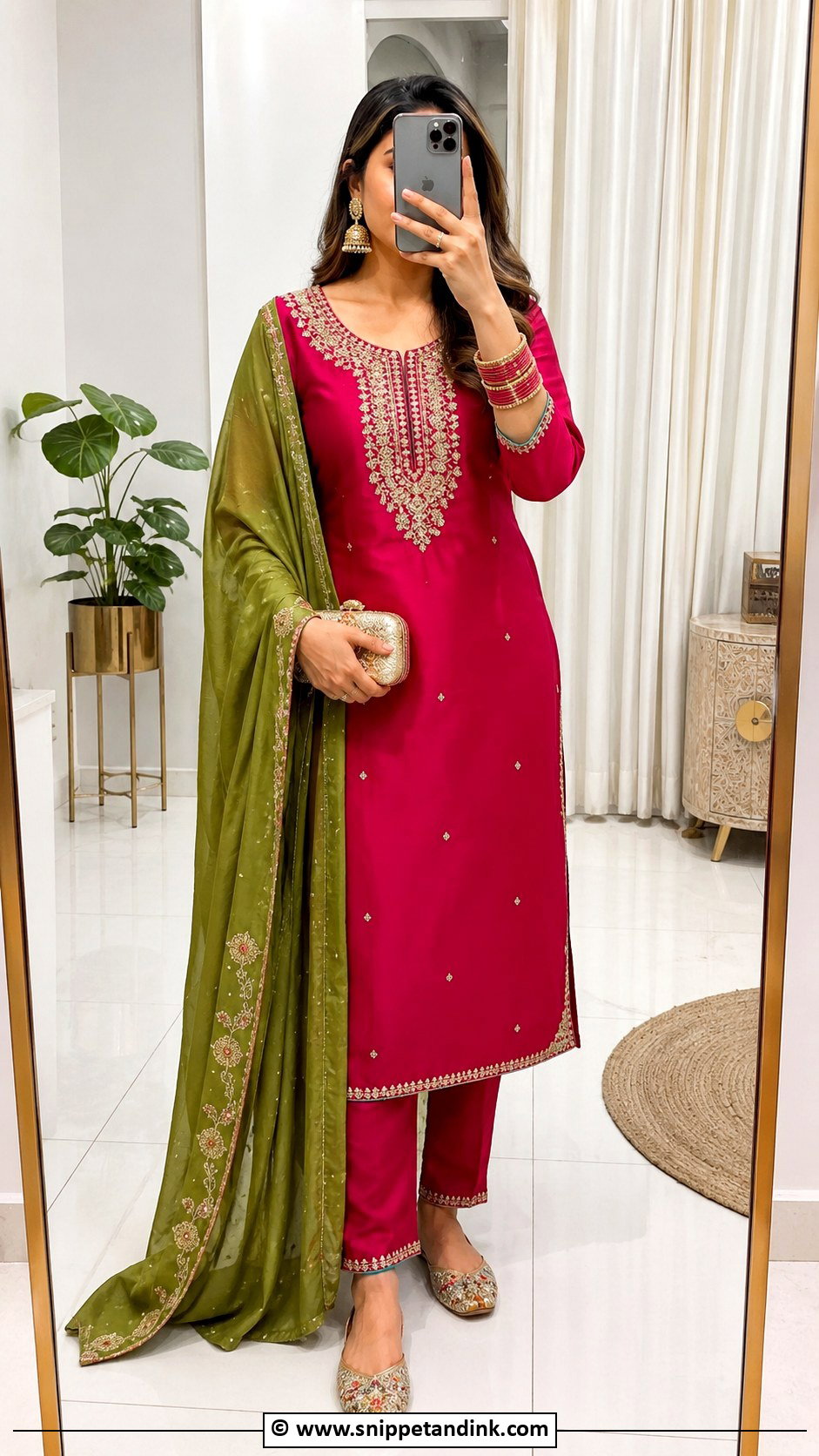
The straight cut is my answer for the aunt or guest who wants polish with minimal fuss. Embroidery at the neckline, cuffs and side slits, worn with cigarette pants, palazzos or a classic salwar, creates a clean vertical line that suits many body types. Check the side slits: if they stop too low, you can’t take a full stride or sit cross-legged on the floor. A bright dupatta adds festivity to a minimal suit, and jhumkas, bangles, a sleek clutch and embellished flats finish it.
16. Palazzo Punjabi Suit For Jaggo
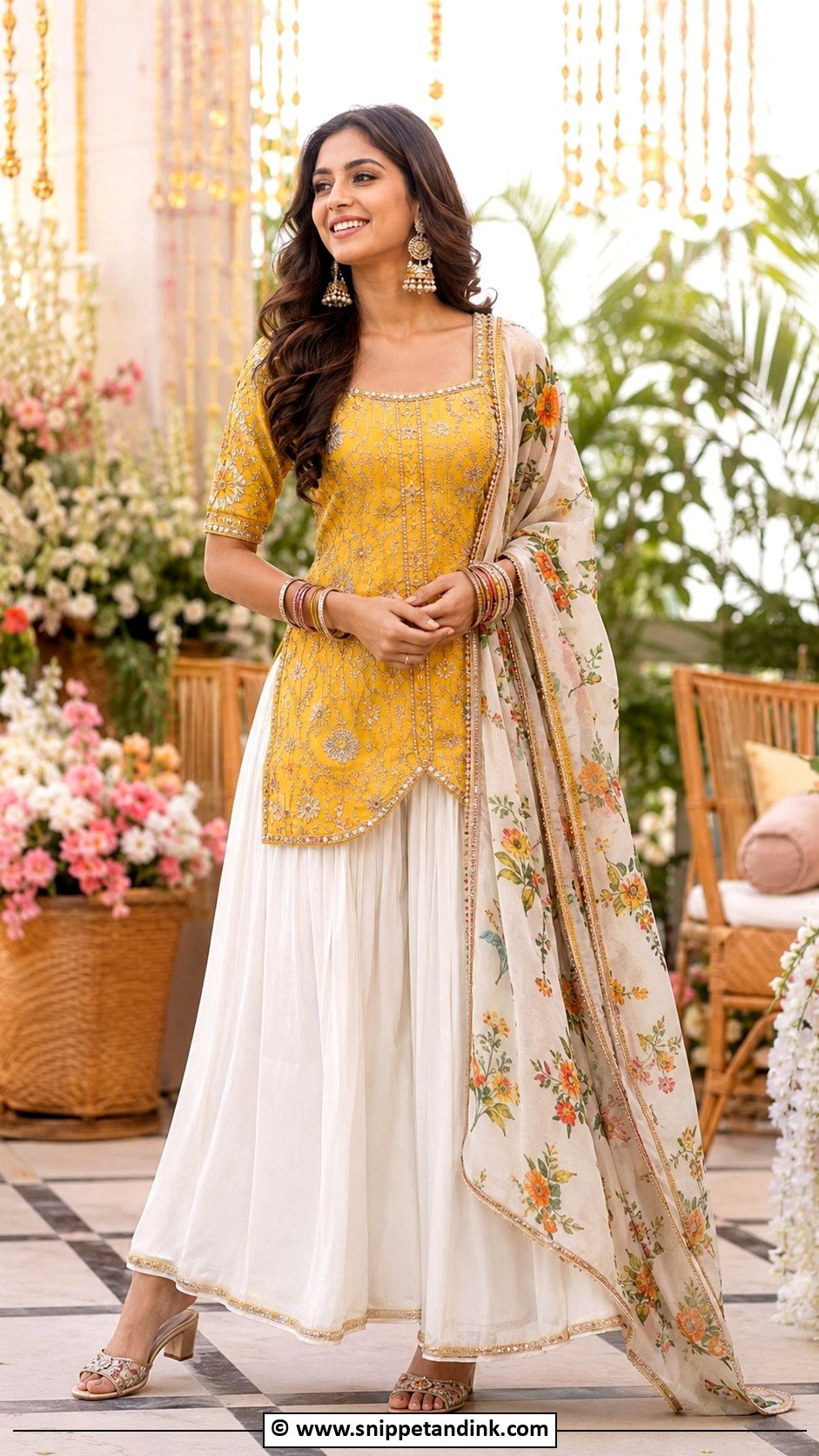
Palazzos are the most comfortable bottom on this list. The wide leg lets air move around you on a warm night while still looking dressy with a short or straight kurta in embroidery, block print, mirror work or gota. Georgette, rayon, crepe and silk blends all drape well. Rayon creases quickly when you sit on the floor for boliyan, so I prefer crepe for a long evening. Statement earrings, a few bangles and juttis or block heels finish it.
17. Churidar Punjabi Suit For Jaggo
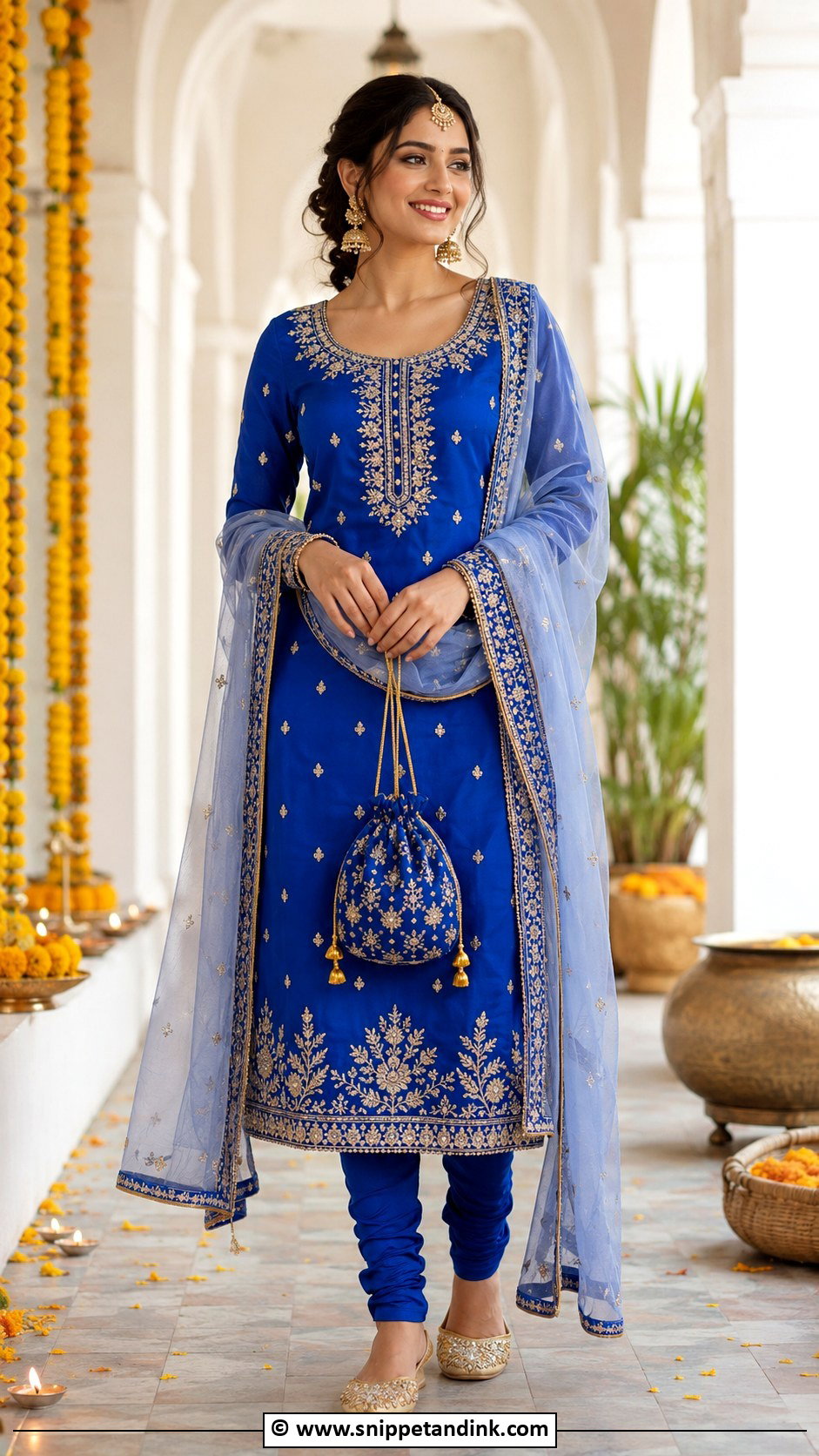
Churidar balances a longer kurta, an Anarkali or an embroidered straight suit with a fitted, tailored line. Petite women in particular look taller in it, because nothing breaks the leg. Choose bright threadwork, zari or mirror detail on the kurta, and a chiffon or organza dupatta for movement. The one fit issue I watch is the ankle gathers: too tight and you’ll feel them after an hour of dancing, so I have them cut with stretch or a little extra length. Jhumkas, metallic juttis and a potli bag complete it.
18. Cotton Silk Punjabi Suit For Jaggo
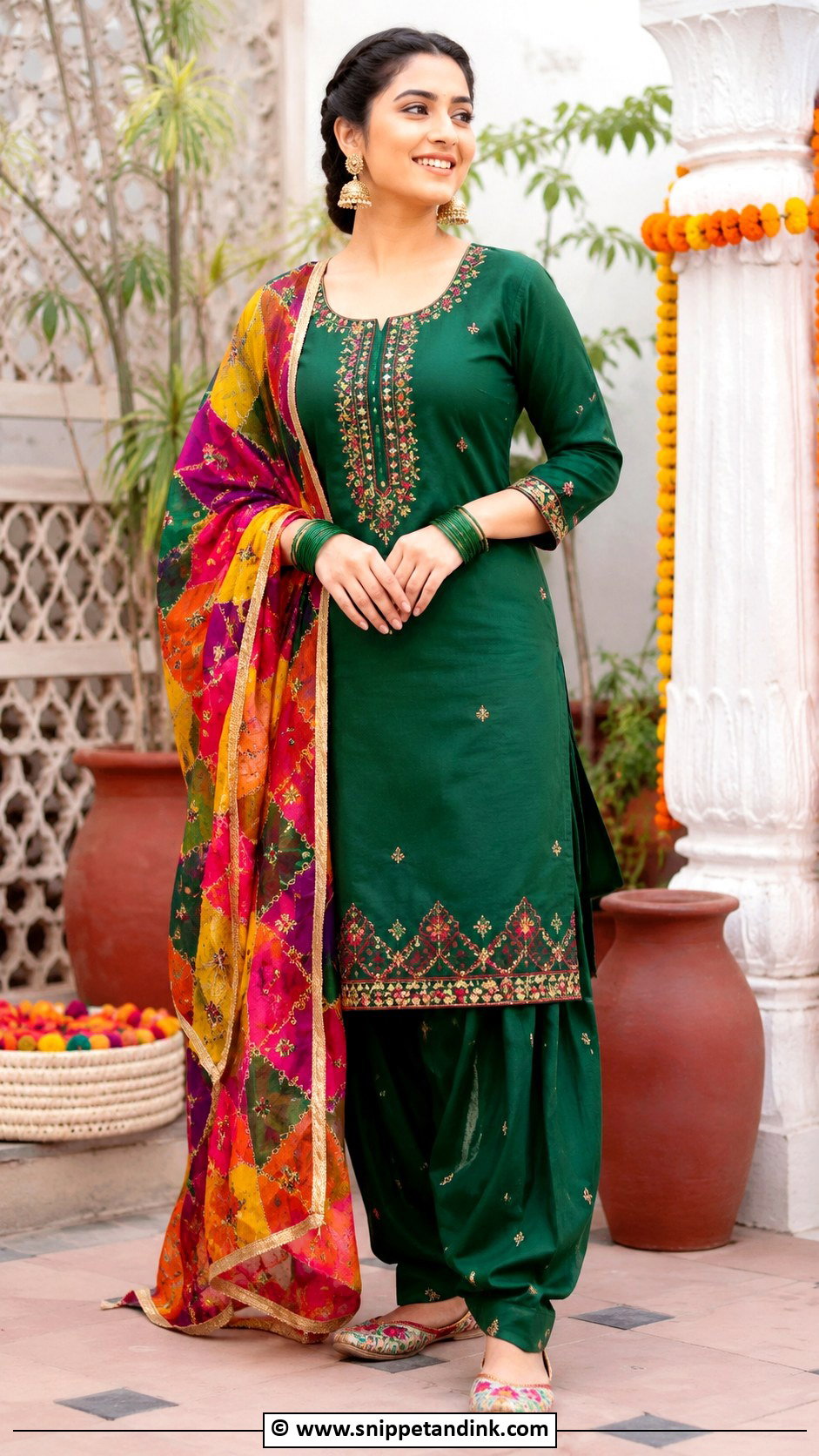
Cotton silk is my go-to for an outdoor Jaggo in summer. It has the sheen of silk but breathes, so you don’t overheat in a packed courtyard. Emerald, magenta, mustard or royal blue with light zari or woven borders looks rich without weight. Pair the kurta with a salwar, palazzo or straight pants, and bring colour back in with a printed or phulkari dupatta. Gold earrings, glass bangles and juttis keep it traditional.
19. Silk Punjabi Suit For Jaggo
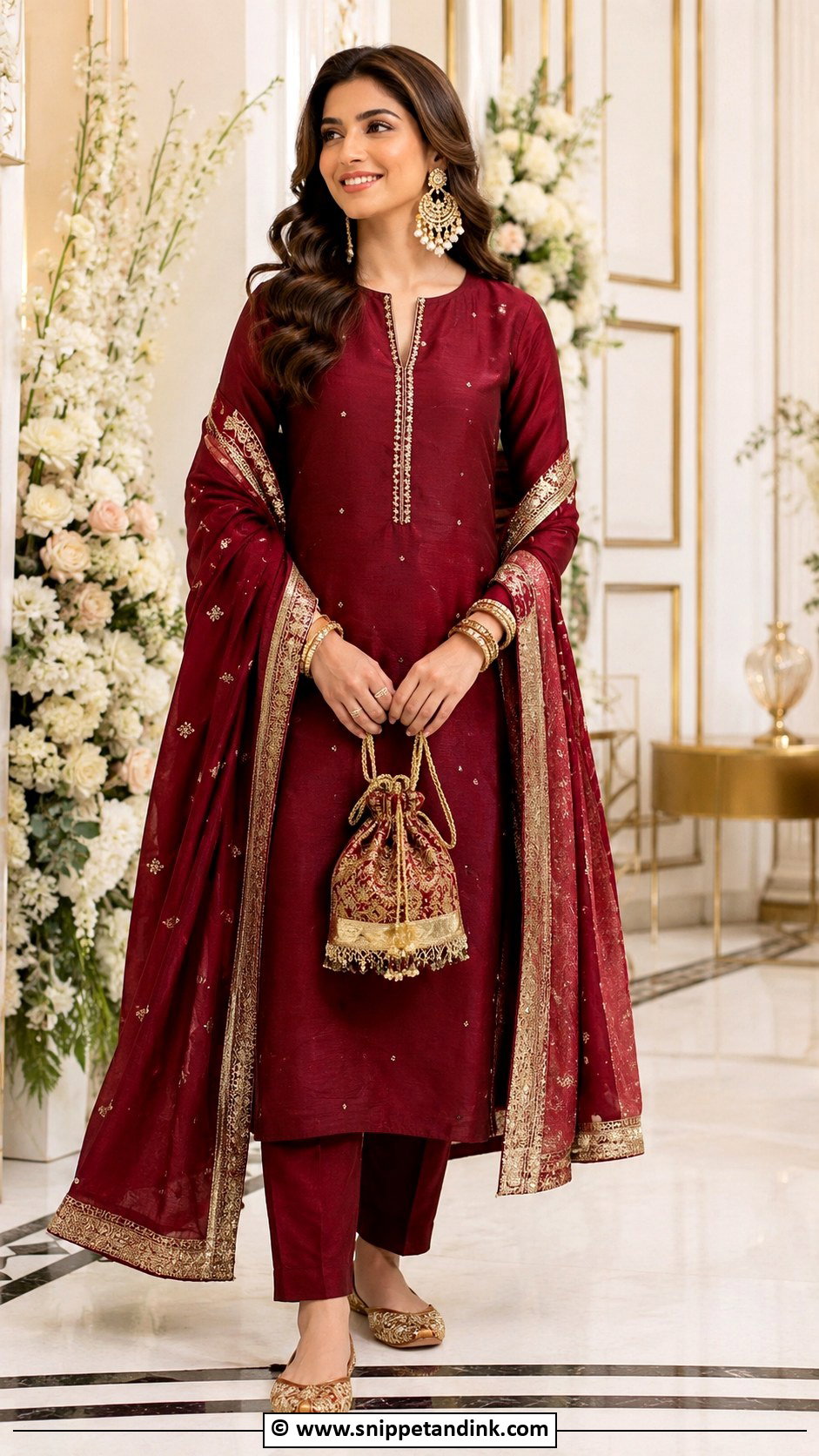
Raw silk, Banarasi and silk blends give structure and a dressy shine. A short silk kurti with a Patiala is traditional; a straight silk suit with embroidered pants is more refined. Maroon, emerald, navy, purple and gold all suit evening. Silk shows sweat at the underarm, so I add dress shields inside the kurta before any dancing night. With so much natural shine, keep accessories to kundan jewelry, bangles, a potli bag and embroidered juttis.

20. Georgette Punjabi Suit For Jaggo
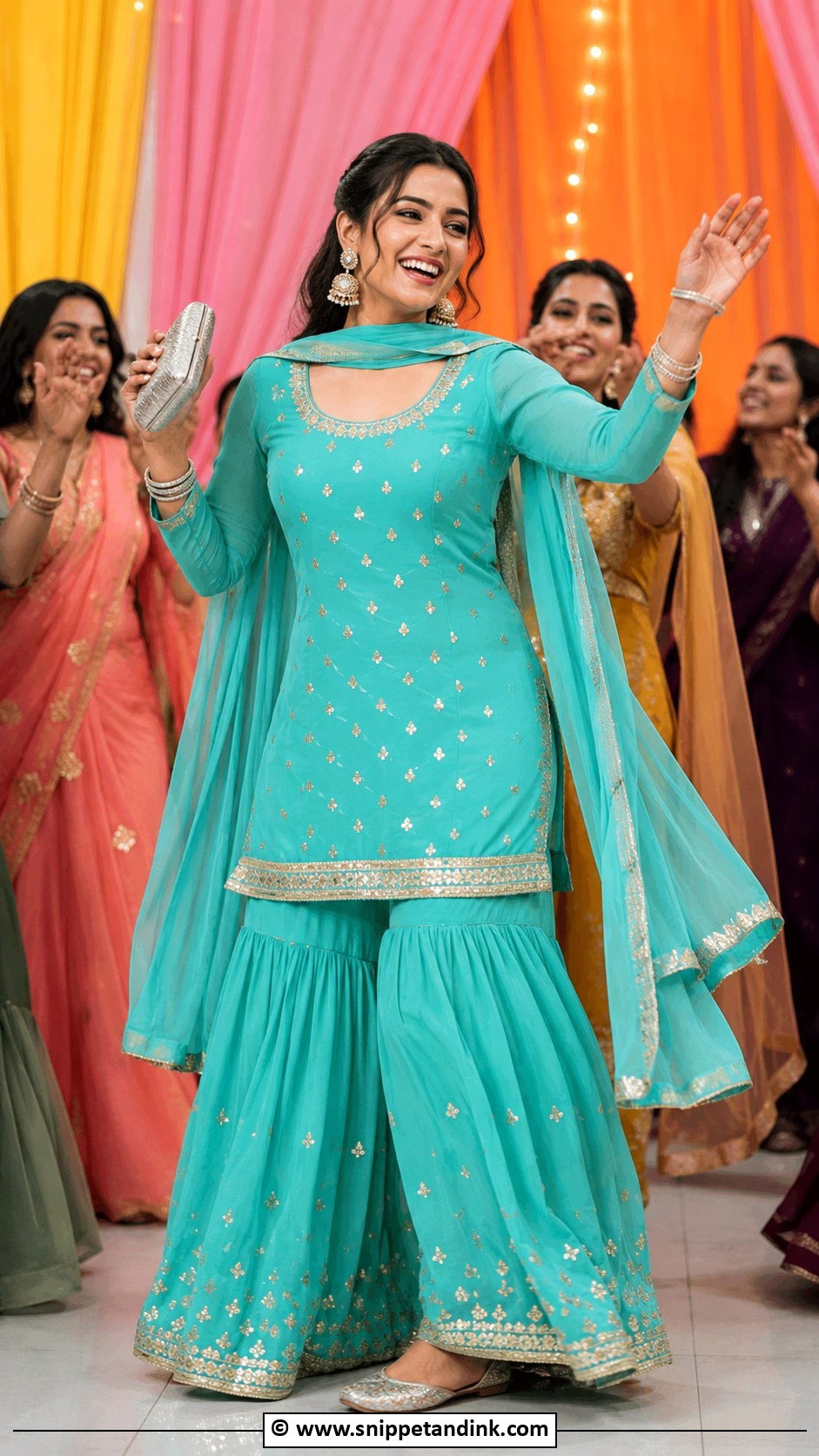
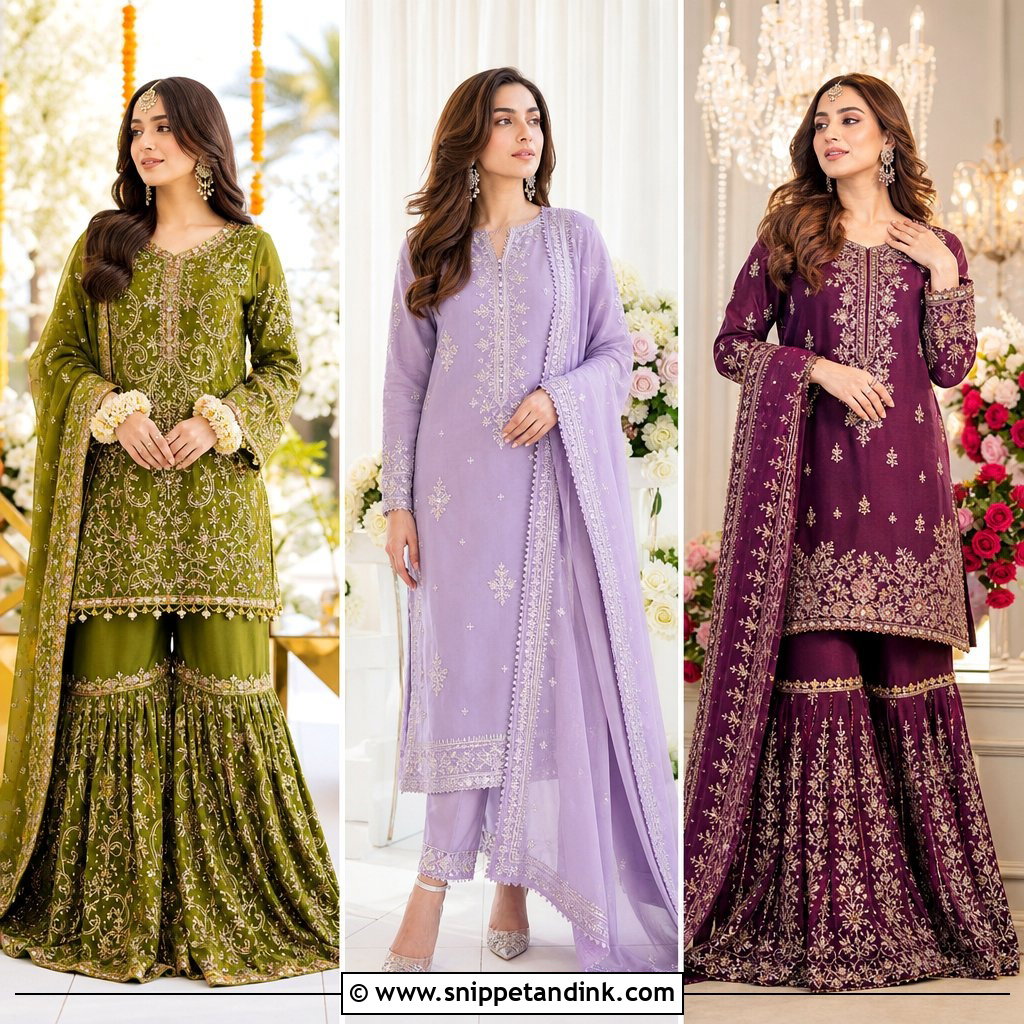
Georgette drapes softly and moves with you, which makes it easy for dancing and walking. A georgette suit with sequins, mirror work or thread embroidery sparkles without stiffness, as a sharara, palazzo or straight pant set. One honest caution: most party georgette is polyester, and polyester melts if a diya flame catches the dupatta, so I keep georgette dupattas pinned close when the jaggo pot is lit. Jhumkas, bangles, a compact clutch and comfortable heels or juttis complete the outfit.
21. Organza Dupatta Punjabi Suit For Jaggo
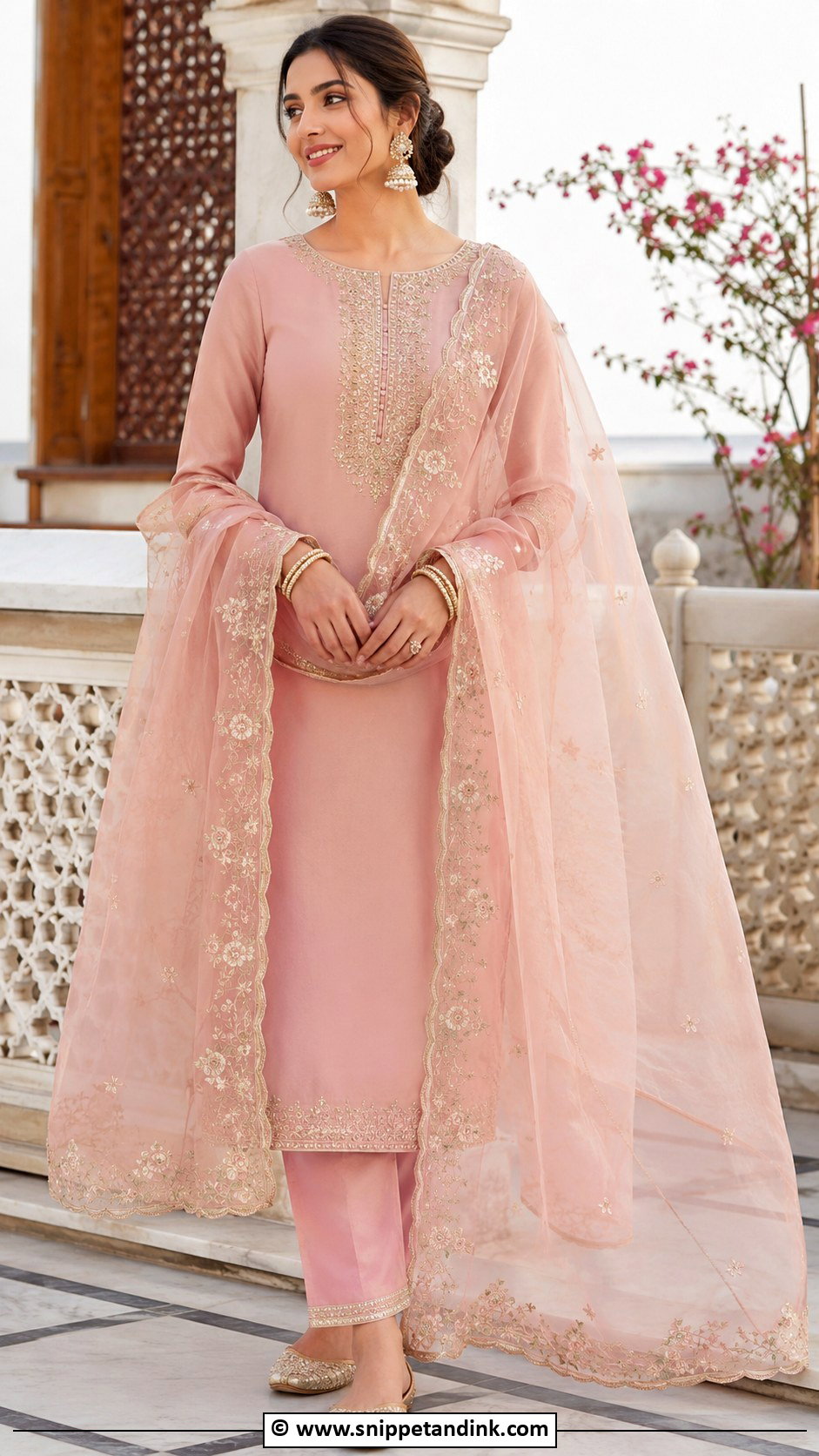
An organza dupatta is the quickest upgrade I know for a plain kurta and salwar. Embroidered, scalloped, mirror-trimmed or gota-bordered organza adds a crisp, sheer finish with almost no weight. Pastel suits with bright organza dupattas look modern; jewel-toned suits with gold borders look traditional. Organza is stiff, so it slides off the shoulder easily; I fix it with two small safety pins under the fold. Pearl or kundan earrings, bangles and embroidered juttis finish it.
22. Gota Patti Punjabi Suit For Jaggo
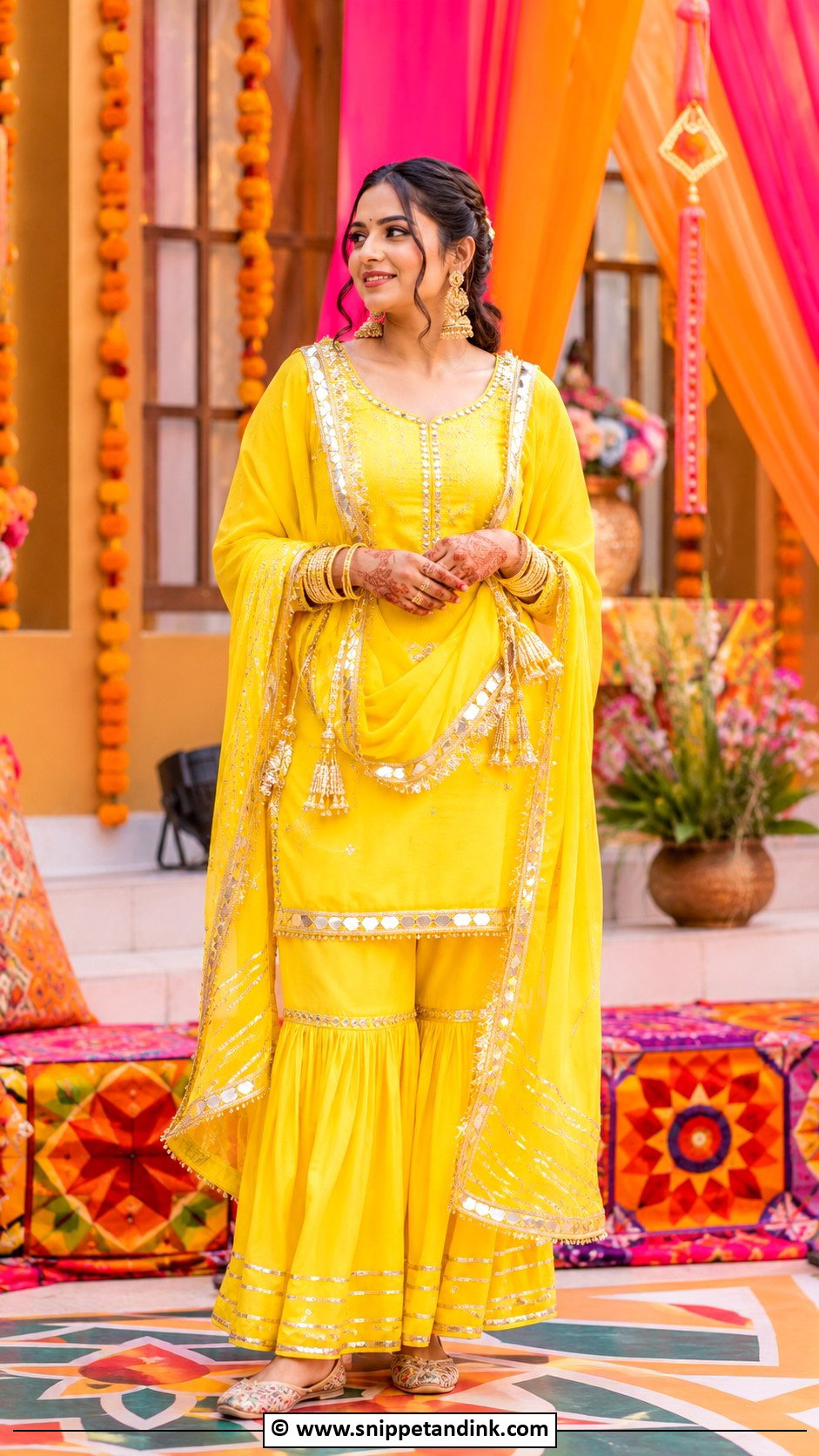
Gota patti is metallic ribbon appliqué, and at night it catches every light in the courtyard. A gota patti Punjabi suit in yellow, pink, green, orange or red feels traditional and joyful. Gota at the neckline, sleeves and hem, with a Patiala, sharara or palazzo, and a dupatta with gota borders makes a complete set. Real gota can tarnish if it gets damp, so I air the suit after the function before packing it away. Gold jhumkas, bangles and a small maang tikka suit it, with juttis or low heels for comfort.
23. Embroidered Punjabi Suit For Jaggo
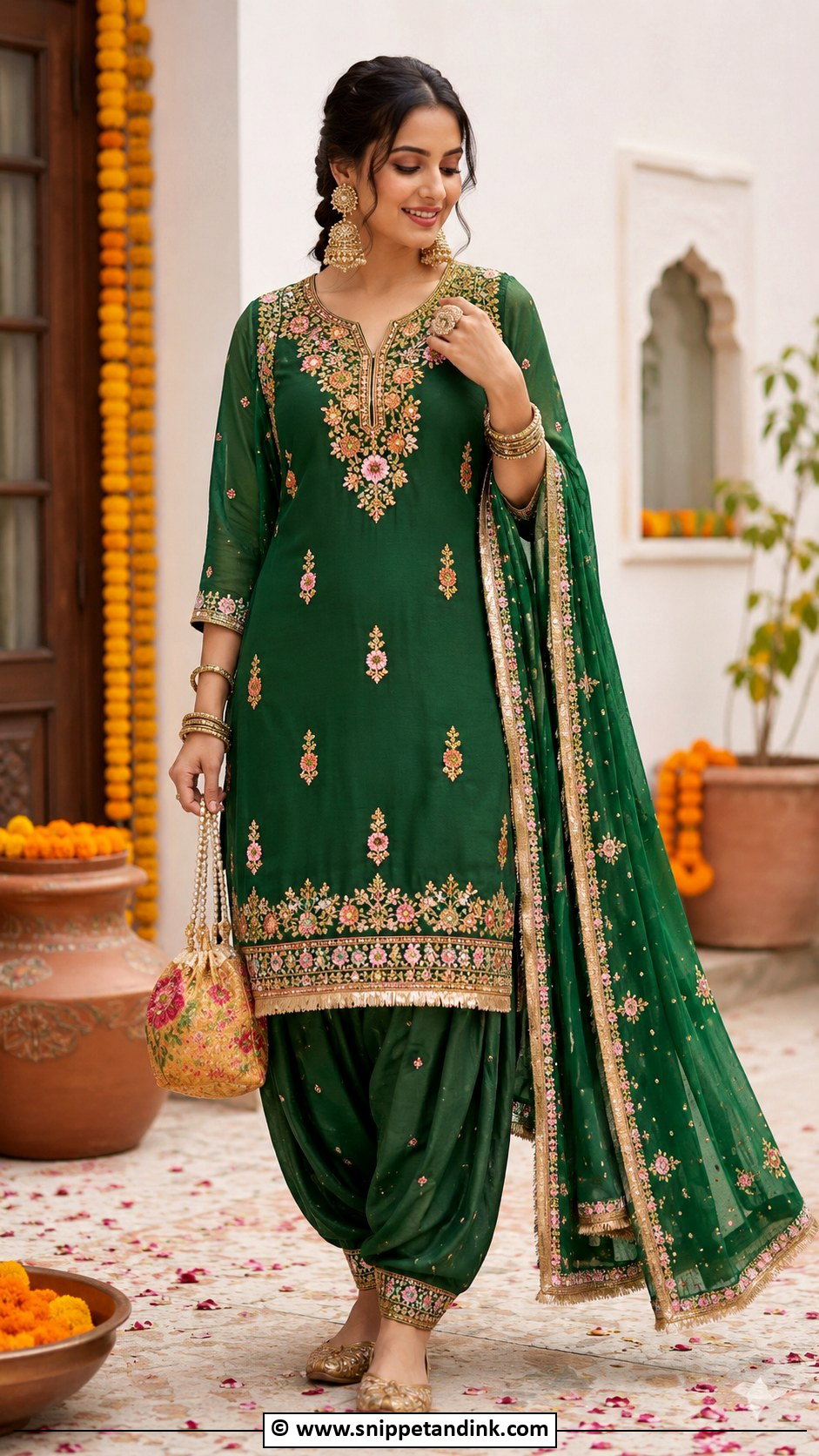
Embroidery lets you control exactly how dressed up you look, which is why it works for every age at a Jaggo. Resham, zari, sequins, mirror work and phulkari-style threadwork all suit the mood. My rule is simple: heavy embroidery on the kurta, plain bottoms; or a plain suit with an embroidered dupatta. Check the lining before you buy. Heavy zari scratches the skin through a thin lining, and you’ll feel it at the underarms after an hour of dancing. Statement earrings, juttis, bangles and a potli finish it.
24. Printed Punjabi Suit For Jaggo
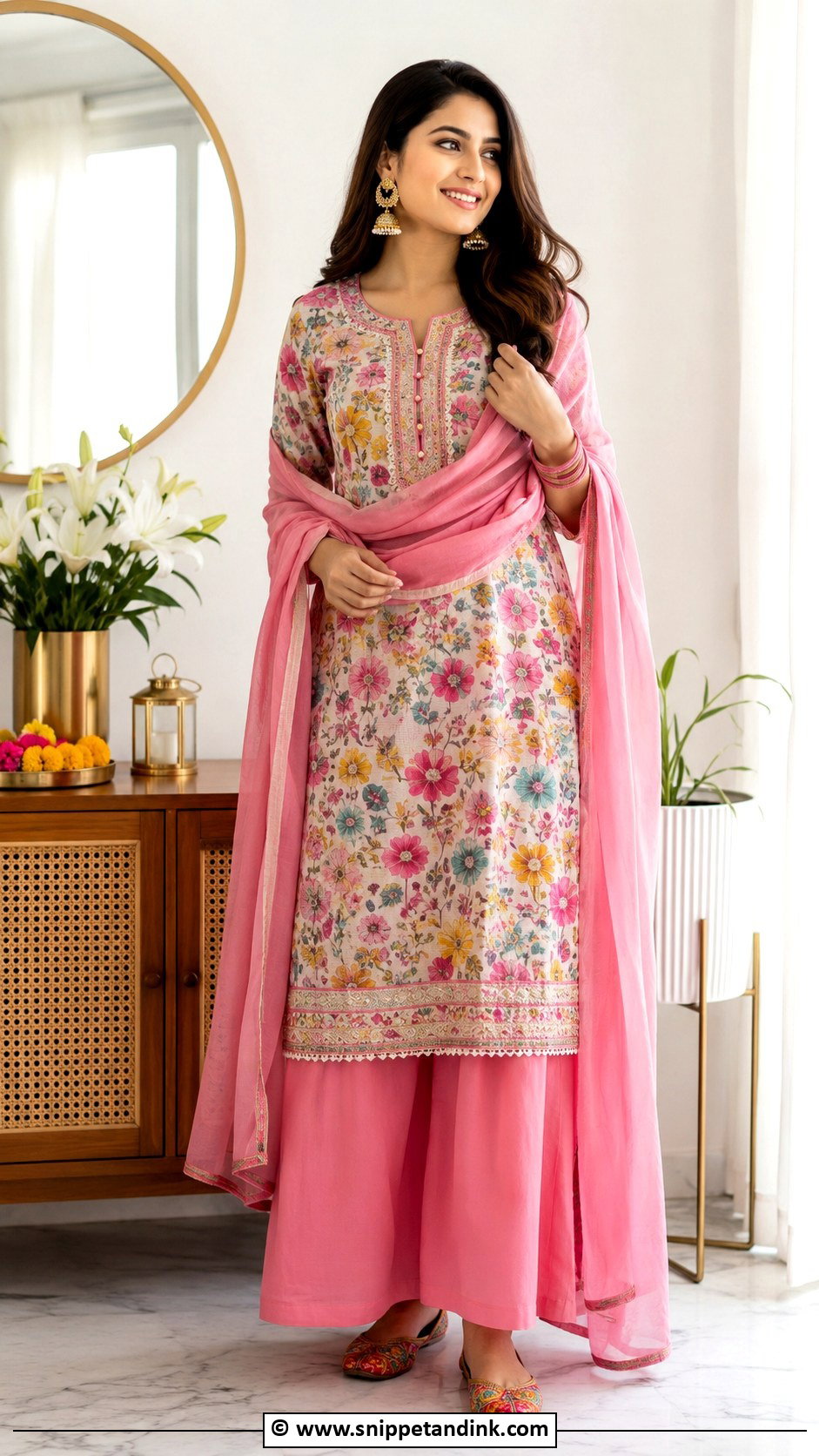
Printed suits are lighter and easier on a hot afternoon or a home gathering. Floral, paisley, block print or traditional motifs in bright shades pair with a solid Patiala or palazzo, and a dupatta that picks up one colour from the print. With a busy print, I keep jewelry to jhumkas and a few bangles. Block prints on cotton fade if washed hot, so if it’s new, wash it cold once before the event to settle the dye. Colourful juttis and soft makeup complete it.
25. Pastel Punjabi Suit For Jaggo
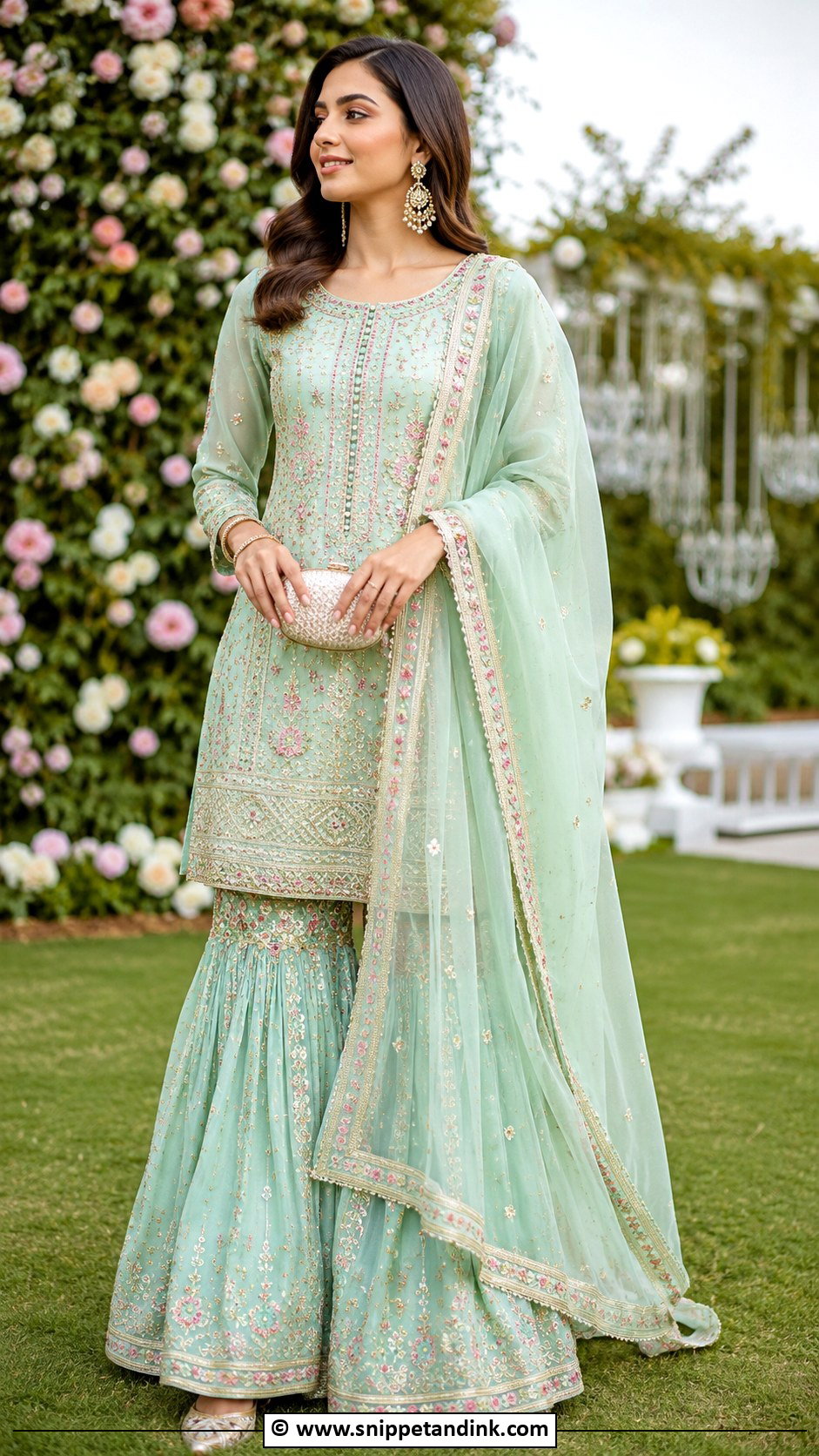
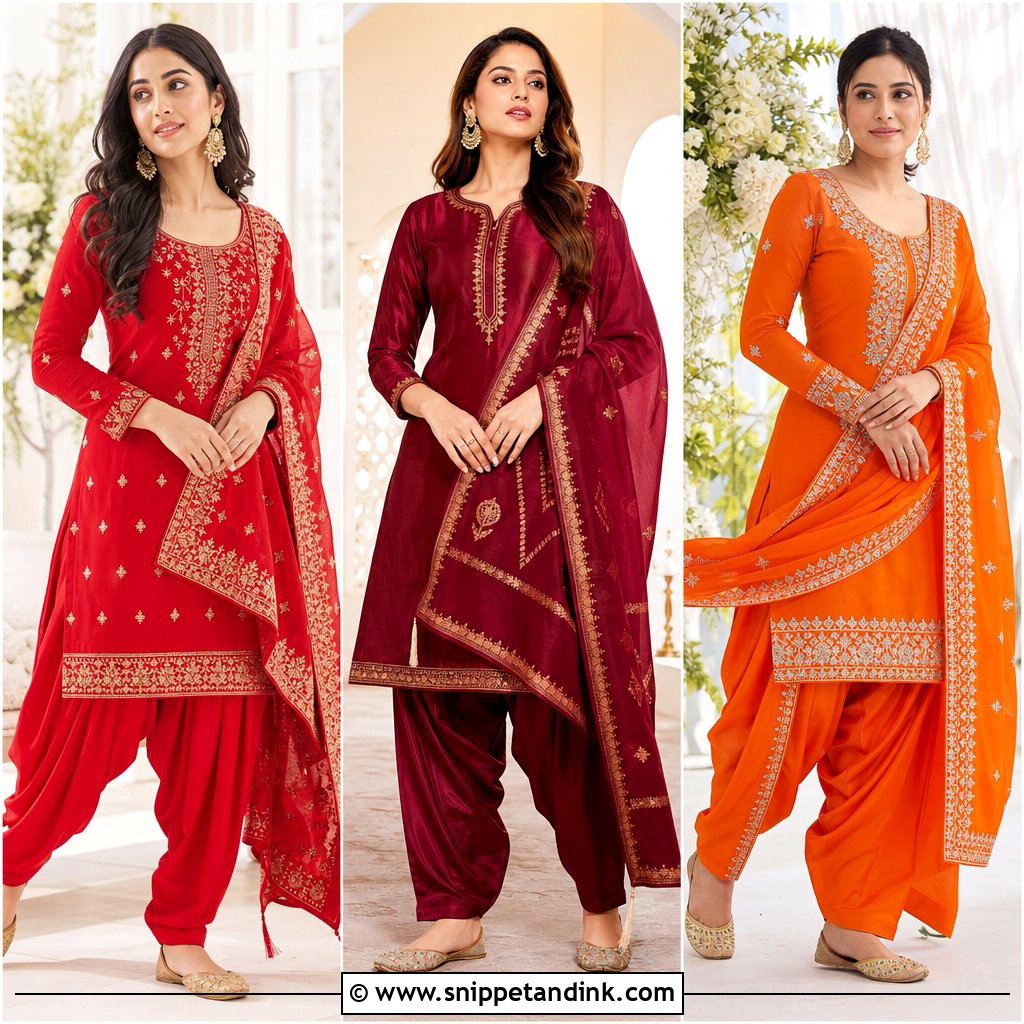
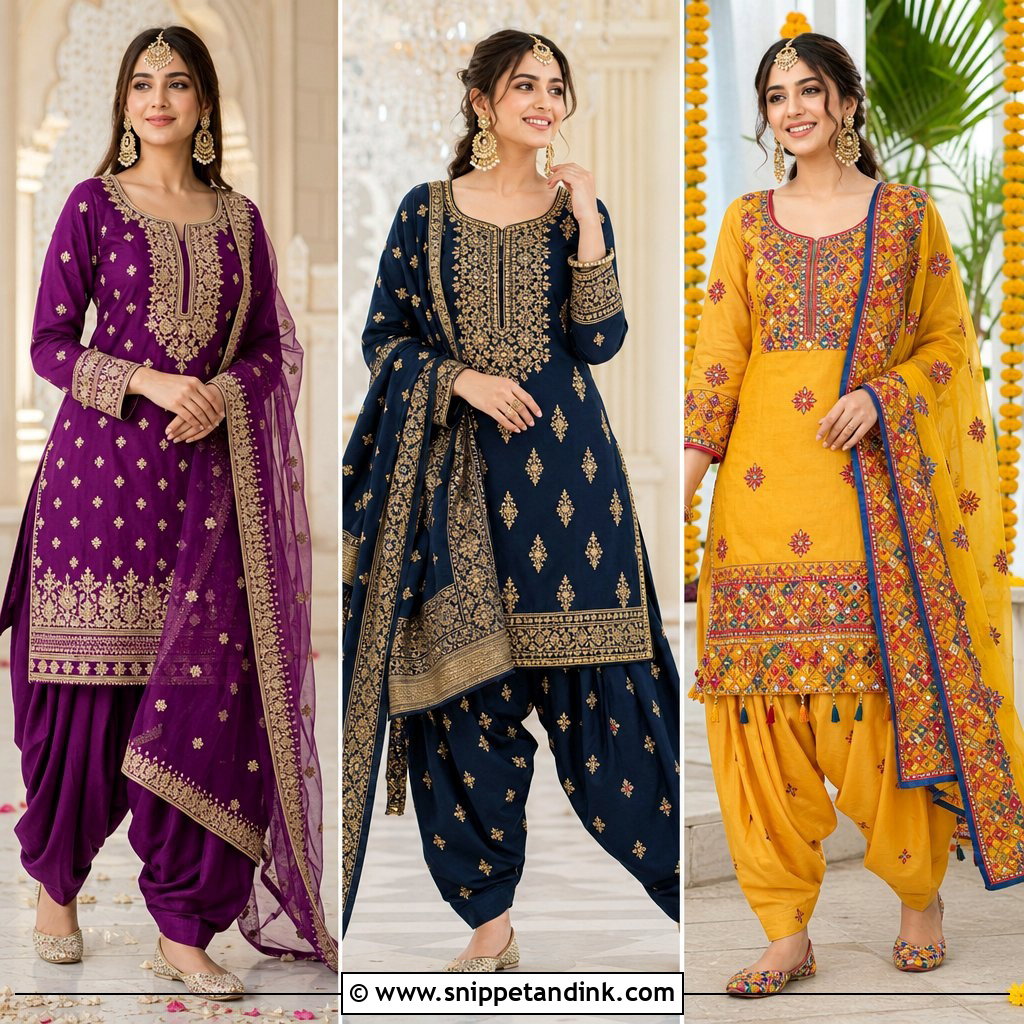
Pastels like mint, blush, powder blue, peach, lavender and pistachio look refined when they carry real embroidery: mirror work, pearl detail, gota borders or tonal threadwork. Without it, they can look washed out among all the bright colours in family photos. A pastel sharara, palazzo or straight suit feels modern but still traditional. Pearl earrings, kundan or delicate bangles, and metallic juttis or block heels finish it.
26. Multicolor Punjabi Suit For Jaggo
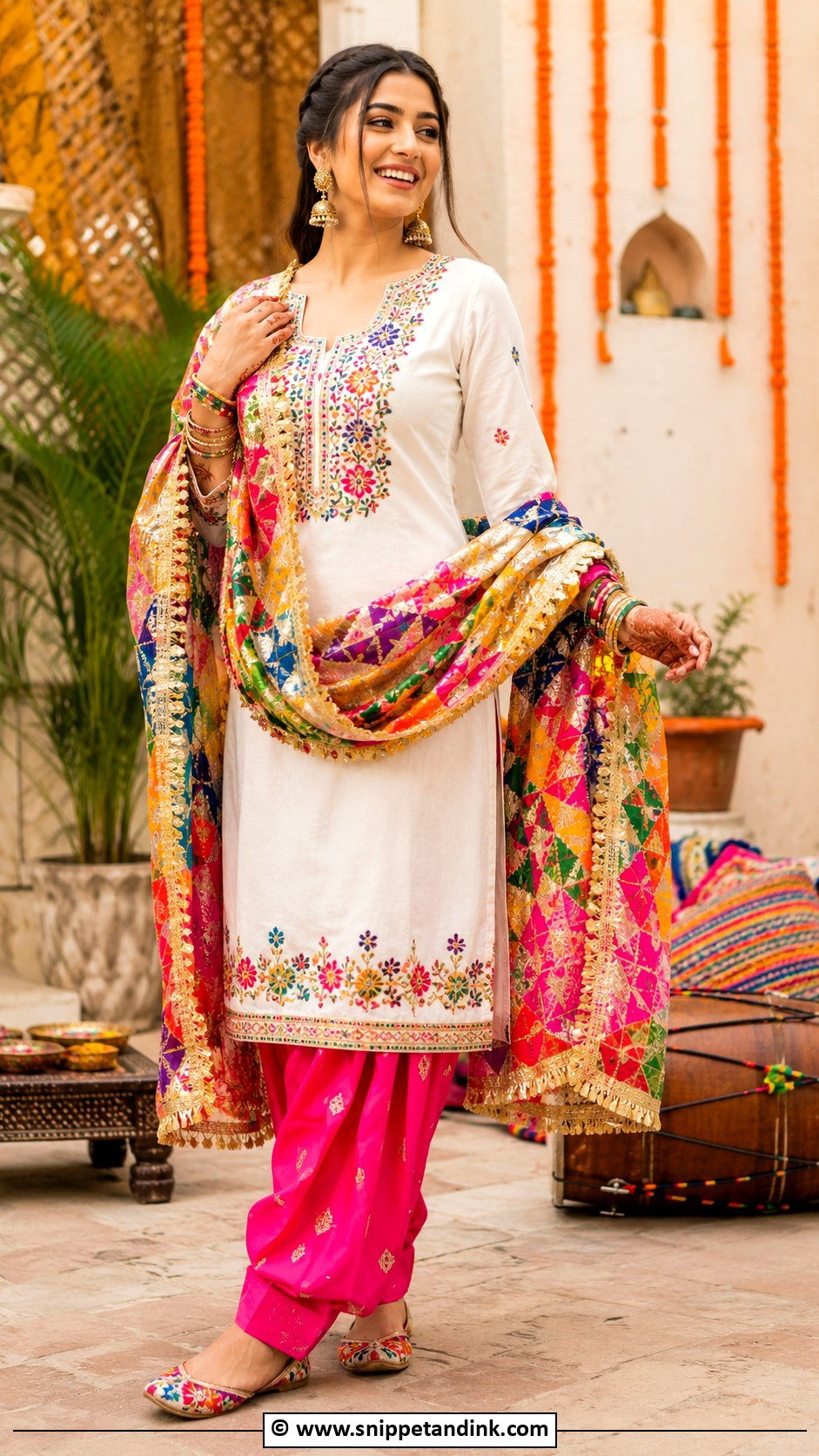
A multicolor Punjabi suit captures the mood of a Jaggo better than almost anything. Pink, orange, yellow, green and blue on a kurta or dupatta, balanced by a plain salwar or palazzo, keeps it from feeling overwhelming. Phulkari dupattas, striped borders, patchwork and colourful embroidery all suit it. I hold all the jewelry to one metal, gold or oxidized silver, so the outfit still looks planned. Neutral or matching juttis and a simple clutch complete it.
27. Jacket Punjabi Suit For Jaggo
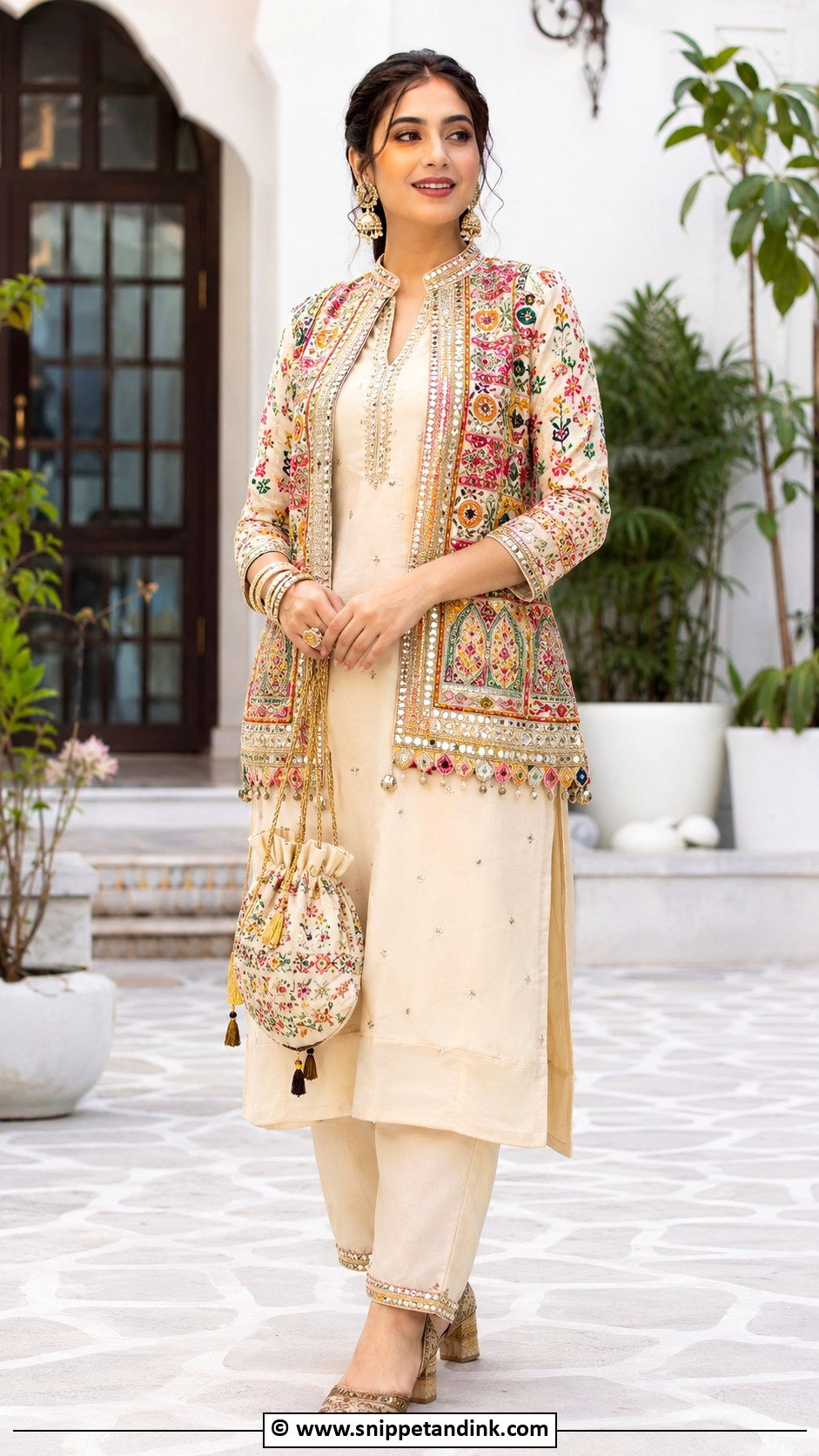
An embroidered jacket over a simple kurta set gives structure without a heavy dupatta, which is useful when you want both hands free to dance or carry the jaggo pot. Mirror work and phulkari-style jackets look festive over straight pants, palazzos or even a Patiala for a fusion feel. Make sure the jacket closes or sits open cleanly; a jacket that swings wide during gidda looks untidy in photos. Statement earrings, bangles and juttis or block heels finish it.
28. Short Kurti Patiala Suit For Jaggo
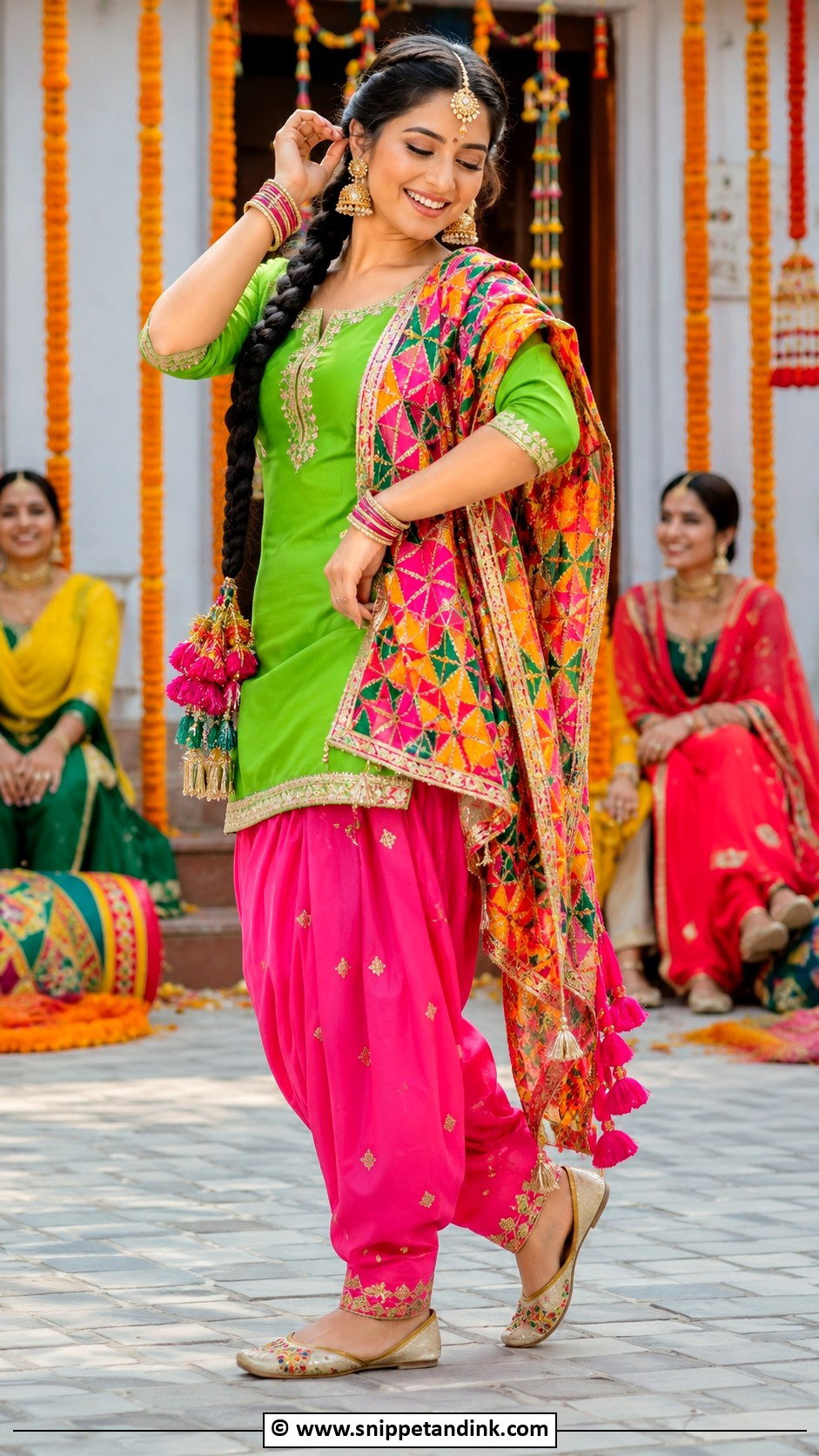
This is the classic Jaggo shape, and for good reason. The short kurti shows off every pleat of the Patiala, and the salwar gives your legs complete freedom for gidda. Choose bright colours, contrast combinations or embroidery at the neck and sleeves, with a phulkari or gota dupatta. A paranda braided into the hair adds the cultural touch I always suggest for this outfit. Jhumkas, bangles and Punjabi juttis complete it.
29. Heavy Dupatta Punjabi Suit For Jaggo
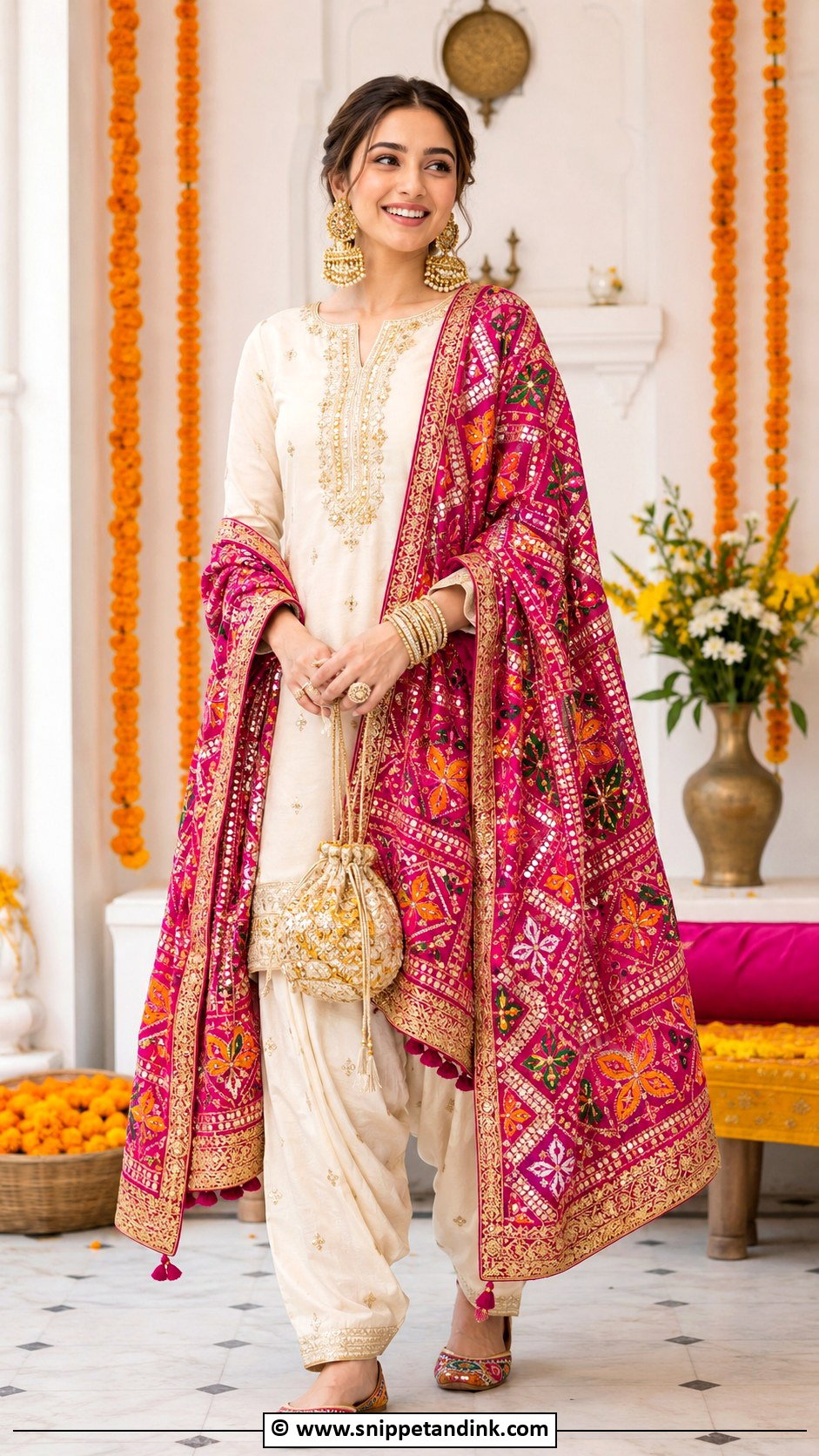
This is the trick I use most for family members on a budget or a long schedule: a plain or lightly embroidered kurta and salwar, carried by a statement dupatta in phulkari, Banarasi, mirror work, gota patti or embroidered net. The suit stays light enough to dance in while the dupatta does the photo work. Heavy dupattas pull on one shoulder, so I pin them at the back of the kurta as well as the front. Simple jewelry with a busy dupatta, bolder pieces with a plain one, then juttis, bangles and a potli bag.
30. Bride Sister Punjabi Suit For Jaggo
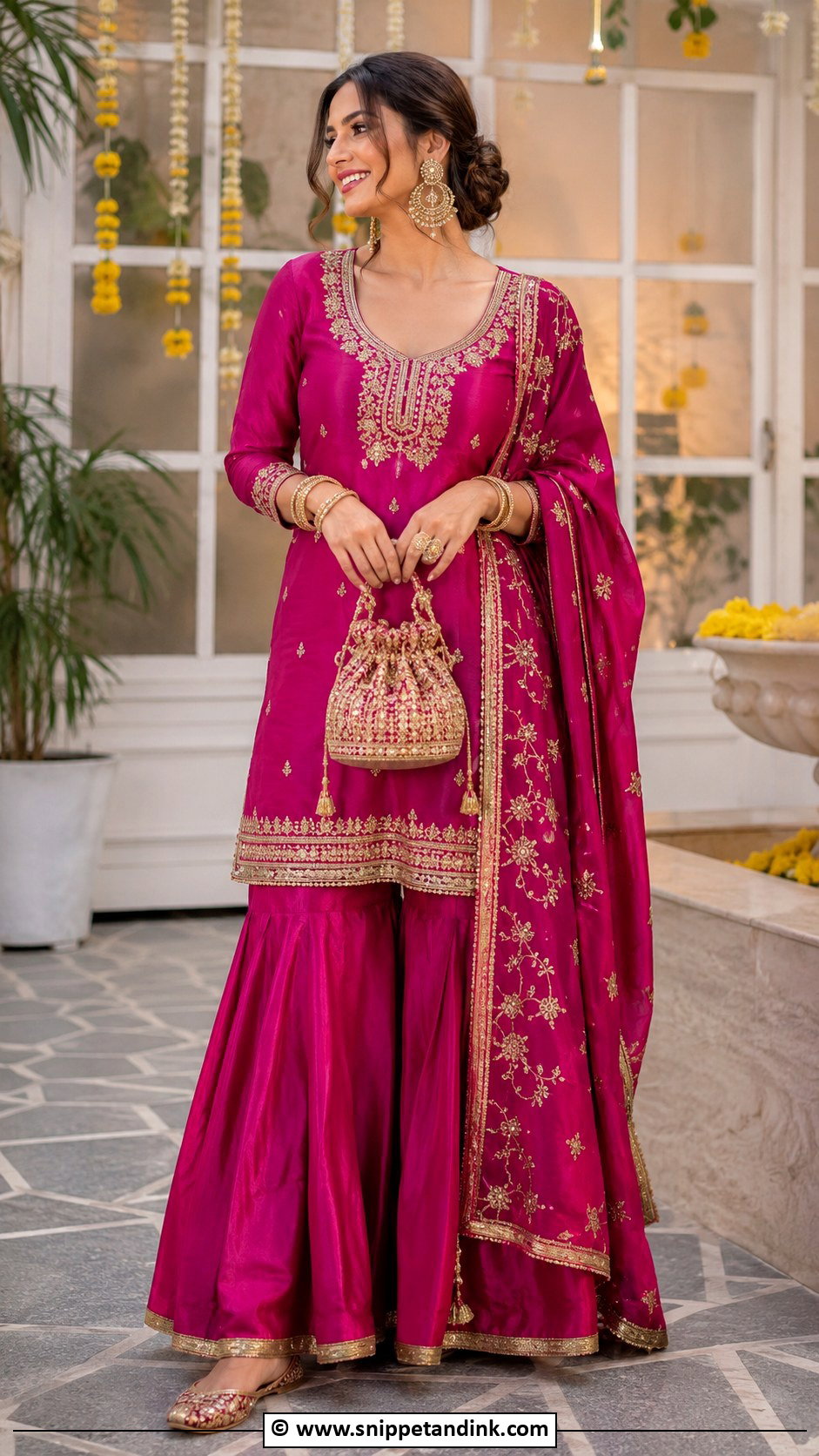
The bride’s sister can dress up more than other guests while keeping a suit she can dance in. A rich sharara suit, an embroidered Patiala or a silk gharara set works, in magenta, emerald, royal blue, maroon or mustard with gold or mirror detail. I talk to the bride before choosing the colour so the sisters complement her rather than match or compete. A statement dupatta, chandbali earrings, bangles, a polished potli bag and comfortable heels or embellished juttis complete it.
Juttis, Parandas and the Small Fixes for a Late Night
Most Jaggo outfits fail at the feet or the hair, not the suit. New leather juttis are stiff and rub at the heel, so I tell clients to wear them around the house for a few evenings first. A cushioned insole helps, and a small strip of blister tape at the back of the heel saves the night.
For hair, a braid with a paranda survives dancing far better than open curls. I secure the paranda with an elastic under the braid, not just knotted in, because it gets tugged in the gidda circle.
- Safety pins in two sizes for dupattas and slipping necklines.
- A spare set of glass bangles and a few bobby pins.
- Stain wipes for oil, turmeric and food.
- A pair of flat sandals in the car in case the juttis become impossible.
Keep these in the potli bag. It weighs almost nothing and covers nearly every small disaster I see at these nights.
One Statement Piece, Then Dance Until the Dhol Stops
A good Jaggo outfit comes down to colour, comfort and movement. A Punjabi suit can be traditional, modern, simple or heavily festive depending on the fabric, embroidery and accessories, and Patiala suits, sharara sets, ghararas, straight cuts and phulkari dupattas all suit the night. If I had to give one instruction, it would be to let a single piece lead, whether that’s the dupatta, the jewelry or the embroidery, and then make sure you can dance in your shoes for three hours. That’s the outfit you’ll still be happy in when the last boliyan are sung.
You'll Like These Ideas:



Leave a Reply