
Round-faced brides often arrive at a trial convinced their face is a problem to hide. It isn’t. Round faces have soft cheeks and a gentle jaw, and the hair only needs to do two jobs: add some height and break up the width at the cheek. That means lift at the crown, a diagonal line somewhere, and pieces that fall past the widest point of the face rather than stopping on it. Tight, scraped-back styles are the main thing I’d talk you out of. Here are 25 styles I’d reach for, from high buns to half-up waves, with what each one asks of your hair.
Where Your Face Is Widest Decides Where the Volume Goes
Not every round face is round in the same place. Some are widest at the cheekbones, some at the cheeks below them, and some have a short forehead that makes the face look wider than it is. Before I choose a style, I pull the hair back tight, look in the mirror straight on, and note the widest point. That’s the line I don’t want volume sitting on.
Three checks I run at every trial:
- Tendril length. A face-framing piece that ends exactly at the cheek makes it look wider. I cut or curl them to fall at the jaw or below.
- Crown height from the side. A lift that looks good from the front can look like a bump in profile, so I check a side photo too.
- Ear placement. Hair tucked behind both ears widens the face; tucking one side and leaving the other free gives an asymmetry that softens it.
Take photos at the trial front on and at a three-quarter angle. Most wedding photos are taken at three-quarters, and that’s where a round face looks most balanced.
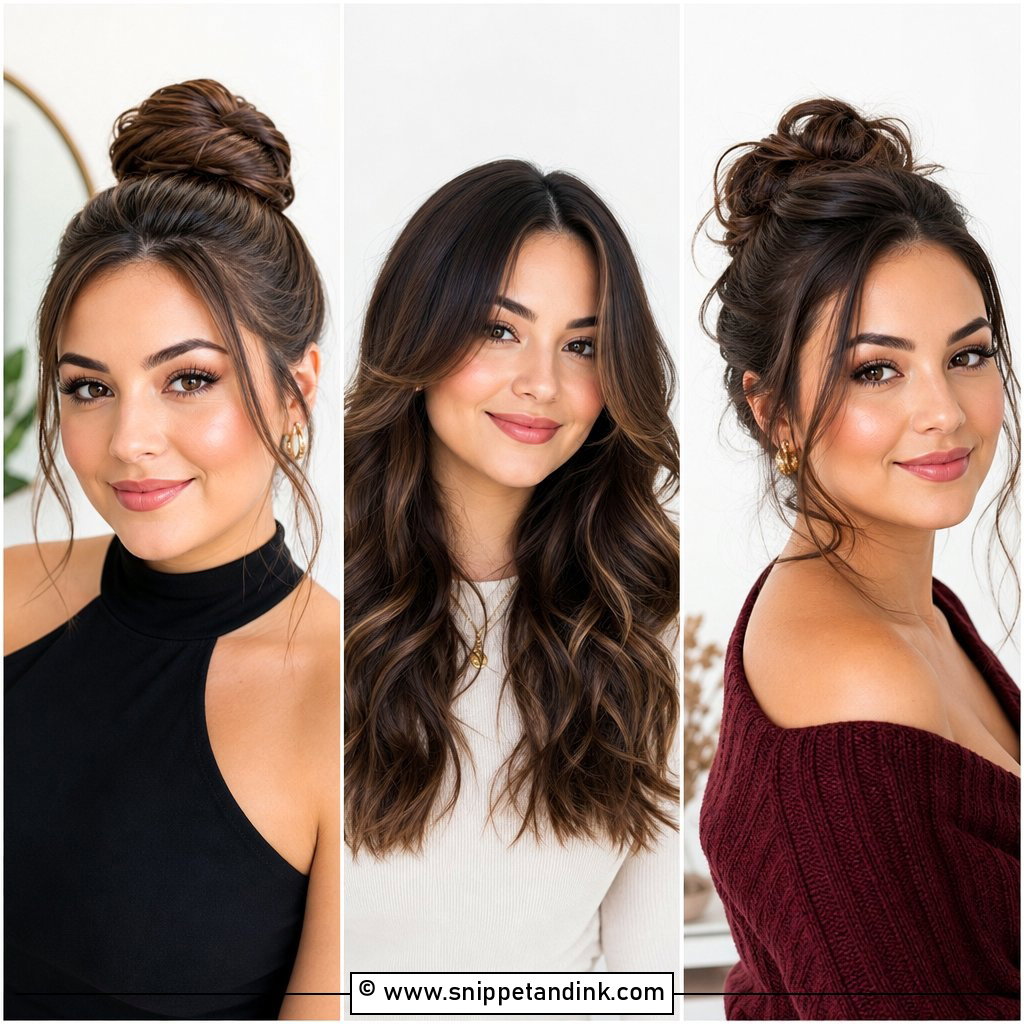
1. High Bun With Crown Volume
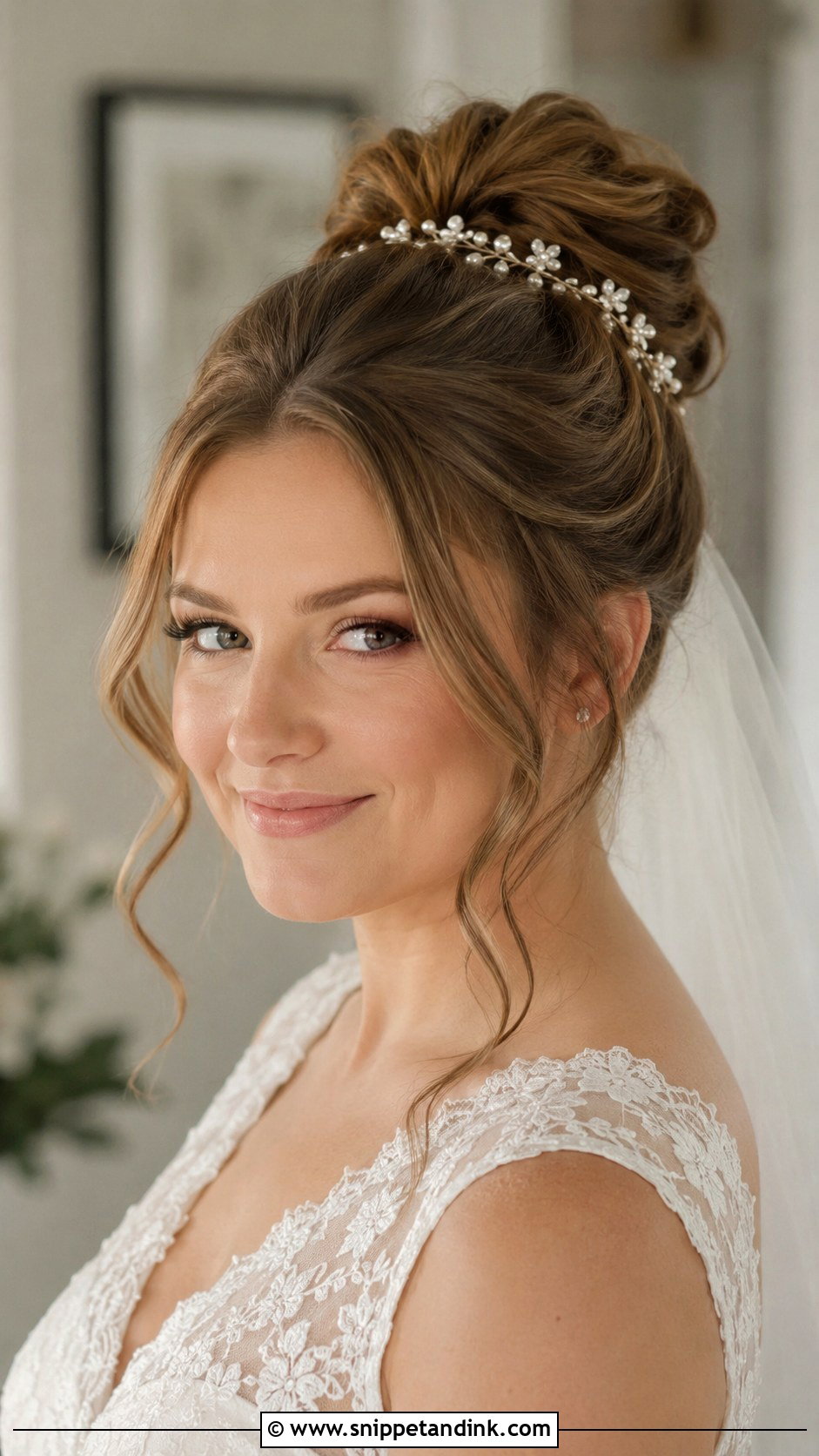
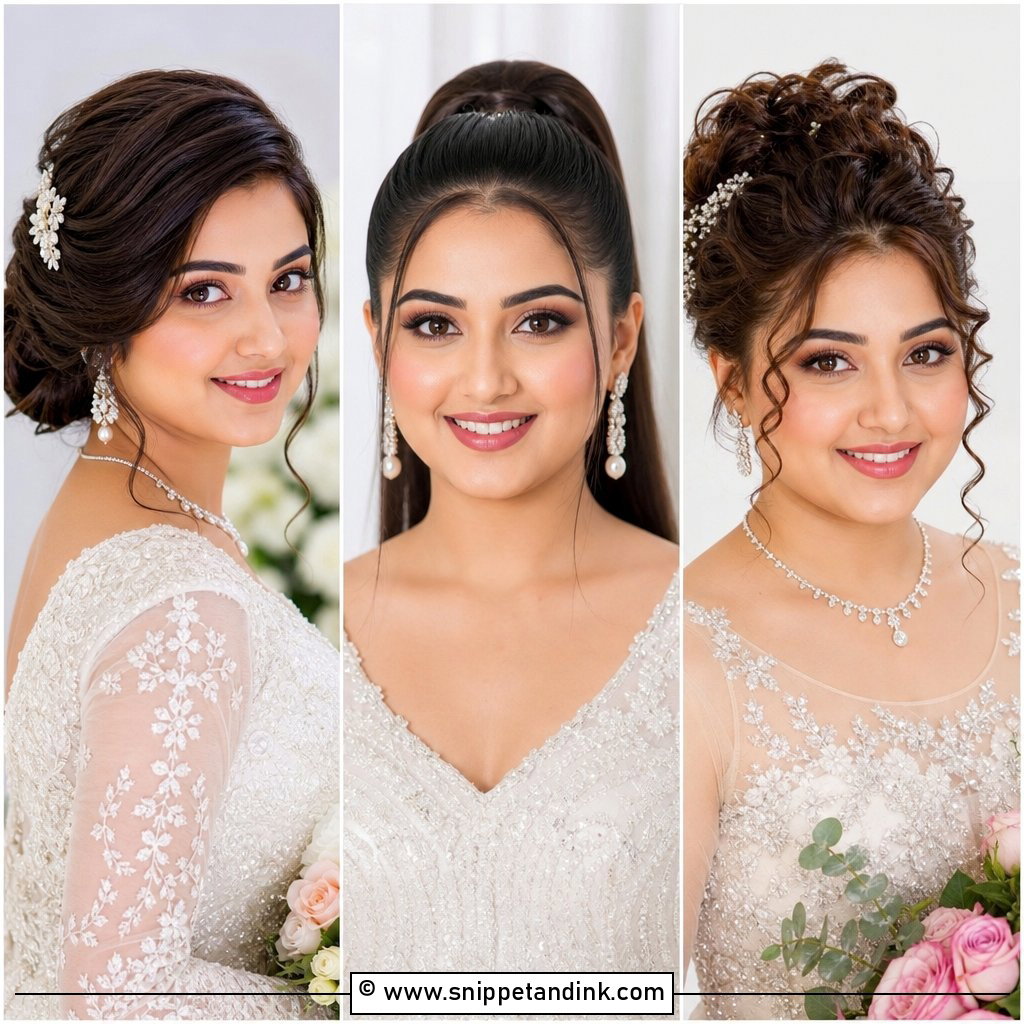
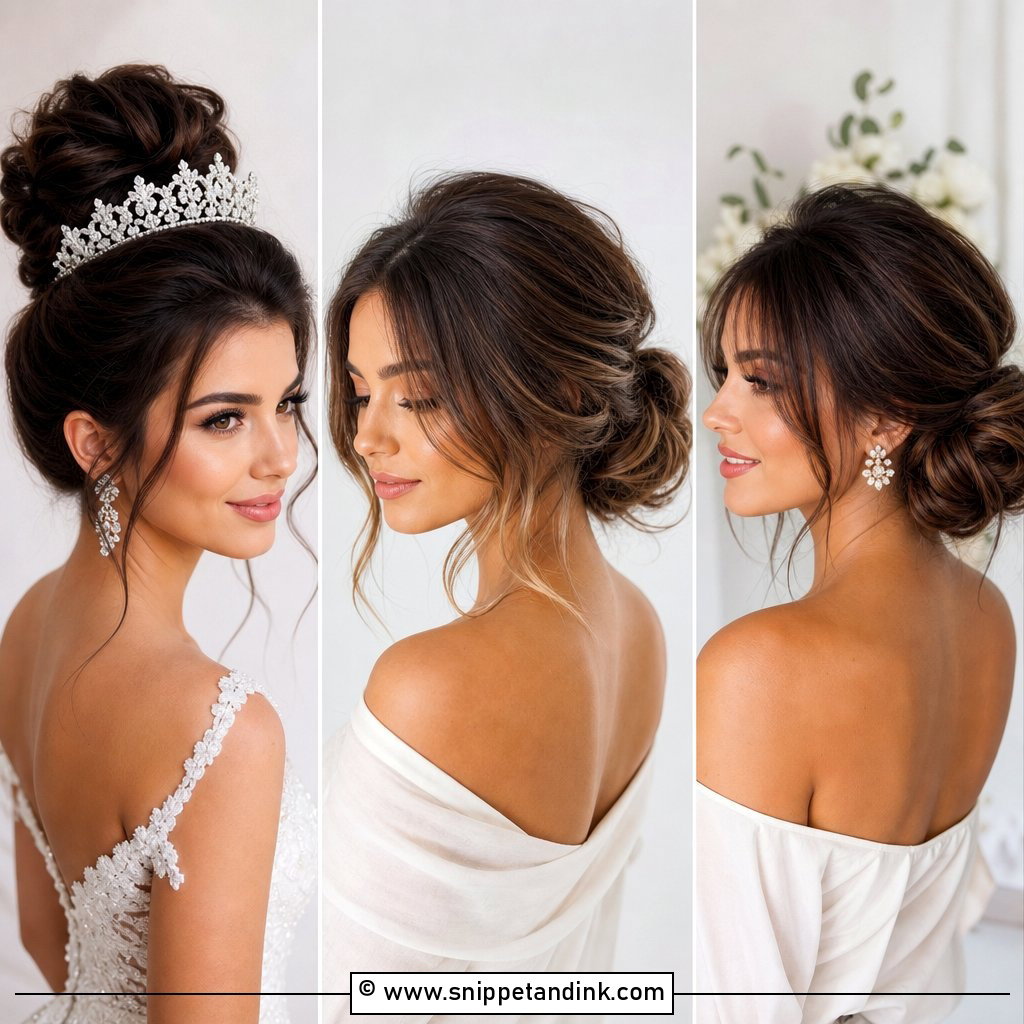
A high bun is my first suggestion for most wedding looks for round faces, because it moves the visual weight up and away from the cheeks. I place it just behind the crown, not on top, so it doesn’t look like a ballerina knot, and I backcomb the section in front of it for lift. A couple of tendrils at the cheekbone stop it feeling severe. Anchor the veil comb under the bun and it will hold through a full evening of dancing.
2. Side-Swept Updo
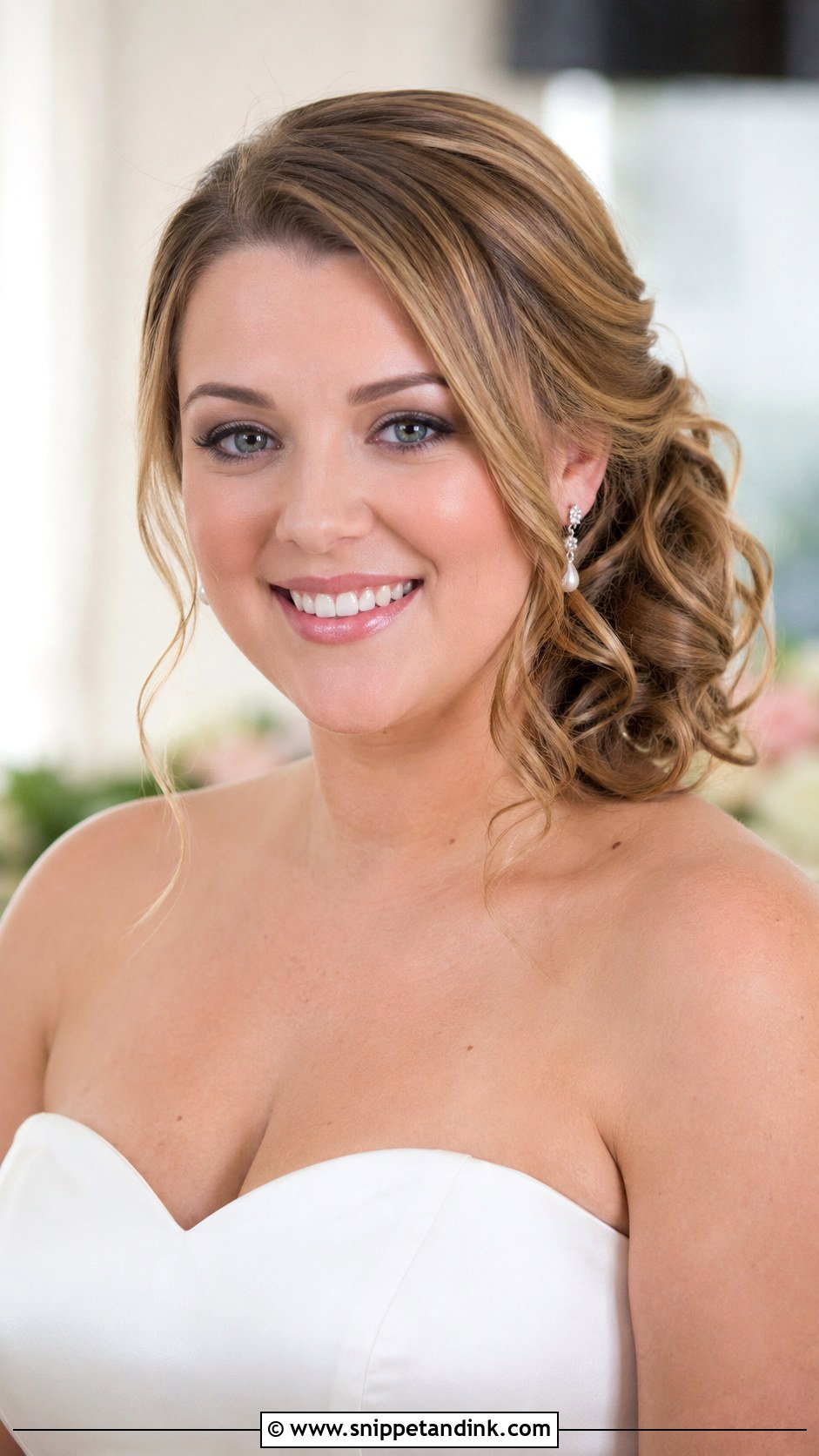
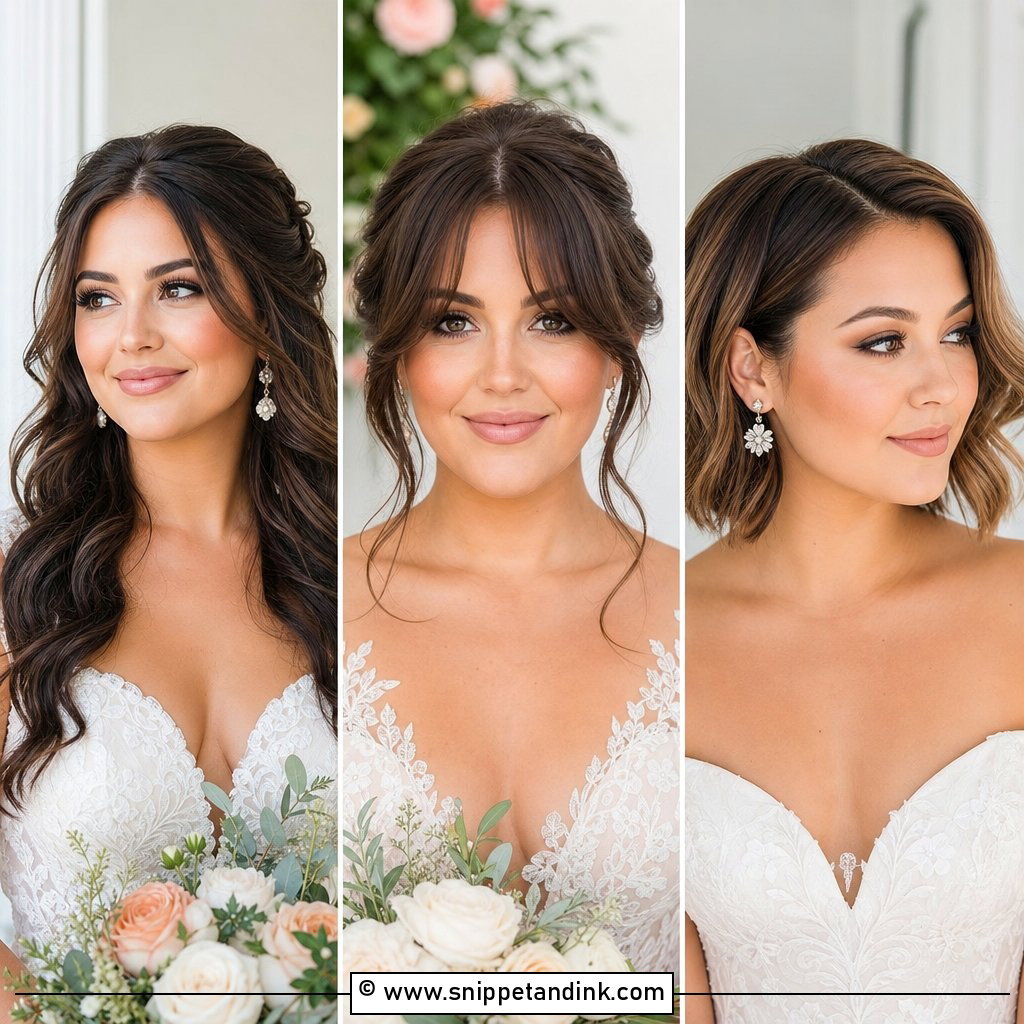
The side-swept updo works because a diagonal line cuts across the roundness. I sweep everything toward one side and pin the curls low behind the ear, then leave one longer face-framing piece on the open side. It suits most lengths from shoulder down. The one thing to plan: decide which side your partner will stand on, since the gathered side is the one guests see at the altar, and that’s where a comb or flower belongs.
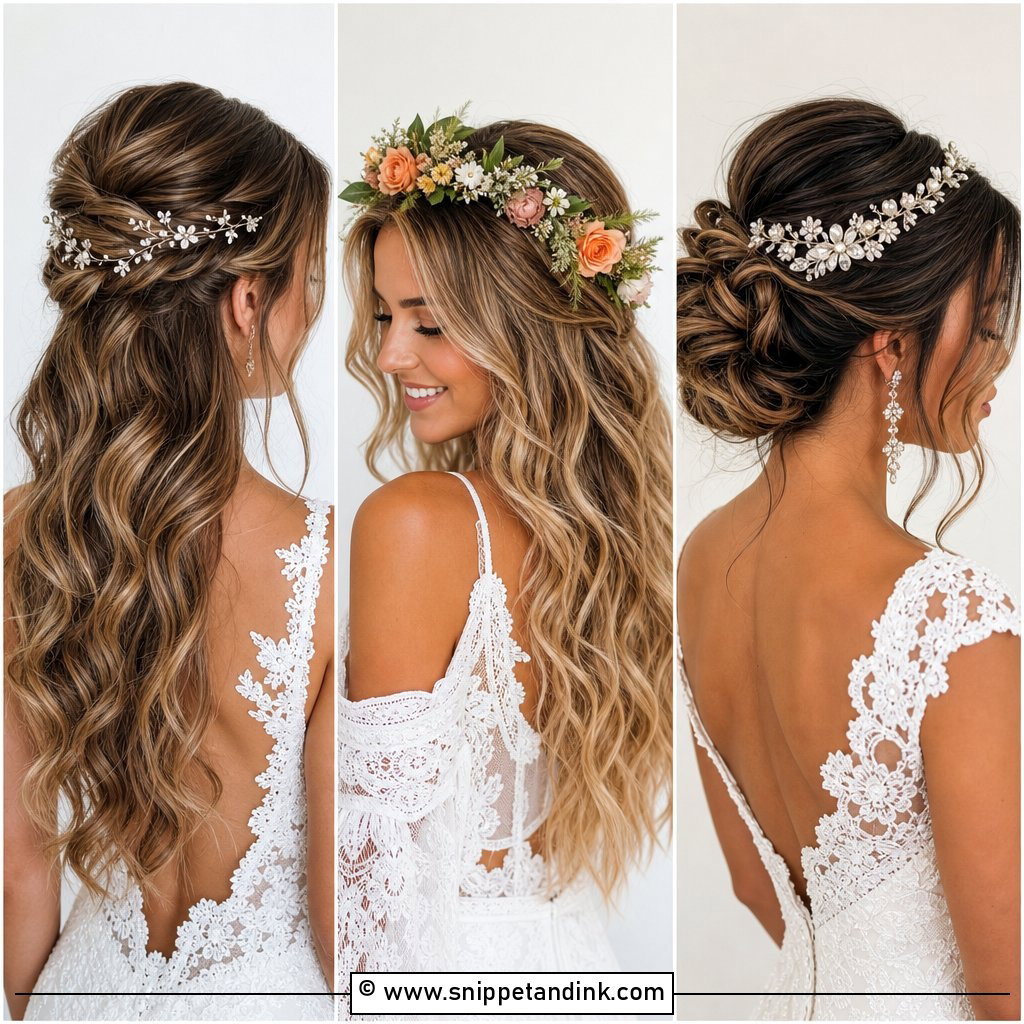
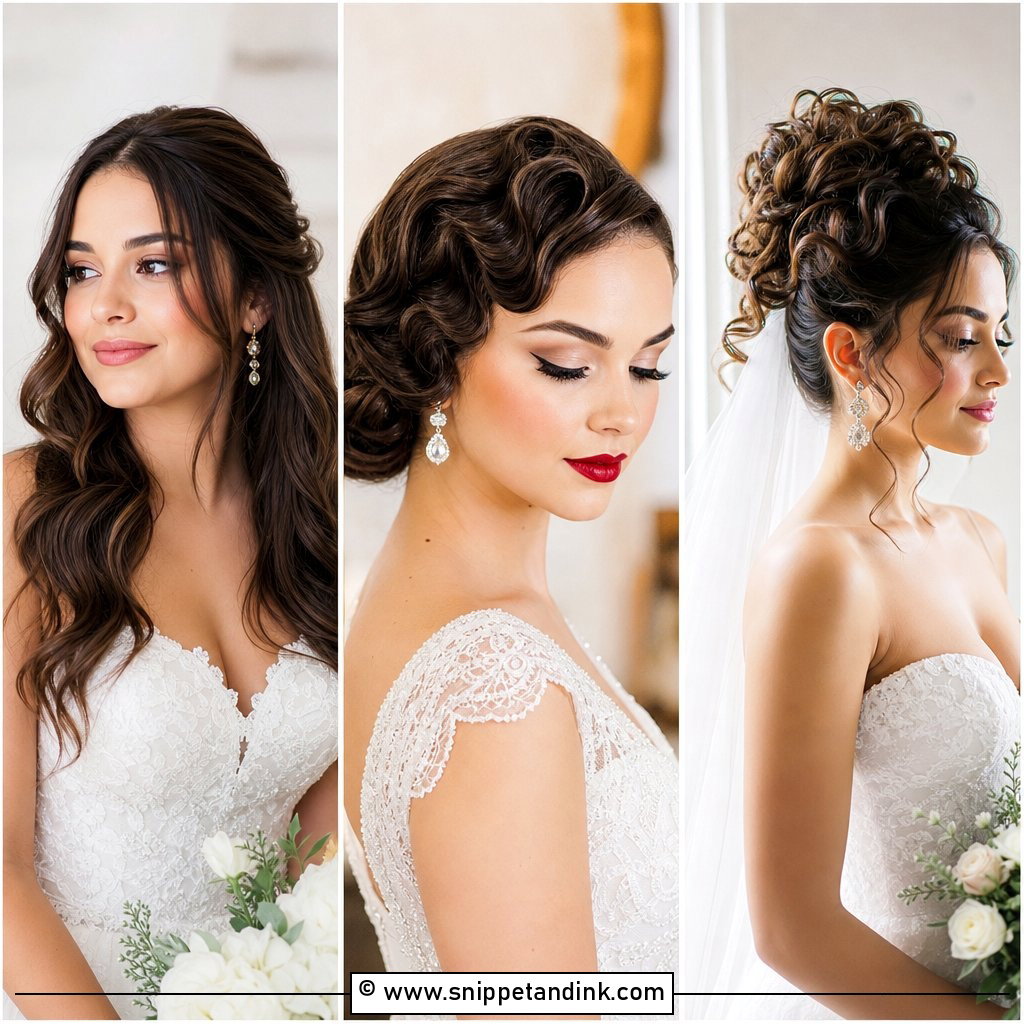
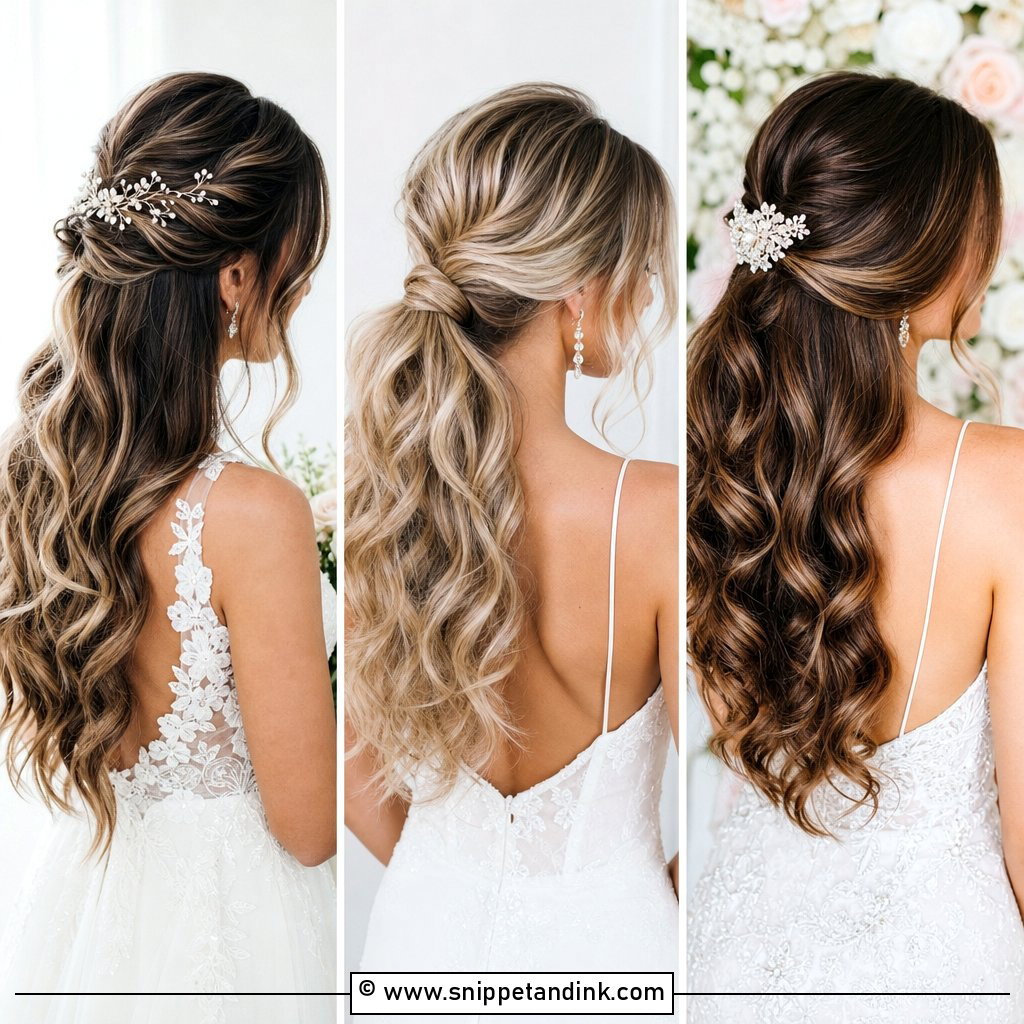
3. Half-Up Half-Down With Waves
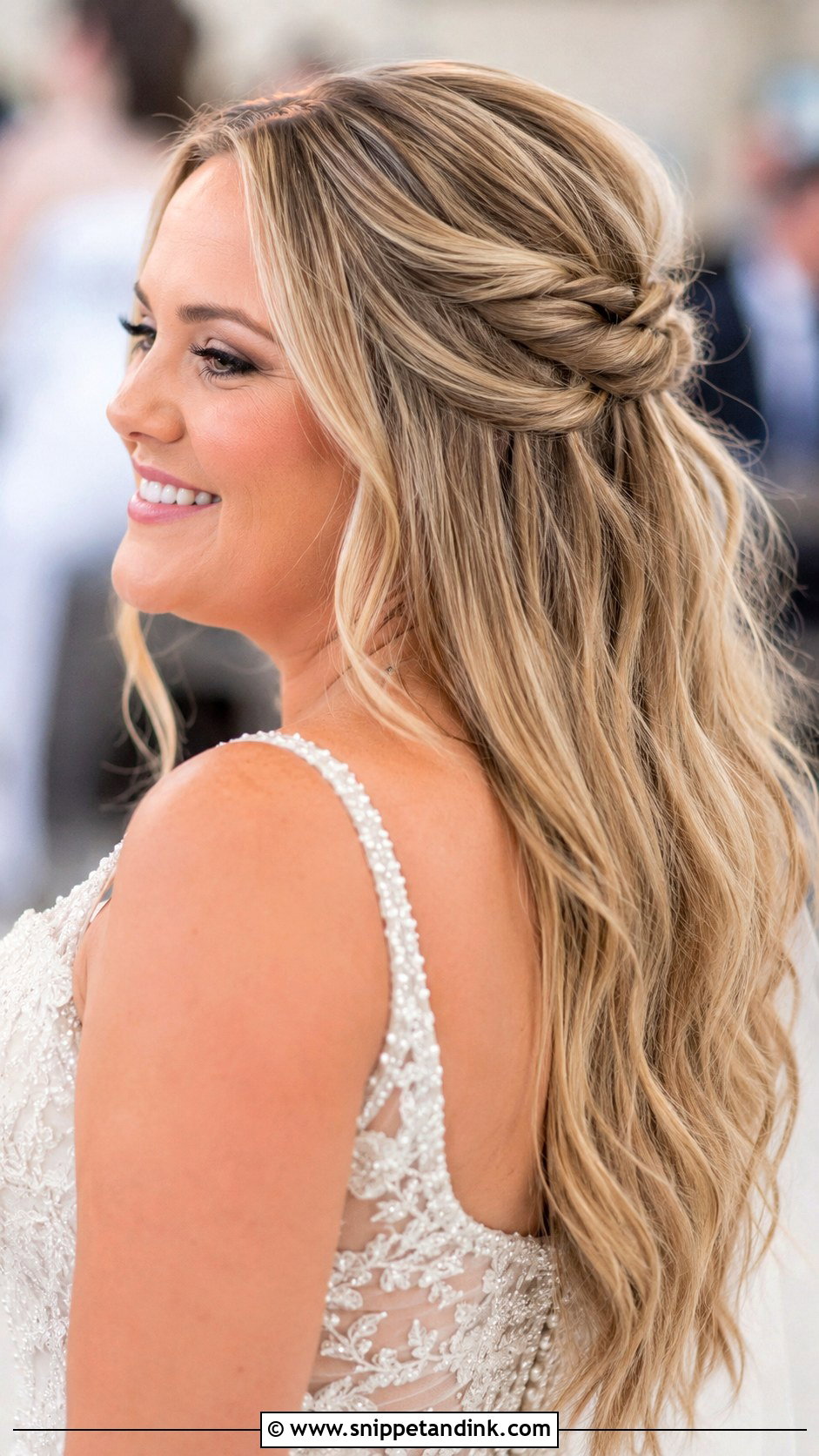
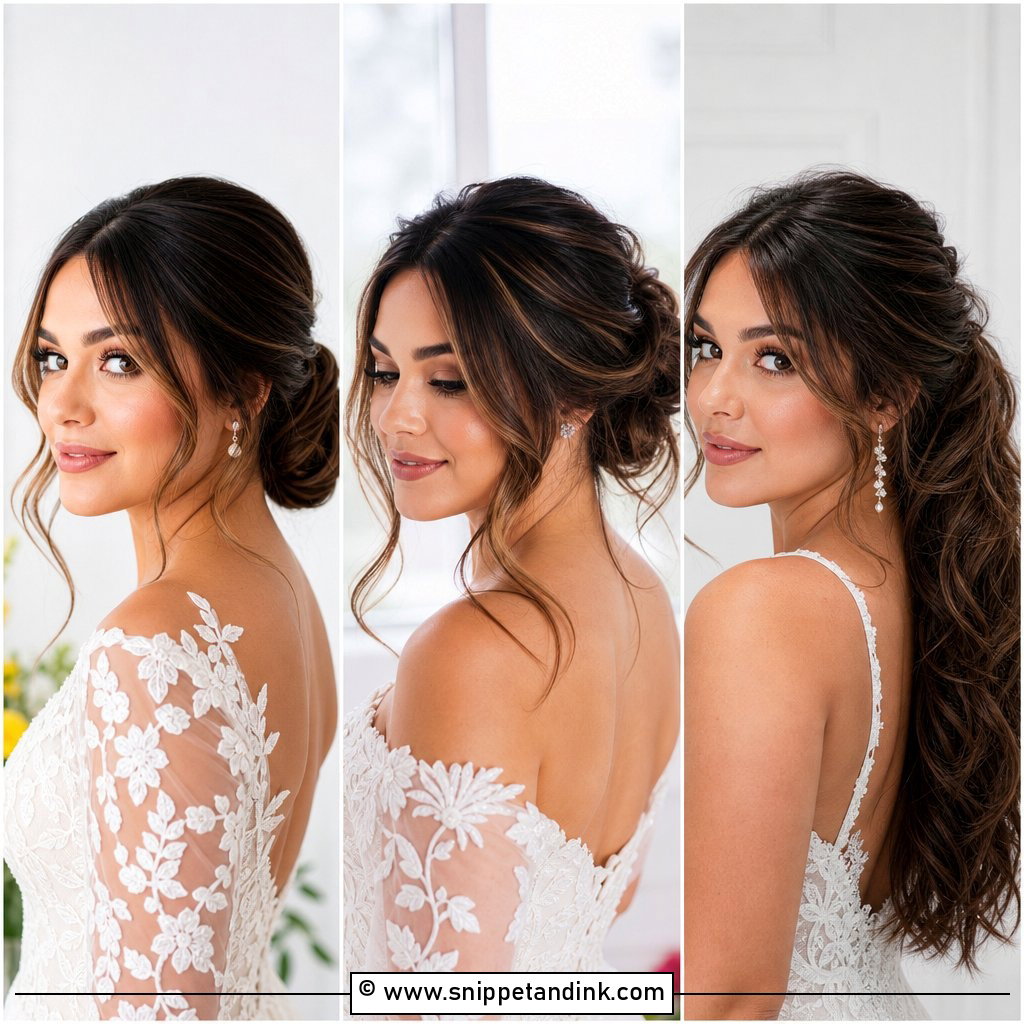
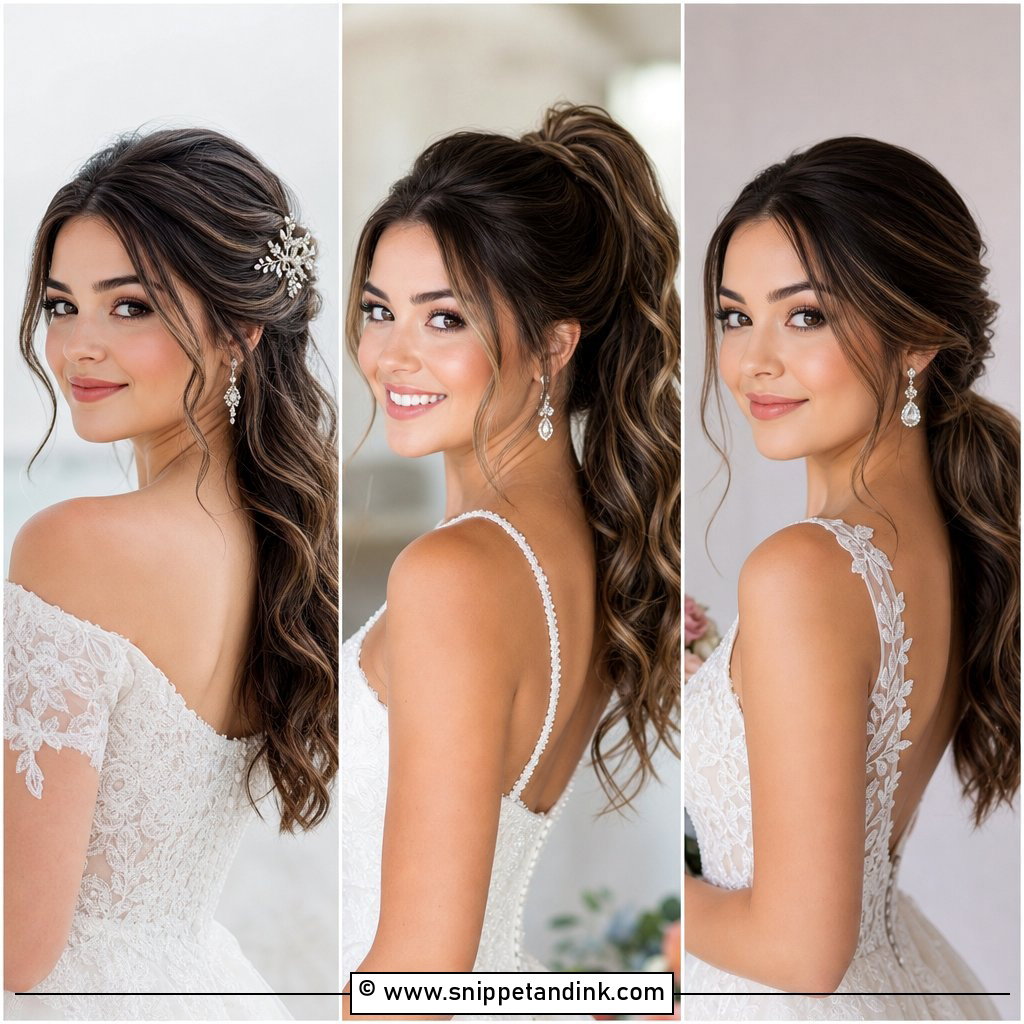
Half-up is a safe bet for round faces because pulling the top section back removes width at the temples. The waves below give the eye something vertical to follow. I secure the top with a twist or a small braid rather than one elastic, since a twist sits flatter under a veil. The catch is that waves in fine hair drop within a few hours; if your hair won’t hold a curl, I set it with hot rollers and let it cool fully before brushing out.
4. Low Chignon With Side-Swept Bangs
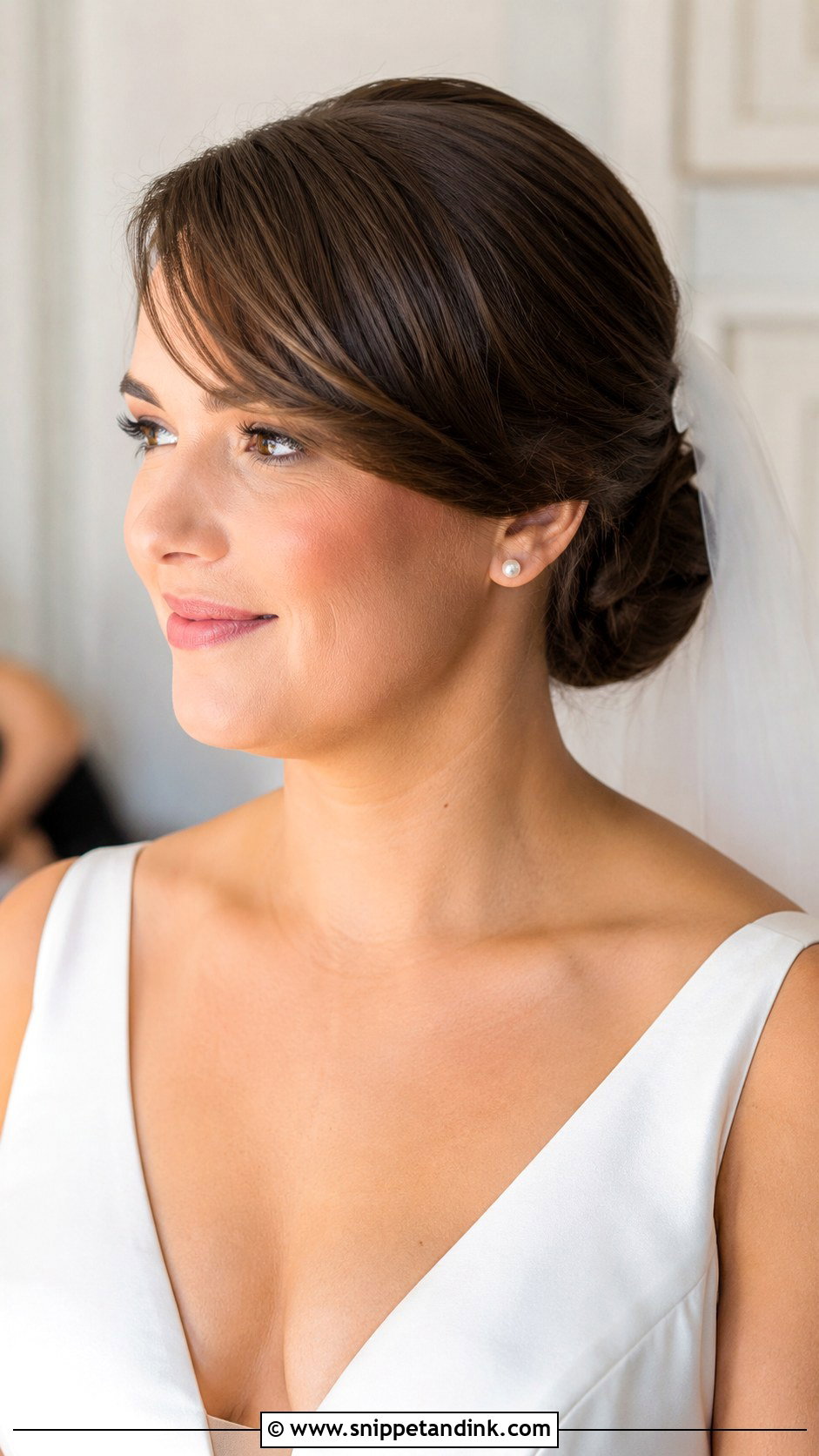
A side-swept fringe does more for a round face than almost anything else, because it adds an angle right where the face is softest. The chignon sits low at the nape, so I build a little height at the crown to keep the proportions from sinking. Loosen a few hairline pieces after pinning. This is the style I’d suggest with a long cathedral veil, which tucks neatly above a low bun.
5. Braided Crown Updo
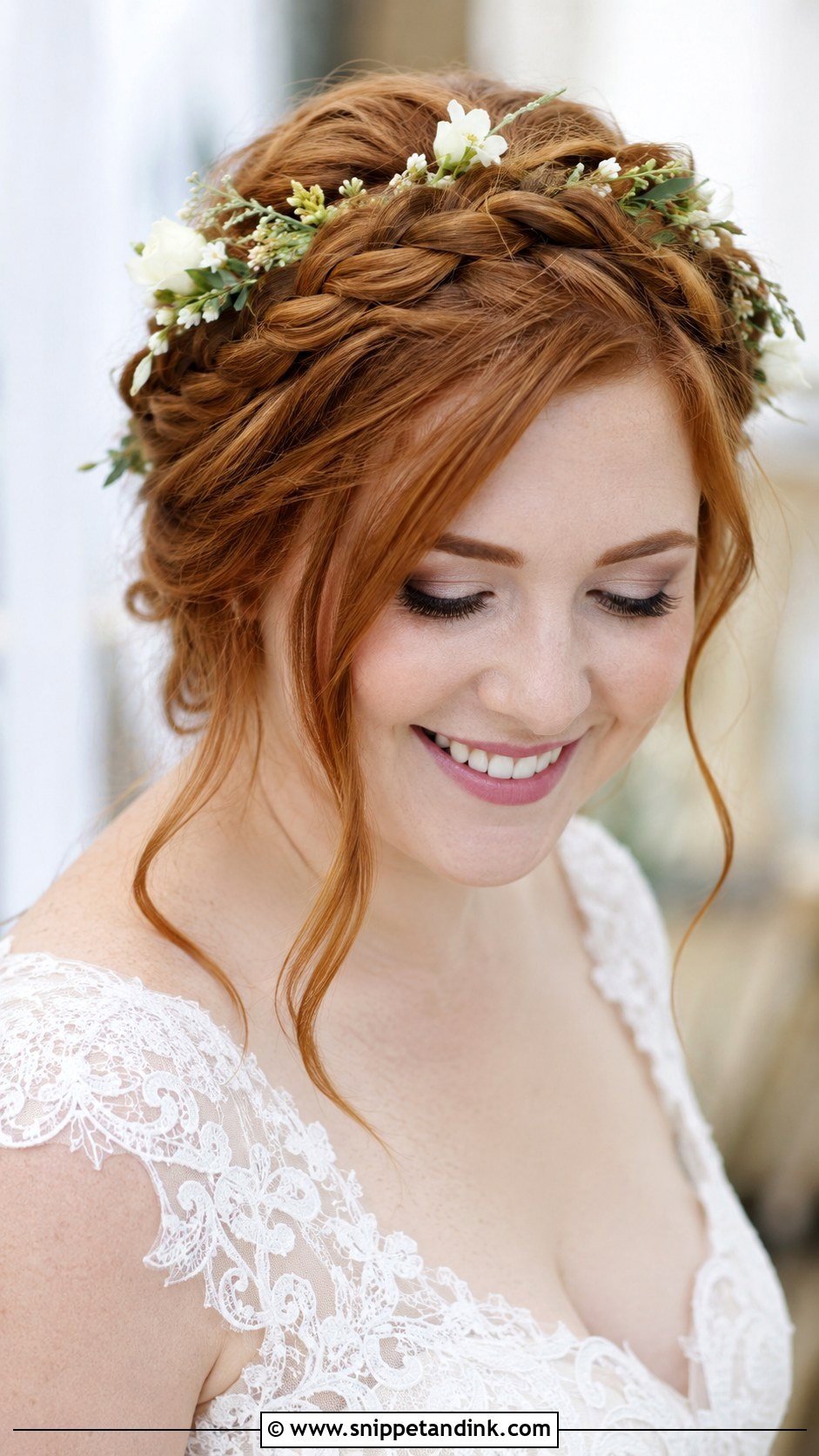
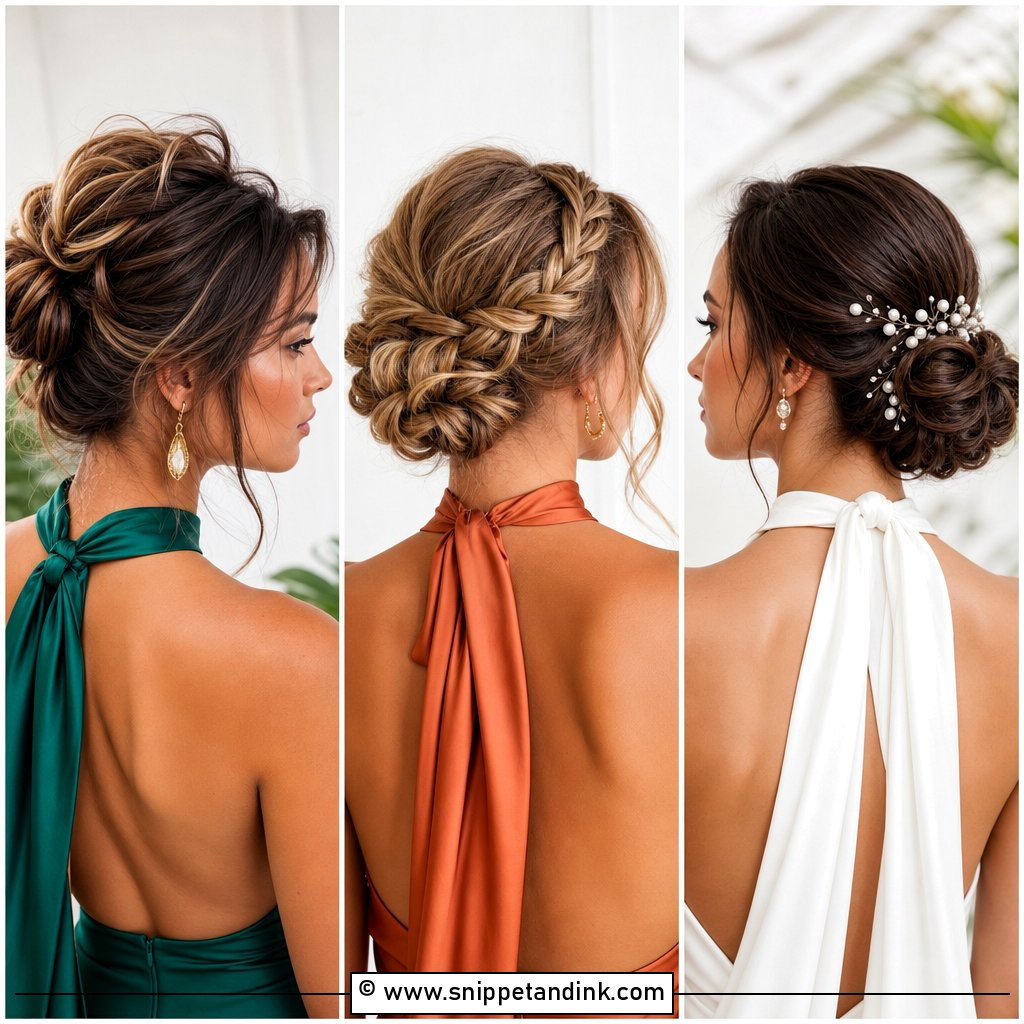
A braided crown gives height where you want it as long as the braid sits high, on top of the head rather than around the forehead like a headband. I pancake the braid, gently pulling the loops wider, so it looks fuller and catches more light. It’s one of the sturdiest styles here for an outdoor ceremony since there are no curls to drop. Fresh flowers can go straight into the braid; choose small, hardy blooms that won’t wilt against warm hair.
6. Fishtail Braid Updo
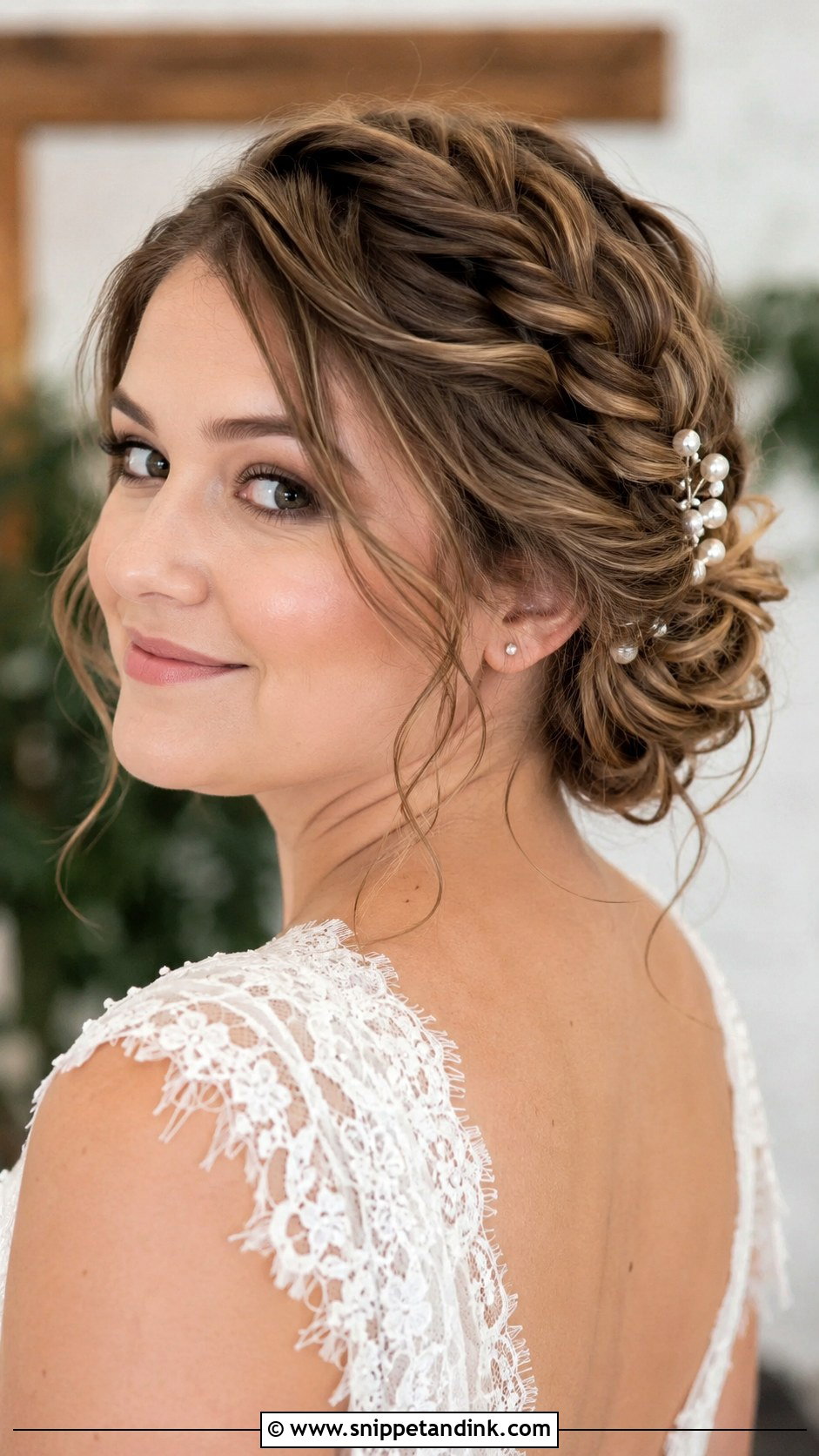
Fishtails take longer than a standard braid and need a little grip, so I prep with texture spray first or the strands slide apart. Once braided and pancaked, the fishtail is coiled loosely at the back with a few pieces left out around the cheeks. The intricate weave makes thinner hair look fuller. I’d skip it on very short layers, which poke out of every section.
7. Curtain Bangs With Soft Waves
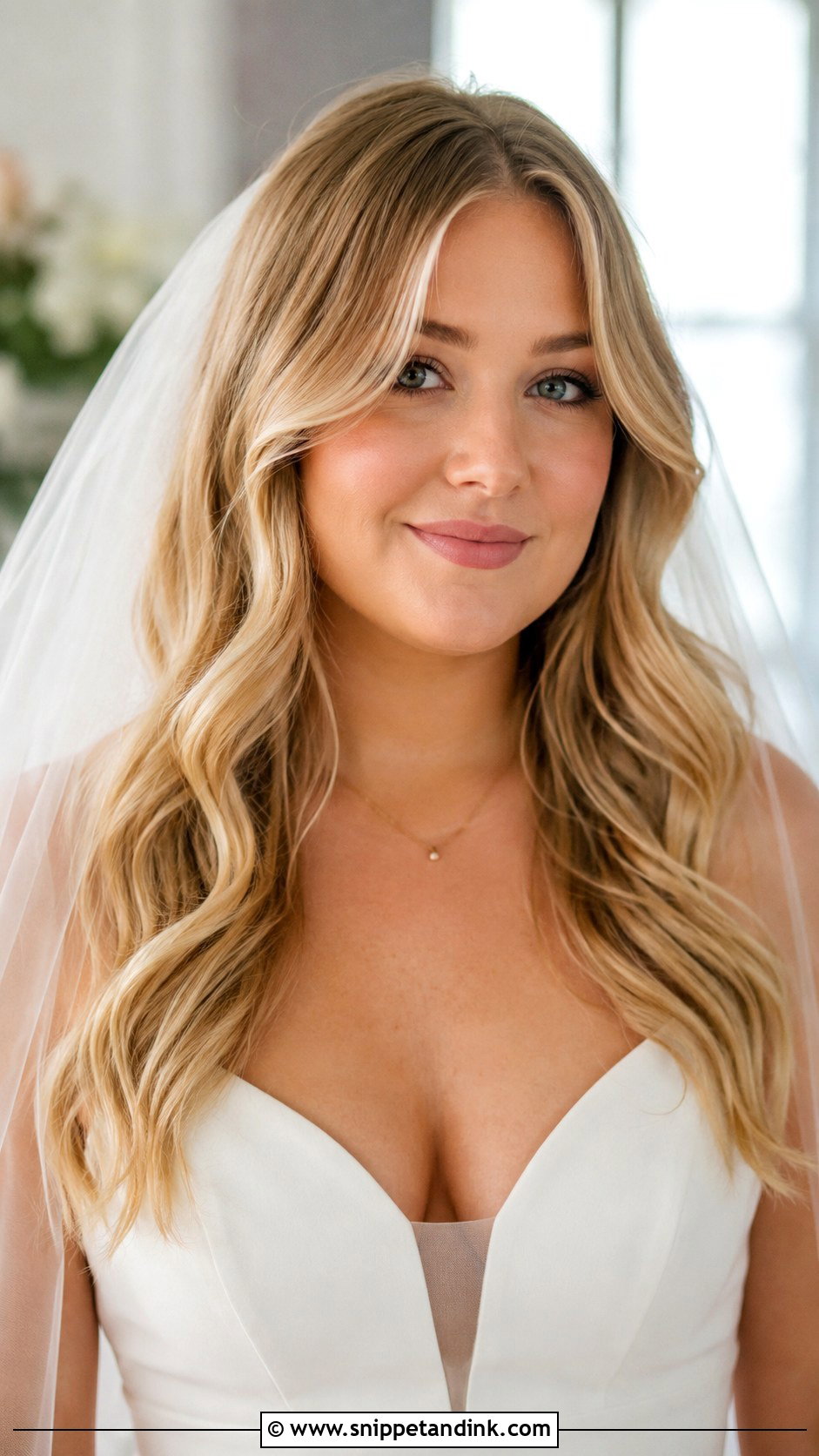
Curtain bangs part at the center and fall diagonally toward the cheekbones, so they frame a round face instead of covering it. With hair worn down in loose waves, they pull the eye inward and down. I blow-dry them over a round brush, then pin them back while the rest of the hair is styled so they don’t get fluffy. A word on timing: get them trimmed a week or two before the wedding, never the day before.
8. Voluminous Beehive Updo
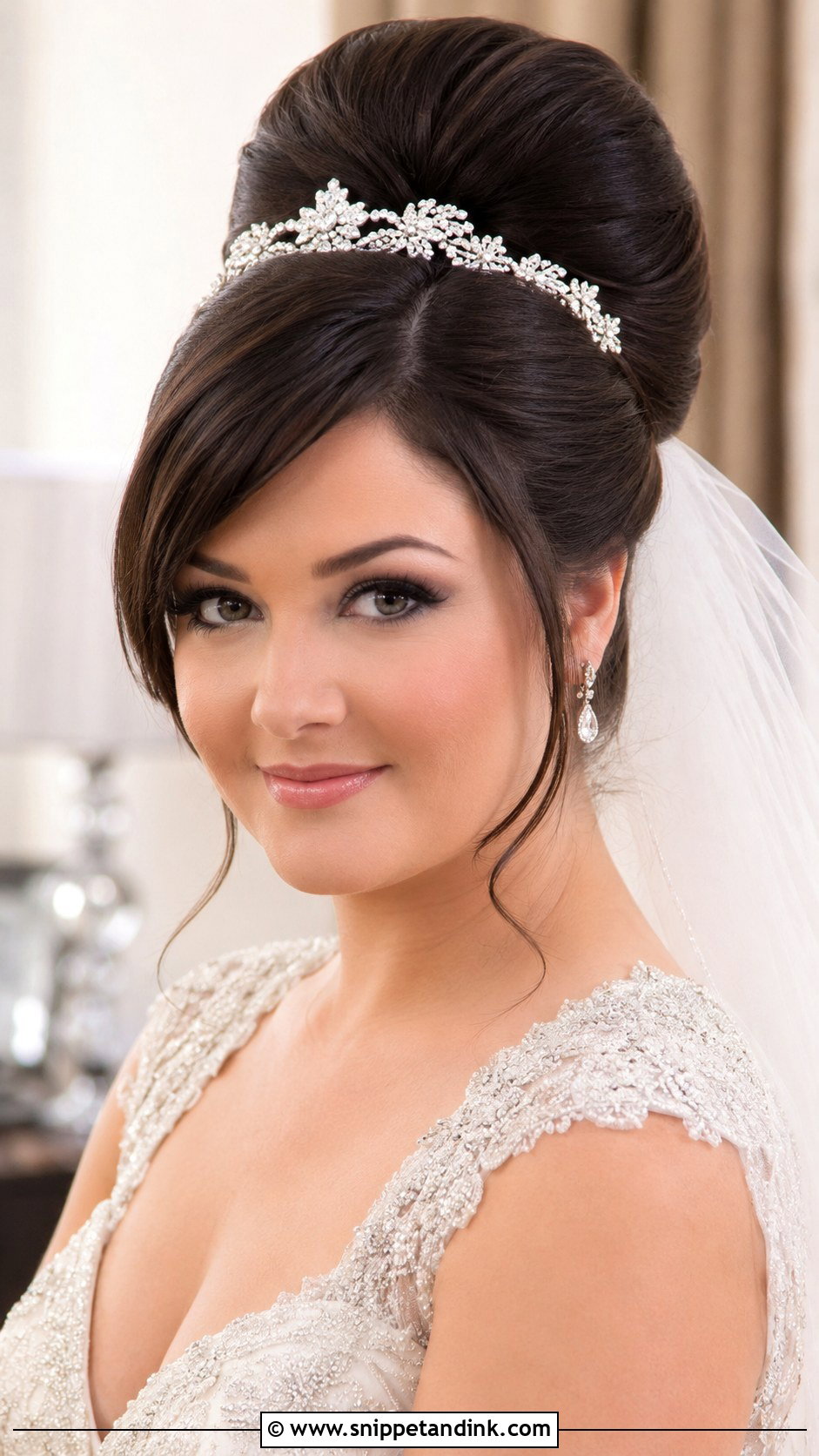
A beehive is pure height, which is why it suits round faces so well. I build it over a teased base, sometimes with a small padding piece in very fine hair, then smooth the top layer over so the backcombing doesn’t show. Keep the surface a touch soft so it looks modern. A tiara or jeweled headband sits at the base of the lift. It’s a formal look, and I’d steer you away from it for a beach or barn.
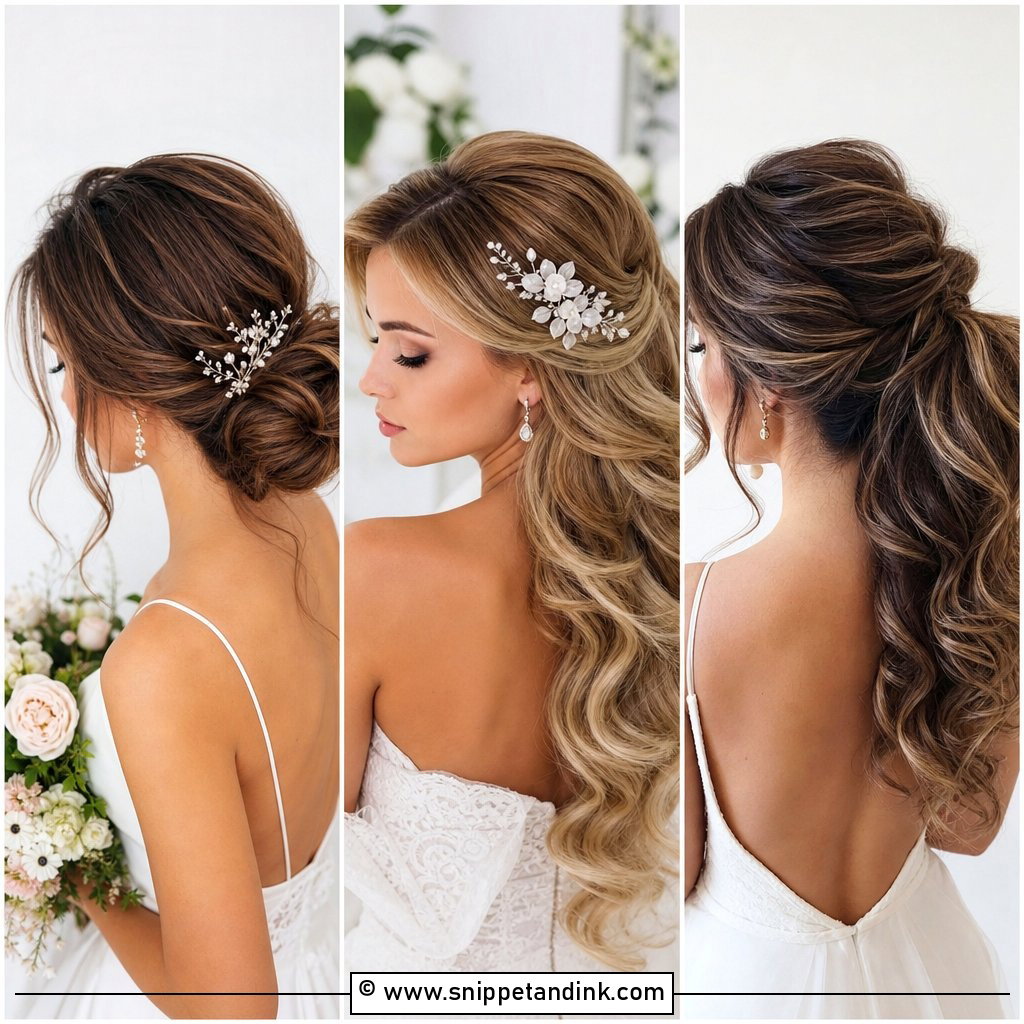
9. Textured High Ponytail
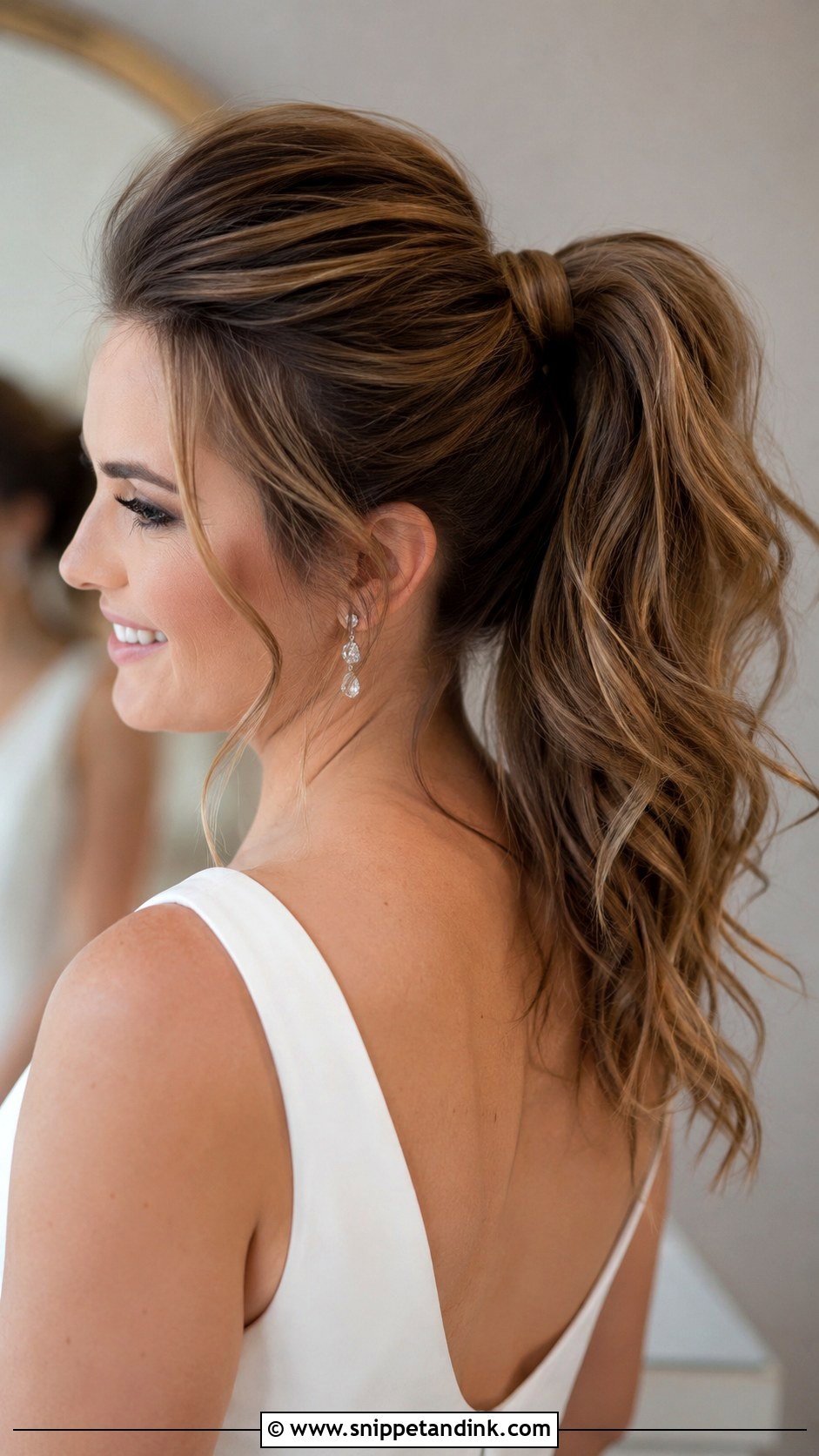
Ponytails surprise people, but a high textured one gives a round face real lift. I curl the lengths first, tease the crown, then gather the pony around the occipital bone and wrap a strand around the elastic. Two crossed bobby pins under the pony stop it from sliding down during dancing. Very heavy hair can pull a high ponytail into a headache by evening, so I’d test the weight at your trial.
10. Side Bun With Loose Waves
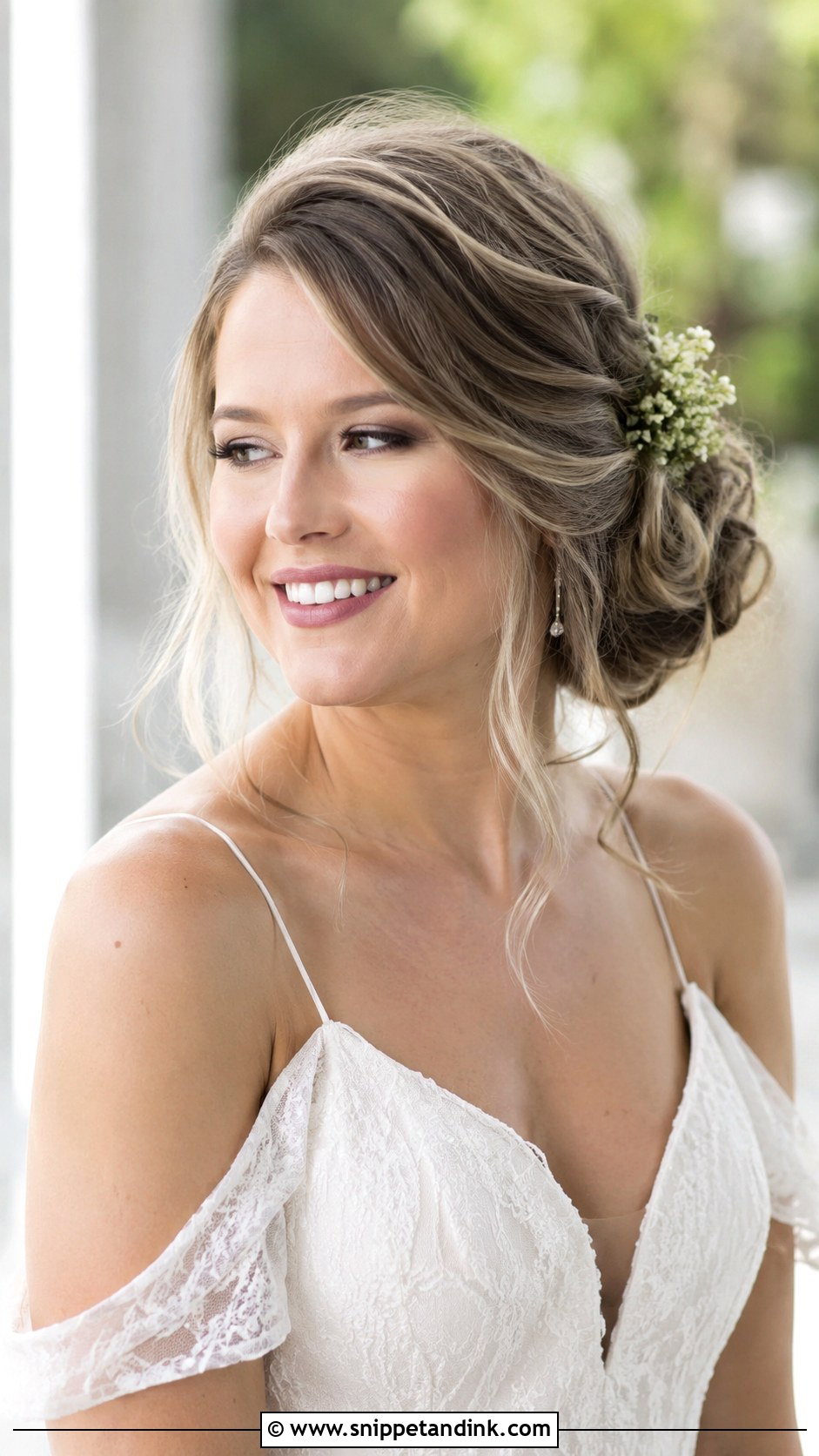
The side bun sits low and off-center, and those diagonal lines flatter and elongate round faces without needing much height. I keep it loose, with waves wrapped around the gathered section rather than a tight coil. Pull a few strands free near the face. Flowers or pearl pins along the bun are easy to add. It’s comfortable to wear all day because there’s no weight pulling at the crown.
11. Twisted Low Bun
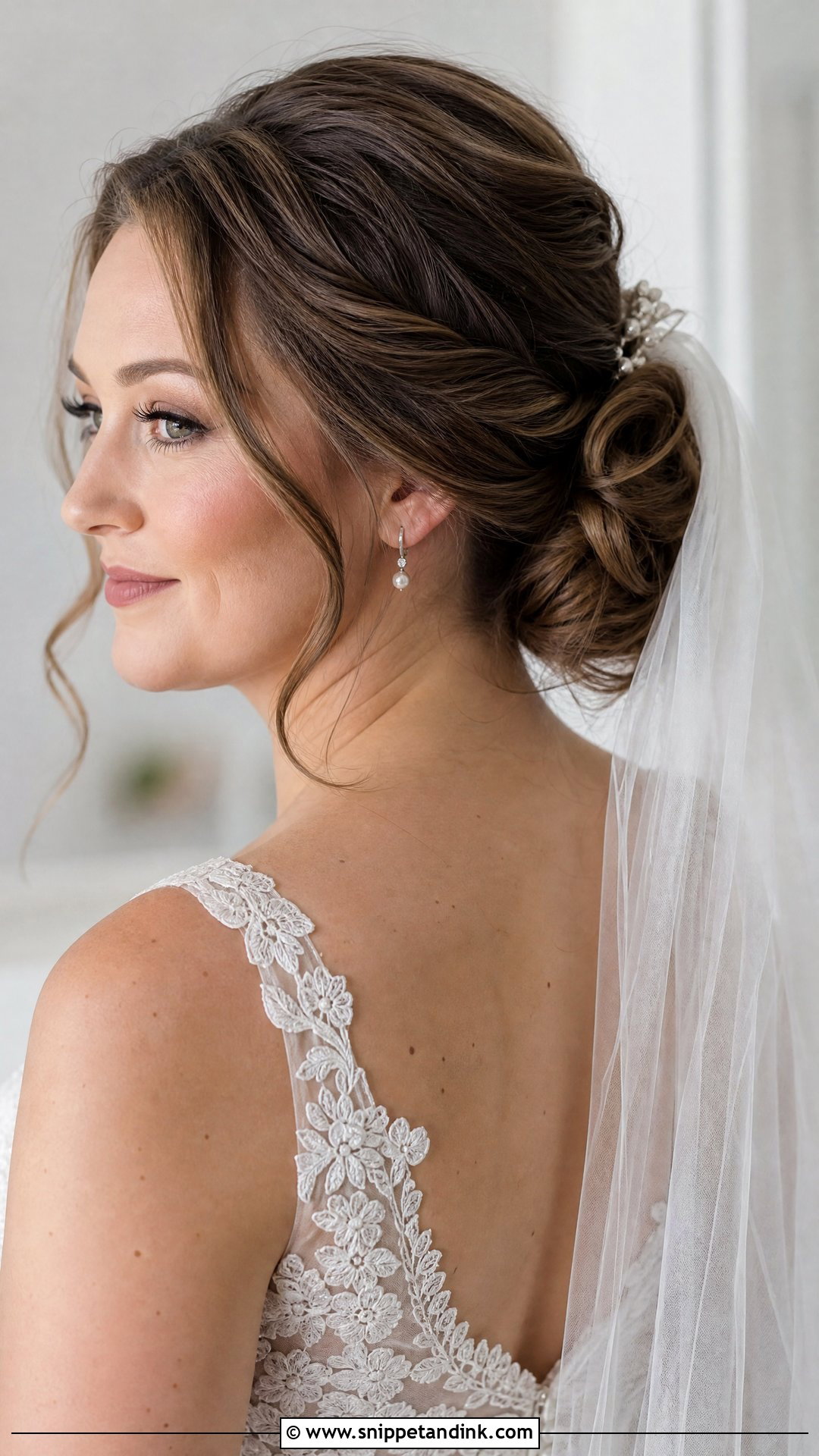
Twisting the sections before pinning gives a low bun more texture than a smooth knot. Because the bun sits at the nape, the crown volume has to be built deliberately, otherwise the shape looks flat from the front. I set the crown with a velcro roller while I work on the back. A few tendrils at the cheekbones finish it. This one is particularly good from behind during the ceremony.
12. Boho Braided Half-Updo
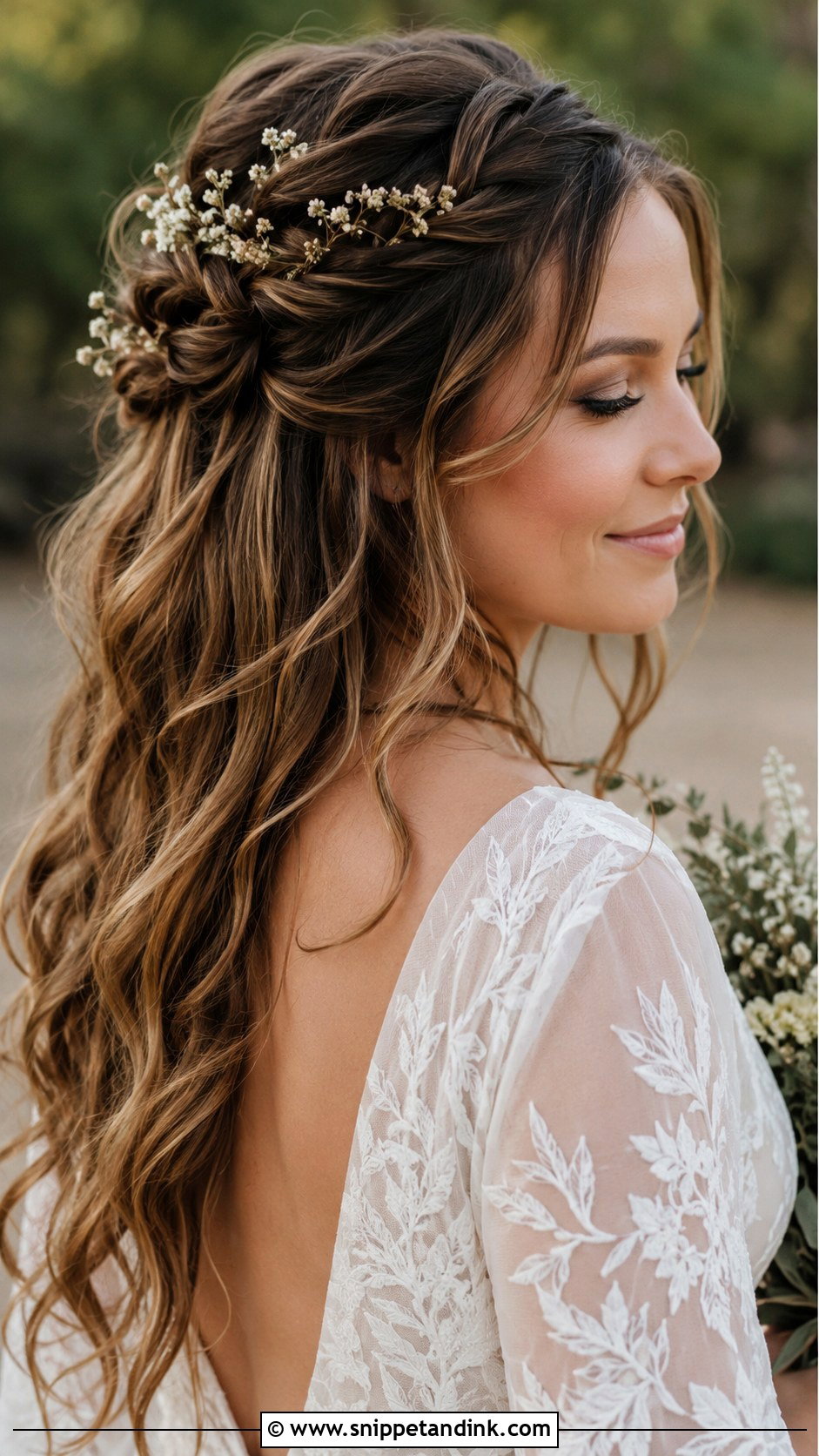
A boho half-updo pulls the braids back from the sides of the face, which takes width away exactly where a round face needs it. I keep the braids loose and slightly uneven so they look natural. Tiny wildflowers or gold pins can go into the braid work. Long hair handles this best; with collarbone-length hair, the braids can swallow most of the length and leave very little hanging below.
13. Deep Side Part With Cascading Waves
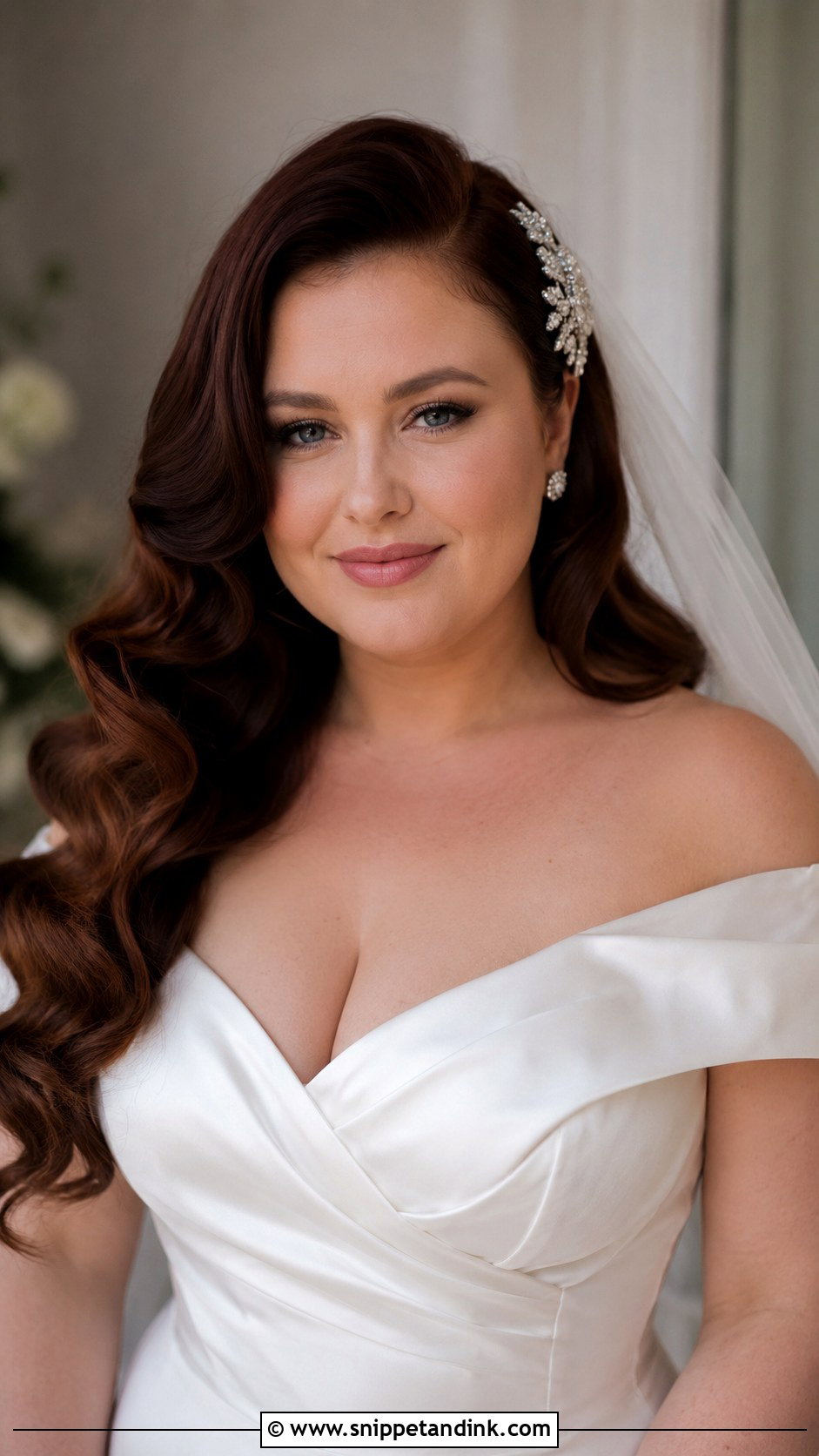
A deep side part is one of the quickest fixes for a round face. Moving the part toward one eyebrow creates an asymmetry that breaks up the symmetry of the cheeks. Waves cascade from there, ideally swept off one shoulder. I set the part when the hair is wet so it doesn’t spring back to the center by the speeches. Add a small jeweled clip near the part for an old Hollywood finish.
14. Messy Bun With Face-Framing Tendrils
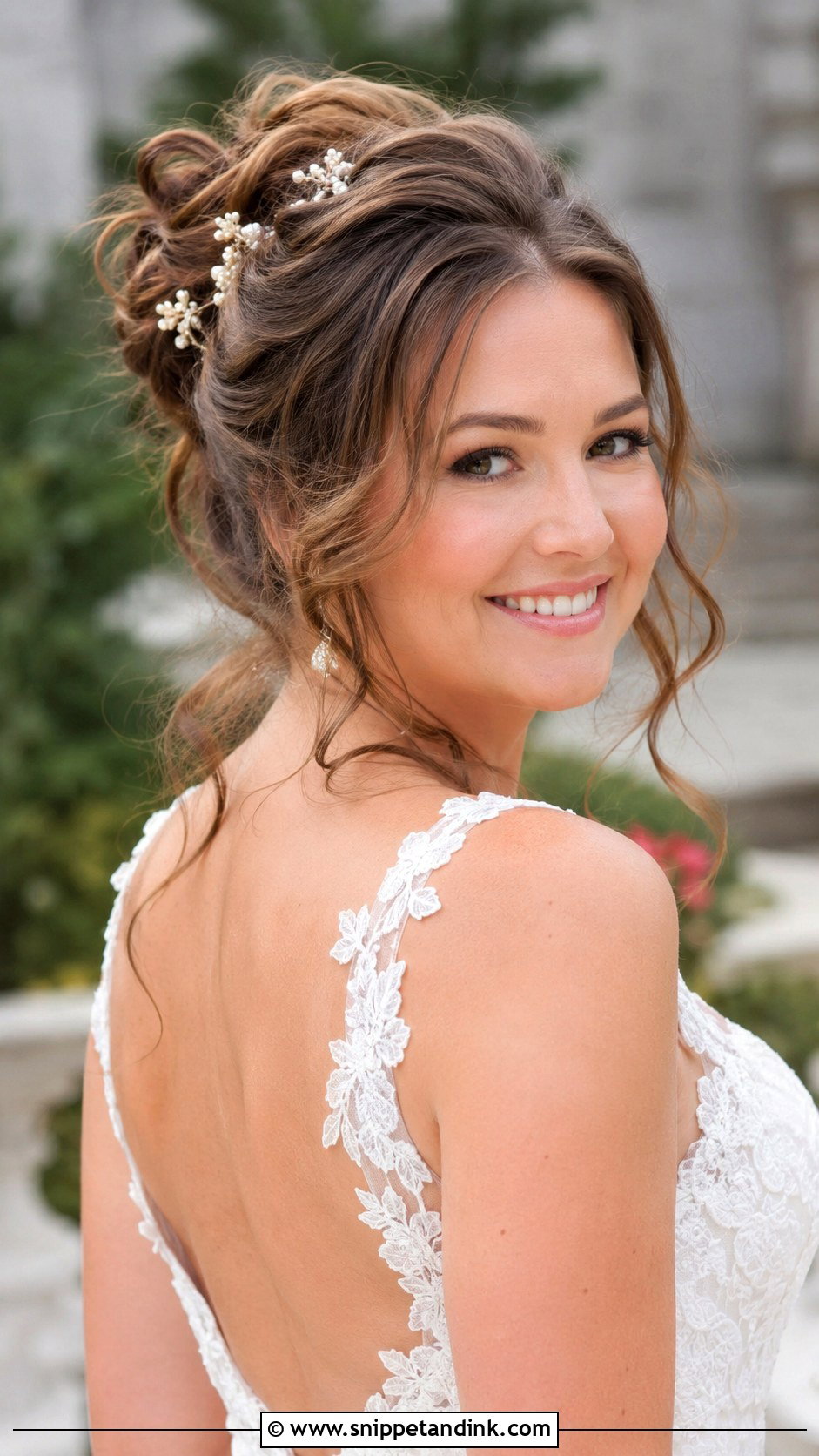
Messy buns look easy, but the mess has to be placed. I curl everything first, gather it loosely, then pin the loops by hand so the texture looks intentional and not slept on. Tendrils at the face soften round features, and a little crown height stops the bun from sinking. It’s forgiving if a piece falls during the day; that just adds to it. Thick, coarse hair suits this best.
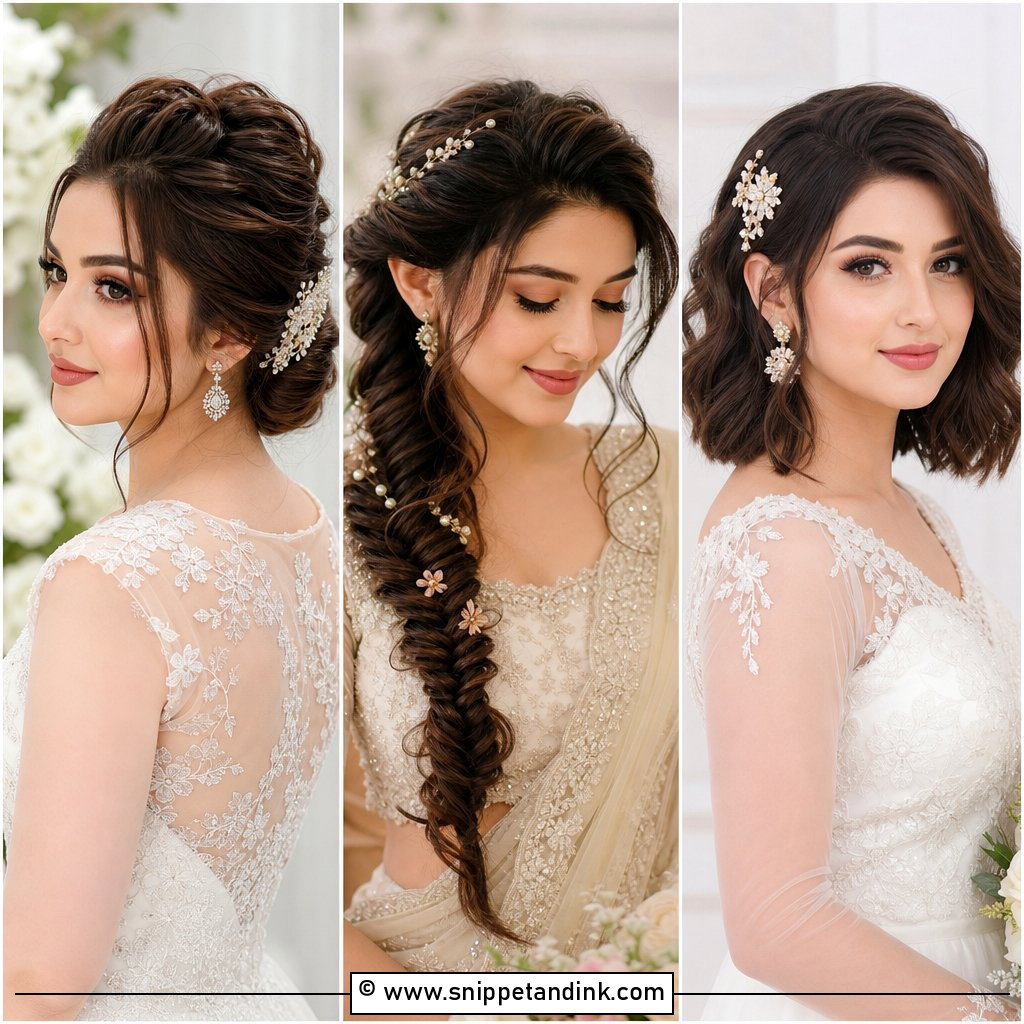
15. Vintage Finger Waves
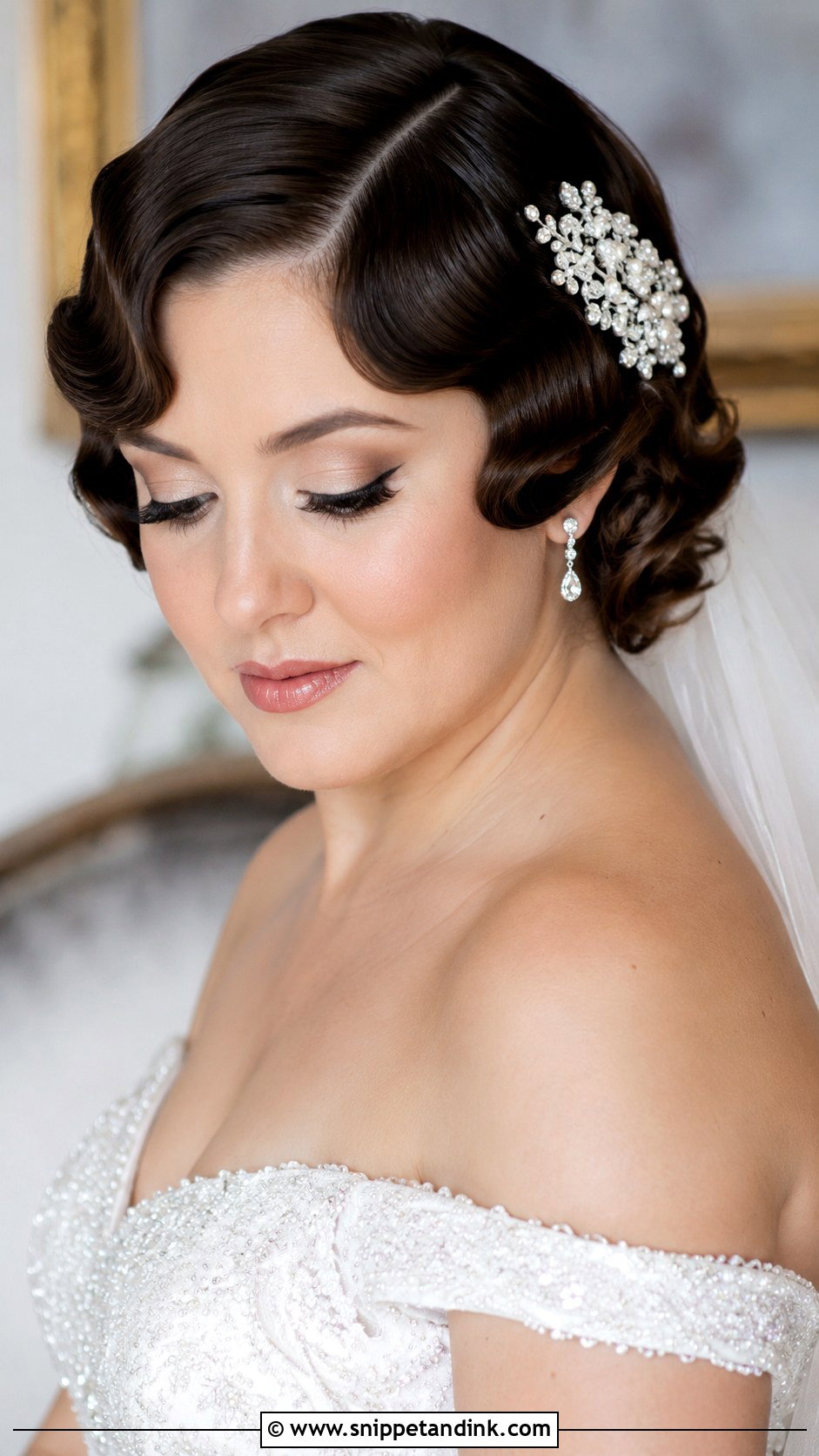
Finger waves are sculpted close to the head, so on their own they don’t add height. What makes them work for a round face is the deep side part and the S-curves running downward. I set them with gel and clips on damp hair, or use a hot iron on dry hair for a softer version. They pair with sparkling vintage combs and a glossy finish. This is a commitment look: it needs a skilled set and a dry, cool room to hold.
16. Braided Bun
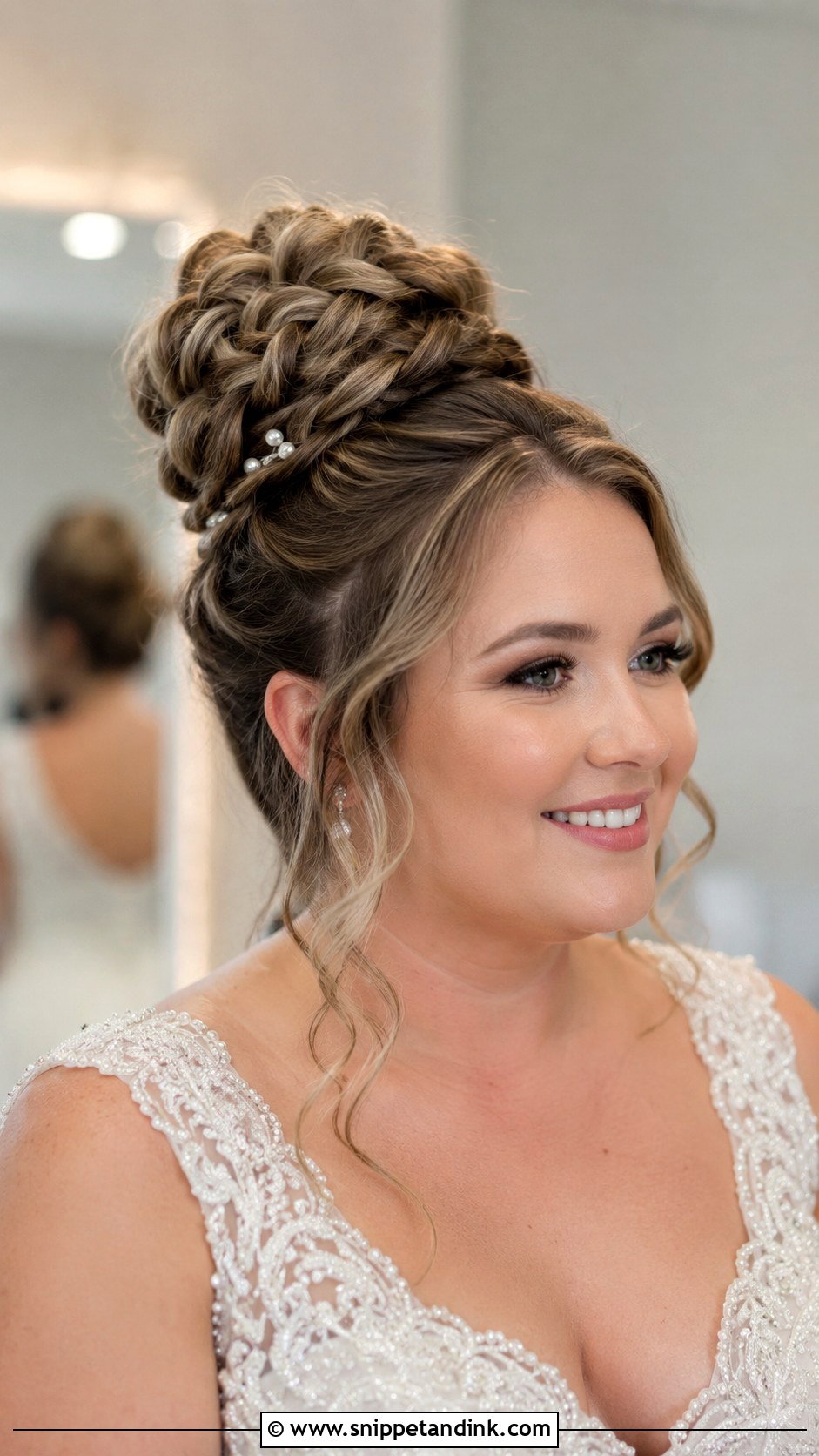
Braiding each section before coiling it into a bun adds dimension and makes fine hair look thicker. I place the bun a little higher than a classic nape bun to lift the face, and leave soft pieces around it. Braided buns hold well because the braids lock the pins in place. Pearl pins or fresh blooms tucked into the braids work for both boho and classic weddings.
17. Side-Swept Curls
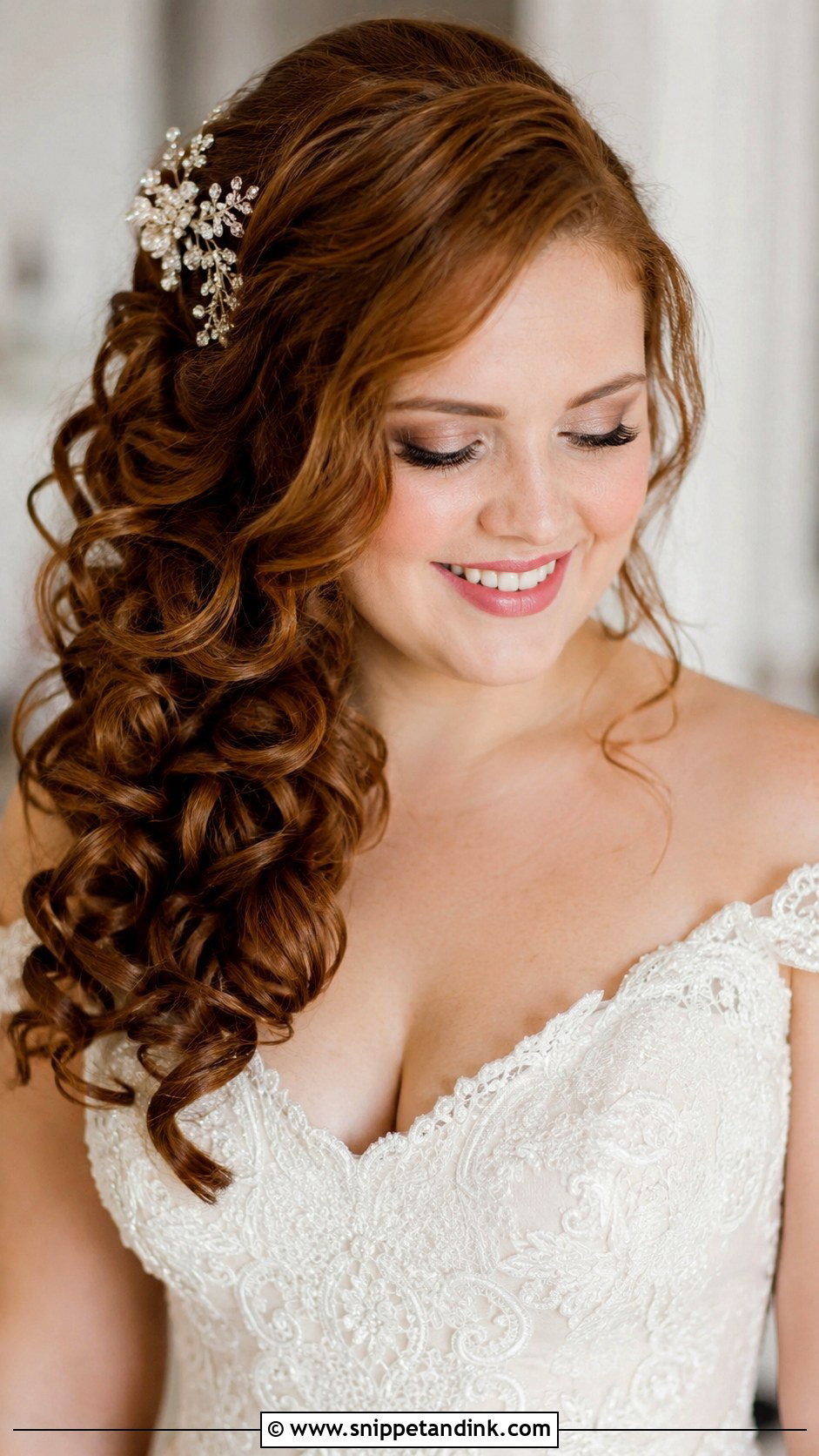
Sweeping voluminous curls over one shoulder creates a diagonal that balances a round face, with the open side showing off the neck and jaw. I curl in larger sections for this so the curls stay soft. To keep them from swinging back, I pin the hair behind the ear on the swept side with crossed pins hidden under a curl. A hairpin behind the ear adds a small finishing touch.
18. Half-Up Top Knot
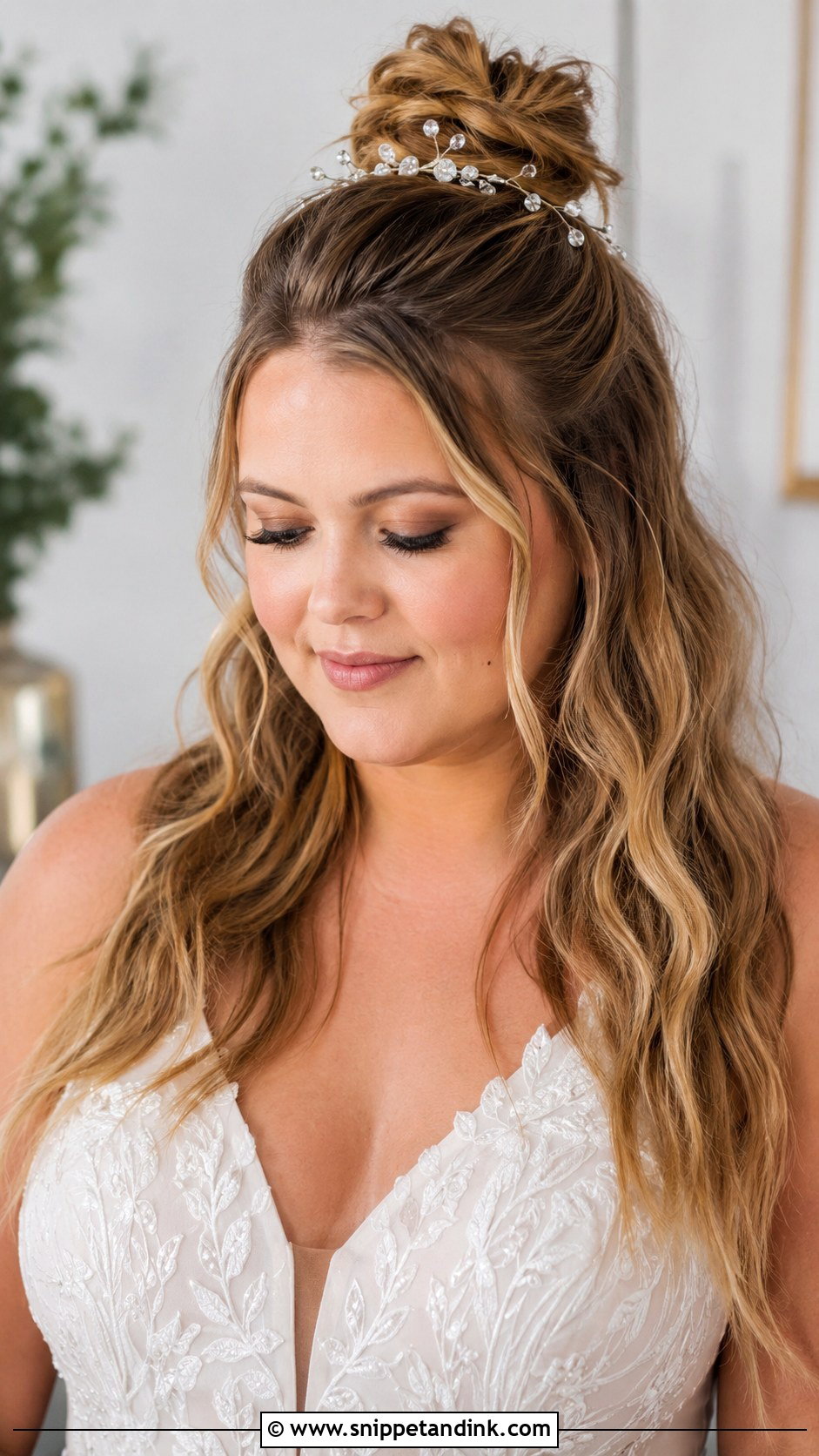
The half-up top knot puts a small knot high on the crown and lets the rest fall in waves, which gives height without a full updo. I keep the knot loose and place it slightly back, since a knot right on top can read casual. Face-framing pieces soften it. This style suits relaxed weddings and most hair lengths below the shoulders. Shorter layers might not reach the knot, so I’d test it at the trial.
19. Romantic Loose Updo
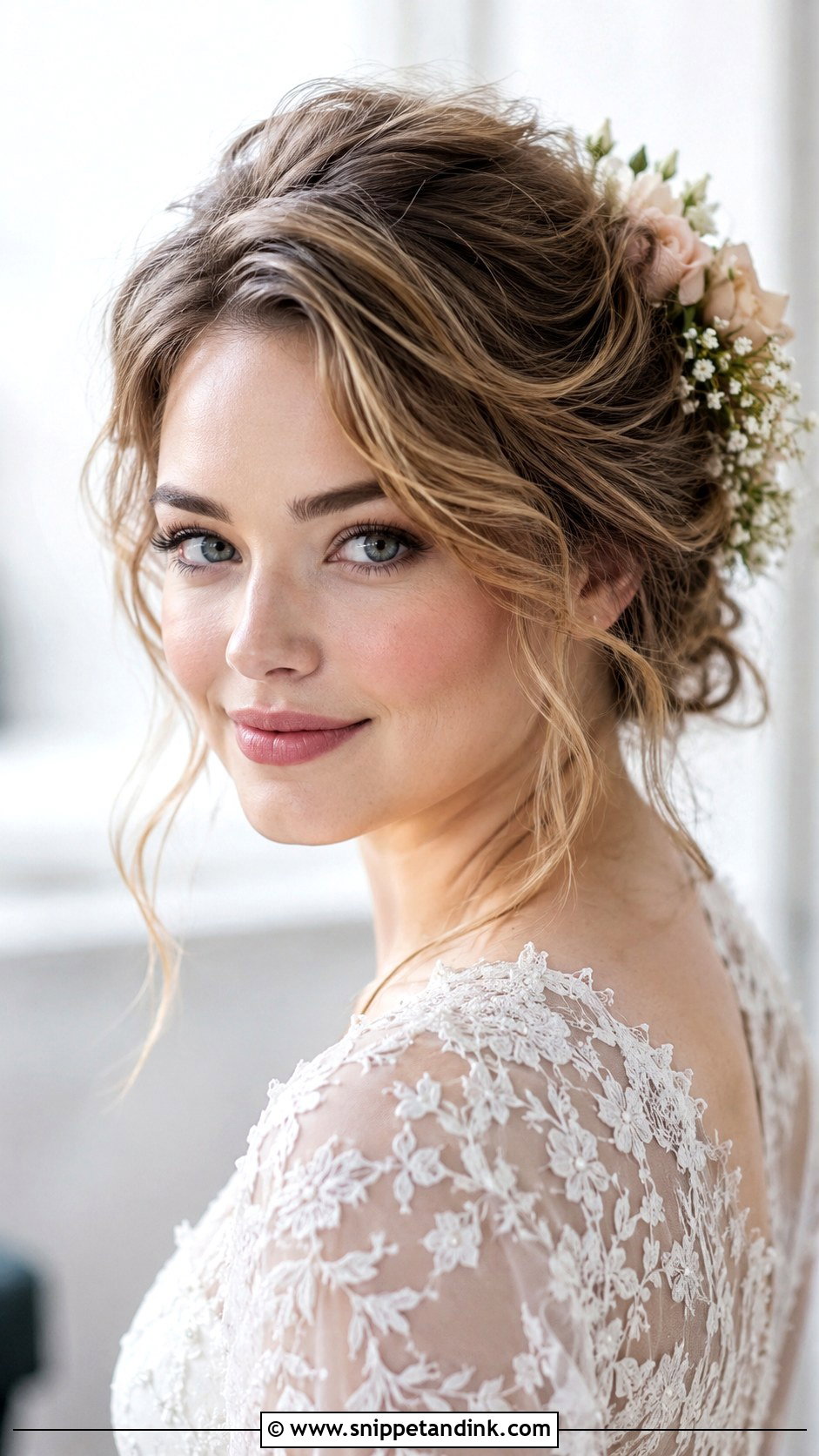
A loose updo is the one I’d recommend for brides who hate the feel of tight hair. The airiness itself flatters a round face, since it adds volume above and behind the face rather than at the sides. I pin it loosely and pull pieces out near the cheekbones. Very silky hair may need a texture spray to hold this shape. It looks just as good at a garden wedding as in a ballroom.
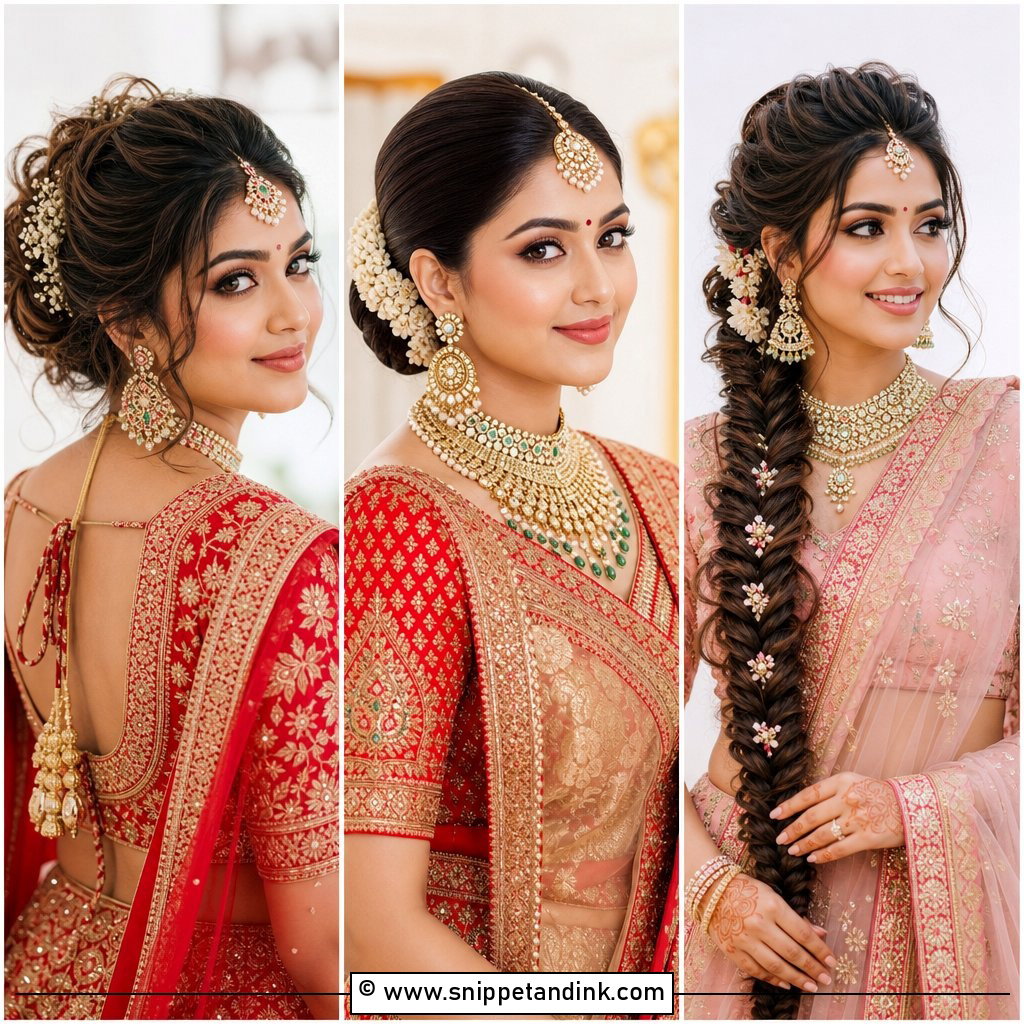
20. French Twist Updo
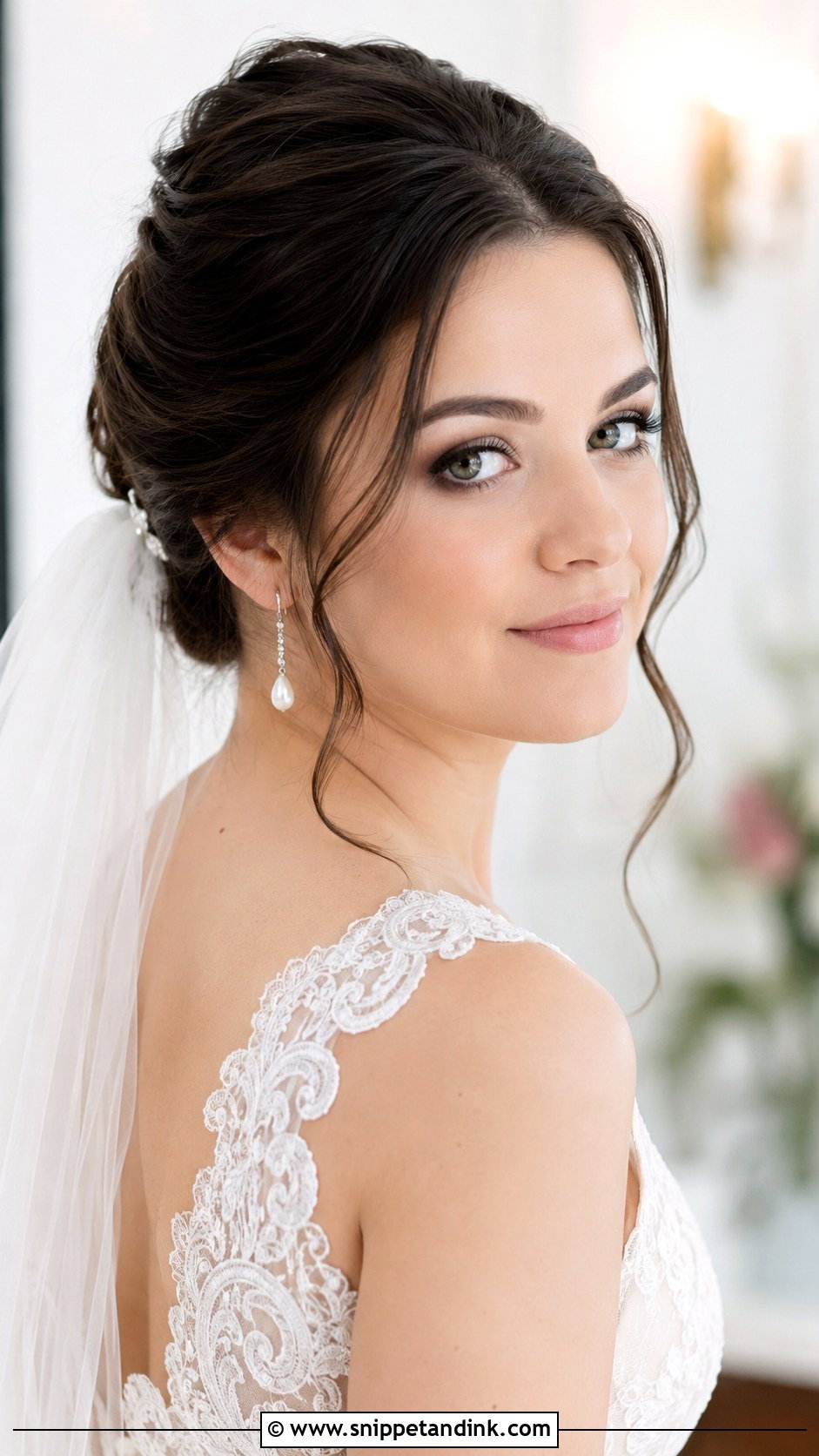
The French twist tucks hair vertically up the back of the head, which creates the long line round faces benefit from. I build crown volume first and then twist, pinning along the seam with long pins that hold the fold. Leave a few face-framing pieces out. It’s a natural partner for formal venues, a veil and statement earrings. Slightly undone looks fresher than stiff.
21. Cascading Curls With Veil
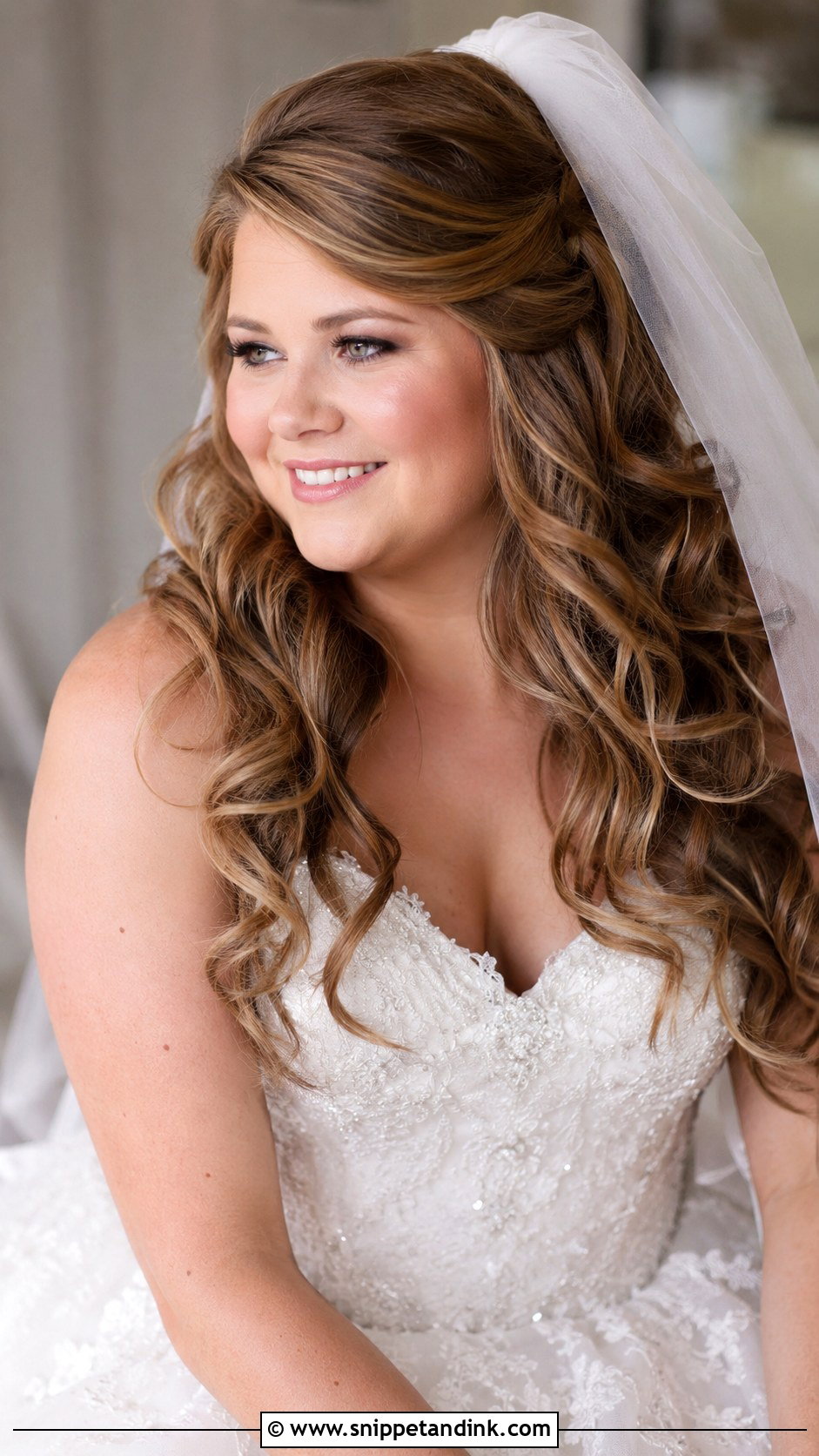
Hair down under a veil is a romantic choice, and curls give it fullness that flatters a round face. I place the veil comb higher on the crown, which adds height, and use a deep side part to bring in that diagonal. Curls under a veil flatten a little, so I set them firmer than I’d normally do. Expect them to relax into soft waves by the reception.
22. Low Knotted Bun With Tendrils
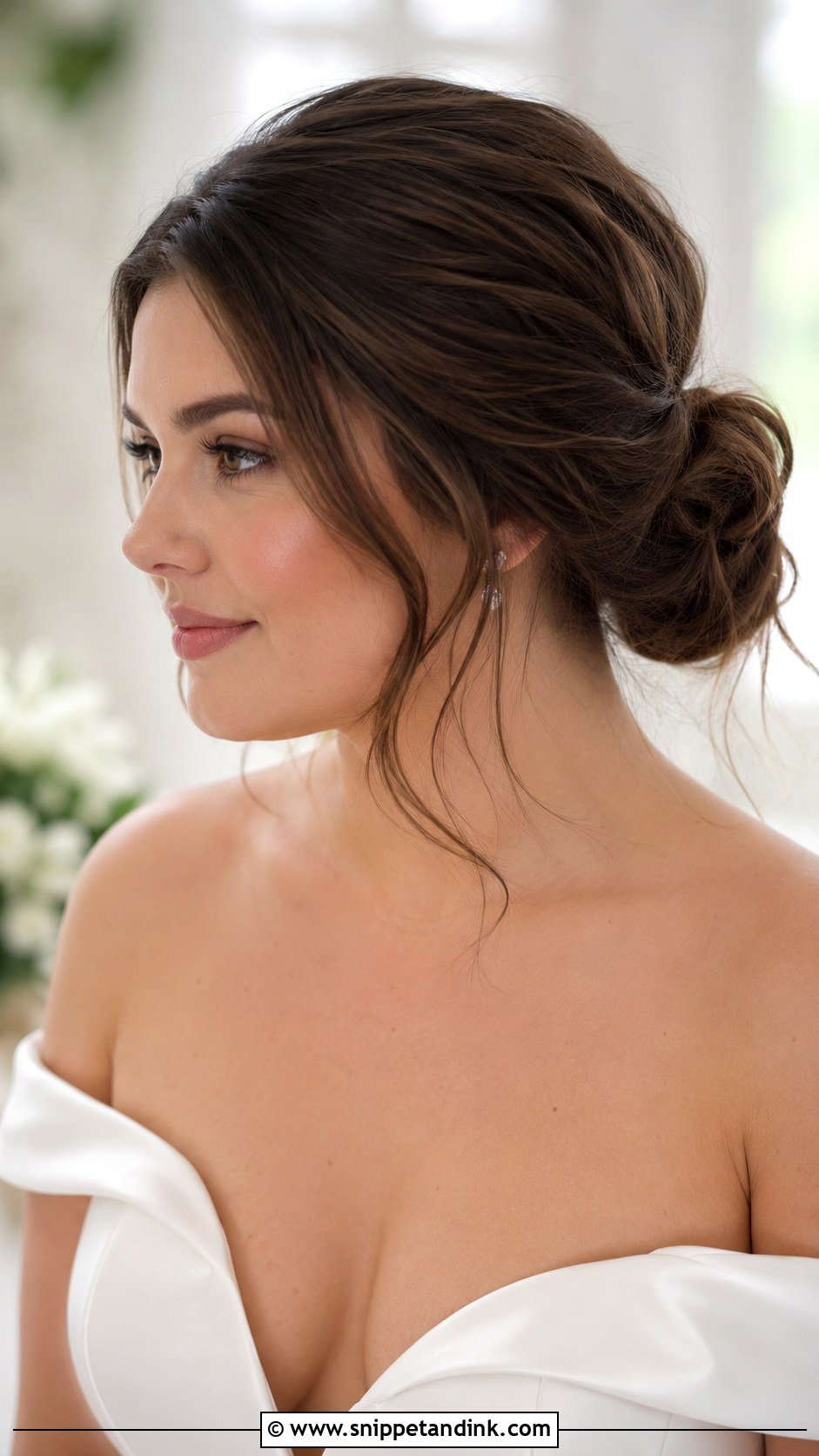
A low knotted bun works well on medium hair, which doesn’t have enough length for a large coil. The knot sits at the nape, so I give the crown a lift and release a few tendrils around the hairline. It works with formal or boho weddings and makes a good base for a long veil. Knots are secure, but on slippery hair I lock them with a small elastic hidden inside.
23. Volumized Bridal Ponytail
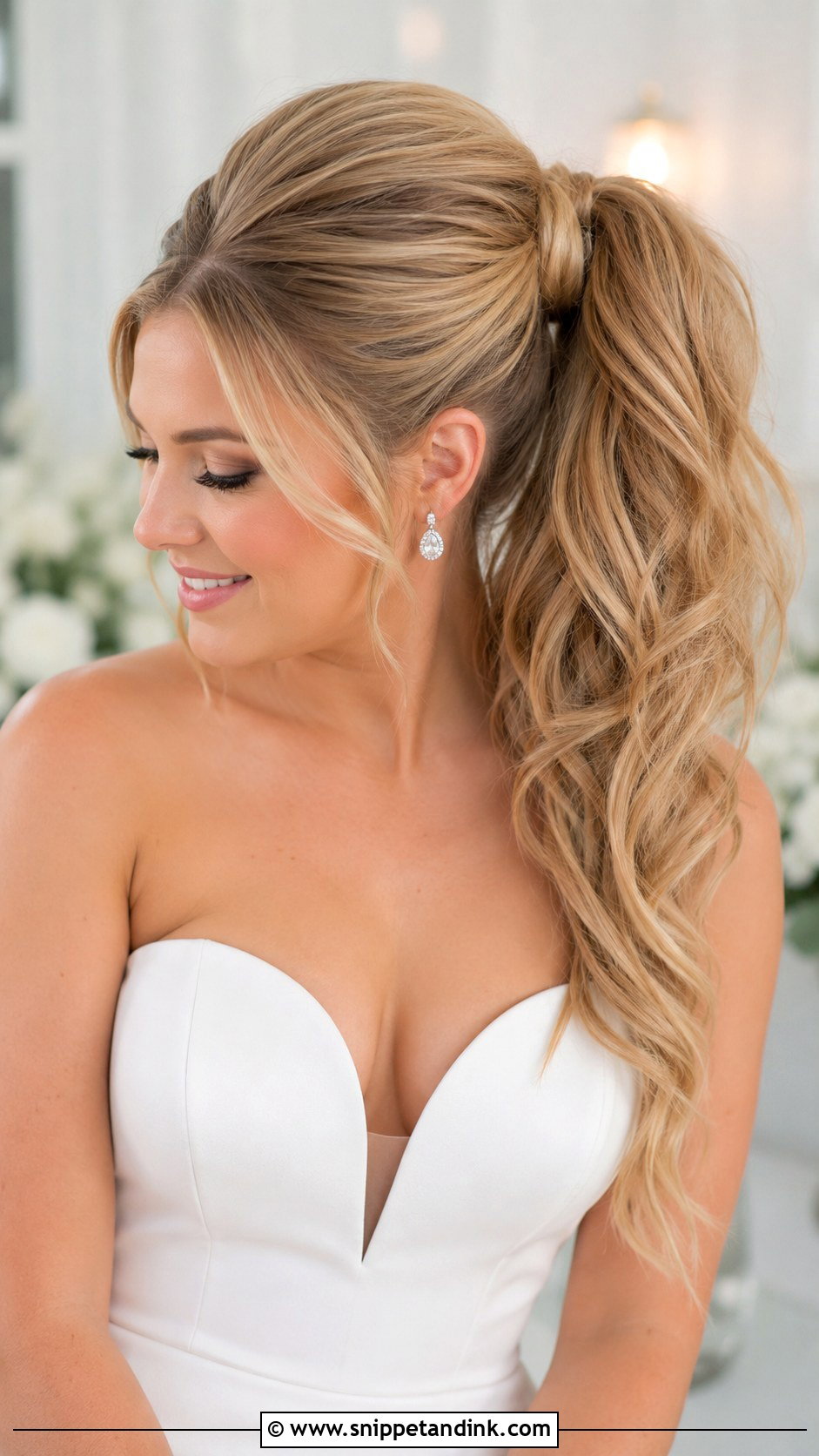
A volumized ponytail is the modern alternative to a bun. I place it mid to high, tease the crown, smooth the front, and curl the lengths for movement. Wrapping a strand of hair around the base hides the elastic. Very fine hair might need a clip-in extension to give the pony real volume. It’s comfortable for dancing and suits a sleek gown and big earrings.
24. Twisted Halo Updo
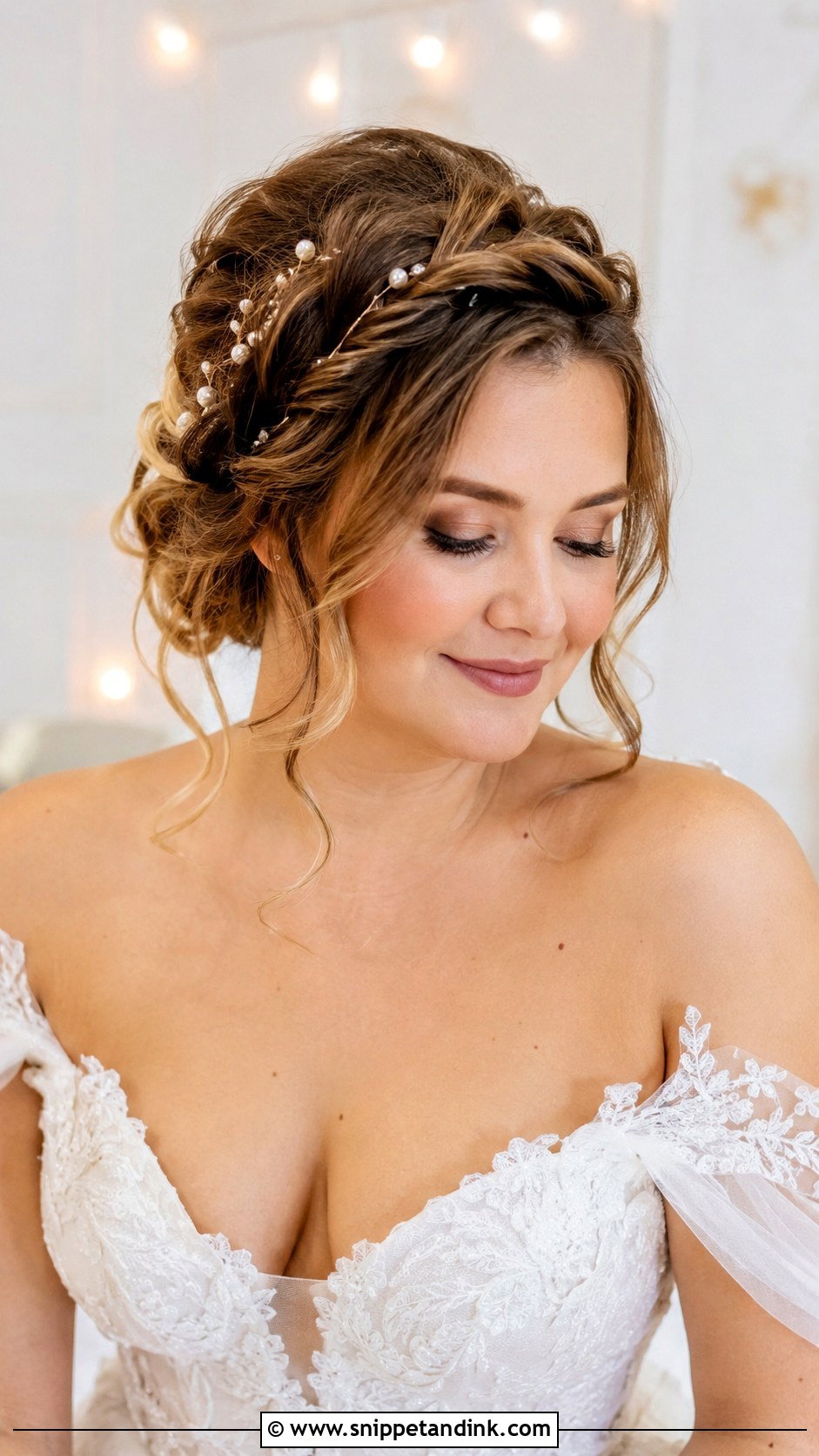
A halo of twists around the crown adds height without the bulk of an updo. I twist each section back from the face, pin it along the head, and keep the twists loose so they read as soft. Tiny flowers or pearls can be woven through. It’s a good choice for garden and boho weddings, and the twists hold up better than curls in humidity. Leave a few strands loose to frame the face.
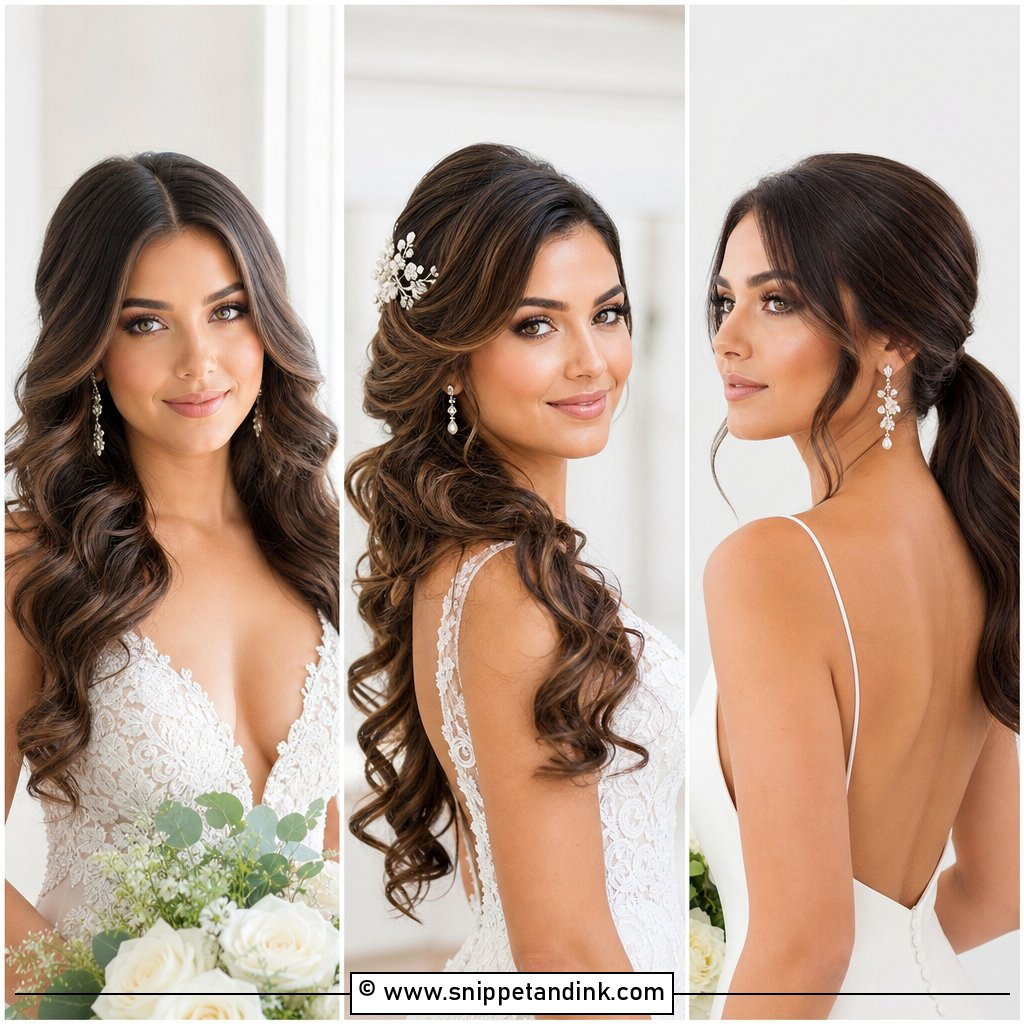
25. Sleek Side Bun With Sparkle
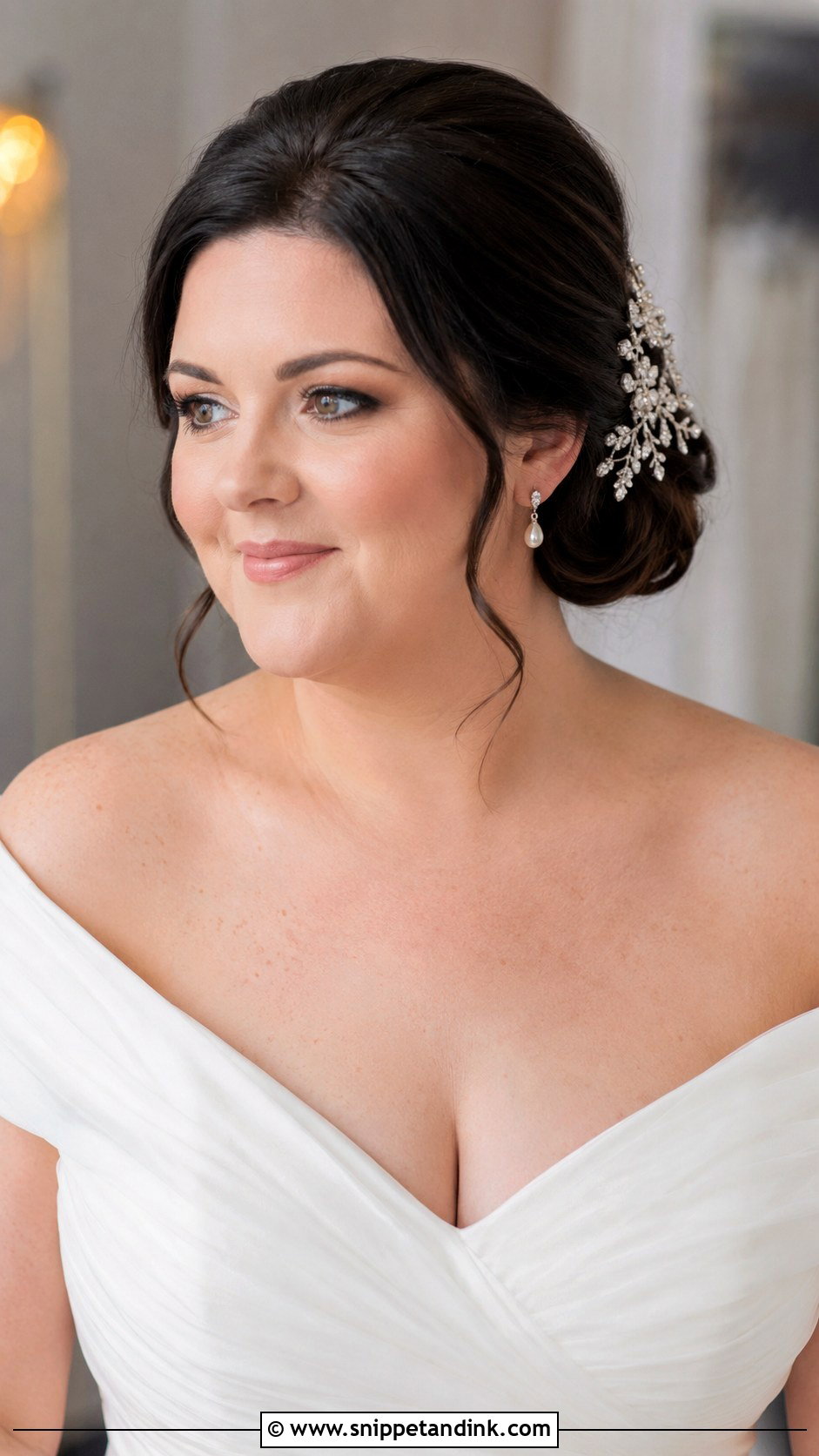
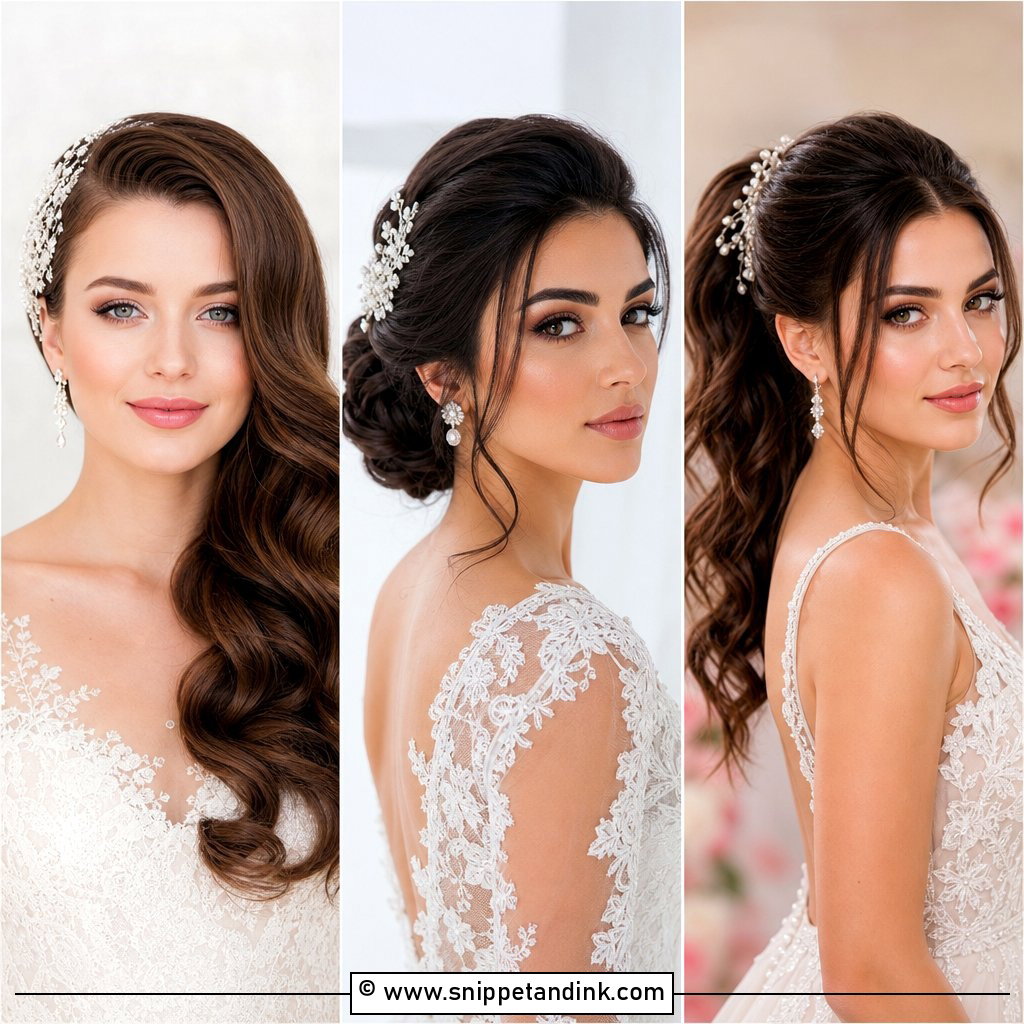
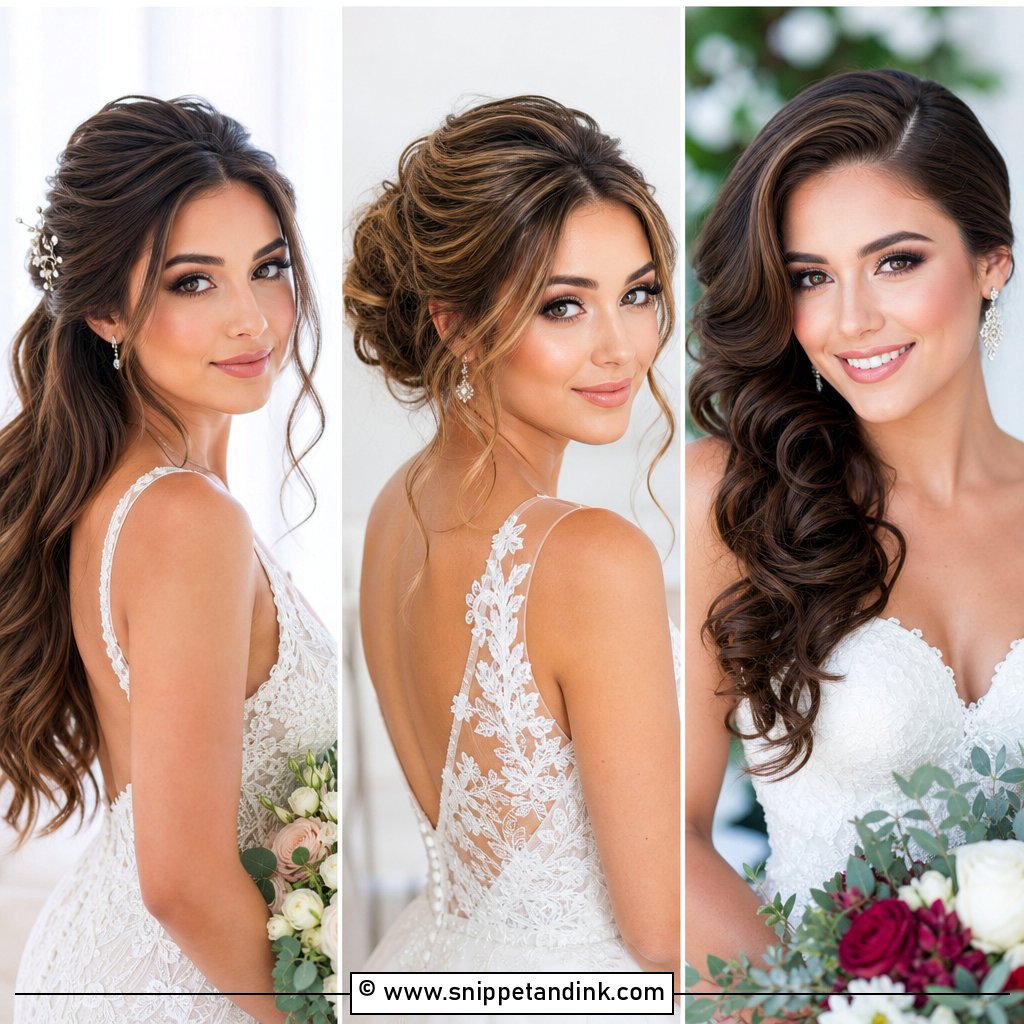
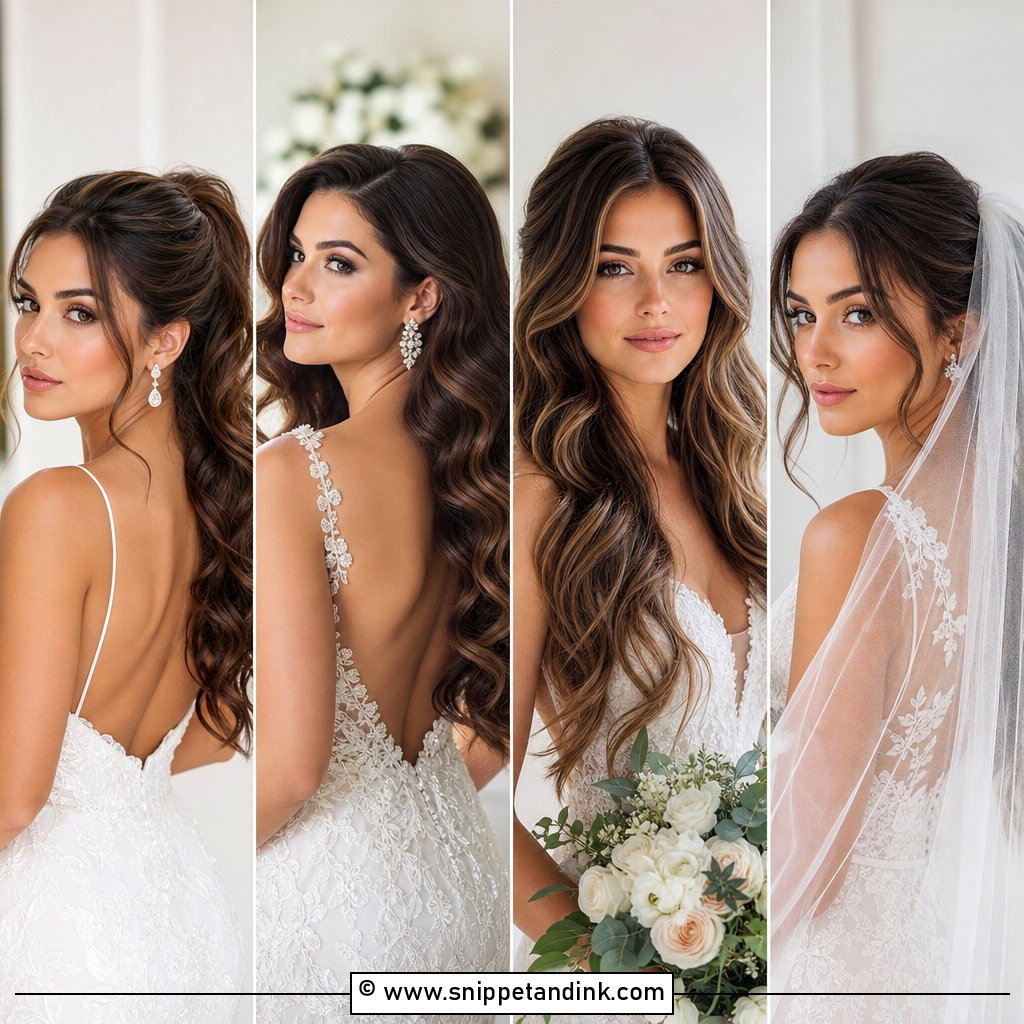
A sleek side bun is polished and asymmetrical, which flatters a round face better than a centered sleek bun. I smooth the front with a paddle brush and a light gel, keep some crown lift, then gather the hair low on one side. A jeweled comb near the bun adds the sparkle. Sleek styles show every bump, so I’d skip it if you have strong cowlicks at the hairline.
Crown Lift That Survives a Veil and Five Hours of Hugs
Height is the first thing to go. A veil comb pressing on the crown, a hug from a tall relative and a few hours of warm air all flatten it. So I build crown volume from the root rather than just teasing the surface. I set the crown section in a large velcro roller while I work on the rest, then backcomb lightly at the base and smooth the top layer over.
Fine hair needs more help. A small padding piece under the crown section in the same color as your hair holds height all day and stays hidden. For heavy, thick hair, the risk is the opposite: the weight of the length pulls the lift down. I take some weight out by pinning part of the length into the updo first.
Put your veil in last, and place the comb just behind the lifted section rather than on top of it. If you’re taking the veil out for the reception, ask your stylist to show a bridesmaid how to remove it without dragging the pins out with it.
Cutting Bangs for the Wedding Without Regret
Curtain bangs and side-swept fringes come up in this list a lot, because they suit round faces so well. If you don’t already have them, cut them at least six to eight weeks before the wedding, so you have time to learn how they sit and let them grow if they’re too short. Trim existing bangs about a week before, not the day before. Freshly cut fringe looks blunt and sits higher than it will a few days later.
Bring a photo of how you usually wear them to the trial. Bangs styled differently from how you normally wear them can make your face look unfamiliar in your own photos.
Lift at the Crown, Softness at the Cheek
For a round face, the hair has three jobs: add height, bring in a diagonal line, and frame the face with pieces that fall past the cheeks. A high bun, side-swept curls or a half-up look with curtain bangs all do that in different ways. Avoid tight, slicked-back finishes unless the volume is high. Take your favorites to your stylist and try two of them at the trial, so you can see the difference in photos before the wedding.
You'll Like These Ideas:


Leave a Reply