
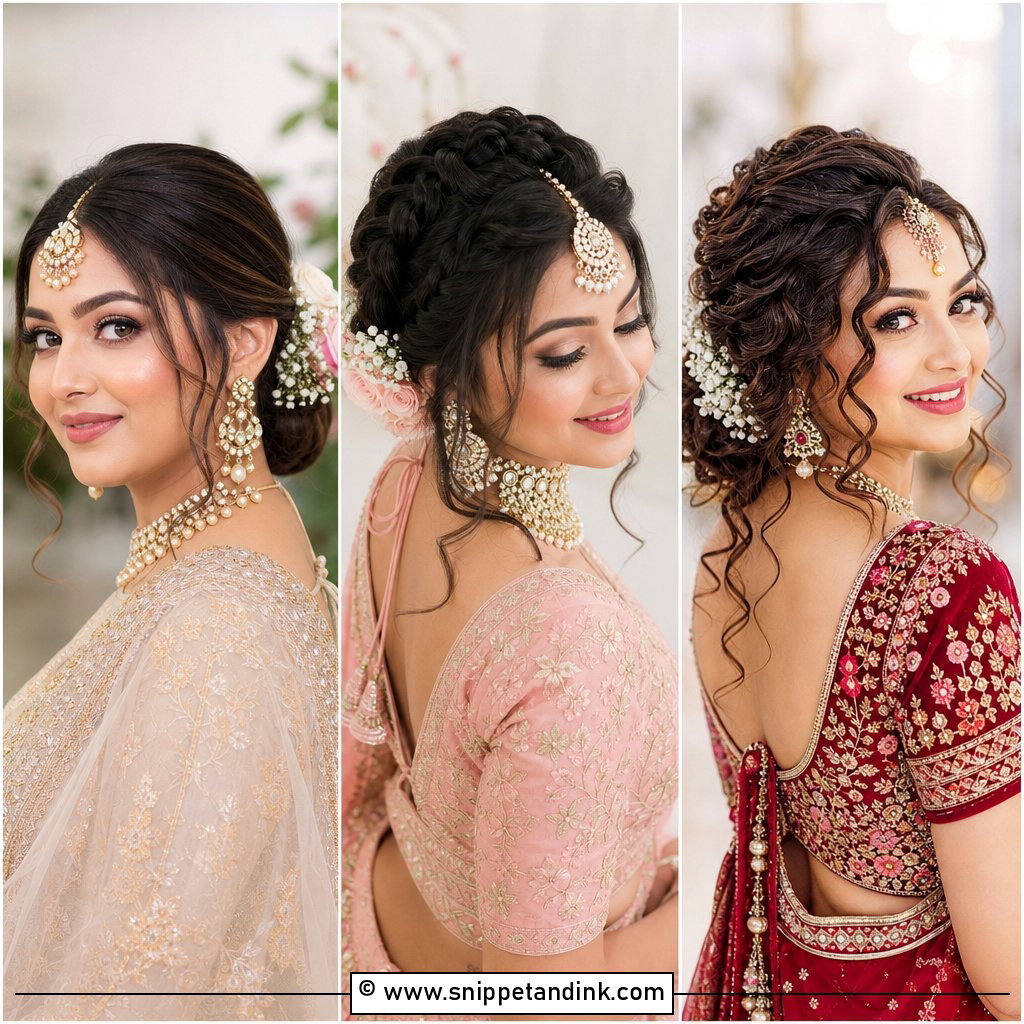
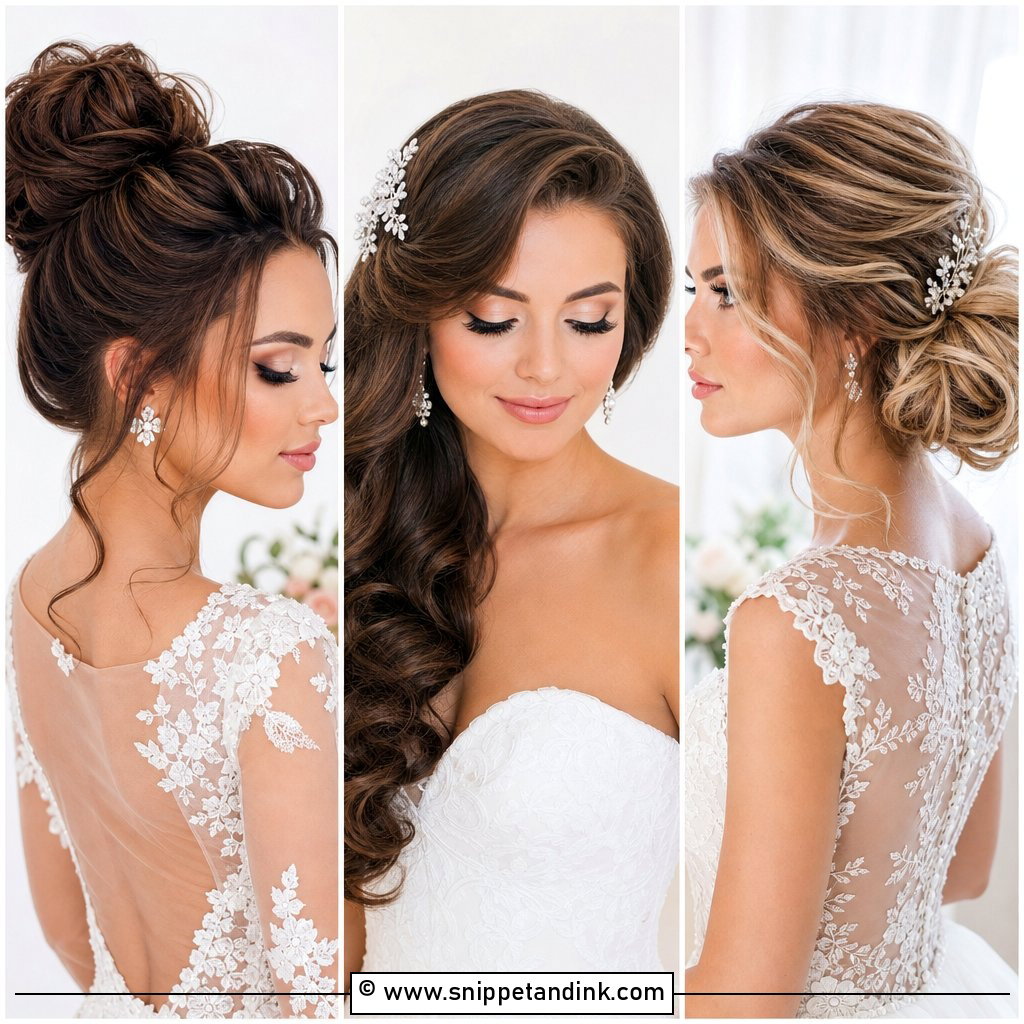
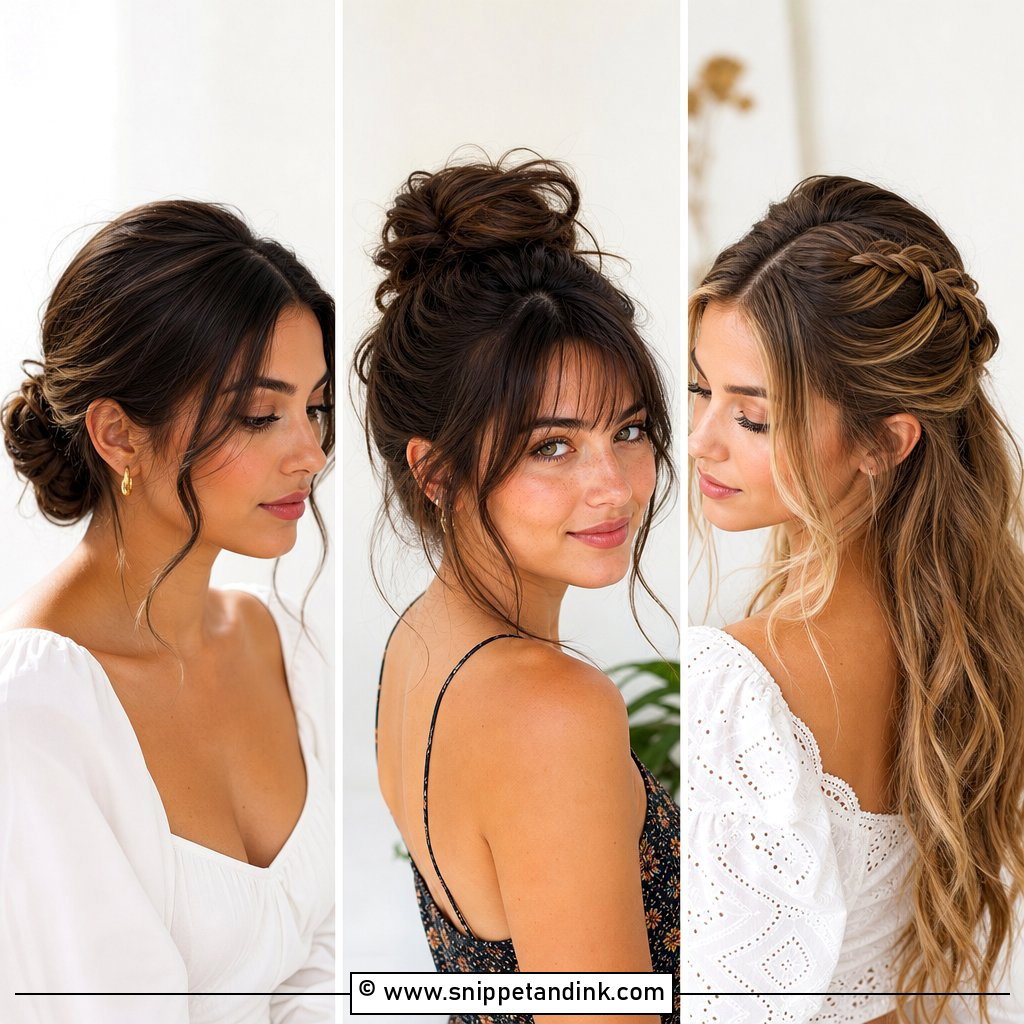
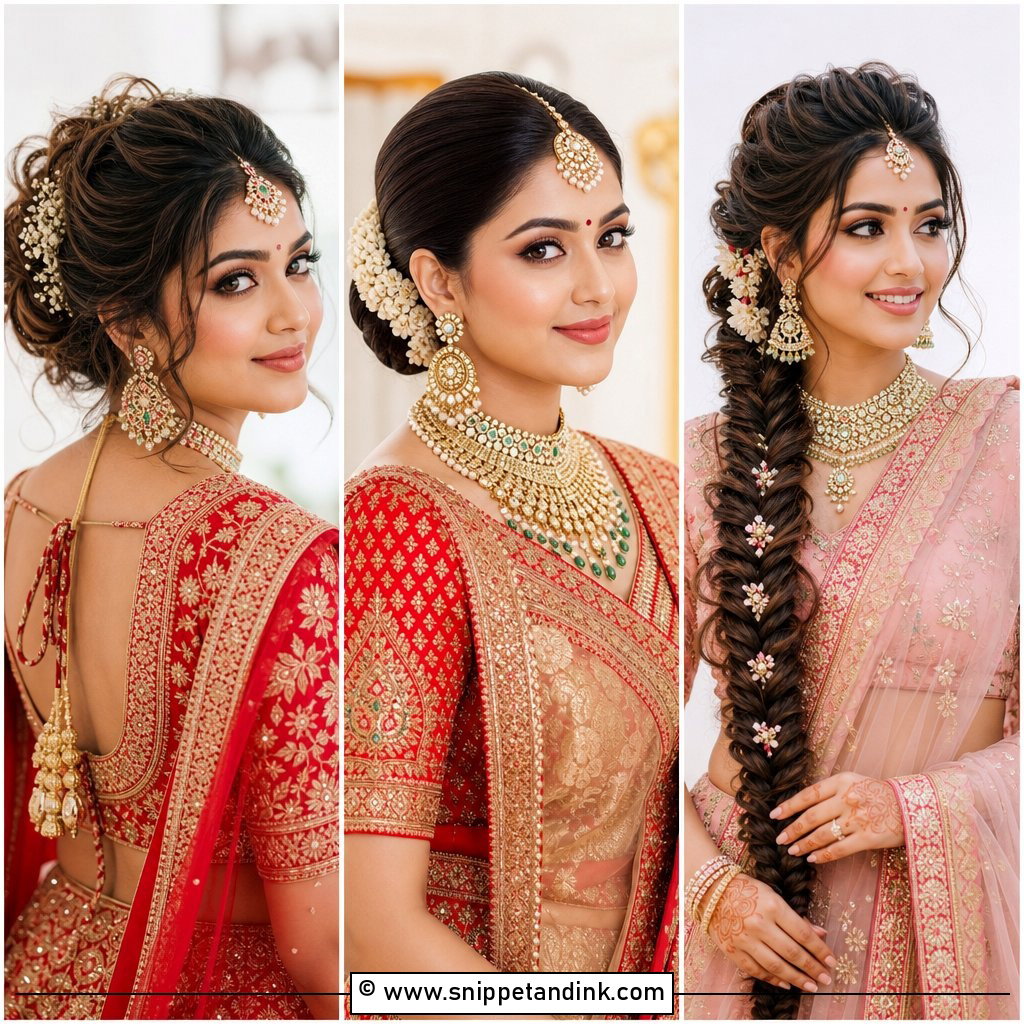
A round face isn’t a problem to hide. It’s a shape with soft cheeks and a jaw that curves rather than angles, and it usually looks young and warm in photos. What a hairstyle can do is add a little length where the face is widest, mostly through height at the crown, a clean center part and lines that run downward rather than across. The 20 Indian wedding hairstyles below all do some of that, from gajra buns and puffs to side-swept curls and braids. For each, I’ve noted where the volume should go and what tends to widen the face by mistake.
Is Your Face Actually Round?
Many brides who call their face round turn out to have a square or heart-shaped face with full cheeks, and the advice differs. At a consultation I pull all the hair back and look at three things: whether the face is about as wide as it is long, whether the jaw curves instead of forming corners, and where the widest point is. A round face is widest at the cheeks and has a soft jaw.
- Round: width and length close, soft jaw, widest at cheeks. Height at the crown helps most.
- Square: strong jaw corners. Softness around the jaw helps more than height.
- Heart: wider forehead, narrow chin. Volume near the jaw helps more than at the crown.
Forehead height matters too. A round face with a short forehead needs more crown lift; one with a high forehead can carry sleek styles with almost none.
1. High Bun With Maang Tikka
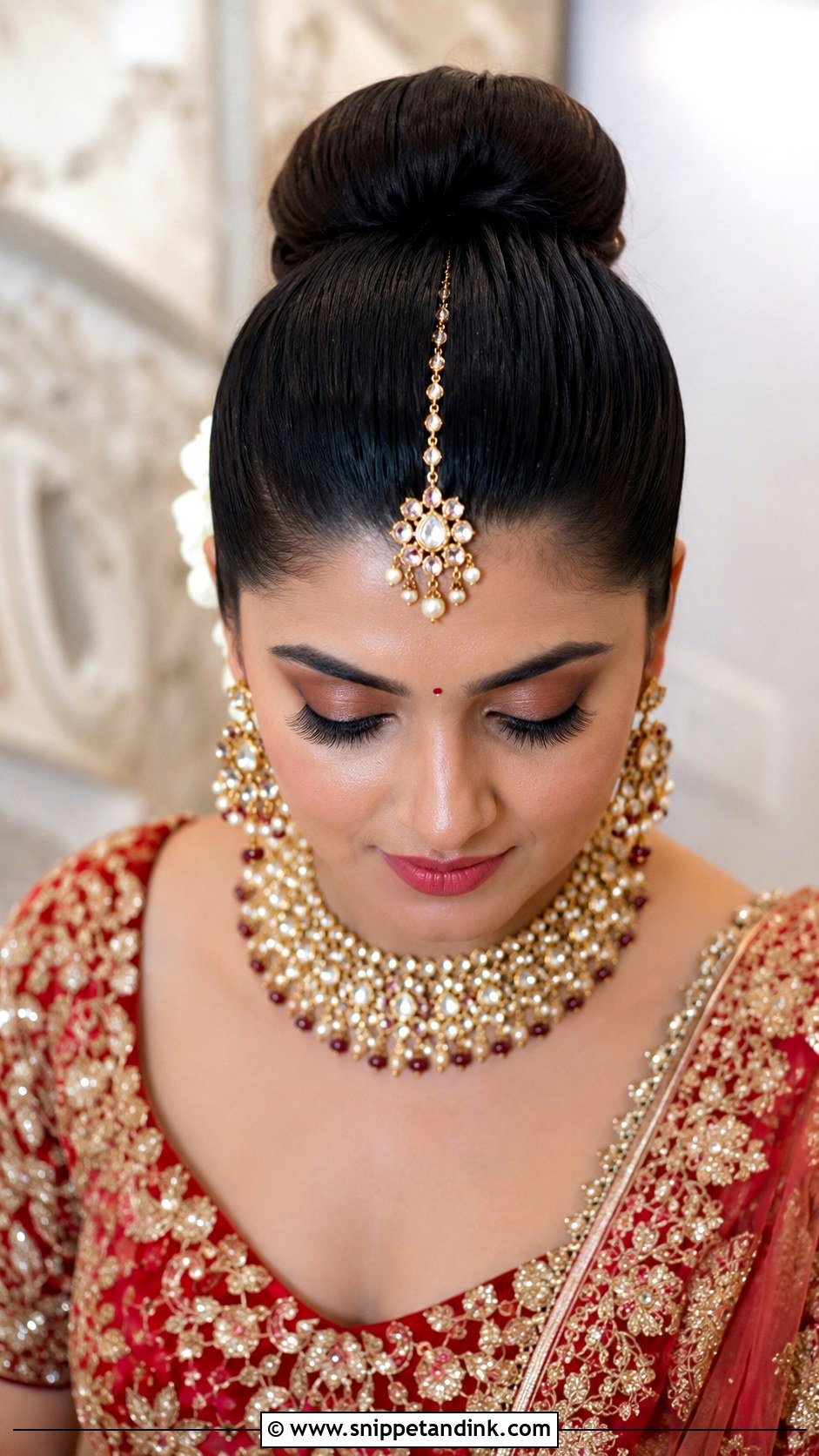
Placing the bun at the crown is the single most effective change a round-faced bride can make. The face reads longer because the eye travels up to the bun before it reaches the cheeks. I set a tight ponytail exactly at the crown, then build the bun on it with crossed pins so it doesn’t lean back once the dupatta goes on. A slim, vertical maang tikka continues the line down the forehead. With the neck and shoulders fully clear, heavy necklaces sit better too.
2. Traditional Gajra Bun
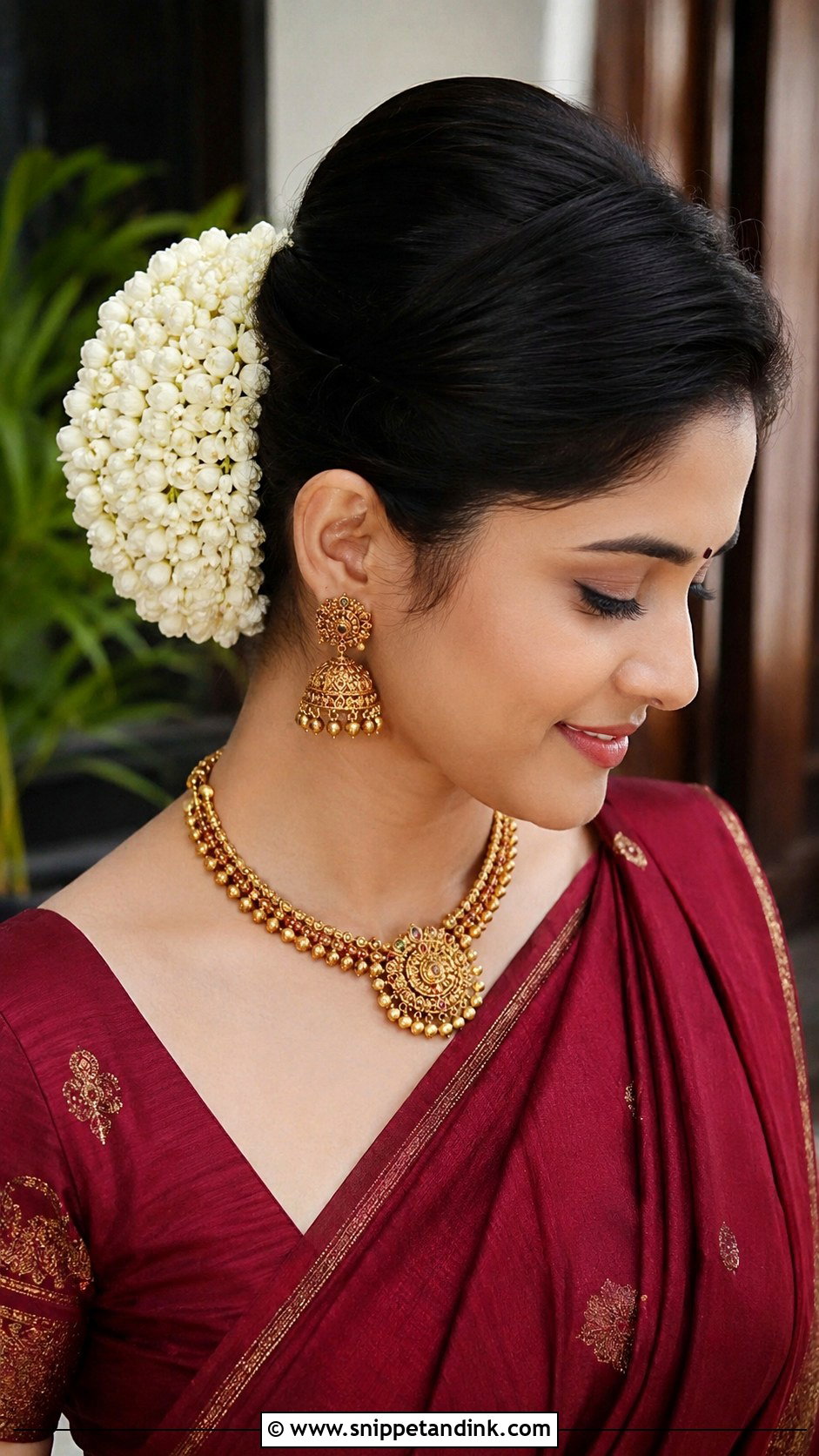
Fresh jasmine flowers wrapped around a full bun is the look most grandmothers hope to see. For a round face, I lift the bun higher than the usual nape position and tease a little height into the crown first. If your own hair isn’t long enough for a full bun, a bun extension or donut gives the size the flowers need to wrap around without looking sparse. Mogra strands circle the base. White blooms against dark hair give strong contrast in photos. It suits silk sarees and traditional lehengas, and it keeps everything off the cheeks.
3. Bouffant Half Up Half Down
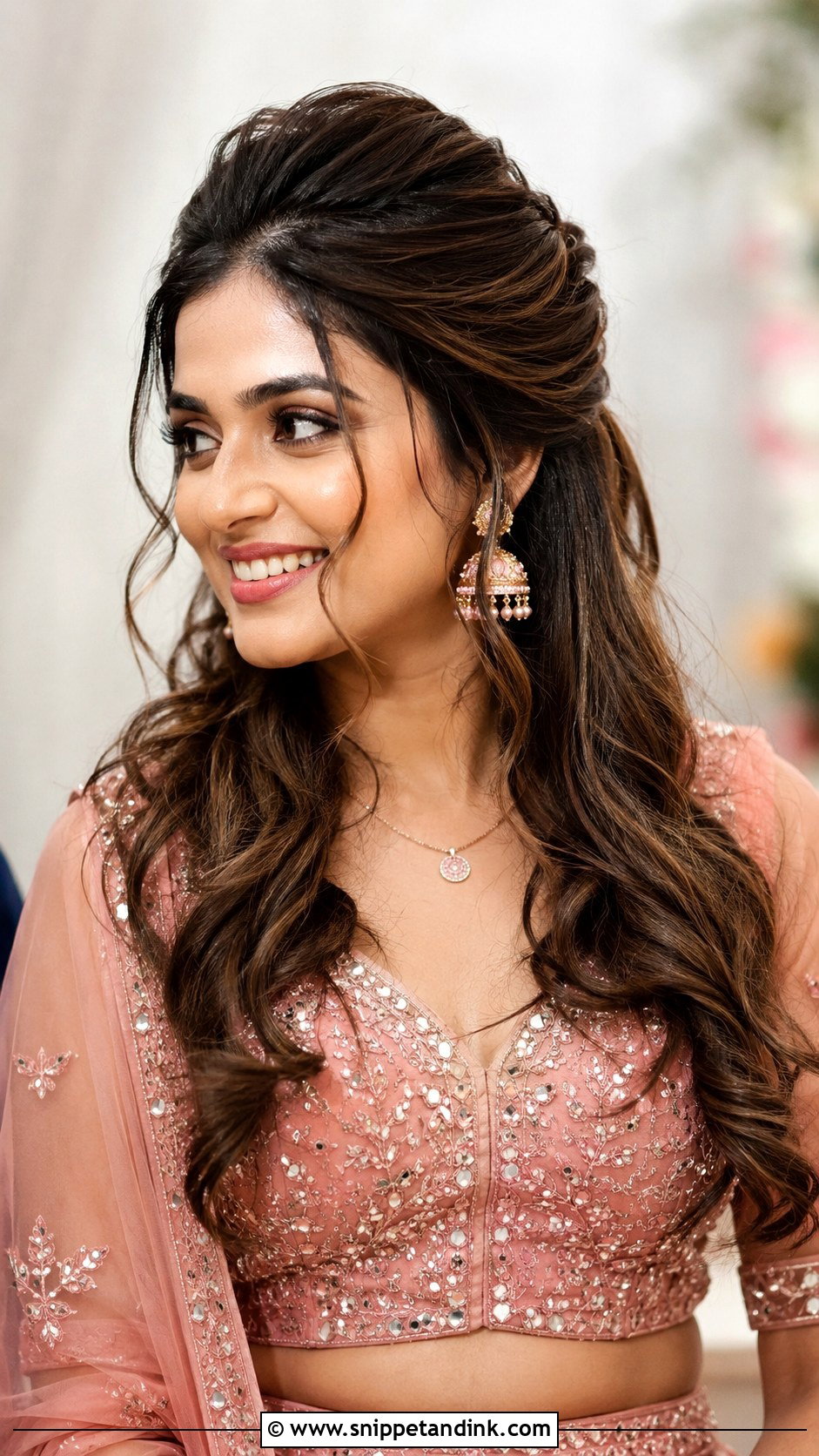
Can you wear hair down with a round face? Yes, as long as the height comes first. A bouffant half-up does exactly that: the teased crown adds length, and the curls below fall past the jaw instead of sitting beside the cheeks. I tease in small sections and smooth over them so the bouffant keeps its shape. Face-framing strands are fine if they start below the cheekbone; strands cut at cheek level do the opposite and add width. It suits sangeet, engagement and reception events.
4. Side Swept Curls With Center Volume
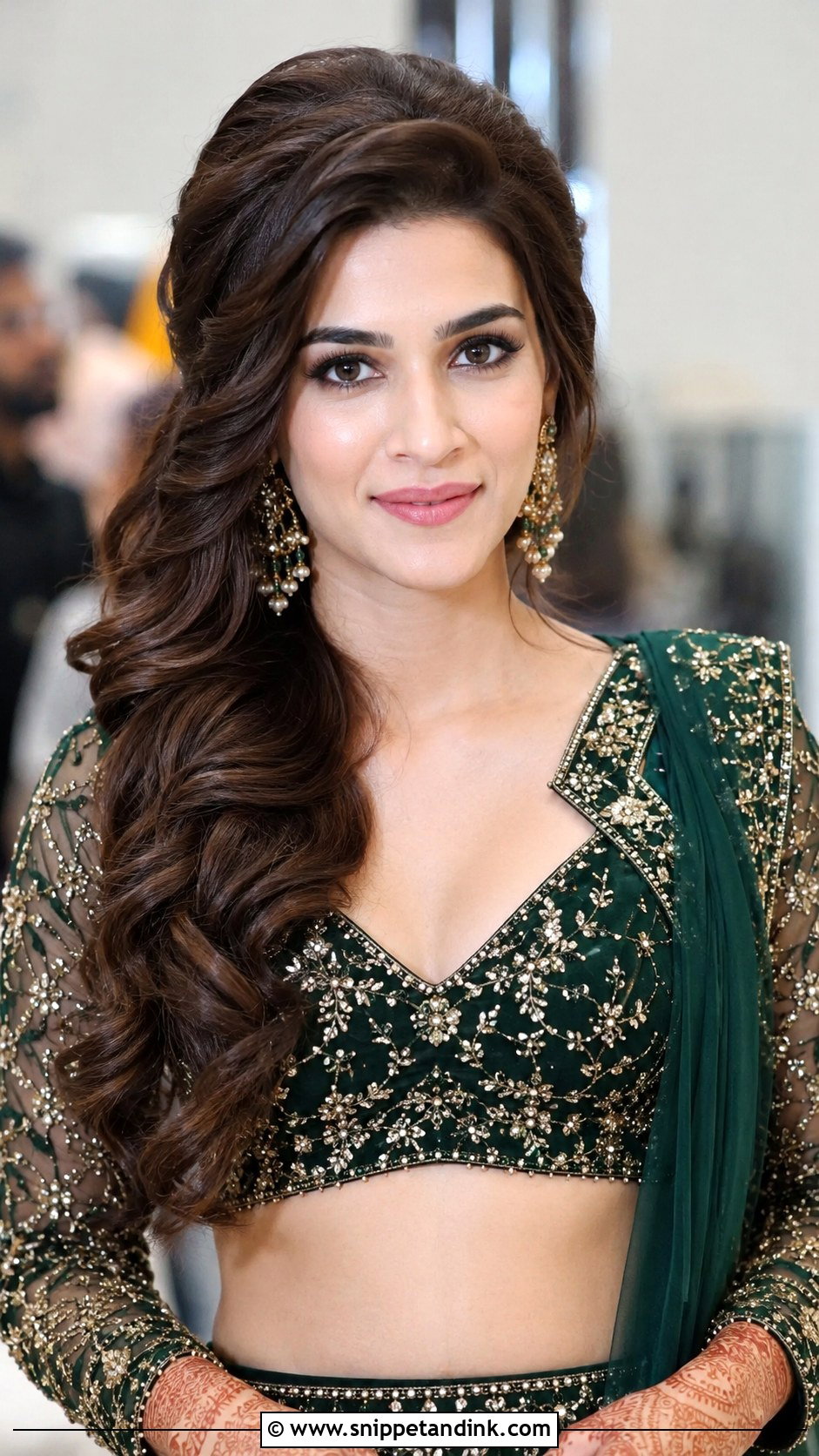
Asymmetry helps a round face because it breaks up the circle. Here I add height at the crown, then sweep large-barrel curls over one shoulder, pinning the other side flat behind the ear. That flat side matters as much as the curled one: volume on both sides of the face widens it. Tight ringlets add width, so I stick to big, loose curls. Statement earrings show well on the pinned side, and a sleek lehenga keeps the overall look clean.
5. Low Bun With Crown Volume
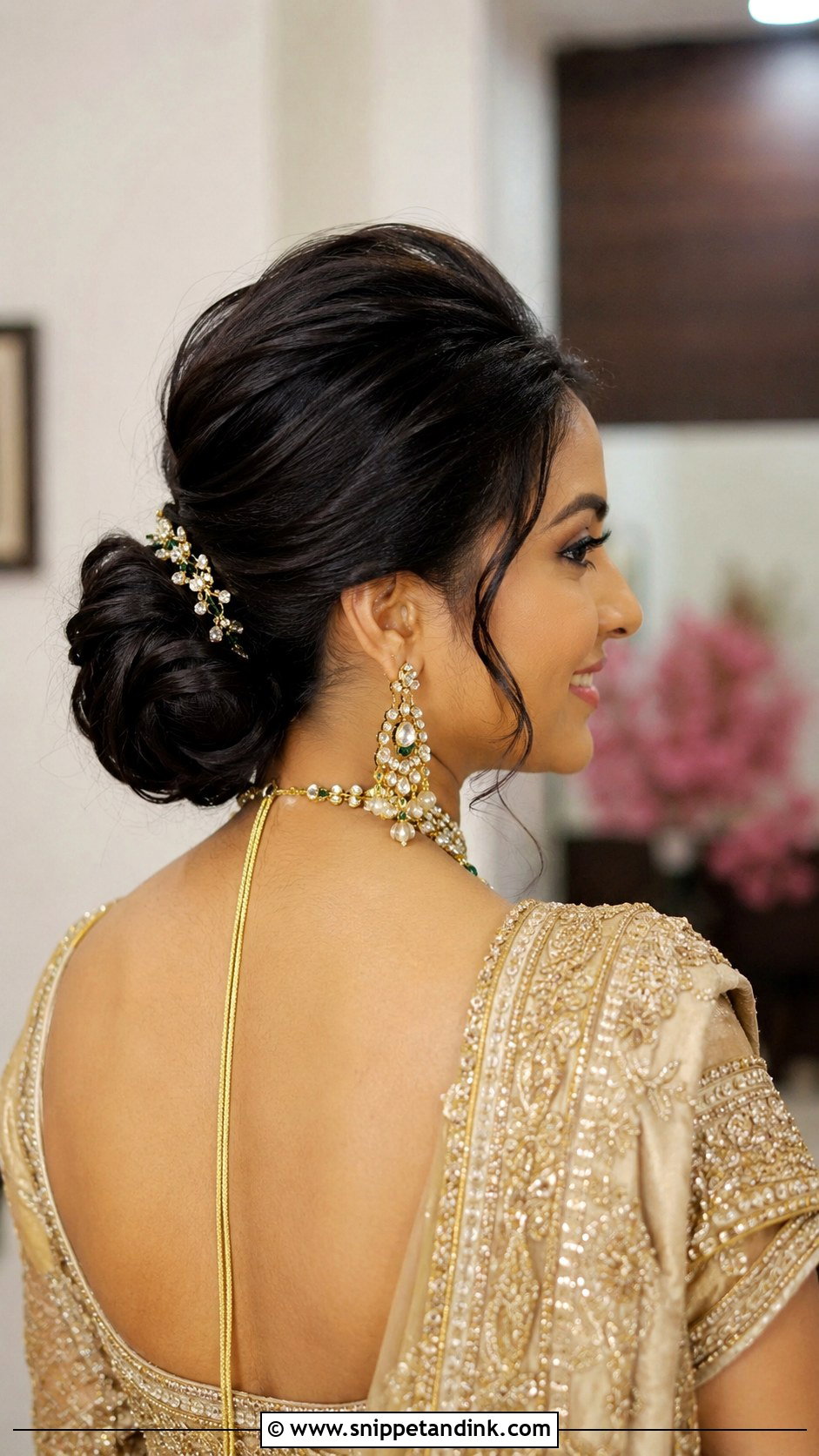
A low bun alone pulls the eye to the nape and does little for a round face. The fix is crown volume: I tease the top, smooth it back and only then sweep everything into a neat bun at the nape. The height at the top gives the face its length; the bun stays understated. A small floral cluster or a jeweled pin finishes it. It works with reception gowns and heavy sarees alike.
6. Fishtail Braid With Loose Front Strands
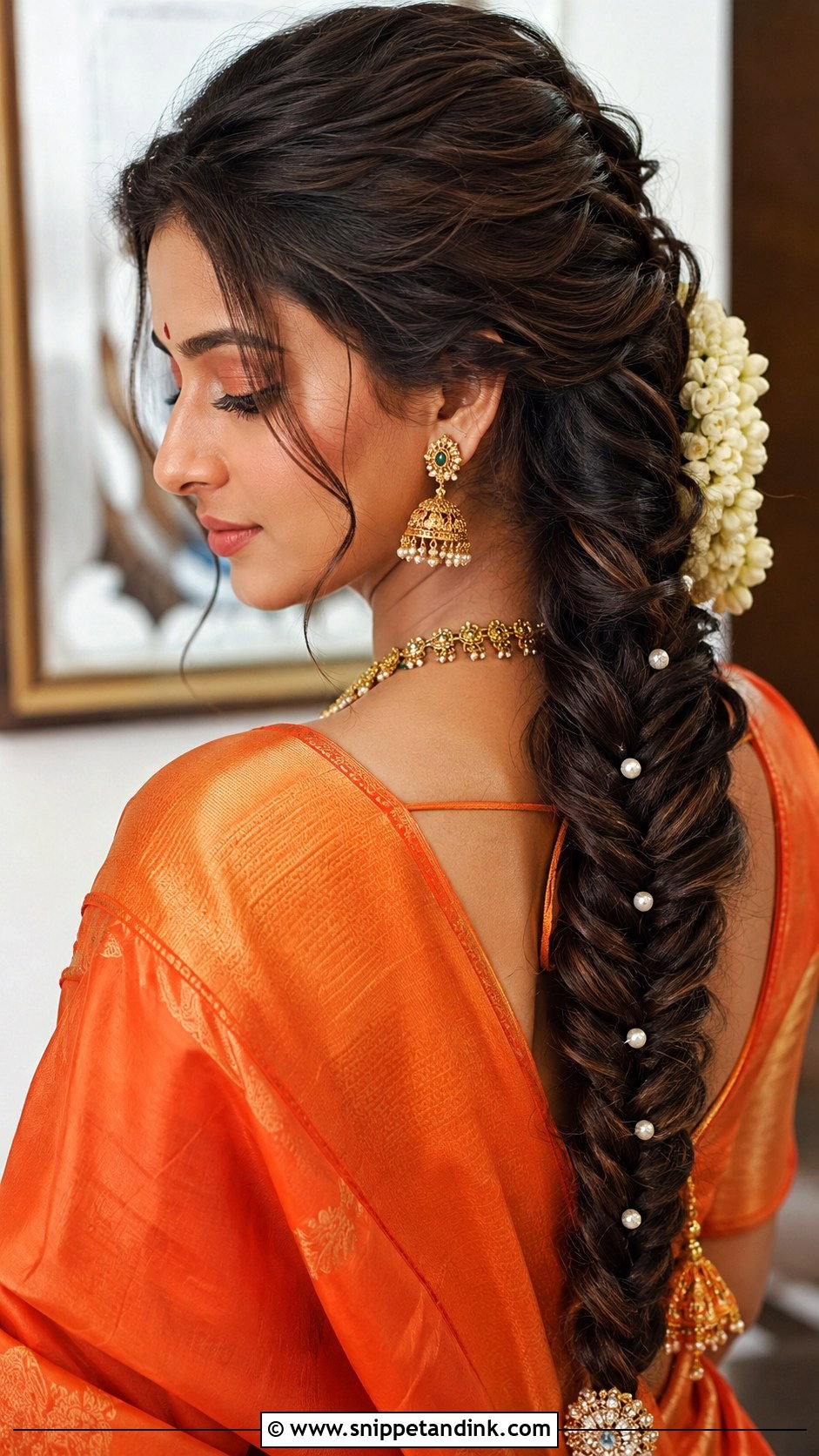
A long fishtail braid draws the eye down the body, which visually lengthens the face. I start it slightly off-center and leave soft strands only on the outer edge of the face, never full curtains on both sides. Pulling the sections out after braiding adds width to the braid, which is what you want: width away from the face, not beside it. Pearls, gold thread or flowers along its length suit South Indian and fusion weddings. You do need real length for this to make its point.
7. Floral Updo With Fresh Roses
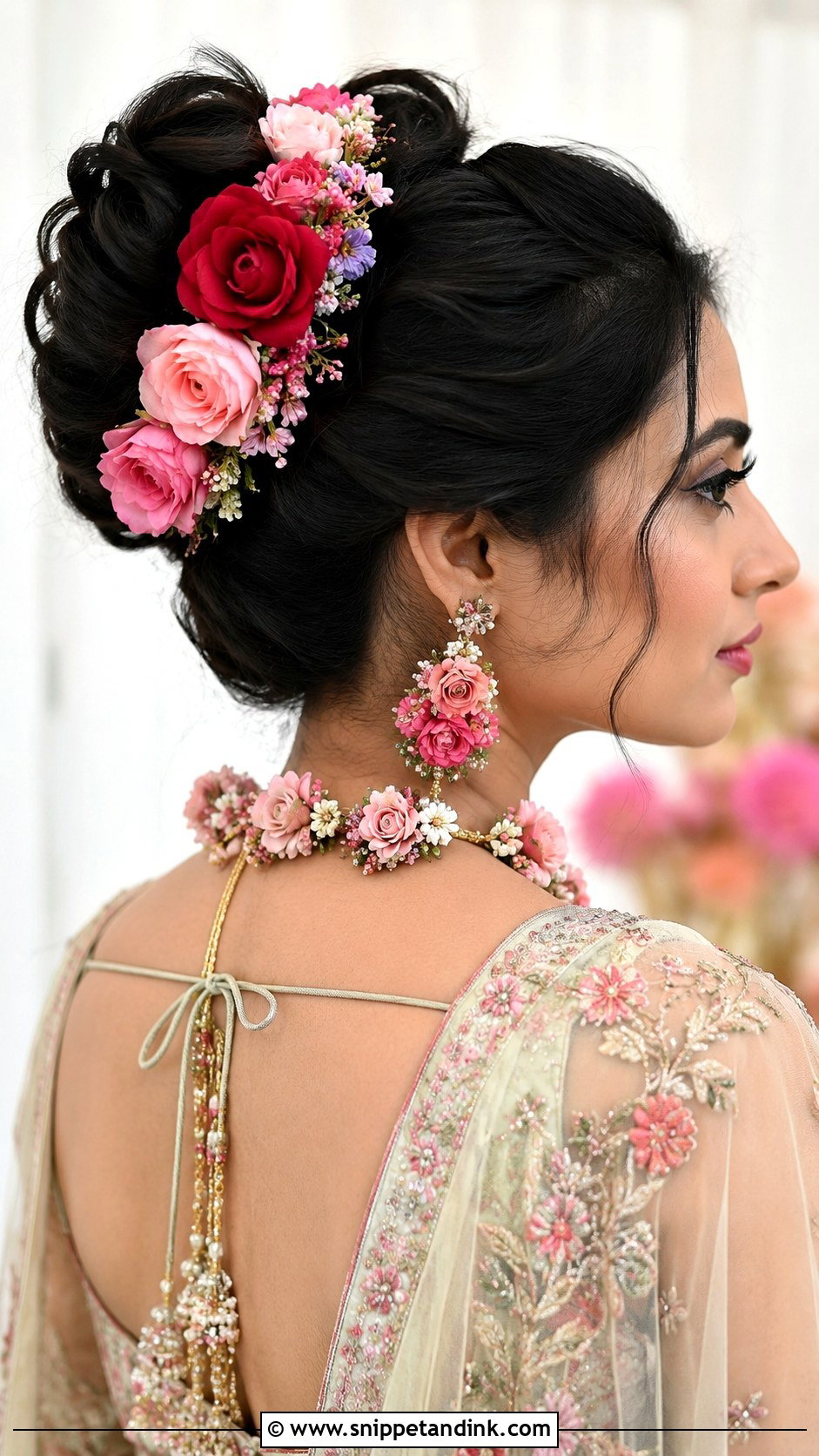
Roses are heavier than jasmine and stack up fast, so placement decides whether this updo flatters or swamps a round face. I build height at the crown, then keep the roses toward the top and back of the updo; roses clustered beside the ears add width right where you don’t want it. Soft pinks, deep reds or creamy whites can match the outfit. Spray roses hold better through a long day than full-sized blooms, which droop as they warm. It works for daytime pheras and evening receptions.
8. Sleek Center Part Low Bun
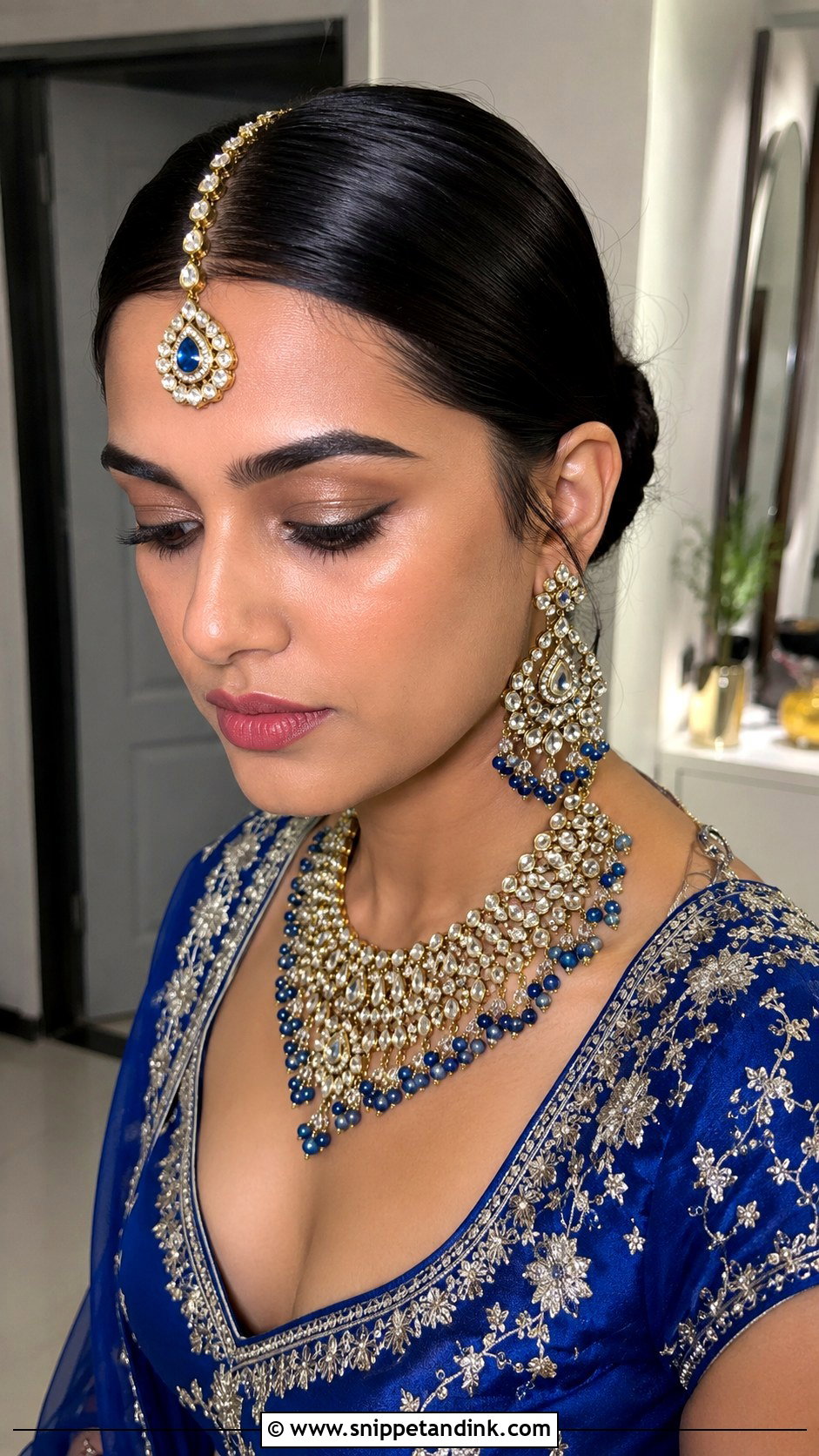
A sleek center part splits the face into two narrower halves, and that alone makes a round face look longer. I smooth every strand to the scalp, gather the hair into a tight low bun and add a vertical maang tikka. There’s a trade-off: with no crown volume, the sleek bun works best on round faces with a higher forehead. If your forehead is short, I’d add just a centimetre of lift at the crown before slicking. Bold jewelry and statement lehengas sit well with how pared back it is.
9. Braided Crown With Flowers
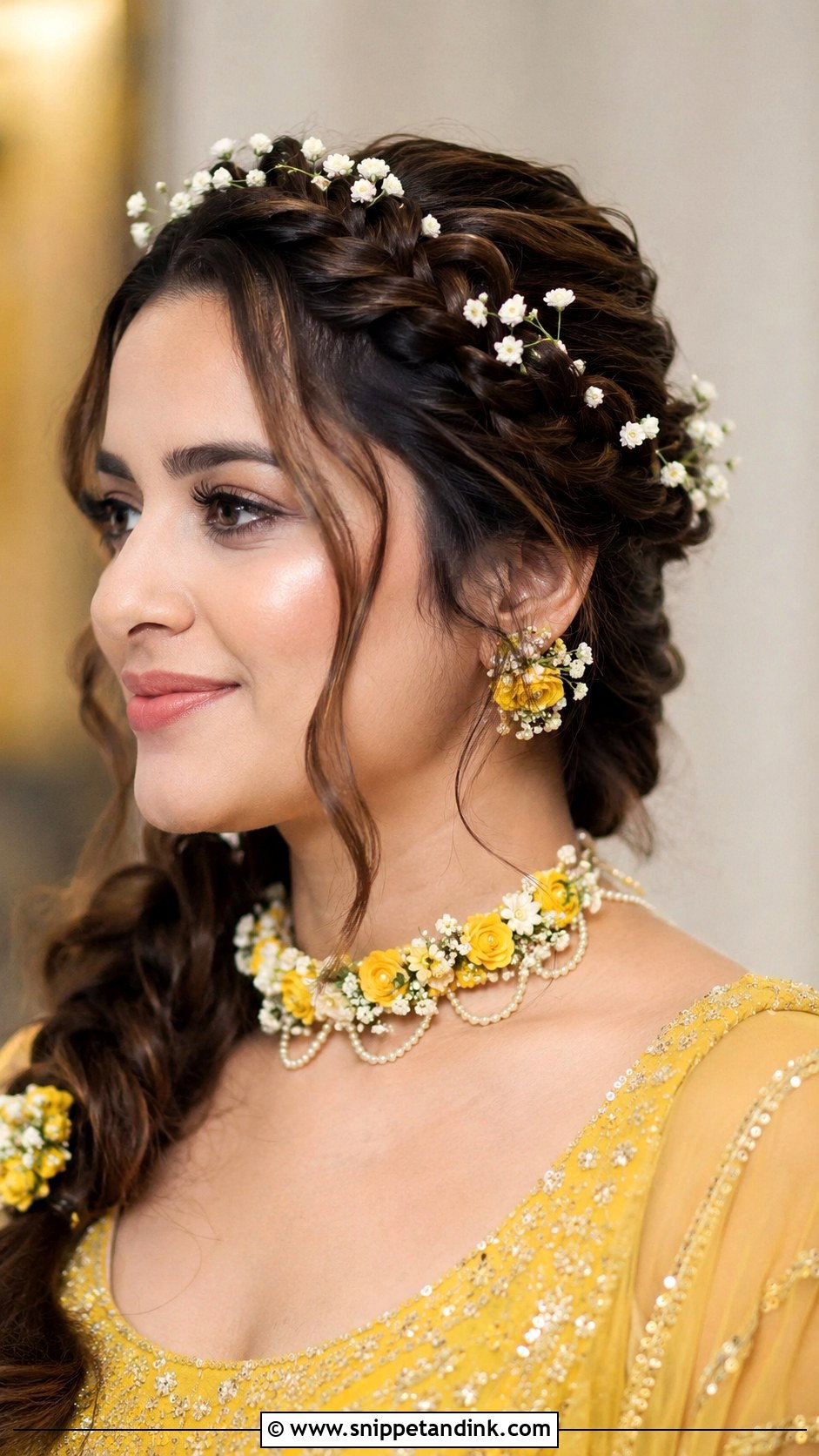
A braided crown can widen a round face if it sits low around the head like a band. I lift the back section before wrapping the braid and keep the braid high on the head, so it adds height rather than a horizontal line across the temples. Jasmine buds or tiny roses tuck into it. It suits haldi, mehndi and daytime ceremonies, where hair off the cheeks also helps in the heat.
10. Messy Bun With Gajra
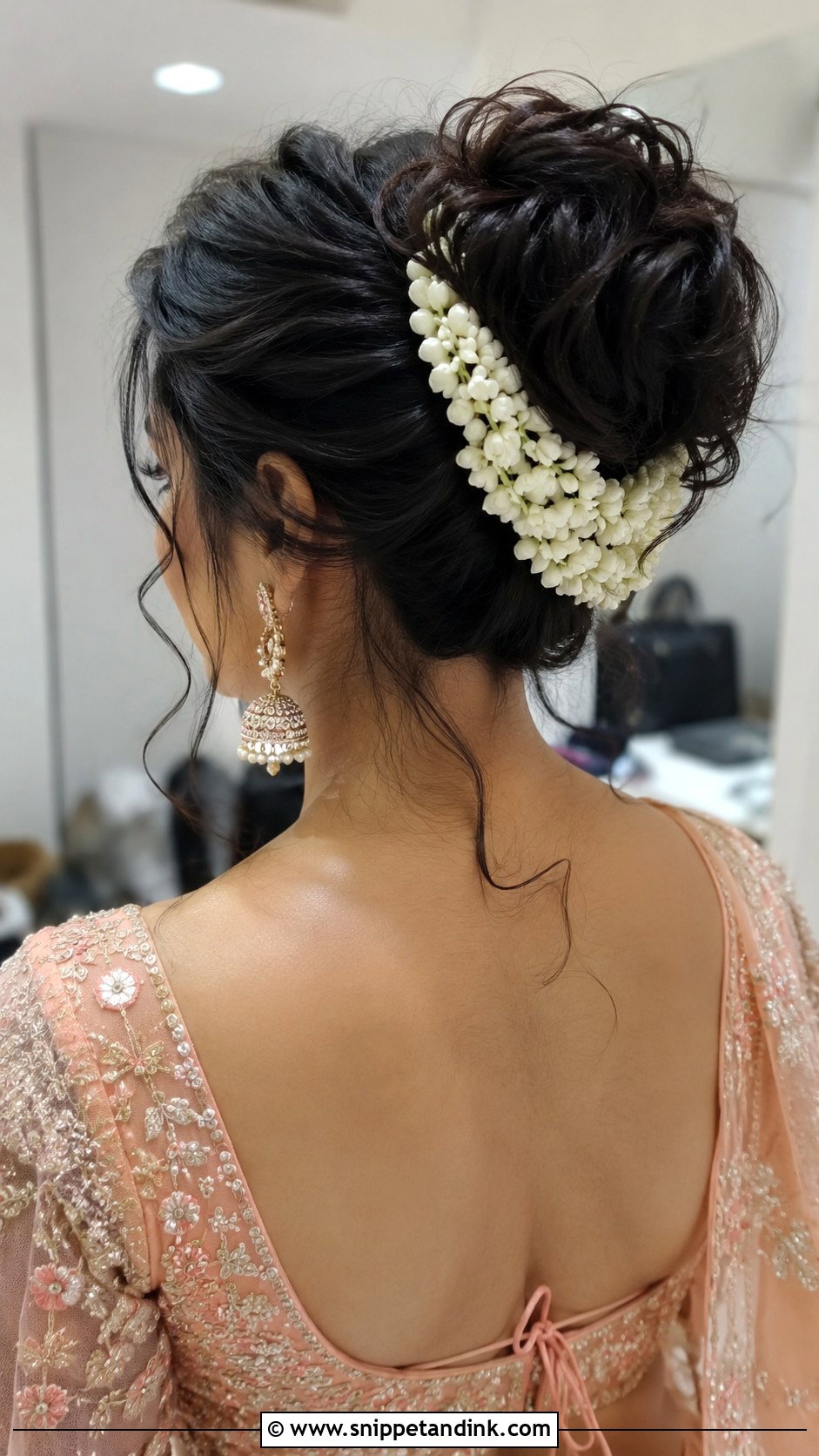
The messy bun with gajra loosens up a traditional look. For a round face I keep the bun slightly raised and tease the crown before pulling out loose pieces. Wispy strands should fall to the jaw or lower; any shorter and they sit on the widest part of the cheek. Jasmine wraps around the base. It suits sangeet, engagement or a smaller ceremony where a fully sleek bun would feel too formal.
11. Dutch Braid Bun Combination
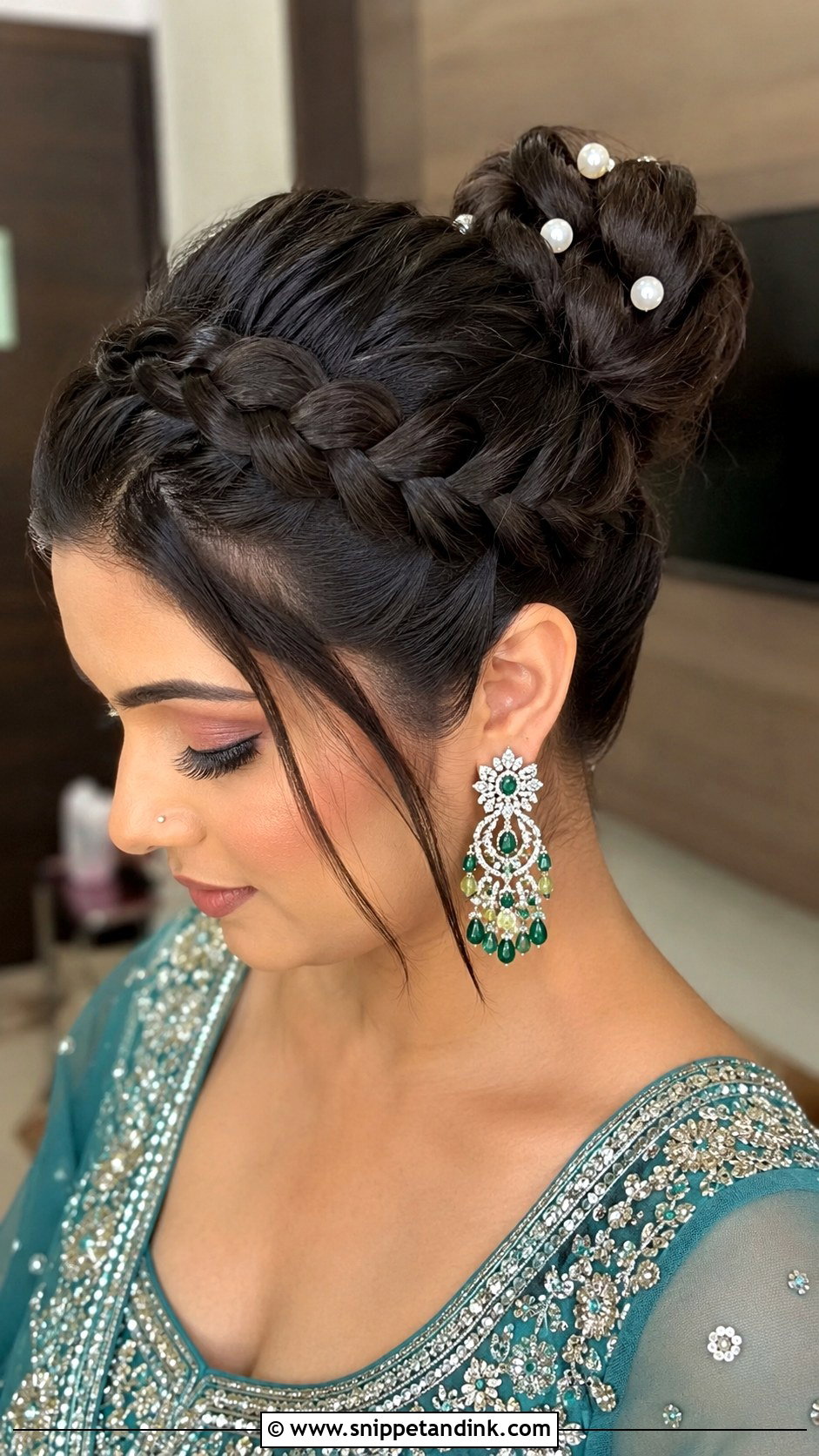
Starting a Dutch braid right at the front hairline is what makes this work on a round face. The raised braid creates a lifted line that travels back toward a bun at the crown or upper back. I braid tight at the front and loosen only once I reach the back of the head, so the front doesn’t puff out sideways. Pearls or small floral pins along the braid add detail. It holds firmly all day and suits fusion and traditional weddings.
12. Voluminous Open Curls With Center Part
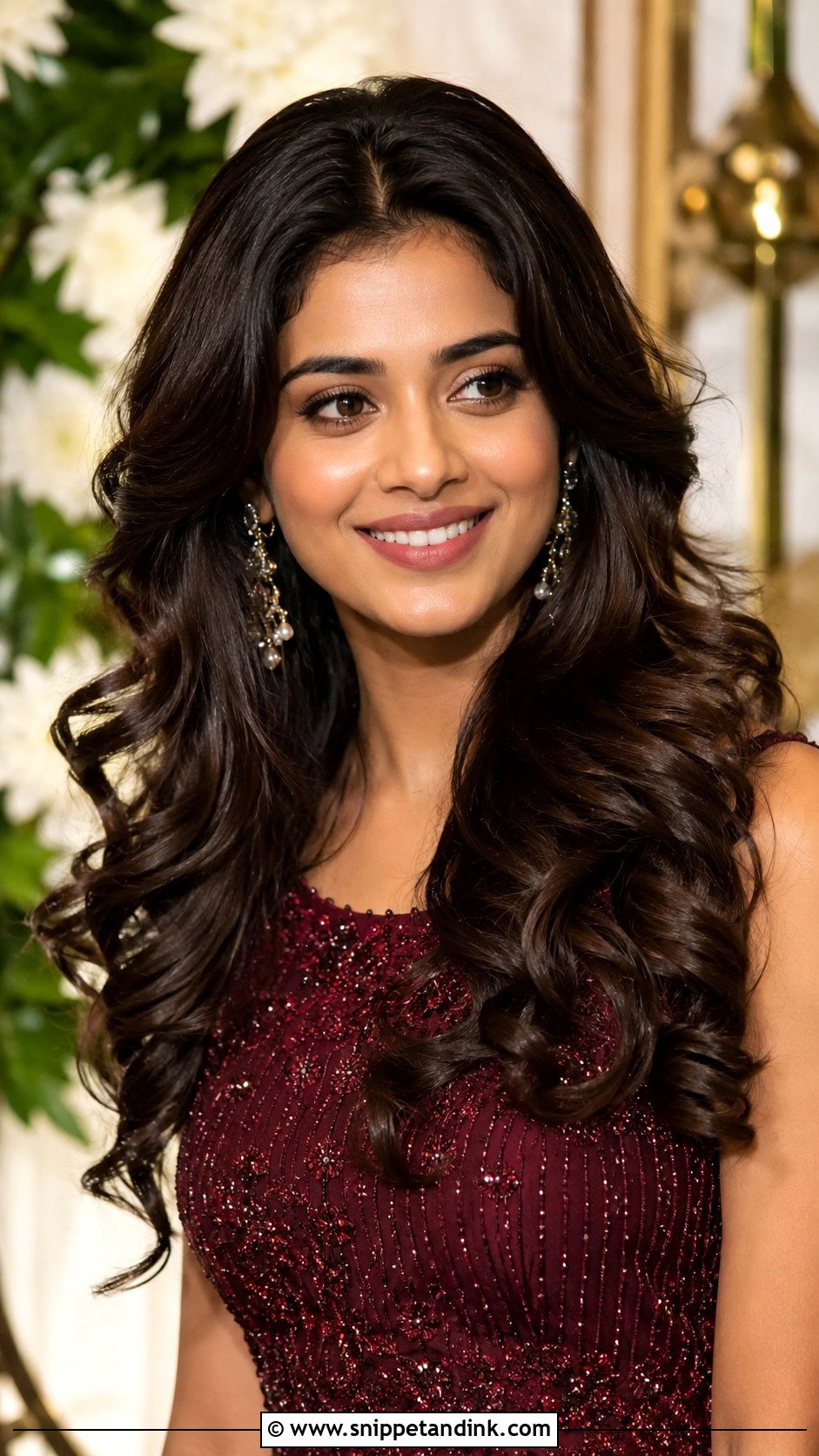
Open curls with a center part do lengthen a round face, but only when the volume starts high. When curls are brushed out fully at the sides, the face looks wider than with a bun. So I lift the crown first, start the curls from just below the cheekbones and keep the area around the cheeks smooth. Large barrels give softer waves. The look suits receptions with gowns, sarees and statement earrings. Expect the curls to relax through the evening, so start a little tighter than you want them to end.
13. Side Bun With Floral Accent
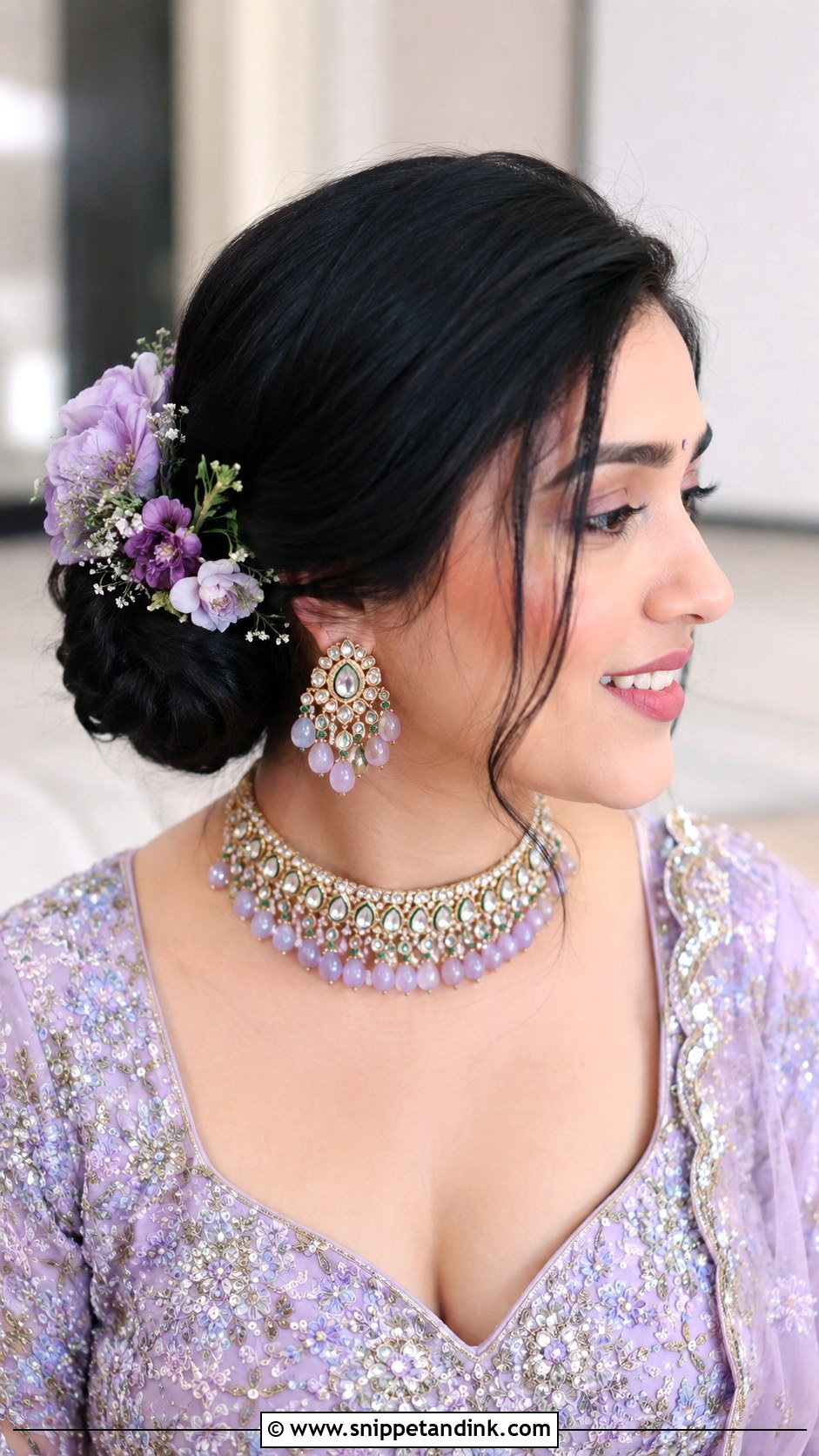
Moving the bun to one side draws a diagonal line across the face, which reads slimmer than a symmetrical shape. I sweep the hair over, add crown volume and set the bun low or at mid-height on the opposite side of your best profile. Fresh flowers or a jeweled clip add the bridal touch. A soft strand by the face is optional; keep it longer than the jaw. It works for reception and engagement looks.
14. Puff With Long Braid
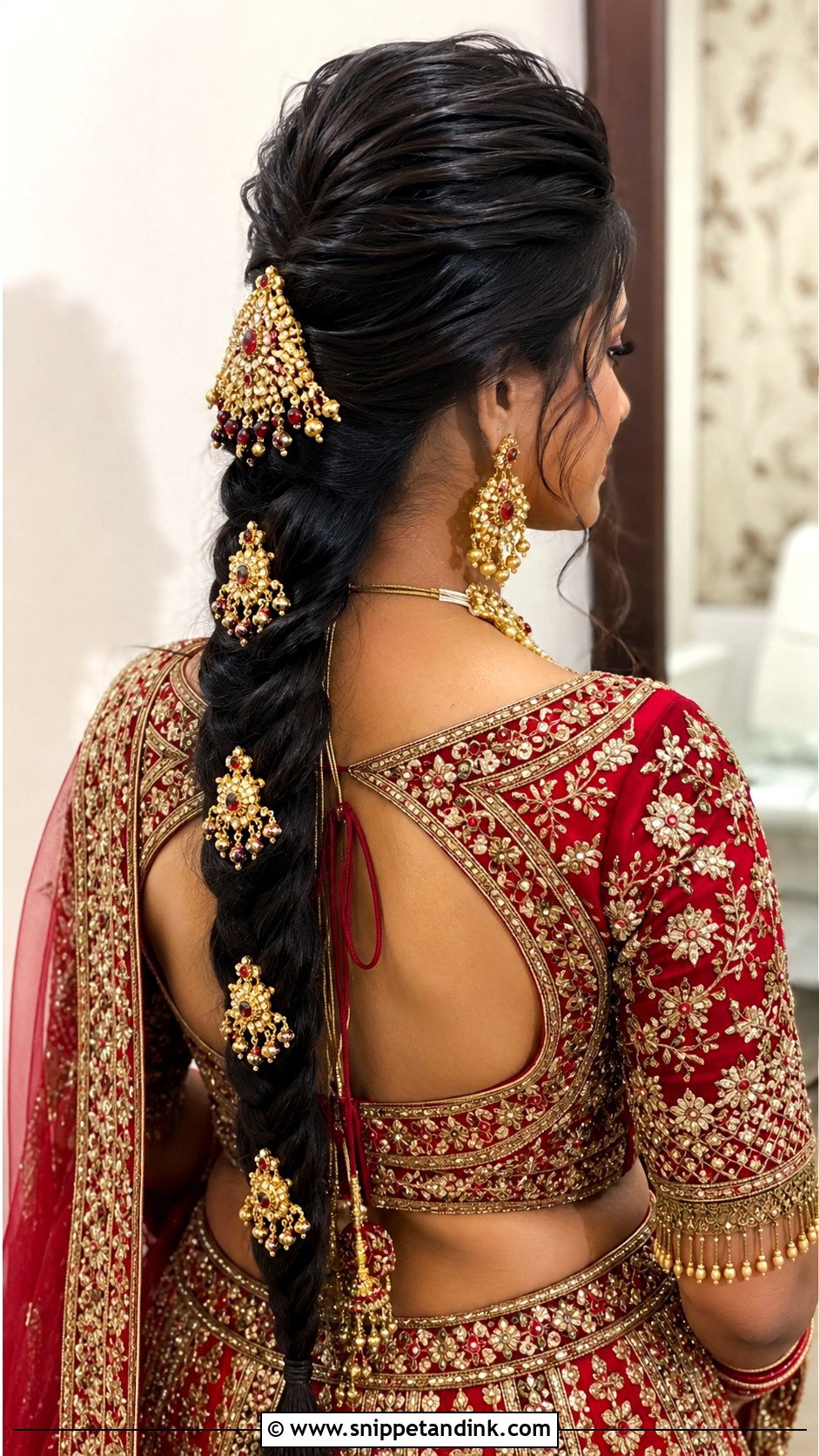
The puff with a long braid is a North Indian bridal favorite that happens to suit round faces very well. The puff gives height, the braid gives a long vertical line. I tease the puff and smooth the top layer so it reads as a clean dome rather than frizz. The braid can carry flowers, parandi tassels or gold accents. Watch the puff’s size: too big and it looks dated; a modest lift does the job. It suits heavy lehengas and traditional jewelry.
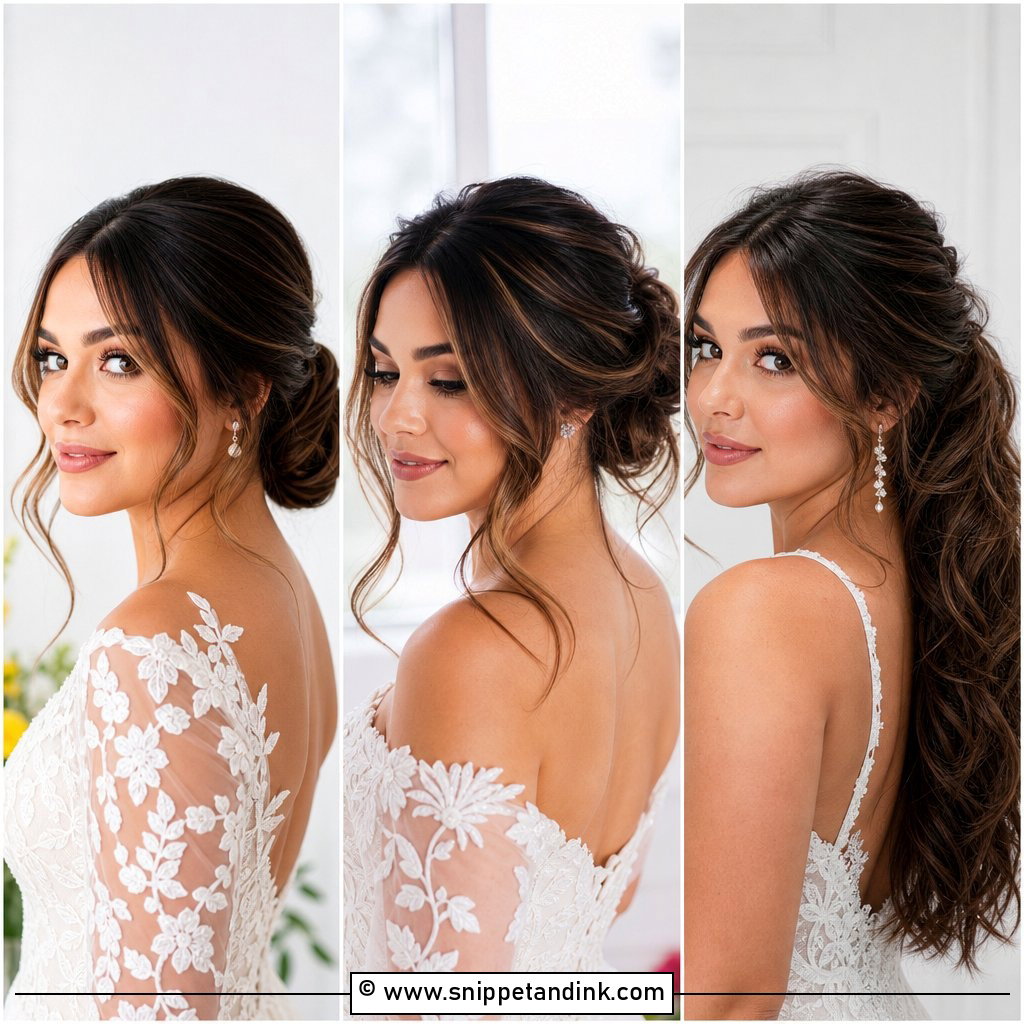
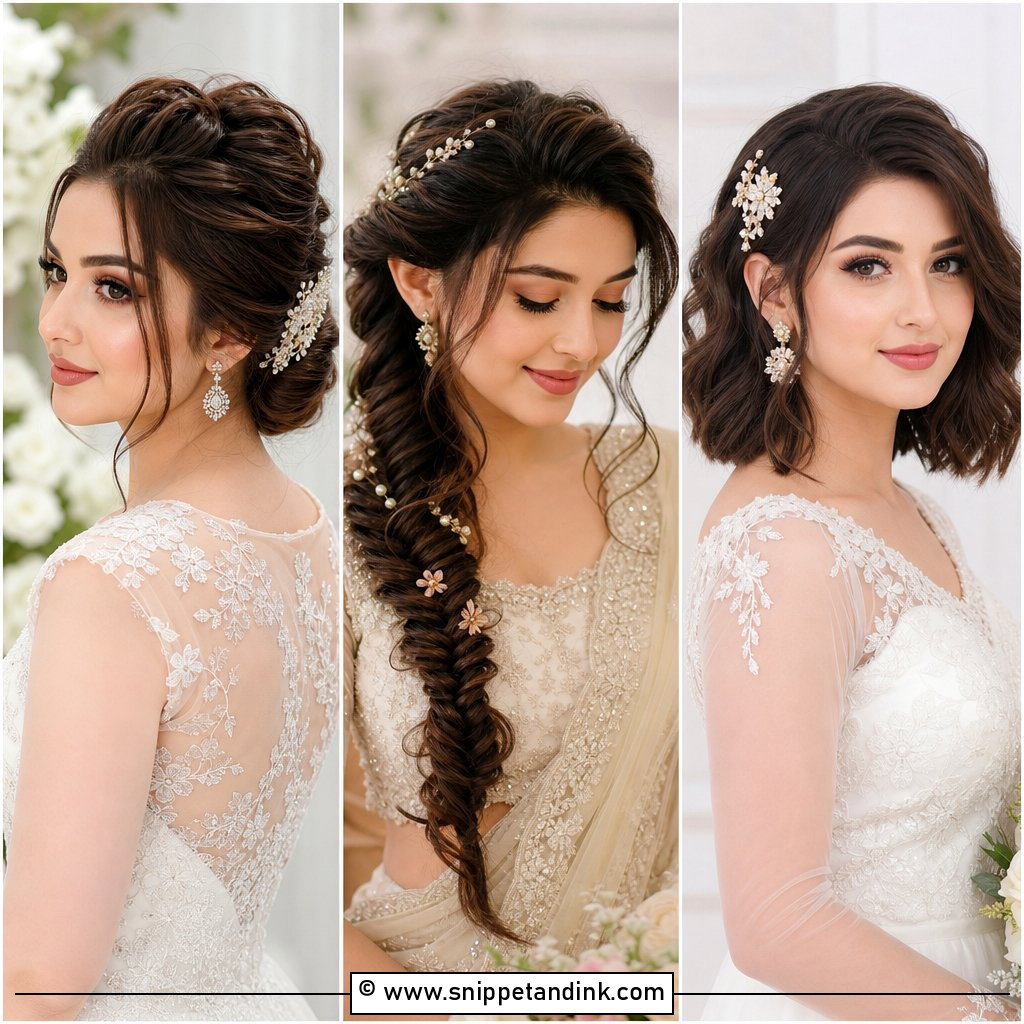
15. Twisted Half Updo With Curls
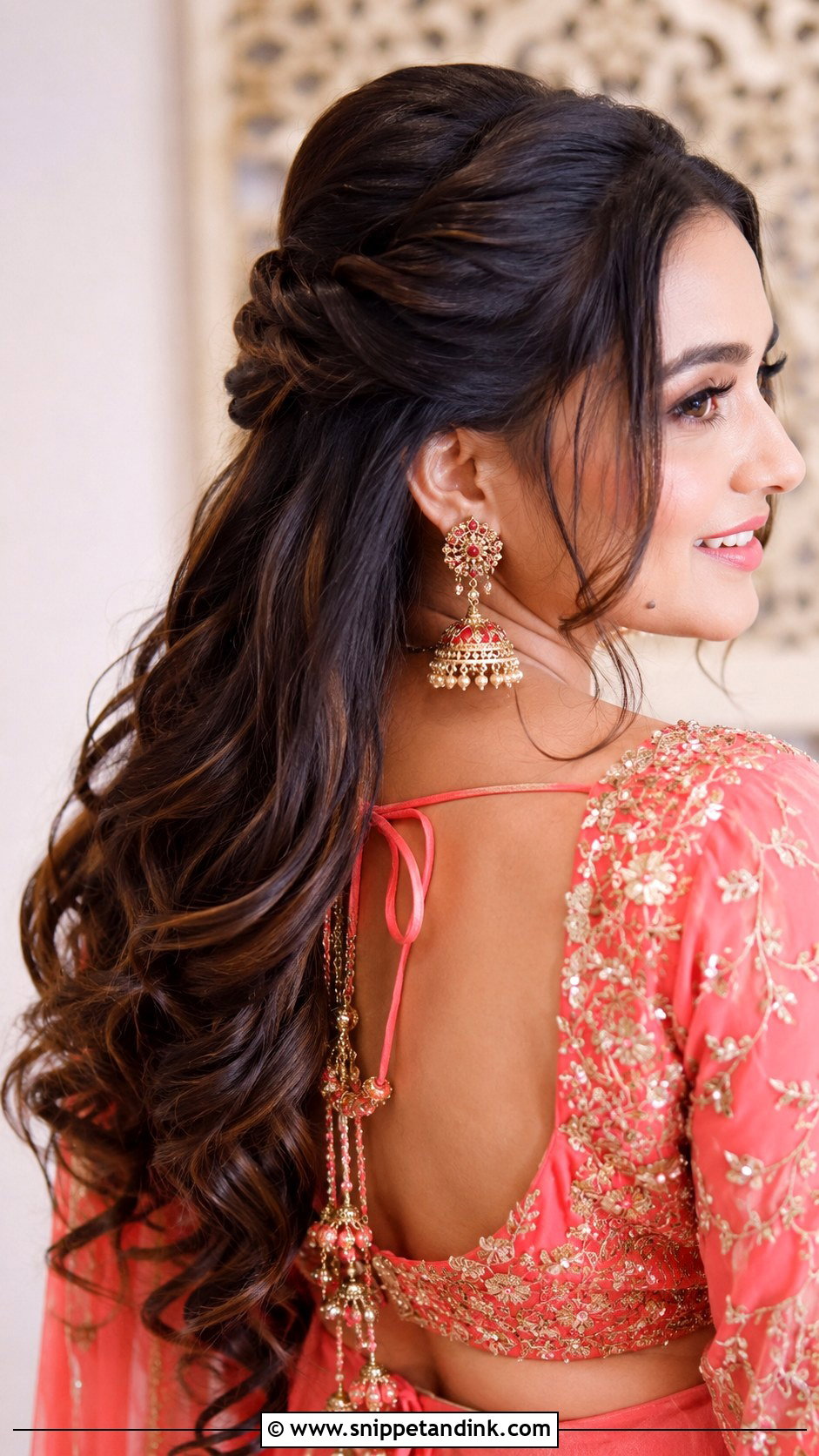
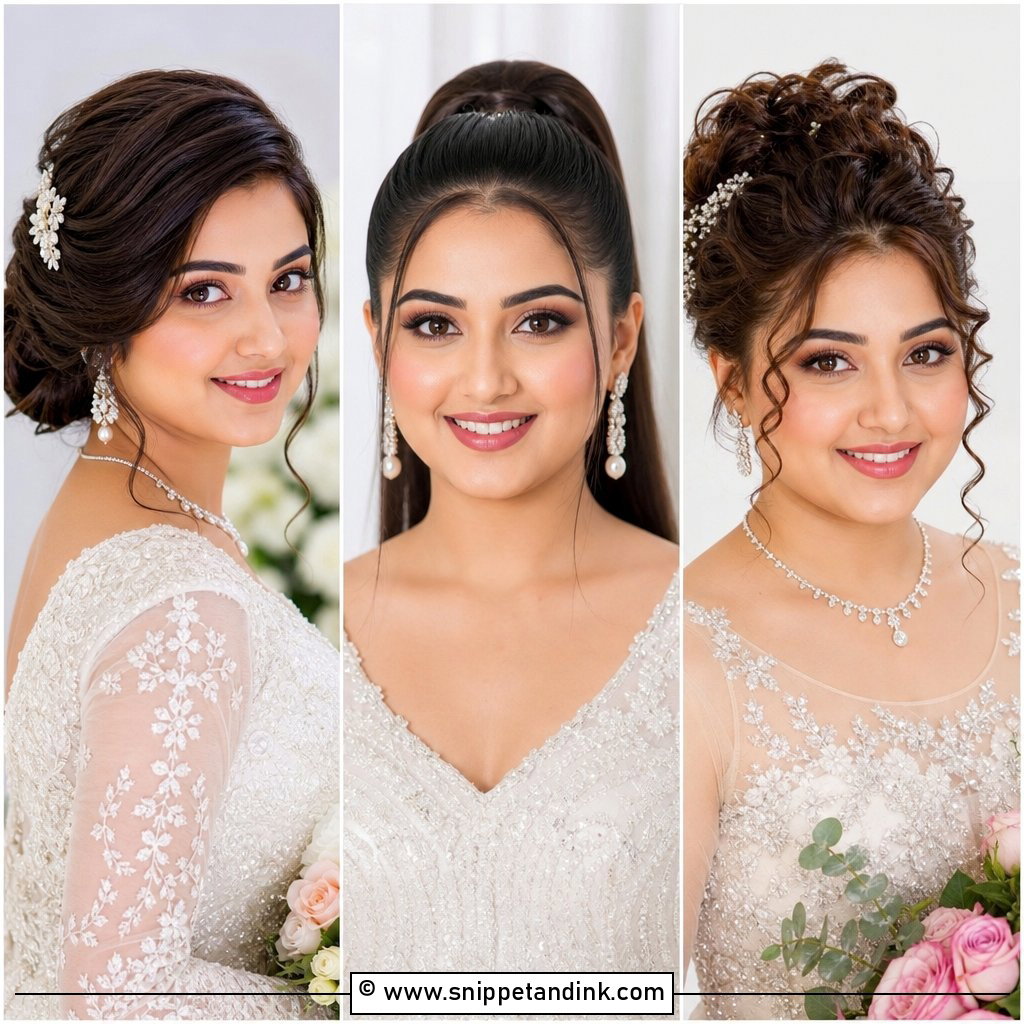
Twisting sections from both sides toward the crown pulls hair away from the cheeks and gathers volume up high, which suits a round face. I secure the twists with decorative pins at the crown and curl the lengths below. The direction of the twists matters: twists that run horizontally around the head widen the face, twists angled up and back lengthen it. It suits engagement, sangeet and reception events, with modern or traditional outfits.
16. Kondai Bun With Jasmine Garland
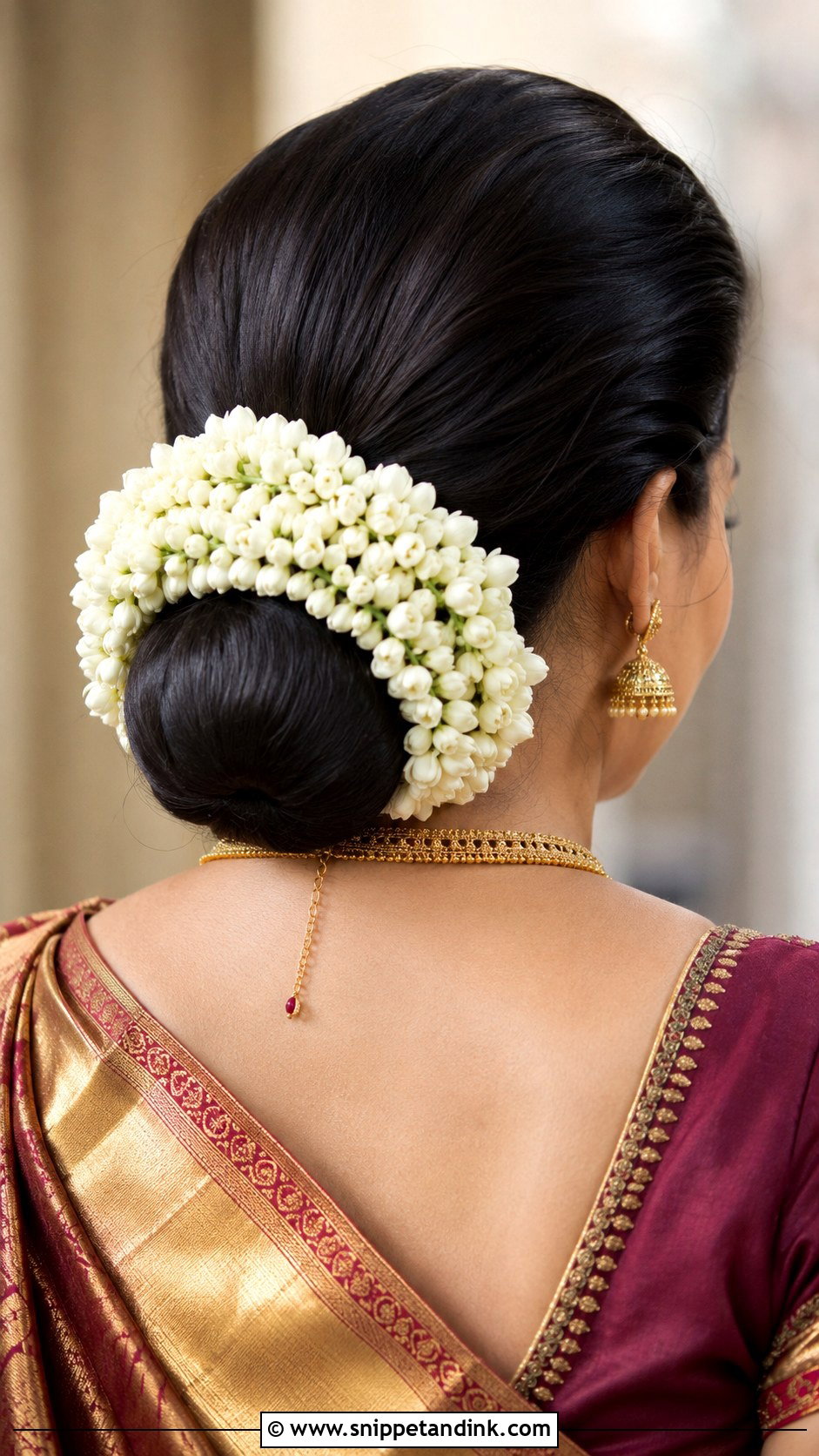
The South Indian Kondai bun is a traditional rounded bun set low and wrapped in jasmine. Because it’s low and round, I add a little crown volume before forming it, otherwise the whole silhouette is circles. The jasmine garlands that hang from it give a downward line that helps. It belongs with Kanjeevaram sarees and temple jewelry. A heavy Kondai with full garlands needs a firm base ponytail and plenty of pins, or it starts to drag on the scalp during long rituals.
17. Wavy Side Swept Open Hair
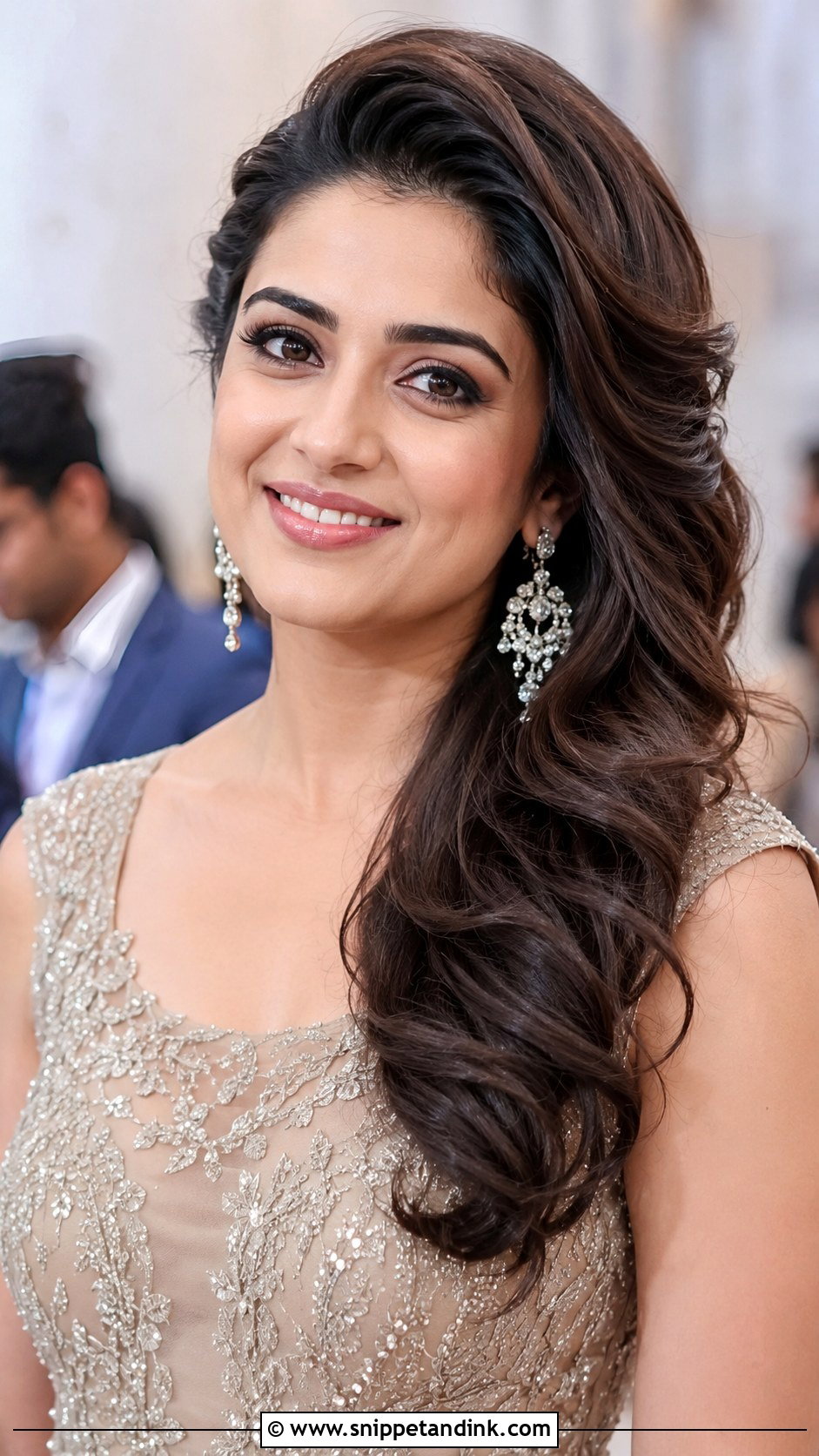
Side-swept waves are the most flattering open-hair look on this list for a round face. One side is pinned flat behind the ear, which removes width; the other side falls over the shoulder in a diagonal. Crown volume adds the length. I brush the waves out loosely. It works with reception gowns and statement earrings. On very thick hair, I thin the pinned side by braiding a small hidden section underneath so it lies truly flat.
18. Braided Bun With Pearls
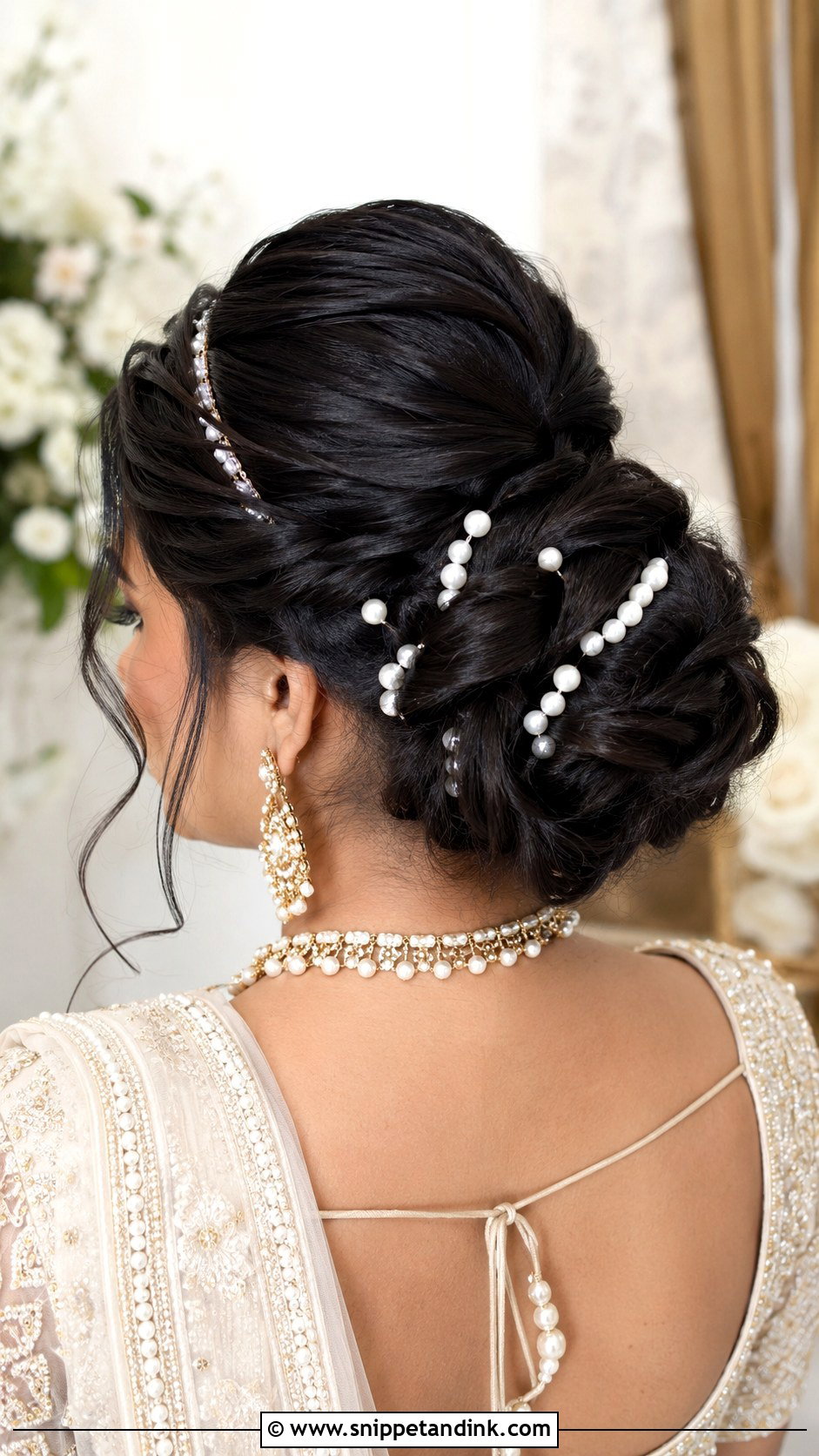
Pearls give a braided bun a lighter, more modern finish than gold. I braid several sections, gather them into a structured bun set high, and weave the pearl strands in last. Teasing the crown before braiding keeps the overall shape tall. Nothing sits near the cheeks, which is the point for a round face. It suits receptions and grand ceremonies.
19. Front Puff With Open Curls
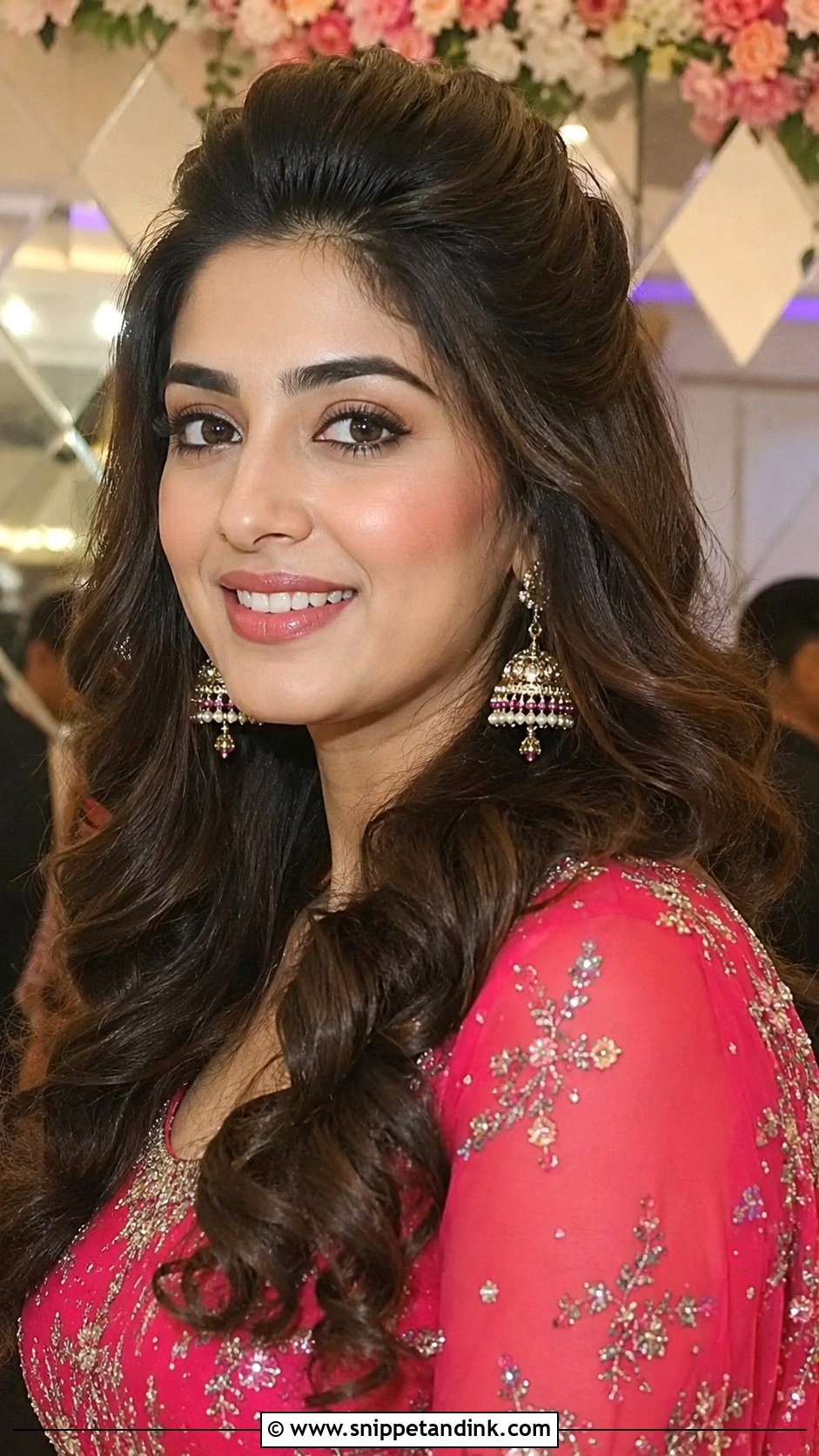
A front puff with open curls gives height and length in one look. I tease a small section at the front, smooth it back and pin it, then curl the rest down the back. A center part or a very slight side part keeps balance. The puff should be lifted, not wide: if it extends past the temples, it adds width instead of height. It suits sangeet and engagement celebrations where you want hair down and some volume.
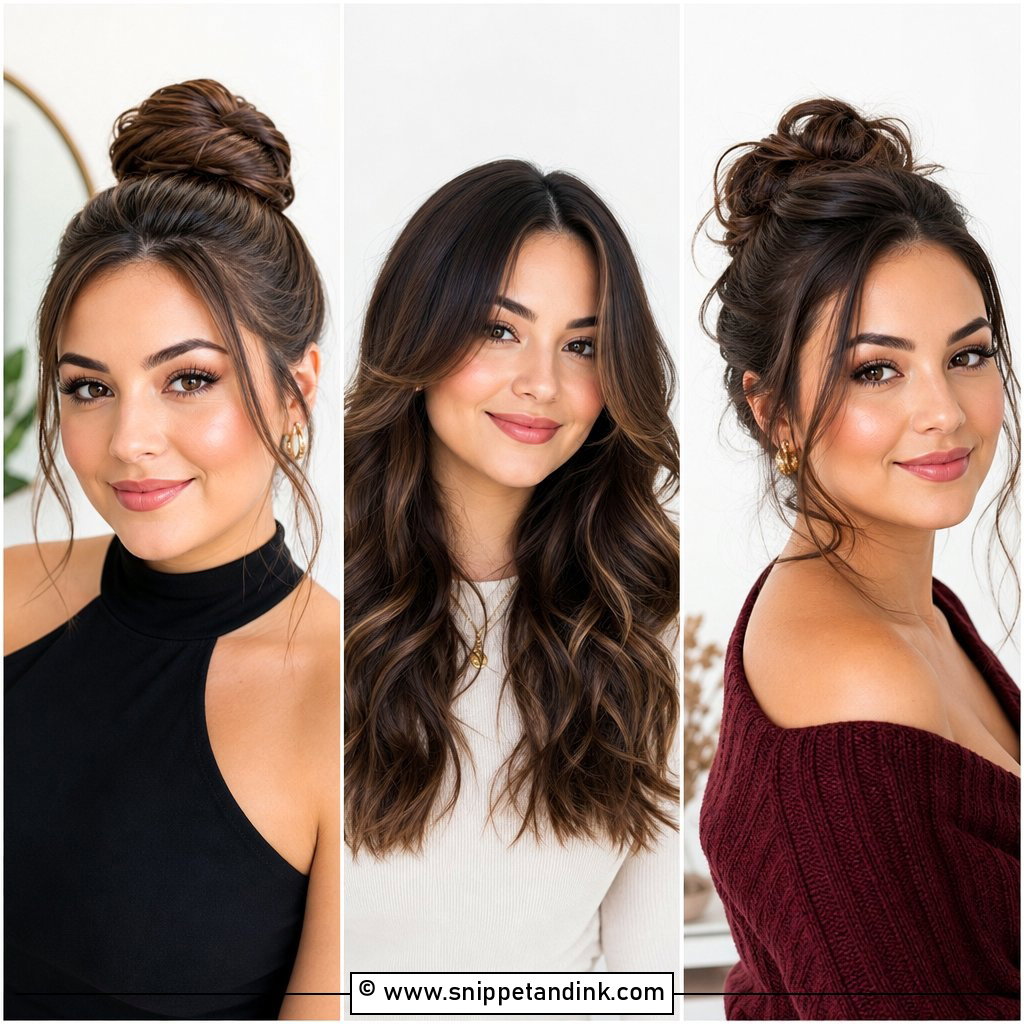
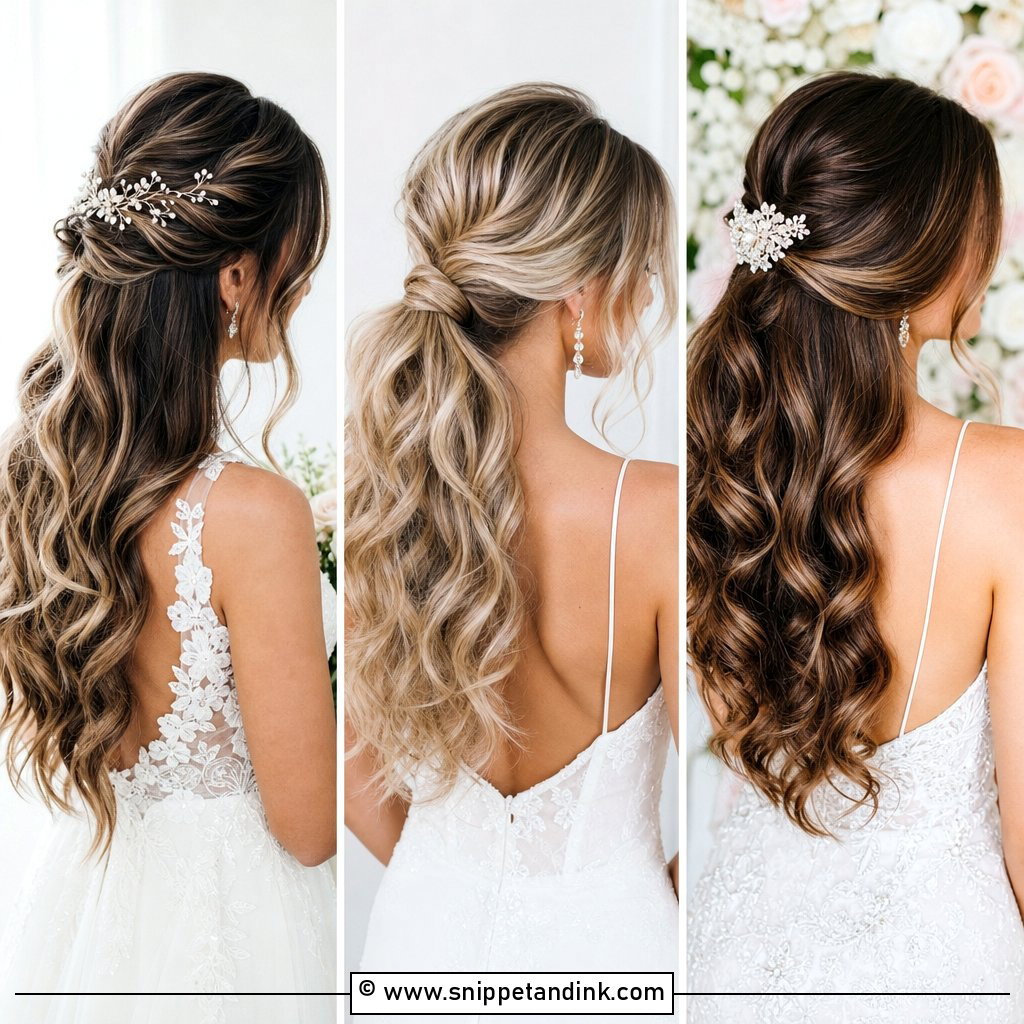
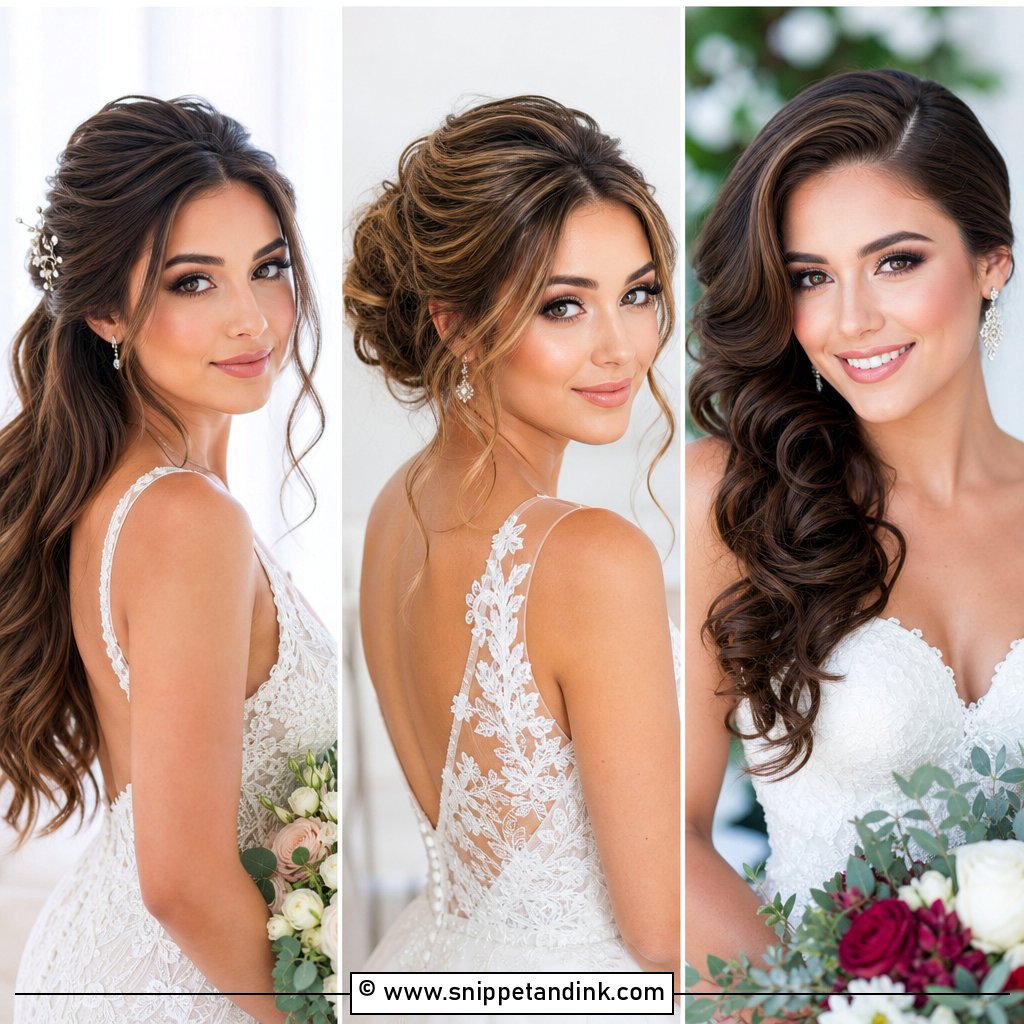
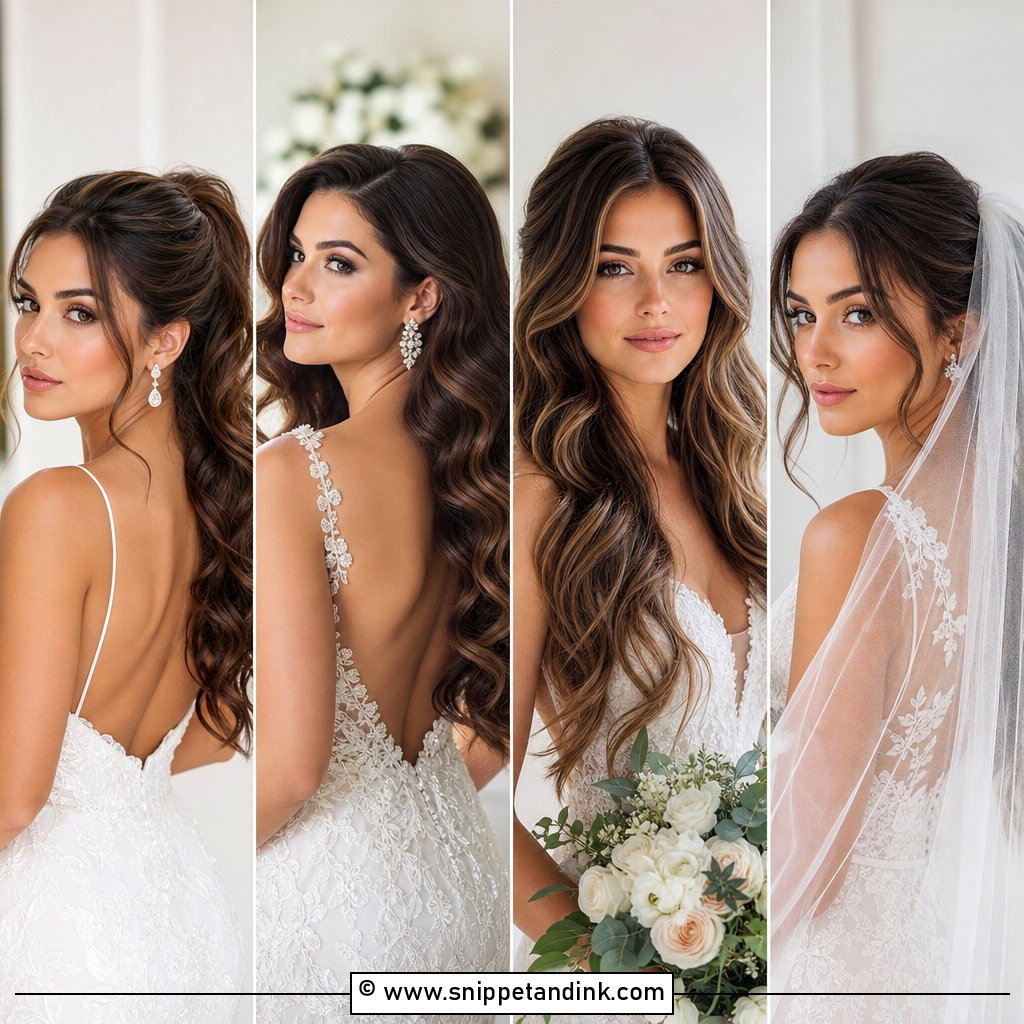
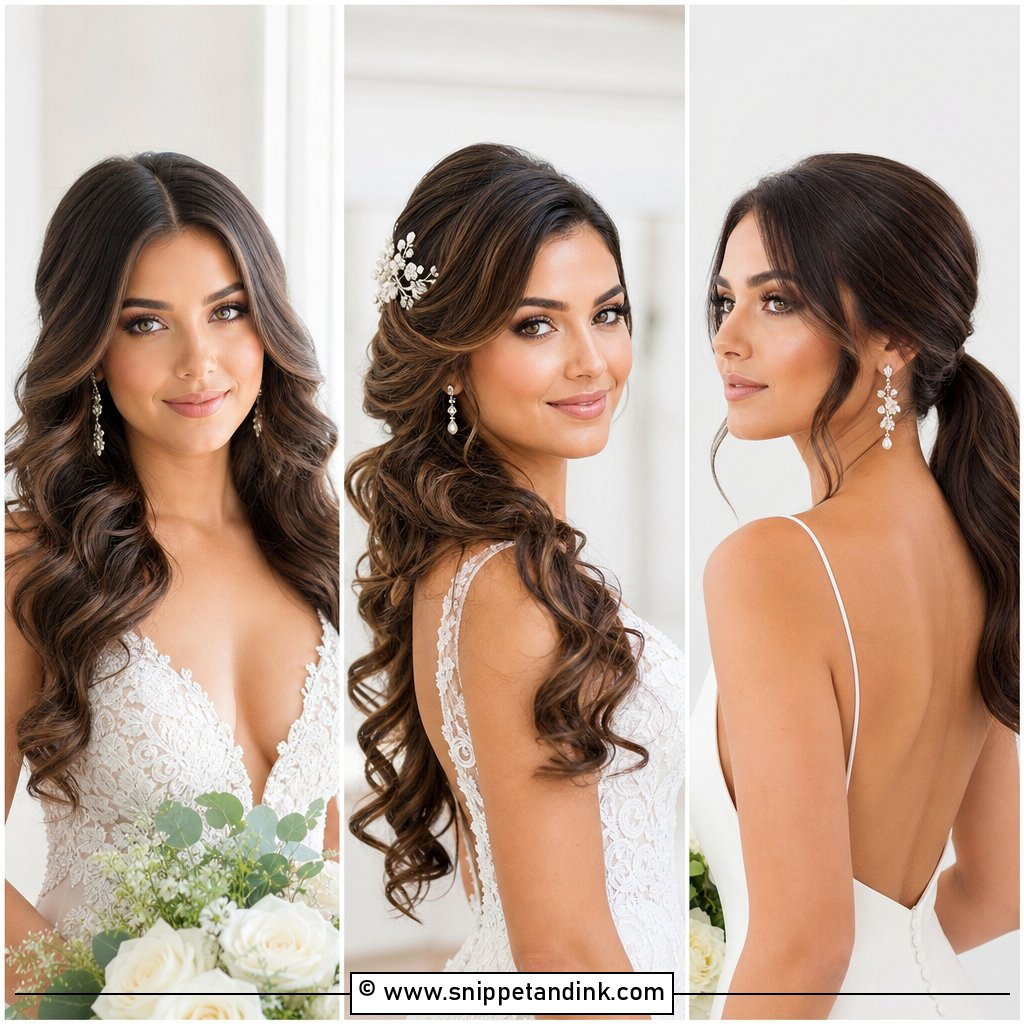
20. Bouffant Bun With Maang Tikka
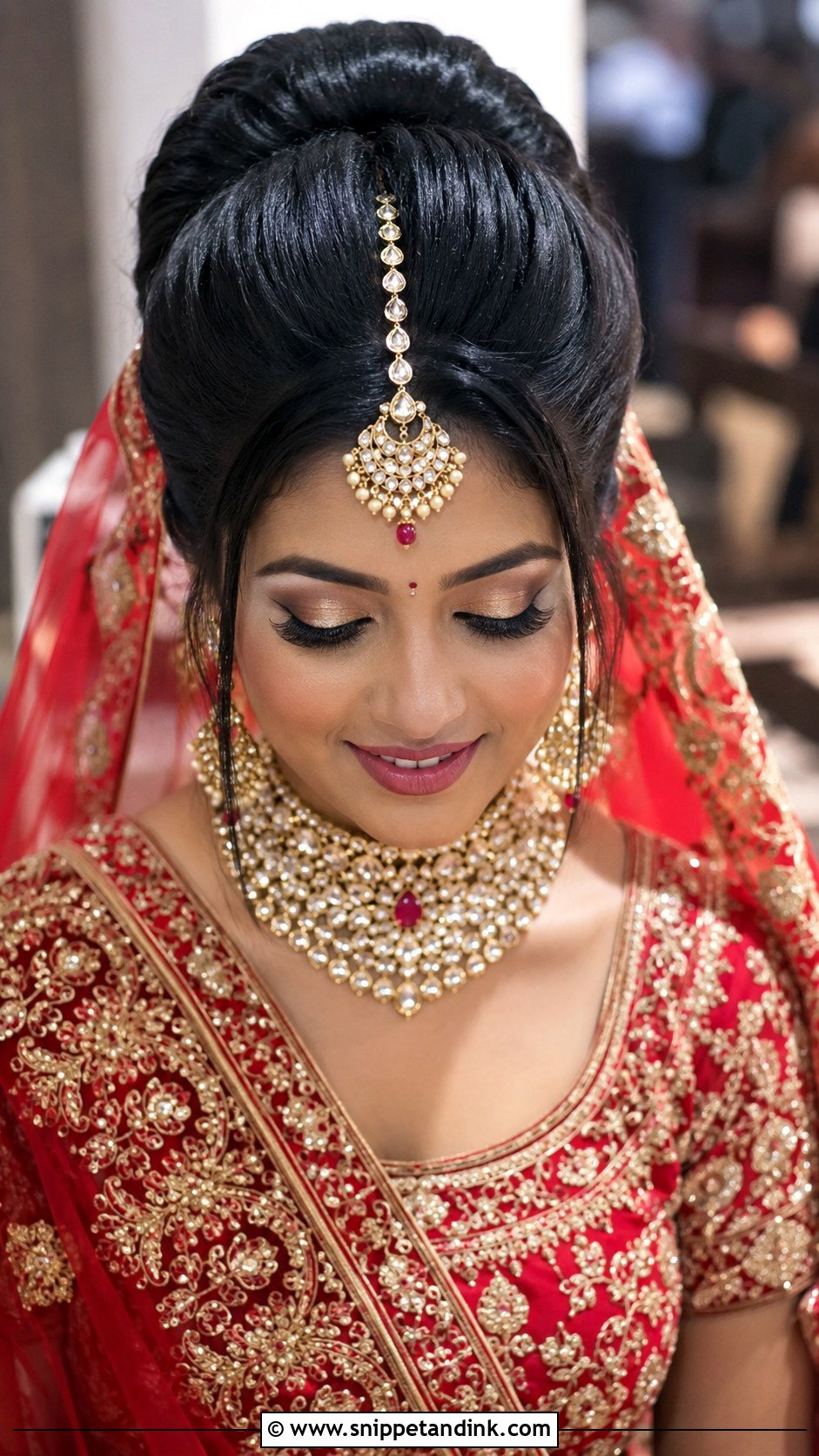
A bouffant bun gives the most height of any style here, and on a round face with a heavy lehenga, that height balances the whole silhouette. I tease the crown fully, smooth it and set a high, sleek bun behind it. A vertical maang tikka draws the eye from top to bottom. The catch is the dupatta: a full bouffant gets flattened under a heavy dupatta, so I pin the dupatta behind the bouffant rather than over it.
Jewelry That Quietly Undoes the Crown Height
Hair can do all the right things and the jewelry can still widen the face. The most common culprit is a heavy, horizontal matha patti that runs across the forehead; it draws a line across the face exactly where you want length. I suggest a single vertical maang tikka instead, or a matha patti with chains that angle back sharply rather than sitting flat.
Earrings work the same way. Wide chandbalis sit right at the cheek. Long, narrow jhumkas or drop earrings that hang below the jaw add a vertical line. Bring both options to the trial and see them together with the hair.
Crown Volume Under a Heavy Dupatta
Almost every style here relies on lift at the crown, and a heavy dupatta pinned over the head will flatten it if nothing is done. Teased volume should be backcombed at the root and smoothed over with a firm spray before the dupatta goes on. I also pin the dupatta just behind the highest point of the volume, not on top of it, so the lift stays visible from the front.
If your dupatta is very heavy, a small hidden padding at the crown holds height better than teasing alone and doesn’t collapse during the pheras.
Height, a Clean Parting and Nothing Wide at the Cheeks
For a round face, three things do most of the work: height at the crown, a center or deep side part, and lines that fall below the jaw. Nearly every style above uses at least one. Take the two or three you like most to your trial, wear your maang tikka and earrings, and look at the photos from the front and the side before you decide. The mirror flatters; the camera is more honest about width.
You'll Like These Ideas:


Leave a Reply