
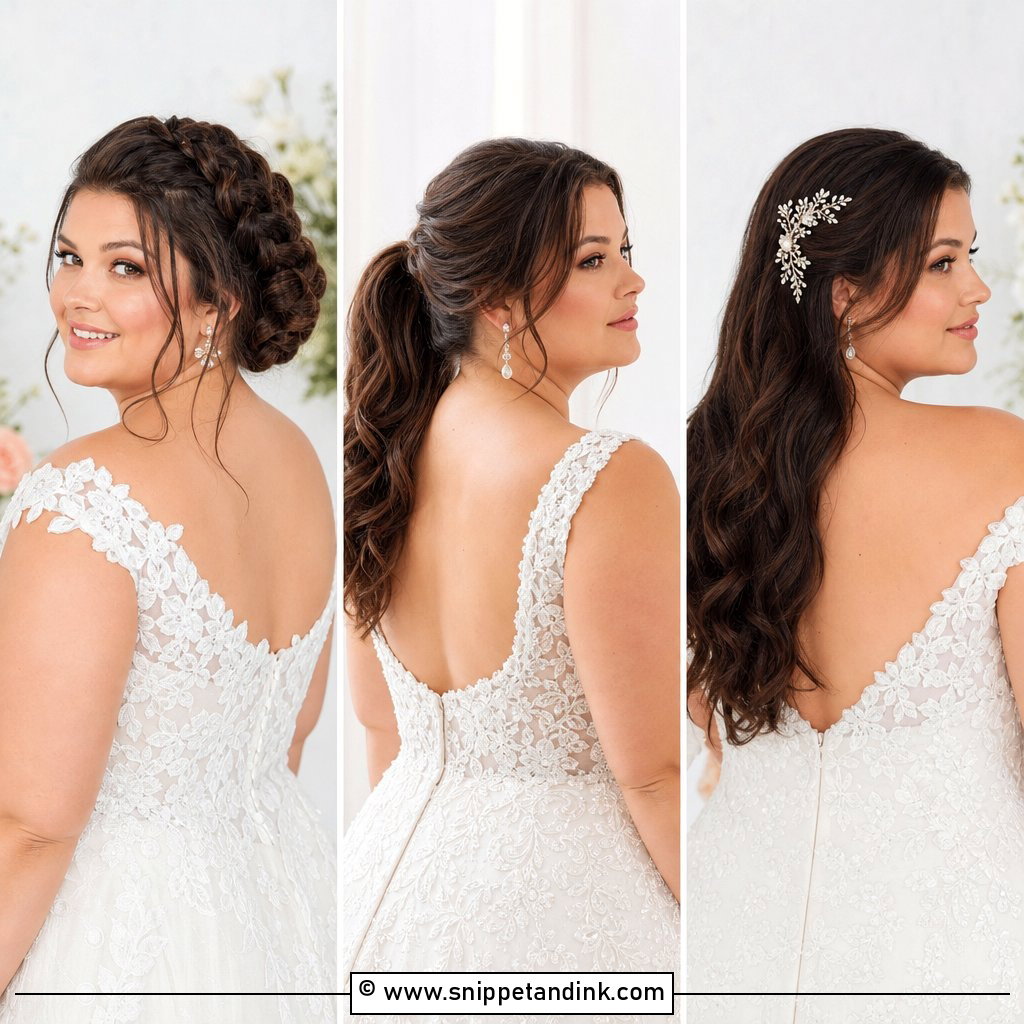
I don’t style plus size brides by a different rulebook. What I do pay closer attention to is scale: how big the hairstyle is next to your shoulders, your neckline and the volume of your gown. A tiny tight bun can look lost on any bride with a strong shoulder line, and a well-sized one looks deliberate. None of this is about hiding anything. It’s about shape, placement and a style that’s still comfortable at midnight. The fifteen looks below run from half-up curls to sleek buns, ponytails, braids and natural texture.
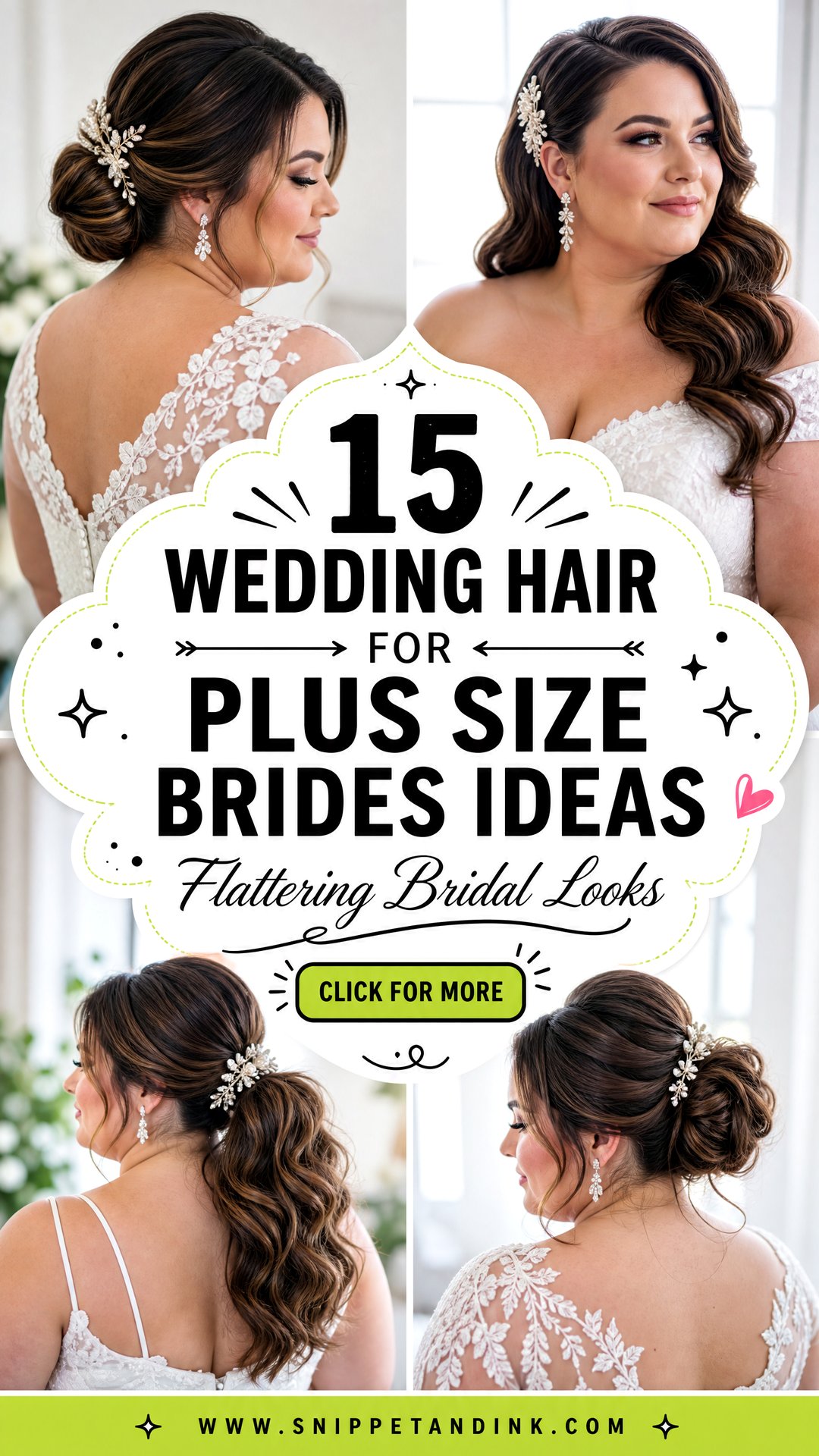
Proportion Works From Your Hairline Down to the Hem
Most advice about bridal hair focuses on face shape. In practice, I look at the whole silhouette in the mirror, because the hair has to balance the dress as much as the face.
- Full skirts and ball gowns carry a lot of visual weight at the bottom. A generous updo, a fuller bun or big curls keep the top half from looking small by comparison.
- Fitted and sheath dresses have a cleaner line, so sleek hair or a neat chignon usually matches better than lots of volume.
- Off-the-shoulder and strapless gowns show the shoulders and collarbone. Hair up or swept to one side keeps that line visible.
- High necks and sleeves already cover a lot. An updo stops hair and fabric from crowding each other at the neck.
Height at the crown is the one thing I add to almost every style, regardless of size, because it lengthens the profile in side-on photos. It needn’t be big. A little backcombing at the root under a smooth top layer is enough.
1. Half Up Half Down Wedding Hair
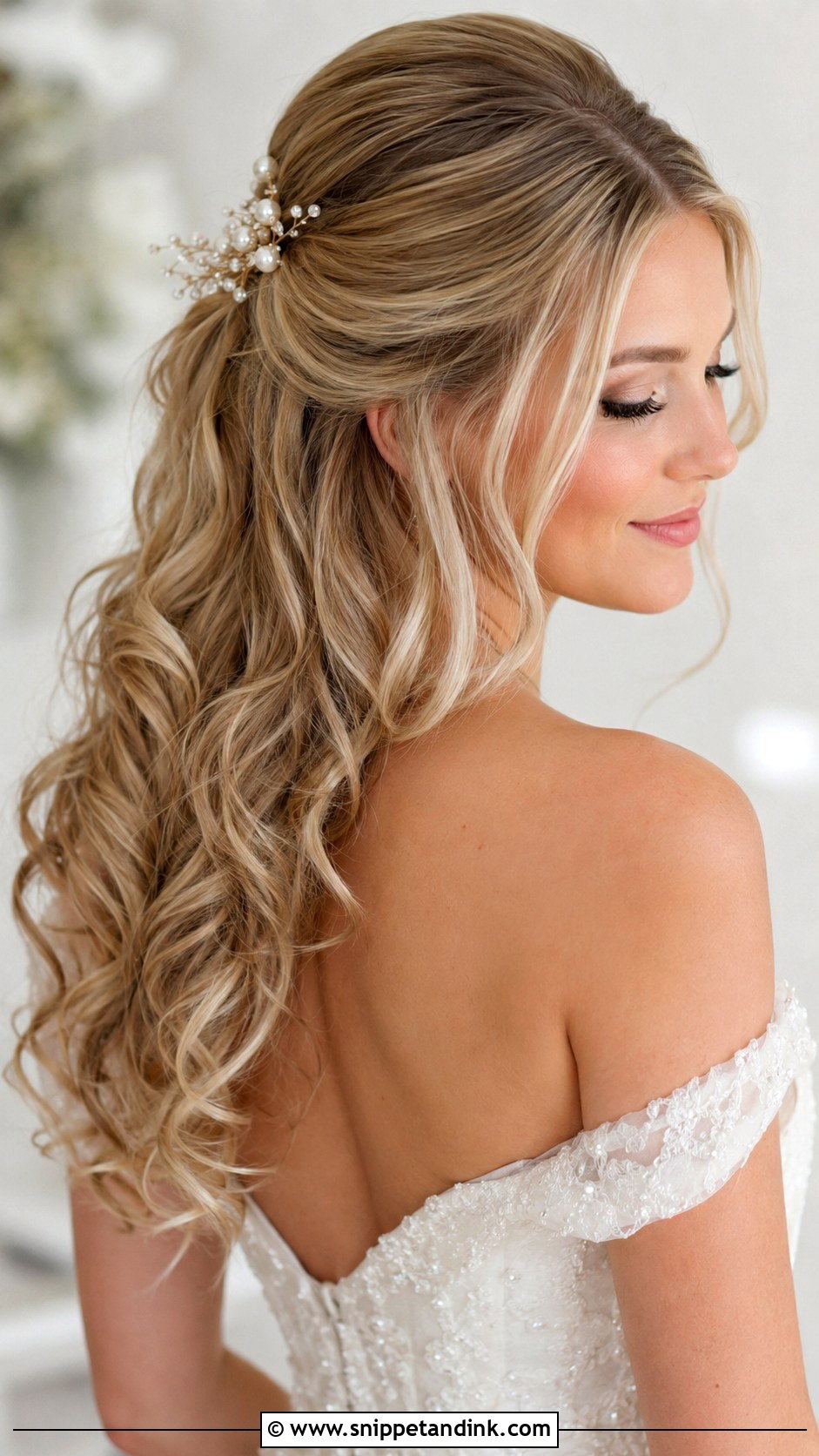
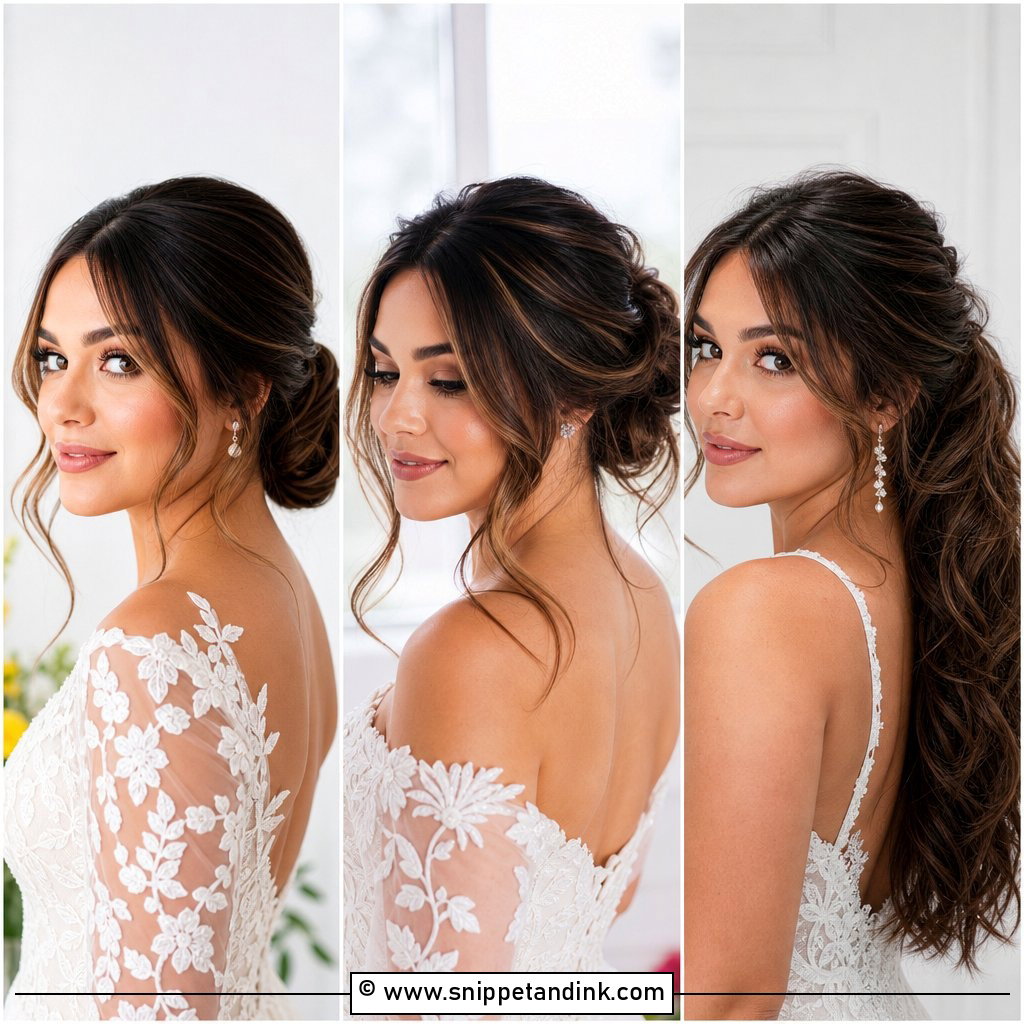
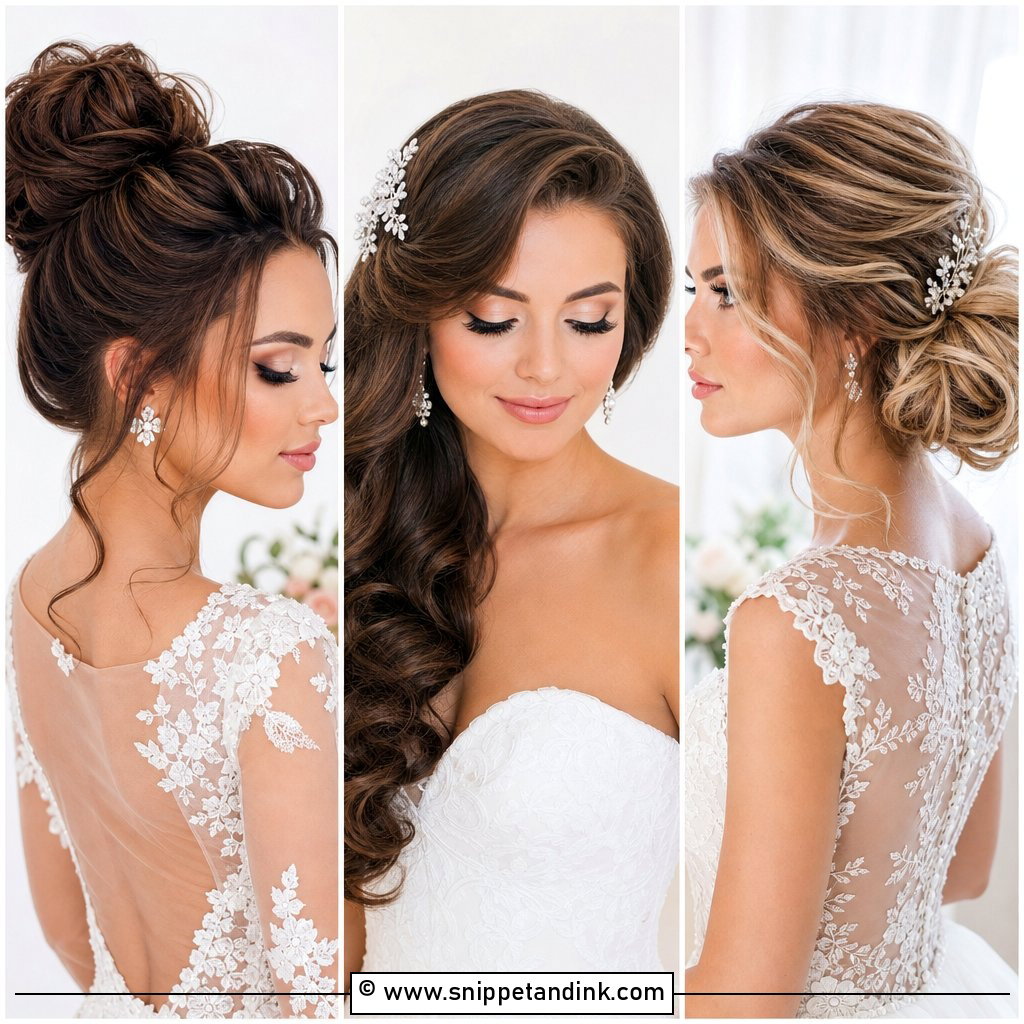
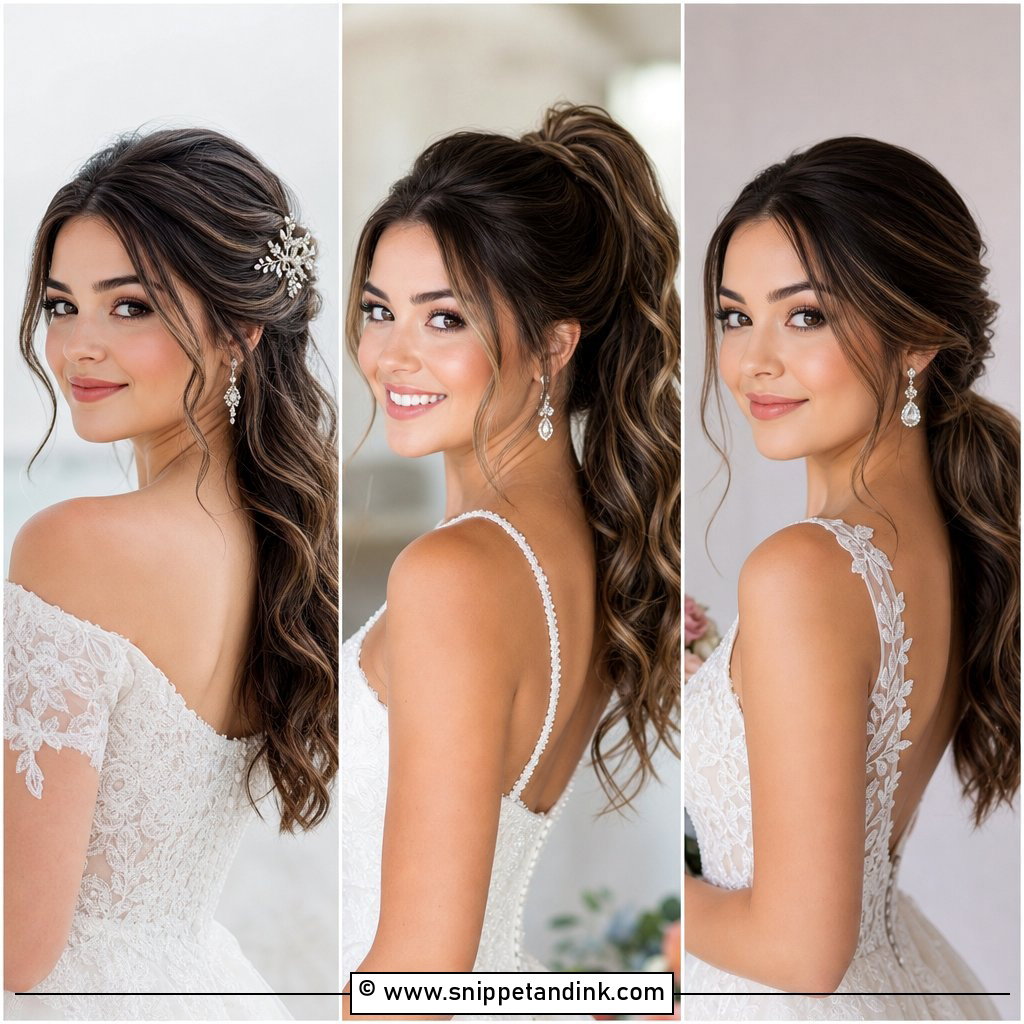
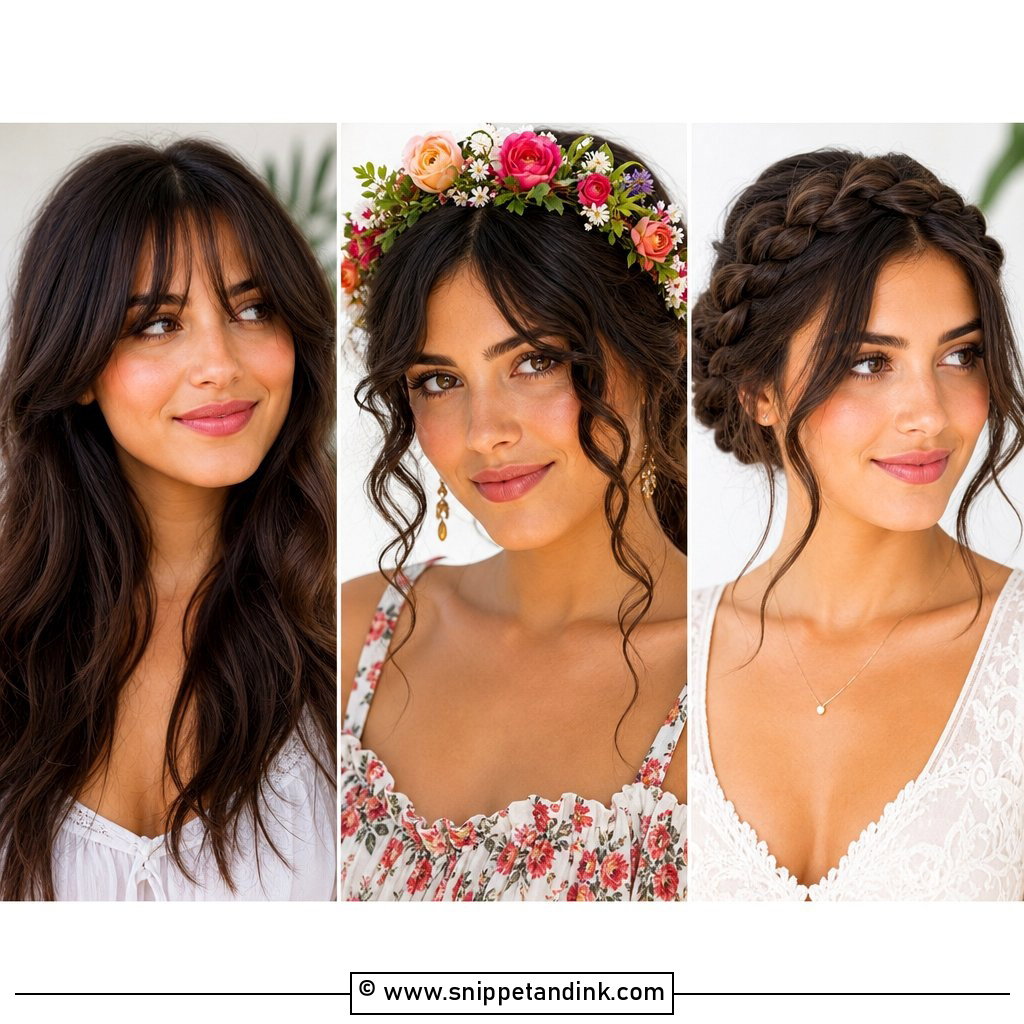
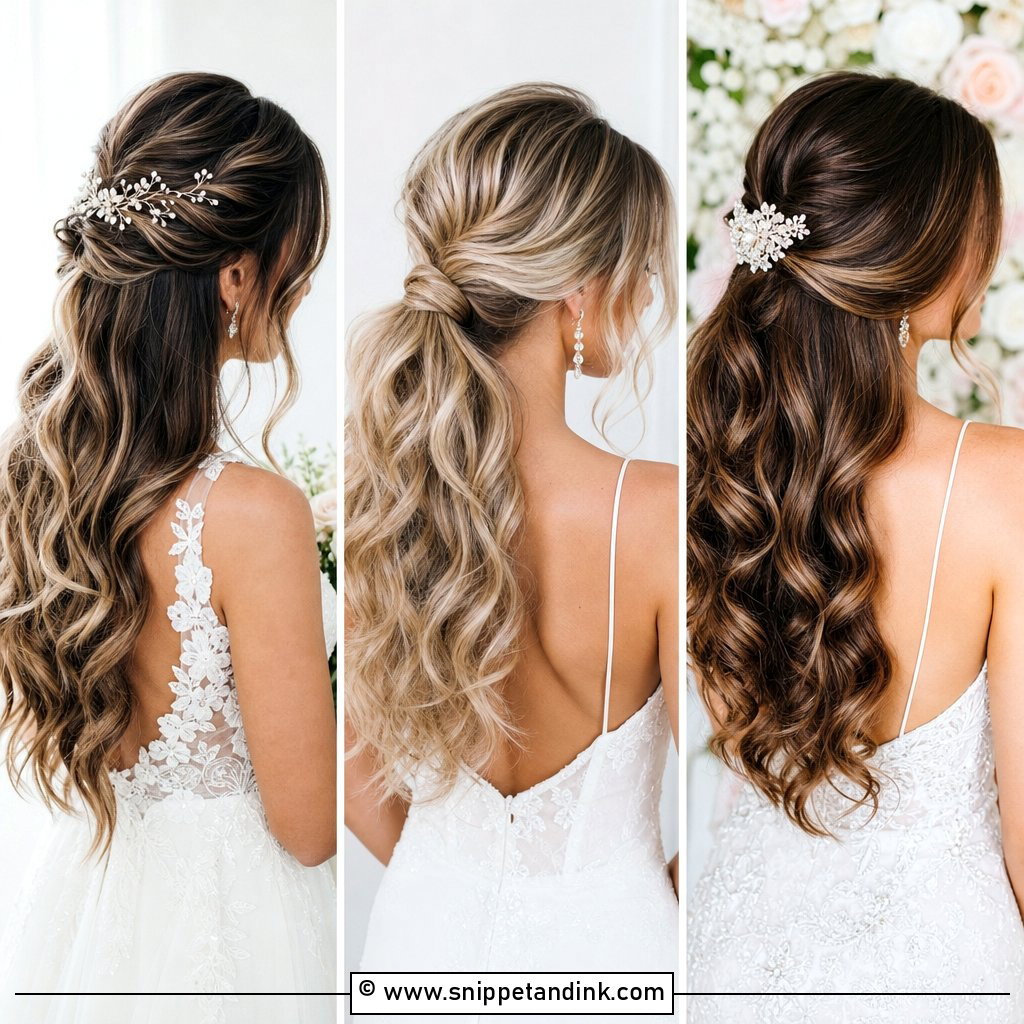
Half up, half down is the style I suggest most often to brides who can’t decide, because it gives height at the crown and movement at the shoulders in one look. That lift draws the eye upward and frames the face. It sits well with sweetheart, off-the-shoulder, scoop, and V-neck bridal gowns. The pinned section needs proper anchoring, crossed pins under the twist rather than one barrette, or it slides down by the first dance. Pearl pins, a veil or a small comb all attach easily to the pinned part.
2. Low Bun Wedding Hair
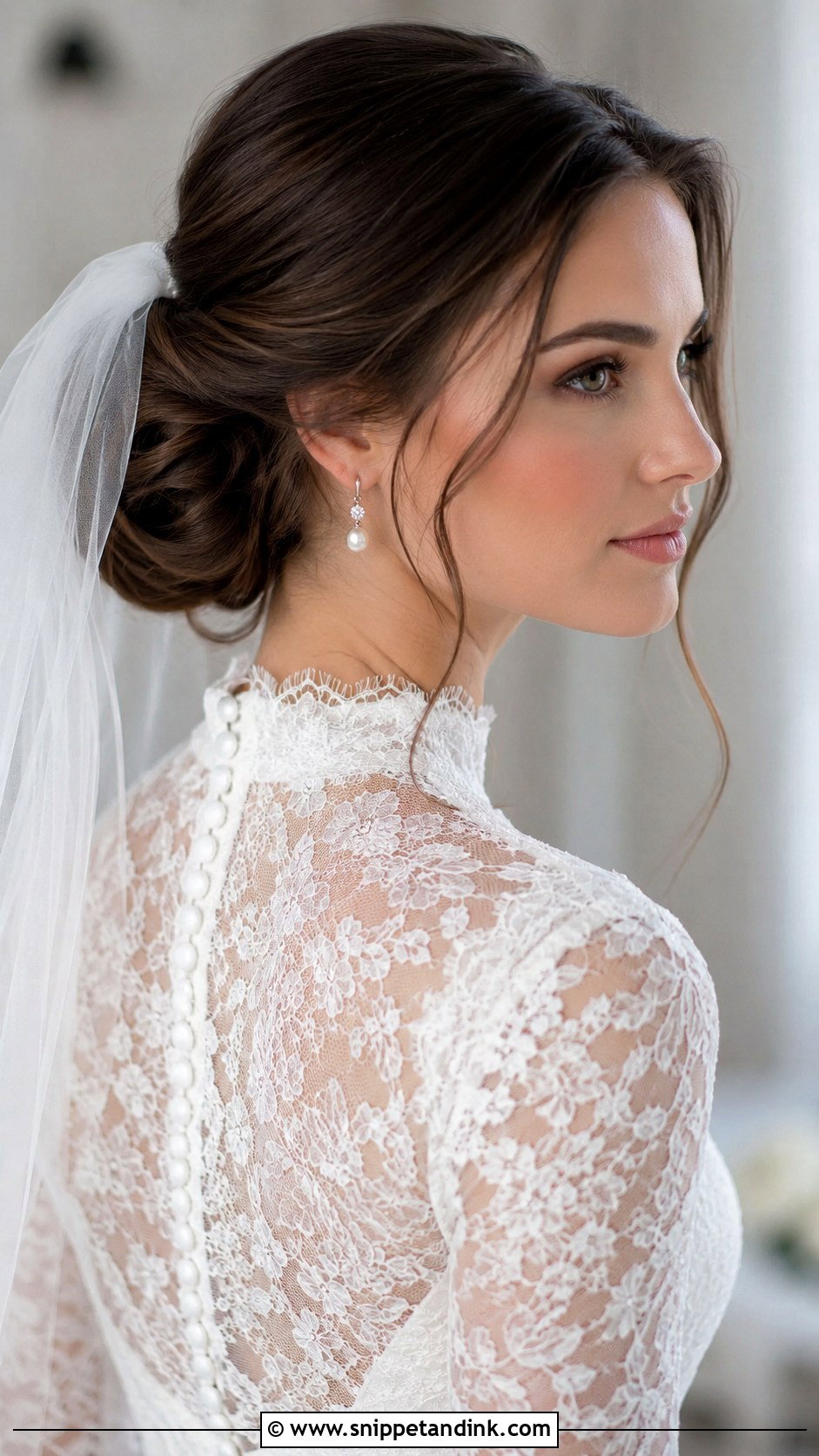
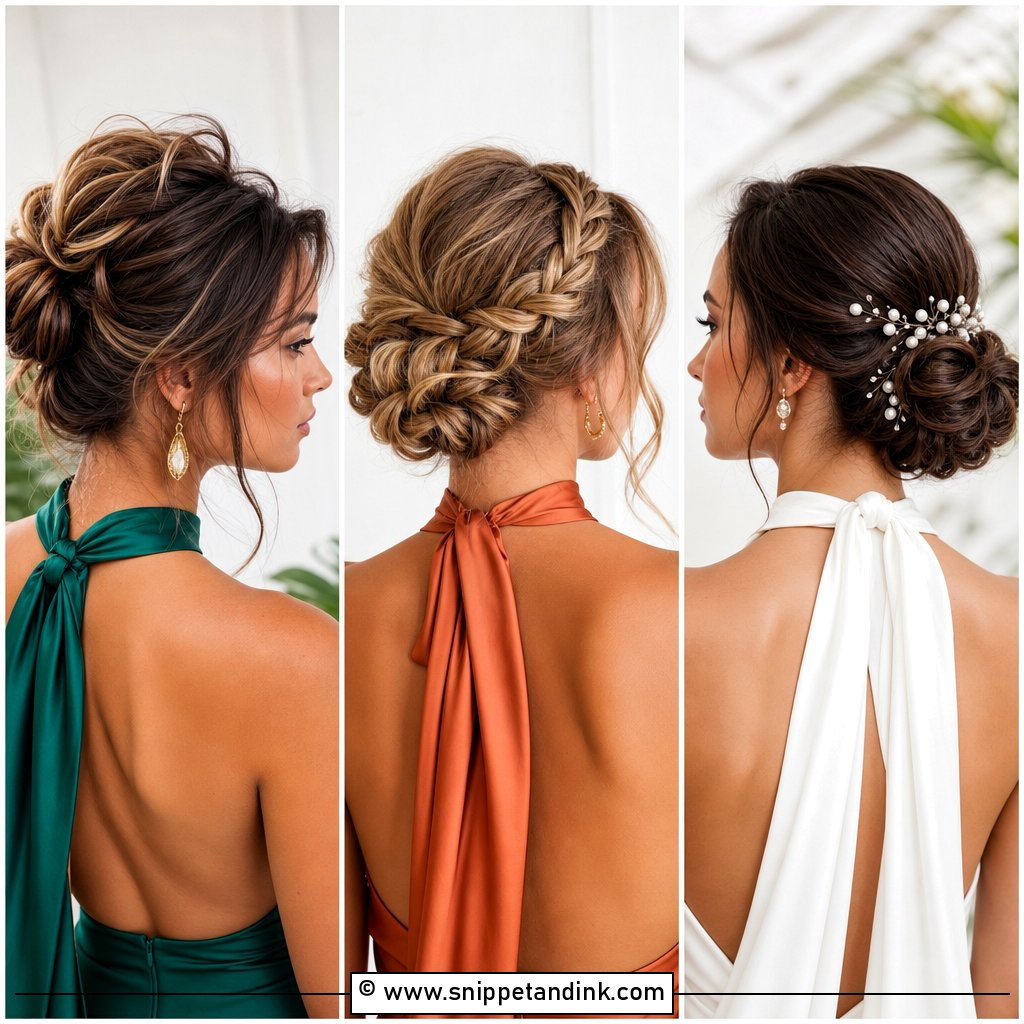
A low bun is comfortable for a long day because nothing presses on the top of the head. Pull it too tight at the nape, though, and it can look severe and give you a headache. I keep the bun soft and sized to your shoulders, with a little lift at the crown so the profile has a gentle line. It’s a good call when the dress has a detailed bodice, open back or high neck that you want seen, or when your earrings are the statement. Leave a few soft pieces near the temples.
3. Side Swept Wedding Hair
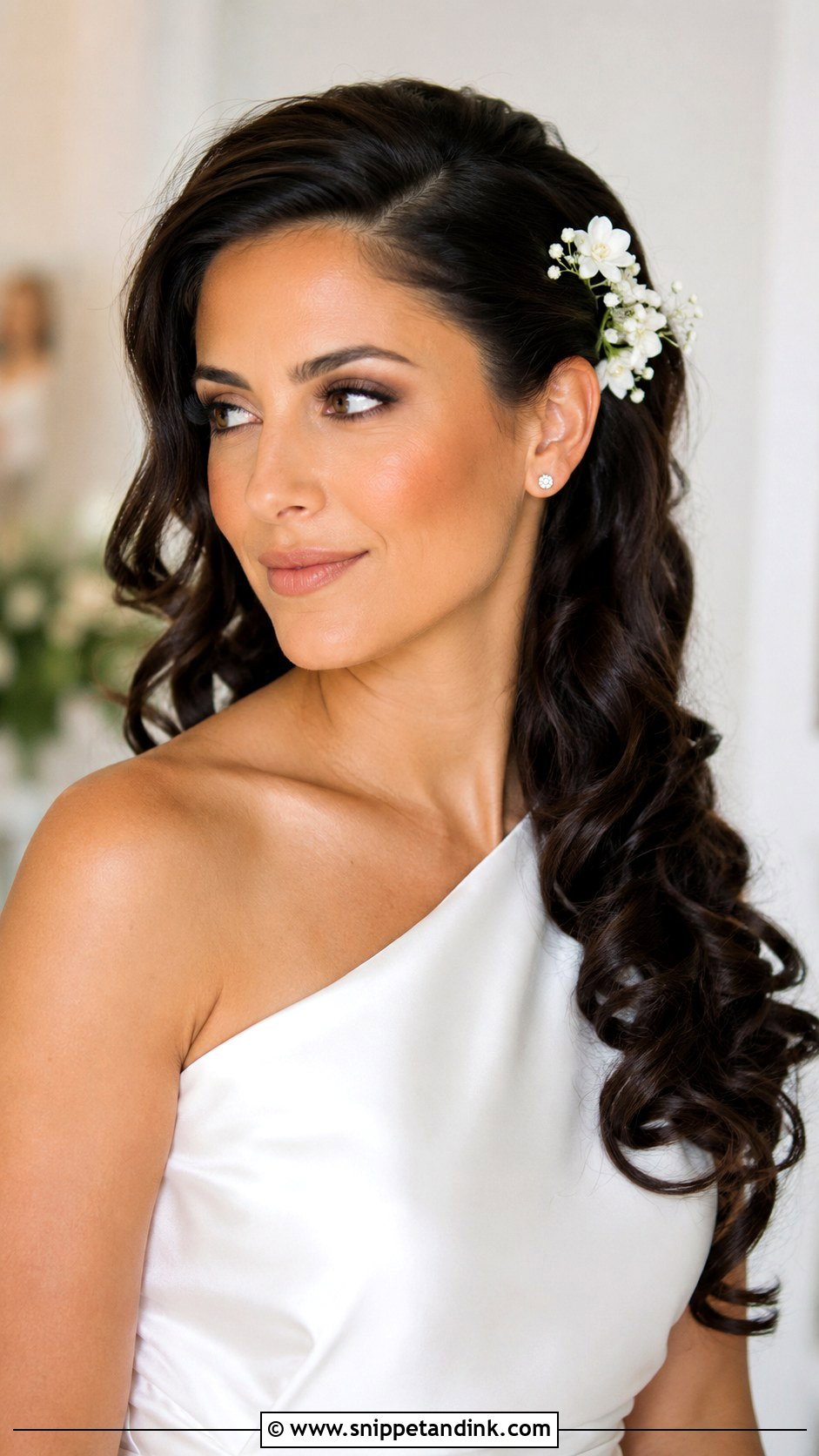
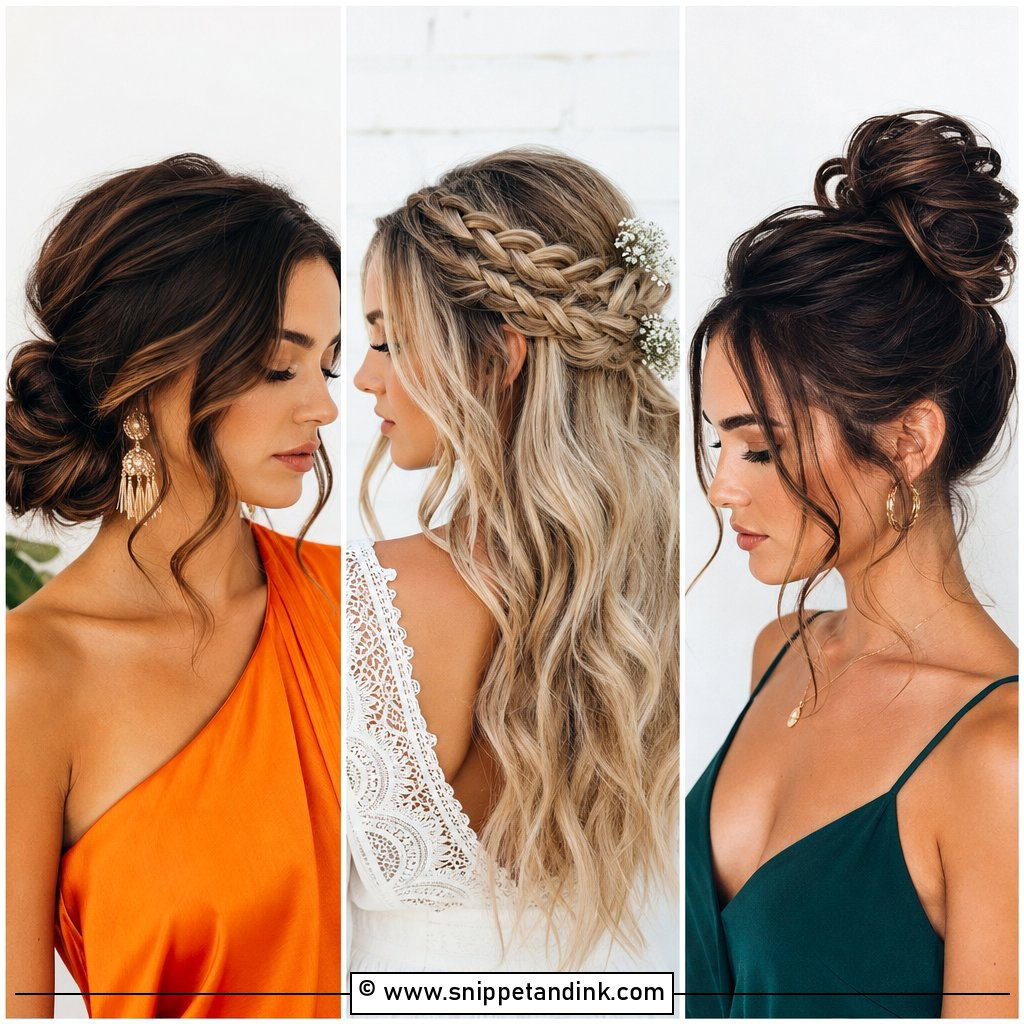
Side swept hair gives an asymmetric line across the face and leaves one side of the neck open, which suits one-shoulder and strapless gowns very well. It’s the down style that best shows off a pair of earrings. The swept side needs a firm anchor behind the ear: I pin a small twist hidden under the hair, then lay the curls over it. Without that, it slowly migrates back to the center through the day. Curls, waves or brushed-out Hollywood styling all work, and a comb or floral clip at the anchor point covers the pins.
4. Hollywood Waves Wedding Hair
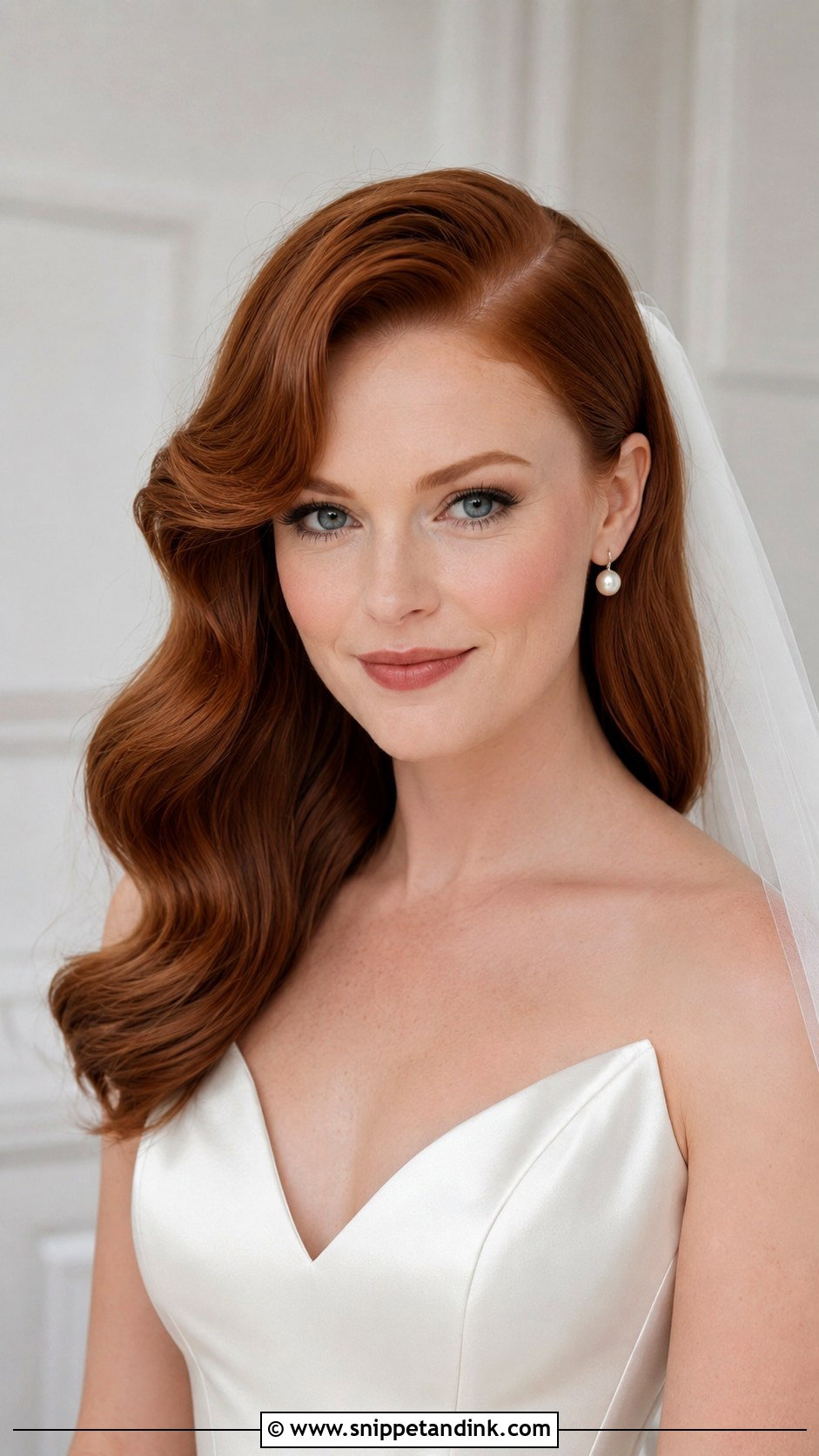
Hollywood waves give you glamour without an updo. The smooth, single-direction waves catch light in close-ups, and a deep side part adds height at the front and a strong asymmetric line. They need medium to long hair; on shorter or finer hair, extensions add the density the wave pattern needs. I set them with humidity-resistant products and let them cool fully, because frizz is what breaks the pattern first. A simple veil, pearl earrings and a clean satin gown are all they need around them.
5. Curly Updo Wedding Hair
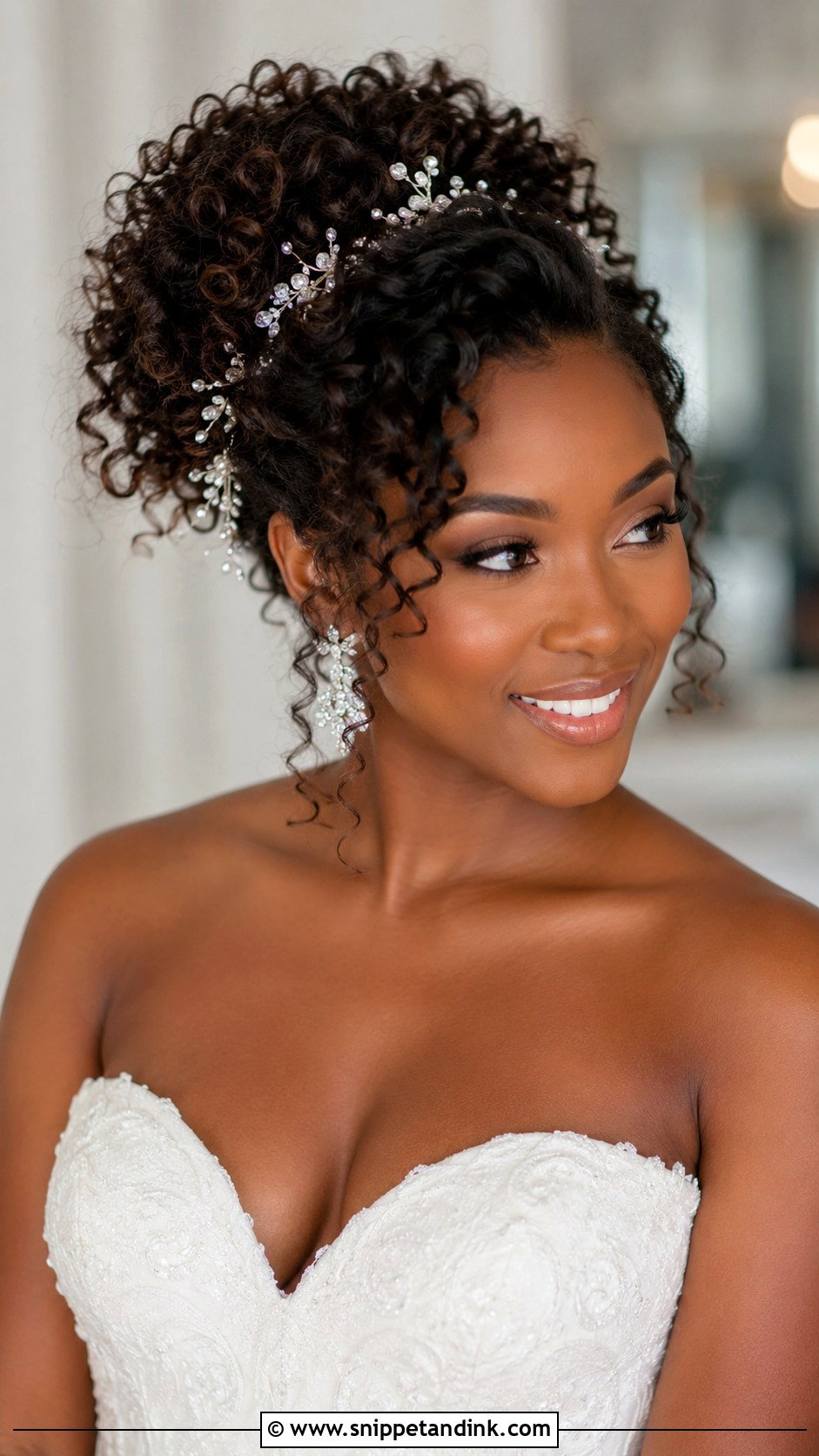
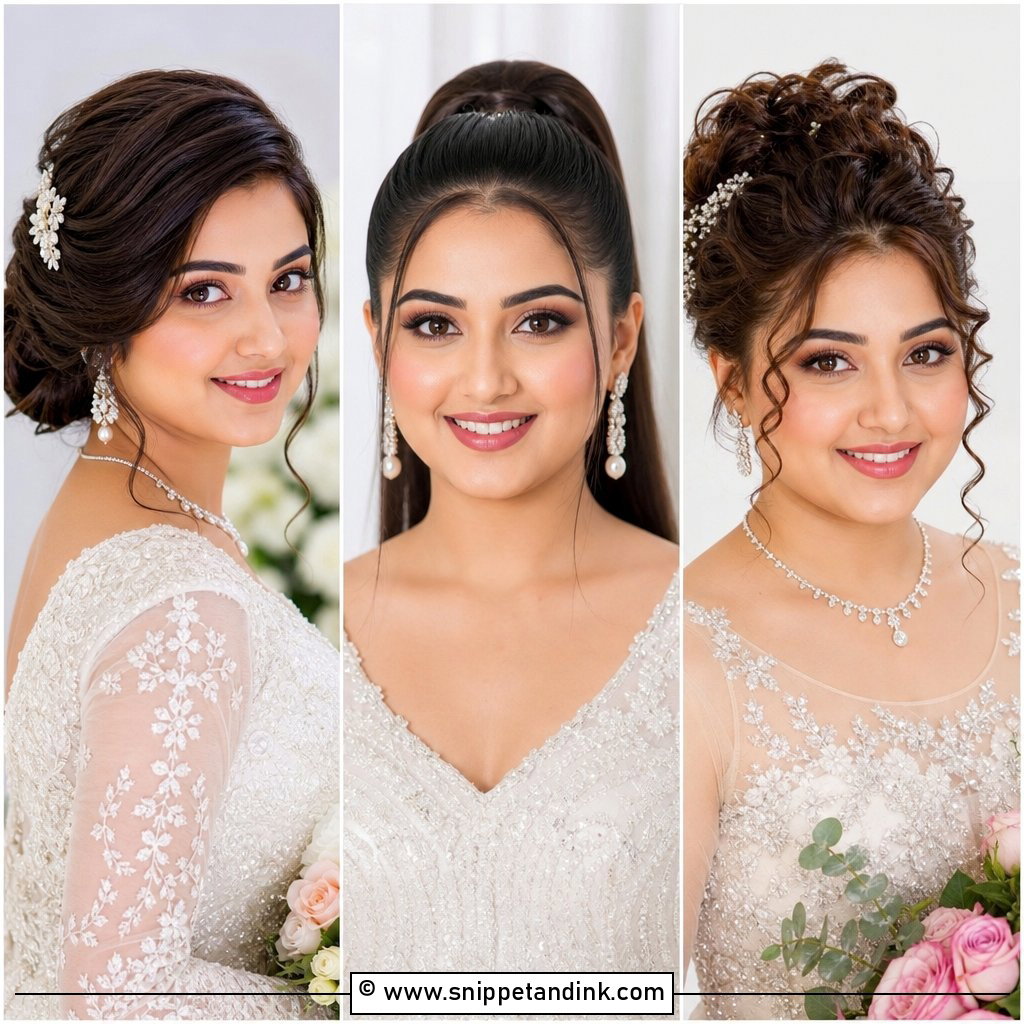
A curly updo lets your natural pattern show through the pinned shape, which looks more current than smoothing every curl flat. The real advantage is that I can put the volume exactly where your proportions want it, at the crown for height or just above the nape for a fuller profile. Pin curly hair with U-pins rather than bobby pins; they hold the curl without flattening it. Leave a few defined curls around the face. Veils, tiaras and floral pins all sit securely in curly texture.
6. Braided Crown Wedding Hair
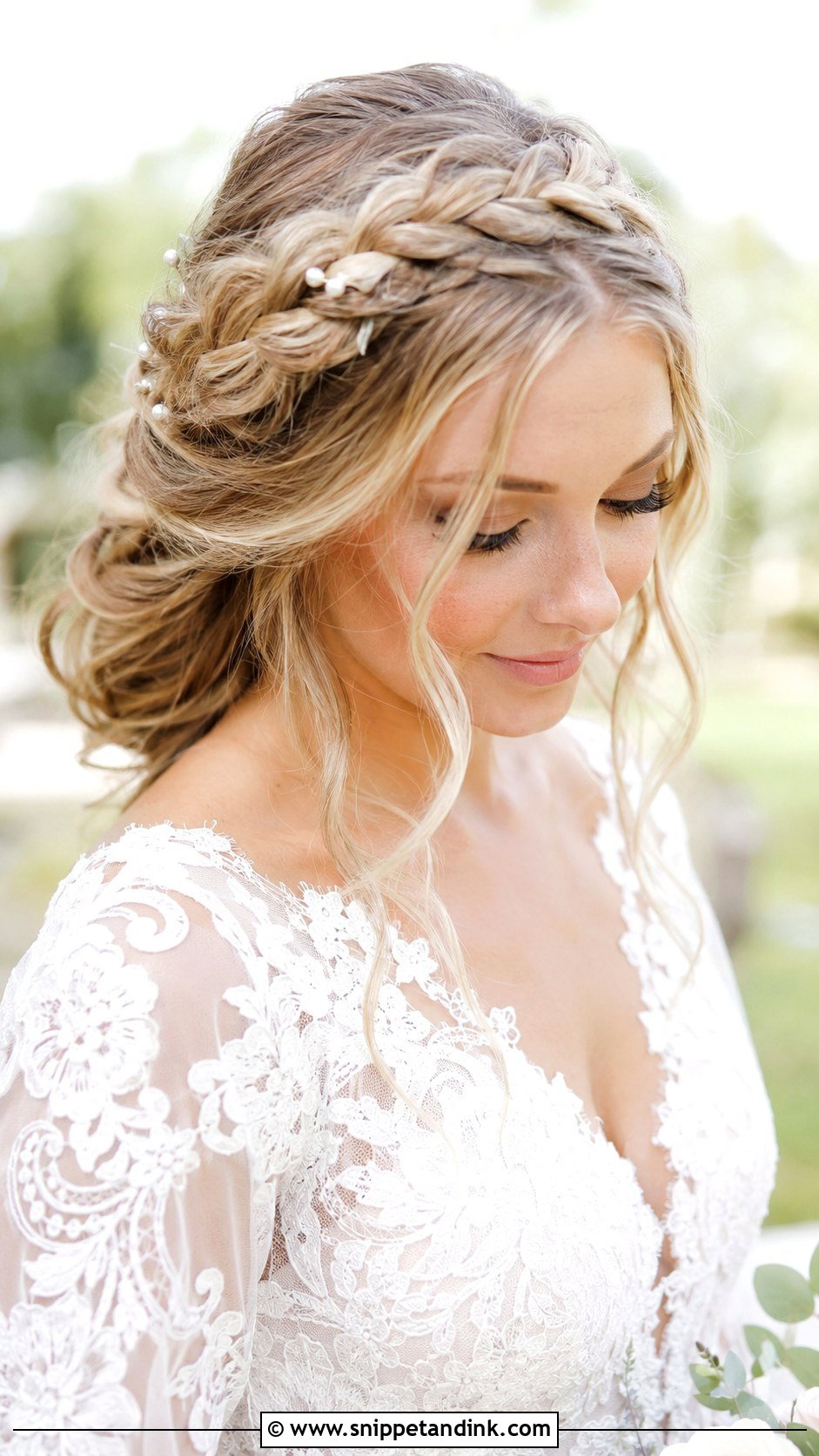
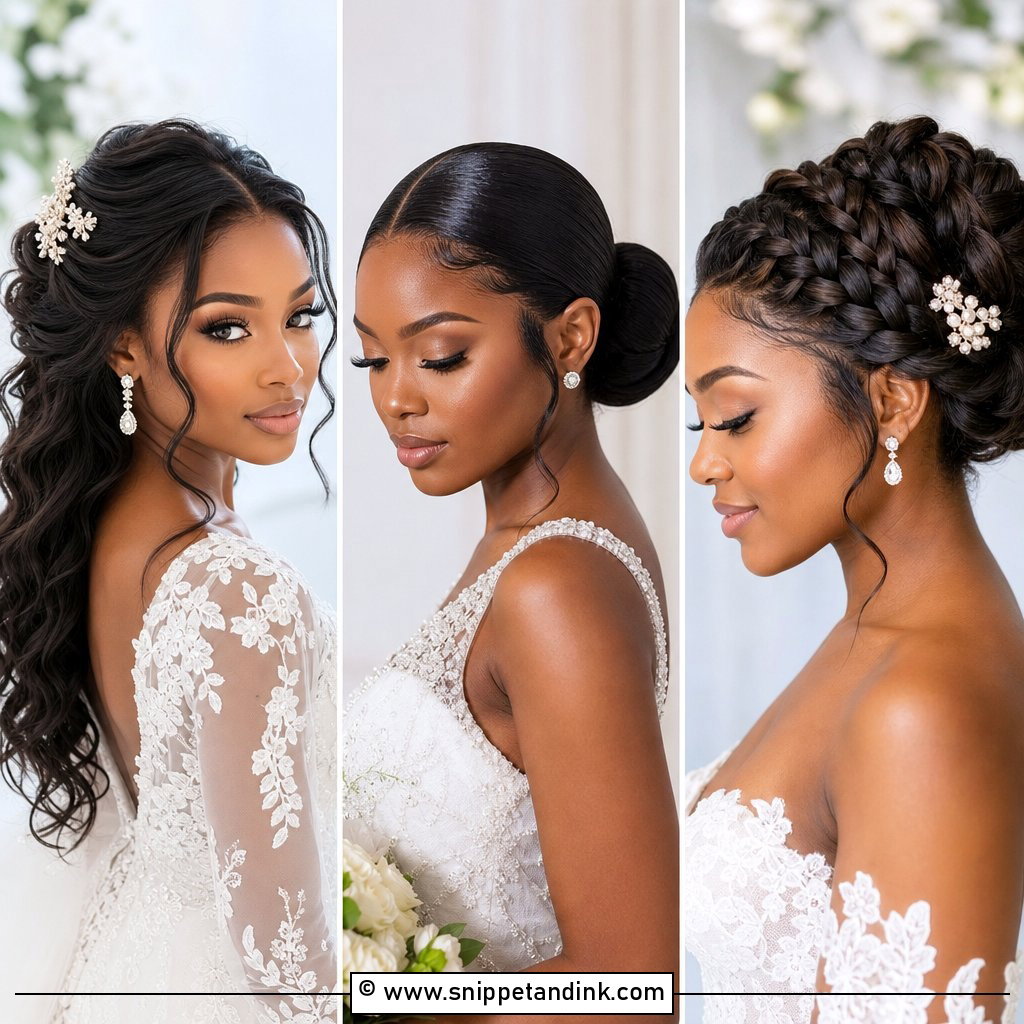
A braided crown keeps the hair controlled and comfortable while adding detail all the way around the head. The rest can be curled, waved or gathered into a low bun. It lifts the eye and frames the face. Braid it slightly loose; a very tight crown braid can look severe and press on the scalp after a few hours. It suits garden and rustic weddings and lace dresses. Tiny flowers or pearls tuck into the braid without needing extra pins.
7. Textured Ponytail Wedding Hair
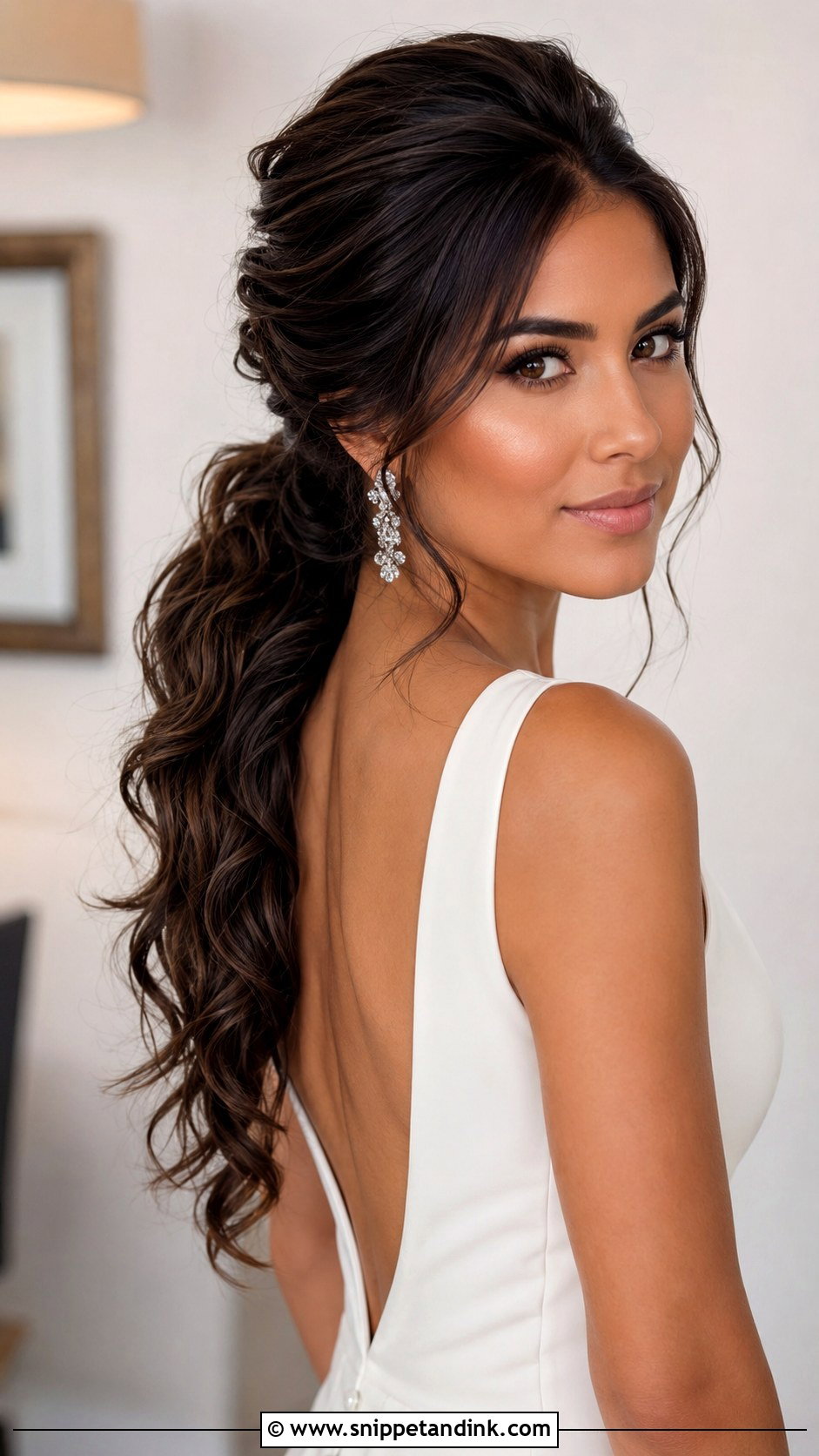
A textured ponytail is the most comfortable dancing hairstyle on this list. A mid or low pony with curled lengths shows the neckline and keeps hair off your face. Crown volume matters here. I tease lightly at the crown before gathering, so the profile has height rather than a flat line from forehead to tie. A piece of hair wrapped around the base hides the elastic. It sits well with minimalist gowns, jumpsuits and statement earrings, and it holds up to the dance floor better than most down styles.
8. Messy Bun Wedding Hair
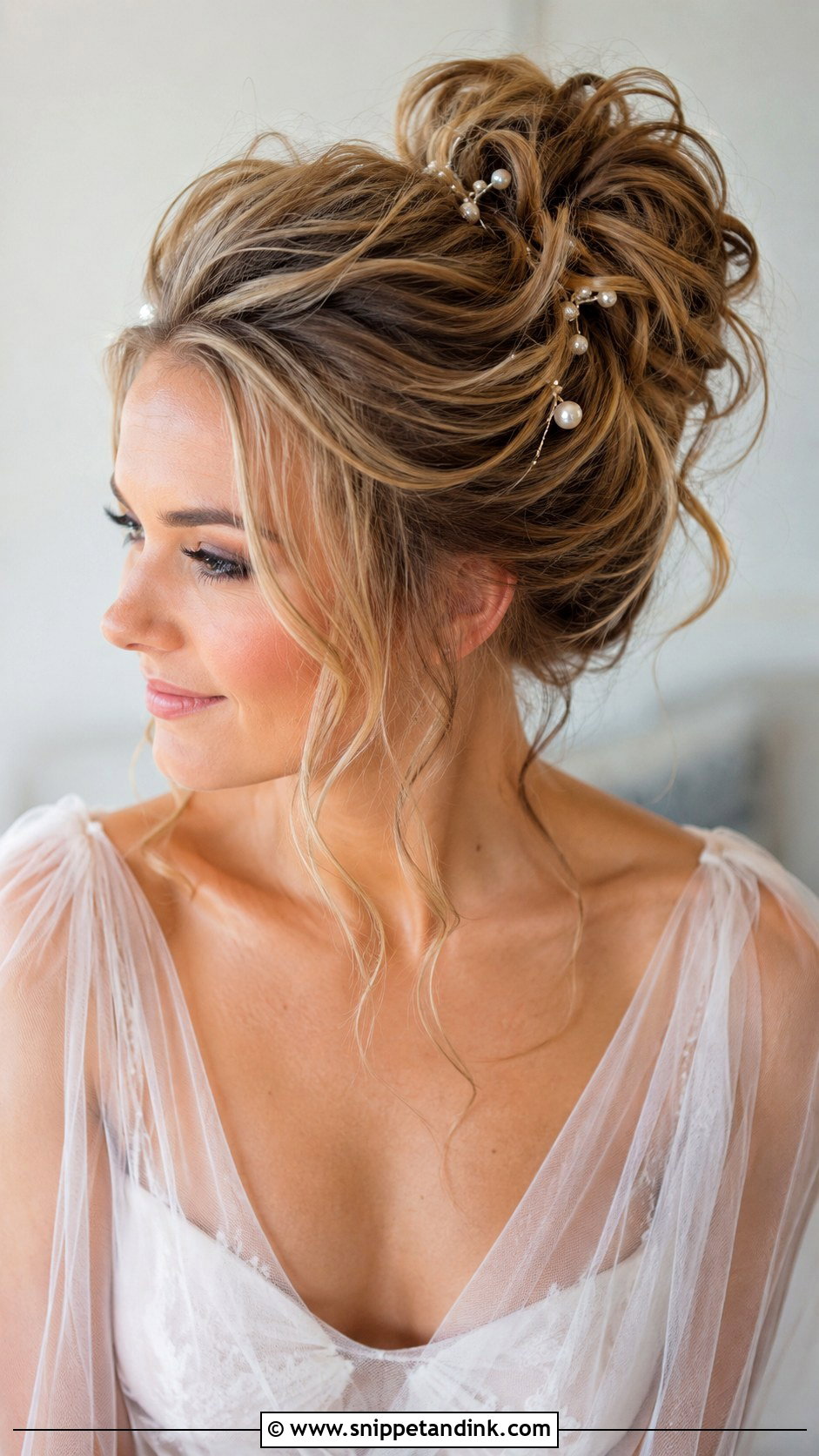
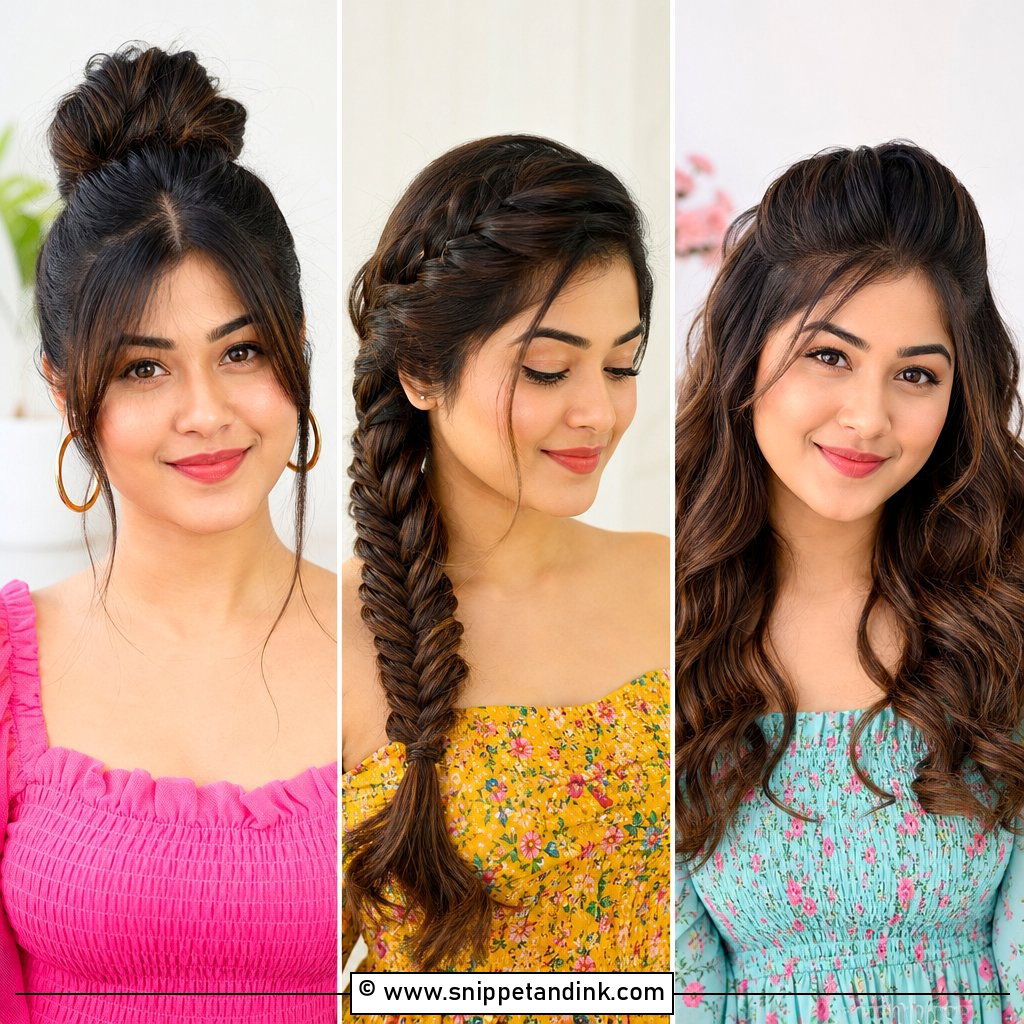
Messy buns need structure underneath, or messy turns into collapsed by mid-afternoon. I build a neat bun first, pin it solidly, then pull pieces loose. Size is the detail I watch most. A bun that’s too small or too tight can look out of scale next to a full gown and veil, so I make it generous enough to balance the dress. Add pearl pins, a hair vine or a sheer veil. If you hate stiff, perfect hair, this is your style.
9. Long Curls Wedding Hair
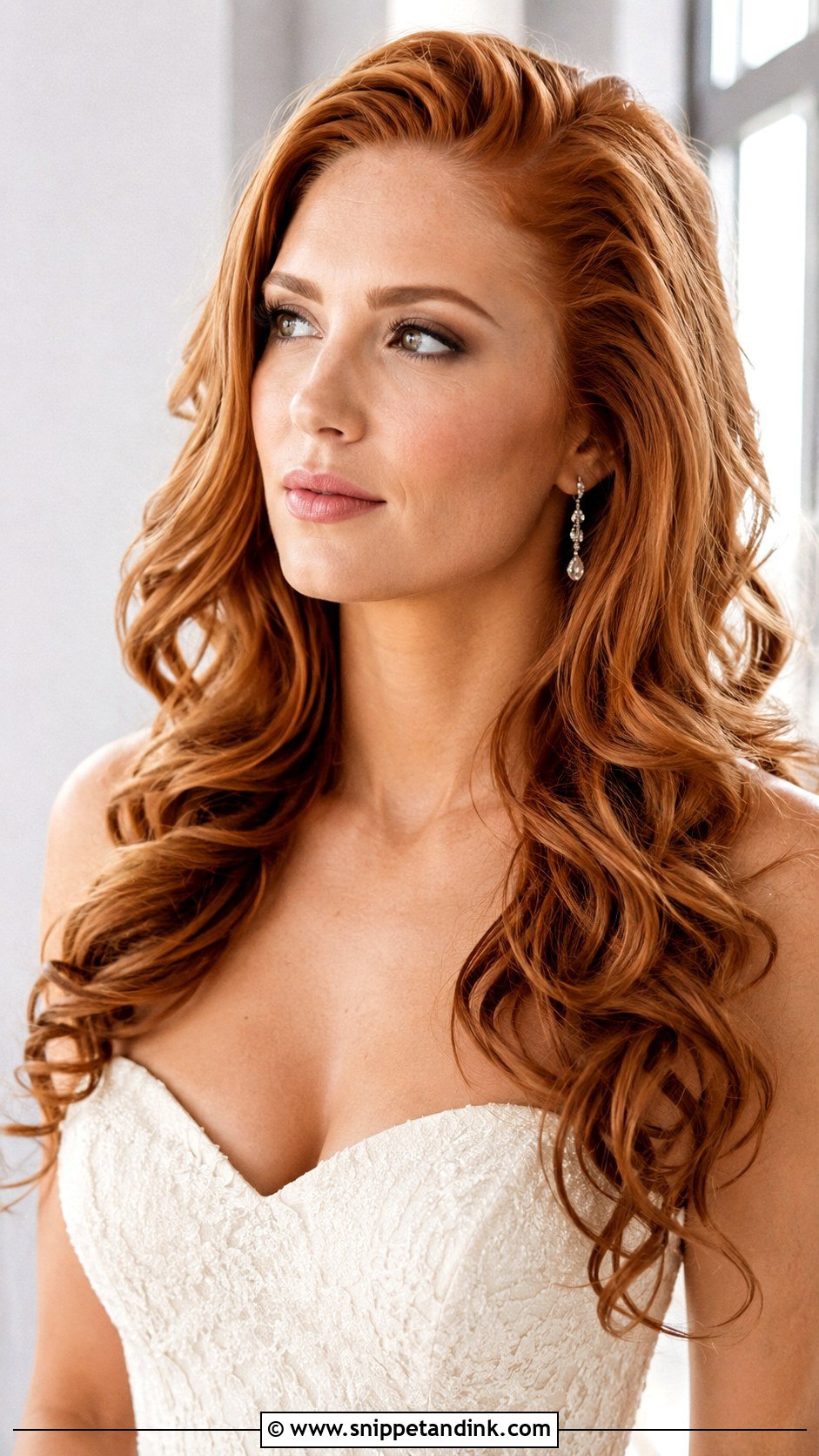
Long curls give you movement around the shoulders, and they sit nicely with strapless, sweetheart and off-the-shoulder dresses. To keep the shape open around the face, I use a side part, lifted roots or face-framing layers, otherwise heavy curls can fall forward and close in. Long hair drops curl through the day, so I start the curls slightly higher than the finished look and use a strong but touchable hold. They look gorgeous from every angle once they’ve had a few hours to soften.
10. Natural Curls Wedding Hair
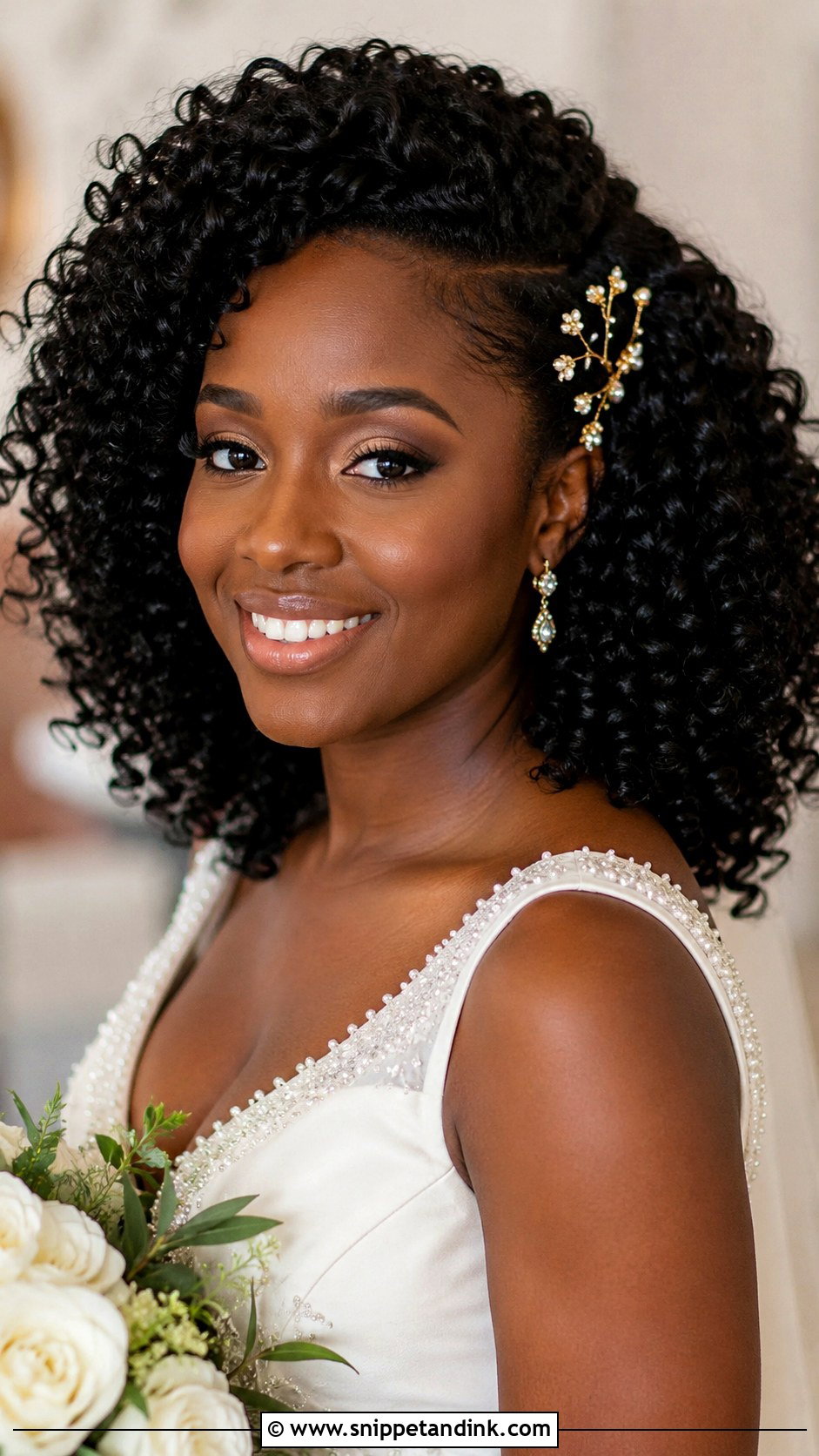
Natural curls, coils and kinks look deeply bridal when they’re defined and finished with shine. A rounded curly shape with some height gives a regal outline. You can wear it down, half-up, pinned to one side or gathered into a soft updo. Prep decides everything with textured hair: book a curl-focused trial with a stylist who works with your pattern, and decide your wash and moisture routine for the days before. Gold pins, pearls, flowers or a veil placed above the crown finish it.
11. Short Bob Wedding Hair
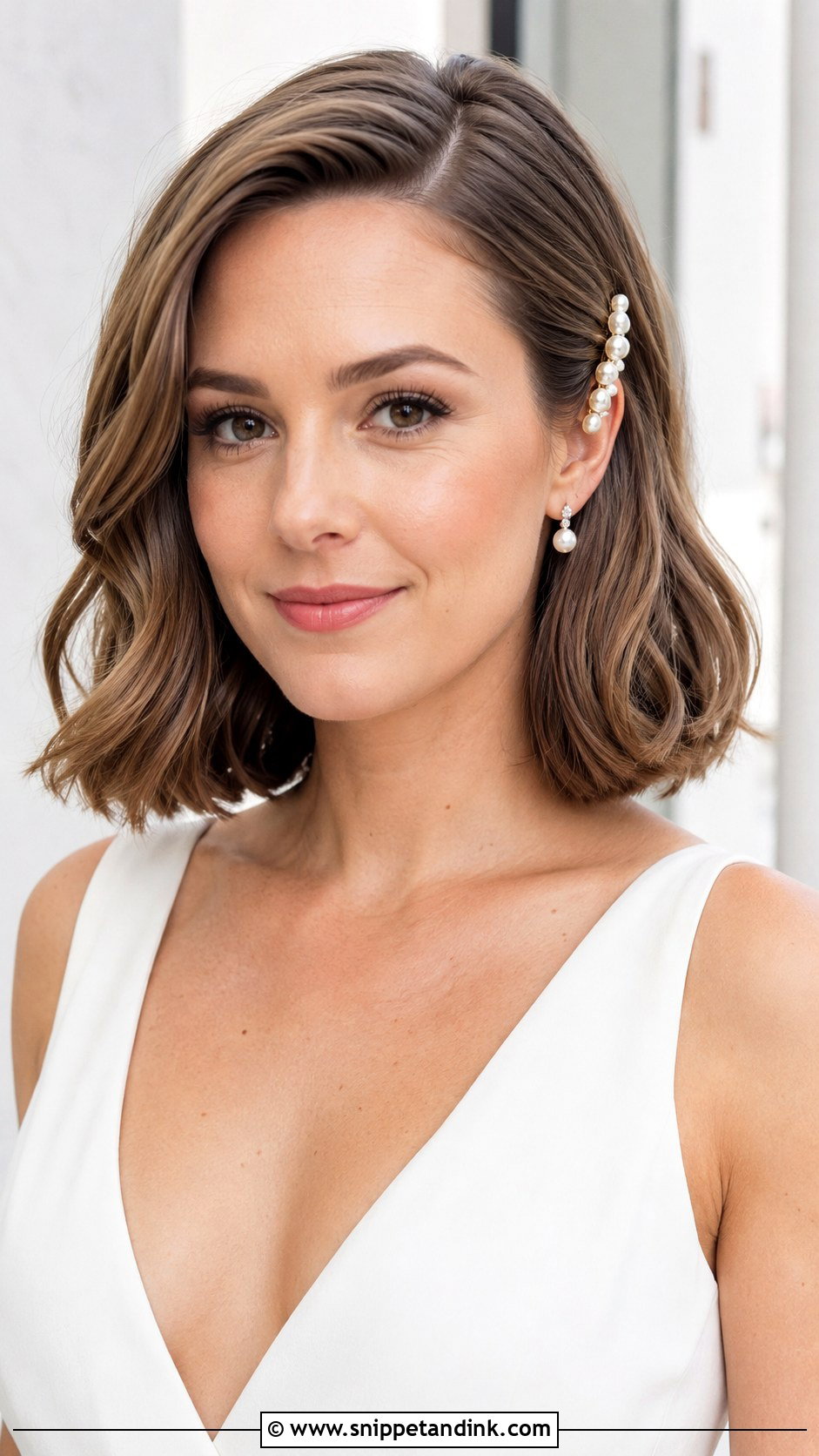
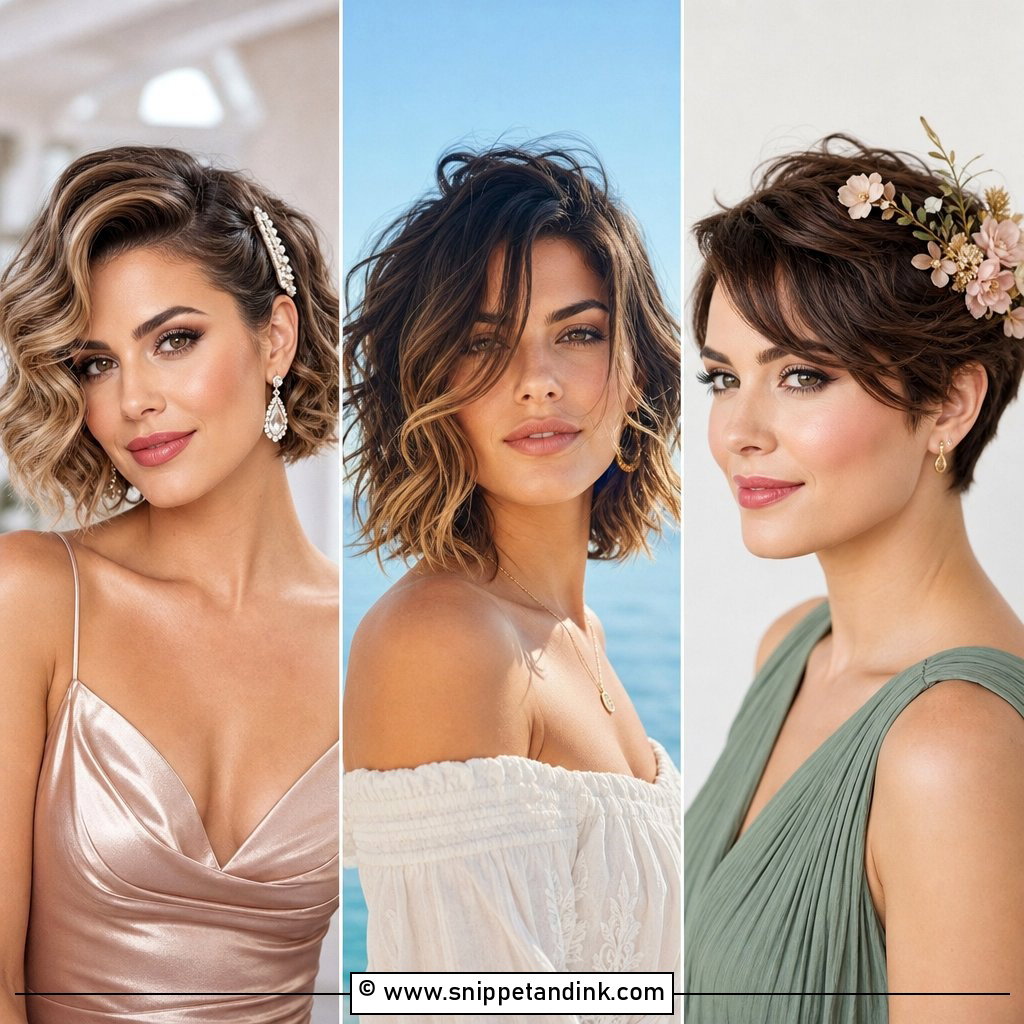
A bob doesn’t need extensions to look bridal. Soft waves, a deep side part, tucked sides or one small accessory are enough to lift the cut. A length around the chin or collarbone frames the face, and styling the front pieces back from the cheeks keeps the face open. It suits modern gowns, vintage dresses, courthouse weddings, and minimalist outfits. Finish with a pearl barrette, a birdcage veil or a little shine spray.
12. Chignon Wedding Hair
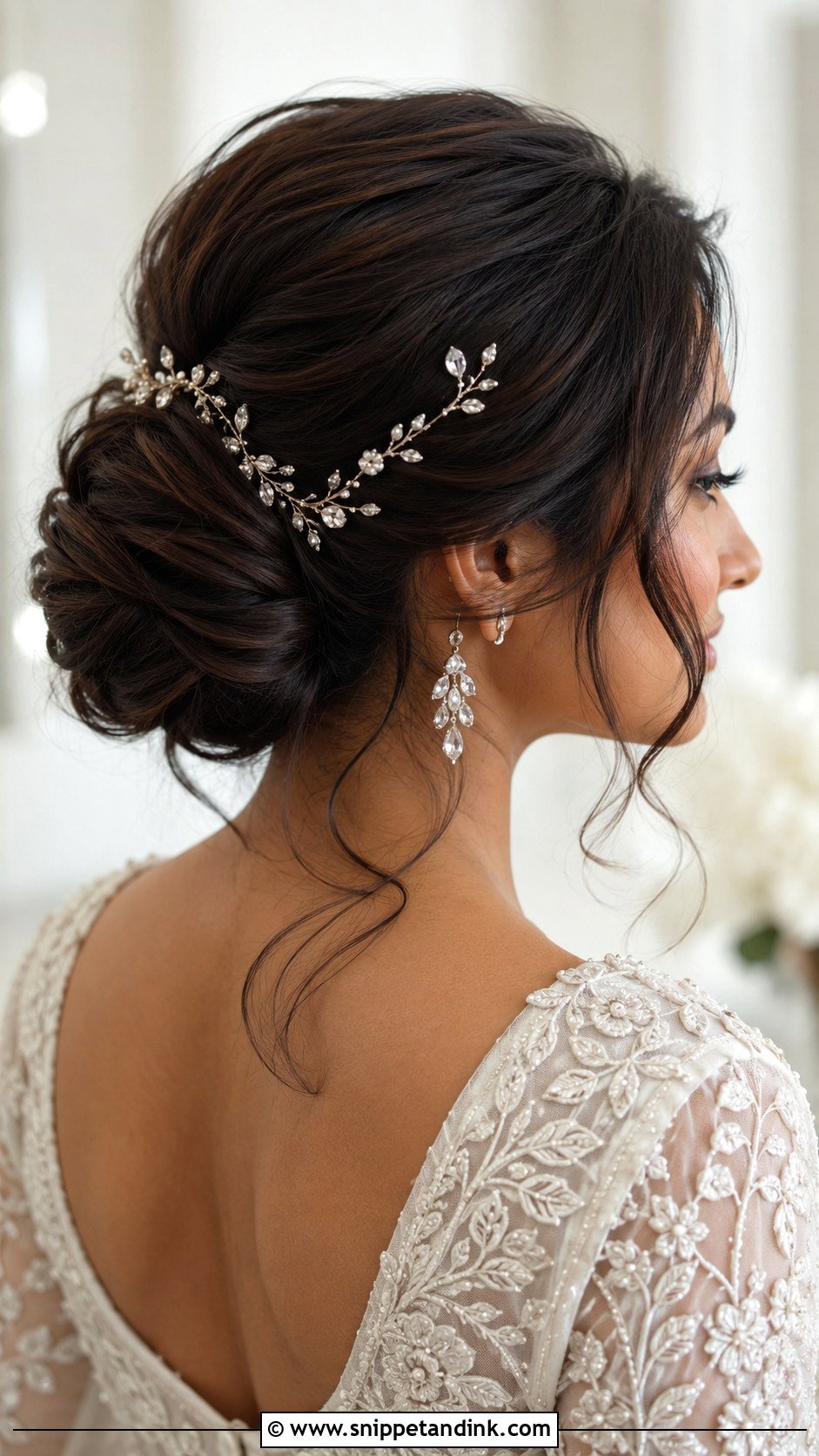
A chignon is the style I trust when the dress is the main event. It sits low and can be smooth, twisted, braided or textured. A slightly fuller chignon with lift at the crown usually looks more balanced than a small tight knot, especially with a long veil behind it. It works with high necklines, illusion lace, beaded gowns, and cathedral-length tulle. In warm weather it keeps hair off the neck entirely. Ask for soft pieces around the face for close portraits.
13. Veil Wedding Hair
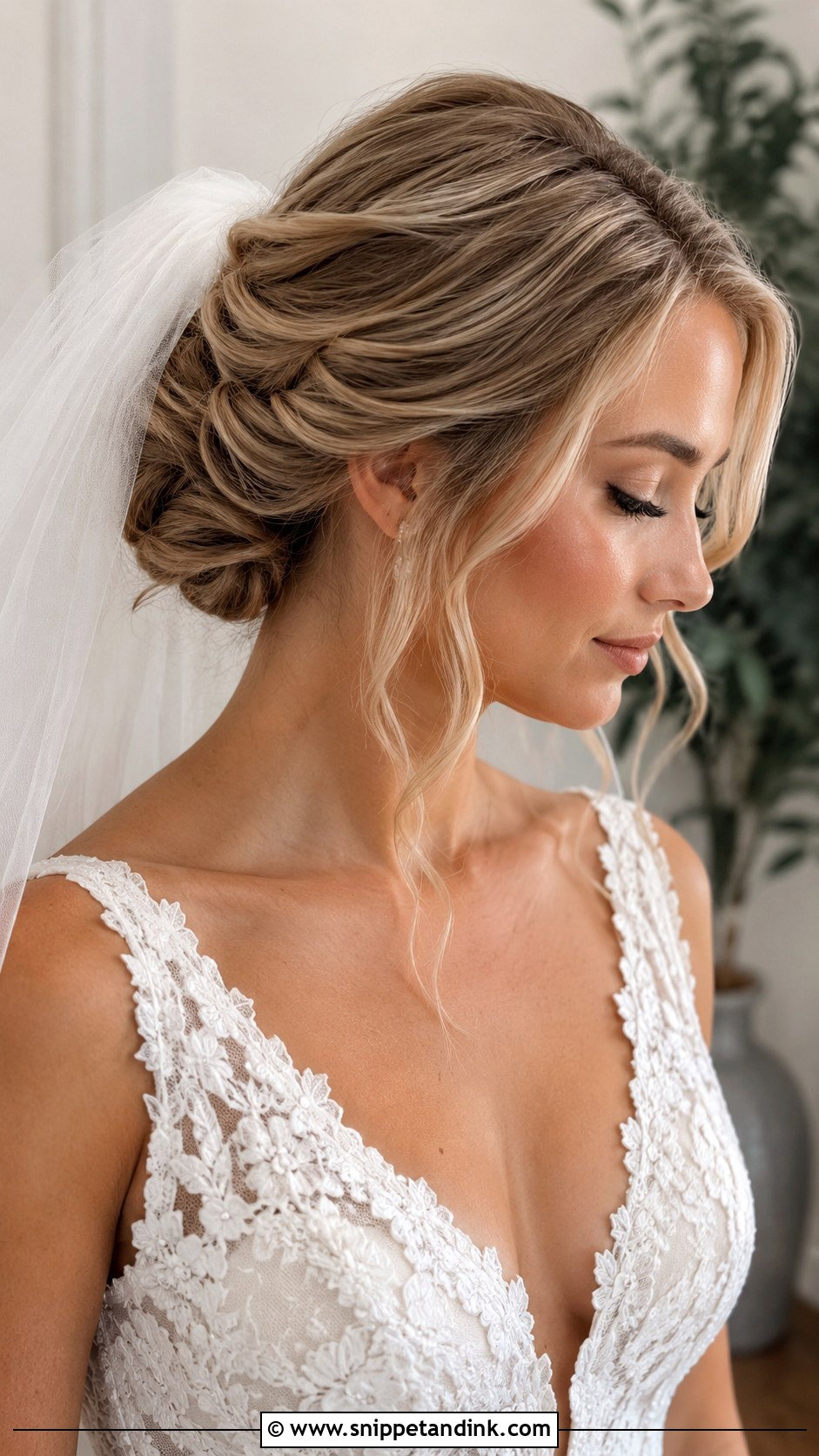
Plan the hair around the veil, not the other way round. A half-up style, low bun, chignon or soft updo can all hold a comb securely. Placement changes your silhouette in photos more than most brides expect: a veil set slightly above the crown adds height, while one tucked under a bun reads sleek and lower. Think about your neckline and earrings before you decide. Bring the actual veil to the trial so we can test how it grips, how it hangs and how quickly it comes out for the reception.
14. Medium Length Wedding Hair
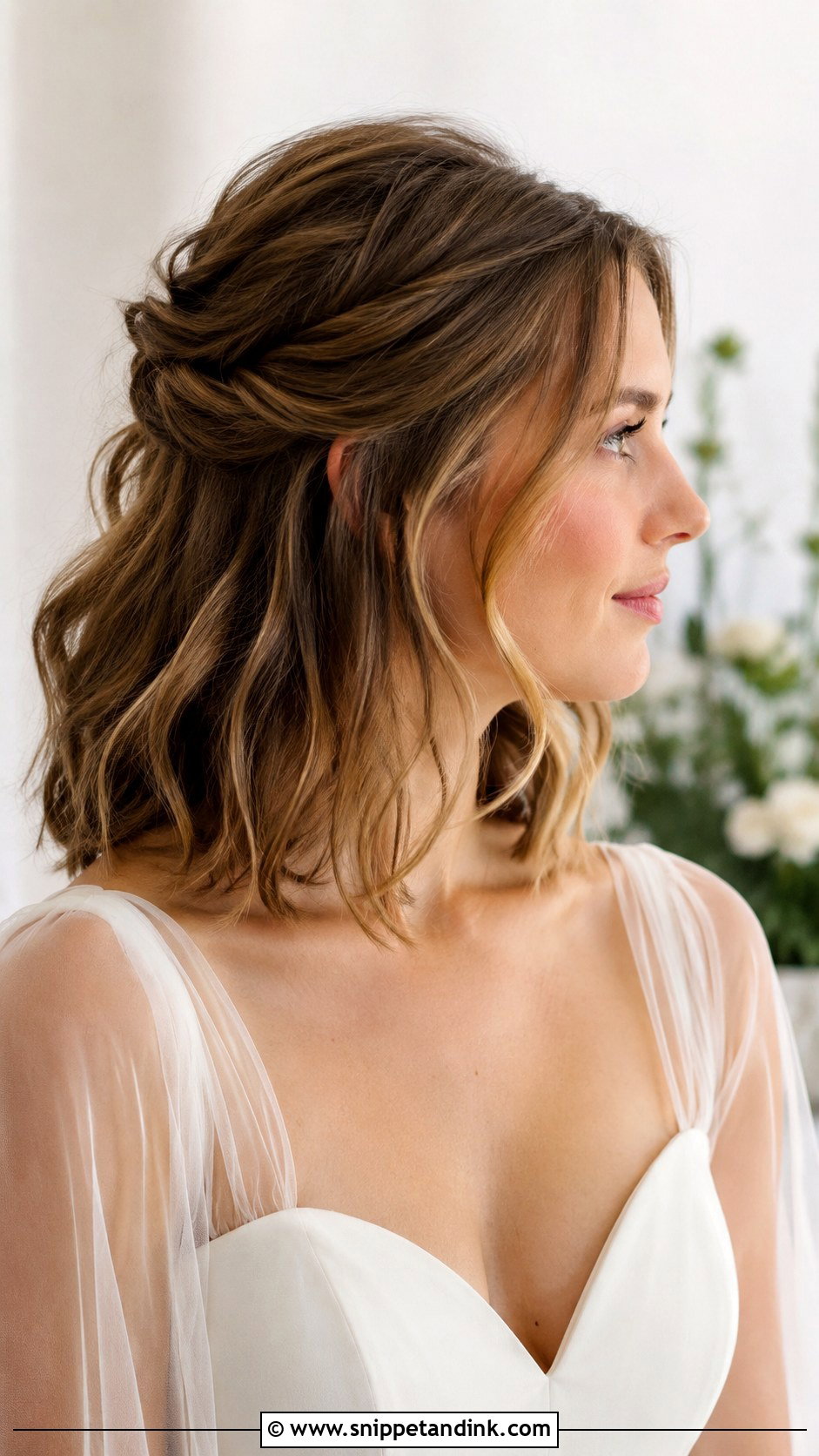
Shoulder and collarbone length hair gives you more options than people expect: curls, half-up, a low bun, a side sweep or soft waves. The thing I focus on is the front. Pieces shaped back and away from the face open it up; pieces curled forward close it in. Layers, bends and root lift give fullness without heavy extensions. This length takes veils, combs, clips and flowers easily, and it’s lighter to wear all day than very long hair.
15. High Bun Wedding Hair
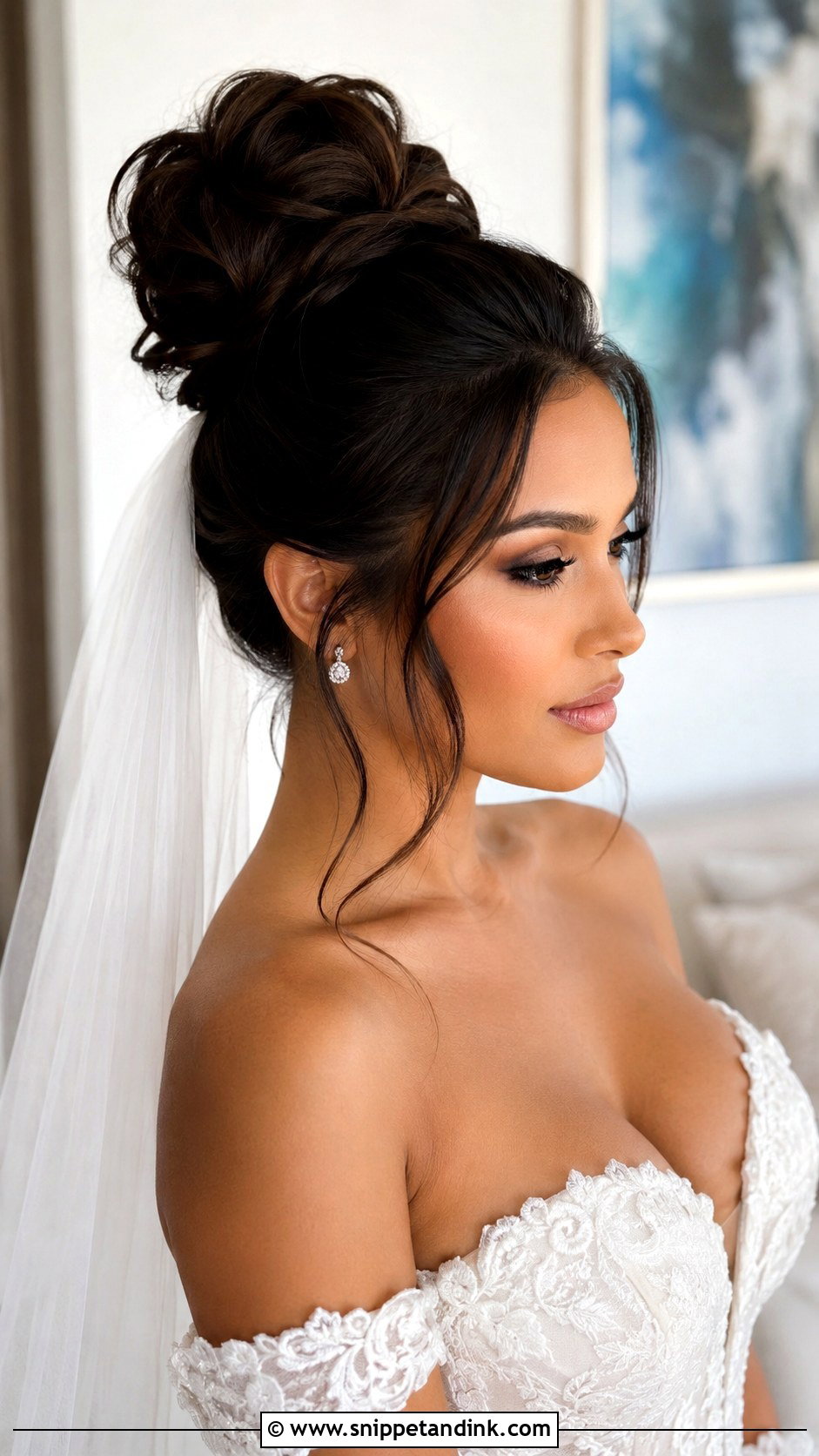
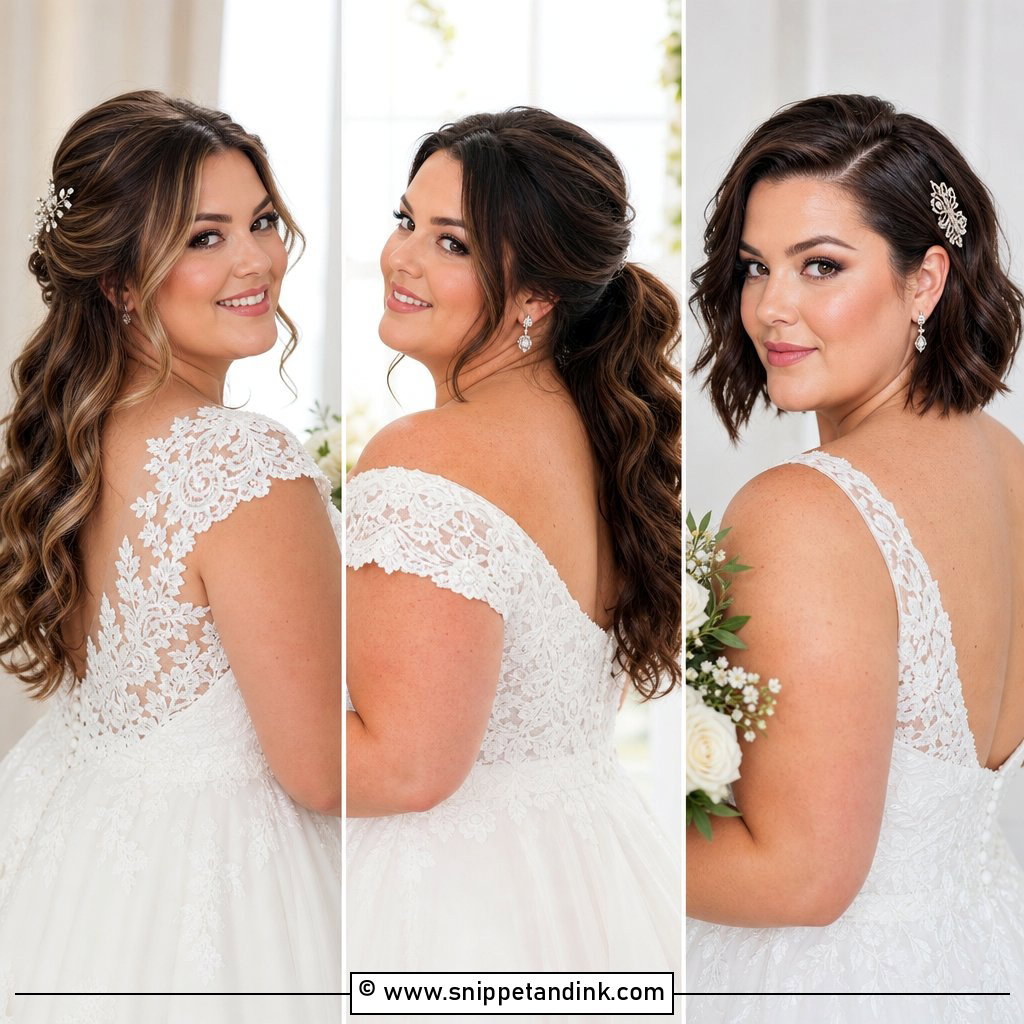
A high bun puts the focus on your face, makeup, earrings and neckline, and it gives instant lift. Keep it soft and in proportion. A small tight topknot can look out of scale, while a fuller bun with a little crown volume and a few wispy pieces looks balanced. It suits ball gowns, dramatic veils, square necklines and off-the-shoulder dresses. In summer, it keeps the hair right off your neck while still reading formal. High buns pull at the scalp more than low ones, so wear it for a couple of hours at the trial.
Photos From the Trial Tell You More Than the Mirror
A mirror only shows you the front, and you’re seeing it from about two feet away. Your guests and photographer will see you from the side, from behind, and from across the room. After every trial I ask brides to take a few phone pictures before deciding anything:
- Full length, standing, with your arms relaxed, ideally wearing a top with a neckline close to your dress.
- Side profile, which shows whether the crown has enough lift and whether the bun or pony sits in proportion.
- Three-quarter view from slightly above and slightly below, the angles candid shots usually catch.
- One from behind, since most of the ceremony is seen from the back.
Look at them the next day, with fresh eyes. If something feels off, it’s nearly always the size or height of the style rather than the style itself, and that’s easy to adjust.
Comfort Over a Twelve-Hour Day
If you tend to run warm, hair on the back of your neck gets uncomfortable quickly, especially with a heavy dress and an outdoor ceremony. An updo or a high ponytail keeps the neck clear. Tight styles cause their own problems, though. A pony or bun pulled hard at the hairline can trigger a headache by the reception, so I keep tension at the root firm but not pulling. Wear the trial style through a normal afternoon and notice where it pinches or presses. That’s the spot to loosen on the day.
Scale Matters More Than Any Rule About Size
The right hairstyle is the one that makes you feel like yourself and still looks right in the last photo of the night. Look for shape and scale rather than rules about face shape or size. A little crown lift, a soft front, secure pinning and accessories placed with intention make more difference than any single style. Bring photos you love to your trial, then listen when your stylist explains why something will or won’t work with your hair, dress and veil.
You'll Like These Ideas:


Leave a Reply