
With a long face, I’m working with proportion more than with any particular style. The goal is width at cheekbone level and less height on top, so the face reads more balanced from the front. That rules out tall crowns and flat, straight lengths, and it brings in side parts, low buns, fringe and anything with movement around the temples and jaw. The fifteen styles below all follow that logic, and each still takes a veil, comb or flowers. I’ve noted where each one helps and where it can work against you.
Is Your Face Long, or Just Oval?
Many brides who tell me they have a long face actually have an oval one, and that changes the advice. Oval faces suit nearly anything, including height. Long, or oblong, faces are noticeably longer than they are wide, often with a tall forehead or a long chin, and fairly straight sides.
A quick check: pull your hair right back and take a straight-on photo at eye level. Compare the length of your face from hairline to chin with the width across your cheekbones. If the length is clearly more than one and a half times the width, and your cheeks, jaw and forehead are fairly similar in width, you’re likely long. If your cheekbones are wider than both forehead and jaw, you’re closer to oval.
It’s worth doing this before the trial. If you’re oval, you can relax most of the rules below and choose on style alone. If you’re long, height at the crown is the main thing to keep an eye on, and a mirror check in profile at the trial will show you quickly whether a style has crept upward.
1. Soft Side Part Bridal Waves
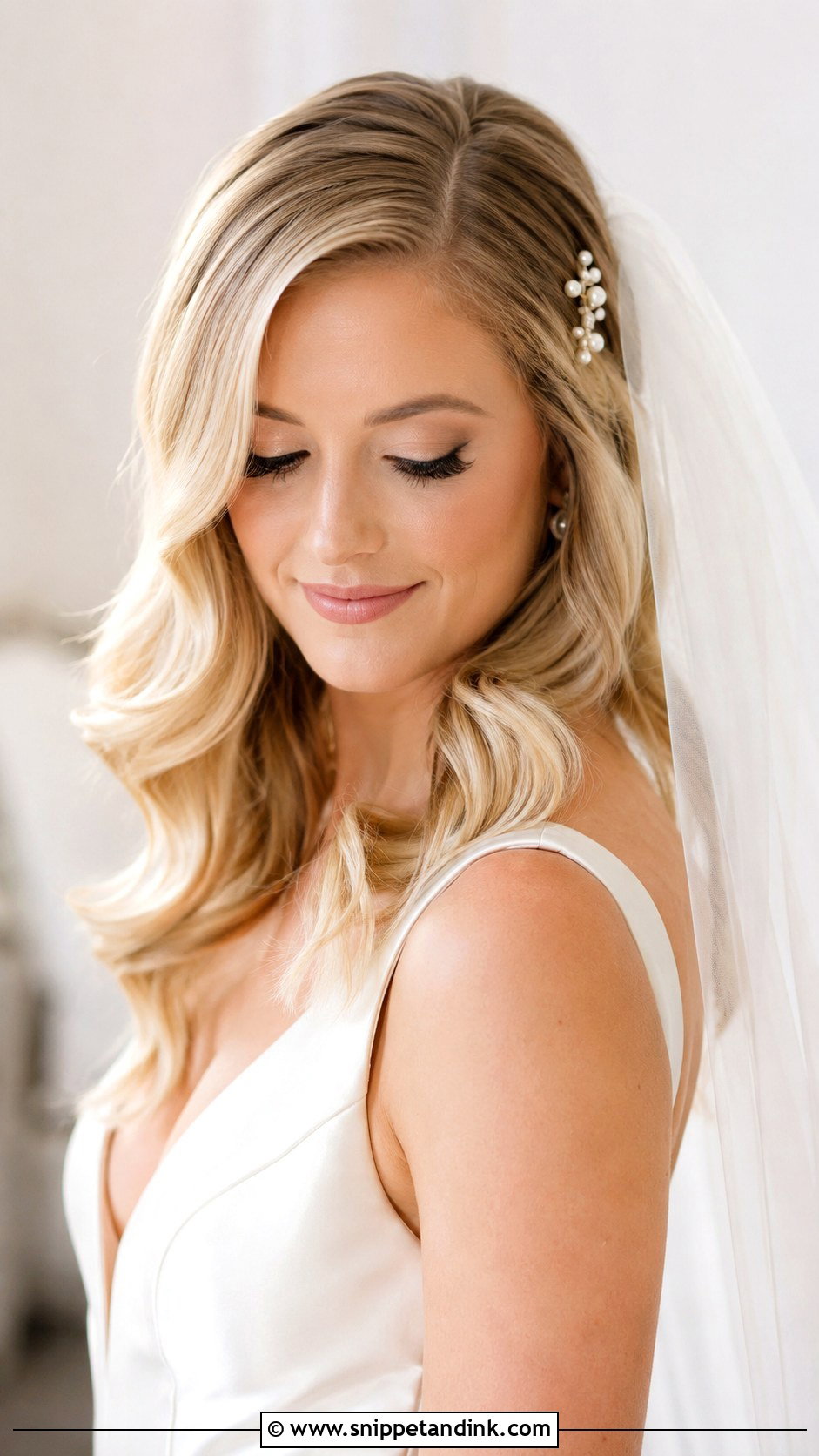
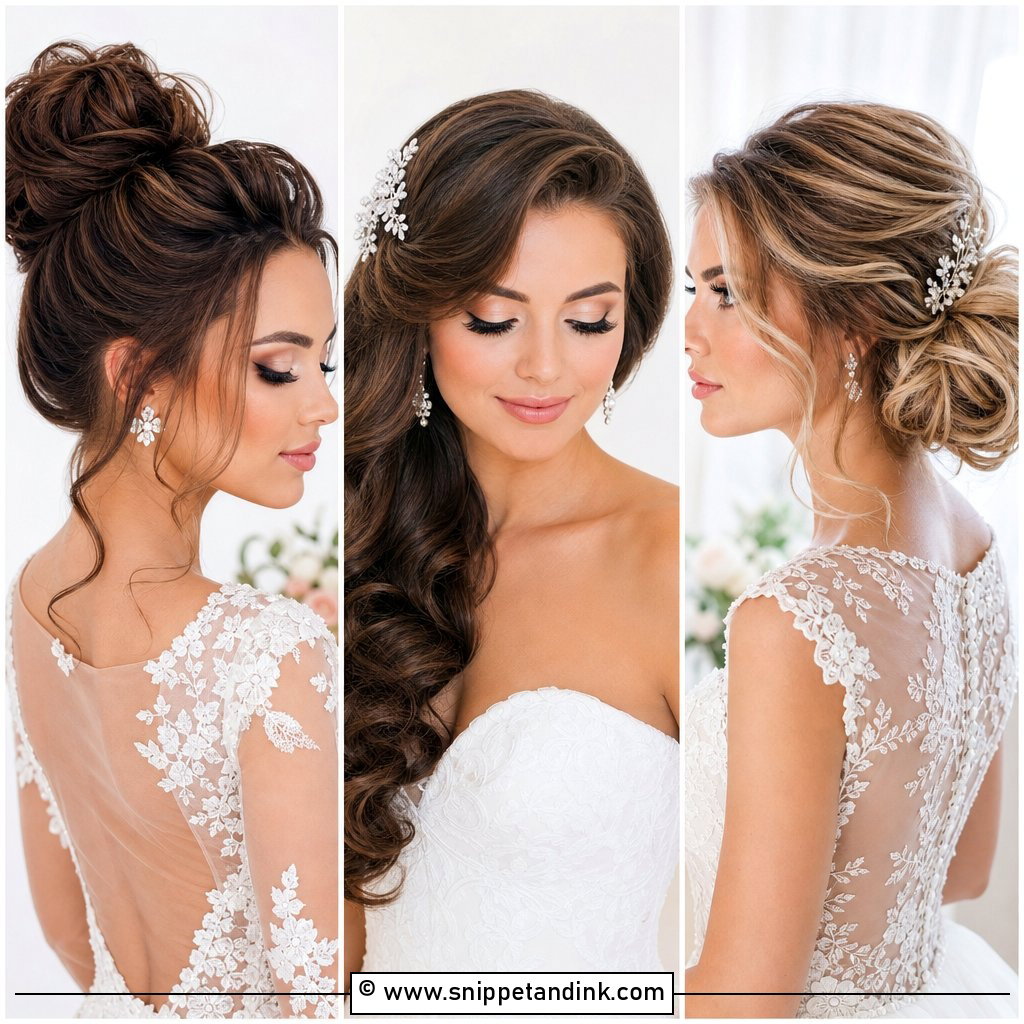
If I had to pick one style for a long face, this would be it. A side part breaks the vertical line down the centre of the face, and waves that start at the cheekbone put width exactly where it helps. If the bends only start at the ends, the sides fall flat and the face looks longer, so ask for them higher. Keep the crown smooth rather than lifted. A side comb, a few pearl pins or a veil placed low at the back finish it without adding height.
2. Low Bridal Bun With Face Framing Pieces
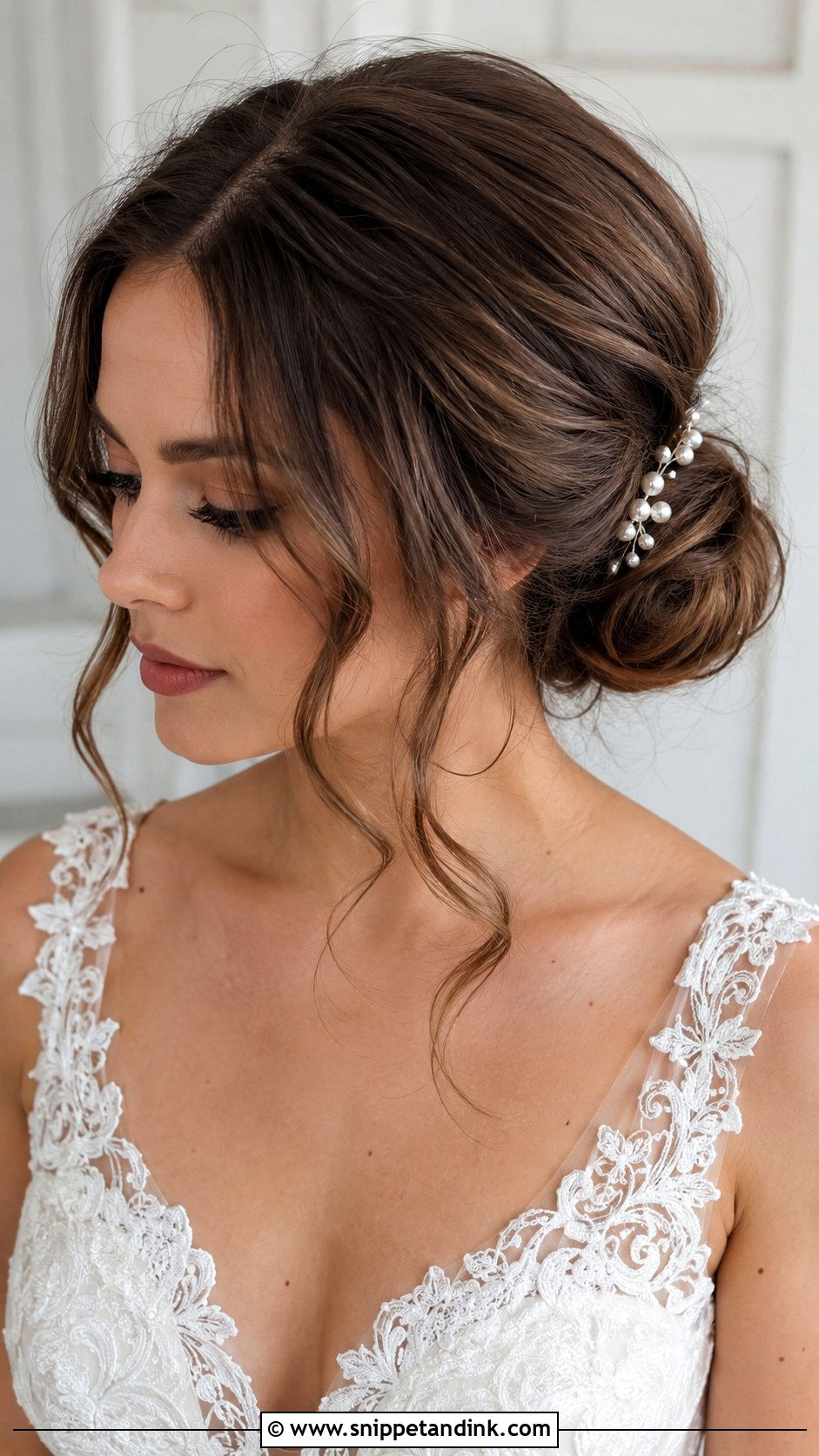
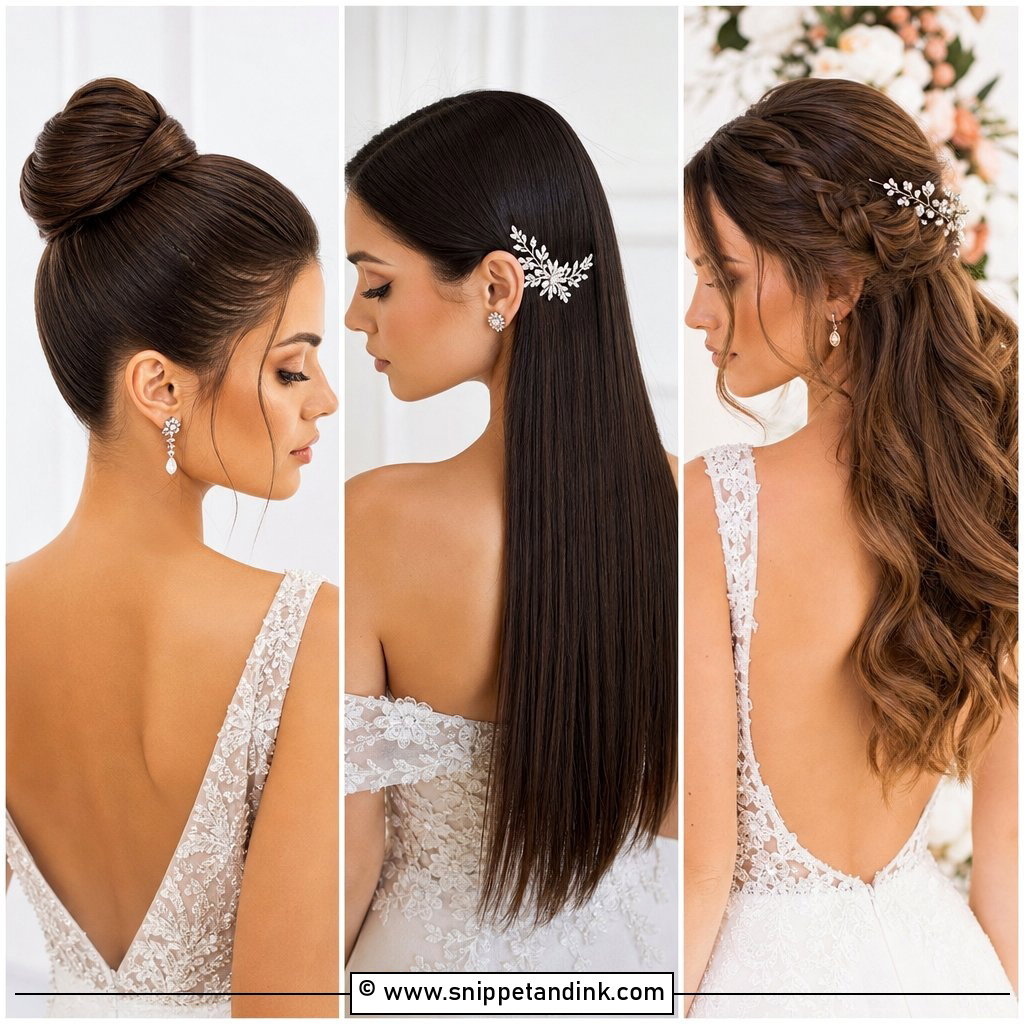
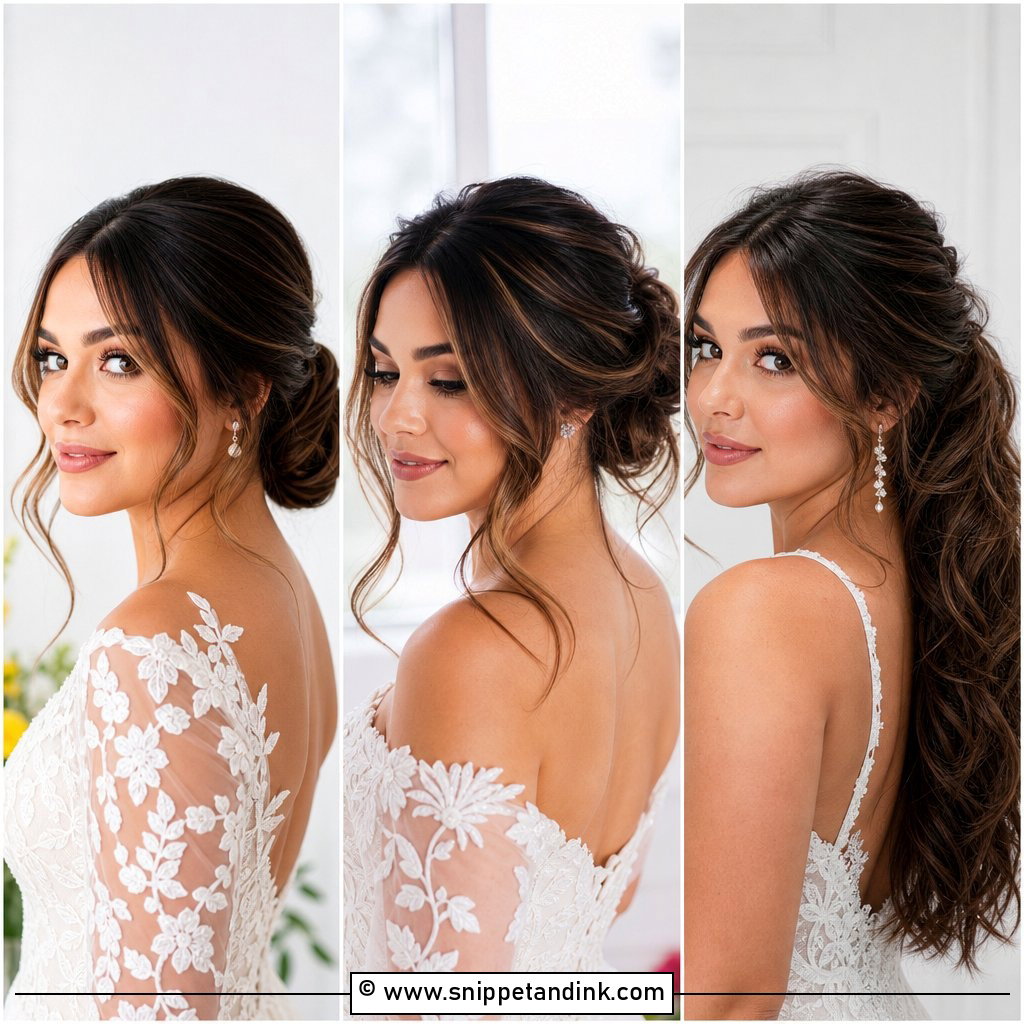
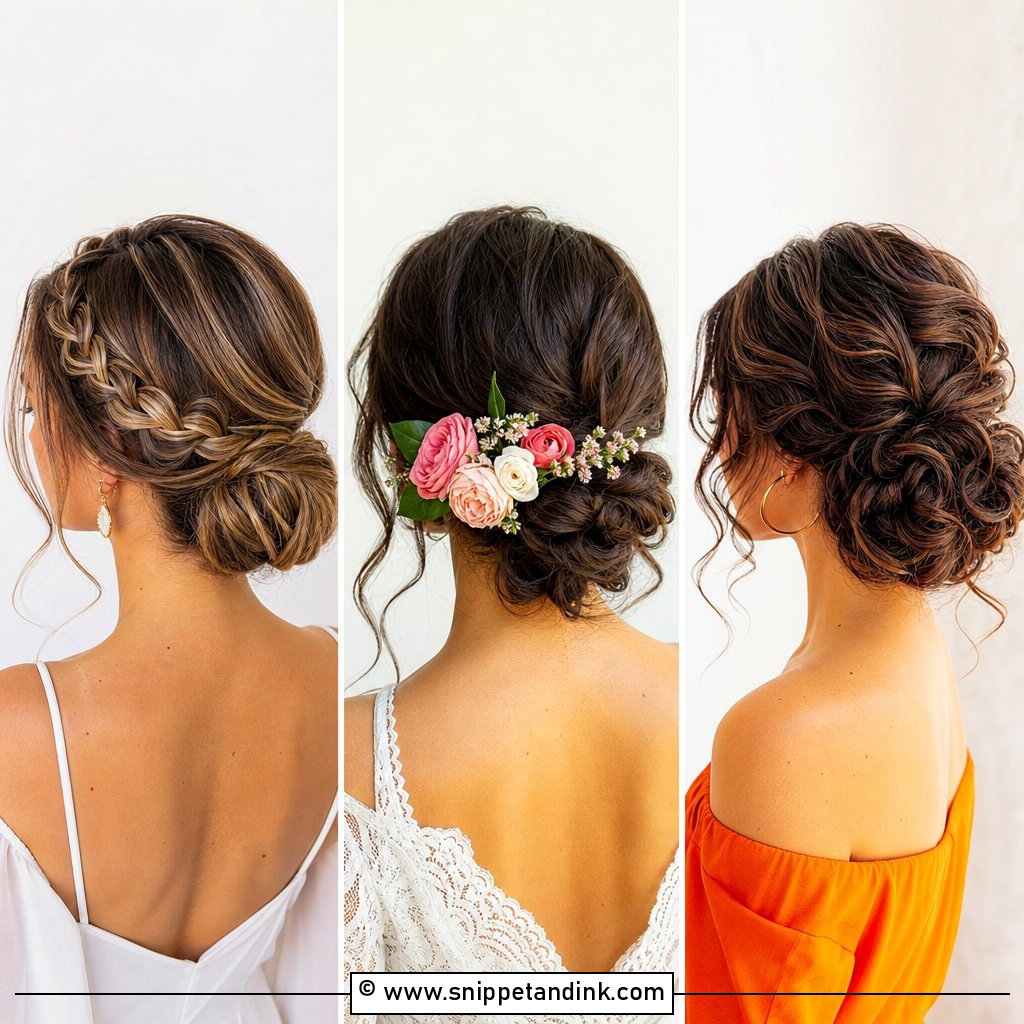
A low bun keeps all the visual weight around the jaw and neck, which balances a longer face. Set it at the nape or slightly to one side, never on the crown. The front pieces do the real work: I curl them away from the face so they sit out at cheekbone level, adding width without volume on top. Cut them to fall somewhere between cheekbone and jaw; any longer and they drag downward. It suits lace and satin, with a veil underneath the bun or pearl pins tucked in.
3. Half Up Half Down Bridal Hair
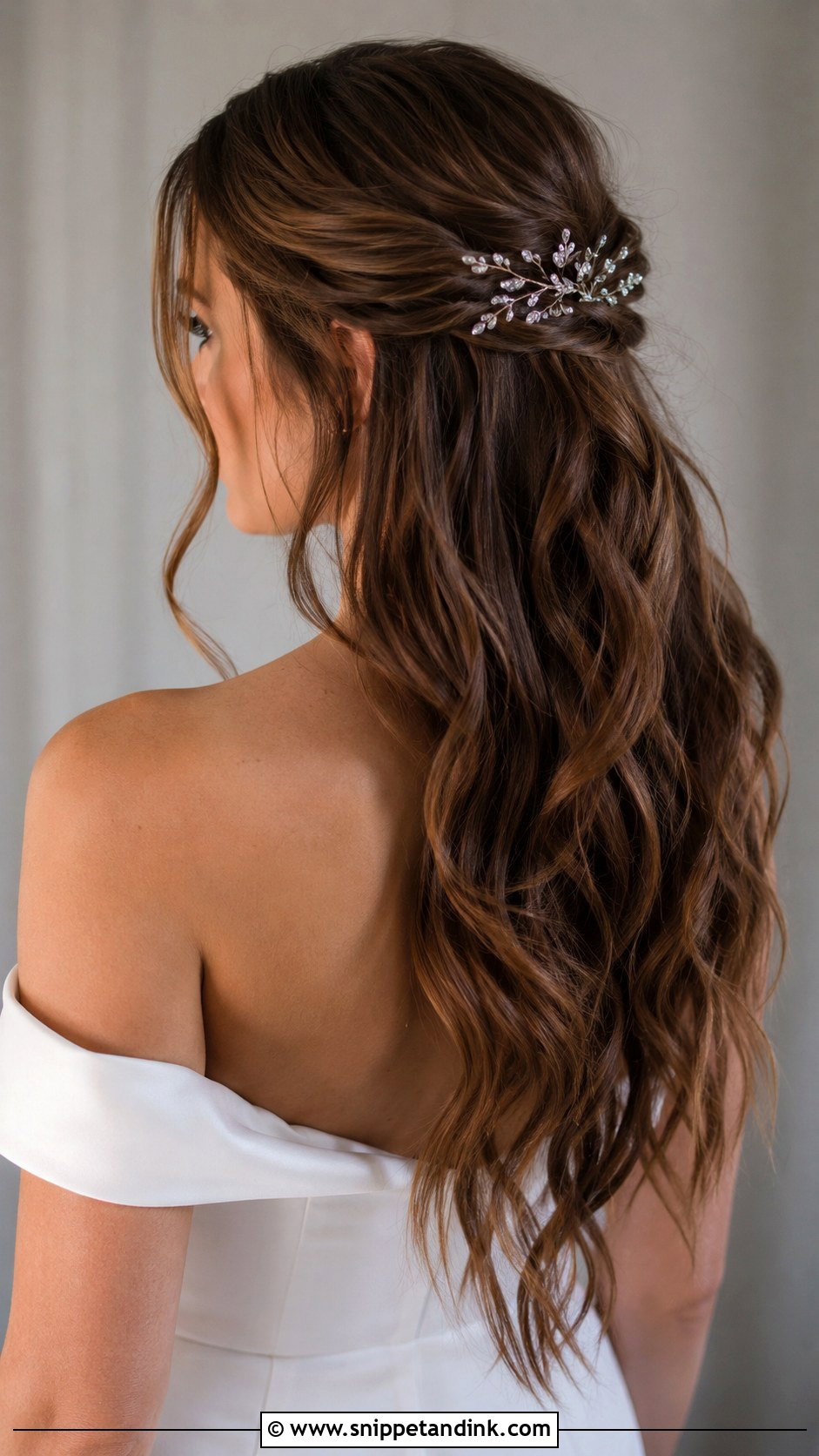
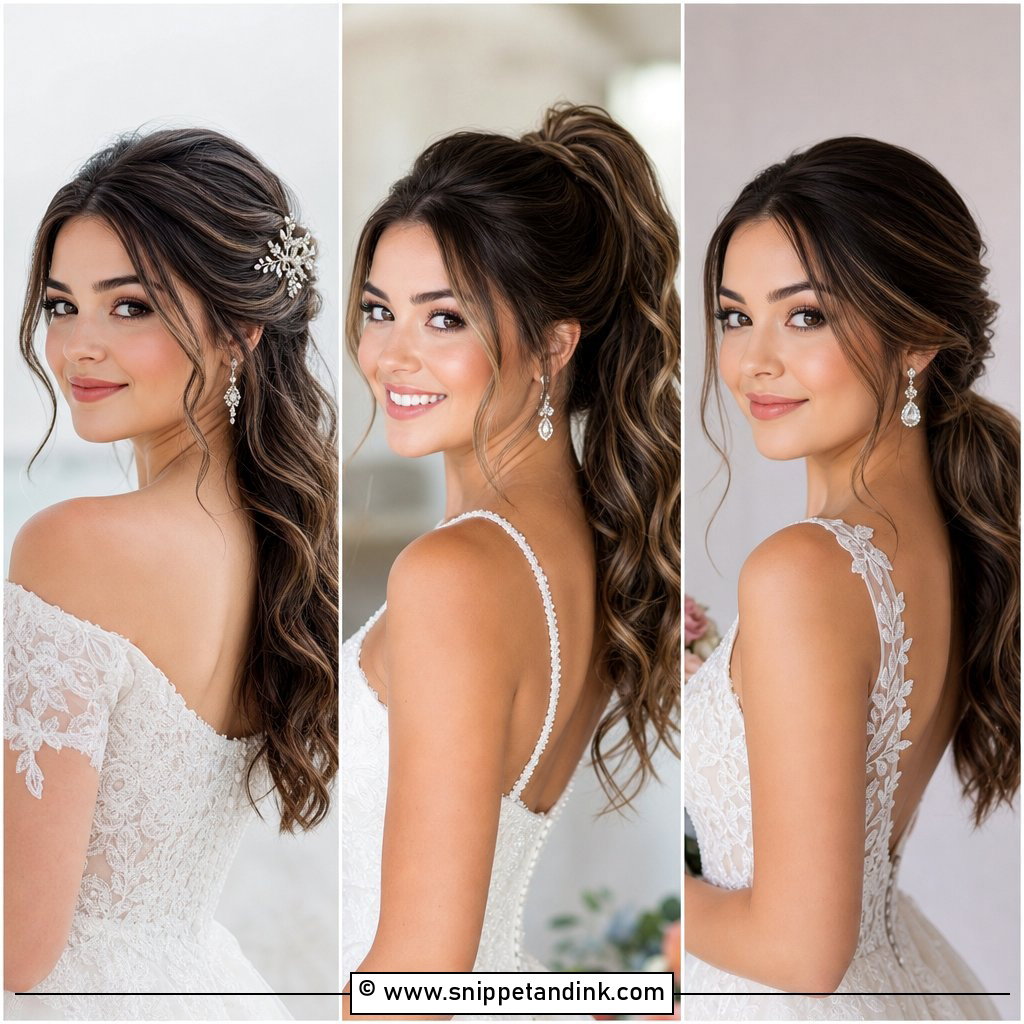
Half up half down works for long faces as long as the volume goes to the sides and not straight up. The usual half-up has a bump at the crown, and that’s the one thing to avoid here, since it adds length. Instead, I pin the top section flatter and wider, and leave loose pieces at the temples. Waves through the mid-lengths finish it. You still get a firm base for a veil, comb, bow or flowers.
4. Side Swept Bridal Curls
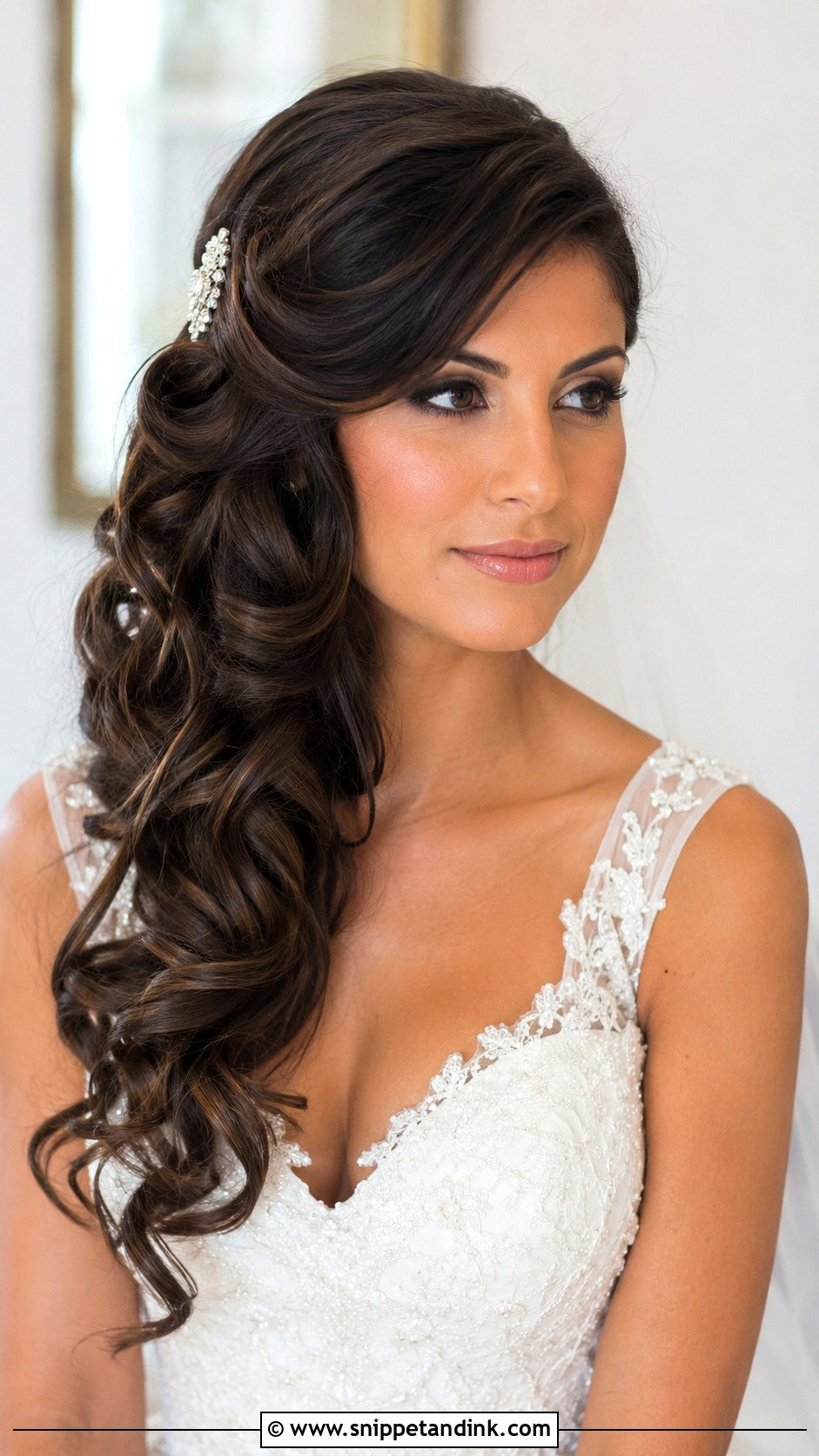
Sweeping curls to one side creates a diagonal across the face, which breaks up vertical length better than almost anything else. The full side also adds width. Volume should start around the cheek, not lower. A deep side part strengthens the effect. One-shoulder and strapless gowns frame it neatly. The curls on the swept side need a hidden line of pins behind the ear, or they drift back to centre by the reception; a jeweled clip or small floral comb can cover that line.
5. Textured Low Bridal Ponytail
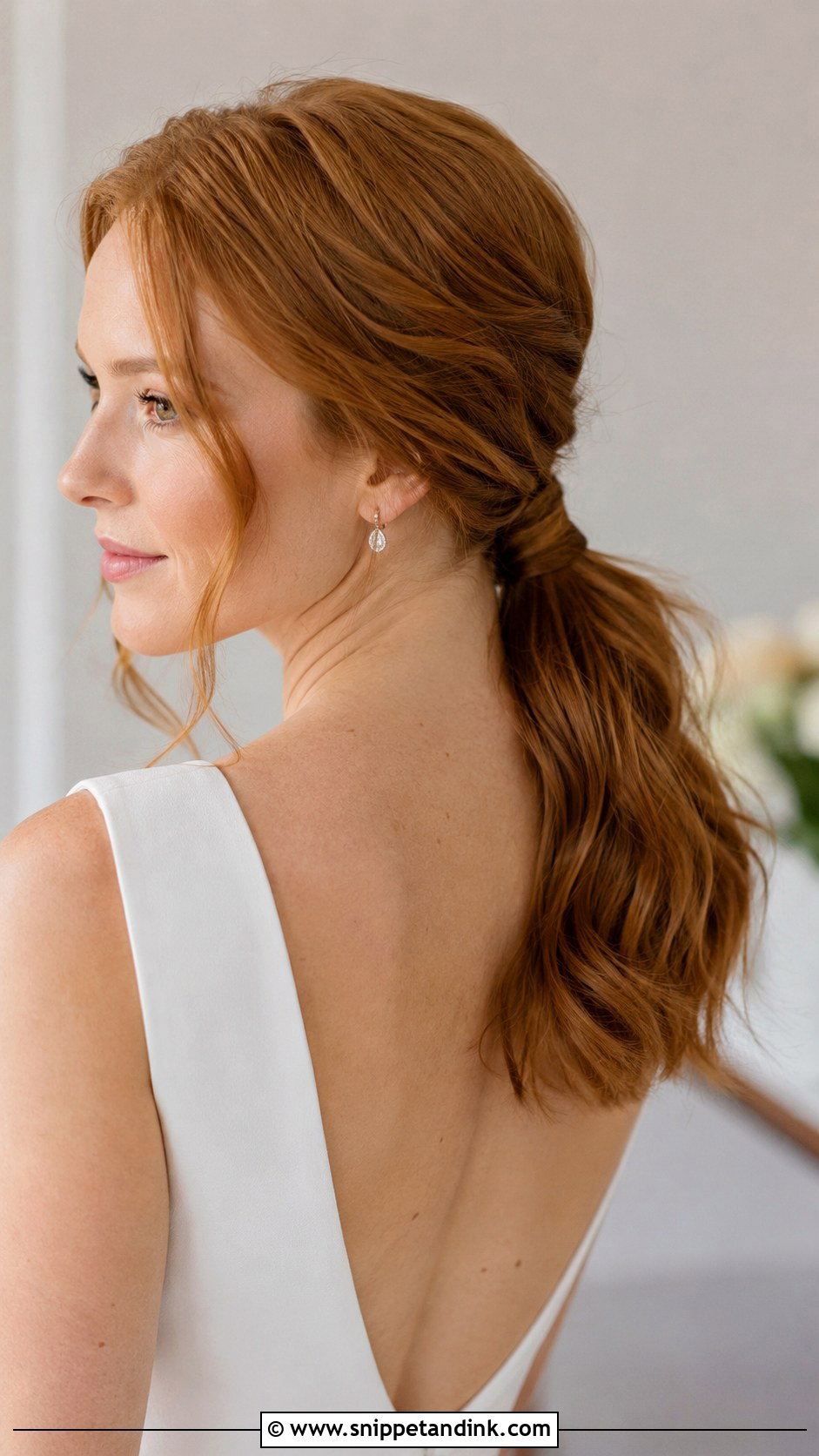
Low ponytails surprise people with how flattering they can be on a long face. The trick is keeping the ponytail low and the sides soft, with some texture and fullness around the ears rather than everything slicked tight. A centre part can work if you add face-framing waves; a side part usually balances better. Wrap a piece of hair around the base. It’s comfortable and suits minimalist gowns and garden weddings. A sleek, high pony is the version I’d steer a long-faced bride away from.
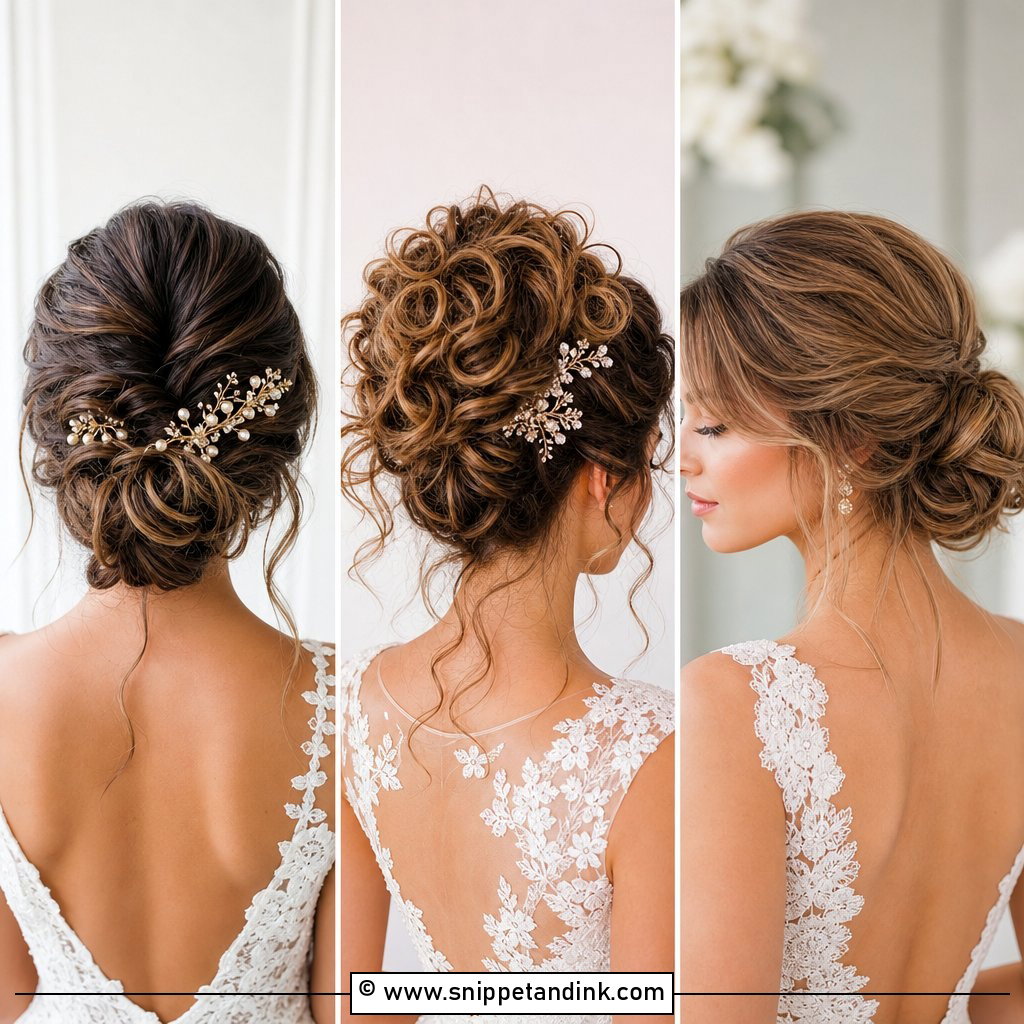
6. Loose Bridal Chignon
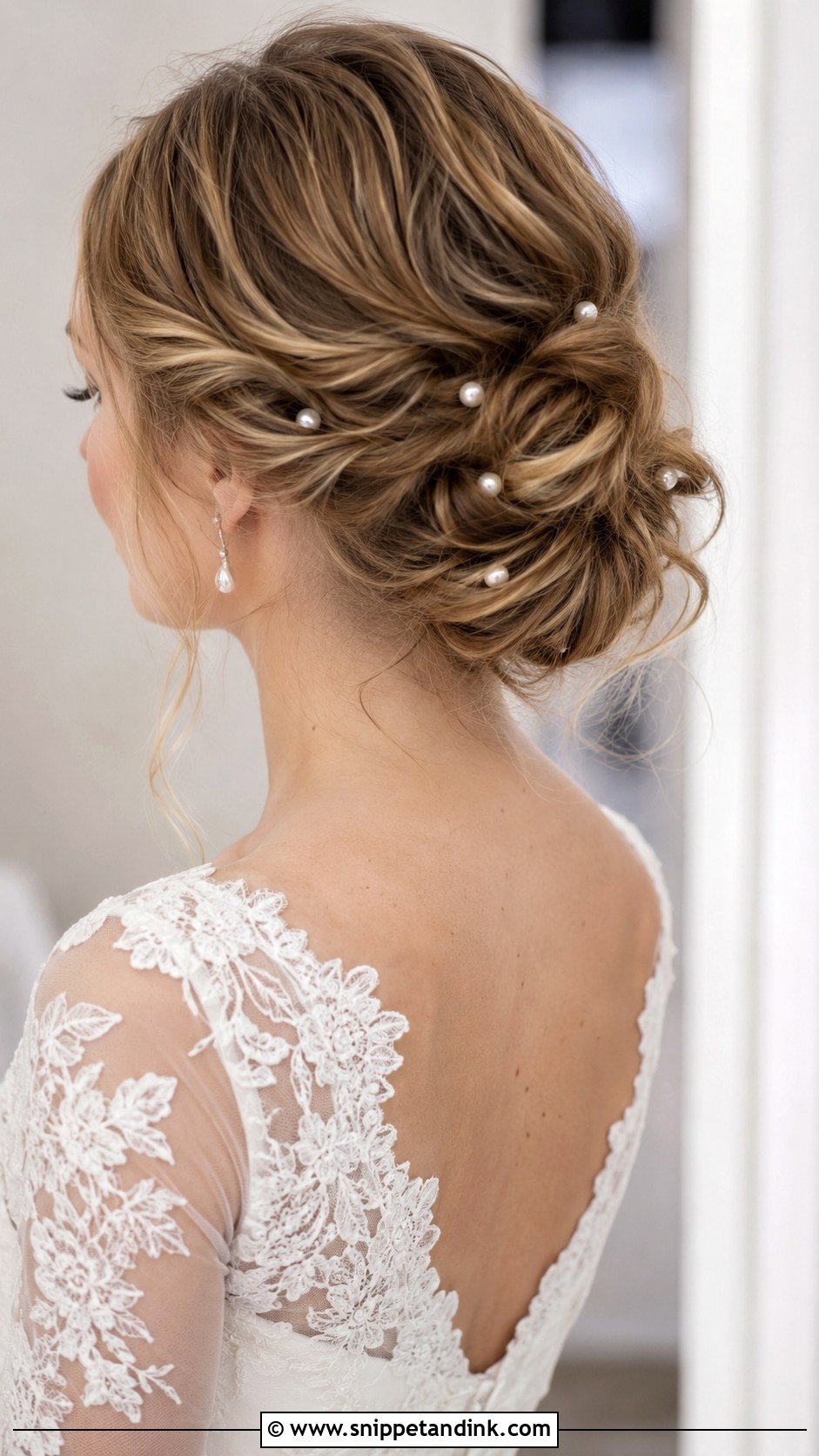
A loose chignon gives a graceful shape without any added height. It sits low at the nape with soft texture around the sides, and I leave the front slightly relaxed, with pieces curving near the cheekbones or jaw so the face looks less narrow. Make it smooth for a classic church wedding or more undone for an outdoor ceremony. It’s very secure once pinned, so it handles a long day and dancing well. Veils, pearl pins, crystal combs and flowers all fit around it.
7. Bridal Hollywood Waves
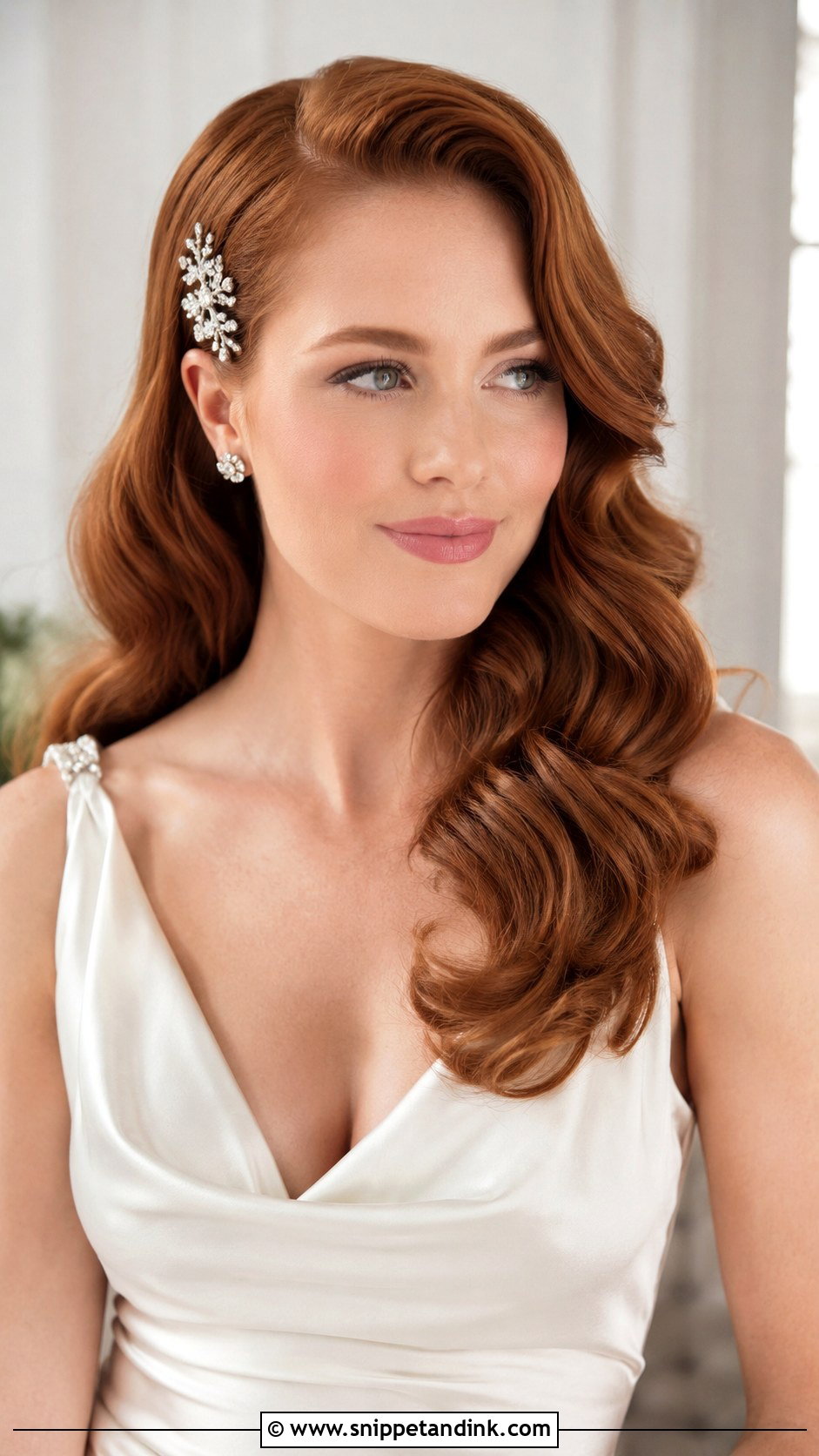
Hollywood waves suit a long face better than people expect. The deep side part and the sculpted S-pattern push width across the face, especially when the first wave sits at the cheekbone. I keep the crown sleek but not flat, with no added height on top. This look needs glossy hair and a strong set, because if the waves relax, the sides flatten and you lose the width. Fitted gowns, vintage-inspired dresses and statement earrings suit it. A comb tucked behind the wave can hold a veil.
8. Braided Crown Bridal Hairstyle
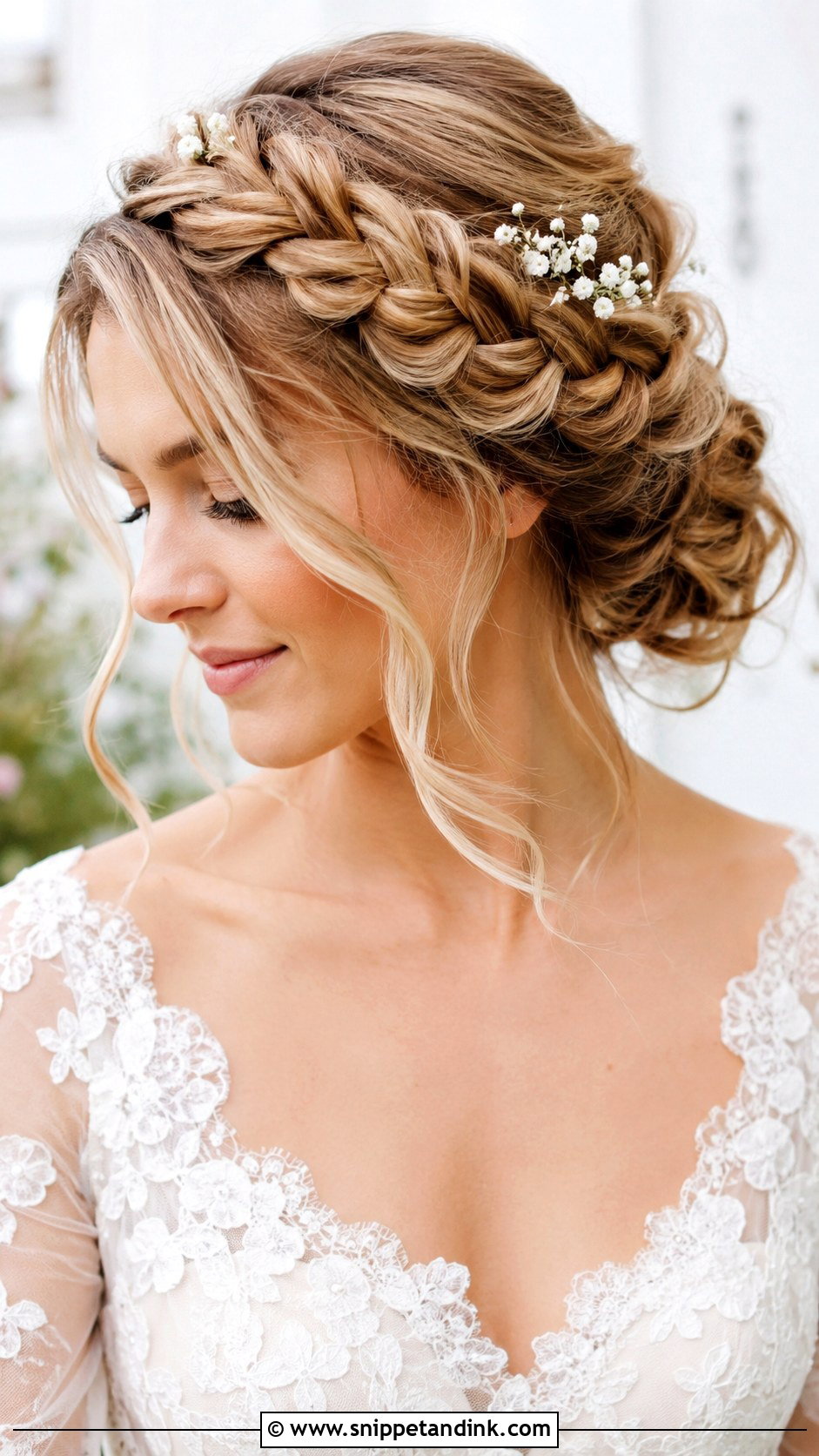
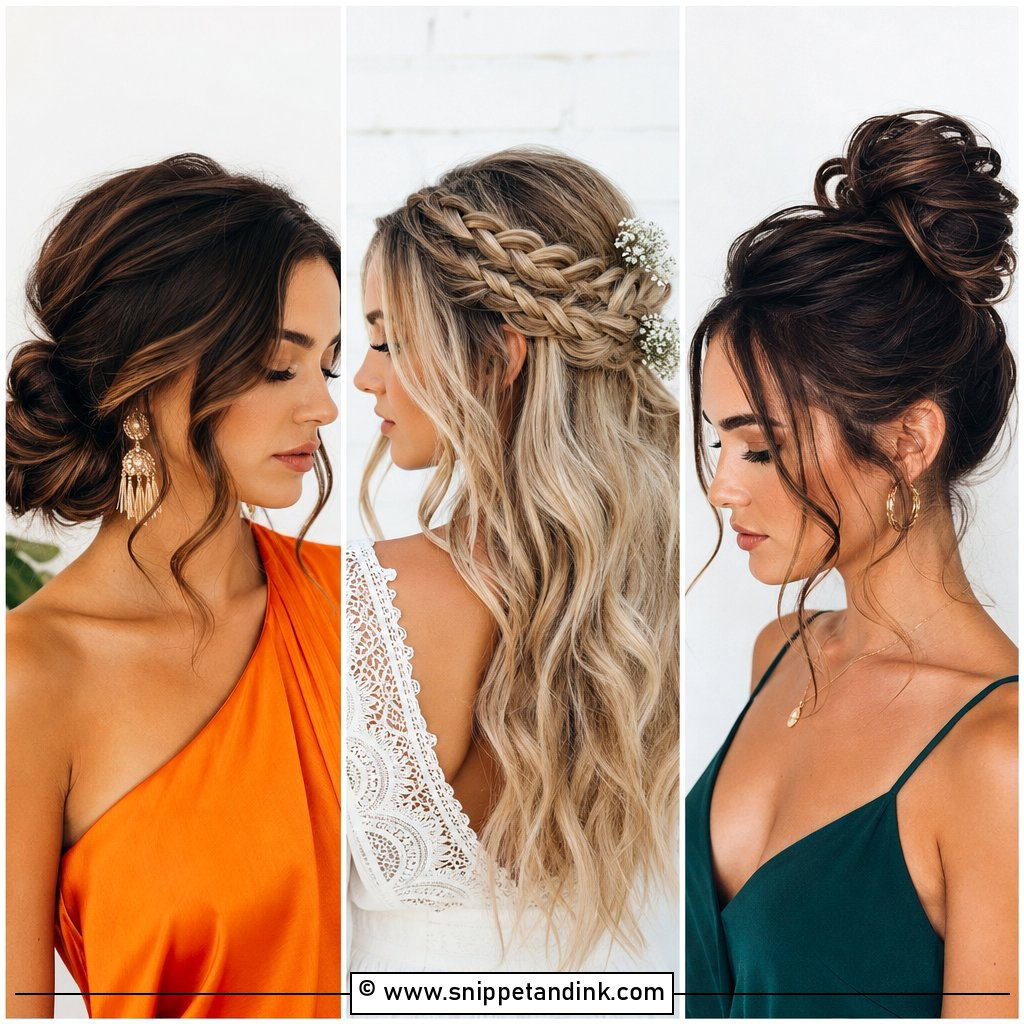
A braided crown flatters a long face when it wraps around the sides of the head rather than sitting high on top like a headband. That rounded shape suggests width. I keep the braid loose and textured and leave a few strands at the temples. The rest can go into a low bun, waves or a tucked chignon. Garden, rustic and outdoor weddings suit it. Very fine hair can look thin in a crown braid, so a clip-in piece braided in adds bulk.
9. Bridal Hair With Curtain Bangs
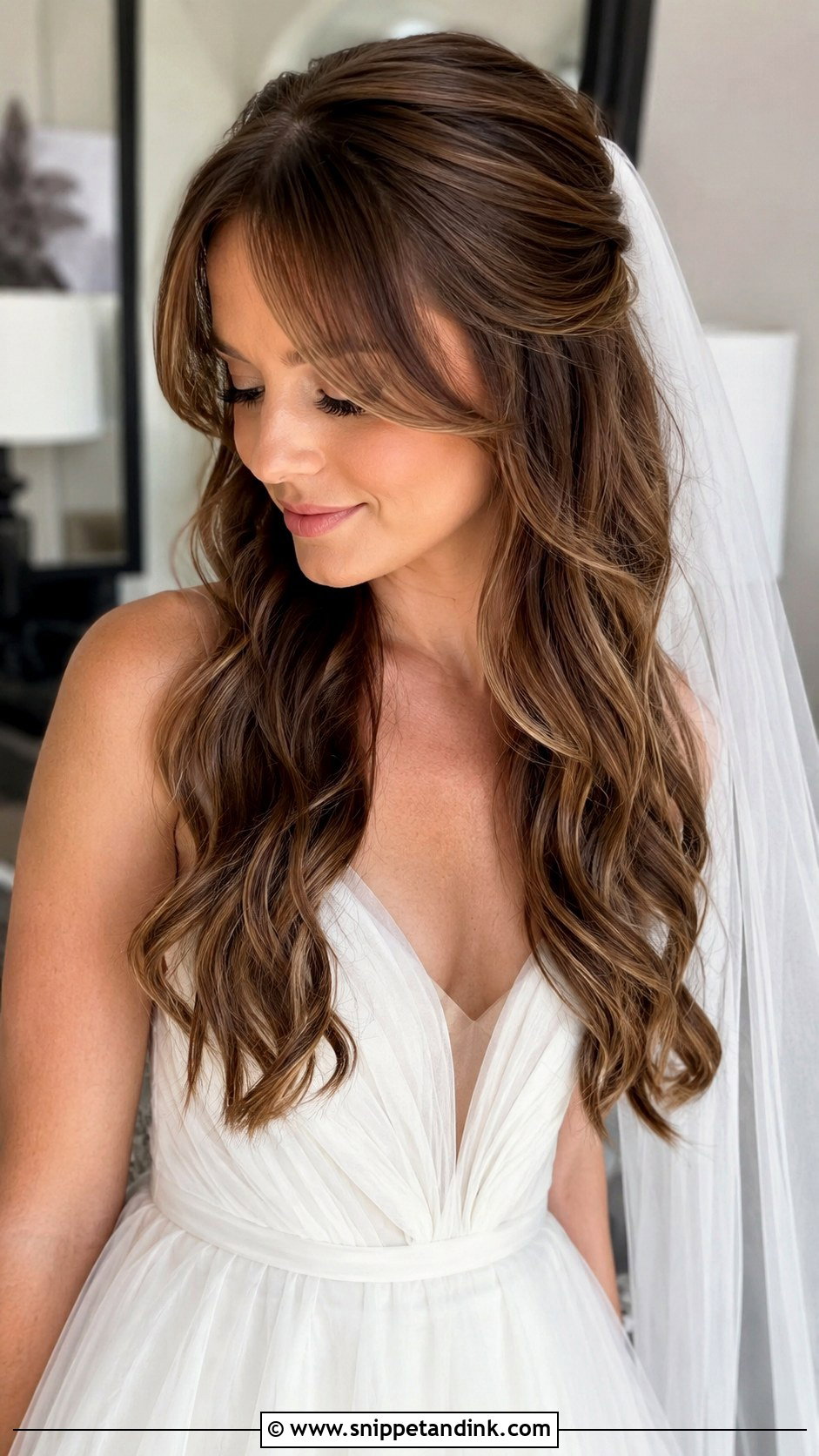
Curtain bangs are one of the best tools for a long face, because they visually shorten the forehead and frame the eyes. The best ones are soft and blended, and parted gently in the middle or slightly off-centre. They pair with waves, a low bun, half up or a low ponytail. Don’t pin every front piece tightly back; the face frame is the whole point. If you don’t have bangs and want them, get them cut at least a month before so they’ve settled.
10. Messy Low Bridal Bun
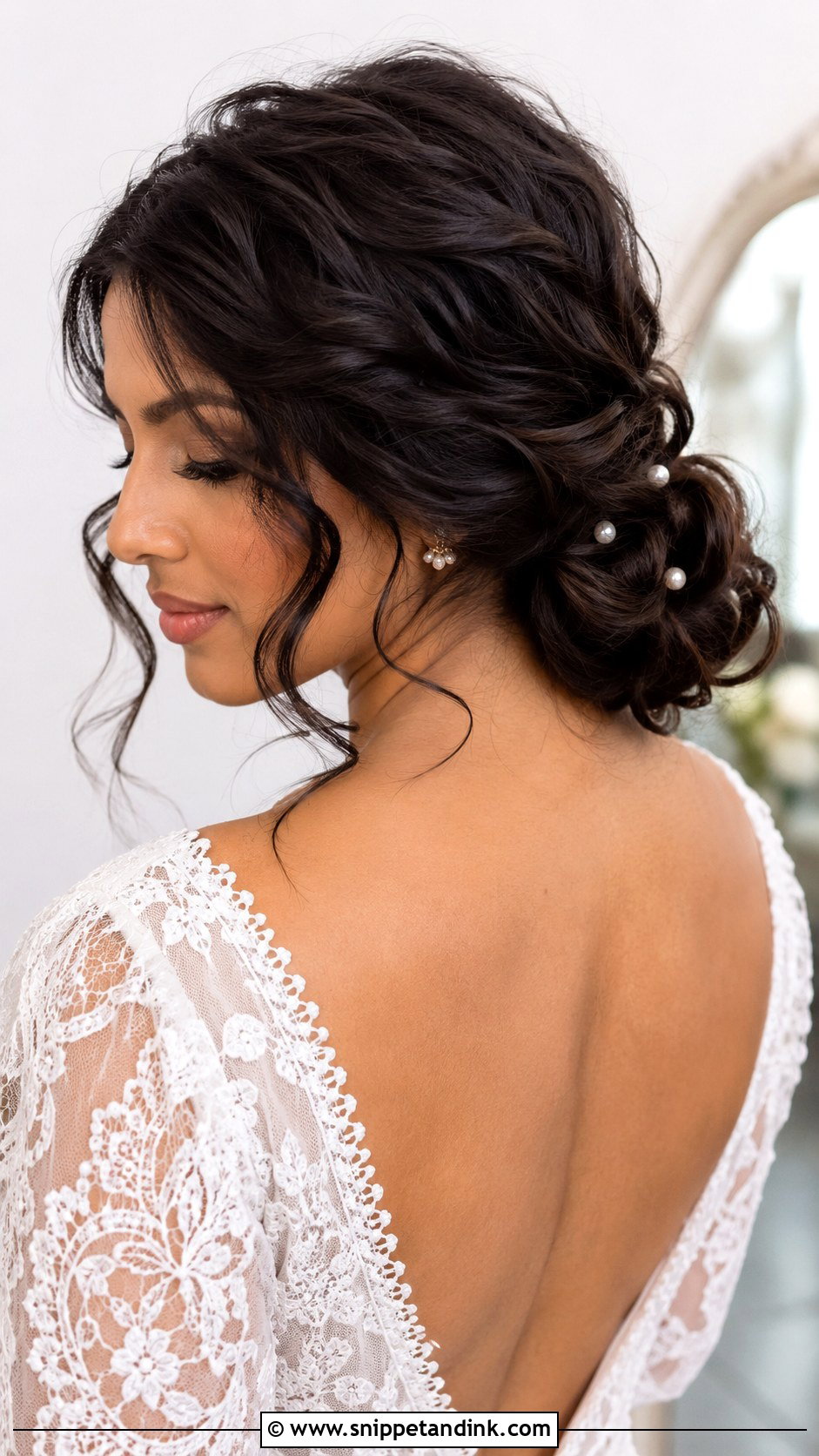
A messy low bun adds softness at the lower half of the head, which helps balance length. Airy and textured is the aim, not frizzy. I build volume at the sides and pull soft pieces free around the face. It suits boho weddings, outdoor ceremonies and anyone who wants something less formal than a sleek updo. The common mistake is pulling the texture up toward the crown; keep it at the sides. Pearl pins, dried flowers or a simple veil finish it.
11. Voluminous Bridal Blowout
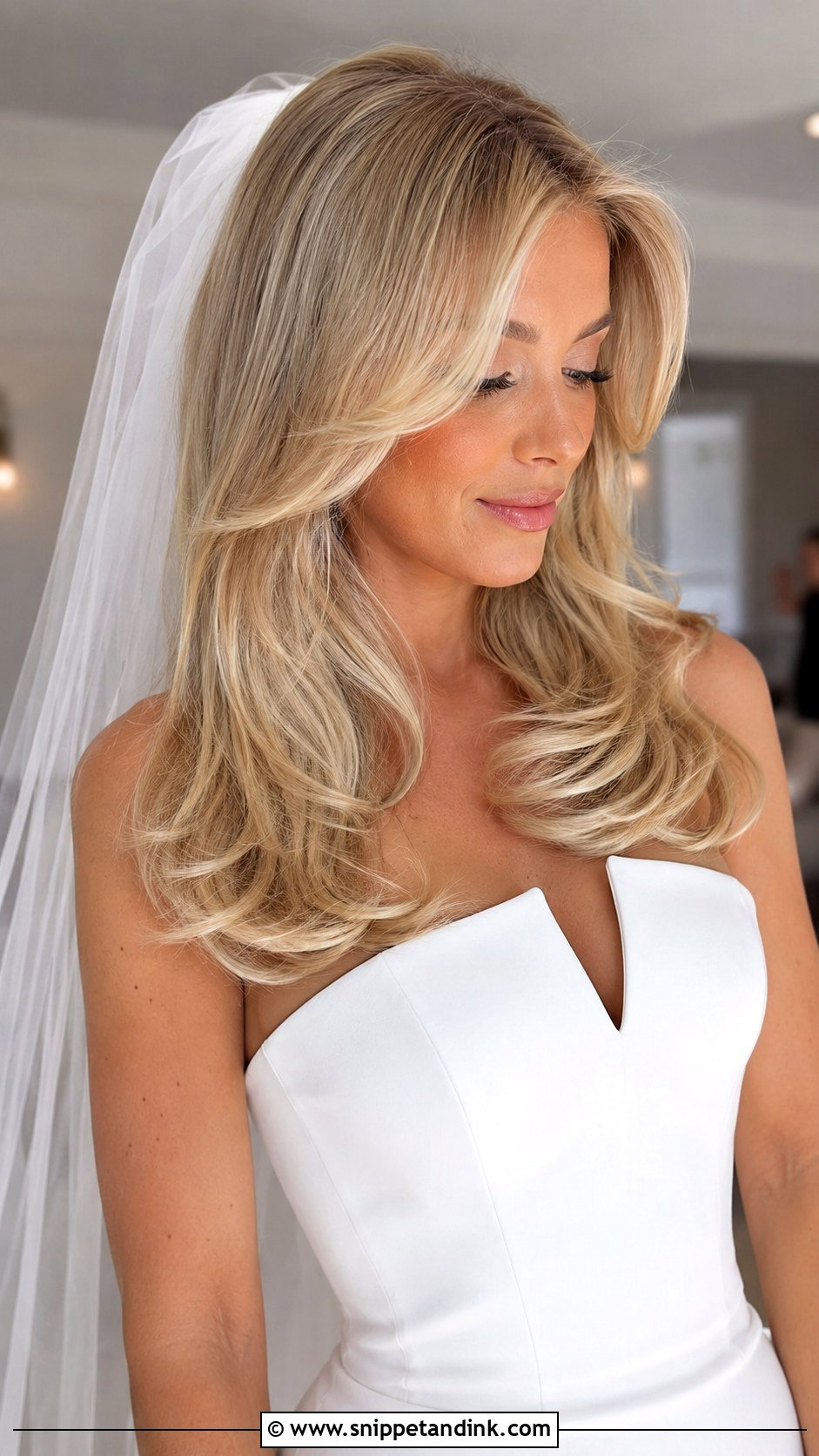
A voluminous bridal blowout works on a long face when the fullness is at the sides, not the top. I round-brush the lengths outward and keep the roots at the crown only lightly lifted. Face-framing pieces should start near the cheekbones and curve away from the face. The ends need movement and shine. Use lightweight hold products, because a heavy one will flatten the sides first, and that’s where the width lives. It suits simple gowns and modern ceremonies.
12. Side Bun Bridal Hairstyle
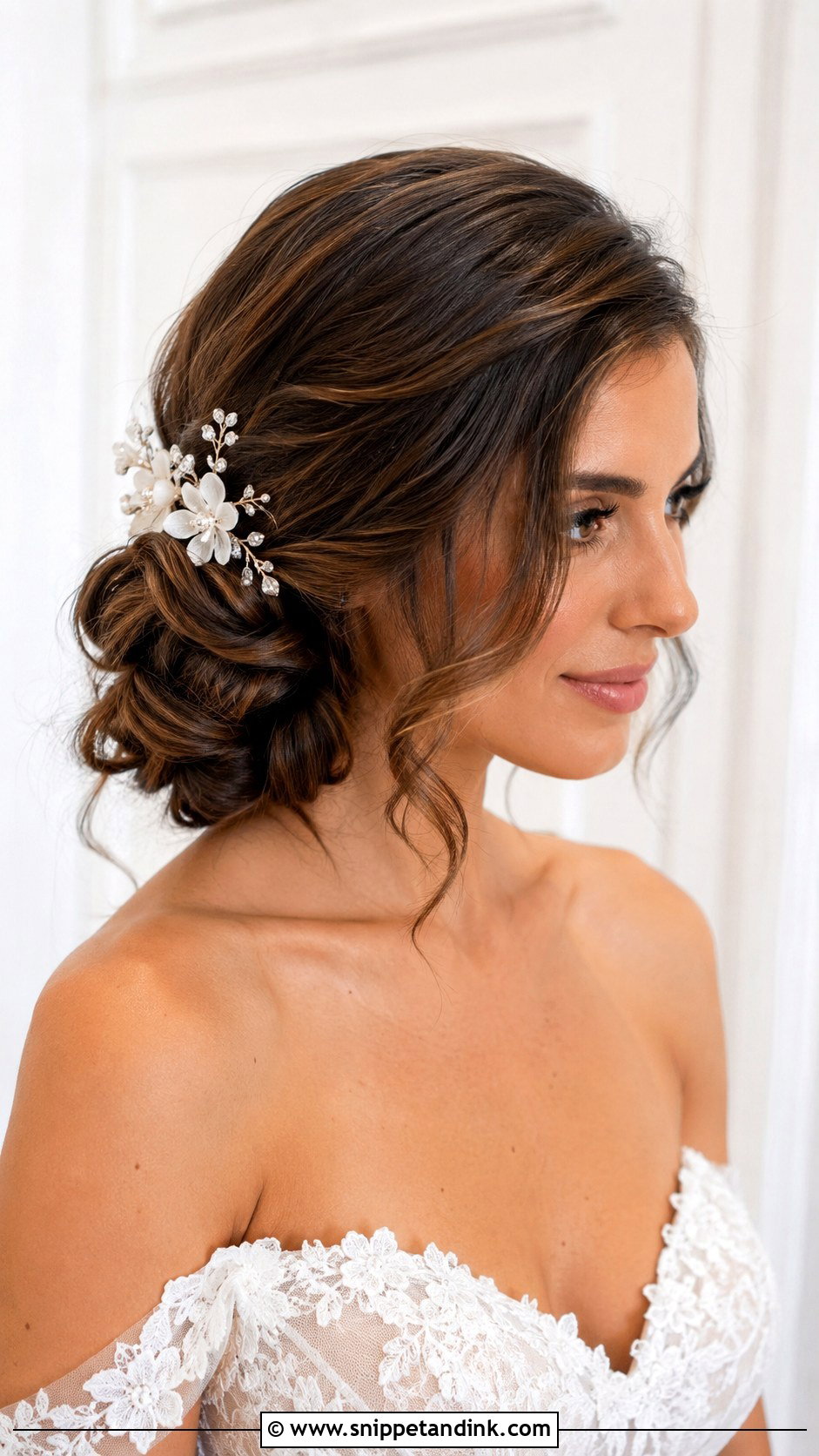
A side bun draws the eye sideways rather than up and down. Set it low, near the nape or just behind one ear. A side part with loose, curved pieces keeps the front soft. It shows well from the front and in profile, and gives a solid anchor for a veil or comb. Off-the-shoulder dresses and lace gowns suit it, as do earrings you’d like visible on the open side. It holds well, since the bun sits on the neck rather than pulling from the crown.
13. Bridal Waves With Face Framing Layers
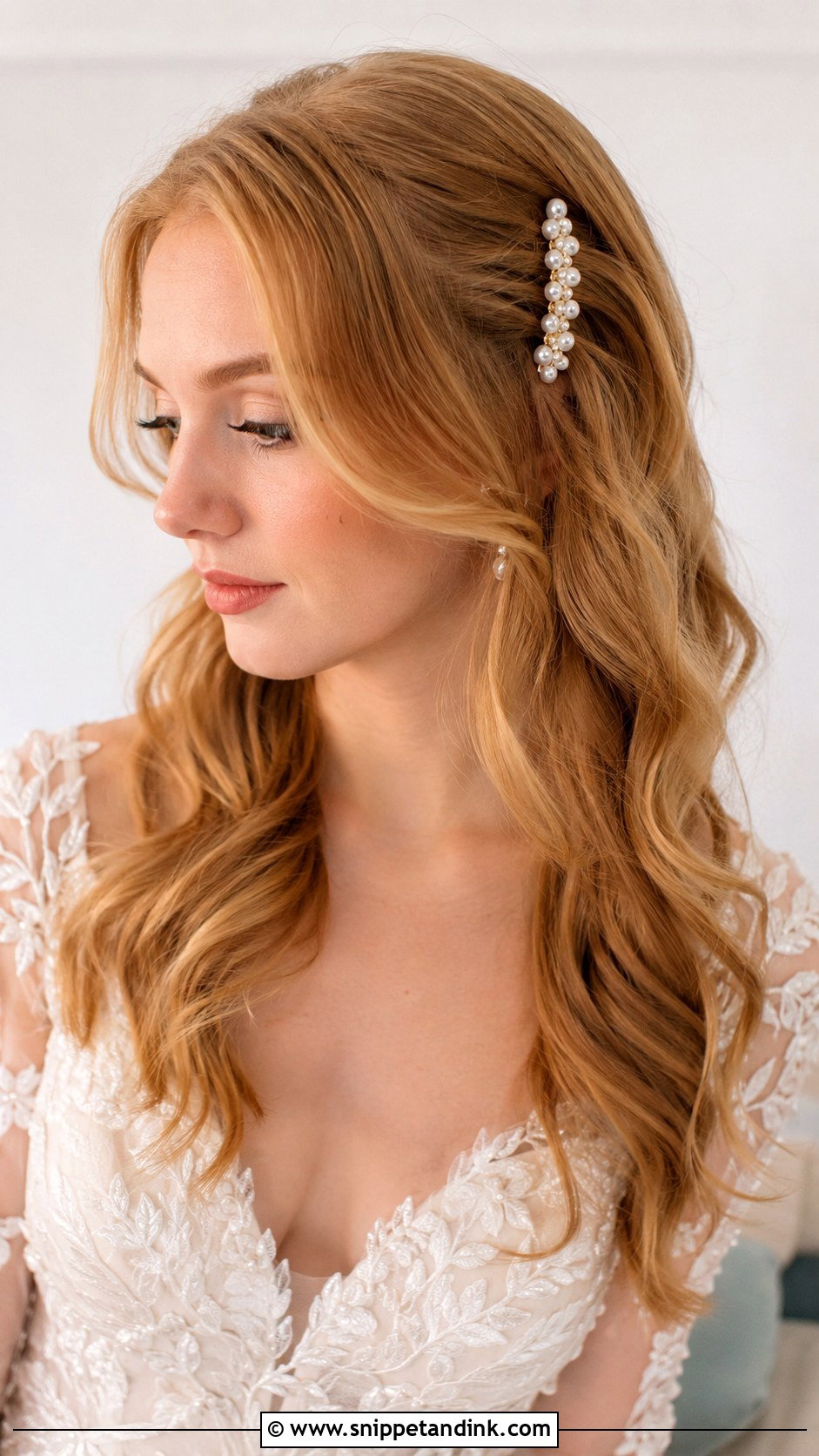
Face-framing layers give a down style movement at the cheekbones and jaw, which is where a long face needs it. Plain long curls at the bottom do little; the fullness has to come through the sides. I curl the front layers away from the face for an open look. A middle part works if the layers are full; a side part balances more. It suits veils, flower crowns, pearl clips and simple pins. Book the cut about four to six weeks ahead so the layers have softened.
14. Low Bridal Updo With Side Bangs
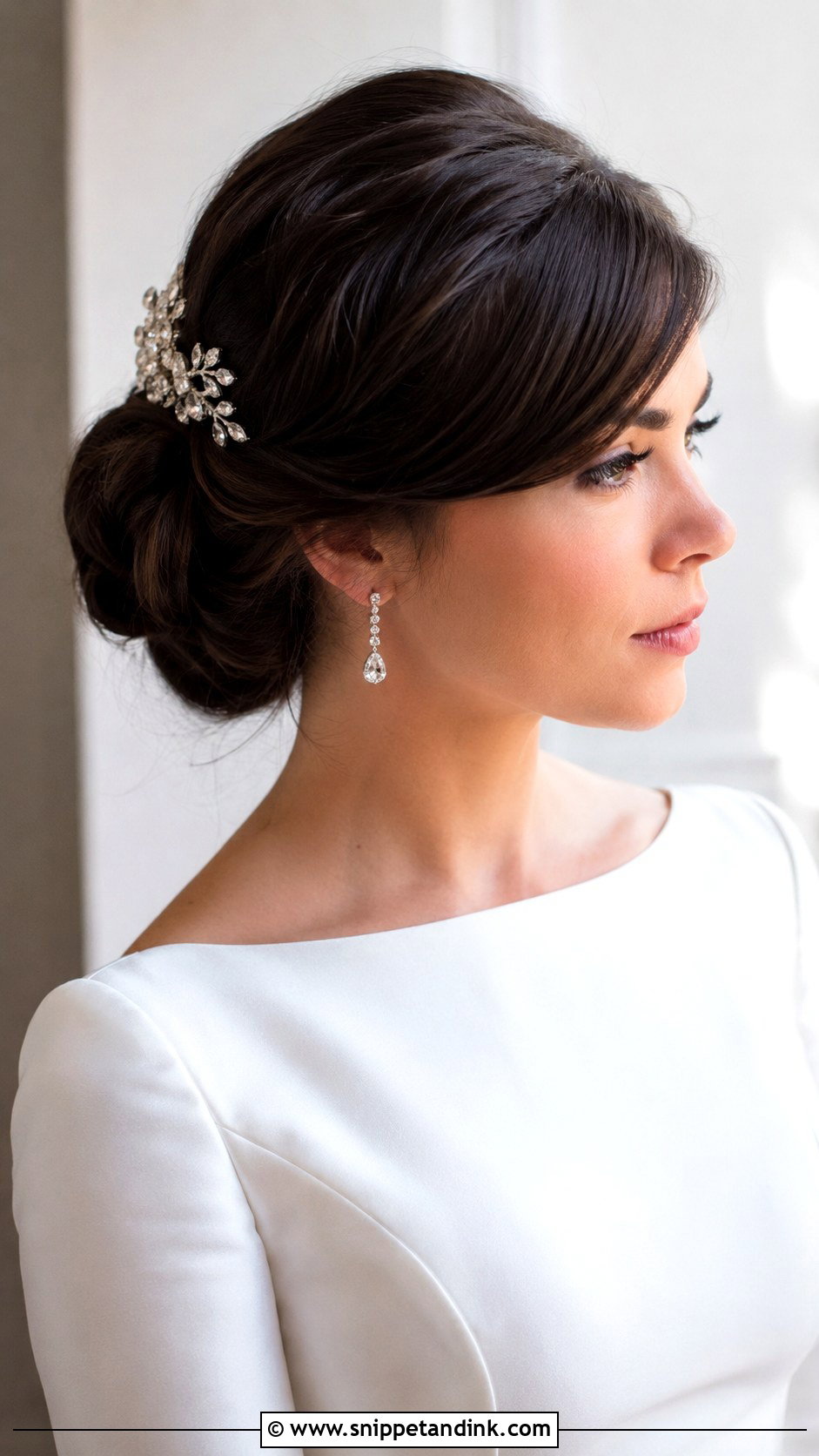
A low bridal updo with side bangs is a classic fix for a long face. The side bangs draw a diagonal line across the forehead, which reduces the appearance of length. Set the updo low and wide, with soft texture around the sides, and keep the crown smooth or barely lifted. Formal weddings, church ceremonies and ballroom receptions suit it. It also gives a firm base for a veil or decorative comb. Side bangs need a flat brush and hold spray so they stay angled rather than falling straight down.
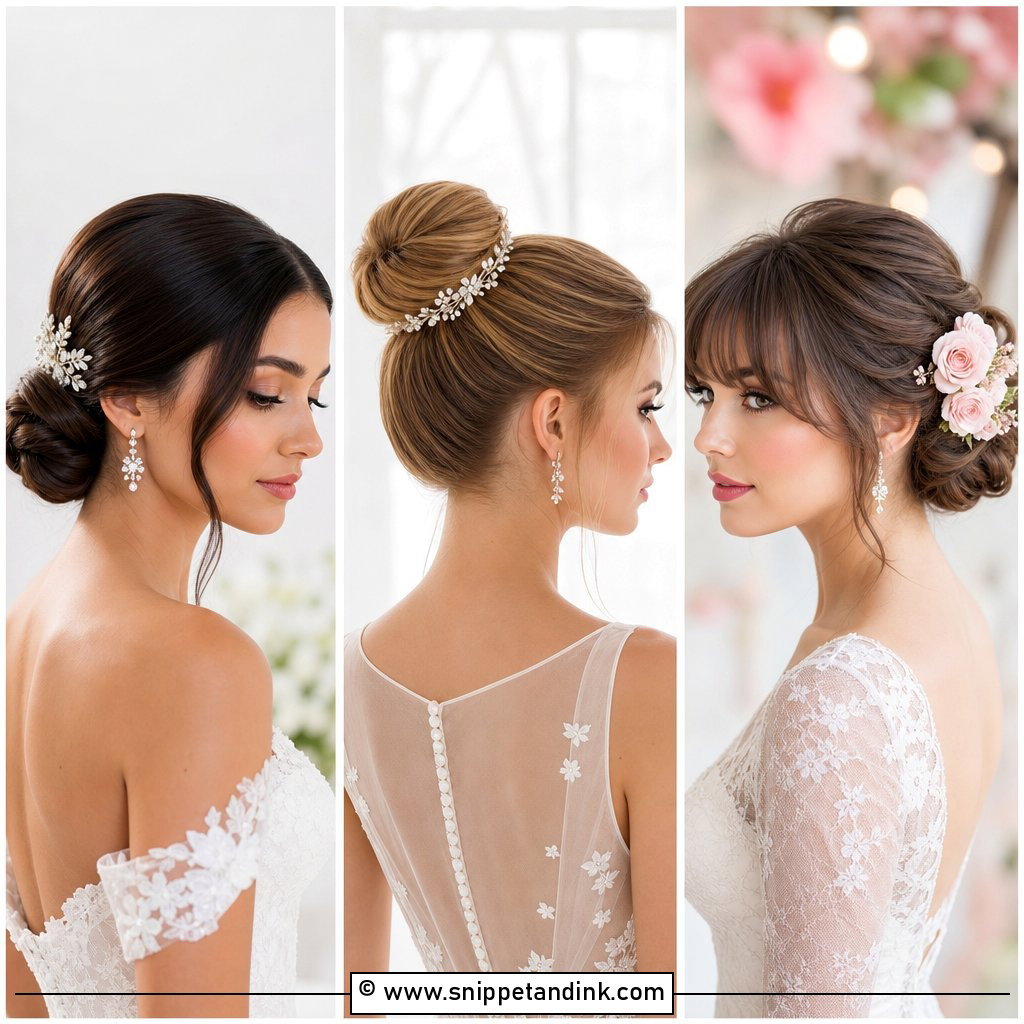
15. Loose Side Braid Bridal Hair
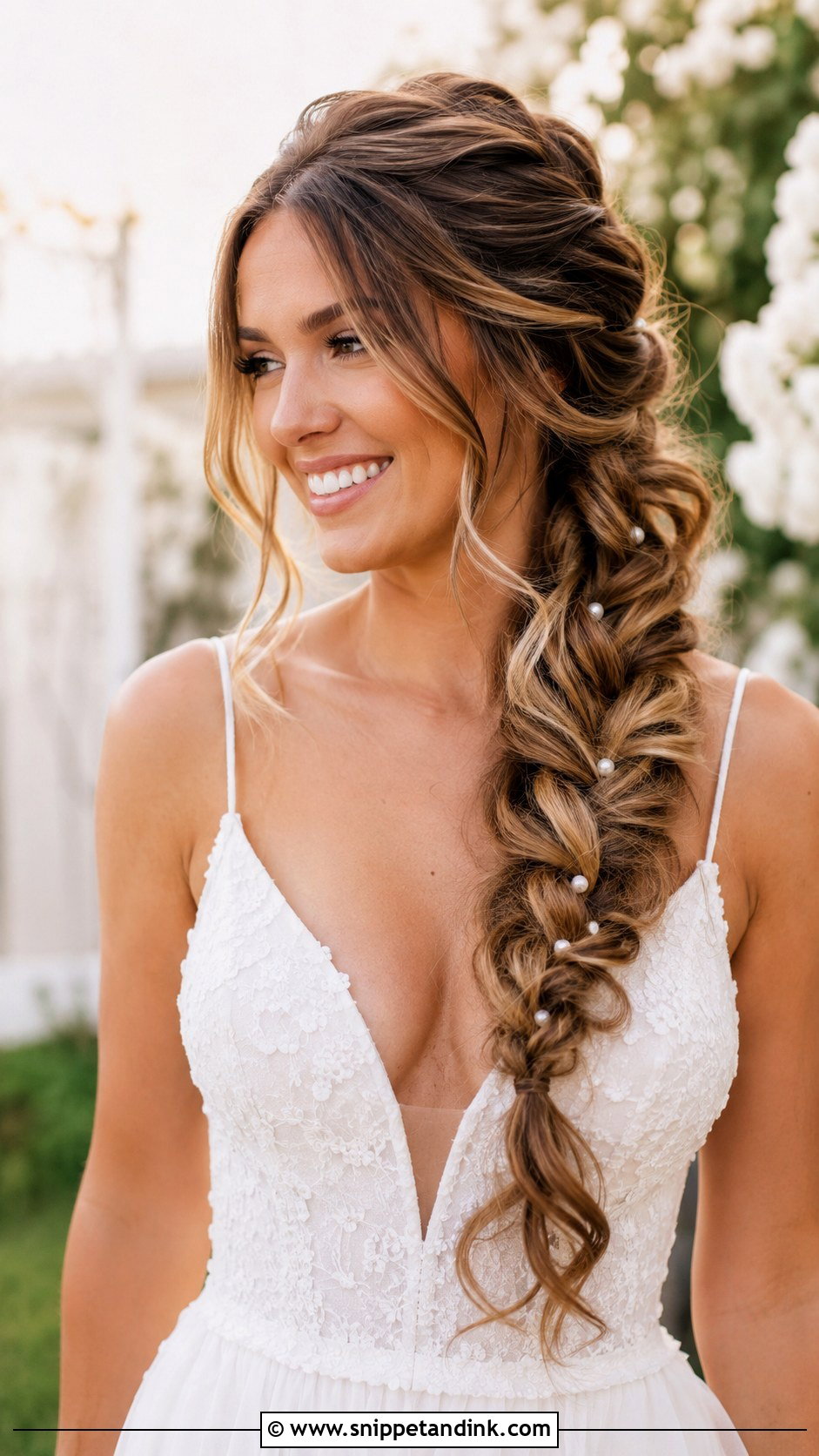
A loose side braid adds width and texture over one shoulder. It should feel full, not tight; I pull each section wider after braiding. Loose front pieces frame the cheeks. Curl the hair before braiding, because waves give the braid natural texture and help it hold. It suits beach weddings, garden ceremonies and rustic venues. Small flowers, pearl pins or a fine ribbon can be woven in. Don’t start the braid too high on the head, or you lose the width it’s meant to add.
Veils, Earrings and Where Width Should Come From
The hairstyle isn’t the only thing that changes proportion. A few choices around it can undo good work or support it.
Veil placement
A veil set high on the crown adds a vertical line straight up from your face. For a long face, I’d place the comb at the back of the head or just under a bun. A blusher worn over the face adds length too, so keep it short or skip it.
Tiaras and headbands
A tall tiara adds height. A flat band or a low, wide tiara set a little further back sits much better, and a side comb is easier still.
Earrings
Long drop earrings extend the vertical line. Studs, clusters and shorter, wider earrings add width at the jaw. If you’ve set your heart on long drops, pair them with soft volume at the sides of the hair.
Tell your makeup artist too. Soft blush placed across the cheeks rather than lifted toward the temples supports the same horizontal balance as the hair.
A Low Shape and Soft Sides Do Most of the Work
For a long face, the most flattering bridal hair still has to suit your dress, venue and personal style. Low buns, side parts, soft waves, textured ponytails, curtain bangs and face-framing layers all help because they add width and softness at cheekbone level. Very tall updos, flat centre-parted hair and pin-straight length without movement tend to make the face look longer. Bring photos to your trial and ask your stylist to adjust volume at the cheekbones, temples and jaw. Then take a photo straight on, because that’s where proportion shows most.
You'll Like These Ideas:


Leave a Reply