
Round faces are the ones I hear the most worry about at consultations, and usually without reason. The fix is rarely hiding anything. It’s about where the volume sits: some height at the crown, lines that run down or across rather than out, and no puffiness right at the cheeks. That can be a lifted bun, a side braid, long waves, a sleek low bun or a half-up style with lift on top. All fifteen styles below work on a round face when they’re shaped with that in mind, and every one can carry jewellery, a dupatta and a long day of rituals.
Is Your Face Really Round, or Just Soft at the Cheeks?
Many brides who call their face round actually have an oval or square face with full cheeks, and that changes what I’d suggest. A truly round face is about as wide as it is long, with a soft jawline and the widest point at the cheeks. A square face has the same width but a strong, angled jaw. An oval face is longer than it is wide.
The quick check I do: pull all your hair back, look straight into a mirror at eye level, and trace the outline. If the jaw curves rather than corners, and the length roughly matches the width, the styles below were chosen for you. If your jaw is angular, keep the crown lift but add softness along the jaw with face-framing waves.
- Take the photo with your phone at eye level, not from above, which shortens the face.
- Check both front and three-quarter views; ceremony guests mostly see you at an angle.
- Notice where your hair parts naturally. Forcing a part against a strong cowlick rarely lasts the day.
1. Indian Bridal High Bun For Round Face
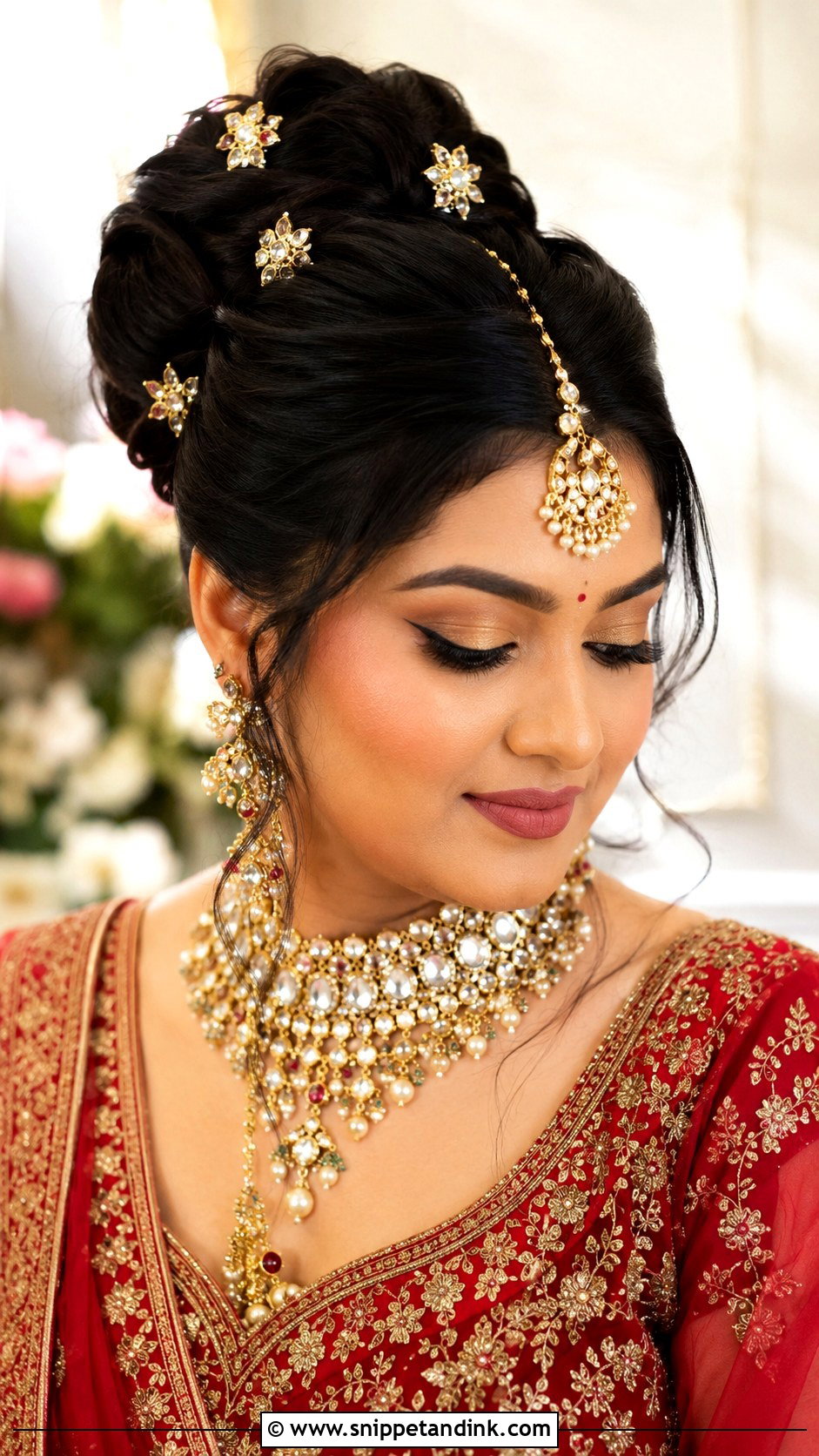
A high bun is the quickest way to add length to a round face, since the eye follows the height upward. Among Indian wedding hairstyles it’s also one of the most secure under a heavy dupatta. I lift the roots at the crown rather than scraping the hair flat, and keep the sides smooth but not tight, because tightly pulled sides make the cheeks look fuller in contrast. Gajra, a matha patti or kundan pins finish it, and the neck stays clear for necklaces.
2. Indian Bridal Low Bun For Round Face
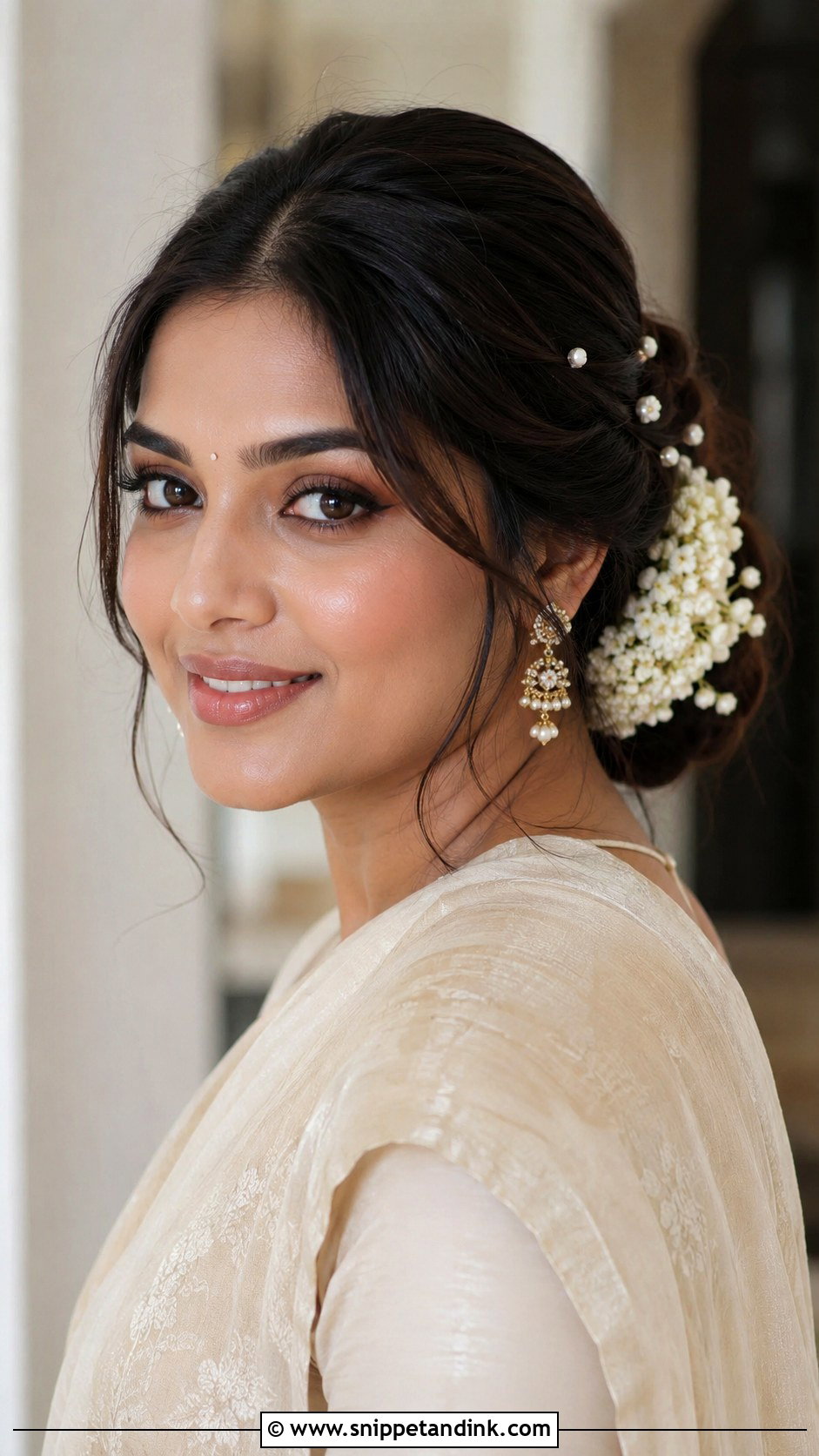
Low buns can flatter a round face, with two adjustments. First, I place the bun a little above the nape so it doesn’t look like it’s sitting under the jaw. Second, I keep it narrow; a wide bun peeking out on both sides adds width to the whole head. A centre part with slim face-framing pieces lengthens, and a side part adds an angle. Jasmine, roses or pearl pins dress it up, and the result reads polished from every side.
3. Indian Bridal Side Braid For Round Face
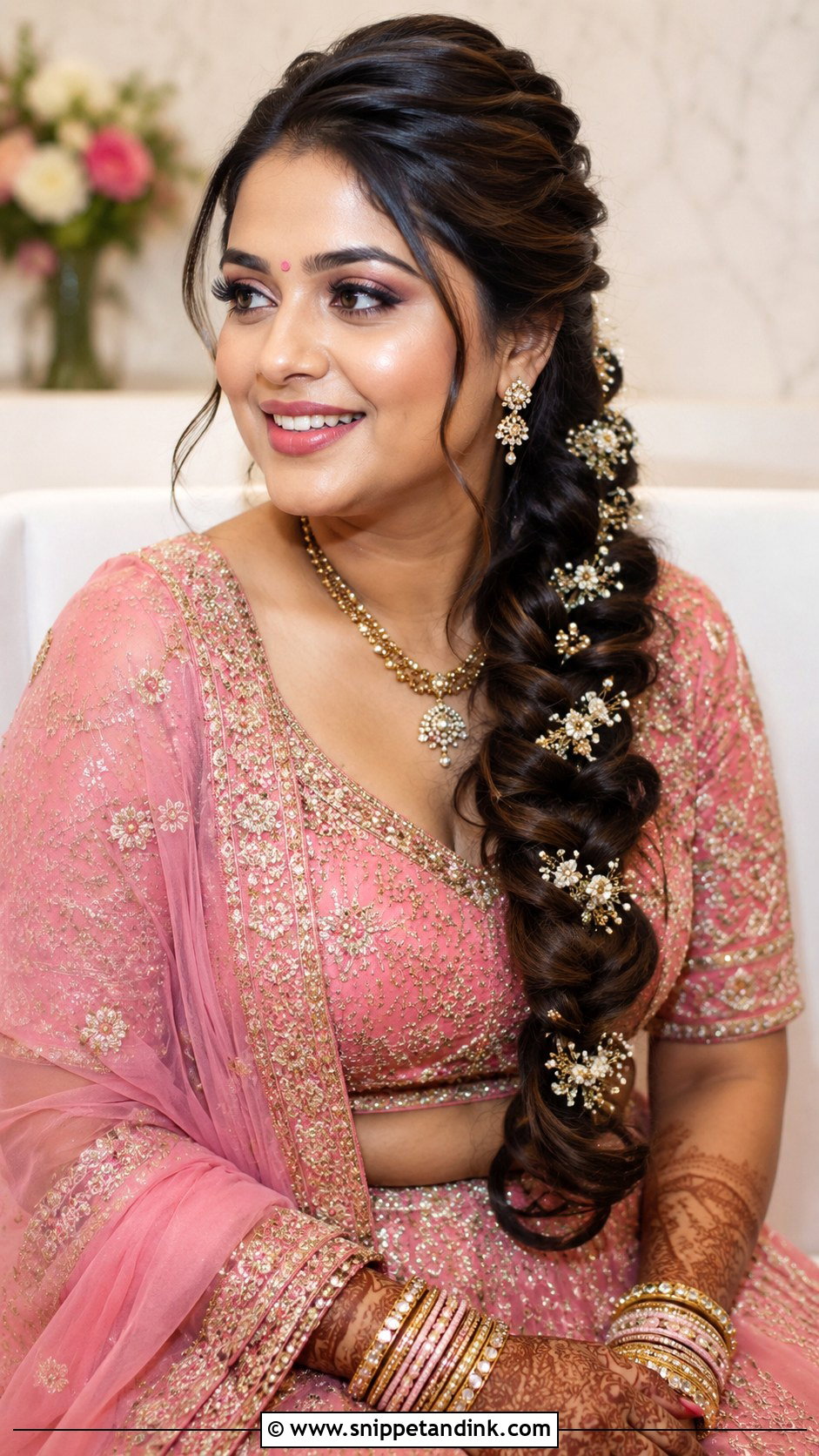
Pulling a braid over one shoulder draws a long diagonal line, which is exactly what a round face benefits from. I lift the crown slightly and leave a couple of fine strands at the cheekbones, not chunky ones. Fishtail, Dutch, bubble and three-strand braids all work; I choose by hair density, since thin hair looks fuller in a Dutch braid. It suits mehndi, sangeet and daytime events, finished with small flowers, pearl pins or gold accessories.
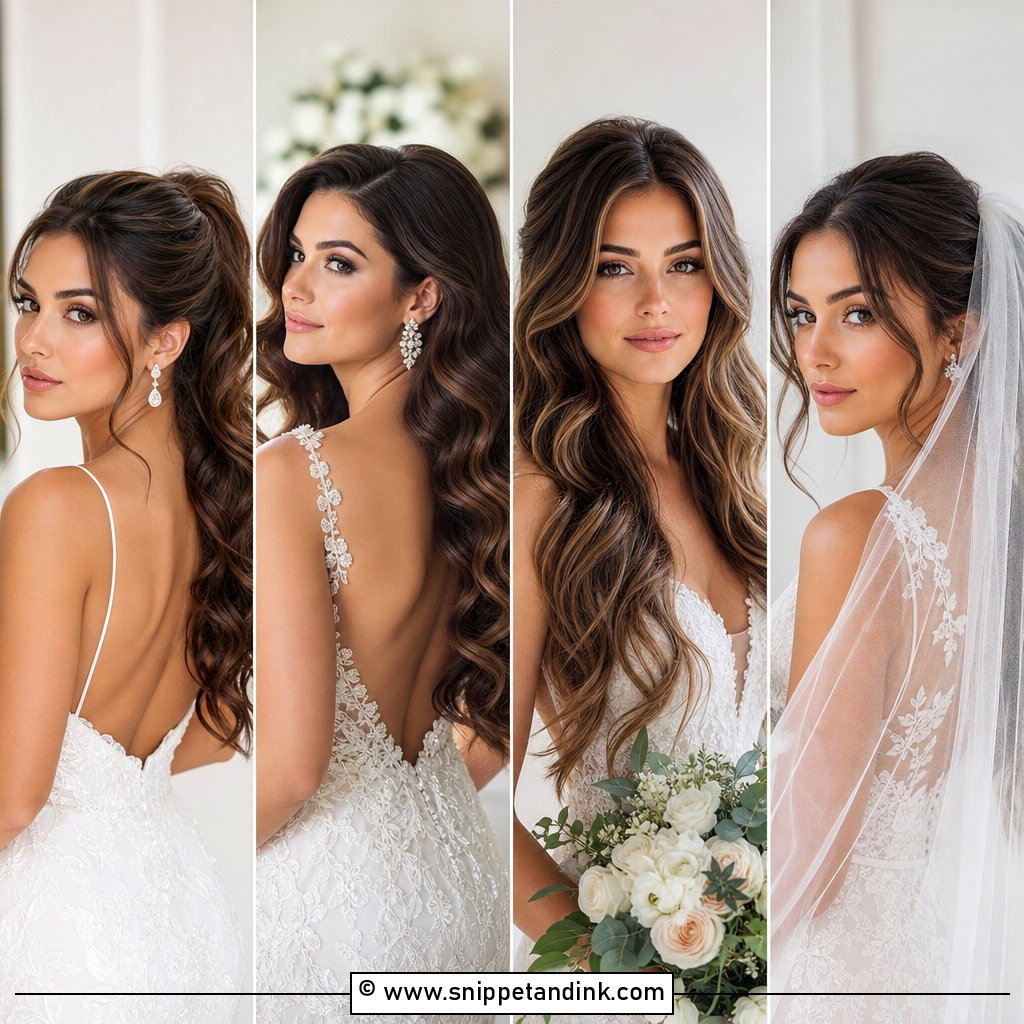
4. Indian Bridal Half Up Hairstyle For Round Face
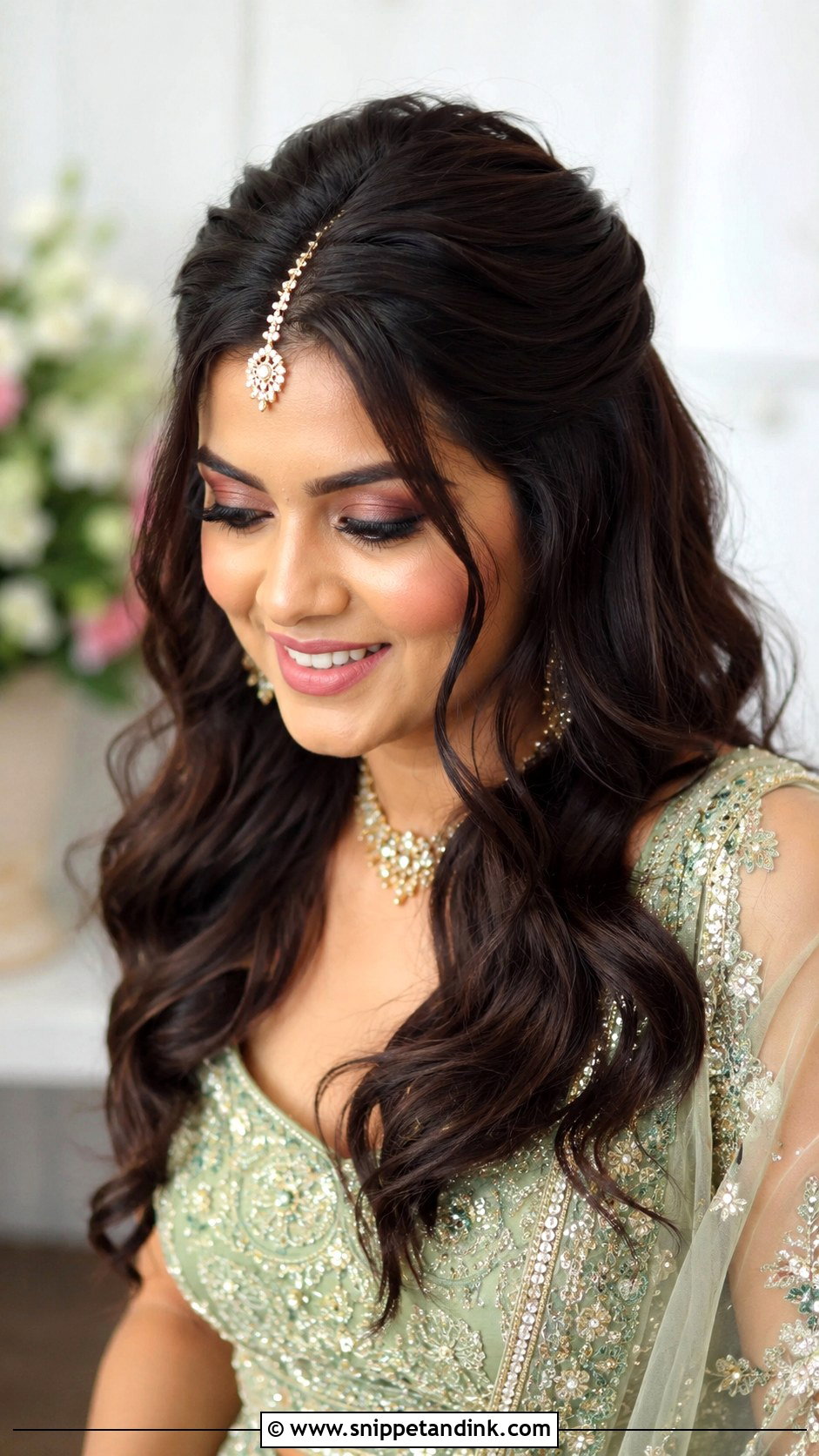
Half-up hair gives a round face what it needs when the volume is in the right place: up on top, down past the shoulders, and nowhere in between. I build gentle height at the crown, then start the waves below the jawline so nothing bulks out at the cheeks. It sits well with a maang tikka, which adds a centre line down the forehead. Receptions, engagement photos and modern bridal outfits all suit it.
5. Indian Bridal Open Curls For Round Face
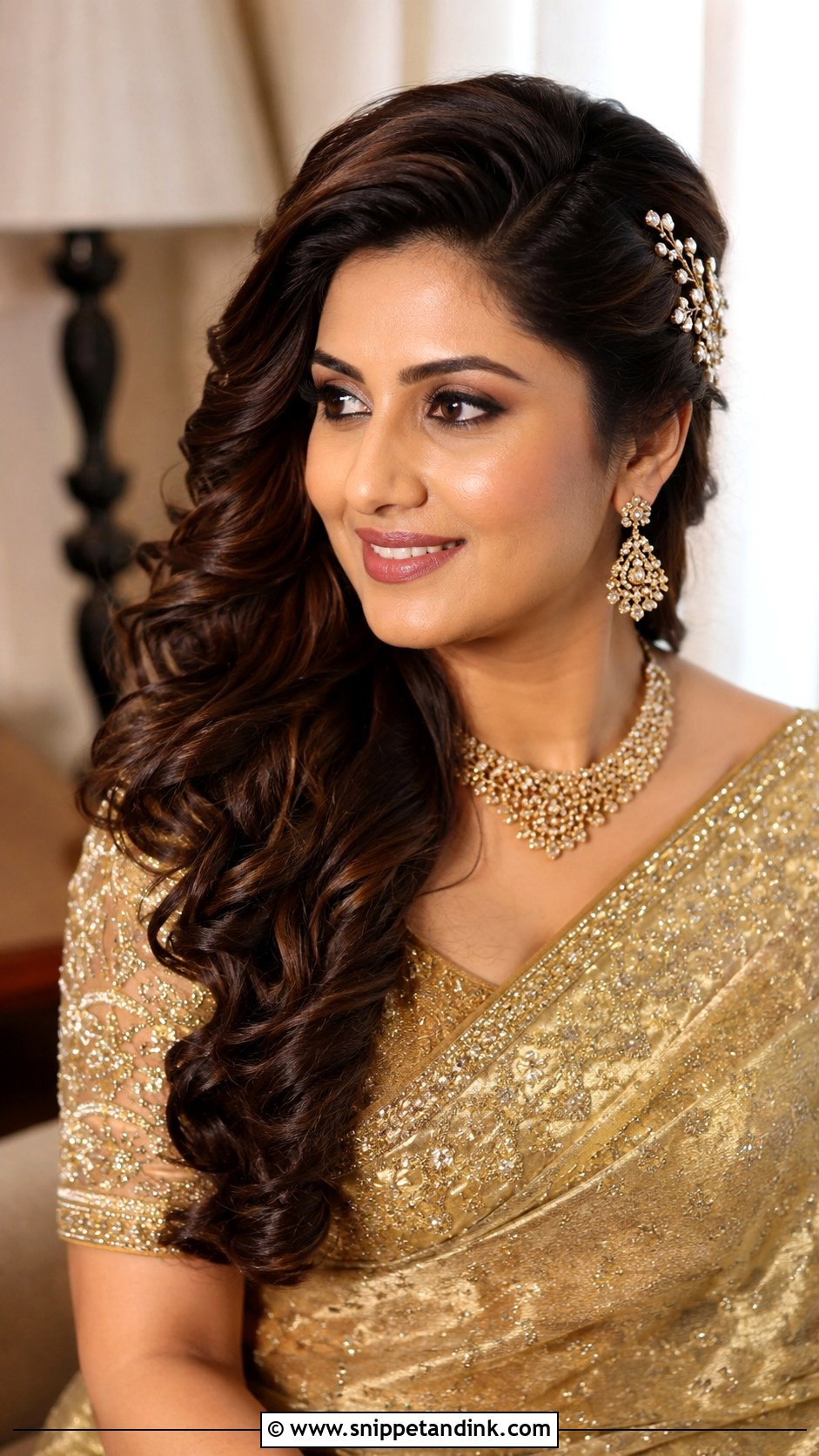
Open curls can work on a round face, but not every curl does. Tight, springy curls around the cheeks make the face look wider; long curls stretched into soft bends, starting lower, do the opposite. I want volume at the crown, a clean part and lengths falling below the shoulders. A deep side part adds a slimming slant. A fine passa, a hair chain or floral pins make open hair feel festive enough for the wedding.
6. Indian Bridal Side Swept Waves For Round Face
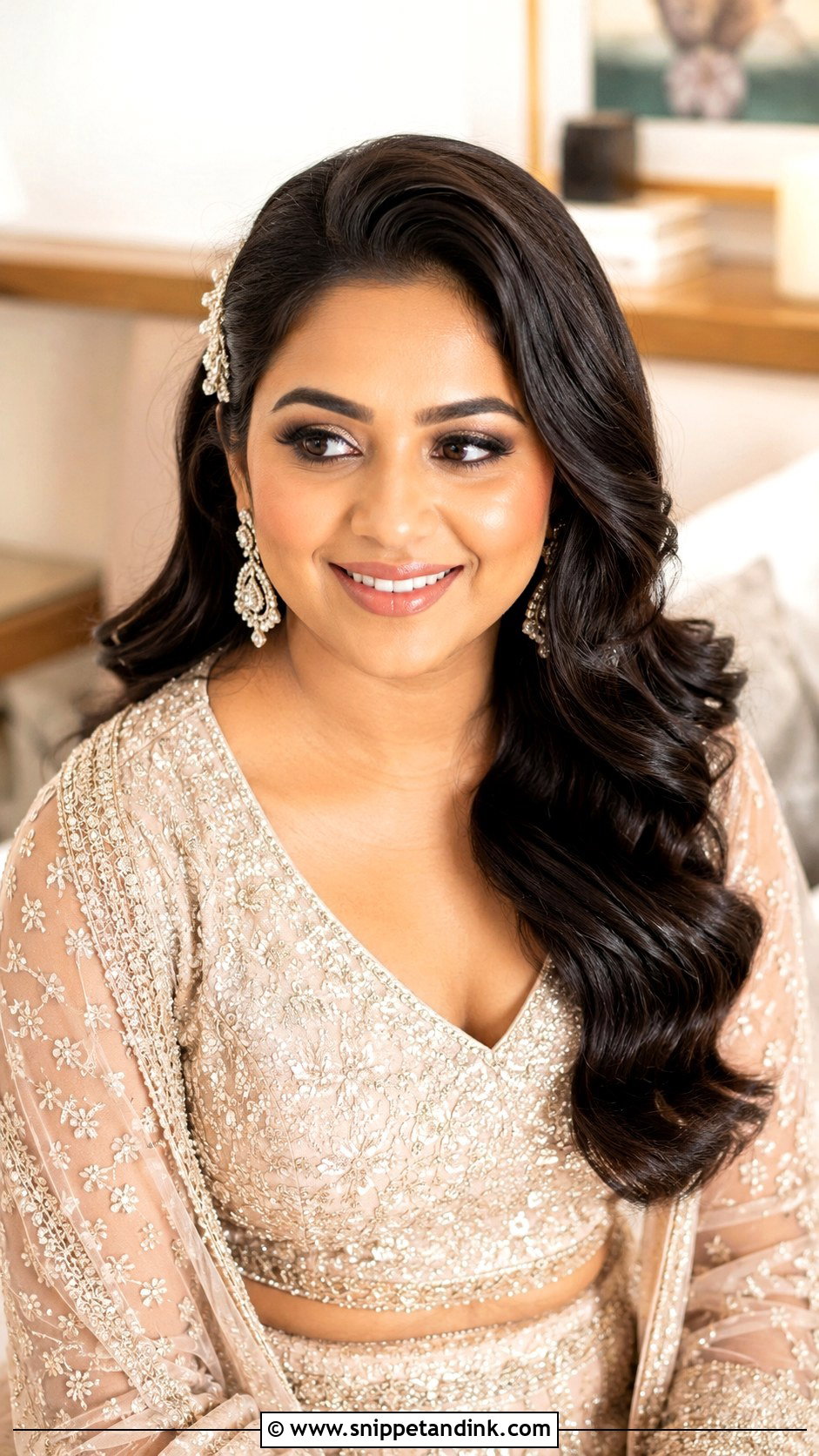
Side-swept waves give that diagonal shape again, with the hair over one shoulder and the other side open to show earrings and neckline. Ask for smooth, defined waves with a little lift at the crown. Fluffy brushed-out curls expand right where you don’t want width. It’s a reception or cocktail style that suits lehengas, gowns and sarees. I anchor the sweep behind the ear with a hidden pin and then cover it with a side clip, pearl comb or jewelled barrette, because a comb alone tends to slide out once you start moving.
7. Indian Bridal Messy Bun For Round Face
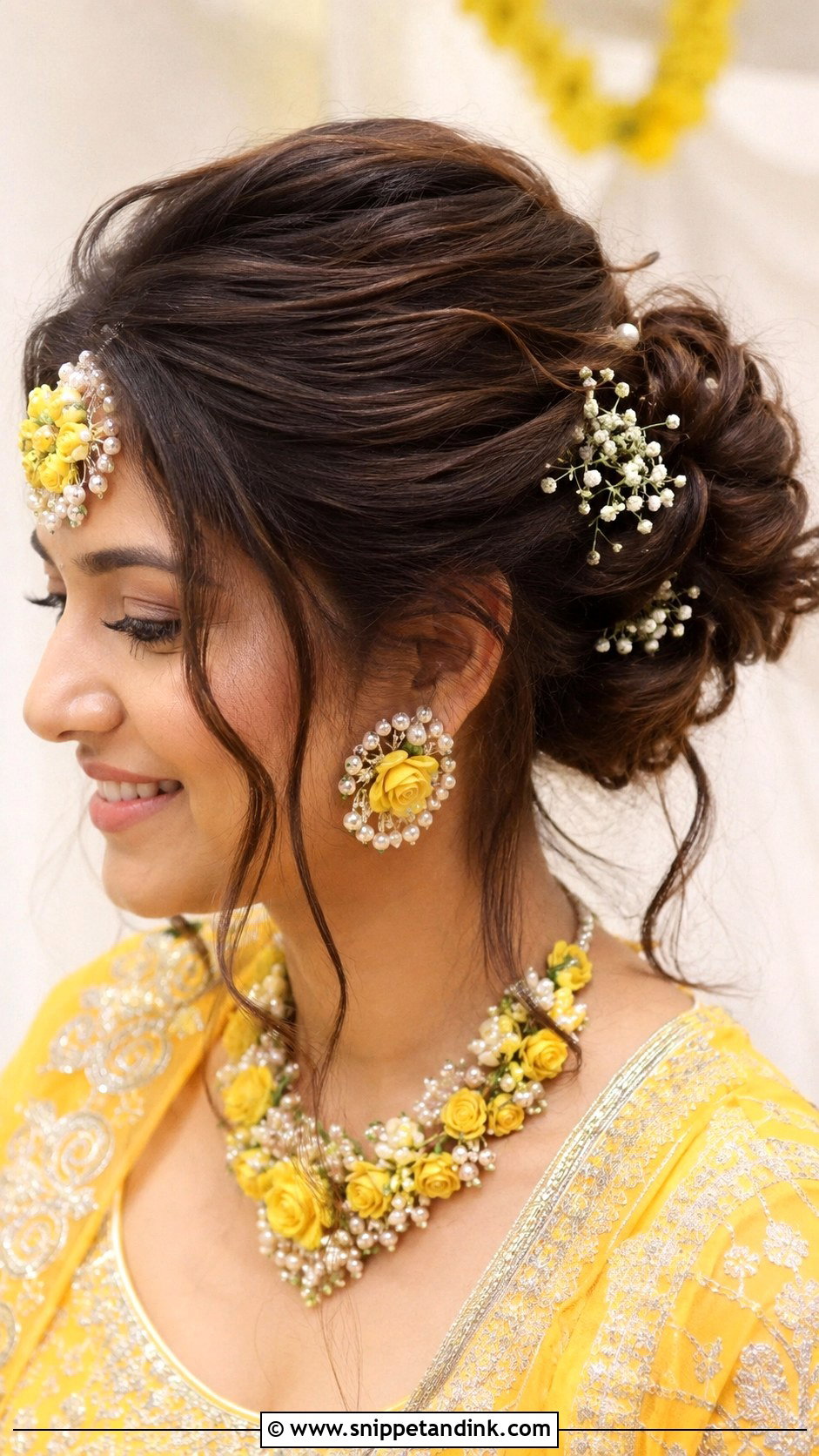
A messy bun on a round face needs shape more than mess. I keep the crown lifted, pin the bun slightly elongated rather than round, and pull out only slim face-framing strands. Thick loose sections near the cheeks undo the whole effect. Haldi, mehndi and outdoor functions are where this one belongs. Baby’s breath, fresh flowers or fine pins keep it light.
8. Indian Bridal Sleek Bun For Round Face
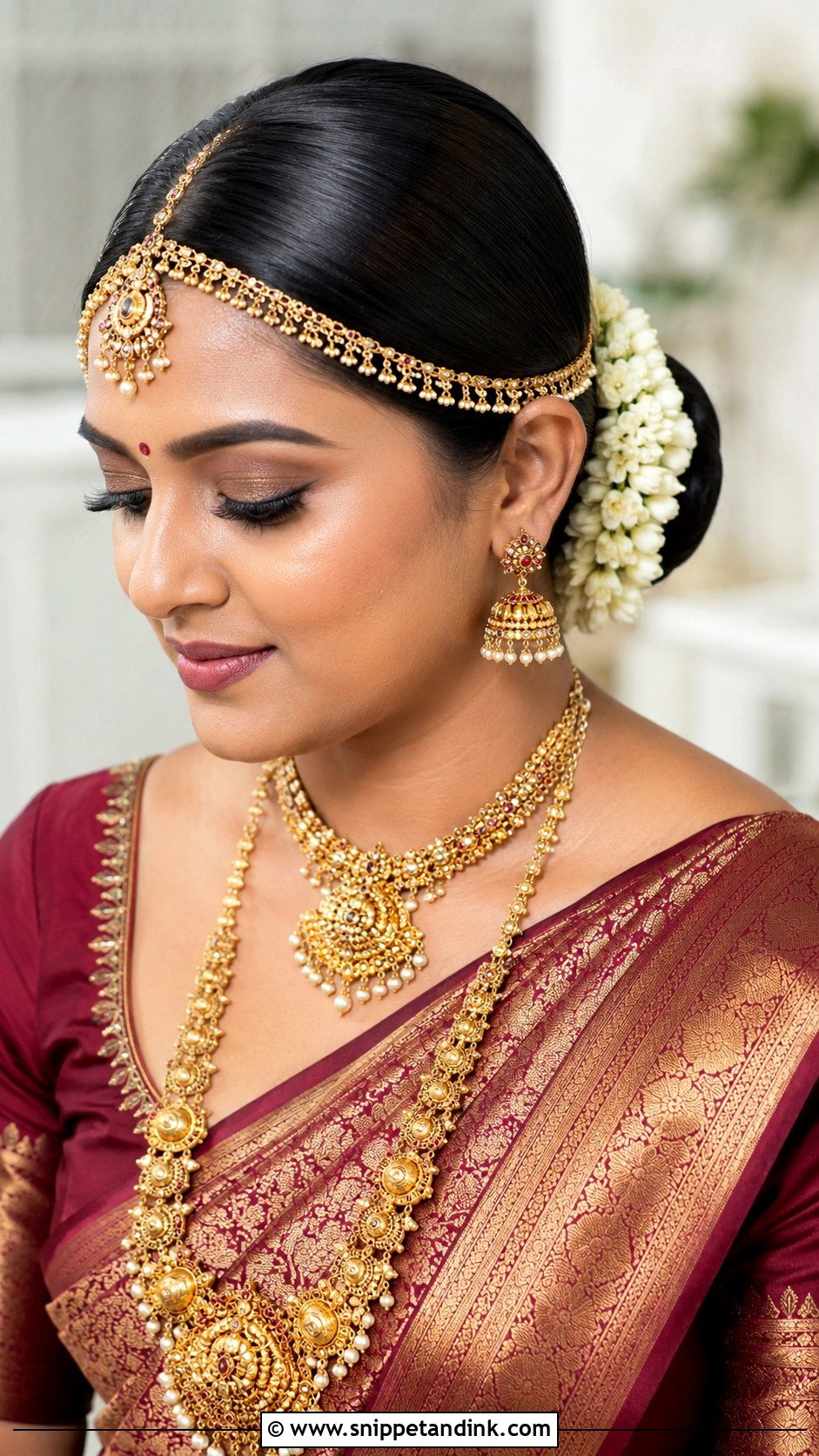
Sleek buns get a bad reputation with round faces, and mostly that comes from versions with no height and tight sides. Give it a defined part, a little lift at the crown, and a bun that sits neatly at the back without poking out sideways, and it frames the face well. It lets makeup, the dupatta, earrings and the neckline lead. Pair it with a matha patti, maang tikka or layered gajra for a traditional, royal finish.
9. Indian Bridal Braided Bun For Round Face
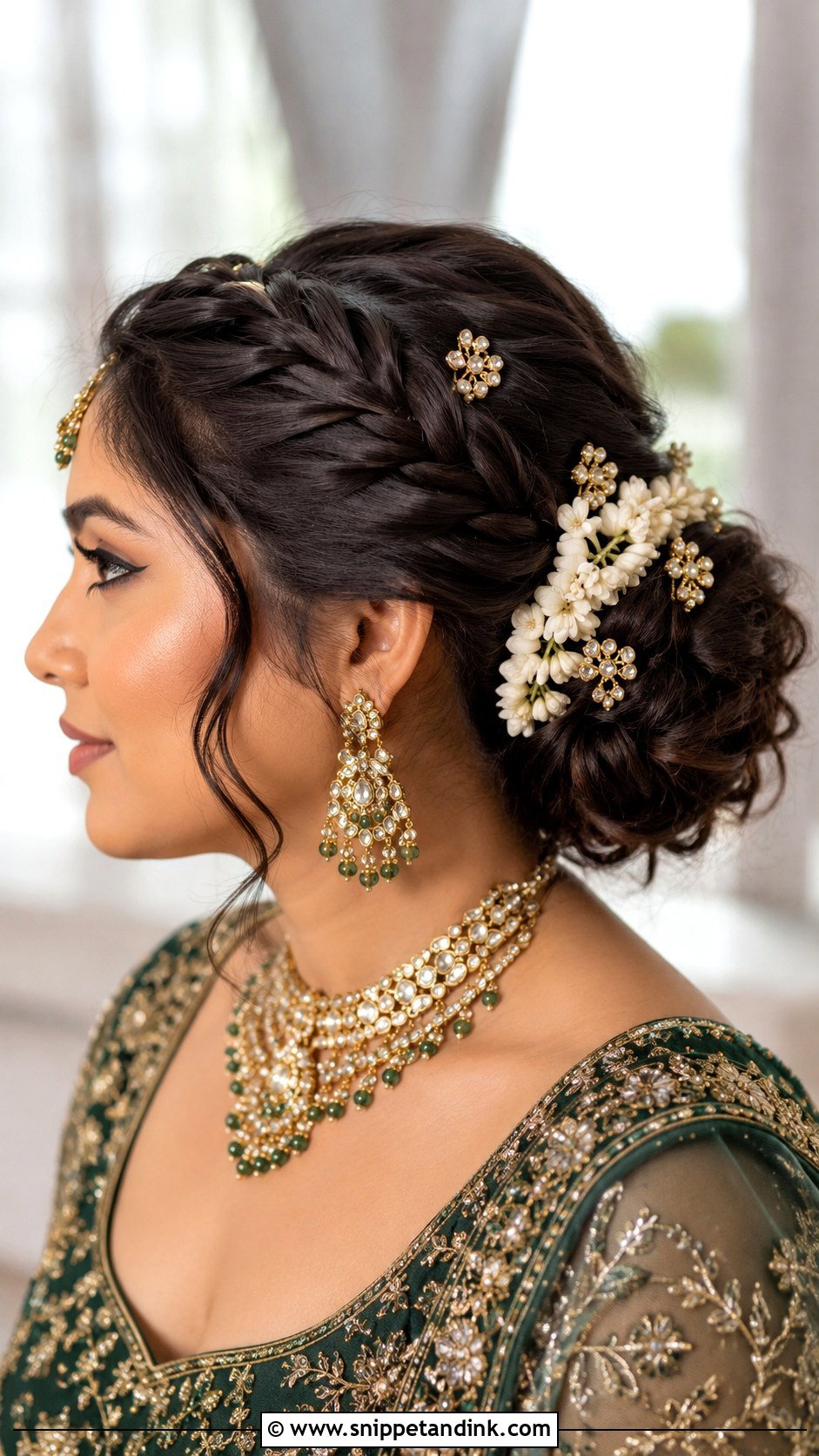
Texture plus lift is why braided buns flatter round faces. I raise the top softly and avoid tight braids running along the sides, which flatten the head and widen the face in comparison. A braided crown leading back into the bun adds length, especially with a centre tikka. It holds through long ceremonies and dancing, and it sits comfortably with silk sarees, lehengas and temple jewellery. Jasmine, roses or gold pins tuck into the braid.
10. Indian Bridal Puff Bun For Round Face
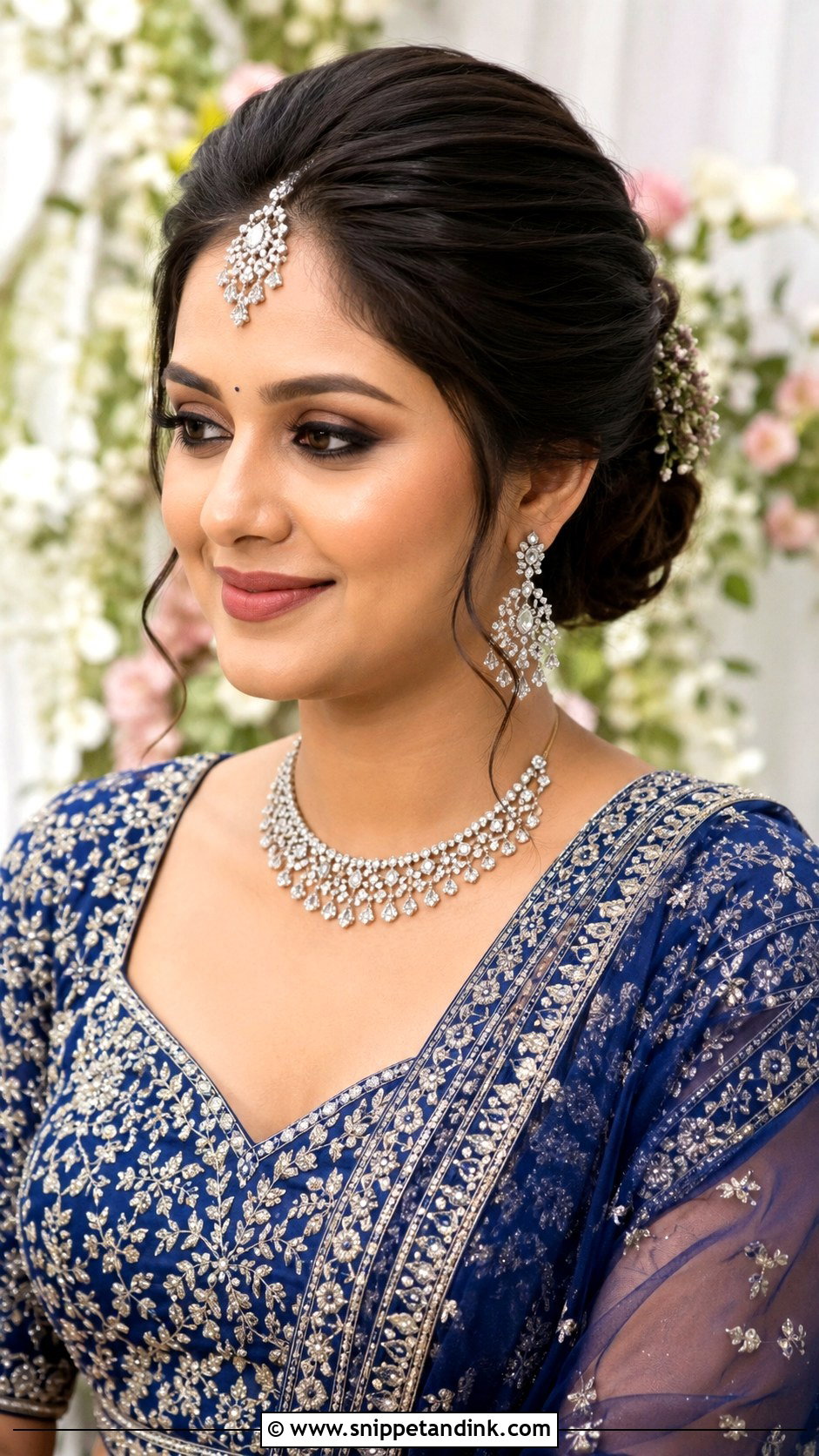
A puff bun puts height exactly where a round face needs it, at the front. Keep it modest and blended; a tall, lacquered puff looks dated and makes the forehead the focal point. I backcomb the underside of the front section and smooth the top over it, then secure the bun at the back. Light face-framing pieces soften it. It suits dupattas, matha pattis and statement earrings, and gives a traditional look extra presence.
11. Indian Bridal Fishtail Braid For Round Face
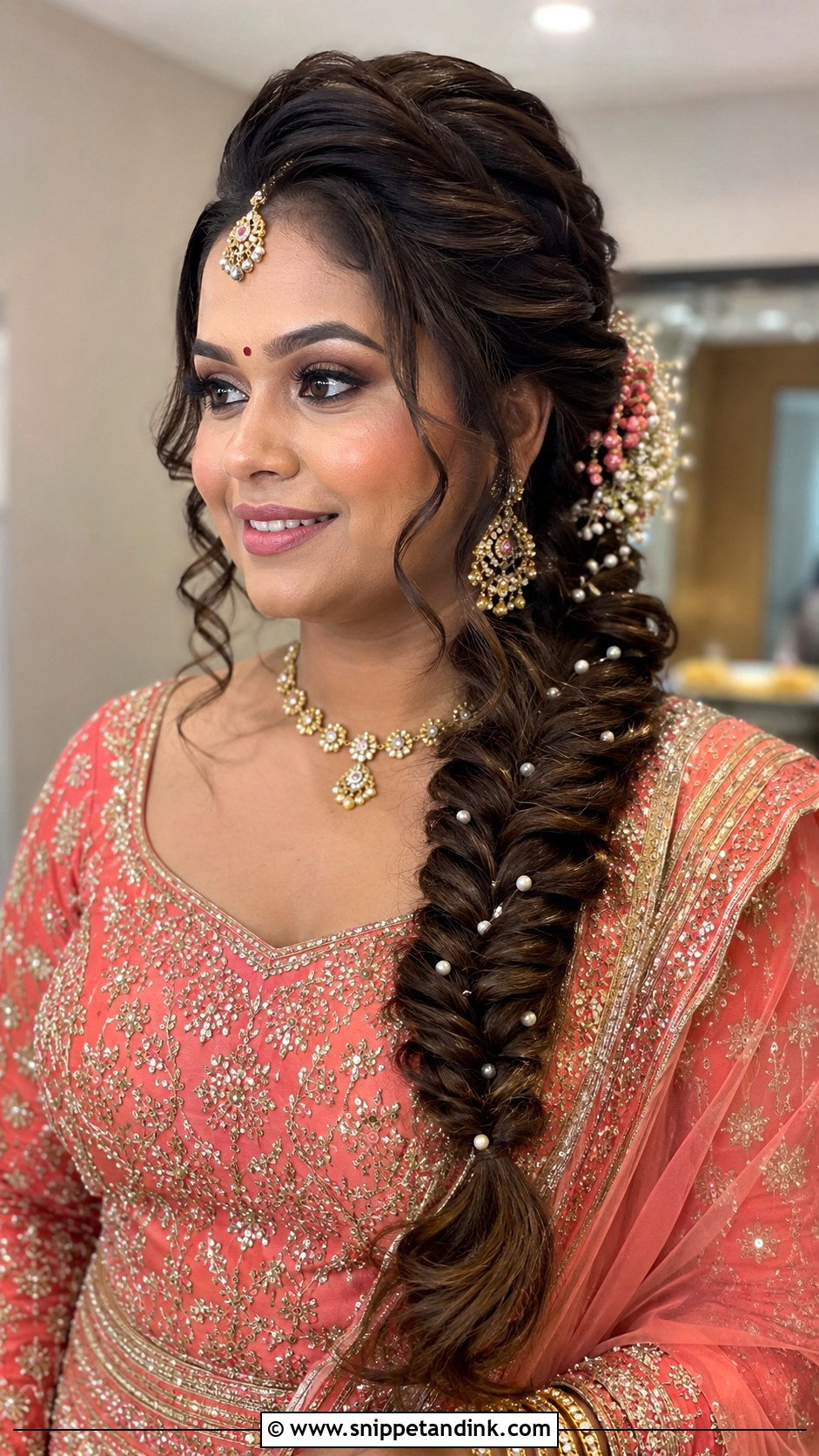
Fishtails look detailed and they flatter when worn slightly to the side, where the braid draws a long line downward. I keep the top lifted and softly textured, then let the braid fall over one shoulder. A looser fishtail softens fuller cheeks better than a tight one, so after weaving I gently widen each edge. It’s a natural fit for mehndi, sangeet or a modern ceremony, with floral jewellery, pearl pins or small gold accessories tucked in.
12. Indian Bridal Ponytail For Round Face
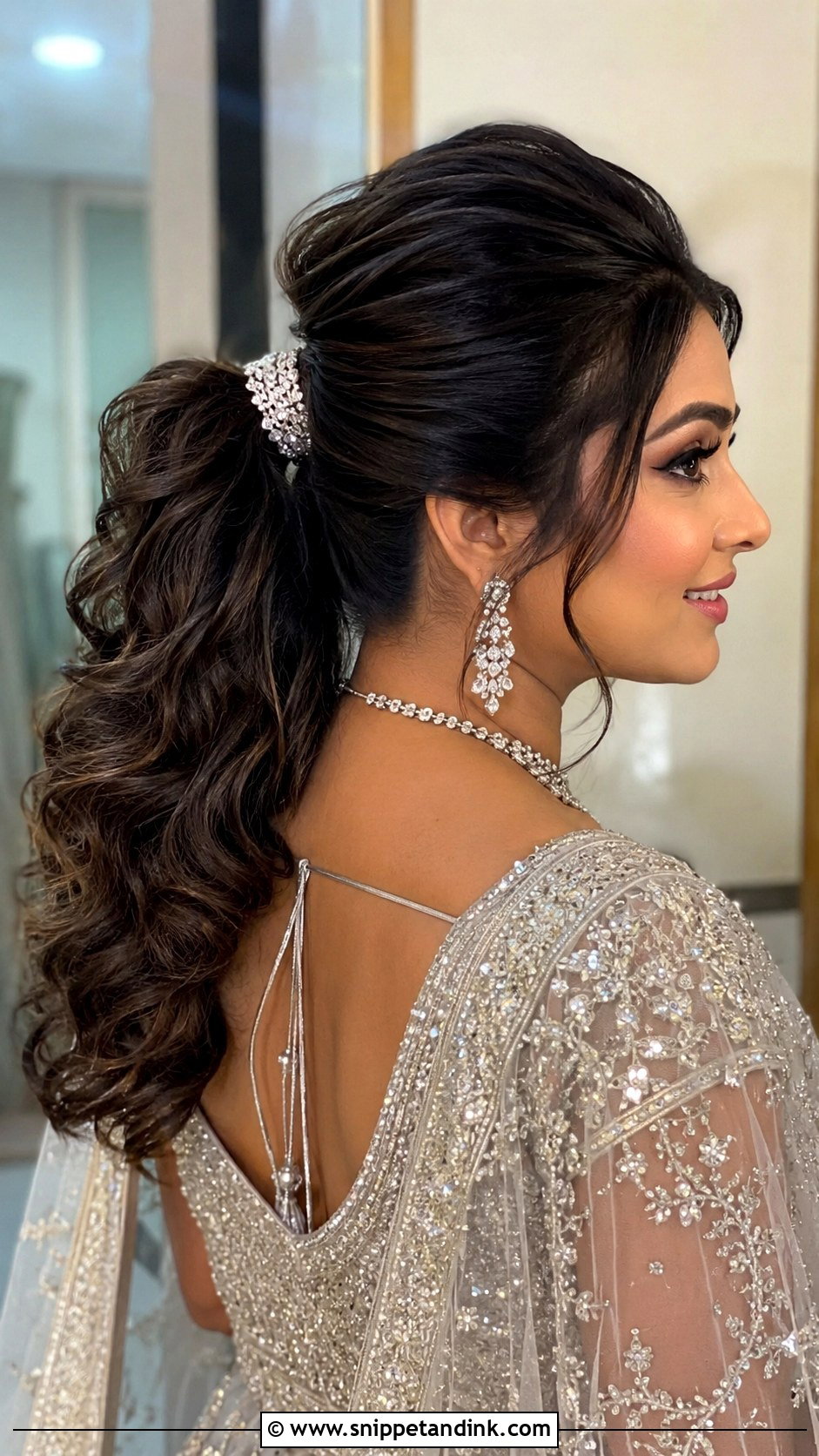
A ponytail at mid to high level lifts a round face visually, and it’s the comfiest option for a bride who plans to dance. I add volume at the crown, keep the sides smooth and run waves through the length so it looks dressed rather than casual. Low ponytails are the one version I’d skip for a very round face; they pull everything down and back. A jewelled wrap, pearl pins or a decorative comb finish it for receptions and sangeet nights.
13. Indian Bridal Front Puff Braid For Round Face
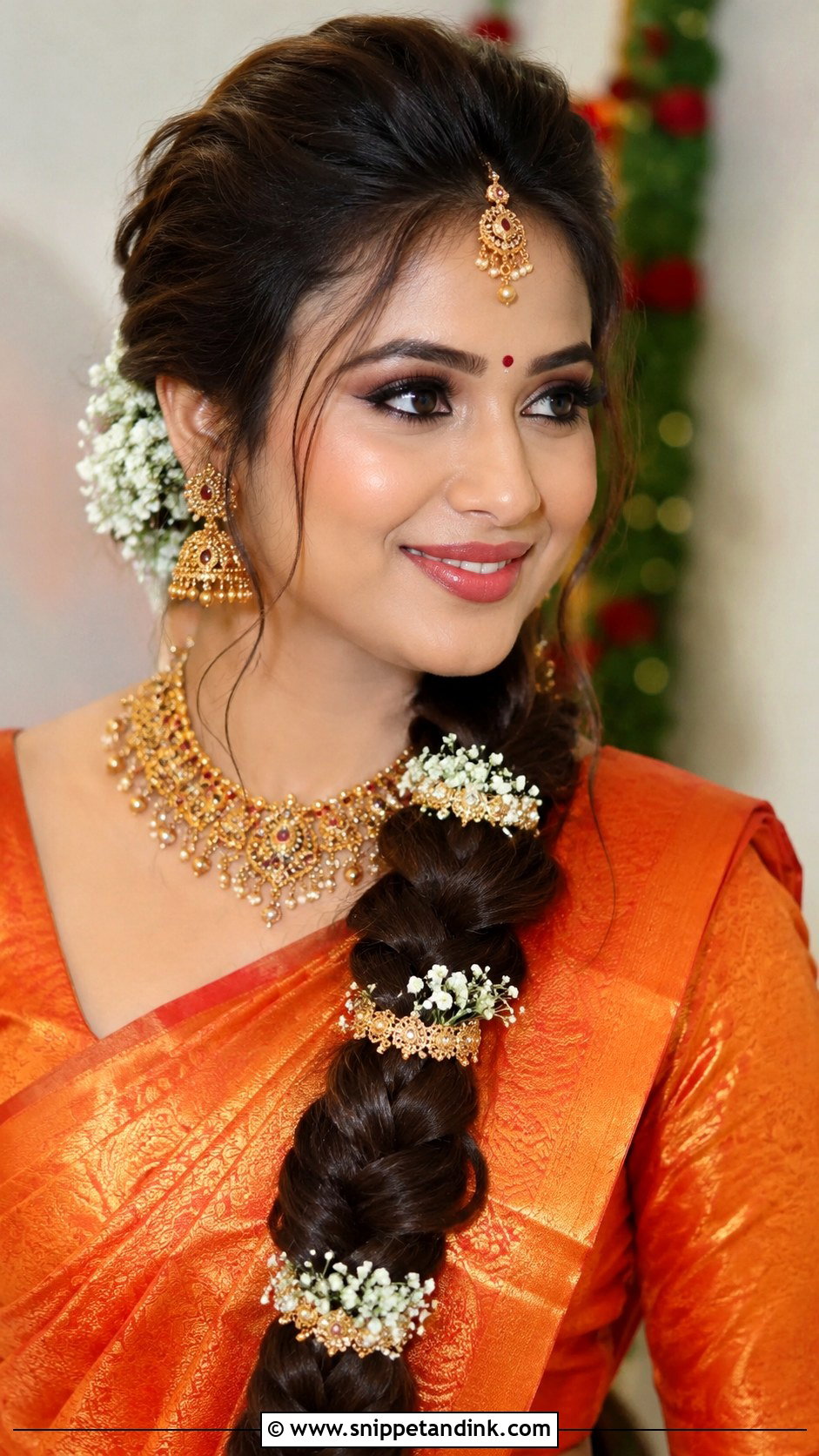
The front puff braid combines two lengthening tricks: lift at the front and a long vertical braid behind it. Brides who want something traditional often find this the most flattering option on the list. I keep the puff moderate and start the braid neatly right behind it, with no gap. Wear it down the back or over one shoulder, and decorate with flowers, beads or gold braid accessories. It’s secure enough for long rituals and family photos.
14. Indian Bridal Soft Waves With Maang Tikka For Round Face
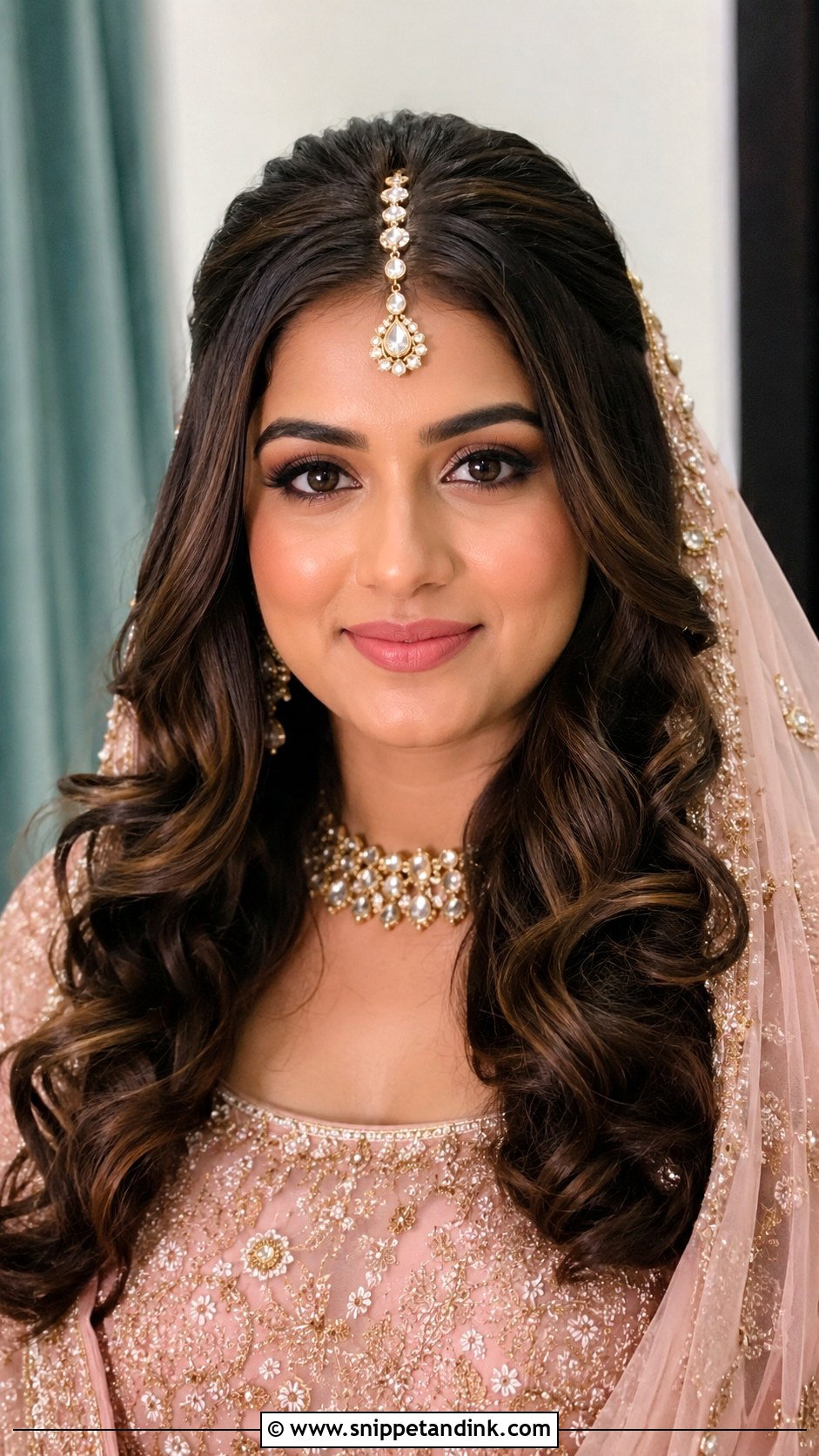
A maang tikka draws a vertical line straight down the centre of the forehead, which helps a round face read longer. With soft waves, I keep the lengths flowing below the shoulders and avoid volume at cheek level. A middle part with a little crown lift and gently framed front sections holds the tikka in place. It suits engagements, receptions and any bride who prefers open hair. Check the tikka length at your trial: one that ends just at the hairline flatters more than a very short one.
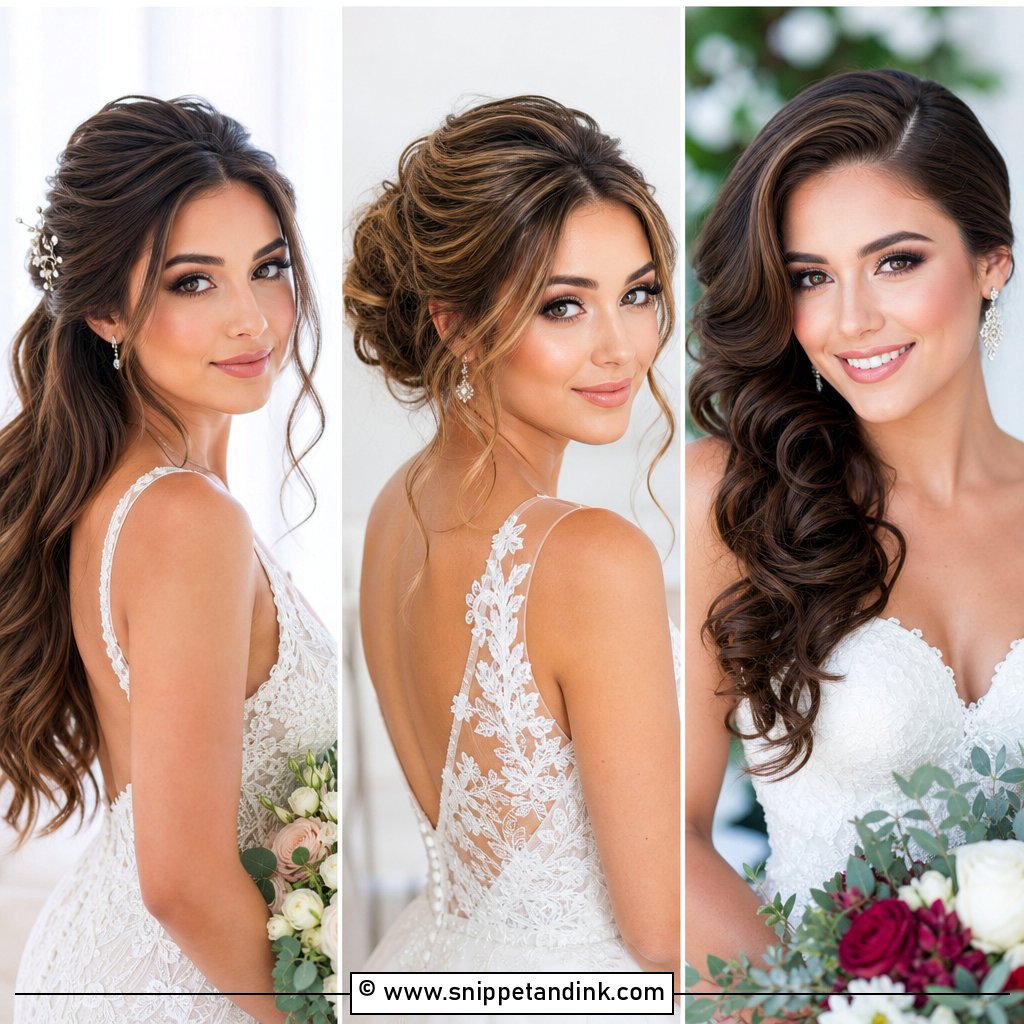
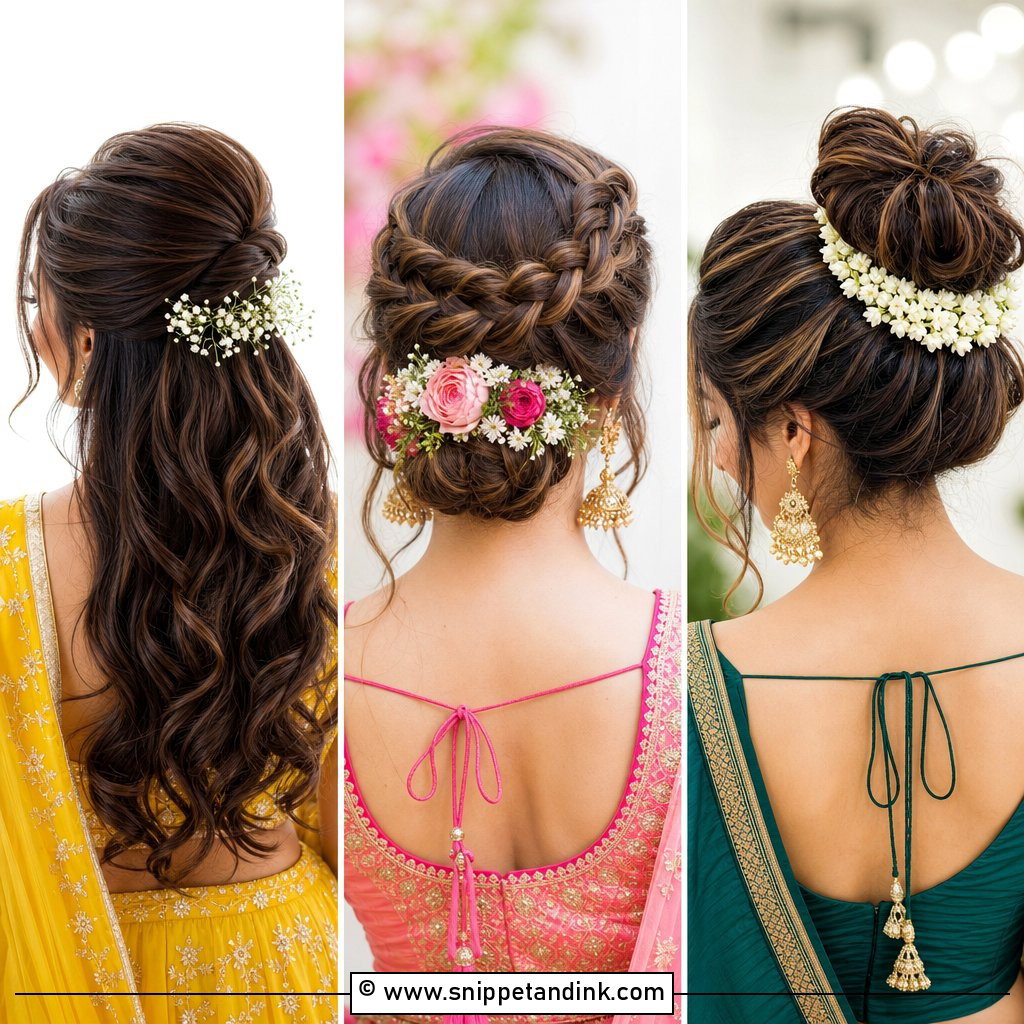
15. Indian Bridal Gajra Bun For Round Face
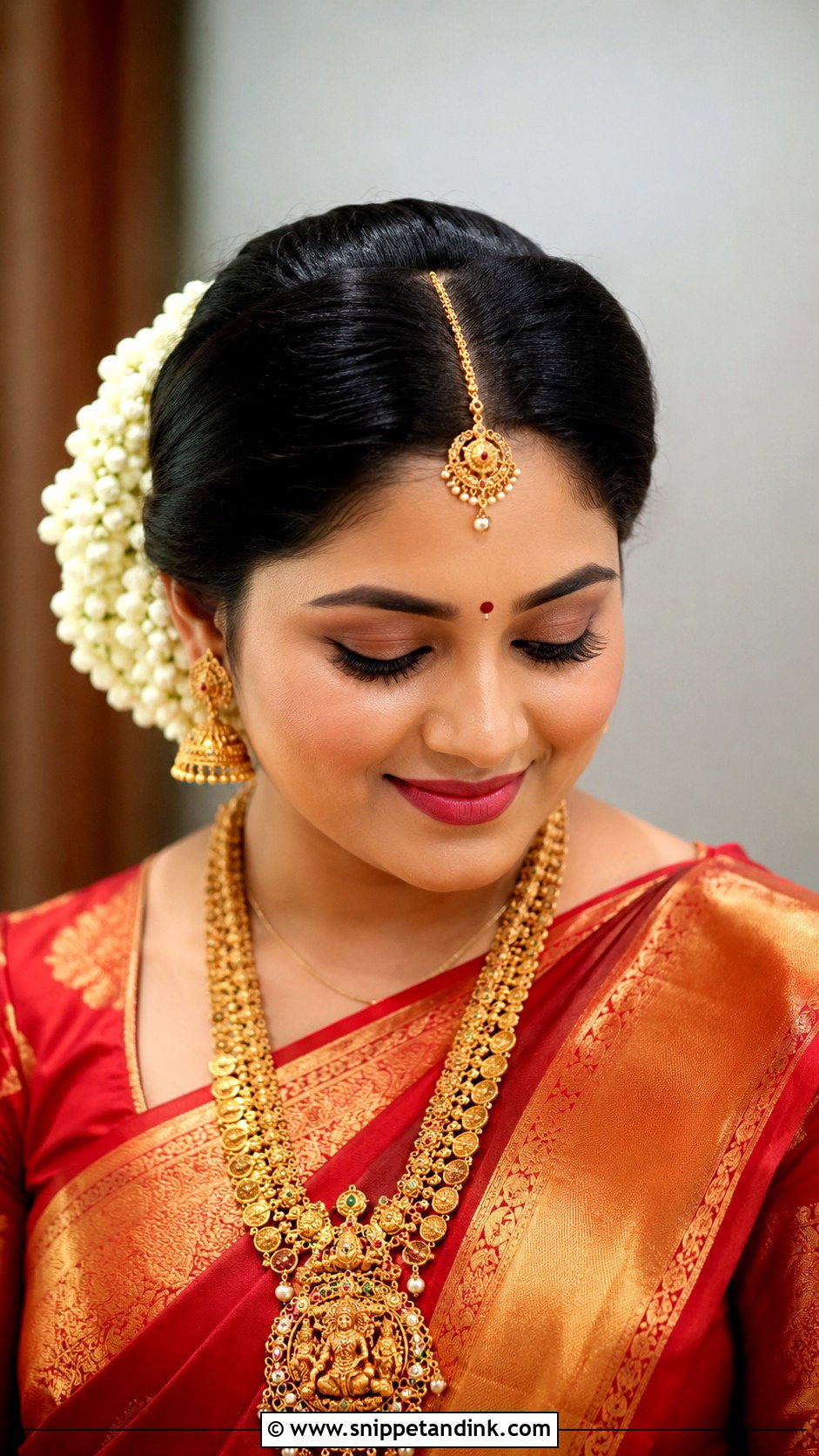
The gajra bun is one of the most loved Indian wedding styles, and on a round face its shape matters. I build it with some height or a slightly oval form rather than a wide, flat disc. The jasmine gajra should wrap the bun itself, not trail out sideways near the ears. A centre part with a tikka balances the face; a side part softens it. Sarees, temple jewellery and classic bridal makeup all suit it, and the jasmine scent is half of its charm.
Earrings, Tikka and Dupatta Can Undo Good Hair
I’ve had perfect round-face hairstyles thrown off by the jewellery that went on afterwards. Big round chandbalis that sit right at the jawline repeat the curve of the face. Long drops, jhumkas with length, or earrings with a vertical shape carry the eye down instead. If you love wide earrings, a higher bun gives them room so they don’t sit against bulky hair.
Draping the dupatta
A dupatta pinned close around the face, like a hood, makes the face look rounder in photos. I set it a little further back on the head so the hairline and some crown height still show, and let it fall in long lines past the shoulders. Bring the dupatta and jewellery to your trial so we can adjust the hair for both together.
Finally, think about the camera. Shots taken from slightly above eye level flatter round faces, and a gentle head tilt does the rest. That’s a conversation for your photographer, but it’s worth having.
Height at the Crown, Length Through the Lines
The styles that flatter a round face share a few habits: lift at the crown, diagonal or vertical movement, slim face-framing pieces and controlled width at the cheeks. High buns, side braids, half-up waves, sleek buns, gajra buns and ponytails all qualify when shaped that way. Your outfit, jewellery, dupatta placement, hair length and comfort should make the final decision. And do a trial. Moving a bun a few centimetres or changing a part often makes more difference than switching styles altogether.
You'll Like These Ideas:


Leave a Reply