
Reading the Invitation Before You Shop
Guests ask me what to wear, and my first question is always what the invitation says. The wording usually tells you the hem length and the fabric before it tells you anything else.
- Black tie: a floor-length gown is the safe reading. A very dressy midi can work at some weddings, but I wouldn’t risk it without asking.
- Black tie optional or formal: a maxi, or an elegant midi in satin, crepe or velvet.
- Cocktail: knee to midi length, polished fabric, nothing that would look at home at a beach bar.
- Semi-formal or dressy casual: midis and wrap dresses, with florals and lighter fabrics welcome.
- Garden, beach or outdoor: breathable fabric, block heels or wedges, and something to cover your shoulders when the sun drops.
No dress code printed at all? Look at the time and place. An evening ceremony in a hotel ballroom calls for more than an afternoon one in a barn. If you’re unsure, text someone in the wedding party; a two-line question is far less awkward than being the only guest in a sundress.
1. Floral Midi Dress for Wedding
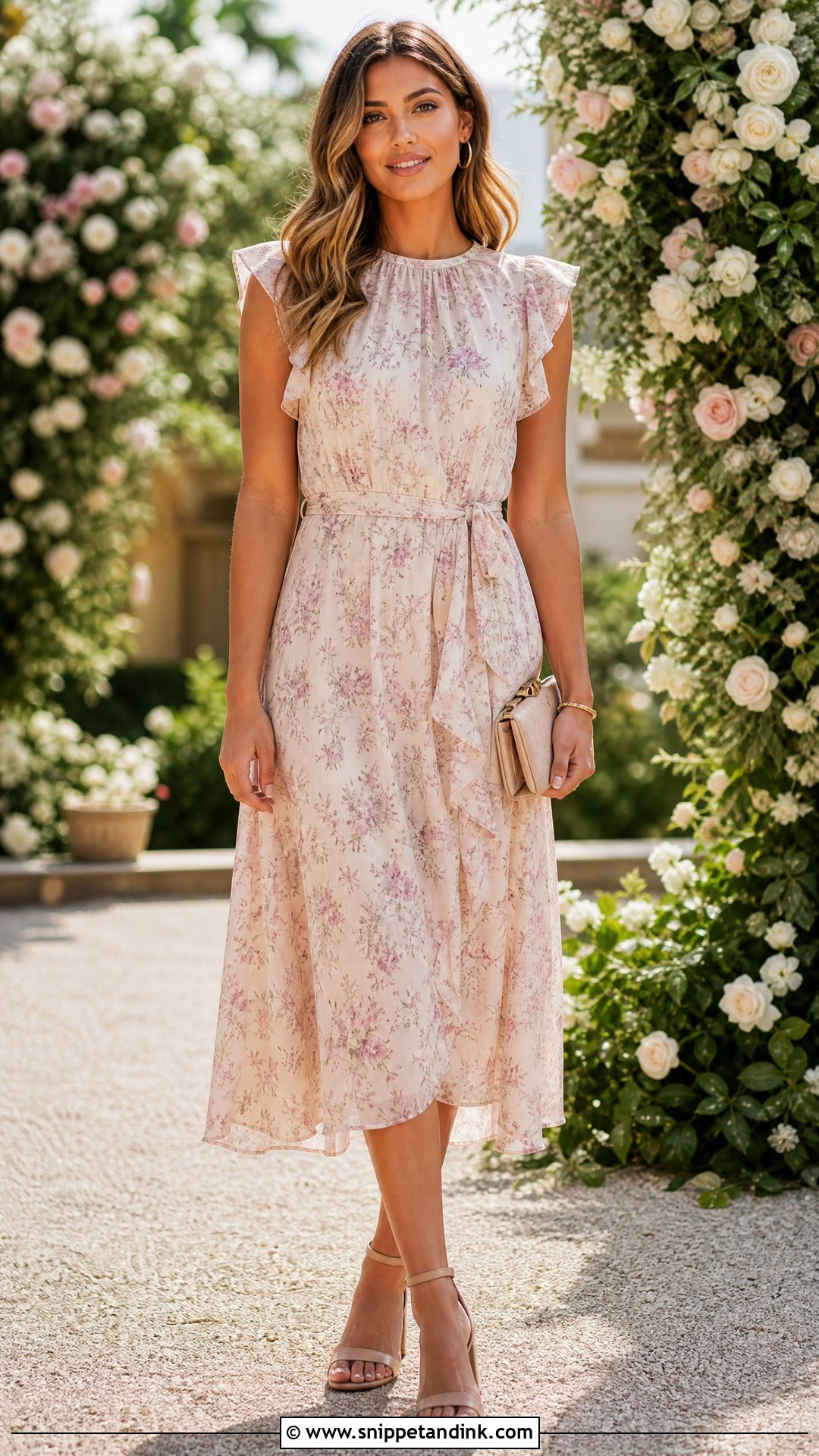
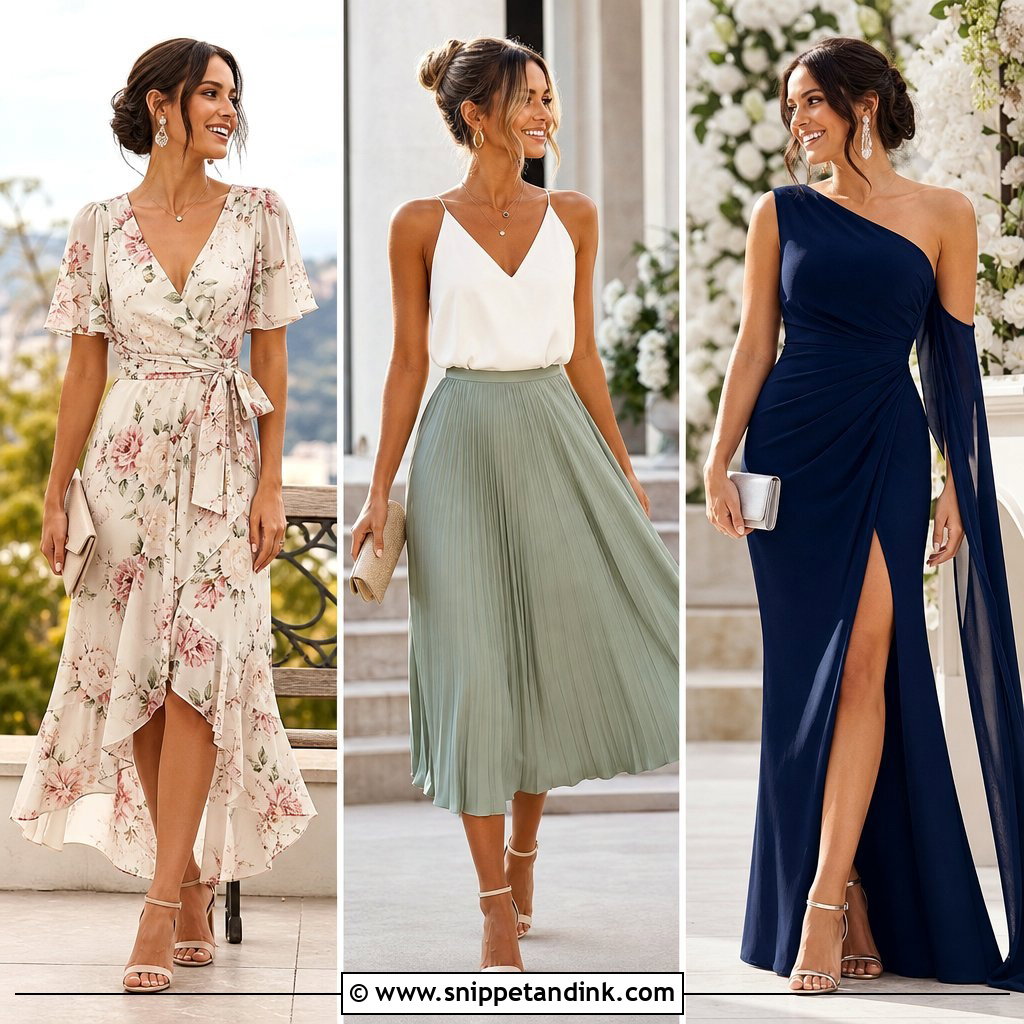
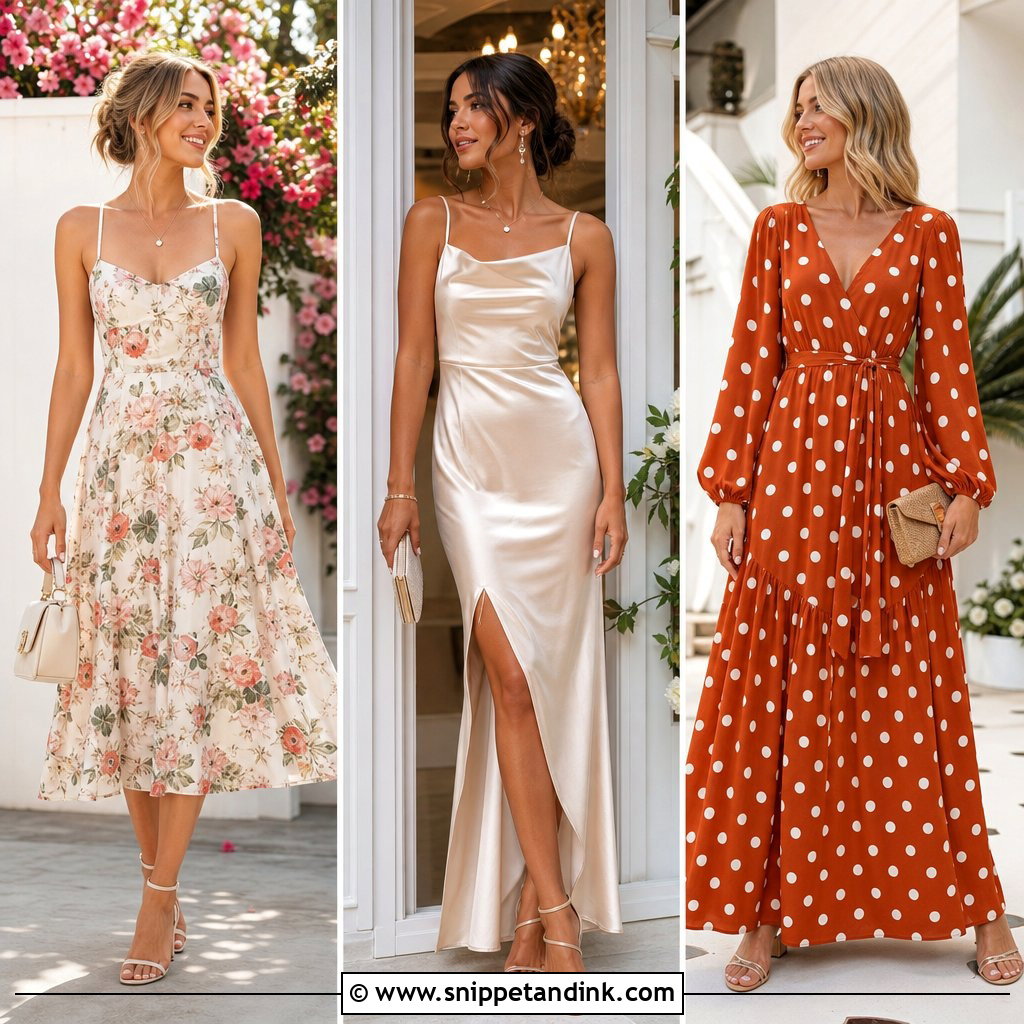
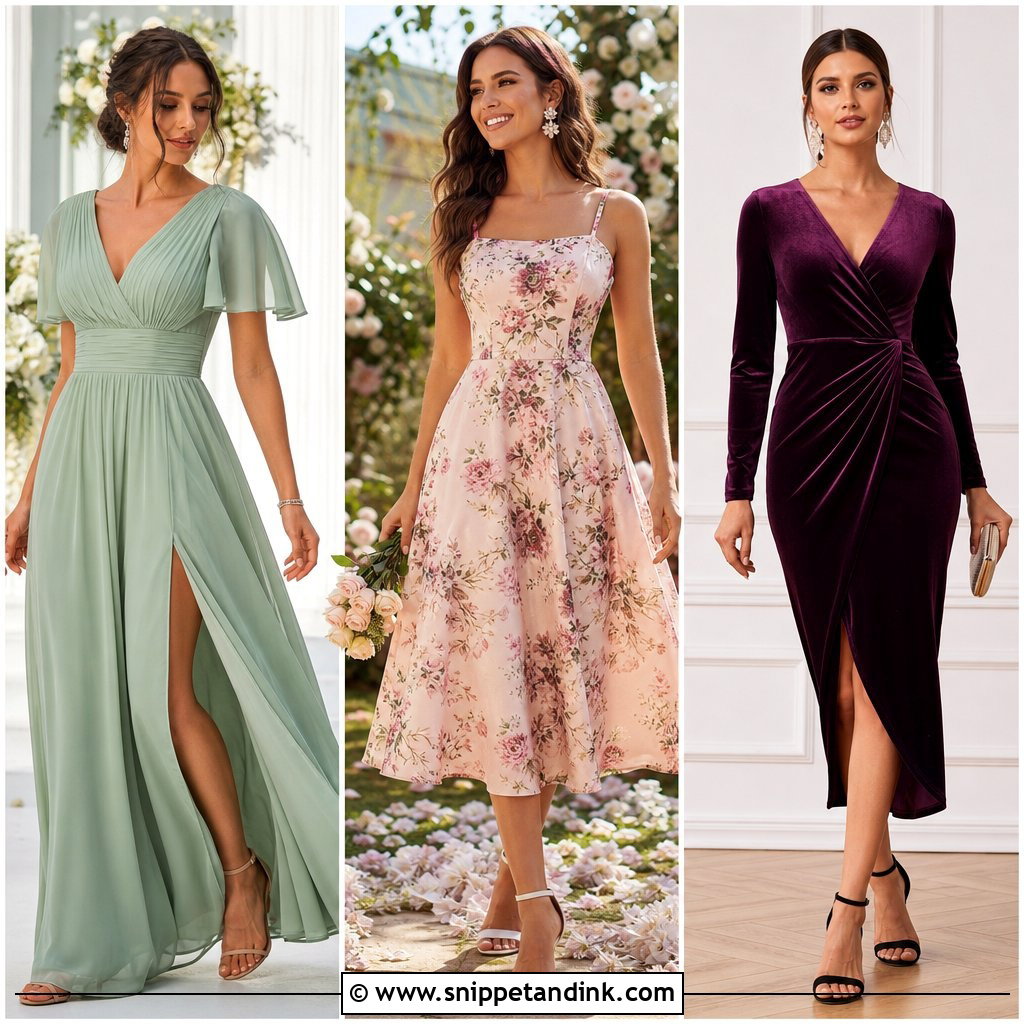
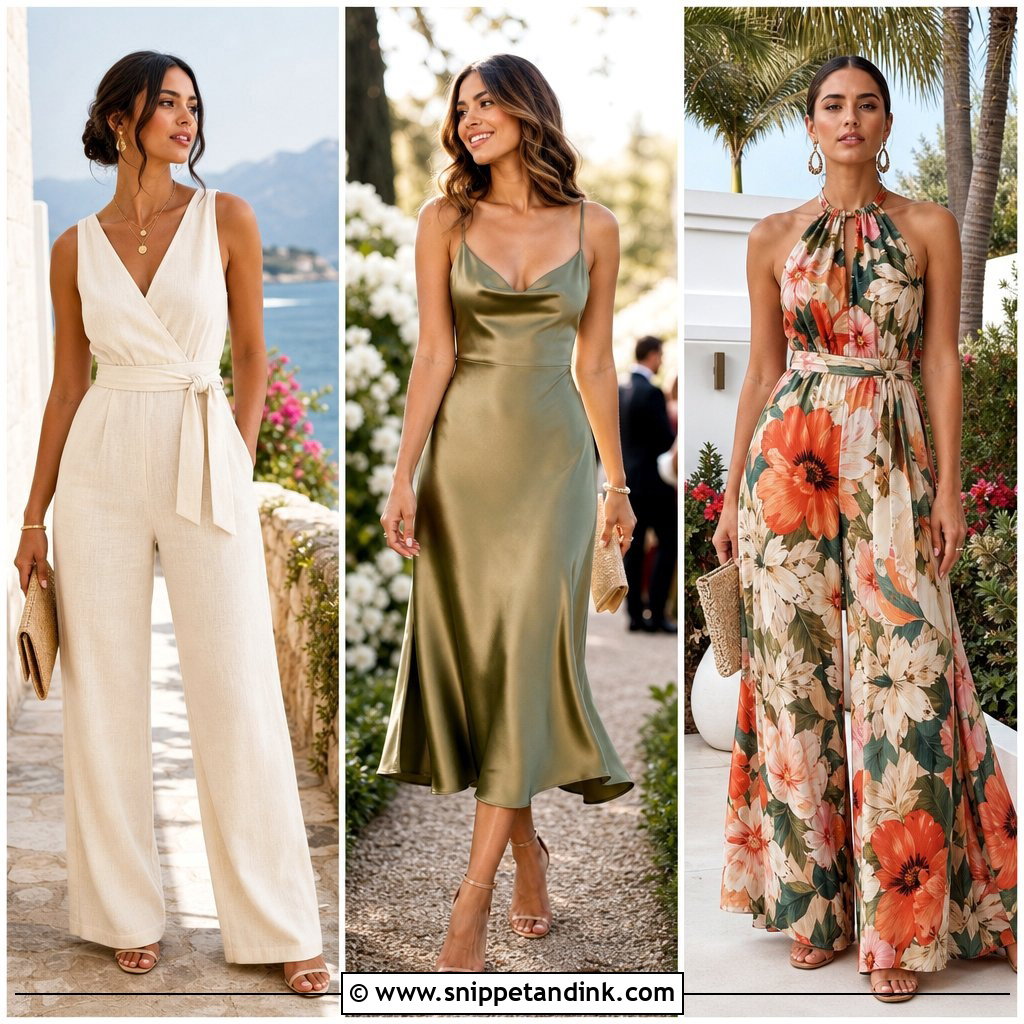
Floral midis are the guest dress I recommend most, mainly because they forgive a long day. A hem that falls below the knee or at mid-calf balances most heights. Print scale is what I look at first: small, soft florals suit a garden or daytime ceremony, while a dark ground with larger blooms reads properly dressed for an evening reception. Block heels in nude or soft gold keep you steady on lawns. With a busy print, I’d keep the jewelry to small hoops and one bracelet. Deep florals carry the dress into early autumn.
2. Satin Slip Dress for Wedding
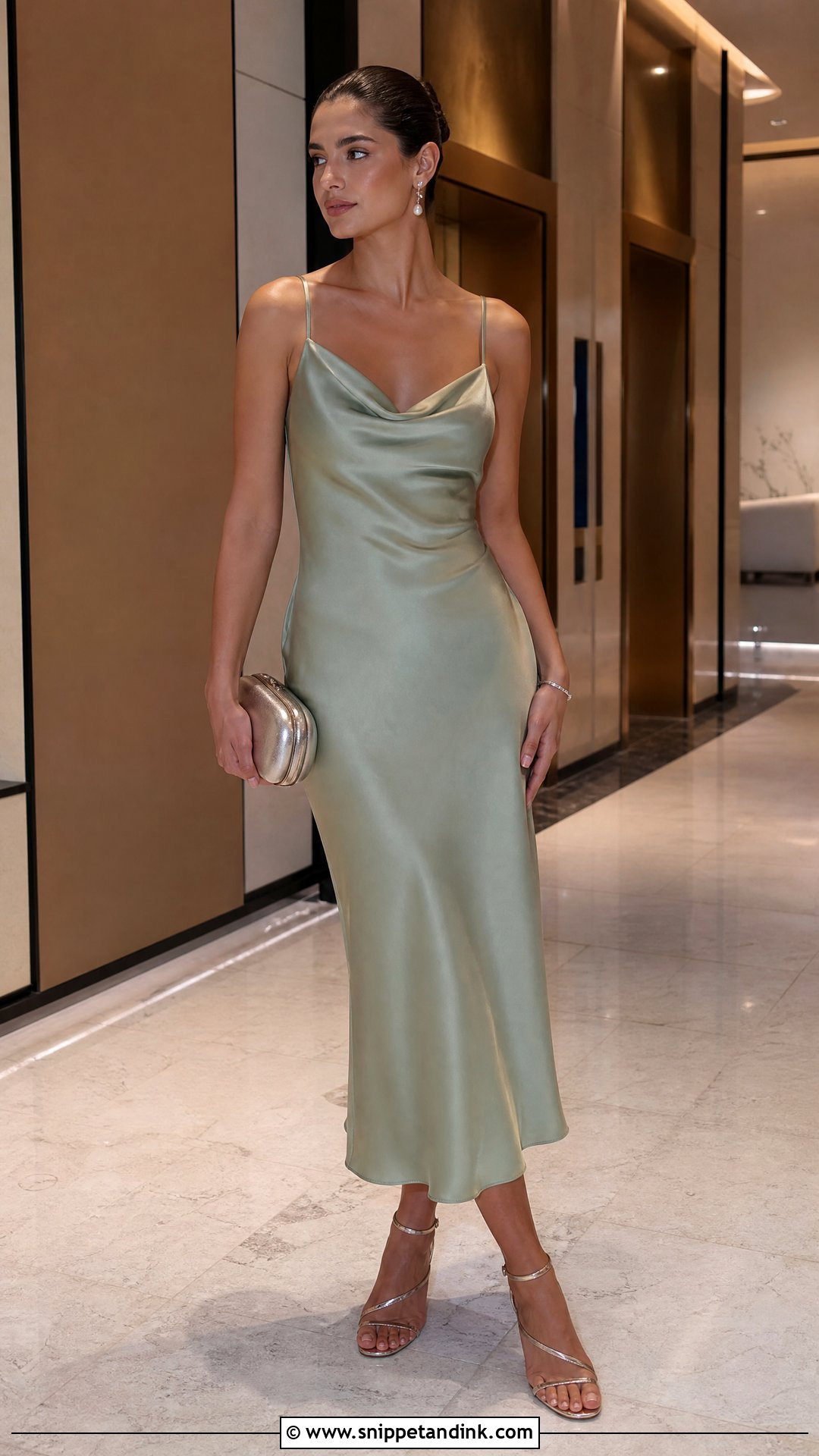
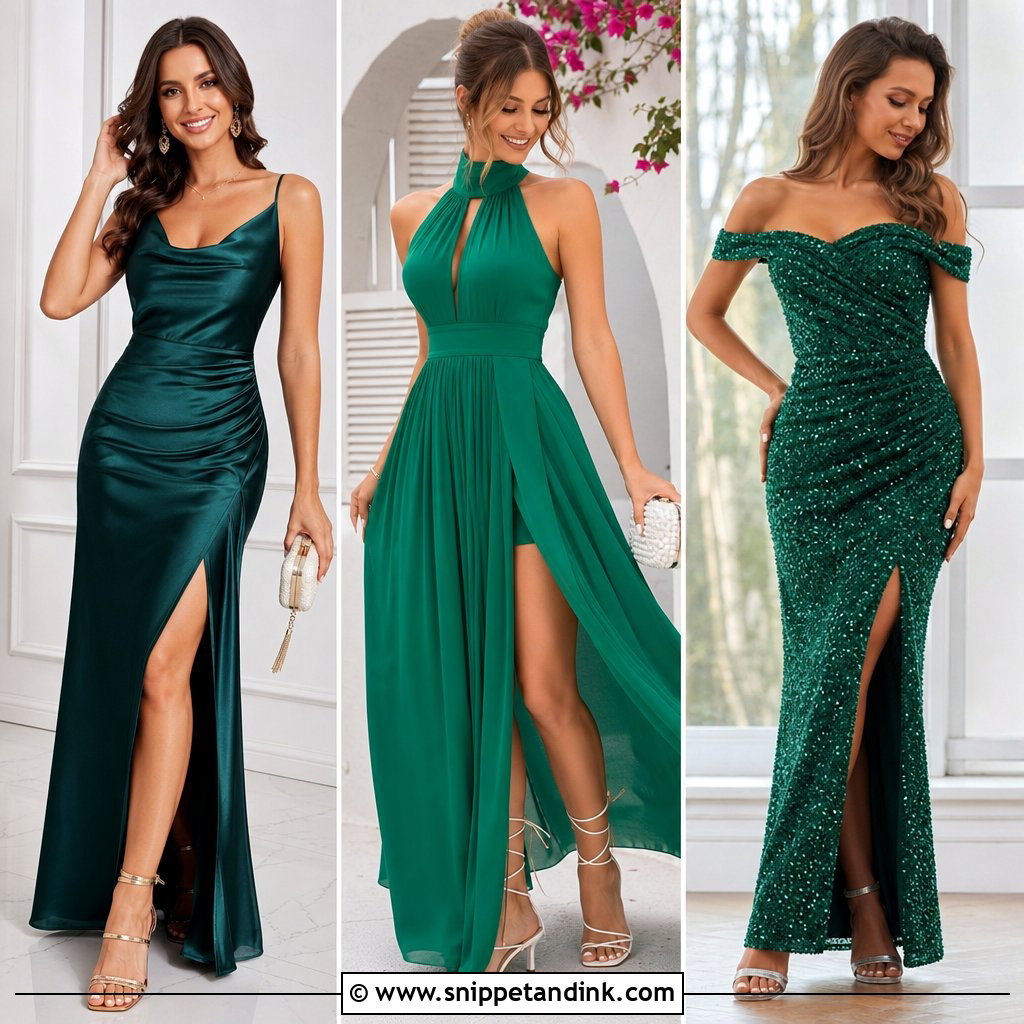
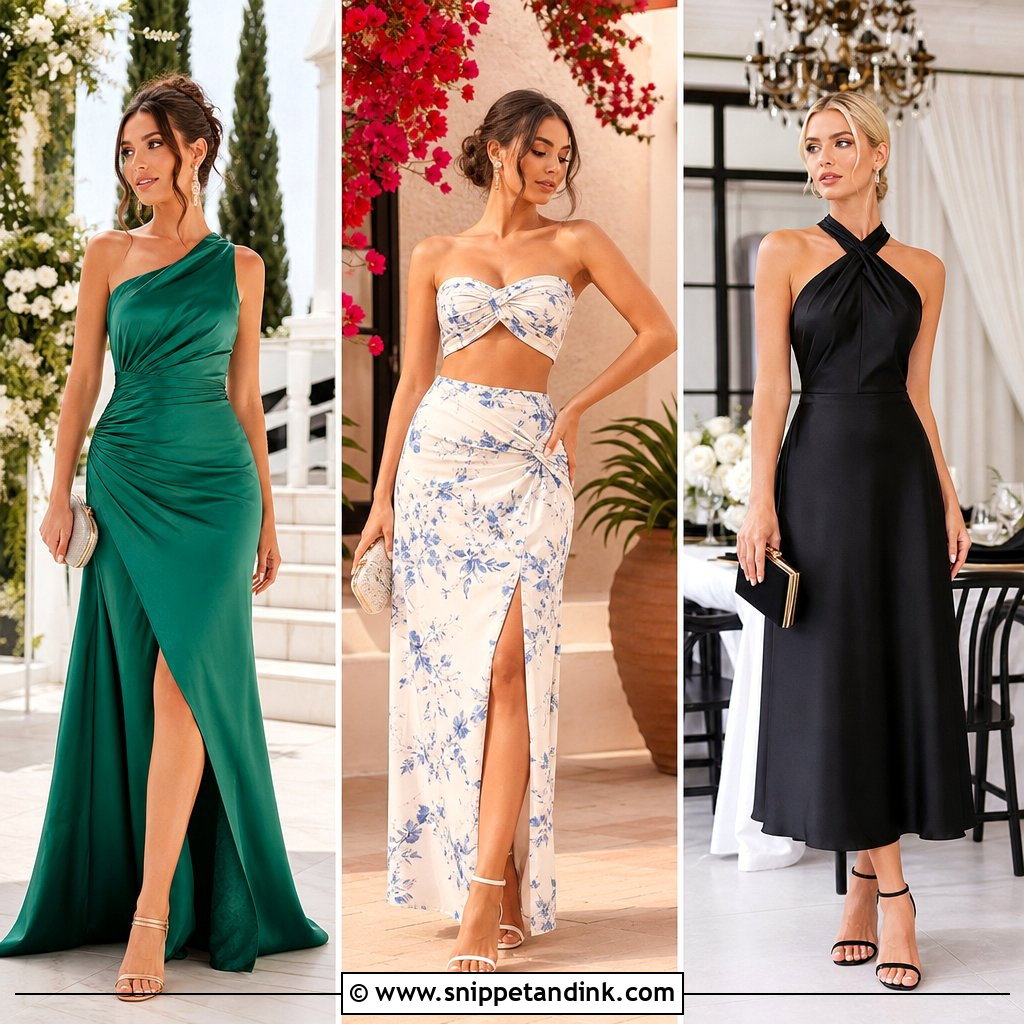
Satin slips look sleek, but they are honest about fit. The dress should skim, not cling, because satin catches light on every ripple and seam. Champagne is the shade I’d be careful with, since in photos it can drift toward bridal ivory; sage, navy, emerald or chocolate brown are safer bets. Strappy heels, a structured mini bag and small pearl earrings are enough, and a cropped blazer in a matching tone covers your shoulders in church. The shine makes it easy for cocktail, evening, and city weddings, and I’d steam it, never iron it, before you leave.
3. Wrap Dress for Wedding
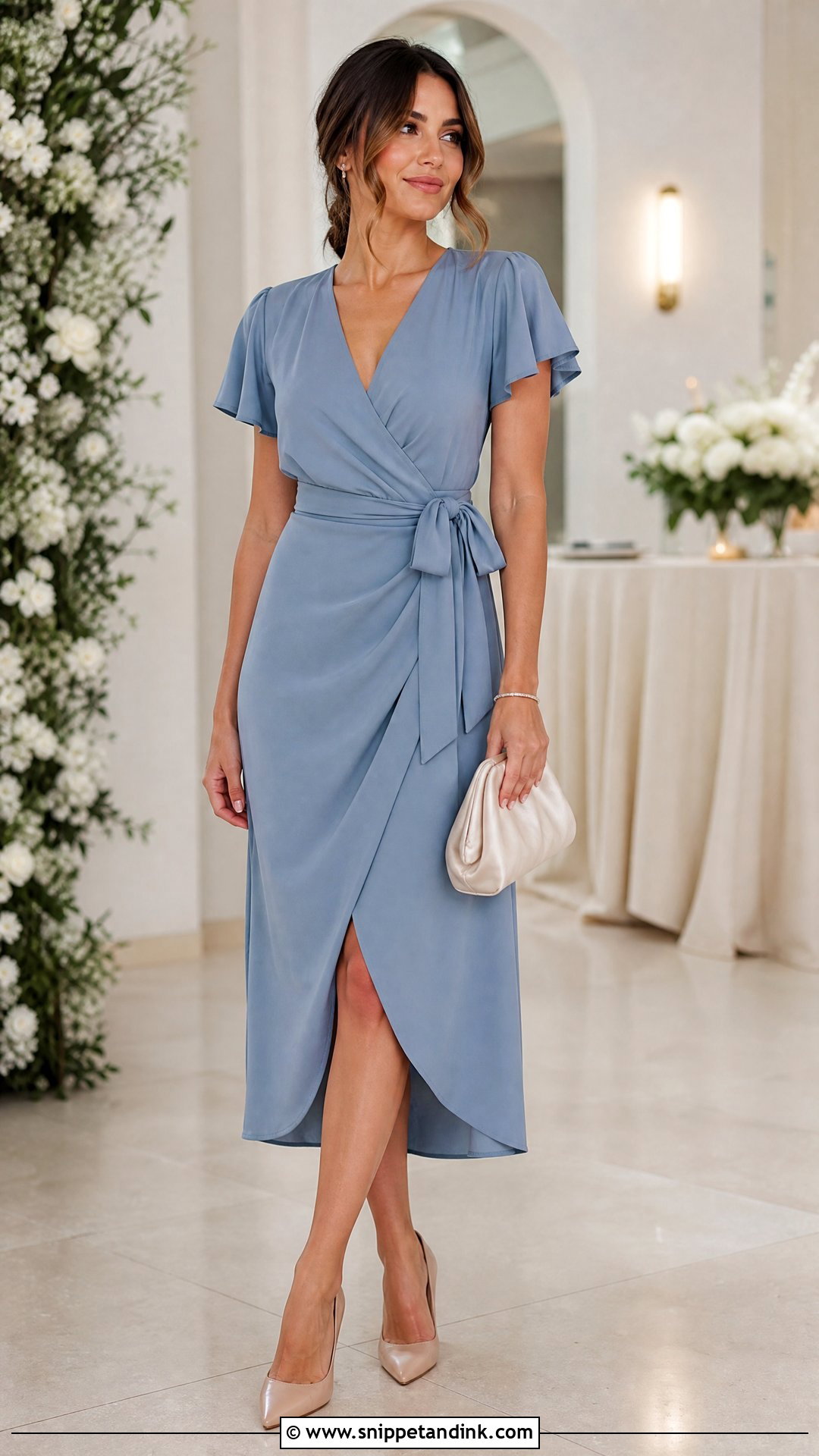
A wrap dress adjusts to you, which is why I keep suggesting it to guests who are between sizes or dressing a changing body. The tie shapes the waist and the V-neck softens the face. For anything semi-formal, choose silky crepe or chiffon over casual jersey, which can look like daywear in photos. Dusty blue, berry and olive all work at knee or midi length. The overlap is the weak spot when you sit or dance, so I’d add fashion tape at the neckline or a small safety pin hidden inside the wrap. Pointed heels or block sandals and drop earrings finish it.
4. Pleated Midi Dress for Wedding
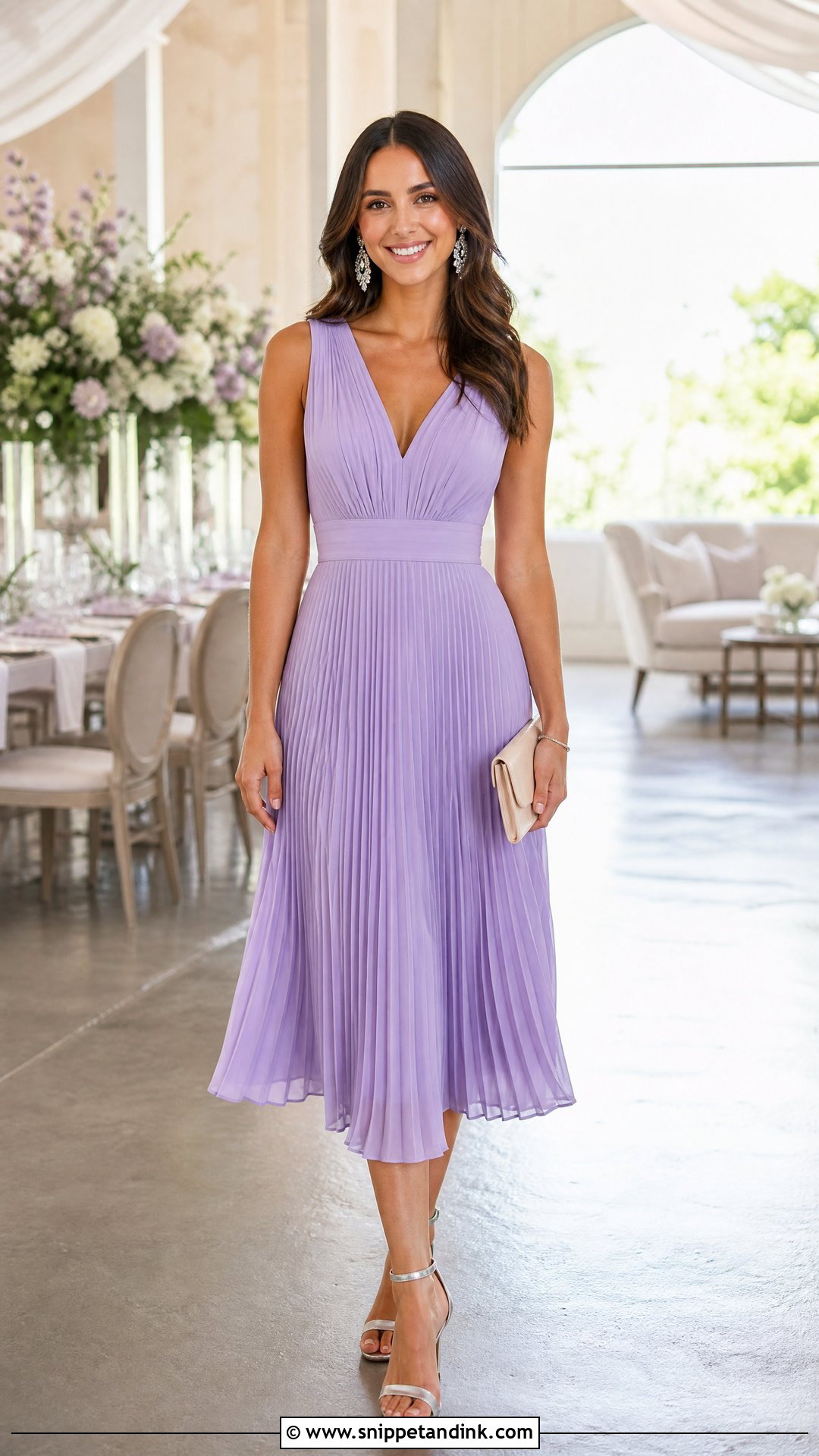
Pleats move every time you walk, which is half the appeal of a pleated midi dress at a wedding. The texture means you can keep everything else plain. I look for a defined waist so the pleats start from a narrow point instead of adding width at the hip. Lavender, mauve and soft green suit warm months; plum or bronze carries into autumn. Slim ankle-strap heels and a satin clutch are all it needs. Leave the oversized tote at home, because it crushes the pleats against your side all evening.
5. One Shoulder Dress for Wedding
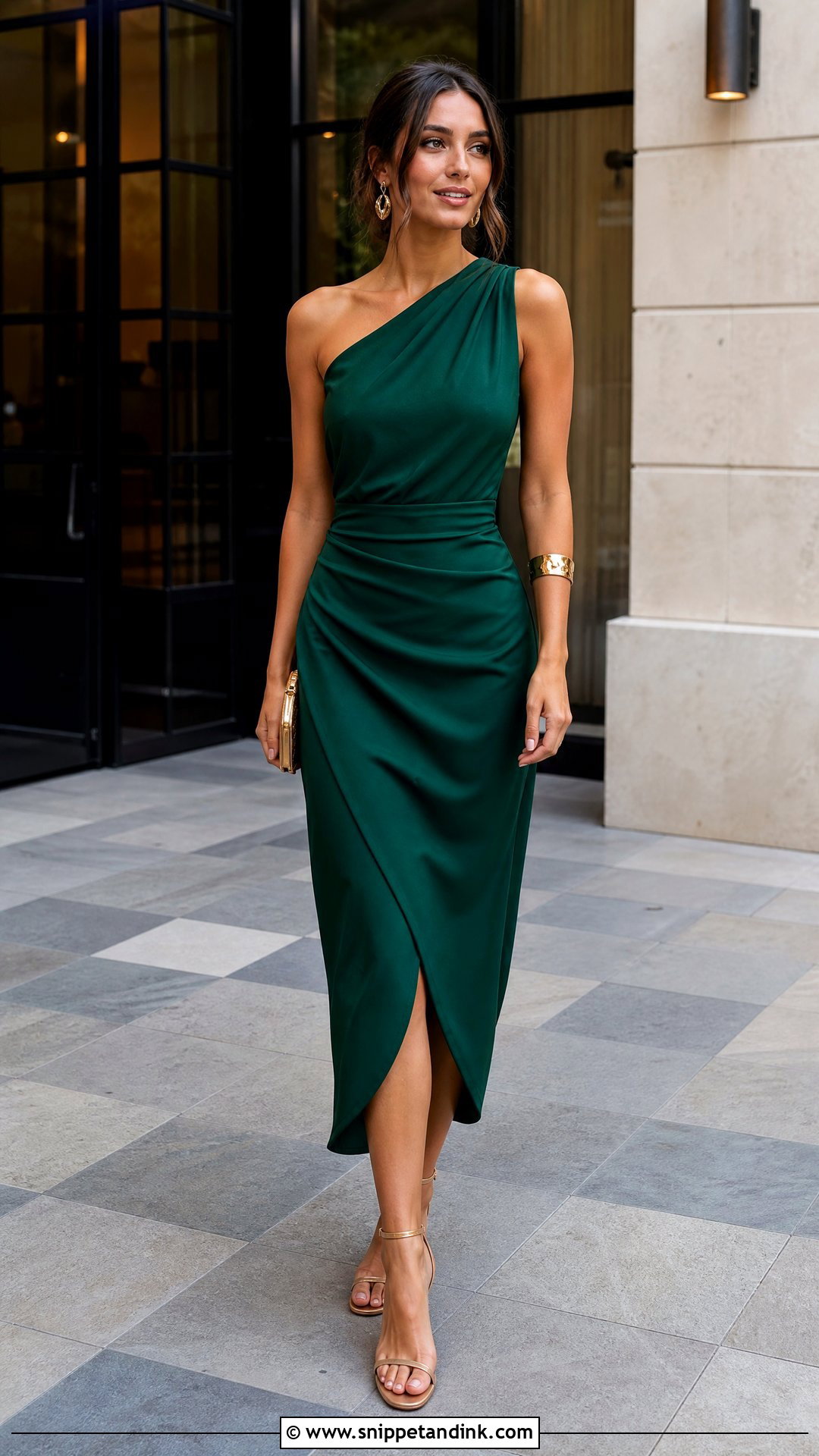
With a one shoulder neckline, the neckline is the outfit. Everything else should be quiet: a solid color, a smooth fabric and almost no jewelry. Navy, coral, emerald or deep rose at midi or maxi length suits cocktail and formal weddings. I’d wear a single cuff on the bare arm or small earrings, never a necklace, and pull the hair back or sweep it to the covered side so the line stays visible. Check the strap at the fitting by hugging someone: if the bodice slides, it needs a stitched-in grip strip.
6. Long Sleeve Midi Dress for Wedding
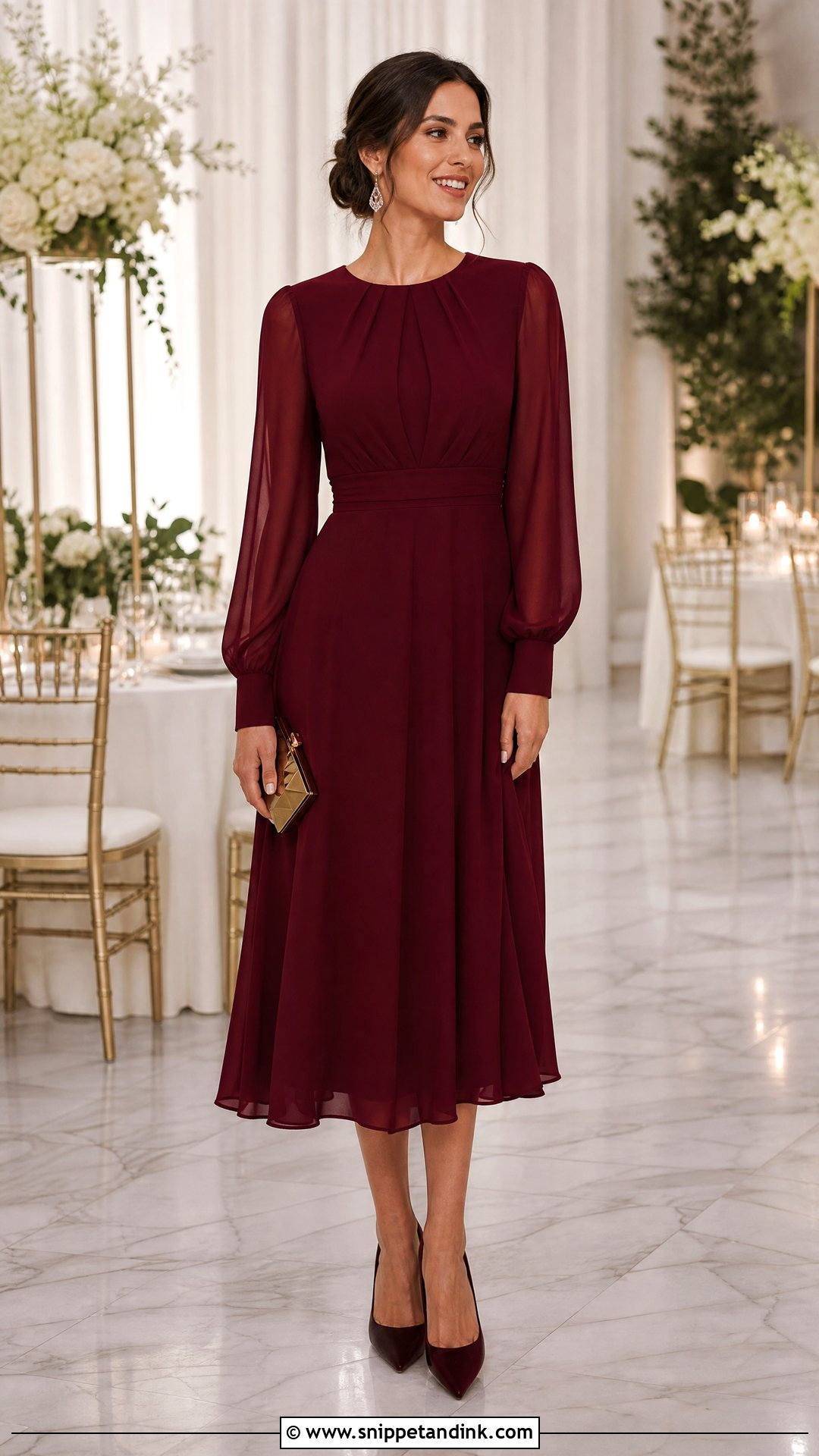
Long sleeves solve two guest problems at once: chilly churches and air-conditioned ballrooms. The trick is keeping the dress light. Sheer chiffon sleeves, soft crepe or satin stop a covered dress from looking heavy in July, while sapphire, burgundy or forest green feel right from October on. Raise your arms before you buy, because a tight sleeve pulls the whole dress up when you dance. A defined waist or a little ruching keeps the shape, and a small clutch with polished earrings is all I’d add.
7. Black Midi Dress for Wedding
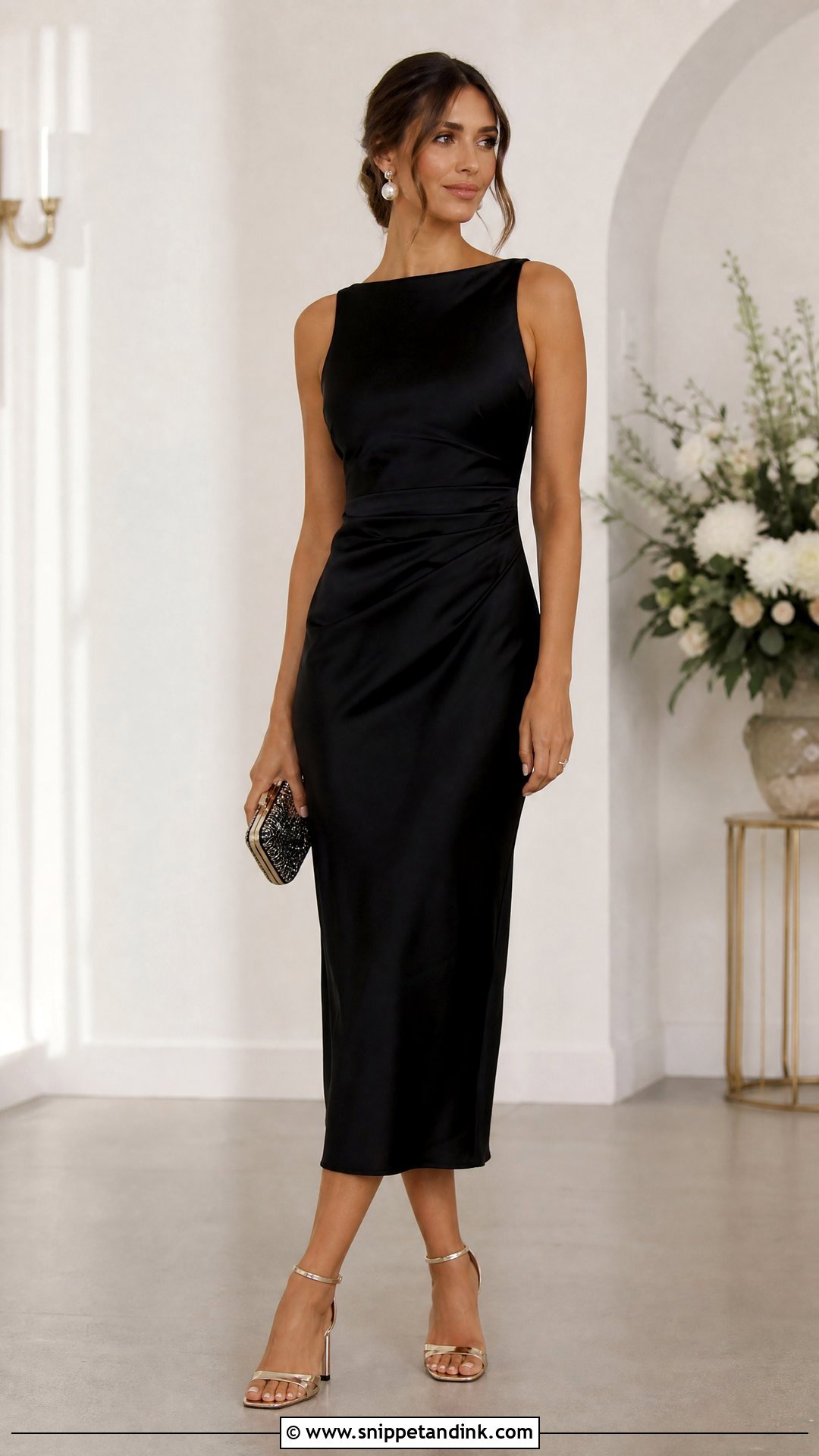
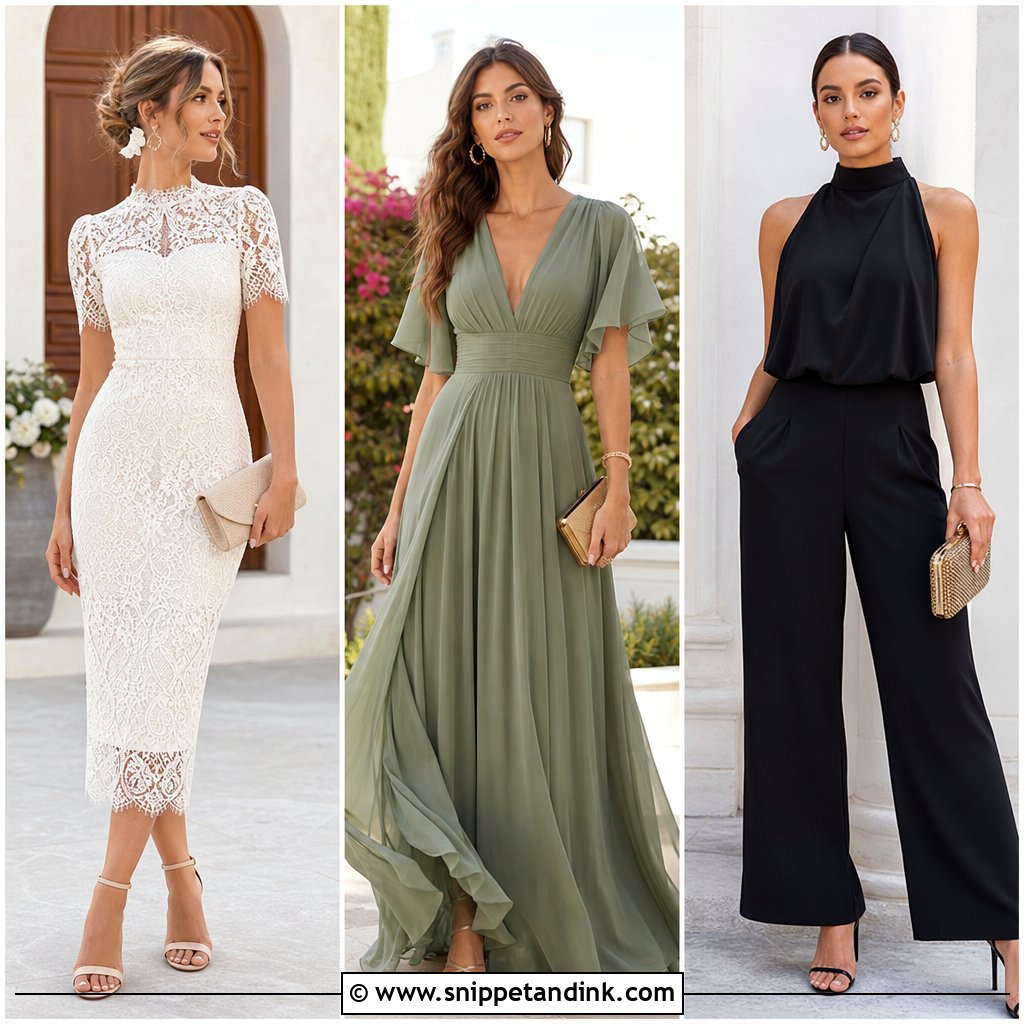
Black is wedding-appropriate at most Western evening weddings now, but it needs to look celebratory, not like the office. I’d pick a dress with one softening detail, such as a square neck, a draped bodice, a puff sleeve or a satin finish. Metallic heels and pearl earrings brighten it immediately. At a daytime wedding, swap in champagne or blush accessories so it reads lighter. If the couple’s culture treats black as a mourning color, and some do, choose navy instead. It’s also the dress you’ll wear to every formal dinner for years.
8. Navy Maxi Dress for Wedding
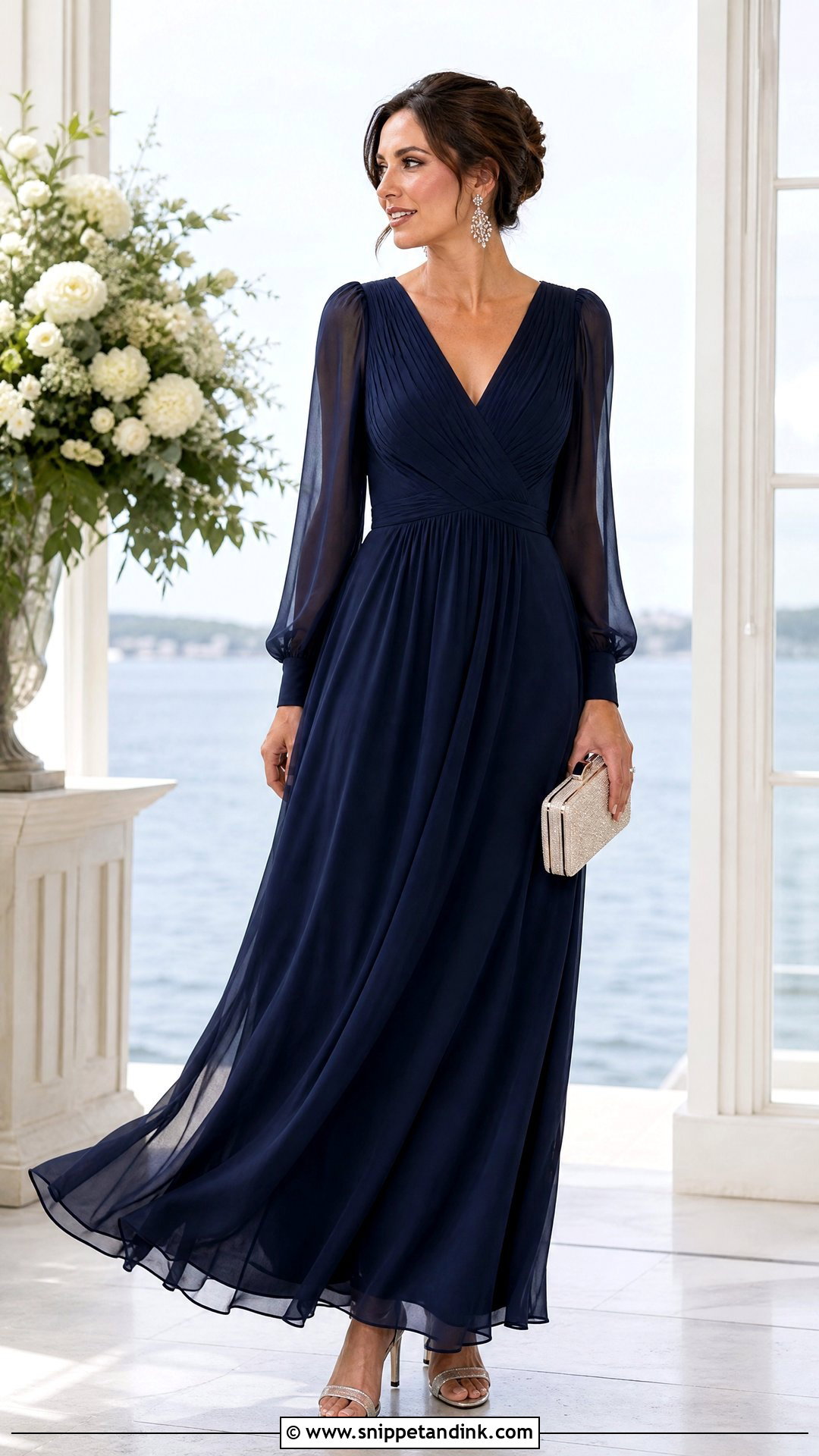
Navy is my quiet recommendation for guests who don’t want to think too hard. It’s softer than black, flatters most skin tones and suits nearly every season and dress code. A flowing chiffon or crepe maxi with a simple neckline and a little waist definition looks polished at formal, waterfront and family weddings without drawing focus. Hem it to the exact shoes you’ll wear, just clearing the floor, so you don’t spend the reception stepping on it. Silver or gold heels, a structured clutch and crystal earrings near the face add the light.
9. Pastel Maxi Dress for Wedding
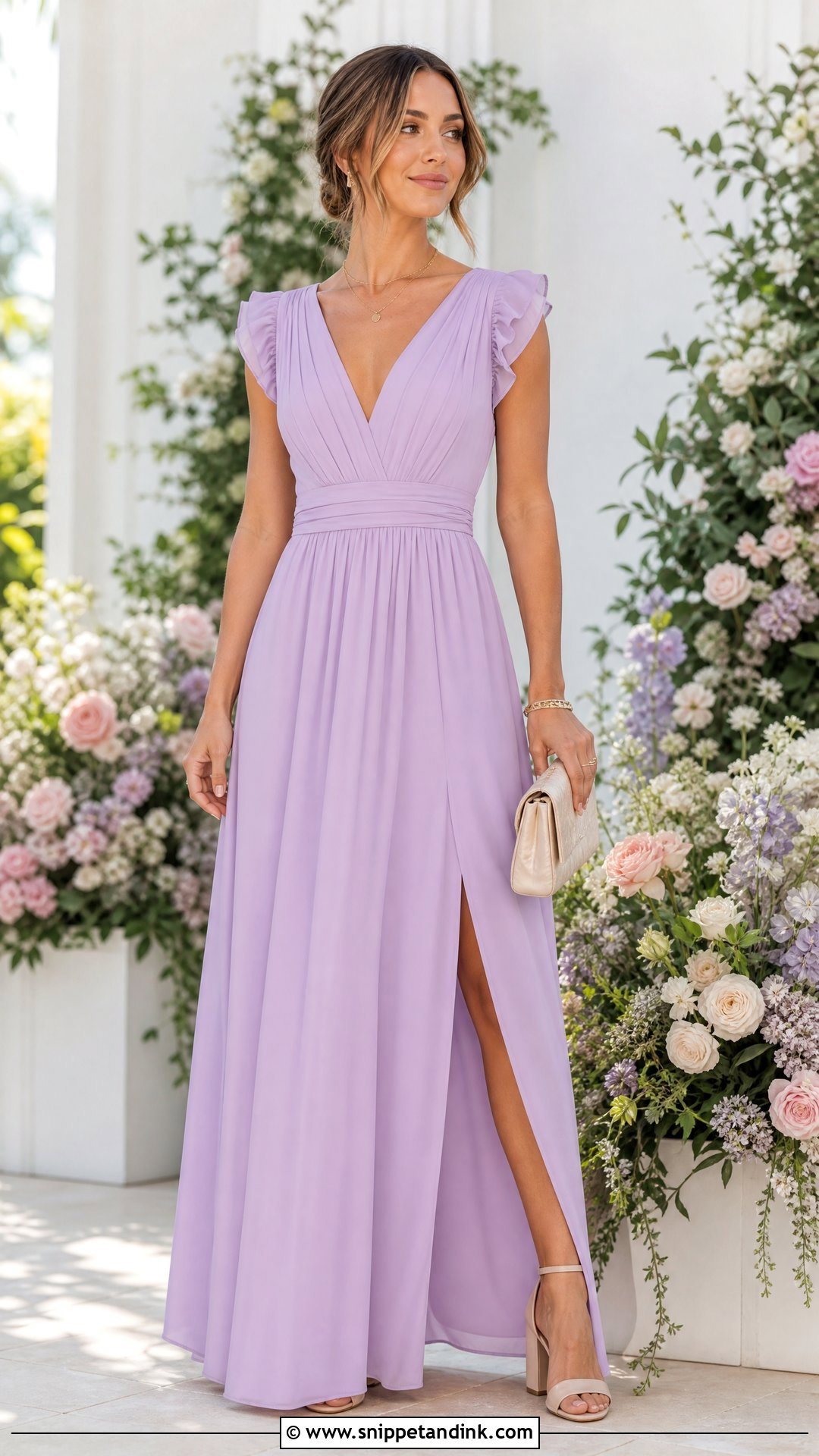
Pastel maxis are easy to wear in warm weather and easy to get wrong. The risk is a shade so pale it reads white in photos, especially under bright sun or a flash. I look for real color depth in lavender, powder blue, mint or peach, or a print that breaks it up. Nude block heels sink less into a garden lawn than stilettos, and a small structured clutch keeps a flowy dress from looking undone. A low bun or soft waves finishes it for garden, beach and daytime venues.
10. Ruffle Hem Dress for Wedding
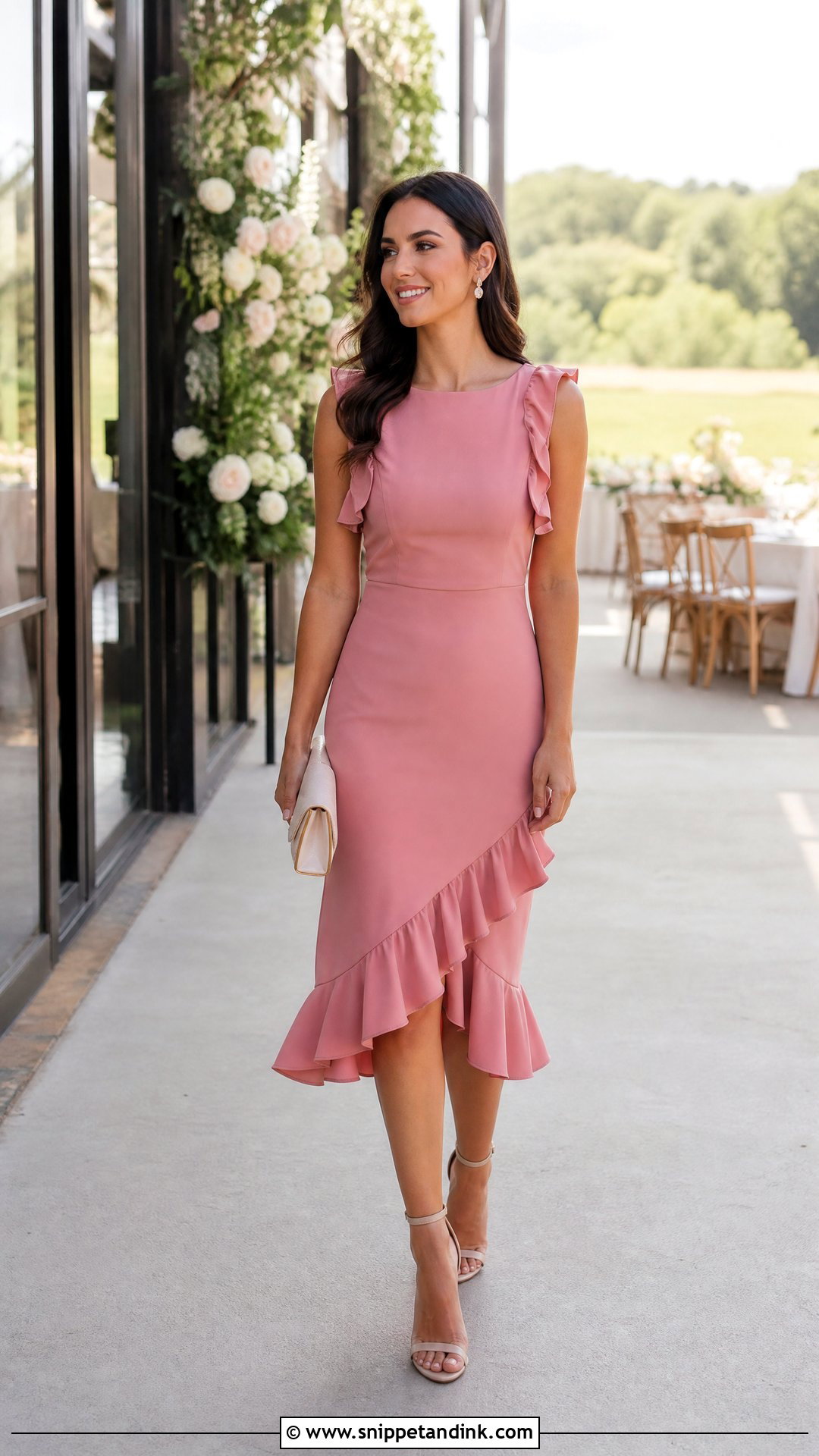
The ruffle is the only decoration a ruffle hem dress needs. Proportion matters most: a small flounce at the hem or sleeve looks festive, while a deep, stiff ruffle can make a midi look like a costume. Rose, teal, navy and green suit most dress codes. Because the hem already moves, keep the shoes slim and the earrings minimal. One practical note from fittings: lightweight ruffles flip up in the wind, so if the ceremony is outdoors, a fabric with a little weight behaves better.
11. A Line Dress for Wedding
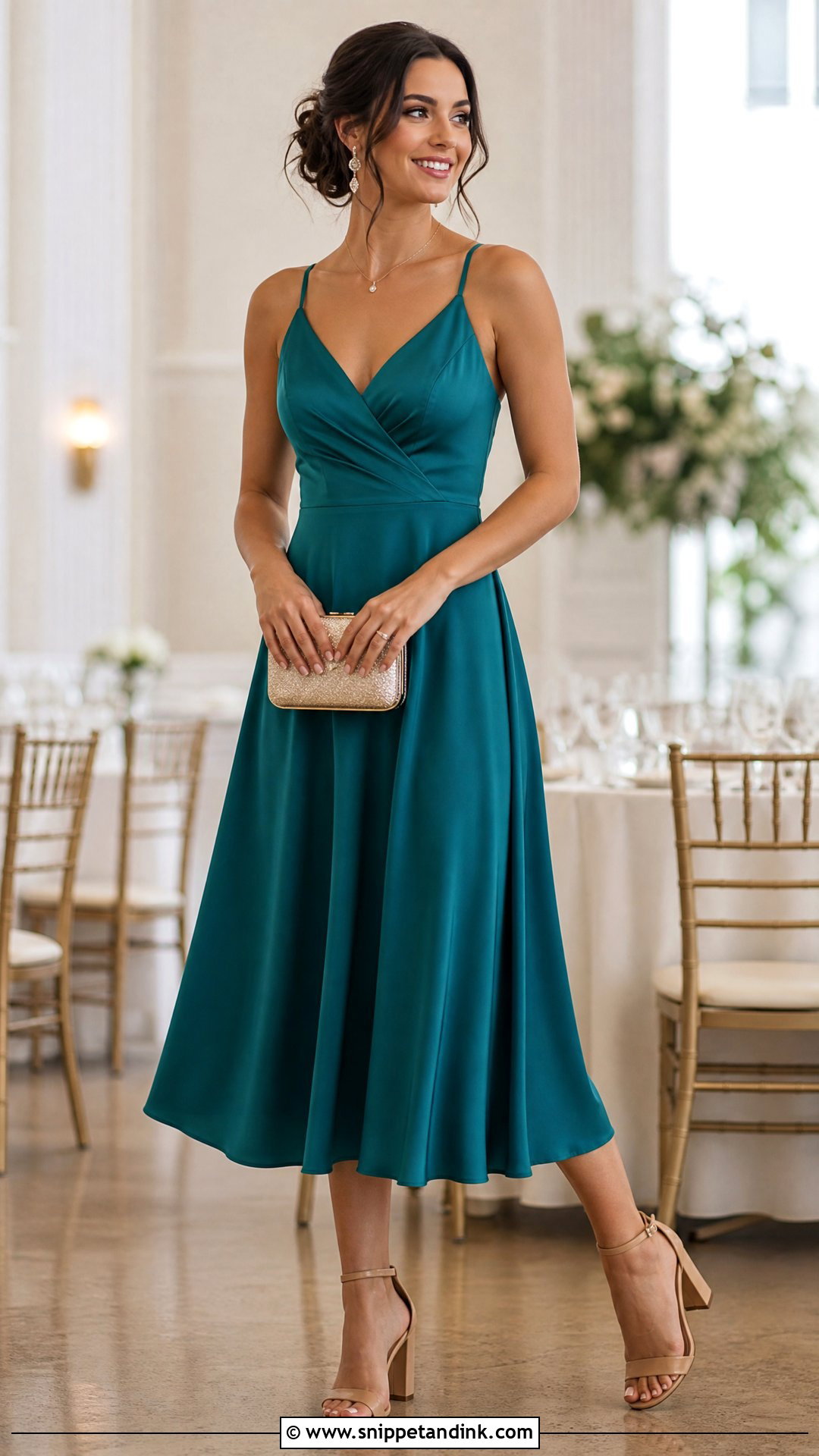
Fitted at the waist, opening gently through the skirt, the A-line is the shape I’d hand to almost any guest who wants to sit through dinner and dance afterward without thinking about her dress. Crepe, satin, chiffon or jacquard at midi or knee length all work. Wider straps or a square neck add structure if you want support without a strapless bra. Block heels, a small clutch and simple jewelry keep it classic, and the cut suits a wide range of ages and figures.
12. Off Shoulder Dress for Wedding
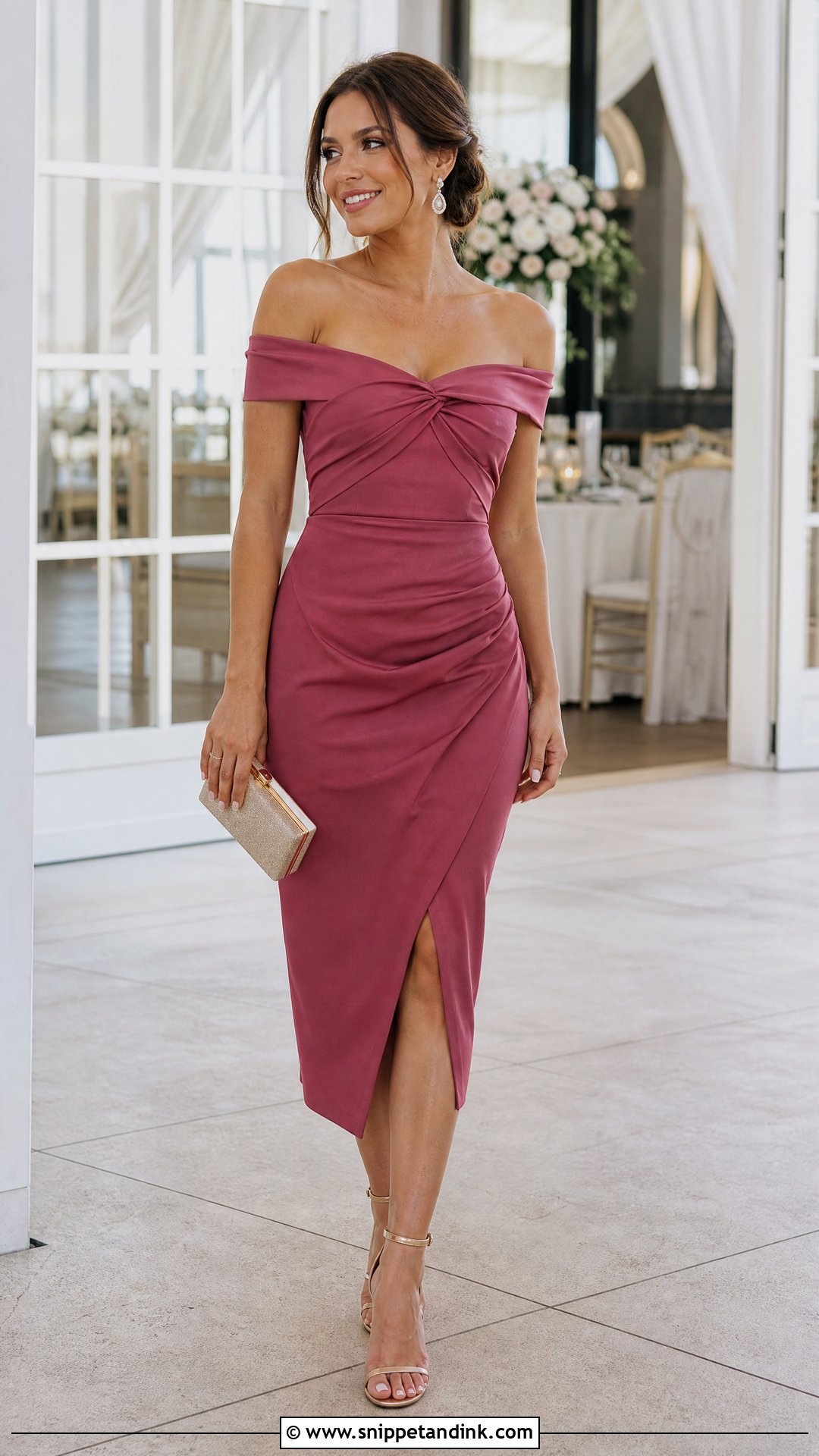
Off-shoulder dresses look refined when the fit is exact and fussy when it isn’t. Balance the open neckline with a midi or maxi length and a fitted bodice over a flowing skirt. Deep rose, slate blue and plum feel evening-ready; brighter tones suit summer. My usual warning: the neckline creeps up when you hug or wave, so look for a bodice with silicone grip inside. Wear earrings instead of a necklace, and bring a wrap, because off-shoulder in a cold venue is miserable by the speeches.
13. Green Satin Dress for Wedding
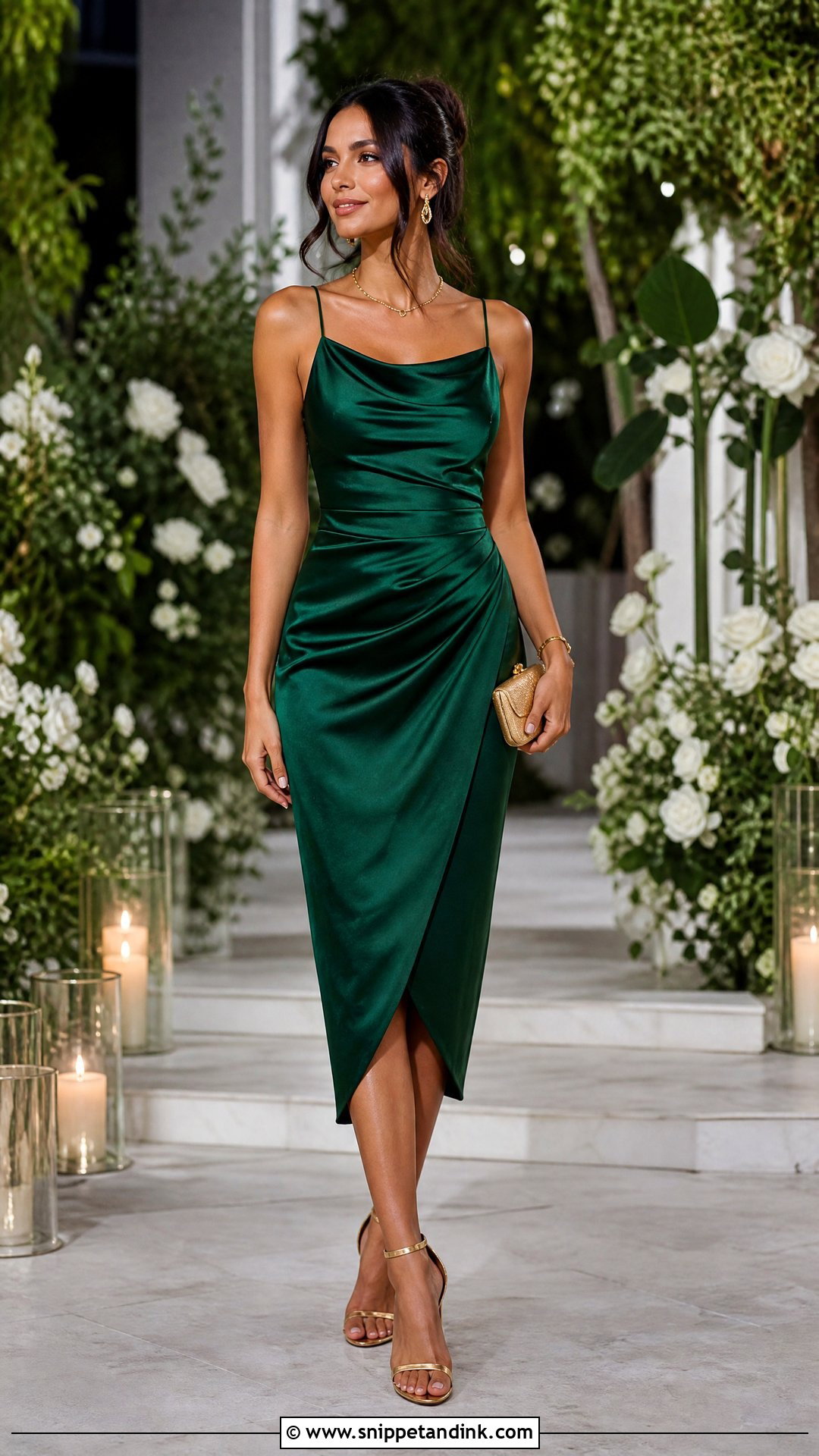
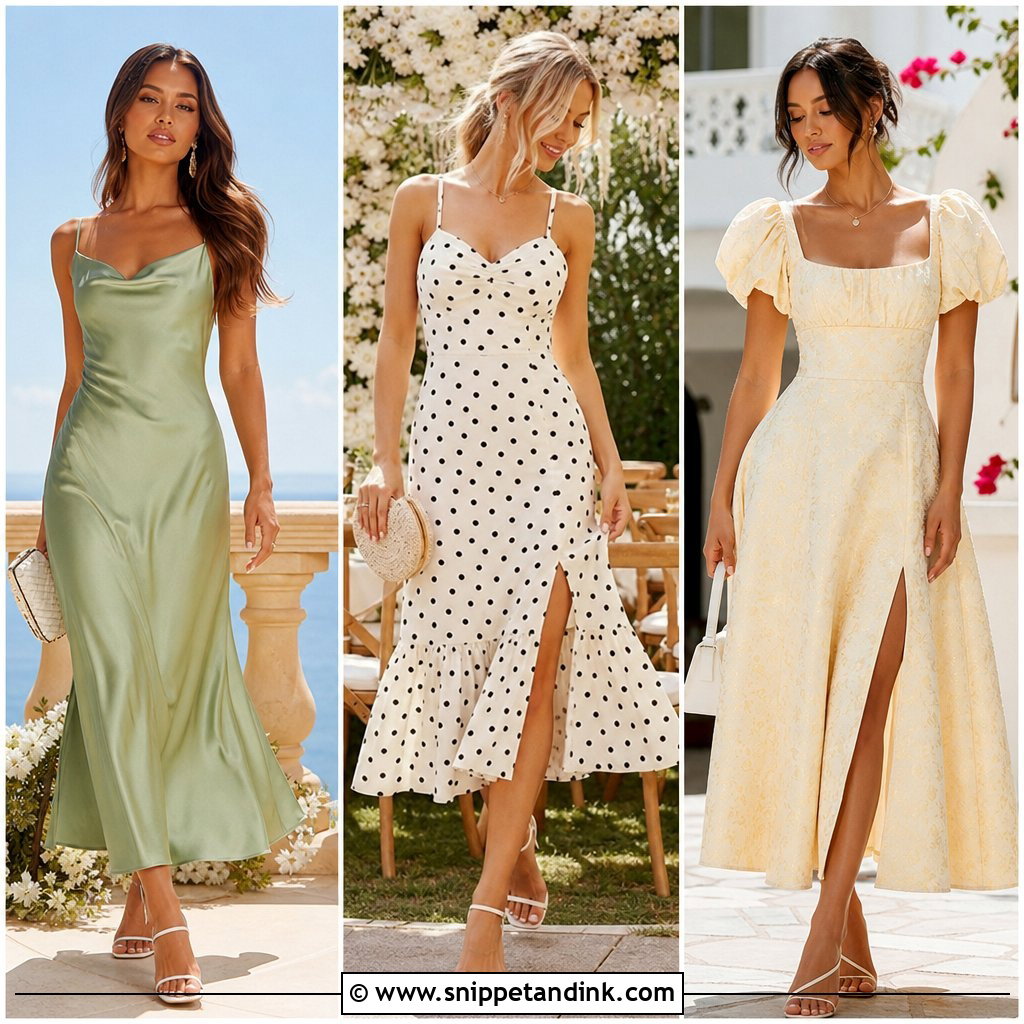
Green satin gives you color without shouting. Sage looks fresh in daylight, emerald holds up to black tie, and olive feels modern in autumn. Midi is the easiest length, since it works with sandals, pumps or slingbacks. Very shiny satin shows sweat marks under the arms and creases across the lap, so in summer I’d pick a matte or crepe-back satin. Gold heels, a champagne clutch and fine gold jewelry warm it up, and green sits naturally in garden and outdoor settings.
14. Blue Chiffon Dress for Wedding
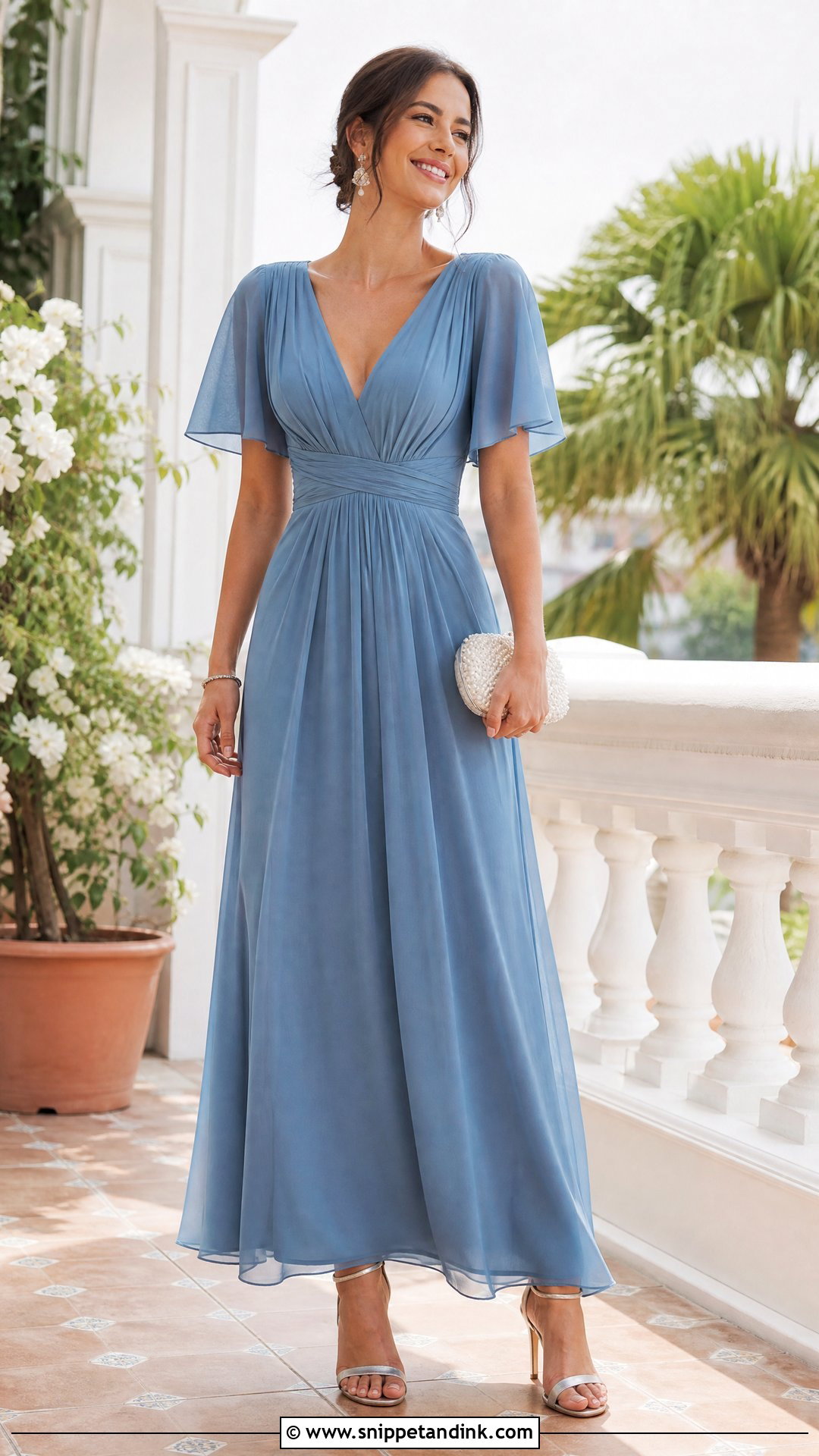
Chiffon is weightless to wear, which is why a blue chiffon dress is such a good choice for a summer ceremony that runs late. Dusty blue and cornflower suit daytime; slate or deep ocean blue suits the evening. A soft waistline, flutter sleeves or a simple V-neck keeps it easy. Chiffon is sheer by nature, so I always check that the skirt is lined at least to the knee before a guest buys it. Silver heels, a pearl clutch and delicate earrings suit it, and block heels are safer than stilettos on grass.
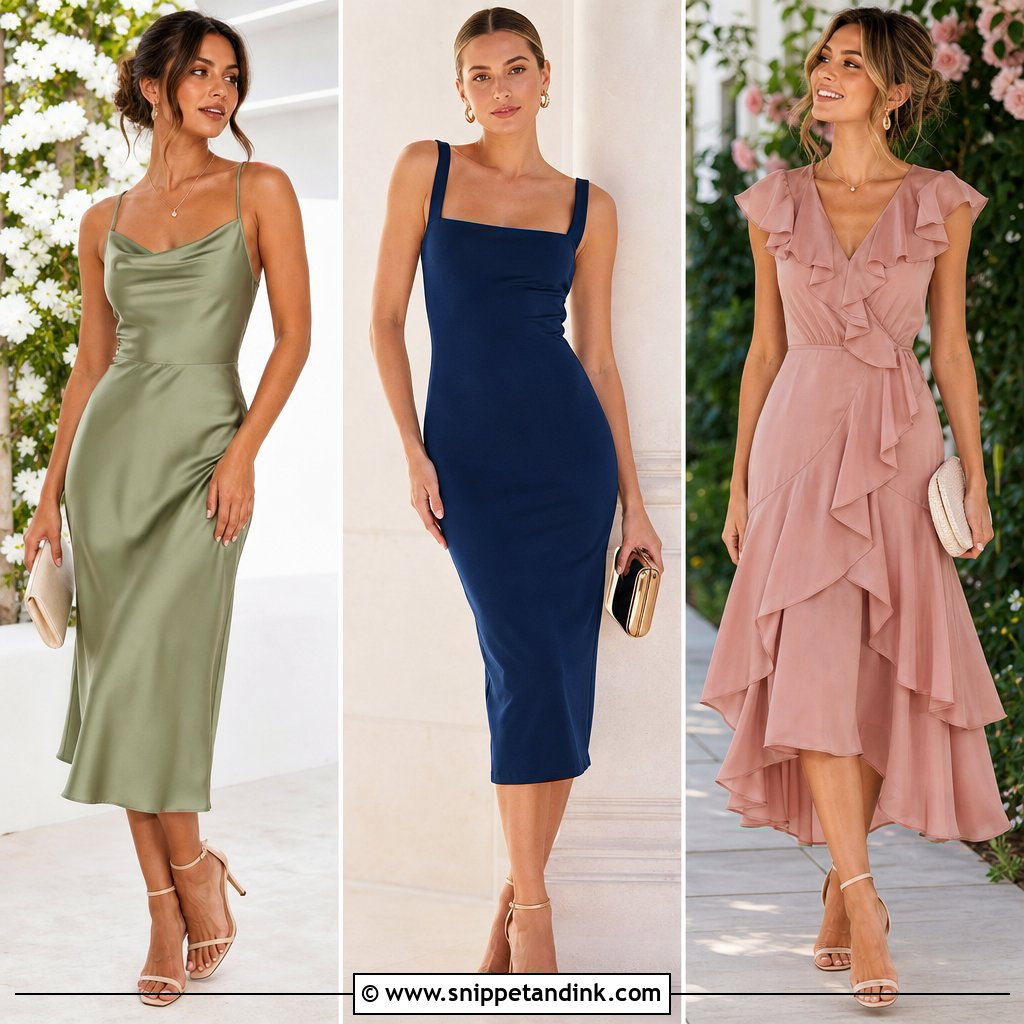
15. Burgundy Dress for Wedding
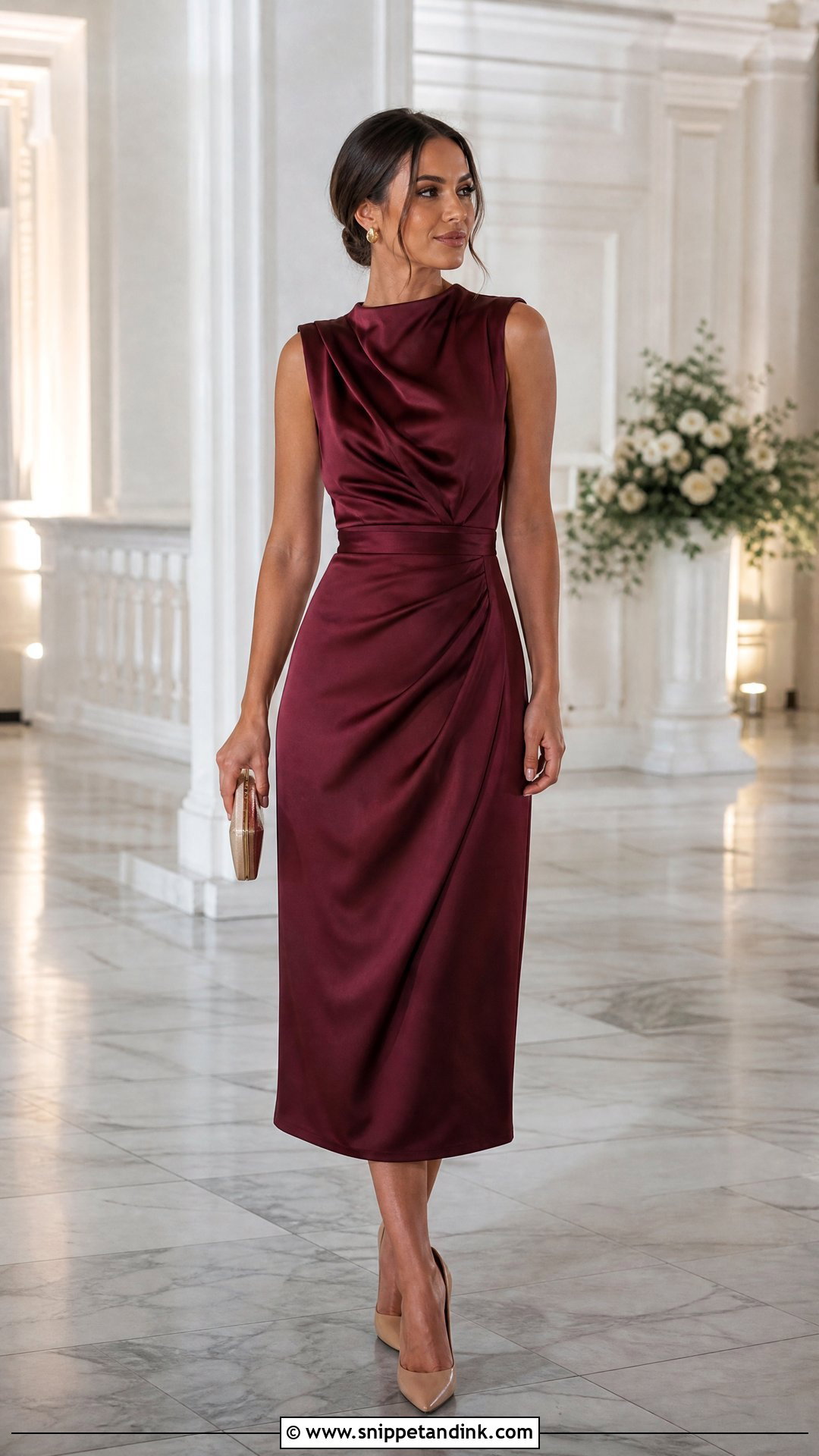
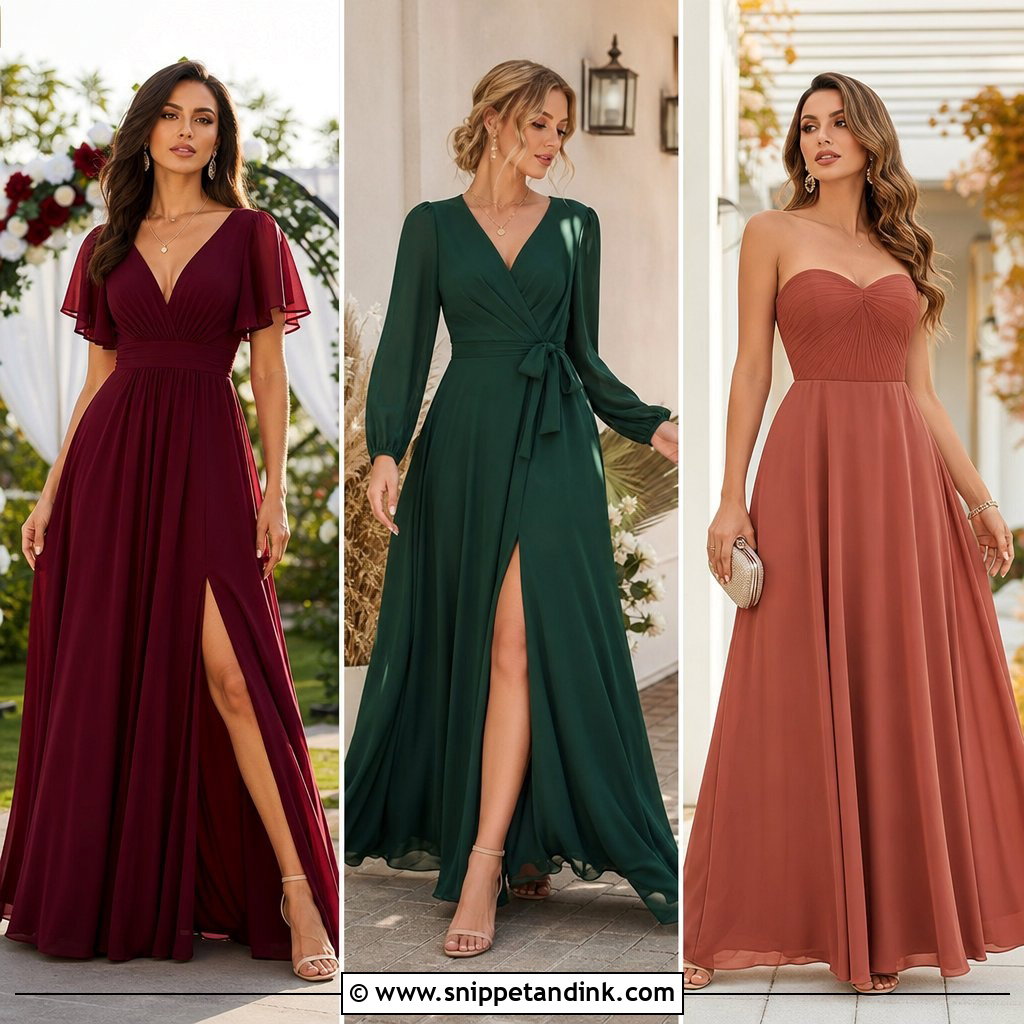
Burgundy is rich without being loud, and it’s the color I reach for at autumn, winter and evening weddings. It suits satin, velvet, chiffon and crepe, and a midi wrap, a long-sleeve cut or a slip shape all look finished with very little styling. For a daytime wedding, a lighter fabric stops it from feeling heavy. Nude, gold or metallic heels, a structured clutch and small earrings are enough. Burgundy also hides a dropped splash of red wine better than almost any other shade, which is not nothing at a reception.
16. Polka Dot Midi Dress for Wedding
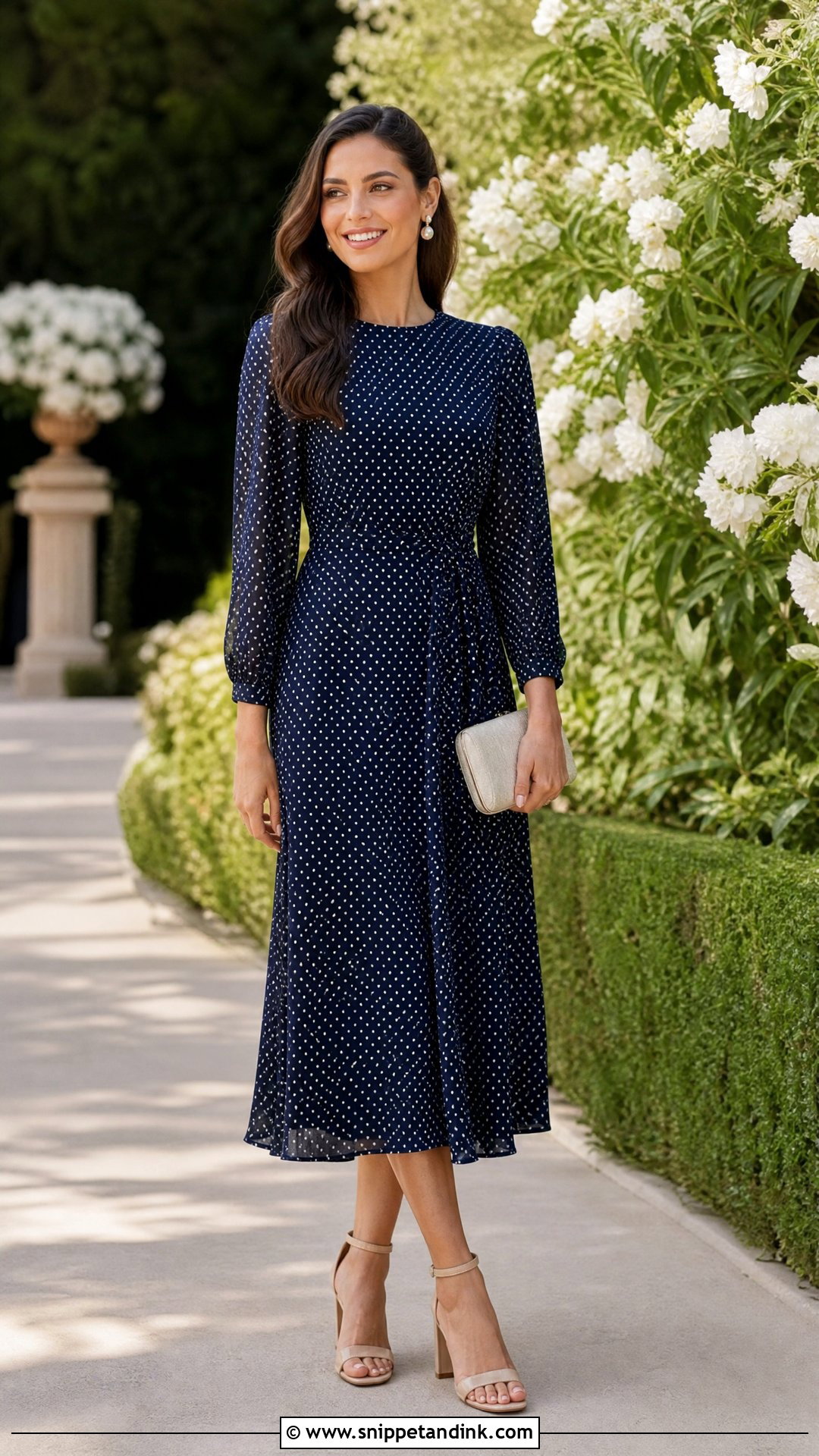
Polka dots look charming at a wedding when the dots are small and the contrast is gentle. A polka dot midi dress in navy with white dots, brown with cream or black with tiny dots reads polished rather than playful. Large, high-contrast dots can vibrate on camera, so I steer guests away from those. A wrap or a defined waist keeps the shape flattering. Simple block heels, a compact clutch and small pearl earrings suit daytime, garden and semi-formal weddings.
17. Tiered Maxi Dress for Wedding
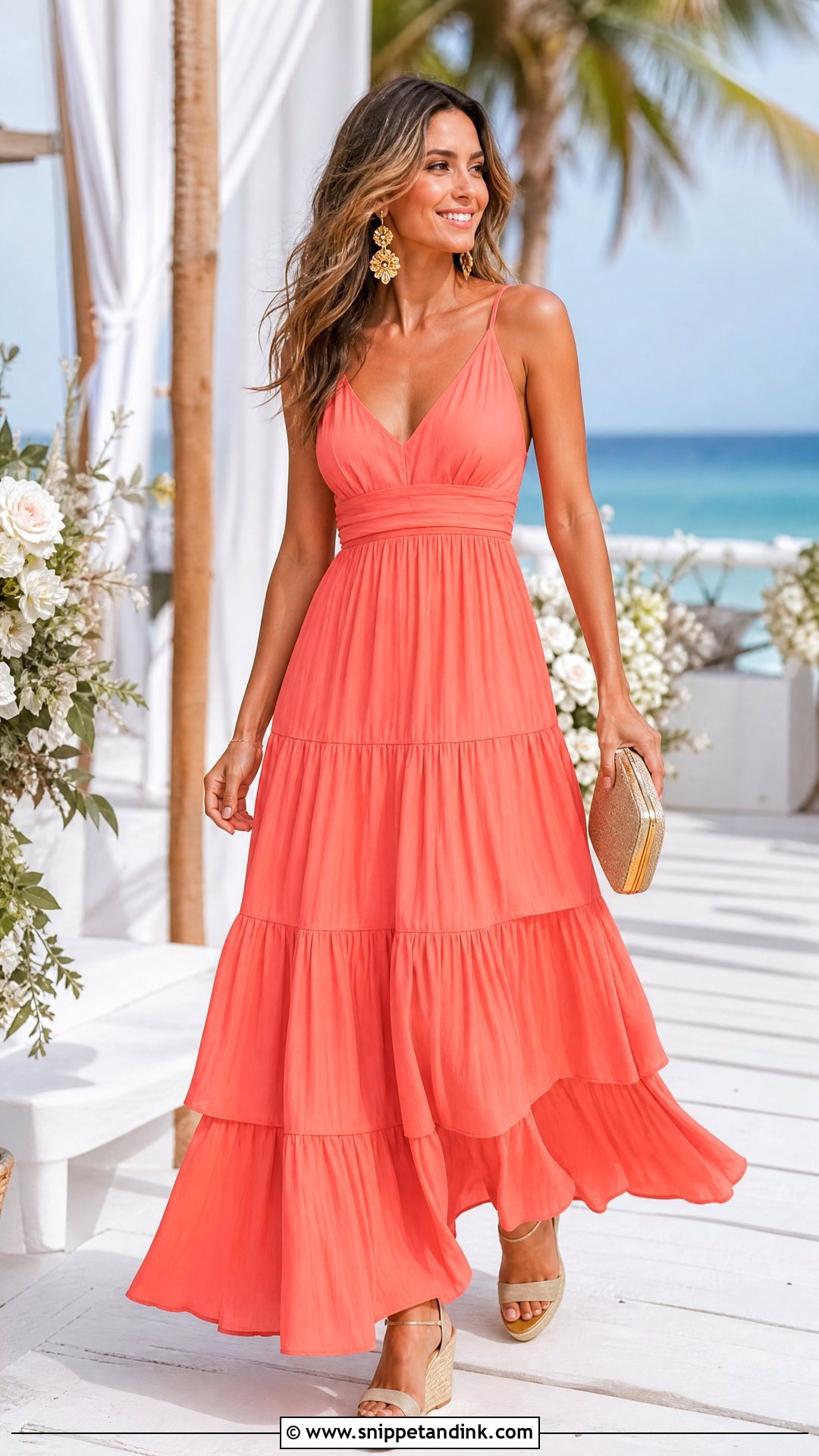
A tiered maxi is built for comfort, which is why I like it for beach, garden and long outdoor weddings. The fabric decides whether it looks dressy or like a holiday sundress. Chiffon or georgette with a smooth finish looks right; crinkled cotton usually doesn’t. Keep the bodice fitted so the tiers fall from a clear waist rather than hanging loose. Coral, mauve, green or a soft floral all work. Block heel sandals or wedges stay steady on sand and grass, and a small clutch with simple gold jewelry is all it needs.
18. Halter Neck Dress for Wedding
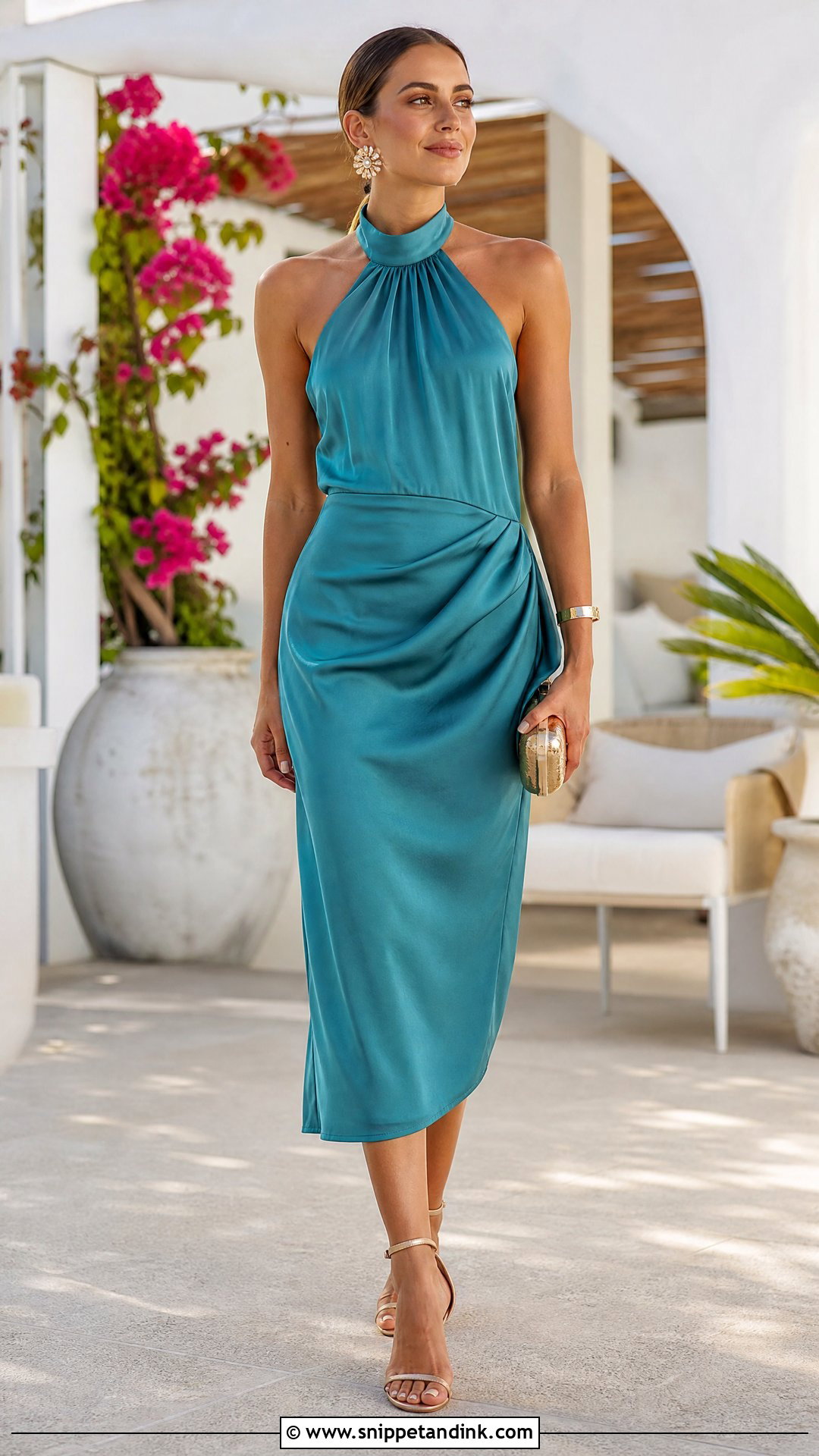
A halter neck dress draws the eye upward, so skip the necklace and let earrings or a sleek bracelet do the work. Satin, crepe or chiffon in teal, navy, coral or deep pink looks polished at cocktail, resort and evening weddings. Open-backed halters need a proper fit check. Bend forward and sit down in it, because a halter back can gape and the neck tie can drag after a few hours. Strappy sandals and a small clutch keep the look clean.
19. Square Neck Dress for Wedding
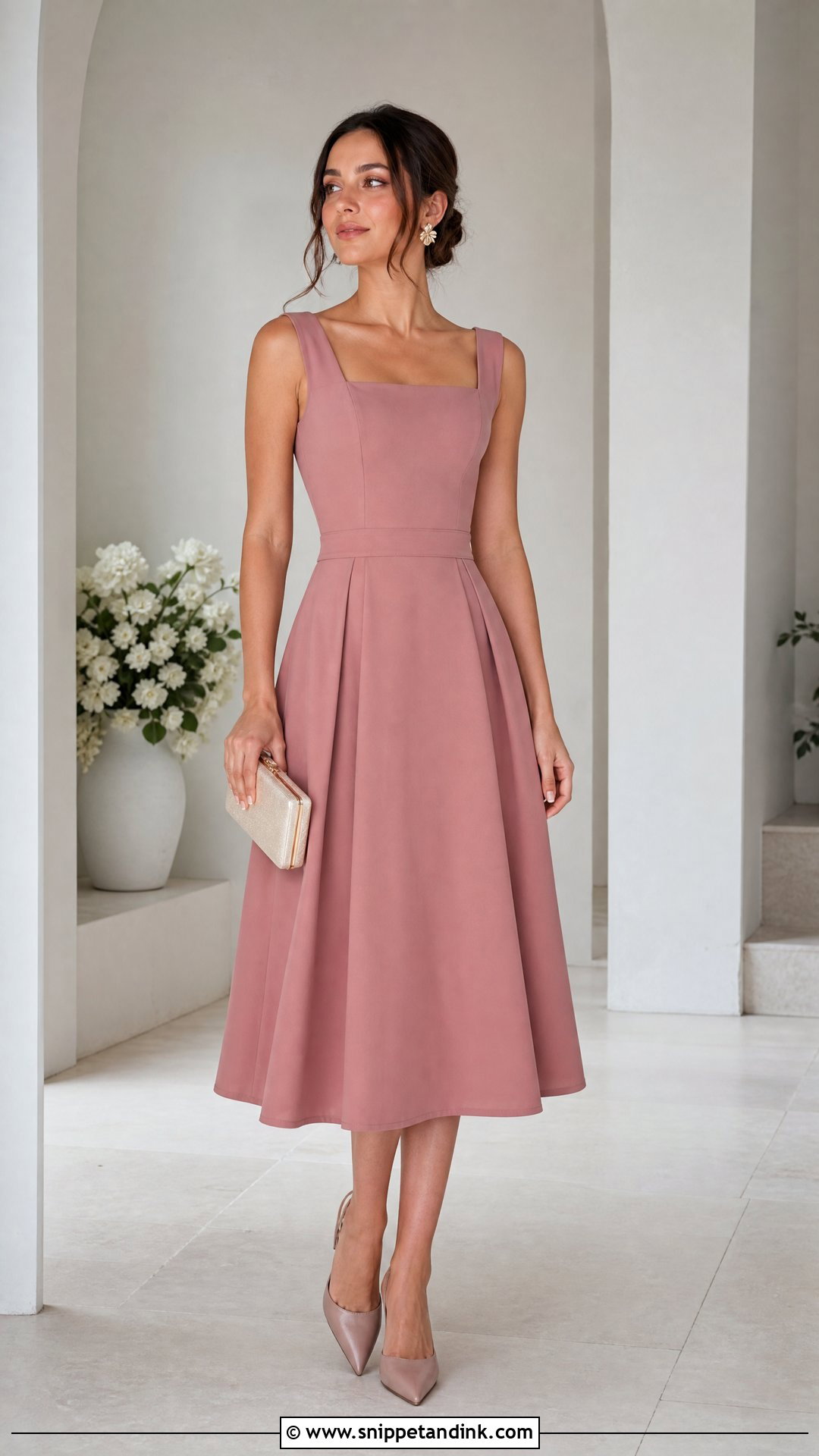
A square neckline frames the collarbone neatly and gives you coverage without looking prim. It needs fabric with enough weight to hold that straight edge; in thin jersey it collapses into a scoop by lunchtime. Crepe, satin and smooth jacquard keep it crisp. Rose, rust, emerald and dusty blue all suit a wedding. Pointed slingbacks or thin sandals, a small clutch and short earrings that stop above the neckline are the only additions I’d make.
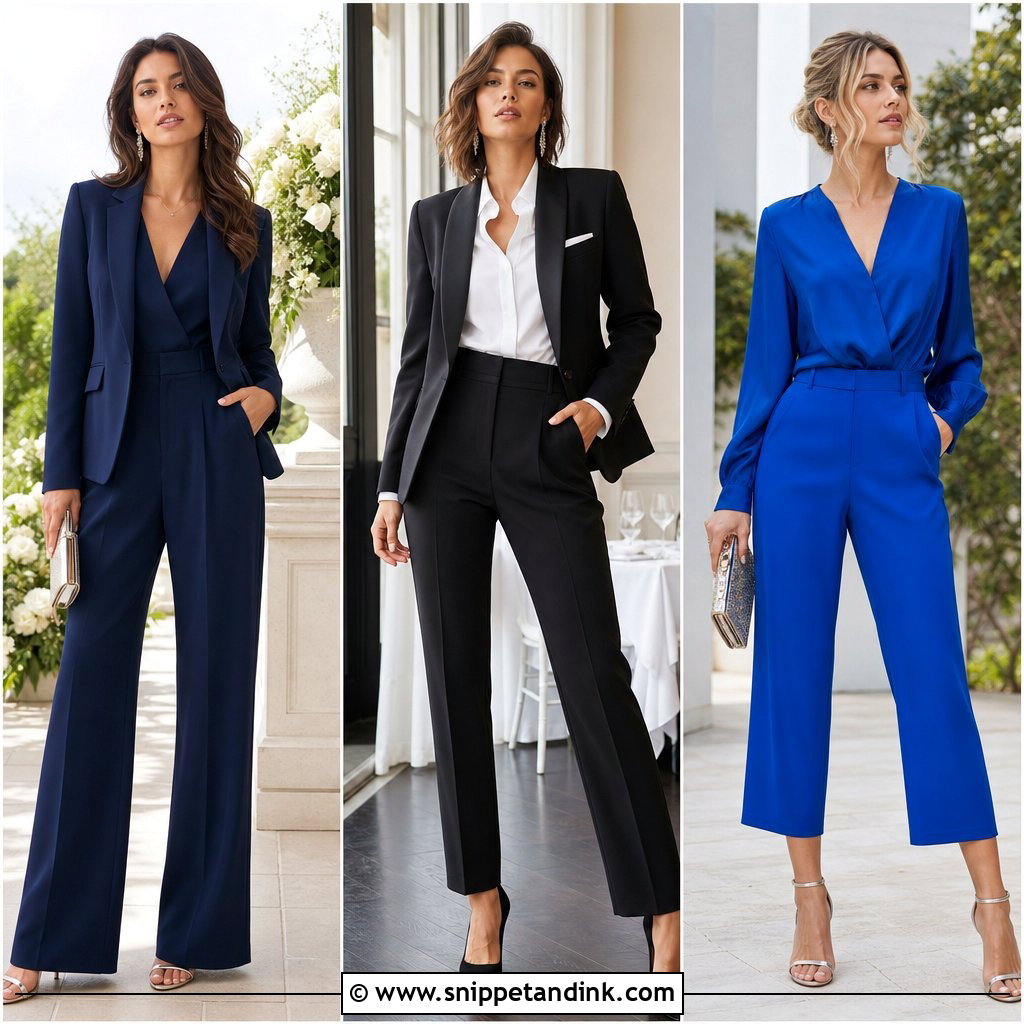
20. Ruched Midi Dress for Wedding
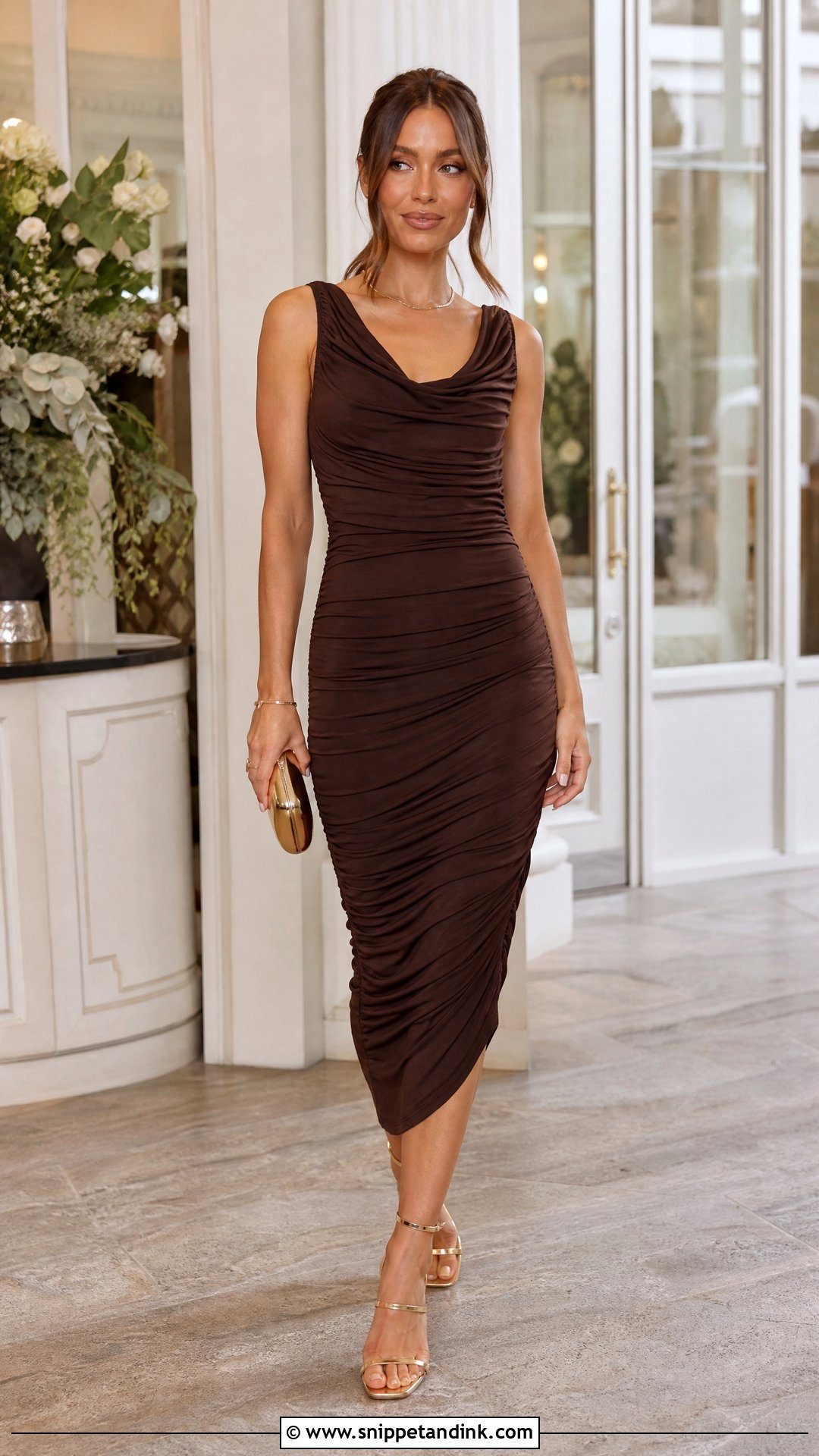
Ruching is my favorite trick for guests who want a fitted dress that still lets them eat dinner. The gathered fabric gives shape and soft texture, and it hides the small creases that appear after hours of sitting. Look for side or waist ruching or a draped bodice rather than tight bodycon fabric. Deep rose, chocolate, navy, emerald and plum suit cocktail weddings. If the dress has a slit, check how high it opens when you sit, and keep the rest of the styling modest.
21. Lace Trim Dress for Wedding
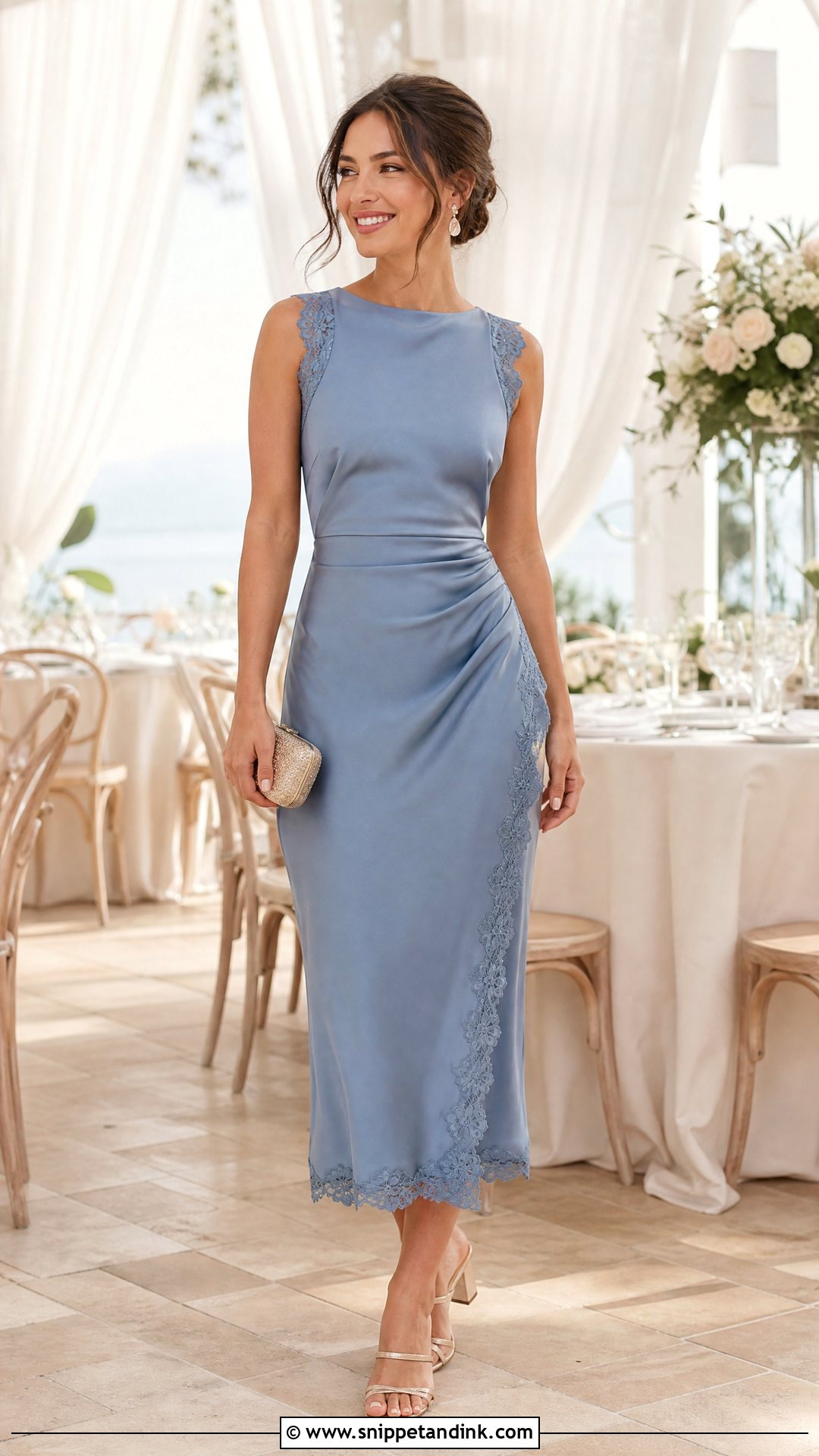
Lace trim is a way to borrow lace’s romance without wearing anything that looks bridal. I look for lace at the neckline, sleeves or hem on a colored dress, never an all-over lace dress in a pale shade. A satin midi with lace trim in blue, rose, sage or deep brown suits summer evenings and garden receptions. Avoid white, ivory or very pale lace unless the couple has asked for it, because that is exactly what guests remember. Thin heeled sandals and delicate earrings finish it.
22. High Low Dress for Wedding
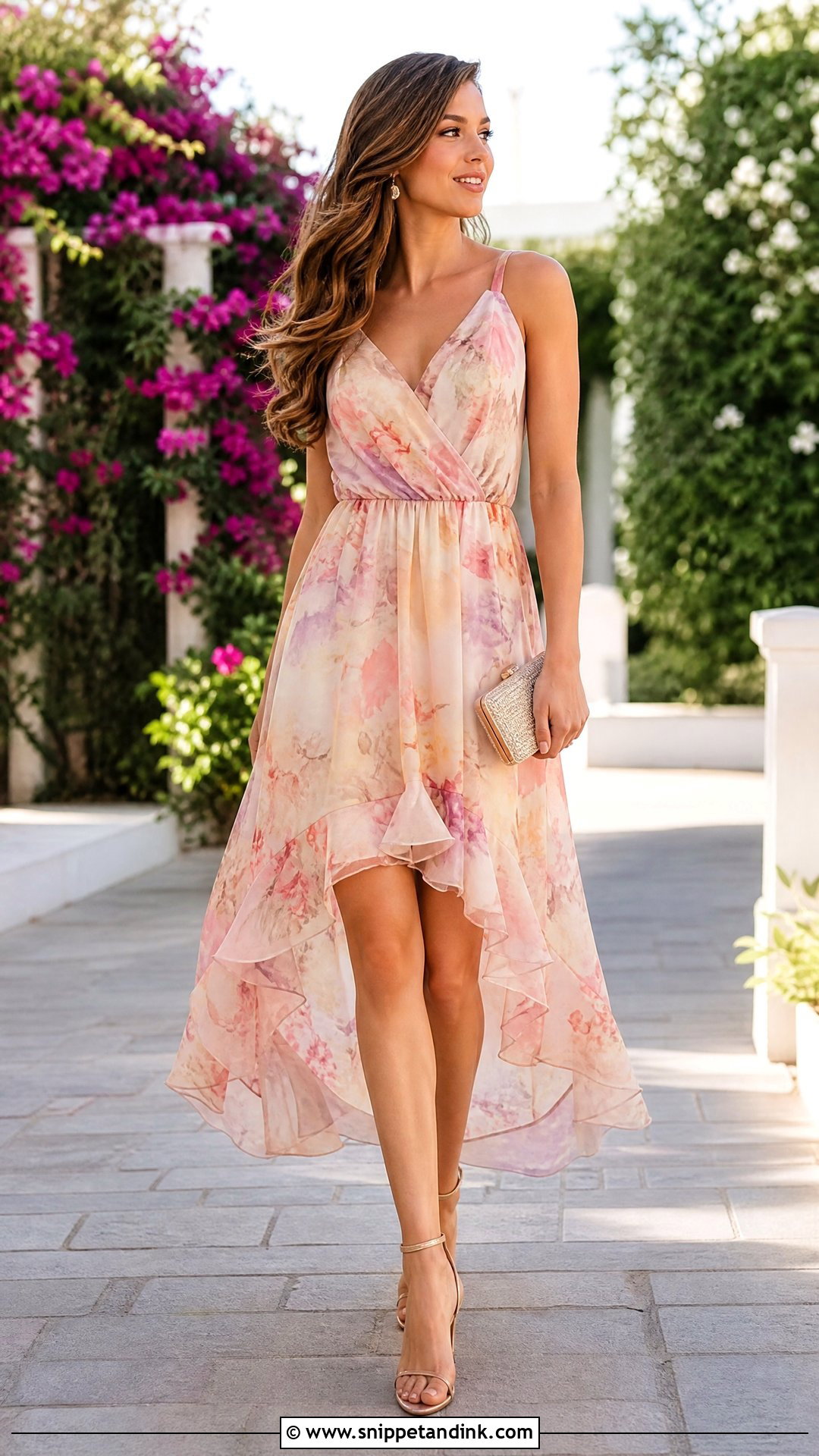
High-low hems give you movement without a full-length gown. The short front shows your shoes and the longer back adds flow, so the shoes will be on display all day. Choose a pair that is comfortable before it’s anything else. Chiffon and satin move well, and florals, jewel tones or deeper pastels all suit the shape. I like it for outdoor weddings because it feels lighter than a maxi and stays out of wet grass. A neat clutch and small earrings keep the attention on the hemline.
23. Blazer Dress for Wedding
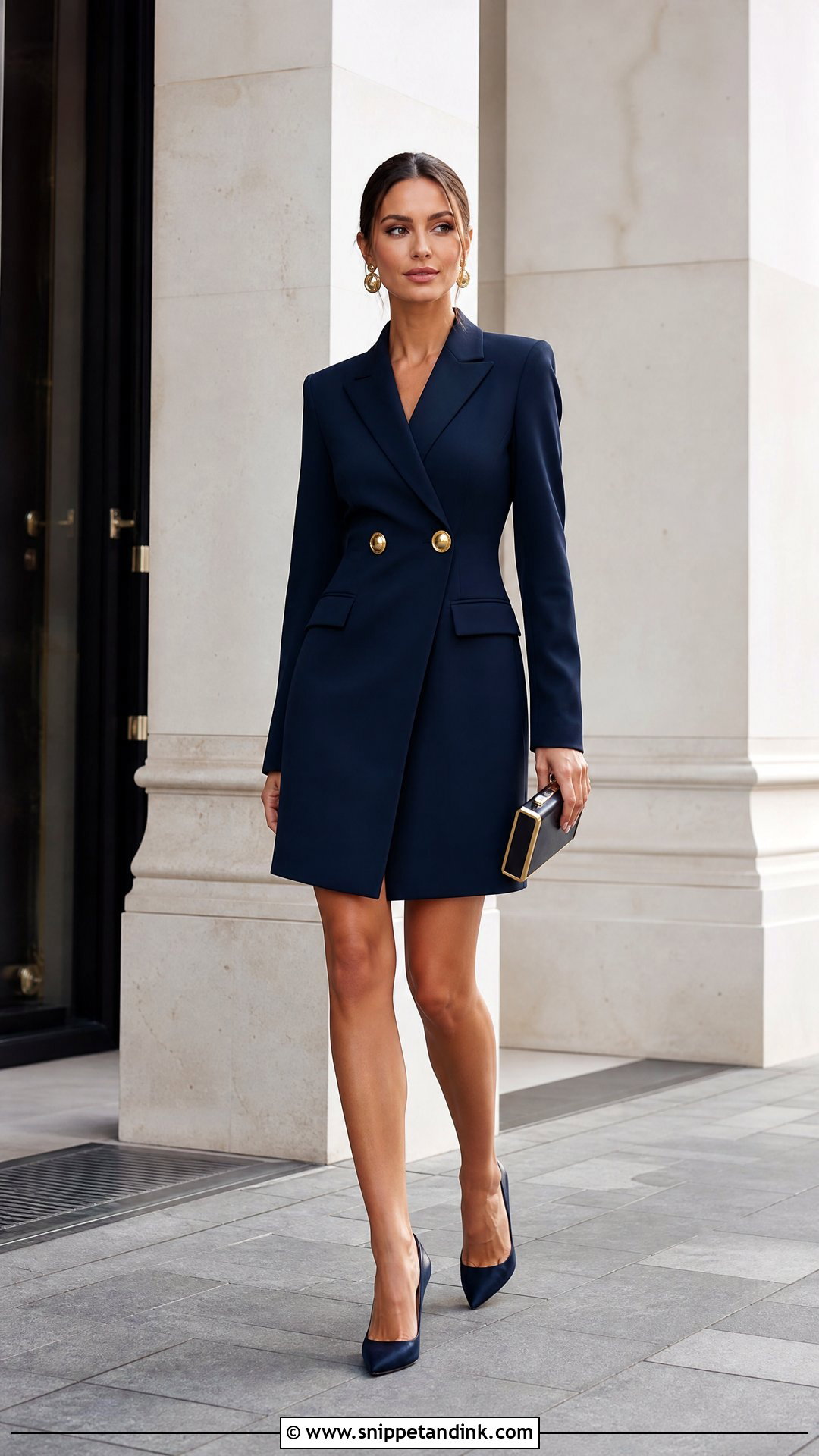
Blazer dresses work for a wedding when they’re cut longer and made in a dressier fabric than anything you’d wear to work. Satin or crepe in blush, emerald or soft blue reads like an occasion; wool suiting in grey reads like a Monday. Keep it midi or knee length, and sit down in it before buying, since blazer dresses ride up. Pointed heels or strappy sandals, a structured clutch and polished earrings suit city weddings, courthouse ceremonies and cocktail receptions.
24. Velvet Midi Dress for Wedding
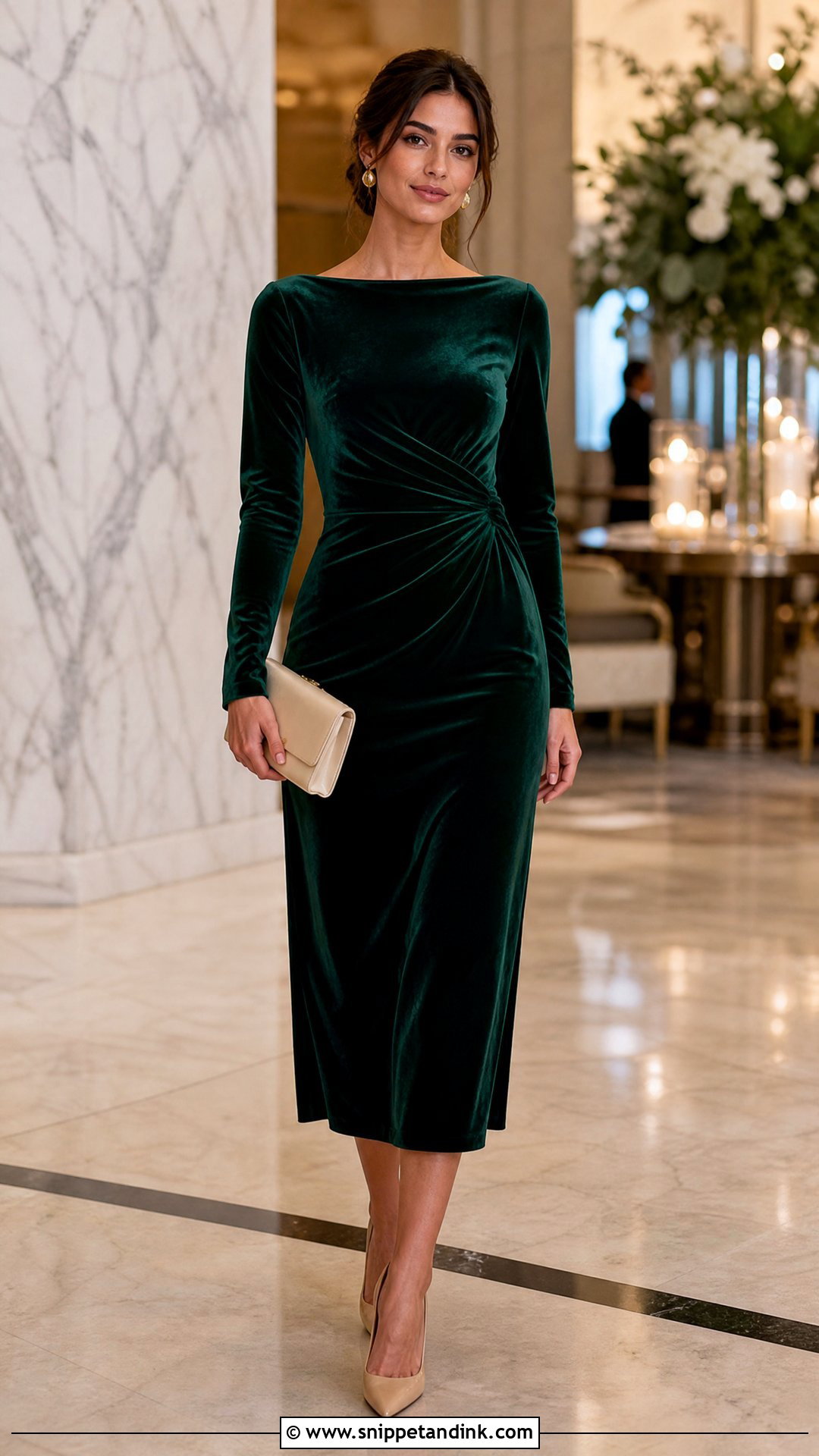
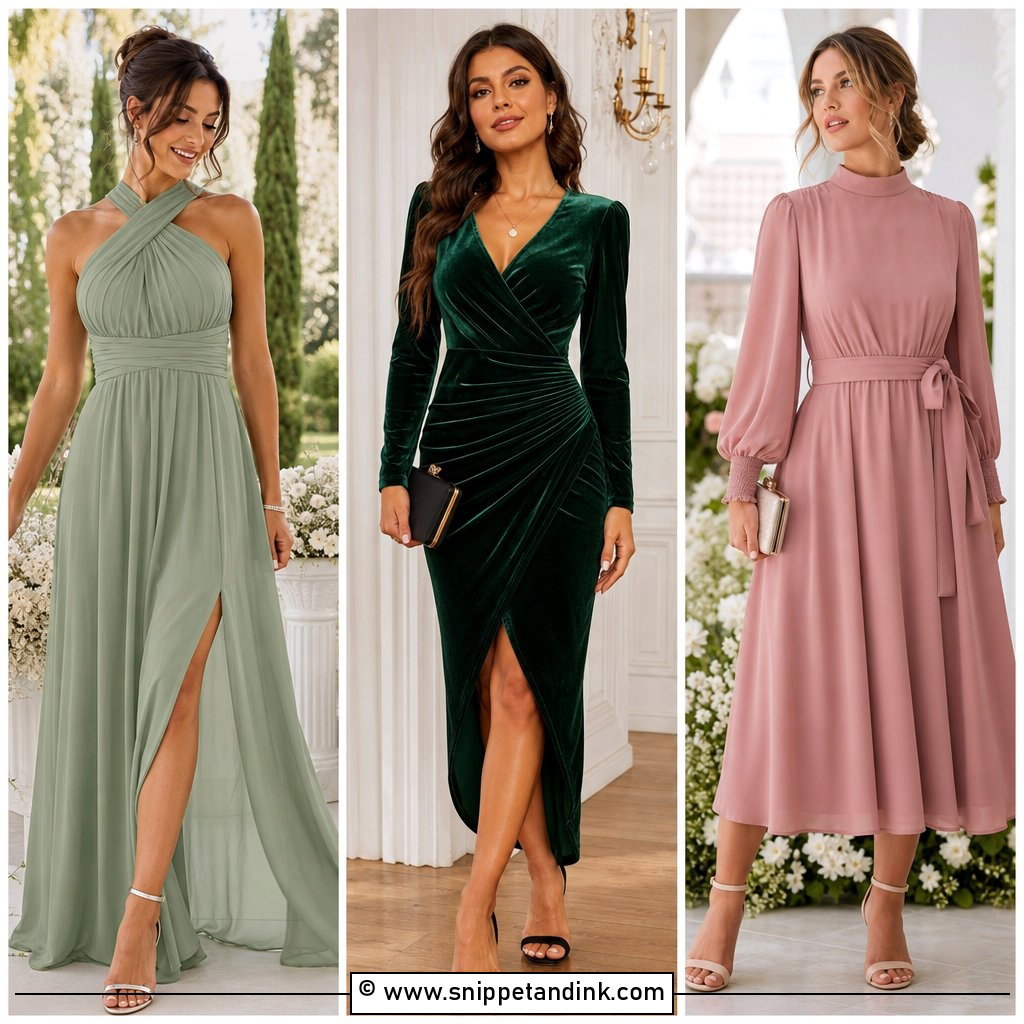
Velvet has its own depth, so a velvet midi dress can stay very simple. A wrap, a slip shape or a long-sleeve cut in burgundy, emerald or chocolate looks rich at a winter evening wedding. Velvet crushes where you sit and lean, so hang it in a steamy bathroom before you leave and avoid folding it into a suitcase. It also runs warm, which is a welcome thing in a drafty barn and a problem on a packed dance floor. Closed-toe heels or sleek pumps and small earrings are plenty.
25. Simple Maxi Dress for Wedding
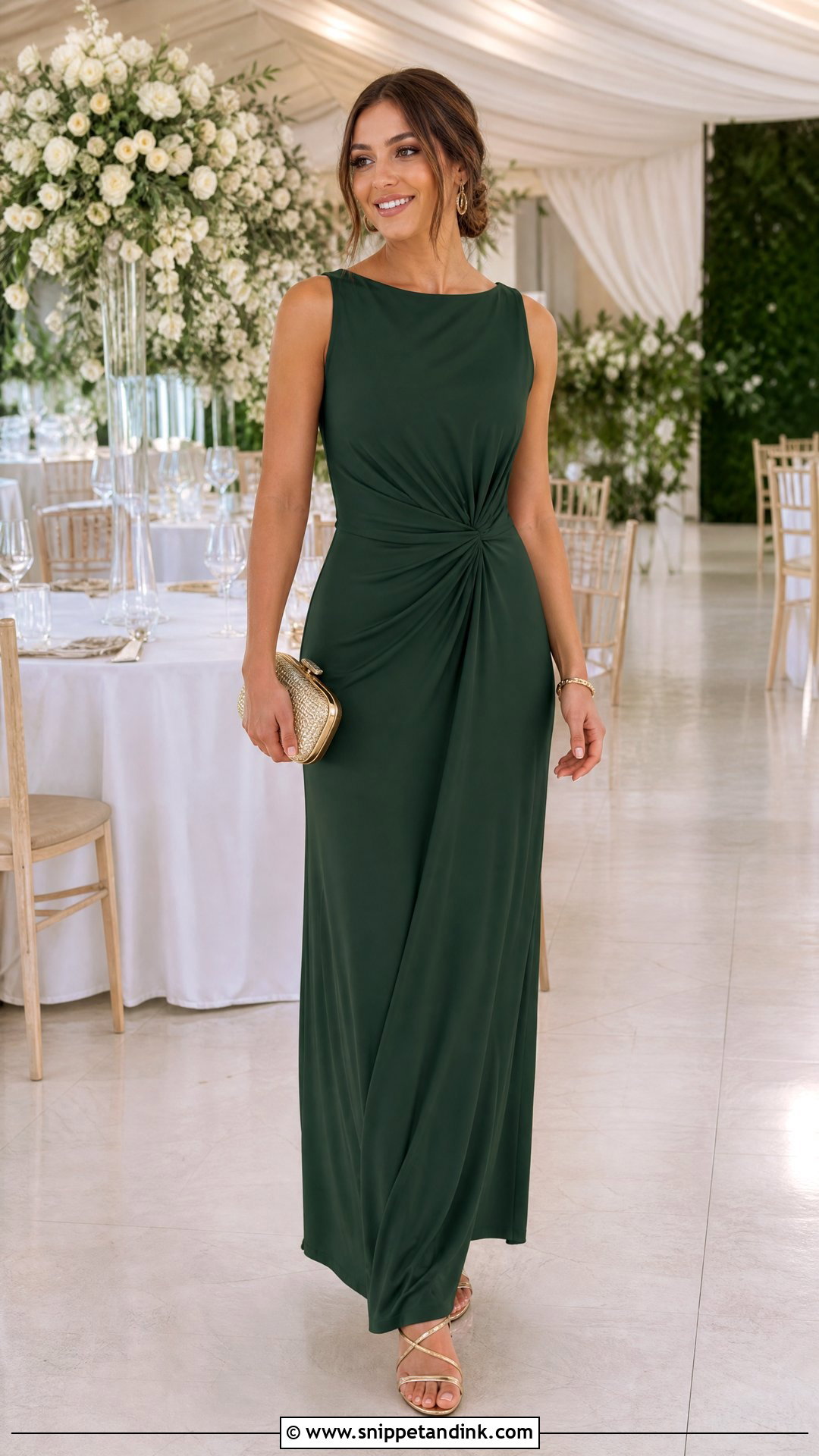
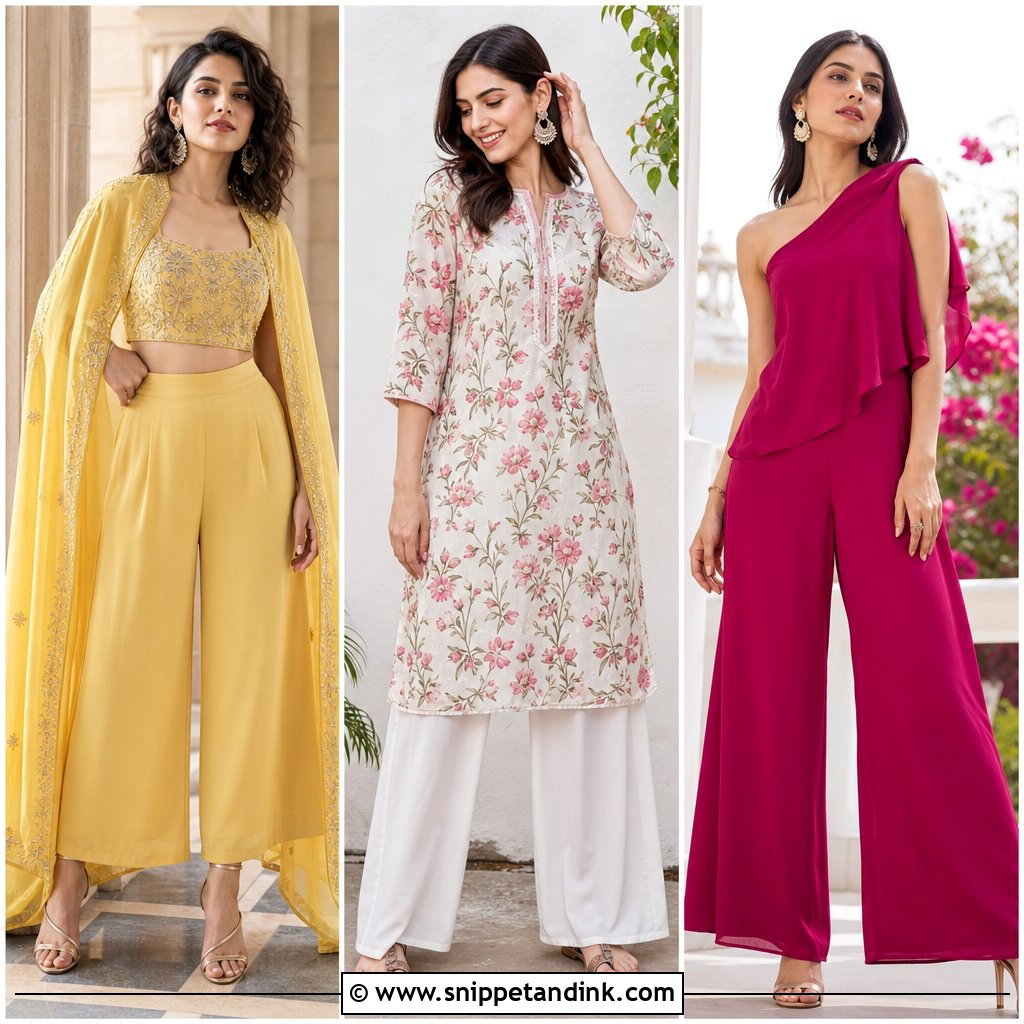
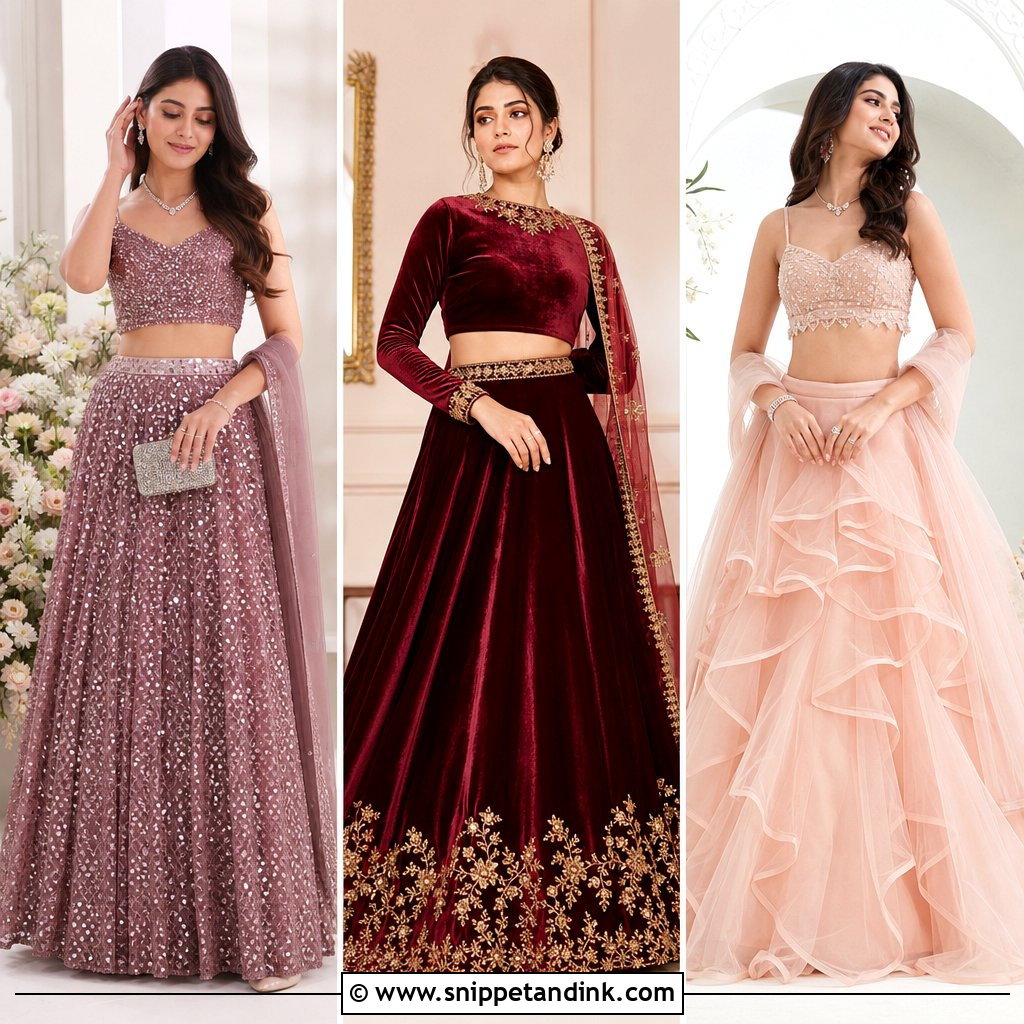
A plain maxi shifts from relaxed to formal depending on what you pair it with, which makes it the most adaptable dress here. Chiffon, satin, crepe or georgette in navy, forest green, rose or terracotta all work. A defined waist, soft drape or subtle slit keeps it from looking basic. I swap the accessories rather than the dress: block heels or wedges for the beach, metallic sandals and a satin clutch for a formal venue. Get it hemmed to the shoes you’ll wear for the longest stretch of the evening.
Colors to Leave in the Wardrobe as a Guest
White, ivory, cream and very pale champagne are the obvious ones at a Western wedding. Pale pastels can photograph white under a flash, so I hold a pale dress next to a sheet of printer paper in daylight. If it looks close, I pick something deeper.
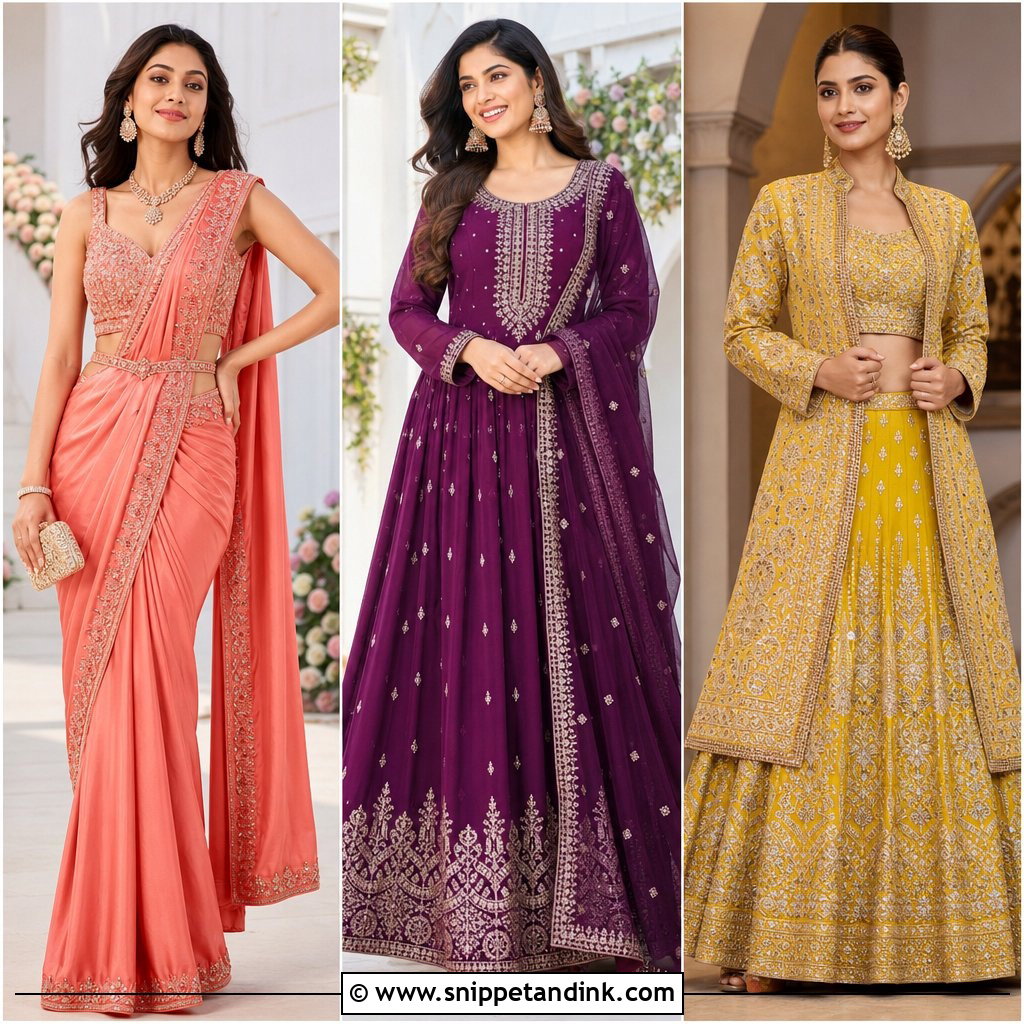
Culture changes the list. At many South Asian weddings the bride wears red, so guests avoid head-to-toe red, while bright color is welcome. At Chinese weddings, white and black are traditionally linked to mourning, and red is considered lucky. When the couple’s family follows a tradition you don’t know well, asking a family member is a kindness, not an imposition.
Matching the bridesmaids by accident
This happens more than people think. If the couple has shared their palette or you’ve seen bridesmaid dresses online, choose a different shade or a print, so you’re not mistaken for part of the line-up in every group photo.
A small kit for a long day
My guest bag holds fashion tape, a couple of safety pins, blister plasters and a pair of foldable flats. A slip dress that gapes, a strap that breaks or a heel that sinks into a lawn is a two-minute fix if you’ve packed for it, and an evening of tugging if you haven’t.
A Dress You Can Sit, Eat and Dance In
The right guest dress fits the venue, the dress code and the season, and lets you get through eight hours without adjusting it. Midis are the easiest choice; maxis read more formal. Satin, chiffon, velvet, crepe, florals and soft ruching all dress you up without much effort. Practical shoes, a small bag and balanced jewelry do the rest. Above all, stay clear of anything that could be mistaken for bridal, unless the couple asks for it.
You'll Like These Ideas:


Leave a Reply