
An Indian marriage is rarely one event. There may be a morning ritual, a dance night, the ceremony itself and a reception, each with its own mood and dress expectations. When a guest asks me to plan her outfits, I treat every function separately and work through four things: the venue, the weather, any cultural or religious customs, and how much walking, sitting on the floor or dancing is involved. Sarees, lehengas, shararas, layered sets, pastels, prints and Indo-Western pieces all have a place. Whatever the style, a finished look includes shoes you can stand in, jewelry that suits the neckline and a bag that leaves a hand free. Twenty complete looks follow, each with a practical point I’d check before you wear it.
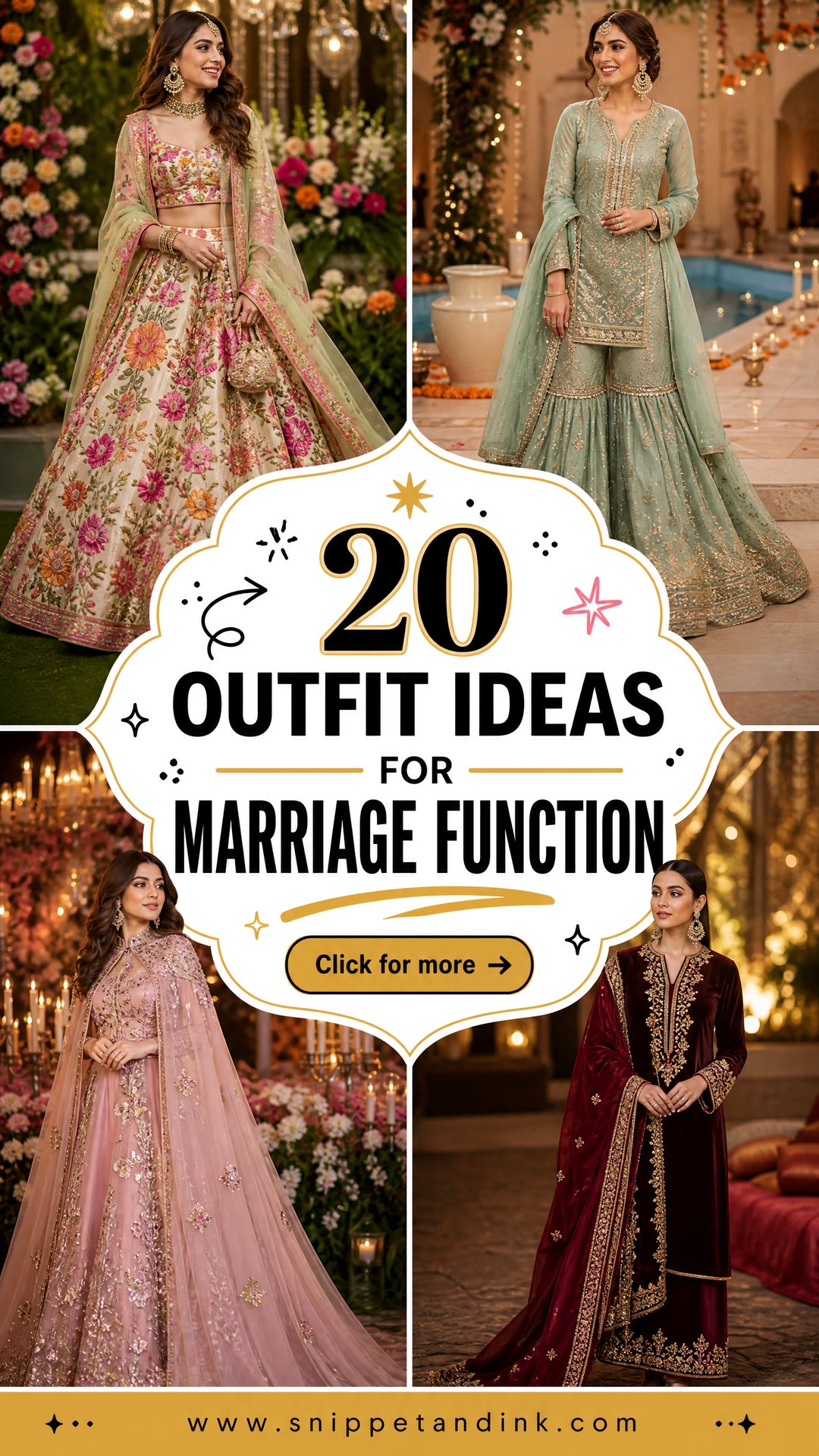
Temple, Gurdwara or Banquet Hall? How the Venue Changes Your Outfit
Indian weddings span many communities and faiths, and the place where the ceremony happens often matters more than the dress code on the card. Before I plan a guest outfit, I ask where each function is held:
- Temples and gurdwaras: you’ll usually remove your shoes, so pick footwear you can slip off and on easily. At a gurdwara, everyone covers their head, so bring a dupatta or scarf large enough to stay on. Covered shoulders are the safer choice.
- Floor seating: many rituals involve sitting on the floor or low cushions for a long time. Tight skirts and short kurtas become uncomfortable fast; flowing sarees, Anarkalis and shararas cope better.
- Banquet halls and hotels: these allow the most freedom, including fusion wear and Indo-Western gowns.
- Outdoor lawns: block heels or flats, breathable fabric and a light layer for after dark.
Color etiquette varies by family. Many guests avoid red at the wedding itself because it’s often the bride’s color, and some families prefer guests skip all-black or all-white at ceremonies. If you’re unsure, asking the host is completely normal.
1. Floral Lehenga for Marriage Function
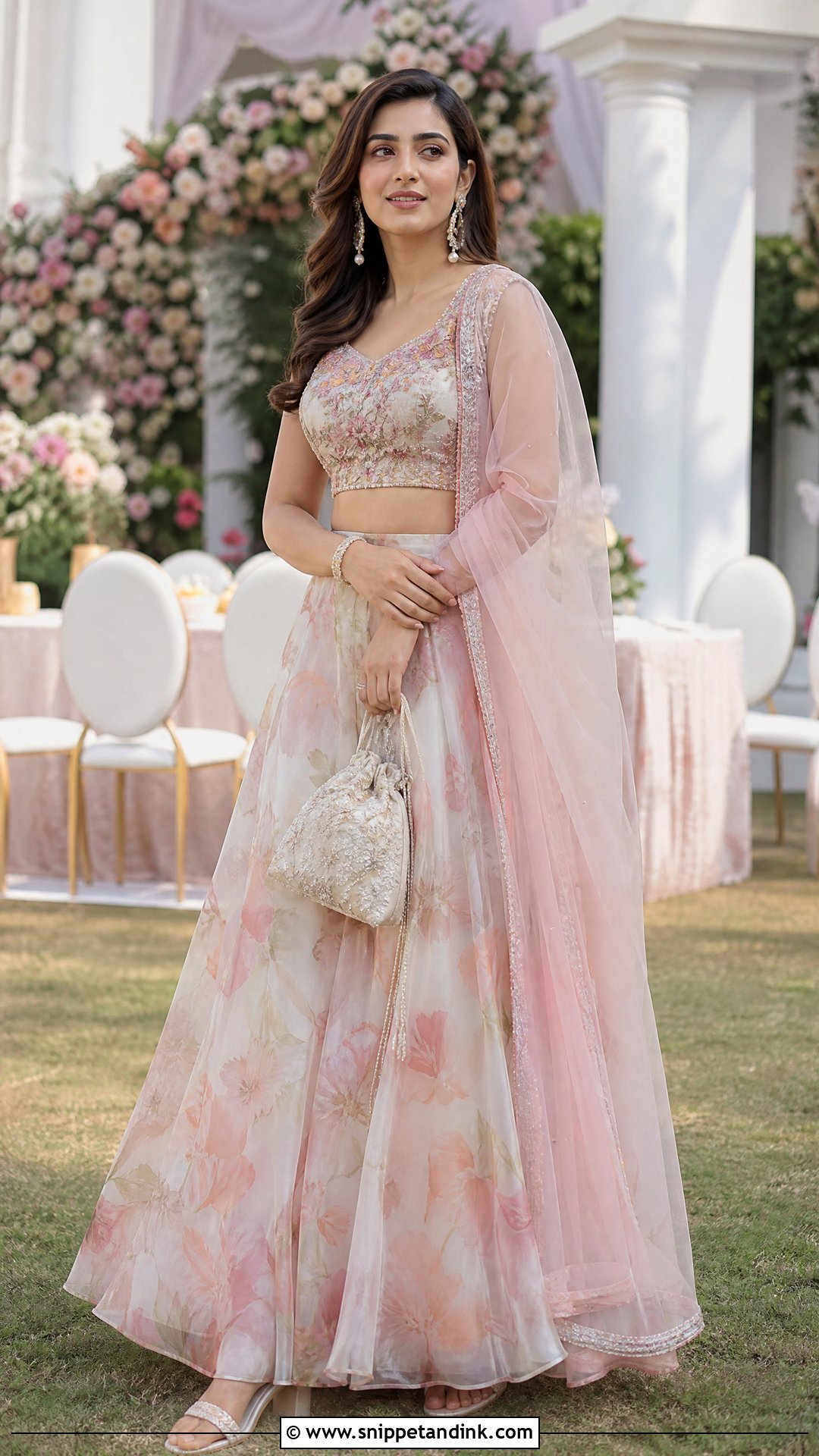
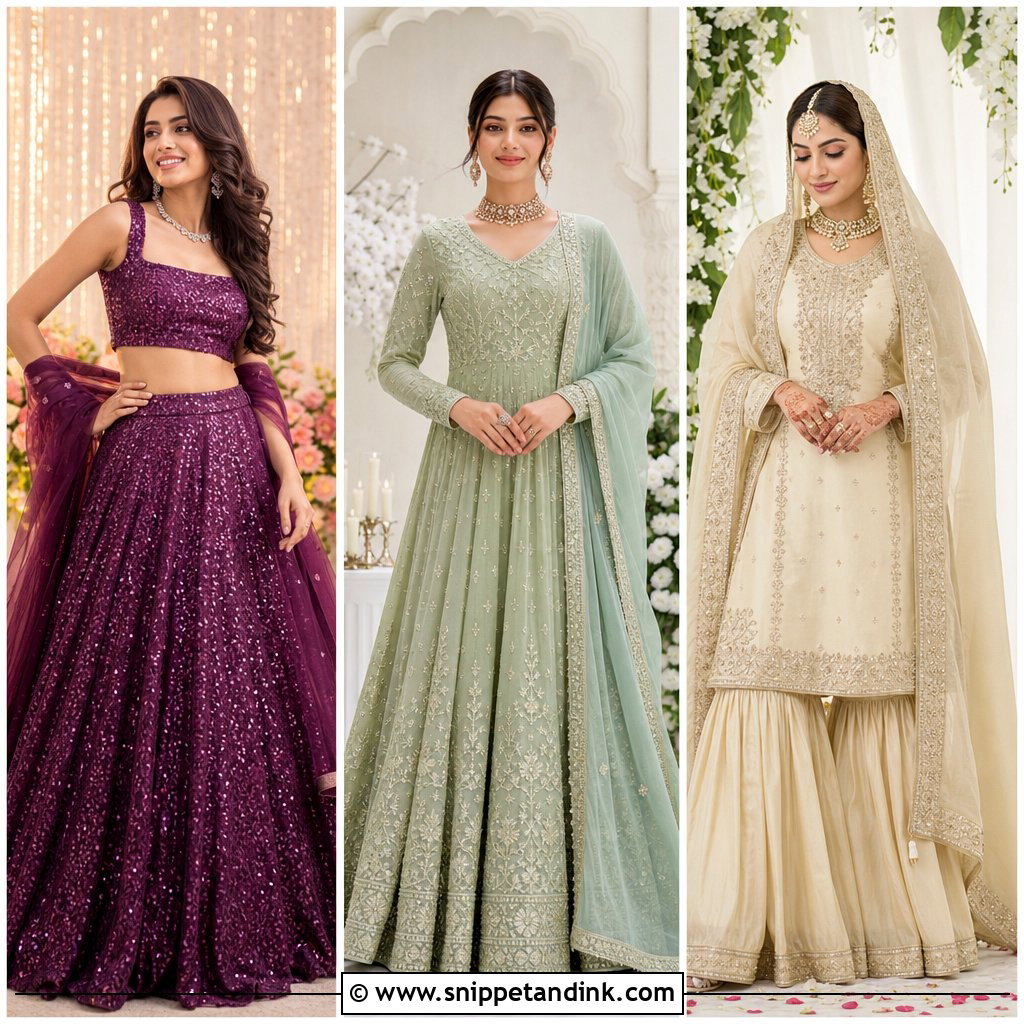
A floral lehenga in georgette or organza is light enough for an outdoor day function and still looks festive. Pastel florals suit daylight; deeper jewel-toned prints carry into the evening. A high-waisted skirt with a fitted blouse defines the waist, and a longer blouse is an easy way to add coverage. Lightweight skirts lift in the wind, so I sometimes add a little weight to the hem or a cancan layer for open-air venues. Block heels, pearl drops and a compact potli finish it. If the blouse neckline is embroidered, keep any necklace delicate.
2. Silk Saree for Marriage Function
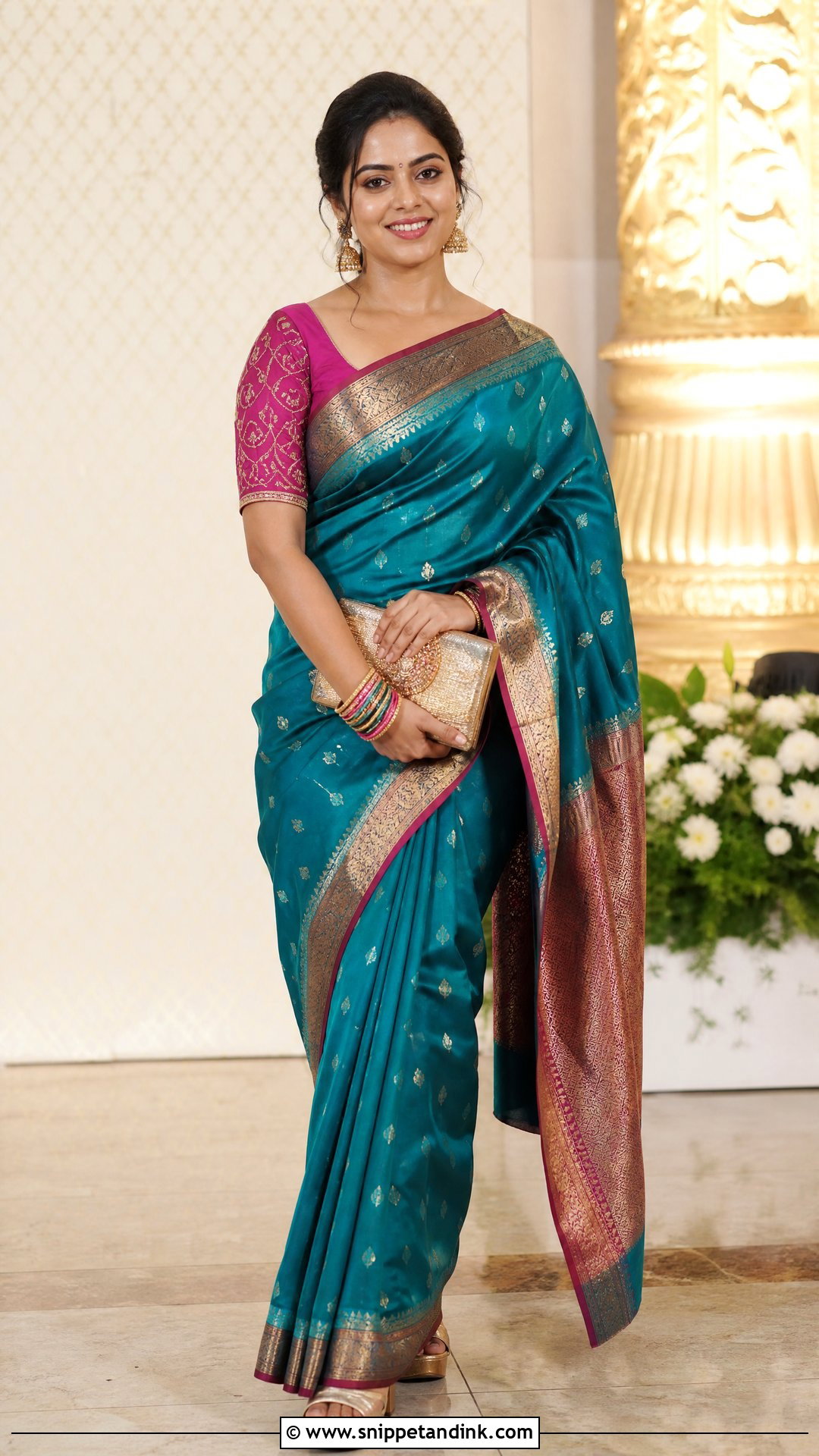
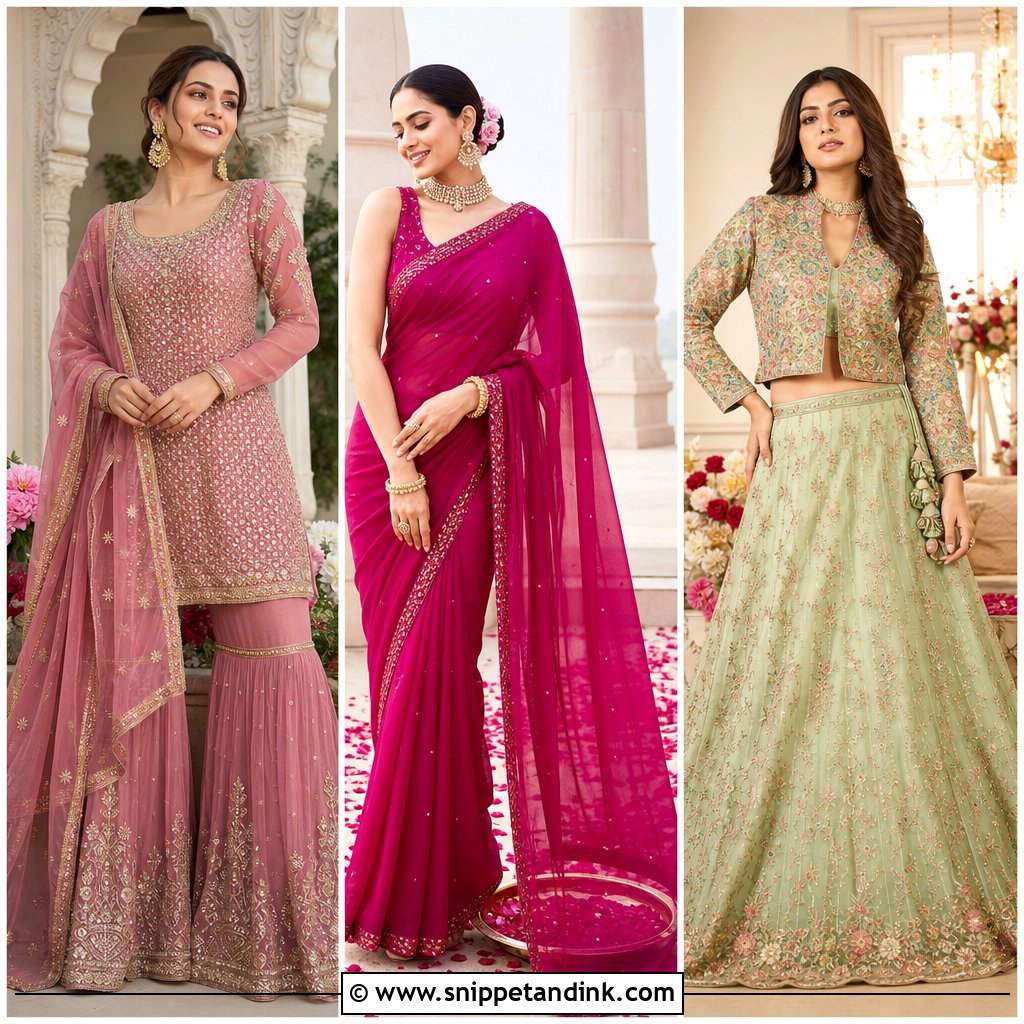
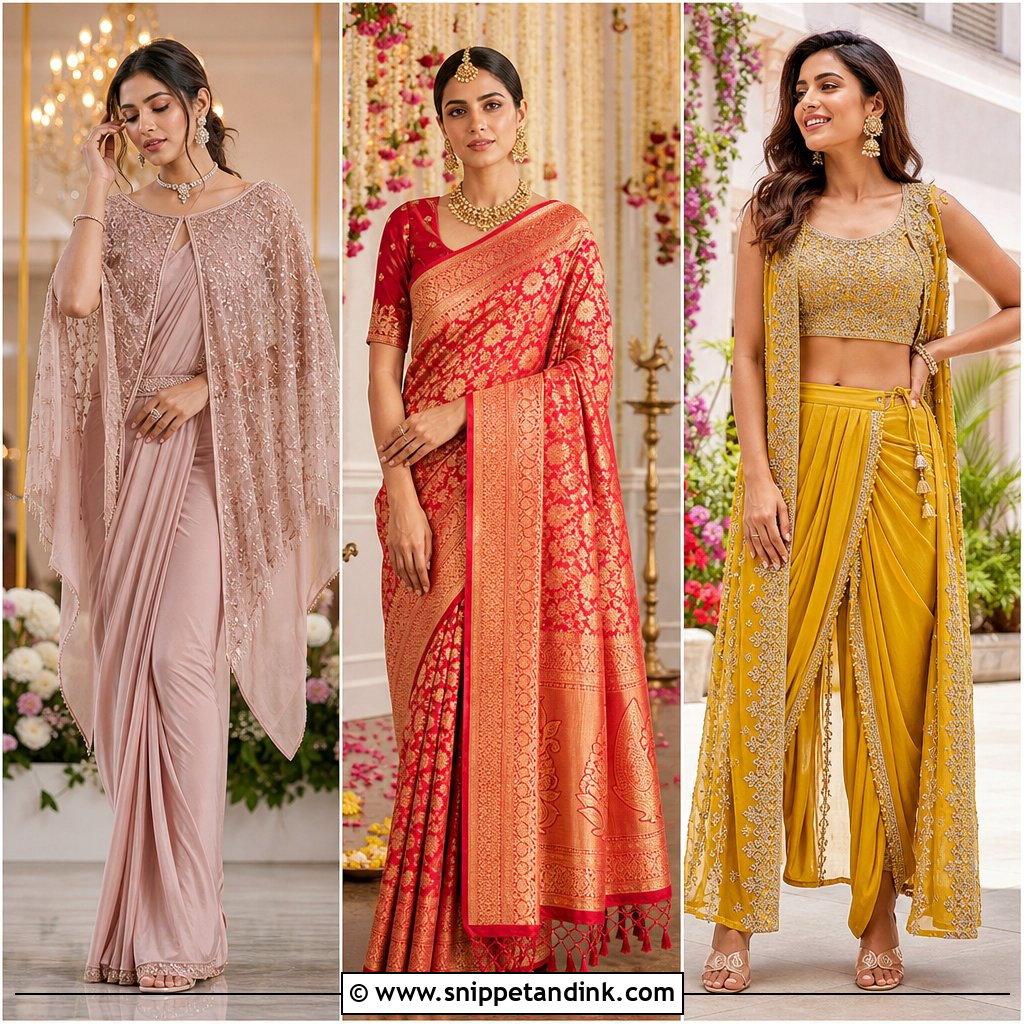
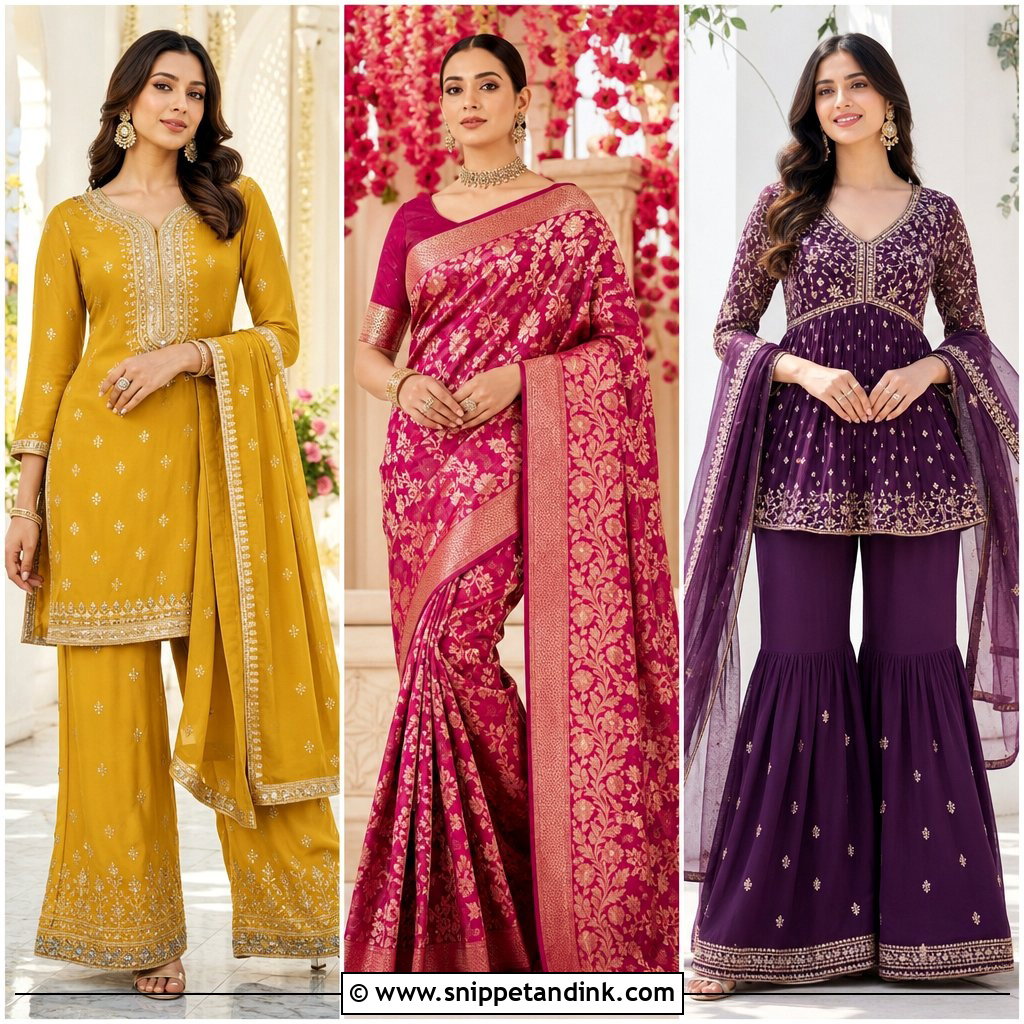
Kanjeevaram, Banarasi, Chanderi, and soft silk sarees each sit at a different level of formality. Kanjeevaram and Banarasi are heavy and ceremonial; Chanderi and soft silk are lighter and suit smaller family functions. For the main wedding, a rich color with a contrasting blouse works well. Kitten heels or cushioned wedges help through long rituals. Motif size can follow your height, but in my experience blouse fit and a well-set drape matter far more than any body rule. Pin the pleats so you can sit and stand repeatedly without them fanning open.
3. Anarkali Suit for Marriage Function
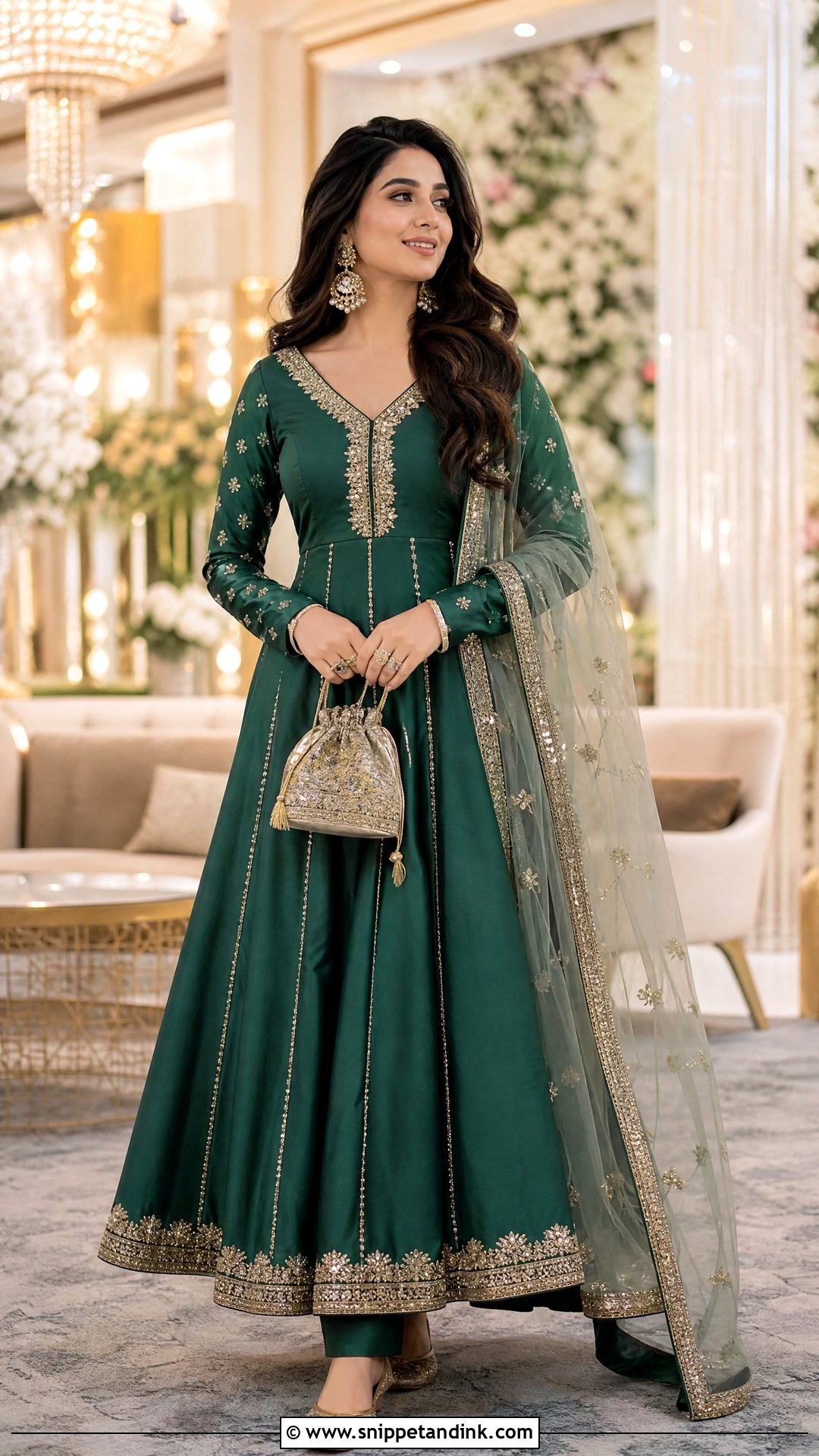
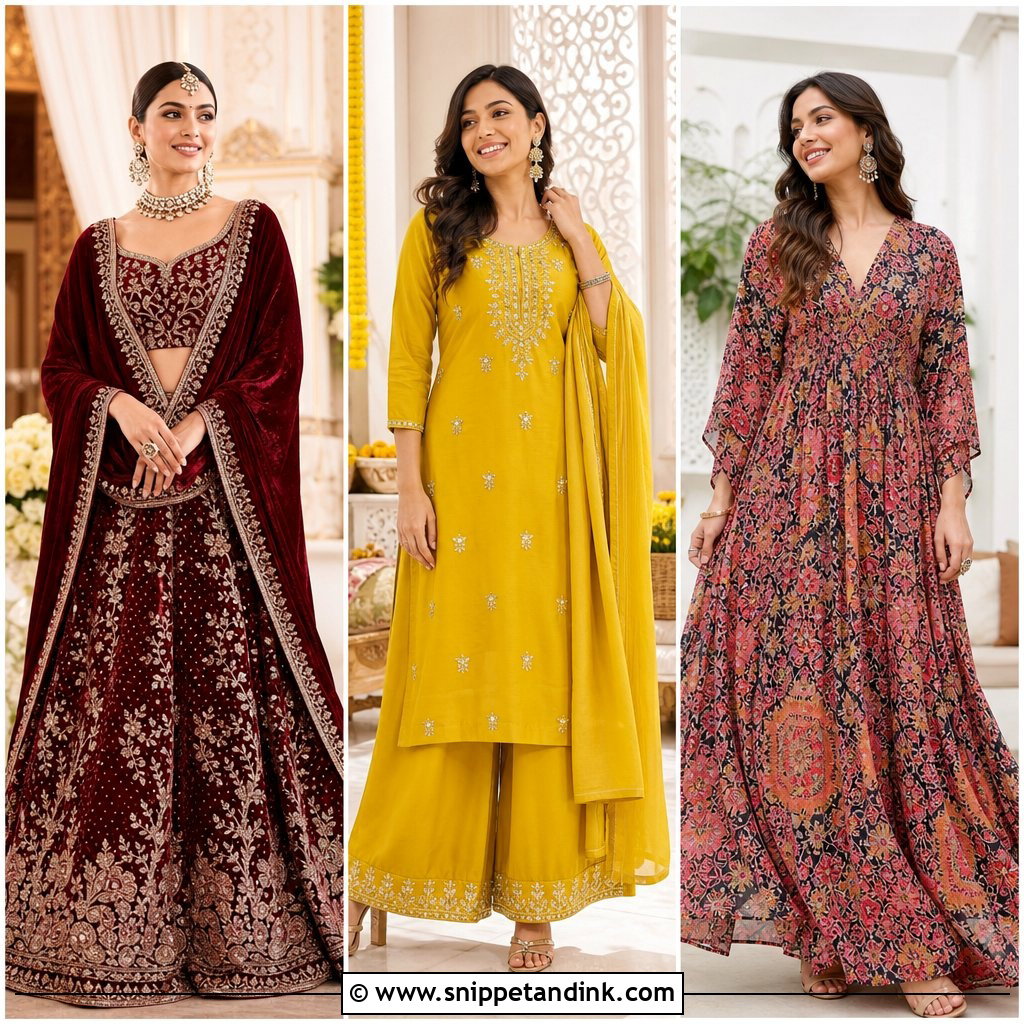
An Anarkali suit gives coverage and movement for a long, busy function. Floor or calf length both work. Vertical embroidery and paneled construction lengthen the body, which is why so many women of different ages and shapes are comfortable in it. Powder blue and peach suit daytime; emerald and wine suit evening. Juttis and medium chandbalis finish it. Go easy on the dupatta. A heavy embroidered one drags off the shoulder every time you bend to help someone or take part in a ritual.
4. Sharara Set for Marriage Function
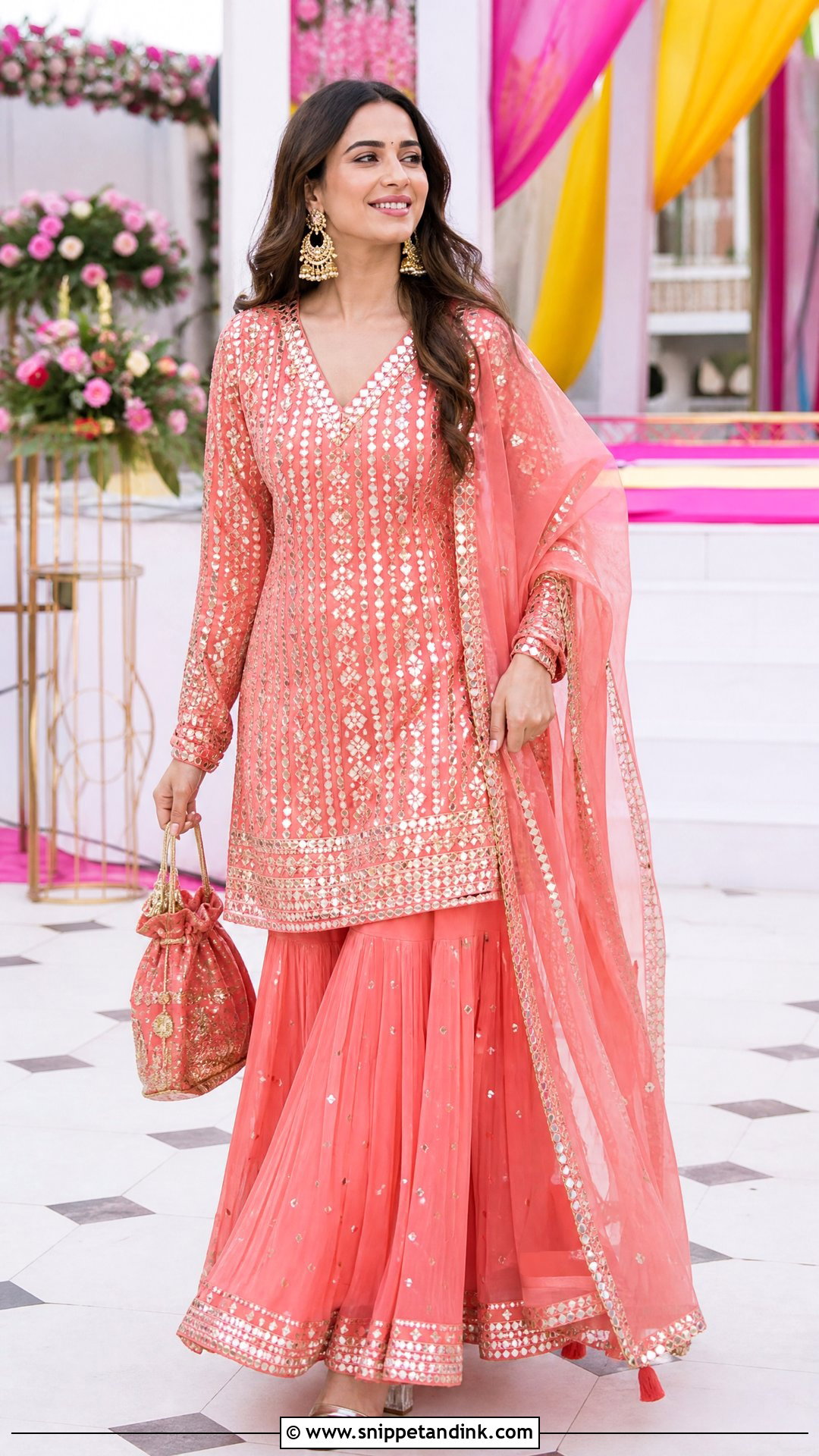
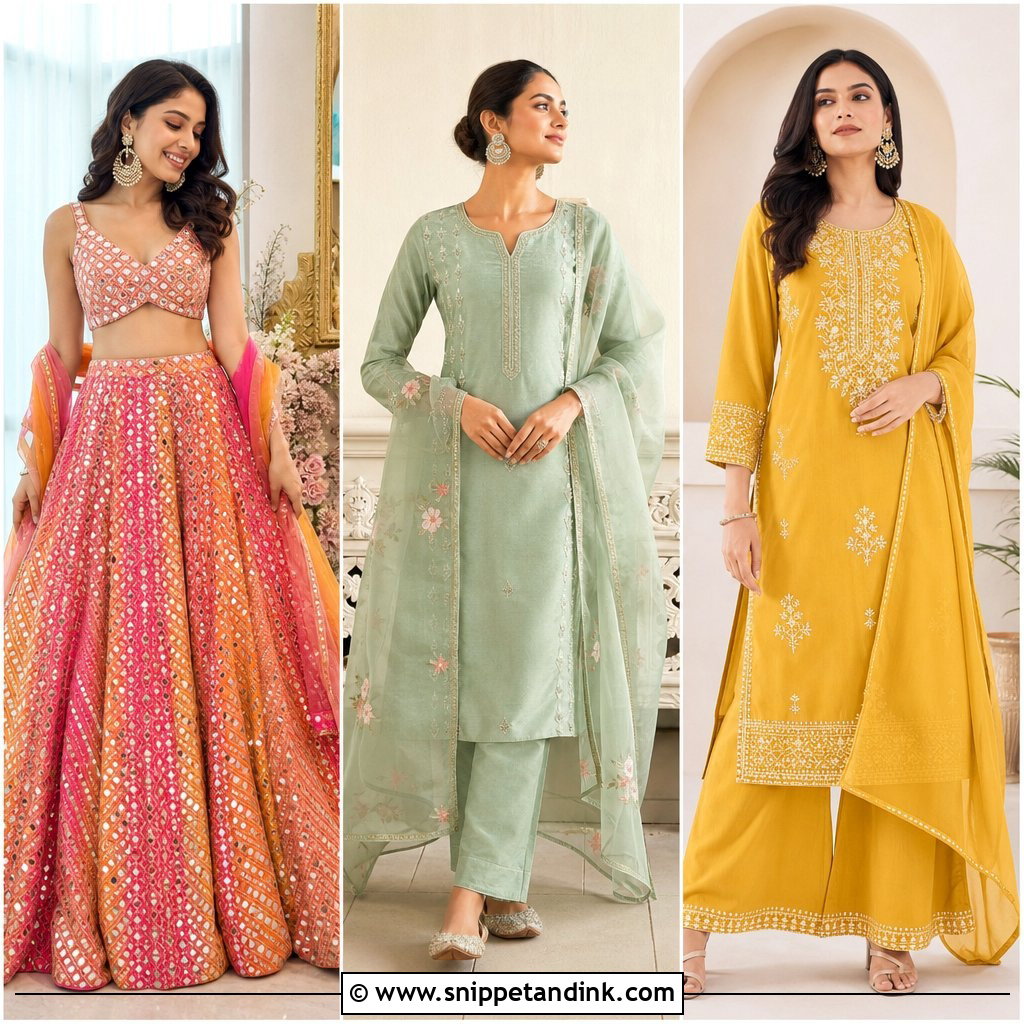
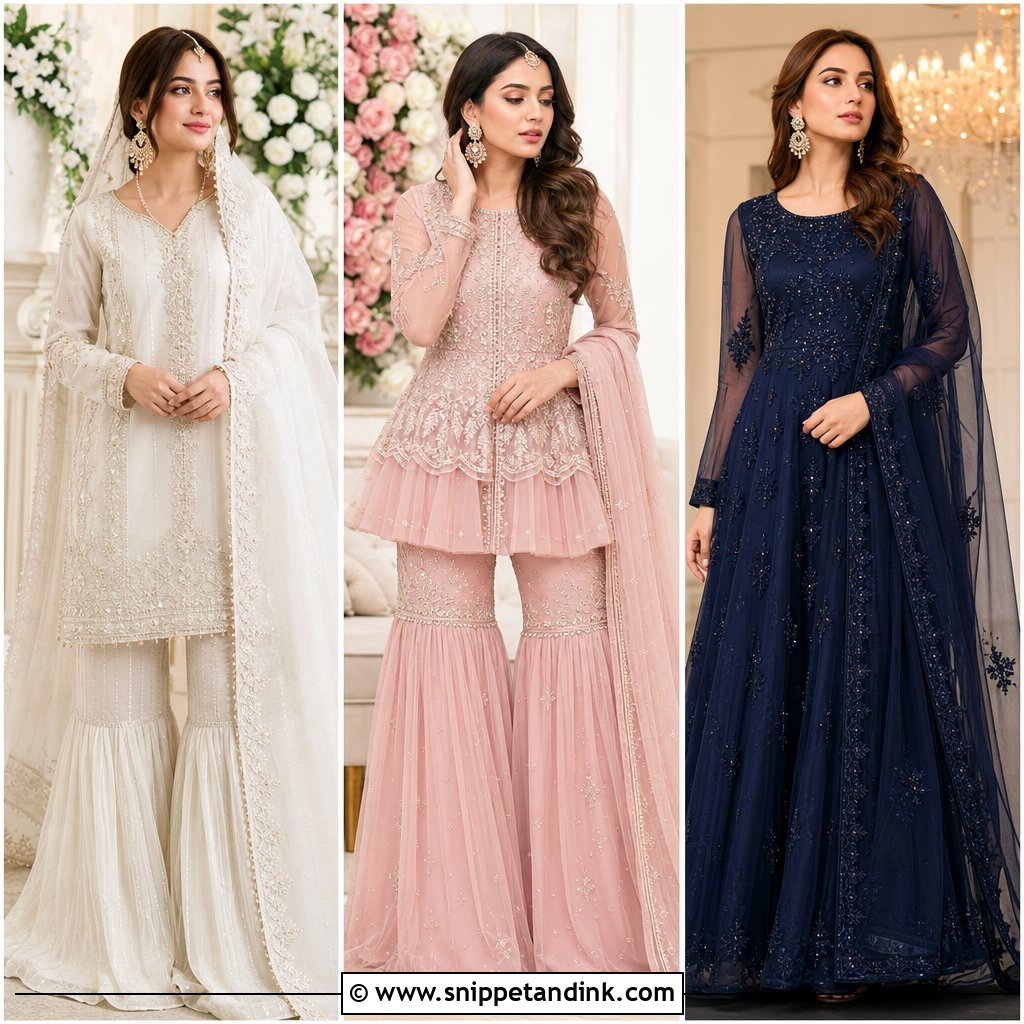
Shararas are what I suggest when the function is mostly dancing. The flared pants move with you and never wrap around the legs the way a lehenga skirt can. The kurta has to fit well, or the volume below makes the whole outfit look shapeless. Mirror work and gota suit a sangeet or mehendi. Pick shoes for the floor: juttis on carpet or marble, low block heels on lawns. Statement earrings are usually enough. A secure, comfortable waistband matters more than you’d expect after an hour of dancing.
5. Gharara Outfit for Marriage Function
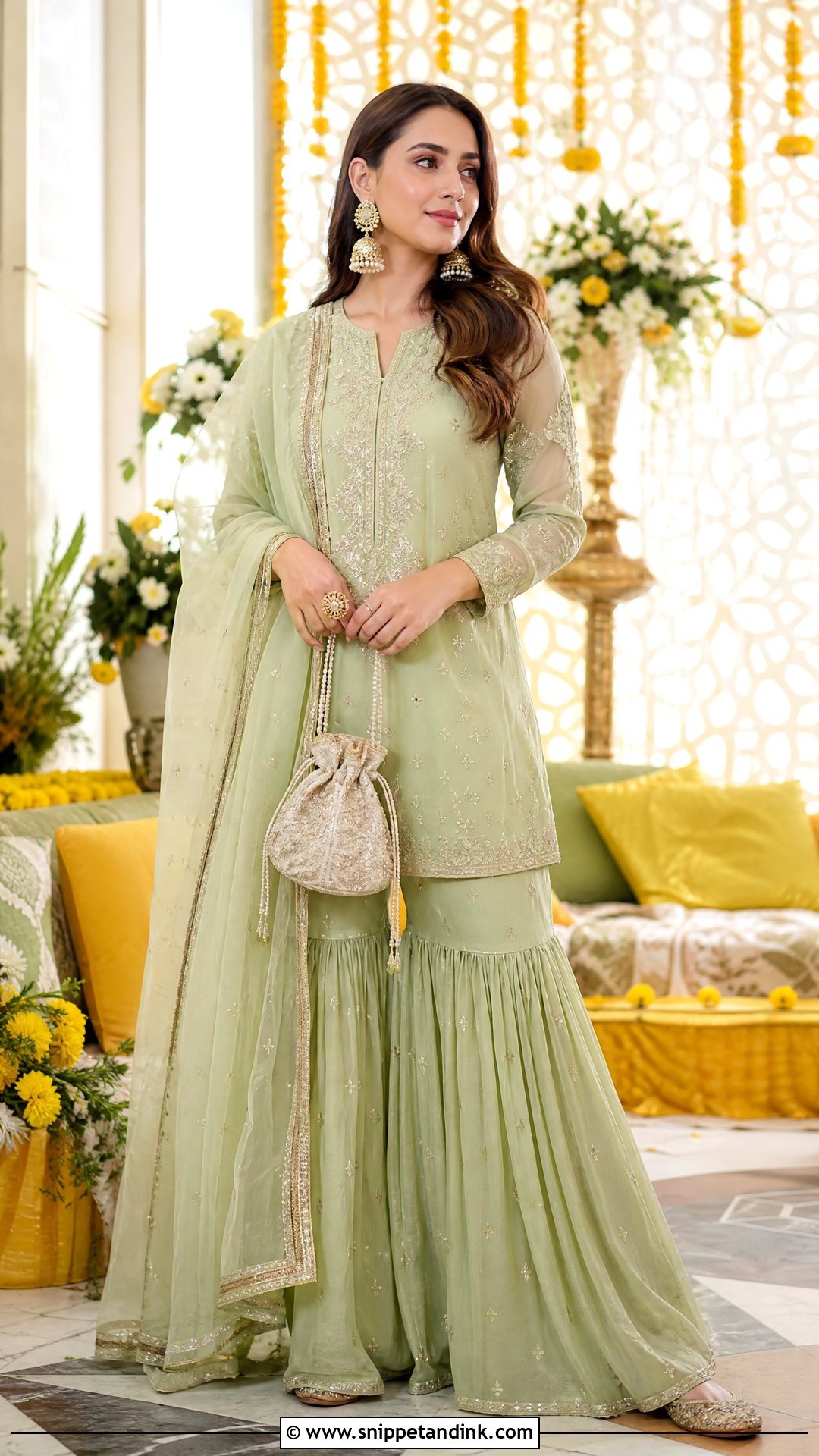
The gharara’s shape comes from a fitted section to the knee, then a dramatic flare below, joined by a decorated band. A short embroidered kurti shows that structure off. It suits mehendi, family dinners and festive pre-wedding events. Coral and pistachio look fresh in daylight; jewel tones suit evening. The pants already carry plenty of detail, so jhumkas, one ring and a beaded potli are enough. Have the flares hemmed to just above the floor in your shoes, because ghararas carry a lot of fabric at the ankle and are easy to step on.
6. Palazzo Suit for Marriage Function
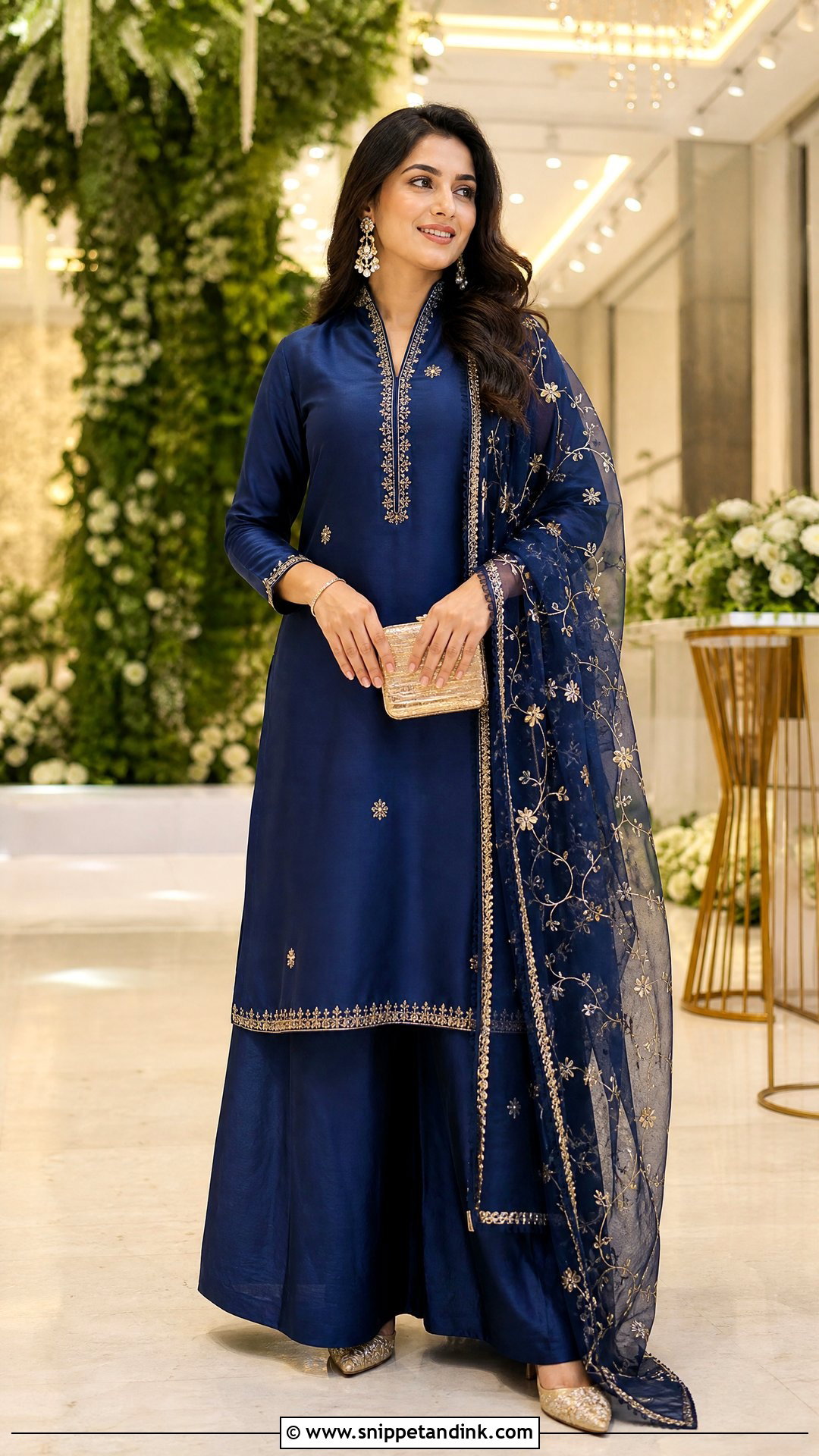
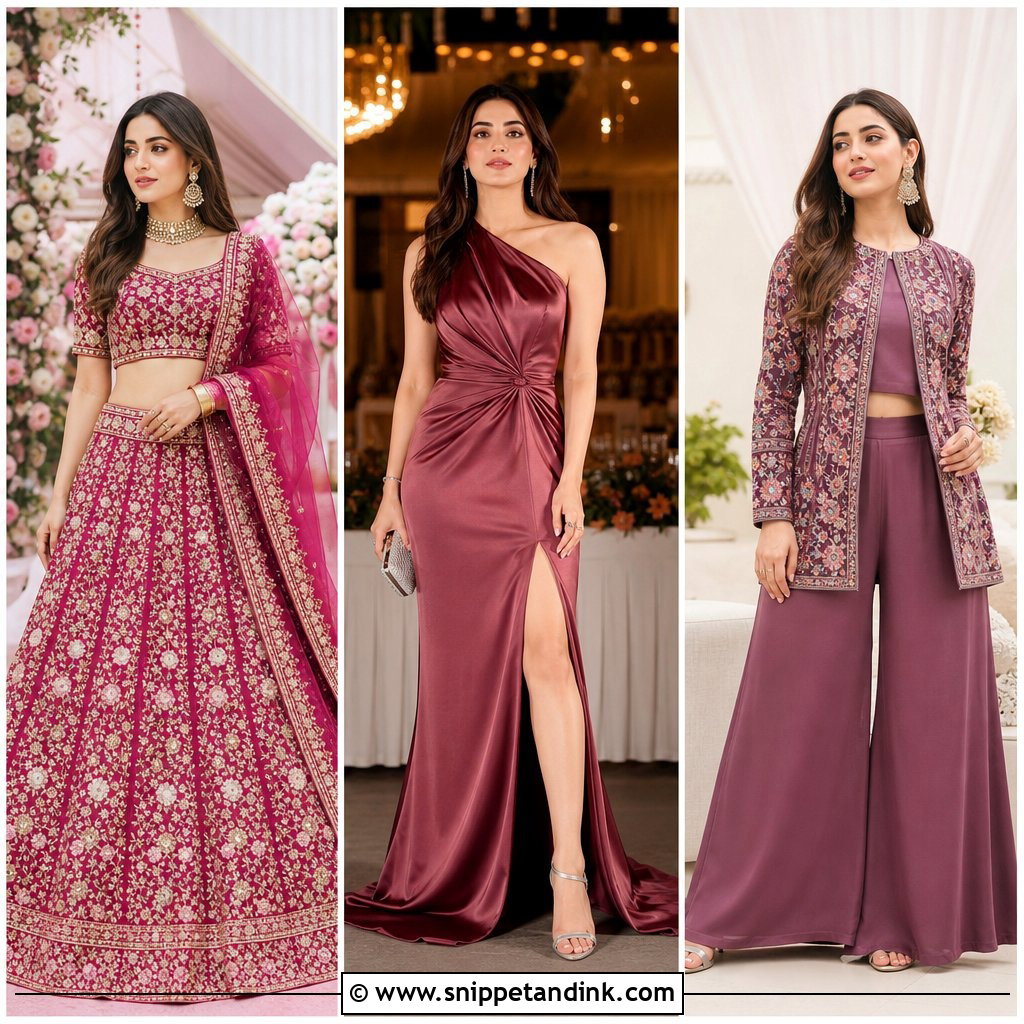
For a long ceremony followed by a seated meal, a palazzo suit is about as comfortable as festive dressing gets. An embroidered kurta, wide pants and a light dupatta look celebration-ready without any fuss. A straight or slightly flared kurta balances the width of the pants. Silk blends look formal; georgette and cotton-silk are cooler for daytime. Long earrings suit the straight line. Coverage is easy to adjust here through the sleeve length, the neckline and the way you drape the dupatta.
7. Pre-Draped Saree for Marriage Function
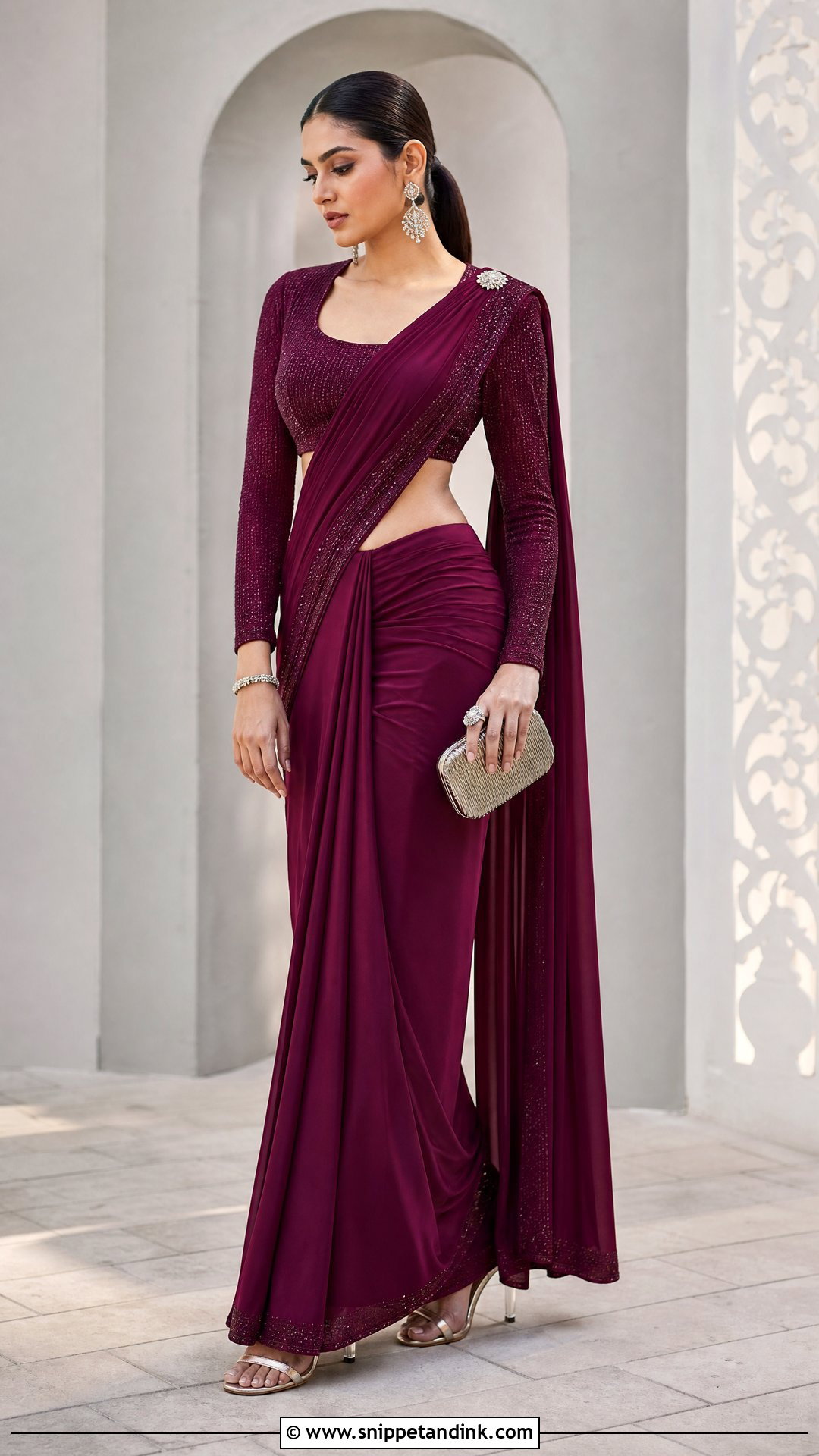
Pre-draped sarees are my recommendation for guests who don’t wear sarees often or need to get ready quickly. Look for a defined waist, a comfortable inner fastening and a pallu that’s stitched or fixed to sit on the shoulder. A sleeved blouse keeps it classic; an asymmetric or cape blouse makes it contemporary. Keep jewelry minimal on sequined or metallic versions. Walk and sit in it at home first. Pre-stitched hems are set at one length, and if they’re too long with your shoes, you need to know before the day.
8. Cape Lehenga for Marriage Function
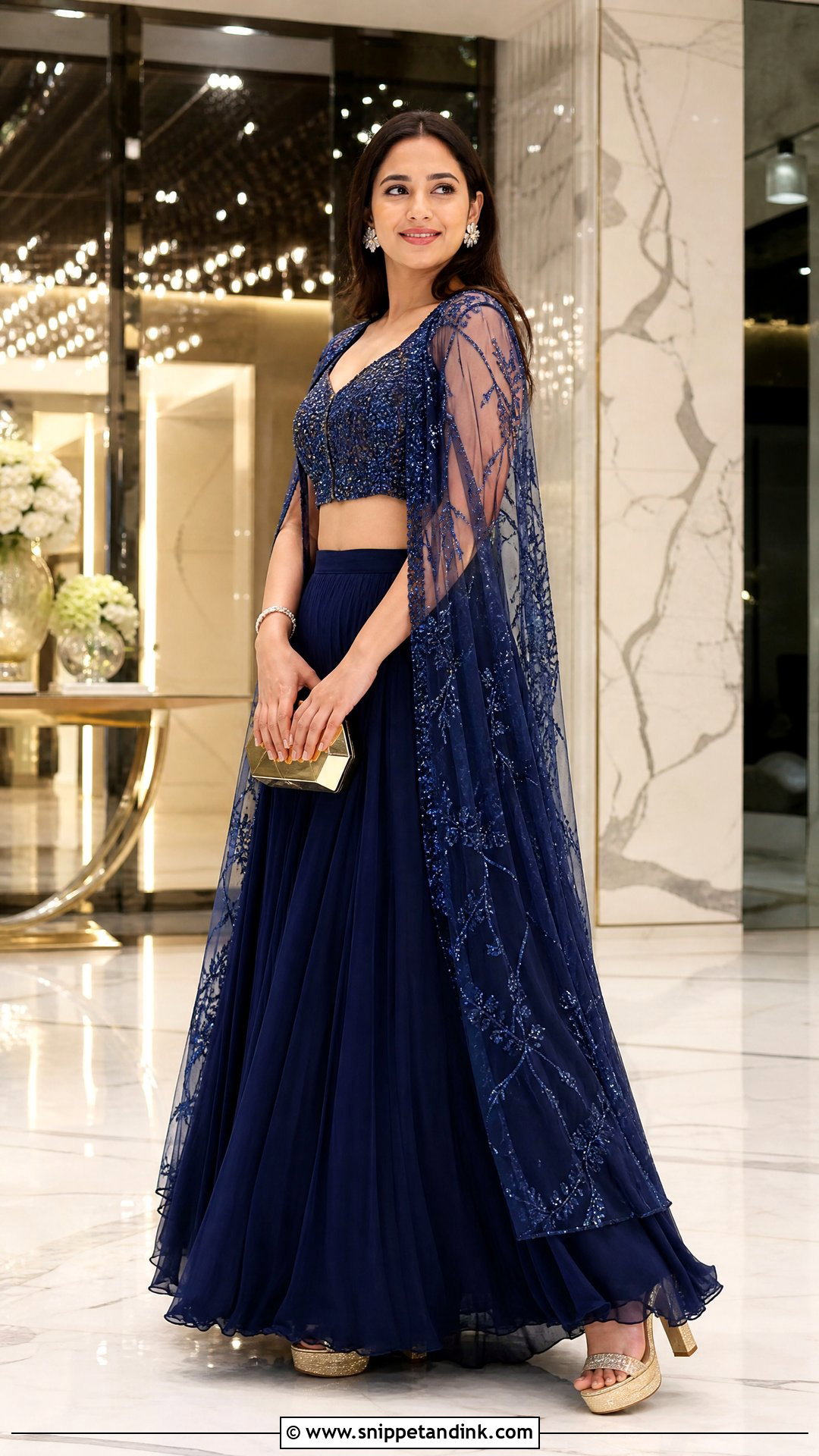
A cape lehenga replaces the dupatta with a layer that stays in place. A sheer embroidered cape suits evening; a lighter solid one suits daytime. Proportion is the thing to watch. If you’re petite, a cape that falls past the knee can swallow you, so I’d choose a hip-length one. Platform or block heels keep the hem off the floor. Statement studs and a box clutch are better than a large necklace, which crowds the cape. It’s most at home at a sangeet or reception.
9. Organza Saree for Marriage Function
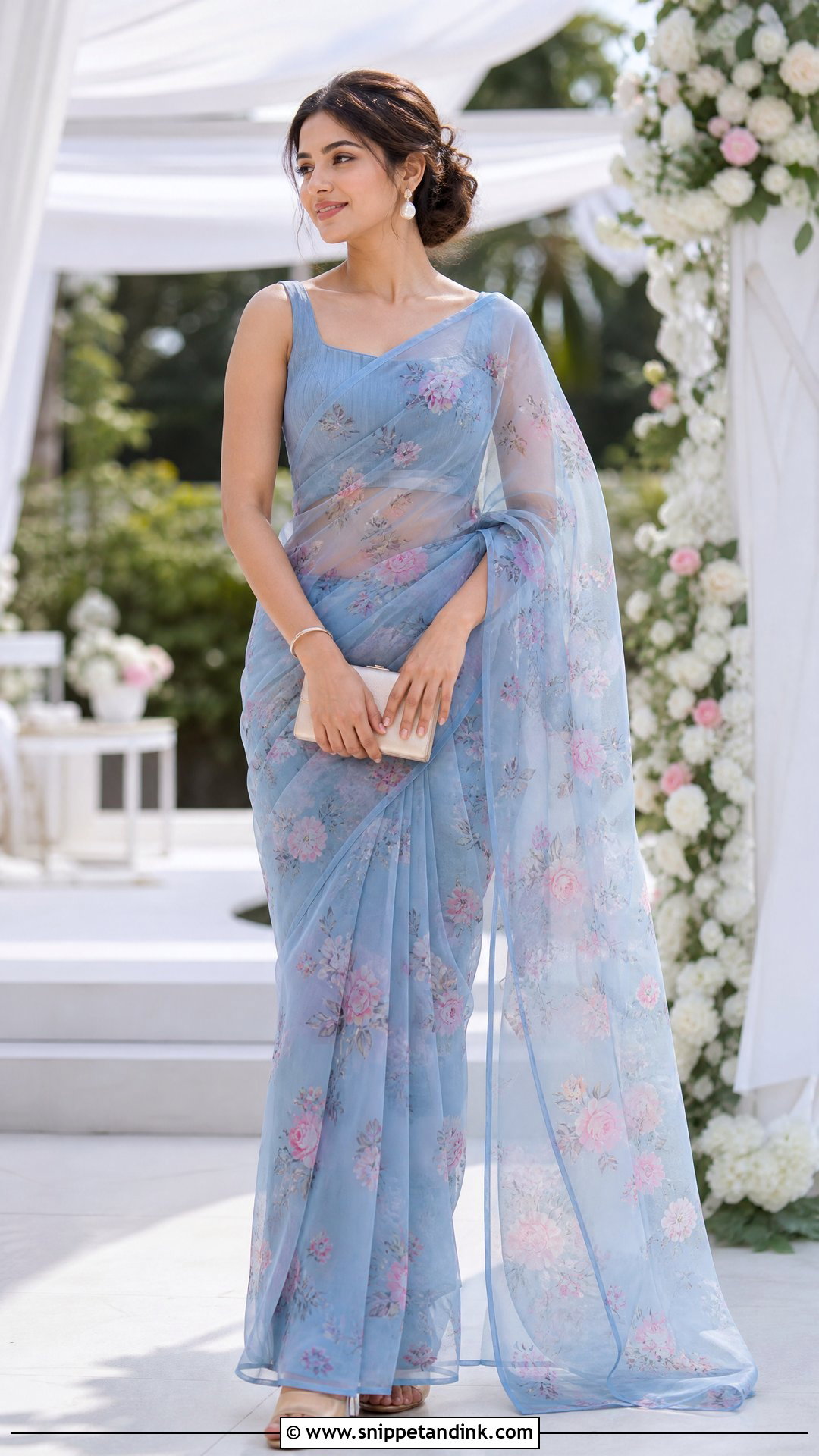
Organza looks crisp and photographs well in natural light, which makes it a strong pick for garden and daytime ceremonies. Pastels are classic; navy or emerald organza carries into evening. The fabric holds volume, so pleats need to be narrow and well pressed or they flare out. Pin the pallu so you can still lift your arm freely. A smooth, well-fitted petticoat stops bulk at the waist under the sheer fabric. Pearl earrings and a slim bangle keep it light, and low heels stop the hem dragging.
10. Banarasi Suit for Marriage Function
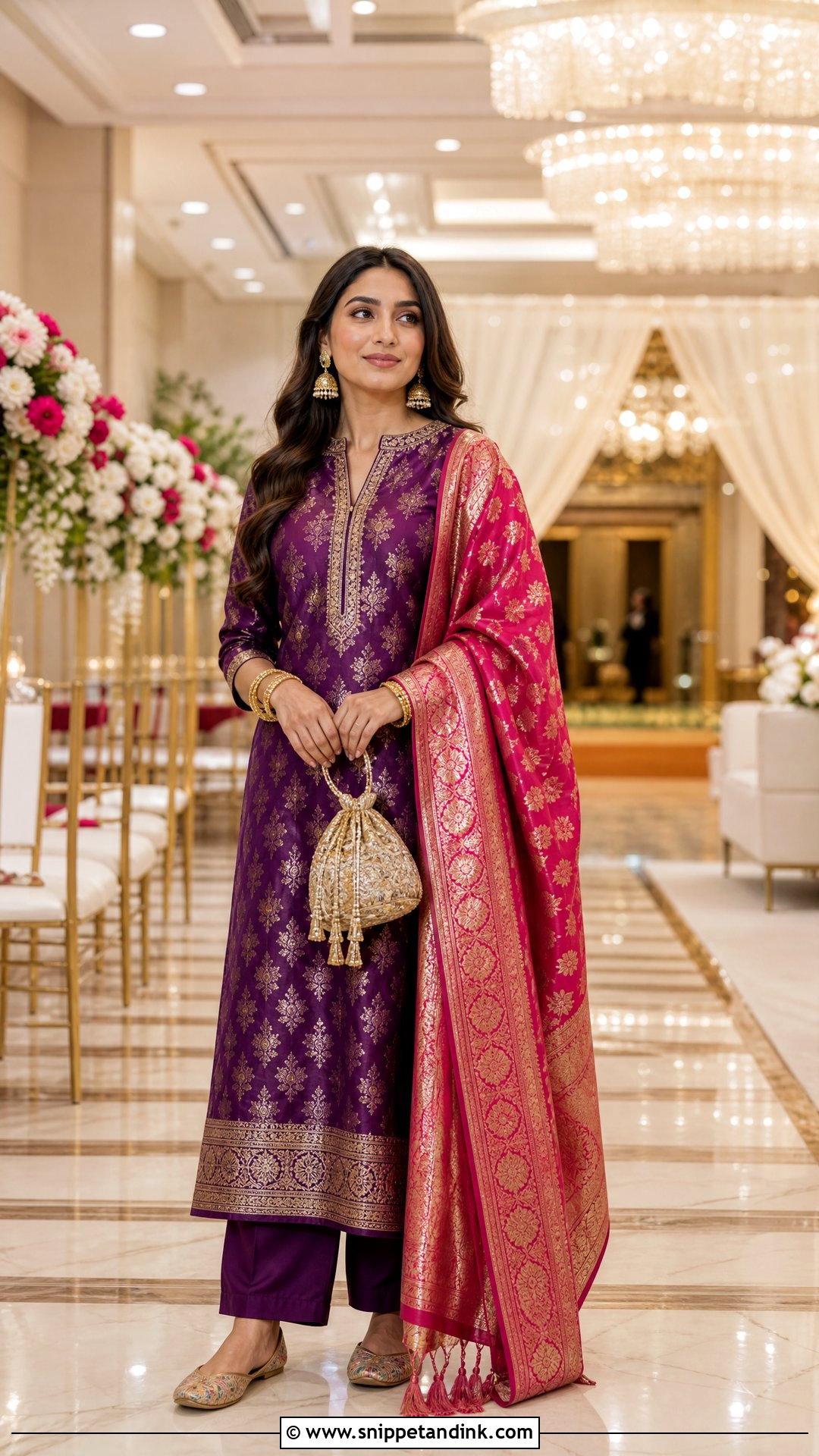
A Banarasi suit has enough presence for a traditional ceremony without a heavy lehenga. Build it around a Banarasi kurta or dupatta, and keep the pants in plain silk so the weave stays the focus. Straight kurtas look classic; A-line gives more room at the hip. Deep green or magenta suits evening; ivory with colored weaving suits daytime. Banarasi brocade is stiff, so check that the armholes are cut with enough room to raise your arms. Traditional jhumkas and juttis finish it, and the pieces can be restyled later.
11. Kurta and Skirt for Marriage Function
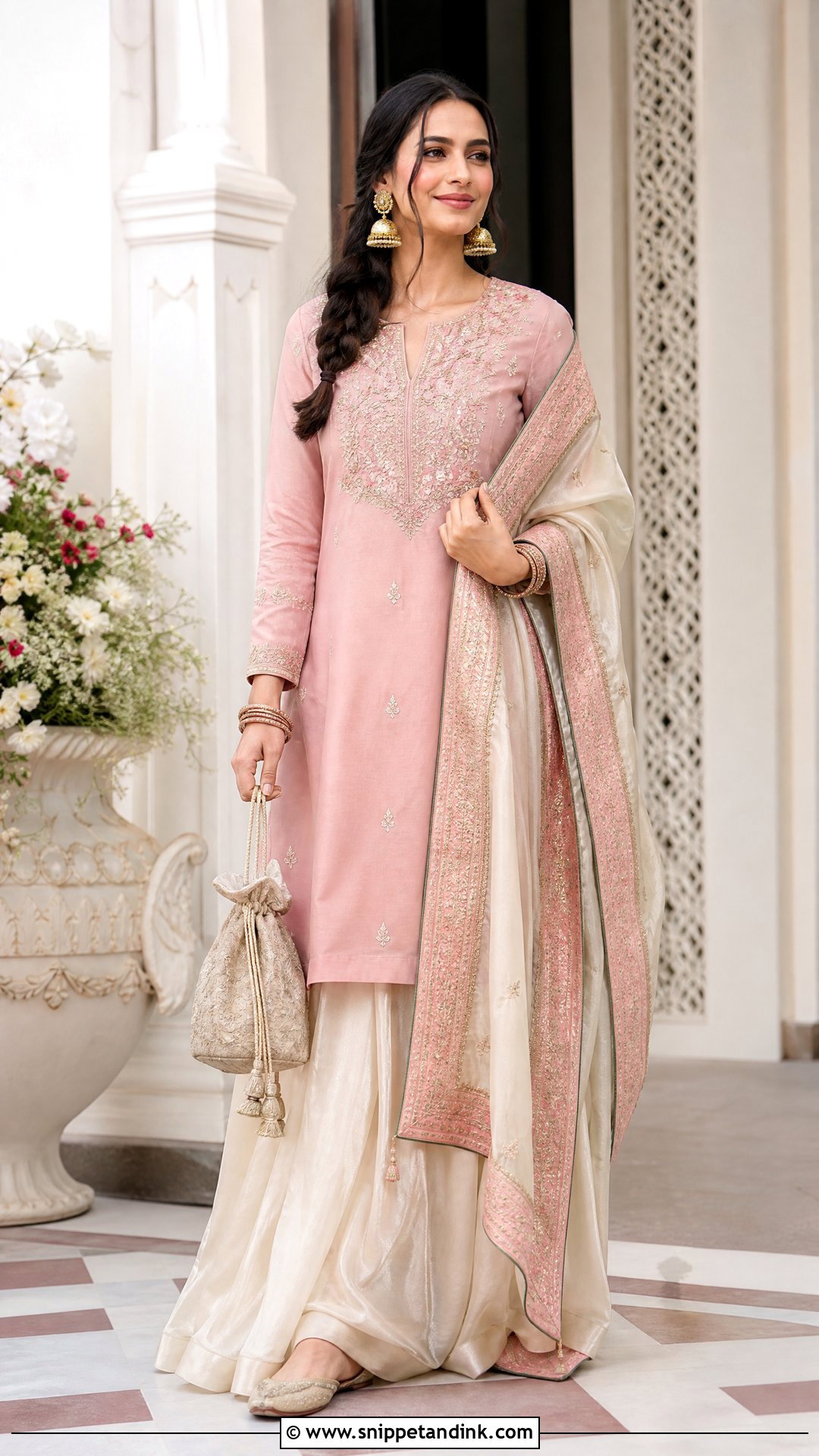
A kurta over a skirt gives lehenga-style movement with the coverage of a longer top. End the kurta above the widest point of the skirt, or the proportions look heavy. Embroidered kurta over a plain skirt looks refined; a printed skirt with a solid kurta feels relaxed enough for mehendi. An adjustable waistband makes this practical for anyone between sizes. Add a contrasting dupatta for formal functions. Keep the palette to two or three colors so it looks put together.
12. Peplum Sharara for Marriage Function
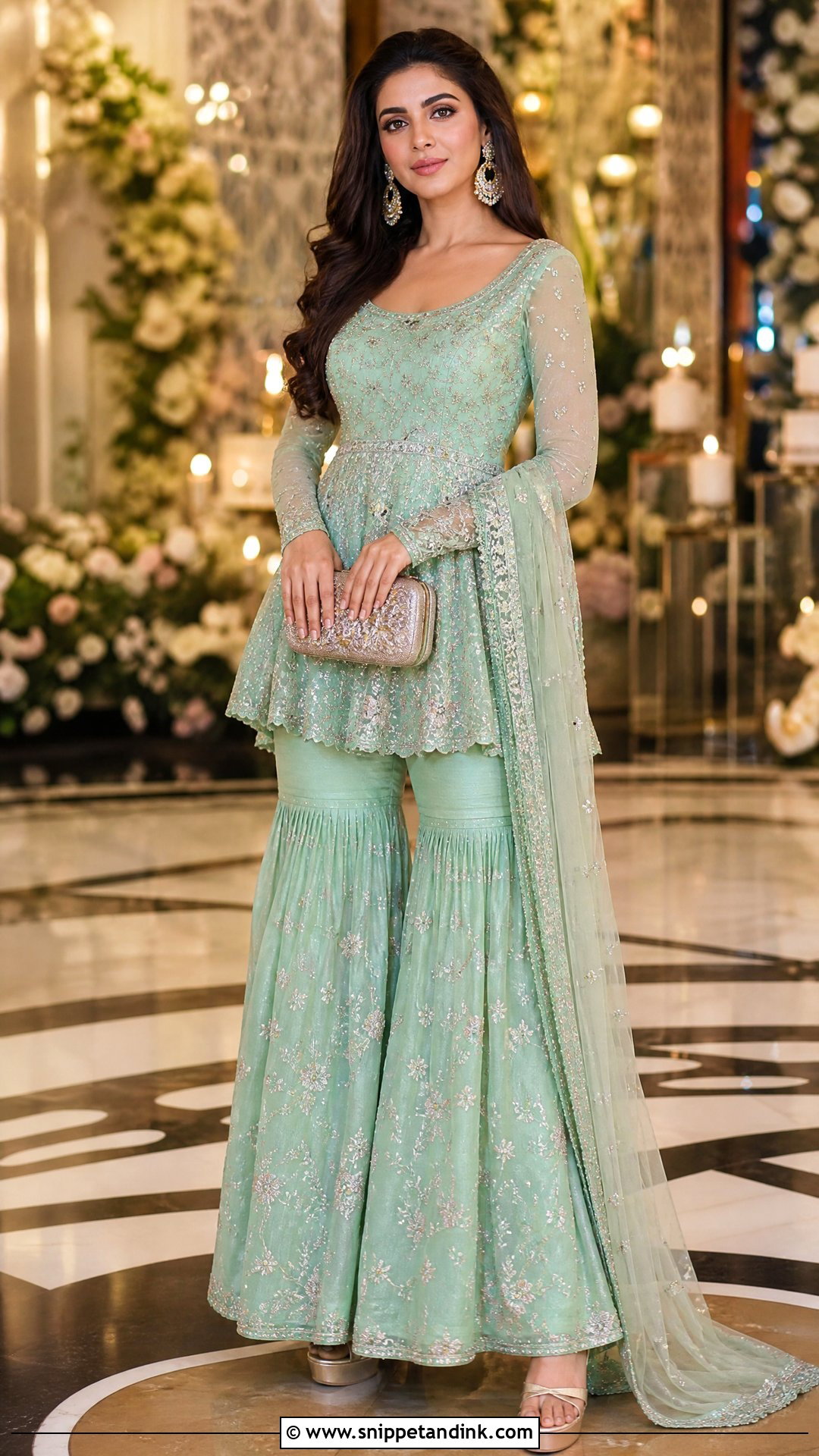
A peplum top over sharara pants looks structured and playful at a sangeet or reception. The peplum should end around the upper hip and sit smoothly over the waistband. If it bunches there, the top is too long or the pants sit too high. Make sure there’s enough room through the bust and waist too; a peplum that’s tight anywhere loses its flare. Embroidered necklines or a little mirror work give enough detail. Add a narrow dupatta for more traditional settings. A high ponytail shows the shape.
13. Dhoti Pants and Kurta for Marriage Function
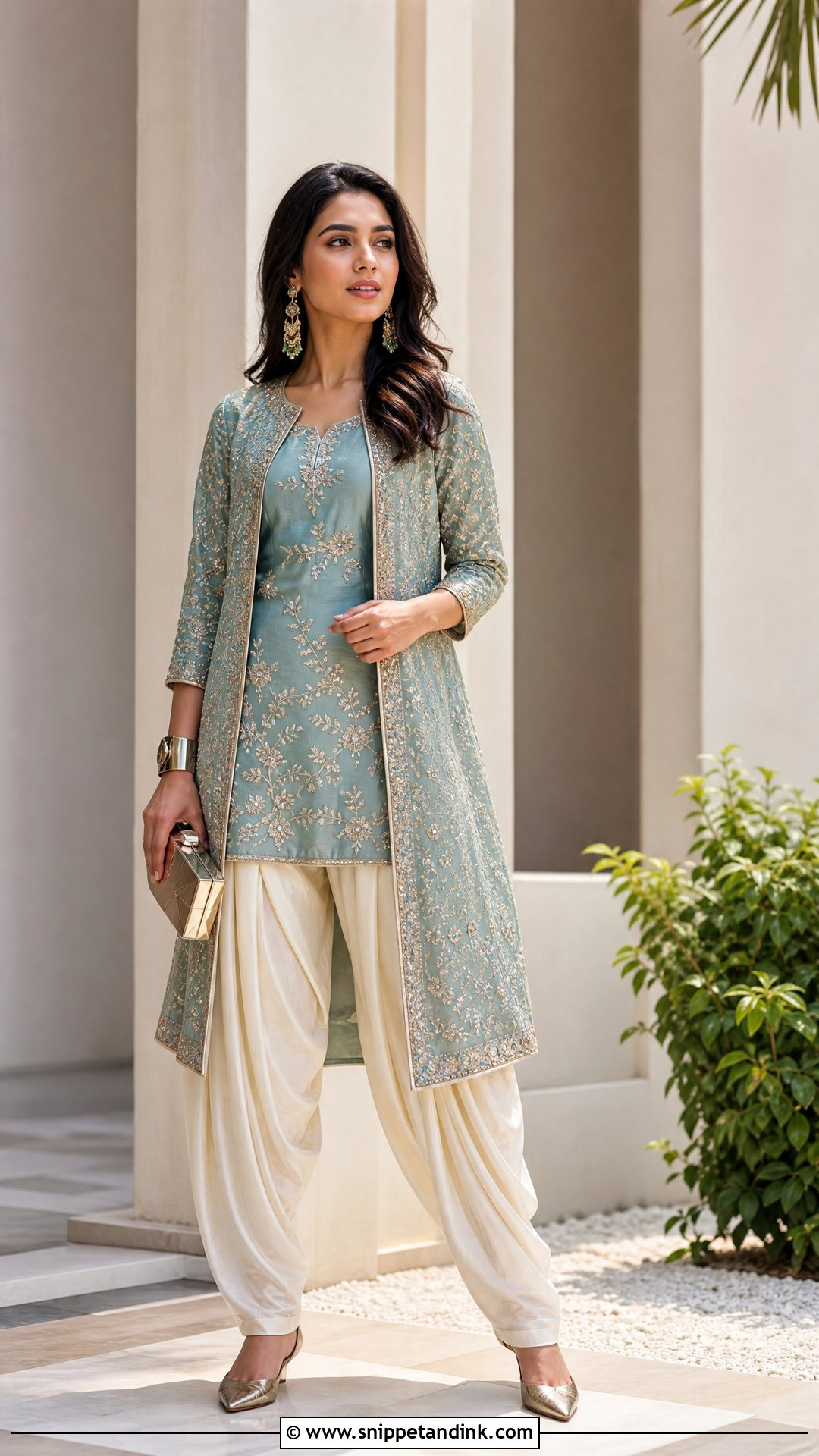
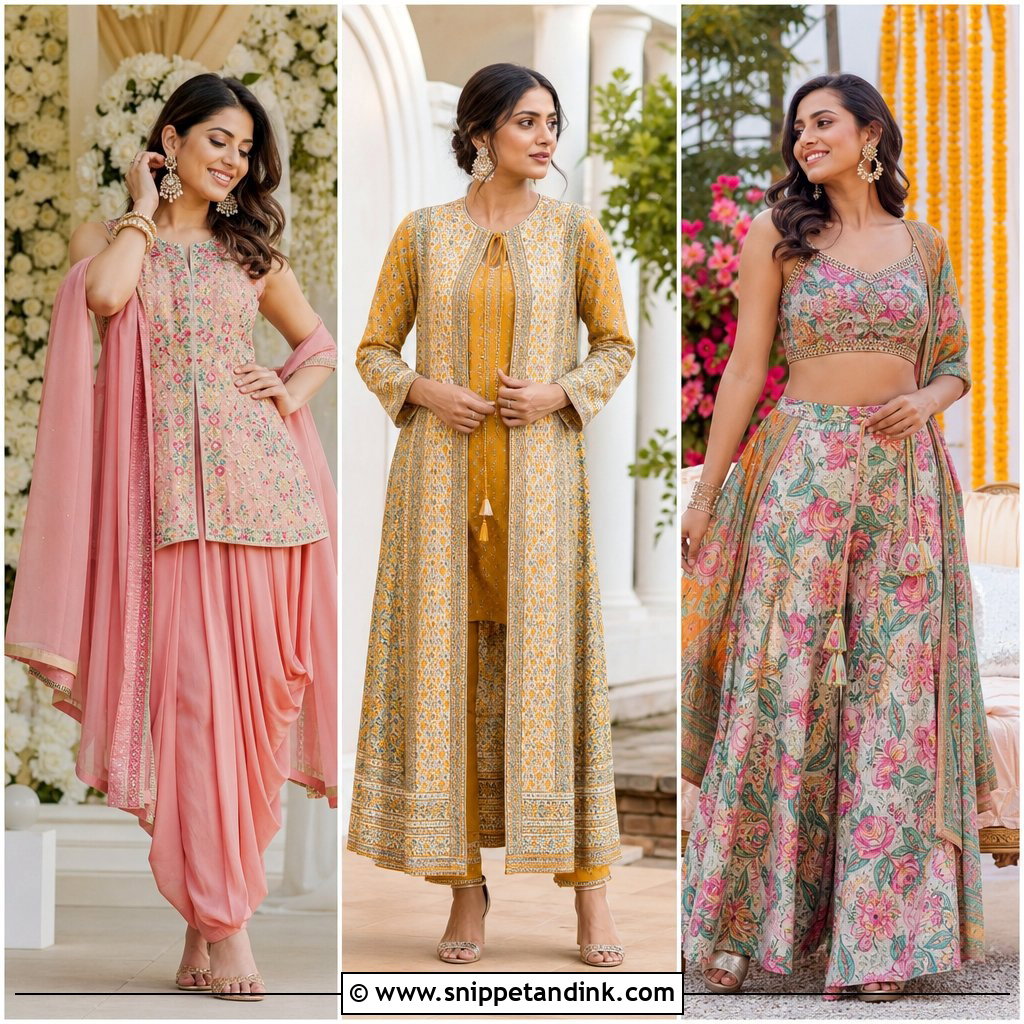
Dhoti pants vary hugely in cut, and that’s the first thing I’d check. Some drop low at the crotch and look bulky; others are tailored close. Sit and walk in them before the event. Pair them with a short kurta in silk, crepe or light brocade for a modern day function. A long embroidered jacket makes the outfit formal enough for an engagement. Pointed flats or juttis suit the clean shape. Skip the necklace if the kurta has a high neck, and wear long earrings and a cuff instead.
14. Jacket Lehenga for Marriage Function
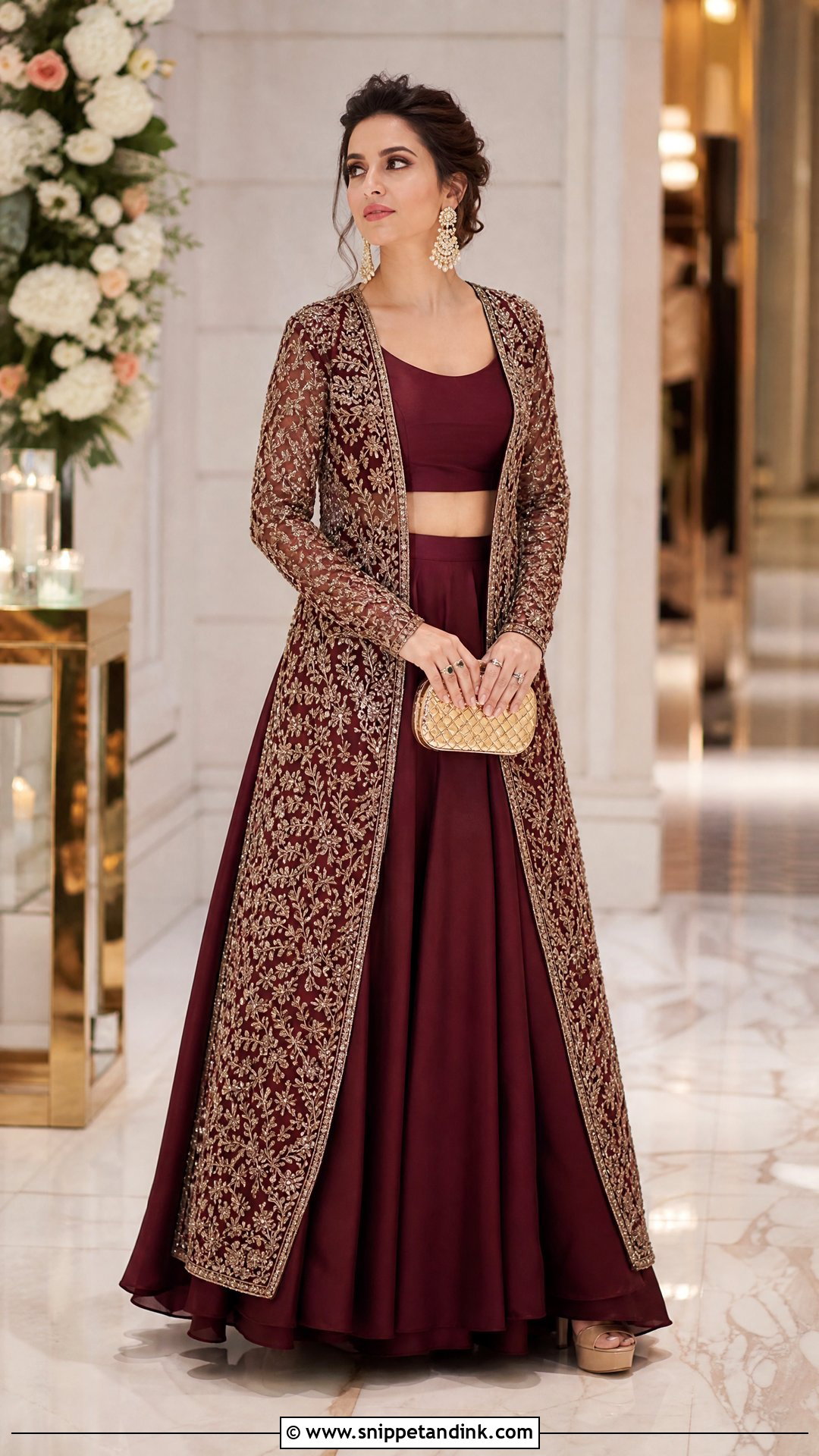
A jacket lehenga is a smart answer to cold-weather functions and air-conditioned halls, because the jacket keeps you warm without a shawl. A knee or ankle-length embroidered jacket over a simple blouse and flowing skirt looks complete. Worn open, it creates a long vertical line; closed, it reads like a long blouse. Leave the dupatta off unless it’s expected, since the jacket is already a top layer. Lighter embroidery suits daytime. Check that the sleeves let you lift your arms; stiff embroidered sleeves restrict dancing.
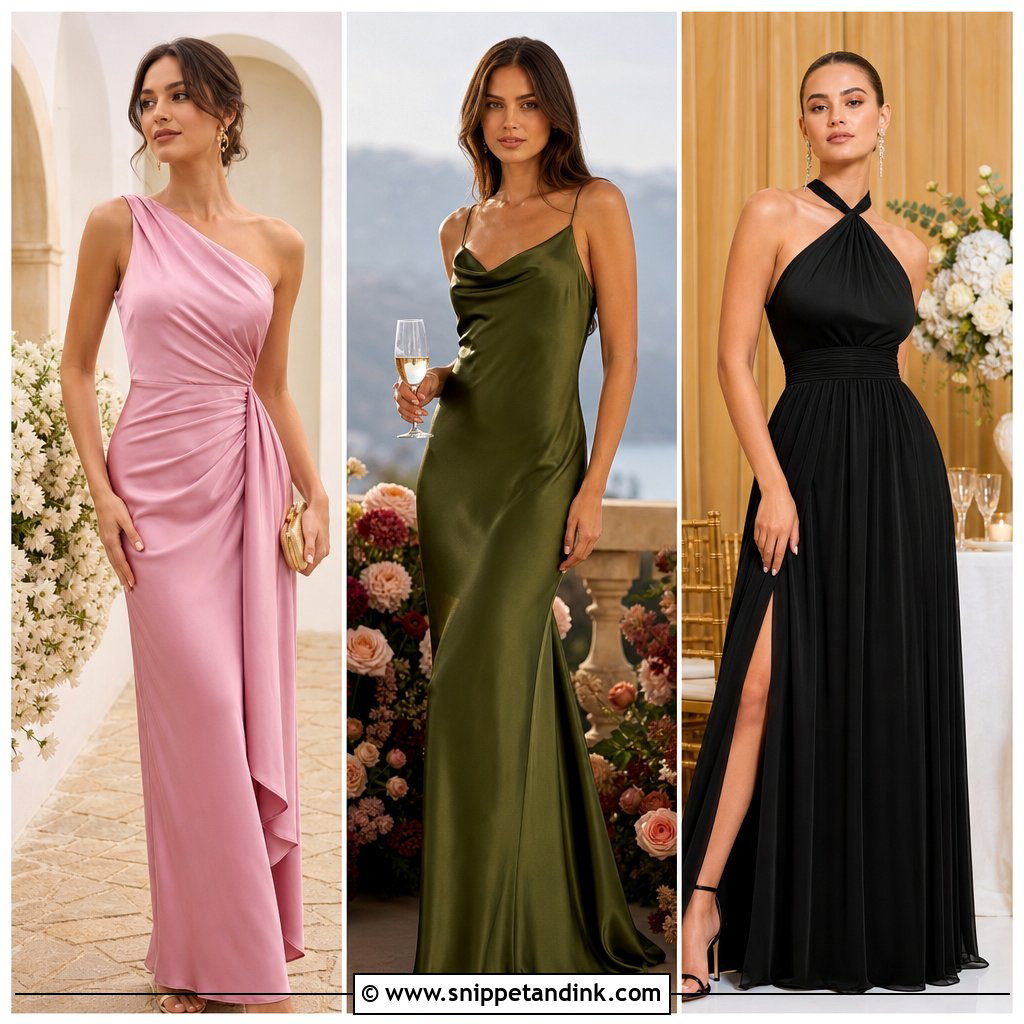
15. Chikankari Set for Marriage Function
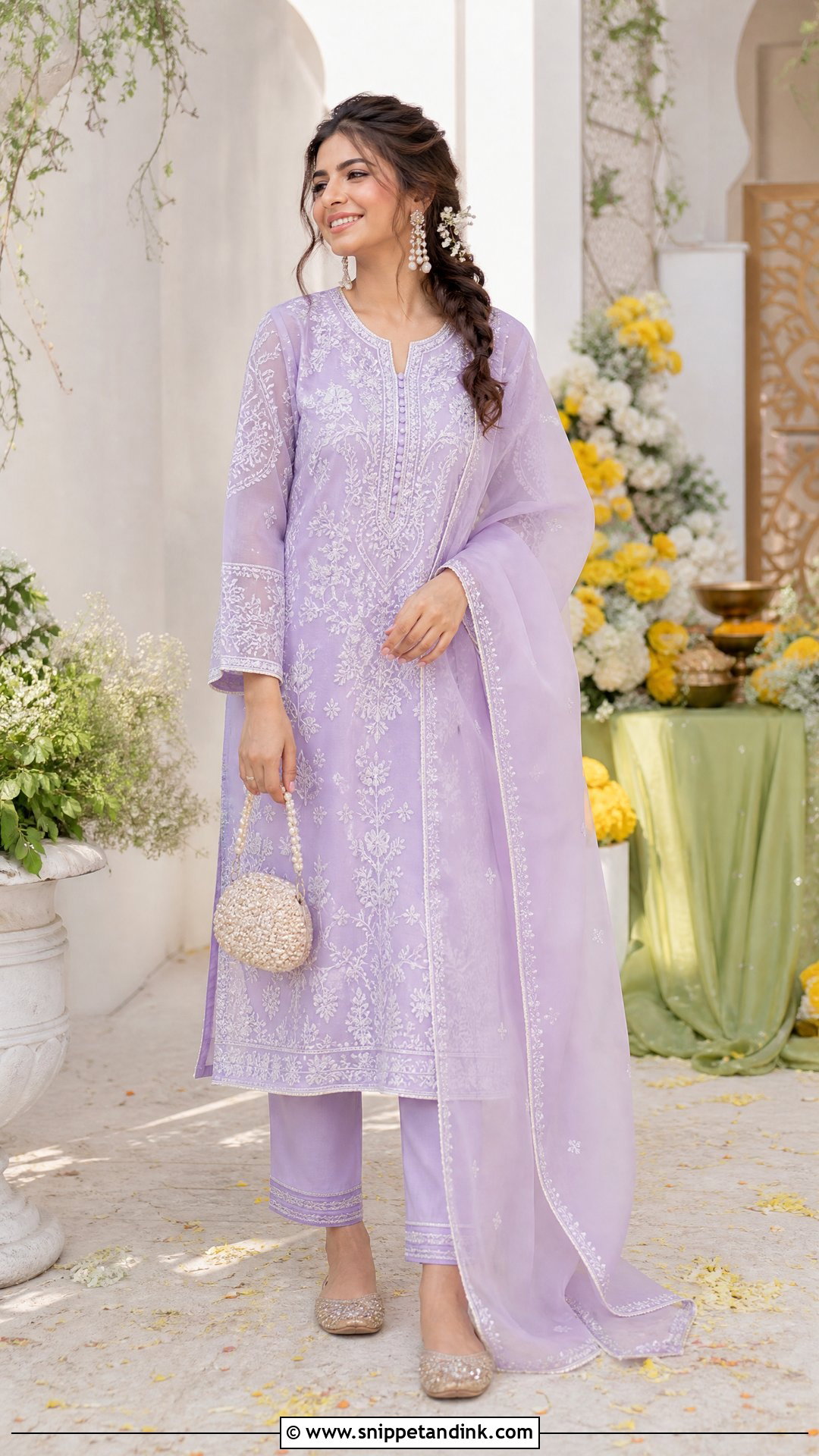
Chikankari’s fine hand embroidery and light fabric make it a natural choice for warm daytime functions. Pair the kurta with straight pants, palazzos or a light skirt, and add an organza dupatta to make it festive. Lime, lavender and butter yellow suit haldi, mehendi, and outdoor ceremonies. Pale chikankari is often sheer, so ask for a smooth tonal lining that won’t show in bright sunlight. Fit through the shoulders and arms is what makes it look tailored. Pearl or meenakari earrings and embellished flats finish it.
16. Velvet Suit for Winter Marriage Function
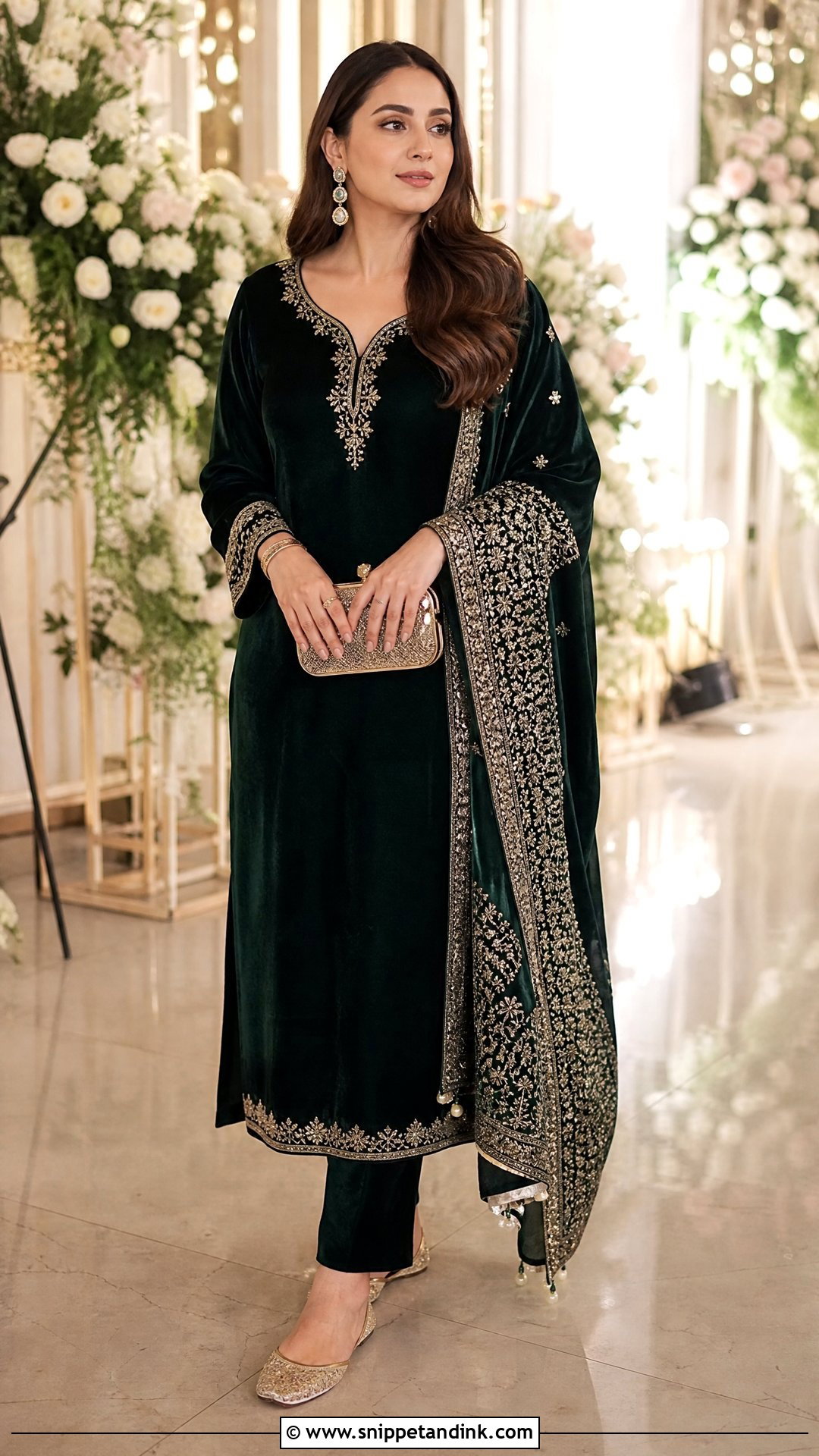
Velvet is the most practical festive fabric for a winter function. It’s genuinely warm and looks rich in navy, forest green or maroon. Keep the embroidery to neckline, cuffs and hem; all-over work on velvet looks heavy. Pair the kurta with a lighter embroidered dupatta so the outfit isn’t dark from top to toe. Closed juttis keep your feet warm on cold floors. Indoors can get hot, so ask for a breathable lining. A shawl folded neatly over the shoulders handles outdoor venues.
17. Printed Co-Ord Set for Marriage Function
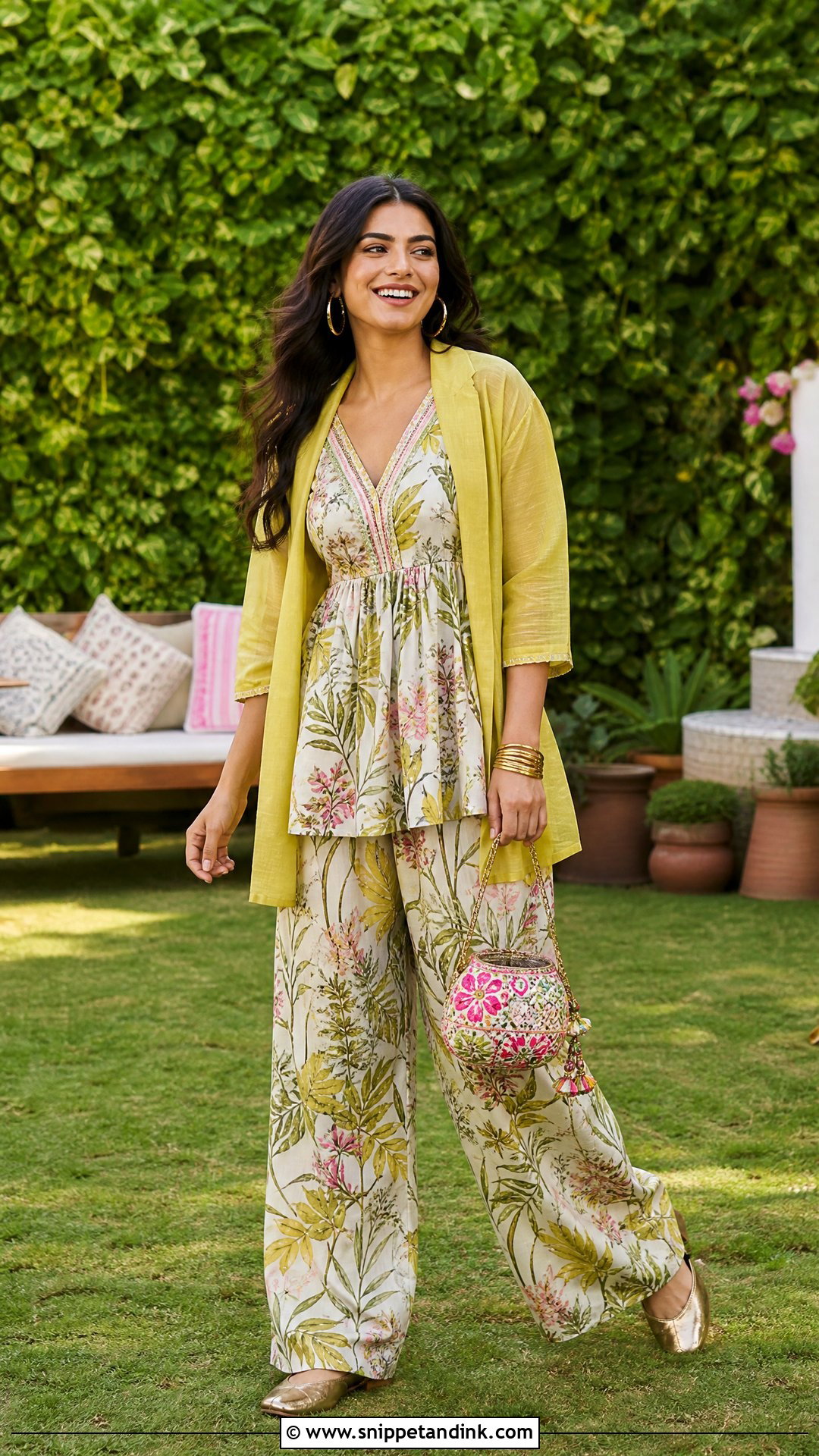
A printed co-ord set suits a colorful mehendi, welcome lunch or casual pre-wedding event. Wide-leg pants with a tunic, peplum or cropped kurta are easy to move in. Block prints and botanical prints both work, as long as the fabric has some sheen or finish so it doesn’t look like daywear. Pull one shade from the print into your shoes or bag. Hoops and slim bangles keep it relaxed. Add a plain long jacket if you’d like more coverage.
18. Sequin Saree for Marriage Function
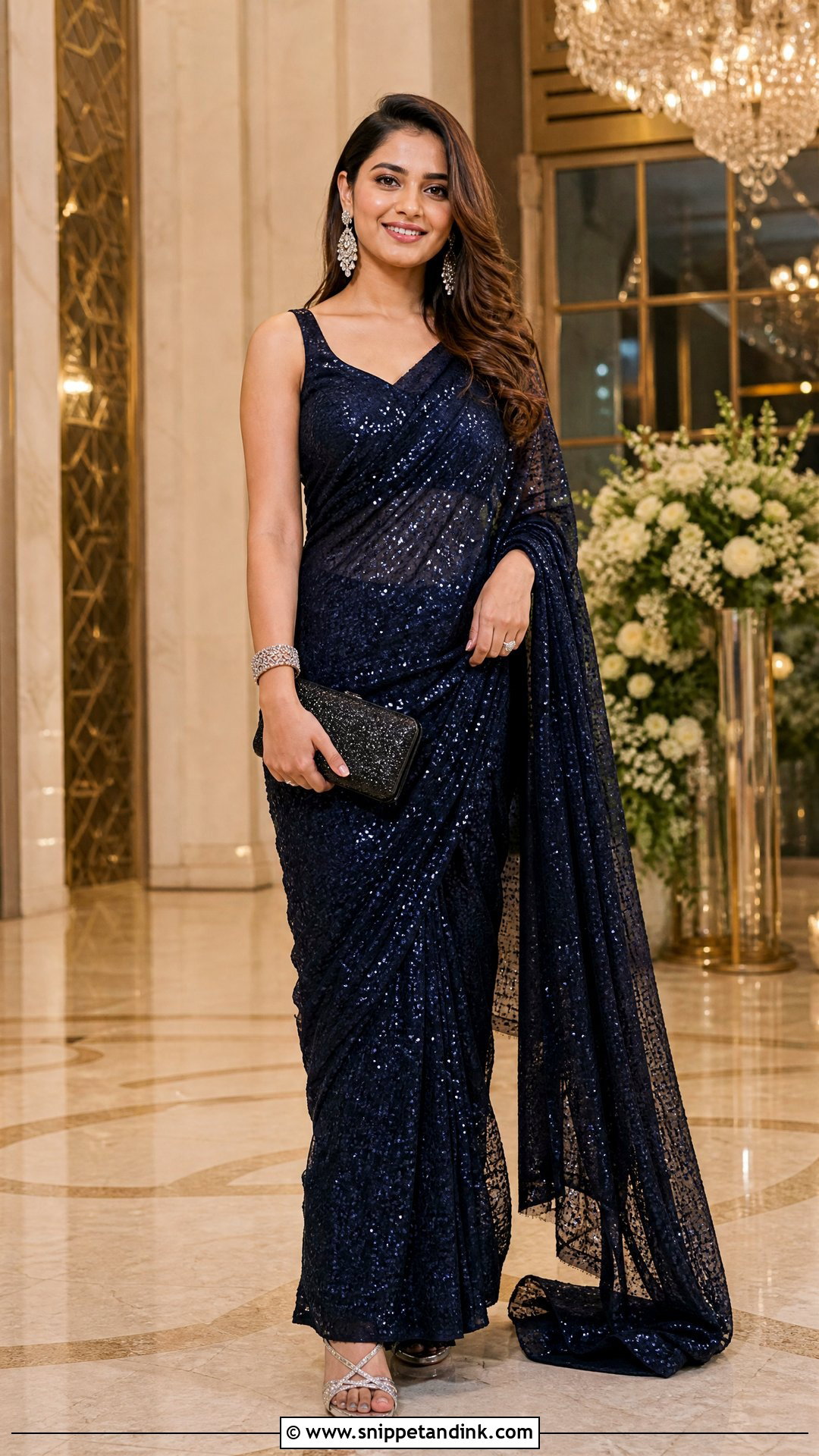
For an evening reception, a sequin saree in a single color with tonal sequins looks far more expensive than one mixing several shades of sparkle. Keep the blouse simple and the pleats clean. Skip the necklace if the blouse neckline is deep or detailed; a bracelet is enough. Sequin borders can scratch the inner arm, so check the edges and ask for a soft lining where needed. Sequins also add weight, which pulls on the waistband, so make sure the petticoat drawstring and the blouse construction are secure.
19. Silk Skirt and Crop Top for Marriage Function
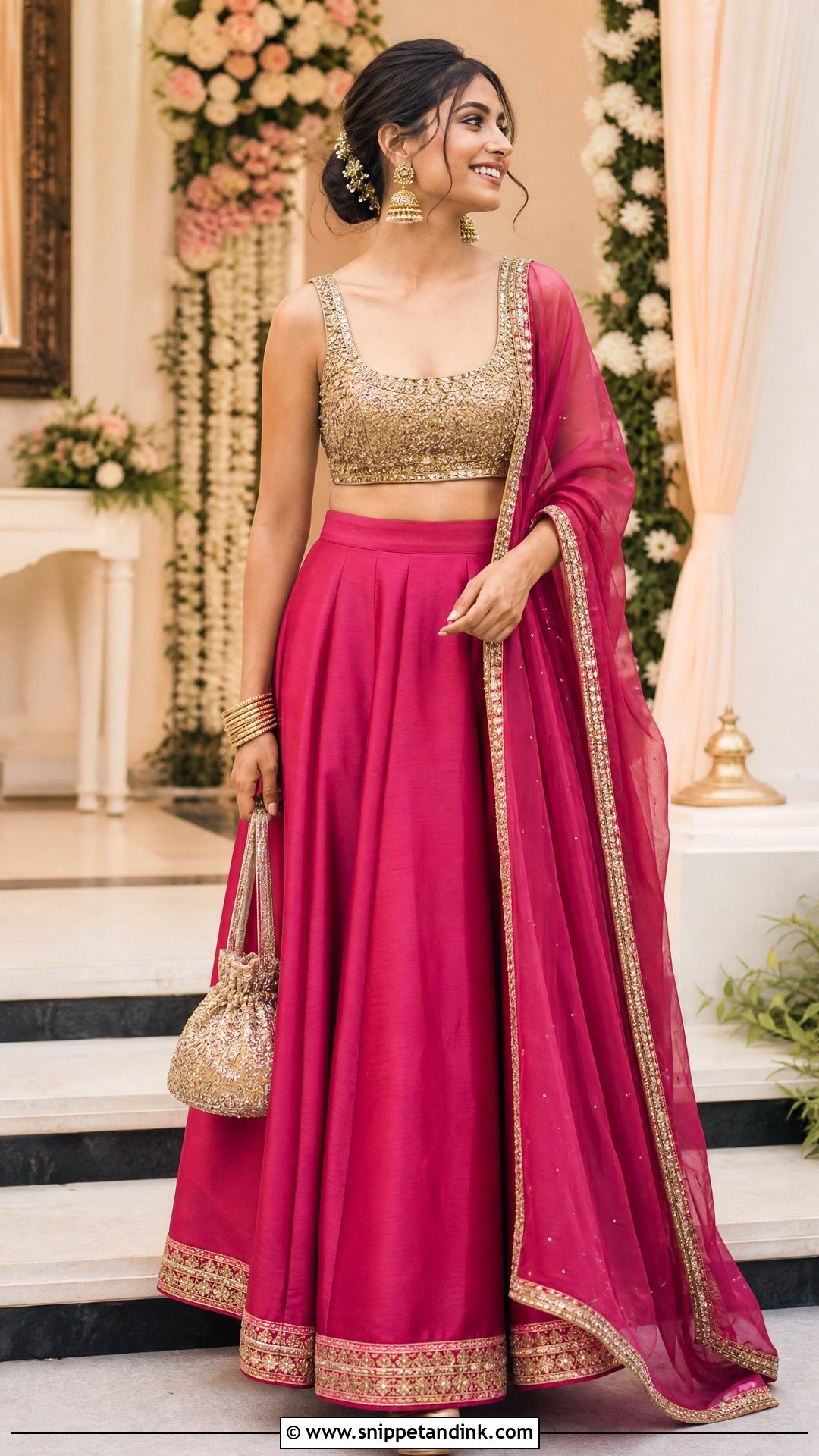
A silk skirt and top is one of the most flexible sets you can own for a wedding season. Pair a plain skirt with an embroidered top, or a woven skirt with a plain blouse. A dupatta makes it ceremony-ready; a long cape suits a reception. The top needn’t be cropped short; a longer fitted blouse keeps the coordinated look with more coverage. Ask your tailor for pockets in the skirt. It sounds minor, but a place for your phone makes a long ceremony much easier. Jhumkas and block heels finish it.
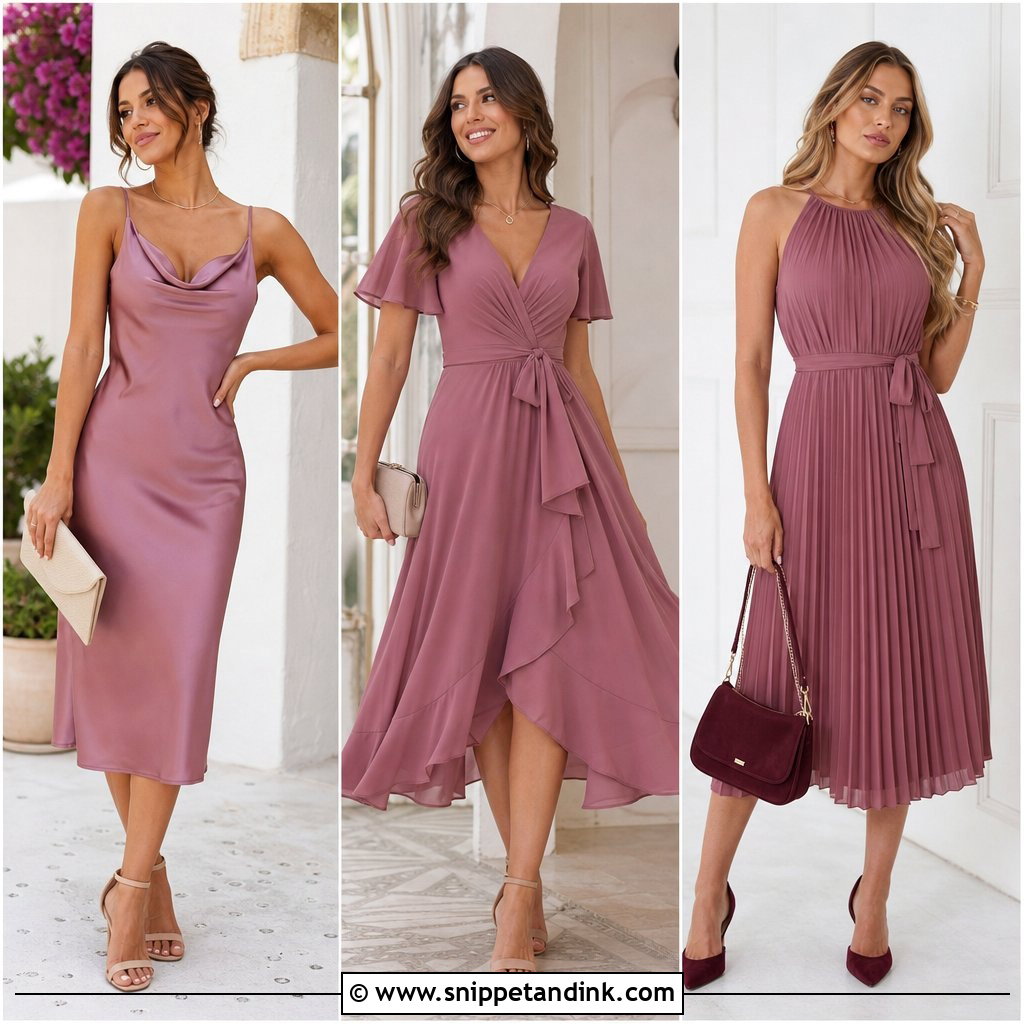
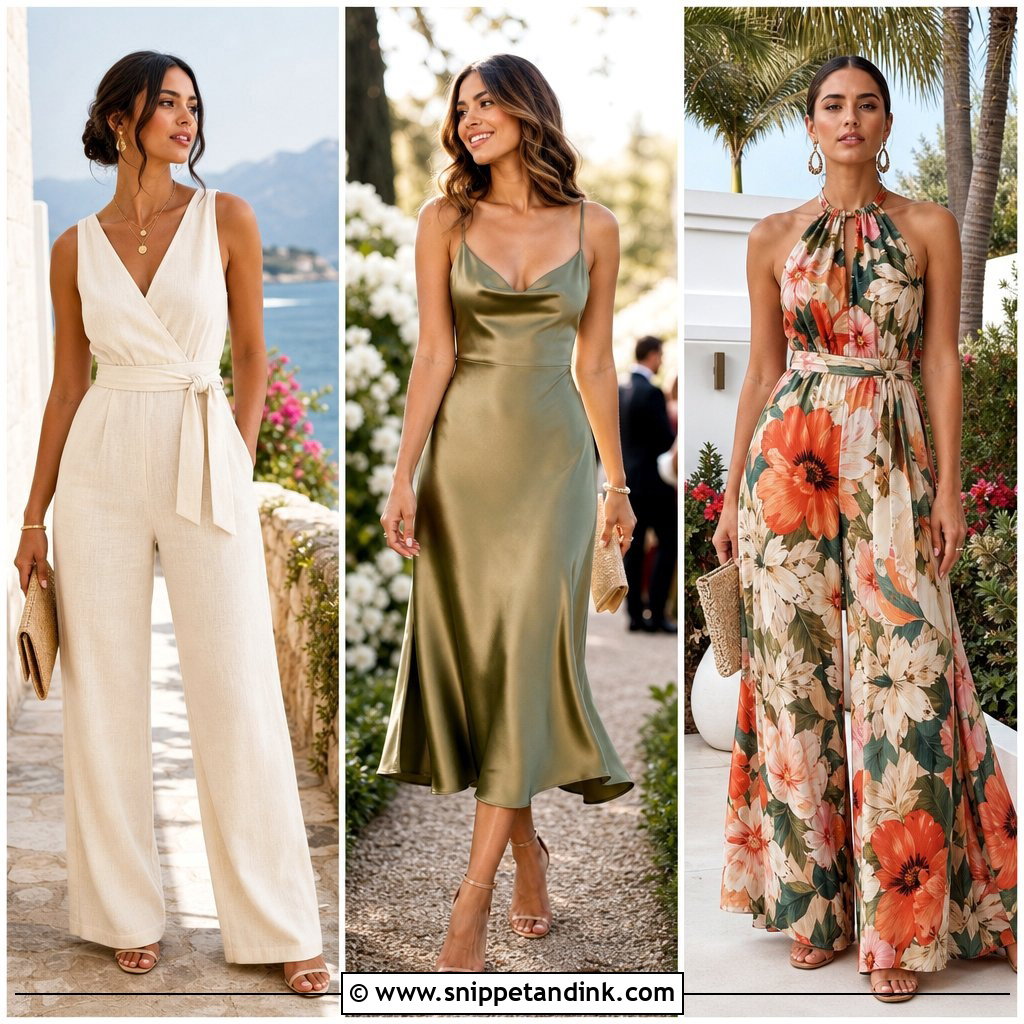
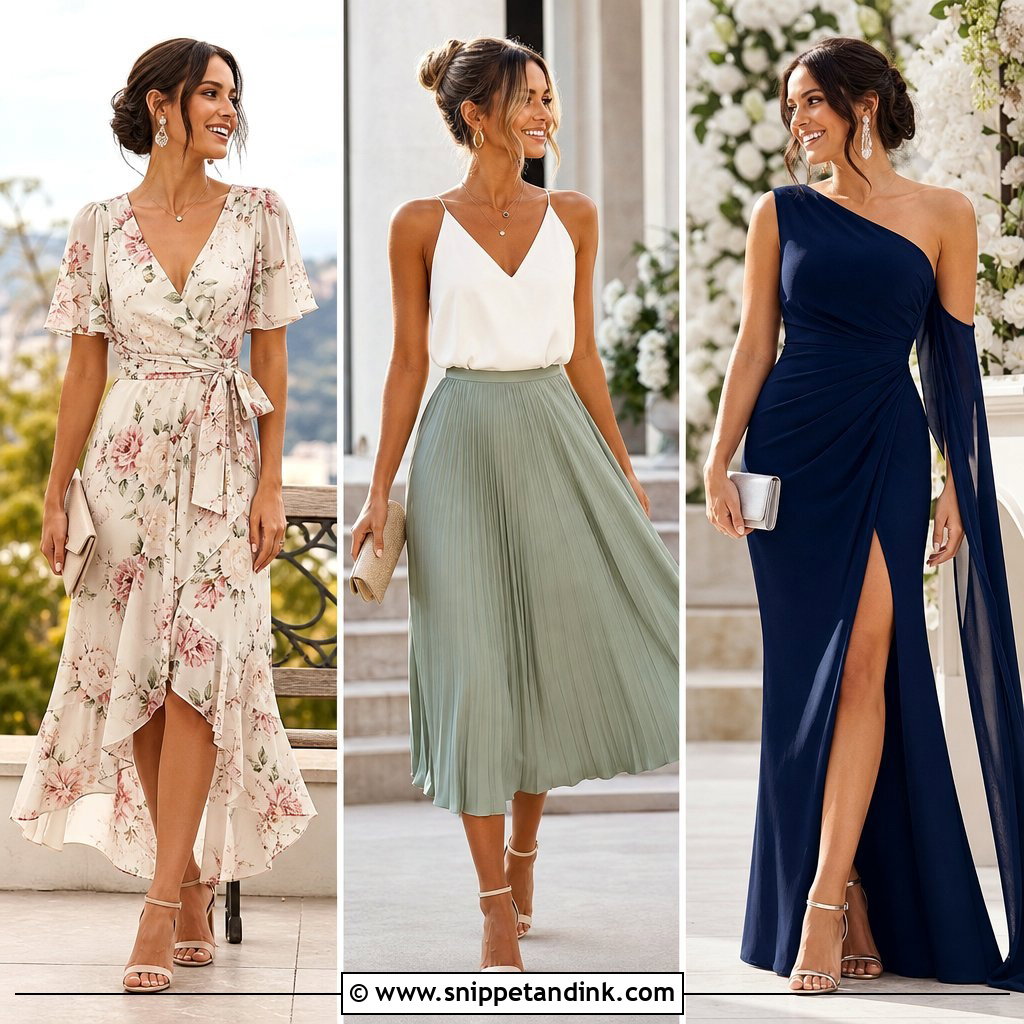
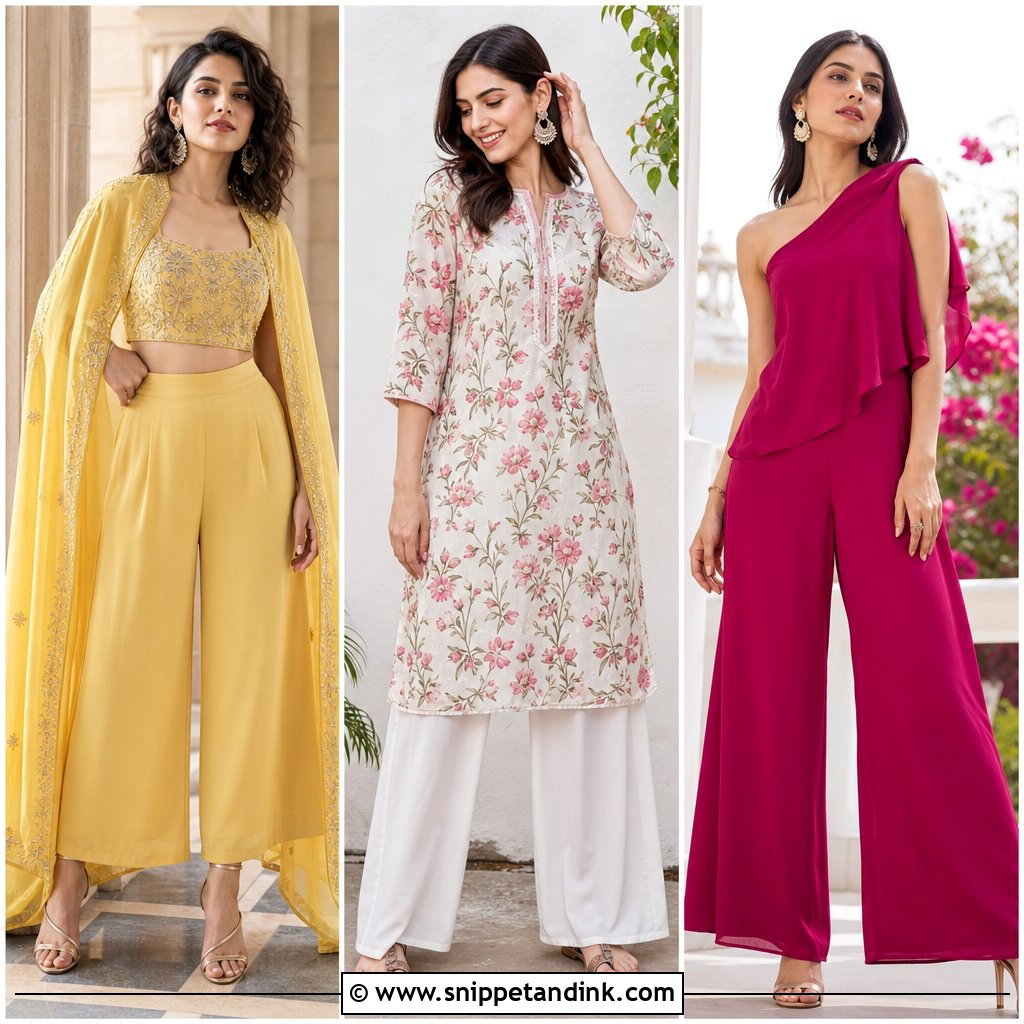
20. Indo-Western Gown for Marriage Function
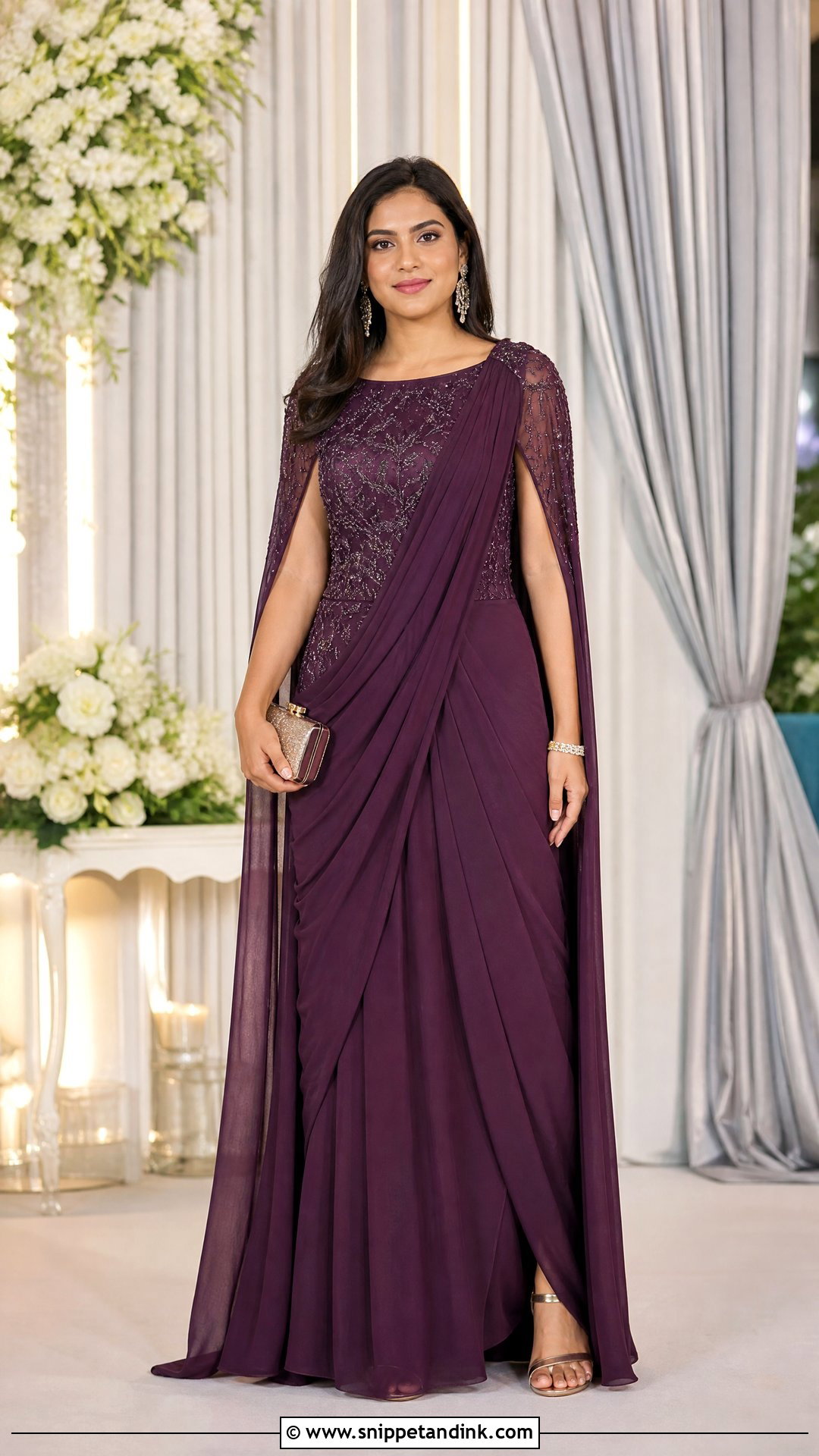
An Indo-Western gown suits receptions, engagement parties and formal evening functions. A floor-length shape with Indian embroidery, a draped panel or a saree-style bodice ties it to the occasion while keeping the ease of one piece. Jewel tones and metallic neutrals look right at night. Skip the necklace if the bodice is embroidered. The hem needs to be altered to your exact shoe height; a gown that’s even slightly long gets stepped on the moment you dance. Statement earrings and a clutch finish it.
Get the Saree Ready the Day Before
Most saree trouble on the day is really preparation trouble. When I dress a guest in a saree, the work starts a week or more before:
- Have the fall and pico done. The fall is a strip of fabric stitched along the inner hem that adds weight and protects the edge; pico finishes the raw edge of the pallu.
- Try the blouse on with the bra you’ll wear. Blouses made months earlier often need a small adjustment.
- Match the petticoat to the saree color, and choose a cotton one for silk sarees so the pleats grip instead of sliding.
- Pre-pleat the pallu the night before. Fold it into even pleats, pin them loosely and leave it folded overnight so the pleats hold.
- Pack safety pins in two sizes, a few straight pins and a small brooch for the shoulder.
On the day, give yourself more time than you think you need. Even a practiced drape takes a while to get even, and a rushed saree tends to loosen by the second ritual.
Comfort Through Every Ritual Matters Most
Whichever function you’re dressing for, the right outfit lets you join in without thinking about your clothes. The looks above cover sarees, suits, lehengas, separates and Indo-Western pieces across seasons and ceremonies. Check the invitation, venue, weather and any color guidance from the couple first. Then put your effort into tailoring, breathable linings, secure draping and shoes you can wear for hours. Let jewelry and bags support the outfit. Adapt every idea to your own body, coverage preferences and taste, rather than to whatever is trending this season.
You'll Like These Ideas:



Leave a Reply