
Most guests I dress ask one question before color or budget: what will I actually be doing in this? A sangeet means dancing, a daytime ceremony means heat and long sitting, and a reception means standing and greeting for hours. Below are twenty complete outfits, from sarees and lehengas to Anarkalis, shararas and fusion separates, each with jewelry, shoes and a bag worked out. Some flatter a petite frame and some need height, and I’ve said which. Read them with your own events in mind, and with one eye on what you’d happily wear again.
Buying Ready-Made Indian Wear When the Wedding Is Weeks Away
Most guests buy off the rack or online and then have it altered. That works, as long as you know which changes are simple and which aren’t.
Measure yourself in the bra you’ll wear with the outfit, and compare against the label’s own size chart rather than your usual size, because Indian wear sizing varies a great deal between brands. Ask whether the blouse comes stitched or as unstitched fabric. Many sarees include only a blouse piece, and a tailor needs time to make it.
- Easy for a tailor: taking in a blouse or kurta at the side seams, shortening sleeves, raising the hem of a plain skirt.
- Possible if there’s seam allowance: letting out a blouse. Look inside for extra fabric, often called margin, before you buy.
- Awkward: shortening a lehenga with a heavy embroidered border. The skirt has to be taken up from the waistband instead, which changes how the panels fall.
- Rarely worth it: resizing a sequined or mirror-work piece by more than a size, since the work runs into the seams.
Give your tailor at least two weeks, and longer in peak wedding season, when every tailor in town is booked.
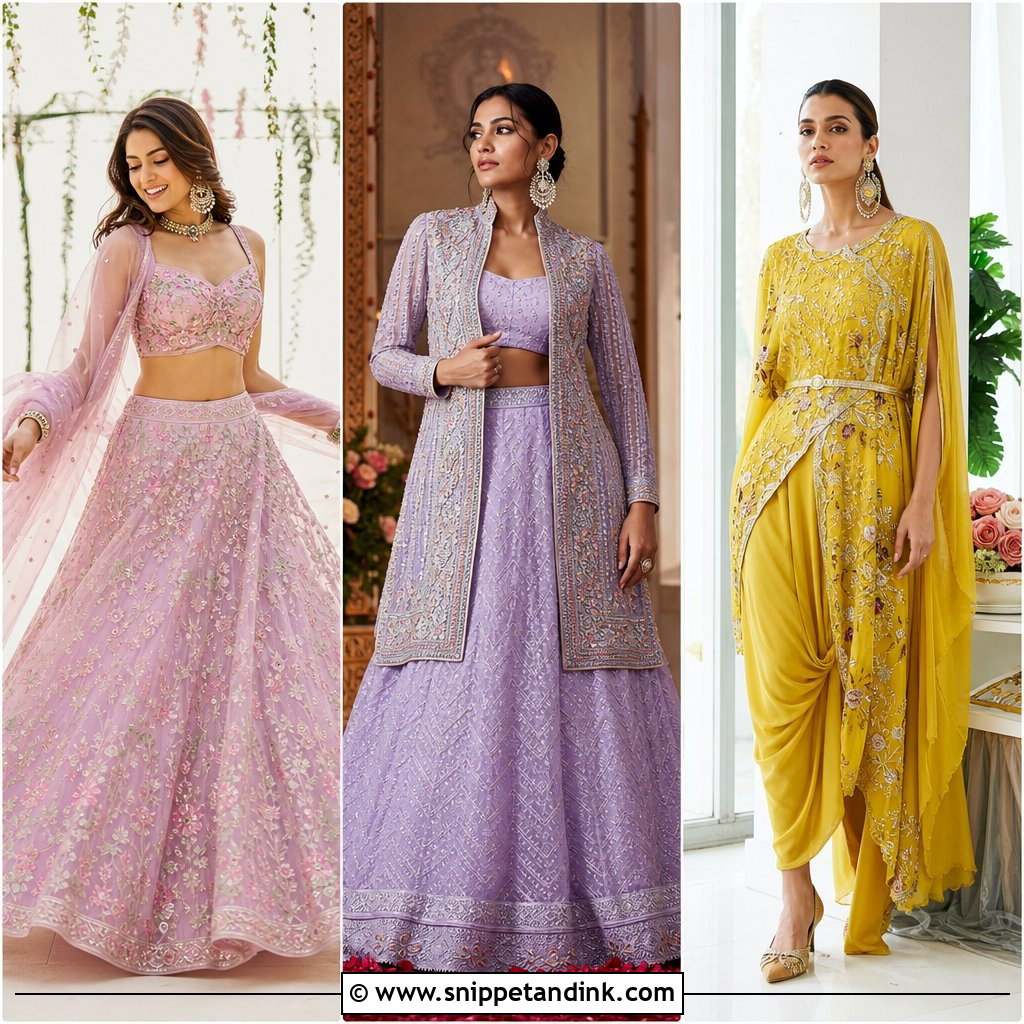
1. Pastel Floral Lehenga for Wedding Party
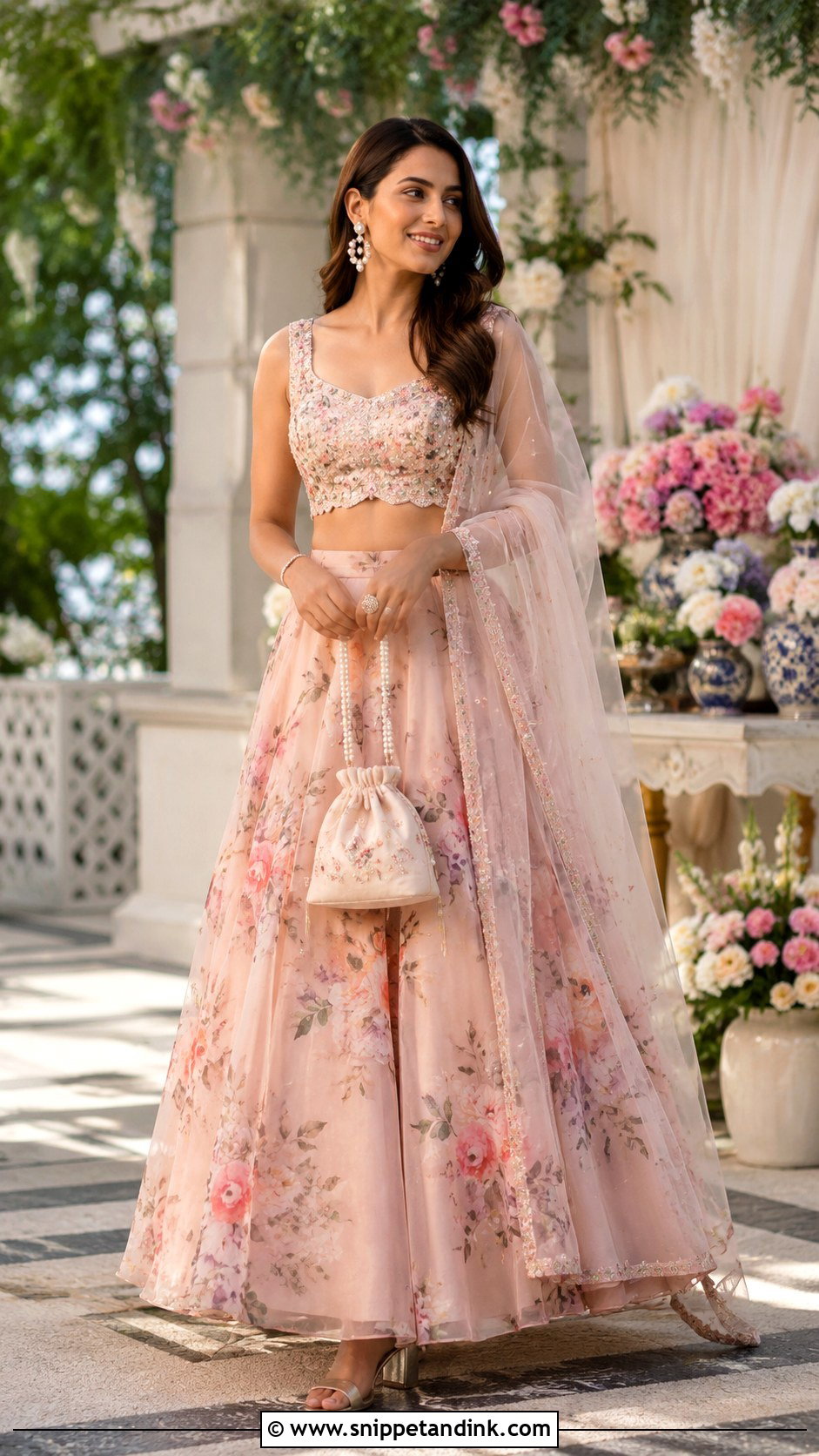
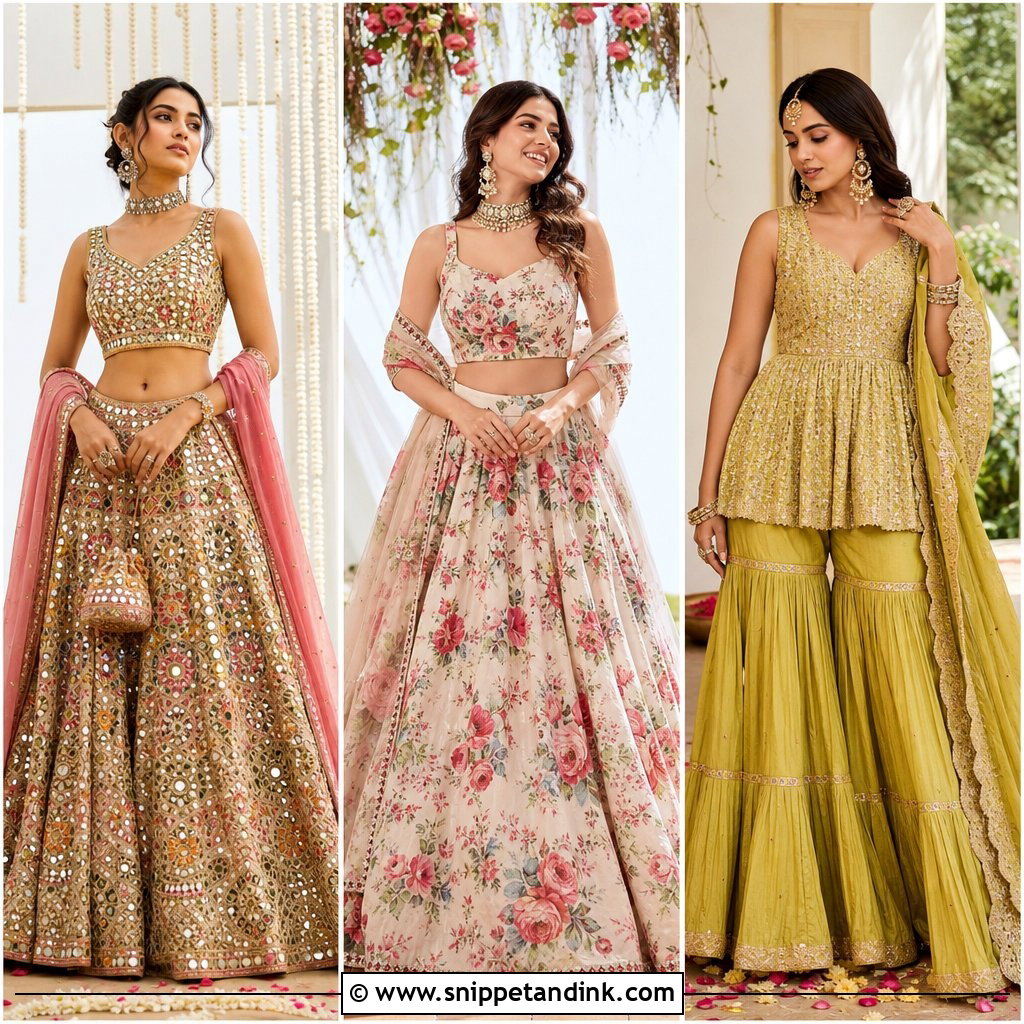
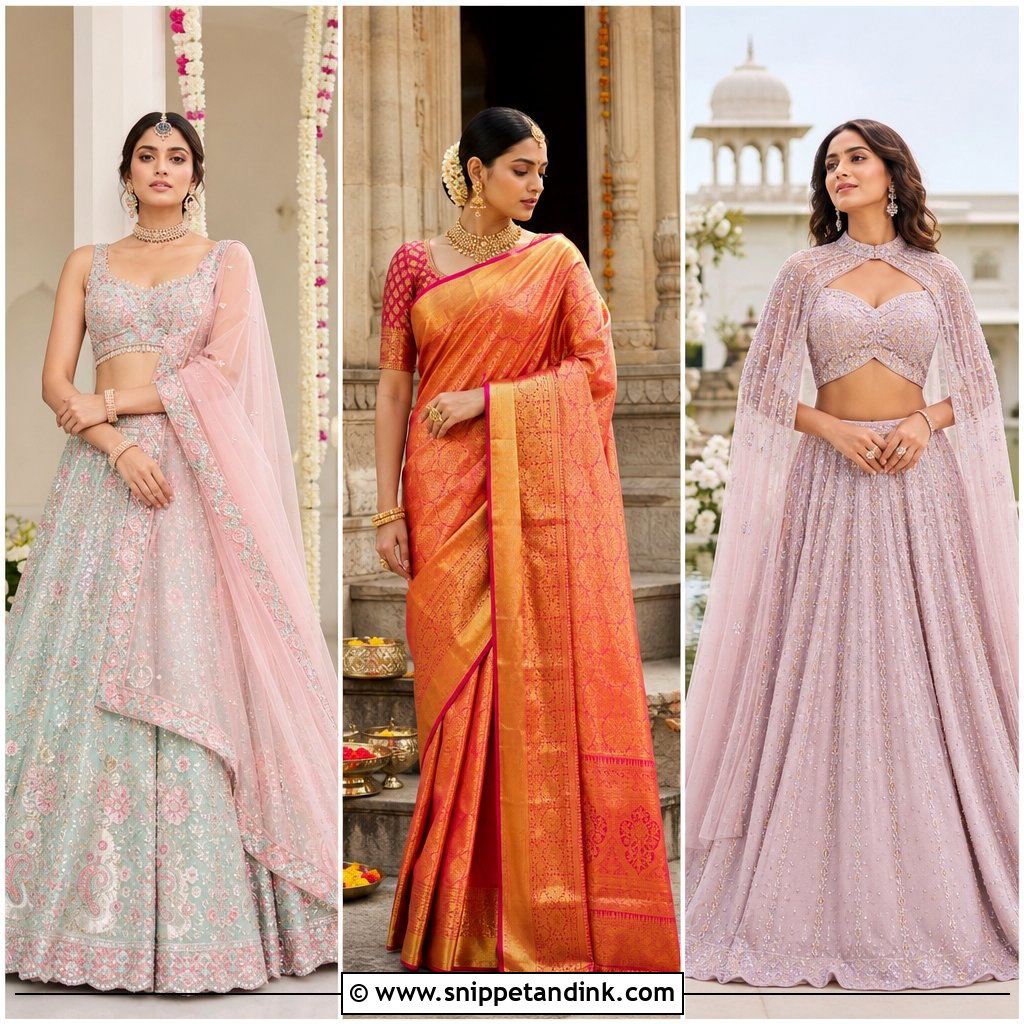
Pastel florals belong in daylight, because under yellow evening bulbs blush and mint go muddy. An organza skirt keeps its shape on a breezy lawn, while georgette moves more but clings, so pick according to whether you want volume or drape. Blush, mint, lavender or powder blue with a fitted embroidered blouse and a light dupatta pinned at one shoulder is the base. Pearl drops, slim bangles and a potli suit the print. Block heels are kinder than stilettos on grass, which swallows a thin heel within minutes. Rosy cheeks, a pink lip and loose waves or a flower-studded low bun complete it.
2. Banarasi Silk Saree for Wedding Party
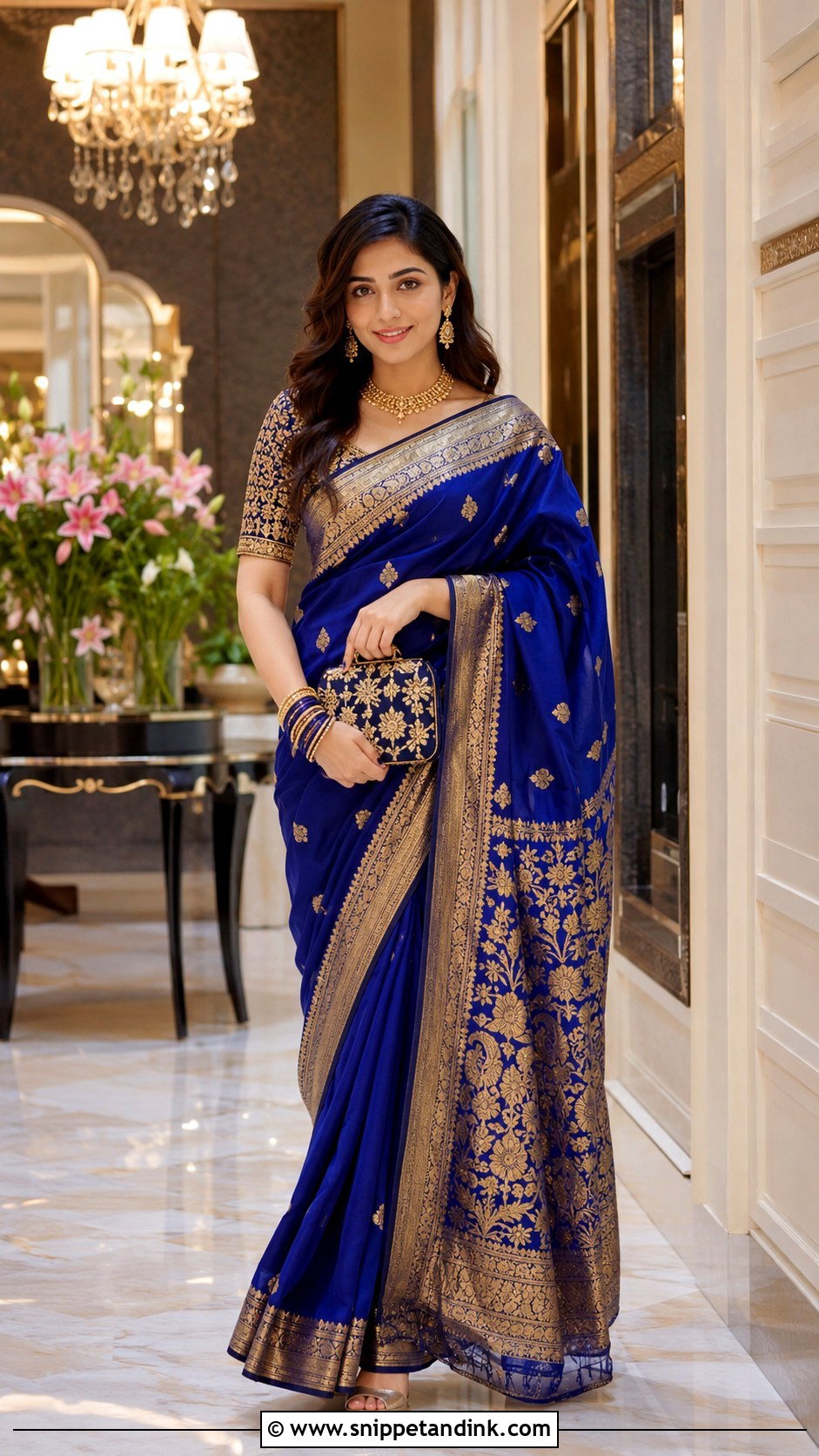
Banarasi is woven, not embroidered, so the zari pattern is part of the fabric and doesn’t snag the way surface beadwork does. That makes it forgiving if you’ll be hugging relatives all night. Emerald, royal blue, magenta or deep purple with gold zari looks right at most celebrations. A brocade or contrasting silk blouse finishes it, and secure pleats matter if you plan to dance. A choker, matching earrings, gold bangles and a compact clutch suit the weight of the silk, and platform heels help with the length. Pair a smooth bun and jasmine-style accessories with defined eyes, a small bindi and a balanced lip.
3. Pre-Draped Saree for Wedding Party
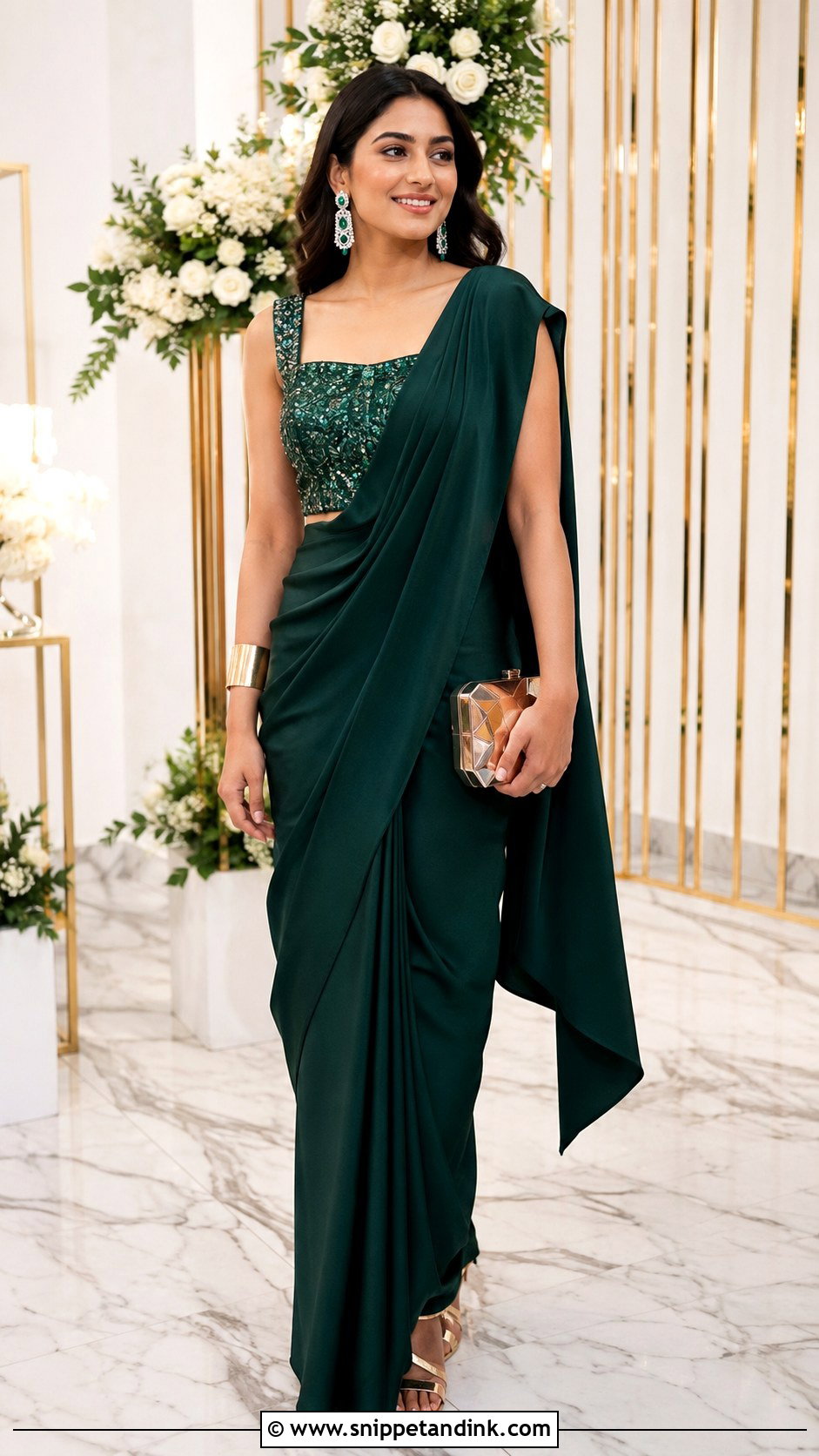
What if you want a saree but have never managed pleats? That’s the case for a pre-draped style, with the pallu attached and the waist already fitted. Crepe and satin hang heavily and smoothly, while chiffon floats and shows more of the body, so choose with that in mind. An embellished blouse with short sleeves, a square neckline or a one-shoulder cut gives it a modern line, and statement earrings with a cuff are usually all the jewelry it needs. Carry a structured clutch and wear supportive block heels. A sleek ponytail or side-parted waves suits a reception or sangeet where you’ll be moving around.
4. Floor-Length Anarkali for Wedding Party
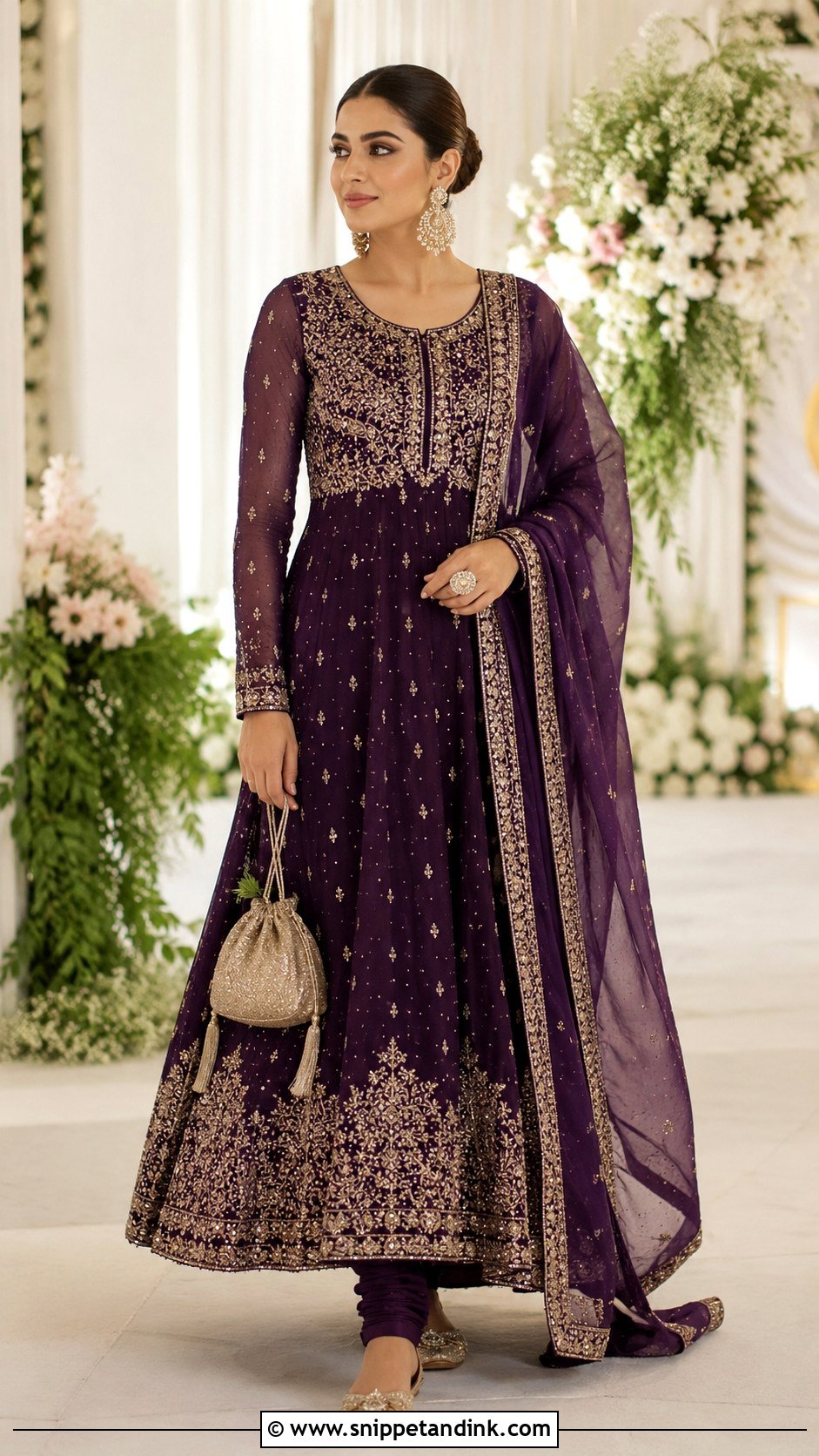
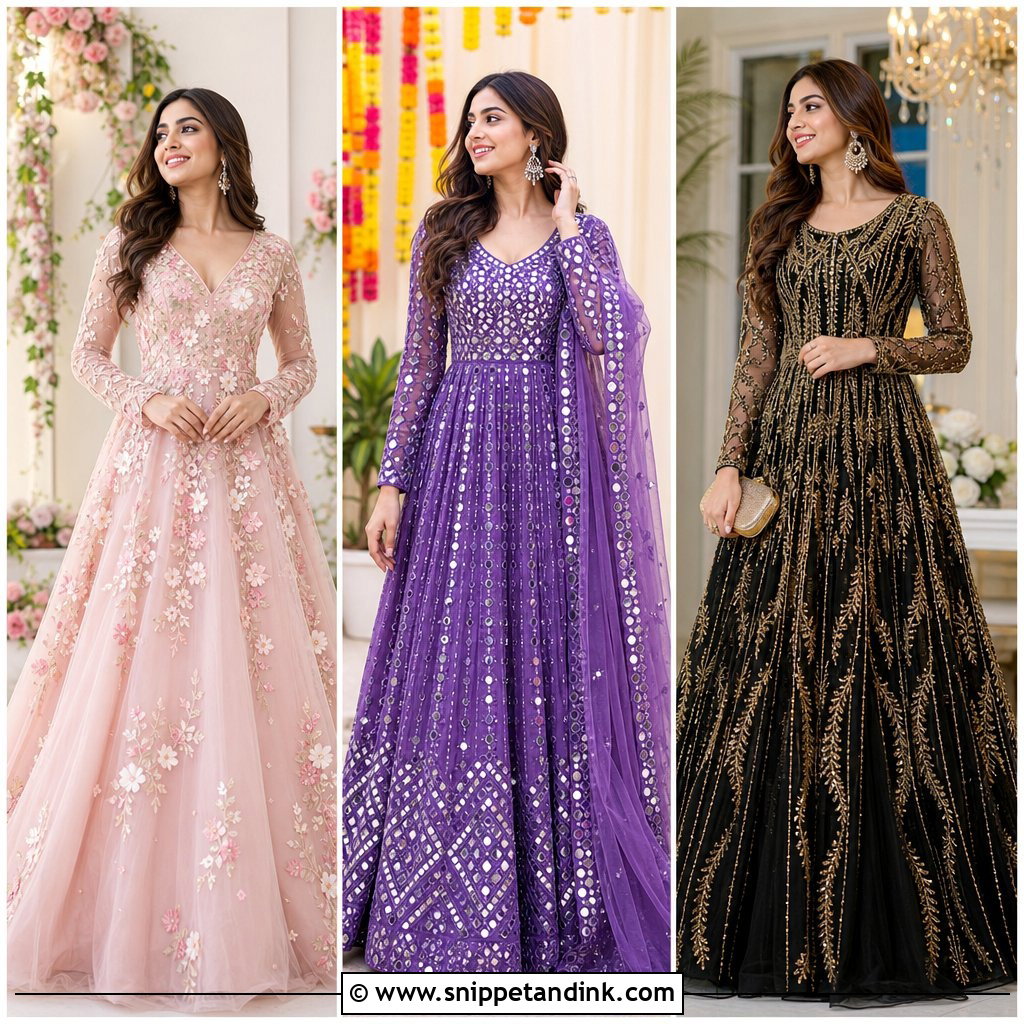
A floor-length Anarkali lengthens the body because the eye runs straight from bodice to hem, which is why I suggest it to petite guests. On a very tall frame it can look endless, and a slightly fuller flare helps. Georgette drapes softly, while net gives more volume. Jewel tones suit evening and peach, sage or dusty blue suit daytime. Narrow churidar, a light embroidered dupatta, chandbali earrings, a cocktail ring and a small potli finish it. The hem hides your feet, so choose pointed juttis or medium heels for comfort, not looks. Softly defined makeup and a low braided bun complete the outfit.
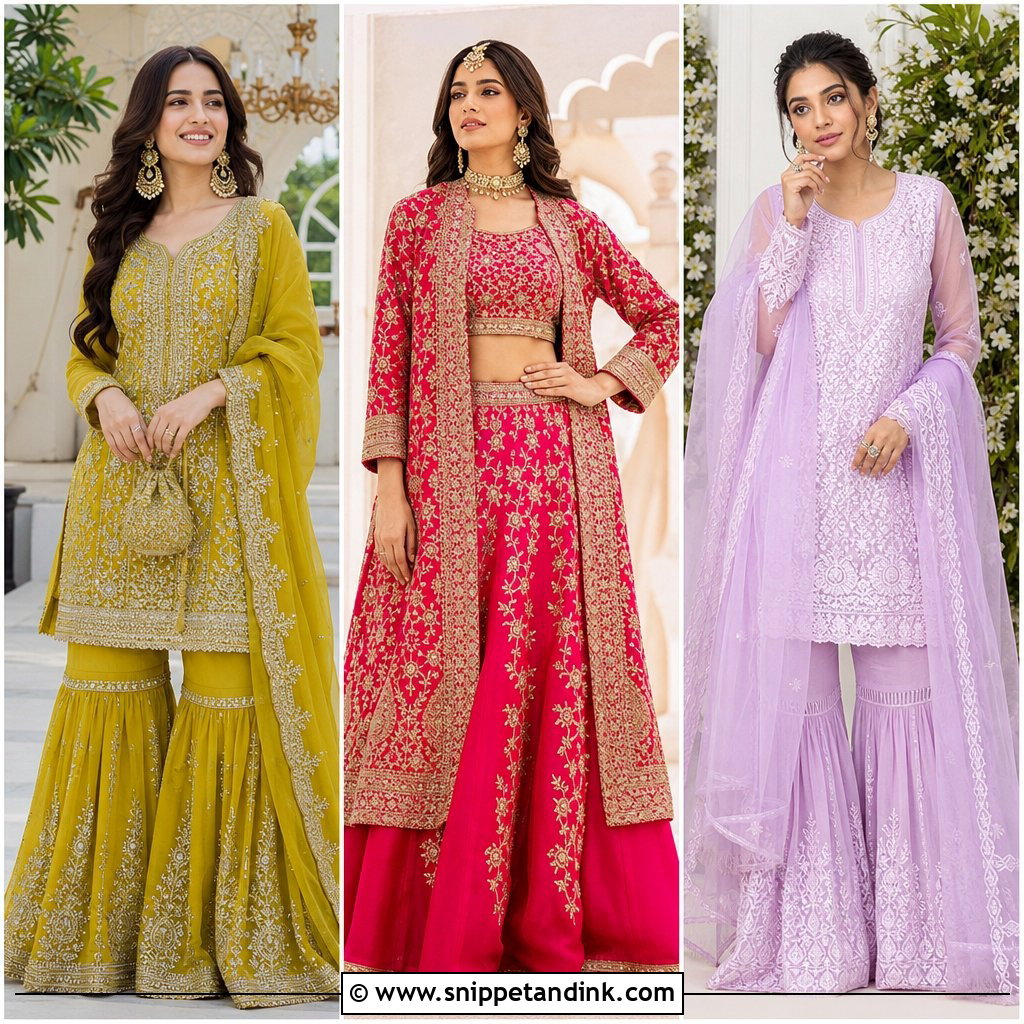
5. Sharara Set for Wedding Party
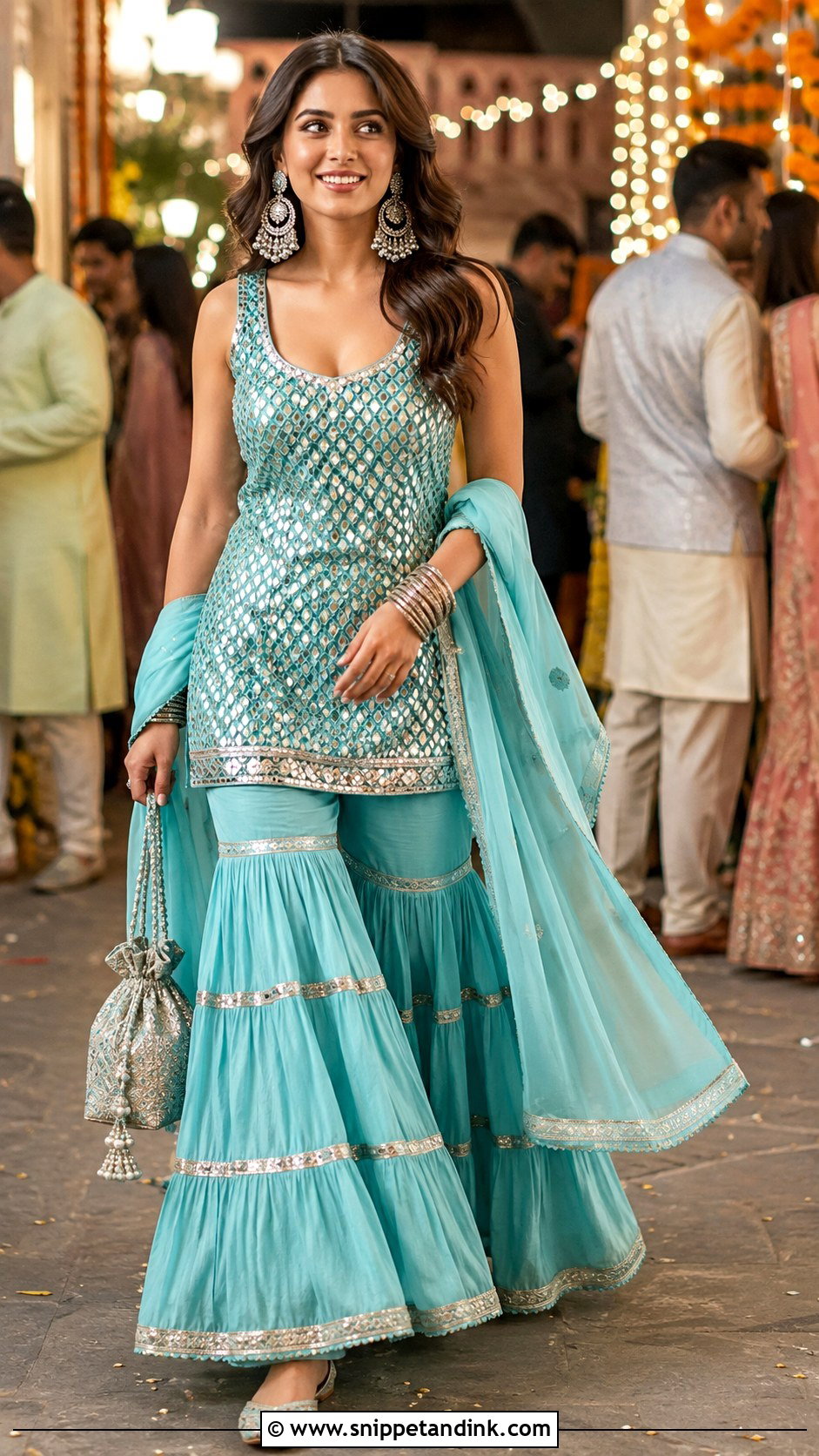
A sharara set is what I’d wear myself to a mehndi, because the pants let you sit cross-legged on a floor cushion without a skirt bunching around you. The fit through the waist and hips should be smooth before the flare begins; if it starts too high, the volume swamps you. A short or hip-length kurti with mirror work or thread embroidery, a chiffon dupatta, jhumkas, stacked bangles and an embroidered potli give it traditional character. The wide hem catches spiky heels, so juttis, wedges or stable block heels are safer. Wear a half-up style or loose braid.
6. Peplum Gharara for Wedding Party
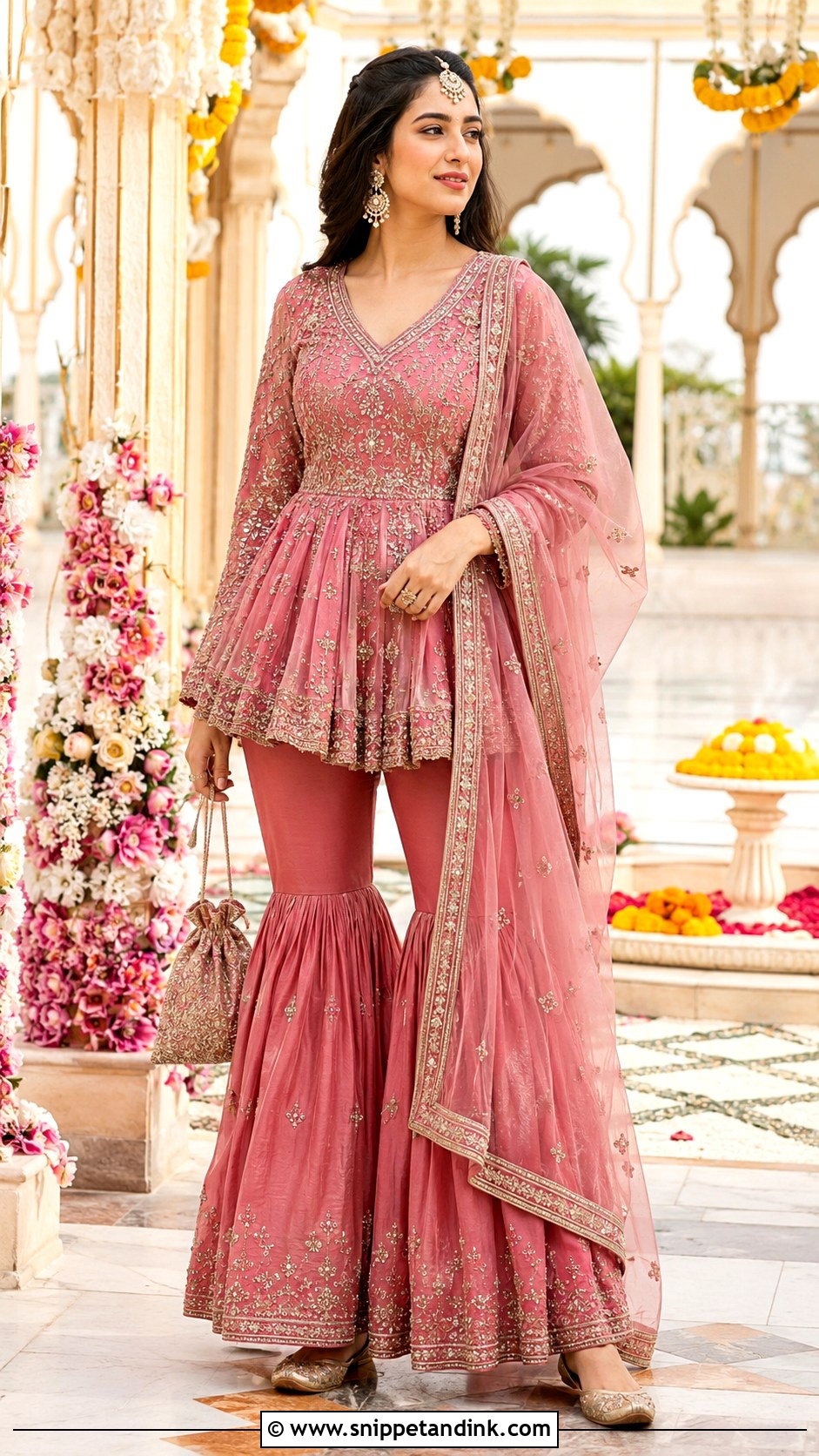
The gharara is the more structured cousin of the sharara. It stays fitted through the thighs, is gathered at the knee under a decorative band, then flares to the floor. Put a fitted peplum kurti on top, embroidered at the neckline, waist and sleeves, and the outfit gets shape at both ends. Choose a sheer dupatta with a narrow border so it doesn’t hide that silhouette. A maang tikka, medium earrings and a small wristlet suit it. Embellished juttis are the easy choice, though low block heels add a little height. Finish with a side braid or tidy low bun.
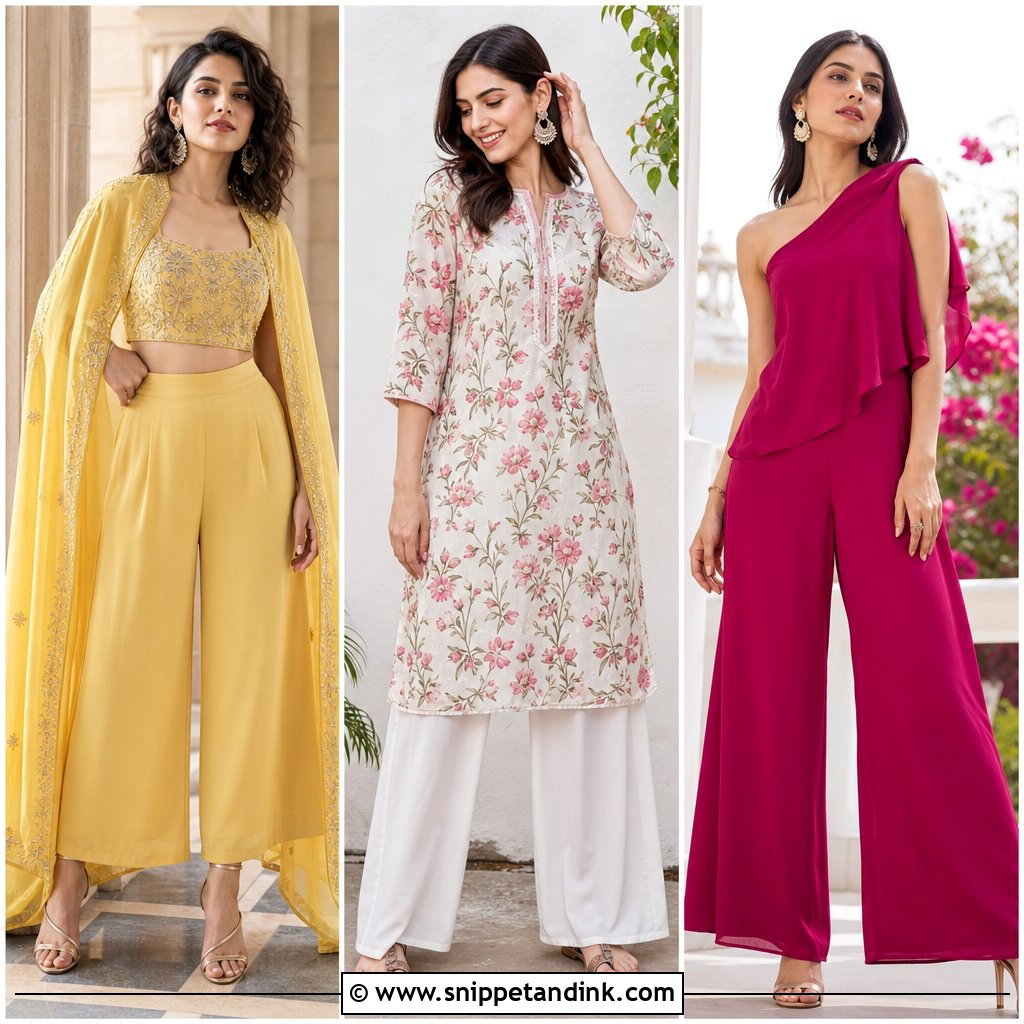
7. Embroidered Palazzo Suit for Wedding Party
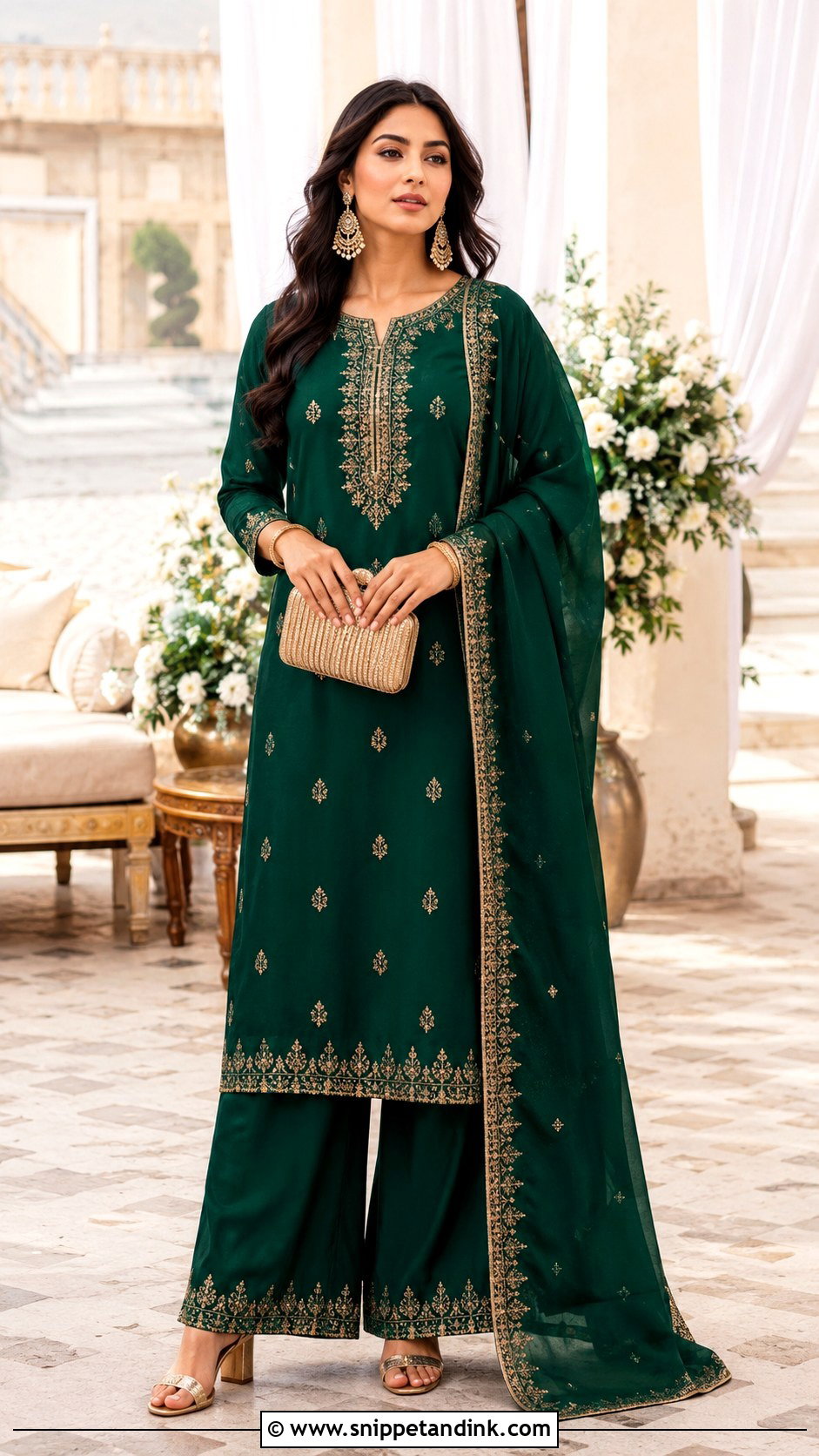
An embroidered palazzo suit is the outfit I suggest to guests who hate fuss. A knee-length kurta, straight or slightly flared, sits over wide palazzo pants in a matching or complementary color, and zari borders or scattered sequins make it festive. Pin the dupatta at the shoulder. Long earrings, slim bracelets and a structured clutch are enough. The one thing to get right is length: palazzos should graze the top of your shoe, so decide between block heels and juttis before the hem is finished. A softly curled ponytail keeps it modern.
8. Cape Lehenga for Wedding Party
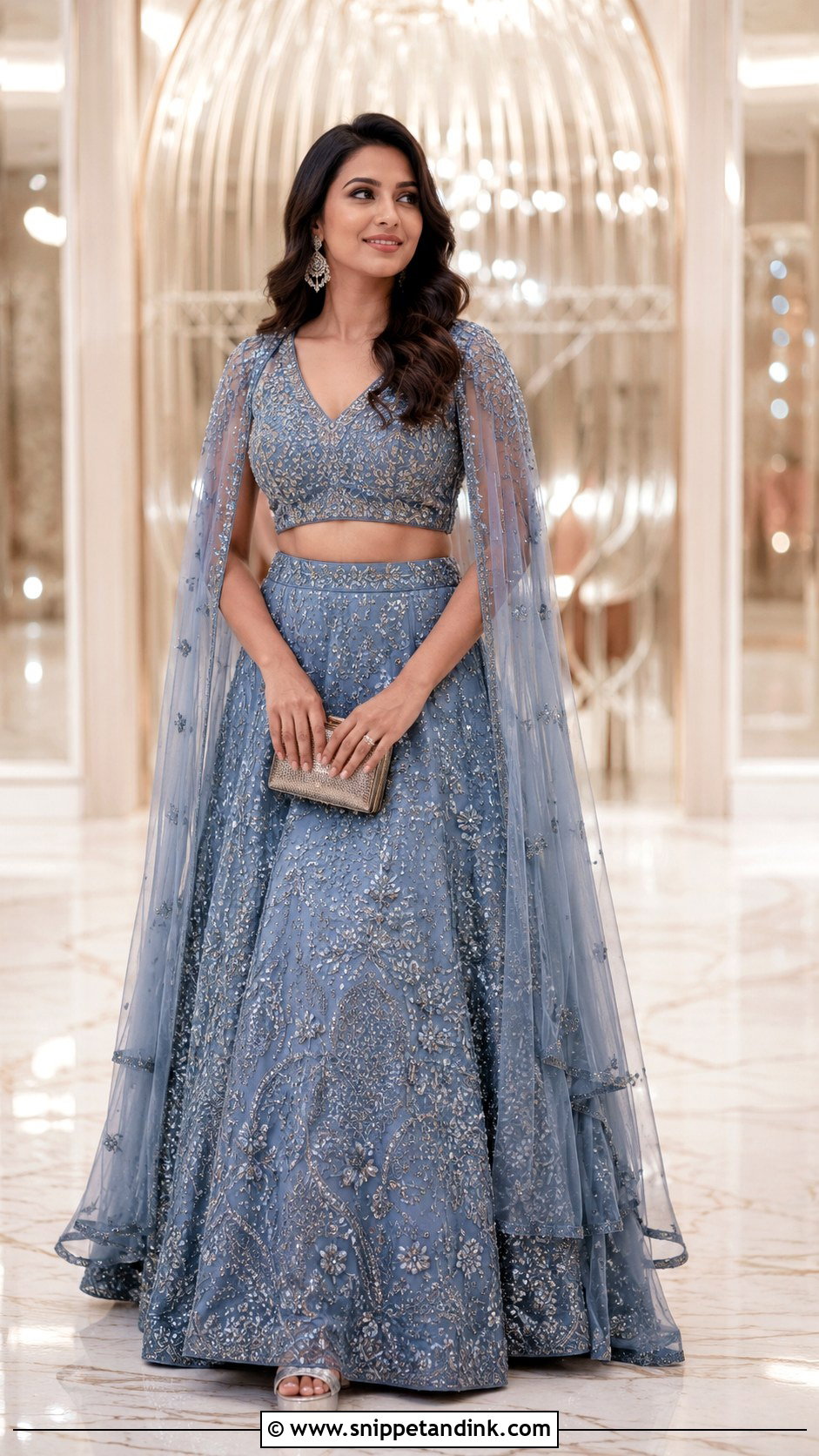
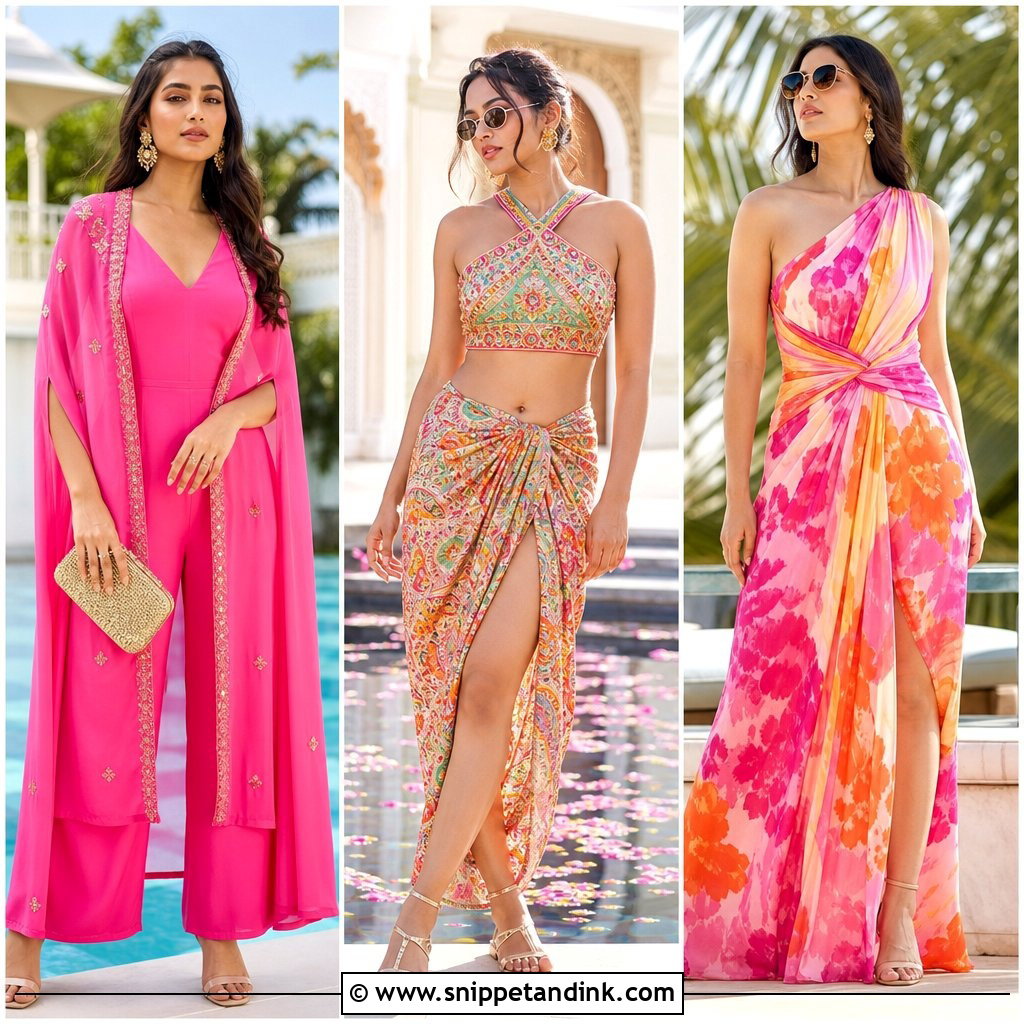
A cape does the dupatta’s job without slipping, which is why I like it for guests who know they’ll be dancing. The cape can stop at the waist, knee or floor. The longer it goes, the more it suits a tall frame, while a waist-length cape keeps a petite guest from being swallowed. Keep blouse and cape in similar tones for a long, unbroken line. Drop earrings, a slim ring and a box clutch are plenty; a heavy necklace fights the cape at the neckline. Platform sandals or block heels balance the skirt, and sleek hair lets the cape show. It belongs at a reception or a modern sangeet.
9. Long Jacket Lehenga for Wedding Party
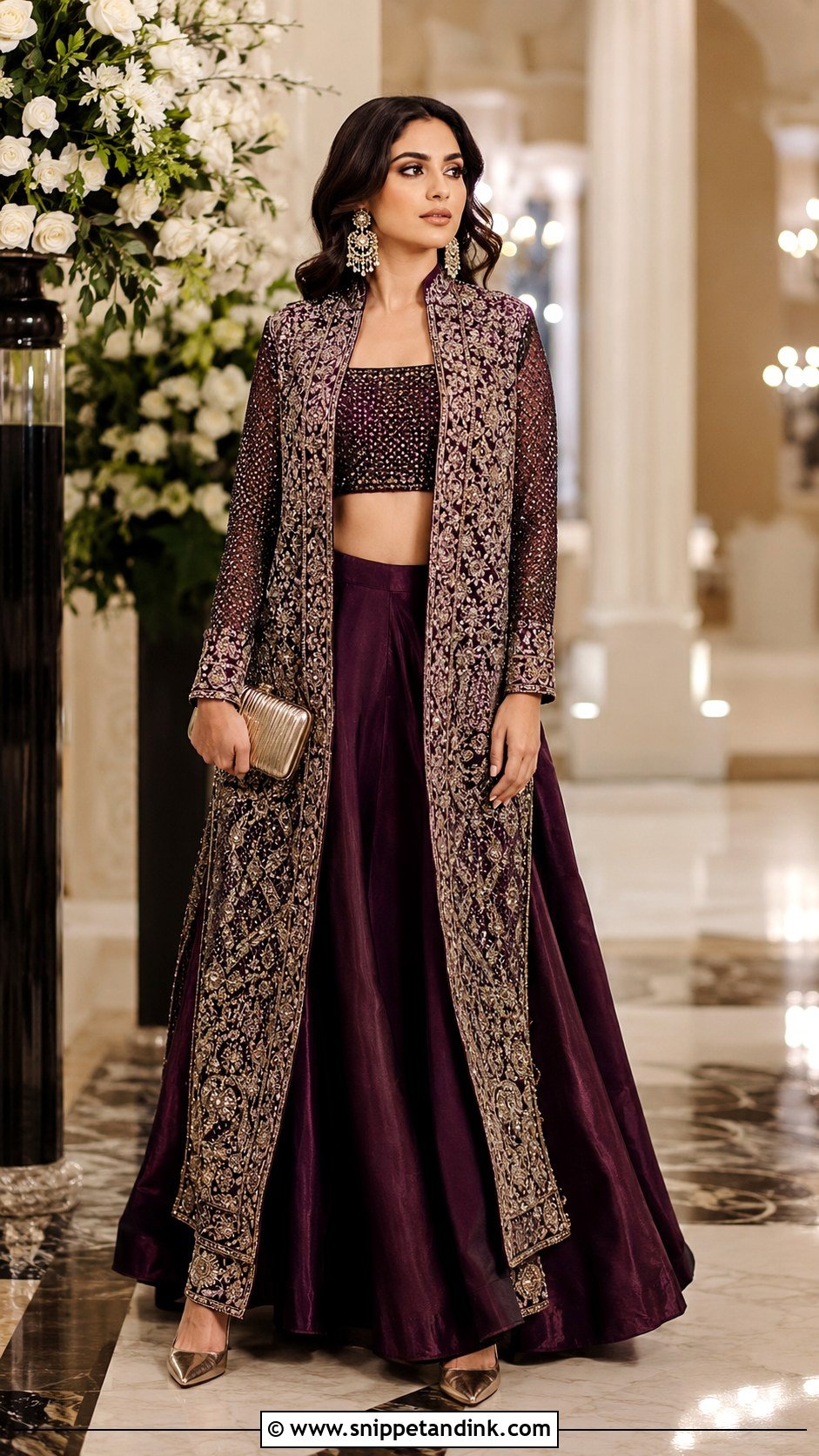
Layered tailoring is the appeal here. A simple flared lehenga and fitted blouse sit under an embroidered, front-open jacket that finishes at the knee or close to the hem. Monochrome gives a long column, and a contrasting jacket defines the shape more. Skip the dupatta, since the jacket already covers the shoulders and arms. Statement earrings, a few bangles, a structured clutch and pointed heels or embellished wedges keep the line clean. I recommend it for winter weddings because the jacket does a shawl’s work without hiding the outfit. Soft waves or a sleek bun finish it.
10. Saree Gown for Wedding Party
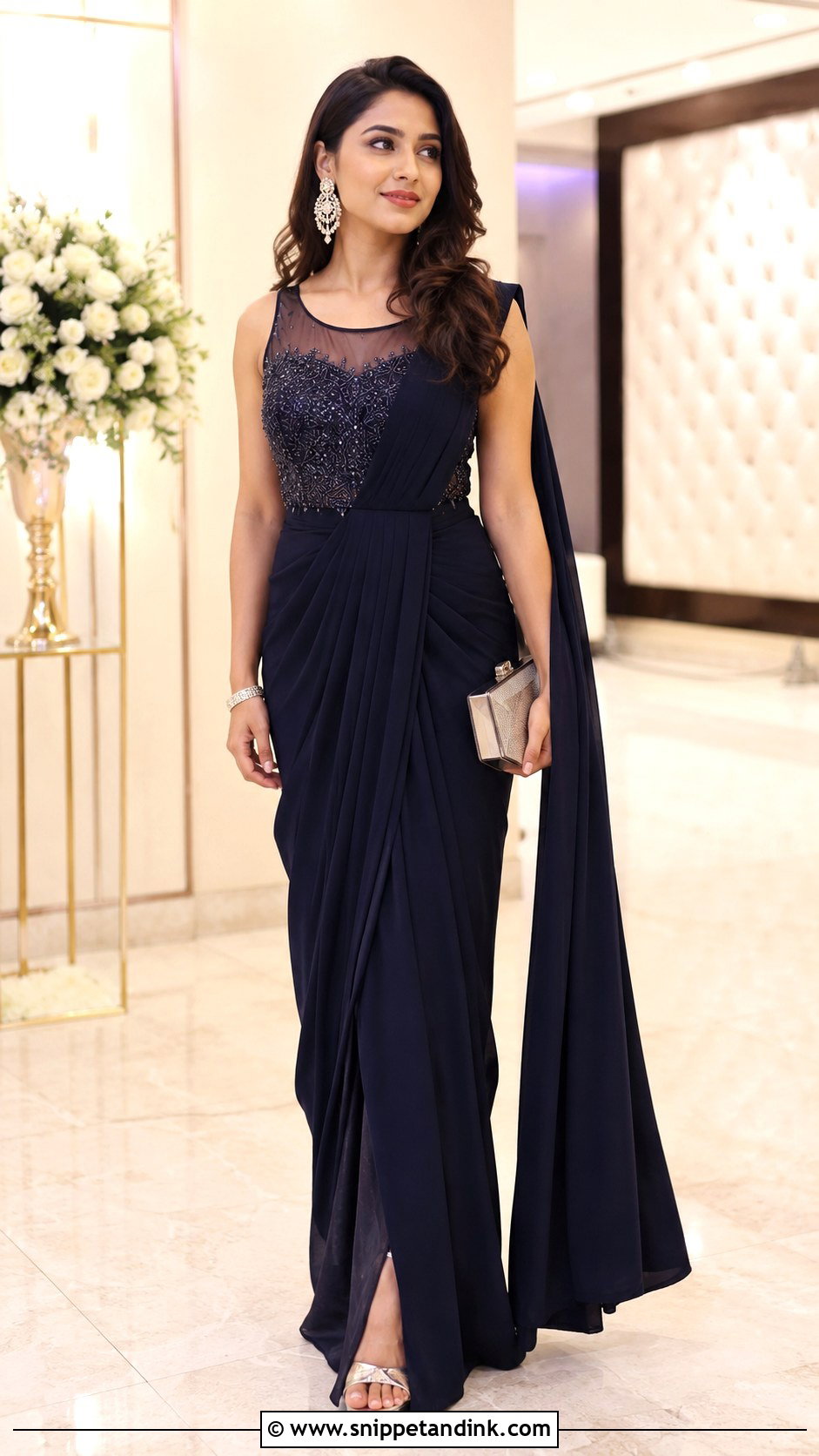
A saree gown is a saree that can’t come undone. Bodice, waist, draped skirt and pallu are sewn into one piece, so you step in, zip up and go. Stretch crepe and light satin move best. Sequins or beadwork add evening shine but also weight, so check how the pallu sits on your shoulder after half an hour of wear. Bold earrings and one statement bracelet beat a cluster of accessories, with a hard-case clutch and metallic block heels. Choose hair by neckline: a high neck wants a bun or ponytail, and a V-neck can take glossy waves.
11. Chanderi Silk Suit for Wedding Party
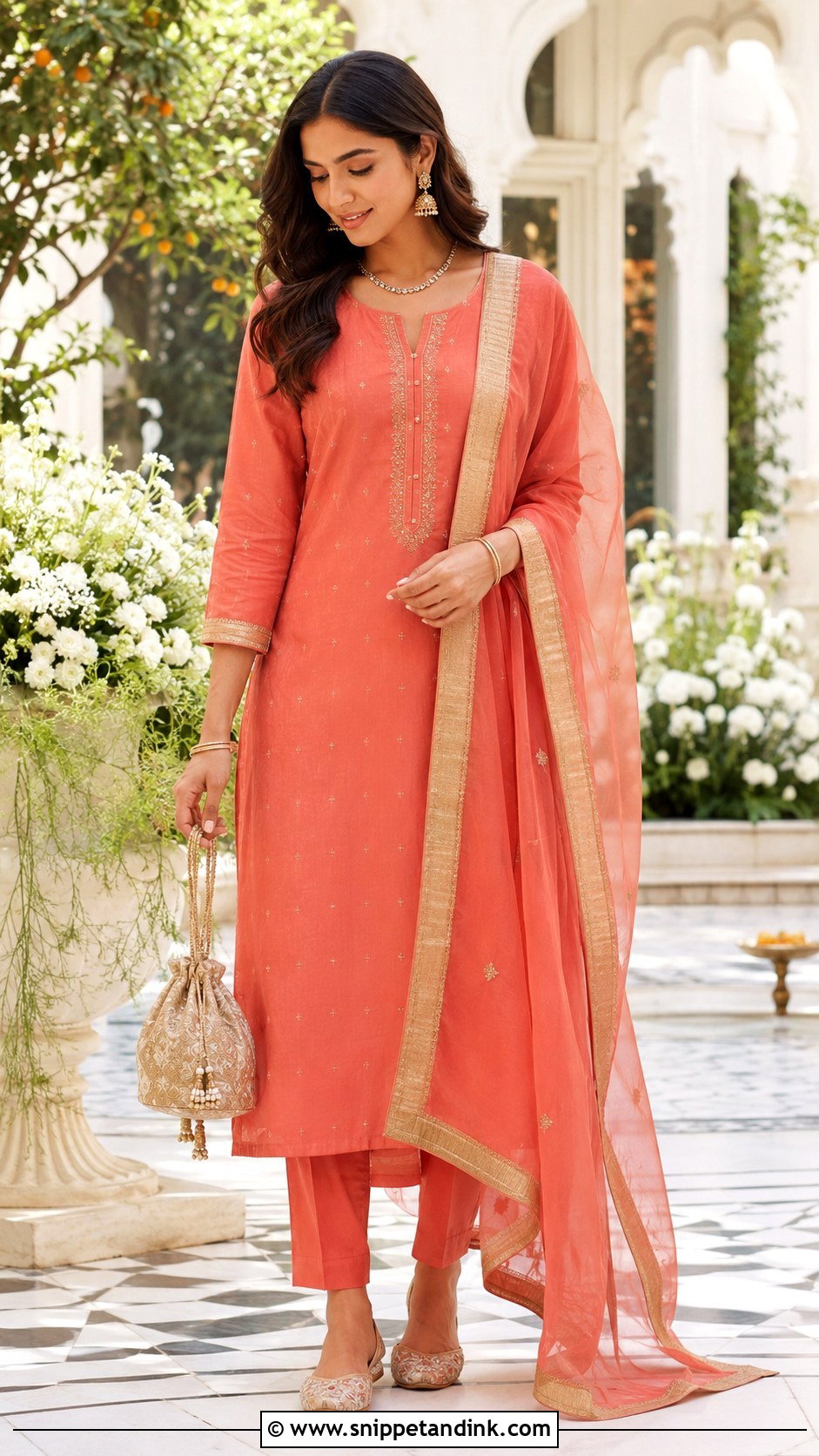
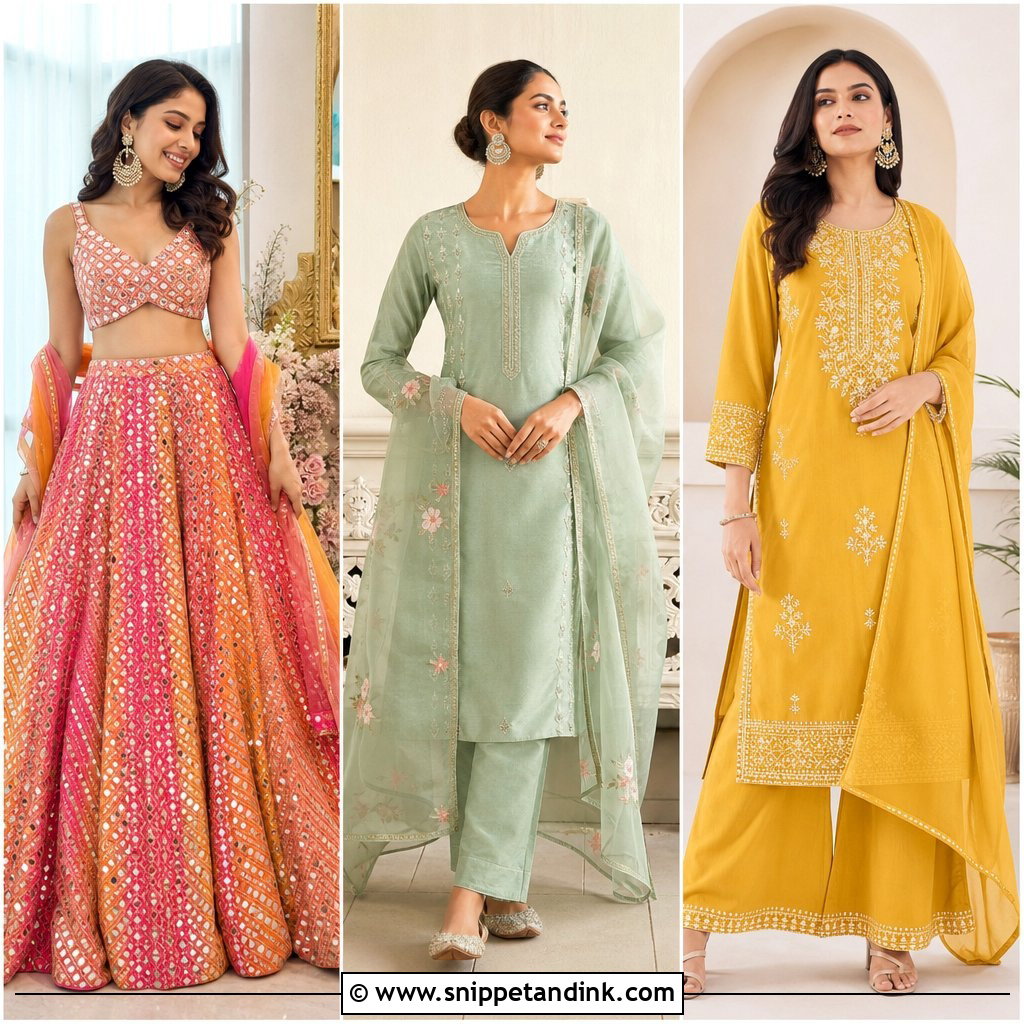
Chanderi weaves silk with cotton, so it has a light sheen but still breathes, which is why a Chanderi silk suit is the most comfortable formal outfit for a hot daytime ceremony. A straight kurta in mustard, coral, turquoise or soft green with woven motifs pairs with cigarette pants or a narrow churidar. A sheer Chanderi or organza dupatta with a gold border completes it. Small jhumkas, a delicate necklace and slim bangles suit the fabric better than heavy sets. Embroidered juttis, a compact potli, a low bun and luminous makeup finish it. These suits rewear easily, and I count that in their favor.
12. Kanjeevaram Saree for Wedding Party
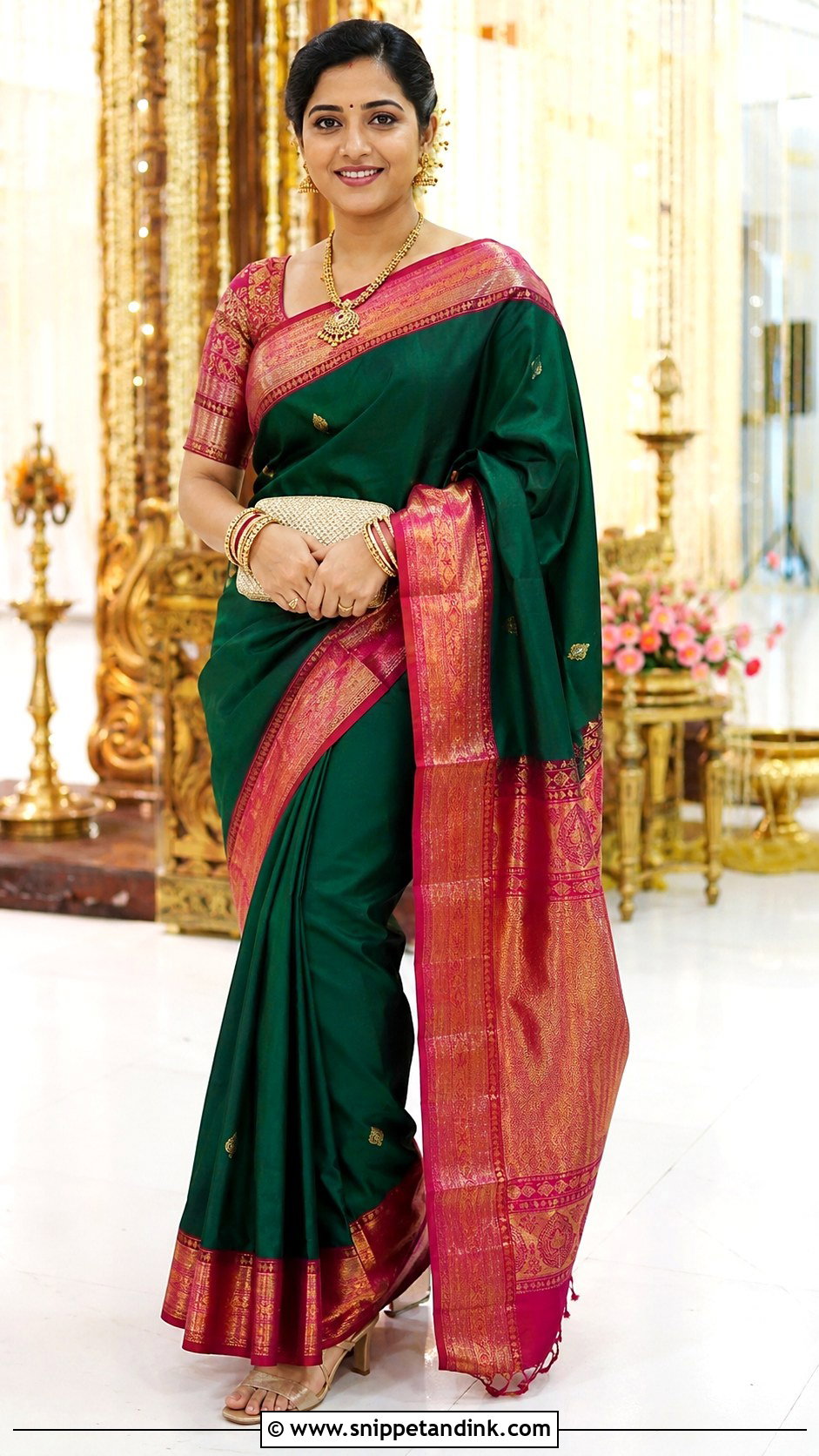
Kanjeevaram silk is thick and holds its folds, which gives the drape that architectural look and makes pleating easier than with softer silks. Contrast borders are traditional, such as green with pink or purple with red. Repeat one border color in a well-fitted silk blouse. Gold-tone earrings, a short necklace, bangles and a small bindi suit the weave. Set the hem height with your heeled sandals on before you fix the pleats. A center-parted bun with jasmine-style flowers gives a traditional finish. As a guest, keep the jewelry and blouse a step simpler than the bridal family’s.
13. Organza Saree for Wedding Party
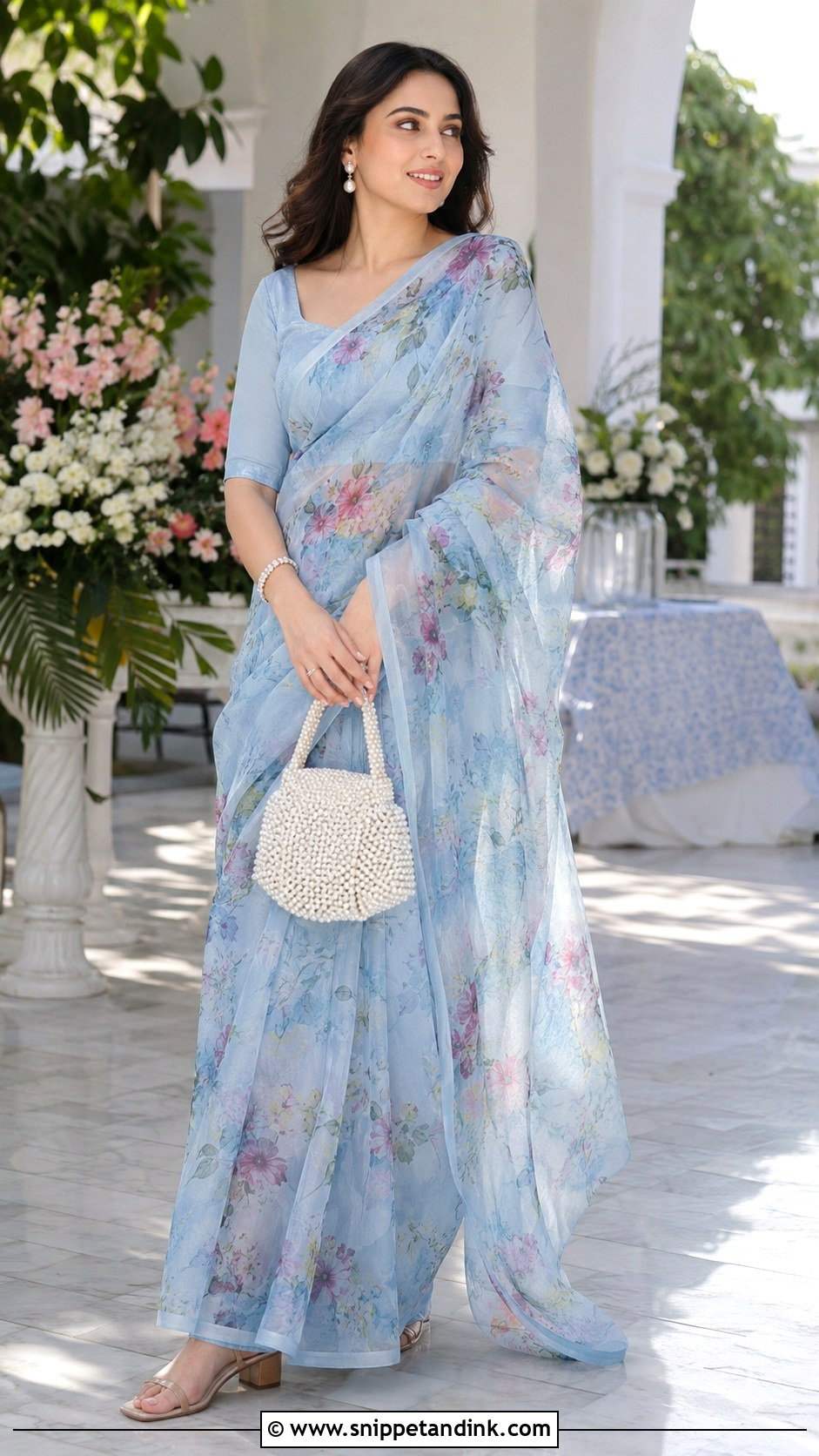
Organza is semi-sheer and stiff, and that stiffness gives a garden-party saree its crisp outline. Pastel prints, delicate embroidery or a fine scalloped border suit daytime. Because the fabric is see-through, the blouse and petticoat show more than usual, so match the petticoat color closely and choose a blouse with enough structure, sleeveless or elbow-length. Keep the pallu neat with few folds so its shape stays visible. Pearl earrings, a slim bracelet, a beaded bag and low block heels suit it. Finish with loose waves or a smooth bun and makeup in peach or soft berry tones.
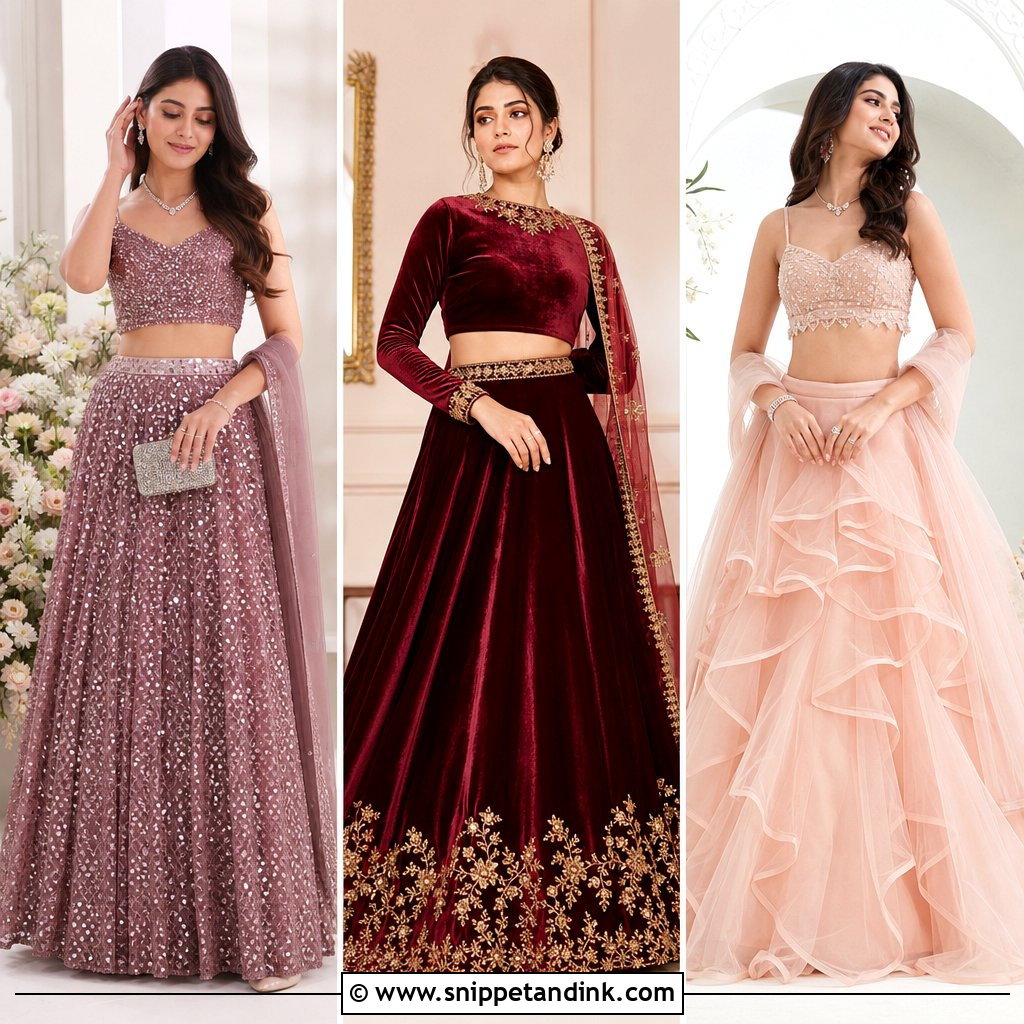
14. Velvet Lehenga for Winter Wedding Party
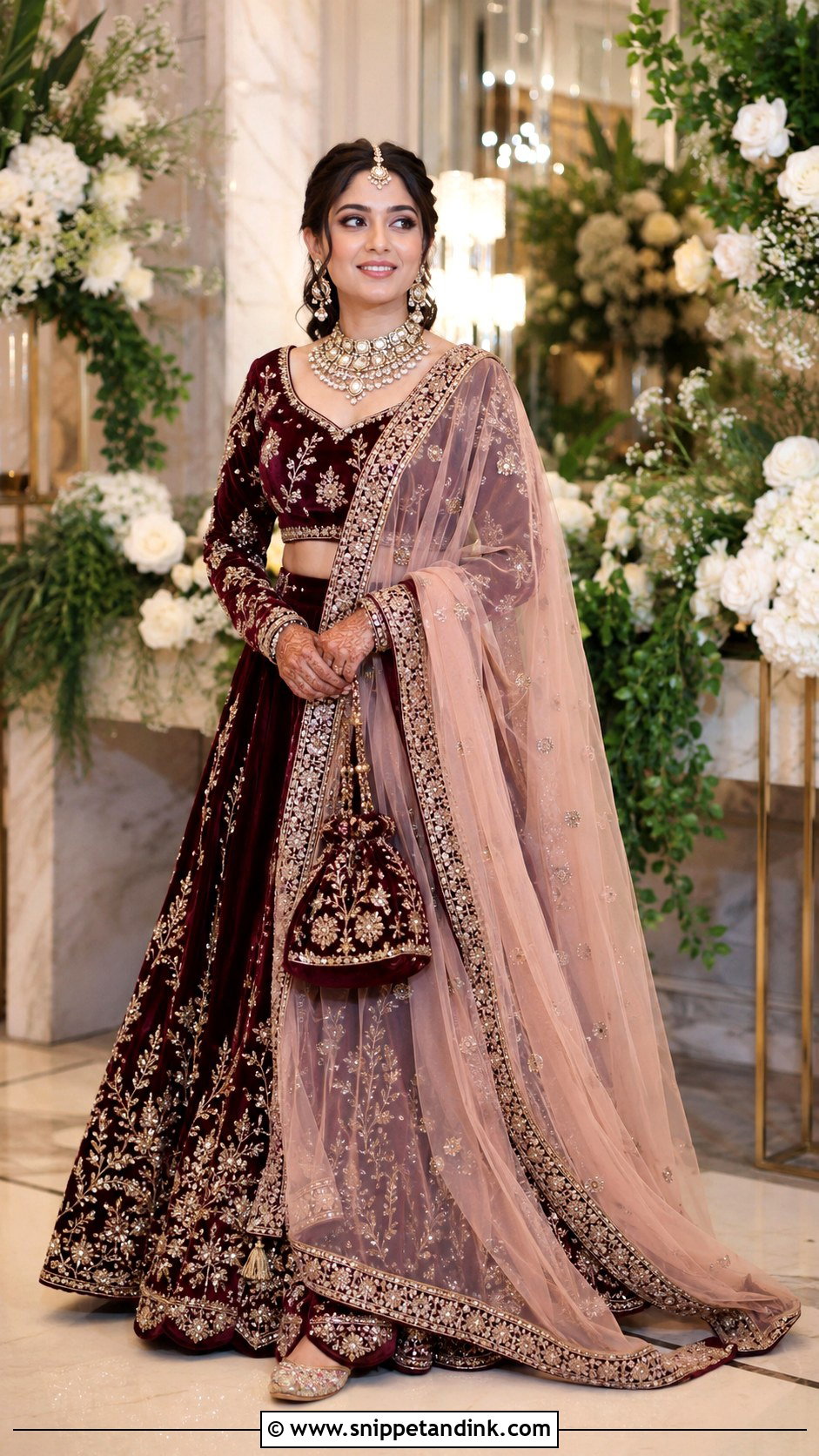
Velvet absorbs light rather than reflecting it, so emerald, burgundy, navy or plum look deeper in velvet than in any other fabric. That’s why it suits a winter evening. A fitted velvet blouse with three-quarter or full sleeves adds warmth, and a net or organza dupatta lightens the overall weight. Kundan-style earrings, a coordinating necklace and a structured potli are plenty. Platform heels or closed-toe embellished shoes suit the season. Keep hair sleek so the fabric stays in focus. Velvet takes pressure marks easily, so avoid sitting on the skirt during the drive there.
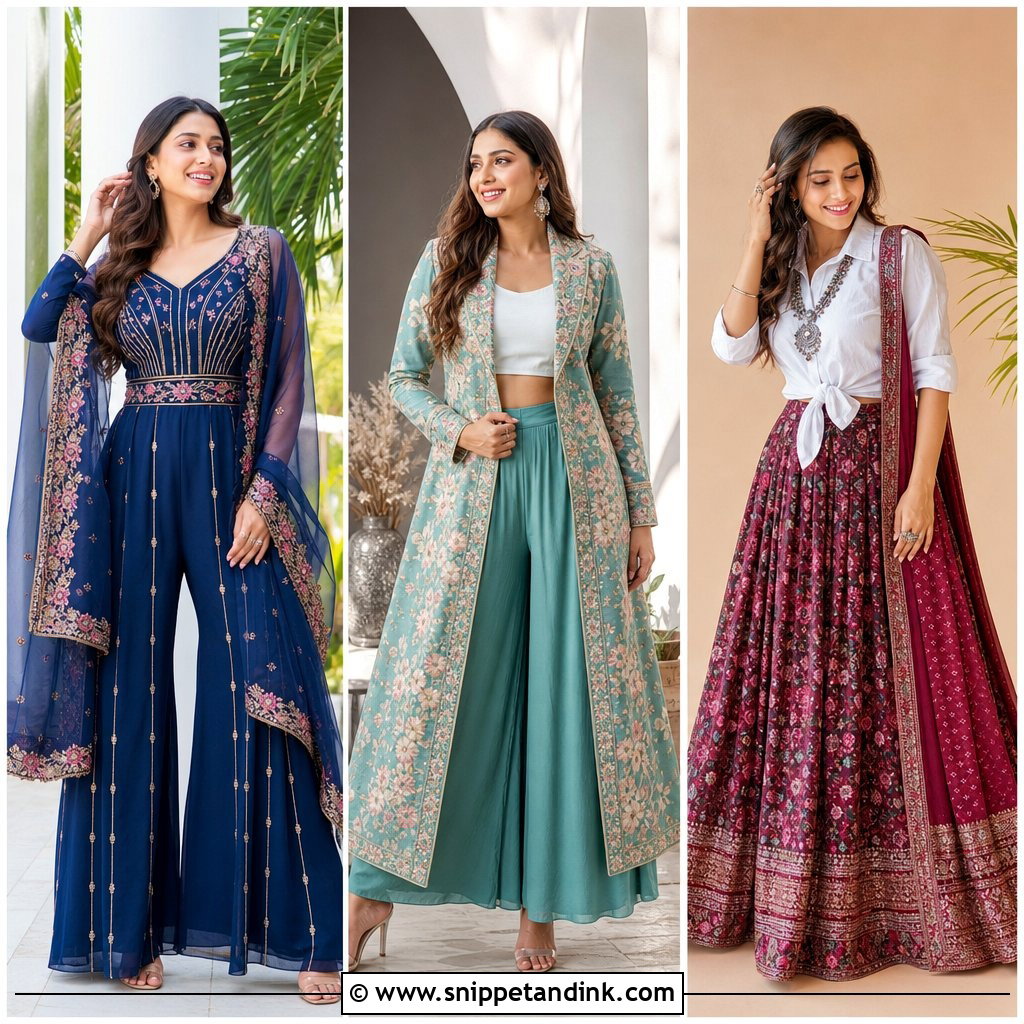
15. Mirror Work Lehenga for Wedding Party
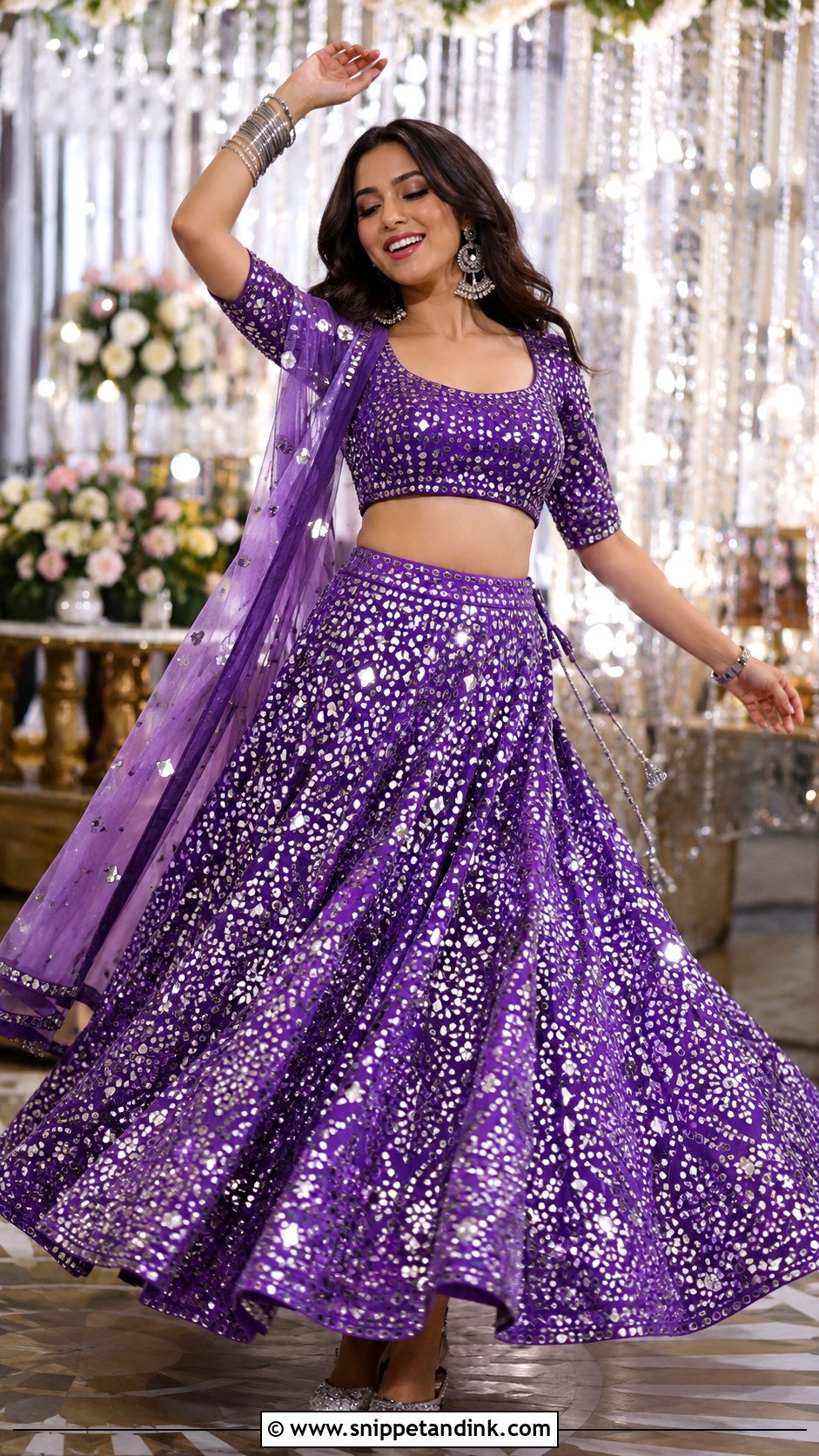
Mirror work is small pieces of glass stitched in place, so it adds real weight, and where that weight sits matters as much as the design. Evenly scattered mirrors move with you, while a dense band at the hem swings like a pendulum when you dance. A lighter spread is what makes a lehenga especially suitable for the sangeet. Turquoise, fuchsia, violet or coral catch the lights well. Add a supportive blouse, a light dupatta pinned across one shoulder, silver jhumkas, stacked bangles and a wristlet. Cushioned juttis, a braided ponytail and no necklace finish it.
16. Chikankari Sharara for Wedding Party
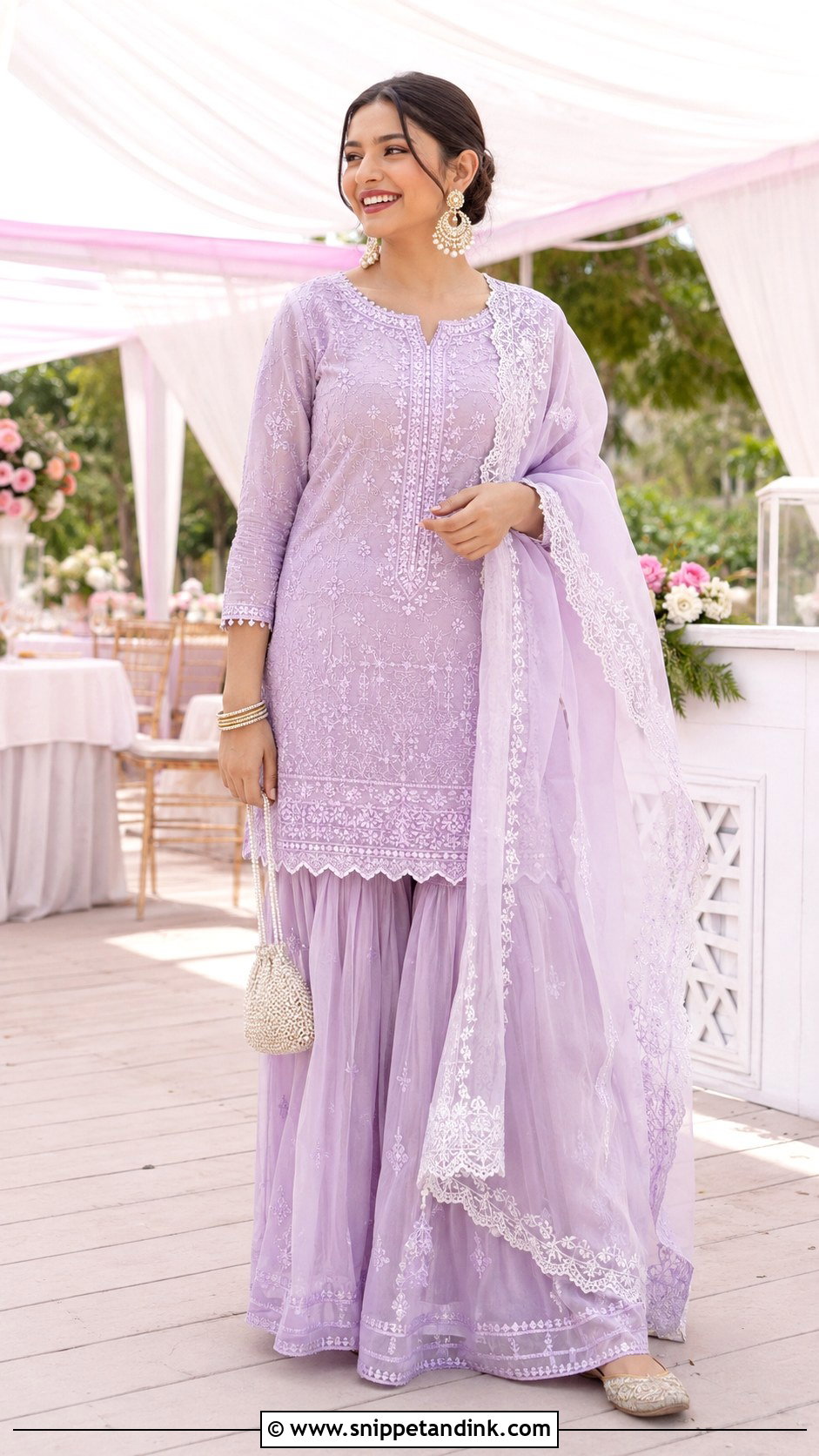
Chikankari is fine hand embroidery from Lucknow, traditionally white thread on pale fabric, and it rewards a close look more than a distant one. That makes a chikankari sharara a daytime outfit, best at a mehndi or family lunch where people see you up close. Ivory with colored accents, soft pink, lilac and mint all suit it. A sheer dupatta with a lace or embroidered border, pearl chandbalis, slim bangles and a beaded potli complement the threadwork. If the set is very pale, bring color in through the dupatta or bag. Wash it gently by hand afterward, because the threads pull when the fabric is wrung.
17. Dhoti Pant Kurta for Wedding Party
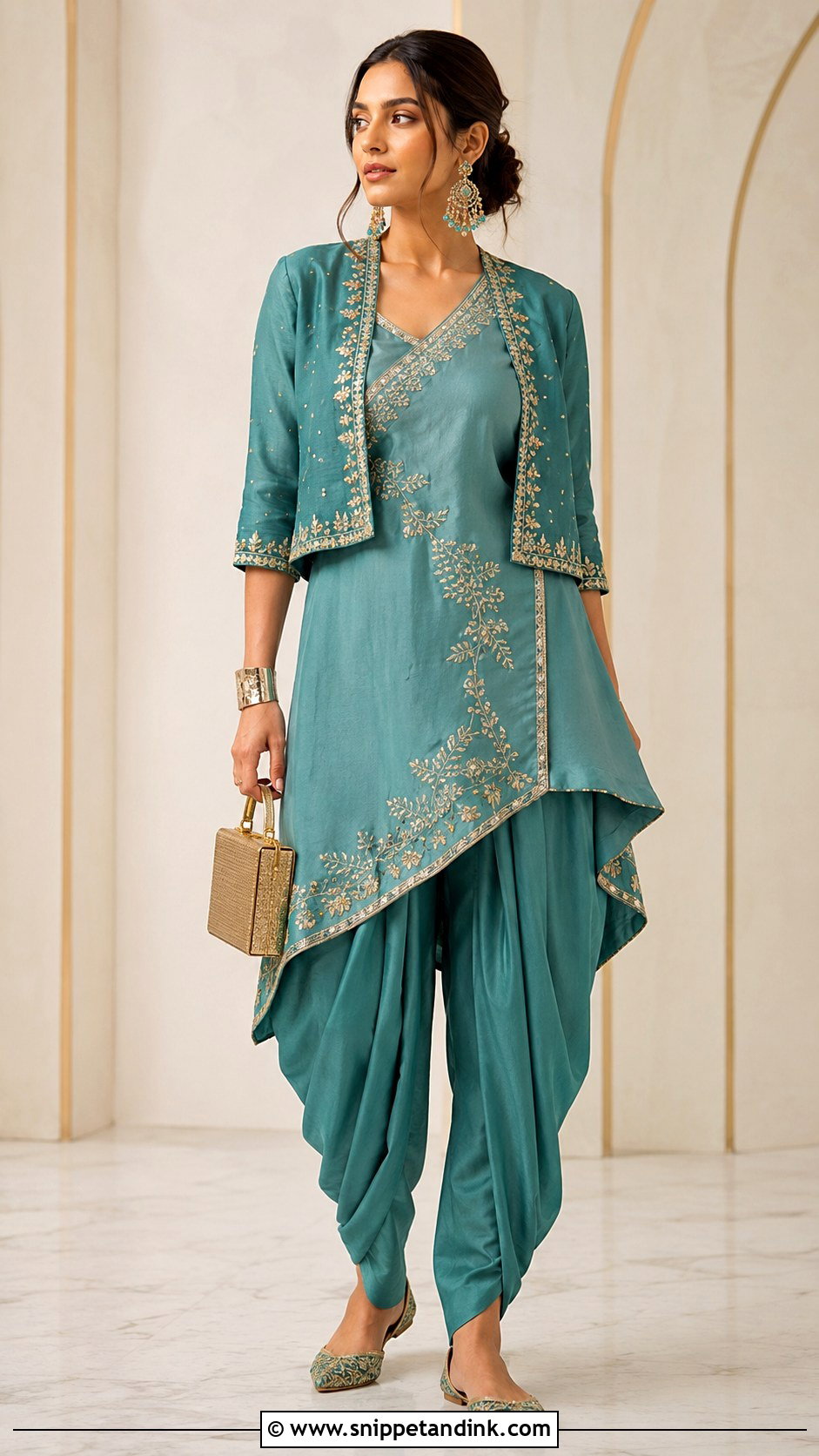
Dhoti pants fall well only in fabric with some weight and drape, such as silk blends, crepe or georgette; stiffer fabric puffs out at the hips. Pair them with a fitted short kurta, an asymmetric tunic or a structured peplum. An embroidered jacket or narrow dupatta adds a layer for a formal event. Statement earrings, a cuff and a small structured bag suit the shape. Pointed juttis or low heels sit better than delicate stilettos under the folds, and a high ponytail shows off the neckline. This comfortable fusion look is for the guest who wants something different and plans to dance.
18. Kurta and Skirt Set for Wedding Party
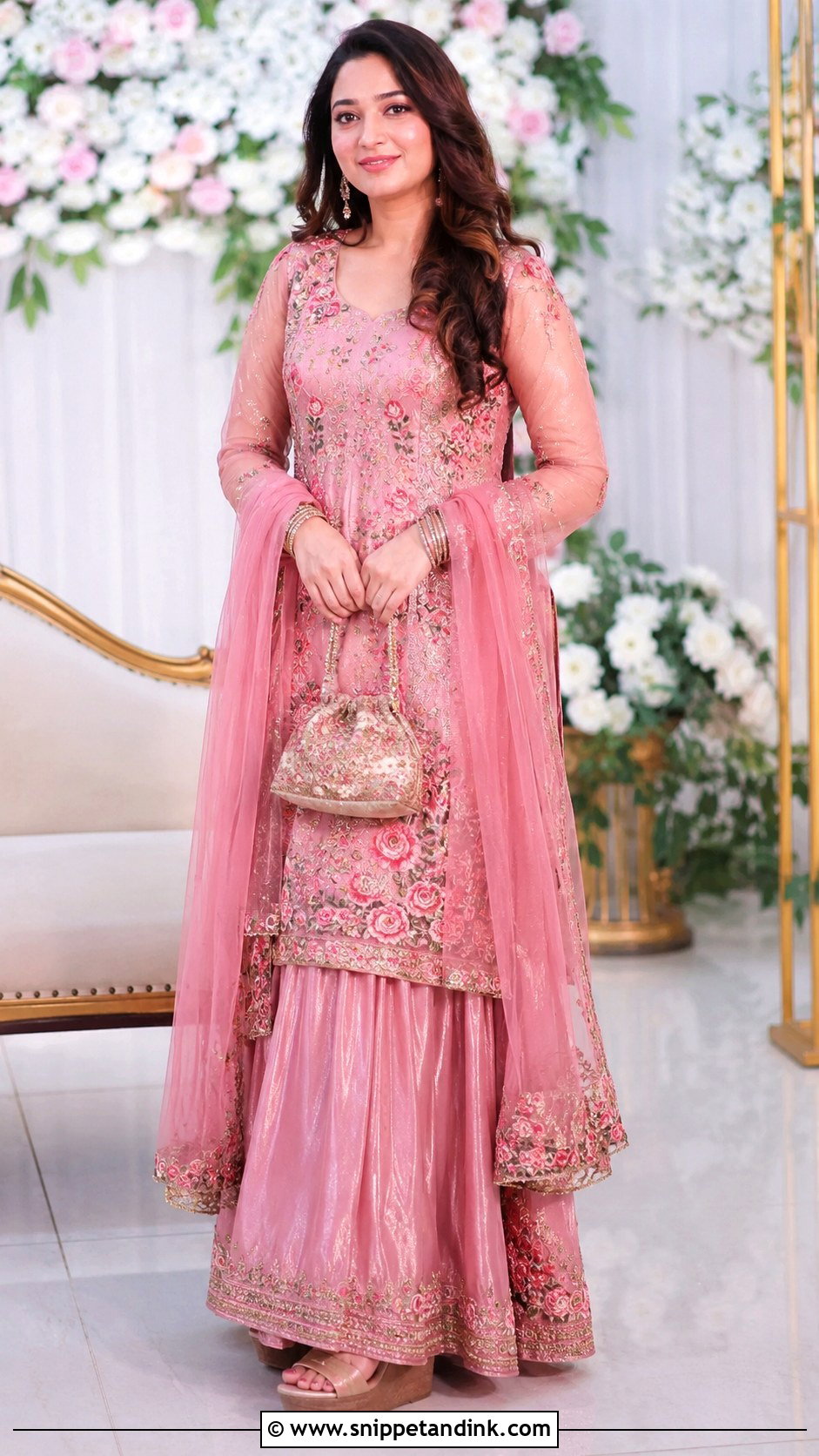
A kurta and skirt gives the sweep of a lehenga with the waist covered, which is why guests who dislike cropped blouses tend to love it. A knee-length flared kurta goes over a full, softly structured skirt; matching colors lengthen and a contrasting skirt adds definition. Secure a chiffon or organza dupatta over one shoulder, and add medium earrings, bangles and an embroidered bag. Watch where the kurta flare meets the skirt. Two flares stacked can widen the hips, so a slimmer kurta often works better over a very full skirt. Wedges or block heels and a side-parted bun finish it.
19. Draped Skirt and Crop Top for Wedding Party
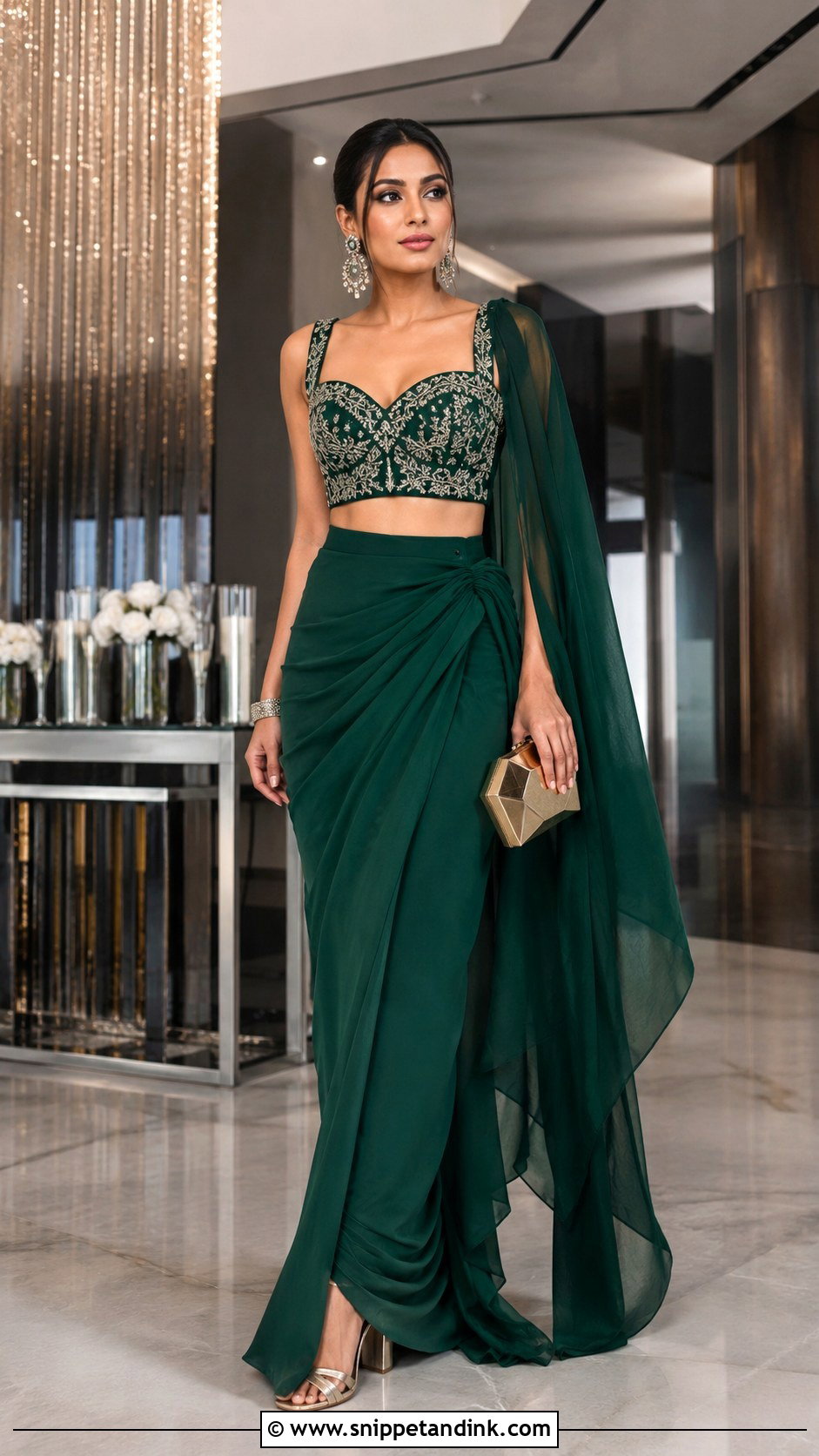
A draped skirt and crop top borrows the saree’s pleating without the pallu. A high-waisted crepe or satin skirt with controlled draping at the front pairs with an embroidered crop top, a longer blouse or a peplum, depending on how much coverage you want. A light shoulder drape or cape adds movement. Statement earrings, a sleek bracelet and a geometric clutch keep it contemporary. The asymmetric folds leave the hem uneven, so stable metallic sandals or block heels are safer than stilettos. Wear it to the reception or sangeet with a smooth ponytail.
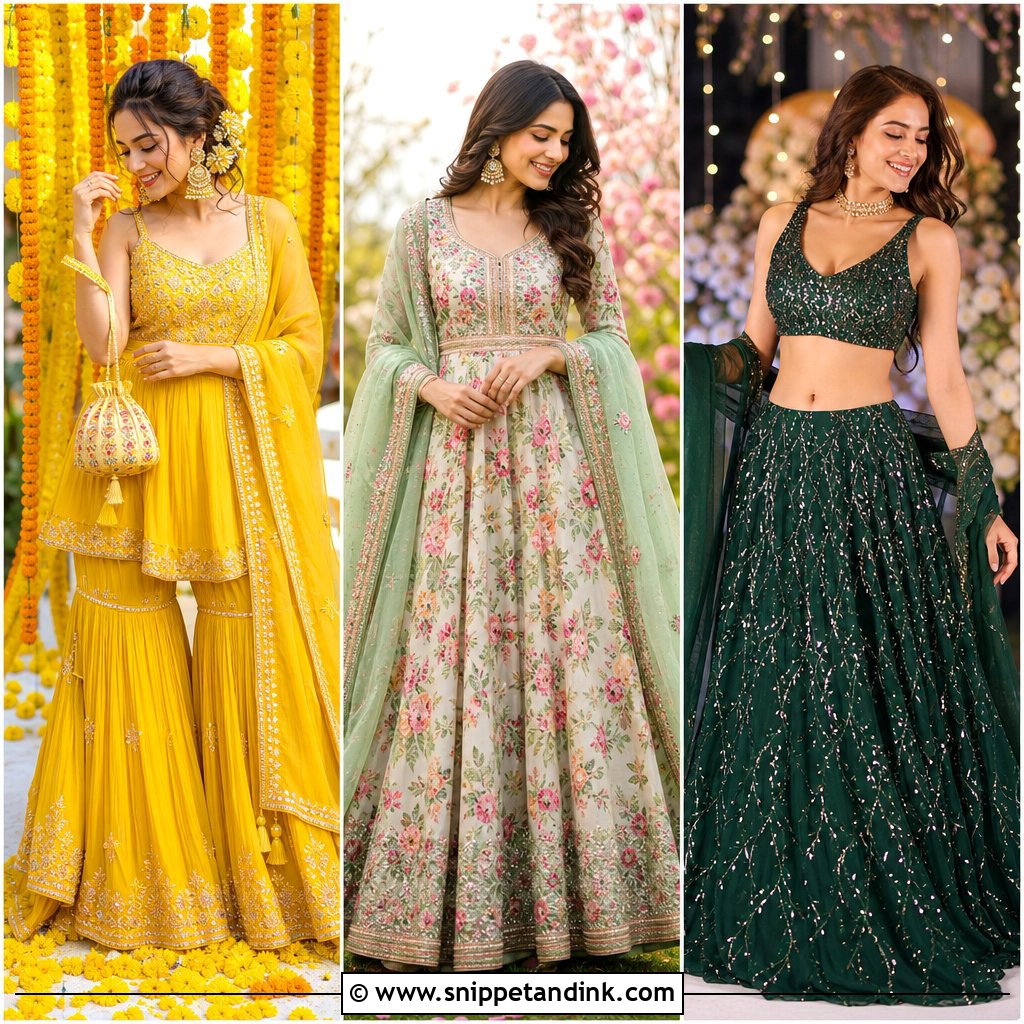

20. Brocade Jacket and Pants for Wedding Party
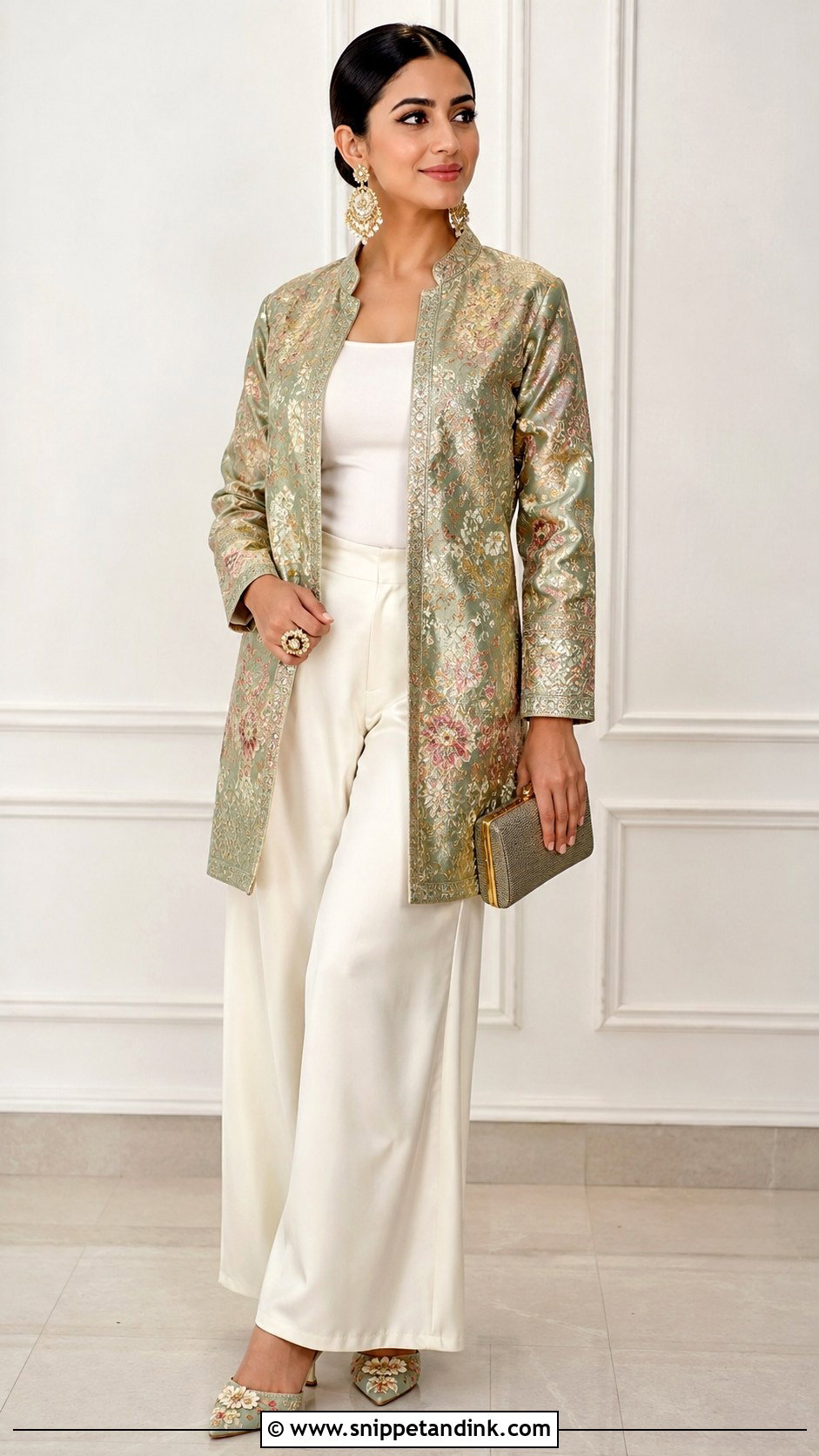
Brocade is a heavy woven fabric with a raised pattern, so a jacket made from it holds its shape almost like structured tailoring. Over straight or wide-leg silk pants and a simple fitted inner top, a knee or ankle-length brocade jacket left partly open shows the layers beneath. Jewel tones, antique gold and muted metallics read formal. Sculptural earrings, one statement ring and a clean box clutch are enough, and pointed heels or embroidered mules continue the sharp lines. A sleek ponytail, polished bob or low bun suits it. This is the outfit for guests who prefer pants and still want to look dressed up.
Wearing the Same Lehenga to Three Weddings
Wedding season can bring several invitations at once, and a new outfit for each adds up fast. Several of the looks above break into separates, and separates are the secret to rewearing.
The lehenga skirt is the most flexible piece you own. Wear it once with its own blouse and dupatta, once with a contrasting blouse and no dupatta, and once under a long jacket. In photos, each reads as a different outfit.
A saree changes character with its blouse. A brocade blouse makes a Banarasi formal, and a plain silk one with elbow sleeves quiets it down. Moving from gold jewelry to oxidized silver shifts the mood again.
Dupattas do more than people expect. A heavily embroidered one thrown over a plain Chanderi suit turns a daytime outfit into an evening one. Between wears, air each piece before folding it, and store dark and pale fabrics apart so dyes can’t transfer.
Comfort Is What Shows in the Group Photos
A wedding outfit is working when you forget about it after the first hour. Before you choose, match it to the event timing, the venue, the dress code, the weather and how much you’ll move. Light shararas and floral lehengas suit daytime, while silk sarees, velvet and embellished fusion pieces belong to formal evenings. Comfortable shoes, balanced jewelry and a hairstyle that stays put matter as much as the dress. Pick colors and shapes that feel like you, and you’ll still like the photographs years from now.
You'll Like These Ideas:


Leave a Reply